



Retapamulin
Based on 5 publication(s) in Google Scholar
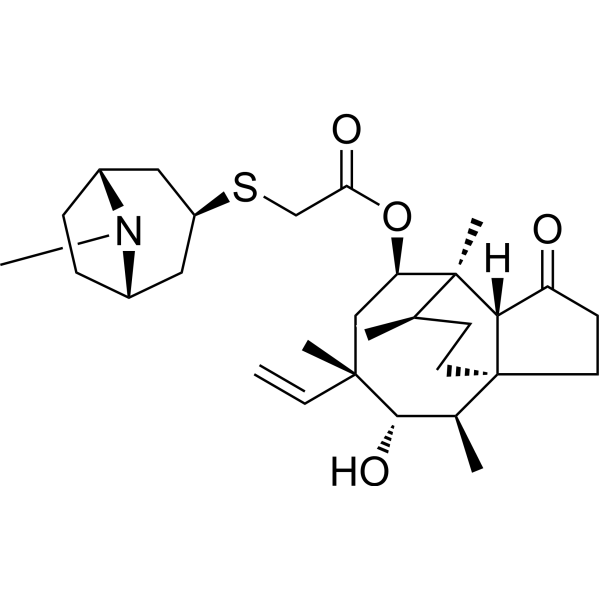
Retapamulin (SB-275833) is a topical antibiotic that binds Staphylococcus aureus and E. coli ribosomes with a Kd of 3 nM. Retapamulin can be used in researches of atopic dermatitis and prostate cancer.
For research use only. We do not sell to patients.
- Purity : 98.0%
- CAS No.: 224452-66-8
- Formula: C30H47NO4S
- Molecular Weight:517.76
-
Storage:
4°C, protect from light
* In solvent : -80°C, 6 months; -20°C, 1 month (protect from light)

To place orders, for customer services and technical support, please contact: MedChemExpress USA
Tel: 609-228-6898 E-mail: [email protected] [email protected]


-
 Biological Activity
-
Chemical Information
-
Solvent & Solubility
- Protocols
- Purity & Documentation
- References
-
 Help & FAQs


-
HY-B0117
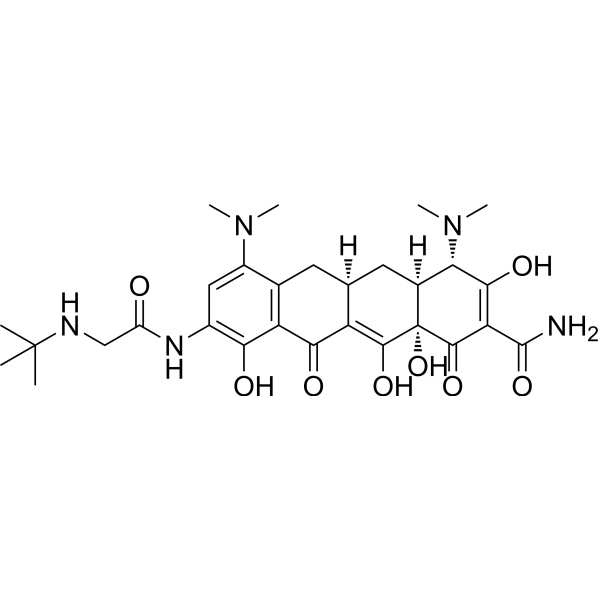
TigecyclineBacterial Inhibitor -
HY-10230
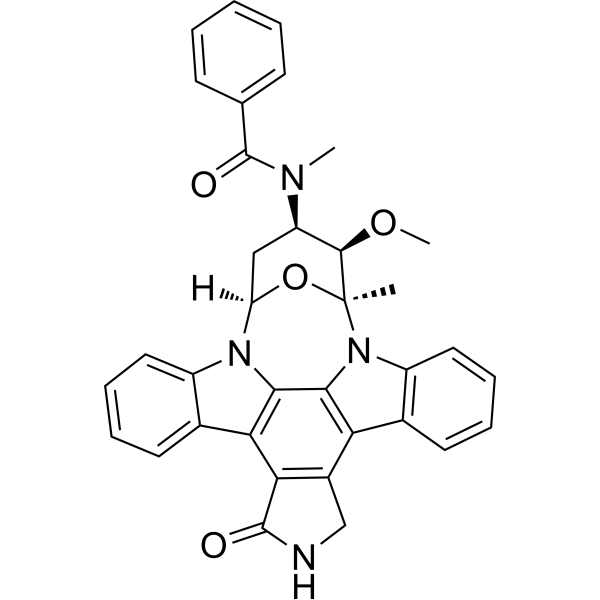
MidostaurinMulti-targeted Protein Kinase Inhibitor -
HY-B2060
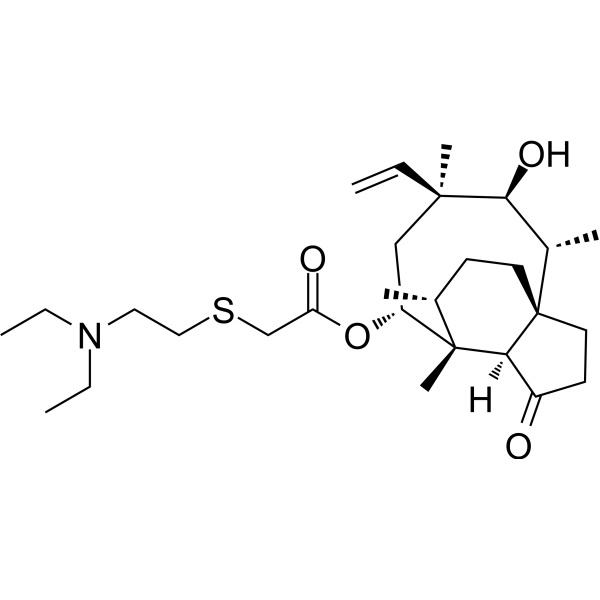
TiamulinAntibiotic -
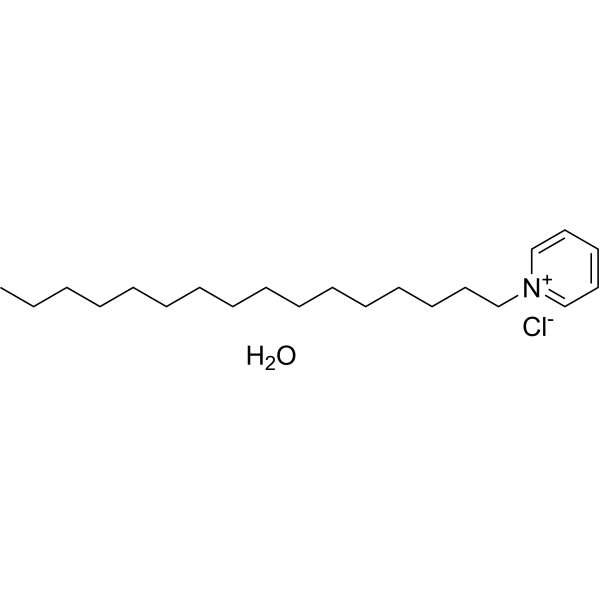
HY-B1289
Cetylpyridinium chloride monohydrateBacterial Inhibitor -
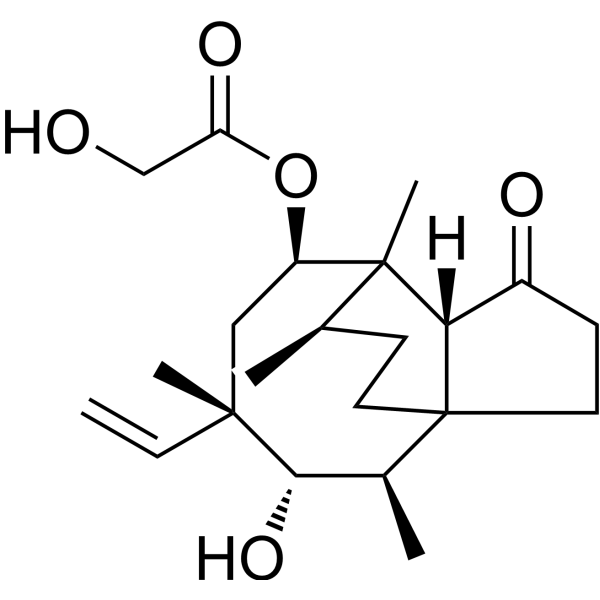
HY-N2301
PleuromutilinAntibiotic -

HY-17010R
Retapamulin (Standard)Anti-Bacterial Agent -
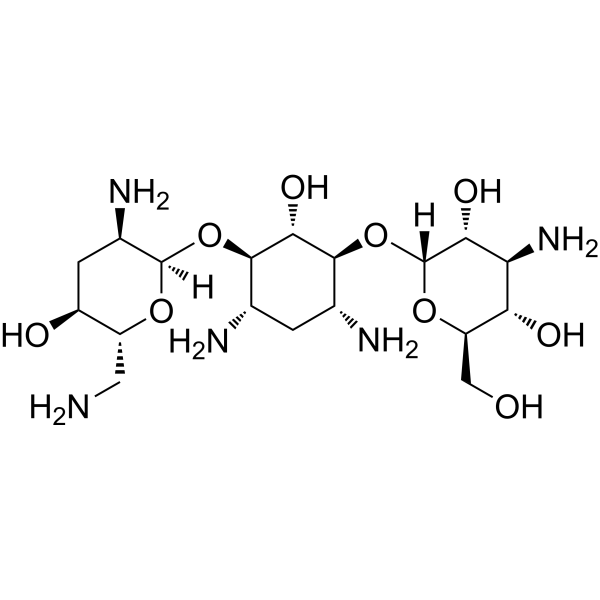
HY-B0441
TobramycinBacterial Inhibitor -
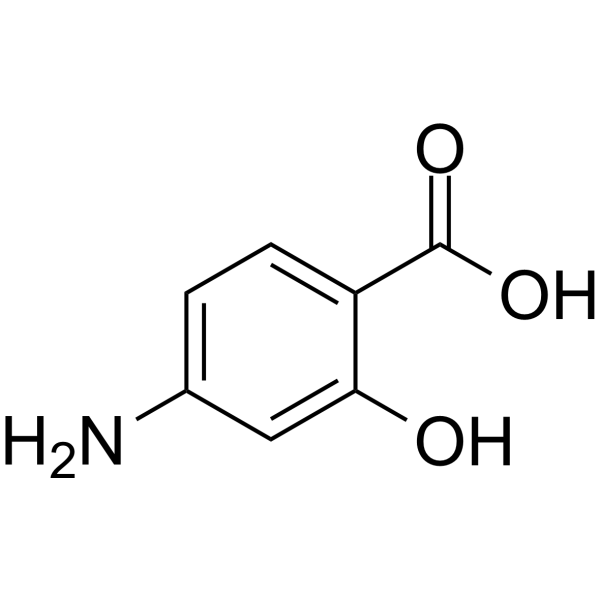
HY-I0447
4-Aminosalicylic acidBacterial Inhibitor -

HY-I0447R
4-Aminosalicylic acid (Standard)Bacterial Inhibitor -

HY-B0441R
Tobramycin (Standard)Bacterial Inhibitor
Publications Citing Use of MedChemExpress (MCE) Retapamulin
MoreAll Antibiotic Isoforms
More

Biological Activity
Description
Cellular Effect
|
Cell Line

|
Type | Value | Description | References |
|---|---|---|---|---|
| A549 | CC50 |
>100 μM
Compound: Retapamulin
|
Cytotoxicity against human A549 cells assessed as reduction in cell viability measured after 48 hrs by CCK8 assay
Cytotoxicity against human A549 cells assessed as reduction in cell viability measured after 48 hrs by CCK8 assay
|
[PMID: 37051724] |
| A549 | CC50 |
74.17 μM
Compound: Retapamulin
|
Cytotoxicity against human A549 cells incubated for 24 hrs by CCK8 assay
Cytotoxicity against human A549 cells incubated for 24 hrs by CCK8 assay
|
[PMID: 37531743] |
| HEK293 | CC50 |
62.89 μM
Compound: Retapamulin
|
Cytotoxicity against HEK293 cells incubated for 24 hrs by CCK8 assay
Cytotoxicity against HEK293 cells incubated for 24 hrs by CCK8 assay
|
[PMID: 37531743] |
| HEK293 | CC50 |
83.76 μM
Compound: Retapamulin
|
Cytotoxicity against human HEK293 cells assessed as reduction in cell viability measured after 48 hrs by CCK8 assay
Cytotoxicity against human HEK293 cells assessed as reduction in cell viability measured after 48 hrs by CCK8 assay
|
[PMID: 37051724] |
| HepG2 | CC50 |
36.48 μM
Compound: Retapamulin
|
Cytotoxicity against human HepG2 cells incubated for 24 hrs by CCK8 assay
Cytotoxicity against human HepG2 cells incubated for 24 hrs by CCK8 assay
|
[PMID: 37531743] |
| HepG2 | CC50 |
76.52 μM
Compound: Retapamulin
|
Cytotoxicity against human HepG2 cells assessed as reduction in cell viability measured after 48 hrs by CCK8 assay
Cytotoxicity against human HepG2 cells assessed as reduction in cell viability measured after 48 hrs by CCK8 assay
|
[PMID: 37051724] |
| HUVEC | CC50 |
25.5 μg/mL
Compound: Retapamulin
|
Cytotoxicity against HUVEC cells assessed as reduction in cell viability incubated for 72 hrs by CCK8 assay
Cytotoxicity against HUVEC cells assessed as reduction in cell viability incubated for 72 hrs by CCK8 assay
|
[PMID: 37192339] |
| HUVEC | IC50 |
25.5 μg/mL
Compound: Ratapamulin
|
Cytotoxicity against HUVEC cells assessed as inhibition of cell growth incubated for 72 hrs by CCK-8 assay
Cytotoxicity against HUVEC cells assessed as inhibition of cell growth incubated for 72 hrs by CCK-8 assay
|
[PMID: 36549113] |
In Vitro
Retapamulin demonstrates excellent in vitro activity against Methicillin (HY-121544)-susceptible Staphylococcus aureus and Methicillin-resistant S. aureus (MRSA) strains, but not against MRSA isolates harbouring the cfr gene[3].
Retapamulin inhibits Streptococcus pyogenes isolates, with MICs ranging from ≤0.015 to 0.12 μg/mL[4].
Retapamulin inhibits Staphylococcus aureus and Streptococcus pyogenes, with MIC90s of 0.12 and ≤0.03 μg/mL, respectively[5].
Retapamulin inhibits total viable cell (TVC), protein synthesis and 50S subunit synthesis of wild-type Staphylococcus aureus strain RN1786 with IC50s of 12 , 5 and 27 ng/mL, respectively[6].
Retapamulin inhibits cytopathic effect, papain-like protease, and MPRO enzymes of SARS-CoV-2 with IC50 values of 4.23, 0.88 and 1.25 µM[7].
Retapamulin (0-10 μM, 3 days) inhibits cell invasion by more than 50% at 0.1 μM in PC-3-KQ cells[8].
Retapamulin (0-500 μg/mL, 16 h) shows cytotoxicity in BRL-3A cells, with an IC50 of 49 μg/mL[9].
MedChemExpress (MCE) has not independently confirmed the accuracy of these methods. They are for reference only.
In Vivo
MedChemExpress (MCE) has not independently confirmed the accuracy of these methods. They are for reference only.
-
Animal Model:Murine superficial skin wound infection model (abrasive paper was used to induce a minor superficial skin wound on a 1 cm2 area, which was inoculated with 7 log10 CFU of bacteria)[10]Dosage:1%Administration:Applied topically to the lesion area, twice daily for 3 days or 6 daysResult:Reduced the bacterial loads by 2.5 and 5 log10 CFU for 3 days and 6 days, respectively.
Clinical Trial
| NCT Number | Sponsor | Condition | Start Date |
Phase
|
|---|---|---|---|---|
| NCT01329991 | Plexxikon| | 2011-05 | PHASE1 |


Chemical Information
-
CAS No. 224452-66-8
-
Appearance Solid
-
Molecular Weight 517.76
-
Formula C30H47NO4S
-
Color White to off-white
-
SMILES
C[C@@H]1[C@]23[C@](C(CC3)=O)([H])[C@]([C@H](OC(CS[C@@H]4C[C@@H]5N(C)[C@@H](CC5)C4)=O)C[C@](C=C)(C)[C@H]1O)([C@H](C)CC2)C
-
Synonyms
SB-275833
-
Shipping
Room temperature in continental US; may vary elsewhere.
-
Storage
4°C, protect from light
* In solvent : -80°C, 6 months; -20°C, 1 month (protect from light)


Publications (5)
-
Journal Impact Factor
-
Most Recent
-
Drug Deliv Transl Res
Leveraging quantum chemical properties in transfer learning for predicting blood-brain barrier permeability of drugs. [Abstract]2025 Oct 29. PMID: 41160380 -
Microb Biotechnol
Attenuator LRR - a regulatory tool for modulating gene expression in Gram-positive bacteria. [Abstract]2021 Nov;14(6):2538-2551. PMID: 33720523 -
Int Immunopharmacol
Retapamulin alleviates DSS-induced ulcerative colitis via direct AMPK activation and modulation of the gut microbiota-metabolite axis. [Abstract]2026 Jan 1;168(Pt 1):115843. PMID: 41242270 -
J Antibiot (Tokyo)
In vitro synergistic effect of retapamulin with erythromycin and quinupristin against Enterococcus faecalis. [Abstract]2020 Sep;73(9):630-635. PMID: 32346089 -
Biomed Pharmacother
Drug repositioning: Identification of potent inhibitors of NS3 protease and NS5 RdRp for control of DENV infection. [Abstract]2025 Jun:187:118104. PMID: 40300391


Solvent & Solubility
In Vitro:
DMSO : 110 mg/mL (212.45 mM; Need ultrasonic; Hygroscopic DMSO has a significant impact on the solubility of product, please use newly opened DMSO)
Please refer to the solubility information to select the appropriate solvent. Once prepared, please aliquot and store the solution to prevent product inactivation from repeated freeze-thaw cycles.
Storage method and period of stock solution: -80°C, 6 months; -20°C, 1 month (protect from light). When stored at -80°C, please use it within 6 months. When stored at -20°C, please use it within 1 month.
Please refer to the solubility information to select the appropriate solvent. Once prepared, please aliquot and store the solution to prevent product inactivation from repeated freeze-thaw cycles.
Storage method and period of stock solution: -80°C, 6 months; -20°C, 1 month (protect from light). When stored at -80°C, please use it within 6 months. When stored at -20°C, please use it within 1 month.
Concentration (start) × Volume (start) = Concentration (final) × Volume (final)
In Vivo:
Select the appropriate dissolution method based on your experimental animal and administration route.
- For the following dissolution methods, please ensure to first prepare a clear stock solution using an In Vitro approach and then sequentially add co-solvents:
- To ensure reliable experimental results, the clarified stock solution can be appropriately stored based on storage conditions. As for the working solution for In Vivo experiments, it is recommended to prepare freshly and use it on the same day.
- The percentages shown for the solvents indicate their volumetric ratio in the final prepared solution. If precipitation or phase separation occurs during preparation, heat and/or sonication can be used to aid dissolution.
Add each solvent one by one: 10% DMSO 40% PEG300 5% Tween-80 45% Saline
Solubility: ≥ 2.75 mg/mL (5.31 mM); Clear solution
This protocol yields a clear solution of ≥ 2.75 mg/mL (saturation unknown).
Taking 1 mL working solution as an example, add 100 μL DMSO stock solution (27.5 mg/mL) to 400 μL PEG300, and mix evenly; then add 50 μL Tween-80 and mix evenly; then add 450 μL Saline to adjust the volume to 1 mL.
Preparation of Saline: Dissolve 0.9 g sodium chloride in ddH₂O and dilute to 100 mL to obtain a clear Saline solution.
Add each solvent one by one: 10% DMSO 90% (20% SBE-β-CD in Saline)
Solubility: ≥ 2.75 mg/mL (5.31 mM); Clear solution
This protocol yields a clear solution of ≥ 2.75 mg/mL (saturation unknown).
Taking 1 mL working solution as an example, add 100 μL DMSO stock solution (27.5 mg/mL) to 900 μL 20% SBE-β-CD in Saline, and mix evenly.
Preparation of 20% SBE-β-CD in Saline (4°C, storage for one week): 2 g SBE-β-CD powder is dissolved in 10 mL Saline, completely dissolve until clear.
In Vivo Dissolution Calculator
Please enter the basic information of animal experiments:
-
-
-
-
Recommended: Prepare an additional quantity of animals to account for potential losses during experiments.
Please enter your animal formula composition:
-
%DMSO +
Recommended: Keep the proportion of DMSO in working solution below 2% if your animal is weak.
-
%+
-
+%Tween-80 + +
-
%Saline +
The co-solvents required include: DMSO, . All of co-solvents are available by MedChemExpress (MCE). , Tween 80. All of co-solvents are available by MedChemExpress (MCE).
Working solution concentration: 0.22 mg/mL
Method for preparing stock solution: mg drug dissolved in μL DMSO. Stock solution concentration: mg/mL. * In solvent : -80°C, 6 months; -20°C, 1 month (protect from light)
1. Take μL DMSO stock solution;
2. Add μL .
μL , mix evenly;
3. Then add μL Tween 80, mix evenly;
4. Then add μL
Please ensure that the stock solution in the first step is dissolved to a clear state, and add co-solvents in sequence. You can use ultrasonic heating (ultrasonic cleaner, recommended frequency 20-40 kHz), vortexing, etc. to assist dissolution.


Purity & Documentation
-
Data Sheet (283 KB)
-
SDS (394 KB)
- English - EN (394 KB)
- Français - FR (394 KB)
- Deutsch - DE (394 KB)
- Norwegian - NO (394 KB)
- Español - ES (394 KB)
- Swedish - SV (394 KB)
- Italian - IT (394 KB)
- Korean - KR (394 KB)
- Portuguese - PT (394 KB)
-
Handling Instructions (2659 KB)
References
[1]. Kircik LH. Efficacy and tolerability of retapamulin 1% ointment for the treatment of infected atopic dermatitis: a pilot study. J Drugs Dermatol. 2012 Jul;11(7):858-60. [Content Brief]
[2]. Yan K, et al. Biochemical characterization of the interactions of the novel pleuromutilin derivative retapamulin with bacterial ribosomes. Antimicrob Agents Chemother. 2006 Nov;50(11):3875-81. [Content Brief]
[3]. Candel FJ, et al. In vitro activity of retapamulin against linezolid and methicillin-resistant Staphylococcus aureus isolates. Rev Esp Quimioter. 2011 Sep;24(3):127-30. [Content Brief]
[4]. Pérez-Trallero E, et al. In vitro activities of retapamulin and 16 other antimicrobial agents against recently obtained Streptococcus pyogenes isolates. Antimicrob Agents Chemother. 2011 May;55(5):2406-8. [Content Brief]
[5]. Jones RN, et al. Activity of retapamulin (SB-275833), a novel pleuromutilin, against selected resistant gram-positive cocci. Antimicrob Agents Chemother. 2006 Jul;50(7):2583-6. [Content Brief]
[6]. Champney WS, et al. Retapamulin inhibition of translation and 50S ribosomal subunit formation in Staphylococcus aureus cells. Antimicrob Agents Chemother. 2007 Sep;51(9):3385-7. [Content Brief]
[7]. Bello SO, et al. Erythromycin, retapamulin, pyridoxine, folic acid, and ivermectin inhibit cytopathic effect, papain-like protease, and MPRO enzymes of SARS-CoV-2. Front Cell Infect Microbiol. 2023 Nov 27;13:1273982. [Content Brief]
[8]. Huang Q, et al. Nitazoxanide inhibits acetylated KLF5-induced bone metastasis by modulating KLF5 function in prostate cancer. BMC Med. 2023 Feb 21;21(1):68. [Content Brief]
[9]. Shang R, et al. Antibacterial activity and pharmacokinetic profile of a promising antibacterial agent: 14-O-[(4-Amino-6-hydroxy-pyrimidine-2-yl)thioacetyl] mutilin. Pharmacol Res. 2018 Mar;129:424-431. [Content Brief]
[10]. Vingsbo Lundberg C, et al. Efficacy of topical and systemic antibiotic treatment of meticillin-resistant Staphylococcus aureus in a murine superficial skin wound infection model. Int J Antimicrob Agents. 2013 Sep;42(3):272-5. [Content Brief]


Complete Stock Solution Preparation Table
Please refer to the solubility information to select the appropriate solvent. Once prepared, please aliquot and store the solution to prevent product inactivation from repeated freeze-thaw cycles.
Storage method and period of stock solution: -80°C, 6 months; -20°C, 1 month (protect from light). When stored at -80°C, please use it within 6 months. When stored at -20°C, please use it within 1 month.
| Optional Solvent | Concentration Solvent Mass | 1 mg | 5 mg | 10 mg | 25 mg |
|---|---|---|---|---|---|
| DMSO | 1 mM | 1.9314 mL | 9.6570 mL | 19.3140 mL | 48.2849 mL |
| 5 mM | 0.3863 mL | 1.9314 mL | 3.8628 mL | 9.6570 mL | |
| 10 mM | 0.1931 mL | 0.9657 mL | 1.9314 mL | 4.8285 mL | |
| 15 mM | 0.1288 mL | 0.6438 mL | 1.2876 mL | 3.2190 mL | |
| 20 mM | 0.0966 mL | 0.4828 mL | 0.9657 mL | 2.4142 mL | |
| 25 mM | 0.0773 mL | 0.3863 mL | 0.7726 mL | 1.9314 mL | |
| 30 mM | 0.0644 mL | 0.3219 mL | 0.6438 mL | 1.6095 mL | |
| 40 mM | 0.0483 mL | 0.2414 mL | 0.4828 mL | 1.2071 mL | |
| 50 mM | 0.0386 mL | 0.1931 mL | 0.3863 mL | 0.9657 mL | |
| 60 mM | 0.0322 mL | 0.1609 mL | 0.3219 mL | 0.8047 mL | |
| 80 mM | 0.0241 mL | 0.1207 mL | 0.2414 mL | 0.6036 mL | |
| 100 mM | 0.0193 mL | 0.0966 mL | 0.1931 mL | 0.4828 mL |


Retapamulin Related Classifications
HY-17010 Related Classifications
 Powered by Bioz
Keywords