
1. Search Result
Search Result
Results for "

CRAB

" in MedChemExpress (MCE) Product Catalog:

20

Inhibitors & Agonists

6

Biochemical Assay Reagents

3

Peptides

4

Natural
Products

8

Recombinant Proteins

1

Antibodies

Cat. No. Product Name Target Research Areas Chemical Structure
  • HY-126389

    Environmental Pollutants Endogenous Metabolite Fungal NF-κB Biochemical Assay Reagents Infection Inflammation/Immunology
    Chitin, from crab carapace (powder),biomedical research grade is a long-chain polymer of N-acetylglucosamine with β-(1-4) linkages. Chitin, from crab carapace (powder),biomedical research grade is found in the exoskeleton of crabs. Chitin, from crab carapace (powder),biomedical research grade inhibits the activation of NF-κB p65, alters the translocation of NF-κB p65 to the nucleus, and interacts with the cell wall of Candida species. Chitin, from crab carapace (powder),biomedical research grade exerts antifungal and anti-inflammatory effects. Chitin, from crab carapace (powder),biomedical research grade can be used in the research of gastric ulcer and candidiasis .
    Chitin, from crab carapace (powder),biomedical research grade
  • HY-147429

    Abx MCP; RG6006

    Antibiotic Bacterial Infection
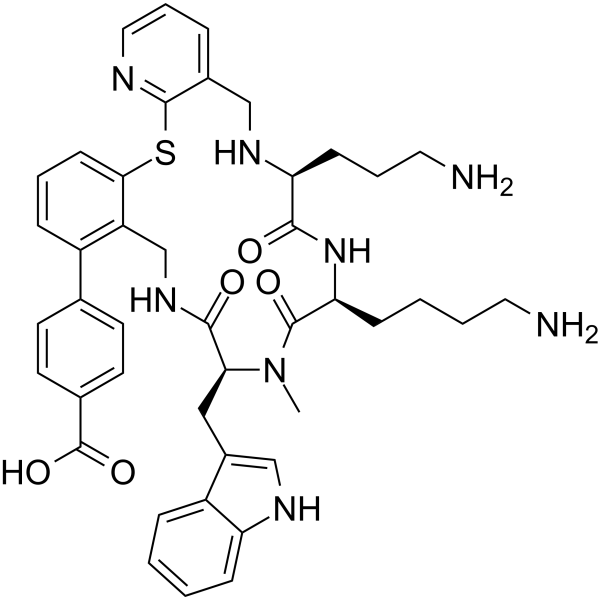
    Zosurabalpin is a polypeptide antibiotic targeting LPS transporter (LptB2FGC complex), which can block the transport of LPS and lead to endotoxin accumulation in cells, and has shown excellent antibacterial activity against Carbapenem-resistant Acinetobacter baumanni (CRAB) .
    Zosurabalpin
  • HY-B0891
    17α-Hydroxyprogesterone
    4 Publications Verification

    17-Hydroxyprogesterone; 17-OHP

    Progesterone Receptor Endogenous Metabolite Cardiovascular Disease
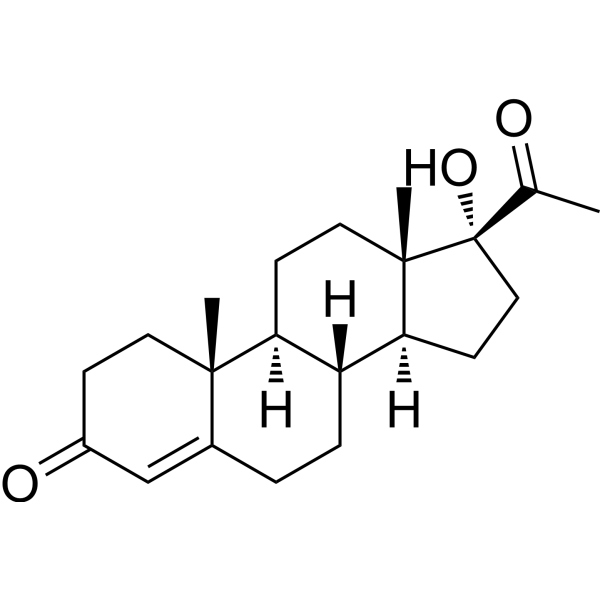
    17α-Hydroxyprogesterone is a steroid hormone. 17α-Hydroxyprogesterone induces ovarian growth and yolk production in female crabs and increases blood pressure in sheep. 17α-Hydroxyprogesterone is mainly used in research related to crustacean reproduction and animal hypertension .
    17α-Hydroxyprogesterone
  • HY-P2853

    p38 MAPK Reactive Oxygen Species (ROS) Bacterial Fungal Infection Inflammation/Immunology Cancer
    Hemocyanin is an extracellular giant copper-containing glycoprotein. Hemocyanin can be found in the hemolymph of both mollusk and arthropod. Hemocyanin is responsible for oxygen transport. Hemocyanin is also involved in several physiological processes, such as energy storage, osmoregulation, molt cycle and exoskeleton formation. Hemocyanin in shrimp can enhance its immune response by modulating the p38 MAPK pathway. Hemocyanin from Penaeus monodon could act as an antiviral agent against a variety of viruses including DNA and RNA viruses. Hemocyanin from horseshoe crab Carcinoscorpius rotundicauda could possess a strong antimicrobial defense by the production of ROS activated with microbial proteases. Hemocyanin from L. vannamei would be effective against cervical cancer cell growth .
    Hemocyanin
  • HY-126389B

    Endogenous Metabolite NF-κB Fungal Infection Inflammation/Immunology
    Chitin, from shrimp shells (chitinase substrate) serves as a substrate for chitinase. Chitin, from shrimp shells (chitinase substrate) is a long-chain polymer of N-acetylglucosamine with β-(1-4) linkages. Chitin, from shrimp shells (chitinase substrate) is found in the exoskeleton of crabs. Chitin, from shrimp shells (chitinase substrate) inhibits the activation of NF-κB p65, alters the translocation of NF-κB p65 to the nucleus, and interacts with the cell wall of Candida species. Chitin, from shrimp shells (chitinase substrate) exerts antifungal and anti-inflammatory effects. Chitin, from shrimp shells (chitinase substrate) can be used in the research of gastric ulcer and candidiasis .
    Chitin, from shrimp shells (chitinase substrate)
  • HY-147349

    ANT3310 sodium

    Beta-lactamase Bacterial Infection
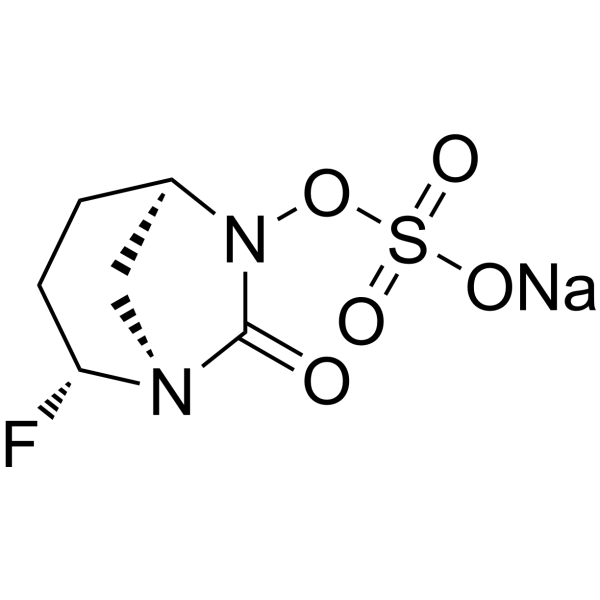
    Pilabactam (ANT3310) sodium is a broad-spectrum covalent Serine β-Lactamase inhibitor, with IC50 values ranging from 1 nM to 175 nM (a panel of Serine β-Lactamase). Pilabactam sodium potentiates activity of β-lactam antibiotics against Carbapenem-Resistant Enterobacterales (CRE) and Acinetobacter baumannii (CRAB). Pilabactam sodium can be used in the research of bacterial infection .
    Pilabactam sodium
  • HY-126389C

    Endogenous Metabolite NF-κB Fungal Infection Inflammation/Immunology
    Chitin, from crab carapace is a long-chain polymer of N-acetylglucosamine with β-(1-4) linkages. Chitin, from crab carapace is found in the exoskeleton of crabs. Chitin, from crab carapace inhibits the activation of NF-κB p65, alters the translocation of NF-κB p65 to the nucleus, and interacts with the cell wall of Candida species. Chitin, from crab carapace exerts antifungal and anti-inflammatory effects. Chitin, from crab carapace can be used in the research of gastric ulcer and candidiasis .
    Chitin, from crab carapace
  • HY-W854341

    Antibiotic Bacterial Infection
    Chitotriose is a chitooligosaccharide that can be isolated from crab shell chitosan. Chitotriose has antibacterial effect against salmonella .
    Chitotriose
  • HY-P0303

    G Protein-coupled Receptor Kinase (GRK) Cardiovascular Disease Neurological Disease
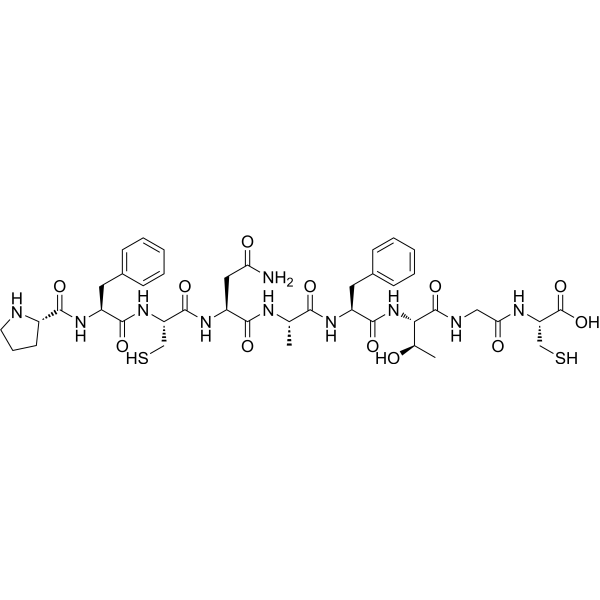
    Crustacean cardioactive peptide, free acid is a highly conserved, amidated cyclic nonapeptide, first isolated from the pericardial organs of the shore crab Carcinus maenas, where it has a role in regulating heartbeat; Crustacean cardioactive peptide, free acid also modulates the neuronal activity in other arthropods.
    Crustacean cardioactive peptide,free acid
  • HY-126389A

    Endogenous Metabolite NF-κB Fungal Infection Inflammation/Immunology
    Chitin, from shrimp shells (powder) is a long-chain polymer of N-acetylglucosamine with β-(1-4) linkages. Chitin, from shrimp shells (powder) is found in the exoskeleton of crabs. Chitin, from shrimp shells (powder) inhibits the activation of NF-κB p65, alters the translocation of NF-κB p65 to the nucleus, and interacts with the cell wall of Candida species. Chitin, from shrimp shells (powder) exerts antifungal and anti-inflammatory effects. Chitin, from shrimp shells (powder) can be used in the research of gastric ulcer and candidiasis .
    Chitin, from shrimp shells (powder)
  • HY-147349A

    ANT3310

    Bacterial Beta-lactamase Infection
    Pilabactam (ANT3310) is a broad-spectrum covalent Serine β-Lactamase inhibitor, with IC50 values ranging from 1 nM to 175 nM (a panel of Serine β-Lactamase). Pilabactam potentiates activity of β-lactam antibiotics against Carbapenem-Resistant Enterobacterales (CRE) and Acinetobacter baumannii (CRAB). Pilabactam can be used in the research of bacterial infection .
    Pilabactam
  • HY-150191

    Lipoxygenase Acetyl-CoA Carboxylase Metabolic Disease
    IMA-1 is an inhibitor that inhibits the interaction between arachidonic acid 12-lipoxygenase (ALOX12) and acetyl-CoA carboxylase 1 (ACC1). IMA-1 significantly blocks the progression of diet-induced non-alcoholic steatohepatitis (NASH) in male mice and crab-eating monkeys, and does not cause hyperlipidemia. IMA-1 can be used for the study of NASH .
    IMA-1
  • HY-159595

    LDLR PCSK9 Metabolic Disease Inflammation/Immunology
    PCSK9-IN-29 is a lipid-lowering agent. PCSK9-IN-29 can increase low-density lipoprotein receptor (LDLR) protein expression and decrease PCSK9 protein expression in hepG2 cells. PCSK9-IN-29 can reduce the levels of serum LDL-C, TC, and liver enzyme ALT in crab eating macaques fed a high-fat diet, lower body weight and fat, and increase bone mineral content. PCSK9-IN-29 can be used for research on non-alcoholic fatty liver disease and obesity .
    PCSK9-IN-29
  • HY-W145695

    Biochemical Assay Reagents Apoptosis Interleukin Related IFNAR Cardiovascular Disease Inflammation/Immunology
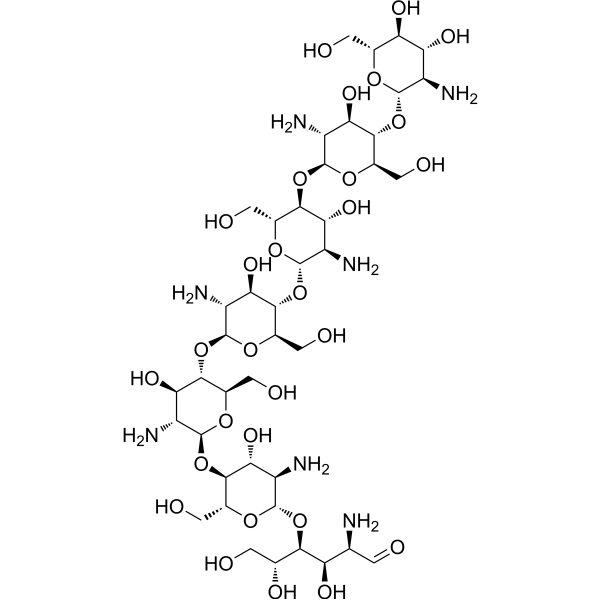
    Chitoheptaose is an orally active chitooligosaccharide (degree of polymerization = 7). Chitoheptaose can be extracted from the exoskeletons of crustaceans, such as the shells of crabs, shrimps and lobsters. Chitoheptaose reduces pro-inflammatory cytokines while increasing the levels of anti-inflammatory cytokines (decreasing the levels of pro-inflammatory cytokines IL-1β, IL-17A and IFN-γ, and increasing the level of the anti-inflammatory cytokine IL-10). Chitoheptaose possesses antioxidant, anti-inflammatory and anti-Apoptotic activities. Chitoheptaose improves cardiac parameters, alleviates myocarditis injury, and exerts cardioprotective effects in a rat model of myocarditis. Chitoheptaose can be used in studies related to myocarditis .
    Chitoheptaose
  • HY-178384

    Bacterial Infection
    Antibacterial agent 294 is an antibacterial agent. Antibacterial agent 294 shows antibacterial effect against carbapenem-resistant Acinetobacter baumannii (CRAB) with a MIC of 0.5 μg/mL. Antibacterial agent 294 can be used for the research of infection .
    Antibacterial agent 294
  • HY-W750707

    Drug Metabolite Others
    4-Hydroxyechinenone is a trace carotenoid present in the carapaces of crabs. 4-Hydroxyechinenone is also an intermediate in the metabolism of β-Carotene (HY-N0411) to Astaxanthin (HY-B2163) .
    4-Hydroxyechinenone
  • HY-W795031

    Bacterial Infection
    Arsenobetaine is an organoarsenical and a compatible solute that has been found in various marine animals, such as lobsters and crabs, as well as terrestrial organisms, including earthworms and lichens. Arsenobetaine is protective against B. subtilis cell death induced by high osmolarity or extreme temperatures when used at a concentration of 1 mM .
    Arsenobetaine
  • HY-W111403

    Environmental Pollutants Biochemical Assay Reagents Others
    Calcium oxide (CaO) acts as a heterogeneous base catalyst. Calcium oxide can be extracted not only from waste materials such as oyster shells, eggshells and crab shells, but also exhibits tolerance to low to moderate oil quality, free fatty acid and water content in raw materials. Calcium oxide can be used in biodiesel production, where it effectively catalyzes the transesterification of vegetable oils or animal fats to produce alkyl esters .
    Calcium oxide
  • HY-174852

    Antibiotic Bacterial Infection
    Antibacterial agent 285 (Compound 3) is a cephalosporin antibiotic. Antibacterial agent 285 has significant antibacterial activity against gram-negative bacterium with MICs of 0.125-0.5, 0.125-0.5 and 0.125-2 μg/mL for carbapenem-resistant Acinetobacter baumannii (CRAB), Klebsiella pneumoniae (CRE) and Pseudomonas aeruginosa (CRPA), respectively. Antibacterial agent 285 can be used for bacterial infection research, such as complicated urinary tract infections (cUTI) and kidney infections .
    Antibacterial agent 285
  • HY-P11475

    Bacterial Reactive Oxygen Species (ROS) Infection
    DD-S067 is an antibacterial peptide. DD-S067 exhibits multiple antibacterial mechanisms, including disrupting both the outer and inner bacterial membranes, and inducing ROS that trigger lipid peroxidation. DD-S067 inhibits the electron transport chain. DD-S067 demonstrates potent antibacterial activity, achieving a GM value of 4.1 μM against 27 MDR bacteria. DD-S067 exhibits significant protective effects in a CRAB-induced septic shock mouse model .
    DD-S067

Inquiry Online

Your information is safe with us. * Required Fields.

Salutation


Country or Region *

Applicant Name *


Organization Name *

Department *


Email Address *


Product Name *

Cat. No.


Requested quantity *

Phone Number *


Remarks

Inquiry Online

Inquiry Information

Product Name:
Cat. No.:
Quantity:
MCE Japan Authorized Agent:

