1. Search Result
Search Result
Results for "

Click Chemicals

" in MedChemExpress (MCE) Product Catalog:

101

Inhibitors & Agonists

3

Screening Libraries

4

Fluorescent Dye

13

Biochemical Assay Reagents

1

Peptides

72

Click Chemistry

Cat. No. Product Name Target Research Areas Chemical Structure
  • HY-151857
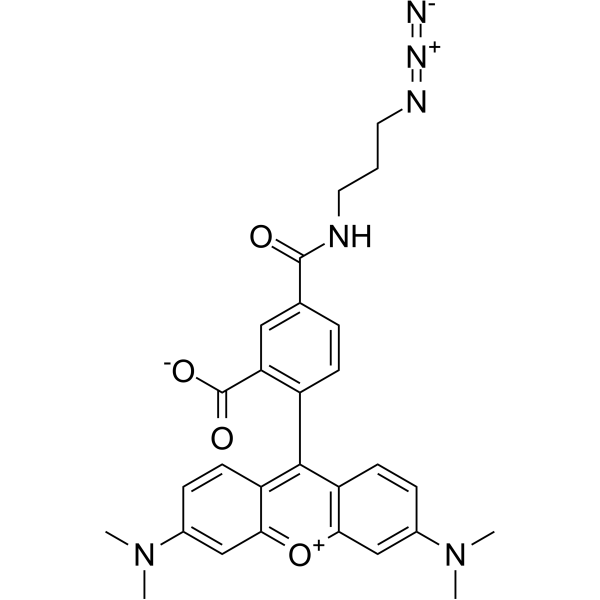
    TAMRA azide, 5-isomer
    1 Publications Verification

    Fluorescent Dye Others
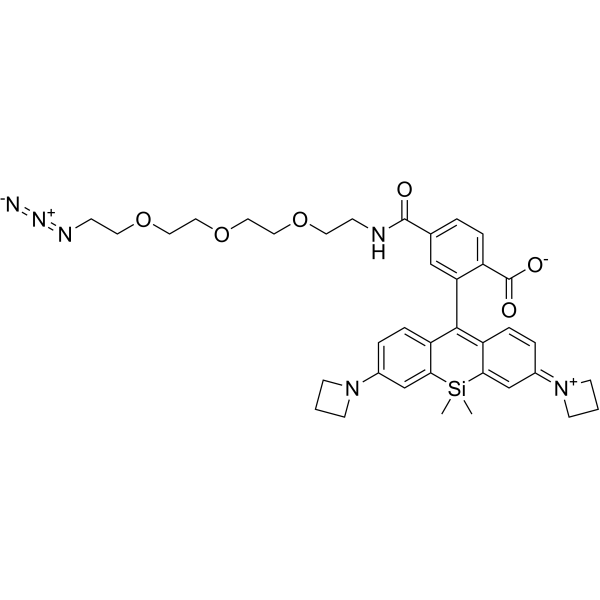
    TAMRA azide, 5-isomer is a click chemical containing azide groups that can be used as a linker for TAMRA. The azide group of TAMRA Azide, 5-isomer enables copper-catalyzed click chemical reactions with alkynes, DBCO, and BCN . It contains an azide group and can undergo copper-catalyzed azide-alkyne cycloaddition (CuAAc) with molecules containing alkyne groups. It can also undergo ring strain-promoted alkyne-azide cycloaddition (SPAAC) with molecules containing DBCO or BCN groups (Ex/Em = 555/580 nm).
    TAMRA azide, 5-isomer
  • HY-19725
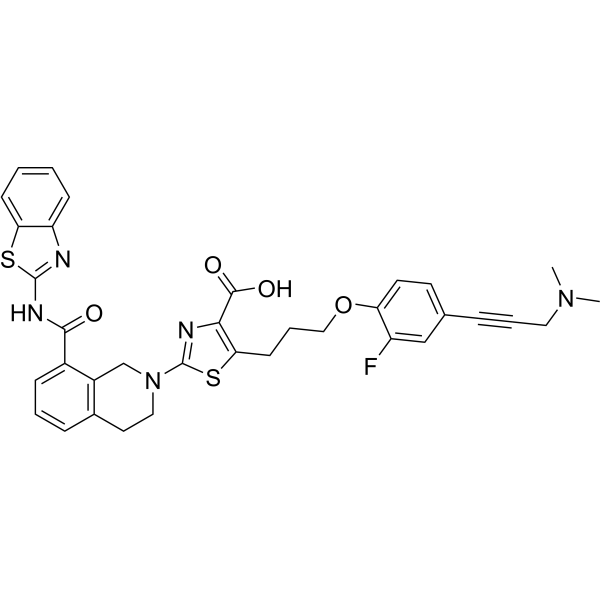
    A-1155463
    Maximum Cited Publications
    23 Publications Verification

    Bcl-2 Family Cancer
    A-1155463, a chemical probe, is a highly potent and selective BCL-XL inhibitor with an EC50 of 70 nM in Molt-4 cell. A-1155463 is a click chemistry reagent, it contains an Alkyne group and can undergo copper-catalyzed azide-alkyne cycloaddition (CuAAc) with molecules containing Azide groups.
    A-1155463
  • HY-140345
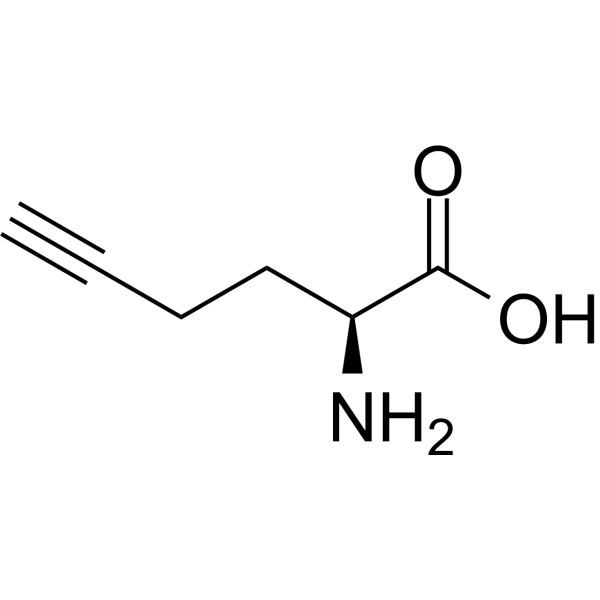
    L-Homopropargylglycine
    2 Publications Verification

    PROTAC Linkers Cancer
    L-Homopropargylglycine is an alkyl chain-based PROTAC linker that can be used in the synthesis of PROTACs. L-homopropargylglycine is an amino acid analog of methionine containing an alkyne moiety that can undergo a classic click chemical reaction with azide containing Alexa Fluor .
    L-Homopropargylglycine
  • HY-W048205

    Amino Acid Derivatives Others
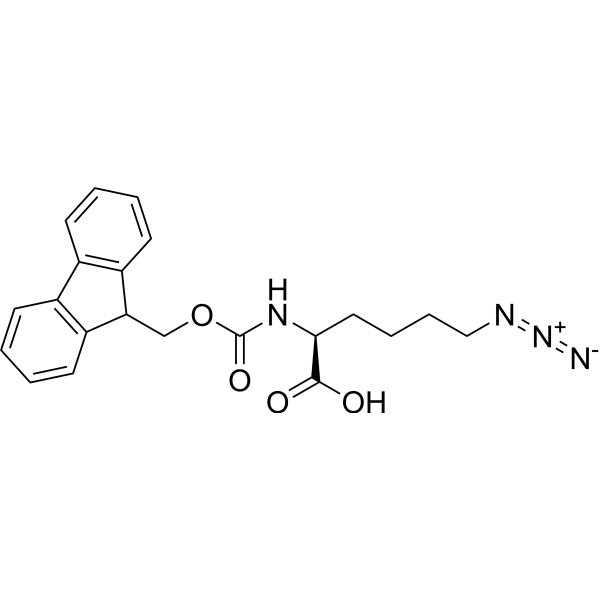
    N6-Diazo-L-Fmoc-lysine is an active compand and can be used in a variety of chemical studies. N6-Diazo-L-Fmoc-lysine is a click chemistry reagent, it contains an Azide group and can undergo copper-catalyzed azide-alkyne cycloaddition reaction (CuAAc) with molecules containing Alkyne groups. It can also undergo strain-promoted alkyne-azide cycloaddition (SPAAC) reactions with molecules containing DBCO or BCN groups.
    N6-Diazo-L-Fmoc-lysine
  • HY-140679

    mPEG20000-NH2

    PROTAC Linkers Cancer
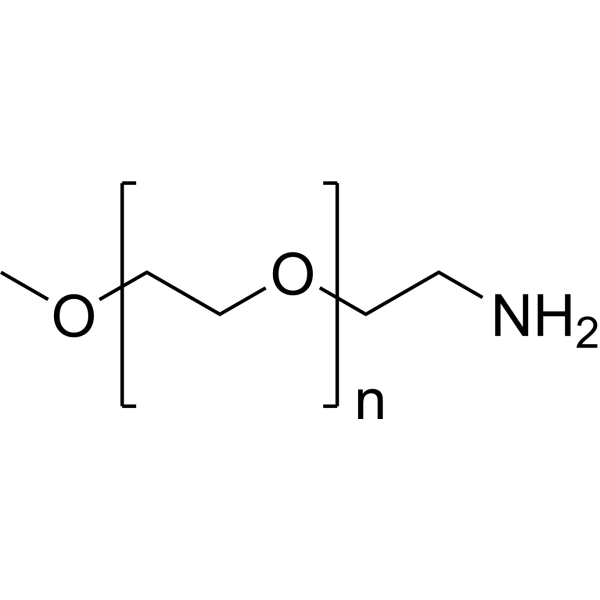
    DBCO-PEG20000-Amine (DBCO-PEG20000-NH2) is a polyethylene glycol derivative containing dibenzocyclooctyne. DBCO-PEG-Amine is a universal, modular "bridge molecule": it forms stable covalent linkage with target materials (e.g., MSN or polymers) via the amino group at one end, while the DBCO group at the other end enables efficient, specific, and biocompatible click chemical conjugation with any azide-bearing biological entities (e.g., bacteria, cells) in subsequent steps .
    mPEG20000-amine
  • HY-140677

    mPEG5000-NH2

    PROTAC Linkers Cancer
    DBCO-PEG5000-Amine (DBCO-PEG5000-NH2) is a polyethylene glycol derivative containing dibenzocyclooctyne. DBCO-PEG-Amine is a universal, modular "bridge molecule": it forms stable covalent linkage with target materials (e.g., MSN or polymers) via the amino group at one end, while the DBCO group at the other end enables efficient, specific, and biocompatible click chemical conjugation with any azide-bearing biological entities (e.g., bacteria, cells) in subsequent steps .
    mPEG5000-amine
  • HY-140676

    mPEG2000-NH2

    PROTAC Linkers Cancer
    DBCO-PEG2000-Amine (DBCO-PEG2000-NH2) is a polyethylene glycol derivative containing dibenzocyclooctyne. DBCO-PEG-Amine is a universal, modular "bridge molecule": it forms stable covalent linkage with target materials (e.g., MSN or polymers) via the amino group at one end, while the DBCO group at the other end enables efficient, specific, and biocompatible click chemical conjugation with any azide-bearing biological entities (e.g., bacteria, cells) in subsequent steps .
    mPEG2000-amine
  • HY-132301

    MCT4-IN-1

    Monocarboxylate Transporter Cancer
    MSC-4381 (MCT4-IN-1), a chemical probe, is an orally active and selective monocarboxylate transporter 4 (MCT4/SLC16A3) inhibitor with an IC50 of 77 nM and a Ki of 11 nM. MSC-4381 targets to the cytosolic domain of MCT4. MSC-4381 results in lactate efflux inhibition and reduction of cellular viability in MCT4 high expressing cells. MSC-4381 has the potential for MCT4 transporter inhibition research . MSC-4381 is a click chemistry reagent, it contains an Alkyne group and can undergo copper-catalyzed azide-alkyne cycloaddition (CuAAc) with molecules containing Azide groups.
    MSC-4381
  • HY-127112

    Drug Derivative Others
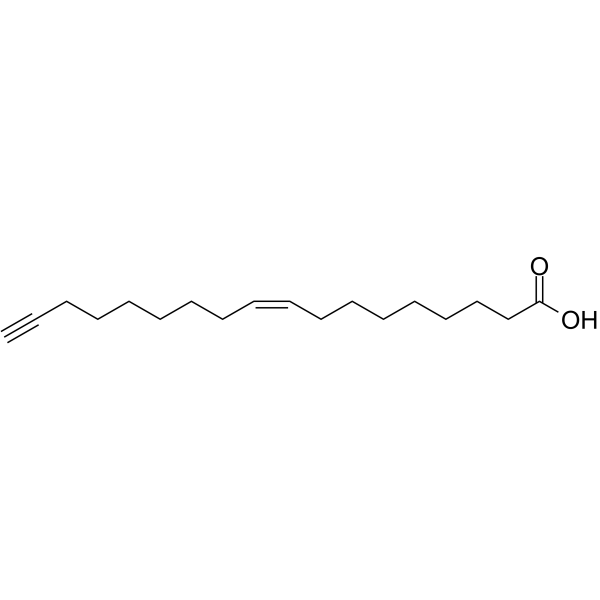
    Oleic acid alkyne is Oleic acid (HY-N1446) with an acetylene group. The terminal alkyne group can be used for click chemical ligation reactions. Oleic acid can be hydroxylated by a microsomal cytochrome P-450-dependent system (ω-OAH). Through click chemistry reactions, fluorescent or biotin-labeled oleic acid can be introduced to analyze its metabolism and biological activity.
    Oleic acid alkyne
  • HY-126192

    PiB; 6-OH-BTA-1

    Amyloid-β Neurological Disease
    Pittsburgh Compound B (PiB) is a blood-brain barrier-permeable, specific deposition PET tracer that binds to Aβ(1-40) fibrils with a Ki value of 678.4 nM. Through click chemical modification (a clickable Pittsburgh Compound B derivative is prepared by introducing a PEG3 linker and an alkynyl group at the 6-hydroxy site of Pittsburgh Compound B, followed by covalent conjugation with azide-labeled fluorescent dyes or affinity tags via copper-catalyzed azide-alkyne cycloaddition (CuAAC)), Pittsburgh Compound B and its conjugates can be used for fluorescence imaging, ultrastructural studies, and enrichment and characterization of Aβ complexes. Pittsburgh Compound B is applicable to Alzheimer's disease research .
    Pittsburgh Compound B
  • HY-111434A

    UAA crosslinker 1 hydrochloride

    Amino Acid Derivatives Cancer
    N6-[(2-Azidoethoxy)carbonyl]-L-lysine hydrochloride (UAA crosslinker 1 hydrochloride) is a click chemistry-reactive amino acid derivative. N6-[(2-Azidoethoxy)carbonyl]-L-lysine hydrochloride mediates the generation of antibody-drug conjugates (ADCs). N6-[(2-Azidoethoxy)carbonyl]-L-lysine hydrochloride is used for site-specific incorporation into recombinant proteins, or for synthesizing chemical probes and tools for biological research .
    N6-[(2-Azidoethoxy)carbonyl]-L-lysine hydrochloride
  • HY-140675

    mPEG1000-NH2

    PROTAC Linkers Cancer
    DBCO-PEG1000-Amine (DBCO-PEG1000-NH2) is a polyethylene glycol derivative containing dibenzocyclooctyne. DBCO-PEG-Amine is a universal, modular "bridge molecule": it forms stable covalent linkage with target materials (e.g., MSN or polymers) via the amino group at one end, while the DBCO group at the other end enables efficient, specific, and biocompatible click chemical conjugation with any azide-bearing biological entities (e.g., bacteria, cells) in subsequent steps .
    mPEG1000-amine
  • HY-156311

    ADC Linker Cancer
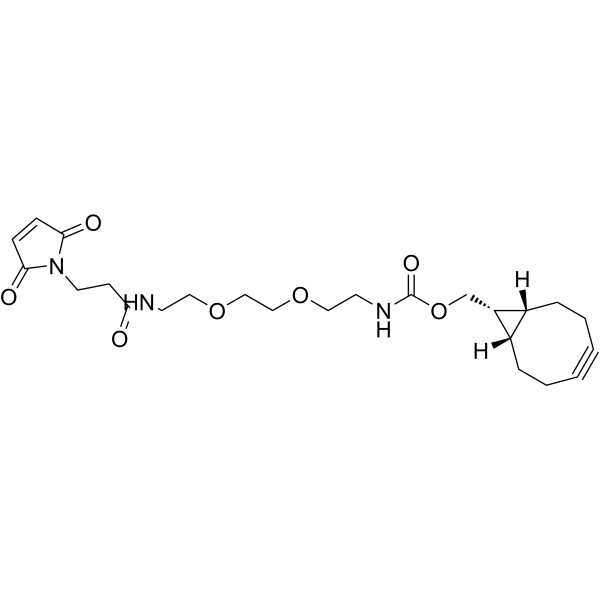
    BCN-endo-PEG2-maleimide is an ADC Linker containing 4 PEG units. BCN-endo-PEG2-maleimide contains the lyophilic bidentate macrocyclic ligand endo-BCN, which can further synthesize macrocyclic complexes. In click chemistry, endo-BCN can react with molecules containing azide groups to form stable triazoles in the absence of catalysts. Its maleimide group (-Maleimide) degrades in aqueous media and has been used in drug delivery studies.
    BCN-endo-PEG2-maleimide
  • HY-W096079

    ADC Linker Cancer
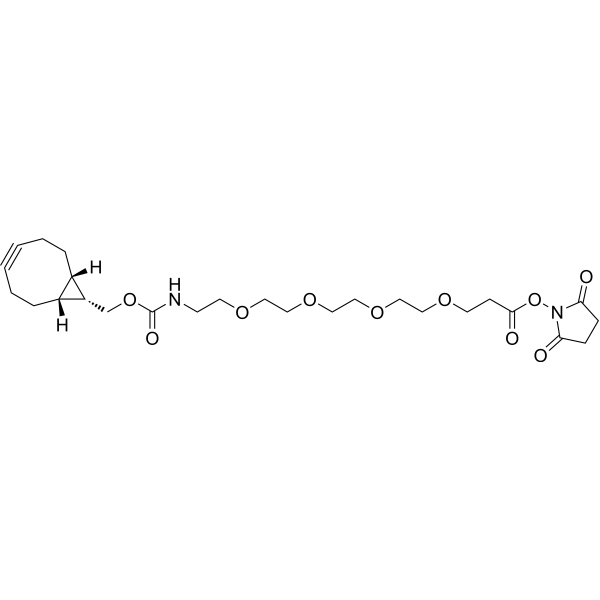
    BCN-endo-PEG4-NHS is an ADC Linker containing 4 PEG units. BCN-endo-PEG4-NHS contains the lyophilic bidentate macrocyclic ligand endo-BCN, which allows for further synthesis of macrocyclic complexes. In click chemistry, endo-BCN can react with molecules containing azide groups to form stable triazoles in the absence of catalysts.
    BCN-endo-PEG4-NHS
  • HY-W879064

    Biochemical Assay Reagents Others
    DBCO-Palmitic is a click chemical organic compound. DBCO-Palmitic can be used in the azide-alkyne cycloaddition (SPAAC) reaction.
    DBCO-Palmitic
  • HY-140345A
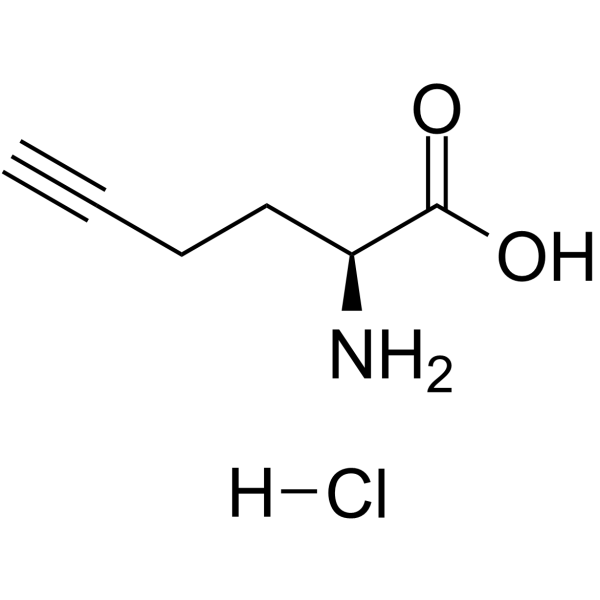
    L-Homopropargylglycine hydrochloride
    2 Publications Verification

    PROTAC Linkers Cancer
    L-Homopropargylglycine hydrochloride is an alkyl chain-based PROTAC linker that can be used in the synthesis of PROTACs. L-homopropargylglycine hydrochloride is an amino acid analog of methionine containing an alkyne moiety that can undergo a classic click chemical reaction with azide containing Alexa Fluor .
    L-Homopropargylglycine hydrochloride
  • HY-140678

    mPEG10000-NH2

    PROTAC Linkers Cancer
    DBCO-PEG10000-Amine (DBCO-PEG10000-NH2) is a polyethylene glycol derivative containing dibenzocyclooctyne. DBCO-PEG-Amine is a universal, modular "bridge molecule": it forms stable covalent linkage with target materials (e.g., MSN or polymers) via the amino group at one end, while the DBCO group at the other end enables efficient, specific, and biocompatible click chemical conjugation with any azide-bearing biological entities (e.g., bacteria, cells) in subsequent steps .
    mPEG10000-amine
  • HY-134734

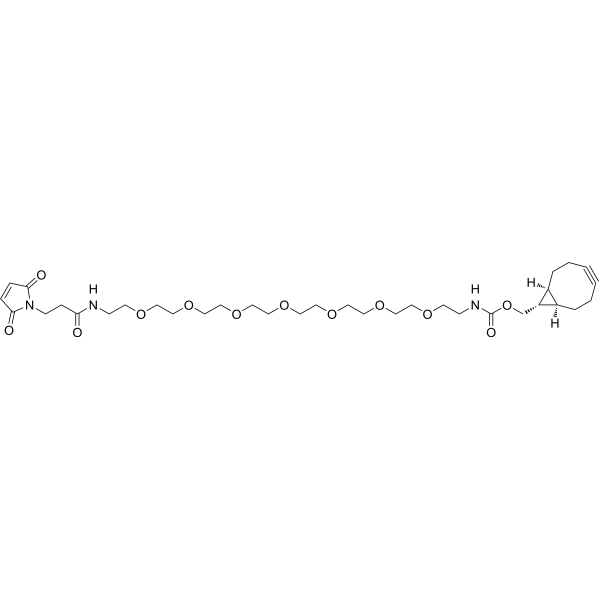
    ADC Linker Cancer
    BCN-exo-PEG7-maleimide is an ADC Linker containing 7 PEG units. BCN-exo-PEG7-maleimide contains the lyophilic bidentate macrocyclic ligand BCN, which allows for further synthesis of macrocyclic complexes. In click chemistry, BCN reacts with molecules containing azide groups to form stable triazoles in the absence of catalysts. Its maleimide group (-Maleimide) degrades in aqueous media and has been used in drug delivery studies.
    BCN-exo-PEG7-maleimide
  • HY-157006

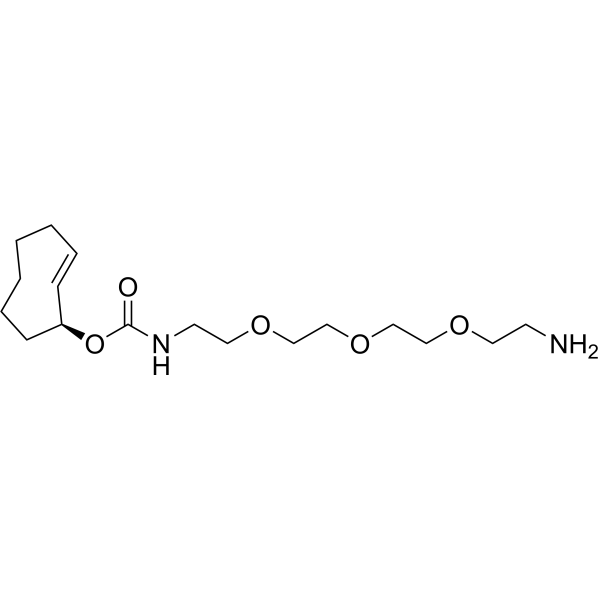
    ADC Linker Cancer
    (S)-TCO-PEG3-NH2 is an ADC linker containing 3 PEG units. (S)-TCO-PEG3-NH2 can use its own TCO group to perform the inverse electron demand Diels-Alder reaction (iEDDA) with molecules with Tetrazine groups.
    (S)-TCO-PEG3-NH2
  • HY-145016

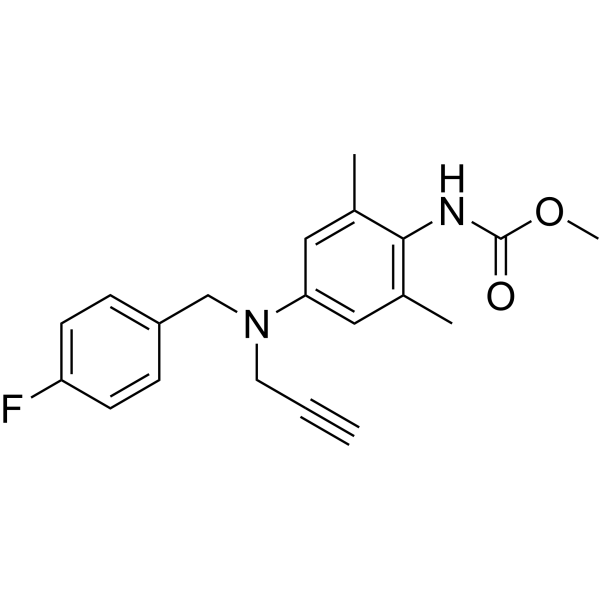
    Potassium Channel Neurological Disease
    HN37 as a potent and chemically stable antiepileptic agent candidate, with an EC50 of 37 nM for KCNQ2 . HN37 is a click chemistry reagent, it contains an Alkyne group and can undergo copper-catalyzed azide-alkyne cycloaddition (CuAAc) with molecules containing Azide groups.
    HN37
  • HY-D2443

    Fluorescent Dye Cancer
    AF594 DBCO is an AlexaFluor 594-conjugated DBCO click chemistry probe for fluorescent labeling of azido-modified cholesterol probes. DBCO is a commonly used chemical biomarker group. AF594 DBCO (Excitation wavelength about 590 nm, emission wavelength about 617 nm) can be used to label proteins, cells and other biomolecules for fluorescence imaging and flow cytometry detection .
    AF594 DBCO
  • HY-111434

    UAA crosslinker 1

    Amino Acid Derivatives Cancer
    N6-[(2-Azidoethoxy) carbonyl]-L-lysine (UAA crosslinker 1) is a click chemistry-reactive amino acid derivative. N6-[(2-Azidoethoxy) carbonyl]-L-lysine mediates the generation of antibody-drug conjugates (ADCs). N6-[(2-Azidoethoxy) carbonyl]-L-lysine is used for site-specific incorporation into recombinant proteins, or for synthesizing chemical probes and tools for biological research .
    N6-[(2-Azidoethoxy)carbonyl]-L-lysine
  • HY-148254

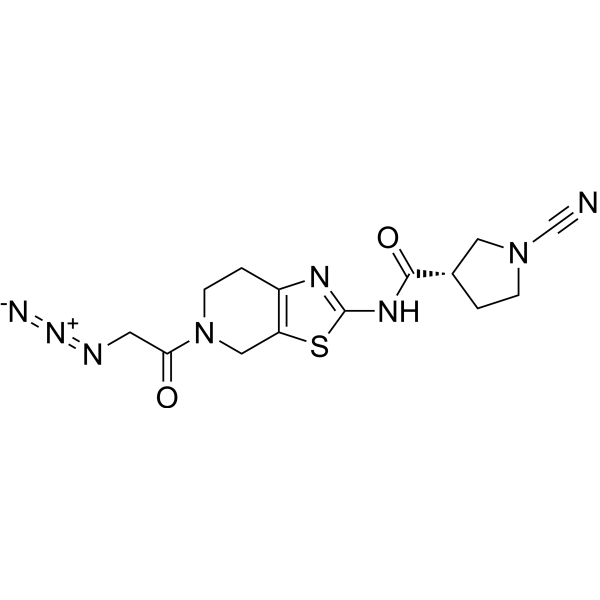
    Deubiquitinase Cancer
    8RK64, a chemical probe, is a covalent UCHL1 inhibitor (IC50: 0.32 μM) . 8RK64 is a click chemistry reagent, it contains an Azide group and can undergo copper-catalyzed azide-alkyne cycloaddition reaction (CuAAc) with molecules containing Alkyne groups. It can also undergo strain-promoted alkyne-azide cycloaddition (SPAAC) reactions with molecules containing DBCO or BCN groups.
    8RK64
  • HY-151473

    PIKfyve Infection Cancer
    PIKfyve-IN-1 is a highly potent and cell-active chemical probe that inhibits phosphatidylinositol-3phosphate 5-kinase (PIKfyve) with IC50 value of 6.9 nM. PIKfyve-IN-1 can be used for the research of PIKfyve in virology . PIKfyve-IN-1 is a click chemistry reagent, it contains an Alkyne group and can undergo copper-catalyzed azide-alkyne cycloaddition (CuAAc) with molecules containing Azide groups.
    PIKfyve-IN-1
  • HY-156322

    ADC Linker Cancer
    BCN-exo-PEG3-maleimide is an ADC Linker containing 3 PEG units. BCN-exo-PEG3-maleimide contains the lyophilic bidentate macrocyclic ligand BCN, which enables the further synthesis of macrocyclic complexes. In click chemistry, BCN reacts with molecules containing azide groups to form stable triazoles in the absence of catalysts. Its maleimide group (-Maleimide) degrades in aqueous media and has been used in drug delivery studies.
    BCN-exo-PEG3-maleimide
  • HY-113803

    4-HNE alkyne

    Biochemical Assay Reagents Cancer
    4-Hydroxynonenal alkyne (4-HNE alkyne) is a click chemical reagent containing alkynes. 4-Hydroxynonenal alkyne induces heme oxygenase and cell apoptosis in colon cancer (RKO) cells .
    4-Hydroxynonenal alkyne
  • HY-174935

    Biochemical Assay Reagents Others
    DBCO-PEG1000-NHS is a dibenzocyclooctyne-conjugated polyethylene glycol derivative bearing an NHS group. DBCO-PEG-NHS forms a stable covalent linkage with the amino group of target molecules via the NHS ester at one end, while introducing a DBCO group at the other end, thus preparing for subsequent click chemical conjugation with any azide-bearing molecule or material .
    DBCO-PEG1000-NHS
  • HY-W588717

    Biochemical Assay Reagents Others
    DBCO-Tetraacetyl mannosamine is an organic compound commonly used for chemical alteration and modification in biological research. It can be used to modify glycoproteins, cell surface molecules, and other biomolecules, and is widely used in biomarking and purification techniques. In addition, this compound is used as a carrier for drugs in certain drug controlled release systems. DBCO-Tetraacetyl mannosamine is a click chemistry reagent, it contains a DBCO group that can undergo strain-promoted alkyne-azide cycloaddition (SPAAC) with molecules containing Azide groups.
    DBCO-Tetraacetyl mannosamine
  • HY-151771

    ADC Linker Others
    DACN(Tos,Mal) is a click chemistry reagent containing an azide. DACN(Tos,Mal) possess high thermal and chemical stability along with comparable click reactivity .
    DACN(Tos,Mal)
  • HY-156313

    ADC Linker Cancer
    Me-Tet-PEG4-NHS is an ADC Linker containing 4 PEG units. Me-Tet-PEG4-NHS can utilize its own Tetrazine group to undergo a specific inverse electron demand Diels-Alder reaction (iEDDA) with compounds with TCO groups.
    Me-Tet-PEG4-NHS
  • HY-156320

    ADC Linker Cancer
    BCN-exo-PEG2-maleimide is an ADC Linker containing 2 PEG units. BCN-exo-PEG2-maleimide contains the lyophilic bidentate macrocyclic ligand BCN, which allows for further synthesis of macrocyclic complexes. In click chemistry, BCN reacts with molecules containing azide groups to form stable triazoles in the absence of catalysts. Its maleimide group (-Maleimide) degrades in aqueous media and has been used in drug delivery studies.
    BCN-exo-PEG2-maleimide
  • HY-W591393

    Biochemical Assay Reagents Cancer
    Biotin Azide Plus is an oxazolidine reagent that integrates azide-biotin click chemistry and a photocleavable linker arm. Biotin Azide Plus not only reacts with biotin thioether to form stable sulfinimide products, but also enables bioconjugation of proteins and DNA through biotin redox-activated chemical labeling technology. Taking advantage of the streptavidin capture and photo-release properties, Biotin Azide Plus effectively facilitates the isolation of lipid-derived electrophile-protein adducts, thus finding wide application in scientific research related to fields such as SKBR3 cancer .
    Biotin Azide Plus
  • HY-151747

    ADC Linker Others
    Chemical phosphorylation amidite is a click chemical class ADC linker. Click chemistry has good biological orthogonality characteristics: biocompatible, fast and highly specific in the biological environment, and has great application potential in the binding between nucleic acids, lipids, proteins and other molecules .
    Chemical phosphorylation amidite
  • HY-151823

    ADC Linker Others
    8-Azido-octanoyl-OSu is a click chemistry reagent containing an azide group. Used as a building block to introduce 8-azidooctanoic acid (CAS 217180-76-2) fragment. This fragment is used for further modifications using Click-chemistry (CuAAC), as a protected aminogroup or is used in physico-chemical investigations . It contains an azide group and can undergo copper-catalyzed azide-alkyne cycloaddition (CuAAc) with molecules containing alkyne groups. It can also undergo ring strain-promoted alkyne-azide cycloaddition (SPAAC) with molecules containing DBCO or BCN groups.
    8-Azido-octanoyl-OSu
  • HY-111302

    Progesterone Receptor Endocrinology
    Norgestrienone is a progestin receptor agonist. Norgestrienone is commonly used as a progesterone compound in birth control pills and can be combined with ethinylestradiol. Norgestrienone is a click chemical. It contains Alkyne groups and can undergo copper-catalyzed azide-alkyne cycloaddition reactions (CuAAc) with molecules containing Azide groups. Norgestrienone can be used in the study of hereditary angioneurotic edema .
    Norgestrienone
  • HY-174935A

    Biochemical Assay Reagents Others
    DBCO-PEG2000-NHS is a dibenzocyclooctyne-conjugated polyethylene glycol derivative bearing an NHS group. DBCO-PEG-NHS forms a stable covalent linkage with the amino group of target molecules via the NHS ester at one end, while introducing a DBCO group at the other end, thus preparing for subsequent click chemical conjugation with any azide-bearing molecule or material .
    DBCO-PEG2000-NHS
  • HY-174929A

    DBCO-PEG5000-NH2

    Biochemical Assay Reagents Others
    DBCO-PEG5000-Amine (DBCO-PEG5000-NH2) is a polyethylene glycol derivative containing dibenzocyclooctyne. DBCO-PEG-Amine is a universal, modular "bridge molecule": it forms stable covalent linkage with target materials (e.g., MSN or polymers) via the amino group at one end, while the DBCO group at the other end enables efficient, specific, and biocompatible click chemical conjugation with any azide-bearing biological entities (e.g., bacteria, cells) in subsequent steps .
    DBCO-PEG5000-Amine
  • HY-156317

    ADC Linker Cancer
    BCN-endo-PEG7-maleimide is an ADC Linker containing 7 PEG units. BCN-endo-PEG7-maleimide contains the lyophilic bidentate macrocyclic ligand endo-BCN, which can further synthesize macrocyclic complexes. In click chemistry, endo-BCN can react with molecules containing azide groups to form stable triazoles in the absence of catalysts.
    BCN-endo-PEG7-maleimide
  • HY-W591272A

    ADC Linker Cancer
    Me-Tet-PEG3-NH2 hydrochloride is an ADC Linker containing 3 PEG units. Me-Tet-PEG3-NH2 hydrochloride can use its own Tetrazine group to undergo a specific inverse electron demand Diels-Alder reaction (iEDDA) with compounds with TCO groups .
    Me-Tet-PEG3-NH2 hydrochloride
  • HY-W591272

    ADC Linker Cancer
    Me-Tet-PEG3-NH2 is an ADC Linker containing 3 PEG units. Me-Tet-PEG3-NH2 can use its own Tetrazine group to undergo a specific inverse electron demand Diels-Alder reaction (iEDDA) with compounds with TCO groups .
    Me-Tet-PEG3-NH2
  • HY-156308

    ADC Linker Cancer
    Me-Tet-PEG4-Maleimide is an ADC Linker containing 4 PEG units. Me-Tet-PEG4-Maleimide can utilize its own Tetrazine group to undergo a specific inverse electron demand Diels-Alder reaction (iEDDA) with compounds with TCO groups. Its maleimide group (-Maleimide) degrades in aqueous media and has been used in drug delivery studies.
    Me-Tet-PEG4-Maleimide
  • HY-151745

    ADC Linker Others
    N3-TOTA-Suc is a click chemistry reagent containing an azide group. Click chemistry is a powerful chemical reaction with excellent bioorthogonality features: biocompatible, rapid and highly specific in biological environments . N3-TOTA-Suc is a click chemistry reagent, it contains an Azide group and can undergo copper-catalyzed azide-alkyne cycloaddition reaction (CuAAc) with molecules containing Alkyne groups. It can also undergo strain-promoted alkyne-azide cycloaddition (SPAAC) reactions with molecules containing DBCO or BCN groups.
    N3-TOTA-Suc
  • HY-151795

    ADC Linker Others
    DACN(Tos) hydrochloride is a click chemistry reagent containing a cycloalkyne group. The alkyne moiety within the ring has a unique bent structure and high reactivity toward cycloaddition reactions, such strain-promoted azide-alkyne cycloadditions (SPAAC) by using cycloalkynes. DACNs possesses high thermal and chemical stability along with comparable click reactivity. DACN(Tos) hydrochloride can be used for the research of molecular conjugation .
    DACN(Tos) hydrochloride
  • HY-151749

    ADC Linker Others
    N3-D-Lys(Fmoc)-OH is a click chemistry reagent containing an azide group. Click chemistry is a powerful chemical reaction with excellent bioorthogonality features: biocompatible, rapid and highly specific in biological environments . N3-D-Lys(Fmoc)-OH is a click chemistry reagent, it contains an Azide group and can undergo copper-catalyzed azide-alkyne cycloaddition reaction (CuAAc) with molecules containing Alkyne groups. It can also undergo strain-promoted alkyne-azide cycloaddition (SPAAC) reactions with molecules containing DBCO or BCN groups.
    N3-D-Lys(Fmoc)-OH
  • HY-151736

    ADC Linker Others
    N3-L-Dap(Boc)-OH is a click chemistry reagent containing an azide group. Click chemistry is a powerful chemical reaction with excellent bioorthogonality features: biocompatible, rapid and highly specific in biological environments . N3-L-Dap(Boc)-OH is a click chemistry reagent, it contains an Azide group and can undergo copper-catalyzed azide-alkyne cycloaddition reaction (CuAAc) with molecules containing Alkyne groups. It can also undergo strain-promoted alkyne-azide cycloaddition (SPAAC) reactions with molecules containing DBCO or BCN groups.
    N3-L-Dap(Boc)-OH
  • HY-151794

    ADC Linker Others
    DACN(Ms) hydrochloride (compound 1ba) is a click chemistry reagent containing cyclononyne alkyne. DCN(Ms) hydrochloride has high thermal stability, chemical stability, water solubility, and high reactivity for cycloaddition reactions .
    DACN(Ms) hydrochloride
  • HY-176846

    Biochemical Assay Reagents Others
    HIPS probe-1 (Compound 1) is a click chemistry reagent containing a alkyne group. HIPS probe-1 can undergo copper-catalyzed azide-alkyne cycloaddition (CuAAc) with molecules containing Azide groups. HIPS probe-1 can be used as a chemical probe to specifically recognize and label aldehyde functional groups in DNA, especially abasic sites (AP sites) for DNA damage research .
    HIPS probe-1
  • HY-156307

    ADC Linker Cancer
    Me-Tet-PEG3-Maleimide is an ADC Linker containing 3 PEG units. Me-Tet-PEG3-Maleimide can utilize its own Tetrazine group to undergo a specific inverse electron demand Diels-Alder reaction (iEDDA) with compounds with TCO groups. Its maleimide group (-Maleimide) degrades in aqueous media and has been used in drug delivery studies.
    Me-Tet-PEG3-Maleimide
  • HY-156312

    ADC Linker Cancer
    Me-Tet-PEG8-Maleimide is an ADC Linker containing 8 PEG units. Me-Tet-PEG8-Maleimide can utilize its own Tetrazine group to undergo a specific inverse electron demand Diels-Alder reaction (iEDDA) with compounds with TCO groups. Its maleimide group (-Maleimide) degrades in aqueous media and has been used in drug delivery studies.
    Me-Tet-PEG8-Maleimide
  • HY-156319

    ADC Linker Cancer
    BCN-exo-PEG2-NH2 is an ADC Linker containing 2 PEG units. BCN-exo-PEG2-NH2 contains the lyophilic bidentate macrocyclic ligand BCN, which can further synthesize macrocyclic complexes. In click chemistry, BCN reacts with molecules containing azide groups to form stable triazoles in the absence of catalysts.
    BCN-exo-PEG2-NH2

Inquiry Online

Your information is safe with us. * Required Fields.

Salutation


Country or Region *

Applicant Name *


Organization Name *

Department *


Email Address *


Product Name *

Cat. No.


Requested quantity *

Phone Number *


Remarks

Inquiry Online

Inquiry Information

Product Name:
Cat. No.:
Quantity:
MCE Japan Authorized Agent: