1. Search Result
Search Result
Results for "

Cortex neurons

" in MedChemExpress (MCE) Product Catalog:

16

Inhibitors & Agonists

1

Peptides

1

MCE Kits

1

Inhibitory Antibodies

3

Natural
Products

1

Oligonucleotides

Cat. No. Product Name Target Research Areas Chemical Structure
  • HY-N0067
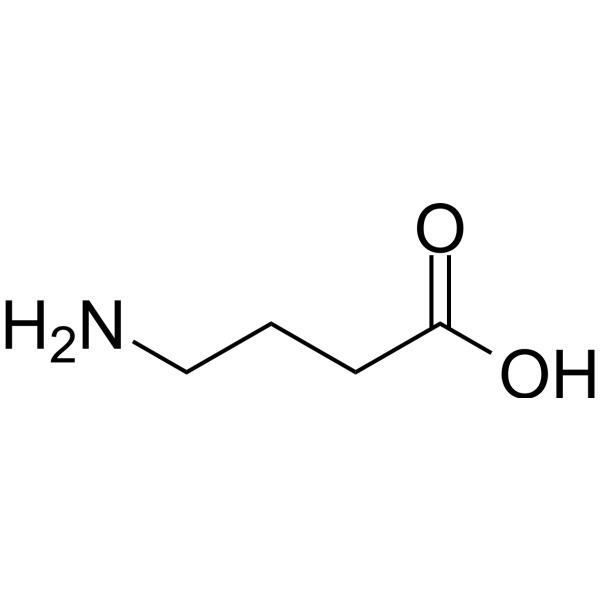
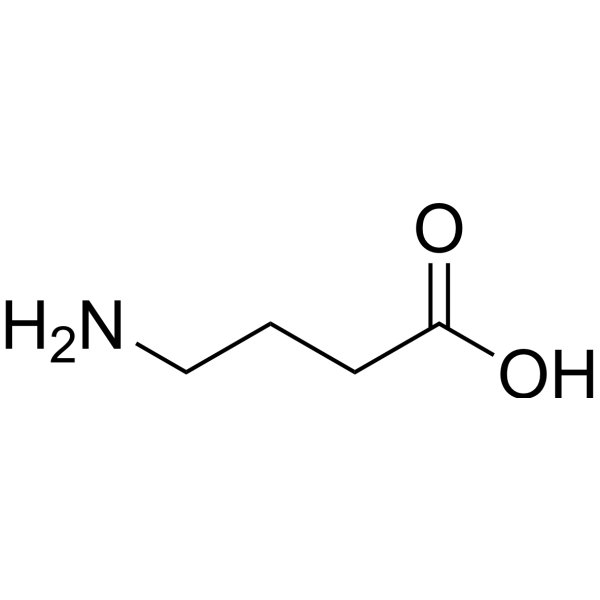
    γ-Aminobutyric acid
    5 Publications Verification

    4-Aminobutyric acid

    Environmental Pollutants Endogenous Metabolite GABA Receptor Neurological Disease Metabolic Disease
    γ-Aminobutyric acid (4-Aminobutyric acid) is a major inhibitory neurotransmitter in the adult mammalian brain, binding to the ionotropic GABA receptors (GABAA receptors) and metabotropic receptors (GABAB receptors. γ-Aminobutyric acid shows calming effect by blocking specific signals of central nervous system .
    γ-Aminobutyric acid
  • HY-100834
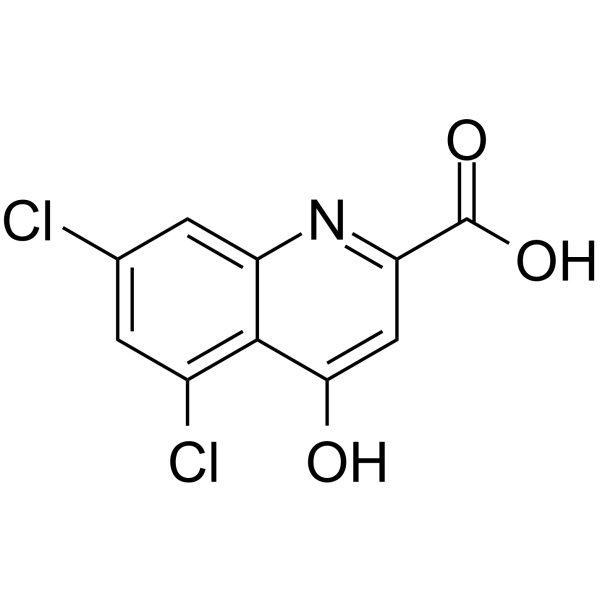
    5,7-Dichlorokynurenic acid
    1 Publications Verification

    5,7-DCKA

    iGluR Neurological Disease
    5,7-Dichlorokynurenic acid (5,7-DCKA) is a selective and competitive antagonist of the glycine site on NMDA receptor with a KB of 65 nM. 5,7-Dichlorokynurenic acid reduces NMDA-induced neuron injury. 5,7-Dichlorokynurenic acid increases social interaction time, increases open arm exploration time, disinhibits suppressed conflict responding in rodent models. 5,7-Dichlorokynurenic acid exhibits anxiolytic-like activity in rodent models and supports exploration of glycine’s role in NMDA receptor-mediated synaptic transmission .
    5,7-Dichlorokynurenic acid
  • HY-N0067R
    γ-Aminobutyric acid (Standard)
    5 Publications Verification

    4-Aminobutyric acid (Standard)

    Endogenous Metabolite GABA Receptor Reference Standards Neurological Disease
    γ-Aminobutyric acid (Standard) is the analytical standard of γ-Aminobutyric acid. This product is intended for research and analytical applications. γ-Aminobutyric acid (4-Aminobutyric acid) is a major inhibitory neurotransmitter in the adult mammalian brain, binding to the ionotropic GABA receptors (GABAA receptors) and metabotropic receptors (GABAB receptors. γ-Aminobutyric acid shows calming effect by blocking specific signals of central nervous system .
    γ-Aminobutyric acid (Standard)
  • HY-P10638

    CaMK Cardiovascular Disease Neurological Disease
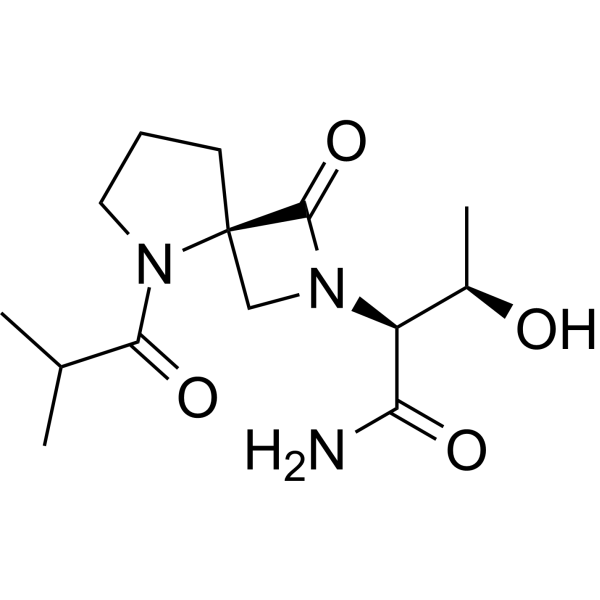
    TAT-CN21 is a potent CaMKII inhibitor with an IC50 of 77.2 nM. TAT-CN21 inhibits both calcium/calmodulin-dependent and autonomously activated CaMKII, blocks glutamate-induced translocation of CaMK IIα, and reverses the enhanced phosphorylation of CaMKII at Thr286 following excitotoxic injury. TAT-CN21 shows application potential in studies related to ischemic stroke by reducing neuronal excitotoxicity and exacerbating pre-existing long-term neuronal death prior to injury. TAT-CN21 improves definitive behaviors in rats with residual nerve injury without altering indicators such as mechanical/thermal hyperalgesia or spatial memory. TAT-CN21 can also be used in studies related to neuropathic pain .
    TAT-CN21
  • HY-N2411
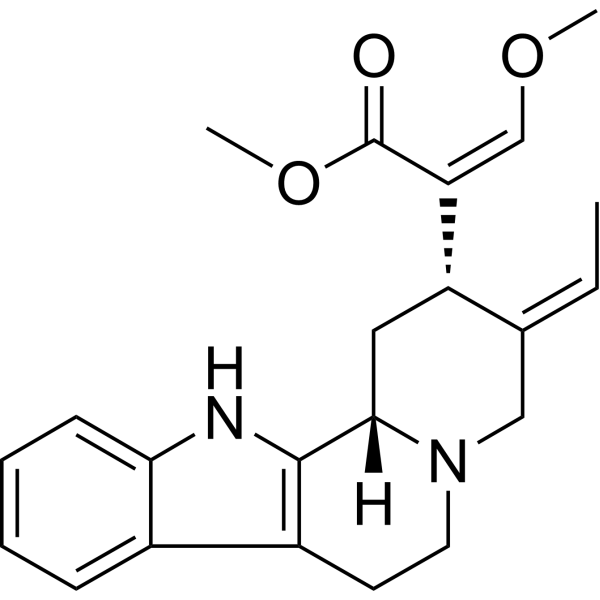
    Geissoschizine methyl ether
    1 Publications Verification

    5-HT Receptor Neurological Disease
    Geissoschizine methyl ether is an orally active, blood-brain barrier permeable alkaloid, and a partial agonist of the 5-HT1A receptor. It can be isolated from Uncaria hook. Geissoschizine methyl ether potently inhibits the binding of [ 3H]8-OH-DPAT to the 5-HT1A receptor in a concentration-dependent manner, with an IC50 of 0.904 μM. It ameliorates isolation-induced increased aggression and reduced sociability in mice. Geissoschizine methyl ether promotes oligodendrocyte differentiation and remyelination in the medial prefrontal cortex of adult mice .
    Geissoschizine methyl ether
  • HY-103110
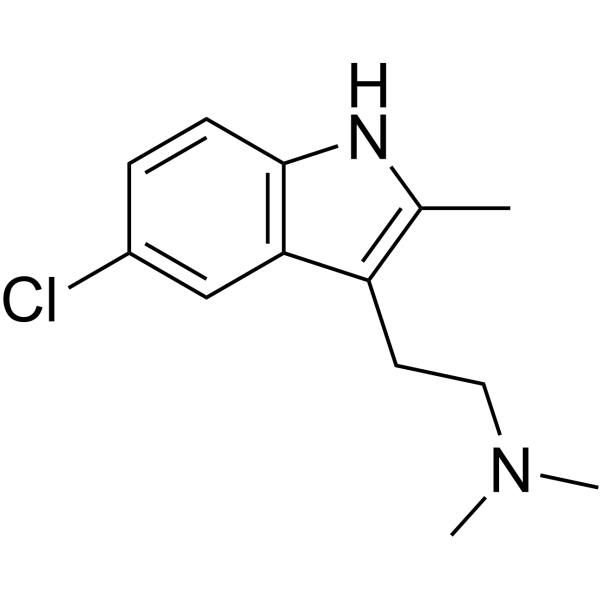
    ST1936
    1 Publications Verification

    5-HT Receptor Adrenergic Receptor Neurological Disease
    ST1936 is a selective, nanomolar affinity 5-HT6 receptor agonist with Ki values of 13 nM, 168 nM and 245 nM for human 5-HT6, 5-HT7 and 5-HT2B receptors, respectively. ST1936 also shows moderate affinity (Ki of 300 nM) for human and rat α2 adrenergic receptor .
    ST1936
  • HY-119495

    Thyroid Hormone Receptor Neurological Disease
    JTP 2942 is a thyrotropin-releasing hormone analogue. JTP 2942 can promote the release of Acetylcholine in the hippocampus and frontal cortex of rats. JTP 2942 possesses neuroprotective and cognitive-improving activities. JTP 2942 dose-dependently improves motor and neurological deficits in rat models of chronic focal cerebral ischemia. JTP 2942 can be used for the research of cerebral ischemia, motor neuron diseases, and other related conditions .
    JTP 2942
  • HY-174708

    mRNA Neurological Disease
    Human FGF13 mRNA encodes the human fibroblast growth factor 13 (FGF13) protein, a member of the fibroblast growth factor (FGF) family. FGF13 plays a crucial role in neuron polarization and migration in the cerebral cortex and the hippocampus.
    Human FGF13 mRNA
  • HY-103110A

    5-HT Receptor Adrenergic Receptor Neurological Disease
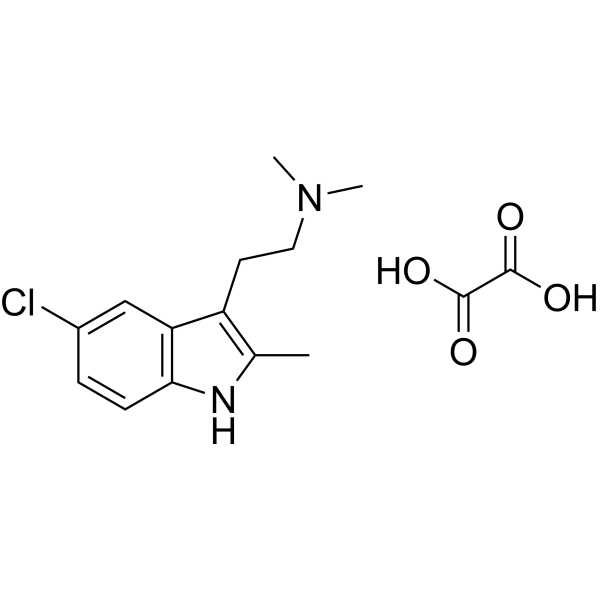
    ST1936 oxalate is a selective, nanomolar affinity 5-HT6 receptor agonist with Ki values of 13 nM, 168 nM and 245 nM for human 5-HT6, 5-HT7 and 5-HT2B receptors, respectively. ST1936 oxalate also shows moderate affinity (Ki of 300 nM) for human and rat α2 adrenergic receptor .
    ST1936 oxalate
  • HY-168859

    JNK GSK-3 Amyloid-β Neurological Disease
    JNK3 inhibitor-9 (Compound 24a) is a potent, selective and BBB-permeable JNK3 inhibitor with an IC50 value of 12 nM. JNK3 inhibitor-9 also potently inhibits GSK3α/β (IC50s: 14 and 35 nM, respectively) involved in Tau phosphorylation. JNK3 inhibitor-9 reduces c-Jun and APP phosphorylation. JNK3 inhibitor-9 protects neurons from 1-42 toxicity .
    JNK3 inhibitor-9
  • HY-178153

    iGluR Neurological Disease
    BPAM363 is an orally active, selective positive allosteric modulator (PAM) of AMPARs with blood-brain barrier penetration. BPAM363 selectively potentiates AMPAR activity in human and rat models, with an EC2x value of 0.96 μM in rat embryonic cortex primary neurons. BPAM363 upregulates BDNF protein expression in rat primary cortical neuronal cultures. BPAM363 enhances AMPA-mediated excitatory postsynaptic responses in rat and mice. BPAM363 can be used for the study of cognitive disorders .
    BPAM363
  • HY-100834A

    5,7-DCKA sodium

    iGluR Neurological Disease
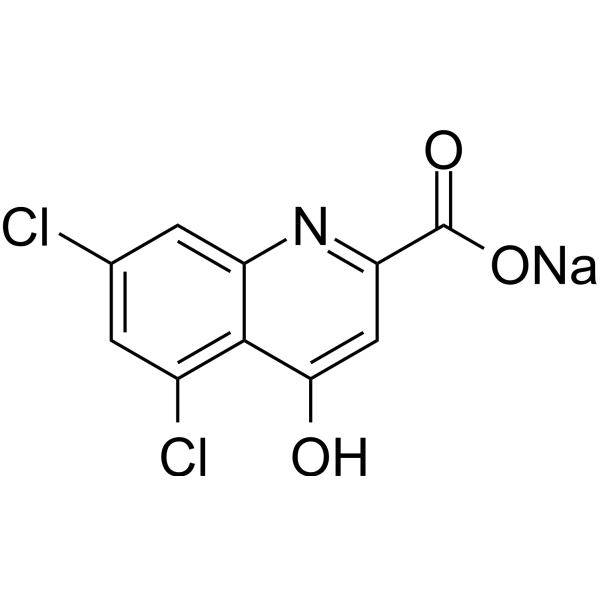
    5,7-Dichlorokynurenic acid (5,7-DCKA) sodium is a selective and competitive antagonist of the glycine site on NMDA receptor with a KB of 65 nM. 5,7-Dichlorokynurenic acid sodium reduces NMDA-induced neuron injury. 5,7-Dichlorokynurenic acid sodium increases social interaction time, increases open arm exploration time, disinhibits suppressed conflict responding in rodent models. 5,7-Dichlorokynurenic acid sodium exhibits anxiolytic-like activity in rodent models and supports exploration of glycine’s role in NMDA receptor-mediated synaptic transmission .
    5,7-Dichlorokynurenic acid sodium
  • HY-P992426

    Tau Protein Neurological Disease
    NS101 is an anti-FAM19A5 antibody with an IC50 of 0.2 nM and a Kd of 111 pM, as well as blood-brain barrier permeability. NS101 binds to key amino acid residues of FAM19A5, thereby blocking the interaction of LRRC4B and disrupting the FAM19A5-LRRC4B complex. NS101 increases the dendritic spine density in hippocampal neurons and the prefrontal cortex, normalizes the dendritic spine elimination rate, elevates the frequencies of mEPSC and fEPSP, and promotes the transport of brain-derived FAM19A5 into the peripheral circulation. NS101 improves cognitive function in mouse models of Alzheimer's disease. NS101 can be used for research on Alzheimer's disease. The recommended isotype control is human IgG1 kappa (HY-P99001) .
    NS101
  • HY-103110R

    Reference Standards 5-HT Receptor Adrenergic Receptor Neurological Disease
    ST1936 (Standard) is the analytical standard of ST1936 (HY-103110). This product is intended for research and analytical applications. ST1936 is a selective, nanomolar affinity 5-HT6 receptor agonist with Ki values of 13 nM, 168 nM and 245 nM for human 5-HT6, 5-HT7 and 5-HT2B receptors, respectively. ST1936 also shows moderate affinity (Ki of 300 nM) for human and rat α2 adrenergic receptor .
    ST1936 (Standard)
  • HY-204388

    iGluR Calcium Channel Neurological Disease
    TAK-137 is an AMPA receptor potentiator with weak agonistic effect. TAK-137 binds to the AMPA receptor ligand binding domain in a glutamate-dependent manner. TAK-137 potentiates AMPA-induced currents and Ca 2+ influx. TAK-137 can be used for the research of neurological disease .
    TAK-137
  • HY-183101

    iGluR NADPH Oxidase Neurological Disease
    AMPAR modulator-12 is a blood-brain barrier-permeable AMPAR positive allosteric modulator. AMPAR modulator-12 reduces NOX-1 expression, enhances AMPAR-mediated currents, promotes excitatory postsynaptic transmission and restores AMPAR function. AMPAR modulator-12 enhances excitatory and inhibitory synaptic transmission, reduces burst firing in the lateral habenula after withdrawal, and produces rapid and sustained antidepressant-like effects. AMPAR modulator-12 is applicable for the research of depression .
    AMPAR modulator-12

Inquiry Online

Your information is safe with us. * Required Fields.

Salutation


Country or Region *

Applicant Name *


Organization Name *

Department *


Email Address *


Product Name *

Cat. No.


Requested quantity *

Phone Number *


Remarks

Inquiry Online

Inquiry Information

Product Name:
Cat. No.:
Quantity:
MCE Japan Authorized Agent:

