1. Search Result
Search Result
Results for "

Crosslinking reaction

" in MedChemExpress (MCE) Product Catalog:

26

Inhibitors & Agonists

1

Screening Libraries

5

Biochemical Assay Reagents

5

Natural
Products

1

Isotope-Labeled Compounds

5

Click Chemistry

Cat. No. Product Name Target Research Areas Chemical Structure
  • HY-W035129

    Biochemical Assay Reagents Others
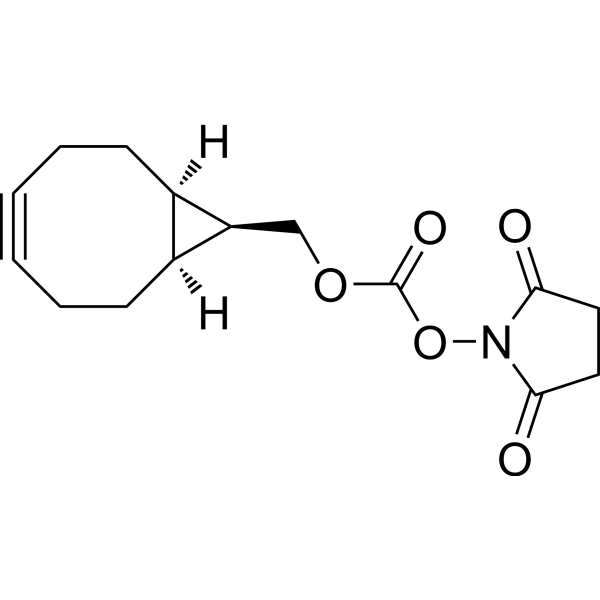
    endo-BCN-NHS carbonate is an elastin-like protein (ELP) modification reagent. endo-BCN-NHS carbonate can react with lysine residues in ELP to make ELP carry BCN groups, and then cross-link ELP through strain-promoted azide-alkyne cycloaddition (SPAAC) reaction. endo-BCN-NHS carbonate promotes hydrogel formation. endo-BCN-NHS carbonate is mainly used in cell encapsulation related research .
    endo-BCN-NHS carbonate
  • HY-157414

    Biochemical Assay Reagents Others
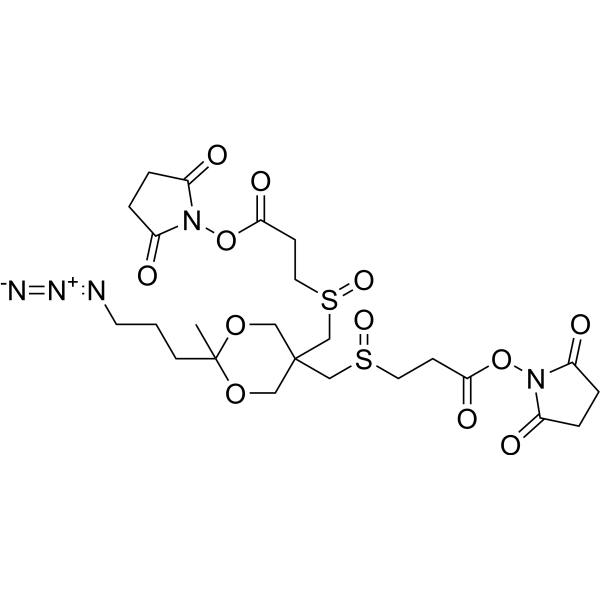
    Azide-A-DSBSO crosslinker is a mass spectrometry (MS) cleavable, membrane permeable, homobifunctional, azide-labeled, acid-cleavable crosslinking peptide. Azide-A-DSBSO crosslinker crosslinks proteins via NHS ester reaction with lysine residues. Azide-A-DSBSO crosslinker can be used to study protein-protein interactions by cross-linking mass spectrometry (XL-MS) [1] .
    Azide-A-DSBSO crosslinker
  • HY-129380
    Fructosyl-lysine
    1 Publications Verification

    Fructoselysine

    Endogenous Metabolite Metabolic Disease
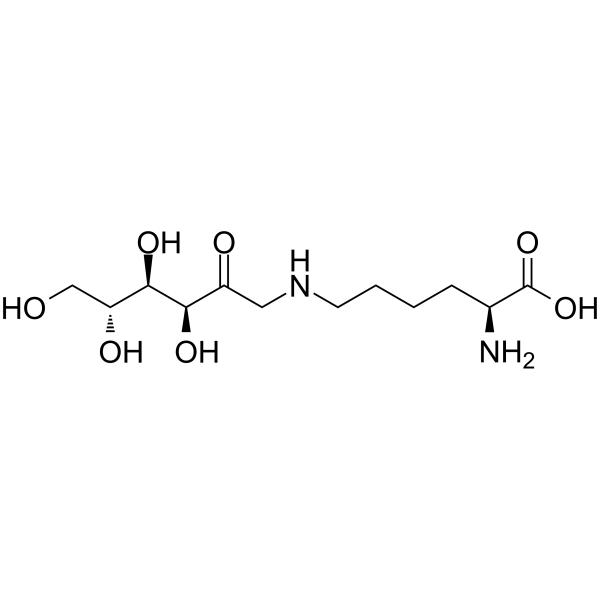
    Fructosyl-lysine (Fructoselysine) is an amadori glycation product from the reaction of glucose and lysine by the Maillard reaction. Fructosyl-lysine is the precursor to glucosepane, a lysine–arginine protein cross-link that can be an indicator in diabetes?detection .
    Fructosyl-lysine
  • HY-N1470

    Glycosidase Metabolic Disease
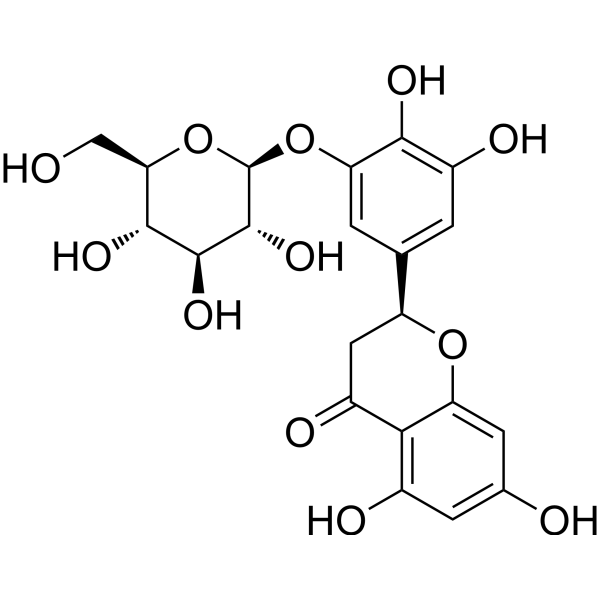
    Plantagoside is a flavanone glucoside found in Plantago asiatica seeds, acting as a specific non-competitive α-mannosidase inhibitor with IC50 values of 5 μM and a Ki of 2.7 μM (jack bean). Plantagoside suppresses antibody response and Concanavalin A (HY-P2149)-induced lymphocyte proliferation in mouse spleen cells. Plantagoside inhibits the Maillard reaction, advanced glycation end product formation, and glycation-dependent protein-protein cross-link formation. Plantagoside can be used for the research of diabetes .
    Plantagoside
  • HY-107783

    Biochemical Assay Reagents Others
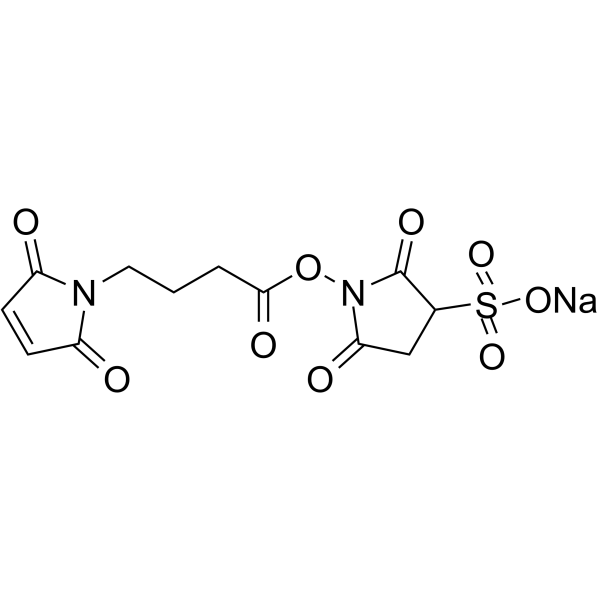
    Sulfo-GMBS is a crosslinker widely used in chemical modification and coupling reactions of proteins and peptides. Among amine-thiol crosslinkers, Sulfo-GMBS generates the largest number of crosslinks and covers most of the crosslinks identified by AMAS and GMBS .
    Sulfo-GMBS
  • HY-129380A
    Fructosyl-lysine dihydrochloride
    1 Publications Verification

    Fructoselysine dihydrochloride

    Endogenous Metabolite Metabolic Disease
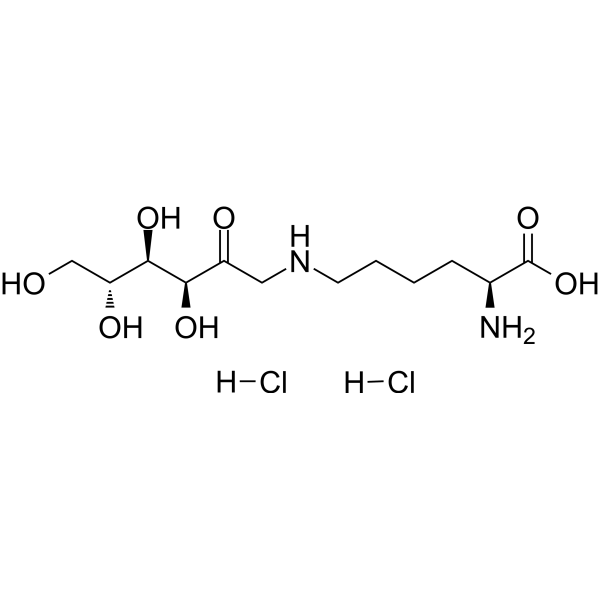
    Fructosyl-lysine (Fructoselysine) dihydrochloride is an amadori glycation product from the reaction of glucose and lysine by the Maillard reaction. Fructosyl-lysine dihydrochloride is the precursor to glucosepane, a lysine–arginine protein cross-link that can be an indicator in diabetes detection .
    Fructosyl-lysine dihydrochloride
  • HY-W016618

    Ethyl benzoylformate; Phenylglyoxylic acid ethyl ester

    Drug Intermediate Biochemical Assay Reagents Carboxylesterase (CES) Others
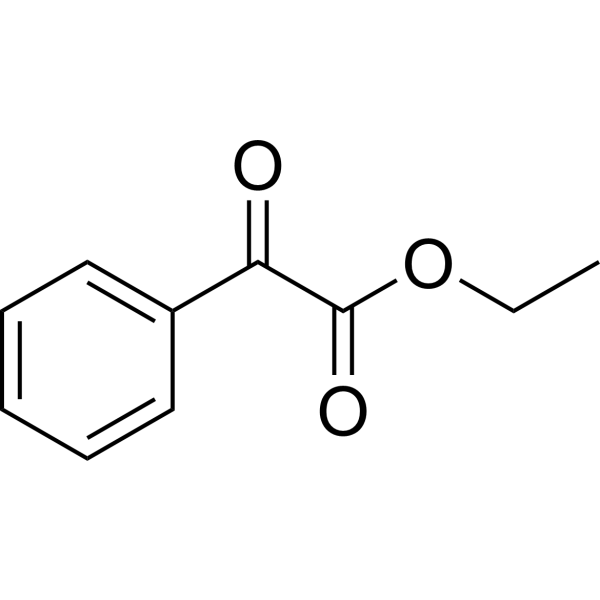
    Ethyl phenylglyoxylate (Ethyl benzoylformate), the ethyl ester of phenylglyoxylic acid, is used as a synthetic reagent. Ethyl phenylglyoxylate is also a poor substrate but a potent inhibitor of chicken liver carboxylesterase. Additionally, Ethyl phenylglyoxylate exhibits photoreactivity, where its excited triplet carbonyl can initiate intermolecular hydrogen abstraction, radical coupling and cross-linking reactions .
    Ethyl phenylglyoxylate
  • HY-W087905

    Biochemical Assay Reagents Others
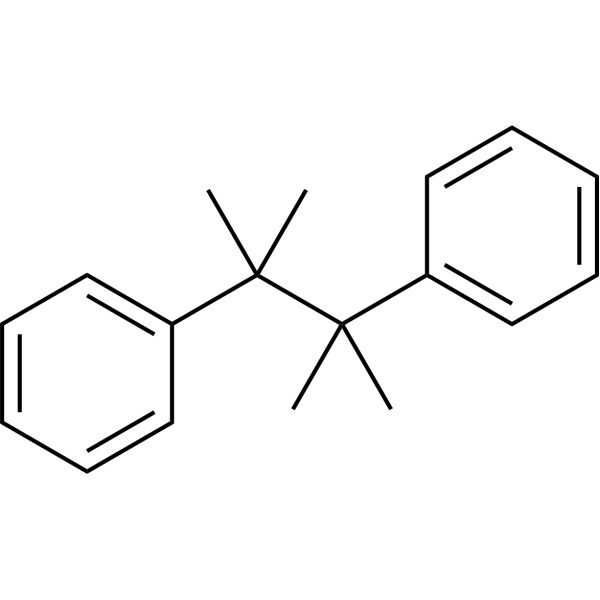
    2,3-Dimethyl-2,3-diphenylbutane is a minor product formed during the thermal decomposition of dicumyl peroxide (DCP) in cumene, generated through radical coupling reactions. As an initiator capable of producing free radicals, 2,3-dimethyl-2,3-diphenylbutane promotes cross-linking or decomposition processes via initiating free radical reactions in fields such as polymer polymerization (e.g., modification of polyphenylene oxide processing), organic synthesis (e.g., DCP decomposition reactions), and coal processing (e.g., oxidation stabilization of coal tar pitch), thereby enhancing material properties or reaction efficiency .
    2,3-Dimethyl-2,3-diphenylbutane
  • HY-160113E

    Biochemical Assay Reagents Others
    Sodium phosphate buffer 0.1M, pH 8.0 is an aqueous sodium phosphate buffer with a concentration of 0.1M and a pH value of 8.0. Sodium phosphate buffer 0.1M, pH 8.0 can be used for the preparation of hydrated micellar membranes, the construction of pH-sensitive nanocarriers, and the maintenance of stable environmental conditions for pH-cleavable PEG-Hz-PE micelles. Sodium phosphate buffer 0.1M, pH 8.0 can also serve as a universal solvent, reaction medium and eluent, and is widely applied in experimental processes such as antibody thiolation, nanoparticle purification and cross-linking reactions .
    Sodium phosphate buffer 0.1M, pH 8.0
  • HY-139446A

    ETPTA (MW 912); TMPETA (MW 912)

    Biochemical Assay Reagents Others
    Trimethylolpropane ethoxylate triacrylate (MW 912) (ETPTA (MW 912); TMPETA (MW 912)) is a trifunctional acrylate monomer with multiple acrylate functional groups, which can be used in polymerization and crosslinking reactions. Trimethylolpropane ethoxylate triacrylate (MW 912) is widely used in the preparation of cured resins for 3D printing, optical coatings for display devices, and dental composite restorative materials .
    Trimethylolpropane ethoxylate triacrylate (MW 912)
  • HY-164068

    Biochemical Assay Reagents Others Inflammation/Immunology
    Cross-linked sodium hyaluronate gel is a biomaterial formed by cross-linking sodium hyaluronate. Cross-linked sodium hyaluronate gel has good moisturizing properties, viscoelasticity and biocompatibility. Cross-linked sodium hyaluronate gel can be used for the treatment of arthritis and the development of auxiliary materials in ophthalmic surgery .
    Cross-linked sodium hyaluronate gel
  • HY-W111522

    di-Sodium hydrogen phosphite, 98%

    Biochemical Assay Reagents Others
    Sodium phosphite dibasic pentahydrate, 98% (di-Sodium hydrogen phosphite, 98%) is an inorganic phosphorus source and an alkali metal salt of phosphorous acid. Sodium phosphite dibasic pentahydrate, 98% acts as a catalyst for the butanetetracarboxylic acid-based crosslinking reaction of cotton cellulose .
    Sodium phosphite dibasic pentahydrate, 98%
  • HY-176548

    YAP Annexin A Inflammation/Immunology
    PY-PAP is a photoactivatable affinity probe and a derivative of PY-60 (HY-141644). PY-PAP retains the cellular function of activating YAP transcriptional activity. In 293A cells, PY-PAP can label cathepsin D (CTSD) and annexin A2 (ANXA2) through ultraviolet crosslinking and click reactions. PY-PAP plays a key role in identifying ANXA2 as the specific target of PY-60 .
    PY-PAP
  • HY-151738

    ADC Linker Others
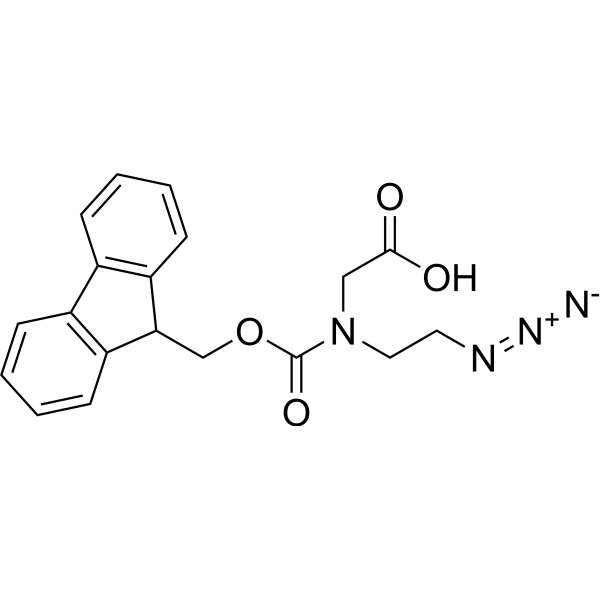
    Fmoc-Aeg(N3)-OH is a click chemistry reagent containing an Azide. Alkylating the Nitrogen of an amide bond results in peptoid structures, which leads to conformational restrains, like N-methylation and allows backbone derivatisation. Altering cytotoxicity, bacterial cell selectivity and receptor pharmacology through formation of peptoid derivatives have been published for Cilengitide, Piscidin 1, and MC3, MC4 and MC5 receptor agonist. This building block enables design of macrocycles through intermolecular crosslinking or backbone stabilization through intermolecular ring-closure. This compound is a potential building block for the construction of (customized) peptide nucleic acids (PNAs) and for peptoid synthesis . Fmoc-Aeg(N3)-OH is a click chemistry reagent, it contains an Azide group and can undergo copper-catalyzed azide-alkyne cycloaddition reaction (CuAAc) with molecules containing Alkyne groups. It can also undergo strain-promoted alkyne-azide cycloaddition (SPAAC) reactions with molecules containing DBCO or BCN groups.
    Fmoc-Aeg(N3)-OH
  • HY-W763598B

    Biochemical Assay Reagents Others
    Poly(ethylene glycol) distearate (Mn 930) is a derivative of polyethylene glycol, which can be used as a cross-linking agent and click chemistry reaction .
    Polyethylene glycol distearate (Mn 930)
  • HY-129380AR

    Fructoselysine dihydrochloride (Standard)

    Endogenous Metabolite Reference Standards Metabolic Disease
    Fructosyl-lysine (dihydrochloride) (Standard) is the analytical standard of Fructosyl-lysine (dihydrochloride). This product is intended for research and analytical applications. Fructosyl-lysine (Fructoselysine) dihydrochloride is an amadori glycation product from the reaction of glucose and lysine by the Maillard reaction. Fructosyl-lysine dihydrochloride is the precursor to glucosepane, a lysine-arginine protein cross-link that can be an indicator in diabetes detection .
    Fructosyl-lysine dihydrochloride (Standard)
  • HY-165447

    Amino Acid Derivatives Others
    (S,S)-Lysinoalanine is an amino acid formed by a crosslinking reaction between lysine and dephosphorylated serine or cysteine in proteins under alkaline conditions. It can be used as a protein-based food additive to enhance the elasticity and flexibility of meat products .
    (S,S)-Lysinoalanine
  • HY-W127719

    Biochemical Assay Reagents Others
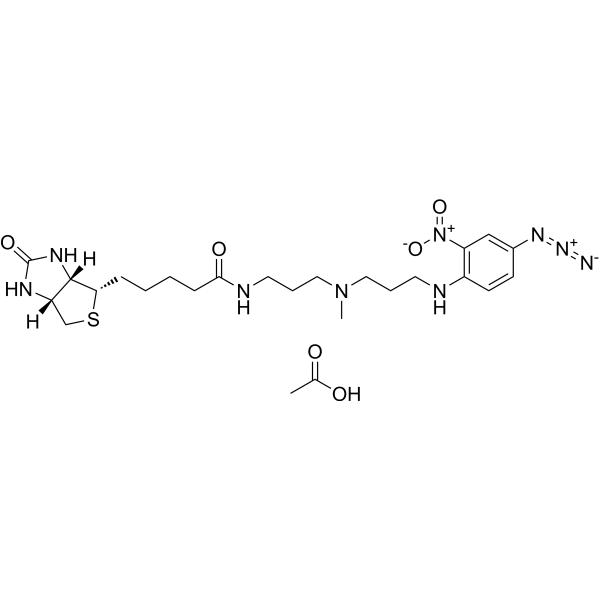
    Photobiotin (acetate)It is a biological probe used to study biochemical processes such as protein interactions and enzymatic reactions. It is a molecule containing a photosensitive group, which can be combined with specific target molecules (such as proteins, nucleic acids, etc.) through photochemical cross-linking technology, so as to realize the labeling and detection of these molecules. During the photosensitive crosslinking process, Photobiotin (acetate)Can participate in the formation of covalent bonds and form stable compounds. In addition, the compound also has high biocompatibility and biological activity, so it is widely used in the field of biomedical research, such as enzymatic research, proteomics, western blotting and other aspects. Photobiotin (acetate) is a click chemistry reagent, it contains an Azide group and can undergo copper-catalyzed azide-alkyne cycloaddition reaction (CuAAc) with molecules containing Alkyne groups. It can also undergo strain-promoted alkyne-azide cycloaddition (SPAAC) reactions with molecules containing DBCO or BCN groups.
    Photobiotin acetate
  • HY-W016618R

    Ethyl benzoylformate (Standard); Phenylglyoxylic acid ethyl ester (Standard)

    Drug Intermediate Reference Standards Biochemical Assay Reagents Carboxylesterase (CES) Others
    Ethyl phenylglyoxylate (Ethyl benzoylformate) (Standard) is the analytical standard of Ethyl phenylglyoxylate (HY-W016618). This product is intended for research and analytical applications. Ethyl phenylglyoxylate (Ethyl benzoylformate), the ethyl ester of phenylglyoxylic acid, is used as a synthetic reagent. Ethyl phenylglyoxylate is also a poor substrate but a potent inhibitor of chicken liver carboxylesterase. Additionally, Ethyl phenylglyoxylate exhibits photoreactivity, where its excited triplet carbonyl can initiate intermolecular hydrogen abstraction, radical coupling and cross-linking reactions .
    Ethyl phenylglyoxylate (Standard)
  • HY-W701476

    Ethyl benzoylformate-d5; Phenylglyoxylic acid ethyl ester-d5

    Isotope-Labeled Compounds Biochemical Assay Reagents Drug Intermediate Carboxylesterase (CES) Others
    Ethyl phenylglyoxylate-d5 (Ethyl benzoylformate-d5; Phenylglyoxylic acid ethyl ester-d5) is the deuterium labeled Ethyl phenylglyoxylate (HY-W016618). Ethyl phenylglyoxylate (Ethyl benzoylformate), the ethyl ester of phenylglyoxylic acid, is used as a synthetic reagent. Ethyl phenylglyoxylate is also a poor substrate but a potent inhibitor of chicken liver carboxylesterase. Additionally, Ethyl phenylglyoxylate exhibits photoreactivity, where its excited triplet carbonyl can initiate intermolecular hydrogen abstraction, radical coupling and cross-linking reactions .
    Ethyl phenylglyoxylate-d5
  • HY-W800714

    Biochemical Assay Reagents Others
    SPDP-Gly-Gly-methoxy is a linker with SPDP and methyl ester moiety. The SPDP is an amine and thiol reactive crosslinker. It is also membrane permeable, allowing it to participate in intracellular crosslinking reactions.
    SPDP-Gly-Gly-methoxy
  • HY-W800711

    Biochemical Assay Reagents Others
    SPDP-Gly-Pro-NHS ester is a linker with SPDP and NHS ester moieties. The SPDP is an amine and thiol reactive crosslinker. It is also membrane permeable, allowing it to participate in intracellular crosslinking reactions. The NHS ester is amine reactive and forms stable amide bonds.
    SPDP-Gly-Pro-NHS ester
  • HY-W895360

    Biochemical Assay Reagents Others
    pacFA is a bifunctional fatty acid with both photocrosslinking and click chemistry properties. pacFA can be metabolically incorporated into phospholipids by cells, enabling in-situ capture, identification and imaging of protein-lipid interactions in live cells and living organisms via ultraviolet crosslinking and click reactions .
    pacFA
  • HY-W800713

    Biochemical Assay Reagents Others
    SPDP-Gly-Pro-acid is a linker with SPDP and carboxylic acid moieties. The SPDP is an amine and thiol reactive crosslinker. It is also membrane permeable, allowing it to participate in intracellular crosslinking reactions. The terminal carboxylic acid can react with primary amine groups in the presence of activators (e.g. EDC, or HATU) to form a stable amide bond.
    SPDP-Gly-Pro-acid
  • HY-W133907

    Environmental Pollutants Biochemical Assay Reagents Others
    Tetrakis (hydroxymethyl) phosphonium sulfate is a protein crosslinker and hydrogel modifier. Tetrakis (hydroxymethyl) phosphonium sulfate covalently binds to primary and secondary amines of amino acids or proteins via a Mannich-type reaction, thereby constructing stable crosslinking bonds between protein molecules. Tetrakis (hydroxymethyl) phosphonium sulfate not only regulates the gelation time and storage modulus of recombinant elastin-like protein hydrogels, but also exhibits excellent cytocompatibility, and supports the differentiation and growth of embryonic stem cells and neural cells in a three-dimensional encapsulation environment. Tetrakis (hydroxymethyl) phosphonium sulfate is suitable for protein-based hydrogel systems, especially for applications related to cell encapsulation .
    Tetrakis(hydroxymethyl)phosphonium sulfate
  • HY-N1470R

    Reference Standards Glycosidase Metabolic Disease
    Plantagoside (Standard) is the analytical standard of Plantagoside (HY-N1470). This product is intended for research and analytical applications. Plantagoside is a flavanone glucoside found in Plantago asiatica seeds, acting as a specific non-competitive α-mannosidase inhibitor with IC50 values of 5 μM and a Ki of 2.7 μM (jack bean). Plantagoside suppresses antibody response and Concanavalin A (HY-P2149)-induced lymphocyte proliferation in mouse spleen cells. Plantagoside inhibits the Maillard reaction, advanced glycation end product formation, and glycation-dependent protein-protein cross-link formation. Plantagoside can be used for the research of diabetes .
    Plantagoside (Standard)

Inquiry Online

Your information is safe with us. * Required Fields.

Salutation


Country or Region *

Applicant Name *


Organization Name *

Department *


Email Address *


Product Name *

Cat. No.


Requested quantity *

Phone Number *


Remarks

Inquiry Online

Inquiry Information

Product Name:
Cat. No.:
Quantity:
MCE Japan Authorized Agent:

