

1. Search Result
Search Result
Results for "

D1

" in MedChemExpress (MCE) Product Catalog:

707

Inhibitors & Agonists

1

Screening Libraries

1

Fluorescent Dye

3

Biochemical Assay Reagents

25

Peptides

15

Inhibitory Antibodies

66

Natural
Products

36

Recombinant Proteins

194

Isotope-Labeled Compounds

42

Antibodies

3

Click Chemistry

43

Oligonucleotides

Cat. No. Product Name Target Research Areas Chemical Structure
  • HY-130413

    Neuroprotectin D1; NPD1

    Endogenous Metabolite PI3K Akt HIF/HIF Prolyl-Hydroxylase Reactive Oxygen Species (ROS) Caspase Interleukin Related MicroRNA Cardiovascular Disease Neurological Disease Inflammation/Immunology
    Protectin D1, a neuroprotectin D1 produced by neuronal cells, is a member of a newly discovered family of bioactive products derived from docosahexaenoic acid. Protectin D1 also serves as a specialized pro-resolving mediator, exhibiting effective in vivo pro-resolving activity in various human disease models. Additionally, Protectin D1 is an inhibitor of NALP3 inflammasomes and regulates the PI3K/AKT and HIF-1α signaling pathways. Protectin D1 exerts anti-inflammatory effects by reducing ROS levels, inhibiting the expression of NALP3, ASC, and Caspase-1, and consequently decreasing the release of pro-inflammatory cytokines IL-1β and IL-18. Furthermore, Protectin D1 enhances miRNA-210 expression, activates the PI3K/AKT signaling pathway, and exerts cardioprotective effects. Protectin D1 holds promise for research in cardiovascular diseases and inflammatory disorders [1] .
    Protectin D1
  • HY-B0623A
    Ropinirole hydrochloride
    3 Publications Verification

    SKF 101468 hydrochloride

    Dopamine Receptor Neurological Disease
    Ropinirole (SKF 101468) hydrochloride is an orally active, potent D3/D2 receptor agonist with a Ki of 29 nM for D2 receptor. Ropinirole hydrochloride has pEC50s of 7.4, 8.4 and 6.8 for hD2, hD3 and hD4 receptors, respectively. Ropinirole hydrochloride has no affinity for the D1 receptors. Ropinirole hydrochloride has the potential for Parkinson's disease [1] .
    Ropinirole hydrochloride
  • HY-125527
    Resolvin D1
    1 Publications Verification

    RvD1

    Endogenous Metabolite Inflammation/Immunology
    Resolvin D1 (RvD1), an endogenous pro-resolving mediator of inflammation, is derived from omega-3 docosahexaenoic acid during the resolution phase of acute inflammation. Resolvin D1 blocks proinflammatory neutrophil migration by regulating actin polymerization, reduces TNF-α–mediated inflammation in macrophages, and enhances phagocytosis of apoptotic cells by macrophages [1] .
    Resolvin D1
  • HY-N0034
    Arctiin
    5 Publications Verification

    Arctii; NSC 315527; Arctigenin-4-glucoside

    NF-κB Inflammation/Immunology Cancer
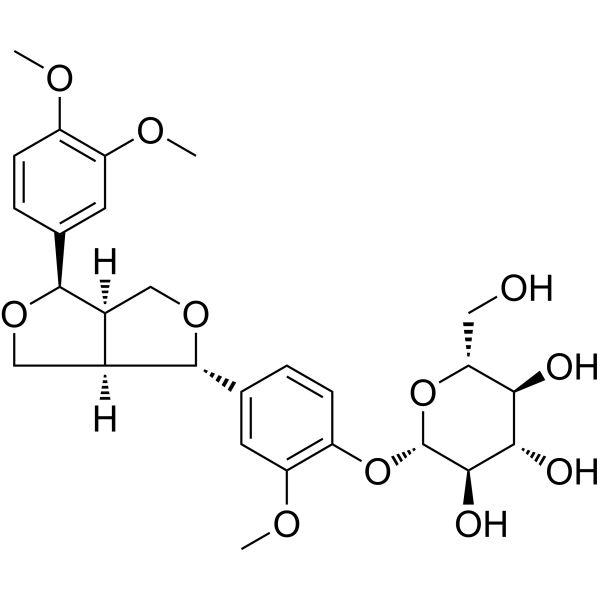
    Arctiin is an orally active inhibitor of NF-κB. Arctiin suppresses cyclin D1 protein expression in human tumor cells. Arctiin also reduces malondialdehyde and pro-in ammatory cytokines levels. Arctiin can used in study glomerulonephritis .
    Arctiin
  • HY-112624A

    Dextran 1; Dextran D1; Dextran T1(MW 800-1200)

    Biochemical Assay Reagents Others
    Dextran T1 (Dextran 1; Dextran D1) (with a molecular weight of 1,000) is a dehydrated glucose polymer with an average molecular weight of 1,000. Dextran T1 (MW 1,000) has excellent biodegradability and biocompatibility, and can be used as a nanobody carrier scaffold and a freeze-drying protectant. Dextran T1 (MW 1,000) promotes the retention of circulating tumor cells in the capillary bed [1] .
    Dextran T1 (MW 1,000)
  • HY-10435A
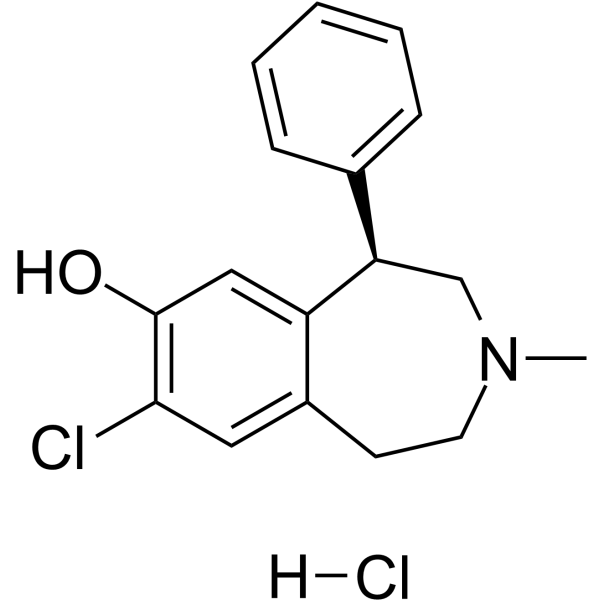
    SKF-82958 hydrobromide
    4 Publications Verification

    (±)-SKF-82958 hydrobromide; Chloro-APB hydrobromide

    Dopamine Receptor Neurological Disease
    SKF-82958 ((±)-SKF 82958) hydrobromide is a dopamine D1 receptor full agonist (K0.5=4 nM), displays selective for D1 over D2 receptors (K0.5=73 nM). SKF-82958 hydrobromide induces dopamine D1 receptor-dependent adenylate cyclase activity in rat striatal membranes (EC50=491 nM) [1].
    SKF-82958 hydrobromide
  • HY-B0892S4

    Benzenemethanol-d1

    Endogenous Metabolite Others
    Benzyl alcohol-d1 is the deuterium labeled Benzyl alcohol [1].
    Benzyl alcohol-d1
  • HY-111428
    Phleomycin D1
    2 Publications Verification

    PLM D1

    Antibiotic Infection
    Phleomycin D1 (PLM D1), a glycopeptide antibiotic, is a member of the Bleomycin/Phleomycin family. Phleomycin D1 causes cell death by binding and cleaving DNA. Phleomycin D1 induces cell cycle arrest at S phase [1] .
    Phleomycin D1
  • HY-106094
    CY 208-243
    2 Publications Verification

    Dopamine Receptor Neurological Disease
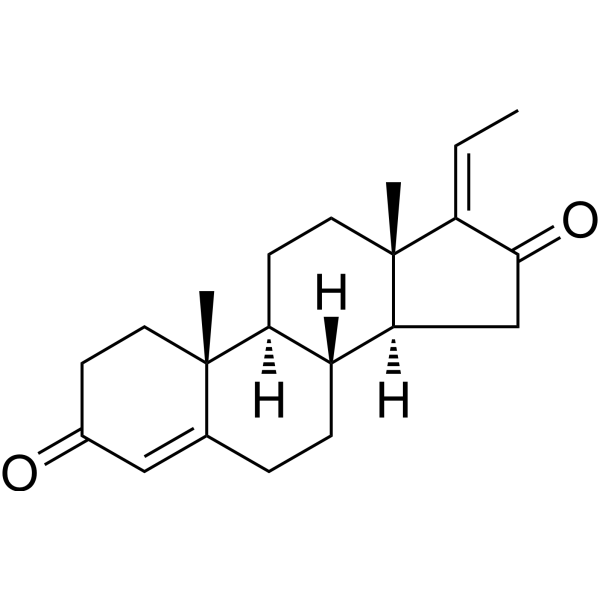
    CY 208-243 is a selective dopamine D1 receptor agonist which exhibits antiparkinsonian activity [1].
    CY 208-243
  • HY-101299B
    Dihydrexidine hydrochloride
    5 Publications Verification

    DAR-0100 hydrochloride

    Dopamine Receptor Neurological Disease
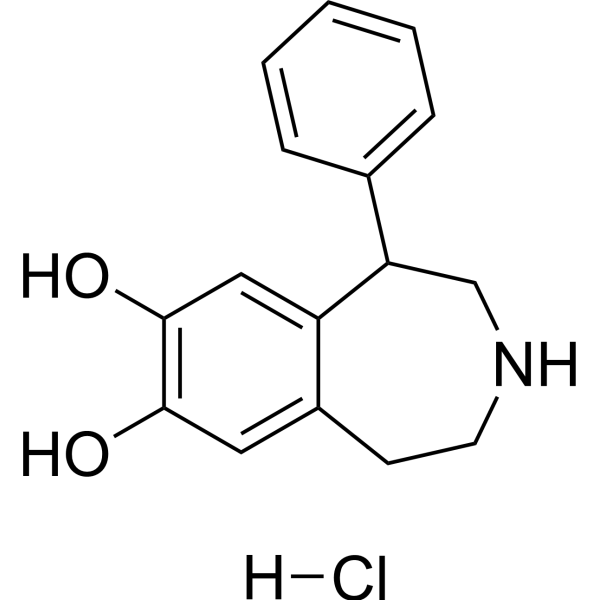
    Dihydrexidine hydrochloride (DAR-0100 hydrochloride) is a high potent, selective and full efficacy D1-like dopamine receptor (D1/D5) agonist, with an IC50 of 10 nM for D1 receptor. Dihydrexidine hydrochloride exhibits potent antiparkinsonian activity [1] . Dihydrexidine hydrochloride can stimulate YAP phosphorylation .
    Dihydrexidine hydrochloride
  • HY-115553

    Dopamine Receptor Neurological Disease
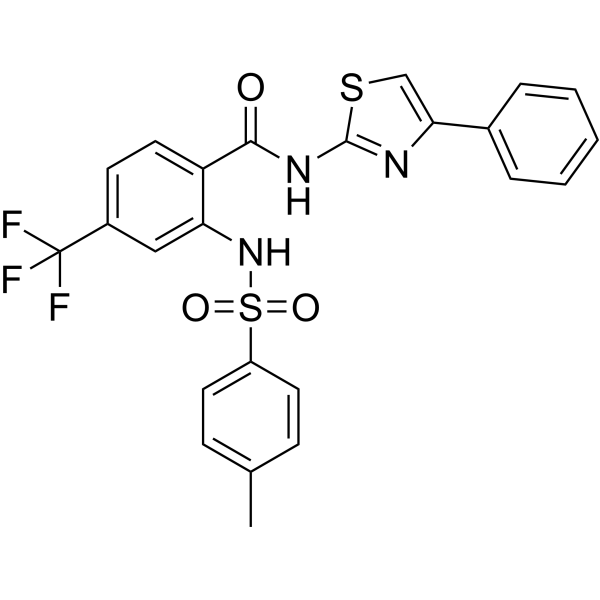
    DETQ is a selective, allosteric and orally active dopamine D1 receptor (Dopamine Receptor) potentiator. In HEK293 cells expressing the human D1 receptor, DETQ increases cAMP with an EC50 of 5.8 nM and a Kb of 26 nM. DETQ shows ~30-fold less potent at rat and mouse D1 receptors and is inactive at the human D5 receptor [1].
    DETQ
  • HY-125527A
    17(R)-Resolvin D1
    1 Publications Verification

    17(R)-RvD1; AT-RvD1

    TRP Channel Inflammation/Immunology
    17R-Resolvin D1 (17R-RvD1; AT-RvD1) is an aspirin-triggered epimer of Resolvin D1, which exhibits anti-inflammatory activity in mice and human PMNs cells [1]. 17R-Resolvin D1 specificially inhibits TRPV3 with an IC50 of 398 nM and exhibits peripheral anti-nociceptive efficacy .
    17(R)-Resolvin D1
  • HY-126848

    D-1-O-G

    Drug Metabolite SOD COX Reactive Oxygen Species (ROS) OAT Inflammation/Immunology
    Diclofenac acyl glucuronide (D-1-O-G) is an orally active glucuronide metabolite of Diclofenac (HY-15036). Diclofenac acyl glucuronide exhibits SOD inhibitory activity, COX-1 inhibitory activity (IC50 = 0.620 μM), and COX-2 inhibitory activity (IC50 = 2.91 μM). Diclofenac acyl glucuronide induces reactive oxygen species (ROS) production and acts as a substrate of OATP2B1. Diclofenac acyl glucuronide induces small intestinal ulcers . Diclofenac acyl glucuronide can be used in research related to intestinal diseases and small intestinal ulcers [1] .
    Diclofenac acyl glucuronide
  • HY-W025916

    Isotope-Labeled Compounds Others
    Methanol-d1 is the deuterium labeled Methanol.
    Methanol-d1
  • HY-120458
    LCAHA
    1 Publications Verification

    LCA hydroxyamide

    Deubiquitinase Cancer
    LCAHA (LCA hydroxyamide) is a deubiquitinase USP2a inhibitor with IC50s of 9.7 μM and 3.7μM in Ub-AMC Assay and Di-Ub Assay, respectively. LCAHA destabilizes Cyclin D1 and induces G0/G1 arrest by inhibiting deubiquitinase USP2a [1].
    LCAHA
  • HY-P11147

    Interleukin Related FAK Src Akt ERK MMP Cancer
    IL13Rα2 D1 is an effective IL-13/IL13Rα2 signaling axis inhibitor. IL13Rα2 D1 can inhibit IL-13-induced cell adhesion, migration, invasion, and proliferation. IL13Rα2 D1 can inhibit FAK, Src, AKT, ERK1/2 phosphorylation, and MMP expression. IL13Rα2 D1 can be used for research on cancers such as colorectal cancer [1].
    IL13Rα2 D1
  • HY-159527

    Glovadalen

    Dopamine Receptor Neurological Disease
    Glovadalenum (Glovadalen) is an orally active, selective, blood-brain barrier permeable positive allosteric modulator of dopamine D1 receptor. Glovadalenum selectively enhances the efficacy of dopamine in activating dopamine D1 receptor. Glovadalenum can be used for the research of Parkinson's disease [1].
    Glovadalenum
  • HY-125527S

    RvD1-d5

    Isotope-Labeled Compounds Endogenous Metabolite Inflammation/Immunology
    Resolvin D1-d5 is the deuterium labeled Resolvin D1. Resolvin D1 (RvD1), an endogenous pro-resolving mediator of inflammation, is derived from omega-3 docosahexaenoic acid during the resolution phase of acute inflammation. Resolvin D1 blocks proinflammatory neutrophil migration by regulating actin polymerization, reduces TNF-α-mediated inflammation in macrophages, and enhances phagocytosis of apoptotic cells by macrophages [1] .
    Resolvin D1-d5
  • HY-103427

    Dopamine Receptor Neurological Disease
    NPEC-caged-dopamine is a caged version of dopamine. NPEC-caged-Dopamine was used by applying focal photolysis with UV light (360 nm) to releases dopamine, which leads to D1 receptor activation [1].
    NPEC-caged-dopamine
  • HY-147651

    β-catenin CDK c-Myc Cancer
    β-catenin-IN-4 (Compound 39) is a β-catenin inhibitor with a Ki of 0.64 μM. β-catenin-IN-4 reduces the protein expression levels of cyclin D1 and c-Myc [1].
    β-catenin-IN-4
  • HY-101299A

    DAR-0100

    Dopamine Receptor YAP Neurological Disease
    Dihydrexidine (DAR-0100) is a high potent, selective and full efficacy D1-like dopamine receptor (D1/D5) agonist with an IC50 of 10 nM for D1 receptor. Dihydrexidine exhibits potent antiparkinsonian activity [1] . Dihydrexidine can stimulate YAP phosphorylation .
    Dihydrexidine
  • HY-128031

    RvD1 methyl ester

    Drug Derivative Metabolic Disease
    Resolvin D1 methyl ester (RvD1 methyl ester) is the methyl ester of Resolvin D1 (HY-125527). Resolvin D1 methyl ester reduces triglyceride levels [1].
    Resolvin D1 methyl ester
  • HY-113096

    PGD1

    Endogenous Metabolite Metabolic Disease
    Prostaglandin D1 is a prostanoid which causes contractile and relaxant on isolated human pial arteries, it is also an inhibitor of ADP-induced platelet aggregation with an IC50 value of 320 ng/ml. Prostaglandin D1 can be used for metabolic research [1] .
    Prostaglandin D1
  • HY-P10405A

    Dopamine Receptor Neurological Disease
    TAT-D1 peptide acetate is a dopamine D1-D2 receptor heterodimer inhibitor. TAT-D1 peptide acetate disrupts the function of dopamine D1-D2 receptor heteromers, enhances subchronic amphetamine-induced locomotor activity, and exacerbates the expression of amphetamine-induced locomotor sensitization. TAT-D1 peptide acetate produces rapid anxiolytic and antidepressant-like effects in rat models of depression and anxiety, and inhibits c-fos expression in the nucleus accumbens of rats. TAT-D1 peptide acetate can be used in the research of psychostimulant addiction, depression and anxiety disorders [1] .
    TAT-D1 peptide acetate
  • HY-W020018S1

    Isotope-Labeled Compounds Others
    N-Methylacetamide-d1 is the deuterium labeled N-Methylacetamide [1].
    N-Methylacetamide-d1
  • HY-103380
    NSC 625987
    1 Publications Verification

    CDK Cancer
    NSC 625987 is a specific and high-affinity CDK4 inhibitor with an IC50 of 0.2 μM for CDK4:cyclin D1. NSC 625987 shows >500-fold selectivity for CDK4 over CDK2 [1].
    NSC 625987
  • HY-W016577S4

    n-Heptyl bromide-d1

    Isotope-Labeled Compounds Others
    1-Bromoheptane-d1 is the deuterium labeled 1-Bromoheptane [1].
    1-Bromoheptane-d1
  • HY-144291

    Dopamine Receptor Neurological Disease
    LY3154885 is an orally active dopamine D1 receptor positive allosteric modulator (PAM). LY3154885 has an improved agent-agent interactions (DDI) risk profile [1].
    LY3154885
  • HY-145119S

    VV116 free base; GS-621763-D1

    Isotope-Labeled Compounds Others
    GS-621763-d1 is the deuterium labeled GS-621763 (HY-145119) [1]. GS-621763, an orally bioavailable proagent of GS-441524, shows antiviral activity against SARS-CoV-2 pathogenesis in mice .
    Mindeudesivir
  • HY-170645

    Drug Intermediate Neurological Disease
    Neuroprotectin D1 methyl ester is an esterified form of Protectin D1 (HY-130413). Neuroprotectin D1 methyl ester is an intermediate in the synthesis of Protectin D1.
    Neuroprotectin D1 methyl ester
  • HY-N14076

    Antibiotic Bacterial Infection
    Monamycin D1 is an ester peptide antibiotic. Monamycin D1 has activity against Gram-positive bacteria [1].
    Monamycin D1
  • HY-N15531

    Estrogen Receptor/ERR Inflammation/Immunology Cancer
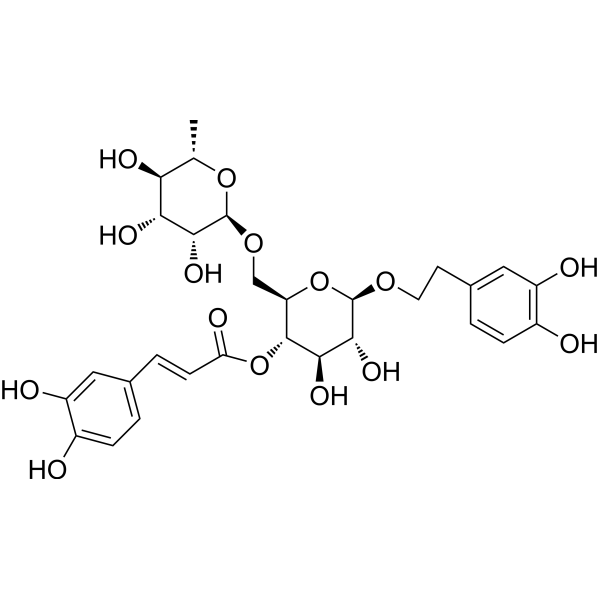
    Icariside D1 (Compound 9) is a flavonoid glycoside compound with antioxidant and anti-inflammatory activities, which is found in plants such as Epimedium. Icariside D1 is also a regulator of estrogen receptors. Icariside D1 is promising for research of osteoporosis, male infertility and female reproductive dysfunction and cancers [1].
    Icariside D1
  • HY-N16465

    Apoptosis Reactive Oxygen Species (ROS) STAT Inflammation/Immunology
    Cinnamtannin D1 is an orally active polyphenolic compound with immunosuppressive activity. Cinnamtannin D1 regulates the balance of Th17/Treg cells by inhibiting AHR expression. Cinnamtannin D1 reduces apoptosis and ROS in INS-1 cells and primary cultured murine islets induced by Palmitic acid (PA) (HY-N0830). Cinnamtannin D1 reduces Th17 cell differentiation via downregulating p-STAT3/RORγt and promotes Treg cell differentiation via upregulating p-STAT5/Foxp3. Cinnamtannin D1 exerts excellent anti-arthritic efficacy in collagen-induced arthritis (CIA) model of mice. Cinnamtannin D1 can be used for the study of rheumatoid arthritis (RA) [1] .
    Cinnamtannin D1
  • HY-163373

    Drug Derivative Endocrinology
    13,14-Dihydro-15-keto prostaglandin D1 is a derivative of prostaglandin D1 [1].
    13,14-Dihydro-15-keto prostaglandin D1
  • HY-N12295

    Others Inflammation/Immunology
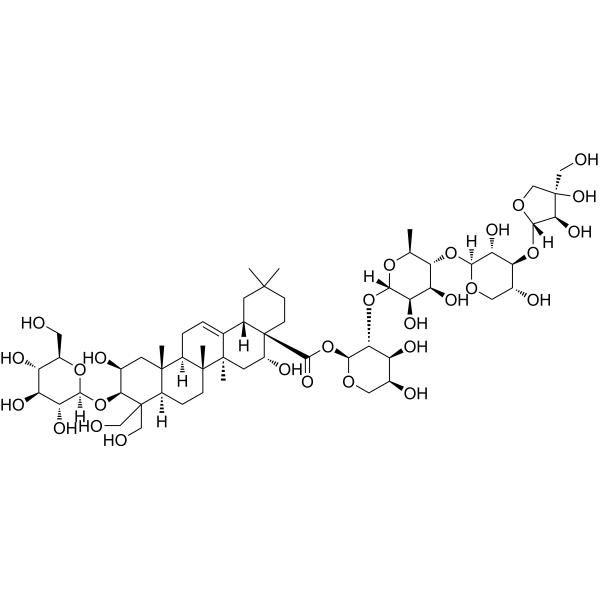
    Ciwujianoside D1 is a natural product that can inhibit histamine release induced by anti-immunoglobulin E from rat peritoneal mast cells [1].
    Ciwujianoside D1
  • HY-134860

    Prostaglandin Receptor Metabolic Disease
    Prostaglandin D1 (PGD1) alcohol is the synthetic analog of PGD1 with a primary alcohol in place of the C-1 carboxyl [1].
    Prostaglandin D1 alcohol
  • HY-N15115

    Antibiotic Bacterial Infection
    Polymyxin D1 is a heteropeptide antibiotic found in different strains of Bacillus polymyxa, and its effect against Gram-negative bacteria is greater than that against Gram-positive bacteria [1].
    Polymyxin D1
  • HY-P10405

    Dopamine Receptor Neurological Disease
    TAT-D1 peptide is a dopamine D1-D2 receptor heterodimer inhibitor. TAT-D1 peptide disrupts the function of dopamine D1-D2 receptor heteromers, enhances subchronic amphetamine-induced locomotor activity, and exacerbates the expression of amphetamine-induced locomotor sensitization. TAT-D1 peptide produces rapid anxiolytic and antidepressant-like effects in rat models of depression and anxiety, and inhibits c-fos expression in the nucleus accumbens of rats. TAT-D1 peptide can be used in the research of psychostimulant addiction, depression and anxiety disorders [1] .
    TAT-D1 peptide
  • HY-W865379

    SP-3164; CC 122-d1

    Isotope-Labeled Compounds Others
    (S)-Avadomide-d1 (SP-3164; CC 122-d1) is deuterated labeled (S)-Avadomide-d1 (HY-W865379).
    (S)-Avadomide-d1
  • HY-W016174S

    Isotope-Labeled Compounds Others
    Diphenylsulfane-d1 is the deuterium labeled Diphenylsulfane [1].
    Diphenylsulfane-d1
  • HY-W712650

    Isotope-Labeled Compounds Others
    Triethylsilane-d1 is deuterium labeled Triethylsilicon hydride [1].
    Triethylsilane-d1
  • HY-175001

    Dopamine Receptor Arrestin Neurological Disease
    D1/D5 Receptor agonist-1 is a highly brain-penetrant and orally active D1/D5 receptor agonist. D1/D5 Receptor agonist-1 maintains considerable efficacy in the cAMP pathway and in β-arrestin recruitment, with EC50s of 3.7 nM (D1R cAMP), 91 nM (D1R β-arrestin), 129 nM (D1R internalization) and a Ki of 111 nM (D1R binding affinity). D1/D5 Receptor agonist-1 inhibits β-arrestin signaling in a rat with L-DOPA (HY-N0304) induced dyskinesias. D1/D5 Receptor agonist-1 can be used for the study of Parkinson’s disease [1].
    D1/D5 Receptor agonist-1
  • HY-109037S2

    MYK461-d1; SAR439152-d1

    Isotope-Labeled Compounds Myosin Cardiovascular Disease
    Mavacamten-d1 (MYK461-d1; SAR439152-d1) is deuterium labeled Mavacamten (HY-109037). Mavacamten (MYK461) is an orally active modulator of cardiac myosin, with IC50s of 490, 711 nM for bovine cardiac and human cardiac, respectively.
    Mavacamten-d1
  • HY-W014292S

    Isotope-Labeled Compounds Others
    3-Benzyloxybenzaldehyde-α-d1 is the deuterium labeled 3-Benzyloxybenzaldehyde [1].
    3-Benzyloxybenzaldehyde-α-d1
  • HY-W400722

    Isotope-Labeled Compounds Others
    Sodium 3-methyl-2-oxobutanoate- 13C5,d1 is the deuterium and 13C labeled Sodium 3-methyl-2-oxobutanoate [1].
    Sodium 3-methyl-2-oxobutanoate-13C5,d1
  • HY-10435

    (±)-SKF-82958; Chloro-APB

    Dopamine Receptor Neurological Disease
    SKF-82958 ((±)-SKF 82958) is a dopamine D1 receptor full agonist (K0.5=4 nM), displays selective for D1 over D2 receptors (K0.5=73 nM). SKF-82958 induces dopamine D1 receptor-dependent adenylate cyclase activity in rat striatal membranes (EC50=491 nM) [1].
    SKF-82958
  • HY-172750

    17(R,S)-Benzo-RvD1

    Drug Derivative Inflammation/Immunology
    17(R,S)-Benzo-resolvin D1 (17(R,S)-Benzo-RvD1) is a Resolvin D1 (HY-125527) analogue with pro-resolving and anti-migratory activity. 17(R,S)-Benzo-resolvin D1 attenuates neointimal hyperplasia in a rat model of acute vascular injury [1].
    17(R,S)-Benzo-resolvin D1
  • HY-N17347

    HIV Infection
    (25S)-Pratioside D1 is a spirostanol saponin that can be found in the rhizomes of Aspidistra typica Baill. (25S)-Pratioside D1 can be used for the research of HIV-1 infection [1].
    (25S)-Pratioside D1
  • HY-103411

    Dopamine Receptor Neurological Disease
    SKF83822 hydrobromide is a potent dopamine D1 receptor agonist. SKF83822 hydrobromide activates Gs/olf/adenylyl cyclase (AC)-coupled D1 receptors, but not phospholipase C (PLC)-coupled D1-like receptors [1].
    SKF83822 hydrobromide
  • HY-145474

    Endogenous Metabolite Inflammation/Immunology
    17(R)-Resolvin D1 methyl ester is the methyl ester of Resolvin D1 (RvD1) (HY-125527) induced by Aspirin (HY-14654) with the 17R epimer (AT-RvD1). RvD is a regulator of transendothelial migration of human polymorphonuclear leukocytes and an anti-inflammatory agent. The 17R-trihydroxy-4Z of RvD1 also blocks transendothelial migration of human neutrophils (EC50 approximately 30 nM). AT-RvD1 is an effective form that protects against the rapid inactivation of Resolvin D1 [1].
    17(R)-Resolvin D1 methyl ester

Inquiry Online

Your information is safe with us. * Required Fields.

Salutation


Country or Region *

Applicant Name *


Organization Name *

Department *


Email Address *


Product Name *

Cat. No.


Requested quantity *

Phone Number *


Remarks

Inquiry Online

Inquiry Information

Product Name:
Cat. No.:
Quantity:
MCE Japan Authorized Agent:

