1. Search Result
Search Result
Results for "

DAMPs

" in MedChemExpress (MCE) Product Catalog:

26

Inhibitors & Agonists

2

Screening Libraries

1

Biochemical Assay Reagents

2

Peptides

7

Natural
Products

2

Click Chemistry

1

Oligonucleotides

Cat. No. Product Name Target Research Areas Chemical Structure
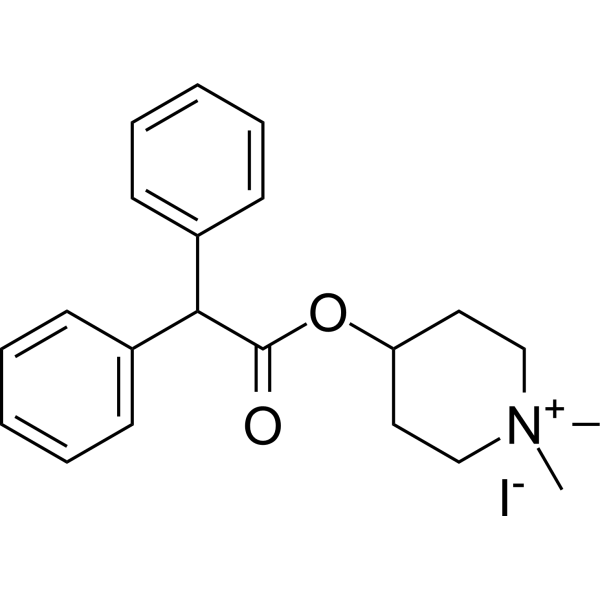
  • HY-100958
    4-DAMP
    4 Publications Verification

    4-DAMP methiodide

    mAChR Apoptosis MMP EGFR Interleukin Related Inflammation/Immunology Cancer
    4-DAMP (4-DAMP methiodide) is a potent and selective antagonist of M3 receptors and also has a high affinity for the closely-related M5 receptors. 4-DAMP combined with 5-Fluorouracil (5-Fu) (HY-90006) could significantly reduce the cell viability and enhance apoptosis in MKN45 and BGC823 gastric cancer cells. 4-DAMP inhibits lipopolysaccharide (LPS)- and tobacco-induced pulmonary inflammation and reduces mucin 5AC (MUC5AC), oligomeric mucus/gel-forming secretion .
    4-DAMP
  • HY-P2076

    SGX942

    p62 Bacterial Infection Cancer
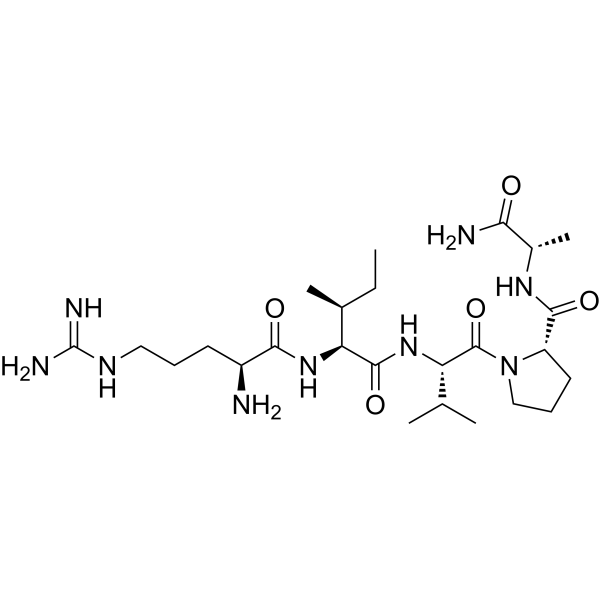
    Dusquetide (SGX942) is a first-in-class innate defense regulator (IDR). Dusquetide modulates the innate immune response to both PAMPs and DAMPs by binding to p62. Dusquetide shows activity in both reducing inflammation and increasing clearance of bacterial infection . DAMPs: damage-associated molecular patterns; PAMPs: pathogen-associated molecular patterns
    Dusquetide
  • HY-163099

    Drug-Linker Conjugates for ADC Topoisomerase Apoptosis Cancer
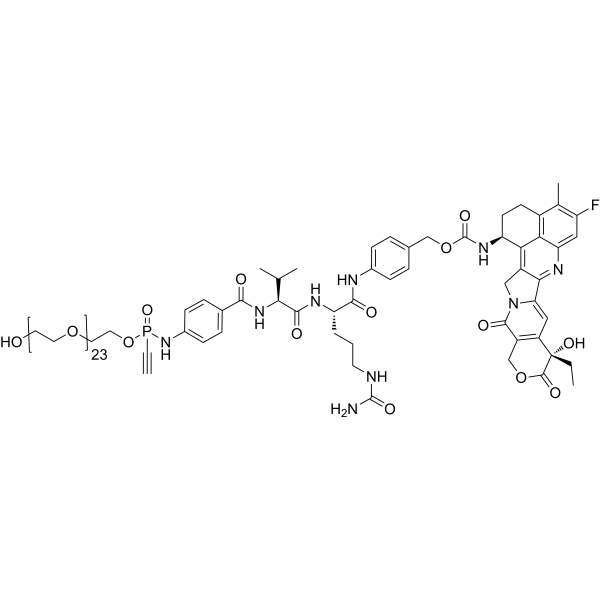
    P5 (PEG24)-VC-PAB-Exatecan is a TOP1 inhibitor payload with antibody-conjugation-dependent activity. Conjugation of P5 (PEG24)-VC-PAB-Exatecan with Trastuzumab (HY-P9907) generates a DAR8 antibody-drug conjugate (ADCs) with antibody-like pharmacokinetic properties. P5 (PEG24)-VC-PAB-Exatecan induces S-phase and G2-M-phase cell cycle arrest, DNA damage and apoptosis in target-positive tumor cells, and releases damage-associated molecular patterns (DAMP) related to immunogenic cell death (ICD). The ADCs prepared from it exert bystander killing effects on non-target tumor cells. ADCs based on P5 (PEG24)-VC-PAB-Exatecan exhibit linker stability in vitro and in vivo, show in vivo efficacy, and can be used in research related to HER2-positive cancers .
    P5(PEG24)-VC-PAB-Exatecan
  • HY-N2435
    [8]-Shogaol
    4 Publications Verification

    COX Apoptosis Cancer
    [8]-Shogaol, a kind of stimulating compound in ginger, has antiplatelet (IC50=5 μM), anti-cancer and anti-inflammatory activity. [8]-Shogaol inhibited COX-2 (IC50=17.5 μM), which led to the decline of human leukemia cells. 8-Shogaol Selective direction TAK1 sum TAK1-TAB1 (IC50=5 μM), suppress IKK, Akt sum MAPK signal pathway, and reverse synovitis synovial sum Air dampness (RA).
    [8]-Shogaol
  • HY-N2499

    Others Metabolic Disease
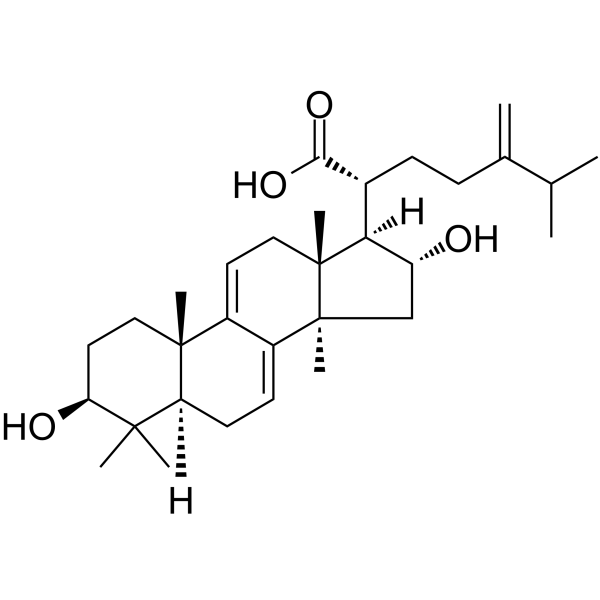
    Dehydrotumulosic acid is one of the effective constituents of Poria cocos. Poria cocos, a popular Chinese medicinal herb of fungal origin, has been included in many combinations with other CM herbs for its traditionally claimed activities of inducing diuresis, excreting dampness, invigorating the spleen and tranquilizing the mind and its modern pharmacological use of modulating the immune system of the body .
    Dehydrotumulosic acid
  • HY-142956

    Reactive Oxygen Species (ROS) Cancer
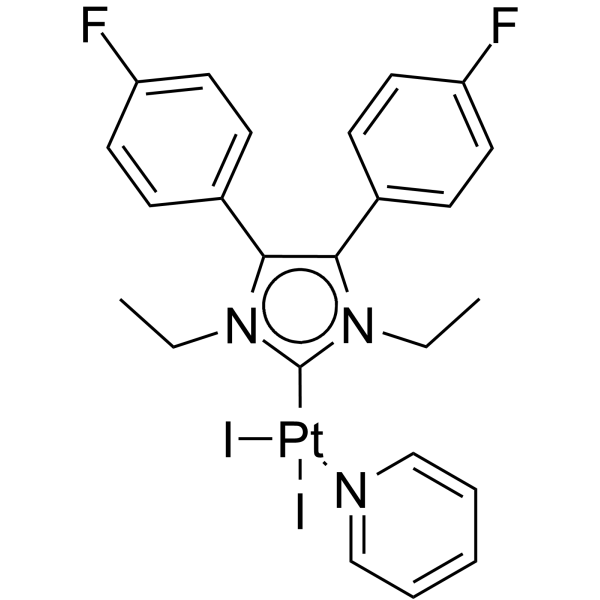
    ROS-ERS inducer 1 is a type II ICD (immunogenic cell death) inducer. ROS-ERS inducer 1 is a Pt(II)-N-heterocyclic carbene (Pt(II)-NHC) complex derived from 4,5-diarylimidazole. ROS-ERS inducer 1 successfully induces endoplasmic reticulum stress (ERS) accompanied by reactive oxygen species (ROS) generation and finally lead to the release of damage-associated molecular patterns (DAMPs) in HCC cells. ROS-ERS inducer 1 displays much higher anticancer activities than Cisplatin .
    ROS-ERS inducer 1
  • HY-116780A

    Cytochrome P450 Neurological Disease
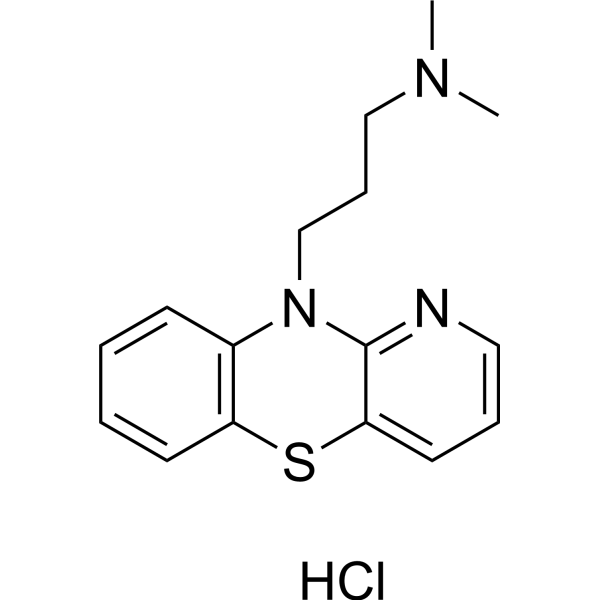
    Prothipendyl hydrochloride is a tricyclic azaphenothiazine neuroleptic agent. Prothipendyl hydrochloride is a substrate of the CYP isozymes CYP1A2, CYP2D6, CYP2C19 and CYP3A4. Prothipendyl hydrochloride has sedating and psychomotorically damping effects. Prothipendyl hydrochloride can be used for psychomotoric agitation, sleep disorder and anxiety research .
    Prothipendyl hydrochloride
  • HY-N0789

    Others Neurological Disease Metabolic Disease
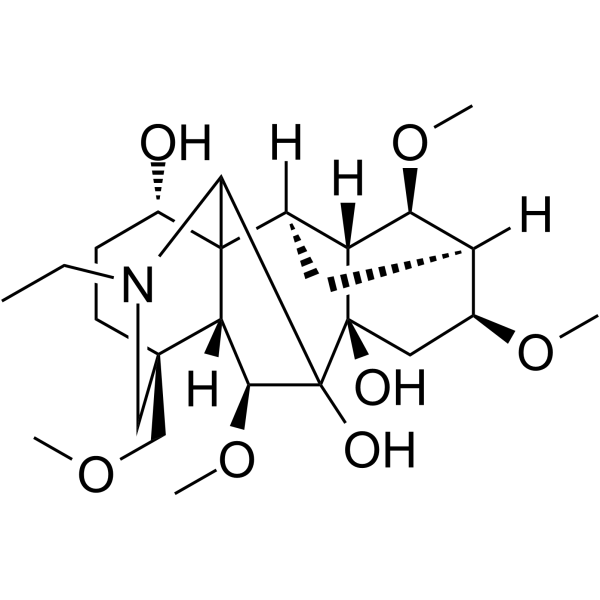
    Delsoline, a major alkaloid of Delphinium anthriscifolium Hance, has both a curare-like effect and a ganglion-blocking effect and is used to relieve muscle tension or hyperkinesia. D. anthriscifolium Hance has effects of dispelling wind and dampness, activating collaterals, and relieving pains and is used to treat rheumatism, hemiplegia, indigestion, and cough .
    Delsoline
  • HY-122955

    Fungal Infection
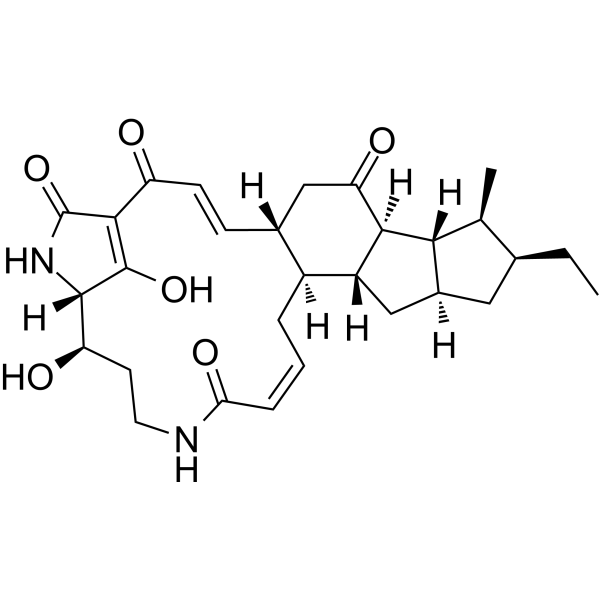
    Xanthobaccin A is a potent antimicrobial agent that can be isolated from the culture fluid of Stenotrophomonas sp. strain SB-K88. Xanthobaccin A exhibits activity against fungi, induces zoospore immobilization and lysis, inhibits mycelial growth. Xanthobaccin A can be used for the research of beet damping-off disease, bacterial and fungal infection .
    Xanthobaccin A
  • HY-W001974

    DNA/RNA Synthesis Bacterial Others
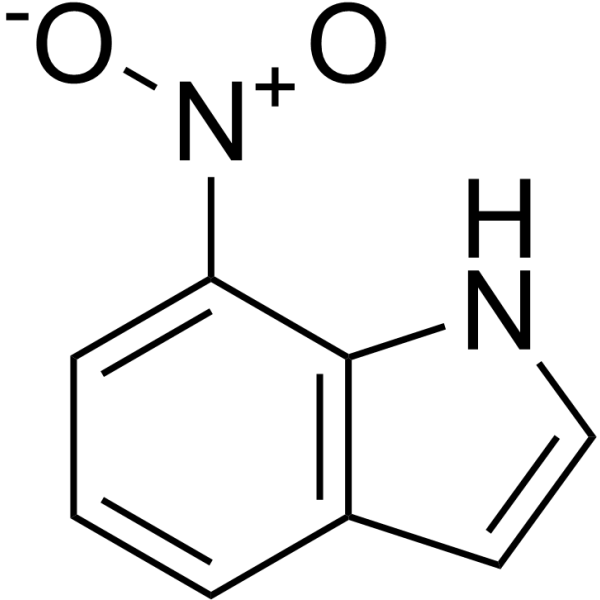
    7-Nitroindole is a cleavable base analog and Antibacterial agent. 7-Nitroindole inhibits the growth of Lactobacillus arabinosus. 7-Nitroindole is used in studies of light-controlled DNA cleavage and Lactobacillus arabinosus infection .
    7-Nitroindole
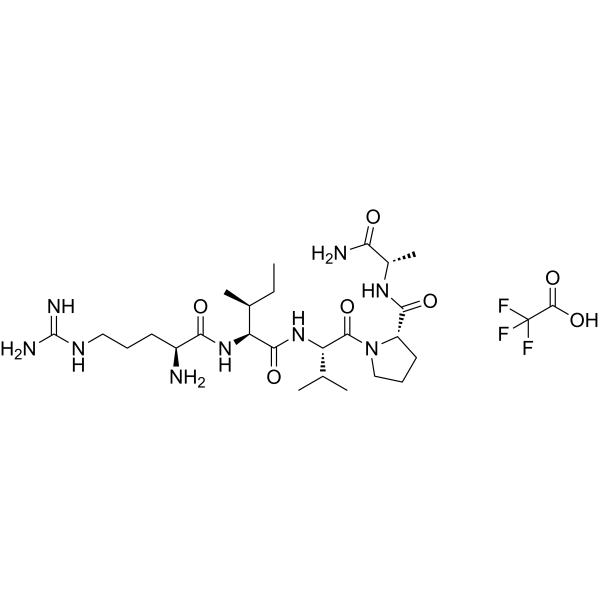
  • HY-P2076A

    SGX942 TFA

    p62 Bacterial Infection Cancer
    Dusquetide (SGX942) TFA is a first-in-class innate defense regulator (IDR). Dusquetide TFA modulates the innate immune response to both PAMPs and DAMPs by binding to p62. Dusquetide TFA shows activity in both reducing inflammation and increasing clearance of bacterial infection . DAMPs: damage-associated molecular patterns; PAMPs: pathogen-associated molecular patterns
    Dusquetide TFA
  • HY-131812

    2'-Deoxyadenosine 5'-O-thiophosphate

    Nucleoside Antimetabolite/Analog Others
    5'-dAMPS is an analogue of 5'-dAMP and thus a potential substrate, competitive inhibitor or regulator of enzymes that interact with dAMP .
    5'-dAMPS
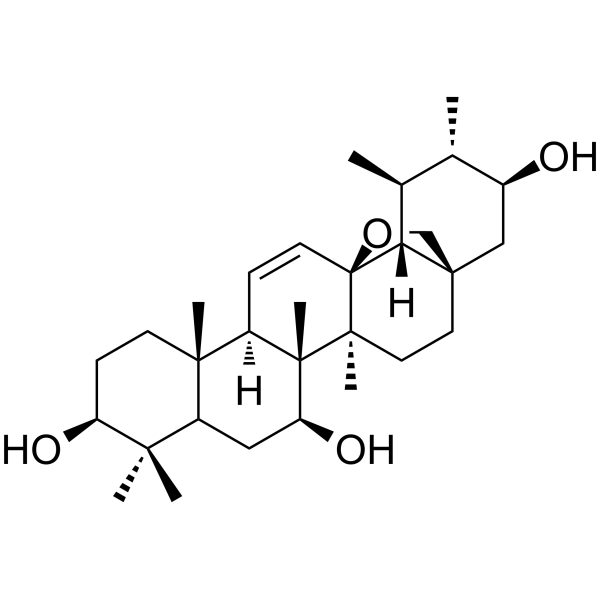
  • HY-145870

    NO Synthase Inflammation/Immunology
    Anti-inflammatory agent 13 (Compound 3) is a pentacyclic triterpene compound. Anti-inflammatory agent 13 exhibits a considerable inhibitory effect on inflammation models. Anti-inflammatory agent 13 has the potential for the research of either DAMPs or PAMPs triggered inflammation .
    Anti-inflammatory agent 13
  • HY-134081

    mAChR Others
    Desiodomethyl 4-DAMP is a muscarinic receptor antagonist .
    Desiodomethyl 4-DAMP
  • HY-134246

    5'-dTuMP

    Nucleoside Antimetabolite/Analog Others
    7-CH-5'-dAMP (5'-dTuMP) is an adenylate derivative that acts as a potential substrate, competitive inhibitor, or modulator of enzymes that interact with 2-deoxyadenosine-5-monophosphate .
    7-CH-5'-dAMP
  • HY-116780

    Cytochrome P450 Neurological Disease
    Prothipendyl is a tricyclic azaphenothiazine neuroleptic agent. Prothipendyl is a substrate of the CYP isozymes CYP1A2, CYP2D6, CYP2C19 and CYP3A4. Prothipendyl has sedating and psychomotorically damping effects. Prothipendyl can be used for psychomotoric agitation, sleep disorder and anxiety research .
    Prothipendyl
  • HY-169957

    Reactive Oxygen Species (ROS) Cancer
    ROS-ERS inducer 2 (Complex 3f) triggers intracellular ROS generation and affect the function of mitochondria. promote the release of damage-associated molecular patterns (DAMPs), induce immunogenic cell death (ICD) and activates endoplasmic reticulum stress (ERS). ROS-ERS inducer 2 plays an important role in anti-liver cancer research .
    ROS-ERS inducer 2
  • HY-151503

    Autophagy Cancer
    MPM-1, a marine Eusynstyelamides mimic, is a potent anticancer agent. MPM-1 can rapidly kill cancer cells in vitro by inducing a necrosis-like death. MPM-1 has the ability to induce immunogenic cell death. MPM-1 causes perturbation of autophagy and lysosomal swelling in cancer cells .
    MPM-1
  • HY-N2499R

    Reference Standards Others Metabolic Disease
    Dehydrotumulosic acid (Standard) is the analytical standard of Dehydrotumulosic acid. This product is intended for research and analytical applications. Dehydrotumulosic acid is one of the effective constituents of Poria cocos. Poria cocos, a popular Chinese medicinal herb of fungal origin, has been included in many combinations with other CM herbs for its traditionally claimed activities of inducing diuresis, excreting dampness, invigorating the spleen and tranquilizing the mind and its modern pharmacological use of modulating the immune system of the body .
    Dehydrotumulosic acid (Standard)
  • HY-173023

    Apoptosis Indoleamine 2,3-Dioxygenase (IDO) Reactive Oxygen Species (ROS) Cancer
    IDOi-Pt(IV) prodrug-1 (Compound 10) is an IDOi-Pt(IV) prodrug. IDOi-Pt(IV) prodrug-1 inhibits IDO expression. IDOi-Pt(IV) prodrug-1 induces apoptosis, decreases the mitochondrial membrane potential, inhibits tumor cell migration and invasion. IDOi-Pt(IV) prodrug-1 induces reactive oxygen species-mediated endoplasmic reticulum stress and secretion of damage-associated molecular patterns (DAMPs), thereby presenting immunogenic cell death (ICD) effects. IDOi-Pt(IV) prodrug-1 has high-efficiency and low-toxicity antitumor effects compared to Cisplatin (HY-17394) .
    IDOi-Pt(IV) prodrug-1
  • HY-N2435R

    Reference Standards COX Apoptosis Cancer
    -Shogaol (Standard) is the analytical standard of -Shogaol. This product is intended for research and analytical applications. -Shogaol, a kind of stimulating compound in ginger, has antiplatelet (IC50=5 μM), anti-cancer and anti-inflammatory activity. -Shogaol inhibited COX-2 (IC50=17.5 μM), which led to the decline of human leukemia cells. 8-Shogaol Selective direction TAK1 sum TAK1-TAB1 (IC50=5 μM), suppress IKK, Akt sum MAPK signal pathway, and reverse synovitis synovial sum Air dampness (RA) .
    [8]-Shogaol (Standard)
  • HY-168650

    ROCK HDAC Inflammation/Immunology Cancer
    ROCK/HDAC-IN-1 (Compound 10h) is an orally active ROCK/HDAC inhibitor. ROCK/HDAC-IN-1 inhibits ROCK1/2 (IC50: 254.9 nM, 58.18 nM) and HDAC1/2/3/6/8 (IC50: 9.09, 8.03, 6.26, 0.41, 7.69 nM). ROCK/HDAC-IN-1 stimulates the activation of DAMPs, specifically Calreticulin (CRT) exposure and HMGB1 release, indicating that it is a potential ICD inducer.. ROCK/HDAC-IN-1 has antiproliferative activity against breast cancer cells (IC50: 0.37 μM for MDA-MB-231 cell), and inhibits tumor growth and activates T cells without apparent toxicity .
    ROCK/HDAC-IN-1
  • HY-178585

    Nucleoside Antimetabolite/Analog Metabolic Disease
    3′-O-Azidomethyl-dAMP is a monomeric raw material that can be used for nucleic acid synthesis.
    3′-O-Azidomethyl-dAMP
  • HY-N18735

    Others Inflammation/Immunology
    Quassia extract is obtained from the branches and leaves of Picrasma quassioides (D. Don) Benn. It has the effects of clearing away heat, removing dampness, and detoxification.
    Quassia extract
  • HY-175048

    Platinum(II)-N-heterocyclic carbene complex 2C

    Reactive Oxygen Species (ROS) Apoptosis ER-phagy Cancer
    Pt(II)-NHC Complex 2C (Platinum(II)-N-Heterocyclic Carbene complex 2C) (Compound 2C) is a platinum(II) complex based on N-heterocyclic carbene (NHC). Pt(II)-NHC Complex 2C is an immunogenic cell death (ICD) inducer that can induce endoplasmic reticulum stress (ERS) in liver cancer cells and produce reactive oxygen species (ROS), ultimately leading to the release of damage-associated molecular patterns (DAMP). Pt(II)-NHC Complex 2C blocks the cell cycle at the S phase and significantly induces cell apoptosis. Pt(II)-NHC Complex 2C shows anti-liver cancer potential in mouse models and activates immune cells in liver injury models.
    Pt(II)-NHC complex 2C
  • HY-180555

    PROTACs STING Inflammation/Immunology Cancer
    SN38-(PEG)2-Pom-α is a selective PROTAC RPL15 degrader. SN38-(PEG)2-Pom-α induces ubiquitin-mediated degradation of RPL15 without affecting TOP1. SN38-(PEG)2-Pom-α induces damage-associated molecular pattern (DAMP) secretion from cancer cells, which activated cGAS-STING signaling in dendritic cells. SN38-(PEG)2-Pom-α enhances anti-PD-1 immunotherapy in a murine melanoma tumor model expressing human CRBN. SN38-(PEG)2-Pom-α can be used for melanoma research .
    SN38-(PEG)2-Pom-α

Inquiry Online

Your information is safe with us. * Required Fields.

Salutation


Country or Region *

Applicant Name *


Organization Name *

Department *


Email Address *


Product Name *

Cat. No.


Requested quantity *

Phone Number *


Remarks

Inquiry Online

Inquiry Information

Product Name:
Cat. No.:
Quantity:
MCE Japan Authorized Agent: