41 Results for "

DNA+adduct

" in MedChemExpress (MCE) Product Catalog:
Products (41)

41 Results for "DNA+adduct" in MCE Product Catalog:

17
17 Publications Verification
Cat. No.: HY-111375
CAS No.: 25843-45-2
Synonyms: AOM
Research Areas:  

Cancer

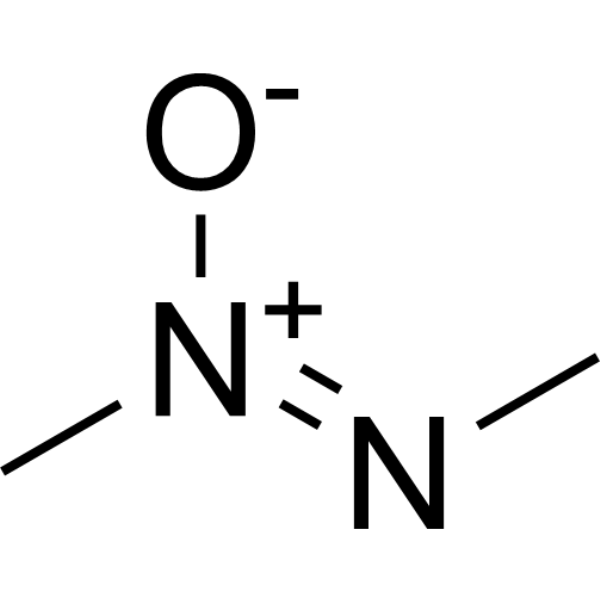
Azoxymethane is a colon carcinogen which leads to the formation of DNA adducts.
2
2 Cited Publications
Cat. No.: HY-W016286
CAS No.: 5437-25-2
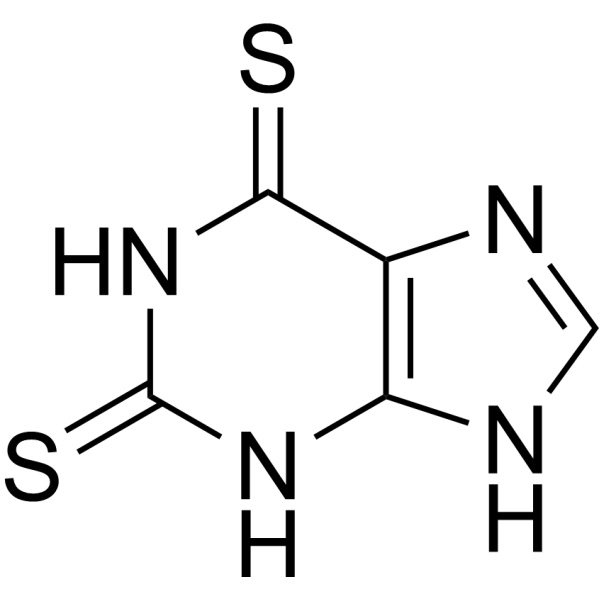
Synonyms: 2,6-Dimercaptopurine
Research Areas:  

Cancer

2,6-Dithiopurine (2,6-Dimercaptopurine) is a nucleophilic scavenger for electrophilic carcinogens. 2,6-Dithiopurine abolishes both DNA adduct formation and the initiation of carcinogenesis .
1
1 Cited Publications
Cat. No.: HY-N0511
CAS No.: 475-80-9
Synonyms: Aristolochic acid II
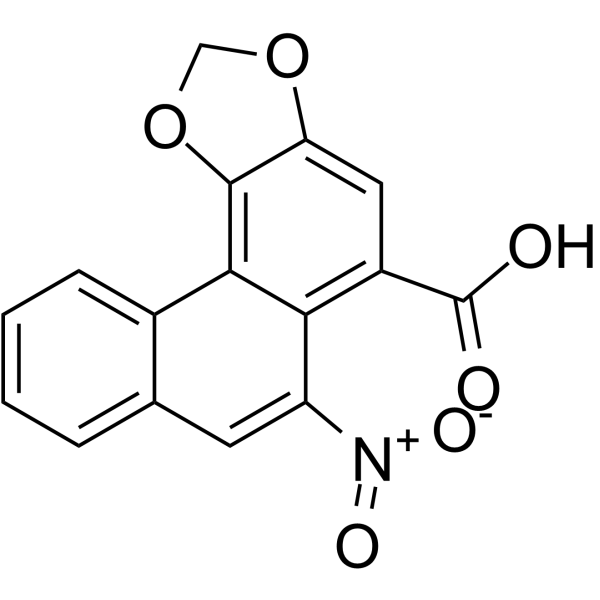
Aristolochic acid B (Aristolochic Acid II) is an orally active major component of aristolochic acid (AA). Aristolochic acid B can be isolated from plants of the genus Aristolochica. Aristolochic acid B forms DNA adducts. Aristolochic acid B is mutagenic. Aristolochic acid B exhibits a greater carcinogenic risk in vivo than Aristolochic acid I (HY-N0510) .
1
1 Cited Publications
Cat. No.: HY-N0769
CAS No.: 482-27-9
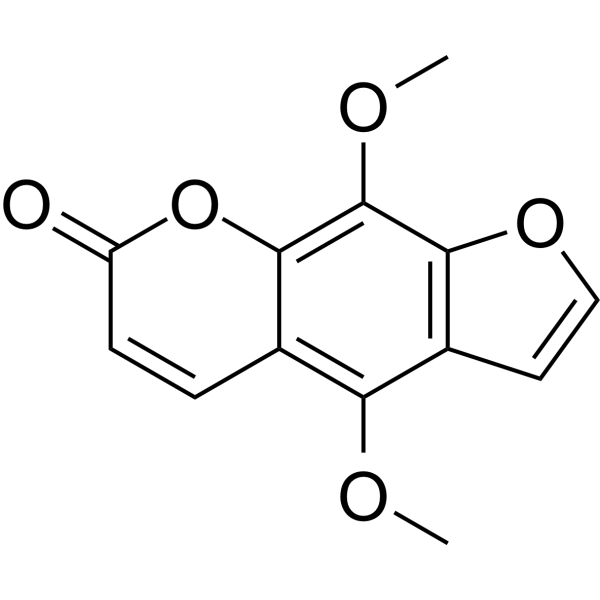
Isopimpinellin, an orally active compound isolated from Glomerella cingulata. Isopimpinellin blocks DNA adduct formation and skin tumor initiation by 7,12-dimethylbenz[a]anthracene. Isopimpinellin possesses anti-leishmania effect .
Cat. No.: HY-W088065
CAS No.: 141-53-7
Sodium formate acts as a key promoter for heterogeneous nucleation of ZIF crystals and thin film synthesis. It is also recognized as a GRAS substance by the FDA, and serves as a cosmetic preservative and food additive. Sodium formate has low acute oral toxicity (acute oral LD50=7410 mg/kg and acute intravenous LD50=807 mg/kg in mice), with no heritable or carcinogenic effects, but exhibits embryonic developmental toxicity and teratogenicity at high concentrations. Sodium formate may cause moderate irritation to rabbit eyes, is relatively safe to the skin, and does not induce tumor formation in rats in vivo. Sodium formate is rapidly absorbed and oxidized to carbon dioxide in vivo, and forms DNA adducts in specific metabolic deficiency models or upon high-dose exposure .
Cat. No.: HY-W013053
CAS No.: 53-70-3
Synonyms: DBA; 1,2,5,6-Dibenzanthracene; Benzo[k]tetraphene
Dibenz[a,h]anthracene (DBA) is an orally active polycyclic aromatic hydrocarbon, a by-product of incomplete combustion of organic matter, a potent carcinogen, and an agonist of AhR. Dibenz[a,h]anthracene induces dose-dependent increases in DNA adduct formation and lacZ mutation frequency. Dibenz[a,h]anthracene upregulates St3gal5. Dibenz[a,h]anthracene can be used in cancer-related research .
Cat. No.: HY-124421
CAS No.: 260443-89-8
Purity:  99.04%
Synonyms: NSC-703786
Research Areas:  

Others

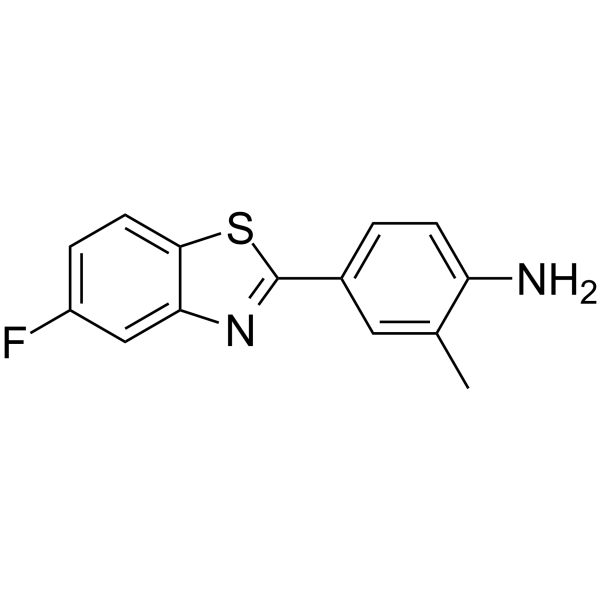
5F-203 (NSC-703786) is a cytotoxic molecule that forms DNA adducts and cell cycle arrest. 5F-203 induces aryl hydrocarbon receptor (AhR) signaling and elevates expression of CYP1A1. 5F-203 also increases the levels of reactive oxygen species as well as activates JNK, ERK, and p38 .
Cat. No.: HY-124211
CAS No.: 189-55-9
Purity:  ≥98.0%
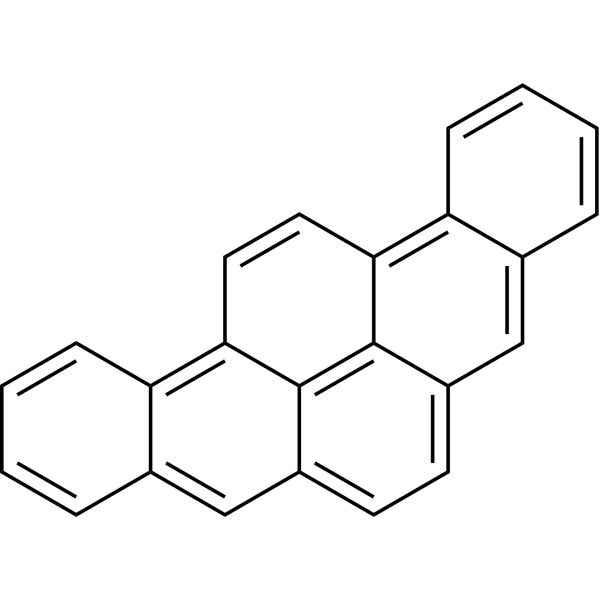
Dibenzo (a,i) pyrene is a polycyclic aromatic hydrocarbon and also a carcinogenic ligand of the TCDD (Ah) receptor. Dibenzo (a,i) pyrene binds to the TCDD (Ah) receptor in rat liver. Dibenzo (a,i) pyrene induces DNA adduct formation and upregulates the protein levels of p53 and p21 WAF1 in diploid lung fibroblasts. Dibenzo (a,i) pyrene alters the cell cycle distribution of diploid lung fibroblasts, increasing the proportion of cells in the S phase, decreasing the proportions of cells in the G0/G1 and G2/M phases, and causing S phase delay/arrest. Dibenzo (a,i) pyrene is applicable for cancer research .
Cat. No.: HY-69014
CAS No.: 3289-47-2
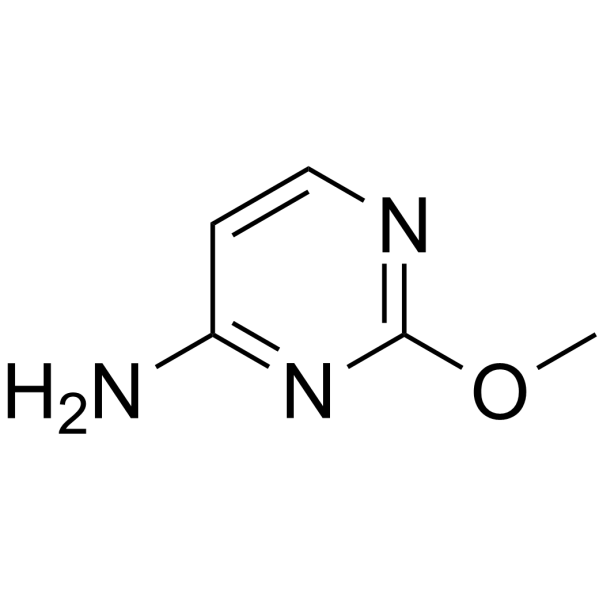
2-O-Methylcytosine, an O-alkylated analogue a DNA adduct, is the damaged nucleobase .
Cat. No.: HY-N8022
CAS No.: 29706-59-0
Synonyms: Lucidin 3-O-β-primeveroside
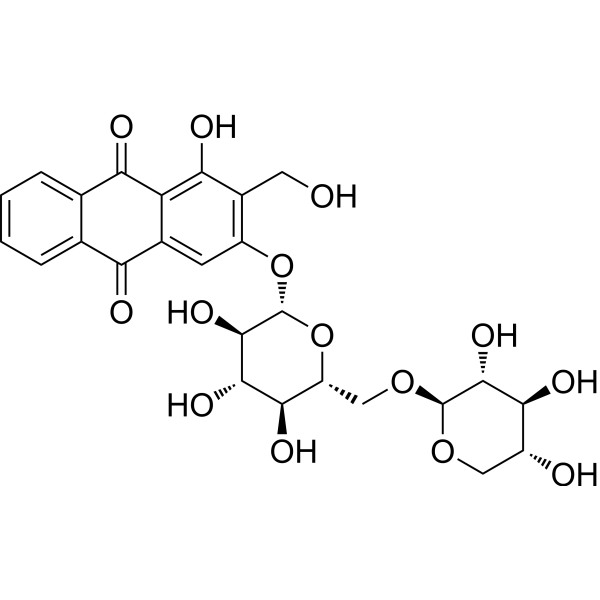
Lucidin primeveroside (Lucidin 3-O-β-primeveroside) is an anthraquinone derivative present in madder root, which has been used as a coloring agent and food additive. Lucidin primeveroside can be metabolically converted to genotoxic compound Lucidin, which subsequently forms lucidin-specific DNA adducts .
Cat. No.: HY-W347492
CAS No.: 964-21-6
Synonyms: O6-Methyl-2′-deoxyguanosine
Research Areas:  

Cancer

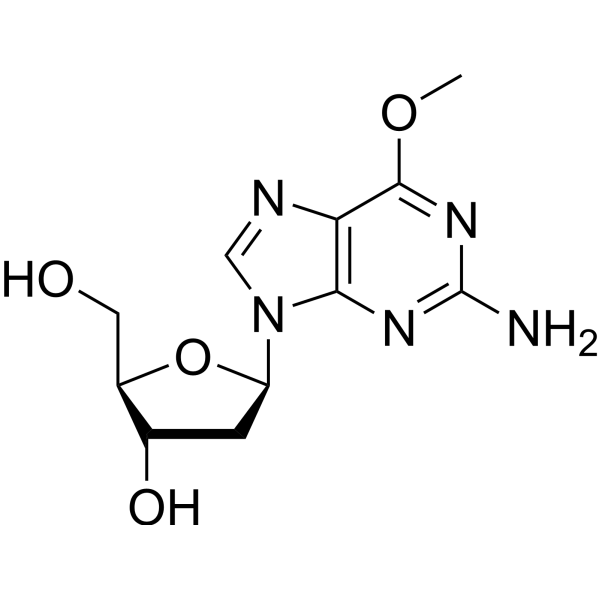
O6-Methyldeoxy guanosine; DNA adduct is a purine nucleoside analog. Purine nucleoside analogs have broad antitumor activity targeting indolent lymphoid malignancies. Anticancer mechanisms in this process rely on inhibition of DNA synthesis, induction of apoptosis, etc .
Cat. No.: HY-154406
CAS No.: 19916-77-9
Research Areas:  

Cancer

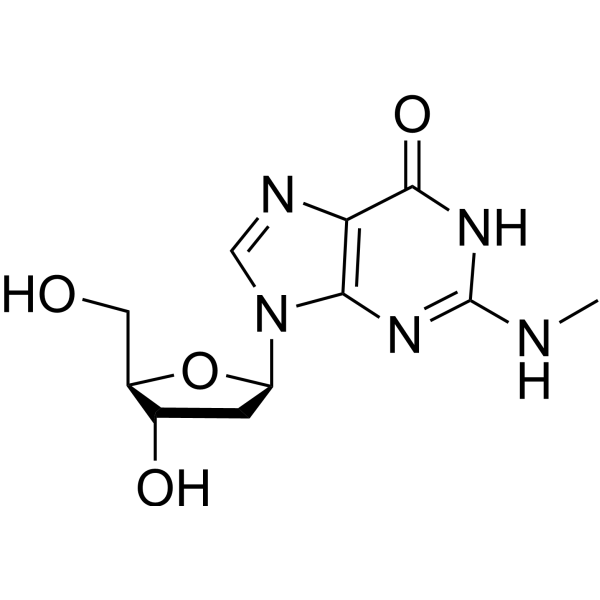
2’-Deoxy-N2-methylguanosine, DNA adduct is a purine nucleoside analog. Purine nucleoside analogs have broad antitumor activity targeting indolent lymphoid malignancies. Anticancer mechanisms in this process rely on inhibition of DNA synthesis, induction of apoptosis, etc .
Cat. No.: HY-154578
CAS No.: 60192-55-4
Purity:  96.08%
Research Areas:  

Cancer

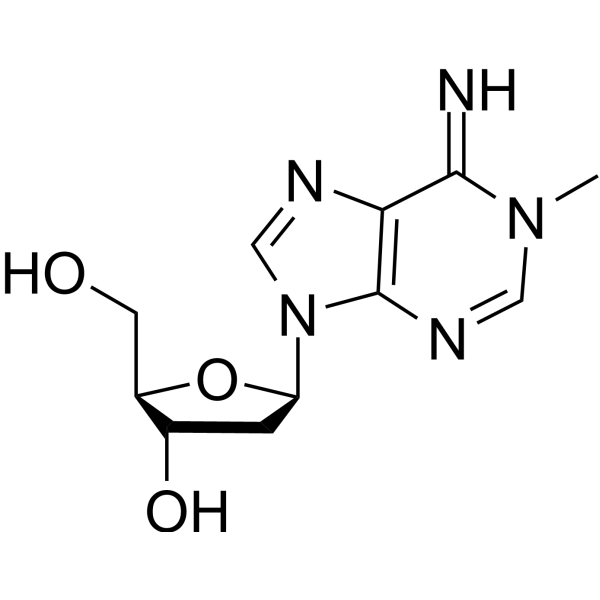
N1-Methyl-2'-deoxyadenosine, DNA adduct is a purine nucleoside analog. Purine nucleoside analogs have broad antitumor activity targeting indolent lymphoid malignancies. Anticancer mechanisms in this process rely on inhibition of DNA synthesis, induction of apoptosis, etc .
Cat. No.: HY-W141077
CAS No.: 930-55-2
1-Nitrosopyrrolidine is a molecule that primarily interacts with DNA and proteins, leading to the formation of DNA adducts and protein adducts.
Cat. No.: HY-W683760
CAS No.: 16543-55-8
Synonyms: (2S)-N'-Nitrosonornicotine
Target:  

DNA/RNA Synthesis

Research Areas:  

Cancer

N-Nitrosonornicotine is a tobacco-specific nitrosamine that has carcinogenic and mutagenic activity, and it can induce micronuclei in C3A cells. N-Nitrosonornicotine can form DNA adducts .
Cat. No.: HY-141439
CAS No.: 936475-62-6
TBE 31 is an orally active Keap1/Nrf2 pathway activator and NQO1 inducer with a Dm value of 1.1 nM for NQO1. TBE 31 binds to cysteine residues of Keap1, inhibits ubiquitination and degradation of Nrf2, thereby activating the expression of ARE-dependent genes. TBE 31 induces cytoprotective enzymes including NQO1 and GST isoforms, promotes Nrf2 accumulation, and upregulates Nrf2-regulated genes related to antioxidation and lipid metabolism. TBE 31 inhibits pro-inflammatory responses, formation of AFB1-DNA adducts, endoplasmic reticulum stress, cell apoptosis (apoptosis), hepatic fibrosis, oxidative stress, and the expression of ChREBP. TBE 31 reduces the number of tumors in a mouse model of ultraviolet-induced skin carcinogenesis. TBE 31 enhances nerve growth factor-induced neurite outgrowth. TBE 31 attenuates LPS-induced serum TNF-α levels and immobility time in mice. TBE 31 can be used in research related to liver cancer, skin cancer, inflammation-related depression, and non-alcoholic steatohepatitis .
Cat. No.: HY-118517
CAS No.: 97151-02-5
Synonyms: (E)-α-Hydroxy tamoxifen; α-OHTAM
Target:  

Drug Metabolite

Research Areas:  

Cancer

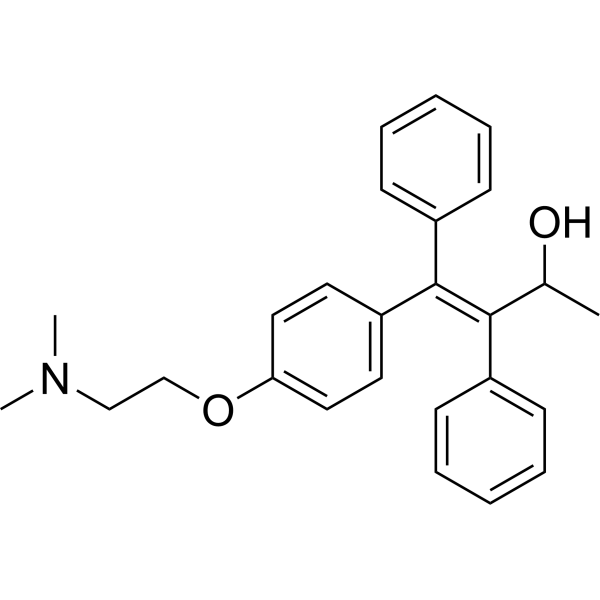
α-Hydroxytamoxifen is a metabolite of tamoxifen, reacts with DNA in the absence of metabolizing enzymes, and causes formation of DNA adducts .
Cat. No.: HY-W016433
CAS No.: 153-78-6
Target:  

DNA/RNA Synthesis

Research Areas:  

Others

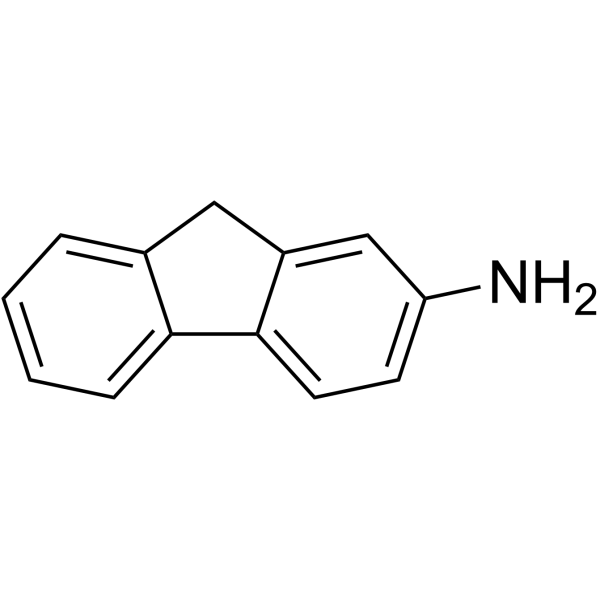
2-Aminofluorene is a synthetic chemical insecticide. 2-Aminofluorene is a genotoxin. 2-Aminofluorene can be used in the research of DNA adduct structure, DNA repair, carcinogenesis, and mutagenesis .
Cat. No.: HY-W016433S1
CAS No.: 347841-44-5
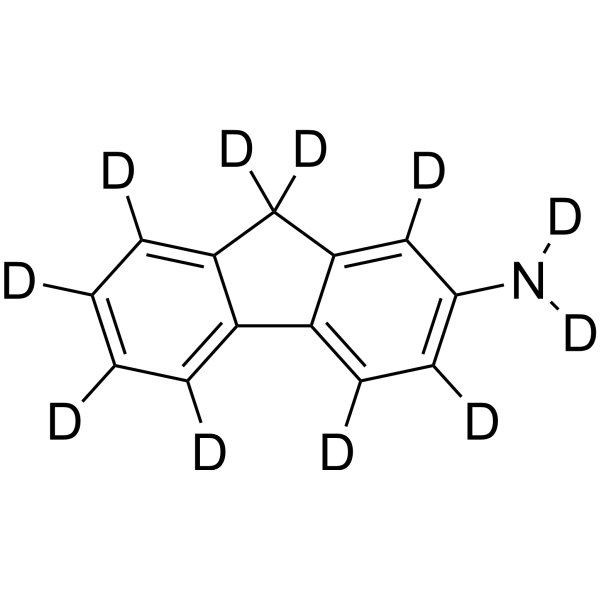
2-Aminofluorene-d11 is the deuterium labeled 2-Aminofluorene . 2-Aminofluorene is a synthetic chemical insecticide. 2-Aminofluorene is a genotoxin. 2-Aminofluorene can be used in the research of DNA adduct structure, DNA repair, carcinogenesis, and mutagenesis .
Cat. No.: HY-N6828
CAS No.: 35337-98-5
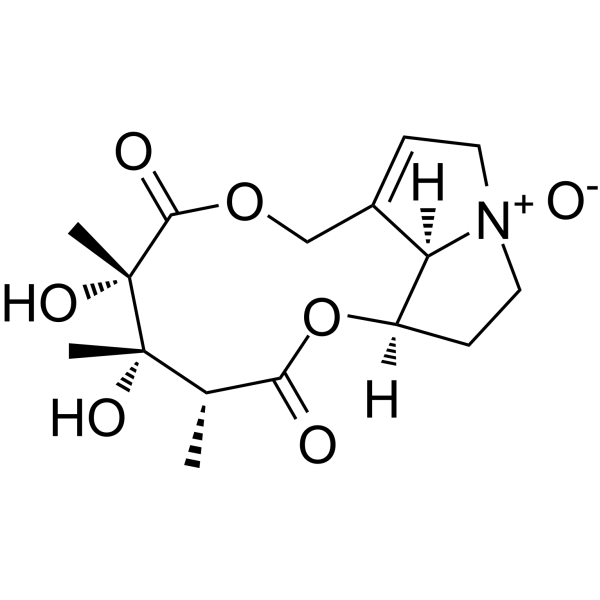
Monocrotaline N-Oxide, a monocrotaline metabolite, leads to DNA adduct formation in vivo .