
39 Results for "

DNA fragments

" in MedChemExpress (MCE) Product Catalog:
Products (39)

39 Results for "DNA fragments" in MCE Product Catalog:

5
5 Cited Publications
Cat. No.: HY-D1191
CAS No.: 2225748-05-8
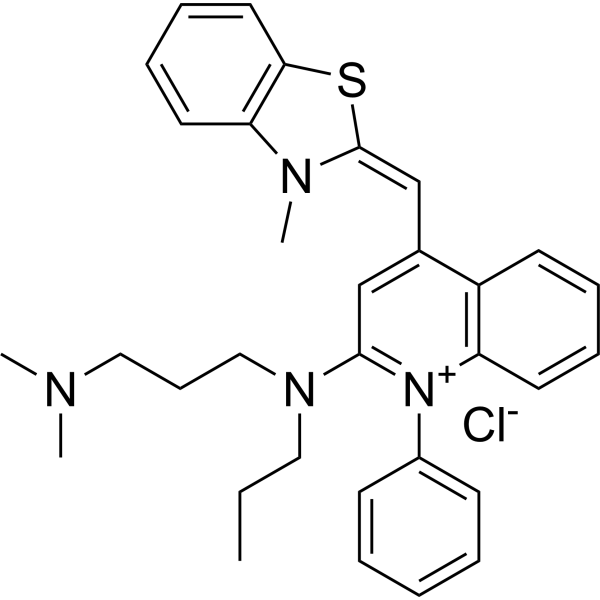
SYBR Green I chloride is a highly sensitive fluorescent nucleic acid dye that binds specifically to the minor groove of double-stranded DNA or intercalates between base pairs. SYBR Green I chloride exhibits weak fluorescence in the unbound state but emits bright fluorescence upon binding, and it preferentially binds to large-fragment DNA and DNA with high G+C content. SYBR Green I chloride is suitable for real-time PCR technology; its fluorescence intensity correlates with the amount and size of amplification products, enabling accurate quantification of gene expression and discrimination of amplicons via melting curve analysis without additional post-processing. SYBR Green I chloride is widely used in preclinical in vitro nucleic acid detection .
loading...
    loading...
2
2 Cited Publications
Cat. No.: HY-K1041A

MCE Seamless DNA Assembly Ultra Kit is a next-generation recombinant cloning kit that allows the recombination of single or multiple DNA fragments in a single reaction.

loading...
    loading...
2
2 Cited Publications
Cat. No.: HY-K1031

MCE Agarose can be made into 0.5-2.5% agarose gel according to different needs and can resolve DNA and RNA fragments from 50-15,000 bp.

loading...
    loading...
1
1 Cited Publications
Cat. No.: HY-W088070A
CAS No.: 9012-36-6
Agarose,Low melting point is a kind of agarose, a kind of polysaccharide that can be derived from seaweed. It is commonly used in molecular biology and biochemistry to isolate and purify DNA and RNA fragments. Agarose,Low melting point is a low melting point agarose, which is suitable for the recovery of large DNA fragments and enzymatic reactions in gels and other applications. In addition, it has been used in various techniques, such as pulsed field gel electrophoresis and capillary electrophoresis for analyzing genetic material.
loading...
    loading...
1
1 Cited Publications
Cat. No.: HY-D2468
Target:  

Fluorescent Dye

Research Areas:  

Others

Sulfonylurea Receptor HRP-Streptavidin is a biotin-binding signal amplifier designed to bind tightly with biotinylated anti-TSH monoclonal antibodies, thereby constituting a key component of the signal amplification system in immunoassays. HRP-Streptavidin is formed by the covalent coupling of Horseradish Peroxidase (HRP) with Streptavidin; it combines the highly efficient catalytic activity of the enzyme with the high affinity of Streptavidin for biotin, making it a potent and sensitive tool for signal amplification. HRP-Streptavidin is suitable for use in Western Blotting, ELISA, and other detection techniques .
loading...
    loading...
1
1 Cited Publications
Cat. No.: HY-19743
CAS No.: 928659-17-0
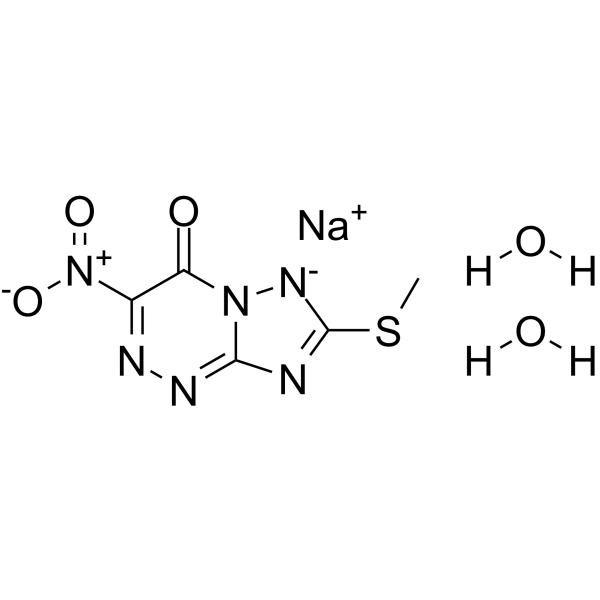
Triazavirin is a nucleoside analogue of nucleic acid and an antiviral agent. Triazavirin works by inhibiting the synthesis of viral RNA and DNA and replication of genomic fragments. Triazavirin is also an effective protective agent on the transmission stage of influenza .
loading...
    loading...
1
1 Cited Publications
Cat. No.: HY-131036
CAS No.: 64821-19-8
Purity:  99.25%
Target:  

Monoamine Oxidase

Research Areas:  

Neurological Disease

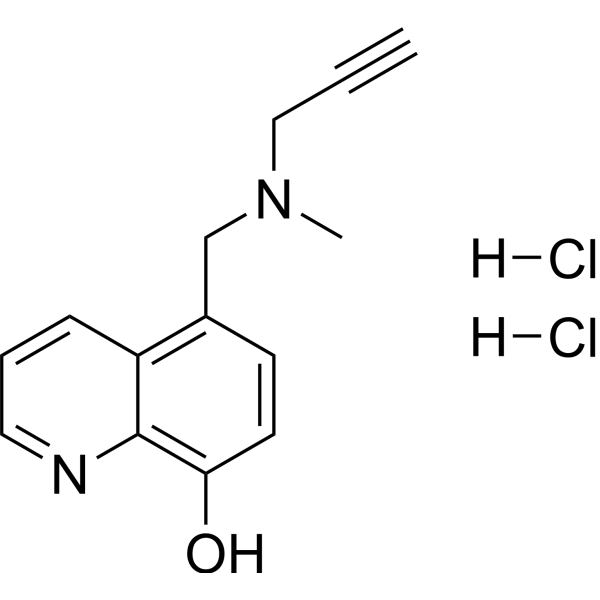
MAO-IN-M30 dihydrochloride is an orally active, brain-permeable, and brain selective irreversible MAO-A (IC50=37 nM) and MAO-B (IC50=57 nM) inhibitor. MAO-IN-M30 dihydrochloride is a potent iron chelator and radical scavenger. MAO-IN-M30 dihydrochloride has a neuroprotective effect against Dexamethasone-induced brain cell apoptosis. MAO-IN-M30 dihydrochloride also exhibits neurorestorative activity in post MPTP and lactacystin models of Parkinson's disease . MAO-IN-M30 (dihydrochloride) is a click chemistry reagent, it contains an Alkyne group and can undergo copper-catalyzed azide-alkyne cycloaddition (CuAAc) with molecules containing Azide groups.
loading...
    loading...
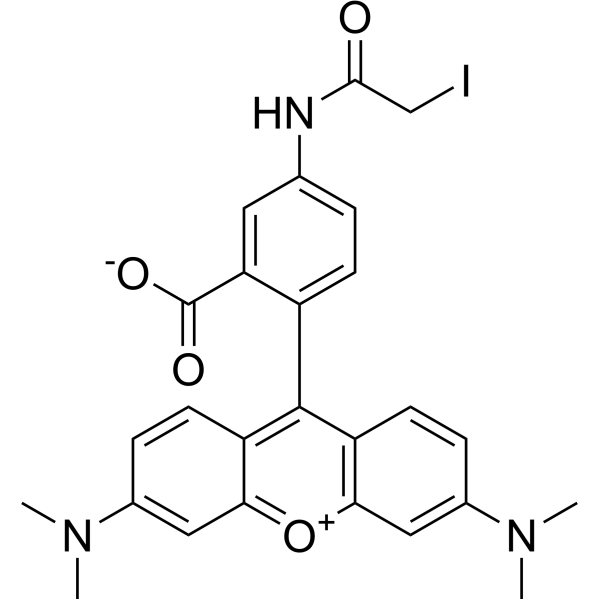
Cat. No.: HY-123749
CAS No.: 114458-99-0
Purity:  86.61%
Synonyms: 5-TMRIA
Tetramethylrhodamine-5-iodoacetamide (5-TMRIA) is a thiol-selective reactive dye that is used to non-specifically label proteins via the cysteine residues. Tetramethylrhodamine-5-iodoacetamide (5-TMRIA) can be used to covalently label DNA fragments .
loading...
    loading...
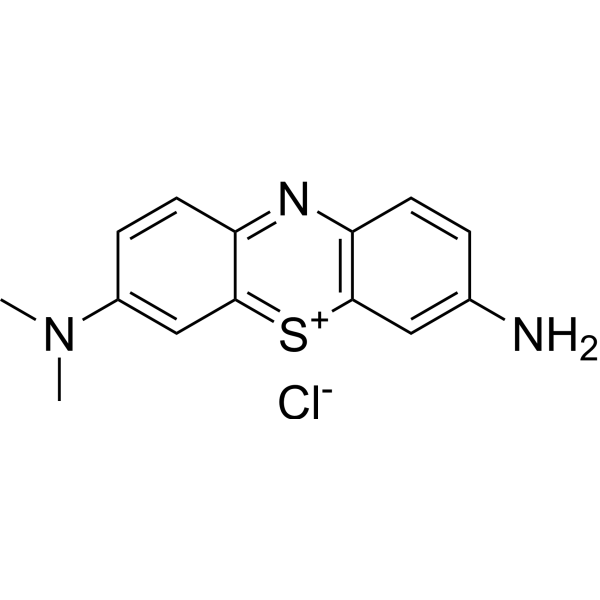
Cat. No.: HY-D0947
CAS No.: 531-53-3
Azure A chloride is a phenothiazine dye. Azure A chloride is an alternative DNA dye used for the separation of DNA and protein fragments in agarose gel electrophoresis and PAGE. Azure A chloride can be chemisorbed on the surface of mild steel according to the Langmuir adsorption isotherm to form a protective film. Azure A chloride binds to double-stranded DNA in a non-cooperative manner via weak intercalation, triggering molecular conformational disturbance, restricted rotational motion, and changes in optical activity .
loading...
    loading...
Cat. No.: HY-P3005
CAS No.: 9015-85-4
Target:  

DNA/RNA Synthesis

Research Areas:  

Others

T4 DNA ligase is the product of gene 30 of phage T4. T4 DNA ligase catalyzes the repair of single-stranded nicks in duplex DNA and joins duplex DNA restriction fragments having either blunt or cohesive ends. T4 DNA ligase catalyze the sealing of adjacent 5′-phosphate and 3′-­hydroxyl termini at single-stranded breaks in double-stranded DNA.T4 DNA ligase is an ATP-dependent ligase enzyme. T4 DNA ligase can be used in various biotechnological applications. T4 DNA ligase can join the ends of single-stranded DNA in the absence of any duplex DNA structure at the ligation site .
loading...
    loading...
Cat. No.: HY-W008598
CAS No.: 403-29-2
Synonyms: p-Fluorophenacyl bromide
Target:  

DNA/RNA Synthesis

Research Areas:  

Cancer

2-Bromo-4'-fluoroacetophenone (p-Fluorophenacyl bromide) is a photoinducible DNA cleavage inducer.2-Bromo-4'-fluoroacetophenone generates fluorine-substituted phenyl radicals upon excitation and irradiation to cleave DNA, converting circular supercoiled DNA to circular relaxed and linear DNA forms.2-Bromo-4'-fluoroacetophenone exhibits concentration-dependent DNA cleaving activity.2-Bromo-4'-fluoroacetophenone can be used for the research of cancer .
loading...
    loading...
Cat. No.: HY-158045
CAS No.: 3032324-56-1
Purity:  99.86%
Target:  

PROTACs PARP

Research Areas:  

Cancer

PROTAC PARP1 degrader-1 is a PARP1 PROTAC degrader with a DC50 value of 252.5 nM. PROTAC PARP1 degrader-1, combined with Daunorubicin (HY-13062A), induces the accumulation of cytoplasmic DNA fragments, activates the cGAS/STING innate immune pathway, and remodels the tumor microenvironment. PROTAC PARP1 degrader-1 can be used in research related to breast cancer .
loading...
    loading...
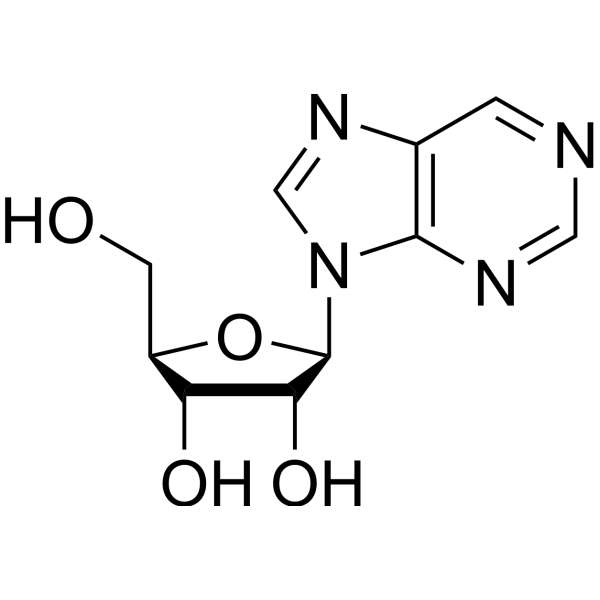
Cat. No.: HY-103694
CAS No.: 550-33-4
Purity:  98.44%
Synonyms: 9-β-D-Ribofuranosylpurine
Nebularine (9-β-D-Ribofuranosylpurine) is a naturally occurring cytotoxic purine riboside antibiotic. Nebularine competitively inhibits adenine deaminase and xanthine oxidase, and acts as a template for thymine insertion during DNA elongation and replication. Nebularine serves as a cytokinin antagonist and induces mitotic aberrations in plant cells. Nebularine exhibits cytotoxicity against plants, mammals, fungal organisms and cancer cells. Nebularine can be used in research related to fungal infections, plant growth, as well as chronic myeloid leukemia, acute lymphoblastic leukemia and breast cancer .
loading...
    loading...
Cat. No.: HY-115531
CAS No.: 1648707-58-7
Purity:  98.84%
Target:  

DNA/RNA Synthesis

Research Areas:  

Cancer

UNC-2170 is a functionally active, fragment-like ligand for 53BP1 (IC50=29 µM; Kd=22 µM). UNC-2170 shows at least 17-fold selectivity for 53BP1 as compared to nine other methyl-lysine (Kme) reader proteins. 53BP1 is a Kme binding protein that plays a central role in DNA Damage Repair (DDR) pathways and is recruited to sites of double-strand breaks (DSB) .
loading...
    loading...
Cat. No.: HY-W142092
CAS No.: 97-14-3
Research Areas:  

Others

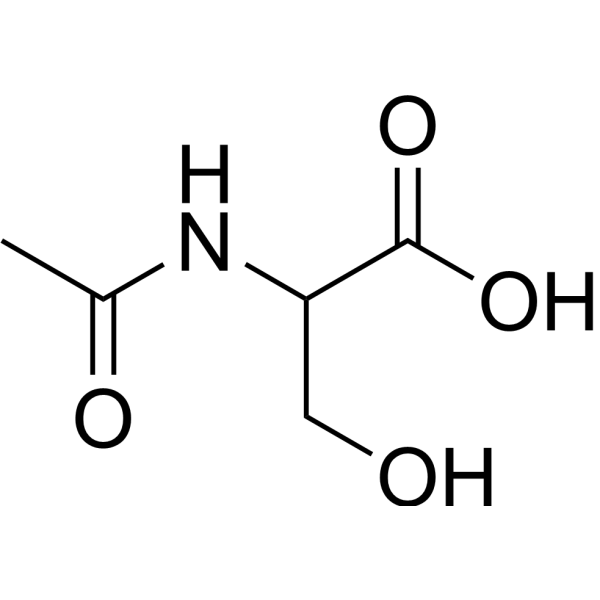
N-Acetyl-DL-serine is a hydrophobic amino acid that is synthesized in the body and can be found as a free form or as a salt with malonate, phosphate, or acetate. N-Acetyl-DL-serine has antimicrobial activity against Bacillus cereus and Staphylococcus aureus. N-Acetyl-DL-serine has also been used for the immobilization of DNA fragments on solid surfaces and can be used for protein synthesis and optical detection of DNA strands .
loading...
    loading...
Cat. No.: HY-W048513
CAS No.: 60129-59-1
7-Deaza-2'-deoxyadenosine is an isosteric dATP analog of 2'-deoxyadenosine. 7-Deaza-2'-deoxyadenosine is recognized by various DNA polymerases and incorporated into DNA strands as a substrate. 7-Deaza-2'-deoxyadenosine undergoes a bioorthogonal inverse electron demand Diels-Alder reaction with tetrazine-modified molecules, enabling site-specific labeling of DNA, surface antibody immobilization and intracellular fluorescent labeling. 7-Deaza-2'-deoxyadenosine reduces the DNA curvature of d(A6)·d(T6) fragments and the stability of DNA/RNA double helices, and leads to decreased antisense activity against SV40 T Antigen. 7-Deaza-2'-deoxyadenosine finds application in the research field of SV40 T Antigen-related cancers .
loading...
    loading...
Cat. No.: HY-E70216
Target:  

Others

Research Areas:  

Others

Bsu DNA polymerase, Large fragment is a polymerase derived from Bacillus subtilis. Bsu DNA polymerase, Large fragment is a DNA isothermal amplification polymerase with chain replacement activity, which used in RPA recombinase polymerase amplification technology .
loading...
    loading...
Cat. No.: HY-160841
CAS No.: 2567941-52-8
Research Areas:  

Others

Biotin-16-dCTP is a biotinylated deoxycytidine triphosphate that serves as an important DNA labeling substrate. Biotin-16-dCTP can be enzymatically incorporated into the 3' end of DNA probes via terminal deoxynucleotidyl transferase, forming a 1-3 nucleotide-long tail to achieve biotinylation of the probes. Biotin-16-dCTP enhances chemiluminescent detection of low-abundance targets such as specific tRNA isoacceptors through Northern blotting. Biotin-16-dCTP can also replace conventional dCTP to be integrated into single-stranded DNA generated by asymmetric polymerase chain reaction, which is applicable for bioconjugation or pull-down assays. Repeated freeze-thaw cycles of Biotin-16-dCTP should be avoided to prevent degradation of its function for probe biotinylation .
loading...
    loading...
Cat. No.: HY-P4101
Target:  

HIV

Research Areas:  

Infection

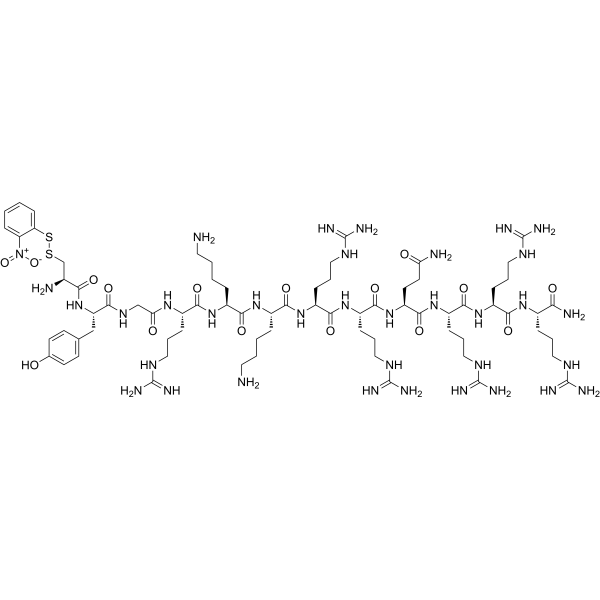
Cys(Npys)-TAT (47-57) is a peptide fragment of TAT peptide and it is able to interact with plasmid DNA electrostatically. Cys(Npys)-TAT (47-57) is corresponding to the transduction domain of TAT with an activated cysteine residue C. TAT is a small nuclear transcriptional activator protein encoded by HIV-1 .
loading...
    loading...
Cat. No.: HY-P2878A
CAS No.: 9025-82-5
Synonyms: PDE, Rattlesnake venom
Research Areas:  

Metabolic Disease

Phosphodiesterase l, Rattlesnake venom (PDE, Rattlesnake venom) is a non-selective phosphodiester bond hydrolase targeting phosphodiester bonds in oligonucleotides, catalyzing their hydrolysis into mononucleotides. Phosphodiesterase l, Rattlesnake venom cleaves phosphodiester linkages in DNA fragments digested by DNase I. Phosphodiesterase l, Rattlesnake venom is promising for research of nucleic acid structure and metabolism .
loading...
    loading...

