


Search Result
Results for "
DR5 Activator
" in MedChemExpress (MCE) Product Catalog:
| Cat. No. |
Product Name |
Target |
Research Areas |
Chemical Structure |
-
- HY-P99260
-
|
AMG 655; TRAIL-R2 mAb; Human Anti-TNFRSF10B Recombinant Antibody
|
TNF Receptor
|
Cancer
|
|
Conatumumab (AMG 655) is a human monoclonal agonist antibody against human death receptor 5 (DR5, TRAILR2) (Kd: 1 nM for the long form of DR5, 0.8 nM for the short form of DR5). Conatumumab induces apoptosis via caspase activation. Conatumumab can be used in the research of cancers.
.
|
-
-
- HY-18377
-
|
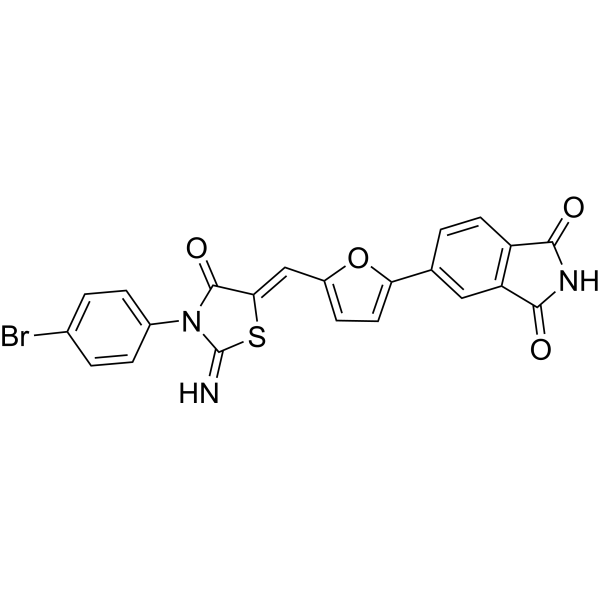
DR5 Activator
|
TNF Receptor
Apoptosis
|
Cancer
|
|
Bioymifi (DR5 Activator), a potent TRAIL receptor DR5 activator, binds to the extracellular domain (ECD) of DR5 with a Kd of 1.2 μM. Bioymifi can act as a single agent to induce DR5 clustering and aggregation, leading to apoptosis .
|
-
-
- HY-P99934
-
|
ABBV-621
|
Apoptosis
Caspase
TNF Receptor
|
Cancer
|
|
Eftozanermin alfa (ABBV-621) is a tumor necrosis factor-related apoptosis-inducing ligand receptor (TRAIL-R) agonist. Eftozanermin alfa is a fusion protein consisting of a mutant immunoglobulin G1-Fc linked to 2 single-chain trimers of TRAIL. Eftozanermin alfa induces apoptosis in tumor cells by activation of death receptors (DR4 receptor and DR5 receptor) with Kds of 780 nM and 635 nM. Eftozanermin alfa can be used for the research of multiple solid and heme malignancies .
|
-
-
- HY-N1983
-
|
|
Apoptosis
Autophagy
Reactive Oxygen Species (ROS)
Mitochondrial Metabolism
PARP
Caspase
Bcl-2 Family
VEGFR
FAK
WDR5
p38 MAPK
JNK
PPAR
|
Neurological Disease
Inflammation/Immunology
Cancer
|
|
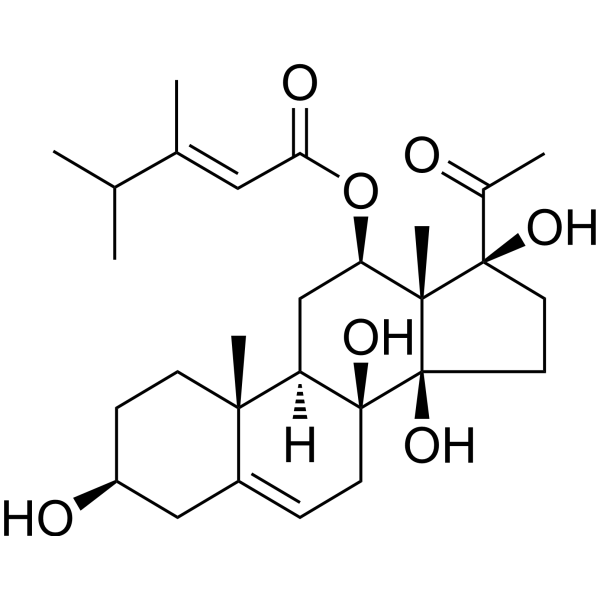
Caudatin is an orally active and brain-penetrant C-21 steroidal found in Cynanchum bungei decne with a variety of biological activities. Caudatin can inhibit cell proliferation, migration, invasion, cause cell phase arrest, induce apoptosis, autophagy, ROS prodution and loss of mitochondrial membrane potential. Caudatin activates PARP, caspase-3, -7, -9, upregulates pro-apoptotic Bad and Bax and downregulates anti-apoptotic Bcl-2 and Bcl-XL. Caudatin suppresses VEGF, FAK phosphorylation, upregulates p21, p27, DR5 protein expression, activates the p38 MAPK, JNK and PPARα/TFEB-mediated autophagy-lysosomal signaling pathways. Caudatin can be used for the research of cancer, inflammation and neurological disease, such as glioma and Alzheimer's disease .
|
-
-
- HY-P991570
-
|
AD5-10; oba-01 Antibody
|
TNF Receptor
Apoptosis
Caspase
Atg8/LC3
Akt
Beclin1
JNK
|
Cancer
|
|
Zaptuzumab (AD5-10) is a DR5-specific humanized monoclonal antibody that selectively binds to DR5 with high affinity. Zaptuzumab specifically induces cancer cell death by both caspase-apoptosis and autophagic cell death (ACD). Zaptuzumab activates both ADCC and CDC. Zaptuzumab induces ROS generation and GSH level reduction. Zaptuzumab shows a significant suppression of the tumor growth and good safety in various xenografts mice tumor models .
|
-
-
- HY-N3000
-
|
|
JNK
IRE1
Akt
mTOR
YAP
Reactive Oxygen Species (ROS)
Autophagy
Apoptosis
Ferroptosis
Fungal
|
Infection
Inflammation/Immunology
Cancer
|
|
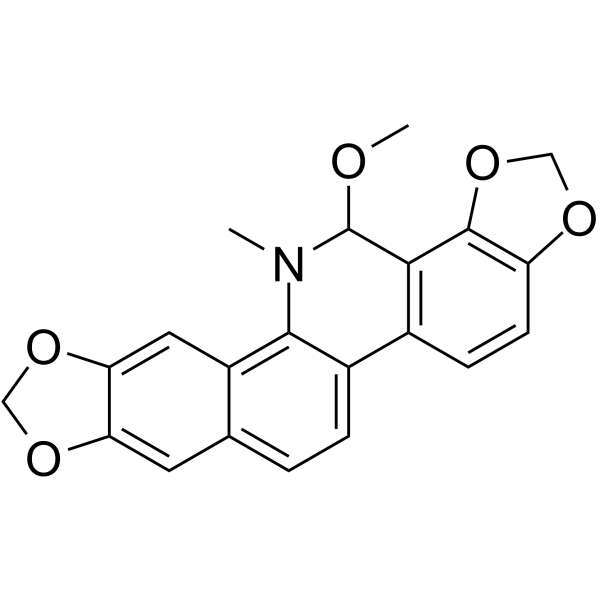
6-Methoxydihydrosanguinarine is an alkaloid with activity across multiple cancer cell types. 6-Methoxydihydrosanguinarine activates IRE1/JNK signaling, blocks Akt/mTOR and PI3K/AKT/mTOR pathways, reduces expression of Cdc25C, CyclinB1, Cdc2, YAP/TAZ, Survivin, GPX4, and EGFR, upregulates IRE1 and DR5, and activates JNK and caspases. 6-Methoxydihydrosanguinarine induces apoptosis, G2/M phase arrest, DNA damage, ROS generation, lipid peroxidation, ferroptosis, autophagy, and suppresses cancer cell growth. 6-Methoxydihydrosanguinarine disruptes the biofilm formation of Candida albicans (C. albicans). 6-Methoxydihydrosanguinarine can be used for the research of non-small cell lung cancer, hepatocellular carcinoma, melanoma, colon carcinoma, ovarian cancer and breast cancer .
|
-
-
- HY-173025
-
|
|
Nuclear Hormone Receptor 4A/NR4A
|
Neurological Disease
|
|
Nurr1 agonist 12 (Compound 37) is the agonist for nuclear receptor-associated protein 1 (Nurr1) that activates the transcriptional activity of Nurr1 with an EC50 of 0.06 μM. Nurr1 agonist 12 activates the human response elements NBRE, NurRE, and DR5 with EC50 of 0.07 μM, 0.027 μM, and 0.014 μM, respectively. Nurr1 agonist 12 induces the expression of Nurr1-regulated neurotrophic genes, such as tyrosine hydroxylase (TH), SOD1/2, BDNF, Sestrin 3, and BIRC5 (Survivin). Nurr1 agonist 12 exhibits neuroprotective efficacy against Paraquat-induced neurotoxicity .
|
-
-
- HY-171992
-
|
|
VEGFR
Caspase
Calcium Channel
|
Cancer
|
|
COX-2-IN-55 (compound 1) is an orally active, Celecoxib (HY-14398)-based analog with broad-spectrum anticancer activity and weak COX-2 inhibition. COX-2-IN-55 specifically inhibits SERCA2, increases caspase-3 cleavage and DR5 levels, thereby activating GRP78 and inhibiting the development of triple-negative breast cancer (TNBC). COX-2-IN-55 can also downregulate the levels of angiogenic markers VEGF-α and IL-8, inhibiting the formation of microvessels .
|
-
-
- HY-N1983R
-
|
|
Reference Standards
Apoptosis
Autophagy
Reactive Oxygen Species (ROS)
Mitochondrial Metabolism
PARP
Caspase
Bcl-2 Family
VEGFR
FAK
WDR5
p38 MAPK
JNK
PPAR
|
Neurological Disease
Inflammation/Immunology
Cancer
|
|
Caudatin (Standard) is the analytical standard of Caudatin (HY-N1983). This product is intended for research and analytical applications. Caudatin is an orally active and brain-penetrant C-21 steroidal found in Cynanchum bungei decne with a variety of biological activities. Caudatin can inhibit cell proliferation, migration, invasion, cause cell phase arrest, induce apoptosis, autophagy, ROS prodution and loss of mitochondrial membrane potential. Caudatin activates PARP, caspase-3, -7, -9, upregulates pro-apoptotic Bad and Bax and downregulates anti-apoptotic Bcl-2 and Bcl-XL. Caudatin suppresses VEGF, FAK phosphorylation, upregulates p21, p27, DR5 protein expression, activates the p38 MAPK, JNK and PPARα/TFEB-mediated autophagy-lysosomal signaling pathways. Caudatin can be used for the research of cancer, inflammation and neurological disease, such as glioma and Alzheimer's disease .
|
-
-
- HY-163801
-
|
|
Nuclear Hormone Receptor 4A/NR4A
|
Neurological Disease
|
|
Nurr1 agonist 9 (Compound 36) is an agonist for Nurr1 with an EC50 of 0.090 µM and a Kd of 0.17 µM. Nurr1 agonist 9 activates the Nurr1 homodimer (NurRE, EC50=0.094 µM) and the Nurr1-RXR heterodimer (DR5, EC50=0.165 µM). Nurr1 agonist 9 induces the expression of Nurr1-regulated tyrosine hydroxylase (TH) in organoid Parkinson's Disease model. Nurr1 agonist 9 is human brain endothelial cell barrier prmeable .
|
-
-
- HY-P992340
-
|
|
Radionuclide-Drug Conjugates (RDCs)
TNF Receptor
|
Cancer
|
|
CTB006 is a monoclonal antibody targeting a humanized chimeric recombinant anti-DR5. CTB006 specifically binds to and activates DR5, thereby inducing tumor cell apoptosis, inhibiting tumor growth and reducing tumor drug resistance. 177Lu-radiolabeled CTB006 can deliver targeted radiotherapy to tumor cells; while 89Zr- or 177Lu-labeled CTB006 can serve as a PET/CT imaging agent for detecting DR5 expression levels in preclinical tumor models and screening cancers with DR5 overexpression. CTB006 can be applied to research related to gastrointestinal cancer, colorectal cancer and other solid tumors .
|
-
-
- HY-W009929
-
|
4-(Hexyloxy)phenol
|
Apoptosis
Caspase
PARP
|
Cancer
|
|
AC-45594 (4-(Hexyloxy)phenol) is a UPR activator. AC-45594 induces endoplasmic reticulum stress, activates the unfolded protein response (UPR), and drives the transition from adaptive stress signaling to terminal stress signaling, ultimately leading to cell Apoptosis. AC-45594 activates Caspase-3, induces PARP cleavage, and increases the protein level of DR5. AC-45594 selectively inhibits the growth of Ewing sarcoma cells .
|
-
-
- HY-181955
-
|
|
Apoptosis
DNA Methyltransferase
HIF/HIF Prolyl-Hydroxylase
Caspase
|
Cancer
|
|
MS1129 is a DNMT degrader that induces proteasomal degradation of DNMT1, DNMT3A and DNMT3B proteins. MS1129 upregulates TRAIL, DR4 and DR5 proteins, downregulates the decoy receptor DcR2, and activates TRAIL-dependent apoptosis via the HIF-1/2 and Caspase-10 pathways. MS1129 is applicable to the research of VHL-deficient clear cell renal cell carcinoma .
|
-
-
- HY-180576
-
|
|
Nuclear Hormone Receptor 4A/NR4A
RAR/RXR
|
Neurological Disease
|
|
Nurr1/RXR dual agonist 1 is a dual activator of Nurr1 (EC50 = 2.6 µM) and RXR with K s of 0.6 and 1.1 µM, respectively. Nurr1/RXR dual agonist 1 exclusively activates the heterodimer response element DR5 by selectively destabilizing the Nurr1 homodimer and stabilizing the Nurr1:RXR heterodimer. Nurr1/RXR dual agonist 1 enhances expression of a specific subset of neuroprotective Nurr1 target genes while avoiding induction of genes associated with potential off-target effects in neuronal cells. Nurr1/RXR dual agonist 1 can be used for neurodegenerative diseases research .
|
-
-
- HY-N3000A
-
|
|
JNK
IRE1
Akt
mTOR
YAP
Reactive Oxygen Species (ROS)
Autophagy
Apoptosis
Ferroptosis
Fungal
Caspase
DNA/RNA Synthesis
|
Infection
Inflammation/Immunology
Cancer
|
|
6-Methoxydihydrosanguinarine hydrochloride is an alkaloid with activity across multiple cancer cell types. 6-Methoxydihydrosanguinarine hydrochloride activates IRE1/JNK signaling, blocks Akt/mTOR and PI3K/AKT/mTOR pathways, reduces expression of Cdc25C, CyclinB1, Cdc2, YAP/TAZ, Survivin, GPX4, and EGFR, upregulates IRE1 and DR5, and activates JNK and caspases. 6-Methoxydihydrosanguinarine hydrochloride induces apoptosis, G2/M phase arrest, DNA damage, ROS generation, lipid peroxidation, ferroptosis, autophagy, and suppresses cancer cell growth. 6-Methoxydihydrosanguinarine hydrochloride disruptes the biofilm formation of Candida albicans (C. albicans). 6-Methoxydihydrosanguinarine hydrochloride can be used for the research of non-small cell lung cancer, hepatocellular carcinoma, melanoma, colon carcinoma, ovarian cancer and breast cancer .
|
-
-
- HY-181588
-
|
|
Nuclear Hormone Receptor 4A/NR4A
|
Neurological Disease
Inflammation/Immunology
|
|
NR4A agonist-2 is a selective pan-NR4A agonist designed based on Vidofludimus (HY-14908), with a Kd of 0.10 μM against NR4A1, and EC50 values of 0.098 μM, 0.092 μM and 0.09 μM against Nur77, Nurr1, NOR-1, respectively. NR4A agonist-2 exhibits 47-fold selectivity over DHODH, and shows no cytotoxic activity at concentrations up to 10 μM. By binding to a specific surface pocket in the ligand-binding domain of Nurr1, NR4A agonist-2 inhibits the formation of Nurr1 homodimers, activates response elements such as NBRE, NurRE, DR5, and then potently induces the expression of neuroprotective genes including BDNF, SOD2, thereby exerting neuroprotective activity. NR4A agonist-2 can be used in the research of neurodegenerative diseases such as Parkinson's disease, dementia and multiple sclerosis .
|
-
-
- HY-P992059
-
|
|
CD1
|
Cancer
|
|
Anti-Mouse CD1d Antibody (1B1) is an antibody targeting mouse CD1d (Kd=12.5 nM). By inserting into the lipid-binding groove of CD1d, Anti-Mouse CD1d Antibody (1B1) overlaps with the binding sites of type I and type II NKT cell receptors (TCR), thereby effectively blocking TCR-mediated interactions. Anti-Mouse CD1d Antibody (1B1) activates antigen-presenting cells such as dendritic cells and macrophages, induces them to release IL-12p70, and increases the levels of key cytokines including IL-12, IFN-γ and IFN-α in mouse serum. Anti-Mouse CD1d Antibody (1B1) can be used in studies related to renal cancer, breast cancer and colon adenocarcinoma. When combined with anti-DR5 or anti-CD137 antibodies and chemotherapeutic drugs, Anti-Mouse CD1d Antibody (1B1) exhibits significant tumor inhibitory and even eradication effects in mice .
|
-
| Cat. No. |
Product Name |
Target |
Research Area |
Image |
-
- HY-P99260
-
|
AMG 655; TRAIL-R2 mAb; Human Anti-TNFRSF10B Recombinant Antibody
|
TNF Receptor
|
Cancer
|
|
Conatumumab (AMG 655) is a human monoclonal agonist antibody against human death receptor 5 (DR5, TRAILR2) (Kd: 1 nM for the long form of DR5, 0.8 nM for the short form of DR5). Conatumumab induces apoptosis via caspase activation. Conatumumab can be used in the research of cancers.
.
|
-
(5)
-
- HY-P99934
-
|
ABBV-621
|
Apoptosis
Caspase
TNF Receptor
|
Cancer
|
|
Eftozanermin alfa (ABBV-621) is a tumor necrosis factor-related apoptosis-inducing ligand receptor (TRAIL-R) agonist. Eftozanermin alfa is a fusion protein consisting of a mutant immunoglobulin G1-Fc linked to 2 single-chain trimers of TRAIL. Eftozanermin alfa induces apoptosis in tumor cells by activation of death receptors (DR4 receptor and DR5 receptor) with Kds of 780 nM and 635 nM. Eftozanermin alfa can be used for the research of multiple solid and heme malignancies .
|
-
(5)
-
- HY-P991570
-
|
AD5-10; oba-01 Antibody
|
TNF Receptor
Apoptosis
Caspase
Atg8/LC3
Akt
Beclin1
JNK
|
Cancer
|
|
Zaptuzumab (AD5-10) is a DR5-specific humanized monoclonal antibody that selectively binds to DR5 with high affinity. Zaptuzumab specifically induces cancer cell death by both caspase-apoptosis and autophagic cell death (ACD). Zaptuzumab activates both ADCC and CDC. Zaptuzumab induces ROS generation and GSH level reduction. Zaptuzumab shows a significant suppression of the tumor growth and good safety in various xenografts mice tumor models .
|
-
(5)
-
- HY-P99559
-
|
HexaBody-DR5/DR5; Hx-DR5-01/05
|
Inhibitory Antibodies
|
Cancer
|
|
Tilogotamab is an agonistic hexamer formation-enhanced mixture of two antibodies that target two separate epitopes on death receptor type 5 (DR5). Tilogotamab specifically binds to and activates DR5. Tilogotamab can be used for the research of multiple myeloma (MM) .
|
-
(5)
-
- HY-P992340
-
|
|
Radionuclide-Drug Conjugates (RDCs)
TNF Receptor
|
Cancer
|
|
CTB006 is a monoclonal antibody targeting a humanized chimeric recombinant anti-DR5. CTB006 specifically binds to and activates DR5, thereby inducing tumor cell apoptosis, inhibiting tumor growth and reducing tumor drug resistance. 177Lu-radiolabeled CTB006 can deliver targeted radiotherapy to tumor cells; while 89Zr- or 177Lu-labeled CTB006 can serve as a PET/CT imaging agent for detecting DR5 expression levels in preclinical tumor models and screening cancers with DR5 overexpression. CTB006 can be applied to research related to gastrointestinal cancer, colorectal cancer and other solid tumors .
|
-
(5)
-
- HY-P992059
-
|
|
CD1
|
Cancer
|
|
Anti-Mouse CD1d Antibody (1B1) is an antibody targeting mouse CD1d (Kd=12.5 nM). By inserting into the lipid-binding groove of CD1d, Anti-Mouse CD1d Antibody (1B1) overlaps with the binding sites of type I and type II NKT cell receptors (TCR), thereby effectively blocking TCR-mediated interactions. Anti-Mouse CD1d Antibody (1B1) activates antigen-presenting cells such as dendritic cells and macrophages, induces them to release IL-12p70, and increases the levels of key cytokines including IL-12, IFN-γ and IFN-α in mouse serum. Anti-Mouse CD1d Antibody (1B1) can be used in studies related to renal cancer, breast cancer and colon adenocarcinoma. When combined with anti-DR5 or anti-CD137 antibodies and chemotherapeutic drugs, Anti-Mouse CD1d Antibody (1B1) exhibits significant tumor inhibitory and even eradication effects in mice .
|
-
(5)
| Cat. No. |
Product Name |
Category |
Target |
Chemical Structure |
-
- HY-N1983
-
|
|
Structural Classification
Classification of Application Fields
Asclepiadaceae
Cynanchum otophyllum Schneid.
Cynanchum auriculatum Royle ex Wight
Plants
Disease Research Fields
Steroids
Source Classification
Cancer
|
Apoptosis
Autophagy
Reactive Oxygen Species (ROS)
Mitochondrial Metabolism
PARP
Caspase
Bcl-2 Family
VEGFR
FAK
WDR5
p38 MAPK
JNK
PPAR
|
|
Caudatin is an orally active and brain-penetrant C-21 steroidal found in Cynanchum bungei decne with a variety of biological activities. Caudatin can inhibit cell proliferation, migration, invasion, cause cell phase arrest, induce apoptosis, autophagy, ROS prodution and loss of mitochondrial membrane potential. Caudatin activates PARP, caspase-3, -7, -9, upregulates pro-apoptotic Bad and Bax and downregulates anti-apoptotic Bcl-2 and Bcl-XL. Caudatin suppresses VEGF, FAK phosphorylation, upregulates p21, p27, DR5 protein expression, activates the p38 MAPK, JNK and PPARα/TFEB-mediated autophagy-lysosomal signaling pathways. Caudatin can be used for the research of cancer, inflammation and neurological disease, such as glioma and Alzheimer's disease .
|
-
-
- HY-N3000
-
|
|
Alkaloids
Structural Classification
Classification of Application Fields
Quinoline Alkaloids
Macleaya cordata (Willd.) R. Br.
Plants
Disease Research Fields
Papaveraceae
Source Classification
Cancer
|
JNK
IRE1
Akt
mTOR
YAP
Reactive Oxygen Species (ROS)
Autophagy
Apoptosis
Ferroptosis
Fungal
|
|
6-Methoxydihydrosanguinarine is an alkaloid with activity across multiple cancer cell types. 6-Methoxydihydrosanguinarine activates IRE1/JNK signaling, blocks Akt/mTOR and PI3K/AKT/mTOR pathways, reduces expression of Cdc25C, CyclinB1, Cdc2, YAP/TAZ, Survivin, GPX4, and EGFR, upregulates IRE1 and DR5, and activates JNK and caspases. 6-Methoxydihydrosanguinarine induces apoptosis, G2/M phase arrest, DNA damage, ROS generation, lipid peroxidation, ferroptosis, autophagy, and suppresses cancer cell growth. 6-Methoxydihydrosanguinarine disruptes the biofilm formation of Candida albicans (C. albicans). 6-Methoxydihydrosanguinarine can be used for the research of non-small cell lung cancer, hepatocellular carcinoma, melanoma, colon carcinoma, ovarian cancer and breast cancer .
|
-
-
- HY-N1983R
-
|
|
Structural Classification
Asclepiadaceae
Cynanchum otophyllum Schneid.
Cynanchum auriculatum Royle ex Wight
Plants
Steroids
Source Classification
|
Reference Standards
Apoptosis
Autophagy
Reactive Oxygen Species (ROS)
Mitochondrial Metabolism
PARP
Caspase
Bcl-2 Family
VEGFR
FAK
WDR5
p38 MAPK
JNK
PPAR
|
|
Caudatin (Standard) is the analytical standard of Caudatin (HY-N1983). This product is intended for research and analytical applications. Caudatin is an orally active and brain-penetrant C-21 steroidal found in Cynanchum bungei decne with a variety of biological activities. Caudatin can inhibit cell proliferation, migration, invasion, cause cell phase arrest, induce apoptosis, autophagy, ROS prodution and loss of mitochondrial membrane potential. Caudatin activates PARP, caspase-3, -7, -9, upregulates pro-apoptotic Bad and Bax and downregulates anti-apoptotic Bcl-2 and Bcl-XL. Caudatin suppresses VEGF, FAK phosphorylation, upregulates p21, p27, DR5 protein expression, activates the p38 MAPK, JNK and PPARα/TFEB-mediated autophagy-lysosomal signaling pathways. Caudatin can be used for the research of cancer, inflammation and neurological disease, such as glioma and Alzheimer's disease .
|
-
-
- HY-N3000A
-
|
|
Structural Classification
Alkaloids
Meconopsis simplicifolia (D. Don) Walp.
Quinoline Alkaloids
Plants
Papaveraceae
Source Classification
|
JNK
IRE1
Akt
mTOR
YAP
Reactive Oxygen Species (ROS)
Autophagy
Apoptosis
Ferroptosis
Fungal
Caspase
DNA/RNA Synthesis
|
|
6-Methoxydihydrosanguinarine hydrochloride is an alkaloid with activity across multiple cancer cell types. 6-Methoxydihydrosanguinarine hydrochloride activates IRE1/JNK signaling, blocks Akt/mTOR and PI3K/AKT/mTOR pathways, reduces expression of Cdc25C, CyclinB1, Cdc2, YAP/TAZ, Survivin, GPX4, and EGFR, upregulates IRE1 and DR5, and activates JNK and caspases. 6-Methoxydihydrosanguinarine hydrochloride induces apoptosis, G2/M phase arrest, DNA damage, ROS generation, lipid peroxidation, ferroptosis, autophagy, and suppresses cancer cell growth. 6-Methoxydihydrosanguinarine hydrochloride disruptes the biofilm formation of Candida albicans (C. albicans). 6-Methoxydihydrosanguinarine hydrochloride can be used for the research of non-small cell lung cancer, hepatocellular carcinoma, melanoma, colon carcinoma, ovarian cancer and breast cancer .
|
-
Your information is safe with us. * Required Fields.
Inquiry Information
- Product Name:
- Cat. No.:
- Quantity:
- MCE Japan Authorized Agent:

