
1. Search Result
Search Result
Results for "

Domain

" in MedChemExpress (MCE) Product Catalog:

1563

Inhibitors & Agonists

9

Screening Libraries

8

Fluorescent Dye

19

Biochemical Assay Reagents

223

Peptides

184

Inhibitory Antibodies

64

Natural
Products

478

Recombinant Proteins

36

Isotope-Labeled Compounds

298

Antibodies

8

Click Chemistry

22

Oligonucleotides

2

GMP Molecules

Cat. No. Product Name Target Research Areas Chemical Structure
  • HY-13956
    Pioglitazone
    45+ Cited Publications

    U 72107

    PPAR Ferroptosis Metabolic Disease Cancer
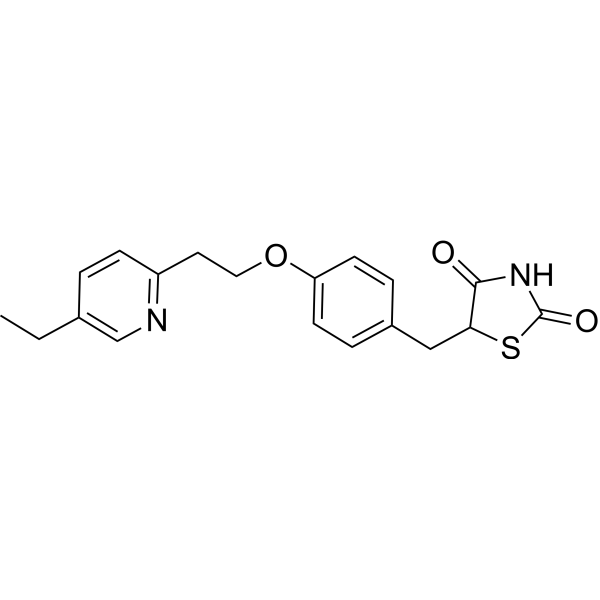
    Pioglitazone (U 72107) is an orally active and selective PPARγ (peroxisome proliferator-activated receptor) agonist with high affinity binding to the PPARγ ligand-binding domain with EC50 of 0.93 and 0.99 μM for human and mouse PPARγ, respectively. Pioglitazone can be used in diabetes research .
    Pioglitazone
  • HY-112210
    Shield-1
    5+ Cited Publications

    Shld1

    FKBP Others
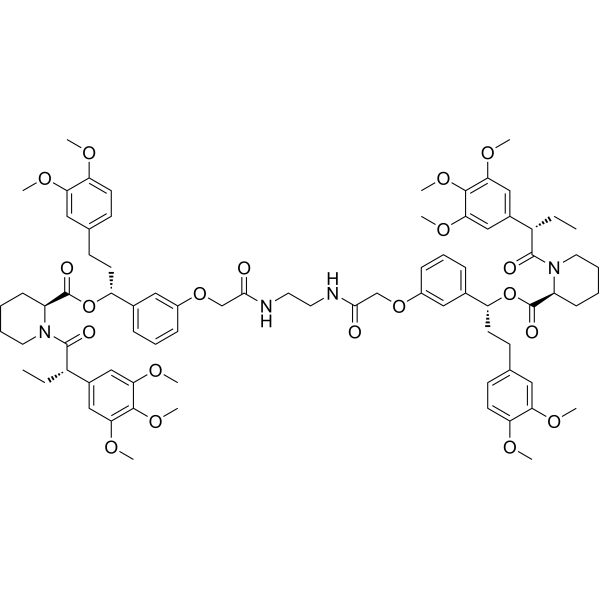
    Shield-1 (Shld1) is a specific, cell-permeant and high-affinity ligand of FK506-binding protein-12 (FKBP), and reverses the instability by binding to mutated FKBP (mtFKBP), allowing conditional expression of mtFKBP-fused proteins. Shield-1 can stabilize proteins tagged with a mutated FKBP12-derived destabilization domain (DD) .
    Shield-1
  • HY-150096
    Zasocitinib
    1 Publications Verification

    NDI-034858; TAK-279

    JAK Inflammation/Immunology
    Zasocitinib (NDI-034858) is a TYK2 inhibitor, target TYK2 JH2 domain with binding constant Kd of <200 pM .
    Zasocitinib
  • HY-15098
    Apoptozole
    10+ Cited Publications

    Apoptosis Activator VII

    HSP Apoptosis Cancer
    Apoptozole (Apoptosis Activator VII) is an inhibitor of the ATPase domain of Hsc70 and Hsp70, with Kds of 0.21 and 0.14 μM, respectively, and can induce apoptosis.
    Apoptozole
  • HY-153992
    STAT6-IN-3
    1 Publications Verification

    STAT Inflammation/Immunology
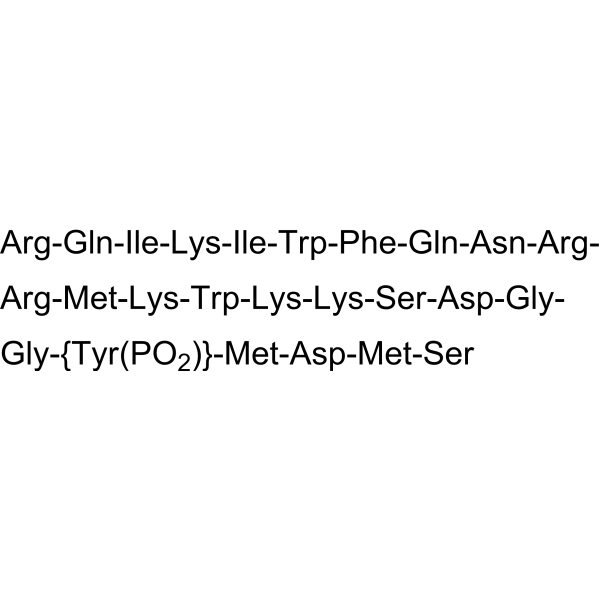
    STAT6-IN-3 is a phosphopeptide mimic targeting the SH2 domain of STAT6 and has a high affinity for STAT6 (IC50: 0.04 μM). STAT6-IN-3 can be used in the research of inflammation such as asthma .
    STAT6-IN-3
  • HY-122611A
    CSRM617 hydrochloride
    1 Publications Verification

    Androgen Receptor Apoptosis Cancer
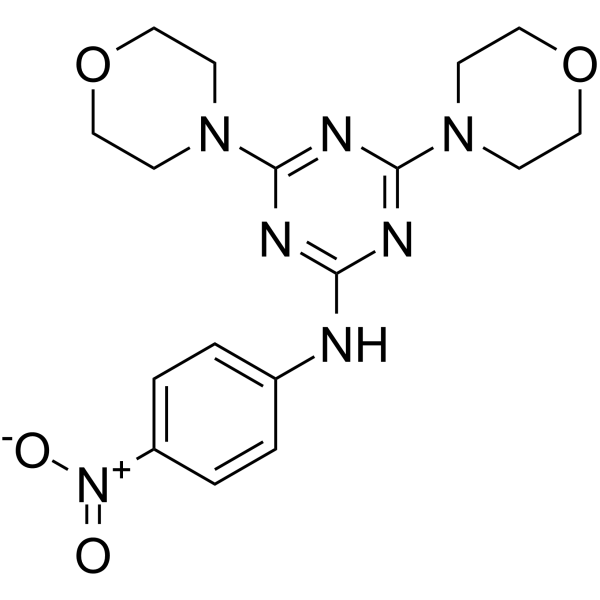
    CSRM617 hydrochloride is a selective small-molecule inhibitor of the transcription factor ONECUT2 (OC2, a master regulator of androgen receptor) with a Kd of 7.43 uM in SPR assays, binding to OC2-HOX domain directly. CSRM617 hydrochloride induces apoptosis by appearance of cleaved Caspase-3 and PARP. CSRM617 hydrochloride is well tolerated in the prostate cancer mouse model
    CSRM617 hydrochloride
  • HY-173156

    Histone Methyltransferase Cancer
    UNC10013 is an inhibitor targeting the triple Tudor domain (3TD) of SETDB1. UNC10013 covalently binds to Cys385 of SETDB1 3TD, acts as a negative allosteric modulator of the methyltransferase domain of SETDB1, reduces the level of Akt methylation mediated by SETDB1, and blocks Tyr308 phosphorylation of Akt. UNC10013 is applicable to cancer-related research .
    UNC10013
  • HY-141799

    Ligands for Target Protein for PROTAC WDR5 Cancer
    Dimethyl-F-OICR-9429-COOH a ligand for WD40 repeat domain protein 5 (WDR5) extracted from patent WO2019246570A1 intermediate 19. Dimethyl-F-OICR-9429-COOH can be used in the synthesis of PROTACs .
    Dimethyl-F-OICR-9429-COOH
  • HY-175552

    Tau Protein Neurological Disease
    CHIPOpt, a peptide, is an orthosteric CHIP TPR domain inhibitor with a Kd of ∼16 nM. CHIPOpt has anti-aggregation activity and decreases p.tau ubiquitination with little effect on unmodified tau. CHIPOpt can be used for Alzheimer’s disease research .
    CHIPOpt
  • HY-141539
    SETDB1-TTD-IN-1
    5 Publications Verification

    Histone Methyltransferase Cancer
    SETDB1-TTD-IN-1 is a potent, selective and endogenous binder competitive ligand of SET domain bifurcated protein 1 tandem tudor domain (SETDB1-TTD) that binds to TTD, with a Kd of 88 nM. SETDB1-TTD-IN-1 increases SETDB1 methyltransferase activity. SETDB1-TTD-IN-1 can be used for the research of biological functions and disease associations of SETDB1-TTD .
    SETDB1-TTD-IN-1
  • HY-P99562

    XmAb-18087

    CD3 Cancer
    Tidutamab (XmAb-18087) is a humanized and affinity-optimized bispecific antibody (bsAb) targeting SSTR2 binding domain and T-cell binding domain (CD3). Tidutamab possesses a full Fc domain to maintain long serum half-life.Tidutamab eliminates SSTR+ tumor cells by stimulating redirected T cellmediated cytotoxicity (RTcC) .
    Tidutamab
  • HY-117570

    PDI Neurological Disease
    KSC-34, a covalent modifier of protein disulfide isomerase A1 (PDIA1), is also a selective and potent a-site inhibitor of PDIA1 with an IC50 of 3.5 μM. KSC-34 displays a 30-fold selectivity for a domain over a′ domain and displays high selectivity for PDIA1 in complex proteomes with minimal engagement of other members of the PDI family . KSC-34 is a click chemistry reagent, it contains an Alkyne group and can undergo copper-catalyzed azide-alkyne cycloaddition (CuAAc) with molecules containing Azide groups.
    KSC-34
  • HY-18377
    Bioymifi
    1 Publications Verification

    DR5 Activator

    TNF Receptor Apoptosis Cancer
    Bioymifi (DR5 Activator), a potent TRAIL receptor DR5 activator, binds to the extracellular domain (ECD) of DR5 with a Kd of 1.2 μM. Bioymifi can act as a single agent to induce DR5 clustering and aggregation, leading to apoptosis .
    Bioymifi
  • HY-158009
    SGF29-IN-1
    1 Publications Verification

    Histone Acetyltransferase Cancer
    SGF29-IN-1 (Compound Cpd_DC60) is a selective inhibitor for Spt-Ada-Gcn5 acetyltransferase (SAGA)–associated factor 29 (SGF29)-Tudor domain. SGF29-IN-1 exhibits activity against leukemia .
    SGF29-IN-1
  • HY-P99479

    L19-IL2

    Interleukin Related Cancer
    Bifikafusp alfa (L19-IL2) is an immunoresearch fusion protein consisting of human L19 antibodies fused to the human cytokine interleukin 2 (IL2).Bifikafusp alfa is specific to the EDB domain of fibronectin. Bifikafusp alfa has anticancer activity .
    Bifikafusp alfa
  • HY-123875A

    EPI-506

    Androgen Receptor Cancer
    Ralaniten triacetate (EPI-506), the pro-agent of Ralaniten, is a first-in-class, orally active androgen receptor (AR) N-terminal domain (NTD) inhibitor. Ralaniten triacetate shows activity against both full length and resistance-related AR species, including AR-v7 .
    Ralaniten triacetate
  • HY-122886
    XL 188
    1 Publications Verification

    Deubiquitinase Cancer
    XL 188 is a potent and selective USP7 inhibitor with IC50 values of 90 nM and 193 nM for USP7 full-length and catalytic domain enzyme, respectively. XL 188 can be used in research of cancer .
    XL 188
  • HY-138283
    MR837
    1 Publications Verification

    Histone Methyltransferase Cancer
    MR837 is an inhibitor of NSD2-PWWP1. MR837 can bind with human nuclear receptor binding SET domain protein 2 (PWWP domain) .
    MR837
  • HY-139287
    M1002
    2 Publications Verification

    HIF/HIF Prolyl-Hydroxylase Cancer
    M1002 is a hypoxia-inducible factor-2 (HIF-2) agonist, and can enhance the expression of HIF-2 target genes. M1002 shows synergy with prolyl-hydroxylase domain (PHD) inhibitors .
    M1002
  • HY-149935

    Ligands for E3 Ligase Cancer
    OICR-8268 is a reversible DCAF1 ligand that binds to the DCAF1 WDR domain with a Kd of 38 nM. OICR-8268 can enable the development of DCAF1-based PROTACs .
    OICR-8268
  • HY-116501

    Androgen Receptor Cancer
    VPC-14449 is a potent and selective inhibitor of the DNA-binding domain of the androgen receptor (AR-DBD), with IC50 of 0.34 μM for full-length human AR. VPC-14449 reduces the ability of full-length AR as well as AR variants to interact with chromatin. VPC-14449 can be used for the research of prostate cancer .
    VPC-14449
  • HY-151577

    STAT Apoptosis Cancer
    STAT3-SH2 domain inhibitor 1 is a potent Src Homology 2 (SH2) Domain of STAT3 (STAT3-SH2 domain) inhibitor with a Kd value of 1.57 μM. STAT3-SH2 domain inhibitor 1 inhibits STAT3 signaling transduction and transcriptional activation. STAT3-SH2 domain inhibitor 1 induces apoptosis in gastric cancer cells. STAT3-SH2 domain inhibitor 1 can be used in research of cancer .
    STAT3-SH2 domain inhibitor 1
  • HY-P10108

    Hxk2VBD peptide, cell-permeable

    Hexokinase Neurological Disease
    Hexokinase II VDAC binding domain peptide (Hxk2VBD peptide) is a cell-permeable hexokinase II VDAC binding domain. Hexokinase II VDAC binding domain peptide inhibits mitochondrial localization of hexokinase 2 (HXK2). Hexokinase II VDAC binding domain peptide inhibits neurotrophic factor-directed axon outgrowth .
    Hexokinase II VDAC binding domain peptide, cell-permeable
  • HY-146127A

    Src Others
    Grb2 SH2 domain inhibitor 1 TFA is a conformationally restricted cyclic cell penetrating peptide (CPP) containing d-pro-l-pro motif ring (AF Φ Rpprrfq) (where Φ It is L-naphthylalanine, R is D-arginine, P is D-proline), which is mainly used as a cyclic peptide inhibitor.
    Grb2 SH2 domain inhibitor 1 TFA
  • HY-147088

    YAP Cancer
    TEAD-IN-2 is a novel, orally active inhibitor of transcriptional enhancer associate domain (TEAD) and modulates TEAD by ubiquitination and/or degradation by compounds. TEAD-IN-2 can be used for the research of a variety of diseases, disorders or conditions associated with TEAD .
    TEAD-IN-2
  • HY-P5904

    Caveolin-1 scaffolding Domain peptide

    c-Met/HGFR Others
    Caveolin-1 (82-101) amide (human, mouse, rat) (Caveolin-1 scaffolding domain peptide) is a peptide that reverses aging-associated deleterious changes in multiple organs. Caveolin-1 (82-101) amide (human, mouse, rat) inhibits tyrosine kinases .
    Caveolin-1 (82-101) amide (human, mouse, rat)
  • HY-145932

    Enterovirus Infection
    DMA-135 hydrochloride inhibits enterovirus 71 (EV71) IRES-dependent translation and replication. DMA-135 hydrochloride binds to enterovirus 71 (EV71) SLII domain with moderately high affinity (KD= 520 nM). DMA-135 hydrochloride has no significant toxicity in cell-based studies .
    DMA-135 hydrochloride
  • HY-146127

    MEK Cancer
    Grb2 SH2 domain inhibitor 1 is an inhibitor of the Grb2 SH2 domain with an IC50 of 0.40 μM. Grb2 SH2 domain inhibitor 1 is also a cell-permeable cyclic peptide that can enter the cytosol of mammalian cells. Grb2 SH2 domain inhibitor 1 downregulates the expression level of p-MEK. Grb2 SH2 domain inhibitor 1 can be used in the research of breast cancer .
    Grb2 SH2 domain inhibitor 1
  • HY-P4998

    Biochemical Assay Reagents Cancer
    Chemotactic Domain of Elastin is an elastin-derived peptide with chemotactic effects on certain tumor cells, such as M27 tumor cells. Chemotactic Domain of Elastin can be used in cancer research .
    Chemotactic Domain of Elastin
  • HY-141539A
    SETDB1-TTD-IN-1 TFA
    5 Publications Verification

    Histone Methyltransferase Cancer
    SETDB1-TTD-IN-1 TFA is a potent, selective and endogenous binder competitive ligand of SET domain bifurcated protein 1 tandem tudor domain (SETDB1-TTD) that binds to TTD, with a Kd of 88 nM. SETDB1-TTD-IN-1 TFA increases SETDB1 methyltransferase activity. SETDB1-TTD-IN-1 TFA can be used for the research of biological functions and disease associations of SETDB1-TTD .
    SETDB1-TTD-IN-1 TFA
  • HY-P4933

    Tau-F protein (255-314)

    Tau Protein Neurological Disease
    Tau Peptide (255-314) (Repeat 2 Domain) (human) (Tau-F protein (255-314)) is a polypeptide. Tau Peptide (255-314) (human) is the 255-314 fragment of Tau-F (also known as Tau-4, the 2N4 isoform), a major isoform of the Tau protein. Tau Peptide (255-314) (human) contains two core driving sequences for Tau aggregation, namely PHF6* (275-280, VQIINK) and PHF6 (306-311, VQIVYK), and spans the C-terminal half of repeat domain R1, the entire repeat domain R2, and the N-terminal half of repeat domain R3 within the microtubule-binding region (MTBR).
    Tau Peptide (255-314) (Repeat 2 Domain) (human)
  • HY-157332

    WDR5 Cancer
    WDR5-IN-7 (Compound 22) is an orally bioavailable benzoxazepinone-based WD repeat domain 5 (WDR5) inhibitor. WDR5-IN-7 can be used for the research of anti-cancer .
    WDR5-IN-7
  • HY-W010554

    Drug Intermediate Others
    1,4-Cyclohexanedione is a drug intermediate. 1,4-Cyclohexanedione is an accepted substrate of EryKR1 domain which takes on a certain biocatalyst activity and stereospecificity .
    1,4-Cyclohexanedione
  • HY-135782

    Poly(ADP-ribose) Glycohydrolase (PARG) Cancer
    iso-ADP ribose is the small-molecule ligand for protein nucleic acid modification, comprising parts of two consecutive ADP-ribosyl units within the PAR chain. iso-ADP ribose specifically binds WWE, FHA and OB-fold domains, enabling PAR-dependent functional responses like ubiquitylation and supporting DNA damage signaling and repair. iso-ADP ribose can be used for cancer research .
    iso-ADP ribose
  • HY-129527

    iGluR Neurological Disease
    GNE-9278 is a highly selective positive allosteric modulator of NMDAR that acts at the GluN1 transmembrane domain (TMD). GNE-9278 acts on activated NMDARs to increase peak current and agonist affinity .
    GNE-9278
  • HY-P1195

    iGluR Neurological Disease
    PDZ1 Domain inhibitor peptide, a cyclic peptide, incorporates a β-Ala lactam side chain linker and targets the PDZ1 domains of the postsynaptic density protein 95 (PSD-95). PDZ1 Domain inhibitor peptide disrupts the GluR6/PSD-95 interaction and is very efficient in competing against the C terminus of GluR6 for the PDZ1 domain .
    PDZ1 Domain inhibitor peptide
  • HY-159758

    Others Neurological Disease Cancer
    EcDHFR/FKBP12 F36V binder-1 (compound 1) is a bifunctional molecule that combines the Escherichia coli dihydrofolate reductase domain (EcDHFR) with the FKBP12 F36V domain .
    EcDHFR/FKBP12 F36V binder-1
  • HY-175343

    Ligands for E3 Ligase Infection
    OICR-41103 is an effective, selective, cell-active DCAF1 small molecule chemical probe that targets the DCAF1 WDR domain and replaces the viral Vpr protein. The binding Ki value of OICR-41103 and DCAF1 is less than 2 nM .
    OICR-41103
  • HY-115383
    Roflupram
    1 Publications Verification

    Phosphodiesterase (PDE) Neurological Disease Inflammation/Immunology
    Roflupram is a selective, orally active and brain-penetrant PDE4 inhibitor, with an IC50 of 26.2 nM for core catalytic domains of human PDE4. Roflupram can reverse cognitive deficits and reduce the production of pro-inflammatory factors .
    Roflupram
  • HY-P99435

    BRII-196

    SARS-CoV Infection
    Amubarvimab (BRII-196) is a human IgG1 mAb that bind to non-competing epitopes on the receptor binding domain (RBD) of spike protein, with a KD of 5.88 nM. Amubarvimab can effectively neutralize SARS-CoV-2 variants .
    Amubarvimab
  • HY-P991443

    CD73 Cancer
    IPH5301 is a human IgG1 monoclonal antibody (mAb) targeting NT5E/CD73. IPH5301 has a functionally silent Fc domain, specifically inhibits soluble and membrane CD73 enzyme activity, and restores the proliferation of immune T cells. IPH5301 can be used in anti-tumor immunity research. Recommended isotype control: Human IgG1 kappa, Isotype Control (HY-P99001) .
    IPH5301
  • HY-161916

    DNA/RNA Synthesis Cancer
    Polθ-IN-4 is an orally active prodrug of a DNA polymerase θ (Polθ) inhibitor with Kms of 3.7, 3.7 and 5.2 μM in human, mouse and rat recombinant alkaline phosphatases. Polθ-IN-4 that inhibits Polθ activity by targeting its ATP-dependent helicase domain. Polθ-IN-4 demonstrates significant anti-tumor activity in multiple animal experiments. Polθ-IN-4 can be used for the studies of breast cancer and ovarian cancer .
    Polθ-IN-4
  • HY-150619

    Histone Demethylase Cancer
    KDM4-IN-4 (compound 47) is a potent histone lysine demethylase 4 (KDM4) inhibitor with a modest affinity binding to ~80 μM for KDM4A-Tudor domain. KDM4-IN-4 can inhibit H3K4Me3 binding to the Tudor domain in cells with an EC50 value of 105 μM. KDM4-IN-4 can be used for researching anticancer .
    KDM4-IN-4
  • HY-P2516

    Tau Protein Neurological Disease
    Tau Peptide (275-305) (Repeat 2 domain) is the Alzheimer's Tau fragment R2, corresponding to the second repeat unit of the microtubule-binding domain, which is believed to be pivotal to the biochemical properties of full tau protein. Tau Peptide (275-305) specifically coordinates with group IIB metal ions (Zn²⁺, Cd²⁺, Hg²⁺), which can induce their conformational changes and significantly promote their pathological accumulation. Tau Peptide (275-305) can be used to study the role of heavy metals in neurodegenerative diseases .
    Tau Peptide (275-305) (Repeat 2 domain)
  • HY-19820

    Akt Ser/Thr Protease Neurological Disease Cancer
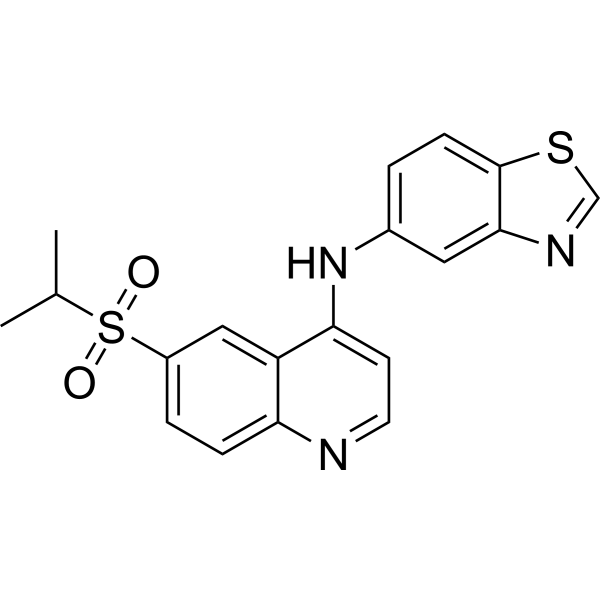
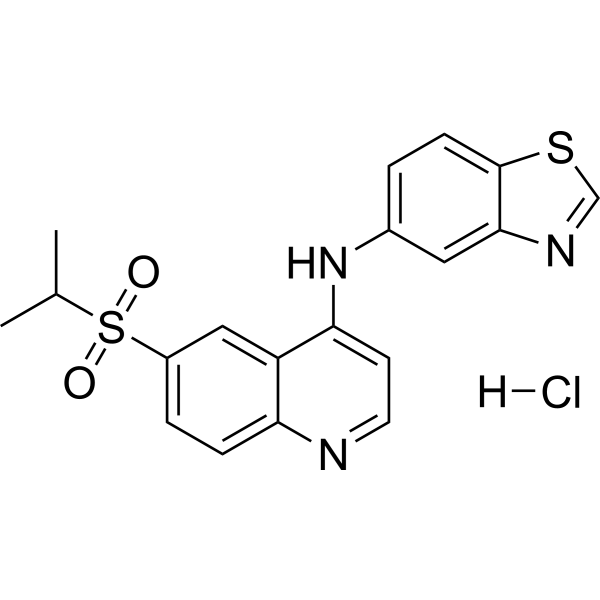
    NSC45586 is an inhibitor of pleckstrin homology domain and leucine-rich repeat protein phosphatase (PHLPP). NSC45586 targets the PP2C phosphatase domain in PHLPP1 and PHLPP2. NSC45586 can activate AKT in neurons .
    NSC45586
  • HY-135782A

    Poly(ADP-ribose) Glycohydrolase (PARG) Cancer
    iso-ADP ribose TEA is the small-molecule ligand for protein nucleic acid modification, comprising parts of two consecutive ADP-ribosyl units within the PAR chain. iso-ADP ribose TEA specifically binds WWE, FHA and OB-fold domains, enabling PAR-dependent functional responses like ubiquitylation and supporting DNA damage signaling and repair. iso-ADP ribose TEA can be used for cancer research .
    iso-ADP ribose TEA
  • HY-177936

    NEDD8-activating Enzyme Cancer
    NAE-IN-3 (compound 1) is a potent, selective and non-covalent competitive NEDD8-activating enzyme (NAE) inhibitor (IC50 = 0.8 μM). NAE-IN-3 inhibits NAE by blocking the ATP-binding domain. NAE-IN-3 exhibits selectivity over analogous E1 enzymes UAE and SAE. NAE-IN-3 can be used for cancer research .
    NAE-IN-3
  • HY-P4101

    HIV Infection
    Cys(Npys)-TAT (47-57) is a peptide fragment of TAT peptide and it is able to interact with plasmid DNA electrostatically. Cys(Npys)-TAT (47-57) is corresponding to the transduction domain of TAT with an activated cysteine residue C. TAT is a small nuclear transcriptional activator protein encoded by HIV-1 .
    Cys(Npys)-TAT (47-57)
  • HY-179428

    JAK Cancer
    JAK2-IN-17 (compound 20) is a potent JAK2 allosteric inhibitor. JAK2-IN-17 inhibits full-length JAK2 and JAK2 V617F with IC50s of 160 and 130 nM, respectively. JAK2-IN-17 covalently modifies Lys677 in the pseudokinase domain .
    JAK2-IN-17
  • HY-155019

    IAP Cancer
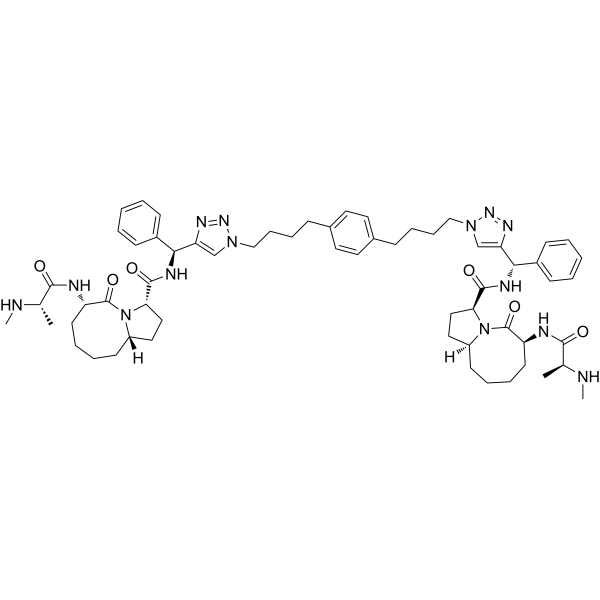
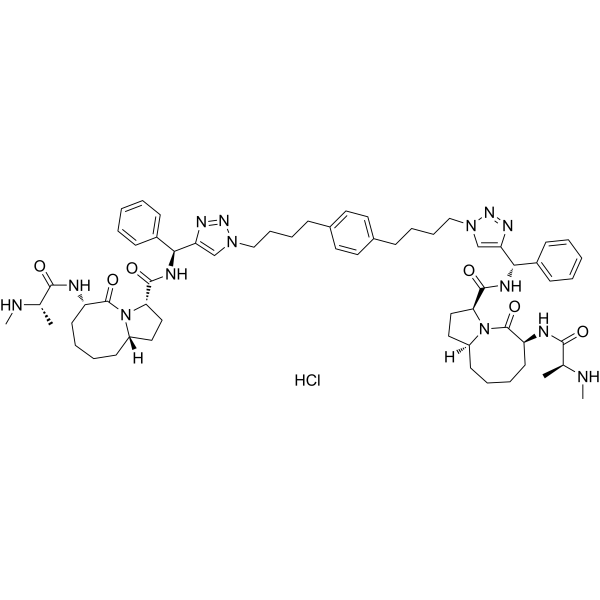
    Anticancer agent 128 (compound 1) is an IAP inhibitor that covalently targets the BIR3 domains of XIAP, cIAP1, and cIAP2. Anticancer agent 128 targets the BIR3 domains of XIAP, cIAP1, and cIAP2 with IC50s of 24.9 nM, 19.3 nM, and 10.3 nM, respectively .
    Anticancer agent 128

Inquiry Online

Your information is safe with us. * Required Fields.

Salutation


Country or Region *

Applicant Name *


Organization Name *

Department *


Email Address *


Product Name *

Cat. No.


Requested quantity *

Phone Number *


Remarks

Inquiry Online

Inquiry Information

Product Name:
Cat. No.:
Quantity:
MCE Japan Authorized Agent:

