Search Result
Results for "
EDTA hydrate
" in MedChemExpress (MCE) Product Catalog:
34
Biochemical Assay Reagents
4
Isotope-Labeled Compounds
| Cat. No. |
Product Name |
Target |
Research Areas |
Chemical Structure |
-
- HY-Y0682
-
|
EDTA
|
Environmental Pollutants
Biochemical Assay Reagents
Bacterial
SOD
|
Cardiovascular Disease
Neurological Disease
Cancer
|
|
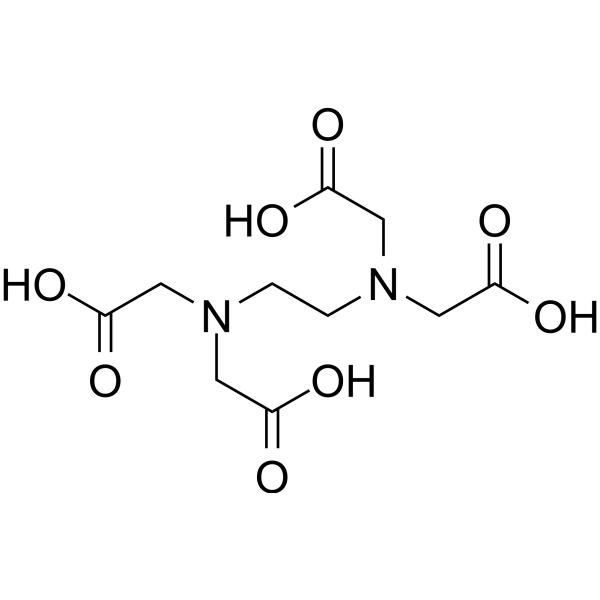
Ethylenediaminetetraacetic acid (EDTA) is a kind of metal chelating agent (binds to bivalent and trivalent metal cations, including calcium). Ethylenediaminetetraacetic acid has antibacterial, anti-inflammatory, antioxidant, anti-hypercalcemia and anticoagulant activities. Ethylenediaminetetraacetic acid decreases the metal ion-catalyzed oxidative damage to proteins, and allows maintenance of reducing environment during protein purification. Ethylenediaminetetraacetic acid can alleviate the liver fibrosis. Ethylenediaminetetraacetic acid can be used for coronary artery disease and neural system disease research .
|
-
-
- HY-D0040
-
|
Fluorexon
|
Fluorescent Dye
|
Others
|
|
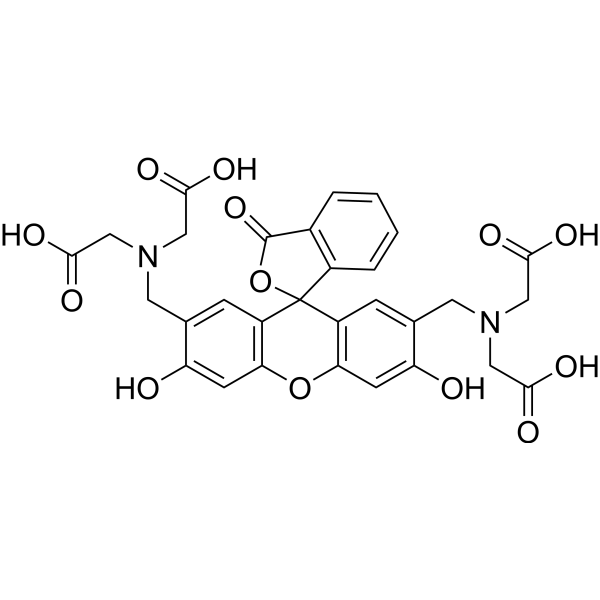
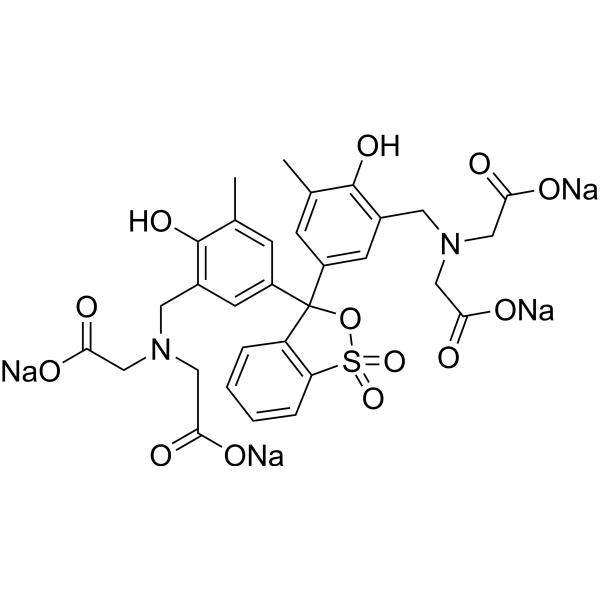
Calcein is a fluorescent dye and self-quenching probe, used as an indicator of lipid vesicle leakage, and also as a complexometric indicator for titration of calcium ions with EDTA, and for fluorometric determination of calcium. Calcein cannot directly cross the intact cell membrane of a living cell, unlike Calcein-AM (HY-D0041) which is cell-permeable. Calcein can also be used as a model drug for evaluating efficiency and bioavailability of drug delivery systems .
|
-
-
- HY-W018746
-
|
Ethylenediaminetetraacetic acid disodium
|
Environmental Pollutants
Biochemical Assay Reagents
|
Others
|
|
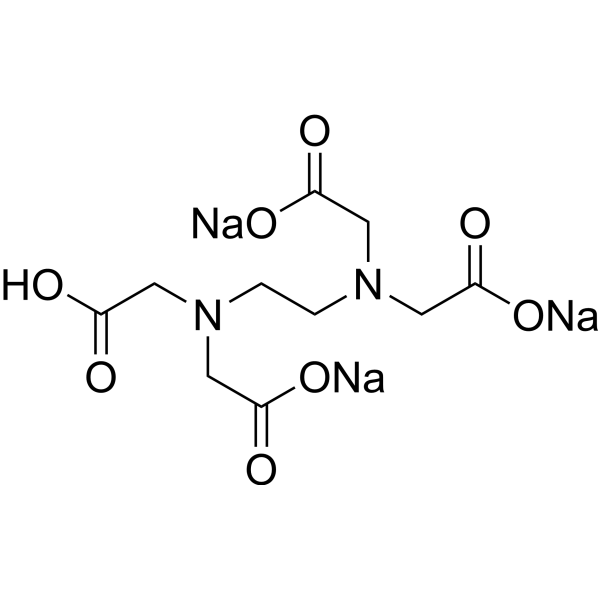
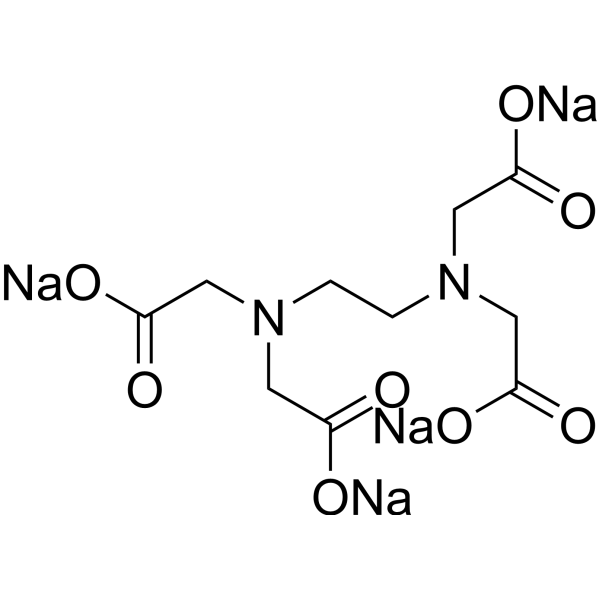
EDTA disodium salt, also known as ethylenediaminetetraacetic acid disodium, belongs to the chelating agent category, which is formed by chelating a central metal ion with four carboxylate groups and two amine groups. This compound, with its ability to bind and chelate metal ions such as calcium, magnesium and iron, is commonly used in a variety of applications, including industrial, medical and research settings. It is used as a preservative in food and beverage, as a stabilizer in medicine, as a chelating agent in water treatment, and as a reagent in biochemical and biomedical research. In addition, EDTA disodium salt has been studied for potential research effects such as improving heavy metal poisoning and cardiovascular disease.
|
-
-
- HY-Y0682A
-
|
EDTA disodium dihydrate
|
Environmental Pollutants
Biochemical Assay Reagents
Bacterial
SOD
|
Cardiovascular Disease
Neurological Disease
Cancer
|
|
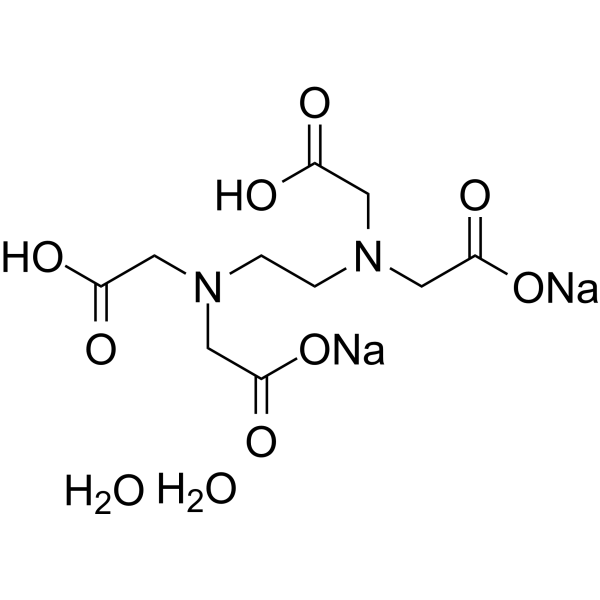
Ethylenediaminetetraacetic acid (EDTA) disodium dehydrate is a kind of metal chelating agent (binds to bivalent and trivalent metal cations, including calcium). Ethylenediaminetetraacetic acid disodium dehydrate has antibacterial, anti-inflammatory, antioxidant, anti-hypercalcemia and anticoagulant activities. Ethylenediaminetetraacetic acid disodium dehydrate decreases the metal ion-catalyzed oxidative damage to proteins, and allows maintenance of reducing environment during protein purification. Ethylenediaminetetraacetic acid disodium dehydrate can alleviate the liver fibrosis. Ethylenediaminetetraacetic acid disodium dehydrate can be used for coronary artery disease and neural system disease research .
|
-
-
- HY-Y0682S
-
|
EDTA-d12
|
Isotope-Labeled Compounds
|
Neurological Disease
|
|
Ethylenediaminetetraacetic acid-d12 is the deuterium labeled Ethylenediaminetetraacetic acid . Ethylenediaminetetraacetic acid (EDTA) is a metal chelators (binds to metal divalent and trivalent cations including calcium), which shows activities of anticoagulant and anti-hypercalcemic. Ethylenediaminetetraacetic acid decreases the metal ion-catalyzed oxidative damage to proteins, and allows maintenance of reducing environment during protein purification. Ethylenediaminetetraacetic acid can also decrease the formation of disulfide bonds .
|
-
-
- HY-W035903
-
|
2-Aminoethanol hydrochloride
|
Biochemical Assay Reagents
|
Others
|
|
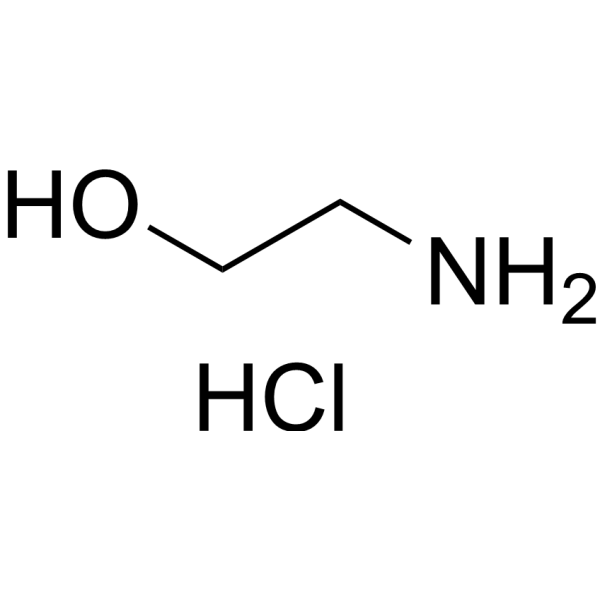
Ethanolamine hydrochloride, is an organic compound used in various industrial applications. It is a white or colorless solid that is soluble in water and has a faint odor. One of the major uses of Ethanolamine hydrochloride is in the production of detergents and surfactants. Used as a raw material in the manufacture of compounds such as ethylenediaminetetraacetic acid (EDTA) and diethanolamine, which are commonly used in household and industrial cleaning products. Ethanolamine hydrochloride is also used in the synthesis of pharmaceuticals, agrochemicals and rubber processing agents. It acts as a buffer in certain chemical reactions, helping to adjust pH and maintain stability. Ethanolamine hydrochloride can be used for gas purification and metal corrosion inhibitor. Its ability to react with acid gases such as carbon dioxide and sulfur dioxide makes it useful for removing impurities from natural gas and other industrial gases. Overall, Ethanolamine hydrochloride is a multifunctional compound with many potential industrial applications. Its ability to act as a buffer, chelating agent, and corrosion inhibitor makes it an important tool in a variety of industries.
|
-
-
- HY-B1009
-
|
EDTA trisodium salt; Trisodium EDTA
|
Environmental Pollutants
Bacterial
SOD
Ferroptosis
|
Cardiovascular Disease
Neurological Disease
Cancer
|
|
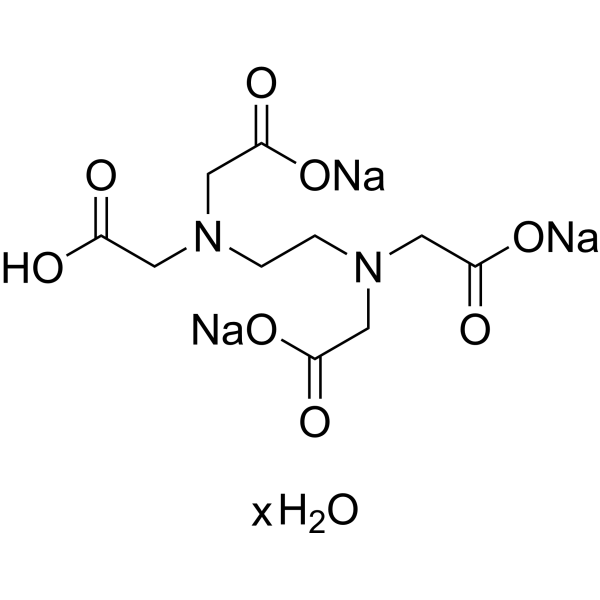
Ethylenediaminetetraacetic acid trisodium salt (EDTA trisodium salt; Trisodium EDTA) is a kind of metal chelating agent (binds to bivalent and trivalent metal cations, including calcium). Ethylenediaminetetraacetic acid trisodium salt has antibacterial, anti-inflammatory, antioxidant, anti-hypercalcemia and anticoagulant activities. Ethylenediaminetetraacetic acid trisodium salt decreases the metal ion-catalyzed oxidative damage to proteins, and allows maintenance of reducing environment during protein purification. Ethylenediaminetetraacetic acid trisodium salt can alleviate the liver fibrosis. Ethylenediaminetetraacetic acid can be used for coronary artery disease and neural system disease research .
|
-
-
- HY-D0836
-
|
Ethylenediaminetetraacetic acid dipotassium dihydrate
|
DNA/RNA Synthesis
|
Others
|
|
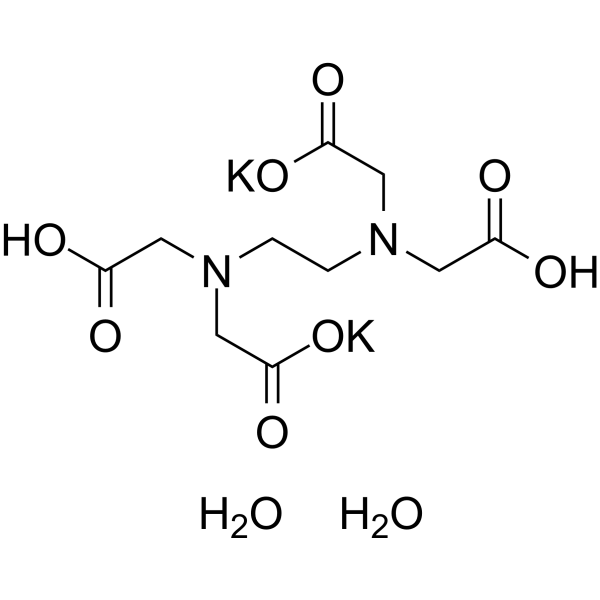
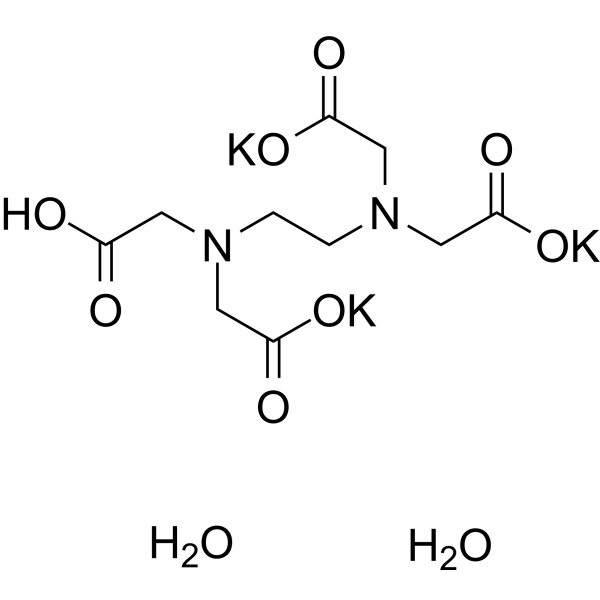
EDTA dipotassium dihydrate is a metal ion chelator that forms stable and water-soluble chelates with a variety of metal ions. EDTA dipotassium is commonly used as a blood anticoagulant, which can effectively prevent blood coagulation and maintain the morphology and function of cells in blood samples. In the industrial field, EDTA dipotassium can be used to remove the adverse effects of metal ions and prevent oxidation and deterioration caused by metal ions .
|
-
-
- HY-W127776
-
|
Ethylenediaminetetraacetic acid zinc disodium tetrahydrate
|
Biochemical Assay Reagents
|
Others
|
|
Zn(II)-EDTA (Ethylenediaminetetraacetic acid zinc) disodium tetrahydrate is a coordinating agent. Zn(II)-EDTA disodium tetrahydrate coordinates with Zn 2+ to modify its solvated structure, provides pre-synthesized EDTA-Zn complexes that release Zn 2+ to repair zinc anode defects under interfacial electric field, adsorbs onto zinc anode surface to block oxygen and water molecules, inhibits corrosion and hydrogen evolution reactions, promotes uniform Zn 2+ deposition, suppresses zinc dendrite formation, and modulates the hydrogen bonding network within the electrolyte. Zn(II)-EDTA disodium tetrahydrate acts as an electrolyte additive to enhance reversibility and stability of zinc anodes in aqueous zinc-ion batteries .
|
-
-
- HY-107921
-
|
EDTA calcium disodium salt,98%; Adsorbonac,98%
|
Environmental Pollutants
Biochemical Assay Reagents
|
Others
|
|
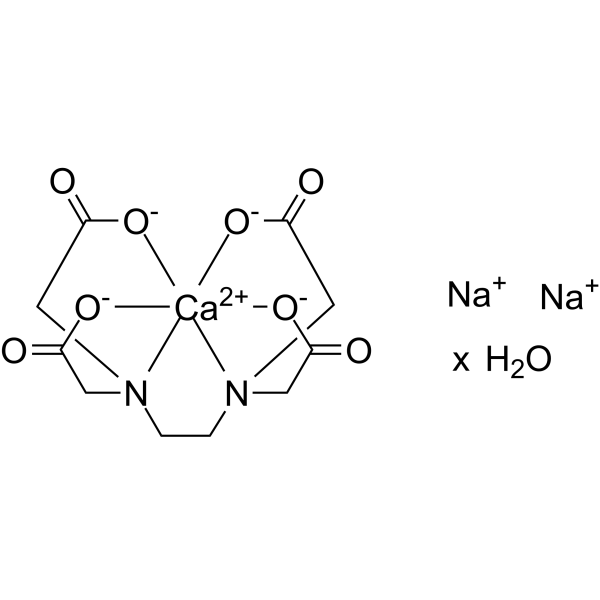
EDTA Calcium disodium, 98% (EDTA calcium disodium salt, 98%; Adsorbonac, 98%) is a chelating agent for calcium and other metal ions, preventing them from participating in chemical reactions. It can effectively remove metal ions from solutions, preventing them from interfering with experimental processes.
|
-
-
- HY-Y1422I
-
|
|
Environmental Pollutants
Biochemical Assay Reagents
Lipase
|
Others
|
Lipase, Pseudomonas fluorescens (Immobilized) is an immobilized biocatalyst derived from Pseudomonas fluorescens. Lipase, Pseudomonas fluorescens (Immobilized) efficiently catalyzes the hydrolysis, esterification and transesterification of triacylglycerols in solvent-free systems, and is particularly suitable for biodiesel production from soybean oil and selective modification of oils rich in EPA and DHA. Lipase, Pseudomonas fluorescens (Immobilized) exhibits optimal activity at pH 8.5 and 45°C, and retains residual activity after repeated cycles of use. Lipase, Pseudomonas fluorescens (Immobilized) is activated by Ca 2+, but inhibited by Co 2+, Ni 2+, Fe 3+, Fe 2+ and EDTA .
|
-
-
- HY-W013851
-
|
|
Environmental Pollutants
Biochemical Assay Reagents
|
Others
|
|
EDTA-OH is a chelating agent, which forms thermodynamically stable chelates with metal ions like calcium, magnesium, iron, zinc and copper . EDTA-OH exhibits ability of phytoremediation in heavy-metal-contaminated soils . EDTA-OH is able to cross brain-blood barrier .
|
-
-
- HY-W127774
-
|
Ethylenediaminetetraacetic acid hydrate sodium
|
Biochemical Assay Reagents
Bacterial
SOD
|
Cardiovascular Disease
Neurological Disease
Cancer
|
|
EDTA (Ethylenediaminetetraacetic acid) hydrate sodium is a kind of metal chelating agent (binds to bivalent and trivalent metal cations, including calcium). EDTA hydrate sodium has antibacterial, anti-inflammatory, antioxidant, anti-hypercalcemia and anticoagulant activities. EDTA hydrate sodium decreases the metal ion-catalyzed oxidative damage to proteins, and allows maintenance of reducing environment during protein purification. EDTA hydrate sodium can alleviate the liver fibrosis. Ethylenediaminetetraacetic acid can be used for coronary artery disease and neural system disease research .
|
-
-
- HY-131926
-
-
-
- HY-W134005
-
|
Ethylenediaminetetraacetic acid magnesium disodium tetrahydrate
|
Phosphatase
|
Others
|
|
Mg(Ⅱ)-EDTA disodium tetrahydrate is a reversible non-covalent activator of fructose diphosphatase (Km=0.9 μM). Mg(Ⅱ)-EDTA disodium tetrahydrate synergistically activates fructose diphosphatase with free Mg 2+, promotes the hydrolysis of fructose-1,6-bisphosphate at pH≤8, and plays a role in enhancing the activity of key enzymes in gluconeogenesis .
|
-
-
- HY-137428
-
-
-
- HY-D1895A
-
|
|
Biochemical Assay Reagents
|
Others
|
|
3,5-DiBr-PAESA sodium is a water-soluble pyridylazo-based highly sensitive chromogenic reagent. With the assistance of EDTA for masking copper and bromide ions for dissociating silver chelates, 3,5-DiBr-PAESA sodium enables accurate determination of sub-milligram level silver ions in strongly acidic high-copper systems via flow injection spectrophotometry .
|
-
-
- HY-D1746
-
EDTA-AM
2 Publications Verification
EDTA acetoxymethyl ester; Ethylenediaminetetraacetic acid acetoxymethyl ester
|
Biochemical Assay Reagents
Mitosis
|
Others
|
|
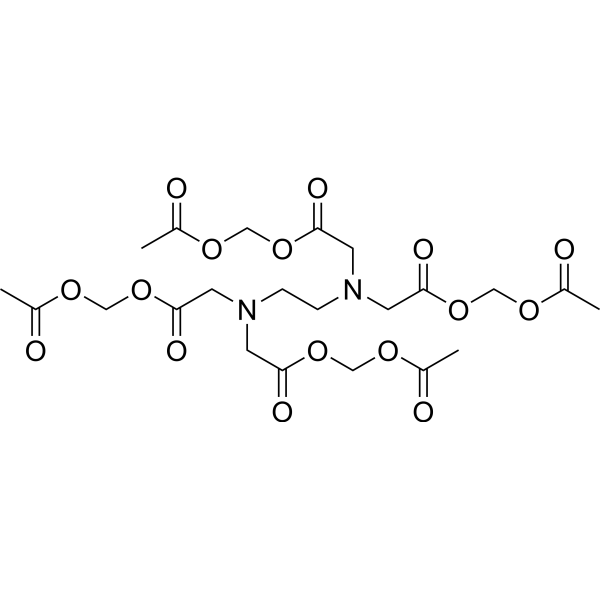
EDTA-AM (ethylenediaminetetraacetic acid, acetoxymethyl ester) is the membrane-permeant form of the metal chelator EDTA (HY-Y0682). Live cells passively load EDTA-AM by incubating with EDTA-AM. Once internalized, cytoplasmic esterase decomposes AM esters, releasing the active ligand EDTA, which isolates metal ions within the cell. EDTA-AM induces an arrest of mitotic progression and chromosome decondensation .
|
-
-
- HY-W115799
-
-
-
- HY-W151206
-
|
|
Fluorescent Dye
|
Others
|
|
Hydroxy naphthol blue disodium is an azo dye compound commonly used as an acid-base indicator (λmax = 650 nm). Within the pH range of 12 to 13, the indicator solution of Hydroxy naphthol blue disodium appears pale red in the presence of calcium ions and dark blue in the presence of disodium EDTA .
|
-
-
- HY-D1895
-
|
|
Biochemical Assay Reagents
|
Others
|
|
3,5-DiBr-PAESA is a water-soluble pyridylazo-based highly sensitive chromogenic reagent. With the assistance of EDTA for masking copper and bromide ions for dissociating silver chelates, 3,5-DiBr-PAESA enables accurate determination of sub-milligram level silver ions in strongly acidic high-copper systems via flow injection spectrophotometry .
|
-
-
- HY-W749867
-
|
Calcium disodium EDTA dihydrate
|
Bacterial
|
Infection
Others
|
|
CaⅡ-EDTA disodium dihydrate (Calcium disodium EDTA dihydrate) is an orally active metal chelating reagent, exhibits bactericidal activities against periodontal pathogens Aggregatibacter actinomycetemcomitans, Prevotella intermedia and Porphyromonas gingivalis . CaⅡ-EDTA disodium dihydrate is effective chelating antidotes for lead- and cadmium poisoning .
|
-
-
- HY-W243460
-
|
|
Biochemical Assay Reagents
|
Others
|
|
EDTA copper (II) disodium salt, 97% is a negatively charged copper (II)-ethylenediaminetetraacetic acid chelate and also an adsorption substrate. EDTA copper (II) disodium salt, 97% forms amide bonds with chitosan amino groups in weakly acidic (pH 3-5) solutions, while it forms the CuEDTA (OH) 3− hydroxyl complex in strongly alkaline (pH > 12) solutions. EDTA copper (II) disodium salt, 97% can be adsorbed onto granular activated carbon, with electrostatic interactions dominating its pH-dependent adsorption behavior. EDTA copper (II) disodium salt, 97% can be used to eliminate the inhibition of enzyme-catalyzed reactions caused by trace heavy metals .
|
-
-
- HY-W018746R
-
|
Ethylenediaminetetraacetic acid disodium (Standard)
|
Biochemical Assay Reagents
Reference Standards
|
Others
|
|
EDTA (disodium) (Standard) is the analytical standard of EDTA (disodium). This product is intended for research and analytical applications. EDTA disodium salt, also known as ethylenediaminetetraacetic acid disodium, belongs to the chelating agent category, which is formed by chelating a central metal ion with four carboxylate groups and two amine groups. This compound, with its ability to bind and chelate metal ions such as calcium, magnesium and iron, is commonly used in a variety of applications, including industrial, medical and research settings. It is used as a preservative in food and beverage, as a stabilizer in medicine, as a chelating agent in water treatment, and as a reagent in biochemical and biomedical research. In addition, EDTA disodium salt has been studied for potential research effects such as improving heavy metal poisoning and cardiovascular disease.
|
-
-
- HY-Y0682I
-
|
0.5M EDTA Solution, pH 8.0
|
Biochemical Assay Reagents
|
Others
|
|
0.5M Ethylenediaminetetraacetic acid Solution, pH 8.0 (0.5M EDTA Solution, pH 8.0) is a commonly used molecular biology reagent used for chelating magnesium ions, etc. This product is prepared using EDTA-Na2 and the pH value is adjusted to 8.0 with NaOH.
|
-
-
- HY-Y0682B
-
|
EDTA tetrasodium
|
Environmental Pollutants
Biochemical Assay Reagents
Bacterial
SOD
|
Cardiovascular Disease
Neurological Disease
Cancer
|
|
Ethylenediaminetetraacetic acid (EDTA) tetrasodium is a kind of metal chelating agent (binds to bivalent and trivalent metal cations, including calcium). Ethylenediaminetetraacetic acid tetrasodium has antibacterial, anti-inflammatory, antioxidant, anti-hypercalcemia and anticoagulant activities. Ethylenediaminetetraacetic acid tetrasodium decreases the metal ion-catalyzed oxidative damage to proteins, and allows maintenance of reducing environment during protein purification. Ethylenediaminetetraacetic acid tetrasodium can alleviate the liver fibrosis. Ethylenediaminetetraacetic acid tetrasodium can be used for coronary artery disease and neural system disease research .
|
-
-
- HY-W250119
-
|
EDTA disodium calcium salt hydrate; Ethylenediaminetetraacetic acid disodium calcium salt hydrate
|
Biochemical Assay Reagents
Fungal
Mitochondrial Metabolism
|
Infection
|
|
Calcium disodium edetate hydrate (EDTA disodium calcium salt hydrate) is a metal chelator and antifungal agent. Calcium disodium edetate hydrate chelates Mn 2+, damages mitochondria, and interferes with carbohydrate metabolic pathways, particularly the synthesis of pyruvate in glycolysis. Calcium disodium edetate hydrate inhibits Penicillium digitatum and delays conidial germination. Calcium disodium edetate (hydrate) enhances the host defense system of citrus fruits. Calcium disodium edetate hydrate is applicable to research related to citrus green mold .
|
-
-
- HY-119425
-
|
ICRF 159
|
Topoisomerase
|
Cancer
|
|
Razoxane (ICRF 159), a EDTA (HY-Y0682) derivative, is an orally active antiangiogenic topoisomerase II inhibitor. Razoxane has antineoplastic, antiangiogenic, and antimetastatic activities. Razoxanecan be used for the research of renal cell carcinoma (RCC), lung cancer and melanoma cancer .
|
-
-
- HY-W582564
-
|
Ethylenediaminetetraacetic acid copper disodium tetrahydrate
|
Biochemical Assay Reagents
|
Others
|
|
Cu(Ⅱ)-EDTA disodium tetrahydrate, a typical contaminant in industrial wastewater, is an EDTA-complexed heavy metal. Cu(Ⅱ)-EDTA disodium tetrahydrate can be used in research on the recovery of heavy metal resources from mixed wastewater .
|
-
-
- HY-W087947
-
|
Ethylenediaminetetraacetic acid dihydrate tripotassium
|
Bacterial
SOD
|
Cardiovascular Disease
Neurological Disease
Cancer
|
|
EDTA dihydrate tripotassium (Ethylenediaminetetraacetic acid dihydrate tripotassium) is a kind of metal chelating agent (binds to bivalent and trivalent metal cations, including calcium). EDTA dihydrate tripotassium has antibacterial, anti-inflammatory, antioxidant, anti-hypercalcemia and anticoagulant activities. EDTA dihydrate tripotassium decreases the metal ion-catalyzed oxidative damage to proteins, and allows maintenance of reducing environment during protein purification. EDTA dihydrate tripotassium can alleviate the liver fibrosis. EDTA dihydrate tripotassium can be used for coronary artery disease and neural system disease research .
|
-
-
- HY-W105699
-
|
Ethylenediaminetetraacetic acid tetrasodium tetrahydrate
|
Environmental Pollutants
Biochemical Assay Reagents
|
Others
|
|
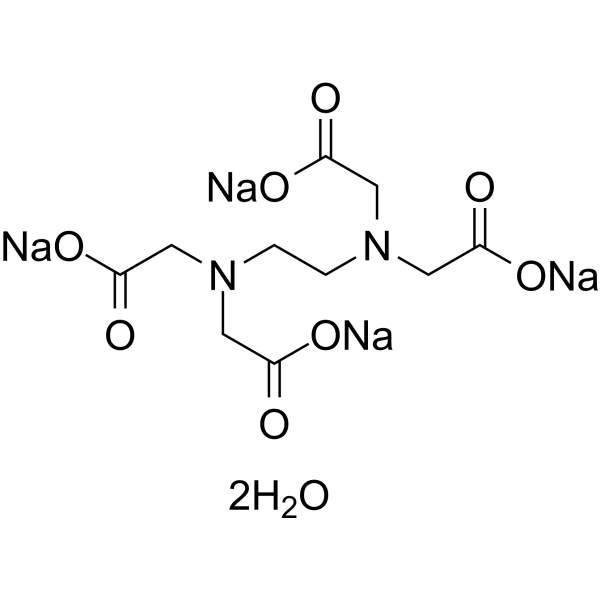
EDTA tetrasodium tetrahydrate is a metal chelator (binds to metal divalent and trivalent cations including calcium), which shows activities of anticoagulant and anti-hypercalcemic. EDTA tetrasodium tetrahydrate decreases the metal ion-catalyzed oxidative damage to proteins, and allows maintenance of reducing environment during protein purification. EDTA tetrasodium tetrahydrate can also decrease the formation of disulfide bonds .
|
-
-
- HY-W105700
-
|
EDTA sodium hydrate
|
Biochemical Assay Reagents
Bacterial
SOD
|
Cardiovascular Disease
Neurological Disease
Cancer
|
|
Ethylenediaminetetraacetic acid (EDTA) sodium hydrate is a kind of metal chelating agent (binds to bivalent and trivalent metal cations, including calcium). Ethylenediaminetetraacetic acid sodium hydrate has antibacterial, anti-inflammatory, antioxidant, anti-hypercalcemia and anticoagulant activities. Ethylenediaminetetraacetic acid sodium hydrate decreases the metal ion-catalyzed oxidative damage to proteins, and allows maintenance of reducing environment during protein purification. Ethylenediaminetetraacetic acid sodium hydrate can alleviate the liver fibrosis. Ethylenediaminetetraacetic acid sodium hydrate can be used for coronary artery disease and neural system disease research .
|
-
-
- HY-Y0682S1
-
|
EDTA-d16
|
Isotope-Labeled Compounds
|
Neurological Disease
|
|
Ethylenediaminetetraacetic acid-d16 is the deuterium labeled Ethylenediaminetetraacetic acid . Ethylenediaminetetraacetic acid (EDTA) is a metal chelators (binds to metal divalent and trivalent cations including calcium), which shows activities of anticoagulant and anti-hypercalcemic. Ethylenediaminetetraacetic acid decreases the metal ion-catalyzed oxidative damage to proteins, and allows maintenance of reducing environment during protein purification. Ethylenediaminetetraacetic acid can also decrease the formation of disulfide bonds .
|
-
-
- HY-E70565
-
|
|
Endonuclease
|
Inflammation/Immunology
|
O-Glycoprotease is an O-glycoprotein-specific endoprotease that catalyzes the hydrolysis of peptide bonds directly adjacent to the O-polymer in native mucin-type O-glycosylated proteins. O-Glycoprotease sequence is from Akkermansia muciniphila, recombinantly expressed in E.coli, with a 6×His tag at the C-terminus.
The enzyme maintains high activity between pH 5.5-7.5 and is resistant to 1M NaCl, but is highly sensitive to EDTA (0.5 mM EDTA) and can be inhibited by Zn 2+.
|
-
-
- HY-W133934A
-
|
|
Biochemical Assay Reagents
|
Others
|
|
EDTA magnesium disodium, 99% is a chelating agent with the ability to effectively bind metal ions (including calcium, magnesium, and iron) and remove them from solution.
|
-
-
- HY-W127839
-
|
Ethylenediaminetetraacetic acid dipotassium magnesium
|
Biochemical Assay Reagents
|
Others
|
|
Ethylenediaminetetraacetic acid dipotassium magnesium salt is a biochemical reagent that can be used as a biological material or organic compound for life science related research.
|
-
-
- HY-D1492
-
|
|
Fluorescent Dye
|
Others
|
|
Fast Sulphon Black F is a specific copper indicator. Fast Sulphon Black F can be used for EDTA titration .
|
-
-
- HY-114227
-
|
|
DNA Stain
|
Inflammation/Immunology
|
|
Hexidium iodide, a fluorescent nucleic binding acid stain (excitation/emission ~ 518/600 nm), permeants to mammalian cells and selectively stains almost all gram-positive bacteria. Hexidium iodide can bind to the DNA of all bacteria after permeabilization by EDTA .
|
-
-
- HY-B1009R
-
|
EDTA trisodium salt (Standard); Trisodium EDTA (Standard)
|
Ferroptosis
Bacterial
SOD
Reference Standards
|
Cardiovascular Disease
Neurological Disease
Cancer
|
|
Ethylenediaminetetraacetic acid (trisodium salt) (Standard) is the analytical standard of Ethylenediaminetetraacetic acid (trisodium salt). This product is intended for research and analytical applications. Ethylenediaminetetraacetic acid trisodium salt (EDTA trisodium salt; Trisodium EDTA) is a kind of metal chelating agent (binds to bivalent and trivalent metal cations, including calcium). Ethylenediaminetetraacetic acid trisodium salt has antibacterial, anti-inflammatory, antioxidant, anti-hypercalcemia and anticoagulant activities. Ethylenediaminetetraacetic acid trisodium salt decreases the metal ion-catalyzed oxidative damage to proteins, and allows maintenance of reducing environment during protein purification. Ethylenediaminetetraacetic acid trisodium salt can alleviate the liver fibrosis. Ethylenediaminetetraacetic acid can be used for coronary artery disease and neural system disease research .
|
-
-
- HY-W140537
-
|
|
Biochemical Assay Reagents
|
Others
|
|
EDTA diammonium salt hydrate, 97% is a derivative of ethylenediaminetetraacetic acid (EDTA), commonly used as a chelating agent in various applications due to its ability to bind with various metal ions and form stable complexes.
|
-
-
- HY-W127793
-
|
(S)-1-(p-Bromoacetamidobenzyl)ethylenediaminetetraacetic acid
|
Biochemical Assay Reagents
|
Others
|
|
EDTA-p-Bromoacetamido benzyl ((S)-1-(p-Bromoacetamidobenzyl)ethylenediaminetetraacetic acid) is a compound of EDTA and phenylbromoacetamide that can be coupled to antibodies .
|
-
-
- HY-W127835
-
|
Ethylenediaminetetraacetic acid iron sodium hydrate
|
Biochemical Assay Reagents
|
Others
|
|
EDTA iron sodium hydrate is a biochemical reagent that can be used as a biological material or organic compound for life science related research.
|
-
-
- HY-W127802
-
|
(Rac)-(Bromoacetamidophenylmethyl)ethylenediaminetetraacetic acid
|
Biochemical Assay Reagents
|
Others
|
|
(Rac)-EDTA-bromoacetamidophenylmethyl is a biochemical reagent that can be used as a biological material or organic compound for life science related research.
|
-
-
- HY-Y0682R
-
|
EDTA (Standard)
|
Biochemical Assay Reagents
Reference Standards
Bacterial
SOD
|
Cardiovascular Disease
Neurological Disease
Cancer
|
|
Ethylenediaminetetraacetic acid (Standard) is the analytical standard of Ethylenediaminetetraacetic acid. This product is intended for research and analytical applications. Ethylenediaminetetraacetic acid (EDTA) is a kind of metal chelating agent (binds to bivalent and trivalent metal cations, including calcium). Ethylenediaminetetraacetic acid has antibacterial, anti-inflammatory, antioxidant, anti-hypercalcemia and anticoagulant activities. Ethylenediaminetetraacetic acid decreases the metal ion-catalyzed oxidative damage to proteins, and allows maintenance of reducing environment during protein purification. Ethylenediaminetetraacetic acid can alleviate the liver fibrosis. Ethylenediaminetetraacetic acid can be used for coronary artery disease and neural system disease research [4] .
|
-
-
- HY-W777365
-
|
EDTA-13C4
|
Isotope-Labeled Compounds
Bacterial
SOD
Biochemical Assay Reagents
|
Cardiovascular Disease
Neurological Disease
Cancer
|
|
Ethylenediaminetetraacetic acid- 13C4 (EDTA- 13C4) is the 13C-labeled Ethylenediaminetetraacetic acid (HY-Y0682). Ethylenediaminetetraacetic acid (EDTA) is a kind of metal chelating agent (binds to bivalent and trivalent metal cations, including calcium). Ethylenediaminetetraacetic acid has antibacterial, anti-inflammatory, antioxidant, anti-hypercalcemia and anticoagulant activities. Ethylenediaminetetraacetic acid decreases the metal ion-catalyzed oxidative damage to proteins, and allows maintenance of reducing environment during protein purification. Ethylenediaminetetraacetic acid can alleviate the liver fibrosis. Ethylenediaminetetraacetic acid can be used for coronary artery disease and neural system disease research .
|
-
-
- HY-Y0682AR
-
|
EDTA disodium dihydrate (Standard)
|
Biochemical Assay Reagents
Reference Standards
Bacterial
SOD
|
Cardiovascular Disease
Neurological Disease
Cancer
|
|
Ethylenediaminetetraacetic acid (disodium dihydrate) (Standard) is the analytical standard of Ethylenediaminetetraacetic acid (disodium dihydrate). This product is intended for research and analytical applications. Ethylenediaminetetraacetic acid (EDTA) disodium dehydrate is a kind of metal chelating agent (binds to bivalent and trivalent metal cations, including calcium). Ethylenediaminetetraacetic acid disodium dehydrate has antibacterial, anti-inflammatory, antioxidant, anti-hypercalcemia and anticoagulant activities. Ethylenediaminetetraacetic acid disodium dehydrate decreases the metal ion-catalyzed oxidative damage to proteins, and allows maintenance of reducing environment during protein purification. Ethylenediaminetetraacetic acid disodium dehydrate can alleviate the liver fibrosis. Ethylenediaminetetraacetic acid disodium dehydrate can be used for coronary artery disease and neural system disease research [4] .
|
-
-
- HY-W127789
-
|
EDTA diammonium
|
Biochemical Assay Reagents
|
Others
|
|
Ethylenediaminetetraacetic acid diammonium is a class of organic compounds containing both ammonium and carboxylic acid functional groups. It is commonly used as a chelating agent in various industrial and medical applications, especially in the food and pharmaceutical industries. Ethylenediaminetetraacetic acid diammonium has strong metal ion binding properties and can be used to chelate trace metals that may affect product quality or stability. In addition, it is used as an anticoagulant in blood collection tubes and as a clarifying agent in cosmetic and personal care products.
|
-
-
- HY-W127799
-
|
EDTA dilithium
|
Biochemical Assay Reagents
|
Others
|
|
Ethylenediaminetetraacetic acid dilithium salt is a biochemical reagent that can be used as a biological material or organic compound for life science related research.
|
-
-
- HY-W127801
-
|
EDTA trisodium hydrate
|
Biochemical Assay Reagents
|
Others
|
|
Ethylenediaminetetraacetic acid (trisodium hydrate) is a class of organic compounds containing carboxylic acid functional groups. It is commonly used as a chelating agent in various industrial and medical applications, especially in the food and pharmaceutical industries. Ethylenediaminetetraacetic acid (trisodium hydrate) has strong metal ion binding properties and can be used to chelate trace metals that may affect product quality or stability. In addition, it is used as an anticoagulant in blood collection tubes and as a stabilizer in some cosmetic and personal care products.
|
-
-
- HY-W127836
-
|
(S)-1-(4-Aminoxyacetamidobenzyl)ethylenediaminetetraacetic acid
|
Biochemical Assay Reagents
|
Others
|
|
(S)-1-(4-Aminoxyacetamidobenzyl)ethylenediaminetetraacetic Acid is a biochemical reagent that can be used as a biological material or organic compound for life science related research.
|
-
- HY-179668A
-
|
|
Biochemical Assay Reagents
|
Others
|
|
10x TE buffer, pH 8.0 is weakly alkaline and protects the bases of DNA. DNA is relatively stable in TE and is not easily damaged in terms of integrity or prone to ring opening and breakage. 1x TE buffer, pH 8.0 composition concentration: 100 mM Tris-HCl, 10 mM EDTA, pH 8.0.
|
-
- HY-W419044A
-
|
|
Fluorescent Dye
|
Others
|
|
Calcein calcium potassium is a fluorescent dye and self-quenching probe, used as an indicator of lipid vesicle leakage, and also as a complexometric indicator for titration of calcium ions with EDTA, and for fluorometric determination of calcium. Calcein cannot directly cross the intact cell membrane of a living cell, unlike Calcein-AM (HY-D0041) which is cell-permeable. Calcein can also be used as a model drug for evaluating efficiency and bioavailability of drug delivery systems .
|
-
- HY-W329161
-
|
|
Fluorescent Dye
|
Others
|
|
Calcein sodium is a fluorescent dye and self-quenching probe, used as an indicator of lipid vesicle leakage, and also as a complexometric indicator for titration of calcium ions with EDTA, and for fluorometric determination of calcium. Calcein cannot directly cross the intact cell membrane of a living cell, unlike Calcein-AM (HY-D0041) which is cell-permeable. Calcein can also be used as a model drug for evaluating efficiency and bioavailability of drug delivery systems .
|
-
- HY-E70921
-
|
|
Endogenous Metabolite
|
Metabolic Disease
|
|
N-Glycanase (EDTA-Free), Elizabethkingia meningoseptica is an enzyme that specifically cleaves the glycopeptide bonds between N-linked glycans and proteins.
|
-
- HY-182668
-
|
|
Biochemical Assay Reagents
|
Others
|
|
EDTA Antigen Retrieval Solution, 50× is a commonly used antigen retrieval solution that can effectively remove cross-links between proteins caused by aldehyde fixation reagents, fully exposing antigenic epitopes in samples such as paraffin sections. It can be used for antigen retrieval in samples such as paraffin sections and frozen sections after fixation with paraformaldehyde, formaldehyde, or other aldehyde reagents.
|
-
- HY-Y0682S2
-
|
EDTA-d4
|
Isotope-Labeled Compounds
Bacterial
Biochemical Assay Reagents
SOD
Environmental Pollutants
|
Cardiovascular Disease
Neurological Disease
Cancer
|
|
Ethylenediaminetetraacetic acid-d4 (EDTA-d4) is the deuterium labeled Ethylenediaminetetraacetic acid (HY-Y0682). Ethylenediaminetetraacetic acid (EDTA) is a kind of metal chelating agent (binds to bivalent and trivalent metal cations, including calcium). Ethylenediaminetetraacetic acid has antibacterial, anti-inflammatory, antioxidant, anti-hypercalcemia and anticoagulant activities. Ethylenediaminetetraacetic acid decreases the metal ion-catalyzed oxidative damage to proteins, and allows maintenance of reducing environment during protein purification. Ethylenediaminetetraacetic acid can alleviate the liver fibrosis. Ethylenediaminetetraacetic acid can be used for coronary artery disease and neural system disease research .
|
-
- HY-D3269
-
|
|
Fluorescent Dye
|
Others
|
|
Mito-Cu (II) is a mitochondria-targeted fluorescent probe (Ex/Em = 370/450 nM). Mito-Cu (II) specifically accumulates in mitochondria of living cells and enables real-time detection of exogenous Cu 2+ within mitochondria of living cells. Mito-Cu (II) achieves "on-off-on" fluorescence switching through sequential exposure to Cu 2+ and ethylenediaminetetraacetic acid (EDTA) (HY-Y0682). Its fluorescence is quenched after forming a 1:1 complex with Cu 2+, and the fluorescence recovers when Cu 2+ is chelated by EDTA .
|
-
- HY-179668
-
|
|
Biochemical Assay Reagents
|
Others
|
|
1x TE buffer, pH 8.0 is weakly alkaline and protects the bases of DNA. DNA is relatively stable in TE and is not easily damaged in terms of integrity or prone to ring opening and breakage. 1x TE buffer, pH 8.0 composition concentration: 10 mM Tris-HCl, 1 mM EDTA, pH 8.0.
|
-
- HY-DY1091
-
|
Fluorexon (solution)
|
Fluorescent Dye
|
Others
|
Calcein (solution) (Fluorexon (solution)) is a fluorescent dye and self-quenching probe, used as an indicator of lipid vesicle leakage, and also as a complexometric indicator for titration of calcium ions with EDTA, and for fluorometric determination of calcium. Calcein cannot directly cross the intact cell membrane of a living cell, unlike Calcein-AM (HY-D0041) which is cell-permeable. Calcein can also be used as a model drug for evaluating efficiency and bioavailability of drug delivery systems . Solvent and concentration: DMSO: 2 mM The 1 mL volume is defined as the base specification. All larger sizes correspond to incremental volumes of this base.
|
-
| Cat. No. |
Product Name |
Type |
-
- HY-D0040
-
|
Fluorexon
|
Fluorescent Dyes
|
|
Calcein is a fluorescent dye and self-quenching probe, used as an indicator of lipid vesicle leakage, and also as a complexometric indicator for titration of calcium ions with EDTA, and for fluorometric determination of calcium. Calcein cannot directly cross the intact cell membrane of a living cell, unlike Calcein-AM (HY-D0041) which is cell-permeable. Calcein can also be used as a model drug for evaluating efficiency and bioavailability of drug delivery systems .
|
-
- HY-D1895A
-
|
|
Fluorescent Dyes
|
|
3,5-DiBr-PAESA sodium is a water-soluble pyridylazo-based highly sensitive chromogenic reagent. With the assistance of EDTA for masking copper and bromide ions for dissociating silver chelates, 3,5-DiBr-PAESA sodium enables accurate determination of sub-milligram level silver ions in strongly acidic high-copper systems via flow injection spectrophotometry .
|
-
- HY-D1746
-
EDTA-AM
2 Publications Verification
EDTA acetoxymethyl ester; Ethylenediaminetetraacetic acid acetoxymethyl ester
|
Fluorescent Dyes
|
|
EDTA-AM (ethylenediaminetetraacetic acid, acetoxymethyl ester) is the membrane-permeant form of the metal chelator EDTA (HY-Y0682). Live cells passively load EDTA-AM by incubating with EDTA-AM. Once internalized, cytoplasmic esterase decomposes AM esters, releasing the active ligand EDTA, which isolates metal ions within the cell. EDTA-AM induces an arrest of mitotic progression and chromosome decondensation .
|
-
- HY-W151206
-
|
|
Fluorescent Dyes
|
|
Hydroxy naphthol blue disodium is an azo dye compound commonly used as an acid-base indicator (λmax = 650 nm). Within the pH range of 12 to 13, the indicator solution of Hydroxy naphthol blue disodium appears pale red in the presence of calcium ions and dark blue in the presence of disodium EDTA .
|
-
- HY-D1895
-
|
|
Fluorescent Dyes
|
|
3,5-DiBr-PAESA is a water-soluble pyridylazo-based highly sensitive chromogenic reagent. With the assistance of EDTA for masking copper and bromide ions for dissociating silver chelates, 3,5-DiBr-PAESA enables accurate determination of sub-milligram level silver ions in strongly acidic high-copper systems via flow injection spectrophotometry .
|
-
- HY-D1492
-
|
|
Fluorescent Dyes
|
|
Fast Sulphon Black F is a specific copper indicator. Fast Sulphon Black F can be used for EDTA titration .
|
-
- HY-D3269
-
|
|
Fluorescent Dyes
|
|
Mito-Cu (II) is a mitochondria-targeted fluorescent probe (Ex/Em = 370/450 nM). Mito-Cu (II) specifically accumulates in mitochondria of living cells and enables real-time detection of exogenous Cu 2+ within mitochondria of living cells. Mito-Cu (II) achieves "on-off-on" fluorescence switching through sequential exposure to Cu 2+ and ethylenediaminetetraacetic acid (EDTA) (HY-Y0682). Its fluorescence is quenched after forming a 1:1 complex with Cu 2+, and the fluorescence recovers when Cu 2+ is chelated by EDTA .
|
-
- HY-DY1091
-
|
Fluorexon (solution)
|
Fluorescent Dyes
|
Calcein (solution) (Fluorexon (solution)) is a fluorescent dye and self-quenching probe, used as an indicator of lipid vesicle leakage, and also as a complexometric indicator for titration of calcium ions with EDTA, and for fluorometric determination of calcium. Calcein cannot directly cross the intact cell membrane of a living cell, unlike Calcein-AM (HY-D0041) which is cell-permeable. Calcein can also be used as a model drug for evaluating efficiency and bioavailability of drug delivery systems . Solvent and concentration: DMSO: 2 mM The 1 mL volume is defined as the base specification. All larger sizes correspond to incremental volumes of this base.
|
| Cat. No. |
Product Name |
Type |
-
- HY-Y0682
-
|
EDTA
|
Biochemical Assay Reagents
|
|
Ethylenediaminetetraacetic acid (EDTA) is a kind of metal chelating agent (binds to bivalent and trivalent metal cations, including calcium). Ethylenediaminetetraacetic acid has antibacterial, anti-inflammatory, antioxidant, anti-hypercalcemia and anticoagulant activities. Ethylenediaminetetraacetic acid decreases the metal ion-catalyzed oxidative damage to proteins, and allows maintenance of reducing environment during protein purification. Ethylenediaminetetraacetic acid can alleviate the liver fibrosis. Ethylenediaminetetraacetic acid can be used for coronary artery disease and neural system disease research .
|
-
- HY-W018746
-
|
Ethylenediaminetetraacetic acid disodium
|
Biochemical Assay Reagents
|
|
EDTA disodium salt, also known as ethylenediaminetetraacetic acid disodium, belongs to the chelating agent category, which is formed by chelating a central metal ion with four carboxylate groups and two amine groups. This compound, with its ability to bind and chelate metal ions such as calcium, magnesium and iron, is commonly used in a variety of applications, including industrial, medical and research settings. It is used as a preservative in food and beverage, as a stabilizer in medicine, as a chelating agent in water treatment, and as a reagent in biochemical and biomedical research. In addition, EDTA disodium salt has been studied for potential research effects such as improving heavy metal poisoning and cardiovascular disease.
|
-
- HY-Y0682A
-
|
EDTA disodium dihydrate
|
Biochemical Assay Reagents
|
|
Ethylenediaminetetraacetic acid (EDTA) disodium dehydrate is a kind of metal chelating agent (binds to bivalent and trivalent metal cations, including calcium). Ethylenediaminetetraacetic acid disodium dehydrate has antibacterial, anti-inflammatory, antioxidant, anti-hypercalcemia and anticoagulant activities. Ethylenediaminetetraacetic acid disodium dehydrate decreases the metal ion-catalyzed oxidative damage to proteins, and allows maintenance of reducing environment during protein purification. Ethylenediaminetetraacetic acid disodium dehydrate can alleviate the liver fibrosis. Ethylenediaminetetraacetic acid disodium dehydrate can be used for coronary artery disease and neural system disease research .
|
-
- HY-W035903
-
|
2-Aminoethanol hydrochloride
|
Biochemical Assay Reagents
|
|
Ethanolamine hydrochloride, is an organic compound used in various industrial applications. It is a white or colorless solid that is soluble in water and has a faint odor. One of the major uses of Ethanolamine hydrochloride is in the production of detergents and surfactants. Used as a raw material in the manufacture of compounds such as ethylenediaminetetraacetic acid (EDTA) and diethanolamine, which are commonly used in household and industrial cleaning products. Ethanolamine hydrochloride is also used in the synthesis of pharmaceuticals, agrochemicals and rubber processing agents. It acts as a buffer in certain chemical reactions, helping to adjust pH and maintain stability. Ethanolamine hydrochloride can be used for gas purification and metal corrosion inhibitor. Its ability to react with acid gases such as carbon dioxide and sulfur dioxide makes it useful for removing impurities from natural gas and other industrial gases. Overall, Ethanolamine hydrochloride is a multifunctional compound with many potential industrial applications. Its ability to act as a buffer, chelating agent, and corrosion inhibitor makes it an important tool in a variety of industries.
|
-
- HY-D0836
-
|
Ethylenediaminetetraacetic acid dipotassium dihydrate
|
Biochemical Assay Reagents
|
|
EDTA dipotassium dihydrate is a metal ion chelator that forms stable and water-soluble chelates with a variety of metal ions. EDTA dipotassium is commonly used as a blood anticoagulant, which can effectively prevent blood coagulation and maintain the morphology and function of cells in blood samples. In the industrial field, EDTA dipotassium can be used to remove the adverse effects of metal ions and prevent oxidation and deterioration caused by metal ions .
|
-
- HY-W127776
-
|
Ethylenediaminetetraacetic acid zinc disodium tetrahydrate
|
Biochemical Assay Reagents
|
|
Zn(II)-EDTA (Ethylenediaminetetraacetic acid zinc) disodium tetrahydrate is a coordinating agent. Zn(II)-EDTA disodium tetrahydrate coordinates with Zn 2+ to modify its solvated structure, provides pre-synthesized EDTA-Zn complexes that release Zn 2+ to repair zinc anode defects under interfacial electric field, adsorbs onto zinc anode surface to block oxygen and water molecules, inhibits corrosion and hydrogen evolution reactions, promotes uniform Zn 2+ deposition, suppresses zinc dendrite formation, and modulates the hydrogen bonding network within the electrolyte. Zn(II)-EDTA disodium tetrahydrate acts as an electrolyte additive to enhance reversibility and stability of zinc anodes in aqueous zinc-ion batteries .
|
-
- HY-107921
-
|
EDTA calcium disodium salt,98%; Adsorbonac,98%
|
Biochemical Assay Reagents
|
|
EDTA Calcium disodium, 98% (EDTA calcium disodium salt, 98%; Adsorbonac, 98%) is a chelating agent for calcium and other metal ions, preventing them from participating in chemical reactions. It can effectively remove metal ions from solutions, preventing them from interfering with experimental processes.
|
-
- HY-W013851
-
|
|
Biochemical Assay Reagents
|
|
EDTA-OH is a chelating agent, which forms thermodynamically stable chelates with metal ions like calcium, magnesium, iron, zinc and copper . EDTA-OH exhibits ability of phytoremediation in heavy-metal-contaminated soils . EDTA-OH is able to cross brain-blood barrier .
|
-
- HY-W127774
-
|
Ethylenediaminetetraacetic acid hydrate sodium
|
Biochemical Assay Reagents
|
|
EDTA (Ethylenediaminetetraacetic acid) hydrate sodium is a kind of metal chelating agent (binds to bivalent and trivalent metal cations, including calcium). EDTA hydrate sodium has antibacterial, anti-inflammatory, antioxidant, anti-hypercalcemia and anticoagulant activities. EDTA hydrate sodium decreases the metal ion-catalyzed oxidative damage to proteins, and allows maintenance of reducing environment during protein purification. EDTA hydrate sodium can alleviate the liver fibrosis. Ethylenediaminetetraacetic acid can be used for coronary artery disease and neural system disease research .
|
-
- HY-131926
-
|
Ethylenediaminetetraacetic acid (iron sodium)
|
Biochemical Assay Reagents
|
|
EDTA iron sodium (NaFeEDTA; Sodium iron EDTA) is a biochemical reagent that can be used as a biological material or organic compound for life science related research.
|
-
- HY-W134005
-
|
Ethylenediaminetetraacetic acid magnesium disodium tetrahydrate
|
Biochemical Assay Reagents
|
|
Mg(Ⅱ)-EDTA disodium tetrahydrate is a reversible non-covalent activator of fructose diphosphatase (Km=0.9 μM). Mg(Ⅱ)-EDTA disodium tetrahydrate synergistically activates fructose diphosphatase with free Mg 2+, promotes the hydrolysis of fructose-1,6-bisphosphate at pH≤8, and plays a role in enhancing the activity of key enzymes in gluconeogenesis .
|
-
- HY-W115799
-
|
Ethylenediaminetetraacetic acid (disodium manganese)
|
Biochemical Assay Reagents
|
|
Disodium manganese EDTA is a biochemical reagent that can be used as a biological material or organic compound for life science related research.
|
-
- HY-W749867
-
|
Calcium disodium EDTA dihydrate
|
Biochemical Assay Reagents
|
|
CaⅡ-EDTA disodium dihydrate (Calcium disodium EDTA dihydrate) is an orally active metal chelating reagent, exhibits bactericidal activities against periodontal pathogens Aggregatibacter actinomycetemcomitans, Prevotella intermedia and Porphyromonas gingivalis . CaⅡ-EDTA disodium dihydrate is effective chelating antidotes for lead- and cadmium poisoning .
|
-
- HY-W018746R
-
|
Ethylenediaminetetraacetic acid disodium (Standard)
|
Biochemical Assay Reagents
|
|
EDTA (disodium) (Standard) is the analytical standard of EDTA (disodium). This product is intended for research and analytical applications. EDTA disodium salt, also known as ethylenediaminetetraacetic acid disodium, belongs to the chelating agent category, which is formed by chelating a central metal ion with four carboxylate groups and two amine groups. This compound, with its ability to bind and chelate metal ions such as calcium, magnesium and iron, is commonly used in a variety of applications, including industrial, medical and research settings. It is used as a preservative in food and beverage, as a stabilizer in medicine, as a chelating agent in water treatment, and as a reagent in biochemical and biomedical research. In addition, EDTA disodium salt has been studied for potential research effects such as improving heavy metal poisoning and cardiovascular disease.
|
-
- HY-Y0682I
-
|
0.5M EDTA Solution, pH 8.0
|
Biochemical Assay Reagents
|
|
0.5M Ethylenediaminetetraacetic acid Solution, pH 8.0 (0.5M EDTA Solution, pH 8.0) is a commonly used molecular biology reagent used for chelating magnesium ions, etc. This product is prepared using EDTA-Na2 and the pH value is adjusted to 8.0 with NaOH.
|
-
- HY-W250119
-
|
EDTA disodium calcium salt hydrate; Ethylenediaminetetraacetic acid disodium calcium salt hydrate
|
Biochemical Assay Reagents
|
|
Calcium disodium edetate hydrate (EDTA disodium calcium salt hydrate) is a metal chelator and antifungal agent. Calcium disodium edetate hydrate chelates Mn 2+, damages mitochondria, and interferes with carbohydrate metabolic pathways, particularly the synthesis of pyruvate in glycolysis. Calcium disodium edetate hydrate inhibits Penicillium digitatum and delays conidial germination. Calcium disodium edetate (hydrate) enhances the host defense system of citrus fruits. Calcium disodium edetate hydrate is applicable to research related to citrus green mold .
|
-
- HY-W582564
-
|
Ethylenediaminetetraacetic acid copper disodium tetrahydrate
|
Biochemical Assay Reagents
|
|
Cu(Ⅱ)-EDTA disodium tetrahydrate, a typical contaminant in industrial wastewater, is an EDTA-complexed heavy metal. Cu(Ⅱ)-EDTA disodium tetrahydrate can be used in research on the recovery of heavy metal resources from mixed wastewater .
|
-
- HY-W087947
-
|
Ethylenediaminetetraacetic acid dihydrate tripotassium
|
Biochemical Assay Reagents
|
|
EDTA dihydrate tripotassium (Ethylenediaminetetraacetic acid dihydrate tripotassium) is a kind of metal chelating agent (binds to bivalent and trivalent metal cations, including calcium). EDTA dihydrate tripotassium has antibacterial, anti-inflammatory, antioxidant, anti-hypercalcemia and anticoagulant activities. EDTA dihydrate tripotassium decreases the metal ion-catalyzed oxidative damage to proteins, and allows maintenance of reducing environment during protein purification. EDTA dihydrate tripotassium can alleviate the liver fibrosis. EDTA dihydrate tripotassium can be used for coronary artery disease and neural system disease research .
|
-
- HY-W105700
-
|
EDTA sodium hydrate
|
Biochemical Assay Reagents
|
|
Ethylenediaminetetraacetic acid (EDTA) sodium hydrate is a kind of metal chelating agent (binds to bivalent and trivalent metal cations, including calcium). Ethylenediaminetetraacetic acid sodium hydrate has antibacterial, anti-inflammatory, antioxidant, anti-hypercalcemia and anticoagulant activities. Ethylenediaminetetraacetic acid sodium hydrate decreases the metal ion-catalyzed oxidative damage to proteins, and allows maintenance of reducing environment during protein purification. Ethylenediaminetetraacetic acid sodium hydrate can alleviate the liver fibrosis. Ethylenediaminetetraacetic acid sodium hydrate can be used for coronary artery disease and neural system disease research .
|
-
- HY-W133934A
-
|
|
Biochemical Assay Reagents
|
|
EDTA magnesium disodium, 99% is a chelating agent with the ability to effectively bind metal ions (including calcium, magnesium, and iron) and remove them from solution.
|
-
- HY-W127839
-
|
Ethylenediaminetetraacetic acid dipotassium magnesium
|
Biochemical Assay Reagents
|
|
Ethylenediaminetetraacetic acid dipotassium magnesium salt is a biochemical reagent that can be used as a biological material or organic compound for life science related research.
|
-
- HY-W140537
-
|
|
Biochemical Assay Reagents
|
|
EDTA diammonium salt hydrate, 97% is a derivative of ethylenediaminetetraacetic acid (EDTA), commonly used as a chelating agent in various applications due to its ability to bind with various metal ions and form stable complexes.
|
-
- HY-W127793
-
|
(S)-1-(p-Bromoacetamidobenzyl)ethylenediaminetetraacetic acid
|
Biochemical Assay Reagents
|
|
EDTA-p-Bromoacetamido benzyl ((S)-1-(p-Bromoacetamidobenzyl)ethylenediaminetetraacetic acid) is a compound of EDTA and phenylbromoacetamide that can be coupled to antibodies .
|
-
- HY-W127835
-
|
Ethylenediaminetetraacetic acid iron sodium hydrate
|
Biochemical Assay Reagents
|
|
EDTA iron sodium hydrate is a biochemical reagent that can be used as a biological material or organic compound for life science related research.
|
-
- HY-W127802
-
|
(Rac)-(Bromoacetamidophenylmethyl)ethylenediaminetetraacetic acid
|
Biochemical Assay Reagents
|
|
(Rac)-EDTA-bromoacetamidophenylmethyl is a biochemical reagent that can be used as a biological material or organic compound for life science related research.
|
-
- HY-Y0682R
-
|
EDTA (Standard)
|
Biochemical Assay Reagents
|
|
Ethylenediaminetetraacetic acid (Standard) is the analytical standard of Ethylenediaminetetraacetic acid. This product is intended for research and analytical applications. Ethylenediaminetetraacetic acid (EDTA) is a kind of metal chelating agent (binds to bivalent and trivalent metal cations, including calcium). Ethylenediaminetetraacetic acid has antibacterial, anti-inflammatory, antioxidant, anti-hypercalcemia and anticoagulant activities. Ethylenediaminetetraacetic acid decreases the metal ion-catalyzed oxidative damage to proteins, and allows maintenance of reducing environment during protein purification. Ethylenediaminetetraacetic acid can alleviate the liver fibrosis. Ethylenediaminetetraacetic acid can be used for coronary artery disease and neural system disease research [4] .
|
-
- HY-Y0682AR
-
|
EDTA disodium dihydrate (Standard)
|
Biochemical Assay Reagents
|
|
Ethylenediaminetetraacetic acid (disodium dihydrate) (Standard) is the analytical standard of Ethylenediaminetetraacetic acid (disodium dihydrate). This product is intended for research and analytical applications. Ethylenediaminetetraacetic acid (EDTA) disodium dehydrate is a kind of metal chelating agent (binds to bivalent and trivalent metal cations, including calcium). Ethylenediaminetetraacetic acid disodium dehydrate has antibacterial, anti-inflammatory, antioxidant, anti-hypercalcemia and anticoagulant activities. Ethylenediaminetetraacetic acid disodium dehydrate decreases the metal ion-catalyzed oxidative damage to proteins, and allows maintenance of reducing environment during protein purification. Ethylenediaminetetraacetic acid disodium dehydrate can alleviate the liver fibrosis. Ethylenediaminetetraacetic acid disodium dehydrate can be used for coronary artery disease and neural system disease research [4] .
|
-
- HY-W127789
-
|
EDTA diammonium
|
Biochemical Assay Reagents
|
|
Ethylenediaminetetraacetic acid diammonium is a class of organic compounds containing both ammonium and carboxylic acid functional groups. It is commonly used as a chelating agent in various industrial and medical applications, especially in the food and pharmaceutical industries. Ethylenediaminetetraacetic acid diammonium has strong metal ion binding properties and can be used to chelate trace metals that may affect product quality or stability. In addition, it is used as an anticoagulant in blood collection tubes and as a clarifying agent in cosmetic and personal care products.
|
-
- HY-W127799
-
|
EDTA dilithium
|
Biochemical Assay Reagents
|
|
Ethylenediaminetetraacetic acid dilithium salt is a biochemical reagent that can be used as a biological material or organic compound for life science related research.
|
-
- HY-W127801
-
|
EDTA trisodium hydrate
|
Biochemical Assay Reagents
|
|
Ethylenediaminetetraacetic acid (trisodium hydrate) is a class of organic compounds containing carboxylic acid functional groups. It is commonly used as a chelating agent in various industrial and medical applications, especially in the food and pharmaceutical industries. Ethylenediaminetetraacetic acid (trisodium hydrate) has strong metal ion binding properties and can be used to chelate trace metals that may affect product quality or stability. In addition, it is used as an anticoagulant in blood collection tubes and as a stabilizer in some cosmetic and personal care products.
|
-
- HY-W127836
-
|
(S)-1-(4-Aminoxyacetamidobenzyl)ethylenediaminetetraacetic acid
|
Biochemical Assay Reagents
|
|
(S)-1-(4-Aminoxyacetamidobenzyl)ethylenediaminetetraacetic Acid is a biochemical reagent that can be used as a biological material or organic compound for life science related research.
|
-
- HY-179668A
-
|
|
Biochemical Assay Reagents
|
|
10x TE buffer, pH 8.0 is weakly alkaline and protects the bases of DNA. DNA is relatively stable in TE and is not easily damaged in terms of integrity or prone to ring opening and breakage. 1x TE buffer, pH 8.0 composition concentration: 100 mM Tris-HCl, 10 mM EDTA, pH 8.0.
|
-
- HY-182668
-
|
|
Biochemical Assay Reagents
|
|
EDTA Antigen Retrieval Solution, 50× is a commonly used antigen retrieval solution that can effectively remove cross-links between proteins caused by aldehyde fixation reagents, fully exposing antigenic epitopes in samples such as paraffin sections. It can be used for antigen retrieval in samples such as paraffin sections and frozen sections after fixation with paraformaldehyde, formaldehyde, or other aldehyde reagents.
|
-
- HY-179668
-
|
|
Biochemical Assay Reagents
|
|
1x TE buffer, pH 8.0 is weakly alkaline and protects the bases of DNA. DNA is relatively stable in TE and is not easily damaged in terms of integrity or prone to ring opening and breakage. 1x TE buffer, pH 8.0 composition concentration: 10 mM Tris-HCl, 1 mM EDTA, pH 8.0.
|
| Cat. No. |
Product Name |
Target |
Research Area |
-
- HY-P5350
-
|
|
Peptides
|
Others
|
|
FN-A208 is a biological active peptide. (This peptide is a fusion of A208, derived from murine laminin a1, and the active site of fibronectin (GRGDS), with a glycine spacer. This peptide forms amyloid-like fibrils and promotes formation of actin stress fibers that mediate fibroblast cell attachment, offering it potential as a bioadhesive for tissue regeneration and engineering. FN-A208 interacts with IKVAV receptors and integrins. Its activity is disrupted by the presence of EDTA.)
|
-
- HY-K1015
-
|
|
|
MCE TAE Powder (1 L of 1×) consists of Tris-acetate and EDTA-2Na, and is widely used in agarose gel electrophoresis of nucleic acid. The 20 pouches are defined as the base specification. All larger sizes correspond to incremental volumes of this base.
|
-
- HY-K3009
-
5 Publications Verification
|
|
MCE 0.25% Trypsin-EDTA (1×), Phenol Red-Free, is prepared by dissolving trypsin powder (a mixture of proteases from porcine pancreas, irradiated and sterilized) and EDTA in a calcium- and magnesium-free balanced salt solution. It is filter-sterilized and can be directly used for the dissociation of cultured cells and tissues. The 100 mL is defined as the base specification. All larger sizes correspond to incremental volumes of this base.
|
-
- HY-K3007
-
5 Publications Verification
|
|
MCE 0.25% Trypsin-EDTA (1x), phenol red consists of dried trypsin powder dissolved in EDTA. MCE Trypsin hydrolyzes intercellular proteins and disperses primary tissues or adherent cells into individual cells, and can be widely used for cell dissociation, cell culture passaging and primary tissue dissociation. The 100 mL is defined as the base specification. All larger sizes correspond to incremental volumes of this base.
|
-
- HY-K1016
-
|
|
|
MCE TBE Powder (1 L of 1×) consists of Tris, Boric Acid and EDTA, and is widely used in agarose gel electrophoresis of nucleic acid. The 10 pouches are defined as the base specification. All larger sizes correspond to incremental volumes of this base.
|
-
- HY-K0010
-
Maximum Cited Publications
1922 Publications Verification
|
|
MCE Protease Inhibitor Cocktail (EDTA-Free, 100× in DMSO) is a blend of 6 pan-protease inhibitors for protection of protein integrity.The 1 mL volume is defined as the base specification. All larger sizes correspond to incremental volumes of this base.
|
-
- HY-K0011
-
|
|
|
MCE Protease Inhibitor Cocktail, mini-Tablet (EDTA-Free) is a blend of 5 pan-protease inhibitors for protection of protein integrity. The 25 pcs is defined as the base specification. All larger sizes correspond to incremental volumes of this base.
|
-
- HY-K1034
-
|
|
|
MCE Tris-HEPES-SDS Powder (500 mL of 1×) consists of Tris, HEPES, EDTA and SDS, and is widely used in protein electrophoresis. The 20 pouches are defined as the base specification. All larger sizes correspond to incremental volumes of this base.
|
-
- HY-K1018
-
|
|
|
MCE Tris-MES-SDS Powder (1 L of 1×) consists of Tris, MES, EDTA and SDS, and is mainly used for separation of small- to medium-sized proteins. The 10 pouches are defined as the base specification. All larger sizes correspond to incremental volumes of this base.
|
-
- HY-K1019
-
|
|
|
MCE Tris-MOPS-SDS Powder (1 L of 1×) consists of Tris, MOPS, EDTA and SDS, and is mainly used for separation of medium- to large-sized proteins. The 10 pouches are defined as the base specification. All larger sizes correspond to incremental volumes of this base.
|
-
- HY-K0012
-
|
|
|
MCE Protease Inhibitor Cocktail, Bacteria (EDTA-Free, 100× in DMSO) protects proteins from degradation by endogenous proteases released during protein extraction and purification.The 1 mL volume is defined as the base specification. All larger sizes correspond to incremental volumes of this base.
|
-
- HY-K1032
-
|
|
|
MCE 6× DNA Loading Buffer with SDS is a modified 6-fold buffer and mainly consists of glycerin, EDTA, SDS, Orange G and Xylene Cyanol FF. The 1 mL is defined as the base specification. All larger sizes correspond to incremental volumes of this base.
|
-
- HY-K6119
-
|
|
|
MCE Mouse Intestinal Organoid Kit contains Mouse Intestinal Organoid Basal Medium A, Mouse Intestinal Organoid Supplement B (50×), Mouse
Intestinal Organoid Supplement C (250×) and EDTA. This product can be used to efficiently construct mouse intestinal organoid.
|
-
- HY-K0013
-
|
|
|
MCE Protease and Phosphatase Inhibitor Cocktail (EDTA-Free, 10× in ddH2O) protects protein from degradation by endogenous proteases released during protein extraction and purification.The 1 mL volume is defined as the base specification. All larger sizes correspond to incremental volumes of this base.
|
-
- HY-K6120
-
|
|
|
MCE Mouse Colonic Organoid Kit contains Colonic Organoid Basal Medium A, Colonic Organoid Supplement B (50×), Colonic Organoid Supplement C
(250×), Colonic Organoid Supplement D (250×) and EDTA. This product can be used to efficiently construct mouse colonic organoid.
|
| Cat. No. |
Product Name |
Chemical Structure |
-
- HY-Y0682S
-
|
|
|
Ethylenediaminetetraacetic acid-d12 is the deuterium labeled Ethylenediaminetetraacetic acid . Ethylenediaminetetraacetic acid (EDTA) is a metal chelators (binds to metal divalent and trivalent cations including calcium), which shows activities of anticoagulant and anti-hypercalcemic. Ethylenediaminetetraacetic acid decreases the metal ion-catalyzed oxidative damage to proteins, and allows maintenance of reducing environment during protein purification. Ethylenediaminetetraacetic acid can also decrease the formation of disulfide bonds .
|
-
-
- HY-Y0682S1
-
|
|
|
Ethylenediaminetetraacetic acid-d16 is the deuterium labeled Ethylenediaminetetraacetic acid . Ethylenediaminetetraacetic acid (EDTA) is a metal chelators (binds to metal divalent and trivalent cations including calcium), which shows activities of anticoagulant and anti-hypercalcemic. Ethylenediaminetetraacetic acid decreases the metal ion-catalyzed oxidative damage to proteins, and allows maintenance of reducing environment during protein purification. Ethylenediaminetetraacetic acid can also decrease the formation of disulfide bonds .
|
-
-
- HY-W777365
-
|
|
|
Ethylenediaminetetraacetic acid- 13C4 (EDTA- 13C4) is the 13C-labeled Ethylenediaminetetraacetic acid (HY-Y0682). Ethylenediaminetetraacetic acid (EDTA) is a kind of metal chelating agent (binds to bivalent and trivalent metal cations, including calcium). Ethylenediaminetetraacetic acid has antibacterial, anti-inflammatory, antioxidant, anti-hypercalcemia and anticoagulant activities. Ethylenediaminetetraacetic acid decreases the metal ion-catalyzed oxidative damage to proteins, and allows maintenance of reducing environment during protein purification. Ethylenediaminetetraacetic acid can alleviate the liver fibrosis. Ethylenediaminetetraacetic acid can be used for coronary artery disease and neural system disease research .
|
-
-
- HY-Y0682S2
-
|
|
|
Ethylenediaminetetraacetic acid-d4 (EDTA-d4) is the deuterium labeled Ethylenediaminetetraacetic acid (HY-Y0682). Ethylenediaminetetraacetic acid (EDTA) is a kind of metal chelating agent (binds to bivalent and trivalent metal cations, including calcium). Ethylenediaminetetraacetic acid has antibacterial, anti-inflammatory, antioxidant, anti-hypercalcemia and anticoagulant activities. Ethylenediaminetetraacetic acid decreases the metal ion-catalyzed oxidative damage to proteins, and allows maintenance of reducing environment during protein purification. Ethylenediaminetetraacetic acid can alleviate the liver fibrosis. Ethylenediaminetetraacetic acid can be used for coronary artery disease and neural system disease research .
|
-
| Cat. No. |
Product Name |
|
Classification |
-
- HY-Y0682A
-
|
EDTA disodium dihydrate
|
|
Antioxidants
Chelating Agents
|
|
Ethylenediaminetetraacetic acid (EDTA) disodium dehydrate is a kind of metal chelating agent (binds to bivalent and trivalent metal cations, including calcium). Ethylenediaminetetraacetic acid disodium dehydrate has antibacterial, anti-inflammatory, antioxidant, anti-hypercalcemia and anticoagulant activities. Ethylenediaminetetraacetic acid disodium dehydrate decreases the metal ion-catalyzed oxidative damage to proteins, and allows maintenance of reducing environment during protein purification. Ethylenediaminetetraacetic acid disodium dehydrate can alleviate the liver fibrosis. Ethylenediaminetetraacetic acid disodium dehydrate can be used for coronary artery disease and neural system disease research .
|
Your information is safe with us. * Required Fields.
Inquiry Information
- Product Name:
- Cat. No.:
- Quantity:
- MCE Japan Authorized Agent:

