



EDTA disodium
Based on 34 publication(s) in Google Scholar
EDTA disodium salt, also known as ethylenediaminetetraacetic acid disodium, belongs to the chelating agent category, which is formed by chelating a central metal ion with four carboxylate groups and two amine groups. This compound, with its ability to bind and chelate metal ions such as calcium, magnesium and iron, is commonly used in a variety of applications, including industrial, medical and research settings. It is used as a preservative in food and beverage, as a stabilizer in medicine, as a chelating agent in water treatment, and as a reagent in biochemical and biomedical research. In addition, EDTA disodium salt has been studied for potential research effects such as improving heavy metal poisoning and cardiovascular disease.
Nur für Forschungszwecke. Wir verkaufen nicht an Patienten.
- Reinheit : 99.2%
- CAS. Nr.: 139-33-3
- Formel: C10H14N2Na2O8
- Molecular Weight:336.21
-
Speicherung:
Store at room temperature 3 years.
In solvent -80°C, 2 years , -20°C, 1 year


To place orders, for customer services and technical support, please contact: MedChemExpress USA
Tel: 609-228-6898 E-mail: [email protected] [email protected]


-
 Biologische Aktivität
-
Chemical Information
-
Lösungsmittel & Löslichkeit
- Protokoll
- Reinheit & Dokumentation
-
 Help & FAQs


-
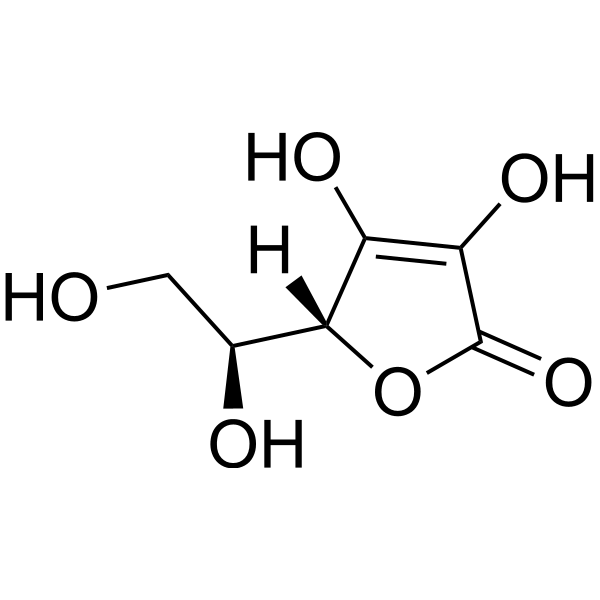
HY-B0166
L-Ascorbic acidAntioxidant -
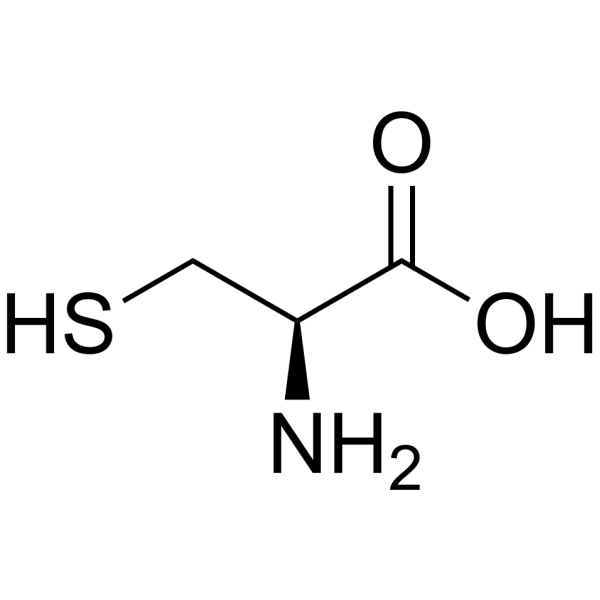
HY-Y0337
L-CysteineAnorectic Agent -

HY-W018746R
EDTA disodium (Standard)Biochemical Assay Reagent -
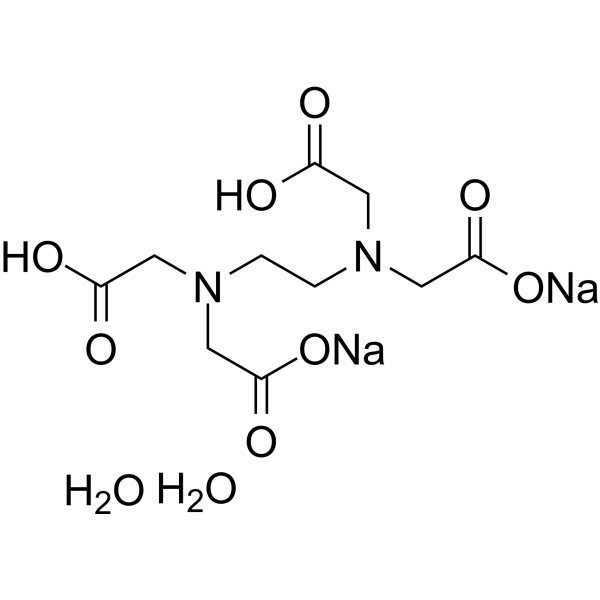
HY-Y0682A
Ethylenediaminetetraacetic acid disodium dihydrateMetal Chelators -

HY-108775A
Sodium thiosulfate (99%, water≤1.0%)Antioxidant -
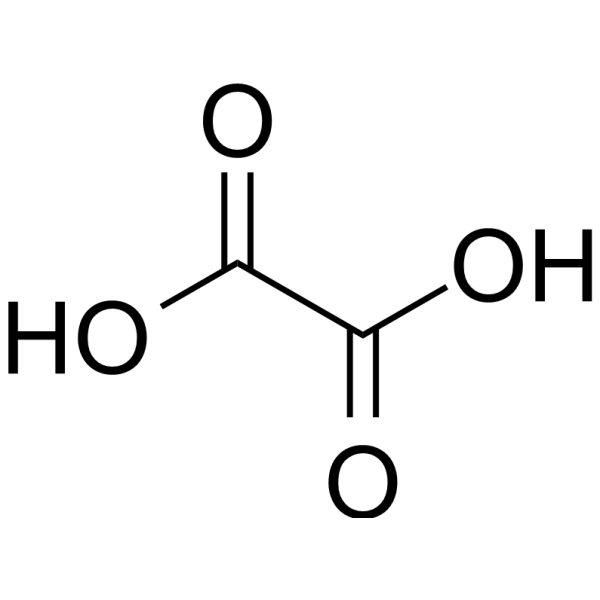
HY-Y0262
Oxalic acid, 99%Antioxidant Agent -

HY-Y0406E
Calcium chloride anhydrous, for cell cultureCalcium Chloride -

HY-Y0344D
Sodium chloride, for cell cultureBiochemical Assay Reagent -

HY-Y1878
Copper(Ⅱ) sulfateBiochemical Reagent -

HY-Y1878C
Copper sulfate anhydrous, 99%Bactericide
Publications Citing Use of MedChemExpress (MCE) EDTA disodium
More- Cell. 2026 Sep 1:S0092-8674(26)00938-4.
- Nat Immunol. 2025 Oct;26(10):1660-1672. [Abstract]
- J Extracell Vesicles. 2025 Sep;14(9):e70162. [Abstract]
- Bone Res. 2025 Mar 3;13(1):30. [Abstract]
- Neuron. 2025 Jul 29:S0896-6273(25)00509-4. [Abstract]
- J Nanobiotechnology. 2025 Mar 6;23(1):175. [Abstract]
- Nucleic Acids Res. 2024 Dec 11;52(22):14112-14132. [Abstract]
- Adv Sci (Weinh). 2026 May;13(25):e15362. [Abstract]
- Adv Sci (Weinh). 2025 Apr;12(13):e2415229. [Abstract]
- Adv Sci (Weinh). 2025 Feb;12(6):e2411261. [Abstract]
- Adv Sci (Weinh). 2023 Feb;10(4):e2204998. [Abstract]
- Cell Death Dis. 2026 Jun 30.
- Environ Sci Technol. 2017 Dec 5;51(23):13938-13948. [Abstract]
- Int J Biol Macromol. 2026 Jan;335(Pt 2):149182. [Abstract]
- Int J Biol Macromol. 2025 Jun;311(Pt 3):144068. [Abstract]
- Int J Biol Macromol. 2023 Jan 15:225:1182-1192. [Abstract]
- EMBO J. 2026 Aug 24.
- EMBO Mol Med. 2025 Oct 15. [Abstract]
- Colloids Surf B Biointerfaces. 2024 Feb:234:113680. [Abstract]
- Molecules. 2024 Jul 30;29(15):3590. [Abstract]
- Biochim Biophys Acta Mol Basis Dis. 2026 Jan 24;1872(4):168169. [Abstract]
- Ann Med. 2025 Dec;57(1):2548045. [Abstract]
- Food Qual Saf. 2025 Aug 4.
- iScience. 2026 Jun 1;29(6):116200. [Abstract]
- J Orthop Surg Res. 2025 Apr 22;20(1):403. [Abstract]
- J Diabetes Investig. 2026 Jun 8. [Abstract]
- Breast Cancer (Dove Med Press). 2025 Dec 20:17:1265-1278. [Abstract]
- J Integr Neurosci. 2026 Jul 29;25(7):50683.
- Cell Immunol. 2024 Jan-Feb:395-396:104781. [Abstract]
- Dermatol Sin. 2026 Jul-Sep;44(3):267-278.
- Opt Mater Express. 2026 Jun 23;16(7):2151-2163.
- BMC Med Genomics. 2025 Aug 9;18(1):128. [Abstract]
- Biosci Biotechnol Biochem. 2026 Jun 23;90(7):877-885. [Abstract]
- bioRxiv. 2023 Sep 8.
 Customer Validation & Images

-
IHC


Biologische Aktivität
Beschreibung
In Vitro
EDTA disodium salt is a biochemical reagent that can be used as a biological material or organic compound for life science related research.
MedChemExpress (MCE) has not independently confirmed the accuracy of these methods. They are for reference only.


Chemical Information
-
CAS. Nr. 139-33-3
-
Appearance Solid
-
Molecular Weight 336.21
-
Formel C10H14N2Na2O8
-
Color White to off-white
-
SMILES
O=C(O)CN(CC(O)=O)CCN(CC(O[Na])=O)CC(O[Na])=O
-
Synonyms
Ethylenediaminetetraacetic acid disodium
-
Versand
Room temperature in continental US; may vary elsewhere.
-
Speicherung
Store at room temperature 3 years
In solvent -80°C 2 years -20°C 1 year


Publications (34)
-
Journal Impact Factor
-
Most Recent
-
-
Nat Immunol
Delaying pyroptosis with an AI-screened gasdermin D pore blocker mitigates inflammatory response. [Abstract]2025 Oct;26(10):1660-1672. PMID: 40954252
EDTA disodium purchased from MedChemExpress. Usage Cited in: Nat Immunol. 2025 Oct;26(10):1660-1672. [Abstract]
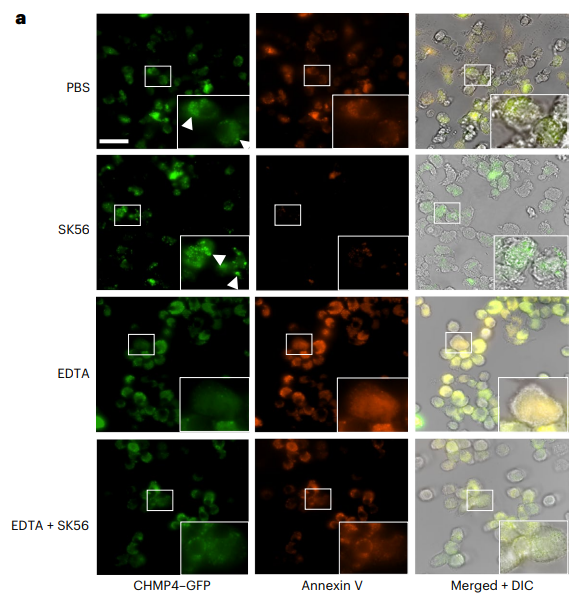
Representative images of CHMP4–GFP puncta (arrowheads; left) and percentage of CHMP4 speckle+ (top right) or Annexin V+ (bottom right) cells in BMDMs incubated with PBS, 15 µM SK56, 2 mM EDTA or EDTA + SK56 at 2 h after the addition of 1 μg/ml LPS + 10 μM nigericin; scale bar, 50 µm; n = 5 repeats
-
J Extracell Vesicles
Targeted Blockage of Pathological Extracellular Vesicles and Particles From Fibroblast-Like Synoviocytes for Osteoarthritis Relief: Proteomic Analysis and Cellular Effect. [Abstract]2025 Sep;14(9):e70162. PMID: 40919882 -
Bone Res
Enhanced SIRT3 expression restores mitochondrial quality control mechanism to reverse osteogenic impairment in type 2 diabetes mellitus. [Abstract]2025 Mar 3;13(1):30. PMID: 40025004 -
Neuron
Social interaction in mice suppresses breast cancer progression via a corticoamygdala neural circuit. [Abstract]2025 Jul 29:S0896-6273(25)00509-4. PMID: 40752486 -
J Nanobiotechnology
2025 Mar 6;23(1):175. PMID: 40050923 -
Nucleic Acids Res
2024 Dec 11;52(22):14112-14132. PMID: 39673265 -
Adv Sci (Weinh)
Atrophic Skeletal Muscle-Derived Extracellular Vesicles Transfer miR-125a-5p to Inhibit Bone Formation in Osteoporosis during Aging. [Abstract]2026 May;13(25):e15362. PMID: 41747076 -
Adv Sci (Weinh)
A Novel tRF, HCETSR, Derived From tRNA-Glu/TTC, Inhibits HCC Malignancy by Regulating the SPBTN1-catenin Complex Axis. [Abstract]2025 Apr;12(13):e2415229. PMID: 39921434 -
Adv Sci (Weinh)
Hybrid Cell Membrane-Engineered Nanocarrier for Triple-Action Strategy to Address Pseudomonas aeruginosa Infection. [Abstract]2025 Feb;12(6):e2411261. PMID: 39721013 -
Adv Sci (Weinh)
Regulatory Fibroblast-Like Synoviocytes Cell Membrane Coated Nanoparticles: A Novel Targeted Therapy for Rheumatoid Arthritis. [Abstract]2023 Feb;10(4):e2204998. PMID: 36509660 -
-
Environ Sci Technol
Determining the Cytotoxicity of Rare Earth Element Nanoparticles in Macrophages and the Involvement of Membrane Damage. [Abstract]2017 Dec 5;51(23):13938-13948. PMID: 29121463 -
Int J Biol Macromol
Targeting glutaryl-CoA dehydrogenase-driven acetyl coenzyme A acetyltransferase 2 crotonylation dysregulates cholesterol metabolism in pancreatic cancer cells. [Abstract]2026 Jan;335(Pt 2):149182. PMID: 41285334 -
Int J Biol Macromol
FKBP5 inhibitor suppresses platelet activation and thrombosis by inhibiting IKBKE/PI3K/Rap1 pathway. [Abstract]2025 Jun;311(Pt 3):144068. PMID: 40345291 -
Int J Biol Macromol
pH-responsive magnetic Fe3O4/carboxymethyl chitosan/aminated lignosulfonate nanoparticles with uniform size for targeted drug loading. [Abstract]2023 Jan 15:225:1182-1192. PMID: 36423809 -
-
EMBO Mol Med
Isoginkgetin antagonizes ALS pathologies in its animal and patient iPSC models via PINK1-Parkin-dependent mitophagy. [Abstract]2025 Oct 15. PMID: 41094045 -
Colloids Surf B Biointerfaces
Platelet membrane-derived biomimetic microbubbles with enhanced targeting ability for the early detection of myocardial ischemia-reperfusion injury. [Abstract]2024 Feb:234:113680. PMID: 38101143 -
Molecules
Enhancing Functional Properties and Protein Structure of Almond Protein Isolate Using High-Power Ultrasound Treatment. [Abstract]2024 Jul 30;29(15):3590. PMID: 39124994 -
Biochim Biophys Acta Mol Basis Dis
Goosecoid promotes hepatic stellate cell epithelial-mesenchymal transition via transcriptional activation of serum- and glucocorticoid-induced protein kinase 1 in liver fibrosis. [Abstract]2026 Jan 24;1872(4):168169. PMID: 41581345 -
Ann Med
Multi-omics analysis and validation of autophagy-related diagnostic biomarker in osteoarthritis. [Abstract]2025 Dec;57(1):2548045. PMID: 40828304 -
-
iScience
Inhibition of soluble epoxide hydrolase ameliorates renal injury in IgA nephropathy by restoring epoxyeicosatrienoic acids. [Abstract]2026 Jun 1;29(6):116200. PMID: 42256278 -
J Orthop Surg Res
Epimedin B protects against bone loss and inflammation in diabetic osteoporosis rats by regulating OPG/RANKL pathway. [Abstract]2025 Apr 22;20(1):403. PMID: 40264188 -
J Diabetes Investig
Hypoxia-preconditioned adipose-derived mesenchymal stem cells-derived exosomes transferring H19 obstruct neutrophil extracellular traps formation via HOXA5-mediated inactivation of TLR4/NF-κB/NLRP3 inflammatory signaling. [Abstract]2026 Jun 8. PMID: 42257551 -
Breast Cancer (Dove Med Press)
Dexmedetomidine Suppresses Mitochondrial Autophagy and Apoptosis While Promoting Proliferation in Breast Cancer Cells in vitro via PI3K/AKT Signaling. [Abstract]2025 Dec 20:17:1265-1278. PMID: 41466772 -
-
Cell Immunol
Dexamethasone alleviates pulmonary sarcoidosis by regulating the TGF-β/Smad3 signaling to promote Th17/Treg cell rebalance. [Abstract]2024 Jan-Feb:395-396:104781. PMID: 38159414 -
-
-
BMC Med Genomics
Arsenic sulfide alleviates the progression of liver cancer malignancy by inhibiting the expression of TLCD1 in mice. [Abstract]2025 Aug 9;18(1):128. PMID: 40783540 -
Biosci Biotechnol Biochem
Effect of pirfenidone on the regulation of lymph angiogenesis by PLK1 signaling to inhibit metastasis of lung cancer in vivo. [Abstract]2026 Jun 23;90(7):877-885. PMID: 42012458 -


Lösungsmittel & Löslichkeit
In Vitro:
H2O : 20 mg/mL (59.49 mM; ultrasonic and warming and heat to 60°C)
Please refer to the solubility information to select the appropriate solvent. Once prepared, please aliquot and store the solution to prevent product inactivation from repeated freeze-thaw cycles.
Storage method and period of stock solution: -80°C, 2 years; -20°C, 1 year. When stored at -80°C, please use it within 2 years. When stored at -20°C, please use it within 1 year.
* Note: If you choose water as the stock solution, please dilute it to the working solution, then filter and sterilize it with a 0.22 μm filter before use.
Please refer to the solubility information to select the appropriate solvent. Once prepared, please aliquot and store the solution to prevent product inactivation from repeated freeze-thaw cycles.
Storage method and period of stock solution: -80°C, 2 years; -20°C, 1 year. When stored at -80°C, please use it within 2 years. When stored at -20°C, please use it within 1 year.
* Note: If you choose water as the stock solution, please dilute it to the working solution, then filter and sterilize it with a 0.22 μm filter before use.
Konzentration (Stammlösung) × Volumen (Stammlösung) = Konzentration (Ziellösung) × Volumen (Ziellösung)


Reinheit & Dokumentation
-
Data Sheet (247 KB)
-
SDS (557 KB)
- English - EN (557 KB)
- Français - FR (557 KB)
- Deutsch - DE (557 KB)
- Norwegian - NO (557 KB)
- Español - ES (557 KB)
- Swedish - SV (557 KB)
- Italian - IT (557 KB)
- Korean - KR (557 KB)
- Portuguese - PT (557 KB)
-
Handling Instructions (2659 KB)


Complete Stock Solution Preparation Table
Please refer to the solubility information to select the appropriate solvent. Once prepared, please aliquot and store the solution to prevent product inactivation from repeated freeze-thaw cycles.
Storage method and period of stock solution: -80°C, 2 years; -20°C, 1 year. When stored at -80°C, please use it within 2 years. When stored at -20°C, please use it within 1 year.
| Optional Solvent | Concentration Solvent Mass | 1 mg | 5 mg | 10 mg | 25 mg |
|---|---|---|---|---|---|
| H2O | 1 mM | 2.9743 mL | 14.8717 mL | 29.7433 mL | 74.3583 mL |
| 5 mM | 0.5949 mL | 2.9743 mL | 5.9487 mL | 14.8717 mL | |
| 10 mM | 0.2974 mL | 1.4872 mL | 2.9743 mL | 7.4358 mL | |
| 15 mM | 0.1983 mL | 0.9914 mL | 1.9829 mL | 4.9572 mL | |
| 20 mM | 0.1487 mL | 0.7436 mL | 1.4872 mL | 3.7179 mL | |
| 25 mM | 0.1190 mL | 0.5949 mL | 1.1897 mL | 2.9743 mL | |
| 30 mM | 0.0991 mL | 0.4957 mL | 0.9914 mL | 2.4786 mL | |
| 40 mM | 0.0744 mL | 0.3718 mL | 0.7436 mL | 1.8590 mL | |
| 50 mM | 0.0595 mL | 0.2974 mL | 0.5949 mL | 1.4872 mL |
* Note: If you choose water as the stock solution, please dilute it to the working solution, then filter and sterilize it with a 0.22 μm filter before use.


EDTA disodium Related Classifications
HY-W018746 Related Classifications
 Powered by Bioz