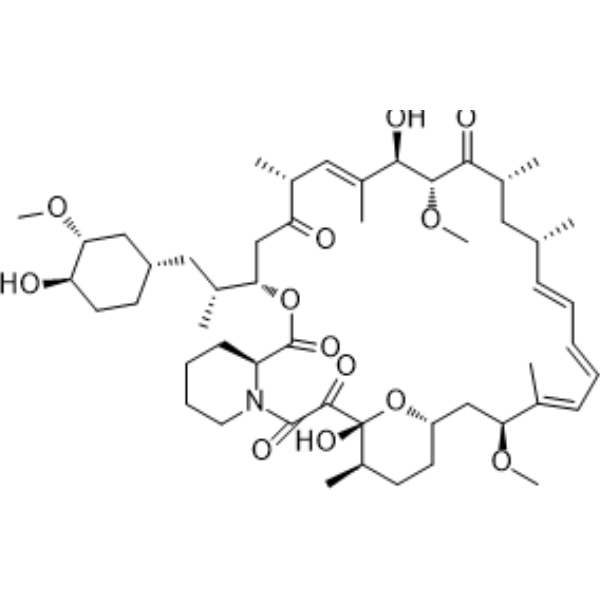
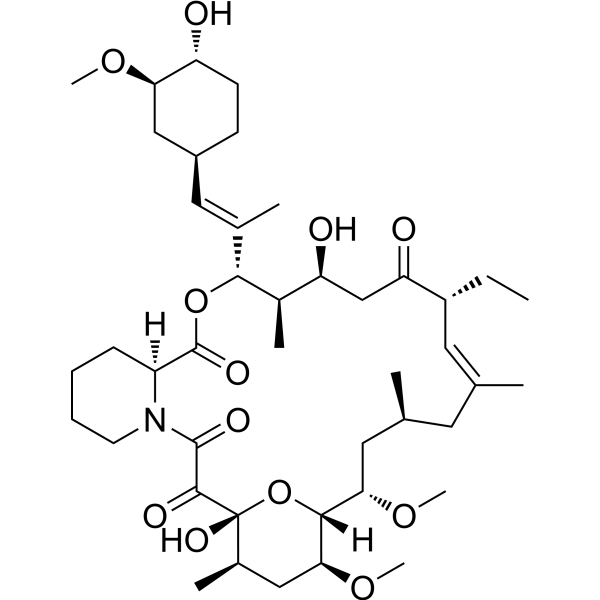
Rapamycin (Sirolimus; AY 22989) is a potent and specific blood-brain barrier-transmissible mTOR inhibitor with an IC50 of 0.1 nM in HEK293 cells. Rapamycin is a molecular glue that binds FKBP12 and mTOR proteins together, thereby inhibiting mTOR kinase activity. Rapamycin binds to FKBP12 and specifically acts as an allosteric inhibitor of mTORC1. Rapamycin is an autophagy activator, an immunosuppressant .
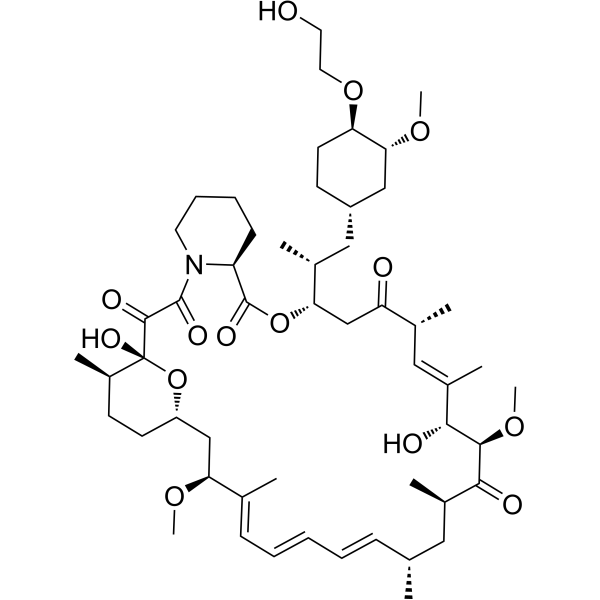
Everolimus (RAD001) is a Rapamycin (HY-10219) derivative and a potent, selective, orally active, blood-brain barrier-permeable mTOR1 inhibitor. Everolimus binds to FKBP-12 to generate an immunosuppressive complex. Everolimus inhibits tumor cells proliferation and induces cell apoptosis and autophagy. Everolimus has potent immunosuppressive and anticancer activities .
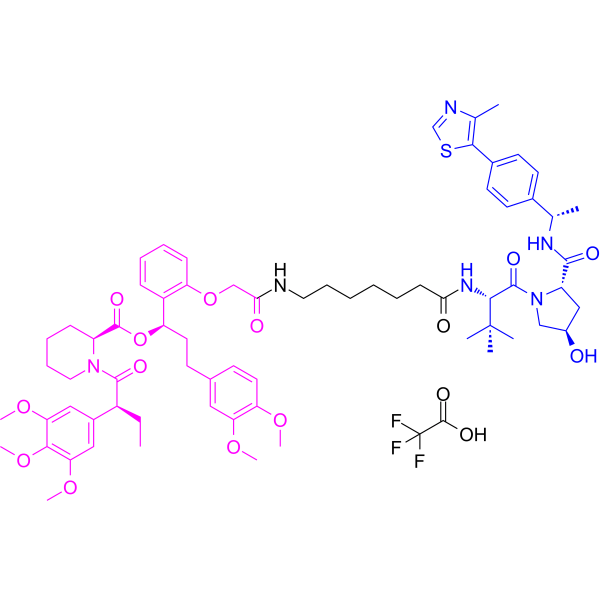
dTAGV-1 TFA is a potent and selective degrader of FKBP12F36V-tagged proteins PROTAC degrader. dTAGV-1 TFA can induce degradation of FKBP12F36V-Nluc in vivo.
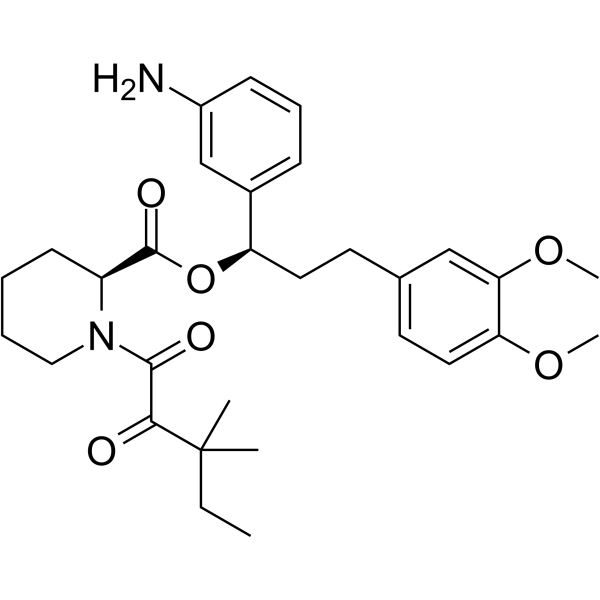
Shield-1 (Shld1) is a specific, cell-permeant and high-affinity ligand of FK506-binding protein-12(FKBP), and reverses the instability by binding to mutated FKBP (mtFKBP), allowing conditional expression of mtFKBP-fused proteins. Shield-1 can stabilize proteins tagged with a mutated FKBP12-derived destabilization domain (DD) .
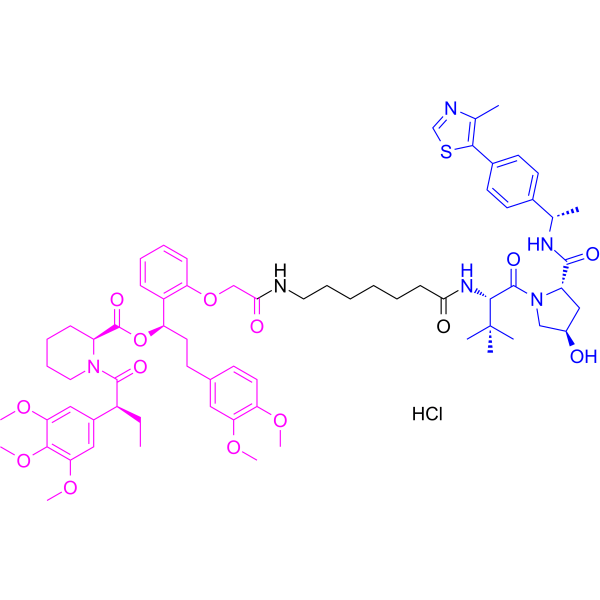
dTAGV-1 hydrochloride is a potent and selective degrader of FKBP12F36V-tagged proteins PROTAC degrader. dTAGV-1 hydrochloride can induce degradation of FKBP12F36V-Nluc in vivo. (Pink: Target Protein Ligand (HY-114420); Black: Linker (HY-W012001); Blue: VHL Ligand (HY-112078); VHL Ligan+Linker (HY-173628A)) .
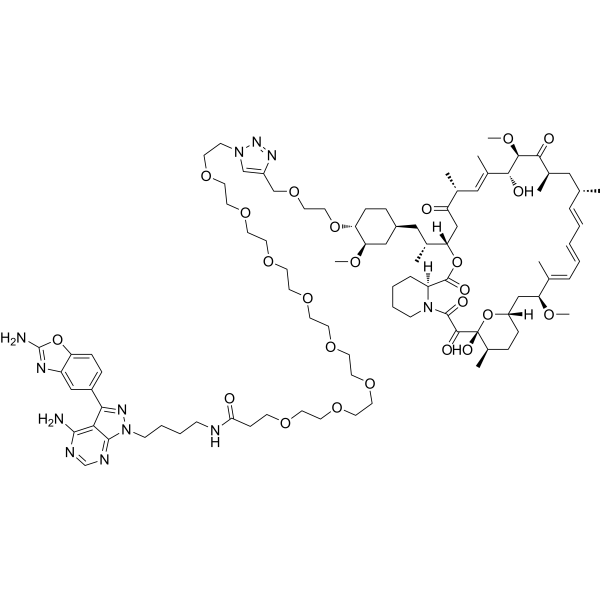
RapaLink-1, the third-generation bivalent mTOR inhibitor, combines Rapamycin (HY-10219) with MLN0128 (HY-13328, a second-generation mTOR kinase inhibitor) by an inert chemical linker. RapaLink-1 shows better efficacy than Rapamycin or mTOR kinase inhibitors (TORKi), potently blocking cancer-derived, activating mutants of mTOR. RapaLink-1 can cross the blood-brain barrier. RapaLink-1 binding to FKBP12 results in targeted and durable inhibition of mTORC1. RapaLink-1 plays an antithrombotic role in antiphospholipid syndrome by improving autophagy. Anticancer activity .
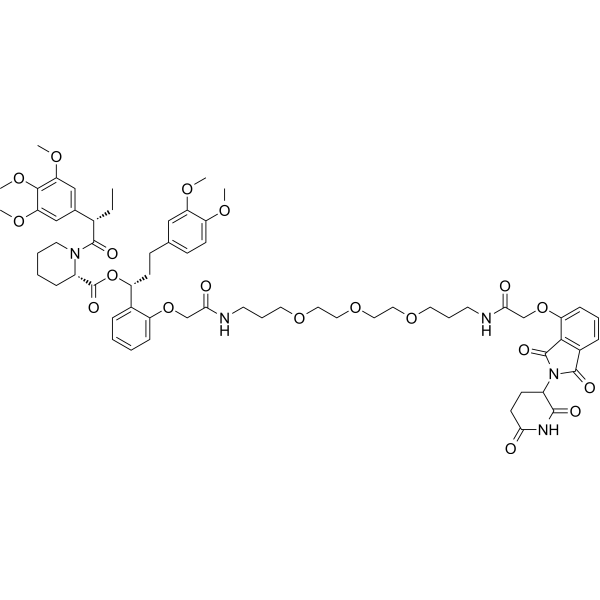
FKBP12 PROTAC dTAG-13 (dTAG-13) is a FKBP12F36V PROTAC degrader and a PXR partial agonist. FKBP12 PROTAC dTAG-13 induces ubiquitination and proteasomal degradation of proteins tagged with FKBP12F36V, without degrading wild-type FKBP12 or un-fused PXR. It weakly promotes the recruitment of SRC-1, strongly inhibits the interaction between NCoR and PXR, and upregulates the expression of CYP3A4 and other drug metabolism-related genes. FKBP12 PROTAC dTAG-13 is applicable to research related to breast cancer and leukemia [1] .
SLF is a synthetic ligand for FK506-binding protein (FKBP) with an affinity of 3.1 μM for FKBP51 and an IC50 of 2.6 μM for FKBP12. SLF can be used in the synthesis of PROTAC .
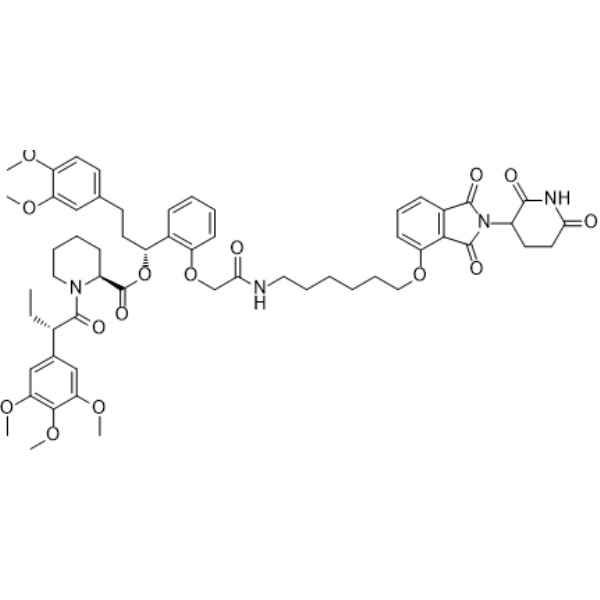
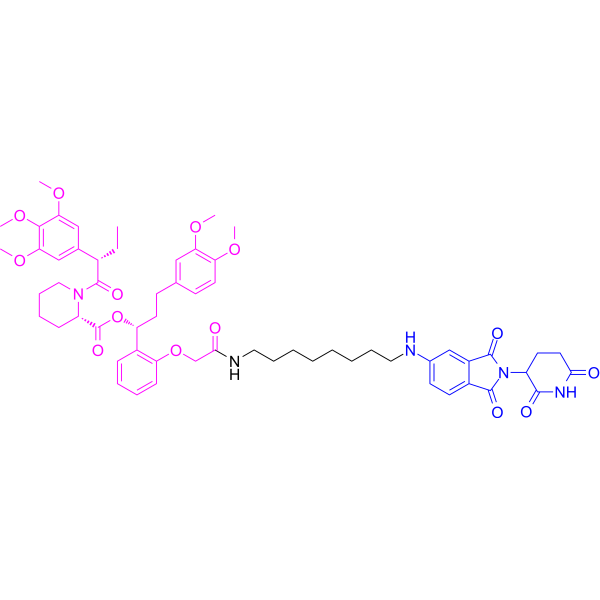
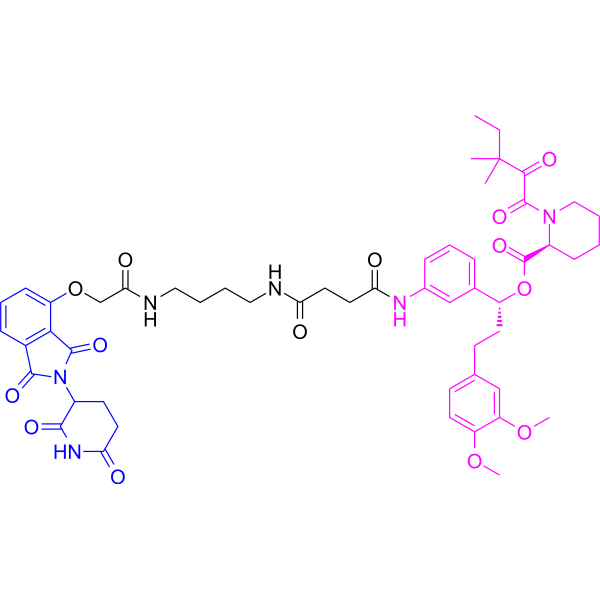
FKBP12 PROTAC RC32 (RC32) is a potent FKBP12 degrader based on PROTAC technology. FKBP12 PROTAC RC32 contains conjugation of Rapamycin (HY-10219) and a ligand for an Cereblon E3 ubiquitin ligase (Pomalidomide; HY-10984) .
dTAG-47 is a FKBP12(F36V) PROTAC degrader. dTAG-47 efficiently degrades FKBP12(F36V)-MELK(sg3R) in MELK ?/?MDA-MB-468-FKBP12(F36V)-MELK(sg3R) cells. dTAG-47 can be used for the research of basal-like breast cancers (BBC) .
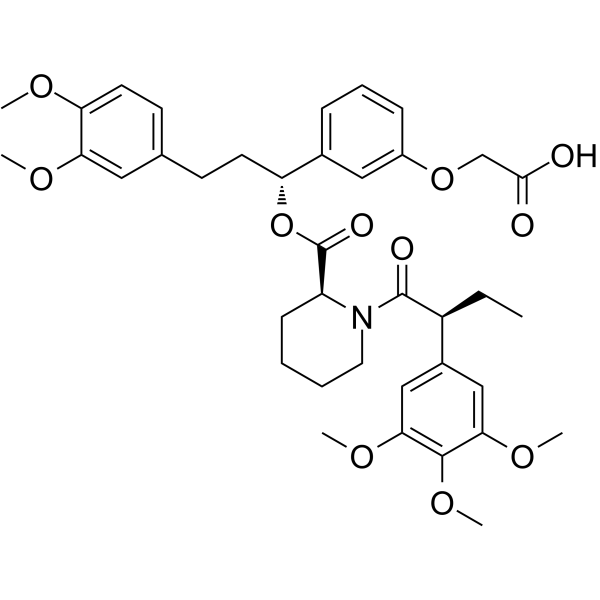
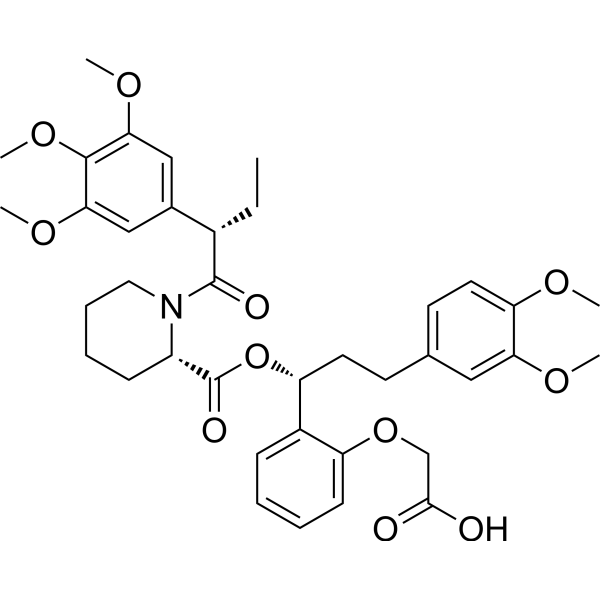
AP1867-2-(carboxymethoxy), the AP1867 (a synthetic FKBP12F36V-directed ligand) based moiety, binds to CRBN ligand via a linker to form dTAG molecules .
FKBP12 PROTAC dTAG-7 (dTAG-7) is a heterobifunctional PROTAC degrader. FKBP12 PROTAC dTAG-7 targets FKBP12F36V and BET BRD4. FKBP12 PROTAC dTAG-7 enables rapid and selective degradation of target proteins, and is suitable for cellular and in vivo studies to analyze protein functions and validate targets .
dTAG-13-NEG is a negative control of dTAG-13 (HY-114421). dTAG-13, a PROTAC-based heterobifunctional degrader, is a selective degrader of FKBP12F36V with expression of FKBP12F36V in-frame with a protein of interest .
Ascomycin (Immunomycin; FR-900520; FK520) is an ethyl analog of Tacrolimus (FK506) with strong immunosuppressant properties. Ascomycin is also a macrocyclic polyketide antibiotic with multiple biological activities such as anti-malarial, anti-fungal and anti-spasmodic. Ascomycin prevents graft rejection and has potential for varying skin ailments research .
dFKBP-1 is a potent and PROTAC-based FKBP12 degrader. dFKBP-1 incorporates the ligand SLF (HY-114872) of FKBP12, the Thalidomide based Cereblon ligand and a linker .
22-SLF is a PROTAC degrader, that degrades FK506-binding protein 12(FKBP12) with a DC50 of 0.5 µM. 22-SLF interacts with C227 and C228 in FBXO22 to induce a ternary complex between FKBP12 and FBXO22, and degrades FKBP12 in a FBXO22-dependent manner. 22-SLF can be used for fundamental cancer research as a probe to study the FBXO22 degradation pathway .
Rapamycin (Standard) (Sirolimus (Standard)) is the analytical standard of Rapamycin (HY-10219). This product is intended for research and analytical applications. Rapamycin (Sirolimus; AY 22989) is a potent and specific blood-brain barrier-transmissible mTOR inhibitor with an IC50 of 0.1 nM in HEK293 cells. Rapamycin is a molecular glue that binds FKBP12 and mTOR proteins together, thereby inhibiting mTOR kinase activity. Rapamycin binds to FKBP12 and specifically acts as an allosteric inhibitor of mTORC1. Rapamycin is an autophagy activator, an immunosuppressant .
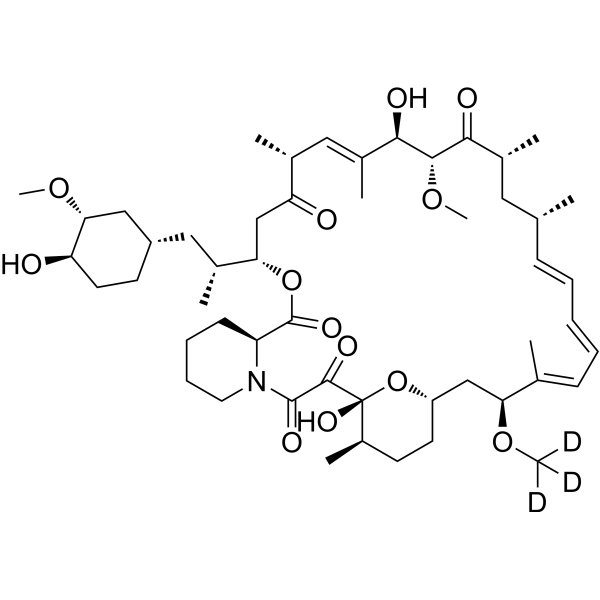
Rapamycin-d3 (Sirolimus-d3; AY-22989-d3; NSC 226080-d3) is the deuterated-labeled Rapamycin (HY-10219). Rapamycin (Sirolimus; AY 22989) is a potent and specific blood-brain barrier-transmissible mTOR inhibitor with an IC50 of 0.1 nM in HEK293 cells. Rapamycin is a molecular glue that binds FKBP12 and mTOR proteins together, thereby inhibiting mTOR kinase activity. Rapamycin binds to FKBP12 and specifically acts as an allosteric inhibitor of mTORC1. Rapamycin is an autophagy activator, an immunosuppressant .
Everolimus-d4 is the deuterium labeled Everolimus. Everolimus (RAD001) is a Rapamycin derivative and a potent, selective and orally active mTOR1 inhibitor. Everolimus binds to FKBP-12 to generate an immunosuppressive complex. Everolimus inhibits tumor cells proliferation and induces cell apoptosis and autophagy. Everolimus has potent immunosuppressive and anticancer activities .
Rapamycin- 13C,d3 (Sirolimus- 13C,d3) is the 13C, deuterated-labeled Rapamycin (HY-10219). Rapamycin (Sirolimus; AY 22989) is a potent and specific blood-brain barrier-transmissible mTOR inhibitor with an IC50 of 0.1 nM in HEK293 cells. Rapamycin is a molecular glue that binds FKBP12 and mTOR proteins together, thereby inhibiting mTOR kinase activity. Rapamycin binds to FKBP12 and specifically acts as an allosteric inhibitor of mTORC1. Rapamycin is an autophagy activator, an immunosuppressant .
Rapamycin (Sirolimus) GMP Like is Rapamycin (HY-10219) produced by using GMP like guidelines. GMP Like small molecules works appropriately as an auxiliary reagent for cell therapy manufacture. Rapamycin (Sirolimus; AY 22989) is a potent and specific blood-brain barrier-transmissible mTOR inhibitor with an IC50 of 0.1 nM in HEK293 cells. Rapamycin is a molecular glue that binds FKBP12 and mTOR proteins together, thereby inhibiting mTOR kinase activity. Rapamycin binds to FKBP12 and specifically acts as an allosteric inhibitor of mTORC1. Rapamycin is an autophagy activator, an immunosuppressant .
Rapamycin (Sirolimus) (GMP) is Rapamycin (HY-10219) produced by using GMP guidelines. GMP small molecules works appropriately as an auxiliary reagent for cell therapy manufacture. Rapamycin (Sirolimus; AY 22989) is a potent and specific blood-brain barrier-transmissible mTOR inhibitor with an IC50 of 0.1 nM in HEK293 cells. Rapamycin is a molecular glue that binds FKBP12 and mTOR proteins together, thereby inhibiting mTOR kinase activity. Rapamycin binds to FKBP12 and specifically acts as an allosteric inhibitor of mTORC1. Rapamycin is an autophagy activator, an immunosuppressant .
KB02-SLF is a PROTAC-based nuclear FKBP12 degrader (molecular glue). KB02-SLF promotes nuclear FKBP12 degradation by covalently modifying DCAF16 (E3 ligase) and can improve the durability of protein degradation in biological systems. SLF binds ubiquitin E3 ligase ligand KB02 via a linker to form KB02-SLF .
SLF-amido-C2-COOH (PROTAC FKBP12-binding moiety 1) is a synthetic ligand for FKBP (SLF). SLF-amido-C2-COOH (PROTAC FKBP12-binding moiety 1) can be used in the synthesis of PROTACs .
Everolimus (Standard) is the analytical standard of Everolimus. This product is intended for research and analytical applications. Everolimus (RAD001) is a Rapamycin (HY-10219) derivative and a potent, selective and orally active mTOR1 inhibitor. Everolimus binds to FKBP-12 to generate an immunosuppressive complex. Everolimus inhibits tumor cells proliferation and induces cell apoptosis and autophagy. Everolimus has potent immunosuppressive and anticancer activities .
FKBP12 PROTAC FM4 is a PROTAC degrader of FKBP12, with a DC50 value of 0.09-0.22 nM. FKBP12 PROTAC FM4 inhibits global protein synthesis, induces apoptosis, and selectively reduces the viability of cervical cancer cells expressing MTH1-E6 and FKBP12F36V-tagged SARS1. FKBP12 PROTAC FM4 is applicable to research related to HPV-positive cervical cancer .
FKBP12 ligand-3 (compound dj) is a high-affinity ligand targeting FKBP12. FKBP12 ligand-3 can be used to selectively enhance the binding of heterobifunctional molecules to BRD4, enriching the drug intracellularly through the "CellTrap" effect to form a ternary complex of FKBP12-ligand-BRD4. This ternary complex has inhibitory activity against BRD4, thereby inhibiting the expression of BRD4 target genes (such as MYC) and inducing tumor cell death. FKBP12 ligand-3 can be used for selective cancer research based on differences in intracellular presenter protein levels .
HLDA-221 is a non-covalent regulated induced proximity targeting chimeras (RIPTAC). The binding of HLDA-221 to BRD4-BD1 is significantly increased after pre-incubation with FKBP. HLDA-221 can be used in cancer research .
mTOR inhibitor-8 is an mTOR inhibitor and autophagy inducer. mTOR inhibitor-8 inhibits the activity of mTOR via FKBP12 and induces autophagy of A549 human lung cancer cells .
SLF TFA is a synthetic ligand for FK506-binding protein (FKBP) with an affinity of 3.1 μM for FKBP51 and an IC50 of 2.6 μM for FKBP12. SLF TFA can be used in the synthesis of PROTAC .
SP3N hydrochloride is a specific degrader of the prolyl isomerase (FKBP12). The alkylamine of SP3N hydrochloride is metabolized to a reactive aldehyde (SP3CHO), which recruits the SCF FBXO22 ligase for FKBP12 degradation. SP3N hydrochloride may be used in research for cancer .
EcDHFR/FKBP12 F36V binder-1 (compound 1) is a bifunctional molecule that combines the Escherichia coli dihydrofolate reductase domain (EcDHFR) with the FKBP12 F36V domain .
AP1867-3-(aminoethoxy), the AP1867 (HY-114434) based moiety, is a synthetic ligand for FKBP. AP1867-3-(aminoethoxy) can be used in the synthesis of PROTAC FKBP12 F36V degrader .
ILS-920 is a nonimmunosuppressive Rapamycin analog with reduced immunosuppressive activity and potent neuroprotective activity. ILS-920 binds selectively to the immunophilin FKBP52 and to the β1-subunit of L-type voltage-gated calcium channels (VGCC). ILS-920 shows 200-fold selectivity for FKBP52 versus FKBP12 .
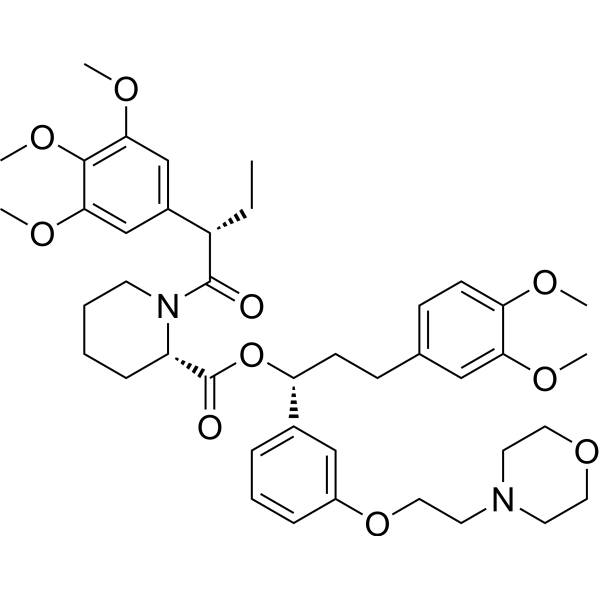
FKBP12 ligand-2 (compound d) is a high affinity ligand targeting FKBP12. FKBP12 ligand-2 can be used to selectively enhance the binding of heterobifunctional molecules to BRD4, enriching the drug intracellularly through the "CellTrap" effect to form a ternary complex of FKBP12-ligand-BRD4. This ternary complex has inhibitory activity against BRD4, thereby inhibiting the expression of BRD4 target genes (such as MYC) and inducing tumor cell death. FKBP12 ligand-2 can be used for selective cancer research based on differences in intracellular presenter protein levels .
FKBP12 Ligand-Linker Conjugate 2 is a conjugate of the FKBP12 target protein ligand and a linker, and it can be used for the synthesis of FKBP12 PROTAC FM4 (HY-172265) .
FKBP12 Ligand-Linker Conjugate 1 is the conjugate composed of a target protein ligand for FKBP12 and a linker. FKBP12 Ligand-Linker Conjugate 1 can be used for synthesis of PROTAC degrader MC-25B (HY-170983) .
EB-TCIP (BAK-04-212) is a proof-of-concept tool specifically designed for Ewing sarcoma research, serving as an EWSR1::FLI1 binder tagged with BCL6 and FKBP12F36V. EB-TCIP forms a ternary complex with the tagged fusion protein, specifically recruits EWSR1::FLI1 to BCL6-bound DNA loci, and induces rapid chromatin remodeling and relocalization. By mediating relocalization, EB-TCIP remodels the transcriptional machinery and activates the expression of BCL6 target genes that are originally repressed. EB-TCIP is used in studies related to novel epigenetic therapies for Ewing sarcoma .
AUTAC2 is a FKBP12-targeting autophagy-mediated degrader (AUTAC). AUTAC2 contains an FBnG (p-Fluorobenzyl Guanine) and an SLF (c ligand of FKBP) moiety. SLF binds non-covalently to FKBP12 .
SP3N is a specific degrader of the prolyl isomerase (FKBP12). The alkylamine of SP3N is metabolized to a reactive aldehyde (SP3CHO), which recruits the SCF FBXO22 ligase for FKBP12 degradation. SP3N may be used in research for cancer .
MC-25B is a specific FKBP12 PROTAC degrader. MC-25B degrades FKBP12 with a DC50 of 0.35 μM and a Dmax of 89%. MC-25B facilitates the degradation of nuclear-localized FKBP12 through a DCAF16-dependent mechanism. (Pink: FKBP12 ligand (HY-170988); Blue: E3 ligase ligand HY-170986); Black: linker (HY-128844); FKBP12 ligand+ linker (HY-170987)) .
10-SLF is a PROTACFKBP12 degrader. 10-SLF induces a ternary complex between FKBP12 and FBXW7-R465C, and promotes FBXW7-R465C-dependent proteasomal degradation of FKBP12. 10-SLF selectively reduces FKBP12 levels in cells expressing FBXW7-R465C .
KB03-SLF (compound 6) is an electrophilic PROTAC degrader that binds to DCAF16 to degrade the nuclear protein FKBP12. KB03-SLF can be used in cancer research .
Thalidomide-4-O-C6-NH2 TFA is a synthesized E3 ligase ligand-linker conjugate used in the PROTAC dTAG-13 (HY-114421), a degrader of FKBP12F36V and BET .
iAfaPhos1 is a FKBP12F36V epimer ligand. iAfaPhos1 leads to reduced dephosphorylation of EGFR at pY1068 and pY845 sites. iAfaPhos1 has anticancer activity against non-small cell lung cancer .
Everolimus- 13C2,d4 (RAD001- 13C2,d4) is 13C labeled Everolimus. Everolimus (RAD001) is a Rapamycin (HY-10219) derivative and a potent, selective and orally active mTOR1 inhibitor. Everolimus binds to FKBP-12 to generate an immunosuppressive complex. Everolimus inhibits tumor cells proliferation and induces cell apoptosis and autophagy. Everolimus has potent immunosuppressive and anticancer activities .
Ascomycin (Standard) is the analytical standard of Ascomycin. This product is intended for research and analytical applications. Ascomycin (Immunomycin; FR-900520; FK520) is an ethyl analog of Tacrolimus (FK506) with strong immunosuppressant properties. Ascomycin is also a macrocyclic polyketide antibiotic with multiple biological activities such as anti-malarial, anti-fungal and anti-spasmodic. Ascomycin prevents graft rejection and has potential for varying skin ailments research[1][2].
MP-010 is a FKBP12 ligand that regulates cytosolic calcium by stabilizing RyR channel activity. MP-010 promotes functional improvement in SOD1 G93A amyotrophic lateral sclerosis (ALS) mice, as evidenced by improved motor coordination, increased integrity of neuromuscular junctions, and significantly enhanced survival of spinal motor neurons. MP-010 can be used for research in the field of neurological diseases .
Rapamycin- 13C,d3-1 (Sirolimus- 13C,d3-1) is the deuterated, 13C-labeled Rapamycin (HY-10219). Rapamycin (Sirolimus; AY 22989) is a potent and specific blood-brain barrier-transmissible mTOR inhibitor with an IC50 of 0.1 nM in HEK293 cells. Rapamycin is a molecular glue that binds FKBP12 and mTOR proteins together, thereby inhibiting mTOR kinase activity. Rapamycin binds to FKBP12 and specifically acts as an allosteric inhibitor of mTORC1. Rapamycin is an autophagy activator, an immunosuppressant .
ElteN378 is an inhibitors of FKBP12e. ElteN378 can be used in study Alzheimer disease, Parkinson disease, Amyotrophic Lateral Sclerosis, proliferation disorders and cancer .
ATG16L1 stabilizer-1 (compound A3B) is an FKBP12-independentATG16L1 stabilizer that promotes cellular Autophagy. ATG16L1 stabilizer-1 inhibits ATG16L1 with an EC50 of 12.1 μM in the presence or absence of FKBP12. ATG16L1 stabilizer-1 alone induces GFP-LC3 puncta formation to a small extent with an EC50 of 12.0 μM .
dTAG-13-NEG TFA is a negative control of dTAG-13 (HY-114421). dTAG-13, a PROTAC-based heterobifunctional degrader, is a selective degrader of FKBP12F36V with expression of FKBP12F36V in-frame with a protein of interest .
TSPO ligand-3 is a ligand of AUTAC2. AUTAC2 contains an p-fluorobenzylguanine (FBnG) and an synthetic ligand of FKBP (SLF) moiety, which can cause significant silencing of FKBP12 in HeLa cells .
WAY-380153 (Compound 24) is an FKBP12 inhibitor. WAY-380153 exhibits moderate binding affinity for FKBP12, with a KD of 19 μM (measured by ITC) and 15 μM (measured by NMR). WAY-380153 can be used in research related to neurotrophy and neuroprotection .
SLF-amido-C2-COOH (Standard) is the analytical standard of SLF-amido-C2-COOH (HY-107452). This product is intended for research and analytical applications. SLF-amido-C2-COOH (PROTAC FKBP12-binding moiety 1) is a synthetic ligand for FKBP (SLF). SLF-amido-C2-COOH (PROTAC FKBP12-binding moiety 1) can be used in the synthesis of PROTACs .
MY-11B is a DCAF1 ligand. MY-11B shows reactivity with DCAF1_C1113. MY-11B blockes YT41R and YT47R-mediated degradation of HA-FKBP12. MY-11B can be used in the synthesis of PROTACs .
RAFKBP12 is a FKBP12 CAP-TAC (proteinase complex cap-targeted chimera) degrader. RAFKBP12 demonstrates the feasibility of the CAP-TAC strategy, which enables proteasome-dependent degradation of FKBP12 that is independent of E3 ubiquitin ligases and protein ubiquitination .
FKBP1A Human Pre-designed siRNA Set A contains three designed siRNAs for FKBP1A gene (Human), as well as a negative control, a positive control, and a FAM-labeled negative control.
AP1867-3-(aminoethoxy) hydrochloride, the AP1867 (HY-114434) based moiety, is a synthetic ligand for FKBP. AP1867-3-(aminoethoxy) hydrochloride can be used in the synthesis of PROTACFKBP12 F36V degrader .
DBCO-PEG3-AP1867 is a bifunctional molecular building block that binds to FKBP12F36V, and also a SPAAC-compatible reagent suitable for synthesizing O-GlcNAcylation-targeting chimeras (OGTACs) against c-Myc. DBCO-PEG3-AP1867 is applicable to cancer-related research .
RA190-PEG1-NH2 (Compound S16), RA190 (HY-100739) derivative, is a Proteasome ligand. RA190-PEG1-NH2 can be used to synthesis FKBP12 CAP-TAC degrader RAFKBP12 (HY-181498) .
AP1867-NH-PEG3-acid (Compound S15) is a Target Protein Ligand-Linker Conjugate that contains the FKBP12F36V ligand AP1867 (HY-114434) and a PROTAC linker, and recruits E3 ligase. JQ-1-Azidopropylamine is available for the synthesis of PROTAC RAFKBP12 (HY-181498) .
Fkbp1a Rat Pre-designed siRNA Set A contains three designed siRNAs for Fkbp1a gene (Rat), as well as a negative control, a positive control, and a FAM-labeled negative control.
Fkbp1a Mouse Pre-designed siRNA Set A contains three designed siRNAs for Fkbp1a gene (Mouse), as well as a negative control, a positive control, and a FAM-labeled negative control.
SelDeg51 is a selective FKBP51 PROTAC degrader with a Kd value of 18 nM and a Dmax of 90%. SelDeg51 induces proteasomal degradation of FKBP51 via the FKBP51:SelDeg51:VCB ternary complex and reactivates the glucocorticoid receptor signaling pathway. SelDeg51 can be used for research on stress-related mental disorders, chronic pain, and obesity .
SB-405483 is a CRBN orthosteric ligand bindign enhancer. SB-405483 potentiates degradation of CRBN substrates including CK1α, Wee1, IKZF1/3. SB-405483 stabilizes CRBN and reduces CRBN autoubiquitination. SB-405483 can be used for the research of cancer, such as multiple myeloma and acute myeloid leukemia .
Rapamycin (Sirolimus) GMP Like is Rapamycin (HY-10219) produced by using GMP like guidelines. GMP Like small molecules works appropriately as an auxiliary reagent for cell therapy manufacture. Rapamycin (Sirolimus; AY 22989) is a potent and specific blood-brain barrier-transmissible mTOR inhibitor with an IC50 of 0.1 nM in HEK293 cells. Rapamycin is a molecular glue that binds FKBP12 and mTOR proteins together, thereby inhibiting mTOR kinase activity. Rapamycin binds to FKBP12 and specifically acts as an allosteric inhibitor of mTORC1. Rapamycin is an autophagy activator, an immunosuppressant .
Rapamycin (Sirolimus) (GMP) is Rapamycin (HY-10219) produced by using GMP guidelines. GMP small molecules works appropriately as an auxiliary reagent for cell therapy manufacture. Rapamycin (Sirolimus; AY 22989) is a potent and specific blood-brain barrier-transmissible mTOR inhibitor with an IC50 of 0.1 nM in HEK293 cells. Rapamycin is a molecular glue that binds FKBP12 and mTOR proteins together, thereby inhibiting mTOR kinase activity. Rapamycin binds to FKBP12 and specifically acts as an allosteric inhibitor of mTORC1. Rapamycin is an autophagy activator, an immunosuppressant .
Rapamycin (Sirolimus) GMP Like is Rapamycin (HY-10219) produced by using GMP like guidelines. GMP Like small molecules works appropriately as an auxiliary reagent for cell therapy manufacture. Rapamycin (Sirolimus; AY 22989) is a potent and specific blood-brain barrier-transmissible mTOR inhibitor with an IC50 of 0.1 nM in HEK293 cells. Rapamycin is a molecular glue that binds FKBP12 and mTOR proteins together, thereby inhibiting mTOR kinase activity. Rapamycin binds to FKBP12 and specifically acts as an allosteric inhibitor of mTORC1. Rapamycin is an autophagy activator, an immunosuppressant .
Rapamycin (Sirolimus) (GMP) is Rapamycin (HY-10219) produced by using GMP guidelines. GMP small molecules works appropriately as an auxiliary reagent for cell therapy manufacture. Rapamycin (Sirolimus; AY 22989) is a potent and specific blood-brain barrier-transmissible mTOR inhibitor with an IC50 of 0.1 nM in HEK293 cells. Rapamycin is a molecular glue that binds FKBP12 and mTOR proteins together, thereby inhibiting mTOR kinase activity. Rapamycin binds to FKBP12 and specifically acts as an allosteric inhibitor of mTORC1. Rapamycin is an autophagy activator, an immunosuppressant .
Rapamycin (Sirolimus; AY 22989) is a potent and specific blood-brain barrier-transmissible mTOR inhibitor with an IC50 of 0.1 nM in HEK293 cells. Rapamycin is a molecular glue that binds FKBP12 and mTOR proteins together, thereby inhibiting mTOR kinase activity. Rapamycin binds to FKBP12 and specifically acts as an allosteric inhibitor of mTORC1. Rapamycin is an autophagy activator, an immunosuppressant .
Ascomycin (Immunomycin; FR-900520; FK520) is an ethyl analog of Tacrolimus (FK506) with strong immunosuppressant properties. Ascomycin is also a macrocyclic polyketide antibiotic with multiple biological activities such as anti-malarial, anti-fungal and anti-spasmodic. Ascomycin prevents graft rejection and has potential for varying skin ailments research .
Rapamycin (Standard) (Sirolimus (Standard)) is the analytical standard of Rapamycin (HY-10219). This product is intended for research and analytical applications. Rapamycin (Sirolimus; AY 22989) is a potent and specific blood-brain barrier-transmissible mTOR inhibitor with an IC50 of 0.1 nM in HEK293 cells. Rapamycin is a molecular glue that binds FKBP12 and mTOR proteins together, thereby inhibiting mTOR kinase activity. Rapamycin binds to FKBP12 and specifically acts as an allosteric inhibitor of mTORC1. Rapamycin is an autophagy activator, an immunosuppressant .
Ascomycin (Standard) is the analytical standard of Ascomycin. This product is intended for research and analytical applications. Ascomycin (Immunomycin; FR-900520; FK520) is an ethyl analog of Tacrolimus (FK506) with strong immunosuppressant properties. Ascomycin is also a macrocyclic polyketide antibiotic with multiple biological activities such as anti-malarial, anti-fungal and anti-spasmodic. Ascomycin prevents graft rejection and has potential for varying skin ailments research[1][2].
The FKBP12 protein is multifunctional and critical in TGF-β signaling by maintaining TGFBR1 in an inactive conformation, thereby preventing receptor activation in the absence of ligand. It recruits SMAD7 to ACVR1B, blocks the binding of SMAD2 and SMAD3 to the activin receptor complex, and thereby inhibits activin signaling. FKBP12 Protein, Mouse (His) is the recombinant mouse-derived FKBP12 protein, expressed by E. coli , with N-His labeled tag.
FKBP12 protein maintains TGFBR1 in an inactive state, inhibits activin signaling by recruiting SMAD7, and modulates RYR1 calcium channel activity. As a PPIase, it speeds up protein folding. FKBP12's multifunctionality underscores its regulatory role in cellular processes, emphasizing its importance in signaling and protein folding. FKBP12 Protein, Human (His) is the recombinant human-derived FKBP12 protein, expressed by E. coli , with C-His labeled tag.
Rapamycin-d3 (Sirolimus-d3; AY-22989-d3; NSC 226080-d3) is the deuterated-labeled Rapamycin (HY-10219). Rapamycin (Sirolimus; AY 22989) is a potent and specific blood-brain barrier-transmissible mTOR inhibitor with an IC50 of 0.1 nM in HEK293 cells. Rapamycin is a molecular glue that binds FKBP12 and mTOR proteins together, thereby inhibiting mTOR kinase activity. Rapamycin binds to FKBP12 and specifically acts as an allosteric inhibitor of mTORC1. Rapamycin is an autophagy activator, an immunosuppressant .
Everolimus-d4 is the deuterium labeled Everolimus. Everolimus (RAD001) is a Rapamycin derivative and a potent, selective and orally active mTOR1 inhibitor. Everolimus binds to FKBP-12 to generate an immunosuppressive complex. Everolimus inhibits tumor cells proliferation and induces cell apoptosis and autophagy. Everolimus has potent immunosuppressive and anticancer activities .
Rapamycin- 13C,d3 (Sirolimus- 13C,d3) is the 13C, deuterated-labeled Rapamycin (HY-10219). Rapamycin (Sirolimus; AY 22989) is a potent and specific blood-brain barrier-transmissible mTOR inhibitor with an IC50 of 0.1 nM in HEK293 cells. Rapamycin is a molecular glue that binds FKBP12 and mTOR proteins together, thereby inhibiting mTOR kinase activity. Rapamycin binds to FKBP12 and specifically acts as an allosteric inhibitor of mTORC1. Rapamycin is an autophagy activator, an immunosuppressant .
Everolimus- 13C2,d4 (RAD001- 13C2,d4) is 13C labeled Everolimus. Everolimus (RAD001) is a Rapamycin (HY-10219) derivative and a potent, selective and orally active mTOR1 inhibitor. Everolimus binds to FKBP-12 to generate an immunosuppressive complex. Everolimus inhibits tumor cells proliferation and induces cell apoptosis and autophagy. Everolimus has potent immunosuppressive and anticancer activities .
Rapamycin- 13C,d3-1 (Sirolimus- 13C,d3-1) is the deuterated, 13C-labeled Rapamycin (HY-10219). Rapamycin (Sirolimus; AY 22989) is a potent and specific blood-brain barrier-transmissible mTOR inhibitor with an IC50 of 0.1 nM in HEK293 cells. Rapamycin is a molecular glue that binds FKBP12 and mTOR proteins together, thereby inhibiting mTOR kinase activity. Rapamycin binds to FKBP12 and specifically acts as an allosteric inhibitor of mTORC1. Rapamycin is an autophagy activator, an immunosuppressant .
FKBP12 ligand-3 (compound dj) is a high-affinity ligand targeting FKBP12. FKBP12 ligand-3 can be used to selectively enhance the binding of heterobifunctional molecules to BRD4, enriching the drug intracellularly through the "CellTrap" effect to form a ternary complex of FKBP12-ligand-BRD4. This ternary complex has inhibitory activity against BRD4, thereby inhibiting the expression of BRD4 target genes (such as MYC) and inducing tumor cell death. FKBP12 ligand-3 can be used for selective cancer research based on differences in intracellular presenter protein levels .
FKBP12 ligand-2 (compound d) is a high affinity ligand targeting FKBP12. FKBP12 ligand-2 can be used to selectively enhance the binding of heterobifunctional molecules to BRD4, enriching the drug intracellularly through the "CellTrap" effect to form a ternary complex of FKBP12-ligand-BRD4. This ternary complex has inhibitory activity against BRD4, thereby inhibiting the expression of BRD4 target genes (such as MYC) and inducing tumor cell death. FKBP12 ligand-2 can be used for selective cancer research based on differences in intracellular presenter protein levels .
FKBP1A Human Pre-designed siRNA Set A contains three designed siRNAs for FKBP1A gene (Human), as well as a negative control, a positive control, and a FAM-labeled negative control.
Fkbp1a Rat Pre-designed siRNA Set A contains three designed siRNAs for Fkbp1a gene (Rat), as well as a negative control, a positive control, and a FAM-labeled negative control.
Fkbp1a Mouse Pre-designed siRNA Set A contains three designed siRNAs for Fkbp1a gene (Mouse), as well as a negative control, a positive control, and a FAM-labeled negative control.
Rapamycin (Sirolimus) (GMP) is Rapamycin (HY-10219) produced by using GMP guidelines. GMP small molecules works appropriately as an auxiliary reagent for cell therapy manufacture. Rapamycin (Sirolimus; AY 22989) is a potent and specific blood-brain barrier-transmissible mTOR inhibitor with an IC50 of 0.1 nM in HEK293 cells. Rapamycin is a molecular glue that binds FKBP12 and mTOR proteins together, thereby inhibiting mTOR kinase activity. Rapamycin binds to FKBP12 and specifically acts as an allosteric inhibitor of mTORC1. Rapamycin is an autophagy activator, an immunosuppressant .
Inquiry Online
Your information is safe with us. * Required Fields.
Western blot analysis of extracts from THP-1(lane 2(20μg), Jurkat (lane 3(20μg) and NIH3T3(lane 4(20μg) using FOXO1A (HY-P80132) Rabbit mAb. Proteins were transferred
to a PVDF membrane and blocked with 5% non-fat milk in TBST for 2 hour at room temperature. The primary antibody (1/1000) and Loading control antibody (Beta Actin, HY-P80438, 1/10000) was
used in 5% non-fat milk in TBST at 4°C overnight. Goat Anti-Mouse/Rabbit IgG-HRP Secondary Antibody (1/10000) was used for 1 hour at room temperature.
Western blot analysis of extracts from THP-1(lane 2(20μg), Jurkat (lane 3(20μg) and NIH3T3(lane 4(20μg) using FOXO1A (HY-P80132) Rabbit mAb. Proteins were transferred
to a PVDF membrane and blocked with 5% non-fat milk in TBST for 2 hour at room temperature. The primary antibody (1/1000) and Loading control antibody (Beta Actin, HY-P80438, 1/10000) was
used in 5% non-fat milk in TBST at 4°C overnight. Goat Anti-Mouse/Rabbit IgG-HRP Secondary Antibody (1/10000) was used for 1 hour at room temperature.
Western blot analysis of extracts from THP-1(lane 2(20μg), Jurkat (lane 3(20μg) and NIH3T3(lane 4(20μg) using FOXO1A (HY-P80132) Rabbit mAb. Proteins were transferred
to a PVDF membrane and blocked with 5% non-fat milk in TBST for 2 hour at room temperature. The primary antibody (1/1000) and Loading control antibody (Beta Actin, HY-P80438, 1/10000) was
used in 5% non-fat milk in TBST at 4°C overnight. Goat Anti-Mouse/Rabbit IgG-HRP Secondary Antibody (1/10000) was used for 1 hour at room temperature.
Western blot analysis of extracts from THP-1(lane 2(20μg), Jurkat (lane 3(20μg) and NIH3T3(lane 4(20μg) using FOXO1A (HY-P80132) Rabbit mAb. Proteins were transferred
to a PVDF membrane and blocked with 5% non-fat milk in TBST for 2 hour at room temperature. The primary antibody (1/1000) and Loading control antibody (Beta Actin, HY-P80438, 1/10000) was
MedchemExpress Validation 03
Western blot analysis of extracts from THP-1(lane 2(20μg), Jurkat (lane 3(20μg) and NIH3T3(lane 4(20μg) using FOXO1A (HY-P80132) Rabbit mAb. Proteins were transferred
MedchemExpress Validation 04
Western blot analysis of extracts from THP-1(lane 2(20μg), Jurkat (lane 3(20μg) and NIH3T3(lane 4(20μg) using FOXO1A (HY-P80132) Rabbit mAb. Proteins were transferred
to a PVDF membrane and blocked with 5% non-fat milk in TBST for 2 hour at room temperature. The primary antibody (1/1000) and Loading control antibody (Beta Actin, HY-P80438, 1/10000) was
used in 5% non-fat milk in TBST at 4°C overnight. Goat Anti-Mouse/Rabbit IgG-HRP Secondary Antibody (1/10000) was used for 1 hour at room temperature.
MedchemExpress Validation
Western blot analysis of extracts from THP-1(lane 2(20μg), Jurkat (lane 3(20μg) and NIH3T3(lane 4(20μg) using FOXO1A (HY-P80132) Rabbit mAb. Proteins were transferred
to a PVDF membrane and blocked with 5% non-fat milk in TBST for 2 hour at room temperature. The primary antibody (1/1000) and Loading control antibody (Beta Actin, HY-P80438, 1/10000) was
used in 5% non-fat milk in TBST at 4°C overnight. Goat Anti-Mouse/Rabbit IgG-HRP Secondary Antibody (1/10000) was used for 1 hour at room temperature.
Western blot analysis of extracts from THP-1(lane 2(20μg), Jurkat (lane 3(20μg) and NIH3T3(lane 4(20μg) using FOXO1A (HY-P80132) Rabbit mAb. Proteins were transferred
to a PVDF membrane and blocked with 5% non-fat milk in TBST for 2 hour at room temperature. The primary antibody (1/1000) and Loading control antibody (Beta Actin, HY-P80438, 1/10000) was
used in 5% non-fat milk in TBST at 4°C overnight. Goat Anti-Mouse/Rabbit IgG-HRP Secondary Antibody (1/10000) was used for 1 hour at room temperature.
MedchemExpress Validation
Western blot analysis of extracts from THP-1(lane 2(20μg), Jurkat (lane 3(20μg) and NIH3T3(lane 4(20μg) using FOXO1A (HY-P80132) Rabbit mAb. Proteins were transferred
to a PVDF membrane and blocked with 5% non-fat milk in TBST for 2 hour at room temperature. The primary antibody (1/1000) and Loading control antibody (Beta Actin, HY-P80438, 1/10000) was
used in 5% non-fat milk in TBST at 4°C overnight. Goat Anti-Mouse/Rabbit IgG-HRP Secondary Antibody (1/10000) was used for 1 hour at room temperature.
MedchemExpress Validation
Western blot analysis of extracts from THP-1(lane 2(20μg), Jurkat (lane 3(20μg) and NIH3T3(lane 4(20μg) using FOXO1A (HY-P80132) Rabbit mAb. Proteins were transferred
to a PVDF membrane and blocked with 5% non-fat milk in TBST for 2 hour at room temperature. The primary antibody (1/1000) and Loading control antibody (Beta Actin, HY-P80438, 1/10000) was
used in 5% non-fat milk in TBST at 4°C overnight. Goat Anti-Mouse/Rabbit IgG-HRP Secondary Antibody (1/10000) was used for 1 hour at room temperature.
MedchemExpress Validation
Western blot analysis of extracts from THP-1(lane 2(20μg), Jurkat (lane 3(20μg) and NIH3T3(lane 4(20μg) using FOXO1A (HY-P80132) Rabbit mAb. Proteins were transferred
to a PVDF membrane and blocked with 5% non-fat milk in TBST for 2 hour at room temperature. The primary antibody (1/1000) and Loading control antibody (Beta Actin, HY-P80438, 1/10000) was
used in 5% non-fat milk in TBST at 4°C overnight. Goat Anti-Mouse/Rabbit IgG-HRP Secondary Antibody (1/10000) was used for 1 hour at room temperature.
MedchemExpress Validation
Western blot analysis of extracts from THP-1(lane 2(20μg), Jurkat (lane 3(20μg) and NIH3T3(lane 4(20μg) using FOXO1A (HY-P80132) Rabbit mAb. Proteins were transferred
to a PVDF membrane and blocked with 5% non-fat milk in TBST for 2 hour at room temperature. The primary antibody (1/1000) and Loading control antibody (Beta Actin, HY-P80438, 1/10000) was
used in 5% non-fat milk in TBST at 4°C overnight. Goat Anti-Mouse/Rabbit IgG-HRP Secondary Antibody (1/10000) was used for 1 hour at room temperature.
MedchemExpress Validation
Western blot analysis of extracts from THP-1(lane 2(20μg), Jurkat (lane 3(20μg) and NIH3T3(lane 4(20μg) using FOXO1A (HY-P80132) Rabbit mAb. Proteins were transferred
to a PVDF membrane and blocked with 5% non-fat milk in TBST for 2 hour at room temperature. The primary antibody (1/1000) and Loading control antibody (Beta Actin, HY-P80438, 1/10000) was
used in 5% non-fat milk in TBST at 4°C overnight. Goat Anti-Mouse/Rabbit IgG-HRP Secondary Antibody (1/10000) was used for 1 hour at room temperature.
MedchemExpress Validation
Western blot analysis of extracts from THP-1(lane 2(20μg), Jurkat (lane 3(20μg) and NIH3T3(lane 4(20μg) using FOXO1A (HY-P80132) Rabbit mAb. Proteins were transferred
to a PVDF membrane and blocked with 5% non-fat milk in TBST for 2 hour at room temperature. The primary antibody (1/1000) and Loading control antibody (Beta Actin, HY-P80438, 1/10000) was
used in 5% non-fat milk in TBST at 4°C overnight. Goat Anti-Mouse/Rabbit IgG-HRP Secondary Antibody (1/10000) was used for 1 hour at room temperature.
MedChemExpress values your privacy and your trust is important to us. We use cookies to enhance your website experience. Some cookies are necessary to run the website.
Privacy and Cookie Policy

