Search Result
Results for "
FP receptor
" in MedChemExpress (MCE) Product Catalog:
5
Isotope-Labeled Compounds
| Cat. No. |
Product Name |
Target |
Research Areas |
Chemical Structure |
-
- HY-12956
-
|
Prostaglandin F2α; PGF2α
|
Prostaglandin Receptor
Endogenous Metabolite
Autophagy
Apoptosis
|
Endocrinology
|
|
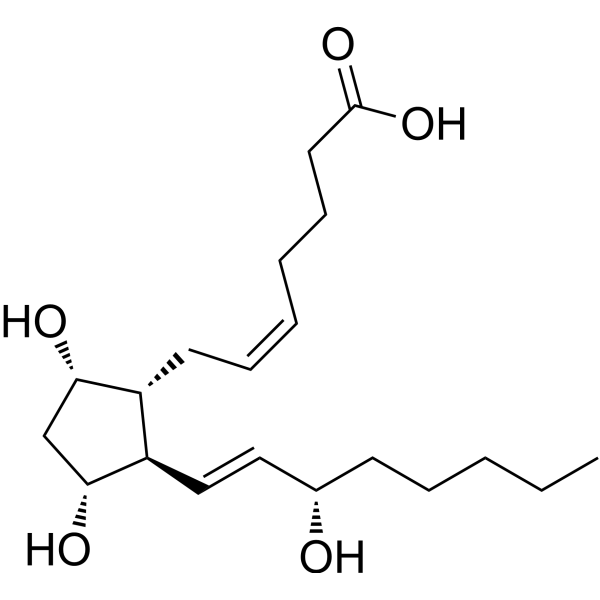
Dinoprost (Prostaglandin F2α) is an orally active, potent prostaglandin F (PGF) receptor (FP receptor) agonist. Dinoprost is a luteolytic hormone produced locally in the endometrial luminal epithelium and corpus luteum (CL). Dinoprost plays a key role in the onset and progression of labour .
|
-
-
- HY-B0577
-
|
PHXA41
|
Prostaglandin Receptor
|
Cardiovascular Disease
Others
|
|
Latanoprost (PHXA41) is a prostaglandin F2α analogue and can be used for glaucoma research. Latanoprost can effectively pass through cornea and be hydrolyzed by esterase to latanoprost acid. latanoprost acid is an F-prostaglandin (FP) receptor agonist, and can effectively reduce intraocular pressure (IOP) by increasing the outflow of aqueous humor through uvea .
|
-
-
- HY-50901
-
ONO-AE3-208
Maximum Cited Publications
12 Publications Verification
AE 3-208
|
Prostaglandin Receptor
|
Endocrinology
Cancer
|
|
ONO-AE3-208 is a selective and orally active EP4 receptor antagonist with a Ki of 1.3 nM. ONO-AE3-208 shows less potently affects EP3, FP, and TP receptors (Ki of 30 nM, 790 nM, and 2400 nM, respectively). ONO-AE3-208 suppresses cell invasion, migration, and metastasis of prostate cancer .
|
-
-
- HY-B0601
-
|
AFP-172
|
Prostaglandin Receptor
Drug Metabolite
|
Cardiovascular Disease
Neurological Disease
Endocrinology
|
|
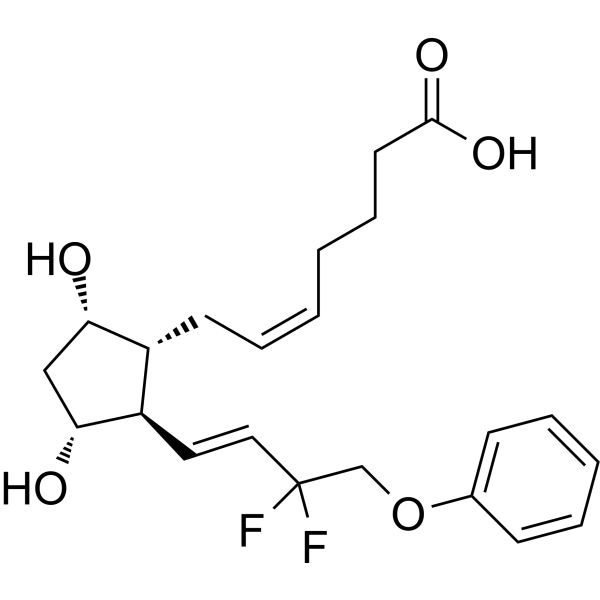
Tafluprost acid (AFP-172), an active metabolic form of Tafluprost, is a selective prostanoid FP receptor agonist. Tafluprost acid shows a high affinity for human prostanoid FP receptor with Ki and EC50 values of 0.4 nM and 0.53 nM, respectively. Tafluprost acid has 126 times weaker binding affinity for prostanoid EP3 receptor (IC50=67 nM) than for the prostanoid FP receptor. Tafluprost acid can be used in the research of glaucoma .
|
-
-
- HY-113756A
-
|
|
Prostaglandin Receptor
ERK
Akt
JNK
p38 MAPK
|
Inflammation/Immunology
|
|
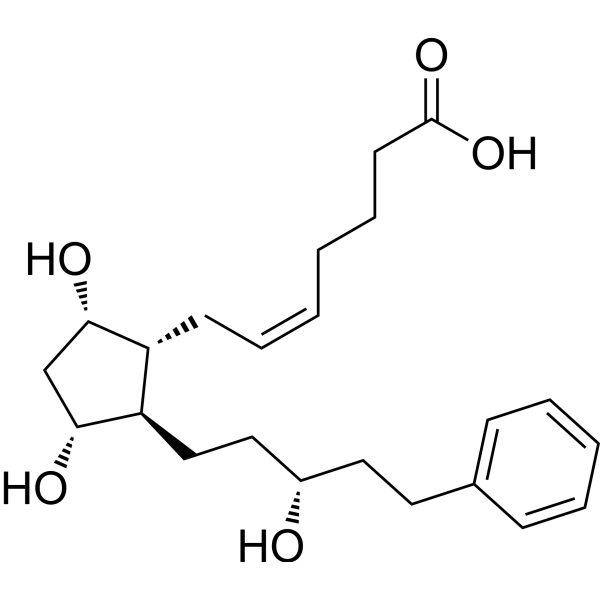
Latanoprost acid, an analog of prostaglandin (PG) F2α, is an selective prostanoid receptor (FP) agonist that specifically activates the FP-PG receptor . Latanoprost acid inhibits RANKL-induced osteoclastgenesis and function by inhibiting ERK, AKT, JNK, and p38 cascade, following by the c-fos/NFATc1 pathway. Latanoprost acid is a medication which works to lower pressure inside the eyes .
|
-
-
- HY-B0584
-
|
Fluprostenol isopropyl ester; AL6221; Flu-Ipr
|
Prostaglandin Receptor
|
Cardiovascular Disease
Endocrinology
|
|
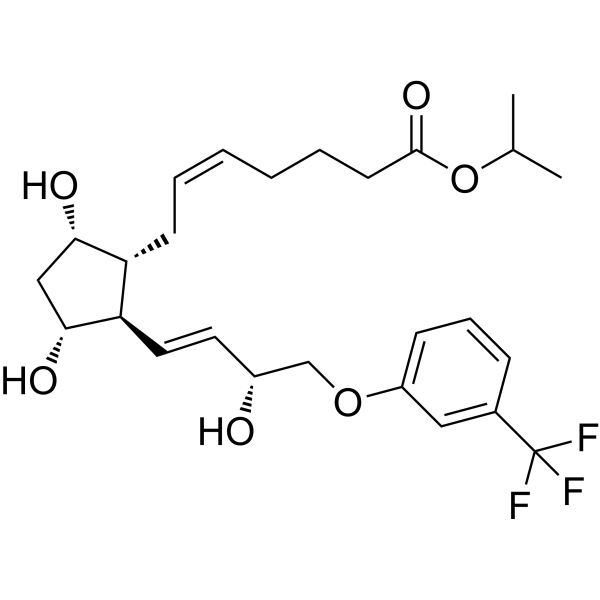
Travoprost (Fluprostenol isopropyl ester), an isopropyl ester proagent, is a high affinity, selective FP prostaglandin full receptor agonist. Travoprost has the ocular hypotensive efficacy and has the potential for glaucoma and ocular hypertension .
|
-
-
- HY-12956A
-
|
Prostaglandin F2α tromethamine salt; PGF2α THAM; Prostaglandin F2α THAM
|
Prostaglandin Receptor
Endogenous Metabolite
Autophagy
Apoptosis
|
Endocrinology
|
|
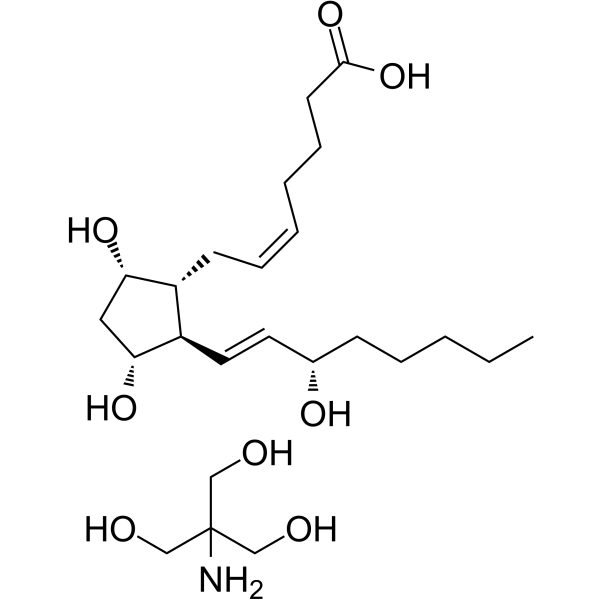
Dinoprost tromethamine salt (Prostaglandin F2α tromethamine salt) is an orally active, potent prostaglandin F (PGF) receptor (FP receptor) agonist. Dinoprost tromethamine salt is a luteolytic hormone produced locally in the endometrial luminal epithelium and corpus luteum (CL). Dinoprost tromethamine salt plays a key role in the onset and progression of labour .
|
-
-
- HY-111406
-
|
DE-117
|
Prostaglandin Receptor
|
Cardiovascular Disease
Inflammation/Immunology
|
|
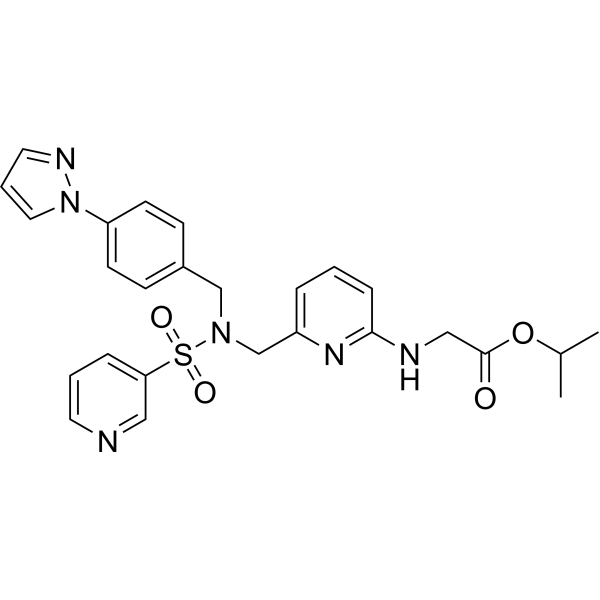
Omidenepag isopropyl is a selective EP2 receptor agonist. Omidenepag isopropyl is converted to the active product Omidenepag during corneal penetration, and Omidenepag is a highly selective EP2 receptor agonist. Omidenepag isopropyl shows only weak affinity for EP1, EP2, and FP receptors. Omidenepag isopropyl is under development for the treatment of glaucoma as an intraocular pressure (IOP)-lowering agent.
|
-
-
- HY-12956S
-
-
-
- HY-19518
-
|
NCX116; LBN
|
Prostaglandin Receptor
|
Neurological Disease
|
|
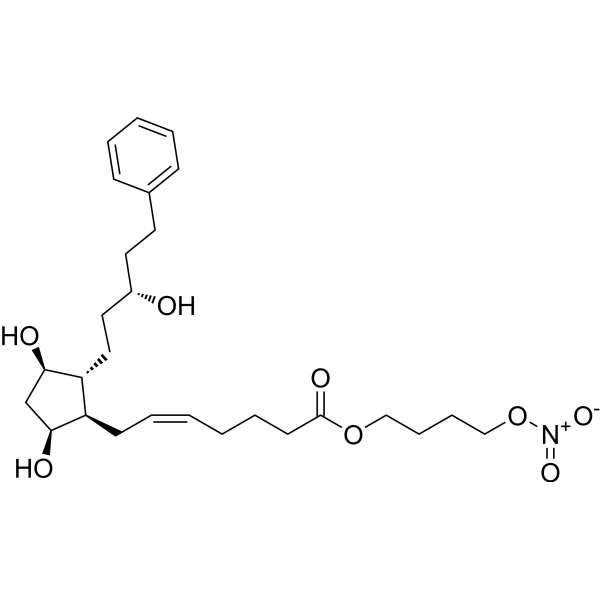
Latanoprostene bunod (NCX116; LBN) is a nitric oxide-releasing prostaglandin F2α analog. Latanoprostene bunod is a prodrug that, upon instillation into the eye, is hydrolyzed by corneal esterases into two active metabolites: Latanoprost (HY-B0577) and NO. Latanoprost activates the prostaglandin FP receptor to increase the outflow of aqueous humor through the uveoscleral pathway. NO increases aqueous humor drainage through the trabecular meshwork pathway, achieving synergistic enhancement targeting the dual pathways of aqueous humor outflow. Latanoprostene bunod can be used in research related to open-angle glaucoma and ocular hypertension .
|
-
-
- HY-118388
-
|
|
Prostaglandin Receptor
|
Endocrinology
|
|
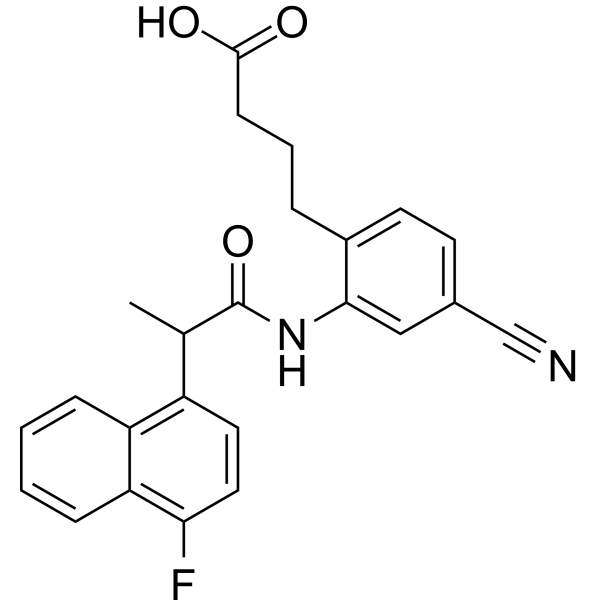
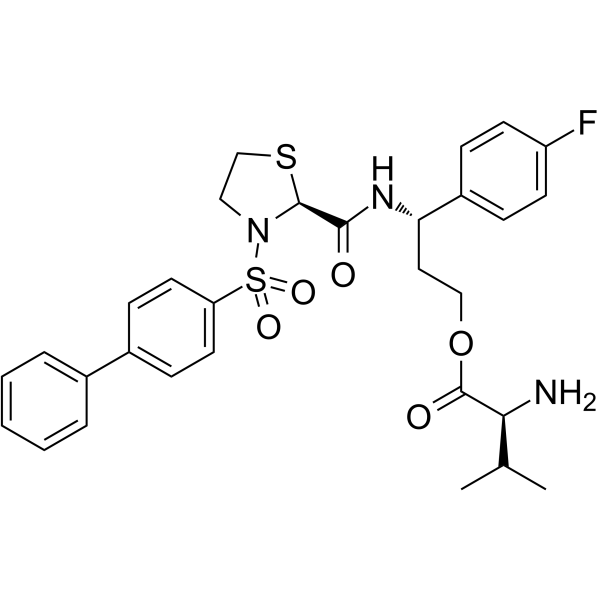
AS604872 is an orally active, potent and selective prostaglandin F2α receptor (FP) antagonist with a Ki of 35 nM in humans, 158 nM in rats and 323 nM in mice. AS604872 inhibits contractions and delays labour .
|
-
-
- HY-100449
-
AL-8810
1 Publications Verification
|
Prostaglandin Receptor
p38 MAPK
ERK
|
Neurological Disease
Endocrinology
|
|
AL-8810 is a potent and selective antagonist of the PGF 2α receptor (FP receptor). AL-8810 is an activator of MAPK and ERK1/2. The Ki of the FP receptor of mouse 3T3 cells and rat A7r5 cells are 0.2±0.06 μM and 0.4±0.1 μM, respectively. AL-8810 can be used in the study of elevated intraocular pressure (OHT) and primary open-angle glaucoma (POAG) .
|
-
-
- HY-112284
-
|
OBE022
|
Prostaglandin Receptor
|
Endocrinology
|
|
Ebopiprant (OBE022) is an oral and selective prostaglandin F2α (PGF2α) receptor antagonist, with Kis of 1 nM, 26 nM for human and rat FP receptors, respectively.
|
-
-
- HY-108563
-
|
|
Prostaglandin Receptor
|
Neurological Disease
|
|
SC 51089 is a selective antagonist of prostaglandin E2 EP1 receptor, with Kis of 1.3, 11.2, 17.5, and 61.1 μM for EP1, TP, EP3, and FP receptors, respectively. SC 51089 exhibits neuroprotective activity .
|
-
-
- HY-108563A
-
|
|
Prostaglandin Receptor
|
Neurological Disease
|
|
SC 51089 free base is a selective antagonist of prostaglandin E2 EP1 receptor, with Kis of 1.3, 11.2, 17.5, and 61.1 μM for EP1, TP, EP3, and FP receptors, respectively. SC 51089 free base exhibits neuroprotective activity .
|
-
-
- HY-50848
-
|
|
Prostaglandin Receptor
|
Cardiovascular Disease
|
|
BW A868C, a hydantoin compound, is a BW245C structural analogue. BW A868C is a selective and potent competitive prostaglandin D2 (PGD2) antagonist. BW A868C has no effect on other prostaglandin receptors (IP, EP1, EP2, TP and FP) .
|
-
-
- HY-128538
-
|
ONO-9054
|
Prostaglandin Receptor
|
Neurological Disease
|
|
Sepetaprost (ONO-9054) is a dual agonist of the prostaglandin E3 receptor and prostaglandin F receptor. Sepetaprost reduces intraocular pressure in animal models. Sepetaprost is applicable for research on ocular hypertension and open-angle glaucoma .
|
-
-
- HY-142658A
-
|
|
Prostaglandin Receptor
|
Others
|
|
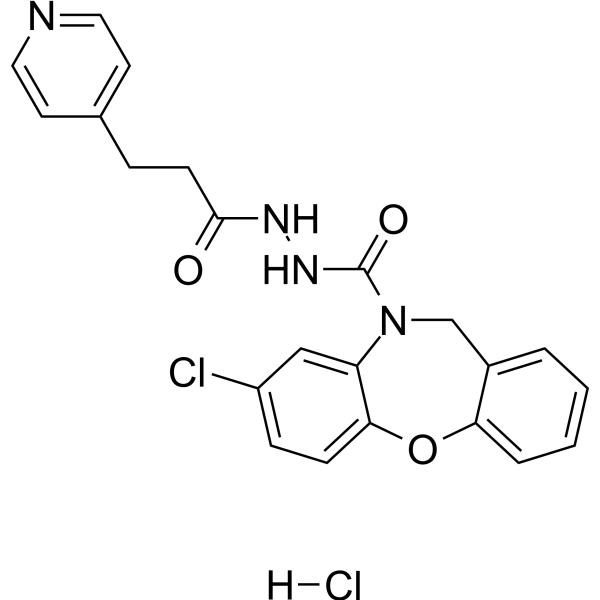
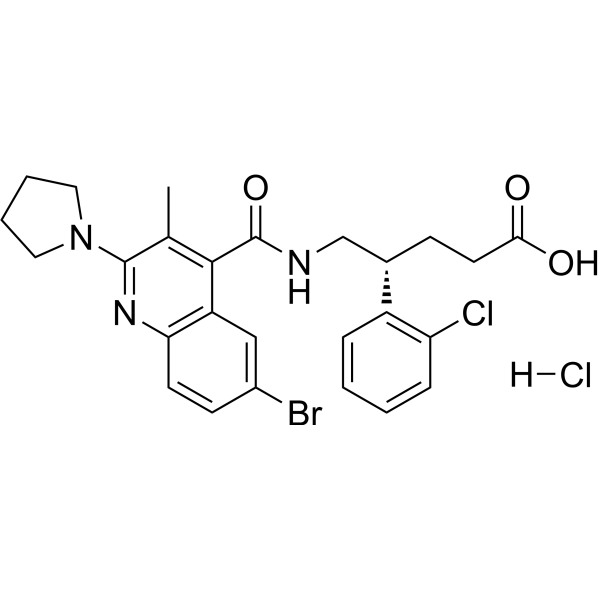
BAY-6672 hydrochloride is a potent and selective human Prostaglandin F (FP) receptor antagonist with an IC50 value of 11 nM.
|
-
-
- HY-125774
-
|
17-Phenyl trinor PGF2α
|
Prostaglandin Receptor
|
Others
|
|
Bimatoprost acid (17-Phenyl trinor PGF2α), the acid hydrolysis product of Bimatoprost (HY-B0191), is a potent agonist of prostaglandin FP receptor .
|
-
-
- HY-P4160
-
|
THG113.31; ILGHXDYK
|
Prostaglandin Receptor
|
Endocrinology
|
|
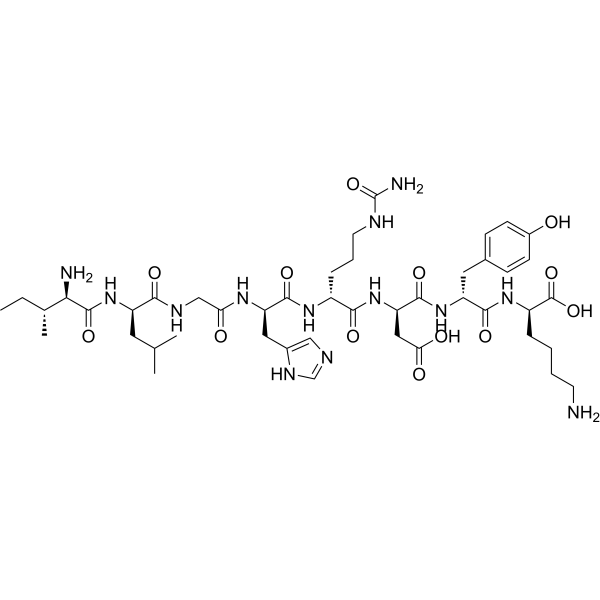
PDC31 (THG113.31; ILGHXDYK) is an allosteric and non-competitive inhibitor of FP Prostaglandin Receptor. PDC31 is the D-amino acid-based oligopeptide, is used for smooth muscle contractile agent. PDC31 decreases the strength and duration of uterine contractions in vivo, which can be used for research of preterm labor and primary dysmenorrhea (PD). PDC31 also enhances Ca 2+-dependent large-conductance K +-channel in human myometrial cells .
|
-
-
- HY-116161A
-
|
|
Prostaglandin Receptor
|
Metabolic Disease
|
|
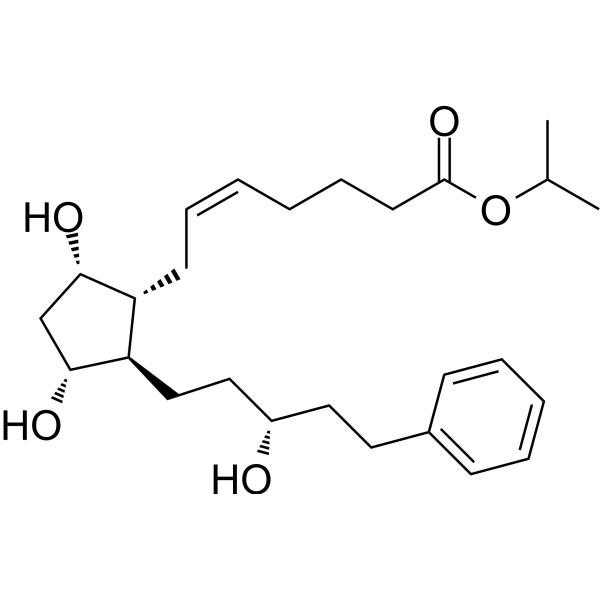
17-Phenyl trinor PGF2α isopropyl ester is a FP receptor agonist and intraocular pressure-lowering agent. 17-Phenyl trinor PGF2α isopropyl ester induces iris sphincter contraction, reduces intraocular pressure and pupil diameter, causes no ocular irritation, and only leads to mild conjunctival hyperemia. 17-Phenyl trinor PGF2α isopropyl ester is applicable to relevant research on glaucoma .
|
-
-
- HY-142658
-
|
|
Prostaglandin Receptor
|
Others
|
|
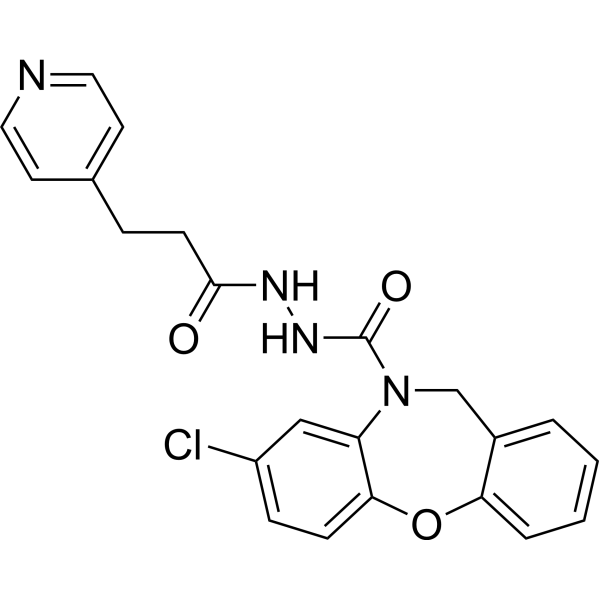
BAY-6672, a chemical probe, is a potent and selective human Prostaglandin F (FP) receptor antagonist with an IC50 value of 11 nM.
|
-
-
- HY-125150
-
-
-
- HY-178792
-
|
|
Prostaglandin Receptor
|
Inflammation/Immunology
Endocrinology
|
|
TGI-15 is a highly selective prostaglandin F receptor antagonist. TGI-15 inhibits downstream signaling pathways by blocking the binding of PGF2 α to FP receptors. TGI-15 can be used for research on fibrotic and inflammatory conditions .
|
-
-
- HY-133014
-
|
|
RIP kinase
|
Inflammation/Immunology
|
|
RIP2 kinase inhibitor 1 (compound 11) is a potent and selective receptor interacting protein 2 (RIP2) kinase inhibitor with an IC50 of 0.03 μM for RIP2 FP. RIP2 kinase inhibitor 1 is used for autoinflammatory disorders .
|
-
-
- HY-B0584R
-
|
Fluprostenol isopropyl ester(Standard); AL6221(Standard); Flu-Ipr (Standard)
|
Reference Standards
Prostaglandin Receptor
|
Endocrinology
|
|
Travoprost (Standard) is the analytical standard of Travoprost. This product is intended for research and analytical applications. Travoprost (Fluprostenol isopropyl ester), an isopropyl ester proagent, is a high affinity, selective FP prostaglandin full receptor agonist. Travoprost has the ocular hypotensive efficacy and has the potential for glaucoma and ocular hypertension .
|
-
-
- HY-19518R
-
|
NCX116 (Standard); LBN (Standard)
|
Reference Standards
Prostaglandin Receptor
|
Neurological Disease
|
|
Latanoprostene bunod (NCX116; LBN) (Standard) is the analytical standard of Latanoprostene bunod. This product is intended for research and analytical applications. Latanoprostene bunod is a nitric oxide-releasing prostaglandin F2α analog. Latanoprostene bunod is a prodrug that, upon instillation into the eye, is hydrolyzed by corneal esterases into two active metabolites: Latanoprost (HY-B0577) and NO. Latanoprost activates the prostaglandin FP receptor to increase the outflow of aqueous humor through the uveoscleral pathway. NO increases aqueous humor drainage through the trabecular meshwork pathway, achieving synergistic enhancement targeting the dual pathways of aqueous humor outflow. Latanoprostene bunod can be used in research related to open-angle glaucoma and ocular hypertension.
|
-
-
- HY-116161
-
|
|
Drug Intermediate
|
Cardiovascular Disease
Others
|
|
15(R)-17-phenyl trinor Prostaglandin F2α isopropyl ester (15(R)-17-phenyl trinor PGF2α isopropyl ester) is the latanoprost-related isomer containing both a double bond at 13,14 and an inverted (β) hydroxyl group at C-15. Similar to 15(S)-latanoprost, 15(R)-17-phenyl trinor PGF2α isopropyl ester is a potential impurity in most commercial preparations of the latanoprost bulk drug product. The IC50 values for the free acid forms of 15(S)-17-phenyl trinor PGF2α and 15(R)-17-phenyl trinor PGF2α were determined to be 0.71 nM and 30 nM, respectively, in a FP receptor binding assay using the cat iris sphincter muscle.1 A 3 μg dose of 15(R)-17-phenyl trinor PGF2α caused a 1.9 mmHg reduction of IOP in normotensive cynomolgus monkeys.
|
-
-
- HY-118520
-
|
|
Prostaglandin Receptor
|
Endocrinology
|
|
16-Phenoxy tetranor Prostaglandin F2α methyl ester is a metabolically stable form of Prostaglandin F2α that can binds to FP receptor. 16-Phenoxy tetranor Prostaglandin F2α methyl ester serves as prodrug that can be hydrolyzed to generate bioactive free acid .
|
-
-
- HY-113246
-
|
15-keto-PGF2α
|
Prostaglandin Receptor
Endogenous Metabolite
|
Endocrinology
|
|
15-keto-Prostaglandin F2α (15-keto-PGF2α) is a metabolite of Prostaglandin F2α. Prostaglandin F2α. Prostaglandin F2α is an orally active, potent prostaglandin F (PGF) receptor (FP receptor) agonist and plays a key role in the onset and progression of labour .
|
-
-
- HY-163376
-
|
17-CF3PTPG2α EA
|
Prostaglandin Receptor
|
Metabolic Disease
|
|
17-Trifluoromethylphenyl trinor prostaglandin F2α ethyl amide (compound 17-CF3PTPG2α EA) is a lipophilic analog of 17-trifluoromethylphenyl trinor PGF2α .
|
-
-
- HY-118014
-
-
-
- HY-156101
-
-
-
- HY-139121
-
|
15-epi Bimatoprost free acid; 15(R)-Bimatoprost free acid; 15(R)-17-phenyl trinor PGF2α
|
Prostaglandin Receptor
|
Endocrinology
|
|
15(R)-17-Phenyl trinor Prostaglandin F2α (15-epi Bimatoprost free acid) is a prostaglandin F (FP) analog that acts as an ocular hypotensive agent. The free acid 17-Phenyl trinor Prostaglandin F2α is a potent FP receptor agonist. 15(R)-17-Phenyl trinor Prostaglandin F2α is the 15-epi or "unnatural" isomer of this active free acid metabolite and has reduced FP receptor agonist activity.
|
-
-
- HY-159704
-
-
-
- HY-112284A
-
|
OBE022 hydrochloride
|
Prostaglandin Receptor
|
Endocrinology
|
|
Ebopiprant (OBE022) hydrochloride is an oral and selective prostaglandin F2α (PGF2α) receptor antagonist, with Kis of 1 nM, 26 nM for human and rat FP receptors, respectively.
|
-
-
- HY-120982
-
|
|
Prostaglandin Receptor
|
Endocrinology
|
|
Cloprostenol is a synthetic prostaglandin F2α (PGF2α) analog and a potent FP receptor agonist. (+)-15-epi Cloprostenol is the 15(S), or 15β-hydroxy enantiomer of (+)-cloprostenol. This epimer is less active by several orders of magnitude as an FP receptor ligand when compared to 15(R)-cloprostenol. However, the specific activity of this isomer has not been well studied.
|
-
-
- HY-149588
-
-
-
- HY-113756AR
-
|
|
Reference Standards
Prostaglandin Receptor
|
Inflammation/Immunology
|
|
Latanoprost acid (Standard) is the analytical standard of Latanoprost acid. This product is intended for research and analytical applications. Latanoprost acid, an analog of prostaglandin (PG) F2α, is an selective prostanoid receptor (FP) agonist that specifically activates the FP-PG receptor . Latanoprost acid inhibits RANKL-induced osteoclastgenesis and function by inhibiting ERK, AKT, JNK, and p38 cascade, following by the c-fos/NFATc1 pathway. Latanoprost acid is a medication which works to lower pressure inside the eyes .
|
-
-
- HY-100571
-
|
|
Prostaglandin Receptor
|
Endocrinology
|
|
Cloprostenol isopropyl ester, a prostaglandin F2α analogs, is the intermediate of (+)-Cloprostenol (HY-107381). Cloprostenol isopropyl ester is a FP receptor agonist with a Ki value of 28 nM .
|
-
-
- HY-120752
-
|
|
Prostaglandin Receptor
|
|
|
CAY10509 is a PGF2α analog and an inhibitor of the FP receptor with an IC50 of 30 nM. CAY10509 is promising for studying physiological regulatory mechanisms related to prostaglandins .
|
-
-
- HY-176017
-
|
|
Drug Derivative
|
Others
|
|
2,3-Dinor fluprostenol is a derivative of the FP receptor agonist and prostaglandin F2α (PGF2α) analog fluprostenol (HY-136494) .
|
-
-
- HY-116549
-
|
PGF2α alcohol
|
Prostaglandin Receptor
|
Inflammation/Immunology
|
|
Prostaglandin F2α alcohol (PGF2α alcohol) is an analog of PGF2α. Dinoprost (Prostaglandin F2α) is an orally active, potent prostaglandin F (PGF) receptor (FP receptor) agonist .
|
-
-
- HY-B0577S
-
|
PHXA41-d4
|
Prostaglandin Receptor
|
Others
|
|
Latanoprost-d4 is the deuterium labeled Latanoprost. Latanoprost (PHXA41) is a prostaglandin F2α analogue and an agonist for the FP prostanoid receptor, and lowers intraocular-pressure (IOP).
|
-
-
- HY-B0577R
-
|
PHXA41 (Standard)
|
Reference Standards
Prostaglandin Receptor
|
Others
|
|
Latanoprost (Standard) is the analytical standard of Latanoprost. This product is intended for research and analytical applications. Latanoprost (PHXA41) is a prostaglandin F2α analogue and an agonist for the FP prostanoid receptor, and lowers intraocular-pressure (IOP).
|
-
-
- HY-139386
-
|
15(S)-Flu-Ipr
|
Prostaglandin Receptor
|
Others
|
|
15β-Travoprost (15(S)-Flu-Ipr) is an enantiomer of Travoprost (HY-B0584). Travoprost, an isopropyl ester proagent, is a high affinity, selective FP prostaglandin full receptor agonist .
|
-
-
- HY-116733
-
|
AFP-175
|
Prostaglandin Receptor
|
Others
|
|
Tafluprost ethyl ester (AFP-175) is a derivative of Prostaglandin F2α (PGF2α) (HY-12956). Tafluprost ethyl ester is an agonist for prostaglandin FP receptor, and exhibits miotic effect .
|
-
-
- HY-113909
-
|
Prostaglandin F2α (methoxyamine); PGF2α (methoxyamine)
|
Prostaglandin Receptor
Endogenous Metabolite
Autophagy
Apoptosis
|
Endocrinology
|
|
Dinoprost methoxyamine is an orally active, potent prostaglandin F (PGF) receptor (FP receptor) agonist. Dinoprost methoxyamine is a luteolytic hormone produced locally in the endometrial luminal epithelium and corpus luteum (CL). Dinoprost methoxyamine plays a key role in the onset and progression of labour .
|
-
-
- HY-123123
-
|
|
Prostaglandin Receptor
Endogenous Metabolite
|
Cardiovascular Disease
|
|
RS-61756-007 is a selective thromboxane receptor (TP) agonist with high activity at the TP receptor. RS-61756-007 showed agonism at TP and FP receptors in in vitro studies but had no activity at other receptor subtypes. The effects of RS-61756-007 can be antagonized in a similar manner by the TP antagonist SQ 29,548 .
|
-
-
- HY-114793
-
|
|
Prostaglandin Receptor
|
Endocrinology
|
|
AL-12180 is a potent and selective FP-receptor agonist with a Ki of 143 nM. AL-12180 stimulates the mobilization of intracellular Ca 2+ in h-TM and h-CM cells with EC50s of 111 and 11 nM, respectively .
|
-
- HY-12956S1
-
-
- HY-118190
-
|
|
Prostaglandin Receptor
|
Endocrinology
|
|
AL 8810 methyl ester is a prostaglandin F(2α) analog and a prostaglandin F(2α) receptor agonist. Can competitively antagonize the effects of the FP receptor agonist Fluprostenol (HY-108560). AL 8810 methyl ester has no significant potency against TP, DP, EP(2), EP(4) receptor subtypes in cell lines .
|
-
- HY-124243
-
|
17-Phenyl trinor prostaglandin F2α cyclopropyl methyl amide
|
Prostaglandin Receptor
|
Others
|
|
N-Cyclopropyl methyl bimatoprost (17-Phenyl trinor prostaglandin F2α cyclopropyl methyl amide) is an analog of Bimatoprost (HY-12956). N-Cyclopropyl methyl bimatoprost is an agonist for Prostaglandin F2α Receptor (FP receptor). N-Cyclopropyl methyl bimatoprost is potent to reduce the intraocular pressure and attenuate the glaucoma .
|
-
- HY-12956R
-
|
Prostaglandin F2α (Standard); PGF2α (Standard)
|
Reference Standards
Prostaglandin Receptor
Endogenous Metabolite
Autophagy
Apoptosis
|
Endocrinology
|
|
Dinoprost (Standard) is the analytical standard of Dinoprost. This product is intended for research and analytical applications. Dinoprost (Prostaglandin F2α) is an orally active, potent prostaglandin F (PGF) receptor (FP receptor) agonist. Dinoprost is a luteolytic hormone produced locally in the endometrial luminal epithelium and corpus luteum (CL). Dinoprost plays a key role in the onset and progression of labour .
|
-
- HY-139063
-
-
- HY-50901A
-
|
AE 3-208 sodium salt
|
Prostaglandin Receptor
|
Endocrinology
Cancer
|
|
ONO-AE3-208 (sodium salt) is a selective and orally active EP4 receptor antagonist with a Ki of 1.3 nM. ONO-AE3-208 (sodium salt) shows less potently affects EP3, FP, and TP receptors (Ki of 30 nM, 790 nM, and 2400 nM, respectively). ONO-AE3-208 (sodium salt) suppresses cell invasion, migration, and metastasis of prostate cancer .
|
-
- HY-12956S2
-
-
- HY-B0584S2
-
|
Fluprostenol isopropyl ester-7; AL6221-7; Flu-Ipr-7
|
Isotope-Labeled Compounds
Prostaglandin Receptor
|
Cardiovascular Disease
Endocrinology
|
|
Travoprost-d7 (Fluprostenol isopropyl ester-d7) is deuterium labeled Travoprost. Travoprost (Fluprostenol isopropyl ester), an isopropyl ester proagent, is a high affinity, selective FP prostaglandin full receptor agonist. Travoprost has the ocular hypotensive efficacy and has the potential for glaucoma and ocular hypertension .
|
-
- HY-B0584A
-
|
5,6-trans-Fluprostenol isopropyl ester; 5,6-trans-AL6221; 5,6-trans-Flu-Ipr
|
Prostaglandin Receptor
|
Endocrinology
|
|
5,6-trans-Travoprost is the isomer of Travoprost (HY-B0584), and can be used as an experimental control. Travoprost (Fluprostenol isopropyl ester), an isopropyl ester proagent, is a high affinity, selective FP prostaglandin full receptor agonist. Travoprost has the ocular hypotensive efficacy and has the potential for glaucoma and ocular hypertension .
|
-
- HY-12956AR
-
|
Prostaglandin F2α tromethamine salt (Standard); PGF2α THAM (Standard); Prostaglandin F2α THAM (Standard)
|
Reference Standards
Prostaglandin Receptor
Endogenous Metabolite
Autophagy
Apoptosis
|
Endocrinology
|
|
Dinoprost (tromethamine salt) (Standard) is the analytical standard of Dinoprost (tromethamine salt). This product is intended for research and analytical applications. Dinoprost tromethamine salt (Prostaglandin F2α tromethamine salt) is an orally active, potent prostaglandin F (PGF) receptor (FP receptor) agonist. Dinoprost tromethamine salt is a luteolytic hormone produced locally in the endometrial luminal epithelium and corpus luteum (CL). Dinoprost tromethamine salt plays a key role in the onset and progression of labour .
|
-
- HY-137544
-
|
16-Phenyl tetranor PGF2α
|
Prostaglandin Receptor
Drug Metabolite
|
Metabolic Disease
|
|
16-phenyl tetranor Prostaglandin F2α (16-phenyl tetranor PGF2α) is a metabolically stable analog of PGF2α. The affinity of 16-phenyl tetranor PGF2α at the FP receptor of ovine luteal cells is poor (8.7%) compared to PGF2α.
|
-
- HY-124209
-
|
|
Prostaglandin Receptor
|
Endocrinology
|
|
9-keto Fluprostenol is an analog of prostaglandin E2 (PGE2) with structural modifications intended to give it a prolonged half-life and greater potency. Fluprostenol is a well-studied, potent analog of PGF2α and acts primarily through the FP receptor. Oxidation at C-9 of fluprostenol yields 9-keto fluprostenol. It is anticipated that this analog will have strong affinity for EP receptors and act as a PGE2 agonist.
|
-
- HY-114761
-
|
|
Prostaglandin Receptor
|
Cardiovascular Disease
|
|
Prostaglandin F2α dimethyl amine is a Prostaglandin F2α (HY-12956) derivative. Prostaglandin F2α dimethyl amine is an antagonist for Prostaglandin F receptor (FP) . Prostaglandin F2α dimethyl amine blocks the cardiovascular responses induced by orexin and Arachidonic acid (HY-109590) .
|
-
- HY-100449A
-
|
|
Prostaglandin Receptor
|
Endocrinology
|
|
(S)-AL 8810 is an 11β-fluoro analog of PGF2α that acts as a potent and selective antagonist at the FP receptor. (S)-AL 8810 is the C-15 epimer of AL 8810, having the
inverse, (S), or "natural" configuration at C-15 relative to AL 8810, which is 15-(R) .
|
-
- HY-126911
-
|
Fluprostenol Prostaglandin D2
|
Prostaglandin Receptor
|
Endocrinology
|
|
11-keto Fluprostenol is an analog of prostaglandin D2 (PGD2) with structural modifications intended to give it a prolonged half-life and greater potency. Fluprostenol is a well-studied, potent analog of PGF2α and acts primarily through the FP receptor. Oxidation at C-11 of fluprostenol yields 11-keto fluprostenol. 11-keto Fluprostenol exhibits moderate binding to the CRTH2/DP2 receptor compared to PGD2 and essentially no activity at the DP1 receptor.
|
-
- HY-124200
-
|
|
Prostaglandin Receptor
|
Endocrinology
|
|
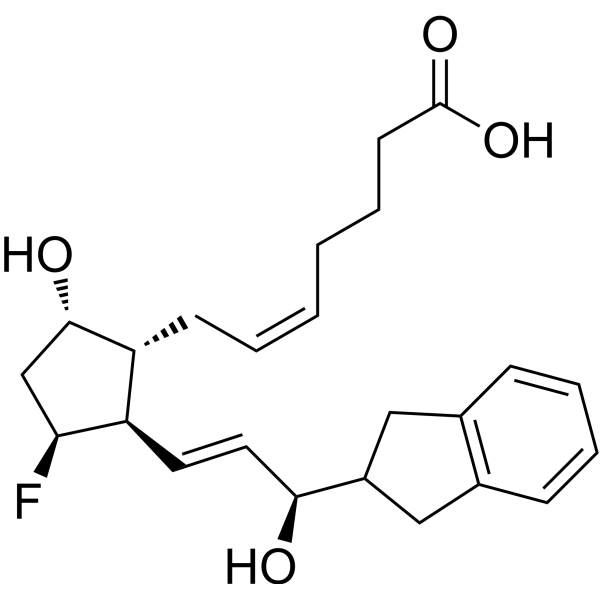
AL 8810 (Item No. 16735) is an 11β-fluoro analog of prostaglandin F2α which acts as a potent and selective antagonist at the FP receptor. AL 8810 isopropyl ester is a lipid soluble, esterified prodrug form of AL 8810 analogous to the commonly used therapeutic intraocular prostaglandin compounds such as Latanoprost (HY-B0577) and Travoprost (HY-B0584).
|
-
- HY-124219
-
|
17-Phenoxy trinor PGF2α ethyl amide
|
Prostaglandin Receptor
|
Others
|
|
17-Phenoxy trinor prostaglandin F2α ethyl amide (17-Phenoxy trinor PGF2α ethyl amide) is an analog of Bimatoprost (HY-12956). 17-Phenoxy trinor prostaglandin F2α ethyl amide is an agonist for Prostaglandin F2α Receptor (FP receptor). 17-Phenoxy trinor prostaglandin F2α ethyl amide is potent to reduce the intraocular pressure and attenuate the glaucoma .
|
-
- HY-126115
-
|
15-epi Latanoprost
|
Prostaglandin Receptor
|
Cardiovascular Disease
Others
|
|
15(S)-Latanoprost is an analog of latanoprost in which the hydroxyl at carbon 15 is inverted relative to latanoprost. The IC50 values for the free acid forms of latanoprost and 15(S)-latanoprost were determined to be 3.6 nM and 24 nM, respectively, in a FP receptor binding assay using the cat iris sphincter muscle. A 3 μg dose of 15(S)-latanoprost caused a 1 mmHg reduction of IOP in normotensive cynomolgus monkeys.
|
-
- HY-176011
-
|
17-Phenyl trinor PGF2α glycinamide methyl ester
|
Prostaglandin Receptor
|
Endocrinology
|
|
17-Phenyl trinor prostaglandin F2α glycinamide methyl ester is a derivative of Bimatoprost (HY-B0191) and a prostaglandin analog. 17-Phenyl trinor prostaglandin F2α glycinamide methyl ester is a human prostaglandin FP receptor agonist. 17-Phenyl trinor prostaglandin F2α glycinamide methyl ester has an ocular hypotensive effect and can be used in the study of ocular hypertension and glaucoma .
|
-
- HY-126115R
-
|
15-epi Latanoprost (Standard)
|
Prostaglandin Receptor
Reference Standards
|
Cardiovascular Disease
Others
|
|
15(S)-Latanoprost (Standard) is the analytical standard of 15(S)-Latanoprost. This product is intended for research and analytical applications. 15(S)-Latanoprost is an analog of latanoprost in which the hydroxyl at carbon 15 is inverted relative to latanoprost. The IC50 values for the free acid forms of latanoprost and 15(S)-latanoprost were determined to be 3.6 nM and 24 nM, respectively, in a FP receptor binding assay using the cat iris sphincter muscle. A 3 μg dose of 15(S)-latanoprost caused a 1 mmHg reduction of IOP in normotensive cynomolgus monkeys.
|
-
- HY-N7857
-
|
19(R)-Hydroxy PGF2α
|
Drug Metabolite
|
Metabolic Disease
|
|
19(R)-Hydroxy-prostaglandin F2α (19(R)-hydroxy PGF2α) is an ω-1 hydroxylase metabolite of PGF2α found in human semen. The concentration of 19(R)-Hydroxy-PGFs compounds (F2α and F1α together) in fresh human semen is about 20 μg/mL. 19(R)-Hydroxy-prostaglandin F2α exhibits no activity at the FP receptor of the cat iris sphincter muscle at concentrations up to 1 μM.
|
-
- HY-116679
-
|
17-Trifluoromethylphenyl trinor PGF2α
|
Prostaglandin Receptor
|
Endocrinology
|
|
A number of 17-phenyl trinor prostaglandin F2α (17-phenyl trinor PGF2α) derivatives have been approved for glaucoma. Of these, the unsubstituted or meta-substituted aromatic derivatives are the most potent FP receptor agonists.4 17-trifluoromethylphenyl trinor PGF2α bears an aromatic ring which is reminiscent of the trifluoromethyl-phenoxy ring of travoprost ((+)-fluprostenol isopropyl ester). As an ocular hypotensive agent, it would be expected that 17-trifluoromethylphenyl trinor PGF2α would act very much like the free acid of travoprost. 17-phenyl trinor PGF2α is a potent luteolytic, with a potency equal to or greater than fluprostenol and cloprostenol.
|
-
- HY-182473
-
|
|
Prostaglandin Receptor
|
Neurological Disease
|
|
AL-6556 is a full agonist of the DP receptor and a partial agonist of the EP2 receptor. AL-6556 has an EC50 of 799 nM for bovine DP, a Ki of 3200 nM for human DP, and an EC50 of 1180 nM for human EP2, with selectivity over EP3, FP, IP, TP and 19 non-prostaglandin receptors. AL-6556 stimulates cAMP production via receptor activation and reduces intraocular pressure through aqueous humor inflow and outflow mechanisms. AL-6556 can be used in research related to ocular hypertension and glaucoma .
|
-
- HY-W751347
-
-
- HY-W701877
-
-
- HY-113756B
-
|
|
Drug Derivative
Prostaglandin Receptor
ERK
Akt
JNK
p38 MAPK
|
Inflammation/Immunology
|
|
rel-Latanoprost acid is a relative configuration of Latanoprost acid (HY-113756A). Latanoprost acid, an analog of prostaglandin (PG) F2α, is an selective prostanoid receptor (FP) agonist that specifically activates the FP-PG receptor . Latanoprost acid inhibits RANKL-induced osteoclastgenesis and function by inhibiting ERK, AKT, JNK, and p38 cascade, following by the c-fos/NFATc1 pathway. Latanoprost acid is a medication which works to lower pressure inside the eyes .
|
-
- HY-175105
-
|
17-Phenoxy-PGF2α isopropyl ester
|
Drug Derivative
|
Endocrinology
|
|
17-Phenoxy trinor prostaglandin F2α isopropyl ester is a PGF2α (HY-12956) analog. PGF2α is an orally active agonist of the PGF receptor (FP receptor). PGF2α plays a key role in labor and delivery.
|
-
- HY-175097
-
|
|
Drug Derivative
|
Others
|
|
AL 8810 Ethyl amide is an acetamide derivative of AL-8810 (HY-100449). AL 8810 Ethyl amide dose not exhibit a significant antagonistic effect on the action of PGF2α, and it dose not cause the contraction of the cat iris .
|
-
- HY-108563AR
-
|
|
Reference Standards
Prostaglandin Receptor
|
Neurological Disease
|
|
SC 51089 free base (Standard) is the analytical standard of SC 51089 (free base) (HY-108563A). This product is intended for research and analytical applications. SC 51089 free base is a selective antagonist of prostaglandin E2 EP1 receptor, with Kis of 1.3, 11.2, 17.5, and 61.1 μM for EP1, TP, EP3, and FP receptors, respectively. SC 51089 free base exhibits neuroprotective activity .
|
-
- HY-181444
-
|
|
Prostaglandin Receptor
|
Others
|
|
16-Phenoxy tetranor Prostaglandin F2α methyl amide (16-phenoxy-17,18,19,20-tetranor-PGF2α) is a structural analog of PGF2α (HY-12956), and its binding affinity for the PGF2α (FP) receptor in sheep luteal cells reaches approximately 440% of that of PGF2α .
|
-
- HY-183037
-
|
|
Prostaglandin Receptor
Interleukin Related
|
Neurological Disease
Inflammation/Immunology
|
|
AGN 225660 is a multi-prostanoid receptor antagonist with human IC50 values of 70, 70, 5, 220 and 180 nM for EP1, EP4, TP, DP1, FP. AGN 225660 inhibits secretion of RANTES, IL-8, MCP-1, IL-12p70, and IL-23. AGN 225660 exhibits good ocular bioavailability and reduces ocular inflammation linked to phacoemulsification surgery and uveitis .
|
-
| Cat. No. |
Product Name |
Target |
Research Area |
-
- HY-P4160
-
|
THG113.31; ILGHXDYK
|
Prostaglandin Receptor
|
Endocrinology
|
|
PDC31 (THG113.31; ILGHXDYK) is an allosteric and non-competitive inhibitor of FP Prostaglandin Receptor. PDC31 is the D-amino acid-based oligopeptide, is used for smooth muscle contractile agent. PDC31 decreases the strength and duration of uterine contractions in vivo, which can be used for research of preterm labor and primary dysmenorrhea (PD). PDC31 also enhances Ca 2+-dependent large-conductance K +-channel in human myometrial cells .
|
| Cat. No. |
Product Name |
Category |
Target |
Chemical Structure |
| Cat. No. |
Product Name |
Chemical Structure |
-
- HY-12956S
-
|
|
|
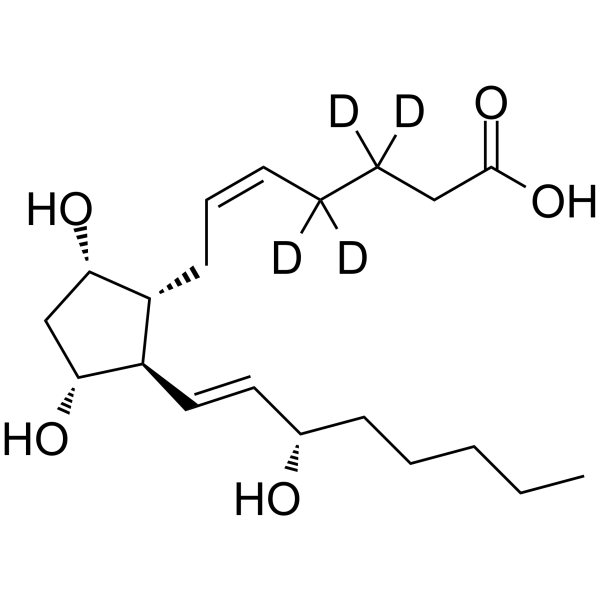
Dinoprost-d4 is the deuterium labeled Dinoprost. Dinoprost (Prostaglandin F2α) is an orally active, potent prostaglandin F (PGF) receptor (FP receptor) agonist. Dinoprost is a luteolytic hormone produced locally in the endometrial luminal epithelium and corpus luteum (CL). Dinoprost plays a key role in the onset and progression of labour .
|
-
-
- HY-B0577S
-
|
|
|
Latanoprost-d4 is the deuterium labeled Latanoprost. Latanoprost (PHXA41) is a prostaglandin F2α analogue and an agonist for the FP prostanoid receptor, and lowers intraocular-pressure (IOP).
|
-
-
- HY-12956S1
-
|
|
|
Dinoprost-d9 is the deuterium labeled Dinoprost. Dinoprost (Prostaglandin F2α) is an orally active, potent prostaglandin F (PGF) receptor (FP receptor) agonist. Dinoprost is a luteolytic hormone produced locally in the endometrial luminal epithelium and corpus luteum (CL). Dinoprost plays a key role in the onset and progression of labour .
|
-
-
- HY-12956S2
-
|
|
|
Dinoprost- 13C5 is 13C labeled Dinoprost (HY-12956). Dinoprost (Prostaglandin F2α) is an orally active, potent prostaglandin F (PGF) receptor (FP receptor) agonist. Dinoprost is a luteolytic hormone produced locally in the endometrial luminal epithelium and corpus luteum (CL). Dinoprost plays a key role in the onset and progression of labour .
|
-
-
- HY-B0584S2
-
|
|
|
Travoprost-d7 (Fluprostenol isopropyl ester-d7) is deuterium labeled Travoprost. Travoprost (Fluprostenol isopropyl ester), an isopropyl ester proagent, is a high affinity, selective FP prostaglandin full receptor agonist. Travoprost has the ocular hypotensive efficacy and has the potential for glaucoma and ocular hypertension .
|
-
Your information is safe with us. * Required Fields.
Inquiry Information
- Product Name:
- Cat. No.:
- Quantity:
- MCE Japan Authorized Agent:

