



Tafluprost acid
Based on 1 publication(s) in Google Scholar
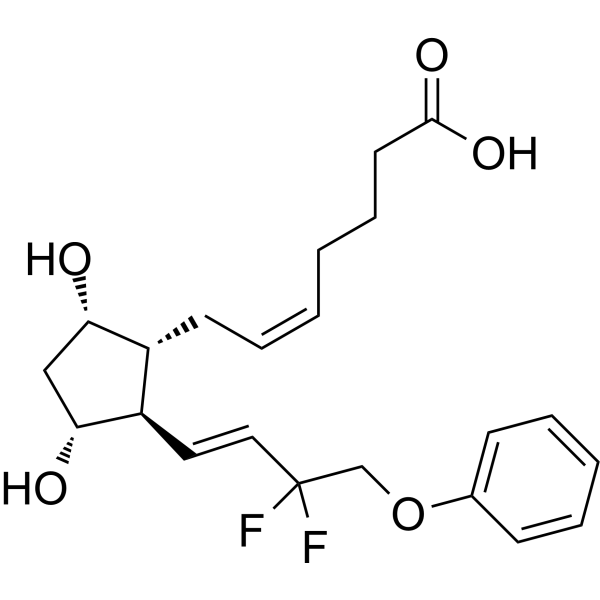
Tafluprost acid (AFP-172), an active metabolic form of Tafluprost, is a selective prostanoid FP receptor agonist. Tafluprost acid shows a high affinity for human prostanoid FP receptor with Ki and EC50 values of 0.4 nM and 0.53 nM, respectively. Tafluprost acid has 126 times weaker binding affinity for prostanoid EP3 receptor (IC50=67 nM) than for the prostanoid FP receptor. Tafluprost acid can be used in the research of glaucoma.
For research use only. We do not sell to patients.
- Purity : 99.97%
- CAS No.: 209860-88-8
- Formula: C22H28F2O5
- Molecular Weight:410.45
-
Storage:
4°C, protect from light
* In solvent : -80°C, 6 months; -20°C, 1 month (protect from light)

To place orders, for customer services and technical support, please contact: MedChemExpress USA
Tel: 609-228-6898 E-mail: [email protected] [email protected]


-
 Biological Activity
-
Chemical Information
-
Solvent & Solubility
- Protocols
- Purity & Documentation
- References
-
 Help & FAQs


-
HY-108560
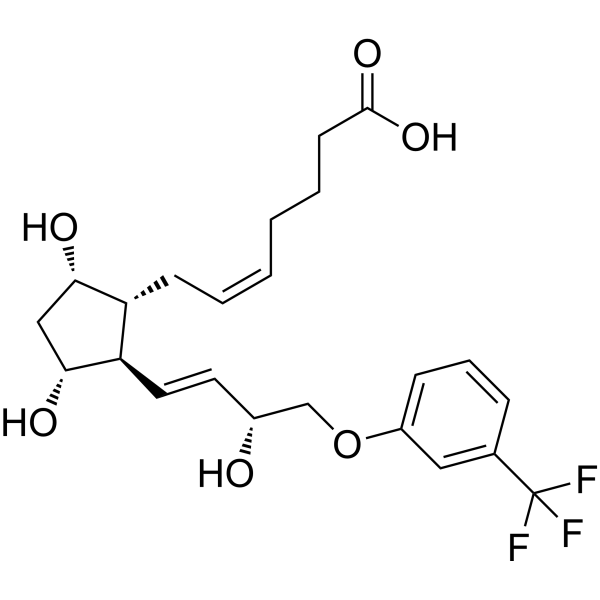
(+)-FluprostenolPTGER2 Agonist -
HY-113756A
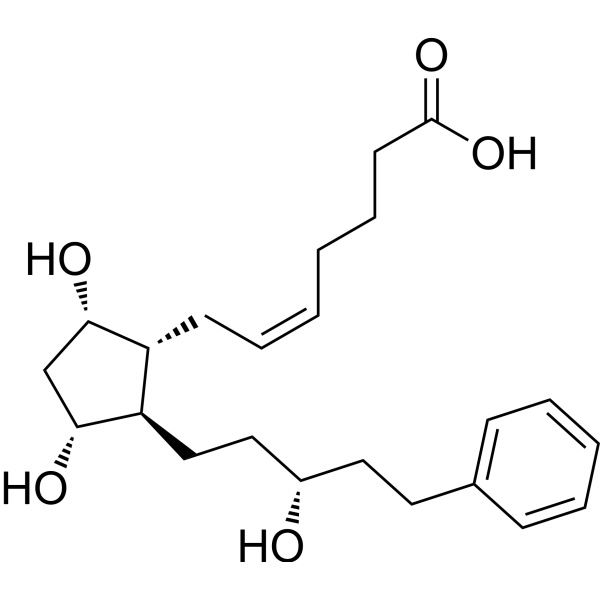
Latanoprost acidFP Agonist -
HY-B0600
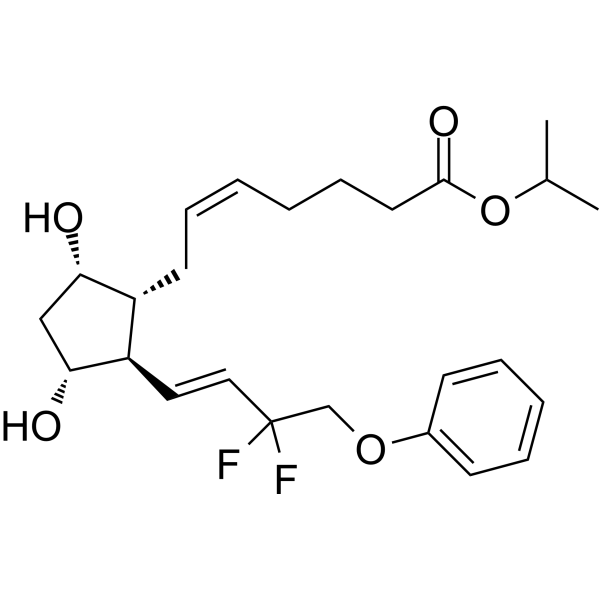
TafluprostProstaglandin Receptor Agonist -

HY-125774
Bimatoprost acidProstaglandin FP Receptor Agonist -
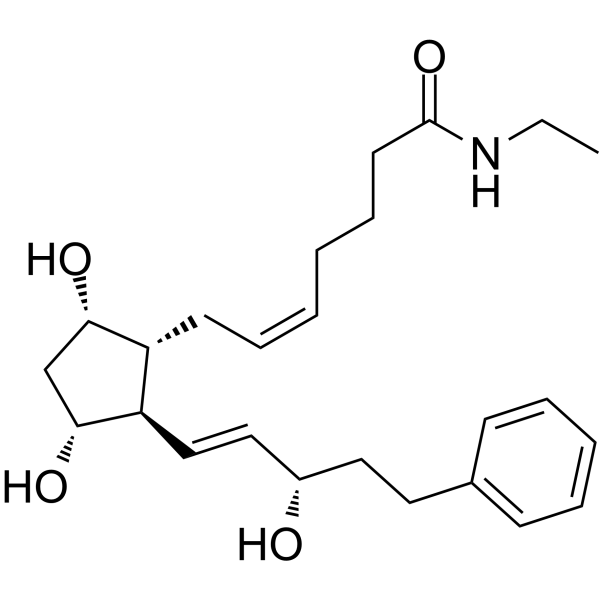
HY-B0191
BimatoprostProstaglandin Analog -

HY-B0601R
Tafluprost acid (Standard)FP Receptor Agonist -
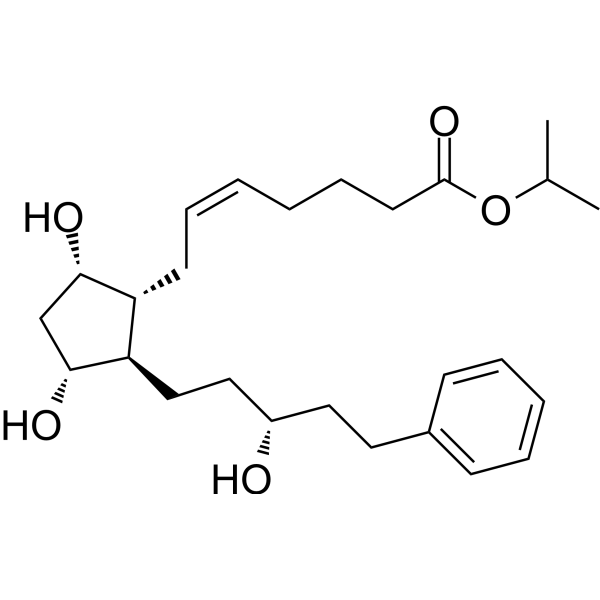
HY-B0577
LatanoprostProstaglandin Receptor Agonist -

HY-B0600R
Tafluprost (Standard)Prostaglandin Receptor Agonist -
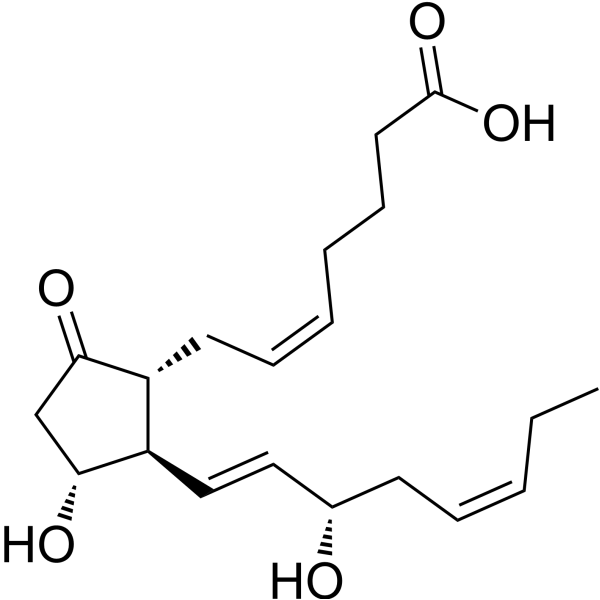
HY-113481
Prostaglandin E3Prostaglandin Analog -
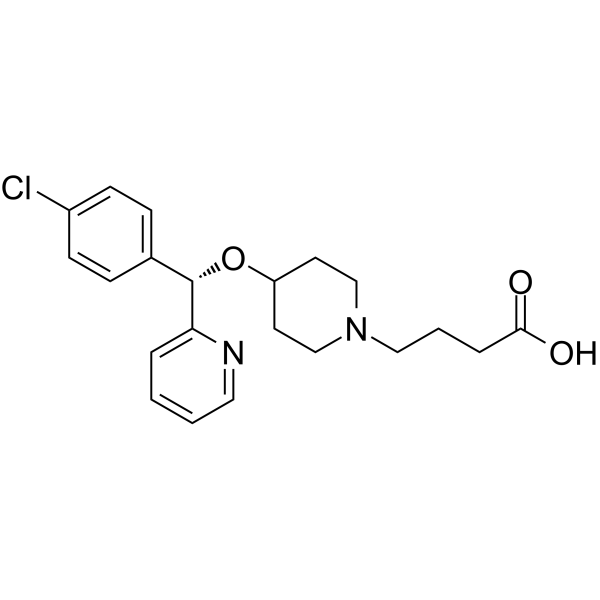
HY-I0021
BepotastineHistamine H1 Receptor Antagonist -
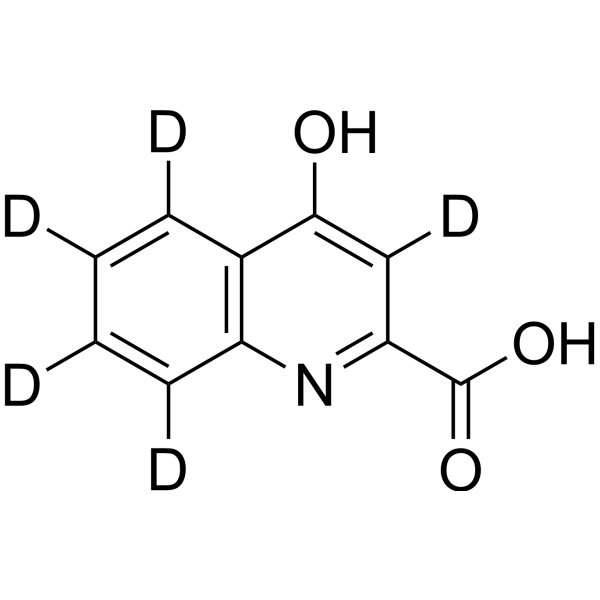
HY-100806S
Kynurenic acid-d5Stable Isotope -
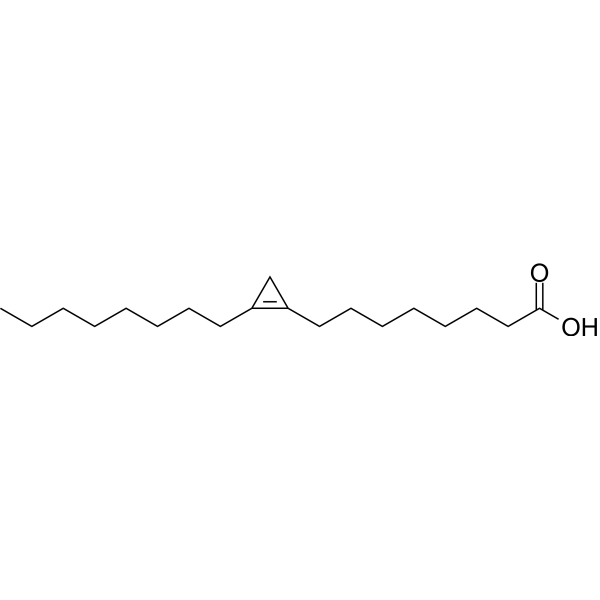
HY-127143
Sterculic acidSCD1 Inhibitor
Publications Citing Use of MedChemExpress (MCE) Tafluprost acid
More

Biological Activity
Description
IC50 & Target
[1]|
Human FP Receptor 0.4 nM (Ki) |
Human FP Receptor 0.53 nM (EC50) |
EP3 67 nM (IC50) |
In Vitro
Tafluprost acid (10, 100 nM, added on days 0 and 2) significantly inhibits adipogenesis in the early and late stages of differentiation of 3T3-L1 preadipocytes[2].
Tafluprost acid (100 nM, added on day 2 after initiating differentiation) suppresses adipogenesis in wild-type but not in FP knockout mouse primary adipocytes[2].
Tafluprost acid (10-4 M, 6 hours) stimulates the proliferation, migration of human umbilical vascular endothelial cells (HUVECs)[4].
Tafluprost acid (10-4 M, 4-18 hours) stimulates the tube formation of HUVECs[4].
MedChemExpress (MCE) has not independently confirmed the accuracy of these methods. They are for reference only. Further protocols information, click here.


Chemical Information
-
CAS No. 209860-88-8
-
Appearance Oil
-
Molecular Weight 410.45
-
Formula C22H28F2O5
-
Color Colorless to light yellow
-
SMILES
O[C@H]([C@@H]1C/C=C\CCCC(O)=O)C[C@H]([C@@H]1/C=C/C(F)(COC2=CC=CC=C2)F)O
-
Synonyms
AFP-172
-
Shipping
Room temperature in continental US; may vary elsewhere.
-
Storage
4°C, protect from light
* In solvent : -80°C, 6 months; -20°C, 1 month (protect from light)


Publications (1)
-
Journal Impact Factor
-
Most Recent
-
Nat Commun
2023 May 9;14(1):2668. PMID: 37160891


Solvent & Solubility
In Vitro:
DMSO : 100 mg/mL (243.64 mM; Need ultrasonic; Hygroscopic DMSO has a significant impact on the solubility of product, please use newly opened DMSO)
Please refer to the solubility information to select the appropriate solvent. Once prepared, please aliquot and store the solution to prevent product inactivation from repeated freeze-thaw cycles.
Storage method and period of stock solution: -80°C, 6 months; -20°C, 1 month (protect from light). When stored at -80°C, please use it within 6 months. When stored at -20°C, please use it within 1 month.
Please refer to the solubility information to select the appropriate solvent. Once prepared, please aliquot and store the solution to prevent product inactivation from repeated freeze-thaw cycles.
Storage method and period of stock solution: -80°C, 6 months; -20°C, 1 month (protect from light). When stored at -80°C, please use it within 6 months. When stored at -20°C, please use it within 1 month.
Concentration (start) × Volume (start) = Concentration (final) × Volume (final)
In Vivo:
Select the appropriate dissolution method based on your experimental animal and administration route.
- For the following dissolution methods, please ensure to first prepare a clear stock solution using an In Vitro approach and then sequentially add co-solvents:
- To ensure reliable experimental results, the clarified stock solution can be appropriately stored based on storage conditions. As for the working solution for In Vivo experiments, it is recommended to prepare freshly and use it on the same day.
- The percentages shown for the solvents indicate their volumetric ratio in the final prepared solution. If precipitation or phase separation occurs during preparation, heat and/or sonication can be used to aid dissolution.
Add each solvent one by one: 10% DMSO 40% PEG300 5% Tween-80 45% Saline
Solubility: ≥ 2.5 mg/mL (6.09 mM); Clear solution
This protocol yields a clear solution of ≥ 2.5 mg/mL (saturation unknown).
Taking 1 mL working solution as an example, add 100 μL DMSO stock solution (25.0 mg/mL) to 400 μL PEG300, and mix evenly; then add 50 μL Tween-80 and mix evenly; then add 450 μL Saline to adjust the volume to 1 mL.
Preparation of Saline: Dissolve 0.9 g sodium chloride in ddH₂O and dilute to 100 mL to obtain a clear Saline solution.
Add each solvent one by one: 10% DMSO 90% (20% SBE-β-CD in Saline)
Solubility: ≥ 2.5 mg/mL (6.09 mM); Clear solution
This protocol yields a clear solution of ≥ 2.5 mg/mL (saturation unknown).
Taking 1 mL working solution as an example, add 100 μL DMSO stock solution (25.0 mg/mL) to 900 μL 20% SBE-β-CD in Saline, and mix evenly.
Preparation of 20% SBE-β-CD in Saline (4°C, storage for one week): 2 g SBE-β-CD powder is dissolved in 10 mL Saline, completely dissolve until clear.
In Vivo Dissolution Calculator
Please enter the basic information of animal experiments:
-
-
-
-
Recommended: Prepare an additional quantity of animals to account for potential losses during experiments.
Please enter your animal formula composition:
-
%DMSO +
Recommended: Keep the proportion of DMSO in working solution below 2% if your animal is weak.
-
%+
-
+%Tween-80 + +
-
%Saline +
The co-solvents required include: DMSO, . All of co-solvents are available by MedChemExpress (MCE). , Tween 80. All of co-solvents are available by MedChemExpress (MCE).
Working solution concentration: 0.22 mg/mL
Method for preparing stock solution: mg drug dissolved in μL DMSO. Stock solution concentration: mg/mL. * In solvent : -80°C, 6 months; -20°C, 1 month (protect from light)
1. Take μL DMSO stock solution;
2. Add μL .
μL , mix evenly;
3. Then add μL Tween 80, mix evenly;
4. Then add μL
Please ensure that the stock solution in the first step is dissolved to a clear state, and add co-solvents in sequence. You can use ultrasonic heating (ultrasonic cleaner, recommended frequency 20-40 kHz), vortexing, etc. to assist dissolution.

Protocols
-
Cell Cytotoxicity Assay
Cytotoxicity assays are usually based on the assessment of cell membrane damage, which can also be indirectly detected by measuring cell viability. Detection methods include MTT assay, CKK-8 assay, LDH assay and ATP assay, etc.


Purity & Documentation
-
Data Sheet (279 KB)
-
SDS (418 KB)
- English - EN (418 KB)
- Français - FR (418 KB)
- Deutsch - DE (418 KB)
- Norwegian - NO (418 KB)
- Español - ES (418 KB)
- Swedish - SV (418 KB)
- Italian - IT (418 KB)
- Korean - KR (418 KB)
- Portuguese - PT (418 KB)
-
Handling Instructions (2659 KB)
References
[1]. Takagi Y, et al. Pharmacological characteristics of AFP-168 (tafluprost), a new prostanoid FP receptor agonist, as an ocular hypotensive drug. Exp Eye Res. 2004 Apr;78(4):767-76. [Content Brief]
[2]. Taketani Y, et al. Activation of the prostanoid FP receptor inhibits adipogenesis leading to deepening of the upper eyelid sulcus in prostaglandin-associated periorbitopathy. Invest Ophthalmol Vis Sci. 2014 Mar 4;55(3):1269-76. [Content Brief]
[3]. Fuwa M, et al. Advantages of Efficacy and Safety of Fixed-Dose Tafluprost/Timolol Combination Over Fixed-Dose Latanoprost/Timolol Combination. PLoS One. 2016 Jul 6;11(7):e0158797. [Content Brief]
[4]. Roh YJ, et al. Effects of AFP-172 on COX-2-induced angiogenic activities on human umbilical vein endothelial cells. Graefes Arch Clin Exp Ophthalmol. 2012 Dec;250(12):1765-75. [Content Brief]


Complete Stock Solution Preparation Table
Please refer to the solubility information to select the appropriate solvent. Once prepared, please aliquot and store the solution to prevent product inactivation from repeated freeze-thaw cycles.
Storage method and period of stock solution: -80°C, 6 months; -20°C, 1 month (protect from light). When stored at -80°C, please use it within 6 months. When stored at -20°C, please use it within 1 month.
| Optional Solvent | Concentration Solvent Mass | 1 mg | 5 mg | 10 mg | 25 mg |
|---|---|---|---|---|---|
| DMSO | 1 mM | 2.4364 mL | 12.1818 mL | 24.3635 mL | 60.9088 mL |
| 5 mM | 0.4873 mL | 2.4364 mL | 4.8727 mL | 12.1818 mL | |
| 10 mM | 0.2436 mL | 1.2182 mL | 2.4364 mL | 6.0909 mL | |
| 15 mM | 0.1624 mL | 0.8121 mL | 1.6242 mL | 4.0606 mL | |
| 20 mM | 0.1218 mL | 0.6091 mL | 1.2182 mL | 3.0454 mL | |
| 25 mM | 0.0975 mL | 0.4873 mL | 0.9745 mL | 2.4364 mL | |
| 30 mM | 0.0812 mL | 0.4061 mL | 0.8121 mL | 2.0303 mL | |
| 40 mM | 0.0609 mL | 0.3045 mL | 0.6091 mL | 1.5227 mL | |
| 50 mM | 0.0487 mL | 0.2436 mL | 0.4873 mL | 1.2182 mL | |
| 60 mM | 0.0406 mL | 0.2030 mL | 0.4061 mL | 1.0151 mL | |
| 80 mM | 0.0305 mL | 0.1523 mL | 0.3045 mL | 0.7614 mL | |
| 100 mM | 0.0244 mL | 0.1218 mL | 0.2436 mL | 0.6091 mL |


Tafluprost acid Related Classifications
HY-B0601 Related Classifications
 Powered by Bioz