



1. Search Result
Search Result
Results for "

Filamentous fungi

" in MedChemExpress (MCE) Product Catalog:

38

Inhibitors & Agonists

8

Peptides

19

Natural
Products

1

Isotope-Labeled Compounds

Cat. No. Product Name Target Research Areas Chemical Structure
  • HY-129065
    Nourseothricin sulfate
    2 Publications Verification

    Streptothricin sulfate

    Fungal Bacterial Antibiotic Infection
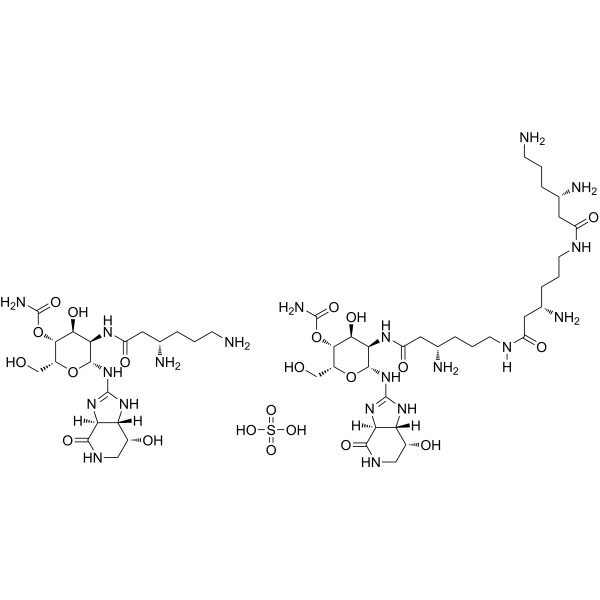
    Nourseothricin sulfate (Streptothricin sulfate) is a broad-spectrum antibiotic that destroys the outer membrane of Gram-negative bacteria and is a dominant selective marker for Fonsecaea pedrosoi . Nourseothricin sulfate inhibits protein biosynthesis in prokaryotic cells and strongly inhibits the growth of eukaryotes like fungi and can also be used as a elective marker for a wide range of organisms including bacteria, yeast, filamentous fungi, and plant cells .
    Nourseothricin sulfate
  • HY-114495
    Caerulomycin A
    3 Publications Verification

    Cerulomycin; Caerulomycin

    Fungal Antibiotic Infection Inflammation/Immunology
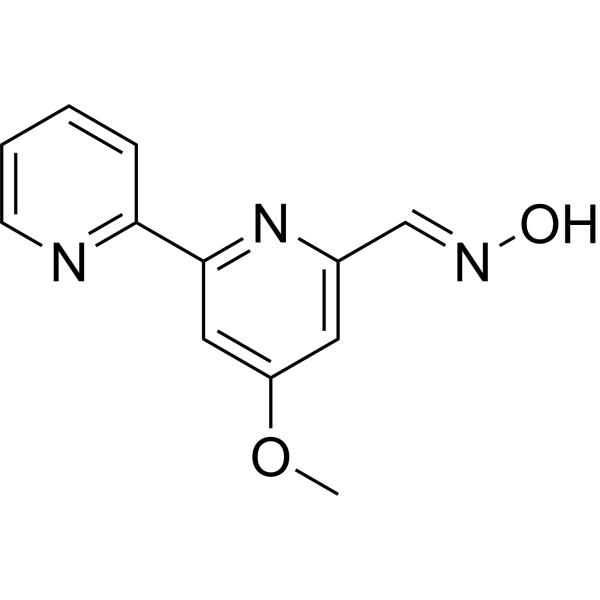
    Caerulomycin A is an orally active immunomodulator and antimicrobial agent. Caerulomycin A targets Smad3, STAT1 and GATA-3. Caerulomycin A downregulates GATA-3 expression, inhibits Th2 cell differentiation and Th2 cytokine production, reduces IgE levels, and alleviates pulmonary inflammatory responses and eosinophil infiltration. Caerulomycin A ameliorates collagen-induced arthritis symptoms, reduces joint inflammation and synovitis, and decreases the levels of proinflammatory cytokines in joints. Caerulomycin A inhibits the growth of some filamentous fungi, yeasts and specific bacteria. Caerulomycin A can be used in research related to arthritis and asthma .
    Caerulomycin A
  • HY-B0614A

    Bacterial Fungal Infection
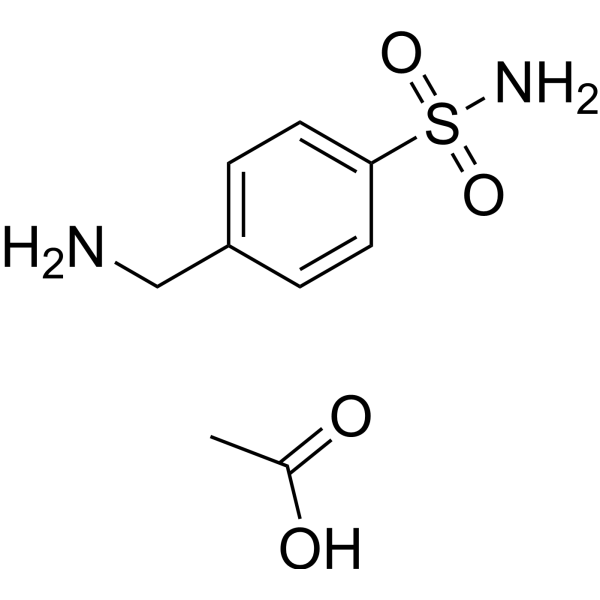
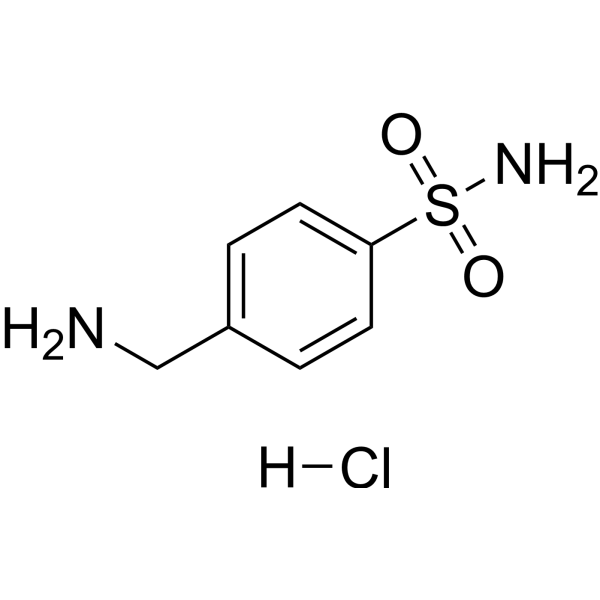
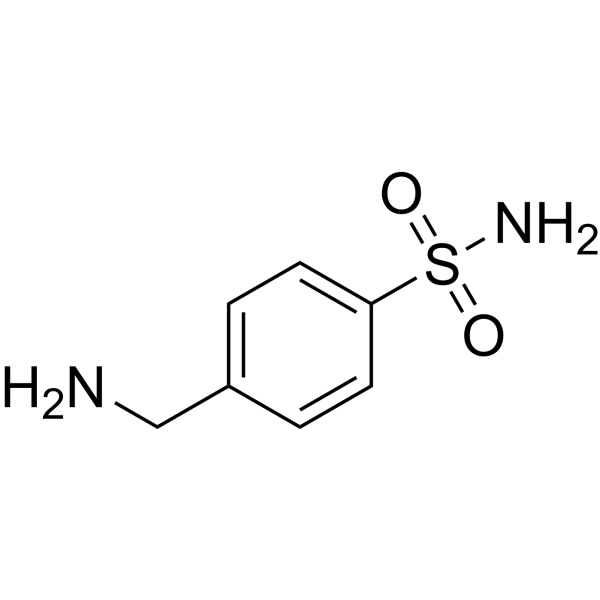
    Mafenide Acetate is a potent sulfonamide antimicrobial agent. Mafenide Acetate exhibits antibacterial activity against Staphylococcus aureus and Pseudomonas aeruginosa. Mafenide Acetate also exhibits antifungal activity against filamentous fungi (e.g., Lichtheimia and Aspergillus flavus). Mafenide Acetate can be used in the research of skin grafts on burn wounds, post-traumatic invasive fungal infections, and bacterially contaminated wounds .
    Mafenide Acetate
  • HY-W984782

    GLUT Bacterial Fungal AMPK PPAR Reactive Oxygen Species (ROS) Apoptosis SOD Infection Metabolic Disease Cancer
    Flindersine is an alkaloid with multiple activities including antibacterial, antifungal, antitumor, and antidiabetic properties. Flindersine increases the activity of antioxidant enzymes, restores the levels of renal biomarkers, and reduces blood glucose, blood lipid, and insulin levels in diabetic rats. Flindersine inhibits the growth of Gram-positive bacteria, Gram-negative bacteria, drug-resistant bacteria, as well as dermatophytes, filamentous fungi, and yeasts. Flindersine reduces the viability of cancer cells and induces apoptosis. Flindersine can be used in research related to breast cancer, type 2 diabetes, bacterial infections, and fungal infections .
    Flindersine
  • HY-N6643
    Rubropunctamine
    1 Publications Verification

    EBV Fungal Bacterial Infection Inflammation/Immunology
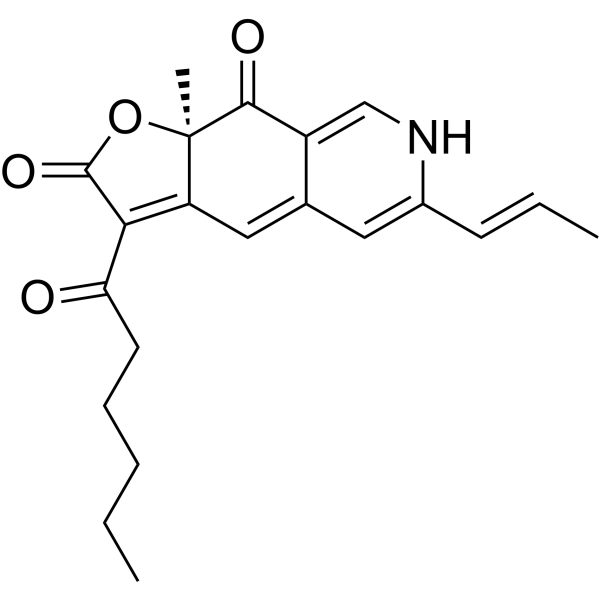
    Rubropunctamine is a redMonascus pigment. Not only Rubropunctamine exerts antibiotic action against bacteria but also against some yeast and filamentous fungi strains. Rubropunctamine has potential embryotoxicity and teratogenicity .
    Rubropunctamine
  • HY-126200

    Environmental Pollutants Fungal Infection
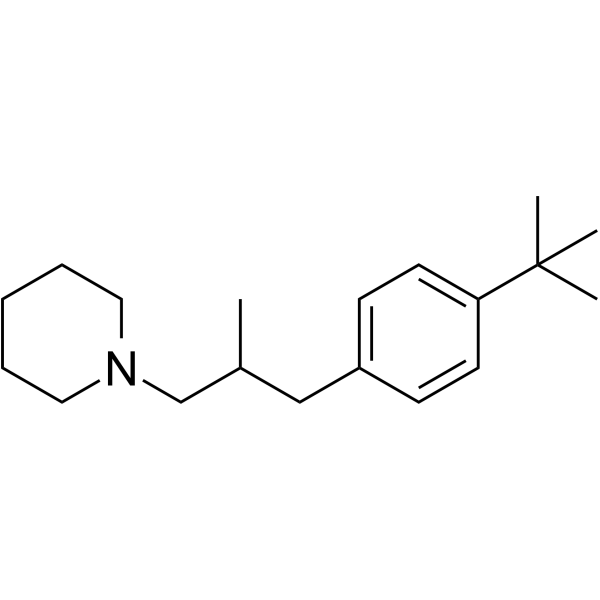
    Fenpropidin, a piperidine, is a fungicide used to control a range of diseases in cereals. Fenpropidin shows antifungal activity against different human pathogenic yeasts and filamentous fungi .
    Fenpropidin
  • HY-P5594

    Fungal Infection
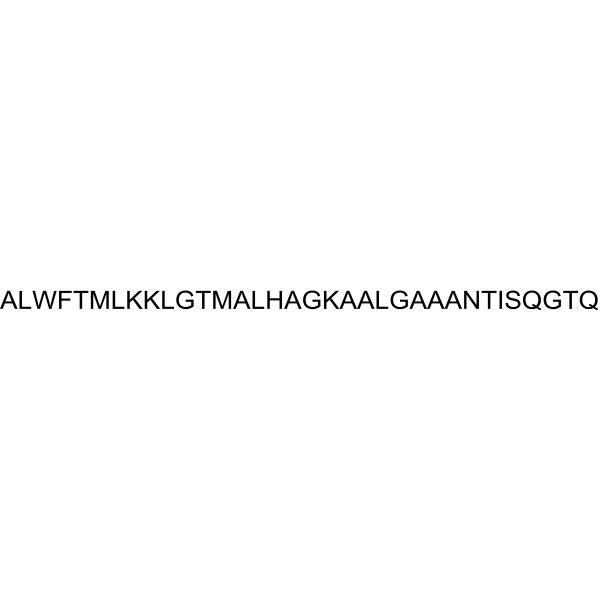
    Dermaseptin-S1 is an antimicrobial peptide derived from frog skin against filamentous fungi .
    Dermaseptin-S1
  • HY-121839

    Endogenous Metabolite Others
    Manoyl oxide is a labdane-type diterpenoid. Manoyl oxide is the precursor of Forskolin (HY-15371) .
    Manoyl oxide
  • HY-W097929

    2,4,6-Trichloroanisole

    Olfactory Receptor Others
    Tyrene (2,4,6-Trichloroanisole) is a the detoxification product of toxic 2,4,6-Trichlorophenol by filamentous fungi. Tyrene is the key substance that causes "cork taint" in wine. Tyrene can be used for the researches on food quality control and detoxification of environmental pollutants .
    Tyrene
  • HY-146079

    Fungal Infection
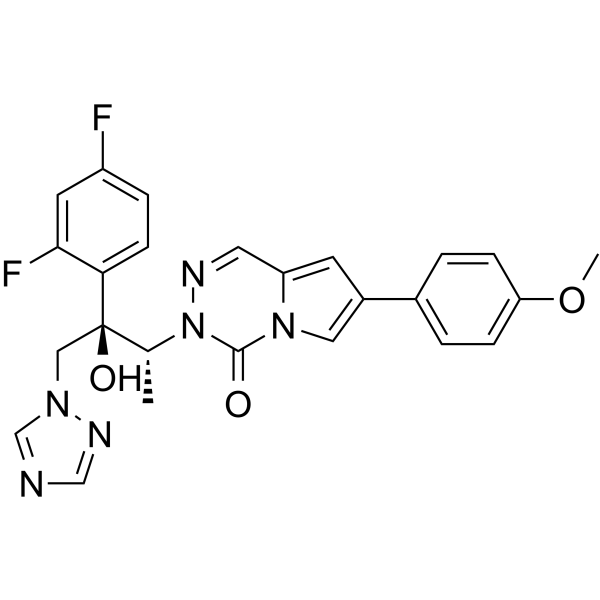
    Antifungal agent 31 (compound 12) is a potent and orally active triazole antifungal agents with a pyrrolotriazinone scaffold. Antifungal agent 31 shows antifungal activity against Candida spp. and filamentous fungi. Antifungal agent 31 significantly reduced mortality rates and kidney fungal burden in two murine models of lethal systemic infections .
    Antifungal agent 31
  • HY-P5628

    Bacterial Infection
    Termicin is an antimicrobial peptide from Pseudacanthotermes spiniger. Termicin has anti-gram-positive bacteria, filamentous fungi and yeast activity .
    Termicin
  • HY-P5549

    Bacterial Fungal Infection
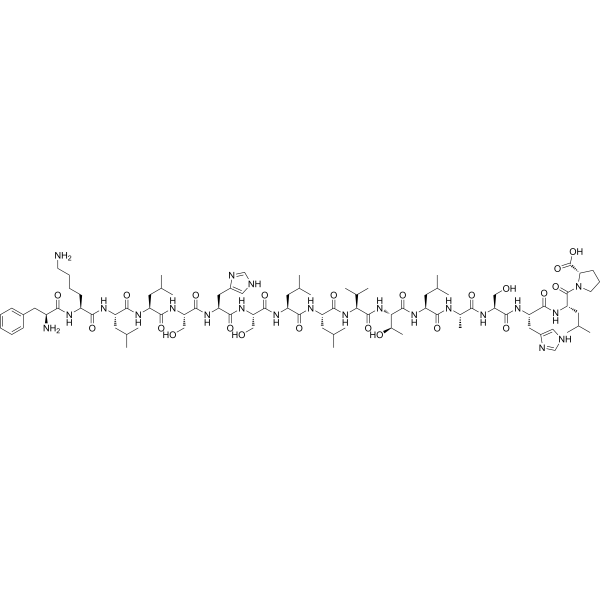
    Hb 98-114, the amino acids 98-114 of the alpha subunit of bovine hemoglobin, is an antimicrobial peptide. Hb 98-114 is active against several yeast and filamentous fungi (MIC: 2.1 μM-12.5 μM) .
    Hb 98–114
  • HY-P5588

    Fungal Infection
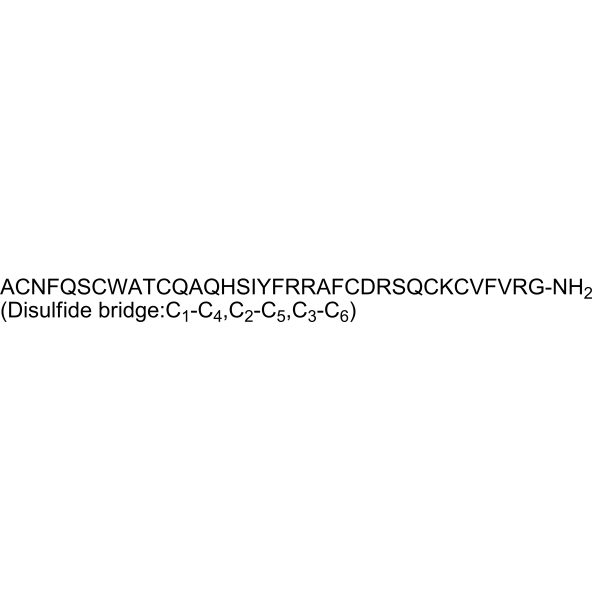
    Dermaseptin-S4 is an antimicrobial peptide derived from frog skin against filamentous fungi .
    Dermaseptin-S4
  • HY-P5590

    Fungal Infection
    Dermaseptin-S3 is an antimicrobial peptide derived from frog skin against filamentous fungi .
    Dermaseptin-S3
  • HY-P5593

    Fungal Infection
    Dermaseptin-S2 is an antimicrobial peptide derived from frog skin against filamentous fungi .
    Dermaseptin-S2
  • HY-P5587

    Fungal Infection
    Dermaseptin-S5 is an antimicrobial peptide derived from frog skin against filamentous fungi .
    Dermaseptin-S5
  • HY-N12496

    Fungal Bacterial Infection
    Di-O-methylhonokiol is a natural phenolic compound that can be isolated from magnolia flowers. Di-O-methylhonokiol has significant antibacterial activity against Gram-positive bacteria, acid-fast bacilli, and yeast-like and filamentous fungi. Di-O-methylhonokiol can be used in the study of fungal infections .
    Di-O-methylhonokiol
  • HY-126787

    YP-02259L-C

    Bacterial Infection Inflammation/Immunology
    17-Hydroxyventuricidin A (YP-02259L-C) is an antimicrobial compound.17-Hydroxyventuricidin A inhibits the growth of the two tested filamentous fungi (Verticillium dahlia and Fusarium sp.) and of Candida tropicalis R2 CIP203 .
    17-Hydroxyventuricidin A
  • HY-N14436

    Antibiotic Fungal Infection
    Pradimicin T1 is an antibiotic. Pradimicin Tl has activity against filamentous fungi and yeast-like fungi .
    Pradimicin Tl
  • HY-N14437

    Antibiotic Fungal Infection
    Pradimicin T2 is an antibiotic. Pradimicin T2 has activity against filamentous fungi and yeast-like fungi .
    Pradimicin T2
  • HY-N14489

    Bacterial Fungal Infection
    Neocopiamycin A is broad-spectrum resistant to Gram-positive bacteria, yeast and filamentous fungi .
    Neocopiamycin A
  • HY-N14441

    Fungal Infection
    Haliangicin A has anti-filamentous fungi activity, and it also has effect on oomycetes, but has no antibacterial activity .
    Haliangicin A
  • HY-N14443

    Fungal Infection
    Haliangicin C has anti-filamentous fungi activity, and it also has effect on oomycetes, but has no antibacterial activity .
    Haliangicin C
  • HY-N14444

    Fungal Infection
    Haliangicin D has anti-filamentous fungi activity, and it also has effect on oomycetes, but has no antibacterial activity .
    Haliangicin D
  • HY-N14442

    Fungal Infection
    Haliangicin B has anti-filamentous fungi activity, and it also has effect on oomycetes, but has no antibacterial activity .
    Haliangicin B
  • HY-N9550

    Others Others
    Chrysogine, a yellow pigment, can be obtained from filamentous fungi. Chrysogine protects microorganisms from damage by ultraviolet radiation .
    Chrysogine
  • HY-W780198

    Bacterial Fungal Infection
    Endophenazine A has activity against Gram-positive bacteria and filamentous fungi such as mucor and Penicillium. Its weeding ability to Lemna minor is relatively low .
    Endophenazine A
  • HY-N14121

    Fungal Infection
    Cladosporide A is found in the strain of Cladosporium sp. IFM 49189. Cladosporide A inhibits Aspergillus fumigatus with IC50 of 0.5-4.0 μg/mL, but it has no effect on other filamentous fungi .
    Cladosporide A
  • HY-N14985

    Fungal Bacterial Infection
    Dictyopanine A is found in the strain of Dictylpanus sp. Hki 0181. The antibacterial spectrum is narrow, and it has moderate antibacterial activity only against some filamentous fungi and Gram-positive bacteria .
    Dictyopanine A
  • HY-W708510

    Isotope-Labeled Compounds Fungal Infection
    Fenpropidin-d10 is the deuterium labeled Fenpropidin (HY-126200). Fenpropidin, a piperidine, is a fungicide used to control a range of diseases in cereals. Fenpropidin shows antifungal activity against different human pathogenic yeasts and filamentous fungi .
    Fenpropidin-d10
  • HY-126200R

    Reference Standards Fungal Infection
    Fenpropidin (Standard) is the analytical standard of Fenpropidin (HY-126200). This product is intended for research and analytical applications. Fenpropidin, a piperidine, is a fungicide used to control a range of diseases in cereals. Fenpropidin shows antifungal activity against different human pathogenic yeasts and filamentous fungi .
    Fenpropidin (Standard)
  • HY-N15653

    Endogenous Metabolite Fungal NF-κB Infection Cancer
    Heveadride is a fungal metabolite and an antifungal agent. Heveadride is active against various filamentous fungi and some human pathogenic yeasts. Heaveadride induces down-regulation of TNFα-induced NF-κB activity in human chronic myeloid leukemia cells with an IC50 of 82.7 μM .
    Heveadride
  • HY-N17728

    Drug Metabolite Infection
    11βh,13-Dihydroparthenolide (Compound 314) is a metabolite of Parthenolide (HY-N0141), which can be produced by biotransformation of filamentous fungi .
    11βh,13-Dihydroparthenolide
  • HY-B0614AR

    Reference Standards Bacterial Fungal Infection
    Mafenide (Acetate) (Standard) is the analytical standard of Mafenide Acetate (HY-B0614A). This product is intended for research and analytical applications. Mafenide Acetate is a potent sulfonamide antimicrobial agent. Mafenide Acetate exhibits antibacterial activity against Staphylococcus aureus and Pseudomonas aeruginosa. Mafenide Acetate also exhibits antifungal activity against filamentous fungi (e.g., Lichtheimia and Aspergillus flavus). Mafenide Acetate can be used in the research of skin grafts on burn wounds, post-traumatic invasive fungal infections, and bacterially contaminated wounds .
    Mafenide Acetate (Standard)
  • HY-P0263A

    Bacterial Fungal Infection
    Dermaseptin TFA, a peptide isolated from frog skin, exhibits potent antimicrobial activity against bacteria, fungi, and protozoa at micromolar concentration .
    Dermaseptin TFA
  • HY-182496

    Antibiotic Bacterial Infection
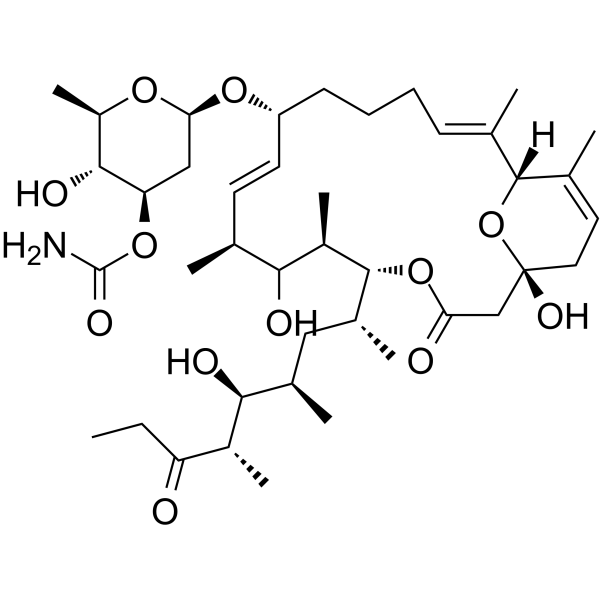
    Kanchanamycin A is a 36-membered polyol macrolide antibiotic found in Streptomyces olivaceus Tü 4018, with high activity against Pseudomonas fluorescens, weak activity against Gram-positive bacteria and filamentous fungi, and no activity against yeasts. Kanchanamycin A inhibits growth of Pseudomonas fluorescens, Botrytis cinerea, Mucor miehei, Penicillium notatum, and Staphylococcus aureus. Kanchanamycin A is commonly used in the study of bacterial infections .
    Kanchanamycin A
  • HY-W019617

    Fungal Infection
    2-Ethylbenzimidazole is an anti-fungal agent. 2-Ethylbenzimidazole inhibits the growth of unicellular fungi and filamentous fungi. 2-Ethylbenzimidazole is applicable for the research of fungal infections .
    2-Ethylbenzimidazole
  • HY-W309310

    Histamine Receptor Endogenous Metabolite Inflammation/Immunology
    Etofesalamide is a nonsteroidal antiinflammatory agent. Etofesalamide has major phase II metabolites of glucoside and riboside conjugations (such as etofesalamide-2-glucuronide) in filamentous fungi. Etofesalamide can be used for allergic and autoimmune skin diseases like toacne, psoriasis and sensitization dermatitis research .
    Etofesalamide

Inquiry Online

Your information is safe with us. * Required Fields.

Salutation


Country or Region *

Applicant Name *


Organization Name *

Department *


Email Address *


Product Name *

Cat. No.


Requested quantity *

Phone Number *


Remarks

Inquiry Online

Inquiry Information

Product Name:
Cat. No.:
Quantity:
MCE Japan Authorized Agent:

