6 Results for "

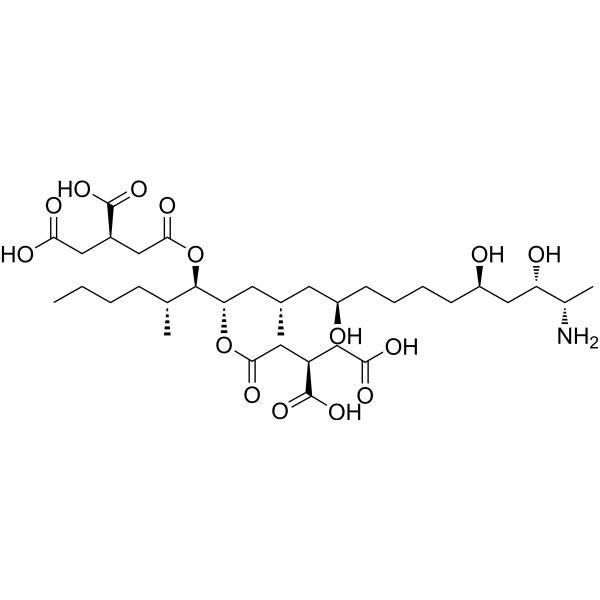
Fumonisin B1

" in MedChemExpress (MCE) Product Catalog:
Products (6)

6 Results for "Fumonisin B1" in MCE Product Catalog:

9
9 Cited Publications
Cat. No.: HY-N6719
CAS No.: 116355-83-0
Fumonisin B1 is a mycotoxin produced from Fusarium moniliforme. Fumonisin B1 is a potent inhibitor of sphingosine N-acyltransferase (ceramide synthase) and disrupts de novo sphingolipid biosynthesis. Fumonisin B1 is the most abundant and toxic fumonisin .
loading...
    loading...
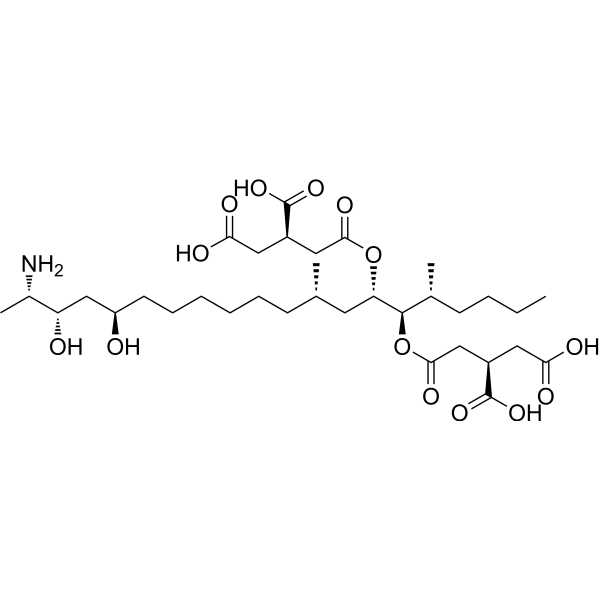
Cat. No.: HY-N6723
CAS No.: 116355-84-1
Fumonisin B2 is a selective ceramide synthase inhibitor and carcinogenic mycotoxin with toxicity comparable to that of Fumonisin B1 (HY-N6719). Fumonisin B2 inhibits de novo sphingolipid biosynthesis by blocking the amide bond formation between fatty acids and dihydrosphingosine, which leads to a massive intracellular accumulation of free dihydrosphingosine, altered sphingosine levels, subsequent inhibition of cell proliferation, and induction of cell death. Fumonisin B2 is used to investigate the pathogenesis of diseases associated with Fusarium verticillioides contamination, including equine leukoencephalomalacia, porcine pulmonary edema syndrome, human esophageal cancer, and rat hepatocellular carcinoma .
loading...
    loading...
Cat. No.: HY-N6730
CAS No.: 145040-09-1
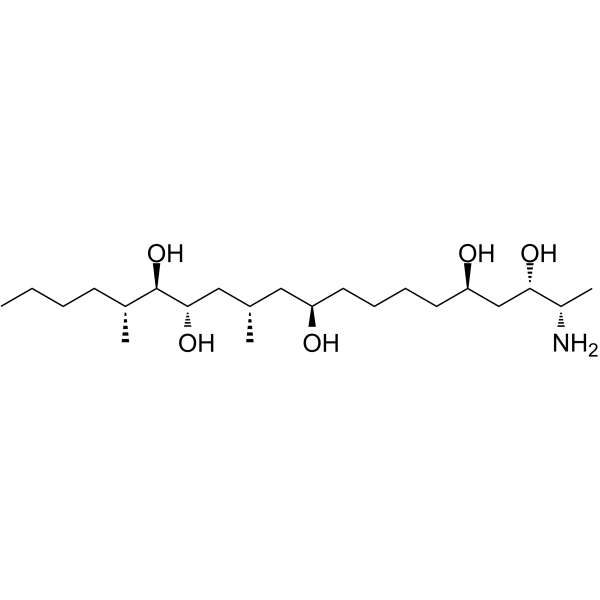
Synonyms: Aminopentol
Target:  

Apoptosis

Hydrolyzed Fumonisin B1 (Aminopentol) is the backbone and main hydrolysis product of the mycotoxin Fumonisin B1 (HY-N6719). Hydrolyzed Fumonisin B1 can weakly inhibit ceramide synthase .
loading...
    loading...
Cat. No.: HY-N6719S
CAS No.: 1217458-62-2
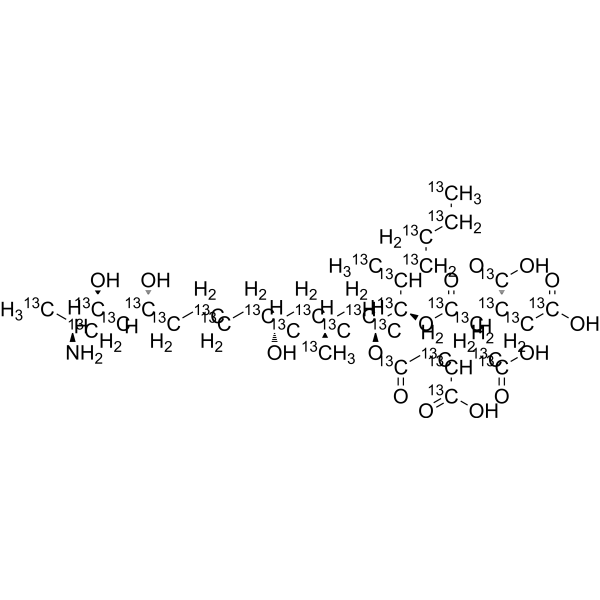
Fumonisin B1- 13C34 is the 13C labeled Fumonisin B1 (HY-N6719) . Fumonisin B1 is a mycotoxin produced from Fusarium moniliforme. Fumonisin B1 is a potent inhibitor of sphingosine N-acyltransferase (ceramide synthase) and disrupts de novo sphingolipid biosynthesis. Fumonisin B1 is the most abundant and toxic fumonisin .
loading...
    loading...
Cat. No.: HY-N15309
CAS No.: 185012-38-8
Synonyms: Torvoside K
Torvoside C (Torvoside K) is a compound found in Solanum torvum with antifungal activity. The ZOIs and MIC values of Torvoside C against the tested fungi (Alternaria brassicicola, Alternaria geophila, Aspergillus flavus, etc.) range from 33.4% to 87.4% and 31.25 to 250 μg/mL, respectively. Additionally, it exhibits a dose-dependent inhibitory effect on the production of mycotoxins aflatoxin B1 and fumonisin B1, which are produced by A. flavus and F. verticillioides, respectively. Torvoside C can be used for research in the field of antifungal infection .
loading...
    loading...
Cat. No.: HY-123996
CAS No.: 20041-64-9
3-Ethoxy-5,6-dibromosalicylaldehyde is an IRE1/ERN1 inhibitor, with an IC50 of 0.12 μM, a Ki of 71-88 nM, and a Kd of 100 nM against the ribonuclease activity of hIRE1α, as well as an IC50 of 4.8 μM against yeast Ire1. It shows selectivity toward IRE1 ribonuclease. 3-Ethoxy-5,6-dibromosalicylaldehyde blocks the IRE1/ERN1-mediated unfolded protein response (UPR) signaling pathway, including XBP-1 mRNA splicing, induction of XBP1 target genes, and activation of MAPK8/9/10, but does not alter the phosphorylation level of IRE1α or the PERK/ATF6 pathway. 3-Ethoxy-5,6-dibromosalicylaldehyde inhibits chikungunya virus replication, induces growth arrest, apoptosis and clonogenic inhibition in pancreatic cancer cells, reduces FB1 (Fumonisin B1) (HY-N6719)-induced autophagy and cell death, regulates PGG-induced senescence and apoptosis, and alleviates Sorafenib (HY-10201)-induced vacuolization and damage in hepatic stellate cells. 3-Ethoxy-5,6-dibromosalicylaldehyde can be used in research related to chikungunya virus infection, pancreatic cancer, FB1-induced nephrotoxicity, liver cancer, breast cancer, lung cancer and liver fibrosis .
loading...
    loading...

