1. Search Result
Search Result
Results for "

Functionalized product

" in MedChemExpress (MCE) Product Catalog:

65

Inhibitors & Agonists

4

Screening Libraries

13

Biochemical Assay Reagents

1

Peptides

19

Natural
Products

3

Isotope-Labeled Compounds

Cat. No. Product Name Target Research Areas Chemical Structure
  • HY-N7059

    Bacterial Reactive Oxygen Species (ROS) Infection
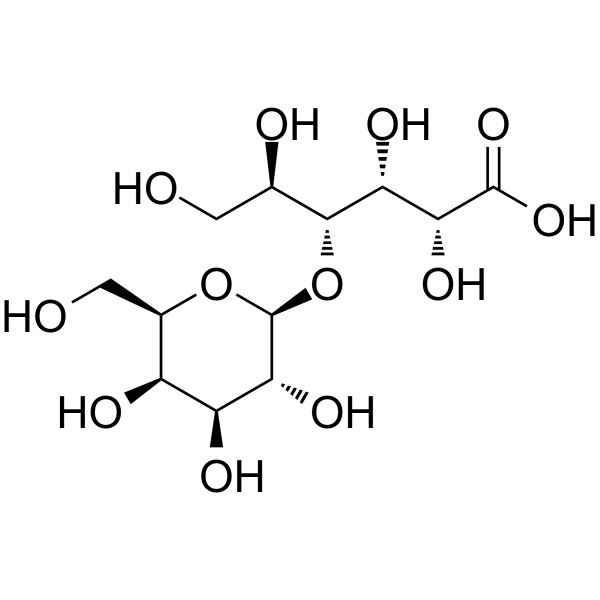
    Lactobionic acid is a bionic acid that can be naturally found in the Caspian Sea yogurt and chemically constituted of a gluconic acid bonded to a galactose. Lactobionic acid has antioxidant, antimicrobial, chelating, stabilizer, acidulant, and moisturizing properties. Lactobionic acid can be obtained by electrolytic methods, microbial fermentation or biocatalytic approaches. Lactobionic acid can be used in foodstuffs, to produce new functional products and against food-borne pathogens. Lactobionic acid inhibits DNA repair and protein synthesis, induction of oxidative stress and inhibition of metabolic pathways against MRSA .
    Lactobionic acid
  • HY-126404

    Environmental Pollutants Interleukin Related Angiotensin-converting Enzyme (ACE) Cardiovascular Disease
    Casein hydrolysate is an orally effective, multi-functional mixture of bioactive peptides, a hydrolysis product of casein (HY-125865), containing ACE inhibitors and immunomodulatory target regulators, among others. Casein hydrolysate releases short-chain bioactive peptides through enzymatic hydrolysis of casein, increasing cellular glutathione and catalase levels, enhancing ConA-induced IL-2 production, and exhibiting metal ion chelation, free radical scavenging, antibacterial, and mineral absorption-promoting effects. Casein hydrolysate lowers blood pressure by inhibiting angiotensin-converting enzyme (ACE) and reducing bradykinin degradation .
    Casein hydrolysate
  • HY-B2167R

    DHA (Standard); Cervonic acid (Standard)

    Reference Standards Endogenous Metabolite Neurological Disease Cancer
    Docosahexaenoic acid (Standard) is the analytical standard of Docosahexaenoic acid. This product is intended for research and analytical applications. Docosahexaenoic Acid (DHA) is an omega-3 fatty acid abundantly present brain and retina. It can be obtained directly from fish oil and maternal milk. In Vitro: Docosahexaenoic acid (DHA) is essential for the growth and functional development of the brain in infants. DHA is also required for maintenance of normal brain function in adults. The inclusion of plentiful DHA in the diet improves learning ability and memory . DHA is an essential requirement in every step of brain development like neural cell proliferation, migration, differentiation, synaptogenesis. The multiple double bonds and unique structure allow DHA to impart special membrane characteristics for effective cell signaling. Many development disorders like dyslexia, autism spectrum disorder, attention deficit hyperactivity disorder, schizophrenia etc. are causally related to decreased level of DHA . DHA is a potent RXR ligand inducing robust RXR activation already at low micro molar concentrations. The EC50 for RXRα activation by DHA is about 5-10 μM fatty acid . In Vivo: Docosahexaenoic acid administration over 10 weeks significantly reduces the number of reference memory errors, without affecting the number of working memory errors, and significantly increases the docosahexaenoic acid content and the docosahexaenoic acid/arachidonic acid ratio in both the hippocampus and the cerebral cortex . DHA treatment exerts neuroprotective actions on an experimental mouse model of PD. There is a decrease tendency in brain lipid oxidation of MPTP mice but it does not significantly .
    Docosahexaenoic acid (Standard)
  • HY-W047710

    Biochemical Assay Reagents Others
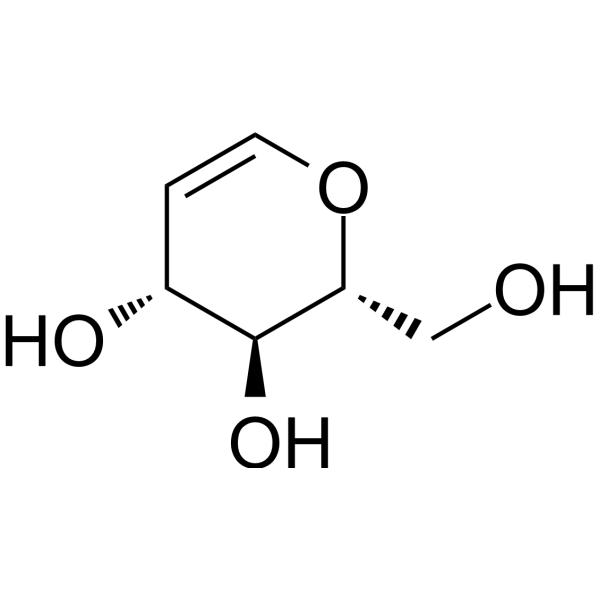
    D-Galactal is a monosaccharide that belongs to the class of carbohydrates. It is an aldohexose, which means it has six carbon atoms and an aldehyde functional group. D-Galactal occurs naturally in certain foods such as dairy products, meats and fruits. It can also be synthesized by chemical or enzymatic processes. D-Galactal has various applications in the food industry, especially as a flavoring and sweetening agent. Additionally, it has potential research roles in metabolic disorders, cancer, and inflammation.
    D-Galactal
  • HY-113365S

    4-Cholesten-3-one-d5

    Endogenous Metabolite Metabolic Disease
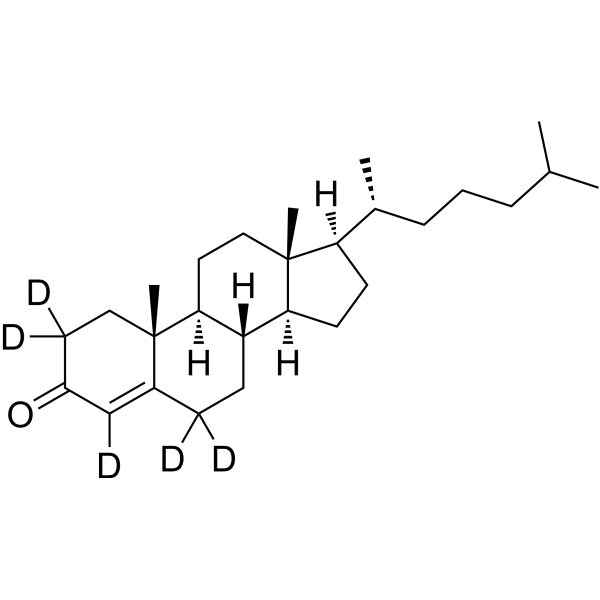
    Cholestenone-d5 is the deuterium labeled Cholestenone. Cholestenone (4-Cholesten-3-one), the intermediate oxidation product of cholesterol, is metabolized primarily in the liver. Cholestenone is highly mobile in membranes and influences cholesterol flip-flop and efflux. Cholestenone may cause long-term functional defects in cells .
    Cholestenone-d5
  • HY-W142618

    Biochemical Assay Reagents Others
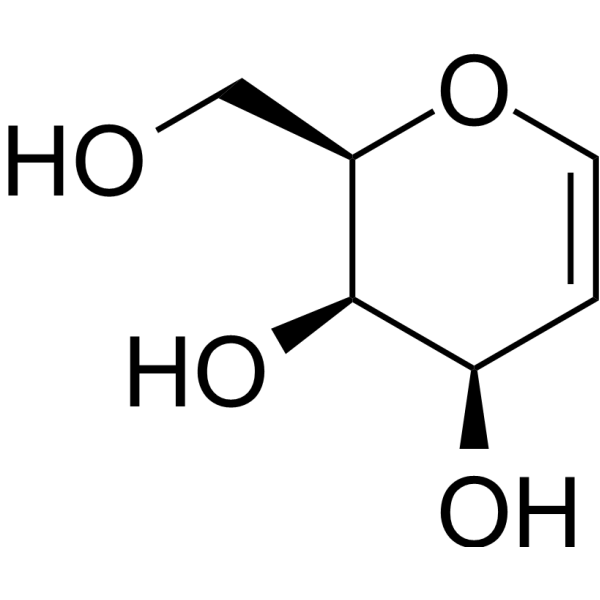
    D-Glucal is an organic compound belonging to the family of aldoses, which are monosaccharides containing an aldehyde functional group. It has a six-carbon structure and is derived from glucose by oxidation of the primary alcohol group at carbon 1 to an aldehyde group. D-Glucal is a white crystalline solid that is soluble in water and has a sweet taste. It is an important intermediate in the chemical synthesis of a wide variety of compounds, including pharmaceuticals, agrochemicals, and natural products. D-Glucal can be converted into other carbohydrate derivatives such as glycosides, glycoconjugates and amino sugars. It also plays a role in the study of carbohydrate chemistry, where it is used as a chiral building block for the synthesis of complex structures.
    D-Glucal
  • HY-B1150R

    Reference Standards Bacterial SARS-CoV Antibiotic Infection Cancer
    Clofoctol (Standard) is the analytical standard of Clofoctol. This product is intended for research and analytical applications. Clofoctol is a bacteriostatic antibiotic. Clofoctol is used in the treatment of respiratory tract and ear, nose and throat infections caused by Gram-positive bacteria. Clofoctol is only functional against Gram-positive bacteria and can penetrate into human lung tissue. Clofoctol is also an inhibitor of prostate cancer. Clofoctol has antiviral potency .
    Clofoctol (Standard)
  • HY-B1306R

    p-Aminohippuric acid (Standard)

    Reference Standards Biochemical Assay Reagents Neurological Disease Metabolic Disease
    4-Aminohippuric acid (p-Aminohippuric acid) (Standard) is the analytical standard of 4-Aminohippuric acid (HY-B1306). This product is intended for research and analytical applications. 4-Aminohippuric acid (p-Aminohippuric acid) is a coordination ligand for metal ions (such as Cu 2+, Fe 3+, Hg 2+) and a functionalization reagent for nanomaterials. 4-Aminohippuric acid can coordinate with metal ions or modify the surface of materials such as carbon nanotubes and gold nanoparticles through amino and carboxyl groups. 4-Aminohippuric acid can form stable complexes with metal ions or participate in the synthesis of nanomaterials as a reducing agent/stabilizer, enriching metal ions or giving nanoparticles peroxidase-mimicking activity. 4-Aminohippuric acid can be used to construct highly sensitive electrochemical sensors or colorimetric sensors to detect and quantitatively analyze heavy metal ions such as copper, iron, and mercury in environmental water samples and biological samples. 4-Aminohippuric acid may also be a biomarker for attention-deficit/hyperactivity disorder (ADHD) .
    4-Aminohippuric acid (Standard)
  • HY-113365R

    4-Cholesten-3-one (Standard)

    Reference Standards Endogenous Metabolite Infection Metabolic Disease
    Clebopride (malate) (Standard) is the analytical standard of Clebopride (malate). This product is intended for research and analytical applications. Clebopride malate is a dopamine antagonist used in the study of functional gastrointestinal disorders.
    Cholestenone (Standard)
  • HY-B0711R

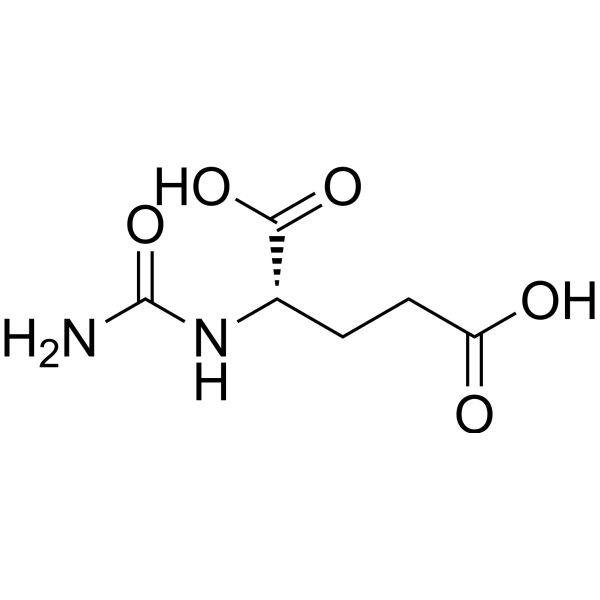
    N-Carbamyl-L-glutamic acid (Standard)

    Reference Standards Others Cancer
    Carglumic Acid (Standard) is the analytical standard of Carglumic Acid. This product is intended for research and analytical applications. Carglumic acid (N-Carbamyl-L-glutamic acid), a functional analogue of N-acetylglutamate (NAG) and a carbamoyl phosphate synthetase 1 (CPS1) activator, is used to treat acute and chronic hyperammonemia associated with NAG synthase (NAGS) deficiency.
    Carglumic Acid (Standard)
  • HY-113365S2

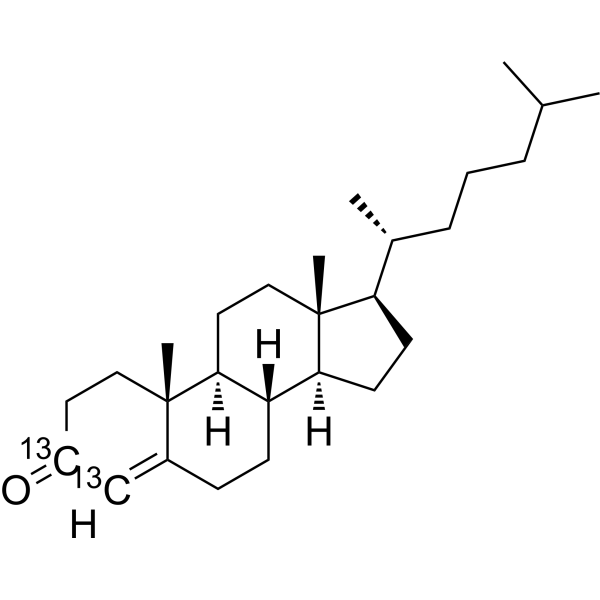
    4-Cholesten-3-one-13C2

    Isotope-Labeled Compounds Endogenous Metabolite Metabolic Disease
    Cholestenone- 13C2 is the 13C labeled Cholestenone. Cholestenone (4-Cholesten-3-one), the intermediate oxidation product of cholesterol, is metabolized primarily in the liver. Cholestenone is highly mobile in membranes and influences cholesterol flip-flop and efflux. Cholestenone may cause long-term functional defects in cells .
    Cholestenone-13C2
  • HY-113365S1

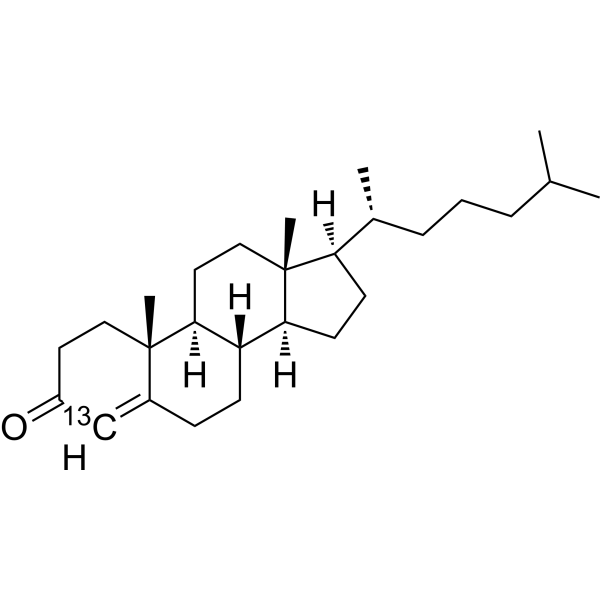
    4-Cholesten-3-one-13C

    Endogenous Metabolite Metabolic Disease
    Cholestenone- 13C is the 13C labeled Cholestenone. Cholestenone (4-Cholesten-3-one), the intermediate oxidation product of cholesterol, is metabolized primarily in the liver. Cholestenone is highly mobile in membranes and influences cholesterol flip-flop and efflux. Cholestenone may cause long-term functional defects in cells .
    Cholestenone-13C
  • HY-133091R

    7-O-Ethylumbelliferone (Standard)

    Cytochrome P450 Reference Standards Metabolic Disease
    7-Ethoxycoumarin (Standard) is the analytical standard of 7-Ethoxycoumarin. This product is intended for research and analytical applications. 7-Ethoxycoumarin is a substrate of cytochrome P450 (CYP450). 7-Ethoxycoumarin has been used for the functional characterization of various CYPs and for the generation of 7-hydroxycoumarin (HY-N0573) .
    7-Ethoxycoumarin (Standard)
  • HY-B2089R

    Reference Standards 5-HT Receptor Dopamine Receptor Neurological Disease Metabolic Disease
    Cinitapride (Standard) is the analytical standard of Cinitapride. This product is intended for research and analytical applications. Cinitapride is a nonselective 5-HT1 and 5-HT4 receptors agonist and a 5-HT2 and D2 antagonist. Cinitapride can be used in functional dyspepsia (FD) and gastroesophageal reflux disease (GERD) research .
    Cinitapride (Standard)
  • HY-N7059R

    Reference Standards Bacterial Reactive Oxygen Species (ROS) Infection
    Lactobionic acid (Standard) is an analytical standard for lactobionic acid. This product is intended for use in research and analytical applications. Lactobionic acid is a bionic acid that can be naturally found in the Caspian Sea yogurt and chemically constituted of a gluconic acid bonded to a galactose. Lactobionic acid has antioxidant, antimicrobial, chelating, stabilizer, acidulant, and moisturizing properties. Lactobionic acid can be obtained by electrolytic methods, microbial fermentation or biocatalytic approaches. Lactobionic acid can be used in foodstuffs, to produce new functional products and against food-borne pathogens. Lactobionic acid inhibits DNA repair and protein synthesis, induction of oxidative stress and inhibition of metabolic pathways against MRSA .
    Lactobionic acid (Standard)
  • HY-17364R

    NSC 362856 (Standard); CCRG 81045 (Standard); TMZ (Standard)

    Reference Standards DNA Alkylator/Crosslinker Autophagy Apoptosis Cancer
    Temozolomide (Standard) is the analytical standard of Temozolomide. This product is intended for research and analytical applications. Temozolomide (NSC 362856) is an oral active DNA alkylating agent that crosses the blood-brain barrier. Temozolomide is also a proautophagic and proapoptotic agent. Temozolomide is effective against tumor cells that are characterized by low levels of O6-alkylguanine DNA alkyltransferase (OGAT) and a functional mismatch repair system. Temozolomide has antitumor and antiangiogenic effects .
    Temozolomide (Standard)
  • HY-W1048567E

    Biochemical Assay Reagents Others
    mPEG40000-SCM is a high quality amine-reactive PEG product with a stable non-degradable functional group between the PEG polymer chain and the NHS ester .
    mPEG40000-SCM
  • HY-W1048567H

    Biochemical Assay Reagents Others
    mPEG3400-SCM is a high quality amine-reactive PEG product with a stable non-degradable functional group between the PEG polymer chain and the NHS ester .
    mPEG3400-SCM
  • HY-W1048567A

    Biochemical Assay Reagents Others
    mPEG2000-SCM is a high quality amine-reactive PEG product with a stable non-degradable functional group between the PEG polymer chain and the NHS ester .
    mPEG2000-SCM
  • HY-121939R

    Reference Standards Biochemical Assay Reagents Others
    6-Hydroxy-L-DOPA (Standard) is the analytical standard of 6-Hydroxy-L-DOPA. This product is intended for research and analytical applications. 6-Hydroxy-L-DOPA is a nucleic acid functionalized with electron-donating units .
    6-Hydroxy-L-DOPA (Standard)
  • HY-131501R

    Drug Derivative Reference Standards Metabolic Disease
    Menaquinone 9 (Standard) is the analytical standard of Menaquinone 9. This product is intended for research and analytical applications. Menaquinone 9 is a vitamin K2 (HY-109569) analog. Menaquinone 9 acts as a prothrombogenic agent and functional electron transfer component in nitrate reductase .
    Menaquinone 9 (Standard)
  • HY-W127801

    EDTA trisodium hydrate

    Biochemical Assay Reagents Others
    Ethylenediaminetetraacetic acid (trisodium hydrate) is a class of organic compounds containing carboxylic acid functional groups. It is commonly used as a chelating agent in various industrial and medical applications, especially in the food and pharmaceutical industries. Ethylenediaminetetraacetic acid (trisodium hydrate) has strong metal ion binding properties and can be used to chelate trace metals that may affect product quality or stability. In addition, it is used as an anticoagulant in blood collection tubes and as a stabilizer in some cosmetic and personal care products.
    Ethylenediaminetetraacetic acid trisodium hydrate
  • HY-W127789

    EDTA diammonium

    Biochemical Assay Reagents Others
    Ethylenediaminetetraacetic acid diammonium is a class of organic compounds containing both ammonium and carboxylic acid functional groups. It is commonly used as a chelating agent in various industrial and medical applications, especially in the food and pharmaceutical industries. Ethylenediaminetetraacetic acid diammonium has strong metal ion binding properties and can be used to chelate trace metals that may affect product quality or stability. In addition, it is used as an anticoagulant in blood collection tubes and as a clarifying agent in cosmetic and personal care products.
    Ethylenediaminetetraacetic acid diammonium
  • HY-108283R

    AA 149 (Standard); Supacal (Standard)

    Calcium Channel Reference Standards Inflammation/Immunology
    Trepibutone (Standard) is the analytical standard of Trepibutone. This product is intended for research and analytical applications. Trepibutone (AA 149) increases secretion of bile and pancreatic juice, and accelerates flaccidity of the smooth muscle in the gastrointestinal tract. Trepibutone can be used for the research of cholecystitis and functional gastrointestinal disorders .
    Trepibutone (Standard)
  • HY-131275R

    Drug Metabolite Reference Standards Others
    Carglumic Acid (Standard) is the analytical standard of Carglumic Acid. This product is intended for research and analytical applications. Carglumic acid (N-Carbamyl-L-glutamic acid), a functional analogue of N-acetylglutamate (NAG) and a carbamoyl phosphate synthetase 1 (CPS1) activator, is used to treat acute and chronic hyperammonemia associated with NAG synthase (NAGS) deficiency.
    Imatinib Impurity E (Standard)
  • HY-113529R

    Apoptosis Endogenous Metabolite Reference Standards Cancer
    Stachyose (tetrahydrate) (Standard) is the analytical standard of Stachyose (tetrahydrate). This product is intended for research and analytical applications. Stachyose tetrahydrate, a functional oligosaccharide, acts as a prebiotic. Stachyose tetrahydrate can prevent indirectly colon cancer cell growth by promoting the proliferation of probiotics or producing beneficial materials in the intestine .
    Stachyose tetrahydrate (Standard)
  • HY-B0684R

    B-15000 (Standard); SQ-13396 (Standard)

    Biochemical Assay Reagents Reference Standards Cancer
    Iopamidol (Standard) is the analytical standard of Iopamidol. This product is intended for research and analytical applications. Iopamidol is a nonionic, X-Ray iodinated contrast agent (CA) for a wide variety of diagnostic applications. Iopamidol contains amide and hydroxyl functionalities that can be exploited for the generation of the chemical exchange saturation transfer (CEST) contrast .
    Iopamidol (Standard)
  • HY-B1613AR

    Reference Standards Dopamine Receptor Adrenergic Receptor Metabolic Disease
    Clebopride malate (Standard) is the analytical standard of Clebopride malate (HY-B1613A). This product is intended for research and analytical applications. Clebopride malate is an orally active dopamine Receptor antagonist. Clebopride malate acts on dopamine D2 receptors and has antiemetic and prokinetic effects. Clebopride malate can be used in the study of functional gastrointestinal disorders.
    Clebopride malate (Standard)
  • HY-16996AR

    Sigma Receptor Neurological Disease
    BD-1047 (dihydrobromide) (Standard) is the analytical standard of BD-1047 (dihydrobromide). This product is intended for research and analytical applications. BD-1047 dihydrobromide is a selective functional antagonist of sigma receptors. BD-1047 dihydrobromide attenuates Apomorphine (HY-12723)-induced climbing and Phencyclidine-induced head twitches .
    BD-1047 dihydrobromide (Standard)
  • HY-N0913AR

    Reference Standards Bacterial Drug Intermediate Metabolic Disease
    Isomaltotriose (Standard) is the analytical standard of Isomaltotriose. This product is intended for research and analytical applications. Isomaltotriose is a type of isomaltooligosaccharide belonging to the α-glucan family. Isomaltotriose acts not only as an important prebiotic component that can be differentially metabolized by beneficial intestinal bacteria to regulate the intestinal flora, but also as a valuable chemical synthesis precursor that can be modified enzymatically to introduce hydrophobic groups and converted into high-value functional molecules.
    Isomaltotriose (Standard)
  • HY-W004298R

    Drug Metabolite Reference Standards Others
    10-Undecen-1-ol,98% (stabilized with MEHQ) (Standard) is the analytical standard of 10-Undecen-1-ol,98% (stabilized with MEHQ). This product is intended for research and analytical applications. 10-Undecen-1-ol, converted from ricinoleic acid, can be used as a comonomer for the introduction of functional groups[1][2].
    10-Undecen-1-ol (Standard)
  • HY-103382R

    Reference Standards Fungal Infection
    Phenyramidol (Hydrochloride) (Standard) is the analytical standard of Phenyramidol (Hydrochloride). This product is intended for research and analytical applications. Phenyramidol hydrochloride is an anticoagulant and analgesic with activity that increases detection sensitivity in biological samples. Phenyramidol hydrochloride can be oxidized in aqueous media by electrochemical methods to achieve its quantitative analysis. The detection of Phenyramidol hydrochloride using an amino-functionalized multi-walled carbon nanotube-modified glassy carbon electrode showed significant enhancement of the current peak .
    Arcyriaflavin A (Standard)
  • HY-111346R

    1-Linoleoyl-rac-glycerol (Standard); 1-Monolinolein (Standard)

    Phospholipase Apolipoprotein Interleukin Related Reference Standards Metabolic Disease Inflammation/Immunology
    1-Linoleoyl Glycerol (Standard) is the analytical standard of 1-Linoleoyl Glycerol. This product is intended for research and analytical applications. 1-Linoleoyl glycerol is a LpPLA2 inhibitor. 1-Linoleoyl glycerol acts as a precursor for synthesizing various functional lipids, such as phospholipids. 1-Linoleoyl glycerol mitigates inflammation induced by Apolipoprotein CIII (reduction of IL-6) .
    1-Linoleoyl Glycerol (Standard)
  • HY-W140555

    Biochemical Assay Reagents Bacterial Infection
    5,7-Dimethoxyphthalide, a dimethoxy derivative of phthalide, can undergo nucleophilic substitution reactions with functionalized long-chain alkyl iodides. 5,7-Dimethoxyphthalide acts as a synthetic building block to prepare anti-Helicobacter pylori products including CJ molecule and sporotricale methyl ether. 5,7-Dimethoxyphthalide can be utilized for relevant researches on Helicobacter pylori infection and structure-activity relationship (SAR) .
    5,7-Dimethoxyphthalide
  • HY-B0025R

    Reference Standards Glycosidase Metabolic Disease
    Voglibose (Standard) is the analytical standard of Voglibose. This product is intended for research and analytical applications. Voglibose is an orally active alpha-glucosidase inhibitor that prevents the development of colorectal precancerous lesions induced by obesity and diabetes. Voglibose reduces oxidative stress in an inflammatory environment and inhibits the insulin-like growth factor/insulin-like growth factor-1 receptor (IGF/IGF-1R) functional axis[1].
    Voglibose (Standard)
  • HY-W012653R

    Reference Standards Biochemical Assay Reagents Others
    4'-Methylacetophenone (Standard) is the analytical standard of 4'-Methylacetophenone (HY-W012653). This product is intended for research and analytical applications. 4′-Methylacetophenone is a phenolic compound that can be used as a fragrance material. 4′-Methylacetophenone is wildly occurs in volatile compounds in food and in some natural complex substances (NCS). 4′-Methylacetophenone can be used to study the Bayer-Villiger reaction and to synthesize functionalized terpolymers.
    4'-Methylacetophenone (Standard)
  • HY-B2155R

    Reference Standards Cholinesterase (ChE) Metabolic Disease Inflammation/Immunology
    Acotiamide (monohydrochloride trihydrate) (Standard) is the analytical standard of Acotiamide (monohydrochloride trihydrate). This product is intended for research and analytical applications. Acotiamide monohydrochloride trihydrate is an orally active, selective and reversible acetylcholinesterase (AChE) inhibitor, with IC50 of 1.79 μM. Acotiamide monohydrochloride trihydrate can enhance gastric contractility and accelerate delayed gastric emptying. Acotiamide monohydrochloride trihydrate has the potential for the research of functional dyspepsia involving gastric motility dysfunction and intestinal inflammatory .
    Acotiamide monohydrochloride trihydrate (Standard)
  • HY-103364AR

    Reference Standards CCR Inflammation/Immunology
    C-021 (dihydrochloride) (Standard) is the analytical standard of C-021 (dihydrochloride). This product is intended for research and analytical applications. C-021 dihydrochloride is a potent CC chemokine receptor-4 (CCR4) antagonist. C-021 dihydrochloride potently inhibits functional chemotaxis in human and mouse with IC50s of 140 nM and 39 nM, respectively. C-021 dihydrochloride effectively prevents human CCL22-derived [35S]GTPγS from binding to the receptor with an IC50 of 18 nM .
    C-021 dihydrochloride (Standard)
  • HY-103364R

    Reference Standards CCR Inflammation/Immunology
    C-021 (Standard) is the analytical standard of C-021. This product is intended for research and analytical applications. C-021 is a potent CC chemokine receptor-4 (CCR4) antagonist. C-021 potently inhibits functional chemotaxis in human and mouse with IC50s of 140 nM and 39 nM, respectively. C-021 effectively prevents human CCL22-derived [35S]GTPγS from binding to the receptor with an IC50 of 18 nM .
    C-021 (Standard)
  • HY-W004305R

    Palmitaldehyde (Standard)

    Reference Standards Endogenous Metabolite Metabolic Disease
    Hexadecanal (Standard) is an analytical standard for Hexadecanal. This product is intended for research and analytical applications. Hexadecanal (Palmitaldehyde), a volatile, long-chain fatty aldehyde, is released from human feces, skin, and breath. The hexadecanal receptor (OR37B) is highly conserved in mammals. Hexadecanal may exert its effects by modulating functional connectivity between social evaluation brain substrates and aggression execution brain substrates. Hexadecanal has also been shown to have a strong deterrent effect on black ants. Hexadecanal has potential for use in startle response and aggression behavior
    Hexadecanal (Standard)
  • HY-N7059A

    Biochemical Assay Reagents Bacterial Reactive Oxygen Species (ROS) Infection
    Lactobionic acid calcium dihydrate is a biomimetic acid found in Caspian yogurt, chemically composed of gluconic acid bonded to galactose. Lactobionic acid calcium dihydrate has antioxidant, antimicrobial, chelating, stabilizer, acidulant and humectant properties. Lactobionic acid calcium dihydrate can be obtained by electrolytic methods, microbial fermentation or biocatalytic approaches. Lactobionic acid calcium dihydrate can be used in foodstuffs, to produce new functional products and against food-borne pathogens. Lactobionic acid calcium dihydrate inhibits DNA repair and protein synthesis, induction of oxidative stress and inhibition of metabolic pathways against MRSA .
    Lactobionic acid calcium dihydrate
  • HY-15790R

    A 3309 (Standard); AZD 7806 (Standard)

    Apical Sodium-Dependent Bile Acid Transporter Reference Standards Metabolic Disease Inflammation/Immunology Cancer
    Elobixibat (Standard) is the analytical standard of Elobixibat (HY-15790). This product is intended for research and analytical applications. Elobixibat (A 3309; AZD 7806) is orally active, bile acid transporter (IBAT) inhibitor with IC50 values ??of 0.53 nM (human IBAT), 0.13 nM (mouse IBAT), and 5.8 nM (canine IBAT). Elobixibat can lower LDL cholesterol, increase serum GLP-1, promote colonic motility, and has the potential to treat metabolic syndrome. Elobixibat can be used in the study of chronic functional constipation (CIC), dyslipidemia, non-alcoholic hepatitis, and liver tumors in the elderly .
    Elobixibat (Standard)
  • HY-113466R

    4-HNE (Standard)

    Aldehyde Dehydrogenase (ALDH) Endogenous Metabolite Reference Standards Cardiovascular Disease Neurological Disease Cancer
    4-Hydroxynonenal (Standard) is the analytical standard of 4-Hydroxynonenal. This product is intended for research and analytical applications. 4-Hydroxynonenal (4-HNE) is an α,β unsaturated hydroxyalkenal and an oxidative/nitrosative stress biomarker. 4-Hydroxynonenal is a substrate and an inhibitor of acetaldehyde dehydrogenase 2 (ALDH2). 4-Hydroxynonenal can modulate a number of signaling processes mainly through forming covalent adducts with nucleophilic functional groups in proteins, nucleic acids, and membrane lipids. 4-Hydroxynonenal plays an important role in cancer through mitochondria .
    4-Hydroxynonenal (Standard)
  • HY-100428R

    MCC-555 (Standard); Isaglitazone (Standard)

    Reference Standards PPAR Metabolic Disease
    Netoglitazone (Standard) is the analytical standard of Netoglitazone (HY-100428). This product is intended for research and analytical applications. Netoglitazone (MCC-555) is an orally active PPARγ ligand with an EC50 of 8 μM. Netoglitazone mediates cell type-specific functional regulation, and modulates the transcriptional activity of PPARγ as a full agonist, partial agonist or antagonist. Netoglitazone induces adipogenesis, inhibits osteoblastogenesis, alters the weight of extramedullary fat depots and enhances insulin sensitivity. Netoglitazone reduces blood glucose levels. Netoglitazone can be used in research related to type 2 diabetes and non-insulin-dependent diabetes mellitus .
    Netoglitazone (Standard)
  • HY-122351AR

    Reference Standards Taste Receptor Others
    Advantame (Standard) is the analytical standard of Advantame. This product is intended for research and analytical applications. Advantame is an N-substituted derivative of aspartame. Advantame is a high-intensity, low calorie sweetener. Advantame can interact with plasma protein. Advantame has the potential to produce hypotension and inhibit hERG K + channel to produce carditoxicity. Advantame binds to T1R2/T1R3 taste GPCR to form an oligomeric functional selectivity of biased heteromers with NMBR to induce a significant sialidase activity in vitro. Advantame has maternal toxicity (gastrointestinal disturbances) in the prenatal developmental toxicity study in rabbits .
    Advantame (Standard)
  • HY-N0340R

    Hyoscine butylbromide (Standard); (-)-Scopolamine butylbromide (Standard); Butylscopolamine bromide (Standard)

    Reference Standards mAChR Neurological Disease Inflammation/Immunology
    Scopolamine butylbromide (Standard) is the analytical standard of Scopolamine butylbromide (HY-N0340). This product is intended for research and analytical applications. Scopolamine butylbromide (Hyoscine butylbromide) is an orally active anticholinergic agent and spasmolytic. Scopolamine butylbromide binds with high affinity to rat cardiac M2 (Ki 83 nmol/L), hM2 (Ki 233 nmol/L), rat intestinal M3 (Ki 290 nmol/L) and hM3 (Ki 643 nmol/L) muscarinic receptors. Scopolamine butylbromide exerts a dose-dependent antagonistic effect on Carbachol-induced gastrointestinal smooth muscle spasm. Scopolamine butylbromide can be used for the research of abdominal colic and pain associated with gastrointestinal spasm, functional abdominal pain, chronic gastropathy and gastric ulcer .
    Scopolamine butylbromide (Standard)
  • HY-129928

    Ethyl 2-cyclohexylacetate

    Biochemical Assay Reagents Others
    Ethyl cyclohexylacetate (Ethyl 2-cyclohexylacetate) is a functionalized product. Ethyl cyclohexylacetate can be used in studies of alkane functionalization reactions .
    Ethyl cyclohexylacetate
  • HY-W027592R

    Biochemical Assay Reagents Reference Standards Others
    1H-1,2,4-Triazol-3-amine (Standard) is the analytical standard of 1H-1,2,4-Triazol-3-amine. This product is intended for research and analytical applications. 1H-1,2,4-Triazol-3-amine consists of a triazole ring system and an amino group attached to carbon atom 3. The compound has potential applications in various fields such as medicinal chemistry, agrochemicals and material science. In medicinal chemistry, 1H-1,2,4-Triazol-3-amine is used as a starting material for the synthesis of pharmaceutical compounds such as antifungal agents, anticancer agents, and enzyme inhibitors associated with cardiovascular disease. In agrochemicals, it can be used as a raw material for the synthesis of herbicides, fungicides and insecticides. Furthermore, 1H-1,2,4-Triazol-3-amine is used as a ligand in coordination chemistry and as a precursor for the production of new functional materials such as polymers and metal-organic frameworks.
    1H-1,2,4-Triazol-3-amine (Standard)
  • HY-W1048567

    Biochemical Assay Reagents Others
    mPEG1000-SCM is a high quality amine-reactive PEG product with a stable non-degradable functional group between the PEG polymer chain and the NHS ester .
    mPEG1000-SCM
  • HY-W1048567B

    Biochemical Assay Reagents Others
    mPEG5000-SCM is a high quality amine-reactive PEG product with a stable non-degradable functional group between the PEG polymer chain and the NHS ester .
    mPEG5000-SCM

Inquiry Online

Your information is safe with us. * Required Fields.

Salutation


Country or Region *

Applicant Name *


Organization Name *

Department *


Email Address *


Product Name *

Cat. No.


Requested quantity *

Phone Number *


Remarks

Inquiry Online

Inquiry Information

Product Name:
Cat. No.:
Quantity:
MCE Japan Authorized Agent:

