1. Search Result
Search Result
Results for "

G-quadruplex (G4)

" in MedChemExpress (MCE) Product Catalog:

33

阻害剤およびアゴニスト

3

蛍光色素

Targets Recommended:
製品番号 製品名 Target 研究分野 構造式
  • HY-15594A

    Phen-DC3 Triflate

    G-quadruplex Cancer
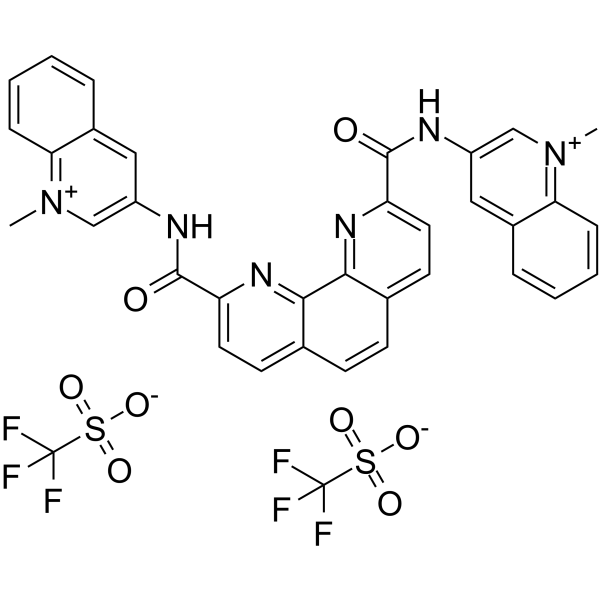
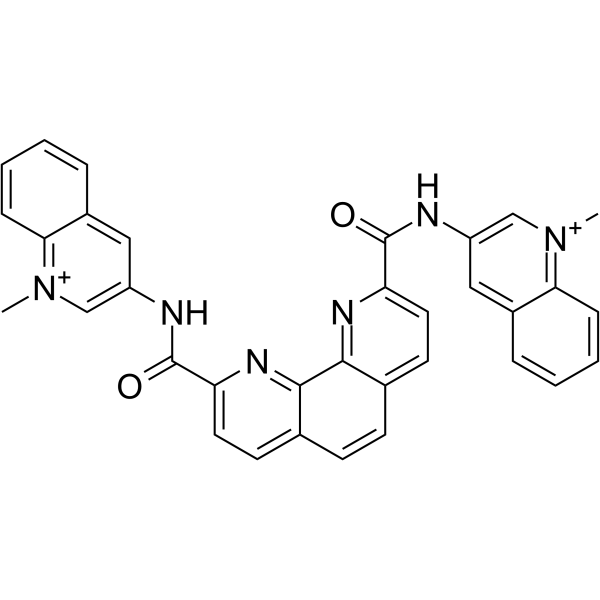
    Phen-DC3 Trifluoromethanesulfonate is a G-quadruplex (G4) specific ligand which can inhibit FANCJ and DinG helicases with IC50s of 65±6 and 50±10 nM, respectively.
    Phen-DC3 Trifluoromethanesulfonate
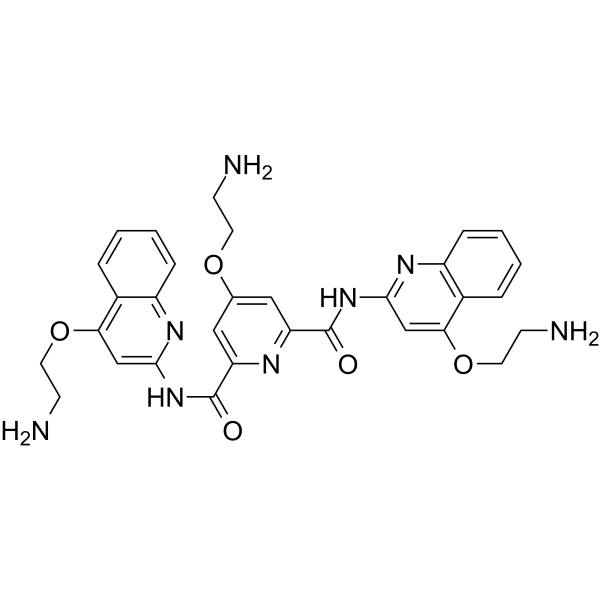
  • HY-112680A

    G-quadruplex Neurological Disease
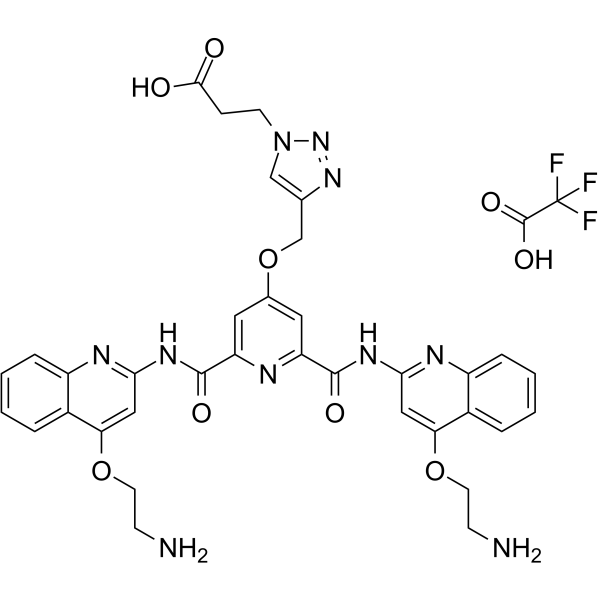
    Carboxy pyridostatin trifluoroacetate salt is a G-quadruplex ligand. Carboxy pyridostatin trifluoroacetate salt has a highly molecular specificity to RNA on DNA G4s and reduces ATF-5 protein. Carboxy pyridostatin trifluoroacetate salt reduces cell proliferation and hinders stress granule (SG) formation .
    Carboxy pyridostatin trifluoroacetate salt
  • HY-15176A
    Pyridostatin hydrochloride
    Maximum Cited Publications
    34 Publications Verification

    RR82 hydrochloride

    DNA/RNA Synthesis G-quadruplex Flavivirus Src Virus Protease Cancer
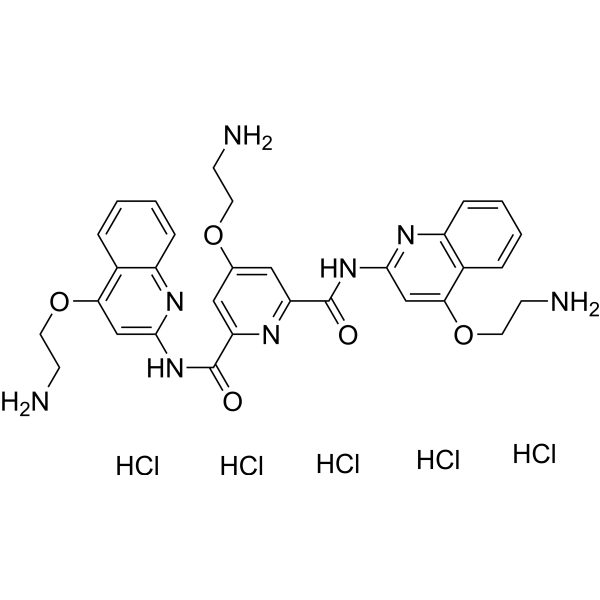
    Pyridostatin (RR82) hydrochloride is a G-quadruplex DNA stabilizing agent (Kd=490 nM) and can target DNA and RNA G4s in cells. Pyridostatin hydrochloride promotes growth arrest in human cancer cells by inducing replication- and transcription-dependent DNA damage. Pyridostatin hydrochloride targets the proto-oncogene Src. Pyridostatin hydrochloride reduced SRC protein levels and SRC-dependent cellular motility in human breast cancer cells .
    Pyridostatin hydrochloride
  • HY-15176

    RR82

    G-quadruplex Cancer
    Pyridostatin (RR82) is a G-quadruplex DNA stabilizing agent (Kd=490 nM) and can target DNA and RNA G4s in cells. Pyridostatin promotes growth arrest in human cancer cells by inducing replication- and transcription-dependent DNA damage. Pyridostatin targets the proto-oncogene Src. Pyridostatin reduced SRC protein levels and SRC-dependent cellular motility in human breast cancer cells .
    Pyridostatin
  • HY-164421

    G-quadruplex DNA/RNA Synthesis Cancer
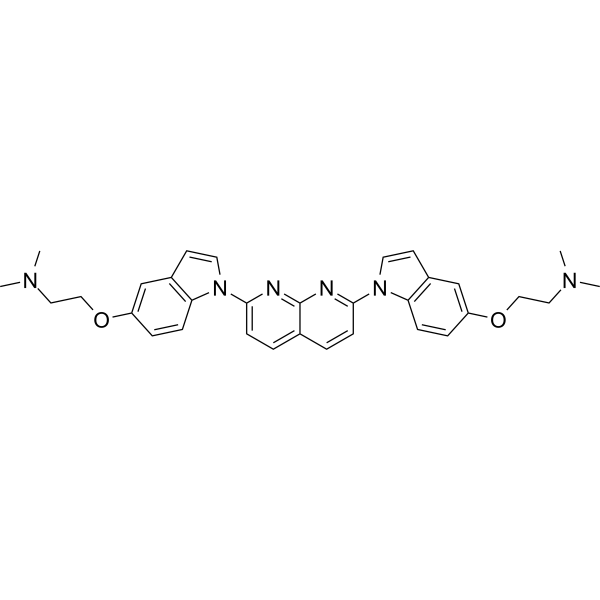
    PhpC is a G-quadruplex (G4)-DNA/RNA disruptor. PhpC disrupts DNA and RNA G4 structures and promotes G4 helicase activity. PhpC effectively enhancing the activity of Taq polymerase. PhpC modulates G-quadruplexs (G4s) both in vitro and in cells .
    PhpC
  • HY-15176B
    Pyridostatin TFA
    Maximum Cited Publications
    34 Publications Verification

    RR82 TFA

    DNA/RNA Synthesis G-quadruplex Flavivirus Src Virus Protease Cancer
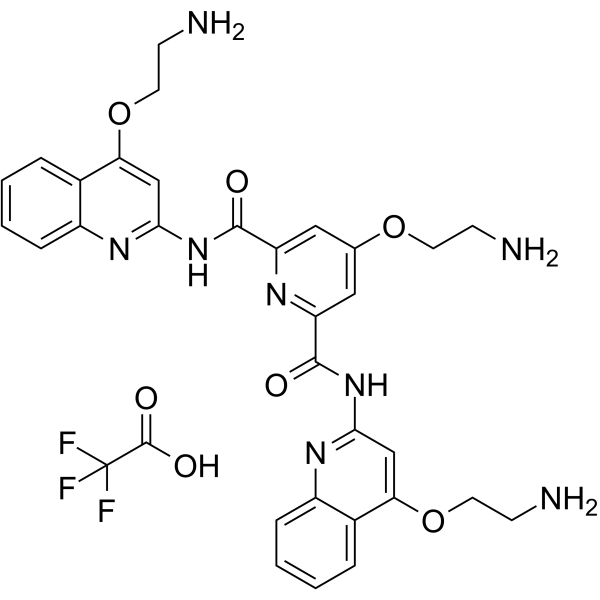
    Pyridostatin (RR82) TFA is a G-quadruplex (G4) inducer/stabilizer with a Kd of 490 nM. Pyridostatin TFA also acts as an inhibitor of Zika virus (ZIKV) NS2B-NS3 protease, with an IC50 of 11.0 μM. Pyridostatin TFA interacts with G-quadruplex structures, regulates the expression of SRC and SUB1, and induces replication- and transcription-dependent DNA damage, growth arrest, and genomic instability. Pyridostatin TFA exhibits antiproliferative and antiviral activities. Pyridostatin TFA can be used in studies related to breast cancer, cervical cancer, and Zika virus infection .
    Pyridostatin TFA
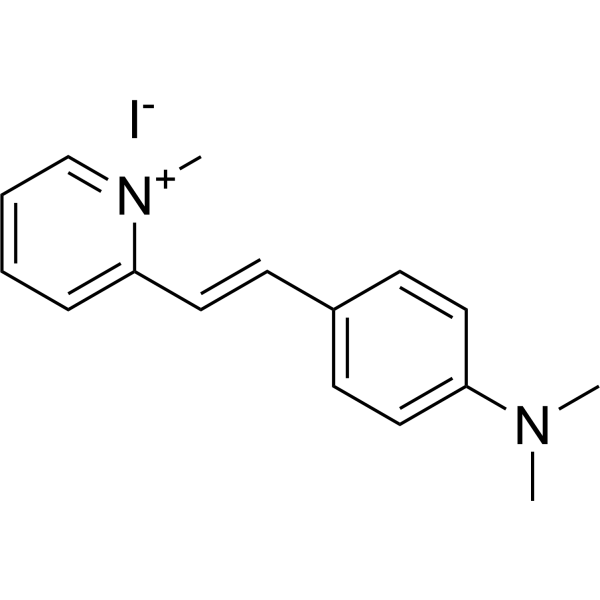
  • HY-135009

    DASPI

    G-quadruplex Others
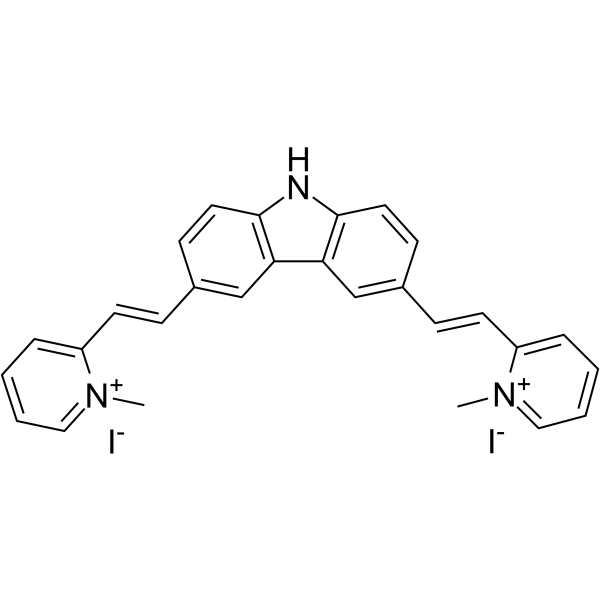
    2-Di-1-ASP (DASPI; Compound 18a) is a mono-stryryl dye, and widely used as mitochondrial stain and groove-binding fluorescent probes for double-stranded DNA. 2-Di-1-ASP is selective for G-quadruplex (G4) and double-stranded DNA .
    2-Di-1-ASP
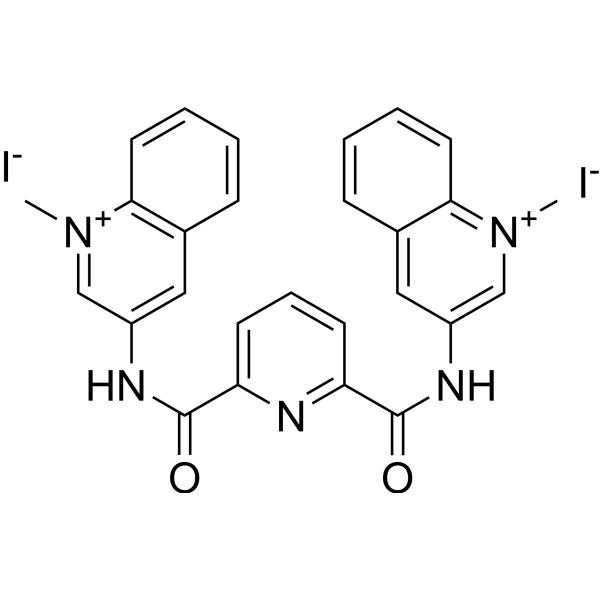
  • HY-15595A
    360A iodide
    3 Publications Verification

    360 A iodide

    G-quadruplex Telomerase Cancer
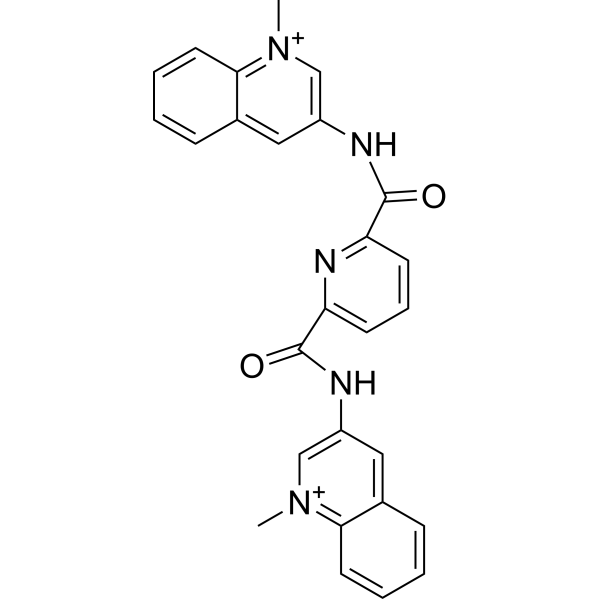
    360A iodide is a selective stabilizer of G-quadruplex, and also inhibits telomerase activity with an IC50 of 300 nM for telomerase in TRAP-G4 assay.
    360A iodide
  • HY-15176C
    Pyridostatin trihydrochloride
    Maximum Cited Publications
    34 Publications Verification

    RR82 trihydrochloride

    DNA/RNA Synthesis G-quadruplex Flavivirus Src Virus Protease Cancer
    Pyridostatin (RR82) trihydrochloride is a G-quadruplex (G4) inducer/stabilizer with a Kd of 490 nM. Pyridostatin trihydrochloride also acts as an inhibitor of Zika virus (ZIKV) NS2B-NS3 protease, with an IC50 of 11.0 μM. Pyridostatin trihydrochloride interacts with G-quadruplex structures, regulates the expression of SRC and SUB1, and induces replication- and transcription-dependent DNA damage, growth arrest, and genomic instability. Pyridostatin trihydrochloride exhibits antiproliferative and antiviral activities. Pyridostatin trihydrochloride can be used in studies related to breast cancer, cervical cancer, and Zika virus infection .
    Pyridostatin trihydrochloride
  • HY-112680

    G-quadruplex Neurological Disease
    Carboxypyridostatin is a G-quadruplex ligand. Carboxypyridostatin has a highly molecular specificity to RNA on DNA G4s and reduces ATF-5 protein. Carboxypyridostatin reduces cell proliferation and hinders stress granule (SG) formation .
    Carboxypyridostatin
  • HY-135776

    o-BMVC

    G-quadruplex Cancer
    BMVC2 (o-BMVC) is a bisubstitute carbazole derivative of BMVC. BMVC2 is a G-quadruplex (G4) stabilizer .
    BMVC2
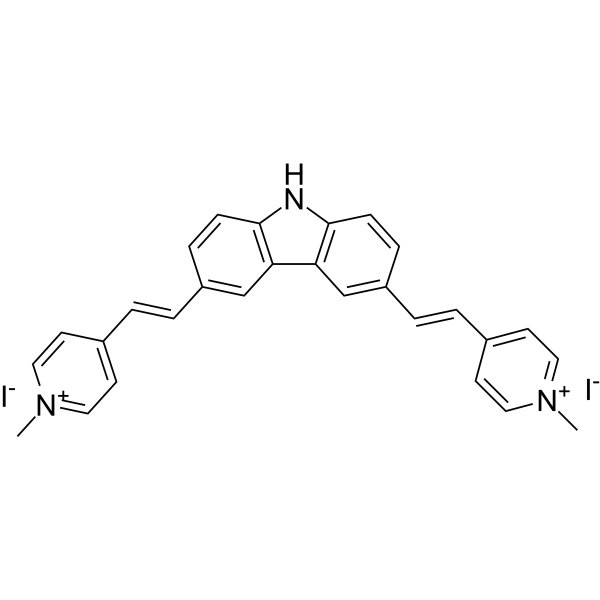
  • HY-135775
    BMVC
    1 Publications Verification

    G-quadruplex Telomerase DNA/RNA Synthesis Cancer
    BMVC is a potent G-quadruplex (G4) stabilizer and a selective telomerase inhibitor with an IC50 of ~0.2 μM. BMVC inhibits Taq DNA polymerase with an IC50 of ~2.5 μM. BMVC increases the melting temperature of G4 structure of telomere and accelerates telomere length shortening. Anticancer activities .
    BMVC
  • HY-15595

    G-quadruplex Telomerase Cancer
    360A is a selective stabilizer of G-quadruplex, and also inhibits telomerase activity with an IC50 of 300 nM for telomerase in TRAP-G4 assay.
    360A
  • HY-15594

    DNA/RNA Synthesis Cancer
    Phen-DC3 is a G-quadruplex (G4) specific ligand which can inhibit FANCJ and DinG helicases with IC50s of 65±6 and 50±10 nM, respectively.
    Phen-DC3
  • HY-144712

    G-quadruplex Apoptosis Cancer
    L5-DA is a G-quadruplex (G4) ligand and selectively stabilized for G4s over ds26. L5-DA exhibits significant cytotoxicity against HeLa cells (IC50=4.3 μM). L5-DA stabilizes G4s in HeLa cells, induces apoptosis, and cell cycle arrest .
    L5-DA
  • HY-152538

    G-quadruplex Cancer
    Antitumor agent-85 is a G-quadruplex (G4)-ligand with the ability to stabilize different G4-DNA structures. Antitumor agent-85 has highly effective anti-tumor properties .
    Antitumor agent-85
  • HY-161693

    G-quadruplex DNA/RNA Synthesis Apoptosis Cancer
    Telomeric G4s ligand 1 is a telomeric G-quadruplex ligand that stabilizes telomeric G4 and induces R-loop formation, leading to DNA damage responses. Telomeric G4s ligand 1 induces apoptosis and evokes immunogenic cell death (ICD) in tumor cells .
    Telomeric G4s ligand 1
  • HY-145843

    c-Myc Cancer
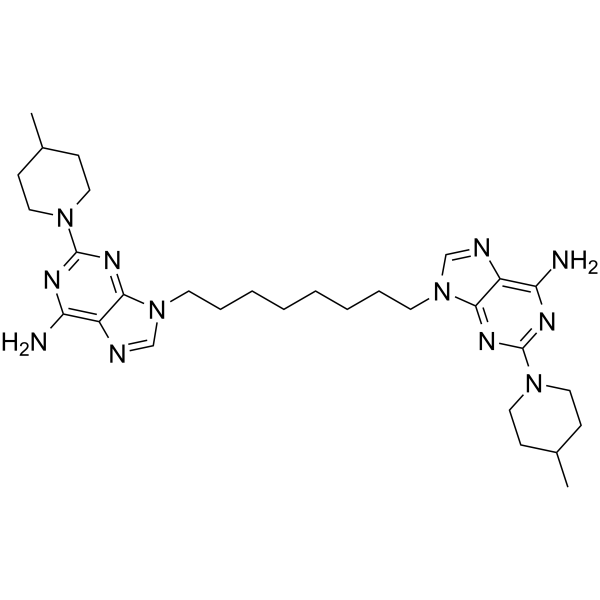
    c-Myc inhibitor 5 (DA3) is a fluorescent, long chain-bridged bispurine that selectively targets the c-MYC G-quadruplex (KD of 16 μM). c-Myc inhibitor 5 shows inhibition on c-MYC expression rather than other G4-driven oncogenes .
    c-Myc inhibitor 5
  • HY-151471

    c-Myc Cancer
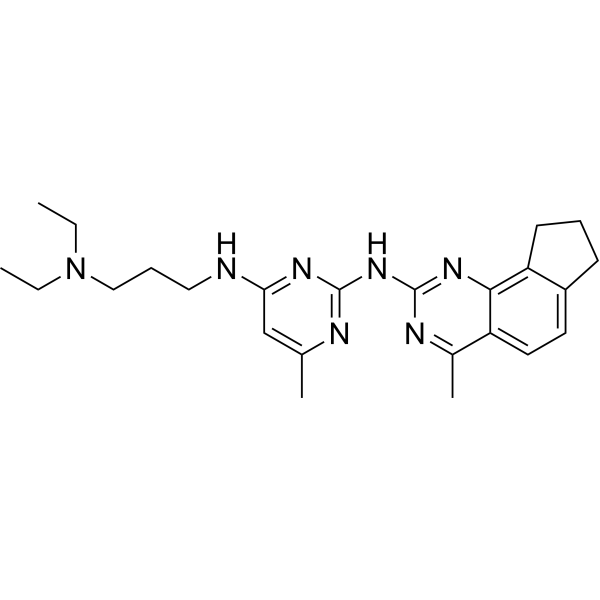
    Anticancer agent 84 is an anticancer agent. Anticancer agent 84 represses the transcription of c-MYC by stabilizing the G-quadruplex (G4) structure. Anticancer agent 84 can be used for the research of cancer .
    Anticancer agent 84
  • HY-177872

    NSC 338258

    Drug Derivative c-Myc Apoptosis Cancer
    GQC-05 (NSC338258), Ellipticine (HY-15753) derivative, is potent and selective c-Myc G-quadruplex ( c-Myc G4) stabilizer with KD values of 0.1-1.43 μM. GQC-05 can reduce Myc expression and induce cancer cells apoptosis. GQC-05 can be used for the research of cancer, such as Burkitt lymphoma .
    GQC-05
  • HY-152537

    G-quadruplex Cancer
    Antitumor agent-84 (compound 21a) is a G-quadruplex (G4)-ligand with the ability to stabilize different G4-DNA structures. Antitumor agent-84 has highly effective anti-tumor properties .
    Antitumor agent-84
  • HY-158126

    DNA/RNA Synthesis Cancer
    G-quadruplex ligand 2 (compound A3) is a triphenylamine-based ligand that targets mitochondrial DNA G4s. G-quadruplex ligand 2 activates the cGAS-STING pathway. G-quadruplex ligand 2 inhibits tumor growth and metastasis via regulation of TME .
    G-quadruplex ligand 2
  • HY-182029

    G-quadruplex Cancer
    G-quadruplex ligand 5 is a G-quadruplex (G4) ligand. G-quadruplex ligand 5 selectively stabilizes cancer-associated G4 oligonucleotides and shows cytotoxicity toward cancer cells. G-quadruplex ligand 5 can be used for the research of cancer .
    G-quadruplex ligand 5
  • HY-168886

    c-Myc Cancer
    Anticancer agent 263 (compound 7) is a potent anticancer agent. Anticancer agent 263 binds to the G-quadruplex DNA (G4) sequence 22-mer Pu22, a mimic of c-Myc DNA. Anticancer agent 263 is a structure modulator, showcasing a significant enhancement in protein α-helix formation and the capability to form supramolecular network. Anticancer agent 263 shows no cytotoxicity .
    Anticancer agent 263
  • HY-111297

    Biochemical Assay Reagents Cancer
    BMVC4 is a G-quadruplex (G4) stabilizer of the human telomeric sequence d[AG3(T2AG3)3]. Screening by circular dichroism (CD) spectroscopy revealed that BMVC4 is more suitable as the core molecule of G4 stabilizers than BMVC. The results showed that BMVC4-12C and BMVC4-8C3O are better candidates for G4 stabilizers and are worthy of further study. A simple and rapid screening method based on Cu2+-induced G4 unfolding can be used to find better G4 stabilizers for potential anticancer applications. CD results showed that the trivalent cations of 9-substituted BMVC derivatives are more suitable as G4 stabilizers than the divalent cations of BMVC. In addition, by monitoring the disappearance of the 291 nm CD band of human telomeres after Cu2+ addition, it was found that the core molecule of G4 stabilizer BMVC4 has better stability.
    BMVC4
  • HY-D2380

    G-quadruplex Cancer
    H2S probe 1 (compound 1NND) is a derivative of nitrobenzoxadiazole (NBD) with antitumor activity. H2S probe 1 is cytotoxic to human pancreatic cancer cell MIA PaCa-2 (IC50=77.9 nM) and has a high affinity for human telomeric G-quadruplex (G4) (Kd=1.72 μM). H2S probe 1 can be used in cancer research .
    H2S probe 1
  • HY-176066A

    c-Myc Apoptosis Cancer
    c-Myc inhibitor 16 iodide (Compound W11) is a selective c-Myc G-quadruplex (c-Myc G4) inhibitor. c-Myc inhibitor 16 iodide inhibits the transcription and translation of the c-Myc gene, disrupts the tumor cell cycle, arrests cell growth in the G0/G1 phase and activates the mitochondrial apoptosis pathway to induce early apoptosis of cancer cells. c-Myc inhibitor 16 iodide is promising for research of breast cancer .
    c-Myc inhibitor 16 iodide
  • HY-162688

    Telomerase G-quadruplex Apoptosis Ferroptosis Others
    Anticancer agent 239 (Compound 5) is a ligand of hTERT promoter G-quadruplex DNA structures (hTERT G4) (Kd = 1.1 μM), and downregulates hTERT expression. Anticancer agent 239 decreases telomerase activity, shortens telomere length, and induces DNA damage, acute cellular senescence, and apoptosis. Anticancer agent 239 causes mitochondrial dysfunction, disrupts iron metabolism and activates ferroptosis in cancer cells. Anticancer agent 239 inhibits tumor growth in MDA-MB-231 xenograft mouse model .
    Anticancer agent 239
  • HY-179480

    Drug Derivative G-quadruplex Apoptosis Telomerase Ras Bcl-2 Family Cancer
    G-quadruplex ligand 4 is a chromenone derivative and is a human telomerase reverse transcriptase (hTERT) G4 ligand. G-quadruplex ligand 4 downregulates hTERT expression and exhibits notable cytotoxicity towards triple-negative breast cancer (TNBC) cell lines. G-quadruplex ligand 4 can cause S/G2 cell cycle arrest and induce apoptosis. G-quadruplex ligand 4 downregulates the expression of hTERT, KRAS, and BCL-2. G-quadruplex ligand 4 can be used for the research of TNBC .
    G-quadruplex ligand 4
  • HY-172902

    DNA/RNA Synthesis Neurological Disease
    RNA binder 1 (Compound 4b) is a blood-brain permeable RNA binder. RNA binder 1 can selectively bind to the G-quadruplex structure of the G4C2 repeat sequence RNA of the C9orf72 gene. RNA binder 1 significantly reduces the levels of toxic polypeptides poly(GA) and poly(GP) produced by the G4C2 repeat sequence in amyotrophic lateral sclerosis (ALS) patient-derived cells. RNA binder 1 has no significant effect on the antisense polypeptide poly(PR), showing selectivity for sense RNA. RNA binder 1 can be used in the study of ALS and frontotemporal dementia (FTD) .
    RNA binder 1
  • HY-D3415

    Fluorescent Dye G-quadruplex Cancer
    TOR-G4 is a Fluorescent probe that binds to G-quadruplex (G4) nucleic acid structures. TOR-G4 exhibits a unique fluorescence lifetime when bound to G4 compared to other structures, enabling sensitive discrimination between G4-bound and non-G4-bound states. TOR-G4 mainly colocalizes with RNA in the cytoplasm and nucleolus. TOR-G4 can be used to investigate the roles of RNA G4 in cells. TOR-G4 shows cytotoxicity against osteosarcoma cells .
    TOR-G4
  • HY-182055

    G-quadruplex Keap1-Nrf2 Ferroptosis Apoptosis Cancer
    Anticancer agent 309 (Compound HZ-1) is an anticancer agent and G-quadruplex binder, with Kd values of 2.46 μM and 1.61 μM for c-Myc G4 and KRAS G4, respectively. Anticancer agent 309 promotes the formation of intranuclear G4. Anticancer agent 309 shows higher selectivity for parallel G4 than for non-parallel G4. Anticancer agent 309 inhibits the NRF2 signaling pathway and reduces the expression of XCT and GPX4. Anticancer agent 309 induces Ferroptosis, Apoptosis and immunogenic cell death in cells. Anticancer agent 309 exerts antitumor efficacy against breast cancer. Anticancer agent 309 is applicable for the research of breast cancer .
    Anticancer agent 309
  • HY-181850

    G-quadruplex DNA/RNA Synthesis Cyclic GMP-AMP Synthase STING Autophagy Cancer
    Telomeric G4s ligand 2 is an orally active, selective ligand of telomeric G-quadruplex (G4), with an IC50 of 0.4 μM. Telomeric G4s ligand 2 binds to dimeric telomeric G4, inhibits the activities of DHX36 and BLM helicases. Telomeric G4s ligand 2 activates cGAS-STING and TERRA-ZBP1 pathways, inducing autophagy and G2/M cell cycle arrest, and exhibits antiproliferative effects across cancer cell lines. Telomeric G4s ligand 2 can be used for the study of colorectal cancer .
    Telomeric G4s ligand 2

オンラインお問い合わせ

入力情報は安全に管理されます. 必須入力項目.

タイトル


国或いは地域 *

お名前 *


組纖名 *

デパートメント *


メールアドレス *


製品名 *

製品番号


カスタマ需要量 *

電話番号 *


必ず会社名を記載ください。個人への返信は行いません。

備考

バルクお問い合わせ

Inquiry Information

製品名:
製品番号:
数量:
MCE 日本正規代理店:

