1. Search Result
Search Result
Pathways Recommended: MAPK/ERK Pathway
Results for "

Gq pathway

" in MedChemExpress (MCE) Product Catalog:

18

Inhibitors & Agonists

5

Peptides

Cat. No. Product Name Target Research Areas Chemical Structure
  • HY-125791
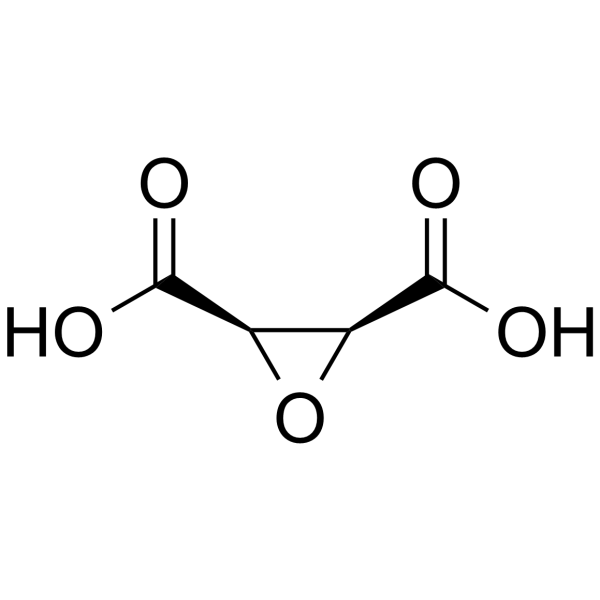
    cis-Epoxysuccinic acid
    3 Publications Verification

    Succinate Receptor 1 Cardiovascular Disease
    cis-Epoxysuccinic acid is a succinate receptor (SUCNR1/GPR91) agonist. cis-Epoxysuccinic acid inhibits cAMP levels with an EC50 value of 2.7 μM. cis-Epoxysuccinic acid can be used for the research of cardiovascular system .
    cis-Epoxysuccinic acid
  • HY-107111

    mAChR Neurological Disease
    GSK1034702 is an orally active and allosteric agonist of M1 mAChR (pEC50=8.1) that can cross the blood-brain barrier. GSK1034702 activates the Gq/11 protein-mediated signaling pathway, enhancing neuronal firing and long-term potentiation (LTP) in the CA1 region of the hippocampus. GSK1034702 can modulate hippocampal function, improve memory encoding in the nicotine withdrawal cognitive dysfunction model, and show pro-cognitive effects in rodents. GSK1034702 can be used for the study of the mechanisms of cognitive impairment diseases such as Alzheimer's disease, and has certain peripheral M receptor activation-related side effects (such as gastrointestinal reactions) .
    GSK1034702
  • HY-P6292

    PACAP Receptor PKA ERK PI3K Akt GSK-3 Neurological Disease Cancer
    KS-133 is a bicyclic peptide with VIPR2 antagonistic activity that can cross the blood-brain barrier. KS-133 selectively blocks VIPR2-mediated Gq/Ca, Gs/cAMP, cAMP/PKA/ERK and PI3K/AKT/GSK3β signaling pathways. KS-133 inhibits VIPR2 agonist-induced CREB phosphorylation in the prefrontal cortex of mice. KS-133 shifts the polarization direction of macrophages toward M1. KS-133 attenuates cancer cell proliferation and reduces the cell cycle distribution level at the S-M phase. KS-133 exerts antitumor effects in a mouse model of colorectal cancer. KS-133 reverses cognitive decline in mouse models of psychiatric disorders. KS-133 can be used for research related to schizophrenia, colorectal cancer and breast cancer .
    KS-133
  • HY-42346

    Trace Amine-associated Receptor (TAAR) Neurological Disease
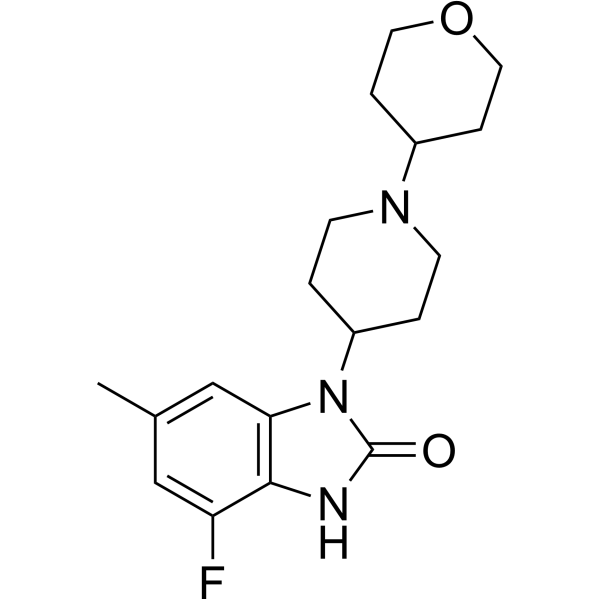
    ZH8651 is an agonist of TAAR1 which can activate both Gs and Gq signal pathway. ZH8651 can used in study schizophrenia .
    ZH8651
  • HY-P5358

    Protease Activated Receptor (PAR) Others
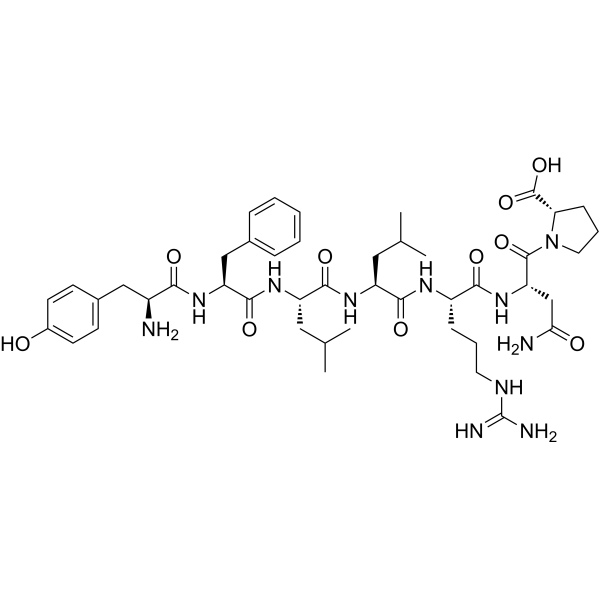
    YFLLRNP is a biological active peptide. (a partial agonist of PAR-1. YFLLRNP selectively active G12/13 signaling pathway without activating Gq or Gi pathways at low concentrations. YFLLRNP (60 μM))
    YFLLRNP
  • HY-176921

    Leukotriene Receptor Inflammation/Immunology
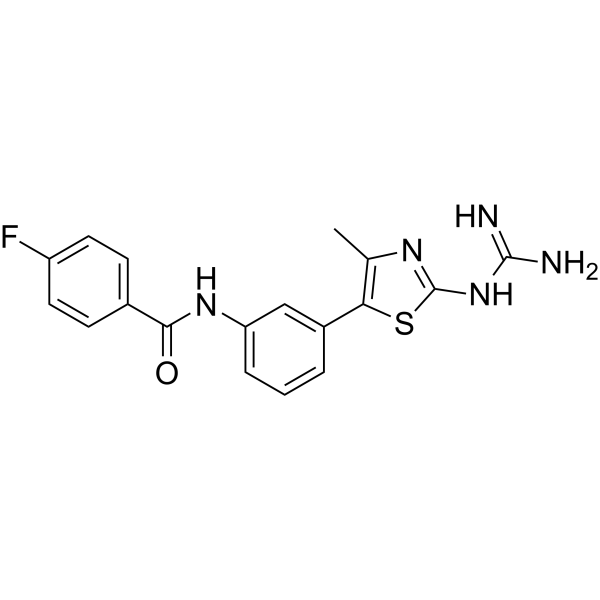
    ONO-2570366 (Compound 11a) is an antagonist of the cysteinyl leukotriene receptors CysLT1R and CysLT2R (IC50 = 14 nM). ONO-2570366 inhibits the binding of LTD4Gq signaling pathway mediated by receptor activation. ONO-2570366 can be used for the researches of inflammation and immunology, such as asthma .
    ONO-2570366
  • HY-175515

    5-HT Receptor Neurological Disease
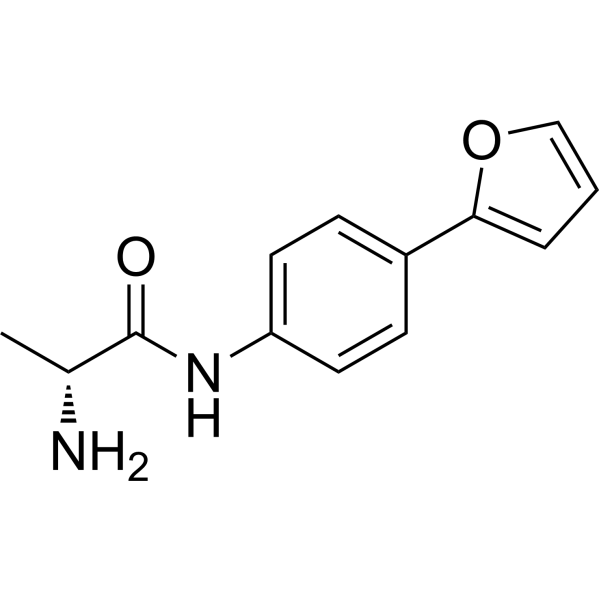
    5-HT2C agonist-11 (Compound 1) is an orally active, brain-penetrant and selective 5-HT2C receptor agonist (EC50=15 nM). 5-HT2C agonist-11 activates the Gq protein signaling pathway, promoting intracellular calcium release. 5-HT2C agonist-11 is promising for research of depression, post-traumatic stress disorder (PTSD) and neuropathic pain .
    5-HT2C agonist-11
  • HY-157955

    Trace Amine-associated Receptor (TAAR) Neurological Disease
    TAAR1 agonist 1 (compound 6E) is a potent TAAR1 agonist with a potent TAAR1-Gs/Gq dual-pathway activation property. TAAR1 agonist 1 significantly alleviates MK-801-induced schizophrenia-like cognitive phenotypes .
    TAAR1 agonist 1
  • HY-138951

    Protease Activated Receptor (PAR) Inflammation/Immunology Cancer
    AY77 is a calcium-biased PAR2 agonist. AY77 shows an EC50 of 0.17 and 2 nM in PAR2-mediated the activation in the Gq pathway and recruitment of β-arrestin-2, respectively. AY77 potently induces intracellular Ca 2+ release .
    AY77
  • HY-121140

    Free Fatty Acid Receptor Metabolic Disease
    AZ1729 is a potent free fatty acid 2 receptor (FFA2) activator, acting as a direct allosteric agonist and as a positive allosteric modulator. AZ1729 increases the activity of the endogenously produced short chain fatty acid propionate in Gi-mediated pathways, but not at those transduced by Gq/G11. AZ1729 induces inhibition of isoproterenol-induced lipolysis in mouse adipocytes. AZ1729 also can Induce migration of human neutrophils. AZ1729 can be used for researching the signaling pathways of the physiological roles of FFA2 .
    AZ1729
  • HY-P5017

    Oxytocin Receptor Endocrinology
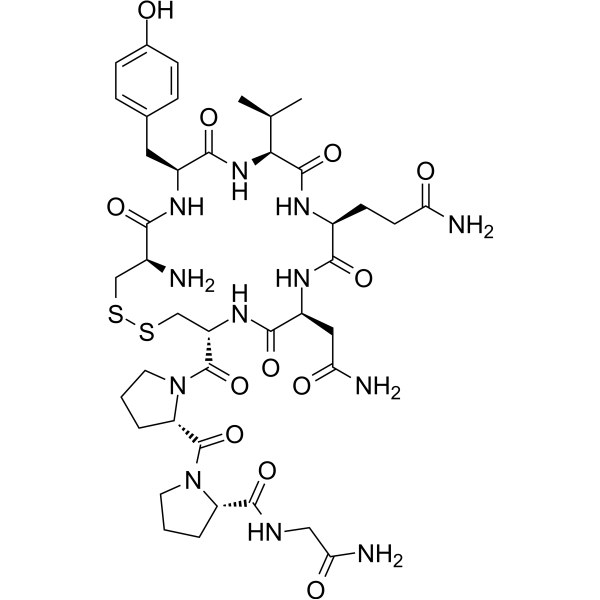
    (Val3,Pro8)-Oxytocin is the Gq-dependent pathway agonist. (Val3,Pro8)-Oxytocin is also a weaker agonist for the β-arrestin engagement and endocytosis toward the oxytocin receptor (OXTR) .
    (Val3,Pro8)-Oxytocin
  • HY-107111A

    Cholinesterase (ChE) mAChR Neurological Disease
    GSK1034702 hydrochloride is an orally active and allosteric agonist of M1 mAChR (pEC50=8.1) that can cross the blood-brain barrier. GSK1034702 hydrochloride activates the Gq/11 protein-mediated signaling pathway, enhancing neuronal firing and long-term potentiation (LTP) in the CA1 region of the hippocampus. GSK1034702 hydrochloride can modulate hippocampal function, improve memory encoding in the nicotine withdrawal cognitive dysfunction model, and show pro-cognitive effects in rodents. GSK1034702 hydrochloride can be used for the study of the mechanisms of cognitive impairment diseases such as Alzheimer's disease, and has certain peripheral M receptor activation-related side effects (such as gastrointestinal reactions) .
    GSK1034702 hydrochloride
  • HY-P1432A

    GHSR Cancer
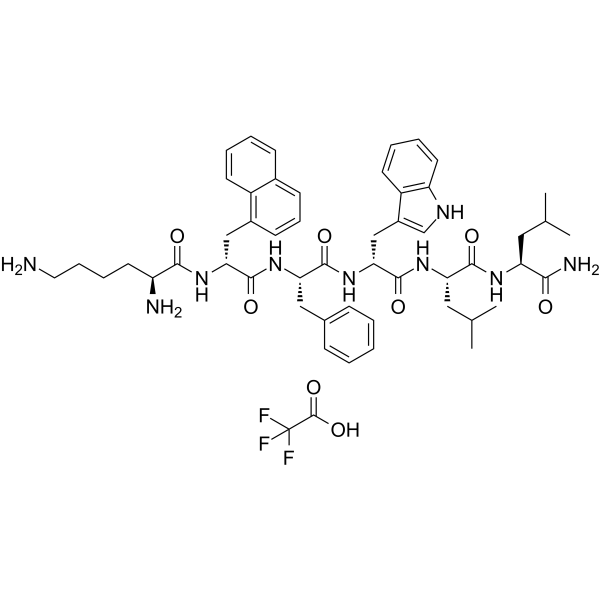
    K-(D-1-Nal)-FwLL-NH2 TFA is a high affinity and potent ghrelin receptor inverse agonist (Ki values are 4.9 and 31 nM in COS7 and HEK293T cells, respectively). K-(D-1-Nal)-FwLL-NH2 blocks ghrelin receptor-mediated Gq- and G13-dependent signaling pathways.
    K-(D-1-Nal)-FwLL-NH2 TFA
  • HY-179721

    Cholecystokinin Receptor Neurological Disease
    CCKBR agonist-2 (Compound z-44) is a Gi-preferring CCKBR agonist. CCKBR agonist-2 effectively activates the CCKBR-Gi signaling pathway (EC50 = 0.27 nM), but has almost no activity on Gq and Gs signaling pathways. CCKBR agonist-2 shows no significant protective effect in the mouse Alzheimer's disease model, proving that the simple activation of the Gi signal pathway does not play a dominant role in the improvement of cognitive function .
    CCKBR agonist-2
  • HY-145156

    GLP Receptor Metabolic Disease
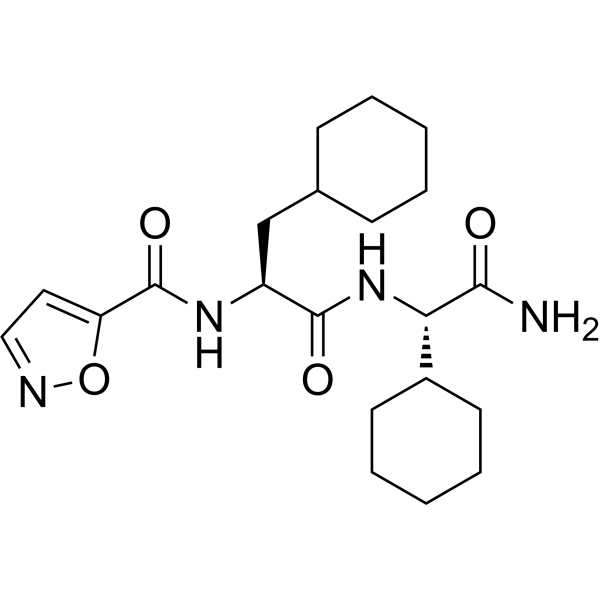
    CHU-128 is an effective and selective GLP-1R agonist. CHU-128 exhibits strong signal specificity and can activate the Gs/cAMP pathway, but it cannot activate the Gq/calcium signal, ERK phosphorylation, or recruit β-inhibitory proteins. CHU-128 can be used for research on type 2 diabetes .
    CHU-128
  • HY-107111R

    Reference Standards mAChR Neurological Disease
    GSK1034702 (Standard) is the analytical standard of GSK1034702 (HY-107111). This product is intended for research and analytical applications. GSK1034702 is an orally active and allosteric agonist of M1 mAChR (pEC50=8.1) that can cross the blood-brain barrier. GSK1034702 activates the Gq/11 protein-mediated signaling pathway, enhancing neuronal firing and long-term potentiation (LTP) in the CA1 region of the hippocampus. GSK1034702 can modulate hippocampal function, improve memory encoding in the nicotine withdrawal cognitive dysfunction model, and show pro-cognitive effects in rodents. GSK1034702 can be used for the study of the mechanisms of cognitive impairment diseases such as Alzheimer's disease, and has certain peripheral M receptor activation-related side effects (such as gastrointestinal reactions) .
    GSK1034702 (Standard)
  • HY-181878

    Z7149

    Serotonin Transporter Adrenergic Receptor 5-HT Receptor Neurological Disease
    Z8779877149 (Z7149) is a blood-brain barrier-permeable multi-target ligand that targets SERT (Ki=198 nM), α2A adrenergic receptor (Ki=180 nM; EC50=440 nM) and 5-HT2A receptor (EC50=172 nM, Emax=76%). Z8779877149 inhibits 5-HT reuptake and activates Gi and Gq protein signaling pathways, respectively. Z8779877149 effectively alleviates pain responses as well as depression- and anxiety-like behaviors, while exhibiting favorable safety without inducing sedation or motor impairment. Z8779877149 is available for the research of pain, depression and anxiety disorders .
    Z8779877149
  • HY-186170

    5-HT Receptor Neurological Disease
    R-MDMA, 4-methylenedioxymethamphetamine (MDMA) isomer, is a 5-HT2A/5-HT2C receptor antagonist with an IC50 of 629 and 61.4 nM. R-MDMA promotes cortical neuron growth. R-MDMA facilitates fear extinction learning and produces antidepressant-like effects in preclinical rodent models. R-MDMA can be used for the researches of post-traumatic stress disorder and depression .
    R-MDMA

Inquiry Online

Your information is safe with us. * Required Fields.

Salutation


Country or Region *

Applicant Name *


Organization Name *

Department *


Email Address *


Product Name *

Cat. No.


Requested quantity *

Phone Number *


Remarks

Inquiry Online

Inquiry Information

Product Name:
Cat. No.:
Quantity:
MCE Japan Authorized Agent:

