1. Search Result
Search Result
Results for "

HIV-1 RNA

" in MedChemExpress (MCE) Product Catalog:

28

Inhibitors & Agonists

1

Biochemical Assay Reagents

2

Natural
Products

1

Antibodies

4

Oligonucleotides

Cat. No. Product Name Target Research Areas Chemical Structure
  • HY-W037893
    CHMA1004 dihydrochloride
    2 Publications Verification

    Methyl piperazine-2-carboxylate dihydrochloride; METTL3 activator-1

    METTL3 HIV Infection Neurological Disease
    CHMA1004 (Methyl piperazine-2-carboxylate; METTL3 activator-1) dihydrochloride is a METTL3/METTL14/WTAP methyltransferase complex activator. CHMA1004 dihydrochloride exhibits neuroprotective and anxiolytic potential by enhancing m 6A methylation modification of RNA. CHMA1004 dihydrochloride promotes HIV replication in an infection context. CHMA1004 dihydrochloride can be used in studies related to anxiety disorders and HIV-1 infection .
    CHMA1004 dihydrochloride
  • HY-147411

    MK-8507

    Reverse Transcriptase HIV Infection
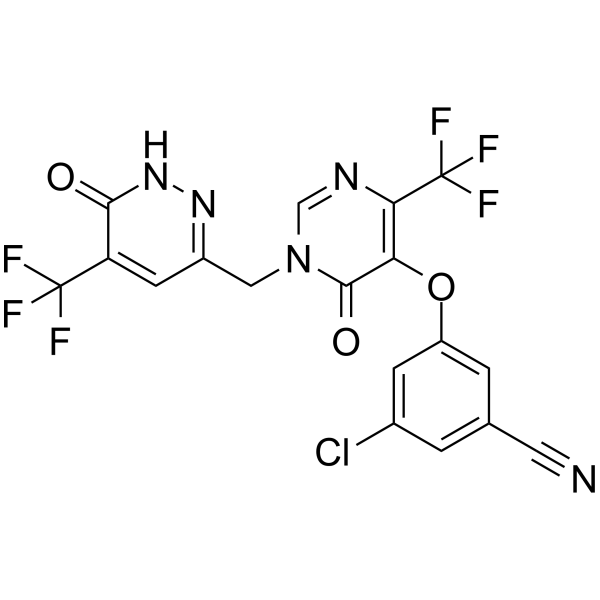
    Ulonivirine is an orally active non-nucleoside HIV-1 reverse transcriptase inhibitor that binds to the classical non-nucleoside reverse transcriptase inhibitor hydrophobic binding pocket adjacent to the polymerase active site of HIV-1 reverse transcriptase. Ulonivirine can be used in studies related to HIV-1 infection .
    Ulonivirine
  • HY-160229

    R-1075 sodium

    Toll-like Receptor (TLR) MyD88 Caspase Reactive Oxygen Species (ROS) Autophagy Pyroptosis HIV Infection Neurological Disease
    ssRNA40 sodium (R-1075 sodium) is a single-stranded RNA40 derived from HIV-1. ssRNA40 sodium activates the TLR7, TLR8, TLR2, RIG-I, MDA5, MyD88, Caspase-3, IRE1α, NLRP3 inflammasome and IRF7 signaling pathways. ssRNA40 sodium alters mRNA expression in neutrophils, induces pro-inflammatory cytokines, ROS, autophagy (autophagy), pyroptosis (pyroptosis), neuronal death, neurodegeneration, aggregate formation and NK cell activation. ssRNA40 sodium activates the expression of CD62L, CD11b, CD69, MX1, OAS1, ATG7, LC3B and XBP1 in immune cell and neuronal populations. ssRNA40 sodium causes cortical neuron loss and axonal damage in mice in a TLR7-dependent manner. ssRNA40 sodium can be used in research on HIV-1 infection, neurodegeneration, COVID-19 and HIV-associated neurological disorders .
    ssRNA40 sodium
  • HY-145560

    A1752

    HIV Infection
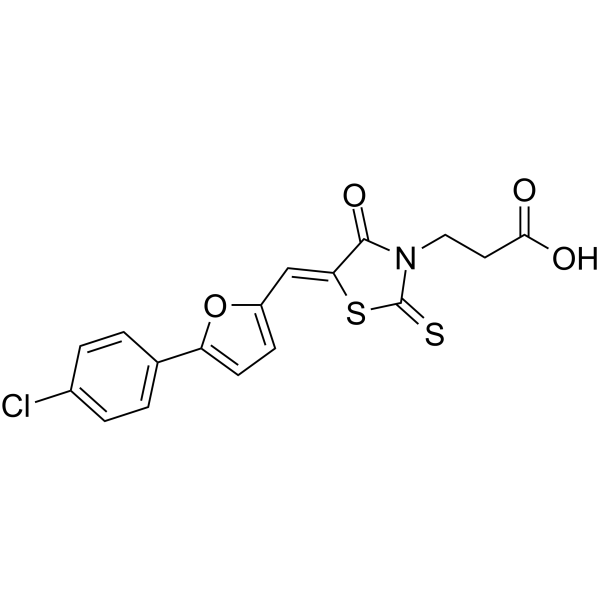
    Claficapavir (A1752) is a specific nucleocapsid protein (NC) inhibitor with an IC50 around 1 μM. Claficapavir strongly binds the HIV-1 NC (Kd=20 nM) thereby inhibiting the chaperone properties of NC and leading to good antiviral activity against the HIV-1 .
    Claficapavir
  • HY-137697D

    HIV DNA/RNA Synthesis Nucleoside Antimetabolite/Analog Drug Metabolite HIV Protease Infection
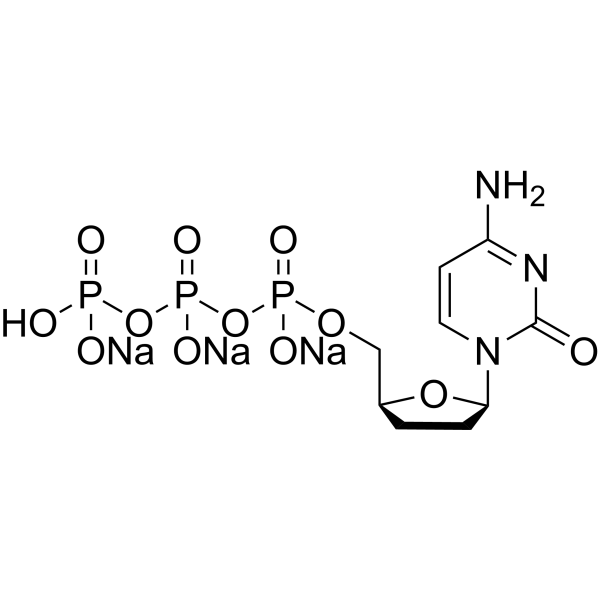
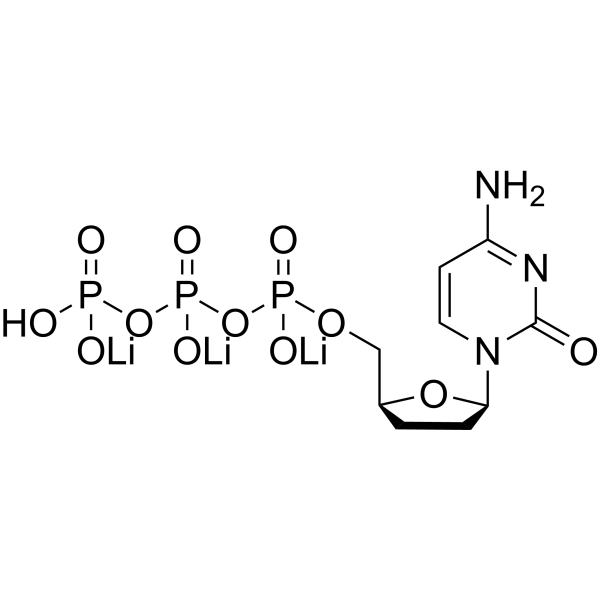
    ddCTP trilithium solution (100 mM) is a chain-terminating dideoxynucleotide. ddCTP trilithium is a type of chain-terminating deoxynucleotide. ddCTP trilithium can be incorporated into the extension primer chain that lacks the 3'-hydroxyl group, thereby terminating primer extension, viral genome replication, and DNA synthesis. ddCTP trilithium can distinguish almost identical RNA through distinguishable extension products in primer extension inhibition experiments. ddCTP trilithium is the active metabolite of Zalcitabine (HY-17392), which can competitively inhibit HIV reverse transcriptase, terminate the synthesis of viral DNA chains, and thereby inhibit HIV replication .
    ddCTP trisodium solution (100 mM)
  • HY-160267

    HIV DNA/RNA Synthesis Infection Neurological Disease Cancer
    iPAF1C is a inhibitor of the polymerase-associated factor 1 complex (PAF1C) with specific targeting to the PAF1 binding groove of CTR9 (a key subunit of PAF1C). iPAF1C disrupts PAF1C assembly by interfering with the PAF1-CTR9 interaction. iPAF1C selectively impairs BRD4-mediated recruitment of PAF1 to chromatin at hypoxia-responsive genes and inhibits RNA polymerase II (RNAPII) pause release. iPAF1C increases the population of HIV-1 NL4.3 Nef-IRES-GFP infected primary human CD4 +T cells in a dose-dependent manner. PAF1C can be used for the study of infection and diseases associated with abnormal hypoxic adaptation (e.g., cancers, neurological disorders) .
    iPAF1C
  • HY-137697

    Nucleoside Antimetabolite/Analog DNA/RNA Synthesis HIV Protease HIV Drug Metabolite Infection
    ddCTP is a type of chain-terminating deoxynucleotide. ddCTP can be incorporated into the extension primer chain that lacks the 3'-hydroxyl group, thereby terminating primer extension, viral genome replication, and DNA synthesis. ddCTP can distinguish almost identical RNA through distinguishable extension products in primer extension inhibition experiments. ddCTP is the active metabolite of Zalcitabine (HY-17392), which can competitively inhibit HIV reverse transcriptase, terminate the synthesis of viral DNA chains, and thereby inhibit HIV replication .
    ddCTP
  • HY-15349
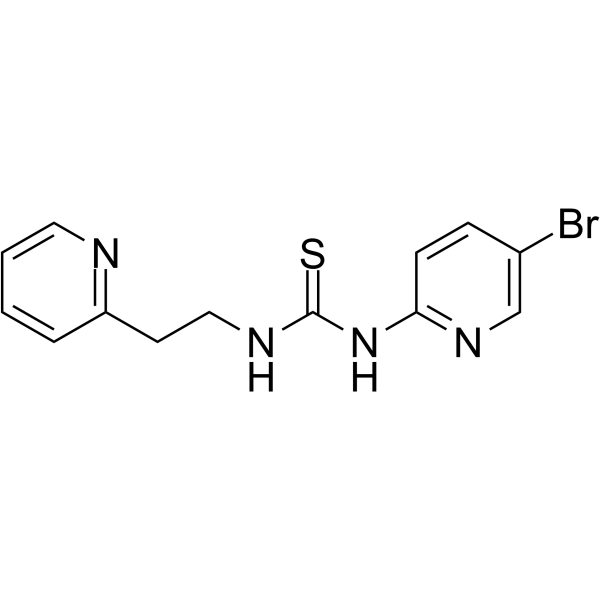
    Trovirdine
    1 Publications Verification

    LY300046

    HIV Infection
    Trovirdine inhibits HIV-1 RT with an IC50 of 7 nM when employing heteropolymeric primer/template (oligo-DNA/ribosomal RNA)and dGTP as substrate.
    Trovirdine
  • HY-W125425

    Methyl piperazine-2-carboxylate; METTL3 activator-1 free base

    METTL3 HIV Infection Neurological Disease
    CHMA1004 (Methyl piperazine-2-carboxylate; METTL3 activator-1 free base) is a METTL3/METTL14/WTAP methyltransferase complex activator . CHMA1004 exhibits neuroprotective and anxiolytic potential by enhancing m 6A methylation modification of RNA. CHMA1004 promotes HIV replication in an infection context. CHMA1004 can be used in studies related to anxiety disorders and HIV-1 infection .
    CHMA1004
  • HY-15353

    MKC-442

    HIV Infection Inflammation/Immunology
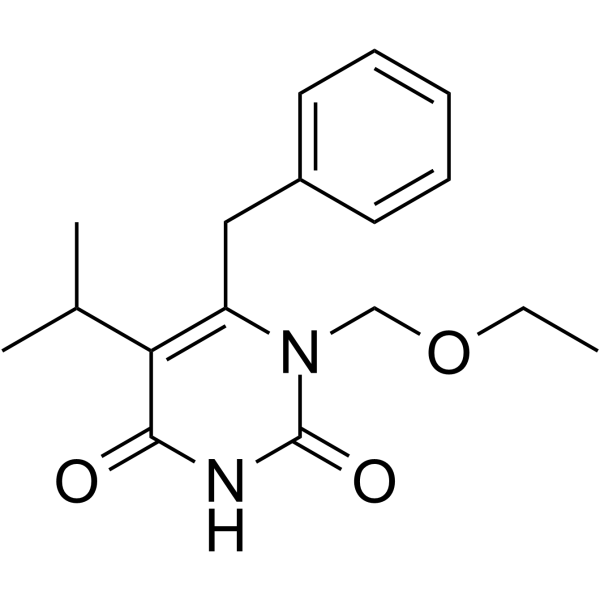
    Emivirine (MKC-442) is a non-nucleoside reverse transcriptase inhibitors (NNRTIs) with Ki values of 0.20 and 0.01 μM for dTTP- and dGTP-dependent DNA or RNA polymerase activity, respectively. Emivirine displays potent and selective anti-human immunodeficiency virus type 1 (HIV-1) activity .
    Emivirine
  • HY-146382

    HIV Inflammation/Immunology
    WRNA10 is a potent HIV-1 TAR RNA binder with an IC50 of 10 µM and an CC50 of 40 µM .
    WRNA10
  • HY-E70660

    CDK Cancer
    CDK13/CycK Recombinant Human Active Protein Kinase is a RNA polymerase II C-terminal domain kinases. CDK13 interacts with the splicing factor SRSF1 and to regulate alternative splicing of HIV .
    CDK13/CycK Recombinant Human Active Protein Kinase
  • HY-137697B

    HIV DNA/RNA Synthesis Nucleoside Antimetabolite/Analog Drug Metabolite HIV Protease Infection
    ddCTP trilithium is a type of chain-terminating deoxynucleotide. ddCTP trilithium can be incorporated into the extension primer chain that lacks the 3'-hydroxyl group, thereby terminating primer extension, viral genome replication, and DNA synthesis. ddCTP trilithium can distinguish almost identical RNA through distinguishable extension products in primer extension inhibition experiments. ddCTP trilithium is the active metabolite of Zalcitabine (HY-17392), which can competitively inhibit HIV reverse transcriptase, terminate the synthesis of viral DNA chains, and thereby inhibit HIV replication .
    ddCTP trilithium
  • HY-106872

    9-Cl-TIBO

    Reverse Transcriptase HIV DNA/RNA Synthesis Infection
    R82913 (9-Cl-TIBO) is a potent and high selective inhibitor of HIV-1 reverse transcriptase with antiviral activity on both an RNA template (negative strand synthesis) and a DNA template (positive strand synthesis). R82913 inhibits the replication of different strains of HIV-I in CEM cells with a median IC50 value of of 0.15 μM .
    R82913
  • HY-139850

    HIV Infection
    GPS491 (EC50 = 0.47 μM) suppresses expression of the HIV-1 structural protein Gag and alters HIV-1 RNA accumulation, decreasing the abundance of RNAs encoding the structural proteins while increasing levels of viral RNAs encoding the regulatory proteins.
    GPS491
  • HY-147903

    DNA/RNA Synthesis HIV Infection
    HIV-1 inhibitor-42 (compound 5b) is a potent HIV-1 inhibitor, with an IC50 of 0.06 μM. HIV-1 inhibitor-42 inhibits HIV-1 RT RNA-dependent DNA polymerase and DNA-dependent DNA polymerase, with IC50 values of 0.518 and 0.072 μM .
    HIV-1 inhibitor-42
  • HY-150599

    HIV DNA/RNA Synthesis Infection
    HIV-1 inhibitor-43 is a potent HIV-1 inhibitor with an EC50 of 21.3 nM, 6.2 nM, < 0.7 nM and < 0.7 nM for Y188L, K103N-Y181C, K103N and Y181C, respectively. HIV-1 inhibitor-43 can reduce HIV-1 RNA and protein p24 expression .
    HIV-1 inhibitor-43
  • HY-177813

    HIV Infection
    148.1-38m sodium, an RNA aptamer, inhibits HIV-1 reverse transcriptase (RT) and interfere with viral replication.
    148.1-38m sodium
  • HY-161945

    HIV HIV Integrase Infection
    IN-RNA-IN-2 (compound 1a) is an inhibitor (IC50=70 nM) of the interaction between HIV-1 integrase and the viral RNA genome. IN-RNA-IN-2 exerts its anti-HIV activity by inhibiting the viral replication process .
    IN-RNA-IN-2
  • HY-W777072

    HIV Others
    4-isocyanato TEMPO is a spin labeling reagent used to label the 2’-position in RNA. It has been used to study HIV-1 transactivation response RNA and hammerhead ribosome dynamics by electron paramagnetic resonance (EPR) spectroscopy.
    4-Isocyanato-TEMPO,Technical grade
  • HY-19111

    TIBO-R 82150

    HIV Reverse Transcriptase Infection
    R-82150 (TIBO-R 82150) is an HIV-1 reverse transcriptase inhibitor that blocks the reverse transcription of viral RNA by binding to the non-substrate binding site of reverse transcriptase, thereby inhibiting viral replication. R-82150 does not inhibit the replication of HIV-2, other RNA viruses, and DNA viruses .
    R-82150
  • HY-181231

    PROTACs CDK HIV DNA/RNA Synthesis Infection
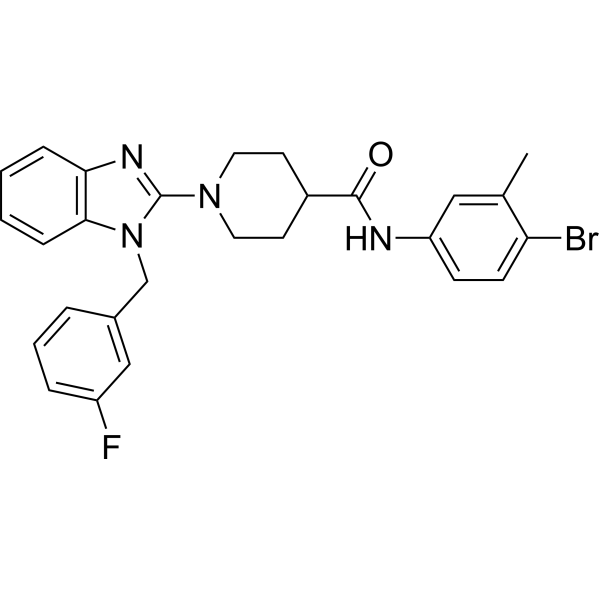
    PROTAC CDK9 degrader-12 is a selective CDK9 PROTAC degrader with a DC50 of 23 nM. PROTAC CDK9 degrader-12 induces proteasome-dependent degradation of CDK9, blocks CDK9-mediated HIV-1 transcriptional elongation, and reduces HIV-1 RNA synthesis. PROTAC CDK9 degrader-12 is applicable to research related to HIV-1 infection .
    PROTAC CDK9 degrader-12
  • HY-165513

    HIV Infection
    Niruriside is a HIV REV/RRE complex inhibitor. Niruriside specifically inhibits the binding interaction between HIV REV protein and RRE RNA, with an IC50 of 3.3 μM, and shows no significant activity against the unrelated R17 capsid protein/operator RNA binding system. At the tested concentrations, Niruriside fails to protect CEM-SS cells from acute HIV-1 infection. Niruriside can be used in the research of human immunodeficiency virus (HIV) infection .
    Niruriside
  • HY-185449

    HIV Reverse Transcriptase DNA/RNA Synthesis Infection
    HIV RT-IN-2 is a HIV reverse transcriptase inhibitor with an IC50 value of 1.2 μM for HIV-1 RT RNA-dependent DNA polymerase. HIV RT-IN-2 potently inhibits all three modes of HIV-1 RT-associated RNase H activity (internal, 3'-DNA directed, 5'-RNA directed cleavage) and inhibits HIV-1 replication. HIV RT-IN-2 can be used for the research of HIV-1 infection .
    HIV RT-IN-2
  • HY-136972A

    Biflavanone GB-1a

    HIV Reverse Transcriptase Infection
    GB-1a (Biflavanone GB-1a) is a biflavanone HIV-1 reverse transcriptase inhibitor (IC50=236 μM), with an EC50 of 38.0 μM for HIV-1 replication. GB-1a can block the conversion of HIV-1 genomic RNA to DNA and can be used in research related to AIDS (HIV-1 infection). GB-1a can be naturally extracted from the heartwood of Garcinia multiflora Champ .
    GB-1a
  • HY-180187

    HIV Infection
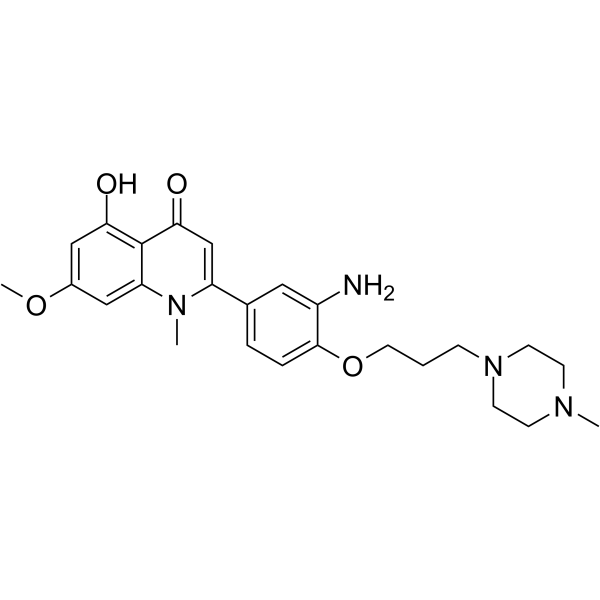
    019854-B06 is a potent inhibitor of Tat-mediated HIV-1 transcription (IC50 = 1.44 μM), exhibiting antiviral activity against HIV-1 (EC50 = 0.83 μM). 019854-B06 binds to Tat peptide (KD = 33.5 μM), but not to TAR RNA. 019854-B06 neither promotes Tat degradation nor disrupts the Tat/CycT1 complex, supporting a Tat-centric, nondegradative mechanism .
    019854-B06
  • HY-181275

    Ligands for Target Protein for PROTAC CDK HIV Infection
    CDK9 ligand 4 is a CDK9 ligand. As a ligand for target protein for PROTAC (Ligands for Target Protein for PROTAC), CDK9 ligand 4 serves for the development and design of PROTAC CDK9 degraders, such as PROTAC CDK9 degrader-12 (HY-181231). CDK9 ligand 4 is applicable to the research of HIV-1 infection .
    CDK9 ligand 4
  • HY-182552

    HIV Reverse Transcriptase DNA/RNA Synthesis Infection Neurological Disease Inflammation/Immunology
    Soulattrolide is a non-nucleoside HIV-1 reverse transcriptase (RT) inhibitor with IC50 values of 0.34 µM for HIV-1 RT, 69.5 µM for E. coli RNase H, and >495 µM for human DNA polymerase β, and can be found in Calophyllum teysmannii latex. Soulattrolide can be used for the research of HIV-1 infection, pain, inflammation, and Mycobacterium tuberculosis infection .
    Soulattrolide

Inquiry Online

Your information is safe with us. * Required Fields.

Salutation


Country or Region *

Applicant Name *


Organization Name *

Department *


Email Address *


Product Name *

Cat. No.


Requested quantity *

Phone Number *


Remarks

Inquiry Online

Inquiry Information

Product Name:
Cat. No.:
Quantity:
MCE Japan Authorized Agent:

