



CHMA1004 dihydrochloride
Based on 3 publication(s) in Google Scholar
CHMA1004 (Methyl piperazine-2-carboxylate; METTL3 activator-1) dihydrochloride is a METTL3/METTL14/WTAP methyltransferase complex activator. CHMA1004 dihydrochloride exhibits neuroprotective and anxiolytic potential by enhancing m6A methylation modification of RNA. CHMA1004 dihydrochloride promotes HIV replication in an infection context. CHMA1004 dihydrochloride can be used in studies related to anxiety disorders and HIV-1 infection.
Nur für Forschungszwecke. Wir verkaufen nicht an Patienten.
- Reinheit : 99.38%
- CAS. Nr.: 122323-88-0
- Formel: C6H14Cl2N2O2
- Molecular Weight:217.09
-
Speicherung:
Store at room temperature, keep dry and cool.
In solvent -80°C, 1 year , -20°C, 6 months


To place orders, for customer services and technical support, please contact: MedChemExpress USA
Tel: 609-228-6898 E-mail: [email protected] [email protected]


-
 Biologische Aktivität
-
Chemical Information
-
Lösungsmittel & Löslichkeit
- Protokoll
- Reinheit & Dokumentation
- Verweise
-
 Help & FAQs


-
HY-134836
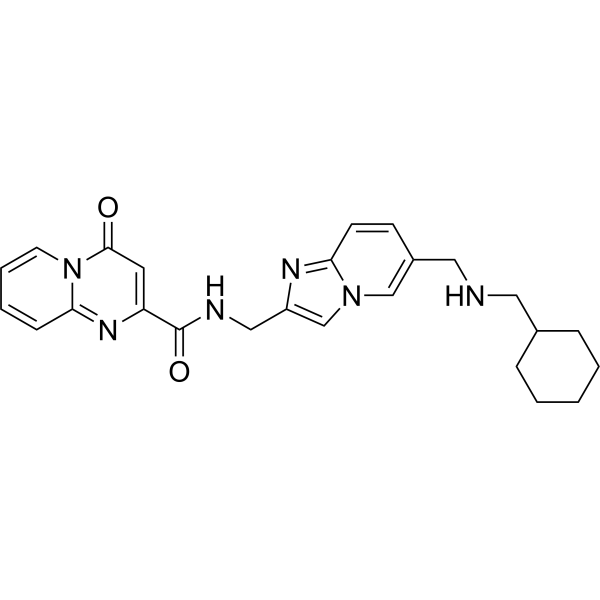
STM2457METTL3 Inhibitor -
HY-12642A
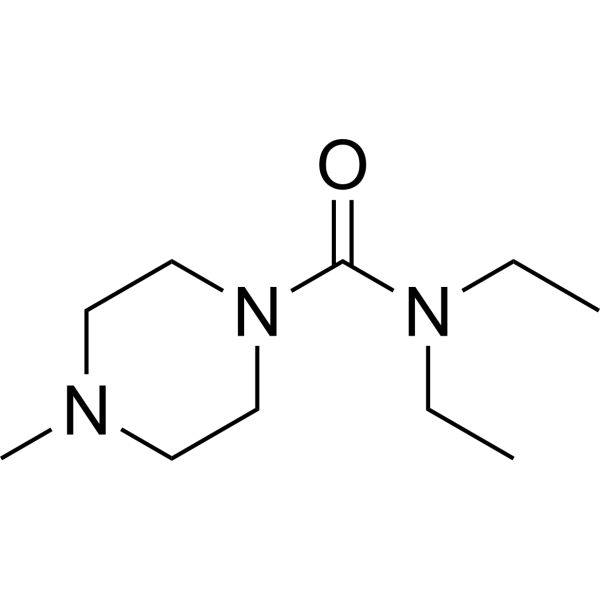
DiethylcarbamazineMicrofilaricidal Agent -

HY-109659
1-(3-Aminopropyl)-4-methylpiperazineCapping Agent -
HY-41939
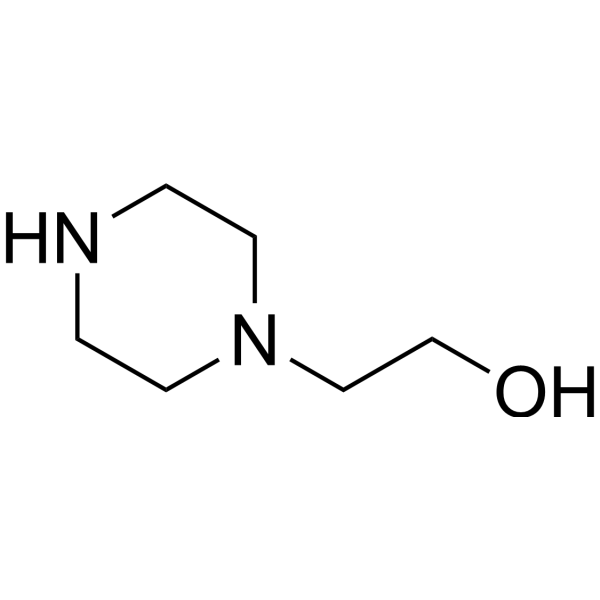
1-(2-Hydroxyethyl)piperazineBiochemical Reagent -

HY-W027208
1,4-Bis(3-aminopropyl)piperazineBiochemical Assay Reagent -
HY-W012744
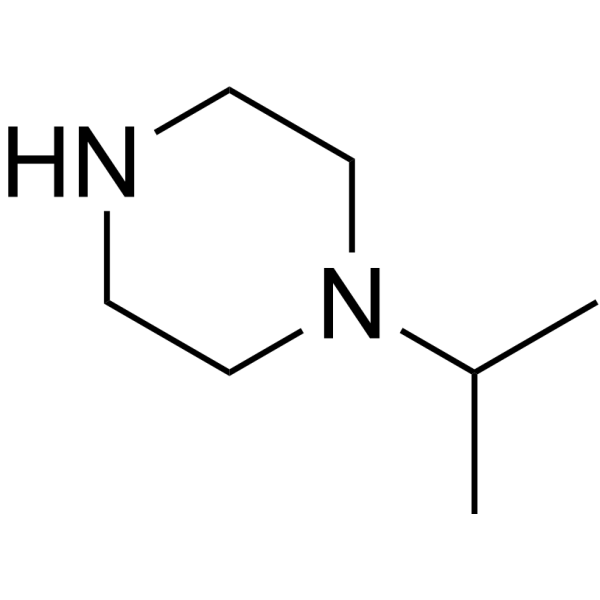
IsopropylpiperazineBiochemical Reagent -
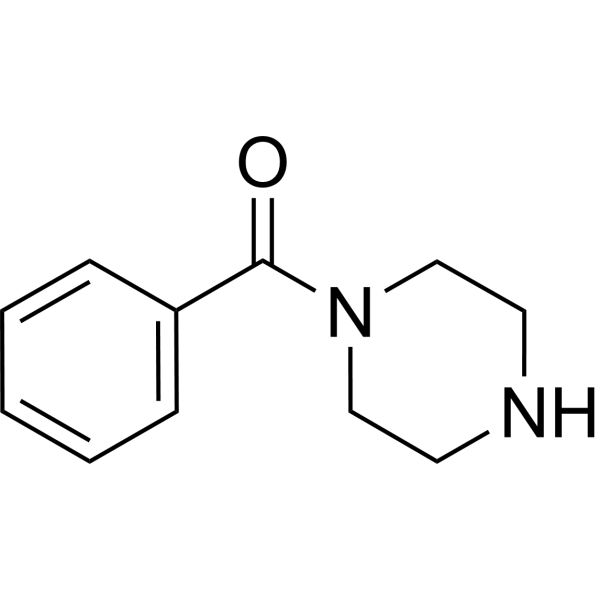
HY-W002698
1-BenzoylpiperazineBiochemical Reagent -
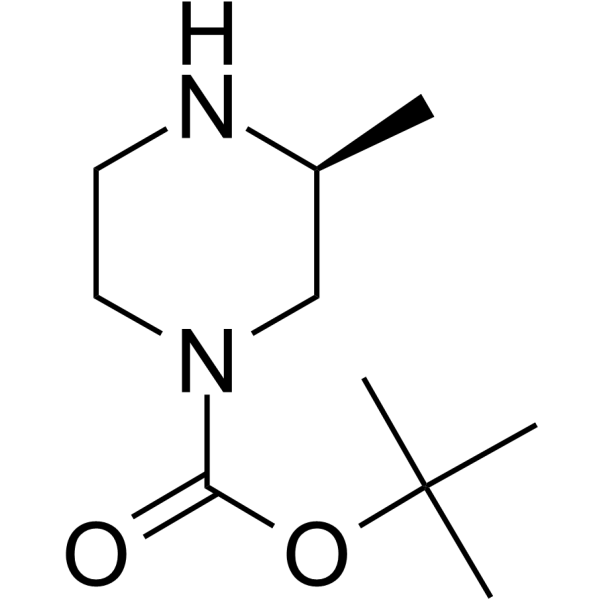
HY-40040
(S)-1-Boc-3-methylpiperazineSynthetic Intermediate -

HY-W042668
2-(4-(tert-Butoxycarbonyl)-2-oxopiperazin-1-yl)acetic acidPROTAC Linker -

HY-W370953
Piperazine-CH2-propargylPROTAC Linker -

HY-12642AR
Diethylcarbamazine (Standard)Prasite Inhibitor -

HY-W015158
1-Benzyl-3-methylpiperazinePiperazine
Publications Citing Use of MedChemExpress (MCE) CHMA1004 dihydrochloride
More

Biologische Aktivität
Beschreibung
In Vitro
CHMA1004 dihydrochloride protects human stem cell-derived dopamine neurons against 6-OHDA-induced cell death[1].
CHMA1004 (Compound 4) dihydrochloride (0.001-10 μM; 48 h) induces a concentration-dependent increase in HIV-1 p24 release from ACH-2 cells[2].
CHMA1004 (10 μM; 48 h) dihydrochloride promotes the production of infectious HIV-1 viral particles in ACH-2 cells, which is verified by enhanced luciferase activity in infected TZM-bl cells[2].
CHMA1004 (10 μM; 48 h) dihydrochloride increases the m6A methylation level in mRNA of ACH-2 cells to more than twice the original level, and elevates the m6A methylation level in HIV-1 viral RNA by approximately 18%[2].
CHMA1004 (1 nM-10 μM) dihydrochloride slightly increases the m6A methylation level in mRNA of HEK-293 cells[2].
MedChemExpress (MCE) has not independently confirmed the accuracy of these methods. They are for reference only.
-
Cell Line:ACH-2 cells (harboring HIV-1 provirus)
-
Concentration:0.001 μM, 0.01 μM, 0.1 μM, 1 μM, 10 μM
-
Incubation Time:48 h
-
Result:Caused a concentration-dependent increase in HIV-1 p24 release (measured as optical density at 450 nm).
Showed statistically significant increases at 0.1 μM, 1 μM, and 10 μM compared to control.
In Vivo
MedChemExpress (MCE) has not independently confirmed the accuracy of these methods. They are for reference only.
-
Animal Model:Wistar rats (male and female; 3 months old at study start; male body weight 499 g, female body weight 290 g)[1]
-
Dosage:1 mg/kg (subchronic; acute microdialysis); 5 mg/kg (subchronic; acute microdialysis)
-
Administration:i.p.; daily; 17-18 days (subchronic); i.p.; single dose (acute microdialysis)
-
Result:Increased time spent moving, line crossings, and rearings in female rats in acute open field test.
Showed a similar non-significant tendency in males at 5 mg/kg in acute open field test.
Reduced faecal boli counts in male rats at 5 mg/kg in acute open field test.
Increased head-dips in female rats during the first repeated elevated zero-maze test at 1 mg/kg and 5 mg/kg.
Increased open quadrant entries in male rats during the second repeated elevated zero-maze test at 5 mg/kg.
Reduced stretched-attend postures in male rats during the first repeated elevated zero-maze test at 5 mg/kg.
Increased swimming time and reduced struggling time in female rats on both test days of repeated forced swimming test at 1 mg/kg and 5 mg/kg.
Tended to increase locomotion in male rats during amphetamine challenge at subchronic 5 mg/kg.
Reduced the baseline sex difference in 50-kHz USVs by increasing vocalisations in males and reducing them in females during amphetamine challenge at subchronic 5 mg/kg.
Had no significant effect on extracellular striatal dopamine levels in acute microdialysis at 1 mg/kg and 5 mg/kg.
Increased normetanephrine (NMN) levels in males and females in striatum at subchronic 5 mg/kg.
Increased the DOPAC/DA ratio in males in striatum at subchronic 5 mg/kg.
Decreased the DOPAC/DA ratio in females in striatum at subchronic 1 mg/kg.
Increased NMN levels in males in frontal cortex at subchronic 1 mg/kg and 5 mg/kg.
Increased noradrenaline (NA) levels in males in frontal cortex at subchronic 5 mg/kg.
Increased homovanillic acid (HVA) levels in males in locus coeruleus at subchronic 1 mg/kg.
Decreased HVA levels in females in locus coeruleus at subchronic 1 mg/kg and 5 mg/kg.
Increased NA levels in males and females in ventral tegmental area at subchronic 1 mg/kg.
Altered expression of 172 genes (e.g., downregulated Acsm5, Gpr83; upregulated Fgr, Hes1) in striatum of females at subchronic 1 mg/kg.
Altered expression of 120 genes (e.g., downregulated Vwa5b2, Peli1; upregulated Nbl1, Mdga1) in striatum of females at subchronic 5 mg/kg.
Showed consistent expression changes across doses in seven overlapping genes (Galns, Hps3, Misp3, Nbl1, Samd4a, Slc28a2, Spon2) in striatum of females.


Chemical Information
-
CAS. Nr. 122323-88-0
-
Appearance Solid
-
Molecular Weight 217.09
-
Formel C6H14Cl2N2O2
-
Color White to off-white
-
SMILES
O=C(C1NCCNC1)OC.Cl.Cl
-
Synonyms
Methyl piperazine-2-carboxylate dihydrochloride; METTL3 activator-1
-
Versand
Room temperature in continental US; may vary elsewhere.
-
Speicherung
Store at room temperature, keep dry and cool
In solvent -80°C 1 year -20°C 6 months


Publications (3)
-
Journal Impact Factor
-
Most Recent
-
Autophagy
Chaperone-mediated autophagy reprograms heterogeneous subsets of activated macrophages in immune thrombocytopenia. [Abstract]2026 Jun 26:1-17. PMID: 42329073 -
Front Immunol
Repetitive transcranial magnetic stimulation alleviates neuropathic pain via microglial polarization by modulating the METTL3/NMDAR2B/NLRP3 pathway. [Abstract]2026 Jan 26:16:1666920. PMID: 41668762 -


Lösungsmittel & Löslichkeit
In Vitro:
H2O : 250 mg/mL (1151.60 mM; Need ultrasonic)
DMSO : 100 mg/mL (460.64 mM; Need ultrasonic; Hygroscopic DMSO has a significant impact on the solubility of product, please use newly opened DMSO)
Please refer to the solubility information to select the appropriate solvent. Once prepared, please aliquot and store the solution to prevent product inactivation from repeated freeze-thaw cycles.
Storage method and period of stock solution: -80°C, 1 year; -20°C, 6 months. When stored at -80°C, please use it within 1 year. When stored at -20°C, please use it within 6 months.
* Note: If you choose water as the stock solution, please dilute it to the working solution, then filter and sterilize it with a 0.22 μm filter before use.
Please refer to the solubility information to select the appropriate solvent. Once prepared, please aliquot and store the solution to prevent product inactivation from repeated freeze-thaw cycles.
Storage method and period of stock solution: -80°C, 1 year; -20°C, 6 months. When stored at -80°C, please use it within 1 year. When stored at -20°C, please use it within 6 months.
* Note: If you choose water as the stock solution, please dilute it to the working solution, then filter and sterilize it with a 0.22 μm filter before use.
Konzentration (Stammlösung) × Volumen (Stammlösung) = Konzentration (Ziellösung) × Volumen (Ziellösung)
In Vivo:
Select the appropriate dissolution method based on your experimental animal and administration route.
- For the following dissolution methods, please ensure to first prepare a clear stock solution using an In Vitro approach and then sequentially add co-solvents:
- To ensure reliable experimental results, the clarified stock solution can be appropriately stored based on storage conditions. As for the working solution for In Vivo experiments, it is recommended to prepare freshly and use it on the same day.
- The percentages shown for the solvents indicate their volumetric ratio in the final prepared solution. If precipitation or phase separation occurs during preparation, heat and/or sonication can be used to aid dissolution.
Add each solvent one by one: 10% DMSO 40% PEG300 5% Tween-80 45% Saline
Solubility: ≥ 5 mg/mL (23.03 mM); Clear solution
This protocol yields a clear solution of ≥ 5 mg/mL (saturation unknown).
Taking 1 mL working solution as an example, add 100 μL DMSO stock solution (50.0 mg/mL) to 400 μL PEG300, and mix evenly; then add 50 μL Tween-80 and mix evenly; then add 450 μL Saline to adjust the volume to 1 mL.
Preparation of Saline: Dissolve 0.9 g sodium chloride in ddH₂O and dilute to 100 mL to obtain a clear Saline solution.
Add each solvent one by one: 10% DMSO 90% (20% SBE-β-CD in Saline)
Solubility: ≥ 5 mg/mL (23.03 mM); Clear solution
This protocol yields a clear solution of ≥ 5 mg/mL (saturation unknown).
Taking 1 mL working solution as an example, add 100 μL DMSO stock solution (50.0 mg/mL) to 900 μL 20% SBE-β-CD in Saline, and mix evenly.
Preparation of 20% SBE-β-CD in Saline (4°C, storage for one week): 2 g SBE-β-CD powder is dissolved in 10 mL Saline, completely dissolve until clear.
In Vivo Dissolution Calculator
Please enter the basic information of animal experiments:
-
-
-
-
Recommended: Prepare an additional quantity of animals to account for potential losses during experiments.
Working solution concentration: 0.22 mg/mL
This product has good water solubility, please refer to the measured solubility data in water/PBS/Saline for details.


Reinheit & Dokumentation
-
Data Sheet (281 KB)
-
SDS (393 KB)
- English - EN (393 KB)
- Français - FR (393 KB)
- Deutsch - DE (393 KB)
- Norwegian - NO (393 KB)
- Español - ES (393 KB)
- Swedish - SV (393 KB)
- Italian - IT (393 KB)
- Korean - KR (393 KB)
- Portuguese - PT (393 KB)
-
Handling Instructions (2659 KB)
Verweise
[1]. Kanarik M, et al. RNA m6A methyltransferase activator affects anxiety-related behaviours, monoamines and striatal gene expression in the rat. Acta Neuropsychiatr. 2024 Oct 9;37:e52. [Content Brief]
[2]. Selberg S, et al. HIV Replication Is Increased by RNA Methylation METTL3/METTL14/WTAP Complex Activators. ACS Omega. 2021;6(24):15957-15963. Published 2021 Jun 11. [Content Brief]


Complete Stock Solution Preparation Table
Please refer to the solubility information to select the appropriate solvent. Once prepared, please aliquot and store the solution to prevent product inactivation from repeated freeze-thaw cycles.
Storage method and period of stock solution: -80°C, 1 year; -20°C, 6 months. When stored at -80°C, please use it within 1 year. When stored at -20°C, please use it within 6 months.
| Optional Solvent | Concentration Solvent Mass | 1 mg | 5 mg | 10 mg | 25 mg |
|---|---|---|---|---|---|
| DMSO / H2O | 1 mM | 4.6064 mL | 23.0319 mL | 46.0638 mL | 115.1596 mL |
| 5 mM | 0.9213 mL | 4.6064 mL | 9.2128 mL | 23.0319 mL | |
| 10 mM | 0.4606 mL | 2.3032 mL | 4.6064 mL | 11.5160 mL | |
| 15 mM | 0.3071 mL | 1.5355 mL | 3.0709 mL | 7.6773 mL | |
| 20 mM | 0.2303 mL | 1.1516 mL | 2.3032 mL | 5.7580 mL | |
| 25 mM | 0.1843 mL | 0.9213 mL | 1.8426 mL | 4.6064 mL | |
| 30 mM | 0.1535 mL | 0.7677 mL | 1.5355 mL | 3.8387 mL | |
| 40 mM | 0.1152 mL | 0.5758 mL | 1.1516 mL | 2.8790 mL | |
| 50 mM | 0.0921 mL | 0.4606 mL | 0.9213 mL | 2.3032 mL | |
| 60 mM | 0.0768 mL | 0.3839 mL | 0.7677 mL | 1.9193 mL | |
| 80 mM | 0.0576 mL | 0.2879 mL | 0.5758 mL | 1.4395 mL | |
| 100 mM | 0.0461 mL | 0.2303 mL | 0.4606 mL | 1.1516 mL |
* Note: If you choose water as the stock solution, please dilute it to the working solution, then filter and sterilize it with a 0.22 μm filter before use.


CHMA1004 dihydrochloride Related Classifications
HY-W037893 Related Classifications
 Powered by Bioz