7 Results for "

Haemonchus contortus

" in MedChemExpress (MCE) Product Catalog:
Products (7)

7 Results for "Haemonchus contortus" in MCE Product Catalog:

Cat. No.: HY-125159
CAS No.: 187865-22-1
Synonyms: PF-00520904
Target:  

Parasite nAChR

Research Areas:  

Infection

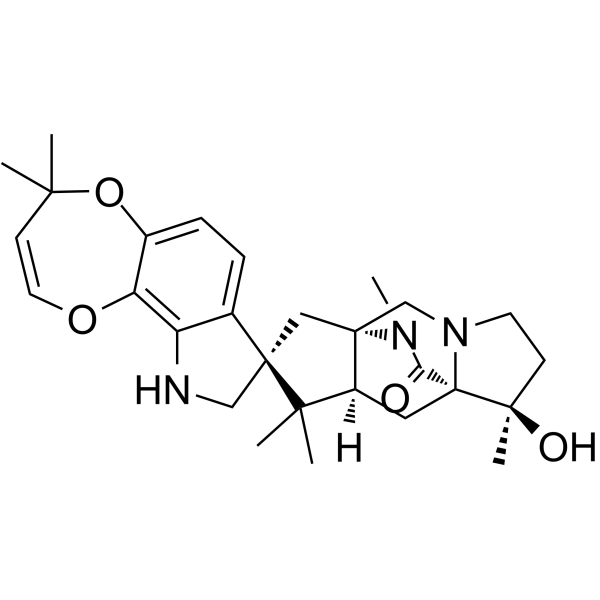
Derquantel, a spirocyclic anthelmintic, is a competitive, orally active nicotinic acetylcholine receptor (nAChR) antagonist. Derquantel inhibits ACh-induced depolarization with an IC50 of 0.22 μM. By selectively antagonizing nAChRs on the somatic muscles of nematodes, Derquantel causes flaccid paralysis of muscles, thereby dislodging parasites from the host's gastrointestinal tract. Derquantel is applicable to research related to Haemonchus contortus infection and Ascaris suum infection .
loading...
    loading...
Cat. No.: HY-131492
CAS No.: 23017-97-2
Purity:  ≥96.0%
Research Areas:  

Metabolic Disease

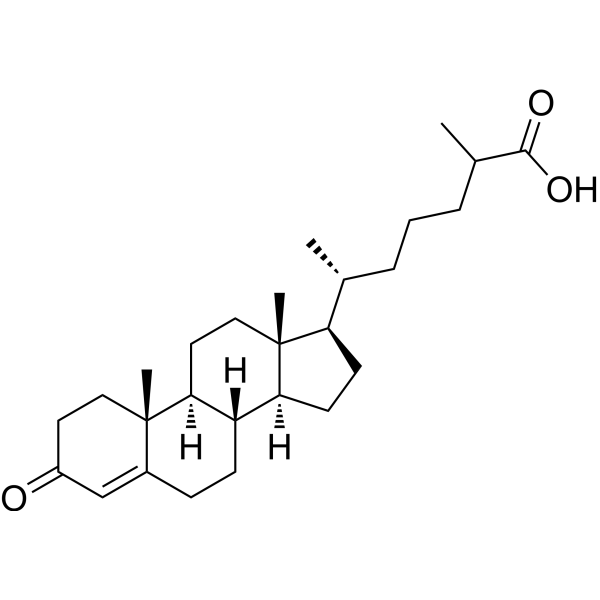
Δ4‑Dafachronic acid is an endogenous steroid hormone, an agonist of the DAF‑12 nuclear receptor, and a key ligand for the vitamin D receptor (VDR). Δ4‑Dafachronic acid promotes the active escape developmental trajectory in Austrofundulus limnaeus embryos even under diapause‑inducing conditions. Δ4‑Dafachronic acid is suitable for research on the developmental biology .
loading...
    loading...
Cat. No.: HY-NP0138
Synonyms: PNA (Fluorescein)
Peanut Agglutinin (PNA) Fluorescein is a fluorescently labeled lectin that specifically binds to glycosylated cells and Haemonchus contortus. Peanut Agglutinin Fluorescein specifically recognizes and binds to the D-Gal-β(1→3)-D-GalNAc disaccharide sequence and terminal D-galactosyl residues on the cell surface; its binding can be inhibited by D-galactose but is not affected by glucose. Peanut Agglutinin Fluorescein specifically labels cone photoreceptor segments and can also be used to distinguish immature thymocytes from lymphocyte subsets, serving as an effective tool for studying cellular glycosylation status and isolating specific cell populations .
loading...
    loading...
Cat. No.: HY-123686
CAS No.: 71837-27-9
Target:  

Parasite

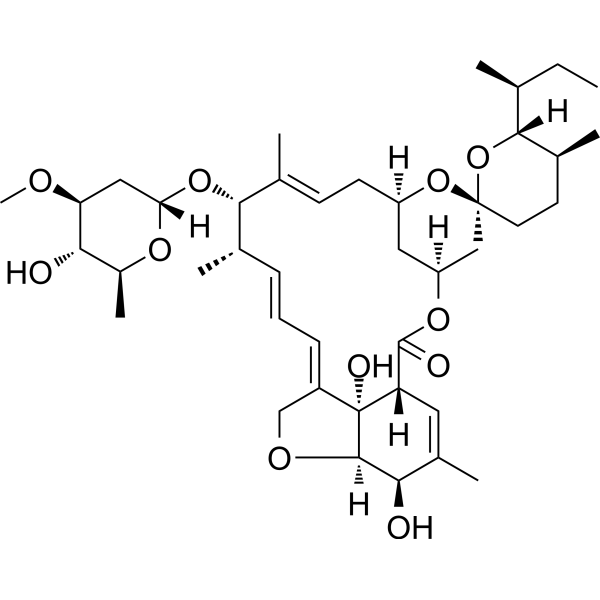
Ivermectin B1a monosaccharide is a modified Ivermectin B1a (HY-126937). Ivermectin B1a monosaccharide is an antiparasite agent with a minimum concentration for full activity in Haemonchus contortus larval development of 0.001 μg/mL .
loading...
    loading...
Cat. No.: HY-W049875
CAS No.: 1689-89-0
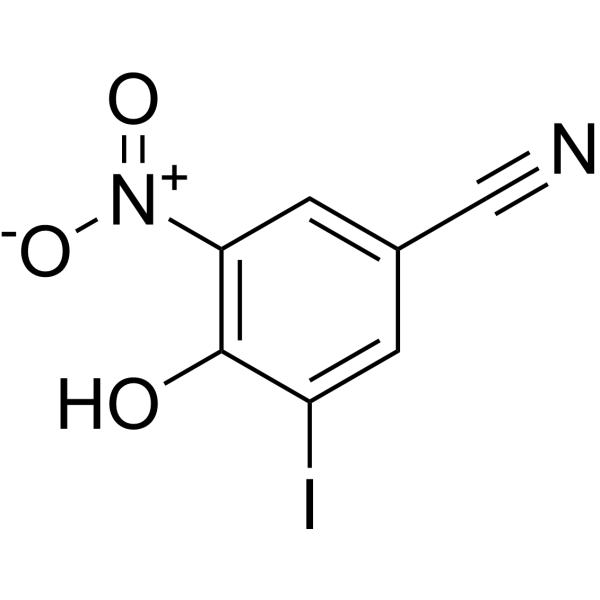
Nitroxynil is a broad-spectrum veterinary anthelmintic and a substrate of ABCG2. Nitroxynil inhibits ATP production by uncoupling the oxidative phosphorylation process of mitochondria, thereby disrupting the parasite body covering, impairing its motility, and ultimately inducing parasite death. Nitroxynil induces chromosomal aberrations, sister chromatid exchanges and abnormal sperm morphology, and interferes with spermatogenesis. Nitroxynil is widely applicable to studies on fascioliasis, myiasis, Haemonchus spp. infections, and Oestrus ovis infections .
loading...
    loading...
Cat. No.: HY-N9503
CAS No.: 6380-28-5
Carvacryl acetate is an orally active and brain-penetrant TRPA1 receptor activator and Na +/K +-ATPase activator. Carvacryl acetate modulates GABAergic signaling, alters hippocampal GABA and glutamine levels, reduces lipid peroxidation and nitrite formation, scavenges hydroxyl radicals, and boosts glutathione and antioxidant enzyme activity. Carvacryl acetate inhibits Haemonchus contortus larval hatching, development, adult motility, and fecal egg counts, and induces adult worm structural damage. Carvacryl acetate can be used for the research of intestinal mucositis, gastrointestinal nematode infection, epilepsy, and neurodegenerative diseases .
loading...
    loading...
Cat. No.: HY-184373
CAS No.: 1340790-22-8
Synonyms: SN639
Target:  

Parasite

Research Areas:  

Infection

SN00799639 (SN639) is an inhibitor of Haemonchus contortus. SN00799639 inhibits the motility of exsheathed third-stage larvae of Haemonchus contortus with an IC50 of 8.4 μM. SN00799639 inhibits the development of exsheathed third-stage larvae of Haemonchus contortus into fourth-stage larvae with an IC50 of 0.29 μM. SN00799639 shows no significant cytotoxicity against human mammary epithelial cells. SN00799639 can be used for research on Haemonchus contortus infection .
loading...
    loading...

