1. Search Result
Search Result
Isoforms Recommended: IKZF1
Results for "

IKZF1

" in MedChemExpress (MCE) Product Catalog:

54

Inhibitors & Agonists

3

Isotope-Labeled Compounds

5

Antibodies

3

Oligonucleotides

Targets Recommended:
Cat. No. Product Name Target Research Areas Chemical Structure
  • HY-A0003
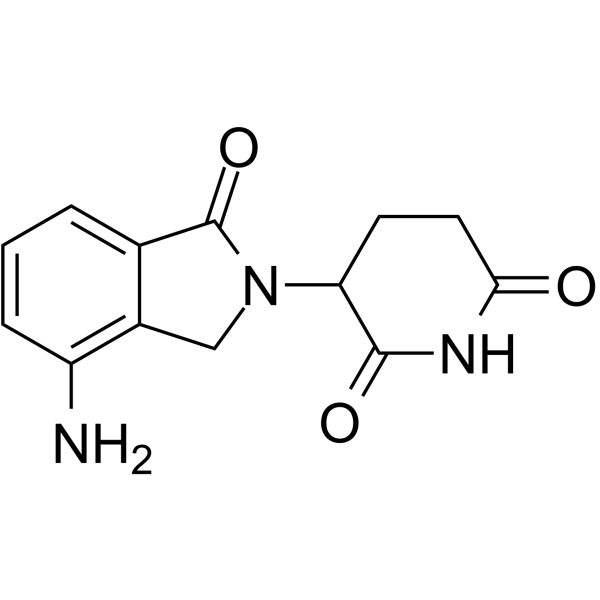
    Lenalidomide
    Maximum Cited Publications
    59 Publications Verification

    CC-5013

    Ligands for E3 Ligase Molecular Glues Apoptosis Inflammation/Immunology Cancer
    Lenalidomide (CC-5013), a derivative of Thalidomide, acts as molecular glue. Lenalidomide is an orally active immunomodulator. Lenalidomide (CC-5013) is a ligand of ubiquitin E3 ligase cereblon (CRBN), and it causes selective ubiquitination and degradation of two lymphoid transcription factors, IKZF1 and IKZF3, by the CRBN-CRL4 ubiquitin ligase. Lenalidomide (CC-5013) specifically inhibits growth of mature B-cell lymphomas, including multiple myeloma, and induces IL-2 release from T cells [1] .
    Lenalidomide
  • HY-130800
    Eragidomide
    5+ Cited Publications

    CC-90009

    Ligands for E3 Ligase Molecular Glues Apoptosis Inflammation/Immunology Cancer
    Eragidomide (CC-90009) is a first-in-class GSPT1-selective cereblon (CRBN) E3 ligase modulator, acts as a molecular glue. Eragidomide coopts the CRL4 CRBN to selectively target GSPT1 for ubiquitination and proteasomal degradation [1] .
    Eragidomide
  • HY-153220

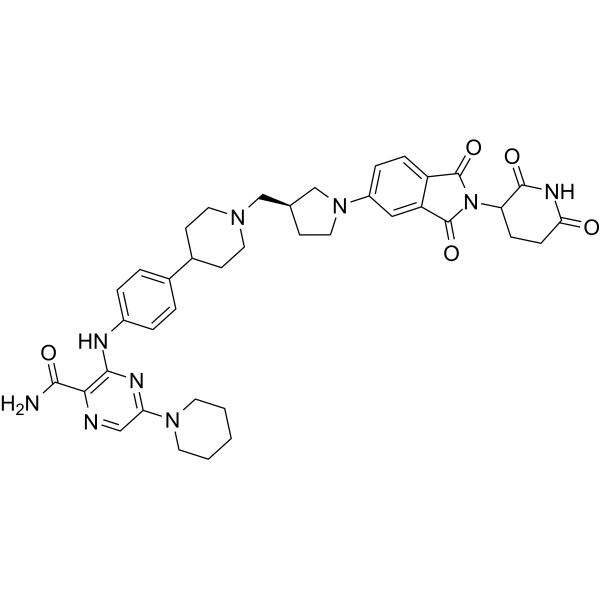
    NX-2127

    PROTACs Btk Inflammation/Immunology Cancer
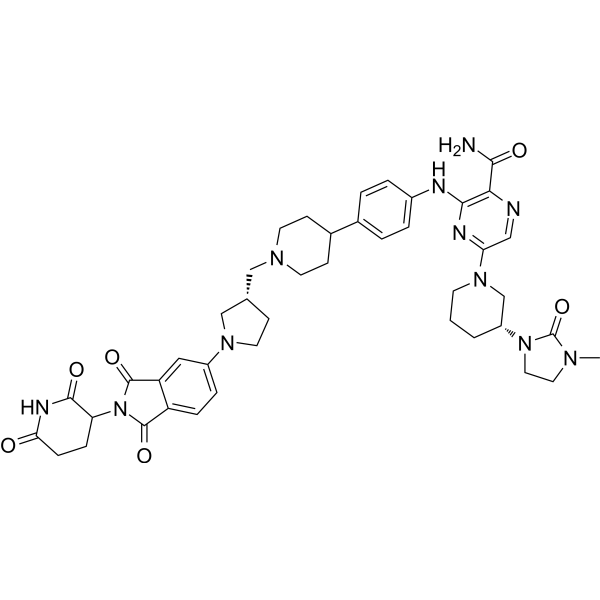
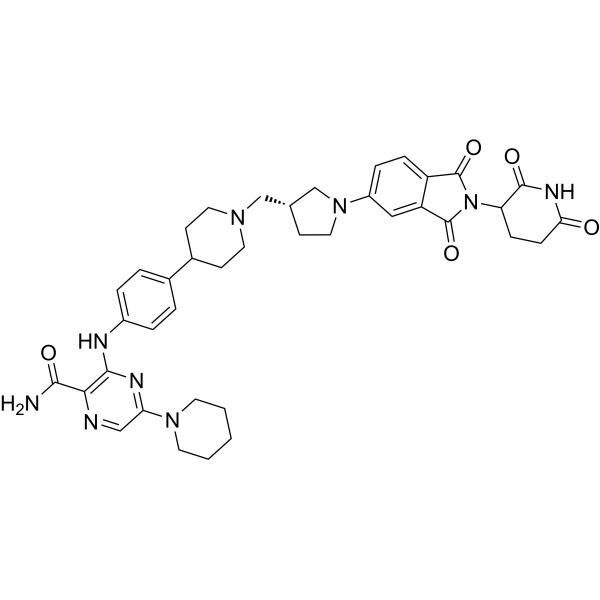
    Zelebrudomide (NX-2127) (Compound 28) is an orally active PROTAC deggrader, targeting to Bruton’s Tyrosine Kinase (Btk). Zelebrudomide inhibits proliferation of BTK C481S mutant TMD8 cells, more effectively than Ibrutinib (HY-10997). Zelebrudomide catalyzes the degradation of Ikaros (IKZF1) and Aiolos (IKZF3) with of 25 nM and 54 nM, respectively. Zelebrudomide stimulates T cell activation and increases IL-2 production in primary human T Cells [1] . (Pink: BTK ligand 10 (HY-168302); Black: (R)-4-(1-(Pyrrolidin-3-ylmethyl)piperidin-4-yl)aniline (HY-168348); Blue: Thalidomide 5-fluoride (HY-W087383)
    Zelebrudomide
  • HY-136250

    PROTACs CDK Cancer
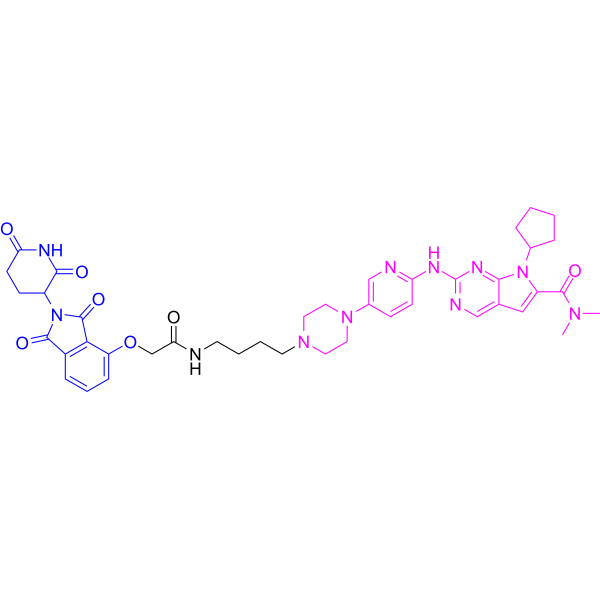
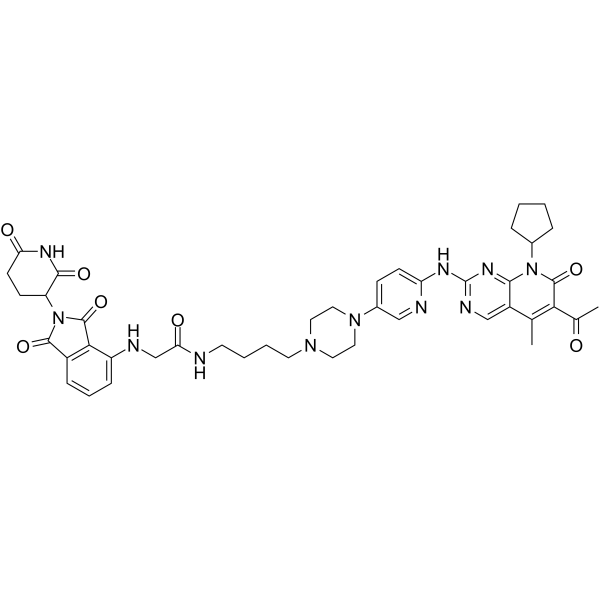
    BSJ-03-204 is a PROTAC connected by ligands for Cereblon and CDK. BSJ-03-204 is a potent and selective Palbociclib-based CDK4/6 dual degrader (PROTAC), with IC50s of 26.9 nM and 10.4 nM for CDK4/D1 and CDK6/D1, respectively. BSJ-03-204 does not induce IKZF1/3 degradation and has anti-cancer activity [1].
    BSJ-03-204
  • HY-144841

    CFT7455

    Molecular Glues IKZF Family Cancer
    Cemsidomide (CFT7455) is a ubiquitin ligase pathway based IKZF1/3 (Ikaros/Aiolos) degrader with molecular glue activity [1]. Cemsidomide has a GI50 of 0.05 nM for NCIH929.1 cells. Cemsidomide is used in the research of multiple myeloma (MM) [1] .
    Cemsidomide
  • HY-136262
    CRBN-6-5-5-VHL
    1 Publications Verification

    PROTACs E1/E2/E3 Enzyme Cancer
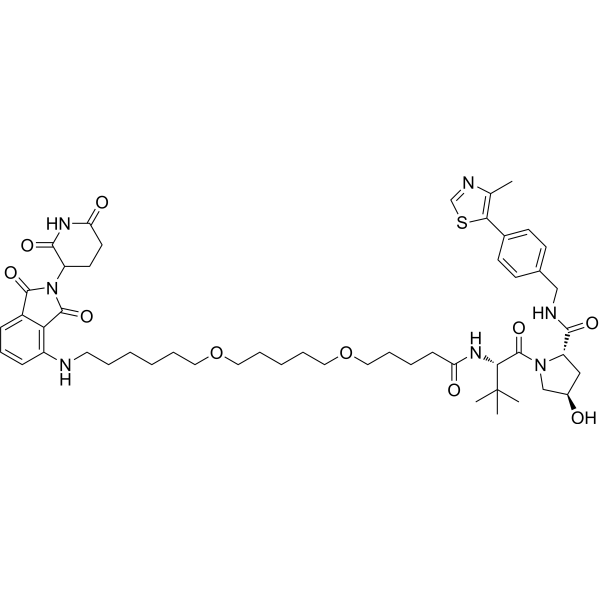
    CRBN-6-5-5-VHL is a potent and selective von Hippel-Lindau-based cereblon (CRBN) degrader with a DC50 value of 1.5 nM. CRBN-6-5-5-VHL has almost no effect on the degradation of the neo-substrates IKZF1 and IKZF3. (Pink: VHL ligand (HY-125845); Blue: E3 Ligase ligand (HY-10984); Black: linker (HY-403544)) [1].
    CRBN-6-5-5-VHL
  • HY-111594
    Homo-PROTAC cereblon degrader 1
    1 Publications Verification

    PROTACs Cancer
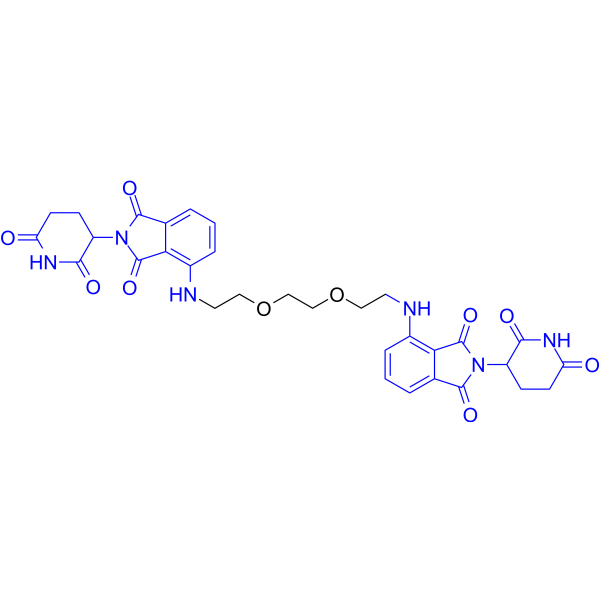
    Homo-PROTAC cereblon degrader 1 (compound 15a) is a highly potent and efficient Cereblon (CRBN) degrader with only minimal effects on IKZF1 and IKZF3 [1].
    Homo-PROTAC cereblon degrader 1
  • HY-145776

    Molecular Glues Ligands for E3 Ligase IKZF Family Interleukin Related Inflammation/Immunology Cancer
    ALV1 is a molecular glue degrader for Ikaros (IKZF1) and Helios (IKZF2) with DC50 of 2.5 nM and 10.3 nM respectively. ALV1 bind CRBN with an IC50 of 0.55 μM, and induces CRBN-Helios dimerization. ALV1 can be used to study the properties and functions of regulatory T cells [1].
    ALV1
  • HY-145319

    Phosphodiesterase (PDE) Casein Kinase Molecular Glues Inflammation/Immunology Cancer
    FPFT-2216, a “molecular glue” compound, degrades phosphodiesterase 6D (PDE6D), zinc finger transcription factors Ikaros (IKZF1), Aiolos (IKZF3), and casein kinase 1α (CK1α). FPFT-2216 can be used for the research of cancer and inflammatory disease [1] .
    FPFT-2216
  • HY-136252

    PROTACs CDK Cancer
    BSJ-04-132 is a PROTAC connected by ligands for Cereblon and CDK. BSJ-04-132 is a potent and selective Ribociclib-based CDK4 degrader (PROTAC), with IC50s of 50.6 nM and 30 nM for CDK4/D1 and CDK6/D1, respectively. BSJ-04-132 does not induce CDK6 and IKZF1/3 degradation. BSJ-04-132 has anti-cancer activity [1].
    BSJ-04-132
  • HY-148837

    PROTACs c-Myc Casein Kinase Infection Cardiovascular Disease Cancer
    PROTAC c-Myc degrader-1 (Compound A153) is a multiple target protein degrader (PROTAC). PROTAC c-Myc degrader-1 effective degrades c-MYC, CK1α, GSPT1 and IKZF1/2/3 proteins in a variety of tumor cells. PROTAC c-Myc degrader-1 can be used for c-Myc high expression related disease research, such as cancer, cardiovascular and cerebrovascular diseases, and viral infection (Pink: c-Myc ligand (HY-168685); Blue: E3 ligase ligand (HY-W093472); Black: linker (HY-W015808)) [1].
    GT19630
  • HY-A0003B
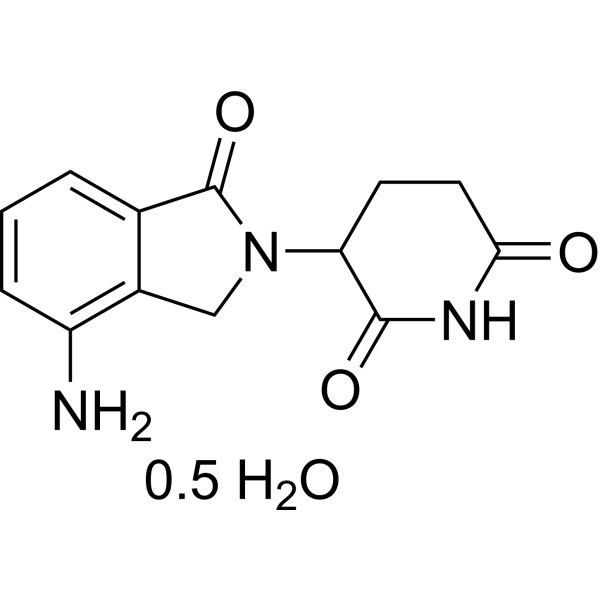
    Lenalidomide hemihydrate
    Maximum Cited Publications
    59 Publications Verification

    CC-5013 hemihydrate

    Ligands for E3 Ligase Molecular Glues Apoptosis Cancer
    Lenalidomide hemihydrate (CC-5013 hemihydrate), a derivative of Thalidomide, acts as molecular glue. Lenalidomide hemihydrate is an orally active immunomodulator. Lenalidomide hemihydrate (CC-5013 hemihydrate) is a ligand of ubiquitin E3 ligase cereblon (CRBN), and it causes selective ubiquitination and degradation of two lymphoid transcription factors, IKZF1 and IKZF3, by the CRBN-CRL4 ubiquitin ligase. Lenalidomide hemihydrate (CC-5013 hemihydrate) specifically inhibits growth of mature B-cell lymphomas, including multiple myeloma, and induces IL-2 release from T cells [1] .
    Lenalidomide hemihydrate
  • HY-153698

    Molecular Glues Ligands for E3 Ligase Cancer
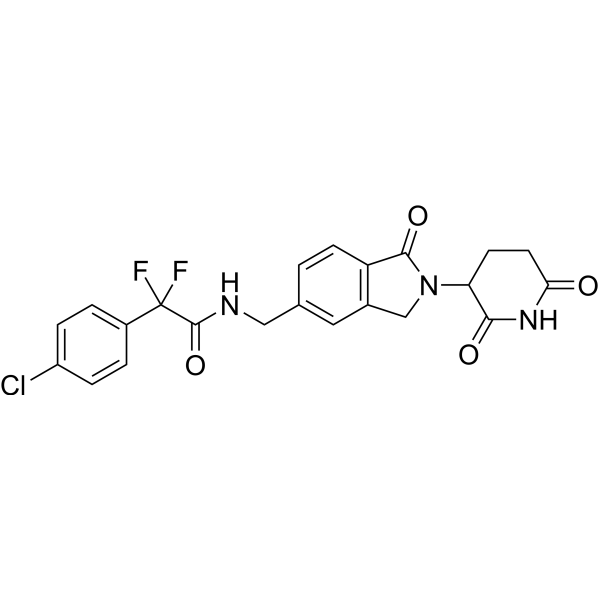
    CC-3060 is a molecular glue modulator targeting Cereblon (CRBN) E3 ubiquitin ligase and ZBTB16 degrader with a DC50 of 0.47 nM in HT-1080 cells. CC-3060 engages structural degrons on ZBTB16’s ZnF1 or ZnF3 domains for fusion protein substrates. CC-3060 can be used for the research of acute promyelocytic leukemia [1].
    CC-3060
  • HY-123714

    MAP4K Apoptosis Inflammation/Immunology Cancer
    TL4-12 is a selective MAP4K2/GCK inhibitor, dose-dependently downregulates IKZF1 and BCL-6 and leads to MM cell proliferation inhibition (IC50=37 nM) accompanied by induction of apoptosis. TL4-12 can be used to overcome immunomodulatory agent resistance in multiple myeloma (MM) [1].
    TL4-12
  • HY-171860

    PROTACs HIV Infection Cancer
    FC-14369 is a PROTAC degrader targeting the HIV-1 Nef protein, with a DC50 value of 160 nM. Through its bifunctional structure, FC-14369 binds to Nef and the Cereblon E3 ubiquitin ligase, induces Nef ubiquitination and proteasomal degradation, restores the expression of cell-surface CD4 and MHC-I, and inhibits HIV-1 replication. FC-14369 can be used in research on HIV infection and AIDS. FC-14369 is applicable to studies related to HIV-1 infection [1].
    FC-14369
  • HY-RS06665

    Small Interfering RNA (siRNA) Others

    IKZF1 Human Pre-designed siRNA Set A contains three designed siRNAs for IKZF1 gene (Human), as well as a negative control, a positive control, and a FAM-labeled negative control.

    IKZF1 Human Pre-designed siRNA Set A
    IKZF1 Human Pre-designed siRNA Set A
  • HY-A0003R

    CC-5013 (Standard)

    Reference Standards Ligands for E3 Ligase Molecular Glues Apoptosis Inflammation/Immunology Cancer
    Lenalidomide (Standard) is the analytical standard of Lenalidomide. This product is intended for research and analytical applications. Lenalidomide (CC-5013), a derivative of Thalidomide, acts as molecular glue. Lenalidomide is an orally active immunomodulator. Lenalidomide (CC-5013) is a ligand of ubiquitin E3 ligase cereblon (CRBN), and it causes selective ubiquitination and degradation of two lymphoid transcription factors, IKZF1 and IKZF3, by the CRBN-CRL4 ubiquitin ligase. Lenalidomide (CC-5013) specifically inhibits growth of mature B-cell lymphomas, including multiple myeloma, and induces IL-2 release from T cells [1] .
    Lenalidomide (Standard)
  • HY-W760183

    Fluorescent Dye Cancer
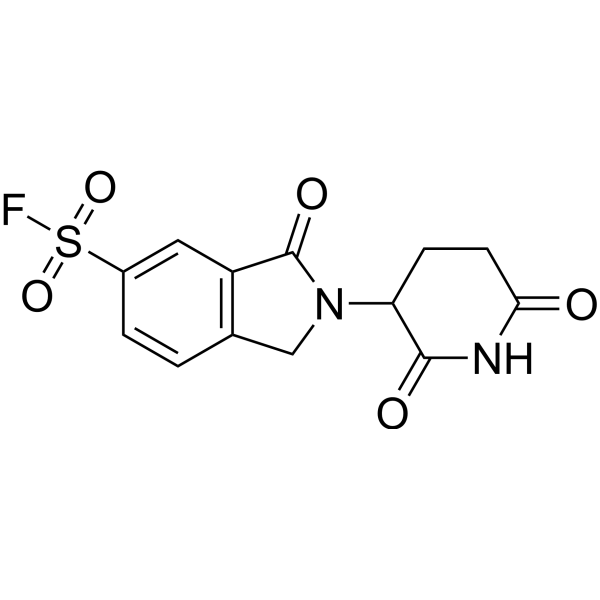
    EM12-SO2F is a powerful covalent inhibitor of CRBN through binding at His353. EM12-SO2F is a useful chemical probe to investigate the CRBN. EM12-SO2F inhibits the degradation of IKZF1 by lenalidomide (HY-A0003) in MOLT4 cells [1]
    EM12-SO2F
  • HY-168615

    IKZF Family Casein Kinase Cancer
    MGD-28 is a potent, orally active, Cereblon (CRBN)-dependent IKAROS protein degrader that degrades IKZF1 (DC50=3.8 nM), IKZF2 (DC50=56.3 nM), and IKZF3 (DC50=7.1 nM) in a dose-dependent manner. In addition, MGD-4 also degrades CK1α (DC50=7.8 nM). MGD-28 has antiproliferative activity and can be used in multiple myeloma research [1].
    MGD-28
  • HY-136250A

    PROTACs CDK Cancer
    BSJ-03-204 triTFA is a PROTAC connected by ligands for Cereblon and CDK. BSJ-03-204 triTFA is a potent and selective Palbociclib-based CDK4/6 dual degrader (PROTAC), with IC50s of 26.9 nM and 10.4 nM for CDK4/D1 and CDK6/D1, respectively. BSJ-03-204 triTFA does not induce IKZF1/3 degradation and has anti-cancer activity [1].
    BSJ-03-204 triTFA
  • HY-175600

    IKZF Family Casein Kinase Molecular Glues Cancer
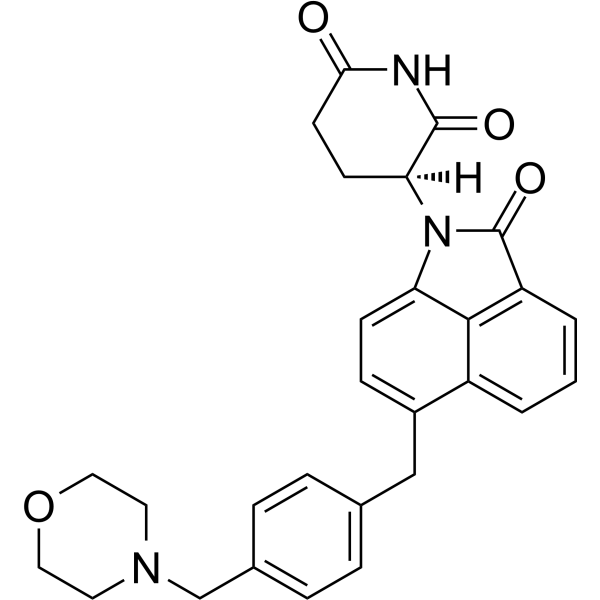
    MI-2-80 is a molecular glue degrader. MI-2-80 induces proteins (such as IKZF1/3 and CSNK1A1) to bind to CRBN, promoting their ubiquitination and degradation [1].
    MI-2-80
  • HY-160531

    Molecular Glues IKZF Family Cancer
    IKZF1-degrader-1 (Compound 9-B) is a IKZF1 molecular glue degrader with the DC50 value of 0.134 nM. IKZF1-degrader-1 can be used to degrader tumors [1].
    IKZF1-degrader-1
  • HY-179077

    PROTACs Btk IKZF Family Cancer
    PROTAC BTK/IKZF1/3 Degrader-1 is a selective and orally active BCL6 and IKZF1/3 PROTAC degrader. PROTAC BTK/IKZF1/3 Degrader-1 exhibits antitumor activity. PROTAC BTK/IKZF1/3 Degrader-1 can be used for the research of cancer, such as lymphoma [1]. (Structure Note: Pink: BCL6/IKZF1/3 ligand (HY-179076); Blue: CRBN ligand (HY-41547))
    PROTAC BTK/IKZF1/3 Degrader-1
  • HY-179076

    Ligands for Target Protein for PROTAC Btk IKZF Family Cancer
    BTK/IKZF1/3 ligand 1 is a BTK/IKZF1/3 PROTAC ligand. BTK/IKZF1/3 ligand 1 can be conjugated with E3 ligase Ligand (HY-41547) and linker to synthesize PROTAC BTK/IKZF1/3 Degrader-1 (HY-179077). PROTAC BTK/IKZF1/3 Degrader-1 can be used for cancer research [1].
    BTK/IKZF1/3 ligand 1
  • HY-RS16704

    Small Interfering RNA (siRNA) Others

    Ikzf1 Mouse Pre-designed siRNA Set A contains three designed siRNAs for Ikzf1 gene (Mouse), as well as a negative control, a positive control, and a FAM-labeled negative control.

    Ikzf1 Mouse Pre-designed siRNA Set A
    Ikzf1 Mouse Pre-designed siRNA Set A
  • HY-160533

    Molecular Glues IKZF Family Cancer
    IKZF1-degrader-2 (Compound 3) is an IKZF1 molecular glues degrader. IKZF1-degrader-2 has anticancer activity and low toxicity [1].
    IKZF1-degrader-2
  • HY-179075

    PROTACs BCL6 IKZF Family Cancer
    PROTAC BCL6/IKZF1/3 Degrader-1 is a selective and orally active BCL6 and IKZF1/3 PROTAC degrader. PROTAC BCL6/IKZF1/3 Degrader-1 exhibits superior antiproliferative effects in various germinal center B-cell-like (GCB) and activated B-cell-like (ABC) diffuse large B-cell lymphoma (DLBCL) cell lines. PROTAC BCL6/IKZF1/3 Degrader-1 can be used for the research of cancer, such as lymphoma [1]. (Structure Note: Pink: BCL6/IKZF1/3 ligand (HY-179064); Blue: CRBN ligand (HY-41547); Black: linker (HY-42427); CRBN ligand-Linker: (HY-179066))
    PROTAC BCL6/IKZF1/3 Degrader-1
  • HY-179064

    Target Protein Ligand-Linker Conjugates IKZF Family Cancer
    IKZF1/3 ligand-1 is a PROTAC target protein ligand that can be used for synthesis of PROTACs, such as PROTAC IKZF1/3 Degrader-1 (HY-179075). PROTAC IKZF1/3 Degrader-1 is a potent IKZF1/3 PROTAC degrader with neuroprotective activity [1].
    IKZF1/3 ligand-1
  • HY-162014

    PROTACs WDR5 Cancer
    WDR5 degrader-1 (compound 25) is a cereblon (CRBN)-recruiting WDR5 degrader. WDR5 degrader-1 selectively degraded WDR5 over the CRBN neo-substrate IKZF1 [1].
    WDR5 degrader-1
  • HY-175040

    PROTACs Molecular Glues FLT3 IKZF Family Cancer
    PROTAC FLT-3 degrader 5 is a FLT3 PROTAC degrader (DC50 = 1.2 nM). PROTAC FLT-3 degrader 5 functions as a molecular glue to degrade cereblon substrates GSPT1 and IKZF1/3. PROTAC FLT-3 degrader 5 exhibits antiproliferative activity against drug-resistant acute myeloid leukemia (AML) cells and is potentially useful in AML research. (Pink: FLT3/GSPT1/IKZF1/3 ligand: (HY-169374); Blue: Thalidomide: (HY-14658); Black: linker; Thalidomide + linker: (HY-W1123823)) [1].
    PROTAC FLT-3 degrader 5
  • HY-177758

    PROTACs HDAC Cancer
    HDAC6 degrader-6 (Compound 11b) is a potent and selective HDAC6 PROTAC degrader with a DC50 of 1.9 nM. HDAC6 degrader-6 has no effect on the protein levels of other HDAC family members and does not degrade IKZF1, IKZF3, and GSPT1. HDAC6 degrader-6 can be used to study multiple myeloma (Pink: HDAC6 ligand (HY-177776); Blue: CRBN ligand (HY-W998281); Black: Linker) [1].
    PROTAC HDAC6 degrader 8
  • HY-A0003S

    CC-5013-d5

    Isotope-Labeled Compounds Ligands for E3 Ligase Molecular Glues Apoptosis Inflammation/Immunology Cancer
    Lenalidomide-d5 is deuterium labeled Lenalidomide. Lenalidomide (CC-5013), a derivative of Thalidomide, acts as molecular glue. Lenalidomide is an orally active immunomodulator. Lenalidomide (CC-5013) is a ligand of ubiquitin E3 ligase cereblon (CRBN), and it causes selective ubiquitination and degradation of two lymphoid transcription factors, IKZF1 and IKZF3, by the CRBN-CRL4 ubiquitin ligase. Lenalidomide (CC-5013) specifically inhibits growth of mature B-cell lymphomas, including multiple myeloma, and induces IL-2 release from T cells [1] .
    Lenalidomide-d5
  • HY-175502

    Molecular Glues IKZF Family Apoptosis Cancer
    MGD-22, a molecular glue, is an orally active IKZF1/2/3 degrader with DC50 values of 8.33 nM, 9.91 nM, and 5.74 nM, respectively. MGD-22 exhibits extremely potent anti-proliferative activity against diverse hematological cancer cells. MGD-22 induces apoptosis in cancer cells. MGD-22 demonstrates potent anti-tumor efficacy in mice bearing NCI-H929 xenografts or WSU-DLCL-2 xenografts. MGD-22 can be used for the study of hematological cancers, including multiple myeloma (MM), acute myeloid leukemia (AML), and diffuse large B-cell lymphoma (DLBCL) [1].
    MGD-22
  • HY-RS23139

    Small Interfering RNA (siRNA) Others

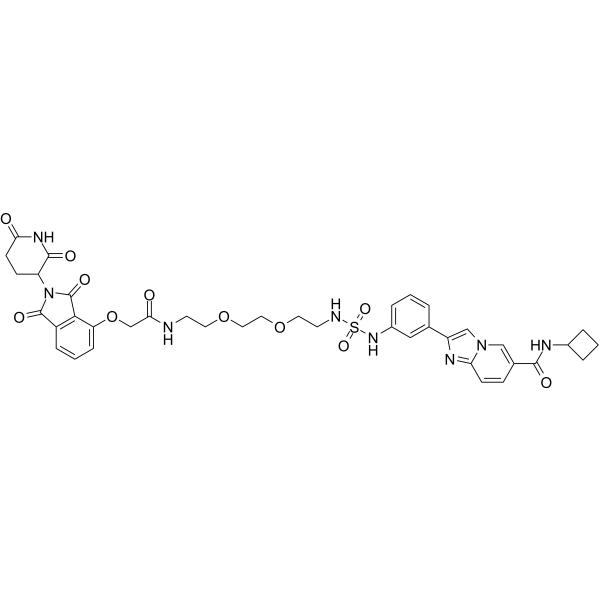
    Ikzf1 Rat Pre-designed siRNA Set A contains three designed siRNAs for Ikzf1 gene (Rat), as well as a negative control, a positive control, and a FAM-labeled negative control.

    Ikzf1 Rat Pre-designed siRNA Set A
    Ikzf1 Rat Pre-designed siRNA Set A
  • HY-175601

    IKZF Family Molecular Glues Others
    DD-04-038 is a molecular glue degrader. DD-04-038 induces proteins (such as IKZF1/3, ZBED3 and PATZ1) to bind to CRBN, promoting their ubiquitination and degradation [1].
    DD-04-038
  • HY-175602

    IKZF Family Phosphodiesterase (PDE) Molecular Glues Others
    TM-04-064-02 is a molecular glue degrader. TM-04-064-02 induces proteins (such as IKZF1/3, PPIL4, ETF1 and PDE6D) to bind to CRBN, promoting their ubiquitination and degradation [1].
    TM-04-064-02
  • HY-A0003A

    CC-5013 hydrochloride

    Ligands for E3 Ligase Molecular Glues Inflammation/Immunology Cancer
    Lenalidomide hydrochloride (CC-5013 hydrochloride), a derivative of Thalidomide, acts as molecular glue. Lenalidomide hydrochloride is an orally active immunomodulator. Lenalidomide hydrochloride (CC-5013 hydrochloride) is a ligand of ubiquitin E3 ligase cereblon (CRBN), and it causes selective ubiquitination and degradation of two lymphoid transcription factors, IKZF1 and IKZF3, by the CRBN-CRL4 ubiquitin ligase. Lenalidomide hydrochloride (CC-5013 hydrochloride) specifically inhibits growth of mature B-cell lymphomas, including multiple myeloma, and induces IL-2 release from T cells [1] .
    Lenalidomide hydrochloride
  • HY-A0003BR

    CC-5013 hemihydrate (Standard)

    Ligands for E3 Ligase Molecular Glues Apoptosis Reference Standards Cancer
    Lenalidomide (hemihydrate) (Standard) is the analytical standard of Lenalidomide (hemihydrate). This product is intended for research and analytical applications. Lenalidomide hemihydrate (CC-5013 hemihydrate), a derivative of Thalidomide, acts as molecular glue. Lenalidomide hemihydrate is an orally active immunomodulator. Lenalidomide hemihydrate (CC-5013 hemihydrate) is a ligand of ubiquitin E3 ligase cereblon (CRBN), and it causes selective ubiquitination and degradation of two lymphoid transcription factors, IKZF1 and IKZF3, by the CRBN-CRL4 ubiquitin ligase. Lenalidomide hemihydrate (CC-5013 hemihydrate) specifically inhibits growth of mature B-cell lymphomas, including multiple myeloma, and induces IL-2 release from T cells [1] .
    Lenalidomide hemihydrate (Standard)
  • HY-A0003S2

    CC-5013-13C5,15N

    Ligands for E3 Ligase Apoptosis Molecular Glues Isotope-Labeled Compounds Inflammation/Immunology Cancer
    Lenalidomide- 13C5, 15N is 15N and 13C labeled Lenalidomide (HY-A0003). Lenalidomide (CC-5013), a derivative of Thalidomide, acts as molecular glue. Lenalidomide is an orally active immunomodulator. Lenalidomide (CC-5013) is a ligand of ubiquitin E3 ligase cereblon (CRBN), and it causes selective ubiquitination and degradation of two lymphoid transcription factors, IKZF1 and IKZF3, by the CRBN-CRL4 ubiquitin ligase. Lenalidomide (CC-5013) specifically inhibits growth of mature B-cell lymphomas, including multiple myeloma, and induces IL-2 release from T cells [1] .
    Lenalidomide-13C5,15N
  • HY-168614

    IKZF Family Cancer
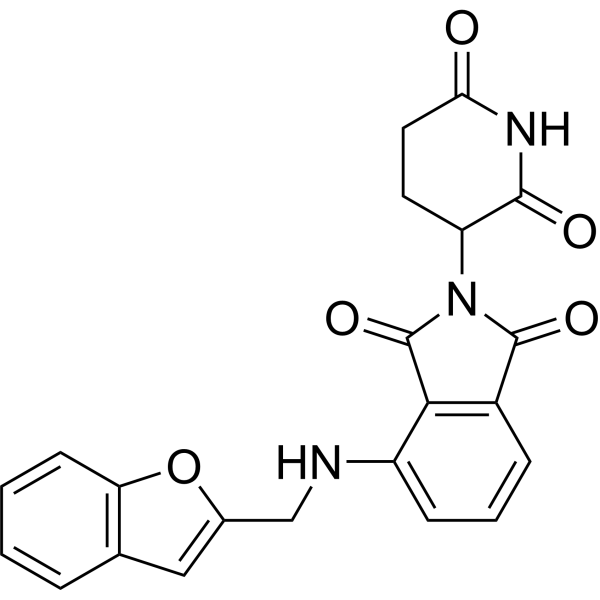
    MGD-4 is an orally active, Cereblon (CRBN)-dependent IKAROS protein degrader that degrades IKZF1 (DC50=67.2 nM), IKZF2 (DC50=918.2 nM), and IKZF3 (DC50=95.8 nM) in a dose-dependent manner. MGD-4 effectively inhibits the growth of multiple myeloma [1].
    MGD-4
  • HY-W1128213

    Molecular Glues IKZF Family Inflammation/Immunology Cancer
    IKZF2-degrader 2 is a selective and orally active IKZF2 molecular glue degrader with DC50 values of 0.5 nM and 1.8 nM in HiBit and FACS. The IKZF2-degrader 2 mediates the ubiquitination and degradation of target proteins by recruiting the CRL4-CRBN E3 ubiquitin ligase. IKZF2-degrader 2 displays moderate degradation against SALL4 with a DC50 of 9 nM but does not induce any significant degradation towards IKZF1, IKZF3, CK1α and GSPT1. IKZF2-degrader 2 can be used for the study of cancer immunology [1].
    IKZF2-degrader 2
  • HY-179066

    E3 Ligase Ligand-Linker Conjugates Cancer
    E3 Ligase Ligand-linker Conjugate 212 is a PROTAC E3 ligase-linker conjugate that can be used for synthesis of PROTACs, such as PROTAC IKZF1/3 Degrader-1 (HY-179075). PROTAC IKZF1/3 Degrader-1 is a potent IKZF1/3 PROTAC degrader with neuroprotective activity [1].
    E3 Ligase Ligand-linker Conjugate 212
  • HY-143435

    Apoptosis Cancer
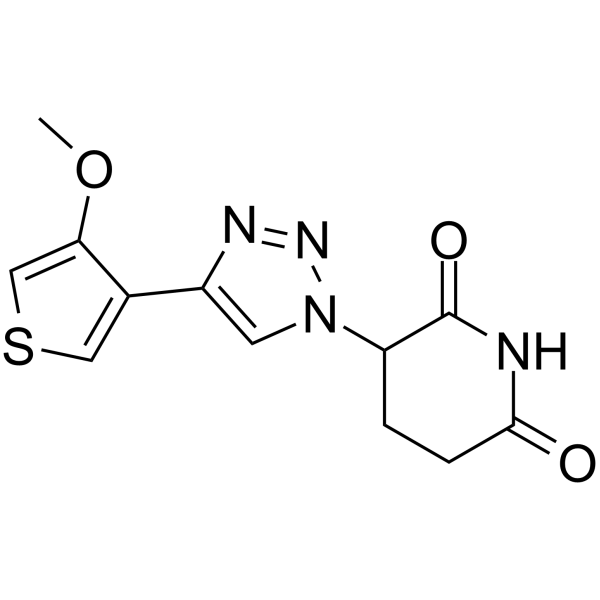
    AG6033 is a potential novel CRBN modulator. AG6033 suppresses various tumor cells by modulating the interactions between CRBN and various antitumor target proteins. AG6033 can cause GSPT1 and IKZF1 degradation. AG6033 induces CRBN-dependent cytotoxic effect [1].
    AG6033
  • HY-172368

    PROTACs Histone Methyltransferase IKZF Family Apoptosis Inflammation/Immunology Cancer
    PROTAC CARM1/IKZF3 degrader-1 (Compound 074) inhibits CARM1, reduces the methylation level of its substrate BAF155. PROTAC CARM1/IKZF3 degrader-1 is the PROTAC degrader for IKZF 1/3 through a CRBN-dependent pathway. PROTAC CARM1/IKZF3 degrader-1 inhibits the expression of MYC protein, thereby inhibiting the proliferation of a variety of multiple myeloma cells. PROTAC CARM1/IKZF3 degrader-1 induces apoptosis in cell H929. PROTAC CARM1/IKZF3 degrader-1 overcomes immunomodulatory drugs (IMiD, such as pomalidomide) resistance. PROTAC CARM1/IKZF3 degrader-1 can be used in cancer and immunology research [1]. (Pink: ligand for target protein CARM1/IKZF3 ligand 1 (HY-172369); Active form of target protein ligand: EZM 2302 (HY-111109); Black: linker (HY-21999); Blue: ligand for E3 ligase Cereblon Thalidomide 4-fluoride (HY-41547))
    PROTAC CARM1/IKZF3 degrader-1
  • HY-A0003S3

    CC-5013-d4

    Isotope-Labeled Compounds Apoptosis Molecular Glues Ligands for E3 Ligase Inflammation/Immunology Cancer
    Lenalidomide-d4 (CC-5013-d4) is deuterium labeled Lenalidomide. Lenalidomide (CC-5013), a derivative of Thalidomide, acts as molecular glue. Lenalidomide is an orally active immunomodulator. Lenalidomide (CC-5013) is a ligand of ubiquitin E3 ligase cereblon (CRBN), and it causes selective ubiquitination and degradation of two lymphoid transcription factors, IKZF1 and IKZF3, by the CRBN-CRL4 ubiquitin ligase. Lenalidomide (CC-5013) specifically inhibits growth of mature B-cell lymphomas, including multiple myeloma, and induces IL-2 release from T cells [1] .
    Lenalidomide-d4
  • HY-182797

    Molecular Glues IKZF Family IFNAR Cancer
    NHWL071065 is a CRBN-targeting IKZF1/IKZF3 molecular glues degrader. NHWL071065 selectively degrades IKZF1 and IKZF3 in lymphoma cells via the ubiquitin-proteasome pathway. NHWL071065 inhibits the proliferation of lymphoma cells. NHWL071065 downregulates proteins involved in cytoskeleton assembly, cell adhesion and immune regulation in cells, while upregulating proteins related to the type I IFN signaling pathway. NHWL071065 can be used in the research of lymphoma [1].
    NHWL071065
  • HY-W947273

    Ligands for E3 Ligase Cancer
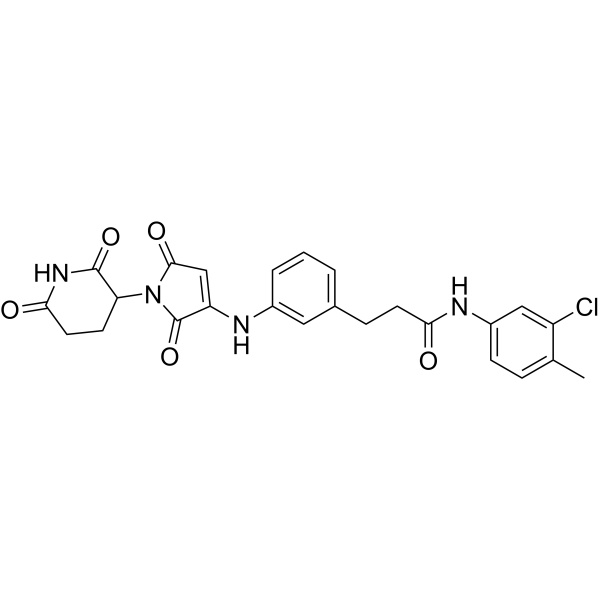
    CRBN ligand-898 is a CRBN ligand with a Kd of 216 nM. CRBN ligand-898 binds to CRBN, and when incorporated into proteolysis targeting chimeras (PROTACs), mediates degradation of intended target proteins. CRBN ligand-898 does not induce degradation of IMiD-associated neosubstrates Ikaros (IKZF1) and Aiolos (IKZF3). CRBN ligand-898 can be used to synthesize PROTACs [1].
    CRBN ligand-898
  • HY-180836

    Molecular Glues IKZF Family Apoptosis Cancer
    DIX-01 is a molecular gel degrader that can simultaneously induce the degradation of IKZF1/3 and GSPT1 mediated by CRBN. Its DC50 values are: IKZF1 (19.80 nM), IKZF3 (45.31 nM), and GSPT1 (120.1 nM). DIX-01 exhibits nanomolar-level potent anti-proliferative activity in various cancer cell lines. DIX-01 induces apoptosis in MV4-11 cells and significantly inhibits the growth of leukemia cells in zebrafish. DIX-01 can be used for the study of malignant hematological tumors [1].
    DIX-01
  • HY-181651

    PROTACs RAD51 DNA/RNA Synthesis Apoptosis IKZF Family Cancer
    SZU305 is a RAD51 PROTAC degrader, with DC50 values of 307.45 nM and 84.19 nM in SK-HEP-1 and Huh-7 cells, respectively. SZU305 inhibits DNA damage repair, induces cell cycle arrest and apoptosis. SZU305 moderately reduces the protein levels of IKZF1 and IKZF3 at high concentrations. SZU305 can be used in studies related to hepatocellular carcinoma [1].
    SZU305
  • HY-170518

    IKZF Family Molecular Glues Infection Cancer
    IKZF-IN-1 (Compound I) is the molecular glue, that degrades ikaros zinc finger family (IKZF) IKZF 1/2/3/4, and can be used as an immunomodulator in research of cancer and viral infections [1].
    IKZF-IN-1

Inquiry Online

Your information is safe with us. * Required Fields.

Salutation


Country or Region *

Applicant Name *


Organization Name *

Department *


Email Address *


Product Name *

Cat. No.


Requested quantity *

Phone Number *


Remarks

Inquiry Online

Inquiry Information

Product Name:
Cat. No.:
Quantity:
MCE Japan Authorized Agent:

