



Homo-PROTAC cereblon degrader 1
Based on 1 publication(s) in Google Scholar
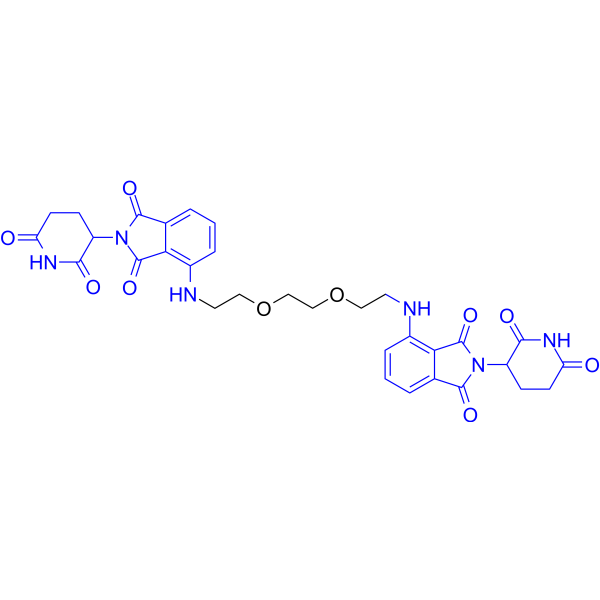
Homo-PROTAC cereblon degrader 1 is a highly selective cereblon (CRBN) PROTAC degrader. Homo-PROTAC cereblon degrader 1 induces self-directed ubiquitination and proteasomal degradation of CRBN. Homo-PROTAC cereblon degrader 1 blocks Pomalidomide (HY-10984)-induced degradation of IKZF1 and IKZF3. Homo-PROTAC cereblon degrader 1 antagonizes the growth inhibitory effect of Pomalidomide on multiple myeloma cells. Homo-PROTAC cereblon degrader 1 can be used in studies related to multiple myeloma.
(Pink: Cereblon ligand (HY-10984); Blue: Cereblon ligand (HY-10984); Black: linker (HY-W017440)).
For research use only. We do not sell to patients.
- Purity : 99.66%
- CAS No.: 2244520-98-5
- Formula: C32H32N6O10
- Molecular Weight:660.63
-
Storage:
4°C, stored under nitrogen
* In solvent : -80°C, 6 months; -20°C, 1 month (stored under nitrogen)

To place orders, for customer services and technical support, please contact: MedChemExpress USA
Tel: 609-228-6898 E-mail: [email protected] [email protected]


-
 Biological Activity
-
Chemical Information
-
Solvent & Solubility
- Purity & Documentation
- References
-
 Help & FAQs


-
HY-112588
dBET6PROTAC BET Degrader -
HY-128845
PROTAC CRBN Degrader-1PROTAC CRBN Degrader -
HY-123921
Gefitinib-based PROTAC 3EGFR PROTAC Degrader -
HY-103597
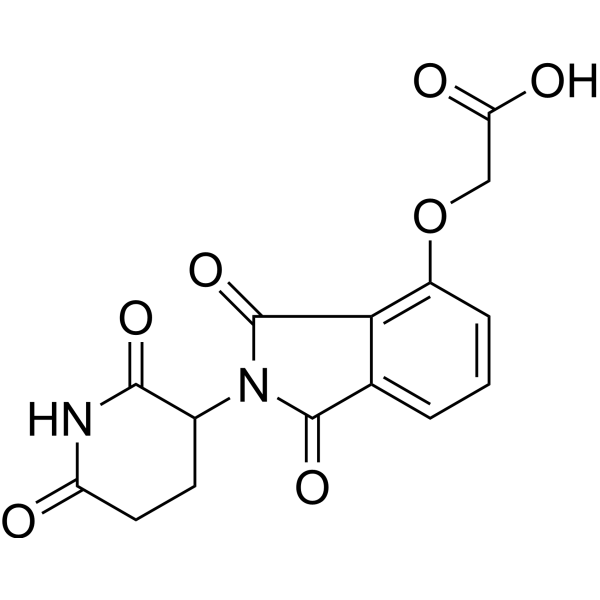
Thalidomide-O-COOHCereblon Ligand -
HY-125845
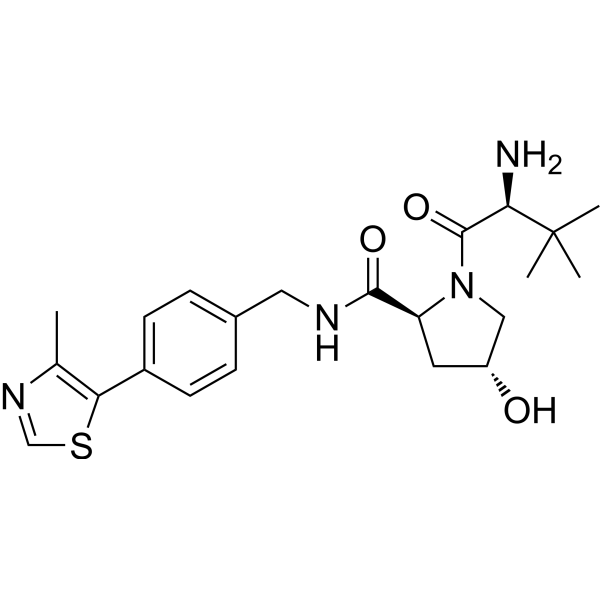
(S,R,S)-AHPCVHL Ligand -
HY-A0003
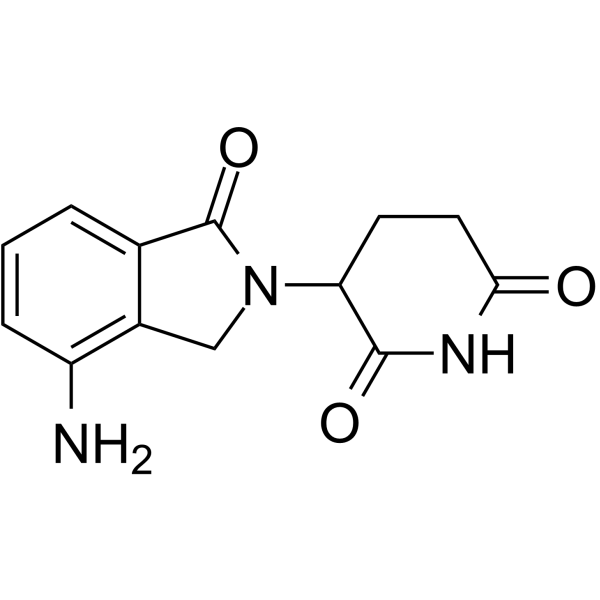
LenalidomideImmunomodulator -
HY-100947
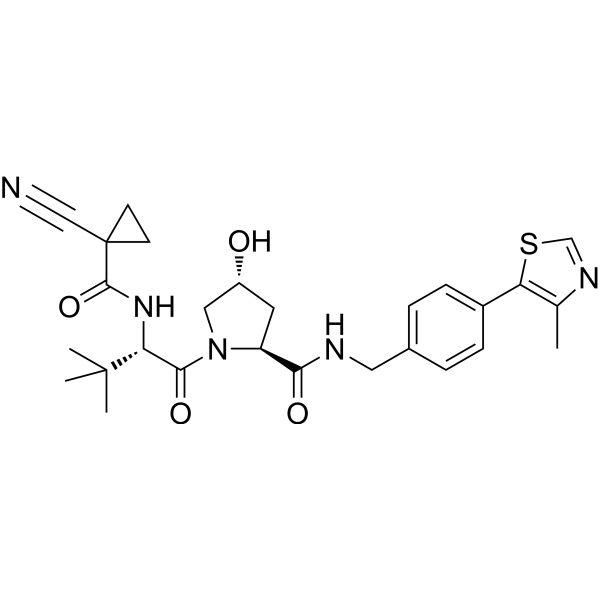
VH-298VHL:HIF-α Interaction Inhibitor -
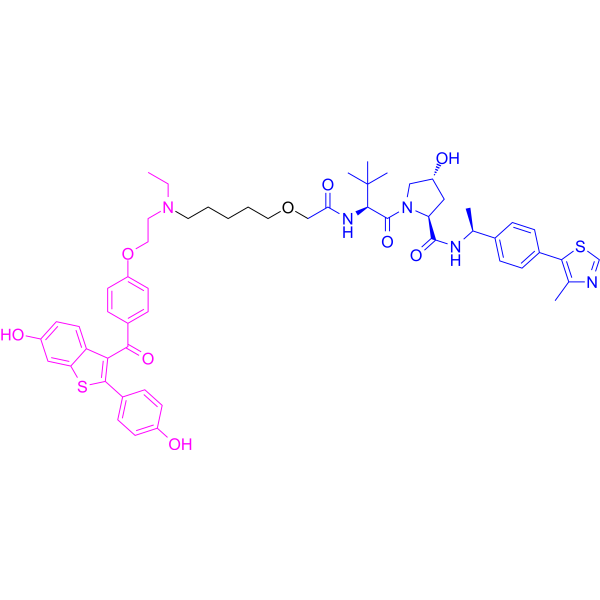
HY-128600
ERD-308ER PROTAC Degrader -
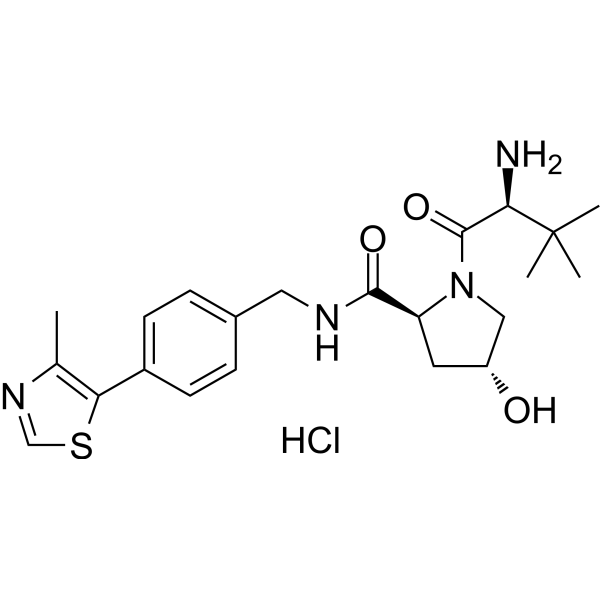
HY-101763A
(S,R,S)-AHPC monohydrochlorideVHL Ligand -
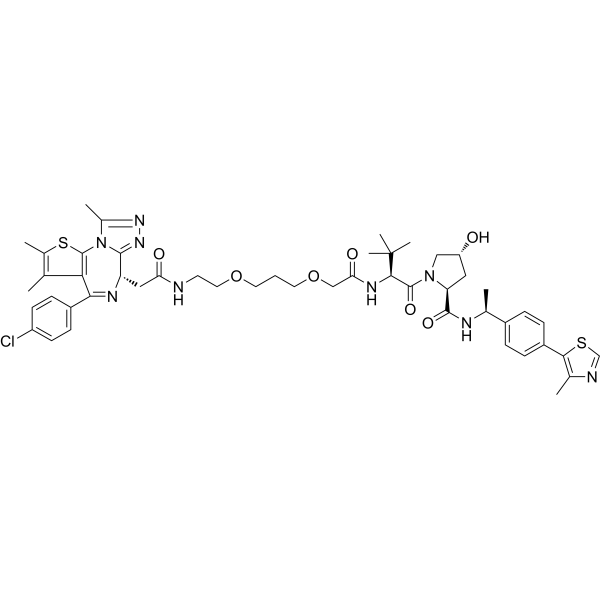
HY-100972
ARV-771BET PROTAC Degrader -

HY-A0003R
Lenalidomide (Standard)Reference Standard -
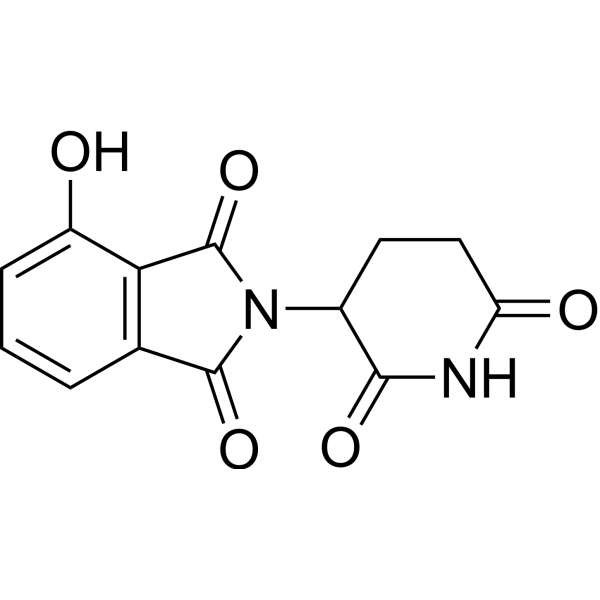
HY-103596
Thalidomide-4-OHCereblon Ligand
Publications Citing Use of MedChemExpress (MCE) Homo-PROTAC cereblon degrader 1
MoreAll PROTACs Isoforms
More

Biological Activity
Description
IC50 & Target
[1]|
Cereblon |
In Vitro
Homo-PROTAC cereblon degrader 1 (compound 15a) (0.001-100 μM; 16 h) potently induces dose-dependent degradation of CRBN in MM1S cells, with minimal effect on IKZF1 and no effect on CK1α[1].
Homo-PROTAC cereblon degrader 1 (0.01-100 μM; 16 h) induces dose-dependent CRBN degradation in NCI-H929 cells, and a hook effect occurs at high concentrations, shifting its activity toward IKZF1 degradation[1].
Homo-PROTAC cereblon degrader 1 (100 nM; 0.25-24 h) induces rapid, time-dependent CRBN degradation in MM1S cells[1].
Homo-PROTAC cereblon degrader 1 (100 nM) induces the degradation of CRBN in MM1S cells via the ubiquitin-proteasome pathway, and its activity is inhibited by competitive occupation of the IMiD-binding site on CRBN[1].
Homo-PROTAC cereblon degrader 1 (0.1 μM; 3 h) induces ubiquitination modification of FLAG-tagged CRBN in HEK293T cells[1].
Homo-PROTAC cereblon degrader 1 (100 nM; 3-24 h) potently and specifically induces CRBN degradation at the proteome level in MM1S cells, with minimal effects on IKZF1, IKZF3 and other CRL4 ligase components[1].
Homo-PROTAC cereblon degrader 1 (0.1-10 μM; 4 days) has no effect on the viability of pomalidomide-insensitive OCI-AML5 cells, exerts minimal impact on the viability of pomalidomide-sensitive multiple myeloma cells at low concentrations, but inhibits the proliferation of MM1S and NCI-H929 cells at high concentrations[1].
Homo-PROTAC cereblon degrader 1 (100 nM; 3 h pretreatment) blocks pomalidomide-induced degradation of IKZF1 and IKZF3 in MM1S cells[1].
Homo-PROTAC cereblon degrader 1 (0.1-1 μM; 4 days) can be administered either before or after pomalidomide treatment, and antagonizes the growth inhibitory effect of pomalidomide on MM1S and NCI-H929 cells[1].
Homo-PROTAC cereblon degrader 1 (100 nM; 30 min) promotes CRBN dimerization in HEK293T cells expressing tagged CRBN, thereby facilitating the formation of the 2:1 CRBN-PROTAC ternary complex[1].
Homo-PROTAC cereblon degrader 1 (0.01-10 μM; 16 h) requires binding to the IMiD-binding site of CRBN to induce degradation, as it fails to degrade the IMiD-binding-deficient CRBNY384A/W386A mutant in HEK293T cells[1].
MedChemExpress (MCE) has not independently confirmed the accuracy of these methods. They are for reference only. .
-
Cell Line:multiple myeloma cell line MM1S
-
Concentration:0.001, 0.01, 0.1, 1 and 100 μM
-
Incubation Time:16 h
-
Result:Induced dose-dependent degradation of endogenous cereblon (CRBN).
Had only minimal effects on IKZF1 protein levels.
Showed no effect on CK1α protein levels.
-
Cell Line:multiple myeloma cell line NCI-H929
-
Concentration:0.001, 0.01, 0.1, 1 and 100 μM
-
Incubation Time:16 h
-
Result:Induced dose-dependent degradation of CRBN, with observable effects at 0.01 μM.
Achieved maximum degradation at 0.1 μM to 1 μM.
Abrogated CRBN degradation at 100 μM, while inducing strong IKZF1 degradation.
-
Cell Line:multiple myeloma cell line MM1S
-
Concentration:100 nM
-
Incubation Time:15 min, 30 min, 1 h, 3 h, 6 h, 24 h
-
Result:Decreased CRBN protein levels within 15 min of treatment, reaching maximum degradation at 6 h.
Reduced the CRBN protein half-life to approximately 30 min, compared to >8 h in control cells treated with cycloheximide.
-
Cell Line:HEK293T cells expressing FLAG-tagged wild-type CRBN or FLAG-tagged CRBN Y384A/W386A mutant (IMiD-binding deficient)
-
Concentration:0.01, 0.1, 1 and 10 μM
-
Incubation Time:16 h
-
Result:Effectively degraded wild-type FLAG-tagged CRBN.
Showed no effect on the CRBN Y384A/W386A mutant.
-
Cell Line:multiple myeloma cell lines MM1S, NCI-H929, LP-1, KMS27, RPMI 8226; acute myeloid leukemia cell line OCI-AML5
-
Concentration:0.01, 0.1, 1 and 10 μM
-
Incubation Time:4 days
-
Result:Showed no effect on viability of OCI-AML5 cells at all tested concentrations.
Had little to no effect on viability of MM1S, NCI-H929, LP-1, KMS27, and RPMI 8226 cells at concentrations ≤1 μM.
Inhibited proliferation of MM1S and NCI-H929 cells at 10 μM.
-
Cell Line:multiple myeloma cell line MM1S
-
Concentration:100 nM
-
Incubation Time:3 h pretreatment
-
Result:Abrogated pomalidomide-induced degradation of IKZF1 and IKZF3.
-
Cell Line:multiple myeloma cell lines MM1S and NCI-H929
-
Concentration:0.1 and 1 μM
-
Incubation Time:4 days
-
Result:Blocked pomalidomide-induced growth inhibition when administered as pretreatment.
Reduced pomalidomide's antiproliferative activity when administered after pomalidomide.


Chemical Information
-
CAS No. 2244520-98-5
-
Appearance Solid
-
Molecular Weight 660.63
-
Formula C32H32N6O10
-
Color Light yellow to yellow
-
SMILES
O=C(N1C2CCC(NC2=O)=O)C3=CC=CC(NCCOCCOCCNC4=C5C(C(N(C6CCC(NC6=O)=O)C5=O)=O)=CC=C4)=C3C1=O
-
Shipping
Room temperature in continental US; may vary elsewhere.
-
Storage
4°C, stored under nitrogen
* In solvent : -80°C, 6 months; -20°C, 1 month (stored under nitrogen)


Publications (1)
-
Journal Impact Factor
-
Most Recent
-
Structure
PROTAC-mediated activation, rather than degradation, of a nuclear receptor reveals complex ligand-receptor interaction network. [Abstract]2024 Dec 5;32(12):2352-2363.e8. PMID: 39389062


Solvent & Solubility
In Vitro:
DMSO : 200 mg/mL (302.74 mM; Need ultrasonic; Hygroscopic DMSO has a significant impact on the solubility of product, please use newly opened DMSO)
Please refer to the solubility information to select the appropriate solvent. Once prepared, please aliquot and store the solution to prevent product inactivation from repeated freeze-thaw cycles.
Storage method and period of stock solution: -80°C, 6 months; -20°C, 1 month (stored under nitrogen). When stored at -80°C, please use it within 6 months. When stored at -20°C, please use it within 1 month.
Please refer to the solubility information to select the appropriate solvent. Once prepared, please aliquot and store the solution to prevent product inactivation from repeated freeze-thaw cycles.
Storage method and period of stock solution: -80°C, 6 months; -20°C, 1 month (stored under nitrogen). When stored at -80°C, please use it within 6 months. When stored at -20°C, please use it within 1 month.
Concentration (start) × Volume (start) = Concentration (final) × Volume (final)
In Vivo:
Select the appropriate dissolution method based on your experimental animal and administration route.
- For the following dissolution methods, please ensure to first prepare a clear stock solution using an In Vitro approach and then sequentially add co-solvents:
- To ensure reliable experimental results, the clarified stock solution can be appropriately stored based on storage conditions. As for the working solution for In Vivo experiments, it is recommended to prepare freshly and use it on the same day.
- The percentages shown for the solvents indicate their volumetric ratio in the final prepared solution. If precipitation or phase separation occurs during preparation, heat and/or sonication can be used to aid dissolution.
Add each solvent one by one: 10% DMSO 40% PEG300 5% Tween-80 45% Saline
Solubility: ≥ 5 mg/mL (7.57 mM); Clear solution
This protocol yields a clear solution of ≥ 5 mg/mL (saturation unknown).
Taking 1 mL working solution as an example, add 100 μL DMSO stock solution (50.0 mg/mL) to 400 μL PEG300, and mix evenly; then add 50 μL Tween-80 and mix evenly; then add 450 μL Saline to adjust the volume to 1 mL.
Preparation of Saline: Dissolve 0.9 g sodium chloride in ddH₂O and dilute to 100 mL to obtain a clear Saline solution.
In Vivo Dissolution Calculator
Please enter the basic information of animal experiments:
-
-
-
-
Recommended: Prepare an additional quantity of animals to account for potential losses during experiments.
Please enter your animal formula composition:
-
%DMSO +
Recommended: Keep the proportion of DMSO in working solution below 2% if your animal is weak.
-
%+
-
+%Tween-80 + +
-
%Saline +
The co-solvents required include: DMSO, . All of co-solvents are available by MedChemExpress (MCE). , Tween 80. All of co-solvents are available by MedChemExpress (MCE).
Working solution concentration: 0.22 mg/mL
Method for preparing stock solution: mg drug dissolved in μL DMSO. Stock solution concentration: mg/mL. * In solvent : -80°C, 6 months; -20°C, 1 month (stored under nitrogen)
1. Take μL DMSO stock solution;
2. Add μL .
μL , mix evenly;
3. Then add μL Tween 80, mix evenly;
4. Then add μL
Please ensure that the stock solution in the first step is dissolved to a clear state, and add co-solvents in sequence. You can use ultrasonic heating (ultrasonic cleaner, recommended frequency 20-40 kHz), vortexing, etc. to assist dissolution.


Purity & Documentation
-
Data Sheet (286 KB)
-
SDS (394 KB)
- English - EN (394 KB)
- Français - FR (394 KB)
- Deutsch - DE (394 KB)
- Norwegian - NO (394 KB)
- Español - ES (394 KB)
- Swedish - SV (394 KB)
- Italian - IT (394 KB)
- Korean - KR (394 KB)
- Portuguese - PT (394 KB)
-
Handling Instructions (2659 KB)
References


Complete Stock Solution Preparation Table
Please refer to the solubility information to select the appropriate solvent. Once prepared, please aliquot and store the solution to prevent product inactivation from repeated freeze-thaw cycles.
Storage method and period of stock solution: -80°C, 6 months; -20°C, 1 month (stored under nitrogen). When stored at -80°C, please use it within 6 months. When stored at -20°C, please use it within 1 month.
| Optional Solvent | Concentration Solvent Mass | 1 mg | 5 mg | 10 mg | 25 mg |
|---|---|---|---|---|---|
| DMSO | 1 mM | 1.5137 mL | 7.5685 mL | 15.1371 mL | 37.8427 mL |
| 5 mM | 0.3027 mL | 1.5137 mL | 3.0274 mL | 7.5685 mL | |
| 10 mM | 0.1514 mL | 0.7569 mL | 1.5137 mL | 3.7843 mL | |
| 15 mM | 0.1009 mL | 0.5046 mL | 1.0091 mL | 2.5228 mL | |
| 20 mM | 0.0757 mL | 0.3784 mL | 0.7569 mL | 1.8921 mL | |
| 25 mM | 0.0605 mL | 0.3027 mL | 0.6055 mL | 1.5137 mL | |
| 30 mM | 0.0505 mL | 0.2523 mL | 0.5046 mL | 1.2614 mL | |
| 40 mM | 0.0378 mL | 0.1892 mL | 0.3784 mL | 0.9461 mL | |
| 50 mM | 0.0303 mL | 0.1514 mL | 0.3027 mL | 0.7569 mL | |
| 60 mM | 0.0252 mL | 0.1261 mL | 0.2523 mL | 0.6307 mL | |
| 80 mM | 0.0189 mL | 0.0946 mL | 0.1892 mL | 0.4730 mL | |
| 100 mM | 0.0151 mL | 0.0757 mL | 0.1514 mL | 0.3784 mL |


Homo-PROTAC cereblon degrader 1 Related Classifications
HY-111594 Related Classifications
 Powered by Bioz