1. Search Result
Search Result
Results for "

IOP

" in MedChemExpress (MCE) Product Catalog:

49

Inhibitors & Agonists

1

Natural
Products

2

Isotope-Labeled Compounds

Cat. No. Product Name Target Research Areas Chemical Structure
  • HY-B0588
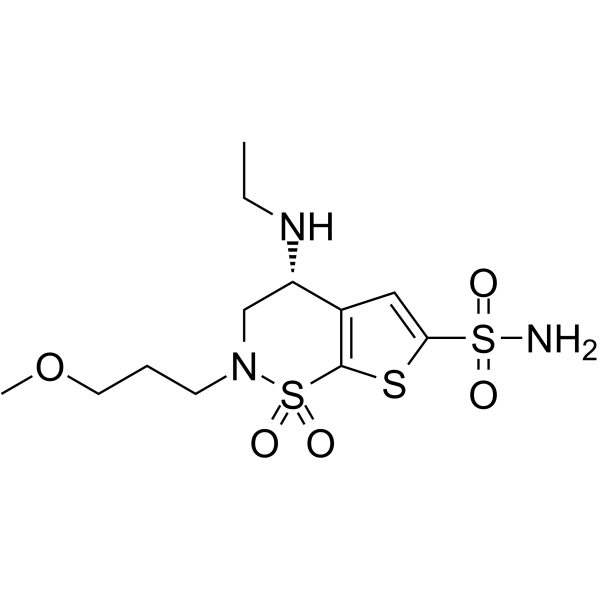
    Brinzolamide
    Maximum Cited Publications
    7 Publications Verification

    AL-4862

    Carbonic Anhydrase Cardiovascular Disease Others Neurological Disease
    Brinzolamide (AL-4862) is a selective carbonic anhydrase II inhibitor with anIC50 value of 3.2 nM. Brinzolamide hydrochloride reduces intraocular pressure (IOP) by inhibiting ciliary CA-II and decreasing atrial fluid secretion. Brinzolamide can be used in glaucoma disease research .
    Brinzolamide
  • HY-B0577
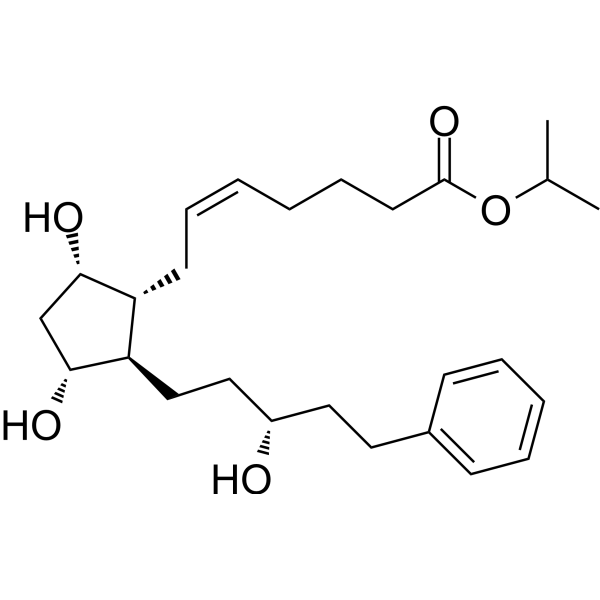
    Latanoprost
    4 Publications Verification

    PHXA41

    Prostaglandin Receptor Cardiovascular Disease Others
    Latanoprost (PHXA41) is a prostaglandin F2α analogue and can be used for glaucoma research. Latanoprost can effectively pass through cornea and be hydrolyzed by esterase to latanoprost acid. latanoprost acid is an F-prostaglandin (FP) receptor agonist, and can effectively reduce intraocular pressure (IOP) by increasing the outflow of aqueous humor through uvea .
    Latanoprost
  • HY-17642
    Omidenepag
    1 Publications Verification

    UR-7276

    Prostaglandin Receptor Endocrinology
    Omidenepag (UR-7276), a pharmacologically active form of Omidenepag Isopropyl, is a selective, non-prostanoid EP2 receptor agonist, with an EC50 of 1.1 nM. Omidenepag shows binding affinities (IC50) 10 nM for h-EP2. Omidenepag is used in research on diseases related to intraocular pressure .
    Omidenepag
  • HY-111406

    DE-117

    Prostaglandin Receptor Cardiovascular Disease Inflammation/Immunology
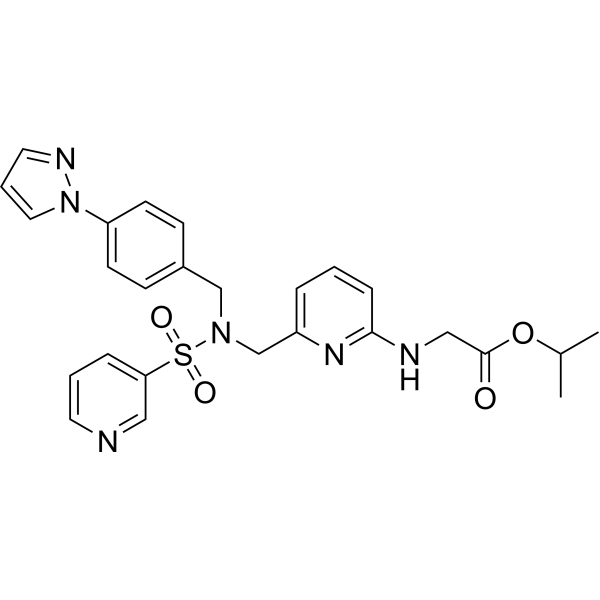
    Omidenepag isopropyl is a selective EP2 receptor agonist. Omidenepag isopropyl is converted to the active product Omidenepag during corneal penetration, and Omidenepag is a highly selective EP2 receptor agonist. Omidenepag isopropyl shows only weak affinity for EP1, EP2, and FP receptors. Omidenepag isopropyl is under development for the treatment of glaucoma as an intraocular pressure (IOP)-lowering agent.
    Omidenepag isopropyl
  • HY-109191

    PHP-201; AMA0076

    ROCK Others
    Sovesudil (PHP-201) is a potent, ATP-competitive, locally acting Rho kinase (ROCK) inhibitor with IC50s of 3.7 and 2.3 nM for ROCK-I and ROCK-II, respectively. Sovesudil lowers intraocular pressure (IOP) without inducing hyperemia .
    Sovesudil
  • HY-12720A
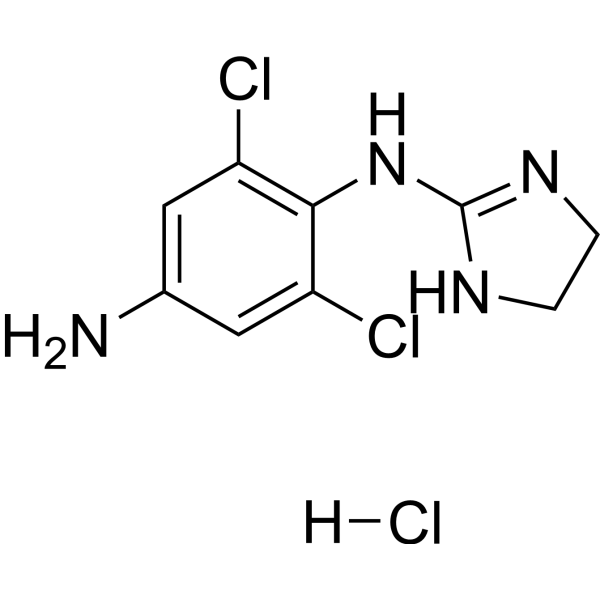
    Apraclonidine hydrochloride
    3 Publications Verification

    ALO 2145

    Adrenergic Receptor Neurological Disease
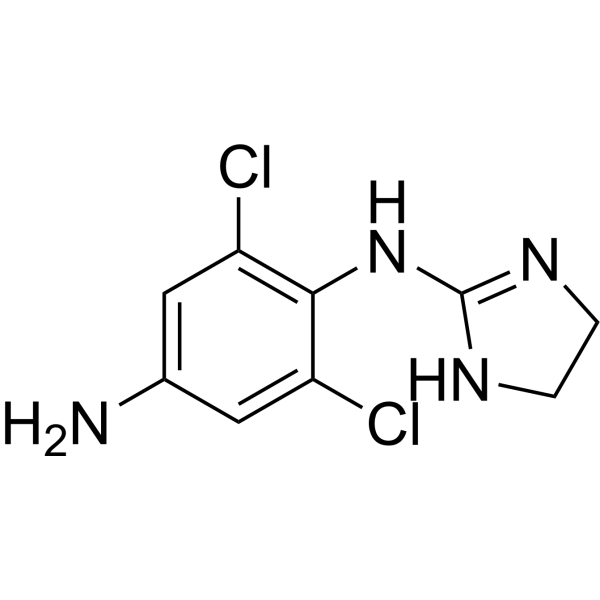
    Apraclonidine hydrochloride (ALO 2145), a selective α2 and weak α1 receptor agonist activity, effectively lowers intraocular pressure (IOP) in human eyes. Apraclonidine hydrochloride is a topical ophthalmic solution and has the ability to elevate the eye lid .
    Apraclonidine hydrochloride
  • HY-139419

    NCX 470

    Prostaglandin Receptor Cardiovascular Disease Neurological Disease
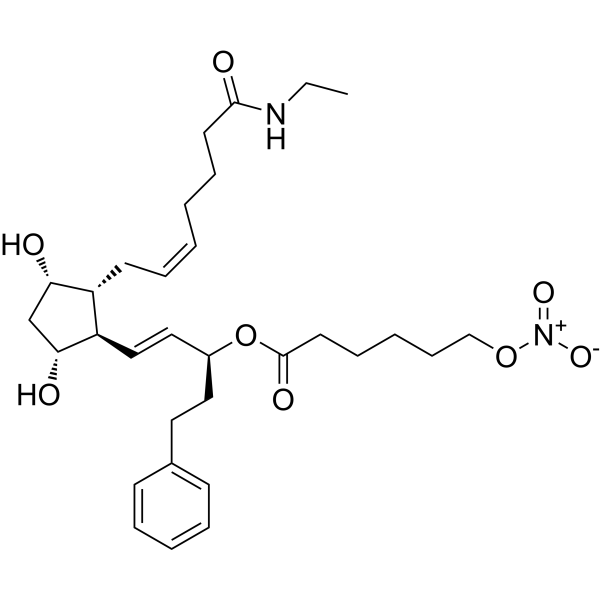
    Bimatoprost grenod (NCX 470) is a second-generation nitric oxide (NO)-donating prostaglandin analogue. Bimatoprost grenod effectively lowers intraocular pressure (IOP) in animal models of ocular hypertension and glaucoma by activating bimatoprost-mediated uveoscleral outflow and NO mediated conventional outflow. Bimatoprost grenod can be used for the research of cular hypertension and glaucoma .
    Bimatoprost grenod
  • HY-109545

    Unoprostone isopropyl ester; UF-021

    Potassium Channel Others
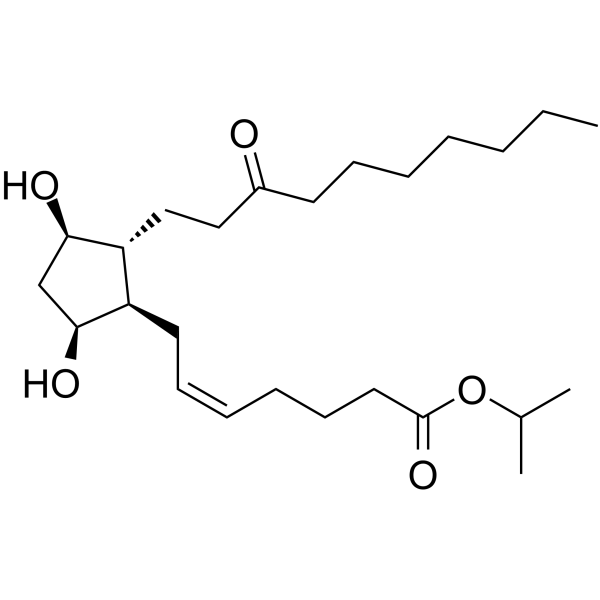
    Isopropyl unoprostone (Unoprostone isopropyl ester), an analogue of a prostaglandin metabolite, is a potent large conductance Ca 2+-activated K + (BK) channels activator. Isopropyl unoprostone has antiglaucoma effects, lowering intraocular pressure (IOP) by increasing aqueous humour outflow. Isopropyl unoprostone can improve retinal sensitivity and the protection of central retinal sensitivity .
    Isopropyl unoprostone
  • HY-139420

    Prostaglandin Receptor Others
    Tafluprost ethyl amide is a prostaglandin derivative. Tafluprost ethyl amide is capable of reducing intraocular pressure (IOP) and influencing eyelash growth. Tafluprost ethyl amide can be used in antiglaucoma ophthalmic compositions .
    Tafluprost ethyl amide
  • HY-109191A

    PHP-201 hydrochloride; AMA0076 hydrochloride

    ROCK Neurological Disease
    Sovesudil (PHP-201) hydrochloride is a potent, ATP-competitive, locally acting Rho kinase (ROCK) inhibitor with IC50s of 3.7 and 2.3 nM for ROCK-I and ROCK-II, respectively. Sovesudil hydrochloride lowers intraocular pressure (IOP) without inducing hyperemia .
    Sovesudil hydrochloride
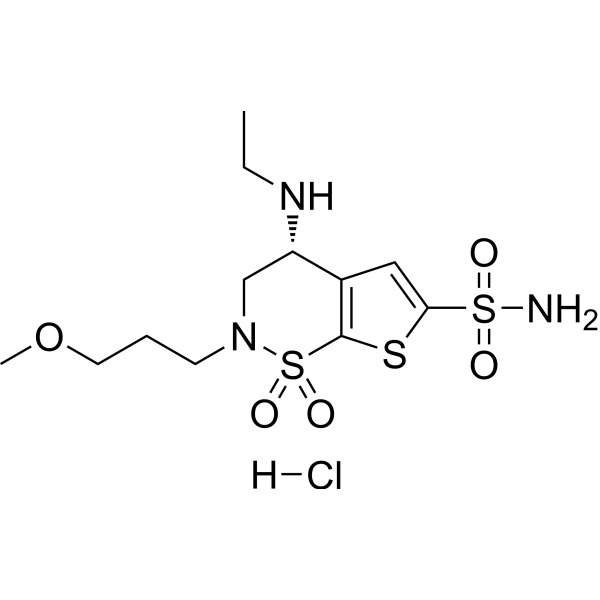
  • HY-B0588A

    AL-4862 hydrochloride

    Carbonic Anhydrase Neurological Disease
    Brinzolamide (AL-4862) hydrochloride is a selective carbonic anhydrase II inhibitor with an IC50 value of 3.2 nM. Brinzolamide hydrochloride reduces intraocular pressure (IOP) by inhibiting ciliary CA-II and decreasing atrial fluid secretion. Brinzolamide hydrochloride can be used in glaucoma disease research .
    Brinzolamide hydrochloride
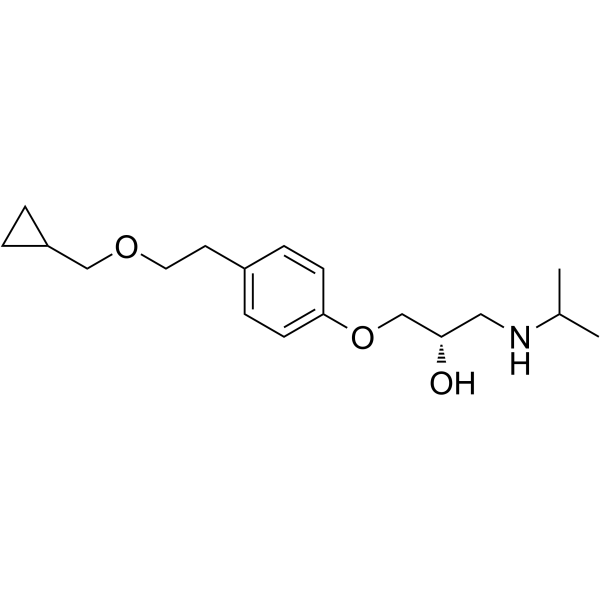
  • HY-121166

    (S)-Betaxolol

    Adrenergic Receptor Others
    Levobetaxolol is a potent and high affinity β-adrenergic antagonist with IC50 values of 33.2, 2970, 709 nM for guinea pig atrial β1, tracheal β2 and rat colonic β3 receptors, respectively. Levobetaxolol reduces IOP (intraocular pressure). Levobetaxolol exhibits a micromolar affinity for L-type Ca21-channels. Levobetaxolol decreases the effects of ischaemia/reperfusion injury in rats. Levobetaxolol has the potential for the research of glaucoma .
    Levobetaxolol
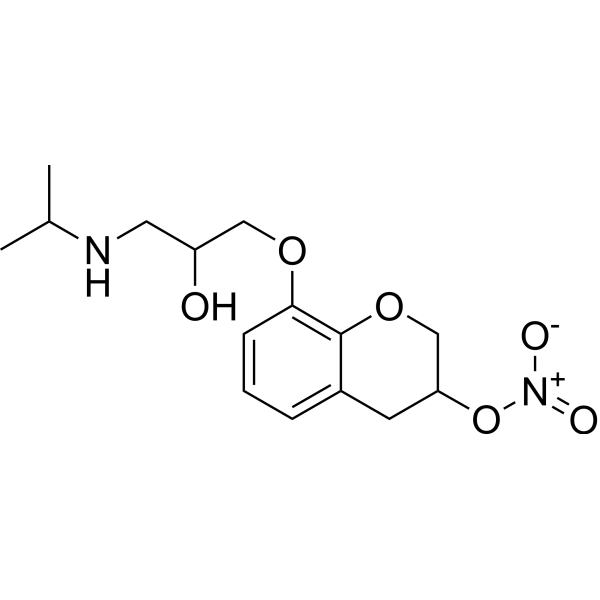
  • HY-106523

    KT 210; K 351; Hypadil

    Adrenergic Receptor Cardiovascular Disease
    Nipradolol (KT-210; K-351) is a potent blocker of alpha-1-adrenergic receptors. Nipradolol inhibits the increase of intraocular pressure (IOP) in an albino rabbit model induced by Phenylephrine (HY-B0769). Nipradolo suppresses the noradrenaline (NA)-induced muscles contraction, also exhibits vasodilator activity on the dog coronary artery .
    Nipradolol
  • HY-121398

    Adrenergic Receptor Endogenous Metabolite Others
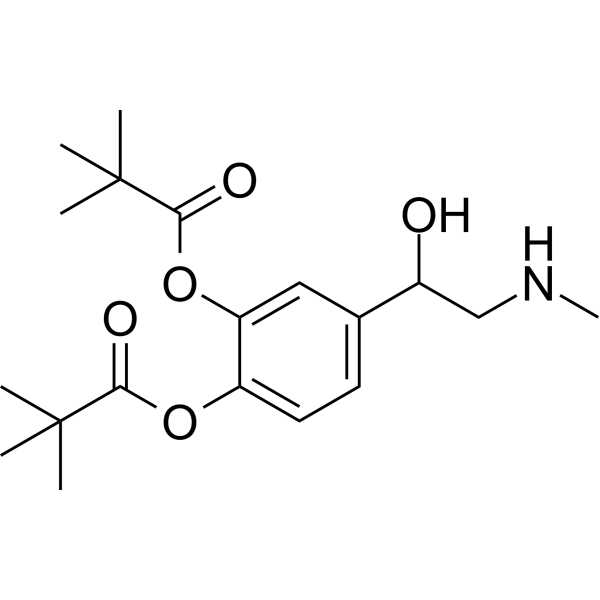
    Dipivefrin is a potent adrenergic agonist. Dipivefrin is an adrenergic pro-agent. Dipivefrin can be used for reduce IOP (intraocular pressure) in patients suffering from chronic open angle glaucoma .
    Dipivefrin
  • HY-106331A

    MK-927; (Rac)-MK 417

    Carbonic Anhydrase Neurological Disease
    (Rac)-Sezolamide hydrochloride (MK-927; (Rac)-MK 417) is a carbonic anhydrase inhibitor (CAI) (Ki: 12.0 nM). (Rac)-Sezolamide hydrochloride has a topical intraocular pressure (IOP) lowering effect. (Rac)-Sezolamide hydrochloride can be used in glaucoma research .
    (Rac)-Sezolamide hydrochloride
  • HY-101303

    Melatonin Receptor Others
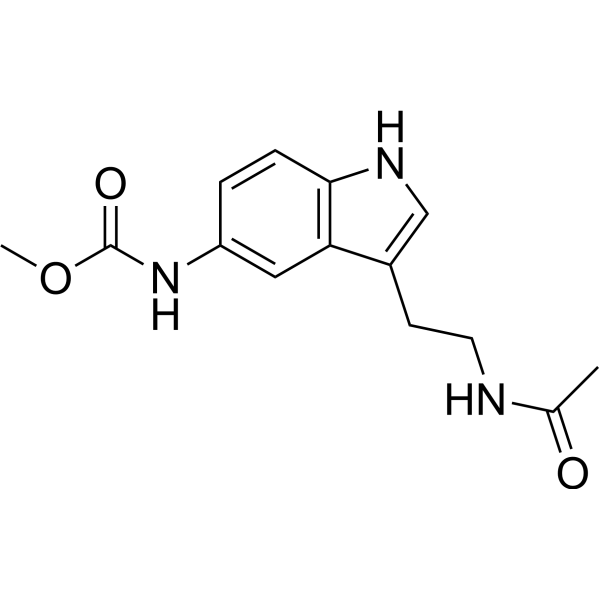
    5-MCA-NAT is a melatonin agonist that may target the melatoninMT3 receptor. 5-MCA-NAT can contract the colonic band in a concentration-dependent manner and reduce intraocular pressure (IOP) in glaucomatous monkey eyes, inhibiting the increase in IOP .
    5-MCA-NAT
  • HY-12720

    ALO 2145 free base

    Adrenergic Receptor Infection Neurological Disease
    Apraclonidine (ALO 2145 (free base)), a selective α2 and weak α1 receptor agonist activity, effectively low intraocular pressure (IOP) in human eyes. Apraclonidine hydrochloride is a topical ophthalmic solution .
    Apraclonidine
  • HY-125641

    5-HT Receptor Adrenergic Receptor Cardiovascular Disease
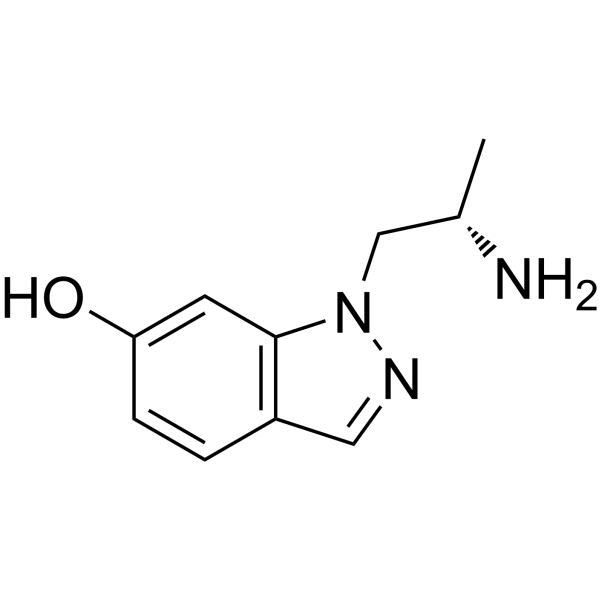
    AL-34662 is a selective 5-HT2A receptoragonist (IC50: 0.77 nM and 1.5 nM for rat and human 5-HT2 receptor). AL-34662 is also a weak α-1D adrenergic agonist activity (EC50:0.4 μM). AL-34662 is an ocular hypotensive agent .
    AL-34662
  • HY-116161

    Drug Intermediate Cardiovascular Disease Others
    15(R)-17-phenyl trinor Prostaglandin F2α isopropyl ester (15(R)-17-phenyl trinor PGF2α isopropyl ester) is the latanoprost-related isomer containing both a double bond at 13,14 and an inverted (β) hydroxyl group at C-15. Similar to 15(S)-latanoprost, 15(R)-17-phenyl trinor PGF2α isopropyl ester is a potential impurity in most commercial preparations of the latanoprost bulk drug product. The IC50 values for the free acid forms of 15(S)-17-phenyl trinor PGF2α and 15(R)-17-phenyl trinor PGF2α were determined to be 0.71 nM and 30 nM, respectively, in a FP receptor binding assay using the cat iris sphincter muscle.1 A 3 μg dose of 15(R)-17-phenyl trinor PGF2α caused a 1.9 mmHg reduction of IOP in normotensive cynomolgus monkeys.
    Bimatoprost isopropyl ester
  • HY-12720B

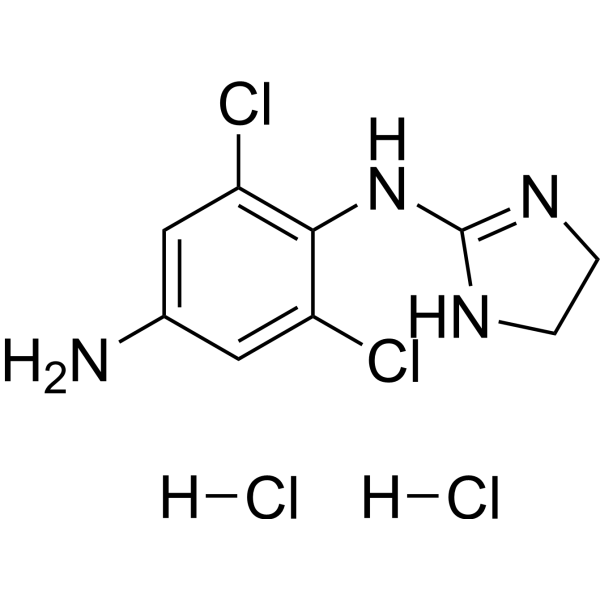
    ALO 2145 dihydrochloride

    Adrenergic Receptor Neurological Disease
    Apraclonidine (ALO 2145) dihydrochloride, a selective α2 and weak α1 receptor agonist activity, effectively low intraocular pressure (IOP) in eyes. Apraclonidine dihydrochloride is a topical ophthalmic solution .
    Apraclonidine dihydrochloride
  • HY-106331

    MK-927 free base; (Rac)-MK 417 free base

    Carbonic Anhydrase Endocrinology
    (Rac)-Sezolamide (MK-927 (free base); (Rac)-MK 417 (free base)) is a carbonic anhydrase inhibitor (CAI) (Ki: 12.0 nM). (Rac)-Sezolamide has a topical intraocular pressure (IOP) lowering effect. (Rac)-Sezolamide can be used in glaucoma research .
    (Rac)-Sezolamide
  • HY-106512

    Prostaglandin Receptor Others
    Cianergoline is a ergoline derivative with the activity of reducing intraocular pressure (IOP). Its primary regulatory mechanism involves the inhibition of sympathetic nervous function, achieved through actions on both prejunctional (DA2) and postjunctional (α1) adrenergic receptors. Cianergoline can be used for research in the field of glaucoma .
    Cianergoline
  • HY-123328

    Prostaglandin Receptor Cardiovascular Disease
    AGN 191976 is a potent and selective thromboxane A2-sensitive (TP) receptor agonist with EC50 values ​​of 0.23 nM and 24 nM in rat aorta and human platelets, respectively. AGN 191976 has potent IOP-lowering effects in dogs and monkeys. AGN 191976 can be used to study vascular biology and the role of thromboxane A2 in vascular function .
    AGN 191976
  • HY-125641A

    5-HT Receptor Neurological Disease
    AL-34662 (formate) is a 5-HT2 receptor agonist (IC50: 0.8-1.5 nM). AL-34662 (formate) stimulates inositol phosphate turnover and Ca 2+ release in human ciliary muscle cells (h-CM) (E50: 289 nM) and human trabecular meshwork cells (h-TM) (E50: 254 nM). AL-34662 (formate) can be used in studies to lower intraocular pressure (IOP) .
    AL-34662 formate
  • HY-139420R

    Prostaglandin Receptor Reference Standards Others
    Tafluprost ethyl amide (Standard) is the analytical standard of Tafluprost ethyl amide. This product is intended for research and analytical applications. Tafluprost ethyl amide is a prostaglandin derivative. Tafluprost ethyl amide is capable of intraocular pressure (IOP) reduction and influencing eyelash growth. Tafluprost ethyl amide can be used in antiglaucoma ophthalmic compositions or cosmetics .
    Tafluprost ethyl amide (Standard)
  • HY-121600

    Cannabinoid Receptor
    GAT229 is a CB1 positive allosteric modulator (PAM) that effectively reduces intraocular pressure (IOP) in high IOP mouse models and enhances CB1 receptor-mediated IOP-lowering effects. A 0.2% GAT229 solution or 10 mg/kg of GAT229 alone significantly reduces IOP. GAT229 is promising for research related to glaucoma and elevated intraocular pressure .
    GAT229
  • HY-148698

    VD/VDR Others
    2MD is an orally active vitamin D analog. 2MD stimulates periosteal bone formation and decreases trabecular bone resorption. Thus 2MD restores trabecular and cortical bone mass and strength. 2MD also regulates intraocular pressure (IOP)-relative genes and reduces IOP in non-human primates .
    2MD
  • HY-108067

    Cannabinoid Receptor Others
    SAD448 is a CB1 and CB2 receptor agonist. SAD448 can lower intraocular pressure (IOP) .
    SAD448
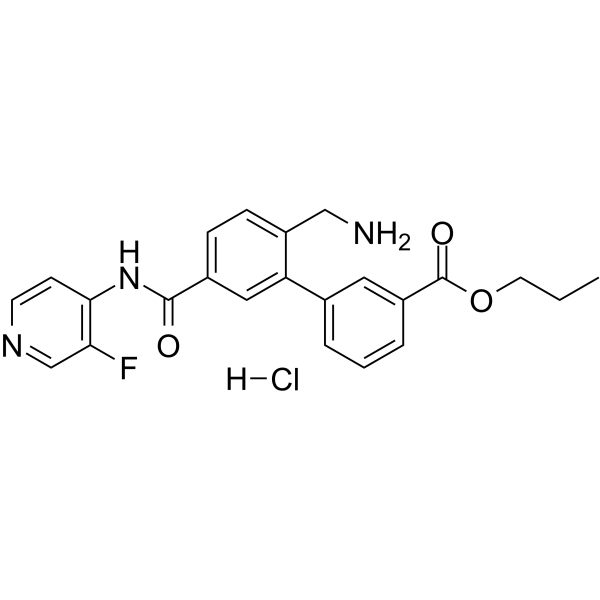
  • HY-14226

    LIM Kinase (LIMK) Neurological Disease
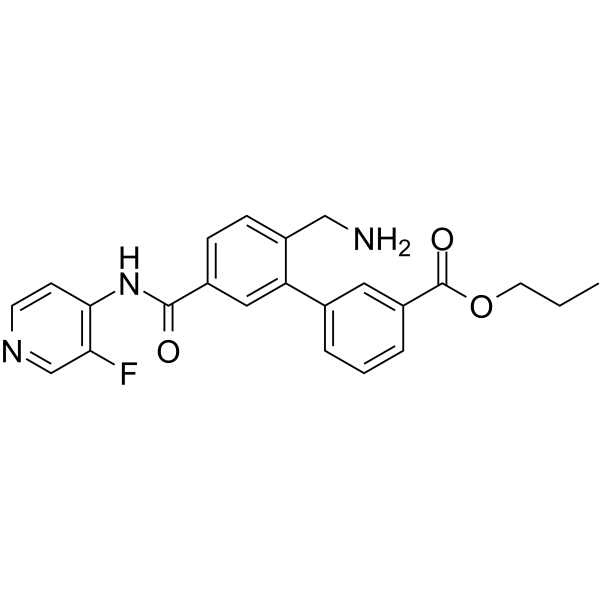
    LIMK-IN-3 (Compound 33) is a LIMK2 inhibitor (IC50: 1.2 nM). LIMK-IN-3 can be used for glaucoma research .
    LIMK-IN-3
  • HY-B0577S

    PHXA41-d4

    Prostaglandin Receptor Others
    Latanoprost-d4 is the deuterium labeled Latanoprost. Latanoprost (PHXA41) is a prostaglandin F2α analogue and an agonist for the FP prostanoid receptor, and lowers intraocular-pressure (IOP).
    Latanoprost-d4
  • HY-B0577R

    PHXA41 (Standard)

    Reference Standards Prostaglandin Receptor Others
    Latanoprost (Standard) is the analytical standard of Latanoprost. This product is intended for research and analytical applications. Latanoprost (PHXA41) is a prostaglandin F2α analogue and an agonist for the FP prostanoid receptor, and lowers intraocular-pressure (IOP).
    Latanoprost (Standard)
  • HY-162226

    Carbonic Anhydrase Others
    Carbonic anhydrase inhibitor 19 (compound 26a) inhibits the Glaucoma related isoforms hCA II and hCA XII with Kis of 9.4 nM and 6.7 nM, respectively. Carbonic anhydrase inhibitor 19 reveals an intraocular pressure (IOP) lowering effect .
    Carbonic anhydrase inhibitor 19
  • HY-124243

    17-Phenyl trinor prostaglandin F2α cyclopropyl methyl amide

    Prostaglandin Receptor Others
    N-Cyclopropyl methyl bimatoprost (17-Phenyl trinor prostaglandin F2α cyclopropyl methyl amide) is an analog of Bimatoprost (HY-12956). N-Cyclopropyl methyl bimatoprost is an agonist for Prostaglandin F2α Receptor (FP receptor). N-Cyclopropyl methyl bimatoprost is potent to reduce the intraocular pressure and attenuate the glaucoma .
    N-Cyclopropyl methyl bimatoprost
  • HY-124219

    17-Phenoxy trinor PGF2α ethyl amide

    Prostaglandin Receptor Others
    17-Phenoxy trinor prostaglandin F2α ethyl amide (17-Phenoxy trinor PGF2α ethyl amide) is an analog of Bimatoprost (HY-12956). 17-Phenoxy trinor prostaglandin F2α ethyl amide is an agonist for Prostaglandin F2α Receptor (FP receptor). 17-Phenoxy trinor prostaglandin F2α ethyl amide is potent to reduce the intraocular pressure and attenuate the glaucoma .
    17-Phenoxy trinor prostaglandin F2α ethyl amide
  • HY-119063

    Carbonic Anhydrase Others
    L-645151 is a carbonic anhydrase inhibitor with ocular penetration and hypotensive activity. L-645151 lowers the elevated intraocular pressure (IOP) of o-chymotripsinized (o-CT) rabbit eyes. L-645151 is promising for research of an ocular hypotensive agent .
    L-645151
  • HY-118648

    PGF2α methyl ester; Dinoprost methyl

    Prostaglandin Receptor Others
    Prostaglandin F2α methyl ester (PGF2α methyl ester; Dinoprost methyl) is a PGF analog with more lipid solubility. Prostaglandin F2α methyl ester exhibits efficacy in maintaining the ocular hypotensive .
    Prostaglandin F2α methyl ester
  • HY-118599

    Prostaglandin Receptor Others
    Prostaglandin F2α ethyl amide is an analog of Prostaglandin F2α (HY-12956). Prostaglandin F2α ethyl amide is supposed to be potent lowering intraocular pressure (IOP) for its N-ethyl amide group, like Bimatoprost (HY-B0191) .
    Prostaglandin F2α ethyl amide
  • HY-106037

    Prostaglandin Receptor Others
    PGF2α-isopropyl ester is a Prostaglandin F2α (HY-12956) derivative, which is active in lowering the intraocular pressure (IOP) through increased uveoscleral outflow of aqueous humor. PGF2α-isopropyl ester causes side effects of conjunctival hyperemia and ocular irritation .
    PGF2α-isopropyl ester
  • HY-12720AR

    ALO 2145 (Standard)

    Reference Standards Adrenergic Receptor Neurological Disease
    Apraclonidine (hydrochloride) (Standard) is the analytical standard of Apraclonidine (hydrochloride). This product is intended for research and analytical applications. Apraclonidine hydrochloride (ALO 2145), a selective α2 and weak α1 receptor agonist activity, effectively lowers intraocular pressure (IOP) in human eyes. Apraclonidine hydrochloride is a topical ophthalmic solution and has the ability to elevate the eye lid .
    Apraclonidine hydrochloride (Standard)
  • HY-B0588AS

    AL-4862-d5 hydrochloride

    Carbonic Anhydrase Neurological Disease
    Brinzolamide-d5 (hydrochloride) is the deuterium labeled Brinzolamide hydrochloride . Brinzolamide (AL-4862) hydrochloride is a selective carbonic anhydrase II inhibitor with an IC50 value of 3.2 nM. Brinzolamide hydrochloride reduces intraocular pressure (IOP) by inhibiting ciliary CA-II and decreasing atrial fluid secretion. Brinzolamide hydrochloride can be used in glaucoma disease research .
    Brinzolamide-d5 hydrochloride
  • HY-B0588R

    AL-4862 (Standard)

    Reference Standards Carbonic Anhydrase Others Neurological Disease
    Brinzolamide (Standard) is the analytical standard of Brinzolamide. This product is intended for research and analytical applications. Brinzolamide (AL-4862) is a selective carbonic anhydrase II inhibitor with anIC50 value of 3.2 nM. Brinzolamide hydrochloride reduces intraocular pressure (IOP) by inhibiting ciliary CA-II and decreasing atrial fluid secretion. Brinzolamide can be used in glaucoma disease research .
    Brinzolamide (Standard)
  • HY-144705

    Cannabinoid Receptor Neurological Disease
    GAT564 (Compound 15d) is a potent allosteric modulator of cannabinoid 1 receptor (CB1R) with EC50s of 87 and 320 nM respectively for cAMP and β-arrestin2. GAT564 markedly promotes orthosteric ligand binding to hCB1R. GAT564 is efficacious as a topical agent that significantly reduces intraocular pressure (IOP) in the ocular normotensive murine model of glaucoma .
    GAT564
  • HY-126115

    15-epi Latanoprost

    Prostaglandin Receptor Cardiovascular Disease Others
    15(S)-Latanoprost is an analog of latanoprost in which the hydroxyl at carbon 15 is inverted relative to latanoprost. The IC50 values for the free acid forms of latanoprost and 15(S)-latanoprost were determined to be 3.6 nM and 24 nM, respectively, in a FP receptor binding assay using the cat iris sphincter muscle. A 3 μg dose of 15(S)-latanoprost caused a 1 mmHg reduction of IOP in normotensive cynomolgus monkeys.
    15(S)-Latanoprost
  • HY-126115R

    15-epi Latanoprost (Standard)

    Prostaglandin Receptor Reference Standards Cardiovascular Disease Others
    15(S)-Latanoprost (Standard) is the analytical standard of 15(S)-Latanoprost. This product is intended for research and analytical applications. 15(S)-Latanoprost is an analog of latanoprost in which the hydroxyl at carbon 15 is inverted relative to latanoprost. The IC50 values for the free acid forms of latanoprost and 15(S)-latanoprost were determined to be 3.6 nM and 24 nM, respectively, in a FP receptor binding assay using the cat iris sphincter muscle. A 3 μg dose of 15(S)-latanoprost caused a 1 mmHg reduction of IOP in normotensive cynomolgus monkeys.
    15(S)-Latanoprost (Standard)
  • HY-151189

    ROCK Others
    ROCK-IN-4 is a potent ROCK inhibitor maintaining NO releasing ability. ROCK-IN-4 reversibly depolymerizes F-actin, and suppresses mitochondrial respiration in human trabecular meshwork (HTM) cells. ROCK-IN-4 can be used for glaucoma or ocular hypertension research .
    ROCK-IN-4
  • HY-127012

    Endogenous Metabolite Others
    H-0104 dihydrochloride is a ROCK inhibitor with significant intraocular pressure (IOP)-lowering activity. H-0104 dihydrochloride effectively reduces IOP when administered to monkey eyes. There may not be a direct relationship between the Iop-lowering effect of H-0104 dihydrochloride and ROCK inhibition .
    H-0104 dihydrochloride
  • HY-113600

    Endogenous Metabolite Others
    H-0106 dihydrochloride is a ROCK inhibitor with potent intraocular pressure (IOP)-lowering activity. H-0106 dihydrochloride can effectively inhibit ROCK enzyme. H-0106 dihydrochloride demonstrated significant IOP-lowering effects in monkey eyes. Studies with H-0106 dihydrochloride suggest that there may not be a direct relationship between ROCK inhibition and IOP reduction .
    H-0106 dihydrochloride
  • HY-175085

    Drug Derivative Endocrinology
    17-Phenyl trinor 8-iso prostaglandin E2 is a prostaglandin analog that reduces intraocular pressure (IOP) in both normal and glaucomatous monkey eyes. 17-Phenyl trinor 8-iso prostaglandin E2 lowers IOP primarily by increasing trabecular outflow facility .
    17-Phenyl trinor 8-iso prostaglandin E2
  • HY-183283

    Carbonic Anhydrase Apoptosis NOD-like Receptor (NLR) Interleukin Related Reactive Oxygen Species (ROS) Neurological Disease
    CAII-IN-15 is a potent carbonic anhydrase II (CA II) inhibitor with a hCA II IC50 of 10 nM. CAII-IN-15 elevates cGMP levels, releases nitric oxide, reduces oxidative stress, and exhibits neuroprotective activity in vitro. CAII-IN-15 inhibits NLRP3 inflammasome activation, reduces neuronal apoptosis. CAII-IN-15 reduces Intraocular pressure (IOP) in rabbits. CAII-IN-15 can be used for the research of glaucoma .
    CAII-IN-15

Inquiry Online

Your information is safe with us. * Required Fields.

Salutation


Country or Region *

Applicant Name *


Organization Name *

Department *


Email Address *


Product Name *

Cat. No.


Requested quantity *

Phone Number *


Remarks

Inquiry Online

Inquiry Information

Product Name:
Cat. No.:
Quantity:
MCE Japan Authorized Agent:

