20 Results for "

L-6 cells

" in MedChemExpress (MCE) Product Catalog:
Products (20)

20 Results for "L-6 cells" in MCE Product Catalog:

1
1 Cited Publications
Cat. No.: HY-158421
CAS No.: 63498-32-8
Purity:  99.95%
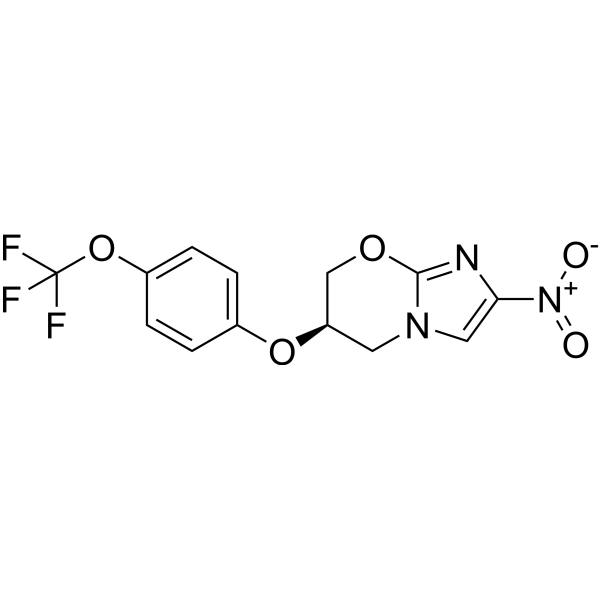
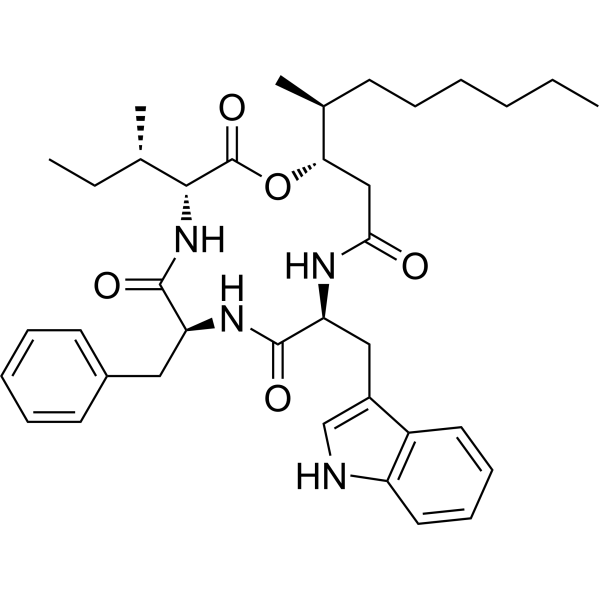
MS-L6 is a OXPHOS inhibitor and antimalarial agent. MS-L6 inhibits NADH oxidation and electron transport. MS-L6 induces OXPHOS uncoupling, dissipates mitochondrial membrane potential, increases non-ATP-coupled oxygen consumption, and reduces ATP synthesis. MS-L6 triggers the production of ROS. MS-L6 exhibits anti-amoebic activity. MS-L6 exerts antitumor activity in mouse lymphoma xenograft models. MS-L6 can be used in research related to B-cell lymphoma, T-cell lymphoma, and non-Hodgkin B-cell lymphoma .
loading...
    loading...
Cat. No.: HY-N0930B
CAS No.: 2368870-39-5
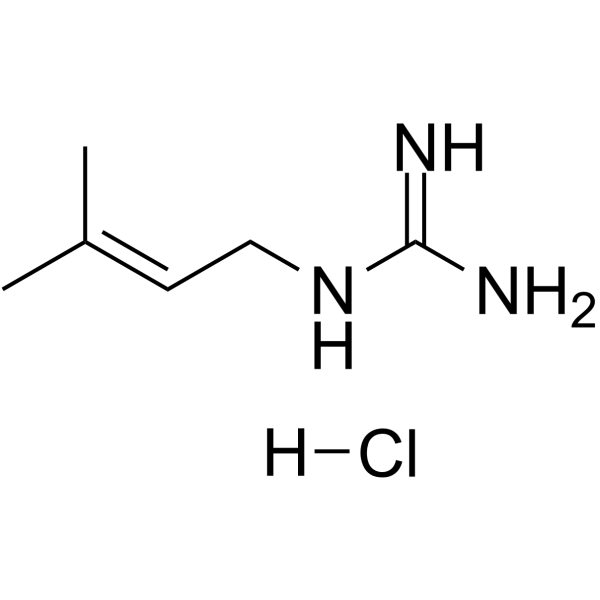
Galegine hydrochloride, a guanidine derivative, contributes to weight loss in mice. Guanidine hydrochloride is the compound derived from G. officinalis, which gave rise to the biguanides, metformin and phenformin. Galegine hydrochloride activates AMPK in 3T3-L1 adipocytes and L6 myotubes, as well as in the H4IIE rat hepatoma and HEK293 human kidney cell lines. Galegine hydrochloride has antibacterial activity, with minimum inhibitory concentration of 4 mg/L against Staphylococcus aureus strains .
loading...
    loading...
Cat. No.: HY-107566
CAS No.: 546-06-5
Purity:  99.87%
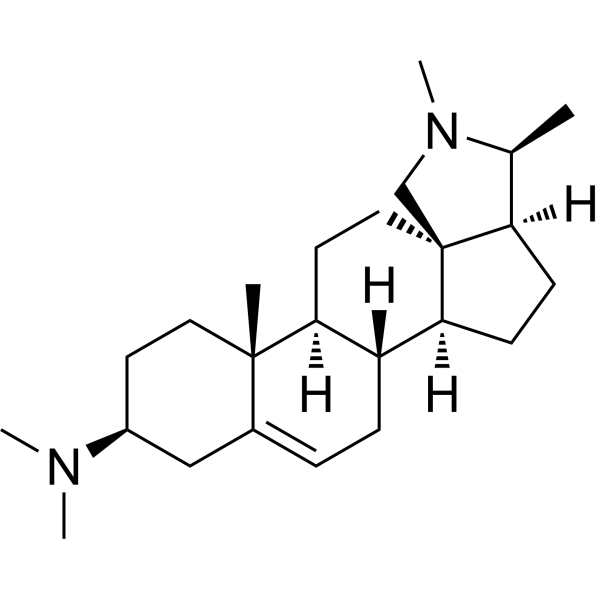
Conessine is an orally active and BBB-penetrable selective histamine H3 receptor antagonist. The pKi values of Conessine for rat and human H3 receptors are 7.61 and 8.27, respectively. Conessine is an inhibitor of the multidrug efflux pump system in Pseudomonas aeruginosa and can enhance the activity of antibiotics. Conessine has antimalarial activity. Conessine can also be used in the research of muscle atrophy .
loading...
    loading...
Cat. No.: HY-N0930A
CAS No.: 14279-86-8
Target:  

AMPK Bacterial

Research Areas:  

Infection Metabolic Disease

Galegine hemisulfate, a guanidine derivative, contributes to weight loss in mice. Galegine hemisulfate activates AMPK in 3T3-L1 adipocytes and L6 myotubes, as well as in the H4IIE rat hepatoma and HEK293 human kidney cell lines. Galegine hemisulfate has antibacterial activity, with minimum inhibitory concentration of 4 mg/L against Staphylococcus aureus strains .
loading...
    loading...
Cat. No.: HY-N11173A
CAS No.: 618-67-7
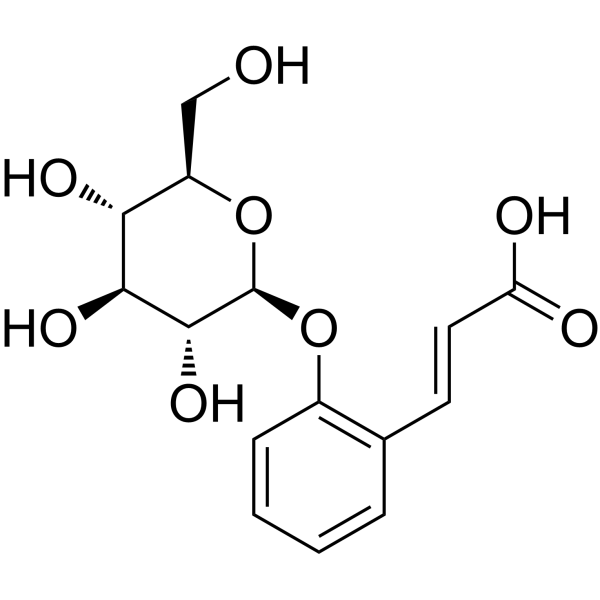
trans-Melilotoside is a coumarin precursor and that can be isolated from Melilotus neapolitan. trans-Melilotoside exhibits antiparasitic and DPPH radical-scavenging activity. trans-Melilotoside can be used for the research of human african trypanosomiasis, chagas’ disease, malaria [1] [3].
loading...
    loading...
Cat. No.: HY-142088
CAS No.: 76265-42-4
Beauverolide Ka, a cyclotetradepsipeptide, is a metabolite of Beauveria bassiana fungus. Beauverolide Ka stimulates glucose uptake in cultured rat L6 myoblasts at 50 μM. Beauverolide Ka exhibits protecting effects on HEI-OC1 cells at 10 μM and shows dose-dependent activity in both L6 myoblasts and myotubes .
loading...
    loading...
Cat. No.: HY-107566A
CAS No.: 5913-82-6
Conessine dihydrobromide is an orally active and BBB-penetrable selective histamine H3 receptor antagonist. The pKi values of Conessine dihydrobromide for rat and human H3 receptors are 7.61 and 8.27, respectively. Conessine dihydrobromide is an inhibitor of the multidrug efflux pump system in Pseudomonas aeruginosa and can enhance the activity of antibiotics. Conessine dihydrobromide has antimalarial activity. Conessine dihydrobromide can also be used in the research of muscle atrophy .
loading...
    loading...
Cat. No.: HY-15825G
CAS No.: 1427782-89-5
Synonyms: Porcn Inhibitor III (GMP)
IWP L6 (GMP) (Porcn Inhibitor III (GMP)) is IWP L6 (HY-15825) produced by using GMP guidelines. GMP small molecules works appropriately as an auxiliary reagent for cell therapy manufacture. IWP L6 (Porcn Inhibitor III) is a Porcupine (Porcn) inhibitor with an EC50 of 0.5 nM. IWP L6 disrupts well-established Wnt-dependent developmental processes of embryonic and juvenile zebrafish .
loading...
    loading...
Cat. No.: HY-155718
Target:  

Apoptosis

Research Areas:  

Cancer

fac-[Re(CO)3(L6)(H2O)][NO3] (compound 6), the rhenium(I) tricarbonyl aqua complex, is an anticancer agent associated with mitochondrial dysfunction. fac-[Re(CO)3(L6)(H2O)][NO3] is cytotoxic to prostate cancer cells, IC50=50 nM (PC-3 cells). fac-[Re(CO)3(L6)(H2O)][NO3] mainly accumulates in the nucleus, down-regulates ATP production in PC3 cells, and promotes apoptosis. However, fac-[Re(CO)3(L6)(H2O)][NO3] did not induce necrosis, pyrodeath and autophagy .
loading...
    loading...
Cat. No.: HY-N7572
CAS No.: 6856-01-5
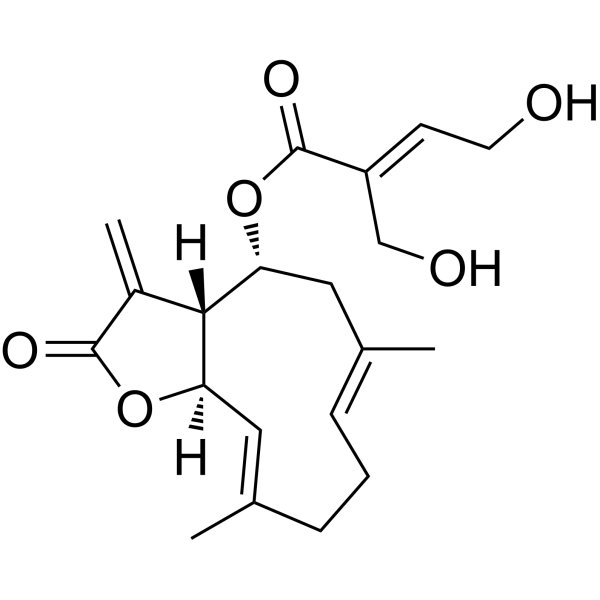
Eupatoriopicrin is an antitrypanosomic agent with an IC50 value of 1.2 μM (T. b. rhodesiense). Eupatoriopicrin is cytotoxic to L6 cells with an IC50 value of 1.6 μM .
loading...
    loading...
Cat. No.: HY-147933
CAS No.: 332376-42-8
Target:  

Parasite

Research Areas:  

Infection

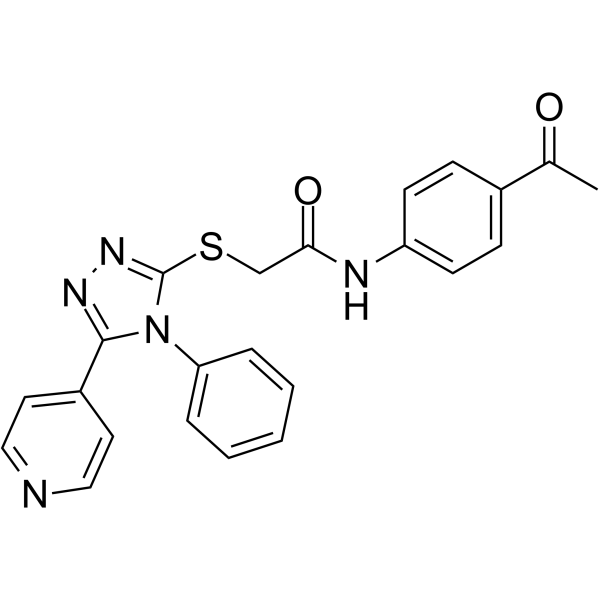
Antitrypanosomal agent 8 (compound 3b) has potent antitrypanosomal activity against Trypanosoma brucei with an IC50 value of 0.79 μM and exhibits certain cytotoxicity in L6 cells (IC50=80.95 μM) .
loading...
    loading...
Cat. No.: HY-147537
CAS No.: 2477608-91-4
Target:  

Parasite

Research Areas:  

Infection

Antileishmanial agent-9 (compound 16c) has potent and selective activity against Leishmania donovani (L. donovani) with an IC50 value of 4.01 μM. Antileishmanial agent-9 has relatively low cytotoxicity in L-6 cells (IC50 = 40.1 μM) .
loading...
    loading...
Cat. No.: HY-147536
CAS No.: 2477608-96-9
Target:  

Parasite

Research Areas:  

Infection

Antileishmanial agent-8 (compound 18) has potent and selective activity against Leishmania donovani (L. donovani) with an IC50 value of 5.64 μM. Antileishmanial agent-8 has relatively low cytotoxicity in L-6 cells (IC50=73.9 μM) .
loading...
    loading...
Cat. No.: HY-N14126
CAS No.: 179799-38-3
Chlovalicin is found in the strain of Sporothrix sp. FO-4649. In the presence of 0.2 U/mL IL-6, Chlovalicin inhibits the growth of L6-dependent MH60 cells with lC50 of 7.5 μM. Chlovalicin also inhibits the growth of B16 melanoma cells with lC50 of 38 μM. Chlovalicin also displays inhibitory activity on osteoclastogenesis .
loading...
    loading...
Cat. No.: HY-N16431
CAS No.: 165133-85-7
NFAT-133 is an aromatic polyketide with immunosuppressive and antidiabetic activity. NFAT-133 activates the AMPK pathway, promoting glucose uptake in L6 muscle fibers, thereby resisting diabetes. NFAT-133 inhibits the transcriptional activity of activated T-cell nuclear factor (NFAT), thereby suppressing the expression of IL-2 and the proliferation of T cells, demonstrating an immunosuppressive effect. NFAT-133 does not exhibit antibacterial activity or cytotoxicity, but it can weaken the production of NO in RAW264.7 cells induced by Lipopolysaccharide (LPS) (HY-D1056) .
loading...
    loading...
Cat. No.: HY-171793
CAS No.: 195604-21-8
Target:  

PPAR

Research Areas:  

Metabolic Disease

DN-108, a thiazolidinedione derivative, is an orally active peroxisome proliferator-activated receptor γ (PPARγ) agonist with antidiabetic effects. DN-108 improves hyperglycemia, hypertriglyceridemia and hyperinsulinemia in diabetic mouse models. DN-108 enhances tissue glucose uptake (e.g., increasing 2-deoxyglucose uptake in L6 muscle cells) and inhibits fatty acid synthase activity. DN-108 is promising for research of type 2 diabetes .
loading...
    loading...
Cat. No.: HY-124623
CAS No.: 2222660-40-2
Target:  

Parasite

Research Areas:  

Infection

DNDI-8219 (compound 58) is a potent selective and orally active trypanocidal agent, possessing inhibitory activity against Trypanosoma cruzi (T. cruzi) with an IC50 of 0.4 μM. DNDI-8219 has low cytotoxicity (L6 cells IC50 > 100 μM). DNDI-8219 can effectively cure chronic T. cruzi infection and markedly reduce parasite burdens in mouse model. DNDI-8219 has good solubility, metabolic stability and safety.
loading...
    loading...
Cat. No.: HY-169404
Target:  

PPAR

Research Areas:  

Metabolic Disease

PPARγ agonist 15 (Compound 7c) is an agonist for PPARγ. PPARγ agonist 15 inhibits the expression of alpha-amylase (HPA) and alpha-glucosidase (HLAG) with IC50 of 28.35 µM and 26.21 µM. PPARγ agonist 15 enhances glucose uptake in the L6 myotube cell. PPARγ agonist 15 improves glucose homeostasis, insulin sensitivity, and lipid metabolism in rat Streptozotocin (HY-13753)-induced diabetes model .
loading...
    loading...
Cat. No.: HY-120974
CAS No.: 691410-93-2
Target:  

GLUT

Research Areas:  

Metabolic Disease

α-Lipoic Acid Derivative 1 (Compound AN-7) is an α-lipoic acid derivative that enhances glucose transport in skeletal muscle by releasing active α-lipoic acid (LA), significantly improving glucose metabolism. In L6 skeletal muscle cells, α-Lipoic Acid Derivative 1 significantly increases glucose transport rates, approximately 12 times more potent than the parent compound α-lipoic acid (HY-N0492). In a mild diabetic mouse model, 10 mg/kg of α-Lipoic Acid Derivative 1 administered for two weeks significantly reduced blood glucose levels by 39%. α-Lipoic Acid Derivative 1 shows significant potential in research related to glucose metabolism in diabetes .
loading...
    loading...
Cat. No.: HY-164055
CAS No.: 202828-10-2
Target:  

Fluorescent Dye

Research Areas:  

Cancer

HL1 is a Schiff base ligand. HL1 exhibits chelation-enhanced fluorescence effect when forming complexes and can be used as a fluorescent probe for metal ions. HL1 can be used for the research of cancer .
loading...
    loading...
  • 1