
Search Result
Results for "
Lauryl
" in MedChemExpress (MCE) Product Catalog:
13
Biochemical Assay Reagents
6
Isotope-Labeled Compounds
| Cat. No. |
Product Name |
Target |
Research Areas |
Chemical Structure |
-
- HY-128974
-
|
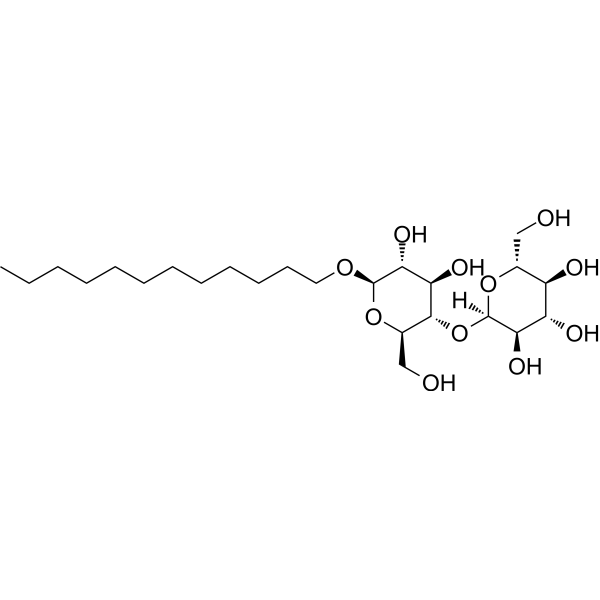
Lauryl Maltoside
|
DNA/RNA Synthesis
|
Others
|
|
N-Dodecyl-β-D-maltoside (Lauryl Maltoside) is a non-ionic detergent. N-Dodecyl-β-D-maltoside has strong adsorption on alumina, titanium dioxide and hematite. N-Dodecyl-β-D-maltoside can promote the reactivation of various proteins. N-Dodecyl-β-D-maltoside can effectively stabilize photoactive reaction center complexes (RCs) and inhibit the degradation of Rhodopseudomonas spheroides R-26 reaction center in solution. N-Dodecyl-β-D-maltoside can be used for purification and stabilization of RNA polymerase and for detection of protein-lipid interactions .
|
-
-
- HY-Y0316
-
|
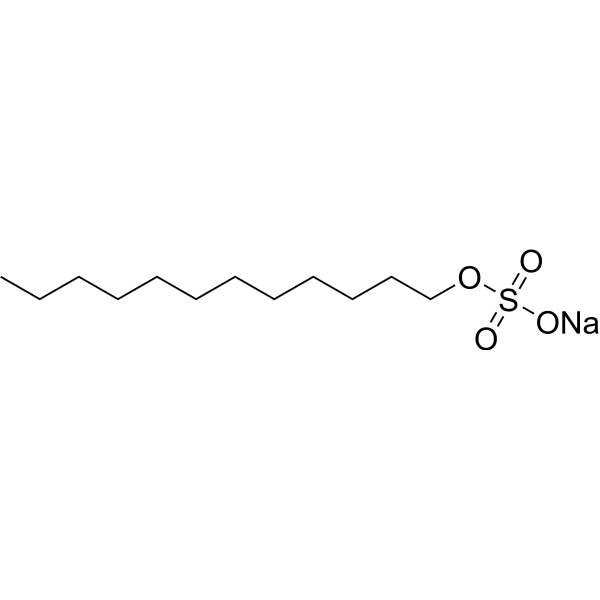
Sodium Lauryl sulfate; Laurylsulfuric acid sodium salt
|
Environmental Pollutants
Biochemical Assay Reagents
|
Others
|
|
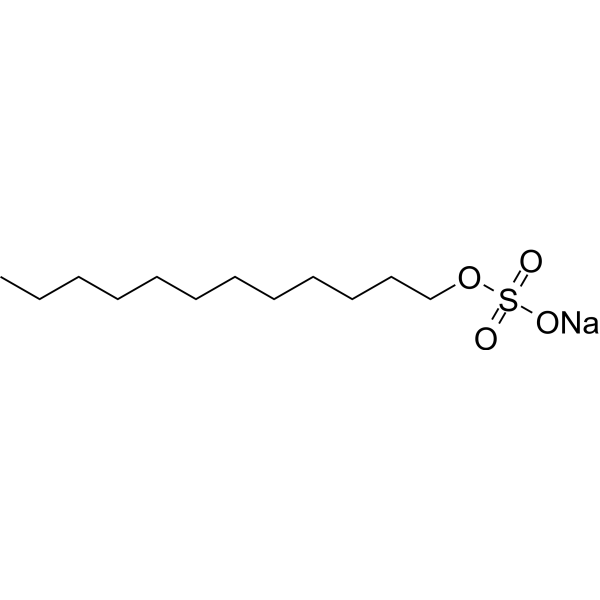
Sodium dodecyl sulfate is an anionic surfactant commonly used as a detergent, emulsifier, and protein denaturant in various industrial processes, especially in the production of personal care products, cleaners, and laboratory reagents. Sodium dodecyl sulfate has unique chemical properties that make it an effective ingredient in many applications, helping to reduce surface tension and enhance cleaning power.
|
-
-
- HY-Y0316B
-
|
Sodium Lauryl sulfate for electrophoresis; Laurylsulfuric acid sodium salt for electrophoresis
|
Environmental Pollutants
Biochemical Assay Reagents
|
Others
|
|
Sodium dodecyl sulfate for electrophoresis is a high purity sodium dodecyl sulfate (SDS) with a minimum purity of 98.5%. It is an anionic detergent commonly used in electrophoretic procedures to denature and impart a negative charge to proteins, allowing separation based on size and charge. Sodium dodecyl sulfate for electrophoresis has unique chemical properties that make it an effective ingredient in many laboratory applications, helping to improve the resolution and sensitivity of protein analysis.
|
-
-
- HY-B2106
-
-
-
- HY-A0272
-
-
-
- HY-B2106D
-
|
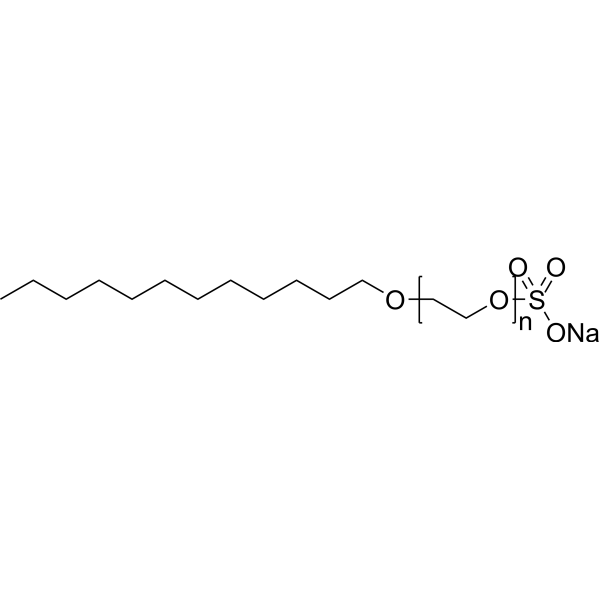
Decaethylene glycol monododecyl ether (C12E10); Polidocanol (10)
|
Biochemical Assay Reagents
|
Others
Cancer
|
|
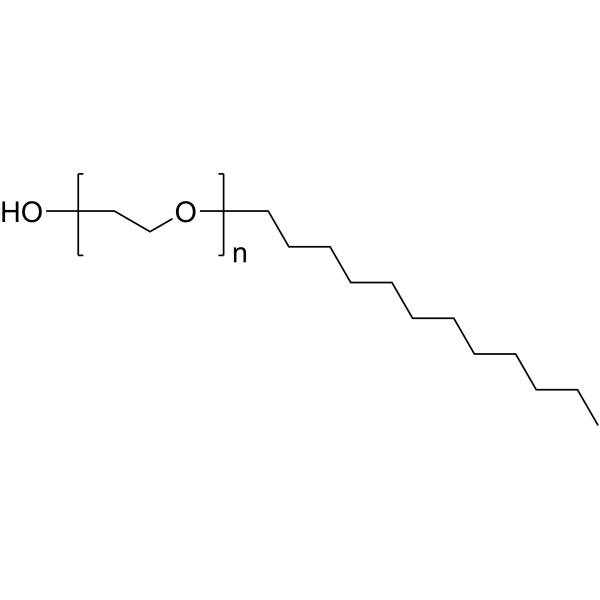
Polyoxyethylene (10) lauryl ether is a nonionic surfactant.
Polyoxyethylene (10) lauryl ether exhibits unique properties in dissolving liposomes and exerts the minimal interference with endotoxin detection.
Polyoxyethylene (10) lauryl ether forms hybrid liposomes with Dimyristoylphosphatidylcholine (DMPC) (HY-109541), which can inhibit the proliferation of human promyelocytic leukemia cells without the administration of any drugs .
|
-
-
- HY-141582
-
|
N-Stearoyl phytosphingosine
|
JNK
NF-κB
Interleukin Related
TNF Receptor
|
Inflammation/Immunology
|
|
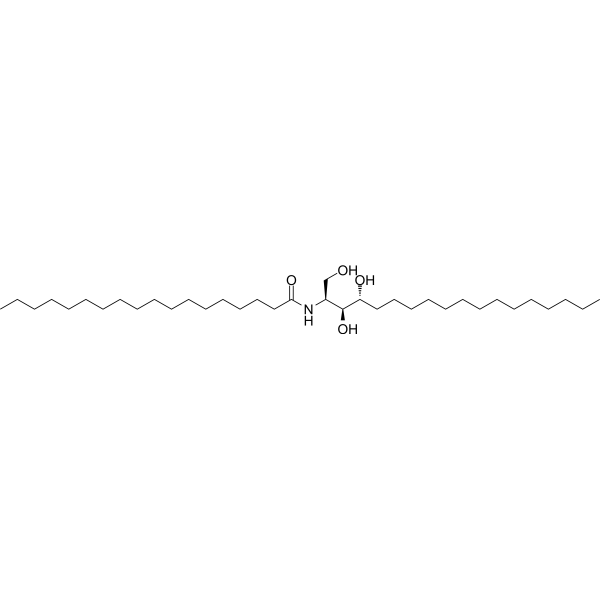
Ceramide 3 (N-Stearoyl phytosphingosine) is an orally active major component of intercellular lipids in the stratum corneum of the skin, and belongs to the ceramide family. Ceramide 3 inhibits c-jun and NF-κB activation induced by Histamine (HY-B1204), and suppresses the expression of IL-4 and TNF-α. Ceramide 3 inhibits scratching behavior and vascular permeability in mice, and exhibits antihistamine effects in guinea pig ileum. Ceramide 3 improves skin barrier function, reduces transepidermal water loss, erythema and the number of circulating epidermal cells, and accelerates barrier repair of irritated or dysfunctional skin .
|
-
-
- HY-107789
-
|
|
HSV
|
Infection
Inflammation/Immunology
|
|
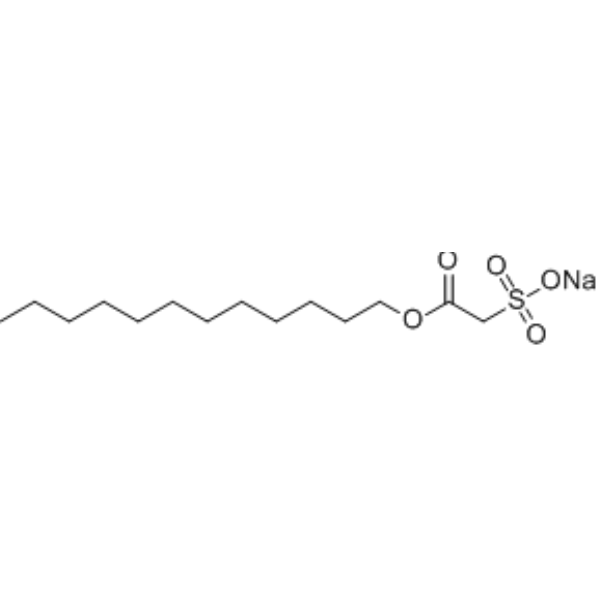
Sodium lauryl sulfoacetate is a solid anionic surfactant of plant origin. Sodium lauryl sulfoacetate is an immunoadjuvant with antiimmunosuppressive effects. Sodium lauryl sulfoacetate has antiviral activity .
|
-
-
- HY-B1549
-
-
-
- HY-124082
-
|
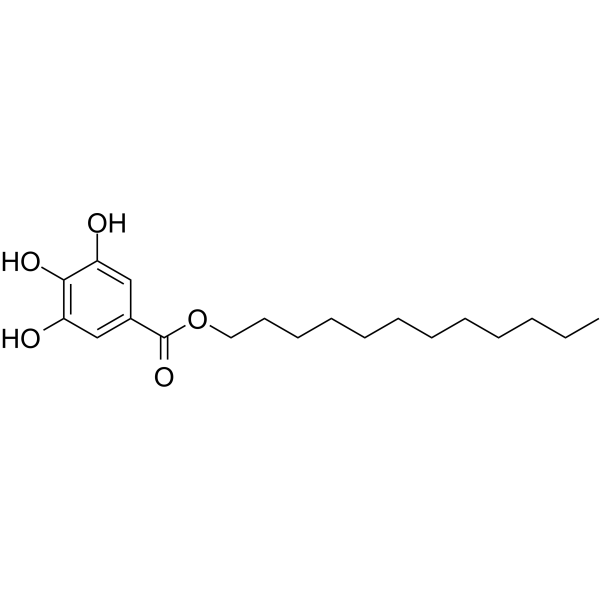
Lauryl gallate
|
Flavivirus
Bacterial
|
Infection
|
|
Dodecyl gallate (Lauryl gallate) has been widely used as an antioxidant in food manufacturing, as well as in the pharmaceutical and cosmetic industries. Dodecyl gallate also acts antibacterial activity specifically against Gram-positive bacteria. Dodecyl gallate also is active against a highly relevant animal virus such as African swine fever virus (ASFV) .
|
-
-
- HY-W392173
-
-
-
- HY-W099536
-
|
Tetraoxyethylene glycol monododecyl ether
|
Biochemical Assay Reagents
|
Others
|
|
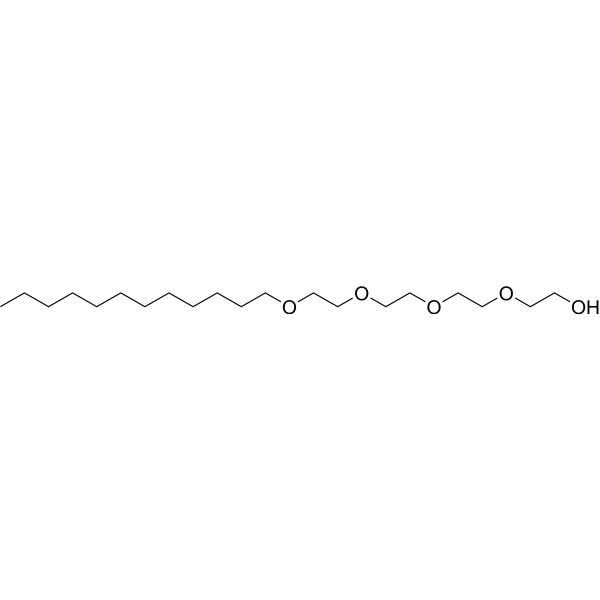
PEG-4 lauryl ether is a non-ionic detergent that can be used as an excipient or for the isolation of functional membrane complexes .
|
-
-
- HY-W683499
-
|
LHSB
|
Biochemical Assay Reagents
|
Others
|
|
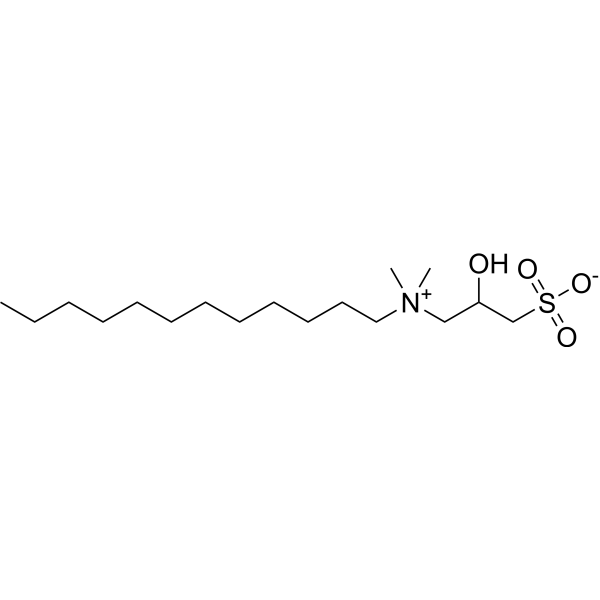
Lauryl hydroxysultaine (LHSB), a surfactant, is comprised of a core Sultaine structure with a sulphopropyl quaternary ammonium salt, an alkyl group and a hydroxyl group .
|
-
-
- HY-128974S
-
|
Lauryl Maltoside-d25
|
Isotope-Labeled Compounds
DNA/RNA Synthesis
|
Others
|
|
N-Dodecyl-β-D-maltoside-d25 (Lauryl Maltoside-d25) is deuterium labeled N-Dodecyl-β-D-maltoside (HY-128974). N-Dodecyl-β-D-maltoside is a non-ionic detergent. N-Dodecyl-β-D-maltoside has strong adsorption on alumina, titanium dioxide and hematite. N-Dodecyl-β-D-maltoside can promote the reactivation of various proteins. N-Dodecyl-β-D-maltoside can effectively stabilize photoactive reaction center complexes (RCs) and inhibit the degradation of Rhodopseudomonas spheroides R-26 reaction center in solution. N-Dodecyl-β-D-maltoside can be used for purification and stabilization of RNA polymerase and for detection of protein-lipid interactions .
|
-
-
- HY-Y0316S
-
|
Sodium Lauryl sulfate-d25; Laurylsulfuric acid-d25 sodium salt
|
Isotope-Labeled Compounds
|
Others
|
|
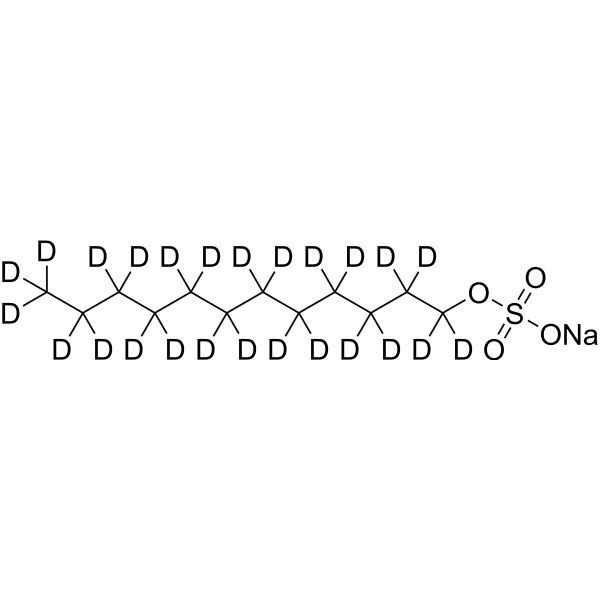
Sodium-dodecyl sulfate-d25 is a deuterium labeled Sodium dodecyl sulfate. Sodium dodecyl sulfate is the most widely used of the anionic alkyl sulfate surfactants .
|
-
-
- HY-W127335
-
|
|
Biochemical Assay Reagents
|
Others
|
|
Lauryl palmitoleate is a biochemical reagent that can be used as a biological material or organic compound for life science related research.
|
-
-
- HY-157348
-
-
-
- HY-W127503
-
|
Stearic Acid Lauryl Ester
|
Biochemical Assay Reagents
|
Others
|
|
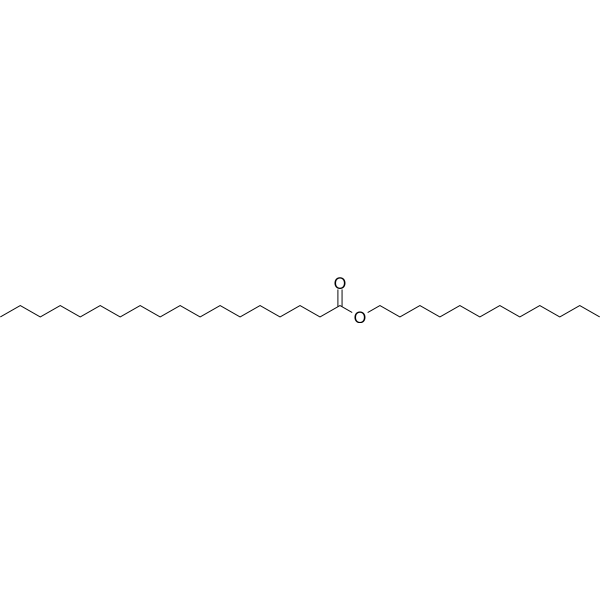
Dodecyl Stearate is a biochemical reagent that can be used as a biological material or organic compound for life science related research.
|
-
-
- HY-W011120
-
|
|
Endogenous Metabolite
|
Metabolic Disease
|
|
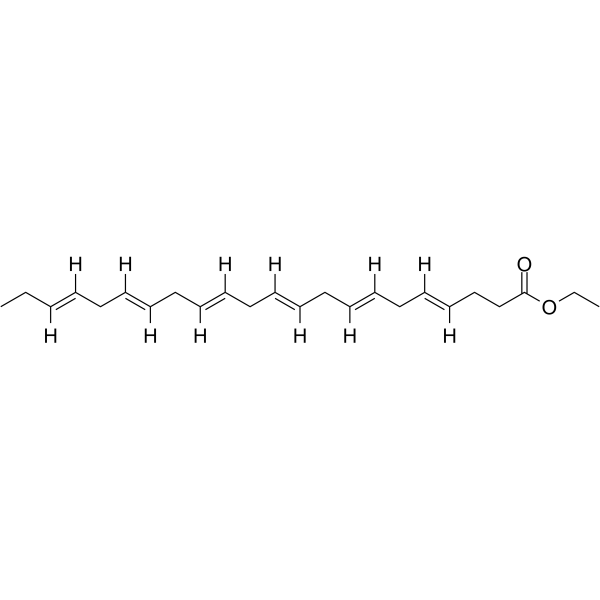
Ethyl cis-4,7,10,13,16,19-Docosahexaenoate, the ethyl ester of Docosahexaenoate (DHA), is enriched in the ethyl ester fraction by the selective alcoholysis of fatty acid ethyl esters originating from tuna oil with lauryl alcohol.
|
-
-
- HY-W614443
-
-
-
- HY-W142428
-
|
Diethylene glycol monododecyl ether
|
Biochemical Assay Reagents
|
Others
|
|
PEG 2 lauryl ether can be used as an excipient. Pharmaceutical excipients, or pharmaceutical auxiliaries, refer to other chemical substances used in the pharmaceutical process other than pharmaceutical ingredients. Pharmaceutical excipients generally refer to inactive ingredients in pharmaceutical preparations, which can improve the stability, solubility and processability of pharmaceutical preparations. Pharmaceutical excipients also affect the absorption, distribution, metabolism, and elimination (ADME) processes of co-administered drugs .
|
-
-
- HY-W590536
-
|
1-Palmitoyl-2-Lauroyl-sn-glycero-3-Phosphatidylcholine; 1-Palmitoyl-2-Lauroyl-sn-glycero-3-Phosphocholine
|
Liposome
|
Cancer
|
|
1,2-PLPC is a phospholipid containing palmitoyl (16:0) and lauryl (12:0) acyl substituents at the sn-1 and sn-2 positions, respectively. It can be used in the generation of micelles, liposomes, and other types of artificial membranes.
|
-
-
- HY-B1549R
-
|
DimethylbenzylLaurylammonium chloride (Standard)
|
Biochemical Assay Reagents
Reference Standards
|
Others
|
|
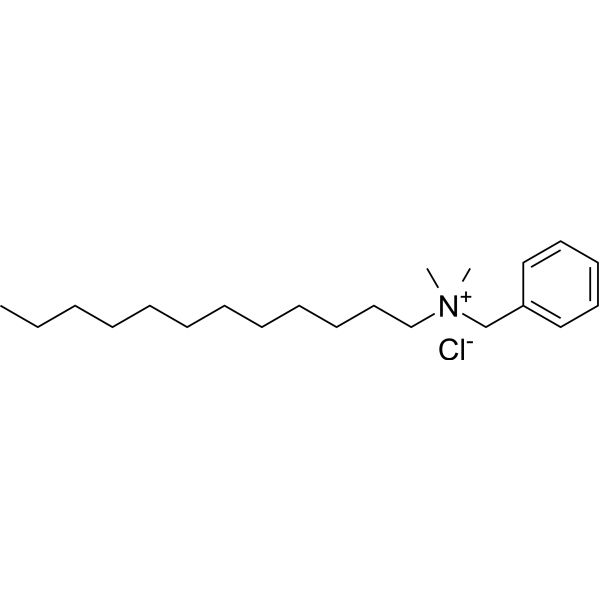
Lauryl benzalkonium (chloride) (Standard) is the analytical standard of Lauryl benzalkonium (chloride). This product is intended for research and analytical applications. Lauryl benzalkonium chloride is a cationic surfactant .
|
-
-
- HY-166208
-
-
-
- HY-166203
-
-
-
- HY-166192
-
-
-
- HY-166201
-
-
-
- HY-166190
-
-
-
- HY-166202
-
-
-
- HY-B1549S
-
|
DimethyLaurylbenzylammonium-d7 chloride
|
Isotope-Labeled Compounds
|
Others
|
|
Lauryl benzalkonium-d7 (Dimethylaurylbenzylammonium-d7) chloride is the deuterium labeled Lauryl benzalkonium chloride. Lauryl benzalkonium chloride is a cationic surfactant .
|
-
-
- HY-P1062
-
-
-
- HY-P1062A
-
-
-
- HY-W724343
-
|
DimethylbenzylLaurylammonium-d5 chloride
|
Isotope-Labeled Compounds
Biochemical Assay Reagents
|
Others
|
|
Lauryl benzalkonium-d5 chloride (Dimethylbenzyllaurylammonium-d5 chloride) is the deuterium labeled Lauryl benzalkonium chloride (HY-B1549). Lauryl benzalkonium (Dimethylbenzyllaurylammonium) chloride is a cationic surfactant that may produce some irritant contact dermatitis (ICD) to the skin .
|
-
-
- HY-W127462
-
|
Dodecyl oleate
|
Biochemical Assay Reagents
|
Others
|
|
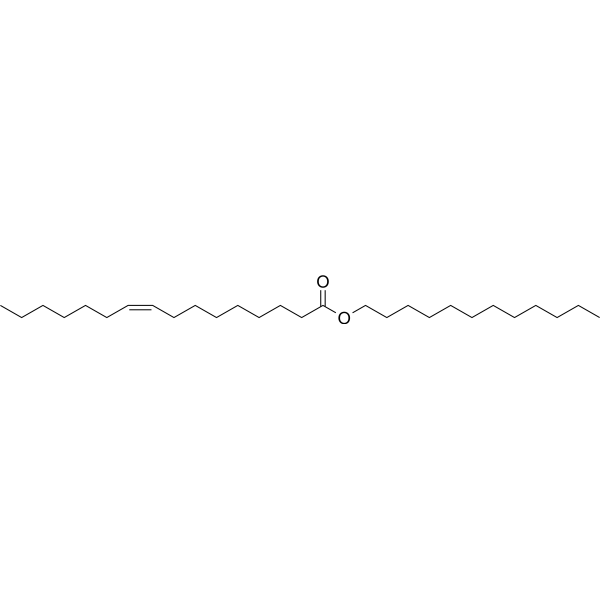
Oleic acid lauryl ester is a biochemical reagent that can be used as a biological material or organic compound for life science related research.
|
-
-
- HY-W800822
-
|
Lauryl lactate
|
Biochemical Assay Reagents
|
Others
|
|
Lactic acid dodecyl ester (Lauryl lactate) is a lipid with a terminal hydroxyl group at the head. The hydroxyl group enables further derivatization or replacement with other reactive functional groups.
|
-
-
- HY-B2106DR
-
|
Decaethylene glycol monododecyl ether (C12E10) (Standard); Polidocanol (10) (Standard)
|
Reference Standards
Biochemical Assay Reagents
|
Others
|
|
Polyoxyethylene (10) lauryl ether (Standard) is the analytical standard of Polyoxyethylene (10) lauryl ether. This product is intended for research and analytical applications. Polyoxyethylene (10) lauryl ether is a non-ionic surfactant. Polyoxyethylene (10) lauryl ether exhibits unique properties in dissolving liposomes and exerts the minimal interference with endotoxin detection.
Polyoxyethylene (10) lauryl ether forms hybrid liposomes with Dimyristoylphosphatidylcholine (DMPC) (HY-109541), which can inhibit the proliferation of human promyelocytic leukemia cells without the administration of any drugs.
|
-
-
- HY-W099536R
-
|
Tetraoxyethylene glycol monododecyl ether (Standard)
|
Biochemical Assay Reagents
Reference Standards
|
Others
|
|
PEG 4 lauryl ether (Standard) is the analytical standard of PEG 4 lauryl ether. This product is intended for research and analytical applications. PEG 4 lauryl ether can be used as an excipient. Pharmaceutical excipients, or pharmaceutical auxiliaries, refer to other chemical substances used in the pharmaceutical process other than pharmaceutical ingredients. Pharmaceutical excipients generally refer to inactive ingredients in pharmaceutical preparations, which can improve the stability, solubility and processability of pharmaceutical preparations. Pharmaceutical excipients also affect the absorption, distribution, metabolism, and elimination (ADME) processes of co-administered drugs .
|
-
-
- HY-124082R
-
|
Lauryl gallate (Standard)
|
Flavivirus
Bacterial
Reference Standards
|
Infection
|
|
Dodecyl gallate (Standard) is the analytical standard of Dodecyl gallate. This product is intended for research and analytical applications. Dodecyl gallate (Lauryl gallate) has been widely used as an antioxidant in food manufacturing, as well as in the pharmaceutical and cosmetic industries. Dodecyl gallate also is active against a highly relevant animal virus such as African swine fever virus (ASFV) .
|
-
-
- HY-B2106C
-
|
|
Biochemical Assay Reagents
|
Others
|
|
PEG 23 lauryl ether can be used as an excipient. Pharmaceutical excipients, or pharmaceutical auxiliaries, refer to other chemical substances used in the pharmaceutical process other than pharmaceutical ingredients. Pharmaceutical excipients generally refer to inactive ingredients in pharmaceutical preparations, which can improve the stability, solubility and processability of pharmaceutical preparations. Pharmaceutical excipients also affect the absorption, distribution, metabolism, and elimination (ADME) processes of co-administered drugs .
|
-
-
- HY-W011885S
-
|
N-Lauryl-2-pyrrolidone-d6
|
Isotope-Labeled Compounds
|
Others
|
|
1-Dodecylpyrrolidin-2-one-d6 (N-Lauryl-2-pyrrolidone-d6) is deuterium-labeled 1-Dodecylpyrrolidin-2-one (HY-W011885) .
|
-
-
- HY-125802
-
-
-
- HY-Y0316BR
-
|
Sodium Lauryl sulfate (Standard); Laurylsulfuric acid sodium (Standard)
|
Biochemical Assay Reagents
Reference Standards
|
Others
|
|
Sodium dodecyl sulfate (Standard) is the analytical standard of Sodium dodecyl sulfate. This product is intended for research and analytical applications. Sodium dodecyl sulfate is a high purity sodium dodecyl sulfate (SDS) with a minimum purity of 98.5%. It is an anionic detergent commonly used in electrophoretic procedures to denature and impart a negative charge to proteins, allowing separation based on size and charge. Sodium dodecyl sulfate has unique chemical properties that make it an effective ingredient in many laboratory applications, helping to improve the resolution and sensitivity of protein analysis.
|
-
-
- HY-W1122892
-
|
Lauryl D-glucoside; Dodecyl D-glucoside
|
Biochemical Assay Reagents
|
Others
|
|
Dodecyl D-glucopyranoside is a nonionic detergent. Dodecyl D-glucopyranoside has a critical micelle concentration of 125 μM. Dodecyl D-glucopyranoside can be used in Vitamin E emulsification .
|
-
-
- HY-W011120R
-
|
|
Endogenous Metabolite
Reference Standards
|
Metabolic Disease
|
|
Ethyl docosa-4,7,10,13,16,19-hexaenoate (Standard) is the analytical standard of Ethyl docosa-4,7,10,13,16,19-hexaenoate. This product is intended for research and analytical applications. Ethyl cis-4,7,10,13,16,19-Docosahexaenoate, the ethyl ester of Docosahexaenoate (DHA), is enriched in the ethyl ester fraction by the selective alcoholysis of fatty acid ethyl esters originating from tuna oil with lauryl alcohol.
|
-
-
- HY-138193S
-
|
LMNG-d42
|
Isotope-Labeled Compounds
|
Others
|
|
Lauryl maltose neopentyl glycol-d42 (LMNG-d42) is the deuterium labeled Lauryl maltose neopentyl glycol (HY-138193). Lauryl maltose neopentyl glycol (LMNG) is a detergent that can solubilize and stabilize membrane proteins. Lauryl maltose neopentyl glycol extracts integral membrane proteins from membranes, and improves substantially the stability of various membrane proteins, including G protein-coupled receptors and respiratory complexes .
|
-
-
- HY-166191
-
-
-
- HY-172754
-
|
|
Fluorescent Dye
|
Cancer
|
|
ICAAc is a solvatochromic fluorophore with reduced basicity. ICAAc demonstrates significant solvatochromic behavior across solvents of varying polarity, with a large dipole moment difference and low quantum yield in water, making it a tunable solvatochromic fluorophore. ICAAc enables pH sensing via UV-vis/fluorescence detection and in microenvironments including sodium lauryl sulfate micelle Stern layers. ICAAc acts as a supravital cell stain for epifluorescence imaging of live cancer cells .
|
-
-
- HY-W927849
-
|
Magnesium Lauryl sulfate
|
Biochemical Assay Reagents
|
Others
|
|
Magnesium dodecyl sulfate is a biochemical reagent that can be used as a biological material or organic compound for life science related research .
|
-
| Cat. No. |
Product Name |
Type |
-
- HY-172754
-
|
|
Fluorescent Dyes
|
|
ICAAc is a solvatochromic fluorophore with reduced basicity. ICAAc demonstrates significant solvatochromic behavior across solvents of varying polarity, with a large dipole moment difference and low quantum yield in water, making it a tunable solvatochromic fluorophore. ICAAc enables pH sensing via UV-vis/fluorescence detection and in microenvironments including sodium lauryl sulfate micelle Stern layers. ICAAc acts as a supravital cell stain for epifluorescence imaging of live cancer cells .
|
| Cat. No. |
Product Name |
Type |
-
- HY-Y0316B
-
|
Sodium Lauryl sulfate for electrophoresis; Laurylsulfuric acid sodium salt for electrophoresis
|
Biochemical Assay Reagents
|
|
Sodium dodecyl sulfate for electrophoresis is a high purity sodium dodecyl sulfate (SDS) with a minimum purity of 98.5%. It is an anionic detergent commonly used in electrophoretic procedures to denature and impart a negative charge to proteins, allowing separation based on size and charge. Sodium dodecyl sulfate for electrophoresis has unique chemical properties that make it an effective ingredient in many laboratory applications, helping to improve the resolution and sensitivity of protein analysis.
|
-
- HY-B2106D
-
|
Decaethylene glycol monododecyl ether (C12E10); Polidocanol (10)
|
Biochemical Assay Reagents
|
|
Polyoxyethylene (10) lauryl ether is a nonionic surfactant.
Polyoxyethylene (10) lauryl ether exhibits unique properties in dissolving liposomes and exerts the minimal interference with endotoxin detection.
Polyoxyethylene (10) lauryl ether forms hybrid liposomes with Dimyristoylphosphatidylcholine (DMPC) (HY-109541), which can inhibit the proliferation of human promyelocytic leukemia cells without the administration of any drugs .
|
-
- HY-141582
-
|
N-Stearoyl phytosphingosine
|
Biochemical Assay Reagents
|
|
Ceramide 3 (N-Stearoyl phytosphingosine) is an orally active major component of intercellular lipids in the stratum corneum of the skin, and belongs to the ceramide family. Ceramide 3 inhibits c-jun and NF-κB activation induced by Histamine (HY-B1204), and suppresses the expression of IL-4 and TNF-α. Ceramide 3 inhibits scratching behavior and vascular permeability in mice, and exhibits antihistamine effects in guinea pig ileum. Ceramide 3 improves skin barrier function, reduces transepidermal water loss, erythema and the number of circulating epidermal cells, and accelerates barrier repair of irritated or dysfunctional skin .
|
-
- HY-W392173
-
|
|
Biochemical Assay Reagents
|
|
Lauryl glucoside (50% in water) is a non-ionic surfactant with high cleansing ability, high foaming ability and low cost .
|
-
- HY-W683499
-
|
LHSB
|
Biochemical Assay Reagents
|
|
Lauryl hydroxysultaine (LHSB), a surfactant, is comprised of a core Sultaine structure with a sulphopropyl quaternary ammonium salt, an alkyl group and a hydroxyl group .
|
-
- HY-W127335
-
|
|
Biochemical Assay Reagents
|
|
Lauryl palmitoleate is a biochemical reagent that can be used as a biological material or organic compound for life science related research.
|
-
- HY-157348
-
-
- HY-W127503
-
|
Stearic Acid Lauryl Ester
|
Biochemical Assay Reagents
|
|
Dodecyl Stearate is a biochemical reagent that can be used as a biological material or organic compound for life science related research.
|
-
- HY-W127462
-
|
Dodecyl oleate
|
Biochemical Assay Reagents
|
|
Oleic acid lauryl ester is a biochemical reagent that can be used as a biological material or organic compound for life science related research.
|
-
- HY-B2106DR
-
|
Decaethylene glycol monododecyl ether (C12E10) (Standard); Polidocanol (10) (Standard)
|
Biochemical Assay Reagents
|
|
Polyoxyethylene (10) lauryl ether (Standard) is the analytical standard of Polyoxyethylene (10) lauryl ether. This product is intended for research and analytical applications. Polyoxyethylene (10) lauryl ether is a non-ionic surfactant. Polyoxyethylene (10) lauryl ether exhibits unique properties in dissolving liposomes and exerts the minimal interference with endotoxin detection.
Polyoxyethylene (10) lauryl ether forms hybrid liposomes with Dimyristoylphosphatidylcholine (DMPC) (HY-109541), which can inhibit the proliferation of human promyelocytic leukemia cells without the administration of any drugs.
|
-
- HY-125802
-
-
- HY-Y0316BR
-
|
Sodium Lauryl sulfate (Standard); Laurylsulfuric acid sodium (Standard)
|
Biochemical Assay Reagents
|
|
Sodium dodecyl sulfate (Standard) is the analytical standard of Sodium dodecyl sulfate. This product is intended for research and analytical applications. Sodium dodecyl sulfate is a high purity sodium dodecyl sulfate (SDS) with a minimum purity of 98.5%. It is an anionic detergent commonly used in electrophoretic procedures to denature and impart a negative charge to proteins, allowing separation based on size and charge. Sodium dodecyl sulfate has unique chemical properties that make it an effective ingredient in many laboratory applications, helping to improve the resolution and sensitivity of protein analysis.
|
-
- HY-W927849
-
|
Magnesium Lauryl sulfate
|
Biochemical Assay Reagents
|
|
Magnesium dodecyl sulfate is a biochemical reagent that can be used as a biological material or organic compound for life science related research .
|
| Cat. No. |
Product Name |
Target |
Research Area |
| Cat. No. |
Product Name |
Category |
Target |
Chemical Structure |
| Cat. No. |
Product Name |
Chemical Structure |
-
- HY-128974S
-
|
|
|
N-Dodecyl-β-D-maltoside-d25 (Lauryl Maltoside-d25) is deuterium labeled N-Dodecyl-β-D-maltoside (HY-128974). N-Dodecyl-β-D-maltoside is a non-ionic detergent. N-Dodecyl-β-D-maltoside has strong adsorption on alumina, titanium dioxide and hematite. N-Dodecyl-β-D-maltoside can promote the reactivation of various proteins. N-Dodecyl-β-D-maltoside can effectively stabilize photoactive reaction center complexes (RCs) and inhibit the degradation of Rhodopseudomonas spheroides R-26 reaction center in solution. N-Dodecyl-β-D-maltoside can be used for purification and stabilization of RNA polymerase and for detection of protein-lipid interactions .
|
-
-
- HY-Y0316S
-
|
|
|
Sodium-dodecyl sulfate-d25 is a deuterium labeled Sodium dodecyl sulfate. Sodium dodecyl sulfate is the most widely used of the anionic alkyl sulfate surfactants .
|
-
-
- HY-B1549S
-
|
|
|
Lauryl benzalkonium-d7 (Dimethylaurylbenzylammonium-d7) chloride is the deuterium labeled Lauryl benzalkonium chloride. Lauryl benzalkonium chloride is a cationic surfactant .
|
-
-
- HY-W724343
-
|
|
|
Lauryl benzalkonium-d5 chloride (Dimethylbenzyllaurylammonium-d5 chloride) is the deuterium labeled Lauryl benzalkonium chloride (HY-B1549). Lauryl benzalkonium (Dimethylbenzyllaurylammonium) chloride is a cationic surfactant that may produce some irritant contact dermatitis (ICD) to the skin .
|
-
-
- HY-W011885S
-
|
|
|
1-Dodecylpyrrolidin-2-one-d6 (N-Lauryl-2-pyrrolidone-d6) is deuterium-labeled 1-Dodecylpyrrolidin-2-one (HY-W011885) .
|
-
-
- HY-138193S
-
|
|
|
Lauryl maltose neopentyl glycol-d42 (LMNG-d42) is the deuterium labeled Lauryl maltose neopentyl glycol (HY-138193). Lauryl maltose neopentyl glycol (LMNG) is a detergent that can solubilize and stabilize membrane proteins. Lauryl maltose neopentyl glycol extracts integral membrane proteins from membranes, and improves substantially the stability of various membrane proteins, including G protein-coupled receptors and respiratory complexes .
|
-
| Cat. No. |
Product Name |
|
Classification |
-
- HY-Y0316
-
|
Sodium Lauryl sulfate; Laurylsulfuric acid sodium salt
|
|
Emulsifiers
Surfactants
|
|
Sodium dodecyl sulfate is an anionic surfactant commonly used as a detergent, emulsifier, and protein denaturant in various industrial processes, especially in the production of personal care products, cleaners, and laboratory reagents. Sodium dodecyl sulfate has unique chemical properties that make it an effective ingredient in many applications, helping to reduce surface tension and enhance cleaning power.
|
-
- HY-W099536
-
|
Tetraoxyethylene glycol monododecyl ether
|
|
Solvents
|
|
PEG-4 lauryl ether is a non-ionic detergent that can be used as an excipient or for the isolation of functional membrane complexes .
|
-
- HY-W142428
-
|
Diethylene glycol monododecyl ether
|
|
Emulsifiers
|
|
PEG 2 lauryl ether can be used as an excipient. Pharmaceutical excipients, or pharmaceutical auxiliaries, refer to other chemical substances used in the pharmaceutical process other than pharmaceutical ingredients. Pharmaceutical excipients generally refer to inactive ingredients in pharmaceutical preparations, which can improve the stability, solubility and processability of pharmaceutical preparations. Pharmaceutical excipients also affect the absorption, distribution, metabolism, and elimination (ADME) processes of co-administered drugs .
|
-
- HY-W590536
-
|
1-Palmitoyl-2-Lauroyl-sn-glycero-3-Phosphatidylcholine; 1-Palmitoyl-2-Lauroyl-sn-glycero-3-Phosphocholine
|
|
Phospholipids
|
|
1,2-PLPC is a phospholipid containing palmitoyl (16:0) and lauryl (12:0) acyl substituents at the sn-1 and sn-2 positions, respectively. It can be used in the generation of micelles, liposomes, and other types of artificial membranes.
|
-
- HY-B2106C
-
|
|
|
Surfactants
|
|
PEG 23 lauryl ether can be used as an excipient. Pharmaceutical excipients, or pharmaceutical auxiliaries, refer to other chemical substances used in the pharmaceutical process other than pharmaceutical ingredients. Pharmaceutical excipients generally refer to inactive ingredients in pharmaceutical preparations, which can improve the stability, solubility and processability of pharmaceutical preparations. Pharmaceutical excipients also affect the absorption, distribution, metabolism, and elimination (ADME) processes of co-administered drugs .
|
Your information is safe with us. * Required Fields.
Inquiry Information
- Product Name:
- Cat. No.:
- Quantity:
- MCE Japan Authorized Agent:

