1. Search Result
Search Result
Results for "

M1

" in MedChemExpress (MCE) Product Catalog:

505

Inhibitors & Agonists

1

Screening Libraries

13

Fluorescent Dye

19

Biochemical Assay Reagents

27

Peptides

11

Inhibitory Antibodies

38

Natural
Products

24

Recombinant Proteins

39

Isotope-Labeled Compounds

20

Antibodies

6

Click Chemistry

16

Oligonucleotides

Cat. No. Product Name Target Research Areas Chemical Structure
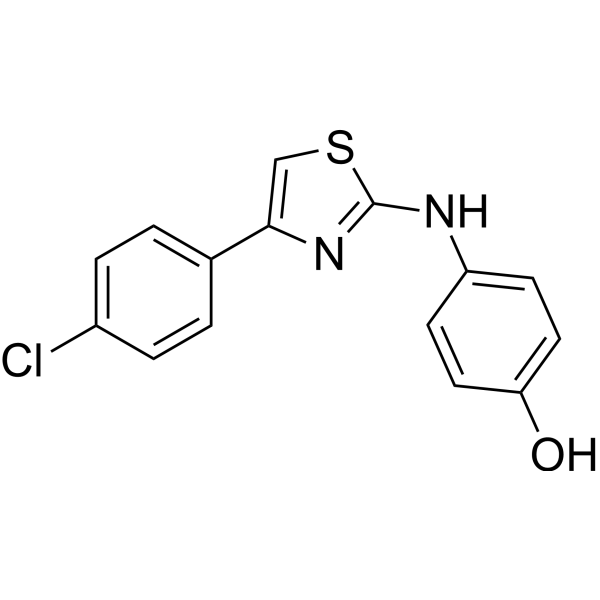
  • HY-111475
    Mitochondrial fusion promoter M1
    2 Publications Verification

    Mitochondrial Metabolism Cardiovascular Disease
    Mitochondrial fusion promoter M1 is a mitochondrial dynamic modulator. Mitochondrial fusion promoter M1 preserves the mitochondrial function and promotes cellular respiration. Mitochondrial fusion promoter M1 alleviates cardiac and brain damage in rats with cardiac ischemia/reperfusion injury [1] .
    Mitochondrial fusion promoter M1
  • HY-12100
    Umeclidinium bromide
    1 Publications Verification

    GSK573719A

    mAChR Inflammation/Immunology Cancer
    Umeclidinium bromide is a novel mAChR antagonist. The affinity (Ki) of Umeclidinium bromide for the cloned human M1-M5 mAChRs ranges from 0.05 to 0.16 nM.
    Umeclidinium bromide
  • HY-N6686
    Virginiamycin M1
    2 Publications Verification

    Pristinamycin IIA; Ostreogrycin A

    Bacterial Antibiotic Infection
    Virginiamycin M1 (Pristinamycin IIA; Ostreogrycin A), produced by?Streptomyces virginiae, is an polyunsaturated macrocyclic lactone antibiotic and acts as a component of Virginiamycin (HY-112665) [1]. Virginiamycin M1 alone is against Staphylococcus aureus with a MIC of 0.25 μg/mL.
    Virginiamycin M1
  • HY-A0030

    mAChR Neurological Disease Metabolic Disease Cancer
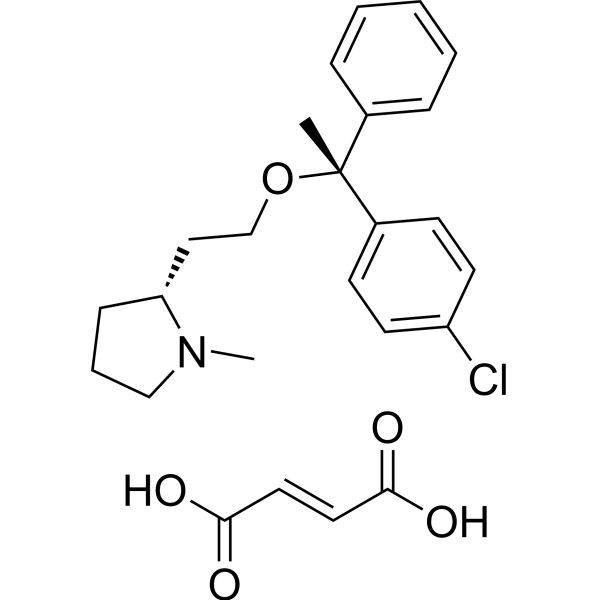
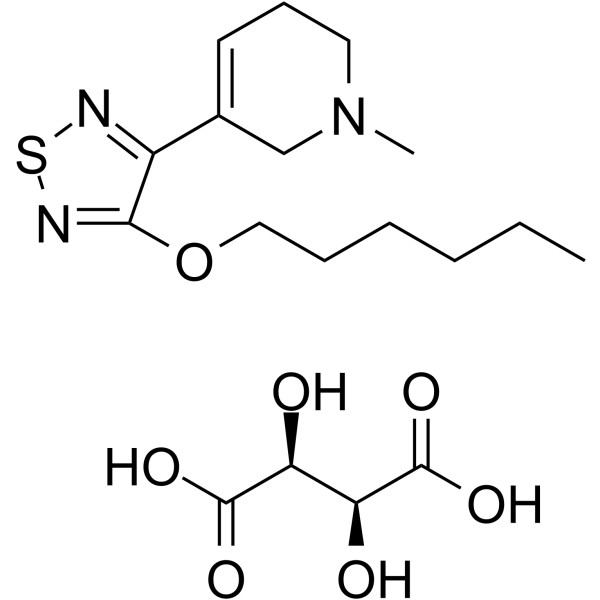
    Fesoterodine Fumarate is an orally active, nonsubtype selective, competitive muscarinic receptor (mAChR) antagonist with pKi values of 8.0, 7.7, 7.4, 7.3, 7.5 for M1, M2, M3, M4, M5 receptors, respectively. Fesoterodine Fumarate is used for the overactive bladder (OAB) [1] .
    Fesoterodine fumarate
  • HY-12798C

    AR-13324 M1 metabolite

    PKC ROCK Cardiovascular Disease Neurological Disease
    AR-13503 (AR-13324 M1 metabolite) is the hydrolytic metabolite of AR-13324 mesylate. AR-13324 is a ROCK kinase and PKC inhibitor with anti-angiogenic and retinal health-improving effects, showing potential for use in retinal disease research [1] .
    AR-13503
  • HY-15618

    M1 receptor modulator

    mAChR Calcium Channel Neurological Disease
    MK-7622 (M1 receptor modulator) is an orally active positive allosteric modulator of muscarinic M1 acetylcholine receptors (mAChRs). MK-7622 enhances ACh-induced calcium flux in CHO cells expressing human M1 receptors (EC50 = 21 nM) and shows robust agonist activity in rat M1-expressing CHO cells, increasing intracellular calcium. MK-7622 reverses Scopolamine (HY-N0296)-induced cognitive deficits in rhesus macaques in an object retrieval detour task. MK-7622 can be used for the study of Alzheimer's disease (AD) [1] .
    MK-7622
  • HY-138832

    APG-1252-M1

    Bcl-2 Family Apoptosis Caspase PARP Cancer
    BM-1244 (APG-1252-M1) is a Bcl-xL/Bcl-2 inhibitor with Kis of 134 nM and 450 nM. BM-1244 has anti-tumor effects by inducing apoptosis and suppressing tumor growth. BM-1244 can induce cytochrome C and Smac release from mitochondria with caspase-3 and PARP cleavage. BM-1244 exhibits synergy with chemotherapy in vivo. BM-1244 can be studied in research for colorectal cancer, acute myeloid leukemia and gastric cancer [1] .
    BM-1244
  • HY-G0021

    Norclozapine; Desmethylclozapine; Normethylclozapine

    mAChR Opioid Receptor Drug Metabolite Virus Protease Infection
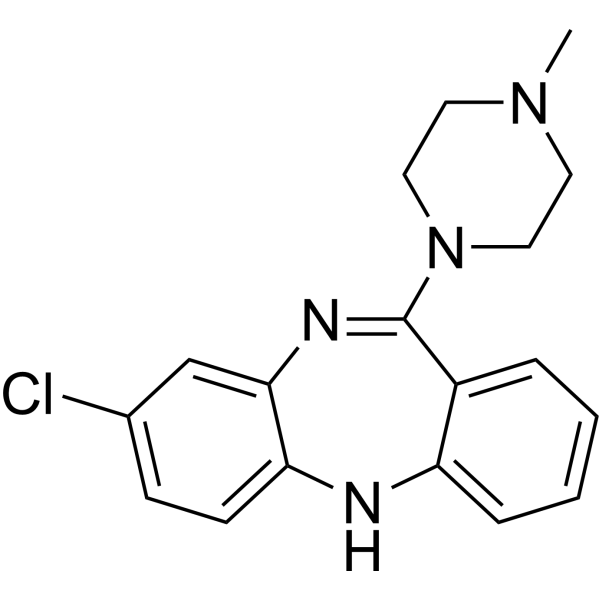
    N-Desmethylclozapine is a major active metabolite of the atypical antipsychotic agent Clozapine. N-Desmethylclozapine is a potent, allosteric and partial M1 receptors agonist (EC50=115 nM) and is able to potentiate hippocampal N-methyl-d-aspartate (NMDA) receptor currents through M1 receptor activation. N-Desmethylclozapine is also a δ-opioid agonist [1] .
    N-Desmethylclozapine
  • HY-P990195

    MHC Others
    Anti-Mouse MHC Class I (H-2) Antibody (M1/42.3.9.8) is a rat-derived IgG2a κ type antibody inhibitor, targeting to mouse MHC Class I. Anti-Mouse MHC Class I (H-2) Antibody (M1/42.3.9.8) reacts with the mouse H-2 MHC class I alloantigen (all haplotypes). Anti-Mouse MHC Class I (H-2) Antibody (M1/42.3.9.8) can be used for the flow cytometry and immunofluorescence experiments [1].
    Anti-Mouse MHC Class I (H-2) Antibody (M1/42.3.9.8)
  • HY-N8376

    (±)-Fustin; 3,7,3',4'-Tetrahydroxyflavanone

    Amyloid-β mAChR Cholinesterase (ChE) Neurological Disease
    Fustinis ((±)-Fustin; 3,7,3',4'-Tetrahydroxyflavanone) is a potent amyloid β (Aβ) inhibitor. Fustinis ((±)-Fustin; 3,7,3',4'-Tetrahydroxyflavanone) increases the expression of acetylcholine (ACh) levels, choline acetyltransferase (ChAT) activity, and ChAT gene induced by Aβ (1-42). Fustinis ((±)-Fustin; 3,7,3',4'-Tetrahydroxyflavanone) decreases in acetyl cholinesterase (AChE) activity and AChE gene expression induced by Aβ (1-42). Fustinis ((±)-Fustin; 3,7,3',4'-Tetrahydroxyflavanone) increases muscarinic M1 receptor gene expression and muscarinic M1 receptor binding activity. Fustinis ((±)-Fustin; 3,7,3',4'-Tetrahydroxyflavanone) can be used for Alzheimer's disease research [1].
    Fustin
  • HY-108234
    VU 0255035
    1 Publications Verification

    VU 255035

    mAChR Neurological Disease
    VU0255035 is a highly selective and competitive M1 mAChR antagonist. VU0255035 blocks M1 mAChR signals to reduce epileptic seizures and regulate neuronal membrane potential. VU0255035 can be used in research related to central nervous system diseases, such as epilepsy, Parkinson's disease, and dystonia [1] .
    VU 0255035
  • HY-19752A

    CID-25010775

    mAChR Neurological Disease
    VU0357017 hydrochloride (CID-25010775) is a potent, selective and brain-penetrant allosteric agonist of M1 muscarinic acetylcholine receptor, with an EC50 of 477 nM. VU0357017 hydrochloride is highly selective for M1 and has no activity at M2-M5 up to the highest concentrations tested (30 μM). VU0357017 hydrochloride can be used for the research of Alzheimer’s disease and schizophrenia [1] .
    VU0357017 hydrochloride
  • HY-101858

    mAChR Neurological Disease
    BQCA a highly selective allosteric modulator of the M1 mAChR.
    BQCA
  • HY-Y0586

    Asaronic acid

    NF-κB STAT Metabolic Disease Inflammation/Immunology
    2,4,5-Trimethoxybenzoic acid (Asaronic acid) is a compound identified in purple perilla extracts. 2,4,5-Trimethoxybenzoic acid inhibits LPS (HY-D1056)-induced inflammatory responses, inhibits the activation of NF-κB and STAT signaling pathways. 2,4,5-Trimethoxybenzoic acid inhibits M1 macrophage phenotype-mediated inflammation in diabetes [1].
    2,4,5-Trimethoxybenzoic acid
  • HY-70053

    mAChR Neurological Disease Metabolic Disease
    Fesoterodine is an orally active, nonsubtype selective, competitive muscarinic receptor (mAChR) antagonist with pKi values of 8.0, 7.7, 7.4, 7.3, 7.5 for M1, M2, M3, M4, M5 receptors, respectively. Fesoterodine is used for the overactive bladder (OAB) [1] .
    Fesoterodine
  • HY-G0023

    Niraparib carboxylic acid metabolite M1; M1 metabolite of niraparib

    Drug Metabolite Others
    Niraparib metabolite M1 is a metabolite of niraparib, and the latter one acts as a novel poly(ADP-Ribose) polymerase (PARP) inhibitor.
    Niraparib metabolite M1
  • HY-136587

    Histamine Receptor mGluR Inflammation/Immunology
    Oxomemazine is a phenothiazine-based histamine H1-receptor blocker. Oxomemazine is a selective antagonist for muscarinic M1 receptor, displays about 20-fold difference in the affinity for high (Ki = 84 nM, M1 receptor) and low (Ki = 1.65 μM, M2 receptor) affinity sites. Oxomemazine is an antihistamine and anticholinergic agent used for the study of cough treatment. Oxomemazine is protective against anaphylactic microshock in guinea pigs [1] .
    Oxomemazine
  • HY-N1529

    (±)-Gomisin M1

    HIV Infection
    Gomisin M1 ((±)-Gomisin M1) is a potent anti-HIV agent with an EC50 of <0.65 μM [1].
    Gomisin M1
  • HY-118342
    PQCA
    1 Publications Verification

    mAChR Neurological Disease
    PQCA is a highly selective and potent muscarinic M1 receptor positive allosteric modulator. PQCA has an EC50 value of 49 nM and 135 nM on rhesus and human M1 receptor, respectively. PQCA is inactive for other muscarinic receptors. PQCA has potential to reduce the cognitive deficits associated with Alzheimer's disease [1] .
    PQCA
  • HY-125639

    (rac)-AR-13324 M1 metabolite

    PKC ROCK Cardiovascular Disease
    (rac)-AR-13503 ((rac)-AR-13324 M1 metabolite) is the isoform of AR-13503 (HY-12798C). AR-13503 a ROCK/PKC inhibitor, inhibiting angiogenesis and enhancing retinal pigment epithelium (RPE) permeability. AR-13503 also inhibits the formation of aberrant neovascularization (NV) in oxygen-induced retinopathy (OIR) model in mice [1] .
    (rac)-AR-13503
  • HY-120023
    VU0453595
    2 Publications Verification

    mAChR Neurological Disease
    VU0453595 is a highly selective, systemically active M1 positive allosteric modulator (PAM, EC50=2140 nM) for the research of schizophrenia [1] .
    VU0453595
  • HY-137976
    Penehyclidine hydrochloride
    1 Publications Verification

    Penequinine hydrochloride

    mAChR NF-κB Apoptosis Autophagy Akt GSK-3 ERK Cardiovascular Disease Neurological Disease Inflammation/Immunology
    Penehyclidine (Penequinine) hydrochloride, a anticholinergic agent, is a selective antagonist of M1 and M3 receptors. Penehyclidine hydrochloride activates NF-kβ in lung tissue and inhibits the release of inflammatory factors. Penehyclidine hydrochloride can alleviate the pulmonary inflammatory response in rats with chronic obstructive pulmonary disease (COPD) undergoing mechanical ventilation [1].
    Penehyclidine hydrochloride
  • HY-177498

    mAChR Neurological Disease
    M1 mAChR modulator-1 (Example 66) is a muscarinic M1 receptor (mAChR1) positive allosteric modulator. M1 mAChR modulator-1 effectively promotes gastrointestinal motility and defecation in mouse models with low central permeability. M1 mAChR modulator-1 can be used for constipation research [1].
    M1 mAChR modulator-1
  • HY-24504

    Mixed Lineage Kinase Inflammation/Immunology Cancer
    MBA-m1 is a MLKL inhibitor. MBA-m1 inhibits necroptosis in Mlkl −/− NIH-3T3 cells. MBA-m1 ameliorates disease in MLKL-induced dermatitis and abdominal aortic aneurysm mouse model [1].
    MBA-m1
  • HY-118363

    mAChR Neurological Disease
    Lu AE51090 is selective muscarinic M1 receptor agonist with blood-brain barrier penetration. Lu AE51090 activates human M1 receptor with EC50 of 61 nM, while showing no significant agonism at M2-M5 receptors. Lu AE51090 exerts procognitive effects in mice. Lu AE51090 can be used for the study of Alzheimer’s disease (AD) and cognitive impairment associated with schizophrenia (CIAS) [1].
    Lu AE51090
  • HY-116480

    mAChR Neurological Disease
    LY593093 is a selective, orally active, and brain-penetrant muscarinic M1 receptor agonist with an EC50 of 22.8 nM. LY593093 can be utilized in Alzheimer’s disease research [1].
    LY593093
  • HY-114933
    VU0119498
    1 Publications Verification

    mAChR Neurological Disease Metabolic Disease
    VU0119498 is a pan Gq mAChR M1, M3, M5 positive allosteric modulator (PAM), with EC50s of 6.04, 6.38, and 4.08 µM, respectively. VU0119498 has antidiabetic activity [1] .
    VU0119498
  • HY-100336
    AC260584
    1 Publications Verification

    mAChR Neurological Disease
    AC260584 is an M1 muscarinic receptor allosteric agonist with a pEC50 of 7.6.
    AC260584
  • HY-N12302

    N1-Dihydrocaffeoyl, N10-caffeoyl spermidine

    mAChR Others
    Scotanamine D (N1-Dihydrocaffeoyl, N10-caffeoyl spermidine) is a spermidine alkaloid. It can be isolated from S. tangutica. Scotanamine D potently and selectively inhibits the activity of the M1 muscarinic acetylcholine receptor, with an IC50 of 32 nM. It can be used in studies related to Parkinson's disease [1] .
    Scotanamine D
  • HY-N8810

    Others Others
    Platycoside M1 is a A-ring lactone triterpenoid saponin that can be isolaoted from the roots of Platycodon grandiflorum. Platycosides are the main active constituents of P. grandiflorus with multiple pharmacological activities [1].
    Platycoside M1
  • HY-P99121

    Integrin Inflammation/Immunology Cancer
    Anti-Mouse/Human CD11b Antibody (M1/70) is an anti-mouse CD11b IgG2b monoclonal antibody. Anti-Mouse/Human CD11b Antibody (M1/70) can significantly inhibit the adhesion between dendritic cells (DCs) and platelets. Anti-Mouse/Human CD11b Antibody (M1/70) can kill ovarian cancer cells and inhibit their migration. Anti-Mouse/Human CD11b Antibody (M1/70) can alleviate renal fibrosis and inflammation. Anti-Mouse/Human CD11b Antibody (M1/70) can be used for researches on inflammation conditions and cancer such as ischemia-reperfusion injury (IRI), thrombotic inflammatory conditions and ovarian cancer [1] .
    Anti-Mouse/Human CD11b Antibody (M1/70)
  • HY-P11315

    Biochemical Assay Reagents Cardiovascular Disease Neurological Disease
    MG1 peptide is an M1 microglia-targeting peptide with blood-brain barrier permeability. MG1 peptide can be used in studies related to ischemic stroke and cerebral ischemia-reperfusion injury [1] .
    MG1 peptide
  • HY-116586A

    mAChR Sigma Receptor Neurological Disease
    (Rac)-AF710B is the racemate of AF710B (HY-116586). AF710B is a highly potent and selective allosteric M1 muscarinic and σ1 receptor agonist. AF710B can be used for the research of Alzheimer’s disease [1].
    (Rac)-AF710B
  • HY-P990282

    Transmembrane Glycoprotein Cancer
    Anti-Mouse CD24 Antibody (M1/69) is a rat-derived anti-mouse CD24 IgG2b κ type antibody inhibitor. Anti-Mouse CD24 Antibody reduces heat stable antigen (HSA) expression level and delays wound healing in Wild-type HSA +/+ mice [1] .
    Anti-Mouse CD24 Antibody (M1/69)
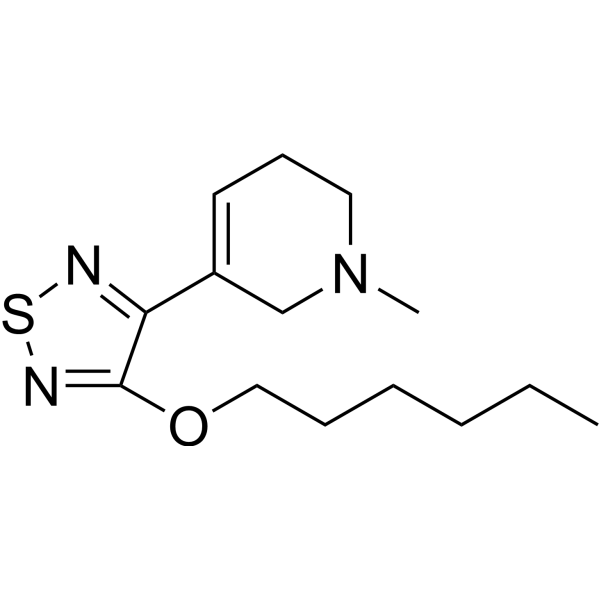
  • HY-101586

    Lu 25-109

    mAChR Neurological Disease
    Alvameline (Lu25-109) is a partial M1 agonist and M2/M3 antagonist.
    Alvameline
  • HY-W756790

    Cannabinoid Receptor Neurological Disease
    MDMB-FUBINACA metabolite M1 is structurally classified as a synthetic cannabinoid.
    MDMB-FUBINACA metabolite M1
  • HY-136703

    HIV Protease Infection
    Lopinavir Metabolite M-1, an active metabolite of Lopinavir, inhibits HIV protease with a Ki of 0.7 pM. Lopinavir Metabolite M-1 has antiviral activities in vitro [1] .
    Lopinavir Metabolite M-1
  • HY-143809S

    Isotope-Labeled Compounds Others
    Repaglinide M1-d5 is the deuterium labeled Repaglinide M1 [1].
    Repaglinide M1-d5
  • HY-100945

    mAChR Neurological Disease
    Nitrocaramiphen hydrochloride is a selective M1 receptor antagonist (Ki: 5.5 nM). Nitrocaramiphen Hydrochloride inhibits the hyperpolarizing effect of muscarine in the muscle fibers [1] .
    Nitrocaramiphen hydrochloride
  • HY-123852

    mAChR Neurological Disease
    PF-06764427 is a selective M1 muscarinic acetylcholine receptor positive allosteric modulator. PF-06764427 exhibits robust M1 agonist activity. PF-06764427 can be used in the research of Alzheimer's disease and schizophrenia [1] .
    PF-06764427
  • HY-N6686R

    Pristinamycin IIA (Standard); Ostreogrycin A (Standard)

    Reference Standards Bacterial Antibiotic Infection
    Virginiamycin M1 (Standard) is the analytical standard of Virginiamycin M1. This product is intended for research and analytical applications. Virginiamycin M1 (Pristinamycin IIA; Ostreogrycin A), produced by?Streptomyces virginiae, is an polyunsaturated macrocyclic lactone antibiotic and acts as a component of Virginiamycin (HY-112665) [1]. Virginiamycin M1 alone is against Staphylococcus aureus with a MIC of 0.25 μg/mL.
    Virginiamycin M1 (Standard)
  • HY-121806

    mAChR Neurological Disease
    VU0486846 is an orally active and selective muscarinic acetylcholine receptor M1 positive allosteric modulator (PAM) [1].
    VU0486846
  • HY-118806A

    mAChR Neurological Disease
    AC-42 hydrochloride is the hydrochloride salt form of AC-42 (HY-118806). AC-42 hydrochloride is an allosteric agonist for muscarinic M1 receptor with EC50s of 805 nM and 220 nM for human wild-type and Y381A mutated M1 receptors, respectively. AC-42 hydrochloride stimulates the inositol phosphate (IP)-accumulation and calcium mobilization in CHO cells [1] .
    AC-42 hydrochloride
  • HY-W014208

    AF-267B

    mAChR Others
    NGX-267 is a selective agonist of the actin M1 receptor, which has high selectivity among the five actin receptor subtypes, especially for the M1 receptor rather than the M3 receptor. NGX-267 also has significant differences in affinity for dopamine D2 and 5-HT2B receptors [1].
    NGX-267
  • HY-146102

    mAChR Others
    M1 ligand 1 (compound 3b-b) is a muscarinic acetylcholine receptor M1 ligand. M1 ligand 1 is a N-desmethyl congener of arecoline derivative. M1 ligand 1 can be used as PET (positron emission tomography) radiotracer [1].
    M1 ligand 1
  • HY-P10916

    Drug Metabolite Fungal Infection
    Micafungin metabolite M1 is an active metabolite of Micafungin (HY-17579), which is metabolized by arylsulfatase and exhibits antifungal activity. Micafungin metabolite M1 can be used for research on deep fungal infections caused by Candida and Aspergillus species [1].
    Micafungin metabolite M1
  • HY-131471

    Leukotriene Receptor Inflammation/Immunology
    Zafirlukast metabolite M1 (compound 15) is an inhibitor of allergic lung diseases such as asthma and can antagonize the activity of leukotrienes [1].
    Zafirlukast metabolite M1
  • HY-P0137

    Influenza Virus Infection
    CEF1, Influenza Matrix Protein M1 (58-66) is an epitope derived from the matrix protein of the influenza A virus [1].
    CEF1, Influenza Matrix Protein M1 (58-66)
  • HY-P10971

    CXCR Apoptosis VEGFR GSK-3 Cadherin Caspase Cancer
    Nef-M1 (Nef-Motif-1) is an antagonist peptide targeting CXCR4 and an apoptosis inducer derived from a myristoylated protein encoded by the nef gene in HIV. Nef-M1 inhibits tumor angiogenesis and epithelial-mesenchymal transition (EMT). Nef-M1 activates the apoptosis pathway by increasing the level of caspase-3 in cancer cells. Nef-M1 simultaneously inhibits VEGF-A, p-GSK-3β and vimentin, and enhances E-cadherin, thereby inhibiting angiogenesis and EMT processes. Nef-M1 can be used in the study of colorectal cancer and breast cancer [1] .
    Nef-M1
  • HY-P5816

    Sodium Channel Neurological Disease
    BmK-M1 is a scorpion toxin, and is composed of 64 amino acids cross-linked by four disulfide bridges. BmK-M1 inhibits Na + channel and can be considered both as a cardiotoxin and a neurotoxin [1].
    BmK-M1

Inquiry Online

Your information is safe with us. * Required Fields.

Salutation


Country or Region *

Applicant Name *


Organization Name *

Department *


Email Address *


Product Name *

Cat. No.


Requested quantity *

Phone Number *


Remarks

Inquiry Online

Inquiry Information

Product Name:
Cat. No.:
Quantity:
MCE Japan Authorized Agent:

