138 Results for "

M5

" in MedChemExpress (MCE) Product Catalog:
Products (138)

138 Results for "M5" in MCE Product Catalog:

8
8 Publications Verification
Cat. No.: HY-B0527A
CAS No.: 549-18-8
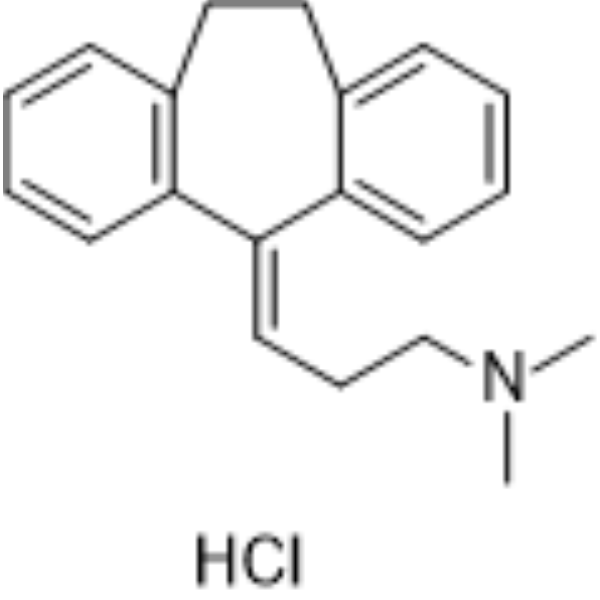
Amitriptyline hydrochloride is an orally active tricyclic antidepressant (TCA). Amitriptyline hydrochloride mainly exerts its antidepressant effect by blocking SERT (Ki = 3.45 nM) and NET (Ki = 13.3 nM), thereby increasing the concentrations of 5-hydroxytryptamine (5-HT) and norepinephrine (NE) in the synaptic cleft. Amitriptyline hydrochloride is also an agonist at α2A and TrkA/TrkB receptors, thereby exerting analgesic and neurotrophic activities (inhibiting cell apoptosis). Amitriptyline hydrochloride can reduce inflammation, angiogenesis and fibrosis. Amitriptyline hydrochloride binds to DAT (with Ki = 2.58 μM). Amitriptyline hydrochloride has high affinity for a series of receptors and can antagonize muscarinic cholinergic receptors (M1/M2/M3/M4/M5 receptors) (Ki = 11-24 nM), H1 receptors (Ki = 0.5-1.1 nM), adrenergic α1 receptors (Ki = 4.4 nM), etc., resulting in a series of side effects. Amitriptyline hydrochloride can block sodium channels and hERG potassium channel (IC50 = 4.78 μM) and it has cardiotoxicity [5].
loading...
    loading...
8
8 Publications Verification
Cat. No.: HY-B0527
CAS No.: 50-48-6
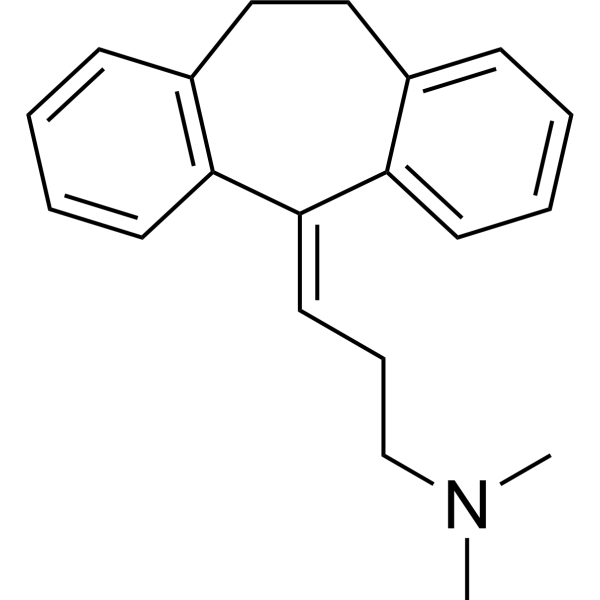
Amitriptyline is an orally active tricyclic antidepressant (TCA). Amitriptyline mainly exerts its antidepressant effect by blocking SERT (Ki = 3.45 nM) and NET (Ki = 13.3 nM), thereby increasing the concentrations of 5-hydroxytryptamine (5-HT) and norepinephrine (NE) in the synaptic cleft. Amitriptyline is also an agonist at α2A and TrkA/TrkB receptors, thereby exerting analgesic and neurotrophic activities (inhibiting cell apoptosis). Amitriptyline can reduce inflammation, angiogenesis and fibrosis. Amitriptyline binds to DAT (with Ki = 2.58 μM). Amitriptyline has high affinity for a series of receptors and can antagonize muscarinic cholinergic receptors (M1/M2/M3/M4/M5 receptors) (Ki = 11-24 nM), H1 receptors (Ki = 0.5-1.1 nM), adrenergic α1 receptors (Ki = 4.4 nM), etc., resulting in a series of side effects. Amitriptyline can block sodium channels and hERG potassium channel (IC50 = 4.78 μM) and it has cardiotoxicity [5].
loading...
    loading...
4
4 Cited Publications
Cat. No.: HY-100958
CAS No.: 1952-15-4
Purity:  99.96%
Synonyms: 4-DAMP methiodide
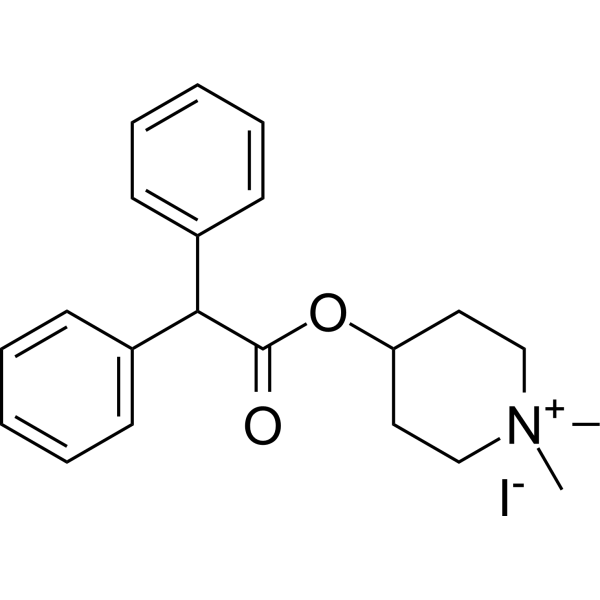
4-DAMP (4-DAMP methiodide) is a potent and selective antagonist of M3 receptors and also has a high affinity for the closely-related M5 receptors. 4-DAMP combined with 5-Fluorouracil (5-Fu) (HY-90006) could significantly reduce the cell viability and enhance apoptosis in MKN45 and BGC823 gastric cancer cells. 4-DAMP inhibits lipopolysaccharide (LPS)- and tobacco-induced pulmonary inflammation and reduces mucin 5AC (MUC5AC), oligomeric mucus/gel-forming secretion .
loading...
    loading...
3
3 Cited Publications
Cat. No.: HY-B0406A
CAS No.: 590-63-6
Synonyms: Carbamyl-β-methylcholine chloride
Target:  

mAChR

Research Areas:  

Neurological Disease Cancer

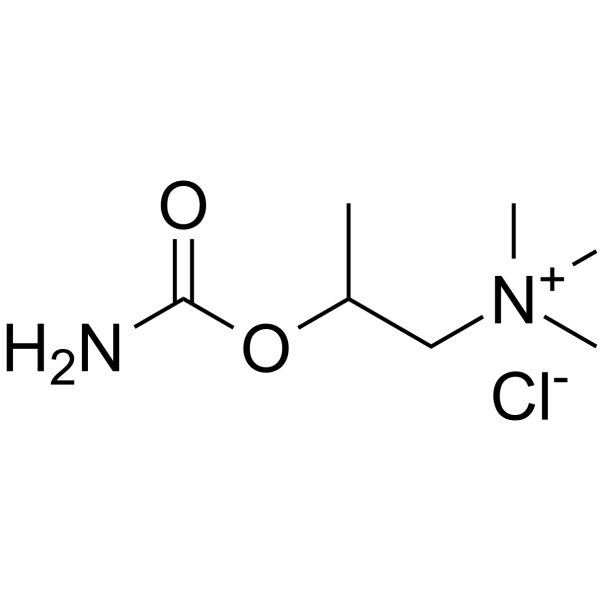
Bethanechol chloride (Carbamyl-β-methylcholine chloride), a parasympathomimetic agent, is a mAChR agonist that exerts its effects via directly stimulating the mAChR (M1, M2, M3, M4, and M5) of the parasympathetic nervous system .
loading...
    loading...
2
2 Cited Publications
Cat. No.: HY-148502
CAS No.: 2926782-31-0
Purity:  98.61%
Target:  

mAChR

Research Areas:  

Neurological Disease

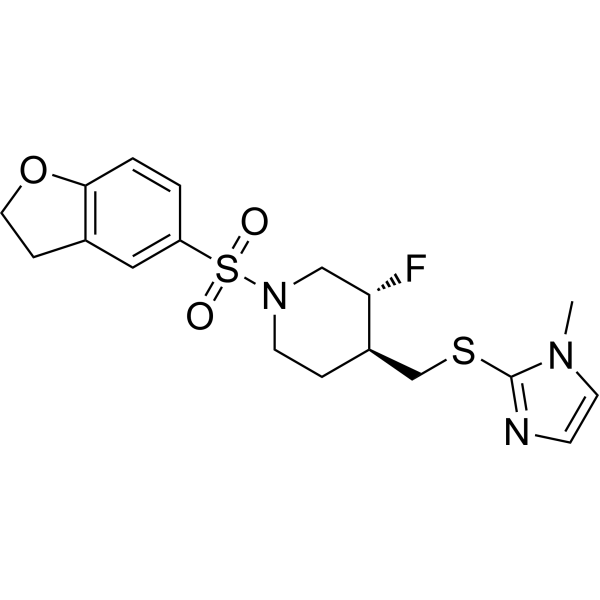
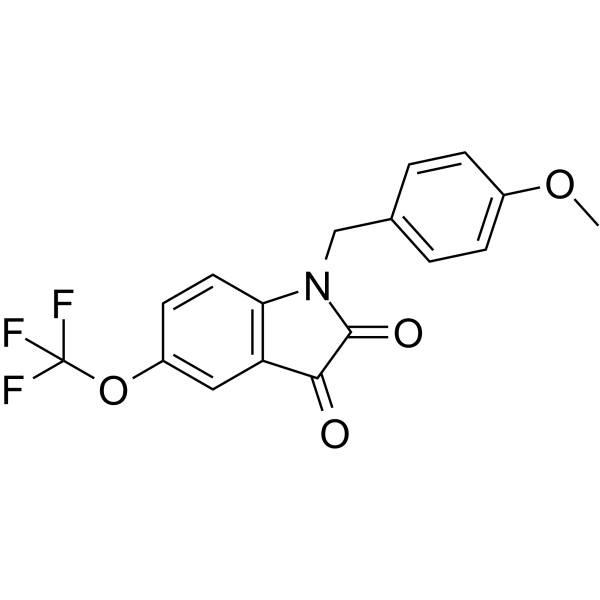
VU6019650 is a potent and selective orthosteric antagonist of M5 mAChR (IC50=36 nM), can be used for opioid use disorder (OUD) relief. VU6019650 can cross blood brain barrier, potentially modulates the mesolimbic dopaminergic reward circuitry. VU6019650 blocks Oxotremorine M iodide (HY-101372A) induced increases of neuronal firing rates of midbrain dopamine neurons in the ventral tegmental area (VTA) .
loading...
    loading...
2
2 Cited Publications
Cat. No.: HY-122203
CAS No.: 361979-40-0
Purity:  98.88%
Research Areas:  

Neurological Disease

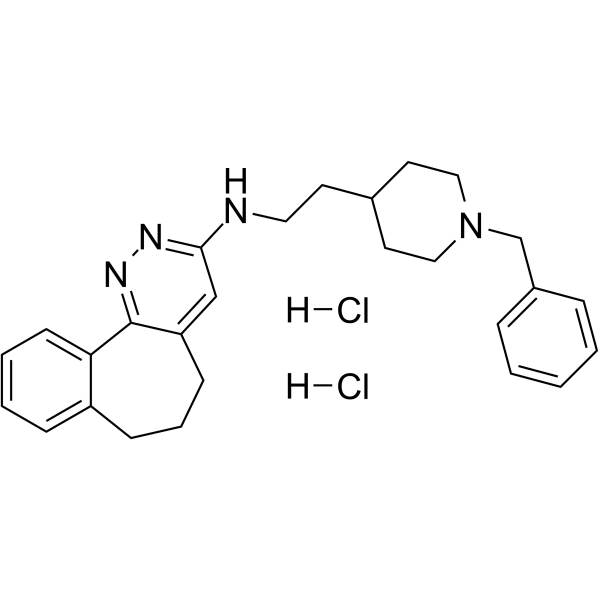
PCS1055 dihydrochloride is a potent, selective and competitive muscarinic M4 receptor antagonist with an IC50 of 18.1 nM and a Kd of 5.72 nM. PCS1055 dihydrochloride inhibits radioligand [ 3H]-NMS binding to the M4 receptor with a Ki of 6.5 nM. PCS1055 dihydrochloride exhibits >100-fold selectivity over M1-, M3-, and M5-receptors and 30-fold selectivity at the M2 receptor. PCS1055 dihydrochloride is also a potent AChE inhibitor with IC50 s of 22 nM and 120 nM for electric eel and human AChE, respectively .
loading...
    loading...
2
2 Cited Publications
Cat. No.: HY-D1156A
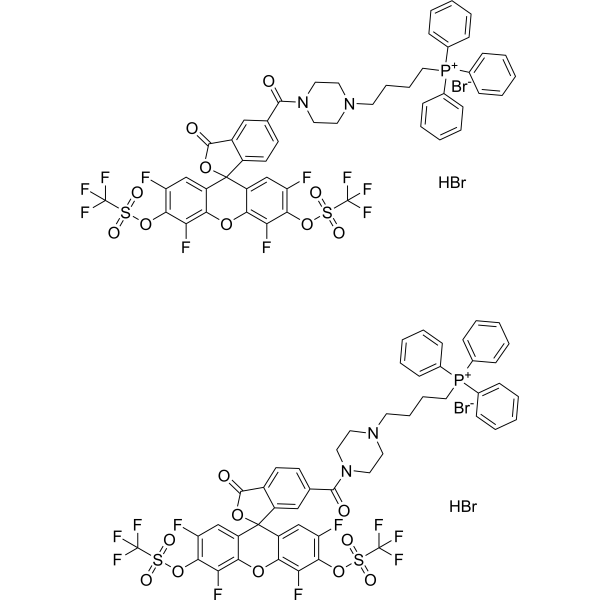
HKSOX-1m (5/6-mixture) hydrobromide is a O2 fluorescent probe for mitochondria-targeting (Ex/Em=509/534nm; green), exhibiting excellent selectivity and sensitivity toward O2 over a broad range of pH, strong oxidants, and abundant reductants found in cells .
loading...
    loading...
1
1 Cited Publications
Cat. No.: HY-N7922
CAS No.: 91485-02-8
Synonyms: Decarboxyellagic acid
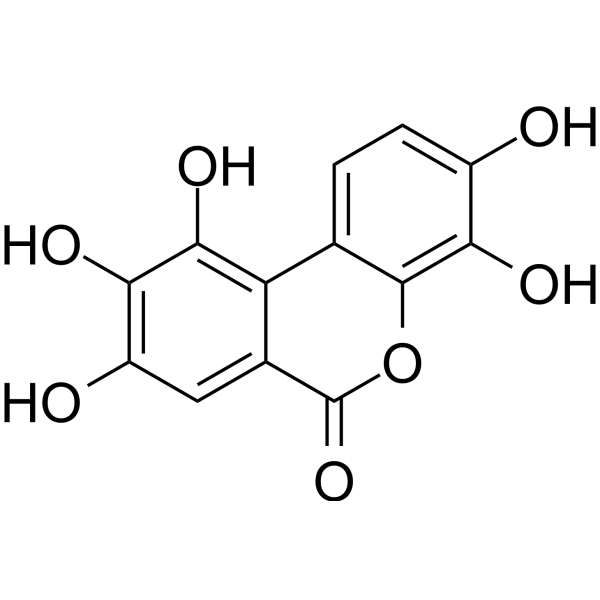
Urolithin M5 (Decarboxyellagic acid) is an orally active influenza virus neuraminidase inhibitor and neuroprotective agent, with IC50 values of 174.8 μM (HK68), 191.5 μM (pdm09), 243.2 μM (WSN) and 257.1 μM (PR8) against four influenza virus neuraminidases, respectively. Urolithin M5 inhibits viral neuraminidase activity, thereby blocking influenza virus replication (including oseltamivir (HY-13317)-resistant strains), protecting infected mammals from death and improving pulmonary edema. Urolithin M5 forms a hydrogen-bond stabilized complex with IGF1R, and binds to MAPK14, AKT1, NFKB1 and EGFR. Urolithin M5 reduces reactive oxygen species production, inhibits neuronal apoptosis, restores mitochondrial transmembrane potential, and promotes neurite outgrowth of damaged neuronal cells. Urolithin M5 can be used in research related to influenza virus infection and Alzheimer's disease .
loading...
    loading...
1
1 Cited Publications
Cat. No.: HY-12100
CAS No.: 869113-09-7
Purity:  99.54%
Synonyms: GSK573719A
Target:  

mAChR

Research Areas:  

Inflammation/Immunology Cancer

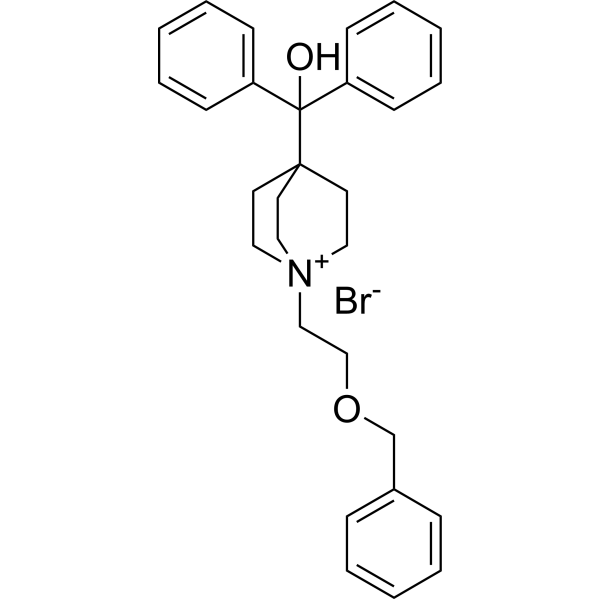
Umeclidinium bromide is a novel mAChR antagonist. The affinity (Ki) of Umeclidinium bromide for the cloned human M1-M5 mAChRs ranges from 0.05 to 0.16 nM.
loading...
    loading...
1
1 Cited Publications
Cat. No.: HY-12157
CAS No.: 1160247-92-6
Purity:  99.89%
Target:  

mAChR

Research Areas:  

Others

VU 0238429 is positive allosteric modulator of muscarinic acetylcholine receptor subtype 5 (mAChR5 or M5), with an EC50 of 1.16 μM.
loading...
    loading...
1
1 Cited Publications
Cat. No.: HY-107651
CAS No.: 1208222-39-2
Purity:  99.34%
Target:  

mAChR

Research Areas:  

Metabolic Disease

VU 0365114 is a selective mAChR M5 positive allosteric modulator, with an EC50 of 2.7 μM, and >30 μM for M1, M2, M3 and M4 receptors. VU 0365114 increases insulin secretion stimulated by ACh in human β-cells .
loading...
    loading...
1
1 Cited Publications
Cat. No.: HY-12439
CAS No.: 1627138-52-6
Purity:  99.91%
Target:  

mAChR

Research Areas:  

Neurological Disease

ML380 is a potent, subtype-selective, and brain-penetrant positive allosteric modulator (PAM) of M5 mAChR, with EC50s of 190 and 610 nM for human and rat M5, respectively. ML380 exhibits moderate selectivity versus the M1 and M3 mAChR subtypes. ML380 could increase the affinity of ACh for the M5 mAChR .
loading...
    loading...
1
1 Cited Publications
Cat. No.: HY-114933
CAS No.: 79183-37-2
Purity:  99.52%
Target:  

mAChR

VU0119498 is a pan Gq mAChR M1, M3, M5 positive allosteric modulator (PAM), with EC50s of 6.04, 6.38, and 4.08 µM, respectively. VU0119498 has antidiabetic activity .
loading...
    loading...
1
1 Cited Publications
Cat. No.: HY-B1610J
Sodium Citrate Buffer, 0.5M, pH 5.0 is a commonly used buffer composed of citric acid and sodium citrate. Sodium Citrate Buffer, 0.5M, pH 5.0 is widely used in molecular biology, immunohistochemistry (IHC), and biochemistry .
loading...
    loading...
1
1 Cited Publications
Cat. No.: HY-B1610L
Sodium citrate buffer, 0.5M, pH 6.0, is a commonly used buffer with main components are citric acid and sodium hydrogen phosphate. Sodium citrate buffer, 0.5M, pH 6.0 is used for RNA isolation and antigens detection in fixed tissue .
loading...
    loading...
1
1 Cited Publications
Cat. No.: HY-W009444
CAS No.: 1463-10-1
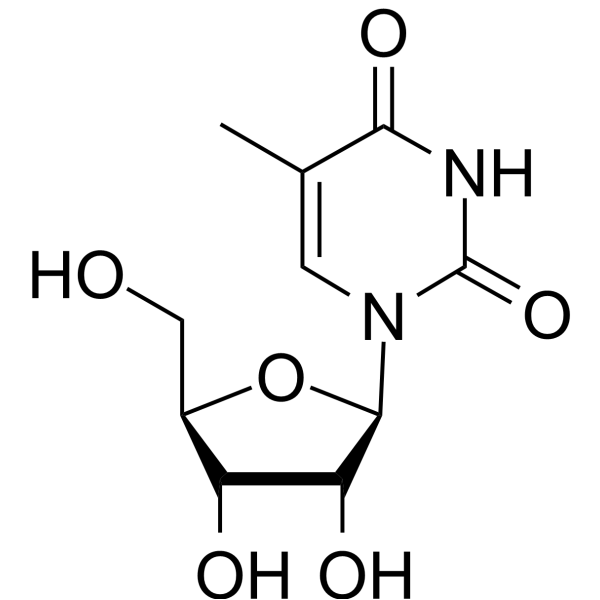
5-Methyluridine (m 5U) is an RNA modified nucleotide generated by RNA methyltransferases (such as TrmA and RumA), which mainly targets specific uracil sites in RNA molecules such as the T arm of tRNA and rRNA. 5-Methyluridine relies on enzyme recognition of RNA secondary/tertiary structures (such as the T loop of tRNA or the specific stem-loop structure of rRNA) and participates in physiological processes such as translation accuracy and ribosome function by stabilizing RNA folding or regulating base pairing .
loading...
    loading...
Cat. No.: HY-148506
CAS No.: 1197033-22-9
Purity:  99.25%
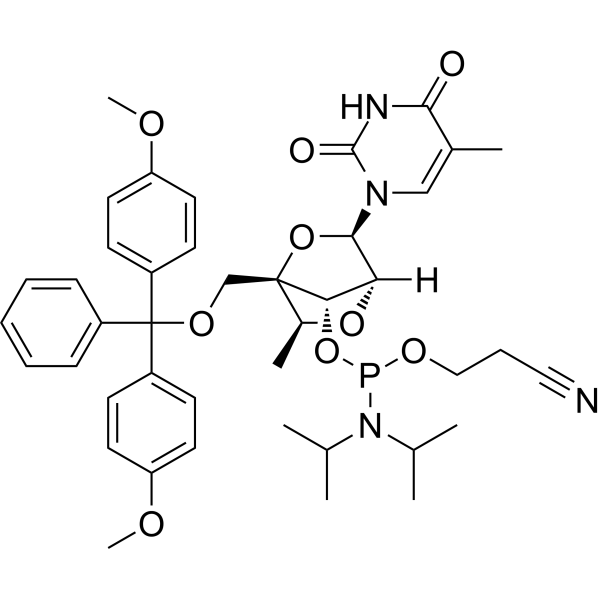
5'-ODMT cEt m5U Phosphoramidite Amidite is a locked nucleic acid (LNA) analog. 5'-ODMT cEt m5U Phosphoramidite Amidite shows excellent safety and antisense activity in mice .
loading...
    loading...
Cat. No.: HY-A0030
CAS No.: 286930-03-8
Target:  

mAChR

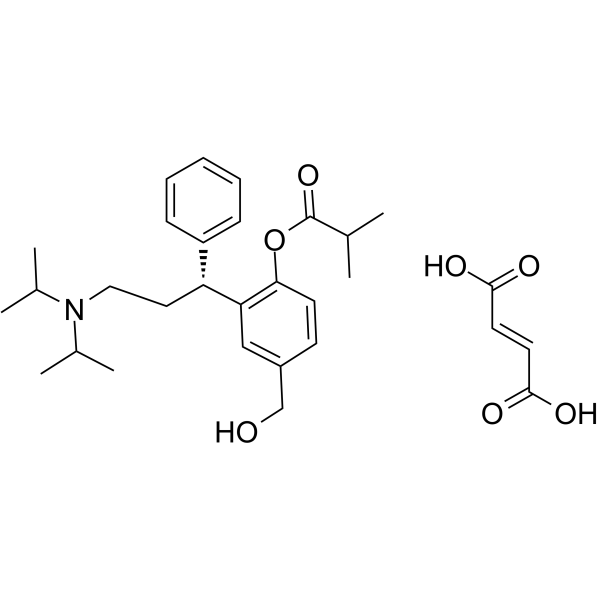
Fesoterodine Fumarate is an orally active, nonsubtype selective, competitive muscarinic receptor (mAChR) antagonist with pKi values of 8.0, 7.7, 7.4, 7.3, 7.5 for M1, M2, M3, M4, M5 receptors, respectively. Fesoterodine Fumarate is used for the overactive bladder (OAB) .
loading...
    loading...
Cat. No.: HY-107646
CAS No.: 23062-91-1
Purity:  98.52%
Target:  

mAChR

Research Areas:  

Neurological Disease

PD 102807 is a M4 muscarinic receptor antagonist with an IC50 of 90.7 nM. PD 102807 inhibits M1, M2, M3, M5 muscarinic receptor with IC50s of 6558.7, 3440.7, 950.0, and 7411.7 nM, respectively . Antidyskinetic effect.
loading...
    loading...
Cat. No.: HY-70053
CAS No.: 286930-02-7
Target:  

mAChR

Fesoterodine is an orally active, nonsubtype selective, competitive muscarinic receptor (mAChR) antagonist with pKi values of 8.0, 7.7, 7.4, 7.3, 7.5 for M1, M2, M3, M4, M5 receptors, respectively. Fesoterodine is used for the overactive bladder (OAB) .
loading...
    loading...

