61 Results for "

MCF-10a

" in MedChemExpress (MCE) Product Catalog:
Products (61)

61 Results for "MCF-10a" in MCE Product Catalog:

13
13 Publications Verification
Cat. No.: HY-136453
CAS No.: 1352914-52-3
Purity:  98.38%
Research Areas:  

Cancer

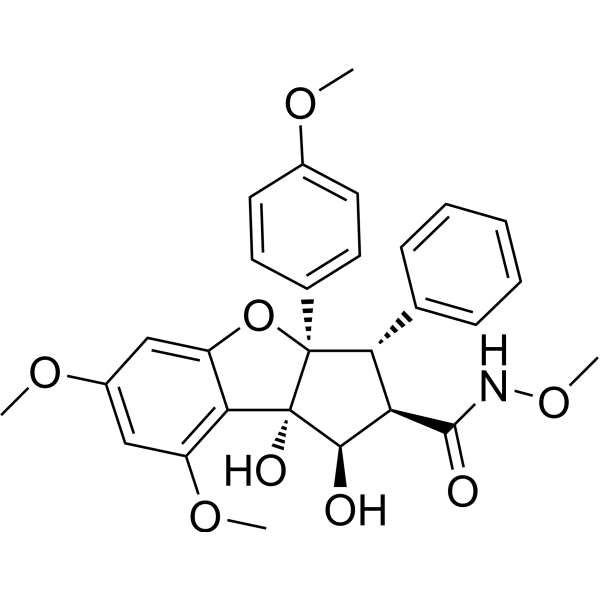
CR-1-31-B is a synthetic rocaglate and a potent eIF4A inhibitor. CR-1-31-B exhibits powerful inhibitory effects over eIF4A by perturbing the interaction between eIF4A and RNA, sequentially impeding initiation during protein synthesis. CR-1-31-B perturbs association of Plasmodium falciparum eIF4A (PfeIF4A) with RNA. CR-1-31-B induces apoptosis of neuroblastoma and gallbladder cancer cells .
loading...
    loading...
3
3 Cited Publications
Cat. No.: HY-14543
CAS No.: 106516-24-9
Purity:  99.92%
Synonyms: Lu 23-174
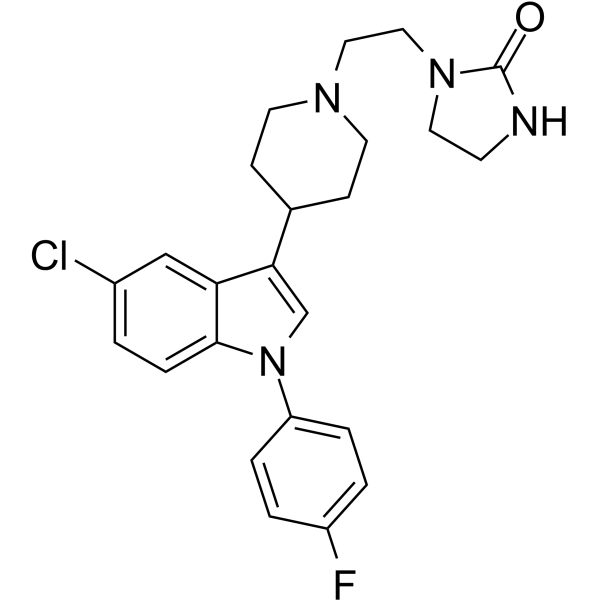
Sertindole (Lu 23-174) is an orally active 5-HT2A, 5-HT2C, dopamine D2, and αl-adrenergic receptors antagonist. Sertindole shows antipsychotic activity and anti-proliferative activity to multiple cancer cells .
loading...
    loading...
1
1 Cited Publications
Cat. No.: HY-136552
CAS No.: 495-61-4
Purity:  97.28%
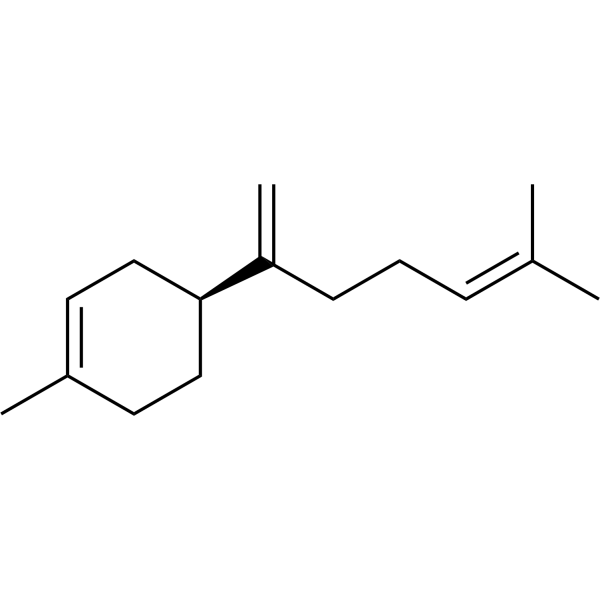
β-Bisabolene is a sesquiterpene isolated from opoponax (Commiphora guidotti). β-Bisabolene, an anti-cancer agent, can be used for the study of breast cancer .
loading...
    loading...
Cat. No.: HY-176848
Target:  

YTHDF Apoptosis MMP Caspase

Research Areas:  

Cancer

SKLB-Y13 is a selective YTHDF1 inhibitor with an IC50 of 0.76 μM and a KD of 5.097 μM. SKLB-Y13 binds to the Tyr397 and Trp470 residues in the m 6A-binding pocket of YTHDF1, disrupting the interaction between YTHDF1 and m 6A-modified mRNA. SKLB-Y13 inhibits cancer cell proliferation and promotes apoptosis. SKLB-Y13 is applicable to breast cancer-related research .
loading...
    loading...
Cat. No.: HY-158045
CAS No.: 3032324-56-1
Purity:  99.86%
Target:  

PROTACs PARP

Research Areas:  

Cancer

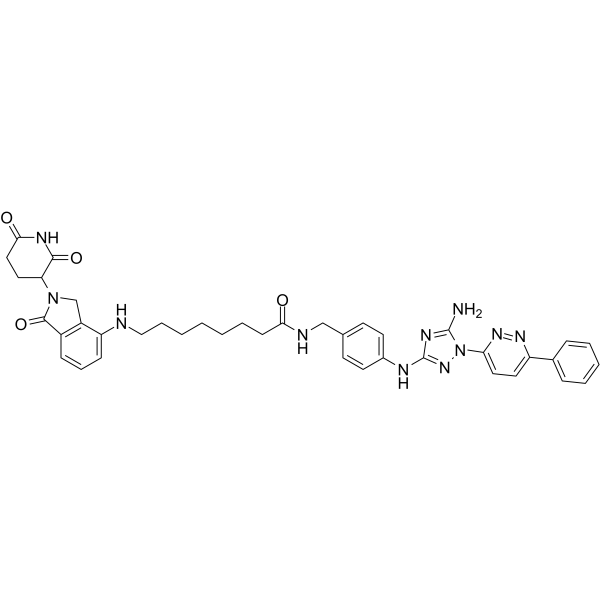
PROTAC PARP1 degrader-1 is a PARP1 PROTAC degrader with a DC50 value of 252.5 nM. PROTAC PARP1 degrader-1, combined with Daunorubicin (HY-13062A), induces the accumulation of cytoplasmic DNA fragments, activates the cGAS/STING innate immune pathway, and remodels the tumor microenvironment. PROTAC PARP1 degrader-1 can be used in research related to breast cancer .
loading...
    loading...
Cat. No.: HY-W116007
CAS No.: 556-67-2
Research Areas:  

Endocrinology

Octamethylcyclotetrasiloxane promotes the anchorage-independent growth of MCF-10A and MCF-10F cells. Octamethylcyclotetrasiloxane induces DNA damage, inhibits the expression of DNA-repairing protein BRCA1 under long-term and high-concentration exposure. Octamethylcyclotetrasiloxane exhibits intrinsic estrogenic activity .
loading...
    loading...
Cat. No.: HY-P4082
CAS No.: 562791-56-4
Synonyms: LTVSPWY
Research Areas:  

Cancer

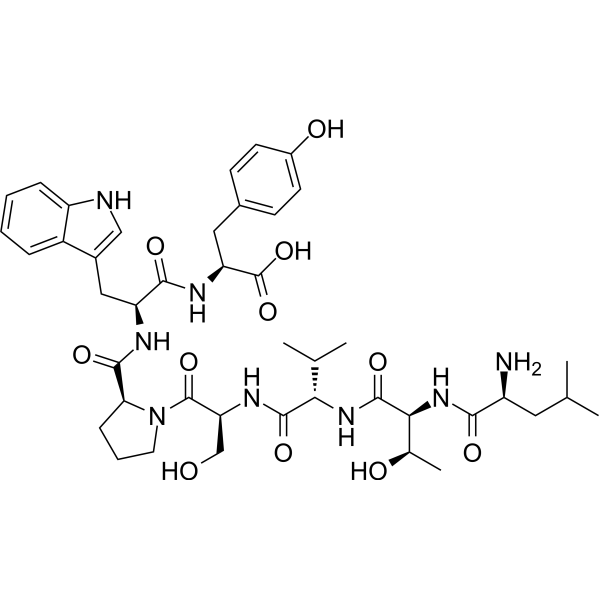
ErbB-2-binding peptide-1 (LTVSPWY) is a HER2 receptor-binding peptide. ErbB-2-binding peptide-1 can be conjugated with nuclear cross-linked micelles loaded with Doxorubicin (HY-15142A). ErbB-2-binding peptide-1 can also be radiolabeled to form 177Lu-DOTA-LTVSPWY. ErbB-2-binding peptide-1 is conjugated with antisense oligonucleotides. ErbB-2-binding peptide-1 can be used in research related to HER2-positive breast cancer and ovarian cancer .
loading...
    loading...
Cat. No.: HY-160062
Target:  

Mucin

Research Areas:  

Cancer

S2.2 aptamer sodium is a nucleic acid-based MUC1-binding aptamer with high affinity and low toxicity. Upon binding to its target, S2.2 aptamer sodium undergoes a conformational switch and restores fluorescence signal, serving as a targeted imaging agent for MUC1-positive cancer cells. S2.2 aptamer sodium enables targeted delivery to breast cancer cells with overexpressed MUC1. When formulated as the S2.2-PEG-MZF molecular probe, S2.2 aptamer sodium possesses the functions of T2 signal inhibition, magnetic field-induced hyperthermia and targeted magnetic resonance molecular imaging. In the S2.2-PEG-MZF/DOX nanoliposome, S2.2 aptamer sodium supports targeted thermochemotherapy, effectively inhibiting cancer cell proliferation and invasion as well as inducing apoptosis, and is widely used in studies related to breast cancer .
loading...
    loading...
Cat. No.: HY-151799
CAS No.: 2765180-17-2
Purity:  98.62%
Research Areas:  

Cancer

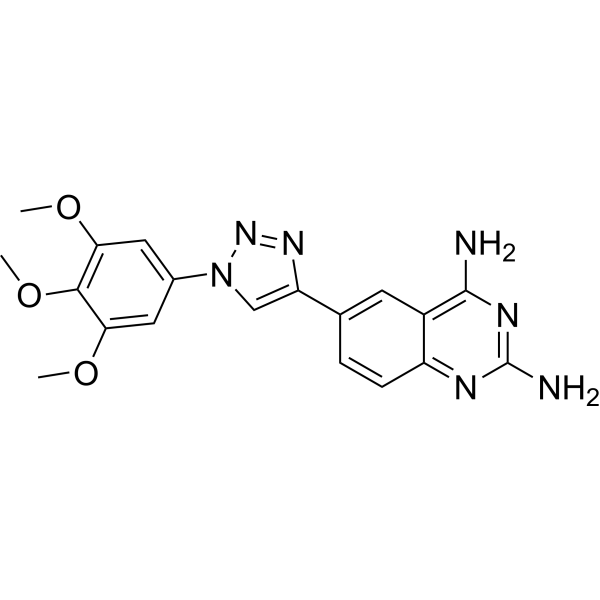
P62-RNF168 agonist-1 (compound 5a) is a low cytotoxicity P62-RNF168 agonist that enhances the interaction between P62 and RNF168. P62-RNF168 agonist-1 induces a reduction in H2A ubiquitination mediated by RNF168 and impairs homologous recombination-mediated DNA repair. P62-RNF168 agonist-1 also inhibits the growth of xenograft tumors in mice in a dose-dependent manner .
loading...
    loading...
Cat. No.: HY-138071
CAS No.: 83182-58-5
Synonyms: 8αTGH
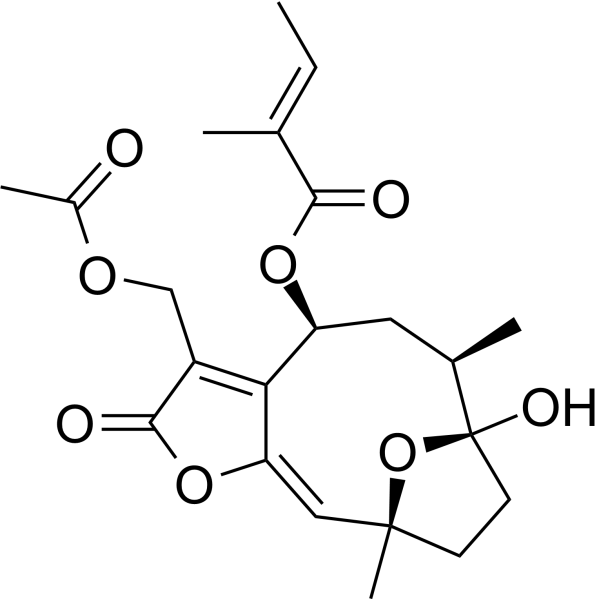
8α-Tigloyloxyhirsutinolide 13-O-acetate (8αTGH) is a potent and orally active STAT3 inhibitor. 8α-Tigloyloxyhirsutinolide 13-O-acetate induces early oxidative stress and pyroptosis, and late DNA damage, cell cycle arrest, apoptosis in the TNBC cells. 8α-Tigloyloxyhirsutinolide 13-O-acetate suppresses tumor cell growth in vitro and tumor growth in vivo .
loading...
    loading...
Cat. No.: HY-150775
CAS No.: 3033282-93-5
Purity:  98.88%
Target:  

Cytochrome P450

Research Areas:  

Cancer

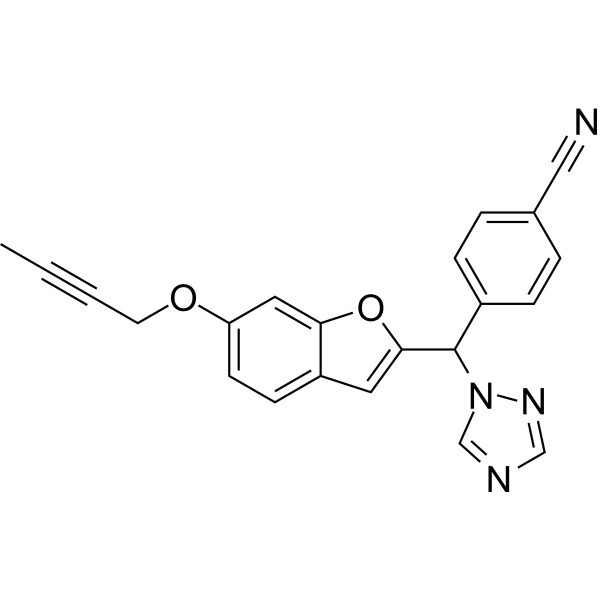
CYP19A1-IN-2 (Compound 13h) is a nonsteroidal aromatase (CYP19A1) inhibitor (IC50=0.09 nM). CYP19A1-IN-2 has potential for breast cancer research . CYP19A1-IN-2 is a click chemistry reagent, it contains an Alkyne group and can undergo copper-catalyzed azide-alkyne cycloaddition (CuAAc) with molecules containing Azide groups.
loading...
    loading...
Cat. No.: HY-144624
CAS No.: 3033401-47-4
Target:  

PROTACs TAM Receptor Ras

Research Areas:  

Cancer

PROTAC Axl Degrader 1 is an orally active PROTAC degrader targeting the AXL receptor tyrosine kinase, with an IC50 of 0.92 μM against human targets. PROTAC Axl Degrader 1 induces cytoplasmic vacuolization, methuosis (macropinocytosis-induced cell death), excessive macropinosome production, and Rac1 activation. PROTAC Axl Degrader 1 inhibits the proliferation and migration of cancer cells. PROTAC Axl Degrader 1 can be used in breast cancer-related research .
loading...
    loading...
Cat. No.: HY-149431
Target:  

HSP Potassium Channel

Research Areas:  

Cancer

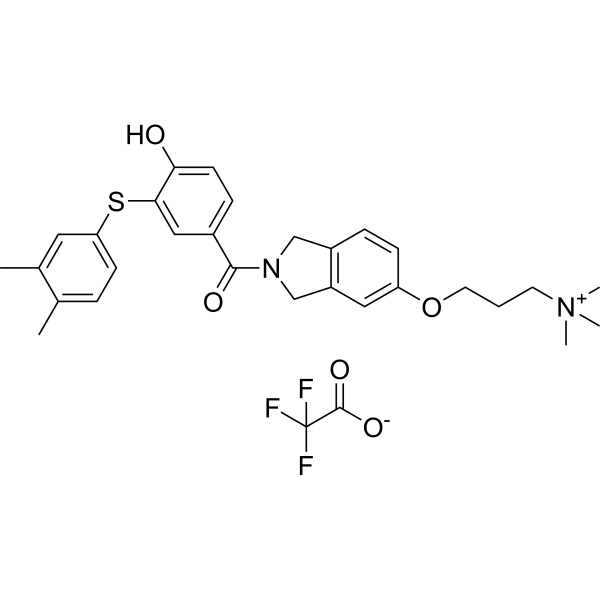
NDNA4 (compound 17) is a selective inhibitor of Hsp90α (IC50: 0.34 μM). NDNA4 is a permanently charged analog with low membrane permeability and low cytotoxicity against Ovcar-8 and MCF-10A ((IC50 >100 μM)). NDNA4 prevents disruption of hERG channel maturation without generating a heat shock response or causing degradation of Hsp90α-dependent client proteins .
loading...
    loading...
Cat. No.: HY-132885
CAS No.: 2687273-52-3
Research Areas:  

Cancer

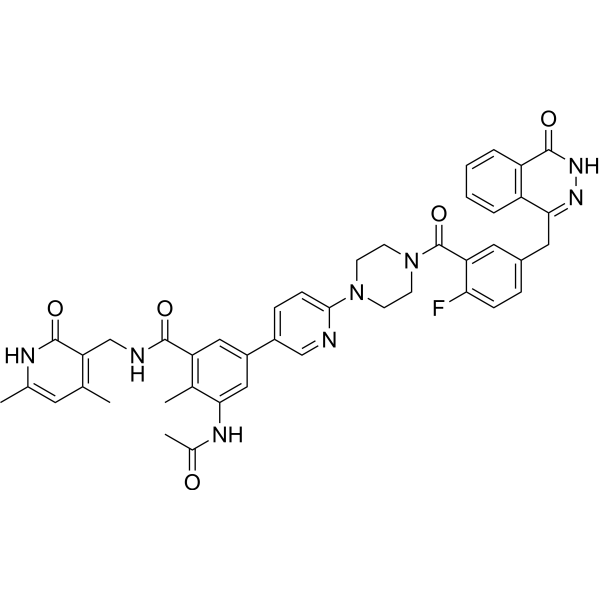
PARP/EZH2-IN-1 is a first-in-class dual PARP-1/EZH2 inhibitor with IC50 values of 6.87 nM and 36.51 nM, respectively. PARP/EZH2-IN-1 induces autophagy in cancer cells and shows potent antiproliferative activity in BRCA wild-type triple-negative breast cancer cells .
loading...
    loading...
Cat. No.: HY-175253
Target:  

STAT Apoptosis

Research Areas:  

Cancer

YZ-35 is a STAT3 inhibitor, with a Ki value of 0.38 μM. YZ-35 binds directly to STAT3 with high affinity, exhibiting a dissociation constant (Kd) of 190 nM. YZ-35 directly attenuates the dual phosphorylation of STAT3 (Tyr705 and Ser727). YZ-35 suppresses colony formation, cellular migration, and induces apoptosis in breast cancer cell lines (BCSC). YZ-35 selectively suppresses BCSC self-renewal. YZ-35 inhibits tumor growth in the BCSC xenograft models. YZ-35 can be used for the study of breast cancer .
loading...
    loading...
Cat. No.: HY-124451
CAS No.: 91-58-7
Purity:  99.69%
Research Areas:  

Cancer

2-Chloronaphthalene, serving as an intermediate in organic synthesis, is classified as a persistent organic pollutant. 2-Chloronaphthalene can induce apoptosis and autophagy, while inhibiting cell proliferation. 2-Chloronaphthalene leads to cell death through the interplay between autophagy and apoptosis .
loading...
    loading...
Cat. No.: HY-156375
Target:  

Pyruvate Kinase PDK-1

Research Areas:  

Cancer

PKM2 activator 6 (Compound Z10) is a PKM2 activator and PDK1 inhibitor (KD: 121 and 19.6 μM respectively). PKM2 activator 6 induces colorectal cell apoptosis, and inhibits cell proliferation and migration . PKM2 activator 6 inhibits glycolysis. PKM2 activator 6 inhibits proliferation of DLD-1, HCT-8, HT-29, MCF-10A cells (IC50: 10.04, 2.16, 3.57, 66.39 μM) .
loading...
    loading...
Cat. No.: HY-149432
Target:  

HSP Potassium Channel

Research Areas:  

Cancer

NDNA3 (compound 14) is a selective inhibitor of Hsp90α (IC50: 0.51 μM). NDNA3 is a permanently charged analog with low membrane permeability and low toxicity to Ovcar-8 (IC50: 12.66 μM) and MCF-10A (IC50: 11.72 μM) cells. NDNA3 prevents disruption of hERG channel maturation without generating a heat shock response or causing degradation of Hsp90α-dependent client proteins .
loading...
    loading...
Cat. No.: HY-155197
CAS No.: 2922929-63-1
Research Areas:  

Cancer

ER degrader 7 (Compound 35t) is an ERα and ERβ degrader. ER degrader 7 inhibits tubulin polymerization. ER degrader 7 inhibits cell viability with IC50s of 0.06, 2.56, 15.84, 1.59, 1.67, 1.37 μM for MCF-7, T47D, MCF-10A, LCC2, T47D D538G, and T47D Y537S cells respectively. ER degrader 7 also inhibits breast cancer tumor growth .
loading...
    loading...
Cat. No.: HY-145269
CAS No.: 2761538-66-1
Target:  

Cadherin

Research Areas:  

Cancer

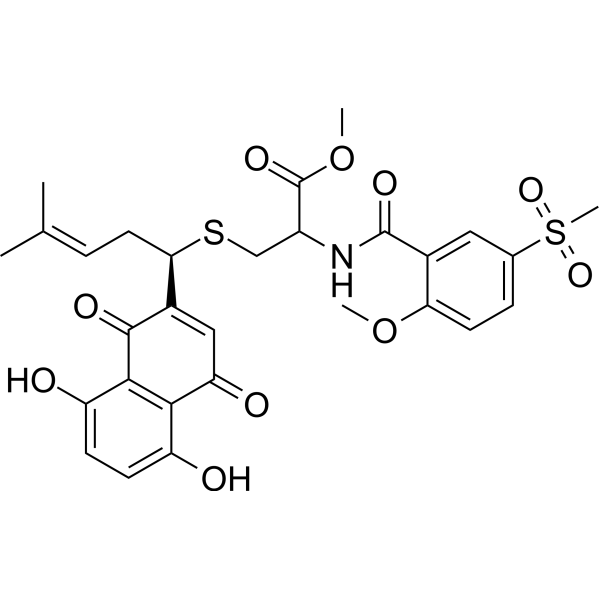
AL-GDa62 is a derivative of the CDH1/E-cadherin modulator SLEC-11 (HY-145268) and induces apoptosis in CDH1 -/- cells. AL-GDa62 has an EC50 of 3.2 μM and 2 μM for isogenic mammary epithelial cells MCF10A-WT (wild type) and mutant MCF10A-CDH1 -/-, respectively. AL-GDa62 specifically inhibits TCOF1, ARPC5, and UBC9, and suppresses SUMOylation at low micromolar concentrations .
loading...
    loading...

