
Search Result
Results for "
MPG
" in MedChemExpress (MCE) Product Catalog:
4
Biochemical Assay Reagents
1
Isotope-Labeled Compounds
| Cat. No. |
Product Name |
Target |
Research Areas |
Chemical Structure |
-
- HY-B0084
-
|
STS 557
|
Progesterone Receptor
|
Endocrinology
|
|
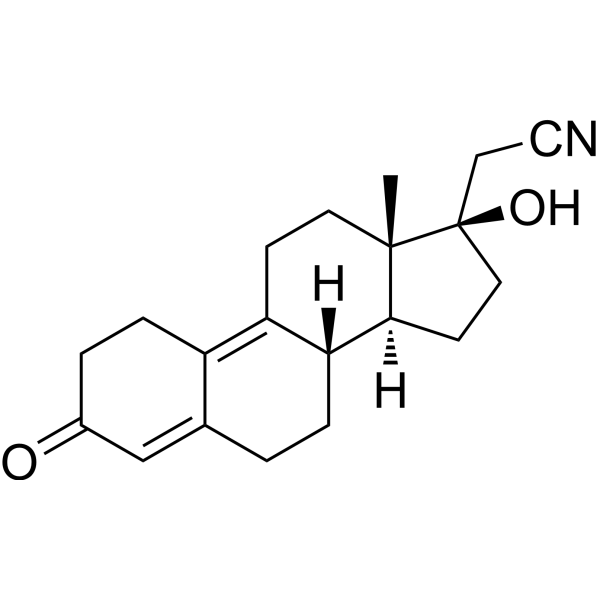
Dienogest (STS-557) is an orally active and selective progesterone receptor agonist that effectively reduces the gene expression of COX-2, mPGES-1 and aromatase. Dienogest also inhibits the mRNA and protein expression of PGE2 synthase and the activation of NF-κB. Dienogest can be used in studies of endometriosis, menopause and menorrhagia .
|
-
-
- HY-Y0958
-
|
O-Methylhydroxylamine hydrochloride
|
DNA/RNA Synthesis
Apoptosis
|
Cancer
|
|
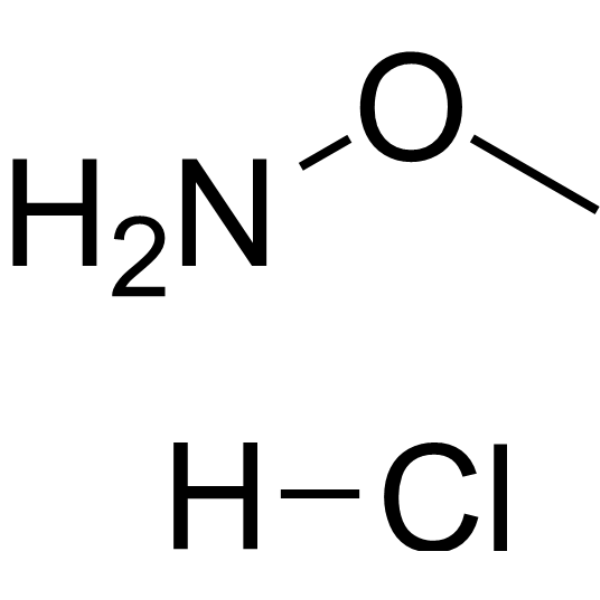
Methoxyamine (O-Methylhydroxylamine) hydrochloride is an orally active and potent base excision repair (BER) inhibitor. Methoxyamine hydrochloride binds to 3’ hydroxyl groups that are left behind by 3-methylpurine-DNA glycosylase (MPG) following excision of the damaged base and thus inhibits BER activity. Methoxyamine hydrochloride binds directly to the apyrimidinic (AP) sites. Methoxyamine hydrochloride synergistically enhances the therapeutic efficacy of DNA-damaging agents .
|
-
-
- HY-147416
-
|
BI 1029539; GS-248; OX-MPI
|
PGE synthase
|
Infection
Cancer
|
|
Vipoglanstat (BI 1029539), a carboxamide, is a potent and selective, non-peptide and orally active small molecular inhibitor of human prostaglandin E synthase 1 (mPGES-1). Vipoglanstat also has anti-inflammatory activity .
|
-
-
- HY-P4076
-
|
|
HIV
DNA Alkylator/Crosslinker
|
Infection
|
|
MPG peptides, Pβ is an amphipathic cell-penetrating peptide. MPG peptides, Pβ consists of three components: the hydrophobic fusion sequence (GALFLGFLGAAGSTMGA) of HIV glycoprotein 41, a spacer domain (WSQP), and the nuclear localization signal (KKKRKV) of the large T antigen of Simian virus 40. MPG peptides, Pβ can form stable non-covalent complexes with nucleic acids (including DNA) through electrostatic interactions and improve their intracellular delivery. MPG peptides, Pβ can be used in studies of HIV-1-related immune responses .
|
-
-
- HY-W749694
-
-
-
- HY-118119
-
|
|
PGE synthase
YB-1
Apoptosis
JAK
STAT
TGF-β Receptor
TGF-beta/Smad
PI3K
Akt
|
Cancer
|
|
CAY10526 is an inhibitor of Y-box binding protein 1 (YB-1) and microsomal prostaglandin E2 synthase 1 (mPGES1). CAY10526 inhibits the production of PGE2 by suppressing YB-1 and mPGES1. CAY10526 induces cell apoptosis (apoptosis) and inhibits the JAK/STAT, TGF-β/Smad3 and PI3K/AKT signaling pathways. CAY10526 can be used in research related to melanoma, prostate cancer, esophageal adenocarcinoma, T-cell lymphoma, etc .
|
-
-
- HY-10439
-
|
|
PGE synthase
|
Inflammation/Immunology
|
|
HPGDS inhibitor 1 is a potent, selective and orally active Hematopoietic Prostaglandin D Synthase (HPGDS) inhibitor with an IC50s of 0.6 nM and 32 nM in enzyme and cellular assays, respectively. HPGDS inhibitor 1 does not inhibit human L-PGDS, mPGES, COX-1, COX-2, or 5-LOX .
|
-
-
- HY-100800
-
|
trans-4-Aminocrotonic acid
|
GABA Receptor
|
Neurological Disease
|
|
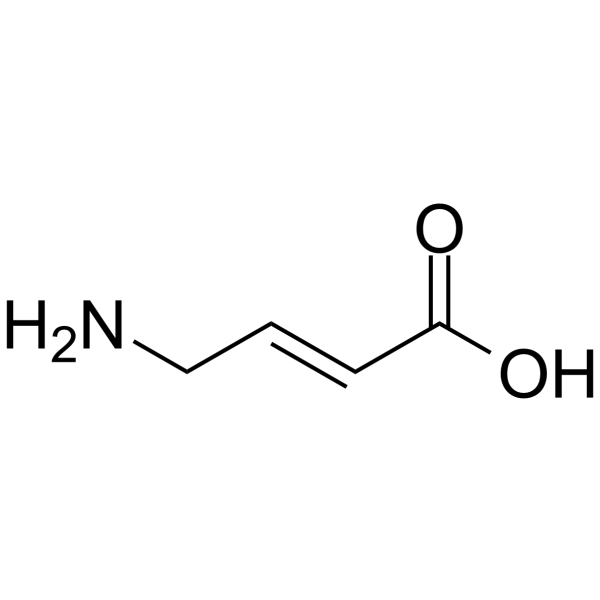
TACA (trans-4-Aminocrotonic acid) is a potent agonist of GABAA and GABAC receptors (KD= 0.6 μM). TACA also is GABA uptake inhibitor and substrate for GABA-T. TACA produces late biphasic responses in the MPG neurons .
|
-
-
- HY-13283
-
MF63
1 Publications Verification
|
PGE synthase
|
Inflammation/Immunology
|
|
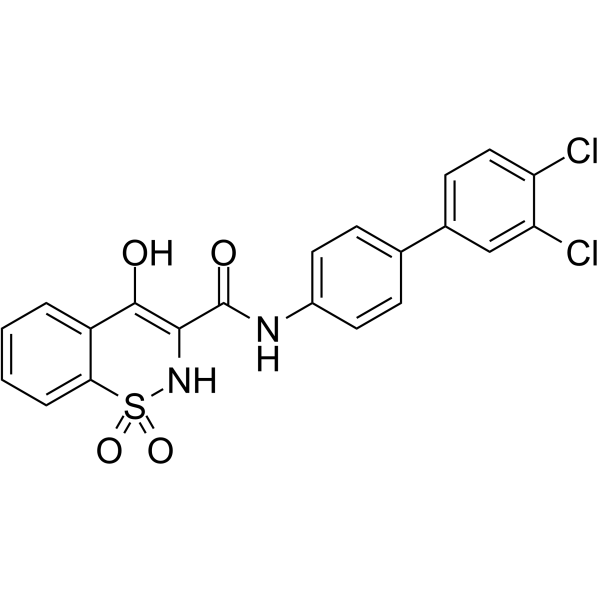
MF63 is a selective and orally active inhibitor of mPGES-1. MF63 reduces the accumulation of PGE2, relieves pyresis, hyperalgesia, and inflammatory pain by inhibiting mPGES-1 .
|
-
-
- HY-139589
-
|
ISC-27864; GRC-27864
|
PGE synthase
COX
Collagen
|
Neurological Disease
Inflammation/Immunology
|
|
Zaloglanstat (ISC-27864; GRC-27864) is a selective, orally active microsomal mPGES-1 inhibitor. Zaloglanstat has an IC50 of 5 nM for human mPGES-1 without significant inhibitory effect on COX-1/2 (IC50 >10 μM). Zaloglanstat blocks the conversion of arachidonic acid metabolite prostaglandin PGH2 to prostaglandin PGE2, thereby inhibiting inflammation-related PGE2 overproduction and reducing inflammatory responses and pain. Zaloglanstat inhibits IL-1β-induced PGE2 release in A549 cells and human synovial fibroblasts in vitro. Zaloglanstat inhibits PGE2 release in pig and dog whole blood with IC50s ??of 161 nM and 154 nM, respectively. Zaloglanstat can be used in the study of asthma, osteoarthritis, and neurodegenerative diseases .
|
-
-
- HY-108259
-
|
|
PGE synthase
|
Inflammation/Immunology
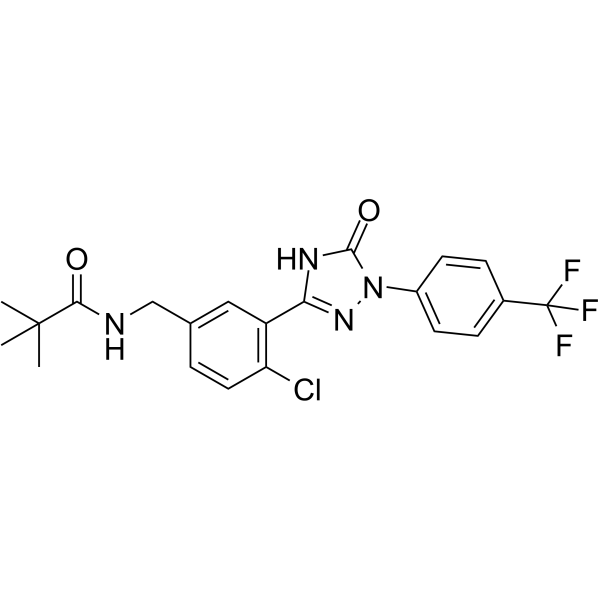
|
|
HQL-79, a potent, selective and orally active human hematopoietic prostaglandin D synthase (H-PGDS) inhibitor, highly selectively inhibits the synthesis of PGD2, and acts as an anti-allergic agent, with a Kd of 0.8 μM and an IC50 of 6 μM. Shows no obvious effect on COX-1, COX-2, m-PGES, or L-PGDS .
|
-
-
- HY-105005
-
|
AAD-2004
|
Prostaglandin Receptor
PGE synthase
Reactive Oxygen Species (ROS)
Apoptosis
|
Neurological Disease
Inflammation/Immunology
|
|
Crisdesalazine (AAD-2004) is a microsomal prostaglandin E2 synthase-1 (mPGES-1) inhibitor. Crisdesalazine acts as a potent free radical scavenger that directly neutralizes reactive oxygen species (ROS) including hydrogen peroxide, exerting neuroprotective effects against apoptosis and axonal damage. Crisdesalazine inhibits PGE2 production, mediates inflammatory responses, and promotes the conversion of macrophages from the pro-inflammatory M1 phenotype to the anti-inflammatory M2 phenotype. Crisdesalazine is applicable to neuroprotection research in multiple sclerosis and spinal cord injury .
|
-
-
- HY-162387
-
-
-
- HY-19622
-
|
|
PGE synthase
|
Inflammation/Immunology
|
|
PF-9184 is a potent and highly selective inhibitor of human microsomal prostaglandin E synthase-1 (mPGES-1), with an IC50 of 16.5 nM. PF-9184 inhibits IL-1β-induced PGE2 synthesis in vitro .
|
-
-
- HY-149202
-
|
|
PGE synthase
|
Neurological Disease
Inflammation/Immunology
|
|
UT-11 is a potent and blood-brain barrier-permeable microsomal prostaglandin E synthase-1 (mPGES-1) inhibitor with IC50s of 0.10 μM and 2.00 μM for inhibiting PGE2 production in human (SK-N-AS) and murine (BV2) cells, respectively .
|
-
-
- HY-118282
-
|
|
PGE synthase
|
Endocrinology
|
|
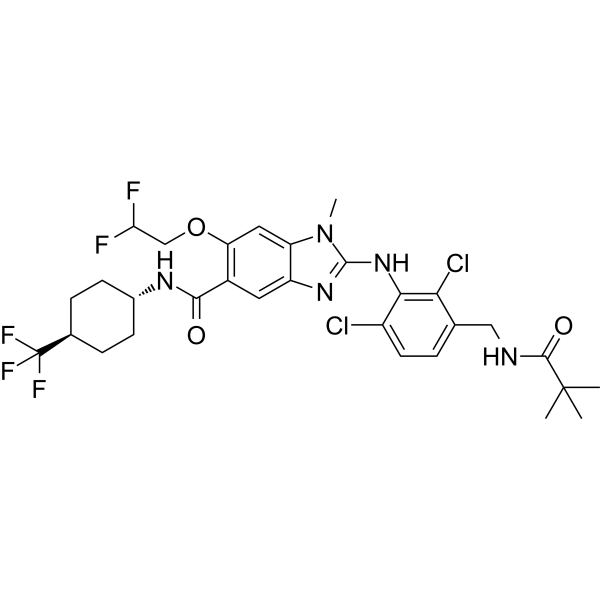
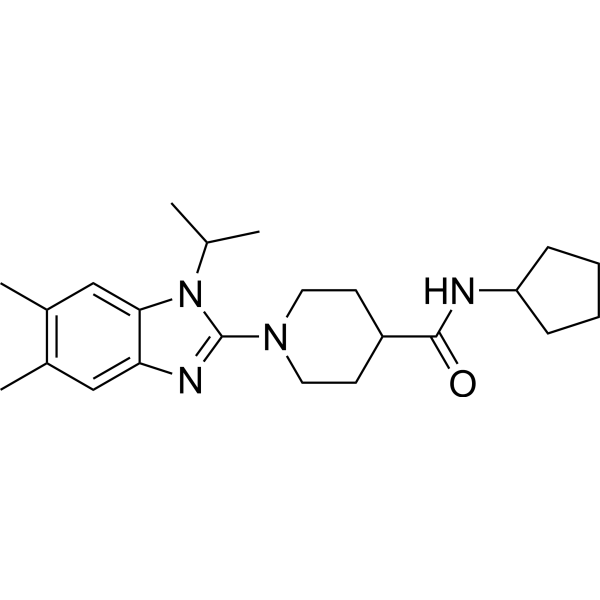
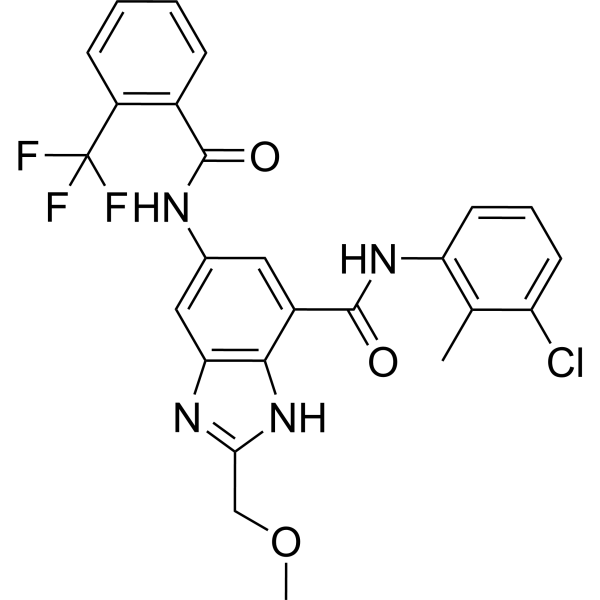
mPGES-1-IN-2 (compound III) is a benzimidazole-based mPGES-1 inhibitor that also inhibits adipophysin PGD synthase (I-PGDS) (5 μM, IR=60 %). mPGES-1-IN-2 reduces PGE2 production and tends to reduce levels of other prostaglandins. mPGES-1-IN-2 effectively inhibits acute inflammation in an air sac model stimulated by Carrageenan (HY-125474) in mice .
|
-
-
- HY-179041
-
|
|
PGE synthase
Prostaglandin Receptor
β-catenin
STAT
c-Myc
|
Metabolic Disease
|
|
SZ0232 is a microsomal prostaglandin E synthase-2 (mPGES-2) inhibitor. SZ0232 inhibits the activity of mPGES-2, downregulates the PGE2-EP4 signal, and thereby blocks the β-catenin/STAT3/c-Myc proliferation pathway. SZ0232 inhibits the abnormal proliferation of cyst epithelial cells and significantly inhibits cyst growth in both in vitro and in vivo models. SZ0232 can be used for the study of autosomal dominant polycystic kidney disease (ADPKD) .
|
-
-
- HY-111140
-
|
|
PGE synthase
Lipoxygenase
PPAR
|
Inflammation/Immunology
|
|
YS121 is a dual inhibitor of microsomal prostaglandin E2 synthase-1 (mPGES-1; IC50 = 3.4 μM) and 5-lipoxygenase (5-LOX; IC50 = 6.5 μM). YS121 exhibits direct, reversible, and specific binding to mPGES-1 (KD = 10-14 μM) . YS121 dose-dependently reduces PGE2 production with an EC50 of 12 μM in IL-1β-stimulated A549 cells . YS121 (compound 9) activates PPAR-α and -γ (EC50 = 1 and 3.6 μM, respectively) . YS121 exhibits anti-inflammatory efficiency in human whole blood as well as in vivo. YS121 can be used for pleurisy research .
|
-
-
- HY-156612
-
-
-
- HY-169430
-
|
|
PGE synthase
|
|
|
AGU654 (Compound 44) is a selective mPGES-1 inhibitor with an IC50 of 2.9 nM against mPGES-1. AGU654 inhibits mPGES-1 to block the pathway converting arachidonic acid into prostaglandin E2 (PGE2) by COX-1/2, thereby alleviating inflammatory responses, pain, and fever. In activated human monocyte-derived macrophages and human whole blood models, AGU654 selectively suppresses bacterial exotoxin-induced PGE2 production while preserving the production of other prostaglandins. In guinea pig models, AGU654 significantly alleviates fever, inflammation, and inflammatory pain, exhibiting excellent anti-inflammatory, analgesic, and antipyretic effects. AGU654 holds promise as a strategy for studying inflammatory diseases and pain .
|
-
-
- HY-125415
-
|
|
PGE synthase
|
Inflammation/Immunology
|
|
PF-4693627 is a potent, selective and orally bioavailable microsomal prostaglandin E synthase-1 (mPGES-1) inhibitor (IC50=3 nM) for the treatment of inflammation caused by osteoarthritis (OA) and rheumatoid arthritis (RA) .
|
-
-
- HY-B0084R
-
|
STS 557 (Standard)
|
Reference Standards
Progesterone Receptor
|
Endocrinology
|
|
Dienogest (Standard) is the analytical standard of Dienogest. This product is intended for research and analytical applications. Dienogest (STS-557) is an orally active and selective progesterone receptor agonist that effectively reduces the gene expression of COX-2, mPGES-1 and aromatase. Dienogest also inhibits the mRNA and protein expression of PGE2 synthase and the activation of NF-κB. Dienogest can be used in studies of endometriosis, menopause and menorrhagia .
|
-
-
- HY-178794
-
|
|
PGE synthase
|
Inflammation/Immunology
|
|
AGU661 is a Microsomal prostaglandin E2 synthase 1 (mPGES-1) inhibitor with an IC50 of 0.22 nM. AGU661 lowers PGE2 formation in human pro-inflammatory M1 macrophages and activated monocytes without affecting other lipid mediator pathways. AGU661 has unfavorable physicochemical properties with poor metabolic stability and strong plasma protein binding tendencies. AGU661 into PLGA-based NPs significantly enhances its bioactivity. AGU661 can be used for inflammatory disorders research .
|
-
-
- HY-178505
-
|
|
PGE synthase
|
Inflammation/Immunology
Cancer
|
|
mPGES1-IN-10 (Compound 7d) is a potent microsomal prostaglandin E2 synthase-1 (mPGES-1) inhibitor with an IC50 value of 1.0 μM. mPGES1-IN-10 is promising for research of chronic inflammation-related diseases and malignancies such as colorectal cancer .
|
-
-
- HY-100864
-
|
|
PGE synthase
|
Inflammation/Immunology
|
|
mPGES1-IN-3 (Compound 17d) is a potent and selective microsomal prostaglandin E2 synthase-1 (mPGES-1) inhibitor, which exhibits excellent mPGES-1 enzyme (IC50: 8 nM), cell (A549 IC50: 16.24 nM) and human whole blood potency (IC50: 249.9 nM) .
|
-
-
- HY-164358
-
-
-
- HY-176977
-
|
|
Drug-Linker Conjugates for ADC
|
Cancer
|
|
Exatecan-mpGly-Asn-Asn-(βAla) (Compound 10b) is a conjugate of Exatecan (HY-13631) and a linker. Exatecan-mpGly-Asn-Asn-(βAla) can be used to synthesize ADCs, such as α-HER2_mpGlyAsnAsn(β-Ala)_Exatecan. Exatecan-mpGly-Asn-Asn-(βAla) can also be used in tumor research .
|
-
-
- HY-144237
-
|
|
PGE synthase
|
Inflammation/Immunology
|
|
Brp-201 is considered as a promising therapeutic target for the next generation of anti-inflammatory drugs in the research of inflammatory diseases. It is a new, effective and selective inhibitor of mPGES-1 with an IC50 value of 0.42 μM.
|
-
-
- HY-118184
-
|
|
PGE synthase
|
Cancer
|
|
AF3485 is a human mPGES-1 inhibitor that exhibits antitumor activity in vitro and in vivo. AF3485 inhibits tumor-associated angiogenesis by reducing PGE2 production, inhibiting EGFR signaling, and decreasing VEGF and FGF-2 expression. AF3485 reduced tumor growth in mice bearing human A431 xenograft tumors by subchronic administration.
|
-
-
- HY-111097
-
|
|
PGE synthase
|
Neurological Disease
Inflammation/Immunology
|
|
AF3442 is a potent and selective mPGES-1 inhibitor (IC50 = 0.06 μM) which reduces monocyte PGE2 generation also in the presence of plasma proteins. AF3442 shows selectivity over other prostanoids (TXB2, PGF2α and 6-keto-PGF1α). AF3442 can be used for research in analgesia .
|
-
-
- HY-172714A
-
|
|
Liposome
|
Infection
|
|
DSPE-PEG3400-MPG is a PEG compound which composed of DSPE and a peptide vector (MPG). MPG is derived from both the nuclear localisation sequence (NLS) of SV40 large T antigen and the fusion peptide domain of HIV-1 gp41. MPG could deliver short oligonucleotides into cells efficiently and independently of the endosomal pathway .
|
-
-
- HY-172713
-
|
|
Liposome
|
Infection
|
|
DSPE-PEG1000-MPG is a PEG compound which composed of DSPE and a peptide vector (MPG). MPG is derived from both the nuclear localisation sequence (NLS) of SV40 large T antigen and the fusion peptide domain of HIV-1 gp41. MPG could deliver short oligonucleotides into cells efficiently and independently of the endosomal pathway .
|
-
-
- HY-172715
-
|
|
Liposome
|
Infection
|
|
DSPE-PEG5000-MPG is a PEG compound which composed of DSPE and a peptide vector (MPG). MPG is derived from both the nuclear localisation sequence (NLS) of SV40 large T antigen and the fusion peptide domain of HIV-1 gp41. MPG could deliver short oligonucleotides into cells efficiently and independently of the endosomal pathway .
|
-
-
- HY-RS08611
-
|
|
Small Interfering RNA (siRNA)
|
Others
|
|
MPG Human Pre-designed siRNA Set A contains three designed siRNAs for MPG gene (Human), as well as a negative control, a positive control, and a FAM-labeled negative control.
|
-
MPG Human Pre-designed siRNA Set A
-
- HY-RS25225
-
|
|
Small Interfering RNA (siRNA)
|
Others
|
|
Mpg Rat Pre-designed siRNA Set A contains three designed siRNAs for Mpg gene (Rat), as well as a negative control, a positive control, and a FAM-labeled negative control.
|
-
Mpg Rat Pre-designed siRNA Set A
-
- HY-P1566
-
|
|
HIV
|
Infection
|
|
MPG, HIV related is 27-aa peptide, derived from both the nuclear localisation sequence of SV40 large T antigen and the fusion peptide domain of HIV-1 gp41 and is a potent delivery agent for the generalised delivery of nucleic acids and of oligonucleotides into cultured cells.
|
-
-
- HY-170610
-
-
-
- HY-144238
-
-
-
- HY-163736
-
|
|
Lipoxygenase
PGE synthase
|
Inflammation/Immunology
|
|
mPGES-1/5-LOX-IN-1 (compound 3j) is a potent and orally active mPGES-1 and 5-LOX dual inhibitor with IC50 values of 0.92, 1.89 µM, respectively. mPGES-1/5-LOX-IN-1 shows anti-inflammatory impact .
|
-
-
- HY-13475
-
-
-
- HY-Y0958R
-
|
O-Methylhydroxylamine hydrochloride (Standard)
|
Reference Standards
DNA/RNA Synthesis
Apoptosis
|
Cancer
|
|
Methoxyamine hydrochloride (Standard) is the analytical standard of Methoxyamine hydrochloride. This product is intended for research and analytical applications. Methoxyamine (O-Methylhydroxylamine) hydrochloride is an orally active and potent base excision repair (BER) inhibitor. Methoxyamine hydrochloride binds to 3’ hydroxyl groups that are left behind by 3-methylpurine-DNA glycosylase (MPG) following excision of the damaged base and thus inhibits BER activity. Methoxyamine hydrochloride binds directly to the apyrimidinic (AP) sites. Methoxyamine hydrochloride synergistically enhances the therapeutic efficacy of DNA-damaging agents .
|
-
-
- HY-139364
-
|
|
PGE synthase
|
Others
|
|
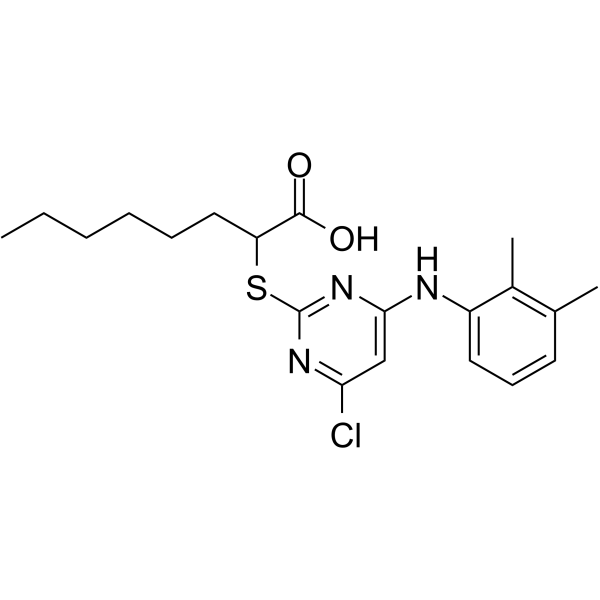
mPGES1-IN-4 (compound 32) is a polysubstituted pyrimidine compound and a submicromolar PGE2 production inhibitor. It exerts its anti-inflammatory effect mainly by inhibiting mPGES-1 and has a significant inhibitory effect on the acute inflammation model in vivo.
|
-
-
- HY-139365
-
|
|
PGE synthase
|
Others
|
|
mPGES1-IN-5 (compound 18) is a polysubstituted pyrimidine compound and a submicromolar PGE2 production inhibitor. It exerts its anti-inflammatory effect mainly by inhibiting mPGES-1 and has a significant inhibitory effect on the acute inflammation model in vivo.
|
-
-
- HY-171237
-
-
-
- HY-126898
-
|
|
Lipoxygenase
PGE synthase
|
Inflammation/Immunology
|
|
5-LO/mPGES1-IN-1 (Compound 16) is a dual inhibitor of microsomal prostaglandin E2 synthase-1 (mPGES-1) and 5-lipoxygenase (5-LO). IC50 values are 0.3 and 0.4 μM, respectively. 5-LO/mPGES1-IN-1 has anti-inflammatory activity .
|
-
-
- HY-162166
-
|
|
COX
Lipoxygenase
|
Inflammation/Immunology
|
|
COX-2/15-LOX/mPGES1-IN-1 (Compound 2c) is an inhibitor of COX-2, 15-LOX, and mPGES-1 enzymes with IC50 values of 0.057, 2.39, and 2.8 μM, respectively. COX-2/15-LOX/mPGES1-IN-1 possesses anti-inflammatory activity and can inhibit rat paw edema in vivo experiments .
|
-
-
- HY-169858
-
|
|
PGE synthase
|
Inflammation/Immunology
|
|
Prostaglandin E2 Inhibitor 3 (Compound 3) is a selectivity microsomal prostaglandin E synthase-1 (mPGES-1) inhibitor (IC50 = 0.2 µM). Prostaglandin E2 Inhibitor 3 has higher selectivity for mPGES-1 than cyclooxygenases (COX)-1/2, 5-lipoxygenase (5-LO), and soluble epoxide hydrolase (sEH). Prostaglandin E2 Inhibitor 3 has anti-inflammatory activity and can attenuate zymosan-induced peritoneal leukocyte migration in mice .
|
-
-
- HY-117008
-
|
|
PGE synthase
|
Inflammation/Immunology
|
|
CAY10589 is an inhibitor of mPGES-1, an enzyme induced during inflammatory responses. CAY10589 has no significant effect on the differentiation of BM myeloid precursor cells into M2-like TAMs .
|
-
-
- HY-122064
-
|
|
PGE synthase
|
Others
|
|
FR20 acts as an inhibitor of human microsomal prostaglandin synthase 1 (mPGES 1).
|
-
-
- HY-N9814
-
|
|
NO Synthase
|
Inflammation/Immunology
|
|
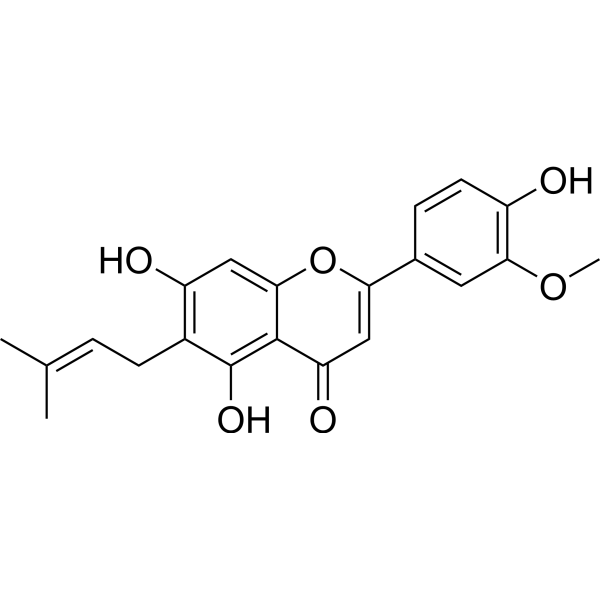
Shanciol B, isolated from the ethyl acetate extract of the air-dried whole plant of Pholidota imbricate Hook, inhibits nitric oxide (NO) production and 1,1-diphenyl-2-picrylhydrazil (DPPH) radical scavenging activity . Shanciol B is a microsomal prostaglandin E synthase-1 (mPGES-1) inhibitor with anti-inflammatory activity .
|
-
- HY-125975
-
|
|
Lipoxygenase
|
Inflammation/Immunology
|
|
1-Naphthyl 3,5-dinitrobenzoate is a potent 5-lipoxygenase inhibitor with IC50 values of 1.04 µM and 3.6 µM for 5-LOX and mPGES-1, respectively. 1-Naphthyl 3,5-dinitrobenzoate has strong inhibition activity in the human whole blood (HWB) assay with an IC50 value of 8.6 μM. 1-Naphthyl 3,5-dinitrobenzoate can be used in research of inflammation .
|
-
- HY-B0084S4
-
|
STS 557-13C,15N,d4
|
Isotope-Labeled Compounds
Progesterone Receptor
|
Endocrinology
|
|
Dienogest-13C,15N,d4 (STS 557-13C,15N,d4) is the 13C, 15N and deuterium labeled isotope of Dienogest (HY-B0084). Dienogest (STS-557) is an orally active and selective progesterone receptor agonist that effectively reduces the gene expression of COX-2, mPGES-1 and aromatase. Dienogest also inhibits the mRNA and protein expression of PGE2 synthase and the activation of NF-κB. Dienogest can be used in studies of endometriosis, menopause and menorrhagia .
|
-
- HY-172714
-
|
|
Liposome
|
Infection
|
|
DSPE-PEG2000-MPG is a PEG compound which composed of DSPE and a peptide vector (MPG). MPG is derived from both the nuclear localisation sequence (NLS) of SV40 large T antigen and the fusion peptide domain of HIV-1 gp41. MPG could deliver short oligonucleotides into cells efficiently and independently of the endosomal pathway .
|
-
- HY-RS18738
-
|
|
Small Interfering RNA (siRNA)
|
Others
|
|
Mpg Mouse Pre-designed siRNA Set A contains three designed siRNAs for Mpg gene (Mouse), as well as a negative control, a positive control, and a FAM-labeled negative control.
|
-
Mpg Mouse Pre-designed siRNA Set A
- HY-100800R
-
|
trans-4-Aminocrotonic acid (Standard)
|
GABA Receptor
Reference Standards
|
Neurological Disease
|
|
TACA (Standard) is the analytical standard of TACA (HY-100800). This product is intended for research and analytical applications. TACA (trans-4-Aminocrotonic acid) is a potent agonist of GABAA and GABAC receptors (KD= 0.6 μM). TACA also is GABA uptake inhibitor and substrate for GABA-T. TACA produces late biphasic responses in the MPG neurons .
|
-
- HY-P4076A
-
-
- HY-182647
-
|
|
PGE synthase
|
Inflammation/Immunology
|
|
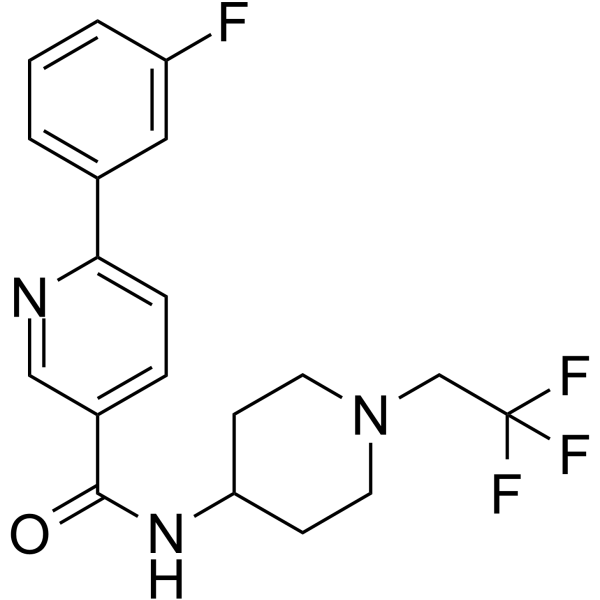
LY3023703 is an orally active microsomal prostaglandin E synthase-1 (mPGES-1) inhibitor. LY3023703 inhibits the production of PGE2. LY3023703 is applicable to research related to inflammatory diseases and osteoarthritis pain .
|
-
- HY-118506
-
|
|
FLAP
|
Inflammation/Immunology
|
BRP-7 is a 5-lipoxygenase activating protein (FLAP) inhibitor with an IC50 of 0.31 μM. BRP-7 inhibits the co-localization of 5-lipoxygenase (5-LOX) and FLAP by targeting FLAP, thereby blocking the transfer of arachidonic acid (AA) to 5-LOX and suppressing the production of leukotrienes (LTs) (IC₅₀ = 0.15 μM). BRP-7 does not inhibit cyclooxygenase (COX-1/COX-2) or microsomal prostaglandin E₂ synthase-1 (mPGES-1), and does not affect cell viability or AA release. BRP-7 exhibits significant anti-inflammatory effects in rat pleurisy and mouse peritonitis models. BRP-7 can be used for the study of inflammatory diseases .
|
-
- HY-10439R
-
|
|
Reference Standards
PGE synthase
|
Inflammation/Immunology
|
|
HPGDS inhibitor 1 (Standard) is the analytical standard of HPGDS inhibitor 1 (HY-10439). This product is intended for research and analytical applications. HPGDS inhibitor 1 is a potent, selective and orally active Hematopoietic Prostaglandin D Synthase (HPGDS) inhibitor with an IC50s of 0.6 nM and 32 nM in enzyme and cellular assays, respectively. HPGDS inhibitor 1 does not inhibit human L-PGDS, mPGES, COX-1, COX-2, or 5-LOX .
|
-
- HY-108259R
-
|
|
Reference Standards
PGE synthase
|
Inflammation/Immunology
|
|
HQL-79 (Standard) is the analytical standard of HQL-79 (HY-108259). This product is intended for research and analytical applications. HQL-79, a potent, selective and orally active human hematopoietic prostaglandin D synthase (H-PGDS) inhibitor, highly selectively inhibits the synthesis of PGD2, and acts as an anti-allergic agent, with a Kd of 0.8 μM and an IC50 of 6 μM. Shows no obvious effect on COX-1, COX-2, m-PGES, or L-PGDS .
|
-
| Cat. No. |
Product Name |
Type |
-
- HY-172714A
-
|
|
Biochemical Assay Reagents
|
|
DSPE-PEG3400-MPG is a PEG compound which composed of DSPE and a peptide vector (MPG). MPG is derived from both the nuclear localisation sequence (NLS) of SV40 large T antigen and the fusion peptide domain of HIV-1 gp41. MPG could deliver short oligonucleotides into cells efficiently and independently of the endosomal pathway .
|
-
- HY-172713
-
|
|
Biochemical Assay Reagents
|
|
DSPE-PEG1000-MPG is a PEG compound which composed of DSPE and a peptide vector (MPG). MPG is derived from both the nuclear localisation sequence (NLS) of SV40 large T antigen and the fusion peptide domain of HIV-1 gp41. MPG could deliver short oligonucleotides into cells efficiently and independently of the endosomal pathway .
|
-
- HY-172715
-
|
|
Biochemical Assay Reagents
|
|
DSPE-PEG5000-MPG is a PEG compound which composed of DSPE and a peptide vector (MPG). MPG is derived from both the nuclear localisation sequence (NLS) of SV40 large T antigen and the fusion peptide domain of HIV-1 gp41. MPG could deliver short oligonucleotides into cells efficiently and independently of the endosomal pathway .
|
-
- HY-172714
-
|
|
Biochemical Assay Reagents
|
|
DSPE-PEG2000-MPG is a PEG compound which composed of DSPE and a peptide vector (MPG). MPG is derived from both the nuclear localisation sequence (NLS) of SV40 large T antigen and the fusion peptide domain of HIV-1 gp41. MPG could deliver short oligonucleotides into cells efficiently and independently of the endosomal pathway .
|
| Cat. No. |
Product Name |
Target |
Research Area |
-
- HY-P4076
-
|
|
HIV
DNA Alkylator/Crosslinker
|
Infection
|
|
MPG peptides, Pβ is an amphipathic cell-penetrating peptide. MPG peptides, Pβ consists of three components: the hydrophobic fusion sequence (GALFLGFLGAAGSTMGA) of HIV glycoprotein 41, a spacer domain (WSQP), and the nuclear localization signal (KKKRKV) of the large T antigen of Simian virus 40. MPG peptides, Pβ can form stable non-covalent complexes with nucleic acids (including DNA) through electrostatic interactions and improve their intracellular delivery. MPG peptides, Pβ can be used in studies of HIV-1-related immune responses .
|
-
- HY-P4080
-
|
|
Peptides
|
Others
|
|
MPG peptides, Pα is an amphipathic carrier peptide that can be used for drug delivery .
|
-
- HY-P1566
-
|
|
HIV
|
Infection
|
|
MPG, HIV related is 27-aa peptide, derived from both the nuclear localisation sequence of SV40 large T antigen and the fusion peptide domain of HIV-1 gp41 and is a potent delivery agent for the generalised delivery of nucleic acids and of oligonucleotides into cultured cells.
|
-
- HY-P4076A
-
| Cat. No. |
Product Name |
Category |
Target |
Chemical Structure |
| Cat. No. |
Product Name |
Chemical Structure |
-
- HY-B0084S4
-
|
|
|
Dienogest-13C,15N,d4 (STS 557-13C,15N,d4) is the 13C, 15N and deuterium labeled isotope of Dienogest (HY-B0084). Dienogest (STS-557) is an orally active and selective progesterone receptor agonist that effectively reduces the gene expression of COX-2, mPGES-1 and aromatase. Dienogest also inhibits the mRNA and protein expression of PGE2 synthase and the activation of NF-κB. Dienogest can be used in studies of endometriosis, menopause and menorrhagia .
|
-
| Cat. No. |
Compare |
Product Name |
Application |
Reactivity |
Image |
Compare Products
|
| Products |
|
| Cat. No. |
|
| Host |
|
| Reactivity |
|
| Application |
|
Dilution Ratio |
|
| Molecular Weight |
|
| Conjugation |
|
| Clonality |
|
| Immunogen |
|
| Appearance |
|
| Isotype |
|
| Gene ID |
|
| SwissProt ID |
|
| Purity |
|
| Formulation |
|
| Free Sample |
Yes
No
|
| Size |
* This product has been "discontinued".
Optimized version of product available:
|
| Cat. No. |
Product Name |
|
Classification |
-
- HY-172713
-
|
|
|
Pegylated Lipids
|
|
DSPE-PEG1000-MPG is a PEG compound which composed of DSPE and a peptide vector (MPG). MPG is derived from both the nuclear localisation sequence (NLS) of SV40 large T antigen and the fusion peptide domain of HIV-1 gp41. MPG could deliver short oligonucleotides into cells efficiently and independently of the endosomal pathway .
|
-
- HY-172715
-
|
|
|
Pegylated Lipids
|
|
DSPE-PEG5000-MPG is a PEG compound which composed of DSPE and a peptide vector (MPG). MPG is derived from both the nuclear localisation sequence (NLS) of SV40 large T antigen and the fusion peptide domain of HIV-1 gp41. MPG could deliver short oligonucleotides into cells efficiently and independently of the endosomal pathway .
|
-
- HY-RS08611
-
|
|
|
siRNAs
Human Pre-designed siRNA Sets
|
|
MPG Human Pre-designed siRNA Set A contains three designed siRNAs for MPG gene (Human), as well as a negative control, a positive control, and a FAM-labeled negative control.
|
-
- HY-RS25225
-
|
|
|
siRNAs
Rat Pre-designed siRNA Sets
|
|
Mpg Rat Pre-designed siRNA Set A contains three designed siRNAs for Mpg gene (Rat), as well as a negative control, a positive control, and a FAM-labeled negative control.
|
-
- HY-172714
-
|
|
|
Pegylated Lipids
|
|
DSPE-PEG2000-MPG is a PEG compound which composed of DSPE and a peptide vector (MPG). MPG is derived from both the nuclear localisation sequence (NLS) of SV40 large T antigen and the fusion peptide domain of HIV-1 gp41. MPG could deliver short oligonucleotides into cells efficiently and independently of the endosomal pathway .
|
-
- HY-RS18738
-
|
|
|
siRNAs
Mouse Pre-designed siRNA Sets
|
|
Mpg Mouse Pre-designed siRNA Set A contains three designed siRNAs for Mpg gene (Mouse), as well as a negative control, a positive control, and a FAM-labeled negative control.
|
Your information is safe with us. * Required Fields.
Inquiry Information
- Product Name:
- Cat. No.:
- Quantity:
- MCE Japan Authorized Agent:

