1. Search Result
Search Result
Results for "

MRC-5 fibroblasts

" in MedChemExpress (MCE) Product Catalog:

22

Inhibitors & Agonists

1

Biochemical Assay Reagents

1

Peptides

1

Inhibitory Antibodies

5

Natural
Products

Cat. No. Product Name Target Research Areas Chemical Structure
  • HY-168034

    STING Integrin NF-κB SARS-CoV Infection Inflammation/Immunology
    diABZI-4 is a STING activator and broad-spectrum antiviral agent with immunostimulatory activity. diABZI-4 triggers the TBK1-IRF3 and NF-κB signaling cascades by inducing STING oligomerization, thereby promoting the production of type I/III interferons and various proinflammatory cytokines. diABZI-4 exhibits broad-spectrum antiviral activity and effectively inhibits the replication of influenza A virus, SARS-CoV-2, herpes simplex virus, and other viruses. diABZI-4 also activates lymphocytes and macrophages to provide significant pre- and post-exposure protection in viral disease models. diABZI-4 can be used to study COVID-19, respiratory viral infections, and related immunopathological mechanisms .
    diABZI-4
  • HY-15039

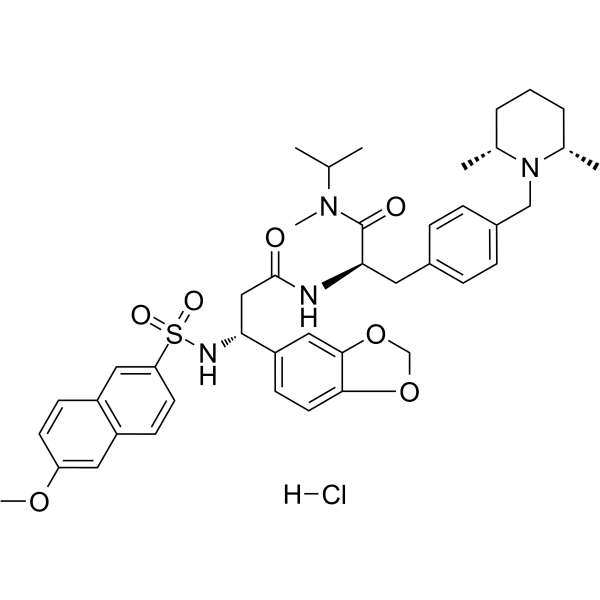
    Bradykinin Receptor Metabolic Disease Inflammation/Immunology Endocrinology
    SSR240612 is a potent, and orally active specific non-peptide bradykinin B1 receptor antagonist, with Kis of 0.48 nM and 0.73 nM for B1 kinin receptors of human fibroblast MRC5 and HEK cells expressing human B1 receptors, 481 nM and 358 nM for B2 receptors of guinea pig ileum membranes and CHO cells expressing human B1 receptor, respectively.
    SSR240612
  • HY-P991400

    TNF Receptor Apoptosis Interleukin Related NF-κB JNK p38 MAPK Inflammation/Immunology
    GSK1995057 is a human monoclonal antibody (mAb) targeting TNFRSF1A. GSK1995057 selectively binds to TNFR1, blocks the binding of TNF-α and LT-α, and does not interfere with TNFR2 signaling. GSK1995057 inhibits the activation of NF-κB, JNK and MAPK pathways, alleviates apoptosis (apoptosis) and inflammatory responses (inhibiting IL-1β, IL-6, IL-10, TNF-α), and prevents viability loss of human nucleus pulposus cells. GSK1995057 inhibits the expression of cytokines and neutrophil adhesion molecules in human pulmonary microvascular endothelial cell monolayers, and reduces inflammatory responses and lung injury symptoms in non-human primates. GSK1995057 forms complexes with HAVH autoantibodies, thereby activating TNFR1 and triggering the release of cytokines and IL-8 in human cells. GSK1995057 can be used in research related to intervertebral disc degeneration and acute lung injury .
    GSK1995057
  • HY-Y0030

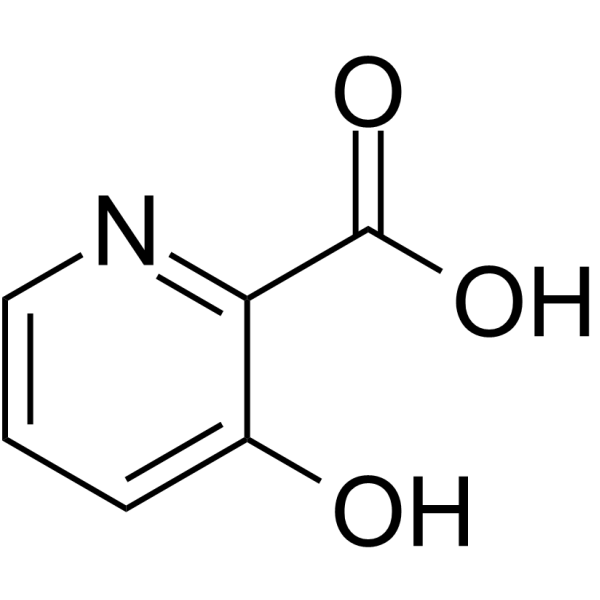
    3-hydroxypyridine-2-carboxylic acid

    Biochemical Assay Reagents Drug Intermediate Infection Cancer
    3-Hydroxypicolinic acid is a heterocyclic carboxylic acid ligand and cytotoxin, with a MIC90 of >25 μg/mL against Mycobacterium tuberculosis H37Rv. 3-Hydroxypicolinic acid inhibits the growth of cancer cells and normal fibroblasts. 3-Hydroxypicolinic acid is applicable to research related to chronic myeloid leukemia, human lung adenocarcinoma, and tuberculosis .
    3-Hydroxypicolinic acid
  • HY-W020955

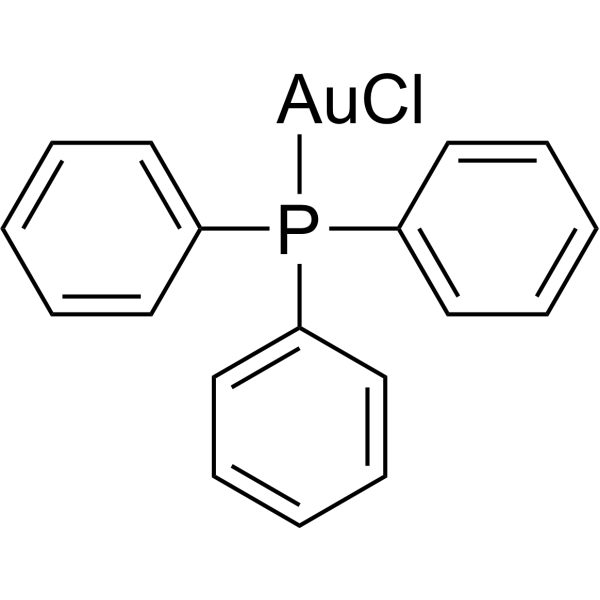
    Chloro(triphenylphosphine)gold(I)

    Biochemical Assay Reagents Apoptosis DNA Alkylator/Crosslinker Lipoxygenase Cancer
    Triphenylphosphinechlorogold (Chloro(triphenylphosphine)gold(I)) is a gold complex, Apoptosis inducer, and catalyst. Triphenylphosphinechlorogold exhibits high LOX inhibitory activity. Triphenylphosphinechlorogold induces cell cycle arrest and apoptosis. Triphenylphosphinechlorogold catalyzes the peroxidation of linoleic acid. A weak interaction exists between Triphenylphosphinechlorogold and DNA. Triphenylphosphinechlorogold displays antiproliferative activity against breast cancer cells .
    Triphenylphosphinechlorogold
  • HY-172815

    JNK Eukaryotic Initiation Factor (eIF) p38 MAPK Cancer
    IDB-001 is a human ribosomal peptidyl transferase center (PTC) inhibitor that induces conformational changes and blocks translational elongation in specific sequence contexts through complementary interactions with Asp/Glu residues in nascent polypeptides. IDB-001 preferentially stalls ribosomes at positions containing acidic peptide motifs, thereby inhibiting cancer cell proliferation, and activates the integrated stress response via eIF2α phosphorylation at high concentrations. In addition, IDB-001 mildly triggers ribotoxic stress responses through phosphorylation of JNK and p38. IDB-001 has been applied to mechanistic studies of triple-negative breast cancer .
    IDB-001
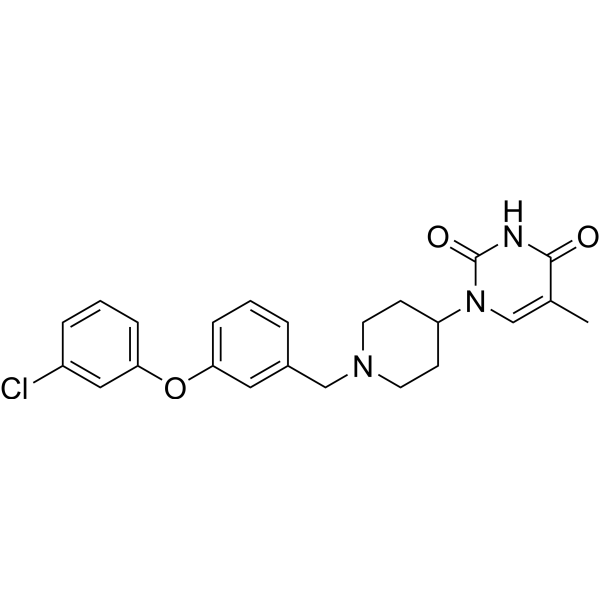
  • HY-144665

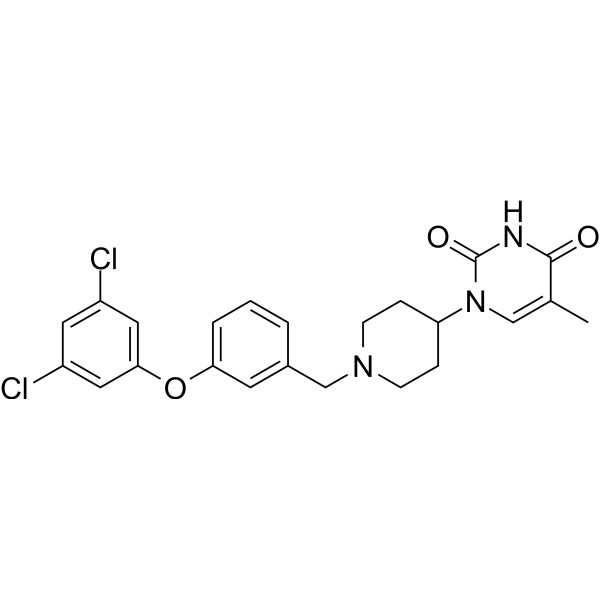
    Bacterial Thymidylate Synthase Infection
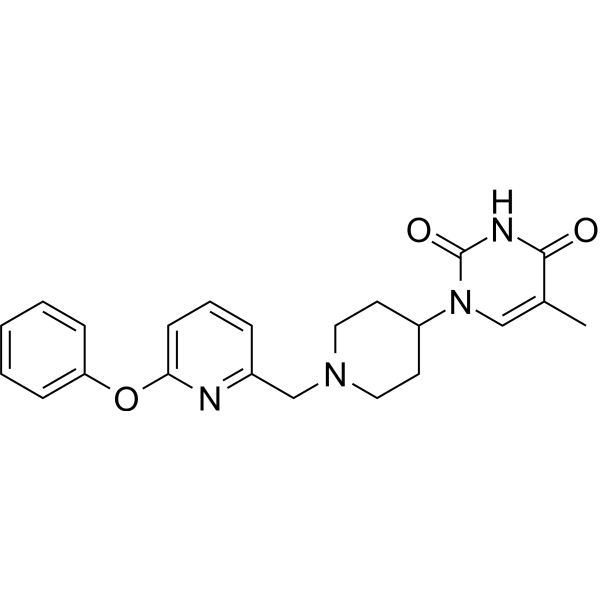
    MtTMPK-IN-3 (compound 25) is a potent Mycobacterium tuberculosis thymidylate kinase (MtTMPK) inhibitor with an IC50 value of 0.12 μM. MtTMPK-IN-3 has inhibitory activity against Mtb H37Rv (MIC = 12.5 μM). MtTMPK-IN-3 exhibits certain cytotoxicity in human fibroblast cells MRC-5 (EC50 = 12.5 μM). MtTMPK-IN-3 can be used for researching tuberculosis .
    MtTMPK-IN-3
  • HY-155732

    Parasite Infection
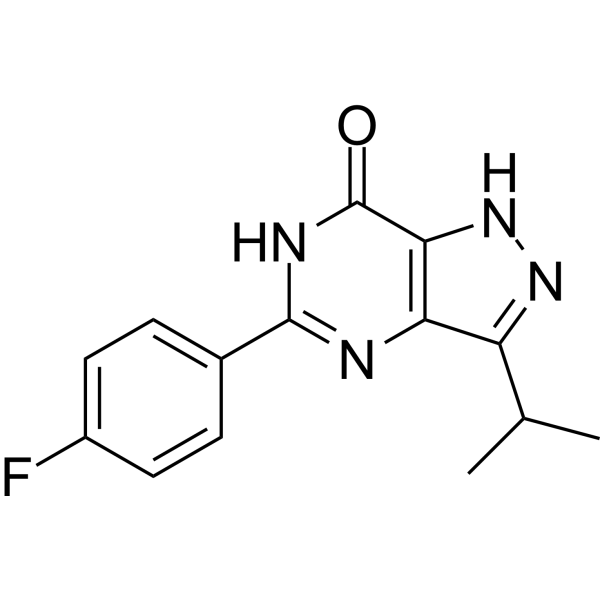
    NPD-2975 (compound 30) is an orally active antitrypanosomal agent, against Human African Trypanosomiasis (HAT). NPD-2975 has low toxicity potential against human MRC-5 lung fibroblasts, and acute mouse model of T. b. brucei infection. NPD-2975 shows acceptable metabolic stability, inhibits T. b. brucei with IC500 of 70 nM in vitro. NPD-2975 also inhibits CYP enzymes resulted in IC50 values of 0.16 and 0.42 μM against CYP1A2 and CYP2C19, respectively .
    NPD-2975
  • HY-155191

    Galectin Inflammation/Immunology Cancer
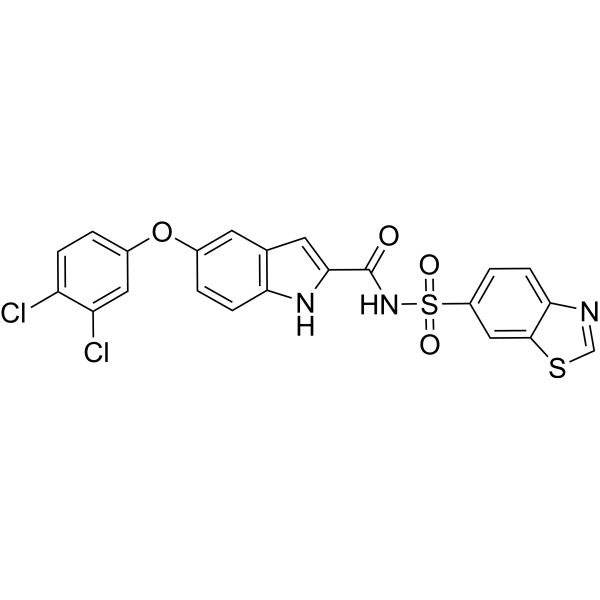
    Galectin-3/galectin-8-IN-1 (Compound 53) is a dual Galectin-3 and galectin-8 C-terminal domain inhibitor, with Kd values of 4.12 μM and 6.04 μM respectively. Galectin-3/galectin-8-IN-1 inhibits the MRC-5 lung fibroblast cells migration. Galectin-3/galectin-8-IN-1 can be used for research of cancer and tissue fibrosis .
    Galectin-3/galectin-8-IN-1
  • HY-155192

    Galectin Inflammation/Immunology Cancer
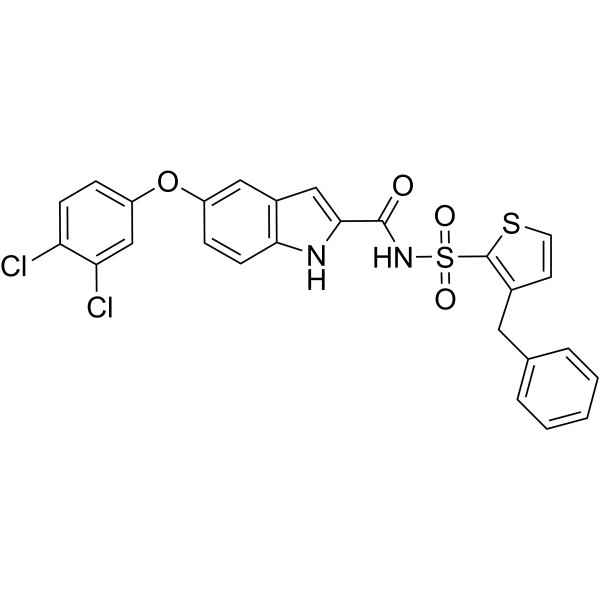
    Galectin-3/galectin-8-IN-2 (Compound 57) is a dual Galectin-3 and galectin-8 C-terminal domain inhibitor, with Kd values of 12.8 μM and 2.06 μM respectively. Galectin-3/galectin-8-IN-2 inhibits the MRC-5 lung fibroblast cells migration. Galectin-3/galectin-8-IN-2 can be used for research of cancer and tissue fibrosis .
    Galectin-3/galectin-8-IN-2
  • HY-144663

    Bacterial Thymidylate Synthase Infection
    MtTMPK-IN-1 (compound 3) is a potent Mycobacterium tuberculosis thymidylate kinase (MtTMPK) inhibitor with an IC50 value of 2.5 μM. MtTMPK-IN-1 has moderate to weak activity against Mtb H37Rv and low cytotoxicity in human fibroblast cells MRC-5. MtTMPK-IN-1 can be used for researching tuberculosis .
    MtTMPK-IN-1
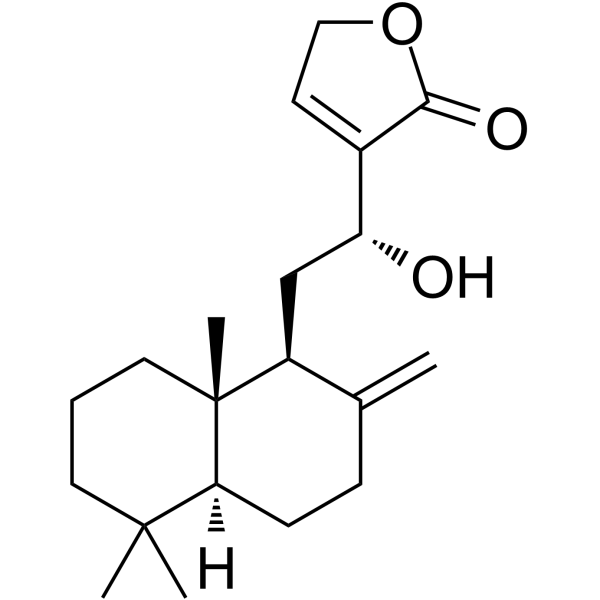
  • HY-N1031

    12-epi-Vitexolide D; Curcucomosin C

    Bacterial Cancer
    Vitexolide E is a diterpenoid compound isolated from the leaves of the Malaysian species Vitex vestita. Vitexolide E shows cytotoxic activities against the HCT-116 cancer cell line and human fetal lung fibroblast MRC5 cell line .
    Vitexolide E
  • HY-N16437

    Parasite Infection
    Panowamycin A is an isochroman compound that can be produced by Streptomyces sp. K07-0010. Panowamycin A exhibits antitrypanosomal activity against the Trypanosoma brucei brucei GUTat 3.1 strain (IC50: 0.40 μg/mL). Panowamycin A shows weak cytotoxicity towards human fetal lung fibroblast MRC-5 cells (IC50: 2.95 μg/mL). Panowamycin A can be used for research in the field of antitrypanosomal studies .
    Panowamycin A
  • HY-144664

    Bacterial Thymidylate Synthase Infection
    MtTMPK-IN-2 (compound 15) is a potent Mycobacterium tuberculosis thymidylate kinase (MtTMPK) inhibitor with an IC50 value of 1.1 μM. MtTMPK-IN-2 has inhibitory activity against Mtb H37Rv (MIC = 12.5 μM). MtTMPK-IN-2 exhibits certain cytotoxicity in human fibroblast cells MRC-5 (EC50 = 6.1 μM). MtTMPK-IN-2 can be used for researching tuberculosis .
    MtTMPK-IN-2
  • HY-181145

    Parasite Infection
    Antitrypanosomal agent 29 is an antileishmanial agent against Leishmania donovani. Antitrypanosomal agent 29 shows no inhibitory activity against Trypanosoma cruzi and exhibits no significant cytotoxicity toward human fibroblast MRC-5 cells. Antitrypanosomal agent 29 can be used in research on leishmaniasis .
    Antitrypanosomal agent 29
  • HY-N16437A

    Parasite Infection
    Panowamycin B is an isochroman compound that can be produced by Streptomyces sp. K07-0010. Panowamycin B exhibits antitrypanosomal activity against the Trypanosoma brucei brucei GUTat 3.1 strain (IC50: 3.30 μg/mL). Panowamycin B shows weak cytotoxicity towards human fetal lung fibroblast MRC-5 cells (IC50: 13 μg/mL). Panowamycin B can be used for research in the field of antitrypanosomal studies .
    Panowamycin B
  • HY-180556

    mTOR PI3K Inflammation/Immunology
    PI3K/mTOR-IN-20 is a selective dual PI3K/mTOR inhibitor. PI3K/mTOR-IN-20 demonstrates nanomolar antiproliferative effects with IC50s of 0.380 and 0.090 μM for MRC-5 and Mlg2908 cells. PI3K/mTOR-IN-20 reduces Ashcroft scores, hydroxyproline content, collagen deposition, and downregulates fibrosis-related proteins, while restoring lung architecture in a Bleomycin-induced pulmonary fibrosis model. PI3K/mTOR-IN-20 shows a favorable safety profile with steady weight recovery and no distinct liver or kidney toxicity. PI3K/mTOR-IN-20 can be used for fetal lung fibroblasts research .
    PI3K/mTOR-IN-20
  • HY-181174

    SOD Glutathione Peroxidase Caspase Interleukin Related Bcl-2 Family Apoptosis Cancer
    Antioxidant agent-22 is a paraben derivative tetracyclic spermine cyclotriphosphazene compound. Antioxidant agent-22 exhibits antioxidant, anti-Inflammatory, and apoptotic activities. Antioxidant agent-22 significantly upregulates CAT, SOD, caspase-3 and IL-6 expression, suppresses GSH, IL-1β, and reduces BCL-2 and BAX levels. Antioxidant agent-22 can be used for the research of cancer, such as lung cancer .
    Antioxidant agent-22
  • HY-182586

    Fungal Bcl-2 Family Infection
    Decyl gallate is an antifungal (fungal) agent. Decyl gallate downregulates the expression of the pro-apoptotic (apoptosis) protein Bak, upregulates the expression of the anti-apoptotic protein Bcl-2, and inhibits DNA damage. Decyl gallate disrupts ALG12-mediated N-glycosylation, overactivates the UPR pathway, and simultaneously reduces fungal cell wall enzyme activity, chitin levels, mitochondrial activity, budding ability, cell viability, and host cell adhesion capacity. Decyl gallate reduces inflammatory responses induced by fungal infection and disrupts fungal membrane structure. Decyl gallate can be used in studies related to paracoccidioidomycosis and invasive fungal infections .
    Decyl gallate
  • HY-N18878

    Bacterial Endogenous Metabolite Parasite Infection
    Ambigol C is an ambigol, Antibacterial agent and Antimalarial agent. Ambigol C is isolated from Fischerella ambigua 108b. Ambigol C exhibits selective antibacterial activity against Gram-positive Staphylococcus aureus strains (including MRSA) with MIC values of 0.98-3.91 μg/mL. Ambigol C also shows potent antibacterial activity against B. megaterium, and possesses weak antimalarial and trypanocidal effects. Ambigol C can be used in the research of bacterial infections, plasmodial infections and trypanosomal infections .
    Ambigol C
  • HY-W701798

    (S)-Tritopin; D-Laudanine

    Drug Derivative Others
    (+)-Laudanidine ((S)-Tritopin) is a benzyltetrahydroisoquinoline alkaloid found in Stephania species .
    (+)-Laudanidine
  • HY-186120A

    Amino Acid Derivatives Cancer
    N-(Aminoiminomethyl)-N-methyl-L-alanine is an Amino acid analog. N-(Aminoiminomethyl)-N-methyl-L-alanine can be used in cancer-related research .
    N-(Aminoiminomethyl)-N-methyl-L-alanine

Inquiry Online

Your information is safe with us. * Required Fields.

Salutation


Country or Region *

Applicant Name *


Organization Name *

Department *


Email Address *


Product Name *

Cat. No.


Requested quantity *

Phone Number *


Remarks

Inquiry Online

Inquiry Information

Product Name:
Cat. No.:
Quantity:
MCE Japan Authorized Agent:

