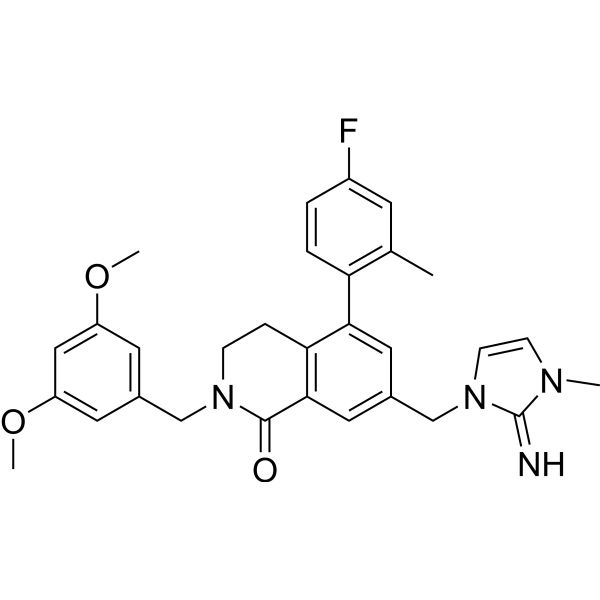
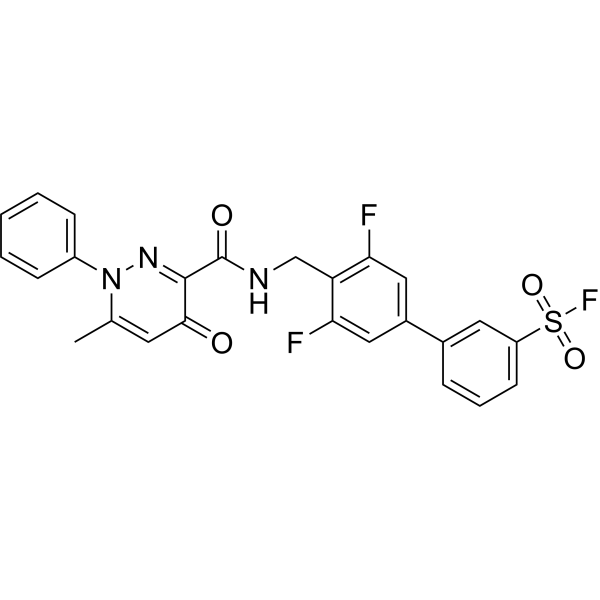
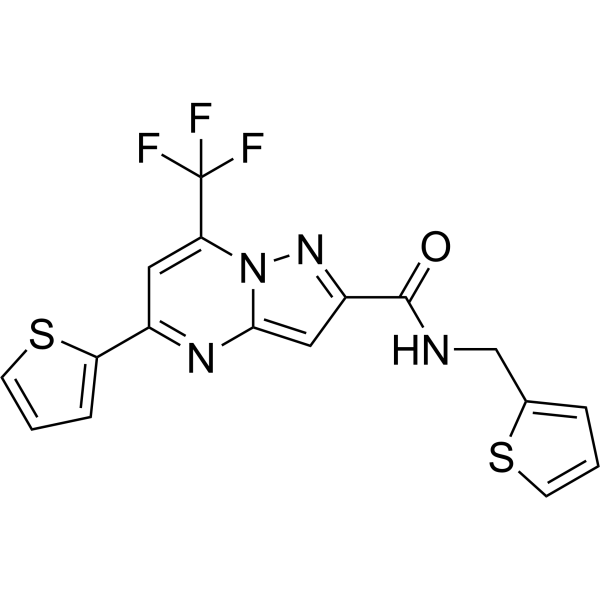
62 Results for "

MYC gene

" in MedChemExpress (MCE) Product Catalog:
Products (62)

62 Results for "MYC gene" in MCE Product Catalog:

60
60 Publications Verification
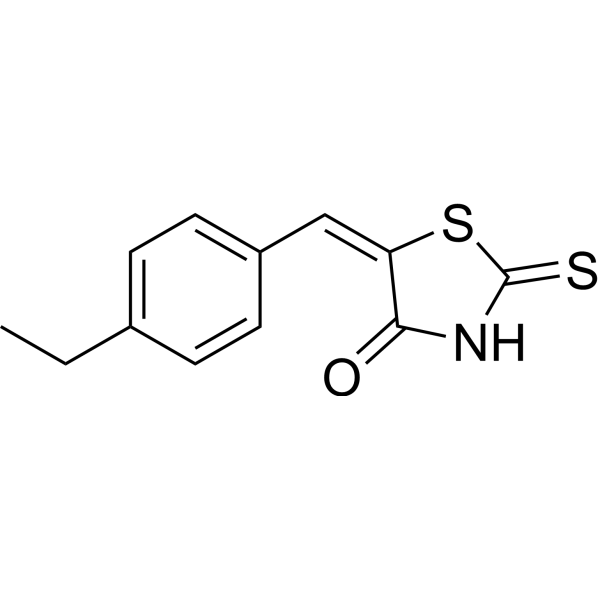
Cat. No.: HY-12702
CAS No.: 403811-55-2
Purity:  99.49%
Target:  

c-Myc Autophagy

Research Areas:  

Cancer

10058-F4 is a c-Myc inhibitor that prevents c-Myc-Max dimerization and transactivation of c-Myc target gene expression.
loading...
    loading...
24
24 Cited Publications
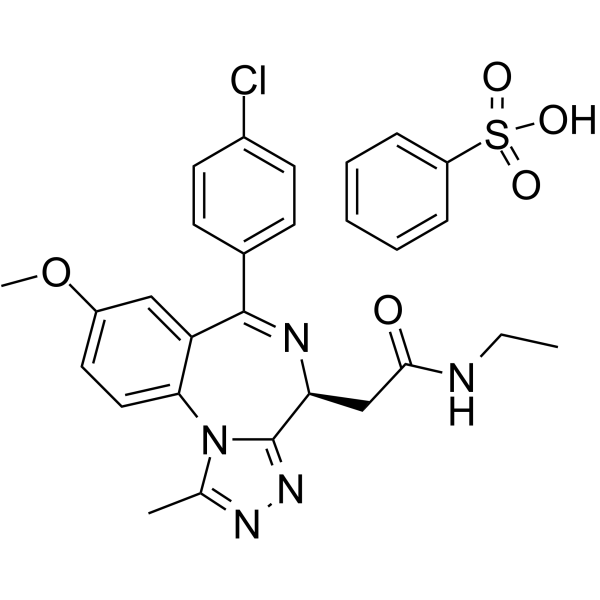
Cat. No.: HY-13032B
CAS No.: 1895049-20-3
Purity:  97.04%
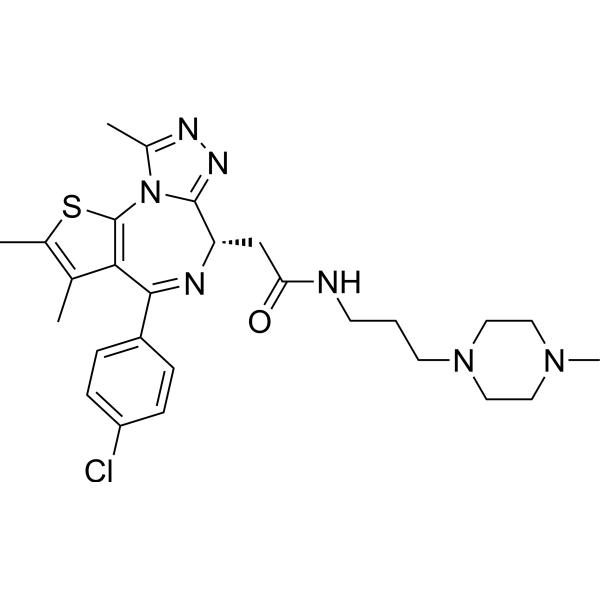
Synonyms: GSK 525762C; I-BET 762 besylate
Research Areas:  

Cancer

Molibresib besylate (GSK 525762C; I-BET 762 besylate) is an orally active pan-BET inhibitor that targets and binds to BRD2, BRD3, BRD4 and BRDT. By competitively occupying acetylated lysine binding sites, Molibresib besylate disrupts the interaction between BET proteins and chromatin, thereby effectively inhibiting MYC expression and target gene transcription. Molibresib besylate exhibits broad antiproliferative activity, which not only inhibits cancer cell growth and induces growth arrest, but also downregulates mitosis-related genes and upregulates the level of p-ERK1/2. When combined with MEK inhibitors, Molibresib besylate shows a significant synergistic effect, reduces tumor burden in mouse models of leukemia, modulates the immune microenvironment and prolongs survival. Molibresib besylate is widely applicable to research related to acute myeloid leukemia, multiple myeloma, triple-negative breast cancer, small-cell lung cancer and various advanced refractory solid tumors .
loading...
    loading...
22
22 Cited Publications
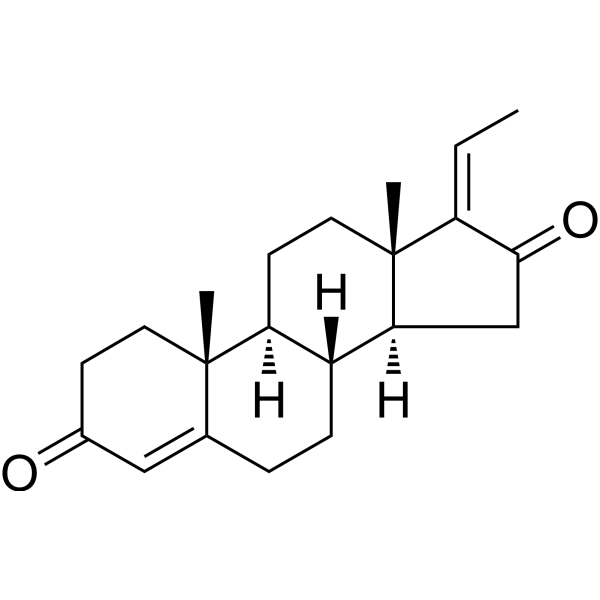
Cat. No.: HY-107738
CAS No.: 95975-55-6
Purity:  99.81%
Synonyms: Z/E-Guggulsterone
Guggulsterone is a plant sterol derived from the gum resin of the tree Commiphora wightii. Guggulsterone inhibits the growth of a wide variety of tumor cells and induces apoptosis through down regulation of antiapoptotic gene products (IAP1, xIAP, Bfl-1/A1, Bcl-2, cFLIP and survivin), modulation of cell cycle proteins (cyclin D1 and c-Myc), activation of caspases and JNK, inhibition of Akt . Guggulsterone, a farnesoid X receptor (FXR) antagonist, with IC50s of 24.06 μM and 39.05 μM for (-)-(E)-Guggulsterone (HY-N7781) and (Z)-Guggulsterone (HY-110066), respectively .
loading...
    loading...
12
12 Cited Publications
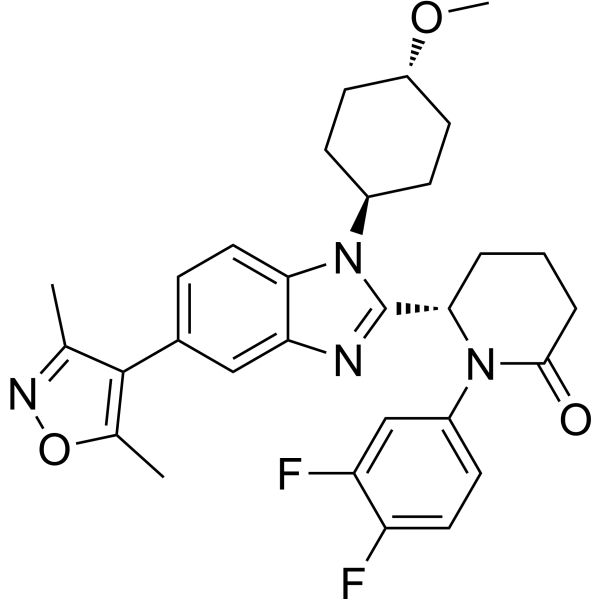
Cat. No.: HY-111784
CAS No.: 2222941-37-7
Purity:  99.94%
Synonyms: CCS1477
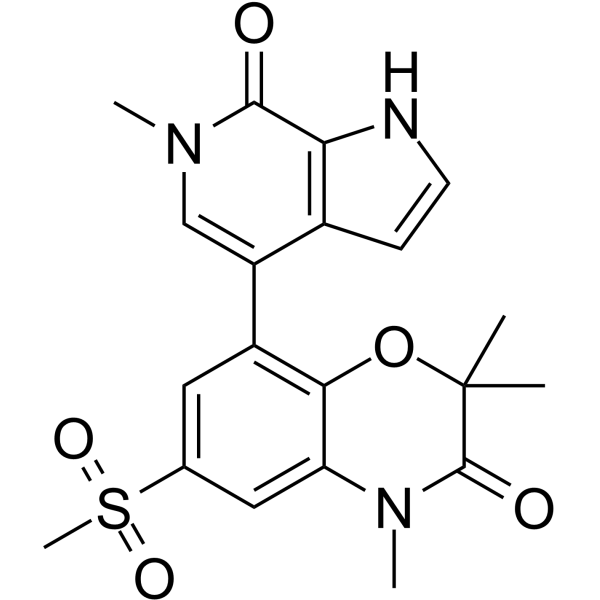
Inobrodib (CCS1477) is an orally active, potent, and selective inhibitor of the p300/CBP bromodomain. Inobrodib binds to p300 and CBP with Kd values of 1.3 and 1.7 nM, respectively, and with 170/130-fold selectivity compared with BRD4 with a Kd of 222 nM. CCS1477 inhibits cell proliferation in prostate cancer cell lines and decreases androgen receptor (AR)- and C-MYC-regulated gene expression .
loading...
    loading...
2
2 Cited Publications
Cat. No.: HY-153367
CAS No.: 2676211-64-4
Purity:  99.15%
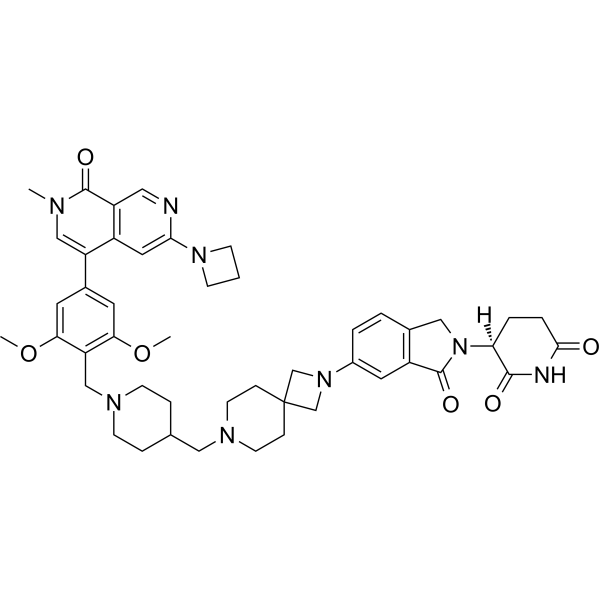
FHD-609 is a BRD9 PROTAC degrader. FHD-609 induces BRD9 degradation, downregulates primary transcripts of HBG/HBD, Myc expression and proliferation gene sets, reduces the levels of synovial sarcoma tumor proliferation markers, and inhibits tumor growth. FHD-609 can be used in research related to advanced synovial sarcoma, SMARCB1-deficient tumors and adrenocortical carcinoma .
loading...
    loading...
2
2 Cited Publications
Cat. No.: HY-12703
CAS No.: 1151813-61-4
Purity:  98.94%
Target:  

c-Myc Autophagy

Research Areas:  

Cancer

KSI-3716 is a potent c-Myc inhibitor that blocks c-MYC/MAX binding to target gene promoters. KSI-3716 is an effective intravesical chemotherapy agent for bladder cancer .
loading...
    loading...
1
1 Cited Publications
Cat. No.: HY-P0312
CAS No.: 2918768-02-0
Target:  

c-Myc

Research Areas:  

Cancer

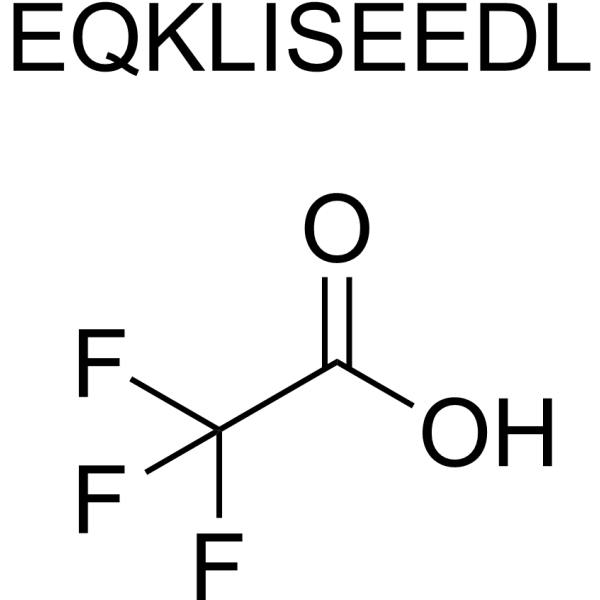
c-Myc Peptide (TFA) is a synthetic peptide corresponding to the C-terminal amino acids (410-419) of human c-myc protein, and participates in regulation of growth-related gene transcription.
loading...
    loading...
1
1 Cited Publications
Cat. No.: HY-159059
Purity:  41.20%
Ganoderma Lucidum/Reishi Extract is a Ganoderma lucidum extract. Ganoderma Lucidum/Reishi Extract reduces the expression of c-Myc, BCL-2, BCL-XL, TERT, PDGFB, eIF4G, Survivin, β-catenin, and eIF4E. Ganoderma Lucidum/Reishi Extract downregulates the gene expression of MMP-9. Ganoderma Lucidum/Reishi Extract upregulates the expression of IL8. Ganoderma Lucidum/Reishi Extract is applicable to the research of inflammatory breast cancer. Ganoderma Lucidum is used in the research of various diseases, such as allergy, arthritis, hypertension, neurasthenia, inflammation, and cancer .
loading...
    loading...
Cat. No.: HY-111485
CAS No.: 1820889-23-3
Purity:  98.29%
Synonyms: INCB-057643
Research Areas:  

Cancer

Ertabresib (INCB-057643) is an orally active BET protein inhibitor. Ertabresib blocks gene transcription by targeting the BET protein family, induces cell cycle arrest and apoptosis by downregulating proto-oncogenes such as c-MYC, and additionally reduces the expression of FOXP3 and PD-L1 to improve the immune microenvironment. It also exerts synergistic effects and overcomes drug resistance when combined with chemotherapy and XPO1 inhibitors. Ertabresib can be used in research related to high-grade B-cell lymphoma with MYC and BCL2 rearrangements, pancreatic cancer, pancreatitis, and metastatic castration-resistant prostate cancer .
loading...
    loading...
Cat. No.: HY-174228
CAS No.: 552829-57-9
Research Areas:  

Cancer

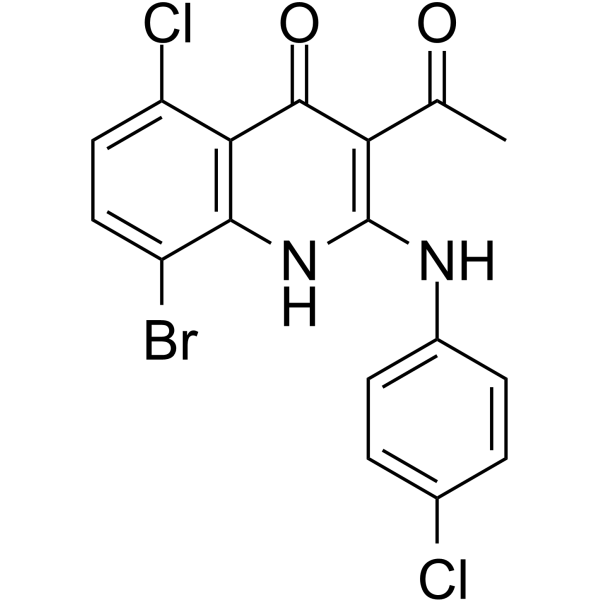
I3IN-002 is a small-molecule RNA-binding protein IGF2BP3 inhibitor with an IC50 value of approximately 2 μM in SEM cells. I3IN-002 interferes with interaction with m6 A-modified mRNAs, disrupting the stabilization of target genes (such as CDK6, MYC, and BCL2) to inhibit leukemic cell growth, induce cell cycle arrest, and promote apoptosis. I3IN-002 is promising for research of B-cell acute lymphoblastic leukemia .
loading...
    loading...
Cat. No.: HY-172113
Target:  

PROTACs YAP c-Myc Apoptosis

Research Areas:  

Cancer

H122 is a PROTAC degrader for TEAD that degrades TEAD1 with a DC50 of 3 nM. H122 exhibits good affinity to TEAD2, TEAD3, and TEAD4 with Ki values of 2.0, 3.6 and 1.6 nM, respectively. H122 relies on binding to TEAD1 and CRBN, functional E3 ligase activity, and a functional proteasome for degradation.H122 induces degradation of TEAD3 and forms a ternary complex with TEAD4 and CRBN/DDB1 to mediate degradation.H122 downregulates expression of Myc target genes. H122 exhibits antitumor efficacy in MSTO-211H mouse xenograft models.H122 can be used for the research of malignant mesothelioma .
loading...
    loading...
Cat. No.: HY-117286
CAS No.: 1349719-98-7
Purity:  99.46%
Synonyms: TEN-010
(S)-JQ-35 (TEN-010) is an orally active, blood-brain barrier-permeable bromodomain inhibitor that selectively targets the bromodomain and extra-terminal domain (BET) protein family (BRD4, BRD3, BRD2 and BRDT). (S)-JQ-35 blocks the activation of Myc gene expression by BRD4, thereby inhibiting cancer cell proliferation and promoting cancer cell apoptosis. (S)-JQ-35 can be used in research related to NUT midline carcinoma and neuroblastoma .
loading...
    loading...
Cat. No.: HY-162919
CAS No.: 2571068-74-9
Target:  

CDK Apoptosis c-Myc

Research Areas:  

Cancer

YK-2168 is a potent and selective CDK9 inhibitor with an IC50 of 5.9 nM. YK-2168 inhibits phosphorylation of the CDK9 substrate pS2-RNA Pol II C-terminal domain. YK-2168 induces apoptosis in tumor cells, suppresses expression of CDK9-regulated genes including MYC and Mcl1, and inhibits tumor growth in CDX mice models. YK-2168 can be used for the research of cancer, such as leukemia .
loading...
    loading...
Cat. No.: HY-172920
Wnt/β-catenin-IN-6 is an orally active Wnt/β-catenin pathway inhibitor. Wnt/β-catenin-IN-6 blocks the AKT/GSK-3β/β-catenin signaling pathway, leading to reduced expression of Wnt target genes (c-Myc, c-Jun). Wnt/β-catenin-IN-6 reduces COX2 expression and IL-8 levels, highlighting its dual anti-inflammatory and antitumor effects. Wnt/β-catenin-IN-6 can induce apoptosis. Wnt/β-catenin-IN-6 serves as a tool for non-small cell lung cancer (NSCLC) research .
loading...
    loading...
Cat. No.: HY-173552
CAS No.: 3067681-36-8
Synonyms: KAT-TCIP
Research Areas:  

Cancer

TCIP3 is a bivalent molecular glue degrader that binds dually to p300/CBP and BCL6. TCIP3 redirects p300 and CBP, thereby activating programmed cell death genes that are normally repressed by the oncogenic driver gene BCL6. TCIP3 induces acetylation of BCL6 and histone tails, inhibits c-MYC transcription. TCIP3 can be used for the research of diffuse large B-cell lymphoma (DLBCL) .
loading...
    loading...
Cat. No.: HY-133121
CAS No.: 2408842-51-1
Purity:  ≥98.0%
Target:  

Apoptosis WDR5

Research Areas:  

Cancer

WDR5-IN-1 is a potent and selective WD repeat domain 5 (WDR5) inhibitor, with a Kd of <0.02 nM. WDR5-IN-1 inhibits MLL1 histone methyltransferase (HMT) activity with an IC50 of 2.2 nM. WDR5-IN-1 diminishes MYC recruitment at WDR5-displaced genes and exhibits potent anti-proliferative effects in CHP-134 (neuroblastoma) and Ramos (Burkitt’s lymphoma) lines .
loading...
    loading...
Cat. No.: HY-149873
CAS No.: 3033748-20-5
Purity:  ≥98.0%
Target:  

WDR5

Research Areas:  

Cancer

Anticancer agent 126 (compound 12) is a WDR5 inhibitor with anticancer effects. Anticancer agent 126 disrupts WDR5-MYC interaction in cells and reduce MYC target gene expression .
loading...
    loading...
Cat. No.: HY-126979
CAS No.: 314049-21-3
Purity:  99.81%
Target:  

c-Myc

Research Areas:  

Cancer

Mycro2 is an inhibitor of c-Myc/Max dimer and DNA binding, with an IC50 value of 23 μM for the inhibition of Myc/Max DNA binding activity. Mycro2 can inhibit c-myc-dependent cell proliferation, gene transcription and oncogenic transformation .
loading...
    loading...
Cat. No.: HY-RS08877
Research Areas:  

Others

MYC Human Pre-designed siRNA Set A contains three designed siRNAs for MYC gene (Human), as well as a negative control, a positive control, and a FAM-labeled negative control.

loading...
    loading...
Cat. No.: HY-145748
CAS No.: 188630-47-9
Research Areas:  

Cancer

SYUIQ-5 is a G-quadruplex ligand. SYUIQ-5 stabilizes G-quadruplex and induce senescence. SYUIQ-5 inhibits c-myc gene promoter activity. SYUIQ-5 induces cancer cells autophagy by triggering telomere damage through TRF2 delocalization from telomeres .
loading...
    loading...

