



Ertabresib
Based on 1 Customer Validation
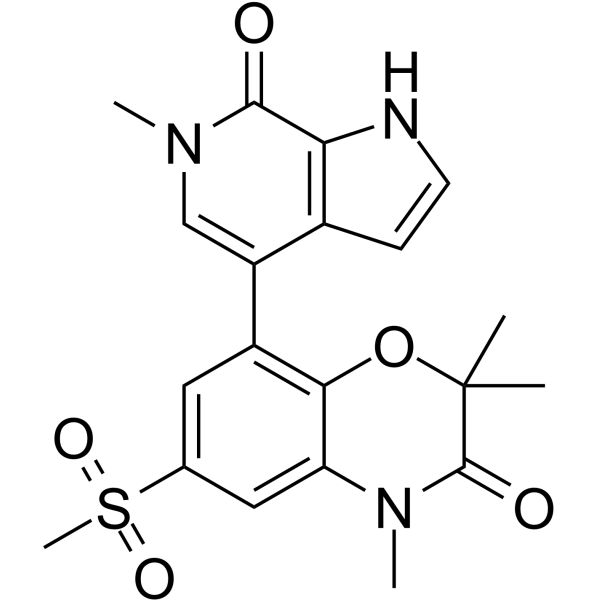
Ertabresib (INCB-057643) is an orally active BET protein inhibitor. Ertabresib blocks gene transcription by targeting the BET protein family, induces cell cycle arrest and apoptosis by downregulating proto-oncogenes such as c-MYC, and additionally reduces the expression of FOXP3 and PD-L1 to improve the immune microenvironment. It also exerts synergistic effects and overcomes drug resistance when combined with chemotherapy and XPO1 inhibitors. Ertabresib can be used in research related to high-grade B-cell lymphoma with MYC and BCL2 rearrangements, pancreatic cancer, pancreatitis, and metastatic castration-resistant prostate cancer.
Nos produits utilisent uniquement pour la recherche. Nous ne vendons pas aux patients.
- Pureté : 98.34%
- CAS No.: 1820889-23-3
- Formule: C20H21N3O5S
- Masse moléculaire:415.46
-
Stockage:Powder -20°C, 3 years , 4°C, 2 years ; In solvent -80°C, 2 years , -20°C, 1 year

To place orders, for customer services and technical support, please contact: MedChemExpress USA
Tel: 609-228-6898 E-mail: [email protected] [email protected]


-
 Activité biologique
-
Chemical Information
-
Solvant et solubilité
- Protocole
- Pureté et documentation
- Références
-
 Help & FAQs


-
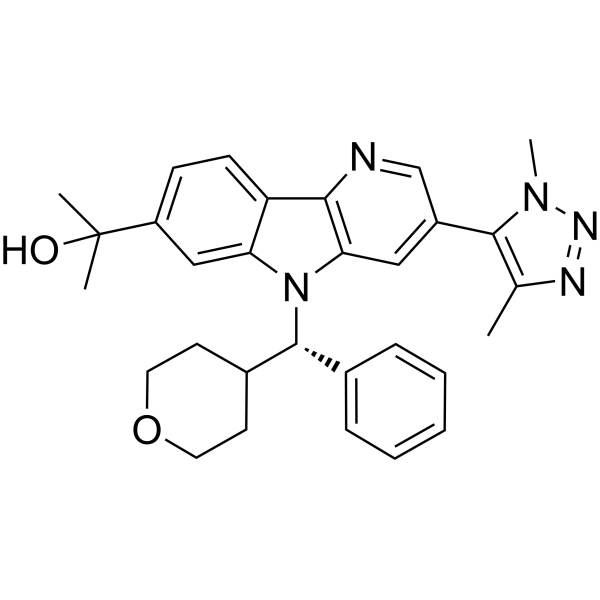
HY-101567
BMS-986158BET Inhibitor -
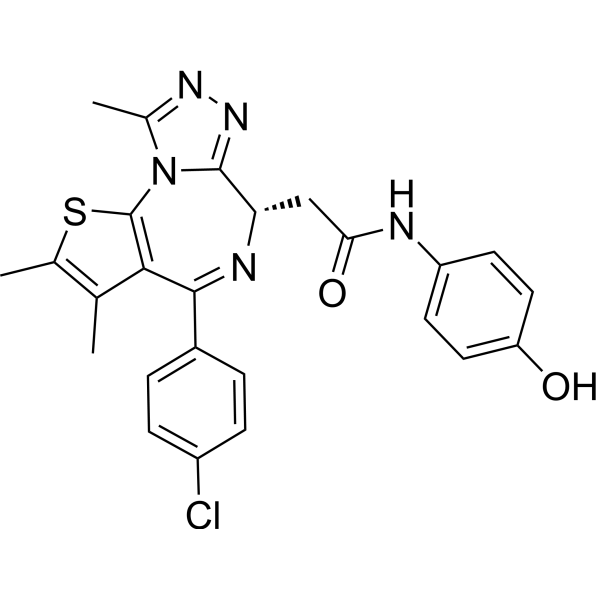
HY-15743
BirabresibBRD2/3/4 Inhibitor -
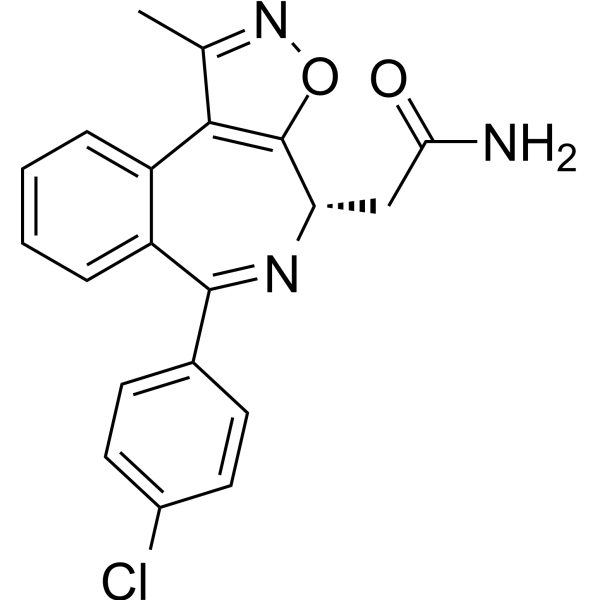
HY-12863
PelabresibBET Inhibitor -
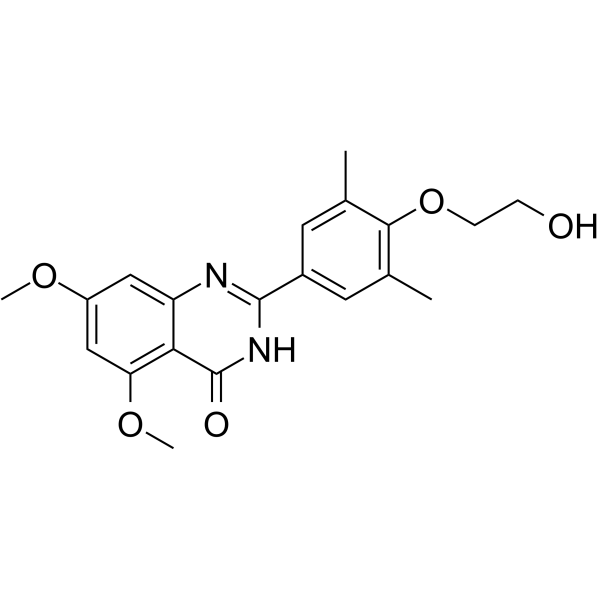
HY-16652
ApabetaloneBET Inhibitor -
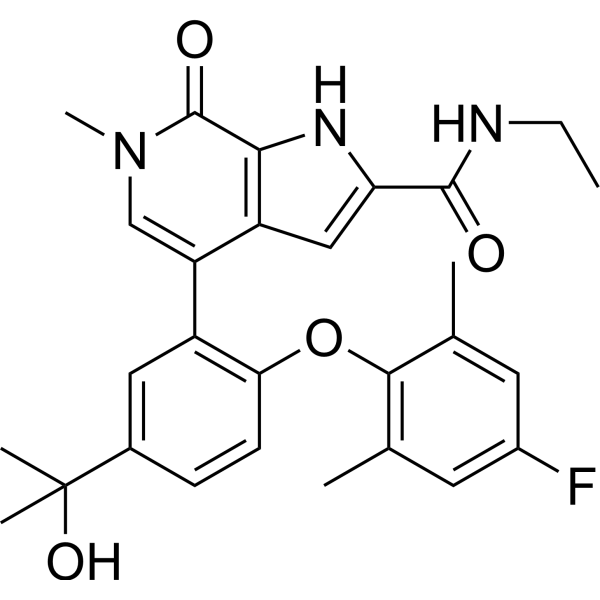
HY-112090
ABBV-744BD2 Inhibitor -
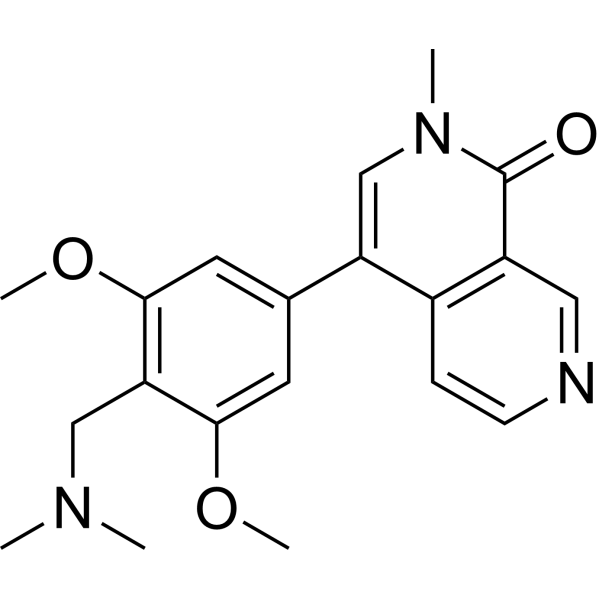
HY-100351
BI-7273BRD9 Inhibitor -
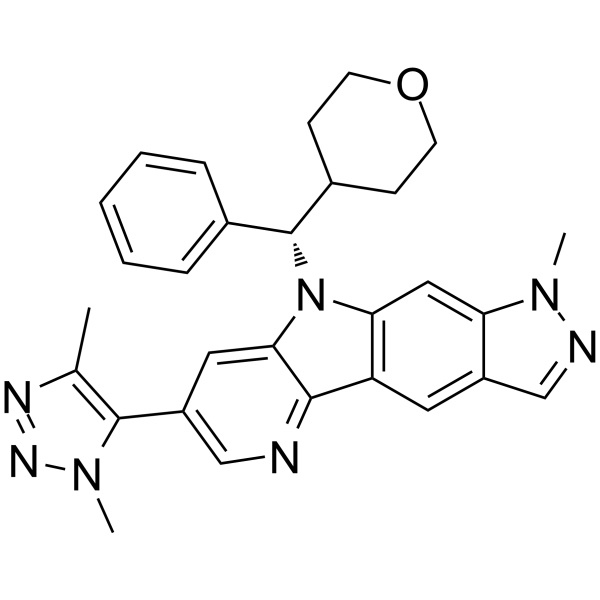
HY-134463
NHWD-870BET Family Bromodomain Inhibitor -
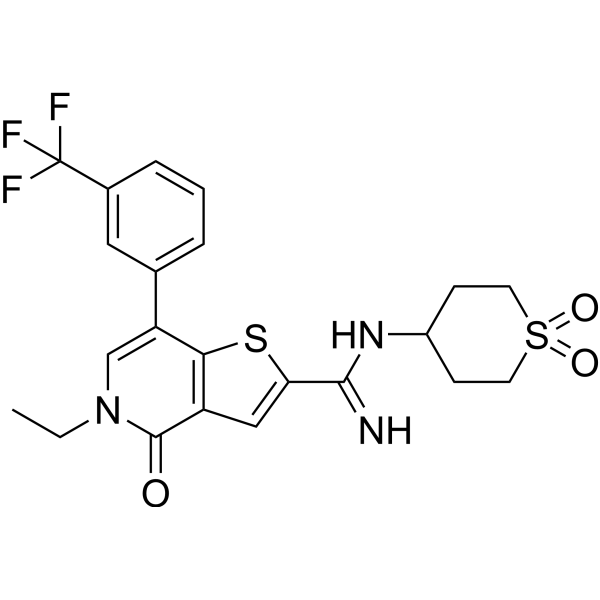
HY-18975
I-BRD9Chemical Probe -
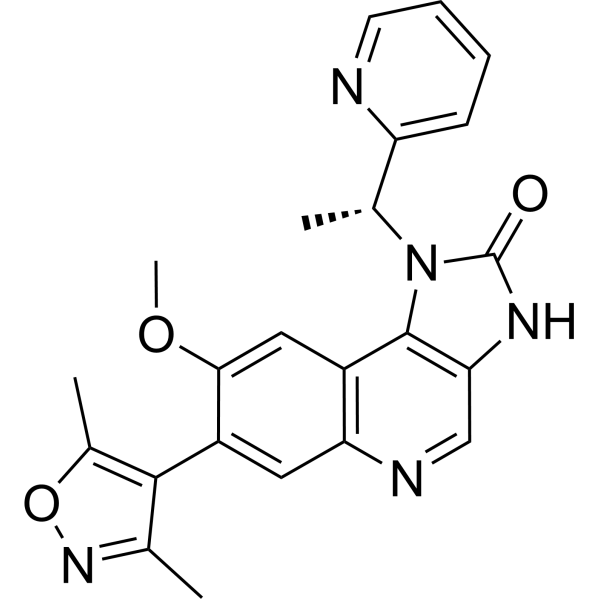
HY-13235
I-BET151BRD2/3/4 Inhibitor -
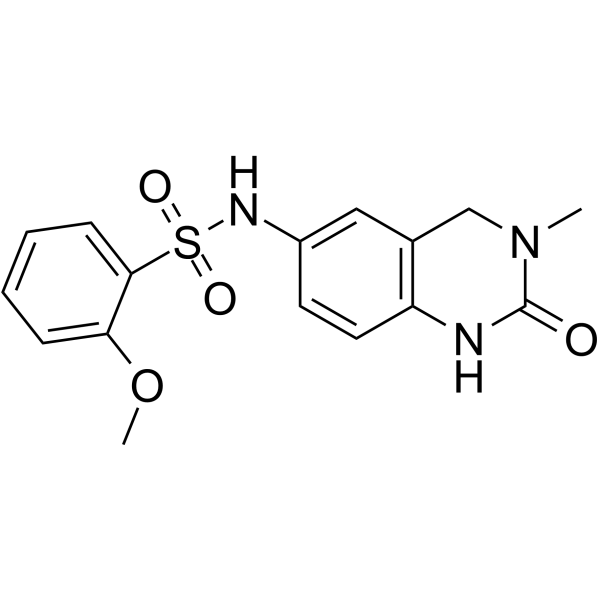
HY-16586
PFI-1BET Inhibitor -
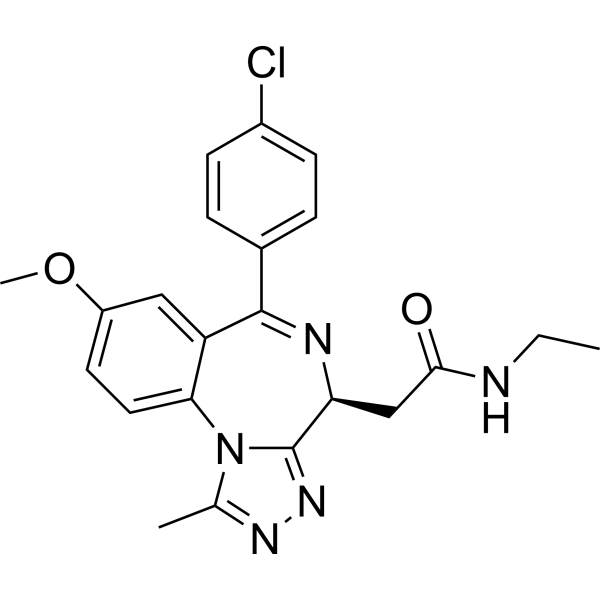
HY-13032
MolibresibBET Inhibitor -
HY-78695
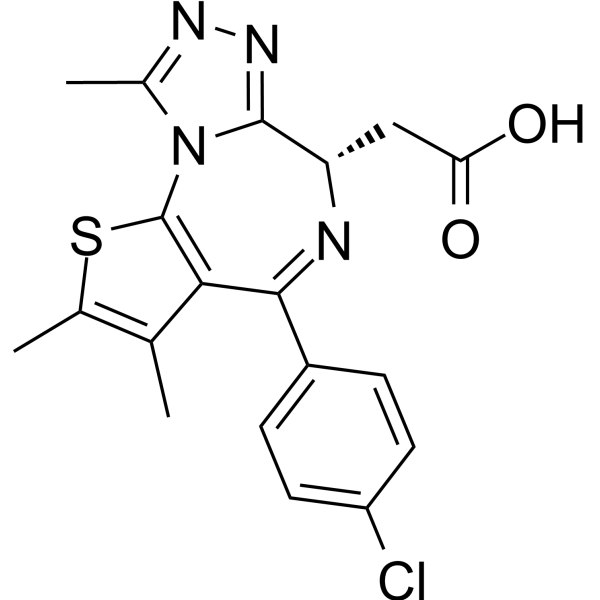
JQ-1 carboxylic acidBET Bromodomain Inhibitor


Activité biologique
Description
|
BET |
FOXP3 |
Cellular Effect
|
Cell Line

|
Type | Value | Description | References |
|---|---|---|---|---|
| ASPC1 | IC50 |
204.9 nM
|
Inhibition of cell viability against human Aspc-1 pancreatic cancer cells assessed by MTT assay following 72 hours of treatment.
Inhibition of cell viability against human Aspc-1 pancreatic cancer cells assessed by MTT assay following 72 hours of treatment.
|
37899423 |
| PANC-1 | IC50 |
2790 nM
|
Inhibition of cell viability against human PANC-1 pancreatic cancer cells assessed by MTT assay following 72 hours of treatment.
Inhibition of cell viability against human PANC-1 pancreatic cancer cells assessed by MTT assay following 72 hours of treatment.
|
37899423 |
| CAPAN-1 | IC50 |
1040 nM
|
Inhibition of cell viability against human CAPAN-1 pancreatic cancer cells assessed by MTT assay following 72 hours of treatment.
Inhibition of cell viability against human CAPAN-1 pancreatic cancer cells assessed by MTT assay following 72 hours of treatment.
|
37899423 |
| DU-145 | EC50 |
5.8 μM
|
Antiproliferative activity against human DU145 prostate cancer cells assessed via MTT assay after 72 hours of incubation.
Antiproliferative activity against human DU145 prostate cancer cells assessed via MTT assay after 72 hours of incubation.
|
33396954 |
| PC-3 | EC50 |
0.35 μM
|
Antiproliferative activity against human PC3 prostate cancer cells assessed via MTT assay after 72 hours of incubation.
Antiproliferative activity against human PC3 prostate cancer cells assessed via MTT assay after 72 hours of incubation.
|
33396954 |
| 22Rv1 | EC50 |
0.43 μM
|
Antiproliferative activity against human 22Rv1 prostate cancer cells assessed via MTT assay after 72 hours of incubation.
Antiproliferative activity against human 22Rv1 prostate cancer cells assessed via MTT assay after 72 hours of incubation.
|
33396954 |
| LNCaP | EC50 |
0.17 μM
|
Antiproliferative activity against human LNCaP prostate cancer cells assessed via MTT assay after 72 hours of incubation.
Antiproliferative activity against human LNCaP prostate cancer cells assessed via MTT assay after 72 hours of incubation.
|
33396954 |
| VCaP | EC50 |
0.12 μM
|
Antiproliferative activity against human VCaP prostate cancer cells assessed via MTT assay after 72 hours of incubation.
Antiproliferative activity against human VCaP prostate cancer cells assessed via MTT assay after 72 hours of incubation.
|
33396954 |
| DU-145 | CC50 |
>5 μM
|
Cytotoxicity against human DU145 prostate cancer cells assessed via trypan blue staining after 72 hours of incubation.
Cytotoxicity against human DU145 prostate cancer cells assessed via trypan blue staining after 72 hours of incubation.
|
33396954 |
| PC-3 | CC50 |
>5 μM
|
Cytotoxicity against human PC3 prostate cancer cells assessed via trypan blue staining after 72 hours of incubation.
Cytotoxicity against human PC3 prostate cancer cells assessed via trypan blue staining after 72 hours of incubation.
|
33396954 |
| 22Rv1 | CC50 |
>5 μM
|
Cytotoxicity against human 22Rv1 prostate cancer cells assessed via trypan blue staining after 72 hours of incubation.
Cytotoxicity against human 22Rv1 prostate cancer cells assessed via trypan blue staining after 72 hours of incubation.
|
33396954 |
| LNCaP | CC50 |
>5 μM
|
Cytotoxicity against human LNCaP prostate cancer cells assessed via trypan blue staining after 72 hours of incubation.
Cytotoxicity against human LNCaP prostate cancer cells assessed via trypan blue staining after 72 hours of incubation.
|
33396954 |
| VCaP | CC50 |
>5 μM
|
Cytotoxicity against human VCaP prostate cancer cells assessed via trypan blue staining after 72 hours of incubation.
Cytotoxicity against human VCaP prostate cancer cells assessed via trypan blue staining after 72 hours of incubation.
|
33396954 |
| DU-145 | EC50 |
0.53 μM
|
Inhibition of colony-forming capability against human DU145 prostate cancer cells assessed via clonogenic assay.
Inhibition of colony-forming capability against human DU145 prostate cancer cells assessed via clonogenic assay.
|
33396954 |
| PC-3 | EC50 |
0.53 μM
|
Inhibition of colony-forming capability against human PC3 prostate cancer cells assessed via clonogenic assay.
Inhibition of colony-forming capability against human PC3 prostate cancer cells assessed via clonogenic assay.
|
33396954 |
| 22Rv1 | EC50 |
0.08 μM
|
Inhibition of colony-forming capability against human 22Rv1 prostate cancer cells assessed via clonogenic assay.
Inhibition of colony-forming capability against human 22Rv1 prostate cancer cells assessed via clonogenic assay.
|
33396954 |
| LNCaP | EC50 |
0.09 μM
|
Inhibition of colony-forming capability against human LNCaP prostate cancer cells assessed via clonogenic assay.
Inhibition of colony-forming capability against human LNCaP prostate cancer cells assessed via clonogenic assay.
|
33396954 |
| VCaP | EC50 |
0.03 μM
|
Inhibition of colony-forming capability against human VCaP prostate cancer cells assessed via clonogenic assay.
Inhibition of colony-forming capability against human VCaP prostate cancer cells assessed via clonogenic assay.
|
33396954 |
| DU-145 | EC50 |
3.04 μM
|
Inhibition of sphere-forming capability against human DU145 prostate cancer cells assessed via prostato-sphere-forming assay.
Inhibition of sphere-forming capability against human DU145 prostate cancer cells assessed via prostato-sphere-forming assay.
|
33396954 |
| PC-3 | EC50 |
0.72 μM
|
Inhibition of sphere-forming capability against human PC3 prostate cancer cells assessed via prostato-sphere-forming assay.
Inhibition of sphere-forming capability against human PC3 prostate cancer cells assessed via prostato-sphere-forming assay.
|
33396954 |
| 22Rv1 | EC50 |
0.20 μM
|
Inhibition of sphere-forming capability against human 22Rv1 prostate cancer cells assessed via prostato-sphere-forming assay.
Inhibition of sphere-forming capability against human 22Rv1 prostate cancer cells assessed via prostato-sphere-forming assay.
|
33396954 |
| LNCaP | EC50 |
0.18 μM
|
Inhibition of sphere-forming capability against human LNCaP prostate cancer cells assessed via prostato-sphere-forming assay.
Inhibition of sphere-forming capability against human LNCaP prostate cancer cells assessed via prostato-sphere-forming assay.
|
33396954 |
| VCaP | EC50 |
0.17 μM
|
Inhibition of sphere-forming capability against human VCaP prostate cancer cells assessed via prostato-sphere-forming assay.
Inhibition of sphere-forming capability against human VCaP prostate cancer cells assessed via prostato-sphere-forming assay.
|
33396954 |
In Vitro
Ertabresib (1 nM-25 µM; 7-12 days) potently inhibits colony formation and prostate sphere formation in prostate cancer cell lines[1].
Ertabresib (72 h) exerts synergistic or additive effects on inhibiting cell growth in prostate cancer cell lines when combined with Docetaxel (HY-B0011), Olaparib (HY-10162), or Carboplatin (HY-17393)[1].
Ertabresib (500 nM; washed out after 72 h pretreatment) induces complete recovery of cell growth in 22Rv1 cells, but combined treatment with Docetaxe results in more sustained growth inhibition and reduced clonogenicity[1].
Ertabresib (1 mM for TMD8; 2.5 mM for OCI-LY19; 24 h) exerts a synergistic effect with Selinexor to downregulate the mRNA and protein expression levels of c-Myc in HGBCL-DH cell lines[2].
Ertabresib (in combination with Selinexor) induces DNA damage and downregulates the phosphorylation level of DNA damage repair kinases in TP53-mutant TMD8 cells, while it upregulates the expression levels of p53 and its downstream targets in TP53-wild-type OCI-LY19 cells [2].
Ertabresib inhibits cell proliferation in pancreatic cancer cell lines (Aspc-1, PANC-1, CAPAN-1, Panc1342, PanAsc 2159) following 72 h treatment[3].
Ertabresib (250 nM-10 mM; 24 h) increases p27KIP1 protein expression in pancreatic cancer cells (Aspc-1, PanAsc 2159)[3].
Ertabresib (500 nM-1 mM; 24 h-72 h) downregulates PD-L1 protein and mRNA expression in tumor-conditioned medium-stimulated mouse macrophage cell line RAW 264.7 and pancreatic cancer cells (Aspc-1, PanAsc 2159)[3].
Ertabresib (100 nM; 4 days) significantly reduces FOXP3 mRNA expression levels in in vitro-activated mouse primary CD4 T cells[3].
MedChemExpress (MCE) has not independently confirmed the accuracy of these methods. They are for reference only.
-
Cell Line:TP53-mutated (FN, HF, TMD8, VAL, Toledo) and TP53 wild-type (OCI-LY19, EJ, Pfeiffer, WILL2) HGBCL-DH cells
-
Concentration:15.6 nM, 31.25 nM, 62.5 nM, 125 nM, 250 nM, 500 nM, 1 mM, 2 mM, 2.5 mM, 5 mM, 10 mM
-
Incubation Time:72 h
-
Result:Decreased cell viability in all tested cell lines in a dose-dependent manner and produced a significant synergistic inhibitory effect when combined with XPO1 inhibitors.
-
Cell Line:TP53-mutated (VAL, TMD8, Toledo) and TP53 wild-type (OCI-LY19, EJ, Pfeiffer, WILL2) HGBCL-DH cells, along with MCA cells
-
Concentration:500 nM, 625 nM, 1 mM, 1.25 mM, 2 mM, 2.5 mM, 5 mM, 10 mM
-
Incubation Time:72 h
-
Result:Induced cell apoptosis as a monotherapy, and synergistically increased the proportion of early and late apoptotic cells when combined with XPO1 inhibitors (Selinexor or Eltanexor).
-
Cell Line:TMD8 and OCI-LY19 cells
-
Concentration:1 mM (for TMD8), 2.5 mM (for OCI-LY19)
-
Incubation Time:24 h
-
Result:Significantly downregulated the mRNA transcriptional levels of the MYC gene in cells, with the combination treatment showing a stronger inhibitory effect than monotherapy.
-
Cell Line:mouse macrophage cell line RAW 264.7, primary murine CD4 T cells, pancreatic cancer cell lines
-
Concentration:100 nM, 500 nM, 1mM
-
Incubation Time:24 h, 72 h or 4 days
-
Result:Reduced the mRNA and protein surface expression of PD-L1 in RAW 264.7 macrophages and pancreatic cancer cells; and significantly reduced FOXP3 mRNA expression in in vitro polarized CD4 T cells, indicating its potential to reverse the immunosuppressive microenvironment.
-
Cell Line:Aspc-1 and PanAsc 2159
-
Concentration:250 nM, 1 mM, 2 mM
-
Incubation Time:24 h
-
Result:Increased the expression of the cell cycle regulator protein p27, indicating the induction of cell cycle arrest.
In Vivo
Ertabresib (10 mg/kg; p.o.; once daily; 7 days) alleviates pancreatitis, reduces pancreatic weight, decreases infiltrating activated CD4 T cells, and downregulates the expressions of p-STAT3, COX2, and α-SMA, an activation marker of stellate cells, in a caerulein (HY-A0190)-induced acute pancreatitis model in KC mice[3].
MedChemExpress (MCE) has not independently confirmed the accuracy of these methods. They are for reference only.
-
Animal Model:Nude Foxn1 male mice (4-5 weeks old) were established by injecting 5-10 x 106 22Rv1 human prostate cancer cells into the right flank[1]
-
Dosage:3 mg/kg; 10 mg/kg
-
Administration:p.o.; the 3 mg/kg group was dosed twice daily (7 days a week), and the 10 mg/kg group was dosed once daily (5 days a week); the treatment duration lasted for 16 days up to the experimental endpoint
-
Result:Significantly inhibited tumor growth in mice.
Significantly reduced the final tumor weight.
-
Animal Model:Male NOD-Prkdc-/- IL2rg-/- (NPI) immunodeficient mice, pretreated with total body irradiation, were subcutaneously injected with 1 × 10⁷ TMD8 cells to establish a TP53-mutant HGBCL-DH xenograft model[2]
-
Dosage:10 mg/kg
-
Administration:p.o.; once daily, treated in combination with Selinexor for 2 weeks
-
Result:Combined with Selinexor significantly slowed tumor growth and reduced tumor burden more potently than either monotherapy alone, without significant body weight loss or other unacceptable adverse effects.
TUNEL staining confirmed that the combined treatment induced a higher apoptosis rate.
-
Animal Model:KPC genetically engineered mouse model (LSL-KrasG12D/+; LSL-Trp53R172H/+; Pdx-1-Cre) that mimics human pancreatic cancer development and metastasis characteristics[3]
-
Dosage:10 mg/kg
-
Administration:p.o.; administered daily for 2 months after tumor confirmation by palpation, then 5 days/week for those surviving beyond 2 months; for microenvironment analysis, administered 5 days/week starting from 4 weeks of age for a duration of 16 weeks
-
Result:Significantly prolonged the survival of KPC mice bearing mature tumors (average extension of 55 days) and reduced metastatic burden.
Reduced the infiltration of total immune cells and CD4 T cells in the pancreas, and T cells in the liver.
Decreased the expression of FOXP3 and PD-L1, promoting favorable changes in the immune microenvironment.
-
Animal Model:KC genetically engineered mouse model (LSL-KrasG12D/+; Pdx-1-Cre) stimulated with caerulein to induce an acute pancreatitis model[3]
-
Dosage:10 mg/kg
-
Administration:p.o.; administered daily for 1 week starting the day after caerulein stimulation
-
Result:Significantly attenuated pancreatitis, reduced pancreas weight, decreased the infiltration of activated CD4 T cells, and downregulated the expression of inflammation and fibrosis markers such as p-STAT3, COX2, and α-SMA.
Essai clinique
| NCT Number | Sponsor | Condition | Start Date |
Phase
|
|---|---|---|---|---|
| NCT01329991 | 2011-05 | PHASE1 |


Chemical Information
-
CAS No. 1820889-23-3
-
Appearance Solid
-
Masse moléculaire 415.46
-
Formule C20H21N3O5S
-
Color White to off-white
-
SMILES
O=C1C(C)(C)OC2=C(C3=CN(C)C(C4=C3C=CN4)=O)C=C(S(=O)(C)=O)C=C2N1C
-
Synonyms
INCB-057643
-
Livraison
Room temperature in continental US; may vary elsewhere.
-
Stockage
Powder -20°C 3 years 4°C 2 years In solvent -80°C 2 years -20°C 1 year


Solvant et solubilité
In Vitro:
DMSO : 62.5 mg/mL (150.44 mM; Need ultrasonic; Hygroscopic DMSO has a significant impact on the solubility of product, please use newly opened DMSO)
Please refer to the solubility information to select the appropriate solvent. Once prepared, please aliquot and store the solution to prevent product inactivation from repeated freeze-thaw cycles.
Storage method and period of stock solution: -80°C, 2 years; -20°C, 1 year. When stored at -80°C, please use it within 2 years. When stored at -20°C, please use it within 1 year.
Please refer to the solubility information to select the appropriate solvent. Once prepared, please aliquot and store the solution to prevent product inactivation from repeated freeze-thaw cycles.
Storage method and period of stock solution: -80°C, 2 years; -20°C, 1 year. When stored at -80°C, please use it within 2 years. When stored at -20°C, please use it within 1 year.
Concentration (start) × Volume (start) = Concentration (final) × Volume (final)
In Vivo:
Select the appropriate dissolution method based on your experimental animal and administration route.
- For the following dissolution methods, please ensure to first prepare a clear stock solution using an In Vitro approach and then sequentially add co-solvents:
- To ensure reliable experimental results, the clarified stock solution can be appropriately stored based on storage conditions. As for the working solution for In Vivo experiments, it is recommended to prepare freshly and use it on the same day.
- The percentages shown for the solvents indicate their volumetric ratio in the final prepared solution. If precipitation or phase separation occurs during preparation, heat and/or sonication can be used to aid dissolution.
Add each solvent one by one: 10% DMSO 40% PEG300 5% Tween-80 45% Saline
Solubility: ≥ 2.08 mg/mL (5.01 mM); Clear solution
This protocol yields a clear solution of ≥ 2.08 mg/mL (saturation unknown).
Taking 1 mL working solution as an example, add 100 μL DMSO stock solution (20.8 mg/mL) to 400 μL PEG300, and mix evenly; then add 50 μL Tween-80 and mix evenly; then add 450 μL Saline to adjust the volume to 1 mL.
Preparation of Saline: Dissolve 0.9 g sodium chloride in ddH₂O and dilute to 100 mL to obtain a clear Saline solution.
Add each solvent one by one: 10% DMSO 90% (20% SBE-β-CD in Saline)
Solubility: ≥ 2.08 mg/mL (5.01 mM); Clear solution
This protocol yields a clear solution of ≥ 2.08 mg/mL (saturation unknown).
Taking 1 mL working solution as an example, add 100 μL DMSO stock solution (20.8 mg/mL) to 900 μL 20% SBE-β-CD in Saline, and mix evenly.
Preparation of 20% SBE-β-CD in Saline (4°C, storage for one week): 2 g SBE-β-CD powder is dissolved in 10 mL Saline, completely dissolve until clear.
In Vivo Dissolution Calculator
Please enter the basic information of animal experiments:
-
-
-
-
Recommended: Prepare an additional quantity of animals to account for potential losses during experiments.
Please enter your animal formula composition:
-
%DMSO +
Recommended: Keep the proportion of DMSO in working solution below 2% if your animal is weak.
-
%+
-
+%Tween-80 + +
-
%Saline +
The co-solvents required include: DMSO, . All of co-solvents are available by MedChemExpress (MCE). , Tween 80. All of co-solvents are available by MedChemExpress (MCE).
Working solution concentration: 0.22 mg/mL
Method for preparing stock solution: mg drug dissolved in μL DMSO. Stock solution concentration: mg/mL.
1. Take μL DMSO stock solution;
2. Add μL .
μL , mix evenly;
3. Then add μL Tween 80, mix evenly;
4. Then add μL
Please ensure that the stock solution in the first step is dissolved to a clear state, and add co-solvents in sequence. You can use ultrasonic heating (ultrasonic cleaner, recommended frequency 20-40 kHz), vortexing, etc. to assist dissolution.


Pureté et documentation
-
Fiche technique (312 KB)
-
SDS (396 KB)
- English - EN (396 KB)
- Français - FR (396 KB)
- Deutsch - DE (396 KB)
- Norwegian - NO (396 KB)
- Español - ES (396 KB)
- Swedish - SV (396 KB)
- Italian - IT (396 KB)
- Korean - KR (396 KB)
- Portuguese - PT (396 KB)
-
Instruction de manipulation (2659 KB)
Références


Complete Stock Solution Preparation Table
Please refer to the solubility information to select the appropriate solvent. Once prepared, please aliquot and store the solution to prevent product inactivation from repeated freeze-thaw cycles.
Storage method and period of stock solution: -80°C, 2 years; -20°C, 1 year. When stored at -80°C, please use it within 2 years. When stored at -20°C, please use it within 1 year.
| Optional Solvent | Concentration Solvent Mass | 1 mg | 5 mg | 10 mg | 25 mg |
|---|---|---|---|---|---|
| DMSO | 1 mM | 2.4070 mL | 12.0349 mL | 24.0697 mL | 60.1743 mL |
| 5 mM | 0.4814 mL | 2.4070 mL | 4.8139 mL | 12.0349 mL | |
| 10 mM | 0.2407 mL | 1.2035 mL | 2.4070 mL | 6.0174 mL | |
| 15 mM | 0.1605 mL | 0.8023 mL | 1.6046 mL | 4.0116 mL | |
| 20 mM | 0.1203 mL | 0.6017 mL | 1.2035 mL | 3.0087 mL | |
| 25 mM | 0.0963 mL | 0.4814 mL | 0.9628 mL | 2.4070 mL | |
| 30 mM | 0.0802 mL | 0.4012 mL | 0.8023 mL | 2.0058 mL | |
| 40 mM | 0.0602 mL | 0.3009 mL | 0.6017 mL | 1.5044 mL | |
| 50 mM | 0.0481 mL | 0.2407 mL | 0.4814 mL | 1.2035 mL | |
| 60 mM | 0.0401 mL | 0.2006 mL | 0.4012 mL | 1.0029 mL | |
| 80 mM | 0.0301 mL | 0.1504 mL | 0.3009 mL | 0.7522 mL | |
| 100 mM | 0.0241 mL | 0.1203 mL | 0.2407 mL | 0.6017 mL |


Ertabresib Related Classifications
HY-111485 Related Classifications
 Powered by Bioz
Keywords
- Ertabresib
- 1820889-23-3
- INCB-057643
- INCB057643
- INCB 057643
- Epigenetic Reader Domain
- Apoptosis
- c-Myc
- FOXP
- PD-1/PD-L1
- TP53
- pancreatitis
- high-grade B-cell lymphoma with MYC and BCL2 rearrangements
- BET protein
- pancreatic cancer
- RAW 264.7 macrophage-like cells
- MYC
- CD4 T cells
- BCL2
- metastatic castration-resistant prostate cancer
- Inhibitor
- inhibitor
- inhibit