1. Search Result
Search Result
Results for "

NMRI mice

" in MedChemExpress (MCE) Product Catalog:

25

Inhibitors & Agonists

1

Biochemical Assay Reagents

3

Peptides

1

Natural
Products

Cat. No. Product Name Target Research Areas Chemical Structure
  • HY-B1172
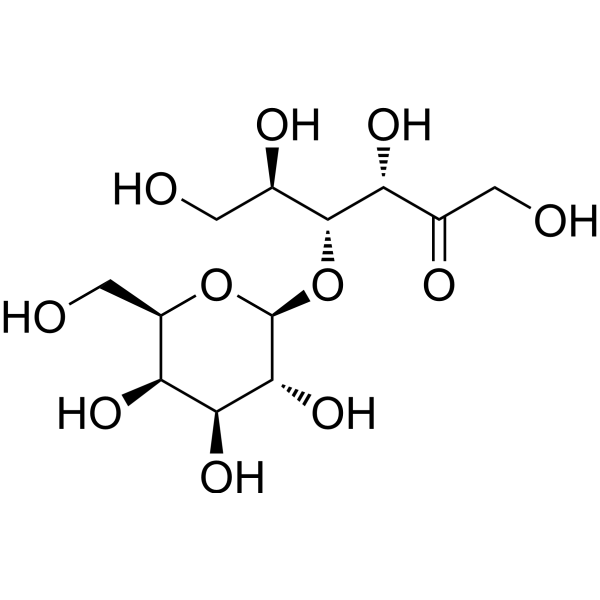
    Lactulose
    1 Publications Verification

    4-O-β-D-Galactopyranosyl-D-fructose

    Bacterial Interleukin Related DNA/RNA Synthesis Infection Inflammation/Immunology Endocrinology Cancer
    Lactulose is an orally active galactose-fructose disaccharide. Lactulose suppresses upregulation of TNF-α and IL-6. Lactulose decreases the degree of DNA damage. Lactulose exhibits many of the properties of other oligosaccharides, including increasing the numbers of Bifidobacteria in feces. Lactulose restores the structure and composition of the intestinal microbiota, mitigates inflammation, and suppresses inflammatory tumorigenesis in mice with colitis-associated cancer. Lactulose can be used in the research of constipation .
    Lactulose
  • HY-Y1217

    Hydroxycyclohexane; NSC 54711; Naxol; Cyclohexanol

    Environmental Pollutants Biochemical Assay Reagents Endocrinology
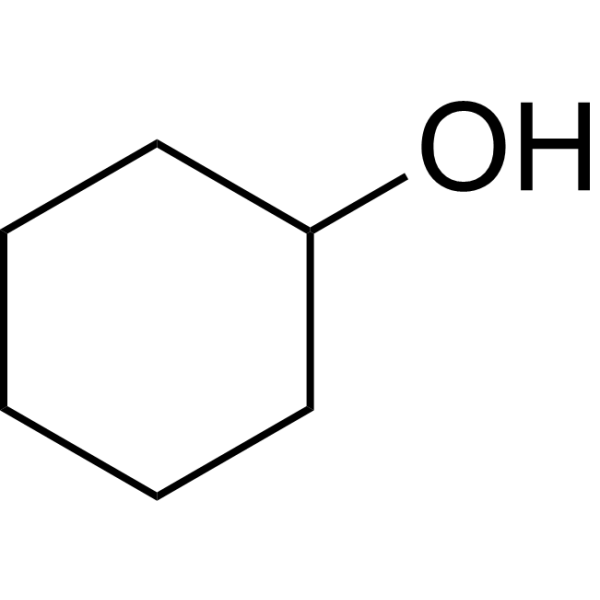
    1-Cyclohexanol (Hydroxycyclohexane; NSC 5471) is an orally active Cramer Class I flavor ingredient that can be used in fragrances. 1-Cyclohexanol has a wide margin of safety and is environmentally friendly .
    1-Cyclohexanol
  • HY-105174A

    JAK FAK Neurological Disease Metabolic Disease
    BPC 157 acetate is an orally active peptide. BPC 157 acetate exhibits multiple activities such as promoting wound healing, tendon healing, neuroprotection, and gastrointestinal protection. BPC 157 acetate can be used in the research of tendon injury, burn, gastric ulcer, and neurological diseases .
    BPC 157 acetate
  • HY-14932
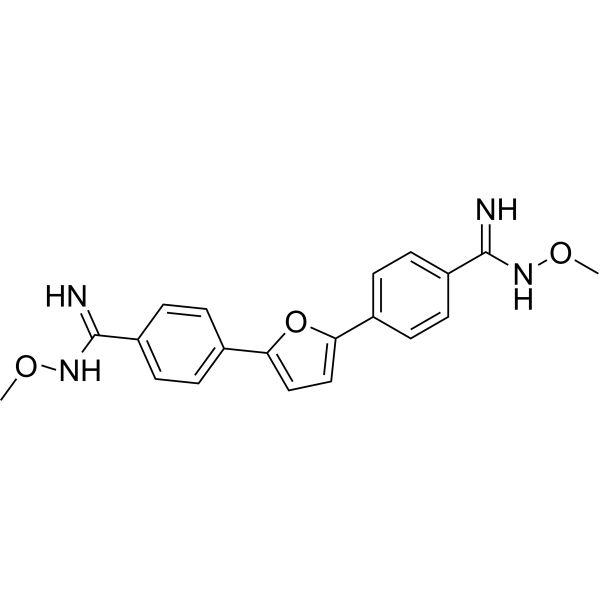
    Pafuramidine
    1 Publications Verification

    DB289

    Parasite Antibiotic Infection Neurological Disease
    Pafuramidine (DB289) is an orally active proagent of Furamidine (HY-110137A). Pafuramidine is a potent anti-parasitic agent, can be used to research trypanosomiasis, Pneumocystis pneumonia and malaria .
    Pafuramidine
  • HY-B2117

    Epoxide Hydrolase EBV Infection Neurological Disease
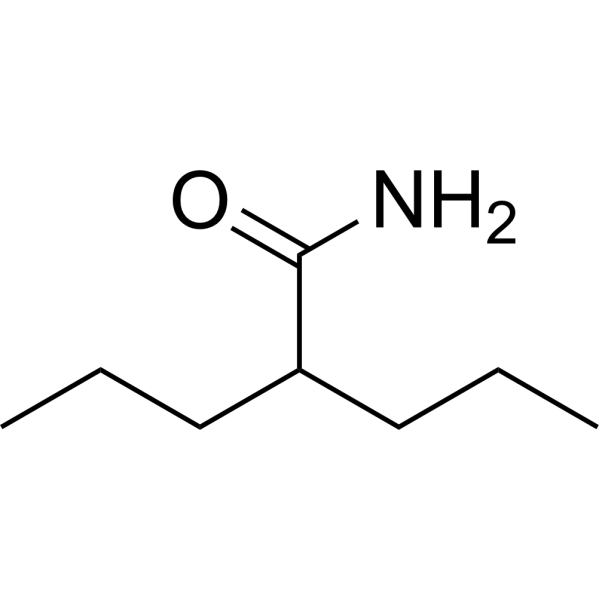
    Valpromide is an amide derivative of Valproic acid (HY-10585) and an orally active epoxide hydrolase inhibitor that can cross the blood-brain barrier. Valpromide has antiepileptic, anticonvulsant, and antipsychotic effects. Valpromide also exhibits antiviral activity and can inhibit the reactivation of the EBV lytic cycle .
    Valpromide
  • HY-W020246

    TMTM

    Squalene Monooxygenase Bacterial Infection Inflammation/Immunology
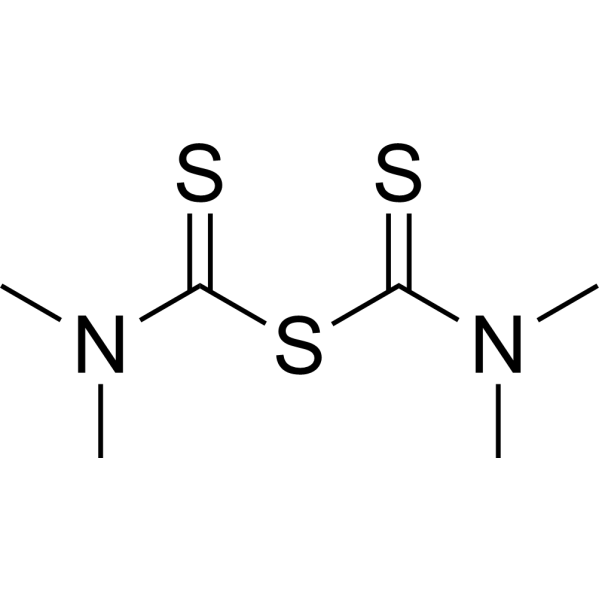
    Tetramethylthiuram monosulfide (TMTM) is an orally active microsomal monooxygenases inhibitor. Tetramethylthiuram monosulfide is used as an accelerator and activator in the processing of natural rubber and butyl rubber. Tetramethylthiuram monosulfide reduces palmitic acid incorporation into microsomal phospholipids, disrupts microsomal membrane integrity, and impairs electron transport during oxygenation. Tetramethylthiuram monosulfide can be used for the research of fungal infection, bacterial infection and allergic contact dermatitis .
    Tetramethylthiuram monosulfide
  • HY-17549

    CRL 40028

    Adrenergic Receptor Neurological Disease
    Adrafinil (CRL 40028) is an orally active vigilance promoting agent. Adrafinil enhances central noradrenergic transmission, improves spontaneous activity, exploratory behavior, discriminative learning ability and response motivation, but impairs visuospatial working memory. Adrafinil antagonizes Prazosin (HY-B0193)-induced hypoactivity and hypothermia, exerts anticonvulsant effects, and induces sustained enhancement of high-frequency electrocortical activity. Adrafinil can be used for research on decreased alertness and specific cognitive deficits .
    Adrafinil
  • HY-156991

    NODA-GA-NHS ester

    EGFR Radionuclide-Drug Conjugates (RDCs) Cancer
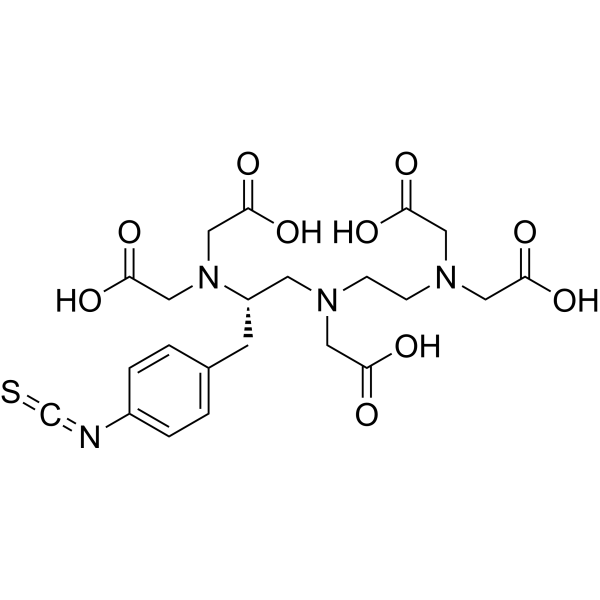
    NODAGA-NHS (NODA-GA-NHS ester) is the activated ester form of the NODAGA chelator. NODAGA-NHS conjugates with Trastuzumab (HY-P9907) to form NODAGA-Trastuzumab, a conjugate that can chelate 64Cu for the preparation of radiotracers. NODAGA-NHS covalently binds to the amino group of lactosamine derivatives to form radiotracer precursors. [ 64Cu]NODAGA-trastuzumab enables PET imaging of tumors expressing HER2. NODAGA-NHS is used in studies of HER2-positive breast cancer and ovarian adenocarcinoma .
    NODAGA-NHS
  • HY-P99719

    BAY 1129980; Anti-C4.4a antibody-drug conjugates

    Antibody-Drug Conjugates (ADCs) Cancer
    Lupartumab Amadotin (BAY 1129980) is an antibody–drug conjugate (ADC) consisting of a fully human C4.4A (LYPD3)-targeting mAb (BAY 1135626) (HY-147281) conjugated to a novel, highly potent derivative of the microtubule-disrupting cytotoxic drug auristatin via a noncleavable alkyl hydrazide linker. Lupartumab Amadotin can be used for the research of non-small cell lung cancer .
    Lupartumab Amadotin
  • HY-101393A

    (±)-CGP 12177 hydrochloride

    Adrenergic Receptor Cardiovascular Disease Metabolic Disease
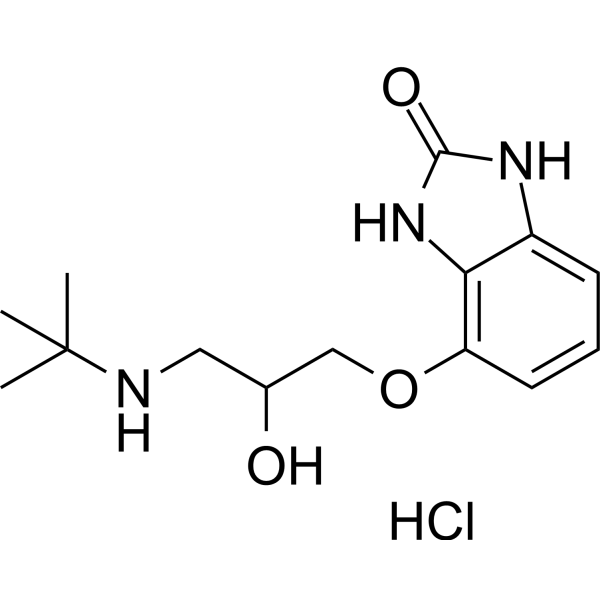
    CGP 12177 ((±)-CGP 12177) hydrochloride is a β-Adrenergic receptor (β-AR) ligand. CGP 12177 hydrochloride is a β3-AR (Ki = 88 nM) agonist with β12-AR (Ki = 0.9 nM for β1; Ki = 4 nM for β2) antagonist action. CGP 12177 hydrochloride exhibits partial agonist properties for α1-AR in rat pulmonary artery. CGP 12177 hydrochloride regulates the expression of ucp and leptin genes in NMRI mice adipose tissues. CGP 12177 hydrochloride can be used for cardiovascular and metabolic disease research [1][2][3][4].
    CGP 12177 hydrochloride
  • HY-122817

    Antibiotic Parasite Infection
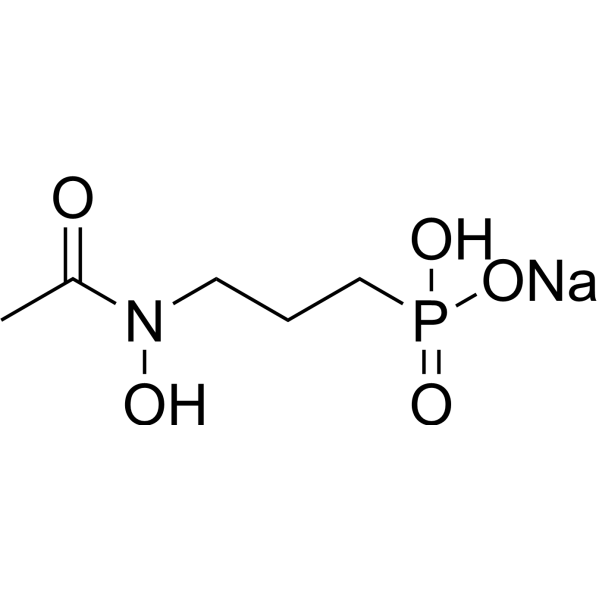
    FR900098 sodium is an antimalarial agent that inhibits 1-deoxy-d-xylulose-5-phosphate (DXP) reductoisomerase. FR900098 sodium has no significant acute toxicity or genotoxicity, and does not have the ability to cause chromosome breakage or heterogeneity. FR900098 sodium has no effect on bone marrow red blood cells in NMRI mice .
    FR900098 sodium
  • HY-101393

    (±)-CGP 12177

    Adrenergic Receptor Cardiovascular Disease Metabolic Disease
    CGP 12177 ((±)-CGP 12177) is a β-Adrenergic receptor (β-AR) ligand. CGP 12177 is a β3-AR (Ki = 88 nM) agonist with β12-AR (Ki = 0.9 nM for β1; Ki = 4 nM for β2) antagonist action. CGP 12177 exhibits partial agonist properties for α1-AR in rat pulmonary artery. CGP 12177 regulates the expression of ucp and leptin genes in NMRI mice adipose tissues. CGP 12177 can be used for cardiovascular and metabolic disease research .
    CGP 12177
  • HY-123922

    Bacterial Infection
    NOSO-502 is an inhibitor of bacterial translation. NOSO-502 exhibits inhibitory activity against Enterobacteriaceae. NOSO-502 has good safety and antibacterial properties .
    NOSO-502
  • HY-175340

    Potassium Channel TSPO Neurological Disease
    Kv7.2/Kv7.3 activator-3 (GRT-X) is an orally active Kv7.2/Kv7.3 and TSPO activator. Kv7.2/Kv7.3 activator-3 activates Kv7.2/Kv7.3, Kv7.4, and Kv7.5 with EC50 values of 0.37, 2.06, and 0.75 μM, respectively, and binds to TSPO with Ki values of 0.07 μM (rat membrane) and 4.60 μM (human U-118 MG cells). Kv7.2/Kv7.3 activator-3 prevents motor neuron degeneration in mice and humans conditioned by ALS/FTD astrocytes. Kv7.2/Kv7.3 activator-3 stimulates dorsal root ganglion axonal growth through TSPO and Kv7.2/3 activation. Kv7.2/Kv7.3 activator-3 has anti-epileptic effects in epileptic seizure models. Kv7.2/Kv7.3 activator-3 reduces pain hypersensitivity in patients with diabetic neuropathy, promotes neuronal survival and regeneration after cervical neuropathy in rats, and accelerates the recovery of normal function of sensory and motor neurons .
    Kv7.2/Kv7.3 activator-3
  • HY-W795264

    Parasite Infection
    FR900098 is an antimalarial agent that inhibits 1-deoxy-d-xylulose-5-phosphate (DXP) reductoisomerase. FR900098 has no significant acute toxicity or genotoxicity, and does not have the ability to cause chromosome breakage or heterogeneity. FR900098 has no effect on bone marrow red blood cells in NMRI mice .
    FR900098
  • HY-19648

    HOE-427 free base

    Melanocortin Receptor nAChR Neurological Disease
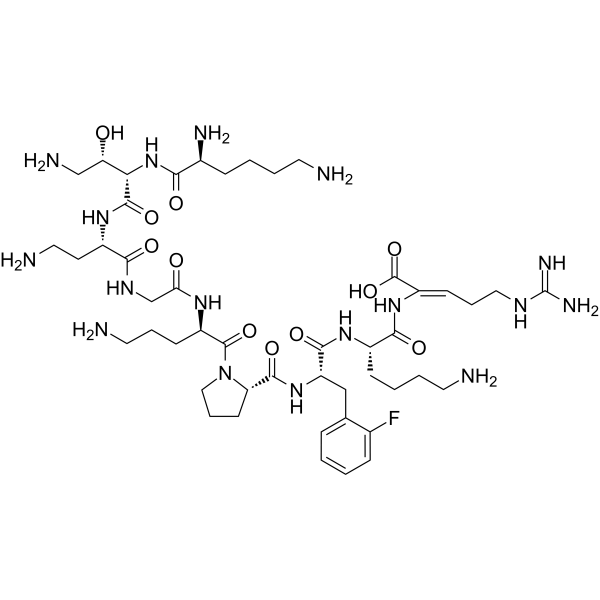
    Ebiratide (HOE-427 free base) is an ACTH 4-9 derivative, which acts directly on the central nervous system and exhibits memory-enhancing efficacy. Ebiratide enhances acetycholine (ACh) metabolism in rat brain .
    Ebiratide
  • HY-14932A

    DB289 maleate

    Parasite Antibiotic Infection
    Pafuramidine (maleate) (DB289 (maleate)) is an orally active proagent of Furamidine (HY-110137A). Pafuramidine (maleate) (DB289 (maleate)) is a potent anti-parasitic agent, can be used to research trypanosomiasis, Pneumocystis pneumonia and malaria .
    Pafuramidine maleate
  • HY-14932R

    DB289 (Standard)

    Reference Standards Parasite Antibiotic Infection
    Pafuramidine (Standard) is the analytical standard of Pafuramidine. This product is intended for research and analytical applications. Pafuramidine (DB289) is an orally active proagent of Furamidine (HY-110137A). Pafuramidine is a potent anti-parasitic agent, can be used to research trypanosomiasis, Pneumocystis pneumonia and malaria .
    Pafuramidine (Standard)
  • HY-105885

    SUR 2647

    Drug Derivative Inflammation/Immunology
    Sumacetamol (SUR 2647) is the N-acetyl-DL-methionine ester of Paracetamol (HY-66005). Sumacetamol is orally active. Sumacetamol enhances the hepatic GSH synthesizing capacity in Bom:NMRI mice after experimental overdosage and offers protection of hepatic cell integrity, when combined with Paracetamol .
    Sumacetamol
  • HY-B1509B

    Parasite Infection Endocrinology
    Trypaflavin bromide is an orally active acridine compound and antimalarial agent. Trypaflavin bromide invades germ cells. Trypaflavin bromide induces aberrations in unfertilized oocytes. Trypaflavin bromide increases the frequency of chromosomal aberrations. Trypaflavin bromide shows weak mutagenicity. Trypaflavin bromide is highly toxic to Leishmania, causing immediate lysis of the leptomonads .
    Trypaflavin bromide
  • HY-182584

    5-HT Receptor Neurological Disease
    S 15931 is a 5-HT1A receptor inhibitor. S 15931 inhibits the late-phase hindpaw licking response induced by formalin and the abdominal writhing response induced by acetic acid in Mus musculus. S 15931 abolishes the spontaneous tail-flick response induced by 8-OH-DPAT in Rattus norvegicus and potentiates the analgesic effect of morphine. S 15931 is applicable for pain-related research .
    S 15931
  • HY-185167

    Cancer
    PSMA-1-DOTA is a prostate-specific membrane antigen (PSMA) binder with high affinity, enables targeted radionuclide delivery for imaging and therapy. PSMA-1-DOTA acts as a tumor growth inhibitor that reduces growth of PSMA-expressing prostate cancer tumors .
    PSMA-1-DOTA
  • HY-15080

    LY 293606

    iGluR Cardiovascular Disease Neurological Disease
    GYKI 53405 is a non-competitive, orally active AMPA receptor antagonist. GYKI 53405 shows no significant binding affinity for GABAA, GABAB or benzodiazepine receptors. GYKI 53405 increases self-grooming behavior, induces wet dog-like shakes, reduces spontaneous activity, produces anxiolytic-like behavior, reverses the anxiogenic effect induced by mCPP, inhibits locomotor activity, suppresses sound-induced and maximal electroshock-induced seizures, prolongs survival in global cerebral ischemia models, and exhibits sustained anticonvulsant effects at doses below the sedation threshold. GYKI 53405 can be used in research related to absence epilepsy, anxiety disorders and global cerebral ischemia .
    GYKI 53405
  • HY-W054427

    Parasite Infection Metabolic Disease
    Ro 13-3978 is an orally active antischistosomal agent. Ro 13-3978 exhibits excellent in vivo antischistosomal activity against juvenile and adult Schistosoma mansoni infections. Ro 13-3978 shows no in vivo activity against E. caproni and F. hepatica. Ro 13-3978 blocks dihydrotestosterone-induced proliferation of androgen-dependent cells. Ro 13-3978 can be used in research related to schistosomiasis .
    Ro 13-3978
  • HY-W540123

    Biochemical Assay Reagents Cancer
    Fmoc-PNA-A(Bhoc)-OH is a protected peptide nucleic acid (PNA) monomer carrying an adenine base. Fmoc-PNA-A(Bhoc)-OH contains Fmoc and benzhydryloxycarbonyl (Bhoc) protecting groups, and serves as a standard building block designed specifically for solid-phase PNA synthesis. Fmoc-PNA-A(Bhoc)-OH can be efficiently used to synthesize PNA-based sequence-specific hybridization probes. These probes have broad applications in molecular biology research; for example, they can be used in HER2-expressing tumor-related studies, providing tools for disease diagnosis and mechanism exploration .
    Fmoc-PNA-A(Bhoc)-OH

Inquiry Online

Your information is safe with us. * Required Fields.

Salutation


Country or Region *

Applicant Name *


Organization Name *

Department *


Email Address *


Product Name *

Cat. No.


Requested quantity *

Phone Number *


Remarks

Inquiry Online

Inquiry Information

Product Name:
Cat. No.:
Quantity:
MCE Japan Authorized Agent:

