



BPC 157 acetate

Based on 1 Customer Validation
BPC 157 acetate is an orally active peptide. BPC 157 acetate exhibits multiple activities such as promoting wound healing, tendon healing, neuroprotection, and gastrointestinal protection. BPC 157 acetate can be used in the research of tendon injury, burn, gastric ulcer, and neurological diseases.
For research use only. We do not sell to patients.
- Purity : 99.97%
- CAS No.: 1628202-19-6
- Formula: C62H98N16O22.xC2H4O2
- Molecular Weight:1419.54 (free acid)
-
Storage:
Sealed storage, away from moisture.
Powder -80°C, 2 years , -20°C, 1 year* In solvent : -80°C, 6 months; -20°C, 1 month (sealed storage, away from moisture)


To place orders, for customer services and technical support, please contact: MedChemExpress USA
Tel: 609-228-6898 E-mail: [email protected] [email protected]


-
 Biological Activity
-
Chemical Information
-
Solvent & Solubility
- Protocols
- Purity & Documentation
- References
-
 Help & FAQs


-
HY-P0170
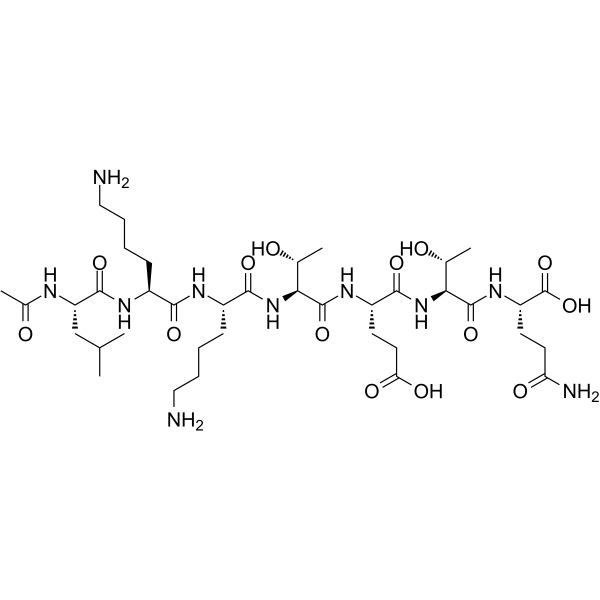
TB500Thymosin β 4 Synthetic Molecule -
HY-N0924
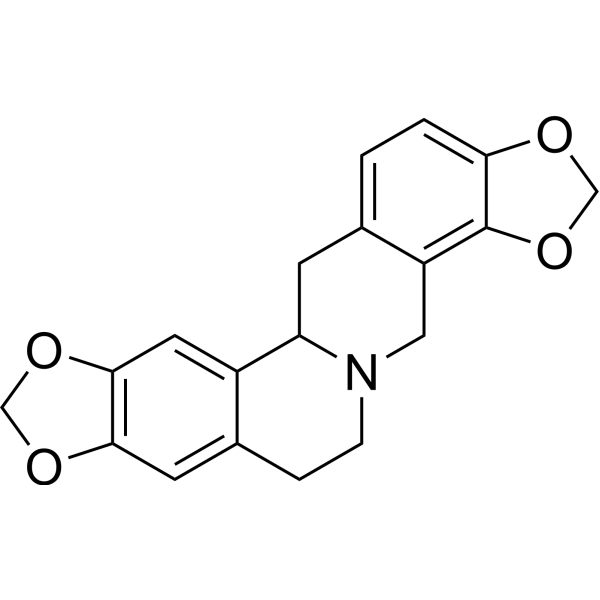
(±)-StylopineAlkaloid -

HY-105174AR
BPC 157 acetate (Standard)Reference Standard -

HY-N0924R
(±)-Stylopine (Standard)Alkaloid -
HY-111009
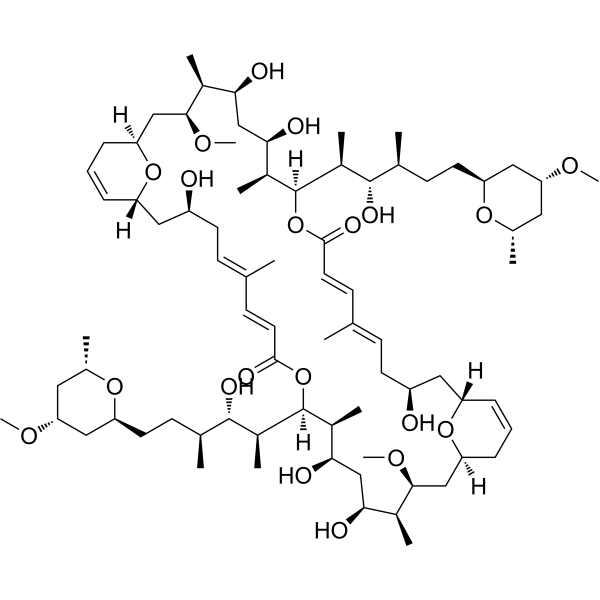
Swinholide AActin Disrupter -
HY-119357
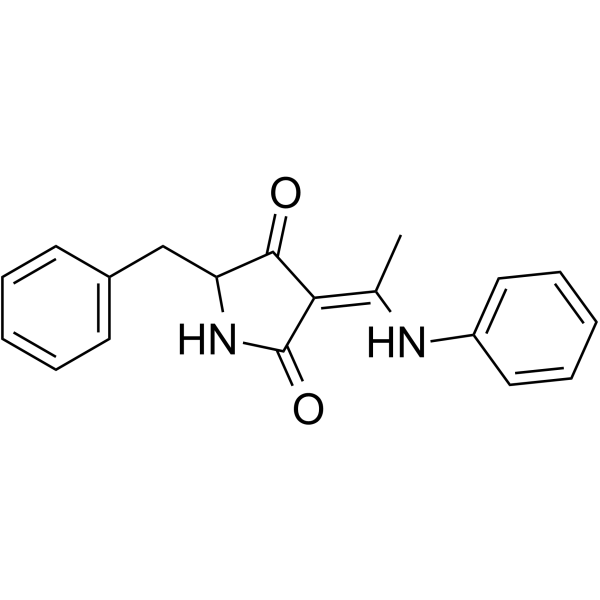
TN-16Tubulin Inhibitor -
HY-15459S1
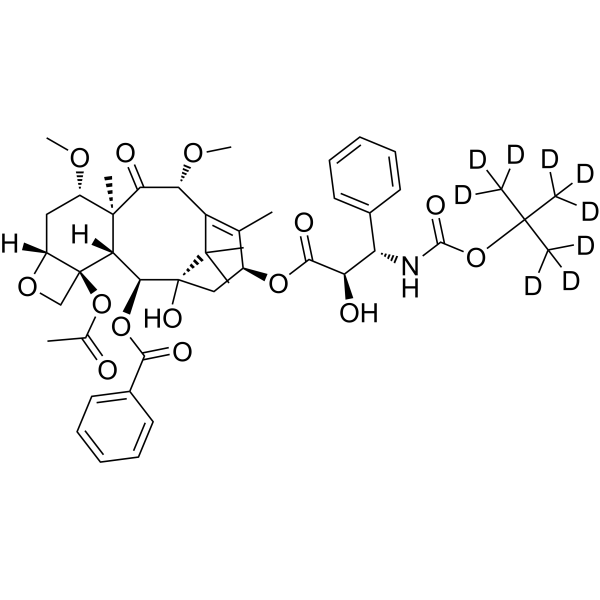
Cabazitaxel-d9Stable Isotope -
HY-119442
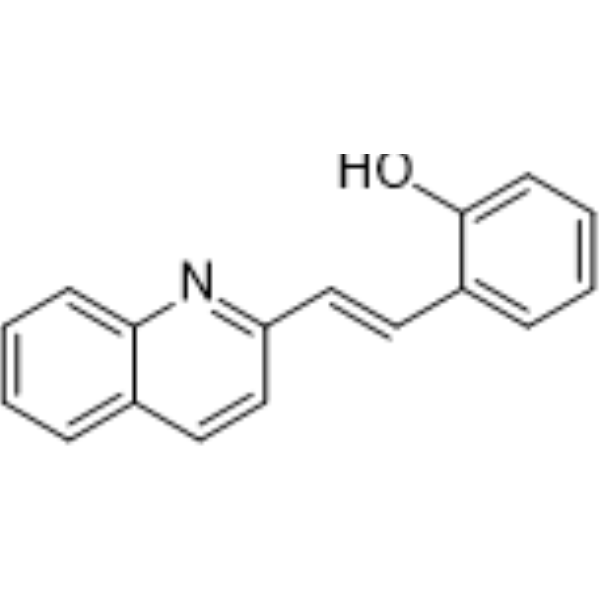
QuininibCysLT1-2R Antagonist -

HY-W741557
Griseofulvic Acid -

HY-W741491
6-O-Demethyl griseofulvinGriseofulvin Metabolite -

HY-133222
STX140Microtubule Disruptor


Biological Activity
Description
In Vitro
BPC 157 (acetate) (2 μg/mL; 7 days) significantly accelerates the outgrowth of tendon fibroblasts from Sprague-Dawley rat Achilles tendon explants[1].
BPC 157 (acetate) (2 μg/mL; 24 h) significantly increases the viability of Sprague-Dawley rat Achilles tendon fibroblasts cultured under oxidative stress induced by 0.1 mM H2O2[1].
BPC 157 (acetate) (0.5–2 μg/mL; 24 h) promotes the migration of cultured Sprague-Dawley rat Achilles tendon fibroblasts and induces increased F-actin formation[1].
BPC 157 (acetate) (0–2 μg/mL; 24 h) activates the FAK-paxillin pathway in cultured SD rat Achilles tendon fibroblasts[1].
MedChemExpress (MCE) has not independently confirmed the accuracy of these methods. They are for reference only.
-
Cell Line:Cultured Sprague-Dawley rat Achilles tendon fibroblasts (passages 2-4)
-
Concentration:2 μg/mL
-
Incubation Time:24 h
-
Result:Increased F-actin (polymerized actin fibers, visualized as green fluorescence) levels notably relative to control cells with weak F-actin detection.
-
Cell Line:Cultured Sprague-Dawley rat Achilles tendon fibroblasts (passages 2-4)
-
Concentration:0, 0.5, 1, 2 μg/mL
-
Incubation Time:24 h
-
Result:Did not alter total FAK, paxillin, or PCNA protein levels.
Increased the phosphorylation of both FAK and paxillin dose-dependently.
In Vivo
BPC 157 (acetate) (100 pg-10 μg/kg; i.p.; single dose) significantly alleviates haloperidol (HY-14538)-induced catalepsy in rats and inhibits gastric ulcers[3].
MedChemExpress (MCE) has not independently confirmed the accuracy of these methods. They are for reference only.
-
Animal Model:NMRI-Hannover (male, 30 g, deep partial skin thickness burns induced by 5 s direct flame exposure covering 20% total body area)[2]
-
Dosage:i.p.: 10 ng/kg, 10 μg/kg; Topical: 5 ng/g, 50 ng/g, 500 ng/g, 5 μg/g, 50 μg/g
-
Administration:topical (burn site, once daily); i.p. (once daily); starting immediately after burn and continuing until 24 hours before sacrifice
-
Result:Improved all parameters related to burn wound healing (including reducing edema, inflammatory cell infiltration and necrosis, increasing the number of capillaries, reticulin and collagen fiber formation, preserving hair follicle count, enhancing wound re-epithelization rate, skin breaking strength and relative elongation, and decreasing water content in burned skin).
Consistently attenuates burn-induced gastric mucosal lesions in the deep partial-thickness burn model of male NMRI-Hannover mice.
-
Animal Model:Wistar Albino (male, 200-220 g body weight)[3]
-
Dosage:10 μg/kg, 10 ng/kg (catalepsy and gastric ulcers); 1.0 ng/kg, 100 pg/kg (gastric ulcers only)
-
Administration:i.p.; single dose
-
Result:Reduced catalepsy duration on both horizontal bar and inclined wiremesh screen tests at all assessed time points.
Inhibited gastric lesion development for all doses, with near-zero mean sum of lesion diameters and drastically reduced lesion incidence compared to controls.


Chemical Information
-
CAS No. 1628202-19-6
-
Appearance Solid
-
Molecular Weight 1419.54 (free acid)
-
Formula C62H98N16O22.xC2H4O2
-
Color White to off-white
-
Sequence
Gly-Glu-Pro-Pro-Pro-Gly-Lys-Pro-Ala-Asp-Asp-Ala-Gly-Leu-Val
-
Sequence Shortening
GEPPPGKPADDAGLV
-
Shipping
Room temperature in continental US; may vary elsewhere.
-
Storage
Sealed storage, away from moisture
Powder -80°C 2 years -20°C 1 year * In solvent : -80°C, 6 months; -20°C, 1 month (sealed storage, away from moisture)


Solvent & Solubility
In Vitro:
DMSO : 100 mg/mL (Need ultrasonic; Hygroscopic DMSO has a significant impact on the solubility of product, please use newly opened DMSO)


Purity & Documentation
-
Data Sheet (279 KB)
-
SDS (254 KB)
- English - EN (254 KB)
- Français - FR (254 KB)
- Deutsch - DE (254 KB)
- Norwegian - NO (254 KB)
- Español - ES (254 KB)
- Swedish - SV (254 KB)
- Italian - IT (254 KB)
- Korean - KR (254 KB)
- Portuguese - PT (254 KB)
-
Handling Instructions (2659 KB)
References
[1]. Chang CH, et al. The promoting effect of pentadecapeptide BPC 157 on tendon healing involves tendon outgrowth, cell survival, and cell migration. J Appl Physiol (1985). 2011;110(3):774-780. [Content Brief]
[2]. Mikus D, et al. Pentadecapeptide BPC 157 cream improves burn-wound healing and attenuates burn-gastric lesions in mice. Burns. 2001;27(8):817-827. [Content Brief]
[3]. Jelovac N, et al. Pentadecapeptide BPC 157 attenuates disturbances induced by neuroleptics: the effect on catalepsy and gastric ulcers in mice and rats. Eur J Pharmacol. 1999;379(1):19-31. [Content Brief]

Calculators
Concentration (start) × Volume (start) = Concentration (final) × Volume (final)


BPC 157 acetate Related Classifications
HY-105174A Related Classifications
 Powered by Bioz