Search Result
Results for "
Oleoyl
" in MedChemExpress (MCE) Product Catalog:
22
Biochemical Assay Reagents
39
Isotope-Labeled Compounds
| Cat. No. |
Nombre del producto |
Target |
Áreas de investigación |
Chemical Structure |
-
- HY-107614
-
|
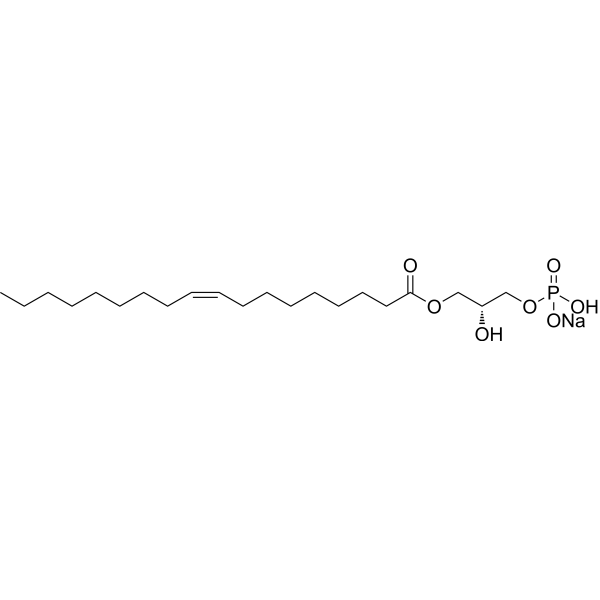
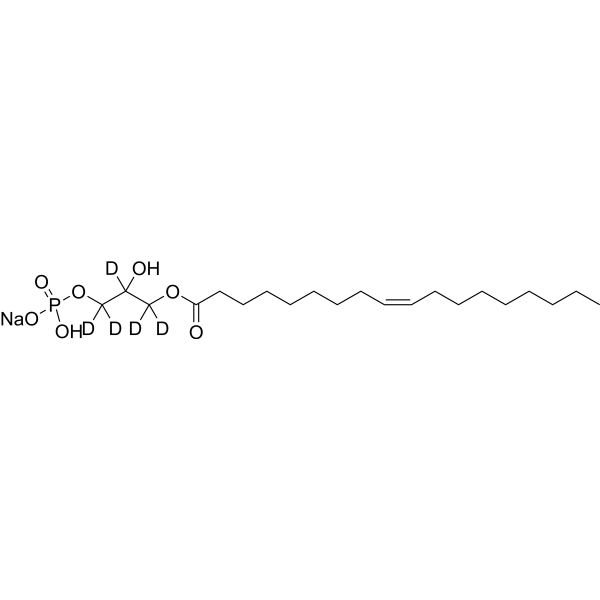
1-Oleoyl-sn-glycero-3-phosphate sodium; 1-Oleoyl-LPA sodium
|
LPL Receptor
Mitosis
|
Neurological Disease
|
|
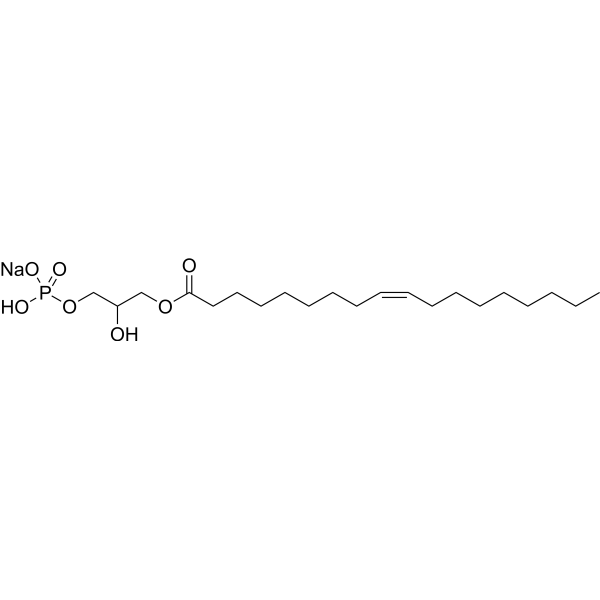
1-Oleoyl lysophosphatidic acid (1-Oleoyl-sn-glycero-3-phosphate) sodium, a potent bioactive phospholipid, is a LPA receptor activator. 1-Oleoyl lysophosphatidic acid sodium can promote mitosis by inducing DNA synthesis. 1-Oleoyl lysophosphatidic acid sodium is also involved in normal and pathological emotional responses, including anxiety and depression .
|
-
-
- HY-130462
-
|
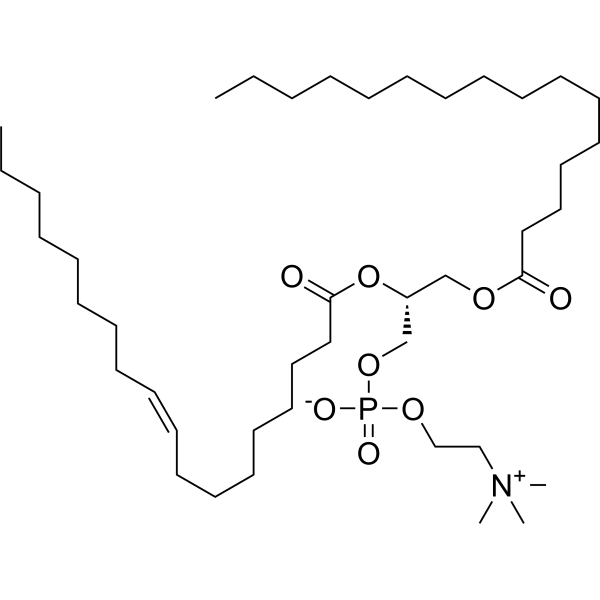
POPC
|
Liposome
|
Others
|
|
1-Palmitoyl-2-oleoyl-sn-glycero-3-PC (POPC), a phospholipid, is a major component of biological membranes. 1-Palmitoyl-2-oleoyl-sn-glycero-3-PC is used for the preparation of liposomes and studying the properties of lipid bilayers .
|
-
-
- HY-137862
-
|
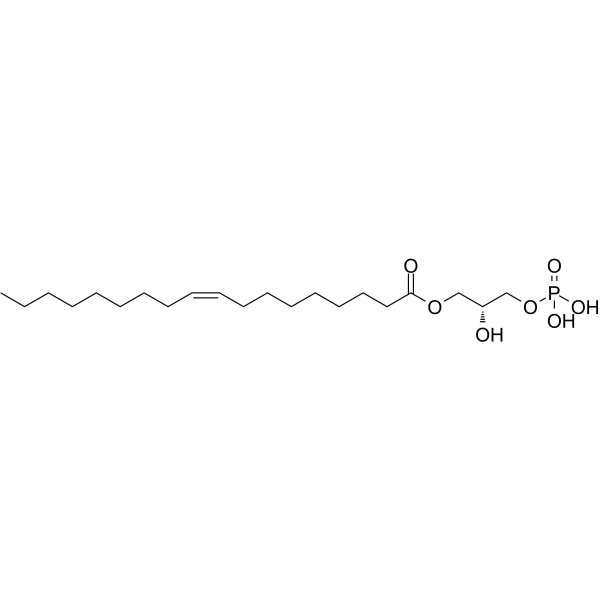
1-Oleoyl-sn-glycero-3-phosphate; 1-Oleoyl-LPA
|
LPL Receptor
|
Neurological Disease
|
|
1-Oleoyl lysophosphatidic acid (1-Oleoyl-sn-glycero-3-phosphate) is an abundant lysophosphatidic acid (LPA) species with high biological activity due to its strong affinity for the LPA receptors. 1-Oleoyl lysophosphatidic acid is commonly used in most laboratories as a reagent for LPA receptor activation . 1-Oleoyl lysophosphatidic acid increases SRE-driven β-galactosidase activity .
|
-
-
- HY-W140439
-
|
18:1 Lyso PC
|
Endogenous Metabolite
|
Inflammation/Immunology
|
|
1-Oleoyl-sn-glycero-3-phosphocholine (18:1 Lyso PC), a lysophospholipid, is a GPR82 inhibitor. 1-Oleoyl-sn-glycero-3-phosphocholine abrogates constitutive Gi-coupled GPR82 activity, shifts active/inactive equilibrium to inactive, suppresses Gi protein activation, increases cAMP production, and decreases GTPγS binding to Gαi proteins. 1-Oleoyl-sn-glycero-3-phosphocholine contributes to adipocyte lipolysis regulation.1-Oleoyl-sn-glycero-3-phosphocholine exhibits reduced serum levels in mouse models of steatohepatitis, linked to hepatic Lpcat 1-4 up-regulation .
|
-
-
- HY-134200
-
|
|
Endogenous Metabolite
|
Others
|
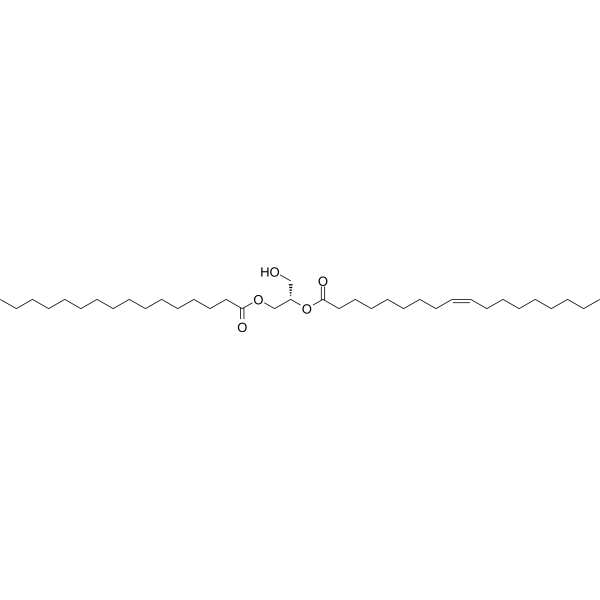
1-Palmitoyl-2-oleoyl-sn-glycerol is a diacylglycerol hormogonium inducer that can be isolated from the coralloid roots of Cycas revoluta. 1-Palmitoyl-2-oleoyl-sn-glycerol promotes the differentiation of filamentous Nostoc cell aggregates into motile hormogonia, and further induces the formation of dense bundle-like structures. 1-Palmitoyl-2-oleoyl-sn-glycerol is not only commonly used as a diacylglycerol standard, but also can effectively identify and separate glycerophosphate-containing phospholipid enantiomers after acetylation. 1-Palmitoyl-2-oleoyl-sn-glycerol is also used to study cyanobacterial developmental mechanisms and lipid analysis .
|
-
-
- HY-126213
-
|
18:1 Lyso-PS
|
NADPH Oxidase
Interleukin Related
Apoptosis
|
Inflammation/Immunology
|
|
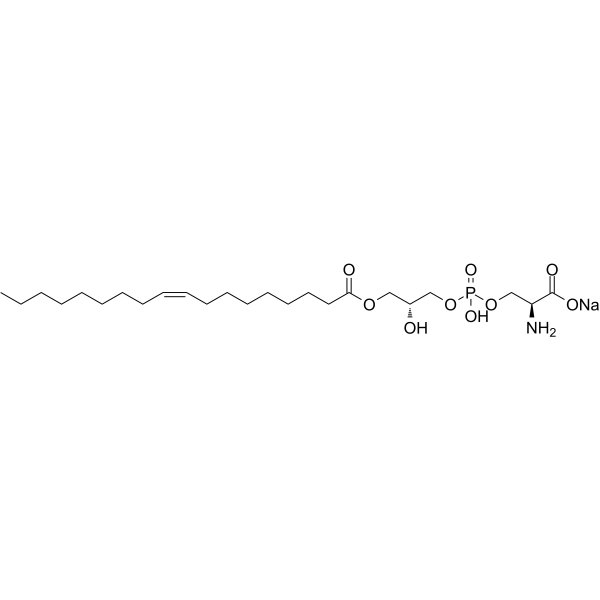
Oleoyl-2-hydroxy-sn-glycero-3-phospho-L-serine sodium (18:1 Lyso-PS) is a modified PS product generated following NADPH oxidase activation and Lyso-PS signal transduction. 1-Oleoyl-2-hydroxy-sn-glycero-3-phospho-L-serine sodium signals through macrophage G2A to enhance the phagocytic uptake of PS-dependent apoptotic (apoptosis) neutrophils and PS-exposed activated neutrophils. 1-Oleoyl-2-hydroxy-sn-glycero-3-phospho-L-serine sodium enhances macrophage phagocytic uptake of apoptotic cells, carboxylate-modified microspheres, and PS-exposed non-apoptotic activated neutrophils. 1-Oleoyl-2-hydroxy-sn-glycero-3-phospho-L-serine sodium serves as an acyl acceptor substrate for the lysophosphatidyltransferase At1g78690p to generate diacylphosphatidylserine. 1-Oleoyl-2-hydroxy-sn-glycero-3-phospho-L-serine sodium reduces the secretion of IL-8 and decreases the proportion of viable colon cancer cells. 1-Oleoyl-2-hydroxy-sn-glycero-3-phospho-L-serine sodium is applicable to studies on peritonitis and inflammatory bowel disease .
|
-
-
- HY-138207
-
|
|
Mitochondrial Metabolism
Drug Metabolite
|
Inflammation/Immunology
|
|
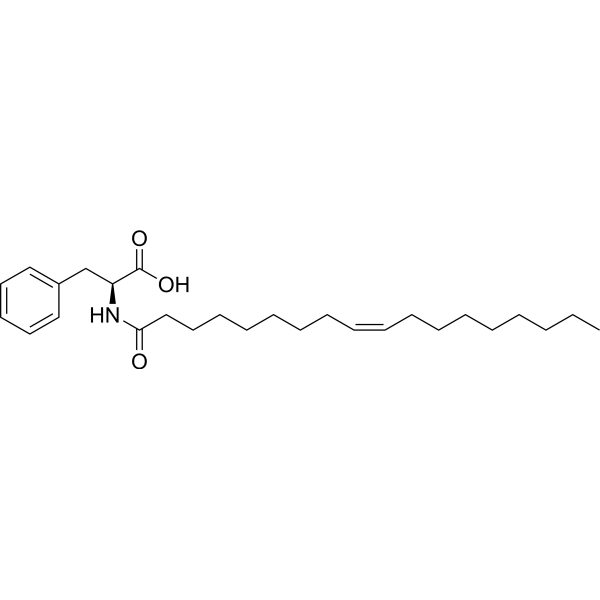
N-Oleoyl-L-phenylalanine is a long-chain N-acyl-L-phenylalanine and also a mitochondrial uncoupler. N-Oleoyl-L-phenylalanine uncouples UCP1-independent respiration in mitochondria, thereby helping to regulate glucose homeostasis. As an endogenous metabolite, the level of N-Oleoyl-L-phenylalanine increases in patients with ulcerative colitis after a high-fat diet. N-Oleoyl-L-phenylalanine can be used in studies related to ulcerative colitis .
|
-
-
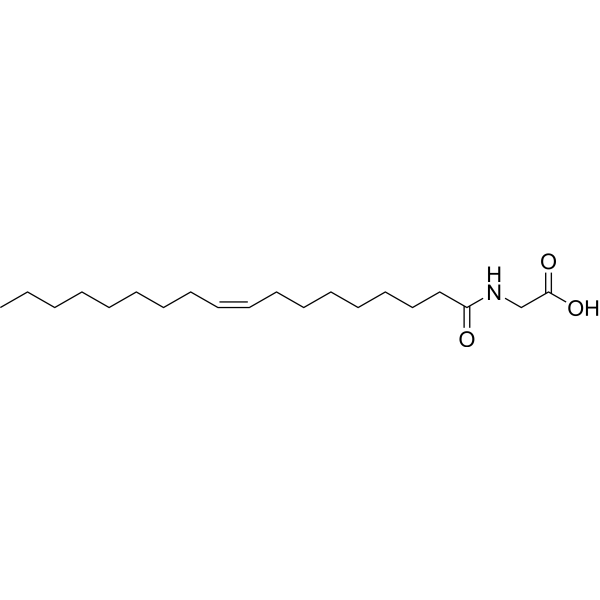
- HY-113204
-
-
-
- HY-120961
-
|
N-Ethyloleamide
|
FAAH
|
Metabolic Disease
|
|
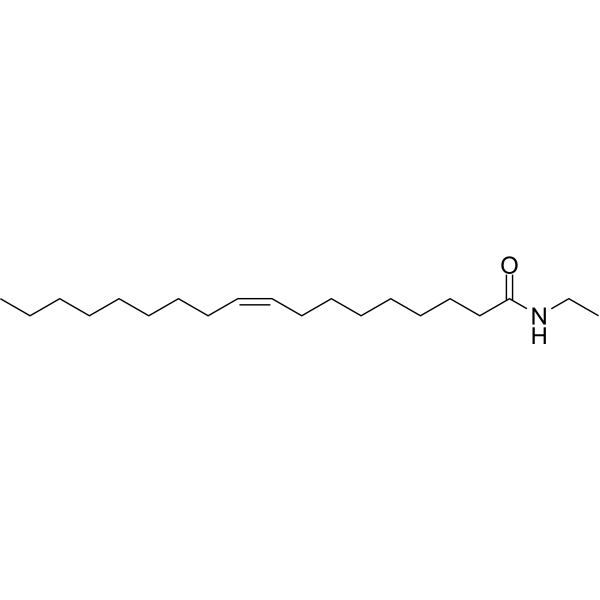
Oleoyl ethyl amide (N-Ethyloleamide) is a fatty acid amide hydrolase (FAAH) inhibitor. Oleoyl ethyl amide can counteract bladder overactivity .
|
-
-
- HY-W714524
-
|
16:0-18:1 PS (POPS)
|
Liposome
|
Others
|
|
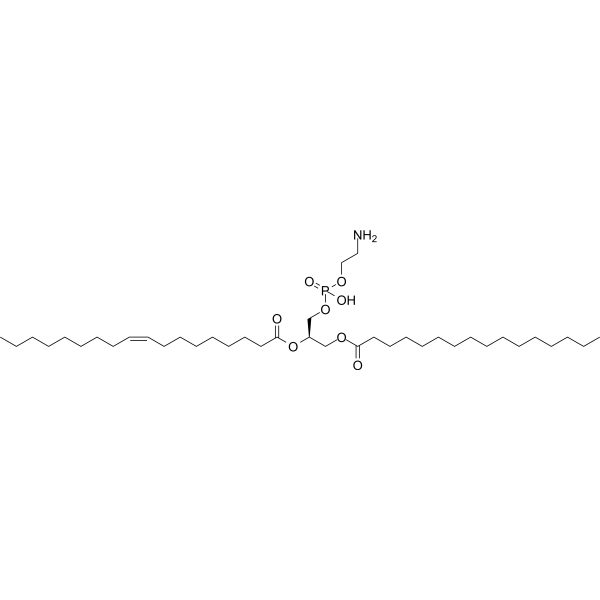
2-Oleoyl-1-palmitoyl-sn-glycero-3-phospho-L-serine sodium (16:0-18:1 PS (POPS)) is an anionic phospholipid with oleic acid (18:1) and palmitic acid (16:0) tails containing a carboxylic acid (COOH) and amine (NH2) in their head group. 2-Oleoyl-1-palmitoyl-sn-glycero-3-phospho-L-serine sodium has been used in the preparation of lipid-mixing vesicles, liposomes, and artificial membranes .
|
-
-
- HY-137862A
-
|
(Rac)-1-Oleoyl-sn-glycero-3-phosphate; (Rac)-1-Oleoyl-LPA
|
LPL Receptor
Drug Isomer
|
Neurological Disease
|
|
(Rac)-1-Oleoyl lysophosphatidic acid is an isomer of 1-Oleoyl lysophosphatidic acid sodium (HY-107614). 1-Oleoyl lysophosphatidic acid sodium is a bioactive lipid that can activate the LPA receptors .
|
-
-
- HY-107501
-
|
(Rac)-1-Oleoyl-sn-glycero-3-phosphate sodium; (Rac)-1-Oleoyl-LPA sodium
|
Drug Isomer
|
Neurological Disease
|
|
(Rac)-1-Oleoyl lysophosphatidic acid ((Rac)-1-Oleoyl-sn-glycero-3-phosphate) sodium is the racemic isomer of 1-Oleoyl lysophosphatidic acid sodium (HY-107614) .
|
-
-
- HY-109591A
-
|
Oleoyl-CoA lithium
|
Endogenous Metabolite
|
Others
|
|
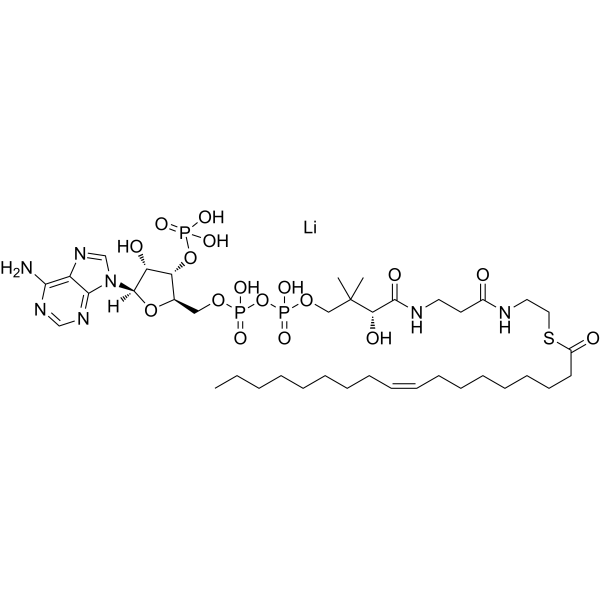
Oleoyl coenzyme A (Oleoyl-CoA) lithium is a thioester of oleic acid and coenzyme A. Oleoyl coenzyme A lithium has a role as an Escherichia coli metabolite and a mouse metabolite .
|
-
-
- HY-146956S
-
-
-
- HY-131648
-
|
|
Drug Derivative
PKC
TRP Channel
|
Cardiovascular Disease
Metabolic Disease
Inflammation/Immunology
Cancer
|
|
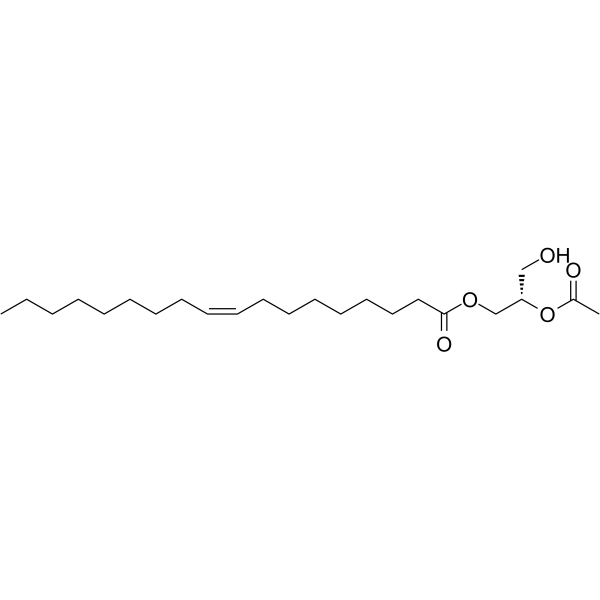
1-Oleoyl-2-acetyl-sn-glycerol is a cell-permeable analog of diacylglycerol (DAG) and can activate Protein kinase C (PKC). 1-Oleoyl-2-acetyl-sn-glycerol can activate the TRPC channels-mediated specific Ca 2+ influx. 1-Oleoyl-2-acetyl-sn-glycerol can stimulate superoxide-generation from human neutrophils. 1-Oleoyl-2-acetyl-sn-glycerol stimulates the formation of phosphatidylinositol 4-phosphate in intact human platelets. 1-Oleoyl-2-acetyl-sn-glycerol can stimulate ascites tumor cell proliferation .
|
-
-
- HY-142990
-
|
|
Liposome
|
Others
|
|
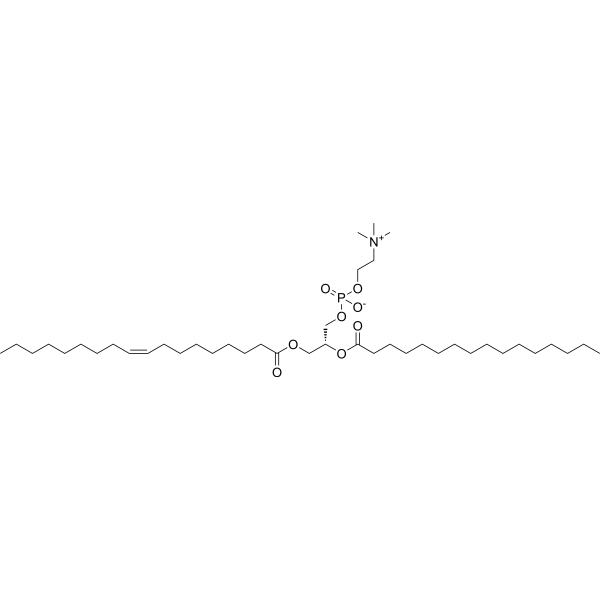
1-Oleoyl-2-palmitoyl-sn-glycero-3-PC derives from an oleic acid. 1-Oleoyl-2-palmitoyl-sn-glycero-3-PC can be used for the synthesis of liposomes .
|
-
-
- HY-146794S
-
|
|
Isotope-Labeled Compounds
|
Others
|
|
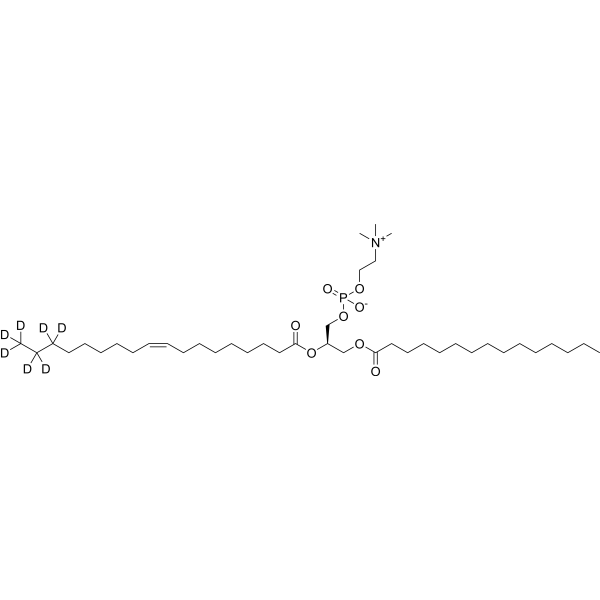
1-Pentadecanoyl-2-oleoyl-sn-glycero-3-phosphocholine-d7 is deuterium labeled 1-Pentadecanoyl-2-oleoyl-sn-glycero-3-phosphocholine.
|
-
-
- HY-146798S
-
|
|
Isotope-Labeled Compounds
|
Others
|
|
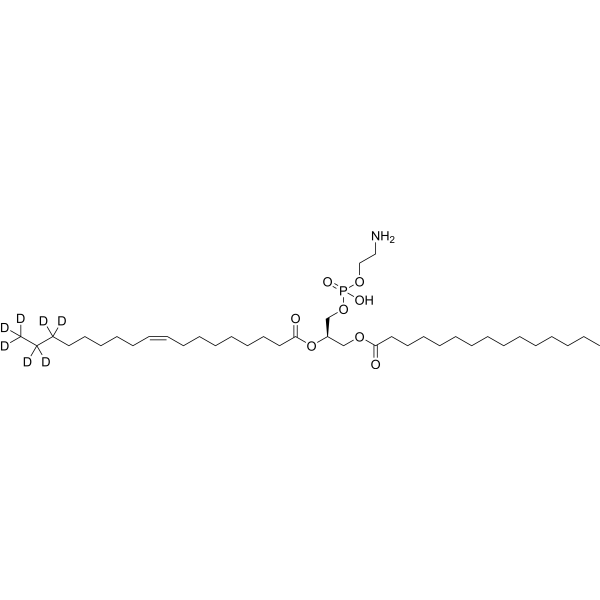
1-Pentadecanoyl-2-oleoyl-sn-glycero-3-phosphoethanolamine-d7 is deuterium labeled 1-Pentadecanoyl-2-oleoyl-sn-glycero-3-phosphoethanolamine.
|
-
-
- HY-145505
-
|
18:1 Lyso-PG; 1-Oleoyl-2-hydroxy-sn-glycero-3-phospho-(1'-rac-glycerol); 1-Oleoyl-2-hydroxy-sn-glycero-3-phosphoglycerol
|
Endogenous Metabolite
Liposome
|
Metabolic Disease
|
|
1-Oleoyl-2-hydroxy-sn-glycero-3-PG (18:1 Lyso PE) sodium is a lysophospholipid containing oleic acid (18:1) at the sn-1 position. It can be used in the generation of micelles, liposomes, and other types of artificial membranes, including lipid-based drug carrier systems.
|
-
-
- HY-124081
-
|
|
Apoptosis
|
Metabolic Disease
|
|
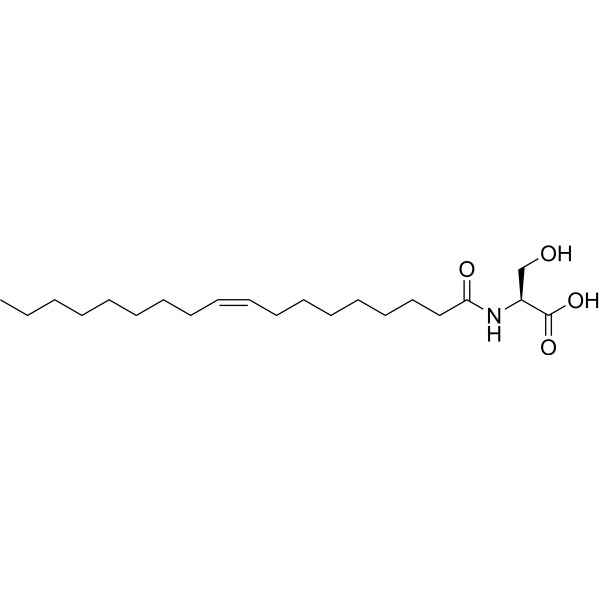
N-Oleoyl-L-Serine is an endogenous amide of long-chain fatty acids with ethanolamine (N-acyl amides). N-Oleoyl-L-Serine is a lipid regulator of bone remodeling and stimulates osteoclast apoptosis. N-Oleoyl-L-Serine can be used for antiosteoporotic drug discovery development .
|
-
-
- HY-N7831
-
-
-
- HY-W698384
-
-
-
- HY-109841
-
-
-
- HY-130462R
-
|
POPC (Standard)
|
Liposome
Reference Standards
|
Others
|
|
1-Palmitoyl-2-oleoyl-sn-glycero-3-PC (Standard) is the analytical standard of 1-Palmitoyl-2-oleoyl-sn-glycero-3-PC. This product is intended for research and analytical applications. 1-Palmitoyl-2-oleoyl-sn-glycero-3-PC (POPC), a phospholipid, is a major component of biological membranes. 1-Palmitoyl-2-oleoyl-sn-glycero-3-PC is used for the preparation of liposomes and studying the properties of lipid bilayers .
|
-
-
- HY-107614G
-
|
1-Oleoyl-sn-glycero-3-phosphate sodium; 1-Oleoyl-LPA sodium
|
LPL Receptor
ROCK
TGF-beta/Smad
TGF-β Receptor
|
Neurological Disease
Cancer
|
|
1-Oleoyl lysophosphatidic acid sodium (GMP) is the GMP-grade form of 1-Oleoyl lysophosphatidic acid sodium (HY-107614). GMP-grade small molecules serve as auxiliary reagents in cell therapy. 1-Oleoyl lysophosphatidic acid sodium is a bioactive lipid signaling molecule. 1-Oleoyl lysophosphatidic acid sodium inhibits lysoPLD-catalyzed hydrolysis of lysophosphatidylcholine and FS-3. 1-Oleoyl lysophosphatidic acid sodium activates LPA1 and LPA2, thereby triggering calcium mobilization, NFATc1 translocation, Rho/ROCK activation, Smad2/3 phosphorylation and c-Fos expression. 1-Oleoyl lysophosphatidic acid sodium induces anxiety-like, depression-like and hypoactivity phenotypes, regulates osteoclast cytoskeleton and viability, reduces osteoclast bone resorptive activity, and drives mesenchymal stem cell differentiation into myofibroblast-like cells. 1-Oleoyl lysophosphatidic acid sodium stimulates the secretion of transforming growth factor-β1 and stromal cell-derived factor-1. 1-Oleoyl lysophosphatidic acid sodium is applicable to research related to anxiety, depression and ovarian cancer .
|
-
-
- HY-120731
-
-
-
- HY-165732
-
-
-
- HY-W588315
-
-
-
- HY-W704600
-
|
TG(18:0/18:1/18:0)
|
Biochemical Assay Reagents
|
Others
|
|
1,3-Distearoyl-2-oleoyl glycerol (TG(18:0/18:1/18:0)) is a triglyceride that can be isolated from native fats such as such as kokum, shea butter and mango kernel fat. 1,3-Distearoyl-2-oleoyl glycerol is widely used in the chocolate industry as a cocoa butter modifier and an anti-blooming agent .
|
-
-
- HY-W800826
-
-
-
- HY-W583685
-
-
-
- HY-148708
-
|
|
iGluR
|
Neurological Disease
|
|
Oleoyl-D-lysine is a selective Glycine Transporter-2 (GlyT2) inhibitor based on lipid. Oleoyl-D-lysine reverses neuropathic pain in mice,shows antidrowsiness effect on chronic neuropathic pain. Oleoyl-D-lysine is safe and effective without respiratory depression .
|
-
-
- HY-139006
-
|
|
TRP Channel
|
Neurological Disease
|
|
N-oleoyl-glutamine is a PM20D1-regulated N-acyl amino acids (NAAs). N-oleoyl-glutamine is a transient receptor potential (TRP) antagonist .
|
-
-
- HY-146833S
-
|
|
Isotope-Labeled Compounds
|
Others
|
|
1-Oleoyl-2-hydroxy-sn-glycero-3-phosphatidylethanolamine-d7 is deuterium labeled 1-Oleoyl-2-hydroxy-sn-glycero-3-phosphatidylethanolamine.
|
-
-
- HY-W140439S1
-
-
-
- HY-W127344
-
|
|
Biochemical Assay Reagents
|
Others
|
|
Oleoyl chloride A pungent-smelling liquid commonly used as a reagent in organic synthesis, especially for the production of a variety of organic compounds, including pharmaceuticals and agrochemicals. In addition, it can also be used as a cross-linking agent or surfactant in polymer chemistry. Its unique chemical properties make it an important ingredient in a variety of industrial processes, including petrochemical refining and materials science.
|
-
-
- HY-134200A
-
|
|
HIF/HIF Prolyl-Hydroxylase
|
Metabolic Disease
|
|
1-Palmitoyl-2-oleoyl-sn-glycerol, 1-Oleoyl-3-palmitoylglycerol (1:1) is a 1:1 mixture of 1-Palmitoyl-2-oleoyl-sn-glycerol (HY-134200) and 1-Oleoyl-3-palmitoylglycerol (HY-W583685). 1-Palmitoyl-2-oleoyl-sn-glycerol, 1-Oleoyl-3-palmitoylglycerol (1:1) is the major active component of diacylglycerol (DAG) and a hypoxia-inducible factor (HIF) inducer .
|
-
-
- HY-109591S
-
|
Oleoyl-CoA-13C18 lithium
|
Isotope-Labeled Compounds
|
Others
|
|
Oleoyl coenzyme A- 13C18 (lithium) is the 13C labeled Oleoyl Coenzyme A lithium . Oleoyl coenzyme A (Oleoyl-CoA) is a thioester of oleic acid and coenzyme A. Oleoyl coenzyme A has a role as an Escherichia coli metabolite and a mouse metabolite .
|
-
-
- HY-W699318
-
|
|
Reactive Oxygen Species (ROS)
|
Others
|
|
1-Oleoyl-2-palmitoylglycerol is a diacylglycerol in which an oleic acid and a palmitic acid are attached to sn-1 and sn-2 position. 1-Oleoyl-2-palmitoylglycerol enhances the inhibition of superoxide anion production induced by fMLF/cytochalasin B (CB) in human neutrophils. 1-Oleoyl-2-palmitoylglycerol can be used in research about lipid metabolism, membrane fluidity, or the distribution and function of lipids in cells .
|
-
-
- HY-109841S
-
-
-
- HY-109591B
-
|
|
Biochemical Assay Reagents
|
Others
|
|
Oleoyl coenzyme A triammonium is the salt form of Oleoyl coenzyme A, which exhibits an inhibitory effects for neutral lipase. Oleoyl coenzyme A triammonium mediates ATP-dependent signal transduction pathway in plants .
|
-
-
- HY-N15340
-
|
|
PKC
|
Cancer
|
|
1-Oleoyl-2-linoleoyl-sn-glycerol is a diacylglycerol (DG). 1-Oleoyl-2-linoleoyl-sn-glycerol can activate protein kinase C (PKC), thus triggering downstream signaling cascades and promoting tumor growth. 1-Oleoyl-2-linoleoyl-sn-glycerol is promising for research of breast cancer .
|
-
-
- HY-132955S
-
-
-
- HY-122788
-
|
Oleoyl serinol
|
Apoptosis
|
Cancer
|
|
N-Oleoyl serinol is a ceramide analog that can be used in stem cell therapy to prevent stem cells from developing into teratomas. N-Oleoyl serinol induces apoptosis in residual pluripotent embryoid body-derived cells (EBCs), prevents teratoma formation, and enriches EBC cells that undergo neural differentiation after transplantation .
|
-
-
- HY-W741478
-
|
|
Isotope-Labeled Compounds
|
Others
|
|
Bis(triisopropylsilyl) 2-oleoyl glycerol-d5 is the deuterium labeled 1,3-O-Bis(triisopropylsilyl) 2-Oleoyl Glycerol (HY-W741480).
|
-
-
- HY-W770200
-
-
-
- HY-115387
-
-
-
- HY-W777050
-
-
-
- HY-165766
-
-
-
- HY-W777893
-
-
- HY-165757
-
-
- HY-W748840
-
-
- HY-W777103
-
-
- HY-W549985
-
-
- HY-118535
-
-
- HY-W010663R
-
|
|
Biochemical Assay Reagents
Reference Standards
|
Others
|
|
1,2-Dilinoleoyl-3-oleoyl-rac-glycerol (Standard) is the analytical standard of 1,2-Dilinoleoyl-3-oleoyl-rac-glycerol. This product is intended for research and analytical applications. 1,2-Dilinoleoyl-3-oleoyl-rac-glycerol is a biochemical assay reagent.
|
-
- HY-170457
-
|
1-Oleoyl-2-cholesterylhemisuccinoyl-sn-glycero-3-phosphocholine
|
Biochemical Assay Reagents
|
Others
|
|
OChemsPC (1-Oleoyl-2-cholesterylhemisuccinoyl-sn-glycero-3-phosphocholine), a sterol-lipid, is an unsaturated hydrocarbon chain replaces the saturated chain of Sterol-lipid A .
|
-
- HY-W010663
-
-
- HY-W923636
-
-
- HY-141291
-
|
|
PROTAC Linkers
|
Cancer
|
|
N'-Boc-N-(Gly-Oleoyl)-Lys is an alkyl chain-based PROTAC linker that can be used in the synthesis of PROTACs .
|
-
- HY-W770203
-
|
DG(18:1/0:0/18:2)-d5
|
Isotope-Labeled Compounds
Endogenous Metabolite
|
Others
|
|
1-Oleoyl-2-linoleoyl-rac-glycerol-d5 (DG(18:1/0:0/18:2)-d5) is the deuterium labeled 1-Oleoyl-2-linoleoyl-rac-glycerol (HY-W777107). 1-Oleoyl-2-linoleoyl-rac-glycerol (DG(18:1/0:0/18:2)) is a diacylglycerol, which is composed of a linoleic acid and an oleic acid. 1-Oleoyl-2-linoleoyl-rac-glycerol can be found in dry-cured ham, and acts as the food additive .
|
-
- HY-W701858
-
-
- HY-168391
-
|
|
Biochemical Assay Reagents
|
Others
|
|
1-Lauroyl-2-oleoyl-3-palmitoyl-rac-glycerol is a triacylglycerol with Lauric acid (HY-Y0366), Oleic acid (HY-N1446), and Palmitic acid (HY-N0830) at the sn-1, sn-2 and sn-3 positions, respectively .
|
-
- HY-157741
-
|
|
Lipase
|
Others
|
|
1-Myristoyl-2-oleoyl-3-palmitoyl-rac-glycerol (MOP) is a triacylglycerol containing myristic acid (HY-N2041), oleic acid (HY-N1446) and palmitic acid (HY-N0830) at the sn-1, sn-2 and sn-3 positions, respectively .
|
-
- HY-146875S
-
|
|
Isotope-Labeled Compounds
|
Others
|
|
1-Palmitoyl-2-oleoyl-sn-glycero-3-phosphoinositol-d31 (ammonium) is deuterium labeled 1-Palmitoyl-2-oleoyl-sn-glycero-3-phosphoinositol (ammonium).
|
-
- HY-146825S
-
|
|
Isotope-Labeled Compounds
|
Others
|
|
1-Pentadecanoyl-2-oleoyl-sn-glycero-3-phosphoinositol-d7 (ammonium) is deuterium labeled 1-Pentadecanoyl-2-oleoyl-sn-glycero-3-phosphoinositol (ammonium).
|
-
- HY-W440807
-
|
|
Liposome
|
Others
|
|
Oleoyl-Gly-Lys-(m-PEG11)-NH2 is a PEG-lipid molecule featuring an oleoyl amide linked to a Gly-Lys dipeptide and a methoxy PEG11 chain on the C-terminus of the lysine. The lysine primary amine may be used in a wide variety of reactions with carboxylic acids, NHS esters, and carbonyl groups. The PEG linker provides aqueous solubility.
|
-
- HY-141292
-
|
|
ADC Linker
|
Cancer
|
|
Oleoyl-Gly-Lys-N-(m-PEG11) is a cleavable 11 unit PEG ADC linker used in the synthesis of antibody-drug conjugates (ADCs) .
|
-
- HY-107614R
-
|
1-Oleoyl-sn-glycero-3-phosphate sodium (Standard); 1-Oleoyl-LPA sodium (Standard)
|
LPL Receptor
Mitosis
Reference Standards
|
Neurological Disease
|
|
1-Oleoyl lysophosphatidic acid sodium (Standard) is the analytical standard of 1-Oleoyl lysophosphatidic acid (sodium) (HY-107614). This product is intended for research and analytical applications. 1-Oleoyl lysophosphatidic acid (1-Oleoyl-sn-glycero-3-phosphate) sodium, a potent bioactive phospholipid, is a LPA receptor activator. 1-Oleoyl lysophosphatidic acid sodium can promote mitosis by inducing DNA synthesis. 1-Oleoyl lysophosphatidic acid sodium is also involved in normal and pathological emotional responses, including anxiety and depression .
|
-
- HY-109591D
-
|
Oleoyl-CoA sodium
|
Biochemical Assay Reagents
|
Others
|
|
Oleoyl coenzyme A (Oleoyl-CoA) sodium is a thioester of oleic acid and coenzyme A. Oleoyl coenzyme A sodium has a role as an Escherichia coli metabolite and a mouse metabolite .
|
-
- HY-W778187
-
-
- HY-W588311
-
-
- HY-W724404
-
|
Oleoyl serinol-d5
|
Isotope-Labeled Compounds
Apoptosis
|
Cancer
|
|
N-Oleoyl serinol-d5 (Oleoyl serinol-d5) is the deuterium labeled N-Oleoyl serinol (HY-122788). N-Oleoyl serinol is a ceramide analog that can be used in stem cell therapy to prevent stem cells from developing into teratomas. N-Oleoyl serinol induces apoptosis in residual pluripotent embryoid body-derived cells (EBCs), prevents teratoma formation, and enriches EBC cells that undergo neural differentiation after transplantation .
|
-
- HY-148708A
-
|
|
iGluR
|
Neurological Disease
|
|
Oleoyl-D-lysine sodium is a selective Glycine Transporter-2 (GlyT2) inhibitor based on lipid. Oleoyl-D-lysine sodium reverses neuropathic pain in mice, shows antidrowsiness effect on chronic neuropathic pain. Oleoyl-D-lysine sodium is safe and effective without respiratory depression .
|
-
- HY-W766831
-
|
1-Oleoyl-2-Linoleyl-3-chloropropanediol-d5
|
Isotope-Labeled Compounds
|
Others
|
|
rac 1-oleoyl-2-linoleoyl-3-chloropropanediol-d5 (1-Oleoyl-2-Linoleyl-3-chloropropanediol-d5) is deuterium labeled rac 1-oleoyl-2-linoleoyl-3-chloropropanediol .
|
-
- HY-W654306
-
-
- HY-W549985S
-
-
- HY-165777
-
-
- HY-W777121
-
|
|
Isotope-Labeled Compounds
|
Others
|
|
1-Docosahexaenoin-2-oleoyl 3-phosphocholine-d5 is the deuterium labeled 1-Docosahexaenoin-2-oleoyl 3-Phosphocholine (HY-W741685).
|
-
- HY-170004S
-
-
- HY-120164
-
-
- HY-165661S
-
-
- HY-176029
-
|
NAPE(16:0/16:0/18:1); N-Oleoyl-1,2-dipalmitoyl-3-PE
|
Drug Intermediate
|
Neurological Disease
Inflammation/Immunology
|
|
N-Oleoyl-DPPE ammonium is an N-acylphosphatidylethanolamine (NAPE). N-Oleoyl-DPPE ammonium is a biosynthetic precursor of oleoylethanolamide (OEA), an endocannabinoid derivative and peroxisome proliferator-activated receptor α (PPARα) agonist. N-Oleoyl-DPPE ammonium can be used in the study of neuroinflammation and alcohol abuse .
|
-
- HY-158729
-
-
- HY-179984
-
-
- HY-179941
-
-
- HY-179983
-
-
- HY-179982S
-
-
- HY-170681
-
|
|
Biochemical Assay Reagents
|
Metabolic Disease
|
|
1,3-Didocosanoyl-2-oleoyl glycerol is a triacylglycerol that contains Docosanoic acid (HY-W013049) at the sn-1 and sn-3 positions and Oleic acid (HY-N1446) at the sn-2 position.
|
-
- HY-W727224
-
-
- HY-W777107
-
|
DG(18:1/0:0/18:2)
|
Endogenous Metabolite
|
Others
|
|
1-Oleoyl-2-linoleoyl-rac-glycerol (DG(18:1/0:0/18:2)) is a diacylglycerol, which is composed of a linoleic acid and an oleic acid. 1-Oleoyl-2-linoleoyl-rac-glycerol can be found in dry-cured ham, and acts as the food additive .
|
-
- HY-165063
-
-
- HY-175109
-
-
- HY-149549
-
|
|
Biochemical Assay Reagents
|
Others
|
|
1-Stearoyl-3-Oleoyl-rac-glycerol (Compound 2) is a diacylglycerol with a stearic acid and an oleic acid at sn-1 and sn-3 position. 1-Stearoyl-3-Oleoyl-rac-glycerol can be used as the food additive, such as the substitute for cocoa butter, the ingredient in shortening, or candy coating .
|
-
- HY-W355700S
-
|
|
Isotope-Labeled Compounds
|
Infection
|
|
1-Oleoyl-2-hydroxy-sn-glycero-3-phosphoethanolamine-d31 is the deuterium labeled 1-Oleoyl-2-hydroxy-sn-glycero-3-phosphoethanolamine (HY-W355700). 1-oleoyl-sn-glycero-3-phosphoethanolamine (LysoPE 18:1) is a lysophosphatidylethanolamine molecule involved in phospholipid metabolism, targeting cell membrane receptors (such as G protein-coupled receptors) to regulate cell signaling pathways. 1-oleoyl-sn-glycero-3-phosphoethanolamine may activate mitogen-activated protein kinase (MAPK) signaling, promote cell migration, regulate inflammatory responses and lipid metabolism, and has both pro-inflammatory and anti-inflammatory activities. 1-oleoyl-sn-glycero-3-phosphoethanolamine is mainly used in the screening of biomarkers for metabolic diseases (such as non-alcoholic fatty liver disease and obesity), as well as the study of the mechanism of lysophospholipids in cell membrane homeostasis and signal transduction .
|
-
- HY-179967
-
-
- HY-179753
-
-
- HY-180001
-
-
- HY-179069
-
-
- HY-W585948
-
-
- HY-W739652
-
-
- HY-139250
-
|
1-Myristoyl-2-Oleoyl-3-Butyryl-rac-glycerol
|
Endogenous Metabolite
|
Others
|
|
1-Myristin-2-Olein-3-Butyrin (1-Myristoyl-2-Oleoyl-3-Butyryl-rac-glycerol) is a triacylglycerol .
|
-
- HY-146820S
-
|
|
Isotope-Labeled Compounds
|
Others
|
|
1-Pentadecanoyl-2-oleoyl-sn-glycero-3-phospho-L-serine-d7 (sodium) is deuterium labeled 1-Pentadecanoyl-2-oleoyl-sn-glycero-3-phospho-L-serine (sodium).
|
-
- HY-130462S
-
|
POPC-d31
|
Isotope-Labeled Compounds
|
Others
|
|
1-Palmitoyl-2-oleoyl-sn-glycero-3-PC-d31 is deuterium labeled 1-Palmitoyl-2-oleoyl-sn-glycero-3-PC. 1-Palmitoyl-2-oleoyl-sn-glycero-3-PC (POPC), a phospholipid, is a major component of biological membranes. 1-Palmitoyl-2-oleoyl-sn-glycero-3-PC is used for
|
-
- HY-130462S1
-
|
POPC-d82
|
Isotope-Labeled Compounds
|
Others
|
|
1-Palmitoyl-2-oleoyl-sn-glycero-3-PC-d82 is deuterium labeled 1-Palmitoyl-2-oleoyl-sn-glycero-3-PC. 1-Palmitoyl-2-oleoyl-sn-glycero-3-PC (POPC), a phospholipid, is a major component of biological membranes. 1-Palmitoyl-2-oleoyl-sn-glycero-3-PC is used for
|
-
- HY-W714524A
-
|
16:0-18:1 PS (POPS) free acid
|
Liposome
|
Others
|
|
2-Oleoyl-1-palmitoyl-sn-glycero-3-phospho-L-serine (16:0-18:1 PS (POPS) free acid) is an anionic phospholipid with oleic acid (18:1) and palmitic acid (16:0) tails containing a carboxylic acid (COOH) and amine (NH2) in their head group. 2-Oleoyl-1-palmitoyl-sn-glycero-3-phospho-L-serine has been used in the preparation of lipid-mixing vesicles, liposomes, and artificial membranes .
|
-
- HY-146868S
-
|
|
Isotope-Labeled Compounds
|
Others
|
|
1-Heptadecanoyl-2-oleoyl-sn-glycero-3-phospho- L-serine-d5 (sodium) is deuterium labeled 1-Heptadecanoyl-2-oleoyl-sn-glycero-3-phospho- L-serine (sodium).
|
-
- HY-W699040
-
|
|
Biochemical Assay Reagents
|
Others
|
|
1,2-Isopropylidene-3-oleoyl-sn-glycerol is a fatty acid that can be used as a biological material or organic compound for life science related research .
|
-
- HY-W355700
-
|
|
Drug Metabolite
|
Infection
|
|
1-oleoyl-sn-glycero-3-phosphoethanolamine (LysoPE 18:1) is a lysophosphatidylethanolamine molecule involved in phospholipid metabolism, targeting cell membrane receptors (such as G protein-coupled receptors) to regulate cell signaling pathways. 1-oleoyl-sn-glycero-3-phosphoethanolamine may activate mitogen-activated protein kinase (MAPK) signaling, promote cell migration, regulate inflammatory responses and lipid metabolism, and has both pro-inflammatory and anti-inflammatory activities. 1-oleoyl-sn-glycero-3-phosphoethanolamine is mainly used in the screening of biomarkers for metabolic diseases (such as non-alcoholic fatty liver disease and obesity), as well as the study of the mechanism of lysophospholipids in cell membrane homeostasis and signal transduction .
|
-
- HY-168780
-
|
|
Endogenous Metabolite
|
Others
|
|
1-Palmitoyl-2-arachidoyl-3-oleoyl-rac-glycerol is a triacylglycerol. 1-Palmitoyl-2-arachidoyl-3-oleoyl-rac-glycerol contains Palmitic acid (HY-N0830), Arachidonic acid (HY-109590), and Oleic acid (HY-N1446) at sn-1, sn-2, and sn-3 locations, respectively .
|
-
- HY-170459
-
|
1-Oleoyl-2-(12-biotinyl(aminododecanoyl))-sn-glycero-3-phosphoethanolamine
|
Biochemical Assay Reagents
|
Others
|
|
18:1-12:0 Biotin PE (1-Oleoyl-2-(12-biotinyl(aminododecanoyl))-sn-glycero-3-phosphoethanolamine) can be used to prepare liposomes .
|
-
- HY-130462S3
-
|
POPC-d64
|
Isotope-Labeled Compounds
|
Others
|
|
1-Palmitoyl-2-oleoyl-sn-glycero-3-PC-d62 (POPC-d64) is deuterium labeled 1-Palmitoyl-2-oleoyl-sn-glycero-3-PC. 1-Palmitoyl-2-oleoyl-sn-glycero-3-PC (POPC), a phospholipid, is a major component of biological membranes. 1-Palmitoyl-2-oleoyl-sn-glycero-3-PC is used for the preparation of liposomes and studying the properties of lipid bilayers .
|
-
- HY-130462S4
-
|
POPC-d9
|
Isotope-Labeled Compounds
|
Others
|
|
1-Palmitoyl-2-oleoyl-sn-glycero-3-PC-d9 (POPC-d9) is the deuterium labeled 1-Palmitoyl-2-oleoyl-sn-glycero-3-PC (HY-130462). 1-Palmitoyl-2-oleoyl-sn-glycero-3-PC (POPC), a phospholipid, is a major component of biological membranes. 1-Palmitoyl-2-oleoyl-sn-glycero-3-PC is used for the preparation of liposomes and studying the properties of lipid bilayers .
|
-
- HY-130462S5
-
|
POPC-d62
|
Isotope-Labeled Compounds
|
Others
|
|
1-Palmitoyl-2-oleoyl-sn-glycero-3-PC-d62 (POPC-d62) is the deuterium labeled 1-Palmitoyl-2-oleoyl-sn-glycero-3-PC (HY-130462). 1-Palmitoyl-2-oleoyl-sn-glycero-3-PC (POPC), a phospholipid, is a major component of biological membranes. 1-Palmitoyl-2-oleoyl-sn-glycero-3-PC is used for the preparation of liposomes and studying the properties of lipid bilayers .
|
-
- HY-134174A
-
|
16:0-18:1 PA
|
Biochemical Assay Reagents
|
|
|
1-Palmitoyl-2-oleoyl-sn-glycero-3-phosphate sodium (16:0-18:1 PA) is a phospholipid with activities in regulating biological membrane fluidity and participating in cell signal transduction. 1-Palmitoyl-2-oleoyl-sn-glycero-3-phosphate sodium can be used to study the effects on the activity of chloroplast envelope monogalactosyldiacylglycerol (MGDG) synthase. 1-Palmitoyl-2-oleoyl-sn-glycero-3-phosphate sodium plays an important role in cell membrane integrity and function.
|
-
- HY-170628
-
-
- HY-158912
-
|
DG(18:1/0:0/20:0); 1-Olein-3-arachidin
|
Biochemical Assay Reagents
|
Metabolic Disease
|
|
1-Oleoyl-3-arachidoyl-rac-glycerol (DG(18:1/0:0/20:0)) is a diacylglycerol that contains Oleic acid (HY-N1446) and Arachidic acid (HY-W004260).
|
-
- HY-158961
-
|
1,3-Elaidin-2-olein; TG(18:1/18:1/18:1)
|
Biochemical Assay Reagents
|
Metabolic Disease
|
|
1,3-Dielaidoyl-2-oleoyl glycerol (1,3-Elaidin-2-olein) is a triacylglycerol that contains Elaidic acid (HY-113016) and Oleic acid (HY-N1446).
|
-
- HY-158957
-
|
1,3-Heptadecanoin-2-olein; TG(17:0/18:1/17:0)
|
Biochemical Assay Reagents
|
Metabolic Disease
|
|
1,3-Diheptadecanoyl-2-oleoyl glycerol (1,3-Heptadecanoin-2-olein) is a triacylglycerol that contains Heptadecanoic acid (HY-W004284) and Oleic acid (HY-N1446).
|
-
- HY-158959
-
|
1,3-Diarachidonin-2-olein; TG(20:4/18:1/20:4)
|
Biochemical Assay Reagents
|
Metabolic Disease
|
|
1,3-Diarachidonoyl-2-oleoyl glycerol (1,3-Diarachidonin-2-olein) is a triacylglycerol that contains Arachidic acid (HY-W004260) and Oleic acid (HY-N1446).
|
-
- HY-146829S
-
|
15:0-18:1-PA-d7
|
Isotope-Labeled Compounds
|
Others
|
|
1-Pentadecanoyl-2-oleoyl-sn-glycero-3-phosphate-d7 (sodium) is deuterium labeled 1-Pentadecanoyl-2-oleoyl-sn-glycero-3-phosphate (sodium).
|
-
- HY-142991
-
|
POPG
|
Liposome
|
Others
|
|
1-Palmitoyl-2-oleoyl-sn-glycero-3-phosphatidylglycerol (POPG) is an anionic phosphatidylglycerol that often serves as a key component to co-construct model phospholipid bilayers with phosphatidylcholine (e.g., at a 3:1 POPC:POPG ratio) for investigating the structure and dynamics of transmembrane proteins. 1-Palmitoyl-2-oleoyl-sn-glycero-3-phosphatidylglycerol acts as a fundamental material for mimicking the physicochemical properties of biological membranes and enables the elucidation of membrane protein interaction mechanisms .
|
-
- HY-173547
-
|
TG(16:0/9-Pahsa/18:1)
|
Endogenous Metabolite
|
Metabolic Disease
|
|
1-Palmitoyl-2-9-pahsa-3-oleoyl-sn-glycerol is a PAHSA-containing compound. 1-Palmitoyl-2-9-pahsa-3-oleoyl-sn-glycerol can be used in the research of adipose tissue .
|
-
- HY-130462S2
-
|
POPC-13C16
|
Isotope-Labeled Compounds
Liposome
|
Others
|
|
1-Palmitoyl-2-oleoyl-sn-glycero-3-PC- 13C16 (POPC- 13C16) is 13C labeled 1-Palmitoyl-2-oleoyl-sn-glycero-3-PC. 1-Palmitoyl-2-oleoyl-sn-glycero-3-PC (POPC), a phospholipid, is a major component of biological membranes. 1-Palmitoyl-2-oleoyl-sn-glycero-3-PC is used for the preparation of liposomes and studying the properties of lipid bilayers .
|
-
- HY-W140439R
-
-
- HY-W923483
-
|
1-O-Hexadecyl-2-Oleoyl-sn-glycero-3-phosphocholine
|
Platelet-activating Factor Receptor (PAFR)
Endogenous Metabolite
|
Cardiovascular Disease
|
|
C16-18:1 PC (1-O-Hexadecyl-2-oleoyl-sn-glycero-3-phosphocholine), also known as 1-O-hexadecyl-2-oleoyl-sn-glycero-3-phosphocholine (HOPC), is a member of the platelet-activating factor (PAF) family of glycerophospholipids and serves as a pro-inflammatory lipid mediator with diverse biological and pharmacological effects; it features a mono-ether structure with an oleoyl chain (18:1) ester-linked at the sn-2 position and a hexadecyl chain (16:0) ether-linked at the sn-1 position.
|
-
- HY-W725309
-
|
1-Stearoyl-2-Oleoyl-sn-glycero-3-phosphate sodium
|
Biochemical Assay Reagents
|
Others
|
|
18:0-18:1 PA (1-Stearoyl-2-oleoyl-sn-glycero-3-phosphate) sodium is an anionic lipid .
|
-
- HY-172083
-
-
- HY-145478
-
|
1,3-POPE
|
Others
|
Metabolic Disease
|
|
1-Palmitoyl-3-oleoyl-sn-glycero-2-PE is a form of phosphatidylethanolamine (PE) which is formed primarily in the reaction of CDP-ethanolamine and diacylglycerol.
|
-
- HY-165051
-
|
1,3-Butyrin-2-olein; TG(4:0/18:1/4:0)
|
Biochemical Assay Reagents
|
Others
|
|
1,3-Dibutyryl-2-oleoyl glycerol (1,3-Butyrin-2-olein) is a short-chain triglyceride compound in bovine milk fat. It was analyzed by specific chromatography-mass spectrometry techniques to determine its distribution and composition in bovine milk fat.
|
-
- HY-157669
-
|
18:1 Cyclic LPA
|
Biochemical Assay Reagents
|
Others
|
|
1-Oleoyl-sn-glycero-2,3-cyclic-phosphate ammonium (18:1 Cyclic LPA) is a cyclic phosphatidic acid that can be used for the preparation of liposomes .
|
-
- HY-W583868
-
|
1,2-POPE; 16:0-18:1 PE
|
Liposome
|
Others
|
|
1-Palmitoyl-2-oleoyl-sn-glycero-3-PE (1,2-POPE; 16:0-18:1 PE) is a phosphatidylethanolamine (PE) lipid. 1-Palmitoyl-2-oleoyl-sn-glycero-3-PE can induce lipid bilayer to form a hexagonal phase (HII) structure in an acidic environment and promote membrane fusion. 1-Palmitoyl-2-oleoyl-sn-glycero-3-PE can enhance the endosomal escape ability of lipid nanoparticles (LNPs) and improve the cellular delivery efficiency of nucleic acid drugs such as mRNA. 1-Palmitoyl-2-oleoyl-sn-glycero-3-PE can be used for LNP carrier targeting of gene therapy and mRNA vaccines .
|
-
- HY-173546
-
|
16:0-12-Oahsa-18:1-TG
|
Endogenous Metabolite
|
Metabolic Disease
|
|
1-Palmitoyl-2-12-oahsa-3-oleoyl-sn-glycerol (16:0-12-Oahsa-18:1-TG) is a compound containing OAHSA. 1-Palmitoyl-2-12-oahsa-3-oleoyl-sn-glycerol can be used in the research of adipose tissue .
|
-
- HY-173545
-
|
16:0-10-Oahsa-18:1-TG
|
Endogenous Metabolite
|
Metabolic Disease
|
|
1-Palmitoyl-2-10-oahsa-3-oleoyl-sn-glycerol (16:0-10-Oahsa-18:1-TG) is a compound containing OAHSA. 1-Palmitoyl-2-10-oahsa-3-oleoyl-sn-glycerol can be used in the research of adipose tissue .
|
-
- HY-134174
-
|
|
Liposome
|
Cancer
|
|
1-Palmitoyl-2-oleoyl-sn-glycero-3-phosphate is a phospholipid containing saturated palmitic acid (16:0) and monounsaturated oleic acid (18:1) inserted at the sn-1 and sn-2 positions, respectively. It can be used in the generation of micelles, liposomes, and other types of artificial membranes.
|
-
- HY-N7865
-
|
1,2-DipalmitOleoyl-3-Oleoyl-rac-glycerol
|
Endogenous Metabolite
|
Metabolic Disease
|
|
1,2-Palmitolein-3-olein (1,2-Dipalmitoleoyl-3-Oleoyl-rac-glycerol) is a triacylglycerol found in the fat body of bumblebees .
|
-
- HY-120963
-
|
|
Endogenous Metabolite
|
Metabolic Disease
|
|
Several different arachidonoyl amino acids, including N-arachidonoyl dopamine and N-arachidonoyl serine, have been isolated and characterized from bovine brain.1 During mass spectral lipidomics analysis of rat brain, a series of fatty acyl amides of a third amino acid, taurine, were discovered.2 This novel class of compounds is present in kidney and activates members of the transient receptor potential (TRP) family of calcium channels.3 N-Oleoyl taurine is an amino-acyl endocannabinoid isolated from rat brain that may activate TRPV1 and TRPV4.
|
-
- HY-165049
-
|
1-Stearin-2-olein-3-linolein; TG(18:0/18:1/18:2)
|
Lipoxygenase
|
Others
|
|
1-Stearoyl-2-oleoyl-3-linoleoyl-rac-glycerol (1-Stearin-2-olein-3-linolein), a compound in the triglyceride composition of ostrich oil, was analyzed and identified by specific chromatography-mass spectrometry techniques.
|
-
- HY-178870S
-
|
1,2-POPS-d3 ammonium; 2-Oleoyl-1-palmitoyl-sn-glycero-3-phospho-L-serine ammonium; 1-Hexadecanoyl-2-(9Z-octadecenoyl)-sn-glycero-3-phospho-L-serine-d3 ammonium
|
Isotope-Labeled Compounds
|
Others
|
|
1-Palmitoyl-2-oleoyl-sn-glycero-3-phospho-L-serine-d3 (1,2-POPS-d3) ammonium is the deuterium labeled 1-Palmitoyl-2-oleoyl-sn-glycero-3-phospho-L-serine ammonium.
|
-
- HY-170634
-
|
|
Biochemical Assay Reagents
|
Metabolic Disease
|
|
1-Stearoyl-2-linoleoyl-3-oleoyl-rac-glycerol is a triacylglycerol that contains Stearic acid (HY-B2219), Linoleic acid (HY-N0729), and Oleic acid (HY-N1446) at the sn-1, sn-2, and sn--3 positions, respectively.
|
-
- HY-158749
-
|
1-Olein-2-laurin-3-palmitin; Tg(18:1/12:0/16:0)
|
Drug Derivative
|
Others
|
|
1-Oleoyl-2-lauroyl-3-palmitoyl-rac-glycerol (1-Olein-2-laurin-3-palmitin; Tg(18:1/12:0/16:0)) is a triacylglycerol that can be isolated from plant oils .
|
-
- HY-W717125
-
|
(R)-Ethyl (2-(Oleoyloxy)-3-(palmitoyloxy)propyl) phosphate sodium
|
Biochemical Assay Reagents
|
Metabolic Disease
|
|
1-Palmitoyl-2-oleoyl-glycero-3-phosphoethanol (sodium) ((R)-Ethyl (2-(oleoyloxy)-3-(palmitoyloxy)propyl) phosphate (sodium)) is an ester product.
|
-
- HY-178743S
-
|
1,2-POPS-d62 ammonium; 2-Oleoyl-1-palmitoyl-sn-glycero-3-phospho-L-serine-d62 ammonium; 1-Hexadecanoyl-2--(9Z-octadecenoyl)-sn-glycero-3-phospho-L-serine-d62 ammonium
|
Isotope-Labeled Compounds
|
Others
|
|
1-Palmitoyl-2-oleoyl-sn-glycero-3-phospho-L-serine-d62 ammonium (1,2-POPS-d62 ammonium) is the deuterium labeled 1-Palmitoyl-2-oleoyl-sn-glycero-3-phospho-L-serine ammonium.
|
-
- HY-W701842
-
|
1-Oleoyl-3-chloropropanediol-d5
|
Isotope-Labeled Compounds
|
Others
|
|
3-Chloro-2-hydroxypropyl-1,1,2,3,3-d5 oleate (1-Oleoyl-3-chloropropanediol-d5) is deuterium labeled 3-Chloro-2-hydroxypropyl-1,1,2,3,3 oleate .
|
-
- HY-158964
-
|
1-Palmitin-2-olein-3-linolenin; TG(16:0/18:1/18:3)
|
Biochemical Assay Reagents
|
Metabolic Disease
|
|
1-Palmitoyl-2-oleoyl-3-linolenoyl-rac-glycerol (1-Palmitin-2-olein-3-linolenin) is a triacylglycerol that contains Palmitic acid (HY-N0830), Oleic acid (HY-N1446), and α-Linolenic acid (HY-N0728).
|
-
- HY-W583868S
-
|
1,2-POPE-d62; 16:0-18:1 PE-d62
|
Isotope-Labeled Compounds
|
Others
|
|
1-Palmitoyl-2-oleoyl-sn-glycero-3-PE-d62 (1,2-POPE-d62) is the deuterium labeled 1-Palmitoyl-2-oleoyl-sn-glycero-3-PE. 1-Palmitoyl-2-oleoyl-sn-glycero-3-PE (1,2-POPE; 16:0-18:1 PE) is a phosphatidylethanolamine (PE) lipid. 1-Palmitoyl-2-oleoyl-sn-glycero-3-PE can induce lipid bilayer to form a hexagonal phase (HII) structure in an acidic environment and promote membrane fusion. 1-Palmitoyl-2-oleoyl-sn-glycero-3-PE can enhance the endosomal escape ability of lipid nanoparticles (LNPs) and improve the cellular delivery efficiency of nucleic acid drugs such as mRNA. 1-Palmitoyl-2-oleoyl-sn-glycero-3-PE can be used for LNP carrier targeting of gene therapy and mRNA vaccines .
|
-
- HY-W583869
-
|
1-Stearoyl-2-Oleoyl-sn-glycero-3-PE; 18:0-18:1 PE; PE(18:0/18:1)
|
Liposome
|
Metabolic Disease
|
|
1-Stearoyl-2-oleoyl-sn-glycerol-3-phosphoethanolamine is a phospholipids that contains stearic acid and oleic acid at the sn-1 and sn-2 positions, respectively. It has been used in the generation of lipid nanoparticles (LNPs) for in vitro delivery of mRNA or nuclear-targeted plasmid DNA.
|
-
- HY-W440982A
-
|
(Rac)-PC(18:0/18:1); (Rac)-2-Oleoyl-1-stearoyl-sn-glycero-3-phosphocholine
|
Liposome
|
Others
|
|
(Rac)-SOPC ((Rac)-PC(18:0/18:1)) ((Rac)-2-Oleoyl-1-stearoyl-sn-glycero-3-phosphocholine) is the racemate of SOPC (HY-W440982). SOPC is an asymmetrical phospholipid with saturated fatty acid (stearic acid/18:0) at sn-1 position and unsaturated fatty acid (oleic acid/18:1) at sn-2 position. SOPC can stabilize the outer segment membrane of frog rods .
|
-
- HY-W701859
-
|
1-Oleoyl-2-Stearoyl-3-chloropropanediol-d5
|
Isotope-Labeled Compounds
|
Others
|
|
3-Chloro-2-(stearoyloxy)propyl-1,1,2,3,3-d5 oleate (1-Oleoyl-2-Stearoyl-3-chloropropanediol-d5) is deuterium labeled 3-Chloro-2-(stearoyloxy)propyl-1,1,2,3,3 oleate .
|
-
- HY-165093
-
|
1-Arachidin-2-olein-3-palmitin; TG(20:0/18:1/16:0)
|
Others
|
Others
|
|
1-Arachidoyl-2-oleoyl-3-palmitoyl-rac-glycerol (1-Arachidin-2-olein-3-palmitin) is a triglyceride characterized by regioisomerism by silver ion HPLC/MS. The method can be applied to the analysis of complex samples of vegetable oils and animal fats, and the results show that plant and animal fats have different preferences for fatty acid occupancy at the sn-2 position.
|
-
- HY-169036
-
-
- HY-181457
-
|
TG (16:0/9-OAHSA/18:1)
|
Endogenous Metabolite
|
Metabolic Disease
|
|
Palmitoyl-2-9-OAHSA-3-oleoyl-sn-glycerol (TG (16:0/9-OAHSA/18:1)) is a type of triacylglycerol that can be found in the lipid extract of mouse adipose tissue.
|
-
- HY-165055
-
|
1-Olein-2-palmitin-3-linolein; TG(18:1/16:0/18:2); 18:1/16:0/18:2-TG
|
Others
|
Others
|
|
1-Oleoyl-2-palmitoyl-3-linoleoyl-rac-glycerol (1-Olein-2-palmitin-3-linolein) is a compound mentioned in the chemical analysis of triglycerides and diacylglycerols in bovine milk fat. It was identified by a specific chromatography-mass spectrometry technique, which is environmentally friendly and efficient.
|
-
- HY-173548
-
|
16:0-10-Pahsa-18:1-TG
|
Liposome
|
Metabolic Disease
|
|
1-Palmitoyl-2-10-pahsa-3-oleoyl-sn-glycerol (16:0-10-Pahsa-18:1-TG) is a triacylglycerol that contains Palmitic acid (HY-N08307), the fatty acid ester of hydroxy fatty acid (FAHFA) 10-PAHSA, and Oleic acid (HY-N1446) .
|
-
- HY-158949
-
|
1-Palmitolein-2-(11Z)-octadecenoin-3-olein; 1-Palmitoyl-2-cis-vaccenoyl-3-Oleoyl-rac-glycerol; TG(16:0/18:1(11Z)/18:1(9Z))
|
Biochemical Assay Reagents
|
Metabolic Disease
|
|
1-Palmitoyl-2-11(Z)-octadecenoyl-3-oleoyl-rac-glycerol (1-Palmitolein-2-(11Z)-octadecenoin-3-olein) is a triacylglycerol that contains Palmitic acid (HY-N0830), cis-Vaccenic acid (HY-113427A), and Oleic acid (HY-N1446).
|
-
- HY-165092
-
|
1-Arachidin-2-palmitin-3-olein; TG(20:0/16:0/18:1)
|
Others
|
Others
|
|
1-Arachidoyl-2-palmitoyl-3-oleoyl-rac-glycerol (1-Arachidin-2-palmitin-3-olein) is a triglyceride with specific structural and distribution characteristics identified by specific analytical methods in human milk, infant formula, other mammalian milk, and vegetable oils.
|
-
- HY-165110
-
|
1-Stearin-2-palmitin-3-olein; TG(18:0/16:0/18:1)
|
Endogenous Metabolite
|
Others
|
|
1-Stearoyl-2-palmitoyl-3-oleoyl-rac-glycerol (1-Stearin-2-palmitin-3-olein) is a compound mentioned in the study of the triglyceride composition of bovine milk fat. It was analyzed and identified by multiple chromatographic techniques, and a total of 120 triglycerides were identified.
|
-
- HY-N11605S
-
|
1-(1Z-hexadecenyl)-2-Oleoyl(-d9)-sn-glycero-3-phosphocholine
|
Isotope-Labeled Compounds
|
Others
|
|
C16(plasm)-18:1(d9) PC (1-(1Z-hexadecenyl)-2-oleoyl(d9)-sn-glycero-3-phosphocholine) is deuterium labeled PC 16:0/18:1 .
|
-
- HY-165054
-
|
1-Palmitin-2-stearin-3-olein; TG(16:0/18:0/18:1)
|
Biochemical Assay Reagents
|
Others
|
|
1-Palmitoyl-2-stearoyl-3-oleoyl-rac-glycerol (1-Palmitin-2-stearin-3-olein), a compound used in the study of changes in diglyceride and triglyceride molecular species in cells, was analyzed by neutral loss mass spectrometry and its content was found to change after cell activation.
|
-
- HY-142971
-
|
1-Myristin-2-Linolein-3-Olein; TG(14:0/18:2/18:1)
|
Endogenous Metabolite
|
Metabolic Disease
|
|
1-Myristoyl-2-linoleoyl-3-oleoyl-rac-glycerol is a triacylglycerol that contains myristic acid (HY-N2041), linoleic acid (HY-N0729), and oleic acid (HY-N1446) at the sn-1, sn-2, and sn-3 positions, respectively. It has been found in mature human milk, infant formula fats, and butterfat.
|
-
- HY-158614
-
|
16:0-12-PAHSA-18:1-TG; TG(16:0/12-PAHSA/18:1)
|
Endogenous Metabolite
|
Others
|
|
1-Palmitoyl-2-12-PAHSA-3-oleoyl-sn-glycerol (16:0-12-PAHSA-18:1-TG) is a FAHFAs-containing triglyceride that can be synthesized from isotope-labeled FAHFAs, whose decomposition can regulate intracellular FAHFAs levels, and is the major reservoir of FAHFAs in cells and tissues, revealing the activity of a new branch of TG and FAHFAs metabolism.
|
-
- HY-A0245R
-
|
|
Reference Standards
VD/VDR
|
Metabolic Disease
|
|
1-Palmitoyl-2-oleoyl-sn-glycero-3-PC (Standard) is the analytical standard of 1-Palmitoyl-2-oleoyl-sn-glycero-3-PC. This product is intended for research and analytical applications. 1-Palmitoyl-2-oleoyl-sn-glycero-3-PC (POPC), a phospholipid, is a major component of biological membranes. 1-Palmitoyl-2-oleoyl-sn-glycero-3-PC is used for the preparation of liposomes and studying the properties of lipid bilayers .
|
-
- HY-113204R
-
|
|
Reference Standards
Endogenous Metabolite
Cannabinoid Receptor
Akt
|
Metabolic Disease
|
|
Diludine (Standard) is the analytical standard of Diludine. This product is intended for research and analytical applications. Diludine has antioxidant properties, targeting oxidative stress-related pathways. By improving antioxidative status and reducing β-hydroxybutyrate levels, Diludine alleviates oxidative stress during the parturition period in dairy cows. It is primarily used during the transition period in dairy cows to increase milk yield and milk fat content, as well as to improve health during parturition .
|
-
- HY-121090
-
|
|
FAAH
|
Metabolic Disease
|
|
FAAH-IN-9 (compoud 59) is an irreversible oleoyl inhibitor of FAAH with Ki of 0.02 nM.
|
-
- HY-W704597
-
|
1-Palmitin-2-Olein-3-Stearin; TG(16:0/18:1/18:0)
|
Endogenous Metabolite
|
Metabolic Disease
|
|
1-Palmitoyl-2-oleoyl-3-stearoyl-rac-glycerol is a triacylglycerol that contains palmitic acid (HY-N0830) at the sn-1 position, oleic acid (HY-N1446) at the sn-2 position, and stearic acid (HY-B2219) at the sn-3 position. It is one of the primary triacylglycerols found in cocoa butter.
|
-
- HY-109591C
-
-
- HY-124081A
-
-
- HY-W010667
-
|
1,3-Dipalmitoyl-2-Oleoylglycerol; ?1,3-Palmitin-2-Olein; TG(16:0/18:1/16:0)
|
Endogenous Metabolite
|
Metabolic Disease
|
|
1,3-Dipalmitoyl-2-oleoyl glycerol (1,3-Palmitin-2-Olein; TG(16:0/18:1/16:0)) is a triacylglycerol that contains palmitic acid (HY-N0830) at the sn-1 and sn-3 positions and oleic acid (HY-N1446) at the sn-2 position. It has been found in cocoa butter, Chinese tallow butter, and the palm stearin fraction of palm oil.
|
-
- HY-N15926
-
|
|
Biochemical Assay Reagents
|
Others
|
|
ent-POPC is an enantiomer of 1-Palmitoyl-2-oleoyl-sn-glycero-3-PC (POPC) (HY-130462). ent-POPC can be used to prepare lipid nanoparticles for drug delivery .
|
-
- HY-W440982
-
|
PC(18:0/18:1); 2-Oleoyl-1-stearoyl-sn-glycero-3-phosphocholine
|
Liposome
|
Others
|
|
SOPC (PC (18:0/18:1)) is a phosphatidylcholine lipid, which is an unsaturated phospholipid containing a cis double bond. When SOPC binds to Imatinib (HY-15463), Imatinib easily penetrates into its unsaturated liposome bilayer structure, and SOPC forms ordered, larger parallel stripe domains .
|
-
- HY-N14715
-
|
|
Acyltransferase
|
Metabolic Disease
|
|
Gypsetin can inhibit acylcoenzyme A, cholesterol acyltransferase (ACAT) activity, inhibit rat liver microbody ACAT with an IC50 of 18 μM, and its action is competitive with oleoyl-COA substrate, Ki value is 5.5 μM. Gypsetin also inhibits Oleic acid from forming cholesterol esters with an IC50 of 0.65 μM .
|
-
- HY-W710380
-
|
1,2-Stearin-3-Olein; TG(18:0/18:0/18:1)
|
Endogenous Metabolite
|
Metabolic Disease
|
|
1,2-Distearoyl-3-oleoyl-rac-glycerol is a triacylglycerol that contains stearic acid (HY-B2219) at the sn-1 and sn-2 positions and oleic acid (HY-N1446) at the sn-3 position. It has been found in cocoa butter and vegetable oils.
|
-
- HY-130463
-
|
PG(16:0/18:1); 1-Palmitoyl-2-Oleoyl-sn-glycero-3-phospho-(1'-rac-glycerol)
|
Liposome
Biochemical Assay Reagents
Neurotensin Receptor
|
Neurological Disease
|
|
POPG sodium salt is a negatively charged phospholipid. POPG sodium salt affects the interactions of membrane proteins with other molecules by changing the charge characteristics of the lipid environment. POPG sodium salt increases the apparent affinity of Gαq and Gβ1γ1 for activated NTS1. POPG sodium salt can interact with the positive charge of peptides. POPG sodium salt can be used in Parkinson's disease research .
|
-
- HY-146799S
-
-
- HY-108448R
-
|
OLDA (Standard)
|
Reference Standards
TRP Channel
Lipoxygenase
|
Cardiovascular Disease
Neurological Disease
Metabolic Disease
|
|
N-Oleoyldopamine (Standard) is the analytical standard of N-Oleoyldopamine (HY-108448). This product is intended for research and analytical applications. N-Oleoyldopamine (OLDA) is a product of condensation of oleic acid and dopamine (DA) and an endogenous TRPV1 selective agonist. N-Oleoyldopamine (OLDA) can crosses the blood-brain barrier. N-oleoyl-dopamine protects the heart against ischemia-reperfusion injury via activation of TRPV1 .
|
-
- HY-165039
-
|
1,3-Olein-2-caprylin; 1,3-Oleoyl-2-capryloyl glycerol; TG(18:1/8:0/18:1)
|
Biochemical Assay Reagents
Lipase
|
Others
|
|
1,3-Dioleoyl-2-octanoyl glycerol (1,3-Olein-2-caprylin) is a triacylglycerol. 1,3-Dioleoyl-2-octanoyl glycerol can be used to characterize the functionality of R. oryzae lipase for regiodistribution analysis of fats containing medium- and short-chain fatty acids .
|
-
- HY-100401A
-
|
CS-505
|
Acyltransferase
|
Cardiovascular Disease
|
|
Pactimibe sulfate (CS-505) is a dual ACAT1/2 inhibitor with IC50s of 4.9 μM and 3.0 μM, respectively. Pactimibe sulfate (CS-505) inhibits ACAT with IC50s of 2.0 μM, 2.7 μM, 4.7 μM in the liver, macrophages and THP-1 cells, respectively . Pactimibe sulfate (CS-505) noncompetitively inhibits oleoyl-CoA with a Ki value of 5.6 μM. Moreover, Pactimibe sulfate (CS-505) obviously inhibits cholesteryl ester formation with an IC50 of 6.7 μM. Pactimibe sulfate (CS-505) possesses anti-atherosclerotic potential with lowering plasma cholesterol activity .
|
-
- HY-100401
-
|
CS-505 free base
|
Acyltransferase
|
Cardiovascular Disease
|
|
Pactimibe (CS-505 free base) is a dual ACAT1/2 inhibitor with IC50s of 4.9 μM and 3.0 μM, respectively. Pactimibe (CS-505 free base) inhibits ACAT with IC50s of 2.0 μM, 2.7 μM, 4.7 μM in the liver, macrophages and THP-1 cells, respectively . Pactimibe (CS-505 free base) noncompetitively inhibits oleoyl-CoA with a Ki value of 5.6 μM. Moreover, Pactimibe (CS-505 free base) obviously inhibits cholesteryl ester formation with an IC50 of 6.7 μM. Pactimibe (CS-505 free base) possesses anti-atherosclerotic potential with lowering plasma cholesterol activity .
|
-
- HY-100401AR
-
|
CS-505 (Standard)
|
Acyltransferase
Reference Standards
|
Cardiovascular Disease
|
|
Pactimibe (sulfate) (Standard) is the analytical standard of Pactimibe (sulfate) (HY-100401A). This product is intended for research and analytical applications. Pactimibe sulfate (CS-505) is a dual ACAT1/2 inhibitor with IC50s of 4.9 μM and 3.0 μM, respectively. Pactimibe sulfate (CS-505) inhibits ACAT with IC50s of 2.0 μM, 2.7 μM, 4.7 μM in the liver, macrophages and THP-1 cells, respectively . Pactimibe sulfate (CS-505) noncompetitively inhibits oleoyl-CoA with a Ki value of 5.6 μM. Moreover, Pactimibe sulfate (CS-505) obviously inhibits cholesteryl ester formation with an IC50 of 6.7 μM. Pactimibe sulfate (CS-505) possesses anti-atherosclerotic potential with lowering plasma cholesterol activity .
|
-
| Cat. No. |
Nombre del producto |
Type |
-
- HY-107614G
-
|
1-Oleoyl-sn-glycero-3-phosphate sodium; 1-Oleoyl-LPA sodium
|
Fluorescent Dyes
|
|
1-Oleoyl lysophosphatidic acid sodium (GMP) is the GMP-grade form of 1-Oleoyl lysophosphatidic acid sodium (HY-107614). GMP-grade small molecules serve as auxiliary reagents in cell therapy. 1-Oleoyl lysophosphatidic acid sodium is a bioactive lipid signaling molecule. 1-Oleoyl lysophosphatidic acid sodium inhibits lysoPLD-catalyzed hydrolysis of lysophosphatidylcholine and FS-3. 1-Oleoyl lysophosphatidic acid sodium activates LPA1 and LPA2, thereby triggering calcium mobilization, NFATc1 translocation, Rho/ROCK activation, Smad2/3 phosphorylation and c-Fos expression. 1-Oleoyl lysophosphatidic acid sodium induces anxiety-like, depression-like and hypoactivity phenotypes, regulates osteoclast cytoskeleton and viability, reduces osteoclast bone resorptive activity, and drives mesenchymal stem cell differentiation into myofibroblast-like cells. 1-Oleoyl lysophosphatidic acid sodium stimulates the secretion of transforming growth factor-β1 and stromal cell-derived factor-1. 1-Oleoyl lysophosphatidic acid sodium is applicable to research related to anxiety, depression and ovarian cancer .
|
| Cat. No. |
Nombre del producto |
Type |
-
- HY-130462
-
|
POPC
|
Biochemical Assay Reagents
|
|
1-Palmitoyl-2-oleoyl-sn-glycero-3-PC (POPC), a phospholipid, is a major component of biological membranes. 1-Palmitoyl-2-oleoyl-sn-glycero-3-PC is used for the preparation of liposomes and studying the properties of lipid bilayers .
|
-
- HY-W583868
-
|
1,2-POPE; 16:0-18:1 PE
|
Biochemical Assay Reagents
|
|
1-Palmitoyl-2-oleoyl-sn-glycero-3-PE (1,2-POPE; 16:0-18:1 PE) is a phosphatidylethanolamine (PE) lipid. 1-Palmitoyl-2-oleoyl-sn-glycero-3-PE can induce lipid bilayer to form a hexagonal phase (HII) structure in an acidic environment and promote membrane fusion. 1-Palmitoyl-2-oleoyl-sn-glycero-3-PE can enhance the endosomal escape ability of lipid nanoparticles (LNPs) and improve the cellular delivery efficiency of nucleic acid drugs such as mRNA. 1-Palmitoyl-2-oleoyl-sn-glycero-3-PE can be used for LNP carrier targeting of gene therapy and mRNA vaccines .
|
-
- HY-109591A
-
|
Oleoyl-CoA lithium
|
Biochemical Assay Reagents
|
|
Oleoyl coenzyme A (Oleoyl-CoA) lithium is a thioester of oleic acid and coenzyme A. Oleoyl coenzyme A lithium has a role as an Escherichia coli metabolite and a mouse metabolite .
|
-
- HY-142990
-
|
|
Biochemical Assay Reagents
|
|
1-Oleoyl-2-palmitoyl-sn-glycero-3-PC derives from an oleic acid. 1-Oleoyl-2-palmitoyl-sn-glycero-3-PC can be used for the synthesis of liposomes .
|
-
- HY-134174A
-
|
16:0-18:1 PA
|
Biochemical Assay Reagents
|
|
1-Palmitoyl-2-oleoyl-sn-glycero-3-phosphate sodium (16:0-18:1 PA) is a phospholipid with activities in regulating biological membrane fluidity and participating in cell signal transduction. 1-Palmitoyl-2-oleoyl-sn-glycero-3-phosphate sodium can be used to study the effects on the activity of chloroplast envelope monogalactosyldiacylglycerol (MGDG) synthase. 1-Palmitoyl-2-oleoyl-sn-glycero-3-phosphate sodium plays an important role in cell membrane integrity and function.
|
-
- HY-142991
-
|
POPG
|
Biochemical Assay Reagents
|
|
1-Palmitoyl-2-oleoyl-sn-glycero-3-phosphatidylglycerol (POPG) is an anionic phosphatidylglycerol that often serves as a key component to co-construct model phospholipid bilayers with phosphatidylcholine (e.g., at a 3:1 POPC:POPG ratio) for investigating the structure and dynamics of transmembrane proteins. 1-Palmitoyl-2-oleoyl-sn-glycero-3-phosphatidylglycerol acts as a fundamental material for mimicking the physicochemical properties of biological membranes and enables the elucidation of membrane protein interaction mechanisms .
|
-
- HY-W698384
-
-
- HY-130462R
-
|
POPC (Standard)
|
Biochemical Assay Reagents
|
|
1-Palmitoyl-2-oleoyl-sn-glycero-3-PC (Standard) is the analytical standard of 1-Palmitoyl-2-oleoyl-sn-glycero-3-PC. This product is intended for research and analytical applications. 1-Palmitoyl-2-oleoyl-sn-glycero-3-PC (POPC), a phospholipid, is a major component of biological membranes. 1-Palmitoyl-2-oleoyl-sn-glycero-3-PC is used for the preparation of liposomes and studying the properties of lipid bilayers .
|
-
- HY-W725309
-
|
1-Stearoyl-2-Oleoyl-sn-glycero-3-phosphate sodium
|
Biochemical Assay Reagents
|
|
18:0-18:1 PA (1-Stearoyl-2-oleoyl-sn-glycero-3-phosphate) sodium is an anionic lipid .
|
-
- HY-107614G
-
|
1-Oleoyl-sn-glycero-3-phosphate sodium; 1-Oleoyl-LPA sodium
|
Biochemical Assay Reagents
|
|
1-Oleoyl lysophosphatidic acid sodium (GMP) is the GMP-grade form of 1-Oleoyl lysophosphatidic acid sodium (HY-107614). GMP-grade small molecules serve as auxiliary reagents in cell therapy. 1-Oleoyl lysophosphatidic acid sodium is a bioactive lipid signaling molecule. 1-Oleoyl lysophosphatidic acid sodium inhibits lysoPLD-catalyzed hydrolysis of lysophosphatidylcholine and FS-3. 1-Oleoyl lysophosphatidic acid sodium activates LPA1 and LPA2, thereby triggering calcium mobilization, NFATc1 translocation, Rho/ROCK activation, Smad2/3 phosphorylation and c-Fos expression. 1-Oleoyl lysophosphatidic acid sodium induces anxiety-like, depression-like and hypoactivity phenotypes, regulates osteoclast cytoskeleton and viability, reduces osteoclast bone resorptive activity, and drives mesenchymal stem cell differentiation into myofibroblast-like cells. 1-Oleoyl lysophosphatidic acid sodium stimulates the secretion of transforming growth factor-β1 and stromal cell-derived factor-1. 1-Oleoyl lysophosphatidic acid sodium is applicable to research related to anxiety, depression and ovarian cancer .
|
-
- HY-W588315
-
-
- HY-W127344
-
|
|
Biochemical Assay Reagents
|
|
Oleoyl chloride A pungent-smelling liquid commonly used as a reagent in organic synthesis, especially for the production of a variety of organic compounds, including pharmaceuticals and agrochemicals. In addition, it can also be used as a cross-linking agent or surfactant in polymer chemistry. Its unique chemical properties make it an important ingredient in a variety of industrial processes, including petrochemical refining and materials science.
|
-
- HY-W777103
-
-
- HY-W010663R
-
|
|
Biochemical Assay Reagents
|
|
1,2-Dilinoleoyl-3-oleoyl-rac-glycerol (Standard) is the analytical standard of 1,2-Dilinoleoyl-3-oleoyl-rac-glycerol. This product is intended for research and analytical applications. 1,2-Dilinoleoyl-3-oleoyl-rac-glycerol is a biochemical assay reagent.
|
-
- HY-170457
-
|
1-Oleoyl-2-cholesterylhemisuccinoyl-sn-glycero-3-phosphocholine
|
Biochemical Assay Reagents
|
|
OChemsPC (1-Oleoyl-2-cholesterylhemisuccinoyl-sn-glycero-3-phosphocholine), a sterol-lipid, is an unsaturated hydrocarbon chain replaces the saturated chain of Sterol-lipid A .
|
-
- HY-W010663
-
-
- HY-W739652
-
|
|
Biochemical Assay Reagents
|
|
1-Linoleoyl-2-oleoyl-rac-glycerol is a diglyceride contains Oleic acid (HY-N1446) and Linoleic acid (HY-N0729) .
|
-
- HY-W699040
-
|
|
Biochemical Assay Reagents
|
|
1,2-Isopropylidene-3-oleoyl-sn-glycerol is a fatty acid that can be used as a biological material or organic compound for life science related research .
|
-
- HY-170459
-
|
1-Oleoyl-2-(12-biotinyl(aminododecanoyl))-sn-glycero-3-phosphoethanolamine
|
Biochemical Assay Reagents
|
|
18:1-12:0 Biotin PE (1-Oleoyl-2-(12-biotinyl(aminododecanoyl))-sn-glycero-3-phosphoethanolamine) can be used to prepare liposomes .
|
-
- HY-W739644
-
|
|
Biochemical Assay Reagents
|
|
1-Linoleoyl-2-oleoyl-3-stearoyl-rac-glycerol is a triacylglycerol molecule with biological activity that promotes lipid droplet formation. The fatty acid combination of 1-Linoleoyl-2-oleoyl-3-stearoyl-rac-glycerol makes it an important tool for studying the effects of fatty acids. 1-Linoleoyl-2-oleoyl-3-stearoyl-rac-glycerol has a wide range of applications in cell biology and metabolic research.
|
-
- HY-W585948
-
|
|
Biochemical Assay Reagents
|
|
1-Palmitoyl-2-oleoyl-rac-glycerol is a diacylglycerol containing Palmitic acid (HY-N0830) and Oleic acid (HY-N1446).
|
-
- HY-157669
-
|
18:1 Cyclic LPA
|
Biochemical Assay Reagents
|
|
1-Oleoyl-sn-glycero-2,3-cyclic-phosphate ammonium (18:1 Cyclic LPA) is a cyclic phosphatidic acid that can be used for the preparation of liposomes .
|
| Cat. No. |
Nombre del producto |
Target |
Research Area |
-
- HY-138207
-
|
|
Mitochondrial Metabolism
Drug Metabolite
|
Inflammation/Immunology
|
|
N-Oleoyl-L-phenylalanine is a long-chain N-acyl-L-phenylalanine and also a mitochondrial uncoupler. N-Oleoyl-L-phenylalanine uncouples UCP1-independent respiration in mitochondria, thereby helping to regulate glucose homeostasis. As an endogenous metabolite, the level of N-Oleoyl-L-phenylalanine increases in patients with ulcerative colitis after a high-fat diet. N-Oleoyl-L-phenylalanine can be used in studies related to ulcerative colitis .
|
-
- HY-124081
-
|
|
Apoptosis
|
Metabolic Disease
|
|
N-Oleoyl-L-Serine is an endogenous amide of long-chain fatty acids with ethanolamine (N-acyl amides). N-Oleoyl-L-Serine is a lipid regulator of bone remodeling and stimulates osteoclast apoptosis. N-Oleoyl-L-Serine can be used for antiosteoporotic drug discovery development .
|
-
- HY-N7831
-
-
- HY-120731
-
-
- HY-139006
-
|
|
TRP Channel
|
Neurological Disease
|
|
N-oleoyl-glutamine is a PM20D1-regulated N-acyl amino acids (NAAs). N-oleoyl-glutamine is a transient receptor potential (TRP) antagonist .
|
-
- HY-115387
-
-
- HY-118535
-
| Cat. No. |
Nombre del producto |
Category |
Target |
Chemical Structure |
-
- HY-130462
-
-
-
- HY-134200
-
-
-
- HY-113204
-
-
-
- HY-N7831
-
-
-
- HY-130462R
-
-
-
- HY-W440982A
-
|
(Rac)-PC(18:0/18:1); (Rac)-2-Oleoyl-1-stearoyl-sn-glycero-3-phosphocholine
|
Structural Classification
Animals
Lipid
Source Classification
|
Liposome
|
|
(Rac)-SOPC ((Rac)-PC(18:0/18:1)) ((Rac)-2-Oleoyl-1-stearoyl-sn-glycero-3-phosphocholine) is the racemate of SOPC (HY-W440982). SOPC is an asymmetrical phospholipid with saturated fatty acid (stearic acid/18:0) at sn-1 position and unsaturated fatty acid (oleic acid/18:1) at sn-2 position. SOPC can stabilize the outer segment membrane of frog rods .
|
-
-
- HY-N15340
-
|
|
Productos naturales
Endogenous metabolite
Source Classification
|
PKC
|
|
1-Oleoyl-2-linoleoyl-sn-glycerol is a diacylglycerol (DG). 1-Oleoyl-2-linoleoyl-sn-glycerol can activate protein kinase C (PKC), thus triggering downstream signaling cascades and promoting tumor growth. 1-Oleoyl-2-linoleoyl-sn-glycerol is promising for research of breast cancer .
|
-
-
- HY-113204R
-
|
|
Ketones, Aldehydes, Acids
Endogenous metabolite
Source Classification
|
Reference Standards
Endogenous Metabolite
Cannabinoid Receptor
Akt
|
|
Diludine (Standard) is the analytical standard of Diludine. This product is intended for research and analytical applications. Diludine has antioxidant properties, targeting oxidative stress-related pathways. By improving antioxidative status and reducing β-hydroxybutyrate levels, Diludine alleviates oxidative stress during the parturition period in dairy cows. It is primarily used during the transition period in dairy cows to increase milk yield and milk fat content, as well as to improve health during parturition .
|
-
-
- HY-124081A
-
-
-
- HY-N15926
-
|
|
Lipid
|
Biochemical Assay Reagents
|
|
ent-POPC is an enantiomer of 1-Palmitoyl-2-oleoyl-sn-glycero-3-PC (POPC) (HY-130462). ent-POPC can be used to prepare lipid nanoparticles for drug delivery .
|
-
-
- HY-N14715
-
|
|
Productos naturales
Microorganisms
Source Classification
|
Acyltransferase
|
|
Gypsetin can inhibit acylcoenzyme A, cholesterol acyltransferase (ACAT) activity, inhibit rat liver microbody ACAT with an IC50 of 18 μM, and its action is competitive with oleoyl-COA substrate, Ki value is 5.5 μM. Gypsetin also inhibits Oleic acid from forming cholesterol esters with an IC50 of 0.65 μM .
|
-
-
- HY-N7865
-
-
| Cat. No. |
Nombre del producto |
Chemical Structure |
-
- HY-146956S
-
|
|
|
Oleoyl LPA-d5 is deuterium labeled Oleoyl LPA.
|
-
-
- HY-146794S
-
|
|
|
1-Pentadecanoyl-2-oleoyl-sn-glycero-3-phosphocholine-d7 is deuterium labeled 1-Pentadecanoyl-2-oleoyl-sn-glycero-3-phosphocholine.
|
-
-
- HY-146798S
-
|
|
|
1-Pentadecanoyl-2-oleoyl-sn-glycero-3-phosphoethanolamine-d7 is deuterium labeled 1-Pentadecanoyl-2-oleoyl-sn-glycero-3-phosphoethanolamine.
|
-
-
- HY-146799S
-
|
|
|
15:0-18:1-15:0 TG-d7 is deuterium labeled 15:0-18:1-15:0 TG.
|
-
-
- HY-130462S
-
|
|
|
1-Palmitoyl-2-oleoyl-sn-glycero-3-PC-d31 is deuterium labeled 1-Palmitoyl-2-oleoyl-sn-glycero-3-PC. 1-Palmitoyl-2-oleoyl-sn-glycero-3-PC (POPC), a phospholipid, is a major component of biological membranes. 1-Palmitoyl-2-oleoyl-sn-glycero-3-PC is used for
|
-
-
- HY-146833S
-
|
|
|
1-Oleoyl-2-hydroxy-sn-glycero-3-phosphatidylethanolamine-d7 is deuterium labeled 1-Oleoyl-2-hydroxy-sn-glycero-3-phosphatidylethanolamine.
|
-
-
- HY-W140439S1
-
|
|
|
1-Oleoyl-sn-glycero-3-phosphocholine-d7 is deuterium labeled L-Alpha-Lysophosphatidylcholine,oleoyl.
|
-
-
- HY-109591S
-
|
|
|
Oleoyl coenzyme A- 13C18 (lithium) is the 13C labeled Oleoyl Coenzyme A lithium . Oleoyl coenzyme A (Oleoyl-CoA) is a thioester of oleic acid and coenzyme A. Oleoyl coenzyme A has a role as an Escherichia coli metabolite and a mouse metabolite .
|
-
-
- HY-109841S
-
|
|
|
Oleoyl Serotonin-d17 is the deuterium labeled Oleoyl Serotonin .
|
-
-
- HY-132955S
-
|
|
|
Oleoyl-L-carnitine-d3 (chloride) is the deuterium labeled Oleoyl-L-carnitine chloride .
|
-
-
- HY-W741478
-
|
|
|
Bis(triisopropylsilyl) 2-oleoyl glycerol-d5 is the deuterium labeled 1,3-O-Bis(triisopropylsilyl) 2-Oleoyl Glycerol (HY-W741480).
|
-
-
- HY-W770200
-
|
|
|
rac 1-Oleoyl-2,3-isopropylidieneglycerol-d5 is the deuterium labeled rac 1-Oleoyl-2,3-isopropylidieneglycerol.
|
-
-
- HY-W770203
-
|
|
|
1-Oleoyl-2-linoleoyl-rac-glycerol-d5 (DG(18:1/0:0/18:2)-d5) is the deuterium labeled 1-Oleoyl-2-linoleoyl-rac-glycerol (HY-W777107). 1-Oleoyl-2-linoleoyl-rac-glycerol (DG(18:1/0:0/18:2)) is a diacylglycerol, which is composed of a linoleic acid and an oleic acid. 1-Oleoyl-2-linoleoyl-rac-glycerol can be found in dry-cured ham, and acts as the food additive .
|
-
-
- HY-146875S
-
|
|
|
1-Palmitoyl-2-oleoyl-sn-glycero-3-phosphoinositol-d31 (ammonium) is deuterium labeled 1-Palmitoyl-2-oleoyl-sn-glycero-3-phosphoinositol (ammonium).
|
-
-
- HY-146825S
-
|
|
|
1-Pentadecanoyl-2-oleoyl-sn-glycero-3-phosphoinositol-d7 (ammonium) is deuterium labeled 1-Pentadecanoyl-2-oleoyl-sn-glycero-3-phosphoinositol (ammonium).
|
-
-
- HY-146820S
-
|
|
|
1-Pentadecanoyl-2-oleoyl-sn-glycero-3-phospho-L-serine-d7 (sodium) is deuterium labeled 1-Pentadecanoyl-2-oleoyl-sn-glycero-3-phospho-L-serine (sodium).
|
-
-
- HY-130462S1
-
|
|
|
1-Palmitoyl-2-oleoyl-sn-glycero-3-PC-d82 is deuterium labeled 1-Palmitoyl-2-oleoyl-sn-glycero-3-PC. 1-Palmitoyl-2-oleoyl-sn-glycero-3-PC (POPC), a phospholipid, is a major component of biological membranes. 1-Palmitoyl-2-oleoyl-sn-glycero-3-PC is used for
|
-
-
- HY-130462S3
-
|
|
|
1-Palmitoyl-2-oleoyl-sn-glycero-3-PC-d62 (POPC-d64) is deuterium labeled 1-Palmitoyl-2-oleoyl-sn-glycero-3-PC. 1-Palmitoyl-2-oleoyl-sn-glycero-3-PC (POPC), a phospholipid, is a major component of biological membranes. 1-Palmitoyl-2-oleoyl-sn-glycero-3-PC is used for the preparation of liposomes and studying the properties of lipid bilayers .
|
-
-
- HY-146829S
-
|
|
|
1-Pentadecanoyl-2-oleoyl-sn-glycero-3-phosphate-d7 (sodium) is deuterium labeled 1-Pentadecanoyl-2-oleoyl-sn-glycero-3-phosphate (sodium).
|
-
-
- HY-130462S2
-
|
|
|
1-Palmitoyl-2-oleoyl-sn-glycero-3-PC- 13C16 (POPC- 13C16) is 13C labeled 1-Palmitoyl-2-oleoyl-sn-glycero-3-PC. 1-Palmitoyl-2-oleoyl-sn-glycero-3-PC (POPC), a phospholipid, is a major component of biological membranes. 1-Palmitoyl-2-oleoyl-sn-glycero-3-PC is used for the preparation of liposomes and studying the properties of lipid bilayers .
|
-
-
- HY-W701842
-
|
|
|
3-Chloro-2-hydroxypropyl-1,1,2,3,3-d5 oleate (1-Oleoyl-3-chloropropanediol-d5) is deuterium labeled 3-Chloro-2-hydroxypropyl-1,1,2,3,3 oleate .
|
-
-
- HY-W701859
-
|
|
|
3-Chloro-2-(stearoyloxy)propyl-1,1,2,3,3-d5 oleate (1-Oleoyl-2-Stearoyl-3-chloropropanediol-d5) is deuterium labeled 3-Chloro-2-(stearoyloxy)propyl-1,1,2,3,3 oleate .
|
-
-
- HY-N11605S
-
|
|
|
C16(plasm)-18:1(d9) PC (1-(1Z-hexadecenyl)-2-oleoyl(d9)-sn-glycero-3-phosphocholine) is deuterium labeled PC 16:0/18:1 .
|
-
-
- HY-W778187
-
|
|
|
rac 2-Oleoyl-3-chloropropanediol-d5,95% is deuterium labeled 2-Oleoyl-3-chloropropanediol. 2-Oleoyl-3-chloropropanediol is an ester product .
|
-
-
- HY-W724404
-
|
|
|
N-Oleoyl serinol-d5 (Oleoyl serinol-d5) is the deuterium labeled N-Oleoyl serinol (HY-122788). N-Oleoyl serinol is a ceramide analog that can be used in stem cell therapy to prevent stem cells from developing into teratomas. N-Oleoyl serinol induces apoptosis in residual pluripotent embryoid body-derived cells (EBCs), prevents teratoma formation, and enriches EBC cells that undergo neural differentiation after transplantation .
|
-
-
- HY-W766831
-
|
|
|
rac 1-oleoyl-2-linoleoyl-3-chloropropanediol-d5 (1-Oleoyl-2-Linoleyl-3-chloropropanediol-d5) is deuterium labeled rac 1-oleoyl-2-linoleoyl-3-chloropropanediol .
|
-
-
- HY-W654306
-
|
|
|
1-Palmitoyl-2-oleoyl-3-chloropropanediol-d5 is deuterium labeled 1-Palmitoyl-2-oleoyl-3-chloropropanediol. 1-Palmitoyl-2-oleoyl-3-chloropropanediol is an ester product .
|
-
-
- HY-W549985S
-
|
|
|
Oleoyl-L-carnitine-d3-1 chloride is the deuterium labeled Oleoyl-L-carnitine chloride (HY-W549985). Oleoyl-L-carnitine (chloride) is an active compound and can be used for the research of analytical study .
|
-
-
- HY-W777121
-
|
|
|
1-Docosahexaenoin-2-oleoyl 3-phosphocholine-d5 is the deuterium labeled 1-Docosahexaenoin-2-oleoyl 3-Phosphocholine (HY-W741685).
|
-
-
- HY-170004S
-
|
|
|
18-hydroxy Oleoyl Leucine-d7 is deuterium labeled 18-hydroxy Oleoyl Leucine .
|
-
-
- HY-165661S
-
|
|
|
Oleic acid-hydroxy Oleoyl Leucine-d7 is deuterium labeled Oleic acid-hydroxy Oleoyl Leucine .
|
-
-
- HY-179982S
-
|
|
|
1-Oleoyl-2-linolenoyl-3-chloropropanediol-d5 is a deuterated 3-monochloropropanediol (3-MCPD) glycidyl ester.
|
-
-
- HY-W355700S
-
|
|
|
1-Oleoyl-2-hydroxy-sn-glycero-3-phosphoethanolamine-d31 is the deuterium labeled 1-Oleoyl-2-hydroxy-sn-glycero-3-phosphoethanolamine (HY-W355700). 1-oleoyl-sn-glycero-3-phosphoethanolamine (LysoPE 18:1) is a lysophosphatidylethanolamine molecule involved in phospholipid metabolism, targeting cell membrane receptors (such as G protein-coupled receptors) to regulate cell signaling pathways. 1-oleoyl-sn-glycero-3-phosphoethanolamine may activate mitogen-activated protein kinase (MAPK) signaling, promote cell migration, regulate inflammatory responses and lipid metabolism, and has both pro-inflammatory and anti-inflammatory activities. 1-oleoyl-sn-glycero-3-phosphoethanolamine is mainly used in the screening of biomarkers for metabolic diseases (such as non-alcoholic fatty liver disease and obesity), as well as the study of the mechanism of lysophospholipids in cell membrane homeostasis and signal transduction .
|
-
-
- HY-146868S
-
|
|
|
1-Heptadecanoyl-2-oleoyl-sn-glycero-3-phospho- L-serine-d5 (sodium) is deuterium labeled 1-Heptadecanoyl-2-oleoyl-sn-glycero-3-phospho- L-serine (sodium).
|
-
-
- HY-130462S4
-
|
|
|
1-Palmitoyl-2-oleoyl-sn-glycero-3-PC-d9 (POPC-d9) is the deuterium labeled 1-Palmitoyl-2-oleoyl-sn-glycero-3-PC (HY-130462). 1-Palmitoyl-2-oleoyl-sn-glycero-3-PC (POPC), a phospholipid, is a major component of biological membranes. 1-Palmitoyl-2-oleoyl-sn-glycero-3-PC is used for the preparation of liposomes and studying the properties of lipid bilayers .
|
-
-
- HY-130462S5
-
|
|
|
1-Palmitoyl-2-oleoyl-sn-glycero-3-PC-d62 (POPC-d62) is the deuterium labeled 1-Palmitoyl-2-oleoyl-sn-glycero-3-PC (HY-130462). 1-Palmitoyl-2-oleoyl-sn-glycero-3-PC (POPC), a phospholipid, is a major component of biological membranes. 1-Palmitoyl-2-oleoyl-sn-glycero-3-PC is used for the preparation of liposomes and studying the properties of lipid bilayers .
|
-
-
- HY-178870S
-
|
|
|
1-Palmitoyl-2-oleoyl-sn-glycero-3-phospho-L-serine-d3 (1,2-POPS-d3) ammonium is the deuterium labeled 1-Palmitoyl-2-oleoyl-sn-glycero-3-phospho-L-serine ammonium.
|
-
-
- HY-178743S
-
|
|
|
1-Palmitoyl-2-oleoyl-sn-glycero-3-phospho-L-serine-d62 ammonium (1,2-POPS-d62 ammonium) is the deuterium labeled 1-Palmitoyl-2-oleoyl-sn-glycero-3-phospho-L-serine ammonium.
|
-
-
- HY-W583868S
-
|
|
|
1-Palmitoyl-2-oleoyl-sn-glycero-3-PE-d62 (1,2-POPE-d62) is the deuterium labeled 1-Palmitoyl-2-oleoyl-sn-glycero-3-PE. 1-Palmitoyl-2-oleoyl-sn-glycero-3-PE (1,2-POPE; 16:0-18:1 PE) is a phosphatidylethanolamine (PE) lipid. 1-Palmitoyl-2-oleoyl-sn-glycero-3-PE can induce lipid bilayer to form a hexagonal phase (HII) structure in an acidic environment and promote membrane fusion. 1-Palmitoyl-2-oleoyl-sn-glycero-3-PE can enhance the endosomal escape ability of lipid nanoparticles (LNPs) and improve the cellular delivery efficiency of nucleic acid drugs such as mRNA. 1-Palmitoyl-2-oleoyl-sn-glycero-3-PE can be used for LNP carrier targeting of gene therapy and mRNA vaccines .
|
-
| Cat. No. |
Nombre del producto |
|
Classification |
-
- HY-130462
-
|
POPC
|
|
Phospholipids
|
|
1-Palmitoyl-2-oleoyl-sn-glycero-3-PC (POPC), a phospholipid, is a major component of biological membranes. 1-Palmitoyl-2-oleoyl-sn-glycero-3-PC is used for the preparation of liposomes and studying the properties of lipid bilayers .
|
-
- HY-130463
-
|
PG(16:0/18:1); 1-Palmitoyl-2-Oleoyl-sn-glycero-3-phospho-(1'-rac-glycerol)
|
|
Phospholipids
|
|
POPG sodium salt is a negatively charged phospholipid. POPG sodium salt affects the interactions of membrane proteins with other molecules by changing the charge characteristics of the lipid environment. POPG sodium salt increases the apparent affinity of Gαq and Gβ1γ1 for activated NTS1. POPG sodium salt can interact with the positive charge of peptides. POPG sodium salt can be used in Parkinson's disease research .
|
-
- HY-W583868
-
|
1,2-POPE; 16:0-18:1 PE
|
|
Phospholipids
|
|
1-Palmitoyl-2-oleoyl-sn-glycero-3-PE (1,2-POPE; 16:0-18:1 PE) is a phosphatidylethanolamine (PE) lipid. 1-Palmitoyl-2-oleoyl-sn-glycero-3-PE can induce lipid bilayer to form a hexagonal phase (HII) structure in an acidic environment and promote membrane fusion. 1-Palmitoyl-2-oleoyl-sn-glycero-3-PE can enhance the endosomal escape ability of lipid nanoparticles (LNPs) and improve the cellular delivery efficiency of nucleic acid drugs such as mRNA. 1-Palmitoyl-2-oleoyl-sn-glycero-3-PE can be used for LNP carrier targeting of gene therapy and mRNA vaccines .
|
-
- HY-W140439
-
|
18:1 Lyso PC
|
|
Phospholipids
|
|
1-Oleoyl-sn-glycero-3-phosphocholine (18:1 Lyso PC), a lysophospholipid, is a GPR82 inhibitor. 1-Oleoyl-sn-glycero-3-phosphocholine abrogates constitutive Gi-coupled GPR82 activity, shifts active/inactive equilibrium to inactive, suppresses Gi protein activation, increases cAMP production, and decreases GTPγS binding to Gαi proteins. 1-Oleoyl-sn-glycero-3-phosphocholine contributes to adipocyte lipolysis regulation.1-Oleoyl-sn-glycero-3-phosphocholine exhibits reduced serum levels in mouse models of steatohepatitis, linked to hepatic Lpcat 1-4 up-regulation .
|
-
- HY-W355700
-
|
|
|
Phospholipids
|
|
1-oleoyl-sn-glycero-3-phosphoethanolamine (LysoPE 18:1) is a lysophosphatidylethanolamine molecule involved in phospholipid metabolism, targeting cell membrane receptors (such as G protein-coupled receptors) to regulate cell signaling pathways. 1-oleoyl-sn-glycero-3-phosphoethanolamine may activate mitogen-activated protein kinase (MAPK) signaling, promote cell migration, regulate inflammatory responses and lipid metabolism, and has both pro-inflammatory and anti-inflammatory activities. 1-oleoyl-sn-glycero-3-phosphoethanolamine is mainly used in the screening of biomarkers for metabolic diseases (such as non-alcoholic fatty liver disease and obesity), as well as the study of the mechanism of lysophospholipids in cell membrane homeostasis and signal transduction .
|
-
- HY-W714524
-
|
16:0-18:1 PS (POPS)
|
|
Phospholipids
|
|
2-Oleoyl-1-palmitoyl-sn-glycero-3-phospho-L-serine sodium (16:0-18:1 PS (POPS)) is an anionic phospholipid with oleic acid (18:1) and palmitic acid (16:0) tails containing a carboxylic acid (COOH) and amine (NH2) in their head group. 2-Oleoyl-1-palmitoyl-sn-glycero-3-phospho-L-serine sodium has been used in the preparation of lipid-mixing vesicles, liposomes, and artificial membranes .
|
-
- HY-W440982
-
|
PC(18:0/18:1); 2-Oleoyl-1-stearoyl-sn-glycero-3-phosphocholine
|
|
Phospholipids
|
|
SOPC (PC (18:0/18:1)) is a phosphatidylcholine lipid, which is an unsaturated phospholipid containing a cis double bond. When SOPC binds to Imatinib (HY-15463), Imatinib easily penetrates into its unsaturated liposome bilayer structure, and SOPC forms ordered, larger parallel stripe domains .
|
-
- HY-142990
-
|
|
|
Phospholipids
|
|
1-Oleoyl-2-palmitoyl-sn-glycero-3-PC derives from an oleic acid. 1-Oleoyl-2-palmitoyl-sn-glycero-3-PC can be used for the synthesis of liposomes .
|
-
- HY-134174A
-
|
16:0-18:1 PA
|
|
Phospholipids
|
|
1-Palmitoyl-2-oleoyl-sn-glycero-3-phosphate sodium (16:0-18:1 PA) is a phospholipid with activities in regulating biological membrane fluidity and participating in cell signal transduction. 1-Palmitoyl-2-oleoyl-sn-glycero-3-phosphate sodium can be used to study the effects on the activity of chloroplast envelope monogalactosyldiacylglycerol (MGDG) synthase. 1-Palmitoyl-2-oleoyl-sn-glycero-3-phosphate sodium plays an important role in cell membrane integrity and function.
|
-
- HY-145505
-
|
18:1 Lyso-PG; 1-Oleoyl-2-hydroxy-sn-glycero-3-phospho-(1'-rac-glycerol); 1-Oleoyl-2-hydroxy-sn-glycero-3-phosphoglycerol
|
|
Phospholipids
|
|
1-Oleoyl-2-hydroxy-sn-glycero-3-PG (18:1 Lyso PE) sodium is a lysophospholipid containing oleic acid (18:1) at the sn-1 position. It can be used in the generation of micelles, liposomes, and other types of artificial membranes, including lipid-based drug carrier systems.
|
-
- HY-142991
-
|
POPG
|
|
Phospholipids
|
|
1-Palmitoyl-2-oleoyl-sn-glycero-3-phosphatidylglycerol (POPG) is an anionic phosphatidylglycerol that often serves as a key component to co-construct model phospholipid bilayers with phosphatidylcholine (e.g., at a 3:1 POPC:POPG ratio) for investigating the structure and dynamics of transmembrane proteins. 1-Palmitoyl-2-oleoyl-sn-glycero-3-phosphatidylglycerol acts as a fundamental material for mimicking the physicochemical properties of biological membranes and enables the elucidation of membrane protein interaction mechanisms .
|
-
- HY-W583869
-
|
1-Stearoyl-2-Oleoyl-sn-glycero-3-PE; 18:0-18:1 PE; PE(18:0/18:1)
|
|
Phospholipids
|
|
1-Stearoyl-2-oleoyl-sn-glycerol-3-phosphoethanolamine is a phospholipids that contains stearic acid and oleic acid at the sn-1 and sn-2 positions, respectively. It has been used in the generation of lipid nanoparticles (LNPs) for in vitro delivery of mRNA or nuclear-targeted plasmid DNA.
|
-
- HY-W440982A
-
|
(Rac)-PC(18:0/18:1); (Rac)-2-Oleoyl-1-stearoyl-sn-glycero-3-phosphocholine
|
|
Phospholipids
|
|
(Rac)-SOPC ((Rac)-PC(18:0/18:1)) ((Rac)-2-Oleoyl-1-stearoyl-sn-glycero-3-phosphocholine) is the racemate of SOPC (HY-W440982). SOPC is an asymmetrical phospholipid with saturated fatty acid (stearic acid/18:0) at sn-1 position and unsaturated fatty acid (oleic acid/18:1) at sn-2 position. SOPC can stabilize the outer segment membrane of frog rods .
|
-
- HY-W440807
-
|
|
|
Pegylated Lipids
|
|
Oleoyl-Gly-Lys-(m-PEG11)-NH2 is a PEG-lipid molecule featuring an oleoyl amide linked to a Gly-Lys dipeptide and a methoxy PEG11 chain on the C-terminus of the lysine. The lysine primary amine may be used in a wide variety of reactions with carboxylic acids, NHS esters, and carbonyl groups. The PEG linker provides aqueous solubility.
|
-
- HY-134174
-
|
|
|
Phospholipids
|
|
1-Palmitoyl-2-oleoyl-sn-glycero-3-phosphate is a phospholipid containing saturated palmitic acid (16:0) and monounsaturated oleic acid (18:1) inserted at the sn-1 and sn-2 positions, respectively. It can be used in the generation of micelles, liposomes, and other types of artificial membranes.
|
-
- HY-157670
-
|
18:1-18:0 PC
|
|
Phospholipids
|
|
1-Oleoyl-2-stearoyl-sn-glycero-3-phosphocholine is a phospholipid.
|
-
- HY-157669
-
|
18:1 Cyclic LPA
|
|
Phospholipids
|
|
1-Oleoyl-sn-glycero-2,3-cyclic-phosphate ammonium (18:1 Cyclic LPA) is a cyclic phosphatidic acid that can be used for the preparation of liposomes .
|
-
- HY-157641
-
|
2-Oleoyl-sn-glycero-3-phosphorylcholine
|
|
Phospholipids
|
|
2-18:1 Lyso PC is a lycerophospholipid.
|
-
- HY-157619
-
|
1-Palmitoyl-2-Oleoyl-sn-glycero-3-phosphoinositol ammonium
|
|
Phospholipids
|
|
16:0-18:1 PI (ammonium) is a phosphoinositide. Phosphoinositides (PI) are similar to other phospholipids, but the head group is the cyclic myo-inositol.
|
-
- HY-W725579
-
|
1-Pentadecanoyl-2-Oleoyl-sn-glycero-3-phosphoethanolamine; PE (15:0/18:1(9Z))
|
|
Phospholipids
|
|
15:0-18:1 PEis a phosphatidylethanolamine.
|
| Cat. No. |
Nombre del producto |
Target |
Áreas de investigación |
Chemical Structure |
-
- HY-107614G
-
|
1-Oleoyl-sn-glycero-3-phosphate sodium; 1-Oleoyl-LPA sodium
|
LPL Receptor
ROCK
TGF-beta/Smad
TGF-β Receptor
|
Neurological Disease
Cancer
|
|
1-Oleoyl lysophosphatidic acid sodium (GMP) is the GMP-grade form of 1-Oleoyl lysophosphatidic acid sodium (HY-107614). GMP-grade small molecules serve as auxiliary reagents in cell therapy. 1-Oleoyl lysophosphatidic acid sodium is a bioactive lipid signaling molecule. 1-Oleoyl lysophosphatidic acid sodium inhibits lysoPLD-catalyzed hydrolysis of lysophosphatidylcholine and FS-3. 1-Oleoyl lysophosphatidic acid sodium activates LPA1 and LPA2, thereby triggering calcium mobilization, NFATc1 translocation, Rho/ROCK activation, Smad2/3 phosphorylation and c-Fos expression. 1-Oleoyl lysophosphatidic acid sodium induces anxiety-like, depression-like and hypoactivity phenotypes, regulates osteoclast cytoskeleton and viability, reduces osteoclast bone resorptive activity, and drives mesenchymal stem cell differentiation into myofibroblast-like cells. 1-Oleoyl lysophosphatidic acid sodium stimulates the secretion of transforming growth factor-β1 and stromal cell-derived factor-1. 1-Oleoyl lysophosphatidic acid sodium is applicable to research related to anxiety, depression and ovarian cancer .
|
-
Your information is safe with us. * Required Fields.
Inquiry Information
- Nombre del producto:
- Cat. No.:
- Cantidad:
- MCE Japan Authorized Agent:

