



85075-82-7
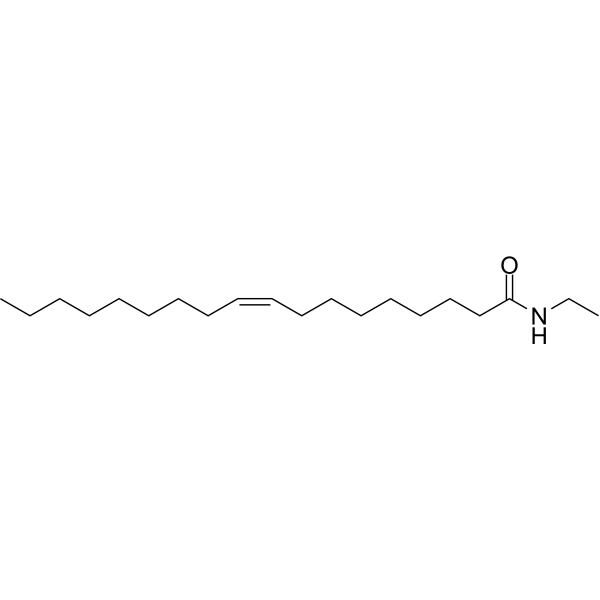
Chemical Structure
Oleoyl ethyl amide
Synonym(s): N-Ethyloleamide
- CAS 番号: 85075-82-7
- Formula:C20H39NO
- Molecular Weight:309.53
IUPAC Name: N-ethyloleamide
InChIKey: JZJYYCFYGXPUMF-QXMHVHEDSA-N
SMILES: CCCCCCCC/C=C\CCCCCCCC(NCC)=O
Biological Activity:
Oleoyl ethyl amide (N-Ethyloleamide) is a fatty acid amide hydrolase (FAAH) inhibitor that can cross the blood-brain barrier. Oleoyl ethyl amide enhances endogenous cannabinoid signaling by inhibiting FAAH, and via CB1/CB2 and TRPV1 receptor mediation, thereby modulating peripheral sensory and motor nerve transmission. Oleoyl ethyl amide can be used in research on overactive bladder and premature ejaculation[1][2][3][4][5].
The product specifications provided below refer solely to the active content of Oleoyl ethyl amide.
| 製品番号 | 製品名 | 純度 | 製品説明 | Pricing | |||||||||||||||||||
|---|---|---|---|---|---|---|---|---|---|---|---|---|---|---|---|---|---|---|---|---|---|---|---|
|
|
Oleoyl ethyl amide | 99.9% | Oleoyl ethyl amide (N-Ethyloleamide) is a fatty acid amide hydrolase (FAAH) inhibitor that can cross the blood-brain barrier. Oleoyl ethyl amide enhances endogenous cannabinoid signaling by inhibiting FAAH, and via CB1/CB2 and TRPV1 receptor mediation, thereby modulating peripheral sensory and motor nerve transmission. Oleoyl ethyl amide can be used in research on overactive bladder and premature ejaculation. The product specifications provided below refer solely to the active content of Oleoyl ethyl amide. |
||||||||||||||||||||
|
loading...
/
|
|||||||||||||||||||||||
-
Similarity Score 0.90
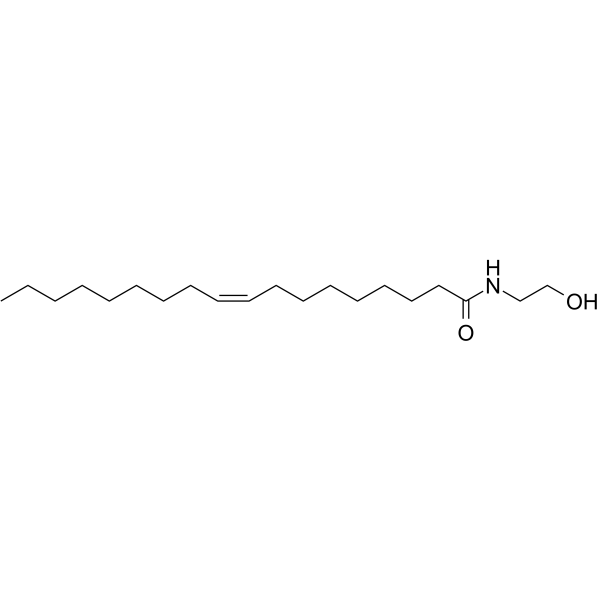 HY-107542Oleoylethanolamide
-
Similarity Score 0.90
 HY-N16027C18:1 Anandamide
-
Similarity Score 0.90
 HY-N16018C17:1 Anandamide
-
Similarity Score 0.88
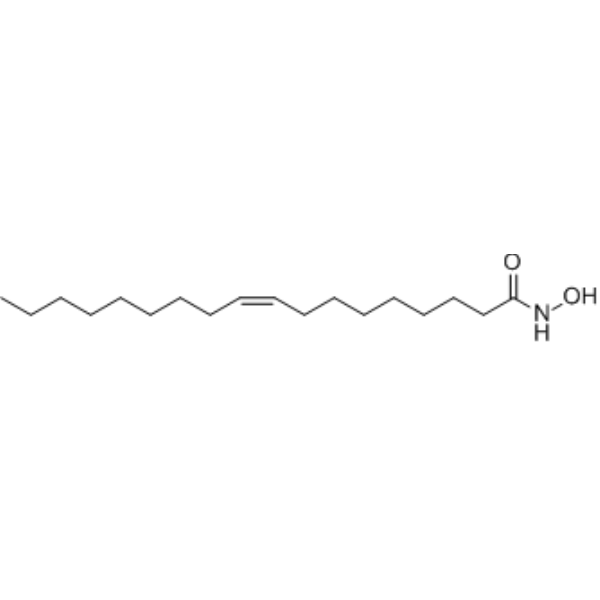 HY-112546MMP-2 Inhibitor I
-
Similarity Score 0.88
 HY-N2327A9(E)-Octadecenamide
-
Similarity Score 0.88
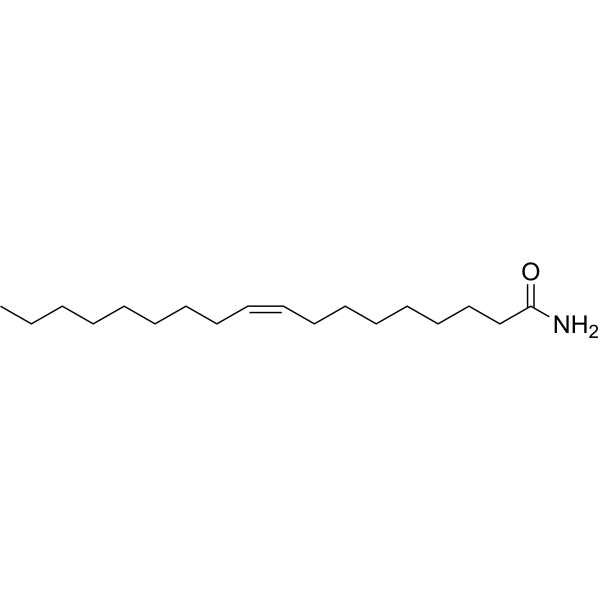 HY-N2327ROleamide (Standard)
-
Similarity Score 0.88
 HY-W110130(E/Z)-Oleamide
-
Similarity Score 0.88
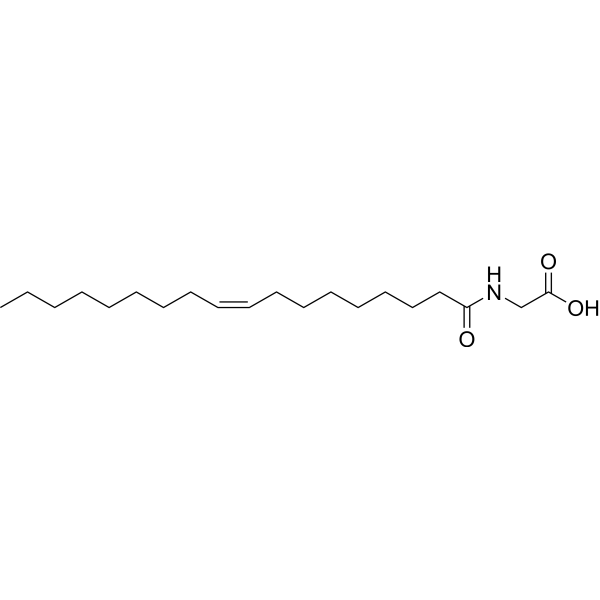 HY-113204N-Oleoyl glycine
-
Similarity Score 0.88
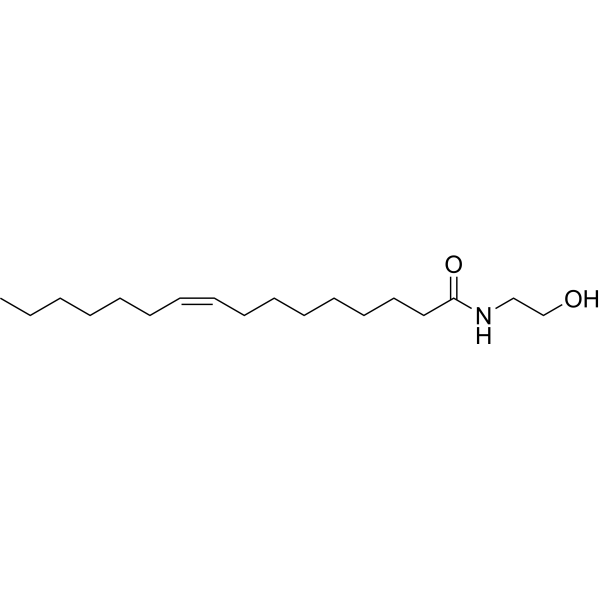 HY-127061Palmitoleoyl ethanolamide
-

Explore the MedChemAI to find more analogs


References
- [1]. Strittmatter F, et al. Expression of fatty acid amide hydrolase (FAAH) in human, mouse, and rat urinary bladder and effects of FAAH inhibition on bladder function in awake rats. European urology. 2012 Jan;61(1):98-106.
- [2]. Füllhase C, et al. Spinal neuronal cannabinoid receptors mediate urodynamic effects of systemic fatty acid amide hydrolase (FAAH) inhibition in rats. Neurourology and urodynamics. 2016 Apr;35(4):464-70. [Content Brief]
- [3]. Cognetta AB, et al. Selective N-Hydroxyhydantoin Carbamate Inhibitors of Mammalian Serine Hydrolases. Chemistry & biology. 2015 Jul 23;22(7):928-37. [Content Brief]
- [4]. La Croce G, et al. Inhibition of the fatty acid amide hydrolase increases latency to apomorphine-induced ejaculation in rats. J Urol. 2013;189(4S):e419.
- [5]. Campeau L, et al. Role of cannabinoid and TRPV1 receptors in the spinal mechanisms of micturition in the normal rat. J Urol. 2013;189(4S):e223. doi: [10.1016/j.juro.2013.02.1939](https://doi.org/10.1016/j.juro.2013.02.1939)



