Search Result
Results for "
PEG Linker
" in MedChemExpress (MCE) Product Catalog:
3883
Inhibitors & Agonists
194
Biochemical Assay Reagents
3
Isotope-Labeled Compounds
| Cat. No. |
Product Name |
Target |
Research Areas |
Chemical Structure |
-
- HY-126886
-
|
|
ADC Linker
PROTAC Linkers
|
Cancer
|
|
Mal-PEG1-NHS ester is a non-cleavable ADC linker used in the synthesis of antibody-drug conjugates (ADCs). Mal-PEG1-NHS ester is PEG-based PROTAC linker that can be used in the synthesis of PROTACs.
|
-
-
- HY-128801
-
|
PROTAC Linker 5
|
PROTAC Linkers
|
Cancer
|
|
NH2-PEG3-C1-Boc (PROTAC Linker 5) is a PEG-based PROTAC linker can be used in the synthesis of PROTACs .
|
-
-
- HY-42776
-
|
PROTAC Linker 15
|
PROTAC Linkers
|
Cancer
|
|
NH2-PEG3-C2-NH-Boc (PROTAC Linker 15) is a PEG-based PROTAC linker can be used in the synthesis of PROTACs .
|
-
-
- HY-W007545
-
|
PROTAC Linker 35
|
PROTAC Linkers
|
Cancer
|
|
NH2-PEG3 (PROTAC Linker 35) is a PROTAC linker, which belongs to a polyethylene glycol (PEG) linker. NH2-PEG3 (PROTAC Linker 35) can be used in the synthesis of the PROTAC (β-NF-JQ1) .
|
-
-
- HY-W004896
-
|
PROTAC Linker 11
|
PROTAC Linkers
|
Cancer
|
|
Boc-NH-PEG2 (PROTAC Linker 11) is a PEG-based PROTAC linker can be used in the synthesis of PROTACs .
|
-
-
- HY-W025896
-
|
PROTAC Linker 12
|
PROTAC Linkers
|
Cancer
|
|
Boc-NH-PEG4 (PROTAC Linker 12) is a PEG-based PROTAC linker can be used in the synthesis of PROTACs .
|
-
-
- HY-W008474
-
|
PROTAC Linker 13
|
PROTAC Linkers
|
Cancer
|
|
Boc-NH-PEG2-C2-NH2 (PROTAC Linker 13) is a PEG-based PROTAC linker can be used in the synthesis of PROTACs .
|
-
-
- HY-140227
-
|
|
PROTAC Linkers
ADC Linker
|
Cancer
|
|
m-PEG12-amine is a PEG-based PROTAC linker that can be used in the synthesis of PROTACs . m-PEG12-amine is also a non-cleavable 12 unit PEG ADC linker used in the synthesis of antibody-drug conjugates (ADCs) .
|
-
-
- HY-126887
-
|
|
PROTAC Linkers
|
Cancer
|
|
Mal-PEG8-NHS ester is a PEG-based PROTAC linker can be used in the synthesis of PROTACs.
|
-
-
- HY-112496
-
|
PROTAC Linker 4
|
PROTAC Linkers
|
Cancer
|
|
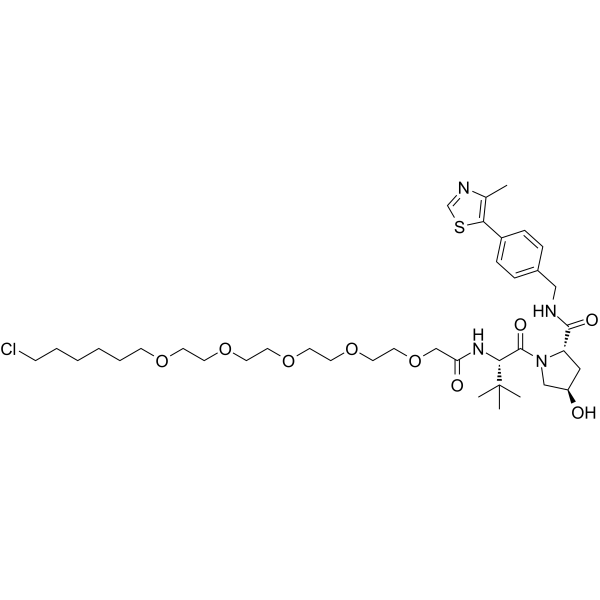
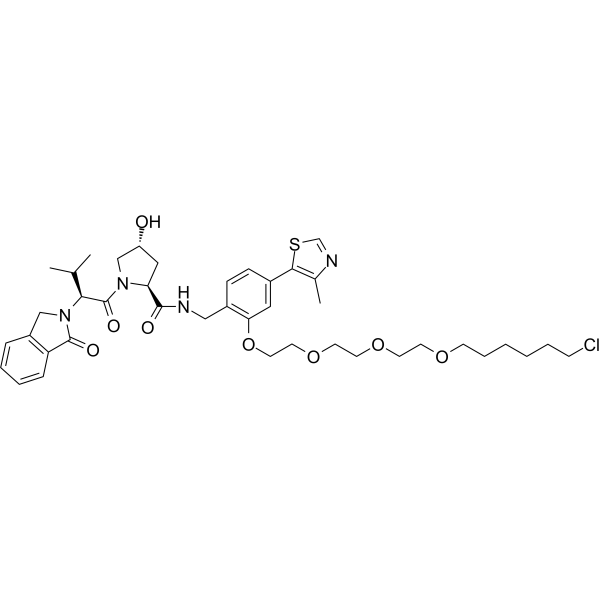
Cl-C6-PEG4-O-CH2COOH (PROTAC Linker 4) is a PEG-based PROTAC linker can be used in the synthesis of chloroalkane-containing PROTACs (HaloPROTACs) .
|
-
-
- HY-W017772
-
|
PROTAC Linker 10
|
PROTAC Linkers
|
Cancer
|
|
Boc-NH-PEG3 (PROTAC Linker 10) is a PEG-based PROTAC linker can be used in the synthesis of PROTACs .
|
-
-
- HY-128833
-
|
PROTAC Linker 19
|
PROTAC Linkers
|
Cancer
|
|
Bis-NH2-PEG2 (PROTAC Linker 19) is a PEG-based PROTAC linker can be used in the synthesis of PROTACs .
|
-
-
- HY-130144
-
|
|
ADC Linker
PROTAC Linkers
|
Cancer
|
|
Ald-CH2-PEG3-azide is a cleavable 3 unit PEG ADC linker used in the synthesis of antibody-drug conjugates (ADCs). Ald-CH2-PEG3-azide is a PEG-based PROTAC linker can be used in the synthesis of PROTACs . Ald-CH2-PEG3-azide is a click chemistry reagent, it contains an Azide group and can undergo copper-catalyzed azide-alkyne cycloaddition reaction (CuAAc) with molecules containing Alkyne groups. It can also undergo strain-promoted alkyne-azide cycloaddition (SPAAC) reactions with molecules containing DBCO or BCN groups.
|
-
-
- HY-126959
-
|
|
PROTAC Linkers
|
Cancer
|
|
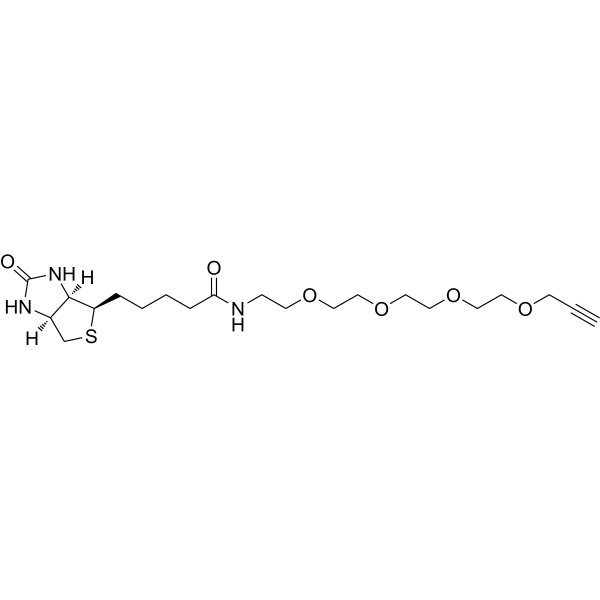
Biotin-PEG4-acid is a PEG-based PROTAC linker can be used in the synthesis of PROTAC.
|
-
-
- HY-126961
-
|
|
PROTAC Linkers
|
Cancer
|
|
Mal-PEG4-acid is a PEG-based PROTAC linker can be used in the synthesis of PROTACs.
|
-
-
- HY-130291
-
|
|
PROTAC Linkers
|
Cancer
|
|
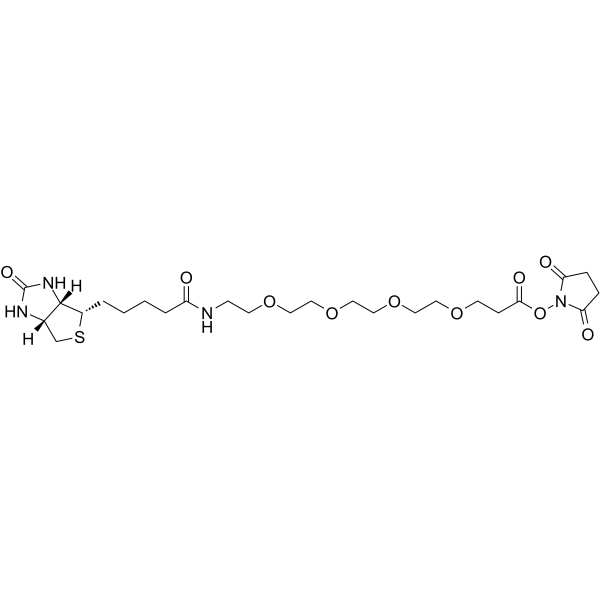
Biotin-PEG3-NHS ester is a PEG-based PROTAC linker can be used in the synthesis of PROTAC.
|
-
-
- HY-141220
-
|
|
PROTAC Linkers
ADC Linker
|
Cancer
|
|
m-PEG12-OH is a PEG-based PROTAC linker that can be used in the synthesis of PROTACs . m-PEG12-OH is also a non-cleavable 12 unit PEG ADC linker used in the synthesis of antibody-drug conjugates (ADCs) .
|
-
-
- HY-140067
-
|
|
PROTAC Linkers
|
Cancer
|
|
endo-BCN-PEG2-C2-NHS ester is a PEG-based PROTAC linker can be used in the synthesis of PROTACs.
|
-
-
- HY-W022240
-
|
PROTAC Linker 17
|
PROTAC Linkers
|
Cancer
|
|
NH2-PEG5-C2-NH-Boc (PROTAC Linker 17) is a PEG-based PROTAC linker can be used in the synthesis of PROTACs .
|
-
-
- HY-130334
-
|
|
PROTAC Linkers
|
Cancer
|
|
Mal-PEG8-acid is a PEG-based PROTAC linker can be used in the synthesis of PROTACs.
|
-
-
- HY-126963
-
|
|
PROTAC Linkers
|
Cancer
|
|
Mal-PEG6-acid is a PEG-based PROTAC linker can be used in the synthesis of PROTACs.
|
-
-
- HY-103599
-
|
VH032-PEG2-N3; VHL Ligand-Linker Conjugates 6; E3 ligase Ligand-Linker Conjugates 13
|
E3 Ligase Ligand-Linker Conjugates
|
Cancer
|
|
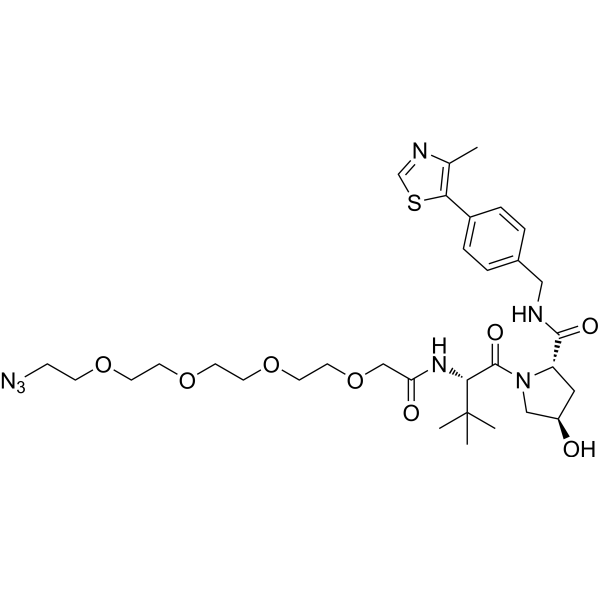
(S,R,S)-AHPC-PEG2-N3 is a synthesized E3 ligase ligand-linker conjugate that incorporates the (S,R,S)-AHPC based VHL ligand and 2-unit PEG linker. (S,R,S)-AHPC-PEG2-N3 can be used for the synthesis of PROTACs .
|
-
-
- HY-116006
-
|
PROTAC Linker 36
|
PROTAC Linkers
|
Cancer
|
|
Bis-PEG5-acid (PROTAC Linker 36) is a PROTAC linker, which belongs to a polyethylene glycol (PEG) linker. Bis-PEG5-acid (PROTAC Linker 36) can be used in the synthesis of the CP5V. CP5V is a PROTAC, and specifically degrades Cdc20 .
|
-
-
- HY-W004816
-
|
PROTAC Linker 16
|
PROTAC Linkers
|
Cancer
|
|
Bis-Tos-PEG4 (PROTAC Linker 16) is a PEG-based PROTAC linker can be used in the synthesis of PROTACs .
|
-
-
- HY-141376
-
|
|
PROTAC Linkers
|
Cancer
|
|
m-PEG6-Br is a PEG-based PROTAC linker can be used in the synthesis of PROTACs .
|
-
-
- HY-108371
-
|
PROTAC Linker 1
|
PROTAC Linkers
|
Cancer
|
|
Boc-C1-PEG2-C4-Cl (PROTAC Linker 1) is a PEG-based PROTAC linker can be used in the synthesis of PROTACs .
|
-
-
- HY-140001
-
|
|
PROTAC Linkers
|
Cancer
|
|
Amino-PEG3-C2-sulfonic acid is a PEG-based PROTAC linker that can be used in the synthesis of PROTACs .
|
-
-
- HY-130290
-
|
|
PROTAC Linkers
|
Cancer
|
|
Biotin-PEG4-OH is a PEG-based PROTAC linker can be used in the synthesis of PROTAC.
|
-
-
- HY-131158
-
|
|
Drug-Linker Conjugates for ADC
|
Cancer
|
|
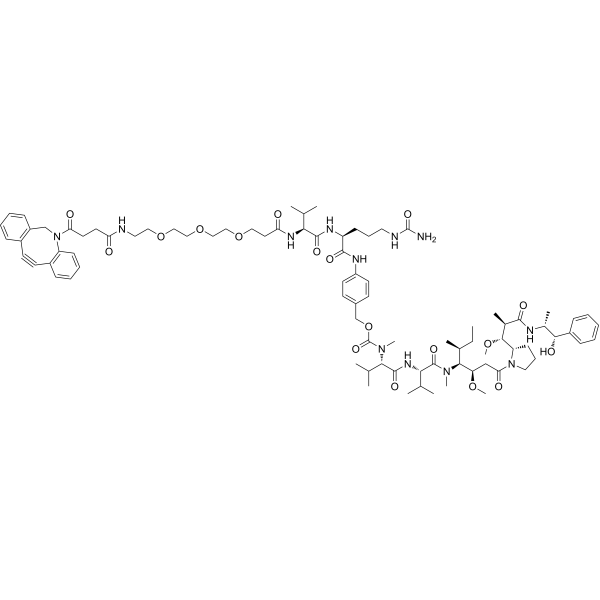
DBCO-PEG3-Glu-VC-PABC-MMAF (compound s19b) is a drug-linker conjugate for ADC by using the tubulin inhibitor, MMAF (HY-15579), linked via cathepsin cleavable DBCO-PEG3-Glu-VC-PABC. DBCO-PEG3-Glu-VC-PABC-MMAF can be used in the synthesis of antibody-drug conjugates (ADCs) .
|
-
-
- HY-117104
-
|
|
ADC Linker
PROTAC Linkers
|
Cancer
|
|
Hydroxy-PEG4-acid is a non-cleavable 4 unit PEG ADC linker used in the synthesis of antibody-drug conjugates (ADCs). Hydroxy-PEG4-acid is also a PEG-based PROTAC linker that can be used in the synthesis of PROTACs .
|
-
-
- HY-140226
-
|
|
ADC Linker
PROTAC Linkers
|
Cancer
|
|
m-PEG10-amine is a non-cleavable 10 unit PEG ADC linker used in the synthesis of antibody-drug conjugates (ADCs) . m-PEG10-amine is also a PEG-based PROTAC linker that can be used in the synthesis of PROTACs .
|
-
-
- HY-140736A
-
|
|
Liposome
|
Others
|
|
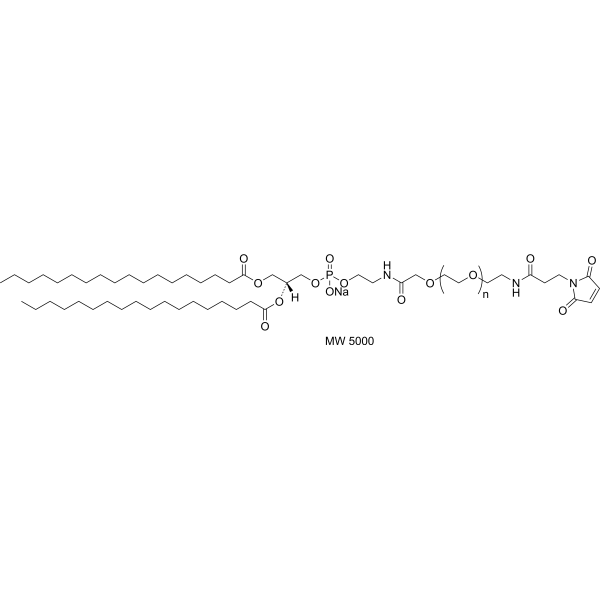
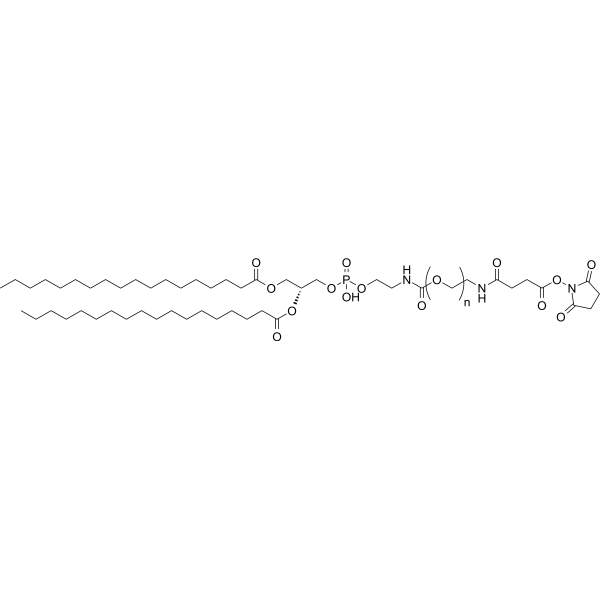
DSPE-PEG1000-Biotin is a PEG-based PROTAC linker that can be used in the synthesis of PROTACs .
|
-
-
- HY-140736B
-
-
-
- HY-120918
-
|
|
PROTAC Linkers
|
Cancer
|
|
NH2-PEG7 is a PROTAC linker, which refers to the PEG composition. NH2-PEG7 can be used in the synthesis of the PROTAC PARP1 degrader iRucaparib-AP6 .
|
-
-
- HY-130599
-
|
|
PROTAC Linkers
|
Cancer
|
|
Hydroxy-PEG2-CH2-Boc is a PEG/Alkyl/ether-based PROTAC linker can be used in the synthesis of PROTACs.
|
-
-
- HY-130560
-
|
|
PROTAC Linkers
|
Cancer
|
|
Biotin-PEG3-propionic hydrazide is a PEG-based PROTAC linker can be used in the synthesis of PROTAC.
|
-
-
- HY-W039197
-
|
|
PROTAC Linkers
|
Cancer
|
|
Acid-PEG4-mono-methyl ester is a PEG- and Alkyl/ether-based PROTAC linker can be used in the synthesis of PROTACs .
|
-
-
- HY-140056
-
|
|
PROTAC Linkers
|
Cancer
|
|
Aminooxy-PEG1-propargyl is a PEG-based PROTAC linker can be used in the synthesis of PROTACs . Aminooxy-PEG1-propargyl is a click chemistry reagent, it contains an Alkyne group and can undergo copper-catalyzed azide-alkyne cycloaddition (CuAAc) with molecules containing Azide groups.
|
-
-
- HY-141218
-
|
Decaethylene glycol monomethyl ether
|
ADC Linker
PROTAC Linkers
|
Cancer
|
|
m-PEG10-alcohol (Decaethylene glycol monomethyl ether) is a non-cleavable 10 unit PEG ADC linker used in the synthesis of antibody-drug conjugates (ADCs) . m-PEG10-alcohol is also a PEG-based PROTAC linker that can be used in the synthesis of PROTACs .
|
-
-
- HY-117050
-
|
|
ADC Linker
PROTAC Linkers
|
Cancer
|
|
Tos-PEG12 is a noncleavable ADC linker used in the synthesis of antibody-drug conjugates (ADCs). PEG12-Tos is also a PEG-based PROTAC linker that can be used in the synthesis of PROTACs.
|
-
-
- HY-128805
-
|
PROTAC Linker 9
|
PROTAC Linkers
|
Cancer
|
|
Tos-PEG3-NH-Boc (PROTAC Linker 9) is a PEG-based PROTAC linker can be used in the synthesis of PROTACs .
|
-
-
- HY-128804
-
|
PROTAC Linker 8
|
PROTAC Linkers
|
Cancer
|
|
PEG3-O-CH2COOH (PROTAC Linker 8) is a PEG-based PROTAC linker can be used in the synthesis of SNIPERs .
|
-
-
- HY-135796
-
-
-
- HY-141408
-
|
|
PROTAC Linkers
|
Cancer
|
|
m-PEG5-triethoxysilane is a PEG-based PROTAC linker can be used in the synthesis of PROTACs .
|
-
-
- HY-141219
-
|
|
PROTAC Linkers
|
Cancer
|
|
m-PEG11-OH is a PEG-based PROTAC linker can be used in the synthesis of PROTACs .
|
-
-
- HY-134711A
-
|
|
PROTAC Linkers
|
Cancer
|
|
Amine-PEG6-thiol hydrochloride is a PEG-based PROTAC linker that can be used in the synthesis of PROTACs .
|
-
-
- HY-128802
-
|
PROTAC Linker 6
|
PROTAC Linkers
|
Cancer
|
|
Tos-PEG3-O-C1-CH3COO (PROTAC Linker 6) is a PEG-based PROTAC linker can be used in the synthesis of PROTACs .
|
-
-
- HY-133008
-
|
|
PROTAC Linkers
|
Cancer
|
|
endo-BCN-PEG3-acid is a PEG-based PROTAC linker can be used in the synthesis of PROTACs.
|
-
-
- HY-128803
-
|
PROTAC Linker 7
|
PROTAC Linkers
|
Cancer
|
|
Tos-PEG4-NH-Boc (PROTAC Linker 7) is a PEG-based PROTAC linker can be used in the synthesis of PROTACs .
|
-
-
- HY-125907
-
|
PROTAC Linker 34
|
PROTAC Linkers
|
Cancer
|
|
Dox-Ph-PEG1-Cl (PROTAC Linker 34) is a PEG-based PROTAC linker can be used in the synthesis of PROTACs .
|
-
- HY-128844
-
|
PROTAC Linker 24
|
PROTAC Linkers
|
Cancer
|
|
Bis-NH2-C1-PEG3 (PROTAC Linker 24) is a PEG-based PROTAC linker can be used in the synthesis of PROTACs .
|
-
- HY-163790
-
|
|
PROTAC Linkers
|
Others
|
|
Desthiobiotin-PEG3-sulfo-Maleimide is a PEG linker can be used in the synthesis of PROTACs .
|
-
- HY-140204
-
|
|
PROTAC Linkers
|
Cancer
|
|
Amino-PEG9-alcohol is a PEG-based PROTAC linker that can be used in the synthesis of PROTACs .
|
-
- HY-141222
-
|
|
PROTAC Linkers
|
Cancer
|
|
m-PEG16-alcohol is a PEG-based PROTAC linker can be used in the synthesis of PROTACs .
|
-
- HY-141375
-
|
|
PROTAC Linkers
|
Cancer
|
|
m-PEG5-Br is a PEG-based PROTAC linker can be used in the synthesis of PROTACs .
|
-
- HY-141402
-
|
|
PROTAC Linkers
|
Cancer
|
|
m-PEG4-Hydrazide is a PEG-based PROTAC linker can be used in the synthesis of PROTACs .
|
-
- HY-141221
-
|
|
PROTAC Linkers
|
Cancer
|
|
m-PEG15-alcohol is a PEG-based PROTAC linker can be used in the synthesis of PROTACs .
|
-
- HY-130488
-
|
|
PROTAC Linkers
|
Cancer
|
|
Hydroxy-PEG2-C2-PFP ester is a PEG/Alkyl/ether-based?PROTAC linker can be used in the synthesis of PROTACs.
|
-
- HY-133176
-
|
|
PROTAC Linkers
|
Cancer
|
|
Biotin-PEG6-acid is a PEG-based PROTAC linker can be used in the synthesis of PROTAC.
|
-
- HY-140074
-
|
|
PROTAC Linkers
|
Cancer
|
|
endo-BCN-PEG4-Boc is a PEG-based PROTAC linker can be used in the synthesis of PROTACs.
|
-
- HY-175218
-
|
|
ADC Linker
|
Cancer
|
|
Maleimide-Ph(3,5-F)-PEG4-Val-Ala is a cleavable PEG-based ADC linker that can be used in the synthesis of antibody-drug conjugates (ADCs) .
|
-
- HY-140500
-
|
|
ADC Linker
PROTAC Linkers
|
Cancer
|
|
m-PEG10-acid is a non-cleavable 10 unit PEG ADC linker used in the synthesis of antibody-drug conjugates (ADCs) . m-PEG10-acid is also a PEG-based PROTAC linker that can be used in the synthesis of PROTACs .
|
-
- HY-133006
-
|
|
PROTAC Linkers
|
Cancer
|
|
Fluorescein-PEG5-acid is a PEG-based PROTAC linker can be used in the synthesis of PROTACs.
|
-
- HY-128847
-
|
PROTAC Linker 26
|
PROTAC Linkers
|
Cancer
|
|
Bis-PEG1-C-PEG1-CH2COOH (PROTAC Linker 26) is a PEG-based PROTAC linker can be used in the synthesis of PROTACs .
|
-
- HY-140398
-
|
|
PROTAC Linkers
|
Cancer
|
|
m-PEG3-Aminooxy is a PEG-based PROTAC linker can be used in the synthesis of PROTACs .
|
-
- HY-141399
-
|
|
PROTAC Linkers
|
Cancer
|
|
m-PEG10-Boc is a PEG-based PROTAC linker can be used in the synthesis of PROTACs .
|
-
- HY-141400
-
|
|
PROTAC Linkers
|
Cancer
|
|
m-PEG12-Boc is a PEG-based PROTAC linker can be used in the synthesis of PROTACs .
|
-
- HY-141224
-
|
|
PROTAC Linkers
|
Cancer
|
|
m-PEG23-alcohol is a PEG-based PROTAC linker can be used in the synthesis of PROTACs .
|
-
- HY-141398
-
|
Methyl-PEG9-t-butyl ester
|
PROTAC Linkers
|
Cancer
|
|
m-PEG9-Boc is a PEG-based PROTAC linker can be used in the synthesis of PROTACs .
|
-
- HY-140360
-
|
|
PROTAC Linkers
|
Cancer
|
|
m-PEG10-Tos is a PEG-based PROTAC linker can be used in the synthesis of PROTACs .
|
-
- HY-141403
-
|
|
PROTAC Linkers
|
Cancer
|
|
m-PEG37-hydrazide is a PEG-based PROTAC linker can be used in the synthesis of PROTACs .
|
-
- HY-141401
-
|
|
PROTAC Linkers
|
Cancer
|
|
m-PEG13-Boc is a PEG-based PROTAC linker can be used in the synthesis of PROTACs .
|
-
- HY-141223
-
|
|
PROTAC Linkers
|
Cancer
|
|
m-PEG19-alcohol is a PEG-based PROTAC linker can be used in the synthesis of PROTACs .
|
-
- HY-141396
-
|
|
PROTAC Linkers
|
Cancer
|
|
m-PEG5-Boc is a PEG-based PROTAC linker can be used in the synthesis of PROTACs .
|
-
- HY-141112
-
|
|
PROTAC Linkers
|
Cancer
|
|
m-PEG3-succinimidyl carbonate is a PEG-based PROTAC linker can be used in the synthesis of PROTACs .
|
-
- HY-140507
-
|
|
PROTAC Linkers
|
Cancer
|
|
m-PEG4-CH2-acid is a PEG-based PROTAC linker can be used in the synthesis of PROTACs .
|
-
- HY-130619
-
|
|
PROTAC Linkers
|
Cancer
|
|
Boc-C1-PEG3-C4-OBn (PROTAC Linker 15) is a PROTAC linker, which refers to the PEG composition. Boc-C1-PEG3-C4-OBn can be used in the synthesis of a series of PROTACs, such as PROTAC SGK3 degrader-1 (HY-125878). PROTACs contain two different ligands connected by a linker; one is a ligand for an E3 ubiquitin ligase and the other is for the target protein. PROTACs exploit the intracellular ubiquitin-proteasome system to selectively degrade target proteins .
|
-
- HY-125844
-
|
PROTAC Linker 28
|
PROTAC Linkers
|
Cancer
|
|
Tos-PEG1-O-CH2COOH (PROTAC Linker 28) is a PEG-based PROTAC linker can be used in the synthesis of PROTACs .
|
-
- HY-176182
-
-
- HY-141407
-
|
|
PROTAC Linkers
|
Cancer
|
|
m-PEG3-amido-C3-triethoxysilane is a PEG-based PROTAC linker can be used in the synthesis of PROTACs .
|
-
- HY-126962
-
|
|
PROTAC Linkers
|
Cancer
|
|
Mal-PEG5-acid is a PEG-based PROTAC linker can be used in the synthesis of PROTACs.
|
-
- HY-130586
-
|
|
PROTAC Linkers
|
Cancer
|
|
Mal-PEG3-PFP ester is a PEG-based PROTAC linker can be used in the synthesis of PROTACs.
|
-
- HY-135179
-
|
(+)-Biotin-PEG3-OH
|
PROTAC Linkers
|
Cancer
|
|
Biotin-PEG3-alcohol is a PEG-based PROTAC linker can be used in the synthesis of PROTAC.
|
-
- HY-130330
-
|
|
PROTAC Linkers
|
Cancer
|
|
Ald-CH2-PEG5-Boc is a PEG- and Alkyl/ether-based PROTAC linker can be used in the synthesis of PROTACs .
|
-
- HY-140077
-
|
|
PROTAC Linkers
|
Cancer
|
|
endo-BCN-PEG3-NH-Boc is a PEG-based PROTAC linker can be used in the synthesis of PROTACs.
|
-
- HY-140594
-
|
|
PROTAC Linkers
|
Cancer
|
|
m-PEG3-S-PEG4-propargyl is a PEG-based PROTAC linker can be used in the synthesis of PROTACs . m-PEG3-S-PEG4-propargyl is a click chemistry reagent, it contains an Alkyne group and can undergo copper-catalyzed azide-alkyne cycloaddition (CuAAc) with molecules containing Azide groups.
|
-
- HY-W190966
-
|
|
PROTAC Linkers
|
Others
|
|
t-Boc-Aminooxy-PEG4-t-butyl ester is a PEG-based PROTAC linker can be used in the synthesis of PROTACs.
|
-
- HY-135090
-
|
|
PROTAC Linkers
|
Cancer
|
|
Tos-PEG8-m is a derivative of silybin ethers, extracted from patent CN105037337A (compound III-d). Tos-PEG8-m is a PEG-based PROTAC linker can be used in the synthesis of Silymarin (HY-W043277) .
|
-
- HY-140501
-
|
|
ADC Linker
PROTAC Linkers
|
Cancer
|
|
m-PEG11-acid is a non-cleavable 11 unit PEG ADC linker used in the synthesis of antibody-drug conjugates (ADCs) . m-PEG11-acid is also a PEG-based PROTAC linker that can be used in the synthesis of PROTACs .
|
-
- HY-177492
-
-
- HY-141395
-
|
|
ADC Linker
PROTAC Linkers
|
Cancer
|
|
m-PEG4-Boc is a cleavable 4 unit PEG ADC linker used in the synthesis of antibody-drug conjugates (ADCs) . m-PEG4-Boc is also a PEG-based PROTAC linker that can be used in the synthesis of PROTACs .
|
-
- HY-126951
-
|
|
ADC Linker
PROTAC Linkers
|
Cancer
|
|
Aminooxy-PEG2-alcohol is a non-cleavable 2 unit PEG ADC linker used in the synthesis of antibody-drug conjugates (ADCs) . Aminooxy-PEG2-alcohol is also a PEG-based PROTAC linker that can be used in the synthesis of PROTACs .
|
-
- HY-124123
-
|
|
ADC Linker
PROTAC Linkers
|
Cancer
|
|
Aminooxy-PEG4-alcohol is a non-cleavable 4 unit PEG ADC linker used in the synthesis of antibody-drug conjugates (ADCs) . Aminooxy-PEG4-alcohol is also a PEG-based PROTAC linker that can be used in the synthesis of PROTACs .
|
-
- HY-140057
-
|
|
PROTAC Linkers
|
Cancer
|
|
Aminooxy-PEG3-propargyl is a PEG-based PROTAC linker that can be used in the synthesis of PROTACs . Aminooxy-PEG3-propargyl is a click chemistry reagent, it contains an Alkyne group and can undergo copper-catalyzed azide-alkyne cycloaddition (CuAAc) with molecules containing Azide groups.
|
-
- HY-125887
-
|
PROTAC Linker 30
|
PROTAC Linkers
|
Cancer
|
|
Boc-NH-PEG2-C2-amido-C4-acid (PROTAC Linker 30) is a PEG-based PROTAC linker can be used in the synthesis of PROTACs .
|
-
- HY-176390
-
|
|
PROTAC Linkers
|
Others
|
|
Adamantan-C-amide-PEG2-C2-amine (Compound 8) is a PEG-based PROTAC linker that can be used in the synthesis of PROTACs, such as PROTAC β-NF-JQ1 (HY-130256) .
|
-
- HY-156316
-
|
|
ADC Linker
|
Cancer
|
|
SCO-PEG3-NH2 is a cleavable ADC Linker containing 3 PEG units. SCO-PEG3-NH2 can be used as a copper-free click chemical reagent for catalyst-free click reactions.
|
-
- HY-156315
-
|
|
ADC Linker
|
Cancer
|
|
SCO-PEG2-NH2 is a cleavable ADC Linker containing 2 PEG units. SCO-PEG2-NH2 can be used as a copper-free click chemical reagent for catalyst-free click reactions.
|
-
- HY-103599R
-
|
VH032-PEG2-N3 (Standard); VHL Ligand-Linker Conjugates 6 (Standard); E3 ligase Ligand-Linker Conjugates 13 (Standard)
|
Reference Standards
E3 Ligase Ligand-Linker Conjugates
|
Cancer
|
|
(S,R,S)-AHPC-PEG2-N3 (Standard) is the analytical standard of (S,R,S)-AHPC-PEG2-N3 (HY-103599). This product is intended for research and analytical applications. (S,R,S)-AHPC-PEG2-N3 is a synthesized E3 ligase ligand-linker conjugate that incorporates the (S,R,S)-AHPC based VHL ligand and 2-unit PEG linker. (S,R,S)-AHPC-PEG2-N3 can be used for the synthesis of PROTACs .
|
-
- HY-178685
-
-
- HY-W010764
-
|
|
PROTAC Linkers
|
Cancer
|
|
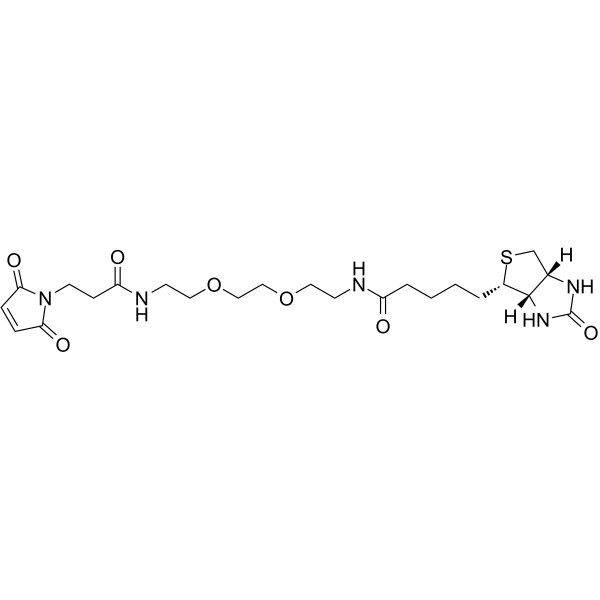
Biotin-PEG2-Mal is a PEG-based PROTAC linker can be used in the synthesis of PROTAC.
|
-
- HY-42637
-
|
PROTAC Linker 14
|
PROTAC Linkers
|
Cancer
|
|
N3-PEG3-CH2COOH (PROTAC Linker 14) is a PEG-based PROTAC linker can be used in the synthesis of PROTACs . N3-PEG3-CH2COOH is a click chemistry reagent, it contains an Azide group and can undergo copper-catalyzed azide-alkyne cycloaddition reaction (CuAAc) with molecules containing Alkyne groups. It can also undergo strain-promoted alkyne-azide cycloaddition (SPAAC) reactions with molecules containing DBCO or BCN groups.
|
-
- HY-156381
-
|
|
Biochemical Assay Reagents
|
Others
|
|
Biotin-PEG3-CoenzymeA is a non cell-permeable substrate based on biotin with a PEG linker. Biotin-PEG3-CoenzymeA can be used for biotinylation of living cells, Labeling in solution, interaction studies .
|
-
- HY-141161B
-
|
|
ADC Linker
|
Cancer
|
|
(R)-TCO-PEG8-acid is an ADC linker containing 8 PEG units. (R)-TCO-PEG8-acid can use its own TCO group to perform an inverse electron demand Diels-Alder reaction (iEDDA) with molecules with Tetrazine groups.
|
-
- HY-133061
-
|
|
PROTAC Linkers
|
Cancer
|
|
Fluorescein-thiourea-PEG6-acid is a PEG-based PROTAC linker that can be used in the synthesis of PROTACs .
|
-
- HY-122459
-
|
|
PROTAC Linkers
|
Cancer
|
|
Fmoc-PEG5-NHS ester is a PEG-based PROTAC linker that can be used in the synthesis of PROTACs .
|
-
- HY-122456
-
|
|
PROTAC Linkers
|
Cancer
|
|
Fmoc-PEG4-NHS ester is a PEG-based PROTAC linker that can be used in the synthesis of PROTACs .
|
-
- HY-126882
-
|
|
PROTAC Linkers
|
Cancer
|
|
Fmoc-PEG6-NHS ester is a PEG-based PROTAC linker that can be used in the synthesis of PROTACs .
|
-
- HY-156315A
-
|
|
ADC Linker
|
Cancer
|
|
SCO-PEG2-NH2 formate is a cleavable ADC Linker containing 2 PEG units. SCO-PEG2-NH2 formate can be used as a copper-free click chemical reagent for catalyst-free click reactions.
|
-
- HY-140590
-
|
|
PROTAC Linkers
|
Cancer
|
|
Azido-PEG3-S-PEG3-azide is a PEG-based PROTAC linker that can be used in the synthesis of PROTACs . Azido-PEG3-S-PEG3-azide is a click chemistry reagent, it contains an Azide group and can undergo copper-catalyzed azide-alkyne cycloaddition reaction (CuAAc) with molecules containing Alkyne groups. It can also undergo strain-promoted alkyne-azide cycloaddition (SPAAC) reactions with molecules containing DBCO or BCN groups.
|
-
- HY-108371R
-
|
PROTAC Linker 1 (Standard)
|
Reference Standards
PROTAC Linkers
|
Cancer
|
|
Boc-C1-PEG2-C4-Cl (Standard) is the analytical standard of Boc-C1-PEG2-C4-Cl (HY-108371). This product is intended for research and analytical applications. Boc-C1-PEG2-C4-Cl (PROTAC Linker 1) is a PEG-based PROTAC linker can be used in the synthesis of PROTACs .
|
-
- HY-157008
-
|
|
ADC Linker
|
Cancer
|
|
(S)-TCO-PEG2-Maleimide is an ADC linker containing 2 PEG units. (S)-TCO-PEG2-Maleimide can use its own TCO group to perform an inverse electron demand Diels-Alder reaction (iEDDA) with molecules with Tetrazine groups.
|
-
- HY-141167B
-
|
|
ADC Linker
|
Cancer
|
|
(S)-TCO-PEG4-NHS ester is an ADC linker containing 4 PEG units. (S)-TCO-PEG4-NHS ester can use its own TCO group to perform an inverse electron demand Diels-Alder reaction (iEDDA) with molecules with Tetrazine groups.
|
-
- HY-141169B
-
|
|
ADC Linker
|
Cancer
|
|
(R)-TCO-PEG8-NHS ester is an ADC linker containing 8 PEG units. (R)-TCO-PEG8-NHS ester can use its own TCO group to perform an inverse electron demand Diels-Alder reaction (iEDDA) with molecules with Tetrazine groups.
|
-
- HY-141169A
-
|
|
ADC Linker
|
Cancer
|
|
(S)-TCO-PEG8-NHS ester is an ADC linker containing 8 PEG units. (S)-TCO-PEG8-NHS ester can use its own TCO group to perform an inverse electron demand Diels-Alder reaction (iEDDA) with molecules with Tetrazine groups.
|
-
- HY-132288
-
|
|
E3 Ligase Ligand-Linker Conjugates
|
Cancer
|
|
Pom-8PEG, an E3 ligase ligand-linker conjugate, incorporates a cereblon (CRBN) ligand for the E3 ubiquitin ligase and an 8-unit PEG linker. Pom-8PEG can be used in the synthesis of PROTAC, such as IDO1 PROTAC degrader .
|
-
- HY-140596
-
|
|
PROTAC Linkers
|
Cancer
|
|
m-PEG3-S-PEG3-Boc is a PEG- and Alkyl/ether -based PROTAC linker can be used in the synthesis of PROTACs .
|
-
- HY-126888
-
|
|
PROTAC Linkers
|
Cancer
|
|
Mal-PEG5-NHS ester is an Alkyl/ether and PEG-based PROTAC linker can be used in the synthesis of PROTACs.
|
-
- HY-140454
-
|
|
ADC Linker
PROTAC Linkers
|
Cancer
|
|
Azido-PEG8-acid is a non-cleavable 8 unit PEG ADC linker used in the synthesis of antibody-drug conjugates (ADCs). Azido-PEG8-acid is also a PEG-based PROTAC linker that can be used in the synthesis of PROTACs . Azido-PEG8-acid is a click chemistry reagent, it contains an Azide group and can undergo copper-catalyzed azide-alkyne cycloaddition reaction (CuAAc) with molecules containing Alkyne groups. It can also undergo strain-promoted alkyne-azide cycloaddition (SPAAC) reactions with molecules containing DBCO or BCN groups.
|
-
- HY-133009
-
|
|
PROTAC Linkers
|
Cancer
|
|
BCN-PEG4-acid is a PEG-based PROTAC linker can be used in the synthesis of PROTACs. BCN-PEG4-acid contains a BCN group that can undergo strain-promoted alkyne-azide cycloaddition (SPAAC) with molecules containing Azide groups.
|
-
- HY-117519A
-
|
|
ADC Linker
PROTAC Linkers
|
Cancer
|
|
Amino-Tri-(carboxyethoxymethyl)-methane hydrochloride is a cleavable PEG ADC linker used in the synthesis of antibody-drug conjugates (ADCs). Amino-Tri-(carboxyethoxymethyl)-methan hydrochloride is also a PEG-based PROTAC linker that can be used in the synthesis of PROTACs .
|
-
- HY-117519
-
|
|
ADC Linker
PROTAC Linkers
|
Cancer
|
|
Amino-Tri-(carboxyethoxymethyl)-methane is a cleavable PEG ADC linker used in the synthesis of antibody-drug conjugates (ADCs) . Amino-Tri-(carboxyethoxymethyl)-methan is also a PEG-based PROTAC linker that can be used in the synthesis of PROTACs .
|
-
- HY-156494
-
|
|
ADC Linker
|
Cancer
|
|
Me-Tet-PEG9-COOH is an ADC Linker containing 9 PEG units. Me-Tet-PEG9-COOH can utilize its own Tetrazine group to undergo a specific inverse electron demand Diels-Alder reaction (iEDDA) with compounds with TCO groups.
|
-
- HY-156491
-
|
|
ADC Linker
|
Cancer
|
|
Me-Tet-PEG9-NHS is an ADC Linker containing 9 PEG units. Me-Tet-PEG9-NHS can utilize its own Tetrazine group to undergo a specific inverse electron demand Diels-Alder reaction (iEDDA) with compounds with TCO groups.
|
-
- HY-156475
-
|
|
ADC Linker
|
Cancer
|
|
Me-Tet-PEG2-COOH is an ADC Linker containing 2 PEG units. Me-Tet-PEG2-COOH can use its own Tetrazine group to undergo a specific inverse electron demand Diels-Alder reaction (iEDDA) with compounds with TCO groups.
|
-
- HY-156495
-
|
|
ADC Linker
|
Cancer
|
|
Biotin-PEG3-Me-Tet is an ADC Linker containing 3 PEG units. Biotin-PEG3-Me-Tet can utilize its own Tetrazine group to undergo a specific inverse electron demand Diels-Alder reaction (iEDDA) with compounds with TCO groups.
|
-
- HY-156479
-
|
|
ADC Linker
|
Cancer
|
|
Me-Tet-PEG3-NHBoc is an ADC Linker containing 3 PEG units. Me-Tet-PEG3-NHBoc can utilize its own Tetrazine group to undergo a specific inverse electron demand Diels-Alder reaction (iEDDA) with compounds with TCO groups.
|
-
- HY-156476
-
|
|
ADC Linker
|
Cancer
|
|
Me-Tet-PEG2-NHS is an ADC Linker containing 2 PEG units. Me-Tet-PEG2-NHS can utilize its own Tetrazine group to undergo a specific inverse electron demand Diels-Alder reaction (iEDDA) with compounds with TCO groups.
|
-
- HY-156478
-
|
|
ADC Linker
|
Cancer
|
|
Me-Tet-PEG4-NHBoc is an ADC Linker containing 4 PEG units. Me-Tet-PEG4-NHBoc can utilize its own Tetrazine group to undergo a specific inverse electron demand Diels-Alder reaction (iEDDA) with compounds with TCO groups.
|
-
- HY-156313
-
|
|
ADC Linker
|
Cancer
|
|
Me-Tet-PEG4-NHS is an ADC Linker containing 4 PEG units. Me-Tet-PEG4-NHS can utilize its own Tetrazine group to undergo a specific inverse electron demand Diels-Alder reaction (iEDDA) with compounds with TCO groups.
|
-
- HY-156477
-
|
|
ADC Linker
|
Cancer
|
|
Me-Tet-PEG8-NHBoc is an ADC Linker containing 8 PEG units. Me-Tet-PEG8-NHBoc can utilize its own Tetrazine group to undergo a specific inverse electron demand Diels-Alder reaction (iEDDA) with compounds with TCO groups.
|
-
- HY-156490
-
|
|
ADC Linker
|
Cancer
|
|
Me-Tet-PEG5-NHS is an ADC Linker containing 5 PEG units. Me-Tet-PEG5-NHS can utilize its own Tetrazine group to undergo a specific inverse electron demand Diels-Alder reaction (iEDDA) with compounds with TCO groups.
|
-
- HY-156492
-
|
|
ADC Linker
|
Cancer
|
|
Me-Tet-PEG4-COOH is an ADC Linker containing 4 PEG units. Me-Tet-PEG4-COOH can utilize its own Tetrazine group to undergo a specific inverse electron demand Diels-Alder reaction (iEDDA) with compounds with TCO groups.
|
-
- HY-156493
-
|
|
ADC Linker
|
Cancer
|
|
Me-Tet-PEG5-COOH is an ADC Linker containing 5 PEG units. Me-Tet-PEG5-COOH can utilize its own Tetrazine group to undergo a specific inverse electron demand Diels-Alder reaction (iEDDA) with compounds with TCO groups.
|
-
- HY-141406
-
|
|
PROTAC Linkers
|
Cancer
|
|
m-PEG5-2-methylacrylate is a PEG- and Alkyl/ester-based PROTAC linker can be used in the synthesis of PROTACs .
|
-
- HY-140239
-
|
|
PROTAC Linkers
|
Cancer
|
|
Amino-PEG4-benzyl ester is a PEG- and Alkyl/ether-based PROTAC linker that can be used in the synthesis of PROTACs .
|
-
- HY-130228
-
|
|
PROTAC Linkers
|
Cancer
|
|
N3-PEG8-CH2COOH is a PEG-based PROTAC linker can be used in the synthesis of PROTACs . N3-PEG8-CH2COOH is a click chemistry reagent, it contains an Azide group and can undergo copper-catalyzed azide-alkyne cycloaddition reaction (CuAAc) with molecules containing Alkyne groups. It can also undergo strain-promoted alkyne-azide cycloaddition (SPAAC) reactions with molecules containing DBCO or BCN groups.
|
-
- HY-128835
-
|
PROTAC Linker 21
|
PROTAC Linkers
|
Cancer
|
|
Phenol-amido-C1-PEG3-N3 (PROTAC Linker 21) is an PEG-based PROTAC linker can be used in the synthesis of PROTACs . Phenol-amido-C1-PEG3-N3 is a click chemistry reagent, it contains an Azide group and can undergo copper-catalyzed azide-alkyne cycloaddition reaction (CuAAc) with molecules containing Alkyne groups. It can also undergo strain-promoted alkyne-azide cycloaddition (SPAAC) reactions with molecules containing DBCO or BCN groups.
|
-
- HY-118764
-
|
|
ADC Linker
PROTAC Linkers
|
Cancer
|
|
Propargyl-PEG2-acid is a non-cleavable 2 unit PEG ADC linker used in the synthesis of antibody-drug conjugates (ADCs). Propargyl-PEG2-acid is also a PEG-based PROTAC linker that can be used in the synthesis of PROTACs . Propargyl-PEG2-acid is a click chemistry reagent, it contains an Alkyne group and can undergo copper-catalyzed azide-alkyne cycloaddition (CuAAc) with molecules containing Azide groups.
|
-
- HY-126677
-
|
|
ADC Linker
PROTAC Linkers
|
Cancer
|
|
Boc-NH-PEG3-C2-triazole-DBCO-PEG4-VC-PAB-DMEA is a double claevable 3-unit and 4-unit PEG linker for antibody-agent-conjugation (ADC). Boc-NH-PEG3-C2-triazole-DBCO-PEG4-VC-PAB-DMEA also is a PROTAC linker that can be used in the synthesis of PROTACs.
|
-
- HY-157003
-
|
|
ADC Linker
|
Cancer
|
|
(S)-TCO-PEG2-NH2 is an ADC Linker containing 2 PEG units. (S)-TCO-PEG2-NH2 can use its own TCO group to perform an inverse electron demand Diels-Alder reaction (iEDDA) with molecules with Tetrazine groups.
|
-
- HY-157007
-
|
|
ADC Linker
|
Cancer
|
|
(S)-TCO-PEG7-NH2 is an ADC linker containing 7 PEG units. (S)-TCO-PEG7-NH2 can use its own TCO group to perform the inverse electron demand Diels-Alder reaction (iEDDA) with molecules with Tetrazine groups.
|
-
- HY-157006
-
|
|
ADC Linker
|
Cancer
|
|
(S)-TCO-PEG3-NH2 is an ADC linker containing 3 PEG units. (S)-TCO-PEG3-NH2 can use its own TCO group to perform the inverse electron demand Diels-Alder reaction (iEDDA) with molecules with Tetrazine groups.
|
-
- HY-35261A
-
|
|
PROTAC Linkers
|
Cancer
|
|
Mal-PEG2-NH2 (TFA) is a PEG-based PROTAC linker that can be used in the synthesis of PROTACs .
|
-
- HY-114661
-
|
|
PROTAC Linkers
|
Cancer
|
|
m-PEG4-Tos is a derivative of silybin ethers, extracted from patent CN105037337A (compound III-b). m-PEG4-Tos is a PEG-based PROTAC linker can be used in the synthesis of Silymarin (HY-W043277) .
|
-
- HY-W042501
-
|
|
PROTAC Linkers
|
Cancer
|
|
m-PEG5-Tos is a derivative of silybin ethers, extracted from patent CN105037337A (compound III-c). m-PEG5-Tos is a PEG-based PROTAC linker can be used in the synthesis of Silymarin (HY-W043277) .
|
-
- HY-128834
-
|
PROTAC Linker 20
|
PROTAC Linkers
|
Cancer
|
|
N3-PEG4-C2-NH2 (PROTAC Linker 20) is a PEG-based PROTAC linker can be used in the synthesis of PROTACs . N3-PEG4-C2-NH2 is a click chemistry reagent, it contains an Azide group and can undergo copper-catalyzed azide-alkyne cycloaddition reaction (CuAAc) with molecules containing Alkyne groups. It can also undergo strain-promoted alkyne-azide cycloaddition (SPAAC) reactions with molecules containing DBCO or BCN groups.
|
-
- HY-156301A
-
|
|
ADC Linker
|
Cancer
|
|
Me-Tet-PEG8-NH2 (hydrochloride) is an ADC Linker containing 2 PEG units. Me-Tet-PEG8-NH2 (hydrochloride) can utilize its own Tetrazine group to undergo a specific inverse electron demand Diels-Alder reaction (iEDDA) with compounds with TCO groups.
|
-
- HY-W540192
-
|
|
ADC Linker
|
Cancer
|
|
SCO-PEG2-Maleimide is an ADC Linker containing 3 PEG units. SCO-PEG2-Maleimide can be used as a copper-free click chemical reagent for catalyst-free click reactions. Its maleimide group (-Maleimide) degrades in aqueous media and has been used in drug delivery studies.
|
-
- HY-156318
-
|
|
ADC Linker
|
Cancer
|
|
SCO-PEG3-Maleimide is a cleavable ADC Linker containing 3 PEG units. SCO-PEG3-Maleimide can be used as a copper-free click chemical reagent for catalyst-free click reactions. Its maleimide group (-Maleimide) degrades in aqueous media and has been used in drug delivery studies.
|
-
- HY-W591272
-
|
|
ADC Linker
|
Cancer
|
|
Me-Tet-PEG3-NH2 is an ADC Linker containing 3 PEG units. Me-Tet-PEG3-NH2 can use its own Tetrazine group to undergo a specific inverse electron demand Diels-Alder reaction (iEDDA) with compounds with TCO groups .
|
-
- HY-W591272A
-
|
|
ADC Linker
|
Cancer
|
|
Me-Tet-PEG3-NH2 hydrochloride is an ADC Linker containing 3 PEG units. Me-Tet-PEG3-NH2 hydrochloride can use its own Tetrazine group to undergo a specific inverse electron demand Diels-Alder reaction (iEDDA) with compounds with TCO groups .
|
-
- HY-156300
-
|
|
ADC Linker
|
Cancer
|
|
Me-Tet-PEG4-NH2 is an ADC Linker containing 4 PEG units. Me-Tet-PEG4-NH2 can use its own Tetrazine group to undergo a specific inverse electron demand Diels-Alder reaction (iEDDA) with compounds with TCO groups.
|
-
- HY-156321
-
|
|
ADC Linker
|
Cancer
|
|
SCO-PEG7-Maleimide is a cleavable ADC Linker containing 3 PEG units. SCO-PEG7-Maleimide can be used as a copper-free click chemical reagent for catalyst-free click reactions. Its maleimide group (-Maleimide) degrades in aqueous media and has been used in drug delivery studies.
|
-
- HY-176562
-
|
|
ADC Linker
|
Cancer
|
|
4-DTM-phenoxy-PEG4-CH2COOH (Formula 3) is a cleavable PEG-based ADC linker that can be used in the synthesis of antibody-drug conjugates (ADCs) .
|
-
- HY-133699
-
|
|
E3 Ligase Ligand-Linker Conjugates
|
Cancer
|
|
Pomalidomide-PEG4-COOH is a E3 ligase ligand-linker conjugate. Pomalidomide-PEG4-COOH contains the Pomalidomide based cereblon ligand and 4-unit PEG linker used in PROTAC technology .
|
-
- HY-130507
-
|
|
PROTAC Linkers
|
Cancer
|
|
Aminooxy-PEG5-azide is a PEG-based PROTAC linker can be used in the synthesis of PROTACs . Aminooxy-PEG5-azide is a click chemistry reagent, it contains an Azide group and can undergo copper-catalyzed azide-alkyne cycloaddition reaction (CuAAc) with molecules containing Alkyne groups. It can also undergo strain-promoted alkyne-azide cycloaddition (SPAAC) reactions with molecules containing DBCO or BCN groups.
|
-
- HY-126948
-
|
|
PROTAC Linkers
|
Cancer
|
|
Aminooxy-PEG1-azide is a PEG-based PROTAC linker can be used in the synthesis of PROTACs . Aminooxy-PEG1-azide is a click chemistry reagent, it contains an Azide group and can undergo copper-catalyzed azide-alkyne cycloaddition reaction (CuAAc) with molecules containing Alkyne groups. It can also undergo strain-promoted alkyne-azide cycloaddition (SPAAC) reactions with molecules containing DBCO or BCN groups.
|
-
- HY-126950
-
|
|
PROTAC Linkers
|
Cancer
|
|
Aminooxy-PEG4-azide is a PEG-based PROTAC linker can be used in the synthesis of PROTACs . Aminooxy-PEG4-azide is a click chemistry reagent, it contains an Azide group and can undergo copper-catalyzed azide-alkyne cycloaddition reaction (CuAAc) with molecules containing Alkyne groups. It can also undergo strain-promoted alkyne-azide cycloaddition (SPAAC) reactions with molecules containing DBCO or BCN groups.
|
-
- HY-141404
-
|
|
PROTAC Linkers
|
Cancer
|
|
m-PEG4-CH2-methyl ester is a PEG- and Alkyl/ester-based PROTAC linker can be used in the synthesis of PROTACs .
|
-
- HY-156323
-
|
|
ADC Linker
|
Cancer
|
|
BCN-exo-PEG4-NHS is an ADC Linker containing 4 PEG units. BCN-exo-PEG4-NHS contains the lyophilic bidentate macrocyclic ligand BCN, which allows for further synthesis of macrocyclic complexes. In click chemistry, BCN reacts with molecules containing azide groups to form stable triazoles in the absence of catalysts.
|
-
- HY-156324
-
|
|
ADC Linker
|
Cancer
|
|
BCN-exo-PEG8-NHS is an ADC Linker containing 8 PEG units. BCN-exo-PEG8-NHS contains the lyophilic bidentate macrocyclic ligand BCN, which allows for further synthesis of macrocyclic complexes. In click chemistry, BCN reacts with molecules containing azide groups to form stable triazoles in the absence of catalysts.
|
-
- HY-126513
-
|
|
ADC Linker
|
Cancer
|
|
Propargyl-PEG1-NHS ester is a nonclaevable 1-unit PEG linker for antibody-agent-conjugation (ADC). Propargyl-PEG1-NHS ester is a click chemistry reagent, it contains an Alkyne group and can undergo copper-catalyzed azide-alkyne cycloaddition (CuAAc) with molecules containing Azide groups.
|
-
- HY-126516
-
|
|
ADC Linker
|
Cancer
|
|
Propargyl-PEG4-NHS ester is a nonclaevable 4-unit PEG linker for antibody-agent-conjugation (ADC). Propargyl-PEG4-NHS ester is a click chemistry reagent, it contains an Alkyne group and can undergo copper-catalyzed azide-alkyne cycloaddition (CuAAc) with molecules containing Azide groups.
|
-
- HY-21577
-
|
|
ADC Linker
PROTAC Linkers
|
Cancer
|
|
Tris[[2-(tert-butoxycarbonyl)ethoxy]methyl]methylamine is a cleavable PEG ADC linker used in the synthesis of antibody-drug conjugates (ADCs). Amino-Tri-(t-butoxycarbonylethoxymethyl)-methane is also a PEG/Alkyl/ether-based PROTAC linker that can be used in the synthesis of PROTACs .
|
-
- HY-130770
-
|
|
PROTAC Linkers
|
Cancer
|
|
Ald-CH2-PEG3-CH2-Boc is a PEG- and Alkyl/ether-based PROTAC linker can be used in the synthesis of SGK3 kinase PROTAC degrader .
|
-
- HY-140406
-
|
|
PROTAC Linkers
|
Cancer
|
|
Aminooxy-PEG3-C2-NH-Boc is a PEG- and Alkyl/ether-based PROTAC linker that can be used in the synthesis of PROTACs .
|
-
- HY-108368
-
|
|
PROTAC Linkers
|
Cancer
|
|
Azido-PEG2-CH2COOH is a PEG-based PROTAC linker can be used in the synthesis of PROTACs . Azido-PEG2-CH2COOH is a click chemistry reagent, it contains an Azide group and can undergo copper-catalyzed azide-alkyne cycloaddition reaction (CuAAc) with molecules containing Alkyne groups. It can also undergo strain-promoted alkyne-azide cycloaddition (SPAAC) reactions with molecules containing DBCO or BCN groups.
|
-
- HY-140164
-
|
|
PROTAC Linkers
|
Cancer
|
|
Azido-PEG2-C2-sulfonic acid is a PEG-based PROTAC linker that can be used in the synthesis of PROTACs . Azido-PEG2-C2-sulfonic acid is a click chemistry reagent, it contains an Azide group and can undergo copper-catalyzed azide-alkyne cycloaddition reaction (CuAAc) with molecules containing Alkyne groups. It can also undergo strain-promoted alkyne-azide cycloaddition (SPAAC) reactions with molecules containing DBCO or BCN groups.
|
-
- HY-156317
-
|
|
ADC Linker
|
Cancer
|
|
BCN-endo-PEG7-maleimide is an ADC Linker containing 7 PEG units. BCN-endo-PEG7-maleimide contains the lyophilic bidentate macrocyclic ligand endo-BCN, which can further synthesize macrocyclic complexes. In click chemistry, endo-BCN can react with molecules containing azide groups to form stable triazoles in the absence of catalysts.
|
-
- HY-156319
-
|
|
ADC Linker
|
Cancer
|
|
BCN-exo-PEG2-NH2 is an ADC Linker containing 2 PEG units. BCN-exo-PEG2-NH2 contains the lyophilic bidentate macrocyclic ligand BCN, which can further synthesize macrocyclic complexes. In click chemistry, BCN reacts with molecules containing azide groups to form stable triazoles in the absence of catalysts.
|
-
- HY-W096079
-
|
|
ADC Linker
|
Cancer
|
|
BCN-endo-PEG4-NHS is an ADC Linker containing 4 PEG units. BCN-endo-PEG4-NHS contains the lyophilic bidentate macrocyclic ligand endo-BCN, which allows for further synthesis of macrocyclic complexes. In click chemistry, endo-BCN can react with molecules containing azide groups to form stable triazoles in the absence of catalysts.
|
-
- HY-120773
-
|
|
PROTAC Linkers
|
Cancer
|
|
Fmoc-PEG3-CH2CH2-NHS ester is a PEG-based PROTAC linker that can be used in the synthesis of PROTACs .
|
-
- HY-130315
-
-
- HY-126881
-
|
|
PROTAC Linkers
|
Cancer
|
|
Fmoc-PEG2-CH2CH2-NHS ester is a PEG-based PROTAC linker that can be used in the synthesis of PROTACs .
|
-
- HY-130077
-
|
|
PROTAC Linkers
|
Cancer
|
|
Fmoc-PEG1-CH2CH2-NHS ester is a PEG-based PROTAC linker that can be used in the synthesis of PROTACs .
|
-
- HY-138752
-
|
|
PROTAC Linkers
|
Cancer
|
|
S-acetyl-PEG4-amine is a PEG-based PROTAC linker that can be used in the synthesis of PROTACs .
|
-
- HY-156307
-
|
|
ADC Linker
|
Cancer
|
|
Me-Tet-PEG3-Maleimide is an ADC Linker containing 3 PEG units. Me-Tet-PEG3-Maleimide can utilize its own Tetrazine group to undergo a specific inverse electron demand Diels-Alder reaction (iEDDA) with compounds with TCO groups. Its maleimide group (-Maleimide) degrades in aqueous media and has been used in drug delivery studies.
|
-
- HY-156312
-
|
|
ADC Linker
|
Cancer
|
|
Me-Tet-PEG8-Maleimide is an ADC Linker containing 8 PEG units. Me-Tet-PEG8-Maleimide can utilize its own Tetrazine group to undergo a specific inverse electron demand Diels-Alder reaction (iEDDA) with compounds with TCO groups. Its maleimide group (-Maleimide) degrades in aqueous media and has been used in drug delivery studies.
|
-
- HY-156308
-
|
|
ADC Linker
|
Cancer
|
|
Me-Tet-PEG4-Maleimide is an ADC Linker containing 4 PEG units. Me-Tet-PEG4-Maleimide can utilize its own Tetrazine group to undergo a specific inverse electron demand Diels-Alder reaction (iEDDA) with compounds with TCO groups. Its maleimide group (-Maleimide) degrades in aqueous media and has been used in drug delivery studies.
|
-
- HY-108368R
-
|
|
Reference Standards
PROTAC Linkers
|
Cancer
|
|
Azido-PEG2-CH2COOH (Standard) is the analytical standard of Azido-PEG2-CH2COOH (HY-108368). This product is intended for research and analytical applications. Azido-PEG2-CH2COOH is a PEG-based PROTAC linker can be used in the synthesis of PROTACs . Azido-PEG2-CH2COOH is a click chemistry reagent, it contains an Azide group and can undergo copper-catalyzed azide-alkyne cycloaddition reaction (CuAAc) with molecules containing Alkyne groups. It can also undergo strain-promoted alkyne-azide cycloaddition (SPAAC) reactions with molecules containing DBCO or BCN groups.
|
-
- HY-140809
-
|
|
PROTAC Linkers
|
Cancer
|
|
Azido-PEG4-(CH2)3OH is a PEG-based PROTAC linker that can be used in the synthesis of PROTACs . Azido-PEG4-(CH2)3OH is a click chemistry reagent, it contains an Azide group and can undergo copper-catalyzed azide-alkyne cycloaddition reaction (CuAAc) with molecules containing Alkyne groups. It can also undergo strain-promoted alkyne-azide cycloaddition (SPAAC) reactions with molecules containing DBCO or BCN groups.
|
-
- HY-140828
-
|
13-Azido-2,5,8,11-tetraoxatridecane
|
PROTAC Linkers
|
Cancer
|
|
m-PEG4-azide (13-Azido-2,5,8,11-tetraoxatridecane) is a PEG-based PROTAC linker can be used in the synthesis of PROTACs . m-PEG4-azide is a click chemistry reagent, it contains an Azide group and can undergo copper-catalyzed azide-alkyne cycloaddition reaction (CuAAc) with molecules containing Alkyne groups. It can also undergo strain-promoted alkyne-azide cycloaddition (SPAAC) reactions with molecules containing DBCO or BCN groups.
|
-
- HY-138752A
-
|
|
PROTAC Linkers
|
Cancer
|
|
S-acetyl-PEG4-amine (TFA) is a PEG-based PROTAC linker that can be used in the synthesis of PROTACs .
|
-
- HY-126949
-
|
|
ADC Linker
PROTAC Linkers
|
Cancer
|
|
Aminooxy-PEG3-azide is a non-cleavable 3 unit PEG ADC linker used in the synthesis of antibody-drug conjugates (ADCs) . Aminooxy-C2-PEG3-azide is also a PEG-based PROTAC linker that can be used in the synthesis of PROTACs . Aminooxy-PEG3-azide is a click chemistry reagent, it contains an Azide group and can undergo copper-catalyzed azide-alkyne cycloaddition reaction (CuAAc) with molecules containing Alkyne groups. It can also undergo strain-promoted alkyne-azide cycloaddition (SPAAC) reactions with molecules containing DBCO or BCN groups.
|
-
- HY-156310
-
|
|
ADC Linker
|
Cancer
|
|
BCN-endo-PEG7-NH2 is an ADC Linker containing 7 PEG units. BCN-endo-PEG7-NH2 contains the lyophilic bidentate macrocyclic ligand endo-BCN, which can further synthesize macrocyclic complexes. In click chemistry, endo-BCN can react with molecules containing azide groups to form stable triazoles in the absence of catalysts.
|
-
- HY-44141
-
|
|
PROTAC Linkers
|
Cancer
|
|
tert-Butyl 3-(2-iodoethoxy)propanoate is a PROTAC linker, which refers to the PEG composition. tert-Butyl 3-(2-iodoethoxy)propanoate can be used in the synthesis of PROTAC FAK degrader 1 (HY-119932) .
|
-
- HY-140215
-
|
|
PROTAC Linkers
ADC Linker
|
Cancer
|
|
Azido-PEG6-amine is a PEG-based PROTAC linker that can be used in the synthesis of PROTACs . Azido-PEG6-amine is also a non-cleavable 6 unit PEG ADC linker used in the synthesis of antibody-drug conjugates (ADCs) . Azido-PEG6-amine is a click chemistry reagent, it contains an Azide group and can undergo copper-catalyzed azide-alkyne cycloaddition reaction (CuAAc) with molecules containing Alkyne groups. It can also undergo strain-promoted alkyne-azide cycloaddition (SPAAC) reactions with molecules containing DBCO or BCN groups.
|
-
- HY-140004
-
|
|
PROTAC Linkers
ADC Linker
|
Cancer
|
|
Azide-PEG3-Tos is a PEG-based PROTAC linker that can be used in the synthesis of PROTACs . Azide-PEG3-Tos is also a non-cleavable 3 unit PEG ADC linker used in the synthesis of antibody-drug conjugates (ADCs) . Azide-PEG3-Tos is a click chemistry reagent, it contains an Azide group and can undergo copper-catalyzed azide-alkyne cycloaddition reaction (CuAAc) with molecules containing Alkyne groups. It can also undergo strain-promoted alkyne-azide cycloaddition (SPAAC) reactions with molecules containing DBCO or BCN groups.
|
-
- HY-113931
-
|
|
PROTAC Linkers
ADC Linker
|
Cancer
|
|
Aminooxy-PEG2-azide is a PEG-based PROTAC linker that can be used in the synthesis of PROTACs . Aminooxy-PEG2-azide is also a non-cleavable 2 unit PEG ADC linker used in the synthesis of antibody-drug conjugates (ADCs) . Aminooxy-PEG2-azide is a click chemistry reagent, it contains an Azide group and can undergo copper-catalyzed azide-alkyne cycloaddition reaction (CuAAc) with molecules containing Alkyne groups. It can also undergo strain-promoted alkyne-azide cycloaddition (SPAAC) reactions with molecules containing DBCO or BCN groups.
|
-
- HY-130211
-
|
|
ADC Linker
PROTAC Linkers
|
Cancer
|
|
Azido-PEG5-alcohol is a non-cleavable 5 unit PEG ADC linker used in the synthesis of antibody-drug conjugates (ADCs) . Azido-PEG5-alcohol is also a PEG-based PROTAC linker that can be used in the synthesis of PROTACs . Azido-PEG5-alcohol is a click chemistry reagent, it contains an Azide group and can undergo copper-catalyzed azide-alkyne cycloaddition reaction (CuAAc) with molecules containing Alkyne groups. It can also undergo strain-promoted alkyne-azide cycloaddition (SPAAC) reactions with molecules containing DBCO or BCN groups.
|
-
- HY-130422
-
|
Tos-PEG4-Boc
|
PROTAC Linkers
|
Cancer
|
|
Tos-PEG4-t-butyl ester (Tos-PEG4-Boc) is a PROTAC linker, which refers to the PEG composition. Tos-PEG4-t-butyl ester (Tos-PEG4-Boc) can be used in the synthesis of a series of PROTACs, such as BI-3663 (HY-111546). BI-3663 is a highly selective PTK2/FAK PROTAC, with cereblon ligands to hijack E3 ligases for PTK2 degradation, and inhibits PTK2 with an IC50 of 18 nM .
|
-
- HY-156322
-
|
|
ADC Linker
|
Cancer
|
|
BCN-exo-PEG3-maleimide is an ADC Linker containing 3 PEG units. BCN-exo-PEG3-maleimide contains the lyophilic bidentate macrocyclic ligand BCN, which enables the further synthesis of macrocyclic complexes. In click chemistry, BCN reacts with molecules containing azide groups to form stable triazoles in the absence of catalysts. Its maleimide group (-Maleimide) degrades in aqueous media and has been used in drug delivery studies.
|
-
- HY-134734
-
|
|
ADC Linker
|
Cancer
|
|
BCN-exo-PEG7-maleimide is an ADC Linker containing 7 PEG units. BCN-exo-PEG7-maleimide contains the lyophilic bidentate macrocyclic ligand BCN, which allows for further synthesis of macrocyclic complexes. In click chemistry, BCN reacts with molecules containing azide groups to form stable triazoles in the absence of catalysts. Its maleimide group (-Maleimide) degrades in aqueous media and has been used in drug delivery studies.
|
-
- HY-156320
-
|
|
ADC Linker
|
Cancer
|
|
BCN-exo-PEG2-maleimide is an ADC Linker containing 2 PEG units. BCN-exo-PEG2-maleimide contains the lyophilic bidentate macrocyclic ligand BCN, which allows for further synthesis of macrocyclic complexes. In click chemistry, BCN reacts with molecules containing azide groups to form stable triazoles in the absence of catalysts. Its maleimide group (-Maleimide) degrades in aqueous media and has been used in drug delivery studies.
|
-
- HY-161130
-
|
|
E3 Ligase Ligand-Linker Conjugates
|
Cancer
|
|
Lenalidomide 4'-PEG3-amine dihydrochloride is the Lenalidomide-based Cereblon ligand used in the recruitment of CRBN protein. Lenalidomide 4'-PEG3-amine dihydrochloride can be connected to the ligand for protein by a linker to form PROTAC .
|
-
- HY-161134
-
|
|
E3 Ligase Ligand-Linker Conjugates
|
Cancer
|
|
Lenalidomide 4'-PEG2-azide is the Lenalidomide-based Cereblon ligand used in the recruitment of CRBN protein. Lenalidomide 4'-PEG2-azide can be connected to the ligand for protein by a linker to form PROTAC .
|
-
- HY-161128
-
|
|
E3 Ligase Ligand-Linker Conjugates
|
Cancer
|
|
Lenalidomide 4'-PEG1-amine dihydrochloride is the Lenalidomide-based Cereblon ligand used in the recruitment of CRBN protein. Lenalidomide 4'-PEG1-amine dihydrochloride can be connected to the ligand for protein by a linker to form PROTAC .
|
-
- HY-161129
-
|
|
E3 Ligase Ligand-Linker Conjugates
|
Cancer
|
|
Lenalidomide 4'-PEG2-amine dihydrochloride is the Lenalidomide-based Cereblon ligand used in the recruitment of CRBN protein. Lenalidomide 4'-PEG2-amine dihydrochloride can be connected to the ligand for protein by a linker to form PROTAC .
|
-
- HY-130312
-
|
|
PROTAC Linkers
|
Cancer
|
|
N-(Azido-PEG4)-N-Boc-PEG4-NHS ester is a PEG-based PROTAC linker with a terminal azide group. N-(Azido-PEG4)-N-Boc-PEG4-NHS ester is used in the synthesis of PROTACs N-(Azido-PEG4)-N-Boc-PEG4-NHS ester is a click chemistry reagent, it contains an Azide group and can undergo copper-catalyzed azide-alkyne cycloaddition reaction (CuAAc) with molecules containing Alkyne groups. It can also undergo strain-promoted alkyne-azide cycloaddition (SPAAC) reactions with molecules containing DBCO or BCN groups.
|
-
- HY-130554
-
|
|
PROTAC Linkers
|
Cancer
|
|
m-PEG9-phosphonic acid is a PEG-based PROTAC linker can be used in the synthesis of PROTACs.
|
-
- HY-141159
-
|
|
PROTAC Linkers
|
Cancer
|
|
TCO-PEG4-acid is a PEG-based PROTAC linker can be used in the synthesis of PROTACs .
|
-
- HY-112559
-
|
|
PROTAC Linkers
|
Cancer
|
|
Bis-PEG2-acid is a PEG-based PROTAC linker can be used in the synthesis of PROTACs .
|
-
- HY-141160
-
|
|
PROTAC Linkers
|
Cancer
|
|
TCO-PEG6-acid is a PEG-based PROTAC linker can be used in the synthesis of PROTACs .
|
-
- HY-120587
-
|
|
PROTAC Linkers
|
Cancer
|
|
Bis-PEG6-acid is a PEG-based PROTAC linker can be used in the synthesis of PROTACs .
|
-
- HY-126891
-
|
|
PROTAC Linkers
|
Cancer
|
|
Bis-PEG3-acid is a PEG-based PROTAC linker can be used in the synthesis of PROTACs .
|
-
- HY-141162
-
|
|
PROTAC Linkers
|
Cancer
|
|
TCO-PEG12-acid is a PEG-based PROTAC linker can be used in the synthesis of PROTACs .
|
-
- HY-21930
-
|
Cereblon Ligand -Linker Conjugates 1; E3 Ligase Ligand-Linker Conjugates 1
|
E3 Ligase Ligand-Linker Conjugates
|
Cancer
|
|
Pomalidomide-PEG4-C-COOH (Cereblon Ligand -Linker Conjugate 1) is a synthesized E3 ligase ligand-linker conjugate that incorporates the Pomalidomide based cereblon ligand and 4-unit PEG linker used in PROTAC technology.
|
-
- HY-176563
-
|
|
ADC Linker
|
Cancer
|
|
Di(4-morpholine-amide)-4-DTM-phenoxy(3,5-F)-PEG4-CH2COOH (compound BL) is a cleavable PEG-based ADC linker that can be used in the synthesis of antibody-drug conjugates (ADCs) .
|
-
- HY-141178
-
|
|
PROTAC Linkers
|
Cancer
|
|
TCO-PEG3-amine is a PEG-based PROTAC linker can be used in the synthesis of PROTACs .
|
-
- HY-141181
-
|
|
PROTAC Linkers
|
Cancer
|
|
TCO-PEG8-amine is a PEG-based PROTAC linker can be used in the synthesis of PROTACs .
|
-
- HY-141187
-
|
|
PROTAC Linkers
|
Cancer
|
|
TCO-PEG3-TCO is a PEG-based PROTAC linker can be used in the synthesis of PROTACs .
|
-
- HY-141166
-
|
|
PROTAC Linkers
|
Cancer
|
|
TCO-PEG3-NHS ester is a PEG-based PROTAC linker can be used in the synthesis of PROTACs .
|
-
- HY-141183
-
|
|
PROTAC Linkers
|
Cancer
|
|
TCO-PEG4-biotin is a PEG-based PROTAC linker can be used in the synthesis of PROTACs .
|
-
- HY-141180
-
|
|
PROTAC Linkers
|
Cancer
|
|
TCO-PEG6-amine is a PEG-based PROTAC linker can be used in the synthesis of PROTACs .
|
-
- HY-141189
-
|
|
PROTAC Linkers
|
Cancer
|
|
TCO-PEG8-TCO is a PEG-based PROTAC linker can be used in the synthesis of PROTACs .
|
-
- HY-141179
-
|
|
PROTAC Linkers
|
Cancer
|
|
TCO-PEG4-amine is a PEG-based PROTAC linker can be used in the synthesis of PROTACs .
|
-
- HY-141177
-
|
|
PROTAC Linkers
|
Cancer
|
|
TCO-PEG2-amine is a PEG-based PROTAC linker can be used in the synthesis of PROTACs .
|
-
- HY-141169
-
|
|
PROTAC Linkers
|
Cancer
|
|
TCO-PEG8-NHS ester is a PEG-based PROTAC linker can be used in the synthesis of PROTACs .
|
-
- HY-141188
-
|
|
PROTAC Linkers
|
Cancer
|
|
TCO-PEG4-TCO is a PEG-based PROTAC linker can be used in the synthesis of PROTACs .
|
-
- HY-141168
-
|
|
PROTAC Linkers
|
Cancer
|
|
TCO-PEG6-NHS ester is a PEG-based PROTAC linker can be used in the synthesis of PROTACs .
|
-
- HY-156311
-
|
|
ADC Linker
|
Cancer
|
|
BCN-endo-PEG2-maleimide is an ADC Linker containing 4 PEG units. BCN-endo-PEG2-maleimide contains the lyophilic bidentate macrocyclic ligand endo-BCN, which can further synthesize macrocyclic complexes. In click chemistry, endo-BCN can react with molecules containing azide groups to form stable triazoles in the absence of catalysts. Its maleimide group (-Maleimide) degrades in aqueous media and has been used in drug delivery studies.
|
-
- HY-140150
-
|
|
ADC Linker
PROTAC Linkers
|
Cancer
|
|
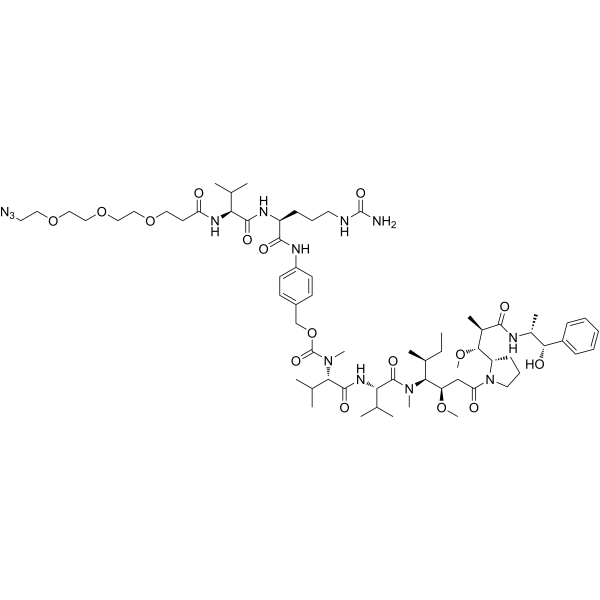
Azido-PEG3-Val-Cit-PAB-PNP is a cleavable 3 unit PEG ADC linker used in the synthesis of antibody-drug conjugates (ADCs) . Azido-PEG3-Val-Cit-PAB-PNP is also a PEG-based PROTAC linker that can be used in the synthesis of PROTACs . Azido-PEG3-Val-Cit-PAB-PNP is a click chemistry reagent, it contains an Azide group and can undergo copper-catalyzed azide-alkyne cycloaddition reaction (CuAAc) with molecules containing Alkyne groups. It can also undergo strain-promoted alkyne-azide cycloaddition (SPAAC) reactions with molecules containing DBCO or BCN groups.
|
-
- HY-140149
-
|
|
ADC Linker
PROTAC Linkers
|
Cancer
|
|
Azido-PEG4-Val-Cit-PAB-OH is a cleavable 4 unit PEG ADC linker used in the synthesis of antibody-drug conjugates (ADCs) . Azido-PEG4-Val-Cit-PAB-OH is also a PEG-based PROTAC linker that can be used in the synthesis of PROTACs . Azido-PEG4-Val-Cit-PAB-OH is a click chemistry reagent, it contains an Azide group and can undergo copper-catalyzed azide-alkyne cycloaddition reaction (CuAAc) with molecules containing Alkyne groups. It can also undergo strain-promoted alkyne-azide cycloaddition (SPAAC) reactions with molecules containing DBCO or BCN groups.
|
-
- HY-130271
-
|
VH032-PEG5-COOH; VHL Ligand-Linker Conjugates 16; E3 Ligase Ligand-Linker Conjugates 58
|
E3 Ligase Ligand-Linker Conjugates
|
Cancer
|
|
(S,R,S)-AHPC-PEG5-COOH (VH032-PEG5-COOH) is a synthesized E3 ligase ligand-linker conjugate that incorporates the (S,R,S)-AHPC based VHL ligand and 5-unit PEG linker used in PROTAC technology .
|
-
- HY-22340
-
|
|
PROTAC Linkers
|
Cancer
|
|
Azido-PEG4-alcohol is a PEG-based PROTAC linker can be used in the synthesis of PROTACs . Azido-PEG4-alcohol is a click chemistry reagent, it contains an Azide group and can undergo copper-catalyzed azide-alkyne cycloaddition reaction (CuAAc) with molecules containing Alkyne groups. It can also undergo strain-promoted alkyne-azide cycloaddition (SPAAC) reactions with molecules containing DBCO or BCN groups.
|
-
- HY-W016735
-
|
|
PROTAC Linkers
|
Cancer
|
|
Azido-PEG3-alcohol is a PEG-based PROTAC linker can be used in the synthesis of PROTACs . Azido-PEG3-alcohol is a click chemistry reagent, it contains an Azide group and can undergo copper-catalyzed azide-alkyne cycloaddition reaction (CuAAc) with molecules containing Alkyne groups. It can also undergo strain-promoted alkyne-azide cycloaddition (SPAAC) reactions with molecules containing DBCO or BCN groups.
|
-
- HY-133175
-
|
|
PROTAC Linkers
|
Cancer
|
|
Biotin-PEG7-azide is a PEG-based PROTAC linker can be used in the synthesis of PROTAC. Biotin-PEG7-azide is a click chemistry reagent, it contains an Azide group and can undergo copper-catalyzed azide-alkyne cycloaddition reaction (CuAAc) with molecules containing Alkyne groups. It can also undergo strain-promoted alkyne-azide cycloaddition (SPAAC) reactions with molecules containing DBCO or BCN groups.
|
-
- HY-126957
-
|
|
PROTAC Linkers
|
Cancer
|
|
Biotin-PEG2-azide is a PEG-based PROTAC linker can be used in the synthesis of PROTACs. Biotin-PEG2-azide is a click chemistry reagent, it contains an Azide group and can undergo copper-catalyzed azide-alkyne cycloaddition reaction (CuAAc) with molecules containing Alkyne groups. It can also undergo strain-promoted alkyne-azide cycloaddition (SPAAC) reactions with molecules containing DBCO or BCN groups.
|
-
- HY-133174
-
|
|
PROTAC Linkers
|
Cancer
|
|
Biotin-PEG5-azide is a PEG-based PROTAC linker can be used in the synthesis of PROTAC. Biotin-PEG5-azide is a click chemistry reagent, it contains an Azide group and can undergo copper-catalyzed azide-alkyne cycloaddition reaction (CuAAc) with molecules containing Alkyne groups. It can also undergo strain-promoted alkyne-azide cycloaddition (SPAAC) reactions with molecules containing DBCO or BCN groups.
|
-
- HY-164862
-
|
|
PROTAC Linkers
|
Others
|
|
N-(NHS ester-PEG2)-N-bis(PEG3-azide) is a PEG linker with an NHS ester group and two terminal azide groups. N-(NHS ester-PEG2)-N-bis(PEG3-azide) can be utilized in Click Chemistry .
|
-
- HY-120781
-
|
|
PROTAC Linkers
|
Cancer
|
|
Fluorescein-thiourea-PEG4-azide is a PEG-based PROTAC linker can be used in the synthesis of PROTACs. Fluorescein-thiourea-PEG4-azide is a click chemistry reagent, it contains an Azide group and can undergo copper-catalyzed azide-alkyne cycloaddition reaction (CuAAc) with molecules containing Alkyne groups. It can also undergo strain-promoted alkyne-azide cycloaddition (SPAAC) reactions with molecules containing DBCO or BCN groups.
|
-
- HY-130407
-
|
|
PROTAC Linkers
|
Cancer
|
|
Lipoamido-PEG3-OH is a PEG-based PROTAC linker can be used in the synthesis of PROTACs. Lipoamido-PEG3-OH (compound TA-TEG-G2CN) can be used in the formation of a highly stable, dendronized gold nanoparticle (AuNP)-based drug delivery platform .
|
-
- HY-P3159
-
|
|
Biochemical Assay Reagents
|
Others
|
|
VPM peptide is a dithiol protease-cleavable peptide cross-linker. VPM peptide can be incorporated into the backbone of the PEG-diacrylate (PEG-DA) macromer to form PEG hydrogel .
|
-
- HY-121507
-
|
|
PROTAC Linkers
|
Cancer
|
|
Hydroxy-PEG2-C2-sulfonic acid is a PEG-based PROTAC linker can be used in the synthesis of PROTACs.
|
-
- HY-130137
-
|
|
PROTAC Linkers
|
Cancer
|
|
m-PEG8-C10-phosphonic acid is a PEG-based PROTAC linker can be used in the synthesis of PROTACs.
|
-
- HY-145246
-
-
- HY-P3159A
-
|
|
Biochemical Assay Reagents
|
Others
|
|
VPM peptide TFA is a dithiol protease-cleavable peptide cross-linker. VPM peptide TFA can be incorporated into the backbone of the PEG-diacrylate (PEG-DA) macromer to form PEG hydrogel .
|
-
- HY-130194
-
|
|
ADC Linker
PROTAC Linkers
|
Cancer
|
|
Azido-PEG5-CH2CO2H is a cleavable 5 unit PEG ADC linker used in the synthesis of antibody-drug conjugates (ADCs). Azido-PEG5-CH2CO2H is also a PEG-based PROTAC linker that can be used in the synthesis of PROTACs . Azido-PEG5-CH2CO2H is a click chemistry reagent, it contains an Azide group and can undergo copper-catalyzed azide-alkyne cycloaddition reaction (CuAAc) with molecules containing Alkyne groups. It can also undergo strain-promoted alkyne-azide cycloaddition (SPAAC) reactions with molecules containing DBCO or BCN groups.
|
-
- HY-112600
-
|
Cereblon Ligand-Linker Conjugates 12; E3 Ligase Ligand-Linker Conjugates 23
|
E3 Ligase Ligand-Linker Conjugates
Autophagy
Apoptosis
|
Cancer
|
|
Thalidomide-O-amido-PEG1-(C1-PEG)2-C2-NH2 is a synthesized E3 ligase ligand-linker conjugate that incorporates the Thalidomide based cereblon ligand and a linker used in PROTAC technology .
|
-
- HY-103602
-
|
VH032-PEG3-NH2 hydrochloride; VHL Ligand-Linker Conjugates 1 hydrochloride; E3 ligase Ligand-Linker Conjugates 5
|
E3 Ligase Ligand-Linker Conjugates
|
Cancer
|
|
(S,R,S)-AHPC-PEG3-NH2 (VH032-PEG3-NH2) hydrochloride is a synthesized E3 ligase ligand-linker conjugate that incorporates the (S,R,S)-AHPC based VHL ligand and 3-unit PEG linker used in PROTAC technology.
|
-
- HY-41549
-
|
Cereblon Ligand-Linker Conjugates 9; E3 Ligase Ligand-Linker Conjugates 2
|
E3 Ligase Ligand-Linker Conjugates
|
Cancer
|
|
Pomalidomide-PEG4-Ph-NH2 is a synthesized E3 ligase ligand-linker conjugate that incorporates the Pomalidomide based cereblon ligand and 4-unit PEG linker used in PROTAC technology.
|
-
- HY-125846
-
|
VH032-PEG1-OTs; VHL Ligand-Linker Conjugates 2; E3 ligase Ligand-Linker Conjugates 51
|
E3 Ligase Ligand-Linker Conjugates
|
Cancer
|
|
(S,R,S)-AHPC-PEG1-OTs is a synthesized E3 ligase ligand-linker conjugate that incorporates the (S,R,S)-AHPC based VHL ligand and 1-unit PEG linker used in PROTAC technology.
|
-
- HY-103603
-
|
VH032-PEG2-NH2 hydrochloride; VHL Ligand-Linker Conjugates 3 hydrochloride; E3 ligase Ligand-Linker Conjugates 6
|
E3 Ligase Ligand-Linker Conjugates
|
Cancer
|
|
(S,R,S)-AHPC-PEG2-NH2 hydrochloride (VH032-PEG2-NH2 hydrochloride) is a synthesized E3 ligase ligand-linker conjugate that incorporates the (S,R,S)-AHPC based VHL ligand and 2-unit PEG linker used in the synthesis of PROTACs .
|
-
- HY-103602B
-
|
VH032-PEG3-NH2 dihydrochloride; VHL Ligand-Linker Conjugates 1 dihydrochloride; E3 ligase Ligand-Linker Conjugates 5 dihydrochloride
|
E3 Ligase Ligand-Linker Conjugates
|
Cancer
|
|
(S,R,S)-AHPC-PEG3-NH2 dihydrochloride (VH032-PEG3-NH2 dihydrochloride) is a synthesized E3 ligase ligand-linker conjugate that incorporates the (S,R,S)-AHPC based VHL ligand and 3-unit PEG linker used in PROTAC technology
|
-
- HY-157514
-
|
|
E3 Ligase Ligand-Linker Conjugates
Autophagy
Apoptosis
|
Cancer
|
|
Thalidomide 4'-ether-PEG1-azide is the Thalidomide (HY-14658)-based cereblon ligand used in the recruitment of CRBN protein. Thalidomide 4'-ether-PEG1-azide can be connected to the ligand for protein by a linker to form PROTACs .
|
-
- HY-112600A
-
|
Cereblon Ligand-Linker Conjugates 12 TFA; E3 Ligase Ligand-Linker Conjugates 23 TFA
|
E3 Ligase Ligand-Linker Conjugates
Autophagy
Apoptosis
|
Cancer
|
|
Thalidomide-O-amido-PEG1-(C1-PEG)2-C2-NH2 TFA is a synthesized E3 ligase ligand-linker conjugate that incorporates the Thalidomide based cereblon ligand and 3-unit PEG linker used in PROTAC technology.
|
-
- HY-130715
-
|
|
PROTAC Linkers
|
Cancer
|
|
tert-Butyl 11-aminoundecanoate (compound 6b) is a PROTAC linker, which refers to the PEG composition. tert-Butyl 11-aminoundecanoate can be used in the synthesis of a series of PROTACs. PROTACs contain two different ligands connected by a linker; one is a ligand for an E3 ubiquitin ligase and the other is for the target protein. PROTACs exploit the intracellular ubiquitin-proteasome system to selectively degrade target proteins .
|
-
- HY-140455
-
|
|
PROTAC Linkers
|
Cancer
|
|
Azido-PEG10-acid is a PEG-based PROTAC linker that can be used in the synthesis of PROTACs . Azido-PEG10-acid is a click chemistry reagent, it contains an Azide group and can undergo copper-catalyzed azide-alkyne cycloaddition reaction (CuAAc) with molecules containing Alkyne groups. It can also undergo strain-promoted alkyne-azide cycloaddition (SPAAC) reactions with molecules containing DBCO or BCN groups.
|
-
- HY-145247
-
-
- HY-130819
-
|
|
PROTAC Linkers
|
Cancer
|
|
Tos-PEG4-THP is a PEG-based PROTAC linker can be used in the synthesis of PROTAC K-Ras Degrader-1 (HY-129523) .
|
-
- HY-140802
-
|
|
PROTAC Linkers
|
Cancer
|
|
Azido-PEG11-alcohol is a PEG-based PROTAC linker that can be used in the synthesis of PROTACs . Azido-PEG11-alcohol is a click chemistry reagent, it contains an Azide group and can undergo copper-catalyzed azide-alkyne cycloaddition reaction (CuAAc) with molecules containing Alkyne groups. It can also undergo strain-promoted alkyne-azide cycloaddition (SPAAC) reactions with molecules containing DBCO or BCN groups.
|
-
- HY-130143
-
|
|
PROTAC Linkers
|
Cancer
|
|
Biotin-PEG3-azide is a PEG-based PROTAC linker can be used in the synthesis of PROTACs. Biotin-PEG3-azide is a click chemistry reagent, it contains an Azide group and can undergo copper-catalyzed azide-alkyne cycloaddition reaction (CuAAc) with molecules containing Alkyne groups. It can also undergo strain-promoted alkyne-azide cycloaddition (SPAAC) reactions with molecules containing DBCO or BCN groups.
|
-
- HY-140217
-
|
|
PROTAC Linkers
|
Cancer
|
|
Azido-PEG10-amine is a PEG-based PROTAC linker that can be used in the synthesis of PROTACs . Azido-PEG10-amine is a click chemistry reagent, it contains an Azide group and can undergo copper-catalyzed azide-alkyne cycloaddition reaction (CuAAc) with molecules containing Alkyne groups. It can also undergo strain-promoted alkyne-azide cycloaddition (SPAAC) reactions with molecules containing DBCO or BCN groups.
|
-
- HY-140801
-
|
|
PROTAC Linkers
|
Cancer
|
|
Azido-PEG10-alcohol is a PEG-based PROTAC linker that can be used in the synthesis of PROTACs . Azido-PEG10-alcohol is a click chemistry reagent, it contains an Azide group and can undergo copper-catalyzed azide-alkyne cycloaddition reaction (CuAAc) with molecules containing Alkyne groups. It can also undergo strain-promoted alkyne-azide cycloaddition (SPAAC) reactions with molecules containing DBCO or BCN groups.
|
-
- HY-140218
-
|
|
PROTAC Linkers
|
Cancer
|
|
Azido-PEG11-amine is a PEG-based PROTAC linker that can be used in the synthesis of PROTACs . Azido-PEG11-amine is a click chemistry reagent, it contains an Azide group and can undergo copper-catalyzed azide-alkyne cycloaddition reaction (CuAAc) with molecules containing Alkyne groups. It can also undergo strain-promoted alkyne-azide cycloaddition (SPAAC) reactions with molecules containing DBCO or BCN groups.
|
-
- HY-140759
-
|
|
PROTAC Linkers
|
Cancer
|
|
Azido-PEG10-NHS ester is a PEG-based PROTAC linker that can be used in the synthesis of PROTACs . Azido-PEG10-NHS ester is a click chemistry reagent, it contains an Azide group and can undergo copper-catalyzed azide-alkyne cycloaddition reaction (CuAAc) with molecules containing Alkyne groups. It can also undergo strain-promoted alkyne-azide cycloaddition (SPAAC) reactions with molecules containing DBCO or BCN groups.
|
-
- HY-103603A
-
|
VH032-PEG2-NH2 ; VHL Ligand-Linker Conjugates 3 ; E3 ligase Ligand-Linker Conjugates 6 Free Base
|
E3 Ligase Ligand-Linker Conjugates
|
Cancer
|
|
(S,R,S)-AHPC-PEG2-NH2 (VH032-PEG2-NH2) is a synthesized E3 ligase ligand-linker conjugate that incorporates the (S,R,S)-AHPC based VHL ligand and 2-unit PEG linker used in the synthesis of PROTACs .
|
-
- HY-128716
-
|
Cereblon Ligand-Linker Conjugates 5; E3 ligase Ligand-Linker Conjugates 30
|
E3 Ligase Ligand-Linker Conjugates
|
Cancer
|
|
Pomalidomide-PEG3-C2-NH2 is a synthesized E3 ligase ligand-linker conjugate that incorporates the Pomalidomide based cereblon ligand and 3-unit PEG linker used in PROTAC technology.
|
-
- HY-112599
-
|
Cereblon Ligand-Linker Conjugates 8; E3 Ligase Ligand-Linker Conjugates 22
|
E3 Ligase Ligand-Linker Conjugates
|
Cancer
|
|
Pomalidomide-PEG4-C2-NH2 is a synthesized E3 ligase ligand-linker conjugate that incorporates the Pomalidomide based cereblon ligand and 4-unit PEG linker used in PROTAC technology.
|
-
- HY-130742
-
|
|
PROTAC Linkers
|
Cancer
|
|
Azido-PEG8-Boc is a PEG- and Alkyl/ether-based PROTAC linker can be used in the synthesis of PROTACs . Azido-PEG8-Boc is a click chemistry reagent, it contains an Azide group and can undergo copper-catalyzed azide-alkyne cycloaddition reaction (CuAAc) with molecules containing Alkyne groups. It can also undergo strain-promoted alkyne-azide cycloaddition (SPAAC) reactions with molecules containing DBCO or BCN groups.
|
-
- HY-130420
-
|
|
PROTAC Linkers
|
Cancer
|
|
Azido-PEG5-PFP ester is a PEG- and Alkyl/ether-based PROTAC linker can be used in the synthesis of PROTACs . Azido-PEG5-PFP ester is a click chemistry reagent, it contains an Azide group and can undergo copper-catalyzed azide-alkyne cycloaddition reaction (CuAAc) with molecules containing Alkyne groups. It can also undergo strain-promoted alkyne-azide cycloaddition (SPAAC) reactions with molecules containing DBCO or BCN groups.
|
-
- HY-103604
-
|
VH032-PEG4-NH2 hydrochloride; VHL Ligand-Linker Conjugates 4 hydrochloride; E3 ligase Ligand-Linker Conjugates 7
|
E3 Ligase Ligand-Linker Conjugates
|
Cancer
|
|
(S,R,S)-AHPC-PEG4-NH2 hydrochloride is a synthesized E3 ligase ligand-linker conjugate that incorporates the (S,R,S)-AHPC based VHL ligand and 4-unit PEG linker used in PROTAC technology.
|
-
- HY-130521
-
|
Cereblon Ligand-Linker Conjugates 22; E3 ligase Ligand-Linker Conjugates 55
|
E3 Ligase Ligand-Linker Conjugates
|
Cancer
|
|
Pomalidomide-amido-PEG3-C2-NH2 (Cereblon Ligand-Linker Conjugates 22) is a synthesized E3 ligase ligand-linker conjugate that incorporates the Pomalidomide based cereblon ligand and 3-unit PEG linker used in PROTAC technology .
|
-
- HY-126894
-
|
|
PROTAC Linkers
ADC Linker
|
Cancer
|
|
Bis- PEG9- acid is a PEG-based PROTAC linker can be used in the synthesis of PROTACs. Bis- PEG9- acid is a cleavable ADC linker used in the synthesis of antibody-drug conjugates (ADCs).
|
-
- HY-145248
-
-
- HY-130474
-
|
|
ADC Linker
PROTAC Linkers
|
Cancer
|
|
Azido-PEG6-NHS ester is a cleavable 6 unit PEG ADC linker used in the synthesis of antibody-drug conjugates (ADCs) . Azido-PEG6-NHS ester is also a PEG- and Alkyl/ether based PROTAC linker that can be used in the synthesis of PROTACs . Azido-PEG6-NHS ester is a click chemistry reagent, it contains an Azide group and can undergo copper-catalyzed azide-alkyne cycloaddition reaction (CuAAc) with molecules containing Alkyne groups. It can also undergo strain-promoted alkyne-azide cycloaddition (SPAAC) reactions with molecules containing DBCO or BCN groups.
|
-
- HY-130184
-
|
|
ADC Linker
PROTAC Linkers
|
Cancer
|
|
Azido-PEG8-NHS ester is a cleavable 8 unit PEG ADC linker used in the synthesis of antibody-drug conjugates (ADCs) . Azido-PEG8-NHS ester is also a PEG- and Alkyl/ether-based PROTAC linker that can be used in the synthesis of PROTACs . Azido-PEG8-NHS ester is a click chemistry reagent, it contains an Azide group and can undergo copper-catalyzed azide-alkyne cycloaddition reaction (CuAAc) with molecules containing Alkyne groups. It can also undergo strain-promoted alkyne-azide cycloaddition (SPAAC) reactions with molecules containing DBCO or BCN groups.
|
-
- HY-130537
-
|
|
PROTAC Linkers
ADC Linker
|
Cancer
|
|
Azido-PEG6-alcohol is a PEG-based PROTAC linker that can be used in the synthesis of PROTACs . Azido-PEG6-alcohol is also a non-cleavable 6 unit PEG ADC linker used in the synthesis of antibody-drug conjugates (ADCs) . Azido-PEG6-alcohol is a click chemistry reagent, it contains an Azide group and can undergo copper-catalyzed azide-alkyne cycloaddition reaction (CuAAc) with molecules containing Alkyne groups. It can also undergo strain-promoted alkyne-azide cycloaddition (SPAAC) reactions with molecules containing DBCO or BCN groups.
|
-
- HY-107440
-
|
Cereblon Ligand-Linker Conjugates 3 ; E3 Ligase Ligand-Linker Conjugates 14
|
E3 Ligase Ligand-Linker Conjugates
Autophagy
Apoptosis
|
Cancer
|
|
Thalidomide-O-amido-PEG3-C2-NH2 (Cereblon Ligand-Linker Conjugates 3) is a synthesized E3 ligase ligand-linker conjugate that incorporates the Thalidomide based cereblon ligand and 3-unit PEG linker used in PROTAC technology.
|
-
- HY-42489
-
|
|
ADC Linker
PROTAC Linkers
|
Cancer
|
|
N3-PEG3-CH2CH2-Boc is a cleavable 3 unit PEG ADC linker used in the synthesis of antibody-drug conjugates (ADCs) . N3-PEG3-CH2CH2-Boc is also a PEG- and Alkyl/ether-based PROTAC linker that can be used in the synthesis of PROTACs . N3-PEG3-CH2CH2-Boc is a click chemistry reagent, it contains an Azide group and can undergo copper-catalyzed azide-alkyne cycloaddition reaction (CuAAc) with molecules containing Alkyne groups. It can also undergo strain-promoted alkyne-azide cycloaddition (SPAAC) reactions with molecules containing DBCO or BCN groups.
|
-
- HY-133230
-
|
|
PROTAC Linkers
|
Cancer
|
|
Propargyl-PEG10-amine is a PEG-based PROTAC linker can be used in the synthesis of PROTACs. Propargyl-PEG10-amine is a click chemistry reagent, it contains an Alkyne group and can undergo copper-catalyzed azide-alkyne cycloaddition (CuAAc) with molecules containing Azide groups.
|
-
- HY-130147
-
|
|
PROTAC Linkers
|
Cancer
|
|
Propargyl-PEG5-OH is a PEG-based PROTAC linker can be used in the synthesis of PROTACs. Propargyl-PEG5-OH is a click chemistry reagent, it contains an Alkyne group and can undergo copper-catalyzed azide-alkyne cycloaddition (CuAAc) with molecules containing Azide groups.
|
-
- HY-141161
-
|
|
PROTAC Linkers
|
Cancer
|
|
TCO-PEG8-acid is a PEG-based PROTAC linker can be used in the synthesis of PROTACs . TCO-PEG8-acid is a click chemistry reagent, it contains a TCO group that can undergo an inverse electron demand Diels-Alder reaction (iEDDA) with molecules containing Tetrazine groups.
|
-
- HY-117045
-
|
|
PROTAC Linkers
|
Cancer
|
|
Propargyl-PEG12-OH is a PEG-based PROTAC linker can be used in the synthesis of PROTACs. Propargyl-PEG12-OH is a click chemistry reagent, it contains an Alkyne group and can undergo copper-catalyzed azide-alkyne cycloaddition (CuAAc) with molecules containing Azide groups.
|
-
- HY-114670
-
|
|
PROTAC Linkers
|
Cancer
|
|
Propargyl-PEG4-amine is a PEG-based PROTAC linker can be used in the synthesis of PROTACs. Propargyl-PEG4-amine is a click chemistry reagent, it contains an Alkyne group and can undergo copper-catalyzed azide-alkyne cycloaddition (CuAAc) with molecules containing Azide groups.
|
-
- HY-130373
-
|
|
PROTAC Linkers
|
Cancer
|
|
Propargyl-PEG9-amine is a PEG-based PROTAC linker can be used in the synthesis of PROTACs. Propargyl-PEG9-amine is a click chemistry reagent, it contains an Alkyne group and can undergo copper-catalyzed azide-alkyne cycloaddition (CuAAc) with molecules containing Azide groups.
|
-
- HY-113921
-
|
|
PROTAC Linkers
|
Cancer
|
|
m-PEG4-propargyl is a PEG-based PROTAC linker can be used in the synthesis of PROTACs. m-PEG4-propargyl is a click chemistry reagent, it contains an Alkyne group and can undergo copper-catalyzed azide-alkyne cycloaddition (CuAAc) with molecules containing Azide groups.
|
-
- HY-103602A
-
|
VH032-PEG3-NH2; VHL Ligand-Linker Conjugates 1; E3 ligase Ligand-Linker Conjugates 5 Free Base
|
E3 Ligase Ligand-Linker Conjugates
|
Cancer
|
|
(S,R,S)-AHPC-PEG3-NH2 is a synthesized E3 ligase ligand-linker conjugate that incorporates the (S,R,S)-AHPC based VHL ligand and 3-unit PEG linker used in PROTAC technology.
|
-
- HY-103604A
-
|
VH032-PEG4-NH2; VHL Ligand-Linker Conjugates 4 ; E3 ligase Ligand-Linker Conjugates 7 Free Base
|
E3 Ligase Ligand-Linker Conjugates
|
Cancer
|
|
(S,R,S)-AHPC-PEG4-NH2 is a synthesized E3 ligase ligand-linker conjugate that incorporates the (S,R,S)-AHPC based VHL ligand and 4-unit PEG linker used in PROTAC technology.
|
-
- HY-130982
-
|
|
E3 Ligase Ligand-Linker Conjugates
|
Cancer
|
|
Lenalidomide-PEG3-iodine is a synthesized E3 ligase ligand-linker conjugate that incorporates the Lenalidomide based cereblon ligand and a 3-unit PEG linker. Lenalidomide-PEG3-iodine can be used in the synthesis of a series of PROTACs, such as SJF620 (HY-133137). SJF620 is a potent PROTAC BTK degrader with a DC50 of 7.9 nM .
|
-
- HY-133049
-
|
|
PROTAC Linkers
|
Cancer
|
|
Propargyl-PEG3-phosphonic acid is a PEG-based PROTAC linker can be used in the synthesis of PROTACs . Propargyl-PEG3-phosphonic acid is a click chemistry reagent, it contains an Alkyne group and can undergo copper-catalyzed azide-alkyne cycloaddition (CuAAc) with molecules containing Azide groups.
|
-
- HY-130382
-
|
|
PROTAC Linkers
|
Cancer
|
|
Propargyl-PEG6-alcohol is a PEG-based PROTAC linker can be used in the synthesis of PROTACs . Propargyl-PEG6-alcohol is a click chemistry reagent, it contains an Alkyne group and can undergo copper-catalyzed azide-alkyne cycloaddition (CuAAc) with molecules containing Azide groups.
|
-
- HY-115414
-
|
|
PROTAC Linkers
|
Cancer
|
|
Bis-propargyl-PEG8 (compound 16e) is a PEG-based PROTAC linker can be used in the synthesis of PROTACs. Bis-propargyl-PEG8 is a click chemistry reagent, it contains an Alkyne group and can undergo copper-catalyzed azide-alkyne cycloaddition (CuAAc) with molecules containing Azide groups.
|
-
- HY-130374
-
|
|
PROTAC Linkers
|
Cancer
|
|
Propargyl-PEG8-OH is a PEG-based PROTAC linker can be used in the synthesis of PROTACs . Propargyl-PEG8-OH is a click chemistry reagent, it contains an Alkyne group and can undergo copper-catalyzed azide-alkyne cycloaddition (CuAAc) with molecules containing Azide groups.
|
-
- HY-133229
-
|
|
PROTAC Linkers
|
Cancer
|
|
Propargyl-PEG4-alcohol is a PEG-based PROTAC linker can be used in the synthesis of PROTACs . Propargyl-PEG4-alcohol is a click chemistry reagent, it contains an Alkyne group and can undergo copper-catalyzed azide-alkyne cycloaddition (CuAAc) with molecules containing Azide groups.
|
-
- HY-130375
-
|
|
PROTAC Linkers
|
Cancer
|
|
Propargyl-PEG7-Boc is a PEG-based PROTAC linker can be used in the synthesis of PROTACs . Propargyl-PEG8-Boc is a click chemistry reagent, it contains an Alkyne group and can undergo copper-catalyzed azide-alkyne cycloaddition (CuAAc) with molecules containing Azide groups.
|
-
- HY-126977
-
|
|
PROTAC Linkers
|
Cancer
|
|
Propargyl-PEG9-OH is a PEG-based PROTAC linker can be used in the synthesis of PROTACs . Propargyl-PEG9-OH is a click chemistry reagent, it contains an Alkyne group and can undergo copper-catalyzed azide-alkyne cycloaddition (CuAAc) with molecules containing Azide groups.
|
-
- HY-117100
-
|
|
PROTAC Linkers
|
Cancer
|
|
Propargyl-PEG14-OH is a PEG-based PROTAC linker can be used in the synthesis of PROTACs. Propargyl-PEG14-OH is a click chemistry reagent, it contains an Alkyne group and can undergo copper-catalyzed azide-alkyne cycloaddition (CuAAc) with molecules containing Azide groups .
|
-
- HY-130378
-
|
|
PROTAC Linkers
|
Cancer
|
|
Propargyl-PEG7-alcohol is a PEG-based PROTAC linker can be used in the synthesis of PROTACs . Propargyl-PEG7-alcohol is a click chemistry reagent, it contains an Alkyne group and can undergo copper-catalyzed azide-alkyne cycloaddition (CuAAc) with molecules containing Azide groups.
|
-
- HY-130584
-
|
|
PROTAC Linkers
|
Cancer
|
|
Propargyl-PEG2-MS is a PEG-based PROTAC linker can be used in the synthesis of PROTACs . Propargyl-PEG2-MS is a click chemistry reagent, it contains an Alkyne group and can undergo copper-catalyzed azide-alkyne cycloaddition (CuAAc) with molecules containing Azide groups.
|
-
- HY-130380
-
|
|
PROTAC Linkers
|
Cancer
|
|
Propargyl-PEG7-Boc is a PEG-based PROTAC linker can be used in the synthesis of PROTACs . Propargyl-PEG7-Boc is a click chemistry reagent, it contains an Alkyne group and can undergo copper-catalyzed azide-alkyne cycloaddition (CuAAc) with molecules containing Azide groups.
|
-
- HY-130384
-
|
|
PROTAC Linkers
|
Cancer
|
|
Propargyl-PEG6-Boc is a PEG-based PROTAC linker can be used in the synthesis of PROTACs . Propargyl-PEG6-Boc is a click chemistry reagent, it contains an Alkyne group and can undergo copper-catalyzed azide-alkyne cycloaddition (CuAAc) with molecules containing Azide groups.
|
-
- HY-126893
-
|
|
PROTAC Linkers
ADC Linker
|
Cancer
|
|
Bis-PEG8-acid is a PEG-based PROTAC linker can be used in the synthesis of PROTACs. Bis-PEG8-acid is a cleavable ADC linker used in the synthesis of antibody-drug conjugates (ADCs) .
|
-
- HY-130146
-
|
|
PROTAC Linkers
|
Cancer
|
|
Propargyl-PEG3-phosphonic acid diethyl ester is a PEG-based PROTAC linker can be used in the synthesis of PROTACs . Propargyl-PEG3-phosphonic acid diethyl ester is a click chemistry reagent, it contains an Alkyne group and can undergo copper-catalyzed azide-alkyne cycloaddition (CuAAc) with molecules containing Azide groups.
|
-
- HY-126892
-
|
|
PROTAC Linkers
ADC Linker
|
Cancer
|
|
Bis-PEG7-acid is a PEG-based PROTAC linker can be used in the synthesis of PROTACs. Bis-PEG6-propionic acid is a cleavable ADC linker used in the synthesis of antibody-drug conjugates (ADCs) .
|
-
- HY-138550A
-
|
|
E3 Ligase Ligand-Linker Conjugates
|
Cancer
|
|
(S,R,S)-AHPC-3-methylbutanyl acetate-methanesulfonothioate-PEG3-NH2 TFA is a synthesized E3 ligase ligand-linker conjugate that incorporates the (S,R,S)-AHPC based ligand and 3-unit PEG linker used in PROTAC technology .
|
-
- HY-130109
-
|
|
ADC Linker
|
Cancer
|
|
N3-PEG4-C2-NHS ester is a nonclaevable 4-unit PEG linker used in the synthesis of antibody-drug conjugates (ADCs). N3-PEG4-C2-NHS ester is a click chemistry reagent, it contains an Azide group and can undergo copper-catalyzed azide-alkyne cycloaddition reaction (CuAAc) with molecules containing Alkyne groups. It can also undergo strain-promoted alkyne-azide cycloaddition (SPAAC) reactions with molecules containing DBCO or BCN groups.
|
-
- HY-42618
-
|
|
ADC Linker
PROTAC Linkers
|
Cancer
|
|
Azido-PEG4-CH2-Boc is a cleavable 4 unit PEG ADC linker used in the synthesis of antibody-drug conjugates (ADCs) . Azido-PEG4-CH2-Boc is also a PEG- and Alkyl/ether-based PROTAC linker that can be used in the synthesis of PROTACs . Azido-PEG4-CH2-Boc is a click chemistry reagent, it contains an Azide group and can undergo copper-catalyzed azide-alkyne cycloaddition reaction (CuAAc) with molecules containing Alkyne groups. It can also undergo strain-promoted alkyne-azide cycloaddition (SPAAC) reactions with molecules containing DBCO or BCN groups.
|
-
- HY-130408
-
|
|
ADC Linker
PROTAC Linkers
|
Cancer
|
|
m-PEG6-Amine is a PEG-based PROTAC linker can be used in the synthesis of PROTACs. m-PEG6-Amine is a cleavable ADC linker used in the synthesis of antibody-drug conjugates (ADCs) .
|
-
- HY-W018174
-
|
|
ADC Linker
PROTAC Linkers
|
Cancer
|
|
m-PEG3-Amine is a PEG-based PROTAC linker can be used in the synthesis of PROTACs. m-PEG3-Amine is a cleavable ADC linker used in the synthesis of antibody-drug conjugates (ADCs) .
|
-
- HY-130410
-
|
|
ADC Linker
PROTAC Linkers
|
Cancer
|
|
Bis-PEG6-NHS ester is a PEG-based PROTAC linker can be used in the synthesis of PROTACs. Bis-PEG6-NHS ester is a cleavable ADC linker used in the synthesis of antibody-drug conjugates (ADCs) .
|
-
- HY-128716A
-
|
Cereblon Ligand-Linker Conjugates 5 TFA ; E3 ligase Ligand-Linker Conjugates 30 TFA
|
E3 Ligase Ligand-Linker Conjugates
|
Cancer
|
|
Pomalidomide-PEG3-C2-NH2 TFA (Cereblon Ligand-Linker Conjugates 5 (TFA)) is a synthetic E3 ligase ligand-linker conjugate comprising a Pomalidomide (HY-10984)-based cereblon ligand and a 3-unit PEG linker. Pomalidomide-PEG3-C2-NH2 TFA can be used for the synthesis of PROTACs .
|
-
- HY-103606
-
|
VH032-PEG6-C4-Cl; VHL Ligand-Linker Conjugates 10; E3 ligase Ligand-Linker Conjugates 9
|
E3 Ligase Ligand-Linker Conjugates
|
Cancer
|
|
(S,R,S)-AHPC-PEG6-C4-Cl is a conjugate of ligands for E3 and 25-atom-length linker. The connector of linker is Halogen group. (S,R,S)-AHPC-PEG6-C4-Cl incorporates the (S,R,S)-AHPC based VHL ligand and 6-unit PEG linker. (S,R,S)-AHPC-PEG6-C4-Cl is capable of inducing the degradation of GFP-HaloTag7 in cell-based assays .
|
-
- HY-112599A
-
|
Cereblon Ligand-Linker Conjugates 8 TFA; E3 Ligase Ligand-Linker Conjugates 22 TFA
|
E3 Ligase Ligand-Linker Conjugates
|
Cancer
|
|
Pomalidomide-PEG4-C2-NH2 TFA is a synthesized E3 ligase ligand-linker conjugate that incorporates the Pomalidomide based cereblon ligand and 4-unit PEG linker used in PROTAC technology.
|
-
- HY-103607
-
|
VH032-PEG2-C4-Cl; VHL Ligand-Linker Conjugates 7; E3 ligase Ligand-Linker Conjugates 10
|
E3 Ligase Ligand-Linker Conjugates
|
Cancer
|
|
(S,R,S)-AHPC-PEG2-C4-Cl (VH032-PEG2-C4-Cl) is a conjugate of ligands for E3 and 13-atom-length linker. The connector of linker is Halogen group. (S,R,S)-AHPC-PEG2-C4-Cl incorporates the (S,R,S)-AHPC based VHL ligand and an alkyl/ether-based linker. (S,R,S)-AHPC-PEG2-C4-Cl is capable of inducing the degradation of GFP-HaloTag7 in cell-based assays .
|
-
- HY-130693
-
|
|
PROTAC Linkers
|
Cancer
|
|
Azido-PEG5-CH2CO2-PFP is a PEG- and Alkyl/ether-based PROTAC linker can be used in the synthesis of PROTACs . Azido-PEG5-CH2CO2-PFP is a click chemistry reagent, it contains an Azide group and can undergo copper-catalyzed azide-alkyne cycloaddition reaction (CuAAc) with molecules containing Alkyne groups. It can also undergo strain-promoted alkyne-azide cycloaddition (SPAAC) reactions with molecules containing DBCO or BCN groups.
|
-
- HY-130563
-
|
|
PROTAC Linkers
|
Cancer
|
|
Propargyl-PEG3-CH2COOH is a PEG-based PROTAC linker can be used in the synthesis of PROTACs . Propargyl-PEG3-CH2COOH is a click chemistry reagent, it contains an Alkyne group and can undergo copper-catalyzed azide-alkyne cycloaddition (CuAAc) with molecules containing Azide groups.
|
-
- HY-128716B
-
|
Cereblon Ligand-Linker Conjugates 5 hydrochloride; E3 ligase Ligand-Linker Conjugates 30 hydrochloride
|
E3 Ligase Ligand-Linker Conjugates
|
Cancer
|
|
Pomalidomide-PEG3-C2-NH2 (Cereblon Ligand-Linker Conjugates 5) hydrochloride is a synthesized E3 ligase ligand-linker conjugate that incorporates the Pomalidomide based cereblon ligand and a linker used in PROTAC technology .
|
-
- HY-130389
-
|
|
PROTAC Linkers
|
Cancer
|
|
Propargyl-PEG4-O-C1-Boc is a PEG-based PROTAC linker can be used in the synthesis of PROTACs . Propargyl-PEG4-O-C1-Boc is a click chemistry reagent, it contains an Alkyne group and can undergo copper-catalyzed azide-alkyne cycloaddition (CuAAc) with molecules containing Azide groups.
|
-
- HY-103603R
-
|
VH032-PEG2-NH2 hydrochloride (Standard); VHL Ligand-Linker Conjugates 3 hydrochloride (Standard); E3 ligase Ligand-Linker Conjugates 6 (Standard)
|
Reference Standards
E3 Ligase Ligand-Linker Conjugates
|
Cancer
|
|
(S,R,S)-AHPC-PEG2-NH2 hydrochloride (Standard) is the analytical standard of (S,R,S)-AHPC-PEG2-NH2 hydrochloride (HY-103603). This product is intended for research and analytical applications. (S,R,S)-AHPC-PEG2-NH2 hydrochloride (VH032-PEG2-NH2 hydrochloride) is a synthesized E3 ligase ligand-linker conjugate that incorporates the (S,R,S)-AHPC based VHL ligand and 2-unit PEG linker used in the synthesis of PROTACs .
|
-
- HY-103602R
-
|
VH032-PEG3-NH2 hydrochloride (Standard); VHL Ligand-Linker Conjugates 1 hydrochloride (Standard); E3 ligase Ligand-Linker Conjugates 5 (Standard)
|
Reference Standards
E3 Ligase Ligand-Linker Conjugates
|
Cancer
|
|
(S,R,S)-AHPC-PEG3-NH2 hydrochloride (Standard) is the analytical standard of (S,R,S)-AHPC-PEG3-NH2 hydrochloride (HY-103602). This product is intended for research and analytical applications. (S,R,S)-AHPC-PEG3-NH2 (VH032-PEG3-NH2) hydrochloride is a synthesized E3 ligase ligand-linker conjugate that incorporates the (S,R,S)-AHPC based VHL ligand and 3-unit PEG linker used in PROTAC technology.
|
-
- HY-103605
-
|
VH032-C6-PEG3-C4-Cl; VHL Ligand-Linker Conjugates 12; E3 ligase Ligand-Linker Conjugates 8
|
E3 Ligase Ligand-Linker Conjugates
|
Cancer
|
|
(S,R,S)-AHPC-C6-PEG3-C4-Cl (VH032-C6-PEG3-C4-Cl) is a conjugate of ligands for E3 and 20-atom-length linker. The connector of linker is Halogen group. (S,R,S)-AHPC-C6-PEG3-C4-Cl incorporates the (S,R,S)-AHPC based VHL ligand and an alkyl/ether-based linker. (S,R,S)-AHPC-C6-PEG3-C4-Cl is capable of inducing the degradation of GFP-HaloTag7 in cell-based assays .
|
-
- HY-130390
-
|
|
PROTAC Linkers
|
Cancer
|
|
Propargyl-PEG4-O-C1-NHS ester (compound 8) is a PEG-based PROTAC linker can be used in the synthesis of PROTACs. Propargyl-PEG4-O-C1-NHS ester is a click chemistry reagent, it contains an Alkyne group and can undergo copper-catalyzed azide-alkyne cycloaddition (CuAAc) with molecules containing Azide groups.
|
-
- HY-103600
-
|
VH032-PEG1-N3; VHL Ligand-Linker Conjugates 9; E3 ligase Ligand-Linker Conjugates 3
|
E3 Ligase Ligand-Linker Conjugates
|
Cancer
|
|
(S,R,S)-AHPC-PEG1-N3 (VH032-PEG1-N3) is a synthesized E3 ligase ligand-linker conjugate that incorporates the (S,R,S)-AHPC based VHL ligand and 1-unit PEG linker used in PROTAC technology. (S,R,S)-AHPC-PEG1-N3 is a click chemistry reagent, it contains an Azide group and can undergo copper-catalyzed azide-alkyne cycloaddition reaction (CuAAc) with molecules containing Alkyne groups. It can also undergo strain-promoted alkyne-azide cycloaddition (SPAAC) reactions with molecules containing DBCO or BCN groups.
|
-
- HY-125883
-
|
Cereblon Ligand-Linker Conjugates 20; E3 Ligase Ligand-Linker Conjugates 53
|
E3 Ligase Ligand-Linker Conjugates
|
Cancer
|
|
Pomalidomide-amido-C4-amido-PEG2-C2-NH-Boc is a synthesized E3 ligase ligand-linker conjugate that incorporates the Pomalidomide based cereblon ligand and 2-unit PEG linker used in PROTAC technology.
|
-
- HY-112617A
-
-
- HY-103611
-
|
Cereblon Ligand-Linker Conjugates 3 TFA; E3 ligase Ligand-Linker Conjugates 14 TFA
|
E3 Ligase Ligand-Linker Conjugates
Autophagy
Apoptosis
|
Cancer
|
|
Thalidomide-O-amido-PEG3-C2-NH2 TFA is a synthesized E3 ligase ligand-linker conjugate that incorporates the Thalidomide based cereblon ligand and 3-unit PEG linker used in PROTAC technology.
|
-
- HY-103603AR
-
|
VH032-PEG2-NH2 (Standard); VHL Ligand-Linker Conjugates 3 (Standard); E3 ligase Ligand-Linker Conjugates 6 Free Base (Standard)
|
Reference Standards
E3 Ligase Ligand-Linker Conjugates
|
Cancer
|
|
(S,R,S)-AHPC-PEG2-NH2 (Standard) is the analytical standard of (S,R,S)-AHPC-PEG2-NH2 (HY-103603A). This product is intended for research and analytical applications. (S,R,S)-AHPC-PEG2-NH2 (VH032-PEG2-NH2) is a synthesized E3 ligase ligand-linker conjugate that incorporates the (S,R,S)-AHPC based VHL ligand and 2-unit PEG linker used in the synthesis of PROTACs .
|
-
- HY-126458
-
|
E3 ligase Ligand-Linker Conjugates 32
|
E3 Ligase Ligand-Linker Conjugates
Autophagy
Apoptosis
|
Cancer
|
|
Thalidomide-O-PEG2-propargyl (E3 ligase Ligand-Linker Conjugates 32) is an E3 ligase ligand-linker conjugate. Thalidomide-O-PEG2-propargyl is also a click chemistry reagent containing an alkyne group, which can undergo copper-catalyzed azide-alkyne cycloaddition (CuAAC) with molecules bearing an azide group .
|
-
- HY-145090
-
|
|
PROTAC Linkers
ADC Linker
|
Others
|
|
DBCO-N-bis(PEG4-NHS ester) is a PEG linker which contains two PEG4-NHS ester and a DBCO group. DBCO-N-bis(PEG4-NHS ester) is useful for protein modification or labeling. DBCO-N-bis(PEG4-NHS ester) is a click chemistry reagent, it contains a DBCO group that can undergo strain-promoted alkyne-azide cycloaddition (SPAAC) with molecules containing Azide groups.
|
-
- HY-103604AR
-
|
VH032-PEG4-NH2 (Standard); VHL Ligand-Linker Conjugates 4 (Standard); E3 ligase Ligand-Linker Conjugates 7 Free Base (Standard)
|
Reference Standards
E3 Ligase Ligand-Linker Conjugates
|
Cancer
|
|
(S,R,S)-AHPC-PEG4-NH2 (Standard) is the analytical standard of (S,R,S)-AHPC-PEG4-NH2 (HY-103604A). This product is intended for research and analytical applications. (S,R,S)-AHPC-PEG4-NH2 is a synthesized E3 ligase ligand-linker conjugate that incorporates the (S,R,S)-AHPC based VHL ligand and 4-unit PEG linker used in PROTAC technology.
|
-
- HY-103601
-
|
VH032-PEG4-N3; VHL Ligand-Linker Conjugates 5; E3 ligase Ligand-Linker Conjugates 4
|
E3 Ligase Ligand-Linker Conjugates
|
Others
|
|
(S,R,S)-AHPC-PEG4-N3 is a synthesized E3 ligase ligand-linker conjugate that incorporates the (S,R,S)-AHPC based VHL ligand and 4-unit PEG linker used in PROTAC technology. (S,R,S)-AHPC-PEG4-N3 is a click chemistry reagent, it contains an Azide group and can undergo copper-catalyzed azide-alkyne cycloaddition reaction (CuAAc) with molecules containing Alkyne groups. It can also undergo strain-promoted alkyne-azide cycloaddition (SPAAC) reactions with molecules containing DBCO or BCN groups.
|
-
- HY-103598
-
|
VH032-PEG3-N3; VHL Ligand-Linker Conjugates 8; E3 ligase Ligand-Linker Conjugates 12
|
E3 Ligase Ligand-Linker Conjugates
|
Cancer
|
|
(S,R,S)-AHPC-PEG3-N3 is a synthesized E3 ligase ligand-linker conjugate that incorporates the (S,R,S)-AHPC based VHL ligand and 3-unit PEG linker used in PROTAC technology. (S,R,S)-AHPC-PEG3-N3 is a click chemistry reagent, it contains an Azide group and can undergo copper-catalyzed azide-alkyne cycloaddition reaction (CuAAc) with molecules containing Alkyne groups. It can also undergo strain-promoted alkyne-azide cycloaddition (SPAAC) reactions with molecules containing DBCO or BCN groups.
|
-
- HY-130387
-
|
|
PROTAC Linkers
ADC Linker
|
Cancer
|
|
Propargyl-PEG4-Tos is a PEG-based PROTAC linker can be used in the synthesis of PROTACs. Propargyl-PEG4-Tos is a cleavable ADC linker used in the synthesis of antibody-drug conjugates (ADCs) . Propargyl-PEG4-Tos is a click chemistry reagent, it contains an Alkyne group and can undergo copper-catalyzed azide-alkyne cycloaddition (CuAAc) with molecules containing Azide groups.
|
-
- HY-118808
-
|
|
ADC Linker
PROTAC Linkers
|
Cancer
|
|
Propargyl-PEG2-NHBoc is a cleavable ADC linker used in the synthesis of antibody-drug conjugates (ADCs). Propargyl-PEG2-NHBoc is a PEG-based PROTAC linker can be used in the synthesis of PROTACs . Propargyl-PEG2-NHBoc is a click chemistry reagent, it contains an Alkyne group and can undergo copper-catalyzed azide-alkyne cycloaddition (CuAAc) with molecules containing Azide groups.
|
-
- HY-126976
-
|
|
ADC Linker
PROTAC Linkers
|
Cancer
|
|
Propargyl-PEG5-amine is a non-cleavable ADC linker used in the synthesis of antibody-drug conjugates (ADCs). Propargyl-PEG5-amine is a PEG-based PROTAC linker can be used in the synthesis of PROTACs . Propargyl-PEG5-amine is a click chemistry reagent, it contains an Alkyne group and can undergo copper-catalyzed azide-alkyne cycloaddition (CuAAc) with molecules containing Azide groups.
|
-
- HY-126885
-
|
|
ADC Linker
PROTAC Linkers
|
Cancer
|
|
DBCO-PEG5-NHS ester is a PEG/Alkyl/ether-based PROTAC linker can be used in the synthesis of PROTACs. DBCO-PEG5-NHS ester is a cleavable ADC linker used in the synthesis of antibody-drug conjugates (ADCs) . DBCO-PEG5-NHS ester is a click chemistry reagent, it contains a DBCO group that can undergo strain-promoted alkyne-azide cycloaddition (SPAAC) with molecules containing Azide groups.
|
-
- HY-W051634
-
|
|
ADC Linker
PROTAC Linkers
|
Cancer
|
|
Propargyl-PEG2-amine is a non-cleavable ADC linker used in the synthesis of antibody-drug conjugates (ADCs). Propargyl-PEG2-amine is a PEG-based PROTAC linker can be used in the synthesis of PROTACs . Propargyl-PEG2-amine is a click chemistry reagent, it contains an Alkyne group and can undergo copper-catalyzed azide-alkyne cycloaddition (CuAAc) with molecules containing Azide groups.
|
-
- HY-103607R
-
|
VH032-PEG2-C4-Cl (Standard); VHL Ligand-Linker Conjugates 7 (Standard); E3 ligase Ligand-Linker Conjugates 10 (Standard)
|
Reference Standards
E3 Ligase Ligand-Linker Conjugates
|
Cancer
|
|
(S,R,S)-AHPC-PEG2-C4-Cl (Standard) is the analytical standard of (S,R,S)-AHPC-PEG2-C4-Cl (HY-103607). This product is intended for research and analytical applications. (S,R,S)-AHPC-PEG2-C4-Cl (VH032-PEG2-C4-Cl) is a conjugate of ligands for E3 and 13-atom-length linker. The connector of linker is Halogen group. (S,R,S)-AHPC-PEG2-C4-Cl incorporates the (S,R,S)-AHPC based VHL ligand and an alkyl/ether-based linker. (S,R,S)-AHPC-PEG2-C4-Cl is capable of inducing the degradation of GFP-HaloTag7 in cell-based assays .
|
-
- HY-103606R
-
|
VH032-PEG6-C4-Cl (Standard); VHL Ligand-Linker Conjugates 10 (Standard); E3 ligase Ligand-Linker Conjugates 9 (Standard)
|
Reference Standards
E3 Ligase Ligand-Linker Conjugates
|
Cancer
|
|
(S,R,S)-AHPC-PEG6-C4-Cl (Standard) is the analytical standard of (S,R,S)-AHPC-PEG6-C4-Cl (HY-103606). This product is intended for research and analytical applications. (S,R,S)-AHPC-PEG6-C4-Cl is a conjugate of ligands for E3 and 25-atom-length linker. The connector of linker is Halogen group. (S,R,S)-AHPC-PEG6-C4-Cl incorporates the (S,R,S)-AHPC based VHL ligand and 6-unit PEG linker. (S,R,S)-AHPC-PEG6-C4-Cl is capable of inducing the degradation of GFP-HaloTag7 in cell-based assays .
|
-
- HY-103605R
-
|
VH032-C6-PEG3-C4-Cl (Standard); VHL Ligand-Linker Conjugates 12 (Standard); E3 ligase Ligand-Linker Conjugates 8 (Standard)
|
Reference Standards
E3 Ligase Ligand-Linker Conjugates
|
Cancer
|
|
(S,R,S)-AHPC-C6-PEG3-C4-Cl (Standard) is the analytical standard of (S,R,S)-AHPC-C6-PEG3-C4-Cl (HY-103605). This product is intended for research and analytical applications. (S,R,S)-AHPC-C6-PEG3-C4-Cl (VH032-C6-PEG3-C4-Cl) is a conjugate of ligands for E3 and 20-atom-length linker. The connector of linker is Halogen group. (S,R,S)-AHPC-C6-PEG3-C4-Cl incorporates the (S,R,S)-AHPC based VHL ligand and an alkyl/ether-based linker. (S,R,S)-AHPC-C6-PEG3-C4-Cl is capable of inducing the degradation of GFP-HaloTag7 in cell-based assays .
|
-
- HY-103608
-
|
VHL Ligand-Linker Conjugates 11; E3 ligase Ligand-Linker Conjugates 11
|
E3 Ligase Ligand-Linker Conjugates
|
Cancer
|
|
(S,R,S)-AHPC-(C3-PEG)2-C6-Cl is a small molecule HaloPROTAC that incorporates the (S,R,S)-AHPC based VHL ligand and 2-unit PEG linker. (S,R,S)-AHPC-(C3-PEG)2-C6-Cl is capable of inducing the degradation of GFP-HaloTag7 in cell-based assays .
|
-
- HY-103600R
-
|
VH032-PEG1-N3 (Standard); VHL Ligand-Linker Conjugates 9 (Standard); E3 ligase Ligand-Linker Conjugates 3 (Standard)
|
Reference Standards
E3 Ligase Ligand-Linker Conjugates
|
Cancer
|
|
(S,R,S)-AHPC-PEG1-N3 (Standard) is the analytical standard of (S,R,S)-AHPC-PEG1-N3 (HY-103600). This product is intended for research and analytical applications. (S,R,S)-AHPC-PEG1-N3 (VH032-PEG1-N3) is a synthesized E3 ligase ligand-linker conjugate that incorporates the (S,R,S)-AHPC based VHL ligand and 1-unit PEG linker used in PROTAC technology. (S,R,S)-AHPC-PEG1-N3 is a click chemistry reagent, it contains an Azide group and can undergo copper-catalyzed azide-alkyne cycloaddition reaction (CuAAc) with molecules containing Alkyne groups. It can also undergo strain-promoted alkyne-azide cycloaddition (SPAAC) reactions with molecules containing DBCO or BCN groups.
|
-
- HY-140310
-
|
|
ADC Linker
PROTAC Linkers
|
Cancer
|
|
TCO-PEG4-DBCO is a PEG-based PROTAC linker can be used in the synthesis of PROTACs. TCO-PEG4-DBCO is a cleavable ADC linker used in the synthesis of antibody-drug conjugates (ADCs) . TCO-PEG4-DBCO is a click chemistry reagent, it contains a DBCO group that can undergo strain-promoted alkyne-azide cycloaddition (SPAAC) with molecules containing Azide groups. TCO-PEG4-DBCO also contains a TCO group that can undergo an inverse electron demand Diels-Alder reaction (iEDDA) with molecules containing Tetrazine groups.
|
-
- HY-112617
-
-
- HY-125843
-
|
Cereblon Ligand-Linker Conjugates 13; E3 ligase Ligand-Linker Conjugates 50
|
E3 Ligase Ligand-Linker Conjugates
|
Cancer
|
|
Pomalidomide-PEG1-C2-N3 is a synthesized E3 ligase ligand-linker conjugate that incorporates the Pomalidomide based cereblon ligand and 1-unit PEG linker used in PROTAC technology. Pomalidomide-PEG1-C2-N3 can be used to design a selective CDK6 PROTAC degrader CP-10. CP-10 induces the degradation of CDK6 with an DC50 of 2.1 nM . Pomalidomide-PEG1-C2-N3 is a click chemistry reagent, it contains an Azide group and can undergo copper-catalyzed azide-alkyne cycloaddition reaction (CuAAc) with molecules containing Alkyne groups. It can also undergo strain-promoted alkyne-azide cycloaddition (SPAAC) reactions with molecules containing DBCO or BCN groups.
|
-
- HY-103601R
-
|
VH032-PEG4-N3 (Standard); VHL Ligand-Linker Conjugates 5 (Standard); E3 ligase Ligand-Linker Conjugates 4 (Standard)
|
Reference Standards
E3 Ligase Ligand-Linker Conjugates
|
Others
|
|
(S,R,S)-AHPC-PEG4-N3 (Standard) is the analytical standard of (S,R,S)-AHPC-PEG4-N3 (HY-103601). This product is intended for research and analytical applications. (S,R,S)-AHPC-PEG4-N3 is a synthesized E3 ligase ligand-linker conjugate that incorporates the (S,R,S)-AHPC based VHL ligand and 4-unit PEG linker used in PROTAC technology. (S,R,S)-AHPC-PEG4-N3 is a click chemistry reagent, it contains an Azide group and can undergo copper-catalyzed azide-alkyne cycloaddition reaction (CuAAc) with molecules containing Alkyne groups. It can also undergo strain-promoted alkyne-azide cycloaddition (SPAAC) reactions with molecules containing DBCO or BCN groups.
|
-
- HY-103611R
-
|
Cereblon Ligand-Linker Conjugates 3 TFA (Standard); E3 ligase Ligand-Linker Conjugates 14 TFA (Standard)
|
Reference Standards
E3 Ligase Ligand-Linker Conjugates
Autophagy
Apoptosis
|
Cancer
|
|
Thalidomide-O-amido-PEG3-C2-NH2 TFA (Standard) is the analytical standard of Thalidomide-O-amido-PEG3-C2-NH2 TFA (HY-103611). This product is intended for research and analytical applications. Thalidomide-O-amido-PEG3-C2-NH2 TFA is a synthesized E3 ligase ligand-linker conjugate that incorporates the Thalidomide based cereblon ligand and 3-unit PEG linker used in PROTAC technology.
|
-
- HY-128832
-
|
MDM2 Ligand-Linker Conjugates 1; E3 ligase Ligand-Linker Conjugates 48
|
E3 Ligase Ligand-Linker Conjugates
|
Cancer
|
|
Nutlin-C1-amido-PEG4-C2-N3 is a synthesized E3 ligase ligand-linker conjugate that incorporates the Nutlin 3 based MDM2 ligand and 4-unit PEG linker used in PROTAC technology. Nutlin-C1-amido-PEG4-C2-N3 is a click chemistry reagent, it contains an Azide group and can undergo copper-catalyzed azide-alkyne cycloaddition reaction (CuAAc) with molecules containing Alkyne groups. It can also undergo strain-promoted alkyne-azide cycloaddition (SPAAC) reactions with molecules containing DBCO or BCN groups.
|
-
- HY-141126
-
|
|
Biochemical Assay Reagents
|
Cancer
|
|
Azido-PEG4-alpha-D-mannose is a PEG linker that combines an azide group with an alpha-D-mannose moiety. Azido-PEG4-alpha-D-mannose is a click chemistry reagent, it contains an Azide group and can undergo copper-catalyzed azide-alkyne cycloaddition reaction (CuAAc) with molecules containing Alkyne groups. It can also undergo strain-promoted alkyne-azide cycloaddition (SPAAC) reactions with molecules containing DBCO or BCN groups. Azido-PEG4-alpha-D-mannose has the targeting property of mannose, which can accurately deliver drugs to specific cells or tissues to improve the therapeutic effect of drugs .
|
-
- HY-103608R
-
|
VHL Ligand-Linker Conjugates 11 (Standard); E3 ligase Ligand-Linker Conjugates 11 (Standard)
|
Reference Standards
E3 Ligase Ligand-Linker Conjugates
|
Cancer
|
|
(S,R,S)-AHPC-(C3-PEG)2-C6-Cl (Standard) is the analytical standard of (S,R,S)-AHPC-(C3-PEG)2-C6-Cl (HY-103608). This product is intended for research and analytical applications. (S,R,S)-AHPC-(C3-PEG)2-C6-Cl is a small molecule HaloPROTAC that incorporates the (S,R,S)-AHPC based VHL ligand and 2-unit PEG linker. (S,R,S)-AHPC-(C3-PEG)2-C6-Cl is capable of inducing the degradation of GFP-HaloTag7 in cell-based assays .
|
-
- HY-130851
-
|
|
HSP
|
Cancer
|
|
HS-27, a fluorescently-tethered Hsp90 inhibitor, assays surface Hsp90 expression on intact tissue specimens. HS-27 is made up of the core elements of SNX-5422, an Hsp90 inhibitor, tethered via a PEG linker to a fluorescein derivative (fluorescein isothiocyanate or FITC), that binds to ectopically expressed Hsp90. HS-27 has potential use in a see-and-treat paradigm in breast cancer .
|
-
- HY-140051
-
|
t-Boc-aminooxy-PEG3-Propargyl
|
ADC Linker
|
Cancer
|
|
N-Boc-aminoxy-PEG3-propargyl is a crosslinker containing a propargyl group and a t-Boc-aminooxy group. N-Boc-aminoxy-PEG3-propargyl can be used in the synthesis of ADC .
|
-
- HY-W540023
-
|
|
ADC Linker
|
Cancer
|
|
Endo-BCN-Fmoc-L-Lysine is a linker containing the lyophilic bidentate macrocyclic ligand endo-BCN, which can further synthesize macrocyclic complexes. In click chemistry, endo-BCN can react with molecules containing azide groups to form stable triazoles in the absence of catalysts.
|
-
- HY-W190796
-
|
|
PROTAC Linkers
|
Others
|
|
Mal-PEG3-NH2 is a linear heterobifunctional PEG reagent with a maleimide and an amine. Mal-PEG3-NH2 is a crosslinking reagent with a PEG spacer .
|
-
- HY-130490
-
|
|
PROTAC Linkers
|
Cancer
|
|
Biotin-bis-amido-SS-NHS is an Alkyl/ether-based PROTAC linker can be used in the synthesis of PROTACs.
|
-
- HY-186115
-
-
- HY-156383
-
|
|
PROTAC Linkers
|
Cancer
|
|
SCO-PEG3-NHS is a PEG linker with a terminal imine(NH) group. SCO-PEG3-NHS is a PEG-based PROTAC linker can be used in the synthesis of PROTACs.
|
-
- HY-128968
-
-
- HY-119429
-
-
- HY-126958
-
-
- HY-126960
-
-
- HY-W019798
-
|
|
ADC Linker
PROTAC Linkers
|
Cancer
|
|
NH2-PEG8-acid is a non-cleavable 8 unit PEG ADC linker used in the synthesis of antibody-drug conjugates (ADCs) . NH2-PEG8-acid also is a PEG-based PROTAC linker that can be used in the synthesis of PROTACs .
|
-
- HY-130328
-
|
|
ADC Linker
PROTAC Linkers
|
Cancer
|
|
NH-bis-PEG2 is a non-cleavable 2 unit PEG ADC linker used in the synthesis of antibody-drug conjugates (ADCs). NH-bis-PEG2 is also a PEG-based PROTAC linker that can be used in the synthesis of PROTACs.
|
-
- HY-138369
-
-
- HY-130165
-
-
- HY-120845
-
-
- HY-141382
-
|
|
PROTAC Linkers
ADC Linker
|
Cancer
|
|
Bromoacetamido-PEG4-acid is a PEG-based PROTAC linker that can be used in the synthesis of PROTACs . Bromoacetamido-PEG4-acid is also a cleavable 4 unit PEG ADC linker used in the synthesis of antibody-drug conjugates (ADCs) .
|
-
- HY-130486
-
|
|
PROTAC Linkers
ADC Linker
|
Cancer
|
|
NH2-PEG6-Boc is a PEG-based PROTAC linker that can be used in the synthesis of PROTACs . NH2-PEG6-Boc is also a non-cleavable 6 unit PEG ADC linker used in the synthesis of antibody-drug conjugates (ADCs) .
|
-
- HY-129637
-
|
|
PROTAC Linkers
ADC Linker
|
Cancer
|
|
NH2-PEG5-OH is a PEG-based PROTAC linker that can be used in the synthesis of PROTACs . NH2-PEG5-OH is also a non-cleavable 5 unit PEG ADC linker used in the synthesis of antibody-drug conjugates (ADCs) .
|
-
- HY-W096116
-
|
|
PROTAC Linkers
|
Cancer
|
|
PEG2-Cl is a PEG-based PROTAC linker that can be used in the synthesis of PROTACs .
|
-
- HY-133054
-
|
|
PROTAC Linkers
|
Cancer
|
|
PEG4-sulfonic acid is a PEG-based PROTAC linker that can be used in the synthesis of PROTACs .
|
-
- HY-130555
-
|
|
PROTAC Linkers
|
Cancer
|
|
PEG8-Tos is a PEG-based PROTAC linker that can be used in the synthesis of PROTACs .
|
-
- HY-23417
-
|
|
PROTAC Linkers
|
Cancer
|
|
PEG5-Tos is a PEG-based PROTAC linker that can be used in the synthesis of PROTACs .
|
-
- HY-140161
-
|
|
PROTAC Linkers
|
Cancer
|
|
PEG3-methylamine is a PEG-based PROTAC linker that can be used in the synthesis of PROTACs .
|
-
- HY-140388
-
|
|
PROTAC Linkers
|
Cancer
|
|
PEG4-MS is a PEG-based PROTAC linker that can be used in the synthesis of PROTACs .
|
-
- HY-140358
-
|
|
PROTAC Linkers
|
Cancer
|
|
PEG20-Tos is a PEG-based PROTAC linker that can be used in the synthesis of PROTACs .
|
-
- HY-140017
-
-
- HY-138436
-
|
|
PROTAC Linkers
|
Cancer
|
|
PEG2-ethyl acetate is a PEG-based PROTAC linker that can be used in the synthesis of PROTACs .
|
-
- HY-130100
-
|
|
ADC Linker
|
Cancer
|
|
Ald-Ph-amido-PEG3-C1-Boc is an ADC linker, which belongs to a polyethylene glycol (PEG) linker.
|
-
- HY-130295
-
-
- HY-131872
-
|
Pomalidomide 4'-PEG2-acid
|
E3 Ligase Ligand-Linker Conjugates
|
Cancer
|
|
Pomalidomide-PEG2-COOH (Pomalidomide 4'-PEG2-acid) is a synthesized E3 ligase ligand-linker conjugate that incorporates the Pomalidomide based cereblon ligand and 2-unit PEG linker used in PROTAC technology .
|
-
- HY-W019799
-
|
|
ADC Linker
PROTAC Linkers
|
Cancer
|
|
Amino-PEG8-Boc is a cleavable 8 unit PEG ADC linker used in the synthesis of antibody-drug conjugates (ADCs). Amino-PEG8-Boc is also a PEG-based PROTAC linker that can be used in the synthesis of PROTACs .
|
-
- HY-141294
-
|
|
PROTAC Linkers
|
Cancer
|
|
PEG3-bis(phosphonic acid) is a PEG-based PROTAC linker that can be used in the synthesis of PROTACs .
|
-
- HY-140389
-
|
|
PROTAC Linkers
|
Cancer
|
|
PEG7-O-MS is a PEG-based PROTAC linker that can be used in the synthesis of PROTACs .
|
-
- HY-126942
-
|
|
ADC Linker
PROTAC Linkers
|
Cancer
|
|
Amino-PEG6-alcohol is a non-cleavable 6 unit PEG ADC linker used in the synthesis of antibody-drug conjugates (ADCs). Amino-PEG6-alcohol is also a PEG-based PROTAC linker that can be used in the synthesis of PROTACs .
|
-
- HY-130298
-
|
|
ADC Linker
PROTAC Linkers
|
Cancer
|
|
Amino-PEG11-OH is non-cleavable 11 unit PEG ADC linker used in the synthesis of antibody-drug conjugates (ADCs). Amino-PEG11-OH is also a PEG-based PROTAC linker that can be used in the synthesis of PROTACs .
|
-
- HY-133066
-
|
|
PROTAC Linkers
ADC Linker
|
Inflammation/Immunology
Cancer
|
|
m-PEG6-NHS ester is a non-cleavable 6 unit PEG ADC linker used in the synthesis of antibody-drug conjugates (ADCs). m-PEG6-NHS ester is a PEG/Alkyl/ether-based PROTAC linker can be used in the synthesis of PROTACs.
|
-
- HY-136304
-
-
- HY-120761
-
|
|
ADC Linker
PROTAC Linkers
|
Cancer
|
|
Amino-PEG10-OH is non-cleavable 10 unit PEG ADC linker used in the synthesis of antibody-drug conjugates (ADCs). Amino-PEG10-OH is also a PEG-based PROTAC linker that can be used in the synthesis of PROTACs .
|
-
- HY-130166
-
|
|
ADC Linker
PROTAC Linkers
|
Cancer
|
|
Amino-PEG9-acid is a PEG-based PROTAC linker can be used in the synthesis of PROTACs. Amino-PEG9-acid is a non-cleavable ADC linker used in the synthesis of antibody-drug conjugates (ADCs) .
|
-
- HY-130102
-
|
|
ADC Linker
|
Cancer
|
|
Ald-Ph-amido-PEG3-C2-Pfp ester is an noncleavable ADC linker, which belongs to a polyethylene glycol (PEG) linker.
|
-
- HY-142740
-
|
|
Drug-Linker Conjugates for ADC
|
Cancer
|
|
Rha-PEG3-SMCC (compound 13) is a agent-linker conjugate for ADC with potent antitumor activity by using SMCC (a protein crosslinker), linked via the noncleavable ADC linker Rha-PEG3.
|
-
- HY-126918
-
|
|
PROTAC Linkers
ADC Linker
|
Cancer
|
|
THP-PEG6-OH is a PEG-based PROTAC linker that can be used in the synthesis of PROTACs . THP-PEG6-OH is also a non-cleavable 3 unit PEG ADC linker used in the synthesis of antibody-drug conjugates (ADCs) .
|
-
- HY-W042654
-
-
- HY-W008005
-
|
|
PROTAC Linkers
ADC Linker
|
Cancer
|
|
Amino-PEG4-alcohol is a PEG-based PROTAC linker can be used in the synthesis of PROTACs . Amino-PEG4-alcohol is also a non-cleavable 4 unit PEG ADC linker used in the synthesis of antibody-drug conjugates (ADCs) .
|
-
- HY-114995
-
-
- HY-W906996
-
-
- HY-143820
-
|
|
PROTAC Linkers
|
Cancer
|
|
Propargyl-PEG-acid is a PEG-based PROTAC linker that can be used in the synthesis of PROTACs .
|
-
- HY-W442226
-
-
- HY-130292
-
|
|
PROTAC Linkers
|
Cancer
|
|
m-PEG-acid is a PEG-based PROTAC linker that can be used in the synthesis of PROTACs .
|
-
- HY-W096121
-
|
|
PROTAC Linkers
|
Cancer
|
|
PEG3 is a PEG-based PROTAC linker that can be used in the synthesis of PROTACs .
|
-
- HY-130528
-
|
|
ADC Linker
PROTAC Linkers
|
Cancer
|
|
m-PEG7-MS is a PEG-based PROTAC linker can be used in the synthesis of PROTACs. m-PEG7-MS is a cleavable ADC linker used in the synthesis of antibody-drug conjugates (ADCs) .
|
-
- HY-141170
-
|
|
ADC Linker
PROTAC Linkers
|
Cancer
|
|
TCO-PEG12-NHS ester is a PEG-based PROTAC linker can be used in the synthesis of PROTACs. TCO-PEG12-NHS ester is a cleavable ADC linker used in the synthesis of antibody-drug conjugates (ADCs) .
|
-
- HY-130457
-
|
|
ADC Linker
PROTAC Linkers
|
Cancer
|
|
m-PEG4-MS is a PEG-based PROTAC linker can be used in the synthesis of PROTACs. m-PEG4-MS is a cleavable ADC linker used in the synthesis of antibody-drug conjugates (ADCs) .
|
-
- HY-120237
-
|
|
ADC Linker
PROTAC Linkers
|
Cancer
|
|
m-PEG7-Amine is a PEG-based PROTAC linker can be used in the synthesis of PROTACs. m-PEG7-Amine is a cleavable ADC linker used in the synthesis of antibody-drug conjugates (ADCs) .
|
-
- HY-116186
-
|
|
ADC Linker
PROTAC Linkers
|
Cancer
|
|
m-PEG5-MS is a PEG-based PROTAC linker can be used in the synthesis of PROTACs. m-PEG5-MS is a cleavable ADC linker used in the synthesis of antibody-drug conjugates (ADCs) .
|
-
- HY-W040214
-
|
|
ADC Linker
PROTAC Linkers
|
Cancer
|
|
m-PEG4-Amine is a PEG-based PROTAC linker can be used in the synthesis of PROTACs. m-PEG4-Amine is a cleavable ADC linker used in the synthesis of antibody-drug conjugates (ADCs) .
|
-
- HY-W008429
-
|
|
ADC Linker
PROTAC Linkers
|
Cancer
|
|
m-PEG2-Amine is a PEG-based PROTAC linker can be used in the synthesis of PROTACs. m-PEG2-Amine is a cleavable ADC linker used in the synthesis of antibody-drug conjugates (ADCs) .
|
-
- HY-42745
-
|
|
ADC Linker
PROTAC Linkers
|
Cancer
|
|
m-PEG2-Tos is a uncleavable ADC linker used in the synthesis of antibody-drug conjugates (ADCs). m-PEG2-Tos is also a PEG-based PROTAC linker that can be used in the synthesis of PROTACs.
|
-
- HY-130571
-
|
|
ADC Linker
PROTAC Linkers
|
Cancer
|
|
m-PEG9-Amine is a PEG-based PROTAC linker can be used in the synthesis of PROTACs. m-PEG9-Amine is a cleavable ADC linker used in the synthesis of antibody-drug conjugates (ADCs) .
|
-
- HY-117031
-
|
|
ADC Linker
PROTAC Linkers
|
Cancer
|
|
m-PEG8-MS is a PEG-based PROTAC linker can be used in the synthesis of PROTACs. m-PEG8-MS is a cleavable ADC linker used in the synthesis of antibody-drug conjugates (ADCs) .
|
-
- HY-141296
-
|
|
PROTAC Linkers
|
Cancer
|
|
PEG5-bis-(Ethyl phosphonate) is a PEG-based PROTAC linker that can be used in the synthesis of PROTACs .
|
-
- HY-141322
-
|
|
PROTAC Linkers
|
Cancer
|
|
PEG4-bis(phosphonic acid diethyl ester) is a PEG-based PROTAC linker that can be used in the synthesis of PROTACs .
|
-
- HY-141295
-
|
|
PROTAC Linkers
|
Cancer
|
|
PEG3-bis-(ethyl phosphonate) is a PEG-based PROTAC linker that can be used in the synthesis of PROTACs .
|
-
- HY-141320
-
|
|
PROTAC Linkers
|
Cancer
|
|
PEG2-bis(phosphonic acid diethyl ester) is a PEG-based PROTAC linker that can be used in the synthesis of PROTACs .
|
-
- HY-141321
-
|
|
PROTAC Linkers
|
Cancer
|
|
PEG3-bis(phosphonic acid diethyl ester) is a PEG-based PROTAC linker that can be used in the synthesis of PROTACs .
|
-
- HY-W096143
-
|
|
PROTAC Linkers
|
Cancer
|
|
NH2-PEG3 hydrochloride is a PEG-based PROTAC linker that can be used in the synthesis of PROTACs .
|
-
- HY-42640
-
|
|
ADC Linker
PROTAC Linkers
|
Cancer
|
|
Boc-NH-PEG4-CH2COOH is a cleavable ADC linker used as a linker for antibody-drug conjugates (ADC). Boc-NH-PEG4-CH2COOH is also a PEG-based PROTAC linker that can be used in the synthesis of PROTACs .
|
-
- HY-130150
-
|
|
PROTAC Linkers
ADC Linker
|
Inflammation/Immunology
Cancer
|
|
m-PEG5-succinimidyl carbonate is a non-cleavable 5 unit PEG ADC linker used in the synthesis of antibody-drug conjugates (ADCs). m-PEG5-succinimidyl carbonate is a PEG/Alkyl/ether-based PROTAC linker can be used in the synthesis of PROTACs.
|
-
- HY-112560
-
|
|
PROTAC Linkers
ADC Linker
|
Cancer
|
|
Bis-PEG2-PFP ester is also a non-cleavable 2 unit PEG ADC linker used in the synthesis of antibody-drug conjugates (ADCs) . Bis-PEG2-PFP ester is also a PEG-based PROTAC linker that can be used in the synthesis of PROTACs .
|
-
- HY-W040222
-
|
|
ADC Linker
PROTAC Linkers
|
Cancer
|
|
m-PEG11-Amino is a cleavable ADC linker used in the synthesis of antibody-drug conjugates (ADCs). m-PEG11-Amine is also a PEG-based PROTAC linker that can be used in the synthesis of PROTACs .
|
-
- HY-W040165
-
|
|
ADC Linker
PROTAC Linkers
|
Cancer
|
|
Amino-PEG3-C2-acid is a cleavable PEG ADC linker used in the synthesis of antibody-drug conjugates (ADCs). Amino-PEG3-C2-acid is also a PEG-based PROTAC linker that can be used in the synthesis of PROTACs .
|
-
- HY-131647
-
|
Pomalidomide-PEG5-CO2H
|
E3 Ligase Ligand-Linker Conjugates
|
Cancer
|
|
Pomalidomide 4'-PEG5-acid (Pomalidomide-PEG5-CO2H) is a synthesized E3 ligase ligand-linker conjugate that incorporates the Pomalidomide based cereblon ligand and 5-unit PEG linker used in PROTAC technology .
|
-
- HY-138403
-
|
|
PROTAC Linkers
|
Cancer
|
|
THP-C1-PEG5 is a PEG-based PROTAC linker that can be used in the synthesis of PROTACs .
|
-
- HY-138517
-
|
|
PROTAC Linkers
|
Cancer
|
|
Thiol-C9-PEG7 is a PEG-based PROTAC linker that can be used in the synthesis of PROTACs .
|
-
- HY-144082
-
|
|
PROTAC Linkers
|
Cancer
|
|
C18-PEG13-acid is a PEG-based PROTAC linker that can be used in the synthesis of PROTACs .
|
-
- HY-138307
-
|
|
PROTAC Linkers
|
Cancer
|
|
NH2-PEG10000-Strt is a PEG-based PROTAC linker can be used in the synthesis of PROTACs.
|
-
- HY-141034
-
|
|
PROTAC Linkers
|
Cancer
|
|
Cy5-PEG6-acid is a PEG-based PROTAC linker that can be used in the synthesis of PROTACs .
|
-
- HY-138308
-
|
|
PROTAC Linkers
|
Cancer
|
|
NH2-PEG3000-Strt is a PEG-based PROTAC linker can be used in the synthesis of PROTACs.
|
-
- HY-W096134
-
|
|
PROTAC Linkers
|
Cancer
|
|
Benzyloxy-C5-PEG1 is a PEG-based PROTAC linker that can be used in the synthesis of PROTACs .
|
-
- HY-138465
-
|
|
PROTAC Linkers
|
Cancer
|
|
THP-C4-PEG4 is a PEG-based PROTAC linker that can be used in the synthesis of PROTACs .
|
-
- HY-138527
-
|
|
PROTAC Linkers
|
Cancer
|
|
Thiol-C9-PEG4 is a PEG-based PROTAC linker that can be used in the synthesis of PROTACs .
|
-
- HY-138529
-
|
|
PROTAC Linkers
|
Cancer
|
|
Thiol-C9-PEG5 is a PEG-based PROTAC linker that can be used in the synthesis of PROTACs .
|
-
- HY-141033
-
|
|
PROTAC Linkers
|
Cancer
|
|
Cy5-PEG4-acid (chloride) is a PEG-based PROTAC linker that can be used in the synthesis of PROTACs .
|
-
- HY-141089
-
|
|
PROTAC Linkers
|
Cancer
|
|
Carboxyrhodamine 110-PEG4-alkyne is a PEG-based PROTAC linker that can be used in the synthesis of PROTACs .
|
-
- HY-140015
-
|
|
Biochemical Assay Reagents
|
Others
|
|
TCO-PEG3-acid is a click chemistry reagent that contains a TCO group that can undergo an inverse electron demand Diels-Alder reaction (iEDDA) with molecules containing Tetrazine groups .
|
-
- HY-W105837
-
|
|
PROTAC Linkers
|
Cancer
|
|
PEG2-bis(Alkyne) is a PROTAC linker that can be used in the synthesis of PROTACs.
|
-
- HY-143819
-
|
|
PROTAC Linkers
|
Cancer
|
|
Propargyl-PEG-amine is a PEG-based PROTAC linker that can be used in the synthesis of PROTACs .
|
-
- HY-W881485
-
|
|
PROTAC Linkers
|
Cancer
|
|
PEG3-bis(carbonochloridic acid) is a PROTAC linker that can be used in the synthesis of PROTACs.
|
-
- HY-140656A
-
|
|
PROTAC Linkers
|
Cancer
|
|
Biotin-PEG-Biotin is a PEG-based PROTAC linker that can be used in the synthesis of PROTACs .
|
-
- HY-W795009
-
|
|
PROTAC Linkers
|
Cancer
|
|
PEG3-bis-NHMe is a PROTAC linker that can be used in the synthesis of PROTACs.
|
-
- HY-W574465
-
-
- HY-W088232
-
|
|
PROTAC Linkers
|
Cancer
|
|
PEG3-bis(chloro) is a PROTAC linker that can be used in the synthesis of PROTACs.
|
-
- HY-W250654
-
-
- HY-W025724
-
-
- HY-160541
-
|
|
ADC Linker
|
Inflammation/Immunology
|
|
Mal-PEG2000-NHS ester is a PEG linker, can be used to link lipoteichoic acid (LTA) and CpG DNA fragments to synthesis CpG-TA Heterodiners. Mal-PEG2000-NHS ester can be used for immune stimulation research .
|
-
- HY-117009
-
|
|
ADC Linker
PROTAC Linkers
|
Cancer
|
|
Bis-PEG9-NHS ester is a PEG/Alkyl/ether-based PROTAC linker can be used in the synthesis of PROTACs. Bis-PEG9-NHS ester is a cleavable ADC linker used in the synthesis of antibody-drug conjugates (ADCs) .
|
-
- HY-126889
-
|
|
ADC Linker
PROTAC Linkers
|
Cancer
|
|
Bis-PEG5-NHS ester is a PEG/Alkyl/ether-based PROTAC linker can be used in the synthesis of PROTACs. Bis-PEG5-NHS ester is a cleavable ADC linker used in the synthesis of antibody-drug conjugates (ADCs) .
|
-
- HY-130825
-
|
|
PROTAC Linkers
ADC Linker
|
Cancer
|
|
Bis-PEG13-NHS ester is a PEG/Alkyl/ether-based PROTAC linker can be used in the synthesis of PROTACs. Bis-PEG13-NHS ester is a cleavable ADC linker used in the synthesis of antibody-drug conjugates (ADCs) .
|
-
- HY-130827
-
|
|
PROTAC Linkers
ADC Linker
|
Cancer
|
|
Bis-PEG21-NHS ester is a PEG/Alkyl/ether-based PROTAC linker can be used in the synthesis of PROTACs. Bis-PEG21-NHS ester is a cleavable ADC linker used in the synthesis of antibody-drug conjugates (ADCs) .
|
-
- HY-130826
-
|
|
ADC Linker
PROTAC Linkers
|
Cancer
|
|
Bis-PEG17-NHS ester is a PEG/Alkyl/ether-based PROTAC linker can be used in the synthesis of PROTACs. Bis-PEG17-NHS ester is a cleavable ADC linker used in the synthesis of antibody-drug conjugates (ADCs) .
|
-
- HY-130828
-
|
|
PROTAC Linkers
ADC Linker
|
Cancer
|
|
Bis-PEG25-NHS ester is a PEG/Alkyl/ether-based PROTAC linker can be used in the synthesis of PROTACs. Bis-PEG25-NHS ester is a cleavable ADC linker used in the synthesis of antibody-drug conjugates (ADCs) .
|
-
- HY-126890
-
|
|
ADC Linker
PROTAC Linkers
|
Cancer
|
|
Bis-PEG7-NHS ester is a PEG/Alkyl/ether-based PROTAC linker can be used in the synthesis of PROTACs. Bis-PEG7-NHS ester is a cleavable ADC linker used in the synthesis of antibody-drug conjugates (ADCs) .
|
-
- HY-130824
-
|
|
PROTAC Linkers
ADC Linker
|
Cancer
|
|
Bis-PEG10-NHS ester is a PEG/Alkyl/ether-based PROTAC linker can be used in the synthesis of PROTACs. Bis-PEG10-NHS ester is a cleavable ADC linker used in the synthesis of antibody-drug conjugates (ADCs) .
|
-
- HY-W190824
-
|
|
Biochemical Assay Reagents
|
Others
|
|
Biotin-PEG8-azide is a bioconjugation reagent. Biotin-PEG8-azide consists of biotin, PEG8 linker and azide group and serves as a modifying linker in click reactions. Biotin-PEG8-azide can be used for research related to click chemistry .
|
-
- HY-42149
-
|
|
PROTAC Linkers
ADC Linker
|
Cancer
|
|
NH2-PEG2-C2-Boc is a PEG-based PROTAC linker that can be used in the synthesis of PROTACs . NH2-PEG2-C2-Boc is also a non-cleavable 2 unit PEG ADC linker used in the synthesis of antibody-drug conjugates (ADCs) .
|
-
- HY-126685
-
-
- HY-140589
-
|
|
PROTAC Linkers
|
Cancer
|
|
Acid-PEG4-S-PEG4-acid is a PEG-based PROTAC linker that can be used in the synthesis of PROTACs .
|
-
- HY-W096162
-
|
|
PROTAC Linkers
|
Cancer
|
|
NH2-PEG2-methyl acetate is a PEG-based PROTAC linker that can be used in the synthesis of PROTACs .
|
-
- HY-130200
-
|
|
PROTAC Linkers
|
Cancer
|
|
NH2-PEG8-OH is a PEG-based PROTAC linker that can be used in the synthesis of PROTACs .
|
-
- HY-138396
-
|
|
PROTAC Linkers
|
Cancer
|
|
Rhodamine B PEG2-NH2 is a PEG-based PROTAC linker that can be used in the synthesis of PROTACs .
|
-
- HY-138528
-
|
|
PROTAC Linkers
|
Cancer
|
|
Thiol-C9-PEG5-acid is a PEG-based PROTAC linker that can be used in the synthesis of PROTACs .
|
-
- HY-W096162A
-
|
|
PROTAC Linkers
|
Others
|
|
NH2-PEG2-methyl acetate is a PEG-based PROTAC linker that can be used in the synthesis of PROTACs .
|
-
- HY-141044
-
|
|
PROTAC Linkers
|
Cancer
|
|
Cy5-PEG6-NHS ester is a PEG-based PROTAC linker that can be used in the synthesis of PROTACs .
|
-
- HY-173303
-
|
|
Biochemical Assay Reagents
|
Others
|
|
PEG3-Bis-nitrophenyl carbonate is a PEG linker with two nitrophenyl carbonate groups that can react rapidly with primary amines.
|
-
- HY-141055
-
|
|
PROTAC Linkers
|
Cancer
|
|
Cy5-PEG5-amine (hydrochloride) is a PEG-based PROTAC linker that can be used in the synthesis of PROTACs .
|
-
- HY-140607
-
|
|
PROTAC Linkers
|
Cancer
|
|
m-PEG3-Sulfone-PEG3 is a PEG-based PROTAC linker that can be used in the synthesis of PROTACs .
|
-
- HY-132102
-
|
|
PROTAC Linkers
|
Cancer
|
|
Bis-CH2-PEG2-acid is a PEG-based PROTAC linker that can be used in the synthesis of PROTACs .
|
-
- HY-138476
-
|
|
PROTAC Linkers
|
Cancer
|
|
Benzyl-PEG2-ethoxyethane-PEG2 is a PEG-based PROTAC linker that can be used in the synthesis of PROTACs .
|
-
- HY-133387
-
|
|
PROTAC Linkers
|
Cancer
|
|
HS-C6-PEG9-acid is a PEG-based PROTAC linker that can be used in the synthesis of PROTACs .
|
-
- HY-138526
-
|
|
PROTAC Linkers
|
Cancer
|
|
Thiol-C9-PEG4-acid is a PEG-based PROTAC linker that can be used in the synthesis of PROTACs .
|
-
- HY-145485
-
|
|
PROTAC Linkers
|
Others
|
|
HS-PEG3400-SH, a linear homobifunctional PEG, is a cross-linker. HS-PEG-SH can be used for drug delivery and preparation of PEG hydrogels .
|
-
- HY-W909314
-
|
|
Biochemical Assay Reagents
|
Others
|
|
t-Butyoxycarboxy-PEG4-para-nitrophenyl carbonate is a PEG linker with a nitrophenyl group linked to a carbonate, four PEG units, and a t-butyl group that can be deprotected under acidic conditions. The PEG units enhance the solubility of the molecule in aqueous media. Nitrophenyl group is reactive towards the amino-bearing molecules.
|
-
- HY-W040168
-
|
|
ADC Linker
PROTAC Linkers
|
Cancer
|
|
Amino-PEG2-C2-acid is a cleavable 3 unit PEG ADC linker used in the synthesis of antibody-drug conjugates (ADCs). Amino-PEG2-C2-acid is also a PEG-based PROTAC linker that can be used in the synthesis of PROTACs .
|
-
- HY-138401
-
|
|
PROTAC Linkers
|
Cancer
|
|
Dimethylamine-PEG19 is a PEG-based PROTAC linker that can be used in the synthesis of PROTACs .
|
-
- HY-130595
-
|
|
PROTAC Linkers
|
Cancer
|
|
Benzyl-PEG4-acid is a PEG-based PROTAC linker can be used in the synthesis of PROTACs.
|
-
- HY-130231
-
|
|
PROTAC Linkers
|
Cancer
|
|
m-PEG2-acid is a PEG-based PROTAC linker can be used in the synthesis of PROTACs.
|
-
- HY-W105666
-
|
Triglycol dichloride
|
PROTAC Linkers
|
Cancer
|
|
PEG2-Dichloride (Triglycol dichloride) is a PROTAC linker that can be used in the synthesis of PROTACs.
|
-
- HY-W040195
-
|
|
PROTAC Linkers
|
Cancer
|
|
m-PEG5-acid is a PEG-based PROTAC linker can be used in the synthesis of PROTACs.
|
-
- HY-126496
-
|
|
ADC Linker
|
Cancer
|
|
PEG4-SPDP is a cleavable ADC linker used for the antibody-drug conjugates (ADCs).
|
-
- HY-138409
-
|
|
PROTAC Linkers
|
Cancer
|
|
Dimethylamino-PEG11 is a PEG-based PROTAC linker that can be used in the synthesis of PROTACs .
|
-
- HY-140357
-
|
|
PROTAC Linkers
|
Cancer
|
|
Tos-PEG9 is a PEG-based PROTAC linker that can be used in the synthesis of PROTACs .
|
-
- HY-W096150
-
|
|
PROTAC Linkers
|
Cancer
|
|
Dimethylamino-PEG3 is a PEG-based PROTAC linker that can be used in the synthesis of PROTACs .
|
-
- HY-130898
-
|
1,11-Bis-maleimidotetraethyleneglycol
|
PROTAC Linkers
|
Cancer
|
|
BM-PEG3 is a PEG-based PROTAC linker that can be used in the synthesis of PROTACs .
|
-
- HY-W096158
-
|
|
PROTAC Linkers
|
Cancer
|
|
Ph-PEG3 is a PEG-based PROTAC linker that can be used in the synthesis of PROTACs .
|
-
- HY-131890
-
|
|
E3 Ligase Ligand-Linker Conjugates
|
Cancer
|
|
VH032 amide-PEG1-acid (Linker 10) is an E3 ligase ligand-linker conjugate comprising an E3 ligase ligand and a PEG1 linker terminated with a carboxylic acid group. VH032 amide-PEG1-acid can be used for the synthesis of CDK4/6-targeting PROTACs .
|
-
- HY-W800669
-
|
|
PROTAC Linkers
|
Cancer
|
|
(S, R, S)-AHPC-PEG2-NHS ester is a synthetic PROTAC linker that incorporatess an E3 ligase ligand with a PEG linker to empower PROTAC medicine chemistry. NHS ester is reactive with amine moiety. The hydrophilic PEG spacer increases its aqueous solubility.
|
-
- HY-120702
-
|
|
ADC Linker
PROTAC Linkers
|
Cancer
|
|
N-Boc-PEG5-bromide is a PEG/Alkyl/ether-based PROTAC linker can be used in the synthesis of PROTACs. N-Boc-PEG5-bromide is a cleavable ADC linker used in the synthesis of antibody-drug conjugates (ADCs) .
|
-
- HY-W006445
-
|
|
ADC Linker
PROTAC Linkers
|
Cancer
|
|
N-Boc-PEG2-bromide is a PEG/Alkyl/ether-based PROTAC linker can be used in the synthesis of PROTACs. N-Boc-PEG2-bromide is a cleavable ADC linker used in the synthesis of antibody-drug conjugates (ADCs) .
|
-
- HY-172380A
-
|
|
Biochemical Assay Reagents
|
Others
|
|
PCL-PEG-PCL diacrylate (MW 800) is an amphiphilic triblock copolymer composed of PEG and two polycaprolactones (PCL). PCL-PEG-PCL diacrylate (MW 800) can be cross-linked by free radical polymerization and/or photopolymerization to form a cross-linked hydrogel network .
|
-
- HY-130505
-
|
|
ADC Linker
PROTAC Linkers
|
Cancer
|
|
N-Boc-PEG7-alcohol is a PEG/Alkyl/ether-based PROTAC linker can be used in the synthesis of PROTACs. N-Boc-PEG7-alcohol is a cleavable ADC linker used in the synthesis of antibody-drug conjugates (ADCs) .
|
-
- HY-W071584
-
|
|
ADC Linker
PROTAC Linkers
|
Cancer
|
|
N-Boc-PEG6-alcohol is a PEG/Alkyl/ether-based PROTAC linker can be used in the synthesis of PROTACs. N-Boc-PEG6-alcohol is a cleavable ADC linker used in the synthesis of antibody-drug conjugates (ADCs) .
|
-
- HY-W046471
-
|
|
ADC Linker
PROTAC Linkers
|
Cancer
|
|
N-Boc-PEG4-bromide is a PEG/Alkyl/ether-based PROTAC linker can be used in the synthesis of PROTACs. N-Boc-PEG4-bromide is a cleavable ADC linker used in the synthesis of antibody-drug conjugates (ADCs) .
|
-
- HY-130503
-
|
|
ADC Linker
PROTAC Linkers
|
Cancer
|
|
N-Boc-PEG1-bromide is a PEG/Alkyl/ether-based PROTAC linker can be used in the synthesis of PROTACs. N-Boc-PEG1-bromide is a cleavable ADC linker used in the synthesis of antibody-drug conjugates (ADCs) .
|
-
- HY-172380
-
|
|
Biochemical Assay Reagents
|
Others
|
|
PCL-PEG-PCL diacrylate (MW 800) is an amphiphilic triblock copolymer composed of PEG and two polycaprolactones (PCL). PCL-PEG-PCL diacrylate (MW 800) can be cross-linked by free radical polymerization and/or photopolymerization to form a cross-linked hydrogel network .
|
-
- HY-W071583
-
|
|
ADC Linker
PROTAC Linkers
|
Cancer
|
|
N-Boc-PEG9-alcohol is a PEG/Alkyl/ether-based PROTAC linker can be used in the synthesis of PROTACs. N-Boc-PEG9-alcohol is a cleavable ADC linker used in the synthesis of antibody-drug conjugates (ADCs) .
|
-
- HY-W800661
-
|
|
Biochemical Assay Reagents
|
Others
|
|
Tos-PEG3-methyl ester is a PEG linker with tosyl and methyl ester moieties. The tosyl group is a very good leaving group for nucleophilic substitution reactions. The hydrophilic PEG linker increases the water solubility of the compound. Methyl ester can be hydrolyzed under strong basic condition.
|
-
- HY-135085
-
|
|
PROTAC Linkers
|
Cancer
|
|
Thiol-C2-PEG2-OH is a PEG-based PROTAC linker that can be used in the synthesis of PROTACs .
|
-
- HY-140605
-
|
|
PROTAC Linkers
|
Cancer
|
|
m-PEG3-Sulfone-PEG3-acid is a PEG-based PROTAC linker that can be used in the synthesis of PROTACs .
|
-
- HY-W096114
-
|
|
PROTAC Linkers
|
Cancer
|
|
Acid-PEG8-S-S-PEG8-acid is a PEG-based PROTAC linker that can be used in the synthesis of PROTACs .
|
-
- HY-140011
-
|
|
PROTAC Linkers
|
Cancer
|
|
Acid-C2-PEG3-NHS ester is a PEG-based PROTAC linker that can be used in the synthesis of PROTACs .
|
-
- HY-140483
-
|
|
PROTAC Linkers
|
Cancer
|
|
Acid-C1-PEG5-Boc is a PEG-based PROTAC linker that can be used in the synthesis of PROTACs .
|
-
- HY-140630
-
|
|
PROTAC Linkers
|
Cancer
|
|
Ald-CH2-PEG4-Boc is a PEG-based PROTAC linker that can be used in the synthesis of PROTACs .
|
-
- HY-140631
-
|
|
PROTAC Linkers
|
Cancer
|
|
Ald-CH2-PEG10-Boc is a PEG-based PROTAC linker that can be used in the synthesis of PROTACs .
|
-
- HY-140187
-
|
|
PROTAC Linkers
|
Cancer
|
|
Amino-PEG36-CONH-PEG36-acid is a PEG-based PROTAC linker that can be used in the synthesis of PROTACs .
|
-
- HY-140114
-
|
|
PROTAC Linkers
|
Cancer
|
|
Acid-PEG4-S-S-PEG4-acid is a PEG-based PROTAC linker that can be used in the synthesis of PROTACs .
|
-
- HY-112495
-
|
HaloPROTAC 2
|
E3 Ligase Ligand-Linker Conjugates
|
Cancer
|
|
VH032-PEG5-C6-Cl (HaloPROTAC 2) is a conjugate of ligands for E3 and 21-atom-length linker. The connector of linker is Halogen group. VH032-PEG5-C6-Cl incorporates the VH032 based VHL ligand and 5-unit PEG linker. VH032-PEG5-C6-Cl is capable of inducing the degradation of GFP-HaloTag7 in cell-based assays .
|
-
- HY-W580022
-
|
|
E3 Ligase Ligand-Linker Conjugates
|
Cancer
|
|
Pomalidomide-5'-PEG8-C2-COOH is an E3 Ligase Ligand-Linker Conjugates, consisting of Pomalidomide (HY-10984) and a linker. Pomalidomide-5'-PEG8-C2-COOH can be used for synthesis of PROTACs .
|
-
- HY-140015A
-
|
|
PROTAC Linkers
|
Cancer
|
|
(S)-TCO-PEG3-acid is a click chemistry PEG linker with a terminal carboxylic acid(COOH) group. The terminal carboxylic acid is reactive with primary amine groups to form a stable amide bond. (S)-TCO-PEG3-acid is a PEG-based PROTAC linker can be used in the synthesis of PROTACs.
|
-
- HY-W190942
-
|
|
PROTAC Linkers
|
Cancer
|
|
(S, R, S)-AHPC-PEG8-acid is a synthetic PROTAC linker that incorporatess an E3 ligase ligand with a PEG8 linker to empower PROTAC drug R&D. PEG8 increases the compound's aqueous solubility. Acid group is reactive with amine containing molecule.
|
-
- HY-130186
-
|
|
PROTAC Linkers
|
Cancer
|
|
Methyl propionate-PEG12 is a PEG-based PROTAC linker that can be used in the synthesis of PROTACs .
|
-
- HY-135820
-
|
|
PROTAC Linkers
|
Cancer
|
|
m-PEG12-acid is a PEG-based PROTAC linker that can be used in the synthesis of PROTACs .
|
-
- HY-140408
-
|
|
PROTAC Linkers
|
Cancer
|
|
Bis-aminooxy-PEG2 is a PEG-based PROTAC linker that can be used in the synthesis of PROTACs .
|
-
- HY-140179
-
|
|
PROTAC Linkers
|
Cancer
|
|
Amino-PEG16-acid is a PEG-based PROTAC linker that can be used in the synthesis of PROTACs .
|
-
- HY-132012
-
|
|
PROTAC Linkers
|
Cancer
|
|
Benzyl-PEG9-acid is a PEG-based PROTAC linker that can be used in the synthesis of PROTACs .
|
-
- HY-133051
-
|
|
PROTAC Linkers
|
Cancer
|
|
Hydroxy-PEG5-acid is a PEG-based PROTAC linker that can be used in the synthesis of PROTACs .
|
-
- HY-140496
-
|
|
PROTAC Linkers
|
Cancer
|
|
DNP-PEG12-acid is a PEG-based PROTAC linker that can be used in the synthesis of PROTACs .
|
-
- HY-124323
-
|
|
PROTAC Linkers
|
Cancer
|
|
m-PEG4-NHS ester is a PEG-based PROTAC linker can be used in the synthesis of PROTACs.
|
-
- HY-124011
-
|
|
PROTAC Linkers
|
Cancer
|
|
m-PEG3-aldehyde is a PEG-based PROTAC linker can be used in the synthesis of PROTACs.
|
-
- HY-138393
-
|
|
PROTAC Linkers
|
Cancer
|
|
Benzyl-PEG6-acid is a PEG-based PROTAC linker that can be used in the synthesis of PROTACs .
|
-
- HY-140367
-
|
|
PROTAC Linkers
|
Cancer
|
|
Bis-Tos-PEG6 is a PEG-based PROTAC linker that can be used in the synthesis of PROTACs .
|
-
- HY-130425
-
|
|
PROTAC Linkers
|
Cancer
|
|
Bromo-PEG1-acid is a PEG-based PROTAC linker can be used in the synthesis of PROTACs .
|
-
- HY-140549
-
|
|
PROTAC Linkers
|
Cancer
|
|
NH-bis-PEG5 is a PEG-based PROTAC linker that can be used in the synthesis of PROTACs .
|
-
- HY-141026
-
|
|
PROTAC Linkers
|
Cancer
|
|
Bis-PEG25-acid is a PEG-based PROTAC linker that can be used in the synthesis of PROTACs .
|
-
- HY-133386
-
|
|
PROTAC Linkers
|
Cancer
|
|
SPDP-PEG9-acid is a PEG-based PROTAC linker that can be used in the synthesis of PROTACs .
|
-
- HY-W040228
-
|
|
PROTAC Linkers
|
Cancer
|
|
BnO-PEG4-OH is a PEG-based PROTAC linker can be used in the synthesis of PROTACs.
|
-
- HY-140548
-
|
|
PROTAC Linkers
|
Cancer
|
|
NH-bis-PEG4 is a PEG-based PROTAC linker that can be used in the synthesis of PROTACs .
|
-
- HY-141332
-
|
|
PROTAC Linkers
|
Cancer
|
|
Lipoamido-PEG4-acid is a PEG-based PROTAC linker that can be used in the synthesis of PROTACs .
|
-
- HY-133334
-
|
|
PROTAC Linkers
|
Cancer
|
|
Amino-PEG7-acid is a PEG-based PROTAC linker that can be used in the synthesis of PROTACs .
|
-
- HY-138709
-
|
|
PROTAC Linkers
|
Cancer
|
|
Benzyl-PEG6-Ots is a PEG-based PROTAC linker can be used in the synthesis of PROTACs.
|
-
- HY-141267
-
|
|
PROTAC Linkers
|
Cancer
|
|
Methyltetrazine-PEG25-acid is a PEG-based PROTAC linker that can be used in the synthesis of PROTACs .
|
-
- HY-W108220
-
|
|
PROTAC Linkers
|
Cancer
|
|
Benzyl-PEG5-Ots is a PEG-based PROTAC linker can be used in the synthesis of PROTACs.
|
-
- HY-135153
-
|
|
PROTAC Linkers
|
Cancer
|
|
Methylamino-PEG4-acid is a PEG-based PROTAC linker that can be used in the synthesis of PROTACs .
|
-
- HY-141021
-
|
|
PROTAC Linkers
|
Cancer
|
|
Bis-PEG13-acid is a PEG-based PROTAC linker that can be used in the synthesis of PROTACs .
|
-
- HY-138379
-
|
|
PROTAC Linkers
|
Cancer
|
|
Boc-PEG4-acid is a PEG-based PROTAC linker that can be used in the synthesis of PROTACs .
|
-
- HY-133377
-
|
|
PROTAC Linkers
|
Cancer
|
|
Biotin-PEG24-acid is a PEG-based PROTAC linker that can be used in the synthesis of PROTACs .
|
-
- HY-141354
-
|
|
PROTAC Linkers
|
Cancer
|
|
SPDP-PEG24-acid is a PEG-based PROTAC linker that can be used in the synthesis of PROTACs .
|
-
- HY-140962
-
|
|
PROTAC Linkers
|
Cancer
|
|
Mal-PEG12-acid is a PEG-based PROTAC linker that can be used in the synthesis of PROTACs .
|
-
- HY-140183
-
|
|
PROTAC Linkers
|
Cancer
|
|
Amino-PEG25-acid is a PEG-based PROTAC linker that can be used in the synthesis of PROTACs .
|
-
- HY-120368
-
|
|
PROTAC Linkers
|
Cancer
|
|
Fluorescein-PEG4-acid is a PEG-based PROTAC linker that can be used in the synthesis of PROTACs .
|
-
- HY-141027
-
|
|
PROTAC Linkers
|
Cancer
|
|
Bis-PEG29-acid is a PEG-based PROTAC linker that can be used in the synthesis of PROTACs .
|
-
- HY-W096086
-
|
|
PROTAC Linkers
|
Cancer
|
|
Ethyl acetate-PEG1 is a PEG-based PROTAC linker that can be used in the synthesis of PROTACs .
|
-
- HY-133481
-
|
|
PROTAC Linkers
|
Cancer
|
|
Iodo-PEG12-acid is a PEG-based PROTAC linker that can be used in the synthesis of PROTACs .
|
-
- HY-23166
-
|
|
PROTAC Linkers
|
Cancer
|
|
Bis-PEG1-acid is a PEG-based PROTAC linker can be used in the synthesis of PROTACs .
|
-
- HY-133306
-
|
|
PROTAC Linkers
|
Cancer
|
|
Hydroxy-PEG12-acid is a PEG-based PROTAC linker that can be used in the synthesis of PROTACs .
|
-
- HY-140184
-
|
|
PROTAC Linkers
|
Cancer
|
|
Amino-PEG28-acid is a PEG-based PROTAC linker that can be used in the synthesis of PROTACs .
|
-
- HY-133308
-
|
HO-PEG16-CH2CH2COOH
|
PROTAC Linkers
|
Cancer
|
|
Hydroxy-PEG16-acid is a PEG-based PROTAC linker that can be used in the synthesis of PROTACs .
|
-
- HY-130417
-
|
|
PROTAC Linkers
|
Cancer
|
|
Tos-PEG4-acid is a PEG-based PROTAC linker that can be used in the synthesis of PROTACs .
|
-
- HY-130896
-
|
Mal-NH-PEG7-NH-Mal
|
PROTAC Linkers
|
Cancer
|
|
Bis-Mal-PEG7 is a PEG-based PROTAC linker that can be used in the synthesis of PROTACs .
|
-
- HY-140547
-
|
|
PROTAC Linkers
|
Cancer
|
|
NH-bis-PEG3 is a PEG-based PROTAC linker that can be used in the synthesis of PROTACs .
|
-
- HY-141020
-
|
|
PROTAC Linkers
|
Cancer
|
|
Bis-PEG12-acid is a PEG-based PROTAC linker that can be used in the synthesis of PROTACs .
|
-
- HY-141334
-
|
|
PROTAC Linkers
|
Cancer
|
|
Lipoamido-PEG12-acid is a PEG-based PROTAC linker that can be used in the synthesis of PROTACs .
|
-
- HY-W096129
-
|
|
PROTAC Linkers
|
Cancer
|
|
Cl-PEG4-acid is a PEG-based PROTAC linker that can be used in the synthesis of PROTACs .
|
-
- HY-130857
-
|
|
PROTAC Linkers
|
Cancer
|
|
Mal-PEG24-acid is a PEG-based PROTAC linker that can be used in the synthesis of PROTACs .
|
-
- HY-141022
-
|
|
PROTAC Linkers
|
Cancer
|
|
Bis-PEG14-acid is a PEG-based PROTAC linker that can be used in the synthesis of PROTACs .
|
-
- HY-130657
-
|
|
PROTAC Linkers
|
Cancer
|
|
m-PEG5-nitrile is a PEG-based PROTAC linker can be used in the synthesis of PROTACs.
|
-
- HY-43055
-
|
|
PROTAC Linkers
|
Cancer
|
|
Cl-PEG2-acid is a PEG-based PROTAC linker that can be used in the synthesis of PROTACs .
|
-
- HY-138713
-
|
|
PROTAC Linkers
|
Cancer
|
|
Benzyl-PEG10-Ots is a PEG-based PROTAC linker can be used in the synthesis of PROTACs.
|
-
- HY-W190901
-
|
|
PROTAC Linkers
|
Cancer
|
|
Amino-PEG11-acid is a PEG-based PROTAC linker that can be used in the synthesis of PROTACs .
|
-
- HY-140996
-
|
|
PROTAC Linkers
|
Cancer
|
|
Bis-Mal-PEG19 is a PEG-based PROTAC linker that can be used in the synthesis of PROTACs .
|
-
- HY-140411
-
|
|
PROTAC Linkers
|
Cancer
|
|
Bis-aminooxy-PEG7 is a PEG-based PROTAC linker that can be used in the synthesis of PROTACs .
|
-
- HY-132069
-
|
|
ADC Linker
|
Cancer
|
|
Mal-PEG2-azide is a PEG ADC linker, can be used for ADC synthesis .
|
-
- HY-138487
-
|
|
PROTAC Linkers
|
Cancer
|
|
Benzyl-PEG5-acid is a PEG-based PROTAC linker that can be used in the synthesis of PROTACs .
|
-
- HY-W096089
-
|
|
PROTAC Linkers
|
Cancer
|
|
Benzyl-PEG3-acid is a PEG-based PROTAC linker that can be used in the synthesis of PROTACs .
|
-
- HY-140499
-
|
|
PROTAC Linkers
|
Cancer
|
|
m-PEG9-acid is a PEG-based PROTAC linker that can be used in the synthesis of PROTACs .
|
-
- HY-140182
-
|
|
PROTAC Linkers
|
Cancer
|
|
Amino-PEG24-acid is a PEG-based PROTAC linker that can be used in the synthesis of PROTACs .
|
-
- HY-140176
-
|
|
PROTAC Linkers
|
Cancer
|
|
Amino-PEG10-acid is a PEG-based PROTAC linker that can be used in the synthesis of PROTACs .
|
-
- HY-141264
-
|
|
PROTAC Linkers
|
Cancer
|
|
Methyltetrazine-PEG4-acid is a PEG-based PROTAC linker that can be used in the synthesis of PROTACs .
|
-
- HY-141266
-
|
|
PROTAC Linkers
|
Cancer
|
|
Methyltetrazine-PEG13-acid is a PEG-based PROTAC linker that can be used in the synthesis of PROTACs .
|
-
- HY-140953
-
|
|
PROTAC Linkers
|
Cancer
|
|
DSPE-PEG4-acid is a PEG-based PROTAC linker that can be used in the synthesis of PROTACs .
|
-
- HY-132075
-
|
|
PROTAC Linkers
|
Cancer
|
|
Methylamino-PEG3-acid is a PEG-based PROTAC linker that can be used in the synthesis of PROTACs .
|
-
- HY-141363
-
|
|
PROTAC Linkers
|
Cancer
|
|
Bromo-PEG4-acid is a PEG-based PROTAC linker that can be used in the synthesis of PROTACs .
|
-
- HY-138455
-
|
|
PROTAC Linkers
|
Cancer
|
|
Bis-isopropyl-PEG1 is a PEG-based PROTAC linker that can be used in the synthesis of PROTACs .
|
-
- HY-140185
-
|
|
PROTAC Linkers
|
Cancer
|
|
Amino-PEG32-acid is a PEG-based PROTAC linker that can be used in the synthesis of PROTACs .
|
-
- HY-143815
-
|
|
PROTAC Linkers
|
Cancer
|
|
m-PEG18-acid is a PEG-based PROTAC linker that can be used in the synthesis of PROTACs .
|
-
- HY-140018
-
|
|
PROTAC Linkers
|
Cancer
|
|
Thiol-PEG3-acid is a PEG-based PROTAC linker that can be used in the synthesis of PROTACs .
|
-
- HY-141019
-
|
|
PROTAC Linkers
|
Cancer
|
|
Bis-PEG11-acid is a PEG-based PROTAC linker that can be used in the synthesis of PROTACs .
|
-
- HY-141352
-
|
|
PROTAC Linkers
|
Cancer
|
|
SPDP-PEG4-acid is a PEG-based PROTAC linker that can be used in the synthesis of PROTACs .
|
-
- HY-138711
-
|
|
PROTAC Linkers
|
Cancer
|
|
Benzyl-PEG8-Ots is a PEG-based PROTAC linker can be used in the synthesis of PROTACs.
|
-
- HY-124380
-
|
|
PROTAC Linkers
|
Cancer
|
|
Hydroxy-PEG2-acid is a PEG-based PROTAC linker that can be used in the synthesis of PROTACs .
|
-
- HY-140409
-
|
|
PROTAC Linkers
|
Cancer
|
|
Bis-aminooxy-PEG3 is a PEG-based PROTAC linker that can be used in the synthesis of PROTACs .
|
-
- HY-138714
-
|
|
PROTAC Linkers
|
Cancer
|
|
Benzyl-PEG12-Ots is a PEG-based PROTAC linker can be used in the synthesis of PROTACs.
|
-
- HY-140407
-
|
|
PROTAC Linkers
|
Cancer
|
|
Bis-aminooxy-PEG1 is a PEG-based PROTAC linker that can be used in the synthesis of PROTACs .
|
-
- HY-130542
-
|
|
PROTAC Linkers
|
Cancer
|
|
Thiol-PEG8-acid is a PEG-based PROTAC linker that can be used in the synthesis of PROTACs .
|
-
- HY-130904
-
|
|
PROTAC Linkers
|
Cancer
|
|
DSPE-PEG47-acid is a PEG-based PROTAC linker that can be used in the synthesis of PROTACs .
|
-
- HY-140153
-
|
|
PROTAC Linkers
|
Cancer
|
|
Methylamino-PEG2-acid is a PEG-based PROTAC linker that can be used in the synthesis of PROTACs .
|
-
- HY-133052
-
|
|
PROTAC Linkers
|
Cancer
|
|
Hydroxy-PEG3-acid is a PEG-based PROTAC linker that can be used in the synthesis of PROTACs .
|
-
- HY-138710
-
|
|
PROTAC Linkers
|
Cancer
|
|
Benzyl-PEG7-Ots is a PEG-based PROTAC linker can be used in the synthesis of PROTACs.
|
-
- HY-141023
-
|
|
PROTAC Linkers
|
Cancer
|
|
Bis-PEG15-acid is a PEG-based PROTAC linker that can be used in the synthesis of PROTACs .
|
-
- HY-141393
-
|
|
PROTAC Linkers
|
Cancer
|
|
Bis-Bromoacetamido-PEG11 is a PEG-based PROTAC linker that can be used in the synthesis of PROTACs .
|
-
- HY-140994
-
|
|
PROTAC Linkers
|
Cancer
|
|
Bis-Mal-PEG6 is a PEG-based PROTAC linker that can be used in the synthesis of PROTACs .
|
-
- HY-140178
-
|
|
PROTAC Linkers
|
Cancer
|
|
Amino-PEG14-acid is a PEG-based PROTAC linker that can be used in the synthesis of PROTACs .
|
-
- HY-138524
-
|
|
PROTAC Linkers
|
Cancer
|
|
Thiol-PEG2-acid is a PEG-based PROTAC linker that can be used in the synthesis of PROTACs .
|
-
- HY-140495
-
|
|
PROTAC Linkers
|
Cancer
|
|
DNP-PEG6-acid is a PEG-based PROTAC linker that can be used in the synthesis of PROTACs .
|
-
- HY-141024
-
|
|
PROTAC Linkers
|
Cancer
|
|
Bis-PEG17-acid is a PEG-based PROTAC linker that can be used in the synthesis of PROTACs .
|
-
- HY-141383
-
|
|
PROTAC Linkers
|
Cancer
|
|
Bromoacetamido-PEG8-acid is a PEG-based PROTAC linker that can be used in the synthesis of PROTACs .
|
-
- HY-133385
-
|
|
PROTAC Linkers
|
Cancer
|
|
SPDP-PEG7-acid is a PEG-based PROTAC linker that can be used in the synthesis of PROTACs .
|
-
- HY-140177
-
|
|
PROTAC Linkers
|
Cancer
|
|
Amino-PEG12-acid is a PEG-based PROTAC linker that can be used in the synthesis of PROTACs .
|
-
- HY-133384
-
|
|
PROTAC Linkers
|
Cancer
|
|
SPDP-PEG5-acid is a PEG-based PROTAC linker that can be used in the synthesis of PROTACs .
|
-
- HY-141326
-
|
|
PROTAC Linkers
|
Cancer
|
|
Thiol-PEG12-acid is a PEG-based PROTAC linker that can be used in the synthesis of PROTACs .
|
-
- HY-133064
-
|
|
PROTAC Linkers
|
Cancer
|
|
m-PEG3-NHS ester is a PEG-based PROTAC linker can be used in the synthesis of PROTACs.
|
-
- HY-140394
-
|
|
PROTAC Linkers
|
Cancer
|
|
Aminooxy-PEG4-acid is a PEG-based PROTAC linker that can be used in the synthesis of PROTACs .
|
-
- HY-130662
-
|
|
PROTAC Linkers
|
Cancer
|
|
Hydroxy-PEG8-Boc is a PEG-based PROTAC linker can be used in the synthesis of PROTACs.
|
-
- HY-140410
-
|
|
PROTAC Linkers
|
Cancer
|
|
Bis-aminooxy-PEG4 is a PEG-based PROTAC linker that can be used in the synthesis of PROTACs .
|
-
- HY-140186
-
|
|
PROTAC Linkers
|
Cancer
|
|
Amino-PEG36-acid is a PEG-based PROTAC linker that can be used in the synthesis of PROTACs .
|
-
- HY-140929
-
|
|
PROTAC Linkers
|
Cancer
|
|
Bis-Biotin-PEG23 is a PEG-based PROTAC linker that can be used in the synthesis of PROTACs .
|
-
- HY-122413
-
|
|
PROTAC Linkers
|
Cancer
|
|
m-PEG7-NHS ester is a PEG-based PROTAC linker can be used in the synthesis of PROTACs.
|
-
- HY-W190962
-
|
|
PROTAC Linkers
|
Cancer
|
|
BocNH-PEG5-acid is a PEG-based PROTAC linker that can be used in the synthesis of PROTACs .
|
-
- HY-141164
-
|
|
PROTAC Linkers
|
Cancer
|
|
TCO-PEG36-acid is a PEG-based PROTAC linker that can be used in the synthesis of PROTACs .
|
-
- HY-130198
-
|
|
PROTAC Linkers
|
Cancer
|
|
DNP-PEG4-acid is a PEG-based PROTAC linker that can be used in the synthesis of PROTACs .
|
-
- HY-140494
-
|
|
PROTAC Linkers
|
Cancer
|
|
Biotin-PEG36-acid is a PEG-based PROTAC linker that can be used in the synthesis of PROTACs .
|
-
- HY-132027
-
|
|
PROTAC Linkers
|
Cancer
|
|
Benzyl-PEG7-acid is a PEG-based PROTAC linker that can be used in the synthesis of PROTACs .
|
-
- HY-140995
-
|
|
PROTAC Linkers
|
Cancer
|
|
Bis-Mal-PEG11 is a PEG-based PROTAC linker that can be used in the synthesis of PROTACs .
|
-
- HY-133290
-
|
HS-PEG5-CH2CH2COOH
|
PROTAC Linkers
|
Cancer
|
|
Thiol-PEG5-acid is a PEG-based PROTAC linker that can be used in the synthesis of PROTACs .
|
-
- HY-133324
-
|
|
PROTAC Linkers
|
Cancer
|
|
m-PEG37-acid is a PEG-based PROTAC linker that can be used in the synthesis of PROTACs .
|
-
- HY-132015
-
|
|
PROTAC Linkers
|
Cancer
|
|
Benzyl-PEG8-acid is a PEG-based PROTAC linker that can be used in the synthesis of PROTACs .
|
-
- HY-133323
-
|
|
PROTAC Linkers
|
Cancer
|
|
m-PEG24-acid is a PEG-based PROTAC linker that can be used in the synthesis of PROTACs .
|
-
- HY-140502
-
|
|
PROTAC Linkers
|
Cancer
|
|
m-PEG17-acid is a PEG-based PROTAC linker that can be used in the synthesis of PROTACs .
|
-
- HY-120678
-
|
|
PROTAC Linkers
|
Others
|
|
DBCO-PEG4-acid is a a PEG-based PROTAC linker that can be used in the synthesis of PROTACs .
|
-
- HY-141333
-
|
|
PROTAC Linkers
|
Cancer
|
|
Lipoamido-PEG8-acid is a PEG-based PROTAC linker that can be used in the synthesis of PROTACs .
|
-
- HY-138486
-
|
|
PROTAC Linkers
|
Cancer
|
|
Br-PEG4-acid is a PEG-based PROTAC linker that can be used in the synthesis of PROTACs .
|
-
- HY-130938
-
|
|
PROTAC Linkers
|
Cancer
|
|
m-PEG25-acid is a PEG-based PROTAC linker that can be used in the synthesis of PROTACs .
|
-
- HY-130895
-
|
|
PROTAC Linkers
|
Cancer
|
|
Bis-Mal-PEG5 is a PEG-based PROTAC linker that can be used in the synthesis of PROTACs .
|
-
- HY-141335
-
|
|
PROTAC Linkers
|
Cancer
|
|
Lipoamido-PEG24-acid is a PEG-based PROTAC linker that can be used in the synthesis of PROTACs .
|
-
- HY-138310
-
|
|
PROTAC Linkers
|
Cancer
|
|
Thiol-PEG5000-COOH is a PEG-based PROTAC linker can be used in the synthesis of PROTACs.
|
-
- HY-W108219
-
|
|
PROTAC Linkers
|
Cancer
|
|
Benzyl-PEG4-Ots is a PEG-based PROTAC linker can be used in the synthesis of PROTACs.
|
-
- HY-132088
-
|
|
PROTAC Linkers
|
Cancer
|
|
N-Boc-PEG-t-butyl ester is a PEG-based PROTAC linker that can be used in the synthesis of PROTACs .
|
-
- HY-140368
-
|
|
PROTAC Linkers
|
Cancer
|
|
Bis-Tos-PEG7 is a PEG-based PROTAC linker that can be used in the synthesis of PROTACs .
|
-
- HY-W096147
-
|
|
PROTAC Linkers
|
Cancer
|
|
S-acetyl-PEG6 is a PEG-based PROTAC linker that can be used in the synthesis of PROTACs .
|
-
- HY-W042714
-
|
|
PROTAC Linkers
|
Cancer
|
|
BnO-PEG5-OH is a PEG-based PROTAC linker can be used in the synthesis of PROTACs.
|
-
- HY-140180
-
|
|
PROTAC Linkers
|
Cancer
|
|
Amino-PEG20-acid is a PEG-based PROTAC linker that can be used in the synthesis of PROTACs .
|
-
- HY-140993
-
|
|
PROTAC Linkers
|
Cancer
|
|
Bis-Mal-PEG3 is a PEG-based PROTAC linker that can be used in the synthesis of PROTACs .
|
-
- HY-W096166
-
|
|
PROTAC Linkers
|
Cancer
|
|
Bis-acrylate-PEG6 is a PEG-based PROTAC linker that can be used in the synthesis of PROTACs .
|
-
- HY-W096131
-
|
|
PROTAC Linkers
|
Cancer
|
|
Chloro-PEG5-chloride is a PEG-based PROTAC linker that can be used in the synthesis of PROTACs .
|
-
- HY-140395
-
|
|
PROTAC Linkers
|
Cancer
|
|
Aminooxy-PEG8-acid is a PEG-based PROTAC linker that can be used in the synthesis of PROTACs .
|
-
- HY-133322
-
|
|
PROTAC Linkers
|
Cancer
|
|
m-PEG21-acid is a PEG-based PROTAC linker that can be used in the synthesis of PROTACs .
|
-
- HY-141265
-
|
|
PROTAC Linkers
|
Cancer
|
|
Methyltetrazine-PEG8-acid is a PEG-based PROTAC linker that can be used in the synthesis of PROTACs .
|
-
- HY-141025
-
|
|
PROTAC Linkers
|
Cancer
|
|
Bis-PEG21-acid is a PEG-based PROTAC linker that can be used in the synthesis of PROTACs .
|
-
- HY-W096155
-
|
|
PROTAC Linkers
|
Cancer
|
|
Methyl acetate-PEG1 is a PEG-based PROTAC linker that can be used in the synthesis of PROTACs .
|
-
- HY-130446
-
|
|
PROTAC Linkers
|
Cancer
|
|
m-PEG9-NHS ester is a PEG-based PROTAC linker can be used in the synthesis of PROTACs.
|
-
- HY-138507
-
|
|
PROTAC Linkers
|
Cancer
|
|
Desthiobiotin-PEG4-acid is a PEG-based PROTAC linker that can be used in the synthesis of PROTACs .
|
-
- HY-W043937
-
-
- HY-133231
-
|
|
PROTAC Linkers
|
Cancer
|
|
Bis-PEG10-acid is a PEG-based PROTAC linker can be used in the synthesis of PROTACs .
|
-
- HY-141163
-
|
|
PROTAC Linkers
|
Cancer
|
|
TCO-PEG24-acid is a PEG-based PROTAC linker that can be used in the synthesis of PROTACs .
|
-
- HY-140000
-
|
|
PROTAC Linkers
|
Cancer
|
|
Methylamino-PEG1-acid is a PEG-based PROTAC linker that can be used in the synthesis of PROTACs .
|
-
- HY-140005
-
|
|
PROTAC Linkers
|
Cancer
|
|
Aminooxy-PEG3-acid is a PEG-based PROTAC linker that can be used in the synthesis of PROTACs .
|
-
- HY-130213
-
|
|
PROTAC Linkers
|
Cancer
|
|
Thiol-PEG4-acid is a PEG-based PROTAC linker that can be used in the synthesis of PROTACs .
|
-
- HY-140181
-
|
|
PROTAC Linkers
|
Cancer
|
|
Amino-PEG23-acid is a PEG-based PROTAC linker that can be used in the synthesis of PROTACs .
|
-
- HY-133291
-
|
|
PROTAC Linkers
|
Cancer
|
|
Thiol-PEG6-acid is a PEG-based PROTAC linker that can be used in the synthesis of PROTACs .
|
-
- HY-140421
-
|
|
PROTAC Linkers
|
Cancer
|
|
Boc-Aminooxy-PEG2 is a PEG-based PROTAC linker that can be used in the synthesis of PROTACs .
|
-
- HY-138411
-
|
|
PROTAC Linkers
|
Cancer
|
|
Cl-PEG6-acid is a PEG-based PROTAC linker that can be used in the synthesis of PROTACs .
|
-
- HY-W096160
-
|
|
PROTAC Linkers
|
Cancer
|
|
Bis-acrylate-PEG5 is a PEG-based PROTAC linker that can be used in the synthesis of PROTACs .
|
-
- HY-138723
-
|
|
PROTAC Linkers
|
Cancer
|
|
Mal-PEG10-acid is a PEG-based PROTAC linker that can be used in the synthesis of PROTACs .
|
-
- HY-138505
-
|
|
PROTAC Linkers
|
Cancer
|
|
Iodoacetamido-PEG6-acid is a PEG-based PROTAC linker that can be used in the synthesis of PROTACs .
|
-
- HY-133325
-
|
|
PROTAC Linkers
|
Cancer
|
|
m-PEG49-acid is a PEG-based PROTAC linker that can be used in the synthesis of PROTACs .
|
-
- HY-W096142
-
|
|
PROTAC Linkers
|
Cancer
|
|
Benzyl-PEG2-acid is a PEG-based PROTAC linker that can be used in the synthesis of PROTACs .
|
-
- HY-133065
-
|
|
PROTAC Linkers
|
Cancer
|
|
m-PEG5-NHS ester is a PEG-based PROTAC linker can be used in the synthesis of PROTACs.
|
-
- HY-W096161
-
|
|
PROTAC Linkers
|
Cancer
|
|
Bis-methacrylate-PEG5 is a PEG-based PROTAC linker that can be used in the synthesis of PROTACs .
|
-
- HY-134754
-
|
|
PROTAC Linkers
|
Cancer
|
|
Bromo-PEG12-acid is a PEG-based PROTAC linker that can be used in the synthesis of PROTACs .
|
-
- HY-140241
-
|
|
PROTAC Linkers
|
Cancer
|
|
NH2-PEG4-Glu(OH)-NH-m-PEG24 is a PEG-based PROTAC linker that can be used in the synthesis of PROTACs .
|
-
- HY-141161A
-
|
|
PROTAC Linkers
|
Cancer
|
|
(S)-TCO-PEG8-acid is a click chemistry PEG linker with a terminal carboxylic acid(COOH) group. The terminal carboxylic acid is reactive with primary amine groups to form a stable amide bond. (S)-TCO-PEG8-acid is a PEG-based PROTAC linker can be used in the synthesis of PROTACs. (S)-TCO-PEG8-acid is longer than (S)-TCO-PEG3-acid .
|
-
- HY-W021787
-
|
|
ADC Linker
PROTAC Linkers
|
Cancer
|
|
NH2-PEG4-CH2CH2COOH is a cleavable 4 unit PEG ADC linker used in the synthesis of antibody-drug conjugates (ADCs). NH2-PEG4-CH2CH2COOH is also a PEG-based PROTAC linker that can be used in the synthesis of PROTACs.
|
-
- HY-140593
-
|
|
PROTAC Linkers
|
Cancer
|
|
m-PEG3-S-PEG2-OH is a PEG-based PROTAC linker that can be used in the synthesis of PROTACs .
|
-
- HY-140613
-
|
|
PROTAC Linkers
|
Cancer
|
|
Boc-PEG4-sulfone-PEG4-Boc is a PEG-based PROTAC linker that can be used in the synthesis of PROTACs .
|
-
- HY-140609
-
|
|
PROTAC Linkers
|
Cancer
|
|
m-PEG3-Sulfone-PEG3-Boc is a PEG-based PROTAC linker that can be used in the synthesis of PROTACs .
|
-
- HY-138475
-
|
|
PROTAC Linkers
|
Cancer
|
|
Boc-PEG2-ethoxyethane-PEG2-benzyl is a PEG-based PROTAC linker that can be used in the synthesis of PROTACs .
|
-
- HY-141124
-
|
|
PROTAC Linkers
|
Cancer
|
|
NHS-PEG4-(m-PEG4)3-ester is a PEG-based PROTAC linker that can be used in the synthesis of PROTACs .
|
-
- HY-144079
-
|
|
PROTAC Linkers
|
Cancer
|
|
Bromo-C4-PEG4-t-butyl ester is a PEG-based PROTAC linker that can be used in the synthesis of PROTACs .
|
-
- HY-138523
-
|
|
PROTAC Linkers
|
Cancer
|
|
NH2-PEG3500-NH2 is a PEG-based PROTAC linker that can be used in the synthesis of PROTACs .
|
-
- HY-141199
-
|
|
PROTAC Linkers
|
Cancer
|
|
Bromoacetamido-C2-PEG2-NH-Boc is a PEG-based PROTAC linker that can be used in the synthesis of PROTACs .
|
-
- HY-141125
-
|
|
PROTAC Linkers
|
Cancer
|
|
NHS-PEG4-(m-PEG12)3-ester is a PEG-based PROTAC linker that can be used in the synthesis of PROTACs .
|
-
- HY-130435
-
|
|
ADC Linker
PROTAC Linkers
|
Cancer
|
|
DBCO-PEG4-amine is a PEG-based PROTAC linker can be used in the synthesis of PROTACs. DBCO-PEG4-amine is a cleavable ADC linker used in the synthesis of antibody-drug conjugates (ADCs). DBCO-PEG4-amine can be used in the synthesis of FPM-PEG4-DBCO (a homobifunctional azide-to-azide cross-linker) . DBCO-PEG4-amine is a click chemistry reagent, it contains a DBCO group that can undergo strain-promoted alkyne-azide cycloaddition (SPAAC) with molecules containing Azide groups.
|
-
- HY-130449
-
|
|
ADC Linker
PROTAC Linkers
|
Cancer
|
|
N-Boc-N-bis(PEG4-OH) is a PEG-based PROTAC linker can be used in the synthesis of PROTACs. N-Boc-N-bis(PEG4-OH) is a cleavable ADC linker used in the synthesis of antibody-drug conjugates (ADCs) .
|
-
- HY-177546
-
-
- HY-W800652
-
|
|
PROTAC Linkers
|
Cancer
|
|
(S, R, S)-AHPC-PEG4-tosyl is a PROTAC linker that incorporatess an E3 ligase ligand with a PEG4 linker to empower PROTAC drug research & discovery. PEG4 spacer increases the compound's hydrophility. Tosyl group is reactive with amine or other nucleophiles.
|
-
- HY-130524
-
|
|
PROTAC Linkers
ADC Linker
|
Cancer
|
|
Amino-PEG4-CH2COOH is a PEG-based PROTAC linker that can be used in the synthesis of PROTACs . Amino-PEG4-CH2COOH is also a non-cleavable 4 unit PEG ADC linker used in the synthesis of antibody-drug conjugates (ADCs) .
|
-
- HY-186063
-
|
|
Biochemical Assay Reagents
|
Cancer
|
|
Mal-b-Lys(mal)-PEG4-amide-PEG3-azide is a cross-linking agent that can be used to cross-link antibodies. Mal-b-Lys(mal)-PEG4-amide-PEG3-azide can be used to synthesize antibody-drug conjugates (ADCs) .
|
-
- HY-W876254
-
-
- HY-120430
-
|
|
PROTAC Linkers
|
Cancer
|
|
HO-PEG14-OH is a PEG-based PROTAC linker that can be used in the synthesis of PROTACs .
|
-
- HY-133493
-
|
|
PROTAC Linkers
|
Cancer
|
|
Folate-PEG3-NHS ester is a PEG-based PROTAC linker that can be used in the synthesis of PROTACs .
|
-
- HY-140516
-
|
|
PROTAC Linkers
|
Cancer
|
|
NH-bis(PEG4-acid) is a PEG-based PROTAC linker that can be used in the synthesis of PROTACs .
|
-
- HY-141368
-
|
|
PROTAC Linkers
|
Cancer
|
|
Bromo-PEG8-Boc is a PEG-based PROTAC linker that can be used in the synthesis of PROTACs .
|
-
- HY-133279
-
|
|
PROTAC Linkers
|
Cancer
|
|
m-PEG11-Br is a PEG-based PROTAC linker that can be used in the synthesis of PROTACs .
|
-
- HY-134710
-
|
|
PROTAC Linkers
|
Cancer
|
|
Benzyl-PEG24-alcohol is a PEG-based PROTAC linker that can be used in the synthesis of PROTACs .
|
-
- HY-133354
-
|
|
PROTAC Linkers
|
Cancer
|
|
Mal-PEG11-mal is a PEG-based PROTAC linker that can be used in the synthesis of PROTACs .
|
-
- HY-140387
-
|
|
PROTAC Linkers
|
Cancer
|
|
Ms-PEG12-Boc is a PEG-based PROTAC linker that can be used in the synthesis of PROTACs .
|
-
- HY-140156
-
|
Methylamino-PEG4-t-butyl ester
|
PROTAC Linkers
|
Cancer
|
|
Methylamino-PEG4-Boc is a PEG-based PROTAC linker that can be used in the synthesis of PROTACs .
|
-
- HY-133345
-
|
|
PROTAC Linkers
|
Cancer
|
|
m-PEG7-Hydrazide is a PEG-based PROTAC linker that can be used in the synthesis of PROTACs .
|
-
- HY-143844
-
|
|
PROTAC Linkers
|
Cancer
|
|
Bromo-PEG7-amine is a PEG-based PROTAC linker that can be used in the synthesis of PROTACs .
|
-
- HY-140984
-
|
|
PROTAC Linkers
|
Cancer
|
|
m-PEG24-Mal is a PEG-based PROTAC linker that can be used in the synthesis of PROTACs .
|
-
- HY-147205C
-
|
|
PROTAC Linkers
|
Cancer
|
|
Biotin-PEG5000-OH is a PEG-based PROTAC linker can be used in the synthesis of PROTAC .
|
-
- HY-130534
-
|
|
PROTAC Linkers
|
Cancer
|
|
Tos-PEG2-Boc is a PEG-based PROTAC linker that can be used in the synthesis of PROTACs .
|
-
- HY-140162
-
|
|
PROTAC Linkers
|
Cancer
|
|
Hydroxy-PEG4-methylamine is a PEG-based PROTAC linker that can be used in the synthesis of PROTACs .
|
-
- HY-140197
-
|
|
PROTAC Linkers
|
Cancer
|
|
Amino-PEG12-Boc is a PEG-based PROTAC linker that can be used in the synthesis of PROTACs .
|
-
- HY-132097
-
|
|
PROTAC Linkers
|
Cancer
|
|
Bromo-PEG4-PFP ester is a PEG-based PROTAC linker that can be used in the synthesis of PROTACs .
|
-
- HY-135142
-
|
|
PROTAC Linkers
|
Cancer
|
|
Br-PEG3-OH is a PEG-based PROTAC linker that can be used in the synthesis of PROTACs .
|
-
- HY-134752
-
|
|
PROTAC Linkers
|
Cancer
|
|
Benzyl-PEG9-Boc is a PEG-based PROTAC linker that can be used in the synthesis of PROTACs .
|
-
- HY-140651
-
|
|
PROTAC Linkers
|
Cancer
|
|
Amine-PEG2000-thiol is a PEG-based PROTAC linker that can be used in the synthesis of PROTACs .
|
-
- HY-140933
-
|
|
PROTAC Linkers
|
Cancer
|
|
Biotin-PEG12-hydrazide is a PEG-based PROTAC linker that can be used in the synthesis of PROTACs .
|
-
- HY-141174
-
|
|
PROTAC Linkers
|
Cancer
|
|
TCO-PEG12-TFP ester is a PEG-based PROTAC linker that can be used in the synthesis of PROTACs .
|
-
- HY-138352
-
|
|
PROTAC Linkers
|
Cancer
|
|
THP-PEG4-Boc is a PEG-based PROTAC linker that can be used in the synthesis of PROTACs .
|
-
- HY-140695
-
|
|
PROTAC Linkers
|
Cancer
|
|
m-PEG2000-Aminooxy is a PEG-based PROTAC linker that can be used in the synthesis of PROTACs .
|
-
- HY-140642
-
|
|
PROTAC Linkers
|
Cancer
|
|
Aminooxy-PEG2000-OH is a PEG-based PROTAC linker that can be used in the synthesis of PROTACs .
|
-
- HY-120724
-
|
|
PROTAC Linkers
|
Cancer
|
|
HO-PEG15-OH is a PEG-based PROTAC linker that can be used in the synthesis of PROTACs .
|
-
- HY-132052
-
|
|
PROTAC Linkers
|
Cancer
|
|
Benzyl-PEG12-alcohol is a PEG-based PROTAC linker that can be used in the synthesis of PROTACs .
|
-
- HY-140652
-
|
|
PROTAC Linkers
|
Cancer
|
|
Amine-PEG3400-thiol is a PEG-based PROTAC linker that can be used in the synthesis of PROTACs .
|
-
- HY-140957
-
|
|
PROTAC Linkers
|
Cancer
|
|
Mal-PEG12-DSPE is a PEG-based PROTAC linker that can be used in the synthesis of PROTACs .
|
-
- HY-138385
-
|
|
PROTAC Linkers
|
Cancer
|
|
MS-PEG5-THP is a PEG-based PROTAC linker that can be used in the synthesis of PROTACs .
|
-
- HY-141298
-
|
|
PROTAC Linkers
|
Cancer
|
|
Bromo-PEG5-phosphonic acid is a PEG-based PROTAC linker that can be used in the synthesis of PROTACs .
|
-
- HY-141367
-
|
|
PROTAC Linkers
|
Cancer
|
|
Bromo-PEG6-Boc is a PEG-based PROTAC linker that can be used in the synthesis of PROTACs .
|
-
- HY-141302
-
|
|
PROTAC Linkers
|
Cancer
|
|
Carboxy-PEG4-phosphonic acid is a PEG-based PROTAC linker that can be used in the synthesis of PROTACs .
|
-
- HY-134698
-
|
|
PROTAC Linkers
|
Cancer
|
|
THP-PEG9-THP is a PEG-based PROTAC linker that can be used in the synthesis of PROTACs .
|
-
- HY-140365
-
|
|
PROTAC Linkers
|
Cancer
|
|
Tos-PEG13-Boc is a PEG-based PROTAC linker that can be used in the synthesis of PROTACs .
|
-
- HY-138449
-
|
|
PROTAC Linkers
|
Cancer
|
|
m-PEG6-Boc is a PEG-based PROTAC linker that can be used in the synthesis of PROTACs .
|
-
- HY-138513
-
|
|
PROTAC Linkers
|
Cancer
|
|
Benzyl-PEG4-acyl chloride is a PEG-based PROTAC linker that can be used in the synthesis of PROTACs .
|
-
- HY-140655
-
|
|
PROTAC Linkers
|
Cancer
|
|
Biotin-PEG3400-amine is a PEG-based PROTAC linker that can be used in the synthesis of PROTACs .
|
-
- HY-133327
-
|
H2N-PEG12-CH2CH2NH2
|
PROTAC Linkers
|
Cancer
|
|
Amino-PEG12-amine is a PEG-based PROTAC linker that can be used in the synthesis of PROTACs .
|
-
- HY-130600
-
|
|
PROTAC Linkers
|
Cancer
|
|
HO-PEG17-OH is a PEG-based PROTAC linker that can be used in the synthesis of PROTACs .
|
-
- HY-140615
-
|
|
PROTAC Linkers
|
Cancer
|
|
DNP-PEG12-NHS ester is a PEG-based PROTAC linker that can be used in the synthesis of PROTACs .
|
-
- HY-138347
-
|
|
PROTAC Linkers
|
Cancer
|
|
THP-PEG10-Boc is a PEG-based PROTAC linker that can be used in the synthesis of PROTACs .
|
-
- HY-138324
-
|
|
PROTAC Linkers
|
Cancer
|
|
Ms-PEG6-MS is a PEG-based PROTAC linker that can be used in the synthesis of PROTACs .
|
-
- HY-W096069
-
|
|
PROTAC Linkers
|
Cancer
|
|
Hydroxy-PEG3-MS is a PEG-based PROTAC linker that can be used in the synthesis of PROTACs .
|
-
- HY-130834
-
|
|
PROTAC Linkers
|
Cancer
|
|
Hydroxy-PEG24-Boc is a PEG-based PROTAC linker that can be used in the synthesis of PROTACs .
|
-
- HY-134711
-
|
|
PROTAC Linkers
|
Cancer
|
|
Amine-PEG6-thiol is a PEG-based PROTAC linker that can be used in the synthesis of PROTACs .
|
-
- HY-138428
-
|
|
PROTAC Linkers
|
Cancer
|
|
m-PEG9-Mal is a PEG-based PROTAC linker that can be used in the synthesis of PROTACs .
|
-
- HY-140618
-
|
|
PROTAC Linkers
|
Cancer
|
|
DNP-PEG4-alcohol is a PEG-based PROTAC linker that can be used in the synthesis of PROTACs .
|
-
- HY-133495
-
|
|
PROTAC Linkers
|
Cancer
|
|
Folate-PEG2-amine is a PEG-based PROTAC linker that can be used in the synthesis of PROTACs .
|
-
- HY-126919
-
|
|
PROTAC Linkers
|
Cancer
|
|
THP-PEG8-OH is a PEG-based PROTAC linker that can be used in the synthesis of PROTACs .
|
-
- HY-132070
-
|
Folic acid-PEG5-Mal
|
PROTAC Linkers
|
Cancer
|
|
FA-PEG5-Mal is a PEG-based PROTAC linker that can be used in the synthesis of PROTACs .
|
-
- HY-141258
-
|
|
PROTAC Linkers
|
Cancer
|
|
Bis-PEG25-TFP ester is a PEG-based PROTAC linker that can be used in the synthesis of PROTACs .
|
-
- HY-130830
-
|
|
PROTAC Linkers
|
Cancer
|
|
m-PEG24-NHS ester is a PEG-based PROTAC linker that can be used in the synthesis of PROTACs .
|
-
- HY-132095
-
|
|
PROTAC Linkers
|
Cancer
|
|
Methyl-PEG4-acyl chloride is a PEG-based PROTAC linker that can be used in the synthesis of PROTACs .
|
-
- HY-138515
-
|
N-Boc-PEG7-Bromide
|
PROTAC Linkers
|
Cancer
|
|
Br-PEG7-NHBoc is a PEG-based PROTAC linker that can be used in the synthesis of PROTACs .
|
-
- HY-140965
-
|
|
PROTAC Linkers
|
Cancer
|
|
Mal-PEG5-Boc is a PEG-based PROTAC linker that can be used in the synthesis of PROTACs .
|
-
- HY-133278
-
|
|
PROTAC Linkers
|
Cancer
|
|
m-PEG10-Br is a PEG-based PROTAC linker that can be used in the synthesis of PROTACs .
|
-
- HY-132053
-
|
|
PROTAC Linkers
|
Cancer
|
|
Benzyl-PEG16-alcohol is a PEG-based PROTAC linker that can be used in the synthesis of PROTACs .
|
-
- HY-140963
-
|
|
PROTAC Linkers
|
Cancer
|
|
Mal-PEG12-NHS ester is a PEG-based PROTAC linker that can be used in the synthesis of PROTACs .
|
-
- HY-140742
-
|
|
PROTAC Linkers
|
Cancer
|
|
Benzyl-PEG2-amine is a PEG-based PROTAC linker that can be used in the synthesis of PROTACs .
|
-
- HY-147205A
-
|
|
PROTAC Linkers
|
Cancer
|
|
Biotin-PEG2000-OH is a PEG-based PROTAC linker can be used in the synthesis of PROTAC .
|
-
- HY-138382
-
|
|
PROTAC Linkers
|
Cancer
|
|
m-PEG4-PFP ester is a PEG-based PROTAC linker that can be used in the synthesis of PROTACs .
|
-
- HY-140657
-
|
|
PROTAC Linkers
|
Cancer
|
|
Biotin-PEG1000-triethoxysilane is a PEG-based PROTAC linker that can be used in the synthesis of PROTACs .
|
-
- HY-140975
-
|
|
PROTAC Linkers
|
Cancer
|
|
Mal-amido-PEG24-acid is a PEG-based PROTAC linker that can be used in the synthesis of PROTACs .
|
-
- HY-133494
-
|
|
PROTAC Linkers
|
Cancer
|
|
Folate-PEG1-mal is a PEG-based PROTAC linker that can be used in the synthesis of PROTACs .
|
-
- HY-132014
-
|
|
PROTAC Linkers
|
Cancer
|
|
THP-PEG11-THP is a PEG-based PROTAC linker that can be used in the synthesis of PROTACs .
|
-
- HY-140362
-
|
|
PROTAC Linkers
|
Cancer
|
|
m-PEG2-MS is a PEG-based PROTAC linker that can be used in the synthesis of PROTACs .
|
-
- HY-141109
-
|
|
PROTAC Linkers
|
Cancer
|
|
m-PEG25-NHS ester is a PEG-based PROTAC linker that can be used in the synthesis of PROTACs .
|
-
- HY-143827
-
|
|
PROTAC Linkers
|
Cancer
|
|
Biotin-PEG10-amine is a PEG-based PROTAC linker that can be used in the synthesis of PROTACs .
|
-
- HY-138490
-
|
|
PROTAC Linkers
|
Cancer
|
|
Iodoacetyl-PEG8-biotin is a PEG-based PROTAC linker that can be used in the synthesis of PROTACs .
|
-
- HY-140396
-
|
|
PROTAC Linkers
|
Cancer
|
|
Aminooxy-PEG3-bromide is a PEG-based PROTAC linker that can be used in the synthesis of PROTACs .
|
-
- HY-140717
-
|
|
PROTAC Linkers
|
Cancer
|
|
HO-PEG3400-mal is a PEG-based PROTAC linker that can be used in the synthesis of PROTACs .
|
-
- HY-141337
-
|
|
PROTAC Linkers
|
Cancer
|
|
Lipoamido-PEG2-OH is a PEG-based PROTAC linker that can be used in the synthesis of PROTACs .
|
-
- HY-140601
-
|
|
PROTAC Linkers
|
Cancer
|
|
Sulfone-Bis-PEG4-acid is a PEG-based PROTAC linker that can be used in the synthesis of PROTACs .
|
-
- HY-140165
-
|
|
PROTAC Linkers
|
Cancer
|
|
Bis-PEG3-sulfonic acid is a PEG-based PROTAC linker that can be used in the synthesis of PROTACs .
|
-
- HY-140206
-
|
|
PROTAC Linkers
|
Cancer
|
|
Amino-PEG24-alcohol is a PEG-based PROTAC linker that can be used in the synthesis of PROTACs .
|
-
- HY-133300
-
|
|
PROTAC Linkers
|
Cancer
|
|
HO-PEG22-OH is a PEG-based PROTAC linker that can be used in the synthesis of PROTACs .
|
-
- HY-133289
-
|
|
PROTAC Linkers
|
Cancer
|
|
m-PEG48-OH is a PEG-based PROTAC linker that can be used in the synthesis of PROTACs .
|
-
- HY-W096073
-
|
|
PROTAC Linkers
|
Cancer
|
|
Benzyl-PEG4-amine is a PEG-based PROTAC linker that can be used in the synthesis of PROTACs .
|
-
- HY-141357
-
|
|
PROTAC Linkers
|
Cancer
|
|
SPDP-PEG24-NHS ester is a PEG-based PROTAC linker that can be used in the synthesis of PROTACs .
|
-
- HY-140973
-
|
|
PROTAC Linkers
|
Cancer
|
|
Mal-amido-PEG10-acid is a PEG-based PROTAC linker that can be used in the synthesis of PROTACs .
|
-
- HY-141272
-
|
|
PROTAC Linkers
|
Cancer
|
|
Methyltetrazine-PEG24-NHS ester is a PEG-based PROTAC linker that can be used in the synthesis of PROTACs .
|
-
- HY-135169
-
|
|
PROTAC Linkers
|
Cancer
|
|
Mal-PEG3-Boc is a PEG-based PROTAC linker that can be used in the synthesis of PROTACs .
|
-
- HY-138482
-
|
|
PROTAC Linkers
|
Cancer
|
|
MS-PEG1-THP is a PEG-based PROTAC linker that can be used in the synthesis of PROTACs .
|
-
- HY-141394
-
|
|
PROTAC Linkers
|
Cancer
|
|
Chloroacetamido-PEG4-NHS ester is a PEG-based PROTAC linker that can be used in the synthesis of PROTACs .
|
-
- HY-133344
-
|
|
PROTAC Linkers
|
Cancer
|
|
m-PEG3-Hydrazide is a PEG-based PROTAC linker that can be used in the synthesis of PROTACs .
|
-
- HY-W096075
-
|
|
PROTAC Linkers
|
Cancer
|
|
Benzyl-PEG5-THP is a PEG-based PROTAC linker that can be used in the synthesis of PROTACs .
|
-
- HY-141271
-
|
|
PROTAC Linkers
|
Cancer
|
|
Methyltetrazine-PEG13-NHS ester is a PEG-based PROTAC linker that can be used in the synthesis of PROTACs .
|
-
- HY-141106
-
|
|
PROTAC Linkers
|
Cancer
|
|
m-PEG12-NHS ester is a PEG-based PROTAC linker that can be used in the synthesis of PROTACs .
|
-
- HY-141269
-
|
|
PROTAC Linkers
|
Cancer
|
|
Methyltetrazine-PEG5-NHS ester is a PEG-based PROTAC linker that can be used in the synthesis of PROTACs .
|
-
- HY-141369
-
|
|
PROTAC Linkers
|
Cancer
|
|
Bromo-PEG24-Boc is a PEG-based PROTAC linker that can be used in the synthesis of PROTACs .
|
-
- HY-140971
-
|
|
PROTAC Linkers
|
Cancer
|
|
Mal-PEG12-alcohol is a PEG-based PROTAC linker that can be used in the synthesis of PROTACs .
|
-
- HY-140399
-
|
|
PROTAC Linkers
|
Cancer
|
|
Aminooxy-PEG7-methane is a PEG-based PROTAC linker that can be used in the synthesis of PROTACs .
|
-
- HY-130336
-
|
|
PROTAC Linkers
|
Cancer
|
|
m-PEG6-Tos is a PEG-based PROTAC linker that can be used in the synthesis of PROTACs .
|
-
- HY-138722
-
|
|
PROTAC Linkers
|
Cancer
|
|
Mal-PEG10-Boc is a PEG-based PROTAC linker that can be used in the synthesis of PROTACs .
|
-
- HY-130469
-
|
|
PROTAC Linkers
|
Cancer
|
|
Mal-PEG4-Boc is a PEG-based PROTAC linker that can be used in the synthesis of PROTACs .
|
-
- HY-141206
-
|
|
PROTAC Linkers
|
Cancer
|
|
Hydroxy-PEG11-Boc is a PEG-based PROTAC linker that can be used in the synthesis of PROTACs .
|
-
- HY-141366
-
|
|
PROTAC Linkers
|
Cancer
|
|
Bromo-PEG5-Boc is a PEG-based PROTAC linker that can be used in the synthesis of PROTACs .
|
-
- HY-133299
-
|
|
PROTAC Linkers
|
Cancer
|
|
Br-PEG7-Br is a PEG-based PROTAC linker that can be used in the synthesis of PROTACs .
|
-
- HY-130672
-
|
|
PROTAC Linkers
|
Cancer
|
|
Hydroxy-PEG3-NHS is a PEG-based PROTAC linker that can be used in the synthesis of PROTACs .
|
-
- HY-W096081
-
|
|
PROTAC Linkers
|
Cancer
|
|
Benzyl-PEG10-alcohol is a PEG-based PROTAC linker that can be used in the synthesis of PROTACs .
|
-
- HY-132068
-
|
|
PROTAC Linkers
|
Cancer
|
|
THP-PEG7-alcohol is a PEG-based PROTAC linker that can be used in the synthesis of PROTACs .
|
-
- HY-130890
-
|
|
PROTAC Linkers
|
Cancer
|
|
(+)-Biotin-PEG12-OH is a PEG-based PROTAC linker that can be used in the synthesis of PROTACs .
|
-
- HY-133298
-
|
H2N-PEG14-OH
|
PROTAC Linkers
|
Cancer
|
|
Amino-PEG14-alcohol is a PEG-based PROTAC linker that can be used in the synthesis of PROTACs .
|
-
- HY-138342
-
|
|
PROTAC Linkers
|
Cancer
|
|
Benzyl-PEG1-MS is a PEG-based PROTAC linker that can be used in the synthesis of PROTACs .
|
-
- HY-138337
-
|
|
PROTAC Linkers
|
Cancer
|
|
MS-PEG8-THP is a PEG-based PROTAC linker that can be used in the synthesis of PROTACs .
|
-
- HY-W096072
-
|
|
PROTAC Linkers
|
Cancer
|
|
Benzyl-PEG2-MS is a PEG-based PROTAC linker that can be used in the synthesis of PROTACs .
|
-
- HY-140620
-
|
|
PROTAC Linkers
|
Cancer
|
|
m-PEG4-aldehyde is a PEG-based PROTAC linker that can be used in the synthesis of PROTACs .
|
-
- HY-140696
-
-
- HY-133294
-
|
HS-PEG8-OH
|
PROTAC Linkers
|
Cancer
|
|
Thiol-PEG8-alcohol is a PEG-based PROTAC linker that can be used in the synthesis of PROTACs .
|
-
- HY-134697
-
|
|
PROTAC Linkers
|
Cancer
|
|
Benzyl-PEG15-alcohol is a PEG-based PROTAC linker that can be used in the synthesis of PROTACs .
|
-
- HY-141373
-
|
|
PROTAC Linkers
|
Cancer
|
|
Bromo-PEG3-bromide is a PEG-based PROTAC linker that can be used in the synthesis of PROTACs .
|
-
- HY-138477
-
|
|
PROTAC Linkers
|
Cancer
|
|
Benzyl-PEG24-THP is a PEG-based PROTAC linker that can be used in the synthesis of PROTACs .
|
-
- HY-141100
-
|
|
PROTAC Linkers
|
Cancer
|
|
Bis-PEG11-NHS ester is a PEG-based PROTAC linker that can be used in the synthesis of PROTACs .
|
-
- HY-130512
-
|
|
PROTAC Linkers
|
Cancer
|
|
Br-PEG4-OH is a PEG-based PROTAC linker that can be used in the synthesis of PROTACs .
|
-
- HY-140674
-
|
|
PROTAC Linkers
|
Cancer
|
|
m-PEG5000-Butyraldehyde is a PEG-based PROTAC linker that can be used in the synthesis of PROTACs .
|
-
- HY-138424
-
|
|
PROTAC Linkers
|
Cancer
|
|
m-PEG15-amine is a PEG-based PROTAC linker that can be used in the synthesis of PROTACs .
|
-
- HY-133383
-
|
|
PROTAC Linkers
|
Cancer
|
|
DSPE-PEG46-Folate is a PEG-based PROTAC linker that can be used in the synthesis of PROTACs .
|
-
- HY-135940
-
|
|
PROTAC Linkers
|
Cancer
|
|
m-PEG3-Mal is a PEG-based PROTAC linker that can be used in the synthesis of PROTACs .
|
-
- HY-141255
-
|
|
PROTAC Linkers
|
Cancer
|
|
Bis-PEG9-PFP ester is a PEG-based PROTAC linker that can be used in the synthesis of PROTACs .
|
-
- HY-140709
-
|
mPEG20000-SH
|
PROTAC Linkers
|
Cancer
|
|
m-PEG20000-thiol is a PEG-based PROTAC linker that can be used in the synthesis of PROTACs .
|
-
- HY-135819
-
|
|
PROTAC Linkers
|
Cancer
|
|
Mal-PEG24-NHS ester is a PEG-based PROTAC linker that can be used in the synthesis of PROTACs .
|
-
- HY-132021
-
|
|
PROTAC Linkers
|
Cancer
|
|
Benzyl-PEG7-NHBoc is a PEG-based PROTAC linker that can be used in the synthesis of PROTACs .
|
-
- HY-140171
-
|
|
PROTAC Linkers
|
Cancer
|
|
m-PEG5-sulfonic acid is a PEG-based PROTAC linker that can be used in the synthesis of PROTACs .
|
-
- HY-143855
-
|
|
PROTAC Linkers
|
Cancer
|
|
Biotin-PEG10-NHS ester is a PEG-based PROTAC linker that can be used in the synthesis of PROTACs .
|
-
- HY-141093
-
|
|
PROTAC Linkers
|
Cancer
|
|
Pyrene-PEG5-alcohol is a PEG-based PROTAC linker that can be used in the synthesis of PROTACs .
|
-
- HY-141217
-
|
O-Methyl-heptaethylene glycol
|
PROTAC Linkers
|
Cancer
|
|
m-PEG7-alcohol is a PEG-based PROTAC linker that can be used in the synthesis of PROTACs .
|
-
- HY-133352
-
|
|
PROTAC Linkers
|
Cancer
|
|
Mal-PEG5-mal is a PEG-based PROTAC linker that can be used in the synthesis of PROTACs .
|
-
- HY-W040527
-
|
|
PROTAC Linkers
|
Cancer
|
|
Bromo-PEG4-bromide is a PEG-based PROTAC linker can be used in the synthesis of PROTACs .
|
-
- HY-W096157
-
|
|
PROTAC Linkers
|
Cancer
|
|
I-PEG5-OH is a PEG-based PROTAC linker that can be used in the synthesis of PROTACs .
|
-
- HY-141236
-
|
|
PROTAC Linkers
|
Cancer
|
|
HO-PEG20-OH is a PEG-based PROTAC linker that can be used in the synthesis of PROTACs .
|
-
- HY-140951
-
|
|
PROTAC Linkers
|
Cancer
|
|
m-PEG12-DSPE is a PEG-based PROTAC linker that can be used in the synthesis of PROTACs .
|
-
- HY-161020
-
|
|
PROTAC Linkers
|
Others
|
|
m-PEG12-Ots is a PEG-based PROTAC linker that can be used in the synthesis of PROTACs .
|
-
- HY-140440
-
|
|
PROTAC Linkers
|
Cancer
|
|
Fmoc-aminooxy-PEG4-acid is a PEG-based PROTAC linker that can be used in the synthesis of PROTACs .
|
-
- HY-W096153
-
|
|
PROTAC Linkers
|
Cancer
|
|
m-PEG3-phosphonic acid is a PEG-based PROTAC linker that can be used in the synthesis of PROTACs .
|
-
- HY-138346
-
|
|
PROTAC Linkers
|
Cancer
|
|
Benzyl-PEG4-Boc is a PEG-based PROTAC linker that can be used in the synthesis of PROTACs .
|
-
- HY-138483
-
|
|
PROTAC Linkers
|
Cancer
|
|
THP-PEG9-OH is a PEG-based PROTAC linker that can be used in the synthesis of PROTACs .
|
-
- HY-133378
-
|
|
PROTAC Linkers
|
Cancer
|
|
Biotin-PEG24-NHS ester is a PEG-based PROTAC linker that can be used in the synthesis of PROTACs .
|
-
- HY-141282
-
|
|
PROTAC Linkers
|
Cancer
|
|
Methyltetrazine-PEG24-Boc is a PEG-based PROTAC linker that can be used in the synthesis of PROTACs .
|
-
- HY-132104
-
|
|
PROTAC Linkers
|
Cancer
|
|
THP-PEG12-alcohol is a PEG-based PROTAC linker that can be used in the synthesis of PROTACs .
|
-
- HY-134700
-
|
|
PROTAC Linkers
|
Cancer
|
|
DSPE-PEG14-COOH is a PEG-based PROTAC linker that can be used in the synthesis of PROTACs .
|
-
- HY-134720
-
|
|
PROTAC Linkers
|
Cancer
|
|
Amine-PEG4-Desthiobiotin is a PEG-based PROTAC linker that can be used in the synthesis of PROTACs .
|
-
- HY-133351
-
|
|
PROTAC Linkers
|
Cancer
|
|
m-PEG25-Hydrazide is a PEG-based PROTAC linker that can be used in the synthesis of PROTACs .
|
-
- HY-132048
-
|
|
PROTAC Linkers
|
Cancer
|
|
Benzyl-PEG7-MS is a PEG-based PROTAC linker that can be used in the synthesis of PROTACs .
|
-
- HY-140656D
-
|
|
PROTAC Linkers
|
Cancer
|
|
Biotin-PEG5000-Biotin is a PEG-based PROTAC linker that can be used in the synthesis of PROTACs .
|
-
- HY-140703
-
|
|
PROTAC Linkers
|
Cancer
|
|
m-PEG2000-triethoxysilane is a PEG-based PROTAC linker that can be used in the synthesis of PROTACs .
|
-
- HY-130342
-
|
|
PROTAC Linkers
|
Cancer
|
|
HO-PEG11-OH is a PEG-based PROTAC linker that can be used in the synthesis of PROTACs .
|
-
- HY-140751
-
|
|
PROTAC Linkers
|
Cancer
|
|
Benzyl-PEG5-MS is a PEG-based PROTAC linker that can be used in the synthesis of PROTACs .
|
-
- HY-140989
-
|
|
PROTAC Linkers
|
Cancer
|
|
Mal-PEG1-bromide is a PEG-based PROTAC linker that can be used in the synthesis of PROTACs .
|
-
- HY-140909
-
|
|
PROTAC Linkers
|
Cancer
|
|
Biotin-PEG11-Mal is a PEG-based PROTAC linker that can be used in the synthesis of PROTACs .
|
-
- HY-141101
-
|
|
PROTAC Linkers
|
Cancer
|
|
Fmoc-PEG12-NHS ester is a PEG-based PROTAC linker that can be used in the synthesis of PROTACs .
|
-
- HY-135941
-
|
|
PROTAC Linkers
|
Cancer
|
|
Biotin-PEG9-NHS Ester is a PEG-based PROTAC linker that can be used in the synthesis of PROTACs .
|
-
- HY-138323
-
|
|
PROTAC Linkers
|
Cancer
|
|
Benzyl-PEG36-alcohol is a PEG-based PROTAC linker that can be used in the synthesis of PROTACs .
|
-
- HY-130589
-
|
|
PROTAC Linkers
|
Cancer
|
|
Bromo-PEG2-bromide is a PEG-based PROTAC linker can be used in the synthesis of PROTACs .
|
-
- HY-140008
-
|
|
PROTAC Linkers
|
Cancer
|
|
DOTA-PEG5-amine is a PEG-based PROTAC linker that can be used in the synthesis of PROTACs .
|
-
- HY-138468
-
|
|
PROTAC Linkers
|
Cancer
|
|
Boc-PEG25-benzyl is a PEG-based PROTAC linker that can be used in the synthesis of PROTACs .
|
-
- HY-140983
-
|
|
PROTAC Linkers
|
Cancer
|
|
m-PEG12-Mal is a PEG-based PROTAC linker that can be used in the synthesis of PROTACs .
|
-
- HY-130152
-
|
|
PROTAC Linkers
|
Cancer
|
|
Ms-PEG7-MS is a PEG-based PROTAC linker that can be used in the synthesis of PROTACs .
|
-
- HY-133295
-
|
HS-PEG10-OH
|
PROTAC Linkers
|
Cancer
|
|
Thiol-PEG10-alcohol is a PEG-based PROTAC linker that can be used in the synthesis of PROTACs .
|
-
- HY-133329
-
|
H2N-PEG15-CH2CH2NH2
|
PROTAC Linkers
|
Cancer
|
|
Amino-PEG15-amine is a PEG-based PROTAC linker that can be used in the synthesis of PROTACs .
|
-
- HY-138395
-
|
|
PROTAC Linkers
|
Cancer
|
|
DSPE-PEG6-Mal is a PEG-based PROTAC linker that can be used in the synthesis of PROTACs .
|
-
- HY-144081
-
|
|
PROTAC Linkers
|
Cancer
|
|
HO-PEG18-OH is a PEG-based PROTAC linker that can be used in the synthesis of PROTACs .
|
-
- HY-140904
-
|
|
PROTAC Linkers
|
Cancer
|
|
Biotin-PEG12-TFP ester is a PEG-based PROTAC linker that can be used in the synthesis of PROTACs .
|
-
- HY-W096077
-
|
|
PROTAC Linkers
|
Cancer
|
|
Benzyl-PEG7-amine is a PEG-based PROTAC linker that can be used in the synthesis of PROTACs .
|
-
- HY-140240
-
-
- HY-126717
-
|
|
PROTAC Linkers
|
Cancer
|
|
SPDP-PEG6-NHS ester is a PEG-based PROTAC linker that can be used in the synthesis of PROTACs .
|
-
- HY-140263
-
|
|
PROTAC Linkers
|
Cancer
|
|
NH-bis(m-PEG4) is a PEG-based PROTAC linker that can be used in the synthesis of PROTACs .
|
-
- HY-141238
-
|
|
PROTAC Linkers
|
Cancer
|
|
HO-PEG24-OH is a PEG-based PROTAC linker that can be used in the synthesis of PROTACs .
|
-
- HY-132013
-
|
|
PROTAC Linkers
|
Cancer
|
|
Benzyl-PEG8-amine is a PEG-based PROTAC linker that can be used in the synthesis of PROTACs .
|
-
- HY-140200
-
|
|
PROTAC Linkers
|
Cancer
|
|
Amino-PEG36-Boc is a PEG-based PROTAC linker that can be used in the synthesis of PROTACs .
|
-
- HY-140716
-
|
|
PROTAC Linkers
|
Cancer
|
|
HO-PEG5000-amine is a PEG-based PROTAC linker that can be used in the synthesis of PROTACs .
|
-
- HY-140006
-
|
|
PROTAC Linkers
|
Cancer
|
|
Diketone-PEG4-PFP ester is a PEG-based PROTAC linker that can be used in the synthesis of PROTACs .
|
-
- HY-140616
-
|
DNP-PEG6-t-butyl ester
|
PROTAC Linkers
|
Cancer
|
|
DNP-PEG6-Boc is a PEG-based PROTAC linker that can be used in the synthesis of PROTACs .
|
-
- HY-140210
-
|
|
PROTAC Linkers
|
Cancer
|
|
Amino-PEG9-amine is a PEG-based PROTAC linker that can be used in the synthesis of PROTACs .
|
-
- HY-141203
-
|
|
PROTAC Linkers
|
Cancer
|
|
Hydroxy-PEG7-Boc is a PEG-based PROTAC linker that can be used in the synthesis of PROTACs .
|
-
- HY-132114
-
|
|
PROTAC Linkers
|
Cancer
|
|
Biotin-PEG3-pyridinrthiol is a PEG-based PROTAC linker that can be used in the synthesis of PROTACs .
|
-
- HY-133348
-
|
|
PROTAC Linkers
|
Cancer
|
|
m-PEG12-Hydrazide is a PEG-based PROTAC linker that can be used in the synthesis of PROTACs .
|
-
- HY-141096
-
|
|
PROTAC Linkers
|
Cancer
|
|
Acid-PEG9-NHS ester is a PEG-based PROTAC linker that can be used in the synthesis of PROTACs .
|
-
- HY-133281
-
|
|
PROTAC Linkers
|
Cancer
|
|
m-PEG16-Br is a PEG-based PROTAC linker that can be used in the synthesis of PROTACs .
|
-
- HY-140707
-
|
mPEG5000-SH
|
PROTAC Linkers
|
Cancer
|
|
m-PEG5000-thiol is a PEG-based PROTAC linker that can be used in the synthesis of PROTACs .
|
-
- HY-130216
-
|
|
PROTAC Linkers
|
Cancer
|
|
THP-PEG3-OH is a PEG-based PROTAC linker that can be used in the synthesis of PROTACs .
|
-
- HY-W096139
-
|
|
PROTAC Linkers
|
Cancer
|
|
Br-PEG3-ethyl acetate is a PEG-based PROTAC linker that can be used in the synthesis of PROTACs .
|
-
- HY-133277
-
|
|
PROTAC Linkers
|
Cancer
|
|
m-PEG2-Br is a PEG-based PROTAC linker that can be used in the synthesis of PROTACs .
|
-
- HY-133282
-
|
|
PROTAC Linkers
|
Cancer
|
|
m-PEG24-Br is a PEG-based PROTAC linker that can be used in the synthesis of PROTACs .
|
-
- HY-140672
-
|
|
PROTAC Linkers
|
Cancer
|
|
m-PEG20000-acrylate is a PEG-based PROTAC linker that can be used in the synthesis of PROTACs .
|
-
- HY-133353
-
|
|
PROTAC Linkers
|
Cancer
|
|
Mal-PEG6-mal is a PEG-based PROTAC linker that can be used in the synthesis of PROTACs .
|
-
- HY-134683
-
|
|
PROTAC Linkers
|
Cancer
|
|
Ms-PEG3-NHS ester is a PEG-based PROTAC linker that can be used in the synthesis of PROTACs .
|
-
- HY-133297
-
|
HS-PEG12-OH
|
PROTAC Linkers
|
Cancer
|
|
Thiol-PEG12-alcohol is a PEG-based PROTAC linker that can be used in the synthesis of PROTACs .
|
-
- HY-138721
-
|
|
PROTAC Linkers
|
Cancer
|
|
Fmoc-PEG10-NHS ester is a PEG-based PROTAC linker that can be used in the synthesis of PROTACs .
|
-
- HY-140505
-
|
|
PROTAC Linkers
|
Cancer
|
|
m-PEG3-Propanoyl chloride is a PEG-based PROTAC linker that can be used in the synthesis of PROTACs .
|
-
- HY-141159A
-
|
|
PROTAC Linkers
|
Cancer
|
|
(S)-TCO-PEG4-acid is a PEG-based PROTAC linker that can be used in the synthesis of PROTACs .
|
-
- HY-W190795
-
|
|
PROTAC Linkers
|
Cancer
|
|
Benzyl-PEG3-amine is a PEG-based PROTAC linker that can be used in the synthesis of PROTACs .
|
-
- HY-140175
-
|
|
PROTAC Linkers
|
Cancer
|
|
Butoxycarbonyl-PEG5-sulfonic acid is a PEG-based PROTAC linker that can be used in the synthesis of PROTACs .
|
-
- HY-141275
-
|
|
PROTAC Linkers
|
Cancer
|
|
Methyltetrazine-PEG5-alkyne is a PEG-based PROTAC linker that can be used in the synthesis of PROTACs .
|
-
- HY-W042579
-
|
|
PROTAC Linkers
|
Cancer
|
|
TBDMS-PEG4-OH is a PEG-based PROTAC linker that can be used in the synthesis of PROTACs .
|
-
- HY-141204
-
|
|
PROTAC Linkers
|
Cancer
|
|
Hydroxy-PEG7-Boc is a PEG-based PROTAC linker that can be used in the synthesis of PROTACs .
|
-
- HY-133212
-
|
|
PROTAC Linkers
|
Cancer
|
|
Mal-PEG8-Boc is a PEG-based PROTAC linker that can be used in the synthesis of PROTACs .
|
-
- HY-140749
-
|
|
PROTAC Linkers
|
Cancer
|
|
BnO-PEG5-Boc is a PEG-based PROTAC linker that can be used in the synthesis of PROTACs .
|
-
- HY-133287
-
|
|
PROTAC Linkers
|
Cancer
|
|
m-PEG36-OH is a PEG-based PROTAC linker that can be used in the synthesis of PROTACs .
|
-
- HY-138311
-
|
|
PROTAC Linkers
|
Cancer
|
|
Boc-NH-PEG10000-Thiol is a PEG-based PROTAC linker can be used in the synthesis of PROTACs.
|
-
- HY-140754
-
|
|
PROTAC Linkers
|
Cancer
|
|
Bromoacetamido-PEG5-DOTA is a PEG-based PROTAC linker that can be used in the synthesis of PROTACs .
|
-
- HY-134676
-
|
Triethylene glycol diallyl ether
|
PROTAC Linkers
|
Cancer
|
|
Propenyl-PEG3-Propenyl is a PEG-based PROTAC linker that can be used in the synthesis of PROTACs .
|
-
- HY-140641
-
|
|
PROTAC Linkers
|
Cancer
|
|
HO-PEG10000-amine is a PEG-based PROTAC linker that can be used in the synthesis of PROTACs .
|
-
- HY-140511
-
|
|
PROTAC Linkers
|
Cancer
|
|
Acid-PEG3-PFP ester is a PEG-based PROTAC linker that can be used in the synthesis of PROTACs .
|
-
- HY-134703
-
|
|
PROTAC Linkers
|
Cancer
|
|
Acid-PEG12-CHO is a PEG-based PROTAC linker that can be used in the synthesis of PROTACs .
|
-
- HY-138338
-
|
|
PROTAC Linkers
|
Cancer
|
|
Benzyl-PEG9-THP is a PEG-based PROTAC linker that can be used in the synthesis of PROTACs .
|
-
- HY-140898
-
|
|
PROTAC Linkers
|
Cancer
|
|
Biotin-PEG7-amine is a PEG-based PROTAC linker that can be used in the synthesis of PROTACs .
|
-
- HY-140451
-
|
|
PROTAC Linkers
|
Cancer
|
|
Diketone-PEG11-Diketone is a PEG-based PROTAC linker that can be used in the synthesis of PROTACs .
|
-
- HY-132018
-
|
|
PROTAC Linkers
|
Cancer
|
|
Bromo-PEG2-NHS ester is a PEG-based PROTAC linker that can be used in the synthesis of PROTACs .
|
-
- HY-133316
-
|
|
PROTAC Linkers
|
Cancer
|
|
HO-PEG4-benzyl ester is a PEG-based PROTAC linker that can be used in the synthesis of PROTACs .
|
-
- HY-140656
-
|
|
PROTAC Linkers
|
Cancer
|
|
Biotin-PEG1000-Biotin is a PEG-based PROTAC linker that can be used in the synthesis of PROTACs .
|
-
- HY-140382
-
|
|
PROTAC Linkers
|
Cancer
|
|
Ms-PEG2-MS is a PEG-based PROTAC linker that can be used in the synthesis of PROTACs .
|
-
- HY-132115
-
|
|
PROTAC Linkers
|
Cancer
|
|
Biotin-PEG3-SH is a PEG-based PROTAC linker that can be used in the synthesis of PROTACs .
|
-
- HY-130399
-
|
|
PROTAC Linkers
|
Cancer
|
|
Mal-amido-PEG6-acid is a PEG-based PROTAC linker that can be used in the synthesis of PROTACs .
|
-
- HY-135049
-
|
|
PROTAC Linkers
|
Cancer
|
|
Bromo-PEG6-bromide is a PEG-based PROTAC linker can be used in the synthesis of PROTACs .
|
-
- HY-140673
-
|
|
PROTAC Linkers
|
Cancer
|
|
m-PEG30000-acrylate is a PEG-based PROTAC linker that can be used in the synthesis of PROTACs .
|
-
- HY-134704
-
|
|
PROTAC Linkers
|
Cancer
|
|
Biotin-PEG4-SH is a PEG-based PROTAC linker that can be used in the synthesis of PROTACs .
|
-
- HY-133284
-
|
|
PROTAC Linkers
|
Cancer
|
|
m-PEG48-Br is a PEG-based PROTAC linker that can be used in the synthesis of PROTACs .
|
-
- HY-140373
-
|
|
PROTAC Linkers
|
Cancer
|
|
Tos-PEG21-Tos is a PEG-based PROTAC linker that can be used in the synthesis of PROTACs .
|
-
- HY-133389
-
|
|
PROTAC Linkers
|
Cancer
|
|
Mal-PEG36-NHS ester is a PEG-based PROTAC linker that can be used in the synthesis of PROTACs .
|
-
- HY-133330
-
|
H2N-PEG27-CH2CH2NH2
|
PROTAC Linkers
|
Cancer
|
|
Amino-PEG27-amine is a PEG-based PROTAC linker that can be used in the synthesis of PROTACs .
|
-
- HY-141083
-
|
|
PROTAC Linkers
|
Cancer
|
|
Fluorescein-PEG6-NHS ester is a PEG-based PROTAC linker that can be used in the synthesis of PROTACs .
|
-
- HY-141082
-
|
|
PROTAC Linkers
|
Cancer
|
|
Fluorescein-PEG5-NHS ester is a PEG-based PROTAC linker that can be used in the synthesis of PROTACs .
|
-
- HY-141270
-
|
|
PROTAC Linkers
|
Cancer
|
|
Methyltetrazine-PEG8-NHS ester is a PEG-based PROTAC linker that can be used in the synthesis of PROTACs .
|
-
- HY-140656B
-
|
|
PROTAC Linkers
|
Cancer
|
|
Biotin-PEG2000-Biotin is a PEG-based PROTAC linker that can be used in the synthesis of PROTACs .
|
-
- HY-138378
-
|
|
PROTAC Linkers
|
Cancer
|
|
Benzyl-PEG5-NHBoc is a PEG-based PROTAC linker that can be used in the synthesis of PROTACs .
|
-
- HY-134722
-
|
|
PROTAC Linkers
|
Cancer
|
|
Hydrazide-PEG4-Desthiobiotin is a PEG-based PROTAC linker that can be used in the synthesis of PROTACs .
|
-
- HY-141338
-
|
|
PROTAC Linkers
|
Cancer
|
|
Lipoamide-PEG3-Mal is a PEG-based PROTAC linker that can be used in the synthesis of PROTACs .
|
-
- HY-138727
-
|
|
PROTAC Linkers
|
Cancer
|
|
Mal-amido-PEG3-acid is a PEG-based PROTAC linker that can be used in the synthesis of PROTACs .
|
-
- HY-W190970
-
|
|
PROTAC Linkers
|
Cancer
|
|
Biotin-PEG9-amine is a PEG-based PROTAC linker that can be used in the synthesis of PROTACs .
|
-
- HY-141328
-
|
Thiol-PEG4-t-butyl ester
|
PROTAC Linkers
|
Cancer
|
|
Thiol-PEG4-Boc is a PEG-based PROTAC linker that can be used in the synthesis of PROTACs .
|
-
- HY-141262
-
|
|
PROTAC Linkers
|
Cancer
|
|
Methyltetrazine-PEG24-amine is a PEG-based PROTAC linker that can be used in the synthesis of PROTACs .
|
-
- HY-W143484
-
|
|
PROTAC Linkers
|
Cancer
|
|
Fmoc-PEG3-alcohol is a PEG-based PROTAC linker that can be used in the synthesis of PROTACs .
|
-
- HY-117028
-
|
|
PROTAC Linkers
|
Cancer
|
|
Tos-PEG7-OH is a PEG-based PROTAC linker that can be used in the synthesis of PROTACs .
|
-
- HY-140370
-
|
|
PROTAC Linkers
|
Cancer
|
|
Tos-PEG9-Tos is a PEG-based PROTAC linker that can be used in the synthesis of PROTACs .
|
-
- HY-138450
-
|
|
PROTAC Linkers
|
Cancer
|
|
Br-PEG4-methyl acetate is a PEG-based PROTAC linker that can be used in the synthesis of PROTACs .
|
-
- HY-141308
-
|
|
PROTAC Linkers
|
Cancer
|
|
m-PEG5-phosphonic acid is a PEG-based PROTAC linker that can be used in the synthesis of PROTACs .
|
-
- HY-132092
-
|
|
PROTAC Linkers
|
Cancer
|
|
Methyl-PEG3-Ald is a PEG-based PROTAC linker that can be used in the synthesis of PROTACs .
|
-
- HY-126917
-
|
|
PROTAC Linkers
|
Cancer
|
|
THP-PEG5-OH is a PEG-based PROTAC linker that can be used in the synthesis of PROTACs .
|
-
- HY-140461
-
|
|
PROTAC Linkers
|
Cancer
|
|
Fmoc-NH-PEG10-acid is a PEG-based PROTAC linker that can be used in the synthesis of PROTACs .
|
-
- HY-141226
-
|
|
PROTAC Linkers
|
Cancer
|
|
m-PEG36-alcohol is a PEG-based PROTAC linker that can be used in the synthesis of PROTACs .
|
-
- HY-138498
-
|
|
PROTAC Linkers
|
Cancer
|
|
F-PEG2-COOH is a PEG-based PROTAC linker that can be used in the synthesis of PROTACs .
|
-
- HY-141318
-
|
|
PROTAC Linkers
|
Cancer
|
|
Thiol-PEG3-phosphonic acid is a PEG-based PROTAC linker that can be used in the synthesis of PROTACs .
|
-
- HY-132009
-
|
|
PROTAC Linkers
|
Cancer
|
|
Benzyl-PEG7-bromide is a PEG-based PROTAC linker that can be used in the synthesis of PROTACs .
|
-
- HY-138531
-
|
|
PROTAC Linkers
|
Cancer
|
|
THP-PEG1-THP is a PEG-based PROTAC linker that can be used in the synthesis of PROTACs .
|
-
- HY-133456
-
|
|
PROTAC Linkers
|
Cancer
|
|
Biotin-PEG2-aldehyde is a PEG-based PROTAC linker that can be used in the synthesis of PROTACs .
|
-
- HY-138426
-
|
|
PROTAC Linkers
|
Cancer
|
|
Biotin-PEG4-allyl is a PEG-based PROTAC linker that can be used in the synthesis of PROTACs .
|
-
- HY-140412
-
|
|
PROTAC Linkers
|
Cancer
|
|
Boc-Aminooxy-PEG3-acid is a PEG-based PROTAC linker that can be used in the synthesis of PROTACs .
|
-
- HY-130891
-
|
|
PROTAC Linkers
|
Cancer
|
|
(+)-Biotin-PEG6-hydrazide is a PEG-based PROTAC linker that can be used in the synthesis of PROTACs .
|
-
- HY-133276
-
|
|
PROTAC Linkers
|
Cancer
|
|
m-PEG7-Br is a PEG-based PROTAC linker that can be used in the synthesis of PROTACs .
|
-
- HY-135924
-
|
|
PROTAC Linkers
|
Cancer
|
|
Biotin-PEG3-OH is a PEG-based PROTAC linker that can be used in the synthesis of PROTACs .
|
-
- HY-140743
-
|
|
PROTAC Linkers
|
Cancer
|
|
Benzyl-PEG5-amine is a PEG-based PROTAC linker that can be used in the synthesis of PROTACs .
|
-
- HY-132072
-
|
|
PROTAC Linkers
|
Cancer
|
|
THP-PEG8-THP is a PEG-based PROTAC linker that can be used in the synthesis of PROTACs .
|
-
- HY-141184
-
|
|
PROTAC Linkers
|
Cancer
|
|
TCO-PEG9-maleimide is a PEG-based PROTAC linker that can be used in the synthesis of PROTACs .
|
-
- HY-141173
-
|
|
PROTAC Linkers
|
Cancer
|
|
TCO-PEG8-TFP ester is a PEG-based PROTAC linker that can be used in the synthesis of PROTACs .
|
-
- HY-135921
-
|
|
PROTAC Linkers
|
Cancer
|
|
m-PEG5-Hydrazide is a PEG-based PROTAC linker that can be used in the synthesis of PROTACs .
|
-
- HY-W019794
-
|
|
PROTAC Linkers
|
Cancer
|
|
Mal-PEG16-NHS ester is a PEG-based PROTAC linker that can be used in the synthesis of PROTACs .
|
-
- HY-140199
-
|
|
PROTAC Linkers
|
Cancer
|
|
Amino-PEG24-Boc is a PEG-based PROTAC linker that can be used in the synthesis of PROTACs .
|
-
- HY-138423
-
|
|
PROTAC Linkers
|
Cancer
|
|
Acryloyl-PEG4-OH is a PEG-based PROTAC linker that can be used in the synthesis of PROTACs .
|
-
- HY-140174
-
|
|
PROTAC Linkers
|
Cancer
|
|
Boc-PEG4-sulfonic acid is a PEG-based PROTAC linker that can be used in the synthesis of PROTACs .
|
-
- HY-133272
-
|
|
PROTAC Linkers
|
Cancer
|
|
m-PEG5-SH is a PEG-based PROTAC linker that can be used in the synthesis of PROTACs .
|
-
- HY-140205
-
|
|
PROTAC Linkers
|
Cancer
|
|
Amino-PEG12-alcohol is a PEG-based PROTAC linker that can be used in the synthesis of PROTACs .
|
-
- HY-140654
-
|
|
PROTAC Linkers
|
Cancer
|
|
Biotin-PEG2000-amine is a PEG-based PROTAC linker that can be used in the synthesis of PROTACs .
|
-
- HY-130195
-
|
|
PROTAC Linkers
|
Cancer
|
|
SPDP-PEG4-NHS ester is a PEG-based PROTAC linker that can be used in the synthesis of PROTACs .
|
-
- HY-140490
-
|
|
PROTAC Linkers
|
Cancer
|
|
Cbz-N-PEG10-acid is a PEG-based PROTAC linker that can be used in the synthesis of PROTACs .
|
-
- HY-153153
-
|
|
PROTAC Linkers
|
Cancer
|
|
Benzyl-PEG45-alcohol is a PEG-based PROTAC linker that can be used in the synthesis of PROTACs .
|
-
- HY-141331
-
|
|
PROTAC Linkers
|
Cancer
|
|
m-PEG12-Thiol is a PEG-based PROTAC linker that can be used in the synthesis of PROTACs .
|
-
- HY-140515
-
|
|
PROTAC Linkers
|
Cancer
|
|
NH-bis(PEG3-acid) is a PEG-based PROTAC linker that can be used in the synthesis of PROTACs .
|
-
- HY-141107
-
|
|
PROTAC Linkers
|
Cancer
|
|
m-PEG13-NHS ester is a PEG-based PROTAC linker that can be used in the synthesis of PROTACs .
|
-
- HY-42774
-
|
1,11-Bis(methanesulfonyloxy)-3,6,9-trioxandecane
|
PROTAC Linkers
|
Cancer
|
|
Ms-PEG4-MS is a PEG-based PROTAC linker that can be used in the synthesis of PROTACs .
|
-
- HY-132051
-
|
|
PROTAC Linkers
|
Cancer
|
|
Benzyl-PEG14-alcohol is a PEG-based PROTAC linker that can be used in the synthesis of PROTACs .
|
-
- HY-138433
-
|
|
PROTAC Linkers
|
Cancer
|
|
Benzyl-PEG1-propanol is a PEG-based PROTAC linker that can be used in the synthesis of PROTACs .
|
-
- HY-133350
-
|
|
PROTAC Linkers
|
Cancer
|
|
m-PEG17-Hydrazide is a PEG-based PROTAC linker that can be used in the synthesis of PROTACs .
|
-
- HY-132105
-
|
|
PROTAC Linkers
|
Cancer
|
|
Benzyl-PEG6-THP is a PEG-based PROTAC linker that can be used in the synthesis of PROTACs .
|
-
- HY-140721
-
|
|
PROTAC Linkers
|
Cancer
|
|
Mal-PEG5000-mal is a PEG-based PROTAC linker that can be used in the synthesis of PROTACs .
|
-
- HY-140448
-
|
|
PROTAC Linkers
|
Cancer
|
|
Diketone-PEG4-Biotin is a PEG-based PROTAC linker that can be used in the synthesis of PROTACs .
|
-
- HY-132029
-
|
|
PROTAC Linkers
|
Cancer
|
|
Benzyl-PEG6-amine is a PEG-based PROTAC linker that can be used in the synthesis of PROTACs .
|
-
- HY-140704
-
|
|
PROTAC Linkers
|
Cancer
|
|
m-PEG5000-triethoxysilane is a PEG-based PROTAC linker that can be used in the synthesis of PROTACs .
|
-
- HY-138479
-
|
|
PROTAC Linkers
|
Cancer
|
|
Benzyl-PEG2-ethanol is a PEG-based PROTAC linker that can be used in the synthesis of PROTACs .
|
-
- HY-140371
-
|
|
PROTAC Linkers
|
Cancer
|
|
Tos-PEG12-Tos is a PEG-based PROTAC linker that can be used in the synthesis of PROTACs .
|
-
- HY-141097
-
|
|
PROTAC Linkers
|
Cancer
|
|
Acid-PEG13-NHS ester is a PEG-based PROTAC linker that can be used in the synthesis of PROTACs .
|
-
- HY-140396A
-
|
|
PROTAC Linkers
|
Cancer
|
|
Aminooxy-PEG3-bromide hydrochloride is a PEG-based PROTAC linker that can be used in the synthesis of PROTACs .
|
-
- HY-138336
-
|
|
PROTAC Linkers
|
Cancer
|
|
Br-PEG3-MS is a PEG-based PROTAC linker that can be used in the synthesis of PROTACs .
|
-
- HY-140648
-
|
|
PROTAC Linkers
|
Cancer
|
|
Amine-PEG5000-amine is a PEG-based PROTAC linker that can be used in the synthesis of PROTACs .
|
-
- HY-W096156
-
|
|
PROTAC Linkers
|
Cancer
|
|
I-PEG6-OH is a PEG-based PROTAC linker that can be used in the synthesis of PROTACs .
|
-
- HY-140966
-
|
|
PROTAC Linkers
|
Cancer
|
|
Mal-PEG12-Boc is a PEG-based PROTAC linker that can be used in the synthesis of PROTACs .
|
-
- HY-140969
-
|
|
PROTAC Linkers
|
Cancer
|
|
Mal-PEG3-alcohol is a PEG-based PROTAC linker that can be used in the synthesis of PROTACs .
|
-
- HY-138368
-
|
|
PROTAC Linkers
|
Cancer
|
|
THP-PEG1-Boc is a PEG-based PROTAC linker that can be used in the synthesis of PROTACs .
|
-
- HY-132028
-
|
|
PROTAC Linkers
|
Cancer
|
|
Benzyl-PEG6-bromide is a PEG-based PROTAC linker that can be used in the synthesis of PROTACs .
|
-
- HY-140196
-
|
|
PROTAC Linkers
|
Cancer
|
|
Amino-PEG10-Boc is a PEG-based PROTAC linker that can be used in the synthesis of PROTACs .
|
-
- HY-132074
-
|
|
PROTAC Linkers
|
Cancer
|
|
Benzyl-PEG11-alcohol is a PEG-based PROTAC linker that can be used in the synthesis of PROTACs .
|
-
- HY-141307
-
|
|
PROTAC Linkers
|
Cancer
|
|
m-PEG4-phosphonic acid is a PEG-based PROTAC linker that can be used in the synthesis of PROTACs .
|
-
- HY-140700
-
|
mPEG20000-SC; mPEG20000-Succinimidyl ester
|
PROTAC Linkers
|
Cancer
|
|
m-PEG20000-NHS ester is a PEG-based PROTAC linker that can be used in the synthesis of PROTACs .
|
-
- HY-138720
-
|
|
PROTAC Linkers
|
Cancer
|
|
Fmoc-PEG9-NHS ester is a PEG-based PROTAC linker that can be used in the synthesis of PROTACs .
|
-
- HY-140229
-
|
|
PROTAC Linkers
|
Cancer
|
|
m-PEG36-amine is a PEG-based PROTAC linker that can be used in the synthesis of PROTACs .
|
-
- HY-140693
-
|
|
PROTAC Linkers
|
Cancer
|
|
m-PEG30000-mal is a PEG-based PROTAC linker that can be used in the synthesis of PROTACs .
|
-
- HY-134707
-
|
|
PROTAC Linkers
|
Cancer
|
|
CHO-PEG12-Boc is a PEG-based PROTAC linker that can be used in the synthesis of PROTACs .
|
-
- HY-140404
-
|
|
PROTAC Linkers
|
Cancer
|
|
Aminooxy-PEG3-methyl ester is a PEG-based PROTAC linker that can be used in the synthesis of PROTACs .
|
-
- HY-138335
-
|
|
PROTAC Linkers
|
Cancer
|
|
Boc-PEG8-Boc is a PEG-based PROTAC linker that can be used in the synthesis of PROTACs .
|
-
- HY-138759
-
|
|
PROTAC Linkers
|
Cancer
|
|
Thiol-PEG3-NHBoc is a PEG-based PROTAC linker that can be used in the synthesis of PROTACs .
|
-
- HY-140209
-
|
|
PROTAC Linkers
|
Cancer
|
|
Amino-PEG7-amine is a PEG-based PROTAC linker that can be used in the synthesis of PROTACs .
|
-
- HY-140638
-
|
|
PROTAC Linkers
|
Cancer
|
|
Acrylate-PEG3400-OH is a PEG-based PROTAC linker that can be used in the synthesis of PROTACs .
|
-
- HY-133210
-
|
|
PROTAC Linkers
|
Cancer
|
|
Mal-PEG5-PFP ester is a PEG-based PROTAC linker that can be used in the synthesis of PROTACs .
|
-
- HY-140974
-
|
|
PROTAC Linkers
|
Cancer
|
|
Mal-amido-PEG12-acid is a PEG-based PROTAC linker that can be used in the synthesis of PROTACs .
|
-
- HY-132077
-
|
|
PROTAC Linkers
|
Cancer
|
|
THP-PEG16-THP is a PEG-based PROTAC linker that can be used in the synthesis of PROTACs .
|
-
- HY-140653
-
|
|
PROTAC Linkers
|
Cancer
|
|
Amine-PEG5000-thiol is a PEG-based PROTAC linker that can be used in the synthesis of PROTACs .
|
-
- HY-138420
-
|
|
PROTAC Linkers
|
Cancer
|
|
m-PEG7-Silane is a PEG-based PROTAC linker that can be used in the synthesis of PROTACs .
|
-
- HY-130907
-
|
|
PROTAC Linkers
|
Cancer
|
|
Fmoc-N-PEG24-acid is a PEG-based PROTAC linker that can be used in the synthesis of PROTACs .
|
-
- HY-130856
-
|
Maleimide-NH-PEG9-CH2CH2COOH
|
PROTAC Linkers
|
Cancer
|
|
Mal-amido-PEG9-acid is a PEG-based PROTAC linker that can be used in the synthesis of PROTACs .
|
-
- HY-138434
-
|
|
PROTAC Linkers
|
Cancer
|
|
Fmoc-NH-PEG14-acid is a PEG-based PROTAC linker that can be used in the synthesis of PROTACs .
|
-
- HY-125534
-
|
|
PROTAC Linkers
|
Cancer
|
|
Tos-PEG9-Boc is a PEG-based PROTAC linker that can be used in the synthesis of PROTACs .
|
-
- HY-140723
-
|
|
PROTAC Linkers
|
Cancer
|
|
Carboxymethyl-PEG5000-Carboxymethyl is a PEG-based PROTAC linker that can be used in the synthesis of PROTACs .
|
-
- HY-141306
-
|
|
PROTAC Linkers
|
Cancer
|
|
m-PEG2-phosphonic acid is a PEG-based PROTAC linker that can be used in the synthesis of PROTACs .
|
-
- HY-141205
-
|
|
PROTAC Linkers
|
Cancer
|
|
Hydroxy-PEG9-Boc is a PEG-based PROTAC linker that can be used in the synthesis of PROTACs .
|
-
- HY-W096074
-
|
|
PROTAC Linkers
|
Cancer
|
|
MS-PEG4-THP is a PEG-based PROTAC linker that can be used in the synthesis of PROTACs .
|
-
- HY-130833
-
|
|
PROTAC Linkers
|
Cancer
|
|
Hydroxy-PEG16-Boc is a PEG-based PROTAC linker that can be used in the synthesis of PROTACs .
|
-
- HY-W096145
-
|
|
PROTAC Linkers
|
Cancer
|
|
Chloro-PEG2-Boc is a PEG-based PROTAC linker that can be used in the synthesis of PROTACs .
|
-
- HY-W096071
-
|
|
PROTAC Linkers
|
Cancer
|
|
Bromo-PEG2-THP is a PEG-based PROTAC linker that can be used in the synthesis of PROTACs .
|
-
- HY-134747
-
|
|
PROTAC Linkers
|
Cancer
|
|
THP-PEG10-THP is a PEG-based PROTAC linker that can be used in the synthesis of PROTACs .
|
-
- HY-140959
-
|
|
PROTAC Linkers
|
Cancer
|
|
DSPE-PEG13-TFP ester is a PEG-based PROTAC linker that can be used in the synthesis of PROTACs .
|
-
- HY-130832
-
|
|
PROTAC Linkers
|
Cancer
|
|
Hydroxy-PEG13-Boc is a PEG-based PROTAC linker that can be used in the synthesis of PROTACs .
|
-
- HY-130348
-
|
|
PROTAC Linkers
|
Cancer
|
|
OPSS-PEG8-COOH is a PEG-based PROTAC linker that can be used in the synthesis of PROTACs .
|
-
- HY-W096107
-
|
|
PROTAC Linkers
|
Cancer
|
|
Benzyl-PEG8-alcohol is a PEG-based PROTAC linker that can be used in the synthesis of PROTACs .
|
-
- HY-140195
-
|
|
PROTAC Linkers
|
Cancer
|
|
Amino-PEG9-Boc is a PEG-based PROTAC linker that can be used in the synthesis of PROTACs .
|
-
- HY-143832
-
|
|
PROTAC Linkers
|
Cancer
|
|
Cbz-PEG5-Br is a PEG-based PROTAC linker that can be used in the synthesis of PROTACs .
|
-
- HY-130855
-
|
Mal-NH-PEG7-COOH; Maleimide-NH-PEG7-CH2CH2COOH
|
PROTAC Linkers
|
Cancer
|
|
Mal-amido-PEG7-acid is a PEG-based PROTAC linker that can be used in the synthesis of PROTACs .
|
-
- HY-141207
-
|
|
PROTAC Linkers
|
Cancer
|
|
Hydroxy-PEG20-Boc is a PEG-based PROTAC linker that can be used in the synthesis of PROTACs .
|
-
- HY-133379
-
|
|
PROTAC Linkers
|
Cancer
|
|
Biotin-PEG12-Mal is a PEG-based PROTAC linker that can be used in the synthesis of PROTACs .
|
-
- HY-140363
-
|
|
PROTAC Linkers
|
Cancer
|
|
m-PEG3-OMs is a PEG-based PROTAC linker that can be used in the synthesis of PROTACs .
|
-
- HY-133349
-
|
|
PROTAC Linkers
|
Cancer
|
|
m-PEG13-Hydrazide is a PEG-based PROTAC linker that can be used in the synthesis of PROTACs .
|
-
- HY-138340
-
|
|
PROTAC Linkers
|
Cancer
|
|
THP-PEG8-Boc is a PEG-based PROTAC linker that can be used in the synthesis of PROTACs .
|
-
- HY-140936
-
|
|
PROTAC Linkers
|
Cancer
|
|
Biotin-PEG6-Boc is a PEG-based PROTAC linker that can be used in the synthesis of PROTACs .
|
-
- HY-141098
-
|
|
PROTAC Linkers
|
Cancer
|
|
Acid-PEG25-NHS ester is a PEG-based PROTAC linker that can be used in the synthesis of PROTACs .
|
-
- HY-140713
-
|
|
PROTAC Linkers
|
Cancer
|
|
HO-PEG1000-amine is a PEG-based PROTAC linker that can be used in the synthesis of PROTACs .
|
-
- HY-140170
-
|
|
PROTAC Linkers
|
Cancer
|
|
m-PEG4-sulfonic acid is a PEG-based PROTAC linker that can be used in the synthesis of PROTACs .
|
-
- HY-133000
-
|
|
PROTAC Linkers
|
Cancer
|
|
Bis-PEG7-PFP ester is a PEG-based PROTAC linker that can be used in the synthesis of PROTACs .
|
-
- HY-138371
-
|
|
PROTAC Linkers
|
Cancer
|
|
MS-PEG12-THP is a PEG-based PROTAC linker that can be used in the synthesis of PROTACs .
|
-
- HY-140659
-
|
|
PROTAC Linkers
|
Cancer
|
|
Biotin-PEG5000-triethoxysilane is a PEG-based PROTAC linker that can be used in the synthesis of PROTACs .
|
-
- HY-141214
-
|
|
PROTAC Linkers
|
Cancer
|
|
Bromo-PEG5-alcohol is a PEG-based PROTAC linker that can be used in the synthesis of PROTACs .
|
-
- HY-130496
-
|
|
PROTAC Linkers
|
Cancer
|
|
Ald-Ph-PEG6-acid is a PEG-based PROTAC linker that can be used in the synthesis of PROTACs .
|
-
- HY-141283
-
|
|
PROTAC Linkers
|
Cancer
|
|
Methyltetrazine-PEG5-triethoxysilane is a PEG-based PROTAC linker that can be used in the synthesis of PROTACs .
|
-
- HY-138419
-
|
|
PROTAC Linkers
|
Cancer
|
|
Biotin-PEG6-Silane is a PEG-based PROTAC linker that can be used in the synthesis of PROTACs .
|
-
- HY-140735
-
|
|
PROTAC Linkers
|
Cancer
|
|
DSPE-PEG5000-Amine is a PEG-based PROTAC linker that can be used in the synthesis of PROTACs .
|
-
- HY-133270
-
|
|
PROTAC Linkers
|
Cancer
|
|
m-PEG10-SH is a PEG-based PROTAC linker that can be used in the synthesis of PROTACs .
|
-
- HY-138427
-
|
|
PROTAC Linkers
|
Cancer
|
|
m-PEG18-Mal is a PEG-based PROTAC linker that can be used in the synthesis of PROTACs .
|
-
- HY-140640
-
|
|
PROTAC Linkers
|
Cancer
|
|
Acrylate-PEG10000-OH is a PEG-based PROTAC linker that can be used in the synthesis of PROTACs .
|
-
- HY-133347
-
|
|
PROTAC Linkers
|
Cancer
|
|
m-PEG11-Hydrazide is a PEG-based PROTAC linker that can be used in the synthesis of PROTACs .
|
-
- HY-132090
-
|
|
PROTAC Linkers
|
Cancer
|
|
Acid-PEG3-SSPy is a PEG-based PROTAC linker that can be used in the synthesis of PROTACs .
|
-
- HY-140154
-
|
Methylamino-PEG1-t-butyl ester
|
PROTAC Linkers
|
Cancer
|
|
Methylamino-PEG1-Boc is a PEG-based PROTAC linker that can be used in the synthesis of PROTACs .
|
-
- HY-141397
-
|
Methyl-PEG8-t-butyl ester
|
PROTAC Linkers
|
Cancer
|
|
m-PEG8-Boc is a PEG-based PROTAC linker that can be used in the synthesis of PROTACs .
|
-
- HY-140986
-
|
|
PROTAC Linkers
|
Cancer
|
|
m-PEG48-Mal is a PEG-based PROTAC linker that can be used in the synthesis of PROTACs .
|
-
- HY-140718
-
|
|
PROTAC Linkers
|
Cancer
|
|
HO-PEG5000-mal is a PEG-based PROTAC linker that can be used in the synthesis of PROTACs .
|
-
- HY-138329
-
|
|
PROTAC Linkers
|
Cancer
|
|
THP-PEG24-THP is a PEG-based PROTAC linker that can be used in the synthesis of PROTACs .
|
-
- HY-130829
-
|
|
PROTAC Linkers
|
Cancer
|
|
m-PEG15-NHS ester is a PEG-based PROTAC linker that can be used in the synthesis of PROTACs .
|
-
- HY-114843
-
|
|
PROTAC Linkers
|
Cancer
|
|
Benzyl-PEG1-Tos is a PEG-based PROTAC linker that can be used in the synthesis of PROTACs .
|
-
- HY-140894
-
|
|
PROTAC Linkers
|
Cancer
|
|
Biotin-PEG8-alcohol is a PEG-based PROTAC linker that can be used in the synthesis of PROTACs .
|
-
- HY-140891
-
|
|
PROTAC Linkers
|
Cancer
|
|
Biotin-PEG8-NHS ester is a PEG-based PROTAC linker that can be used in the synthesis of PROTACs .
|
-
- HY-138314
-
|
|
PROTAC Linkers
|
Cancer
|
|
m-PEG16-COOH is a PEG-based PROTAC linker that can be used in the synthesis of PROTACs .
|
-
- HY-W096105
-
|
|
PROTAC Linkers
|
Cancer
|
|
Nonylbenzene-PEG5-OH is a PEG-based PROTAC linker that can be used in the synthesis of PROTACs .
|
-
- HY-138728
-
|
|
PROTAC Linkers
|
Cancer
|
|
Mal-amido-PEG5-acid is a PEG-based PROTAC linker that can be used in the synthesis of PROTACs .
|
-
- HY-138404
-
|
|
PROTAC Linkers
|
Cancer
|
|
THP-PEG2-Mal is a PEG-based PROTAC linker that can be used in the synthesis of PROTACs .
|
-
- HY-133280
-
|
|
PROTAC Linkers
|
Cancer
|
|
m-PEG9-SH is a PEG-based PROTAC linker that can be used in the synthesis of PROTACs .
|
-
- HY-133293
-
|
HS-PEG5-OH
|
PROTAC Linkers
|
Cancer
|
|
Thiol-PEG5-alcohol is a PEG-based PROTAC linker that can be used in the synthesis of PROTACs .
|
-
- HY-138315
-
|
|
PROTAC Linkers
|
Cancer
|
|
Ms-PEG6-THP is a PEG-based PROTAC linker that can be used in the synthesis of PROTACs .
|
-
- HY-140198
-
|
|
PROTAC Linkers
|
Cancer
|
|
Amino-PEG20-Boc is a PEG-based PROTAC linker that can be used in the synthesis of PROTACs .
|
-
- HY-132024
-
|
|
PROTAC Linkers
|
Cancer
|
|
Bromo-PEG4-MS is a PEG-based PROTAC linker that can be used in the synthesis of PROTACs .
|
-
- HY-140720
-
|
|
PROTAC Linkers
|
Cancer
|
|
Mal-PEG3400-mal is a PEG-based PROTAC linker that can be used in the synthesis of PROTACs .
|
-
- HY-141228
-
|
|
PROTAC Linkers
|
Cancer
|
|
THP-PEG8-Tos is a PEG-based PROTAC linker that can be used in the synthesis of PROTACs .
|
-
- HY-W190843
-
|
|
PROTAC Linkers
|
Cancer
|
|
Bromo-PEG2-acetic acid is a PEG-based PROTAC linker that can be used in the synthesis of PROTACs .
|
-
- HY-133269
-
|
|
PROTAC Linkers
|
Cancer
|
|
m-PEG11-SH is a PEG-based PROTAC linker that can be used in the synthesis of PROTACs .
|
-
- HY-W190968
-
|
|
PROTAC Linkers
|
Cancer
|
|
Cbz-PEG2-bromide is a PEG-based PROTAC linker that can be used in the synthesis of PROTACs .
|
-
- HY-132020
-
|
|
PROTAC Linkers
|
Cancer
|
|
Tos-PEG2-THP is a PEG-based PROTAC linker that can be used in the synthesis of PROTACs .
|
-
- HY-140901
-
|
|
PROTAC Linkers
|
Cancer
|
|
Biotin-PEG23-amine is a PEG-based PROTAC linker that can be used in the synthesis of PROTACs .
|
-
- HY-133326
-
|
|
PROTAC Linkers
|
Cancer
|
|
m-PEG16-Mal is a PEG-based PROTAC linker that can be used in the synthesis of PROTACs .
|
-
- HY-W190728
-
|
|
PROTAC Linkers
|
Cancer
|
|
Bis-PEG4-TFP ester is a PEG-based PROTAC linker that can be used in the synthesis of PROTACs .
|
-
- HY-141327
-
|
Thiol-PEG3-t-butyl ester
|
PROTAC Linkers
|
Cancer
|
|
Thiol-PEG3-Boc is a PEG-based PROTAC linker that can be used in the synthesis of PROTACs .
|
-
- HY-132107
-
|
|
PROTAC Linkers
|
Cancer
|
|
MS-PEG3-THP is a PEG-based PROTAC linker that can be used in the synthesis of PROTACs .
|
-
- HY-133315
-
|
|
PROTAC Linkers
|
Cancer
|
|
HO-PEG1-benzyl ester is a PEG-based PROTAC linker that can be used in the synthesis of PROTACs .
|
-
- HY-141102
-
|
|
PROTAC Linkers
|
Cancer
|
|
Fmoc-PEG24-NHS ester is a PEG-based PROTAC linker that can be used in the synthesis of PROTACs .
|
-
- HY-130580
-
|
HS-PEG6-OH
|
PROTAC Linkers
|
Cancer
|
|
Thiol-PEG6-alcohol is a PEG-based PROTAC linker that can be used in the synthesis of PROTACs .
|
-
- HY-141105
-
|
|
PROTAC Linkers
|
Cancer
|
|
m-PEG11-NHS ester is a PEG-based PROTAC linker that can be used in the synthesis of PROTACs .
|
-
- HY-132011
-
|
|
PROTAC Linkers
|
Cancer
|
|
Benzyl-PEG13-THP is a PEG-based PROTAC linker that can be used in the synthesis of PROTACs .
|
-
- HY-141094
-
|
|
PROTAC Linkers
|
Cancer
|
|
Pyrene-PEG5-biotin is a PEG-based PROTAC linker that can be used in the synthesis of PROTACs .
|
-
- HY-138326
-
|
|
PROTAC Linkers
|
Cancer
|
|
Bis-PEG18-Boc is a PEG-based PROTAC linker that can be used in the synthesis of PROTACs .
|
-
- HY-130889
-
|
(+)-Biotin-PEG10-alcohol
|
PROTAC Linkers
|
Cancer
|
|
(+)-Biotin-PEG10-OH is a PEG-based PROTAC linker that can be used in the synthesis of PROTACs .
|
-
- HY-140985
-
|
|
PROTAC Linkers
|
Cancer
|
|
m-PEG36-Mal is a PEG-based PROTAC linker that can be used in the synthesis of PROTACs .
|
-
- HY-133274
-
|
|
PROTAC Linkers
|
Cancer
|
|
m-PEG16-SH is a PEG-based PROTAC linker that can be used in the synthesis of PROTACs .
|
-
- HY-141213
-
|
|
PROTAC Linkers
|
Cancer
|
|
Bromo-PEG2-alcohol is a PEG-based PROTAC linker that can be used in the synthesis of PROTACs .
|
-
- HY-W094307
-
|
|
PROTAC Linkers
|
Cancer
|
|
Methyl-PEG3-bromide is a PEG-based PROTAC linker that can be used in the synthesis of PROTACs .
|
-
- HY-134699
-
|
|
PROTAC Linkers
|
Cancer
|
|
THP-PEG12-THP is a PEG-based PROTAC linker that can be used in the synthesis of PROTACs .
|
-
- HY-140169
-
|
|
PROTAC Linkers
|
Cancer
|
|
Carboxy-PEG5-sulfonic acid is a PEG-based PROTAC linker that can be used in the synthesis of PROTACs .
|
-
- HY-138412
-
|
|
PROTAC Linkers
|
Cancer
|
|
Bromoacetic-PEG2-NHS ester is a PEG-based PROTAC linker that can be used in the synthesis of PROTACs .
|
-
- HY-133482
-
|
|
PROTAC Linkers
|
Cancer
|
|
Iodo-PEG12-NHS ester is a PEG-based PROTAC linker that can be used in the synthesis of PROTACs .
|
-
- HY-140356
-
|
|
PROTAC Linkers
|
Cancer
|
|
Tos-PEG6-OH is a PEG-based PROTAC linker that can be used in the synthesis of PROTACs .
|
-
- HY-W038771
-
|
|
PROTAC Linkers
|
Cancer
|
|
THP-PEG1-alcohol is a PEG-based PROTAC linker that can be used in the synthesis of PROTACs .
|
-
- HY-W093833
-
|
|
PROTAC Linkers
|
Cancer
|
|
Benzyl-PEG9-alcohol is a PEG-based PROTAC linker that can be used in the synthesis of PROTACs .
|
-
- HY-W052006
-
|
|
PROTAC Linkers
|
Cancer
|
|
m-PEG7-thiol is a PEG-based PROTAC linker that can be used in the synthesis of PROTACs .
|
-
- HY-141329
-
|
|
PROTAC Linkers
|
Cancer
|
|
m-PEG6-thiol is a PEG-based PROTAC linker that can be used in the synthesis of PROTACs .
|
-
- HY-W092895
-
|
|
PROTAC Linkers
|
Cancer
|
|
Cyclohexane-PEG1-Br is a PEG-based PROTAC linker that can be used in the synthesis of PROTACs .
|
-
- HY-134713
-
|
|
PROTAC Linkers
|
Cancer
|
|
Tos-PEG14-OH is a PEG-based PROTAC linker that can be used in the synthesis of PROTACs .
|
-
- HY-138491
-
|
|
PROTAC Linkers
|
Cancer
|
|
Iodoacetyl-PEG4-biotin is a PEG-based PROTAC linker that can be used in the synthesis of PROTACs .
|
-
- HY-140708
-
|
mPEG10000-SH
|
PROTAC Linkers
|
Cancer
|
|
m-PEG10000-thiol is a PEG-based PROTAC linker that can be used in the synthesis of PROTACs .
|
-
- HY-W096099
-
|
|
PROTAC Linkers
|
Cancer
|
|
Nonylbenzene-PEG8-OH is a PEG-based PROTAC linker that can be used in the synthesis of PROTACs .
|
-
- HY-138718
-
|
|
PROTAC Linkers
|
Cancer
|
|
m-PEG14-NHS ester is a PEG-based PROTAC linker that can be used in the synthesis of PROTACs .
|
-
- HY-147205E
-
|
|
Fluorescent Dye
|
Others
|
|
Biotin-PEG20000-OH is a PEG-based PROTAC linker that can be used in the synthesis of PROTACs .
|
-
- HY-140361
-
|
|
PROTAC Linkers
|
Cancer
|
|
m-PEG11-Tos is a PEG-based PROTAC linker that can be used in the synthesis of PROTACs .
|
-
- HY-130148
-
|
|
PROTAC Linkers
|
Cancer
|
|
m-PEG8-Br is a PEG-based PROTAC linker that can be used in the synthesis of PROTACs .
|
-
- HY-138319
-
|
|
PROTAC Linkers
|
Cancer
|
|
Benzyl-PEG25-amine is a PEG-based PROTAC linker that can be used in the synthesis of PROTACs .
|
-
- HY-138726
-
|
|
PROTAC Linkers
|
Cancer
|
|
Mal-PEG10-NHS ester is a PEG-based PROTAC linker that can be used in the synthesis of PROTACs .
|
-
- HY-141215
-
|
|
PROTAC Linkers
|
Cancer
|
|
Bromo-PEG6-alcohol is a PEG-based PROTAC linker that can be used in the synthesis of PROTACs .
|
-
- HY-135048
-
|
|
PROTAC Linkers
|
Cancer
|
|
Mal-PEG4-OH is a PEG-based PROTAC linker that can be used in the synthesis of PROTACs .
|
-
- HY-140952
-
|
|
PROTAC Linkers
|
Cancer
|
|
m-PEG24-DSPE is a PEG-based PROTAC linker that can be used in the synthesis of PROTACs .
|
-
- HY-141256
-
|
|
PROTAC Linkers
|
Cancer
|
|
Bis-PEG13-PFP ester is a PEG-based PROTAC linker that can be used in the synthesis of PROTACs .
|
-
- HY-140230
-
|
|
PROTAC Linkers
|
Cancer
|
|
m-PEG48-amine is a PEG-based PROTAC linker that can be used in the synthesis of PROTACs .
|
-
- HY-141229
-
|
|
PROTAC Linkers
|
Cancer
|
|
Methoxy-Tr-NH-PEG7 is a PEG-based PROTAC linker that can be used in the synthesis of PROTACs .
|
-
- HY-140956
-
-
- HY-141104
-
|
|
PROTAC Linkers
|
Cancer
|
|
m-PEG10-NHS ester is a PEG-based PROTAC linker that can be used in the synthesis of PROTACs .
|
-
- HY-141281
-
|
|
PROTAC Linkers
|
Cancer
|
|
Methyltetrazine-PEG13-Boc is a PEG-based PROTAC linker that can be used in the synthesis of PROTACs .
|
-
- HY-W096090
-
|
|
PROTAC Linkers
|
Cancer
|
|
Benzyl-PEG4-MS is a PEG-based PROTAC linker that can be used in the synthesis of PROTACs .
|
-
- HY-126998
-
|
|
PROTAC Linkers
|
Cancer
|
|
Bis-PEG4-PFP ester is a PEG-based PROTAC linker that can be used in the synthesis of PROTACs .
|
-
- HY-132058
-
|
|
PROTAC Linkers
|
Cancer
|
|
THP-PEG16-alcohol is a PEG-based PROTAC linker that can be used in the synthesis of PROTACs .
|
-
- HY-132026
-
|
|
PROTAC Linkers
|
Cancer
|
|
Benzyl-PEG6-MS is a PEG-based PROTAC linker that can be used in the synthesis of PROTACs .
|
-
- HY-W190729
-
|
|
PROTAC Linkers
|
Cancer
|
|
Thiol-PEG3-acetic acid is a PEG-based PROTAC linker that can be used in the synthesis of PROTACs .
|
-
- HY-140734
-
|
|
PROTAC Linkers
|
Cancer
|
|
DSPE-PEG3400-Amine is a PEG-based PROTAC linker that can be used in the synthesis of PROTACs .
|
-
- HY-138344
-
|
|
PROTAC Linkers
|
Cancer
|
|
MS-PEG10-THP is a PEG-based PROTAC linker that can be used in the synthesis of PROTACs .
|
-
- HY-141387
-
|
|
PROTAC Linkers
|
Cancer
|
|
Bromoacetamido-PEG4-NHS ester is a PEG-based PROTAC linker that can be used in the synthesis of PROTACs .
|
-
- HY-140264
-
|
|
PROTAC Linkers
|
Cancer
|
|
NH-bis(m-PEG8) is a PEG-based PROTAC linker that can be used in the synthesis of PROTACs .
|
-
- HY-W096067
-
|
|
PROTAC Linkers
|
Cancer
|
|
Benzyl-PEG7-alcohol is a PEG-based PROTAC linker that can be used in the synthesis of PROTACs .
|
-
- HY-W190959
-
|
|
PROTAC Linkers
|
Cancer
|
|
m-PEG15-acetic acid is a PEG-based PROTAC linker that can be used in the synthesis of PROTACs .
|
-
- HY-138373
-
|
|
PROTAC Linkers
|
Cancer
|
|
Boc-PEG5-methyl ester is a PEG-based PROTAC linker that can be used in the synthesis of PROTACs .
|
-
- HY-140639
-
|
|
PROTAC Linkers
|
Cancer
|
|
Acrylate-PEG5000-OH is a PEG-based PROTAC linker that can be used in the synthesis of PROTACs .
|
-
- HY-140443
-
|
|
PROTAC Linkers
|
Cancer
|
|
Cbz-aminooxy-PEG8-acid is a PEG-based PROTAC linker that can be used in the synthesis of PROTACs .
|
-
- HY-133328
-
|
H2N-PEG13-CH2CH2NH2
|
PROTAC Linkers
|
Cancer
|
|
Amino-PEG13-amine is a PEG-based PROTAC linker that can be used in the synthesis of PROTACs .
|
-
- HY-140694
-
|
|
PROTAC Linkers
|
Cancer
|
|
m-PEG20000-NPC is a PEG-based PROTAC linker that can be used in the synthesis of PROTACs .
|
-
- HY-133283
-
|
|
PROTAC Linkers
|
Cancer
|
|
m-PEG36-Br is a PEG-based PROTAC linker that can be used in the synthesis of PROTACs .
|
-
- HY-W190960
-
|
|
PROTAC Linkers
|
Cancer
|
|
Amino-PEG6-acetic acid is a PEG-based PROTAC linker that can be used in the synthesis of PROTACs .
|
-
- HY-133346
-
|
|
PROTAC Linkers
|
Cancer
|
|
m-PEG9-Hydrazide is a PEG-based PROTAC linker that can be used in the synthesis of PROTACs .
|
-
- HY-138367
-
|
|
PROTAC Linkers
|
Cancer
|
|
Benzyl-PEG3-methyl ester is a PEG-based PROTAC linker that can be used in the synthesis of PROTACs .
|
-
- HY-138339
-
|
|
PROTAC Linkers
|
Cancer
|
|
Benzyl-PEG8-Br is a PEG-based PROTAC linker that can be used in the synthesis of PROTACs .
|
-
- HY-140413
-
|
|
PROTAC Linkers
|
Cancer
|
|
Boc-aminoxy-PEG4-acid is a PEG-based PROTAC linker that can be used in the synthesis of PROTACs .
|
-
- HY-140939
-
|
|
PROTAC Linkers
|
Cancer
|
|
Biotin-PEG11-oxyamine is a PEG-based PROTAC linker that can be used in the synthesis of PROTACs .
|
-
- HY-140890
-
|
|
PROTAC Linkers
|
Cancer
|
|
Biotin-PEG6-NHS ester is a PEG-based PROTAC linker that can be used in the synthesis of PROTACs .
|
-
- HY-138430
-
|
|
PROTAC Linkers
|
Cancer
|
|
Mal-PEG2-NHS is a PEG-based PROTAC linker that can be used in the synthesis of PROTACs .
|
-
- HY-140359
-
|
|
PROTAC Linkers
|
Cancer
|
|
m-PEG7-Tos is a PEG-based PROTAC linker that can be used in the synthesis of PROTACs .
|
-
- HY-141095
-
|
|
PROTAC Linkers
|
Cancer
|
|
Pyrene-PEG5-propargyl is a PEG-based PROTAC linker that can be used in the synthesis of PROTACs .
|
-
- HY-135911
-
|
|
PROTAC Linkers
|
Cancer
|
|
Biotin-PEG2-OH is a PEG-based PROTAC linker that can be used in the synthesis of PROTACs .
|
-
- HY-140705
-
|
|
PROTAC Linkers
|
Cancer
|
|
m-PEG2000-Tos is a PEG-based PROTAC linker that can be used in the synthesis of PROTACs .
|
-
- HY-W096154
-
|
|
PROTAC Linkers
|
Cancer
|
|
Hydroxy-PEG3-ethyl acetate is a PEG-based PROTAC linker that can be used in the synthesis of PROTACs .
|
-
- HY-126997
-
|
|
PROTAC Linkers
|
Cancer
|
|
Bis-PEG3-PFP ester is a PEG-based PROTAC linker that can be used in the synthesis of PROTACs .
|
-
- HY-138372
-
|
|
PROTAC Linkers
|
Cancer
|
|
Br-PEG4-THP is a PEG-based PROTAC linker that can be used in the synthesis of PROTACs .
|
-
- HY-140699
-
|
mPEG10000-SC; mPEG10000-Succinimidyl ester
|
PROTAC Linkers
|
Cancer
|
|
m-PEG10000-NHS ester is a PEG-based PROTAC linker that can be used in the synthesis of PROTACs .
|
-
- HY-140702
-
|
|
PROTAC Linkers
|
Cancer
|
|
m-PEG1000-triethoxysilane is a PEG-based PROTAC linker that can be used in the synthesis of PROTACs .
|
-
- HY-132087
-
|
|
PROTAC Linkers
|
Cancer
|
|
Bromo-PEG7-alcohol is a PEG-based PROTAC linker that can be used in the synthesis of PROTACs .
|
-
- HY-132030
-
|
|
PROTAC Linkers
|
Cancer
|
|
Benzyl-PEG6-NHBoc is a PEG-based PROTAC linker that can be used in the synthesis of PROTACs .
|
-
- HY-132023
-
|
|
PROTAC Linkers
|
Cancer
|
|
Benzyl-PEG11-MS is a PEG-based PROTAC linker that can be used in the synthesis of PROTACs .
|
-
- HY-140369
-
|
|
PROTAC Linkers
|
Cancer
|
|
Tos-PEG8-Tos is a PEG-based PROTAC linker that can be used in the synthesis of PROTACs .
|
-
- HY-140724
-
|
|
PROTAC Linkers
|
Cancer
|
|
Bis-PEG5000-TFP ester is a PEG-based PROTAC linker that can be used in the synthesis of PROTACs .
|
-
- HY-143841
-
|
|
PROTAC Linkers
|
Cancer
|
|
Mal-amido-PEG15-acid is a PEG-based PROTAC linker that can be used in the synthesis of PROTACs .
|
-
- HY-140970
-
|
|
PROTAC Linkers
|
Cancer
|
|
Mal-PEG8-alcohol is a PEG-based PROTAC linker that can be used in the synthesis of PROTACs .
|
-
- HY-130454
-
|
|
PROTAC Linkers
|
Cancer
|
|
Mal-PEG6-PFP ester is a PEG-based PROTAC linker that can be used in the synthesis of PROTACs .
|
-
- HY-138444
-
|
|
PROTAC Linkers
|
Cancer
|
|
Benzyl-PEG18-alcohol is a PEG-based PROTAC linker that can be used in the synthesis of PROTACs .
|
-
- HY-140193
-
|
|
PROTAC Linkers
|
Cancer
|
|
Amino-PEG4-Boc is a PEG-based PROTAC linker that can be used in the synthesis of PROTACs .
|
-
- HY-134741
-
|
|
PROTAC Linkers
|
Cancer
|
|
Benzyl-PEG8-MS is a PEG-based PROTAC linker that can be used in the synthesis of PROTACs .
|
-
- HY-132106
-
|
|
PROTAC Linkers
|
Cancer
|
|
Benzyl-PEG7-THP is a PEG-based PROTAC linker that can be used in the synthesis of PROTACs .
|
-
- HY-138360
-
|
|
PROTAC Linkers
|
Cancer
|
|
Benzyl-PEG18-THP is a PEG-based PROTAC linker that can be used in the synthesis of PROTACs .
|
-
- HY-138376
-
|
|
PROTAC Linkers
|
Cancer
|
|
Benzyl-PEG12-MS is a PEG-based PROTAC linker that can be used in the synthesis of PROTACs .
|
-
- HY-130513
-
|
|
PROTAC Linkers
|
Cancer
|
|
m-PEG7-Boc is a PEG-based PROTAC linker can be used in the synthesis of PROTACs .
|
-
- HY-138345
-
|
|
PROTAC Linkers
|
Cancer
|
|
Benzyl-PEG11-Boc is a PEG-based PROTAC linker that can be used in the synthesis of PROTACs .
|
-
- HY-140950
-
-
- HY-138456
-
|
|
PROTAC Linkers
|
Cancer
|
|
Benzyl-PEG20-alcohol is a PEG-based PROTAC linker that can be used in the synthesis of PROTACs .
|
-
- HY-140656C
-
|
|
PROTAC Linkers
|
Cancer
|
|
Biotin-PEG3400-Biotin is a PEG-based PROTAC linker that can be used in the synthesis of PROTACs .
|
-
- HY-140710
-
|
|
PROTAC Linkers
|
Cancer
|
|
m-PEG5000-Tresyl is a PEG-based PROTAC linker that can be used in the synthesis of PROTACs .
|
-
- HY-140903
-
|
|
PROTAC Linkers
|
Cancer
|
|
Biotin-PEG4-TFP ester is a PEG-based PROTAC linker that can be used in the synthesis of PROTACs .
|
-
- HY-140614
-
|
|
PROTAC Linkers
|
Cancer
|
|
DNP-PEG4-NHS ester is a PEG-based PROTAC linker that can be used in the synthesis of PROTACs .
|
-
- HY-133296
-
|
HS-PEG9-OH
|
PROTAC Linkers
|
Cancer
|
|
Thiol-PEG9-alcohol is a PEG-based PROTAC linker that can be used in the synthesis of PROTACs .
|
-
- HY-141225
-
|
|
PROTAC Linkers
|
Cancer
|
|
m-PEG24-alcohol is a PEG-based PROTAC linker that can be used in the synthesis of PROTACs .
|
-
- HY-141378
-
|
|
PROTAC Linkers
|
Cancer
|
|
m-PEG12-Br is a PEG-based PROTAC linker that can be used in the synthesis of PROTACs .
|
-
- HY-138478
-
|
|
PROTAC Linkers
|
Cancer
|
|
THP-PEG13-Boc is a PEG-based PROTAC linker that can be used in the synthesis of PROTACs .
|
-
- HY-W012862
-
-
- HY-138330
-
|
|
PROTAC Linkers
|
Cancer
|
|
Fmoc-PEG5-NHBoc is a PEG-based PROTAC linker that can be used in the synthesis of PROTACs .
|
-
- HY-140706
-
|
mPEG2000-SH
|
PROTAC Linkers
|
Cancer
|
|
m-PEG2000-thiol is a PEG-based PROTAC linker that can be used in the synthesis of PROTACs .
|
-
- HY-133380
-
|
|
PROTAC Linkers
|
Cancer
|
|
DSPE-PEG36-mal is a PEG-based PROTAC linker that can be used in the synthesis of PROTACs .
|
-
- HY-140698
-
|
mPEG5000-SC; mPEG5000-Succinimidyl ester
|
PROTAC Linkers
|
Cancer
|
|
m-PEG5000-NHS ester is a PEG-based PROTAC linker that can be used in the synthesis of PROTACs .
|
-
- HY-141080
-
|
|
PROTAC Linkers
|
Cancer
|
|
Fluorescein-PEG3-amine is a PEG-based PROTAC linker that can be used in the synthesis of PROTACs .
|
-
- HY-141356
-
|
|
PROTAC Linkers
|
Cancer
|
|
SPDP-PEG12-NHS ester is a PEG-based PROTAC linker that can be used in the synthesis of PROTACs .
|
-
- HY-141244
-
|
|
PROTAC Linkers
|
Cancer
|
|
Hydroxy-PEG3-acrylate is a PEG-based PROTAC linker that can be used in the synthesis of PROTACs .
|
-
- HY-134677
-
|
|
PROTAC Linkers
|
Cancer
|
|
Bromo-PEG7-Boc is a PEG-based PROTAC linker that can be used in the synthesis of PROTACs .
|
-
- HY-140173
-
|
|
PROTAC Linkers
|
Cancer
|
|
Boc-PEG2-sulfonic acid is a PEG-based PROTAC linker that can be used in the synthesis of PROTACs .
|
-
- HY-133275
-
|
|
PROTAC Linkers
|
Cancer
|
|
m-PEG24-SH is a PEG-based PROTAC linker that can be used in the synthesis of PROTACs .
|
-
- HY-140656E
-
|
|
PROTAC Linkers
|
Cancer
|
|
Biotin-PEG10000-Biotin is a PEG-based PROTAC linker that can be used in the synthesis of PROTACs .
|
-
- HY-140650
-
|
|
PROTAC Linkers
|
Cancer
|
|
Amine-PEG35000-amine is a PEG-based PROTAC linker that can be used in the synthesis of PROTACs .
|
-
- HY-140982
-
|
|
PROTAC Linkers
|
Cancer
|
|
m-PEG8-Mal is a PEG-based PROTAC linker that can be used in the synthesis of PROTACs .
|
-
- HY-141297
-
|
|
PROTAC Linkers
|
Cancer
|
|
Bromo-PEG2-phosphonic acid is a PEG-based PROTAC linker that can be used in the synthesis of PROTACs .
|
-
- HY-132019
-
|
|
PROTAC Linkers
|
Cancer
|
|
Methylamino-PEG7-benzyl is a PEG-based PROTAC linker that can be used in the synthesis of PROTACs .
|
-
- HY-W096138
-
|
|
PROTAC Linkers
|
Cancer
|
|
m-PEG20-alcohol is a PEG-based PROTAC linker that can be used in the synthesis of PROTACs .
|
-
- HY-140715
-
|
|
PROTAC Linkers
|
Cancer
|
|
HO-PEG3400-amine is a PEG-based PROTAC linker that can be used in the synthesis of PROTACs .
|
-
- HY-134721
-
|
|
PROTAC Linkers
|
Cancer
|
|
Amine-PEG3-Desthiobiotin is a PEG-based PROTAC linker that can be used in the synthesis of PROTACs .
|
-
- HY-141235
-
|
|
PROTAC Linkers
|
Cancer
|
|
HO-PEG16-OH is a PEG-based PROTAC linker that can be used in the synthesis of PROTACs .
|
-
- HY-141234
-
|
|
PROTAC Linkers
|
Cancer
|
|
HO-PEG13-OH is a PEG-based PROTAC linker that can be used in the synthesis of PROTACs .
|
-
- HY-140892
-
|
|
PROTAC Linkers
|
Cancer
|
|
Biotin-PEG12-NHS ester is a PEG-based PROTAC linker that can be used in the synthesis of PROTACs .
|
-
- HY-138389
-
|
|
PROTAC Linkers
|
Cancer
|
|
THP-PEG13-OH is a PEG-based PROTAC linker that can be used in the synthesis of PROTACs .
|
-
- HY-140670
-
|
|
PROTAC Linkers
|
Cancer
|
|
m-PEG2000-acrylate is a PEG-based PROTAC linker that can be used in the synthesis of PROTACs .
|
-
- HY-134755
-
|
|
PROTAC Linkers
|
Cancer
|
|
Bromo-PEG9-Boc is a PEG-based PROTAC linker that can be used in the synthesis of PROTACs .
|
-
- HY-141202
-
|
|
PROTAC Linkers
|
Cancer
|
|
Hydroxy-PEG6-Boc is a PEG-based PROTAC linker that can be used in the synthesis of PROTACs .
|
-
- HY-133271
-
|
|
PROTAC Linkers
|
Cancer
|
|
m-PEG4-SH is a PEG-based PROTAC linker that can be used in the synthesis of PROTACs .
|
-
- HY-140207
-
|
|
PROTAC Linkers
|
Cancer
|
|
Amino-PEG36-alcohol is a PEG-based PROTAC linker that can be used in the synthesis of PROTACs .
|
-
- HY-140748
-
|
|
PROTAC Linkers
|
Cancer
|
|
BnO-PEG4-Boc is a PEG-based PROTAC linker that can be used in the synthesis of PROTACs .
|
-
- HY-W013522
-
|
Tetraglyme
|
PROTAC Linkers
|
Cancer
|
|
Me-PEG4-Me is a PEG-based PROTAC linker that can be used in the synthesis of PROTACs .
|
-
- HY-132042
-
|
|
PROTAC Linkers
|
Cancer
|
|
Bromo-PEG2-MS is a PEG-based PROTAC linker that can be used in the synthesis of PROTACs .
|
-
- HY-132063
-
|
|
PROTAC Linkers
|
Cancer
|
|
MS-PEG3-dodecyl is a PEG-based PROTAC linker that can be used in the synthesis of PROTACs .
|
-
- HY-141227
-
|
|
PROTAC Linkers
|
Cancer
|
|
THP-PEG11-OH is a PEG-based PROTAC linker that can be used in the synthesis of PROTACs .
|
-
- HY-140400
-
|
|
PROTAC Linkers
|
Cancer
|
|
Aminooxy-PEG8-methane is a PEG-based PROTAC linker that can be used in the synthesis of PROTACs .
|
-
- HY-140906
-
|
|
PROTAC Linkers
|
Cancer
|
|
Biotin-PEG36-PFP ester is a PEG-based PROTAC linker that can be used in the synthesis of PROTACs .
|
-
- HY-138480
-
|
|
PROTAC Linkers
|
Cancer
|
|
Benzyl-PEG13-Boc is a PEG-based PROTAC linker that can be used in the synthesis of PROTACs .
|
-
- HY-147205
-
|
|
PROTAC Linkers
|
Others
|
|
Biotin-PEG1000-OH is a PEG-based PROTAC linker that can be used in the synthesis of PROTACs .
|
-
- HY-132008
-
|
|
PROTAC Linkers
|
Cancer
|
|
Benzyl-PEG4-THP is a PEG-based PROTAC linker that can be used in the synthesis of PROTACs .
|
-
- HY-140364
-
|
|
PROTAC Linkers
|
Cancer
|
|
m-PEG6-MS is a PEG-based PROTAC linker that can be used in the synthesis of PROTACs .
|
-
- HY-138413
-
|
|
PROTAC Linkers
|
Cancer
|
|
THP-PEG10-OH is a PEG-based PROTAC linker that can be used in the synthesis of PROTACs .
|
-
- HY-134745
-
|
|
PROTAC Linkers
|
Cancer
|
|
DSPE-PEG2-mal is a PEG-based PROTAC linker that can be used in the synthesis of PROTACs .
|
-
- HY-140449
-
|
|
PROTAC Linkers
|
Cancer
|
|
Diketone-PEG12-Biotin is a PEG-based PROTAC linker that can be used in the synthesis of PROTACs .
|
-
- HY-126999
-
|
|
PROTAC Linkers
|
Cancer
|
|
Bis-PEG5-PFP ester is a PEG-based PROTAC linker that can be used in the synthesis of PROTACs .
|
-
- HY-143833
-
|
|
PROTAC Linkers
|
Cancer
|
|
Iodo-PEG7-alcohol is a PEG-based PROTAC linker that can be used in the synthesis of PROTACs .
|
-
- HY-130903
-
|
|
PROTAC Linkers
|
Cancer
|
|
m-PEG49-NHS ester is a PEG-based PROTAC linker that can be used in the synthesis of PROTACs .
|
-
- HY-134701
-
|
|
PROTAC Linkers
|
Cancer
|
|
Acetamido-PEG2-Br is a PEG-based PROTAC linker that can be used in the synthesis of PROTACs .
|
-
- HY-138328
-
|
|
PROTAC Linkers
|
Cancer
|
|
Benzyl-PEG18-MS is a PEG-based PROTAC linker that can be used in the synthesis of PROTACs .
|
-
- HY-138448
-
|
|
PROTAC Linkers
|
Cancer
|
|
m-PEG750-Br is a PEG-based PROTAC linker that can be used in the synthesis of PROTACs .
|
-
- HY-W043841
-
|
|
PROTAC Linkers
|
Cancer
|
|
Benzyl-PEG2-Tos is a PEG-based PROTAC linker that can be used in the synthesis of PROTACs .
|
-
- HY-132108
-
|
|
PROTAC Linkers
|
Cancer
|
|
Benzyl-PEG3-MS is a PEG-based PROTAC linker that can be used in the synthesis of PROTACs .
|
-
- HY-140441
-
|
|
PROTAC Linkers
|
Cancer
|
|
Fmoc-aminooxy-PEG12-acid is a PEG-based PROTAC linker that can be used in the synthesis of PROTACs .
|
-
- HY-132035
-
|
|
PROTAC Linkers
|
Cancer
|
|
Benzyl-PEG13-alcohol is a PEG-based PROTAC linker that can be used in the synthesis of PROTACs .
|
-
- HY-W096112
-
|
|
PROTAC Linkers
|
Cancer
|
|
TFP-PEG3-TFP is a PEG-based PROTAC linker that can be used in the synthesis of PROTACs .
|
-
- HY-W040245
-
|
|
PROTAC Linkers
|
Cancer
|
|
Fmoc-amino-PEG5-acid is a PEG-based PROTAC linker that can be used in the synthesis of PROTACs .
|
-
- HY-140155
-
|
Methylamino-PEG2-t-butyl ester
|
PROTAC Linkers
|
Cancer
|
|
Methylamino-PEG2-Boc is a PEG-based PROTAC linker that can be used in the synthesis of PROTACs .
|
-
- HY-130230
-
|
|
PROTAC Linkers
|
Cancer
|
|
THP-PEG4-OH is a PEG-based PROTAC linker that can be used in the synthesis of PROTACs .
|
-
- HY-140938
-
|
|
PROTAC Linkers
|
Cancer
|
|
Biotin-PEG3-oxyamine is a PEG-based PROTAC linker that can be used in the synthesis of PROTACs .
|
-
- HY-140897
-
|
|
PROTAC Linkers
|
Cancer
|
|
Biotin-PEG6-amine is a PEG-based PROTAC linker that can be used in the synthesis of PROTACs .
|
-
- HY-130350
-
|
|
PROTAC Linkers
|
Cancer
|
|
DNP-PEG3-DNP is a PEG-based PROTAC linker that can be used in the synthesis of PROTACs .
|
-
- HY-140447
-
|
|
PROTAC Linkers
|
Cancer
|
|
Diketone-PEG11-PFP ester is a PEG-based PROTAC linker that can be used in the synthesis of PROTACs .
|
-
- HY-140658
-
|
|
PROTAC Linkers
|
Cancer
|
|
Biotin-PEG2000-triethoxysilane is a PEG-based PROTAC linker that can be used in the synthesis of PROTACs .
|
-
- HY-134706
-
|
|
PROTAC Linkers
|
Cancer
|
|
Acetamido-PEG3-Br is a PEG-based PROTAC linker that can be used in the synthesis of PROTACs .
|
-
- HY-141339
-
|
|
PROTAC Linkers
|
Cancer
|
|
Lipoamide-PEG11-Mal is a PEG-based PROTAC linker that can be used in the synthesis of PROTACs .
|
-
- HY-140736
-
|
DSPE-PEG2000(2000) Biotin
|
Liposome
PROTAC Linkers
|
Cancer
|
|
DSPE-PEG2000-Biotin is a PEG-based PROTAC linker that can be used in the synthesis of PROTACs .
|
-
- HY-141374
-
|
|
PROTAC Linkers
|
Cancer
|
|
Bromo-PEG5-bromide is a PEG-based PROTAC linker that can be used in the synthesis of PROTACs .
|
-
- HY-138422
-
|
|
PROTAC Linkers
|
Cancer
|
|
Iodoacetyl-PEG4-NHS ester is a PEG-based PROTAC linker that can be used in the synthesis of PROTACs .
|
-
- HY-141237
-
|
|
PROTAC Linkers
|
Cancer
|
|
HO-PEG21-OH is a PEG-based PROTAC linker that can be used in the synthesis of PROTACs .
|
-
- HY-W096083
-
|
|
PROTAC Linkers
|
Cancer
|
|
Ethyl-PEG4-alcohol is a PEG-based PROTAC linker that can be used in the synthesis of PROTACs .
|
-
- HY-140942
-
-
- HY-140385
-
|
|
PROTAC Linkers
|
Cancer
|
|
Ms-PEG8-Boc is a PEG-based PROTAC linker that can be used in the synthesis of PROTACs .
|
-
- HY-141110
-
|
|
PROTAC Linkers
|
Cancer
|
|
m-PEG37-NHS ester is a PEG-based PROTAC linker that can be used in the synthesis of PROTACs .
|
-
- HY-140397
-
|
|
PROTAC Linkers
|
Cancer
|
|
m-PEG2-Amino is a PEG-based PROTAC linker that can be used in the synthesis of PROTACs .
|
-
- HY-135922
-
|
|
PROTAC Linkers
|
Cancer
|
|
m-PEG6-Hydrazide is a PEG-based PROTAC linker that can be used in the synthesis of PROTACs .
|
-
- HY-130892
-
|
|
PROTAC Linkers
|
Cancer
|
|
(+)-Biotin-PEG2-hydrazide is a PEG-based PROTAC linker that can be used in the synthesis of PROTACs .
|
-
- HY-147205D
-
|
|
PROTAC Linkers
|
Cancer
|
|
Biotin-PEG10000-OH is a PEG-based PROTAC linker can be used in the synthesis of PROTAC .
|
-
- HY-140968
-
|
|
PROTAC Linkers
|
Cancer
|
|
Mal-PEG2-alcohol is a PEG-based PROTAC linker that can be used in the synthesis of PROTACs .
|
-
- HY-133211
-
|
|
PROTAC Linkers
|
Cancer
|
|
Mal-PEG6-Boc is a PEG-based PROTAC linker that can be used in the synthesis of PROTACs .
|
-
- HY-138341
-
|
|
PROTAC Linkers
|
Cancer
|
|
Benzyl-PEG10-THP is a PEG-based PROTAC linker that can be used in the synthesis of PROTACs .
|
-
- HY-138332
-
|
|
PROTAC Linkers
|
Cancer
|
|
Benzyl-PEG24-MS is a PEG-based PROTAC linker that can be used in the synthesis of PROTACs .
|
-
- HY-140211
-
|
|
PROTAC Linkers
|
Cancer
|
|
Amino-PEG23-amine is a PEG-based PROTAC linker that can be used in the synthesis of PROTACs .
|
-
- HY-W096066
-
|
|
PROTAC Linkers
|
Cancer
|
|
Benzyl-PEG8-THP is a PEG-based PROTAC linker that can be used in the synthesis of PROTACs .
|
-
- HY-138421
-
|
|
PROTAC Linkers
|
Cancer
|
|
Hydroxy-PEG4-methyl acetate is a PEG-based PROTAC linker that can be used in the synthesis of PROTACs .
|
-
- HY-130858
-
|
Maleimide-NH-PEG16-CH2CH2COOH
|
PROTAC Linkers
|
Cancer
|
|
Mal-amido-PEG16-acid is a PEG-based PROTAC linker that can be used in the synthesis of PROTACs .
|
-
- HY-132017
-
|
|
PROTAC Linkers
|
Cancer
|
|
Bromo-PEG4-NHS ester is a PEG-based PROTAC linker that can be used in the synthesis of PROTACs .
|
-
- HY-130831
-
|
|
PROTAC Linkers
|
Cancer
|
|
Hydroxy-PEG12-Boc is a PEG-based PROTAC linker that can be used in the synthesis of PROTACs .
|
-
- HY-138712
-
|
|
PROTAC Linkers
|
Cancer
|
|
Benzyl-PEG9-Ots is a PEG-based PROTAC linker that can be used in the synthesis of PROTACs .
|
-
- HY-115392
-
|
|
PROTAC Linkers
|
Cancer
|
|
Ms-PEG12-m is a PEG-based PROTAC linker that can be used in the synthesis of PROTACs .
|
-
- HY-132016
-
|
|
PROTAC Linkers
|
Cancer
|
|
Benzyl-PEG8-NHS ester is a PEG-based PROTAC linker that can be used in the synthesis of PROTACs .
|
-
- HY-133273
-
|
|
PROTAC Linkers
|
Cancer
|
|
m-PEG3-SH is a PEG-based PROTAC linker that can be used in the synthesis of PROTACs .
|
-
- HY-141377
-
|
|
PROTAC Linkers
|
Cancer
|
|
m-PEG9-Br is a PEG-based PROTAC linker that can be used in the synthesis of PROTACs .
|
-
- HY-141085
-
|
|
PROTAC Linkers
|
Cancer
|
|
Carboxyfluorescein-PEG12-NHS is a PEG-based PROTAC linker that can be used in the synthesis of PROTACs .
|
-
- HY-140168
-
|
|
PROTAC Linkers
|
Cancer
|
|
Carboxy-PEG4-sulfonic acid is a PEG-based PROTAC linker that can be used in the synthesis of PROTACs .
|
-
- HY-140714
-
|
|
PROTAC Linkers
|
Cancer
|
|
HO-PEG2000-amine is a PEG-based PROTAC linker that can be used in the synthesis of PROTACs .
|
-
- HY-140194
-
|
|
PROTAC Linkers
|
Cancer
|
|
Amino-PEG5-Boc is a PEG-based PROTAC linker that can be used in the synthesis of PROTACs .
|
-
- HY-W090623
-
|
|
PROTAC Linkers
|
Cancer
|
|
Tos-PEG2-OH is a PEG-based PROTAC linker that can be used in the synthesis of PROTACs .
|
-
- HY-141330
-
|
|
PROTAC Linkers
|
Cancer
|
|
m-PEG8-thiol is a PEG-based PROTAC linker that can be used in the synthesis of PROTACs .
|
-
- HY-140469
-
|
|
PROTAC Linkers
|
Cancer
|
|
Boc-NH-PEG7-acid is a PEG-based PROTAC linker that can be used in the synthesis of PROTACs .
|
-
- HY-140905
-
|
|
PROTAC Linkers
|
Cancer
|
|
Biotin-PEG24-TFP ester is a PEG-based PROTAC linker that can be used in the synthesis of PROTACs .
|
-
- HY-140512
-
|
|
PROTAC Linkers
|
Cancer
|
|
Acid-PEG5-TEMPO is a PEG-based PROTAC linker that can be used in the synthesis of PROTACs .
|
-
- HY-134702
-
|
|
PROTAC Linkers
|
Cancer
|
|
Mal-PEG12-CHO is a PEG-based PROTAC linker that can be used in the synthesis of PROTACs .
|
-
- HY-140166
-
|
|
PROTAC Linkers
|
Cancer
|
|
Bis-PEG4-sulfonic acid is a PEG-based PROTAC linker that can be used in the synthesis of PROTACs .
|
-
- HY-140372
-
|
|
PROTAC Linkers
|
Cancer
|
|
Tos-PEG20-Tos is a PEG-based PROTAC linker that can be used in the synthesis of PROTACs .
|
-
- HY-138442
-
|
|
PROTAC Linkers
|
Cancer
|
|
Benzyl-PEG16-THP is a PEG-based PROTAC linker that can be used in the synthesis of PROTACs .
|
-
- HY-140671
-
|
|
PROTAC Linkers
|
Cancer
|
|
m-PEG10000-acrylate is a PEG-based PROTAC linker that can be used in the synthesis of PROTACs .
|
-
- HY-141108
-
|
|
PROTAC Linkers
|
Cancer
|
|
m-PEG17-NHS ester is a PEG-based PROTAC linker that can be used in the synthesis of PROTACs .
|
-
- HY-140719
-
|
|
PROTAC Linkers
|
Cancer
|
|
Mal-PEG2000-mal is a PEG-based PROTAC linker that can be used in the synthesis of PROTACs .
|
-
- HY-141212
-
|
Pentafluorophenyl 3-{2-[2-(2-hydroxyethoxy)ethoxy]ethoxy}propanoate
|
PROTAC Linkers
|
Cancer
|
|
Hydroxy-PEG3-PFP ester is a PEG-based PROTAC linker that can be used in the synthesis of PROTACs .
|
-
- HY-133292
-
|
HS-PEG4-OH
|
PROTAC Linkers
|
Cancer
|
|
Thiol-PEG4-alcohol is a PEG-based PROTAC linker that can be used in the synthesis of PROTACs .
|
-
- HY-140167
-
|
|
PROTAC Linkers
|
Cancer
|
|
Carboxy-PEG2-sulfonic acid is a PEG-based PROTAC linker that can be used in the synthesis of PROTACs .
|
-
- HY-141389
-
|
|
PROTAC Linkers
|
Cancer
|
|
Bromoacetamido-PEG8-Boc is a PEG-based PROTAC linker that can be used in the synthesis of PROTACs .
|
-
- HY-140689
-
|
|
PROTAC Linkers
|
Cancer
|
|
m-PEG2000-mal is a PEG-based PROTAC linker that can be used in the synthesis of PROTACs .
|
-
- HY-132033
-
|
|
PROTAC Linkers
|
Cancer
|
|
Bromo-PEG3-THP is a PEG-based PROTAC linker that can be used in the synthesis of PROTACs .
|
-
- HY-134743
-
|
|
PROTAC Linkers
|
Cancer
|
|
m-PEG21-OH is a PEG-based PROTAC linker that can be used in the synthesis of PROTACs .
|
-
- HY-130523
-
|
|
PROTAC Linkers
|
Cancer
|
|
Tos-PEG5-Boc is a PEG-based PROTAC linker that can be used in the synthesis of PROTACs .
|
-
- HY-133492
-
|
|
Drug-Linker Conjugates for ADC
|
Cancer
|
|
DBCO-PEG4-MMAF is a agent-linker conjugate for ADC with potent antitumor activity by using the tubulin polymerization inhibitor, MMAF, linked via the linker DBCO-PEG4. DBCO-PEG4-MMAF is a click chemistry reagent, it contains a DBCO group that can undergo strain-promoted alkyne-azide cycloaddition (SPAAC) with molecules containing Azide groups.
|
-
- HY-W040244
-
|
|
ADC Linker
PROTAC Linkers
|
Cancer
|
|
Boc-NH-PEG6-CH2CH2COOH is a cleavable ADC linker used as a linker for antibody-drug conjugates (ADC). Boc-NH-PEG6-CH2CH2COOH is also a PEG-based PROTAC linker that can be used in the synthesis of PROTACs .
|
-
- HY-164239
-
|
|
Drug-Linker Conjugates for ADC
Microtubule/Tubulin
|
Cancer
|
|
NH2-PEG3-VC-PAB-MMAE is a drug-linker conjugate for ADC, consisting of a cleavable ADC linker (NH2-PEG3-VC-PAB) and a potent tubulin inhibitor Monomethyl auristatin E (MMAE) (HY-15162). NH2-PEG3-VC-PAB-MMAE can be used in the synthesis of antibody-drug conjugates (ADCs) .
|
-
- HY-W040257
-
|
|
ADC Linker
PROTAC Linkers
|
Cancer
|
|
NH2-PEG6-CH2CH2COOH is a cleavable 6 unit PEG ADC linker used in the synthesis of antibody-drug conjugates (ADCs). NH2-PEG6-CH2CH2COOH is also a PEG-based PROTAC linker that can be used in the synthesis of PROTACs .
|
-
- HY-173625
-
|
|
Drug-Linker Conjugates for ADC
Topoisomerase
|
Cancer
|
|
P5(PEG12)-VC-PAB-Exatecan (LP3) is a drug-linker conjugate composed of a potent a DNA Topoisomerase I inhibitor Exatecan (HY-13631) and a linker P5(PEG24)-VC-PAB to make antibody agent conjugate (ADC). P5(PEG12)-VC-PAB-Exatecan can be used for the research of tumor .
|
-
- HY-115384
-
|
|
ADC Linker
PROTAC Linkers
|
Cancer
|
|
Amino-PEG5-C2-acid is a PEG-based PROTAC linker can be used in the synthesis of PROTACs. Amino-PEG5-C2-acid is a non-cleavable ADC linker used in the synthesis of antibody-drug conjugates (ADCs) .
|
-
- HY-140537
-
|
|
PROTAC Linkers
|
Cancer
|
|
N-(Boc-PEG5)-N-bis(PEG4-acid) is a PEG-based PROTAC linker that can be used in the synthesis of PROTACs .
|
-
- HY-141000
-
|
|
PROTAC Linkers
|
Cancer
|
|
Mal-PEG4-Lys(TFA)-NH-m-PEG24 is a PEG-based PROTAC linker that can be used in the synthesis of PROTACs .
|
-
- HY-140649
-
|
Poly(ethylene glycol)-bis-amine 20000
|
PROTAC Linkers
|
Cancer
|
|
PEG20000-bis-amine (Poly(ethylene glycol)-bis-amine 20000) is a PEG-based PROTAC linker that can be used in the synthesis of PROTACs .
|
-
- HY-172354B
-
|
|
Biochemical Assay Reagents
|
Others
|
|
Acrylate-PEG5000-NHS is a photosensitive PEG compound that can be cross-linked when exposed to ultraviolet light and is used to synthesize PEG hydrogels .
|
-
- HY-172354A
-
|
|
Biochemical Assay Reagents
|
Others
|
|
Acrylate-PEG3500-NHS is a photosensitive PEG compound that can be cross-linked when exposed to ultraviolet light and is used to synthesize PEG hydrogels .
|
-
- HY-140997
-
|
|
PROTAC Linkers
|
Cancer
|
|
Mal-PEG4-Glu(OH)-NH-m-PEG24 is a PEG-based PROTAC linker that can be used in the synthesis of PROTACs .
|
-
- HY-172354
-
|
|
Biochemical Assay Reagents
|
Others
|
|
Acrylate-PEG2000-NHS is a photosensitive PEG compound that can be cross-linked when exposed to ultraviolet light and is used to synthesize PEG hydrogels .
|
-
- HY-140245
-
|
|
PROTAC Linkers
|
Cancer
|
|
N-(Amino-PEG3)-N-bis(PEG3-acid) is a PEG-based PROTAC linker that can be used in the synthesis of PROTACs .
|
-
- HY-130531
-
|
|
PROTAC Linkers
|
Cancer
|
|
NH-bis(C2-PEG2-NH-Boc) is a PEG-based PROTAC linker that can be used in the synthesis of PROTACs .
|
-
- HY-140531
-
|
|
PROTAC Linkers
|
Cancer
|
|
N-(Biotin-PEG4)-N-bis(PEG4-acid) is a PEG-based PROTAC linker that can be used in the synthesis of PROTACs .
|
-
- HY-140632
-
|
|
PROTAC Linkers
|
Cancer
|
|
Ald-Ph-amido-C2-PEG2-amine is a PEG-based PROTAC linker that can be used in the synthesis of PROTACs .
|
-
- HY-140536
-
|
|
PROTAC Linkers
|
Cancer
|
|
N-(Boc-PEG3)-N-bis(PEG3-acid) is a PEG-based PROTAC linker that can be used in the synthesis of PROTACs .
|
-
- HY-140246
-
|
|
PROTAC Linkers
|
Cancer
|
|
N-(PEG3-acid)-N-bis(PEG3-amine) is a PEG-based PROTAC linker that can be used in the synthesis of PROTACs .
|
-
- HY-140646
-
|
Poly(ethylene glycol)-bis-amine 2000
|
PROTAC Linkers
|
Cancer
|
|
PEG2000-bis-amine (Poly(ethylene glycol)-bis-amine 2000) is a PEG-based PROTAC linker that can be used in the synthesis of PROTACs .
|
-
- HY-140647
-
|
Poly(ethylene glycol)-bis-amine 3400
|
PROTAC Linkers
|
Cancer
|
|
PEG3400-bis-amine (Poly(ethylene glycol)-bis-amine 3400) is a PEG-based PROTAC linker that can be used in the synthesis of PROTACs .
|
-
- HY-W017440
-
-
- HY-W018745
-
-
- HY-138786
-
-
- HY-136166
-
-
- HY-136156
-
|
|
E3 Ligase Ligand-Linker Conjugates
|
Cancer
|
|
Pomalidomide-PEG6-butyl iodide is a synthesized E3 ligase ligand-linker conjugate that incorporates the Pomalidomide based cereblon ligand and 6-unit PEG linker used in PROTAC technology .
|
-
- HY-138786A
-
|
|
E3 Ligase Ligand-Linker Conjugates
|
Cancer
|
|
Thalidomide-5-PEG3-NH2 is a synthesized E3 ligase ligand-linker conjugate that incorporates the Thalidomide based cereblon ligand and a linker used in PROTAC technology .
|
-
- HY-136161
-
|
|
E3 Ligase Ligand-Linker Conjugates
|
Cancer
|
|
Pomalidomide-PEG6-NH2 hydrochloride is a synthesized E3 ligase ligand-linker conjugate that incorporates the Pomalidomide based cereblon ligand and 6-unit PEG linker used in PROTAC technology.
|
-
- HY-138785A
-
|
|
E3 Ligase Ligand-Linker Conjugates
|
Cancer
|
|
Thalidomide-5-PEG4-NH2 hydrochloride is a synthesized E3 ligase ligand-linker conjugate that incorporates the Thalidomide based cereblon ligand and a linker used in PROTAC technology .
|
-
- HY-138785
-
-
- HY-120775
-
|
|
ADC Linker
PROTAC Linkers
|
Cancer
|
|
Boc-NH-PEG1-CH2CH2COOH is a cleavable (1 unit PEG) ADC linker and also a PEG- and Alkyl/ether-based PROTAC linker can be used in the synthesis of antibody-drug conjugates (ADCs) or PROTACs .
|
-
- HY-117079
-
|
|
ADC Linker
PROTAC Linkers
|
Cancer
|
|
N-Boc-N-bis(PEG2-OH) is a PEG/Alkyl/ether-based PROTAC linker can be used in the synthesis of PROTACs. N-Boc-N-bis(PEG2-OH) is a cleavable ADC linker used in the synthesis of antibody-drug conjugates (ADCs) .
|
-
- HY-131646
-
-
- HY-164792
-
-
- HY-185127
-
|
|
PROTAC Linkers
|
Cancer
|
|
P5(PEG24)-Osu is a type of PROTAC linker and belongs to the PEG category. P5(PEG24)-Osu can be used for the synthesis of PROTAC molecules .
|
-
- HY-W440807
-
|
|
Liposome
|
Others
|
|
Oleoyl-Gly-Lys-(m-PEG11)-NH2 is a PEG-lipid molecule featuring an oleoyl amide linked to a Gly-Lys dipeptide and a methoxy PEG11 chain on the C-terminus of the lysine. The lysine primary amine may be used in a wide variety of reactions with carboxylic acids, NHS esters, and carbonyl groups. The PEG linker provides aqueous solubility.
|
-
- HY-103603B
-
|
VH032-PEG2-NH2 dihydrochloride
|
E3 Ligase Ligand-Linker Conjugates
|
Cancer
|
|
(S,R,S)-AHPC-PEG2-NH2 dihydrochloride (VH032-PEG2-NH2 dihydrochloride) is a synthesized E3 ligase ligand-linker conjugate that incorporates the (S,R,S)-AHPC based VHL ligand and 2-unit PEG linker used in the synthesis of PROTACs .
|
-
- HY-135938
-
|
|
PROTAC Linkers
|
Cancer
|
|
NH2-PEG5-C1-Boc is a PEG-based PROTAC linker that can be used in the synthesis of PROTACs .
|
-
- HY-138469
-
|
|
PROTAC Linkers
|
Cancer
|
|
NH2-PEG3-C6-Cl is a PEG-based PROTAC linker that can be used in the synthesis of PROTACs .
|
-
- HY-129622A
-
|
|
PROTAC Linkers
|
Cancer
|
|
NH2-PEG5-C6-Cl hydrochloride is a PEG-based PROTAC linker that can be used in the synthesis of PROTACs .
|
-
- HY-140248
-
|
|
PROTAC Linkers
|
Cancer
|
|
N-(Mal-PEG6)-N-bis(PEG3-amine) is a PEG-based PROTAC linker that can be used in the synthesis of PROTACs .
|
-
- HY-140254
-
|
|
PROTAC Linkers
|
Cancer
|
|
N-(Amino-PEG3)-N-bis(PEG4-Boc) is a PEG-based PROTAC linker that can be used in the synthesis of PROTACs .
|
-
- HY-141254
-
|
|
PROTAC Linkers
|
Cancer
|
|
N-(Boc-PEG3)-N-bis(PEG2-alcohol) is a PEG-based PROTAC linker that can be used in the synthesis of PROTACs .
|
-
- HY-141251
-
|
|
PROTAC Linkers
|
Cancer
|
|
N-(Hydroxy-PEG3)-N-bis(PEG4-Boc) is a PEG-based PROTAC linker that can be used in the synthesis of PROTACs .
|
-
- HY-140568
-
|
N-(Hydroxy-PEG3)-N-Boc-PEG4-t-butyl ester
|
PROTAC Linkers
|
Cancer
|
|
N-(Hydroxy-PEG3)-N-Boc-PEG4-Boc is a PEG-based PROTAC linker that can be used in the synthesis of PROTACs .
|
-
- HY-140253
-
|
|
PROTAC Linkers
|
Cancer
|
|
N-(Amino-PEG3)-N-bis(PEG3-Boc) is a PEG-based PROTAC linker that can be used in the synthesis of PROTACs .
|
-
- HY-140113
-
|
|
ADC Linker
|
Cancer
|
|
Acid-PEG3-SS-PEG3-acid is a cleavable 6 unit PEG ADC linker used in the synthesis of antibody-drug conjugates (ADCs) .
|
-
- HY-140998
-
|
|
PROTAC Linkers
|
Cancer
|
|
Mal-PEG4-Glu(TFP ester)-NH-m-PEG24 is a PEG-based PROTAC linker that can be used in the synthesis of PROTACs .
|
-
- HY-135943
-
|
|
PROTAC Linkers
|
Cancer
|
|
NH2-PEG8-C1-Boc is a PEG-based PROTAC linker that can be used in the synthesis of PROTACs .
|
-
- HY-140259
-
|
|
PROTAC Linkers
|
Cancer
|
|
N-(Boc-PEG4)-NH-PEG4-NH-Boc is a PEG-based PROTAC linker that can be used in the synthesis of PROTACs .
|
-
- HY-135918
-
|
|
PROTAC Linkers
|
Cancer
|
|
NH2-PEG6-C1-Boc is a PEG-based PROTAC linker that can be used in the synthesis of PROTACs .
|
-
- HY-140112
-
|
|
ADC Linker
|
Cancer
|
|
Acid-PEG2-SS-PEG2-acid is a cleavable 4 unit PEG ADC linker used in the synthesis of antibody-drug conjugates (ADCs) .
|
-
- HY-W073709
-
|
|
PROTAC Linkers
|
Cancer
|
|
NH2-PEG1-C1-Boc is a PEG-based PROTAC linker that can be used in the synthesis of PROTACs .
|
-
- HY-42427
-
|
|
PROTAC Linkers
|
Cancer
|
|
NH2-PEG2-CH2-Boc is a PEG-based PROTAC linker that can be used in the synthesis of PROTACs .
|
-
- HY-129621
-
|
|
PROTAC Linkers
|
Cancer
|
|
N3-PEG5-C6-Cl is a PEG PROTAC linker, can be used for synthesis of HALo PROTAC .
|
-
- HY-141288
-
|
|
PROTAC Linkers
|
Cancer
|
|
N-(Biotin-PEG4)-N-bis(PEG4-Boc) is a PEG-based PROTAC linker that can be used in the synthesis of PROTACs .
|
-
- HY-135804
-
|
|
PROTAC Linkers
|
Cancer
|
|
NH2-PEG3-C2-Boc is a PEG-based PROTAC linker that can be used in the synthesis of PROTACs .
|
-
- HY-140255
-
|
|
PROTAC Linkers
|
Cancer
|
|
N-(Amino-PEG4)-N-bis(PEG4-Boc) is a PEG-based PROTAC linker that can be used in the synthesis of PROTACs .
|
-
- HY-140446
-
|
|
PROTAC Linkers
|
Cancer
|
|
N-(Aminooxy-PEG3)-N-bis(PEG4-Boc) is a PEG-based PROTAC linker that can be used in the synthesis of PROTACs .
|
-
- HY-140393
-
|
|
PROTAC Linkers
|
Cancer
|
|
N-(Tos-PEG4)-N-bis(PEG4-Boc) is a PEG-based PROTAC linker that can be used in the synthesis of PROTACs .
|
-
- HY-130669
-
|
|
PROTAC Linkers
|
Cancer
|
|
Ald-Ph-amido-C2-PEG3-NH-Boc is a PEG-based PROTAC linker that can be used in the synthesis of PROTACs .
|
-
- HY-140999
-
|
|
PROTAC Linkers
|
Cancer
|
|
Mal-PEG4-Lys(t-Boc)-NH-m-PEG24 is a PEG-based PROTAC linker that can be used in the synthesis of PROTACs .
|
-
- HY-138390
-
|
|
PROTAC Linkers
|
Cancer
|
|
NH2-PEG10-C2-dimethylamino is a PEG-based PROTAC linker that can be used in the synthesis of PROTACs .
|
-
- HY-140722
-
|
|
PROTAC Linkers
|
Cancer
|
|
Mal-PEG20000-Succinimidyl Valerate is a PEG-based PROTAC linker that can be used in the synthesis of PROTACs .
|
-
- HY-138500
-
|
|
PROTAC Linkers
|
Cancer
|
|
Mal-PEG12-NH-Boc is a PEG-based PROTAC linker that can be used in the synthesis of PROTACs .
|
-
- HY-143837
-
|
|
PROTAC Linkers
|
Cancer
|
|
Acid-PEG12-t-butyl ester is a PEG-based PROTAC linker that can be used in the synthesis of PROTACs .
|
-
- HY-141340
-
|
|
PROTAC Linkers
|
Cancer
|
|
S-acetyl-PEG3-alcohol is a PEG-based PROTAC linker that can be used in the synthesis of PROTACs .
|
-
- HY-132117
-
|
|
PROTAC Linkers
|
Cancer
|
|
Bromo-PEG12-t-butyl ester is a PEG-based PROTAC linker that can be used in the synthesis of PROTACs .
|
-
- HY-138497
-
|
|
PROTAC Linkers
|
Cancer
|
|
F-PEG2-S-COOH is a PEG-based PROTAC linker that can be used in the synthesis of PROTACs .
|
-
- HY-W040134
-
|
|
PROTAC Linkers
|
Cancer
|
|
Mal-amido-PEG4-NHS ester is a PEG-based PROTAC linker that can be used in the synthesis of PROTACs .
|
-
- HY-141195
-
|
Boc-NH-PEG24-OH
|
PROTAC Linkers
|
Cancer
|
|
N-Boc-PEG24-alcohol is a PEG-based PROTAC linker that can be used in the synthesis of PROTACs .
|
-
- HY-140491
-
|
|
PROTAC Linkers
|
Cancer
|
|
Cbz-N-amido-PEG20-acid is a PEG-based PROTAC linker that can be used in the synthesis of PROTACs .
|
-
- HY-141012
-
-
- HY-141301
-
|
|
PROTAC Linkers
|
Cancer
|
|
Bromo-PEG5-phosphonic acid diethyl ester is a PEG-based PROTAC linker that can be used in the synthesis of PROTACs .
|
-
- HY-140746
-
|
|
PROTAC Linkers
|
Cancer
|
|
Benzyloxy carbonyl-PEG3-NHS ester is a PEG-based PROTAC linker that can be used in the synthesis of PROTACs .
|
-
- HY-141350
-
|
|
PROTAC Linkers
|
Cancer
|
|
S-acetyl-PEG4-propargyl is a PEG-based PROTAC linker that can be used in the synthesis of PROTACs .
|
-
- HY-W096144
-
|
|
PROTAC Linkers
|
Cancer
|
|
Acid-PEG2-ethyl propionate is a PEG-based PROTAC linker that can be used in the synthesis of PROTACs .
|
-
- HY-132067
-
|
|
PROTAC Linkers
|
Cancer
|
|
Bis-PEG4-t-butyl ester is a PEG-based PROTAC linker that can be used in the synthesis of PROTACs .
|
-
- HY-132022
-
|
|
PROTAC Linkers
|
Cancer
|
|
Bis-PEG7-t-butyl ester is a PEG-based PROTAC linker that can be used in the synthesis of PROTACs .
|
-
- HY-133503
-
|
|
PROTAC Linkers
|
Cancer
|
|
Mal-amide-PEG2-oxyamineBoc is a PEG-based PROTAC linker that can be used in the synthesis of PROTACs .
|
-
- HY-W157319
-
|
|
PROTAC Linkers
|
Cancer
|
|
Cyano-C2-PEG3-cyano is a PROTAC linker that can be used in the synthesis of PROTACs.
|
-
- HY-141347
-
|
|
PROTAC Linkers
|
Cancer
|
|
S-acetyl-PEG4-Boc is a PEG-based PROTAC linker that can be used in the synthesis of PROTACs .
|
-
- HY-141343
-
|
|
PROTAC Linkers
|
Cancer
|
|
S-acetyl-PEG16-alcohol is a PEG-based PROTAC linker that can be used in the synthesis of PROTACs .
|
-
- HY-140442
-
|
|
PROTAC Linkers
|
Cancer
|
|
Fmoc-aminooxy-PEG12-NHS ester is a PEG-based PROTAC linker that can be used in the synthesis of PROTACs .
|
-
- HY-140976
-
|
|
PROTAC Linkers
|
Cancer
|
|
Mal-amido-PEG9-amine is a PEG-based PROTAC linker that can be used in the synthesis of PROTACs .
|
-
- HY-143836
-
|
|
PROTAC Linkers
|
Cancer
|
|
Acid-PEG10-t-butyl ester is a PEG-based PROTAC linker that can be used in the synthesis of PROTACs .
|
-
- HY-130089
-
|
|
ADC Linker
|
Cancer
|
|
Bis-PEG1-NHS ester is a nonclaevable 1-unit PEG linker for antibody-agent-conjugation (ADC).
|
-
- HY-140979
-
|
|
PROTAC Linkers
|
Cancer
|
|
Mal-amido-PEG8-TFP ester is a PEG-based PROTAC linker that can be used in the synthesis of PROTACs .
|
-
- HY-134718
-
|
|
PROTAC Linkers
|
Cancer
|
|
Glycocholic acid-PEG10-iodoacetamide is a PEG-based PROTAC linker that can be used in the synthesis of PROTACs .
|
-
- HY-132066
-
|
|
PROTAC Linkers
|
Cancer
|
|
Bis-PEG3-t-butyl ester is a PEG-based PROTAC linker that can be used in the synthesis of PROTACs .
|
-
- HY-140504
-
|
3-(m-PEG12-ethoxycarbonyl)propanoic acid
|
PROTAC Linkers
|
Cancer
|
|
m-PEG12-COO-propanoic acid is a PEG-based PROTAC linker that can be used in the synthesis of PROTACs .
|
-
- HY-130209
-
|
|
PROTAC Linkers
|
Cancer
|
|
S-Acetyl-PEG8-OH is a PEG-based PROTAC linker that can be used in the synthesis of PROTACs .
|
-
- HY-130548
-
|
|
PROTAC Linkers
|
Cancer
|
|
m-PEG6-2-methylacrylate is a PEG-based PROTAC linker can be used in the synthesis of PROTACs .
|
-
- HY-134731
-
|
|
PROTAC Linkers
|
Cancer
|
|
N-Ethylacetamide-PEG2-Br is a PEG-based PROTAC linker that can be used in the synthesis of PROTACs .
|
-
- HY-141304
-
|
|
PROTAC Linkers
|
Cancer
|
|
Boc-PEG4-phosphonic acid ethyl ester is a PEG-based PROTAC linker that can be used in the synthesis of PROTACs .
|
-
- HY-141114
-
|
|
PROTAC Linkers
|
Cancer
|
|
m-PEG8-succinimidyl carbonate is a PEG-based PROTAC linker that can be used in the synthesis of PROTACs .
|
-
- HY-132109
-
|
|
PROTAC Linkers
|
Cancer
|
|
MS-PEG4-t-butyl ester is a PEG-based PROTAC linker that can be used in the synthesis of PROTACs .
|
-
- HY-132056
-
|
|
PROTAC Linkers
|
Cancer
|
|
Hydroxy-PEG14-t-butyl ester is a PEG-based PROTAC linker that can be used in the synthesis of PROTACs .
|
-
- HY-140485
-
|
|
PROTAC Linkers
|
Cancer
|
|
Acid-PEG5-mono-methyl ester is a PEG-based PROTAC linker that can be used in the synthesis of PROTACs .
|
-
- HY-133473
-
|
|
PROTAC Linkers
|
Cancer
|
|
S-acetyl-PEG6-Tos is a PEG-based PROTAC linker that can be used in the synthesis of PROTACs .
|
-
- HY-W096076
-
|
|
PROTAC Linkers
|
Cancer
|
|
Bis-PEG6-t-butyl ester is a PEG-based PROTAC linker that can be used in the synthesis of PROTACs .
|
-
- HY-140428
-
|
|
PROTAC Linkers
|
Cancer
|
|
Boc-Aminooxy-PEG5-amine is a PEG-based PROTAC linker that can be used in the synthesis of PROTACs .
|
-
- HY-141341
-
|
|
PROTAC Linkers
|
Cancer
|
|
S-acetyl-PEG4-alcohol is a PEG-based PROTAC linker that can be used in the synthesis of PROTACs .
|
-
- HY-W007322
-
|
|
PROTAC Linkers
|
Cancer
|
|
Boc-NH-PEG1-OH is a PEG-based PROTAC linker that can be used in the synthesis of PROTACs .
|
-
- HY-138732
-
|
|
PROTAC Linkers
|
Cancer
|
|
m-PEG5-amino-Mal is a PEG-based PROTAC linker that can be used in the synthesis of PROTACs .
|
-
- HY-140463
-
|
|
PROTAC Linkers
|
Cancer
|
|
Fmoc-N-amido-PEG23-acid is a PEG-based PROTAC linker that can be used in the synthesis of PROTACs .
|
-
- HY-140238
-
|
|
PROTAC Linkers
|
Cancer
|
|
Cbz-N-PEG15-amine is a PEG-based PROTAC linker that can be used in the synthesis of PROTACs .
|
-
- HY-132118
-
|
|
PROTAC Linkers
|
Cancer
|
|
Bromo-PEG10-t-butyl ester is a PEG-based PROTAC linker that can be used in the synthesis of PROTACs .
|
-
- HY-140390
-
|
|
PROTAC Linkers
|
Cancer
|
|
Boc-N-PEG2-MS is a PEG-based PROTAC linker that can be used in the synthesis of PROTACs .
|
-
- HY-141313
-
|
|
PROTAC Linkers
|
Cancer
|
|
m-PEG9-phosphonic acid ethyl ester is a PEG-based PROTAC linker that can be used in the synthesis of PROTACs .
|
-
- HY-134709
-
|
|
PROTAC Linkers
|
Cancer
|
|
Boc-NH-PEG5-Cl is a PEG-based PROTAC linker that can be used in the synthesis of PROTACs .
|
-
- HY-116027
-
|
|
PROTAC Linkers
|
Cancer
|
|
Biotin-PEG3-acid is a biotin-labeled, PEG-based PROTAC linker that can be used in the synthesis of PROTACs .
|
-
- HY-132057
-
|
|
PROTAC Linkers
|
Cancer
|
|
Bis-PEG10-t-butyl ester is a PEG-based PROTAC linker that can be used in the synthesis of PROTACs .
|
-
- HY-140258
-
|
|
PROTAC Linkers
|
Cancer
|
|
NH-bis(PEG4-Boc) is a PEG-based PROTAC linker that can be used in the synthesis of PROTACs .
|
-
- HY-141305
-
|
|
PROTAC Linkers
|
Cancer
|
|
Diethoxy-phosphorylethyl-PEG5-ethylphosphonic acid is a PEG-based PROTAC linker that can be used in the synthesis of PROTACs .
|
-
- HY-134744
-
|
|
PROTAC Linkers
|
Cancer
|
|
Boc-Pyrrolidine-PEG2-COOH is a PEG-based PROTAC linker that can be used in the synthesis of PROTACs .
|
-
- HY-140257
-
|
|
PROTAC Linkers
|
Cancer
|
|
NH-bis(PEG3-Boc) is a PEG-based PROTAC linker that can be used in the synthesis of PROTACs .
|
-
- HY-132116
-
|
|
PROTAC Linkers
|
Cancer
|
|
Biotin-PEG3-methyl ethanethioate is a PEG-based PROTAC linker that can be used in the synthesis of PROTACs .
|
-
- HY-133470
-
|
|
PROTAC Linkers
|
Cancer
|
|
Fmoc-NH-PEG4-alcohol is a PEG-based PROTAC linker that can be used in the synthesis of PROTACs .
|
-
- HY-141312
-
|
|
PROTAC Linkers
|
Cancer
|
|
m-PEG5-phosphonic acid ethyl ester is a PEG-based PROTAC linker that can be used in the synthesis of PROTACs .
|
-
- HY-141193
-
|
|
PROTAC Linkers
|
Cancer
|
|
N-Boc-PEG12-alcohol is a PEG-based PROTAC linker that can be used in the synthesis of PROTACs .
|
-
- HY-141197
-
|
|
PROTAC Linkers
|
Cancer
|
|
N-Boc-PEG23-bromide is a PEG-based PROTAC linker that can be used in the synthesis of PROTACs .
|
-
- HY-141346
-
|
|
PROTAC Linkers
|
Cancer
|
|
S-acetyl-PEG3-Boc is a PEG-based PROTAC linker that can be used in the synthesis of PROTACs .
|
-
- HY-132034
-
|
|
PROTAC Linkers
|
Cancer
|
|
Benzyl-PEG6-t-butyl ester is a PEG-based PROTAC linker that can be used in the synthesis of PROTACs .
|
-
- HY-23105
-
|
|
PROTAC Linkers
|
Cancer
|
|
Amino-PEG6-amine is a PEG-based (6 units) PROTAC linker can be used in the synthesis of PROTACs.
|
-
- HY-W190857
-
|
|
PROTAC Linkers
|
Cancer
|
|
N-Boc-PEG10-alcohol is a PEG-based PROTAC linker that can be used in the synthesis of PROTACs .
|
-
- HY-141191
-
|
|
PROTAC Linkers
|
Cancer
|
|
N-Boc-PEG5-alcohol is a PEG-based PROTAC linker that can be used in the synthesis of PROTACs .
|
-
- HY-140621
-
|
|
PROTAC Linkers
|
Cancer
|
|
m-PEG3-0-benzaldehyde is a PEG-based PROTAC linker that can be used in the synthesis of PROTACs .
|
-
- HY-140733
-
|
(1,3-Dioxoisoindolin-2-yl)-O-PEG2000-OMe
|
PROTAC Linkers
|
Cancer
|
|
Dioxoisoindolin-O-PEG2000-OMe is a PEG-based PROTAC linker that can be used in the synthesis of PROTACs .
|
-
- HY-130659
-
|
|
PROTAC Linkers
|
Cancer
|
|
Amino-PEG8-amine is a PEG-based (8 units) PROTAC linker can be used in the synthesis of PROTACs.
|
-
- HY-143842
-
|
|
PROTAC Linkers
|
Cancer
|
|
Mal-amido-PEG3-alcohol is a PEG-based PROTAC linker that can be used in the synthesis of PROTACs .
|
-
- HY-130447
-
|
|
PROTAC Linkers
|
Cancer
|
|
Amino-PEG5-amine is a PEG-based (5 units) PROTAC linker can be used in the synthesis of PROTACs.
|
-
- HY-144076
-
|
|
PROTAC Linkers
|
Cancer
|
|
t-Boc-amido-PEG10-acid is a PEG-based PROTAC linker that can be used in the synthesis of PROTACs .
|
-
- HY-141200
-
|
|
PROTAC Linkers
|
Cancer
|
|
Bromoacetamido-PEG3-NH-Boc is a PEG-based PROTAC linker that can be used in the synthesis of PROTACs .
|
-
- HY-141319
-
|
|
PROTAC Linkers
|
Cancer
|
|
Thiol-PEG3-phosphonic acid ethyl ester is a PEG-based PROTAC linker that can be used in the synthesis of PROTACs .
|
-
- HY-132081
-
|
|
PROTAC Linkers
|
Cancer
|
|
Benzyl-PEG10-t-butyl ester is a PEG-based PROTAC linker that can be used in the synthesis of PROTACs .
|
-
- HY-141119
-
|
|
PROTAC Linkers
|
Cancer
|
|
Boc-NH-PEG4-NHS ester is a PEG-based PROTAC linker that can be used in the synthesis of PROTACs .
|
-
- HY-141113
-
|
|
PROTAC Linkers
|
Cancer
|
|
m-PEG4-O-NHS ester is a PEG-based PROTAC linker that can be used in the synthesis of PROTACs .
|
-
- HY-138509
-
|
|
PROTAC Linkers
|
Cancer
|
|
NHS ester-PEG13-COOH is a PEG-based PROTAC linker that can be used in the synthesis of PROTACs .
|
-
- HY-140423
-
|
|
PROTAC Linkers
|
Cancer
|
|
Boc-Aminoxy-PEG4-OH is a PEG-based PROTAC linker that can be used in the synthesis of PROTACs .
|
-
- HY-138758
-
|
|
PROTAC Linkers
|
Cancer
|
|
S-acetyl-PEG4-Thiol is a PEG-based PROTAC linker that can be used in the synthesis of PROTACs .
|
-
- HY-133499
-
|
|
PROTAC Linkers
|
Cancer
|
|
Boc-HyNic-PEG1-mal is a PEG-based PROTAC linker that can be used in the synthesis of PROTACs .
|
-
- HY-140286
-
|
|
PROTAC Linkers
|
Cancer
|
|
Sulfo DBCO-PEG4-amine is a PEG-based PROTAC linker that can be used in the synthesis of PROTACs .
|
-
- HY-140492
-
|
|
PROTAC Linkers
|
Cancer
|
|
Biotin-PEG8-acid is a biotin-labeled, PEG-based PROTAC linker that can be used in the synthesis of PROTACs .
|
-
- HY-132044
-
|
|
PROTAC Linkers
|
Cancer
|
|
Benzyl-PEG8-t-butyl ester is a PEG-based PROTAC linker that can be used in the synthesis of PROTACs .
|
-
- HY-140464
-
|
|
PROTAC Linkers
|
Cancer
|
|
Fmoc-N-amido-PEG36-acid is a PEG-based PROTAC linker that can be used in the synthesis of PROTACs .
|
-
- HY-140468
-
|
|
PROTAC Linkers
|
Cancer
|
|
Boc-N-amido-PEG3-acid is a PEG-based PROTAC linker that can be used in the synthesis of PROTACs .
|
-
- HY-140460
-
|
|
PROTAC Linkers
|
Cancer
|
|
Fmoc-N-amido-PEG7-acid is a PEG-based PROTAC linker that can be used in the synthesis of PROTACs .
|
-
- HY-141178A
-
|
|
PROTAC Linkers
|
Cancer
|
|
(S)-TCO-PEG3-amine is a PEG-based PROTAC linker that can be used in the synthesis of PROTACs .
|
-
- HY-141001
-
|
|
PROTAC Linkers
|
Cancer
|
|
Bis-Mal-Lysine-PEG4-acid is a PEG-based PROTAC linker that can be used in the synthesis of PROTACs .
|
-
- HY-141172
-
|
|
PROTAC Linkers
|
Cancer
|
|
TCO-PEG2-Sulfo-NHS ester is a PEG-based PROTAC linker that can be used in the synthesis of PROTACs .
|
-
- HY-141348
-
|
|
PROTAC Linkers
|
Cancer
|
|
S-acetyl-PEG6-Boc is a PEG-based PROTAC linker that can be used in the synthesis of PROTACs .
|
-
- HY-134684
-
|
|
PROTAC Linkers
|
Cancer
|
|
Mal-PEG3-O-Ac is a PEG-based PROTAC linker that can be used in the synthesis of PROTACs .
|
-
- HY-141192
-
|
|
PROTAC Linkers
|
Cancer
|
|
N-Boc-PEG8-alcohol is a PEG-based PROTAC linker that can be used in the synthesis of PROTACs .
|
-
- HY-141194
-
|
|
PROTAC Linkers
|
Cancer
|
|
N-Boc-PEG16-alcohol is a PEG-based PROTAC linker that can be used in the synthesis of PROTACs .
|
-
- HY-130141
-
|
|
PROTAC Linkers
|
Cancer
|
|
m-PEG6-amino-Mal is a PEG-based PROTAC linker that can be used in the synthesis of PROTACs .
|
-
- HY-138755
-
|
|
PROTAC Linkers
|
Cancer
|
|
S-acetyl-PEG4-NHBoc is a PEG-based PROTAC linker that can be used in the synthesis of PROTACs .
|
-
- HY-140391
-
|
|
PROTAC Linkers
|
Cancer
|
|
Boc-NH-PEG4-MS is a PEG-based PROTAC linker that can be used in the synthesis of PROTACs .
|
-
- HY-140439
-
|
|
PROTAC Linkers
|
Cancer
|
|
Boc-Aminooxy-PEG3-thiol is a PEG-based PROTAC linker that can be used in the synthesis of PROTACs .
|
-
- HY-138462
-
|
|
PROTAC Linkers
|
Cancer
|
|
Methyl acetate-PEG2-propanol is a PEG-based PROTAC linker that can be used in the synthesis of PROTACs .
|
-
- HY-138441
-
|
|
PROTAC Linkers
|
Cancer
|
|
Boc-NH-PEG11-NHS ester is a PEG-based PROTAC linker that can be used in the synthesis of PROTACs .
|
-
- HY-140435
-
|
|
PROTAC Linkers
|
Cancer
|
|
Boc-Aminooxy-PEG3-bromide is a PEG-based PROTAC linker that can be used in the synthesis of PROTACs .
|
-
- HY-W401256
-
|
|
PROTAC Linkers
|
Cancer
|
|
NH2-PEG7-C-COOH is a PROTAC linker that can be used in the synthesis of PROTACs.
|
-
- HY-168937D
-
|
|
PROTAC Linkers
|
Others
|
|
HS-PEG-NH2 (Mn 3500) hydrochloride is a bifunctional cross-linker that can be used to synthesize PEG hydrogels .
|
-
- HY-132071
-
|
|
PROTAC Linkers
|
Cancer
|
|
Methylamino-PEG3-t-butyl ester is a PEG-based PROTAC linker that can be used in the synthesis of PROTACs .
|
-
- HY-140172
-
|
|
PROTAC Linkers
|
Cancer
|
|
Boc-NH-PEG3-sulfonic acid is a PEG-based PROTAC linker that can be used in the synthesis of PROTACs .
|
-
- HY-141103
-
|
|
PROTAC Linkers
|
Cancer
|
|
Fmoc-NMe-PEG4-NHS ester is a PEG-based PROTAC linker that can be used in the synthesis of PROTACs .
|
-
- HY-140937
-
|
|
PROTAC Linkers
|
Cancer
|
|
Biotin-amido-PEG4-PFP ester is a PEG-based PROTAC linker that can be used in the synthesis of PROTACs .
|
-
- HY-141081
-
|
|
PROTAC Linkers
|
Cancer
|
|
Fluorescein-PEG3-NH-Boc is a PEG-based PROTAC linker that can be used in the synthesis of PROTACs .
|
-
- HY-134716
-
|
|
PROTAC Linkers
|
Cancer
|
|
Methyl acetate-PEG1-methyl acetate is a PEG-based PROTAC linker that can be used in the synthesis of PROTACs .
|
-
- HY-W008279
-
|
|
PROTAC Linkers
|
Cancer
|
|
Amino-PEG2-NH-Boc is a PEG-based PROTAC linker can be used in the synthesis of PROTACs .
|
-
- HY-140376
-
|
|
PROTAC Linkers
|
Cancer
|
|
Boc-NH-PEG7-Tos is a PEG-based PROTAC linker that can be used in the synthesis of PROTACs .
|
-
- HY-140701
-
|
|
PROTAC Linkers
|
Cancer
|
|
m-PEG5000-Succinimidyl Succinate is a PEG-based PROTAC linker that can be used in the synthesis of PROTACs .
|
-
- HY-140938A
-
|
|
PROTAC Linkers
|
Cancer
|
|
(Rac)-Biotin-PEG3-oxyamine hydrochloride is a PEG-based PROTAC linker that can be used in the synthesis of PROTACs .
|
-
- HY-132073
-
|
|
PROTAC Linkers
|
Cancer
|
|
Benzyl-PEG14-t-butyl-ester is a PEG-based PROTAC linker that can be used in the synthesis of PROTACs .
|
-
- HY-138348
-
|
|
PROTAC Linkers
|
Cancer
|
|
THP-PEG2-methyl propionate is a PEG-based PROTAC linker that can be used in the synthesis of PROTACs .
|
-
- HY-141342
-
|
|
PROTAC Linkers
|
Cancer
|
|
S-acetyl-PEG12-alcohol is a PEG-based PROTAC linker that can be used in the synthesis of PROTACs .
|
-
- HY-140224
-
|
|
PROTAC Linkers
|
Cancer
|
|
Amino-PEG8-hydrazide-Boc is a PEG-based PROTAC linker that can be used in the synthesis of PROTACs .
|
-
- HY-140627
-
|
|
PROTAC Linkers
|
Cancer
|
|
Ald-Ph-PEG6-Boc is a PEG-based PROTAC linker that can be used in the synthesis of PROTACs .
|
-
- HY-140462
-
|
|
PROTAC Linkers
|
Cancer
|
|
Fmoc-N-amido-PEG20-acid is a PEG-based PROTAC linker that can be used in the synthesis of PROTACs .
|
-
- HY-141084
-
|
|
PROTAC Linkers
|
Cancer
|
|
Fluorescein-PEG6-bis-NHS ester is a PEG-based PROTAC linker that can be used in the synthesis of PROTACs .
|
-
- HY-140625
-
|
|
PROTAC Linkers
|
Cancer
|
|
Ald-Ph-PEG24-TFP ester is a PEG-based PROTAC linker that can be used in the synthesis of PROTACs .
|
-
- HY-W190816
-
|
|
PROTAC Linkers
|
Cancer
|
|
Acid-PEG7-t-butyl ester is a PEG-based PROTAC linker that can be used in the synthesis of PROTACs .
|
-
- HY-141172A
-
|
|
PROTAC Linkers
|
Cancer
|
|
TCO-PEG2-Sulfo-NHS ester sodium is a PEG-based PROTAC linker that can be used in the synthesis of PROTACs .
|
-
- HY-138729
-
|
|
PROTAC Linkers
|
Cancer
|
|
Mal-amido-PEG3-NHS ester is a PEG-based PROTAC linker that can be used in the synthesis of PROTACs .
|
-
- HY-140726
-
|
|
PROTAC Linkers
|
Cancer
|
|
Boc-NH-PEG3400-amine is a PEG-based PROTAC linker that can be used in the synthesis of PROTACs .
|
-
- HY-138481
-
|
|
PROTAC Linkers
|
Cancer
|
|
Boc-PEG4-methyl propionate is a PEG-based PROTAC linker that can be used in the synthesis of PROTACs .
|
-
- HY-134730
-
|
|
PROTAC Linkers
|
Cancer
|
|
N-Acetylpyrrolidine-PEG2-Br is a PEG-based PROTAC linker that can be used in the synthesis of PROTACs .
|
-
- HY-138511
-
|
|
PROTAC Linkers
|
Cancer
|
|
NHS ester-PEG7-COOH is a PEG-based PROTAC linker that can be used in the synthesis of PROTACs .
|
-
- HY-141280
-
|
|
PROTAC Linkers
|
Cancer
|
|
Methyltetrazine-PEG24-NH-Boc is a PEG-based PROTAC linker that can be used in the synthesis of PROTACs .
|
-
- HY-W190963
-
|
|
PROTAC Linkers
|
Cancer
|
|
Boc-NH-PEG7-acetic acid is a PEG-based PROTAC linker that can be used in the synthesis of PROTACs .
|
-
- HY-140622
-
|
|
PROTAC Linkers
|
Cancer
|
|
Ald-Ph-amido-PEG24-acid is a PEG-based PROTAC linker that can be used in the synthesis of PROTACs .
|
-
- HY-140444
-
|
|
PROTAC Linkers
|
Cancer
|
|
Cbz-aminooxy-PEG8-Boc is a PEG-based PROTAC linker that can be used in the synthesis of PROTACs .
|
-
- HY-141118
-
|
|
PROTAC Linkers
|
Cancer
|
|
Boc-NH-PEG3-NHS ester is a PEG-based PROTAC linker that can be used in the synthesis of PROTACs .
|
-
- HY-141201
-
|
|
PROTAC Linkers
|
Cancer
|
|
m-PEG3-aminooxy-Boc is a PEG-based PROTAC linker that can be used in the synthesis of PROTACs .
|
-
- HY-143838
-
|
|
PROTAC Linkers
|
Cancer
|
|
Acid-PEG14-t-butyl ester is a PEG-based PROTAC linker that can be used in the synthesis of PROTACs .
|
-
- HY-138447
-
|
|
PROTAC Linkers
|
Cancer
|
|
Mal-NH-PEG8-Boc is a PEG-based PROTAC linker that can be used in the synthesis of PROTACs .
|
-
- HY-W008879
-
|
|
PROTAC Linkers
|
Cancer
|
|
Mal-amido-PEG6-NHS ester is a PEG-based PROTAC linker that can be used in the synthesis of PROTACs .
|
-
- HY-138493
-
|
|
PROTAC Linkers
|
Cancer
|
|
F-PEG2-S-Boc is a PEG-based PROTAC linker that can be used in the synthesis of PROTACs .
|
-
- HY-140935
-
|
|
PROTAC Linkers
|
Cancer
|
|
Biotin-PEG5-NH-Boc is a PEG-based PROTAC linker that can be used in the synthesis of PROTACs .
|
-
- HY-135798
-
|
|
PROTAC Linkers
|
Cancer
|
|
Tos-PEG2-NH-Boc is a PEG-based PROTAC linker that can be used in the synthesis of PROTACs .
|
-
- HY-130088
-
|
|
ADC Linker
|
Cancer
|
|
Bis-PEG2-NHS ester is a nonclaevable 2-unit PEG linker for antibody-agent-conjugation (ADC).
|
-
- HY-140586
-
|
|
PROTAC Linkers
|
Cancer
|
|
N-Benzyl-N-bis-PEG2 is a PEG-based PROTAC linker that can be used in the synthesis of PROTACs .
|
-
- HY-132100
-
|
|
PROTAC Linkers
|
Cancer
|
|
Thiol-PEG2-t-butyl ester is a PEG-based PROTAC linker that can be used in the synthesis of PROTACs .
|
-
- HY-140628
-
|
|
PROTAC Linkers
|
Cancer
|
|
Ald-Ph-PEG2-Boc is a PEG-based PROTAC linker that can be used in the synthesis of PROTACs .
|
-
- HY-114512
-
|
|
PROTAC Linkers
|
Cancer
|
|
m-PEG1-NHS ester is a PEG/Alkyl/ether-based PROTAC linker can be used in the synthesis of PROTACs.
|
-
- HY-141279
-
|
|
PROTAC Linkers
|
Cancer
|
|
Methyltetrazine-PEG4-NH-Boc is a PEG-based PROTAC linker that can be used in the synthesis of PROTACs .
|
-
- HY-140223
-
|
|
PROTAC Linkers
|
Cancer
|
|
Amino-PEG4-hydrazide-Boc is a PEG-based PROTAC linker that can be used in the synthesis of PROTACs .
|
-
- HY-133507
-
|
|
PROTAC Linkers
|
Cancer
|
|
Mal-amide-PEG2-oxyamine is a PEG-based PROTAC linker that can be used in the synthesis of PROTACs .
|
-
- HY-140600
-
|
|
PROTAC Linkers
|
Cancer
|
|
S-Bis-(PEG4-Boc) is a PEG-based PROTAC linker that can be used in the synthesis of PROTACs .
|
-
- HY-141276
-
|
|
PROTAC Linkers
|
Cancer
|
|
Methyltetrazine-amido-PEG5-alkyne is a PEG-based PROTAC linker that can be used in the synthesis of PROTACs .
|
-
- HY-140977
-
|
|
PROTAC Linkers
|
Cancer
|
|
Mal-amido-PEG12-NHS ester is a PEG-based PROTAC linker that can be used in the synthesis of PROTACs .
|
-
- HY-141300
-
|
|
PROTAC Linkers
|
Cancer
|
|
Bromo-PEG3-phosphonic acid diethyl ester is a PEG-based PROTAC linker that can be used in the synthesis of PROTACs .
|
-
- HY-134735
-
|
|
PROTAC Linkers
|
Cancer
|
|
N-Ethylacetamide-PEG1-Br is a PEG-based PROTAC linker that can be used in the synthesis of PROTACs .
|
-
- HY-140386
-
|
|
PROTAC Linkers
|
Cancer
|
|
Ms-PEG10-t-butyl ester is a PEG-based PROTAC linker that can be used in the synthesis of PROTACs .
|
-
- HY-132054
-
|
|
PROTAC Linkers
|
Cancer
|
|
Benzyl-PEG17-t-butyl ester is a PEG-based PROTAC linker that can be used in the synthesis of PROTACs .
|
-
- HY-141344
-
|
|
PROTAC Linkers
|
Cancer
|
|
S-acetyl-PEG20-alcohol is a PEG-based PROTAC linker that can be used in the synthesis of PROTACs .
|
-
- HY-140384
-
|
|
PROTAC Linkers
|
Cancer
|
|
Ms-PEG5-t-butyl ester is a PEG-based PROTAC linker that can be used in the synthesis of PROTACs .
|
-
- HY-140233
-
|
|
PROTAC Linkers
|
Cancer
|
|
Boc-amido-PEG9-amine is a PEG-based PROTAC linker that can be used in the synthesis of PROTACs .
|
-
- HY-126880
-
|
|
PROTAC Linkers
|
Cancer
|
|
Fmoc-NH-PEG8-NHS ester is a PEG-based PROTAC linker that can be used in the synthesis of PROTACs .
|
-
- HY-140967
-
|
|
PROTAC Linkers
|
Cancer
|
|
Mal-Amido-PEG4-Boc is a PEG-based PROTAC linker that can be used in the synthesis of PROTACs .
|
-
- HY-W190945
-
|
|
PROTAC Linkers
|
Cancer
|
|
Biotin-PEG6-NH-Boc is a PEG-based PROTAC linker that can be used in the synthesis of PROTACs .
|
-
- HY-141111
-
|
|
PROTAC Linkers
|
Cancer
|
|
m-PEG8-ethoxycarbonyl--NHS ester is a PEG-based PROTAC linker that can be used in the synthesis of PROTACs .
|
-
- HY-132079
-
|
|
PROTAC Linkers
|
Cancer
|
|
FmocNH-PEG4-t-butyl acetate is a PEG-based PROTAC linker that can be used in the synthesis of PROTACs .
|
-
- HY-130193
-
|
|
PROTAC Linkers
|
Cancer
|
|
Mal-PEG2-NH-Boc is a PEG-based PROTAC linker that can be used in the synthesis of PROTACs .
|
-
- HY-140626
-
|
|
PROTAC Linkers
|
Cancer
|
|
Ald-Ph-PEG4-Boc is a PEG-based PROTAC linker that can be used in the synthesis of PROTACs .
|
-
- HY-140623
-
|
|
PROTAC Linkers
|
Cancer
|
|
Ald-Ph-PEG24-NHS ester is a PEG-based PROTAC linker that can be used in the synthesis of PROTACs .
|
-
- HY-140503
-
|
|
PROTAC Linkers
|
Cancer
|
|
m-PEG8-ethoxycarbonyl-propanoic acid is a PEG-based PROTAC linker that can be used in the synthesis of PROTACs .
|
-
- HY-140396C
-
|
|
PROTAC Linkers
|
Cancer
|
|
Aminooxy-PEG3-bromide hydrobromide is a PEG-based PROTAC linker that can be used in the synthesis of PROTACs .
|
-
- HY-140486
-
|
|
PROTAC Linkers
|
Cancer
|
|
Acid-PEG6-mono-methyl ester is a PEG-based PROTAC linker that can be used in the synthesis of PROTACs .
|
-
- HY-141311
-
|
|
PROTAC Linkers
|
Cancer
|
|
m-PEG4-phosphonic acid ethyl ester is a PEG-based PROTAC linker that can be used in the synthesis of PROTACs .
|
-
- HY-141120
-
|
|
PROTAC Linkers
|
Cancer
|
|
Boc-NH-PEG10-NHS ester is a PEG-based PROTAC linker that can be used in the synthesis of PROTACs .
|
-
- HY-130181
-
|
|
PROTAC Linkers
|
Cancer
|
|
m-PEG4-amino-Mal is a PEG-based PROTAC linker that can be used in the synthesis of PROTACs .
|
-
- HY-141303
-
|
|
PROTAC Linkers
|
Cancer
|
|
Carboxy-PEG4-phosphonic acid ethyl ester is a PEG-based PROTAC linker that can be used in the synthesis of PROTACs .
|
-
- HY-140932A
-
|
|
PROTAC Linkers
|
Cancer
|
|
Biotin-PEG4-hydrazide (TFA) is a PEG-based PROTAC linker that can be used in the synthesis of PROTACs .
|
-
- HY-W040133
-
|
|
PROTAC Linkers
|
Cancer
|
|
Mal-amido-PEG8-NHS ester is a PEG-based PROTAC linker that can be used in the synthesis of PROTACs .
|
-
- HY-132080
-
|
|
PROTAC Linkers
|
Cancer
|
|
Bis-PEG8-t-butyl ester is a PEG-based PROTAC linker that can be used in the synthesis of PROTACs .
|
-
- HY-141345
-
|
|
PROTAC Linkers
|
Cancer
|
|
S-acetyl-PEG2-Boc is a PEG-based PROTAC linker that can be used in the synthesis of PROTACs .
|
-
- HY-140493
-
|
|
PROTAC Linkers
|
Cancer
|
|
Biotin-PEG12-acid is a biotin-labeled, PEG-based PROTAC linker that can be used in the synthesis of PROTACs .
|
-
- HY-140553
-
|
|
PROTAC Linkers
|
Cancer
|
|
N-Boc-N-bis-PEG5 is a PEG-based PROTAC linker that can be used in the synthesis of PROTACs .
|
-
- HY-130232
-
|
|
PROTAC Linkers
|
Cancer
|
|
Mal-amido-PEG2-TFP ester is a PEG-based PROTAC linker that can be used in the synthesis of PROTACs .
|
-
- HY-140981
-
|
|
PROTAC Linkers
|
Cancer
|
|
Mal-amido-PEG24-TFP ester is a PEG-based PROTAC linker that can be used in the synthesis of PROTACs .
|
-
- HY-134738
-
|
|
PROTAC Linkers
|
Cancer
|
|
Iodoacetamide-PEG5-NH-Boc is a PEG-based PROTAC linker that can be used in the synthesis of PROTACs .
|
-
- HY-141299
-
|
|
PROTAC Linkers
|
Cancer
|
|
Bromo-PEG2-phosphonic acid diethyl ester is a PEG-based PROTAC linker that can be used in the synthesis of PROTACs .
|
-
- HY-140377
-
|
|
PROTAC Linkers
|
Cancer
|
|
Boc-Aminooxy-PEG4-Tos is a PEG-based PROTAC linker that can be used in the synthesis of PROTACs .
|
-
- HY-140231
-
|
|
PROTAC Linkers
|
Cancer
|
|
Boc-NH-PEG6-amine is a PEG-based PROTAC linker that can be used in the synthesis of PROTACs .
|
-
- HY-135947
-
|
|
PROTAC Linkers
|
Cancer
|
|
Boc-NH-PEG11-OH is a PEG-based PROTAC linker that can be used in the synthesis of PROTACs .
|
-
- HY-140727
-
|
|
PROTAC Linkers
|
Cancer
|
|
Boc-NH-PEG5000-amine is a PEG-based PROTAC linker that can be used in the synthesis of PROTACs .
|
-
- HY-140578
-
|
|
PROTAC Linkers
|
Cancer
|
|
N-Me-N-bis-PEG4 is a PEG-based PROTAC linker that can be used in the synthesis of PROTACs .
|
-
- HY-143844B
-
|
|
PROTAC Linkers
|
Cancer
|
|
Bromo-PEG7-amine hydrobromide is a PEG-based PROTAC linker that can be used in the synthesis of PROTACs .
|
-
- HY-140980
-
|
|
PROTAC Linkers
|
Cancer
|
|
Mal-amido-PEG12-TFP ester is a PEG-based PROTAC linker that can be used in the synthesis of PROTACs .
|
-
- HY-140629
-
|
|
PROTAC Linkers
|
Cancer
|
|
Ald-Ph-PEG5-Boc is a PEG-based PROTAC linker that can be used in the synthesis of PROTACs .
|
-
- HY-140725
-
|
|
PROTAC Linkers
|
Cancer
|
|
Boc-NH-PEG2000-amine is a PEG-based PROTAC linker that can be used in the synthesis of PROTACs .
|
-
- HY-135824
-
|
|
PROTAC Linkers
|
Cancer
|
|
m-PEG12-2-methylacrylate is a PEG-based PROTAC linker that can be used in the synthesis of PROTACs .
|
-
- HY-138731
-
|
|
PROTAC Linkers
|
Cancer
|
|
Mal-amido-PEG9-NHS ester is a PEG-based PROTAC linker that can be used in the synthesis of PROTACs .
|
-
- HY-138748
-
|
|
PROTAC Linkers
|
Cancer
|
|
S-acetyl-PEG5-alcohol is a PEG-based PROTAC linker that can be used in the synthesis of PROTACs .
|
-
- HY-143835
-
|
|
PROTAC Linkers
|
Cancer
|
|
Acid-PEG9-t-butyl ester is a PEG-based PROTAC linker that can be used in the synthesis of PROTACs .
|
-
- HY-141351
-
|
|
PROTAC Linkers
|
Cancer
|
|
m-PEG3-S-Acetyl is a PEG-based PROTAC linker that can be used in the synthesis of PROTACs .
|
-
- HY-132084
-
|
|
PROTAC Linkers
|
Cancer
|
|
Bromoacetamido-PEG8-t-butyl acetate is a PEG-based PROTAC linker that can be used in the synthesis of PROTACs .
|
-
- HY-140577
-
|
|
PROTAC Linkers
|
Cancer
|
|
N-Me-N-bis-PEG3 is a PEG-based PROTAC linker that can be used in the synthesis of PROTACs .
|
-
- HY-141196
-
|
|
PROTAC Linkers
|
Cancer
|
|
N-Boc-PEG36-alcohol is a PEG-based PROTAC linker that can be used in the synthesis of PROTACs .
|
-
- HY-140978
-
|
|
PROTAC Linkers
|
Cancer
|
|
Mal-amido-PEG4-TFP ester is a PEG-based PROTAC linker that can be used in the synthesis of PROTACs .
|
-
- HY-140732
-
|
(1,3-Dioxoisoindolin-2-yl)-O-PEG2000-OH
|
PROTAC Linkers
|
Cancer
|
|
Dioxoisoindolin-O-PEG2000-OH is a PEG-based PROTAC linker that can be used in the synthesis of PROTACs .
|
-
- HY-132064
-
|
|
PROTAC Linkers
|
Cancer
|
|
FmocNH-PEG4-t-butyl ester is a PEG-based PROTAC linker that can be used in the synthesis of PROTACs .
|
-
- HY-140016
-
|
|
PROTAC Linkers
|
Cancer
|
|
Bis-(m-PEG4)-amidohexanoic acid is a PEG-based PROTAC linker that can be used in the synthesis of PROTACs .
|
-
- HY-130087
-
|
|
ADC Linker
|
Cancer
|
|
Bis-PEG3-NHS ester is a nonclaevable 3-unit PEG linker for antibody-agent-conjugation (ADC).
|
-
- HY-140414
-
|
|
PROTAC Linkers
|
Cancer
|
|
t-Boc-Aminooxy-PEG12-acid is a PEG-based PROTAC linker that can be used in the synthesis of PROTACs .
|
-
- HY-134732
-
|
|
PROTAC Linkers
|
Cancer
|
|
N-Ethylpropionamide-PEG1-Br is a PEG-based PROTAC linker that can be used in the synthesis of PROTACs .
|
-
- HY-138496
-
|
|
PROTAC Linkers
|
Cancer
|
|
F-PEG2-SO-COOH is a PEG-based PROTAC linker that can be used in the synthesis of PROTACs .
|
-
- HY-140624
-
|
|
PROTAC Linkers
|
Cancer
|
|
Ald-Ph-PEG12-TFP ester is a PEG-based PROTAC linker that can be used in the synthesis of PROTACs .
|
-
- HY-138398
-
|
|
PROTAC Linkers
|
Cancer
|
|
BOC-NH-PEG2-propene is a PEG-based PROTAC linker that can be used in the synthesis of PROTACs .
|
-
- HY-140587
-
|
|
PROTAC Linkers
|
Cancer
|
|
N-Benzyl-N-bis-PEG4 is a PEG-based PROTAC linker that can be used in the synthesis of PROTACs .
|
-
- HY-138730
-
|
|
PROTAC Linkers
|
Cancer
|
|
Mal-amido-PEG7-NHS ester is a PEG-based PROTAC linker that can be used in the synthesis of PROTACs .
|
-
- HY-140513
-
|
|
PROTAC Linkers
|
Cancer
|
|
Active-mono-sulfone-PEG8-acid is a PEG-based PROTAC linker that can be used in the synthesis of PROTACs .
|
-
- HY-132025
-
|
|
PROTAC Linkers
|
Cancer
|
|
Benzyl-PEG7-t-butyl ester is a PEG-based PROTAC linker that can be used in the synthesis of PROTACs .
|
-
- HY-W040132
-
|
|
PROTAC Linkers
ADC Linker
|
Cancer
|
|
Boc-NH-PEG4-CH2CH2COOH is a PEG-based PROTAC linker can be used in the synthesis of PROTAC . Boc-NH-PEG4-CH2CH2COOH is also a cleavable ADC linker used as a linker for antibody-drug conjugates (ADC) .
|
-
- HY-W924949
-
|
|
E3 Ligase Ligand-Linker Conjugates
|
Others
|
|
Pomalidomide-PEG3-OH (compound 53a) is an E3 Ligase Ligand-Linker Conjugates consisting of a pomalidomide (HY-10984)-based cereblon ligand and a 2-unit PEG linker .
|
-
- HY-141038
-
|
|
PROTAC Linkers
|
Cancer
|
|
N-(m-PEG4)-N'-(Acid-PEG3)-benzothiazole Cy5 is a PEG-based PROTAC linker that can be used in the synthesis of PROTACs .
|
-
- HY-141036
-
|
|
PROTAC Linkers
|
Cancer
|
|
N-(m-PEG4)-N'-(PEG4-acid)-Cy5 is a PEG-based PROTAC linker that can be used in the synthesis of PROTACs .
|
-
- HY-141035
-
|
|
PROTAC Linkers
|
Cancer
|
|
N-(m-PEG4)-N'-(PEG2-acid)-Cy5 is a PEG-based PROTAC linker that can be used in the synthesis of PROTACs .
|
-
- HY-141259
-
|
|
PROTAC Linkers
|
Cancer
|
|
C-NH-Boc-C-Bis-(C1-PEG1-PFP) is a PEG-based PROTAC linker that can be used in the synthesis of PROTACs .
|
-
- HY-130436
-
|
|
PROTAC Linkers
|
Cancer
|
|
Acid-C2-PEG4-C2-NHS ester is a PEG-based PROTAC linker that can be used in the synthesis of PROTACs .
|
-
- HY-141037
-
|
|
PROTAC Linkers
|
Cancer
|
|
N-(m-PEG9)-N'-(PEG5-acid)-Cy5 is a PEG-based PROTAC linker that can be used in the synthesis of PROTACs .
|
-
- HY-140532
-
|
|
PROTAC Linkers
|
Cancer
|
|
N-(Amino-PEG4)-N-Biotin-PEG4-acid is a biotin-labeled, PEG-based PROTAC linker that can be used in the synthesis of PROTACs .
|
-
- HY-141182
-
|
|
PROTAC Linkers
|
Cancer
|
|
TCO-C3-PEG3-C3-amine is a PEG-based PROTAC linker that can be used in the synthesis of PROTACs .
|
-
- HY-138355
-
|
|
PROTAC Linkers
|
Cancer
|
|
CHO-CH2-PEG1-CH2-Boc is a PEG-based PROTAC linker that can be used in the synthesis of PROTACs .
|
-
- HY-176369
-
-
- HY-W998298
-
|
|
E3 Ligase Ligand-Linker Conjugates
|
Cancer
|
|
(S,R,S)-AHPC-C5-PEG3-C3 is an E3 ligase ligand-linker conjugate containing a VHL ligand and linker based on (S,R,S)-AHPC. (S,R,S)-AHPC-C5-PEG3-C3 can be used to synthesize PROTAC.
|
-
- HY-133062
-
|
|
ADC Linker
PROTAC Linkers
|
Cancer
|
|
Fmoc-NH-PEG5-CH2COOH is a cleavable ADC linker used in the synthesis of antibody-drug conjugates (ADCs). Fmoc-NH-PEG5-CH2COOH is also a PEG-based PROTAC linker that can be used in the synthesis of PROTACs .
|
-
- HY-136008
-
|
VH032-PEG1-NH2
|
E3 Ligase Ligand-Linker Conjugates
|
Cancer
|
|
(S,R,S)-AHPC-PEG1-NH2 (VH032-PEG1-NH2) is a synthesized E3 ligase ligand-linker conjugate that incorporates the VH032 based VHL ligand and a linker used in PROTAC technology .
|
-
- HY-130364
-
|
|
ADC Linker
PROTAC Linkers
|
Cancer
|
|
Fmoc-NH-PEG6-CH2COOH is a cleavable ADC linker used in the synthesis of antibody-drug conjugates (ADCs). Fmoc-NH-PEG6-CH2COOH is also a PEG-based PROTAC linker that can be used in the synthesis of PROTACs .
|
-
- HY-158985
-
|
|
AUTACs
Autophagy
|
Cancer
|
|
Amino-PEG3-2G degrader-1 (compound ) is a conjugate of a PEG Linker and a pyrazole-linked FBnG tag for ubiquitin-proteasome system (UPS) induction. Amino-PEG3-2G degrader-1 can be used to synthesize autophagy-targeting chimeras (AUTACs) .
|
-
- HY-158768
-
|
|
Drug-Linker Conjugates for ADC
|
Cancer
|
|
Amino-PEG4-GGFG-Dxd (Compound 13-7) is a drug-linker conjugate for ADC. Amino-PEG4-GGFG-Dxd is composed of Dxd (HY-13631D) and a linker. Amino-PEG4-GGFG-Dxd can be used for synthesis of ADCs
|
-
- HY-120537
-
|
|
ADC Linker
PROTAC Linkers
|
Cancer
|
|
m-PEG5-CH2COOH is a non-cleavable ADC linker used in the synthesis of antibody-drug conjugates (ADCs). m-PEG5-CH2COOH is also a PEG-based PROTAC linker that can be used in the synthesis of PROTACs .
|
-
- HY-133063
-
|
|
ADC Linker
PROTAC Linkers
|
Cancer
|
|
Fmoc-NH-PEG8-CH2COOH is a cleavable ADC linker used in the synthesis of antibody-drug conjugates (ADCs). Fmoc-NH-PEG8-CH2COOH is also a PEG-based PROTAC linker that can be used in the synthesis of PROTACs .
|
-
- HY-W055861
-
|
|
ADC Linker
PROTAC Linkers
|
Cancer
|
|
Fmoc-NH-PEG1-CH2COOH is a cleavable ADC linker used in the synthesis of antibody-drug conjugates (ADCs). Fmoc-NH-PEG1-CH2COOH is also a PEG-based PROTAC linker that can be used in the synthesis of PROTACs .
|
-
- HY-130175
-
|
|
ADC Linker
PROTAC Linkers
|
Cancer
|
|
Fmoc-NH-PEG4-CH2COOH is a cleavable ADC linker used in the synthesis of antibody-drug conjugates (ADCs). Fmoc-NH-PEG4-CH2COOH is also a PEG-based PROTAC linker that can be used in the synthesis of PROTACs .
|
-
- HY-140242
-
|
|
ADC Linker
|
Cancer
|
|
NH2-PEG4-Lys(Boc)-NH-(m-PEG24) is a cleavable 28 unit PEG ADC linker used in the synthesis of antibody-drug conjugates (ADCs) .
|
-
- HY-138331
-
|
|
PROTAC Linkers
|
Cancer
|
|
Fmoc-N-amido-PEG6-amine is a PEG-based PROTAC linker that can be used in the synthesis of PROTACs .
|
-
- HY-140529
-
|
|
PROTAC Linkers
|
Cancer
|
|
N-Mal-N-bis(PEG2-acid) is a PEG-based PROTAC linker that can be used in the synthesis of PROTACs .
|
-
- HY-138522
-
|
|
PROTAC Linkers
|
Cancer
|
|
NHS-bis-PEG2-amide-Mal is a PEG-based PROTAC linker that can be used in the synthesis of PROTACs .
|
-
- HY-140580
-
|
|
PROTAC Linkers
|
Cancer
|
|
Bis(m-PEG4)-N-OH is a PEG-based PROTAC linker that can be used in the synthesis of PROTACs .
|
-
- HY-141317
-
|
|
PROTAC Linkers
|
Cancer
|
|
S-acetyl-PEG3-phosphonic acid ethyl ester is a PEG-based PROTAC linker that can be used in the synthesis of PROTACs .
|
-
- HY-141002
-
|
|
PROTAC Linkers
|
Cancer
|
|
Bis-Mal-Lysine-PEG4-TFP ester is a PEG-based PROTAC linker that can be used in the synthesis of PROTACs .
|
-
- HY-168937A
-
|
|
PROTAC Linkers
|
Others
|
|
HS-PEG5000-NH2 hydrochloride is a bifunctional cross-linker that can be used to synthesize PEG hydrogels .
|
-
- HY-138383
-
|
|
PROTAC Linkers
|
Cancer
|
|
CHO-C-PEG2-C-CHO is a PEG-based PROTAC linker that can be used in the synthesis of PROTACs .
|
-
- HY-140636
-
|
|
PROTAC Linkers
|
Cancer
|
|
Ald-Ph-PEG2-NH-Boc is a PEG-based PROTAC linker that can be used in the synthesis of PROTACs .
|
-
- HY-141198
-
|
|
PROTAC Linkers
|
Cancer
|
|
Boc-NH-PEG2-NH-Boc is a PEG-based PROTAC linker that can be used in the synthesis of PROTACs .
|
-
- HY-141246
-
|
|
PROTAC Linkers
|
Cancer
|
|
1-Isothiocyanato-PEG4-alcohol is a PEG-based PROTAC linker that can be used in the synthesis of PROTACs .
|
-
- HY-140135
-
|
|
PROTAC Linkers
|
Cancer
|
|
PC-Biotin-PEG4-NHS carbonate is a PEG-based PROTAC linker that can be used in the synthesis of PROTACs .
|
-
- HY-140528
-
|
|
PROTAC Linkers
|
Cancer
|
|
N-Biotin-N-bis(PEG4-acid) is a PEG-based PROTAC linker that can be used in the synthesis of PROTACs .
|
-
- HY-130527
-
|
|
PROTAC Linkers
|
Cancer
|
|
Ald-Ph-PEG4-NH-Boc is a PEG-based PROTAC linker that can be used in the synthesis of PROTACs .
|
-
- HY-140943
-
|
|
PROTAC Linkers
|
Cancer
|
|
Biotin-PEG7-thiourea is a biotin-labeled, PEG-based PROTAC linker that can be used in the synthesis of PROTACs .
|
-
- HY-140945
-
|
|
PROTAC Linkers
|
Cancer
|
|
Fmoc-Lys (biotin-PEG12)-OH is a PEG-based PROTAC linker that can be used in the synthesis of PROTACs .
|
-
- HY-140972
-
|
|
PROTAC Linkers
|
Cancer
|
|
Mal-amido-PEG9-NH-Boc is a PEG-based PROTAC linker that can be used in the synthesis of PROTACs .
|
-
- HY-141008
-
|
|
PROTAC Linkers
|
Cancer
|
|
Tri(Mal-PEG2-amide)-amine is a PEG-based PROTAC linker that can be used in the synthesis of PROTACs .
|
-
- HY-134712
-
|
|
PROTAC Linkers
|
Cancer
|
|
Methylacetamide-PEG3-NH2 is a PEG-based PROTAC linker that can be used in the synthesis of PROTACs .
|
-
- HY-140889
-
|
|
PROTAC Linkers
|
Cancer
|
|
Biotin-PEG4-NHS ester is a biotin-labeled, PEG-based PROTAC linker that can be used in the synthesis of PROTACs .
|
-
- HY-134681
-
|
|
PROTAC Linkers
|
Cancer
|
|
Fmoc-NH-PEG5-NH-Boc is a PEG-based PROTAC linker that can be used in the synthesis of PROTACs .
|
-
- HY-141360
-
|
|
PROTAC Linkers
|
Cancer
|
|
(2-Pyridyldithio)-PEG4-propargyl is a PEG-based PROTAC linker that can be used in the synthesis of PROTACs .
|
-
- HY-140436
-
|
|
PROTAC Linkers
|
Cancer
|
|
t-Boc-Aminooxy-PEG7-bromide is a PEG-based PROTAC linker that can be used in the synthesis of PROTACs .
|
-
- HY-141131
-
|
|
PROTAC Linkers
|
Cancer
|
|
Propargyl-PEG2-beta-D-glucose is a PEG-based PROTAC linker that can be used in the synthesis of PROTACs .
|
-
- HY-140007
-
|
|
PROTAC Linkers
|
Cancer
|
|
Acrylate-PEG2000-NH2 is a PEG-based PROTAC linker that can be used in the synthesis of PROTACs .
|
-
- HY-140417
-
|
|
PROTAC Linkers
|
Cancer
|
|
t-Boc-Aminooxy-PEG4-NHS ester is a PEG-based PROTAC linker that can be used in the synthesis of PROTACs .
|
-
- HY-141405
-
|
|
PROTAC Linkers
|
Cancer
|
|
m-PEG7-4-nitrophenyl carbonate is a PEG-based PROTAC linker that can be used in the synthesis of PROTACs .
|
-
- HY-141016
-
|
|
PROTAC Linkers
|
Cancer
|
|
(S,R,S)-AHPC-PEG2-acid is a PEG-based PROTAC linker that can be used in the synthesis of PROTACs .
|
-
- HY-140895
-
|
|
PROTAC Linkers
|
Cancer
|
|
Biotin-PEG4-amine is a biotin-labeled, PEG-based PROTAC linker that can be used in the synthesis of PROTACs .
|
-
- HY-132089
-
|
|
PROTAC Linkers
|
Cancer
|
|
N-Boc-PEG3-t-butyl ester is a PEG-based PROTAC linker that can be used in the synthesis of PROTACs .
|
-
- HY-130085
-
|
|
ADC Linker
|
Cancer
|
|
Mal-PEG6-NHS ester is a nonclaevable ADC linker containing a Maleimide group, 6-unit PEG and a NHS ester.
|
-
- HY-140429
-
|
|
PROTAC Linkers
|
Cancer
|
|
t-Boc-Aminooxy-PEG7-amine is a PEG-based PROTAC linker that can be used in the synthesis of PROTACs .
|
-
- HY-140542
-
|
|
PROTAC Linkers
|
Cancer
|
|
N-Benzyl-N-bis(PEG3-acid) is a PEG-based PROTAC linker that can be used in the synthesis of PROTACs .
|
-
- HY-140419
-
|
|
PROTAC Linkers
|
Cancer
|
|
t-Boc-Aminooxy-PEG12-Boc is a PEG-based PROTAC linker that can be used in the synthesis of PROTACs .
|
-
- HY-140538
-
|
|
PROTAC Linkers
|
Cancer
|
|
N-Boc-N-bis(PEG2-acid) is a PEG-based PROTAC linker that can be used in the synthesis of PROTACs .
|
-
- HY-140424
-
|
|
PROTAC Linkers
|
Cancer
|
|
t-Boc-Aminooxy-PEG8-alcohol is a PEG-based PROTAC linker that can be used in the synthesis of PROTACs .
|
-
- HY-141132
-
|
|
PROTAC Linkers
|
Cancer
|
|
Propargyl-PEG4-beta-D-glucose is a PEG-based PROTAC linker that can be used in the synthesis of PROTACs .
|
-
- HY-140422
-
|
|
PROTAC Linkers
|
Cancer
|
|
t-Boc-Aminooxy-PEG3-alcohol is a PEG-based PROTAC linker that can be used in the synthesis of PROTACs .
|
-
- HY-143821
-
|
|
PROTAC Linkers
|
Cancer
|
|
t-Boc-Aminooxy-PEG4-amine is a PEG-based PROTAC linker that can be used in the synthesis of PROTACs .
|
-
- HY-141290
-
|
|
PROTAC Linkers
|
Cancer
|
|
Bis-(m-PEG8-amido)-hexanoic acid is a PEG-based PROTAC linker that can be used in the synthesis of PROTACs .
|
-
- HY-140437
-
|
|
PROTAC Linkers
|
Cancer
|
|
t-Boc-Aminooxy-PEG7-methane is a PEG-based PROTAC linker that can be used in the synthesis of PROTACs .
|
-
- HY-140418
-
|
|
PROTAC Linkers
|
Cancer
|
|
t-Boc-Aminooxy-PEG12-NHS ester is a PEG-based PROTAC linker that can be used in the synthesis of PROTACs .
|
-
- HY-130905
-
|
|
PROTAC Linkers
|
Cancer
|
|
DSPE-PEG46-NH2 is a PEG-based PROTAC linker that can be used in the synthesis of PROTACs .
|
-
- HY-133288
-
|
|
PROTAC Linkers
|
Cancer
|
|
m-PEG16-NH2 is a PEG-based PROTAC linker that can be used in the synthesis of PROTACs .
|
-
- HY-168940A
-
-
- HY-130601
-
-
- HY-140588
-
|
N-Benzyl-N-bis(PEG3-t-butyl ester)
|
PROTAC Linkers
|
Cancer
|
|
Benzyl-N-bis(PEG3-Boc) is a PEG-based PROTAC linker that can be used in the synthesis of PROTACs .
|
-
- HY-134688
-
|
|
PROTAC Linkers
|
Cancer
|
|
Iodoacetamide-PEG5-NH2 is a PEG-based PROTAC linker that can be used in the synthesis of PROTACs .
|
-
- HY-168937C
-
|
|
PROTAC Linkers
|
Others
|
|
HS-PEG7500-NH2 hydrochloride is a bifunctional cross-linker that can be used to synthesize PEG hydrogels .
|
-
- HY-140893
-
|
|
PROTAC Linkers
|
Cancer
|
|
Biotin-PEG6-alcohol is a biotin-labeled, PEG-based PROTAC linker that can be used in the synthesis of PROTACs .
|
-
- HY-138400
-
|
|
PROTAC Linkers
|
Cancer
|
|
Me-PEG18-NH2 is a PEG-based PROTAC linker that can be used in the synthesis of PROTACs .
|
-
- HY-141359
-
|
|
PROTAC Linkers
|
Cancer
|
|
(2-Pyridyldithio)-PEG4-alcohol is a PEG-based PROTAC linker that can be used in the synthesis of PROTACs .
|
-
- HY-138446
-
|
SH-PEG4-NH2 hydrochloride
|
PROTAC Linkers
|
Cancer
|
|
Thiol-PEG4-NH2 hydrochloride is a PEG-based PROTAC linker that can be used in the synthesis of PROTACs .
|
-
- HY-A0023AS2
-
-
- HY-140896
-
|
|
PROTAC Linkers
|
Cancer
|
|
Biotin-PEG5-amine is a biotin-labeled, PEG-based PROTAC linker that can be used in the synthesis of PROTACs .
|
-
- HY-140900
-
|
|
PROTAC Linkers
|
Cancer
|
|
Biotin-PEG11-amine is a biotin-labeled, PEG-based PROTAC linker that can be used in the synthesis of PROTACs .
|
-
- HY-168940
-
-
- HY-140908
-
|
|
PROTAC Linkers
|
Cancer
|
|
Biotin-PEG6-Mal is a biotin-labeled, PEG-based PROTAC linker that can be used in the synthesis of PROTACs .
|
-
- HY-143825
-
|
|
PROTAC Linkers
|
Cancer
|
|
t-Boc-Aminooxy-PEG11-amine is a PEG-based PROTAC linker that can be used in the synthesis of PROTACs .
|
-
- HY-117023
-
|
|
PROTAC Linkers
|
Cancer
|
|
m-PEG2-4-nitrophenyl carbonate is a PEG-based PROTAC linker that can be used in the synthesis of PROTACs .
|
-
- HY-140888
-
|
|
PROTAC Linkers
|
Cancer
|
|
Biotin-PEG2-NHS ester is a biotin-labeled, PEG-based PROTAC linker that can be used in the synthesis of PROTACs .
|
-
- HY-W793322
-
|
|
PROTAC Linkers
|
Cancer
|
|
Cbz-NH-C2-PEG3-Br is a PROTAC linker that can be used in the synthesis of PROTACs.
|
-
- HY-168940C
-
-
- HY-140932
-
|
|
PROTAC Linkers
|
Cancer
|
|
Biotin-PEG4-hydrazide is a biotin-labeled, PEG-based PROTAC linker that can be used in the synthesis of PROTACs .
|
-
- HY-141130
-
|
|
PROTAC Linkers
|
Cancer
|
|
LG-PEG10-click-DBCO-Oleic is a PEG-based PROTAC linker that can be used in the synthesis of PROTACs .
|
-
- HY-140251
-
|
|
PROTAC Linkers
|
Cancer
|
|
Tri(Amino-PEG5-amide)-amine is a PEG-based PROTAC linker that can be used in the synthesis of PROTACs .
|
-
- HY-140637
-
|
|
PROTAC Linkers
|
Cancer
|
|
Acrylate-PEG10000-NH2 is a PEG-based PROTAC linker that can be used in the synthesis of PROTACs .
|
-
- HY-130404
-
|
|
PROTAC Linkers
|
Cancer
|
|
m-PEG3-Boc is a PEG- and Alkyl/ether-based PROTAC linker can be used in the synthesis of PROTACs .
|
-
- HY-140907
-
|
|
PROTAC Linkers
|
Cancer
|
|
Biotin-PEG3-Mal is a biotin-labeled, PEG-based PROTAC linker that can be used in the synthesis of PROTACs .
|
-
- HY-140899
-
|
|
PROTAC Linkers
|
Cancer
|
|
Biotin-PEG8-amine is a biotin-labeled, PEG-based PROTAC linker that can be used in the synthesis of PROTACs .
|
-
- HY-138320
-
|
|
PROTAC Linkers
|
Cancer
|
|
Fmoc-N-amido-PEG36-Boc is a PEG-based PROTAC linker that can be used in the synthesis of PROTACs .
|
-
- HY-W096094
-
|
|
PROTAC Linkers
|
Cancer
|
|
Fmoc-N-amido-PEG2-alcohol is a PEG-based PROTAC linker that can be used in the synthesis of PROTACs .
|
-
- HY-140539
-
|
|
PROTAC Linkers
|
Cancer
|
|
N-Boc-N-bis(PEG3-acid) is a PEG-based PROTAC linker that can be used in the synthesis of PROTACs .
|
-
- HY-140976A
-
|
|
PROTAC Linkers
|
Cancer
|
|
Mal-amido-PEG9-amine (TFA) is a PEG-based PROTAC linker that can be used in the synthesis of PROTACs .
|
-
- HY-138392
-
|
|
PROTAC Linkers
|
Cancer
|
|
Mal-PEG25-NH2 hydrochloride is a PEG-based PROTAC linker that can be used in the synthesis of PROTACs .
|
-
- HY-D2420
-
|
|
PROTAC Linkers
|
Cancer
|
|
Biotin-PEG5-Mal is a PROTAC linker, belonging to the PEG class. It can be used for the synthesis of PROTAC molecules .
|
-
- HY-140228
-
|
|
PROTAC Linkers
|
Cancer
|
|
m-PEG24-NH2 is a PEG-based PROTAC linker that can be used in the synthesis of PROTACs .
|
-
- HY-140249
-
|
|
PROTAC Linkers
|
Cancer
|
|
Tri(Amino-PEG3-amide)-amine is a PEG-based PROTAC linker that can be used in the synthesis of PROTACs .
|
-
- HY-126506
-
|
|
ADC Linker
|
Cancer
|
|
Mal-PEG4-PFP ester is a nonclaevable ADC linker containing a Maleimide group, 4-unit PEG and a PFP ester.
|
-
- HY-141361
-
|
|
PROTAC Linkers
|
Cancer
|
|
(2-Pyridyldithio)-PEG2-Boc is a PEG-based PROTAC linker that can be used in the synthesis of PROTACs .
|
-
- HY-168937
-
|
|
PROTAC Linkers
|
Others
|
|
HS-PEG2000-NH2 hydrochloride is a bifunctional cross-linker that can be used to synthesize PEG hydrogels .
|
-
- HY-140250
-
|
|
PROTAC Linkers
|
Cancer
|
|
Tri(Amino-PEG4-amide)-amine is a PEG-based PROTAC linker that can be used in the synthesis of PROTACs .
|
-
- HY-140225
-
|
|
PROTAC Linkers
|
Cancer
|
|
m-PEG5-NH2 is a PEG-based PROTAC linker that can be used in the synthesis of PROTACs .
|
-
- HY-140392
-
|
|
PROTAC Linkers
|
Cancer
|
|
Boc-N-Amido-PEG5-MS is a PEG-based PROTAC linker that can be used in the synthesis of PROTACs .
|
-
- HY-140540
-
|
|
PROTAC Linkers
|
Cancer
|
|
N-Boc-N-bis(PEG4-acid) is a PEG-based PROTAC linker that can be used in the synthesis of PROTACs .
|
-
- HY-140243
-
|
|
PROTAC Linkers
|
Cancer
|
|
111-Trifluoroethyl-PEG4-amine is a PEG-based PROTAC linker that can be used in the synthesis of PROTACs .
|
-
- HY-138494
-
|
|
PROTAC Linkers
|
Cancer
|
|
Boc-NH-PEG12-NH-Boc is a PEG-based PROTAC linker that can be used in the synthesis of PROTACs .
|
-
- HY-126504
-
|
|
ADC Linker
|
Cancer
|
|
Mal-PEG2-NHS ester is a nonclaevable ADC linker containing a Maleimide group, 2-unit PEG and an NHS ester.
|
-
- HY-140378
-
|
|
PROTAC Linkers
|
Cancer
|
|
t-Boc-Aminooxy-PEG8-MS is a PEG-based PROTAC linker that can be used in the synthesis of PROTACs .
|
-
- HY-134742
-
|
|
PROTAC Linkers
|
Cancer
|
|
3-Aminophenol-PEG4-methyl is a PEG-based PROTAC linker that can be used in the synthesis of PROTACs .
|
-
- HY-140380
-
|
|
PROTAC Linkers
|
Cancer
|
|
Tos-aminoxy-Boc-PEG4-Tos is a PEG-based PROTAC linker that can be used in the synthesis of PROTACs .
|
-
- HY-140579
-
|
|
PROTAC Linkers
|
Cancer
|
|
N-Me-N-bis(PEG4-acid) is a PEG-based PROTAC linker that can be used in the synthesis of PROTACs .
|
-
- HY-35261
-
|
|
PROTAC Linkers
|
Cancer
|
|
Mal-PEG2-NH2 is a PEG-based PROTAC linker that can be used in the synthesis of PROTACs .
|
-
- HY-134715
-
|
|
PROTAC Linkers
|
Cancer
|
|
Fmoc-N-amido-PEG4-amine is a PEG-based PROTAC linker that can be used in the synthesis of PROTACs .
|
-
- HY-W924948
-
|
|
E3 Ligase Ligand-Linker Conjugates
|
Others
|
|
Pomalidomide-PEG3-OH (compound 53b) is an E3 Ligase Ligand-Linker Conjugates consisting of a pomalidomide (HY-10984)-based cereblon ligand and a 3-unit PEG linker .
|
-
- HY-177684
-
|
|
Drug-Linker Conjugates for ADC
Topoisomerase
Microtubule/Tubulin
|
Cancer
|
|
N-(endo-BCN-PEG4)-N-(PEG4-Val-Cit-PAB-MMAE)-N-(PEG4-Val-Cit-PAB-Exatecan) is a drug-linker conjugate for ADC (Drug-Linker Conjugate for ADC), consisting of a tubulin polymerization inhibitor MMAE (HY-15162) and a DNA topoisomerase I inhibitor Exatecan (HY-13631), and an ADC linker composition. N-(endo-BCN-PEG4)-N-(PEG4-Val-Cit-PAB-MMAE)-N-(PEG4-Val-Cit-PAB-Exatecan) can be used for synthesis of ADCs and for cancer research.
|
-
- HY-177683
-
|
|
Drug-Linker Conjugates for ADC
Topoisomerase
Microtubule/Tubulin
|
Cancer
|
|
N-(DBCO-PEG4)-N-(PEG4-Val-Cit-PAB-MMAE)-N-(PEG4-Val-Cit-PAB-Exatecan) is a drug-linker conjugate for ADC (Drug-Linker Conjugate for ADC), consisting of a tubulin polymerization inhibitor MMAE (HY-15162) and a DNA topoisomerase I inhibitor Exatecan (HY-13631), and an ADC linker composition. N-(DBCO-PEG4)-N-(PEG4-Val-Cit-PAB-MMAE)-N-(PEG4-Val-Cit-PAB-Exatecan) can be used for synthesis of ADCs and for cancer research.
|
-
- HY-177678
-
|
|
Drug-Linker Conjugates for ADC
Topoisomerase
Microtubule/Tubulin
|
Cancer
|
|
N-(Azido-PEG4)-N-(PEG4-Val-Cit-PAB-MMAE)-N-(PEG4-Val-Cit-PAB-Exatecan) is a drug-linker conjugate for ADC (Drug-Linker Conjugate for ADC), consisting of a tubulin polymerization inhibitor MMAE (HY-15162) and a DNA topoisomerase I inhibitor Exatecan (HY-13631), and an ADC linker composition. N-(Azido-PEG4)-N-(PEG4-Val-Cit-PAB-MMAE)-N-(PEG4-Val-Cit-PAB-Exatecan) can be used for synthesis of ADCs and for cancer research.
|
-
- HY-177686
-
|
|
Drug-Linker Conjugates for ADC
Topoisomerase
Microtubule/Tubulin
|
Cancer
|
|
N-(Azido-PEG4)-N-(PEG4-Val-Cit-PAB-MMAF)-N-(PEG4-Val-Cit-PAB-Exatecan) is a drug-linker conjugate for ADC (Drug-Linker Conjugate for ADC), consisting of a tubulin polymerization inhibitor MMAE (HY-15162) and a DNA topoisomerase I inhibitor Exatecan (HY-13631), and an ADC linker composition. N-(Azido-PEG4)-N-(PEG4-Val-Cit-PAB-MMAF)-N-(PEG4-Val-Cit-PAB-Exatecan) can be used for synthesis of ADCs and for cancer research.
|
-
- HY-177685
-
|
|
Drug-Linker Conjugates for ADC
Topoisomerase
Microtubule/Tubulin
|
Cancer
|
|
N-(TCO-PEG4)-N-(PEG4-Val-Cit-PAB-MMAE)-N-(PEG4-Val-Cit-PAB-Exatecan) is a drug-linker conjugate for ADC (Drug-Linker Conjugate for ADC), consisting of a tubulin polymerization inhibitor MMAE (HY-15162) and a DNA topoisomerase I inhibitor Exatecan (HY-13631), and an ADC linker composition. N-(TCO-PEG4)-N-(PEG4-Val-Cit-PAB-MMAE)-N-(PEG4-Val-Cit-PAB-Exatecan) can be used for synthesis of ADCs and for cancer research.
|
-
- HY-177679
-
|
|
Drug-Linker Conjugates for ADC
Topoisomerase
Microtubule/Tubulin
|
Cancer
|
|
N-(Amino-PEG4)-N-(PEG4-Val-Cit-PAB-MMAE)-N-(PEG4-Val-Cit-PAB-Exatecan) is a drug-linker conjugate for ADC (Drug-Linker Conjugate for ADC), consisting of a tubulin polymerization inhibitor MMAE (HY-15162) and a DNA topoisomerase I inhibitor Exatecan (HY-13631), and an ADC linker composition. N-(Amino-PEG4)-N-(PEG4-Val-Cit-PAB-MMAE)-N-(PEG4-Val-Cit-PAB-Exatecan) can be used for synthesis of ADCs and for cancer research.
|
-
- HY-177687
-
|
|
Drug-Linker Conjugates for ADC
Topoisomerase
Microtubule/Tubulin
|
Cancer
|
|
N-(Mal-PEG4)-N-(PEG4-Val-Cit-PAB-MMAF)-N-(PEG4-Val-Cit-PAB-Exatecan) is a drug-linker conjugate for ADC (Drug-Linker Conjugate for ADC), consisting of a tubulin polymerization inhibitor MMAE (HY-15162) and a DNA topoisomerase I inhibitor Exatecan (HY-13631), and an ADC linker composition. N-(Mal-PEG4)-N-(PEG4-Val-Cit-PAB-MMAF)-N-(PEG4-Val-Cit-PAB-Exatecan) can be used for synthesis of ADCs and for cancer research.
|
-
- HY-177682
-
|
|
Drug-Linker Conjugates for ADC
Topoisomerase
Microtubule/Tubulin
|
Cancer
|
|
N-(NHS-PEG4)-N-(PEG4-Val-Cit-PAB-MMAE)-N-(PEG4-Val-Cit-PAB-Exatecan) is a drug-linker conjugate for ADC (Drug-Linker Conjugate for ADC), consisting of a tubulin polymerization inhibitor MMAE (HY-15162) and a DNA topoisomerase I inhibitor Exatecan (HY-13631), and an ADC linker composition. N-(NHS-PEG4)-N-(PEG4-Val-Cit-PAB-MMAE)-N-(PEG4-Val-Cit-PAB-Exatecan) can be used for synthesis of ADCs and for cancer research.
|
-
- HY-177688
-
|
|
Drug-Linker Conjugates for ADC
Topoisomerase
Microtubule/Tubulin
|
Cancer
|
|
N-(NHS-PEG4)-N-(PEG4-Val-Cit-PAB-MMAF)-N-(PEG4-Val-Cit-PAB-Exatecan) is a drug-linker conjugate for ADC (Drug-Linker Conjugate for ADC), consisting of a tubulin polymerization inhibitor MMAE (HY-15162) and a DNA topoisomerase I inhibitor Exatecan (HY-13631), and an ADC linker composition. N-(NHS-PEG4)-N-(PEG4-Val-Cit-PAB-MMAF)-N-(PEG4-Val-Cit-PAB-Exatecan) can be used for synthesis of ADCs and for cancer research.
|
-
- HY-177680
-
|
|
Drug-Linker Conjugates for ADC
Topoisomerase
Microtubule/Tubulin
|
Cancer
|
|
N-(Mal-PEG4)-N-(PEG4-Val-Cit-PAB-MMAE)-N-(PEG4-Val-Cit-PAB-Exatecan) is a drug-linker conjugate for ADC (Drug-Linker Conjugate for ADC), consisting of a tubulin polymerization inhibitor MMAE (HY-15162) and a DNA topoisomerase I inhibitor Exatecan (HY-13631), and an ADC linker composition. N-(Mal-PEG4)-N-(PEG4-Val-Cit-PAB-MMAE)-N-(PEG4-Val-Cit-PAB-Exatecan) can be used for synthesis of ADCs and for cancer research.
|
-
- HY-136133
-
|
|
ADC Linker
|
Cancer
|
|
NHS-PEG2-SS-PEG2-NHS is a cleavable 4 unit PEG ADC linker used in the synthesis of antibody-drug conjugates (ADCs) .
|
-
- HY-140121
-
|
|
ADC Linker
|
Cancer
|
|
m-PEG6-SS-PEG6-methyl is a cleavable 12 unit PEG ADC linker used in the synthesis of antibody-drug conjugates (ADCs) .
|
-
- HY-140595
-
|
|
PROTAC Linkers
|
Cancer
|
|
m-PEG3-S-PEG1-C2-Boc is a PEG-based PROTAC linker that can be used in the synthesis of PROTACs .
|
-
- HY-141056
-
|
|
PROTAC Linkers
|
Cancer
|
|
N-(m-PEG4)-N'-(amino-PEG3)-Cy5 is a PEG-based PROTAC linker that can be used in the synthesis of PROTACs .
|
-
- HY-141073
-
|
|
PROTAC Linkers
|
Cancer
|
|
N-(m-PEG4)-N'-(hydroxy-PEG2)-Cy5 is a PEG-based PROTAC linker that can be used in the synthesis of PROTACs .
|
-
- HY-133403A
-
|
|
PROTAC Linkers
|
Cancer
|
|
Biotin-C1-PEG3-C3-amine (TFA) is a PEG-based PROTAC linker that can be used in the synthesis of PROTACs .
|
-
- HY-141070
-
|
|
PROTAC Linkers
|
Cancer
|
|
N-(m-PEG4)-N'-(biotin-PEG3)-Cy5 is a PEG-based PROTAC linker that can be used in the synthesis of PROTACs .
|
-
- HY-143849
-
|
|
PROTAC Linkers
|
Cancer
|
|
N-bis(t-boc-N-amido-PEG3)-N-(PEG3-acid) hydrochloride is a PEG-based PROTAC linker that can be used in the synthesis of PROTACs .
|
-
- HY-141076
-
|
|
PROTAC Linkers
|
Cancer
|
|
N-(m-PEG4)-N'-(PEG3-Mal)-Cy5 is a PEG-based PROTAC linker that can be used in the synthesis of PROTACs .
|
-
- HY-W1048542
-
|
|
Biochemical Assay Reagents
|
Others
|
|
Fmoc-NH-PEG1000-COOH is a PEG product containing two Fmoc-protected amines and a carboxylic acid. Fmoc-NH-PEG1000-COOH is an important cross-linking agent with PEG chains .
|
-
- HY-141069
-
|
|
PROTAC Linkers
|
Cancer
|
|
N-(m-PEG4)-N'-(Biotin-PEG2-amido-PEG4)-Cy5 is a PEG-based PROTAC linker that can be used in the synthesis of PROTACs .
|
-
- HY-W591373
-
|
|
ADC Linker
|
Cancer
|
|
DBCO-PEG4-Val-Ala-PAB is a cleavable ADC linker. The Val-Ala linkers can be cleaved by Cathepsin B. The DBCO groups is commonly used for Click Chemistry reactions. PEG spacer improves the compound's aqueous solubility.
|
-
- HY-137531
-
|
|
E3 Ligase Ligand-Linker Conjugates
|
Cancer
|
|
Pomalidomide-PEG1-C2-COOH is a synthesized E3 ligase ligand-linker conjugate that incorporates the Pomalidomide based cereblon ligand and 1-unit PEG linker used in PROTAC technology .
|
-
- HY-126684
-
-
- HY-131308
-
-
- HY-130383
-
|
|
ADC Linker
PROTAC Linkers
|
Cancer
|
|
Propargyl-PEG7-acid is a PEG-based PROTAC linker can be used in the synthesis of PROTACs. Propargyl-PEG7-acid is a cleavable ADC linker used in the synthesis of antibody-drug conjugates (ADCs) . Propargyl-PEG7-acid is a click chemistry reagent, it contains an Alkyne group and can undergo copper-catalyzed azide-alkyne cycloaddition (CuAAc) with molecules containing Azide groups.
|
-
- HY-130386
-
|
|
ADC Linker
PROTAC Linkers
|
Cancer
|
|
Propargyl-PEG6-acid is a PEG-based PROTAC linker can be used in the synthesis of PROTACs. Propargyl-PEG6-acid is a cleavable ADC linker used in the synthesis of antibody-drug conjugates (ADCs) . Propargyl-PEG6-acid is a click chemistry reagent, it contains an Alkyne group and can undergo copper-catalyzed azide-alkyne cycloaddition (CuAAc) with molecules containing Azide groups.
|
-
- HY-W762473
-
|
|
PROTAC Linkers
|
Cancer
|
|
Boc-NH-PEG2-CONH-PEG2-COOH is a PROTAC linker that can be used in the synthesis of PROTACs.
|
-
- HY-140235
-
|
|
PROTAC Linkers
|
Cancer
|
|
Boc-NH-PEG15-NH2 is a PEG-based PROTAC linker that can be used in the synthesis of PROTACs .
|
-
- HY-140557
-
|
|
PROTAC Linkers
|
Cancer
|
|
N-Boc-N-bis(PEG3-NHS ester) is a PEG-based PROTAC linker that can be used in the synthesis of PROTACs .
|
-
- HY-140558
-
|
|
PROTAC Linkers
|
Cancer
|
|
N-Boc-N-bis(PEG4-NHS ester) is a PEG-based PROTAC linker that can be used in the synthesis of PROTACs .
|
-
- HY-140960
-
|
|
PROTAC Linkers
|
Cancer
|
|
DSPE-PEG2000-2-Aminoethyl-alpha-mannopyranoside is a PEG-based PROTAC linker that can be used in the synthesis of PROTACs .
|
-
- HY-141003
-
|
|
PROTAC Linkers
|
Cancer
|
|
3,4-Dibromo-Mal-PEG8-acid is a PEG-based PROTAC linker that can be used in the synthesis of PROTACs .
|
-
- HY-141355
-
|
|
ADC Linker
|
Cancer
|
|
OPSS-PEG36-acid is a cleavable 36 unit PEG ADC linker used in the synthesis of antibody-drug conjugates (ADCs) .
|
-
- HY-143828
-
|
|
PROTAC Linkers
|
Cancer
|
|
t-Boc-N-amido-PEG10-Br is a PEG-based PROTAC linker that can be used in the synthesis of PROTACs .
|
-
- HY-134708
-
|
|
PROTAC Linkers
|
Cancer
|
|
Bromo-PEG3-CO-NH2 is a PEG-based PROTAC linker that can be used in the synthesis of PROTACs .
|
-
- HY-140949
-
|
|
PROTAC Linkers
|
Cancer
|
|
N-(Biotin)-N-bis(PEG1-alcohol) is a PEG-based PROTAC linker that can be used in the synthesis of PROTACs .
|
-
- HY-130489
-
|
|
PROTAC Linkers
|
Cancer
|
|
Bromo-PEG5-C2-acid is a PEG-based PROTAC linker that can be used in the synthesis of PROTACs .
|
-
- HY-140570
-
|
|
PROTAC Linkers
|
Cancer
|
|
N-Mal-N-bis(PEG2-amine) is a PEG-based PROTAC linker that can be used in the synthesis of PROTACs .
|
-
- HY-140510
-
|
|
PROTAC Linkers
|
Cancer
|
|
N-Methyl-N-(t-Boc)-PEG4-acid is a PEG-based PROTAC linker that can be used in the synthesis of PROTACs .
|
-
- HY-124011A
-
|
|
PROTAC Linkers
|
Cancer
|
|
m-PEG3-aldehyde (stabilized with BHT) is a PROTAC linker that belongs to the PEG class and can be used in the synthesis of PROTACs .
|
-
- HY-140541
-
|
|
PROTAC Linkers
|
Cancer
|
|
Tri-(PEG1-C2-acid) is a PEG-based PROTAC linker that can be used in the synthesis of PROTACs .
|
-
- HY-141289
-
|
|
PROTAC Linkers
|
Cancer
|
|
N-(Propanoic acid)-N-bis(m-PEG12) is a PEG-based PROTAC linker that can be used in the synthesis of PROTACs .
|
-
- HY-134694
-
|
|
PROTAC Linkers
|
Cancer
|
|
Bromo-PEG2-NH2 hydrobromide is a PEG-based PROTAC linker that can be used in the synthesis of PROTACs .
|
-
- HY-42617
-
|
|
PROTAC Linkers
|
Cancer
|
|
Hydroxy-PEG4-CH2-Boc is a PEG-based PROTAC linker can be used in the synthesis of PROTACs.
|
-
- HY-140232
-
|
|
PROTAC Linkers
|
Cancer
|
|
Boc-NH-PEG7-NH2 is a PEG-based PROTAC linker that can be used in the synthesis of PROTACs .
|
-
- HY-W019797
-
|
|
PROTAC Linkers
|
Others
|
|
Fmoc-amino-(PEG)n-acid is a PEG-based PROTAC linker containing an Fmoc-protected amine and a terminal carboxylic acid and can be used in the synthesis of PROTACs.
|
-
- HY-138519
-
|
|
PROTAC Linkers
|
Cancer
|
|
Bis-(Mal-PEG3)-PH-N-succinimidyl acetate is a PEG-based PROTAC linker that can be used in the synthesis of PROTACs .
|
-
- HY-130738
-
|
|
PROTAC Linkers
|
Cancer
|
|
Benzyl-PEG3-CH2-Boc is a PEG-based PROTAC linker can be used in the synthesis of PROTACs.
|
-
- HY-130172
-
|
|
PROTAC Linkers
|
Cancer
|
|
Benzyl-PEG2-CH2-Boc is a PEG-based PROTAC linker can be used in the synthesis of PROTACs.
|
-
- HY-134733
-
|
|
PROTAC Linkers
|
Cancer
|
|
N-Ethyl-N-methylpropionamide-PEG1-Br is a PEG-based PROTAC linker that can be used in the synthesis of PROTACs .
|
-
- HY-140583
-
|
|
PROTAC Linkers
|
Cancer
|
|
N-Desthiobiotin-N-bis(PEG4-NHS ester) is a PEG-based PROTAC linker that can be used in the synthesis of PROTACs .
|
-
- HY-121957
-
|
|
PROTAC Linkers
|
Cancer
|
|
BnO-PEG1-CH2COOH is a PEG-based PROTAC linker can be used in the synthesis of PROTACs.
|
-
- HY-141362
-
|
|
PROTAC Linkers
|
Cancer
|
|
Bromo-PEG2-C2-acid is a PEG-based PROTAC linker that can be used in the synthesis of PROTACs .
|
-
- HY-140438
-
|
|
PROTAC Linkers
|
Cancer
|
|
Boc-Aminooxy-PEG4-NH2 is a PEG-based PROTAC linker that can be used in the synthesis of PROTACs .
|
-
- HY-134736
-
|
|
PROTAC Linkers
|
Cancer
|
|
Bromo-PEG1-NH2 hydrobromide is a PEG-based PROTAC linker that can be used in the synthesis of PROTACs .
|
-
- HY-132103
-
|
|
PROTAC Linkers
|
Cancer
|
|
NHS ester-PEG3-S-methyl ethanethioate is a PEG-based PROTAC linker that can be used in the synthesis of PROTACs .
|
-
- HY-140262
-
|
|
PROTAC Linkers
|
Cancer
|
|
Amino-Tri-(m-PEG4-ethoxymethyl)-methane is a PEG-based PROTAC linker that can be used in the synthesis of PROTACs .
|
-
- HY-W580021
-
-
- HY-138530
-
|
|
PROTAC Linkers
|
Cancer
|
|
Thiol-PEG4-amide-NH2 is a PEG-based PROTAC linker that can be used in the synthesis of PROTACs .
|
-
- HY-140163
-
|
|
PROTAC Linkers
|
Cancer
|
|
N,N'-DME-N-PEG2-Boc is a PEG-based PROTAC linker that can be used in the synthesis of PROTACs .
|
-
- HY-141252
-
|
|
PROTAC Linkers
|
Cancer
|
|
N,N-Diethanol amine-PEG4-Boc is a PEG-based PROTAC linker that can be used in the synthesis of PROTACs .
|
-
- HY-141381
-
|
|
PROTAC Linkers
|
Cancer
|
|
Bromoacetamido-PEG3-C2-acid is a PEG-based PROTAC linker that can be used in the synthesis of PROTACs .
|
-
- HY-140002
-
|
|
PROTAC Linkers
|
Cancer
|
|
Amino-PEG1-C2-acid is a PEG-based PROTAC linker that can be used in the synthesis of PROTACs .
|
-
- HY-141380
-
|
|
PROTAC Linkers
|
Cancer
|
|
Bromoacetamido-PEG2-C2-acid is a PEG-based PROTAC linker that can be used in the synthesis of PROTACs .
|
-
- HY-140573
-
|
|
PROTAC Linkers
|
Cancer
|
|
N-Mal-N-bis(PEG4-amine) is a PEG-based PROTAC linker that can be used in the synthesis of PROTACs .
|
-
- HY-140572
-
|
|
PROTAC Linkers
|
Cancer
|
|
N-Mal-N-bis(PEG4-NHS ester) is a PEG-based PROTAC linker that can be used in the synthesis of PROTACs .
|
-
- HY-117191
-
|
|
PROTAC Linkers
|
Cancer
|
|
m-PEG3-CH2-alcohol is a PEG-based PROTAC linker can be used in the synthesis of PROTACs.
|
-
- HY-133506
-
|
|
PROTAC Linkers
|
Cancer
|
|
Bromoacetamide-PEG3-C1-acid is a PEG-based PROTAC linker that can be used in the synthesis of PROTACs .
|
-
- HY-141353
-
|
|
ADC Linker
|
Cancer
|
|
SPDP-PEG12-acid is a cleavable 12 unit PEG ADC linker used in the synthesis of antibody-drug conjugates (ADCs) .
|
-
- HY-140250A
-
|
|
PROTAC Linkers
|
Cancer
|
|
Tri(Amino-PEG4-amide)-amine TFA is a PEG-based PROTAC linker that can be used in the synthesis of PROTACs .
|
-
- HY-130145
-
|
|
PROTAC Linkers
|
Cancer
|
|
m-PEG8-CH2COOH is a PEG--based PROTAC linker can be used in the synthesis of PROTACs.
|
-
- HY-W096111A
-
|
|
PROTAC Linkers
|
Cancer
|
|
Trt-PEG4-C2-acid (hydrate) is a PEG-based PROTAC linker that can be used in the synthesis of PROTACs .
|
-
- HY-140234
-
|
|
PROTAC Linkers
|
Cancer
|
|
Boc-NH-PEG11-NH2 is a PEG-based PROTAC linker that can be used in the synthesis of PROTACs .
|
-
- HY-138533
-
|
|
PROTAC Linkers
|
Cancer
|
|
Thiol-C10-amide-PEG8 is a PEG-based PROTAC linker that can be used in the synthesis of PROTACs .
|
-
- HY-143829
-
|
|
PROTAC Linkers
|
Cancer
|
|
t-Boc-N-amido-PEG15-Br is a PEG-based PROTAC linker that can be used in the synthesis of PROTACs .
|
-
- HY-140249A
-
|
|
PROTAC Linkers
|
Cancer
|
|
Tri(Amino-PEG3-amide)-amine TFA is a PEG-based PROTAC linker that can be used in the synthesis of PROTACs .
|
-
- HY-133355
-
|
|
PROTAC Linkers
|
Cancer
|
|
Boc-NH-PEG12-NH2 is a PEG-based PROTAC linker that can be used in the synthesis of PROTACs .
|
-
- HY-140934
-
|
|
PROTAC Linkers
|
Cancer
|
|
Biotin-PEG2-NH-Boc is a biotin-labeled, PEG-based PROTAC linker that can be used in the synthesis of PROTACs .
|
-
- HY-W039168
-
|
|
PROTAC Linkers
|
Cancer
|
|
Bromo-PEG3-C2-acid is a PEG-based PROTAC linker that can be used in the synthesis of PROTACs .
|
-
- HY-138362
-
|
|
PROTAC Linkers
|
Cancer
|
|
Br-PEG6-C2-acid is a PEG-based PROTAC linker that can be used in the synthesis of PROTACs .
|
-
- HY-140571
-
|
|
PROTAC Linkers
|
Cancer
|
|
N-Mal-N-bis(PEG2-NHS ester) is a PEG-based PROTAC linker that can be used in the synthesis of PROTACs .
|
-
- HY-W096165
-
|
|
PROTAC Linkers
|
Cancer
|
|
t-Boc-N-amido-PEG6-Tos is a PEG-based PROTAC linker that can be used in the synthesis of PROTACs .
|
-
- HY-130442
-
|
|
ADC Linker
PROTAC Linkers
|
Cancer
|
|
Mal-PEG2-acid is a non-cleavable ADC linker used in the synthesis of antibody-drug conjugates (ADCs). Mal-PEG2-acid can be conjugated to Tubulysin (HY-128914) and its derivative cytotoxic molecule . Mal-PEG2-acid is also a PROTAC linker that can be used in the synthesis of PROTACs.
|
-
- HY-156748
-
|
|
Drug-Linker Conjugates for ADC
Topoisomerase
|
Cancer
|
|
MC-PEG2-VA-PAB-Exatecan (Compound DL-18) is a Drug-Linker Conjugates for ADC. MC-PEG2-VA-PAB-Exatecan consists of Exatecan (HY-13631) and a linker. MC-PEG2-VA-PAB-Exatecan can be used for synthesis of ADCs .
|
-
- HY-171580
-
|
|
Drug-Linker Conjugates for ADC
Topoisomerase
|
Cancer
|
|
Mc-PEG4-Val-Ala-PAB-Exatecan is a Drug-linker conjugate for ADC. Mc-PEG4-Val-Ala-PAB-Exatecan contains the ADC linker (Mc-PEG4-Val-Ala-PAB) and a DNA topoisomerase I inhibitor Exatecan (HY-13631) .
|
-
- HY-174813
-
|
|
E3 Ligase Ligand-Linker Conjugates
|
Others
|
|
Pomalidomide-PEG3-Cys is an E3 ligase ligand-linker conjugate that incorporates a CRBN ligand Pomalidomide (HY-10984) and 3-unit PEG linker. Pomalidomide-PEG3-Cys can be used for synthesis of PROTAC BRD4 Degrader-33 (HY-174811) .
|
-
- HY-172296
-
|
|
Biochemical Assay Reagents
|
Others
|
|
Biotinamide-C3-PEG3-C-alkyne is a biotin PEG reagent containing a PEG3 chain linked to a terminal azide which can react with alkyne, BCN, DBCO via Click Chemistry.
|
-
- HY-W109760
-
|
|
PROTAC Linkers
|
Cancer
|
|
FmocNH-PEG2-CH2CONH-PEG2-CH2COOH is an optimized, extended PEG-like linker [1] .
|
-
- HY-W574509
-
|
|
Biochemical Assay Reagents
|
Cancer
|
|
Tos-PEG2-acid (compound 30) is a PEG linker containing a tosyl group and a terminal carboxylic acid. Tos-PEG2-acid can react with primary amine groups .
|
-
- HY-141045
-
|
|
PROTAC Linkers
|
Cancer
|
|
N-(m-PEG4)-N'-(PEG2-NHS ester)-Cy5 is a PEG-based PROTAC linker that can be used in the synthesis of PROTACs .
|
-
- HY-141046
-
|
|
PROTAC Linkers
|
Cancer
|
|
N-(m-PEG4)-N'-(PEG4-NHS ester)-Cy5 is a PEG-based PROTAC linker that can be used in the synthesis of PROTACs .
|
-
- HY-130546
-
|
|
ADC Linker
|
Cancer
|
|
Hydroxy-PEG3-SS-PEG3-alcohol is also a cleavable 6 unit PEG ADC linker used in the synthesis of antibody-drug conjugates (ADCs) .
|
-
- HY-112599B
-
|
|
E3 Ligase Ligand-Linker Conjugates
|
Cancer
|
|
Pomalidomide-PEG4-C2-NH2 hydrochloride is a synthesized E3 ligase ligand-linker conjugate that incorporates the Pomalidomide based cereblon ligand and 4-unit PEG linker used in the synthesis of PROTACs..
|
-
- HY-148380A
-
-
- HY-156755
-
|
|
Drug-Linker Conjugates for ADC
|
Cancer
|
|
Propargyl-PEG4-GGFG-DXd is a drug-linker conjugate for ADC. Propargyl-PEG4-GGFG-DXd contains a ADC linker and a DNA topoisomerase I inhibitor DXd (HY-13631D) .
|
-
- HY-134723
-
|
|
Drug-Linker Conjugates for ADC
|
Cancer
|
|
DBCO-PEG4-GGFG-Dxd is a agent-linker conjugate for ADC with potent antitumor activity by using Dxd (a DNA topoisomerase I inhibitor), linked via the cleavable ADC linker DBCO-PEG4-GGFG . DBCO-PEG4-GGFG-Dxd is a click chemistry reagent, it contains a DBCO group that can undergo strain-promoted alkyne-azide cycloaddition (SPAAC) with molecules containing Azide groups.
|
-
- HY-153795
-
|
|
Drug-Linker Conjugates for ADC
Topoisomerase
|
Cancer
|
|
Mal-PEG2-Gly-Gly-Phe-Gly-Exatecan is a bioactive drug-linker conjugate for ADC (Drug-Linker Conjugates for ADC). Mal-PEG2-Gly-Gly-Phe-Gly-Exatecan consists of Exatecan (HY-13631) and a linker. Mal-PEG2-Gly-Gly-Phe-Gly-Exatecan is applicable to ADC synthesis and cancer research. Exatecan acts as a DNA Topoisomerase I inhibitor .
|
-
- HY-136051
-
|
|
ADC Linker
|
Cancer
|
|
Biotin-PEG3-aldehyde is a cleavable 3 unit PEG ADC linker used in the synthesis of antibody-drug conjugates (ADCs) .
|
-
- HY-133070
-
|
|
PROTAC Linkers
|
Cancer
|
|
Tos-PEG5-C2-Boc is a PEG-based PROTAC linker that can be used in the synthesis of PROTACs .
|
-
- HY-42619
-
|
|
PROTAC Linkers
|
Cancer
|
|
Amino-PEG4-C1-Boc is a PEG-based PROTAC linker that can be used in the synthesis of PROTACs .
|
-
- HY-134512
-
|
|
PROTAC Linkers
|
Cancer
|
|
Aminooxy-PEG3-C2-thiol is a PEG-based PROTAC linker that can be used in the synthesis of PROTACs .
|
-
- HY-141122
-
|
|
PROTAC Linkers
|
Cancer
|
|
Boc-PEG4-C2-NHS ester is a PEG-based PROTAC linker that can be used in the synthesis of PROTACs .
|
-
- HY-136309
-
|
|
ADC Linker
|
Cancer
|
|
Ald-PEG23-SPDP is a cleavable 23 unit PEG ADC linker used in the synthesis of antibody-drug conjugates (ADCs) .
|
-
- HY-133303
-
|
|
PROTAC Linkers
|
Cancer
|
|
HO-PEG12-CH2COOH is a PEG-based PROTAC linker that can be used in the synthesis of PROTACs .
|
-
- HY-W190969
-
|
|
PROTAC Linkers
|
Cancer
|
|
Br-PEG6-CH2COOtBu is a PEG-based PROTAC linker that can be used in the synthesis of PROTACs .
|
-
- HY-140481
-
|
|
PROTAC Linkers
|
Cancer
|
|
Acid-PEG5-C2-Boc is a PEG-based PROTAC linker that can be used in the synthesis of PROTACs .
|
-
- HY-42151
-
|
|
PROTAC Linkers
|
Cancer
|
|
Mal-amido-PEG2-C2-acid is a PEG-based PROTAC linker that can be used in the synthesis of PROTACs .
|
-
- HY-133050
-
|
|
ADC Linker
|
Cancer
|
|
Hydroxy-PEG6-acid is a PEG-based non-cleavable ADC linker that can be used in the synthesis of Antibody-Drug Conjugates (ADCs) .
|
-
- HY-140115
-
|
|
ADC Linker
|
Cancer
|
|
Bis-(PEG6-acid)-SS is a cleavable 6 unit PEG ADC linker used in the synthesis of antibody-drug conjugates (ADCs) .
|
-
- HY-140730
-
|
|
PROTAC Linkers
|
Cancer
|
|
Thiol-PEG5000-CH2COOH is a PEG-based PROTAC linker that can be used in the synthesis of PROTACs .
|
-
- HY-130674
-
|
|
PROTAC Linkers
|
Cancer
|
|
Tos-PEG3-CH2COOH is a PEG-based PROTAC linker that can be used in the synthesis of PROTACs .
|
-
- HY-140941
-
|
|
PROTAC Linkers
|
Cancer
|
|
Biotin-PEG2-C2-iodoacetamide is a PEG-based PROTAC linker that can be used in the synthesis of PROTACs .
|
-
- HY-141007
-
|
|
PROTAC Linkers
|
Cancer
|
|
3,4-Dibromo-Mal-PEG8-Boc is a PEG-based PROTAC linker that can be used in the synthesis of PROTACs .
|
-
- HY-140465
-
|
|
PROTAC Linkers
|
Cancer
|
|
Fmoc-NMe-PEG4-C2-acid is a PEG-based PROTAC linker that can be used in the synthesis of PROTACs .
|
-
- HY-138414
-
|
|
PROTAC Linkers
|
Cancer
|
|
Bromoacetic-PEG1-CH2-NHS ester is a PEG-based PROTAC linker that can be used in the synthesis of PROTACs .
|
-
- HY-134678
-
|
|
PROTAC Linkers
|
Cancer
|
|
Propanol-PEG5-CH2OH is a PEG-based PROTAC linker that can be used in the synthesis of PROTACs .
|
-
- HY-134740
-
|
|
PROTAC Linkers
|
Cancer
|
|
Br-PEG2-oxazolidin-2-one is a PEG-based PROTAC linker that can be used in the synthesis of PROTACs .
|
-
- HY-144077
-
|
|
PROTAC Linkers
|
Cancer
|
|
Bromo-PEG7-CH2COOtBu is a PEG-based PROTAC linker that can be used in the synthesis of PROTACs .
|
-
- HY-133286
-
|
|
PROTAC Linkers
|
Cancer
|
|
m-PEG9-CH2COOH is a PEG-based PROTAC linker that can be used in the synthesis of PROTACs .
|
-
- HY-140728
-
|
|
PROTAC Linkers
|
Cancer
|
|
Thiol-PEG2000-CH2COOH is a PEG-based PROTAC linker that can be used in the synthesis of PROTACs .
|
-
- HY-141245
-
|
|
PROTAC Linkers
|
Cancer
|
|
Hydroxy-PEG4-C2-nitrile is a PEG-based PROTAC linker that can be used in the synthesis of PROTACs .
|
-
- HY-138484
-
|
|
ADC Linker
|
Cancer
|
|
Folate-PEG3-amine is a cleavable 3 unit PEG ADC linker used in the synthesis of antibody-drug conjugates (ADCs) .
|
-
- HY-140482
-
|
|
PROTAC Linkers
|
Cancer
|
|
Acid-PEG6-C2-Boc is a PEG-based PROTAC linker that can be used in the synthesis of PROTACs .
|
-
- HY-130577
-
|
|
PROTAC Linkers
|
Cancer
|
|
Amino-PEG5-CH2COOH is a PEG-based PROTAC linker that can be used in the synthesis of PROTACs .
|
-
- HY-135961
-
|
|
ADC Linker
|
Cancer
|
|
PTAD-PEG4-amine is a cleavable 4 unit PEG ADC linker used in the synthesis of antibody-drug conjugates (ADCs) .
|
-
- HY-140383
-
|
|
PROTAC Linkers
|
Cancer
|
|
Ms-PEG2-C2-Boc is a PEG-based PROTAC linker that can be used in the synthesis of PROTACs .
|
-
- HY-140711
-
|
|
PROTAC Linkers
|
Cancer
|
|
HO-PEG3400-CH2COOH is a PEG-based PROTAC linker that can be used in the synthesis of PROTACs .
|
-
- HY-140479
-
|
|
PROTAC Linkers
|
Cancer
|
|
Acid-PEG1-C2-Boc is a PEG-based PROTAC linker that can be used in the synthesis of PROTACs .
|
-
- HY-141242
-
|
|
PROTAC Linkers
|
Cancer
|
|
Hydroxy-PEG4-C2-methyl ester is a PEG-based PROTAC linker that can be used in the synthesis of PROTACs .
|
-
- HY-134705
-
|
|
PROTAC Linkers
|
Cancer
|
|
m-PEG2-amido-Ph-NH2 is a PEG-based PROTAC linker that can be used in the synthesis of PROTACs .
|
-
- HY-116655
-
|
|
ADC Linker
|
Cancer
|
|
Hydroxy-PEG1-acid is a non-cleavable 1 unit PEG ADC linker used in the synthesis of antibody-drug conjugates (ADCs) .
|
-
- HY-140645
-
|
|
PROTAC Linkers
|
Cancer
|
|
Amine-PEG5000-CH2COOH is a PEG-based PROTAC linker that can be used in the synthesis of PROTACs .
|
-
- HY-134689
-
|
|
PROTAC Linkers
|
Cancer
|
|
Propanol-PEG3-CH2OH is a PEG-based PROTAC linker that can be used in the synthesis of PROTACs .
|
-
- HY-130445
-
|
|
PROTAC Linkers
|
Cancer
|
|
m-PEG3-CH2COOH is a PEG-based based PROTAC linker can be used in the synthesis of PROTACs.
|
-
- HY-140508
-
|
|
PROTAC Linkers
|
Cancer
|
|
m-PEG12-NH-C2-acid is a PEG-based PROTAC linker that can be used in the synthesis of PROTACs .
|
-
- HY-133304
-
|
|
PROTAC Linkers
|
Cancer
|
|
HO-PEG10-CH2COOH is a PEG-based PROTAC linker that can be used in the synthesis of PROTACs .
|
-
- HY-133336
-
|
|
PROTAC Linkers
|
Cancer
|
|
Amino-PEG12-CH2-Boc is a PEG-based PROTAC linker that can be used in the synthesis of PROTACs .
|
-
- HY-141388
-
|
|
PROTAC Linkers
|
Cancer
|
|
Bromoacetamido-PEG3-C2-Boc is a PEG-based PROTAC linker that can be used in the synthesis of PROTACs .
|
-
- HY-133335
-
|
|
PROTAC Linkers
|
Cancer
|
|
Amino-PEG10-CH2-Boc is a PEG-based PROTAC linker that can be used in the synthesis of PROTACs .
|
-
- HY-140497
-
|
|
PROTAC Linkers
|
Cancer
|
|
Hydroxy-PEG2-CH2COOH is a PEG-based PROTAC linker that can be used in the synthesis of PROTACs .
|
-
- HY-141247
-
|
|
PROTAC Linkers
|
Cancer
|
|
1,1,1-Trifluoroethyl-PEG4-alcohol is a PEG-based PROTAC linker that can be used in the synthesis of PROTACs .
|
-
- HY-135974
-
|
|
ADC Linker
|
Cancer
|
|
Amino-PEG3-SS-acid is a cleavable 3 unit PEG ADC linker used in the synthesis of antibody-drug conjugates (ADCs) .
|
-
- HY-141004
-
|
|
PROTAC Linkers
|
Cancer
|
|
3,4-Dibromo-Mal-PEG2-amine is a PEG-based PROTAC linker that can be used in the synthesis of PROTACs .
|
-
- HY-133285
-
|
|
PROTAC Linkers
|
Cancer
|
|
m-PEG10-CH2COOH is a PEG-based PROTAC linker that can be used in the synthesis of PROTACs .
|
-
- HY-130467
-
|
|
PROTAC Linkers
|
Cancer
|
|
DNP-NH-PEG2-C2-acid is a PEG-based PROTAC linker can be used in the synthesis of PROTACs .
|
-
- HY-126883
-
-
- HY-133358
-
|
|
PROTAC Linkers
|
Cancer
|
|
Cbz-NH-PEG12-C2-acid is a PEG-based PROTAC linker that can be used in the synthesis of PROTACs .
|
-
- HY-133544
-
|
|
ADC Linker
|
Cancer
|
|
Mal-CO-PEG5- NHS ester is a non-cleavable 5 unit PEG ADC linker used in the synthesis of antibody-drug conjugates (ADCs).
|
-
- HY-140244
-
|
|
ADC Linker
|
Cancer
|
|
Gly-PEG3-amine is a cleavable 3 unit PEG ADC linker used in the synthesis of antibody-drug conjugates (ADCs) .
|
-
- HY-141208
-
|
|
PROTAC Linkers
|
Cancer
|
|
Hydroxy-PEG1-CH2-Boc is a PEG-based PROTAC linker that can be used in the synthesis of PROTACs .
|
-
- HY-140375
-
|
|
PROTAC Linkers
|
Cancer
|
|
Tos-PEG3-C2-methyl ester is a PEG-based PROTAC linker that can be used in the synthesis of PROTACs .
|
-
- HY-144080
-
|
|
PROTAC Linkers
|
Cancer
|
|
Bromo-PEG5-CH2COOtBu is a PEG-based PROTAC linker that can be used in the synthesis of PROTACs .
|
-
- HY-140497A
-
|
HO-PEG2-CH2COONa
|
PROTAC Linkers
|
Cancer
|
|
Hydroxy-PEG2-CH2COONa is a PEG-based PROTAC linker that can be used in the synthesis of PROTACs .
|
-
- HY-140745
-
|
|
PROTAC Linkers
|
Cancer
|
|
Benzyloxy carbonyl-PEG3-C2-acid is a PEG-based PROTAC linker that can be used in the synthesis of PROTACs .
|
-
- HY-140489
-
|
|
PROTAC Linkers
|
Cancer
|
|
Cbz-NH-PEG5-C2-acid is a PEG-based PROTAC linker that can be used in the synthesis of PROTACs .
|
-
- HY-138495
-
|
|
PROTAC Linkers
|
Cancer
|
|
F-PEG2-SO2-COOH is a PEG-based PROTAC linker that can be used in the synthesis of PROTACs .
|
-
- HY-W043277
-
|
|
PROTAC Linkers
|
Cancer
|
|
m-PEG3-Tos is a PEG-based PROTAC linker can be used in the synthesis of Silymarin (HY-W043277) .
|
-
- HY-135339
-
|
|
PROTAC Linkers
|
Cancer
|
|
Benzyl-PEG2-CH2COOH is a PEG-based PROTAC linker that can be used in the synthesis of PROTACs .
|
-
- HY-133071
-
|
|
PROTAC Linkers
|
Cancer
|
|
Tos-PEG6-C2-Boc is a PEG-based PROTAC linker that can be used in the synthesis of PROTACs .
|
-
- HY-140402
-
|
|
PROTAC Linkers
|
Cancer
|
|
Aminooxy-PEG4-C2-Boc is a PEG-based PROTAC linker that can be used in the synthesis of PROTACs .
|
-
- HY-42620
-
|
|
PROTAC Linkers
|
Cancer
|
|
Tos-PEG4-CH2-Boc is a PEG-based PROTAC linker that can be used in the synthesis of PROTACs .
|
-
- HY-133069
-
|
|
PROTAC Linkers
|
Cancer
|
|
Tos-PEG2-C2-Boc is a PEG-based PROTAC linker that can be used in the synthesis of PROTACs .
|
-
- HY-133332
-
|
|
PROTAC Linkers
|
Cancer
|
|
Amino-PEG11-CH2COOH is a PEG-based PROTAC linker that can be used in the synthesis of PROTACs .
|
-
- HY-138451
-
|
|
PROTAC Linkers
|
Cancer
|
|
Amino-PEG7-C2-SH hydrochloride is a PEG-based PROTAC linker that can be used in the synthesis of PROTACs .
|
-
- HY-140644
-
|
|
PROTAC Linkers
|
Cancer
|
|
Amine-PEG3400-CH2COOH is a PEG-based PROTAC linker that can be used in the synthesis of PROTACs .
|
-
- HY-130414
-
|
|
PROTAC Linkers
|
Cancer
|
|
Mal-amido-PEG4-C2-acid is a PEG-based PROTAC linker that can be used in the synthesis of PROTACs .
|
-
- HY-140097
-
|
|
ADC Linker
|
Cancer
|
|
Amino-SS-PEG12-acid is a cleavable 12 unit PEG ADC linker used in the synthesis of antibody-drug conjugates (ADCs) .
|
-
- HY-133058
-
|
|
PROTAC Linkers
|
Cancer
|
|
m-PEG7-CH2-OH a PEG-based based PROTAC linker can be used in the synthesis of PROTACs.
|
-
- HY-W800630
-
|
|
PROTAC Linkers
|
Cancer
|
|
Hydroxy-PEG4-CH2COOH is a PEG-based PROTAC linker that can be used in the synthesis of PROTACs .
|
-
- HY-138312
-
|
|
PROTAC Linkers
|
Cancer
|
|
m-PEG1000-CH2COOH is a PEG-based PROTAC linker that can be used in the synthesis of PROTACs .
|
-
- HY-141028
-
|
|
PROTAC Linkers
|
Cancer
|
|
N,N'-DME-N,N'-Bis-PEG2-acid is a PEG-based PROTAC linker that can be used in the synthesis of PROTACs .
|
-
- HY-133338
-
|
|
PROTAC Linkers
|
Cancer
|
|
Amino-PEG36-CH2-Boc is a PEG-based PROTAC linker that can be used in the synthesis of PROTACs .
|
-
- HY-136048
-
|
|
ADC Linker
|
Cancer
|
|
Methylcyclopropene-PEG4-NHS is a cleavable 4 unit PEG ADC linker used in the synthesis of antibody-drug conjugates (ADCs) .
|
-
- HY-136127
-
|
|
ADC Linker
|
Cancer
|
|
ALD-PEG4-OPFP is a cleavable 4 unit PEG ADC linker used in the synthesis of antibody-drug conjugates (ADCs) .
|
-
- HY-141133
-
|
|
PROTAC Linkers
|
Cancer
|
|
Propargyl-PEG4-tetra-Ac-beta-D-glucose is a PEG-based PROTAC linker that can be used in the synthesis of PROTACs .
|
-
- HY-138488
-
|
|
ADC Linker
|
Cancer
|
|
Biotin-PEG4-PFP ester is a cleavable 4 unit PEG ADC linker used in the synthesis of antibody-drug conjugates (ADCs) .
|
-
- HY-140729
-
|
|
PROTAC Linkers
|
Cancer
|
|
Thiol-PEG3400-CH2COOH is a PEG-based PROTAC linker that can be used in the synthesis of PROTACs .
|
-
- HY-141371
-
|
|
PROTAC Linkers
|
Cancer
|
|
Bromo-PEG2-CH2-Boc is a PEG-based PROTAC linker that can be used in the synthesis of PROTACs .
|
-
- HY-141243
-
|
|
PROTAC Linkers
|
Cancer
|
|
Hydroxy-PEG5-C2-methyl ester is a PEG-based PROTAC linker that can be used in the synthesis of PROTACs .
|
-
- HY-140712
-
|
|
PROTAC Linkers
|
Cancer
|
|
HO-PEG5000-CH2COOH is a PEG-based PROTAC linker that can be used in the synthesis of PROTACs .
|
-
- HY-130084
-
|
|
ADC Linker
|
Cancer
|
|
Mal-PEG2-VCP-NB is a claevable ADC linker containing a Maleimide group, 2-unit PEG and a VCP NB.
|
-
- HY-140379
-
|
|
PROTAC Linkers
|
Cancer
|
|
1,1,1-Trifluoroethyl-PEG4-Tos is a PEG-based PROTAC linker that can be used in the synthesis of PROTACs .
|
-
- HY-141239
-
|
Methyl 3-(2-hydroxyethoxy)propanoate
|
PROTAC Linkers
|
Cancer
|
|
Hydroxy-PEG1-C2-methyl ester is a PEG-based PROTAC linker that can be used in the synthesis of PROTACs .
|
-
- HY-140575
-
|
|
PROTAC Linkers
|
Cancer
|
|
N-Mal-N-bis(PEG4-NH-Boc) is a PEG-based PROTAC linker that can be used in the synthesis of PROTACs .
|
-
- HY-141211
-
|
|
PROTAC Linkers
|
Cancer
|
|
Hydroxy-PEG6-CH2-Boc is a PEG-based PROTAC linker that can be used in the synthesis of PROTACs .
|
-
- HY-130483
-
|
|
PROTAC Linkers
|
Cancer
|
|
Br-PEG3-C2-Boc is a PEG-based PROTAC linker can be used in the synthesis of PROTACs .
|
-
- HY-133302
-
|
|
PROTAC Linkers
|
Cancer
|
|
HO-PEG6-CH2COOH is a PEG-based PROTAC linker that can be used in the synthesis of PROTACs .
|
-
- HY-141006
-
|
|
PROTAC Linkers
|
Cancer
|
|
3,4-Dibromo-Mal-PEG4-Boc is a PEG-based PROTAC linker that can be used in the synthesis of PROTACs .
|
-
- HY-130473
-
|
|
PROTAC Linkers
|
Cancer
|
|
Tos-PEG4-CH2COOH is a PEG-based PROTAC linker that can be used in the synthesis of PROTACs .
|
-
- HY-135964
-
|
|
ADC Linker
|
Cancer
|
|
(2-pyridyldithio)-PEG4 acid is a cleavable 4 unit PEG ADC linker used in the synthesis of antibody-drug conjugates (ADCs) .
|
-
- HY-141043
-
|
|
PROTAC Linkers
|
Cancer
|
|
N,N'-bis-(Acid-PEG3)-benzothiazole Cy5 is a PEG-based PROTAC linker that can be used in the synthesis of PROTACs .
|
-
- HY-130532
-
|
|
PROTAC Linkers
|
Cancer
|
|
Tos-PEG2-CH2-Boc is a PEG-based PROTAC linker that can be used in the synthesis of PROTACs .
|
-
- HY-141370
-
|
|
PROTAC Linkers
|
Cancer
|
|
Bromo-PEG1-CH2-Boc is a PEG-based PROTAC linker that can be used in the synthesis of PROTACs .
|
-
- HY-141349
-
|
|
PROTAC Linkers
|
Cancer
|
|
S-Acetyl-PEG3-C2-acid is a PEG-based PROTAC linker that can be used in the synthesis of PROTACs .
|
-
- HY-W096113
-
|
|
PROTAC Linkers
|
Cancer
|
|
m-PEG2-O-Ph-NH2 is a PEG-based PROTAC linker that can be used in the synthesis of PROTACs .
|
-
- HY-140643
-
|
|
PROTAC Linkers
|
Cancer
|
|
Amine-PEG2000-CH2COOH is a PEG-based PROTAC linker that can be used in the synthesis of PROTACs .
|
-
- HY-140366
-
|
|
PROTAC Linkers
|
Cancer
|
|
Tos-PEG5-CH2COOtBu is a PEG-based PROTAC linker that can be used in the synthesis of PROTACs .
|
-
- HY-134748
-
|
|
PROTAC Linkers
|
Cancer
|
|
HO-PEG7-CH2COOH is a PEG-based PROTAC linker that can be used in the synthesis of PROTACs .
|
-
- HY-45018
-
|
|
PROTAC Linkers
|
Cancer
|
|
Tos-PEG3-CH2COOtBu is a PEG-based PROTAC linker that can be used in the synthesis of PROTACs .
|
-
- HY-167789
-
-
- HY-136047
-
|
|
ADC Linker
|
Cancer
|
|
Methylcyclopropene-PEG3-amine is a cleavable 3 unit PEG ADC linker used in the synthesis of antibody-drug conjugates (ADCs) .
|
-
- HY-133311
-
|
HO-PEG8-CH2COOtBu
|
PROTAC Linkers
|
Cancer
|
|
Hydroxy-PEG8-CH2-Boc is a PEG-based PROTAC linker that can be used in the synthesis of PROTACs .
|
-
- HY-141240
-
|
Methyl 3-[2-(2-hydroxyethoxy)ethoxy]propanoate
|
PROTAC Linkers
|
Cancer
|
|
Hydroxy-PEG2-C2-methyl ester is a PEG-based PROTAC linker that can be used in the synthesis of PROTACs .
|
-
- HY-141209
-
|
|
PROTAC Linkers
|
Cancer
|
|
Hydroxy-PEG3-CH2-Boc is a PEG-based PROTAC linker that can be used in the synthesis of PROTACs .
|
-
- HY-140189
-
|
|
PROTAC Linkers
|
Cancer
|
|
Amino-PEG3-CH2COOH is a PEG-based PROTAC linker that can be used in the synthesis of PROTACs .
|
-
- HY-141358
-
|
|
ADC Linker
|
Cancer
|
|
SPDP-PEG36-NHS ester is a cleavable 36 unit PEG ADC linker used in the synthesis of antibody-drug conjugates (ADCs) .
|
-
- HY-W019796
-
|
|
PROTAC Linkers
|
Cancer
|
|
Cbz-NH-PEG4-C2-acid is a PEG-based PROTAC linker that can be used in the synthesis of PROTACs .
|
-
- HY-140403
-
|
|
PROTAC Linkers
|
Cancer
|
|
Aminooxy-PEG4-CH2-Boc is a PEG-based PROTAC linker that can be used in the synthesis of PROTACs .
|
-
- HY-133359
-
|
|
PROTAC Linkers
|
Cancer
|
|
Cbz-NH-PEG24-C2-acid is a PEG-based PROTAC linker that can be used in the synthesis of PROTACs .
|
-
- HY-140013
-
|
|
PROTAC Linkers
|
Cancer
|
|
Fmoc-NH-PEG1-C2-acid is a PEG-based PROTAC linker that can be used in the synthesis of PROTACs .
|
-
- HY-130164
-
|
|
PROTAC Linkers
|
Cancer
|
|
Bromo-PEG3-C2-phosphonic acid is a PEG-based PROTAC linker that can be used in the synthesis of PROTACs .
|
-
- HY-140574
-
|
|
PROTAC Linkers
|
Cancer
|
|
N-Mal-N-bis(PEG2-NH-Boc) is a PEG-based PROTAC linker that can be used in the synthesis of PROTACs .
|
-
- HY-140488
-
|
|
PROTAC Linkers
|
Cancer
|
|
Cbz-NH-PEG3-C2-acid is a PEG-based PROTAC linker that can be used in the synthesis of PROTACs .
|
-
- HY-129311
-
-
- HY-141241
-
|
|
PROTAC Linkers
|
Cancer
|
|
Hydroxy-PEG3-C2-methyl ester is a PEG-based PROTAC linker that can be used in the synthesis of PROTACs .
|
-
- HY-140686
-
|
|
PROTAC Linkers
|
Cancer
|
|
m-PEG2000-CH2COOH is a PEG-based PROTAC linker that can be used in the synthesis of PROTACs .
|
-
- HY-117041
-
|
|
PROTAC Linkers
|
Cancer
|
|
m-PEG4-CH2-aldehyde is a PEG-based based PROTAC linker can be used in the synthesis of PROTACs.
|
-
- HY-134690
-
|
|
PROTAC Linkers
|
Cancer
|
|
Propanol-PEG4-CH2OH is a PEG-based PROTAC linker that can be used in the synthesis of PROTACs .
|
-
- HY-133360
-
|
|
PROTAC Linkers
|
Cancer
|
|
Cbz-NH-PEG36-C2-acid is a PEG-based PROTAC linker that can be used in the synthesis of PROTACs .
|
-
- HY-141386
-
|
|
PROTAC Linkers
|
Cancer
|
|
Bromoacetamido-PEG2-C2-NHS ester is a PEG-based PROTAC linker that can be used in the synthesis of PROTACs .
|
-
- HY-138316
-
|
|
PROTAC Linkers
|
Cancer
|
|
THP-PEG10-C2-Boc is a PEG-based PROTAC linker that can be used in the synthesis of PROTACs .
|
-
- HY-141135
-
|
|
PROTAC Linkers
|
Cancer
|
|
Propargyl-PEG4-tetra-Ac-beta-D-galactose is a PEG-based PROTAC linker that can be used in the synthesis of PROTACs .
|
-
- HY-130158
-
|
|
PROTAC Linkers
|
Cancer
|
|
Tos-PEG1-CH2-Boc is a PEG-based PROTAC linker that can be used in the synthesis of PROTACs .
|
-
- HY-133057
-
|
|
PROTAC Linkers
|
Cancer
|
|
m-PEG4-CH2-alcohol is PEG-based based PROTAC linker can be used in the synthesis of PROTACs.
|
-
- HY-134750
-
|
|
PROTAC Linkers
|
Cancer
|
|
HO-PEG5-CH2COOH is a PEG-based PROTAC linker that can be used in the synthesis of PROTACs .
|
-
- HY-140688
-
|
|
PROTAC Linkers
|
Cancer
|
|
m-PEG20000-CH2COOH is a PEG-based PROTAC linker that can be used in the synthesis of PROTACs .
|
-
- HY-140584
-
|
|
PROTAC Linkers
|
Cancer
|
|
N-Desthiobiotin-N-bis(PEG4-t-butyl ester) is a PEG-based PROTAC linker that can be used in the synthesis of PROTACs .
|
-
- HY-130478
-
|
|
PROTAC Linkers
|
Cancer
|
|
m-PEG4-CH2COOH is a PEG-based based PROTAC linker can be used in the synthesis of PROTACs.
|
-
- HY-140480
-
|
|
PROTAC Linkers
|
Cancer
|
|
Acid-PEG2-C2-Boc is a PEG-based PROTAC linker that can be used in the synthesis of PROTACs .
|
-
- HY-140514
-
|
|
PROTAC Linkers
|
Cancer
|
|
NH-bis(PEG2-C2-acid) is a PEG-based PROTAC linker that can be used in the synthesis of PROTACs .
|
-
- HY-138397
-
|
|
PROTAC Linkers
|
Cancer
|
|
Boc-NH-PEG15-C2-acid is a PEG-based PROTAC linker that can be used in the synthesis of PROTACs .
|
-
- HY-133343
-
|
|
PROTAC Linkers
|
Cancer
|
|
H2N-PEG12-Hydrazide is a PEG-based PROTAC linker that can be used in the synthesis of PROTACs .
|
-
- HY-138408
-
|
|
PROTAC Linkers
|
Cancer
|
|
BocNH-PEG4-CH2CHO is a PEG-based PROTAC linker that can be used in the synthesis of PROTACs .
|
-
- HY-141364
-
|
|
PROTAC Linkers
|
Cancer
|
|
Bromo-PEG1-C2-Boc is a PEG-based PROTAC linker that can be used in the synthesis of PROTACs .
|
-
- HY-133314
-
|
HO-PEG24-CH2COOtBu
|
PROTAC Linkers
|
Cancer
|
|
Hydroxy-PEG24-CH2-Boc is a PEG-based PROTAC linker that can be used in the synthesis of PROTACs .
|
-
- HY-140687
-
|
|
PROTAC Linkers
|
Cancer
|
|
m-PEG5000-CH2COOH is a PEG-based PROTAC linker that can be used in the synthesis of PROTACs .
|
-
- HY-130415
-
|
|
PROTAC Linkers
|
Cancer
|
|
Tos-PEG2-CH2COOH is a PEG-based PROTAC linker that can be used in the synthesis of PROTACs .
|
-
- HY-120258
-
-
- HY-133333
-
|
|
PROTAC Linkers
|
Cancer
|
|
Amino-PEG12-CH2COOH is a PEG-based PROTAC linker that can be used in the synthesis of PROTACs .
|
-
- HY-133305
-
|
|
PROTAC Linkers
|
Cancer
|
|
HO-PEG24-CH2COOH is a PEG-based PROTAC linker that can be used in the synthesis of PROTACs .
|
-
- HY-140498
-
|
|
PROTAC Linkers
|
Cancer
|
|
Hydroxy-PEG4-CH2COOH is a PEG-based PROTAC linker that can be used in the synthesis of PROTACs .
|
-
- HY-133310
-
|
HO-PEG7-CH2COOtBu
|
PROTAC Linkers
|
Cancer
|
|
Hydroxy-PEG7-CH2-Boc is a PEG-based PROTAC linker that can be used in the synthesis of PROTACs .
|
-
- HY-140401
-
|
|
PROTAC Linkers
|
Cancer
|
|
Aminooxy-PEG3-C2-Boc is a PEG-based PROTAC linker that can be used in the synthesis of PROTACs .
|
-
- HY-141372
-
|
|
PROTAC Linkers
|
Cancer
|
|
Bromo-PEG3-CH2-Boc is a PEG-based PROTAC linker that can be used in the synthesis of PROTACs .
|
-
- HY-138349
-
|
|
PROTAC Linkers
|
Cancer
|
|
THP-PEG6-C2-Boc is a PEG-based PROTAC linker that can be used in the synthesis of PROTACs .
|
-
- HY-140738
-
|
|
PROTAC Linkers
|
Cancer
|
|
DSPE-PEG5000-CH2COOH is a PEG-based PROTAC linker that can be used in the synthesis of PROTACs .
|
-
- HY-130192
-
|
|
PROTAC Linkers
|
Cancer
|
|
Cbz-NH-PEG8-C2-acid is a PEG-based PROTAC linker that can be used in the synthesis of PROTACs .
|
-
- HY-140964
-
|
|
PROTAC Linkers
|
Cancer
|
|
Mal-PEG2-C2-Boc is a PEG-based PROTAC linker that can be used in the synthesis of PROTACs .
|
-
- HY-138402
-
|
|
PROTAC Linkers
|
Cancer
|
|
Boc-NH-PEG15-C1-acid is a PEG-based PROTAC linker that can be used in the synthesis of PROTACs .
|
-
- HY-133342
-
|
|
PROTAC Linkers
|
Cancer
|
|
H2N-PEG8-Hydrazide is a PEG-based PROTAC linker that can be used in the synthesis of PROTACs .
|
-
- HY-130443
-
|
|
PROTAC Linkers
|
Cancer
|
|
Cbz-NH-PEG6-C2-acid is a PEG-based PROTAC linker that can be used in the synthesis of PROTACs .
|
-
- HY-W800685
-
-
- HY-133340
-
|
|
PROTAC Linkers
|
Cancer
|
|
H2N-PEG5-Hydrazide is a PEG-based PROTAC linker that can be used in the synthesis of PROTACs .
|
-
- HY-130526
-
|
|
PROTAC Linkers
|
Cancer
|
|
Tos-PEG6-CH2-Boc is a PEG-based PROTAC linker that can be used in the synthesis of PROTACs .
|
-
- HY-133341
-
|
|
PROTAC Linkers
|
Cancer
|
|
H2N-PEG6-Hydrazide is a PEG-based PROTAC linker that can be used in the synthesis of PROTACs .
|
-
- HY-140737
-
|
|
PROTAC Linkers
|
Cancer
|
|
DSPE-PEG2000-CH2COOH is a PEG-based PROTAC linker that can be used in the synthesis of PROTACs .
|
-
- HY-132086
-
|
|
ADC Linker
|
Cancer
|
|
2-Pyridyldithio-PEG6 acid is a cleavable 6 unit PEG ADC linker used in the synthesis of antibody-drug conjugates (ADCs) .
|
-
- HY-133312
-
|
HO-PEG10-CH2COOtBu
|
PROTAC Linkers
|
Cancer
|
|
Hydroxy-PEG10-CH2-Boc is a PEG-based PROTAC linker that can be used in the synthesis of PROTACs .
|
-
- HY-130477
-
|
|
PROTAC Linkers
|
Cancer
|
|
Fmoc-Lys (biotin-PEG4)-OH is a biotin-labeled, PEG-based PROTAC linker that can be used in the synthesis of PROTACs .
|
-
- HY-43193
-
|
|
PROTAC Linkers
|
Cancer
|
|
Cl-C6-PEG3-C3-acid is a PROTAC linker that can be used in the synthesis of PROTACs.
|
-
- HY-135936
-
|
|
PROTAC Linkers
|
Cancer
|
|
m-PEG9-C4-SH is a PEG-based PROTAC linker that can be used in the synthesis of PROTACs .
|
-
- HY-140445
-
|
|
PROTAC Linkers
|
Cancer
|
|
1,1,1-Trifluoroethyl-PEG4-aminooxy is a PEG-based PROTAC linker that can be used in the synthesis of PROTACs .
|
-
- HY-133313
-
|
HO-PEG12-CH2COOtBu
|
PROTAC Linkers
|
Cancer
|
|
Hydroxy-PEG12-CH2-Boc is a PEG-based PROTAC linker that can be used in the synthesis of PROTACs .
|
-
- HY-141210
-
|
Hydroxy-PEG5-t-butyl acetate
|
PROTAC Linkers
|
Cancer
|
|
Hydroxy-PEG5-C1-Boc is a PEG-based PROTAC linker that can be used in the synthesis of PROTACs .
|
-
- HY-134691
-
|
|
PROTAC Linkers
|
Cancer
|
|
Propanol-PEG6-CH2OH is a PEG-based PROTAC linker that can be used in the synthesis of PROTACs .
|
-
- HY-134675
-
|
|
PROTAC Linkers
|
Cancer
|
|
THP-PEG4-C1-OH is a PEG-based PROTAC linker that can be used in the synthesis of PROTACs .
|
-
- HY-141365
-
|
|
PROTAC Linkers
|
Cancer
|
|
Bromo-PEG2-C2-Boc is a PEG-based PROTAC linker that can be used in the synthesis of PROTACs .
|
-
- HY-W019793
-
-
- HY-138384
-
|
|
PROTAC Linkers
|
Cancer
|
|
Br-PEG9-C2-NHBoc is a PEG-based PROTAC linker that can be used in the synthesis of PROTACs .
|
-
- HY-133339
-
|
|
PROTAC Linkers
|
Cancer
|
|
H2N-PEG4-Hydrazide is a PEG-based PROTAC linker that can be used in the synthesis of PROTACs .
|
-
- HY-140487
-
|
|
PROTAC Linkers
|
Cancer
|
|
Cbz-NH-PEG2-C2-acid is a PEG-based PROTAC linker that can be used in the synthesis of PROTACs .
|
-
- HY-W096098
-
|
|
PROTAC Linkers
|
Cancer
|
|
Biotin-PEG3-CH2COOH is a PEG-based PROTAC linker that can be used in the synthesis of PROTACs .
|
-
- HY-138410
-
|
Boc-NH-PEG11-CH2CH2COOH
|
PROTAC Linkers
|
Cancer
|
|
Boc-NH-PEG11-C2-acid is a PEG-based PROTAC linker that can be used in the synthesis of PROTACs .
|
-
- HY-144078
-
|
|
PROTAC Linkers
|
Cancer
|
|
Bromo-PEG8-CH2COOtBu is a PEG-based PROTAC linker that can be used in the synthesis of PROTACs .
|
-
- HY-133301
-
|
|
PROTAC Linkers
|
Cancer
|
|
HO-PEG8-CH2COOH is a PEG-based PROTAC linker that can be used in the synthesis of PROTACs .
|
-
- HY-138381
-
|
|
PROTAC Linkers
|
Cancer
|
|
Br-PEG6-C2-NHBoc is a PEG-based PROTAC linker that can be used in the synthesis of PROTACs .
|
-
- HY-111997
-
|
HaloPROTAC 3
|
E3 Ligase Ligand-Linker Conjugates
|
Others
|
|
VH285-PEG4-C4-Cl (HaloPROTAC 3) is a conjugate of ligands for E3 and 16-atom-length linker. The connector of linker is Halogen group. VH285-PEG4-C4-Cl incorporates the VH285 based VHL ligand and an alkyl/ether-based linker. VH285-PEG4-C4-Cl is a highly potent and efficacious degrader of GFP-HaloTag7 with a DC50 of 19 nM. VH285-PEG4-C4-Cl is able to induce 90 % degradation of GFP-Halotag at 625 nM. VH285-PEG4-C4-Cl binds to VHL with an IC50 of 0.54 μM .
|
-
- HY-W004640
-
|
|
PROTAC Linkers
|
Cancer
|
|
N-Boc-C1-PEG3-C3-NH2 is a PEG-based PROTAC linker that can be used in the synthesis of PROTACs .
|
-
- HY-140236
-
|
Boc-NH-PEG23-NH2
|
PROTAC Linkers
|
Cancer
|
|
t-Boc-Amido-PEG23-Amine (Boc-NH-PEG23-NH2) is a PEG-based PROTAC linker that can be used in the synthesis of PROTACs .
|
-
- HY-158382
-
-
- HY-P3502B
-
|
|
Complement System
|
Inflammation/Immunology
|
|
Zilucoplan (PEG2) is a Zilucoplan (HY-P3502) derivative, where the linker section replaces PEG24 by PEG2. Zilucoplan is a potent complement component 5 (C5) inhibitor .
|
-
- HY-134679
-
|
|
PROTAC Linkers
|
Cancer
|
|
N-Boc-C1-PEG5-C3-NH2 is a PEG-based PROTAC linker that can be used in the synthesis of PROTACs .
|
-
- HY-176368
-
|
|
PROTAC Linkers
|
Cancer
|
|
NH2-PEG-phenol-PEG-COOtBu is a PEG-based PROTAC linker that can be used in the synthesis of PROTACs, such as PROTAC BRD4 Degrader-14 (HY-138637) .
|
-
- HY-44149
-
|
|
ADC Linker
|
Cancer
|
|
m-C-tri(CH2-PEG1-NHS ester) is a non-cleavable 1 unit PEG ADC linker used in the synthesis of antibody-drug conjugates (ADCs) .
|
-
- HY-129703B
-
|
Thalidomide-NH-PEG2-C2-NH2 hydrochloride
|
E3 Ligase Ligand-Linker Conjugates
Autophagy
Apoptosis
|
Cancer
|
|
Thalidomide-PEG2-C2-NH2 hydrochloride is a synthesized E3 ligase ligand-linker conjugate that incorporates the Thalidomide based cereblon ligand and 2-unit PEG linker used in PROTAC technology .
|
-
- HY-136165
-
|
|
E3 Ligase Ligand-Linker Conjugates
|
Cancer
|
|
(S,R,S)-AHPC-PEG3-propionic acid is a synthesized E3 ligase ligand-linker conjugate that incorporates the (S,R,S)-AHPC based VHL ligand and 3-unit PEG linker used in PROTAC technology .
|
-
- HY-129703
-
-
- HY-172294
-
|
|
Biochemical Assay Reagents
|
Others
|
|
Mes-PEG2-CH2-t-butyl ester is a PEG linker consisting of a PEG2 linker for improved water-solubility of the compound and a t-butyl ester group which can be deprotected under acidic conditions. The mesylate serves as an excellent leaving group, offering all the advantages without the limitation of having an acidic proton that could react with nucleophiles.
|
-
- HY-156389
-
|
|
PROTAC Linkers
|
Cancer
|
|
(R)-TCO4-PEG2-NH2 is a PROTAC linker and belongs to the PEG class. (R)-TCO4-PEG2-NH2 contains a TCO group that specifically "clicks" with the tetrazine group.
|
-
- HY-156390
-
|
|
PROTAC Linkers
|
Cancer
|
|
(R)-TCO4-PEG7-NH2 is a PROTAC linker and belongs to the PEG class. (R)-TCO4-PEG7-NH2 contains a TCO group that specifically "clicks" with the tetrazine group.
|
-
- HY-W1049061E
-
|
|
Biochemical Assay Reagents
|
Others
|
|
Boc-NH-PEG1000-COOH is a linear hetero-bifunctional PEG product with one Boc-protected amine and one carboxyl group. Boc-NH-PEG1000-COOH is an important cross-linker with PEG chains .
|
-
- HY-W1049061D
-
|
|
Biochemical Assay Reagents
|
Others
|
|
Boc-NH-PEG40000-COOH is a linear hetero-bifunctional PEG product with one Boc-protected amine and one carboxyl group. Boc-NH-PEG40000-COOH is an important cross-linker with PEG chains .
|
-
- HY-W1049061B
-
|
|
Biochemical Assay Reagents
|
Others
|
|
Boc-NH-PEG10000-COOH is a linear hetero-bifunctional PEG product with one Boc-protected amine and one carboxyl group. Boc-NH-PEG10000-COOH is an important cross-linker with PEG chains .
|
-
- HY-W1049061
-
|
|
Biochemical Assay Reagents
|
Others
|
|
Boc-NH-PEG2000-COOH is a linear hetero-bifunctional PEG product with one Boc-protected amine and one carboxyl group. Boc-NH-PEG2000-COOH is an important cross-linker with PEG chains .
|
-
- HY-W1049061A
-
|
|
Biochemical Assay Reagents
|
Others
|
|
Boc-NH-PEG5000-COOH is a linear hetero-bifunctional PEG product with one Boc-protected amine and one carboxyl group. Boc-NH-PEG5000-COOH is an important cross-linker with PEG chains .
|
-
- HY-W1049061C
-
|
|
Biochemical Assay Reagents
|
Others
|
|
Boc-NH-PEG20000-COOH is a linear hetero-bifunctional PEG product with one Boc-protected amine and one carboxyl group. Boc-NH-PEG20000-COOH is an important cross-linker with PEG chains .
|
-
- HY-W1049061H
-
|
|
Biochemical Assay Reagents
|
Others
|
|
Boc-NH-PEG3400-COOH is a linear hetero-bifunctional PEG product with one Boc-protected amine and one carboxyl group. Boc-NH-PEG3400-COOH is an important cross-linker with PEG chains .
|
-
- HY-131088
-
|
|
Drug-Linker Conjugates for ADC
EGFR
|
Cancer
|
|
N3-PEG8-Phe-Lys-PABC-Gefitinib is a agent-linker conjugate for ADC with potent antitumor activity by using the anti-tumor agent, Gefitinib (HY-50895) (orally active EGFR tyrosine kinase inhibitor), linked via the cleavable linker N3-PEG8-Phe-Lys-PABC. N3-PEG8-Phe-Lys-PABC-Gefitinib is a click chemistry reagent, it contains an Azide group and can undergo copper-catalyzed azide-alkyne cycloaddition reaction (CuAAc) with molecules containing Alkyne groups. It can also undergo strain-promoted alkyne-azide cycloaddition (SPAAC) reactions with molecules containing DBCO or BCN groups.
|
-
- HY-116427
-
|
|
ADC Linker
PROTAC Linkers
|
Cancer
|
|
Propargyl-PEG4-thiol is a PEG-based PROTAC linker can be used in the synthesis of PROTACs. Propargyl-PEG4-thiol is a non-cleavable ADC linker used in the synthesis of antibody-drug conjugates (ADCs) . Propargyl-PEG4-thiol is a click chemistry reagent, it contains an Alkyne group and can undergo copper-catalyzed azide-alkyne cycloaddition (CuAAc) with molecules containing Azide groups.
|
-
- HY-130372
-
|
|
ADC Linker
PROTAC Linkers
|
Cancer
|
|
Propargyl-PEG9-bromide is a PEG-based PROTAC linker can be used in the synthesis of PROTACs. Propargyl-PEG9-bromide is a non-cleavable ADC linker used in the synthesis of antibody-drug conjugates (ADCs) . Propargyl-PEG9-bromide is a click chemistry reagent, it contains an Alkyne group and can undergo copper-catalyzed azide-alkyne cycloaddition (CuAAc) with molecules containing Azide groups.
|
-
- HY-130346
-
|
|
ADC Linker
PROTAC Linkers
|
Cancer
|
|
DBCO-PEG4-DBCO is a PEG-based PROTAC linker can be used in the synthesis of PROTACs. DBCO-PEG4-DBCO is a cleavable ADC linker used in the synthesis of antibody-drug conjugates (ADCs) . DBCO-PEG4-DBCO is a click chemistry reagent, it contains a DBCO group that can undergo strain-promoted alkyne-azide cycloaddition (SPAAC) with molecules containing Azide groups.
|
-
- HY-117186
-
|
|
PROTAC Linkers
|
Metabolic Disease
|
|
Bis-propargyl-PEG6 is a PEG-based PROTAC linker used in the synthesis of PROTACs. Bis-propargyl-PEG6 can be used to synthesize the polymer linked multimers of guanosine-3', 5'-cyclic monophosphates . Bis-propargyl-PEG6 is a click chemistry reagent, it contains an Alkyne group and can undergo copper-catalyzed azide-alkyne cycloaddition (CuAAc) with molecules containing Azide groups.
|
-
- HY-130591
-
|
|
ADC Linker
PROTAC Linkers
|
Cancer
|
|
Propargyl-PEG4-Br is a PEG-based PROTAC linker can be used in the synthesis of PROTACs. Propargyl-PEG4-Br is a non-cleavable ADC linker used in the synthesis of antibody-drug conjugates (ADCs) . Propargyl-PEG4-Br is a click chemistry reagent, it contains an Alkyne group and can undergo copper-catalyzed azide-alkyne cycloaddition (CuAAc) with molecules containing Azide groups.
|
-
- HY-130377
-
|
|
ADC Linker
PROTAC Linkers
|
Cancer
|
|
Propargyl-PEG8-bromide is a PEG-based PROTAC linker can be used in the synthesis of PROTACs. Propargyl-PEG8-bromide is a non-cleavable ADC linker used in the synthesis of antibody-drug conjugates (ADCs) . Propargyl-PEG8-bromide is a click chemistry reagent, it contains an Alkyne group and can undergo copper-catalyzed azide-alkyne cycloaddition (CuAAc) with molecules containing Azide groups.
|
-
- HY-128767
-
|
|
E3 Ligase Ligand-Linker Conjugates
|
Cancer
|
|
VH032-PEG3-acetylene is a synthesized E3 ligase ligand-linker conjugate that incorporates the VH032 based VHL ligand and a linker used in PROTAC technology . VH032-PEG3-acetylene is a click chemistry reagent, it contains an Alkyne group and can undergo copper-catalyzed azide-alkyne cycloaddition (CuAAc) with molecules containing Azide groups.
|
-
- HY-133190
-
|
|
PROTAC Linkers
|
Metabolic Disease
|
|
Bis-propargyl-PEG7 is a PEG-based PROTAC linker used in the synthesis of PROTACs. Bis-propargyl-PEG7 can be used to synthesize the polymer linked multimers of guanosine-3', 5'-cyclic monophosphates . Bis-propargyl-PEG7 is a click chemistry reagent, it contains an Alkyne group and can undergo copper-catalyzed azide-alkyne cycloaddition (CuAAc) with molecules containing Azide groups.
|
-
- HY-176765
-
|
|
Drug-Linker Conjugates for ADC
Microtubule/Tubulin
|
Cancer
|
|
DBCO-PEG4-VA-PABC-MMAE is a drug-linker conjugate for ADC. DBCO-PEG4-VA-PABC-MMAE consists of a tubulin inhibitor (MMAE) (HY-15162) and a cleavable linker (DBCO-PEG4-VA-PABC). DBCO-PEG4-VA-PABC-MMAE can be used for synthesis of ADC ABBV-400 (HY-171945) .
|
-
- HY-125541
-
|
|
ADC Linker
PROTAC Linkers
|
Cancer
|
|
DBCO-Amide-PEG5-acid is a PEG-based PROTAC linker can be used in the synthesis of PROTACs. DBCO-Amide-PEG5-acid is a cleavable ADC linker used in the synthesis of antibody-drug conjugates (ADCs) . DBCO-NHCO-PEG4-acid is a click chemistry reagent, it contains a DBCO group that can undergo strain-promoted alkyne-azide cycloaddition (SPAAC) with molecules containing Azide groups.
|
-
- HY-101157
-
|
|
ADC Linker
PROTAC Linkers
|
Cancer
|
|
Propargyl-PEG5-acid is a non-cleavable 5 unit PEG ADC linker used in the synthesis of antibody-drug conjugates (ADCs). Propargyl-PEG5-acid can used to synthesize ADC inhibitors of Galectin-3. Propargyl-PEG5-acid is a PEG-based PROTAC linker that can be used in the synthesis of PROTACs . Propargyl-PEG5-acid is a click chemistry reagent, it contains an Alkyne group and can undergo copper-catalyzed azide-alkyne cycloaddition (CuAAc) with molecules containing Azide groups.
|
-
- HY-148380
-
-
- HY-141658
-
|
Pomalidomide-PEG6-COOH
|
E3 Ligase Ligand-Linker Conjugates
|
Cancer
|
|
Pomalidomide-PEG6-C2-COOH is a synthesized E3 ligase ligand-linker conjugate that incorporates the Pomalidomide (HY-10984) based cereblon ligand and 6-unit PEG linker used in PROTAC technology .
|
-
- HY-141156
-
|
|
Drug-Linker Conjugates for ADC
|
Cancer
|
|
Mal-PEG8-Val-Cit-PAB-MMAE is a agent-linker conjugate for ADC. Mal-PEG8-Val-Cit-PAB-MMAE contains a cleavable ADC linker and a potent tubulin inhibitor MMAE (HY-15162) .
|
-
- HY-176766
-
|
|
Drug-Linker Conjugates for ADC
|
Cancer
|
|
Mal-PEG8-Val-Ala-Exatecan (Compound 1033) is a Drug-Linker Conjugates for ADC, which is composed of Exatecan (HY-13631) and a linker. Mal-PEG8-Val-Ala-Exatecan can be used for ADC synthesis .
|
-
- HY-129703A
-
-
- HY-156758
-
|
|
Drug-Linker Conjugates for ADC
|
Cancer
|
|
Mal-PEG8-Val-Cit-PAB-MMAF is a drug-linker conjugate for ADC. Mal-PEG8-Val-Cit-PAB-MMAF contains a cleavable ADC linker and a potent tubulin inhibitor MMAE (HY-15162) .
|
-
- HY-W1130371
-
|
|
Ligands for E3 Ligase
|
Cancer
|
|
Bis-PEG2-amine-Thalidomide hydrochloride is an E3 ubiquitin ligase cereblon (CRBN) ligand used to recruit the cereblon protein. Bis-PEG2-amine-Thalidomide hydrochloride can be linked to a target protein ligand via a linker to form a PROTAC.
|
-
- HY-141040
-
|
|
PROTAC Linkers
|
Cancer
|
|
N-methyl-N'-methyl-O-(m-PEG4)-O'-(acid-PEG5)-Cy5 is a PEG-based PROTAC linker that can be used in the synthesis of PROTACs .
|
-
- HY-W592008
-
|
|
Biochemical Assay Reagents
|
Others
|
|
C18-PEG5-Acid is a hybrid linker featuring a hydrophobic C18 chain and hydrophilic PEG5 spacer with a carboxylic acid. The carboxylic acid is reactive with amines to form a stable amide bond.
|
-
- HY-W190985
-
|
|
Biochemical Assay Reagents
|
Others
|
|
AZD-PEG5-methyl ester is a PEG linker containing an AZD group and a methyl ester group which can be hydrolyzed under strong basic condition. The hydrophilic PEG spacer increases solubility in aqueous media.
|
-
- HY-W190912
-
|
|
Biochemical Assay Reagents
|
Others
|
|
AZD-PEG2-PFP is a PEG linker containing an AZD group and a PFP ester group, an activated ester that reacts with primary amines to form amide bonds. The hydrophilic PEG spacer increases solubility in aqueous media.
|
-
- HY-179587
-
|
|
PROTAC Linkers
|
Cancer
|
|
JQ-1 (carboxylic acid)-amine-PEG8-cyanogen is a PEG-based PROTAC linker that can be used in the synthesis of PROTACs .
|
-
- HY-141309
-
|
|
PROTAC Linkers
|
Cancer
|
|
m-PEG4-(CH2)6-Phosphonic acid is a PEG-based PROTAC linker that can be used in the synthesis of PROTACs .
|
-
- HY-130470
-
|
|
PROTAC Linkers
|
Cancer
|
|
Chloroacetamido-PEG4-C2-Boc is a PEG/Alkyl/ether-based PROTAC linker can be used in the synthesis of PROTACs.
|
-
- HY-W055870
-
|
|
PROTAC Linkers
|
Cancer
|
|
Hydroxy-PEG1-(CH2)2-Boc is a PEG-based PROTAC linker that can be used in the synthesis of PROTACs .
|
-
- HY-126381
-
|
|
PROTAC Linkers
|
Cancer
|
|
Boc-N-PEG5-C2-NHS ester is a PEG-based PROTAC linker can be used in the synthesis of PROTACs .
|
-
- HY-140190
-
|
|
PROTAC Linkers
|
Cancer
|
|
Amino-PEG2-(CH2)3COOH is a PEG-based PROTAC linker that can be used in the synthesis of PROTACs .
|
-
- HY-135942
-
|
|
PROTAC Linkers
|
Cancer
|
|
Cbz-NH-PEG8-CH2COOH is a PEG-based PROTAC linker that can be used in the synthesis of PROTACs .
|
-
- HY-140668
-
|
|
PROTAC Linkers
|
Cancer
|
|
Fmoc-N-PEG3400-CH2COOH is a PEG-based PROTAC linker that can be used in the synthesis of PROTACs .
|
-
- HY-141005
-
|
|
PROTAC Linkers
|
Cancer
|
|
3,4-Dibromo-Mal-PEG2-N-Boc is a PEG-based PROTAC linker that can be used in the synthesis of PROTACs .
|
-
- HY-141391
-
|
|
PROTAC Linkers
|
Cancer
|
|
Bromoacetamido-PEG9-ethylcarbamoyl-C8-Boc is a PEG-based PROTAC linker that can be used in the synthesis of PROTACs .
|
-
- HY-141185
-
|
|
PROTAC Linkers
|
Cancer
|
|
TCO-PEG3-amide-C3-triethoxysilane is a PEG-based PROTAC linker that can be used in the synthesis of PROTACs .
|
-
- HY-141390
-
|
|
PROTAC Linkers
|
Cancer
|
|
Bromoacetamido-PEG9-ethylcarbamoyl-C4-Boc is a PEG-based PROTAC linker that can be used in the synthesis of PROTACs .
|
-
- HY-140506
-
|
|
PROTAC Linkers
|
Cancer
|
|
m-PEG6-O-CH2COOH is a PEG-based PROTAC linker that can be used in the synthesis of PROTACs .
|
-
- HY-135925
-
|
|
PROTAC Linkers
|
Cancer
|
|
Cbz-NH-PEG1-CH2COOH is a PEG-based PROTAC linker that can be used in the synthesis of PROTACs .
|
-
- HY-133545
-
|
|
ADC Linker
|
Cancer
|
|
Mal-Ph-CONH-PEG4- NHS ester is a non-cleavable 4 unit PEG ADC linker used in the synthesis of antibody-drug conjugates (ADCs).
|
-
- HY-141310
-
|
|
PROTAC Linkers
|
Cancer
|
|
m-PEG6-(CH2)6-Phosphonic acid is a PEG-based PROTAC linker that can be used in the synthesis of PROTACs .
|
-
- HY-135962
-
|
|
ADC Linker
|
Cancer
|
|
Boc-Aminooxy-PEG2-bromide is a cleavable 2 unit PEG ADC linker used in the synthesis of antibody-drug conjugates (ADCs) .
|
-
- HY-140466
-
|
|
PROTAC Linkers
|
Cancer
|
|
Fmoc-NH-PEG11-CH2COOH is a PEG-based PROTAC linker that can be used in the synthesis of PROTACs .
|
-
- HY-140426
-
|
|
PROTAC Linkers
|
Cancer
|
|
Boc-Aminooxy-PEG2-C2-amine is a PEG-based PROTAC linker that can be used in the synthesis of PROTACs .
|
-
- HY-140124
-
|
|
ADC Linker
|
Cancer
|
|
THP-SS-PEG1-Tos is a cleavable 1 unit PEG ADC linker used in the synthesis of antibody-drug conjugates (ADCs) .
|
-
- HY-140669
-
|
|
PROTAC Linkers
|
Cancer
|
|
Fmoc-N-PEG5000-CH2COOH is a PEG-based PROTAC linker that can be used in the synthesis of PROTACs .
|
-
- HY-136041
-
|
|
ADC Linker
|
Cancer
|
|
Boc-amino-PEG3-SSPy is a cleavable 3 unit PEG ADC linker used in the synthesis of antibody-drug conjugates (ADCs) .
|
-
- HY-141072
-
|
|
PROTAC Linkers
|
Cancer
|
|
N-Methyl-N'-(hydroxy-PEG2)-Cy5 is a PEG-based PROTAC linker that can be used in the synthesis of PROTACs .
|
-
- HY-W008568
-
|
|
PROTAC Linkers
|
Cancer
|
|
Fmoc-amino-PEG3-CH2COOH is a PEG-based PROTAC linker that can be used in the synthesis of PROTACs .
|
-
- HY-181183
-
|
|
ADC Linker
|
Cancer
|
|
Propargyl-PEG24-acid (Compound 88) is an ADC linker, belonging to the PEG category, and can be used for the synthesis of antibody-drug conjugates (ADCs) .
|
-
- HY-W015088
-
|
|
PROTAC Linkers
|
Cancer
|
|
Amino-PEG3-C2-Amine is a PEG-based (3 units) PROTAC linker can be used in the synthesis of PROTACs.
|
-
- HY-140123
-
|
|
ADC Linker
|
Cancer
|
|
THP-SS-PEG1-Boc is a cleavable 1 unit PEG ADC linker used in the synthesis of antibody-drug conjugates (ADCs) .
|
-
- HY-W005056
-
|
|
PROTAC Linkers
|
Cancer
|
|
Boc-NH-PEG2-CH2COOH is a PEG-based PROTAC linker can be used in the synthesis of PROTACs .
|
-
- HY-140478
-
|
|
PROTAC Linkers
|
Cancer
|
|
Boc-N-amido-PEG4-C3-acid is a PEG-based PROTAC linker that can be used in the synthesis of PROTACs .
|
-
- HY-W096151
-
|
|
PROTAC Linkers
|
Cancer
|
|
Chloroacetamido-C-PEG3-C3-NHBoc is a PEG-based PROTAC linker that can be used in the synthesis of PROTACs .
|
-
- HY-135029
-
|
|
PROTAC Linkers
|
Cancer
|
|
Fmoc-N-PEG3-CH2-NHS ester is a PEG-based PROTAC linker that can be used in the synthesis of PROTACs .
|
-
- HY-130500
-
|
|
PROTAC Linkers
|
Cancer
|
|
Br-PEG3-CH2COOH (compound 28) is a PEG-based PROTAC linker can be used in the synthesis of PROTACs.
|
-
- HY-140188
-
|
17-(Amino-PEG6-ethylcarbamoyl)heptadecanoic acid
|
PROTAC Linkers
|
Cancer
|
|
Amino-PEG6-amido-C16-COOH is a PEG-based PROTAC linker that can be used in the synthesis of PROTACs .
|
-
- HY-130154
-
|
|
PROTAC Linkers
|
Cancer
|
|
Ald-Ph-amido-PEG2-C2-acid is a PEG-based PROTAC linker that can be used in the synthesis of PROTACs .
|
-
- HY-141116
-
|
|
PROTAC Linkers
|
Cancer
|
|
Boc-N-PEG1-C2-NHS ester is a PEG-based PROTAC linker that can be used in the synthesis of PROTACs .
|
-
- HY-140420
-
|
|
PROTAC Linkers
|
Cancer
|
|
Boc-Aminooxy-PEG4-CH2-Boc is a PEG-based PROTAC linker that can be used in the synthesis of PROTACs .
|
-
- HY-112561
-
-
- HY-33366
-
|
|
PROTAC Linkers
|
Cancer
|
|
Boc-NH-PEG3-CH2COOH is a PEG-based PROTAC linker can be used in the synthesis of PROTAC .
|
-
- HY-141054
-
|
|
PROTAC Linkers
|
Cancer
|
|
N,N'-bis-(propargyl-PEG4)-Cy5 (chloride) is a PEG-based PROTAC linker that can be used in the synthesis of PROTACs .
|
-
- HY-140134
-
|
|
ADC Linker
|
Cancer
|
|
PC Biotin-PEG3-NHS ester is a cleavable 3 unit PEG ADC linker used in the synthesis of antibody-drug conjugates (ADCs) .
|
-
- HY-135919
-
|
|
PROTAC Linkers
|
Cancer
|
|
Cbz-NH-PEG5-CH2COOH is a PEG-based PROTAC linker that can be used in the synthesis of PROTACs .
|
-
- HY-141115
-
|
|
PROTAC Linkers
|
Cancer
|
|
Mal-NO2-Ph-PEG12-NHS is a PEG-based PROTAC linker that can be used in the synthesis of PROTACs .
|
-
- HY-W591338A
-
|
|
PROTAC Linkers
|
Others
|
|
HO-PEG10000-CH2COOH is a PEG polymer with -COOH that can be used as a PROTAC linker to the synthesis of PROTACs .
|
-
- HY-141392
-
|
|
PROTAC Linkers
|
Cancer
|
|
Bromoacetamido-PEG9-ethylcarbamoyl-C12-Boc is a PEG-based PROTAC linker that can be used in the synthesis of PROTACs .
|
-
- HY-140201
-
|
17-(Amino-PEG6-ethylcarbamoyl)heptadecanoic t-butyl ester
|
PROTAC Linkers
|
Cancer
|
|
Amino-PEG6-amido-C16-Boc is a PEG-based PROTAC linker that can be used in the synthesis of PROTACs .
|
-
- HY-D1312
-
|
|
Biochemical Assay Reagents
|
Others
|
|
Pyrene azide 2 is a compound derived from pyreneacetic acid, connecting a fluorescent pyrene molecule by a PEG2 linker. The PEG units improve the water solubility of the compound.
|
-
- HY-140477
-
|
|
PROTAC Linkers
|
Cancer
|
|
Boc-NH-PEG6-CH2COOH is a PEG-based PROTAC linker that can be used in the synthesis of PROTACs .
|
-
- HY-140476
-
|
|
PROTAC Linkers
|
Cancer
|
|
Boc-NH-PEG1-CH2COOH is a PEG-based PROTAC linker that can be used in the synthesis of PROTACs .
|
-
- HY-140467
-
|
|
PROTAC Linkers
|
Cancer
|
|
Fmoc-NH-PEG12-CH2COOH is a PEG-based PROTAC linker that can be used in the synthesis of PROTACs .
|
-
- HY-140202
-
|
17-(Amino-PEG9-ethylcarbamoyl)heptadecanoic t-butyl ester
|
PROTAC Linkers
|
Cancer
|
|
Amino-PEG9-amido-C16-Boc is a PEG-based PROTAC linker that can be used in the synthesis of PROTACs .
|
-
- HY-141004A
-
|
|
PROTAC Linkers
|
Cancer
|
|
3,4-Dibromo-Mal-PEG2-amine TFA is a PEG-based PROTAC linker that can be used in the synthesis of PROTACs .
|
-
- HY-130491
-
|
|
PROTAC Linkers
|
Cancer
|
|
DNP-NH-PEG4-C2-Boc is a PEG-based PROTAC linker that can be used in the synthesis of PROTACs .
|
-
- HY-140415
-
|
|
PROTAC Linkers
|
Cancer
|
|
Boc-Aminooxy-PEG2-CH2COOH is a PEG-based PROTAC linker that can be used in the synthesis of PROTACs .
|
-
- HY-138370
-
|
|
PROTAC Linkers
|
Cancer
|
|
Boc-NH-PEG4-C2-Boc is a PEG-based PROTAC linker that can be used in the synthesis of PROTACs .
|
-
- HY-140222
-
|
|
PROTAC Linkers
|
Cancer
|
|
Amino-PEG2-C2-hydrazide-Boc is a PEG-based PROTAC linker that can be used in the synthesis of PROTACs .
|
-
- HY-141074
-
|
|
PROTAC Linkers
|
Cancer
|
|
N-(m-PEG4)-N'-hydroxypropyl-Cy5 is a PEG-based PROTAC linker that can be used in the synthesis of PROTACs .
|
-
- HY-138532
-
|
|
PROTAC Linkers
|
Cancer
|
|
m-PEG8-amide-C10-Thiol is a PEG-based PROTAC linker that can be used in the synthesis of PROTACs .
|
-
- HY-177547
-
|
|
PROTAC Linkers
|
Cancer
|
|
H-Cit-Lys(ma-Lys(PEG16))-Tyr-OH is a PEG-based PROTAC linker that can be used in the synthesis of PROTACs .
|
-
- HY-22335
-
|
|
PROTAC Linkers
|
Cancer
|
|
Amino-PEG4-C2-amine is a PEG-based (4 units) PROTAC linker can be used in the synthesis of PROTACs.
|
-
- HY-141314
-
|
|
PROTAC Linkers
|
Cancer
|
|
m-PEG4-C6-phosphonic acid ethyl ester is a PEG-based PROTAC linker that can be used in the synthesis of PROTACs .
|
-
- HY-134737
-
|
|
PROTAC Linkers
|
Cancer
|
|
Boc-NH-PEG1-C5-OH is a PEG-based PROTAC linker that can be used in the synthesis of PROTACs .
|
-
- HY-141042
-
|
|
PROTAC Linkers
|
Cancer
|
|
Bis-(N,N'-carboxyl-PEG4)-Cy5 is a PEG-based PROTAC linker that can be used in the synthesis of PROTACs .
|
-
- HY-140530
-
|
|
PROTAC Linkers
|
Cancer
|
|
Mal-N-bis(PEG4-C2-acid) is a PEG-based PROTAC linker that can be used in the synthesis of PROTACs .
|
-
- HY-136037
-
|
|
ADC Linker
|
Cancer
|
|
Boc-amino-PEG3-SS-acid is a cleavable 3 unit PEG ADC linker used in the synthesis of antibody-drug conjugates (ADCs) .
|
-
- HY-135923
-
|
|
PROTAC Linkers
|
Cancer
|
|
Cbz-NH-PEG2-CH2COOH is a PEG-based PROTAC linker that can be used in the synthesis of PROTACs .
|
-
- HY-133357
-
|
|
PROTAC Linkers
|
Cancer
|
|
Cbz-NH-PEG10-CH2COOH is a PEG-based PROTAC linker that can be used in the synthesis of PROTACs .
|
-
- HY-138508
-
|
|
ADC Linker
|
Cancer
|
|
Biotin-PEG2-methyl ethanethioate is a cleavable 2 unit PEG ADC linker used in the synthesis of antibody-drug conjugates (ADCs) .
|
-
- HY-141315
-
|
|
PROTAC Linkers
|
Cancer
|
|
m-PEG6-C6-phosphonic acid ethyl ester is a PEG-based PROTAC linker that can be used in the synthesis of PROTACs .
|
-
- HY-135913
-
|
|
PROTAC Linkers
|
Cancer
|
|
Cbz-NH-PEG3-CH2COOH is a PEG-based PROTAC linker that can be used in the synthesis of PROTACs .
|
-
- HY-138406
-
|
|
PROTAC Linkers
|
Cancer
|
|
Boc-NH-PEG8-C2-Br is a PEG-based PROTAC linker that can be used in the synthesis of PROTACs .
|
-
- HY-W140896
-
|
|
PROTAC Linkers
|
Cancer
|
|
Dodecylheptaglycol is a PEG-based PROTAC linker that can be used in the synthesis of PROTACs .
|
-
- HY-W946552
-
|
|
PROTAC Linkers
|
Cancer
|
|
Cbz-NH-PEG-alkyne is a PROTAC linker that can be used in the synthesis of PROTACs.
|
-
- HY-126916
-
|
THP-PEG2-OH
|
PROTAC Linkers
|
Cancer
|
|
Tetrahydropyranyldiethyleneglycol is a PEG-based PROTAC linker that can be used in the synthesis of PROTACs .
|
-
- HY-158199
-
|
|
ADC Linker
|
Cancer
|
|
BCN-HS-PEG2-bis(PNP) (Compound 62) is a p-nitrophenyl-containing ADC linker that can be used to further couple ADC cytotoxins with peptide linkers. BCN-HS-PEG2-bis(PNP) can conjugate with vc-PABC-MMAE (HY-15162) to form Drug-Linker Conjugates for ADC .
|
-
- HY-153672
-
|
|
ADC Linker
|
Cancer
|
|
Amine-PEG3-Lys(PEG3-N3)-PEG3-N3 (compound 5) is a branched linker that can be used in the synthesis of antibody-drug conjugates (ADCs) .
|
-
- HY-177380
-
|
|
EGFR
|
Cancer
|
|
EGFR ligand-14-PEG3-Boc contains EGFR ligand and linker. EGFR ligand-14-PEG3-Boc can be used for the synthesis of SJF-1521 (HY-131865).
|
-
- HY-176366
-
|
|
E3 Ligase Ligand-Linker Conjugates
|
Cancer
|
|
AHPC-PEG6-CH2COOH is an E3 ligase ligand-linker conjugate that incorporates a VHL ligand and 6-unit PEG linker (HY-122702). AHPC-PEG6-CH2COOH can be used for synthesis of PROTAC CMP98 (HY-136257) .
|
-
- HY-130185
-
|
|
ADC Linker
PROTAC Linkers
|
Cancer
|
|
m-PEG7-CH2CH2CHO is a non-cleavable ADC linker used in the synthesis of antibody-drug conjugates (ADCs). m-PEG7-CH2CH2CHO is also a PEG-based PROTAC linker that can be used in the synthesis of PROTACs.
|
-
- HY-W067509
-
|
|
ADC Linker
PROTAC Linkers
|
Cancer
|
|
m-PEG3-CH2CH2COOH is a non-cleavable ADC linker used in the synthesis of antibody-drug conjugates (ADCs). m-PEG3-CH2CH2COOH is also a PEG-based PROTAC linker that can be used in the synthesis of PROTACs.
|
-
- HY-182972
-
|
|
Drug-Linker Conjugates for ADC
JAK
|
Inflammation/Immunology
Cancer
|
|
Mal-PEG4-NPV-PABC-DMEDA-tofacitinib is a conjugate of a toxin and a linker, consisting of the JAK inhibitor Tofacitinib (HY-40354) and the linker Mal-PEG4-NPV-PABC-DMEDA (HY-182977). Mal-PEG4-NPV-PABC-DMEDA-tofacitinib can be used for the synthesis of ADC molecules .
|
-
- HY-W035376
-
|
|
ADC Linker
PROTAC Linkers
|
Cancer
|
|
m-PEG6-CH2CH2CHO is a non-cleavable ADC linker used in the synthesis of antibody-drug conjugates (ADCs). m-PEG6-CH2CH2CHO is also a PEG-based PROTAC linker that can be used in the synthesis of PROTACs.
|
-
- HY-130151
-
|
|
ADC Linker
PROTAC Linkers
|
Cancer
|
|
m-PEG7-CH2CH2COOH is a non-cleavable ADC linker used in the synthesis of antibody-drug conjugates (ADCs). m-PEG7-CH2CH2COOH is also a PEG-based PROTAC linker that can be used in the synthesis of PROTACs.
|
-
- HY-139726
-
|
|
Drug-Linker Conjugates for ADC
|
Cancer
|
|
Mal-PEG4-Val-Cit-PAB-MMAE is part of a drug-linker conjugate for ADC. Mal-PEG4-Val-Cit-PAB-MMAE contains a degradable ADC linker Mal-PEG4-Val-Cit-PAB (HY-126672) and a potent tubulin inhibitor MMAE (HY-15162) .
|
-
- HY-132252
-
|
MP-PEG8-Val-Ala-PABC; MP-PEG8-VA-PABC
|
ADC Linker
|
Cancer
|
|
Mal-PEG8-Val-Ala-PABC is a cleavable Tesirine linker used in the synthesis of Tesirine, a agent-linker conjugate for ADC .
|
-
- HY-176879
-
|
|
Drug Derivative
Bacterial
|
Infection
|
|
NHS-PEG2000-Mannose is an NHS-PEG-Mannose containing PEG2000. NHS-PEG-Mannose is a D-mannose derivative and linker. NHS-PEG-Mannose can bind to phage coat proteins via amino-carboxyl reaction to form mannose-modified phage (Man-phage) .
|
-
- HY-131912
-
-
- HY-130648
-
-
- HY-107440A
-
-
- HY-176478
-
|
|
ADC Linker
|
Cancer
|
|
PAB-(PEG4-Me)-Cit-Val-PEG2-amide-C2-MC is an ADC linker that can be combined with the TLR7/8 agonist (HY-170770) for the synthesis of a linker-payload conjugate .
|
-
- HY-126975
-
|
|
ADC Linker
PROTAC Linkers
|
Inflammation/Immunology
Cancer
|
|
Propargyl-PEG3-acid is a non-cleavable (3 unit PEG) ADC linker and also a PEG-based PROTAC linker that can be used to synthesis 6-OHDA-PEG3-yne. 6-OHDA-PEG3-yne contains 6-OHDA (HY-B1081, HY-B1081A) and Propargyl-PEG3-acid . Propargyl-PEG3-acid is a click chemistry reagent, it contains an Alkyne group and can undergo copper-catalyzed azide-alkyne cycloaddition (CuAAc) with molecules containing Azide groups.
|
-
- HY-W800678
-
|
|
Biochemical Assay Reagents
|
Others
|
|
Bromoacetamido-PEG2-AZD is a PEG linker containing an AZD group and a bromide group which is a very good leaving group for nucleophilic substitution reactions. The hydrophilic PEG spacer increases solubility in aqueous media.
|
-
- HY-23408
-
|
|
PROTAC Linkers
|
Cancer
|
|
Tos-PEG3 is a PEG-based PROTAC linker can be used in the synthesis of PROTACs. Tos-PEG3 (structure 1) can be used for the synthesis of 3'-aminooxy oligonucleotides solid supports .
|
-
- HY-W067489
-
|
|
PROTAC Linkers
|
Cancer
|
|
NH2-PEG1-CH2CH2-Boc is a PEG- and Alkyl/ether-based PROTAC linker can be used in the synthesis of PROTACs .
|
-
- HY-W878813
-
|
|
Biochemical Assay Reagents
|
Others
|
|
Tos-PEG22-Tos is a PEG linker containing two tosyl groups. The hydrophilic PEG spacer increases solubility in aqueous media. The tosyl group is a very good leaving group for nucleophilic substitution reactions.
|
-
- HY-150311
-
|
|
PROTAC Linkers
|
Others
|
|
endo-BCN-PEG24-NHS ester is composed of a benzocyclonorbornene, a twenty-tetramer of polyethylene glycol (PEG) and an N-hydroxysuccinimide ester. endo-BCN-PEG24-NHS is utilized as linker for synthesis of PROTAC molecule .
|
-
- HY-132083
-
|
|
PROTAC Linkers
|
Cancer
|
|
Hydroxy-PEG2-CH2CH2COO-PEG2-propionic acid is a PEG-based PROTAC linker that can be used in the synthesis of PROTACs .
|
-
- HY-126974
-
|
|
ADC Linker
PROTAC Linkers
|
Cancer
|
|
Propargyl-PEG3-NHS ester is a PEG/Alkyl/ether-based PROTAC linker can be used in the synthesis of PROTACs. Propargyl-PEG3-NHS ester is a cleavable ADC linker used in the synthesis of antibody-drug conjugates (ADCs) . Propargyl-PEG3-NHS ester is a click chemistry reagent, it contains an Alkyne group and can undergo copper-catalyzed azide-alkyne cycloaddition (CuAAc) with molecules containing Azide groups.
|
-
- HY-111456
-
|
|
ADC Linker
PROTAC Linkers
|
Cancer
|
|
DBCO-NHCO-PEG4-NHS ester is a PEG/Alkyl/ether-based PROTAC linker can be used in the synthesis of PROTACs. DBCO-NHCO-PEG4-NHS ester is a cleavable ADC linker used in the synthesis of antibody-drug conjugates (ADCs) . DBCO-NHCO-PEG4-NHS ester is a click chemistry reagent, it contains a DBCO group that can undergo strain-promoted alkyne-azide cycloaddition (SPAAC) with molecules containing Azide groups.
|
-
- HY-130388
-
|
|
ADC Linker
PROTAC Linkers
|
Cancer
|
|
Propargyl-PEG5-NHS ester is a PEG/Alkyl/ether-based PROTAC linker can be used in the synthesis of PROTACs. Propargyl-PEG5-NHS ester is a cleavable ADC linker used in the synthesis of antibody-drug conjugates (ADCs) . Propargyl-PEG5-NHS ester is a click chemistry reagent, it contains an Alkyne group and can undergo copper-catalyzed azide-alkyne cycloaddition (CuAAc) with molecules containing Azide groups.
|
-
- HY-130381
-
|
|
ADC Linker
PROTAC Linkers
|
Cancer
|
|
Propargyl-PEG7-NHS ester is a PEG/Alkyl/ether-based PROTAC linker can be used in the synthesis of PROTACs. Propargyl-PEG7-NHS ester is a cleavable ADC linker used in the synthesis of antibody-drug conjugates (ADCs) . Propargyl-PEG7-NHS ester is a click chemistry reagent, it contains an Alkyne group and can undergo copper-catalyzed azide-alkyne cycloaddition (CuAAc) with molecules containing Azide groups.
|
-
- HY-175272
-
|
|
Drug-Linker Conjugates for ADC
Topoisomerase
|
Cancer
|
|
DBCO-PEG8-VKG-CPT2 is a drug-linker conjugate for ADC. DBCO-PEG8-VKG-CPT2 consists of a topoisomerase 1 inhibitor (7-MAD-MDCPT) (HY-132162) and a stable and cleavable linker (DBCO-PEG8-VKG) (HY-175426). DBCO-PEG8-VKG-CPT2 can be used for synthesis of ADCs .
|
-
- HY-W008352
-
|
|
ADC Linker
PROTAC Linkers
|
Cancer
|
|
Boc-NH-PEG4-CH2CH2NH2 a cleavable 5 unit PEG ADC linker used in the synthesis of antibody-drug conjugates (ADCs). Boc-NH-PEG4-CH2CH2NH2 is also a PEG-based PROTAC linker that can be used in the synthesis of PROTACs .
|
-
- HY-130385
-
|
|
ADC Linker
PROTAC Linkers
|
Cancer
|
|
Propargyl-PEG6-NHS ester is a PEG/Alkyl/ether-based PROTAC linker can be used in the synthesis of PROTACs. Propargyl-PEG6-NHS ester is a cleavable ADC linker used in the synthesis of antibody-drug conjugates (ADCs) . Propargyl-PEG6-NHS ester is a click chemistry reagent, it contains an Alkyne group and can undergo copper-catalyzed azide-alkyne cycloaddition (CuAAc) with molecules containing Azide groups.
|
-
- HY-130376
-
|
|
ADC Linker
PROTAC Linkers
|
Cancer
|
|
Propargyl-PEG8-NHS ester is a PEG/Alkyl/ether-based PROTAC linker can be used in the synthesis of PROTACs. Propargyl-PEG8-NHS ester is a cleavable ADC linker used in the synthesis of antibody-drug conjugates (ADCs) . Propargyl-PEG8-NHS ester is a click chemistry reagent, it contains an Alkyne group and can undergo copper-catalyzed azide-alkyne cycloaddition (CuAAc) with molecules containing Azide groups.
|
-
- HY-177681
-
|
|
Drug-Linker Conjugates for ADC
Topoisomerase
Microtubule/Tubulin
|
Cancer
|
|
N-(Mal)-N-(PEG8-Val-Cit-PAB-MMAE)-N-(PEG8-Val-Cit-PAB-Exatecan) is a drug-linker conjugate for ADC (Drug-Linker Conjugate for ADC), consisting of a tubulin polymerization inhibitor MMAE (HY-15162) and a DNA topoisomerase I inhibitor Exatecan (HY-13631), and an ADC linker composition. N-(Mal)-N-(PEG8-Val-Cit-PAB-MMAE)-N-(PEG8-Val-Cit-PAB-Exatecan) can be used for synthesis of ADCs and for cancer research.
|
-
- HY-140081
-
|
|
PROTAC Linkers
ADC Linker
|
Cancer
|
|
Boc-gly-PEG3-endo-BCN is a PEG-based PROTAC linker that can be used in the synthesis of PROTACs . Boc-gly-PEG3-endo-BCN is also a cleavable 2 unit PEG ADC linker used in the synthesis of antibody-drug conjugates (ADCs) . Boc-gly-PEG3-endo-BCN is a click chemistry reagent, it contains a BCN group that can undergo strain-promoted alkyne-azide cycloaddition (SPAAC) with molecules containing Azide groups.
|
-
- HY-158985A
-
|
|
Autophagy
AUTACs
|
Cancer
|
|
Amino-PEG3-2G degrader-1 hydrochloride is the hydrochloride salt form of Amino-PEG3-2G degrader-1 (HY-158985). Amino-PEG3-2G degrader-1 hydrochloride is a conjugate of a PEG Linker and a pyrazole-linked FBnG tag for ubiquitin-proteasome system (UPS) induction. Amino-PEG3-2G degrader-1 hydrochloride can be used to synthesize autophagy-targeting chimeras (AUTACs) .
|
-
- HY-130536
-
|
|
PROTAC Linkers
|
Cancer
|
|
Br-PEG4-CH2-Boc is a PEG- and Alkyl/ether-based PROTAC linker can be used in the synthesis of PROTACs .
|
-
- HY-130202
-
|
|
PROTAC Linkers
|
Cancer
|
|
Ald-Ph-amido-PEG2-C2-Boc is a PEG-based PROTAC linker that can be used in the synthesis of PROTACs .
|
-
- HY-140252
-
|
|
PROTAC Linkers
|
Cancer
|
|
NH-bis(C1-PEG1-Boc) is an alkyl/ether-based PROTAC linker that can be used in the synthesis of PROTACs .
|
-
- HY-141292
-
|
|
ADC Linker
|
Cancer
|
|
Oleoyl-Gly-Lys-N-(m-PEG11) is a cleavable 11 unit PEG ADC linker used in the synthesis of antibody-drug conjugates (ADCs) .
|
-
- HY-141316
-
|
|
PROTAC Linkers
|
Cancer
|
|
m-PEG8-(CH2)12-phosphonic acid ethyl ester is a PEG-based PROTAC linker that can be used in the synthesis of PROTACs .
|
-
- HY-136134
-
|
|
ADC Linker
|
Cancer
|
|
SS-bis-amino-PEG4-NHS ester is a cleavable 4 unit PEG ADC linker used in the synthesis of antibody-drug conjugates (ADCs) .
|
-
- HY-W339437
-
|
|
PROTAC Linkers
|
Cancer
|
|
NH2-C3-PEG2-NH2 is a PROTAC linker that can be used in the synthesis of PROTACs.
|
-
- HY-W096135
-
|
|
ADC Linker
|
Cancer
|
|
Biotin-PEG1-NH2 is a cleavable 1 unit PEG ADC linker used in the synthesis of antibody-drug conjugates (ADCs) .
|
-
- HY-W096080
-
|
|
PROTAC Linkers
|
Cancer
|
|
t-Butyl acetate-PEG2-CH2COOH is a PEG-based PROTAC linker that can be used in the synthesis of PROTACs .
|
-
- HY-126510
-
|
|
ADC Linker
|
Cancer
|
|
MC-PEG2-C2- NHS ester is a nonclaevable 2-unit PEG linker used in the synthesis of antibody-drug conjugates (ADCs).
|
-
- HY-136135
-
|
|
ADC Linker
|
Cancer
|
|
(2-pyridyldithio)-PEG1-hydrazine is a cleavable 1 unit PEG ADC linker used in the synthesis of antibody-drug conjugates (ADCs) .
|
-
- HY-167290
-
-
- HY-W096132
-
|
|
PROTAC Linkers
|
Cancer
|
|
Dimethylamino-PEG2-C2-NH2 is a PEG-based PROTAC linker that can be used in the synthesis of PROTACs .
|
-
- HY-160981
-
|
|
ADC Linker
|
Cancer
|
|
Mal-PEG4-VCP-NB (Compound 17) is a degradable ADC linker containing a maleimide group, 4 PEG units and VCP NB .
|
-
- HY-138375
-
|
|
PROTAC Linkers
|
Cancer
|
|
Mal-PEG5-C2-NH2 hydrochloride is a PEG-based PROTAC linker that can be used in the synthesis of PROTACs .
|
-
- HY-140099
-
|
|
ADC Linker
|
Cancer
|
|
Amino-ethyl-SS-PEG3-NHBoc is a cleavable 3 unit PEG ADC linker used in the synthesis of antibody-drug conjugates (ADCs) .
|
-
- HY-134512A
-
|
|
PROTAC Linkers
|
Cancer
|
|
Aminooxy-PEG3-C2-thiol (hydrochloride) is a PROTAC linker belonging to the PEG class and can be used to synthesize PROTAC molecules .
|
-
- HY-140260
-
|
|
PROTAC Linkers
|
Cancer
|
|
NH-bis(PEG3-C2-NH-Boc) is a PEG-based PROTAC linker that can be used in the synthesis of PROTACs .
|
-
- HY-141384
-
|
|
PROTAC Linkers
|
Cancer
|
|
2-Bromo-22-dimethyl-acetamido-PEG3-acid is a PEG-based PROTAC linker that can be used in the synthesis of PROTACs .
|
-
- HY-141190A
-
|
|
ADC Linker
|
Cancer
|
|
Gly-Gly-Gly-PEG3-TCO TFA is a 3 unit PEG ADC linker used in the synthesis of antibody-drug conjugates (ADCs) .
|
-
- HY-W800717
-
|
|
Biochemical Assay Reagents
|
Others
|
|
Tetra-(amido-PEG10-azide) is a branched PEG linker with four terminal azide groups. The azide groups enable PEGylation via Click Chemistry.
|
-
- HY-W096082
-
|
|
PROTAC Linkers
|
Cancer
|
|
t-Butyl acetate-PEG3-CH2COOH is a PEG-based PROTAC linker that can be used in the synthesis of PROTACs .
|
-
- HY-164724
-
|
|
ADC Linker
|
Cancer
|
|
Bis-PEG30-NHS ester is a non-claevable 30-unit PEG ADC linker used in the synthesis of antibody-drug conjugates (ADCs) .
|
-
- HY-130520
-
|
|
PROTAC Linkers
|
Cancer
|
|
Bromoacetamido-PEG4-C2-Boc is a PEG- and Alkyl/ether-based PROTAC linker can be used in the synthesis of PROTACs .
|
-
- HY-140261
-
|
|
PROTAC Linkers
|
Cancer
|
|
NH-bis(PEG4-C2-NH-Boc) is a PEG-based PROTAC linker that can be used in the synthesis of PROTACs .
|
-
- HY-133459
-
|
|
ADC Linker
|
Cancer
|
|
Mal-PEG1-Val-Cit-OH is a cleavable 1 unit PEG ADC linker used in the synthesis of antibody-drug conjugates (ADCs) .
|
-
- HY-130962
-
|
|
ADC Linker
|
Cancer
|
|
Ald-Ph-amido-PEG23-OPSS is a cleavable 23 unit PEG ADC linker used in the synthesis of antibody-drug conjugates (ADCs) .
|
-
- HY-W190939
-
|
|
Biochemical Assay Reagents
|
Others
|
|
C11-PEG9-alcohol is a linker with an aliphatic carbon chain and a PEG chain. The hydrophilic PEG chain increases the water solubility of the compounds in the aqueous media. The hydroxyl group enables further derivatization or replacement with other reactive functional groups.
|
-
- HY-W800616
-
|
|
Biochemical Assay Reagents
|
Others
|
|
C11-PEG4-alcohol is a linker with an aliphatic carbon chain and a PEG chain. The hydrophilic PEG chain increases the water solubility of the compounds in the aqueous media. The hydroxyl group enables further derivatization or replacement with other reactive functional groups.
|
-
- HY-139543
-
-
- HY-W591374
-
|
|
ADC Linker
|
Cancer
|
|
DBCO-PEG4-Val-Ala-PAB-PNP is a cleavable ADC linker. The Val-Ala linkers can be cleaved by Cathepsin B. The DBCO groups is commonly used for Click Chemistry reactions. PEG spacer improves the compound's aqueous solubility. PNP is a good leaving group.
|
-
- HY-W1130363
-
|
|
Ligands for E3 Ligase
|
Cancer
|
|
Thalidomide-O-amido-PEG1-azide is an E3 ubiquitin ligase cereblon (CRBN) ligand used to recruit the cereblon protein. Thalidomide-O-amido-PEG1-azide can be linked to a target protein ligand via a linker to form a PROTAC.
|
-
- HY-W1130394
-
|
|
Ligands for E3 Ligase
|
Cancer
|
|
Thalidomide-O-amido-PEG2-Mal is an E3 ubiquitin ligase cereblon (CRBN) ligand used to recruit the cereblon protein. Thalidomide-O-amido-PEG2-Mal can be linked to a target protein ligand via a linker to form a PROTAC.
|
-
- HY-130222
-
|
|
ADC Linker
PROTAC Linkers
|
Cancer
|
|
Mal-PEG2-Val-Cit-PAB-OH is a cleavable ADC linker used in the synthesis of antibody-drug conjugates (ADCs). Mal-PEG2-Val-Cit-PAB-OH also can be used as a PROTAC linker that can be used in the synthesis of PROTACs.
|
-
- HY-W1130364
-
|
|
Ligands for E3 Ligase
|
Cancer
|
|
Thalidomide-O-amido-PEG3-azide is an E3 ubiquitin ligase cereblon (CRBN) ligand used to recruit the cereblon protein. Thalidomide-O-amido-PEG3-azide can be linked to a target protein ligand via a linker to form a PROTAC.
|
-
- HY-W1048533D
-
|
Biotin-PEG10000-Thiol
|
Biochemical Assay Reagents
|
Others
|
|
Biotin-PEG10000-SH (Biotin-PEG10000-Thiol) is a biotin PEG polymer containing a thiol (-SH). Biotin-labeled compounds can then be linked to avidin or streptavidin for further purification or detection .
|
-
- HY-W1048533H
-
|
Biotin-PEG1000-Thiol
|
Biochemical Assay Reagents
|
Others
|
|
Biotin-PEG1000-SH (Biotin-PEG1000-Thiol) is a biotin PEG polymer containing a thiol (-SH). Biotin-labeled compounds can then be linked to avidin or streptavidin for further purification or detection .
|
-
- HY-W1048533A
-
|
Biotin-PEG2000-Thiol,
|
Biochemical Assay Reagents
|
Others
|
|
Biotin-PEG2000-SH (Biotin-PEG2000-Thiol) is a biotin PEG polymer containing a thiol (-SH). Biotin-labeled compounds can then be linked to avidin or streptavidin for further purification or detection .
|
-
- HY-172322
-
|
THK42 TFA
|
Biochemical Assay Reagents
|
Others
|
|
Trimethoprim-PEG-amine (TFA) (tTHK42 (TFA)) is a conjugated form of trimethoprim linked with polyethylene glycol (PEG) amine. Trimethoprim-PEG-amine (TFA) can be studied in research for enhancing drug delivery and overcoming drug resistance .
|
-
- HY-47373
-
|
|
PROTAC Linkers
|
Cancer
|
|
Folate-PEG3-C2-acid is the acid fragment of Folate-PEG3-NHS ester (HY-133493), which belongs to the PEG-type PROTAC linker and is used to synthesize PROTAC molecules.
|
-
- HY-W1048533I
-
|
Biotin-PEG3400-Thiol
|
Biochemical Assay Reagents
|
Others
|
|
Biotin-PEG3400-SH (Biotin-PEG3400-Thiol) is a biotin PEG polymer containing a thiol (-SH). Biotin-labeled compounds can then be linked to avidin or streptavidin for further purification or detection .
|
-
- HY-W1048533J
-
|
Biotin-PEG40000-Thiol
|
Biochemical Assay Reagents
|
Others
|
|
Biotin-PEG40000-SH (Biotin-PEG40000-Thiol) is a biotin PEG polymer containing a thiol (-SH). Biotin-labeled compounds can then be linked to avidin or streptavidin for further purification or detection .
|
-
- HY-W1048533C
-
|
Biotin-PEG5000-Thiol
|
Biochemical Assay Reagents
|
Others
|
|
Biotin-PEG5000-SH (Biotin-PEG5000-Thiol) is a biotin PEG polymer containing a thiol (-SH). Biotin-labeled compounds can then be linked to avidin or streptavidin for further purification or detection .
|
-
- HY-W1048533E
-
|
Biotin-PEG20000-Thiol
|
Biochemical Assay Reagents
|
Others
|
|
Biotin-PEG20000-SH (Biotin-PEG20000-Thiol) is a biotin PEG polymer containing a thiol (-SH). Biotin-labeled compounds can then be linked to avidin or streptavidin for further purification or detection .
|
-
- HY-141233
-
|
HO-PEG12-OH
|
PROTAC Linkers
|
Cancer
|
|
Dodecaethylene glycol is a PEG-based PROTAC linker that can be used in the synthesis of PROTACs .
|
-
- HY-W007341
-
|
|
PROTAC Linkers
|
Cancer
|
|
Pentaethylene glycol is a PEG-based PROTAC linker that can be used in the synthesis of PROTACs .
|
-
- HY-141232
-
|
HO-PEG10-OH
|
PROTAC Linkers
|
Cancer
|
|
Decaethylene glycol is a PEG-based PROTAC linker that can be used in the synthesis of PROTACs .
|
-
- HY-W050087
-
|
|
PROTAC Linkers
|
Cancer
|
|
Octaethylene glycol is a PEG-based PROTAC linker that can be used in the synthesis of PROTACs .
|
-
- HY-141230
-
|
|
PROTAC Linkers
|
Cancer
|
|
Hexaethylene glycol is a PEG-based PROTAC linker that can be used in the synthesis of PROTACs .
|
-
- HY-W251685
-
|
|
PROTAC Linkers
|
Cancer
|
|
MeOAc-PEG2-acid is a PROTAC linker that can be used in the synthesis of PROTACs.
|
-
- HY-146219
-
|
|
PROTAC Linkers
|
Others
|
|
Biotin-nPEG-amine is a PEG-based PROTAC linker that can be used in the synthesis of PROTACs.
|
-
- HY-116899
-
|
|
PROTAC Linkers
|
Cancer
|
|
Nonaethylene glycol is a PEG-based PROTAC linker that can be used in the synthesis of PROTACs .
|
-
- HY-141231
-
|
HO-PEG7-OH
|
PROTAC Linkers
|
Cancer
|
|
Heptaethylene glycol is a PEG-based PROTAC linker that can be used in the synthesis of PROTACs .
|
-
- HY-W096085
-
|
|
PROTAC Linkers
|
Cancer
|
|
Diethylene glycol diacetate is a PEG-based PROTAC linker that can be used in the synthesis of PROTACs .
|
-
- HY-49484
-
|
|
ADC Linker
|
Cancer
|
|
EGGGG-PEG8-amide-bis(deoxyglucitol) is a cleavable ADC linker.
|
-
- HY-W674534
-
|
|
PROTAC Linkers
|
Cancer
|
|
Boc-PEG3-mesylate is a PROTAC linker that can be used in the synthesis of PROTACs.
|
-
- HY-134751
-
|
|
PROTAC Linkers
|
Cancer
|
|
VES-POFP is a PEG-based PROTAC linker that can be used in the synthesis of PROTACs .
|
-
- HY-130167
-
|
|
ADC Linker
PROTAC Linkers
|
Cancer
|
|
Fmoc-NH-PEG9-CH2CH2COOH is a cleavable ADC linker used in the synthesis of antibody-drug conjugates (ADCs). Fmoc-NH-PEG9-CH2CH2COOH is also a PEG-based PROTAC linker that can be used in the synthesis of PROTACs .
|
-
- HY-164310
-
|
|
Microtubule/Tubulin
Drug-Linker Conjugates for ADC
|
Cancer
|
|
TCO-PEG3-Glu-Val-Cit-PABC-MMAF is a linker-drug conjugate, which is consisted of a click pair TCO, a spacer PEG, a cleavable linker Glu-Val-Cit, a PBAC group and a cytotoxin MMAF (HY-15579). TCO-PEG3-Glu-Val-Cit-PABC-MMAF can be used for synthesis of dual drug ADC .
|
-
- HY-W040238
-
|
|
ADC Linker
PROTAC Linkers
|
Cancer
|
|
Fmoc-NH-PEG2-CH2CH2COOH is a cleavable ADC linker used in the synthesis of antibody-drug conjugates (ADCs). Fmoc-NH-PEG2-CH2CH2COOH is also a PEG-based PROTAC linker that can be used in the synthesis of PROTACs .
|
-
- HY-W190928
-
|
|
Biochemical Assay Reagents
|
Others
|
|
2-(Azido-PEG2-amido)-1,3-bis-(tert-butyldimethylsilanoxy)propane is a PEG linker containing a TBDMS acid labile, alcohol protecting group. The azide group is able to participate in copper-catalyzed Click Chemistry reactions with alkynes, DBCO and BCN to generate triazole linkages. The hydrophilic PEG linker increases the solubility properties of compounds in aqueous media.
|
-
- HY-W040231
-
|
|
ADC Linker
PROTAC Linkers
|
Cancer
|
|
Fmoc-NH-PEG3-CH2CH2COOH is a cleavable ADC linker used in the synthesis of antibody-drug conjugates (ADCs). Fmoc-NH-PEG3-CH2CH2COOH is also a PEG-based PROTAC linker that can be used in the synthesis of PROTACs .
|
-
- HY-W000434
-
|
Fmoc-15-amino-4,7,10,13-tetraoxapentadecanoic acid
|
ADC Linker
PROTAC Linkers
|
Cancer
|
|
Fmoc-NH-PEG4-CH2CH2COOH is a cleavable ADC linker used in the synthesis of antibody-drug conjugates (ADCs). Fmoc-NH-PEG4-CH2CH2COOH is also a PEG-based PROTAC linker that can be used in the synthesis of PROTACs .
|
-
- HY-W013522R
-
|
Tetraglyme (Standard)
|
Reference Standards
PROTAC Linkers
|
Cancer
|
|
Me-PEG4-Me (Standard) is the analytical standard of Me-PEG4-Me. This product is intended for research and analytical applications. Me-PEG4-Me is a PEG-based PROTAC linker that can be used in the synthesis of PROTACs .
|
-
- HY-156391A
-
|
|
PROTAC Linkers
|
Cancer
|
|
TCO4-PEG2-Maleimide is a PROTAC linker and belongs to the PEG class. TCO4-PEG2-Maleimide contains TCO and Maleimide groups, which can undergo specific "click" reactions with tetrazine groups or thiol groups, or "mercapto-acrylamide" reactions.
|
-
- HY-156391
-
|
|
PROTAC Linkers
|
Cancer
|
|
TCO4-PEG2-Maleimide is a PROTAC linker and belongs to the PEG class. TCO4-PEG2-Maleimide contains TCO and Maleimide groups, which can undergo specific "click" reactions with tetrazine groups or thiol groups, or "mercapto-acrylamide" reactions.
|
-
- HY-156392
-
|
|
PROTAC Linkers
|
Cancer
|
|
TCO4-PEG7-Maleimide is a PROTAC linker and belongs to the PEG class. TCO4-PEG7-Maleimide contains TCO and Maleimide groups, which can undergo specific "click" reactions with tetrazine groups or thiol groups, or "mercapto-acrylamide" reactions.
|
-
- HY-W872575A
-
|
|
PROTAC Linkers
|
Cancer
|
|
TCO4-PEG3-Maleimide is a PROTAC linker and belongs to the PEG class. TCO4-PEG3-Maleimide contains TCO and Maleimide groups, which can undergo specific "click" reactions with tetrazine groups or thiol groups, or "mercapto-acrylamide" reactions.
|
-
- HY-W872575
-
|
|
PROTAC Linkers
|
Cancer
|
|
TCO4-PEG3-Maleimide is a PROTAC linker and belongs to the PEG class. TCO4-PEG3-Maleimide contains TCO and Maleimide groups, which can undergo specific "click" reactions with tetrazine groups or thiol groups, or "mercapto-acrylamide" reactions.
|
-
- HY-138380
-
|
|
PROTAC Linkers
|
Cancer
|
|
Mal-PEG4-C2-NH2 TFA is a PEG-based PROTAC linker that can be used in the synthesis of PROTACs .
|
-
- HY-W800686
-
|
|
Biochemical Assay Reagents
|
Others
|
|
Acid-PEG4-NHS ester is a PEG linker with a carboxylic acid and an NHS ester. Both functional group can react with primary amine, but the carboxylic acid will need activators such as EDC or HATU.
|
-
- HY-130941
-
|
|
ADC Linker
|
Cancer
|
|
Fmoc-N-bis-PEG3-NH-Boc is a cleavable 3 unit PEG ADC linker used in the synthesis of antibody-drug conjugates (ADCs) .
|
-
- HY-140145
-
|
|
ADC Linker
|
Cancer
|
|
Mal-PEG4-Val-Cit-PAB-PNP is a cleavable 4 unit PEG ADC linker used in the synthesis of antibody-drug conjugates (ADCs) .
|
-
- HY-138399
-
|
|
PROTAC Linkers
|
Cancer
|
|
Boc-NH-PEG22-C2-NH2 is a PEG-based PROTAC linker that can be used in the synthesis of PROTACs .
|
-
- HY-130103
-
|
|
ADC Linker
|
Cancer
|
|
Ald-Ph-amido-PEG2-C2-Pfp ester is a nonclaevable 2-unit PEG linker for antibody-agent-conjugation (ADC).
|
-
- HY-140237
-
|
|
PROTAC Linkers
|
Cancer
|
|
Boc-Gly-amido-C-PEG3-C3-amine is a PEG-based PROTAC linker that can be used in the synthesis of PROTACs .
|
-
- HY-130106
-
|
|
ADC Linker
|
Cancer
|
|
Ald-Ph-amido-PEG1-C2-NHS ester is a nonclaevable 1-unit PEG linker for antibody-agent-conjugation (ADC).
|
-
- HY-130104
-
|
|
ADC Linker
|
Cancer
|
|
Ald-Ph-amido-PEG2-C2-NHS ester is a nonclaevable 2-unit PEG linker for antibody-agent-conjugation (ADC).
|
-
- HY-141149
-
|
|
ADC Linker
|
Cancer
|
|
Fmoc-PEG4-Ala-Ala-Asn-PAB is a cleavable 4 unit PEG ADC linker used in the synthesis of antibody-drug conjugates (ADCs) .
|
-
- HY-136157
-
|
|
ADC Linker
|
Cancer
|
|
Py-ds-dmBut-amido-PEG4-NHS ester is a cleavable 4 unit PEG ADC linker used in the synthesis of antibody-drug conjugates (ADCs) .
|
-
- HY-140143
-
|
|
ADC Linker
|
Cancer
|
|
Mal-PEG4-Val-Cit-PAB-OH is a cleavable 4 unit PEG ADC linker used in the synthesis of antibody-drug conjugates (ADCs) .
|
-
- HY-141154
-
-
- HY-133471
-
|
|
PROTAC Linkers
|
Cancer
|
|
Fmoc-NH-PEG3-C2-NH2 is a PEG-based PROTAC linker that can be used in the synthesis of PROTACs .
|
-
- HY-134739
-
|
|
PROTAC Linkers
|
Cancer
|
|
N-Ethyl-333-trifluoro-N-methylpropanamide-PEG2-Br is a PEG-based PROTAC linker that can be used in the synthesis of PROTACs .
|
-
- HY-130094
-
|
|
ADC Linker
|
Cancer
|
|
NHPI-PEG2-C2-Pfp ester is a nonclaevable 2-unit PEG linker used in the synthesis of antibody-drug conjugates (ADCs).
|
-
- HY-W096118
-
|
|
PROTAC Linkers
|
Cancer
|
|
m-PEG2-O-Ph-3-NH2 is a PEG-based PROTAC linker that can be used in the synthesis of PROTACs .
|
-
- HY-140427
-
|
|
PROTAC Linkers
|
Cancer
|
|
Boc-Aminooxy-PEG3-C2-NH2 is a PEG-based PROTAC linker that can be used in the synthesis of PROTACs .
|
-
- HY-130105
-
|
|
ADC Linker
|
Cancer
|
|
Ald-Ph-amido-PEG1-C2-Pfp ester is a nonclaevable 1-unit PEG linker for antibody-agent-conjugation (ADC).
|
-
- HY-130944
-
|
|
ADC Linker
|
Cancer
|
|
Mal-PEG1-Val-Cit-PABC-OH is a cleavable 1 unit PEG ADC linker used in the synthesis of antibody-drug conjugates (ADCs) .
|
-
- HY-140902
-
|
|
PROTAC Linkers
|
Cancer
|
|
rel-Biotin-PEG3-C3-NH2 is a PEG-based PROTAC linker that can be used in the synthesis of PROTACs .
|
-
- HY-164863
-
|
|
Biochemical Assay Reagents
|
Others
|
|
β-GalNAc-PEG4-Azide is an asialoglycoprotein receptor ligand with PEG4 linker and azide group that can be utilized in onward click chemistry .
|
-
- HY-130095
-
|
|
ADC Linker
|
Cancer
|
|
NHPI-PEG2-C2-NHS ester is a nonclaevable 2-unit PEG linker used in the synthesis of antibody-drug conjugates (ADCs).
|
-
- HY-130101
-
|
|
ADC Linker
|
Cancer
|
|
Ald-Ph-amido-PEG4-C2-NHS ester is a nonclaevable 4-unit PEG linker for antibody-agent-conjugation (ADC).
|
-
- HY-133579
-
|
|
ADC Linker
|
Cancer
|
|
Ald-Ph-amido-PEG3-NHS ester is a non-cleavable 3 unit PEG ADC linker used in the synthesis of antibody-drug conjugates (ADCs) .
|
-
- HY-143830
-
|
|
PROTAC Linkers
|
Cancer
|
|
t-Boc-N-amido-PEG2-C6-Cl is a PEG-based PROTAC linker that can be used in the synthesis of PROTACs .
|
-
- HY-130092
-
|
|
ADC Linker
|
Cancer
|
|
NHPI-PEG3-C2-Pfp ester is a nonclaevable 3-unit PEG linker used in the synthesis of antibody-drug conjugates (ADCs).
|
-
- HY-163903
-
|
|
PROTAC Linkers
|
Cancer
|
|
OH-C2-PEG3-NHCO-C3-COOH is a PROTAC linker that can be used in the synthesis of PROTACs .
|
-
- HY-138432
-
|
|
PROTAC Linkers
|
Cancer
|
|
Boc-NH-PEG26-C2-NH2 is a PEG-based PROTAC linker that can be used in the synthesis of PROTACs .
|
-
- HY-W800648
-
|
|
Biochemical Assay Reagents
|
Others
|
|
Mal-PEG2-Amide is a PEG linker with a maleimide group which can react with a thiol group to form a covalent bond, enabling the connection of biomolecule with a thiol.
|
-
- HY-130093
-
|
|
ADC Linker
|
Cancer
|
|
NHPI-PEG3-C2-NHS ester is a nonclaevable 3-unit PEG linker used in the synthesis of antibody-drug conjugates (ADCs).
|
-
- HY-140425
-
|
|
PROTAC Linkers
|
Cancer
|
|
Boc-Aminooxy-PEG1-C2-NH2 is a PEG-based PROTAC linker that can be used in the synthesis of PROTACs .
|
-
- HY-140576
-
|
|
PROTAC Linkers
|
Cancer
|
|
N-Mal-N-bis(PEG2-C2-Boc) is a PEG-based PROTAC linker that can be used in the synthesis of PROTACs .
|
-
- HY-157465
-
|
|
Drug-Linker Conjugates for ADC
|
Cancer
|
|
MA-PEG4-VC-PAB-DMEA-duocarmycin DM is a drug-linker conjugate for ADC by using the DNA minor-groove alkylator Duocarmycin DM (HY-130978), linked via MA-PEG4-vc-PAB-DMEA (HY-126668).
|
-
- HY-W1123922H
-
|
|
Biochemical Assay Reagents
|
Others
|
|
4-Arm-PEG10000-DSPE is a PEG cross-linking reagent that links four PEG branches to one DSPE phospholipid. 4-Arm-PEG10000-DSPE can be used for drug delivery, gene transfection, and vaccine delivery .
|
-
- HY-174964H
-
|
|
Biochemical Assay Reagents
|
Others
|
|
8-Arm-PEG10000-DSPE is a PEG cross-linking reagent that links eight PEG branches to one DSPE phospholipid. 8-Arm-PEG10000-DSPE can be used for drug delivery, gene transfection, and vaccine delivery .
|
-
- HY-174964E
-
|
|
Biochemical Assay Reagents
|
Others
|
|
8-Arm-PEG5000-DSPE is a PEG cross-linking reagent that links eight PEG branches to one DSPE phospholipid. 8-Arm-PEG5000-DSPE can be used for drug delivery, gene transfection, and vaccine delivery .
|
-
- HY-174964C
-
|
|
Biochemical Assay Reagents
|
Others
|
|
8-Arm-PEG2000-DSPE is a PEG cross-linking reagent that links eight PEG branches to one DSPE phospholipid. 8-Arm-PEG2000-DSPE can be used for drug delivery, gene transfection, and vaccine delivery .
|
-
- HY-140232C
-
|
|
Biochemical Assay Reagents
|
Others
|
|
BOC-NH-PEG3400-NH2 is a linear hetero-bifunctional PEG product with one Boc-protected amine and one amino group. BOC-NH-PEG3400-NH2 is an important cross-linker with PEG chains .
|
-
- HY-W1123922A
-
|
|
Biochemical Assay Reagents
|
Others
|
|
4-Arm-PEG600-DSPE is a PEG cross-linking reagent that links four PEG branches to one DSPE phospholipid. 4-Arm-PEG600-DSPE can be used for drug delivery, gene transfection, and vaccine delivery .
|
-
- HY-140232D
-
|
|
Biochemical Assay Reagents
|
Others
|
|
BOC-NH-PEG5000-NH2 is a linear hetero-bifunctional PEG product with one Boc-protected amine and one amino group. BOC-NH-PEG5000-NH2 is an important cross-linker with PEG chains .
|
-
- HY-174964
-
|
|
Biochemical Assay Reagents
|
Others
|
|
8-Arm-PEG400-DSPE is a PEG cross-linking reagent that links eight PEG branches to one DSPE phospholipid. 8-Arm-PEG400-DSPE can be used for drug delivery, gene transfection, and vaccine delivery .
|
-
- HY-174957
-
|
|
Biochemical Assay Reagents
|
Others
|
|
6-Arm-PEG400-DSPE is a PEG cross-linking reagent that links six PEG branches to one DSPE phospholipid. 6-Arm-PEG400-DSPE can be used for drug delivery, gene transfection, and vaccine delivery .
|
-
- HY-174957A
-
|
|
Biochemical Assay Reagents
|
Others
|
|
6-Arm-PEG600-DSPE is a PEG cross-linking reagent that links six PEG branches to one DSPE phospholipid. 6-Arm-PEG600-DSPE can be used for drug delivery, gene transfection, and vaccine delivery .
|
-
- HY-174964A
-
|
|
Biochemical Assay Reagents
|
Others
|
|
8-Arm-PEG600-DSPE is a PEG cross-linking reagent that links eight PEG branches to one DSPE phospholipid. 8-Arm-PEG600-DSPE can be used for drug delivery, gene transfection, and vaccine delivery .
|
-
- HY-W1123922D
-
|
|
Biochemical Assay Reagents
|
Others
|
|
4-Arm-PEG3400-DSPE is a PEG cross-linking reagent that links four PEG branches to one DSPE phospholipid. 4-Arm-PEG3400-DSPE can be used for drug delivery, gene transfection, and vaccine delivery .
|
-
- HY-174957H
-
|
|
Biochemical Assay Reagents
|
Others
|
|
6-Arm-PEG10000-DSPE is a PEG cross-linking reagent that links six PEG branches to one DSPE phospholipid. 6-Arm-PEG10000-DSPE can be used for drug delivery, gene transfection, and vaccine delivery .
|
-
- HY-W1123922C
-
|
|
Biochemical Assay Reagents
|
Others
|
|
4-Arm-PEG2000-DSPE is a PEG cross-linking reagent that links four PEG branches to one DSPE phospholipid. 4-Arm-PEG2000-DSPE can be used for drug delivery, gene transfection, and vaccine delivery .
|
-
- HY-174957C
-
|
|
Biochemical Assay Reagents
|
Others
|
|
6-Arm-PEG2000-DSPE is a PEG cross-linking reagent that links six PEG branches to one DSPE phospholipid. 6-Arm-PEG2000-DSPE can be used for drug delivery, gene transfection, and vaccine delivery .
|
-
- HY-174957B
-
|
|
Biochemical Assay Reagents
|
Others
|
|
6-Arm-PEG1000-DSPE is a PEG cross-linking reagent that links six PEG branches to one DSPE phospholipid. 6-Arm-PEG1000-DSPE can be used for drug delivery, gene transfection, and vaccine delivery .
|
-
- HY-174964D
-
|
|
Biochemical Assay Reagents
|
Others
|
|
8-Arm-PEG3400-DSPE is a PEG cross-linking reagent that links eight PEG branches to one DSPE phospholipid. 8-Arm-PEG3400-DSPE can be used for drug delivery, gene transfection, and vaccine delivery .
|
-
- HY-W1123922E
-
|
|
Biochemical Assay Reagents
|
Others
|
|
4-Arm-PEG5000-DSPE is a PEG cross-linking reagent that links four PEG branches to one DSPE phospholipid. 4-Arm-PEG5000-DSPE can be used for drug delivery, gene transfection, and vaccine delivery .
|
-
- HY-W1123922B
-
|
|
Biochemical Assay Reagents
|
Others
|
|
4-Arm-PEG1000-DSPE is a PEG cross-linking reagent that links four PEG branches to one DSPE phospholipid. 4-Arm-PEG1000-DSPE can be used for drug delivery, gene transfection, and vaccine delivery .
|
-
- HY-174957E
-
|
|
Biochemical Assay Reagents
|
Others
|
|
6-Arm-PEG5000-DSPE is a PEG cross-linking reagent that links six PEG branches to one DSPE phospholipid. 6-Arm-PEG5000-DSPE can be used for drug delivery, gene transfection, and vaccine delivery .
|
-
- HY-174964B
-
|
|
Biochemical Assay Reagents
|
Others
|
|
8-Arm-PEG1000-DSPE is a PEG cross-linking reagent that links eight PEG branches to one DSPE phospholipid. 8-Arm-PEG1000-DSPE can be used for drug delivery, gene transfection, and vaccine delivery .
|
-
- HY-W1123922
-
|
|
Biochemical Assay Reagents
|
Others
|
|
4-Arm-PEG400-DSPE is a PEG cross-linking reagent that links four PEG branches to one DSPE phospholipid. 4-Arm-PEG400-DSPE can be used for drug delivery, gene transfection, and vaccine delivery .
|
-
- HY-140232B
-
|
|
Biochemical Assay Reagents
|
Others
|
|
BOC-NH-PEG2000-NH2 is a linear hetero-bifunctional PEG product with one Boc-protected amine and one amino group. BOC-NH-PEG2000-NH2 is an important cross-linker with PEG chains .
|
-
- HY-174957D
-
|
|
Biochemical Assay Reagents
|
Others
|
|
6-Arm-PEG3400-DSPE is a PEG cross-linking reagent that links six PEG branches to one DSPE phospholipid. 6-Arm-PEG3400-DSPE can be used for drug delivery, gene transfection, and vaccine delivery .
|
-
- HY-131088A
-
|
|
Drug-Linker Conjugates for ADC
EGFR
|
Cancer
|
|
N3-PEG8-Phe-Lys-PABC-Gefitinib TFA is a agent-linker conjugate for ADC with potent antitumor activity by using the anti-tumor agent, Gefitinib (HY-50895) (orally active EGFR tyrosine kinase inhibitor), linked via the cleavable linker N3-PEG8-Phe-Lys-PABC. N3-PEG8-Phe-Lys-PABC-Gefitinib TFA is a click chemistry reagent, it contains an Azide group and can undergo copper-catalyzed azide-alkyne cycloaddition reaction (CuAAc) with molecules containing Alkyne groups. It can also undergo strain-promoted alkyne-azide cycloaddition (SPAAC) reactions with molecules containing DBCO or BCN groups.
|
-
- HY-172291
-
|
|
ADC Linker
|
Cancer
|
|
Mal-amide-PEG8-Val-Cit-PAB-PNP is a cleavable ADC linker featuring a maleimide, a PEG spacer, a Val-Cit dipeptide, a PAB. and a PNP carbonate. Maleimide is a thiol-specific covalent linker which is used to label cysteine residues in proteins while the PNP group acts as a highly activated leaving group. Val-Cit linkers are cleaved by cytoplasmic peptidases.
|
-
- HY-179327
-
|
|
Drug-Linker Conjugates for ADC
|
Others
|
|
N-(Hexanoyloxy)succinimide-MMAE is a conjugate of the ADC drug toxin molecule and the linker, containing a degradable PEG linker and the toxin molecule MMAE (HY-15162) .
|
-
- HY-130475
-
|
|
PROTAC Linkers
ADC Linker
|
Inflammation/Immunology
Cancer
|
|
Azido-PEG9-acid is a non-cleavable 9 unit PEG ADC linker used in the synthesis of antibody-drug conjugates (ADCs). Azido-PEG9-acid is a PEG-based PROTAC linker can be used in the synthesis of PROTACs. Azido-PEG9-acid is a click chemistry reagent, it contains an Azide group and can undergo copper-catalyzed azide-alkyne cycloaddition reaction (CuAAc) with molecules containing Alkyne groups. It can also undergo strain-promoted alkyne-azide cycloaddition (SPAAC) reactions with molecules containing DBCO or BCN groups.
|
-
- HY-W035378
-
|
|
ADC Linker
PROTAC Linkers
|
Cancer
|
|
Fmoc-N-methyl-PEG3-CH2CH2COOH is a cleavable ADC linker used in the synthesis of antibody-drug conjugates (ADCs). Fmoc-N-methyl-PEG3-CH2CH2COOH is also a PEG-based PROTAC linker that can be used in the synthesis of PROTACs .
|
-
- HY-133433
-
|
|
Drug-Linker Conjugates for ADC
|
Cancer
|
|
DBCO-PEG4-VA-PBD is a agent-linker conjugate for ADC by using the antitumor antibiotic, Pyrrolobenzodiazepine (PBD), linked via DBCO-PEG4-VA . DBCO-PEG4-VA-PBD is a click chemistry reagent, it contains a DBCO group that can undergo strain-promoted alkyne-azide cycloaddition (SPAAC) with molecules containing Azide groups.
|
-
- HY-124386
-
|
|
ADC Linker
PROTAC Linkers
|
Cancer
|
|
DBCO-NHCO-PEG4-amine is a PEG-based PROTAC linker can be used in the synthesis of PROTACs. DBCO-NHCO-PEG4-amine is a cleavable ADC linker used to conjugate MMAE (HY-15162) and antibody (e.g., DBCO-VCpAB MMAE and DBCO-TRX MMAE with EC50s of 280 nM and 22 nM in SKBR3 cells, respectively) .
|
-
- HY-180852
-
|
|
Target Protein Ligand-Linker Conjugates
Estrogen Receptor/ERR
|
Cancer
|
|
ER ligand-14-PEG3-Boc is a conjugate of a target protein ligand and linker, composed of an estrogen receptor ligand and a corresponding linker. ER ligand-14-PEG3-Boc can be used to synthesize PROTACs such as ERB-2 (HY-180850). ERB-2 exhibits good antiproliferative activity against Osimertinib (HY-15772)-resistant non-small cell lung cancer .
|
-
- HY-126884
-
|
|
ADC Linker
PROTAC Linkers
|
Cancer
|
|
DBCO-NHCO-PEG4-NH-Boc is a PEG/Alkyl/ether-based PROTAC linker can be used in the synthesis of PROTACs. DBCO-NHCO-PEG4-NH-Boc is a cleavable ADC linker used in the synthesis of antibody-drug conjugates (ADCs) . DBCO-NHCO-PEG4-NH-Boc is a click chemistry reagent, it contains a DBCO group that can undergo strain-promoted alkyne-azide cycloaddition (SPAAC) with molecules containing Azide groups.
|
-
- HY-130379
-
|
|
ADC Linker
PROTAC Linkers
Bacterial
|
Infection
Cancer
|
|
Propargyl-PEG8-acid is a PEG-based PROTAC linker can be used in the synthesis of PROTACs. Propargyl-PEG8-acid is a cleavable ADC linker used in the synthesis of antibody-drug conjugates (ADCs). The ADCs can be used in bacterial infections caused by Gram-negative bacteria . Propargyl-PEG8-acid is a click chemistry reagent, it contains an Alkyne group and can undergo copper-catalyzed azide-alkyne cycloaddition (CuAAc) with molecules containing Azide groups.
|
-
- HY-W1130365
-
|
|
Ligands for E3 Ligase
|
Cancer
|
|
Thalidomide-Piperazine-PEG2-NH2 hydrochloride is an E3 ubiquitin ligase cereblon (CRBN) ligand used to recruit the cereblon protein. Thalidomide-Piperazine-PEG2-NH2 hydrochloride can be linked to a target protein ligand via a linker to form a PROTAC.
|
-
- HY-157465A
-
|
|
Drug-Linker Conjugates for ADC
|
Cancer
|
|
MA-PEG4-VC-PAB-DMEA-duocarmycin DM TFA is a drug-linker conjugate for ADC by using the DNA minor-groove alkylator Duocarmycin DM (HY-130978), linked via MA-PEG4-vc-PAB-DMEA (HY-126668).
|
-
- HY-W1048572E
-
|
|
PROTAC Linkers
|
Others
|
|
N3-PEG5000-NH2 is a hetero-bifunctional PEG product with an azide and an amine group at the PEG terminus. N3-PEG5000-NH2 is an important cross-linker with PEG chains. The azide can be used for molecular conjugation through chemical reactions, and the amine can react with carboxylic acid or NHS ester .
|
-
- HY-W1048572A
-
|
|
PROTAC Linkers
|
Others
|
|
N3-PEG2000-NH2 is a hetero-bifunctional PEG product with an azide and an amine group at the PEG terminus. N3-PEG2000-NH2 is an important cross-linker with PEG chains. The azide can be used for molecular conjugation through chemical reactions, and the amine can react with carboxylic acid or NHS ester .
|
-
- HY-101157R
-
|
|
ADC Linker
Reference Standards
PROTAC Linkers
|
Cancer
|
|
Propargyl-PEG5-acid (Standard) is the analytical standard of Propargyl-PEG5-acid (HY-101157). This product is intended for research and analytical applications. Propargyl-PEG5-acid is a non-cleavable 5 unit PEG ADC linker used in the synthesis of antibody-drug conjugates (ADCs). Propargyl-PEG5-acid can used to synthesize ADC inhibitors of Galectin-3. Propargyl-PEG5-acid is a PEG-based PROTAC linker that can be used in the synthesis of PROTACs . Propargyl-PEG5-acid is a click chemistry reagent, it contains an Alkyne group and can undergo copper-catalyzed azide-alkyne cycloaddition (CuAAc) with molecules containing Azide groups.
|
-
- HY-W040239
-
|
|
PROTAC Linkers
|
Cancer
|
|
m-PEG6-CH2CH2COOH is a PEG-based based PROTAC linker can be used in the synthesis of PROTACs.
|
-
- HY-141151
-
|
|
ADC Linker
|
Cancer
|
|
Fmoc-PEG3-Ala-Ala-Asn(Trt)-PAB is a cleavable 3 unit PEG ADC linker used in the synthesis of antibody-drug conjugates (ADCs) .
|
-
- HY-140747
-
|
|
PROTAC Linkers
|
Cancer
|
|
BnO-PEG1-CH2CO2tBu is a PEG-based PROTAC linker that can be used in the synthesis of PROTACs .
|
-
- HY-130876
-
|
Thiol-PEG10-propionic acid
|
PROTAC Linkers
|
Cancer
|
|
HS-PEG10-CH2CH2COOH is a PEG-based PROTAC linker that can be used in the synthesis of PROTACs .
|
-
- HY-140147
-
|
|
ADC Linker
|
Cancer
|
|
Mal-amido-PEG2-Val-Cit-PAB-PNP is a cleavable 2 unit PEG ADC linker used in the synthesis of antibody-drug conjugates (ADCs) .
|
-
- HY-130878
-
|
Thiol-PEG24-acid
|
PROTAC Linkers
|
Cancer
|
|
HS-PEG24-CH2CH2COOH is a PEG-based PROTAC linker that can be used in the synthesis of PROTACs .
|
-
- HY-130875
-
|
Thiol-PEG9-propionic acid
|
PROTAC Linkers
|
Cancer
|
|
HS-PEG9-CH2CH2COOH is a PEG-based PROTAC linker that can be used in the synthesis of PROTACs .
|
-
- HY-141146
-
|
|
ADC Linker
|
Cancer
|
|
Mal-amido-PEG8-val-gly-PAB-OH is a cleavable 8 unit PEG ADC linker used in the synthesis of antibody-drug conjugates (ADCs) .
|
-
- HY-130174
-
|
|
PROTAC Linkers
|
Cancer
|
|
Ald-Ph-amido-PEG3-C2-NH2 is a PEG-based PROTAC linker that can be used in the synthesis of PROTACs .
|
-
- HY-133572
-
|
|
ADC Linker
|
Cancer
|
|
Ald-Ph-amido-PEG11-NH-Boc is a non-cleavable 11 unit PEG ADC linker used in the synthesis of antibody-drug conjugates (ADCs) .
|
-
- HY-W096106
-
|
|
PROTAC Linkers
|
Cancer
|
|
CH2COOH-PEG6-CH2COOH is a PEG-based PROTAC linker that can be used in the synthesis of PROTACs .
|
-
- HY-W092205
-
|
|
PROTAC Linkers
|
Cancer
|
|
Fmoc-NH-CH2-PEG3-C2-NH2 (hydrochloride) is a PROTAC linker that can be used in the synthesis of PROTACs.
|
-
- HY-140146
-
|
|
ADC Linker
|
Cancer
|
|
Mal-amido-PEG2-Val-Cit-PAB-OH is a cleavable 2 unit PEG ADC linker used in the synthesis of antibody-drug conjugates (ADCs) .
|
-
- HY-W096092
-
|
|
PROTAC Linkers
|
Cancer
|
|
BocNH-PEG5-CH2CH2Br is a PEG-based PROTAC linker that can be used in the synthesis of PROTACs .
|
-
- HY-140656H
-
|
|
Biochemical Assay Reagents
|
Others
|
|
Biotin-PEG40000-Biotin can be used for crosslinking PEGylation by binding to two streptavidin and avidin. Biotin is conjugated to a linear PEG through a stable amide linker .
|
-
- HY-122696
-
|
|
PROTAC Linkers
|
Cancer
|
|
CH2COOH-PEG3-CH2COOH is a PEG-based PROTAC linker that can be used in the synthesis of PROTACs .
|
-
- HY-23167
-
|
|
PROTAC Linkers
|
Cancer
|
|
Acid-PEG4-C2-Boc is a PEG- and Alkyl/ether-based PROTAC linker can be used in the synthesis of PROTACs for the inhibition of mTOR .
|
-
- HY-170351
-
|
|
PROTAC Linkers
|
Cancer
|
|
NH2-PEG2-OMs is the linker, that could be used for synthesis of PROTAC degrader DDC-01-163 (HY-139997) .
|
-
- HY-W043840
-
|
|
PROTAC Linkers
|
Cancer
|
|
m-PEG5-CH2CH2COOH is a PEG-based based PROTAC linker can be used in the synthesis of PROTACs.
|
-
- HY-134680
-
|
|
PROTAC Linkers
|
Cancer
|
|
Ms-PEG3-CH2CH2COOH is a PEG-based PROTAC linker that can be used in the synthesis of PROTACs .
|
-
- HY-132113
-
|
|
PROTAC Linkers
|
Cancer
|
|
CH2COOH-PEG12-CH2COOH is a PEG-based PROTAC linker that can be used in the synthesis of PROTACs .
|
-
- HY-160982
-
|
|
ADC Linker
|
Cancer
|
|
Mal-PEG3-VCP-NB (Compund 25c) is a degradable ADC linker containing a maleimide group, 3-unit PEG and VCP NB .
|
-
- HY-W043725
-
|
|
PROTAC Linkers
|
Cancer
|
|
m-PEG2-CH2CH2COOH is PEG-based based PROTAC linker can be used in the synthesis of PROTACs.
|
-
- HY-135927
-
|
|
PROTAC Linkers
|
Cancer
|
|
H2N-PEG2-CH2COOtBu is a PEG-based PROTAC linker that can be used in the synthesis of PROTACs .
|
-
- HY-133582
-
|
|
ADC Linker
|
Cancer
|
|
Mal-amido-PEG3-C1- NHS ester is a non-cleavable 3 unit PEG ADC linker used in the synthesis of antibody-drug conjugates (ADCs).
|
-
- HY-126669
-
|
|
ADC Linker
|
Cancer
|
|
Mal-PEG4-VA is a cleavable ADC linker containing a Maleimide group. Mal-PEG4-VA is used for making antibody-drug conjugate.
|
-
- HY-164785
-
|
|
Drug Intermediate
|
Others
|
|
TCO-PEG5-maleimide is a PEG linker with TCO and maleimide groups, specifically enabling tetrazine click chemistry and thiol conjugation for bioconjugation, probe design, and drug delivery.
|
-
- HY-133309
-
|
|
PROTAC Linkers
|
Cancer
|
|
HO-PEG24-CH2CH2COOH is a PEG-based PROTAC linker that can be used in the synthesis of PROTACs .
|
-
- HY-W006524
-
|
|
PROTAC Linkers
|
Cancer
|
|
H2N-PEG2-CH2COOH is a PEG-based PROTAC linker can be used in the synthesis of PROTACs .
|
-
- HY-135937
-
|
|
PROTAC Linkers
|
Cancer
|
|
Biotin-PEG9-CH2CH2COOH is a PEG-based PROTAC linker that can be used in the synthesis of PROTACs .
|
-
- HY-130874
-
|
Thiol-PEG7-propionic acid
|
PROTAC Linkers
|
Cancer
|
|
HS-PEG7-CH2CH2COOH is a PEG-based PROTAC linker that can be used in the synthesis of PROTACs .
|
-
- HY-132120
-
|
|
PROTAC Linkers
|
Cancer
|
|
Amino-PEG2-CH2CH2-SH (hydrochloride) is a PEG-based PROTAC linker that can be used in the synthesis of PROTACs .
|
-
- HY-160069
-
|
|
PROTAC Linkers
|
Others
|
|
Fmoc-Gly-Gly-Gly-NH-PEG4-C2-COOH is a PEG-based PROTAC linker that can be used in the synthesis of PROTACs
|
-
- HY-130881
-
|
|
PROTAC Linkers
|
Cancer
|
|
HS-PEG6-CH2CH2-Boc is a PEG-based PROTAC linker that can be used in the synthesis of PROTACs .
|
-
- HY-W800716
-
|
|
Biochemical Assay Reagents
|
Others
|
|
Tri(Azide-PEG10-NHCO-ethyloxyethyl)amine is a branched PEG linker with three terminal azide groups. The azide groups enable PEGylation via Click Chemistry.
|
-
- HY-138514
-
|
|
PROTAC Linkers
|
Cancer
|
|
CH2COOH-PEG9-CH2COOH is a PEG-based PROTAC linker that can be used in the synthesis of PROTACs .
|
-
- HY-140232A
-
|
Boc-NH-PEG1000-Amine
|
Biochemical Assay Reagents
|
Others
|
|
BOC-NH-PEG1000-NH2 (Boc-NH-PEG1000-Amine) is a linear hetero-bifunctional PEG product with one Boc-protected amine and one amino group. BOC-NH-PEG1000-NH2 is an important cross-linker with PEG chains .
|
-
- HY-140232H
-
|
Boc-NH-PEG20000-Amine
|
Biochemical Assay Reagents
|
Others
|
|
BOC-NH-PEG20000-NH2 (Boc-NH-PEG20000-Amine) is a linear hetero-bifunctional PEG product with one Boc-protected amine and one amino group. BOC-NH-PEG20000-NH2 is an important cross-linker with PEG chains .
|
-
- HY-140232I
-
|
Boc-NH-PEG40000-Amine
|
Biochemical Assay Reagents
|
Others
|
|
BOC-NH-PEG40000-NH2 (Boc-NH-PEG40000-Amine) is a linear hetero-bifunctional PEG product with one Boc-protected amine and one amino group. BOC-NH-PEG40000-NH2 is an important cross-linker with PEG chains .
|
-
- HY-140232E
-
|
Boc-NH-PEG10000-Amine
|
Biochemical Assay Reagents
|
Others
|
|
BOC-NH-PEG10000-NH2 (Boc-NH-PEG10000-Amine) is a linear hetero-bifunctional PEG product with one Boc-protected amine and one amino group. BOC-NH-PEG10000-NH2 is an important cross-linker with PEG chains .
|
-
- HY-140297
-
|
|
PROTAC Linkers
|
Cancer
|
|
Carboxyrhodamine 110-PEG4-DBCO is a PEG-based PROTAC linker that can be used in the synthesis of PROTACs . Carboxyrhodamine 110-PEG4-DBCO is a click chemistry reagent, it contains a DBCO group that can undergo strain-promoted alkyne-azide cycloaddition (SPAAC) with molecules containing Azide groups.
|
-
- HY-W190933
-
|
|
Biochemical Assay Reagents
|
Others
|
|
Bis-PEG6-TFP ester is a PEG linker with two terminal TFP ester moieties. TFP esters are amine reactive and are also more stable than NHS esters against hydrolysis. The PEG chain increases the water solubility properties of compounds in aqueous media. The water solubility properties of PEG chains are enhanced as the PEG chain grows.
|
-
- HY-W151019
-
|
|
PROTAC Linkers
|
Cancer
|
|
MeNH-PEG2-NHMe is a PROTAC linker that can be used in the synthesis of PROTACs.
|
-
- HY-W190967
-
|
|
PROTAC Linkers
|
Cancer
|
|
CbzNH-PEG3-OH is a PROTAC linker that can be used in the synthesis of PROTACs.
|
-
- HY-W022204
-
|
|
PROTAC Linkers
|
Cancer
|
|
Thiol-PEG2-thiol is a PROTAC linker that can be used in the synthesis of PROTACs.
|
-
- HY-W692829
-
|
|
PROTAC Linkers
|
Cancer
|
|
Alkyne-PEG4-I is a PROTAC linker that can be used in the synthesis of PROTACs.
|
-
- HY-W044212
-
-
- HY-W346506
-
-
- HY-W249300
-
-
- HY-W795326
-
|
|
PROTAC Linkers
|
Cancer
|
|
Methanamine-PEG4-methanamine is a PROTAC linker that can be used in the synthesis of PROTACs.
|
-
- HY-W612537
-
-
- HY-W1130397
-
|
|
PROTAC Linkers
|
Cancer
|
|
BG-PEG8-Amine is a PROTAC linker that can be used in the synthesis of PROTACs.
|
-
- HY-W346199
-
-
- HY-W067705
-
|
|
PROTAC Linkers
|
Cancer
|
|
369-Trioxaundecanedioic Acid is a PEG-based PROTAC linker that can be used in the synthesis of PROTACs .
|
-
- HY-48692
-
|
|
ADC Linker
|
Cancer
|
|
Mal-EGGGG-PEG8-amide-bis(deoxyglucitol) is a cleavable ADC linker.
|
-
- HY-W077025
-
|
|
PROTAC Linkers
|
Cancer
|
|
Hydroxy-PEG3-I is a PROTAC linker that can be used in the synthesis of PROTACs.
|
-
- HY-W594792
-
-
- HY-W1130396
-
|
|
PROTAC Linkers
|
Cancer
|
|
BG-PEG4-Amine is a PROTAC linker that can be used in the synthesis of PROTACs.
|
-
- HY-W1130398
-
-
- HY-W044211
-
-
- HY-W614958
-
|
|
PROTAC Linkers
|
Cancer
|
|
TBS-PEG4-COOH is a PROTAC linker that can be used in the synthesis of PROTACs.
|
-
- HY-W552310
-
-
- HY-134719
-
|
|
PROTAC Linkers
|
Cancer
|
|
ICG-Sulfo-OSu sodium is a PEG-based PROTAC linker that can be used in the synthesis of PROTACs .
|
-
- HY-W594797
-
-
- HY-W577841
-
-
- HY-W019795
-
|
|
PROTAC Linkers
|
Cancer
|
|
m-PEGn-NHS ester is a PEG-based PROTAC linker that can be used in the synthesis of PROTACs .
|
-
- HY-W1130311
-
-
- HY-W1130399
-
|
|
PROTAC Linkers
|
Cancer
|
|
DBCO-PEG3-Gly is a PROTAC linker that can be used in the synthesis of PROTACs.
|
-
- HY-153180
-
-
- HY-W105836
-
|
|
PROTAC Linkers
|
Cancer
|
|
Cyano-PEG4-cyano is a PROTAC linker that can be used in the synthesis of PROTACs.
|
-
- HY-164379
-
-
- HY-W130007
-
|
|
PROTAC Linkers
|
Cancer
|
|
Hydroxy-PEG3-ethyl ester is a PROTAC linker that can be used in the synthesis of PROTACs.
|
-
- HY-W335398
-
|
|
PROTAC Linkers
|
Cancer
|
|
BnO-PEG3-COOH is a PROTAC linker that can be used in the synthesis of PROTACs.
|
-
- HY-131228
-
-
- HY-W004945
-
|
|
PROTAC Linkers
|
Cancer
|
|
36-Dioxaoctanedioic acid is a PEG-based PROTAC linker that can be used in the synthesis of PROTACs .
|
-
- HY-W909956
-
|
|
PROTAC Linkers
|
Cancer
|
|
NHBoc-PEG4-methyl acetate is a PROTAC linker that can be used in the synthesis of PROTACs.
|
-
- HY-W109023
-
-
- HY-W250348
-
-
- HY-153947
-
-
- HY-172823
-
|
|
PROTAC Linkers
|
Cancer
|
|
NH2-C2-PEG8-Succinamic acid is a PROTAC linker. NH2-C2-PEG8-Succinamic acid can be used in synthesis TLT8 (HY-172822) .
|
-
- HY-139333
-
|
|
E3 Ligase Ligand-Linker Conjugates
|
Cancer
|
|
Pomalidomide 4'-PEG5-azide is the Pomalidomide (HY-123324)-based cereblon (CRBN) ligand used in the recruitment of CRBN protein. Pomalidomide 4'-PEG5-azide can be connected to the ligand for protein by a linker to form PROTAC .
|
-
- HY-145177
-
|
|
E3 Ligase Ligand-Linker Conjugates
|
Cancer
|
|
Thalidomide-O-amido-CH2-PEG3-CH2-NH-Boc is a synthesized E3 ligase ligand-linker conjugate. Thalidomide-O-amido-CH2-PEG3-CH2-NH-Boc incorporates the Thalidomide based cereblon ligand and a linker. Thalidomide-O-amido-CH2-PEG3-CH2-NH-Boc can be used for the synthesis of PROTAC BET degrader . (From patent WO2017180417A1 compound s7).
|
-
- HY-172720
-
|
|
Biochemical Assay Reagents
|
Others
|
|
Azide-PEG5-Ms serves as a PEG linker containing an azide that reacts with BCN, DBCO, alkyne via Click Chemistry and mesyl group that is a good leaving group for nucleophilic substitution reactions. The PEG spacer imparts water solubility.
|
-
- HY-130871A
-
|
Thiol-PEG3-amine hydrochloride
|
PROTAC Linkers
|
Cancer
|
|
HS-PEG3-CH2CH2NH2 hydrochloride (Thiol-PEG3-amine hydrochloride) is a PEG-based PROTAC linker that can be used in the synthesis of PROTACs .
|
-
- HY-W591338B
-
|
|
PROTAC Linkers
|
Cancer
|
|
HO-PEG350000-CH2COOH is a PROTAC linker belonging to the PEG class. HO-PEG350000-CH2COOH can be used to synthesize PROTAC molecule .
|
-
- HY-141075
-
|
|
PROTAC Linkers
|
Cancer
|
|
N-(m-PEG4)-N'-(4-Hydroxycyclohexyl-1-amido-PEG4)-Cy5 is a PEG-based PROTAC linker that can be used in the synthesis of PROTACs .
|
-
- HY-100874
-
|
|
Drug-Linker Conjugates for ADC
|
Cancer
|
|
N3-PEG3-vc-PAB-MMAE is a synthesized agent-linker conjugate for ADC that incorporates the MMAE (a tubulin inhibitor ) and 3-unit PEG linker. N3-PEG3-vc-PAB-MMAE shows potent antitumor activity. N3-PEG3-vc-PAB-MMAE is a click chemistry reagent, it contains an Azide group and can undergo copper-catalyzed azide-alkyne cycloaddition reaction (CuAAc) with molecules containing Alkyne groups. It can also undergo strain-promoted alkyne-azide cycloaddition (SPAAC) reactions with molecules containing DBCO or BCN groups.
|
-
- HY-139018
-
|
|
Drug-Linker Conjugates for ADC
|
Cancer
|
|
TLR7/8 agonist 4 hydroxy-PEG10-acid (compound 9) is a drug-linker conjugates for ADC with potent antitumor activity by using TLR7/8 agonist 4 (HY-139018; a TLR7/8 agonist), linked via the non-cleavable ADC linker hydroxy-PEG10-acid (HY-133307) .
|
-
- HY-139018A
-
|
|
Drug-Linker Conjugates for ADC
|
Cancer
|
|
TLR7/8 agonist 4 hydroxy-PEG10-acid hydrochloride (compound 9) is a drug-linker conjugates for ADC with potent antitumor activity by using TLR7/8 agonist 4 (HY-139018; a TLR7/8 agonist), linked via the non-cleavable ADC linker hydroxy-PEG10-acid (HY-133307) .
|
-
- HY-129774
-
|
|
PROTAC Linkers
|
Cancer
|
|
Phthalimide-PEG4-MPDM-OH is a PROTAC linker, which refers to the PEGs composition. Phthalimide-PEG4-MPDM-OH can be used in the synthesis of a series of PROTACs. PROTACs contain two different ligands connected by a linker; one is a ligand for an E3 ubiquitin ligase and the other is for the target protein. PROTACs exploit the intracellular ubiquitin-proteasome system to selectively degrade target proteins .
|
-
- HY-156691
-
|
|
Drug-Linker Conjugates for ADC
|
Cancer
|
|
TLR7/8 agonist 4 hydroxy-PEG6-acid is a drug-linker conjugates for ADC. TLR7/8 agonist 4 hydroxy-PEG6-acid consists of TLR7/8 agonist 4 (HY-139017) and a non-cleavable linker Hydroxy-PEG6-acid (HY-133050), and can be used for synthesis of ADCs .
|
-
- HY-124386A
-
|
|
ADC Linker
PROTAC Linkers
|
Cancer
|
|
DBCO-NHCO-PEG4-amine TFA is a PEG-based PROTAC linker can be used in the synthesis of PROTACs. DBCO-NHCO-PEG4-amine TFA is a cleavable ADC linker used to conjugate MMAE (HY-15162) and antibody (e.g., DBCO-VCpAB MMAE and DBCO-TRX MMAE with EC50s of 280 nM and 22 nM in SKBR3 cells, respectively) .
|
-
- HY-129773
-
|
|
PROTAC Linkers
|
Cancer
|
|
Phthalimide-PEG4-PDM-OTBS is a PROTAC linker, which refers to the PEGs composition. Phthalimide-PEG4-PDM-OTBS can be used in the synthesis of a series of PROTACs. PROTACs contain two different ligands connected by a linker; one is a ligand for an E3 ubiquitin ligase and the other is for the target protein. PROTACs exploit the intracellular ubiquitin-proteasome system to selectively degrade target proteins .
|
-
- HY-W591379
-
|
|
Biochemical Assay Reagents
|
Others
|
|
Amino-PEG19-amine is a PEG linker containing two amine functional groups. The hydrophilic PEG spacer increases solubility in aqueous media. The amino groups are reactive with carboxylic acids, activated NHS esters, carbonyls (ketone, aldehyde), etc.
|
-
- HY-172511
-
|
|
Biochemical Assay Reagents
|
Others
|
|
m-PEG9-4-nitrophenyl carbonate serves as a PEG linker containing a nitrophenyl carbonate, which is readily displaced by amine nucleophiles to form carbamate bonds under mild conditions. The PEG9 chain bolsters the water solublity of the compound.
|
-
- HY-W592010
-
|
|
Biochemical Assay Reagents
|
Others
|
|
C18-PEG4-Azide is a hybrid linker featuring a hydrophobic C18 chain, a hydrophilic PEG4 spacer, and an azide. The azide is reactive with terminal alkynes or strained cyclooctynes such as DBCO or BCN through click chemistry.
|
-
- HY-W800668
-
|
|
PROTAC Linkers
|
Cancer
|
|
(S, R, S)-AHPC-PEG4-NHS ester is a PROTAC linker that incorporatess an E3 ligase ligand with a PEG4 spacer to empower PROTAC medicine chemistry. It is is reactive with amine molecule. PEG4 arm increases the molecule's solubility.
|
-
- HY-130866
-
|
|
PROTAC Linkers
|
Cancer
|
|
Mal-NH-PEG14-CH2CH2COOPFP ester is a PEG-based PROTAC linker that can be used in the synthesis of PROTACs .
|
-
- HY-130870
-
|
|
PROTAC Linkers
|
Cancer
|
|
Fmoc-NH-PEG11-CH2CH2COOH is a PEG-based PROTAC linker that can be used in the synthesis of PROTACs .
|
-
- HY-133363
-
|
|
PROTAC Linkers
|
Cancer
|
|
Fmoc-NH-PEG19-CH2CH2COOH is a PEG-based PROTAC linker that can be used in the synthesis of PROTACs .
|
-
- HY-133364
-
|
|
PROTAC Linkers
|
Cancer
|
|
Fmoc-NH-PEG25-CH2CH2COOH is a PEG-based PROTAC linker that can be used in the synthesis of PROTACs .
|
-
- HY-133365
-
|
|
PROTAC Linkers
|
Cancer
|
|
Fmoc-NH-PEG30-CH2CH2COOH is a PEG-based PROTAC linker that can be used in the synthesis of PROTACs .
|
-
- HY-W1049071H
-
|
|
Biochemical Assay Reagents
|
Others
|
|
HO-PEG2000-SCM is a hetero-bifunctional hydroxy PEG succinimidyl carboxymethyl ester product, which is commonly used as a cross-linker or spacer between two different chemical entities.
|
-
- HY-W022232
-
|
|
PROTAC Linkers
|
Cancer
|
|
Boc-NH-PEG5-CH2CH2COOH is a PEG-based PROTAC linker can be used in the synthesis of PROTAC .
|
-
- HY-130863
-
|
|
PROTAC Linkers
|
Cancer
|
|
Mal-NH-PEG8-CH2CH2COOPFP ester is a PEG-based PROTAC linker that can be used in the synthesis of PROTACs .
|
-
- HY-133581
-
|
|
ADC Linker
|
Cancer
|
|
Mal-PEG3-C1-NHS ester is a non-cleavable 3 unit PEG ADC linker used in the synthesis of antibody-drug conjugates (ADCs) .
|
-
- HY-130860
-
|
|
PROTAC Linkers
|
Cancer
|
|
Mal-NH-PEG2-CH2CH2COOPFP ester is a PEG-based PROTAC linker that can be used in the synthesis of PROTACs .
|
-
- HY-135926
-
|
|
PROTAC Linkers
|
Cancer
|
|
Cbz-NH-PEG1-CH2CH2COOH is a PEG-based PROTAC linker that can be used in the synthesis of PROTACs .
|
-
- HY-130867
-
|
|
PROTAC Linkers
|
Cancer
|
|
Mal-NH-PEG16-CH2CH2COOPFP ester is a PEG-based PROTAC linker that can be used in the synthesis of PROTACs .
|
-
- HY-140470
-
|
|
PROTAC Linkers
|
Cancer
|
|
Boc-NH-PEG8-CH2CH2COOH is a PEG-based PROTAC linker that can be used in the synthesis of PROTACs .
|
-
- HY-135306
-
|
|
PROTAC Linkers
|
Cancer
|
|
Cl-C6-PEG4-C3-COOH is a PROTAC linker can be used in the synthesis of chloroalkane-containing PROTACs (HaloPROTACs) .
|
-
- HY-135821
-
|
|
PROTAC Linkers
|
Cancer
|
|
Fmoc-NH-PEG12-CH2CH2COOH is a PEG-based PROTAC linker that can be used in the synthesis of PROTACs .
|
-
- HY-140474
-
|
|
PROTAC Linkers
|
Cancer
|
|
Boc-NH-PEG24-CH2CH2COOH is a PEG-based PROTAC linker that can be used in the synthesis of PROTACs .
|
-
- HY-176383
-
|
|
PROTAC Linkers
|
Cancer
|
|
PEG3-amide-C2-COOH is a PROTAC linker that can be used in the synthesis of PROTACs, such as BCL6 PROTAC 1 (HY-122829) .
|
-
- HY-140472
-
|
|
PROTAC Linkers
|
Cancer
|
|
Boc-NH-PEG12-CH2CH2COOH is a PEG-based PROTAC linker that can be used in the synthesis of PROTACs .
|
-
- HY-130868
-
|
|
PROTAC Linkers
|
Cancer
|
|
Mal-NH-PEG24-CH2CH2COOPFP ester is a PEG-based PROTAC linker that can be used in the synthesis of PROTACs .
|
-
- HY-W1049071C
-
|
|
Biochemical Assay Reagents
|
Others
|
|
HO-PEG20000-SCM is a hetero-bifunctional hydroxy PEG succinimidyl carboxymethyl ester product, which is commonly used as a cross-linker or spacer between two different chemical entities.
|
-
- HY-W1049071A
-
|
|
Biochemical Assay Reagents
|
Others
|
|
HO-PEG5000-SCM is a hetero-bifunctional hydroxy PEG succinimidyl carboxymethyl ester product, which is commonly used as a cross-linker or spacer between two different chemical entities.
|
-
- HY-130861
-
|
|
PROTAC Linkers
|
Cancer
|
|
Mal-NH-PEG4-CH2CH2COOPFP ester is a PEG-based PROTAC linker that can be used in the synthesis of PROTACs .
|
-
- HY-W1049071I
-
|
|
Biochemical Assay Reagents
|
Others
|
|
HO-PEG3400-SCM is a hetero-bifunctional hydroxy PEG succinimidyl carboxymethyl ester product, which is commonly used as a cross-linker or spacer between two different chemical entities.
|
-
- HY-129526
-
|
|
ADC Linker
|
Cancer
|
|
Mal-PEG3-NHS ester is a noncleavable ADC linker containing a Maleimide group. Mal-PEG3-NHS ester is used for making antibody-drug conjugate .
|
-
- HY-W1049071D
-
|
|
Biochemical Assay Reagents
|
Others
|
|
HO-PEG40000-SCM is a hetero-bifunctional hydroxy PEG succinimidyl carboxymethyl ester product, which is commonly used as a cross-linker or spacer between two different chemical entities.
|
-
- HY-140475
-
|
|
PROTAC Linkers
|
Cancer
|
|
Boc-NH-PEG36-CH2CH2COOH is a PEG-based PROTAC linker that can be used in the synthesis of PROTACs .
|
-
- HY-W1049071B
-
|
|
Biochemical Assay Reagents
|
Others
|
|
HO-PEG10000-SCM is a hetero-bifunctional hydroxy PEG succinimidyl carboxymethyl ester product, which is commonly used as a cross-linker or spacer between two different chemical entities.
|
-
- HY-140191
-
|
|
PROTAC Linkers
|
Cancer
|
|
Amino-PEG4-(CH2)3CO2H is a PEG-based PROTAC linker that can be used in the synthesis of PROTACs .
|
-
- HY-148549
-
-
- HY-130862
-
|
|
PROTAC Linkers
|
Cancer
|
|
Mal-NH-PEG6-CH2CH2COOPFP ester is a PEG-based PROTAC linker that can be used in the synthesis of PROTACs .
|
-
- HY-130864
-
|
|
PROTAC Linkers
|
Cancer
|
|
Mal-NH-PEG12-CH2CH2COOPFP ester is a PEG-based PROTAC linker that can be used in the synthesis of PROTACs .
|
-
- HY-133361
-
|
|
PROTAC Linkers
|
Cancer
|
|
Fmoc-NH-PEG15-CH2CH2COOH is a PEG-based PROTAC linker that can be used in the synthesis of PROTACs .
|
-
- HY-W025812
-
|
|
PROTAC Linkers
|
Cancer
|
|
Boc-NH-PEG2-CH2CH2COOH is a PEG-based PROTAC linker can be used in the synthesis of PROTAC .
|
-
- HY-130397
-
|
|
PROTAC Linkers
|
Cancer
|
|
Pyrene-amido-PEG4-CH2CH2COOH is a PEG-based PROTAC linker that can be used in the synthesis of PROTACs .
|
-
- HY-130865
-
|
|
PROTAC Linkers
|
Cancer
|
|
Mal-NH-PEG10-CH2CH2COOPFP ester is a PEG-based PROTAC linker that can be used in the synthesis of PROTACs .
|
-
- HY-133362
-
|
|
PROTAC Linkers
|
Cancer
|
|
Fmoc-NH-PEG16-CH2CH2COOH is a PEG-based PROTAC linker that can be used in the synthesis of PROTACs .
|
-
- HY-140473
-
|
|
PROTAC Linkers
|
Cancer
|
|
Boc-NH-PEG20-CH2CH2COOH is a PEG-based PROTAC linker that can be used in the synthesis of PROTACs .
|
-
- HY-140471
-
|
|
PROTAC Linkers
|
Cancer
|
|
Boc-NH-PEG10-CH2CH2COOH is a PEG-based PROTAC linker that can be used in the synthesis of PROTACs .
|
-
- HY-W1049071E
-
|
|
Biochemical Assay Reagents
|
Others
|
|
HO-PEG1000-SCM is a hetero-bifunctional hydroxy PEG succinimidyl carboxymethyl ester product, which is commonly used as a cross-linker or spacer between two different chemical entities.
|
-
- HY-140416
-
|
|
PROTAC Linkers
|
Cancer
|
|
Boc-Aminooxy-PEG4-CH2CO2H is a PEG-based PROTAC linker that can be used in the synthesis of PROTACs .
|
-
- HY-W1048572C
-
|
Azide-PEG1000-Amine
|
Biochemical Assay Reagents
|
Others
|
|
N3-PEG1000-NH2 (Azide-PEG1000-Amine) is a hetero-bifunctional PEG product with an azide and an amine group at the PEG terminus. N3-PEG1000-NH2 is an important cross-linker with PEG chains. The azide can be used for molecular conjugation through chemical reactions, and the amine can react with carboxylic acid or NHS ester .
|
-
- HY-W1048572H
-
|
Azide-PEG10000-Amine
|
PROTAC Linkers
|
Others
|
|
N3-PEG10000-NH2 (Azide-PEG10000-Amine) is a hetero-bifunctional PEG product with an azide and an amine group at the PEG terminus. N3-PEG10000-NH2 is an important cross-linker with PEG chains. The azide can be used for molecular conjugation through chemical reactions, and the amine can react with carboxylic acid or NHS ester .
|
-
- HY-W1048572I
-
|
Azide-PEG20000-Amine
|
PROTAC Linkers
|
Others
|
|
N3-PEG20000-NH2 (Azide-PEG20000-Amine) is a hetero-bifunctional PEG product with an azide and an amine group at the PEG terminus. N3-PEG20000-NH2 is an important cross-linker with PEG chains. The azide can be used for molecular conjugation through chemical reactions, and the amine can react with carboxylic acid or NHS ester .
|
-
- HY-W1048572D
-
|
Azide-PEG3400-Amine
|
PROTAC Linkers
|
Others
|
|
N3-PEG3400-NH2 (Azide-PEG3400-Amine) is a hetero-bifunctional PEG product with an azide and an amine group at the PEG terminus. N3-PEG3400-NH2 is an important cross-linker with PEG chains. The azide can be used for molecular conjugation through chemical reactions, and the amine can react with carboxylic acid or NHS ester .
|
-
- HY-W1048572J
-
|
Azide-PEG40000-Amine
|
PROTAC Linkers
|
Others
|
|
N3-PEG40000-NH2 (Azide-PEG40000-Amine) is a hetero-bifunctional PEG product with an azide and an amine group at the PEG terminus. N3-PEG40000-NH2 is an important cross-linker with PEG chains. The azide can be used for molecular conjugation through chemical reactions, and the amine can react with carboxylic acid or NHS ester .
|
-
- HY-147207D
-
|
|
Liposome
|
Others
|
|
Phospholipid-PEG10000-Biotin is a phospholipid PEG derivative that has a biotin and a phospholipid bridged by a linear PEG linker. Phospholipid-PEG10000-Biotin can interact with avidinylated antibodies. Phospholipid-PEG10000-Biotin can be used to modify liposome and cells surface, and pancreatic islets for cell transplantation .
|
-
- HY-129622
-
|
|
PROTAC Linkers
|
Cancer
|
|
NH2-PEG5-C6-Cl (K-7) is a linker which refers to the PEG composition. NH2-PEG5-C6-Cl can be used in the synthesis of a series of compounds that induce degradation of intracellular molecules by autophagy .
|
-
- HY-147207B
-
|
|
Liposome
|
Others
|
|
Phospholipid-PEG3400-Biotin is a phospholipid PEG derivative that has a biotin and a phospholipid bridged by a linear PEG linker. Phospholipid-PEG3400-Biotin can interact with avidinylated antibodies. Phospholipid-PEG3400-Biotin can be used to modify liposome and cells surface, and pancreatic islets for cell transplantation .
|
-
- HY-147207E
-
|
|
Liposome
|
Others
|
|
Phospholipid-PEG20000-Biotin is a phospholipid PEG derivative that has a biotin and a phospholipid bridged by a linear PEG linker. Phospholipid-PEG20000-Biotin can interact with avidinylated antibodies. Phospholipid-PEG20000-Biotin can be used to modify liposome and cells surface, and pancreatic islets for cell transplantation .
|
-
- HY-147207
-
|
|
Liposome
|
Others
|
|
Phospholipid-PEG1000-Biotin is a phospholipid PEG derivative that has a biotin and a phospholipid bridged by a linear PEG linker. Phospholipid-PEG1000-Biotin can interact with avidinylated antibodies. Phospholipid-PEG1000-Biotin can be used to modify liposome and cells surface, and pancreatic islets for cell transplantation .
|
-
- HY-181358
-
|
|
E3 Ligase Ligand-Linker Conjugates
|
Others
|
|
(4R,5S)-Nutlin carboxylic acid-NHC2-PEG1-N3 is a synthesized E3 ligase ligand-linker conjugate that incorporates the (4R,5S)-Nutlin carboxylic acid based MDM2 ligand and a linker used in PROTAC technology. (4R,5S)-Nutlin carboxylic acid-NHC2-PEG1-N3 can be connected to the ligand for protein by a linker to form PROTAC EZH2 Degrader-29 (HY-181357) .
|
-
- HY-180924
-
|
|
E3 Ligase Ligand-Linker Conjugates
|
Others
|
|
(4R,5S)-Nutlin carboxylic acid-NHC2-PEG2-N3 is a synthesized E3 ligase ligand-linker conjugate that incorporates the (4R,5S)-Nutlin carboxylic acid based MDM2 ligand and a linker used in PROTAC technology. (4R,5S)-Nutlin carboxylic acid-NHC2-PEG1-N3 can be connected to the ligand for protein by a linker to form PROTAC EZH2 Degrader-30 (HY-181359) .
|
-
- HY-147271
-
|
|
Drug-Linker Conjugates for ADC
Topoisomerase
|
Cancer
|
|
Mal-PEG8-Val-Ala-PAB-Exatecan (Compound 9b) is an antibody-drug conjugate linker (ADC linker) that binds to Nectin-4 polypeptides conjugated to chemotherapeutic agents. Mal-PEG8-Val-Ala-PAB-Exatecan can be used for cancer research .
|
-
- HY-W1130395
-
|
|
Ligands for E3 Ligase
|
Cancer
|
|
(S,R,S)-AHPC-PEG2-SH is a VHL ligand based on (S,R,S)-AHPC that recruits von Hippel-Lindau (VHL) protein. (S,R,S)-AHPC-PEG2-SH can be linked to a target protein ligand via a linker to form a PROTACs.
|
-
- HY-W590558
-
|
|
E3 Ligase Ligand-Linker Conjugates
|
Cancer
|
|
(S,R,S)-AHPC-PEG8-NH2 is an E3 ligase ligand-linker conjugate containing a VHL ligand and linker based on (S,R,S)-AHPC. (S,R,S)-AHPC-PEG8-NH2 can be used to synthesize PROTAC.
|
-
- HY-174879
-
|
|
E3 Ligase Ligand-Linker Conjugates
|
Cancer
|
|
Dioxopiperidin-phthalimidine-PEG3-NBoc is a conjugate of the CRBN ligand (HY-138793) and the linker (E3 Ligase Ligand-Linker Conjugate). Dioxopiperidin-phthalimidine-PEG3-NBoc can be used for synthesizing Bcl-xL PROTAC degrader PZ671 (HY-174876) .
|
-
- HY-160094
-
|
|
Ligands for Target Protein for PROTAC
|
Cancer
|
|
BCN-sulfonamide-PEG2-sulfonamide-N-bis ethanol (compound 71) is a Ligands for Target Protein for PROTAC that contains a sulfonamide linker to increase the solubility of the linker-conjugate. BCN-sulfonamide-PEG2-sulfonamide-N-bis ethanol can be used to synthesize PROTACs with antitumor activity .
|
-
- HY-W1130361
-
|
|
Ligands for E3 Ligase
|
Cancer
|
|
(S,R,S)-AHPC-PEG5-Azide is a VHL ligand based on (S,R,S)-AHPC that recruits von Hippel-Lindau (VHL) protein. (S,R,S)-AHPC-PEG5-Azide can be linked to a target protein ligand via a linker to form a PROTACs.
|
-
- HY-W998297
-
|
|
E3 Ligase Ligand-Linker Conjugates
|
Cancer
|
|
(S,R,S)-AHPC-CO-C-PEG5-amine hydrochloride is an E3 ligase ligand-linker conjugate containing a VHL ligand and linker based on (S,R,S)-AHPC. (S,R,S)-AHPC-CO-C-PEG5-amine hydrochloride can be used to synthesize PROTAC.
|
-
- HY-136084
-
|
|
ADC Linker
|
Cancer
|
|
Mal-PEG4-(PEG3-DBCO)-(PEG3-TCO) is a cleavable 10 unit PEG ADC linker used in the synthesis of antibody-drug conjugates (ADCs) . Mal-PEG4-(PEG3-DBCO)-(PEG3-TCO) is a click chemistry reagent, it contains a TCO group that can undergo an inverse electron demand Diels-Alder reaction (iEDDA) with molecules containing Tetrazine groups.
|
-
- HY-136261
-
|
|
Drug-Linker Conjugates for ADC
|
Cancer
|
|
DM1-(PEG)4-DBCO is a agent-linker conjugate composed of a potent microtubulin inhibitor DM1 and a linker DBCO-PEG4-Ahx to make antibody agent conjugate (ADC). Mertansine (DM1) is a microtubulin inhibitor and is an antibody-conjugatable maytansinoid that is developed to overcome systemic toxicity associated with maytansine and to enhance tumor-specific delivery. DM1-PEG4-DBCO is a click chemistry reagent, it contains a DBCO group that can undergo strain-promoted alkyne-azide cycloaddition (SPAAC) with molecules containing Azide groups.
|
-
- HY-130324
-
|
|
ADC Linker
PROTAC Linkers
|
Cancer
|
|
Azido-PEG7-amine is a non-cleavable 7 unit PEG ADC linker used in the synthesis of antibody-drug conjugates (ADCs). Azido-PEG7-amine is also a PEG-based PROTAC linker that can be used in the synthesis of PROTACs . Azido-PEG7-amine is a click chemistry reagent, it contains an Azide group and can undergo copper-catalyzed azide-alkyne cycloaddition reaction (CuAAc) with molecules containing Alkyne groups. It can also undergo strain-promoted alkyne-azide cycloaddition (SPAAC) reactions with molecules containing DBCO or BCN groups.
|
-
- HY-131387
-
|
|
E3 Ligase Ligand-Linker Conjugates
|
Cancer
|
|
(S,R,S)-AHPC-Me-CO-CH2-PEG3-NH2 is a synthesized E3 ligase ligand-linker conjugate that incorporates the a VHL ligand and a linker. (S,R,S)-AHPC-Me-CO-CH2-PEG3-NH2 can be used in PROTAC BRD4 Degrader-5 (HY-133737) and PROTAC BRD4 Degrader-5-CO-PEG3-N3 (HY-133736) .
|
-
- HY-130169
-
|
|
ADC Linker
PROTAC Linkers
|
Cancer
|
|
Azido-PEG9-amine is a non-cleavable 9 unit PEG ADC linker used in the synthesis of antibody-drug conjugates (ADCs). Azido-PEG9-amine is also a PEG-based PROTAC linker that can be used in the synthesis of PROTACs . Azido-PEG9-amine is a click chemistry reagent, it contains an Azide group and can undergo copper-catalyzed azide-alkyne cycloaddition reaction (CuAAc) with molecules containing Alkyne groups. It can also undergo strain-promoted alkyne-azide cycloaddition (SPAAC) reactions with molecules containing DBCO or BCN groups.
|
-
- HY-111012
-
|
|
Drug-Linker Conjugates for ADC
|
Cancer
|
|
DBCO-(PEG)3-VC-PAB-MMAE is a agent-linker conjugate for ADC. DBCO-(PEG)3-VC-PAB-MMAE is made by Monomethyl auristatin E (HY-15162) conjugats to DBCO-(PEG)3-vc-PAB linker. DBCO-(PEG)3-VC-PAB-MMAE can be used for the research of cancer . DBCO-(PEG)3-VC-PAB-MMAE is a click chemistry reagent, it contains a DBCO group that can undergo strain-promoted alkyne-azide cycloaddition (SPAAC) with molecules containing Azide groups.
|
-
- HY-156691A
-
|
|
Drug-Linker Conjugates for ADC
|
Cancer
|
|
TLR7/8 agonist 4 hydroxy-PEG6-acid hydrochloride is a drug-linker conjugates for ADC>. TLR7/8 agonist 4 hydroxy-PEG6-acid hydrochloride is the hydrochloride form of TLR7/8 agonist 4 hydroxy-PEG6-acid. TLR7/8 agonist 4 hydroxy-PEG6-acid consists of TLR7/8 agonist 4 (HY-139017) and a non-cleavable linker Hydroxy-PEG6-acid (HY-133050), and can be used for synthesis of ADCs .
|
-
- HY-W096096
-
|
|
PROTAC Linkers
|
Cancer
|
|
Tetraethylene glycol monohexadecyl ether is a PEG-based PROTAC linker that can be used in the synthesis of PROTACs .
|
-
- HY-W855790
-
|
|
PROTAC Linkers
|
Cancer
|
|
Propargyl-PEG3-NH-Boc is a PROTAC linker that can be used in the synthesis of PROTACs.
|
-
- HY-22393
-
|
|
PROTAC Linkers
|
Cancer
|
|
Diethylene Glycol Monobenzyl Ether is a PEG-based PROTAC linker that can be used in the synthesis of PROTACs .
|
-
- HY-W190971
-
|
|
PROTAC Linkers
|
Cancer
|
|
Triethylene glycol monodecyl ether is a PEG-based PROTAC linker that can be used in the synthesis of PROTACs .
|
-
- HY-134746
-
|
|
PROTAC Linkers
|
Cancer
|
|
Hexaethylene glycol dimethyl ether is a PEG-based PROTAC linker that can be used in the synthesis of PROTACs .
|
-
- HY-130099
-
|
|
ADC Linker
|
Cancer
|
|
Ald-Ph-amido-PEG2 is a noncleavable ADC linker for antibody-drug conjugate .
|
-
- HY-120175
-
|
|
PROTAC Linkers
|
Cancer
|
|
Nonaethylene glycol monomethyl ether is a PEG-based PROTAC linker that can be used in the synthesis of PROTACs .
|
-
- HY-W042657
-
|
|
PROTAC Linkers
|
Cancer
|
|
Octaethylene glycol monomethyl ether is a PEG-based PROTAC linker that can be used in the synthesis of PROTACs .
|
-
- HY-W151570
-
-
- HY-W018365
-
|
|
PROTAC Linkers
|
Cancer
|
|
Tetraethylene glycol monomethyl ether is a PEG-based PROTAC linker that can be used in the synthesis of PROTACs .
|
-
- HY-W044459
-
|
|
PROTAC Linkers
|
Cancer
|
|
Triethylene glycol monobenzyl ether is a PEG-based PROTAC linker that can be used in the synthesis of PROTACs .
|
-
- HY-132065
-
|
PEG10-dodecyl
|
PROTAC Linkers
|
Cancer
|
|
Decaethylene glycol dodecyl ether is a PEG-based PROTAC linker that can be used in the synthesis of PROTACs .
|
-
- HY-W580126
-
|
|
PROTAC Linkers
|
Cancer
|
|
Cbz-NH-PEG3-tosyl is a PROTAC linker that can be used in the synthesis of PROTACs.
|
-
- HY-W613966
-
|
|
PROTAC Linkers
|
Cancer
|
|
Methyl-Bn-PEG3-OH is a PROTAC linker that can be used in the synthesis of PROTACs.
|
-
- HY-140208
-
|
|
PROTAC Linkers
|
Cancer
|
|
22-Oxybis(ethylamine) is a PEG-based PROTAC linker that can be used in the synthesis of PROTACs .
|
-
- HY-W451436
-
|
|
PROTAC Linkers
|
Cancer
|
|
TBS-PEG4-O-alkyne is a PROTAC linker that can be used in the synthesis of PROTACs.
|
-
- HY-W042713
-
|
|
PROTAC Linkers
|
Cancer
|
|
Pentaethylene glycol monomethyl ether is a PEG-based PROTAC linker that can be used in the synthesis of PROTACs .
|
-
- HY-W567494
-
|
|
PROTAC Linkers
|
Cancer
|
|
Boc-PEG3-O-methyl acetate is a PROTAC linker that can be used in the synthesis of PROTACs.
|
-
- HY-W142506
-
|
|
PROTAC Linkers
|
Cancer
|
|
Triethylene glycol monododecyl ether is a PEG-based PROTAC linker that can be used in the synthesis of PROTACs .
|
-
- HY-164379A
-
-
- HY-W856397
-
-
- HY-W190924
-
|
|
ADC Linker
|
Cancer
|
|
Mal-amido-PEG8-Val-Gly is an ADC linker containing a maleimide group.
|
-
- HY-141152
-
-
- HY-W577130
-
-
- HY-W007853
-
|
|
PROTAC Linkers
|
Cancer
|
|
2-(Benzyloxy)ethanol is a PEG-based PROTAC linker can be used in the synthesis of PROTACs .
|
-
- HY-W787324
-
|
|
PROTAC Linkers
|
Cancer
|
|
NHBoc-PEG3-CO-OBn is a PROTAC linker that can be used in the synthesis of PROTACs.
|
-
- HY-W042625
-
|
|
PROTAC Linkers
|
Cancer
|
|
Hexaethylene glycol monomethyl ether is a PEG-based PROTAC linker that can be used in the synthesis of PROTACs .
|
-
- HY-153739
-
|
|
Drug-Linker Conjugates for ADC
|
Cancer
|
|
N3-PEG3-VC-PAB-MMAF (Comp T-88-5) is a drug-linker conjugate containing the ADC linker N3-PEG3-VC-PAB and the tubulin inhibitor MMAF . N3-PEG3-VC-PAB-MMAF is a click chemistry reagent, it contains an Azide group and can undergo copper-catalyzed azide-alkyne cycloaddition reaction (CuAAc) with molecules containing Alkyne groups. It can also undergo strain-promoted alkyne-azide cycloaddition (SPAAC) reactions with molecules containing DBCO or BCN groups.
|
-
- HY-130690
-
|
|
ADC Linker
PROTAC Linkers
|
Cancer
|
|
Propargyl-PEG1-SS-PEG1-C2-Boc is a Alkyl/ether-based PROTAC linker can be used in the synthesis of PROTACs. Propargyl-PEG1-SS-PEG1-C2-Boc is a cleavable ADC linker used in the synthesis of antibody-drug conjugates (ADCs) . Propargyl-PEG1-SS-PEG1-C2-Boc is a click chemistry reagent, it contains an Alkyne group and can undergo copper-catalyzed azide-alkyne cycloaddition (CuAAc) with molecules containing Azide groups.
|
-
- HY-138792
-
|
|
E3 Ligase Ligand-Linker Conjugates
|
Cancer
|
|
Glutarimide-Isoindolinone-NH-PEG2-COOH is a synthesized E3 ligase ligand-linker conjugate that incorporates a cereblon ligand and a linker used in PROTAC technology .
|
-
- HY-138773
-
-
- HY-141010
-
-
- HY-W190931
-
-
- HY-138790
-
|
|
E3 Ligase Ligand-Linker Conjugates
|
Cancer
|
|
Glutarimide-Isoindolinone-NH-PEG4-COOH is a synthesized E3 ligase ligand-linker conjugate that incorporates a cereblon ligand and a linker used in PROTAC technology .
|
-
- HY-138775
-
-
- HY-138774
-
-
- HY-141014
-
-
- HY-138791
-
|
|
E3 Ligase Ligand-Linker Conjugates
|
Cancer
|
|
Glutarimide-Isoindolinone-NH-PEG3-COOH is a synthesized E3 ligase ligand-linker conjugate that incorporates a cereblon ligand and a linker used in PROTAC technology .
|
-
- HY-W800688
-
|
|
Biochemical Assay Reagents
|
Others
|
|
Acid-PEG5-Amide-Tri(3-methoxypropanamide-PEG4-Azide) Methane is a branched PEG linker with a terminal carboxylic acid group and three terminal azides. The azide groups enables PEGylation via Click Chemistry.
|
-
- HY-113697
-
|
Mal-PEG2-AZD
|
PROTAC Linkers
|
Cancer
|
|
Mal-amido-PEG2-C2-amido-Ph-C2-CO-AZD (Mal-PEG2-AZD) is a PEG-based PROTAC linker that can be used in the synthesis of PROTACs .
|
-
- HY-133307
-
|
HO-PEG10-CH2CH2COOH
|
ADC Linker
|
Cancer
|
|
Hydroxy-PEG10-acid (HO-PEG10-CH2CH2COOH) is a PEG-based non-cleavable ADC linker that can be used in the synthesis of Antibody-Drug Conjugates (ADCs) .
|
-
- HY-132208
-
|
|
E3 Ligase Ligand-Linker Conjugates
|
Cancer
|
|
Pomalidomide 4'-PEG2-azide is a synthesized E3 ligase ligand-linker conjugate that incorporates the Pomalidomide based cereblon ligand and a linker used in PROTAC technology . Pomalidomide 4'-PEG2-azide is a click chemistry reagent, it contains an Azide group and can undergo copper-catalyzed azide-alkyne cycloaddition reaction (CuAAc) with molecules containing Alkyne groups. It can also undergo strain-promoted alkyne-azide cycloaddition (SPAAC) reactions with molecules containing DBCO or BCN groups.
|
-
- HY-130182
-
|
|
ADC Linker
PROTAC Linkers
|
Cancer
|
|
Propargyl-PEG8-NH2 (compound 3b) is a PEG-based PROTAC linker can be used in the synthesis of PROTACs. Propargyl-PEG8-NH2 is a non-cleavable ADC linker used in the synthesis of antibody-drug conjugates (ADCs) . Propargyl-PEG8-NH2 is a click chemistry reagent, it contains an Alkyne group and can undergo copper-catalyzed azide-alkyne cycloaddition (CuAAc) with molecules containing Azide groups.
|
-
- HY-174304
-
|
|
Drug-Linker Conjugates for ADC
|
Cancer
|
|
Bis (vinylsulfonyl) piperazine-triazole-PEG3-O-diisopropylsilyl-triptolide is a drug-linker conjugates for ADC. Bis (vinylsulfonyl) piperazine-triazole-PEG3-O-diisopropylsilyl-triptolide consists of Triptolide (HY-32735) and a stable cleavable linker (Bis (vinylsulfonyl) piperazine-triazole-PEG3-O-diisopropylsilyl-Cl) (HY-174810). Bis (vinylsulfonyl) piperazine-triazole-PEG3-O-diisopropylsilyl-triptolide can be used for the synthesis of antibody-drug conjugates (ADCs) .
|
-
- HY-130618
-
|
|
PROTAC Linkers
|
Cancer
|
|
Boc-C1-PEG3-C4-OH is a PROTAC linker, which refers to the Alkyl/ether composition. Boc-C1-PEG3-C4-OH can be used in the synthesis of a series of PROTACs. PROTACs contain two different ligands connected by a linker; one is a ligand for an E3 ubiquitin ligase and the other is for the target protein. PROTACs exploit the intracellular ubiquitin-proteasome system to selectively degrade target proteins .
|
-
- HY-181992
-
|
|
Drug-Linker Conjugates for ADC
|
Inflammation/Immunology
Cancer
|
|
Mal-PEG4-Val-Cit-PAB-MSA-2 is a Drug-Linker Conjugates for ADC. Mal-PEG4-Val-Cit-PAB-MSA-2 consists of the ADC Cytotoxin MSA-2 (HY-136927) and a linker Mal-PEG4-Val-Cit-PAB-OH (HY-140143). Mal-PEG4-Val-Cit-PAB-MSA-2 can be used for synthesis of ADCs .
|
-
- HY-148057
-
|
|
Drug-Linker Conjugates for ADC
|
Cancer
|
|
TCO-PEG4-VC-PAB-MMAE is a agent-linker conjugate for ADC. TCO-PEG4-VC-PAB-MMAE contains a cleavable ADC linker (TCO-PEG4-VC-PA) and a potent tubulin inhibitor MMAE (HY-15162) . TCO-PEG4-VC-PAB-MMAE is a click chemistry reagent, it contains a TCO group that can undergo an inverse electron demand Diels-Alder reaction (iEDDA) with molecules containing Tetrazine groups.
|
-
- HY-126676
-
|
|
ADC Linker
PROTAC Linkers
|
Cancer
|
|
DBCO-(PEG2-Val-Cit-PAB)2 is a dual cleavable ADC linker for antibody-drug conjugates (ADCs). DBCO-(PEG2-Val-Cit-PAB)2 is also a PEG-based PROTAC linker that can be used in the synthesis of PROTACs. DBCO-(PEG2-Val-Cit-PAB)2 is a click chemistry reagent, it contains a DBCO group that can undergo strain-promoted alkyne-azide cycloaddition (SPAAC) with molecules containing Azide groups.
|
-
- HY-164346
-
|
|
Microtubule/Tubulin
Drug-Linker Conjugates for ADC
|
Cancer
|
|
Amine-PEG8-Val-Cit-PAB-MMAE is a potent drug-linker conjugate for antibody-drug conjugates (ADCs).Amine-PEG8-Val-Cit-PAB-MMAE consists of the linker amine-PEG8-Vali-Cit-PAB and the payload MMAE (HY-15162), and can be used to synthesize ADCs. Amine-PEG8-Val-Cit-PAB-MMAE can be used for the research of gastric cancer, colon cancer, lung adenocarcinoma .
|
-
- HY-133574
-
|
|
ADC Linker
|
Cancer
|
|
Mal-amido-PEG3-C1-PFP ester is a non-cleavable 3 unit PEG ADC linker used in the synthesis of antibody-drug conjugates (ADCs) .
|
-
- HY-130929
-
|
|
ADC Linker
|
Cancer
|
|
β-Estradiol-6-CMO-PEG3-biotin is a cleavable 3 unit PEG ADC linker used in the synthesis of antibody-drug conjugates (ADCs) .
|
-
- HY-130142A
-
|
|
PROTAC Linkers
|
Cancer
|
|
Biotinyl-NH-PEG3-C3-amido-C3-COOH is a PEG-based PROTAC linker that can be used in the synthesis of PROTACs .
|
-
- HY-138485
-
|
|
PROTAC Linkers
|
Cancer
|
|
Boc-PEG1-PPG2-C2-NH2 is a PEG-based PROTAC linker that can be used in the synthesis of PROTACs .
|
-
- HY-W591314
-
|
|
Biochemical Assay Reagents
|
Others
|
|
m-PEG11-Ms is a PEG linker featuring a methoxy cap and a mesylate group. The methoxy cap is inert while the mesylate is a good leaving group which is easily displaced by nucleophiles such as alcohols and amines.
|
-
- HY-156377
-
|
|
Drug-Linker Conjugates for ADC
|
Cancer
|
|
Biotin-PEG7-Maleimide is a biotinylation reagent that reacts with thiol groups (SH). Biotin-PEG7-Maleimide can be used as Drug-Linker Conjugates for ADCs .
|
-
- HY-130871
-
|
Thiol-PEG3-amine
|
PROTAC Linkers
|
Cancer
|
|
HS-PEG3-CH2CH2NH2 is a PEG-based PROTAC linker that can be used in the synthesis of PROTACs .
|
-
- HY-W096128
-
|
|
PROTAC Linkers
|
Cancer
|
|
Fmoc-NH-PEG3-amide-CH2OCH2COOH is a PEG-based PROTAC linker that can be used in the synthesis of PROTACs .
|
-
- HY-140902A
-
|
|
PROTAC Linkers
|
Cancer
|
|
Biotin-PEG3-C3-NH2 is a PEG-based PROTAC linker, with NH2 functional group, that can be used in the synthesis of PROTACs .
|
-
- HY-164929
-
|
|
ADC Linker
|
Cancer
|
|
PTAD-PEG8-azide is a cleavable ADC linker containing an azide group. PTAD-PEG8-azide can be used in the synthesis of antibody-drug conjugates (ADCs).
|
-
- HY-W190961
-
|
|
PROTAC Linkers
|
Cancer
|
|
FmocNH-PEG3-CH2CH2NH2 (hydrochloride) is a PEG-based PROTAC linker that can be used in the synthesis of PROTACs .
|
-
- HY-130872
-
|
Thiol-PEG5-amine
|
PROTAC Linkers
|
Cancer
|
|
HS-PEG5-CH2CH2NH2 is a PEG-based PROTAC linker that can be used in the synthesis of PROTACs .
|
-
- HY-163219
-
-
- HY-130873
-
|
Thiol-PEG7-amine
|
PROTAC Linkers
|
Cancer
|
|
HS-PEG7-CH2CH2NH2 is a PEG-based PROTAC linker that can be used in the synthesis of PROTACs .
|
-
- HY-168871
-
|
|
E3 Ligase Ligand-Linker Conjugates
|
Cancer
|
|
E3 Ligase Ligand-linker Conjugate 161 is an E3 ligase ligand-linker conjugate. E3 Ligase Ligand-linker Conjugate 161 can be used to synthesize Tamoxifen-PEG-Clozapine (HY-168869) .
|
-
- HY-W1048542A
-
|
|
Biochemical Assay Reagents
|
Others
|
|
Fmoc-NH-PEG2000-COOH is a linear hetero-bifunctional PEG product with two Fmoc-protected amines and a carboxylic acid at both ends. Fmoc-NH-PEG2000-COOH is an important cross-linking agent with PEG chains. The protected amine can be regenerated by mild alkaline conditions .
|
-
- HY-W1048542D
-
|
|
Biochemical Assay Reagents
|
Others
|
|
Fmoc-NH-PEG5000-COOH is a linear hetero-bifunctional PEG product with two Fmoc-protected amines and a carboxylic acid at both ends. Fmoc-NH-PEG5000-COOH is an important cross-linking agent with PEG chains. The protected amine can be regenerated by mild alkaline conditions .
|
-
- HY-W1048542I
-
|
|
Biochemical Assay Reagents
|
Others
|
|
Fmoc-NH-PEG40000-COOH is a linear hetero-bifunctional PEG product with two Fmoc-protected amines and a carboxylic acid at both ends. Fmoc-NH-PEG40000-COOH is an important cross-linking agent with PEG chains. The protected amine can be regenerated by mild alkaline conditions .
|
-
- HY-W1048542E
-
|
|
Biochemical Assay Reagents
|
Others
|
|
Fmoc-NH-PEG10000-COOH is a linear hetero-bifunctional PEG product with two Fmoc-protected amines and a carboxylic acid at both ends. Fmoc-NH-PEG10000-COOH is an important cross-linking agent with PEG chains. The protected amine can be regenerated by mild alkaline conditions .
|
-
- HY-159777
-
-
- HY-163964
-
-
- HY-W1048542C
-
|
|
Biochemical Assay Reagents
|
Others
|
|
Fmoc-NH-PEG3400-COOH is a linear hetero-bifunctional PEG product with two Fmoc-protected amines and a carboxylic acid at both ends. Fmoc-NH-PEG3400-COOH is an important cross-linking agent with PEG chains. The protected amine can be regenerated by mild alkaline conditions .
|
-
- HY-W1048542H
-
|
|
Biochemical Assay Reagents
|
Others
|
|
Fmoc-NH-PEG20000-COOH is a linear hetero-bifunctional PEG product with two Fmoc-protected amines and a carboxylic acid at both ends. Fmoc-NH-PEG20000-COOH is an important cross-linking agent with PEG chains. The protected amine can be regenerated by mild alkaline conditions .
|
-
- HY-159680
-
|
|
PROTAC Linkers
|
Cancer
|
|
OMs-PEG2-NHAlloc-PEG2-Boc is a PROTAC linker. OMs-PEG2-NHAlloc-PEG2-Boc can be used in synthesis PROTAC SMARCA2/4-degrader-28 (HY-162835) .
|
-
- HY-176807
-
|
|
Drug-Linker Conjugates for ADC
DNA Alkylator/Crosslinker
|
Cancer
|
|
DBCO-HS-PEG2-VA-PABC-SG3199 is a drug-linker conjugate for ADC. DBCO-HS-PEG2-VA-PABC-SG3199 consists of a SG3199 (HY-101161) based DNA small channel crosslinker and cleavable linker. DBCO-HS-PEG2-VA-PABC-SG3199 can be used for synthesis of ADCs .
|
-
- HY-149416
-
|
|
Drug-Linker Conjugates for ADC
|
Cancer
|
|
Mal-PEG8-Val-Ala-PAB-SB-743921 (Compound D7) is a Drug-Linker Conjugates for ADC. Mal-PEG8-Val-Ala-PAB-SB-743921 consists of KSP inhibitor SB-743921 (HY-14661) and a linker. Mal-PEG8-Val-Ala-PAB-SB-743921 can be used for synthesis of ADCs .
|
-
- HY-140597
-
|
|
PROTAC Linkers
|
Cancer
|
|
Propargyl-PEG4-S-PEG4-acid is a PEG-based PROTAC linker that can be used in the synthesis of PROTACs . Propargyl-PEG4-S-PEG4-acid is a click chemistry reagent, it contains an Alkyne group and can undergo copper-catalyzed azide-alkyne cycloaddition (CuAAc) with molecules containing Azide groups.
|
-
- HY-140287
-
|
|
PROTAC Linkers
|
Cancer
|
|
DBCO-C2-PEG4-amine is a PEG-based PROTAC linker that can be used in the synthesis of PROTACs . DBCO-C2-PEG4-amine is a click chemistry reagent, it contains a DBCO group that can undergo strain-promoted alkyne-azide cycloaddition (SPAAC) with molecules containing Azide groups.
|
-
- HY-140083
-
|
|
PROTAC Linkers
|
Cancer
|
|
Propargyl-PEG2-N-bis(PEG2) is a PEG-based PROTAC linker that can be used in the synthesis of PROTACs . Propargyl-PEG2-N-bis(PEG2) is a click chemistry reagent, it contains an Alkyne group and can undergo copper-catalyzed azide-alkyne cycloaddition (CuAAc) with molecules containing Azide groups.
|
-
- HY-116025
-
|
|
PROTAC Linkers
|
Cancer
|
|
APN-C3-PEG4-alkyne is a PEG-based PROTAC linker that can be used in the synthesis of PROTACs . APN-C3-PEG4-alkyne is a click chemistry reagent, it contains an Alkyne group and can undergo copper-catalyzed azide-alkyne cycloaddition (CuAAc) with molecules containing Azide groups.
|
-
- HY-140288
-
|
|
PROTAC Linkers
|
Cancer
|
|
DBCO-C3-PEG4-amine is a PEG-based PROTAC linker that can be used in the synthesis of PROTACs . DBCO-C3-PEG4-amine is a click chemistry reagent, it contains a DBCO group that can undergo strain-promoted alkyne-azide cycloaddition (SPAAC) with molecules containing Azide groups.
|
-
- HY-140610
-
|
|
PROTAC Linkers
|
Cancer
|
|
Propargyl-PEG4-Sulfone-PEG4-acid is a PEG-based PROTAC linker that can be used in the synthesis of PROTACs . Propargyl-PEG4-Sulfone-PEG4-acid is a click chemistry reagent, it contains an Alkyne group and can undergo copper-catalyzed azide-alkyne cycloaddition (CuAAc) with molecules containing Azide groups.
|
-
- HY-W190752
-
|
|
Biochemical Assay Reagents
|
Others
|
|
m-PEG13-acid is a PEG linker containing a terminal carboxylic acid. The terminal carboxylic acid can react with primary amine groups in the presence of activators (e.g. EDC, or HATU) to form a stable amide bond. The hydrophilic PEG spacer increases solubility in aqueous media.
|
-
- HY-W190936
-
|
|
E3 Ligase Ligand-Linker Conjugates
|
Cancer
|
|
Thalidomide-O-PEG5-Tosyl is a molecule that incorporatess the Thalidomide based cereblon ligand and 4-unit PEG linker used in PROTAC technology. Thalidomide-O-PEG5-tosyl is reactive with nucleophiles such as amine, hydroxy containing molecules.
|
-
- HY-167759
-
|
Pomalidomide-PEG2-CH2COOH
|
E3 Ligase Ligand-Linker Conjugates
|
Cancer
|
|
Pomalidomide-PEG2-acetic acid (Pomalidomide-PEG2-CH2COOH) is the conjugate composed of a E3 ligase ligand and a linker. Pomalidomide-PEG2-acetic acid can be used for PROTAC synthesis .
|
-
- HY-W590575
-
|
|
Biochemical Assay Reagents
|
Others
|
|
Azido-PEG3-flouride is a PEG linker containing a fluorine atom and an azide group. The hydrophilic PEG spacer increases solubility in aqueous media. The azide group can react with alkyne, BCN, DBCO via Click Chemistry to yield a stable triazole linkage.
|
-
- HY-138771
-
-
- HY-138782
-
-
- HY-138780
-
-
- HY-181958
-
|
|
Drug-Linker Conjugates for ADC
|
Others
|
|
mAb-AsnAsn-E104 is a conjugate of an ADC drug toxin molecule and a linker, which contains a degradable PEG linker and the toxin molecule E104 (HY-156174) .
|
-
- HY-174925
-
|
|
E3 Ligase Ligand-Linker Conjugates
|
Cancer
|
|
Thalidomide-O-PEG3-COOH is a synthesized E3 ligase ligand-linker conjugate that incorporates the Thalidomide based cereblon ligand and a linker used in PROTAC technology .
|
-
- HY-141010A
-
-
- HY-138772
-
-
- HY-138781
-
-
- HY-158383
-
|
|
E3 Ligase Ligand-Linker Conjugates
|
Cancer
|
|
Pomalidomide-CO-C3-PEG4-C6-NH2 is an E3 ligase ligand-linker conjugate part of PROTAC PIPIB degrader 1 (HY-158381). Pomalidomide consists of the E3 ligase ligand Pomalidomide (HY-10984) and a linker .
|
-
- HY-W1130360
-
|
|
Ligands for E3 Ligase
|
Cancer
|
|
(S,R,S)-AHPC-Me-PEG3-azide is a VHL ligand based on (S,R,S)-AHPC that recruits von Hippel-Lindau (VHL) protein. (S,R,S)-AHPC-Me-PEG3-azide can be linked to a target protein ligand via a linker to form a PROTACs.
|
-
- HY-164146
-
|
|
Drug-Linker Conjugates for ADC
Microtubule/Tubulin
|
Cancer
|
|
BCN-HS-PEG2(vcPABC-MMAE)2 is a drug-linker conjugate for ADC consists an ADC linker and a tubulin polymerization inhibitor MMAE (HY-15162). BCN-HS-PEG2(vcPABC-MMAE)2 can be used in the synthesis of antibody-agent conjugates (ADCs) .
|
-
- HY-176202
-
|
|
Drug-Linker Conjugates for ADC
|
Cancer
|
|
TLR7/8 agonist 12-PAB-(PEG4-Me)-Cit-Val-PEG2-amide-C2-MC (compound LIV1-IMC (12) linker-payload) is a linker-payload conjugate, used in the synthesis of antibody-drug conjugates (ADCs).TLR7/8 agonist 12-PAB-(PEG4-Me)-Cit-Val-PEG2-amide-C2-MC contains TLR7/8 agonist (HY-170770) (ADC payload) and a linker (HY-176478) .
|
-
- HY-140692
-
|
|
PROTAC Linkers
|
Cancer
|
|
mPEG20000-Mal is a PEG-based PROTAC linker that can be used in the synthesis of PROTACs .
|
-
- HY-W004447
-
|
Penta(ethylene glycol) bis(p-toluenesulfonate); Bis-Tos-PEG5
|
PROTAC Linkers
|
Cancer
|
|
Pentaethylene glycol di(p-toluenesulfonate) is a PEG-based PROTAC linker that can be used in the synthesis of PROTACs .
|
-
- HY-W140808
-
|
|
PROTAC Linkers
|
Cancer
|
|
Propargyl-PEG1-NH2 (hydrochloride) is a PROTAC linker that can be used in the synthesis of PROTACs.
|
-
- HY-W544848
-
|
|
PROTAC Linkers
|
Cancer
|
|
Hydroxy-PEG4-NH-CO-OBn is a PROTAC linker that can be used in the synthesis of PROTACs.
|
-
- HY-W981123
-
|
|
PROTAC Linkers
|
Cancer
|
|
Boc-PEG2-but-1-yne is a PROTAC linker that can be used in the synthesis of PROTACs.
|
-
- HY-W583790
-
|
|
PROTAC Linkers
|
Cancer
|
|
TsO-PEG3-NH-CO-OBn is a PROTAC linker that can be used in the synthesis of PROTACs.
|
-
- HY-W010948
-
|
Diethylene glycol di(p-toluenesulfonate); Bis-Tos-PEG2
|
PROTAC Linkers
|
Cancer
|
|
Diethylene glycol bis(p-toluenesulfonate) is a PEG-based PROTAC linker that can be used in the synthesis of PROTACs .
|
-
- HY-W013731
-
|
Bis-Tos-PEG3
|
PROTAC Linkers
|
Cancer
|
|
Triethylene glycol bis(p-toluenesulfonate) is a PEG-based PROTAC linker that can be used in the synthesis of PROTACs .
|
-
- HY-W588712
-
-
- HY-W190944
-
-
- HY-140691
-
|
|
PROTAC Linkers
|
Cancer
|
|
mPEG10000-Mal is a PEG-based PROTAC linker that can be used in the synthesis of PROTACs .
|
-
- HY-W190821
-
-
- HY-167791
-
-
- HY-130142
-
|
|
PROTAC Linkers
|
Cancer
|
|
Biotinyl-NH-PEG3-C3-amido-C3-COOH (DIPEA) is a PEG-based PROTAC linker that can be used in the synthesis of PROTACs .
|
-
- HY-124780
-
|
|
PROTAC Linkers
|
Others
|
|
HOOCCH2O-PEG4-CH2COOH, compound 5, is a symmetric PEG linker, used for the synthesis of the first class of Homo-PROTAC .
|
-
- HY-135930
-
|
|
PROTAC Linkers
|
Cancer
|
|
Boc-NH-PEG10-CH2CH2NH2 is a PEG-based PROTAC linker that can be used in the synthesis of PROTACs .
|
-
- HY-163821
-
|
|
PROTAC Linkers
|
Cancer
|
|
HO-CONH-C3-PEG3-NH2 is a linker, that can be used for synthesis of PROTAC Degrader 22-SLF (HY-163807) .
|
-
- HY-135933
-
|
|
PROTAC Linkers
|
Cancer
|
|
Boc-NH-PEG8-CH2CH2NH2 is a PEG-based PROTAC linker that can be used in the synthesis of PROTACs .
|
-
- HY-130872A
-
|
Thiol-PEG5-amine hydrochloride
|
PROTAC Linkers
|
Cancer
|
|
HS-PEG5-CH2CH2NH2 hydrochloride is a PROTAC linker and belongs to the PEG class. Can be used to synthesize PROTAC molecules.
|
-
- HY-130549
-
|
|
PROTAC Linkers
|
Cancer
|
|
Acid-PEG3-C2-Boc is a PEG- and Alkyl/ether-based PROTAC linker can be used in the synthesis of PROTACs for the degradation of EGFR and inhibition of mTOR .
|
-
- HY-W999557
-
|
|
E3 Ligase Ligand-Linker Conjugates
|
Cancer
|
|
(R,S,S)-VH032-PEG5-N3 is an E3 ligase ligand-linker conjugate comprising a VHL ligand based on VH032 and a 5-unit PEG linker. (R,S,S)-VH032-PEG5-N3 is a click chemistry reagent. It contains an azide group and can undergo copper-catalyzed azido-azynylene cycloaddition (CuAAc) with molecules containing an alkyne group. It can also undergo ring-strain-driven alkyne-azido cycloaddition (SPAAC) with molecules containing DBCO or BCN groups.
|
-
- HY-130161
-
|
|
ADC Linker
PROTAC Linkers
|
Cancer
|
|
m-PEG4-Br is a cleavable ADC linker used in the synthesis of antibody-drug conjugate (ADC) for Trastuzumab (HY-P9907). m-PEG4-Br is placed distally from the monomethyl auristatin E (MMAE) payload to yield an ADC with altered hydrophilicity, antigen binding, and in vitro potency . m-PEG4-Br also can be used as a PROTAC linker that can be used in the synthesis of PROTACs.
|
-
- HY-176181
-
|
|
E3 Ligase Ligand-Linker Conjugates
|
Inflammation/Immunology
|
|
Thalidomide-4-OH-PEG4-OTs is an E3 ligase ligand-linker conjugate that incorporates the Thalidomide (HY-14658) based CRBN ligand (HY-103596) and 4-unit PEG linker (HY-176182). Thalidomide-4-OH-PEG4-OTs can be used for synthesis of PROTAC STING degrader-4 (HY-176180) .
|
-
- HY-W039178
-
|
|
ADC Linker
PROTAC Linkers
|
Cancer
|
|
Hydroxy-PEG4-(CH2)2-Boc is a uncleavable ADC linker used in the synthesis of antibody-drug conjugates (ADCs). Hydroxy-PEG4-(CH2)2-Boc is extracted from patent WO2004008101A2 (compound 191). Hydroxy-PEG4-(CH2)2-Boc is also a PROTAC linker that can be used in the synthesis of PROTACs.
|
-
- HY-42488
-
|
|
ADC Linker
PROTAC Linkers
|
Cancer
|
|
Hydroxy-PEG2-(CH2)2-Boc is a uncleavable ADC linker used in the synthesis of antibody-drug conjugates (ADCs). Hydroxy-PEG2-(CH2)2-Boc is extracted from patent WO2004008101A2 (compound 196) . Hydroxy-PEG2-(CH2)2-Boc is also a PROTAC linker that can be used in the synthesis of PROTACs.
|
-
- HY-W067061
-
|
|
ADC Linker
PROTAC Linkers
|
Cancer
|
|
Hydroxy-PEG2-(CH2)2-Boc is a uncleavable ADC linker used in the synthesis of antibody-drug conjugates (ADCs). Hydroxy-PEG2-(CH2)2-Boc is extracted from patent WO2004008101A2 (compound 196) . Hydroxy-PEG2-(CH2)2-Boc is also a PROTAC linker that can be used in the synthesis of PROTACs.
|
-
- HY-140280
-
|
|
PROTAC Linkers
|
Cancer
|
|
DBCO-PEG1 is a PEG-based PROTAC linker that can be used in the synthesis of PROTACs . DBCO-PEG1 is a click chemistry reagent, it contains a DBCO group that can undergo strain-promoted alkyne-azide cycloaddition (SPAAC) with molecules containing Azide groups.
|
-
- HY-W800662
-
|
|
Biochemical Assay Reagents
|
Others
|
|
Bromo-PEG2-methyl ester is a PEG linker containing a bromide moiety and a methyl ester. The bromide (Br) is a very good leaving group for nucleophilic substitution reactions. The hydrophilic PEG spacer increases solubility in aqueous media. Methyl ester can be hydrolyzed under strong basic condition.
|
-
- HY-134682
-
|
|
PROTAC Linkers
|
Cancer
|
|
Fmoc-NH-PEG5-C2-NH2 is a PEG-based PROTAC linker. Fmoc-NH-PEG5-C2-NH2 can be used in the synthesis of PROTACs .
|
-
- HY-134682A
-
|
|
PROTAC Linkers
|
Cancer
|
|
Fmoc-NH-PEG5-C2-NH2 hydrochloride is a PEG-based PROTAC linker. Fmoc-NH-PEG5-C2-NH2 hydrochloride can be used in the synthesis of PROTACs .
|
-
- HY-W441016
-
|
|
Liposome
|
Others
|
|
DSPE-PEG5000-NHS is a PEG-modified phospholipid derivative that can be used to prepare liposomes. DSPE-PEG5000-NHS is commonly employed as a linker molecule for the surface modification of liposomes to confer targeting capabilities. DSPE-PEG5000-NHS can be used in the study of drug delivery .
|
-
- HY-155256
-
|
|
E3 Ligase Ligand-Linker Conjugates
Autophagy
Apoptosis
|
Cancer
|
|
Thalidomide-5-PEG6-NH2 hydrochloride is the Thalidomide (HY-10984)-based cereblon ligand used in the recruitment of CRBN protein.Thalidomide-5-PEG6-NH2 hydrochloride can be connected to the ligand for protein by a linker to form PROTACs .
|
-
- HY-W879031
-
|
|
Biochemical Assay Reagents
|
Others
|
|
Endo-BCN-PEG4-Palmitic is a PEG derivative containing an endo-BCN cycloalkyne structure, a tetraethylene glycol (PEG4) linker, and a Palmitic acid (HY-N0830) fatty acid group. Endo-BCN-PEG4-Palmitic can be used for drug delivery, surface modification, and click chemistry reactions .
|
-
- HY-W441012
-
|
|
Liposome
|
Others
|
|
DSPE-PEG600-NHS is a PEG-modified phospholipid derivative that can be used to prepare liposomes. DSPE-PEG600-NHS is commonly employed as a linker molecule for the surface modification of liposomes to confer targeting capabilities. DSPE-PEG600-NHS can be used in the study of drug delivery .
|
-
- HY-W441014
-
|
|
Liposome
|
Others
|
|
DSPE-PEG2000-NHS is a PEG-modified phospholipid derivative that can be used to prepare liposomes. DSPE-PEG2000-NHS is commonly employed as a linker molecule for the surface modification of liposomes to confer targeting capabilities. DSPE-PEG2000-NHS can be used in the study of drug delivery .
|
-
- HY-155255
-
|
|
E3 Ligase Ligand-Linker Conjugates
Autophagy
Apoptosis
|
Cancer
|
|
Thalidomide-5-PEG2-NH2 hydrochloride is the Thalidomide (HY-10984)-based cereblon ligand used in the recruitment of CRBN protein.Thalidomide-5-PEG2-NH2 hydrochloride can be connected to the ligand for protein by a linker to form PROTACs .
|
-
- HY-155257
-
|
|
E3 Ligase Ligand-Linker Conjugates
Autophagy
Apoptosis
|
Cancer
|
|
Thalidomide-5-PEG7-NH2 hydrochloride is the Thalidomide (HY-10984)-based cereblon ligand used in the recruitment of CRBN protein.Thalidomide-5-PEG7-NH2 hydrochloride can be connected to the ligand for protein by a linker to form PROTACs .
|
-
- HY-W441013
-
|
|
Liposome
|
Others
|
|
DSPE-PEG1000-NHS is a PEG-modified phospholipid derivative that can be used to prepare liposomes. DSPE-PEG1000-NHS is commonly employed as a linker molecule for the surface modification of liposomes to confer targeting capabilities. DSPE-PEG1000-NHS can be used in the study of drug delivery .
|
-
- HY-140294
-
|
|
PROTAC Linkers
|
Cancer
|
|
DBCO-C2-PEG4-NH-Boc is a PEG-based PROTAC linker that can be used in the synthesis of PROTACs . DBCO-C2-PEG4-NH-Boc is a click chemistry reagent, it contains a DBCO group that can undergo strain-promoted alkyne-azide cycloaddition (SPAAC) with molecules containing Azide groups.
|
-
- HY-140599
-
|
|
PROTAC Linkers
|
Cancer
|
|
Propargyl-PEG4-S-PEG4-Boc is a PEG-based PROTAC linker that can be used in the synthesis of PROTACs . Propargyl-PEG4-S-PEG4-Boc is a click chemistry reagent, it contains an Alkyne group and can undergo copper-catalyzed azide-alkyne cycloaddition (CuAAc) with molecules containing Azide groups.
|
-
- HY-140611
-
|
|
PROTAC Linkers
|
Cancer
|
|
Propargyl-peg3-sulfone-peg3-propargyl is a PEG-based PROTAC linker that can be used in the synthesis of PROTACs . Propargyl-peg3-sulfone-peg3-propargyl is a click chemistry reagent, it contains an Alkyne group and can undergo copper-catalyzed azide-alkyne cycloaddition (CuAAc) with molecules containing Azide groups.
|
-
- HY-140612
-
|
|
PROTAC Linkers
|
Cancer
|
|
Propargyl-PEG4-Sulfone-PEG4-Boc is a PEG-based PROTAC linker that can be used in the synthesis of PROTACs . Propargyl-PEG4-Sulfone-PEG4-Boc is a click chemistry reagent, it contains an Alkyne group and can undergo copper-catalyzed azide-alkyne cycloaddition (CuAAc) with molecules containing Azide groups.
|
-
- HY-140131
-
|
|
PROTAC Linkers
|
Cancer
|
|
Biotin-PEG4-PC-PEG4-alkyne is a PEG-based PROTAC linker that can be used in the synthesis of PROTACs . Biotin-PEG4-PC-PEG4-alkyne is a click chemistry reagent, it contains an Alkyne group and can undergo copper-catalyzed azide-alkyne cycloaddition (CuAAc) with molecules containing Azide groups.
|
-
- HY-140608
-
|
|
PROTAC Linkers
|
Cancer
|
|
m-PEG3-Sulfone-PEG4-propargyl is a PEG-based PROTAC linker that can be used in the synthesis of PROTACs . m-PEG3-Sulfone-PEG4-propargyl is a click chemistry reagent, it contains an Alkyne group and can undergo copper-catalyzed azide-alkyne cycloaddition (CuAAc) with molecules containing Azide groups.
|
-
- HY-140598
-
|
|
PROTAC Linkers
|
Cancer
|
|
Propargyl-PEG4-S-PEG4-propargyl is a PEG-based PROTAC linker that can be used in the synthesis of PROTACs . Propargyl-PEG4-S-PEG4-propargyl is a click chemistry reagent, it contains an Alkyne group and can undergo copper-catalyzed azide-alkyne cycloaddition (CuAAc) with molecules containing Azide groups.
|
-
- HY-140295
-
|
|
PROTAC Linkers
|
Cancer
|
|
DBCO-C3-PEG4-NH-Boc is a PEG-based PROTAC linker that can be used in the synthesis of PROTACs . DBCO-C3-PEG4-NH-Boc is a click chemistry reagent, it contains a DBCO group that can undergo strain-promoted alkyne-azide cycloaddition (SPAAC) with molecules containing Azide groups.
|
-
- HY-132101
-
|
|
Biochemical Assay Reagents
PROTAC Linkers
|
Cancer
|
|
Amino-PEG7-t-butyl ester is a PEG-based PROTAC linker that can be used in the synthesis of PROTACs . Amino-PEG7-t-butyl ester is a PEG reagent containing an amino NH2 group with a t-butyl protected carboxyl group (Boc). Amino-PEG7-t-butyl ester can be used in drug delivery research .
|
-
- HY-150408
-
|
|
AUTACs
|
Cancer
|
|
FBnG-(Cys-acetamide)-CH2-PEG3-CH2-CH2-CH2-NH2 is a tag-linker conjugate of AUTAC4 (HY-134640) that incorporates a degradation tag FBnG (HY-W073762) and a glycol linker. AUTAC4 contains an p-fluorobenzylguanine (FBnG) and a phenylindole moiety, which can induce K63-linked polyubiquitination and degradation of mitochondria in HeLa cells .
|
-
- HY-138784
-
-
- HY-130965
-
-
- HY-138784A
-
-
- HY-141010B
-
-
- HY-128846
-
|
Cereblon Ligand-Linker Conjugates 15
|
E3 Ligase Ligand-Linker Conjugates
|
Cancer
|
|
Pomalidomide-C2-NH2 is a synthesized E3 ligase ligand-linker conjugate that incorporates the Pomalidomide based cereblon ligand and a PEG linker used in PROTAC technology.
|
-
- HY-130964B
-
-
- HY-133484
-
-
- HY-W590592
-
|
|
Biochemical Assay Reagents
|
Others
|
|
Azido-PEG12-azide is a monodisperse PEG linker containing two azide groups. The azide group can react with alkyne, BCN, or DBCO via Click Chemistry to yield a stable triazole linkage.
|
-
- HY-156388
-
|
|
PROTAC Linkers
|
Cancer
|
|
SCO-PEG8-COOH is a PROTAC linker and belongs to the PEG class. SCO-PEG8-COOH contains SCO and COOH that can be covalently combined with amino groups, respectively. SCO is often used to react with amino acid residues of proteins or peptides, particularly lysine.
|
-
- HY-156387
-
|
|
PROTAC Linkers
|
Cancer
|
|
SCO-PEG4-COOH is a PROTAC linker and belongs to the PEG class. SCO-PEG4-COOH contains SCO and COOH that can be covalently combined with amino groups, respectively. SCO is often used to react with amino acid residues of proteins or peptides, particularly lysine.
|
-
- HY-182981A
-
|
|
Biochemical Assay Reagents
|
Others
|
|
Mannose-PEG2000-Biotin is a conjugate composed of mannose, PEG chains, and biotin. Mannose-PEG-Biotin combines the targeting recognition ability of mannose with the high affinity of biotin to bind avidin/link avidin, and is used for applications such as constructing targeted drug delivery systems and nanoparticle modification.
|
-
- HY-122702
-
|
|
PROTAC Linkers
|
Others
|
|
PEG6-(CH2CO2H)2 is a symmetric PEG PROTAC linker, for the synthesis of Homo-PROTACs which is bivalent small-molecule dimerizers of the VHL E3 ubiquitin ligase to induce self-degradation .
|
-
- HY-182981
-
|
|
Biochemical Assay Reagents
|
Others
|
|
Mannose-PEG1000-Biotin is a conjugate composed of mannose, PEG chains, and biotin. Mannose-PEG-Biotin combines the targeting recognition ability of mannose with the high affinity of biotin to bind avidin/link avidin, and is used for applications such as constructing targeted drug delivery systems and nanoparticle modification.
|
-
- HY-156386
-
|
|
PROTAC Linkers
|
Cancer
|
|
SCO-PEG3-COOH is a PROTAC linker and belongs to the PEG class. SCO-PEG3-COOH contains SCO and COOH that can be covalently combined with amino groups respectively. SCO is often used to react with amino acid residues of proteins or peptides, particularly lysine.
|
-
- HY-141489
-
|
|
Biochemical Assay Reagents
Liposome
|
Neurological Disease
|
|
DSPE-PEG2000-Carboxy NHS sodium is a linker. DSPE-PEG2000-Carboxy NHS sodium enables conjugation of targeting peptides to lipid nanoparticles after their preparation. DSPE-PEG2000-Carboxy NHS (sodium) is applicable to the research of hereditary retinal degeneration .
|
-
- HY-W190910
-
|
|
Biochemical Assay Reagents
|
Others
|
|
AZD-PEG2-acid is a PEG linker containing an AZD group and a terminal carboxylic acid. The hydrophilic PEG spacer increases solubility in aqueous media. The terminal carboxylic acid can react with primary amine groups in the presence of activators (e.g. EDC, or HATU) to form a stable amide bond.
|
-
- HY-182981B
-
|
|
Biochemical Assay Reagents
|
Others
|
|
Mannose-PEG3400-Biotin is a conjugate composed of mannose, PEG chains, and biotin. Mannose-PEG-Biotin combines the targeting recognition ability of mannose with the high affinity of biotin to bind avidin/link avidin, and is used for applications such as constructing targeted drug delivery systems and nanoparticle modification.
|
-
- HY-182981C
-
|
|
Biochemical Assay Reagents
|
Others
|
|
Mannose-PEG5000-Biotin is a conjugate composed of mannose, PEG chains, and biotin. Mannose-PEG-Biotin combines the targeting recognition ability of mannose with the high affinity of biotin to bind avidin/link avidin, and is used for applications such as constructing targeted drug delivery systems and nanoparticle modification.
|
-
- HY-182981D
-
|
|
Biochemical Assay Reagents
|
Others
|
|
Mannose-PEG10000-Biotin is a conjugate composed of mannose, PEG chains, and biotin. Mannose-PEG-Biotin combines the targeting recognition ability of mannose with the high affinity of biotin to bind avidin/link avidin, and is used for applications such as constructing targeted drug delivery systems and nanoparticle modification.
|
-
- HY-164163
-
|
|
Drug-Linker Conjugates for ADC
|
Cancer
|
|
MP-PEG8-Val-Lys-Gly-7-MAD-MDCPT (example 4-3) is an ADC drug-linker conjugate composed of an payload 7-MAD-MDCPT (HY-132162) and a linker MP-PEG8-Val-Lys-Gly (HY-179261), used for synthesizing ADC .
|
-
- HY-177954
-
|
|
ADC Linker
|
Cancer
|
|
Azide-PEG12-Val-Arg-PAB is an ADC Linker and can be used for synthesis of ADCs .
|
-
- HY-W1130401
-
|
|
PROTAC Linkers
|
Cancer
|
|
Biotin-PEG11-Gly-Gly-Gly-amine is a PROTAC linker that can be used in the synthesis of PROTACs.
|
-
- HY-130568
-
|
|
PROTAC Linkers
|
Cancer
|
|
Mal-PEG1-PFP ester is a Alkyl/ether-based PROTAC linker can be used in the synthesis of PROTACs.
|
-
- HY-W836955
-
|
|
PROTAC Linkers
|
Cancer
|
|
Ts-PEG3-O-C-alkynes-TBS is a PROTAC linker that can be used in the synthesis of PROTACs.
|
-
- HY-W1130362
-
|
|
PROTAC Linkers
|
Cancer
|
|
DBCO-PEG5-GGG-NH2 is a PROTAC linker that can be used in the synthesis of PROTACs.
|
-
- HY-130416
-
|
|
PROTAC Linkers
|
Cancer
|
|
Mal-PEG2-PFP ester is a Alkyl/ether-based PROTAC linker can be used in the synthesis of PROTACs.
|
-
- HY-164731
-
|
|
ADC Linker
|
Cancer
|
|
Mal-PEG12-DOTA is an ADC linker used in the synthesis of antibody-drug conjugates (ADCs) .
|
-
- HY-182977
-
|
|
ADC Linker
|
Others
|
|
Mal-PEG4-NPV-PABC-DMEDA is a linker that can be used for the synthesis of ADC molecules .
|
-
- HY-126497
-
|
|
ADC Linker
|
Cancer
|
|
LC-PEG8-SPDP is a cleavable ADC linker used for the antibody-drug conjugates (ADCs) .
|
-
- HY-W460248
-
|
|
PROTAC Linkers
|
Cancer
|
|
tert-Butyltrimethylsilane-PEG2-NH2 is a PROTAC linker that can be used in the synthesis of PROTACs.
|
-
- HY-140084
-
|
|
PROTAC Linkers
|
Cancer
|
|
N-(Propargyl-PEG4)-N-bis(PEG4-acid) is a PEG-based PROTAC linker that can be used in the synthesis of PROTACs . N-(Propargyl-PEG4)-N-bis(PEG4-acid) is a click chemistry reagent, it contains an Alkyne group and can undergo copper-catalyzed azide-alkyne cycloaddition (CuAAc) with molecules containing Azide groups.
|
-
- HY-130620
-
|
|
PROTAC Linkers
|
Cancer
|
|
PEG3-C4-OBn is a polyethylene glycol (PEG)-based PROTAC linker. PEG3-C4-OBn can be used in the synthesis of the PROTAC SGK3 degrader-1 (HY-125878). PROTAC SGK3 degrader-1 is a potent SKG3 degrader based on PROTAC .
|
-
- HY-140109
-
|
|
ADC Linker
|
Cancer
|
|
Propargyl-PEG1-SS-PEG1-acid is a cleavable 2 unit PEG ADC linker used in the synthesis of antibody-drug conjugates (ADCs) . Propargyl-PEG1-SS-PEG1-acid is a click chemistry reagent, it contains an Alkyne group and can undergo copper-catalyzed azide-alkyne cycloaddition (CuAAc) with molecules containing Azide groups.
|
-
- HY-136131
-
|
|
ADC Linker
|
Cancer
|
|
NH2-PEG4-hydrazone-DBCO is a cleavable 4 unit PEG ADC linker used in the synthesis of antibody-drug conjugates (ADCs) . NH2-PEG4-hydrazone-DBCO is a click chemistry reagent, it contains a DBCO group that can undergo strain-promoted alkyne-azide cycloaddition (SPAAC) with molecules containing Azide groups.
|
-
- HY-116655A
-
|
|
Biochemical Assay Reagents
|
Others
|
|
Hydroxy-PEG1-acid sodium is a PEG linker containing a hydroxyl group with a terminal carboxylic acid (as sodium salt form). The free acid form is not stable due to the reaction of OH with PEG-COOH group to form polymer. The sodium salt form is stable for storage and shipping. The hydrophilic PEG spacer increases solubility in aqueous media. The hydroxyl group enables further derivatization or replacement with other reactive functional groups.
|
-
- HY-W190941
-
|
3,6,9,12,15-Pentaoxahexacosan-1-ol
|
Biochemical Assay Reagents
|
Others
|
|
C11-PEG6-alcohol (3,6,9,12,15-Pentaoxahexacosan-1-ol) is a linker with an aliphatic carbon chain and a PEG chain. The hydrophilic PEG chain increases the water solubility of the compounds in the aqueous media. The hydroxyl group enables further derivatization or replacement with other reactive functional groups.
|
-
- HY-176962
-
|
|
Influenza Virus
Drug Derivative
|
Infection
|
|
Di(zanamivir-amide(N-Me)-PEG1)-N-PEG4-alkyne is a conjugate of Zanamivir (a viral neuraminidase inhibitor) (HY-13210) and linker. Di(zanamivir-amide(N-Me)-PEG1)-N-PEG4-alkyne can be used for viral infection research .
|
-
- HY-133816A
-
|
|
E3 Ligase Ligand-Linker Conjugates
|
Cancer
|
|
Pomalidomide-amino-PEG5-NH2 is a synthesized E3 ligase ligand-linker conjugate that incorporates the Pomalidomide based cereblon ligand and a linker used in PROTAC technology .
|
-
- HY-133817
-
|
|
E3 Ligase Ligand-Linker Conjugates
|
Cancer
|
|
Pomalidomide-amino-PEG3-NH2 hydrochloride is a synthesized E3 ligase ligand-linker conjugate that incorporates the Pomalidomide based cereblon ligand and a linker used in PROTAC technology .
|
-
- HY-138858A
-
|
|
E3 Ligase Ligand-Linker Conjugates
|
Cancer
|
|
Thalidomide-amido-PEG2-NH2 hydrochloride is a synthesized E3 ligase ligand-linker conjugate that incorporates the Thalidomide based cereblon ligand and a linker used in PROTAC technology .
|
-
- HY-133817A
-
|
|
E3 Ligase Ligand-Linker Conjugates
|
Cancer
|
|
Pomalidomide-amino-PEG3-NH2 is a synthesized E3 ligase ligand-linker conjugate that incorporates the Pomalidomide based cereblon ligand and a linker used in PROTAC technology .
|
-
- HY-138787
-
-
- HY-133816
-
|
|
E3 Ligase Ligand-Linker Conjugates
|
Cancer
|
|
Pomalidomide-amino-PEG5-NH2 hydrochloride is a synthesized E3 ligase ligand-linker conjugate that incorporates the Pomalidomide based cereblon ligand and a linker used in PROTAC technology .
|
-
- HY-138859
-
|
|
E3 Ligase Ligand-Linker Conjugates
|
Cancer
|
|
Pomalidomide-amino-PEG4-NH2 is a synthesized E3 ligase ligand-linker conjugate that incorporates the Pomalidomide based cereblon ligand and a linker used in PROTAC technology .
|
-
- HY-131867
-
-
- HY-138789
-
-
- HY-138858
-
|
|
E3 Ligase Ligand-Linker Conjugates
|
Cancer
|
|
Thalidomide-amido-PEG2-NH2 is a synthesized E3 ligase ligand-linker conjugate that incorporates the Thalidomide based cereblon ligand and a linker used in PROTAC technology .
|
-
- HY-134985
-
-
- HY-138788
-
-
- HY-W017440R
-
|
PROTAC Linker 25 (Standard)
|
Reference Standards
PROTAC Linkers
|
Cancer
|
|
Triethylene glycol (Standard) is the analytical standard of Triethylene glycol. This product is intended for research and analytical applications. Triethylene glycol (PROTAC Linker 25) is a PEG-based PROTAC linker can be used in the synthesis of PROTACs .
|
-
- HY-138859A
-
|
|
E3 Ligase Ligand-Linker Conjugates
|
Cancer
|
|
Pomalidomide-amino-PEG4-NH2 hydrochloride is a synthesized E3 ligase ligand-linker conjugate that incorporates the Pomalidomide based cereblon ligand and a linker used in PROTAC technology .
|
-
- HY-140281
-
|
|
PROTAC Linkers
|
Cancer
|
|
DBCO-C-PEG1 is a PEG-based PROTAC linker that can be used in the synthesis of PROTACs . DBCO-C-PEG1 is a click chemistry reagent, it contains a DBCO group that can undergo strain-promoted alkyne-azide cycloaddition (SPAAC) with molecules containing Azide groups.
|
-
- HY-156316A
-
|
|
ADC Linker
|
Cancer
|
|
SCO-PEG3-NH2 formate is a cleavable ADC Linker containing 3 PEG units. SCO-PEG3-NH2 formate can be used as a copper-free click chemical reagent for catalyst-free click reactions .
|
-
- HY-140038
-
|
|
PROTAC Linkers
|
Cancer
|
|
Bis-propargyl-PEG1 is a PEG-based PROTAC linker that can be used in the synthesis of PROTACs . Bis-propargyl-PEG1 is a click chemistry reagent, it contains an Alkyne group and can undergo copper-catalyzed azide-alkyne cycloaddition (CuAAc) with molecules containing Azide groups.
|
-
- HY-136272
-
|
|
E3 Ligase Ligand-Linker Conjugates
|
Cancer
|
|
A 410099.1 amide-PEG3-amine-Boc is a functionalized IAP ligand for PROTACs that incorporates an IAP ligand and an amide-PEG3 linker with terminal amine. A 410099.1 amide-PEG3-amine-Boc can conjugates with target protein ligands.
|
-
- HY-132098
-
|
|
PROTAC Linkers
|
Cancer
|
|
Bis-propargyl-PEG10 is a PEG-based PROTAC linker that can be used in the synthesis of PROTACs . Bis-propargyl-PEG10 is a click chemistry reagent, it contains an Alkyne group and can undergo copper-catalyzed azide-alkyne cycloaddition (CuAAc) with molecules containing Azide groups.
|
-
- HY-140265
-
|
|
PROTAC Linkers
|
Cancer
|
|
DBCO-PEG1-acid is a PEG-based PROTAC linker that can be used in the synthesis of PROTACs . DBCO-PEG1-acid is a click chemistry reagent, it contains a DBCO group that can undergo strain-promoted alkyne-azide cycloaddition (SPAAC) with molecules containing Azide groups.
|
-
- HY-138763
-
|
|
PROTAC Linkers
|
Cancer
|
|
Propargyl-PEG11-acid is a PEG-based PROTAC linker that can be used in the synthesis of PROTACs . Propargyl-PEG11-acid is a click chemistry reagent, it contains an Alkyne group and can undergo copper-catalyzed azide-alkyne cycloaddition (CuAAc) with molecules containing Azide groups.
|
-
- HY-140268
-
|
|
PROTAC Linkers
|
Cancer
|
|
DBCO-PEG8-acid is a PEG-based PROTAC linker that can be used in the synthesis of PROTACs . DBCO-PEG8-acid is a click chemistry reagent, it contains a DBCO group that can undergo strain-promoted alkyne-azide cycloaddition (SPAAC) with molecules containing Azide groups.
|
-
- HY-140267
-
|
|
PROTAC Linkers
|
Cancer
|
|
DBCO-PEG5-acid is a PEG-based PROTAC linker that can be used in the synthesis of PROTACs . DBCO-PEG5-acid is a click chemistry reagent, it contains a DBCO group that can undergo strain-promoted alkyne-azide cycloaddition (SPAAC) with molecules containing Azide groups.
|
-
- HY-136273
-
|
|
E3 Ligase Ligand-Linker Conjugates
|
Cancer
|
|
A 410099.1 amide-PEG2-amine-Boc is a functionalized IAP ligand for PROTACs that incorporates an IAP ligand and an amide-PEG3 linker with terminal amine. A 410099.1 amide-PEG2-amine-Boc can conjugates with target protein ligands.
|
-
- HY-140021
-
|
|
PROTAC Linkers
|
Cancer
|
|
Propargyl-PEG13-acid is a PEG-based PROTAC linker that can be used in the synthesis of PROTACs . Propargyl-PEG13-acid is a click chemistry reagent, it contains an Alkyne group and can undergo copper-catalyzed azide-alkyne cycloaddition (CuAAc) with molecules containing Azide groups.
|
-
- HY-140269
-
|
|
PROTAC Linkers
|
Cancer
|
|
DBCO-PEG12-acid is a PEG-based PROTAC linker that can be used in the synthesis of PROTACs . DBCO-PEG12-acid is a click chemistry reagent, it contains a DBCO group that can undergo strain-promoted alkyne-azide cycloaddition (SPAAC) with molecules containing Azide groups.
|
-
- HY-130909
-
|
|
PROTAC Linkers
|
Cancer
|
|
Propargyl-PEG25-acid is a PEG-based PROTAC linker that can be used in the synthesis of PROTACs . Propargyl-PEG25-acid is a click chemistry reagent, it contains an Alkyne group and can undergo copper-catalyzed azide-alkyne cycloaddition (CuAAc) with molecules containing Azide groups.
|
-
- HY-138764
-
|
|
PROTAC Linkers
|
Cancer
|
|
Propargyl-PEG12-acid is a PEG-based PROTAC linker that can be used in the synthesis of PROTACs . Propargyl-PEG12-acid is a click chemistry reagent, it contains an Alkyne group and can undergo copper-catalyzed azide-alkyne cycloaddition (CuAAc) with molecules containing Azide groups.
|
-
- HY-140041
-
|
|
PROTAC Linkers
|
Cancer
|
|
Bis-propargyl-PEG13 is a PEG-based PROTAC linker that can be used in the synthesis of PROTACs . Bis-propargyl-PEG13 is a click chemistry reagent, it contains an Alkyne group and can undergo copper-catalyzed azide-alkyne cycloaddition (CuAAc) with molecules containing Azide groups.
|
-
- HY-132091
-
|
|
PROTAC Linkers
|
Cancer
|
|
Propargyl-PEG9-acid is a PEG-based PROTAC linker that can be used in the synthesis of PROTACs . Propargyl-PEG9-acid is a click chemistry reagent, it contains an Alkyne group and can undergo copper-catalyzed azide-alkyne cycloaddition (CuAAc) with molecules containing Azide groups.
|
-
- HY-140040
-
|
|
PROTAC Linkers
|
Cancer
|
|
Bis-propargyl-PEG12 is a PEG-based PROTAC linker that can be used in the synthesis of PROTACs . Bis-propargyl-PEG12 is a click chemistry reagent, it contains an Alkyne group and can undergo copper-catalyzed azide-alkyne cycloaddition (CuAAc) with molecules containing Azide groups.
|
-
- HY-140812
-
|
|
Biochemical Assay Reagents
|
Others
|
|
Azido-PEG3-phosphonic acid is a PEG linker which contains an azide moiety and a phosphonic acid. Azido-PEG3-phosphonic acid is a click chemistry reagent. It contains an azide group and can undergo copper-catalyzed azide-alkyne cycloaddition (CuAAc) with molecules containing alkyne groups.
|
-
- HY-140266
-
|
|
PROTAC Linkers
|
Cancer
|
|
DBCO-PEG2-acid is a PEG-based PROTAC linker that can be used in the synthesis of PROTACs . DBCO-PEG2-acid is a click chemistry reagent, it contains a DBCO group that can undergo strain-promoted alkyne-azide cycloaddition (SPAAC) with molecules containing Azide groups.
|
-
- HY-140022
-
|
|
PROTAC Linkers
|
Cancer
|
|
Propargyl-PEG14-acid is a PEG-based PROTAC linker that can be used in the synthesis of PROTACs . Propargyl-PEG14-acid is a click chemistry reagent, it contains an Alkyne group and can undergo copper-catalyzed azide-alkyne cycloaddition (CuAAc) with molecules containing Azide groups.
|
-
- HY-140039
-
|
|
PROTAC Linkers
|
Cancer
|
|
Bis-propargyl-PEG11 is a PEG-based PROTAC linker that can be used in the synthesis of PROTACs . Bis-propargyl-PEG11 is a click chemistry reagent, it contains an Alkyne group and can undergo copper-catalyzed azide-alkyne cycloaddition (CuAAc) with molecules containing Azide groups.
|
-
- HY-W190914
-
|
|
Biochemical Assay Reagents
|
Others
|
|
TCO-PEG2-TCO is a homebifunctional reagent containing TCO moiety at both ends of the molecule. TCO group specifically and efficiently reacts with tetrazine. The hydrophilic PEG linker increases the solubility of compounds in aqueous media.
|
-
- HY-164212
-
|
|
ADC Linker
|
Cancer
|
|
DBCO-PEG2-C2-acid is an ADC Linker. DBCO-PEG2-C2-acid can be used to synthesize Antibody-Drug Conjugates (ADCs) .
|
-
- HY-167788
-
|
|
Drug Intermediate
|
Cancer
|
|
DOTA-PEG4-Osu is a conjugate of a chelating agent and a linker, which can be used for the synthesis of the radionuclide reagent 68Ga-DOTA-PEG4-(GGG-cKiE)2.
|
-
- HY-133546
-
|
|
ADC Linker
|
Cancer
|
|
Ald-Ph-amido-PEG11-C2-NH2 is a non-cleavable 11 unit PEG ADC linker used in the synthesis of antibody-drug conjugates (ADCs) .
|
-
- HY-140740
-
|
|
Liposome
|
Others
|
|
DSPE-PEG5000-Maleimide, is a linker lipid containing DSPE phospholipid and Maleimide. DSPE-PEG-Maleimide is used in the synthesis of liposomes, including HELDC liposomes, sterically stabilized liposomes, and immunoliposomes .
|
-
- HY-W121472
-
|
|
PROTAC Linkers
|
Cancer
|
|
PEG1-bis(4,4,5,5-tetramethyl-2-phenyl-1,3,2-dioxaborolane) is a PROTAC linker that can be used in the synthesis of PROTACs.
|
-
- HY-164210
-
|
|
ADC Linker
|
Cancer
|
|
DBCO-PEG2-C2-acid is an ADC Linker. DBCO-PEG2-C2-acid can be used to synthesize Antibody-Drug Conjugates (ADCs) .
|
-
- HY-164367
-
-
- HY-130572
-
|
|
PROTAC Linkers
ADC Linker
|
Inflammation/Immunology
Cancer
|
|
Azido-PEG5-acid is a PEG-based PROTAC linker can be used in the synthesis of PROTACs, such as the conjugate CPT-APO (CPT: Camptothecin (HY-16560)). Azido-PEG5-acid is a non-cleavable 5 unit PEG ADC linker used in the synthesis of antibody-drug conjugates (ADCs) . Azido-PEG5-acid is a click chemistry reagent, it contains an Azide group and can undergo copper-catalyzed azide-alkyne cycloaddition reaction (CuAAc) with molecules containing Alkyne groups. It can also undergo strain-promoted alkyne-azide cycloaddition (SPAAC) reactions with molecules containing DBCO or BCN groups.
|
-
- HY-W017440S
-
|
PROTAC Linker 25-d12
|
Isotope-Labeled Compounds
PROTAC Linkers
|
Cancer
|
|
Triethylene glycol-d12 (PROTAC Linker 25-d12) is the deuterium labeled Triethylene glycol (HY-W017440). Triethylene glycol (PROTAC Linker 25) is a PEG-based PROTAC linker can be used in the synthesis of PROTACs .
|
-
- HY-129772
-
|
|
PROTAC Linkers
|
Cancer
|
|
Phthalimide-PEG3-C2-OTs (Compound 5) is a PROTAC linker, which refers to the PEGs composition. Phthalimide-PEG3-C2-OTs can be used in the synthesis of a series of PROTACs. PROTACs contain two different ligands connected by a linker; one is a ligand for an E3 ubiquitin ligase and the other is for the target protein. PROTACs exploit the intracellular ubiquitin-proteasome system to selectively degrade target proteins .
|
-
- HY-177953
-
|
|
Drug-Linker Conjugates for ADC
c-Met/HGFR
|
Cancer
|
|
Mal-PEG2-Val-Arg-PABC-OMe-Eribulin (Compound L-1) is a drug-linker conjugate composed of O-Me Eribulin (HY-159576) and the linker Mal-PEG2-Val-Cit-PAB-OH (HY-130222). Mal-PEG2-Val-Arg-PABC-OMe-Eribulin can be used to synthesize anti-HER3/MET antibody-drug conjugates (ADCs) .
|
-
- HY-176240
-
|
|
AUTACs
Autophagy
|
Cancer
|
|
FBnG-amino-PEG3-C2-azido is a tag-linker conjugate that incorporates a degradation tag FBnG (HY-W073762) and a glycol linker (Amino-PEG3-C2-Azido) (HY-W021401). FBnG-amino-PEG3-C2-azido can be used for synthesis of GPX4-AUTAC (HY-176220) .
|
-
- HY-W590586
-
|
|
Biochemical Assay Reagents
|
Others
|
|
Mal-PEG4-NH-Boc is a PEG linker containing a maleimide group and a Boc protected amine group. The hydrophilic PEG spacer increases solubility in aqueous media. The protected amine can be deprotected under acidic conditions. The maleimide group will react with a thiol group to form a covalent bond.
|
-
- HY-W800803
-
|
|
Biochemical Assay Reagents
|
Others
|
|
Mal-PEG5-NH-Boc is a PEG linker containing a maleimide group and a Boc protected amine group. The hydrophilic PEG spacer increases solubility in aqueous media. The protected amine can be deprotected under acidic conditions. The maleimide group will react with a thiol group to form a covalent bond.
|
-
- HY-140067A
-
|
|
PROTAC Linkers
|
Cancer
|
|
endo-BCN-PEG2-NHS ester is a PEG-based PROTAC linker that can be used in the synthesis of PROTACs. endo-BCN-PEG2-NHS ester contains a BCN group that can undergo strain-promoted alkyne-azide cycloaddition (SPAAC) with molecules containing Azide groups .
|
-
- HY-130557
-
|
|
PROTAC Linkers
|
Cancer
|
|
endo-BCN-PEG2-acid is a PEG-based PROTAC linker can be used in the synthesis of PROTACs. endo-BCN-PEG2-acid is a click chemistry reagent, it contains a BCN group that can undergo strain-promoted alkyne-azide cycloaddition (SPAAC) with molecules containing Azide groups.
|
-
- HY-132161
-
|
|
Drug-Linker Conjugates for ADC
|
Cancer
|
|
MP-PEG4-Val-Lys-Gly-7-MAD-MDCPT is a Camptothecin-linker compound extracted from patent WO2019195665A1, example 4-1. MP-PEG4-Val-Lys-Gly-7-MAD-MDCPT is a agent-linker conjugate for antibody-drug conjugate (ADC) .
|
-
- HY-W591402
-
|
|
ADC Linker
|
Cancer
|
|
3,4-Dibromo-Mal-PEG4-acid is a site specific ADC linker with a dibromomaleimide group and an acid group. The dibromomaleimide group allows for two points of substitution due to the two bromine atoms. The carboxylic acid can react with primary amines in the presence of EDC and HATU to form a stable amide bond. The hydrophilic PEG linker increases the water solubility of compounds in aqueous media.
|
-
- HY-130853
-
|
|
E3 Ligase Ligand-Linker Conjugates
Autophagy
Apoptosis
|
Cancer
|
|
Thalidomide-NH-PEG2-C2-NH-Boc is a synthesized?E3 ligase ligand-linker conjugate?that incorporates the?Thalidomide?based cereblon ligand and a PEG linker used for dBRD9 (compound 6) synthesis. dBRD9 is a selective BRD9 probe PROTAC degrader for the study of BAF complex biology .
|
-
- HY-156726
-
|
|
E3 Ligase Ligand-Linker Conjugates
|
Cancer
|
|
Pomalidomide-amino-PEG4-C4-Cl (Intermediate 4d) is an E3 ligase ligand-linker conjugate containing a Pomalidomide (HY-10984) based cereblon (CRBN) ligand and a linker. Pomalidomide-amino-PEG4-C4-Cl can be used in the synthesis of PROTAC .
|
-
- HY-163647
-
|
|
E3 Ligase Ligand-Linker Conjugates
|
Cancer
|
|
Lenalidomide-COCH-PEG2-azido is a synthesized E3 ligase ligand-linker conjugate that incorporates the Lenalidomide (HY-A0003) based cereblon ligand and a linker. Lenalidomide-COCH-PEG2-azido can be used in the synthesis of PROTAC AKR1C3 degrader-1 (HY-163609) .
|
-
- HY-140055
-
|
|
E3 Ligase Ligand-Linker Conjugates
Autophagy
Apoptosis
|
Cancer
|
|
Thalidomide-PEG4-Propargyl is a synthesized E3 ligase ligand-linker conjugate that incorporates the Thalidomide based cereblon ligand and a linker used in PROTAC technology . Thalidomide-PEG4-Propargyl is a click chemistry reagent, it contains an Alkyne group and can undergo copper-catalyzed azide-alkyne cycloaddition (CuAAc) with molecules containing Azide groups.
|
-
- HY-140086
-
|
|
PROTAC Linkers
|
Cancer
|
|
N-(Amino-PEG1)-N-bis(PEG2-propargyl) is a PEG-based PROTAC linker that can be used in the synthesis of PROTACs . N-(Amino-PEG1)-N-bis(PEG2-propargyl) is a click chemistry reagent, it contains an Alkyne group and can undergo copper-catalyzed azide-alkyne cycloaddition (CuAAc) with molecules containing Azide groups.
|
-
- HY-135970
-
|
|
ADC Linker
|
Cancer
|
|
Alkyne-PEG4-SS-PEG4-alkyne is a cleavable 8 unit PEG ADC linker used in the synthesis of antibody-drug conjugates (ADCs) . Alkyne-PEG4-SS-PEG4-alkyne is a click chemistry reagent, it contains an Alkyne group and can undergo copper-catalyzed azide-alkyne cycloaddition (CuAAc) with molecules containing Azide groups.
|
-
- HY-130968
-
|
|
ADC Linker
|
Cancer
|
|
Amino-PEG4-bis-PEG3-propargyl is a cleavable 6 unit PEG ADC linker used in the synthesis of antibody-drug conjugates (ADCs) . Amino-PEG4-bis-PEG3-propargyl is a click chemistry reagent, it contains an Alkyne group and can undergo copper-catalyzed azide-alkyne cycloaddition (CuAAc) with molecules containing Azide groups.
|
-
- HY-136088
-
|
|
ADC Linker
|
Cancer
|
|
Acid-PEG1-bis-PEG3-BCN is a cleavable 4 unit PEG ADC linker used in the synthesis of antibody-drug conjugates (ADCs) . Acid-PEG1-bis-PEG3-BCN is a click chemistry reagent, it contains a BCN group that can undergo strain-promoted alkyne-azide cycloaddition (SPAAC) with molecules containing Azide groups.
|
-
- HY-130973
-
|
|
ADC Linker
|
Cancer
|
|
Mal-PEG4-bis-PEG4-propargyl is a cleavable 8 unit PEG ADC linker used in the synthesis of antibody-drug conjugates (ADCs) . Mal-PEG4-bis-PEG4-propargyl is a click chemistry reagent, it contains an Alkyne group and can undergo copper-catalyzed azide-alkyne cycloaddition (CuAAc) with molecules containing Azide groups.
|
-
- HY-130971
-
|
|
ADC Linker
|
Cancer
|
|
Mal-PEG4-bis-PEG3-DBCO is a cleavable 7 unit PEG ADC linker used in the synthesis of antibody-drug conjugates (ADCs) . Mal-PEG4-bis-PEG3-DBCO is a click chemistry reagent, it contains a DBCO group that can undergo strain-promoted alkyne-azide cycloaddition (SPAAC) with molecules containing Azide groups.
|
-
- HY-140111
-
|
|
ADC Linker
|
Cancer
|
|
Propargyl-PEG1-SS-PEG1-propargyl is a cleavable 2 unit PEG ADC linker used in the synthesis of antibody-drug conjugates (ADCs) . Propargyl-PEG1-SS-PEG1-propargyl is a click chemistry reagent, it contains an Alkyne group and can undergo copper-catalyzed azide-alkyne cycloaddition (CuAAc) with molecules containing Azide groups.
|
-
- HY-140090
-
|
|
PROTAC Linkers
|
Cancer
|
|
N-(Boc-PEG1)-N-bis(PEG2-propargyl) is a PEG-based PROTAC linker that can be used in the synthesis of PROTACs . N-(Boc-PEG1)-N-bis(PEG2-propargyl) is a click chemistry reagent, it contains an Alkyne group and can undergo copper-catalyzed azide-alkyne cycloaddition (CuAAc) with molecules containing Azide groups.
|
-
- HY-140569
-
|
|
PROTAC Linkers
|
Cancer
|
|
N-(PEG1-OH)-N-Boc-PEG2-propargyl is a PEG-based PROTAC linker that can be used in the synthesis of PROTACs . N-(PEG1-OH)-N-Boc-PEG2-propargyl is a click chemistry reagent, it contains an Alkyne group and can undergo copper-catalyzed azide-alkyne cycloaddition (CuAAc) with molecules containing Azide groups.
|
-
- HY-136089
-
|
|
ADC Linker
|
Cancer
|
|
Aminooxy-PEG2-bis-PEG3-BCN is a cleavable 5 unit PEG ADC linker used in the synthesis of antibody-drug conjugates (ADCs) . Aminooxy-PEG2-bis-PEG3-BCN is a click chemistry reagent, it contains a BCN group that can undergo strain-promoted alkyne-azide cycloaddition (SPAAC) with molecules containing Azide groups.
|
-
- HY-140110
-
|
|
ADC Linker
|
Cancer
|
|
Propargyl-PEG1-SS-PEG1-PFP ester is a cleavable 1 unit PEG ADC linker used in the synthesis of antibody-drug conjugates (ADCs) . Propargyl-PEG1-SS-PEG1-PFP ester is a click chemistry reagent, it contains an Alkyne group and can undergo copper-catalyzed azide-alkyne cycloaddition (CuAAc) with molecules containing Azide groups.
|
-
- HY-140091
-
|
|
PROTAC Linkers
|
Cancer
|
|
N-(Aminooxy-PEG2)-N-bis(PEG3-propargyl) is a PEG-based PROTAC linker that can be used in the synthesis of PROTACs . N-(Aminooxy-PEG2)-N-bis(PEG3-propargyl) is a click chemistry reagent, it contains an Alkyne group and can undergo copper-catalyzed azide-alkyne cycloaddition (CuAAc) with molecules containing Azide groups.
|
-
- HY-140093
-
|
|
PROTAC Linkers
|
Cancer
|
|
N-(PEG2-Boc)-N-bis(PEG2-propargyl) is a PEG-based PROTAC linker that can be used in the synthesis of PROTACs . N-(PEG2-Boc)-N-bis(PEG2-propargyl) is a click chemistry reagent, it contains an Alkyne group and can undergo copper-catalyzed azide-alkyne cycloaddition (CuAAc) with molecules containing Azide groups.
|
-
- HY-136060
-
|
|
ADC Linker
|
Cancer
|
|
Mal-PEG2-bis-PEG3-BCN is a cleavable 5 unit PEG ADC linker used in the synthesis of antibody-drug conjugates (ADCs) . Mal-PEG2-bis-PEG3-BCN is a click chemistry reagent, it contains a BCN group that can undergo strain-promoted alkyne-azide cycloaddition (SPAAC) with molecules containing Azide groups.
|
-
- HY-140582
-
|
|
PROTAC Linkers
|
Cancer
|
|
N-(DBCO-PEG4)-N-Biotin-PEG4-NHS is a PEG-based PROTAC linker that can be used in the synthesis of PROTACs . N-(DBCO-PEG4)-N-Biotin-PEG4-NHS is a click chemistry reagent, it contains a DBCO group that can undergo strain-promoted alkyne-azide cycloaddition (SPAAC) with molecules containing Azide groups.
|
-
- HY-107440AR
-
|
|
Reference Standards
E3 Ligase Ligand-Linker Conjugates
Autophagy
Apoptosis
|
Cancer
|
|
Thalidomide-O-amido-PEG3-C2-NH2 hydrochloride (Standard) is the analytical standard of Thalidomide-O-amido-PEG3-C2-NH2 (hydrochloride) (HY-107440A). This product is intended for research and analytical applications. Thalidomide-O-amido-PEG3-C2-NH2 hydrochloride is a synthesized E3 ligase ligand-linker conjugate that incorporates the Thalidomide based cereblon ligand and 3-unit PEG linker used in PROTAC technology .
|
-
- HY-139085A
-
|
|
Drug Intermediate
|
Cancer
|
|
XL388-C2-amide-PEG9-NH2 hydrochloride is an intermediate used in the synthesis of C26-linked Rapamycin analog .
|
-
- HY-134985A
-
-
- HY-138789A
-
-
- HY-131998
-
-
- HY-138788A
-
-
- HY-W040236
-
-
- HY-130090
-
|
|
ADC Linker
|
Cancer
|
|
NHPI-PEG4-C2-Pfp ester is used as a linker for antibody-drug conjugates (ADC).
|
-
- HY-W190794
-
|
|
PROTAC Linkers
|
Cancer
|
|
FMOC-PEG7-CH2COOH is a PROTAC linker that can be used in the synthesis of PROTACs.
|
-
- HY-138473
-
|
|
PROTAC Linkers
|
Cancer
|
|
Boc-PEG1-Boc is an alkyl/ether-based PROTAC linker that can be used in the synthesis of PROTACs .
|
-
- HY-W096111
-
|
|
PROTAC Linkers
|
Cancer
|
|
Trt-PEG4-C2-COOH is a PROTAC linker that can be used in the synthesis of PROTACs.
|
-
- HY-101159
-
|
|
ADC Linker
|
Cancer
|
|
Mal-amido-PEG8-C2-acid (example 142) is a nonclaevable ADC linker .
|
-
- HY-181426
-
|
|
ADC Linker
|
Cancer
|
|
GDP-L-Fuc-PEG4-BCN is a cleavable ADC linker used in the synthesis of antibody-drug conjugates (ADCs).
|
-
- HY-138504
-
|
|
PROTAC Linkers
|
Cancer
|
|
Bis-PEG2-Boc is an alkyl/ether-based PROTAC linker that can be used in the synthesis of PROTACs .
|
-
- HY-W096093
-
|
|
PROTAC Linkers
|
Cancer
|
|
2-(2-(6-chlorohexyloxy)ethoxy)ethanamine (hydrochloride) is a PEG-based PROTAC linker that can be used in the synthesis of PROTACs .
|
-
- HY-130098
-
|
|
ADC Linker
|
Cancer
|
|
Ald-Ph-amido-PEG3-C-COOH is a noncleavable linker used for the antibody-drug conjugate (ADC).
|
-
- HY-W583812
-
|
|
PROTAC Linkers
|
Cancer
|
|
Cbz-PEG2-prop-1-yne is a PROTAC linker that can be used in the synthesis of PROTACs.
|
-
- HY-W348324
-
|
|
PROTAC Linkers
|
Cancer
|
|
BnO-PEG4-CH2COOH is a PROTAC linker that can be used in the synthesis of PROTACs.
|
-
- HY-W190779
-
|
|
PROTAC Linkers
|
Cancer
|
|
Hydroxy-PEG7-C2-COOH is a PROTAC linker that can be used in the synthesis of PROTACs.
|
-
- HY-W184476
-
|
|
PROTAC Linkers
|
Cancer
|
|
NH2-PEG-C2-methanamine is a PROTAC linker that can be used in the synthesis of PROTACs.
|
-
- HY-W583811
-
|
|
PROTAC Linkers
|
Cancer
|
|
Cbz-PEG3-prop-1-yne is a PROTAC linker that can be used in the synthesis of PROTACs.
|
-
- HY-133162
-
|
|
PROTAC Linkers
|
Cancer
|
|
Mal-PEG1-Boc is an alkyl/ether-based PROTAC linker that can be used in the synthesis of PROTACs .
|
-
- HY-164928
-
|
|
ADC Linker
|
Others
|
|
PTAD-PEG8-alkyne is a cleavable ADC linker used in the synthesis of antibody-drug conjugates (ADCs) .
|
-
- HY-168870
-
|
|
PROTAC Linkers
|
Others
|
|
OH-PEG3-C2-Succinamic acid-2-(Methylamino)ethanol is a PROTAC Linker that can be used to synthesize PROTAC Tamoxifen-PEG-Clozapine (HY-168869) .
|
-
- HY-126668
-
|
|
ADC Linker
|
Cancer
|
|
Mal-PEG4-VC-PAB-DMEA is a cleavable ADC linker containing a Maleimide group. Mal-PEG4-VC-PAB-DMEA is used in the synthesis of antibody-drug conjugates (ADCs) .
|
-
- HY-160788
-
-
- HY-D2844C
-
|
|
Fluorescent Dye
|
Neurological Disease
|
|
FITC-PEG3400-FA is a fluorescent dye composed of Folic acid (HY-16637) (FA), polyethylene glycol (PEG) and FITC (HY-66019). Fluorescent dye is linked to PEG and Folic acid through a specific chemical reaction to form a molecule with special properties. FITC-PEG3400-FA can be used for fluorescent labeling and imaging .
|
-
- HY-D2844E
-
|
|
Fluorescent Dye
|
Neurological Disease
|
|
FITC-PEG10000-FA is a fluorescent dye composed of Folic acid (HY-16637) (FA), polyethylene glycol (PEG) and FITC (HY-66019). Fluorescent dye is linked to PEG and Folic acid through a specific chemical reaction to form a molecule with special properties. FITC-PEG10000-FA can be used for fluorescent labeling and imaging .
|
-
- HY-136008A
-
|
VH032-PEG1-NH2 dihydrochloride
|
E3 Ligase Ligand-Linker Conjugates
|
Cancer
|
|
(S,R,S)-AHPC-PEG1-NH2 (VH032-PEG1-NH2) dihydrochloride incorporates a VHL ligand for the E3 ubiquitin ligase and a PROTAC linker. (S,R,S)-AHPC-PEG1-NH2 dihydrochloride can be used to design PROTACs .
|
-
- HY-D2844B
-
|
|
Fluorescent Dye
|
Neurological Disease
|
|
FITC-PEG2000-FA is a fluorescent dye composed of Folic acid (HY-16637) (FA), polyethylene glycol (PEG) and FITC (HY-66019). Fluorescent dye is linked to PEG and Folic acid through a specific chemical reaction to form a molecule with special properties. FITC-PEG2000-FA can be used for fluorescent labeling and imaging .
|
-
- HY-120397
-
|
|
PROTAC Linkers
|
Infection
Cancer
|
|
Bis-propargyl-PEG4 is a PEG-based PROTAC linker used in the synthesis of PROTACs. Bis-propargyl-PEG4 is used for the synthesis of demethylvancomycin dimers . Bis-propargyl-PEG4 is a click chemistry reagent, it contains an Alkyne group and can undergo copper-catalyzed azide-alkyne cycloaddition (CuAAc) with molecules containing Azide groups.
|
-
- HY-133191
-
|
|
PROTAC Linkers
|
Infection
Cancer
|
|
Bis-propargyl-PEG2 is a PEG-based PROTAC linker can be used in the synthesis of PROTACs. Bis-propargyl-PEG2 is used for the synthesis of demethylvancomycin dimers . Bis-propargyl-PEG2 is a click chemistry reagent, it contains an Alkyne group and can undergo copper-catalyzed azide-alkyne cycloaddition (CuAAc) with molecules containing Azide groups.
|
-
- HY-D2844
-
|
|
Fluorescent Dye
|
Neurological Disease
|
|
FITC-PEG400-FA is a fluorescent dye composed of Folic acid (HY-16637) (FA), polyethylene glycol (PEG) and FITC (HY-66019). Fluorescent dye is linked to PEG and Folic acid through a specific chemical reaction to form a molecule with special properties. FITC-PEG400-FA can be used for fluorescent labeling and imaging .
|
-
- HY-D2844D
-
|
|
Fluorescent Dye
|
Neurological Disease
|
|
FITC-PEG5000-FA is a fluorescent dye composed of Folic acid (HY-16637) (FA), polyethylene glycol (PEG) and FITC (HY-66019). Fluorescent dye is linked to PEG and Folic acid through a specific chemical reaction to form a molecule with special properties. FITC-PEG5000-FA can be used for fluorescent labeling and imaging .
|
-
- HY-D2844A
-
|
|
Fluorescent Dye
|
Neurological Disease
|
|
FITC-PEG1000-FA is a fluorescent dye composed of Folic acid (HY-16637) (FA), polyethylene glycol (PEG) and FITC (HY-66019). Fluorescent dye is linked to PEG and Folic acid through a specific chemical reaction to form a molecule with special properties. FITC-PEG1000-FA can be used for fluorescent labeling and imaging .
|
-
- HY-140450
-
|
|
PROTAC Linkers
|
Cancer
|
|
Diketone-PEG12-DBCO is a PEG-based PROTAC linker that can be used in the synthesis of PROTACs . Diketone-PEG12-DBCO is a click chemistry reagent, it contains a DBCO group that can undergo strain-promoted alkyne-azide cycloaddition (SPAAC) with molecules containing Azide groups.
|
-
- HY-133399
-
|
|
PROTAC Linkers
|
Cancer
|
|
Alkyne-PEG4-maleimide is a PEG-based PROTAC linker that can be used in the synthesis of PROTACs . Alkyne-PEG4-maleimide is a click chemistry reagent, it contains an Alkyne group and can undergo copper-catalyzed azide-alkyne cycloaddition (CuAAc) with molecules containing Azide groups.
|
-
- HY-140272
-
|
|
PROTAC Linkers
|
Cancer
|
|
DBCO-PEG4-NHS ester is a PEG-based PROTAC linker that can be used in the synthesis of PROTACs . DBCO-PEG4-NHS ester is a click chemistry reagent, it contains a DBCO group that can undergo strain-promoted alkyne-azide cycloaddition (SPAAC) with molecules containing Azide groups.
|
-
- HY-140302
-
|
|
PROTAC Linkers
|
Cancer
|
|
DBCO-PEG5-DBCO is a PEG-based PROTAC linker that can be used in the synthesis of PROTACs . DBCO-PEG5-DBCO is a click chemistry reagent, it contains a DBCO group that can undergo strain-promoted alkyne-azide cycloaddition (SPAAC) with molecules containing Azide groups.
|
-
- HY-135917
-
|
|
PROTAC Linkers
|
Cancer
|
|
Propargyl-PEG6-SH is a PEG-based PROTAC linker that can be used in the synthesis of PROTACs . Propargyl-PEG6-SH is a click chemistry reagent, it contains an Alkyne group and can undergo copper-catalyzed azide-alkyne cycloaddition (CuAAc) with molecules containing Azide groups.
|
-
- HY-140036
-
|
|
PROTAC Linkers
|
Cancer
|
|
Propargyl-PEG3-bromide is a PEG-based PROTAC linker that can be used in the synthesis of PROTACs . Propargyl-PEG3-bromide is a click chemistry reagent, it contains an Alkyne group and can undergo copper-catalyzed azide-alkyne cycloaddition (CuAAc) with molecules containing Azide groups.
|
-
- HY-140305
-
|
|
PROTAC Linkers
|
Cancer
|
|
DBCO-PEG13-DBCO is a PEG-based PROTAC linker that can be used in the synthesis of PROTACs . DBCO-PEG13-DBCO is a click chemistry reagent, it contains a DBCO group that can undergo strain-promoted alkyne-azide cycloaddition (SPAAC) with molecules containing Azide groups.
|
-
- HY-140058
-
|
|
PROTAC Linkers
|
Cancer
|
|
Aminooxy-PEG4-propargyl is a PEG-based PROTAC linker that can be used in the synthesis of PROTACs . Aminooxy-PEG4-propargyl is a click chemistry reagent, it contains an Alkyne group and can undergo copper-catalyzed azide-alkyne cycloaddition (CuAAc) with molecules containing Azide groups.
|
-
- HY-140029
-
|
|
PROTAC Linkers
|
Cancer
|
|
Propargyl-PEG10-Boc is a PEG-based PROTAC linker that can be used in the synthesis of PROTACs . Propargyl-PEG10-Boc is a click chemistry reagent, it contains an Alkyne group and can undergo copper-catalyzed azide-alkyne cycloaddition (CuAAc) with molecules containing Azide groups.
|
-
- HY-140876
-
|
|
PROTAC Linkers
|
Cancer
|
|
Propargyl-PEG3-methyl ester is a PEG-based PROTAC linker that can be used in the synthesis of PROTACs . Propargyl-PEG3-methyl ester is a click chemistry reagent, it contains an Alkyne group and can undergo copper-catalyzed azide-alkyne cycloaddition (CuAAc) with molecules containing Azide groups.
|
-
- HY-140955
-
|
|
PROTAC Linkers
|
Cancer
|
|
DSPE-PEG4-DBCO is a PEG-based PROTAC linker that can be used in the synthesis of PROTACs . DSPE-PEG4-DBCO is a click chemistry reagent, it contains a DBCO group that can undergo strain-promoted alkyne-azide cycloaddition (SPAAC) with molecules containing Azide groups.
|
-
- HY-130901
-
|
|
PROTAC Linkers
|
Cancer
|
|
m-PEG25-Propargyl is a PEG-based PROTAC linker that can be used in the synthesis of PROTACs . m-PEG25-Propargyl is a click chemistry reagent, it contains an Alkyne group and can undergo copper-catalyzed azide-alkyne cycloaddition (CuAAc) with molecules containing Azide groups.
|
-
- HY-140958
-
|
|
PROTAC Linkers
|
Cancer
|
|
DSPE-PEG5-propargyl is a PEG-based PROTAC linker that can be used in the synthesis of PROTACs . DSPE-PEG5-propargyl is a click chemistry reagent, it contains an Alkyne group and can undergo copper-catalyzed azide-alkyne cycloaddition (CuAAc) with molecules containing Azide groups.
|
-
- HY-138503
-
|
|
PROTAC Linkers
|
Cancer
|
|
Biotin-PEG3-propargyl is a PEG-based PROTAC linker that can be used in the synthesis of PROTACs . Biotin-PEG3-propargyl is a click chemistry reagent, it contains an Alkyne group and can undergo copper-catalyzed azide-alkyne cycloaddition (CuAAc) with molecules containing Azide groups.
|
-
- HY-140283
-
|
|
PROTAC Linkers
|
Cancer
|
|
DBCO-PEG2-amine is a PEG-based PROTAC linker that can be used in the synthesis of PROTACs . DBCO-PEG2-amine is a click chemistry reagent, it contains a DBCO group that can undergo strain-promoted alkyne-azide cycloaddition (SPAAC) with molecules containing Azide groups.
|
-
- HY-130942
-
|
|
PROTAC Linkers
|
Cancer
|
|
Bromoacetamide-PEG3-propargyl is a PEG-based PROTAC linker that can be used in the synthesis of PROTACs . Bromoacetamide-PEG3-propargyl is a click chemistry reagent, it contains an Alkyne group and can undergo copper-catalyzed azide-alkyne cycloaddition (CuAAc) with molecules containing Azide groups.
|
-
- HY-133437
-
|
|
PROTAC Linkers
|
Cancer
|
|
BCN-PEG4-alkyne is a PEG-based PROTAC linker that can be used in the synthesis of PROTACs . BCN-PEG4-alkyne is a click chemistry reagent, it contains a BCN group that can undergo strain-promoted alkyne-azide cycloaddition (SPAAC) with molecules containing Azide groups.
|
-
- HY-41921
-
|
|
PROTAC Linkers
|
Cancer
|
|
Propargyl-PEG3-alcohol is a PEG-based PROTAC linker can be used in the synthesis of PROTACs . Propargyl-PEG3-alcohol is a click chemistry reagent, it contains an Alkyne group and can undergo copper-catalyzed azide-alkyne cycloaddition (CuAAc) with molecules containing Azide groups.
|
-
- HY-138334
-
|
|
PROTAC Linkers
|
Cancer
|
|
Propargyl-PEG1-THP is a PEG-based PROTAC linker that can be used in the synthesis of PROTACs . Propargyl-PEG1-THP is a click chemistry reagent, it contains an Alkyne group and can undergo copper-catalyzed azide-alkyne cycloaddition (CuAAc) with molecules containing Azide groups.
|
-
- HY-133496
-
|
|
PROTAC Linkers
|
Cancer
|
|
Folate-PEG3-alkyne is a PEG-based PROTAC linker that can be used in the synthesis of PROTACs . Folate-PEG3-alkyne is a click chemistry reagent, it contains an Alkyne group and can undergo copper-catalyzed azide-alkyne cycloaddition (CuAAc) with molecules containing Azide groups.
|
-
- HY-140028
-
|
|
PROTAC Linkers
|
Cancer
|
|
Propargyl-PEG4-Boc is a PEG-based PROTAC linker that can be used in the synthesis of PROTACs . Propargyl-PEG4-Boc is a click chemistry reagent, it contains an Alkyne group and can undergo copper-catalyzed azide-alkyne cycloaddition (CuAAc) with molecules containing Azide groups.
|
-
- HY-156385
-
|
|
PROTAC Linkers
|
Cancer
|
|
SCO-PEG8-NHS SCO is a PROTAC linker and belongs to the PEG class. SCO-PEG8-NHS SCO contains SCO and NHS esters that can be covalently bound to amino groups, respectively. SCO is often used to react with amino acid residues of proteins or peptides, particularly lysine.
|
-
- HY-140273
-
|
|
PROTAC Linkers
|
Cancer
|
|
DBCO-PEG8-NHS ester is a PEG-based PROTAC linker that can be used in the synthesis of PROTACs . DBCO-PEG8-NHS ester is a click chemistry reagent, it contains a DBCO group that can undergo strain-promoted alkyne-azide cycloaddition (SPAAC) with molecules containing Azide groups.
|
-
- HY-140285
-
|
|
PROTAC Linkers
|
Cancer
|
|
DBCO-PEG9-amine is a PEG-based PROTAC linker that can be used in the synthesis of PROTACs . DBCO-PEG9-amine is a click chemistry reagent, it contains a DBCO group that can undergo strain-promoted alkyne-azide cycloaddition (SPAAC) with molecules containing Azide groups.
|
-
- HY-140059
-
|
|
PROTAC Linkers
|
Cancer
|
|
Propargyl-PEG3-methane is a PEG-based PROTAC linker that can be used in the synthesis of PROTACs . Propargyl-PEG3-methane is a click chemistry reagent, it contains an Alkyne group and can undergo copper-catalyzed azide-alkyne cycloaddition (CuAAc) with molecules containing Azide groups.
|
-
- HY-140037
-
|
|
PROTAC Linkers
|
Cancer
|
|
Mal-PEG4-propargyl is a PEG-based PROTAC linker that can be used in the synthesis of PROTACs . Mal-PEG4-propargyl is a click chemistry reagent, it contains an Alkyne group and can undergo copper-catalyzed azide-alkyne cycloaddition (CuAAc) with molecules containing Azide groups.
|
-
- HY-140282
-
|
|
PROTAC Linkers
|
Cancer
|
|
DBCO-PEG1-amine is a PEG-based PROTAC linker that can be used in the synthesis of PROTACs . DBCO-PEG1-amine is a click chemistry reagent, it contains a DBCO group that can undergo strain-promoted alkyne-azide cycloaddition (SPAAC) with molecules containing Azide groups.
|
-
- HY-140065
-
|
|
PROTAC Linkers
|
Cancer
|
|
endo-BCN-PEG8-acid is a PEG-based PROTAC linker that can be used in the synthesis of PROTACs . endo-BCN-PEG8-acid is a click chemistry reagent, it contains a BCN group that can undergo strain-promoted alkyne-azide cycloaddition (SPAAC) with molecules containing Azide groups.
|
-
- HY-140284
-
|
|
PROTAC Linkers
|
Cancer
|
|
DBCO-PEG6-amine is a PEG-based PROTAC linker that can be used in the synthesis of PROTACs . DBCO-PEG6-amine is a click chemistry reagent, it contains a DBCO group that can undergo strain-promoted alkyne-azide cycloaddition (SPAAC) with molecules containing Azide groups.
|
-
- HY-133382
-
|
|
PROTAC Linkers
|
Cancer
|
|
DSPE-PEG46-DBCO is a PEG-based PROTAC linker that can be used in the synthesis of PROTACs . DSPE-PEG46-DBCO is a click chemistry reagent, it contains a DBCO group that can undergo strain-promoted alkyne-azide cycloaddition (SPAAC) with molecules containing Azide groups.
|
-
- HY-130910
-
|
|
PROTAC Linkers
|
Cancer
|
|
Propargyl-PEG8-SH is a PEG-based PROTAC linker that can be used in the synthesis of PROTACs . Propargyl-PEG8-SH is a click chemistry reagent, it contains an Alkyne group and can undergo copper-catalyzed azide-alkyne cycloaddition (CuAAc) with molecules containing Azide groups.
|
-
- HY-140303
-
|
|
PROTAC Linkers
|
Cancer
|
|
DBCO-PEG9-DBCO is a PEG-based PROTAC linker that can be used in the synthesis of PROTACs . DBCO-PEG9-DBCO is a click chemistry reagent, it contains a DBCO group that can undergo strain-promoted alkyne-azide cycloaddition (SPAAC) with molecules containing Azide groups.
|
-
- HY-138744
-
|
|
PROTAC Linkers
|
Cancer
|
|
DBCO-PEG13-NHS ester is a PEG-based PROTAC linker that can be used in the synthesis of PROTACs . DBCO-PEG13-NHS ester is a click chemistry reagent, it contains a DBCO group that can undergo strain-promoted alkyne-azide cycloaddition (SPAAC) with molecules containing Azide groups.
|
-
- HY-132043
-
|
|
PROTAC Linkers
|
Cancer
|
|
Propargyl-PEG5-PFP ester is a PEG-based PROTAC linker that can be used in the synthesis of PROTACs . Propargyl-PEG5-PFP ester is a click chemistry reagent, it contains an Alkyne group and can undergo copper-catalyzed azide-alkyne cycloaddition (CuAAc) with molecules containing Azide groups.
|
-
- HY-133498
-
|
|
PROTAC Linkers
|
Cancer
|
|
HyNic-PEG2-DBCO is a PEG-based PROTAC linker that can be used in the synthesis of PROTACs . HyNic-PEG2-DBCO is a click chemistry reagent, it contains a DBCO group that can undergo strain-promoted alkyne-azide cycloaddition (SPAAC) with molecules containing Azide groups.
|
-
- HY-138737
-
|
|
PROTAC Linkers
|
Cancer
|
|
Propargyl-PEG7-Br is a PEG-based PROTAC linker that can be used in the synthesis of PROTACs . Propargyl-PEG7-Br is a click chemistry reagent, it contains an Alkyne group and can undergo copper-catalyzed azide-alkyne cycloaddition (CuAAc) with molecules containing Azide groups.
|
-
- HY-140278
-
|
|
PROTAC Linkers
|
Cancer
|
|
DBCO-PEG4-PFP ester is a PEG-based PROTAC linker that can be used in the synthesis of PROTACs . DBCO-PEG4-PFP ester is a click chemistry reagent, it contains a DBCO group that can undergo strain-promoted alkyne-azide cycloaddition (SPAAC) with molecules containing Azide groups.
|
-
- HY-147206D
-
|
|
PROTAC Linkers
|
Cancer
|
|
Biotin-PEG5000-Alk is a PEG-based PROTAC linker that can be used in the synthesis of PROTACs . Biotin-PEG5000-Alk is a click chemistry reagent, it contains an Alkyne group and can undergo copper-catalyzed azide-alkyne cycloaddition (CuAAc) with molecules containing Azide groups.
|
-
- HY-133439
-
|
|
PROTAC Linkers
ADC Linker
|
Cancer
|
|
BCN-PEG4-NHS ester is a PEG-based PROTAC linker that can be used in the synthesis of PROTACs . BCN-PEG4-NHS ester is a click chemistry reagent, it contains a BCN group that can undergo strain-promoted alkyne-azide cycloaddition (SPAAC) with molecules containing Azide groups.
|
-
- HY-140317
-
|
|
PROTAC Linkers
|
Cancer
|
|
m-PEG12-DBCO is a PEG-based PROTAC linker that can be used in the synthesis of PROTACs . m-PEG12-DBCO is a click chemistry reagent, it contains a DBCO group that can undergo strain-promoted alkyne-azide cycloaddition (SPAAC) with molecules containing Azide groups.
|
-
- HY-140034
-
|
|
PROTAC Linkers
|
Cancer
|
|
Propargyl-PEG12-amine is a PEG-based PROTAC linker that can be used in the synthesis of PROTACs . Propargyl-PEG12-amine is a click chemistry reagent, it contains an Alkyne group and can undergo copper-catalyzed azide-alkyne cycloaddition (CuAAc) with molecules containing Azide groups.
|
-
- HY-130597
-
|
|
PROTAC Linkers
|
Cancer
|
|
Propargyl-PEG2-Boc is a PEG-based PROTAC linker that can be used in the synthesis of PROTACs . Propargyl-PEG2-Boc is a click chemistry reagent, it contains an Alkyne group and can undergo copper-catalyzed azide-alkyne cycloaddition (CuAAc) with molecules containing Azide groups.
|
-
- HY-138733
-
|
|
PROTAC Linkers
|
Cancer
|
|
Propargyl-PEG13-Boc is a PEG-based PROTAC linker that can be used in the synthesis of PROTACs . Propargyl-PEG13-Boc is a click chemistry reagent, it contains an Alkyne group and can undergo copper-catalyzed azide-alkyne cycloaddition (CuAAc) with molecules containing Azide groups.
|
-
- HY-W096146
-
|
|
PROTAC Linkers
|
Cancer
|
|
Propynyl-PEG1-Ac is a PEG-based PROTAC linker that can be used in the synthesis of PROTACs . Propynyl-PEG1-Ac is a click chemistry reagent, it contains an Alkyne group and can undergo copper-catalyzed azide-alkyne cycloaddition (CuAAc) with molecules containing Azide groups.
|
-
- HY-138459
-
|
|
PROTAC Linkers
|
Cancer
|
|
Propargyl-PEG9-THP is a PEG-based PROTAC linker that can be used in the synthesis of PROTACs . Propargyl-PEG9-THP is a click chemistry reagent, it contains an Alkyne group and can undergo copper-catalyzed azide-alkyne cycloaddition (CuAAc) with molecules containing Azide groups.
|
-
- HY-138766
-
|
|
PROTAC Linkers
|
Cancer
|
|
Propargyl-PEG11-amine is a PEG-based PROTAC linker that can be used in the synthesis of PROTACs . Propargyl-PEG11-amine is a click chemistry reagent, it contains an Alkyne group and can undergo copper-catalyzed azide-alkyne cycloaddition (CuAAc) with molecules containing Azide groups.
|
-
- HY-140066
-
|
|
PROTAC Linkers
|
Cancer
|
|
endo-BCN-PEG12-acid is a PEG-based PROTAC linker that can be used in the synthesis of PROTACs . endo-BCN-PEG12-acid is a click chemistry reagent, it contains a BCN group that can undergo strain-promoted alkyne-azide cycloaddition (SPAAC) with molecules containing Azide groups.
|
-
- HY-W096164
-
|
|
PROTAC Linkers
|
Cancer
|
|
Propargyl-PEG2-bromide is a PEG-based PROTAC linker that can be used in the synthesis of PROTACs . Propargyl-PEG2-bromide is a click chemistry reagent, it contains an Alkyne group and can undergo copper-catalyzed azide-alkyne cycloaddition (CuAAc) with molecules containing Azide groups.
|
-
- HY-140304
-
|
|
PROTAC Linkers
|
Cancer
|
|
DBCO-PEG10-DBCO is a PEG-based PROTAC linker that can be used in the synthesis of PROTACs . DBCO-PEG10-DBCO is a click chemistry reagent, it contains a DBCO group that can undergo strain-promoted alkyne-azide cycloaddition (SPAAC) with molecules containing Azide groups.
|
-
- HY-130902
-
|
|
PROTAC Linkers
|
Cancer
|
|
m-PEG37-Propargyl is a PEG-based PROTAC linker that can be used in the synthesis of PROTACs . m-PEG37-Propargyl is a click chemistry reagent, it contains an Alkyne group and can undergo copper-catalyzed azide-alkyne cycloaddition (CuAAc) with molecules containing Azide groups.
|
-
- HY-140279
-
|
|
PROTAC Linkers
|
Cancer
|
|
DBCO-PEG4-alcohol is a PEG-based PROTAC linker that can be used in the synthesis of PROTACs . DBCO-PEG4-alcohol is a click chemistry reagent, it contains a DBCO group that can undergo strain-promoted alkyne-azide cycloaddition (SPAAC) with molecules containing Azide groups.
|
-
- HY-133374
-
|
|
PROTAC Linkers
|
Cancer
|
|
DBCO-PEG12-Maleimide is a PEG-based PROTAC linker that can be used in the synthesis of PROTACs . DBCO-PEG12-Maleimide is a click chemistry reagent, it contains a DBCO group that can undergo strain-promoted alkyne-azide cycloaddition (SPAAC) with molecules containing Azide groups.
|
-
- HY-133370
-
|
|
PROTAC Linkers
|
Cancer
|
|
DBCO-NHCO-PEG7-acid is a PEG-based PROTAC linker that can be used in the synthesis of PROTACs . DBCO-NHCO-PEG7-acid is a click chemistry reagent, it contains a DBCO group that can undergo strain-promoted alkyne-azide cycloaddition (SPAAC) with molecules containing Azide groups.
|
-
- HY-138351
-
|
|
PROTAC Linkers
|
Cancer
|
|
Propargyl-PEG4-thioacetyl is a PEG-based PROTAC linker that can be used in the synthesis of PROTACs . Propargyl-PEG4-thioacetyl is a click chemistry reagent, it contains an Alkyne group and can undergo copper-catalyzed azide-alkyne cycloaddition (CuAAc) with molecules containing Azide groups.
|
-
- HY-133480
-
|
|
PROTAC Linkers
|
Cancer
|
|
Bromoacetyl-PEG3-DBCO is a PEG-based PROTAC linker that can be used in the synthesis of PROTACs . Bromoacetyl-PEG3-DBCO is a click chemistry reagent, it contains a DBCO group that can undergo strain-promoted alkyne-azide cycloaddition (SPAAC) with molecules containing Azide groups.
|
-
- HY-133369
-
|
|
PROTAC Linkers
|
Cancer
|
|
DBCO-NHCO-PEG3-acid is a PEG-based PROTAC linker that can be used in the synthesis of PROTACs . DBCO-NHCO-PEG3-acid is a click chemistry reagent, it contains a DBCO group that can undergo strain-promoted alkyne-azide cycloaddition (SPAAC) with molecules containing Azide groups.
|
-
- HY-140062
-
|
|
PROTAC Linkers
|
Cancer
|
|
Propargyl-PEG17-methane is a PEG-based PROTAC linker that can be used in the synthesis of PROTACs . Propargyl-PEG17-methane is a click chemistry reagent, it contains an Alkyne group and can undergo copper-catalyzed azide-alkyne cycloaddition (CuAAc) with molecules containing Azide groups.
|
-
- HY-133381
-
|
|
PROTAC Linkers
|
Cancer
|
|
DSPE-PEG36-DBCO is a PEG-based PROTAC linker that can be used in the synthesis of PROTACs . DSPE-PEG36-DBCO is a click chemistry reagent, it contains a DBCO group that can undergo strain-promoted alkyne-azide cycloaddition (SPAAC) with molecules containing Azide groups.
|
-
- HY-138765
-
|
|
PROTAC Linkers
|
Cancer
|
|
Propargyl-PEG7-amine is a PEG-based PROTAC linker that can be used in the synthesis of PROTACs . Propargyl-PEG7-amine is a click chemistry reagent, it contains an Alkyne group and can undergo copper-catalyzed azide-alkyne cycloaddition (CuAAc) with molecules containing Azide groups.
|
-
- HY-140308
-
|
|
PROTAC Linkers
|
Cancer
|
|
DBCO-PEG4-triethoxysilane is a PEG-based PROTAC linker that can be used in the synthesis of PROTACs . DBCO-PEG4-triethoxysilane is a click chemistry reagent, it contains a DBCO group that can undergo strain-promoted alkyne-azide cycloaddition (SPAAC) with molecules containing Azide groups.
|
-
- HY-138460
-
|
|
PROTAC Linkers
|
Cancer
|
|
Propargyl-PEG10-alcohol is a PEG-based PROTAC linker that can be used in the synthesis of PROTACs . Propargyl-PEG10-alcohol is a click chemistry reagent, it contains an Alkyne group and can undergo copper-catalyzed azide-alkyne cycloaddition (CuAAc) with molecules containing Azide groups.
|
-
- HY-140274
-
|
|
PROTAC Linkers
|
Cancer
|
|
DBCO-PEG12-NHS ester is a PEG-based PROTAC linker that can be used in the synthesis of PROTACs . DBCO-PEG12-NHS ester is a click chemistry reagent, it contains a DBCO group that can undergo strain-promoted alkyne-azide cycloaddition (SPAAC) with molecules containing Azide groups.
|
-
- HY-138366
-
|
|
PROTAC Linkers
|
Cancer
|
|
Propargyl-PEG11-alcohol is a PEG-based PROTAC linker that can be used in the synthesis of PROTACs . Propargyl-PEG11-alcohol is a click chemistry reagent, it contains an Alkyne group and can undergo copper-catalyzed azide-alkyne cycloaddition (CuAAc) with molecules containing Azide groups.
|
-
- HY-140046
-
|
|
PROTAC Linkers
|
Cancer
|
|
Propargyl-PEG5-MS is a PEG-based PROTAC linker that can be used in the synthesis of PROTACs . Propargyl-PEG5-MS is a click chemistry reagent, it contains an Alkyne group and can undergo copper-catalyzed azide-alkyne cycloaddition (CuAAc) with molecules containing Azide groups.
|
-
- HY-W153502
-
|
|
Biochemical Assay Reagents
|
Others
|
|
MeNH-PEG2-OH is a PEG linker containing a hydroxyl group with a methylamine group. The hydrophilic PEG spacer increases solubility in aqueous media. The hydroxyl group enables further derivatization or replacement with other reactive functional groups. The methylamine group is reactive with carboxylic acids, carbonyls (ketone, aldehyde) etc.
|
-
- HY-140277
-
|
|
PROTAC Linkers
|
Cancer
|
|
DBCO-PEG2-PFP ester is a PEG-based PROTAC linker that can be used in the synthesis of PROTACs. DBCO-PEG2-PFP ester is a click chemistry reagent, it contains a DBCO group that can undergo strain-promoted alkyne-azide cycloaddition (SPAAC) with molecules containing Azide groups .
|
-
- HY-136030
-
|
|
PROTAC Linkers
|
Cancer
|
|
APN-PEG4-PFP is a PEG-based PROTAC linker that can be used in the synthesis of PROTACs . APN-PEG4-PFP is a click chemistry reagent, it contains an Alkyne group and can undergo copper-catalyzed azide-alkyne cycloaddition (CuAAc) with molecules containing Azide groups.
|
-
- HY-W096125
-
|
|
PROTAC Linkers
|
Cancer
|
|
Desthiobiotin-PEG4-propargyl is a PEG-based PROTAC linker that can be used in the synthesis of PROTACs . Desthiobiotin-PEG4-propargyl is a click chemistry reagent, it contains an Alkyne group and can undergo copper-catalyzed azide-alkyne cycloaddition (CuAAc) with molecules containing Azide groups.
|
-
- HY-140045
-
|
|
PROTAC Linkers
|
Cancer
|
|
Propargyl-PEG4-methylamine is a PEG-based PROTAC linker that can be used in the synthesis of PROTACs . Propargyl-PEG4-methylamine is a click chemistry reagent, it contains an Alkyne group and can undergo copper-catalyzed azide-alkyne cycloaddition (CuAAc) with molecules containing Azide groups.
|
-
- HY-140033
-
|
|
PROTAC Linkers
|
Cancer
|
|
Propargyl-PEG3-amine is a PEG-based PROTAC linker that can be used in the synthesis of PROTACs . Propargyl-PEG3-amine is a click chemistry reagent, it contains an Alkyne group and can undergo copper-catalyzed azide-alkyne cycloaddition (CuAAc) with molecules containing Azide groups.
|
-
- HY-140271
-
|
|
PROTAC Linkers
|
Cancer
|
|
DBCO-PEG1-NHS ester is a PEG-based PROTAC linker that can be used in the synthesis of PROTACs . DBCO-PEG1-NHS ester is a click chemistry reagent, it contains a DBCO group that can undergo strain-promoted alkyne-azide cycloaddition (SPAAC) with molecules containing Azide groups.
|
-
- HY-130911
-
|
|
PROTAC Linkers
|
Cancer
|
|
Propargyl-PEG12-SH is a PEG-based PROTAC linker that can be used in the synthesis of PROTACs . Propargyl-PEG12-SH is a click chemistry reagent, it contains an Alkyne group and can undergo copper-catalyzed azide-alkyne cycloaddition (CuAAc) with molecules containing Azide groups.
|
-
- HY-133402
-
|
|
PROTAC Linkers
|
Cancer
|
|
BCN- exo- PEG3- NH2 is a PEG-based PROTAC linker that can be used in the synthesis of PROTACs . BCN- exo- PEG3- NH2 is a click chemistry reagent, it contains a BCN group that can undergo strain-promoted alkyne-azide cycloaddition (SPAAC) with molecules containing Azide groups.
|
-
- HY-140270
-
|
|
PROTAC Linkers
|
Cancer
|
|
DBCO-NHCO-PEG13-acid is a PEG-based PROTAC linker that can be used in the synthesis of PROTACs . DBCO-NHCO-PEG13-acid is a click chemistry reagent, it contains a DBCO group that can undergo strain-promoted alkyne-azide cycloaddition (SPAAC) with molecules containing Azide groups.
|
-
- HY-138734
-
|
|
PROTAC Linkers
|
Cancer
|
|
Propargyl-PEG2-NHS ester is a PEG-based PROTAC linker that can be used in the synthesis of PROTACs . Propargyl-PEG2-NHS ester is a click chemistry reagent, it contains an Alkyne group and can undergo copper-catalyzed azide-alkyne cycloaddition (CuAAc) with molecules containing Azide groups.
|
-
- HY-138719
-
|
|
PROTAC Linkers
|
Cancer
|
|
m-PEG5-Propyne is a PEG-based PROTAC linker that can be used in the synthesis of PROTACs . m-PEG5-Propyne is a click chemistry reagent, it contains an Alkyne group and can undergo copper-catalyzed azide-alkyne cycloaddition (CuAAc) with molecules containing Azide groups.
|
-
- HY-138321
-
|
|
PROTAC Linkers
|
Cancer
|
|
Propargyl-PEG6-Br is a PEG-based PROTAC linker that can be used in the synthesis of PROTACs . Propargyl-PEG6-Br is a click chemistry reagent, it contains an Alkyne group and can undergo copper-catalyzed azide-alkyne cycloaddition (CuAAc) with molecules containing Azide groups.
|
-
- HY-140060
-
|
|
PROTAC Linkers
|
Cancer
|
|
Propargyl-PEG7-methane is a PEG-based PROTAC linker that can be used in the synthesis of PROTACs . Propargyl-PEG7-methane is a click chemistry reagent, it contains an Alkyne group and can undergo copper-catalyzed azide-alkyne cycloaddition (CuAAc) with molecules containing Azide groups.
|
-
- HY-132007
-
|
|
PROTAC Linkers
|
Cancer
|
|
Propargyl-PEG3-PFP ester is a PEG-based PROTAC linker that can be used in the synthesis of PROTACs . Propargyl-PEG3-PFP ester is a click chemistry reagent, it contains an Alkyne group and can undergo copper-catalyzed azide-alkyne cycloaddition (CuAAc) with molecules containing Azide groups.
|
-
- HY-140047
-
|
|
PROTAC Linkers
|
Cancer
|
|
Propargyl-PEG4-sulfonic acid is a PEG-based PROTAC linker that can be used in the synthesis of PROTACs . Propargyl-PEG4-sulfonic acid is a click chemistry reagent, it contains an Alkyne group and can undergo copper-catalyzed azide-alkyne cycloaddition (CuAAc) with molecules containing Azide groups.
|
-
- HY-134714
-
|
|
PROTAC Linkers
|
Cancer
|
|
DBCO-PEG3-amine is a PEG-based PROTAC linker that can be used in the synthesis of PROTACs . DBCO-PEG3-amine is a click chemistry reagent, it contains a DBCO group that can undergo strain-promoted alkyne-azide cycloaddition (SPAAC) with molecules containing Azide groups.
|
-
- HY-140619
-
|
|
PROTAC Linkers
|
Cancer
|
|
DNP-PEG4-DBCO is a PEG-based PROTAC linker that can be used in the synthesis of PROTACs . DNP-PEG4-DBCO is a click chemistry reagent, it contains a DBCO group that can undergo strain-promoted alkyne-azide cycloaddition (SPAAC) with molecules containing Azide groups.
|
-
- HY-140047A
-
|
|
PROTAC Linkers
|
Cancer
|
|
Propargyl-PEG4-sulfonic acid sodium is a PEG-based PROTAC linker that can be used in the synthesis of PROTACs. Propargyl-PEG4-sulfonic acid sodium is a click chemistry reagent, it contains an Alkyne group and can undergo copper-catalyzed azide-alkyne cycloaddition (CuAAc) with molecules containing Azide groups .
|
-
- HY-140042
-
|
|
PROTAC Linkers
|
Cancer
|
|
Bis-propargyl-O-PEG17 is a PEG-based PROTAC linker that can be used in the synthesis of PROTACs . Bis-propargyl-O-PEG17 is a click chemistry reagent, it contains an Alkyne group and can undergo copper-catalyzed azide-alkyne cycloaddition (CuAAc) with molecules containing Azide groups.
|
-
- HY-130894
-
|
|
PROTAC Linkers
|
Cancer
|
|
Propargyl-PEG12-methane is a PEG-based PROTAC linker that can be used in the synthesis of PROTACs . Propargyl-PEG12-methane is a click chemistry reagent, it contains an Alkyne group and can undergo copper-catalyzed azide-alkyne cycloaddition (CuAAc) with molecules containing Azide groups.
|
-
- HY-140035
-
|
|
PROTAC Linkers
|
Cancer
|
|
Propargyl-PEG24-amine is a PEG-based PROTAC linker that can be used in the synthesis of PROTACs . Propargyl-PEG24-amine is a click chemistry reagent, it contains an Alkyne group and can undergo copper-catalyzed azide-alkyne cycloaddition (CuAAc) with molecules containing Azide groups.
|
-
- HY-140374
-
|
|
PROTAC Linkers
|
Cancer
|
|
Propargyl-PEG2-Tos is a PEG-based PROTAC linker that can be used in the synthesis of PROTACs . Propargyl-PEG2-Tos is a click chemistry reagent, it contains an Alkyne group and can undergo copper-catalyzed azide-alkyne cycloaddition (CuAAc) with molecules containing Azide groups.
|
-
- HY-138736
-
|
|
PROTAC Linkers
|
Cancer
|
|
Propargyl-PEG5-Br is a PEG-based PROTAC linker that can be used in the synthesis of PROTACs . Propargyl-PEG5-Br is a click chemistry reagent, it contains an Alkyne group and can undergo copper-catalyzed azide-alkyne cycloaddition (CuAAc) with molecules containing Azide groups.
|
-
- HY-42974
-
|
|
ADC Linker
|
Cancer
|
|
DBCO-PEG3-acid is a non-cleavable 3 unit PEG ADC linker used in the synthesis of antibody-drug conjugates (ADCs). DBCO-PEG3-acid contains a DBCO group that can undergo strain-promoted alkyne-azide cycloaddition (SPAAC) with molecules containing Azide groups .
|
-
- HY-135823
-
|
|
PROTAC Linkers
|
Cancer
|
|
Propargyl-PEG12-bromide is a PEG-based PROTAC linker that can be used in the synthesis of PROTACs . Propargyl-PEG12-bromide is a click chemistry reagent, it contains an Alkyne group and can undergo copper-catalyzed azide-alkyne cycloaddition (CuAAc) with molecules containing Azide groups.
|
-
- HY-140064
-
|
|
PROTAC Linkers
|
Cancer
|
|
Propargyl-PEG1-acrylate is a PEG-based PROTAC linker that can be used in the synthesis of PROTACs . Propargyl-PEG1-acrylate is a click chemistry reagent, it contains an Alkyne group and can undergo copper-catalyzed azide-alkyne cycloaddition (CuAAc) with molecules containing Azide groups.
|
-
- HY-138735
-
|
|
PROTAC Linkers
|
Cancer
|
|
Propargyl-PEG13-OH is a PEG-based PROTAC linker that can be used in the synthesis of PROTACs . Propargyl-PEG13-OH is a click chemistry reagent, it contains an Alkyne group and can undergo copper-catalyzed azide-alkyne cycloaddition (CuAAc) with molecules containing Azide groups.
|
-
- HY-140061
-
|
|
PROTAC Linkers
|
Cancer
|
|
Propargyl-PEG11-methane is a PEG-based PROTAC linker that can be used in the synthesis of PROTACs . Propargyl-PEG11-methane is a click chemistry reagent, it contains an Alkyne group and can undergo copper-catalyzed azide-alkyne cycloaddition (CuAAc) with molecules containing Azide groups.
|
-
- HY-140301
-
|
|
PROTAC Linkers
|
Cancer
|
|
DBCO-PEG4-Desthiobiotin is a PEG-based PROTAC linker that can be used in the synthesis of PROTACs . DBCO-PEG4-Desthiobiotin is a click chemistry reagent, it contains a DBCO group that can undergo strain-promoted alkyne-azide cycloaddition (SPAAC) with molecules containing Azide groups.
|
-
- HY-140027
-
|
|
PROTAC Linkers
|
Cancer
|
|
Propargyl-PEG3-Boc is a PEG-based PROTAC linker that can be used in the synthesis of PROTACs . Propargyl-PEG3-Boc is a click chemistry reagent, it contains an Alkyne group and can undergo copper-catalyzed azide-alkyne cycloaddition (CuAAc) with molecules containing Azide groups.
|
-
- HY-140316
-
|
|
PROTAC Linkers
|
Cancer
|
|
m-PEG8-DBCO is a PEG-based PROTAC linker that can be used in the synthesis of PROTACs . m-PEG8-DBCO is a click chemistry reagent, it contains a DBCO group that can undergo strain-promoted alkyne-azide cycloaddition (SPAAC) with molecules containing Azide groups.
|
-
- HY-140030
-
|
|
PROTAC Linkers
|
Cancer
|
|
Propargyl-PEG14-Boc is a PEG-based PROTAC linker that can be used in the synthesis of PROTACs . Propargyl-PEG14-Boc is a click chemistry reagent, it contains an Alkyne group and can undergo copper-catalyzed azide-alkyne cycloaddition (CuAAc) with molecules containing Azide groups.
|
-
- HY-130653
-
|
|
PROTAC Linkers
ADC Linker
|
Inflammation/Immunology
Cancer
|
|
Azido-PEG4-C2-acid a PEG-based PROTAC linker can be used in the synthesis of vRucaparib-TP4. Azido-PEG4-C2-acid is also a non-cleavable 4 unit PEG ADC linker used in the synthesis of antibody-drug conjugates (ADCs). Azido-PEG4-C2-acid is a click chemistry reagent, it contains an Azide group and can undergo copper-catalyzed azide-alkyne cycloaddition reaction (CuAAc) with molecules containing Alkyne groups. It can also undergo strain-promoted alkyne-azide cycloaddition (SPAAC) reactions with molecules containing DBCO or BCN groups.
|
-
- HY-139085B
-
|
|
Drug Intermediate
|
Cancer
|
|
XL388-C2-amide-PEG9-NH2 TFA is an intermediate used in the synthesis of C26-linked Rapamycin analog .
|
-
- HY-133484B
-
-
- HY-122694
-
-
- HY-140044
-
|
Propargyl-PEG2-NHMe
|
PROTAC Linkers
|
Cancer
|
|
Propargyl-PEG2-methylamine (Propargyl-PEG2-NHMe) is a PEG derivative containing a propargyl group and methylamine group. Propargyl-PEG2-methylamine is an PROTAC linker used in the synthesis of PROTACs. Propargyl-PEG2-methylamine is a click chemistry reagent, it contains an Alkyne group and can undergo copper-catalyzed azide-alkyne cycloaddition (CuAAc) with molecules containing Azide groups .
|
-
- HY-141050
-
|
|
PROTAC Linkers
|
Cancer
|
|
N-PEG3-N'-(propargyl-PEG4)-Cy5 is a PEG-based PROTAC linker that can be used in the synthesis of PROTACs . N-PEG3-N'-(propargyl-PEG4)-Cy5 is a click chemistry reagent, it contains an Alkyne group and can undergo copper-catalyzed azide-alkyne cycloaddition (CuAAc) with molecules containing Azide groups.
|
-
- HY-130967
-
|
|
ADC Linker
|
Cancer
|
|
Ald-Ph-PEG4-bis-PEG4-propargyl is a cleavable 8 unit PEG ADC linker used in the synthesis of antibody-drug conjugates (ADCs) . Ald-Ph-PEG4-bis-PEG4-propargyl is a click chemistry reagent, it contains an Alkyne group and can undergo copper-catalyzed azide-alkyne cycloaddition (CuAAc) with molecules containing Azide groups.
|
-
- HY-140095
-
|
|
PROTAC Linkers
|
Cancer
|
|
N-(Propargyl-PEG4-carbonyl)-N-bis(PEG1-methyl ester) is a PEG-based PROTAC linker that can be used in the synthesis of PROTACs . N-(Propargyl-PEG4-carbonyl)-N-bis(PEG1-methyl ester) is a click chemistry reagent, it contains an Alkyne group and can undergo copper-catalyzed azide-alkyne cycloaddition (CuAAc) with molecules containing Azide groups.
|
-
- HY-130943
-
|
|
ADC Linker
|
Cancer
|
|
Methyltetrazine-PEG4-SS-PEG4-methyltetrazine is a cleavable 8 unit PEG ADC linker used in the synthesis of antibody-drug conjugates (ADCs) . Methyltetrazine-PEG4-SS-PEG4-methyltetrazine is a click chemistry reagent, it contains a Tetrazine group that can undergo an inverse electron demand Diels-Alder reaction (iEDDA) with molecules containing TCO groups.
|
-
- HY-130970
-
|
|
ADC Linker
|
Cancer
|
|
Amino-PEG4-bis-PEG3-methyltetrazine is a cleavable 7 unit PEG ADC linker used in the synthesis of antibody-drug conjugates (ADCs) . Amino-PEG4-bis-PEG3-methyltetrazine is a click chemistry reagent, it contains a Tetrazine group that can undergo an inverse electron demand Diels-Alder reaction (iEDDA) with molecules containing TCO groups.
|
-
- HY-130953
-
|
|
ADC Linker
|
Cancer
|
|
Mal-PEG4-bis-PEG3-methyltetrazine is a cleavable 7 unit PEG ADC linker used in the synthesis of antibody-drug conjugates (ADCs) . Mal-PEG4-bis-PEG3-methyltetrazine is a click chemistry reagent, it contains a Tetrazine group that can undergo an inverse electron demand Diels-Alder reaction (iEDDA) with molecules containing TCO groups.
|
-
- HY-140094
-
|
|
PROTAC Linkers
|
Cancer
|
|
N-(Propargyl-PEG2)-N-Boc-PEG3-t-butyl ester is a PEG-based PROTAC linker that can be used in the synthesis of PROTACs . N-(Propargyl-PEG2)-N-Boc-PEG3-t-butyl ester is a click chemistry reagent, it contains an Alkyne group and can undergo copper-catalyzed azide-alkyne cycloaddition (CuAAc) with molecules containing Azide groups.
|
-
- HY-141009
-
|
|
PROTAC Linkers
|
Cancer
|
|
N-(Mal-PEG6)-N-bis(PEG7-TCO) is a PEG-based PROTAC linker that can be used in the synthesis of PROTACs . N-(Mal-PEG6)-N-bis(PEG7-TCO) is a click chemistry reagent, it contains a TCO group that can undergo an inverse electron demand Diels-Alder reaction (iEDDA) with molecules containing Tetrazine groups.
|
-
- HY-400676
-
|
|
ADC Linker
|
Cancer
|
|
NH2-PEG4-GGFG-CH2-O-CH2-Cbz is a reactant for the synthesis of ADC linker and is used to synthesize Antibody-Drug Conjugates (ADCs) .
|
-
- HY-172719
-
|
|
Biochemical Assay Reagents
|
Others
|
|
Fmoc-PEG9-alcohol is a heterobifunctional PEG linker featuring a Fmoc-protected primary amine and an alcohol group. The hydroxy group is a versatile functionality while the Fmoc protecting group can be removed with base to reveal a primary amine.
|
-
- HY-W190786
-
|
|
Biochemical Assay Reagents
|
Others
|
|
Bromoacetamido-PEG2-azide is a heterobifunctional PEG linker containing a reactive bromoacetamido and a terminal azide.The bromoacetamidogroup is a very reactive group for nucleophilic substitution. The azide group can react with alkyne, BCN, DBCO via Click Chemistry.
|
-
- HY-130821
-
|
|
PROTAC Linkers
|
Cancer
|
|
THP-PEG4-Pyrrolidine(N-Me)-CH2OH is a PEG-based PROTAC linker can be used in the synthesis of PROTAC K-Ras Degrader-1 (HY-129523) .
|
-
- HY-130820
-
|
|
PROTAC Linkers
|
Cancer
|
|
THP-PEG4-Pyrrolidine(N-Boc)-CH2OH is a PEG-based PROTAC linker can be used in the synthesis of PROTAC K-Ras Degrader-1 (HY-129523) .
|
-
- HY-138778
-
|
|
E3 Ligase Ligand-Linker Conjugates
Autophagy
Apoptosis
|
Cancer
|
|
Thalidomide-Propargyne-PEG1-COOH is a synthesized E3 ligase ligand-linker conjugate that incorporates the Thalidomide based cereblon ligand and a linker used in PROTAC technology . Thalidomide-Propargyne-PEG1-COOH is a click chemistry reagent, it contains an Alkyne group and can undergo copper-catalyzed azide-alkyne cycloaddition (CuAAc) with molecules containing Azide groups.
|
-
- HY-138776
-
|
|
E3 Ligase Ligand-Linker Conjugates
Autophagy
Apoptosis
|
Cancer
|
|
Thalidomide-Propargyne-PEG3-COOH is a synthesized E3 ligase ligand-linker conjugate that incorporates the Thalidomide based cereblon ligand and a linker used in PROTAC technology . Thalidomide-Propargyne-PEG3-COOH is a click chemistry reagent, it contains an Alkyne group and can undergo copper-catalyzed azide-alkyne cycloaddition (CuAAc) with molecules containing Azide groups.
|
-
- HY-126687
-
|
|
Drug-Linker Conjugates for ADC
|
Cancer
|
|
Mal-PEG4-VC-PAB-DMEA-PNU-159682, a agent-linker conjugate for ADC, consists the ADC linker Mal-PEG4-VC-PAB and a potent ADC cytotoxin DMEA-PNU-159682. DMEA-PNU-159682 includes metabolites of nemorubicin (MMDX) from liver microsomes and ADC cytotoxin PNU-159682 .
|
-
- HY-138777
-
|
|
E3 Ligase Ligand-Linker Conjugates
Autophagy
Apoptosis
|
Cancer
|
|
Thalidomide-Propargyne-PEG2-COOH is a synthesized E3 ligase ligand-linker conjugate that incorporates the Thalidomide based cereblon ligand and a linker used in PROTAC technology . Thalidomide-Propargyne-PEG2-COOH is a click chemistry reagent, it contains an Alkyne group and can undergo copper-catalyzed azide-alkyne cycloaddition (CuAAc) with molecules containing Azide groups.
|
-
- HY-W998296
-
|
|
E3 Ligase Ligand-Linker Conjugates
|
Cancer
|
|
(S,R,S)-AHPC-PEG6-C4-NH2 hydrochloride is an E3 ligase ligand-linker conjugate containing a VHL ligand and linker based on (S,R,S)-AHPC. (S,R,S)-AHPC-PEG6-C4-NH2 hydrochloride can be used to synthesize PROTAC.
|
-
- HY-172290
-
|
|
ADC Linker
|
Cancer
|
|
Benzyl N1-[PEG1-NHS] -N6-(t-Boc)-L-lysinate is a multifunctional ADC linker consisting of a terminal benzyl group, one PEG unit, an NHS ester, and a t-Boc-protected L-lysine, often used for bioconjugation and chemical modifications in R&D.
|
-
- HY-133366
-
|
|
PROTAC Linkers
|
Cancer
|
|
DBCO-NHCO-PEG2-amine is a PEG-based PROTAC linker that can be used in the synthesis of PROTACs . DBCO-NHCO-PEG2-amine is a click chemistry reagent, it contains a DBCO group that can undergo strain-promoted alkyne-azide cycloaddition (SPAAC) with molecules containing Azide groups.
|
-
- HY-140882
-
|
|
PROTAC Linkers
|
Cancer
|
|
Boc-NH-PEG7-propargyl is a PEG-based PROTAC linker that can be used in the synthesis of PROTACs . Boc-NH-PEG7-propargyl is a click chemistry reagent, it contains an Alkyne group and can undergo copper-catalyzed azide-alkyne cycloaddition (CuAAc) with molecules containing Azide groups.
|
-
- HY-133500
-
|
|
PROTAC Linkers
|
Cancer
|
|
Boc-HyNic-PEG2-alkyne is a PEG-based PROTAC linker that can be used in the synthesis of PROTACs . Boc-HyNic-PEG2-alkyne is a click chemistry reagent, it contains an Alkyne group and can undergo copper-catalyzed azide-alkyne cycloaddition (CuAAc) with molecules containing Azide groups.
|
-
- HY-135939
-
|
|
PROTAC Linkers
|
Cancer
|
|
DBCO-NHCO-PEG2-Biotin is a PEG-based PROTAC linker that can be used in the synthesis of PROTACs . DBCO-NHCO-PEG2-Biotin is a click chemistry reagent, it contains a DBCO group that can undergo strain-promoted alkyne-azide cycloaddition (SPAAC) with molecules containing Azide groups.
|
-
- HY-133502
-
|
|
PROTAC Linkers
|
Cancer
|
|
Boc-HyNic-PEG2-DBCO is a PEG-based PROTAC linker that can be used in the synthesis of PROTACs . Boc-HyNic-PEG2-DBCO is a click chemistry reagent, it contains a DBCO group that can undergo strain-promoted alkyne-azide cycloaddition (SPAAC) with molecules containing Azide groups.
|
-
- HY-140072
-
|
|
PROTAC Linkers
|
Cancer
|
|
endo-BCN-PEG2-PFP ester is a PEG-based PROTAC linker that can be used in the synthesis of PROTACs . endo-BCN-PEG2-PFP ester is a click chemistry reagent, it contains a BCN group that can undergo strain-promoted alkyne-azide cycloaddition (SPAAC) with molecules containing Azide groups.
|
-
- HY-140731
-
|
|
PROTAC Linkers
|
Cancer
|
|
TCO-PEG5000-TCO is a PEG-based PROTAC linker that can be used in the synthesis of PROTACs . TCO-PEG5000-TCO is a click chemistry reagent, it contains a TCO group that can undergo an inverse electron demand Diels-Alder reaction (iEDDA) with molecules containing Tetrazine groups.
|
-
- HY-135958
-
|
|
PROTAC Linkers
|
Cancer
|
|
DBCO-NHCO-PEG6-Biotin is a PEG-based PROTAC linker that can be used in the synthesis of PROTACs . DBCO-NHCO-PEG6-Biotin is a click chemistry reagent, it contains a DBCO group that can undergo strain-promoted alkyne-azide cycloaddition (SPAAC) with molecules containing Azide groups.
|
-
- HY-130159
-
|
|
Biochemical Assay Reagents
|
Others
|
|
Hydroxy-PEG12-t-butyl ester is a PEG linker containing a hydroxyl group with a t-butyl ester. The hydrophilic PEG spacer increases solubility in aqueous media. The hydroxyl group enables further derivatization or replacement with other reactive functional groups. The t-butyl protected carboxyl group can be deprotected under acidic conditions.
|
-
- HY-133376
-
|
|
PROTAC Linkers
|
Cancer
|
|
DBCO-NHCO-PEG12-biotin is a PEG-based PROTAC linker that can be used in the synthesis of PROTACs . DBCO-NHCO-PEG12-biotin is a click chemistry reagent, it contains a DBCO group that can undergo strain-promoted alkyne-azide cycloaddition (SPAAC) with molecules containing Azide groups.
|
-
- HY-138756
-
|
|
PROTAC Linkers
|
Cancer
|
|
PC DBCO-PEG4-NHS ester is a PEG-based PROTAC linker that can be used in the synthesis of PROTACs . PC DBCO-PEG4-NHS ester is a click chemistry reagent, it contains a DBCO group that can undergo strain-promoted alkyne-azide cycloaddition (SPAAC) with molecules containing Azide groups.
|
-
- HY-133475
-
|
|
PROTAC Linkers
|
Cancer
|
|
TCO-PEG5-maleimide is a PEG-based PROTAC linker that can be used in the synthesis of PROTACs . TCO-PEG5-maleimide is a click chemistry reagent, it contains a TCO group that can undergo an inverse electron demand Diels-Alder reaction (iEDDA) with molecules containing Tetrazine groups.
|
-
- HY-W190808
-
|
|
Biochemical Assay Reagents
|
Others
|
|
Tos-PEG11-t-butyl ester is a PEG linker containing a t-butyl ester and a tosyl group. The hydrophilic PEG spacer increases solubility in aqueous media. The t-butyl protected carboxyl group can be deprotected under acidic conditions. The tosyl group is a very good leaving group for nucleophilic substitution reactions.
|
-
- HY-133472
-
|
|
PROTAC Linkers
|
Cancer
|
|
DBCO-NHCO-PEG3-Fmoc is a PEG-based PROTAC linker that can be used in the synthesis of PROTACs . DBCO-NHCO-PEG3-Fmoc is a click chemistry reagent, it contains a DBCO group that can undergo strain-promoted alkyne-azide cycloaddition (SPAAC) with molecules containing Azide groups.
|
-
- HY-140923
-
|
|
PROTAC Linkers
|
Cancer
|
|
Biotin-PEG4-amide-Alkyne is a PEG-based PROTAC linker that can be used in the synthesis of PROTACs . Biotin-PEG4-amide-Alkyne is a click chemistry reagent, it contains an Alkyne group and can undergo copper-catalyzed azide-alkyne cycloaddition (CuAAc) with molecules containing Azide groups.
|
-
- HY-140884
-
|
|
PROTAC Linkers
|
Cancer
|
|
Boc-NH-PEG9-propargyl is a PEG-based PROTAC linker that can be used in the synthesis of PROTACs . Boc-NH-PEG9-propargyl is a click chemistry reagent, it contains an Alkyne group and can undergo copper-catalyzed azide-alkyne cycloaddition (CuAAc) with molecules containing Azide groups.
|
-
- HY-141171
-
|
|
PROTAC Linkers
|
Cancer
|
|
TCO-PEG24-NHS ester is a PEG-based PROTAC linker that can be used in the synthesis of PROTACs . TCO-PEG24-NHS ester is a click chemistry reagent, it contains a TCO group that can undergo an inverse electron demand Diels-Alder reaction (iEDDA) with molecules containing Tetrazine groups.
|
-
- HY-140137
-
|
|
PROTAC Linkers
|
Cancer
|
|
WSPC Biotin-PEG3-DBCO is a PEG-based PROTAC linker that can be used in the synthesis of PROTACs . WSPC Biotin-PEG3-DBCO is a click chemistry reagent, it contains a DBCO group that can undergo strain-promoted alkyne-azide cycloaddition (SPAAC) with molecules containing Azide groups.
|
-
- HY-140883
-
|
|
PROTAC Linkers
|
Cancer
|
|
Boc-NH-PEG8-propargyl is a PEG-based PROTAC linker that can be used in the synthesis of PROTACs . Boc-NH-PEG8-propargyl is a click chemistry reagent, it contains an Alkyne group and can undergo copper-catalyzed azide-alkyne cycloaddition (CuAAc) with molecules containing Azide groups.
|
-
- HY-140881
-
|
|
PROTAC Linkers
|
Cancer
|
|
Boc-NH-PEG6-propargyl is a PEG-based PROTAC linker that can be used in the synthesis of PROTACs . Boc-NH-PEG6-propargyl is a click chemistry reagent, it contains an Alkyne group and can undergo copper-catalyzed azide-alkyne cycloaddition (CuAAc) with molecules containing Azide groups.
|
-
- HY-140052
-
|
|
PROTAC Linkers
|
Cancer
|
|
Boc-aminooxy-PEG4-propargyl is a PEG-based PROTAC linker that can be used in the synthesis of PROTACs . Boc-aminooxy-PEG4-propargyl is a click chemistry reagent, it contains an Alkyne group and can undergo copper-catalyzed azide-alkyne cycloaddition (CuAAc) with molecules containing Azide groups.
|
-
- HY-140070
-
|
|
PROTAC Linkers
|
Cancer
|
|
endo-BCN-PEG8-NHS ester is a PEG-based PROTAC linker that can be used in the synthesis of PROTACs . endo-BCN-PEG8-NHS ester is a click chemistry reagent, it contains a BCN group that can undergo strain-promoted alkyne-azide cycloaddition (SPAAC) with molecules containing Azide groups.
|
-
- HY-140032
-
|
Alkyne-ethyl-PEG1-t-butyl ester
|
PROTAC Linkers
|
Cancer
|
|
Alkyne-ethyl-PEG1-Boc is a PEG-based PROTAC linker that can be used in the synthesis of PROTACs . Alkyne-ethyl-PEG1-Boc is a click chemistry reagent, it contains an Alkyne group and can undergo copper-catalyzed azide-alkyne cycloaddition (CuAAc) with molecules containing Azide groups.
|
-
- HY-141167A
-
|
|
PROTAC Linkers
|
Cancer
|
|
TCO-PEG4-NHS ester is a PEG-based PROTAC linker that can be used in the synthesis of PROTACs . TCO-PEG4-NHS ester is a click chemistry reagent, it contains a TCO group that can undergo an inverse electron demand Diels-Alder reaction (iEDDA) with molecules containing Tetrazine groups.
|
-
- HY-140276
-
|
|
PROTAC Linkers
|
Cancer
|
|
DBCO-NHCO-PEG13-NHS ester is a PEG-based PROTAC linker that can be used in the synthesis of PROTACs . DBCO-NHCO-PEG13-NHS ester is a click chemistry reagent, it contains a DBCO group that can undergo strain-promoted alkyne-azide cycloaddition (SPAAC) with molecules containing Azide groups.
|
-
- HY-133467
-
|
|
PROTAC Linkers
|
Cancer
|
|
Methyltetrazine-PEG5-methyltetrazine is a PEG-based PROTAC linker that can be used in the synthesis of PROTACs . Methyltetrazine-PEG5-methyltetrazine is a click chemistry reagent, it contains a Tetrazine group that can undergo an inverse electron demand Diels-Alder reaction (iEDDA) with molecules containing TCO groups.
|
-
- HY-140075
-
|
|
PROTAC Linkers
|
Cancer
|
|
endo-BCN-PEG6-Boc is a PEG-based PROTAC linker that can be used in the synthesis of PROTACs . endo-BCN-PEG6-Boc is a click chemistry reagent, it contains a BCN group that can undergo strain-promoted alkyne-azide cycloaddition (SPAAC) with molecules containing Azide groups.
|
-
- HY-140053
-
|
|
PROTAC Linkers
|
Cancer
|
|
Boc-aminooxy-PEG5-propargyl is a PEG-based PROTAC linker that can be used in the synthesis of PROTACs . Boc-aminooxy-PEG5-propargyl is a click chemistry reagent, it contains an Alkyne group and can undergo copper-catalyzed azide-alkyne cycloaddition (CuAAc) with molecules containing Azide groups.
|
-
- HY-133478
-
|
|
PROTAC Linkers
|
Cancer
|
|
TCO-PEG11-TCO is a PEG-based PROTAC linker that can be used in the synthesis of PROTACs . TCO-PEG11-TCO is a click chemistry reagent, it contains a TCO group that can undergo an inverse electron demand Diels-Alder reaction (iEDDA) with molecules containing Tetrazine groups.
|
-
- HY-140291
-
|
|
PROTAC Linkers
|
Cancer
|
|
DBCO-PEG4-NH-Boc is a PEG-based PROTAC linker that can be used in the synthesis of PROTACs . DBCO-PEG4-NH-Boc is a click chemistry reagent, it contains a DBCO group that can undergo strain-promoted alkyne-azide cycloaddition (SPAAC) with molecules containing Azide groups.
|
-
- HY-133372
-
|
|
PROTAC Linkers
|
Cancer
|
|
DBCO-NHCO-PEG2-maleimide is a PEG-based PROTAC linker that can be used in the synthesis of PROTACs . DBCO-NHCO-PEG2-maleimide is a click chemistry reagent, it contains a DBCO group that can undergo strain-promoted alkyne-azide cycloaddition (SPAAC) with molecules containing Azide groups.
|
-
- HY-133474
-
|
|
PROTAC Linkers
|
Cancer
|
|
TCO-PEG3-oxyamine is a PEG-based PROTAC linker that can be used in the synthesis of PROTACs . TCO-PEG3-oxyamine is a click chemistry reagent, it contains a TCO group that can undergo an inverse electron demand Diels-Alder reaction (iEDDA) with molecules containing Tetrazine groups.
|
-
- HY-133497
-
|
|
PROTAC Linkers
|
Cancer
|
|
HyNic-PEG2-TCO is a PEG-based PROTAC linker that can be used in the synthesis of PROTACs . HyNic-PEG2-TCO is a click chemistry reagent, it contains a TCO group that can undergo an inverse electron demand Diels-Alder reaction (iEDDA) with molecules containing Tetrazine groups.
|
-
- HY-140289
-
|
|
PROTAC Linkers
|
Cancer
|
|
DBCO-PEG1-NH-Boc is a PEG-based PROTAC linker that can be used in the synthesis of PROTACs . DBCO-PEG1-NH-Boc is a click chemistry reagent, it contains a DBCO group that can undergo strain-promoted alkyne-azide cycloaddition (SPAAC) with molecules containing Azide groups.
|
-
- HY-140696D
-
|
mPEG10000-Hydroxy; Polyethylene glycol monomethyl ether 10000
|
Environmental Pollutants
PROTAC Linkers
|
Infection
|
|
m-PEG10000-OH (mPEG10000-Hydroxy; Polyethylene glycol monomethyl ether 10000) is a hydroxyl-terminated methoxylated polyethylene glycol (PEG-based) compound that serves as a linker for PROTACs. m-PEG10000-OH is applicable to research on healthcare-associated infections .
|
-
- HY-140307
-
|
|
PROTAC Linkers
|
Cancer
|
|
Sulfo DBCO-PEG4-Maleimide is a PEG-based PROTAC linker that can be used in the synthesis of PROTACs . Sulfo DBCO-PEG4-Maleimide is a click chemistry reagent, it contains a DBCO group that can undergo strain-promoted alkyne-azide cycloaddition (SPAAC) with molecules containing Azide groups.
|
-
- HY-140069
-
|
|
PROTAC Linkers
|
Cancer
|
|
endo-BCN-PEG4-NHS ester is a PEG-based PROTAC linker that can be used in the synthesis of PROTACs . endo-BCN-PEG4-NHS ester is a click chemistry reagent, it contains a BCN group that can undergo strain-promoted alkyne-azide cycloaddition (SPAAC) with molecules containing Azide groups.
|
-
- HY-140080
-
|
|
PROTAC Linkers
|
Cancer
|
|
Gly-PEG3-endo-BCN is a PEG-based PROTAC linker that can be used in the synthesis of PROTACs . Gly-PEG3-endo-BCN is a click chemistry reagent, it contains a BCN group that can undergo strain-promoted alkyne-azide cycloaddition (SPAAC) with molecules containing Azide groups.
|
-
- HY-133508
-
|
|
PROTAC Linkers
|
Cancer
|
|
Methyltetrazine-PEG4-SSPy is a PEG-based PROTAC linker that can be used in the synthesis of PROTACs . Methyltetrazine-PEG4-SSPy is a click chemistry reagent, it contains a Tetrazine group that can undergo an inverse electron demand Diels-Alder reaction (iEDDA) with molecules containing TCO groups.
|
-
- HY-133373
-
|
|
PROTAC Linkers
|
Cancer
|
|
DBCO-NHCO-PEG6-maleimide is a PEG-based PROTAC linker that can be used in the synthesis of PROTACs . DBCO-NHCO-PEG6-maleimide is a click chemistry reagent, it contains a DBCO group that can undergo strain-promoted alkyne-azide cycloaddition (SPAAC) with molecules containing Azide groups.
|
-
- HY-133476
-
|
|
PROTAC Linkers
|
Cancer
|
|
TCO-PEG3-alcohol is a PEG-based PROTAC linker that can be used in the synthesis of PROTACs . TCO-PEG3-alcohol is a click chemistry reagent, it contains a TCO group that can undergo an inverse electron demand Diels-Alder reaction (iEDDA) with molecules containing Tetrazine groups.
|
-
- HY-140076
-
|
|
PROTAC Linkers
|
Cancer
|
|
endo-BCN-PEG2-alcohol is a PEG-based PROTAC linker that can be used in the synthesis of PROTACs . endo-BCN-PEG2-alcohol is a click chemistry reagent, it contains a BCN group that can undergo strain-promoted alkyne-azide cycloaddition (SPAAC) with molecules containing Azide groups.
|
-
- HY-145593
-
|
|
ADC Linker
|
Cancer
|
|
Aminooxy-PEG2-BCN is a cleavable PEG ADC linker used in the synthesis of antibody-drug conjugates (ADCs) . Aminooxy-PEG2-BCN is a click chemistry reagent, it contains a BCN group that can undergo strain-promoted alkyne-azide cycloaddition (SPAAC) with molecules containing Azide groups.
|
-
- HY-133368
-
|
|
PROTAC Linkers
|
Cancer
|
|
DBCO-NHCO-PEG12-amine is a PEG-based PROTAC linker that can be used in the synthesis of PROTACs . DBCO-NHCO-PEG12-amine is a click chemistry reagent, it contains a DBCO group that can undergo strain-promoted alkyne-azide cycloaddition (SPAAC) with molecules containing Azide groups.
|
-
- HY-133510
-
|
|
PROTAC Linkers
|
Cancer
|
|
Bis-BCN-PEG1-diamide is a PEG-based PROTAC linker that can be used in the synthesis of PROTACs . Bis-BCN-PEG1-diamide is a click chemistry reagent, it contains a BCN group that can undergo strain-promoted alkyne-azide cycloaddition (SPAAC) with molecules containing Azide groups.
|
-
- HY-140290
-
|
|
PROTAC Linkers
|
Cancer
|
|
DBCO-PEG2-NH-Boc is a PEG-based PROTAC linker that can be used in the synthesis of PROTACs . DBCO-PEG2-NH-Boc is a click chemistry reagent, it contains a DBCO group that can undergo strain-promoted alkyne-azide cycloaddition (SPAAC) with molecules containing Azide groups.
|
-
- HY-140315
-
|
|
PROTAC Linkers
|
Cancer
|
|
m-PEG4-NH-DBCO is a PEG-based PROTAC linker that can be used in the synthesis of PROTACs . m-PEG4-NH-DBCO is a click chemistry reagent, it contains a DBCO group that can undergo strain-promoted alkyne-azide cycloaddition (SPAAC) with molecules containing Azide groups.
|
-
- HY-136140
-
|
|
PROTAC Linkers
|
Cancer
|
|
Aldehyde-benzyl-PEG5-alkyne is a PEG-based PROTAC linker that can be used in the synthesis of PROTACs . Aldehyde-benzyl-PEG5-alkyne is a click chemistry reagent, it contains an Alkyne group and can undergo copper-catalyzed azide-alkyne cycloaddition (CuAAc) with molecules containing Azide groups.
|
-
- HY-140925
-
|
|
PROTAC Linkers
|
Cancer
|
|
Diazo Biotin-PEG3-alkyne is a PEG-based PROTAC linker that can be used in the synthesis of PROTACs . Diazo Biotin-PEG3-alkyne is a click chemistry reagent, it contains an Alkyne group and can undergo copper-catalyzed azide-alkyne cycloaddition (CuAAc) with molecules containing Azide groups.
|
-
- HY-140073
-
|
|
PROTAC Linkers
|
Cancer
|
|
endo-BCN-PEG4-PFP ester is a PEG-based PROTAC linker that can be used in the synthesis of PROTACs . endo-BCN-PEG4-PFP ester is a click chemistry reagent, it contains a BCN group that can undergo strain-promoted alkyne-azide cycloaddition (SPAAC) with molecules containing Azide groups.
|
-
- HY-140049
-
|
|
PROTAC Linkers
|
Cancer
|
|
Boc-aminooxy-PEG1-propargyl is a PEG-based PROTAC linker that can be used in the synthesis of PROTACs . Boc-aminooxy-PEG1-propargyl is a click chemistry reagent, it contains an Alkyne group and can undergo copper-catalyzed azide-alkyne cycloaddition (CuAAc) with molecules containing Azide groups.
|
-
- HY-140088
-
|
|
PROTAC Linkers
|
Cancer
|
|
NH-bis(PEG2-propargyl) is a PEG-based PROTAC linker that can be used in the synthesis of PROTACs . NH-bis(PEG2-propargyl) is a click chemistry reagent, it contains an Alkyne group and can undergo copper-catalyzed azide-alkyne cycloaddition (CuAAc) with molecules containing Azide groups.
|
-
- HY-140926
-
|
|
PROTAC Linkers
|
Cancer
|
|
N-(Propargyl-PEG4)-biocytin is a PEG-based PROTAC linker that can be used in the synthesis of PROTACs . N-(Propargyl-PEG4)-biocytin is a click chemistry reagent, it contains an Alkyne group and can undergo copper-catalyzed azide-alkyne cycloaddition (CuAAc) with molecules containing Azide groups.
|
-
- HY-140880
-
|
|
PROTAC Linkers
|
Cancer
|
|
Boc-NH-PEG5-propargyl is a PEG-based PROTAC linker that can be used in the synthesis of PROTACs . Boc-NH-PEG5-propargyl is a click chemistry reagent, it contains an Alkyne group and can undergo copper-catalyzed azide-alkyne cycloaddition (CuAAc) with molecules containing Azide groups.
|
-
- HY-140818
-
|
|
Biochemical Assay Reagents
|
Others
|
|
Azido-PEG8-hydrazide-Boc is a PEG linker which contains an azide moiety and a Boc-protected hydrazide. Azido-PEG8-hydrazide-Boc is a click chemistry reagent. It contains an azide group and can undergo copper-catalyzed azide-alkyne cycloaddition (CuAAc) with molecules containing alkyne groups.
|
-
- HY-140275
-
|
|
PROTAC Linkers
|
Cancer
|
|
DBCO-NHCO-PEG5-NHS ester is a PEG-based PROTAC linker that can be used in the synthesis of PROTACs . DBCO-NHCO-PEG5-NHS ester is a click chemistry reagent, it contains a DBCO group that can undergo strain-promoted alkyne-azide cycloaddition (SPAAC) with molecules containing Azide groups.
|
-
- HY-135932
-
|
|
PROTAC Linkers
|
Cancer
|
|
m-PEG8-O-alkyne is a PEG-based PROTAC linker that can be used in the synthesis of PROTACs . m-PEG8-O-alkyne is a click chemistry reagent, it contains an Alkyne group and can undergo copper-catalyzed azide-alkyne cycloaddition (CuAAc) with molecules containing Azide groups.
|
-
- HY-140285A
-
|
|
PROTAC Linkers
|
Cancer
|
|
DBCO-PEG9-amine (TFA) is a PEG-based PROTAC linker that can be used in the synthesis of PROTACs. DBCO-PEG9-amine (TFA) is a click chemistry reagent, it contains a DBCO group that can undergo strain-promoted alkyne-azide cycloaddition (SPAAC) with molecules containing Azide groups .
|
-
- HY-W590583
-
|
|
PROTAC Linkers
|
Cancer
|
|
(S, R, S)-AHPC-PEG6-Azide is a click chemistry PROTAC linker that incorporates an E3 ligase ligand with a PEG6 arm to empower PROTAC research & discovery. The hydrophilic PEG spacer increases the solubility of a compound in aqueous media. Azide enables click chemistry with alkyne, DBCO, or BCN molecule.
|
-
- HY-140079
-
|
|
PROTAC Linkers
|
Cancer
|
|
Bis-PEG23-endo-BCN is a PEG-based PROTAC linker that can be used in the synthesis of PROTACs . Bis-PEG23-endo-BCN is a click chemistry reagent, it contains a BCN group that can undergo strain-promoted alkyne-azide cycloaddition (SPAAC) with molecules containing Azide groups.
|
-
- HY-140931
-
|
|
PROTAC Linkers
|
Cancer
|
|
Dde Biotin-PEG4-DBCO is a PEG-based PROTAC linker that can be used in the synthesis of PROTACs . Dde Biotin-PEG4-DBCO is a click chemistry reagent, it contains a DBCO group that can undergo strain-promoted alkyne-azide cycloaddition (SPAAC) with molecules containing Azide groups.
|
-
- HY-141278
-
|
|
PROTAC Linkers
|
Cancer
|
|
Methyltetrazine-PEG4-maleimide is a PEG-based PROTAC linker that can be used in the synthesis of PROTACs . Methyltetrazine-PEG4-maleimide is a click chemistry reagent, it contains a Tetrazine group that can undergo an inverse electron demand Diels-Alder reaction (iEDDA) with molecules containing TCO groups.
|
-
- HY-140878
-
|
|
PROTAC Linkers
|
Cancer
|
|
Boc-NH-PEG3-propargyl is a PEG-based PROTAC linker that can be used in the synthesis of PROTACs . Boc-NH-PEG3-propargyl is a click chemistry reagent, it contains an Alkyne group and can undergo copper-catalyzed azide-alkyne cycloaddition (CuAAc) with molecules containing Azide groups.
|
-
- HY-133367
-
|
|
PROTAC Linkers
|
Cancer
|
|
DBCO-NHCO-PEG6-amine is a PEG-based PROTAC linker that can be used in the synthesis of PROTACs . DBCO-NHCO-PEG6-amine is a click chemistry reagent, it contains a DBCO group that can undergo strain-promoted alkyne-azide cycloaddition (SPAAC) with molecules containing Azide groups.
|
-
- HY-140068
-
|
|
PROTAC Linkers
|
Cancer
|
|
endo-BCN-PEG3-NHS ester is a PEG-based PROTAC linker that can be used in the synthesis of PROTACs . endo-BCN-PEG3-NHS ester is a click chemistry reagent, it contains a BCN group that can undergo strain-promoted alkyne-azide cycloaddition (SPAAC) with molecules containing Azide groups.
|
-
- HY-139060
-
|
|
PROTAC Linkers
|
Cancer
|
|
Bis-PEG12-endo-BCN is a PEG-based PROTAC linker that can be used in the synthesis of PROTACs . Bis-PEG12-endo-BCN is a click chemistry reagent, it contains a BCN group that can undergo strain-promoted alkyne-azide cycloaddition (SPAAC) with molecules containing Azide groups.
|
-
- HY-133375
-
|
|
PROTAC Linkers
|
Cancer
|
|
DBCO-NHCO-PEG2-NHS ester is a PEG-based PROTAC linker that can be used in the synthesis of PROTACs . DBCO-NHCO-PEG2-NHS ester is a click chemistry reagent, it contains a DBCO group that can undergo strain-promoted alkyne-azide cycloaddition (SPAAC) with molecules containing Azide groups.
|
-
- HY-133400
-
|
|
PROTAC Linkers
|
Cancer
|
|
endo-BCN-PEG3-mal is a PEG-based PROTAC linker that can be used in the synthesis of PROTACs . endo-BCN-PEG3-mal is a click chemistry reagent, it contains a BCN group that can undergo strain-promoted alkyne-azide cycloaddition (SPAAC) with molecules containing Azide groups.
|
-
- HY-140050
-
|
|
PROTAC Linkers
|
Cancer
|
|
Boc-aminooxy-PEG2-propargyl is a PEG-based PROTAC linker that can be used in the synthesis of PROTACs . Boc-aminooxy-PEG2-propargyl is a click chemistry reagent, it contains an Alkyne group and can undergo copper-catalyzed azide-alkyne cycloaddition (CuAAc) with molecules containing Azide groups.
|
-
- HY-140924
-
|
|
PROTAC Linkers
|
Cancer
|
|
Dde Biotin-PEG4-alkyne is a PEG-based PROTAC linker that can be used in the synthesis of PROTACs . Dde Biotin-PEG4-alkyne is a click chemistry reagent, it contains an Alkyne group and can undergo copper-catalyzed azide-alkyne cycloaddition (CuAAc) with molecules containing Azide groups.
|
-
- HY-140940
-
|
|
PROTAC Linkers
|
Cancer
|
|
Biotin-PEG4-methyltetrazine is a PEG-based PROTAC linker that can be used in the synthesis of PROTACs . Biotin-PEG4-methyltetrazine is a click chemistry reagent, it contains a Tetrazine group that can undergo an inverse electron demand Diels-Alder reaction (iEDDA) with molecules containing TCO groups.
|
-
- HY-140292
-
|
|
PROTAC Linkers
|
Cancer
|
|
DBCO-PEG9-NH-Boc is a PEG-based PROTAC linker that can be used in the synthesis of PROTACs . DBCO-PEG9-NH-Boc is a click chemistry reagent, it contains a DBCO group that can undergo strain-promoted alkyne-azide cycloaddition (SPAAC) with molecules containing Azide groups.
|
-
- HY-140885
-
|
|
PROTAC Linkers
|
Cancer
|
|
Boc-NH-PEG12-propargyl is a PEG-based PROTAC linker that can be used in the synthesis of PROTACs . Boc-NH-PEG12-propargyl is a click chemistry reagent, it contains an Alkyne group and can undergo copper-catalyzed azide-alkyne cycloaddition (CuAAc) with molecules containing Azide groups.
|
-
- HY-133468
-
|
|
PROTAC Linkers
|
Cancer
|
|
Methyltetrazine-PEG6-maleimide is a PEG-based PROTAC linker that can be used in the synthesis of PROTACs . Methyltetrazine-PEG6-maleimide is a click chemistry reagent, it contains a Tetrazine group that can undergo an inverse electron demand Diels-Alder reaction (iEDDA) with molecules containing TCO groups.
|
-
- HY-140922
-
|
|
PROTAC Linkers
|
Cancer
|
|
Biotin-PEG4-alkyne is a biotin-labeled, PEG-based PROTAC linker that can be used in the synthesis of PROTACs . Biotin-PEG4-alkyne is a click chemistry reagent, it contains an Alkyne group and can undergo copper-catalyzed azide-alkyne cycloaddition (CuAAc) with molecules containing Azide groups.
|
-
- HY-141273
-
|
|
PROTAC Linkers
|
Cancer
|
|
Methyltetrazine-PEG8-PFP ester is a PEG-based PROTAC linker that can be used in the synthesis of PROTACs . Methyltetrazine-PEG8-PFP ester is a click chemistry reagent, it contains a Tetrazine group that can undergo an inverse electron demand Diels-Alder reaction (iEDDA) with molecules containing TCO groups.
|
-
- HY-140284A
-
|
|
PROTAC Linkers
|
Others
|
|
DBCO-PEG6-amine TFA is a PEG-based PROTAC linker that can be used in the synthesis of PROTACs . DBCO-PEG6-amine (TFA) is a click chemistry reagent, it contains a DBCO group that can undergo strain-promoted alkyne-azide cycloaddition (SPAAC) with molecules containing Azide groups.
|
-
- HY-130541
-
|
|
PROTAC Linkers
|
Cancer
|
|
Propargyl-PEG2-OH is a PEG-based PROTAC linker can be used in the synthesis of Thalidomide-O-PEG2-propargyl (HY-126458) . Propargyl-PEG2-OH is a click chemistry reagent, it contains an Alkyne group and can undergo copper-catalyzed azide-alkyne cycloaddition (CuAAc) with molecules containing Azide groups.
|
-
- HY-W1048549A
-
|
HOOC-PEG2000-Thiol
|
Biochemical Assay Reagents
|
Others
|
|
HOOC-PEG2000-SH (HOOC-PEG2000-Thiol) is a reactive thiol PEG derivative with a terminal carboxyl group. The carboxyl group can react with amine or hydroxyl groups to form a stable amide bond or an unstable ester bond. The PEG linkage between the thiol and carboxyl groups has good water solubility, flexible linker distance and higher stability .
|
-
- HY-133193
-
|
|
PROTAC Linkers
|
Infection
|
|
Bis-propargyl-PEG5 is a PEG-based PROTAC linker used in the synthesis of PROTACs. Bis-propargyl-PEG5 is used for the synthesis of carbohydrate receptors (SCRs) with anti-Zika activity . Bis-propargyl-PEG5 is a click chemistry reagent, it contains an Alkyne group and can undergo copper-catalyzed azide-alkyne cycloaddition (CuAAc) with molecules containing Azide groups.
|
-
- HY-W1048549B
-
|
HOOC-PEG3400-Thiol
|
Biochemical Assay Reagents
|
Others
|
|
HOOC-PEG3400-SH (HOOC-PEG3400-Thiol) is a reactive thiol PEG derivative with a terminal carboxyl group. The carboxyl group can react with amine or hydroxyl groups to form a stable amide bond or an unstable ester bond. The PEG linkage between the thiol and carboxyl groups has good water solubility, flexible linker distance and higher stability .
|
-
- HY-W1048549C
-
|
HOOC-PEG5000-Thiol
|
Biochemical Assay Reagents
|
Others
|
|
HOOC-PEG5000-SH (HOOC-PEG5000-Thiol) is a reactive thiol PEG derivative with a terminal carboxyl group. The carboxyl group can react with amine or hydroxyl groups to form a stable amide bond or an unstable ester bond. The PEG linkage between the thiol and carboxyl groups has good water solubility, flexible linker distance and higher stability .
|
-
- HY-W1048549E
-
|
HOOC-PEG20000-Thiol
|
Biochemical Assay Reagents
|
Others
|
|
HOOC-PEG20000-SH (HOOC-PEG20000-Thiol) is a reactive thiol PEG derivative with a terminal carboxyl group. The carboxyl group can react with amine or hydroxyl groups to form a stable amide bond or an unstable ester bond. The PEG linkage between the thiol and carboxyl groups has good water solubility, flexible linker distance and higher stability .
|
-
- HY-133189
-
|
|
PROTAC Linkers
|
Endocrinology
|
|
Bis-propargyl-PEG9 is a PEG-based PROTAC linker used in the synthesis of PROTACs. Bis-propargyl-PEG9 can be used to synthesize the bivalent estrogen receptor ligands . Bis-propargyl-PEG9 is a click chemistry reagent, it contains an Alkyne group and can undergo copper-catalyzed azide-alkyne cycloaddition (CuAAc) with molecules containing Azide groups.
|
-
- HY-W1048549D
-
|
HOOC-PEG10000-Thiol
|
Biochemical Assay Reagents
|
Others
|
|
HOOC-PEG10000-SH (HOOC-PEG10000-Thiol) is a reactive thiol PEG derivative with a terminal carboxyl group. The carboxyl group can react with amine or hydroxyl groups to form a stable amide bond or an unstable ester bond. The PEG linkage between the thiol and carboxyl groups has good water solubility, flexible linker distance and higher stability .
|
-
- HY-130163
-
|
|
PROTAC Linkers
|
Cancer
|
|
Bromo-PEG1-CH2COOH is a PROTAC linker can be used in the synthesis of PROTACs .
|
-
- HY-W110540D
-
|
|
Biochemical Assay Reagents
|
Others
|
|
Poly(ethylene glycol) dimethacrylate (MW 2000) is a nonlinear analogue of polyethylene glycol (PEG) and can be used as a cross-linking agent .
|
-
- HY-140680
-
|
|
PROTAC Linkers
|
Cancer
|
|
m-PEG20000-Lys-NHS ester is an alkyl/ether-based PROTAC linker that can be used in the synthesis of PROTACs .
|
-
- HY-140681
-
|
|
PROTAC Linkers
|
Cancer
|
|
m-PEG40000-Lys-NHS ester is an alkyl/ether-based PROTAC linker that can be used in the synthesis of PROTACs .
|
-
- HY-W110540H
-
|
|
Biochemical Assay Reagents
|
Others
|
|
Poly(ethylene glycol) dimethacrylate (MW 3400) is a nonlinear analogue of polyethylene glycol (PEG) and can be used as a cross-linking agent .
|
-
- HY-W110540K
-
|
|
Biochemical Assay Reagents
|
Others
|
|
Poly(ethylene glycol) dimethacrylate (MW 10000) is a nonlinear analogue of polyethylene glycol (PEG) and can be used as a cross-linking agent .
|
-
- HY-W110540L
-
|
|
Biochemical Assay Reagents
|
Others
|
|
Poly(ethylene glycol) dimethacrylate (MW 20000) is a nonlinear analogue of polyethylene glycol (PEG) and can be used as a cross-linking agent .
|
-
- HY-149039
-
|
|
Biochemical Assay Reagents
|
Others
|
|
Amine-PEG4-amido-tri-(carboxyethoxymethyl)-methane is a organic compounds, acts as a linker used to synthesize multifunctional molecules.
|
-
- HY-125485
-
|
|
PROTAC Linkers
|
Cancer
|
|
Fmoc-C-PEG3-C3-Succinamic acid is a PROTAC linker that can be used in the synthesis of PROTACs.
|
-
- HY-W110540I
-
|
|
Biochemical Assay Reagents
|
Others
|
|
Poly(ethylene glycol) dimethacrylate (MW 4000) is a nonlinear analogue of polyethylene glycol (PEG) and can be used as a cross-linking agent .
|
-
- HY-158348
-
-
- HY-W110540J
-
|
|
Biochemical Assay Reagents
|
Others
|
|
Poly(ethylene glycol) dimethacrylate (MW 6000) is a nonlinear analogue of polyethylene glycol (PEG) and can be used as a cross-linking agent .
|
-
- HY-W110540C
-
|
|
Biochemical Assay Reagents
|
Others
|
|
Poly(ethylene glycol) dimethacrylate (MW 1000) is a nonlinear analogue of polyethylene glycol (PEG) and can be used as a cross-linking agent .
|
-
- HY-140484
-
|
|
PROTAC Linkers
|
Cancer
|
|
Acid-PEG3-mono-methyl ester is an alkyl/ether-based PROTAC linker that can be used in the synthesis of PROTACs .
|
-
- HY-W110540A
-
|
|
Biochemical Assay Reagents
|
Others
|
|
Poly(ethylene glycol) dimethacrylate (MW 750) is a nonlinear analogue of polyethylene glycol (PEG) and can be used as a cross-linking agent .
|
-
- HY-W140442
-
|
|
PROTAC Linkers
|
Cancer
|
|
Methyl benzenesulfonic acid-PEG3-O-NO2 is a PROTAC linker that can be used in the synthesis of PROTACs.
|
-
- HY-W800655
-
|
|
PROTAC Linkers
|
Cancer
|
|
Thalidomide-O-PEG4-Acid is a PROTAC linker that can react with Amine containing moiety in the presence of Activator EDC or HATU.
|
-
- HY-W110540
-
|
|
Biochemical Assay Reagents
|
Others
|
|
Poly(ethylene glycol) dimethacrylate (MW 550) is a nonlinear analogue of polyethylene glycol (PEG) and can be used as a cross-linking agent .
|
-
- HY-181438
-
-
- HY-W190943
-
|
|
Drug-Linker Conjugates for ADC
|
Cancer
|
|
Azido-PEG4-Val-Cit-PAB-MMAE is a agent-linker conjugate for ADC by using the anti-mitotic agent, monomethyl auristatin E (MMAE, a tubulin inhibitor), linked via the cleavable linker Azido-PEG4-Val-Cit-PAB-OH . Azido-PEG4-Val-Cit-PAB-MMAE is a click chemistry reagent, it contains an Azide group and can undergo copper-catalyzed azide-alkyne cycloaddition reaction (CuAAc) with molecules containing Alkyne groups. It can also undergo strain-promoted alkyne-azide cycloaddition (SPAAC) reactions with molecules containing DBCO or BCN groups.
|
-
- HY-140213
-
|
N3-PEG2-CH2CH2NH2
|
PROTAC Linkers
ADC Linker
|
Cancer
|
|
Azido-PEG2-C2-amine (N3-PEG2-CH2CH2NH2) is a PEG-based PROTAC linker that can be used in the synthesis of PROTACs . Azido-PEG2-C2-amine is also a non-cleavable 2 unit PEG ADC linker used in the synthesis of antibody-drug conjugates (ADCs) . Azido-PEG2-C2-amine is a click chemistry reagent, it contains an Azide group and can undergo copper-catalyzed azide-alkyne cycloaddition reaction (CuAAc) with molecules containing Alkyne groups. It can also undergo strain-promoted alkyne-azide cycloaddition (SPAAC) reactions with molecules containing DBCO or BCN groups.
|
-
- HY-42490
-
|
|
PROTAC Linkers
ADC Linker
|
Inflammation/Immunology
Cancer
|
|
N3-PEG3-CH2CH2COOH a PEG-based PROTAC linker can be used in the synthesis of BI-3663 (HY-111546), BI-4216 and BI-0319. Azido-PEG3-acid is also a non-cleavable 3 unit PEG ADC linker used in the synthesis of antibody-drug conjugates (ADCs). N3-PEG3-CH2CH2COOH is a click chemistry reagent, it contains an Azide group and can undergo copper-catalyzed azide-alkyne cycloaddition reaction (CuAAc) with molecules containing Alkyne groups. It can also undergo strain-promoted alkyne-azide cycloaddition (SPAAC) reactions with molecules containing DBCO or BCN groups.
|
-
- HY-181737
-
|
|
E3 Ligase Ligand-Linker Conjugates
|
Others
|
|
E3 Ligase Ligand-linker Conjugate 225 is an E3 ligase ligand-linker conjugate used for the synthesis of PROTACs; it consists of the PEG-based linker Bis-Tos-PEG3 (HY-W013731) and the VHL-type E3 ubiquitin ligase ligand VH 101 thiol (HY-47851). E3 Ligase Ligand-linker Conjugate 225 can be further coupled with a target protein ligand—such as MT-4 (HY-128595)—to synthesize the PROTAC TG2 Degrader-3 (HY-181732) .
|
-
- HY-178145
-
|
|
Drug-Linker Conjugates for ADC
Topoisomerase
|
Cancer
|
|
Mc-Lys(PEG12)-Cap-Ala-Ala-PABC-exatecan (compound 12) is a Drug-Linker Conjugate for ADC. Mc-Lys(PEG12)-Cap-Ala-Ala-PABC-exatecan contains the ADC linker (Mc-Lys(PEG12)-Cap-Ala-Ala-PABC) (HY-178146) and a DNA topoisomerase I inhibitor Exatecan (HY-13631). Mc-Lys(PEG12)-Cap-Ala-Ala-PABC-exatecan can be used for the development of ADC targeting HER2-positive breast cancer .
|
-
- HY-130652
-
|
|
E3 Ligase Ligand-Linker Conjugates
|
Cancer
|
|
Pomalidomide 4'-PEG3-azide is a synthesized E3 ligase ligand-linker conjugate that incorporates the Pomalidomide-based cereblon ligand and a linker. Pomalidomide 4'-PEG3-azide can be used for the synthesis of iRucaparib-TP3 (Compound 3). iRucaparib-TP3 is a highly efficient PARP1?degrader based on Rucaparib by using the PROTAC approach . Pomalidomide 4'-PEG3-azide is a click chemistry reagent, it contains an Azide group and can undergo copper-catalyzed azide-alkyne cycloaddition reaction (CuAAc) with molecules containing Alkyne groups. It can also undergo strain-promoted alkyne-azide cycloaddition (SPAAC) reactions with molecules containing DBCO or BCN groups.
|
-
- HY-122694A
-
-
- HY-400677
-
|
|
ADC Linker
|
Cancer
|
|
NH2-PEG4-GGFG-NH-CH2-O-CH2COOH is a reactant for the synthesis of ADC linkers and is used to synthesize Antibody-Drug Conjugates (ADCs) .
|
-
- HY-W190836
-
|
|
Biochemical Assay Reagents
|
Others
|
|
Azide-PEG2-Tos is a small PEG linker featuring an azide and a tosylate. Tosylates are good leaving groups which are easily displaced by nucleophiles while azide is a click chemistry handle which is used to react with terminal alkynes or strained cyclooctynes.
|
-
- HY-176339
-
-
- HY-W800660
-
|
|
Biochemical Assay Reagents
|
Others
|
|
endo-BCN-PEG4-Boc-amine is a PEG linker containing a BCN group and a Boc-protected amine. The protected amine can be deprotected under mild acidic conditions. The BCN group can react with azide-tagged biomolecules.
|
-
- HY-W190738
-
|
|
Biochemical Assay Reagents
|
Others
|
|
Azide-PEG8-Tos is a small PEG linker featuring an azide and a tosylate. Tosylates are good leaving groups which are easily displaced by nucleophiles while azide is a click chemistry motif which is used to react with terminal alkynes or strained cyclooctynes.
|
-
- HY-W615095
-
|
|
Biochemical Assay Reagents
|
Others
|
|
Biotin-PEG2-alkyne is a short PEG linker featuring a biotin group and a terminal alkyne. Biotin is useful for affinity-based applications such as pull-down assays while terminal alkynes are used in copper (I) click chemistry with azides.
|
-
- HY-137538
-
|
|
E3 Ligase Ligand-Linker Conjugates
|
Cancer
|
|
Pomalidomide-PEG3-azide is a synthesized E3 ligase ligand-linker conjugate that incorporates the Pomalidomide based cereblon ligand and 3-unit PEG linker used in PROTAC technology . Pomalidomide-PEG3-azide is a click chemistry reagent, it contains an Azide group and can undergo copper-catalyzed azide-alkyne cycloaddition reaction (CuAAc) with molecules containing Alkyne groups. It can also undergo strain-promoted alkyne-azide cycloaddition (SPAAC) reactions with molecules containing DBCO or BCN groups.
|
-
- HY-137537
-
|
|
E3 Ligase Ligand-Linker Conjugates
|
Cancer
|
|
Pomalidomide-PEG2-azide is a synthesized E3 ligase ligand-linker conjugate that incorporates the Pomalidomide based cereblon ligand and 2-unit PEG linker used in PROTAC technology . Pomalidomide-PEG2-azide is a click chemistry reagent, it contains an Azide group and can undergo copper-catalyzed azide-alkyne cycloaddition reaction (CuAAc) with molecules containing Alkyne groups. It can also undergo strain-promoted alkyne-azide cycloaddition (SPAAC) reactions with molecules containing DBCO or BCN groups.
|
-
- HY-141051
-
|
|
PROTAC Linkers
|
Cancer
|
|
N-(m-PEG9)-N'-(propargyl-PEG8)-Cy5 is a PEG-based PROTAC linker that can be used in the synthesis of PROTACs . N-(m-PEG9)-N'-(propargyl-PEG8)-Cy5 is a click chemistry reagent, it contains an Alkyne group and can undergo copper-catalyzed azide-alkyne cycloaddition (CuAAc) with molecules containing Azide groups.
|
-
- HY-141090
-
|
|
PROTAC Linkers
|
Cancer
|
|
Carboxyrhodamine 110-PEG3-Azide is a PEG-based PROTAC linker that can be used in the synthesis of PROTACs . Carboxyrhodamine 110-PEG3-Azide is a click chemistry reagent, it contains an Azide group and can undergo copper-catalyzed azide-alkyne cycloaddition reaction (CuAAc) with molecules containing Alkyne groups. It can also undergo strain-promoted alkyne-azide cycloaddition (SPAAC) reactions with molecules containing DBCO or BCN groups.
|
-
- HY-139859
-
|
|
ADC Linker
|
Cancer
|
|
APN-PEG36-tetrazine is an analogue of APN-PEG4-tetrazine. APN-PEG4-tetrazine is a cleavable 4 unit PEG ADC linker used in the synthesis of antibody-drug conjugates (ADCs) . APN-PEG36-tetrazine is a click chemistry reagent, it contains a Tetrazine group that can undergo an inverse electron demand Diels-Alder reaction (iEDDA) with molecules containing TCO groups.
|
-
- HY-141071
-
|
|
PROTAC Linkers
|
Cancer
|
|
N-(m-PEG4)-N'-(DBCO-PEG4)-Cy5 is a PEG-based PROTAC linker that can be used in the synthesis of PROTACs . N-(m-PEG4)-N'-(DBCO-PEG4)-Cy5 is a click chemistry reagent, it contains a DBCO group that can undergo strain-promoted alkyne-azide cycloaddition (SPAAC) with molecules containing Azide groups.
|
-
- HY-130974
-
|
|
ADC Linker
|
Cancer
|
|
Ald-Ph-PEG4-bis-PEG3-methyltetrazine is a cleavable 7 unit PEG ADC linker used in the synthesis of antibody-drug conjugates (ADCs) . Ald-Ph-PEG4-bis-PEG3-methyltetrazine is a click chemistry reagent, it contains a Tetrazine group that can undergo an inverse electron demand Diels-Alder reaction (iEDDA) with molecules containing TCO groups.
|
-
- HY-140092
-
|
|
PROTAC Linkers
|
Cancer
|
|
N-(t-Boc-Aminooxy-PEG2)-N-bis(PEG3-propargyl) is a PEG-based PROTAC linker that can be used in the synthesis of PROTACs . N-(t-Boc-Aminooxy-PEG2)-N-bis(PEG3-propargyl) is a click chemistry reagent, it contains an Alkyne group and can undergo copper-catalyzed azide-alkyne cycloaddition (CuAAc) with molecules containing Azide groups.
|
-
- HY-W190842
-
|
|
Biochemical Assay Reagents
|
Others
|
|
m-PEG2-NHS ester is a PEG linker containing an NHS ester. The NHS ester of m-PEG2-NHS ester is used to label primary amines (-NH2) of proteins, amine-modified oligonucleotides and other amine-containing molecules. The hydrophilic PEG spacer effectively improves solubility in aqueous media. m-PEG2-NHS ester can be used in studies related to bioconjugation with ADC, proteins, peptides and other molecules .
|
-
- HY-140085
-
|
|
PROTAC Linkers
|
Cancer
|
|
N-(PEG2-C2-acid)-N-bis(PEG2-propargyl) is a PEG-based PROTAC linker that can be used in the synthesis of PROTACs . N-(PEG2-C2-acid)-N-bis(PEG2-propargyl) is a click chemistry reagent, it contains an Alkyne group and can undergo copper-catalyzed azide-alkyne cycloaddition (CuAAc) with molecules containing Azide groups.
|
-
- HY-172145
-
|
|
E3 Ligase Ligand-Linker Conjugates
|
Cancer
|
|
Thalidomide-O-COOH-NH2-C2-PEG2-NH-Boc is a conjugate of E3 ligase ligand and linker, which contains Thalidomide-based CEREBLON ligand and PEG inker. Thalidomide-O-COOH-NH2-C2-PEG2-NH-Boc can be used to synthesize PROTAC degrader JB300 (HY-137341) .
|
-
- HY-140133
-
|
|
ADC Linker
|
Cancer
|
|
PC-Biotin-PEG4-PEG3-azide is a cleavable 7 unit PEG ADC linker used in the synthesis of antibody-drug conjugates (ADCs) . PC-Biotin-PEG4-PEG3-azide is a click chemistry reagent, it contains an Azide group and can undergo copper-catalyzed azide-alkyne cycloaddition reaction (CuAAc) with molecules containing Alkyne groups. It can also undergo strain-promoted alkyne-azide cycloaddition (SPAAC) reactions with molecules containing DBCO or BCN groups.
|
-
- HY-174863
-
|
|
E3 Ligase Ligand-Linker Conjugates
|
Inflammation/Immunology
|
|
Pomalidomide-C2-PEG-NHCO-C2-COOH is a conjugate of the CRBN ligand (HY-10984) and the linker (E3 Ligase Ligand-Linker Conjugate). Pomalidomide-C2-PEG-NHCO-C2-COOH can be used for synthesizing PROTAC ASK1 degrader dASK1 (HY-174862) .
|
-
- HY-W007713
-
|
Fmoc-NH-PEG2-CH2COOH
|
ADC Linker
PROTAC Linkers
|
Cancer
|
|
Fmoc-8-amino-3,6-dioxaoctanoic acid (Fmoc-NH-PEG2-CH2COOH) is a cleavable ADC linker used in the synthesis of antibody-drug conjugates (ADCs). Fmoc-8-amino-3,6-dioxaoctanoic acid is also a PEG-based PROTAC linker that can be used in the synthesis of PROTACs .
|
-
- HY-185397
-
|
|
Drug-Linker Conjugates for ADC
Topoisomerase
|
Cancer
|
|
2-MSP(4-OMe)-5-HA-PEG8-VA-Exatecan is a Drug-linker conjugates for ADC consisting of the ADC Cytotoxin Exatecan (HY-13631) and a linker. 2-MSP(4-OMe)-5-HA-PEG8-VA-Exatecan can be used for synthesis of ADCs .
|
-
- HY-W1048555B
-
|
|
Biochemical Assay Reagents
|
Others
|
|
Mal-PEG3400-SCM is a linear hetero-bifunctional PEG product with maleimide and succinimidyl NHS ester groups. Mal-PEG3400-SCM is an important cross-linker with PEG chains. Maleimide reacts with thiols, SH, sulfhydryls or sulfhydryls, and SCM stands for succinimidyl carboxymethyl ester, which reacts with primary amines. Maleimide contains a reactive C=C double bond and is sensitive to light or oxygen .
|
-
- HY-W1048555D
-
|
|
Biochemical Assay Reagents
|
Others
|
|
Mal-PEG10000-SCM is a linear hetero-bifunctional PEG product with maleimide and succinimidyl NHS ester groups. Mal-PEG10000-SCM is an important cross-linker with PEG chains. Maleimide reacts with thiols, SH, sulfhydryls or sulfhydryls, and SCM stands for succinimidyl carboxymethyl ester, which reacts with primary amines. Maleimide contains a reactive C=C double bond and is sensitive to light or oxygen .
|
-
- HY-W1048555H
-
|
|
Biochemical Assay Reagents
|
Others
|
|
Mal-PEG40000-SCM is a linear hetero-bifunctional PEG product with maleimide and succinimidyl NHS ester groups. Mal-PEG40000-SCM is an important cross-linker with PEG chains. Maleimide reacts with thiols, SH, sulfhydryls or sulfhydryls, and SCM stands for succinimidyl carboxymethyl ester, which reacts with primary amines. Maleimide contains a reactive C=C double bond and is sensitive to light or oxygen .
|
-
- HY-133192
-
|
|
PROTAC Linkers
|
Infection
Cancer
|
|
Bis-propargyl-PEG3 is a PEG-based PROTAC linker used in the synthesis of PROTACs. Bis-propargyl-PEG3 is used in the synthesis of zinc-dipicolylamine (ZnDPA) complexes with antiplasmodial activity . Bis-propargyl-PEG3 is a click chemistry reagent, it contains an Alkyne group and can undergo copper-catalyzed azide-alkyne cycloaddition (CuAAc) with molecules containing Azide groups.
|
-
- HY-W1052298
-
|
DMPE-PEG2000-Amine
|
Biochemical Assay Reagents
|
Others
|
|
DMPE-PEG2000-NH2 (DMPE-PEG2000-Amine) is a conjugate composed of DMPE, a PEG chain, and a terminal primary amino group (-NH2). The primary amino group in DMPE-PEG2000-NH2 can be covalently linked to functional groups such as carboxylic acids, NHS esters, and isocyanates for targeted modification of liposomes/nanoparticles.
|
-
- HY-130162
-
|
|
PROTAC Linkers
|
Cancer
|
|
Tos-PEG2-O-Propargyl is a PEG-based PROTAC linker can be used in the synthesis of Thalidomide-O-PEG2-propargyl (HY-126458) . Tos-PEG2-O-Propargyl is a click chemistry reagent, it contains an Alkyne group and can undergo copper-catalyzed azide-alkyne cycloaddition (CuAAc) with molecules containing Azide groups.
|
-
- HY-W1048555C
-
|
|
Biochemical Assay Reagents
|
Others
|
|
Mal-PEG5000-SCM is a linear hetero-bifunctional PEG product with maleimide and succinimidyl NHS ester groups. Mal-PEG5000-SCM is an important cross-linker with PEG chains. Maleimide reacts with thiols, SH, sulfhydryls or sulfhydryls, and SCM stands for succinimidyl carboxymethyl ester, which reacts with primary amines. Maleimide contains a reactive C=C double bond and is sensitive to light or oxygen .
|
-
- HY-W1052298B
-
|
DMPE-PEG5000-Amine
|
Biochemical Assay Reagents
|
Others
|
|
DMPE-PEG5000-NH2 (DMPE-PEG5000-Amine) is a conjugate composed of DMPE, a PEG chain, and a terminal primary amino group (-NH2). The primary amino group in DMPE-PEG5000-NH2 can be covalently linked to functional groups such as carboxylic acids, NHS esters, and isocyanates for targeted modification of liposomes/nanoparticles.
|
-
- HY-W1052298D
-
|
DMPE-PEG10000-Amine
|
Biochemical Assay Reagents
|
|
|
DMPE-PEG2000-NH2 (DMPE-PEG2000-Amine) is a conjugate composed of DMPE, a PEG chain, and a terminal primary amino group (-NH2). The primary amino group in DMPE-PEG2000-NH2 can be covalently linked to functional groups such as carboxylic acids, NHS esters, and isocyanates for targeted modification of liposomes/nanoparticles.
|
-
- HY-W1052298A
-
|
DMPE-PEG3400-Amine
|
Biochemical Assay Reagents
|
Others
|
|
DMPE-PEG3400-NH2 (DMPE-PEG3400-Amine) is a conjugate composed of DMPE, a PEG chain, and a terminal primary amino group (-NH2). The primary amino group in DMPE-PEG3400-NH2 can be covalently linked to functional groups such as carboxylic acids, NHS esters, and isocyanates for targeted modification of liposomes/nanoparticles.
|
-
- HY-W1048555E
-
|
|
Biochemical Assay Reagents
|
Others
|
|
Mal-PEG20000-SCM is a linear hetero-bifunctional PEG product with maleimide and succinimidyl NHS ester groups. Mal-PEG20000-SCM is an important cross-linker with PEG chains. Maleimide reacts with thiols, SH, sulfhydryls or sulfhydryls, and SCM stands for succinimidyl carboxymethyl ester, which reacts with primary amines. Maleimide contains a reactive C=C double bond and is sensitive to light or oxygen .
|
-
- HY-W1048555
-
|
|
Biochemical Assay Reagents
|
Others
|
|
Mal-PEG1000-SCM is a linear hetero-bifunctional PEG product with maleimide and succinimidyl NHS ester groups. Mal-PEG1000-SCM is an important cross-linker with PEG chains. Maleimide reacts with thiols, SH, sulfhydryls or sulfhydryls, and SCM stands for succinimidyl carboxymethyl ester, which reacts with primary amines. Maleimide contains a reactive C=C double bond and is sensitive to light or oxygen .
|
-
- HY-W1052298C
-
|
DMPE-PEG1000-Amine
|
Biochemical Assay Reagents
|
Others
|
|
DMPE-PEG1000-NH2 (DMPE-PEG1000-Amine) is a conjugate composed of DMPE, a PEG chain, and a terminal primary amino group (-NH2). The primary amino group in DMPE-PEG1000-NH2 can be covalently linked to functional groups such as carboxylic acids, NHS esters, and isocyanates for targeted modification of liposomes/nanoparticles.
|
-
- HY-W072752
-
|
|
PROTAC Linkers
|
Cancer
|
|
endo-BCN-PEG2-NH2 is a PEG-based PROTAC linker that can be used in the synthesis of PROTACs . endo-BCN-PEG2-NH2 contains a BCN group that can undergo strain-promoted alkyne-azide cycloaddition (SPAAC) with molecules containing Azide groups.
|
-
- HY-141013
-
|
|
E3 Ligase Ligand-Linker Conjugates
Autophagy
Apoptosis
|
Cancer
|
|
Thalidomide-O-amido-PEG4-propargyl is a PEG-based PROTAC linker that can be used in the synthesis of PROTACs . Thalidomide-O-amido-PEG4-propargyl is a click chemistry reagent, it contains an Alkyne group and can undergo copper-catalyzed azide-alkyne cycloaddition (CuAAc) with molecules containing Azide groups.
|
-
- HY-136044
-
|
|
ADC Linker
|
Cancer
|
|
APN-PEG4-BCN is a cleavable 4 unit PEG ADC linker used in the synthesis of antibody-drug conjugates (ADCs) . APN-PEG4-BCN is a click chemistry reagent, it contains a BCN group that can undergo strain-promoted alkyne-azide cycloaddition (SPAAC) with molecules containing Azide groups.
|
-
- HY-140054
-
|
|
PROTAC Linkers
|
Cancer
|
|
t-Boc-aminooxy-PEG6-propargyl is a PEG-based PROTAC linker that can be used in the synthesis of PROTACs . t-Boc-aminooxy-PEG6-propargyl is a click chemistry reagent, it contains an Alkyne group and can undergo copper-catalyzed azide-alkyne cycloaddition (CuAAc) with molecules containing Azide groups.
|
-
- HY-W451433
-
|
|
Biochemical Assay Reagents
|
Others
|
|
OTs-PEG1-NHCbz is a PEG linker containing a tosyl group and benzyl (Cbz) protecting group. The hydrophilic PEG spacer increases the water solubility of the compound in aqueous media. The tosyl group is a very good leaving group for nucleophilic substitution reactions. The benzyl protecting group can be removed via hydrogenolysis to form a free amine.
|
-
- HY-140895B
-
|
Biotin-PEG10000-NH2
|
Biochemical Assay Reagents
|
Others
|
|
Biotin-PEG10000-Amine (Biotin-PEG10000-NH2) is a biotin PEG polymer containing a free amine group (-NH2). The amine group is reactive with an activated NHS ester via formation of an amide bond. Biotin-labeled compounds can then be linked to avidin or streptavidin for further purification or detection .
|
-
- HY-140895C
-
|
Biotin-PEG20000-NH2
|
Biochemical Assay Reagents
|
Others
|
|
Biotin-PEG20000-Amine (Biotin-PEG20000-NH2) is a biotin PEG polymer containing a free amine group (-NH2). The amine group is reactive with an activated NHS ester via formation of an amide bond. Biotin-labeled compounds can then be linked to avidin or streptavidin for further purification or detection .
|
-
- HY-136049
-
|
|
ADC Linker
|
Cancer
|
|
APN-PEG4-DBCO is a cleavable 4 unit PEG ADC linker used in the synthesis of antibody-drug conjugates (ADCs) . APN-PEG4-DBCO is a click chemistry reagent, it contains a DBCO group that can undergo strain-promoted alkyne-azide cycloaddition (SPAAC) with molecules containing Azide groups.
|
-
- HY-130180
-
|
|
PROTAC Linkers
|
Cancer
|
|
Propargyl-PEG6-NH2 is a PEG-based PROTAC linker can be used in the synthesis of PROTACs . Propargyl-PEG6-NH2 is a click chemistry reagent, it contains an Alkyne group and can undergo copper-catalyzed azide-alkyne cycloaddition (CuAAc) with molecules containing Azide groups.
|
-
- HY-136046
-
|
|
ADC Linker
|
Cancer
|
|
PTAD-PEG4-alkyne is a cleavable 4 unit PEG ADC linker used in the synthesis of antibody-drug conjugates (ADCs) . PTAD-PEG4-alkyne is a click chemistry reagent, it contains an Alkyne group and can undergo copper-catalyzed azide-alkyne cycloaddition (CuAAc) with molecules containing Azide groups.
|
-
- HY-140895D
-
|
Biotin-PEG40000-NH2
|
Biochemical Assay Reagents
|
Others
|
|
Biotin-PEG40000-Amine (Biotin-PEG40000-NH2) is a biotin PEG polymer containing a free amine group (-NH2). The amine group is reactive with an activated NHS ester via formation of an amide bond. Biotin-labeled compounds can then be linked to avidin or streptavidin for further purification or detection .
|
-
- HY-136067
-
|
|
ADC Linker
|
Cancer
|
|
DBCO-PEG4-HyNic is a cleavable 4 unit PEG ADC linker used in the synthesis of antibody-drug conjugates (ADCs) . DBCO-PEG4-HyNic is a click chemistry reagent, it contains a DBCO group that can undergo strain-promoted alkyne-azide cycloaddition (SPAAC) with molecules containing Azide groups.
|
-
- HY-W190950
-
|
|
Biochemical Assay Reagents
|
Others
|
|
AZD-PEG5-PFP is a PEG linker containing an AZD group and a PFP ester group, an activated ester that reacts with primary amines to form amide bonds. PFP ester has been found to be more stable than other amine reactive groups because it is less likely to undergo hydrolysis. The hydrophilic PEG spacer increases solubility in aqueous media.
|
-
- HY-136061
-
|
|
ADC Linker
|
Cancer
|
|
BCN-PEG4-HyNic is a cleavable 4 unit PEG ADC linker used in the synthesis of antibody-drug conjugates (ADCs) . BCN-PEG4-HyNic is a click chemistry reagent, it contains a BCN group that can undergo strain-promoted alkyne-azide cycloaddition (SPAAC) with molecules containing Azide groups.
|
-
- HY-130551
-
|
|
PROTAC Linkers
|
Cancer
|
|
Tetrazine-Ph-PEG5-NHS ester is a PEG-based PROTAC linker that can be used in the synthesis of PROTACs . Tetrazine-Ph-PEG5-NHS ester is a click chemistry reagent, it contains a Tetrazine group that can undergo an inverse electron demand Diels-Alder reaction (iEDDA) with molecules containing TCO groups.
|
-
- HY-136075
-
|
|
ADC Linker
|
Cancer
|
|
HyNic-PEG4-alkyne is a cleavable 4 unit PEG ADC linker used in the synthesis of antibody-drug conjugates (ADCs) . HyNic-PEG4-alkyne is a click chemistry reagent, it contains an Alkyne group and can undergo copper-catalyzed azide-alkyne cycloaddition (CuAAc) with molecules containing Azide groups.
|
-
- HY-136101
-
|
|
ADC Linker
|
Cancer
|
|
Bocaminooxyacetamide-PEG3-alkyne is a cleavable 3 unit PEG ADC linker used in the synthesis of antibody-drug conjugates (ADCs) . Bocaminooxyacetamide-PEG3-alkyne is a click chemistry reagent, it contains an Alkyne group and can undergo copper-catalyzed azide-alkyne cycloaddition (CuAAc) with molecules containing Azide groups.
|
-
- HY-130939
-
|
|
ADC Linker
|
Cancer
|
|
APN-PEG4-Amine (hydrochloride) is a cleavable 4 unit PEG ADC linker used in the synthesis of antibody-drug conjugates (ADCs) . APN-PEG4-Amine (hydrochloride) is a click chemistry reagent, it contains an Alkyne group and can undergo copper-catalyzed azide-alkyne cycloaddition (CuAAc) with molecules containing Azide groups.
|
-
- HY-W1113139
-
|
|
Biochemical Assay Reagents
|
Others
|
|
H2N-PEG4-C3-OH is a PEG linker with a terminal amino group that can react with carboxylic acids, activated NHS esters, carbonyls (ketone, aldehyde), etc. Hydroxyl group can react with a variety of functional groups. PEG spacer improves the compound's aqueous solubility.
|
-
- HY-140895A
-
|
Biotin-PEG5000-NH2
|
Biochemical Assay Reagents
|
Others
|
|
Biotin-PEG5000-Amine (Biotin-PEG5000-NH2) is a biotin PEG polymer containing a free amine group (-NH2). The amine group is reactive with an activated NHS ester via formation of an amide bond. Biotin-labeled compounds can then be linked to avidin or streptavidin for further purification or detection .
|
-
- HY-138318
-
|
|
PROTAC Linkers
|
Cancer
|
|
DBCO-PEG3-amide-N-Fmoc is a PEG-based PROTAC linker that can be used in the synthesis of PROTACs . DBCO-PEG3-amide-N-Fmoc is a click chemistry reagent, it contains a DBCO group that can undergo strain-promoted alkyne-azide cycloaddition (SPAAC) with molecules containing Azide groups.
|
-
- HY-116069
-
|
|
PROTAC Linkers
|
Cancer
|
|
Propargyl-PEG1-NH2 is a PEG-based PROTAC linker can be used in the synthesis of PROTACs . Propargyl-PEG1-NH2 is a click chemistry reagent, it contains an Alkyne group and can undergo copper-catalyzed azide-alkyne cycloaddition (CuAAc) with molecules containing Azide groups.
|
-
- HY-140307A
-
|
|
PROTAC Linkers
|
Others
|
|
Sulfo DBCO-PEG4-Maleimide TEA is a PEG-based PROTAC linker that can be used in the synthesis of PROTACs . Sulfo DBCO-PEG4-Maleimide (TEA) is a click chemistry reagent, it contains a DBCO group that can undergo strain-promoted alkyne-azide cycloaddition (SPAAC) with molecules containing Azide groups.
|
-
- HY-202399
-
|
|
PROTAC Linkers
|
Others
|
|
TCO-PEG2-NHS ester is a PEG/Alkyl/ether-based PROTAC linker can be used in the synthesis of PROTACs. TCO-PEG2-NHS ester is a click chemistry reagent, it contains a TCO group that can undergo an inverse electron demand Diels-Alder reaction (iEDDA) with molecules containing Tetrazine groups .
|
-
- HY-140128
-
|
|
PROTAC Linkers
|
Cancer
|
|
DBCO-S-S-PEG3-biotin is a PEG-based PROTAC linker that can be used in the synthesis of PROTACs . DBCO-S-S-PEG3-biotin is a click chemistry reagent, it contains a DBCO group that can undergo strain-promoted alkyne-azide cycloaddition (SPAAC) with molecules containing Azide groups.
|
-
- HY-133464
-
|
|
PROTAC Linkers
|
Cancer
|
|
Tetrazine-Ph-NHCO-PEG4-alkyne is a PEG-based PROTAC linker that can be used in the synthesis of PROTACs . Tetrazine-Ph-NHCO-PEG4-alkyne is a click chemistry reagent, it contains an Alkyne group and can undergo copper-catalyzed azide-alkyne cycloaddition (CuAAc) with molecules containing Azide groups.
|
-
- HY-W800610
-
|
|
Biochemical Assay Reagents
|
Others
|
|
AZD-PEG13-PFP is a PEG linker containing an AZD group and a PFP ester group, an activated ester that reacts with primary amines to form amide bonds. PFP ester has been found to be more stable than other amine reactive groups because it is less likely to undergo hydrolysis. The hydrophilic PEG spacer increases solubility in aqueous media.
|
-
- HY-133477
-
|
|
PROTAC Linkers
|
Cancer
|
|
(S)-TCO-PEG3-maleimide is a PEG-based PROTAC linker that can be used in the synthesis of PROTACs . (S)-TCO-PEG3-maleimide is a click chemistry reagent, it contains a TCO group that can undergo an inverse electron demand Diels-Alder reaction (iEDDA) with molecules containing Tetrazine groups.
|
-
- HY-171559
-
|
|
PROTAC Linkers
|
Others
|
|
TCO-PEG5-NHS ester is a PEG/Alkyl/ether-based PROTAC linker can be used in the synthesis of PROTACs. TCO-PEG5-NHS ester is a click chemistry reagent, it contains a TCO group that can undergo an inverse electron demand Diels-Alder reaction (iEDDA) with molecules containing Tetrazine groups .
|
-
- HY-140082
-
|
|
PROTAC Linkers
|
Cancer
|
|
Hydroxy-Amino-bis(PEG2-propargyl) is a PEG-based PROTAC linker that can be used in the synthesis of PROTACs . Hydroxy-Amino-bis(PEG2-propargyl) is a click chemistry reagent, it contains an Alkyne group and can undergo copper-catalyzed azide-alkyne cycloaddition (CuAAc) with molecules containing Azide groups.
|
-
- HY-135971
-
|
|
ADC Linker
|
Cancer
|
|
endo-BCN-PEG4-acid is a cleavable 4 unit PEG ADC linker used in the synthesis of antibody-drug conjugates (ADCs) . endo-BCN-PEG4-acid is a click chemistry reagent, it contains a BCN group that can undergo strain-promoted alkyne-azide cycloaddition (SPAAC) with molecules containing Azide groups.
|
-
- HY-140048
-
|
|
PROTAC Linkers
|
Cancer
|
|
Propargyl-PEG4-5-nitrophenyl carbonate is a PEG-based PROTAC linker that can be used in the synthesis of PROTACs . Propargyl-PEG4-5-nitrophenyl carbonate is a click chemistry reagent, it contains an Alkyne group and can undergo copper-catalyzed azide-alkyne cycloaddition (CuAAc) with molecules containing Azide groups.
|
-
- HY-140879
-
|
|
PROTAC Linkers
|
Cancer
|
|
Boc-N-Amido-PEG4-propargyl is a PEG-based PROTAC linker that can be used in the synthesis of PROTACs . Boc-N-Amido-PEG4-propargyl is a click chemistry reagent, it contains an Alkyne group and can undergo copper-catalyzed azide-alkyne cycloaddition (CuAAc) with molecules containing Azide groups.
|
-
- HY-W763546A
-
|
|
Biochemical Assay Reagents
|
Others
|
|
Poly(ethylene glycol) diglycidyl ether (MW 500) is a nonlinear analogue of polyethylene glycol (PEG) and can be used as a cross-linking agent .
|
-
- HY-W112031
-
|
|
PROTAC Linkers
|
Cancer
|
|
OH-PEG2-C3-NH2 is a PROTAC linker that can be used in the synthesis of PROTACs.
|
-
- HY-126505
-
|
|
ADC Linker
|
Cancer
|
|
Mal-PEG4-NHS ester is a non-cleavable ADC linker which links Quantum dots (QDs) with PEGylated liposomes .
|
-
- HY-23212
-
|
|
PROTAC Linkers
|
Cancer
|
|
2-Amino-13-bis(carboxylethoxy)propane is a PEG-based PROTAC linker that can be used in the synthesis of PROTACs .
|
-
- HY-130097
-
|
|
ADC Linker
|
Cancer
|
|
Ald-Ph-amido-PEG4-C2-acid is a noncleavable linker used for the antibody-drug conjugate (ADC).
|
-
- HY-W763546D
-
|
|
Biochemical Assay Reagents
|
Others
|
|
Poly(ethylene glycol) diglycidyl ether (MW 1000) is a nonlinear analogue of polyethylene glycol (PEG) and can be used as a cross-linking agent .
|
-
- HY-145489
-
|
|
ADC Linker
|
Cancer
|
|
Mal-PEG2-Val-Cit-PABA is a cleavable ADC linker used in the synthesis of antibody-drug conjugates (ADCs) .
|
-
- HY-W336455
-
|
|
PROTAC Linkers
|
Cancer
|
|
Cbz-PEG2-C2-NH2 is a PROTAC linker that can be used in the synthesis of PROTACs.
|
-
- HY-W018164
-
|
|
PROTAC Linkers
|
Cancer
|
|
Boc-NH-PEG2-CH2COOH (dicyclohexylamine) is a PROTAC linker that can be used in the synthesis of PROTACs.
|
-
- HY-148550
-
|
|
ADC Linker
|
Cancer
|
|
MC-PEG2-NH2 is a cleavable ADC linker used in the synthesis of antibody-drug conjugates (ADCs) .
|
-
- HY-W763546C
-
|
|
Biochemical Assay Reagents
|
Others
|
|
Poly(ethylene glycol) diglycidyl ether (MW 6000) is a nonlinear analogue of polyethylene glycol (PEG) and can be used as a cross-linking agent .
|
-
- HY-180501
-
-
- HY-W763546B
-
|
|
Biochemical Assay Reagents
|
Others
|
|
Poly(ethylene glycol) diglycidyl ether (MW 2000) is a nonlinear analogue of polyethylene glycol (PEG) and can be used as a cross-linking agent .
|
-
- HY-161974
-
-
- HY-W040270
-
|
|
PROTAC Linkers
|
Cancer
|
|
Amino-PEG10-amine, a PEG-based PROTAC linker used to combine two mono diethylstilbestrol (DES)-based ligands, provides an alternative strategy for preparing more selective and active ER antagonists for endocrine therapy of breast cancer .
|
-
- HY-W800626
-
|
|
ADC Linker
|
Cancer
|
|
Boc-PEG6-Val-Cit-PAB-OH is an ADC linker that can be used for synthesizing antibody-drug conjugates (ADC). Boc-PEG6-Val-Cit-PAB-OH can be used for cancer research .
|
-
- HY-139292
-
|
|
Amino Acid Derivatives
|
Cancer
|
|
Fmoc-NH-PEG6-alcohol is a cleavable ADC linker used in the synthesis of antibody-drug conjugates (ADCs). Fmoc-NH-PEG6-alcohol is extracted from patent WO2016030791, example comp 91 .
|
-
- HY-W019213
-
|
|
ADC Linker
PROTAC Linkers
|
Cancer
|
|
cis-4-Hydroxy-L-proline hydrochloride is a cleavable ADC linker used in the synthesis of antibody-drug conjugates (ADCs). cis-4-Hydroxy-L-proline hydrochloride is also a PEG-based PROTAC linker that can be used in the synthesis of PROTACs.
|
-
- HY-141053
-
|
|
PROTAC Linkers
|
Cancer
|
|
N-(m-PEG4)-N'-(m-PEG4)-O-(m-PEG4)-O'-(propargyl-PEG4)-Cy5 is a PEG-based PROTAC linker that can be used in the synthesis of PROTACs . N-(m-PEG4)-N'-(m-PEG4)-O-(m-PEG4)-O'-(propargyl-PEG4)-Cy5 is a click chemistry reagent, it contains an Alkyne group and can undergo copper-catalyzed azide-alkyne cycloaddition (CuAAc) with molecules containing Azide groups.
|
-
- HY-130293
-
|
|
ADC Linker
PROTAC Linkers
|
Cancer
|
|
Propargyl-PEG4-CH2CH2-Boc is a non-cleavable ADC linker that can be used to synthesize ADC inhibitors of Galectin-3. Propargyl-PEG4-CH2CH2-Boc is a PEG- and Alkyl/ether-based PROTAC linker that can be used in the synthesis of PROTACs . Propargyl-PEG4-CH2CH2-Boc is a click chemistry reagent, it contains an Alkyne group and can undergo copper-catalyzed azide-alkyne cycloaddition (CuAAc) with molecules containing Azide groups.
|
-
- HY-133139
-
|
|
E3 Ligase Ligand-Linker Conjugates
|
Cancer
|
|
Lenalidomide-PEG1-azide is a E3 ligase lgand-linker conjugate. Lenalidomide-PEG1-azide incorporates the Lenalidomide based cereblon ligand and a linker.?Lenalidomide-PEG1-azide?can be used to design a PROTAC BRD4 Degrader-2 (HY-133136) . Lenalidomide-PEG1-azide is a click chemistry reagent, it contains an Azide group and can undergo copper-catalyzed azide-alkyne cycloaddition reaction (CuAAc) with molecules containing Alkyne groups. It can also undergo strain-promoted alkyne-azide cycloaddition (SPAAC) reactions with molecules containing DBCO or BCN groups.
|
-
- HY-155258
-
|
|
E3 Ligase Ligand-Linker Conjugates
|
Cancer
|
|
Pomalidomide-PEG7-NH2 hydrochloride is the Pomalidomide-based cereblon (CRBN) ligand used in the recruitment of CRBN protein.Pomalidomide-PEG7-NH2 hydrochloride can be connected to the ligand for protein by a linker to form PROTAC .
|
-
- HY-139332
-
|
|
E3 Ligase Ligand-Linker Conjugates
|
Cancer
|
|
Pomalidomide 4'-PEG6-azide (compound 33e) is the E3 ligase ligand-linker conjugate used in the recruitment of CRBN protein. Pomalidomide 4'-alkylC3-acid can be used to synthesize PROTACs .
|
-
- HY-176824
-
-
- HY-156810
-
|
|
ADC Linker
|
Cancer
|
|
Fmoc-PEG4-GGFG-CH2-O-CH2-Cbz is a cleavable ADC linker containing 4 units of PEG, which can be used to synthesize active antibody conjugation molecules (ADC) .
|
-
- HY-126672
-
|
|
ADC Linker
|
Cancer
|
|
Mal-amide-PEG4-Val-Cit-PAB-OH is a cleavable ADC linker containing a Maleimide group. Mal-amide-PEG4-Val-Cit-PAB-OH is used in the synthesis of antibody-drug conjugates (ADCs) .
|
-
- HY-W793100
-
|
|
Biochemical Assay Reagents
|
Others
|
|
Endo-BCN-PEG2-Biotin is a PEG linker containing a BCN group and a terminal carboxylic acid. The BCN groupis very reactive with azide-tagged molecules. The amino group is reactive with carboxylic acids, activated NHS esters, carbonyls (ketone, aldehyde) etc.
|
-
- HY-42429
-
-
- HY-W190881
-
|
|
Biochemical Assay Reagents
|
Others
|
|
N3-PEG11-CH2CH2Br is a PEG linker containing a bromine and an azide group. The hydrophilic PEG spacer increases solubility in aqueous media. The azide group can react with alkyne, BCN, DBCO via Click Chemistry to yield a stable triazole linkage. The bromine (Br) is a very good leaving group for nucleophilic substitution reactions.
|
-
- HY-138856A
-
|
|
E3 Ligase Ligand-Linker Conjugates
|
Cancer
|
|
Thalidomide-NH-amido-PEG3-C2-NH2 hydrochloride is a synthesized E3 ligase ligand-linker conjugate that incorporates the Thalidomide based cereblon ligand and a linker used in PROTAC technology .
|
-
- HY-138856
-
-
- HY-138854A
-
-
- HY-138855A
-
-
- HY-122710
-
|
|
E3 Ligase Ligand-Linker Conjugates
|
Cancer
|
|
Thalidomide-O-amido-PEG4-C2-NH2 is a synthesized E3 ligase ligand-linker conjugate that incorporates the Thalidomide based cereblon ligand and a linker used in PROTAC technology .
|
-
- HY-138854
-
-
- HY-138855
-
-
- HY-138857A
-
|
|
E3 Ligase Ligand-Linker Conjugates
|
Cancer
|
|
Thalidomide-NH-amido-PEG4-C2-NH2 hydrochloride is a synthesized E3 ligase ligand-linker conjugate that incorporates the Thalidomide based cereblon ligand and a linker used in PROTAC technology .
|
-
- HY-138857
-
|
|
E3 Ligase Ligand-Linker Conjugates
|
Cancer
|
|
Thalidomide-NH-amido-PEG4-C2-NH2 is a synthesized E3 ligase ligand-linker conjugate that incorporates the Thalidomide based cereblon ligand and a linker used in PROTAC technology .
|
-
- HY-179589
-
|
|
Target Protein Ligand-Linker Conjugates
Epigenetic Reader Domain
|
Cancer
|
|
JQ-1 (carboxylic acid)-amine-PEG8-cyanogen is a Target Protein Ligand-Linker Conjugate that incorporates a ligand for BRD4 (HY-78695) and a PROTAC linker, which recruits E3 ligases. JQ-1 (carboxylic acid)-amine-PEG8-cyanogen can be used for the synthesis of PROTAC BET Degrader-14 (HY-179588 ) .
|
-
- HY-140247
-
|
|
PROTAC Linkers
|
Cancer
|
|
N-(Azido-PEG3)-N-(PEG2-amine)-PEG3-acid is a PEG-based PROTAC linker that can be used in the synthesis of PROTACs . N-(Azido-PEG3)-N-(PEG2-amine)-PEG3-acid is a click chemistry reagent, it contains an Azide group and can undergo copper-catalyzed azide-alkyne cycloaddition reaction (CuAAc) with molecules containing Alkyne groups. It can also undergo strain-promoted alkyne-azide cycloaddition (SPAAC) reactions with molecules containing DBCO or BCN groups.
|
-
- HY-131156
-
|
|
ADC Linker
|
Cancer
|
|
Mal-PEG2-Val-Cit-PABA-PNP is a cleavable ADC linker used in the synthesis of antibody-drug conjugates (ADCs) .
|
-
- HY-W021402
-
|
|
PROTAC Linkers
|
Cancer
|
|
Fmoc-NH-PEG2-C2-NH2 (hydrochloride) is a PROTAC linker that can be used in the synthesis of PROTACs.
|
-
- HY-W352966
-
|
|
ADC Linker
|
Cancer
|
|
Mal-PEG2-CH2COOH is an ADC linker used in the synthesis of antibody-drug conjugates (ADCs) .
|
-
- HY-131955
-
|
|
ADC Linker
|
Cancer
|
|
Fmoc-aminooxy-PEG2-NH2 is a cleavable ADC linker used in the synthesis of antibody-drug conjugates (ADCs) .
|
-
- HY-140144
-
|
|
ADC Linker
|
Cancer
|
|
Mal-PEG1-Val-Cit-PAB-PNP is a cleavable ADC linker used in the synthesis of antibody-drug conjugates (ADCs) .
|
-
- HY-167987
-
-
- HY-141153
-
|
|
ADC Linker
|
Cancer
|
|
Fmoc-PEG3-Ala-Ala-Asn(Trt)-PAB-PNP is a cleavable linker for synthesis of antibody-drug conjugates (ADCs) .
|
-
- HY-125392
-
|
|
PROTAC Linkers
|
Cancer
|
|
2-(Biotin-amido)-13-bis(carboxylethoxy)propane is a PEG-based PROTAC linker that can be used in the synthesis of PROTACs .
|
-
- HY-132163
-
|
|
ADC Linker
|
Cancer
|
|
MP-PEG4-VK(Boc)G-OSu is a cleavable ADC linker used in the synthesis of antibody-drug conjugates (ADCs) .
|
-
- HY-176760
-
|
|
ADC Linker
|
Cancer
|
|
BCN-HS-PEG2-VA-PABC is a ADC linker that can be used in the synthesis of PL1601 (HY-47018) .
|
-
- HY-157515
-
|
|
E3 Ligase Ligand-Linker Conjugates
|
Cancer
|
|
Thalidomide 4'-ether-PEG2-azide is a click chemistry modified cereblon (CRBN) inhibitor Thalidomide (HY-14658). Thalidomide 4'-ether-PEG2-azide contains an azide group and can undergo copper-catalyzed azide-alkyne cycloaddition reaction (CuAAc) with molecules containing alkynyl groups. Thalidomide 4'-ether-PEG2-azide can be used as a ligand of E3 ubiquitin ligase and Linker conjugates (E3 Ligase Ligand-Linker Conjugates) for the synthesis of PROTACs .
|
-
- HY-133321
-
|
|
PROTAC Linkers
|
Cancer
|
|
N3-PEG24-Hydrazide is a PEG-based PROTAC linker that can be used in the synthesis of PROTACs . N3-PEG24-Hydrazide is a click chemistry reagent, it contains an Azide group and can undergo copper-catalyzed azide-alkyne cycloaddition reaction (CuAAc) with molecules containing Alkyne groups. It can also undergo strain-promoted alkyne-azide cycloaddition (SPAAC) reactions with molecules containing DBCO or BCN groups.
|
-
- HY-W800679
-
|
|
Biochemical Assay Reagents
|
Others
|
|
Mal-Cyclohexyl-PEG3-Biotin is a PEG linker containing a maleimide moiety and a biotin group. Maleimides react specifically with sulfhydryl groups to form a stable thioether linkage when the pH is between 6.5 and 7.5. The biotinylation can react with amine molecules in the presence of activator EDC or HATU. PEG attached to the biotin gives an extended spacer arm that permits the biotin to reach into the binding pocket of the protein. The PEG moiety also increases solubility of Biotin-PEG conjugates considerably.
|
-
- HY-140602
-
|
|
PROTAC Linkers
|
Cancer
|
|
Azido-PEG3-Sulfone-PEG4-acid is a PEG-based PROTAC linker that can be used in the synthesis of PROTACs . Azido-PEG3-Sulfone-PEG4-acid is a click chemistry reagent, it contains an Azide group and can undergo copper-catalyzed azide-alkyne cycloaddition reaction (CuAAc) with molecules containing Alkyne groups. It can also undergo strain-promoted alkyne-azide cycloaddition (SPAAC) reactions with molecules containing DBCO or BCN groups.
|
-
- HY-130883
-
|
|
PROTAC Linkers
|
Cancer
|
|
N3-PEG3-Propanehydrazide is a PEG-based PROTAC linker that can be used in the synthesis of PROTACs . N3-PEG3-Propanehydrazide is a click chemistry reagent, it contains an Azide group and can undergo copper-catalyzed azide-alkyne cycloaddition reaction (CuAAc) with molecules containing Alkyne groups. It can also undergo strain-promoted alkyne-azide cycloaddition (SPAAC) reactions with molecules containing DBCO or BCN groups.
|
-
- HY-130886
-
|
Azide-PEG12-hydrazide
|
PROTAC Linkers
|
Cancer
|
|
N3-PEG12-Hydrazide is a PEG-based PROTAC linker that can be used in the synthesis of PROTACs . N3-PEG12-Hydrazide is a click chemistry reagent, it contains an Azide group and can undergo copper-catalyzed azide-alkyne cycloaddition reaction (CuAAc) with molecules containing Alkyne groups. It can also undergo strain-promoted alkyne-azide cycloaddition (SPAAC) reactions with molecules containing DBCO or BCN groups.
|
-
- HY-140635
-
|
|
PROTAC Linkers
|
Cancer
|
|
Ald-CH2-PEG8-azide is a PEG-based PROTAC linker that can be used in the synthesis of PROTACs . Ald-CH2-PEG8-azide is a click chemistry reagent, it contains an Azide group and can undergo copper-catalyzed azide-alkyne cycloaddition reaction (CuAAc) with molecules containing Alkyne groups. It can also undergo strain-promoted alkyne-azide cycloaddition (SPAAC) reactions with molecules containing DBCO or BCN groups.
|
-
- HY-133320
-
|
|
PROTAC Linkers
|
Cancer
|
|
N3-PEG16-Hydrazide is a PEG-based PROTAC linker that can be used in the synthesis of PROTACs . N3-PEG16-Hydrazide is a click chemistry reagent, it contains an Azide group and can undergo copper-catalyzed azide-alkyne cycloaddition reaction (CuAAc) with molecules containing Alkyne groups. It can also undergo strain-promoted alkyne-azide cycloaddition (SPAAC) reactions with molecules containing DBCO or BCN groups.
|
-
- HY-136130
-
|
|
ADC Linker
|
Cancer
|
|
N,N-Bis(PEG2-alkyne)-N-amido-PEG2-thiol is a cleavable 4 unit PEG ADC linker used in the synthesis of antibody-drug conjugates (ADCs) . N,N-Bis(PEG2-alkyne)-N-amido-PEG2-thiol is a click chemistry reagent, it contains an Alkyne group and can undergo copper-catalyzed azide-alkyne cycloaddition (CuAAc) with molecules containing Azide groups.
|
-
- HY-141059
-
|
|
PROTAC Linkers
|
Cancer
|
|
Cy5-PEG5-azide is a PEG-based PROTAC linker that can be used in the synthesis of PROTACs . Cy5-PEG5-azide is a click chemistry reagent, it contains an Azide group and can undergo copper-catalyzed azide-alkyne cycloaddition reaction (CuAAc) with molecules containing Alkyne groups. It can also undergo strain-promoted alkyne-azide cycloaddition (SPAAC) reactions with molecules containing DBCO or BCN groups.
|
-
- HY-130885
-
|
|
PROTAC Linkers
|
Cancer
|
|
N3-PEG6-Propanehydrazide is a PEG-based PROTAC linker that can be used in the synthesis of PROTACs . N3-PEG6-Propanehydrazide is a click chemistry reagent, it contains an Azide group and can undergo copper-catalyzed azide-alkyne cycloaddition reaction (CuAAc) with molecules containing Alkyne groups. It can also undergo strain-promoted alkyne-azide cycloaddition (SPAAC) reactions with molecules containing DBCO or BCN groups.
|
-
- HY-140633
-
|
N3-PEG4-CH2CH2CHO
|
PROTAC Linkers
|
Cancer
|
|
Ald-C2-PEG4-azide is a PEG-based PROTAC linker that can be used in the synthesis of PROTACs . Ald-C2-PEG4-azide is a click chemistry reagent, it contains an Azide group and can undergo copper-catalyzed azide-alkyne cycloaddition reaction (CuAAc) with molecules containing Alkyne groups. It can also undergo strain-promoted alkyne-azide cycloaddition (SPAAC) reactions with molecules containing DBCO or BCN groups.
|
-
- HY-140841
-
|
|
PROTAC Linkers
|
Cancer
|
|
APN-C3-PEG4-azide is a PEG-based PROTAC linker that can be used in the synthesis of PROTACs . APN-C3-PEG4-azide is a click chemistry reagent, it contains an Azide group and can undergo copper-catalyzed azide-alkyne cycloaddition reaction (CuAAc) with molecules containing Alkyne groups. It can also undergo strain-promoted alkyne-azide cycloaddition (SPAAC) reactions with molecules containing DBCO or BCN groups.
|
-
- HY-141058
-
|
|
Fluorescent Dye
|
Cancer
|
|
Cy5-PEG3-azide is a PEG-based PROTAC linker that can be used in the synthesis of PROTACs . Cy5-PEG3-azide is a click chemistry reagent, it contains an Azide group and can undergo copper-catalyzed azide-alkyne cycloaddition reaction (CuAAc) with molecules containing Alkyne groups. It can also undergo strain-promoted alkyne-azide cycloaddition (SPAAC) reactions with molecules containing DBCO or BCN groups.
|
-
- HY-W1052523C
-
|
|
Biochemical Assay Reagents
|
Others
|
|
DPPE-PEG1000-NH2 is a conjugate composed of DPPE, a PEG chain, and a terminal primary amino group (-NH2). The primary amino group in DPPE-PEG1000-NH2 can be covalently linked to functional groups such as carboxylic acids, NHS esters, and isocyanates for targeted modification of liposomes/nanoparticles.
|
-
- HY-138386
-
|
|
PROTAC Linkers
|
Cancer
|
|
endo-BCN-PEG12-NH2 hydrochloride is a PEG-based PROTAC linker that can be used in the synthesis of PROTACs . endo-BCN-PEG12-NH2 (hydrochloride) is a click chemistry reagent, it contains a BCN group that can undergo strain-promoted alkyne-azide cycloaddition (SPAAC) with molecules containing Azide groups.
|
-
- HY-130925
-
|
|
ADC Linker
|
Cancer
|
|
BCN-PEG3-OH is a non-cleavable 4 unit PEG ADC linker used in the synthesis of antibody-drug conjugates (ADCs) . BCN-PEG3-OH is a click chemistry reagent, it contains a BCN group that can undergo strain-promoted alkyne-azide cycloaddition (SPAAC) with molecules containing Azide groups.
|
-
- HY-136052
-
|
|
ADC Linker
|
Cancer
|
|
Tetrazine-PEG4-oxyamine (hydrochloride) is a cleavable 4 unit PEG ADC linker used in the synthesis of antibody-drug conjugates (ADCs) . Tetrazine-PEG4-oxyamine (hydrochloride) is a click chemistry reagent, it contains a Tetrazine group that can undergo an inverse electron demand Diels-Alder reaction (iEDDA) with molecules containing TCO groups.
|
-
- HY-140078
-
|
|
ADC Linker
|
Cancer
|
|
bis-PEG2-endo-BCN is a cleavable 2 unit PEG ADC linker used in the synthesis of antibody-drug conjugates (ADCs) . bis-PEG2-endo-BCN is a click chemistry reagent, it contains a BCN group that can undergo strain-promoted alkyne-azide cycloaddition (SPAAC) with molecules containing Azide groups.
|
-
- HY-133431
-
|
|
ADC Linker
|
Cancer
|
|
DBCO-PEG3-SS-NHS ester is a cleavable 3 unit PEG ADC linker used in the synthesis of antibody-drug conjugates (ADCs) . DBCO-PEG3-SS-NHS ester is a click chemistry reagent, it contains a DBCO group that can undergo strain-promoted alkyne-azide cycloaddition (SPAAC) with molecules containing Azide groups.
|
-
- HY-130924
-
|
|
ADC Linker
|
Cancer
|
|
BCN-PEG3-Biotin is a non-cleavable 3 unit PEG ADC linker used in the synthesis of antibody-drug conjugates (ADCs) . BCN-PEG3-Biotin is a click chemistry reagent, it contains a BCN group that can undergo strain-promoted alkyne-azide cycloaddition (SPAAC) with molecules containing Azide groups.
|
-
- HY-W572763
-
|
|
Biochemical Assay Reagents
|
Others
|
|
Tos-PEG6-acid is a PEG linker containing a tosyl group and a terminal carboxylic acid. The hydrophilic PEG spacer increases solubility in aqueous media. The tosyl group is a very good leaving group for nucleophilic substitution reactions. The terminal carboxylic acid can react with primary amine groups in the presence of activators (e.g. HATU) to form a stable amide bond.
|
-
- HY-140024
-
|
|
PROTAC Linkers
|
Cancer
|
|
Propargyl-PEG4-CH2-acid is a PEG-based PROTAC linker that can be used in the synthesis of PROTACs . Propargyl-PEG4-CH2-acid is a click chemistry reagent, it contains an Alkyne group and can undergo copper-catalyzed azide-alkyne cycloaddition (CuAAc) with molecules containing Azide groups.
|
-
- HY-136086
-
|
|
ADC Linker
|
Cancer
|
|
Tetrazine-PEG6-amine (hydrochloride) is a cleavable 6 unit PEG ADC linker used in the synthesis of antibody-drug conjugates (ADCs) . Tetrazine-PEG6-amine (hydrochloride) is a click chemistry reagent, it contains a Tetrazine group that can undergo an inverse electron demand Diels-Alder reaction (iEDDA) with molecules containing TCO groups.
|
-
- HY-W1052523B
-
|
|
Biochemical Assay Reagents
|
Others
|
|
DPPE-PEG5000-NH2 is a conjugate composed of DPPE, a PEG chain, and a terminal primary amino group (-NH2). The primary amino group in DPPE-PEG5000-NH2 can be covalently linked to functional groups such as carboxylic acids, NHS esters, and isocyanates for targeted modification of liposomes/nanoparticles.
|
-
- HY-148211
-
|
|
ADC Linker
|
Cancer
|
|
Tetrazine-PEG7-amine hydrochloride is a cleavable 7 unit PEG ADC linker used in the synthesis of antibody-drug conjugates (ADCs) . Tetrazine-PEG7-amine (hydrochloride) is a click chemistry reagent, it contains a Tetrazine group that can undergo an inverse electron demand Diels-Alder reaction (iEDDA) with molecules containing TCO groups.
|
-
- HY-130926
-
|
|
ADC Linker
|
Cancer
|
|
BCN-PEG3-oxyamine is a non-cleavable 3 unit PEG ADC linker used in the synthesis of antibody-drug conjugates (ADCs) . BCN-PEG3-oxyamine is a click chemistry reagent, it contains a BCN group that can undergo strain-promoted alkyne-azide cycloaddition (SPAAC) with molecules containing Azide groups.
|
-
- HY-140130
-
|
|
ADC Linker
|
Cancer
|
|
PC Biotin-PEG3-alkyne is a cleavable 3 unit PEG ADC linker used in the synthesis of antibody-drug conjugates (ADCs) . PC Biotin-PEG3-alkyne is a click chemistry reagent, it contains an Alkyne group and can undergo copper-catalyzed azide-alkyne cycloaddition (CuAAc) with molecules containing Azide groups.
|
-
- HY-130927
-
|
|
ADC Linker
|
Cancer
|
|
BCN-PEG4-Ts is a non-cleavable 4 unit PEG ADC linker used in the synthesis of antibody-drug conjugates (ADCs) . BCN-PEG4-Ts is a click chemistry reagent, it contains a BCN group that can undergo strain-promoted alkyne-azide cycloaddition (SPAAC) with molecules containing Azide groups.
|
-
- HY-140108
-
|
|
ADC Linker
|
Cancer
|
|
Propargyl-PEG1-SS-alcohol is a cleavable 1 unit PEG ADC linker used in the synthesis of antibody-drug conjugates (ADCs) . Propargyl-PEG1-SS-alcohol is a click chemistry reagent, it contains an Alkyne group and can undergo copper-catalyzed azide-alkyne cycloaddition (CuAAc) with molecules containing Azide groups.
|
-
- HY-133460
-
|
|
PROTAC Linkers
|
Cancer
|
|
Tetrazine-Ph-NHCO-PEG3-alcohol is a PEG-based PROTAC linker that can be used in the synthesis of PROTACs . Tetrazine-Ph-NHCO-PEG3-alcohol is a click chemistry reagent, it contains a Tetrazine group that can undergo an inverse electron demand Diels-Alder reaction (iEDDA) with molecules containing TCO groups.
|
-
- HY-140043
-
|
|
PROTAC Linkers
|
Cancer
|
|
N-Me-N-bis(PEG2-propargyl) is a PEG-based PROTAC linker that can be used in the synthesis of PROTACs . N-Me-N-bis(PEG2-propargyl) is a click chemistry reagent, it contains an Alkyne group and can undergo copper-catalyzed azide-alkyne cycloaddition (CuAAc) with molecules containing Azide groups.
|
-
- HY-136045
-
|
|
ADC Linker
|
Cancer
|
|
APN-PEG4-tetrazine is a cleavable 4 unit PEG ADC linker used in the synthesis of antibody-drug conjugates (ADCs) . APN-PEG4-tetrazine is a click chemistry reagent, it contains a Tetrazine group that can undergo an inverse electron demand Diels-Alder reaction (iEDDA) with molecules containing TCO groups.
|
-
- HY-136096
-
|
|
ADC Linker
|
Cancer
|
|
DBCO-PEG3 acetic-EVCit-PAB is a cleavable 3 unit PEG ADC linker used in the synthesis of antibody-drug conjugates (ADCs) . DBCO-PEG3 acetic-EVCit-PAB is a click chemistry reagent, it contains a DBCO group that can undergo strain-promoted alkyne-azide cycloaddition (SPAAC) with molecules containing Azide groups.
|
-
- HY-133430
-
|
|
ADC Linker
|
Cancer
|
|
DBCO-PEG4-alkyne is a non-cleavable 4 unit PEG ADC linker used in the synthesis of antibody-drug conjugates (ADCs) . DBCO-PEG4-alkyne is a click chemistry reagent, it contains an Alkyne group and can undergo copper-catalyzed azide-alkyne cycloaddition (CuAAc) with molecules containing Azide groups.
|
-
- HY-136077
-
|
|
ADC Linker
|
Cancer
|
|
TCO-PEG3-aldehyde is a cleavable 3 unit PEG ADC linker used in the synthesis of antibody-drug conjugates (ADCs) . TCO-PEG3-aldehyde is a click chemistry reagent, it contains a TCO group that can undergo an inverse electron demand Diels-Alder reaction (iEDDA) with molecules containing Tetrazine groups.
|
-
- HY-W800654
-
|
|
Biochemical Assay Reagents
|
Others
|
|
Mal-PEG5-amine is a PEG linker containing a maleimide group and an amine group. The hydrophilic PEG spacer increases solubility in aqueous media. The amine group is reactive with carboxylic acids, activated NHS esters, carbonyls (ketone, aldehyde) etc. The maleimide group will react with a thiol group to form a covalent bond, enabling the connection of biomolecule with a thiol.
|
-
- HY-133465
-
|
|
PROTAC Linkers
|
Cancer
|
|
Tetrazine-Ph-PEG4-Ph-aldehyde is a PEG-based PROTAC linker that can be used in the synthesis of PROTACs . Tetrazine-Ph-PEG4-Ph-aldehyde is a click chemistry reagent, it contains a Tetrazine group that can undergo an inverse electron demand Diels-Alder reaction (iEDDA) with molecules containing TCO groups.
|
-
- HY-136050
-
|
|
ADC Linker
|
Cancer
|
|
TCO-PEG3-Biotin is a cleavable 3 unit PEG ADC linker used in the synthesis of antibody-drug conjugates (ADCs) . TCO-PEG3-Biotin is a click chemistry reagent, it contains a TCO group that can undergo an inverse electron demand Diels-Alder reaction (iEDDA) with molecules containing Tetrazine groups.
|
-
- HY-W1052523
-
|
|
Biochemical Assay Reagents
|
Others
|
|
DPPE-PEG2000-NH2 is a conjugate composed of DPPE, a PEG chain, and a terminal primary amino group (-NH2). The primary amino group in DPPE-PEG2000-NH2 can be covalently linked to functional groups such as carboxylic acids, NHS esters, and isocyanates for targeted modification of liposomes/nanoparticles.
|
-
- HY-W1052523D
-
|
|
Biochemical Assay Reagents
|
Others
|
|
DPPE-PEG10000-NH2 is a conjugate composed of DPPE, a PEG chain, and a terminal primary amino group (-NH2). The primary amino group in DPPE-PEG10000-NH2 can be covalently linked to functional groups such as carboxylic acids, NHS esters, and isocyanates for targeted modification of liposomes/nanoparticles.
|
-
- HY-140141
-
|
|
PROTAC Linkers
|
Cancer
|
|
PC Methyltetrazine-PEG4-NHS carbonate ester is a PEG-based PROTAC linker that can be used in the synthesis of PROTACs . PC Methyltetrazine-PEG4-NHS carbonate ester is a click chemistry reagent, it contains a Tetrazine group that can undergo an inverse electron demand Diels-Alder reaction (iEDDA) with molecules containing TCO groups.
|
-
- HY-140810
-
|
|
Biochemical Assay Reagents
|
Others
|
|
3-(Azido-PEG5-amino)propanol is a PEG linker which contains an azide moiety and a hydroxyl group. 3-(Azido-PEG5-amino)propanol is a click chemistry reagent. It contains an azide group and can undergo copper-catalyzed azide-alkyne cycloaddition (CuAAc) with molecules containing alkyne groups.
|
-
- HY-130396
-
|
|
PROTAC Linkers
|
Cancer
|
|
DBCO-PEG4-C2-acid is a PEG-based PROTAC linker that can be used in the synthesis of PROTACs . DBCO-PEG4-C2-acid is a click chemistry reagent, it contains a DBCO group that can undergo strain-promoted alkyne-azide cycloaddition (SPAAC) with molecules containing Azide groups.
|
-
- HY-136074
-
|
|
ADC Linker
|
Cancer
|
|
Methyltetrazine-PEG4-aldehyde is a cleavable 4 unit PEG ADC linker used in the synthesis of antibody-drug conjugates (ADCs) . Methyltetrazine-PEG4-aldehyde is a click chemistry reagent, it contains a Tetrazine group that can undergo an inverse electron demand Diels-Alder reaction (iEDDA) with molecules containing TCO groups.
|
-
- HY-130972
-
|
|
ADC Linker
|
Cancer
|
|
Amino-bis-PEG3-DBCO is a cleavable 3 unit PEG ADC linker used in the synthesis of antibody-drug conjugates (ADCs) . Amino-bis-PEG3-DBCO is a click chemistry reagent, it contains a DBCO group that can undergo strain-promoted alkyne-azide cycloaddition (SPAAC) with molecules containing Azide groups.
|
-
- HY-136087
-
|
|
ADC Linker
|
Cancer
|
|
Mal-bis-PEG3-DBCO is a cleavable 3 unit PEG ADC linker used in the synthesis of antibody-drug conjugates (ADCs) . Mal-bis-PEG3-DBCO is a click chemistry reagent, it contains a DBCO group that can undergo strain-promoted alkyne-azide cycloaddition (SPAAC) with molecules containing Azide groups.
|
-
- HY-140139
-
|
|
ADC Linker
|
Cancer
|
|
PC Alkyne-PEG4-NHS ester is a cleavable 4 unit PEG ADC linker used in the synthesis of antibody-drug conjugates (ADCs) . PC Alkyne-PEG4-NHS ester is a click chemistry reagent, it contains an Alkyne group and can undergo copper-catalyzed azide-alkyne cycloaddition (CuAAc) with molecules containing Azide groups.
|
-
- HY-136085
-
|
|
ADC Linker
|
Cancer
|
|
Amino-bis-PEG3-BCN is a cleavable 3 unit PEG ADC linker used in the synthesis of antibody-drug conjugates (ADCs) . Amino-bis-PEG3-BCN is a click chemistry reagent, it contains a BCN group that can undergo strain-promoted alkyne-azide cycloaddition (SPAAC) with molecules containing Azide groups.
|
-
- HY-140930
-
|
|
ADC Linker
|
Cancer
|
|
Diazo Biotin-PEG3-DBCO is a cleavable 3 unit PEG ADC linker used in the synthesis of antibody-drug conjugates (ADCs) . Diazo Biotin-PEG3-DBCO is a click chemistry reagent, it contains a DBCO group that can undergo strain-promoted alkyne-azide cycloaddition (SPAAC) with molecules containing Azide groups.
|
-
- HY-157745
-
|
mPEG40000-SC; mPEG40000-Succinimidyl ester
|
Biochemical Assay Reagents
|
Others
|
|
m-PEG-NHS ester (mPEG-SC; mPEG-Succinimidyl ester) (MW 40000) is a polyethylene glycol derivative. m-PEG-NHS ester serves as a modifying agent that reacts with free amino groups on the surface of protein or polypeptide molecules to form stable amide bonds, thereby covalently linking PEG chains to biomacromolecules, improving their antigenicity and immunogenicity, and facilitating the preparation of injectable formulations .
|
-
- HY-133401
-
|
|
PROTAC Linkers
|
Cancer
|
|
endo-BCN-PEG3-NH2 is a PEG-based PROTAC linker that can be used in the synthesis of PROTACs . endo-BCN-PEG3-NH2 is a click chemistry reagent, it contains a BCN group that can undergo strain-promoted alkyne-azide cycloaddition (SPAAC) with molecules containing Azide groups.
|
-
- HY-W190922
-
|
|
Biochemical Assay Reagents
|
Others
|
|
Mal-PEG4-amine is a PEG linker containing a maleimide group and an amine group. The hydrophilic PEG spacer increases solubility in aqueous media. The amine group is reactive with carboxylic acids, activated NHS esters, carbonyls (ketone, aldehyde) etc. The maleimide group will react with a thiol group to form a covalent bond, enabling the connection of biomolecule with a thiol.
|
-
- HY-136053
-
|
|
ADC Linker
|
Cancer
|
|
Tetrazine-PEG4-biotin is a cleavable 4 unit PEG ADC linker used in the synthesis of antibody-drug conjugates (ADCs) . Tetrazine-PEG4-biotin is a click chemistry reagent, it contains a Tetrazine group that can undergo an inverse electron demand Diels-Alder reaction (iEDDA) with molecules containing TCO groups.
|
-
- HY-140089
-
|
|
PROTAC Linkers
|
Cancer
|
|
N-Boc-N-bis(PEG2-propargyl) is a PEG-based PROTAC linker that can be used in the synthesis of PROTACs . N-Boc-N-bis(PEG2-propargyl) is a click chemistry reagent, it contains an Alkyne group and can undergo copper-catalyzed azide-alkyne cycloaddition (CuAAc) with molecules containing Azide groups.
|
-
- HY-130977
-
|
|
ADC Linker
|
Cancer
|
|
Tetrazine-PEG4-amine (hydrochloride) is a cleavable 4 unit PEG ADC linker used in the synthesis of antibody-drug conjugates (ADCs) . Tetrazine-PEG4-amine (hydrochloride) is a click chemistry reagent, it contains a Tetrazine group that can undergo an inverse electron demand Diels-Alder reaction (iEDDA) with molecules containing TCO groups.
|
-
- HY-W1052523A
-
|
|
Biochemical Assay Reagents
|
Others
|
|
DPPE-PEG3400-NH2 is a conjugate composed of DPPE, a PEG chain, and a terminal primary amino group (-NH2). The primary amino group in DPPE-PEG3400-NH2 can be covalently linked to functional groups such as carboxylic acids, NHS esters, and isocyanates for targeted modification of liposomes/nanoparticles.
|
-
- HY-133427
-
|
|
ADC Linker
|
Cancer
|
|
Propargyl-PEG4-hydrazide is a non-cleavable 4 unit PEG ADC linker used in the synthesis of antibody-drug conjugates (ADCs) . Propargyl-PEG4-hydrazide is a click chemistry reagent, it contains an Alkyne group and can undergo copper-catalyzed azide-alkyne cycloaddition (CuAAc) with molecules containing Azide groups.
|
-
- HY-133463
-
|
|
PROTAC Linkers
|
Cancer
|
|
Tetrazine-Ph-PEG5-Ph-tetrazine is a PEG-based PROTAC linker that can be used in the synthesis of PROTACs . Tetrazine-Ph-PEG5-Ph-tetrazine is a click chemistry reagent, it contains a Tetrazine group that can undergo an inverse electron demand Diels-Alder reaction (iEDDA) with molecules containing TCO groups.
|
-
- HY-133429
-
|
|
ADC Linker
|
Cancer
|
|
DBCO-PEG3-oxyamine is a non-cleavable 3 unit PEG ADC linker used in the synthesis of antibody-drug conjugates (ADCs) . DBCO-PEG3-oxyamine is a click chemistry reagent, it contains a DBCO group that can undergo strain-promoted alkyne-azide cycloaddition (SPAAC) with molecules containing Azide groups.
|
-
- HY-172505
-
|
|
Biochemical Assay Reagents
|
Others
|
|
Mal-PEG12-t-butyl ester is a PEG linker containing a maleimide group and a t-butyl ester group. The hydrophilic PEG spacer increases solubility in aqueous media. The t-butyl protected carboxyl group can be deprotected under acidic conditions. The maleimide group will react with a thiol group to form a covalent bond, enabling the connection of biomolecule with a thiol.
|
-
- HY-136056
-
|
|
ADC Linker
|
Cancer
|
|
Methyltetrazine-PEG4-oxyamine is a cleavable 4 unit PEG ADC linker used in the synthesis of antibody-drug conjugates (ADCs) . Methyltetrazine-PEG4-oxyamine is a click chemistry reagent, it contains a Tetrazine group that can undergo an inverse electron demand Diels-Alder reaction (iEDDA) with molecules containing TCO groups.
|
-
- HY-140136
-
|
|
ADC Linker
|
Cancer
|
|
PC DBCO-PEG3-biotin is a cleavable 3 unit PEG ADC linker used in the synthesis of antibody-drug conjugates (ADCs) . PC DBCO-PEG3-biotin is a click chemistry reagent, it contains a DBCO group that can undergo strain-promoted alkyne-azide cycloaddition (SPAAC) with molecules containing Azide groups.
|
-
- HY-135979
-
|
|
ADC Linker
|
Cancer
|
|
DBCO-SS-PEG4-Biotin is a cleavable 4 unit PEG ADC linker used in the synthesis of antibody-drug conjugates (ADCs) . DBCO-SS-PEG4-Biotin is a click chemistry reagent, it contains a DBCO group that can undergo strain-promoted alkyne-azide cycloaddition (SPAAC) with molecules containing Azide groups.
|
-
- HY-180906
-
-
- HY-181043
-
|
|
E3 Ligase Ligand-Linker Conjugates
|
Cancer
|
|
CRBN ligand-895-PEG2-N3 (Compound 15) is a synthetic E3 ligase linker conjugate that can be used for the synthesis of PROTACs, such as PROTAC HDAC8 Degrader-4 (HY-181024) .
|
-
- HY-130411
-
|
|
PROTAC Linkers
|
Cancer
|
|
Amino-PEG11-amine, a PEG-based (12 units) PROTAC linker used to combine two mono diethylstilbestrol (DES)-based ligands, provides an alternative strategy for preparing more selective and active ER antagonists for endocrine therapy of breast cancer .
|
-
- HY-180980
-
|
|
PROTAC Linkers
|
Cancer
|
|
H2N-PEG4-C2-Trizole-C3-COOH is a PEG-based PROTAC linker that can be used for the synthesis of PROTACs, such as P22D (HY-180979) .
|
-
- HY-131959
-
-
- HY-122710A
-
-
- HY-186048
-
|
|
Drug-Linker Conjugates for ADC
|
Infection
|
|
MC-VC-PAB-Daptomycin (Compound 54) is the linker-payload of an antibody-drug conjugate (ADC). β-Glucuronide-dPBD-PEG6-NH2 is composed of Daptomycin (HY-13631), a lipopeptide antibiotic, and the linker .
|
-
- HY-141385
-
|
3-(2-Bromoacetamido)propanoic acid NHS ester
|
PROTAC Linkers
ADC Linker
|
Cancer
|
|
N-Succinimidyl 3-(Bromoacetamido)propionate is a PEG-based PROTAC linker that can be used in the synthesis of PROTACs . N-Succinimidyl 3-(Bromoacetamido)propionate is also a cleavable ADC linker used in the synthesis of antibody-drug conjugates (ADCs) .
|
-
- HY-176259
-
|
|
RIBOTAC
Apoptosis
Galectin
|
Cancer
|
|
F3-PEG8-RiboTAC is a RiboTAC that can specifically degrade the mRNA of the oncogene LGALS1. F3-PEG8-RiboTAC can induce tumor cell apoptosis and inhibit invasion. F3-PEG8-RiboTAC has anti-tumor activity and can be used in the research of tumors such as leukemia and triple-negative breast cancer. (RNase L ligand (HY-177030); RNA binder (HY-177031); Linker (HY-W019798)) .
|
-
- HY-161133
-
|
|
E3 Ligase Ligand-Linker Conjugates
|
Cancer
|
|
Lenalidomide 4'-PEG1-azide (Compound 4g) is a lenalidomide-derived azide. Lenalidomide 4'-PEG1-azide incorporates the Lenalidomide based cereblon ligand and a linker. Lenalidomide 4'-PEG1-azide is a click chemistry reagent, it contains an Azide group and can undergo copper-catalyzed azide-alkyne cycloaddition reaction (CuAAc) with molecules containing Alkyne groups. Strain-promoted alkyne-azide cycloaddition (SPAAC) can also occur with molecules containing DBCO or BCN groups. .
|
-
- HY-W800847
-
|
|
ADC Linker
|
Cancer
|
|
Mal-Amide-PEG4-Val-Cit-PAB-PNP is a cleavable ADC linker used in the synthesis of antibody-drug conjugates (ADCs) .
|
-
- HY-W039696
-
|
|
PROTAC Linkers
|
Cancer
|
|
H2N-PEG2-CH2COOH (hydrochloride) is a PROTAC linker that can be used in the synthesis of PROTACs.
|
-
- HY-148425
-
|
|
ADC Linker
|
Cancer
|
|
Mal-amide-PEG8-Val-Ala-PAB-PNP is a cleavable ADC linker used in the synthesis of antibody-drug conjugates (ADCs) .
|
-
- HY-W876255
-
|
|
PROTAC Linkers
|
Cancer
|
|
BocNH-PEG2-CH2CH2NHMe is a PROTAC linker that can be used in the synthesis of PROTACs.
|
-
- HY-130758
-
|
|
PROTAC Linkers
|
Cancer
|
|
Ald-PEG1-C2-Boc is an alkyl/ether-based PROTAC linker that can be used in the synthesis of PROTACs .
|
-
- HY-135927A
-
|
|
PROTAC Linkers
|
Cancer
|
|
H2N-PEG2-CH2COOtBu (hydrochloride) is a PROTAC linker that can be used in the synthesis of PROTACs.
|
-
- HY-130485
-
|
|
ADC Linker
PROTAC Linkers
|
Cancer
|
|
Bromo-PEG2-C2-azide is a non-cleavable ADC linker used in the synthesis of antibody-drug conjugates (ADCs). Bromo-PEG2-C2-azide is also a PEG-based PROTAC linker that can be used in the synthesis of PROTACs . Bromo-PEG2-C2-azide is a click chemistry reagent, it contains an Azide group and can undergo copper-catalyzed azide-alkyne cycloaddition reaction (CuAAc) with molecules containing Alkyne groups. It can also undergo strain-promoted alkyne-azide cycloaddition (SPAAC) reactions with molecules containing DBCO or BCN groups.
|
-
- HY-175216
-
|
|
Drug-Linker Conjugates for ADC
Topoisomerase
|
Cancer
|
|
Maleimide-Ph(3,5-F)-PEG4-Val-Ala-MF-6 is a drug-linker conjugate for ADC. Maleimide-Ph(3,5-F)-PEG4-Val-Ala-MF-6 consists of a topoisomerase 1 inhibitor (Topi MF-6) (HY-175203) and a cleavable linker (Maleimide-Ph(3,5-F)-PEG4-Val-Ala) (HY-175218). Maleimide-Ph(3,5-F)-PEG4-Val-Ala-MF-6 can be used for synthesis of ADCs .
|
-
- HY-133138
-
|
|
E3 Ligase Ligand-Linker Conjugates
|
Cancer
|
|
Pomalidomide-PEG1-azide is a E3 ligase lgand-linker conjugate. Pomalidomide-PEG1-azide incorporates the Pomalidomide based cereblon ligand and a linker.?Pomalidomide-PEG1-azide?can be used to design a?PROTAC BRD4 Degrader-1 (HY-133131) . Pomalidomide-PEG1-azide is a click chemistry reagent, it contains an Azide group and can undergo copper-catalyzed azide-alkyne cycloaddition reaction (CuAAc) with molecules containing Alkyne groups. It can also undergo strain-promoted alkyne-azide cycloaddition (SPAAC) reactions with molecules containing DBCO or BCN groups.
|
-
- HY-140309
-
|
|
ADC Linker
|
Cancer
|
|
Gly-Gly-Gly-PEG4-DBCO is a 4 unit PEG ADC linker used in the synthesis of antibody-drug conjugates (ADCs) . Gly-Gly-Gly-PEG4-DBCO is a click chemistry reagent, it contains a DBCO group that can undergo strain-promoted alkyne-azide cycloaddition (SPAAC) with molecules containing Azide groups.
|
-
- HY-141190
-
|
|
ADC Linker
|
Cancer
|
|
Gly-Gly-Gly-PEG3-TCO is a 3 unit PEG ADC linker used in the synthesis of antibody-drug conjugates (ADCs) . Gly-Gly-Gly-PEG3-TCO is a click chemistry reagent, it contains a TCO group that can undergo an inverse electron demand Diels-Alder reaction (iEDDA) with molecules containing Tetrazine groups.
|
-
- HY-W800656
-
|
|
Biochemical Assay Reagents
|
Others
|
|
Fmoc-PEG4-hydroxy is a PEG linker containing an Fmoc-protected amine and a hydroxyl group. The hydrophilic PEG spacer increases solubility in aqueous media. The Fmoc group can be deprotected under basic condition to obtain the free amine which can be used for further conjugations. The hydroxyl group enables further derivatization or replacement with other reactive functional groups.
|
-
- HY-140855
-
|
|
Biochemical Assay Reagents
|
Others
|
|
Azido-PEG4-oxazolidin-2-one is a PEG linker which contains an azide moiety and an oxazolidin group. Azido-PEG4-oxazolidin-2-one is a click chemistry reagent. It contains an azide group and can undergo copper-catalyzed azide-alkyne cycloaddition (CuAAc) with molecules containing alkyne groups.
|
-
- HY-140886
-
|
|
PROTAC Linkers
|
Cancer
|
|
1,1,1-Trifluoroethyl-PEG2-propargyl is a PEG-based PROTAC linker that can be used in the synthesis of PROTACs . 1,1,1-Trifluoroethyl-PEG2-propargyl is a click chemistry reagent, it contains an Alkyne group and can undergo copper-catalyzed azide-alkyne cycloaddition (CuAAc) with molecules containing Azide groups.
|
-
- HY-W800712
-
|
|
Biochemical Assay Reagents
|
Others
|
|
t-Boc-N-Amido-PEG11-Tos is a PEG linker containing a tosyl group and Boc-protected amine group. The hydrophilic PEG spacer increases the water solubility of a compound in aqueous media. The tosyl group is a very good leaving group for nucleophilic substitution reactions. The Boc group can be deprotected under mild acidic conditions to form a free amine.
|
-
- HY-W460275
-
|
|
Biochemical Assay Reagents
|
Others
|
|
t-Boc-N-Amido-PEG5-Tos is a PEG linker containing a tosyl group and Boc-protected amine group. The hydrophilic PEG spacer increases the water solubility of a compound in aqueous media. The tosyl group is a very good leaving group for nucleophilic substitution reactions. The Boc group can be deprotected under mild acidic conditions to form a free amine.
|
-
- HY-113828
-
|
|
PROTAC Linkers
|
Cancer
|
|
Biotin-PEG2-C4-alkyne is a PEG-based PROTAC linker can be used in the synthesis of PROTACs. Biotin-PEG2-C4-alkyne is a click chemistry reagent, it contains an Alkyne group and can undergo copper-catalyzed azide-alkyne cycloaddition (CuAAc) with molecules containing Azide groups.
|
-
- HY-133466
-
|
|
ADC Linker
|
Cancer
|
|
Methyltetrazine-PEG4-SS-NHS ester is a cleavable 4 unit PEG ADC linker used in the synthesis of antibody-drug conjugates (ADCs) . Methyltetrazine-PEG4-SS-NHS ester is a click chemistry reagent, it contains a Tetrazine group that can undergo an inverse electron demand Diels-Alder reaction (iEDDA) with molecules containing TCO groups.
|
-
- HY-101159R
-
|
|
ADC Linker
Reference Standards
|
Cancer
|
|
Mal-amido-PEG8-C2-acid (Standard) is the analytical standard of Mal-amido-PEG8-C2-acid (HY-101159). This product is intended for research and analytical applications. Mal-amido-PEG8-C2-acid (example 142) is a nonclaevable ADC linker .
|
-
- HY-140023
-
|
|
PROTAC Linkers
|
Cancer
|
|
Propargyl-PEG4-CH2COOH is a PEG-based PROTAC linker that can be used in the synthesis of PROTACs . Propargyl-PEG4-CH2COOH is a click chemistry reagent, it contains an Alkyne group and can undergo copper-catalyzed azide-alkyne cycloaddition (CuAAc) with molecules containing Azide groups.
|
-
- HY-130922
-
|
|
ADC Linker
|
Cancer
|
|
BCN-PEG1-Val-Cit-OH is a cleavable 1 unit PEG ADC linker used in the synthesis of antibody-drug conjugates (ADCs) . BCN-PEG1-Val-Cit-OH is a click chemistry reagent, it contains a BCN group that can undergo strain-promoted alkyne-azide cycloaddition (SPAAC) with molecules containing Azide groups.
|
-
- HY-136035
-
|
|
ADC Linker
|
Cancer
|
|
Methyltetrazine-SS-PEG4-Biotin is a cleavable 4 unit PEG ADC linker used in the synthesis of antibody-drug conjugates (ADCs) . Methyltetrazine-SS-PEG4-Biotin is a click chemistry reagent, it contains a Tetrazine group that can undergo an inverse electron demand Diels-Alder reaction (iEDDA) with molecules containing TCO groups.
|
-
- HY-133461
-
|
|
PROTAC Linkers
|
Cancer
|
|
Tetrazine-Ph-NHCO-PEG6-NH-Boc is a PEG-based PROTAC linker that can be used in the synthesis of PROTACs . Tetrazine-Ph-NHCO-PEG6-NH-Boc is a click chemistry reagent, it contains a Tetrazine group that can undergo an inverse electron demand Diels-Alder reaction (iEDDA) with molecules containing TCO groups.
|
-
- HY-130955
-
|
|
ADC Linker
|
Cancer
|
|
Amino-bis-PEG3-TCO is a cleavable 3 unit PEG ADC linker used in the synthesis of antibody-drug conjugates (ADCs) . Amino-bis-PEG3-TCO is a click chemistry reagent, it contains a TCO group that can undergo an inverse electron demand Diels-Alder reaction (iEDDA) with molecules containing Tetrazine groups.
|
-
- HY-136078
-
|
|
ADC Linker
|
Cancer
|
|
Tetrazine-diazo-PEG4-biotin is a cleavable 4 unit PEG ADC linker used in the synthesis of antibody-drug conjugates (ADCs) . Tetrazine-diazo-PEG4-biotin is a click chemistry reagent, it contains a Tetrazine group that can undergo an inverse electron demand Diels-Alder reaction (iEDDA) with molecules containing TCO groups.
|
-
- HY-133432
-
|
|
ADC Linker
|
Cancer
|
|
DBCO-PEG4-SS-TCO is a cleavable 4 unit PEG ADC linker used in the synthesis of antibody-drug conjugates (ADCs) . DBCO-PEG4-SS-TCO is a click chemistry reagent, it contains a TCO group that can undergo an inverse electron demand Diels-Alder reaction (iEDDA) with molecules containing Tetrazine groups.
|
-
- HY-140314
-
|
|
PROTAC Linkers
|
Cancer
|
|
DOTA-PEG5-C6-DBCO is a PEG-based PROTAC linker that can be used in the synthesis of PROTACs . DOTA-PEG5-C6-DBCO is a click chemistry reagent, it contains a DBCO group that can undergo strain-promoted alkyne-azide cycloaddition (SPAAC) with molecules containing Azide groups.
|
-
- HY-130945
-
|
|
ADC Linker
|
Cancer
|
|
Tetrazine-PEG5-SS-amine is a cleavable 5 unit PEG ADC linker used in the synthesis of antibody-drug conjugates (ADCs) . Tetrazine-PEG5-SS-amine is a click chemistry reagent, it contains a Tetrazine group that can undergo an inverse electron demand Diels-Alder reaction (iEDDA) with molecules containing TCO groups.
|
-
- HY-133435
-
|
|
ADC Linker
|
Cancer
|
|
Aminooxy-amido-PEG4-propargyl is a non-cleavable 4 unit PEG ADC linker used in the synthesis of antibody-drug conjugates (ADCs) . Aminooxy-amido-PEG4-propargyl is a click chemistry reagent, it contains an Alkyne group and can undergo copper-catalyzed azide-alkyne cycloaddition (CuAAc) with molecules containing Azide groups.
|
-
- HY-140887
-
|
|
PROTAC Linkers
|
Cancer
|
|
1,1,1-Trifluoroethyl-PEG4-propargyl is a PEG-based PROTAC linker that can be used in the synthesis of PROTACs . 1,1,1-Trifluoroethyl-PEG4-propargyl is a click chemistry reagent, it contains an Alkyne group and can undergo copper-catalyzed azide-alkyne cycloaddition (CuAAc) with molecules containing Azide groups.
|
-
- HY-136040
-
|
|
ADC Linker
|
Cancer
|
|
Tetrazine-PEG4-SS-NHS is a cleavable 4 unit PEG ADC linker used in the synthesis of antibody-drug conjugates (ADCs) . Tetrazine-PEG4-SS-NHS is a click chemistry reagent, it contains a Tetrazine group that can undergo an inverse electron demand Diels-Alder reaction (iEDDA) with molecules containing TCO groups.
|
-
- HY-140063
-
|
|
PROTAC Linkers
|
Cancer
|
|
Propargyl-PEG4-CH2-methyl ester is a PEG-based PROTAC linker that can be used in the synthesis of PROTACs . Propargyl-PEG4-CH2-methyl ester is a click chemistry reagent, it contains an Alkyne group and can undergo copper-catalyzed azide-alkyne cycloaddition (CuAAc) with molecules containing Azide groups.
|
-
- HY-136036
-
|
|
ADC Linker
|
Cancer
|
|
Tetrazine-SS-PEG4-Biotin is a cleavable 4 unit PEG ADC linker used in the synthesis of antibody-drug conjugates (ADCs) . Tetrazine-SS-PEG4-Biotin is a click chemistry reagent, it contains a Tetrazine group that can undergo an inverse electron demand Diels-Alder reaction (iEDDA) with molecules containing TCO groups.
|
-
- HY-140031
-
|
|
PROTAC Linkers
|
Cancer
|
|
Propargyl-PEG3-OCH2-Boc is a PEG-based PROTAC linker that can be used in the synthesis of PROTACs . Propargyl-PEG3-OCH2-Boc is a click chemistry reagent, it contains an Alkyne group and can undergo copper-catalyzed azide-alkyne cycloaddition (CuAAc) with molecules containing Azide groups.
|
-
- HY-136141
-
|
|
ADC Linker
|
Cancer
|
|
DBCO-PEG3-propionic EVCit-PAB is a cleavable 3 unit PEG ADC linker used in the synthesis of antibody-drug conjugates (ADCs) . DBCO-PEG3-propionic EVCit-PAB is a click chemistry reagent, it contains a DBCO group that can undergo strain-promoted alkyne-azide cycloaddition (SPAAC) with molecules containing Azide groups.
|
-
- HY-133505
-
|
|
PROTAC Linkers
|
Cancer
|
|
Me-Tet-PEG4-NH2 (hydrochloride) is a PEG-based PROTAC linker that can be used in the synthesis of PROTACs . Me-Tet-PEG4-NH2 (hydrochloride) is a click chemistry reagent, it contains a Tetrazine group that can undergo an inverse electron demand Diels-Alder reaction (iEDDA) with molecules containing TCO groups.
|
-
- HY-151834
-
|
|
ADC Linker
|
Others
|
|
DBCO-PEG2-DBCO is a click chemistry reagent containing a DBCO group. DBCO-PEG2-DBCO is a PEG linker containing two terminal DBCO groups. The DBCO groups is commonly used for copper-free Click Chemistry reactions due to its strain promoted high energy. T Reagent grade, for research use only .
|
-
- HY-130947
-
|
|
ADC Linker
|
Cancer
|
|
Tetrazine-PEG4-SS-Py is a cleavable 4 unit PEG ADC linker used in the synthesis of antibody-drug conjugates (ADCs) . Tetrazine-PEG4-SS-Py is a click chemistry reagent, it contains a Tetrazine group that can undergo an inverse electron demand Diels-Alder reaction (iEDDA) with molecules containing TCO groups.
|
-
- HY-133462
-
|
|
PROTAC Linkers
|
Cancer
|
|
Tetrazine-Ph-NHCO-PEG4-NH-Boc is a PEG-based PROTAC linker that can be used in the synthesis of PROTACs . Tetrazine-Ph-NHCO-PEG4-NH-Boc is a click chemistry reagent, it contains a Tetrazine group that can undergo an inverse electron demand Diels-Alder reaction (iEDDA) with molecules containing TCO groups.
|
-
- HY-41922
-
|
|
PROTAC Linkers
|
Cancer
|
|
Propargyl-PEG2-CH2COOH is a PEG-based PROTAC linker that can be used in the synthesis of PROTACs . Propargyl-PEG2-CH2COOH is a click chemistry reagent, it contains an Alkyne group and can undergo copper-catalyzed azide-alkyne cycloaddition (CuAAc) with molecules containing Azide groups.
|
-
- HY-156301
-
|
|
Biochemical Assay Reagents
|
Others
|
|
Methyltetrazine-amido-PEG8-amine Trifluoroacetate is a heterobifunctional linker containing a terminal methyltetrazine, which can react with TCO-containing compounds without the catalysis of Cu or elevated temperatures, and terminal amine, which reacts with NHS ester specifically and efficiently. The PEG spacer enhances water solubility.
|
-
- HY-153370
-
|
|
ADC Linker
|
Cancer
|
|
DBCO-PEG3-oxyamine-Boc hydrochloride is an ADC linker . DBCO-PEG3-oxyamine-Boc (hydrochloride) is a click chemistry reagent, it contains a DBCO group that can undergo strain-promoted alkyne-azide cycloaddition (SPAAC) with molecules containing Azide groups.
|
-
- HY-141287
-
|
|
PROTAC Linkers
|
Cancer
|
|
N-(Azido-PEG3)-N-(PEG2-NH-Boc)-PEG3-acid is a PEG-based PROTAC linker that can be used in the synthesis of PROTACs . N-(Azido-PEG3)-N-(PEG2-NH-Boc)-PEG3-acid is a click chemistry reagent, it contains an Azide group and can undergo copper-catalyzed azide-alkyne cycloaddition reaction (CuAAc) with molecules containing Alkyne groups. It can also undergo strain-promoted alkyne-azide cycloaddition (SPAAC) reactions with molecules containing DBCO or BCN groups.
|
-
- HY-151822
-
|
|
ADC Linker
|
Others
|
|
Hydroxy-PEG3-DBCO is a click chemistry reagent containing an azide group. Hydroxy-PEG3-DBCO is a PEG linker containing a DBCO moiety and a terminal primary hydroxyl group. The hydroxyl can react with a variety of functional groups and the hydrophilic PEG spacer arm can provide better solubility to labeled molecules. DBCO is commonly used for copper-free Click Chemistry reactions. Reagent grade, for research use only .
|
-
- HY-W1048545H
-
|
Amine-PEG1000-Thiol hydrochloride
|
Biochemical Assay Reagents
|
Others
|
|
H2N-PEG1000-SH (Amine-PEG1000-Thiol) hydrochloride is a linear heterobifunctional PEGylated product containing thiol and amine. H2N-PEG1000-SH hydrochloride is an important cross-linking or bioconjugation reagent with PEG chains. Thiol or SH, sulfhydryl or thiol selectively reacts with maleimide, OPSS, vinyl sulfone and transition metal surfaces (including gold, silver, etc.) .
|
-
- HY-W1048545I
-
|
Amine-PEG3400-Thiol hydrochloride
|
Biochemical Assay Reagents
|
Others
|
|
H2N-PEG3400-SH (Amine-PEG3400-Thiol) hydrochloride is a linear heterobifunctional PEGylated product containing thiol and amine. H2N-PEG3400-SH hydrochloride is an important cross-linking or bioconjugation reagent with PEG chains. Thiol or SH, sulfhydryl or thiol selectively reacts with maleimide, OPSS, vinyl sulfone and transition metal surfaces (including gold, silver, etc.) .
|
-
- HY-W1048545E
-
|
Amine-PEG20000-Thiol hydrochloride
|
Biochemical Assay Reagents
|
Others
|
|
H2N-PEG20000-SH (Amine-PEG20000-Thiol) hydrochloride is a linear heterobifunctional PEGylated product containing thiol and amine. H2N-PEG20000-SH hydrochloride is an important cross-linking or bioconjugation reagent with PEG chains. Thiol or SH, sulfhydryl or thiol selectively reacts with maleimide, OPSS, vinyl sulfone and transition metal surfaces (including gold, silver, etc.) .
|
-
- HY-W1048545D
-
|
Amine-PEG10000-Thiol hydrochloride
|
Biochemical Assay Reagents
|
Others
|
|
H2N-PEG10000-SH (Amine-PEG10000-Thiol) hydrochloride is a linear heterobifunctional PEGylated product containing thiol and amine. H2N-PEG10000-SH hydrochloride is an important cross-linking or bioconjugation reagent with PEG chains. Thiol or SH, sulfhydryl or thiol selectively reacts with maleimide, OPSS, vinyl sulfone and transition metal surfaces (including gold, silver, etc.) .
|
-
- HY-W1048545A
-
|
Amine-PEG2000-Thiol hydrochloride
|
Biochemical Assay Reagents
|
Others
|
|
H2N-PEG2000-SH (Amine-PEG2000-Thiol) hydrochloride is a linear heterobifunctional PEGylated product containing thiol and amine. H2N-PEG2000-SH hydrochloride is an important cross-linking or bioconjugation reagent with PEG chains. Thiol or SH, sulfhydryl or thiol selectively reacts with maleimide, OPSS, vinyl sulfone and transition metal surfaces (including gold, silver, etc.) .
|
-
- HY-W144703
-
|
9-Aminoheptadecane
|
Biochemical Assay Reagents
|
Others
|
|
Heptadecan-9-amine (9-Aminoheptadecane) is PEG linker containing a maleimide and TFP ester end group. Maleimide groups are reactive with thiols between pH 6.5 and 7.5. The TFP ester can react with primary amine groups and is also less susceptible to undergo hydrolysis compared to NHS ester. The hydrophilic PEG chains increase the water solubility of a compound in aqueous media. Longer PEG chains have improved water solubility relative to shorter PEG chains.
|
-
- HY-W1048545J
-
|
Amine-PEG40000-Thiol hydrochloride
|
Biochemical Assay Reagents
|
Others
|
|
H2N-PEG40000-SH (Amine-PEG40000-Thiol) hydrochloride is a linear heterobifunctional PEGylated product containing thiol and amine. H2N-PEG40000-SH hydrochloride is an important cross-linking or bioconjugation reagent with PEG chains. Thiol or SH, sulfhydryl or thiol selectively reacts with maleimide, OPSS, vinyl sulfone and transition metal surfaces (including gold, silver, etc.) .
|
-
- HY-173093
-
|
|
E3 Ligase Ligand-Linker Conjugates
|
Cancer
|
|
Me-(S,R,S)-AHPC-CO-CH2-PEG4-O-CH2-COOH is the conjugate composed of an E3 ligase ligand and a linker. Me-(S,R,S)-AHPC-CO-CH2-PEG4-O-CH2-COOH can be used for synthesis of PROTAC degrader MS4322 (HY-141877) .
|
-
- HY-W1048545C
-
|
Amine-PEG5000-Thiol hydrochloride
|
Biochemical Assay Reagents
|
Others
|
|
H2N-PEG5000-SH (Amine-PEG5000-Thiol) hydrochloride is a linear heterobifunctional PEGylated product containing thiol and amine. H2N-PEG5000-SH hydrochloride is an important cross-linking or bioconjugation reagent with PEG chains. Thiol or SH, sulfhydryl or thiol selectively reacts with maleimide, OPSS, vinyl sulfone and transition metal surfaces (including gold, silver, etc.) .
|
-
- HY-140525
-
|
|
PROTAC Linkers
|
Cancer
|
|
N-(Azido-PEG2)-N-Boc-PEG4-acid is a PEG-based PROTAC linker that can be used in the synthesis of PROTACs . N-(Azido-PEG2)-N-Boc-PEG4-acid is a click chemistry reagent, it contains an Azide group and can undergo copper-catalyzed azide-alkyne cycloaddition reaction (CuAAc) with molecules containing Alkyne groups. It can also undergo strain-promoted alkyne-azide cycloaddition (SPAAC) reactions with molecules containing DBCO or BCN groups.
|
-
- HY-140550
-
|
|
PROTAC Linkers
|
Cancer
|
|
NH-bis(C2-PEG1-azide) is a PEG-based PROTAC linker that can be used in the synthesis of PROTACs . NH-bis(C2-PEG1-azide) is a click chemistry reagent, it contains an Azide group and can undergo copper-catalyzed azide-alkyne cycloaddition reaction (CuAAc) with molecules containing Alkyne groups. It can also undergo strain-promoted alkyne-azide cycloaddition (SPAAC) reactions with molecules containing DBCO or BCN groups.
|
-
- HY-130667
-
|
|
PROTAC Linkers
|
Cancer
|
|
Ald-Ph-amido-C2-PEG3-azide is a PEG-based PROTAC linker that can be used in the synthesis of PROTACs . Ald-Ph-amido-C2-PEG3-azide is a click chemistry reagent, it contains an Azide group and can undergo copper-catalyzed azide-alkyne cycloaddition reaction (CuAAc) with molecules containing Alkyne groups. It can also undergo strain-promoted alkyne-azide cycloaddition (SPAAC) reactions with molecules containing DBCO or BCN groups.
|
-
- HY-140517
-
|
|
PROTAC Linkers
|
Cancer
|
|
N-(Azido-PEG3)-N-bis(PEG3-acid) is a PEG-based PROTAC linker that can be used in the synthesis of PROTACs . N-(Azido-PEG3)-N-bis(PEG3-acid) is a click chemistry reagent, it contains an Azide group and can undergo copper-catalyzed azide-alkyne cycloaddition reaction (CuAAc) with molecules containing Alkyne groups. It can also undergo strain-promoted alkyne-azide cycloaddition (SPAAC) reactions with molecules containing DBCO or BCN groups.
|
-
- HY-140546
-
|
|
PROTAC Linkers
|
Cancer
|
|
N-(Azido-PEG3)-N-Fluorescein-PEG4-acid is a PEG-based PROTAC linker that can be used in the synthesis of PROTACs . N-(Azido-PEG3)-N-Fluorescein-PEG4-acid is a click chemistry reagent, it contains an Azide group and can undergo copper-catalyzed azide-alkyne cycloaddition reaction (CuAAc) with molecules containing Alkyne groups. It can also undergo strain-promoted alkyne-azide cycloaddition (SPAAC) reactions with molecules containing DBCO or BCN groups.
|
-
- HY-141032
-
|
|
PROTAC Linkers
|
Cancer
|
|
N-methyl-N'-methyl-O-(m-PEG4)-O'-(propargyl-PEG4)-Cy3 is a PEG-based PROTAC linker that can be used in the synthesis of PROTACs . N-methyl-N'-methyl-O-(m-PEG4)-O'-(propargyl-PEG4)-Cy3 is a click chemistry reagent, it contains an Alkyne group and can undergo copper-catalyzed azide-alkyne cycloaddition (CuAAc) with molecules containing Azide groups.
|
-
- HY-140520
-
|
|
PROTAC Linkers
|
Cancer
|
|
N-(acid-PEG3)-N-bis(PEG3-azide) is a PEG-based PROTAC linker that can be used in the synthesis of PROTACs . N-(acid-PEG3)-N-bis(PEG3-azide) is a click chemistry reagent, it contains an Azide group and can undergo copper-catalyzed azide-alkyne cycloaddition reaction (CuAAc) with molecules containing Alkyne groups. It can also undergo strain-promoted alkyne-azide cycloaddition (SPAAC) reactions with molecules containing DBCO or BCN groups.
|
-
- HY-140518
-
|
|
PROTAC Linkers
|
Cancer
|
|
N-(Azido-PEG3)-N-bis(PEG4-acid) is a PEG-based PROTAC linker that can be used in the synthesis of PROTACs . N-(Azido-PEG3)-N-bis(PEG4-acid) is a click chemistry reagent, it contains an Azide group and can undergo copper-catalyzed azide-alkyne cycloaddition reaction (CuAAc) with molecules containing Alkyne groups. It can also undergo strain-promoted alkyne-azide cycloaddition (SPAAC) reactions with molecules containing DBCO or BCN groups.
|
-
- HY-141052
-
|
|
PROTAC Linkers
|
Cancer
|
|
N-methyl-N'-methyl-O-(m-PEG4)-O'-(propargyl-PEG4)-Cy5 is a PEG-based PROTAC linker that can be used in the synthesis of PROTACs . N-methyl-N'-methyl-O-(m-PEG4)-O'-(propargyl-PEG4)-Cy5 is a click chemistry reagent, it contains an Alkyne group and can undergo copper-catalyzed azide-alkyne cycloaddition (CuAAc) with molecules containing Azide groups.
|
-
- HY-136054
-
|
|
ADC Linker
|
Cancer
|
|
N3-PEG5-aldehyde is a cleavable 5 unit PEG ADC linker used in the synthesis of antibody-drug conjugates (ADCs) . N3-PEG5-aldehyde is a click chemistry reagent, it contains an Azide group and can undergo copper-catalyzed azide-alkyne cycloaddition reaction (CuAAc) with molecules containing Alkyne groups. It can also undergo strain-promoted alkyne-azide cycloaddition (SPAAC) reactions with molecules containing DBCO or BCN groups.
|
-
- HY-140604
-
|
|
PROTAC Linkers
|
Cancer
|
|
Azido-PEG3-Sulfone-PEG4-Boc is a PEG-based PROTAC linker that can be used in the synthesis of PROTACs . Azido-PEG3-Sulfone-PEG4-Boc is a click chemistry reagent, it contains an Azide group and can undergo copper-catalyzed azide-alkyne cycloaddition reaction (CuAAc) with molecules containing Alkyne groups. It can also undergo strain-promoted alkyne-azide cycloaddition (SPAAC) reactions with molecules containing DBCO or BCN groups.
|
-
- HY-140592
-
|
|
PROTAC Linkers
|
Cancer
|
|
Azido-PEG3-S-PEG4-t-butyl ester is a PEG-based PROTAC linker that can be used in the synthesis of PROTACs . Azido-PEG3-S-PEG4-t-butyl ester is a click chemistry reagent, it contains an Azide group and can undergo copper-catalyzed azide-alkyne cycloaddition reaction (CuAAc) with molecules containing Alkyne groups. It can also undergo strain-promoted alkyne-azide cycloaddition (SPAAC) reactions with molecules containing DBCO or BCN groups.
|
-
- HY-140544
-
|
|
PROTAC Linkers
|
Cancer
|
|
N-(Azido-PEG2)-N-Fluorescein-PEG3-acid is a PEG-based PROTAC linker that can be used in the synthesis of PROTACs . N-(Azido-PEG2)-N-Fluorescein-PEG3-acid is a click chemistry reagent, it contains an Azide group and can undergo copper-catalyzed azide-alkyne cycloaddition reaction (CuAAc) with molecules containing Alkyne groups. It can also undergo strain-promoted alkyne-azide cycloaddition (SPAAC) reactions with molecules containing DBCO or BCN groups.
|
-
- HY-140524
-
|
|
PROTAC Linkers
|
Cancer
|
|
N-(Azido-PEG2)-N-Boc-PEG3-acid is a PEG-based PROTAC linker that can be used in the synthesis of PROTACs . N-(Azido-PEG2)-N-Boc-PEG3-acid is a click chemistry reagent, it contains an Azide group and can undergo copper-catalyzed azide-alkyne cycloaddition reaction (CuAAc) with molecules containing Alkyne groups. It can also undergo strain-promoted alkyne-azide cycloaddition (SPAAC) reactions with molecules containing DBCO or BCN groups.
|
-
- HY-140521
-
|
|
PROTAC Linkers
|
Cancer
|
|
N-(Acid-PEG2)-N-bis(PEG3-azide) is a PEG-based PROTAC linker that can be used in the synthesis of PROTACs . N-(Acid-PEG2)-N-bis(PEG3-azide) is a click chemistry reagent, it contains an Azide group and can undergo copper-catalyzed azide-alkyne cycloaddition reaction (CuAAc) with molecules containing Alkyne groups. It can also undergo strain-promoted alkyne-azide cycloaddition (SPAAC) reactions with molecules containing DBCO or BCN groups.
|
-
- HY-140552
-
|
|
PROTAC Linkers
|
Cancer
|
|
N-(Azido-PEG3)-NH-PEG3-acid is a PEG-based PROTAC linker that can be used in the synthesis of PROTACs . N-(Azido-PEG3)-NH-PEG3-acid is a click chemistry reagent, it contains an Azide group and can undergo copper-catalyzed azide-alkyne cycloaddition reaction (CuAAc) with molecules containing Alkyne groups. It can also undergo strain-promoted alkyne-azide cycloaddition (SPAAC) reactions with molecules containing DBCO or BCN groups.
|
-
- HY-140519
-
|
|
PROTAC Linkers
|
Cancer
|
|
N-(Azido-PEG4)-N-bis(PEG4-acid) is a PEG-based PROTAC linker that can be used in the synthesis of PROTACs . N-(Azido-PEG4)-N-bis(PEG4-acid) is a click chemistry reagent, it contains an Azide group and can undergo copper-catalyzed azide-alkyne cycloaddition reaction (CuAAc) with molecules containing Alkyne groups. It can also undergo strain-promoted alkyne-azide cycloaddition (SPAAC) reactions with molecules containing DBCO or BCN groups.
|
-
- HY-140526
-
|
|
PROTAC Linkers
|
Cancer
|
|
N-(Azido-PEG3)-N-Boc-PEG3-acid is a PEG-based PROTAC linker that can be used in the synthesis of PROTACs . N-(Azido-PEG3)-N-Boc-PEG3-acid is a click chemistry reagent, it contains an Azide group and can undergo copper-catalyzed azide-alkyne cycloaddition reaction (CuAAc) with molecules containing Alkyne groups. It can also undergo strain-promoted alkyne-azide cycloaddition (SPAAC) reactions with molecules containing DBCO or BCN groups.
|
-
- HY-140106
-
|
|
PROTAC Linkers
|
Cancer
|
|
Azido-PEG3-SS-PEG3-azide is a PEG-based PROTAC linker that can be used in the synthesis of PROTACs . Azido-PEG3-SS-PEG3-azide is a click chemistry reagent, it contains an Azide group and can undergo copper-catalyzed azide-alkyne cycloaddition reaction (CuAAc) with molecules containing Alkyne groups. It can also undergo strain-promoted alkyne-azide cycloaddition (SPAAC) reactions with molecules containing DBCO or BCN groups.
|
-
- HY-140603
-
|
|
PROTAC Linkers
|
Cancer
|
|
Azide-PEG3-Sulfone-PEG3-azide is a PEG-based PROTAC linker that can be used in the synthesis of PROTACs . Azide-PEG3-Sulfone-PEG3-azide is a click chemistry reagent, it contains an Azide group and can undergo copper-catalyzed azide-alkyne cycloaddition reaction (CuAAc) with molecules containing Alkyne groups. It can also undergo strain-promoted alkyne-azide cycloaddition (SPAAC) reactions with molecules containing DBCO or BCN groups.
|
-
- HY-140753
-
|
|
PROTAC Linkers
|
Cancer
|
|
DOTA-(t-butyl)3-PEG5-azide is a PEG-based PROTAC linker that can be used in the synthesis of PROTACs . DOTA-(t-butyl)3-PEG5-azide is a click chemistry reagent, it contains an Azide group and can undergo copper-catalyzed azide-alkyne cycloaddition reaction (CuAAc) with molecules containing Alkyne groups. It can also undergo strain-promoted alkyne-azide cycloaddition (SPAAC) reactions with molecules containing DBCO or BCN groups.
|
-
- HY-140606
-
|
|
PROTAC Linkers
|
Cancer
|
|
m-PEG3-Sulfone-PEG3-azide is a PEG-based PROTAC linker that can be used in the synthesis of PROTACs . m-PEG3-Sulfone-PEG3-azide is a click chemistry reagent, it contains an Azide group and can undergo copper-catalyzed azide-alkyne cycloaddition reaction (CuAAc) with molecules containing Alkyne groups. It can also undergo strain-promoted alkyne-azide cycloaddition (SPAAC) reactions with molecules containing DBCO or BCN groups.
|
-
- HY-140786
-
|
|
PROTAC Linkers
|
Cancer
|
|
Azido-PEG4-amido-PEG4-Boc is a PEG-based PROTAC linker that can be used in the synthesis of PROTACs . Azido-PEG4-amido-PEG4-Boc is a click chemistry reagent, it contains an Azide group and can undergo copper-catalyzed azide-alkyne cycloaddition reaction (CuAAc) with molecules containing Alkyne groups. It can also undergo strain-promoted alkyne-azide cycloaddition (SPAAC) reactions with molecules containing DBCO or BCN groups.
|
-
- HY-136288
-
|
|
Drug-Linker Conjugates for ADC
|
Cancer
|
|
Azide-PEG4-VC-PAB-Doxorubicin is a agent-linker conjugate composed of a cytotoxic anthracycline antibiotic Doxorubicin and a linker Azide-PEG4-VC-PAB to make antibody agent conjugate (ADC) . Azide-PEG4-VC-PAB-Doxorubicin is a click chemistry reagent, it contains an Azide group and can undergo copper-catalyzed azide-alkyne cycloaddition reaction (CuAAc) with molecules containing Alkyne groups. It can also undergo strain-promoted alkyne-azide cycloaddition (SPAAC) reactions with molecules containing DBCO or BCN groups.
|
-
- HY-136260
-
|
|
Drug-Linker Conjugates for ADC
|
Cancer
|
|
DBCO-PEG4-Ahx-DM1 is a agent-linker conjugate composed of a potent microtubulin inhibitor DM1 and a linker DBCO-PEG4-Ahx to make antibody agent conjugate (ADC). Mertansine (DM1) is a microtubulin inhibitor and is an antibody-conjugatable maytansinoid that is developed to overcome systemic toxicity associated with maytansine and to enhance tumor-specific delivery. DBCO-PEG4-Ahx-DM1 is a click chemistry reagent, it contains a DBCO group that can undergo strain-promoted alkyne-azide cycloaddition (SPAAC) with molecules containing Azide groups.
|
-
- HY-130816
-
|
VH032-O-Ph-PEG1-NH2
|
E3 Ligase Ligand-Linker Conjugates
|
Cancer
|
|
(S,R,S)-AHPC-O-Ph-PEG1-NH2 (VH032-O-Ph-PEG1-NH2) is E3 ligase ligand-linker conjugate and incorporates a VHL ligand for the E3 ubiquitin ligase, and a PROTAC linker. (S,R,S)-AHPC-O-Ph-PEG1-NH2 is used in PROTAC EED degrader-1 (HY-130614). PROTAC EED degrader-1 is a PROTAC targeting EED with a pKD of 9.02 .
|
-
- HY-130965B
-
|
|
E3 Ligase Ligand-Linker Conjugates
Autophagy
Apoptosis
|
Cancer
|
|
Thalidomide-PEG3-NH2 hydrochloride is the Thalidomide (HY-10984)-based cereblon ligand used in the recruitment of CRBN protein.Thalidomide-PEG3-NH2 hydrochloride can be connected to the ligand for protein by a linker to form PROTACs .
|
-
- HY-177577
-
|
|
ADC Linker
|
Cancer
|
|
N-Di(D-mannose)-PEG12-MC-VC-PAB-MMAE is a linker that can be synthesized to antibody-drug conjugate (ADC). N-Di(D-mannose)-PEG12-MC-VC-PAB-MMAE can be used for the study of cancer .
|
-
- HY-177019
-
|
|
E3 Ligase Ligand-Linker Conjugates
|
Others
|
|
(S,R,S)-AHPC-PEG3-ADIBO-adipic acid (Compound 2a) is a PROTAC ligand (Compound 1d)-linker conjugate. (S,R,S)-AHPC-PEG3-ADIBO-adipic acid can be coupled with aptamer to construct PROTAC .
|
-
- HY-128945
-
|
|
ADC Linker
|
Inflammation/Immunology
Cancer
|
|
CL2A is a claevable complicated PEG8- and triazole-containing PABC-peptide-mc linker. CL2A is cleavable through pH sensitivity, giving rise to bystander effect, and binds the antibody at a cysteine residue via a disulfide bond. Labetuzumab govitecan used this linker .
|
-
- HY-140750
-
|
|
PROTAC Linkers
|
Cancer
|
|
Benzyloxy carbonyl-PEG3-C2-Boc is an alkyl/ether-based PROTAC linker that can be used in the synthesis of PROTACs .
|
-
- HY-141117
-
|
|
PROTAC Linkers
|
Cancer
|
|
Boc-NH-PEG2-C2-NHS ester is an alkyl/ether-based PROTAC linker that can be used in the synthesis of PROTACs .
|
-
- HY-49206
-
|
|
ADC Linker
|
Cancer
|
|
CbzNH-PEG8-amide-bis(pentayl-5OBz) is a cleavable ADC linker used in the synthesis of antibody-drug conjugates (ADCs).
|
-
- HY-140336
-
|
|
PROTAC Linkers
|
Cancer
|
|
C-NH-Boc-C-Bis-(C-PEG1-Boc) is an alkyl/ether-based PROTAC linker that can be used in the synthesis of PROTACs .
|
-
- HY-140256
-
|
|
PROTAC Linkers
|
Cancer
|
|
NH-bis(PEG2-C2-Boc) is an alkyl/ether-based PROTAC linker that can be used in the synthesis of PROTACs .
|
-
- HY-141808
-
|
|
Beta-lactamase
|
Cancer
|
|
AZD-CO-Ph-PEG4-Ph-CO-AZD is a bis-β-lactam linker can be used for antibody-siRNA conjugate synthesis .
|
-
- HY-130091
-
|
|
ADC Linker
|
Cancer
|
|
NHPI-PEG4-C2-NHS ester is an ADC Linker, which can be used to synthesize antibody-drug conjugates (ADCs) .
|
-
- HY-148508
-
|
|
PhosTACs
Phosphatase
|
Cancer
|
|
PhosTAC3 is a phosphorylation targeting chimera (PhosTAC) molecule composed of a linker with three PEG groups. PhosTAC3 induces dephosphorylation of PDCD4 and FOXO3a .
|
-
- HY-168548
-
|
|
ADC Linker
|
Cancer
|
|
pAF-Oxime-PEG4-OH serves as a linker for Opadotina (HY-147248) and can be utilized in the preparation of antibody-drug conjugates (ADCs) .
|
-
- HY-130637
-
|
|
PROTAC Linkers
|
Cancer
|
|
Boc-NH-PEG1-Ph-O-CH2COOH is a PROTAC Linker which is used for the EED-targeted PROTAC .
|
-
- HY-140527
-
|
|
MOFs
PROTAC Linkers
|
Cancer
|
|
1,3-bis(carboxyethoxy)-2,2-bis(carboxyethoxy)propane is a PEG-based PROTAC linker that can be used in the synthesis of PROTACs .
|
-
- HY-130934
-
|
|
ADC Linker
|
Cancer
|
|
TCO-PEG1-Val-Cit-OH is a cleavable 1 unit PEG ADC linker used in the synthesis of antibody-drug conjugates (ADCs) . TCO-PEG1-Val-Cit-OH is a click chemistry reagent, it contains a TCO group that can undergo an inverse electron demand Diels-Alder reaction (iEDDA) with molecules containing Tetrazine groups.
|
-
- HY-133576
-
|
|
ADC Linker
|
Cancer
|
|
Cyclooctyne-O-amido-PEG4-PFP ester is a non-cleavable 4 unit PEG ADC linker used in the synthesis of antibody-drug conjugates (ADCs) . Cyclooctyne-O-amido-PEG4-PFP ester is a click chemistry reagent, it contains an Alkyne group and can undergo copper-catalyzed azide-alkyne cycloaddition (CuAAc) with molecules containing Azide groups.
|
-
- HY-134749
-
|
|
PROTAC Linkers
|
Cancer
|
|
Propargyl-PEG2-urea-C3-triethoxysilane is a PEG-based PROTAC linker that can be used in the synthesis of PROTACs . Propargyl-PEG2-urea-C3-triethoxysilane is a click chemistry reagent, it contains an Alkyne group and can undergo copper-catalyzed azide-alkyne cycloaddition (CuAAc) with molecules containing Azide groups.
|
-
- HY-133575
-
|
|
ADC Linker
|
Cancer
|
|
Cyclooctyne-O-amido-PEG3-PFP ester is a non-cleavable 3 unit PEG ADC linker used in the synthesis of antibody-drug conjugates (ADCs) . Cyclooctyne-O-amido-PEG3-PFP ester is a click chemistry reagent, it contains an Alkyne group and can undergo copper-catalyzed azide-alkyne cycloaddition (CuAAc) with molecules containing Azide groups.
|
-
- HY-141049
-
|
|
PROTAC Linkers
|
Cancer
|
|
N-methyl-N'-(propargyl-PEG4)-Cy5 (chloride) is a PEG-based PROTAC linker that can be used in the synthesis of PROTACs . N-methyl-N'-(propargyl-PEG4)-Cy5 is a click chemistry reagent, it contains an Alkyne group and can undergo copper-catalyzed azide-alkyne cycloaddition (CuAAc) with molecules containing Azide groups.
|
-
- HY-135935
-
|
|
PROTAC Linkers
|
Cancer
|
|
DBCO-NHCO-PEG2-CH2COOH is a PEG-based PROTAC linker that can be used in the synthesis of PROTACs . DBCO-NHCO-PEG2-CH2COOH is a click chemistry reagent, it contains a DBCO group that can undergo strain-promoted alkyne-azide cycloaddition (SPAAC) with molecules containing Azide groups.
|
-
- HY-133426
-
|
Ald-benzyl-amide-PEG4-propargyl
|
ADC Linker
|
Cancer
|
|
Ald-Ph-amido-PEG4-propargyl is a non-cleavable 4 unit PEG ADC linker used in the synthesis of antibody-drug conjugates (ADCs) . Ald-Ph-amido-PEG4-propargyl is a click chemistry reagent, it contains an Alkyne group and can undergo copper-catalyzed azide-alkyne cycloaddition (CuAAc) with molecules containing Azide groups.
|
-
- HY-128870
-
|
|
Drug-Linker Conjugates for ADC
|
Cancer
|
|
Mal-PEG2-VCP-Eribulin consists the ADCs linker (Mal-PEG2-VCP) and Eribulin (HY-13442). Eribulin is a mechanistically unique microtubule inhibitor and Eribulin inhibits the proliferation of cancer cells by binding microtubule proteins and microtubules. Mal-PEG2-VCP-Eribulin is an Eribulin-based agent for antibody conjugates .
|
-
- HY-136098
-
|
|
ADC Linker
|
Cancer
|
|
DBCO-PEG4-acetic-Val-Cit-PAB is a cleavable 4 unit PEG ADC linker used in the synthesis of antibody-drug conjugates (ADCs) . DBCO-PEG4-acetic-Val-Cit-PAB is a click chemistry reagent, it contains a DBCO group that can undergo strain-promoted alkyne-azide cycloaddition (SPAAC) with molecules containing Azide groups.
|
-
- HY-141147
-
|
|
Drug-Linker Conjugates for ADC
|
Cancer
|
|
7-O-(Amino-PEG4)-paclitaxel is a PEG-class Drug-linker conjugates for ADC, containing a paclitaxel moiety and a amino group. The amine group is reactive with carboxylic acids, activated NHS esters, carbonyls (ketone, aldehyde) etc. 7-O-(Amino-PEG4)-paclitaxel can be used in the synthesis of Antibody-Drug Conjugates (ADCs) .
|
-
- HY-W019939
-
|
|
ADC Linker
|
Cancer
|
|
Hydroxy-PEG10-Boc is extacted from patent CN108707228 (example 0024) . Hydroxy-PEG10-Boc is a uncleavable ADC linker used in the synthesis of antibody-drug conjugates (ADCs). Hydroxy-PEG10-Boc can be conjugated to Paclitaxel (HY-B0015) or docetaxel (HY-B0011) .
|
-
- HY-135959
-
|
|
PROTAC Linkers
|
Cancer
|
|
DBCO-NH-PEG7-C2-NHS ester is a PEG-based PROTAC linker that can be used in the synthesis of PROTACs . DBCO-NH-PEG7-C2-NHS ester is a click chemistry reagent, it contains a DBCO group that can undergo strain-promoted alkyne-azide cycloaddition (SPAAC) with molecules containing Azide groups.
|
-
- HY-141284
-
|
|
ADC Linker
|
Cancer
|
|
Gly-Gly-Gly-PEG4-methyltetrazine is a cleavable 4 unit PEG ADC linker used in the synthesis of antibody-drug conjugates (ADCs) . Gly-Gly-Gly-PEG4-methyltetrazine is a click chemistry reagent, it contains a Tetrazine group that can undergo an inverse electron demand Diels-Alder reaction (iEDDA) with molecules containing TCO groups.
|
-
- HY-133436
-
|
|
ADC Linker
|
Cancer
|
|
Boc-aminooxy-amide-PEG4-propargyl is a non-cleavable 4 unit PEG ADC linker used in the synthesis of antibody-drug conjugates (ADCs) . Boc-aminooxy-amide-PEG4-propargyl is a click chemistry reagent, it contains an Alkyne group and can undergo copper-catalyzed azide-alkyne cycloaddition (CuAAc) with molecules containing Azide groups.
|
-
- HY-133573
-
|
|
ADC Linker
|
Cancer
|
|
Cyclooctyne-O-amido-PEG2-PFP ester is a non-cleavable 2 unit PEG ADC linker used in the synthesis of antibody-drug conjugates (ADCs) . Cyclooctyne-O-amido-PEG2-PFP ester is a click chemistry reagent, it contains an Alkyne group and can undergo copper-catalyzed azide-alkyne cycloaddition (CuAAc) with molecules containing Azide groups.
|
-
- HY-136103
-
|
|
ADC Linker
|
Cancer
|
|
DBCO-PEG4-Propionic-Val-Cit-PAB is a cleavable 4 unit PEG ADC linker used in the synthesis of antibody-drug conjugates (ADCs) . DBCO-PEG4-Propionic-Val-Cit-PAB is a click chemistry reagent, it contains a DBCO group that can undergo strain-promoted alkyne-azide cycloaddition (SPAAC) with molecules containing Azide groups.
|
-
- HY-130923
-
|
|
ADC Linker
|
Cancer
|
|
BCN-PEG1-Val-Cit-PABC-OH is a cleavable 1 unit PEG ADC linker used in the synthesis of antibody-drug conjugates (ADCs) . BCN-PEG1-Val-Cit-PABC-OH is a click chemistry reagent, it contains a BCN group that can undergo strain-promoted alkyne-azide cycloaddition (SPAAC) with molecules containing Azide groups.
|
-
- HY-171814
-
|
|
Drug-Linker Conjugates for ADC
N-myristoyltransferase
|
Cancer
|
|
Mal-PEG2-amide-C2-amide-Phenyl(β-D-glucuronide)-NMT-IN-7 (Compound DC-2) is a drug-linker conjugate for ADC. Mal-PEG2-amide-C2-amide-Phenyl(β-D-glucuronide)-NMT-IN-7 consists of a NMT inhibitor (HY-160945) and a stable and cleavable linker (Mal-PEG2-amide-C2-amide-Phenyl(β-D-glucuronide)). Mal-PEG2-amide-C2-amide-Phenyl(β-D-glucuronide)-NMT-IN-7 can be used for synthesis of ADCs .
|
-
- HY-145736A
-
|
|
Drug-Linker Conjugates for ADC
Apoptosis
|
Cancer
|
|
β-Glucuronide-dPBD-PEG5-NH2 TFA is the β-glucuronide-linked pyrrolobenzodiazepine dimer, which binds to the prenylated antibody for synthesis of antibody-drug conjugate (ADC) cIRCR201-dPBD.β-glucuronide-linkage as a cleavable linker. β-Glucuronide-dPBD-PEG5-NH2 TFA, as a proagent of cIRCR201-dPBD, reduces side effects. β-Glucuronide-dPBD-PEG5-NH2 TFA can induce apoptosis and arrest cell cycle. β-Glucuronide-dPBD-PEG5-NH2 TFA has antitumor activity .
|
-
- HY-145736
-
|
|
Drug-Linker Conjugates for ADC
Apoptosis
|
Cancer
|
|
β-Glucuronide-dPBD-PEG5-NH2 is the β-glucuronide-linked pyrrolobenzodiazepine dimer, which binds to the prenylated antibody for synthesis of antibody-drug conjugate (ADC) cIRCR201-dPBD. β-glucuronide-linkage as a cleavable linker. β-Glucuronide-dPBD-PEG5-NH2, as a proagent of cIRCR201-dPBD, reduces side effects. β-Glucuronide-dPBD-PEG5-NH2 can induce apoptosis and arrest cell cycle. β-Glucuronide-dPBD-PEG5-NH2 has antitumor activity .
|
-
- HY-W800657
-
|
|
Biochemical Assay Reagents
|
Others
|
|
Azido-PEG1-hydrazide hydrochloride is a bifunctional PEG linker containing an azide group and a hydrazide group. The azide group can react with alkyne, BCN, DBCO via Click Chemistry to yield a stable triazole linkage. Hydrazine moiety reacts with an aldehyde to form semi-permanent hydrazone bonds.
|
-
- HY-176950
-
-
- HY-164637
-
|
|
Drug-Linker Conjugates for ADC
|
Cancer
|
|
Aniline-PEG3-C1-Boc (compound D-1) is an intermediate of cytotoxic drug linker polymer. Aniline-PEG3-C1-Boc can be used in the synthesis of antibody-drug conjugates (ADCs) .
|
-
- HY-145249
-
|
|
PROTAC Linkers
|
Inflammation/Immunology
|
|
ATP-PEG8-Biotin is a PEG-based linker that incorporates ATP. ATP is a central component of energy storage and metabolism in vivo. ATP provides the metabolic energy to drive metabolic pumps and serves as a coenzyme in cells. ATP is an important endogenous signaling molecule in immunity and inflammation .
|
-
- HY-130638
-
|
VH032-O-Ph-PEG1-NH-Boc
|
E3 Ligase Ligand-Linker Conjugates
|
Cancer
|
|
(S,R,S)-AHPC-O-Ph-PEG1-NH-Boc (VH032-O-Ph-PEG1-NH-Boc) is a synthesized E3 ligase ligand-linker conjugate which is used for the EED-targeted PROTAC .
|
-
- HY-136108
-
|
|
ADC Linker
|
Cancer
|
|
Fmoc-Gly3-Val-Cit-PAB-PNP is a cleavable 4 unit PEG ADC linker used in the synthesis of antibody-drug conjugates (ADCs) .
|
-
- HY-169236
-
|
|
PROTAC Linkers
|
Cancer
|
|
COOH-C-PEG2-NHCO-C2-COOH is a PROTAC linker that is used to synthesize PCC16 chloride (HY-169232) .
|
-
- HY-141047
-
|
|
PROTAC Linkers
|
Cancer
|
|
Bis-(N,N'-PEG4-NHS ester)-Cy5 is an alkyl/ether-based PROTAC linker that can be used in the synthesis of PROTACs .
|
-
- HY-W591339
-
|
|
ADC Linker
|
Cancer
|
|
Mal-PEG8-Val-Cit-PAB-PNP is a ADC linker. Mal-VC-PAB-PNP can be used in the synthesis of antibody-drug conjugates (ADCs).
|
-
- HY-167790
-
-
- HY-W613607
-
|
|
PROTAC Linkers
|
Cancer
|
|
HO-PEG3-(CH2)6-Cl is a PROTAC linker that can be used to synthesize HaloPROTAC-E (HY-145752) .
|
-
- HY-141250
-
|
|
PROTAC Linkers
|
Cancer
|
|
Hydroxy-Amino-bis(PEG1-C2-Boc) is an alkyl/ether-based PROTAC linker that can be used in the synthesis of PROTACs .
|
-
- HY-108369
-
|
|
PROTAC Linkers
|
Cancer
|
|
Azido-PEG1-CH2CO2H is a PROTAC linker, which refers to the alkyl/ether composition .
|
-
- HY-136058
-
|
|
ADC Linker
|
Cancer
|
|
N3-PEG4-amido-Lys(Fmoc)-acid is a cleavable 4 unit PEG ADC linker used in the synthesis of antibody-drug conjugates (ADCs) . N3-PEG4-amido-Lys(Fmoc)-acid is a click chemistry reagent, it contains an Azide group and can undergo copper-catalyzed azide-alkyne cycloaddition reaction (CuAAc) with molecules containing Alkyne groups. It can also undergo strain-promoted alkyne-azide cycloaddition (SPAAC) reactions with molecules containing DBCO or BCN groups.
|
-
- HY-140867
-
|
|
PROTAC Linkers
|
Cancer
|
|
N-(Azido-PEG2)-N-bis(PEG4-Boc) is a PEG-based PROTAC linker that can be used in the synthesis of PROTACs . N-(Azido-PEG2)-N-bis(PEG4-Boc) is a click chemistry reagent, it contains an Azide group and can undergo copper-catalyzed azide-alkyne cycloaddition reaction (CuAAc) with molecules containing Alkyne groups. It can also undergo strain-promoted alkyne-azide cycloaddition (SPAAC) reactions with molecules containing DBCO or BCN groups.
|
-
- HY-140087
-
|
|
PROTAC Linkers
|
Cancer
|
|
N-(Amino-PEG2)-N-bis(PEG3-azide) is a PEG-based PROTAC linker that can be used in the synthesis of PROTACs . N-(Amino-PEG2)-N-bis(PEG3-azide) is a click chemistry reagent, it contains an Azide group and can undergo copper-catalyzed azide-alkyne cycloaddition reaction (CuAAc) with molecules containing Alkyne groups. It can also undergo strain-promoted alkyne-azide cycloaddition (SPAAC) reactions with molecules containing DBCO or BCN groups.
|
-
- HY-140566
-
|
|
PROTAC Linkers
|
Cancer
|
|
N-Azido-PEG4-N-Boc-N-PEG3-Boc is a PEG-based PROTAC linker that can be used in the synthesis of PROTACs . N-Azido-PEG4-N-Boc-N-PEG3-Boc is a click chemistry reagent, it contains an Azide group and can undergo copper-catalyzed azide-alkyne cycloaddition reaction (CuAAc) with molecules containing Alkyne groups. It can also undergo strain-promoted alkyne-azide cycloaddition (SPAAC) reactions with molecules containing DBCO or BCN groups.
|
-
- HY-140560
-
|
|
PROTAC Linkers
|
Cancer
|
|
N-(Azido-PEG2)-N-Boc-PEG4-NHS ester is a PEG-based PROTAC linker that can be used in the synthesis of PROTACs . N-(Azido-PEG2)-N-Boc-PEG4-NHS ester is a click chemistry reagent, it contains an Azide group and can undergo copper-catalyzed azide-alkyne cycloaddition reaction (CuAAc) with molecules containing Alkyne groups. It can also undergo strain-promoted alkyne-azide cycloaddition (SPAAC) reactions with molecules containing DBCO or BCN groups.
|
-
- HY-141061
-
|
|
PROTAC Linkers
|
Cancer
|
|
N-PEG3-N'-(azide-PEG3)-Cy5 (chloride) is a PEG-based PROTAC linker that can be used in the synthesis of PROTACs . N-PEG3-N'-(azide-PEG3)-Cy5 is a click chemistry reagent, it contains an Azide group and can undergo copper-catalyzed azide-alkyne cycloaddition reaction (CuAAc) with molecules containing Alkyne groups. It can also undergo strain-promoted alkyne-azide cycloaddition (SPAAC) reactions with molecules containing DBCO or BCN groups.
|
-
- HY-130768
-
|
|
PROTAC Linkers
|
Cancer
|
|
N-(Azido-PEG3)-N-Fluorescein-PEG3-acid is a PEG-based PROTAC linker which contains azide, fluorescein and carboxylic acid moieties. N-(Azido-PEG3)-N-Fluorescein-PEG3-acid is a click chemistry reagent, it contains an Azide group and can undergo copper-catalyzed azide-alkyne cycloaddition reaction (CuAAc) with molecules containing Alkyne groups. It can also undergo strain-promoted alkyne-azide cycloaddition (SPAAC) reactions with molecules containing DBCO or BCN groups.
|
-
- HY-140563
-
|
|
PROTAC Linkers
|
Cancer
|
|
N-(Azido-PEG2)-N-Boc-PEG4-Boc is a PEG-based PROTAC linker that can be used in the synthesis of PROTACs . N-(Azido-PEG2)-N-Boc-PEG4-Boc is a click chemistry reagent, it contains an Azide group and can undergo copper-catalyzed azide-alkyne cycloaddition reaction (CuAAc) with molecules containing Alkyne groups. It can also undergo strain-promoted alkyne-azide cycloaddition (SPAAC) reactions with molecules containing DBCO or BCN groups.
|
-
- HY-141041
-
|
|
PROTAC Linkers
|
Cancer
|
|
N-(Azide-PEG3)-N'-(PEG4-acid)-Cy5 is a PEG-based PROTAC linker that can be used in the synthesis of PROTACs . N-(Azide-PEG3)-N'-(PEG4-acid)-Cy5 is a click chemistry reagent, it contains an Azide group and can undergo copper-catalyzed azide-alkyne cycloaddition reaction (CuAAc) with molecules containing Alkyne groups. It can also undergo strain-promoted alkyne-azide cycloaddition (SPAAC) reactions with molecules containing DBCO or BCN groups.
|
-
- HY-132119
-
|
|
PROTAC Linkers
|
Cancer
|
|
Boc-NHCH2CH2-PEG1-azide is a PEG-based PROTAC linker that can be used in the synthesis of PROTACs . Boc-NHCH2CH2-PEG1-azide is a click chemistry reagent, it contains an Azide group and can undergo copper-catalyzed azide-alkyne cycloaddition reaction (CuAAc) with molecules containing Alkyne groups. It can also undergo strain-promoted alkyne-azide cycloaddition (SPAAC) reactions with molecules containing DBCO or BCN groups.
|
-
- HY-140561
-
|
|
PROTAC Linkers
|
Cancer
|
|
N-(Azido-PEG3)-N-Boc-PEG3-NHS ester is a PEG-based PROTAC linker that can be used in the synthesis of PROTACs . N-(Azido-PEG3)-N-Boc-PEG3-NHS ester is a click chemistry reagent, it contains an Azide group and can undergo copper-catalyzed azide-alkyne cycloaddition reaction (CuAAc) with molecules containing Alkyne groups. It can also undergo strain-promoted alkyne-azide cycloaddition (SPAAC) reactions with molecules containing DBCO or BCN groups.
|
-
- HY-140868
-
|
|
PROTAC Linkers
|
Cancer
|
|
N-(Azido-PEG3)-N-bis(PEG3-Boc) is a PEG-based PROTAC linker that can be used in the synthesis of PROTACs . N-(Azido-PEG3)-N-bis(PEG3-Boc) is a click chemistry reagent, it contains an Azide group and can undergo copper-catalyzed azide-alkyne cycloaddition reaction (CuAAc) with molecules containing Alkyne groups. It can also undergo strain-promoted alkyne-azide cycloaddition (SPAAC) reactions with molecules containing DBCO or BCN groups.
|
-
- HY-140564
-
|
|
PROTAC Linkers
|
Cancer
|
|
N-(Azido-PEG3)-N-Boc-PEG3-t-butyl ester is a PEG-based PROTAC linker that can be used in the synthesis of PROTACs . N-(Azido-PEG3)-N-Boc-PEG3-t-butyl ester is a click chemistry reagent, it contains an Azide group and can undergo copper-catalyzed azide-alkyne cycloaddition reaction (CuAAc) with molecules containing Alkyne groups. It can also undergo strain-promoted alkyne-azide cycloaddition (SPAAC) reactions with molecules containing DBCO or BCN groups.
|
-
- HY-140869
-
|
|
PROTAC Linkers
|
Cancer
|
|
N-(Azido-PEG3)-N-bis(PEG4-Boc) is a PEG-based PROTAC linker that can be used in the synthesis of PROTACs . N-(Azido-PEG3)-N-bis(PEG4-Boc) is a click chemistry reagent, it contains an Azide group and can undergo copper-catalyzed azide-alkyne cycloaddition reaction (CuAAc) with molecules containing Alkyne groups. It can also undergo strain-promoted alkyne-azide cycloaddition (SPAAC) reactions with molecules containing DBCO or BCN groups.
|
-
- HY-140873
-
|
|
PROTAC Linkers
|
Cancer
|
|
N-(Azido-PEG3)-N-bis(PEG1-t-butyl ester) is a PEG-based PROTAC linker that can be used in the synthesis of PROTACs . N-(Azido-PEG3)-N-bis(PEG1-t-butyl ester) is a click chemistry reagent, it contains an Azide group and can undergo copper-catalyzed azide-alkyne cycloaddition reaction (CuAAc) with molecules containing Alkyne groups. It can also undergo strain-promoted alkyne-azide cycloaddition (SPAAC) reactions with molecules containing DBCO or BCN groups.
|
-
- HY-130598
-
|
|
PROTAC Linkers
|
Cancer
|
|
N-(Azido-PEG3)-N-Boc-PEG4-acid is a PEG-based PROTAC linker with a terminal azide group and is used in the synthesis of PROTACs N-(Azido-PEG3)-N-Boc-PEG4-acid is a click chemistry reagent, it contains an Azide group and can undergo copper-catalyzed azide-alkyne cycloaddition reaction (CuAAc) with molecules containing Alkyne groups. It can also undergo strain-promoted alkyne-azide cycloaddition (SPAAC) reactions with molecules containing DBCO or BCN groups.
|
-
- HY-140565
-
|
|
PROTAC Linkers
|
Cancer
|
|
N-(Azido-PEG3)-N-Boc-PEG4-Boc is a PEG-based PROTAC linker that can be used in the synthesis of PROTACs . N-(Azido-PEG3)-N-Boc-PEG4-Boc is a click chemistry reagent, it contains an Azide group and can undergo copper-catalyzed azide-alkyne cycloaddition reaction (CuAAc) with molecules containing Alkyne groups. It can also undergo strain-promoted alkyne-azide cycloaddition (SPAAC) reactions with molecules containing DBCO or BCN groups.
|
-
- HY-140866
-
|
|
PROTAC Linkers
|
Cancer
|
|
N-(Azido-PEG4)-N-bis(PEG4-NHS ester) is a PEG-based PROTAC linker that can be used in the synthesis of PROTACs . N-(Azido-PEG4)-N-bis(PEG4-NHS ester) is a click chemistry reagent, it contains an Azide group and can undergo copper-catalyzed azide-alkyne cycloaddition reaction (CuAAc) with molecules containing Alkyne groups. It can also undergo strain-promoted alkyne-azide cycloaddition (SPAAC) reactions with molecules containing DBCO or BCN groups.
|
-
- HY-140562
-
|
|
PROTAC Linkers
|
Cancer
|
|
N-(Azido-PEG2)-N-Boc-PEG3-Boc is a PEG-based PROTAC linker that can be used in the synthesis of PROTACs . N-(Azido-PEG2)-N-Boc-PEG3-Boc is a click chemistry reagent, it contains an Azide group and can undergo copper-catalyzed azide-alkyne cycloaddition reaction (CuAAc) with molecules containing Alkyne groups. It can also undergo strain-promoted alkyne-azide cycloaddition (SPAAC) reactions with molecules containing DBCO or BCN groups.
|
-
- HY-140872
-
|
|
PROTAC Linkers
|
Cancer
|
|
N-(Boc-PEG2)-N-bis(PEG3-azide) is a PEG-based PROTAC linker that can be used in the synthesis of PROTACs . N-(Boc-PEG2)-N-bis(PEG3-azide) is a click chemistry reagent, it contains an Azide group and can undergo copper-catalyzed azide-alkyne cycloaddition reaction (CuAAc) with molecules containing Alkyne groups. It can also undergo strain-promoted alkyne-azide cycloaddition (SPAAC) reactions with molecules containing DBCO or BCN groups.
|
-
- HY-140559
-
|
|
PROTAC Linkers
|
Cancer
|
|
N-(Azido-PEG2)-N-Boc-PEG3-NHS ester is a PEG-based PROTAC linker that can be used in the synthesis of PROTACs . N-(Azido-PEG2)-N-Boc-PEG3-NHS ester is a click chemistry reagent, it contains an Azide group and can undergo copper-catalyzed azide-alkyne cycloaddition reaction (CuAAc) with molecules containing Alkyne groups. It can also undergo strain-promoted alkyne-azide cycloaddition (SPAAC) reactions with molecules containing DBCO or BCN groups.
|
-
- HY-140567
-
|
|
PROTAC Linkers
|
Cancer
|
|
N-(Azido-PEG4)-N-Boc-PEG4-Boc is a PEG-based PROTAC linker that can be used in the synthesis of PROTACs . N-(Azido-PEG4)-N-Boc-PEG4-Boc is a click chemistry reagent, it contains an Azide group and can undergo copper-catalyzed azide-alkyne cycloaddition reaction (CuAAc) with molecules containing Alkyne groups. It can also undergo strain-promoted alkyne-azide cycloaddition (SPAAC) reactions with molecules containing DBCO or BCN groups.
|
-
- HY-140871
-
|
|
PROTAC Linkers
|
Cancer
|
|
N-(Boc-PEG3)-N-bis(PEG3-azide) is a PEG-based PROTAC linker that can be used in the synthesis of PROTACs . N-(Boc-PEG3)-N-bis(PEG3-azide) is a click chemistry reagent, it contains an Azide group and can undergo copper-catalyzed azide-alkyne cycloaddition reaction (CuAAc) with molecules containing Alkyne groups. It can also undergo strain-promoted alkyne-azide cycloaddition (SPAAC) reactions with molecules containing DBCO or BCN groups.
|
-
- HY-140634
-
|
|
ADC Linker
|
Cancer
|
|
Ald-CH2-PEG5-azide is a non-cleavable 5 unit PEG ADC linker used in the synthesis of antibody-drug conjugates (ADCs) . Ald-CH2-PEG5-azide is a click chemistry reagent, it contains an Azide group and can undergo copper-catalyzed azide-alkyne cycloaddition reaction (CuAAc) with molecules containing Alkyne groups. It can also undergo strain-promoted alkyne-azide cycloaddition (SPAAC) reactions with molecules containing DBCO or BCN groups.
|
-
- HY-140581
-
|
|
PROTAC Linkers
|
Cancer
|
|
N-(Azido-PEG3)-N-Biotin-PEG4-methyl ester is a PEG-based PROTAC linker that can be used in the synthesis of PROTACs . N-(Azido-PEG3)-N-Biotin-PEG4-methyl ester is a click chemistry reagent, it contains an Azide group and can undergo copper-catalyzed azide-alkyne cycloaddition reaction (CuAAc) with molecules containing Alkyne groups. It can also undergo strain-promoted alkyne-azide cycloaddition (SPAAC) reactions with molecules containing DBCO or BCN groups.
|
-
- HY-140870
-
|
|
PROTAC Linkers
|
Cancer
|
|
N-(Azido-PEG4)-N-bis(PEG4-t-butyl ester) is a PEG-based PROTAC linker that can be used in the synthesis of PROTACs . N-(Azido-PEG4)-N-bis(PEG4-t-butyl ester) is a click chemistry reagent, it contains an Azide group and can undergo copper-catalyzed azide-alkyne cycloaddition reaction (CuAAc) with molecules containing Alkyne groups. It can also undergo strain-promoted alkyne-azide cycloaddition (SPAAC) reactions with molecules containing DBCO or BCN groups.
|
-
- HY-156172
-
|
|
E3 Ligase Ligand-Linker Conjugates
Autophagy
Apoptosis
|
Cancer
|
|
Thalidomide-NH-PEG6-NH2 hydrochloride is the Thalidomide (HY-10984)-based cereblon ligand used in the recruitment of CRBN protein.Thalidomide-NH-PEG6-NH2 hydrochloride can be connected to the ligand for protein by a linker to form PROTACs .
|
-
- HY-403301
-
-
- HY-W800724
-
|
|
Biochemical Assay Reagents
|
Others
|
|
Methyltetrazine-PEG4-DBCO is a PEG linker with a terminal TCO reactive reagent and a DBCO group. DBCO is commonly used for copper-free Click Chemistry reactions. Methyltetrazine can be used to convert azido-containing peptides or proteins into tetrazine-modified peptides or protein without catalyst or axillary reagents.
|
-
- HY-170528
-
|
|
PROTAC Linkers
|
Others
|
|
DBCO-PEG3-NHS is a biochemical assay reagent, that can be used to chemically modify proteins and antibodies with an alkynyl (DBCO) or N-hydroxysuccinimide (NHS) ester group. DBCO-PEG3-NHS can be used as a linker in PROTAC synthesis or for drug delivery and the development of biosensors and diagnostic reagents .
|
-
- HY-168318
-
|
|
E3 Ligase Ligand-Linker Conjugates
|
Cancer
|
|
Bestatin-amide-PEG3-CH2-acid is an E3 ligase ligand-linker conjugate. Bestatin-amide-PEG3-CH2-acid can be used to synthesize PROTAC RAR Degrader-1 (HY-111844) .
|
-
- HY-159780
-
-
- HY-126691
-
|
|
Drug-Linker Conjugates for ADC
|
Cancer
|
|
DBCO-PEG4-VC-PAB-DMEA-PNU-159682, a agent-linker conjugate for ADC, consists the ADC linker DBCO-PEG4-VC-PAB and a potent ADC cytotoxin DMEA-PNU-159682. DMEA-PNU-159682 includes metabolites of nemorubicin (MMDX) from liver microsomes and ADC cytotoxin PNU-159682. DBCO-PEG4-VC-PAB-DMEA-PNU-159682 is a click chemistry reagent, it contains a DBCO group that can undergo strain-promoted alkyne-azide cycloaddition (SPAAC) with molecules containing Azide groups.
|
-
- HY-W096141
-
|
|
PROTAC Linkers
|
Cancer
|
|
Propargyl-PEG3-1-o-b-cyanoethyl-NN-diisopropylphosphoramidite is a PEG-based PROTAC linker that can be used in the synthesis of PROTACs . Propargyl-PEG3-1-o-(b-cyanoethyl-N,N-diisopropyl)phosphoramidite is a click chemistry reagent, it contains an Alkyne group and can undergo copper-catalyzed azide-alkyne cycloaddition (CuAAc) with molecules containing Azide groups.
|
-
- HY-185153
-
|
|
Drug-Linker Conjugates for ADC
|
Cancer
|
|
MC-VC-PAB-DMEA-PEG2-Duocarmycin SA is a drug-linker conjugate for ADC. MC-VC-PAB-DMEA-PEG2-Duocarmycin SA can be coupled with Carlumab (HY-P99188) to form Anti-CCL2 (Carlumab)-MC-Vc-PAB-DMEA-PEG2-Duocarmycin SA (HY-171685).
|
-
- HY-136100
-
|
|
ADC Linker
|
Cancer
|
|
TCO-PEG1-Val-Cit-PABC-PNP is a cleavable 1 unit PEG ADC linker used in the synthesis of antibody-drug conjugates (ADCs). TCO-PEG1-Val-Cit-PABC-PNP is a click chemistry reagent, which contains a TCO group that can undergo an inverse electron demand Diels-Alder reaction (iEDDA) with molecules containing Tetrazine groups .
|
-
- HY-140543
-
|
|
PROTAC Linkers
|
Cancer
|
|
N-DBCO-N-bis(PEG2-C2-acid) is a PEG-based PROTAC linker that can be used in the synthesis of PROTACs . N-DBCO-N-bis(PEG2-C2-acid) is a click chemistry reagent, it contains a DBCO group that can undergo strain-promoted alkyne-azide cycloaddition (SPAAC) with molecules containing Azide groups.
|
-
- HY-138461
-
|
|
PROTAC Linkers
|
Cancer
|
|
Azido-PEG1 is a PEG-based PROTAC linker that can be used in the synthesis of PROTACs . Azido-PEG1 is a click chemistry reagent, it contains an Azide group and can undergo copper-catalyzed azide-alkyne cycloaddition reaction (CuAAc) with molecules containing Alkyne groups. It can also undergo strain-promoted alkyne-azide cycloaddition (SPAAC) reactions with molecules containing DBCO or BCN groups.
|
-
- HY-130966
-
|
|
ADC Linker
|
Cancer
|
|
TCO-PEG1-Val-Cit-PABC-OH is a cleavable 1 unit PEG ADC linker used in the synthesis of antibody-drug conjugates (ADCs) . TCO-PEG1-Val-Cit-PABC-OH is a click chemistry reagent, it contains a TCO group that can undergo an inverse electron demand Diels-Alder reaction (iEDDA) with molecules containing Tetrazine groups.
|
-
- HY-W800722
-
|
|
Biochemical Assay Reagents
|
Others
|
|
N-(PEG1-acid)-L-Lysine-amido-Mal is a PEG based linker with terminal malimide and carboxylic acid groups. The hydrophilic PEG spacer increases solubility in aqueous media. The maleimide group will react with a thiol group to form a covalent bond, enabling the connection of biomolecule with a thiol. The terminal carboxylic acid can react with primary amine groups in the presence of activators (e.g. EDC, or HATU) to form a stable amide bond.
|
-
- HY-W096140
-
|
|
PROTAC Linkers
|
Cancer
|
|
Propargyl-PEG5-1-o-b-cyanoethyl-nn-diisopropylphosphoramidite is a PEG-based PROTAC linker that can be used in the synthesis of PROTACs . Propargyl-PEG5-1-o-(b-cyanoethyl-n,n-diisopropyl)phosphoramidite is a click chemistry reagent, it contains an Alkyne group and can undergo copper-catalyzed azide-alkyne cycloaddition (CuAAc) with molecules containing Azide groups.
|
-
- HY-131699
-
|
|
Biochemical Assay Reagents
|
Others
|
|
t-Butyl ester-PEG4-CH2COOH is a PEG linker containing a t-butyl group with a terminal carboxylic acid. The terminal carboxylic acid can react with primary amine groups in the presence of activators (e.g. HATU) to form a stable amide bond. The hydrophilic PEG spacer increases solubility in aqueous media. The t-butyl group can be deprotected under acidic conditions.
|
-
- HY-W800670
-
|
|
Biochemical Assay Reagents
|
Others
|
|
Mal-amido-PEG5-alkyne is a PEG linker containing a maleimide group and an alkyne. The hydrophilic PEG spacer increases solubility in aqueous media. The alkyne group can react with azide-bearing compounds or biomolecules via copper catalyzed azide-alkyne Click Chemistry to yield a stable triazole linkage. The maleimide group will react with a thiol group to form a covalent bond, enabling the connection of biomolecule with a thiol.
|
-
- HY-W800667
-
|
|
Biochemical Assay Reagents
|
Others
|
|
Hydroxy-PEG4-acid sodium is a PEG linker containing a hydroxyl group with a terminal carboxylic acid (as sodium salt form). The free acid form is not stable due to the reaction of OH with PEG-COOH group to form polymer. The sodium salt form is stable for storage and shipping. The terminal carboxylic acid can react with primary amine groups in the presence of activators (e.g. EDC, or HATU) to form a stable amide bond. The hydrophilic PEG spacer increases solubility in aqueous media. The hydroxyl group enables further derivatization or replacement with other reactive functional groups.
|
-
- HY-186088
-
|
|
Drug Intermediate
|
Others
|
|
DOTA-tris (t-Bu) ester-PEG3-C2-amine (Compound 9) is a conjugate of DOTA-based chelator and linker, bearing tris (t-Bu) ester and PEG3-C2-amine functional groups. DOTA-tris (t-Bu) ester-PEG3-C2-amine can be conjugated to payloads via bioorthogonal click chemistry for targeted delivery .
|
-
- HY-159974
-
|
|
E3 Ligase Ligand-Linker Conjugates
|
Cancer
|
|
Me-SJ46411-PEG1-Piperazine-Boc is a conjugate of E3 ubiquitin ligase and PROTAC linker, which can be used for the synthesis of PROTAC molecules. For example, Me-SJ46411-PEG1-Piperazine-Boc combined with target protein ligand (+)-JQ-1 (HY-13030) can be used to synthesize the selective BRD3 PROTAC degrader SJ46420 (HY-168635). .
|
-
- HY-140312
-
|
|
PROTAC Linkers
|
Cancer
|
|
Methyltetrazine-PEG12-DBCO is a PEG-based PROTAC linker that can be used in the synthesis of PROTACs . Methyltetrazine-PEG12-DBCO is a click chemistry reagent, it contains a DBCO group that can undergo strain-promoted alkyne-azide cycloaddition (SPAAC) with molecules containing Azide groups. Methyltetrazine-PEG12-DBCO also contains a Tetrazine group that can undergo an inverse electron demand Diels-Alder reaction (iEDDA) with molecules containing TCO groups.
|
-
- HY-174799
-
|
|
HSP
|
Cancer
|
|
HSP90i-COCH2CH2-PEG4-NHBoc is a conjugate of the HSP90 Ligand (HY-174476) and the linker (HY-W021787). HSP90i-COCH2CH2-PEG4-NHBoc can be used for synthesis of LYTACs, such as dPDL1-4 (HY-174468) .
|
-
- HY-148459
-
|
|
Drug-Linker Conjugates for ADC
|
Cancer
|
|
ATAC21, a linker-immune-stimulatory compound that can be formed by conjugating a noncleavable maleimide-PEG4 linker containing a succinimide group with an immune- stimulatory compound. ATAC21 can be combined with SBT-040 (anti-CD40 antibody) to form a conjugate .
|
-
- HY-128945A
-
|
|
ADC Linker
|
Inflammation/Immunology
Cancer
|
|
CL2A TFA is a claevable complicated PEG8- and triazole-containing PABC-peptide-mc linker. CL2A TFA is cleavable through pH sensitivity, giving rise to bystander effect, and binds the antibody at a cysteine residue via a disulfide bond. Labetuzumab govitecan used this linker .
|
-
- HY-141068
-
|
|
PROTAC Linkers
|
Cancer
|
|
N-(m-PEG4)-N'-(m-PEG4)-O-(m-PEG4)-O'-(azide-PEG4)-Cy5 is a PEG-based PROTAC linker that can be used in the synthesis of PROTACs . N-(m-PEG4)-N'-(m-PEG4)-O-(m-PEG4)-O'-(azide-PEG4)-Cy5 is a click chemistry reagent, it contains an Azide group and can undergo copper-catalyzed azide-alkyne cycloaddition reaction (CuAAc) with molecules containing Alkyne groups. It can also undergo strain-promoted alkyne-azide cycloaddition (SPAAC) reactions with molecules containing DBCO or BCN groups.
|
-
- HY-130654
-
|
VH032-C2-PEG4-N3
|
E3 Ligase Ligand-Linker Conjugates
|
Cancer
|
|
(S,R,S)-AHPC-C2-PEG4-N3 (VH032-C2-PEG4-N3) is a synthesized E3 ligase ligand-linker conjugate that incorporates the (S,R,S)-AHPC based VHL ligand and 4-unit PEG linker used in PROTAC technology. (S,R,S)-AHPC-C2-PEG4-N3 can be used in the synthesis of vRucaparib-TP4 (HY-130647). vRucaparib-TP4 a highly potent PARP1 degrader with a half-maximal degrading concentration (DC50) of 82 nM . (S,R,S)-AHPC-C2-PEG4-N3 is a click chemistry reagent, it contains an Azide group and can undergo copper-catalyzed azide-alkyne cycloaddition reaction (CuAAc) with molecules containing Alkyne groups. It can also undergo strain-promoted alkyne-azide cycloaddition (SPAAC) reactions with molecules containing DBCO or BCN groups.
|
-
- HY-174358C
-
|
|
Biochemical Assay Reagents
|
Others
|
|
HOOC-PEG5000-COOH has two active carboxyl groups at both ends, which can selectively react with the amino groups in peptide coupling agents. HOOC-PEG5000-COOH is a good cross-linking agent for PEGylation of proteins and peptides, nanoparticles and surface modification .
|
-
- HY-174358
-
|
|
Biochemical Assay Reagents
|
Others
|
|
HOOC-PEG1000-COOH has two active carboxyl groups at both ends, which can selectively react with the amino groups in peptide coupling agents. HOOC-PEG1000-COOH is a good cross-linking agent for PEGylation of proteins and peptides, nanoparticles and surface modification .
|
-
- HY-W800658
-
|
|
Biochemical Assay Reagents
|
Others
|
|
DBCO-PEG6-NH-Boc is a click chemistry reagent with a DBCO group and a Boc-protected amine. The DBCO can undergo copper-free Click Chemistry reactions with azides. The Boc protecting group can be removed under acidic conditions. The hydrophilic PEG linker increases the water solubility of the compound.
|
-
- HY-174358D
-
|
|
Biochemical Assay Reagents
|
Others
|
|
HOOC-PEG10000-COOH has two active carboxyl groups at both ends, which can selectively react with the amino groups in peptide coupling agents. HOOC-PEG10000-COOH is a good cross-linking agent for PEGylation of proteins and peptides, nanoparticles and surface modification .
|
-
- HY-174358E
-
|
|
Biochemical Assay Reagents
|
Others
|
|
HOOC-PEG20000-COOH has two active carboxyl groups at both ends, which can selectively react with the amino groups in peptide coupling agents. HOOC-PEG20000-COOH is a good cross-linking agent for PEGylation of proteins and peptides, nanoparticles and surface modification .
|
-
- HY-174358H
-
|
|
Biochemical Assay Reagents
|
Others
|
|
HOOC-PEG40000-COOH has two active carboxyl groups at both ends, which can selectively react with the amino groups in peptide coupling agents. HOOC-PEG40000-COOH is a good cross-linking agent for PEGylation of proteins and peptides, nanoparticles and surface modification .
|
-
- HY-180978
-
|
|
PROTAC Linkers
|
Cancer
|
|
H2N-PEG3-C2-Trizole-C3-COOH is a is a PEG-based PROTAC linker that can be used for the synthesis of PROTACs, such as P19As (HY-180981) and P19P (HY-180977) .
|
-
- HY-174358A
-
|
|
Biochemical Assay Reagents
|
Others
|
|
HOOC-PEG2000-COOH has two active carboxyl groups at both ends, which can selectively react with the amino groups in peptide coupling agents. HOOC-PEG2000-COOH is a good cross-linking agent for PEGylation of proteins and peptides, nanoparticles and surface modification .
|
-
- HY-174358B
-
|
|
Biochemical Assay Reagents
|
Others
|
|
HOOC-PEG3400-COOH has two active carboxyl groups at both ends, which can selectively react with the amino groups in peptide coupling agents. HOOC-PEG3400-COOH is a good cross-linking agent for PEGylation of proteins and peptides, nanoparticles and surface modification .
|
-
- HY-145943
-
-
- HY-169391
-
|
|
E3 Ligase Ligand-Linker Conjugates
|
Cancer
|
|
OICR-8268-acrylic acid-amino-PEG9-amine is an E3 ligase ligand-linker conjugate. OICR-8268-acrylic acid-amino-PEG9-amine can be used to synthesize OICR41114 (HY-169389) .
|
-
- HY-176726
-
|
|
Reactive Oxygen Species (ROS)
|
Cancer
|
|
ZnPc-amide-PEG3-C2-NH2 is a photosensitizer-linker conjugate which consists of ZnPcPs (HY-176725) and a linker (HY-W040165). ZnPc-amide-PEG3-C2-NH2 can be used to synthesize the photo-activated BRD4 degrader pZnPc-O3-JQ1 (HY-176724) .
|
-
- HY-174235
-
|
|
E3 Ligase Ligand-Linker Conjugates
|
Infection
|
|
Thalidomide-OCH2-amide-PEG2-C2-Boc is an E3 ligase ligand-linker conjugate containing a cereblon (CRBN) ligand for E3 ubiquitin ligase and a linker. Thalidomide-OCH2-amide-PEG2-C2-Boc can be used to synthesize PROTAC SARS-CoV-2 Degrader-1 (HY-174233) .
|
-
- HY-141015
-
|
|
E3 Ligase Ligand-Linker Conjugates
|
Cancer
|
|
Pomalidomide-PEG4-azide is a synthesized E3 ligase ligand-linker conjugate that incorporates the Pomalidomide based cereblon ligand and a linker used in PROTAC technology . Pomalidomide-PEG4-azide is a click chemistry reagent, it contains an Azide group and can undergo copper-catalyzed azide-alkyne cycloaddition reaction (CuAAc) with molecules containing Alkyne groups. It can also undergo strain-promoted alkyne-azide cycloaddition (SPAAC) reactions with molecules containing DBCO or BCN groups.
|
-
- HY-163549
-
-
- HY-140157
-
|
|
PROTAC Linkers
|
Cancer
|
|
N-Me-N-bis(PEG4-C2-Boc) is an alkyl/ether-based PROTAC linker that can be used in the synthesis of PROTACs .
|
-
- HY-157407
-
-
- HY-180568
-
|
|
ADC Linker
|
Cancer
|
|
Bromoacetamide-PEG4-DBCO (Compound bromoacetamido-dPEG ®4-amido-DBCO) is a ADC linker and can be used for synthesis of antibody-drug conjugates (ADCs) .
|
-
- HY-400147
-
|
|
PROTAC Linkers
|
Cancer
|
|
mPEG45-diol is a PEG derivative containing polyether units. mPEG45-Epoxide is a PROTAC linker can be used to synthesize PROTAC molecules .
|
-
- HY-W398806
-
|
|
PROTAC Linkers
|
Cancer
|
|
(2-Aminoethyl)carbamic acid is a PROTAC linker that belongs to the PEG class. (2-Aminoethyl)carbamic acid can be used to synthesize QS-57 (HY-169081) .
|
-
- HY-139956
-
|
|
ADC Linker
|
Cancer
|
|
Mal-amido-PEG9-Val-Ala-PAB-SG3200 is a cleavable ADC linker conjugate used in the synthesis of antibody-drug conjugates (ADCs) .
|
-
- HY-178146
-
|
|
ADC Linker
|
Cancer
|
|
Mc-Lys(PEG12)-Cap-Ala-Ala-PABC is a linker of MC-Gly-Gly-Phe-Gly-(R)-Cyclopropane-Exatecan (HY-178146) .
|
-
- HY-W007341R
-
|
|
Reference Standards
PROTAC Linkers
|
Cancer
|
|
Pentaethylene glycol (Standard) is the analytical standard of Pentaethylene glycol. This product is intended for research and analytical applications. Pentaethylene glycol is a PEG-based PROTAC linker that can be used in the synthesis of PROTACs .
|
-
- HY-182805
-
|
|
Drug-Linker Conjugates for ADC
|
Others
|
|
6-Dehydroxy-demethylation-α-Amanitin-OH-PAB-Ala-Val-CO-C2-mal is a conjugate of the ADC drug toxin molecule and the linker, containing a degradable PEG linker and the toxin molecule I-4, a bicyclic peptide derived from amatoxin .
|
-
- HY-168643
-
|
|
E3 Ligase Ligand-Linker Conjugates
|
Cancer
|
|
Me-(S,R,S)-AHPC-PEG2-OTs is a conjugate of E3 ligase ligand and linker (E3 Ligase Ligand-Linker Conjugates) used in the synthesis of PROTAC HIF-1α degrader-1 (HY-168641) .
|
-
- HY-140585
-
|
|
PROTAC Linkers
|
Cancer
|
|
N-DBCO-N-bis(PEG2-C2-NHS ester) is a PEG-based PROTAC linker that can be used in the synthesis of PROTACs . N-DBCO-N-bis(PEG2-C2-NHS ester) is a click chemistry reagent, it contains a DBCO group that can undergo strain-promoted alkyne-azide cycloaddition (SPAAC) with molecules containing Azide groups.
|
-
- HY-132078
-
|
|
PROTAC Linkers
|
Cancer
|
|
Azido-PEG7-acid is a PEG-based PROTAC linker that can be used in the synthesis of PROTACs . Azido-PEG7-acid is a click chemistry reagent, it contains an Azide group and can undergo copper-catalyzed azide-alkyne cycloaddition reaction (CuAAc) with molecules containing Alkyne groups. It can also undergo strain-promoted alkyne-azide cycloaddition (SPAAC) reactions with molecules containing DBCO or BCN groups.
|
-
- HY-W800813
-
|
|
Biochemical Assay Reagents
|
Others
|
|
Carboxy-Amido-PEG5-N-Boc is a PEG linker containing a terminal carboxylic acid and Boc-protected amino group. The hydrophilic PEG spacer increases solubility in aqueous media. The terminal carboxylic acid can react with primary amine groups in the presence of activators (e.g. EDC, HATU) to form a stable amide bond. The Boc group can be deprotected under mild acidic conditions to form the free amine.
|
-
- HY-133318
-
|
N3-PEG16-CH2CH2COOH
|
PROTAC Linkers
|
Cancer
|
|
Azido-PEG16-acid is a PEG-based PROTAC linker that can be used in the synthesis of PROTACs . Azido-PEG16-acid is a click chemistry reagent, it contains an Azide group and can undergo copper-catalyzed azide-alkyne cycloaddition reaction (CuAAc) with molecules containing Alkyne groups. It can also undergo strain-promoted alkyne-azide cycloaddition (SPAAC) reactions with molecules containing DBCO or BCN groups.
|
-
- HY-138435
-
|
|
PROTAC Linkers
|
Cancer
|
|
Azido-PEG13-acid is a PEG-based PROTAC linker that can be used in the synthesis of PROTACs . Azido-PEG13-acid is a click chemistry reagent, it contains an Azide group and can undergo copper-catalyzed azide-alkyne cycloaddition reaction (CuAAc) with molecules containing Alkyne groups. It can also undergo strain-promoted alkyne-azide cycloaddition (SPAAC) reactions with molecules containing DBCO or BCN groups.
|
-
- HY-141148
-
|
|
Drug-Linker Conjugates for ADC
|
Cancer
|
|
7-O-(Cbz-N-amido-PEG4)-paclitaxel is a PEG-class Drug-linker conjugates for ADC, containing a paclitaxel moiety and a amino group. The amine group is reactive with carboxylic acids, activated NHS esters, carbonyls (ketone, aldehyde) etc. 7-O-(Cbz-N-amido-PEG4)-paclitaxel can be used in the synthesis of Antibody-Drug Conjugates (ADCs) .
|
-
- HY-136100A
-
|
|
ADC Linker
|
Cancer
|
|
TCO-PEG1-Val-Cit-PABC-PNP TFA is a cleavable 1 unit PEG ADC linker used in the synthesis of antibody-drug conjugates (ADCs). TCO-PEG1-Val-Cit-PABC-PNP TFA is a click chemistry reagent, which contains a TCO group that can undergo an inverse electron demand Diels-Alder reaction (iEDDA) with molecules containing Tetrazine groups .
|
-
- HY-140457
-
|
|
PROTAC Linkers
|
Cancer
|
|
Azido-PEG24-acid is a PEG-based PROTAC linker that can be used in the synthesis of PROTACs . Azido-PEG24-acid is a click chemistry reagent, it contains an Azide group and can undergo copper-catalyzed azide-alkyne cycloaddition reaction (CuAAc) with molecules containing Alkyne groups. It can also undergo strain-promoted alkyne-azide cycloaddition (SPAAC) reactions with molecules containing DBCO or BCN groups.
|
-
- HY-140458
-
|
|
PROTAC Linkers
|
Cancer
|
|
Azido-PEG36-acid is a PEG-based PROTAC linker that can be used in the synthesis of PROTACs . Azido-PEG36-acid is a click chemistry reagent, it contains an Azide group and can undergo copper-catalyzed azide-alkyne cycloaddition reaction (CuAAc) with molecules containing Alkyne groups. It can also undergo strain-promoted alkyne-azide cycloaddition (SPAAC) reactions with molecules containing DBCO or BCN groups.
|
-
- HY-136076
-
|
|
ADC Linker
|
Cancer
|
|
TCO-PEG3-CH2-aldehyde is a cleavable 3 unit PEG ADC linker used in the synthesis of antibody-drug conjugates (ADCs) . TCO-PEG3-CH2-aldehyde is a click chemistry reagent, it contains a TCO group that can undergo an inverse electron demand Diels-Alder reaction (iEDDA) with molecules containing Tetrazine groups.
|
-
- HY-140453
-
|
|
PROTAC Linkers
|
Cancer
|
|
Azido-PEG6-acid is a PEG-based PROTAC linker that can be used in the synthesis of PROTACs . Azido-PEG6-acid is a click chemistry reagent, it contains an Azide group and can undergo copper-catalyzed azide-alkyne cycloaddition reaction (CuAAc) with molecules containing Alkyne groups. It can also undergo strain-promoted alkyne-azide cycloaddition (SPAAC) reactions with molecules containing DBCO or BCN groups.
|
-
- HY-140456
-
|
|
PROTAC Linkers
|
Cancer
|
|
Azido-PEG12-acid is a PEG-based PROTAC linker that can be used in the synthesis of PROTACs . Azido-PEG12-acid is a click chemistry reagent, it contains an Azide group and can undergo copper-catalyzed azide-alkyne cycloaddition reaction (CuAAc) with molecules containing Alkyne groups. It can also undergo strain-promoted alkyne-azide cycloaddition (SPAAC) reactions with molecules containing DBCO or BCN groups.
|
-
- HY-133317
-
|
N3-PEG11-CH2CH2COOH
|
PROTAC Linkers
|
Cancer
|
|
Azido-PEG11-acid is a PEG-based PROTAC linker that can be used in the synthesis of PROTACs . Azido-PEG11-acid is a click chemistry reagent, it contains an Azide group and can undergo copper-catalyzed azide-alkyne cycloaddition reaction (CuAAc) with molecules containing Alkyne groups. It can also undergo strain-promoted alkyne-azide cycloaddition (SPAAC) reactions with molecules containing DBCO or BCN groups.
|
-
- HY-W591982
-
|
|
Biochemical Assay Reagents
|
Others
|
|
t-Boc-N-amido-PEG12-acid is a PEG linker containing a terminal carboxylic acid and Boc-protected amino group. The hydrophilic PEG spacer increases solubility in aqueous media. The terminal carboxylic acid can react with primary amine groups in the presence of activators (e.g. EDC, or HATU) to form a stable amide bond. The Boc group can be deprotected under mild acidic conditions to form the free amine.
|
-
- HY-148662
-
|
|
E3 Ligase Ligand-Linker Conjugates
|
Cancer
|
|
Pomalidomide-PEG5-C2-NH2 hydrochloride is the Pomalidomide-based cereblon (CRBN) ligand used in the recruitment of CRBN protein.Pomalidomide-PEG5-C2-NH2 hydrochloride can be connected to the ligand for protein by a linker to form PROTAC .
|
-
- HY-120770
-
|
|
ADC Linker
|
Cancer
|
|
DBCO-PEG4-Maleimide is a non-cleavable ADC linker used in the synthesis of antibody-drug conjugates (ADCs) . DBCO-PEG4-Maleimide is a click chemistry reagent, it contains a DBCO group that can undergo strain-promoted alkyne-azide cycloaddition (SPAAC) with molecules containing Azide groups.
|
-
- HY-140026
-
|
|
PROTAC Linkers
|
Cancer
|
|
Propargyl-PEG1-Boc is an alkyl/ether-based PROTAC linker that can be used in the synthesis of PROTACs . Propargyl-PEG1-Boc is a click chemistry reagent, it contains an Alkyne group and can undergo copper-catalyzed azide-alkyne cycloaddition (CuAAc) with molecules containing Azide groups.
|
-
- HY-141048
-
|
|
PROTAC Linkers
|
Cancer
|
|
N-(Azide-PEG3)-N'-(PEG4-NHS ester)-Cy5 is a PEG-based PROTAC linker that can be used in the synthesis of PROTACs . N-(Azide-PEG3)-N'-(PEG4-NHS ester)-Cy5 is a click chemistry reagent, it contains an Azide group and can undergo copper-catalyzed azide-alkyne cycloaddition reaction (CuAAc) with molecules containing Alkyne groups. It can also undergo strain-promoted alkyne-azide cycloaddition (SPAAC) reactions with molecules containing DBCO or BCN groups.
|
-
- HY-126529
-
|
|
ADC Linker
|
Cancer
|
|
N3-PEG3-C2-PFP ester is a nonclaevable 3-unit PEG linker used in the synthesis of antibody-drug conjugates (ADCs). N3-PEG3-C2-PFP ester is a click chemistry reagent, it contains an Azide group and can undergo copper-catalyzed azide-alkyne cycloaddition reaction (CuAAc) with molecules containing Alkyne groups. It can also undergo strain-promoted alkyne-azide cycloaddition (SPAAC) reactions with molecules containing DBCO or BCN groups.
|
-
- HY-141077
-
|
|
PROTAC Linkers
|
Cancer
|
|
N-(Ac-PEG3)-N'-(azide-PEG3)-Cy7 (chloride) is a PEG-based PROTAC linker that can be used in the synthesis of PROTACs . N-(Ac-PEG3)-N'-(azide-PEG3)-Cy7 (chloride) is a click chemistry reagent, it contains an Azide group and can undergo copper-catalyzed azide-alkyne cycloaddition reaction (CuAAc) with molecules containing Alkyne groups. It can also undergo strain-promoted alkyne-azide cycloaddition (SPAAC) reactions with molecules containing DBCO or BCN groups.
|
-
- HY-141063
-
|
|
PROTAC Linkers
|
Cancer
|
|
N-(m-PEG4)-N'-(azide-PEG3)-Cy5 is a PEG-based PROTAC linker that can be used in the synthesis of PROTACs . N-(m-PEG4)-N'-(azide-PEG3)-Cy5 is a click chemistry reagent, it contains an Azide group and can undergo copper-catalyzed azide-alkyne cycloaddition reaction (CuAAc) with molecules containing Alkyne groups. It can also undergo strain-promoted alkyne-azide cycloaddition (SPAAC) reactions with molecules containing DBCO or BCN groups.
|
-
- HY-141064
-
|
|
PROTAC Linkers
|
Cancer
|
|
N-(azide-PEG3)-N'-(m-PEG4)-Benzothiazole Cy5 is a PEG-based PROTAC linker that can be used in the synthesis of PROTACs . N-(azide-PEG3)-N'-(m-PEG4)-Benzothiazole Cy5 is a click chemistry reagent, it contains an Azide group and can undergo copper-catalyzed azide-alkyne cycloaddition reaction (CuAAc) with molecules containing Alkyne groups. It can also undergo strain-promoted alkyne-azide cycloaddition (SPAAC) reactions with molecules containing DBCO or BCN groups.
|
-
- HY-130990
-
|
|
Drug-Linker Conjugates for ADC
|
Cancer
|
|
DBCO-PEG4-Val-Cit-PAB-MMAF consists a cleavable 4 unit PEG ADC linker (DBCO-PEG4-Val-Cit-PAB) and a potent tubulin polymerization inhibitor (MMAF). DBCO-PEG4-Val-Cit-PAB-MMAF can be used in the synthesis of antibody-drug conjugates (ADCs) . DBCO-PEG4-Val-Cit-PAB-MMAF is a click chemistry reagent, it contains a DBCO group that can undergo strain-promoted alkyne-azide cycloaddition (SPAAC) with molecules containing Azide groups.
|
-
- HY-130108
-
|
|
ADC Linker
|
Cancer
|
|
N3-PEG4-C2-Pfp ester is a nonclaevable 4-unit PEG linker used in the synthesis of antibody-drug conjugates (ADCs). N3-PEG4-C2-Pfp ester is a click chemistry reagent, it contains an Azide group and can undergo copper-catalyzed azide-alkyne cycloaddition reaction (CuAAc) with molecules containing Alkyne groups. It can also undergo strain-promoted alkyne-azide cycloaddition (SPAAC) reactions with molecules containing DBCO or BCN groups.
|
-
- HY-141078
-
|
|
PROTAC Linkers
|
Cancer
|
|
N-(m-PEG4)-N'-(azide-PEG4)-Cy7 is a PEG-based PROTAC linker that can be used in the synthesis of PROTACs . N-(m-PEG4)-N'-(azide-PEG4)-Cy7 is a click chemistry reagent, it contains an Azide group and can undergo copper-catalyzed azide-alkyne cycloaddition reaction (CuAAc) with molecules containing Alkyne groups. It can also undergo strain-promoted alkyne-azide cycloaddition (SPAAC) reactions with molecules containing DBCO or BCN groups.
|
-
- HY-W1048549J
-
|
HOOC-PEG40000-Thiol
|
Biochemical Assay Reagents
|
Others
|
|
HOOC-PEG40000-SH (HOOC-PEG40000-Thiol) is a reactive thiol PEG derivative with a terminal carboxyl group. The carboxyl group can react with amine or hydroxyl groups to form a stable amide bond or an unstable ester bond. The reaction of the carboxyl group allows the amine or hydroxyl group to be converted into a free thiol with a linear PEG linkage. The generated thiol group can be used to modify the surface of gold nanoparticles or participate in other PEGylation reactions. The PEG linkage between the thiol and carboxyl groups has good water solubility, flexible linker distance and higher stability .
|
-
- HY-126527
-
|
|
ADC Linker
|
Cancer
|
|
N3-PEG2-C2-PFP ester is a nonclaevable 2-unit PEG linker used in the synthesis of antibody-drug conjugates (ADCs). N3-PEG2-C2-PFP ester is a click chemistry reagent, it contains an Azide group and can undergo copper-catalyzed azide-alkyne cycloaddition reaction (CuAAc) with molecules containing Alkyne groups. It can also undergo strain-promoted alkyne-azide cycloaddition (SPAAC) reactions with molecules containing DBCO or BCN groups.
|
-
- HY-134693
-
|
|
PROTAC Linkers
|
Cancer
|
|
Azido-C1-PEG4-C3-NH2 is a PEG-based PROTAC linker that can be used in the synthesis of PROTACs . Azido-C1-PEG4-C3-NH2 is a click chemistry reagent, it contains an Azide group and can undergo copper-catalyzed azide-alkyne cycloaddition reaction (CuAAc) with molecules containing Alkyne groups. It can also undergo strain-promoted alkyne-azide cycloaddition (SPAAC) reactions with molecules containing DBCO or BCN groups.
|
-
- HY-134692
-
|
|
PROTAC Linkers
|
Cancer
|
|
Azido-C1-PEG3-C3-NH2 is a PEG-based PROTAC linker that can be used in the synthesis of PROTACs . Azido-C1-PEG3-C3-NH2 is a click chemistry reagent, it contains an Azide group and can undergo copper-catalyzed azide-alkyne cycloaddition reaction (CuAAc) with molecules containing Alkyne groups. It can also undergo strain-promoted alkyne-azide cycloaddition (SPAAC) reactions with molecules containing DBCO or BCN groups.
|
-
- HY-126528
-
|
|
ADC Linker
|
Cancer
|
|
N3-PEG3-C2-NHS ester is a nonclaevable 3-unit PEG linker used in the synthesis of antibody-drug conjugates (ADCs). N3-PEG3-C2-NHS ester is a click chemistry reagent, it contains an Azide group and can undergo copper-catalyzed azide-alkyne cycloaddition reaction (CuAAc) with molecules containing Alkyne groups. It can also undergo strain-promoted alkyne-azide cycloaddition (SPAAC) reactions with molecules containing DBCO or BCN groups.
|
-
- HY-126526
-
|
|
ADC Linker
|
Cancer
|
|
N3-PEG2-C2-NHS ester is a nonclaevable 2-unit PEG linker used in the synthesis of antibody-drug conjugates (ADCs). N3-PEG2-C2-NHS ester is a click chemistry reagent, it contains an Azide group and can undergo copper-catalyzed azide-alkyne cycloaddition reaction (CuAAc) with molecules containing Alkyne groups. It can also undergo strain-promoted alkyne-azide cycloaddition (SPAAC) reactions with molecules containing DBCO or BCN groups.
|
-
- HY-141030
-
|
|
PROTAC Linkers
|
Cancer
|
|
N-(m-PEG4)-N'-(azide-PEG4)-Cy3 is a PEG-based PROTAC linker that can be used in the synthesis of PROTACs . N-(m-PEG4)-N'-(azide-PEG4)-Cy3 is a click chemistry reagent, it contains an Azide group and can undergo copper-catalyzed azide-alkyne cycloaddition reaction (CuAAc) with molecules containing Alkyne groups. It can also undergo strain-promoted alkyne-azide cycloaddition (SPAAC) reactions with molecules containing DBCO or BCN groups.
|
-
- HY-130957
-
|
|
ADC Linker
|
Cancer
|
|
Amino-PEG6-amido-bis-PEG5-N3 is a cleavable 11 unit PEG ADC linker used in the synthesis of antibody-drug conjugates (ADCs) . Amino-PEG6-amido-bis-PEG5-N3 is a click chemistry reagent, it contains an Azide group and can undergo copper-catalyzed azide-alkyne cycloaddition reaction (CuAAc) with molecules containing Alkyne groups. It can also undergo strain-promoted alkyne-azide cycloaddition (SPAAC) reactions with molecules containing DBCO or BCN groups.
|
-
- HY-136090
-
|
|
ADC Linker
|
Cancer
|
|
Amino-PEG4-bis-PEG3-N3 is a cleavable 7 unit PEG ADC linker used in the synthesis of antibody-drug conjugates (ADCs) . Amino-PEG4-bis-PEG3-N3 is a click chemistry reagent, it contains an Azide group and can undergo copper-catalyzed azide-alkyne cycloaddition reaction (CuAAc) with molecules containing Alkyne groups. It can also undergo strain-promoted alkyne-azide cycloaddition (SPAAC) reactions with molecules containing DBCO or BCN groups.
|
-
- HY-W1048549H
-
|
HOOC-PEG1000-Thiol
|
Biochemical Assay Reagents
|
Others
|
|
HOOC-PEG1000-SH (HOOC-PEG1000-Thiol) is a reactive thiol PEG derivative with a terminal carboxyl group. The carboxyl group can react with amine or hydroxyl groups to form a stable amide bond or an unstable ester bond. The reaction of the carboxyl group allows the amine or hydroxyl group to be converted into a free thiol with a linear PEG linkage. The generated thiol group can be used to modify the surface of gold nanoparticles or participate in other PEGylation reactions. The PEG linkage between the thiol and carboxyl groups has good water solubility, flexible linker distance and higher stability .
|
-
- HY-130969
-
|
|
ADC Linker
|
Cancer
|
|
Ald-Ph-PEG4-bis-PEG3-N3 is a cleavable 6 unit PEG ADC linker used in the synthesis of antibody-drug conjugates (ADCs) . Ald-Ph-PEG4-bis-PEG3-N3 is a click chemistry reagent, it contains an Azide group and can undergo copper-catalyzed azide-alkyne cycloaddition reaction (CuAAc) with molecules containing Alkyne groups. It can also undergo strain-promoted alkyne-azide cycloaddition (SPAAC) reactions with molecules containing DBCO or BCN groups.
|
-
- HY-130946
-
|
|
ADC Linker
|
Cancer
|
|
NH2-C5-PEG4-N3-L-Lysine-PEG3-N3 is a cleavable 7 unit PEG ADC linker used in the synthesis of antibody-drug conjugates (ADCs) . NH2-C5-PEG4-N3-L-Lysine-PEG3-N3 is a click chemistry reagent, it contains an Azide group and can undergo copper-catalyzed azide-alkyne cycloaddition reaction (CuAAc) with molecules containing Alkyne groups. It can also undergo strain-promoted alkyne-azide cycloaddition (SPAAC) reactions with molecules containing DBCO or BCN groups.
|
-
- HY-175614
-
|
|
Drug-Linker Conjugates for ADC
Glutathione Peroxidase
Ferroptosis
|
Cancer
|
|
RSL3-NH2-Ala-Val-DBCO-PEG4-Maleimide is a drug-linker conjugate for ADC. RSL3-NH2-Ala-Val-DBCO-PEG4-Maleimide consists of a GPX4 inhibitor and ferroptosis inducer (RSL3-NH2) (HY-175615) and a linker (H-Ala-Val-OH) (HY-P4955). RSL3-NH2-Ala-Val-DBCO-PEG4-Maleimide can be used for synthesis of ADCs .
|
-
- HY-186089
-
-
- HY-W877850
-
|
|
ADC Linker
|
Cancer
|
|
Mal-C5-N-bis(PEG2-C2-acid) is an ADC linker used in the synthesis of antibody-drug conjugates (ADCs) .
|
-
- HY-183082
-
-
- HY-179279
-
|
|
ADC Linker
|
Cancer
|
|
Mc-glycyl-L-valine(CO-PEG8)-L-alanine-benzenamine-CO-MeO-CO-N(Me)-o-toluic acid is an ADC Linker, and can be used for synthesis of ADCs .
|
-
- HY-174872
-
-
- HY-126668A
-
|
|
ADC Linker
|
Cancer
|
|
Mal-PEG4-VC-PAB-DMEA TFA is a degradable ADC linker containing a maleimide group and can be used to synthesize antibody conjugate active molecules (ADCs) .
|
-
- HY-164706
-
|
|
Drug-Linker Conjugates for ADC
|
Cancer
|
|
m-PEG6-Lys-Mal-Toxophore-quinoline is a drug-linker conjugate for ADC and can be used for ADC synthesis. The payload is a NAMPT inhibitor (HY-164760) .
|
-
- HY-151820
-
|
|
ADC Linker
|
Others
|
|
DBCO-PEG24-acid is a click chemistry reagent. DBCO-PEG24-acid is an analog of DBCO-Acid with PEG linker and a DBCO group. The DBCO groups is commonly used for copper-free Click Chemistry reactions due to its strain promoted high energy. The hydrophilic PEG chain allows for increased water solubility. The terminal carboxylic acid can react with primary amine groups in the presence of activators (e.g. EDC, or HATU) to form a stable amide bond. Reagent grade, for research use only .
|
-
- HY-133428
-
|
|
ADC Linker
|
Cancer
|
|
DBCO-PEG3-TCO is a non-cleavable 3 unit PEG ADC linker used in the synthesis of antibody-drug conjugates (ADCs) . DBCO-PEG3-TCO is a click chemistry reagent, it contains a DBCO group that can undergo strain-promoted alkyne-azide cycloaddition (SPAAC) with molecules containing Azide groups. DBCO-PEG3-TCO also contains a TCO group that can undergo an inverse electron demand Diels-Alder reaction (iEDDA) with molecules containing Tetrazine groups.
|
-
- HY-W743931
-
|
|
Isotope-Labeled Compounds
PROTAC Linkers
|
Cancer
|
|
2-Azidoethanol-d4 is the deuterium labeled Azido-PEG1 (HY-138461). Azido-PEG1 is a PEG-based PROTAC linker that can be used in the synthesis of PROTACs . Azido-PEG1 is a click chemistry reagent, it contains an Azide group and can undergo copper-catalyzed azide-alkyne cycloaddition reaction (CuAAc) with molecules containing Alkyne groups. It can also undergo strain-promoted alkyne-azide cycloaddition (SPAAC) reactions with molecules containing DBCO or BCN groups.
|
-
- HY-W584523
-
|
|
E3 Ligase Ligand-Linker Conjugates
Autophagy
Apoptosis
|
Cancer
|
|
Thalidomide-4-NH-PEG1-COOH TFA is an E3 Ligase Ligand-Linker Conjugate consisting of Thalidomide (HY-14658) and NH-PEG3-NH-Boc. Thalidomide-4-NH-PEG1-COOH TFA acts as a ligand for Cereblon to recruit CRBN protein. Thalidomide-4-NH-PEG1-COOH TFA is a key intermediate in the synthesis of CRBN-based PROTAC molecules.
|
-
- HY-140784
-
|
|
PROTAC Linkers
|
Cancer
|
|
Azido-PEG16-Boc is a PEG-based PROTAC linker that can be used in the synthesis of PROTACs . Azido-PEG16-Boc is a click chemistry reagent, it contains an Azide group and can undergo copper-catalyzed azide-alkyne cycloaddition reaction (CuAAc) with molecules containing Alkyne groups. It can also undergo strain-promoted alkyne-azide cycloaddition (SPAAC) reactions with molecules containing DBCO or BCN groups.
|
-
- HY-140756
-
|
|
PROTAC Linkers
|
Cancer
|
|
Azido-PEG1-NHS ester is a PEG-based PROTAC linker that can be used in the synthesis of PROTACs . Azido-PEG1-NHS ester is a click chemistry reagent, it contains an Azide group and can undergo copper-catalyzed azide-alkyne cycloaddition reaction (CuAAc) with molecules containing Alkyne groups. It can also undergo strain-promoted alkyne-azide cycloaddition (SPAAC) reactions with molecules containing DBCO or BCN groups.
|
-
- HY-140852
-
|
|
PROTAC Linkers
|
Cancer
|
|
Azido-PEG3-methyl ester is a PEG-based PROTAC linker that can be used in the synthesis of PROTACs . Azido-PEG3-methyl ester is a click chemistry reagent, it contains an Azide group and can undergo copper-catalyzed azide-alkyne cycloaddition reaction (CuAAc) with molecules containing Alkyne groups. It can also undergo strain-promoted alkyne-azide cycloaddition (SPAAC) reactions with molecules containing DBCO or BCN groups.
|
-
- HY-133394
-
|
|
PROTAC Linkers
|
Cancer
|
|
Azido-PEG7-azide is a PEG-based PROTAC linker that can be used in the synthesis of PROTACs . Azido-PEG7-azide is a click chemistry reagent, it contains an Azide group and can undergo copper-catalyzed azide-alkyne cycloaddition reaction (CuAAc) with molecules containing Alkyne groups. It can also undergo strain-promoted alkyne-azide cycloaddition (SPAAC) reactions with molecules containing DBCO or BCN groups.
|
-
- HY-176509D
-
|
|
Liposome
|
Others
|
|
DSPE-PEG10000-CHO is a linear heterobifunctional PEGylation reagent with DSPE phospholipids and aldehyde groups. PEG linkers have good hydrophilicity and water solubility. Aldehyde-polyethylene glycol (DSPE) is one of the most commonly used reactive phospholipids to bind antibodies, peptides or other ligands to the surface of liposomes and other lipid-polyethylene glycol nanoparticles. DSPE-PEG10000-CHO can be used for drug delivery .
|
-
- HY-140775
-
|
|
PROTAC Linkers
|
Cancer
|
|
Azido-PEG1-Boc is a PEG-based PROTAC linker that can be used in the synthesis of PROTACs . Azido-PEG1-Boc is a click chemistry reagent, it contains an Azide group and can undergo copper-catalyzed azide-alkyne cycloaddition reaction (CuAAc) with molecules containing Alkyne groups. It can also undergo strain-promoted alkyne-azide cycloaddition (SPAAC) reactions with molecules containing DBCO or BCN groups.
|
-
- HY-133395
-
|
|
PROTAC Linkers
|
Cancer
|
|
Azido-PEG9-azide is a PEG-based PROTAC linker that can be used in the synthesis of PROTACs . Azido-PEG9-azide is a click chemistry reagent, it contains an Azide group and can undergo copper-catalyzed azide-alkyne cycloaddition reaction (CuAAc) with molecules containing Alkyne groups. It can also undergo strain-promoted alkyne-azide cycloaddition (SPAAC) reactions with molecules containing DBCO or BCN groups.
|
-
- HY-132049
-
|
|
PROTAC Linkers
|
Cancer
|
|
Benzyl-PEG7-azide is a PEG-based PROTAC linker that can be used in the synthesis of PROTACs . Benzyl-PEG7-azide is a click chemistry reagent, it contains an Azide group and can undergo copper-catalyzed azide-alkyne cycloaddition reaction (CuAAc) with molecules containing Alkyne groups. It can also undergo strain-promoted alkyne-azide cycloaddition (SPAAC) reactions with molecules containing DBCO or BCN groups.
|
-
- HY-133393
-
|
|
PROTAC Linkers
|
Cancer
|
|
Azido-PEG6-azide is a PEG-based PROTAC linker that can be used in the synthesis of PROTACs . Azido-PEG6-azide is a click chemistry reagent, it contains an Azide group and can undergo copper-catalyzed azide-alkyne cycloaddition reaction (CuAAc) with molecules containing Alkyne groups. It can also undergo strain-promoted alkyne-azide cycloaddition (SPAAC) reactions with molecules containing DBCO or BCN groups.
|
-
- HY-140857
-
|
|
PROTAC Linkers
|
Cancer
|
|
Iodoacetamide-PEG3-azide is a PEG-based PROTAC linker that can be used in the synthesis of PROTACs . Iodoacetamide-PEG3-azide is a click chemistry reagent, it contains an Azide group and can undergo copper-catalyzed azide-alkyne cycloaddition reaction (CuAAc) with molecules containing Alkyne groups. It can also undergo strain-promoted alkyne-azide cycloaddition (SPAAC) reactions with molecules containing DBCO or BCN groups.
|
-
- HY-138518
-
|
|
PROTAC Linkers
|
Cancer
|
|
Azido-PEG3-aldehyde is a PEG-based PROTAC linker that can be used in the synthesis of PROTACs . Azido-PEG3-aldehyde is a click chemistry reagent, it contains an Azide group and can undergo copper-catalyzed azide-alkyne cycloaddition reaction (CuAAc) with molecules containing Alkyne groups. It can also undergo strain-promoted alkyne-azide cycloaddition (SPAAC) reactions with molecules containing DBCO or BCN groups.
|
-
- HY-140842
-
|
|
PROTAC Linkers
|
Cancer
|
|
Azido-PEG4-nitrile is a PEG-based PROTAC linker that can be used in the synthesis of PROTACs . Azido-PEG4-nitrile is a click chemistry reagent, it contains an Azide group and can undergo copper-catalyzed azide-alkyne cycloaddition reaction (CuAAc) with molecules containing Alkyne groups. It can also undergo strain-promoted alkyne-azide cycloaddition (SPAAC) reactions with molecules containing DBCO or BCN groups.
|
-
- HY-133319
-
|
|
PROTAC Linkers
|
Cancer
|
|
Azido-PEG24-Boc is a PEG-based PROTAC linker that can be used in the synthesis of PROTACs . Azido-PEG24-Boc is a click chemistry reagent, it contains an Azide group and can undergo copper-catalyzed azide-alkyne cycloaddition reaction (CuAAc) with molecules containing Alkyne groups. It can also undergo strain-promoted alkyne-azide cycloaddition (SPAAC) reactions with molecules containing DBCO or BCN groups.
|
-
- HY-140861
-
|
|
PROTAC Linkers
|
Cancer
|
|
Trityl-PEG10-azide is a PEG-based PROTAC linker that can be used in the synthesis of PROTACs . Trityl-PEG10-azide is a click chemistry reagent, it contains an Azide group and can undergo copper-catalyzed azide-alkyne cycloaddition reaction (CuAAc) with molecules containing Alkyne groups. It can also undergo strain-promoted alkyne-azide cycloaddition (SPAAC) reactions with molecules containing DBCO or BCN groups.
|
-
- HY-W096078
-
|
|
PROTAC Linkers
|
Cancer
|
|
Bromo-PEG7-azide is a PEG-based PROTAC linker that can be used in the synthesis of PROTACs . Bromo-PEG7-azide is a click chemistry reagent, it contains an Azide group and can undergo copper-catalyzed azide-alkyne cycloaddition reaction (CuAAc) with molecules containing Alkyne groups. It can also undergo strain-promoted alkyne-azide cycloaddition (SPAAC) reactions with molecules containing DBCO or BCN groups.
|
-
- HY-140862
-
|
|
PROTAC Linkers
|
Cancer
|
|
Phthalamide-PEG3-azide is a PEG-based PROTAC linker that can be used in the synthesis of PROTACs . Phthalamide-PEG3-azide is a click chemistry reagent, it contains an Azide group and can undergo copper-catalyzed azide-alkyne cycloaddition reaction (CuAAc) with molecules containing Alkyne groups. It can also undergo strain-promoted alkyne-azide cycloaddition (SPAAC) reactions with molecules containing DBCO or BCN groups.
|
-
- HY-138715
-
|
|
PROTAC Linkers
|
Cancer
|
|
Benzyl-PEG4-Azido is a PEG-based PROTAC linker can be used in the synthesis of PROTACs. Benzyl-PEG4-Azido is a click chemistry reagent, it contains an Azide group and can undergo copper-catalyzed azide-alkyne cycloaddition reaction (CuAAc) with molecules containing Alkyne groups. It can also undergo strain-promoted alkyne-azide cycloaddition (SPAAC) reactions with molecules containing DBCO or BCN groups.
|
-
- HY-W044155
-
|
|
PROTAC Linkers
|
Cancer
|
|
Azido-PEG2-azide is a PEG-based PROTAC linker that can be used in the synthesis of PROTACs . Azido-PEG2-azide is a click chemistry reagent, it contains an Azide group and can undergo copper-catalyzed azide-alkyne cycloaddition reaction (CuAAc) with molecules containing Alkyne groups. It can also undergo strain-promoted alkyne-azide cycloaddition (SPAAC) reactions with molecules containing DBCO or BCN groups.
|
-
- HY-140823
-
|
|
PROTAC Linkers
|
Cancer
|
|
Bromo-PEG6-azide is a PEG-based PROTAC linker that can be used in the synthesis of PROTACs . Bromo-PEG6-azide is a click chemistry reagent, it contains an Azide group and can undergo copper-catalyzed azide-alkyne cycloaddition reaction (CuAAc) with molecules containing Alkyne groups. It can also undergo strain-promoted alkyne-azide cycloaddition (SPAAC) reactions with molecules containing DBCO or BCN groups.
|
-
- HY-140954
-
|
|
PROTAC Linkers
|
Cancer
|
|
DSPE-PEG5-azide is a PEG-based PROTAC linker that can be used in the synthesis of PROTACs . DSPE-PEG5-azide is a click chemistry reagent, it contains an Azide group and can undergo copper-catalyzed azide-alkyne cycloaddition reaction (CuAAc) with molecules containing Alkyne groups. It can also undergo strain-promoted alkyne-azide cycloaddition (SPAAC) reactions with molecules containing DBCO or BCN groups.
|
-
- HY-138738
-
|
|
PROTAC Linkers
|
Cancer
|
|
Propargyl-PEG5-azide is a PEG-based PROTAC linker that can be used in the synthesis of PROTACs . Propargyl-PEG5-azide is a click chemistry reagent, it contains an Azide group and can undergo copper-catalyzed azide-alkyne cycloaddition reaction (CuAAc) with molecules containing Alkyne groups. It can also undergo strain-promoted alkyne-azide cycloaddition (SPAAC) reactions with molecules containing DBCO or BCN groups.
|
-
- HY-138325
-
|
|
PROTAC Linkers
|
Cancer
|
|
Azido-PEG6-THP is a PEG-based PROTAC linker that can be used in the synthesis of PROTACs . Azido-PEG6-THP is a click chemistry reagent, it contains an Azide group and can undergo copper-catalyzed azide-alkyne cycloaddition reaction (CuAAc) with molecules containing Alkyne groups. It can also undergo strain-promoted alkyne-azide cycloaddition (SPAAC) reactions with molecules containing DBCO or BCN groups.
|
-
- HY-400361
-
|
|
Biochemical Assay Reagents
|
Others
|
|
BocNH-PEG2-CH2COONHS ester is a PEG linker containing a terminal carboxylic acid and Boc-protected amino group. The hydrophilic PEG spacer increases solubility in aqueous media. The terminal carboxylic acid can react with primary amine groups in the presence of activators (e.g. EDC, HATU) to form a stable amide bond. The Boc group can be deprotected under mild acidic conditions to form the free amine.
|
-
- HY-138525
-
|
|
PROTAC Linkers
|
Cancer
|
|
Azido-PEG4-Thiol is a PEG-based PROTAC linker that can be used in the synthesis of PROTACs . Azido-PEG4-Thiol is a click chemistry reagent, it contains an Azide group and can undergo copper-catalyzed azide-alkyne cycloaddition reaction (CuAAc) with molecules containing Alkyne groups. It can also undergo strain-promoted alkyne-azide cycloaddition (SPAAC) reactions with molecules containing DBCO or BCN groups.
|
-
- HY-138437
-
|
|
PROTAC Linkers
|
Cancer
|
|
Azido-PEG8-TFP ester is a PEG-based PROTAC linker that can be used in the synthesis of PROTACs . Azido-PEG8-TFP ester is a click chemistry reagent, it contains an Azide group and can undergo copper-catalyzed azide-alkyne cycloaddition reaction (CuAAc) with molecules containing Alkyne groups. It can also undergo strain-promoted alkyne-azide cycloaddition (SPAAC) reactions with molecules containing DBCO or BCN groups.
|
-
- HY-140806
-
|
|
PROTAC Linkers
|
Cancer
|
|
Azido-PEG24-alcohol is a PEG-based PROTAC linker that can be used in the synthesis of PROTACs . Azido-PEG24-alcohol is a click chemistry reagent, it contains an Azide group and can undergo copper-catalyzed azide-alkyne cycloaddition reaction (CuAAc) with molecules containing Alkyne groups. It can also undergo strain-promoted alkyne-azide cycloaddition (SPAAC) reactions with molecules containing DBCO or BCN groups.
|
-
- HY-140807
-
|
|
PROTAC Linkers
|
Cancer
|
|
Azido-PEG36-alcohol is a PEG-based PROTAC linker that can be used in the synthesis of PROTACs . Azido-PEG36-alcohol is a click chemistry reagent, it contains an Azide group and can undergo copper-catalyzed azide-alkyne cycloaddition reaction (CuAAc) with molecules containing Alkyne groups. It can also undergo strain-promoted alkyne-azide cycloaddition (SPAAC) reactions with molecules containing DBCO or BCN groups.
|
-
- HY-138708
-
|
|
PROTAC Linkers
|
Cancer
|
|
Azido-PEG8-NHBoc is a PEG-based PROTAC linker can be used in the synthesis of PROTACs. Azido-PEG8-NHBoc is a click chemistry reagent, it contains an Azide group and can undergo copper-catalyzed azide-alkyne cycloaddition reaction (CuAAc) with molecules containing Alkyne groups. It can also undergo strain-promoted alkyne-azide cycloaddition (SPAAC) reactions with molecules containing DBCO or BCN groups.
|
-
- HY-140661
-
|
|
PROTAC Linkers
|
Cancer
|
|
Azide-PEG2000-amine is a PEG-based PROTAC linker that can be used in the synthesis of PROTACs . Azide-PEG2000-amine is a click chemistry reagent, it contains an Azide group and can undergo copper-catalyzed azide-alkyne cycloaddition reaction (CuAAc) with molecules containing Alkyne groups. It can also undergo strain-promoted alkyne-azide cycloaddition (SPAAC) reactions with molecules containing DBCO or BCN groups.
|
-
- HY-140863
-
|
|
PROTAC Linkers
|
Cancer
|
|
PC-PEG11-Azide is a PEG-based PROTAC linker that can be used in the synthesis of PROTACs . PC-PEG11-Azide is a click chemistry reagent, it contains an Azide group and can undergo copper-catalyzed azide-alkyne cycloaddition reaction (CuAAc) with molecules containing Alkyne groups. It can also undergo strain-promoted alkyne-azide cycloaddition (SPAAC) reactions with molecules containing DBCO or BCN groups.
|
-
- HY-140822
-
|
|
PROTAC Linkers
|
Cancer
|
|
Bromo-PEG6-azide is a PEG-based PROTAC linker that can be used in the synthesis of PROTACs . Bromo-PEG5-azide is a click chemistry reagent, it contains an Azide group and can undergo copper-catalyzed azide-alkyne cycloaddition reaction (CuAAc) with molecules containing Alkyne groups. It can also undergo strain-promoted alkyne-azide cycloaddition (SPAAC) reactions with molecules containing DBCO or BCN groups.
|
-
- HY-140782
-
|
|
PROTAC Linkers
|
Cancer
|
|
Azido-PEG12-Boc is a PEG-based PROTAC linker that can be used in the synthesis of PROTACs . Azido-PEG12-Boc is a click chemistry reagent, it contains an Azide group and can undergo copper-catalyzed azide-alkyne cycloaddition reaction (CuAAc) with molecules containing Alkyne groups. It can also undergo strain-promoted alkyne-azide cycloaddition (SPAAC) reactions with molecules containing DBCO or BCN groups.
|
-
- HY-140832
-
|
|
PROTAC Linkers
|
Cancer
|
|
m-PEG24-azide is a PEG-based PROTAC linker that can be used in the synthesis of PROTACs . m-PEG24-azide is a click chemistry reagent, it contains an Azide group and can undergo copper-catalyzed azide-alkyne cycloaddition reaction (CuAAc) with molecules containing Alkyne groups. It can also undergo strain-promoted alkyne-azide cycloaddition (SPAAC) reactions with molecules containing DBCO or BCN groups.
|
-
- HY-140829
-
|
|
PROTAC Linkers
|
Cancer
|
|
m-PEG11-azide is a PEG-based PROTAC linker that can be used in the synthesis of PROTACs . m-PEG11-azide is a click chemistry reagent, it contains an Azide group and can undergo copper-catalyzed azide-alkyne cycloaddition reaction (CuAAc) with molecules containing Alkyne groups. It can also undergo strain-promoted alkyne-azide cycloaddition (SPAAC) reactions with molecules containing DBCO or BCN groups.
|
-
- HY-140381
-
|
|
PROTAC Linkers
|
Cancer
|
|
Azide-PEG2-Ms is a PEG-based PROTAC linker that can be used in the synthesis of PROTACs . Azide-PEG2-Ms is a click chemistry reagent, it contains an Azide group and can undergo copper-catalyzed azide-alkyne cycloaddition reaction (CuAAc) with molecules containing Alkyne groups. It can also undergo strain-promoted alkyne-azide cycloaddition (SPAAC) reactions with molecules containing DBCO or BCN groups.
|
-
- HY-140777
-
|
|
PROTAC Linkers
|
Cancer
|
|
Azido-PEG4-Boc is a PEG-based PROTAC linker that can be used in the synthesis of PROTACs . Azido-PEG4-Boc is a click chemistry reagent, it contains an Azide group and can undergo copper-catalyzed azide-alkyne cycloaddition reaction (CuAAc) with molecules containing Alkyne groups. It can also undergo strain-promoted alkyne-azide cycloaddition (SPAAC) reactions with molecules containing DBCO or BCN groups.
|
-
- HY-W096120
-
|
|
PROTAC Linkers
|
Cancer
|
|
Azide-PEG3-Desthiobiotin is a PEG-based PROTAC linker that can be used in the synthesis of PROTACs . Azide-PEG3-Desthiobiotin is a click chemistry reagent, it contains an Azide group and can undergo copper-catalyzed azide-alkyne cycloaddition reaction (CuAAc) with molecules containing Alkyne groups. It can also undergo strain-promoted alkyne-azide cycloaddition (SPAAC) reactions with molecules containing DBCO or BCN groups.
|
-
- HY-140617
-
|
|
PROTAC Linkers
|
Cancer
|
|
DNP-PEG3-azide is a PEG-based PROTAC linker that can be used in the synthesis of PROTACs . DNP-PEG3-azide is a click chemistry reagent, it contains an Azide group and can undergo copper-catalyzed azide-alkyne cycloaddition reaction (CuAAc) with molecules containing Alkyne groups. It can also undergo strain-promoted alkyne-azide cycloaddition (SPAAC) reactions with molecules containing DBCO or BCN groups.
|
-
- HY-140799
-
|
|
PROTAC Linkers
|
Cancer
|
|
Azide-PEG8-alcohol is a PEG-based PROTAC linker that can be used in the synthesis of PROTACs . Azide-PEG8-alcohol is a click chemistry reagent, it contains an Azide group and can undergo copper-catalyzed azide-alkyne cycloaddition reaction (CuAAc) with molecules containing Alkyne groups. It can also undergo strain-promoted alkyne-azide cycloaddition (SPAAC) reactions with molecules containing DBCO or BCN groups.
|
-
- HY-140826
-
|
|
PROTAC Linkers
|
Cancer
|
|
Bromoacetamido-PEG5-azide is a PEG-based PROTAC linker that can be used in the synthesis of PROTACs . Bromoacetamido-PEG5-azide is a click chemistry reagent, it contains an Azide group and can undergo copper-catalyzed azide-alkyne cycloaddition reaction (CuAAc) with molecules containing Alkyne groups. It can also undergo strain-promoted alkyne-azide cycloaddition (SPAAC) reactions with molecules containing DBCO or BCN groups.
|
-
- HY-140666
-
|
|
PROTAC Linkers
|
Cancer
|
|
Azide-PEG10000-azide is a PEG-based PROTAC linker that can be used in the synthesis of PROTACs . Azide-PEG10000-azide is a click chemistry reagent, it contains an Azide group and can undergo copper-catalyzed azide-alkyne cycloaddition reaction (CuAAc) with molecules containing Alkyne groups. It can also undergo strain-promoted alkyne-azide cycloaddition (SPAAC) reactions with molecules containing DBCO or BCN groups.
|
-
- HY-140765
-
|
|
PROTAC Linkers
|
Cancer
|
|
Azido-PEG4-NHS-ester is a PEG-based PROTAC linker that can be used in the synthesis of PROTACs . Azido-PEG4-NHS-ester is a click chemistry reagent, it contains an Azide group and can undergo copper-catalyzed azide-alkyne cycloaddition reaction (CuAAc) with molecules containing Alkyne groups. It can also undergo strain-promoted alkyne-azide cycloaddition (SPAAC) reactions with molecules containing DBCO or BCN groups.
|
-
- HY-140744
-
|
|
PROTAC Linkers
|
Cancer
|
|
Benzyl-PEG5-azide is a PEG-based PROTAC linker that can be used in the synthesis of PROTACs . Benzyl-PEG5-azide is a click chemistry reagent, it contains an Azide group and can undergo copper-catalyzed azide-alkyne cycloaddition reaction (CuAAc) with molecules containing Alkyne groups. It can also undergo strain-promoted alkyne-azide cycloaddition (SPAAC) reactions with molecules containing DBCO or BCN groups.
|
-
- HY-140833
-
|
|
PROTAC Linkers
|
Cancer
|
|
m-PEG36-azide is a PEG-based PROTAC linker that can be used in the synthesis of PROTACs . m-PEG36-azide is a click chemistry reagent, it contains an Azide group and can undergo copper-catalyzed azide-alkyne cycloaddition reaction (CuAAc) with molecules containing Alkyne groups. It can also undergo strain-promoted alkyne-azide cycloaddition (SPAAC) reactions with molecules containing DBCO or BCN groups.
|
-
- HY-140771
-
|
|
PROTAC Linkers
|
Cancer
|
|
Azido-PEG1-PFP ester is a PEG-based PROTAC linker that can be used in the synthesis of PROTACs . Azido-PEG1-PFP ester is a click chemistry reagent, it contains an Azide group and can undergo copper-catalyzed azide-alkyne cycloaddition reaction (CuAAc) with molecules containing Alkyne groups. It can also undergo strain-promoted alkyne-azide cycloaddition (SPAAC) reactions with molecules containing DBCO or BCN groups.
|
-
- HY-140355
-
|
|
PROTAC Linkers
|
Cancer
|
|
Azide-PEG12-Tos is a PEG-based PROTAC linker that can be used in the synthesis of PROTACs . Azide-PEG12-Tos is a click chemistry reagent, it contains an Azide group and can undergo copper-catalyzed azide-alkyne cycloaddition reaction (CuAAc) with molecules containing Alkyne groups. It can also undergo strain-promoted alkyne-azide cycloaddition (SPAAC) reactions with molecules containing DBCO or BCN groups.
|
-
- HY-138333
-
|
|
PROTAC Linkers
|
Cancer
|
|
Azido-PEG7-PFP ester is a PEG-based PROTAC linker that can be used in the synthesis of PROTACs . Azido-PEG7-PFP ester is a click chemistry reagent, it contains an Azide group and can undergo copper-catalyzed azide-alkyne cycloaddition reaction (CuAAc) with molecules containing Alkyne groups. It can also undergo strain-promoted alkyne-azide cycloaddition (SPAAC) reactions with molecules containing DBCO or BCN groups.
|
-
- HY-140758
-
|
|
PROTAC Linkers
|
Cancer
|
|
Azido-PEG9-NHS ester is a PEG-based PROTAC linker that can be used in the synthesis of PROTACs . Azido-PEG9-NHS ester is a click chemistry reagent, it contains an Azide group and can undergo copper-catalyzed azide-alkyne cycloaddition reaction (CuAAc) with molecules containing Alkyne groups. It can also undergo strain-promoted alkyne-azide cycloaddition (SPAAC) reactions with molecules containing DBCO or BCN groups.
|
-
- HY-176509B
-
|
|
Liposome
|
Others
|
|
DSPE-PEG3400-CHO is a linear heterobifunctional PEGylation reagent with DSPE phospholipids and aldehyde groups. PEG linkers have good hydrophilicity and water solubility. Aldehyde-polyethylene glycol (DSPE) is one of the most commonly used reactive phospholipids to bind antibodies, peptides or other ligands to the surface of liposomes and other lipid-polyethylene glycol nanoparticles. DSPE-PEG3400-CHO can be used for drug delivery .
|
-
- HY-138706
-
|
|
PROTAC Linkers
|
Cancer
|
|
Azido-PEG8-azide is a PEG-based PROTAC linker can be used in the synthesis of PROTACs. Azido-PEG8-azide is a click chemistry reagent, it contains an Azide group and can undergo copper-catalyzed azide-alkyne cycloaddition reaction (CuAAc) with molecules containing Alkyne groups. It can also undergo strain-promoted alkyne-azide cycloaddition (SPAAC) reactions with molecules containing DBCO or BCN groups.
|
-
- HY-138472
-
|
|
PROTAC Linkers
|
Cancer
|
|
Azido-PEG4-THP is a PEG-based PROTAC linker that can be used in the synthesis of PROTACs . Azido-PEG4-THP is a click chemistry reagent, it contains an Azide group and can undergo copper-catalyzed azide-alkyne cycloaddition reaction (CuAAc) with molecules containing Alkyne groups. It can also undergo strain-promoted alkyne-azide cycloaddition (SPAAC) reactions with molecules containing DBCO or BCN groups.
|
-
- HY-140804
-
|
|
PROTAC Linkers
|
Cancer
|
|
Azide-PEG16-alcohol is a PEG-based PROTAC linker that can be used in the synthesis of PROTACs . Azide-PEG16-alcohol is a click chemistry reagent, it contains an Azide group and can undergo copper-catalyzed azide-alkyne cycloaddition reaction (CuAAc) with molecules containing Alkyne groups. It can also undergo strain-promoted alkyne-azide cycloaddition (SPAAC) reactions with molecules containing DBCO or BCN groups.
|
-
- HY-140660
-
|
|
PROTAC Linkers
|
Cancer
|
|
Azide-PEG2000-alcohol is a PEG-based PROTAC linker that can be used in the synthesis of PROTACs . Azide-PEG2000-alcohol is a click chemistry reagent, it contains an Azide group and can undergo copper-catalyzed azide-alkyne cycloaddition reaction (CuAAc) with molecules containing Alkyne groups. It can also undergo strain-promoted alkyne-azide cycloaddition (SPAAC) reactions with molecules containing DBCO or BCN groups.
|
-
- HY-140913
-
|
|
PROTAC Linkers
|
Cancer
|
|
Biotin-PEG23-azide is a PEG-based PROTAC linker that can be used in the synthesis of PROTACs . Biotin-PEG23-azide is a click chemistry reagent, it contains an Azide group and can undergo copper-catalyzed azide-alkyne cycloaddition reaction (CuAAc) with molecules containing Alkyne groups. It can also undergo strain-promoted alkyne-azide cycloaddition (SPAAC) reactions with molecules containing DBCO or BCN groups.
|
-
- HY-133438
-
|
|
PROTAC Linkers
|
Cancer
|
|
BCN-PEG4-hydrazide is a PEG-based PROTAC linker that can be used in the synthesis of PROTACs . BCN-PEG4-hydrazide is a click chemistry reagent, it contains an Azide group and can undergo copper-catalyzed azide-alkyne cycloaddition reaction (CuAAc) with molecules containing Alkyne groups. Strain-promoted alkyne-azide cycloaddition (SPAAC) can also occur with molecules containing DBCO or BCN groups.
|
-
- HY-140830
-
|
|
PROTAC Linkers
|
Cancer
|
|
m-PEG12-azide is a PEG-based PROTAC linker that can be used in the synthesis of PROTACs . m-PEG12-azide is a click chemistry reagent, it contains an Azide group and can undergo copper-catalyzed azide-alkyne cycloaddition reaction (CuAAc) with molecules containing Alkyne groups. It can also undergo strain-promoted alkyne-azide cycloaddition (SPAAC) reactions with molecules containing DBCO or BCN groups.
|
-
- HY-140351
-
|
|
PROTAC Linkers
|
Cancer
|
|
Azide-PEG4-Tos is a PEG-based PROTAC linker that can be used in the synthesis of PROTACs . Azide-PEG4-Tos is a click chemistry reagent, it contains an Azide group and can undergo copper-catalyzed azide-alkyne cycloaddition reaction (CuAAc) with molecules containing Alkyne groups. It can also undergo strain-promoted alkyne-azide cycloaddition (SPAAC) reactions with molecules containing DBCO or BCN groups.
|
-
- HY-176509C
-
|
|
Liposome
|
Others
|
|
DSPE-PEG5000-CHO is a linear heterobifunctional PEGylation reagent with DSPE phospholipids and aldehyde groups. PEG linkers have good hydrophilicity and water solubility. Aldehyde-polyethylene glycol (DSPE) is one of the most commonly used reactive phospholipids to bind antibodies, peptides or other ligands to the surface of liposomes and other lipid-polyethylene glycol nanoparticles. DSPE-PEG5000-CHO can be used for drug delivery .
|
-
- HY-140219
-
|
|
PROTAC Linkers
|
Cancer
|
|
Azido-PEG23-amine is a PEG-based PROTAC linker that can be used in the synthesis of PROTACs . Azido-PEG23-amine is a click chemistry reagent, it contains an Azide group and can undergo copper-catalyzed azide-alkyne cycloaddition reaction (CuAAc) with molecules containing Alkyne groups. It can also undergo strain-promoted alkyne-azide cycloaddition (SPAAC) reactions with molecules containing DBCO or BCN groups.
|
-
- HY-133390
-
|
|
PROTAC Linkers
|
Cancer
|
|
Azido-PEG1-azide is a PEG-based PROTAC linker that can be used in the synthesis of PROTACs . Azido-PEG1-azide is a click chemistry reagent, it contains an Azide group and can undergo copper-catalyzed azide-alkyne cycloaddition reaction (CuAAc) with molecules containing Alkyne groups. It can also undergo strain-promoted alkyne-azide cycloaddition (SPAAC) reactions with molecules containing DBCO or BCN groups.
|
-
- HY-140772
-
|
|
PROTAC Linkers
|
Cancer
|
|
Azido-PEG6-PFP ester is a PEG-based PROTAC linker that can be used in the synthesis of PROTACs . Azido-PEG6-PFP ester is a click chemistry reagent, it contains an Azide group and can undergo copper-catalyzed azide-alkyne cycloaddition reaction (CuAAc) with molecules containing Alkyne groups. It can also undergo strain-promoted alkyne-azide cycloaddition (SPAAC) reactions with molecules containing DBCO or BCN groups.
|
-
- HY-132055
-
|
|
PROTAC Linkers
|
Cancer
|
|
Azido-PEG8-THP is a PEG-based PROTAC linker that can be used in the synthesis of PROTACs . Azido-PEG8-THP is a click chemistry reagent, it contains an Azide group and can undergo copper-catalyzed azide-alkyne cycloaddition reaction (CuAAc) with molecules containing Alkyne groups. It can also undergo strain-promoted alkyne-azide cycloaddition (SPAAC) reactions with molecules containing DBCO or BCN groups.
|
-
- HY-131230
-
|
|
Target Protein Ligand-Linker Conjugates
|
Cancer
|
|
Desmorpholinyl Quizartinib-PEG2-COOH incorporates a ligand for FLT-3, and a PEG-based PROTAC linker. Desmorpholinyl Quizartinib-PEG2-COOH can be used in the synthesis of PROTAC FLT-3 degrader 1 (HY-114323). PROTAC FLT-3 degrader 1 is a PROTAC FLT-3 internal tandem duplication (ITD) degrader with an IC50 0.6 nM .
|
-
- HY-132085
-
|
|
PROTAC Linkers
|
Cancer
|
|
Azido-PEG3-chloroacetamide is a PEG-based PROTAC linker that can be used in the synthesis of PROTACs . Azido-PEG3-chloroacetamide is a click chemistry reagent, it contains an Azide group and can undergo copper-catalyzed azide-alkyne cycloaddition reaction (CuAAc) with molecules containing Alkyne groups. It can also undergo strain-promoted alkyne-azide cycloaddition (SPAAC) reactions with molecules containing DBCO or BCN groups.
|
-
- HY-140667
-
|
|
PROTAC Linkers
|
Cancer
|
|
Azide-PEG20000-azide is a PEG-based PROTAC linker that can be used in the synthesis of PROTACs . Azide-PEG20000-azide is a click chemistry reagent, it contains an Azide group and can undergo copper-catalyzed azide-alkyne cycloaddition reaction (CuAAc) with molecules containing Alkyne groups. It can also undergo strain-promoted alkyne-azide cycloaddition (SPAAC) reactions with molecules containing DBCO or BCN groups.
|
-
- HY-140752
-
|
|
PROTAC Linkers
|
Cancer
|
|
DOTA-PEG5-azide is a PEG-based PROTAC linker that can be used in the synthesis of PROTACs . DOTA-PEG5-azide is a click chemistry reagent, it contains an Azide group and can undergo copper-catalyzed azide-alkyne cycloaddition reaction (CuAAc) with molecules containing Alkyne groups. It can also undergo strain-promoted alkyne-azide cycloaddition (SPAAC) reactions with molecules containing DBCO or BCN groups.
|
-
- HY-138717
-
|
|
PROTAC Linkers
|
Cancer
|
|
m-PEG13-azide is a PEG-based PROTAC linker that can be used in the synthesis of PROTACs. m-PEG13-azide is a click chemistry reagent, it contains an Azide group and can undergo copper-catalyzed azide-alkyne cycloaddition reaction (CuAAc) with molecules containing Alkyne groups. It can also undergo strain-promoted alkyne-azide cycloaddition (SPAAC) reactions with molecules containing DBCO or BCN groups.
|
-
- HY-W800664
-
|
|
Biochemical Assay Reagents
|
Others
|
|
5-(Azido-PEG4)-pent-2-yn-1-Ol is a PEG linker containing an azide group and a terminal hydroxyl group. The hydrophilic PEG spacer increases solubility in aqueous media. The azide group can react with alkyne, BCN, DBCO via Click Chemistry to yield a stable triazole linkage. The hydroxyl group enables further derivatization or replacement with other reactive functional groups.
|
-
- HY-130578
-
|
|
PROTAC Linkers
|
Cancer
|
|
m-PEG2-azide is a PEG-based PROTAC linker can be used in the synthesis of PROTACs. m-PEG2-azide is a click chemistry reagent, it contains an Azide group and can undergo copper-catalyzed azide-alkyne cycloaddition reaction (CuAAc) with molecules containing Alkyne groups. It can also undergo strain-promoted alkyne-azide cycloaddition (SPAAC) reactions with molecules containing DBCO or BCN groups.
|
-
- HY-132059
-
|
|
PROTAC Linkers
|
Cancer
|
|
Azido-PEG13-azide is a PEG-based PROTAC linker that can be used in the synthesis of PROTACs . Azido-PEG13-azide is a click chemistry reagent, it contains an Azide group and can undergo copper-catalyzed azide-alkyne cycloaddition reaction (CuAAc) with molecules containing Alkyne groups. It can also undergo strain-promoted alkyne-azide cycloaddition (SPAAC) reactions with molecules containing DBCO or BCN groups.
|
-
- HY-133396
-
|
|
PROTAC Linkers
|
Cancer
|
|
Azido-PEG11-azide is a PEG-based PROTAC linker that can be used in the synthesis of PROTACs . Azido-PEG11-azide is a click chemistry reagent, it contains an Azide group and can undergo copper-catalyzed azide-alkyne cycloaddition reaction (CuAAc) with molecules containing Alkyne groups. It can also undergo strain-promoted alkyne-azide cycloaddition (SPAAC) reactions with molecules containing DBCO or BCN groups.
|
-
- HY-140683
-
|
|
PROTAC Linkers
|
Cancer
|
|
m-PEG5000-azide is a PEG-based PROTAC linker that can be used in the synthesis of PROTACs . m-PEG5000-azide is a click chemistry reagent, it contains an Azide group and can undergo copper-catalyzed azide-alkyne cycloaddition reaction (CuAAc) with molecules containing Alkyne groups. It can also undergo strain-promoted alkyne-azide cycloaddition (SPAAC) reactions with molecules containing DBCO or BCN groups.
|
-
- HY-140805
-
|
|
PROTAC Linkers
|
Cancer
|
|
Azido-PEG20-alcohol is a PEG-based PROTAC linker that can be used in the synthesis of PROTACs . Azido-PEG20-alcohol is a click chemistry reagent, it contains an Azide group and can undergo copper-catalyzed azide-alkyne cycloaddition reaction (CuAAc) with molecules containing Alkyne groups. It can also undergo strain-promoted alkyne-azide cycloaddition (SPAAC) reactions with molecules containing DBCO or BCN groups.
|
-
- HY-140814
-
|
|
PROTAC Linkers
|
Cancer
|
|
Azido-PEG4-hydrazide is a PEG-based PROTAC linker that can be used in the synthesis of PROTACs . Azido-PEG4-hydrazide is a click chemistry reagent, it contains an Azide group and can undergo copper-catalyzed azide-alkyne cycloaddition reaction (CuAAc) with molecules containing Alkyne groups. It can also undergo strain-promoted alkyne-azide cycloaddition (SPAAC) reactions with molecules containing DBCO or BCN groups.
|
-
- HY-140827
-
|
|
PROTAC Linkers
|
Cancer
|
|
m-PEG3-azide is a PEG-based PROTAC linker that can be used in the synthesis of PROTACs . m-PEG3-azide is a click chemistry reagent, it contains an Azide group and can undergo copper-catalyzed azide-alkyne cycloaddition reaction (CuAAc) with molecules containing Alkyne groups. It can also undergo strain-promoted alkyne-azide cycloaddition (SPAAC) reactions with molecules containing DBCO or BCN groups.
|
-
- HY-140220
-
|
|
PROTAC Linkers
|
Cancer
|
|
Azido-PEG35-amine is a PEG-based PROTAC linker that can be used in the synthesis of PROTACs . Azido-PEG35-amine is a click chemistry reagent, it contains an Azide group and can undergo copper-catalyzed azide-alkyne cycloaddition reaction (CuAAc) with molecules containing Alkyne groups. It can also undergo strain-promoted alkyne-azide cycloaddition (SPAAC) reactions with molecules containing DBCO or BCN groups.
|
-
- HY-130931
-
|
|
ADC Linker
|
Cancer
|
|
Propargyl-NH-PEG3-C2-NHS ester is a non-cleavable 3 unit PEG ADC linker used in the synthesis of antibody-drug conjugates (ADCs) . Propargyl-NH-PEG3-C2-NHS ester is a click chemistry reagent, it contains an Alkyne group and can undergo copper-catalyzed azide-alkyne cycloaddition (CuAAc) with molecules containing Azide groups.
|
-
- HY-130204
-
|
|
PROTAC Linkers
|
Cancer
|
|
m-PEG8-azide is a PEG-based PROTAC linker can be used in the synthesis of PROTACs. m-PEG8-azide is a click chemistry reagent, it contains an Azide group and can undergo copper-catalyzed azide-alkyne cycloaddition reaction (CuAAc) with molecules containing Alkyne groups. It can also undergo strain-promoted alkyne-azide cycloaddition (SPAAC) reactions with molecules containing DBCO or BCN groups.
|
-
- HY-134717
-
|
|
PROTAC Linkers
|
Cancer
|
|
Benzyl-PEG24-azide is a PEG-based PROTAC linker that can be used in the synthesis of PROTACs . Benzyl-PEG24-azide is a click chemistry reagent, it contains an Azide group and can undergo copper-catalyzed azide-alkyne cycloaddition reaction (CuAAc) with molecules containing Alkyne groups. It can also undergo strain-promoted alkyne-azide cycloaddition (SPAAC) reactions with molecules containing DBCO or BCN groups.
|
-
- HY-133455
-
|
|
PROTAC Linkers
|
Cancer
|
|
Benzaldehyde-PEG4-azide is a PEG-based PROTAC linker that can be used in the synthesis of PROTACs . Benzaldehyde-PEG4-azide is a click chemistry reagent, it contains an Azide group and can undergo copper-catalyzed azide-alkyne cycloaddition reaction (CuAAc) with molecules containing Alkyne groups. It can also undergo strain-promoted alkyne-azide cycloaddition (SPAAC) reactions with molecules containing DBCO or BCN groups.
|
-
- HY-140821
-
|
|
PROTAC Linkers
|
Cancer
|
|
Bromo-PEG5-azide is a PEG-based PROTAC linker that can be used in the synthesis of PROTACs . Bromo-PEG4-azide is a click chemistry reagent, it contains an Azide group and can undergo copper-catalyzed azide-alkyne cycloaddition reaction (CuAAc) with molecules containing Alkyne groups. It can also undergo strain-promoted alkyne-azide cycloaddition (SPAAC) reactions with molecules containing DBCO or BCN groups.
|
-
- HY-140797
-
|
|
PROTAC Linkers
|
Cancer
|
|
Azido-PEG2-alcohol is a PEG-based PROTAC linker that can be used in the synthesis of PROTACs . Azido-PEG2-alcohol is a click chemistry reagent, it contains an Azide group and can undergo copper-catalyzed azide-alkyne cycloaddition reaction (CuAAc) with molecules containing Alkyne groups. It can also undergo strain-promoted alkyne-azide cycloaddition (SPAAC) reactions with molecules containing DBCO or BCN groups.
|
-
- HY-138374
-
|
|
PROTAC Linkers
|
Cancer
|
|
Azido-PEG12-THP is a PEG-based PROTAC linker that can be used in the synthesis of PROTACs . Azido-PEG12-THP is a click chemistry reagent, it contains an Azide group and can undergo copper-catalyzed azide-alkyne cycloaddition reaction (CuAAc) with molecules containing Alkyne groups. It can also undergo strain-promoted alkyne-azide cycloaddition (SPAAC) reactions with molecules containing DBCO or BCN groups.
|
-
- HY-118781
-
|
|
PROTAC Linkers
|
Cancer
|
|
Propargyl-PEG3-azide is a PEG-based PROTAC linker that can be used in the synthesis of PROTACs . Propargyl-PEG3-azide is a click chemistry reagent, it contains an Azide group and can undergo copper-catalyzed azide-alkyne cycloaddition reaction (CuAAc) with molecules containing Alkyne groups. It can also undergo strain-promoted alkyne-azide cycloaddition (SPAAC) reactions with molecules containing DBCO or BCN groups.
|
-
- HY-140781
-
|
|
PROTAC Linkers
|
Cancer
|
|
Azido-PEG10-Boc is a PEG-based PROTAC linker that can be used in the synthesis of PROTACs . Azido-PEG10-Boc is a click chemistry reagent, it contains an Azide group and can undergo copper-catalyzed azide-alkyne cycloaddition reaction (CuAAc) with molecules containing Alkyne groups. It can also undergo strain-promoted alkyne-azide cycloaddition (SPAAC) reactions with molecules containing DBCO or BCN groups.
|
-
- HY-140684
-
|
|
PROTAC Linkers
|
Cancer
|
|
m-PEG10000-azide is a PEG-based PROTAC linker that can be used in the synthesis of PROTACs . m-PEG10000-azide is a click chemistry reagent, it contains an Azide group and can undergo copper-catalyzed azide-alkyne cycloaddition reaction (CuAAc) with molecules containing Alkyne groups. It can also undergo strain-promoted alkyne-azide cycloaddition (SPAAC) reactions with molecules containing DBCO or BCN groups.
|
-
- HY-140216
-
|
|
PROTAC Linkers
|
Cancer
|
|
Azido-PEG8-amine is a PEG-based PROTAC linker that can be used in the synthesis of PROTACs . Azido-PEG8-amine is a click chemistry reagent, it contains an Azide group and can undergo copper-catalyzed azide-alkyne cycloaddition reaction (CuAAc) with molecules containing Alkyne groups. It can also undergo strain-promoted alkyne-azide cycloaddition (SPAAC) reactions with molecules containing DBCO or BCN groups.
|
-
- HY-140682
-
|
|
PROTAC Linkers
|
Cancer
|
|
m-PEG2000-azide is a PEG-based PROTAC linker that can be used in the synthesis of PROTACs . m-PEG2000-azide is a click chemistry reagent, it contains an Azide group and can undergo copper-catalyzed azide-alkyne cycloaddition reaction (CuAAc) with molecules containing Alkyne groups. It can also undergo strain-promoted alkyne-azide cycloaddition (SPAAC) reactions with molecules containing DBCO or BCN groups.
|
-
- HY-140665
-
|
|
PROTAC Linkers
|
Cancer
|
|
Azide-PEG5000-azide is a PEG-based PROTAC linker that can be used in the synthesis of PROTACs . Azide-PEG5000-azide is a click chemistry reagent, it contains an Azide group and can undergo copper-catalyzed azide-alkyne cycloaddition reaction (CuAAc) with molecules containing Alkyne groups. It can also undergo strain-promoted alkyne-azide cycloaddition (SPAAC) reactions with molecules containing DBCO or BCN groups.
|
-
- HY-133391
-
|
|
PROTAC Linkers
|
Cancer
|
|
Azido-PEG3-azide is a PEG-based PROTAC linker that can be used in the synthesis of PROTACs . Azido-PEG3-azide is a click chemistry reagent, it contains an Azide group and can undergo copper-catalyzed azide-alkyne cycloaddition reaction (CuAAc) with molecules containing Alkyne groups. It can also undergo strain-promoted alkyne-azide cycloaddition (SPAAC) reactions with molecules containing DBCO or BCN groups.
|
-
- HY-140762
-
|
|
PROTAC Linkers
|
Cancer
|
|
Azido-PEG24-NHS ester is a PEG-based PROTAC linker that can be used in the synthesis of PROTACs . Azido-PEG24-NHS ester is a click chemistry reagent, it contains an Azide group and can undergo copper-catalyzed azide-alkyne cycloaddition reaction (CuAAc) with molecules containing Alkyne groups. It can also undergo strain-promoted alkyne-azide cycloaddition (SPAAC) reactions with molecules containing DBCO or BCN groups.
|
-
- HY-138516
-
|
|
PROTAC Linkers
|
Cancer
|
|
CG-PEG5-azido is a PEG-based PROTAC linker that can be used in the synthesis of PROTACs . CG-PEG5-azido is a click chemistry reagent, it contains an Azide group and can undergo copper-catalyzed azide-alkyne cycloaddition reaction (CuAAc) with molecules containing Alkyne groups. It can also undergo strain-promoted alkyne-azide cycloaddition (SPAAC) reactions with molecules containing DBCO or BCN groups.
|
-
- HY-138740
-
|
|
PROTAC Linkers
|
Cancer
|
|
Azido-PEG2-propargyl is a PEG-based PROTAC linker that can be used in the synthesis of PROTACs . Azido-PEG2-propargyl is a click chemistry reagent, it contains an Azide group and can undergo copper-catalyzed azide-alkyne cycloaddition reaction (CuAAc) with molecules containing Alkyne groups. It can also undergo strain-promoted alkyne-azide cycloaddition (SPAAC) reactions with molecules containing DBCO or BCN groups.
|
-
- HY-140815
-
|
|
PROTAC Linkers
|
Cancer
|
|
Azido-PEG8-hydrazide is a PEG-based PROTAC linker that can be used in the synthesis of PROTACs . Azido-PEG8-hydrazide is a click chemistry reagent, it contains an Azide group and can undergo copper-catalyzed azide-alkyne cycloaddition reaction (CuAAc) with molecules containing Alkyne groups. It can also undergo strain-promoted alkyne-azide cycloaddition (SPAAC) reactions with molecules containing DBCO or BCN groups.
|
-
- HY-132096
-
|
|
PROTAC Linkers
|
Cancer
|
|
Azido-PEG4-acyl chloride is a PEG-based PROTAC linker that can be used in the synthesis of PROTACs . Azido-PEG4-acyl chloride is a click chemistry reagent, it contains an Azide group and can undergo copper-catalyzed azide-alkyne cycloaddition reaction (CuAAc) with molecules containing Alkyne groups. It can also undergo strain-promoted alkyne-azide cycloaddition (SPAAC) reactions with molecules containing DBCO or BCN groups.
|
-
- HY-140800
-
|
|
PROTAC Linkers
|
Cancer
|
|
Azido-PEG9-alcohol is a PEG-based PROTAC linker that can be used in the synthesis of PROTACs . Azido-PEG9-alcohol is a click chemistry reagent, it contains an Azide group and can undergo copper-catalyzed azide-alkyne cycloaddition reaction (CuAAc) with molecules containing Alkyne groups. It can also undergo strain-promoted alkyne-azide cycloaddition (SPAAC) reactions with molecules containing DBCO or BCN groups.
|
-
- HY-140778
-
|
|
PROTAC Linkers
|
Cancer
|
|
Azide-PEG5-Boc is a PEG-based PROTAC linker that can be used in the synthesis of PROTACs . Azide-PEG5-Boc is a click chemistry reagent, it contains an Azide group and can undergo copper-catalyzed azide-alkyne cycloaddition reaction (CuAAc) with molecules containing Alkyne groups. It can also undergo strain-promoted alkyne-azide cycloaddition (SPAAC) reactions with molecules containing DBCO or BCN groups.
|
-
- HY-130188
-
|
|
PROTAC Linkers
|
Cancer
|
|
Benzyl-PEG2-azide is a PEG-based PROTAC linker can be used in the synthesis of PROTACs. Benzyl-PEG2-azide is a click chemistry reagent, it contains an Azide group and can undergo copper-catalyzed azide-alkyne cycloaddition reaction (CuAAc) with molecules containing Alkyne groups. It can also undergo strain-promoted alkyne-azide cycloaddition (SPAAC) reactions with molecules containing DBCO or BCN groups.
|
-
- HY-140214
-
|
|
PROTAC Linkers
|
Cancer
|
|
Azido-PEG5-amine is a PEG-based PROTAC linker that can be used in the synthesis of PROTACs . Azido-PEG5-amine is a click chemistry reagent, it contains an Azide group and can undergo copper-catalyzed azide-alkyne cycloaddition reaction (CuAAc) with molecules containing Alkyne groups. It can also undergo strain-promoted alkyne-azide cycloaddition (SPAAC) reactions with molecules containing DBCO or BCN groups.
|
-
- HY-140825
-
|
|
PROTAC Linkers
|
Cancer
|
|
Bromoacetamido-PEG3-azide is a PEG-based PROTAC linker that can be used in the synthesis of PROTACs . Bromoacetamido-PEG3-azide is a click chemistry reagent, it contains an Azide group and can undergo copper-catalyzed azide-alkyne cycloaddition reaction (CuAAc) with molecules containing Alkyne groups. It can also undergo strain-promoted alkyne-azide cycloaddition (SPAAC) reactions with molecules containing DBCO or BCN groups.
|
-
- HY-176509
-
|
|
Liposome
|
Others
|
|
DSPE-PEG1000-CHO is a linear heterobifunctional PEGylation reagent with DSPE phospholipids and aldehyde groups. PEG linkers have good hydrophilicity and water solubility. Aldehyde-polyethylene glycol (DSPE) is one of the most commonly used reactive phospholipids to bind antibodies, peptides or other ligands to the surface of liposomes and other lipid-polyethylene glycol nanoparticles. DSPE-PEG1000-CHO can be used for drug delivery .
|
-
- HY-140795
-
|
|
PROTAC Linkers
|
Cancer
|
|
Azido-PEG5-Boc is a PEG-based PROTAC linker that can be used in the synthesis of PROTACs . Azido-PEG5-Boc is a click chemistry reagent, it contains an Azide group and can undergo copper-catalyzed azide-alkyne cycloaddition reaction (CuAAc) with molecules containing Alkyne groups. It can also undergo strain-promoted alkyne-azide cycloaddition (SPAAC) reactions with molecules containing DBCO or BCN groups.
|
-
- HY-133397
-
|
|
PROTAC Linkers
|
Cancer
|
|
Azido-PEG15-azide is a PEG-based PROTAC linker that can be used in the synthesis of PROTACs . Azido-PEG15-azide is a click chemistry reagent, it contains an Azide group and can undergo copper-catalyzed azide-alkyne cycloaddition reaction (CuAAc) with molecules containing Alkyne groups. It can also undergo strain-promoted alkyne-azide cycloaddition (SPAAC) reactions with molecules containing DBCO or BCN groups.
|
-
- HY-140856
-
|
|
PROTAC Linkers
|
Cancer
|
|
Azido-PEG5-triethoxysilane is a PEG-based PROTAC linker that can be used in the synthesis of PROTACs . Azido-PEG5-triethoxysilane is a click chemistry reagent, it contains an Azide group and can undergo copper-catalyzed azide-alkyne cycloaddition reaction (CuAAc) with molecules containing Alkyne groups. It can also undergo strain-promoted alkyne-azide cycloaddition (SPAAC) reactions with molecules containing DBCO or BCN groups.
|
-
- HY-140928
-
|
|
PROTAC Linkers
|
Cancer
|
|
Biotin-PEG4-amino-t-Bu-DADPS-C3-alykne is a PEG-based PROTAC linker that can be used in the synthesis of PROTACs . Biotin-PEG4-amino-t-Bu-DADPS-C3-alykne is a click chemistry reagent, it contains an Alkyne group and can undergo copper-catalyzed azide-alkyne cycloaddition (CuAAc) with molecules containing Azide groups.
|
-
- HY-140761
-
|
|
PROTAC Linkers
|
Cancer
|
|
Azido-PEG16-NHS ester is a PEG-based PROTAC linker that can be used in the synthesis of PROTACs . Azido-PEG16-NHS ester is a click chemistry reagent, it contains an Azide group and can undergo copper-catalyzed azide-alkyne cycloaddition reaction (CuAAc) with molecules containing Alkyne groups. It can also undergo strain-promoted alkyne-azide cycloaddition (SPAAC) reactions with molecules containing DBCO or BCN groups.
|
-
- HY-138716
-
|
|
PROTAC Linkers
|
Cancer
|
|
m-PEG9-azide is a PEG-based PROTAC linker can be used in the synthesis of PROTACs. m-PEG9-azide is a click chemistry reagent, it contains an Azide group and can undergo copper-catalyzed azide-alkyne cycloaddition reaction (CuAAc) with molecules containing Alkyne groups. It can also undergo strain-promoted alkyne-azide cycloaddition (SPAAC) reactions with molecules containing DBCO or BCN groups.
|
-
- HY-132082
-
|
|
PROTAC Linkers
|
Cancer
|
|
Benzyl-PEG13-azide is a PEG-based PROTAC linker that can be used in the synthesis of PROTACs . Benzyl-PEG13-azide is a click chemistry reagent, it contains an Azide group and can undergo copper-catalyzed azide-alkyne cycloaddition reaction (CuAAc) with molecules containing Alkyne groups. It can also undergo strain-promoted alkyne-azide cycloaddition (SPAAC) reactions with molecules containing DBCO or BCN groups.
|
-
- HY-140158
-
|
|
PROTAC Linkers
|
Cancer
|
|
Methylamino-PEG3-azide is a PEG-based PROTAC linker that can be used in the synthesis of PROTACs . Methylamino-PEG3-azide is a click chemistry reagent, it contains an Azide group and can undergo copper-catalyzed azide-alkyne cycloaddition reaction (CuAAc) with molecules containing Alkyne groups. It can also undergo strain-promoted alkyne-azide cycloaddition (SPAAC) reactions with molecules containing DBCO or BCN groups.
|
-
- HY-138363
-
|
|
PROTAC Linkers
|
Cancer
|
|
Azido-PEG6-MS is a PEG-based PROTAC linker that can be used in the synthesis of PROTACs . Azido-PEG6-MS is a click chemistry reagent, it contains an Azide group and can undergo copper-catalyzed azide-alkyne cycloaddition reaction (CuAAc) with molecules containing Alkyne groups. It can also undergo strain-promoted alkyne-azide cycloaddition (SPAAC) reactions with molecules containing DBCO or BCN groups.
|
-
- HY-138692
-
|
|
PROTAC Linkers
|
Cancer
|
|
Azido-PEG4-azide is a PEG-based PROTAC linker can be used in the synthesis of PROTACs. Azido-PEG4-azide is a click chemistry reagent, it contains an Azide group and can undergo copper-catalyzed azide-alkyne cycloaddition reaction (CuAAc) with molecules containing Alkyne groups. It can also undergo strain-promoted alkyne-azide cycloaddition (SPAAC) reactions with molecules containing DBCO or BCN groups.
|
-
- HY-138463
-
|
|
PROTAC Linkers
|
Cancer
|
|
Azido-PEG36-NHS ester is a PEG-based PROTAC linker that can be used in the synthesis of PROTACs . Azido-PEG36-NHS ester is a click chemistry reagent, it contains an Azide group and can undergo copper-catalyzed azide-alkyne cycloaddition reaction (CuAAc) with molecules containing Alkyne groups. It can also undergo strain-promoted alkyne-azide cycloaddition (SPAAC) reactions with molecules containing DBCO or BCN groups.
|
-
- HY-140662
-
|
|
PROTAC Linkers
|
Cancer
|
|
Azide-PEG3500-amine is a PEG-based PROTAC linker that can be used in the synthesis of PROTACs . Azide-PEG3500-amine is a click chemistry reagent, it contains an Azide group and can undergo copper-catalyzed azide-alkyne cycloaddition reaction (CuAAc) with molecules containing Alkyne groups. It can also undergo strain-promoted alkyne-azide cycloaddition (SPAAC) reactions with molecules containing DBCO or BCN groups.
|
-
- HY-140798
-
|
|
PROTAC Linkers
|
Cancer
|
|
Azido-PEG7-alcohol is a PEG-based PROTAC linker that can be used in the synthesis of PROTACs . Azido-PEG7-alcohol is a click chemistry reagent, it contains an Azide group and can undergo copper-catalyzed azide-alkyne cycloaddition reaction (CuAAc) with molecules containing Alkyne groups. It can also undergo strain-promoted alkyne-azide cycloaddition (SPAAC) reactions with molecules containing DBCO or BCN groups.
|
-
- HY-133539
-
|
|
ADC Linker
|
Cancer
|
|
Propargyl-C8-amido-PEG2-NHS ester is a non-cleavable 2 unit PEG ADC linker used in the synthesis of antibody-drug conjugates (ADCs) . Propargyl-C8-amido-PEG2-NHS ester is a click chemistry reagent, it contains an Alkyne group and can undergo copper-catalyzed azide-alkyne cycloaddition (CuAAc) with molecules containing Azide groups.
|
-
- HY-130424
-
|
|
PROTAC Linkers
|
Cancer
|
|
m-PEG10-azide a PEG-based PROTAC linker can be used in the synthesis of PROTACs. m-PEG10-azide is a click chemistry reagent, it contains an Azide group and can undergo copper-catalyzed azide-alkyne cycloaddition reaction (CuAAc) with molecules containing Alkyne groups. It can also undergo strain-promoted alkyne-azide cycloaddition (SPAAC) reactions with molecules containing DBCO or BCN groups.
|
-
- HY-140663
-
|
|
PROTAC Linkers
|
Cancer
|
|
Azide-PEG5000-amine is a PEG-based PROTAC linker that can be used in the synthesis of PROTACs . Azide-PEG5000-amine is a click chemistry reagent, it contains an Azide group and can undergo copper-catalyzed azide-alkyne cycloaddition reaction (CuAAc) with molecules containing Alkyne groups. It can also undergo strain-promoted alkyne-azide cycloaddition (SPAAC) reactions with molecules containing DBCO or BCN groups.
|
-
- HY-140685
-
|
|
PROTAC Linkers
|
Cancer
|
|
m-PEG20000-azide is a PEG-based PROTAC linker that can be used in the synthesis of PROTACs . m-PEG20000-azide is a click chemistry reagent, it contains an Azide group and can undergo copper-catalyzed azide-alkyne cycloaddition reaction (CuAAc) with molecules containing Alkyne groups. It can also undergo strain-promoted alkyne-azide cycloaddition (SPAAC) reactions with molecules containing DBCO or BCN groups.
|
-
- HY-140860
-
|
|
PROTAC Linkers
|
Cancer
|
|
Trityl-PEG8-azide is a PEG-based PROTAC linker that can be used in the synthesis of PROTACs . Trityl-PEG8-azide is a click chemistry reagent, it contains an Azide group and can undergo copper-catalyzed azide-alkyne cycloaddition reaction (CuAAc) with molecules containing Alkyne groups. It can also undergo strain-promoted alkyne-azide cycloaddition (SPAAC) reactions with molecules containing DBCO or BCN groups.
|
-
- HY-176509E
-
|
|
Liposome
|
Others
|
|
DSPE-PEG20000-CHO is a linear heterobifunctional PEGylation reagent with DSPE phospholipids and aldehyde groups. PEG linkers have good hydrophilicity and water solubility. Aldehyde-polyethylene glycol (DSPE) is one of the most commonly used reactive phospholipids to bind antibodies, peptides or other ligands to the surface of liposomes and other lipid-polyethylene glycol nanoparticles. DSPE-PEG20000-CHO can be used for drug delivery .
|
-
- HY-140764
-
|
|
PROTAC Linkers
|
Cancer
|
|
Azido-PEG3-NHS ester is a PEG-based PROTAC linker that can be used in the synthesis of PROTACs . Azido-PEG3-NHS ester is a click chemistry reagent, it contains an Azide group and can undergo copper-catalyzed azide-alkyne cycloaddition reaction (CuAAc) with molecules containing Alkyne groups. It can also undergo strain-promoted alkyne-azide cycloaddition (SPAAC) reactions with molecules containing DBCO or BCN groups.
|
-
- HY-140912
-
|
|
PROTAC Linkers
|
Cancer
|
|
Biotin-PEG11-azide is a PEG-based PROTAC linker that can be used in the synthesis of PROTACs . Biotin-PEG11-azide is a click chemistry reagent, it contains an Azide group and can undergo copper-catalyzed azide-alkyne cycloaddition reaction (CuAAc) with molecules containing Alkyne groups. It can also undergo strain-promoted alkyne-azide cycloaddition (SPAAC) reactions with molecules containing DBCO or BCN groups.
|
-
- HY-W096070
-
|
|
PROTAC Linkers
|
Cancer
|
|
Benzyl-PEG6-azide is a PEG-based PROTAC linker that can be used in the synthesis of PROTACs . Benzyl-PEG6-azide is a click chemistry reagent, it contains an Azide group and can undergo copper-catalyzed azide-alkyne cycloaddition reaction (CuAAc) with molecules containing Alkyne groups. It can also undergo strain-promoted alkyne-azide cycloaddition (SPAAC) reactions with molecules containing DBCO or BCN groups.
|
-
- HY-138457
-
|
|
PROTAC Linkers
|
Cancer
|
|
Azido-PEG20-Boc is a PEG-based PROTAC linker that can be used in the synthesis of PROTACs . Azido-PEG20-Boc is a click chemistry reagent, it contains an Azide group and can undergo copper-catalyzed azide-alkyne cycloaddition reaction (CuAAc) with molecules containing Alkyne groups. It can also undergo strain-promoted alkyne-azide cycloaddition (SPAAC) reactions with molecules containing DBCO or BCN groups.
|
-
- HY-140773
-
|
|
PROTAC Linkers
|
Cancer
|
|
Azido-PEG8-PFP ester is a PEG-based PROTAC linker that can be used in the synthesis of PROTACs . Azido-PEG8-PFP ester is a click chemistry reagent, it contains an Azide group and can undergo copper-catalyzed azide-alkyne cycloaddition reaction (CuAAc) with molecules containing Alkyne groups. It can also undergo strain-promoted alkyne-azide cycloaddition (SPAAC) reactions with molecules containing DBCO or BCN groups.
|
-
- HY-176509H
-
|
|
Liposome
|
Others
|
|
DSPE-PEG40000-CHO is a linear heterobifunctional PEGylation reagent with DSPE phospholipids and aldehyde groups. PEG linkers have good hydrophilicity and water solubility. Aldehyde-polyethylene glycol (DSPE) is one of the most commonly used reactive phospholipids to bind antibodies, peptides or other ligands to the surface of liposomes and other lipid-polyethylene glycol nanoparticles. DSPE-PEG40000-CHO can be used for drug delivery .
|
-
- HY-140785
-
|
|
PROTAC Linkers
|
Cancer
|
|
Azido-PEG36-Boc is a PEG-based PROTAC linker that can be used in the synthesis of PROTACs . Azido-PEG36-Boc is a click chemistry reagent, it contains an Azide group and can undergo copper-catalyzed azide-alkyne cycloaddition reaction (CuAAc) with molecules containing Alkyne groups. It can also undergo strain-promoted alkyne-azide cycloaddition (SPAAC) reactions with molecules containing DBCO or BCN groups.
|
-
- HY-132010
-
|
|
PROTAC Linkers
|
Cancer
|
|
Benzyl-PEG8-azide is a PEG-based PROTAC linker that can be used in the synthesis of PROTACs . Benzyl-PEG8-azide is a click chemistry reagent, it contains an Azide group and can undergo copper-catalyzed azide-alkyne cycloaddition reaction (CuAAc) with molecules containing Alkyne groups. It can also undergo strain-promoted alkyne-azide cycloaddition (SPAAC) reactions with molecules containing DBCO or BCN groups.
|
-
- HY-140831
-
|
|
PROTAC Linkers
|
Cancer
|
|
m-PEG16-azide is a PEG-based PROTAC linker that can be used in the synthesis of PROTACs . m-PEG16-azide is a click chemistry reagent, it contains an Azide group and can undergo copper-catalyzed azide-alkyne cycloaddition reaction (CuAAc) with molecules containing Alkyne groups. It can also undergo strain-promoted alkyne-azide cycloaddition (SPAAC) reactions with molecules containing DBCO or BCN groups.
|
-
- HY-140212
-
|
|
PROTAC Linkers
|
Cancer
|
|
Azido-PEG1-amine is a PEG-based PROTAC linker that can be used in the synthesis of PROTACs . Azido-PEG1-amine is a click chemistry reagent, it contains an Azide group and can undergo copper-catalyzed azide-alkyne cycloaddition reaction (CuAAc) with molecules containing Alkyne groups. It can also undergo strain-promoted alkyne-azide cycloaddition (SPAAC) reactions with molecules containing DBCO or BCN groups.
|
-
- HY-138343
-
|
|
PROTAC Linkers
|
Cancer
|
|
Azido-PEG3-MS is a PEG-based PROTAC linker that can be used in the synthesis of PROTACs . Azido-PEG3-MS is a click chemistry reagent, it contains an Azide group and can undergo copper-catalyzed azide-alkyne cycloaddition reaction (CuAAc) with molecules containing Alkyne groups. It can also undergo strain-promoted alkyne-azide cycloaddition (SPAAC) reactions with molecules containing DBCO or BCN groups.
|
-
- HY-138769
-
|
|
PROTAC Linkers
|
Cancer
|
|
Azido-PEG12-alcohol is a PEG-based PROTAC linker that can be used in the synthesis of PROTACs . Azido-PEG12-alcohol is a click chemistry reagent, it contains an Azide group and can undergo copper-catalyzed azide-alkyne cycloaddition reaction (CuAAc) with molecules containing Alkyne groups. It can also undergo strain-promoted alkyne-azide cycloaddition (SPAAC) reactions with molecules containing DBCO or BCN groups.
|
-
- HY-130168
-
|
|
PROTAC Linkers
|
Cancer
|
|
m-PEG5-azide is a PEG-based PROTAC linker can be used in the synthesis of PROTACs. m-PEG5-azide is a click chemistry reagent, it contains an Azide group and can undergo copper-catalyzed azide-alkyne cycloaddition reaction (CuAAc) with molecules containing Alkyne groups. It can also undergo strain-promoted alkyne-azide cycloaddition (SPAAC) reactions with molecules containing DBCO or BCN groups.
|
-
- HY-133392
-
|
|
PROTAC Linkers
|
Cancer
|
|
Azido-PEG5-azide is a PEG-based PROTAC linker that can be used in the synthesis of PROTACs . Azido-PEG5-azide is a click chemistry reagent, it contains an Azide group and can undergo copper-catalyzed azide-alkyne cycloaddition reaction (CuAAc) with molecules containing Alkyne groups. It can also undergo strain-promoted alkyne-azide cycloaddition (SPAAC) reactions with molecules containing DBCO or BCN groups.
|
-
- HY-176509A
-
|
|
Liposome
|
Others
|
|
DSPE-PEG2000-CHO is a linear heterobifunctional PEGylation reagent with DSPE phospholipids and aldehyde groups. PEG linkers have good hydrophilicity and water solubility. Aldehyde-polyethylene glycol (DSPE) is one of the most commonly used reactive phospholipids to bind antibodies, peptides or other ligands to the surface of liposomes and other lipid-polyethylene glycol nanoparticles. DSPE-PEG2000-CHO can be used for drug delivery .
|
-
- HY-140760
-
|
|
PROTAC Linkers
|
Cancer
|
|
Azido-PEG12-NHS ester is a PEG-based PROTAC linker that can be used in the synthesis of PROTACs . Azido-PEG12-NHS ester is a click chemistry reagent, it contains an Azide group and can undergo copper-catalyzed azide-alkyne cycloaddition reaction (CuAAc) with molecules containing Alkyne groups. It can also undergo strain-promoted alkyne-azide cycloaddition (SPAAC) reactions with molecules containing DBCO or BCN groups.
|
-
- HY-130197
-
|
|
PROTAC Linkers
|
Cancer
|
|
Lipoamido-PEG4-azide is a PEG-based PROTAC linker can be used in the synthesis of PROTACs. Lipoamido-PEG4-azide is a click chemistry reagent, it contains an Azide group and can undergo copper-catalyzed azide-alkyne cycloaddition reaction (CuAAc) with molecules containing Alkyne groups. It can also undergo strain-promoted alkyne-azide cycloaddition (SPAAC) reactions with molecules containing DBCO or BCN groups.
|
-
- HY-134687
-
|
|
PROTAC Linkers
|
Cancer
|
|
Iodoacetamide-PEG5-azide is a PEG-based PROTAC linker that can be used in the synthesis of PROTACs . Iodoacetamide-PEG5-azide is a click chemistry reagent, it contains an Azide group and can undergo copper-catalyzed azide-alkyne cycloaddition reaction (CuAAc) with molecules containing Alkyne groups. It can also undergo strain-promoted alkyne-azide cycloaddition (SPAAC) reactions with molecules containing DBCO or BCN groups.
|
-
- HY-140820
-
|
|
PROTAC Linkers
|
Cancer
|
|
Bromo-PEG4-azide is a PEG-based PROTAC linker that can be used in the synthesis of PROTACs . Bromo-PEG3-azide is a click chemistry reagent, it contains an Azide group and can undergo copper-catalyzed azide-alkyne cycloaddition reaction (CuAAc) with molecules containing Alkyne groups. It can also undergo strain-promoted alkyne-azide cycloaddition (SPAAC) reactions with molecules containing DBCO or BCN groups.
|
-
- HY-140780
-
|
|
PROTAC Linkers
|
Cancer
|
|
Azido-PEG9-Boc is a PEG-based PROTAC linker that can be used in the synthesis of PROTACs . Azido-PEG9-Boc is a click chemistry reagent, it contains an Azide group and can undergo copper-catalyzed azide-alkyne cycloaddition reaction (CuAAc) with molecules containing Alkyne groups. It can also undergo strain-promoted alkyne-azide cycloaddition (SPAAC) reactions with molecules containing DBCO or BCN groups.
|
-
- HY-138707
-
|
|
PROTAC Linkers
|
Cancer
|
|
Azido-PEG7-NHS ester is a PEG-based PROTAC linker that can be used in the synthesis of PROTACs . Azido-PEG7-NHS ester is a click chemistry reagent, it contains an Azide group and can undergo copper-catalyzed azide-alkyne cycloaddition reaction (CuAAc) with molecules containing Alkyne groups. It can also undergo strain-promoted alkyne-azide cycloaddition (SPAAC) reactions with molecules containing DBCO or BCN groups.
|
-
- HY-140354
-
|
|
PROTAC Linkers
|
Cancer
|
|
Azide-PEG7-Tos is a PEG-based PROTAC linker that can be used in the synthesis of PROTACs . Azide-PEG7-Tos is a click chemistry reagent, it contains an Azide group and can undergo copper-catalyzed azide-alkyne cycloaddition reaction (CuAAc) with molecules containing Alkyne groups. It can also undergo strain-promoted alkyne-azide cycloaddition (SPAAC) reactions with molecules containing DBCO or BCN groups.
|
-
- HY-140757
-
|
|
PROTAC Linkers
|
Cancer
|
|
Azido-PEG5-NHS ester is a PEG-based PROTAC linker that can be used in the synthesis of PROTACs . Azido-PEG5-NHS ester is a click chemistry reagent, it contains an Azide group and can undergo copper-catalyzed azide-alkyne cycloaddition reaction (CuAAc) with molecules containing Alkyne groups. It can also undergo strain-promoted alkyne-azide cycloaddition (SPAAC) reactions with molecules containing DBCO or BCN groups.
|
-
- HY-140159
-
|
|
PROTAC Linkers
|
Cancer
|
|
Methylamino-PEG5-azide is a PEG-based PROTAC linker that can be used in the synthesis of PROTACs . Methylamino-PEG5-azide is a click chemistry reagent, it contains an Azide group and can undergo copper-catalyzed azide-alkyne cycloaddition reaction (CuAAc) with molecules containing Alkyne groups. It can also undergo strain-promoted alkyne-azide cycloaddition (SPAAC) reactions with molecules containing DBCO or BCN groups.
|
-
- HY-141092
-
|
|
PROTAC Linkers
|
Cancer
|
|
Pyrene-PEG2-azide is a PEG-based PROTAC linker that can be used in the synthesis of PROTACs . Pyrene-PEG2-azide is a click chemistry reagent, it contains an Azide group and can undergo copper-catalyzed azide-alkyne cycloaddition reaction (CuAAc) with molecules containing Alkyne groups. It can also undergo strain-promoted alkyne-azide cycloaddition (SPAAC) reactions with molecules containing DBCO or BCN groups.
|
-
- HY-130561
-
|
|
PROTAC Linkers
|
Cancer
|
|
m-PEG7-azide is a PEG-based PROTAC linker can be used in the synthesis of PROTACs. m-PEG7-azide is a click chemistry reagent, it contains an Azide group and can undergo copper-catalyzed azide-alkyne cycloaddition reaction (CuAAc) with molecules containing Alkyne groups. It can also undergo strain-promoted alkyne-azide cycloaddition (SPAAC) reactions with molecules containing DBCO or BCN groups.
|
-
- HY-140664
-
|
|
PROTAC Linkers
|
Cancer
|
|
Azide-PEG2000-azide is a PEG-based PROTAC linker that can be used in the synthesis of PROTACs . Azide-PEG2000-azide is a click chemistry reagent, it contains an Azide group and can undergo copper-catalyzed azide-alkyne cycloaddition reaction (CuAAc) with molecules containing Alkyne groups. It can also undergo strain-promoted alkyne-azide cycloaddition (SPAAC) reactions with molecules containing DBCO or BCN groups.
|
-
- HY-132076
-
|
|
PROTAC Linkers
|
Cancer
|
|
Azido-PEG10-azide is a PEG-based PROTAC linker that can be used in the synthesis of PROTACs . Azido-PEG10-azide is a click chemistry reagent, it contains an Azide group and can undergo copper-catalyzed azide-alkyne cycloaddition reaction (CuAAc) with molecules containing Alkyne groups. It can also undergo strain-promoted alkyne-azide cycloaddition (SPAAC) reactions with molecules containing DBCO or BCN groups.
|
-
- HY-140353
-
|
|
PROTAC Linkers
|
Cancer
|
|
Azide-PEG6-Tos is a PEG-based PROTAC linker that can be used in the synthesis of PROTACs . Azide-PEG6-Tos is a click chemistry reagent, it contains an Azide group and can undergo copper-catalyzed azide-alkyne cycloaddition reaction (CuAAc) with molecules containing Alkyne groups. It can also undergo strain-promoted alkyne-azide cycloaddition (SPAAC) reactions with molecules containing DBCO or BCN groups.
|
-
- HY-140803
-
|
|
PROTAC Linkers
|
Cancer
|
|
Azide-PEG12-alcohol is a PEG-based PROTAC linker that can be used in the synthesis of PROTACs . Azide-PEG12-alcohol is a click chemistry reagent, it contains an Azide group and can undergo copper-catalyzed azide-alkyne cycloaddition reaction (CuAAc) with molecules containing Alkyne groups. It can also undergo strain-promoted alkyne-azide cycloaddition (SPAAC) reactions with molecules containing DBCO or BCN groups.
|
-
- HY-144999
-
|
|
Wee1
|
Cancer
|
|
LEB-03-146 is a WEE1 DUBTAC (deubiquitinase-targeting chimera) linking AZD1775 (Adavosertib) to the OTUB1 recruiter EN523 through a PEG2 linker. LEB-03-146 shows significant WEE1 stabilization in HEP3B hepatoma cancer cells .
|
-
- HY-163904
-
|
|
E3 Ligase Ligand-Linker Conjugates
|
Others
|
|
(S,R,R)-VH032-CO-C3-CONH-C2-PEG3-OH is an E3 ligase ligand-linker conjugate of PROTAC NCOA4 degrader-1 (HY-163897), which can be used for the synthesis of PROTACs .
|
-
- HY-158343
-
|
|
E3 Ligase Ligand-Linker Conjugates
|
Cancer
|
|
Thalidomide-NH-PEG2-C2-CH2 is a conjugate of E3 ligase ligand and linker. Thalidomide-NH-PEG2-C2-CH2 is utilized for synthesis of PROTAC TEAD degrader-1 (HY-158342) .
|
-
- HY-164309
-
|
|
Drug-Linker Conjugates for ADC
|
Cancer
|
|
DBCO-PEG3-Glu-Val-Cit-PABC-MMAE is a drug-linker conjugate for ADC. DBCO-PEG3-Glu-Val-Cit-PABC-MMAE contains a potent tubulin inhibitor Monomethyl auristatin E (MMAE, HY-15162) and can be used for synthesis of dual-drug ADC .
|
-
- HY-101974
-
|
|
Biochemical Assay Reagents
|
Others
|
|
Biotin-PEG3-Bromide is a short PEG linker featuring a biotin group and a bromide. The bromide is a halogen which is easily displaced by nucleophiles such as alcohols or amines. Alternatively, bromide can be applied in a number of cross-coupling reactions such as in a Suzuki reaction. Biotin is useful for affinity-based applications such as pull-down assays or for ligating with streptavidin proteins.
|
-
- HY-169401
-
-
- HY-W460133
-
|
|
Biochemical Assay Reagents
|
Others
|
|
tert-Butyl (2-(2-(2-iodoethoxy)ethoxy)ethyl)carbamate is a PEG linker containing a Boc protected amine and an iodine group. The protected amine can be deprotected under mild acidic conditions. Iodine (I) is a very good leaving group for nucleophilic substitution reactions. The hydrophilic PEG spacer increases solubility in aqueous media.
|
-
- HY-140844
-
|
|
E3 Ligase Ligand-Linker Conjugates
Autophagy
Apoptosis
|
Cancer
|
|
Thalidomide-O-PEG4-azide is a synthesized E3 ligase ligand-linker conjugate that incorporates the Thalidomide based cereblon ligand and a linker used in PROTAC technology. Thalidomide-O-PEG4-azide is a click chemistry reagent, it contains an Azide group and can undergo copper-catalyzed azide-alkyne cycloaddition reaction (CuAAc) with molecules containing Alkyne groups. It can also undergo strain-promoted alkyne-azide cycloaddition (SPAAC) reactions with molecules containing DBCO or BCN groups.
|
-
- HY-145448
-
|
|
E3 Ligase Ligand-Linker Conjugates
|
Cancer
|
|
MC-VC-PABC-amide-PEG1-CH2-CC-885 (compound I-1) is a neoDegrader-Linker conjugate, consists of the GSPT1 degrader/molecular glue CC-885 (HY-101488) and a linker. MC-VC-PABC-amide-PEG1-CH2-CC-885 can be conjugated to the antibody DAR3.7 that specifically targets CD56 to synthesize Antibody-Drug Conjugates (ADCs) .
|
-
- HY-176385
-
|
|
Target Protein Ligand-Linker Conjugates
c-Met/HGFR
|
Cancer
|
|
3-Fluoro-desmethyl-cabozantinib-C3-O-C3-PEG-acid is a target protein ligand-linker conjugate that incorporates a ligand for c-Met (HY-451241) and a PROTAC linker (HY-W442078), which recruits E3 ligases. 3-Fluoro-desmethyl-cabozantinib-C3-O-C3-PEG-acid can be used in the synthesis of PROTACs, such as SJF-8240 (HY-123961) .
|
-
- HY-W040135
-
-
- HY-169088
-
-
- HY-W190937
-
|
|
Biochemical Assay Reagents
|
Others
|
|
PC Azido-PEG3-NHS carbonate ester is a photocleavable linker. It can be used to label the primary amines (-NH2) of proteins, amine-modified oligonucleotides, and other amine-containing molecules.
|
-
- HY-174810
-
|
|
ADC Linker
|
Cancer
|
|
Bis(vinylsulfonyl)piperazine-triazole-PEG3-O-diisopropylsilyl-Cl is a cleavable and silyl ether-based ADC linker that can be used in the synthesis of antibody-drug conjugates (ADC) .
|
-
- HY-W040246
-
-
- HY-164209
-
|
|
ADC Linker
|
Others
|
|
DBCO-PEG3-C1-acid is an antibody–drug conjugate (ADC) linker, which is used as a reaction handle for strain-promoted azide-alkyne click reaction .
|
-
- HY-W442078
-
|
|
PROTAC Linkers
|
Cancer
|
|
Iodine-C3-O-C3-PEG-Boc is a PROTAC linker that can be used in the synthesis of PROTACs, such as SJF-8240 (HY-123961) .
|
-
- HY-112617B
-
-
- HY-W1048555A
-
|
|
Biochemical Assay Reagents
|
Others
|
|
Mal-PEG2000-SCM is a heterobifunctional PEG crosslinker bearing maleimide and succinimidyl carboxymethyl ester functional groups. MMal-PEG2000-SCM conjugates the F3 peptide to nanoparticles: the SCM group reacts with amino groups on the nanoparticle surface to form amide groups, while the MAL group reacts with thiol groups of the F3 peptide to form carbon-sulfur bonds. Mal-PEG-SCM enables unidirectional addition of linkers, ensuring that appropriate functional groups are available for RGD incorporation. Mal-PEG2000-SCM can be used in the development of nanoparticles targeting specific tumor cells .
|
-
- HY-140591
-
|
|
PROTAC Linkers
|
Cancer
|
|
Azido-PEG3-S-PEG4-propargyl is a PEG-based PROTAC linker that can be used in the synthesis of PROTACs . Azido-PEG3-S-PEG4-propargyl is a click chemistry reagent, it contains an Alkyne group and can undergo copper-catalyzed azide-alkyne cycloaddition (CuAAc) with molecules containing Azide groups. It contains an azide group and can undergo copper-catalyzed azide-alkyne cycloaddition (CuAAc) with molecules containing alkyne groups. It can also undergo ring strain-promoted alkyne-azide cycloaddition (SPAAC) with molecules containing DBCO or BCN groups.
|
-
- HY-44063
-
|
|
E3 Ligase Ligand-Linker Conjugates
Autophagy
Apoptosis
|
Cancer
|
|
Thalidomide-NH-PEG3-NH-Boc is an E3 Ligase Ligand-Linker Conjugate consisting of Thalidomide (HY-14658) and NH-PEG3-NH-Boc. Thalidomide-NH-PEG3-NH-Boc acts as a ligand for Cereblon to recruit CRBN protein. The Boc protecting group at the end of Thalidomide-NH-PEG3-NH-Boc can be removed under acidic conditions to participate in the synthesis of PROTAC molecules. Thalidomide-NH-PEG3-NH-Boc is a key intermediate in the synthesis of CRBN-based PROTAC molecules.
|
-
- HY-W598206
-
|
|
E3 Ligase Ligand-Linker Conjugates
|
Cancer
|
|
(S,R,S)-AHPC-PEG8-NH2 hydrochloride is an E3 ligase ligand-linker conjugate containing a VHL ligand and linker based on (S,R,S)-AHPC. (S,R,S)-AHPC-C5-NH2 hydrochloride can be used to synthesize PROTAC.
|
-
- HY-182806
-
|
|
Drug-Linker Conjugates for ADC
|
Others
|
|
Demethylation-desulfuration-α-Amanitin-OH-PAB-Ala-Val-CO-C2-mal is a conjugate of an ADC drug toxin molecule and a linker, containing a degradable PEG linker and the toxin molecule M-4, which is a cyclic peptide derived from α-Amanitin (HY-19610) .
|
-
- HY-141155
-
|
|
Drug-Linker Conjugates for ADC
|
Cancer
|
|
endo-BCN-PEG4-Val-Cit-PAB-MMAE is a cleavable ADC linker conjugated with drug containing 4-unit PEG, which can be used for synthesizing antibody-drug conjugates (ADCs). endo-BCN-PEG4-Val-Cit-PAB-MMAE is a click chemistry reagent, it contains a BCN group that can undergo strain-promoted alkyne-azide cycloaddition (SPAAC) with molecules containing Azide groups .
|
-
- HY-140434
-
|
|
PROTAC Linkers
|
Cancer
|
|
t-Boc-Aminooxy-PEG5-azide is a PEG-based PROTAC linker that can be used in the synthesis of PROTACs . t-Boc-Aminooxy-PEG5-azide is a click chemistry reagent, it contains an Azide group and can undergo copper-catalyzed azide-alkyne cycloaddition reaction (CuAAc) with molecules containing Alkyne groups. It can also undergo strain-promoted alkyne-azide cycloaddition (SPAAC) reactions with molecules containing DBCO or BCN groups.
|
-
- HY-140770
-
|
|
PROTAC Linkers
|
Cancer
|
|
Azido-PEG3-aminoacetic acid-NHS ester is a PEG-based PROTAC linker that can be used in the synthesis of PROTACs . Azido-PEG3-aminoacetic acid-NHS ester is a click chemistry reagent, it contains an Azide group and can undergo copper-catalyzed azide-alkyne cycloaddition reaction (CuAAc) with molecules containing Alkyne groups. It can also undergo strain-promoted alkyne-azide cycloaddition (SPAAC) reactions with molecules containing DBCO or BCN groups.
|
-
- HY-140769
-
|
|
PROTAC Linkers
|
Cancer
|
|
Azido-PEG5-succinimidyl carbonate is a PEG-based PROTAC linker that can be used in the synthesis of PROTACs . Azido-PEG5-succinimidyl carbonate is a click chemistry reagent, it contains an Azide group and can undergo copper-catalyzed azide-alkyne cycloaddition reaction (CuAAc) with molecules containing Alkyne groups. It can also undergo strain-promoted alkyne-azide cycloaddition (SPAAC) reactions with molecules containing DBCO or BCN groups.
|
-
- HY-W590556
-
|
|
Drug-Linker Conjugates for ADC
|
Cancer
|
|
Endo-BCN-PEG4-Val-Cit-PAB-MMAF is a cleavable ADC linker conjugated with drug containing 4-unit PEG, which can be used for synthesizing antibody-drug conjugates (ADCs). endo-BCN-PEG4-Val-Cit-PAB-MMAF is a click chemistry reagent, it contains a BCN group that can undergo strain-promoted alkyne-azide cycloaddition (SPAAC) with molecules containing Azide groups .
|
-
- HY-136099
-
|
|
ADC Linker
|
Cancer
|
|
Bocaminooxyacetamide-PEG2-Azido is a cleavable 2 unit PEG ADC linker used in the synthesis of antibody-drug conjugates (ADCs) . Bocaminooxyacetamide-PEG2-Azido is a click chemistry reagent, it contains an Azide group and can undergo copper-catalyzed azide-alkyne cycloaddition reaction (CuAAc) with molecules containing Alkyne groups. It can also undergo strain-promoted alkyne-azide cycloaddition (SPAAC) reactions with molecules containing DBCO or BCN groups.
|
-
- HY-140848
-
|
|
PROTAC Linkers
|
Cancer
|
|
Azide-PEG3-L-alanine-Fmoc is a PEG-based PROTAC linker that can be used in the synthesis of PROTACs . Azide-PEG3-L-alanine-Fmoc is a click chemistry reagent, it contains an Azide group and can undergo copper-catalyzed azide-alkyne cycloaddition reaction (CuAAc) with molecules containing Alkyne groups. It can also undergo strain-promoted alkyne-azide cycloaddition (SPAAC) reactions with molecules containing DBCO or BCN groups.
|
-
- HY-140817
-
|
|
PROTAC Linkers
|
Cancer
|
|
Azido-PEG4-hydrazide-Boc is a PEG-based PROTAC linker that can be used in the synthesis of PROTACs . Azido-PEG4-hydrazide-Boc is a click chemistry reagent, it contains an Azide group and can undergo copper-catalyzed azide-alkyne cycloaddition reaction (CuAAc) with molecules containing Alkyne groups. It can also undergo strain-promoted alkyne-azide cycloaddition (SPAAC) reactions with molecules containing DBCO or BCN groups.
|
-
- HY-140916
-
|
|
PROTAC Linkers
|
Cancer
|
|
Dde Biotin-PEG4-azide is a PEG-based PROTAC linker that can be used in the synthesis of PROTACs . Dde Biotin-PEG4-azide is a click chemistry reagent, it contains an Azide group and can undergo copper-catalyzed azide-alkyne cycloaddition reaction (CuAAc) with molecules containing Alkyne groups. It can also undergo strain-promoted alkyne-azide cycloaddition (SPAAC) reactions with molecules containing DBCO or BCN groups.
|
-
- HY-130183
-
|
|
PROTAC Linkers
|
Cancer
|
|
Propargyl-PEG6-N3 is a PEG-based PROTAC linker that can be used in the synthesis of PROTACs . Propargyl-PEG6-N3 is a click chemistry reagent, it contains an Azide group and can undergo copper-catalyzed azide-alkyne cycloaddition reaction (CuAAc) with molecules containing Alkyne groups. It can also undergo strain-promoted alkyne-azide cycloaddition (SPAAC) reactions with molecules containing DBCO or BCN groups.
|
-
- HY-140779
-
|
|
PROTAC Linkers
|
Cancer
|
|
Azido-PEG6-Boc is a PEG-based PROTAC linker that can be used in the synthesis of PROTACs . Azido-PEG6-C2-Boc is a click chemistry reagent, it contains an Azide group and can undergo copper-catalyzed azide-alkyne cycloaddition reaction (CuAAc) with molecules containing Alkyne groups. It can also undergo strain-promoted alkyne-azide cycloaddition (SPAAC) reactions with molecules containing DBCO or BCN groups.
|
-
- HY-140768
-
|
|
PROTAC Linkers
|
Cancer
|
|
Azido-PEG3-O-NHS ester is a PEG-based PROTAC linker that can be used in the synthesis of PROTACs . Azido-PEG3-O-NHS ester is a click chemistry reagent, it contains an Azide group and can undergo copper-catalyzed azide-alkyne cycloaddition reaction (CuAAc) with molecules containing Alkyne groups. It can also undergo strain-promoted alkyne-azide cycloaddition (SPAAC) reactions with molecules containing DBCO or BCN groups.
|
-
- HY-140839
-
|
|
PROTAC Linkers
|
Cancer
|
|
Boc-NH-PEG7-azide is a PEG-based PROTAC linker that can be used in the synthesis of PROTACs . Boc-NH-PEG7-azide is a click chemistry reagent, it contains an Azide group and can undergo copper-catalyzed azide-alkyne cycloaddition reaction (CuAAc) with molecules containing Alkyne groups. It can also undergo strain-promoted alkyne-azide cycloaddition (SPAAC) reactions with molecules containing DBCO or BCN groups.
|
-
- HY-132062
-
|
|
PROTAC Linkers
|
Cancer
|
|
Azido-PEG11-t-butyl ester is a PEG-based PROTAC linker that can be used in the synthesis of PROTACs . Azido-PEG11-t-butyl ester is a click chemistry reagent, it contains an Azide group and can undergo copper-catalyzed azide-alkyne cycloaddition reaction (CuAAc) with molecules containing Alkyne groups. It can also undergo strain-promoted alkyne-azide cycloaddition (SPAAC) reactions with molecules containing DBCO or BCN groups.
|
-
- HY-W096133
-
|
|
ADC Linker
|
Cancer
|
|
Biotin-PEG1-azide is a cleavable 1 unit PEG ADC linker used in the synthesis of antibody-drug conjugates (ADCs) . Biotin-PEG1-azide is a click chemistry reagent, it contains an Azide group and can undergo copper-catalyzed azide-alkyne cycloaddition reaction (CuAAc) with molecules containing Alkyne groups. It can also undergo strain-promoted alkyne-azide cycloaddition (SPAAC) reactions with molecules containing DBCO or BCN groups.
|
-
- HY-132094
-
|
|
PROTAC Linkers
|
Cancer
|
|
Azido-PEG9-S-methyl ethanethioate is a PEG-based PROTAC linker that can be used in the synthesis of PROTACs . Azido-PEG9-S-methyl ethanethioate is a click chemistry reagent, it contains an Azide group and can undergo copper-catalyzed azide-alkyne cycloaddition reaction (CuAAc) with molecules containing Alkyne groups. It can also undergo strain-promoted alkyne-azide cycloaddition (SPAAC) reactions with molecules containing DBCO or BCN groups.
|
-
- HY-140432
-
|
|
PROTAC Linkers
|
Cancer
|
|
Boc-Aminooxy-PEG3-azide is a PEG-based PROTAC linker that can be used in the synthesis of PROTACs . Boc-Aminooxy-PEG3-azide is a click chemistry reagent, it contains an Azide group and can undergo copper-catalyzed azide-alkyne cycloaddition reaction (CuAAc) with molecules containing Alkyne groups. It can also undergo strain-promoted alkyne-azide cycloaddition (SPAAC) reactions with molecules containing DBCO or BCN groups.
|
-
- HY-123609
-
|
|
PROTAC Linkers
|
Cancer
|
|
Pyrene-amido-PEG4-azide is a PEG-based PROTAC linker that can be used in the synthesis of PROTACs . Pyrene-amido-PEG4-azide is a click chemistry reagent, it contains an Azide group and can undergo copper-catalyzed azide-alkyne cycloaddition reaction (CuAAc) with molecules containing Alkyne groups. It can also undergo strain-promoted alkyne-azide cycloaddition (SPAAC) reactions with molecules containing DBCO or BCN groups.
|
-
- HY-132093
-
|
|
PROTAC Linkers
|
Cancer
|
|
Azido-PEG5-S-methyl ethanethioate is a PEG-based PROTAC linker that can be used in the synthesis of PROTACs . Azido-PEG5-S-methyl ethanethioate is a click chemistry reagent, it contains an Azide group and can undergo copper-catalyzed azide-alkyne cycloaddition reaction (CuAAc) with molecules containing Alkyne groups. It can also undergo strain-promoted alkyne-azide cycloaddition (SPAAC) reactions with molecules containing DBCO or BCN groups.
|
-
- HY-133469
-
|
|
PROTAC Linkers
|
Cancer
|
|
Methyltetrazine-PEG8-N3 is a PEG-based PROTAC linker that can be used in the synthesis of PROTACs . Methyltetrazine-PEG8-N3 is a click chemistry reagent, it contains an Azide group and can undergo copper-catalyzed azide-alkyne cycloaddition reaction (CuAAc) with molecules containing Alkyne groups. It can also undergo strain-promoted alkyne-azide cycloaddition (SPAAC) reactions with molecules containing DBCO or BCN groups.
|
-
- HY-140858
-
|
|
PROTAC Linkers
|
Cancer
|
|
Azido-PEG4-4-nitrophenyl carbonate is a PEG-based PROTAC linker that can be used in the synthesis of PROTACs . Azido-PEG4-4-nitrophenyl carbonate is a click chemistry reagent, it contains an Azide group and can undergo copper-catalyzed azide-alkyne cycloaddition reaction (CuAAc) with molecules containing Alkyne groups. It can also undergo strain-promoted alkyne-azide cycloaddition (SPAAC) reactions with molecules containing DBCO or BCN groups.
|
-
- HY-133356
-
|
|
PROTAC Linkers
|
Cancer
|
|
Boc-NH-PEG15-azide is a PEG-based PROTAC linker that can be used in the synthesis of PROTACs . Boc-NH-PEG15-azide is a click chemistry reagent, it contains an Azide group and can undergo copper-catalyzed azide-alkyne cycloaddition reaction (CuAAc) with molecules containing Alkyne groups. It can also undergo strain-promoted alkyne-azide cycloaddition (SPAAC) reactions with molecules containing DBCO or BCN groups.
|
-
- HY-140917
-
|
|
PROTAC Linkers
|
Cancer
|
|
Dde Biotin-PEG4-Picolyl azide is a PEG-based PROTAC linker that can be used in the synthesis of PROTACs . Dde Biotin-PEG4-Picolyl azide is a click chemistry reagent, it contains an Azide group and can undergo copper-catalyzed azide-alkyne cycloaddition reaction (CuAAc) with molecules containing Alkyne groups. It can also undergo strain-promoted alkyne-azide cycloaddition (SPAAC) reactions with molecules containing DBCO or BCN groups.
|
-
- HY-W190753
-
|
|
Biochemical Assay Reagents
|
Others
|
|
BocNH-PEG8-CH2CH2COONHS is a PEG linker containing an NHS ester and a Boc-protected amino group. The hydrophilic PEG spacer increases the water solubility of a compound in aqueous media. The Boc group can be deprotected under mild acidic conditions to form a free amine. The NHS ester can be used to label the primary amines (-NH2) of proteins, amine-modified oligonucleotides, and other amine-containing molecules.
|
-
- HY-140837
-
|
|
PROTAC Linkers
|
Cancer
|
|
Boc-NH-PEG5-azide is a PEG-based PROTAC linker that can be used in the synthesis of PROTACs . Boc-NH-PEG5-azide is a click chemistry reagent, it contains an Azide group and can undergo copper-catalyzed azide-alkyne cycloaddition reaction (CuAAc) with molecules containing Alkyne groups. It can also undergo strain-promoted alkyne-azide cycloaddition (SPAAC) reactions with molecules containing DBCO or BCN groups.
|
-
- HY-140840
-
|
|
PROTAC Linkers
|
Cancer
|
|
Boc-NH-PEG9-azide is a PEG-based PROTAC linker that can be used in the synthesis of PROTACs . Boc-NH-PEG9-azide is a click chemistry reagent, it contains an Azide group and can undergo copper-catalyzed azide-alkyne cycloaddition reaction (CuAAc) with molecules containing Alkyne groups. It can also undergo strain-promoted alkyne-azide cycloaddition (SPAAC) reactions with molecules containing DBCO or BCN groups.
|
-
- HY-140849
-
|
|
PROTAC Linkers
|
Cancer
|
|
Azido-PEG3-Ala-Boc is a PEG-based PROTAC linker that can be used in the synthesis of PROTACs . Azido-PEG3-Ala-Boc is a click chemistry reagent, it contains an Azide group and can undergo copper-catalyzed azide-alkyne cycloaddition reaction (CuAAc) with molecules containing Alkyne groups. It can also undergo strain-promoted alkyne-azide cycloaddition (SPAAC) reactions with molecules containing DBCO or BCN groups.
|
-
- HY-140859
-
|
|
PROTAC Linkers
|
Cancer
|
|
S-Acetyl-PEG3-azide is a PEG-based PROTAC linker that can be used in the synthesis of PROTACs . S-Acetyl-PEG3-azide is a click chemistry reagent, it contains an Azide group and can undergo copper-catalyzed azide-alkyne cycloaddition reaction (CuAAc) with molecules containing Alkyne groups. It can also undergo strain-promoted alkyne-azide cycloaddition (SPAAC) reactions with molecules containing DBCO or BCN groups.
|
-
- HY-140431
-
|
|
PROTAC Linkers
|
Cancer
|
|
t-Boc-Aminooxy-PEG2-azide is a PEG-based PROTAC linker that can be used in the synthesis of PROTACs . t-Boc-Aminooxy-PEG2-azide is a click chemistry reagent, it contains an Azide group and can undergo copper-catalyzed azide-alkyne cycloaddition reaction (CuAAc) with molecules containing Alkyne groups. It can also undergo strain-promoted alkyne-azide cycloaddition (SPAAC) reactions with molecules containing DBCO or BCN groups.
|
-
- HY-140835
-
|
|
PROTAC Linkers
|
Cancer
|
|
Boc-N-Amido-PEG3-azide is a PEG-based PROTAC linker that can be used in the synthesis of PROTACs . Boc-N-Amido-PEG3-azide is a click chemistry reagent, it contains an Azide group and can undergo copper-catalyzed azide-alkyne cycloaddition reaction (CuAAc) with molecules containing Alkyne groups. It can also undergo strain-promoted alkyne-azide cycloaddition (SPAAC) reactions with molecules containing DBCO or BCN groups.
|
-
- HY-140838
-
|
|
PROTAC Linkers
|
Cancer
|
|
Boc-NH-PEG6-azide is a PEG-based PROTAC linker that can be used in the synthesis of PROTACs . Boc-NH-PEG6-azide is a click chemistry reagent, it contains an Azide group and can undergo copper-catalyzed azide-alkyne cycloaddition reaction (CuAAc) with molecules containing Alkyne groups. It can also undergo strain-promoted alkyne-azide cycloaddition (SPAAC) reactions with molecules containing DBCO or BCN groups.
|
-
- HY-130525
-
|
|
PROTAC Linkers
|
Cancer
|
|
Iodo-PEG3-N3 is a PEG-based PROTAC linker that can be used in the synthesis of PROTACs . Iodo-PEG3-N3 is a click chemistry reagent, it contains an Azide group and can undergo copper-catalyzed azide-alkyne cycloaddition reaction (CuAAc) with molecules containing Alkyne groups. It can also undergo strain-promoted alkyne-azide cycloaddition (SPAAC) reactions with molecules containing DBCO or BCN groups.
|
-
- HY-140142
-
|
|
PROTAC Linkers
|
Cancer
|
|
PC Azido-PEG11-NHS carbonate ester is a PEG-based PROTAC linker that can be used in the synthesis of PROTACs . PC Azido-PEG11-NHS carbonate ester is a click chemistry reagent, it contains an Azide group and can undergo copper-catalyzed azide-alkyne cycloaddition reaction (CuAAc) with molecules containing Alkyne groups. It can also undergo strain-promoted alkyne-azide cycloaddition (SPAAC) reactions with molecules containing DBCO or BCN groups.
|
-
- HY-140107
-
|
|
PROTAC Linkers
|
Cancer
|
|
Azidoethyl-SS-PEG2-Boc is a PEG-based PROTAC linker that can be used in the synthesis of PROTACs . Azidoethyl-SS-PEG2-Boc is a click chemistry reagent, it contains an Azide group and can undergo copper-catalyzed azide-alkyne cycloaddition reaction (CuAAc) with molecules containing Alkyne groups. It can also undergo strain-promoted alkyne-azide cycloaddition (SPAAC) reactions with molecules containing DBCO or BCN groups.
|
-
- HY-W403327
-
|
|
Biochemical Assay Reagents
|
Others
|
|
CbzNH-PEG4-CH2COOH is a PEG linker containing an carboxylic acid (CO2H) group and a benzyl (Cbz) protecting group. The hydrophilic PEG spacer increases the water solubility of a compound in aqueous media. The terminal carboxylic acid is reactive with primary amine groups in the presence of activators (e.g. HATU) forming a stable amide bond. The benzyl protecting group can be removed via hydrogenolysis to form a free amine.
|
-
- HY-140843
-
|
|
PROTAC Linkers
|
Cancer
|
|
1-Isothiocyanato-PEG3-azide is a PEG-based PROTAC linker that can be used in the synthesis of PROTACs . 1-Isothiocyanato-PEG3-azide is a click chemistry reagent, it contains an Azide group and can undergo copper-catalyzed azide-alkyne cycloaddition reaction (CuAAc) with molecules containing Alkyne groups. It can also undergo strain-promoted alkyne-azide cycloaddition (SPAAC) reactions with molecules containing DBCO or BCN groups.
|
-
- HY-132099
-
|
|
PROTAC Linkers
|
Cancer
|
|
Fmoc-N-amido-PEG2-azide is a PEG-based PROTAC linker that can be used in the synthesis of PROTACs . Fmoc-N-amido-PEG2-azide is a click chemistry reagent, it contains an Azide group and can undergo copper-catalyzed azide-alkyne cycloaddition reaction (CuAAc) with molecules containing Alkyne groups. It can also undergo strain-promoted alkyne-azide cycloaddition (SPAAC) reactions with molecules containing DBCO or BCN groups.
|
-
- HY-140920
-
|
|
PROTAC Linkers
|
Cancer
|
|
UV Cleavable Biotin-PEG2-Azide is a PEG-based PROTAC linker that can be used in the synthesis of PROTACs . UV Cleavable Biotin-PEG2-Azide is a click chemistry reagent, it contains an Azide group and can undergo copper-catalyzed azide-alkyne cycloaddition reaction (CuAAc) with molecules containing Alkyne groups. It can also undergo strain-promoted alkyne-azide cycloaddition (SPAAC) reactions with molecules containing DBCO or BCN groups.
|
-
- HY-140919
-
|
|
PROTAC Linkers
|
Cancer
|
|
N-(Azido-PEG4)-biocytin is a PEG-based PROTAC linker that can be used in the synthesis of PROTACs . N-(Azido-PEG4)-biocytin is a click chemistry reagent, it contains an Azide group and can undergo copper-catalyzed azide-alkyne cycloaddition reaction (CuAAc) with molecules containing Alkyne groups. It can also undergo strain-promoted alkyne-azide cycloaddition (SPAAC) reactions with molecules containing DBCO or BCN groups.
|
-
- HY-140783
-
|
|
PROTAC Linkers
|
Cancer
|
|
Azido-PEG15-t-butyl ester is a PEG-based PROTAC linker that can be used in the synthesis of PROTACs . Azido-PEG15-t-butyl ester is a click chemistry reagent, it contains an Azide group and can undergo copper-catalyzed azide-alkyne cycloaddition reaction (CuAAc) with molecules containing Alkyne groups. It can also undergo strain-promoted alkyne-azide cycloaddition (SPAAC) reactions with molecules containing DBCO or BCN groups.
|
-
- HY-140794
-
|
|
PROTAC Linkers
|
Cancer
|
|
Azido-PEG3-C-Boc is a PEG-based PROTAC linker that can be used in the synthesis of PROTACs . Azido-PEG3-C-Boc is a click chemistry reagent, it contains an Azide group and can undergo copper-catalyzed azide-alkyne cycloaddition reaction (CuAAc) with molecules containing Alkyne groups. It can also undergo strain-promoted alkyne-azide cycloaddition (SPAAC) reactions with molecules containing DBCO or BCN groups.
|
-
- HY-140551
-
|
|
PROTAC Linkers
|
Cancer
|
|
NH-bis(PEG3-azide) is a PEG-based PROTAC linker that can be used in the synthesis of PROTACs . NH-bis(PEG3-azide) is a click chemistry reagent, it contains an Azide group and can undergo copper-catalyzed azide-alkyne cycloaddition reaction (CuAAc) with molecules containing Alkyne groups. It can also undergo strain-promoted alkyne-azide cycloaddition (SPAAC) reactions with molecules containing DBCO or BCN groups.
|
-
- HY-140433
-
|
|
PROTAC Linkers
|
Cancer
|
|
Boc-Aminooxy-PEG4-azide is a PEG-based PROTAC linker that can be used in the synthesis of PROTACs . Boc-Aminooxy-PEG4-azide is a click chemistry reagent, it contains an Azide group and can undergo copper-catalyzed azide-alkyne cycloaddition reaction (CuAAc) with molecules containing Alkyne groups. It can also undergo strain-promoted alkyne-azide cycloaddition (SPAAC) reactions with molecules containing DBCO or BCN groups.
|
-
- HY-140911
-
|
|
PROTAC Linkers
|
Cancer
|
|
Biotin-PEG6-azide is a biotin-labeled, PEG-based PROTAC linker that can be used in the synthesis of PROTACs . Biotin-PEG6-azide is a click chemistry reagent, it contains an Azide group and can undergo copper-catalyzed azide-alkyne cycloaddition reaction (CuAAc) with molecules containing Alkyne groups. It can also undergo strain-promoted alkyne-azide cycloaddition (SPAAC) reactions with molecules containing DBCO or BCN groups.
|
-
- HY-132061
-
|
|
PROTAC Linkers
|
Cancer
|
|
Azido-PEG14-t-butyl ester is a PEG-based PROTAC linker that can be used in the synthesis of PROTACs . Azido-PEG14-t-butyl ester is a click chemistry reagent, it contains an Azide group and can undergo copper-catalyzed azide-alkyne cycloaddition reaction (CuAAc) with molecules containing Alkyne groups. It can also undergo strain-promoted alkyne-azide cycloaddition (SPAAC) reactions with molecules containing DBCO or BCN groups.
|
-
- HY-141249
-
|
|
PROTAC Linkers
|
Cancer
|
|
Azido-PEG4-Amido-Tris is a PEG-based PROTAC linker that can be used in the synthesis of PROTACs . Azido-PEG4-Amido-Tris is a click chemistry reagent, it contains an Azide group and can undergo copper-catalyzed azide-alkyne cycloaddition reaction (CuAAc) with molecules containing Alkyne groups. It can also undergo strain-promoted alkyne-azide cycloaddition (SPAAC) reactions with molecules containing DBCO or BCN groups.
|
-
- HY-130906
-
|
|
PROTAC Linkers
|
Cancer
|
|
DSPE-PEG46-N3 is a PEG-based PROTAC linker that can be used in the synthesis of PROTACs . DSPE-PEG46-N3 is a click chemistry reagent, it contains an Azide group and can undergo copper-catalyzed azide-alkyne cycloaddition reaction (CuAAc) with molecules containing Alkyne groups. It can also undergo strain-promoted alkyne-azide cycloaddition (SPAAC) reactions with molecules containing DBCO or BCN groups.
|
-
- HY-140816
-
|
|
PROTAC Linkers
|
Cancer
|
|
Azido-PEG2-hydrazide-Boc is a PEG-based PROTAC linker that can be used in the synthesis of PROTACs . Azido-PEG2-hydrazide-Boc is a click chemistry reagent, it contains an Azide group and can undergo copper-catalyzed azide-alkyne cycloaddition reaction (CuAAc) with molecules containing Alkyne groups. It can also undergo strain-promoted alkyne-azide cycloaddition (SPAAC) reactions with molecules containing DBCO or BCN groups.
|
-
- HY-141277
-
|
|
PROTAC Linkers
|
Cancer
|
|
Methyltetrazine-amido-PEG7-azide is a PEG-based PROTAC linker that can be used in the synthesis of PROTACs . Methyltetrazine-amido-PEG7-azide is a click chemistry reagent, it contains an Azide group and can undergo copper-catalyzed azide-alkyne cycloaddition reaction (CuAAc) with molecules containing Alkyne groups. It can also undergo strain-promoted alkyne-azide cycloaddition (SPAAC) reactions with molecules containing DBCO or BCN groups.
|
-
- HY-132110
-
|
|
PROTAC Linkers
|
Cancer
|
|
Fmoc-N-amido-PEG3-azide is a PEG-based PROTAC linker that can be used in the synthesis of PROTACs . Fmoc-N-amido-PEG3-azide is a click chemistry reagent, it contains an Azide group and can undergo copper-catalyzed azide-alkyne cycloaddition reaction (CuAAc) with molecules containing Alkyne groups. It can also undergo strain-promoted alkyne-azide cycloaddition (SPAAC) reactions with molecules containing DBCO or BCN groups.
|
-
- HY-140430
-
|
|
PROTAC Linkers
|
Cancer
|
|
Boc-Aminooxy-PEG1-azide is a PEG-based PROTAC linker that can be used in the synthesis of PROTACs . Boc-Aminooxy-PEG1-azide is a click chemistry reagent, it contains an Azide group and can undergo copper-catalyzed azide-alkyne cycloaddition reaction (CuAAc) with molecules containing Alkyne groups. It can also undergo strain-promoted alkyne-azide cycloaddition (SPAAC) reactions with molecules containing DBCO or BCN groups.
|
-
- HY-141011
-
|
|
E3 Ligase Ligand-Linker Conjugates
Autophagy
Apoptosis
|
Cancer
|
|
Thalidomide-O-amido-PEG4-azide is a PEG-based PROTAC linker that can be used in the synthesis of PROTACs . Thalidomide-O-amido-PEG4-azide is a click chemistry reagent, it contains an Azide group and can undergo copper-catalyzed azide-alkyne cycloaddition reaction (CuAAc) with molecules containing Alkyne groups. It can also undergo strain-promoted alkyne-azide cycloaddition (SPAAC) reactions with molecules containing DBCO or BCN groups.
|
-
- HY-132060
-
|
|
PROTAC Linkers
|
Cancer
|
|
Azido-PEG7-t-butyl ester is a PEG-based PROTAC linker that can be used in the synthesis of PROTACs . Azido-PEG7-t-butyl ester is a click chemistry reagent, it contains an Azide group and can undergo copper-catalyzed azide-alkyne cycloaddition reaction (CuAAc) with molecules containing Alkyne groups. It can also undergo strain-promoted alkyne-azide cycloaddition (SPAAC) reactions with molecules containing DBCO or BCN groups.
|
-
- HY-132111
-
|
|
PROTAC Linkers
|
Cancer
|
|
Fmoc-N-amido-PEG5-azide is a PEG-based PROTAC linker that can be used in the synthesis of PROTACs . Fmoc-N-amido-PEG5-azide is a click chemistry reagent, it contains an Azide group and can undergo copper-catalyzed azide-alkyne cycloaddition reaction (CuAAc) with molecules containing Alkyne groups. It can also undergo strain-promoted alkyne-azide cycloaddition (SPAAC) reactions with molecules containing DBCO or BCN groups.
|
-
- HY-130160
-
|
|
PROTAC Linkers
|
Cancer
|
|
Fluorescein-thiourea-PEG2-azide is a PEG-based PROTAC linker that can be used in the synthesis of PROTACs . Fluorescein-thiourea-PEG2-azide is a click chemistry reagent, it contains an Azide group and can undergo copper-catalyzed azide-alkyne cycloaddition reaction (CuAAc) with molecules containing Alkyne groups. It can also undergo strain-promoted alkyne-azide cycloaddition (SPAAC) reactions with molecules containing DBCO or BCN groups.
|
-
- HY-140012
-
|
|
PROTAC Linkers
|
Cancer
|
|
Azido-PEG4-beta-D-glucose is a PEG-based PROTAC linker that can be used in the synthesis of PROTACs . Azido-PEG4-beta-D-glucose is a click chemistry reagent, it contains an Azide group and can undergo copper-catalyzed azide-alkyne cycloaddition reaction (CuAAc) with molecules containing Alkyne groups. It can also undergo strain-promoted alkyne-azide cycloaddition (SPAAC) reactions with molecules containing DBCO or BCN groups.
|
-
- HY-115374
-
|
|
ADC Linker
|
Inflammation/Immunology
Cancer
|
|
m-PEG6-azide is a non-cleavable 6 unit PEG ADC linker used in the synthesis of antibody-drug conjugates (ADCs). m-PEG6-azide is a click chemistry reagent, it contains an Azide group and can undergo copper-catalyzed azide-alkyne cycloaddition reaction (CuAAc) with molecules containing Alkyne groups. It can also undergo strain-promoted alkyne-azide cycloaddition (SPAAC) reactions with molecules containing DBCO or BCN groups.
|
-
- HY-140352
-
|
|
ADC Linker
|
Cancer
|
|
Azide-PEG5-Tos is a cleavable 5 unit PEG ADC linker used in the synthesis of antibody-drug conjugates (ADCs) . Azide-PEG5-Tos is a click chemistry reagent, it contains an Azide group and can undergo copper-catalyzed azide-alkyne cycloaddition reaction (CuAAc) with molecules containing Alkyne groups. It can also undergo strain-promoted alkyne-azide cycloaddition (SPAAC) reactions with molecules containing DBCO or BCN groups.
|
-
- HY-136038
-
|
|
ADC Linker
|
Cancer
|
|
Azido-PEG3-SSPy is a cleavable 3 unit PEG ADC linker used in the synthesis of antibody-drug conjugates (ADCs) . Azido-PEG3-SSPy is a click chemistry reagent, it contains an Azide group and can undergo copper-catalyzed azide-alkyne cycloaddition reaction (CuAAc) with molecules containing Alkyne groups. It can also undergo strain-promoted alkyne-azide cycloaddition (SPAAC) reactions with molecules containing DBCO or BCN groups.
|
-
- HY-140836
-
|
|
PROTAC Linkers
|
Cancer
|
|
Boc-NH-PEG4-azide is a PEG-based PROTAC linker that can be used in the synthesis of PROTACs . Boc-NH-PEG4-azide is a click chemistry reagent, it contains an Azide group and can undergo copper-catalyzed azide-alkyne cycloaddition reaction (CuAAc) with molecules containing Alkyne groups. It can also undergo strain-promoted alkyne-azide cycloaddition (SPAAC) reactions with molecules containing DBCO or BCN groups.
|
-
- HY-138388
-
|
|
PROTAC Linkers
|
Cancer
|
|
Azido-PEG4-formylhydrazine-Boc is a PEG-based PROTAC linker that can be used in the synthesis of PROTACs . Azido-PEG4-formylhydrazine-Boc is a click chemistry reagent, it contains an Azide group and can undergo copper-catalyzed azide-alkyne cycloaddition reaction (CuAAc) with molecules containing Alkyne groups. It can also undergo strain-promoted alkyne-azide cycloaddition (SPAAC) reactions with molecules containing DBCO or BCN groups.
|
-
- HY-138438
-
|
|
PROTAC Linkers
|
Cancer
|
|
Azido-PEG3-amino-OPSS is a PEG-based PROTAC linker that can be used in the synthesis of PROTACs . Azido-PEG3-amino-OPSS is a click chemistry reagent, it contains an Azide group and can undergo copper-catalyzed azide-alkyne cycloaddition reaction (CuAAc) with molecules containing Alkyne groups. It can also undergo strain-promoted alkyne-azide cycloaddition (SPAAC) reactions with molecules containing DBCO or BCN groups.
|
-
- HY-W348348
-
|
|
Biochemical Assay Reagents
|
Others
|
|
CbzNH-PEG3-CH2CH2NH2 is a PEG linker containing an amine group and a benzyl (Cbz) protecting group. The hydrophilic PEG spacer increases the water solubility of a compound in aqueous media. Amine group is reactive with carboxylic acids, activated NHS esters, carbonyls (ketone, aldehyde), etc. The benzyl protecting group can be removed via hydrogenolysis to form a free amine.
|
-
- HY-140910
-
|
|
PROTAC Linkers
|
Cancer
|
|
Biotin-PEG4-azide is a biotin-labeled, PEG-based PROTAC linker that can be used in the synthesis of PROTACs . Biotin-PEG4-azide is a click chemistry reagent, it contains an Azide group and can undergo copper-catalyzed azide-alkyne cycloaddition reaction (CuAAc) with molecules containing Alkyne groups. It can also undergo strain-promoted alkyne-azide cycloaddition (SPAAC) reactions with molecules containing DBCO or BCN groups.
|
-
- HY-140915
-
|
|
PROTAC Linkers
|
Cancer
|
|
Biotin-PEG4-Picolyl azide is a PEG-based PROTAC linker that can be used in the synthesis of PROTACs . Biotin-PEG4-Picolyl azide is a click chemistry reagent, it contains an Azide group and can undergo copper-catalyzed azide-alkyne cycloaddition reaction (CuAAc) with molecules containing Alkyne groups. It can also undergo strain-promoted alkyne-azide cycloaddition (SPAAC) reactions with molecules containing DBCO or BCN groups.
|
-
- HY-168869
-
|
|
PROTACs
Estrogen Receptor/ERR
|
Cancer
|
|
Tamoxifen-PEG-Clozapine is an estrogen receptor α (ERα) PROTAC degrader. Tamoxifen-PEG-Clozapine degrades ERα via a ubiquitin-proteasome system that uses the ubiquitin protein ligase E3 component N-recognin 5. Tamoxifen-PEG-Clozapine can be used for the research of cancer . (Pink: ERα inhibitor (HY-W271653); Black: linker (HY-168870); Blue: CRBN Ligand (HY-G0021))
|
-
- HY-140813
-
|
|
PROTAC Linkers
|
Cancer
|
|
Azido-PEG3-phosphonic acid ethyl ester is a PEG-based PROTAC linker that can be used in the synthesis of PROTACs . Azido-PEG3-phosphonic acid ethyl ester is a click chemistry reagent, it contains an Azide group and can undergo copper-catalyzed azide-alkyne cycloaddition reaction (CuAAc) with molecules containing Alkyne groups. It can also undergo strain-promoted alkyne-azide cycloaddition (SPAAC) reactions with molecules containing DBCO or BCN groups.
|
-
- HY-145254
-
|
|
Toll-like Receptor (TLR)
|
Inflammation/Immunology
|
|
Tri(TLR4-IN-C34-PEG2-amide-PEG1)-amide-C3-COOH is a linker that incorporates TLR4 inhibitor TLR4-IN-C34. TLR4-IN-C34 inhibits TLR4 in enterocytes and macrophages, and reduces systemic inflammation in mouse models of endotoxemia and necrotizing enterocolitis .
|
-
- HY-138377
-
|
|
PROTAC Linkers
|
Cancer
|
|
Azido-PEG8-C-Boc is a PEG-based PROTAC linker that can be used in the synthesis of PROTACs . Azido-PEG8-C-Boc is a click chemistry reagent, it contains an Azide group and can undergo copper-catalyzed azide-alkyne cycloaddition reaction (CuAAc) with molecules containing Alkyne groups. It can also undergo strain-promoted alkyne-azide cycloaddition (SPAAC) reactions with molecules containing DBCO or BCN groups.
|
-
- HY-140918
-
|
|
PROTAC Linkers
|
Cancer
|
|
Diazo Biotin-PEG3-azide is a PEG-based PROTAC linker that can be used in the synthesis of PROTACs . Diazo Biotin-PEG3-azide is a click chemistry reagent, it contains an Azide group and can undergo copper-catalyzed azide-alkyne cycloaddition reaction (CuAAc) with molecules containing Alkyne groups. It can also undergo strain-promoted alkyne-azide cycloaddition (SPAAC) reactions with molecules containing DBCO or BCN groups.
|
-
- HY-155926
-
|
14:0 PEG750 PE ammonium; 1,2-Dimyristoyl-sn-glycero-3-phosphoethanolamine-N-[methoxy(polyethylene glycol)-750] ammonium
|
Liposome
|
Others
|
|
DMPE-PEG750 ammonium (14:0 PEG750 PE ammonium) is a PEG lipid functional end group used in the synthesis of liposomes (LPs) for the design of conjugated polymeric nanoparticles. Through biotin modification and carboxyl terminus, lipid nanoparticles (LNPs) further coupling with other biomolecules can be achieved. Functionalized nanoparticles can be used for targeted labeling of specific cellular proteins. With streptavidin as a linker, biotinylated PEG lipid-conjugated polymer nanoparticles are able to bind to biotinylated antibodies on cell surface receptors, yielding the utility of fluorescence-based imaging and sensing.
|
-
- HY-155931
-
|
DOPE-PEG550 ammonium; 1,2-Dioleoyl-sn-glycero-3-phosphoethanolamine-N-[methoxy(polyethylene glycol)-550] ammonium
|
Liposome
|
Others
|
|
18:1 PEG550 PE ammonium (DOPE-PEG550 ammonium) is a PEG lipid functional end group used in the synthesis of liposomes (LPs) for the design of conjugated polymer nanoparticles. Through biotin modification and carboxyl terminus, lipid nanoparticles (LNPs) further coupling with other biomolecules can be achieved. Functionalized nanoparticles can be used for targeted labeling of specific cellular proteins. With streptavidin as a linker, biotinylated PEG lipid-conjugated polymer nanoparticles are able to bind to biotinylated antibodies on cell surface receptors, yielding the utility of fluorescence-based imaging and sensing.
|
-
- HY-155924
-
|
14:0 PEG350 PE ammonium; 1,2-Dimyristoyl-sn-glycero-3-phosphoethanolamine-N-[methoxy(polyethylene glycol)-350] ammonium
|
Liposome
|
Others
|
|
DMPE-PEG350 ammonium (14:0 PEG350 PE ammonium) is a PEG lipid functional end group used in the synthesis of liposomes (LPs) for the design of conjugated polymer nanoparticles. Through biotin modification and carboxyl terminus, lipid nanoparticles (LNPs) further coupling with other biomolecules can be achieved. Functionalized nanoparticles can be used for targeted labeling of specific cellular proteins. With streptavidin as a linker, biotinylated PEG lipid-conjugated polymer nanoparticles are able to bind to biotinylated antibodies on cell surface receptors, yielding the utility of fluorescence-based imaging and sensing.
|
-
- HY-155927
-
|
14:0 PEG1000 PE ammonium; 1,2-Dimyristoyl-sn-glycero-3-phosphoethanolamine-N-[methoxy(polyethylene glycol)-1000] ammonium
|
Liposome
|
Others
|
|
DMPE-PEG1000 ammonium (14:0 PEG1000 PE ammonium) is a PEG lipid functional end group used in the synthesis of liposomes (LPs) for the design of conjugated polymer nanoparticles. Through biotin modification and carboxyl terminus, lipid nanoparticles (LNPs) further coupling with other biomolecules can be achieved. Functionalized nanoparticles can be used for targeted labeling of specific cellular proteins. With streptavidin as a linker, biotinylated PEG lipid-conjugated polymer nanoparticles are able to bind to biotinylated antibodies on cell surface receptors, yielding the utility of fluorescence-based imaging and sensing.
|
-
- HY-161773
-
|
|
E3 Ligase Ligand-Linker Conjugates
|
Cancer
|
|
HL389-NHC2-PEG3-C2NH inhibits proliferation of cancer cells MDA-MB-231 and MCF-7, with IC50 of 11.39 μM and 9.66 μM. HL389-NHC2-PEG3-C2NH can be utilized as a conjugate of an E3 ligase ligand and a linker, for the synthesis of PROTAC degrader HL435 (HY-161769) .
|
-
- HY-155934
-
|
DOPE-PEG5000 ammonium; 1,2-Dioleoyl-sn-glycero-3-phosphoethanolamine-N-[methoxy(polyethylene glycol)-5000] ammonium
|
Liposome
|
Others
|
|
18:1 PEG5000 PE ammonium (DOPE-PEG5000 ammonium) is a PEG lipid functional end group used in the synthesis of liposomes (LPs) for the design of conjugated polymer nanoparticles. Through biotin modification and carboxyl terminus, lipid nanoparticles (LNPs) further coupling with other biomolecules can be achieved. Functionalized nanoparticles can be used for targeted labeling of specific cellular proteins. With streptavidin as a linker, biotinylated PEG lipid-conjugated polymer nanoparticles are able to bind to biotinylated antibodies on cell surface receptors, yielding the utility of fluorescence-based imaging and sensing.
|
-
- HY-155933
-
|
DOPE-PEG3000 ammonium; 1,2-Dioleoyl-sn-glycero-3-phosphoethanolamine-N-[methoxy(polyethylene glycol)-3000] ammonium
|
Liposome
|
Others
|
|
18:1 PEG3000 PE ammonium (DOPE-PEG3000 ammonium) is a PEG lipid functional end group used in the synthesis of liposomes (LPs) for the design of conjugated polymer nanoparticles. Through biotin modification and carboxyl terminus, lipid nanoparticles (LNPs) further coupling with other biomolecules can be achieved. Functionalized nanoparticles can be used for targeted labeling of specific cellular proteins. With streptavidin as a linker, biotinylated PEG lipid-conjugated polymer nanoparticles are able to bind to biotinylated antibodies on cell surface receptors, yielding the utility of fluorescence-based imaging and sensing.
|
-
- HY-155932
-
|
DOPE-PEG1000 ammonium; 1,2-Dioleoyl-sn-glycero-3-phosphoethanolamine-N-[methoxy(polyethylene glycol)-1000] ammonium
|
Liposome
|
Others
|
|
18:1 PEG1000 PE ammonium (DOPE-PEG1000 ammonium) is a PEG lipid functional end group used in the synthesis of liposomes (LPs) for the design of conjugated polymer nanoparticles. Through biotin modification and carboxyl terminus, lipid nanoparticles (LNPs) further coupling with other biomolecules can be achieved. Functionalized nanoparticles can be used for targeted labeling of specific cellular proteins. With streptavidin as a linker, biotinylated PEG lipid-conjugated polymer nanoparticles are able to bind to biotinylated antibodies on cell surface receptors, yielding the utility of fluorescence-based imaging and sensing.
|
-
- HY-W584521
-
|
|
E3 Ligase Ligand-Linker Conjugates
Autophagy
Apoptosis
|
Cancer
|
|
Thalidomide-4-NH-PEG1-NH2 TFA is an E3 Ligase Ligand-Linker Conjugate consisting of Thalidomide (HY-14658) and NH-PEG3-NH-Boc. Thalidomide-4-NH-PEG1-NH2 TFA acts as a ligand for Cereblon to recruit CRBN protein. Thalidomide-4-NH-PEG1-NH2 TFA is a key intermediate in the synthesis of CRBN-based PROTAC molecules.
|
-
- HY-140554
-
|
|
PROTAC Linkers
|
Cancer
|
|
N-Boc-N-bis(C2-PEG1-azide) is an alkyl/ether-based PROTAC linker that can be used in the synthesis of PROTACs . N-Boc-N-bis(C2-PEG1-azide) is a click chemistry reagent, it contains an Azide group and can undergo copper-catalyzed azide-alkyne cycloaddition reaction (CuAAc) with molecules containing Alkyne groups. It can also undergo strain-promoted alkyne-azide cycloaddition (SPAAC) reactions with molecules containing DBCO or BCN groups.
|
-
- HY-136079
-
|
|
ADC Linker
|
Cancer
|
|
Methyltetrazine-PEG4-hydrazone-DBCO is a cleavable 4 unit PEG ADC linker used in the synthesis of antibody-drug conjugates (ADCs) . Methyltetrazine-PEG4-hydrazone-DBCO is a click chemistry reagent, it contains a DBCO group that can undergo strain-promoted alkyne-azide cycloaddition (SPAAC) with molecules containing Azide groups. Methyltetrazine-PEG4-hydrazone-DBCO also contains a Tetrazine group that can undergo an inverse electron demand Diels-Alder reaction (iEDDA) with molecules containing TCO groups.
|
-
- HY-155925
-
|
14:0 PEG550 PE ammonium; 1,2-Dimyristoyl-sn-glycero-3-phosphoethanolamine-N-[methoxy(polyethylene glycol)-550] ammonium
|
Liposome
|
Others
|
|
DMPE-PEG550 ammonium (14:0 PEG550 PE ammonium) is a PEG lipid functional end group used in the synthesis of liposomes (LPs) for the design of conjugated polymeric nanoparticles. Through biotin modification and carboxyl terminus, lipid nanoparticles (LNPs) further coupling with other biomolecules can be achieved. Functionalized nanoparticles can be used for targeted labeling of specific cellular proteins. With streptavidin as a linker, biotinylated PEG lipid-conjugated polymer nanoparticles are able to bind to biotinylated antibodies on cell surface receptors, yielding the utility of fluorescence-based imaging and sensing.
|
-
- HY-155930
-
|
DOPE-PEG350 ammonium; 1,2-Dioleoyl-sn-glycero-3-phosphoethanolamine-N-[methoxy(polyethylene glycol)-350] ammonium
|
Liposome
|
Others
|
|
18:1 PEG350 PE ammonium (DOPE-PEG350 ammonium) is a PEG lipid functional end group used in the synthesis of liposomes (LPs) for the design of conjugated polymer nanoparticles. Through biotin modification and carboxyl terminus, lipid nanoparticles (LNPs) further coupling with other biomolecules can be achieved. Functionalized nanoparticles can be used for targeted labeling of specific cellular proteins. With streptavidin as a linker, biotinylated PEG lipid-conjugated polymer nanoparticles are able to bind to biotinylated antibodies on cell surface receptors, yielding the utility of fluorescence-based imaging and sensing.
|
-
- HY-155929
-
|
14:0 PEG5000 PE ammonium; 1,2-Dimyristoyl-sn-glycero-3-phosphoethanolamine-N-[methoxy(polyethylene glycol)-5000] ammonium
|
Liposome
|
Others
|
|
DMPE-PEG5000 ammonium (14:0 PEG5000 PE ammonium) is a PEG lipid functional end group used in the synthesis of liposomes (LPs) for the design of conjugated polymer nanoparticles. Through biotin modification and carboxyl terminus, lipid nanoparticles (LNPs) further coupling with other biomolecules can be achieved. Functionalized nanoparticles can be used for targeted labeling of specific cellular proteins. With streptavidin as a linker, biotinylated PEG lipid-conjugated polymer nanoparticles are able to bind to biotinylated antibodies on cell surface receptors, yielding the utility of fluorescence-based imaging and sensing.
|
-
- HY-155928
-
|
14:0 PEG3000 PE ammonium; 1,2-Dimyristoyl-sn-glycero-3-phosphoethanolamine-N-[methoxy(polyethylene glycol)-3000] ammonium
|
Liposome
|
Others
|
|
DMPE-PEG3000 ammonium (14:0 PEG3000 PE ammonium) is a PEG lipid functional end group used in the synthesis of liposomes (LPs) for the design of conjugated polymer nanoparticles. Through biotin modification and carboxyl terminus, lipid nanoparticles (LNPs) further coupling with other biomolecules can be achieved. Functionalized nanoparticles can be used for targeted labeling of specific cellular proteins. With streptavidin as a linker, biotinylated PEG lipid-conjugated polymer nanoparticles are able to bind to biotinylated antibodies on cell surface receptors, yielding the utility of fluorescence-based imaging and sensing.
|
-
- HY-151821
-
|
|
ADC Linker
|
Others
|
|
Sulfo DBCO-PEG3-acid is a click chemistry reagent containing an azide group. Sulfo DBCO-PEG3-acid is an analog of DBCO-Acid with PEG linker and a DBCO group. The DBCO groups is commonly used for copper-free Click Chemistry reactions due to its strain promoted high energy. The hydrophilic PEG chain and sulfo group increase water solubility. The terminal carboxylic acid can react with primary amine groups in the presence of activators (e.g. EDC, or HATU) to form a stable amide bond. Reagent grade, for research use only .
|
-
- HY-168224
-
|
|
PROTACs
|
Cancer
|
|
Thalidomide-PEG1-piperazine-2-F-Ph-CHO is an E3 ligase ligand-linker conjugate, used for the synthesis of YD54 (HY-168221) .
|
-
- HY-156170
-
|
|
E3 Ligase Ligand-Linker Conjugates
Autophagy
Apoptosis
|
Cancer
|
|
Thalidomide-5-NH-PEG5-NH2 hydrochloride is the Thalidomide (HY-10984)-based cereblon ligand used in the recruitment of CRBN protein. Thalidomide-5-NH-PEG5-NH2 hydrochloride can be connected to the ligand for protein by a linker to form PROTACs .
|
-
- HY-168019
-
-
- HY-W250928E
-
|
|
PROTAC Linkers
|
Cancer
|
|
Biotin-PEG5000-azide is a PEG-based PROTAC linker can be used in the synthesis of PROTAC . It contains an azide group and can undergo copper-catalyzed azide-alkyne cycloaddition (CuAAc) with molecules containing alkyne groups. It can also undergo ring strain-promoted alkyne-azide cycloaddition (SPAAC) with molecules containing DBCO or BCN groups.
|
-
- HY-156171
-
|
|
E3 Ligase Ligand-Linker Conjugates
Autophagy
Apoptosis
|
Cancer
|
|
Thalidomide-5-NH-PEG6-NH2 hydrochloride is the Thalidomide (HY-10984)-based cereblon ligand used in the recruitment of CRBN protein.Thalidomide-5-NH-PEG6-NH2 hydrochloride can be connected to the ligand for protein by a linker to form PROTACs .
|
-
- HY-W250928A
-
|
|
PROTAC Linkers
|
Cancer
|
|
Biotin-PEG600-azide is a PEG-based PROTAC linker can be used in the synthesis of PROTAC . It contains an azide group and can undergo copper-catalyzed azide-alkyne cycloaddition (CuAAc) with molecules containing alkyne groups. It can also undergo ring strain-promoted alkyne-azide cycloaddition (SPAAC) with molecules containing DBCO or BCN groups.
|
-
- HY-W250928B
-
|
|
PROTAC Linkers
|
Cancer
|
|
Biotin-PEG1000-azide is a PEG-based PROTAC linker can be used in the synthesis of PROTAC . It contains an azide group and can undergo copper-catalyzed azide-alkyne cycloaddition (CuAAc) with molecules containing alkyne groups. It can also undergo ring strain-promoted alkyne-azide cycloaddition (SPAAC) with molecules containing DBCO or BCN groups.
|
-
- HY-163789
-
|
|
ADC Linker
|
Cancer
|
|
Desthiobiotin-PEG3-triazole-DBCO-sulfo-Maleimide is an ADC linker used in the synthesis of antibody-drug conjugates (ADCs). Desthiobiotin-PEG3-triazole-DBCO-sulfo-Maleimide is a click chemistry reagent, it contains a DBCO group that can undergo strain-promoted alkyne-azide cycloaddition (SPAAC) with molecules containing Azide groups .
|
-
- HY-W591360
-
|
|
Biochemical Assay Reagents
|
Others
|
|
Iodoacetamido-PEG6-azide is an aqueous soluble PEG linker containing an azide and a terminal Iodoacetamido group. The azide group can react with alkyne, BCN, DBCO via Click Chemistry to yield a stable triazole linkage. The Iodoacetamido moiety is commonly used to bind covalently with the thiol group of cysteine so the protein cannot form disulfide bonds.
|
-
- HY-136129
-
|
|
ADC Linker
|
Cancer
|
|
N,N-Bis(PEG2-N3)-N-amido-PEG2-thiol is a cleavable 4 unit PEG ADC linker used in the synthesis of antibody-drug conjugates (ADCs) . N,N-Bis(PEG2-N3)-N-amido-PEG2-thiol is a click chemistry reagent, it contains an Azide group and can undergo copper-catalyzed azide-alkyne cycloaddition reaction (CuAAc) with molecules containing Alkyne groups. It can also undergo strain-promoted alkyne-azide cycloaddition (SPAAC) reactions with molecules containing DBCO or BCN groups.
|
-
- HY-141065
-
|
|
PROTAC Linkers
|
Cancer
|
|
N-(azide-PEG3)-N'-(Amine-C3-Amide-PEG4)-Cy5 is a PEG-based PROTAC linker that can be used in the synthesis of PROTACs . N-(azide-PEG3)-N'-(Amine-C3-Amide-PEG4)-Cy5 is a click chemistry reagent, it contains an Azide group and can undergo copper-catalyzed azide-alkyne cycloaddition reaction (CuAAc) with molecules containing Alkyne groups. It can also undergo strain-promoted alkyne-azide cycloaddition (SPAAC) reactions with molecules containing DBCO or BCN groups.
|
-
- HY-141067
-
|
|
PROTAC Linkers
|
Cancer
|
|
N-methyl-N'-methyl-O-(m-PEG4)-O'-(azide-PEG4)-Cy5 is a PEG-based PROTAC linker that can be used in the synthesis of PROTACs . N-methyl-N'-methyl-O-(m-PEG4)-O'-(azide-PEG4)-Cy5 is a click chemistry reagent, it contains an Azide group and can undergo copper-catalyzed azide-alkyne cycloaddition reaction (CuAAc) with molecules containing Alkyne groups. It can also undergo strain-promoted alkyne-azide cycloaddition (SPAAC) reactions with molecules containing DBCO or BCN groups.
|
-
- HY-141031
-
|
|
PROTAC Linkers
|
Cancer
|
|
N-Methyl-N'-methyl-O-(m-PEG4)-O'-(azide-PEG4)-Cy3 is a PEG-based PROTAC linker that can be used in the synthesis of PROTACs . N-Methyl-N'-methyl-O-(m-PEG4)-O'-(azide-PEG4)-Cy3 is a click chemistry reagent, it contains an Azide group and can undergo copper-catalyzed azide-alkyne cycloaddition reaction (CuAAc) with molecules containing Alkyne groups. It can also undergo strain-promoted alkyne-azide cycloaddition (SPAAC) reactions with molecules containing DBCO or BCN groups.
|
-
- HY-176947
-
|
|
Drug Intermediate
|
Cancer
|
|
Demethyl-sapanisertib-C2-amide-PEG7-C2-N3 (Compound 10c) is an azide group linker used for coupling, which can be employed in the synthesis of "Rapa-Link" compounds, such as M-1111 (HY-176948), an mTOR inhibitor .
|
-
- HY-133736
-
|
|
PROTAC-Linker Conjugates for PAC
ADC Payload
Epigenetic Reader Domain
|
Cancer
|
|
PROTAC BRD4 Degrader-5-CO-PEG3-N3 is a PROTAC-linker Conjugate for PAC, comprises the BRD4 degrader (MZ 1 (HY-107425) analog) and PEG-based linker. PROTAC BRD4 Degrader-5-CO-PEG3-N3 is a click chemistry reagent, it contains an Azide group and can undergo copper-catalyzed azide-alkyne cycloaddition reaction (CuAAc) with molecules containing Alkyne groups. It can also undergo strain-promoted alkyne-azide cycloaddition (SPAAC) reactions with molecules containing DBCO or BCN groups. PROTAC BRD4 Degrader-5-CO-PEG3-N3 can be used for the research of HER2-positive breast cancer .
|
-
- HY-169150A
-
-
- HY-169237
-
-
- HY-169150
-
-
- HY-163962
-
|
|
PROTACs
Btk
|
Inflammation/Immunology
|
|
L18I is a PROTAC targeting Btk that can reduce inflammation in autoimmune diseases such as lupus erythematosus induced by BM12 splenocytes. L18I is composed of PROTAC target protein ligand IBT6A (HY-13036A) (red part), PROTAC Linker Propargyl-PEG3-alcohol (HY-41921) (balck part) and E3 ubiquitin ligase ligand Lenalidomide-Br (HY-43722) (blue part), of which the active control of the target protein ligand is IBT6A-CO-ethyne (HY-163963), and the conjugate of E3 ubiquitin ligase ligand + Linker is Lenalidomide-C3-PEG3-N3 (HY-163964) [1] .
|
-
- HY-153962
-
|
|
Drug-Linker Conjugates for ADC
|
Cancer
|
|
SN38-PAB-Lys(MMT)-oxydiacetamide-PEG8-N3 is a Drug-Linker Conjugate for ADC. SN38-PAB-Lys(MMT)-oxydiacetamide-PEG8-N3 consists of the anti-cancer agent SN38 (HY-13704) and a linker Lys(MMT)-PAB-oxydiacetamide-PEG8-N3 (HY-131157). SN38-PAB-Lys(MMT)-oxydiacetamide-PEG8-N3 can be used for synthesis of ADCs . SN38-PAB-Lys(MMT)-oxydiacetamide-PEG8-N3 is a click chemistry reagent, it contains an Azide group and can undergo copper-catalyzed azide-alkyne cycloaddition reaction (CuAAc) with molecules containing Alkyne groups. It can also undergo strain-promoted alkyne-azide cycloaddition (SPAAC) reactions with molecules containing DBCO or BCN groups.
|
-
- HY-140874
-
|
|
PROTAC Linkers
|
Cancer
|
|
Azido-PEG4-Amido-tri-(t-butoxycarbonylethoxymethyl)-methane is a PEG-based PROTAC linker that can be used in the synthesis of PROTACs . Azido-PEG4-Amido-tri-(t-butoxycarbonylethoxymethyl)-methane is a click chemistry reagent, it contains an Azide group and can undergo copper-catalyzed azide-alkyne cycloaddition reaction (CuAAc) with molecules containing Alkyne groups. It can also undergo strain-promoted alkyne-azide cycloaddition (SPAAC) reactions with molecules containing DBCO or BCN groups.
|
-
- HY-144012B
-
|
16:0 PEG550 PE; 1,2-Dipalmitoyl-sn-glycero-3-phosphoethanolamine-N-[methoxy(polyethylene glycol)-550] ammonium
|
Biochemical Assay Reagents
Liposome
|
Others
|
|
DPPE-PEG550 is a PEG lipid functional end group used in the synthesis of liposomes (LPs) for the design of conjugated polymer nanoparticles. Through biotin modification and carboxyl terminus, lipid nanoparticles (LNPs) further coupling with other biomolecules can be achieved. Functionalized nanoparticles can be used for targeted labeling of specific cellular proteins. With streptavidin as a linker, biotinylated PEG lipid-conjugated polymer nanoparticles are able to bind to biotinylated antibodies on cell surface receptors, yielding the utility of fluorescence-based imaging and sensing.
|
-
- HY-140793
-
|
|
PROTAC Linkers
|
Cancer
|
|
Azido-PEG2-C1-Boc is a PEG-based PROTAC linker that can be used in the synthesis of PROTACs . Azido-PEG2-C1-Boc is a click chemistry reagent, it contains an Azide group and can undergo copper-catalyzed azide-alkyne cycloaddition reaction (CuAAc) with molecules containing Alkyne groups. It can also undergo strain-promoted alkyne-azide cycloaddition (SPAAC) reactions with molecules containing DBCO or BCN groups.
|
-
- HY-126514
-
|
|
ADC Linker
|
Cancer
|
|
Propargyl-O-C1-amido-PEG2-C2-NHS ester is a nonclaevable 2-unit PEG linker for antibody-agent-conjugation (ADC). Propargyl-O-C1-amido-PEG2-C2-NHS ester is a click chemistry reagent, it contains an Alkyne group and can undergo copper-catalyzed azide-alkyne cycloaddition (CuAAc) with molecules containing Azide groups.
|
-
- HY-144012C
-
|
16:0 PEG750 PE; 1,2-Dipalmitoyl-sn-glycero-3-phosphoethanolamine-N-[methoxy(polyethylene glycol)-750] ammonium
|
Biochemical Assay Reagents
Liposome
|
Others
|
|
DPPE-PEG750 is a PEG lipid functional end group used in the synthesis of liposomes (LPs) for the design of conjugated polymer nanoparticles. Through biotin modification and carboxyl terminus, lipid nanoparticles (LNPs) further coupling with other biomolecules can be achieved. Functionalized nanoparticles can be used for targeted labeling of specific cellular proteins. With streptavidin as a linker, biotinylated PEG lipid-conjugated polymer nanoparticles are able to bind to biotinylated antibodies on cell surface receptors, yielding the utility of fluorescence-based imaging and sensing.
|
-
- HY-140796
-
|
|
PROTAC Linkers
|
Cancer
|
|
Azido-PEG6-C1-Boc is a PEG-based PROTAC linker that can be used in the synthesis of PROTACs . Azido-PEG6-C1-Boc is a click chemistry reagent, it contains an Azide group and can undergo copper-catalyzed azide-alkyne cycloaddition reaction (CuAAc) with molecules containing Alkyne groups. It can also undergo strain-promoted alkyne-azide cycloaddition (SPAAC) reactions with molecules containing DBCO or BCN groups.
|
-
- HY-135966
-
|
|
ADC Linker
|
Cancer
|
|
Azido-PEG3-SS-NHS is a cleavable 3 unit PEG ADC linker used in the synthesis of antibody-drug conjugates (ADCs) . Azido-PEG3-SS-NHS is a click chemistry reagent, it contains an Azide group and can undergo copper-catalyzed azide-alkyne cycloaddition reaction (CuAAc) with molecules containing Alkyne groups. It can also undergo strain-promoted alkyne-azide cycloaddition (SPAAC) reactions with molecules containing DBCO or BCN groups.
|
-
- HY-140452
-
|
|
PROTAC Linkers
|
Cancer
|
|
Azido-PEG2-C2-acid is a PEG-based PROTAC linker that can be used in the synthesis of PROTACs . Azido-PEG2-C2-acid is a click chemistry reagent, it contains an Azide group and can undergo copper-catalyzed azide-alkyne cycloaddition reaction (CuAAc) with molecules containing Alkyne groups. It can also undergo strain-promoted alkyne-azide cycloaddition (SPAAC) reactions with molecules containing DBCO or BCN groups.
|
-
- HY-136034
-
|
|
ADC Linker
|
Cancer
|
|
Azido-PEG1-Val-Cit-OH is a cleavable 1 unit PEG ADC linker used in the synthesis of antibody-drug conjugates (ADCs) . Azido-PEG1-Val-Cit-OH is a click chemistry reagent, it contains an Azide group and can undergo copper-catalyzed azide-alkyne cycloaddition reaction (CuAAc) with molecules containing Alkyne groups. It can also undergo strain-promoted alkyne-azide cycloaddition (SPAAC) reactions with molecules containing DBCO or BCN groups.
|
-
- HY-138418
-
|
|
PROTAC Linkers
|
Cancer
|
|
Azido-PEG7-CH2COOH is a PEG-based PROTAC linker that can be used in the synthesis of PROTACs . Azido-PEG7-CH2COOH is a click chemistry reagent, it contains an Azide group and can undergo copper-catalyzed azide-alkyne cycloaddition reaction (CuAAc) with molecules containing Alkyne groups. It can also undergo strain-promoted alkyne-azide cycloaddition (SPAAC) reactions with molecules containing DBCO or BCN groups.
|
-
- HY-144012E
-
|
16:0 PEG3000 PE; 1,2-Dipalmitoyl-sn-glycero-3-phosphoethanolamine-N-[methoxy(polyethylene glycol)-3000] ammonium
|
Liposome
|
Others
|
|
DPPE-PEG3000 is a PEG lipid functional end group used in the synthesis of liposomes (LPs) for the design of conjugated polymer nanoparticles. Through biotin modification and carboxyl terminus, lipid nanoparticles (LNPs) further coupling with other biomolecules can be achieved. Functionalized nanoparticles can be used for targeted labeling of specific cellular proteins. With streptavidin as a linker, biotinylated PEG lipid-conjugated polymer nanoparticles are able to bind to biotinylated antibodies on cell surface receptors, yielding the utility of fluorescence-based imaging and sensing.
|
-
- HY-140845
-
|
|
PROTAC Linkers
|
Cancer
|
|
1,1,1-Trifluoroethyl-PEG2-azide is a PEG-based PROTAC linker that can be used in the synthesis of PROTACs . 1,1,1-Trifluoroethyl-PEG2-azide is a click chemistry reagent, it contains an Azide group and can undergo copper-catalyzed azide-alkyne cycloaddition reaction (CuAAc) with molecules containing Alkyne groups. It can also undergo strain-promoted alkyne-azide cycloaddition (SPAAC) reactions with molecules containing DBCO or BCN groups.
|
-
- HY-140556
-
|
|
PROTAC Linkers
|
Cancer
|
|
N-Boc-N-bis(PEG4-azide) is a PEG-based PROTAC linker that can be used in the synthesis of PROTACs . N-Boc-N-bis(PEG4-azide) is a click chemistry reagent, it contains an Azide group and can undergo copper-catalyzed azide-alkyne cycloaddition reaction (CuAAc) with molecules containing Alkyne groups. It can also undergo strain-promoted alkyne-azide cycloaddition (SPAAC) reactions with molecules containing DBCO or BCN groups.
|
-
- HY-130481
-
|
|
PROTAC Linkers
|
Cancer
|
|
Propargyl-PEG4-acid is a PEG-based PROTAC linker can be used in the synthesis of BTK-IAP PROTACs Ibrutinib (HY-10997)-based PROTAC 2 and an analogue PROTAC 3. PROTAC 3 causes BTK degradation with a DC50 of 200 nM in THP-1 cells . Propargyl-PEG4-acid is a click chemistry reagent, it contains an Alkyne group and can undergo copper-catalyzed azide-alkyne cycloaddition (CuAAc) with molecules containing Azide groups.
|
-
- HY-138470
-
|
|
PROTAC Linkers
|
Cancer
|
|
Azido-PEG2-C6-Cl is a PEG-based PROTAC linker that can be used in the synthesis of PROTACs . Azido-PEG2-C6-Cl is a click chemistry reagent, it contains an Azide group and can undergo copper-catalyzed azide-alkyne cycloaddition reaction (CuAAc) with molecules containing Alkyne groups. It can also undergo strain-promoted alkyne-azide cycloaddition (SPAAC) reactions with molecules containing DBCO or BCN groups.
|
-
- HY-130940
-
|
PTAD-PEG4-N3
|
ADC Linker
|
Cancer
|
|
PTAD-PEG4-N3 is a cleavable 4 unit PEG ADC linker used in the synthesis of antibody-drug conjugates (ADCs) . PTAD-PEG4-N3 is a click chemistry reagent, it contains an Azide group and can undergo copper-catalyzed azide-alkyne cycloaddition reaction (CuAAc) with molecules containing Alkyne groups. It can also undergo strain-promoted alkyne-azide cycloaddition (SPAAC) reactions with molecules containing DBCO or BCN groups.
|
-
- HY-138466
-
|
|
PROTAC Linkers
|
Cancer
|
|
Azido-PEG3-C6-Cl is a PEG-based PROTAC linker that can be used in the synthesis of PROTACs . Azido-PEG3-C6-Cl is a click chemistry reagent, it contains an Azide group and can undergo copper-catalyzed azide-alkyne cycloaddition reaction (CuAAc) with molecules containing Alkyne groups. It can also undergo strain-promoted alkyne-azide cycloaddition (SPAAC) reactions with molecules containing DBCO or BCN groups.
|
-
- HY-130504
-
|
|
PROTAC Linkers
|
Cancer
|
|
Propargyl-PEG1-acid is a PEG-based PROTAC linker can be used in the synthesis of BTK-CRBN PROTACs Ibrutinib(HY-10997)-based PROTAC 4 and PROTAC 5. PROTAC 5 causes the degradation of BTK and induces the degradation of CSK, LYN, and LAT2 at 10 μM . Propargyl-PEG1-acid is a click chemistry reagent, it contains an Alkyne group and can undergo copper-catalyzed azide-alkyne cycloaddition (CuAAc) with molecules containing Azide groups.
|
-
- HY-133501
-
|
|
PROTAC Linkers
|
Cancer
|
|
Boc-HyNic-PEG2-N3 is a PEG-based PROTAC linker that can be used in the synthesis of PROTACs . Boc-HyNic-PEG2-N3 is a click chemistry reagent, it contains an Azide group and can undergo copper-catalyzed azide-alkyne cycloaddition reaction (CuAAc) with molecules containing Alkyne groups. It can also undergo strain-promoted alkyne-azide cycloaddition (SPAAC) reactions with molecules containing DBCO or BCN groups.
|
-
- HY-133434
-
|
|
ADC Linker
|
Cancer
|
|
Aminoxyacetamide-PEG3-azide is a non-cleavable 3 unit PEG ADC linker used in the synthesis of antibody-drug conjugates (ADCs) . Aminoxyacetamide-PEG3-azide is a click chemistry reagent, it contains an Azide group and can undergo copper-catalyzed azide-alkyne cycloaddition reaction (CuAAc) with molecules containing Alkyne groups. It can also undergo strain-promoted alkyne-azide cycloaddition (SPAAC) reactions with molecules containing DBCO or BCN groups.
|
-
- HY-140221
-
|
|
PROTAC Linkers
|
Cancer
|
|
Azido-PEG1-C2-methylamine is a PEG-based PROTAC linker that can be used in the synthesis of PROTACs . Azido-PEG1-C2-methylamine is a click chemistry reagent, it contains an Azide group and can undergo copper-catalyzed azide-alkyne cycloaddition reaction (CuAAc) with molecules containing Alkyne groups. It can also undergo strain-promoted alkyne-azide cycloaddition (SPAAC) reactions with molecules containing DBCO or BCN groups.
|
-
- HY-144012D
-
|
16:0 PEG1000 PE; 1,2-Dipalmitoyl-sn-glycero-3-phosphoethanolamine-N-[methoxy(polyethylene glycol)-1000] ammonium
|
Liposome
|
Others
|
|
DPPE-PEG1000 is a PEG lipid functional end group used in the synthesis of liposomes (LPs) for the design of conjugated polymer nanoparticles. Through biotin modification and carboxyl terminus, lipid nanoparticles (LNPs) further coupling with other biomolecules can be achieved. Functionalized nanoparticles can be used for targeted labeling of specific cellular proteins. With streptavidin as a linker, biotinylated PEG lipid-conjugated polymer nanoparticles are able to bind to biotinylated antibodies on cell surface receptors, yielding the utility of fluorescence-based imaging and sensing.
|
-
- HY-140850
-
|
|
PROTAC Linkers
|
Cancer
|
|
Azide-PEG3-C1-Ala is a PEG-based PROTAC linker that can be used in the synthesis of PROTACs . Azide-PEG3-C1-Ala is a click chemistry reagent, it contains an Azide group and can undergo copper-catalyzed azide-alkyne cycloaddition reaction (CuAAc) with molecules containing Alkyne groups. It can also undergo strain-promoted alkyne-azide cycloaddition (SPAAC) reactions with molecules containing DBCO or BCN groups.
|
-
- HY-138425
-
|
|
PROTAC Linkers
|
Cancer
|
|
Amino-PEG12-C2-azide is a PEG-based PROTAC linker that can be used in the synthesis of PROTACs . Amino-PEG12-C2-azide is a click chemistry reagent, it contains an Azide group and can undergo copper-catalyzed azide-alkyne cycloaddition reaction (CuAAc) with molecules containing Alkyne groups. It can also undergo strain-promoted alkyne-azide cycloaddition (SPAAC) reactions with molecules containing DBCO or BCN groups.
|
-
- HY-138416
-
|
|
PROTAC Linkers
|
Cancer
|
|
Azido-PEG10-CH2COOH is a PEG-based PROTAC linker that can be used in the synthesis of PROTACs . Azido-PEG10-CH2COOH is a click chemistry reagent, it contains an Azide group and can undergo copper-catalyzed azide-alkyne cycloaddition reaction (CuAAc) with molecules containing Alkyne groups. It can also undergo strain-promoted alkyne-azide cycloaddition (SPAAC) reactions with molecules containing DBCO or BCN groups.
|
-
- HY-134696
-
|
|
PROTAC Linkers
|
Cancer
|
|
Azido-PEG6-CH2COOH is a PEG-based PROTAC linker that can be used in the synthesis of PROTACs . Azido-PEG6-CH2COOH is a click chemistry reagent, it contains an Azide group and can undergo copper-catalyzed azide-alkyne cycloaddition reaction (CuAAc) with molecules containing Alkyne groups. It can also undergo strain-promoted alkyne-azide cycloaddition (SPAAC) reactions with molecules containing DBCO or BCN groups.
|
-
- HY-138358
-
|
|
PROTAC Linkers
|
Cancer
|
|
Azido-PEG23-C2-azide is a PEG-based PROTAC linker that can be used in the synthesis of PROTACs . Azido-PEG23-C2-azide is a click chemistry reagent, it contains an Azide group and can undergo copper-catalyzed azide-alkyne cycloaddition reaction (CuAAc) with molecules containing Alkyne groups. It can also undergo strain-promoted alkyne-azide cycloaddition (SPAAC) reactions with molecules containing DBCO or BCN groups.
|
-
- HY-140523
-
|
|
PROTAC Linkers
|
Cancer
|
|
Azido-PEG4-amido-tri-(carboxyethoxymethyl)-methane is a PEG-based PROTAC linker that can be used in the synthesis of PROTACs . Azido-PEG4-amido-tri-(carboxyethoxymethyl)-methane is a click chemistry reagent, it contains an Azide group and can undergo copper-catalyzed azide-alkyne cycloaddition reaction (CuAAc) with molecules containing Alkyne groups. It can also undergo strain-promoted alkyne-azide cycloaddition (SPAAC) reactions with molecules containing DBCO or BCN groups.
|
-
- HY-130543
-
|
|
PROTAC Linkers
|
Cancer
|
|
111-Trifluoroethyl-PEG4-azide is a PEG-based PROTAC linker that can be used in the synthesis of PROTACs . 1,1,1-Trifluoroethyl-PEG4-azide is a click chemistry reagent, it contains an Azide group and can undergo copper-catalyzed azide-alkyne cycloaddition reaction (CuAAc) with molecules containing Alkyne groups. It can also undergo strain-promoted alkyne-azide cycloaddition (SPAAC) reactions with molecules containing DBCO or BCN groups.
|
-
- HY-138417
-
|
|
PROTAC Linkers
|
Cancer
|
|
Azido-PEG9-CH2COOH is a PEG-based PROTAC linker that can be used in the synthesis of PROTACs . Azido-PEG9-CH2COOH is a click chemistry reagent, it contains an Azide group and can undergo copper-catalyzed azide-alkyne cycloaddition reaction (CuAAc) with molecules containing Alkyne groups. It can also undergo strain-promoted alkyne-azide cycloaddition (SPAAC) reactions with molecules containing DBCO or BCN groups.
|
-
- HY-140009
-
|
|
PROTAC Linkers
|
Cancer
|
|
Azido-PEG1-C2-acid is a PEG-based PROTAC linker that can be used in the synthesis of PROTACs . Azido-PEG1-C2-acid is a click chemistry reagent, it contains an Azide group and can undergo copper-catalyzed azide-alkyne cycloaddition reaction (CuAAc) with molecules containing Alkyne groups. It can also undergo strain-promoted alkyne-azide cycloaddition (SPAAC) reactions with molecules containing DBCO or BCN groups.
|
-
- HY-126515
-
|
|
ADC Linker
|
Cancer
|
|
Propargyl-O-C1-amido-PEG4-C2-NHS ester is a nonclaevable 4-unit PEG linker for antibody-agent-conjugation (ADC). Propargyl-O-C1-amido-PEG4-C2-NHS ester is a click chemistry reagent, it contains an Alkyne group and can undergo copper-catalyzed azide-alkyne cycloaddition (CuAAc) with molecules containing Azide groups.
|
-
- HY-140459
-
|
|
PROTAC Linkers
|
Cancer
|
|
2-((Azido-PEG8-carbamoyl)methoxy)acetic acid is a PEG-based PROTAC linker that can be used in the synthesis of PROTACs . 2-((Azido-PEG8-carbamoyl)methoxy)acetic acid is a click chemistry reagent, it contains an Azide group and can undergo copper-catalyzed azide-alkyne cycloaddition reaction (CuAAc) with molecules containing Alkyne groups. It can also undergo strain-promoted alkyne-azide cycloaddition (SPAAC) reactions with molecules containing DBCO or BCN groups.
|
-
- HY-138415
-
|
|
PROTAC Linkers
|
Cancer
|
|
Azido-PEG11-CH2COOH is a PEG-based PROTAC linker that can be used in the synthesis of PROTACs . Azido-PEG11-CH2COOH is a click chemistry reagent, it contains an Azide group and can undergo copper-catalyzed azide-alkyne cycloaddition reaction (CuAAc) with molecules containing Alkyne groups. It can also undergo strain-promoted alkyne-azide cycloaddition (SPAAC) reactions with molecules containing DBCO or BCN groups.
|
-
- HY-138471
-
|
|
PROTAC Linkers
|
Cancer
|
|
Azido-PEG2-C6-OH is a PEG-based PROTAC linker that can be used in the synthesis of PROTACs . Azido-PEG2-C6-OH is a click chemistry reagent, it contains an Azide group and can undergo copper-catalyzed azide-alkyne cycloaddition reaction (CuAAc) with molecules containing Alkyne groups. It can also undergo strain-promoted alkyne-azide cycloaddition (SPAAC) reactions with molecules containing DBCO or BCN groups.
|
-
- HY-140808
-
|
|
PROTAC Linkers
|
Cancer
|
|
Azido-PEG3-C3-OH is a PEG-based PROTAC linker that can be used in the synthesis of PROTACs . Azido-PEG3-C3-OH is a click chemistry reagent, it contains an Azide group and can undergo copper-catalyzed azide-alkyne cycloaddition reaction (CuAAc) with molecules containing Alkyne groups. It can also undergo strain-promoted alkyne-azide cycloaddition (SPAAC) reactions with molecules containing DBCO or BCN groups.
|
-
- HY-140819
-
|
|
PROTAC Linkers
|
Cancer
|
|
Bromo-PEG1-C2-azide is a PEG-based PROTAC linker that can be used in the synthesis of PROTACs . Bromo-PEG1-C2-azide is a click chemistry reagent, it contains an Azide group and can undergo copper-catalyzed azide-alkyne cycloaddition reaction (CuAAc) with molecules containing Alkyne groups. It can also undergo strain-promoted alkyne-azide cycloaddition (SPAAC) reactions with molecules containing DBCO or BCN groups.
|
-
- HY-141127
-
|
|
PROTAC Linkers
|
Cancer
|
|
Azido-PEG4-tetra-Ac-beta-D-glucose is a PEG-based PROTAC linker that can be used in the synthesis of PROTACs . Azido-PEG4-tetra-Ac-beta-D-glucose is a click chemistry reagent, it contains an Azide group and can undergo copper-catalyzed azide-alkyne cycloaddition reaction (CuAAc) with molecules containing Alkyne groups. It can also undergo strain-promoted alkyne-azide cycloaddition (SPAAC) reactions with molecules containing DBCO or BCN groups.
|
-
- HY-140944
-
|
|
ADC Linker
|
Cancer
|
|
Biotin-PEG3-SS-azide is a cleavable 3 unit PEG ADC linker used in the synthesis of antibody-drug conjugates (ADCs) . Biotin-PEG3-SS-azide is a click chemistry reagent, it contains an Azide group and can undergo copper-catalyzed azide-alkyne cycloaddition reaction (CuAAc) with molecules containing Alkyne groups. It can also undergo strain-promoted alkyne-azide cycloaddition (SPAAC) reactions with molecules containing DBCO or BCN groups.
|
-
- HY-140132
-
|
|
ADC Linker
|
Cancer
|
|
PC Biotin-PEG3-azide is a cleavable 3 unit PEG ADC linker used in the synthesis of antibody-drug conjugates (ADCs) . PC Biotin-PEG3-azide is a click chemistry reagent, it contains an Azide group and can undergo copper-catalyzed azide-alkyne cycloaddition reaction (CuAAc) with molecules containing Alkyne groups. It can also undergo strain-promoted alkyne-azide cycloaddition (SPAAC) reactions with molecules containing DBCO or BCN groups.
|
-
- HY-140555
-
|
|
PROTAC Linkers
|
Cancer
|
|
N-Boc-N-bis(PEG3-azide) is a PEG-based PROTAC linker that can be used in the synthesis of PROTACs . N-Boc-N-bis(PEG3-azide) is a click chemistry reagent, it contains an Azide group and can undergo copper-catalyzed azide-alkyne cycloaddition reaction (CuAAc) with molecules containing Alkyne groups. It can also undergo strain-promoted alkyne-azide cycloaddition (SPAAC) reactions with molecules containing DBCO or BCN groups.
|
-
- HY-140767
-
|
|
PROTAC Linkers
|
Cancer
|
|
Azido-PEG8-C1-NHS ester is a PEG-based PROTAC linker that can be used in the synthesis of PROTACs . Azido-PEG8-C1-NHS ester is a click chemistry reagent, it contains an Azide group and can undergo copper-catalyzed azide-alkyne cycloaddition reaction (CuAAc) with molecules containing Alkyne groups. It can also undergo strain-promoted alkyne-azide cycloaddition (SPAAC) reactions with molecules containing DBCO or BCN groups.
|
-
- HY-140776
-
|
|
PROTAC Linkers
|
Cancer
|
|
Azido-PEG2-C2-Boc is a PEG-based PROTAC linker that can be used in the synthesis of PROTACs . Azido-PEG2-C2-Boc is a click chemistry reagent, it contains an Azide group and can undergo copper-catalyzed azide-alkyne cycloaddition reaction (CuAAc) with molecules containing Alkyne groups. It can also undergo strain-promoted alkyne-azide cycloaddition (SPAAC) reactions with molecules containing DBCO or BCN groups.
|
-
- HY-130954
-
|
|
ADC Linker
|
Cancer
|
|
Hynic-PEG3-N3 is a cleavable 3 unit PEG ADC linker used in the synthesis of antibody-drug conjugates (ADCs) . Hynic-PEG3-N3 is a click chemistry reagent, it contains an Azide group and can undergo copper-catalyzed azide-alkyne cycloaddition reaction (CuAAc) with molecules containing Alkyne groups. It can also undergo strain-promoted alkyne-azide cycloaddition (SPAAC) reactions with molecules containing DBCO or BCN groups.
|
-
- HY-117042
-
|
|
PROTAC Linkers
|
Cancer
|
|
Biotin-PEG2-C6-azide is a PEG-based PROTAC linker can be used in the synthesis of PROTAC. Biotin-PEG2-C6-azide is a click chemistry reagent, it contains an Azide group and can undergo copper-catalyzed azide-alkyne cycloaddition reaction (CuAAc) with molecules containing Alkyne groups. It can also undergo strain-promoted alkyne-azide cycloaddition (SPAAC) reactions with molecules containing DBCO or BCN groups.
|
-
- HY-148840
-
|
|
Biochemical Assay Reagents
|
Others
|
|
Sulfo DBCO-PEG3-NHS ester is a click chemistry reagent containing an azide group. Sulfo DBCO-PEG3-NHS ester is an analog of DBCO-Acid with PEG linker and a DBCO group. The DBCO group is commonly used for copper-free Click Chemistry reactions due to its strain promoted high energy. The hydrophilic PEG chain and sulfo group increase water solubility. The terminal carboxylic acid can react with primary amine groups in the presence of activators (e.g. EDC, or HATU) to form a stable amide bond. Reagent grade, for research use only .
|
-
- HY-148840A
-
|
|
Biochemical Assay Reagents
|
Others
|
|
Sulfo DBCO-PEG3-NHS ester TEA is a click chemistry reagent containing an azide group. Sulfo DBCO-PEG3-NHS ester (TEA) is an analog of DBCO-Acid with PEG linker and a DBCO group. The DBCO group is commonly used for copper-free Click Chemistry reactions due to its strain promoted high energy. The hydrophilic PEG chain and sulfo group increase water solubility. The terminal carboxylic acid can react with primary amine groups in the presence of activators (e.g. EDC, or HATU) to form a stable amide bond. Reagent grade, for research use only .
|
-
- HY-W800844
-
|
|
Biochemical Assay Reagents
|
Others
|
|
NH-bis(PEG8-OH) is a homobifunctional reagent containing two alcohols joined together by a secondary amine. The alcohols can be used in a variety of ways such as in forming esters with carboxylic acids, while the secondary amine can be used as a nucleophile in linking with ketones, aldehydes, and carboxylic acids. The PEG spacers make this molecule water-soluble, potentially altering its DMPK properties.
|
-
- HY-W800814
-
|
|
ADC Linker
|
Cancer
|
|
Azido-PEG8-Amido-Val-Cit-PAB is a cleavable ADC linker. The Val-Cit will specifically be cleaved by Cathepsin B. As this enzyme is only present in the lysosome, the ADC payload will be released only in the cell. Azido will react with DBCO, BCN or other alkyne groups through click chemistry. PEG spacer increases aqueous solubility. Reagent grade, for research purpose.
|
-
- HY-W800750
-
|
|
Biochemical Assay Reagents
|
Others
|
|
TCO-PEG2-acid is a click chemistry linker containing a TCO (trans-cycloctene) and a terminal carboxylic acid. The terminal carboxylic acid can react with primary amine groups in the presence of activators such as EDC. TCO reagent is highly reactive with tetrazine in an inverse electron demand Diels Alder (IEDDA) reaction followed by a retro-DA reaction. The hydrophilic PEG spacer increases solubility in aqueous media.
|
-
- HY-184073
-
|
|
ADC Linker
|
Cancer
|
|
Mal-PEG8-CO-Ala-Ala-Asp-MAA is a linker. Mal-PEG8-CO-Ala-Ala-Asp-MAA can be used to synthesize QHL-1618 (HY-176772). QHL-1618 is a tumor microenvironment-activated conjugate. QHL-1618 inhibits tumor growth in various tumor models .
|
-
- HY-177973
-
-
- HY-W615173
-
|
|
Biochemical Assay Reagents
|
Others
|
|
NHS ester-C2-NHCO-C2-NHS is a heterobifunctional PEG linker, featuring a terminal NHS ester that can be used to label amine compounds and maleimide group for reactions with thiol groups.
|
-
- HY-176380
-
-
- HY-170350
-
-
- HY-176773
-
|
|
ADC Linker
|
Cancer
|
|
Mal-G(PEG8-Me)-AAN-NH2 is a linker of the drug conjugate QHL-1618 (HY-176772). QHL-1618 has anti-tumor activity .
|
-
- HY-169959
-
-
- HY-W800681
-
|
|
Biochemical Assay Reagents
|
Others
|
|
Benzyloxy carbonyl-PEG4-acid is a linker with a benzyl protecting group and a carboxylic acid. The carboxylic acid can undergo reactions with primary amines with the help of activators (EDC or HATU). The benzyl protecting group can be removed via hydrogenolysis.
|
-
- HY-162450
-
|
|
PROTACs
MDM-2/p53
Apoptosis
|
Cancer
|
Antitumor agent-150 (V10), an anti-breast cancer agent, is a PROTAC-based MDM2 protein degrader (Red: Ganoderic acid A; Black: 4O-PEG linker; Blue: VHL ligand) .
|
-
- HY-152919
-
|
|
ADC Linker
|
Cancer
|
|
Mal-amide-PEG8-Val-Cit-PAB-OH is a cleavable ADC linker featuring a maleimide, a hydrophilic PEG spacer, a Val-Cit dipeptide, and a PAB functional group. Maleimide is used to covalently bind free thiols on the cysteine residues of proteins. The Val-Cit dipeptide is cleaved by cellular proteases within the cell to allow for efficient payload delivery with the help of the PAB structure.
|
-
- HY-159701A
-
|
|
Drug Intermediate
|
Others
|
|
DBCO-PEG2000-alendronic acid sodium is a PEG linker conjugated with alendronic acid (HY-B0631) and DBCO groups. Alendronic acid possesses bone-targeting properties, enabling strong chelation with calcium ions in bone and hydroxyapatite, and exhibits high specific adsorption on mineralized tissues such as bones and teeth. This compound can be applied to construct bone-targeted drug delivery systems and bone tissue imaging probes.
|
-
- HY-W591307
-
|
|
PROTAC Linkers
|
Cancer
|
|
P131 is a PROTAC molecule comprised of Pomalidomide-based cereblon ligand and IBT6A, linked by a PEG 3 chain. P131 can degrade both wild-type and C481S mutant BTK with nanomolar potencies.
|
-
- HY-160247
-
|
|
Drug-Linker Conjugates for ADC
|
Others
|
|
Boc-Lys-PEG8-N-bis(D-glucose) (compound 89-5) is a drug linker that can be used in the synthesis of antibody-drug conjugates (ADCs) extracted from patent WO2023280227A2 .
|
-
- HY-172717
-
|
|
Fluorescent Dye
|
Others
|
|
TAMRA-PEG4-t-butyl ester is a TAMRA red-fluorescent dye linker, with excitation/emission maximum 553/575 nm, containing a t-butyl protected carboxyl group which can be deprotected under acidic conditions.
|
-
- HY-136314
-
|
|
Drug-Linker Conjugates for ADC
|
Cancer
|
|
DBCO-PEG4-VC-PAB-MMAE consists a ADC linker (DBCO-PEG4-VC-PAB) and a tubulin polymerization inhibitor MMAE (HY-15162). DBCO-PEG4-VC-PAB-MMAE can be used in the synthesis of antibody-agent conjugates (ADCs). MMAE is a synthetic derivative of dolastatin 10 and functions as a potent mitotic inhibitor by inhibiting tubulin polymerization. DBCO-PEG4-VC-PAB-MMAE is a click chemistry reagent, it contains a DBCO group that can undergo strain-promoted alkyne-azide cycloaddition (SPAAC) with molecules containing Azide groups.
|
-
- HY-157763
-
|
|
PROTAC-Linker Conjugates for PAC
Btk
|
Cancer
|
|
Mal-PEG1-Val-Cit-PABC-diphosphate-BTK degrader-1 is a cleavable linker-payload conjugate and cereblon-binding BTK bifunctional degrader. Mal-PEG1-Val-Cit-PABC-diphosphate-BTK degrader-1 induces BTK degradation and exerts cytotoxic effects when delivered via CD79b monoclonal antibody. Mal-PEG1-Val-Cit-PABC-diphosphate-BTK degrader-1, when formulated as a CD79b antibody-drug conjugate, achieves sustained in vivo BTK degradation in tumor-bearing mice with reduced systemic payload exposure. Mal-PEG1-Val-Cit-PABC-diphosphate-BTK degrader-1 can be used for the research of activated b-cell-like diffuse large b-cell lymphoma (ADC linker: (HY-130944); PROTAC: (HY-163295)) .
|
-
- HY-140854
-
|
|
PROTAC Linkers
|
Cancer
|
|
Azido-PEG4-(CH2)3-methyl ester is a PEG-based PROTAC linker that can be used in the synthesis of PROTACs . Azido-PEG4-(CH2)3-methyl ester is a click chemistry reagent, it contains an Azide group and can undergo copper-catalyzed azide-alkyne cycloaddition reaction (CuAAc) with molecules containing Alkyne groups. It can also undergo strain-promoted alkyne-azide cycloaddition (SPAAC) reactions with molecules containing DBCO or BCN groups.
|
-
- HY-136137
-
|
|
ADC Linker
|
Cancer
|
|
Azide-PEG1-Val-Cit-PABC-OH is a cleavable 1 unit PEG ADC linker used in the synthesis of antibody-drug conjugates (ADCs) . Azide-PEG1-Val-Cit-PABC-OH is a click chemistry reagent, it contains an Azide group and can undergo copper-catalyzed azide-alkyne cycloaddition reaction (CuAAc) with molecules containing Alkyne groups. It can also undergo strain-promoted alkyne-azide cycloaddition (SPAAC) reactions with molecules containing DBCO or BCN groups.
|
-
- HY-140148
-
|
|
ADC Linker
|
Cancer
|
|
Azido-PEG3-Val-Cit-PAB-OH is a cleavable 3 unit PEG ADC linker used in the synthesis of antibody-drug conjugates (ADCs) . Azido-PEG3-Val-Cit-PAB-OH is a click chemistry reagent, it contains an Azide group and can undergo copper-catalyzed azide-alkyne cycloaddition reaction (CuAAc) with molecules containing Alkyne groups. It can also undergo strain-promoted alkyne-azide cycloaddition (SPAAC) reactions with molecules containing DBCO or BCN groups.
|
-
- HY-141150
-
|
|
ADC Linker
|
Cancer
|
|
Azido-PEG5-Ala-Ala-Asn-PAB is a cleavable 5 unit PEG ADC linker used in the synthesis of antibody-drug conjugates (ADCs) . Azido-PEG5-Ala-Ala-Asn-PAB is a click chemistry reagent, it contains an Azide group and can undergo copper-catalyzed azide-alkyne cycloaddition reaction (CuAAc) with molecules containing Alkyne groups. It can also undergo strain-promoted alkyne-azide cycloaddition (SPAAC) reactions with molecules containing DBCO or BCN groups.
|
-
- HY-140788
-
|
5-(Azide-PEG9-ethylcarbamoyl)pentanoic t-butyl ester
|
PROTAC Linkers
|
Cancer
|
|
Azide-PEG9-amido-C4-Boc is a PEG-based PROTAC linker that can be used in the synthesis of PROTACs . Azide-PEG9-amido-C4-Boc is a click chemistry reagent, it contains an Azide group and can undergo copper-catalyzed azide-alkyne cycloaddition reaction (CuAAc) with molecules containing Alkyne groups. It can also undergo strain-promoted alkyne-azide cycloaddition (SPAAC) reactions with molecules containing DBCO or BCN groups.
|
-
- HY-136155
-
|
|
ADC Linker
|
Cancer
|
|
Fmoc-NH-Azide-PEG4-L-Lysine-PFP ester is a cleavable 4 unit PEG ADC linker used in the synthesis of antibody-drug conjugates (ADCs) . Fmoc-NH-Azide-PEG4-L-Lysine-PFP ester is a click chemistry reagent, it contains an Azide group and can undergo copper-catalyzed azide-alkyne cycloaddition reaction (CuAAc) with molecules containing Alkyne groups. It can also undergo strain-promoted alkyne-azide cycloaddition (SPAAC) reactions with molecules containing DBCO or BCN groups.
|
-
- HY-140914
-
|
|
PROTAC Linkers
|
Cancer
|
|
Biotin-PEG4-Amide-C6-Azide is a PEG-based PROTAC linker that can be used in the synthesis of PROTACs . Biotin-PEG4-Amide-C6-Azide is a click chemistry reagent, it contains an Azide group and can undergo copper-catalyzed azide-alkyne cycloaddition reaction (CuAAc) with molecules containing Alkyne groups. It can also undergo strain-promoted alkyne-azide cycloaddition (SPAAC) reactions with molecules containing DBCO or BCN groups.
|
-
- HY-140789
-
|
9-(Azide-PEG9-ethylcarbamoyl)nonanoic t-butyl ester
|
PROTAC Linkers
|
Cancer
|
|
Azide-PEG9-amido-C8-Boc is a PEG-based PROTAC linker that can be used in the synthesis of PROTACs . Azide-PEG9-amido-C8-Boc is a click chemistry reagent, it contains an Azide group and can undergo copper-catalyzed azide-alkyne cycloaddition reaction (CuAAc) with molecules containing Alkyne groups. It can also undergo strain-promoted alkyne-azide cycloaddition (SPAAC) reactions with molecules containing DBCO or BCN groups.
|
-
- HY-140834
-
|
|
PROTAC Linkers
|
Cancer
|
|
Boc-N-Amido-PEG2-C2-azide is a PEG-based PROTAC linker that can be used in the synthesis of PROTACs . Boc-N-Amido-PEG2-C2-azide is a click chemistry reagent, it contains an Azide group and can undergo copper-catalyzed azide-alkyne cycloaddition reaction (CuAAc) with molecules containing Alkyne groups. It can also undergo strain-promoted alkyne-azide cycloaddition (SPAAC) reactions with molecules containing DBCO or BCN groups.
|
-
- HY-140774
-
|
|
PROTAC Linkers
|
Cancer
|
|
Azido-PEG8-CH2COO-PFP is a PEG-based PROTAC linker that can be used in the synthesis of PROTACs . Azido-PEG8-CH2COO-PFP is a click chemistry reagent, it contains an Azide group and can undergo copper-catalyzed azide-alkyne cycloaddition reaction (CuAAc) with molecules containing Alkyne groups. It can also undergo strain-promoted alkyne-azide cycloaddition (SPAAC) reactions with molecules containing DBCO or BCN groups.
|
-
- HY-151768
-
|
|
ADC Linker
|
Others
|
|
H2N-PEG2-N3 (TosOH) is a click chemistry reagent containing an Azide. N3-PEG2-Amine is used as a Click-chemistry linker in various applications . It contains an azide group and can undergo copper-catalyzed azide-alkyne cycloaddition (CuAAc) with molecules containing alkyne groups. It can also undergo ring strain-promoted alkyne-azide cycloaddition (SPAAC) with molecules containing DBCO or BCN groups.
|
-
- HY-140010
-
|
|
PROTAC Linkers
|
Cancer
|
|
N-methyl-N'-(azide-PEG3)-Cy3 is a PEG-based PROTAC linker that can be used in the synthesis of PROTACs . N-methyl-N'-(azide-PEG3)-Cy3 is a click chemistry reagent, it contains an Azide group and can undergo copper-catalyzed azide-alkyne cycloaddition reaction (CuAAc) with molecules containing Alkyne groups. It can also undergo strain-promoted alkyne-azide cycloaddition (SPAAC) reactions with molecules containing DBCO or BCN groups.
|
-
- HY-140019
-
|
|
PROTAC Linkers
|
Cancer
|
|
Azido-PEG3-amide-C3-triethoxysilane is a PEG-based PROTAC linker that can be used in the synthesis of PROTACs . Azido-PEG3-amide-C3-triethoxysilane is a click chemistry reagent, it contains an Azide group and can undergo copper-catalyzed azide-alkyne cycloaddition reaction (CuAAc) with molecules containing Alkyne groups. It can also undergo strain-promoted alkyne-azide cycloaddition (SPAAC) reactions with molecules containing DBCO or BCN groups.
|
-
- HY-141029
-
|
|
PROTAC Linkers
|
Cancer
|
|
N-Hydroxypropyl-N’-(azide-PEG3)-Cy3 is a PEG-based PROTAC linker that can be used in the synthesis of PROTACs . N-Hydroxypropyl-N’-(azide-PEG3)-Cy3 is a click chemistry reagent, it contains an Azide group and can undergo copper-catalyzed azide-alkyne cycloaddition reaction (CuAAc) with molecules containing Alkyne groups. It can also undergo strain-promoted alkyne-azide cycloaddition (SPAAC) reactions with molecules containing DBCO or BCN groups.
|
-
- HY-133583
-
|
|
ADC Linker
|
Cancer
|
|
Propargyl-O-C1-amido-PEG3-C2-NHS ester is a non-cleavable 3 unit PEG ADC linker used in the synthesis of antibody-drug conjugates (ADCs) . Propargyl-O-C1-amido-PEG3-C2-NHS ester is a click chemistry reagent, it contains an Alkyne group and can undergo copper-catalyzed azide-alkyne cycloaddition (CuAAc) with molecules containing Azide groups.
|
-
- HY-140847
-
|
|
PROTAC Linkers
|
Cancer
|
|
N-Fmoc-N'-(azido-PEG4)-L-Lysine-PFP ester is an alkyl/ether and PEG-based PROTAC linker that can be used in the synthesis of PROTACs . N-Fmoc-N'-(azido-PEG4)-L-Lysine-PFP ester is a click chemistry reagent, it contains an Azide group and can undergo copper-catalyzed azide-alkyne cycloaddition reaction (CuAAc) with molecules containing Alkyne groups. It can also undergo strain-promoted alkyne-azide cycloaddition (SPAAC) reactions with molecules containing DBCO or BCN groups.
|
-
- HY-126690
-
|
|
Drug-Linker Conjugates for ADC
|
Cancer
|
|
DBCO-(PEG2-VC-PAB-MMAE)2 is made by MMAE conjugated to the cleavable DBCO-(PEG2-VC-PAB)2 linker. Monomethyl auristatin E (MMAE), a potent tubulin inhibitor, is a toxin payload in antibody agent conjugate . DBCO-(PEG2-VC-PAB-MMAE)2 is a click chemistry reagent, it contains a DBCO group that can undergo strain-promoted alkyne-azide cycloaddition (SPAAC) with molecules containing Azide groups.
|
-
- HY-140790
-
|
13-(Azide-PEG9-ethylcarbamoyl)tridecanoic t-butyl ester
|
PROTAC Linkers
|
Cancer
|
|
Azide-PEG9-amido-C12-Boc is a PEG-based PROTAC linker that can be used in the synthesis of PROTACs . Azide-PEG9-amido-C12-Boc is a click chemistry reagent, it contains an Azide group and can undergo copper-catalyzed azide-alkyne cycloaddition reaction (CuAAc) with molecules containing Alkyne groups. It can also undergo strain-promoted alkyne-azide cycloaddition (SPAAC) reactions with molecules containing DBCO or BCN groups.
|
-
- HY-141079
-
|
|
PROTAC Linkers
|
Cancer
|
|
N,N'-bis-(azide-PEG3)-chlorocyclohexenyl Cy7 is a PEG-based PROTAC linker that can be used in the synthesis of PROTACs . N,N'-bis-(azide-PEG3)-chlorocyclohexenyl Cy7 is a click chemistry reagent, it contains an Azide group and can undergo copper-catalyzed azide-alkyne cycloaddition reaction (CuAAc) with molecules containing Alkyne groups. It can also undergo strain-promoted alkyne-azide cycloaddition (SPAAC) reactions with molecules containing DBCO or BCN groups.
|
-
- HY-136105
-
|
|
ADC Linker
|
Cancer
|
|
Azido-PEG1-Val-Cit-PABC-PNP is a cleavable 1 unit PEG ADC linker used in the synthesis of antibody-drug conjugates (ADCs) . Azido-PEG1-Val-Cit-PABC-PNP is a click chemistry reagent, it contains an Azide group and can undergo copper-catalyzed azide-alkyne cycloaddition reaction (CuAAc) with molecules containing Alkyne groups. It can also undergo strain-promoted alkyne-azide cycloaddition (SPAAC) reactions with molecules containing DBCO or BCN groups.
|
-
- HY-176384
-
|
|
E3 Ligase Ligand-Linker Conjugates
|
Cancer
|
|
Thalidomide-PEG3-amide-C2-COOH is a synthesized E3 ligase ligand-linker conjugate that can be used in the synthesis of PROTACs, such as BCL6 PROTAC 1 (HY-122829) .
|
-
- HY-169395
-
|
|
E3 Ligase Ligand-Linker Conjugates
|
Cancer
|
|
(S,R,S)-AHPC-CO-PEG-C2-iodine is an E3 ligase (VHL) ligand-linker conjugate, and can be used for synthesis of PROTACs, such as PROTAC FAK degrader 1 (HY-119932)
|
-
- HY-155791
-
|
|
ADC Linker
|
Cancer
|
|
SMCC-NH-CH2-triazole-PEG8-oxydiacetamide-Lys(MTT)-PAB (Page 7, Compound C) is an ADC linker that can be used for the synthesis of antibody-conjugated active molecules (ADC) .
|
-
- HY-172936
-
|
|
Drug Intermediate
|
Cancer
|
|
L-Serine-S2-PEG-Formic acid is a linker for FGT-4 (HY-172934). FGT-4, a TLR7 agonist, is a folate receptor β (FR-β) targeting chimeric molecule .
|
-
- HY-W190913
-
|
|
ADC Linker
|
Cancer
|
|
DBCO-PEG4-Val-Cit-PAB-PNP is a cleavable ADC linker. The Val-Cit will specifically be cleaved by Cathepsin B. PNP can be substituted by amine-containing payload. DBCO enable click chemistry with azide molecules.
|
-
- HY-D2954
-
|
CLIP-PEG-NH2
|
Drug Intermediate
|
Others
|
|
BC-PEG-NH2 (CLIP-PEG-NH2) is a chemical building block specifically designed for the CLIP-tag system, featuring enhanced water solubility and reactivity. BC-PEG-NH2 can be used for the synthesis of super-resolution imaging probes .
|
-
- HY-172144
-
|
|
PROTACs
Aurora Kinase
|
Cancer
|
|
JB300 is a highly selective Aurora A degrader based on PROTAC technology (DC50=30 nM). JB300 can be used for tumor research. JB300 consists of PROTAC target protein ligand MK-5108 (HY-13252) (pink part), E3 ligase ligand Thalidomide-O-COOH (HY-103597) (blue part) and PROTAC Linker Boc-NH-PEG2-C2-NH2 (HY-W008474) (black part), of which the conjugate of E3 ubiquitin ligase ligand + Linker is Thalidomide-O-COOH-NH2-C2-PEG2-NH-Boc (HY-172145) .
|
-
- HY-178219
-
|
|
Drug-Linker Conjugates for ADC
Microtubule/Tubulin
Apoptosis
|
Cancer
|
|
Bis-sulfone-(PEG24)-Glu-Val-Cit-PAB-MMAE is a drug-linker conjugate for ADC. Bis-sulfone-(PEG24)-Glu-Val-Cit-PAB-MMAE contains a linker and bioactive small molecule toxins MMAE (HY-15162). Bis-sulfone-(PEG24)-Glu-Val-Cit-PAB-MMAE can conjugate with NN2101 (HY-P991293) (anti c-Kit) for synthesizing NN3201. NN3201 rapidly internalizes and inhibits SCF-driven signaling, thereby delivering its payload to induce cell cycle arrest and apoptosis. NN3201 exhibits significant c-Kit-dependent anti-tumor efficacies in various tumor models, such as small cell lung cancer (SCLC) and gastrointestinal stromal tumor (GIST) .
|
-
- HY-163099
-
|
|
Drug-Linker Conjugates for ADC
Topoisomerase
Apoptosis
|
Cancer
|
|
P5 (PEG24)-VC-PAB-Exatecan is a TOP1 inhibitor payload with antibody-conjugation-dependent activity. Conjugation of P5 (PEG24)-VC-PAB-Exatecan with Trastuzumab (HY-P9907) generates a DAR8 antibody-drug conjugate (ADCs) with antibody-like pharmacokinetic properties. P5 (PEG24)-VC-PAB-Exatecan induces S-phase and G2-M-phase cell cycle arrest, DNA damage and apoptosis in target-positive tumor cells, and releases damage-associated molecular patterns (DAMP) related to immunogenic cell death (ICD). The ADCs prepared from it exert bystander killing effects on non-target tumor cells. ADCs based on P5 (PEG24)-VC-PAB-Exatecan exhibit linker stability in vitro and in vivo, show in vivo efficacy, and can be used in research related to HER2-positive cancers .
|
-
- HY-177541
-
|
|
Drug-Linker Conjugates for ADC
Microtubule/Tubulin
|
Cancer
|
|
Ledadotin is a drug-linker conjugate for ADC. Ledadotin consists of a Microtubule inhibitor (Auristatin F-hydroxypropylamide) (HY-P5191) and a linker (BCN-PEG2-Gly-NH-tri(βAla-GGGG-Ser(mPEG8)-βAla-γGlu-Ala)) (HY-177562). Ledadotin can be used for synthesis of ADC Emiltatug ledadotin (HY-177542) .
|
-
- HY-181500
-
|
|
Target Protein Ligand-Linker Conjugates
FKBP
|
Cancer
|
|
AP1867-NH-PEG3-acid (Compound S15) is a Target Protein Ligand-Linker Conjugate that contains the FKBP12 F36V ligand AP1867 (HY-114434) and a PROTAC linker, and recruits E3 ligase. JQ-1-Azidopropylamine is available for the synthesis of PROTAC RAFKBP12 (HY-181498) .
|
-
- HY-42972
-
|
|
Biochemical Assay Reagents
|
Cancer
|
|
DBCO-acid is a click chemistry reagent used in the synthesis of ADC linker DBCO-NHS ester ((HY-115524) and (HY-115545)), and agent-linker conjugates DBCO-PEG-MMAE (HY-111012 and HY-126690). DBCO-acid contains a DBCO group that can undergo strain-promoted alkyne-azide cycloaddition (SPAAC) with molecules containing Azide groups .
|
-
- HY-177414
-
|
|
Antibody-Drug Conjugates (ADCs)
EGFR
|
Inflammation/Immunology
Cancer
|
|
BB-1701 is an anti-HER2 antibody-drug conjugate (ADC). BB-1701 is composed of a humanized anti-HER2 antibody (Trastuzumab) (HY-P9907), a linker (Mal-PEG2-VCP), a microtubule inhibitor (Eribulin) (HY-13442), and the drug-linker conjugate for ADC is Mal-PEG2-VCP-Eribulin (HY-128870). BB-1701 has a potent cytotoxicity and bystander effects on tumors with heterogeneous target expression. BB-1701 significantly induces immunogenic cell death and the activation of the immune .
|
-
- HY-140025
-
|
|
ADC Linker
|
Cancer
|
|
Propargyl-PEG4-CH2CO2-NHS (compound P-7) is a PEG derivative containing a propargyl group and an NHS group. Propargyl-PEG4-CH2CO2-NHS is an ADC linker used in the synthesis of antibody-drug conjugates (ADCs). Propargyl-PEG4-CH2CO2-NHS is a click chemistry reagent, it contains an Alkyne group and can undergo copper-catalyzed azide-alkyne cycloaddition (CuAAc) with molecules containing Azide groups .
|
-
- HY-176381
-
|
|
E3 Ligase Ligand-Linker Conjugates
|
Cancer
|
|
BTK ligand 11-alcohol-PEG6-azido is a synthesized E3 ligase ligand-linker conjugate that can be used in the synthesis of PROTACs, such as TDP-43 degrader-1 (HY-122828) .
|
-
- HY-138749
-
|
|
PROTAC Linkers
|
Cancer
|
|
Biotin alkyne is a PEG-based PROTAC linker that can be used in the synthesis of PROTACs . Biotin alkyne is a click chemistry reagent, it contains an Alkyne group and can undergo copper-catalyzed azide-alkyne cycloaddition (CuAAc) with molecules containing Azide groups.
|
-
- HY-W190915
-
|
|
Biochemical Assay Reagents
|
Others
|
|
4,7,10,13,16–Pentaoxanonadecane-1,19-diamine is a PEG based linker with two terminal amine groups. The amine group is reactive with carboxylic acids, activated NHS esters, carbonyls (ketone, aldehyde) etc.
|
-
- HY-43614
-
|
|
PROTAC Linkers
|
Cancer
|
|
Propynol Ethoxylate is a PEG-based PROTAC linker that can be used in the synthesis of PROTACs . Propynol Ethoxylate is a click chemistry reagent, it contains an Alkyne group and can undergo copper-catalyzed azide-alkyne cycloaddition (CuAAc) with molecules containing Azide groups.
|
-
- HY-156164
-
|
|
E3 Ligase Ligand-Linker Conjugates
Autophagy
Apoptosis
|
Cancer
|
|
Thalidomide-5-NH-PEG2-NH2 hydrochloride is a Thalidomide (HY-14658)-based cereblon ligand that recruits CRBN proteins. Thalidomide-5-NH-PEG2-NH2 hydrochloride can be connected to the target protein ligand through a linker to form a PROTAC molecule. For example, THAL-SNS-032 (HY-123937).
|
-
- HY-W190920
-
|
|
Biochemical Assay Reagents
|
Others
|
|
t-Butoxycarbonyl-PEG2-NHS ester has a t-Boc protecting group and an NHS ester moiety. The t-butyl group can be deprotected under acidic conditions. NHS ester can react specifically and efficiently with primary amines such as the side chain of lysine residues or aminosilane-coated surfaces at neutral or slightly basic condition to form a covalent bond. The hydrophilic PEG linker increases the water solubility of the compound in aqueous media.
|
-
- HY-156163
-
|
|
E3 Ligase Ligand-Linker Conjugates
Autophagy
Apoptosis
|
Cancer
|
|
Thalidomide-5-NH-PEG1-NH2 hydrochloride is a Thalidomide (HY-14658)-based cereblon ligand that recruits CRBN proteins. Thalidomide-5-NH-PEG1-NH2 hydrochloride can be connected to the target protein ligand through a linker to form a PROTAC molecule. For example, THAL-SNS-032 (HY-123937).
|
-
- HY-172769
-
|
|
Histone Methyltransferase
|
Cancer
|
|
CM112 is a selective protein arginine methyltransferase 1 (PRMT1) degrader by tethering hydrophobic tag, adamantane, to MS023 with a 5-PEG linker. CM112 induces the degradation of PRMT1 in various solid cancer cell lines. CM112 can also target the nonenzymatic function of PRMT1 by downregulating the stability of the orphan receptor TR3. CM112 is promising for research of cancers .
|
-
- HY-156165
-
|
|
E3 Ligase Ligand-Linker Conjugates
Autophagy
Apoptosis
|
Cancer
|
|
Thalidomide-5-NH-PEG3-NH2 hydrochloride is a Thalidomide (HY-14658)-based cereblon ligand that recruits CRBN proteins. Thalidomide-5-NH-PEG3-NH2 hydrochloride can be connected to the target protein ligand through a linker to form a PROTAC molecule. For example, THAL-SNS-032 (HY-123937).
|
-
- HY-140766
-
|
|
PROTAC Linkers
|
Cancer
|
|
Azido-PEG5-CH2CO2-NHS is a PEG-based PROTAC linker that can be used in the synthesis of PROTACs . Azido-PEG5-CH2CO2-NHS is a click chemistry reagent, it contains an Azide group and can undergo copper-catalyzed azide-alkyne cycloaddition reaction (CuAAc) with molecules containing Alkyne groups. It can also undergo strain-promoted alkyne-azide cycloaddition (SPAAC) reactions with molecules containing DBCO or BCN groups.
|
-
- HY-138391
-
|
|
PROTAC Linkers
|
Cancer
|
|
Azido-PEG8-propargyl is a PEG-based PROTAC linker that can be used in the synthesis of PROTACs . Azido-PEG8-propargyl is a click chemistry reagent, it contains an Alkyne group and can undergo copper-catalyzed azide-alkyne cycloaddition (CuAAc) with molecules containing Azide groups. It contains an azide group and can undergo copper-catalyzed azide-alkyne cycloaddition (CuAAc) with molecules containing alkyne groups. It can also undergo ring strain-promoted alkyne-azide cycloaddition (SPAAC) with molecules containing DBCO or BCN groups.
|
-
- HY-140522
-
|
|
PROTAC Linkers
|
Cancer
|
|
2-Azido-PEG3-amido-13-biscarboxylethoxypropane is a PEG-based PROTAC linker that can be used in the synthesis of PROTACs . 2-(Azido-PEG3-amido)-1,3-bis(carboxylethoxy)propane is a click chemistry reagent, it contains an Azide group and can undergo copper-catalyzed azide-alkyne cycloaddition reaction (CuAAc) with molecules containing Alkyne groups. It can also undergo strain-promoted alkyne-azide cycloaddition (SPAAC) reactions with molecules containing DBCO or BCN groups.
|
-
- HY-140865
-
|
|
PROTAC Linkers
|
Cancer
|
|
2-(Azido-PEG3-amido)-1,3-bis(NHS ester) is a PEG-based PROTAC linker that can be used in the synthesis of PROTACs . 2-(Azido-PEG3-amido)-1,3-bis(NHS ester) is a click chemistry reagent, it contains an Azide group and can undergo copper-catalyzed azide-alkyne cycloaddition reaction (CuAAc) with molecules containing Alkyne groups. It can also undergo strain-promoted alkyne-azide cycloaddition (SPAAC) reactions with molecules containing DBCO or BCN groups.
|
-
- HY-171685
-
-
- HY-138739
-
|
|
PROTAC Linkers
|
Cancer
|
|
Azido-PEG10-propargyl is a PEG-based PROTAC linker that can be used in the synthesis of PROTACs . Azido-PEG10-propargyl is a click chemistry reagent, it contains an Alkyne group and can undergo copper-catalyzed azide-alkyne cycloaddition (CuAAc) with molecules containing Azide groups. It contains an azide group and can undergo copper-catalyzed azide-alkyne cycloaddition (CuAAc) with molecules containing alkyne groups. It can also undergo ring strain-promoted alkyne-azide cycloaddition (SPAAC) with molecules containing DBCO or BCN groups.
|
-
- HY-138741
-
|
|
PROTAC Linkers
|
Cancer
|
|
Azido-PEG12-propargyl is a PEG-based PROTAC linker that can be used in the synthesis of PROTACs . Azido-PEG12-propargyl is a click chemistry reagent, it contains an Alkyne group and can undergo copper-catalyzed azide-alkyne cycloaddition (CuAAc) with molecules containing Azide groups. It contains an azide group and can undergo copper-catalyzed azide-alkyne cycloaddition (CuAAc) with molecules containing alkyne groups. It can also undergo ring strain-promoted alkyne-azide cycloaddition (SPAAC) with molecules containing DBCO or BCN groups.
|
-
- HY-138350
-
|
|
PROTAC Linkers
|
Cancer
|
|
Azido-PEG10-CH2CO2-NHS is a PEG-based PROTAC linker that can be used in the synthesis of PROTACs . Azido-PEG10-CH2CO2-NHS is a click chemistry reagent, it contains an Azide group and can undergo copper-catalyzed azide-alkyne cycloaddition reaction (CuAAc) with molecules containing Alkyne groups. It can also undergo strain-promoted alkyne-azide cycloaddition (SPAAC) reactions with molecules containing DBCO or BCN groups.
|
-
- HY-140853
-
|
|
PROTAC Linkers
|
Cancer
|
|
Azido-PEG3-CH2CO2Me is a PEG-based PROTAC linker that can be used in the synthesis of PROTACs . Azido-PEG3-CH2CO2Me is a click chemistry reagent, it contains an Azide group and can undergo copper-catalyzed azide-alkyne cycloaddition reaction (CuAAc) with molecules containing Alkyne groups. It can also undergo strain-promoted alkyne-azide cycloaddition (SPAAC) reactions with molecules containing DBCO or BCN groups.
|
-
- HY-141248
-
|
|
PROTAC Linkers
|
Cancer
|
|
2-(Azido-PEG2-amido)-13-propandiol is a PEG-based PROTAC linker that can be used in the synthesis of PROTACs . 2-(Azido-PEG2-amido)-1,3-propandiol is a click chemistry reagent, it contains an Azide group and can undergo copper-catalyzed azide-alkyne cycloaddition reaction (CuAAc) with molecules containing Alkyne groups. It can also undergo strain-promoted alkyne-azide cycloaddition (SPAAC) reactions with molecules containing DBCO or BCN groups.
|
-
- HY-140921
-
|
|
PROTAC Linkers
|
Cancer
|
|
Biotin-PEG4-amino-t-Bu-DADPS-C6-azide is a PEG-based PROTAC linker that can be used in the synthesis of PROTACs . Biotin-PEG4-amino-t-Bu-DADPS-C6-azide is a click chemistry reagent, it contains an Azide group and can undergo copper-catalyzed azide-alkyne cycloaddition reaction (CuAAc) with molecules containing Alkyne groups. It can also undergo strain-promoted alkyne-azide cycloaddition (SPAAC) reactions with molecules containing DBCO or BCN groups.
|
-
- HY-132050
-
|
|
PROTAC Linkers
|
Cancer
|
|
Azido-PEG4-propargyl is a PEG-based PROTAC linker that can be used in the synthesis of PROTACs . Azido-PEG4-propargyl is a click chemistry reagent, it contains an Alkyne group and can undergo copper-catalyzed azide-alkyne cycloaddition (CuAAc) with molecules containing Azide groups. It contains an azide group and can undergo copper-catalyzed azide-alkyne cycloaddition (CuAAc) with molecules containing alkyne groups. It can also undergo ring strain-promoted alkyne-azide cycloaddition (SPAAC) with molecules containing DBCO or BCN groups.
|
-
- HY-136318
-
|
|
ADC Linker
|
Cancer
|
|
β-D-tetraacetylgalactopyranoside-PEG1-N3 is a cleavable 1 unit PEG ADC linker used in the synthesis of antibody-drug conjugates (ADCs) . β-D-tetraacetylgalactopyranoside-PEG1-N3 is a click chemistry reagent, it contains an Azide group and can undergo copper-catalyzed azide-alkyne cycloaddition reaction (CuAAc) with molecules containing Alkyne groups. It can also undergo strain-promoted alkyne-azide cycloaddition (SPAAC) reactions with molecules containing DBCO or BCN groups.
|
-
- HY-138474
-
|
|
PROTAC Linkers
|
Cancer
|
|
Boc-PEG1-PPG2-C2-azido is a PEG-based PROTAC linker that can be used in the synthesis of PROTACs . Boc-PEG1-PPG2-C2-azido is a click chemistry reagent, it contains an Azide group and can undergo copper-catalyzed azide-alkyne cycloaddition reaction (CuAAc) with molecules containing Alkyne groups. It can also undergo strain-promoted alkyne-azide cycloaddition (SPAAC) reactions with molecules containing DBCO or BCN groups.
|
-
- HY-W040289
-
|
|
ADC Linker
|
Cancer
|
|
Mal-amido-PEG2-NHS ester is a nonclaevable ADC linker containing a maleimide group and an NHS ester. The NHS ester can be used to label the primary amines (-NH2) of proteins, amine-modified oligonucleotides, and other amine-containing molecules .
|
-
- HY-169397
-
|
|
E3 Ligase Ligand-Linker Conjugates
|
Cancer
|
|
Thalidomide-NH-CH2-CONH-C2-PEG-bromine is a conjugate of the E3 ligase ligand and the linker, that can be used for synthesis of PROTAC degrader SK-3-91 (HY-137341) .
|
-
- HY-W190940
-
|
|
Biochemical Assay Reagents
|
Others
|
|
Biotin-PEG4-S-S-acid is a cleavable reagent which can efficiently introduce a biotin moiety to amine-containing biomolecules. The disulfide bond in this linker can be cleaved using reducing agents such as DTT, BME and TCEP to remove the biotin label.
|
-
- HY-151769
-
|
|
ADC Linker
|
Others
|
|
TCO-PEG2-Sulfo-NHS ester-EDC Urea is a click chemistry reagent containing an azide group. TCO-PEG2-Sulfo-NHS ester is a PEG linker containing a TCO moiety and a sulfo-NHS ester moiety. The sulfo group makes this molecule soluble in waqueous buffer. This reagent can be used to label antibodies, proteins and other primary amine-containing macromolecules with TCO moiety. Reagent grade, for research use only . TCO-PEG2-Sulfo-NHS ester-EDC Urea is a click chemistry reagent, it contains a TCO group that can undergo an inverse electron demand Diels-Alder reaction (iEDDA) with molecules containing Tetrazine groups.
|
-
- HY-182813
-
|
|
Drug-Linker Conjugates for ADC
|
Cancer
|
|
MC-amide-C2-amide-(β-D-GlcUA)-amide-PEG1-CH2-CC-885 is a Drug-Linker Conjugates for ADC composed of CC-885 (HY-101488) and a linker. MC-amide-C2-amide-(β-D-GlcUA)-amide-PEG1-CH2-CC-885 conjugates with GemtUZUmab (HY-P99971) to synthesize an ADC (Compound ADC-2). ADC-2 exhibits anti-tumor activity in a leukemia MV-4-11 xenograft model .
|
-
- HY-W096068
-
|
|
Biochemical Assay Reagents
|
Others
|
|
Propargyl-PEG5-Ms represents a bifunctional linker possessing a proparygyl group reactive towards azides in copper (I) click chemistry to form stable triazoles with the target compound as well as a mesyl group which is a good leaving group for nucleophilic reactions.
|
-
- HY-168026
-
|
|
PROTACs
Mixed Lineage Kinase
|
Cancer
|
|
CEP1347-VHL-02 is a PROTAC targeting MLK3. CEP1347-VHL-02 consists of PROTAC target protein ligand CEP-1347 (HY-10412) (red part), E3 ubiquitin ligase ligand (S,R,S)-AHPC-Me (HY-112078) (blue part) and PROTAC Linker Amino-PEG3-CH2COOH (HY-140189) (black part), of which the target protein ligand activity control is CEP-1347-acid (HY-168027), and the conjugate of E3 ubiquitin ligase ligand + Linker is (S,R,S)-AHPC-Me-CO-CH2-PEG3-NH2 (HY-131387) [1] .
|
-
- HY-130426
-
|
Mal-PEG3-acid
|
ADC Linker
PROTAC Linkers
|
Cancer
|
|
Maleimido-tri(ethylene glycol)-propionic acid is a cleavable ADC linker used in the synthesis of antibody-drug conjugates (ADCs). Maleimido-tri(ethylene glycol)-propionic acid is used for the preparation of neolymphostin-based ADC precursors for site-specific cysteine mutant trastuzumab-A114C conjugation . Maleimido-tri(ethylene glycol)-propionic acid also can be used as a PEG-based PROTAC linker that can be used in the synthesis of PROTACs.
|
-
- HY-141062
-
|
|
PROTAC Linkers
|
Cancer
|
|
N-Methyl-N'-(azido-PEG2-C5)-Cy5 is a PEG-based PROTAC linker that can be used in the synthesis of PROTACs . N-Methyl-N'-(azido-PEG2-C5)-Cy5 is a click chemistry reagent, it contains an Azide group and can undergo copper-catalyzed azide-alkyne cycloaddition reaction (CuAAc) with molecules containing Alkyne groups. It can also undergo strain-promoted alkyne-azide cycloaddition (SPAAC) reactions with molecules containing DBCO or BCN groups.
|
-
- HY-130880
-
|
|
PROTAC Linkers
|
Cancer
|
|
HS-PEG11-CH2CH2N3 is a PEG-based PROTAC linker that can be used in the synthesis of PROTACs . HS-PEG11-CH2CH2N3 is a click chemistry reagent, it contains an Azide group and can undergo copper-catalyzed azide-alkyne cycloaddition reaction (CuAAc) with molecules containing Alkyne groups. It can also undergo strain-promoted alkyne-azide cycloaddition (SPAAC) reactions with molecules containing DBCO or BCN groups.
|
-
- HY-140101
-
|
|
ADC Linker
|
Cancer
|
|
Azido-C2-SS-PEG2-C2-acid is a cleavable 2 unit PEG ADC linker used in the synthesis of antibody-drug conjugates (ADCs) . Azido-C2-SS-PEG2-C2-acid is a click chemistry reagent, it contains an Azide group and can undergo copper-catalyzed azide-alkyne cycloaddition reaction (CuAAc) with molecules containing Alkyne groups. It can also undergo strain-promoted alkyne-azide cycloaddition (SPAAC) reactions with molecules containing DBCO or BCN groups.
|
-
- HY-130879
-
|
|
PROTAC Linkers
|
Cancer
|
|
HS-PEG5-CH2CH2N3 is a PEG-based PROTAC linker that can be used in the synthesis of PROTACs . HS-PEG5-CH2CH2N3 is a click chemistry reagent, it contains an Azide group and can undergo copper-catalyzed azide-alkyne cycloaddition reaction (CuAAc) with molecules containing Alkyne groups. It can also undergo strain-promoted alkyne-azide cycloaddition (SPAAC) reactions with molecules containing DBCO or BCN groups.
|
-
- HY-130508
-
|
|
PROTAC Linkers
|
Cancer
|
|
Methyltetrazine-Ph-PEG4-azide is a PEG-based PROTAC linker that can be used in the synthesis of PROTACs . Methyltetrazine-Ph-PEG4-azide is a click chemistry reagent, it contains a Tetrazine group that can undergo an inverse electron demand Diels-Alder reaction (iEDDA) with molecules containing TCO groups. It contains an azide group and can undergo copper-catalyzed azide-alkyne cycloaddition (CuAAc) with molecules containing alkyne groups. It can also undergo ring strain-promoted alkyne-azide cycloaddition (SPAAC) with molecules containing DBCO or BCN groups.
|
-
- HY-135912
-
|
|
PROTAC Linkers
|
Cancer
|
|
Biotin-PEG2-CH2CH2N3 is a PEG-based PROTAC linker that can be used in the synthesis of PROTACs . Biotin-PEG2-CH2CH2N3 is a click chemistry reagent, it contains an Azide group and can undergo copper-catalyzed azide-alkyne cycloaddition reaction (CuAAc) with molecules containing Alkyne groups. It can also undergo strain-promoted alkyne-azide cycloaddition (SPAAC) reactions with molecules containing DBCO or BCN groups.
|
-
- HY-130882
-
|
|
PROTAC Linkers
|
Cancer
|
|
HS-PEG7-CH2CH2N3 is a PEG-based PROTAC linker that can be used in the synthesis of PROTACs . HS-PEG7-CH2CH2N3 is a click chemistry reagent, it contains an Azide group and can undergo copper-catalyzed azide-alkyne cycloaddition reaction (CuAAc) with molecules containing Alkyne groups. It can also undergo strain-promoted alkyne-azide cycloaddition (SPAAC) reactions with molecules containing DBCO or BCN groups.
|
-
- HY-W021401
-
|
|
PROTAC Linkers
|
Cancer
|
|
Amino-PEG3-C2-Azido is a PEG-based PROTAC linker can be used in the synthesis of the PARP1 degrader iRucaparib-TP3 (HY-130645) . Amino-PEG3-C2-Azido is a click chemistry reagent, it contains an Azide group and can undergo copper-catalyzed azide-alkyne cycloaddition reaction (CuAAc) with molecules containing Alkyne groups. It can also undergo strain-promoted alkyne-azide cycloaddition (SPAAC) reactions with molecules containing DBCO or BCN groups.
|
-
- HY-W591971
-
|
|
Biochemical Assay Reagents
|
Others
|
|
5-((tert-Butoxycarbonyl)amino)pentyl 4-methylbenzenesulfonate is a PEG linker containing a Boc protected amine and a tosyl group. The protected amine can be deprotected under mild acidic conditions. The tosyl group is a very good leaving group for nucleophilic substitution reactions.
|
-
- HY-145066
-
|
|
ADC Linker
|
Cancer
|
|
Gly-Gly-Gly-PEG4-azide is an ADC linker used in the synthesis of antibody-drug conjugates (ADCs) . Gly-Gly-Gly-PEG4-azide is a click chemistry reagent, it contains an Azide group and can undergo copper-catalyzed azide-alkyne cycloaddition reaction (CuAAc) with molecules containing Alkyne groups. It can also undergo strain-promoted alkyne-azide cycloaddition (SPAAC) reactions with molecules containing DBCO or BCN groups.
|
-
- HY-157275
-
|
|
ADC Linker
|
Cancer
|
|
Gly-Gly-Gly-PEG2-azide is an ADC linker used in the synthesis of antibody-drug conjugates (ADCs) . Gly-Gly-Gly-PEG4-azide is a click chemistry reagent, it contains an Azide group and can undergo copper-catalyzed azide-alkyne cycloaddition reaction (CuAAc) with molecules containing Alkyne groups. It can also undergo strain-promoted alkyne-azide cycloaddition (SPAAC) reactions with molecules containing DBCO or BCN groups.
|
-
- HY-169364
-
|
|
PD-1/PD-L1
|
Others
|
|
2-Methylbiphenyl-oxadiazole-NH-Ph-NH-PEG3-C2-NH-Boc is the PD-L1 ligand-linker conjugate part of AUTAC PD-L1 degrader-3 (HY-169363). 2-Methylbiphenyl-oxadiazole-NH-Ph-NH-PEG3-C2-NH-Boc can be utilized in AUTAC synthesis .
|
-
- HY-159194
-
|
|
Liposome
|
Cancer
|
|
DSPE-PEG2000-Cy5.5 is a phospholipid-fluorophore conjugate consisting of Cy5.5 covalently linked to 1,2-distearoyl-sn-glycero-3-phosphoethanolamine (DSPE), serving as a surface label for liposomes in multimodal CT/optical imaging.DSPE-PEG2000-Cy5.5 can be used for the research of non-small cell lung cancer .
|
-
- HY-138745
-
|
|
ADC Linker
|
Cancer
|
|
Bis-sulfone-PEG3-Azide is a cleavable ADC linker used in the synthesis of antibody-drug conjugates (ADCs). Bis-sulfone-PEG3-Azide is a click chemistry reagent, it contains an Azide group and can undergo copper-catalyzed azide-alkyne cycloaddition reaction (CuAAc) with molecules containing Alkyne groups. It can also undergo strain-promoted alkyne-azide cycloaddition (SPAAC) reactions with molecules containing DBCO or BCN groups.
|
-
- HY-W800837
-
|
|
ADC Linker
|
Cancer
|
|
t-Boc-N-amido-PEG4-Val-Cit is a protease-cleavable ADC linker featuring a Boc-protected amine, a hydrophilic PEG spacer, and a Val-Cit dipeptide. The Val-Cit dipeptide is cleavable by cell proteases and features a carboxylic acid which is free for coupling reactions with amines to form amides. The Boc can be removed under acidic conditions to reveal a free primary amine, which may be used in a variety of reactions such as coupling or reductive amination.
|
-
- HY-139107
-
|
|
ADC Linker
|
Cancer
|
|
Biotin-PEG4-SS-azide is a cleavable, biotin-labeled, ADC linker used in the synthesis of antibody-drug conjugates (ADCs). Biotin-PEG4-SS-azide is a click chemistry reagent, it contains an Azide group and can undergo copper-catalyzed azide-alkyne cycloaddition reaction (CuAAc) with molecules containing Alkyne groups. It can also undergo strain-promoted alkyne-azide cycloaddition (SPAAC) reactions with molecules containing DBCO or BCN groups.
|
-
- HY-151726
-
|
|
ADC Linker
|
Others
|
|
Azido-PEG(4)-Val-Cit-PAB-PNP is a cleavable peptide ADC linker. Azido-PEG(4)-Val-Cit-PAB-PNP is a click chemistry reagent containing an azide group. It contains an azide group and can undergo copper-catalyzed azide-alkyne cycloaddition (CuAAc) with molecules containing alkyne groups. It can also undergo ring strain-promoted alkyne-azide cycloaddition (SPAAC) with molecules containing DBCO or BCN groups.
|
-
- HY-140851
-
|
|
PROTAC Linkers
|
Cancer
|
|
Azido-PEG1-methyl ester is an alkyl/ether-based PROTAC linker that can be used in the synthesis of PROTACs . Azido-PEG1-methyl ester is a click chemistry reagent, it contains an Azide group and can undergo copper-catalyzed azide-alkyne cycloaddition reaction (CuAAc) with molecules containing Alkyne groups. It can also undergo strain-promoted alkyne-azide cycloaddition (SPAAC) reactions with molecules containing DBCO or BCN groups.
|
-
- HY-140322
-
|
|
PROTAC Linkers
|
Cancer
|
|
DBCO-Mpeg30000 is a PEG-based PROTAC linker that can be used in the synthesis of PROTACs . DBCO-Mpeg30000 is a click chemistry reagent, it contains a DBCO group that can undergo strain-promoted alkyne-azide cycloaddition (SPAAC) with molecules containing Azide groups.
|
-
- HY-140320
-
|
|
PROTAC Linkers
|
Cancer
|
|
DBCO-mPEG10000 is a PEG-based PROTAC linker that can be used in the synthesis of PROTACs . DBCO-mPEG10000 is a click chemistry reagent, it contains a DBCO group that can undergo strain-promoted alkyne-azide cycloaddition (SPAAC) with molecules containing Azide groups.
|
-
- HY-134591
-
-
- HY-P10946
-
|
|
Radionuclide-Drug Conjugates (RDCs)
|
Cancer
|
|
FAP targeting peptide-PEG2 conjugate (Example A1) is the peptide (HY-P10945) and linker conjugate of Unlabeled FXX489 (HY-P10944). Unlabeled FXX489 is a fibroblast activation protein (FAP)-targeting ligand .
|
-
- HY-130897
-
|
|
PROTAC Linkers
|
Cancer
|
|
Boc-NH-PEG11-CH2CH2N3 is a PEG-based PROTAC linker that can be used in the synthesis of PROTACs . Boc-NH-PEG11-CH2CH2N3 is a click chemistry reagent, it contains an Azide group and can undergo copper-catalyzed azide-alkyne cycloaddition reaction (CuAAc) with molecules containing Alkyne groups. It can also undergo strain-promoted alkyne-azide cycloaddition (SPAAC) reactions with molecules containing DBCO or BCN groups.
|
-
- HY-130899
-
|
|
PROTAC Linkers
|
Cancer
|
|
Boc-NH-PEG23-CH2CH2N3 is a PEG-based PROTAC linker that can be used in the synthesis of PROTACs . Boc-NH-PEG23-CH2CH2N3 is a click chemistry reagent, it contains an Azide group and can undergo copper-catalyzed azide-alkyne cycloaddition reaction (CuAAc) with molecules containing Alkyne groups. It can also undergo strain-promoted alkyne-azide cycloaddition (SPAAC) reactions with molecules containing DBCO or BCN groups.
|
-
- HY-W800618
-
|
|
ADC Linker
|
Others
|
|
NH2-PEG3-Val-Cit-PAB-OH is a cleavable ADC linker featuring a primary amine, a hydrophilic PEG spacer, a Val-Cit dipeptide, and a PAB group. The benzylic alcohol on the PAB can be used to attach with reactive groups such as PNP for conjugation with drug payloads. The primary amine is free to perform a wide variety of reactions such as coupling with carboxylic acids, reductive aminations with ketones or aldehydes, or other more specialized uses such as in SNAr reactions or heterocyclic chemistry. The Val-Cit dipeptide is cleaved by cellular proteases within the cell to allow for efficient payload delivery via an elimination mechanism within the PAB structure.
|
-
- HY-W800617
-
|
|
ADC Linker
|
Cancer
|
|
NH2-PEG1-Val-Cit-PAB-OH is a cleavable ADC linker intermediate featuring a primary amine, a hydrophilic PEG spacer, a Val-Cit dipeptide, and a PAB group. The benzylic alcohol on the PAB can be used to attach with reactive groups such as PNP for conjugation with drug payloads. The primary amine is free to perform a wide variety of reactions such as coupling with carboxylic acids, reductive aminations with ketones or aldehydes, or other more specialized uses such as in SNAr reactions or heterocyclic chemistry. The Val-Cit dipeptide is cleaved by cellular proteases within the cell to allow for efficient payload delivery via an elimination mechanism within the PAB structure.
|
-
- HY-W800619
-
|
|
ADC Linker
|
Others
|
|
NH2-PEG4-Val-Cit-PAB-OH is a cleavable ADC linker featuring a primary amine, a hydrophilic PEG spacer, a Val-Cit dipeptide, and a PAB group. The benzylic alcohol on the PAB can be used to attach with reactive groups such as PNP for conjugation with drug payloads. The primary amine is free to perform a wide variety of reactions such as coupling with carboxylic acids, reductive aminations with ketones or aldehydes, or other more specialized uses such as in SNAr reactions or heterocyclic chemistry. The Val-Cit dipeptide is cleaved by cellular proteases within the cell to allow for efficient payload delivery via an elimination mechanism within the PAB structure.
|
-
- HY-W800620
-
|
|
ADC Linker
|
Others
|
|
NH2-PEG6-Val-Cit-PAB-OH is a cleavable ADC linker featuring a primary amine, a hydrophilic PEG spacer, a Val-Cit dipeptide, and a PAB group. The benzylic alcohol on the PAB can be used to attach with reactive groups such as PNP for conjugation with drug payloads. The primary amine is free to perform a wide variety of reactions such as coupling with carboxylic acids, reductive aminations with ketones or aldehydes, or other more specialized uses such as in SNAr reactions or heterocyclic chemistry. The Val-Cit dipeptide is cleaved by cellular proteases within the cell to allow for efficient payload delivery via an elimination mechanism within the PAB structure.
|
-
- HY-126509
-
|
|
ADC Linker
|
Cancer
|
|
Mal-amido-PEG10-C2-NHS ester is a nonclaevable ADC linker containing a maleimide group and an NHS ester. The NHS ester can be used to label the primary amines (-NH2) of proteins, amine-modified oligonucleotides, and other amine-containing molecules .
|
-
- HY-126508
-
|
|
ADC Linker
|
Cancer
|
|
Mal-amido-PEG10-C2-NHS ester is a nonclaevable ADC linker containing a maleimide group and an NHS ester. The NHS ester can be used to label the primary amines (-NH2) of proteins, amine-modified oligonucleotides, and other amine-containing molecules
|
-
- HY-180547
-
|
|
PROTACs
|
Neurological Disease
|
|
MRC71 is a TRIMTAC degrader targeting Halo Tag, containing a PEG linker and chloroalkane. MRC71 selectively degrades oligomeric CAV1- and Cavin1-mEGFP-Halo over monomeric mEGFP-Halo and exhibits a characteristic hook effect concentration-dependence for degradation .
|
-
- HY-W591308
-
|
|
Biochemical Assay Reagents
|
Others
|
|
3-[2-(3-hydroxypropoxy)ethoxy]propan-1-ol is a linker consisting of two terminal hydroxyl groups. The partial PEG chain increases the water solubility of a compound in aqueous media. The hydroxyl groups enables further derivatization or replacement with other reactive functional groups.
|
-
- HY-126507
-
|
|
ADC Linker
|
Cancer
|
|
Mal-amido-PEG1-C2-NHS ester is a nonclaevable ADC linker containing a maleimide group and an NHS ester. The NHS ester can be used to label the primary amines (-NH2) of proteins, amine-modified oligonucleotides, and other amine-containing molecules
|
-
- HY-42972G
-
|
|
Biochemical Assay Reagents
|
Cancer
|
|
DBCO-acid GMP is a GMP grade DBCO-acid (HY-42972). DBCO-acid is a click chemistry reagent used in the synthesis of ADC linker DBCO-NHS ester ((HY-115524) and (HY-115545)), and agent-linker conjugates DBCO-PEG-MMAE (HY-111012 and HY-126690). DBCO-acid contains a DBCO group that can undergo strain-promoted alkyne-azide cycloaddition (SPAAC) with molecules containing Azide groups .
|
-
- HY-144013B
-
|
DSPE-mPEG550 ammonium; 1,2-Distearoyl-sn-glycero-3-phosphoethanolamine-N-[methoxy(polyethylene glycol)-550] ammonium
|
Biochemical Assay Reagents
Liposome
|
Others
|
|
18:0 mPEG550 PE (ammonium) is a PEG lipid functional end group used in the synthesis of liposomes (LPs) for the design of conjugated polymeric nanoparticles. Through biotin modification and carboxyl terminus, lipid nanoparticles (LNPs) further coupling with other biomolecules can be achieved. Functionalized nanoparticles can be used for targeted labeling of specific cellular proteins. With streptavidin as a linker, biotinylated PEG lipid-conjugated polymer nanoparticles are able to bind to biotinylated antibodies on cell surface receptors, yielding the utility of fluorescence-based imaging and sensing.
|
-
- HY-W800622
-
|
|
ADC Linker
|
Cancer
|
|
Fmoc-PEG4-Val-Cit-PAB-OH is an enzyme-cleavable ADC linker featuring a Boc-protected amine, a hydrophilic PEG spacer, and a Val-Cit-PAB dipeptide. The benzylic alcohol on the PAB can be used to attach with reactive groups such as PNP for conjugation with drug payloads. The Fmoc protecting group may be removed with piperidine to reveal a primary amine which may be used in coupling reactions to form amides. The Val-Cit-PAB is cleaved by cellular proteases for efficient release of payloads to the cell.
|
-
- HY-144013A
-
|
DSPE-mPEG350 ammonium; 1,2-Distearoyl-sn-glycero-3-phosphoethanolamine-N-[methoxy(polyethylene glycol)-350] ammonium
|
Liposome
|
Others
|
|
18:0 mPEG350 PE (ammonium) is a PEG lipid functional end group used in the synthesis of liposomes (LPs) for the design of conjugated polymer nanoparticles. Through biotin modification and carboxyl terminus, lipid nanoparticles (LNPs) further coupling with other biomolecules can be achieved. Functionalized nanoparticles can be used for targeted labeling of specific cellular proteins. With streptavidin as a linker, biotinylated PEG lipid-conjugated polymer nanoparticles are able to bind to biotinylated antibodies on cell surface receptors, yielding the utility of fluorescence-based imaging and sensing.
|
-
- HY-W800625
-
|
|
ADC Linker
|
Cancer
|
|
Boc-PEG4-Val-Cit-PAB-OH is an enzyme-cleavable ADC linker featuring a Boc-protected amine, a hydrophilic PEG spacer, and a Val-Cit-PAB dipeptide. The benzylic alcohol on the PAB can be used to attach with reactive groups such as PNP for conjugation with drug payloads. The Boc protecting group may be removed with acid to reveal a primary amine which may be used in coupling reactions to form amides. The Val-Cit-PAB is cleaved by cellular proteases for efficient release of payloads to the cell.
|
-
- HY-144013D
-
|
DSPE-mPEG1000 ammonium; 1,2-Distearoyl-sn-glycero-3-phosphoethanolamine-N-[methoxy(polyethylene glycol)-1000] ammonium
|
Liposome
|
Others
|
|
18:0 mPEG1000 PE (ammonium) is a PEG lipid functional end group used in the synthesis of liposomes (LPs) for the design of conjugated polymeric nanoparticles. Through biotin modification and carboxyl terminus, lipid nanoparticles (LNPs) further coupling with other biomolecules can be achieved. Functionalized nanoparticles can be used for targeted labeling of specific cellular proteins. With streptavidin as a linker, biotinylated PEG lipid-conjugated polymer nanoparticles are able to bind to biotinylated antibodies on cell surface receptors, yielding the utility of fluorescence-based imaging and sensing.
|
-
- HY-W800621
-
|
|
ADC Linker
|
Cancer
|
|
Fmoc-PEG2-Val-Cit-PAB-OH is an enzyme-cleavable ADC linker featuring a Boc-protected amine, a hydrophilic PEG spacer, and a Val-Cit-PAB dipeptide. The benzylic alcohol on the PAB can be used to attach with reactive groups such as PNP for conjugation with drug payloads. The Fmoc protecting group may be removed with piperidine to reveal a primary amine for use in coupling reactions to form amides. The Val-Cit-PAB is cleaved by cellular proteases for efficient release of payloads to the cell.
|
-
- HY-140846
-
|
|
PROTAC Linkers
|
Cancer
|
|
N-Fmoc-N'-(azido-PEG4)-L-Lysine is an alkyl/ether-based PROTAC linker that can be used in the synthesis of PROTACs . N-Fmoc-N'-(azido-PEG4)-L-Lysine is a click chemistry reagent, it contains an Azide group and can undergo copper-catalyzed azide-alkyne cycloaddition reaction (CuAAc) with molecules containing Alkyne groups. It can also undergo strain-promoted alkyne-azide cycloaddition (SPAAC) reactions with molecules containing DBCO or BCN groups.
|
-
- HY-W800623
-
|
|
ADC Linker
|
Cancer
|
|
Fmoc-PEG6-Val-Cit-PAB-OH is an enzyme-cleavable ADC linker featuring a Boc-protected amine, a hydrophilic PEG spacer, and a Val-Cit-PAB dipeptide. The benzylic alcohol on the PAB can be used to attach with reactive groups such as PNP for conjugation with drug payloads. The Fmoc protecting group may be removed with piperidine to reveal a primary amine which may be used in coupling reactions to form amides. The Val-Cit-PAB is cleaved by cellular proteases for efficient release of payloads to the cell.
|
-
- HY-D2438
-
|
|
Fluorescent Dye
|
Cancer
|
|
CDDP-PEG-Cy3 is a CDDP-PEG conjugate labeled with Cy3 (HY-D0822). The Cy3 fluorophore is commonly used in applications such as immunolabeling, nucleic acid labeling, fluorescence microscopy, and flow cytometry. The maximum emission wavelength of Cy3 is approximately 562-570 nm. Cisplatin (CDDP) (HY-17394) is an antineoplastic chemotherapy agent by cross-linking with DNA and causing DNA damage in cancer cells. Cisplatin activates ferroptosis and induces autophagy .
|
-
- HY-144013E
-
|
DSPE-mPEG3000 ammonium; 1,2-Distearoyl-sn-glycero-3-phosphoethanolamine-N-[methoxy(polyethylene glycol)-3000] ammonium
|
Liposome
|
Others
|
|
18:0 mPEG3000 PE (ammonium) is a PEG lipid functional end group used in the synthesis of liposomes (LPs) for the design of conjugated polymeric nanoparticles. Through biotin modification and carboxyl terminus, lipid nanoparticles (LNPs) further coupling with other biomolecules can be achieved. Functionalized nanoparticles can be used for targeted labeling of specific cellular proteins. With streptavidin as a linker, biotinylated PEG lipid-conjugated polymer nanoparticles are able to bind to biotinylated antibodies on cell surface receptors, yielding the utility of fluorescence-based imaging and sensing.
|
-
- HY-W800624
-
|
|
ADC Linker
|
Cancer
|
|
Boc-PEG2-Val-Cit-PAB-OH is an enzyme-cleavable ADC linker featuring a Boc-protected amine, a hydrophilic PEG spacer, and a Val-Cit-PAB dipeptide. The benzylic alcohol on the PAB can be used to attach with reactive groups such as PNP for conjugation with drug payloads. The Boc protecting group may be removed with acid to reveal a primary amine which may be used in coupling reactions to form amides. The Val-Cit-PAB is cleaved by cellular proteases for efficient release of payloads to the cell.
|
-
- HY-144013C
-
|
DSPE-mPEG750 ammonium; 1,2-Distearoyl-sn-glycero-3-phosphoethanolamine-N-[methoxy(polyethylene glycol)-750] ammonium
|
Biochemical Assay Reagents
Liposome
|
Others
|
|
18:0 mPEG750 PE (ammonium) is a PEG lipid functional end group used in the synthesis of liposomes (LPs) for the design of conjugated polymeric nanoparticles. Through biotin modification and carboxyl terminus, lipid nanoparticles (LNPs) further coupling with other biomolecules can be achieved. Functionalized nanoparticles can be used for targeted labeling of specific cellular proteins. With streptavidin as a linker, biotinylated PEG lipid-conjugated polymer nanoparticles are able to bind to biotinylated antibodies on cell surface receptors, yielding the utility of fluorescence-based imaging and sensing.
|
-
- HY-140318
-
|
|
PROTAC Linkers
|
Cancer
|
|
DBCO-mPEG (MW 2kDa) is a PEG-based PROTAC linker that can be used in the synthesis of PROTACs . DBCO-mPEG (MW 2kDa) is a click chemistry reagent, it contains a DBCO group that can undergo strain-promoted alkyne-azide cycloaddition (SPAAC) with molecules containing Azide groups.
|
-
- HY-103603C
-
|
|
E3 Ligase Ligand-Linker Conjugates
Drug Isomer
|
Cancer
|
|
(S,S,S)-AHPC-PEG2-NH2 is an isomer of Compound 15b. Compound 15b is a conjugate of a VHL ligand and linker. Compound 15b can be used to synthesize PROTAC. Compound 15b can be used in leukemia research .
|
-
- HY-163758
-
|
|
PROTAC Linkers
|
Cancer
|
|
COOH-C3-COGN-C7-COOH is a PEG based linker for PROTAC. COOH-C3-COGN-C7-COOH can be used for synthesis of PROTAC Degrader ARM165 (HY-163677) .
|
-
- HY-174861
-
|
|
E3 Ligase Ligand-Linker Conjugates
|
Cancer
|
|
(S,R,S)-AHPC-CO-C2-PEG-NHCO-C2-COOH is a synthetic E3 ubiquitin ligase ligand-linker conjugate that can be used to synthesize PROTACs such as dASK1-VHL (HY-174858) .
|
-
- HY-140319
-
|
|
PROTAC Linkers
|
Cancer
|
|
DBCO-mPEG (MW 5kDa) is a PEG-based PROTAC linker that can be used in the synthesis of PROTACs . DBCO-mPEG (MW 5kDa) is a click chemistry reagent, it contains a DBCO group that can undergo strain-promoted alkyne-azide cycloaddition (SPAAC) with molecules containing Azide groups.
|
-
- HY-176389
-
-
- HY-161250
-
|
|
PROTACs
|
Cancer
|
|
Pomalidomide-NH-PEG6-amide-C2-CPI-1612 (compound 22 (dCE-1)) is a CBP/EP300 degrader, which contains a CRBN ligands Pomalidomide, a 24-atom linker with 6 PEG units and a HAT inhibitor CPI-1612. Pomalidomide-NH-PEG6-amide-C2-CPI-1612 exhibits antiproliferative effects in cells multiple myeloma cells LP1 (with a DC50 of 1.2 μM), MM1S and various cancer cell lines, especially the leukemia cells .
|
-
- HY-W440681
-
|
|
Liposome
|
Others
|
|
C13-112-tri-tail is a cationic lipid-like compound containing a polar amino alcohol head group, three hydrophobic carbon-13 tails, and a PEG2 linker. C13-112-tri-tail can be formulated into a lipid nanoparticle (LNP).
|
-
- HY-W440683
-
|
|
Liposome
|
Others
|
|
C13-112-tetra-tail is a cationic lipid-like compound containing a polar amino alcohol head group, four hydrophobic carbon-13 tails, and a PEG2 linker. C13-112-tetra-tail can be formulated into a lipid nanoparticle (LNP).
|
-
- HY-W990229
-
|
|
PROTAC Linkers
|
Cancer
|
|
Thalidomide-O-PEG1-OH is a PROTAC linker featuring thalidomide with an O-ethyl alcohol. Thalidomide is a ligand for E3 ligase, which ubiquitinylates proteins, thus committing their fate to proteolytic destruction. Meanwhile, the hydroxyl is a versatile handle for forming more complex structures through a number of reactions.
|
-
- HY-W286613
-
|
|
Biochemical Assay Reagents
|
Others
|
|
N-Boc-Biocytin is a biotin PEG linker containing a carboxylic group and Boc-protected amine. Reaction of carboxylic with primary amino (-NH2) forms stable, irreversible amide bonds. The Boc group can be deprotected under acidic condition to obtain the free amine which can be used for further conjugations.
|
-
- HY-151833
-
|
|
ADC Linker
|
Others
|
|
Methyltetrazine-amido-N-bis(PEG4-acid) is a click chemistry reagent containing an azide group. Methyltetrazine-amido-N-bis(PEG4-acid) is a PEG derivative that contains a methyltetrazine group and two acid groups. This reagent can react with TCO-containing compounds to form a stable covalent bond without the catalysis of Cu or elevated temperatures. The inverse-electron demand Diels-Alder cycloaddition reaction of TCO with tetrazines is the fastest bioorthogonal reaction with exceptional selectivity. The terminal carboxylic acid can react with primary amine groups in the presence of activators (e.g. EDC, or HATU) to form a stable amide bond. PEG linker increases the water solubility of the compound. Reagent grade, for research use only . Methyltetrazine-amido-N-bis(PEG4-acid) is a click chemistry reagent, it contains a Tetrazine group that can undergo an inverse electron demand Diels-Alder reaction (iEDDA) with molecules containing TCO groups.
|
-
- HY-140791
-
|
17-(Azide-PEG9-ethylcarbamoyl)heptadecanoic t-butyl ester
|
PROTAC Linkers
|
Cancer
|
|
Azide-PEG9-amido-C16-Boc is an alkyl/ether-based PROTAC linker that can be used in the synthesis of PROTACs . Azide-PEG9-amido-C16-Boc is a click chemistry reagent, it contains an Azide group and can undergo copper-catalyzed azide-alkyne cycloaddition reaction (CuAAc) with molecules containing Alkyne groups. It can also undergo strain-promoted alkyne-azide cycloaddition (SPAAC) reactions with molecules containing DBCO or BCN groups.
|
-
- HY-140787
-
|
17-(Azide-PEG6-ethylcarbamoyl)heptadecanoic t-butyl ester
|
PROTAC Linkers
|
Cancer
|
|
Azide-PEG6-amido-C16-Boc is an alkyl/ether-based PROTAC linker that can be used in the synthesis of PROTACs . Azide-PEG6-amido-C16-Boc is a click chemistry reagent, it contains an Azide group and can undergo copper-catalyzed azide-alkyne cycloaddition reaction (CuAAc) with molecules containing Alkyne groups. It can also undergo strain-promoted alkyne-azide cycloaddition (SPAAC) reactions with molecules containing DBCO or BCN groups.
|
-
- HY-169387
-
|
|
AUTOTACs
|
Cancer
|
|
YT 6-2-PEG3-C2-NH2 is the p62/SQSTM1 targeting, autophagy-targeting ligand-linker conjugate of AUTOTAC ATC-324 (HY-169385), which is an bivalent AR (Androgen Receptor) degrader. ATC-324 can reduce nuclear AR levels and downregulate target gene expression of AR and AR-v7, and also has a degradation effect on common AR mutants in PCa .
|
-
- HY-140792
-
|
|
PROTAC Linkers
|
Cancer
|
|
Azido-PEG1-C1-Boc is an alkyl/ether-based PROTAC linker that can be used in the synthesis of PROTACs . Azido-PEG1-C1-Boc is a click chemistry reagent, it contains an Azide group and can undergo copper-catalyzed azide-alkyne cycloaddition reaction (CuAAc) with molecules containing Alkyne groups. It can also undergo strain-promoted alkyne-azide cycloaddition (SPAAC) reactions with molecules containing DBCO or BCN groups.
|
-
- HY-130984
-
|
|
PROTAC Linkers
|
Cancer
|
|
Azido-PEG1-CH2COO-Cl (compound 43a) is an alkyl/ether-based PROTAC linker. Azido-PEG1-CH2COO-Cl can be used in the synthesis of PROTAC BRD4 Degrader-1 (HY-133131) . Azido-PEG1-CH2COO-Cl is a click chemistry reagent, it contains an Azide group and can undergo copper-catalyzed azide-alkyne cycloaddition reaction (CuAAc) with molecules containing Alkyne groups. It can also undergo strain-promoted alkyne-azide cycloaddition (SPAAC) reactions with molecules containing DBCO or BCN groups.
|
-
- HY-140927
-
|
UV Cleavable Biotin-PEG2-alkyne
|
PROTAC Linkers
|
Cancer
|
|
Azido-C3-UV-biotin is a PEG-based PROTAC linker that can be used in the synthesis of PROTACs . Azido-C3-UV-biotin is a click chemistry reagent, it contains an Alkyne group and can undergo copper-catalyzed azide-alkyne cycloaddition (CuAAc) with molecules containing Azide groups.
|
-
- HY-178759
-
|
|
E3 Ligase Ligand-Linker Conjugates
|
Infection
|
|
DHFR-IN-5-amino-PEG3-C2-azido is a synthesized E3 ligase ligand-linker conjugate that can be used to synthesize BION106 (HY-178728). BION106 is a potent DHFR-TS PROTAC degrader with anti-malarial activity .
|
-
- HY-W130607
-
|
|
Biochemical Assay Reagents
|
Others
|
|
Biotinyl-8-amino-3,6-dioxaoctanoic acid is a biotinylating reagent linked with a PEG chain for improved water solubility. Biotin is an affinity ligand and it is used in biochemical applications such as pull-down assays or for ligating with streptavidin proteins. The carboxylic group can react with amine-containing molecules in the presence of activators such as HATU.
|
-
- HY-161745
-
|
|
AUTOTACs
p62
Autophagy
|
Cancer
|
|
PBA-1105b is an autophagy-targeting chimera (AUTOTAC) that induces p62 self-oligomerization. PBA-1105b increases the autophagic flux of Ub-conjugated aggregates. PBA-1105b is a drastically longer PEG-based linker than PBA-1105 .
|
-
- HY-173634
-
|
|
Drug-Linker Conjugates for ADC
Topoisomerase
|
Cancer
|
|
Mal((3S,3aR,6S,6aR)-Hexahydrofuro[3,2-b]furan-3,6-diamine-PEG12)-β-Glu-PAB-Exatecan (LP1) is a drug-linker conjugate composed of a potent a DNA Topoisomerase I inhibitor Exatecan (HY-13631) and a linker Mal((3S,3aR,6S,6aR)-Hexahydrofuro[3,2-b]furan-3,6-diamine-PEG12)-β-Glu-PAB (HY-173635) to make antibody agent conjugate (ADC), AZD0516 (HY-173639) .
|
-
- HY-W006635
-
|
Ethyl 4-(4,4,5,5-tetramethyl-1,3,2-dioxaborolan-2-yl)-3-cyclohexene-1-carboxylate
|
PROTAC Linkers
|
Cancer
|
|
Bpin-Cyclohexene-COOEt (Ethyl 4-(4,4,5,5-tetramethyl-1,3,2-dioxaborolan-2-yl)-3-cyclohexene-1-carboxylate) is a PROTAC linker belonging to the PEG class. Bpin-Cyclohexene-COOEt can be used to synthesize PROTAC molecules .
|
-
- HY-47018
-
|
BCN-HS-PEG2-VA-PABC-SG3199
|
ADC Linker
|
Others
|
|
PL1601 (BCN-HS-PEG2-VA-PABC-SG3199) is a pyrrolobenzodiazepine that can be used as a agent linker of antibody-drug conjugates (ADC) . PL1601 is a click chemistry reagent, it contains a BCN group that can undergo strain-promoted alkyne-azide cycloaddition (SPAAC) with molecules containing Azide groups.
|
-
- HY-176536
-
|
VH032-CO-(CH2)2-(O-CH2-CH2)5-azide
|
PROTAC Linkers
|
Cancer
|
|
(S,R,S)-AHPC-amide-PEG5-C2-azide (VH032-CO-(CH2)2-(O-CH2-CH2)5-azide) is a PROTAC linker that can be used to design PROTACs .
|
-
- HY-131157
-
|
|
ADC Linker
|
Cancer
|
|
Lys(MMT)-PAB-oxydiacetamide-PEG8-N3 is a cleavable antibody agent conjugate linker used in the synthesis of antibody-drug conjugates (ADCs) . Lys(MMT)-PAB-oxydiacetamide-PEG8-N3 is a click chemistry reagent, it contains an Azide group and can undergo copper-catalyzed azide-alkyne cycloaddition reaction (CuAAc) with molecules containing Alkyne groups. It can also undergo strain-promoted alkyne-azide cycloaddition (SPAAC) reactions with molecules containing DBCO or BCN groups.
|
-
- HY-134850
-
|
|
PROTACs
Tau Protein
|
Neurological Disease
|
|
QC-01-175 is a heterobifunctional molecule, which degrades aberrant tau. QC-01-175 reduces the levels of A152T and P301L mutant tau protein and protects neurons from tau-mediated toxicity and improve cell survival (Pink: ligand for target protein Aberrant tau ligand 1 (HY-W453397); Black: linker NH2-PEG3 (HY-W007545); Blue: ligand for E3 ligase Pomalidomide (HY-10984)) .
|
-
- HY-108369R
-
|
|
Reference Standards
PROTAC Linkers
|
Cancer
|
|
Azido-PEG1-CH2CO2H (Standard) is the analytical standard of Azido-PEG1-CH2CO2H (HY-108369). This product is intended for research and analytical applications. Azido-PEG1-CH2CO2H is a PROTAC linker, which refers to the alkyl/ether composition. Azido-PEG1-CH2CO2H can be used in the synthesis of PROTAC BRD4 Degrader-1 . Azido-PEG1-CH2CO2H is a click chemistry reagent, it contains an Azide group and can undergo copper-catalyzed azide-alkyne cycloaddition reaction (CuAAc) with molecules containing Alkyne groups. It can also undergo strain-promoted alkyne-azide cycloaddition (SPAAC) reactions with molecules containing DBCO or BCN groups.
|
-
- HY-172287
-
|
|
ADC Linker
|
Cancer
|
|
DBCO-PEG2-Val-Cit-PAB-MMAE is an ADC linker featuring a DBCO group, a Val-Cit dipeptide, a PAB motif, and an MMAE warhead. The DBCO group is a click chemistry handle which readily reacts with azide groups, while the Val-Cit is a protease-cleavable dipeptide which releases the MMAE warhead into cells via an elimination mechanism.
|
-
- HY-W190958
-
|
|
Biochemical Assay Reagents
|
Others
|
|
Boc-NH-Tri-(carbonylethoxymethyl)-methane is a branched PEG linker with a Boc-protected amino and three terminal carboxilic acid groups. The Boc group can be deprotected under mild acidic conditions to form the free amine. The terminal carboxylic acid groups can react with primary amine groups in the presence of activators (e.g. EDC, or HATU) to form a stable amide bond.
|
-
- HY-182341
-
|
|
Drug Derivative
|
Infection
|
|
APD-209 is a sialic acid conjugate with a PEG4 polar linker and a PDA non-polar tail. APD-209 aggregates adenovirus type 37 particles, blocks the binding of viral particles to human corneal epithelial cells, and inhibits cellular entry of adenovirus type 37. APD-209 can be used for the research of epidemic keratoconjunctivitis .
|
-
- HY-176422
-
-
- HY-133479
-
|
|
PROTAC Linkers
|
Cancer
|
|
Tetrazine-Ph-NHCO-C3-NHS ester is a PEG-based PROTAC linker that can be used in the synthesis of PROTACs . Tetrazine-Ph-NHCO-C3-NHS ester is a click chemistry reagent, it contains a Tetrazine group that can undergo an inverse electron demand Diels-Alder reaction (iEDDA) with molecules containing TCO groups.
|
-
- HY-162948
-
|
|
E3 Ligase Ligand-Linker Conjugates
|
Cancer
|
|
(S,R,S)-AHPC-PEG2-C5-N3 is a synthesized E3 ligase ligand-linker conjugate. (S,R,S)-AHPC-PEG2-C5-N3 is a click chemistry reagent, it contains an Azide group and can undergo copper-catalyzed azide-alkyne cycloaddition reaction (CuAAc) with molecules containing Alkyne groups. It can also undergo strain-promoted alkyne-azide cycloaddition (SPAAC) reactions with molecules containing DBCO or BCN groups .
|
-
- HY-140763
-
|
|
PROTAC Linkers
|
Cancer
|
|
Azido-PEG1-CH2CO2-NHS is an alkyl/ether-based PROTAC linker that can be used in the synthesis of PROTACs . Azido-PEG1-CH2CO2-NHS is a click chemistry reagent, it contains an Azide group and can undergo copper-catalyzed azide-alkyne cycloaddition reaction (CuAAc) with molecules containing Alkyne groups. It can also undergo strain-promoted alkyne-azide cycloaddition (SPAAC) reactions with molecules containing DBCO or BCN groups.
|
-
- HY-W800706
-
|
|
Biochemical Assay Reagents
|
Others
|
|
Azidobutanamide-tri-(carboxyethoxymethyl)-methane is a aqueous soluble PEG linker with an azide group with three terminal carboxylic acids. The azide group can react with alkyne, BCN, DBCO via Click Chemistry to yield a stable triazole linkage. The terminal carboxylic acids can react with primary amine groups in the presence of activators (e.g. EDC, or HATU) to form a stable amide bond.
|
-
- HY-181312
-
|
|
E3 Ligase Ligand-Linker Conjugates
|
Others
|
|
CRBN ligand-225-C5-O-C5-NH2 is an E3 ligase CRBN ligand-linker conjugate. (S,R,S)-AHPC-Me-amide-C-O-PEG2-COOH can be used to synthesize PROTAC CCT400028 (HY-181311) .
|
-
- HY-137340
-
|
|
PROTACs
Casein Kinase
|
Cancer
|
|
WH-10417-099 is a CRBN-based PROTAC multi-kinase degrader that induces the degradation of the maximum number of unique kinases (over 125 unique kinases, such as CSNK1E and PI3Kγ) simultaneously. WH-10417-099 induces protein degradation via the ubiquitin biotinylation (E-STUB) pathway, exhibits synergistic effects with SB-405483 (HY-W1135319). The E3 ligase ligand and linker of WH-10417-099 can form the conjugate Pomalidomide 4'-PEG5-acid (HY-131647) .
|
-
- HY-154802
-
|
|
ADC Linker
Radionuclide-Drug Conjugates (RDCs)
|
Cancer
|
|
TCO-GK-PEG4-NHS ester is an ADC Linker, and can be used for synthesis of [18F]AlF-NOTA-Tz-TCO-GK-2Rs15d. [18F]AlF-NOTA-Tz-TCO-GK-2Rs15d binds with high affinity and immunoreactivity to HER2 . TCO-GK-PEG4-NHS ester is a click chemistry reagent, it contains a TCO group that can undergo an inverse electron demand Diels-Alder reaction (iEDDA) with molecules containing Tetrazine groups.
|
-
- HY-114324
-
|
|
PROTACs
PARP
|
Cancer
|
|
PROTAC PARP1 degrader is a PARP1 degrader based on MDM2 E3 ligand. PROTAC PARP1 degrader induces significant PARP1 cleavage and programmed cell death. PROTAC PARP1 degrader consists of E3 ubiquitinase ligand MDM2 ligand (HY-128836), blue part; target protein ligand PAPR1 ligand (HY-171543), pink part; PROTAC linker N3-PEG4-C2-NH2 (HY-128834), black part .
|
-
- HY-D1295
-
|
|
PROTAC Linkers
|
Cancer
|
|
Pyrene azide 3 is a PEG-based PROTAC linker that can be used in the synthesis of PROTACs . Pyrene azide 3 is a click chemistry reagent, it contains an Azide group and can undergo copper-catalyzed azide-alkyne cycloaddition reaction (CuAAc) with molecules containing Alkyne groups. It can also undergo strain-promoted alkyne-azide cycloaddition (SPAAC) reactions with molecules containing DBCO or BCN groups.
|
-
- HY-130296
-
|
PROTAC CDK6 ligand 1
|
Ligands for Target Protein for PROTAC
|
Cancer
|
|
Palbociclib-propargyl is a ligand for target protein CDK6 for PROTAC, and binds to CRBN ligand via a PEG linker to make a PROTAC CP-10. CP-10 shows a DC50 of 2.1 nM for CDK6 . Palbociclib-propargyl is a click chemistry reagent, it contains an Alkyne group and can undergo copper-catalyzed azide-alkyne cycloaddition (CuAAc) with molecules containing Azide groups.
|
-
- HY-178069
-
|
|
E3 Ligase Ligand-Linker Conjugates
|
Cancer
|
|
(S,R,S)-AHPC-CO-PEG3-NHBoc is a synthesized E3 ligase ligand-linker conjugate that can be used to synthesize PROTAC G9a/GLP degrader 1 (HY-178065). PROTAC G9a/GLP degrader 1 is a potent G9a/GLP PROTAC degrader with anti-cancer activity .
|
-
- HY-W156324
-
|
|
PROTAC Linkers
Liposome
|
Others
|
|
Biotin-PEGn-NHS ester is a biotin-labeled PROTAC linker, which belongs to the PEG class and can be used to synthesize PROTAC molecules. Biotin-PEGn-NHS ester can interact with free neutral avidin in solution and successfully target malignant glioma cells. Biotin-PEGn-NHS ester can also be grafted onto the amino group of GelMA to prepare biotin-modified functionalized hydrogel, gelatin methacryloyl (Bio-GelMA) .
|
-
- HY-157084
-
|
|
ROS Kinase
Bacterial
|
Infection
|
|
HS-291 is a HtpG inhibitor of Borrelia burgdorferi (Bb). HS-291 contains BX-2819 (high affinity for Bb HtpG), PEG linker, and Verteporfin (HY-B0146) (a photoactive toxin).HS-291 produces reactive oxygen species under light activation to oxidize HtpG and a discrete protein subset near chaperone proteins and can quickly and irreversibly inactivate Bb .
|
-
- HY-133143
-
|
|
PROTAC Linkers
|
Cancer
|
|
1,2-Bis(2-iodoethoxy)ethane is a PEG-based PROTAC linker. 1,2-Bis(2-iodoethoxy)ethane can be used in the synthesis of MT802 (HY-122562) and SJF620 (HY-133137). MT-802 and SJF620 are potent PROTAC BTK degraders with DC50s of 1 nM and 7.9 nM, respectively .
|
-
- HY-125878
-
|
SGK3-PROTAC1
|
PROTACs
SGK
|
Cancer
|
|
PROTAC SGK3 degrader-1 (SGK3-PROTAC1), a chemical probe, is a von Hippel-Lindau ligand-based SKG3 PROTAC composed of a PEG3-C4-OBn (HY-130620) alkyl linker, an SGK3 degrader (red structure), and a VHL ligand (HY-150803, blue structure). PROTAC SGK3 degrader-1 (0.3 μM) induced 50% endogenous SGK3 degradation within 2 hours, and 80% SGK3 degradation was observed at 8 hours, accompanied by loss of phosphorylation of NDRG1 (SGK3 substrate) .
|
-
- HY-176863
-
|
|
Androgen Receptor
|
Neurological Disease
|
|
Di(5-(methylsulfonyl)-1,3,4-oxadiazol-2-yl)-benzene-amide-PEG4-ester-2,3,5,6-F-Ph (Compound L-1026) is a linker that connects Androgen Receptor (AR) RNAi agent to targeting ligands (such as antibodies). The conjugation can inhibit AR gene expression and reduce AR activity. Di(5-(methylsulfonyl)-1,3,4-oxadiazol-2-yl)-benzene-amide-PEG4-ester-2,3,5,6-F-Ph can be used for spinal and bulbar muscular atrophy (SBMA) research .
|
-
- HY-145253
-
|
|
PROTAC Linkers
Toll-like Receptor (TLR)
|
Inflammation/Immunology
|
|
Tri(TLR4-IN-C34-C2-amide-PEG1)-amide-C3-COOH is a linker that incorporates TLR4 inhibitor TLR4-IN-C34. TLR4-IN-C34 inhibits TLR4 in enterocytes and macrophages, and reduces systemic inflammation in mouse models of endotoxemia and necrotizing enterocolitis .
|
-
- HY-118112
-
|
|
Biochemical Assay Reagents
|
Others
|
|
4-N-Maleimidobenzoicacid-NHS is a PEG linker that finds utility in bioconjugation endeavors and protein labeling ventures. Specifically designed for selective reaction with thiol groups, the maleimide group establishes covalent linkages, thereby facilitating the coupling of proteins, peptides, or diverse molecules to thiol-bearing biomolecules. The NHS ester is able to react specifically and efficiently with primary amines (e.g. the side chain of lysine residues or aminosilane-coated surfaces) at neutral or slightly basic conditions to form a covalent bond.
|
-
- HY-171768
-
|
JB301
|
PROTACs
Aurora Kinase
|
Neurological Disease
Cancer
|
|
SK2187 is a selective AURKA PROTAC degrader with a DC50 of about 10 nM. SK2187 exhibits growth inhibition against NGP cells with an IC50 of 101.5 nM. SK2187 can be used for the study of MYCN-amplified neuroblastoma (Pink: AURKA ligand: MK-5108 (HY-13252); Blue: E3 ligand (HY-103597); Black: Linker: Amino-PEG3-alcohol (HY-W015088)) .
|
-
- HY-173635
-
|
|
ADC Linker
|
Cancer
|
|
Mal((3S,3aR,6S,6aR)-Hexahydrofuro[3,2-b]furan-3,6-diamine-PEG12)-β-Glu-PAB is an interchain cysteines to a Maleimide-reactive, β-glucuronidase-cleavable ADC linker used in the synthesis of antibody-drug conjugates (ADCs), such as AZD0516 (HY-173639) .
|
-
- HY-171946
-
|
|
Drug-Linker Conjugates for ADC
Topoisomerase
|
Cancer
|
|
TGA-Val-Ala-NH2-bicyclo[1.1.1]pentane-7-MAD-MDCPT is a drug-linker conjugate for ADC. TGA-Val-Ala-NH2-bicyclo[1.1.1]pentane-7-MAD-MDCPT consists of a topoisomerase 1 inhibitor (Topi MF-6) (HY-175203) and a cleavable linker (Maleimide-Ph(3,5-F)-PEG4-Val-Ala) (HY-175218). TGA-Val-Ala-NH2-bicyclo[1.1.1]pentane-7-MAD-MDCPT can be used for synthesis of ADCs .
|
-
- HY-W584518
-
|
|
E3 Ligase Ligand-Linker Conjugates
Autophagy
Apoptosis
|
Cancer
|
|
Thalidomide-5-O-CH2-COOH is an E3 Ligase Ligand-Linker Conjugate consisting of Thalidomide (HY-14658) and NH-PEG3-NH-Boc. Thalidomide-5-O-CH2-COOH acts as a ligand for Cereblon to recruit CRBN protein. Thalidomide-5-O-CH2-COOH is a key intermediate in the synthesis of PROTAC molecules designed based on CRBN.
|
-
- HY-108842
-
|
PEGIFN a-2b; Sch 54031; Sylatron; ViraferonPEG
|
HIV
HCV
|
Infection
Cancer
|
|
Peginterferon alfa-2b (PegIFN a-2b; Sch 54031; Sylatron; ViraferonPeg) is an immunomodulator. Peginterferon alfa-2b is a recombinant alfa-2b interferon covalently linked PEG with antiviral activity against HCV. Peginterferon alfa-2b decreases viral DNA in HIV. Peginterferon alfa-2b can be used in research of melanoma and hepatitis C .
|
-
- HY-145255
-
|
|
PROTAC Linkers
Toll-like Receptor (TLR)
|
Inflammation/Immunology
|
|
Tri(TLR4-IN-C34-C2-amide-C3-amide-PEG1)-amide-C3-COOH is a linker that incorporates TLR4 inhibitor TLR4-IN-C34. TLR4-IN-C34 inhibits TLR4 in enterocytes and macrophages, and reduces systemic inflammation in mouse models of endotoxemia and necrotizing enterocolitis .
|
-
- HY-108370
-
|
N3-TEG-COOH; 14-Azido-3,6,9,12-tetraoxatetradecanoic acid
|
PROTAC Linkers
|
Cancer
|
|
N33-TEG-COOH (N3-TEG-COOH) is a PEG-based PROTAC linker can be used in the synthesis of PROTACs . N33-TEG-COOH is a click chemistry reagent, it contains an Azide group and can undergo copper-catalyzed azide-alkyne cycloaddition reaction (CuAAc) with molecules containing Alkyne groups. It can also undergo strain-promoted alkyne-azide cycloaddition (SPAAC) reactions with molecules containing DBCO or BCN groups.
|
-
- HY-171767
-
|
JB325
|
PROTACs
Apoptosis
Caspase
Aurora Kinase
|
Cancer
|
|
SK2188 is a highly efficient and selective PROTAC degrader targeting AURKA (DC50 = 3.9 nM). SK2188 induces DNA damage and cell apoptosis. SK2188 indirectly degrades MYCN, inhibits tumor cell proliferation, and provides insights into the study of MYCN-amplified neuroblastoma (Pink: AURKA ligand: MK-5108 (HY-13252); Blue: Thalidomide (HY-14658); Black: Linker: Amino-PEG4-alcohol (HY-W008005)) .
|
-
- HY-161972
-
|
|
HyT
Ferroptosis
Glutathione Peroxidase
|
Cancer
|
|
ZX782 is a HyT GPX4 degrader and a ferroptosis inducer, which induces GPX4 degradation and significantly increases lipid ROS accumulation in HT1080 cells. ZX782 can be used to treat AD by reducing the size and/or number of brain amyloid plaques and by inhibiting the spread of IL-1beta-positive microglial-like cells around amyloid plaques. ZX782 is labeled with hydrophobic benzyl alcohol (HBA) and appears bright blue under acidic conditions, which can be used for quantitative determination . ZX782 is composed of target protein ligand (red part) ML-210 (HY-100003), PROTAC linker (black part) Bromo-PEG2-CH2-Boc (HY-141371) and Hty molecule (blue part) Adamantan-1-ylmethanamine (HY-W037848). The conjugate consisting of Hyt and linker parts is Adamantan-C-amide-PEG2-C-Br (HY-161974), and the activity control of the target protein ligand is Hydroxyl-ML-210 (HY-161973).
|
-
- HY-129619
-
|
|
SNIPERs
Estrogen Receptor/ERR
|
Cancer
|
|
SNIPER(ER)-87 consists of an inhibitor of apoptosis protein (IAP) ligand LCL161 derivative that is conjugated to the estrogen receptor α (ERα) ligand 4-hydroxytamoxifen by a PEG linker, and efficiently degrades the ERα protein (IC50=0.097 μM). SNIPER(ER)-87 preferentially recruits XIAP to ERα in the cells, and XIAP is the primary E3 ubiquitin ligase responsible for the SNIPER(ER)-87-induced ERα degradation .
|
-
- HY-169385
-
|
|
AUTOTACs
Androgen Receptor
|
Cancer
|
|
ATC-324 is an bivalent AR (Androgen Receptor) degrader based on the protein degradation technology platform AUTOphagy-TArgeting Chimera (AUTOTAC). ATC-324 induces the formation of AR/p62 complex, leading to autophagy-lysosomal degradation of AR. ATC-324 can reduce nuclear AR levels and downregulate target gene expression of AR and AR-v7, and also has a degradation effect on common AR mutants in PCa . ATC-324 is composed of target-binding ligand (TBL) Enzalutamide (HY-70002) and p62/SQSTM1 autophagy-targeting ligand (ATL) YT 6-2 analog-1 (HY-169386), connected by Boc-NH-PEG4-CH2CH2NH2 (HY-W008352). Among them, the active control of the target protein ligand is Enzalutamide carboxylic acid (HY-70002B), and the conjugate composed of the autophagy-targeting ligand and the linker is YT 6-2-PEG3-C2-NH2 (HY-169387).
|
-
- HY-P11308
-
|
|
EGFR
|
Cancer
|
|
Cys-GE11 is an N-terminal modified GE11 (HY-P10128) with cysteine (Cys) added. Cys-GE11 can be coupled through the thiol group of Cys. Cys-GE11 can be linked to PEG-P (TMC-DTC) through the N-terminus of cysteine to form a targeted polymer. Cys-GE11 can target cells with high EGFR expression (such as SMMC-7721 cells). Cys-GE11 can significantly enhance drug enrichment at the tumor site and exhibit low toxicity .
|
-
- HY-160113E
-
|
|
Biochemical Assay Reagents
|
Others
|
|
Sodium phosphate buffer 0.1M, pH 8.0 is an aqueous sodium phosphate buffer with a concentration of 0.1M and a pH value of 8.0. Sodium phosphate buffer 0.1M, pH 8.0 can be used for the preparation of hydrated micellar membranes, the construction of pH-sensitive nanocarriers, and the maintenance of stable environmental conditions for pH-cleavable PEG-Hz-PE micelles. Sodium phosphate buffer 0.1M, pH 8.0 can also serve as a universal solvent, reaction medium and eluent, and is widely applied in experimental processes such as antibody thiolation, nanoparticle purification and cross-linking reactions .
|
-
- HY-153713
-
|
|
RIBOTAC
c-Myc
Apoptosis
|
Cancer
|
|
MYC-RIBOTAC is a nucleic acid-targeting degrader (ribonuclease-targeting chimera, RIBOTAC) that targets the MYC internal ribosome entry site (IRES). MYC-RIBOTAC contains a MYC mRNA binding component and a small molecule that recruits and locally activates RNAse L1. MYC-RIBOTAC reduces MYC mRNA and protein expression levels, induces cell apoptosis, and can be used for antitumor research . MYC-RIBOTAC consists of pre-miR-155 binder Anticancer agent 167 (HY-156839), RNA binder NCI-B16 (HY-156215), and Linker Amino-PEG4-alcohol (HY-W008005).
|
-
- HY-131864A
-
|
|
PROTACs
EGFR
|
Cancer
|
|
SJF-1528 (PROTAC 1) hemihydrate is a potent EGFR PROTAC degrader with DC50 values of 39.2 nM and 736.2 nM for wild-type EGFR in OVCAR8 cells and Exon 20 Ins mutant EGFR in HeLa cells. SJF-1528 hemihydrate also degrades HER2. SJF-1528 hemihydrate promotes ubiquitination and degradation of EGFR and can be used in breast cancer research (Pink: ligand for target protein (HY-159047); Black: linker Tos-PEG2-CH2-Boc (HY-130532); Blue: ligand for E3 ligase (S,R,S)-AHPC (HY-125845)) .
|
-
- HY-131864
-
|
|
PROTACs
EGFR
|
Cancer
|
|
SJF-1528 (PROTAC 1) is a potent EGFR PROTAC degrader with DC50 values of 39.2 nM and 736.2 nM for wild-type EGFR in OVCAR8 cells and Exon 20 Ins mutant EGFR in HeLa cells. SJF-1528 also degrades HER2. SJF-1528 promotes ubiquitination and degradation of EGFR and can be used in breast cancer research (Pink: ligand for target protein (HY-159047); Black: linker Tos-PEG2-CH2-Boc (HY-130532); Blue: ligand for E3 ligase (S,R,S)-AHPC (HY-125845)) .
|
-
- HY-108370R
-
|
N3-TEG-COOH (Standard); 14-Azido-3,6,9,12-tetraoxatetradecanoic acid (Standard)
|
Reference Standards
PROTAC Linkers
|
Cancer
|
|
N33-TEG-COOH (Standard) is the analytical standard of N33-TEG-COOH (HY-108370). This product is intended for research and analytical applications. N33-TEG-COOH (N3-TEG-COOH) is a PEG-based PROTAC linker can be used in the synthesis of PROTACs . N33-TEG-COOH is a click chemistry reagent, it contains an Azide group and can undergo copper-catalyzed azide-alkyne cycloaddition reaction (CuAAc) with molecules containing Alkyne groups. It can also undergo strain-promoted alkyne-azide cycloaddition (SPAAC) reactions with molecules containing DBCO or BCN groups.
|
-
- HY-149845
-
|
|
PROTACs
GSK-3
|
Neurological Disease
|
|
PROTAC GSK-3β Degrader-1 (compound 1) is a degrader targets GSK-3β degradation with an IC50 value of 833 nM. PROTAC GSK-3β Degrader-1 contains SB-216763 (a GSK-3β inhibitor), a PEG linker and a CRBN (E3 ligase liand). PROTAC GSK-3β Degrader-1 reduces the neurotoxicity induced by Aβ25-35 peptide and CuSO4. PROTAC GSK-3β Degrader-1 can be used to research in Alzheimer's disease .
|
-
- HY-126192
-
|
PiB; 6-OH-BTA-1
|
Amyloid-β
|
Neurological Disease
|
|
Pittsburgh Compound B (PiB) is a blood-brain barrier-permeable, specific Aβ deposition PET tracer that binds to Aβ(1-40) fibrils with a Ki value of 678.4 nM. Through click chemical modification (a clickable Pittsburgh Compound B derivative is prepared by introducing a PEG3 linker and an alkynyl group at the 6-hydroxy site of Pittsburgh Compound B, followed by covalent conjugation with azide-labeled fluorescent dyes or affinity tags via copper-catalyzed azide-alkyne cycloaddition (CuAAC)), Pittsburgh Compound B and its conjugates can be used for fluorescence imaging, ultrastructural studies, and enrichment and characterization of Aβ complexes. Pittsburgh Compound B is applicable to Alzheimer's disease research .
|
-
- HY-174867
-
|
|
PROTACs
Ferroptosis
|
Cancer
|
|
AY-4 (Compound AY-4) is an efficient PROTAC degrader targeting FTH1 (Kd = 3.17 nM). AY-4 effectively upregulates the levels of ferrous (Fe 2+) and ferric (Fe 3+) ions in cells. AY-4 is a potential anticancer candidate compound that regulates iron homeostasis through ferritin degradation and enhances the efficacy of existing drugs. AY-4 can effectively reduce the level of FTH1 in breast cancer cells (Pink: FTH1 ligand AY-2 (HY-174871); Blue: E3 ligand Pomalidomide (HY-10984); Black: Linker, Pomalidomide-PEG3-acid (HY-174872)) .
|
-
- HY-131203
-
|
|
PROTACs
Epigenetic Reader Domain
Apoptosis
c-Myc
Caspase
|
Cancer
|
|
PROTAC BRD4 Degrader-6 (compound 32a) is a potent small-molecule BRD4PROTAC degrader with IC50 value of 2.7 nM for BRD4 BD1. PROTAC BRD4 Degrader-6 potently degrades BRD4 protein and inhibits the expression of c-Myc. PROTAC BRD4 Degrader-6 inhibits the proliferation of pancreatic cancer cell line BxPC3 and induces apoptosis. PROTAC BRD4 Degrader-6 can be used for human pancreatic cancer research (Pink:
Mivebresib (HY-100015); Black: linker, Azido-PEG1-CH2CO2H (HY-108369); Blue: Lenalidomide (HY-A0003)) .
|
-
- HY-174858
-
|
|
PROTACs
ASK1
p38 MAPK
|
Metabolic Disease
|
|
dASK1-VHL is an orally active PROTAC degrader targeting ASK1. dASK1-VHL can effectively bind VHL and promote the selective degradation of ASK1. dASK1-VHL effectively reduces ASK1 protein levels, inhibits the activation of p38 MAPK, and reduces liver lipid content. dASK1-VHL provides new ideas for the study of Metabolic dysfunction-associated steatohepatitis (MASH) (Pink: ASK1 ligand 1 (HY-174860); Blue: E3 ligand (S,R,S)-AHPC (HY-125845); Black: Linker, (S,R,S)-AHPC-CO-C2-PEG-NHCO-C2-COOH (HY-174861) .
|
-
- HY-181164
-
|
|
PROTACs
Epigenetic Reader Domain
HIV
|
Infection
|
|
PROTAC BRD4 Degrader-43 is a BRD4 PROTAC degrader. PROTAC BRD4 Degrader-43 recruits the DCAF1-DDB1-Cul4A E3 ligase complex via a Vpr-derived peptide moiety to induce BRD4 ubiquitination and degradation through the ubiquitin-proteasome system. PROTAC BRD4 Degrader-43 exhibits potent HIV latency-reversing activity. PROTAC BRD4 Degrader-43 can be used for the research of HIV-1 latent infection . (Pink: BRD4 ligand (HY-13030); Blue: Cul4A-DDB1-DCAF1 ligand (HY-P11640); Black: conjugate of PEG linker + cell-penetrating peptide (HY-P2483))
|
-
| Cat. No. |
Product Name |
Type |
-
- HY-159194
-
|
|
Fluorescent Dye
|
|
DSPE-PEG2000-Cy5.5 is a phospholipid-fluorophore conjugate consisting of Cy5.5 covalently linked to 1,2-distearoyl-sn-glycero-3-phosphoethanolamine (DSPE), serving as a surface label for liposomes in multimodal CT/optical imaging.DSPE-PEG2000-Cy5.5 can be used for the research of non-small cell lung cancer .
|
-
- HY-101974
-
|
|
Fluorescent Dye
|
|
Biotin-PEG3-Bromide is a short PEG linker featuring a biotin group and a bromide. The bromide is a halogen which is easily displaced by nucleophiles such as alcohols or amines. Alternatively, bromide can be applied in a number of cross-coupling reactions such as in a Suzuki reaction. Biotin is useful for affinity-based applications such as pull-down assays or for ligating with streptavidin proteins.
|
-
- HY-D2438
-
|
|
Fluorescent Dye
|
|
CDDP-PEG-Cy3 is a CDDP-PEG conjugate labeled with Cy3 (HY-D0822). The Cy3 fluorophore is commonly used in applications such as immunolabeling, nucleic acid labeling, fluorescence microscopy, and flow cytometry. The maximum emission wavelength of Cy3 is approximately 562-570 nm. Cisplatin (CDDP) (HY-17394) is an antineoplastic chemotherapy agent by cross-linking with DNA and causing DNA damage in cancer cells. Cisplatin activates ferroptosis and induces autophagy .
|
-
- HY-133376
-
|
|
Fluorescent Dye
|
|
DBCO-NHCO-PEG12-biotin is a PEG-based PROTAC linker that can be used in the synthesis of PROTACs . DBCO-NHCO-PEG12-biotin is a click chemistry reagent, it contains a DBCO group that can undergo strain-promoted alkyne-azide cycloaddition (SPAAC) with molecules containing Azide groups.
|
-
- HY-177414
-
|
|
Fluorescent Dye
|
|
BB-1701 is an anti-HER2 antibody-drug conjugate (ADC). BB-1701 is composed of a humanized anti-HER2 antibody (Trastuzumab) (HY-P9907), a linker (Mal-PEG2-VCP), a microtubule inhibitor (Eribulin) (HY-13442), and the drug-linker conjugate for ADC is Mal-PEG2-VCP-Eribulin (HY-128870). BB-1701 has a potent cytotoxicity and bystander effects on tumors with heterogeneous target expression. BB-1701 significantly induces immunogenic cell death and the activation of the immune .
|
-
- HY-42972G
-
|
|
Fluorescent Dye
|
|
DBCO-acid GMP is a GMP grade DBCO-acid (HY-42972). DBCO-acid is a click chemistry reagent used in the synthesis of ADC linker DBCO-NHS ester ((HY-115524) and (HY-115545)), and agent-linker conjugates DBCO-PEG-MMAE (HY-111012 and HY-126690). DBCO-acid contains a DBCO group that can undergo strain-promoted alkyne-azide cycloaddition (SPAAC) with molecules containing Azide groups .
|
-
- HY-141085
-
|
|
Fluorescent Dye
|
|
Carboxyfluorescein-PEG12-NHS is a PEG-based PROTAC linker that can be used in the synthesis of PROTACs .
|
-
- HY-140938A
-
|
|
Fluorescent Dye
|
|
(Rac)-Biotin-PEG3-oxyamine hydrochloride is a PEG-based PROTAC linker that can be used in the synthesis of PROTACs .
|
-
- HY-D2420
-
|
|
Fluorescent Dye
|
|
Biotin-PEG5-Mal is a PROTAC linker, belonging to the PEG class. It can be used for the synthesis of PROTAC molecules .
|
-
- HY-D2844
-
|
|
Fluorescent Dye
|
|
FITC-PEG400-FA is a fluorescent dye composed of Folic acid (HY-16637) (FA), polyethylene glycol (PEG) and FITC (HY-66019). Fluorescent dye is linked to PEG and Folic acid through a specific chemical reaction to form a molecule with special properties. FITC-PEG400-FA can be used for fluorescent labeling and imaging .
|
-
- HY-D2844D
-
|
|
Fluorescent Dye
|
|
FITC-PEG5000-FA is a fluorescent dye composed of Folic acid (HY-16637) (FA), polyethylene glycol (PEG) and FITC (HY-66019). Fluorescent dye is linked to PEG and Folic acid through a specific chemical reaction to form a molecule with special properties. FITC-PEG5000-FA can be used for fluorescent labeling and imaging .
|
-
- HY-D2844A
-
|
|
Fluorescent Dye
|
|
FITC-PEG1000-FA is a fluorescent dye composed of Folic acid (HY-16637) (FA), polyethylene glycol (PEG) and FITC (HY-66019). Fluorescent dye is linked to PEG and Folic acid through a specific chemical reaction to form a molecule with special properties. FITC-PEG1000-FA can be used for fluorescent labeling and imaging .
|
-
- HY-130768
-
|
|
Fluorescent Dye
|
|
N-(Azido-PEG3)-N-Fluorescein-PEG3-acid is a PEG-based PROTAC linker which contains azide, fluorescein and carboxylic acid moieties. N-(Azido-PEG3)-N-Fluorescein-PEG3-acid is a click chemistry reagent, it contains an Azide group and can undergo copper-catalyzed azide-alkyne cycloaddition reaction (CuAAc) with molecules containing Alkyne groups. It can also undergo strain-promoted alkyne-azide cycloaddition (SPAAC) reactions with molecules containing DBCO or BCN groups.
|
-
- HY-D2954
-
|
CLIP-PEG-NH2
|
Fluorescent Dye
|
|
BC-PEG-NH2 (CLIP-PEG-NH2) is a chemical building block specifically designed for the CLIP-tag system, featuring enhanced water solubility and reactivity. BC-PEG-NH2 can be used for the synthesis of super-resolution imaging probes .
|
-
- HY-D1312
-
|
|
Fluorescent Dye
|
|
Pyrene azide 2 is a compound derived from pyreneacetic acid, connecting a fluorescent pyrene molecule by a PEG2 linker. The PEG units improve the water solubility of the compound.
|
-
- HY-D2844C
-
|
|
Fluorescent Dye
|
|
FITC-PEG3400-FA is a fluorescent dye composed of Folic acid (HY-16637) (FA), polyethylene glycol (PEG) and FITC (HY-66019). Fluorescent dye is linked to PEG and Folic acid through a specific chemical reaction to form a molecule with special properties. FITC-PEG3400-FA can be used for fluorescent labeling and imaging .
|
-
- HY-D2844E
-
|
|
Fluorescent Dye
|
|
FITC-PEG10000-FA is a fluorescent dye composed of Folic acid (HY-16637) (FA), polyethylene glycol (PEG) and FITC (HY-66019). Fluorescent dye is linked to PEG and Folic acid through a specific chemical reaction to form a molecule with special properties. FITC-PEG10000-FA can be used for fluorescent labeling and imaging .
|
-
- HY-D2844B
-
|
|
Fluorescent Dye
|
|
FITC-PEG2000-FA is a fluorescent dye composed of Folic acid (HY-16637) (FA), polyethylene glycol (PEG) and FITC (HY-66019). Fluorescent dye is linked to PEG and Folic acid through a specific chemical reaction to form a molecule with special properties. FITC-PEG2000-FA can be used for fluorescent labeling and imaging .
|
-
- HY-172717
-
|
|
Fluorescent Dye
|
|
TAMRA-PEG4-t-butyl ester is a TAMRA red-fluorescent dye linker, with excitation/emission maximum 553/575 nm, containing a t-butyl protected carboxyl group which can be deprotected under acidic conditions.
|
-
- HY-W190940
-
|
|
Fluorescent Dye
|
|
Biotin-PEG4-S-S-acid is a cleavable reagent which can efficiently introduce a biotin moiety to amine-containing biomolecules. The disulfide bond in this linker can be cleaved using reducing agents such as DTT, BME and TCEP to remove the biotin label.
|
| Cat. No. |
Product Name |
Type |
-
- HY-W441014
-
|
|
Biochemical Assay Reagents
|
|
DSPE-PEG2000-NHS is a PEG-modified phospholipid derivative that can be used to prepare liposomes. DSPE-PEG2000-NHS is commonly employed as a linker molecule for the surface modification of liposomes to confer targeting capabilities. DSPE-PEG2000-NHS can be used in the study of drug delivery .
|
-
- HY-140736
-
|
DSPE-PEG2000(2000) Biotin
|
Biochemical Assay Reagents
|
|
DSPE-PEG2000-Biotin is a PEG-based PROTAC linker that can be used in the synthesis of PROTACs .
|
-
- HY-140698
-
|
mPEG5000-SC; mPEG5000-Succinimidyl ester
|
Biochemical Assay Reagents
|
|
m-PEG5000-NHS ester is a PEG-based PROTAC linker that can be used in the synthesis of PROTACs .
|
-
- HY-136304
-
|
|
Biochemical Assay Reagents
|
|
NHS-PEG1-SS-PEG1-NHS is a reversible linker for biomacromolecule link with active small molecule. NHS-PEG1-SS-PEG1-NHS can be used in proteins liposomes or nanoparticles .
|
-
- HY-140646
-
|
Poly(ethylene glycol)-bis-amine 2000
|
Biochemical Assay Reagents
|
|
PEG2000-bis-amine (Poly(ethylene glycol)-bis-amine 2000) is a PEG-based PROTAC linker that can be used in the synthesis of PROTACs .
|
-
- HY-W441013
-
|
|
Biochemical Assay Reagents
|
|
DSPE-PEG1000-NHS is a PEG-modified phospholipid derivative that can be used to prepare liposomes. DSPE-PEG1000-NHS is commonly employed as a linker molecule for the surface modification of liposomes to confer targeting capabilities. DSPE-PEG1000-NHS can be used in the study of drug delivery .
|
-
- HY-172380A
-
|
|
Biochemical Assay Reagents
|
|
PCL-PEG-PCL diacrylate (MW 800) is an amphiphilic triblock copolymer composed of PEG and two polycaprolactones (PCL). PCL-PEG-PCL diacrylate (MW 800) can be cross-linked by free radical polymerization and/or photopolymerization to form a cross-linked hydrogel network .
|
-
- HY-140699
-
|
mPEG10000-SC; mPEG10000-Succinimidyl ester
|
Biochemical Assay Reagents
|
|
m-PEG10000-NHS ester is a PEG-based PROTAC linker that can be used in the synthesis of PROTACs .
|
-
- HY-168937
-
|
|
Biochemical Assay Reagents
|
|
HS-PEG2000-NH2 hydrochloride is a bifunctional cross-linker that can be used to synthesize PEG hydrogels .
|
-
- HY-140700
-
|
mPEG20000-SC; mPEG20000-Succinimidyl ester
|
Biochemical Assay Reagents
|
|
m-PEG20000-NHS ester is a PEG-based PROTAC linker that can be used in the synthesis of PROTACs .
|
-
- HY-141658
-
|
Pomalidomide-PEG6-COOH
|
Biochemical Assay Reagents
|
|
Pomalidomide-PEG6-C2-COOH is a synthesized E3 ligase ligand-linker conjugate that incorporates the Pomalidomide (HY-10984) based cereblon ligand and 6-unit PEG linker used in PROTAC technology .
|
-
- HY-140736A
-
-
- HY-140736B
-
-
- HY-172380
-
|
|
Biochemical Assay Reagents
|
|
PCL-PEG-PCL diacrylate (MW 800) is an amphiphilic triblock copolymer composed of PEG and two polycaprolactones (PCL). PCL-PEG-PCL diacrylate (MW 800) can be cross-linked by free radical polymerization and/or photopolymerization to form a cross-linked hydrogel network .
|
-
- HY-140956
-
-
- HY-140649
-
|
Poly(ethylene glycol)-bis-amine 20000
|
Biochemical Assay Reagents
|
|
PEG20000-bis-amine (Poly(ethylene glycol)-bis-amine 20000) is a PEG-based PROTAC linker that can be used in the synthesis of PROTACs .
|
-
- HY-172354
-
|
|
Biochemical Assay Reagents
|
|
Acrylate-PEG2000-NHS is a photosensitive PEG compound that can be cross-linked when exposed to ultraviolet light and is used to synthesize PEG hydrogels .
|
-
- HY-140647
-
|
Poly(ethylene glycol)-bis-amine 3400
|
Biochemical Assay Reagents
|
|
PEG3400-bis-amine (Poly(ethylene glycol)-bis-amine 3400) is a PEG-based PROTAC linker that can be used in the synthesis of PROTACs .
|
-
- HY-168940
-
-
- HY-W1049061
-
|
|
Biochemical Assay Reagents
|
|
Boc-NH-PEG2000-COOH is a linear hetero-bifunctional PEG product with one Boc-protected amine and one carboxyl group. Boc-NH-PEG2000-COOH is an important cross-linker with PEG chains .
|
-
- HY-140232B
-
|
|
Biochemical Assay Reagents
|
|
BOC-NH-PEG2000-NH2 is a linear hetero-bifunctional PEG product with one Boc-protected amine and one amino group. BOC-NH-PEG2000-NH2 is an important cross-linker with PEG chains .
|
-
- HY-140656H
-
|
|
Biochemical Assay Reagents
|
|
Biotin-PEG40000-Biotin can be used for crosslinking PEGylation by binding to two streptavidin and avidin. Biotin is conjugated to a linear PEG through a stable amide linker .
|
-
- HY-172354A
-
|
|
Biochemical Assay Reagents
|
|
Acrylate-PEG3500-NHS is a photosensitive PEG compound that can be cross-linked when exposed to ultraviolet light and is used to synthesize PEG hydrogels .
|
-
- HY-168937D
-
|
|
Biochemical Assay Reagents
|
|
HS-PEG-NH2 (Mn 3500) hydrochloride is a bifunctional cross-linker that can be used to synthesize PEG hydrogels .
|
-
- HY-W1048542
-
|
|
Biochemical Assay Reagents
|
|
Fmoc-NH-PEG1000-COOH is a PEG product containing two Fmoc-protected amines and a carboxylic acid. Fmoc-NH-PEG1000-COOH is an important cross-linking agent with PEG chains .
|
-
- HY-W1048572D
-
|
Azide-PEG3400-Amine
|
Biochemical Assay Reagents
|
|
N3-PEG3400-NH2 (Azide-PEG3400-Amine) is a hetero-bifunctional PEG product with an azide and an amine group at the PEG terminus. N3-PEG3400-NH2 is an important cross-linker with PEG chains. The azide can be used for molecular conjugation through chemical reactions, and the amine can react with carboxylic acid or NHS ester .
|
-
- HY-W441012
-
|
|
Biochemical Assay Reagents
|
|
DSPE-PEG600-NHS is a PEG-modified phospholipid derivative that can be used to prepare liposomes. DSPE-PEG600-NHS is commonly employed as a linker molecule for the surface modification of liposomes to confer targeting capabilities. DSPE-PEG600-NHS can be used in the study of drug delivery .
|
-
- HY-163790
-
-
- HY-168940A
-
-
- HY-130601
-
-
- HY-W1048533H
-
|
Biotin-PEG1000-Thiol
|
Biochemical Assay Reagents
|
|
Biotin-PEG1000-SH (Biotin-PEG1000-Thiol) is a biotin PEG polymer containing a thiol (-SH). Biotin-labeled compounds can then be linked to avidin or streptavidin for further purification or detection .
|
-
- HY-140232D
-
|
|
Biochemical Assay Reagents
|
|
BOC-NH-PEG5000-NH2 is a linear hetero-bifunctional PEG product with one Boc-protected amine and one amino group. BOC-NH-PEG5000-NH2 is an important cross-linker with PEG chains .
|
-
- HY-W1048572C
-
|
Azide-PEG1000-Amine
|
Biochemical Assay Reagents
|
|
N3-PEG1000-NH2 (Azide-PEG1000-Amine) is a hetero-bifunctional PEG product with an azide and an amine group at the PEG terminus. N3-PEG1000-NH2 is an important cross-linker with PEG chains. The azide can be used for molecular conjugation through chemical reactions, and the amine can react with carboxylic acid or NHS ester .
|
-
- HY-172354B
-
|
|
Biochemical Assay Reagents
|
|
Acrylate-PEG5000-NHS is a photosensitive PEG compound that can be cross-linked when exposed to ultraviolet light and is used to synthesize PEG hydrogels .
|
-
- HY-168937A
-
|
|
Biochemical Assay Reagents
|
|
HS-PEG5000-NH2 hydrochloride is a bifunctional cross-linker that can be used to synthesize PEG hydrogels .
|
-
- HY-168940C
-
-
- HY-W1049061E
-
|
|
Biochemical Assay Reagents
|
|
Boc-NH-PEG1000-COOH is a linear hetero-bifunctional PEG product with one Boc-protected amine and one carboxyl group. Boc-NH-PEG1000-COOH is an important cross-linker with PEG chains .
|
-
- HY-W1049061D
-
|
|
Biochemical Assay Reagents
|
|
Boc-NH-PEG40000-COOH is a linear hetero-bifunctional PEG product with one Boc-protected amine and one carboxyl group. Boc-NH-PEG40000-COOH is an important cross-linker with PEG chains .
|
-
- HY-W1049061A
-
|
|
Biochemical Assay Reagents
|
|
Boc-NH-PEG5000-COOH is a linear hetero-bifunctional PEG product with one Boc-protected amine and one carboxyl group. Boc-NH-PEG5000-COOH is an important cross-linker with PEG chains .
|
-
- HY-W1049061H
-
|
|
Biochemical Assay Reagents
|
|
Boc-NH-PEG3400-COOH is a linear hetero-bifunctional PEG product with one Boc-protected amine and one carboxyl group. Boc-NH-PEG3400-COOH is an important cross-linker with PEG chains .
|
-
- HY-W1048533C
-
|
Biotin-PEG5000-Thiol
|
Biochemical Assay Reagents
|
|
Biotin-PEG5000-SH (Biotin-PEG5000-Thiol) is a biotin PEG polymer containing a thiol (-SH). Biotin-labeled compounds can then be linked to avidin or streptavidin for further purification or detection .
|
-
- HY-W1048533A
-
|
Biotin-PEG2000-Thiol,
|
Biochemical Assay Reagents
|
|
Biotin-PEG2000-SH (Biotin-PEG2000-Thiol) is a biotin PEG polymer containing a thiol (-SH). Biotin-labeled compounds can then be linked to avidin or streptavidin for further purification or detection .
|
-
- HY-W1048533E
-
|
Biotin-PEG20000-Thiol
|
Biochemical Assay Reagents
|
|
Biotin-PEG20000-SH (Biotin-PEG20000-Thiol) is a biotin PEG polymer containing a thiol (-SH). Biotin-labeled compounds can then be linked to avidin or streptavidin for further purification or detection .
|
-
- HY-140232C
-
|
|
Biochemical Assay Reagents
|
|
BOC-NH-PEG3400-NH2 is a linear hetero-bifunctional PEG product with one Boc-protected amine and one amino group. BOC-NH-PEG3400-NH2 is an important cross-linker with PEG chains .
|
-
- HY-174964
-
|
|
Biochemical Assay Reagents
|
|
8-Arm-PEG400-DSPE is a PEG cross-linking reagent that links eight PEG branches to one DSPE phospholipid. 8-Arm-PEG400-DSPE can be used for drug delivery, gene transfection, and vaccine delivery .
|
-
- HY-174957A
-
|
|
Biochemical Assay Reagents
|
|
6-Arm-PEG600-DSPE is a PEG cross-linking reagent that links six PEG branches to one DSPE phospholipid. 6-Arm-PEG600-DSPE can be used for drug delivery, gene transfection, and vaccine delivery .
|
-
- HY-W1123922D
-
|
|
Biochemical Assay Reagents
|
|
4-Arm-PEG3400-DSPE is a PEG cross-linking reagent that links four PEG branches to one DSPE phospholipid. 4-Arm-PEG3400-DSPE can be used for drug delivery, gene transfection, and vaccine delivery .
|
-
- HY-174957C
-
|
|
Biochemical Assay Reagents
|
|
6-Arm-PEG2000-DSPE is a PEG cross-linking reagent that links six PEG branches to one DSPE phospholipid. 6-Arm-PEG2000-DSPE can be used for drug delivery, gene transfection, and vaccine delivery .
|
-
- HY-W1048572A
-
|
|
Biochemical Assay Reagents
|
|
N3-PEG2000-NH2 is a hetero-bifunctional PEG product with an azide and an amine group at the PEG terminus. N3-PEG2000-NH2 is an important cross-linker with PEG chains. The azide can be used for molecular conjugation through chemical reactions, and the amine can react with carboxylic acid or NHS ester .
|
-
- HY-140232A
-
|
Boc-NH-PEG1000-Amine
|
Biochemical Assay Reagents
|
|
BOC-NH-PEG1000-NH2 (Boc-NH-PEG1000-Amine) is a linear hetero-bifunctional PEG product with one Boc-protected amine and one amino group. BOC-NH-PEG1000-NH2 is an important cross-linker with PEG chains .
|
- HY-140232H
-
|
Boc-NH-PEG20000-Amine
|
Biochemical Assay Reagents
|
|
BOC-NH-PEG20000-NH2 (Boc-NH-PEG20000-Amine) is a linear hetero-bifunctional PEG product with one Boc-protected amine and one amino group. BOC-NH-PEG20000-NH2 is an important cross-linker with PEG chains .
|
- HY-140232I
-
|
Boc-NH-PEG40000-Amine
|
Biochemical Assay Reagents
|
|
BOC-NH-PEG40000-NH2 (Boc-NH-PEG40000-Amine) is a linear hetero-bifunctional PEG product with one Boc-protected amine and one amino group. BOC-NH-PEG40000-NH2 is an important cross-linker with PEG chains .
|
- HY-140232E
-
|
Boc-NH-PEG10000-Amine
|
Biochemical Assay Reagents
|
|
BOC-NH-PEG10000-NH2 (Boc-NH-PEG10000-Amine) is a linear hetero-bifunctional PEG product with one Boc-protected amine and one amino group. BOC-NH-PEG10000-NH2 is an important cross-linker with PEG chains .
|
- HY-W1049071D
-
|
|
Biochemical Assay Reagents
|
|
HO-PEG40000-SCM is a hetero-bifunctional hydroxy PEG succinimidyl carboxymethyl ester product, which is commonly used as a cross-linker or spacer between two different chemical entities.
|
- HY-W1048572H
-
|
Azide-PEG10000-Amine
|
Biochemical Assay Reagents
|
|
N3-PEG10000-NH2 (Azide-PEG10000-Amine) is a hetero-bifunctional PEG product with an azide and an amine group at the PEG terminus. N3-PEG10000-NH2 is an important cross-linker with PEG chains. The azide can be used for molecular conjugation through chemical reactions, and the amine can react with carboxylic acid or NHS ester .
|
- HY-W1048572I
-
|
Azide-PEG20000-Amine
|
Biochemical Assay Reagents
|
|
N3-PEG20000-NH2 (Azide-PEG20000-Amine) is a hetero-bifunctional PEG product with an azide and an amine group at the PEG terminus. N3-PEG20000-NH2 is an important cross-linker with PEG chains. The azide can be used for molecular conjugation through chemical reactions, and the amine can react with carboxylic acid or NHS ester .
|
- HY-147207B
-
|
|
Biochemical Assay Reagents
|
|
Phospholipid-PEG3400-Biotin is a phospholipid PEG derivative that has a biotin and a phospholipid bridged by a linear PEG linker. Phospholipid-PEG3400-Biotin can interact with avidinylated antibodies. Phospholipid-PEG3400-Biotin can be used to modify liposome and cells surface, and pancreatic islets for cell transplantation .
|
- HY-147207E
-
|
|
Biochemical Assay Reagents
|
|
Phospholipid-PEG20000-Biotin is a phospholipid PEG derivative that has a biotin and a phospholipid bridged by a linear PEG linker. Phospholipid-PEG20000-Biotin can interact with avidinylated antibodies. Phospholipid-PEG20000-Biotin can be used to modify liposome and cells surface, and pancreatic islets for cell transplantation .
|
- HY-147207
-
|
|
Biochemical Assay Reagents
|
|
Phospholipid-PEG1000-Biotin is a phospholipid PEG derivative that has a biotin and a phospholipid bridged by a linear PEG linker. Phospholipid-PEG1000-Biotin can interact with avidinylated antibodies. Phospholipid-PEG1000-Biotin can be used to modify liposome and cells surface, and pancreatic islets for cell transplantation .
|
- HY-W1048542A
-
|
|
Biochemical Assay Reagents
|
|
Fmoc-NH-PEG2000-COOH is a linear hetero-bifunctional PEG product with two Fmoc-protected amines and a carboxylic acid at both ends. Fmoc-NH-PEG2000-COOH is an important cross-linking agent with PEG chains. The protected amine can be regenerated by mild alkaline conditions .
|
- HY-W1048542D
-
|
|
Biochemical Assay Reagents
|
|
Fmoc-NH-PEG5000-COOH is a linear hetero-bifunctional PEG product with two Fmoc-protected amines and a carboxylic acid at both ends. Fmoc-NH-PEG5000-COOH is an important cross-linking agent with PEG chains. The protected amine can be regenerated by mild alkaline conditions .
|
- HY-W1048542I
-
|
|
Biochemical Assay Reagents
|
|
Fmoc-NH-PEG40000-COOH is a linear hetero-bifunctional PEG product with two Fmoc-protected amines and a carboxylic acid at both ends. Fmoc-NH-PEG40000-COOH is an important cross-linking agent with PEG chains. The protected amine can be regenerated by mild alkaline conditions .
|
- HY-W1048542E
-
|
|
Biochemical Assay Reagents
|
|
Fmoc-NH-PEG10000-COOH is a linear hetero-bifunctional PEG product with two Fmoc-protected amines and a carboxylic acid at both ends. Fmoc-NH-PEG10000-COOH is an important cross-linking agent with PEG chains. The protected amine can be regenerated by mild alkaline conditions .
|
- HY-W1048542C
-
|
|
Biochemical Assay Reagents
|
|
Fmoc-NH-PEG3400-COOH is a linear hetero-bifunctional PEG product with two Fmoc-protected amines and a carboxylic acid at both ends. Fmoc-NH-PEG3400-COOH is an important cross-linking agent with PEG chains. The protected amine can be regenerated by mild alkaline conditions .
|
- HY-W1048542H
-
|
|
Biochemical Assay Reagents
|
|
Fmoc-NH-PEG20000-COOH is a linear hetero-bifunctional PEG product with two Fmoc-protected amines and a carboxylic acid at both ends. Fmoc-NH-PEG20000-COOH is an important cross-linking agent with PEG chains. The protected amine can be regenerated by mild alkaline conditions .
|
- HY-174925
-
|
|
Biochemical Assay Reagents
|
|
Thalidomide-O-PEG3-COOH is a synthesized E3 ligase ligand-linker conjugate that incorporates the Thalidomide based cereblon ligand and a linker used in PROTAC technology .
|
- HY-W879031
-
|
|
Biochemical Assay Reagents
|
|
Endo-BCN-PEG4-Palmitic is a PEG derivative containing an endo-BCN cycloalkyne structure, a tetraethylene glycol (PEG4) linker, and a Palmitic acid (HY-N0830) fatty acid group. Endo-BCN-PEG4-Palmitic can be used for drug delivery, surface modification, and click chemistry reactions .
|
- HY-168937C
-
|
|
Biochemical Assay Reagents
|
|
HS-PEG7500-NH2 hydrochloride is a bifunctional cross-linker that can be used to synthesize PEG hydrogels .
|
- HY-W1049061B
-
|
|
Biochemical Assay Reagents
|
|
Boc-NH-PEG10000-COOH is a linear hetero-bifunctional PEG product with one Boc-protected amine and one carboxyl group. Boc-NH-PEG10000-COOH is an important cross-linker with PEG chains .
|
- HY-W1049061C
-
|
|
Biochemical Assay Reagents
|
|
Boc-NH-PEG20000-COOH is a linear hetero-bifunctional PEG product with one Boc-protected amine and one carboxyl group. Boc-NH-PEG20000-COOH is an important cross-linker with PEG chains .
|
- HY-W1048533D
-
|
Biotin-PEG10000-Thiol
|
Biochemical Assay Reagents
|
|
Biotin-PEG10000-SH (Biotin-PEG10000-Thiol) is a biotin PEG polymer containing a thiol (-SH). Biotin-labeled compounds can then be linked to avidin or streptavidin for further purification or detection .
|
- HY-W1048533I
-
|
Biotin-PEG3400-Thiol
|
Biochemical Assay Reagents
|
|
Biotin-PEG3400-SH (Biotin-PEG3400-Thiol) is a biotin PEG polymer containing a thiol (-SH). Biotin-labeled compounds can then be linked to avidin or streptavidin for further purification or detection .
|
- HY-W1048533J
-
|
Biotin-PEG40000-Thiol
|
Biochemical Assay Reagents
|
|
Biotin-PEG40000-SH (Biotin-PEG40000-Thiol) is a biotin PEG polymer containing a thiol (-SH). Biotin-labeled compounds can then be linked to avidin or streptavidin for further purification or detection .
|
- HY-W1123922H
-
|
|
Biochemical Assay Reagents
|
|
4-Arm-PEG10000-DSPE is a PEG cross-linking reagent that links four PEG branches to one DSPE phospholipid. 4-Arm-PEG10000-DSPE can be used for drug delivery, gene transfection, and vaccine delivery .
|
- HY-174964H
-
|
|
Biochemical Assay Reagents
|
|
8-Arm-PEG10000-DSPE is a PEG cross-linking reagent that links eight PEG branches to one DSPE phospholipid. 8-Arm-PEG10000-DSPE can be used for drug delivery, gene transfection, and vaccine delivery .
|
- HY-174964E
-
|
|
Biochemical Assay Reagents
|
|
8-Arm-PEG5000-DSPE is a PEG cross-linking reagent that links eight PEG branches to one DSPE phospholipid. 8-Arm-PEG5000-DSPE can be used for drug delivery, gene transfection, and vaccine delivery .
|
- HY-174964C
-
|
|
Biochemical Assay Reagents
|
|
8-Arm-PEG2000-DSPE is a PEG cross-linking reagent that links eight PEG branches to one DSPE phospholipid. 8-Arm-PEG2000-DSPE can be used for drug delivery, gene transfection, and vaccine delivery .
|
- HY-W1123922A
-
|
|
Biochemical Assay Reagents
|
|
4-Arm-PEG600-DSPE is a PEG cross-linking reagent that links four PEG branches to one DSPE phospholipid. 4-Arm-PEG600-DSPE can be used for drug delivery, gene transfection, and vaccine delivery .
|
- HY-174957
-
|
|
Biochemical Assay Reagents
|
|
6-Arm-PEG400-DSPE is a PEG cross-linking reagent that links six PEG branches to one DSPE phospholipid. 6-Arm-PEG400-DSPE can be used for drug delivery, gene transfection, and vaccine delivery .
|
- HY-174964A
-
|
|
Biochemical Assay Reagents
|
|
8-Arm-PEG600-DSPE is a PEG cross-linking reagent that links eight PEG branches to one DSPE phospholipid. 8-Arm-PEG600-DSPE can be used for drug delivery, gene transfection, and vaccine delivery .
|
- HY-174957H
-
|
|
Biochemical Assay Reagents
|
|
6-Arm-PEG10000-DSPE is a PEG cross-linking reagent that links six PEG branches to one DSPE phospholipid. 6-Arm-PEG10000-DSPE can be used for drug delivery, gene transfection, and vaccine delivery .
|
- HY-W1123922C
-
|
|
Biochemical Assay Reagents
|
|
4-Arm-PEG2000-DSPE is a PEG cross-linking reagent that links four PEG branches to one DSPE phospholipid. 4-Arm-PEG2000-DSPE can be used for drug delivery, gene transfection, and vaccine delivery .
|
- HY-174957B
-
|
|
Biochemical Assay Reagents
|
|
6-Arm-PEG1000-DSPE is a PEG cross-linking reagent that links six PEG branches to one DSPE phospholipid. 6-Arm-PEG1000-DSPE can be used for drug delivery, gene transfection, and vaccine delivery .
|
- HY-174964D
-
|
|
Biochemical Assay Reagents
|
|
8-Arm-PEG3400-DSPE is a PEG cross-linking reagent that links eight PEG branches to one DSPE phospholipid. 8-Arm-PEG3400-DSPE can be used for drug delivery, gene transfection, and vaccine delivery .
|
- HY-W1123922E
-
|
|
Biochemical Assay Reagents
|
|
4-Arm-PEG5000-DSPE is a PEG cross-linking reagent that links four PEG branches to one DSPE phospholipid. 4-Arm-PEG5000-DSPE can be used for drug delivery, gene transfection, and vaccine delivery .
|
- HY-W1123922B
-
|
|
Biochemical Assay Reagents
|
|
4-Arm-PEG1000-DSPE is a PEG cross-linking reagent that links four PEG branches to one DSPE phospholipid. 4-Arm-PEG1000-DSPE can be used for drug delivery, gene transfection, and vaccine delivery .
|
- HY-174957E
-
|
|
Biochemical Assay Reagents
|
|
6-Arm-PEG5000-DSPE is a PEG cross-linking reagent that links six PEG branches to one DSPE phospholipid. 6-Arm-PEG5000-DSPE can be used for drug delivery, gene transfection, and vaccine delivery .
|
- HY-174964B
-
|
|
Biochemical Assay Reagents
|
|
8-Arm-PEG1000-DSPE is a PEG cross-linking reagent that links eight PEG branches to one DSPE phospholipid. 8-Arm-PEG1000-DSPE can be used for drug delivery, gene transfection, and vaccine delivery .
|
- HY-W1123922
-
|
|
Biochemical Assay Reagents
|
|
4-Arm-PEG400-DSPE is a PEG cross-linking reagent that links four PEG branches to one DSPE phospholipid. 4-Arm-PEG400-DSPE can be used for drug delivery, gene transfection, and vaccine delivery .
|
- HY-174957D
-
|
|
Biochemical Assay Reagents
|
|
6-Arm-PEG3400-DSPE is a PEG cross-linking reagent that links six PEG branches to one DSPE phospholipid. 6-Arm-PEG3400-DSPE can be used for drug delivery, gene transfection, and vaccine delivery .
|
- HY-W1048572E
-
|
|
Biochemical Assay Reagents
|
|
N3-PEG5000-NH2 is a hetero-bifunctional PEG product with an azide and an amine group at the PEG terminus. N3-PEG5000-NH2 is an important cross-linker with PEG chains. The azide can be used for molecular conjugation through chemical reactions, and the amine can react with carboxylic acid or NHS ester .
|
- HY-W1049071H
-
|
|
Biochemical Assay Reagents
|
|
HO-PEG2000-SCM is a hetero-bifunctional hydroxy PEG succinimidyl carboxymethyl ester product, which is commonly used as a cross-linker or spacer between two different chemical entities.
|
- HY-W1049071C
-
|
|
Biochemical Assay Reagents
|
|
HO-PEG20000-SCM is a hetero-bifunctional hydroxy PEG succinimidyl carboxymethyl ester product, which is commonly used as a cross-linker or spacer between two different chemical entities.
|
- HY-W1049071A
-
|
|
Biochemical Assay Reagents
|
|
HO-PEG5000-SCM is a hetero-bifunctional hydroxy PEG succinimidyl carboxymethyl ester product, which is commonly used as a cross-linker or spacer between two different chemical entities.
|
- HY-W1049071I
-
|
|
Biochemical Assay Reagents
|
|
HO-PEG3400-SCM is a hetero-bifunctional hydroxy PEG succinimidyl carboxymethyl ester product, which is commonly used as a cross-linker or spacer between two different chemical entities.
|
- HY-W1049071B
-
|
|
Biochemical Assay Reagents
|
|
HO-PEG10000-SCM is a hetero-bifunctional hydroxy PEG succinimidyl carboxymethyl ester product, which is commonly used as a cross-linker or spacer between two different chemical entities.
|
- HY-W1049071E
-
|
|
Biochemical Assay Reagents
|
|
HO-PEG1000-SCM is a hetero-bifunctional hydroxy PEG succinimidyl carboxymethyl ester product, which is commonly used as a cross-linker or spacer between two different chemical entities.
|
- HY-W1048572J
-
|
Azide-PEG40000-Amine
|
Biochemical Assay Reagents
|
|
N3-PEG40000-NH2 (Azide-PEG40000-Amine) is a hetero-bifunctional PEG product with an azide and an amine group at the PEG terminus. N3-PEG40000-NH2 is an important cross-linker with PEG chains. The azide can be used for molecular conjugation through chemical reactions, and the amine can react with carboxylic acid or NHS ester .
|
- HY-147207D
-
|
|
Biochemical Assay Reagents
|
|
Phospholipid-PEG10000-Biotin is a phospholipid PEG derivative that has a biotin and a phospholipid bridged by a linear PEG linker. Phospholipid-PEG10000-Biotin can interact with avidinylated antibodies. Phospholipid-PEG10000-Biotin can be used to modify liposome and cells surface, and pancreatic islets for cell transplantation .
|
- HY-182981A
-
|
|
Biochemical Assay Reagents
|
|
Mannose-PEG2000-Biotin is a conjugate composed of mannose, PEG chains, and biotin. Mannose-PEG-Biotin combines the targeting recognition ability of mannose with the high affinity of biotin to bind avidin/link avidin, and is used for applications such as constructing targeted drug delivery systems and nanoparticle modification.
|
- HY-182981
-
|
|
Biochemical Assay Reagents
|
|
Mannose-PEG1000-Biotin is a conjugate composed of mannose, PEG chains, and biotin. Mannose-PEG-Biotin combines the targeting recognition ability of mannose with the high affinity of biotin to bind avidin/link avidin, and is used for applications such as constructing targeted drug delivery systems and nanoparticle modification.
|
- HY-182981B
-
|
|
Biochemical Assay Reagents
|
|
Mannose-PEG3400-Biotin is a conjugate composed of mannose, PEG chains, and biotin. Mannose-PEG-Biotin combines the targeting recognition ability of mannose with the high affinity of biotin to bind avidin/link avidin, and is used for applications such as constructing targeted drug delivery systems and nanoparticle modification.
|
- HY-182981C
-
|
|
Biochemical Assay Reagents
|
|
Mannose-PEG5000-Biotin is a conjugate composed of mannose, PEG chains, and biotin. Mannose-PEG-Biotin combines the targeting recognition ability of mannose with the high affinity of biotin to bind avidin/link avidin, and is used for applications such as constructing targeted drug delivery systems and nanoparticle modification.
|
- HY-182981D
-
|
|
Biochemical Assay Reagents
|
|
Mannose-PEG10000-Biotin is a conjugate composed of mannose, PEG chains, and biotin. Mannose-PEG-Biotin combines the targeting recognition ability of mannose with the high affinity of biotin to bind avidin/link avidin, and is used for applications such as constructing targeted drug delivery systems and nanoparticle modification.
|
- HY-140740
-
|
|
Biochemical Assay Reagents
|
|
DSPE-PEG5000-Maleimide, is a linker lipid containing DSPE phospholipid and Maleimide. DSPE-PEG-Maleimide is used in the synthesis of liposomes, including HELDC liposomes, sterically stabilized liposomes, and immunoliposomes .
|
- HY-140696D
-
|
mPEG10000-Hydroxy; Polyethylene glycol monomethyl ether 10000
|
Biochemical Assay Reagents
|
|
m-PEG10000-OH (mPEG10000-Hydroxy; Polyethylene glycol monomethyl ether 10000) is a hydroxyl-terminated methoxylated polyethylene glycol (PEG-based) compound that serves as a linker for PROTACs. m-PEG10000-OH is applicable to research on healthcare-associated infections .
|
- HY-W1048549A
-
|
HOOC-PEG2000-Thiol
|
Biochemical Assay Reagents
|
|
HOOC-PEG2000-SH (HOOC-PEG2000-Thiol) is a reactive thiol PEG derivative with a terminal carboxyl group. The carboxyl group can react with amine or hydroxyl groups to form a stable amide bond or an unstable ester bond. The PEG linkage between the thiol and carboxyl groups has good water solubility, flexible linker distance and higher stability .
|
- HY-W1048549B
-
|
HOOC-PEG3400-Thiol
|
Biochemical Assay Reagents
|
|
HOOC-PEG3400-SH (HOOC-PEG3400-Thiol) is a reactive thiol PEG derivative with a terminal carboxyl group. The carboxyl group can react with amine or hydroxyl groups to form a stable amide bond or an unstable ester bond. The PEG linkage between the thiol and carboxyl groups has good water solubility, flexible linker distance and higher stability .
|
- HY-W1048549C
-
|
HOOC-PEG5000-Thiol
|
Biochemical Assay Reagents
|
|
HOOC-PEG5000-SH (HOOC-PEG5000-Thiol) is a reactive thiol PEG derivative with a terminal carboxyl group. The carboxyl group can react with amine or hydroxyl groups to form a stable amide bond or an unstable ester bond. The PEG linkage between the thiol and carboxyl groups has good water solubility, flexible linker distance and higher stability .
|
- HY-W1048549E
-
|
HOOC-PEG20000-Thiol
|
Biochemical Assay Reagents
|
|
HOOC-PEG20000-SH (HOOC-PEG20000-Thiol) is a reactive thiol PEG derivative with a terminal carboxyl group. The carboxyl group can react with amine or hydroxyl groups to form a stable amide bond or an unstable ester bond. The PEG linkage between the thiol and carboxyl groups has good water solubility, flexible linker distance and higher stability .
|
- HY-W1048549D
-
|
HOOC-PEG10000-Thiol
|
Biochemical Assay Reagents
|
|
HOOC-PEG10000-SH (HOOC-PEG10000-Thiol) is a reactive thiol PEG derivative with a terminal carboxyl group. The carboxyl group can react with amine or hydroxyl groups to form a stable amide bond or an unstable ester bond. The PEG linkage between the thiol and carboxyl groups has good water solubility, flexible linker distance and higher stability .
|
- HY-W110540D
-
|
|
Biochemical Assay Reagents
|
|
Poly(ethylene glycol) dimethacrylate (MW 2000) is a nonlinear analogue of polyethylene glycol (PEG) and can be used as a cross-linking agent .
|
- HY-W110540H
-
|
|
Biochemical Assay Reagents
|
|
Poly(ethylene glycol) dimethacrylate (MW 3400) is a nonlinear analogue of polyethylene glycol (PEG) and can be used as a cross-linking agent .
|
- HY-W110540K
-
|
|
Biochemical Assay Reagents
|
|
Poly(ethylene glycol) dimethacrylate (MW 10000) is a nonlinear analogue of polyethylene glycol (PEG) and can be used as a cross-linking agent .
|
- HY-W110540L
-
|
|
Biochemical Assay Reagents
|
|
Poly(ethylene glycol) dimethacrylate (MW 20000) is a nonlinear analogue of polyethylene glycol (PEG) and can be used as a cross-linking agent .
|
- HY-W110540I
-
|
|
Biochemical Assay Reagents
|
|
Poly(ethylene glycol) dimethacrylate (MW 4000) is a nonlinear analogue of polyethylene glycol (PEG) and can be used as a cross-linking agent .
|
- HY-W110540J
-
|
|
Biochemical Assay Reagents
|
|
Poly(ethylene glycol) dimethacrylate (MW 6000) is a nonlinear analogue of polyethylene glycol (PEG) and can be used as a cross-linking agent .
|
- HY-W110540C
-
|
|
Biochemical Assay Reagents
|
|
Poly(ethylene glycol) dimethacrylate (MW 1000) is a nonlinear analogue of polyethylene glycol (PEG) and can be used as a cross-linking agent .
|
- HY-W110540A
-
|
|
Biochemical Assay Reagents
|
|
Poly(ethylene glycol) dimethacrylate (MW 750) is a nonlinear analogue of polyethylene glycol (PEG) and can be used as a cross-linking agent .
|
- HY-W110540
-
|
|
Biochemical Assay Reagents
|
|
Poly(ethylene glycol) dimethacrylate (MW 550) is a nonlinear analogue of polyethylene glycol (PEG) and can be used as a cross-linking agent .
|
- HY-W1048555B
-
|
|
Biochemical Assay Reagents
|
|
Mal-PEG3400-SCM is a linear hetero-bifunctional PEG product with maleimide and succinimidyl NHS ester groups. Mal-PEG3400-SCM is an important cross-linker with PEG chains. Maleimide reacts with thiols, SH, sulfhydryls or sulfhydryls, and SCM stands for succinimidyl carboxymethyl ester, which reacts with primary amines. Maleimide contains a reactive C=C double bond and is sensitive to light or oxygen .
|
- HY-W1048555D
-
|
|
Biochemical Assay Reagents
|
|
Mal-PEG10000-SCM is a linear hetero-bifunctional PEG product with maleimide and succinimidyl NHS ester groups. Mal-PEG10000-SCM is an important cross-linker with PEG chains. Maleimide reacts with thiols, SH, sulfhydryls or sulfhydryls, and SCM stands for succinimidyl carboxymethyl ester, which reacts with primary amines. Maleimide contains a reactive C=C double bond and is sensitive to light or oxygen .
|
- HY-W1048555H
-
|
|
Biochemical Assay Reagents
|
|
Mal-PEG40000-SCM is a linear hetero-bifunctional PEG product with maleimide and succinimidyl NHS ester groups. Mal-PEG40000-SCM is an important cross-linker with PEG chains. Maleimide reacts with thiols, SH, sulfhydryls or sulfhydryls, and SCM stands for succinimidyl carboxymethyl ester, which reacts with primary amines. Maleimide contains a reactive C=C double bond and is sensitive to light or oxygen .
|
- HY-W1052298
-
|
DMPE-PEG2000-Amine
|
Biochemical Assay Reagents
|
|
DMPE-PEG2000-NH2 (DMPE-PEG2000-Amine) is a conjugate composed of DMPE, a PEG chain, and a terminal primary amino group (-NH2). The primary amino group in DMPE-PEG2000-NH2 can be covalently linked to functional groups such as carboxylic acids, NHS esters, and isocyanates for targeted modification of liposomes/nanoparticles.
|
- HY-W1048555C
-
|
|
Biochemical Assay Reagents
|
|
Mal-PEG5000-SCM is a linear hetero-bifunctional PEG product with maleimide and succinimidyl NHS ester groups. Mal-PEG5000-SCM is an important cross-linker with PEG chains. Maleimide reacts with thiols, SH, sulfhydryls or sulfhydryls, and SCM stands for succinimidyl carboxymethyl ester, which reacts with primary amines. Maleimide contains a reactive C=C double bond and is sensitive to light or oxygen .
|
- HY-W1052298B
-
|
DMPE-PEG5000-Amine
|
Biochemical Assay Reagents
|
|
DMPE-PEG5000-NH2 (DMPE-PEG5000-Amine) is a conjugate composed of DMPE, a PEG chain, and a terminal primary amino group (-NH2). The primary amino group in DMPE-PEG5000-NH2 can be covalently linked to functional groups such as carboxylic acids, NHS esters, and isocyanates for targeted modification of liposomes/nanoparticles.
|
- HY-W1052298D
-
|
DMPE-PEG10000-Amine
|
Biochemical Assay Reagents
|
|
DMPE-PEG2000-NH2 (DMPE-PEG2000-Amine) is a conjugate composed of DMPE, a PEG chain, and a terminal primary amino group (-NH2). The primary amino group in DMPE-PEG2000-NH2 can be covalently linked to functional groups such as carboxylic acids, NHS esters, and isocyanates for targeted modification of liposomes/nanoparticles.
|
- HY-W1052298A
-
|
DMPE-PEG3400-Amine
|
Biochemical Assay Reagents
|
|
DMPE-PEG3400-NH2 (DMPE-PEG3400-Amine) is a conjugate composed of DMPE, a PEG chain, and a terminal primary amino group (-NH2). The primary amino group in DMPE-PEG3400-NH2 can be covalently linked to functional groups such as carboxylic acids, NHS esters, and isocyanates for targeted modification of liposomes/nanoparticles.
|
- HY-W1048555E
-
|
|
Biochemical Assay Reagents
|
|
Mal-PEG20000-SCM is a linear hetero-bifunctional PEG product with maleimide and succinimidyl NHS ester groups. Mal-PEG20000-SCM is an important cross-linker with PEG chains. Maleimide reacts with thiols, SH, sulfhydryls or sulfhydryls, and SCM stands for succinimidyl carboxymethyl ester, which reacts with primary amines. Maleimide contains a reactive C=C double bond and is sensitive to light or oxygen .
|
- HY-W1048555
-
|
|
Biochemical Assay Reagents
|
|
Mal-PEG1000-SCM is a linear hetero-bifunctional PEG product with maleimide and succinimidyl NHS ester groups. Mal-PEG1000-SCM is an important cross-linker with PEG chains. Maleimide reacts with thiols, SH, sulfhydryls or sulfhydryls, and SCM stands for succinimidyl carboxymethyl ester, which reacts with primary amines. Maleimide contains a reactive C=C double bond and is sensitive to light or oxygen .
|
- HY-W1052298C
-
|
DMPE-PEG1000-Amine
|
Biochemical Assay Reagents
|
|
DMPE-PEG1000-NH2 (DMPE-PEG1000-Amine) is a conjugate composed of DMPE, a PEG chain, and a terminal primary amino group (-NH2). The primary amino group in DMPE-PEG1000-NH2 can be covalently linked to functional groups such as carboxylic acids, NHS esters, and isocyanates for targeted modification of liposomes/nanoparticles.
|
- HY-140895B
-
|
Biotin-PEG10000-NH2
|
Biochemical Assay Reagents
|
|
Biotin-PEG10000-Amine (Biotin-PEG10000-NH2) is a biotin PEG polymer containing a free amine group (-NH2). The amine group is reactive with an activated NHS ester via formation of an amide bond. Biotin-labeled compounds can then be linked to avidin or streptavidin for further purification or detection .
|
- HY-140895C
-
|
Biotin-PEG20000-NH2
|
Biochemical Assay Reagents
|
|
Biotin-PEG20000-Amine (Biotin-PEG20000-NH2) is a biotin PEG polymer containing a free amine group (-NH2). The amine group is reactive with an activated NHS ester via formation of an amide bond. Biotin-labeled compounds can then be linked to avidin or streptavidin for further purification or detection .
|
- HY-140895D
-
|
Biotin-PEG40000-NH2
|
Biochemical Assay Reagents
|
|
Biotin-PEG40000-Amine (Biotin-PEG40000-NH2) is a biotin PEG polymer containing a free amine group (-NH2). The amine group is reactive with an activated NHS ester via formation of an amide bond. Biotin-labeled compounds can then be linked to avidin or streptavidin for further purification or detection .
|
- HY-140895A
-
|
Biotin-PEG5000-NH2
|
Biochemical Assay Reagents
|
|
Biotin-PEG5000-Amine (Biotin-PEG5000-NH2) is a biotin PEG polymer containing a free amine group (-NH2). The amine group is reactive with an activated NHS ester via formation of an amide bond. Biotin-labeled compounds can then be linked to avidin or streptavidin for further purification or detection .
|
- HY-W763546A
-
|
|
Biochemical Assay Reagents
|
|
Poly(ethylene glycol) diglycidyl ether (MW 500) is a nonlinear analogue of polyethylene glycol (PEG) and can be used as a cross-linking agent .
|
- HY-W763546D
-
|
|
Biochemical Assay Reagents
|
|
Poly(ethylene glycol) diglycidyl ether (MW 1000) is a nonlinear analogue of polyethylene glycol (PEG) and can be used as a cross-linking agent .
|
- HY-W763546C
-
|
|
Biochemical Assay Reagents
|
|
Poly(ethylene glycol) diglycidyl ether (MW 6000) is a nonlinear analogue of polyethylene glycol (PEG) and can be used as a cross-linking agent .
|
- HY-W763546B
-
|
|
Biochemical Assay Reagents
|
|
Poly(ethylene glycol) diglycidyl ether (MW 2000) is a nonlinear analogue of polyethylene glycol (PEG) and can be used as a cross-linking agent .
|
- HY-W793100
-
|
|
Biochemical Assay Reagents
|
|
Endo-BCN-PEG2-Biotin is a PEG linker containing a BCN group and a terminal carboxylic acid. The BCN groupis very reactive with azide-tagged molecules. The amino group is reactive with carboxylic acids, activated NHS esters, carbonyls (ketone, aldehyde) etc.
|
- HY-W1052523C
-
|
|
Biochemical Assay Reagents
|
|
DPPE-PEG1000-NH2 is a conjugate composed of DPPE, a PEG chain, and a terminal primary amino group (-NH2). The primary amino group in DPPE-PEG1000-NH2 can be covalently linked to functional groups such as carboxylic acids, NHS esters, and isocyanates for targeted modification of liposomes/nanoparticles.
|
- HY-W1052523B
-
|
|
Biochemical Assay Reagents
|
|
DPPE-PEG5000-NH2 is a conjugate composed of DPPE, a PEG chain, and a terminal primary amino group (-NH2). The primary amino group in DPPE-PEG5000-NH2 can be covalently linked to functional groups such as carboxylic acids, NHS esters, and isocyanates for targeted modification of liposomes/nanoparticles.
|
- HY-W1052523
-
|
|
Biochemical Assay Reagents
|
|
DPPE-PEG2000-NH2 is a conjugate composed of DPPE, a PEG chain, and a terminal primary amino group (-NH2). The primary amino group in DPPE-PEG2000-NH2 can be covalently linked to functional groups such as carboxylic acids, NHS esters, and isocyanates for targeted modification of liposomes/nanoparticles.
|
- HY-W1052523D
-
|
|
Biochemical Assay Reagents
|
|
DPPE-PEG10000-NH2 is a conjugate composed of DPPE, a PEG chain, and a terminal primary amino group (-NH2). The primary amino group in DPPE-PEG10000-NH2 can be covalently linked to functional groups such as carboxylic acids, NHS esters, and isocyanates for targeted modification of liposomes/nanoparticles.
|
- HY-W1052523A
-
|
|
Biochemical Assay Reagents
|
|
DPPE-PEG3400-NH2 is a conjugate composed of DPPE, a PEG chain, and a terminal primary amino group (-NH2). The primary amino group in DPPE-PEG3400-NH2 can be covalently linked to functional groups such as carboxylic acids, NHS esters, and isocyanates for targeted modification of liposomes/nanoparticles.
|
- HY-W1048545H
-
|
Amine-PEG1000-Thiol hydrochloride
|
Biochemical Assay Reagents
|
|
H2N-PEG1000-SH (Amine-PEG1000-Thiol) hydrochloride is a linear heterobifunctional PEGylated product containing thiol and amine. H2N-PEG1000-SH hydrochloride is an important cross-linking or bioconjugation reagent with PEG chains. Thiol or SH, sulfhydryl or thiol selectively reacts with maleimide, OPSS, vinyl sulfone and transition metal surfaces (including gold, silver, etc.) .
|
- HY-W1048545I
-
|
Amine-PEG3400-Thiol hydrochloride
|
Biochemical Assay Reagents
|
|
H2N-PEG3400-SH (Amine-PEG3400-Thiol) hydrochloride is a linear heterobifunctional PEGylated product containing thiol and amine. H2N-PEG3400-SH hydrochloride is an important cross-linking or bioconjugation reagent with PEG chains. Thiol or SH, sulfhydryl or thiol selectively reacts with maleimide, OPSS, vinyl sulfone and transition metal surfaces (including gold, silver, etc.) .
|
- HY-W1048545E
-
|
Amine-PEG20000-Thiol hydrochloride
|
Biochemical Assay Reagents
|
|
H2N-PEG20000-SH (Amine-PEG20000-Thiol) hydrochloride is a linear heterobifunctional PEGylated product containing thiol and amine. H2N-PEG20000-SH hydrochloride is an important cross-linking or bioconjugation reagent with PEG chains. Thiol or SH, sulfhydryl or thiol selectively reacts with maleimide, OPSS, vinyl sulfone and transition metal surfaces (including gold, silver, etc.) .
|
- HY-W1048545D
-
|
Amine-PEG10000-Thiol hydrochloride
|
Biochemical Assay Reagents
|
|
H2N-PEG10000-SH (Amine-PEG10000-Thiol) hydrochloride is a linear heterobifunctional PEGylated product containing thiol and amine. H2N-PEG10000-SH hydrochloride is an important cross-linking or bioconjugation reagent with PEG chains. Thiol or SH, sulfhydryl or thiol selectively reacts with maleimide, OPSS, vinyl sulfone and transition metal surfaces (including gold, silver, etc.) .
|
- HY-W1048545A
-
|
Amine-PEG2000-Thiol hydrochloride
|
Biochemical Assay Reagents
|
|
H2N-PEG2000-SH (Amine-PEG2000-Thiol) hydrochloride is a linear heterobifunctional PEGylated product containing thiol and amine. H2N-PEG2000-SH hydrochloride is an important cross-linking or bioconjugation reagent with PEG chains. Thiol or SH, sulfhydryl or thiol selectively reacts with maleimide, OPSS, vinyl sulfone and transition metal surfaces (including gold, silver, etc.) .
|
- HY-W1048545J
-
|
Amine-PEG40000-Thiol hydrochloride
|
Biochemical Assay Reagents
|
|
H2N-PEG40000-SH (Amine-PEG40000-Thiol) hydrochloride is a linear heterobifunctional PEGylated product containing thiol and amine. H2N-PEG40000-SH hydrochloride is an important cross-linking or bioconjugation reagent with PEG chains. Thiol or SH, sulfhydryl or thiol selectively reacts with maleimide, OPSS, vinyl sulfone and transition metal surfaces (including gold, silver, etc.) .
|
- HY-W1048545C
-
|
Amine-PEG5000-Thiol hydrochloride
|
Biochemical Assay Reagents
|
|
H2N-PEG5000-SH (Amine-PEG5000-Thiol) hydrochloride is a linear heterobifunctional PEGylated product containing thiol and amine. H2N-PEG5000-SH hydrochloride is an important cross-linking or bioconjugation reagent with PEG chains. Thiol or SH, sulfhydryl or thiol selectively reacts with maleimide, OPSS, vinyl sulfone and transition metal surfaces (including gold, silver, etc.) .
|
- HY-174358C
-
|
|
Biochemical Assay Reagents
|
|
HOOC-PEG5000-COOH has two active carboxyl groups at both ends, which can selectively react with the amino groups in peptide coupling agents. HOOC-PEG5000-COOH is a good cross-linking agent for PEGylation of proteins and peptides, nanoparticles and surface modification .
|
- HY-174358
-
|
|
Biochemical Assay Reagents
|
|
HOOC-PEG1000-COOH has two active carboxyl groups at both ends, which can selectively react with the amino groups in peptide coupling agents. HOOC-PEG1000-COOH is a good cross-linking agent for PEGylation of proteins and peptides, nanoparticles and surface modification .
|
- HY-174358D
-
|
|
Biochemical Assay Reagents
|
|
HOOC-PEG10000-COOH has two active carboxyl groups at both ends, which can selectively react with the amino groups in peptide coupling agents. HOOC-PEG10000-COOH is a good cross-linking agent for PEGylation of proteins and peptides, nanoparticles and surface modification .
|
- HY-174358E
-
|
|
Biochemical Assay Reagents
|
|
HOOC-PEG20000-COOH has two active carboxyl groups at both ends, which can selectively react with the amino groups in peptide coupling agents. HOOC-PEG20000-COOH is a good cross-linking agent for PEGylation of proteins and peptides, nanoparticles and surface modification .
|
- HY-174358H
-
|
|
Biochemical Assay Reagents
|
|
HOOC-PEG40000-COOH has two active carboxyl groups at both ends, which can selectively react with the amino groups in peptide coupling agents. HOOC-PEG40000-COOH is a good cross-linking agent for PEGylation of proteins and peptides, nanoparticles and surface modification .
|
- HY-174358A
-
|
|
Biochemical Assay Reagents
|
|
HOOC-PEG2000-COOH has two active carboxyl groups at both ends, which can selectively react with the amino groups in peptide coupling agents. HOOC-PEG2000-COOH is a good cross-linking agent for PEGylation of proteins and peptides, nanoparticles and surface modification .
|
- HY-174358B
-
|
|
Biochemical Assay Reagents
|
|
HOOC-PEG3400-COOH has two active carboxyl groups at both ends, which can selectively react with the amino groups in peptide coupling agents. HOOC-PEG3400-COOH is a good cross-linking agent for PEGylation of proteins and peptides, nanoparticles and surface modification .
|
- HY-W1048549J
-
|
HOOC-PEG40000-Thiol
|
Biochemical Assay Reagents
|
|
HOOC-PEG40000-SH (HOOC-PEG40000-Thiol) is a reactive thiol PEG derivative with a terminal carboxyl group. The carboxyl group can react with amine or hydroxyl groups to form a stable amide bond or an unstable ester bond. The reaction of the carboxyl group allows the amine or hydroxyl group to be converted into a free thiol with a linear PEG linkage. The generated thiol group can be used to modify the surface of gold nanoparticles or participate in other PEGylation reactions. The PEG linkage between the thiol and carboxyl groups has good water solubility, flexible linker distance and higher stability .
|
- HY-W1048549H
-
|
HOOC-PEG1000-Thiol
|
Biochemical Assay Reagents
|
|
HOOC-PEG1000-SH (HOOC-PEG1000-Thiol) is a reactive thiol PEG derivative with a terminal carboxyl group. The carboxyl group can react with amine or hydroxyl groups to form a stable amide bond or an unstable ester bond. The reaction of the carboxyl group allows the amine or hydroxyl group to be converted into a free thiol with a linear PEG linkage. The generated thiol group can be used to modify the surface of gold nanoparticles or participate in other PEGylation reactions. The PEG linkage between the thiol and carboxyl groups has good water solubility, flexible linker distance and higher stability .
|
- HY-176509D
-
|
|
Biochemical Assay Reagents
|
|
DSPE-PEG10000-CHO is a linear heterobifunctional PEGylation reagent with DSPE phospholipids and aldehyde groups. PEG linkers have good hydrophilicity and water solubility. Aldehyde-polyethylene glycol (DSPE) is one of the most commonly used reactive phospholipids to bind antibodies, peptides or other ligands to the surface of liposomes and other lipid-polyethylene glycol nanoparticles. DSPE-PEG10000-CHO can be used for drug delivery .
|
- HY-176509B
-
|
|
Biochemical Assay Reagents
|
|
DSPE-PEG3400-CHO is a linear heterobifunctional PEGylation reagent with DSPE phospholipids and aldehyde groups. PEG linkers have good hydrophilicity and water solubility. Aldehyde-polyethylene glycol (DSPE) is one of the most commonly used reactive phospholipids to bind antibodies, peptides or other ligands to the surface of liposomes and other lipid-polyethylene glycol nanoparticles. DSPE-PEG3400-CHO can be used for drug delivery .
|
- HY-176509C
-
|
|
Biochemical Assay Reagents
|
|
DSPE-PEG5000-CHO is a linear heterobifunctional PEGylation reagent with DSPE phospholipids and aldehyde groups. PEG linkers have good hydrophilicity and water solubility. Aldehyde-polyethylene glycol (DSPE) is one of the most commonly used reactive phospholipids to bind antibodies, peptides or other ligands to the surface of liposomes and other lipid-polyethylene glycol nanoparticles. DSPE-PEG5000-CHO can be used for drug delivery .
|
- HY-176509
-
|
|
Biochemical Assay Reagents
|
|
DSPE-PEG1000-CHO is a linear heterobifunctional PEGylation reagent with DSPE phospholipids and aldehyde groups. PEG linkers have good hydrophilicity and water solubility. Aldehyde-polyethylene glycol (DSPE) is one of the most commonly used reactive phospholipids to bind antibodies, peptides or other ligands to the surface of liposomes and other lipid-polyethylene glycol nanoparticles. DSPE-PEG1000-CHO can be used for drug delivery .
|
- HY-176509E
-
|
|
Biochemical Assay Reagents
|
|
DSPE-PEG20000-CHO is a linear heterobifunctional PEGylation reagent with DSPE phospholipids and aldehyde groups. PEG linkers have good hydrophilicity and water solubility. Aldehyde-polyethylene glycol (DSPE) is one of the most commonly used reactive phospholipids to bind antibodies, peptides or other ligands to the surface of liposomes and other lipid-polyethylene glycol nanoparticles. DSPE-PEG20000-CHO can be used for drug delivery .
|
- HY-176509H
-
|
|
Biochemical Assay Reagents
|
|
DSPE-PEG40000-CHO is a linear heterobifunctional PEGylation reagent with DSPE phospholipids and aldehyde groups. PEG linkers have good hydrophilicity and water solubility. Aldehyde-polyethylene glycol (DSPE) is one of the most commonly used reactive phospholipids to bind antibodies, peptides or other ligands to the surface of liposomes and other lipid-polyethylene glycol nanoparticles. DSPE-PEG40000-CHO can be used for drug delivery .
|
- HY-176509A
-
|
|
Biochemical Assay Reagents
|
|
DSPE-PEG2000-CHO is a linear heterobifunctional PEGylation reagent with DSPE phospholipids and aldehyde groups. PEG linkers have good hydrophilicity and water solubility. Aldehyde-polyethylene glycol (DSPE) is one of the most commonly used reactive phospholipids to bind antibodies, peptides or other ligands to the surface of liposomes and other lipid-polyethylene glycol nanoparticles. DSPE-PEG2000-CHO can be used for drug delivery .
|
- HY-W1048555A
-
|
|
Biochemical Assay Reagents
|
|
Mal-PEG2000-SCM is a heterobifunctional PEG crosslinker bearing maleimide and succinimidyl carboxymethyl ester functional groups. MMal-PEG2000-SCM conjugates the F3 peptide to nanoparticles: the SCM group reacts with amino groups on the nanoparticle surface to form amide groups, while the MAL group reacts with thiol groups of the F3 peptide to form carbon-sulfur bonds. Mal-PEG-SCM enables unidirectional addition of linkers, ensuring that appropriate functional groups are available for RGD incorporation. Mal-PEG2000-SCM can be used in the development of nanoparticles targeting specific tumor cells .
|
- HY-155926
-
|
14:0 PEG750 PE ammonium; 1,2-Dimyristoyl-sn-glycero-3-phosphoethanolamine-N-[methoxy(polyethylene glycol)-750] ammonium
|
Biochemical Assay Reagents
|
|
DMPE-PEG750 ammonium (14:0 PEG750 PE ammonium) is a PEG lipid functional end group used in the synthesis of liposomes (LPs) for the design of conjugated polymeric nanoparticles. Through biotin modification and carboxyl terminus, lipid nanoparticles (LNPs) further coupling with other biomolecules can be achieved. Functionalized nanoparticles can be used for targeted labeling of specific cellular proteins. With streptavidin as a linker, biotinylated PEG lipid-conjugated polymer nanoparticles are able to bind to biotinylated antibodies on cell surface receptors, yielding the utility of fluorescence-based imaging and sensing.
|
- HY-155931
-
|
DOPE-PEG550 ammonium; 1,2-Dioleoyl-sn-glycero-3-phosphoethanolamine-N-[methoxy(polyethylene glycol)-550] ammonium
|
Biochemical Assay Reagents
|
|
18:1 PEG550 PE ammonium (DOPE-PEG550 ammonium) is a PEG lipid functional end group used in the synthesis of liposomes (LPs) for the design of conjugated polymer nanoparticles. Through biotin modification and carboxyl terminus, lipid nanoparticles (LNPs) further coupling with other biomolecules can be achieved. Functionalized nanoparticles can be used for targeted labeling of specific cellular proteins. With streptavidin as a linker, biotinylated PEG lipid-conjugated polymer nanoparticles are able to bind to biotinylated antibodies on cell surface receptors, yielding the utility of fluorescence-based imaging and sensing.
|
- HY-155924
-
|
14:0 PEG350 PE ammonium; 1,2-Dimyristoyl-sn-glycero-3-phosphoethanolamine-N-[methoxy(polyethylene glycol)-350] ammonium
|
Biochemical Assay Reagents
|
|
DMPE-PEG350 ammonium (14:0 PEG350 PE ammonium) is a PEG lipid functional end group used in the synthesis of liposomes (LPs) for the design of conjugated polymer nanoparticles. Through biotin modification and carboxyl terminus, lipid nanoparticles (LNPs) further coupling with other biomolecules can be achieved. Functionalized nanoparticles can be used for targeted labeling of specific cellular proteins. With streptavidin as a linker, biotinylated PEG lipid-conjugated polymer nanoparticles are able to bind to biotinylated antibodies on cell surface receptors, yielding the utility of fluorescence-based imaging and sensing.
|
- HY-155927
-
|
14:0 PEG1000 PE ammonium; 1,2-Dimyristoyl-sn-glycero-3-phosphoethanolamine-N-[methoxy(polyethylene glycol)-1000] ammonium
|
Biochemical Assay Reagents
|
|
DMPE-PEG1000 ammonium (14:0 PEG1000 PE ammonium) is a PEG lipid functional end group used in the synthesis of liposomes (LPs) for the design of conjugated polymer nanoparticles. Through biotin modification and carboxyl terminus, lipid nanoparticles (LNPs) further coupling with other biomolecules can be achieved. Functionalized nanoparticles can be used for targeted labeling of specific cellular proteins. With streptavidin as a linker, biotinylated PEG lipid-conjugated polymer nanoparticles are able to bind to biotinylated antibodies on cell surface receptors, yielding the utility of fluorescence-based imaging and sensing.
|
- HY-155934
-
|
DOPE-PEG5000 ammonium; 1,2-Dioleoyl-sn-glycero-3-phosphoethanolamine-N-[methoxy(polyethylene glycol)-5000] ammonium
|
Biochemical Assay Reagents
|
|
18:1 PEG5000 PE ammonium (DOPE-PEG5000 ammonium) is a PEG lipid functional end group used in the synthesis of liposomes (LPs) for the design of conjugated polymer nanoparticles. Through biotin modification and carboxyl terminus, lipid nanoparticles (LNPs) further coupling with other biomolecules can be achieved. Functionalized nanoparticles can be used for targeted labeling of specific cellular proteins. With streptavidin as a linker, biotinylated PEG lipid-conjugated polymer nanoparticles are able to bind to biotinylated antibodies on cell surface receptors, yielding the utility of fluorescence-based imaging and sensing.
|
- HY-155933
-
|
DOPE-PEG3000 ammonium; 1,2-Dioleoyl-sn-glycero-3-phosphoethanolamine-N-[methoxy(polyethylene glycol)-3000] ammonium
|
Biochemical Assay Reagents
|
|
18:1 PEG3000 PE ammonium (DOPE-PEG3000 ammonium) is a PEG lipid functional end group used in the synthesis of liposomes (LPs) for the design of conjugated polymer nanoparticles. Through biotin modification and carboxyl terminus, lipid nanoparticles (LNPs) further coupling with other biomolecules can be achieved. Functionalized nanoparticles can be used for targeted labeling of specific cellular proteins. With streptavidin as a linker, biotinylated PEG lipid-conjugated polymer nanoparticles are able to bind to biotinylated antibodies on cell surface receptors, yielding the utility of fluorescence-based imaging and sensing.
|
- HY-155932
-
|
DOPE-PEG1000 ammonium; 1,2-Dioleoyl-sn-glycero-3-phosphoethanolamine-N-[methoxy(polyethylene glycol)-1000] ammonium
|
Biochemical Assay Reagents
|
|
18:1 PEG1000 PE ammonium (DOPE-PEG1000 ammonium) is a PEG lipid functional end group used in the synthesis of liposomes (LPs) for the design of conjugated polymer nanoparticles. Through biotin modification and carboxyl terminus, lipid nanoparticles (LNPs) further coupling with other biomolecules can be achieved. Functionalized nanoparticles can be used for targeted labeling of specific cellular proteins. With streptavidin as a linker, biotinylated PEG lipid-conjugated polymer nanoparticles are able to bind to biotinylated antibodies on cell surface receptors, yielding the utility of fluorescence-based imaging and sensing.
|
- HY-155925
-
|
14:0 PEG550 PE ammonium; 1,2-Dimyristoyl-sn-glycero-3-phosphoethanolamine-N-[methoxy(polyethylene glycol)-550] ammonium
|
Biochemical Assay Reagents
|
|
DMPE-PEG550 ammonium (14:0 PEG550 PE ammonium) is a PEG lipid functional end group used in the synthesis of liposomes (LPs) for the design of conjugated polymeric nanoparticles. Through biotin modification and carboxyl terminus, lipid nanoparticles (LNPs) further coupling with other biomolecules can be achieved. Functionalized nanoparticles can be used for targeted labeling of specific cellular proteins. With streptavidin as a linker, biotinylated PEG lipid-conjugated polymer nanoparticles are able to bind to biotinylated antibodies on cell surface receptors, yielding the utility of fluorescence-based imaging and sensing.
|
- HY-155930
-
|
DOPE-PEG350 ammonium; 1,2-Dioleoyl-sn-glycero-3-phosphoethanolamine-N-[methoxy(polyethylene glycol)-350] ammonium
|
Biochemical Assay Reagents
|
|
18:1 PEG350 PE ammonium (DOPE-PEG350 ammonium) is a PEG lipid functional end group used in the synthesis of liposomes (LPs) for the design of conjugated polymer nanoparticles. Through biotin modification and carboxyl terminus, lipid nanoparticles (LNPs) further coupling with other biomolecules can be achieved. Functionalized nanoparticles can be used for targeted labeling of specific cellular proteins. With streptavidin as a linker, biotinylated PEG lipid-conjugated polymer nanoparticles are able to bind to biotinylated antibodies on cell surface receptors, yielding the utility of fluorescence-based imaging and sensing.
|
- HY-155929
-
|
14:0 PEG5000 PE ammonium; 1,2-Dimyristoyl-sn-glycero-3-phosphoethanolamine-N-[methoxy(polyethylene glycol)-5000] ammonium
|
Biochemical Assay Reagents
|
|
DMPE-PEG5000 ammonium (14:0 PEG5000 PE ammonium) is a PEG lipid functional end group used in the synthesis of liposomes (LPs) for the design of conjugated polymer nanoparticles. Through biotin modification and carboxyl terminus, lipid nanoparticles (LNPs) further coupling with other biomolecules can be achieved. Functionalized nanoparticles can be used for targeted labeling of specific cellular proteins. With streptavidin as a linker, biotinylated PEG lipid-conjugated polymer nanoparticles are able to bind to biotinylated antibodies on cell surface receptors, yielding the utility of fluorescence-based imaging and sensing.
|
- HY-155928
-
|
14:0 PEG3000 PE ammonium; 1,2-Dimyristoyl-sn-glycero-3-phosphoethanolamine-N-[methoxy(polyethylene glycol)-3000] ammonium
|
Biochemical Assay Reagents
|
|
DMPE-PEG3000 ammonium (14:0 PEG3000 PE ammonium) is a PEG lipid functional end group used in the synthesis of liposomes (LPs) for the design of conjugated polymer nanoparticles. Through biotin modification and carboxyl terminus, lipid nanoparticles (LNPs) further coupling with other biomolecules can be achieved. Functionalized nanoparticles can be used for targeted labeling of specific cellular proteins. With streptavidin as a linker, biotinylated PEG lipid-conjugated polymer nanoparticles are able to bind to biotinylated antibodies on cell surface receptors, yielding the utility of fluorescence-based imaging and sensing.
|
- HY-163789
-
|
|
Biochemical Assay Reagents
|
|
Desthiobiotin-PEG3-triazole-DBCO-sulfo-Maleimide is an ADC linker used in the synthesis of antibody-drug conjugates (ADCs). Desthiobiotin-PEG3-triazole-DBCO-sulfo-Maleimide is a click chemistry reagent, it contains a DBCO group that can undergo strain-promoted alkyne-azide cycloaddition (SPAAC) with molecules containing Azide groups .
|
- HY-144012B
-
|
16:0 PEG550 PE; 1,2-Dipalmitoyl-sn-glycero-3-phosphoethanolamine-N-[methoxy(polyethylene glycol)-550] ammonium
|
Biochemical Assay Reagents
|
|
DPPE-PEG550 is a PEG lipid functional end group used in the synthesis of liposomes (LPs) for the design of conjugated polymer nanoparticles. Through biotin modification and carboxyl terminus, lipid nanoparticles (LNPs) further coupling with other biomolecules can be achieved. Functionalized nanoparticles can be used for targeted labeling of specific cellular proteins. With streptavidin as a linker, biotinylated PEG lipid-conjugated polymer nanoparticles are able to bind to biotinylated antibodies on cell surface receptors, yielding the utility of fluorescence-based imaging and sensing.
|
- HY-144012C
-
|
16:0 PEG750 PE; 1,2-Dipalmitoyl-sn-glycero-3-phosphoethanolamine-N-[methoxy(polyethylene glycol)-750] ammonium
|
Biochemical Assay Reagents
|
|
DPPE-PEG750 is a PEG lipid functional end group used in the synthesis of liposomes (LPs) for the design of conjugated polymer nanoparticles. Through biotin modification and carboxyl terminus, lipid nanoparticles (LNPs) further coupling with other biomolecules can be achieved. Functionalized nanoparticles can be used for targeted labeling of specific cellular proteins. With streptavidin as a linker, biotinylated PEG lipid-conjugated polymer nanoparticles are able to bind to biotinylated antibodies on cell surface receptors, yielding the utility of fluorescence-based imaging and sensing.
|
- HY-144012E
-
|
16:0 PEG3000 PE; 1,2-Dipalmitoyl-sn-glycero-3-phosphoethanolamine-N-[methoxy(polyethylene glycol)-3000] ammonium
|
Biochemical Assay Reagents
|
|
DPPE-PEG3000 is a PEG lipid functional end group used in the synthesis of liposomes (LPs) for the design of conjugated polymer nanoparticles. Through biotin modification and carboxyl terminus, lipid nanoparticles (LNPs) further coupling with other biomolecules can be achieved. Functionalized nanoparticles can be used for targeted labeling of specific cellular proteins. With streptavidin as a linker, biotinylated PEG lipid-conjugated polymer nanoparticles are able to bind to biotinylated antibodies on cell surface receptors, yielding the utility of fluorescence-based imaging and sensing.
|
- HY-144012D
-
|
16:0 PEG1000 PE; 1,2-Dipalmitoyl-sn-glycero-3-phosphoethanolamine-N-[methoxy(polyethylene glycol)-1000] ammonium
|
Biochemical Assay Reagents
|
|
DPPE-PEG1000 is a PEG lipid functional end group used in the synthesis of liposomes (LPs) for the design of conjugated polymer nanoparticles. Through biotin modification and carboxyl terminus, lipid nanoparticles (LNPs) further coupling with other biomolecules can be achieved. Functionalized nanoparticles can be used for targeted labeling of specific cellular proteins. With streptavidin as a linker, biotinylated PEG lipid-conjugated polymer nanoparticles are able to bind to biotinylated antibodies on cell surface receptors, yielding the utility of fluorescence-based imaging and sensing.
|
- HY-42972G
-
|
|
Biochemical Assay Reagents
|
|
DBCO-acid GMP is a GMP grade DBCO-acid (HY-42972). DBCO-acid is a click chemistry reagent used in the synthesis of ADC linker DBCO-NHS ester ((HY-115524) and (HY-115545)), and agent-linker conjugates DBCO-PEG-MMAE (HY-111012 and HY-126690). DBCO-acid contains a DBCO group that can undergo strain-promoted alkyne-azide cycloaddition (SPAAC) with molecules containing Azide groups .
|
- HY-144013B
-
|
DSPE-mPEG550 ammonium; 1,2-Distearoyl-sn-glycero-3-phosphoethanolamine-N-[methoxy(polyethylene glycol)-550] ammonium
|
Biochemical Assay Reagents
|
|
18:0 mPEG550 PE (ammonium) is a PEG lipid functional end group used in the synthesis of liposomes (LPs) for the design of conjugated polymeric nanoparticles. Through biotin modification and carboxyl terminus, lipid nanoparticles (LNPs) further coupling with other biomolecules can be achieved. Functionalized nanoparticles can be used for targeted labeling of specific cellular proteins. With streptavidin as a linker, biotinylated PEG lipid-conjugated polymer nanoparticles are able to bind to biotinylated antibodies on cell surface receptors, yielding the utility of fluorescence-based imaging and sensing.
|
- HY-144013A
-
|
DSPE-mPEG350 ammonium; 1,2-Distearoyl-sn-glycero-3-phosphoethanolamine-N-[methoxy(polyethylene glycol)-350] ammonium
|
Biochemical Assay Reagents
|
|
18:0 mPEG350 PE (ammonium) is a PEG lipid functional end group used in the synthesis of liposomes (LPs) for the design of conjugated polymer nanoparticles. Through biotin modification and carboxyl terminus, lipid nanoparticles (LNPs) further coupling with other biomolecules can be achieved. Functionalized nanoparticles can be used for targeted labeling of specific cellular proteins. With streptavidin as a linker, biotinylated PEG lipid-conjugated polymer nanoparticles are able to bind to biotinylated antibodies on cell surface receptors, yielding the utility of fluorescence-based imaging and sensing.
|
- HY-144013D
-
|
DSPE-mPEG1000 ammonium; 1,2-Distearoyl-sn-glycero-3-phosphoethanolamine-N-[methoxy(polyethylene glycol)-1000] ammonium
|
Biochemical Assay Reagents
|
|
18:0 mPEG1000 PE (ammonium) is a PEG lipid functional end group used in the synthesis of liposomes (LPs) for the design of conjugated polymeric nanoparticles. Through biotin modification and carboxyl terminus, lipid nanoparticles (LNPs) further coupling with other biomolecules can be achieved. Functionalized nanoparticles can be used for targeted labeling of specific cellular proteins. With streptavidin as a linker, biotinylated PEG lipid-conjugated polymer nanoparticles are able to bind to biotinylated antibodies on cell surface receptors, yielding the utility of fluorescence-based imaging and sensing.
|
- HY-144013E
-
|
DSPE-mPEG3000 ammonium; 1,2-Distearoyl-sn-glycero-3-phosphoethanolamine-N-[methoxy(polyethylene glycol)-3000] ammonium
|
Biochemical Assay Reagents
|
|
18:0 mPEG3000 PE (ammonium) is a PEG lipid functional end group used in the synthesis of liposomes (LPs) for the design of conjugated polymeric nanoparticles. Through biotin modification and carboxyl terminus, lipid nanoparticles (LNPs) further coupling with other biomolecules can be achieved. Functionalized nanoparticles can be used for targeted labeling of specific cellular proteins. With streptavidin as a linker, biotinylated PEG lipid-conjugated polymer nanoparticles are able to bind to biotinylated antibodies on cell surface receptors, yielding the utility of fluorescence-based imaging and sensing.
|
- HY-144013C
-
|
DSPE-mPEG750 ammonium; 1,2-Distearoyl-sn-glycero-3-phosphoethanolamine-N-[methoxy(polyethylene glycol)-750] ammonium
|
Biochemical Assay Reagents
|
|
18:0 mPEG750 PE (ammonium) is a PEG lipid functional end group used in the synthesis of liposomes (LPs) for the design of conjugated polymeric nanoparticles. Through biotin modification and carboxyl terminus, lipid nanoparticles (LNPs) further coupling with other biomolecules can be achieved. Functionalized nanoparticles can be used for targeted labeling of specific cellular proteins. With streptavidin as a linker, biotinylated PEG lipid-conjugated polymer nanoparticles are able to bind to biotinylated antibodies on cell surface receptors, yielding the utility of fluorescence-based imaging and sensing.
|
- HY-W440681
-
|
|
Biochemical Assay Reagents
|
|
C13-112-tri-tail is a cationic lipid-like compound containing a polar amino alcohol head group, three hydrophobic carbon-13 tails, and a PEG2 linker. C13-112-tri-tail can be formulated into a lipid nanoparticle (LNP).
|
- HY-W440683
-
|
|
Biochemical Assay Reagents
|
|
C13-112-tetra-tail is a cationic lipid-like compound containing a polar amino alcohol head group, four hydrophobic carbon-13 tails, and a PEG2 linker. C13-112-tetra-tail can be formulated into a lipid nanoparticle (LNP).
|
- HY-160113E
-
|
|
Biochemical Assay Reagents
|
|
Sodium phosphate buffer 0.1M, pH 8.0 is an aqueous sodium phosphate buffer with a concentration of 0.1M and a pH value of 8.0. Sodium phosphate buffer 0.1M, pH 8.0 can be used for the preparation of hydrated micellar membranes, the construction of pH-sensitive nanocarriers, and the maintenance of stable environmental conditions for pH-cleavable PEG-Hz-PE micelles. Sodium phosphate buffer 0.1M, pH 8.0 can also serve as a universal solvent, reaction medium and eluent, and is widely applied in experimental processes such as antibody thiolation, nanoparticle purification and cross-linking reactions .
|
| Cat. No. |
Product Name |
Target |
Research Area |
-
- HY-P3159
-
|
|
Biochemical Assay Reagents
|
Others
|
|
VPM peptide is a dithiol protease-cleavable peptide cross-linker. VPM peptide can be incorporated into the backbone of the PEG-diacrylate (PEG-DA) macromer to form PEG hydrogel .
|
-
- HY-P11308
-
|
|
EGFR
|
Cancer
|
|
Cys-GE11 is an N-terminal modified GE11 (HY-P10128) with cysteine (Cys) added. Cys-GE11 can be coupled through the thiol group of Cys. Cys-GE11 can be linked to PEG-P (TMC-DTC) through the N-terminus of cysteine to form a targeted polymer. Cys-GE11 can target cells with high EGFR expression (such as SMMC-7721 cells). Cys-GE11 can significantly enhance drug enrichment at the tumor site and exhibit low toxicity .
|
-
- HY-P10946
-
|
|
Radionuclide-Drug Conjugates (RDCs)
|
Cancer
|
|
FAP targeting peptide-PEG2 conjugate (Example A1) is the peptide (HY-P10945) and linker conjugate of Unlabeled FXX489 (HY-P10944). Unlabeled FXX489 is a fibroblast activation protein (FAP)-targeting ligand .
|
-
- HY-P3159A
-
|
|
Biochemical Assay Reagents
|
Others
|
|
VPM peptide TFA is a dithiol protease-cleavable peptide cross-linker. VPM peptide TFA can be incorporated into the backbone of the PEG-diacrylate (PEG-DA) macromer to form PEG hydrogel .
|
| Cat. No. |
Product Name |
Target |
Research Area |
Image |
-
- HY-108842
-
|
PEGIFN a-2b; Sch 54031; Sylatron; ViraferonPEG
|
HIV
HCV
|
Infection
Cancer
|
|
Peginterferon alfa-2b (PegIFN a-2b; Sch 54031; Sylatron; ViraferonPeg) is an immunomodulator. Peginterferon alfa-2b is a recombinant alfa-2b interferon covalently linked PEG with antiviral activity against HCV. Peginterferon alfa-2b decreases viral DNA in HIV. Peginterferon alfa-2b can be used in research of melanoma and hepatitis C .
|
-
(5)
| Cat. No. |
Product Name |
Chemical Structure |
-
- HY-A0023AS2
-
|
|
|
Sulfo DBCO-PEG4-Maleimide TEA is a PEG-based PROTAC linker that can be used in the synthesis of PROTACs .
|
-
-
- HY-W743931
-
|
|
|
2-Azidoethanol-d4 is the deuterium labeled Azido-PEG1 (HY-138461). Azido-PEG1 is a PEG-based PROTAC linker that can be used in the synthesis of PROTACs . Azido-PEG1 is a click chemistry reagent, it contains an Azide group and can undergo copper-catalyzed azide-alkyne cycloaddition reaction (CuAAc) with molecules containing Alkyne groups. It can also undergo strain-promoted alkyne-azide cycloaddition (SPAAC) reactions with molecules containing DBCO or BCN groups.
|
-
-
- HY-W017440S
-
|
|
|
Triethylene glycol-d12 (PROTAC Linker 25-d12) is the deuterium labeled Triethylene glycol (HY-W017440). Triethylene glycol (PROTAC Linker 25) is a PEG-based PROTAC linker can be used in the synthesis of PROTACs .
|
-
| Cat. No. |
Product Name |
|
Classification |
-
- HY-130143
-
|
|
|
PROTAC Synthesis
Azide
|
|
Biotin-PEG3-azide is a PEG-based PROTAC linker can be used in the synthesis of PROTACs. Biotin-PEG3-azide is a click chemistry reagent, it contains an Azide group and can undergo copper-catalyzed azide-alkyne cycloaddition reaction (CuAAc) with molecules containing Alkyne groups. It can also undergo strain-promoted alkyne-azide cycloaddition (SPAAC) reactions with molecules containing DBCO or BCN groups.
|
-
- HY-128834
-
|
PROTAC Linker 20
|
|
Azide
PROTAC Synthesis
|
|
N3-PEG4-C2-NH2 (PROTAC Linker 20) is a PEG-based PROTAC linker can be used in the synthesis of PROTACs . N3-PEG4-C2-NH2 is a click chemistry reagent, it contains an Azide group and can undergo copper-catalyzed azide-alkyne cycloaddition reaction (CuAAc) with molecules containing Alkyne groups. It can also undergo strain-promoted alkyne-azide cycloaddition (SPAAC) reactions with molecules containing DBCO or BCN groups.
|
-
- HY-140454
-
|
|
|
Azide
ADC Synthesis
PROTAC Synthesis
|
|
Azido-PEG8-acid is a non-cleavable 8 unit PEG ADC linker used in the synthesis of antibody-drug conjugates (ADCs). Azido-PEG8-acid is also a PEG-based PROTAC linker that can be used in the synthesis of PROTACs . Azido-PEG8-acid is a click chemistry reagent, it contains an Azide group and can undergo copper-catalyzed azide-alkyne cycloaddition reaction (CuAAc) with molecules containing Alkyne groups. It can also undergo strain-promoted alkyne-azide cycloaddition (SPAAC) reactions with molecules containing DBCO or BCN groups.
|
-
- HY-126513
-
|
|
|
ADC Synthesis
Alkynes
|
|
Propargyl-PEG1-NHS ester is a nonclaevable 1-unit PEG linker for antibody-agent-conjugation (ADC). Propargyl-PEG1-NHS ester is a click chemistry reagent, it contains an Alkyne group and can undergo copper-catalyzed azide-alkyne cycloaddition (CuAAc) with molecules containing Azide groups.
|
-
- HY-140215
-
|
|
|
PROTAC Synthesis
Azide
ADC Synthesis
|
|
Azido-PEG6-amine is a PEG-based PROTAC linker that can be used in the synthesis of PROTACs . Azido-PEG6-amine is also a non-cleavable 6 unit PEG ADC linker used in the synthesis of antibody-drug conjugates (ADCs) . Azido-PEG6-amine is a click chemistry reagent, it contains an Azide group and can undergo copper-catalyzed azide-alkyne cycloaddition reaction (CuAAc) with molecules containing Alkyne groups. It can also undergo strain-promoted alkyne-azide cycloaddition (SPAAC) reactions with molecules containing DBCO or BCN groups.
|
-
- HY-140150
-
|
|
|
PROTAC Synthesis
ADC Synthesis
Azide
|
|
Azido-PEG3-Val-Cit-PAB-PNP is a cleavable 3 unit PEG ADC linker used in the synthesis of antibody-drug conjugates (ADCs) . Azido-PEG3-Val-Cit-PAB-PNP is also a PEG-based PROTAC linker that can be used in the synthesis of PROTACs . Azido-PEG3-Val-Cit-PAB-PNP is a click chemistry reagent, it contains an Azide group and can undergo copper-catalyzed azide-alkyne cycloaddition reaction (CuAAc) with molecules containing Alkyne groups. It can also undergo strain-promoted alkyne-azide cycloaddition (SPAAC) reactions with molecules containing DBCO or BCN groups.
|
-
- HY-42637
-
|
PROTAC Linker 14
|
|
Azide
PROTAC Synthesis
|
|
N3-PEG3-CH2COOH (PROTAC Linker 14) is a PEG-based PROTAC linker can be used in the synthesis of PROTACs . N3-PEG3-CH2COOH is a click chemistry reagent, it contains an Azide group and can undergo copper-catalyzed azide-alkyne cycloaddition reaction (CuAAc) with molecules containing Alkyne groups. It can also undergo strain-promoted alkyne-azide cycloaddition (SPAAC) reactions with molecules containing DBCO or BCN groups.
|
-
- HY-130211
-
|
|
|
PROTAC Synthesis
ADC Synthesis
Azide
|
|
Azido-PEG5-alcohol is a non-cleavable 5 unit PEG ADC linker used in the synthesis of antibody-drug conjugates (ADCs) . Azido-PEG5-alcohol is also a PEG-based PROTAC linker that can be used in the synthesis of PROTACs . Azido-PEG5-alcohol is a click chemistry reagent, it contains an Azide group and can undergo copper-catalyzed azide-alkyne cycloaddition reaction (CuAAc) with molecules containing Alkyne groups. It can also undergo strain-promoted alkyne-azide cycloaddition (SPAAC) reactions with molecules containing DBCO or BCN groups.
|
-
- HY-108368
-
|
|
|
PROTAC Synthesis
Azide
|
|
Azido-PEG2-CH2COOH is a PEG-based PROTAC linker can be used in the synthesis of PROTACs . Azido-PEG2-CH2COOH is a click chemistry reagent, it contains an Azide group and can undergo copper-catalyzed azide-alkyne cycloaddition reaction (CuAAc) with molecules containing Alkyne groups. It can also undergo strain-promoted alkyne-azide cycloaddition (SPAAC) reactions with molecules containing DBCO or BCN groups.
|
-
- HY-140004
-
|
|
|
ADC Synthesis
Azide
PROTAC Synthesis
|
|
Azide-PEG3-Tos is a PEG-based PROTAC linker that can be used in the synthesis of PROTACs . Azide-PEG3-Tos is also a non-cleavable 3 unit PEG ADC linker used in the synthesis of antibody-drug conjugates (ADCs) . Azide-PEG3-Tos is a click chemistry reagent, it contains an Azide group and can undergo copper-catalyzed azide-alkyne cycloaddition reaction (CuAAc) with molecules containing Alkyne groups. It can also undergo strain-promoted alkyne-azide cycloaddition (SPAAC) reactions with molecules containing DBCO or BCN groups.
|
-
- HY-22340
-
|
|
|
Azide
PROTAC Synthesis
|
|
Azido-PEG4-alcohol is a PEG-based PROTAC linker can be used in the synthesis of PROTACs . Azido-PEG4-alcohol is a click chemistry reagent, it contains an Azide group and can undergo copper-catalyzed azide-alkyne cycloaddition reaction (CuAAc) with molecules containing Alkyne groups. It can also undergo strain-promoted alkyne-azide cycloaddition (SPAAC) reactions with molecules containing DBCO or BCN groups.
|
-
- HY-126516
-
|
|
|
Alkynes
ADC Synthesis
|
|
Propargyl-PEG4-NHS ester is a nonclaevable 4-unit PEG linker for antibody-agent-conjugation (ADC). Propargyl-PEG4-NHS ester is a click chemistry reagent, it contains an Alkyne group and can undergo copper-catalyzed azide-alkyne cycloaddition (CuAAc) with molecules containing Azide groups.
|
-
- HY-W096079
-
|
|
|
ADC Synthesis
BCN
|
|
BCN-endo-PEG4-NHS is an ADC Linker containing 4 PEG units. BCN-endo-PEG4-NHS contains the lyophilic bidentate macrocyclic ligand endo-BCN, which allows for further synthesis of macrocyclic complexes. In click chemistry, endo-BCN can react with molecules containing azide groups to form stable triazoles in the absence of catalysts.
|
-
- HY-156311
-
|
|
|
BCN
ADC Synthesis
|
|
BCN-endo-PEG2-maleimide is an ADC Linker containing 4 PEG units. BCN-endo-PEG2-maleimide contains the lyophilic bidentate macrocyclic ligand endo-BCN, which can further synthesize macrocyclic complexes. In click chemistry, endo-BCN can react with molecules containing azide groups to form stable triazoles in the absence of catalysts. Its maleimide group (-Maleimide) degrades in aqueous media and has been used in drug delivery studies.
|
-
- HY-140217
-
|
|
|
PROTAC Synthesis
Azide
|
|
Azido-PEG10-amine is a PEG-based PROTAC linker that can be used in the synthesis of PROTACs . Azido-PEG10-amine is a click chemistry reagent, it contains an Azide group and can undergo copper-catalyzed azide-alkyne cycloaddition reaction (CuAAc) with molecules containing Alkyne groups. It can also undergo strain-promoted alkyne-azide cycloaddition (SPAAC) reactions with molecules containing DBCO or BCN groups.
|
-
- HY-130144
-
|
|
|
ADC Synthesis
PROTAC Synthesis
Azide
|
|
Ald-CH2-PEG3-azide is a cleavable 3 unit PEG ADC linker used in the synthesis of antibody-drug conjugates (ADCs). Ald-CH2-PEG3-azide is a PEG-based PROTAC linker can be used in the synthesis of PROTACs . Ald-CH2-PEG3-azide is a click chemistry reagent, it contains an Azide group and can undergo copper-catalyzed azide-alkyne cycloaddition reaction (CuAAc) with molecules containing Alkyne groups. It can also undergo strain-promoted alkyne-azide cycloaddition (SPAAC) reactions with molecules containing DBCO or BCN groups.
|
-
- HY-128835
-
|
PROTAC Linker 21
|
|
Azide
PROTAC Synthesis
|
|
Phenol-amido-C1-PEG3-N3 (PROTAC Linker 21) is an PEG-based PROTAC linker can be used in the synthesis of PROTACs . Phenol-amido-C1-PEG3-N3 is a click chemistry reagent, it contains an Azide group and can undergo copper-catalyzed azide-alkyne cycloaddition reaction (CuAAc) with molecules containing Alkyne groups. It can also undergo strain-promoted alkyne-azide cycloaddition (SPAAC) reactions with molecules containing DBCO or BCN groups.
|
-
- HY-141178
-
|
|
|
TCO
|
|
TCO-PEG3-amine is a PEG-based PROTAC linker can be used in the synthesis of PROTACs .
|
-
- HY-W016735
-
|
|
|
PROTAC Synthesis
Azide
|
|
Azido-PEG3-alcohol is a PEG-based PROTAC linker can be used in the synthesis of PROTACs . Azido-PEG3-alcohol is a click chemistry reagent, it contains an Azide group and can undergo copper-catalyzed azide-alkyne cycloaddition reaction (CuAAc) with molecules containing Alkyne groups. It can also undergo strain-promoted alkyne-azide cycloaddition (SPAAC) reactions with molecules containing DBCO or BCN groups.
|
-
- HY-140759
-
|
|
|
Azide
PROTAC Synthesis
|
|
Azido-PEG10-NHS ester is a PEG-based PROTAC linker that can be used in the synthesis of PROTACs . Azido-PEG10-NHS ester is a click chemistry reagent, it contains an Azide group and can undergo copper-catalyzed azide-alkyne cycloaddition reaction (CuAAc) with molecules containing Alkyne groups. It can also undergo strain-promoted alkyne-azide cycloaddition (SPAAC) reactions with molecules containing DBCO or BCN groups.
|
-
- HY-118764
-
|
|
|
Alkynes
PROTAC Synthesis
ADC Synthesis
|
|
Propargyl-PEG2-acid is a non-cleavable 2 unit PEG ADC linker used in the synthesis of antibody-drug conjugates (ADCs). Propargyl-PEG2-acid is also a PEG-based PROTAC linker that can be used in the synthesis of PROTACs . Propargyl-PEG2-acid is a click chemistry reagent, it contains an Alkyne group and can undergo copper-catalyzed azide-alkyne cycloaddition (CuAAc) with molecules containing Azide groups.
|
-
- HY-157006
-
|
|
|
ADC Synthesis
TCO
|
|
(S)-TCO-PEG3-NH2 is an ADC linker containing 3 PEG units. (S)-TCO-PEG3-NH2 can use its own TCO group to perform the inverse electron demand Diels-Alder reaction (iEDDA) with molecules with Tetrazine groups.
|
-
- HY-126950
-
|
|
|
Azide
PROTAC Synthesis
|
|
Aminooxy-PEG4-azide is a PEG-based PROTAC linker can be used in the synthesis of PROTACs . Aminooxy-PEG4-azide is a click chemistry reagent, it contains an Azide group and can undergo copper-catalyzed azide-alkyne cycloaddition reaction (CuAAc) with molecules containing Alkyne groups. It can also undergo strain-promoted alkyne-azide cycloaddition (SPAAC) reactions with molecules containing DBCO or BCN groups.
|
-
- HY-140828
-
|
13-Azido-2,5,8,11-tetraoxatridecane
|
|
Azide
PROTAC Synthesis
|
|
m-PEG4-azide (13-Azido-2,5,8,11-tetraoxatridecane) is a PEG-based PROTAC linker can be used in the synthesis of PROTACs . m-PEG4-azide is a click chemistry reagent, it contains an Azide group and can undergo copper-catalyzed azide-alkyne cycloaddition reaction (CuAAc) with molecules containing Alkyne groups. It can also undergo strain-promoted alkyne-azide cycloaddition (SPAAC) reactions with molecules containing DBCO or BCN groups.
|
-
- HY-126949
-
|
|
|
Azide
PROTAC Synthesis
ADC Synthesis
|
|
Aminooxy-PEG3-azide is a non-cleavable 3 unit PEG ADC linker used in the synthesis of antibody-drug conjugates (ADCs) . Aminooxy-C2-PEG3-azide is also a PEG-based PROTAC linker that can be used in the synthesis of PROTACs . Aminooxy-PEG3-azide is a click chemistry reagent, it contains an Azide group and can undergo copper-catalyzed azide-alkyne cycloaddition reaction (CuAAc) with molecules containing Alkyne groups. It can also undergo strain-promoted alkyne-azide cycloaddition (SPAAC) reactions with molecules containing DBCO or BCN groups.
|
-
- HY-113931
-
|
|
|
Azide
PROTAC Synthesis
ADC Synthesis
|
|
Aminooxy-PEG2-azide is a PEG-based PROTAC linker that can be used in the synthesis of PROTACs . Aminooxy-PEG2-azide is also a non-cleavable 2 unit PEG ADC linker used in the synthesis of antibody-drug conjugates (ADCs) . Aminooxy-PEG2-azide is a click chemistry reagent, it contains an Azide group and can undergo copper-catalyzed azide-alkyne cycloaddition reaction (CuAAc) with molecules containing Alkyne groups. It can also undergo strain-promoted alkyne-azide cycloaddition (SPAAC) reactions with molecules containing DBCO or BCN groups.
|
-
- HY-134734
-
|
|
|
BCN
|
|
BCN-exo-PEG7-maleimide is an ADC Linker containing 7 PEG units. BCN-exo-PEG7-maleimide contains the lyophilic bidentate macrocyclic ligand BCN, which allows for further synthesis of macrocyclic complexes. In click chemistry, BCN reacts with molecules containing azide groups to form stable triazoles in the absence of catalysts. Its maleimide group (-Maleimide) degrades in aqueous media and has been used in drug delivery studies.
|
-
- HY-103599
-
|
VH032-PEG2-N3; VHL Ligand-Linker Conjugates 6; E3 ligase Ligand-Linker Conjugates 13
|
|
Azide
|
|
(S,R,S)-AHPC-PEG2-N3 is a synthesized E3 ligase ligand-linker conjugate that incorporates the (S,R,S)-AHPC based VHL ligand and 2-unit PEG linker. (S,R,S)-AHPC-PEG2-N3 can be used for the synthesis of PROTACs .
|
-
- HY-131158
-
|
|
|
DBCO
|
|
DBCO-PEG3-Glu-VC-PABC-MMAF (compound s19b) is a drug-linker conjugate for ADC by using the tubulin inhibitor, MMAF (HY-15579), linked via cathepsin cleavable DBCO-PEG3-Glu-VC-PABC. DBCO-PEG3-Glu-VC-PABC-MMAF can be used in the synthesis of antibody-drug conjugates (ADCs) .
|
-
- HY-130507
-
|
|
|
Azide
PROTAC Synthesis
|
|
Aminooxy-PEG5-azide is a PEG-based PROTAC linker can be used in the synthesis of PROTACs . Aminooxy-PEG5-azide is a click chemistry reagent, it contains an Azide group and can undergo copper-catalyzed azide-alkyne cycloaddition reaction (CuAAc) with molecules containing Alkyne groups. It can also undergo strain-promoted alkyne-azide cycloaddition (SPAAC) reactions with molecules containing DBCO or BCN groups.
|
-
- HY-126948
-
|
|
|
Azide
PROTAC Synthesis
|
|
Aminooxy-PEG1-azide is a PEG-based PROTAC linker can be used in the synthesis of PROTACs . Aminooxy-PEG1-azide is a click chemistry reagent, it contains an Azide group and can undergo copper-catalyzed azide-alkyne cycloaddition reaction (CuAAc) with molecules containing Alkyne groups. It can also undergo strain-promoted alkyne-azide cycloaddition (SPAAC) reactions with molecules containing DBCO or BCN groups.
|
-
- HY-156322
-
|
|
|
BCN
|
|
BCN-exo-PEG3-maleimide is an ADC Linker containing 3 PEG units. BCN-exo-PEG3-maleimide contains the lyophilic bidentate macrocyclic ligand BCN, which enables the further synthesis of macrocyclic complexes. In click chemistry, BCN reacts with molecules containing azide groups to form stable triazoles in the absence of catalysts. Its maleimide group (-Maleimide) degrades in aqueous media and has been used in drug delivery studies.
|
-
- HY-141183
-
|
|
|
TCO
|
|
TCO-PEG4-biotin is a PEG-based PROTAC linker can be used in the synthesis of PROTACs .
|
-
- HY-141177
-
|
|
|
TCO
|
|
TCO-PEG2-amine is a PEG-based PROTAC linker can be used in the synthesis of PROTACs .
|
-
- HY-141169
-
|
|
|
TCO
|
|
TCO-PEG8-NHS ester is a PEG-based PROTAC linker can be used in the synthesis of PROTACs .
|
-
- HY-126957
-
|
|
|
Azide
PROTAC Synthesis
|
|
Biotin-PEG2-azide is a PEG-based PROTAC linker can be used in the synthesis of PROTACs. Biotin-PEG2-azide is a click chemistry reagent, it contains an Azide group and can undergo copper-catalyzed azide-alkyne cycloaddition reaction (CuAAc) with molecules containing Alkyne groups. It can also undergo strain-promoted alkyne-azide cycloaddition (SPAAC) reactions with molecules containing DBCO or BCN groups.
|
-
- HY-133175
-
|
|
|
PROTAC Synthesis
Azide
|
|
Biotin-PEG7-azide is a PEG-based PROTAC linker can be used in the synthesis of PROTAC. Biotin-PEG7-azide is a click chemistry reagent, it contains an Azide group and can undergo copper-catalyzed azide-alkyne cycloaddition reaction (CuAAc) with molecules containing Alkyne groups. It can also undergo strain-promoted alkyne-azide cycloaddition (SPAAC) reactions with molecules containing DBCO or BCN groups.
|
-
- HY-133174
-
|
|
|
Azide
PROTAC Synthesis
|
|
Biotin-PEG5-azide is a PEG-based PROTAC linker can be used in the synthesis of PROTAC. Biotin-PEG5-azide is a click chemistry reagent, it contains an Azide group and can undergo copper-catalyzed azide-alkyne cycloaddition reaction (CuAAc) with molecules containing Alkyne groups. It can also undergo strain-promoted alkyne-azide cycloaddition (SPAAC) reactions with molecules containing DBCO or BCN groups.
|
-
- HY-140801
-
|
|
|
PROTAC Synthesis
Azide
|
|
Azido-PEG10-alcohol is a PEG-based PROTAC linker that can be used in the synthesis of PROTACs . Azido-PEG10-alcohol is a click chemistry reagent, it contains an Azide group and can undergo copper-catalyzed azide-alkyne cycloaddition reaction (CuAAc) with molecules containing Alkyne groups. It can also undergo strain-promoted alkyne-azide cycloaddition (SPAAC) reactions with molecules containing DBCO or BCN groups.
|
-
- HY-140056
-
|
|
|
PROTAC Synthesis
Alkynes
|
|
Aminooxy-PEG1-propargyl is a PEG-based PROTAC linker can be used in the synthesis of PROTACs . Aminooxy-PEG1-propargyl is a click chemistry reagent, it contains an Alkyne group and can undergo copper-catalyzed azide-alkyne cycloaddition (CuAAc) with molecules containing Azide groups.
|
-
- HY-156313
-
|
|
|
ADC Synthesis
Tetrazine
|
|
Me-Tet-PEG4-NHS is an ADC Linker containing 4 PEG units. Me-Tet-PEG4-NHS can utilize its own Tetrazine group to undergo a specific inverse electron demand Diels-Alder reaction (iEDDA) with compounds with TCO groups.
|
-
- HY-156320
-
|
|
|
BCN
|
|
BCN-exo-PEG2-maleimide is an ADC Linker containing 2 PEG units. BCN-exo-PEG2-maleimide contains the lyophilic bidentate macrocyclic ligand BCN, which allows for further synthesis of macrocyclic complexes. In click chemistry, BCN reacts with molecules containing azide groups to form stable triazoles in the absence of catalysts. Its maleimide group (-Maleimide) degrades in aqueous media and has been used in drug delivery studies.
|
-
- HY-141180
-
|
|
|
TCO
|
|
TCO-PEG6-amine is a PEG-based PROTAC linker can be used in the synthesis of PROTACs .
|
-
- HY-140149
-
|
|
|
PROTAC Synthesis
ADC Synthesis
Azide
|
|
Azido-PEG4-Val-Cit-PAB-OH is a cleavable 4 unit PEG ADC linker used in the synthesis of antibody-drug conjugates (ADCs) . Azido-PEG4-Val-Cit-PAB-OH is also a PEG-based PROTAC linker that can be used in the synthesis of PROTACs . Azido-PEG4-Val-Cit-PAB-OH is a click chemistry reagent, it contains an Azide group and can undergo copper-catalyzed azide-alkyne cycloaddition reaction (CuAAc) with molecules containing Alkyne groups. It can also undergo strain-promoted alkyne-azide cycloaddition (SPAAC) reactions with molecules containing DBCO or BCN groups.
|
-
- HY-120781
-
|
|
|
Azide
PROTAC Synthesis
|
|
Fluorescein-thiourea-PEG4-azide is a PEG-based PROTAC linker can be used in the synthesis of PROTACs. Fluorescein-thiourea-PEG4-azide is a click chemistry reagent, it contains an Azide group and can undergo copper-catalyzed azide-alkyne cycloaddition reaction (CuAAc) with molecules containing Alkyne groups. It can also undergo strain-promoted alkyne-azide cycloaddition (SPAAC) reactions with molecules containing DBCO or BCN groups.
|
-
- HY-W591272
-
|
|
|
ADC Synthesis
Tetrazine
|
|
Me-Tet-PEG3-NH2 is an ADC Linker containing 3 PEG units. Me-Tet-PEG3-NH2 can use its own Tetrazine group to undergo a specific inverse electron demand Diels-Alder reaction (iEDDA) with compounds with TCO groups .
|
-
- HY-156317
-
|
|
|
BCN
|
|
BCN-endo-PEG7-maleimide is an ADC Linker containing 7 PEG units. BCN-endo-PEG7-maleimide contains the lyophilic bidentate macrocyclic ligand endo-BCN, which can further synthesize macrocyclic complexes. In click chemistry, endo-BCN can react with molecules containing azide groups to form stable triazoles in the absence of catalysts.
|
-
- HY-156308
-
|
|
|
Tetrazine
ADC Synthesis
|
|
Me-Tet-PEG4-Maleimide is an ADC Linker containing 4 PEG units. Me-Tet-PEG4-Maleimide can utilize its own Tetrazine group to undergo a specific inverse electron demand Diels-Alder reaction (iEDDA) with compounds with TCO groups. Its maleimide group (-Maleimide) degrades in aqueous media and has been used in drug delivery studies.
|
-
- HY-141187
-
|
|
|
TCO
|
|
TCO-PEG3-TCO is a PEG-based PROTAC linker can be used in the synthesis of PROTACs .
|
-
- HY-141179
-
|
|
|
TCO
|
|
TCO-PEG4-amine is a PEG-based PROTAC linker can be used in the synthesis of PROTACs .
|
- HY-140802
-
|
|
|
PROTAC Synthesis
Azide
|
|
Azido-PEG11-alcohol is a PEG-based PROTAC linker that can be used in the synthesis of PROTACs . Azido-PEG11-alcohol is a click chemistry reagent, it contains an Azide group and can undergo copper-catalyzed azide-alkyne cycloaddition reaction (CuAAc) with molecules containing Alkyne groups. It can also undergo strain-promoted alkyne-azide cycloaddition (SPAAC) reactions with molecules containing DBCO or BCN groups.
|
- HY-133008
-
|
|
|
BCN
|
|
endo-BCN-PEG3-acid is a PEG-based PROTAC linker can be used in the synthesis of PROTACs.
|
- HY-140074
-
|
|
|
BCN
|
|
endo-BCN-PEG4-Boc is a PEG-based PROTAC linker can be used in the synthesis of PROTACs.
|
- HY-156493
-
|
|
|
Tetrazine
ADC Synthesis
|
|
Me-Tet-PEG5-COOH is an ADC Linker containing 5 PEG units. Me-Tet-PEG5-COOH can utilize its own Tetrazine group to undergo a specific inverse electron demand Diels-Alder reaction (iEDDA) with compounds with TCO groups.
|
- HY-156323
-
|
|
|
BCN
|
|
BCN-exo-PEG4-NHS is an ADC Linker containing 4 PEG units. BCN-exo-PEG4-NHS contains the lyophilic bidentate macrocyclic ligand BCN, which allows for further synthesis of macrocyclic complexes. In click chemistry, BCN reacts with molecules containing azide groups to form stable triazoles in the absence of catalysts.
|
- HY-156324
-
|
|
|
BCN
|
|
BCN-exo-PEG8-NHS is an ADC Linker containing 8 PEG units. BCN-exo-PEG8-NHS contains the lyophilic bidentate macrocyclic ligand BCN, which allows for further synthesis of macrocyclic complexes. In click chemistry, BCN reacts with molecules containing azide groups to form stable triazoles in the absence of catalysts.
|
- HY-156319
-
|
|
|
BCN
|
|
BCN-exo-PEG2-NH2 is an ADC Linker containing 2 PEG units. BCN-exo-PEG2-NH2 contains the lyophilic bidentate macrocyclic ligand BCN, which can further synthesize macrocyclic complexes. In click chemistry, BCN reacts with molecules containing azide groups to form stable triazoles in the absence of catalysts.
|
- HY-156307
-
|
|
|
Tetrazine
ADC Synthesis
|
|
Me-Tet-PEG3-Maleimide is an ADC Linker containing 3 PEG units. Me-Tet-PEG3-Maleimide can utilize its own Tetrazine group to undergo a specific inverse electron demand Diels-Alder reaction (iEDDA) with compounds with TCO groups. Its maleimide group (-Maleimide) degrades in aqueous media and has been used in drug delivery studies.
|
- HY-156312
-
|
|
|
Tetrazine
ADC Synthesis
|
|
Me-Tet-PEG8-Maleimide is an ADC Linker containing 8 PEG units. Me-Tet-PEG8-Maleimide can utilize its own Tetrazine group to undergo a specific inverse electron demand Diels-Alder reaction (iEDDA) with compounds with TCO groups. Its maleimide group (-Maleimide) degrades in aqueous media and has been used in drug delivery studies.
|
- HY-156310
-
|
|
|
BCN
|
|
BCN-endo-PEG7-NH2 is an ADC Linker containing 7 PEG units. BCN-endo-PEG7-NH2 contains the lyophilic bidentate macrocyclic ligand endo-BCN, which can further synthesize macrocyclic complexes. In click chemistry, endo-BCN can react with molecules containing azide groups to form stable triazoles in the absence of catalysts.
|
- HY-130312
-
|
|
|
Azide
PROTAC Synthesis
|
|
N-(Azido-PEG4)-N-Boc-PEG4-NHS ester is a PEG-based PROTAC linker with a terminal azide group. N-(Azido-PEG4)-N-Boc-PEG4-NHS ester is used in the synthesis of PROTACs N-(Azido-PEG4)-N-Boc-PEG4-NHS ester is a click chemistry reagent, it contains an Azide group and can undergo copper-catalyzed azide-alkyne cycloaddition reaction (CuAAc) with molecules containing Alkyne groups. It can also undergo strain-promoted alkyne-azide cycloaddition (SPAAC) reactions with molecules containing DBCO or BCN groups.
|
- HY-141166
-
|
|
|
TCO
|
|
TCO-PEG3-NHS ester is a PEG-based PROTAC linker can be used in the synthesis of PROTACs .
|
- HY-141189
-
|
|
|
TCO
|
|
TCO-PEG8-TCO is a PEG-based PROTAC linker can be used in the synthesis of PROTACs .
|
- HY-141168
-
|
|
|
TCO
|
|
TCO-PEG6-NHS ester is a PEG-based PROTAC linker can be used in the synthesis of PROTACs .
|
- HY-130194
-
|
|
|
PROTAC Synthesis
ADC Synthesis
Azide
|
|
Azido-PEG5-CH2CO2H is a cleavable 5 unit PEG ADC linker used in the synthesis of antibody-drug conjugates (ADCs). Azido-PEG5-CH2CO2H is also a PEG-based PROTAC linker that can be used in the synthesis of PROTACs . Azido-PEG5-CH2CO2H is a click chemistry reagent, it contains an Azide group and can undergo copper-catalyzed azide-alkyne cycloaddition reaction (CuAAc) with molecules containing Alkyne groups. It can also undergo strain-promoted alkyne-azide cycloaddition (SPAAC) reactions with molecules containing DBCO or BCN groups.
|
- HY-140455
-
|
|
|
Azide
PROTAC Synthesis
|
|
Azido-PEG10-acid is a PEG-based PROTAC linker that can be used in the synthesis of PROTACs . Azido-PEG10-acid is a click chemistry reagent, it contains an Azide group and can undergo copper-catalyzed azide-alkyne cycloaddition reaction (CuAAc) with molecules containing Alkyne groups. It can also undergo strain-promoted alkyne-azide cycloaddition (SPAAC) reactions with molecules containing DBCO or BCN groups.
|
- HY-140218
-
|
|
|
Azide
PROTAC Synthesis
|
|
Azido-PEG11-amine is a PEG-based PROTAC linker that can be used in the synthesis of PROTACs . Azido-PEG11-amine is a click chemistry reagent, it contains an Azide group and can undergo copper-catalyzed azide-alkyne cycloaddition reaction (CuAAc) with molecules containing Alkyne groups. It can also undergo strain-promoted alkyne-azide cycloaddition (SPAAC) reactions with molecules containing DBCO or BCN groups.
|
- HY-140077
-
|
|
|
BCN
|
|
endo-BCN-PEG3-NH-Boc is a PEG-based PROTAC linker can be used in the synthesis of PROTACs.
|
- HY-140594
-
|
|
|
PROTAC Synthesis
Alkynes
|
|
m-PEG3-S-PEG4-propargyl is a PEG-based PROTAC linker can be used in the synthesis of PROTACs . m-PEG3-S-PEG4-propargyl is a click chemistry reagent, it contains an Alkyne group and can undergo copper-catalyzed azide-alkyne cycloaddition (CuAAc) with molecules containing Azide groups.
|
- HY-140057
-
|
|
|
PROTAC Synthesis
Alkynes
|
|
Aminooxy-PEG3-propargyl is a PEG-based PROTAC linker that can be used in the synthesis of PROTACs . Aminooxy-PEG3-propargyl is a click chemistry reagent, it contains an Alkyne group and can undergo copper-catalyzed azide-alkyne cycloaddition (CuAAc) with molecules containing Azide groups.
|
- HY-141161B
-
|
|
|
ADC Synthesis
TCO
|
|
(R)-TCO-PEG8-acid is an ADC linker containing 8 PEG units. (R)-TCO-PEG8-acid can use its own TCO group to perform an inverse electron demand Diels-Alder reaction (iEDDA) with molecules with Tetrazine groups.
|
- HY-140590
-
|
|
|
Azide
PROTAC Synthesis
|
|
Azido-PEG3-S-PEG3-azide is a PEG-based PROTAC linker that can be used in the synthesis of PROTACs . Azido-PEG3-S-PEG3-azide is a click chemistry reagent, it contains an Azide group and can undergo copper-catalyzed azide-alkyne cycloaddition reaction (CuAAc) with molecules containing Alkyne groups. It can also undergo strain-promoted alkyne-azide cycloaddition (SPAAC) reactions with molecules containing DBCO or BCN groups.
|
- HY-157008
-
|
|
|
TCO
ADC Synthesis
|
|
(S)-TCO-PEG2-Maleimide is an ADC linker containing 2 PEG units. (S)-TCO-PEG2-Maleimide can use its own TCO group to perform an inverse electron demand Diels-Alder reaction (iEDDA) with molecules with Tetrazine groups.
|
- HY-141167B
-
|
|
|
ADC Synthesis
TCO
|
|
(S)-TCO-PEG4-NHS ester is an ADC linker containing 4 PEG units. (S)-TCO-PEG4-NHS ester can use its own TCO group to perform an inverse electron demand Diels-Alder reaction (iEDDA) with molecules with Tetrazine groups.
|
- HY-141169A
-
|
|
|
TCO
ADC Synthesis
|
|
(S)-TCO-PEG8-NHS ester is an ADC linker containing 8 PEG units. (S)-TCO-PEG8-NHS ester can use its own TCO group to perform an inverse electron demand Diels-Alder reaction (iEDDA) with molecules with Tetrazine groups.
|
- HY-156492
-
|
|
|
ADC Synthesis
Tetrazine
|
|
Me-Tet-PEG4-COOH is an ADC Linker containing 4 PEG units. Me-Tet-PEG4-COOH can utilize its own Tetrazine group to undergo a specific inverse electron demand Diels-Alder reaction (iEDDA) with compounds with TCO groups.
|
- HY-156494
-
|
|
|
ADC Synthesis
Tetrazine
|
|
Me-Tet-PEG9-COOH is an ADC Linker containing 9 PEG units. Me-Tet-PEG9-COOH can utilize its own Tetrazine group to undergo a specific inverse electron demand Diels-Alder reaction (iEDDA) with compounds with TCO groups.
|
- HY-156491
-
|
|
|
ADC Synthesis
Tetrazine
|
|
Me-Tet-PEG9-NHS is an ADC Linker containing 9 PEG units. Me-Tet-PEG9-NHS can utilize its own Tetrazine group to undergo a specific inverse electron demand Diels-Alder reaction (iEDDA) with compounds with TCO groups.
|
- HY-156475
-
|
|
|
Tetrazine
ADC Synthesis
|
|
Me-Tet-PEG2-COOH is an ADC Linker containing 2 PEG units. Me-Tet-PEG2-COOH can use its own Tetrazine group to undergo a specific inverse electron demand Diels-Alder reaction (iEDDA) with compounds with TCO groups.
|
- HY-156495
-
|
|
|
Labeling and Fluorescence Imaging
Tetrazine
|
|
Biotin-PEG3-Me-Tet is an ADC Linker containing 3 PEG units. Biotin-PEG3-Me-Tet can utilize its own Tetrazine group to undergo a specific inverse electron demand Diels-Alder reaction (iEDDA) with compounds with TCO groups.
|
- HY-156479
-
|
|
|
Tetrazine
ADC Synthesis
|
|
Me-Tet-PEG3-NHBoc is an ADC Linker containing 3 PEG units. Me-Tet-PEG3-NHBoc can utilize its own Tetrazine group to undergo a specific inverse electron demand Diels-Alder reaction (iEDDA) with compounds with TCO groups.
|
- HY-156476
-
|
|
|
ADC Synthesis
Tetrazine
|
|
Me-Tet-PEG2-NHS is an ADC Linker containing 2 PEG units. Me-Tet-PEG2-NHS can utilize its own Tetrazine group to undergo a specific inverse electron demand Diels-Alder reaction (iEDDA) with compounds with TCO groups.
|
- HY-156478
-
|
|
|
Tetrazine
ADC Synthesis
|
|
Me-Tet-PEG4-NHBoc is an ADC Linker containing 4 PEG units. Me-Tet-PEG4-NHBoc can utilize its own Tetrazine group to undergo a specific inverse electron demand Diels-Alder reaction (iEDDA) with compounds with TCO groups.
|
- HY-156477
-
|
|
|
Tetrazine
ADC Synthesis
|
|
Me-Tet-PEG8-NHBoc is an ADC Linker containing 8 PEG units. Me-Tet-PEG8-NHBoc can utilize its own Tetrazine group to undergo a specific inverse electron demand Diels-Alder reaction (iEDDA) with compounds with TCO groups.
|
- HY-156490
-
|
|
|
ADC Synthesis
Tetrazine
|
|
Me-Tet-PEG5-NHS is an ADC Linker containing 5 PEG units. Me-Tet-PEG5-NHS can utilize its own Tetrazine group to undergo a specific inverse electron demand Diels-Alder reaction (iEDDA) with compounds with TCO groups.
|
- HY-130228
-
|
|
|
PROTAC Synthesis
Azide
|
|
N3-PEG8-CH2COOH is a PEG-based PROTAC linker can be used in the synthesis of PROTACs . N3-PEG8-CH2COOH is a click chemistry reagent, it contains an Azide group and can undergo copper-catalyzed azide-alkyne cycloaddition reaction (CuAAc) with molecules containing Alkyne groups. It can also undergo strain-promoted alkyne-azide cycloaddition (SPAAC) reactions with molecules containing DBCO or BCN groups.
|
- HY-157003
-
|
|
|
TCO
ADC Synthesis
|
|
(S)-TCO-PEG2-NH2 is an ADC Linker containing 2 PEG units. (S)-TCO-PEG2-NH2 can use its own TCO group to perform an inverse electron demand Diels-Alder reaction (iEDDA) with molecules with Tetrazine groups.
|
- HY-157007
-
|
|
|
TCO
ADC Synthesis
|
|
(S)-TCO-PEG7-NH2 is an ADC linker containing 7 PEG units. (S)-TCO-PEG7-NH2 can use its own TCO group to perform the inverse electron demand Diels-Alder reaction (iEDDA) with molecules with Tetrazine groups.
|
- HY-156301A
-
|
|
|
Tetrazine
ADC Synthesis
|
|
Me-Tet-PEG8-NH2 (hydrochloride) is an ADC Linker containing 2 PEG units. Me-Tet-PEG8-NH2 (hydrochloride) can utilize its own Tetrazine group to undergo a specific inverse electron demand Diels-Alder reaction (iEDDA) with compounds with TCO groups.
|
- HY-156300
-
|
|
|
Tetrazine
ADC Synthesis
|
|
Me-Tet-PEG4-NH2 is an ADC Linker containing 4 PEG units. Me-Tet-PEG4-NH2 can use its own Tetrazine group to undergo a specific inverse electron demand Diels-Alder reaction (iEDDA) with compounds with TCO groups.
|
- HY-140164
-
|
|
|
Azide
PROTAC Synthesis
|
|
Azido-PEG2-C2-sulfonic acid is a PEG-based PROTAC linker that can be used in the synthesis of PROTACs . Azido-PEG2-C2-sulfonic acid is a click chemistry reagent, it contains an Azide group and can undergo copper-catalyzed azide-alkyne cycloaddition reaction (CuAAc) with molecules containing Alkyne groups. It can also undergo strain-promoted alkyne-azide cycloaddition (SPAAC) reactions with molecules containing DBCO or BCN groups.
|
- HY-140809
-
|
|
|
PROTAC Synthesis
Azide
|
|
Azido-PEG4-(CH2)3OH is a PEG-based PROTAC linker that can be used in the synthesis of PROTACs . Azido-PEG4-(CH2)3OH is a click chemistry reagent, it contains an Azide group and can undergo copper-catalyzed azide-alkyne cycloaddition reaction (CuAAc) with molecules containing Alkyne groups. It can also undergo strain-promoted alkyne-azide cycloaddition (SPAAC) reactions with molecules containing DBCO or BCN groups.
|
- HY-161134
-
|
|
|
Azide
|
|
Lenalidomide 4'-PEG2-azide is the Lenalidomide-based Cereblon ligand used in the recruitment of CRBN protein. Lenalidomide 4'-PEG2-azide can be connected to the ligand for protein by a linker to form PROTAC .
|
- HY-141159
-
|
|
|
TCO
|
|
TCO-PEG4-acid is a PEG-based PROTAC linker can be used in the synthesis of PROTACs .
|
- HY-141160
-
|
|
|
TCO
|
|
TCO-PEG6-acid is a PEG-based PROTAC linker can be used in the synthesis of PROTACs .
|
- HY-141162
-
|
|
|
TCO
|
|
TCO-PEG12-acid is a PEG-based PROTAC linker can be used in the synthesis of PROTACs .
|
- HY-141181
-
|
|
|
TCO
|
|
TCO-PEG8-amine is a PEG-based PROTAC linker can be used in the synthesis of PROTACs .
|
- HY-141188
-
|
|
|
TCO
|
|
TCO-PEG4-TCO is a PEG-based PROTAC linker can be used in the synthesis of PROTACs .
|
- HY-157514
-
|
|
|
Azide
|
|
Thalidomide 4'-ether-PEG1-azide is the Thalidomide (HY-14658)-based cereblon ligand used in the recruitment of CRBN protein. Thalidomide 4'-ether-PEG1-azide can be connected to the ligand for protein by a linker to form PROTACs .
|
- HY-178685
-
|
|
|
Azide
|
|
Peracetylated GalNAc PEG linker-azide is a monomeric raw material that can be used for nucleic acid synthesis.
|
- HY-130742
-
|
|
|
Azide
PROTAC Synthesis
|
|
Azido-PEG8-Boc is a PEG- and Alkyl/ether-based PROTAC linker can be used in the synthesis of PROTACs . Azido-PEG8-Boc is a click chemistry reagent, it contains an Azide group and can undergo copper-catalyzed azide-alkyne cycloaddition reaction (CuAAc) with molecules containing Alkyne groups. It can also undergo strain-promoted alkyne-azide cycloaddition (SPAAC) reactions with molecules containing DBCO or BCN groups.
|
- HY-130420
-
|
|
|
Azide
PROTAC Synthesis
|
|
Azido-PEG5-PFP ester is a PEG- and Alkyl/ether-based PROTAC linker can be used in the synthesis of PROTACs . Azido-PEG5-PFP ester is a click chemistry reagent, it contains an Azide group and can undergo copper-catalyzed azide-alkyne cycloaddition reaction (CuAAc) with molecules containing Alkyne groups. It can also undergo strain-promoted alkyne-azide cycloaddition (SPAAC) reactions with molecules containing DBCO or BCN groups.
|
- HY-130474
-
|
|
|
PROTAC Synthesis
Azide
ADC Synthesis
|
|
Azido-PEG6-NHS ester is a cleavable 6 unit PEG ADC linker used in the synthesis of antibody-drug conjugates (ADCs) . Azido-PEG6-NHS ester is also a PEG- and Alkyl/ether based PROTAC linker that can be used in the synthesis of PROTACs . Azido-PEG6-NHS ester is a click chemistry reagent, it contains an Azide group and can undergo copper-catalyzed azide-alkyne cycloaddition reaction (CuAAc) with molecules containing Alkyne groups. It can also undergo strain-promoted alkyne-azide cycloaddition (SPAAC) reactions with molecules containing DBCO or BCN groups.
|
- HY-130184
-
|
|
|
PROTAC Synthesis
ADC Synthesis
Azide
|
|
Azido-PEG8-NHS ester is a cleavable 8 unit PEG ADC linker used in the synthesis of antibody-drug conjugates (ADCs) . Azido-PEG8-NHS ester is also a PEG- and Alkyl/ether-based PROTAC linker that can be used in the synthesis of PROTACs . Azido-PEG8-NHS ester is a click chemistry reagent, it contains an Azide group and can undergo copper-catalyzed azide-alkyne cycloaddition reaction (CuAAc) with molecules containing Alkyne groups. It can also undergo strain-promoted alkyne-azide cycloaddition (SPAAC) reactions with molecules containing DBCO or BCN groups.
|
- HY-130537
-
|
|
|
PROTAC Synthesis
Azide
ADC Synthesis
|
|
Azido-PEG6-alcohol is a PEG-based PROTAC linker that can be used in the synthesis of PROTACs . Azido-PEG6-alcohol is also a non-cleavable 6 unit PEG ADC linker used in the synthesis of antibody-drug conjugates (ADCs) . Azido-PEG6-alcohol is a click chemistry reagent, it contains an Azide group and can undergo copper-catalyzed azide-alkyne cycloaddition reaction (CuAAc) with molecules containing Alkyne groups. It can also undergo strain-promoted alkyne-azide cycloaddition (SPAAC) reactions with molecules containing DBCO or BCN groups.
|
- HY-42489
-
|
|
|
ADC Synthesis
Azide
PROTAC Synthesis
|
|
N3-PEG3-CH2CH2-Boc is a cleavable 3 unit PEG ADC linker used in the synthesis of antibody-drug conjugates (ADCs) . N3-PEG3-CH2CH2-Boc is also a PEG- and Alkyl/ether-based PROTAC linker that can be used in the synthesis of PROTACs . N3-PEG3-CH2CH2-Boc is a click chemistry reagent, it contains an Azide group and can undergo copper-catalyzed azide-alkyne cycloaddition reaction (CuAAc) with molecules containing Alkyne groups. It can also undergo strain-promoted alkyne-azide cycloaddition (SPAAC) reactions with molecules containing DBCO or BCN groups.
|
- HY-133230
-
|
|
|
PROTAC Synthesis
Alkynes
|
|
Propargyl-PEG10-amine is a PEG-based PROTAC linker can be used in the synthesis of PROTACs. Propargyl-PEG10-amine is a click chemistry reagent, it contains an Alkyne group and can undergo copper-catalyzed azide-alkyne cycloaddition (CuAAc) with molecules containing Azide groups.
|
- HY-130147
-
|
|
|
Alkynes
PROTAC Synthesis
|
|
Propargyl-PEG5-OH is a PEG-based PROTAC linker can be used in the synthesis of PROTACs. Propargyl-PEG5-OH is a click chemistry reagent, it contains an Alkyne group and can undergo copper-catalyzed azide-alkyne cycloaddition (CuAAc) with molecules containing Azide groups.
|
- HY-141161
-
|
|
|
TCO
PROTAC Synthesis
|
|
TCO-PEG8-acid is a PEG-based PROTAC linker can be used in the synthesis of PROTACs . TCO-PEG8-acid is a click chemistry reagent, it contains a TCO group that can undergo an inverse electron demand Diels-Alder reaction (iEDDA) with molecules containing Tetrazine groups.
|
- HY-117045
-
|
|
|
Alkynes
PROTAC Synthesis
|
|
Propargyl-PEG12-OH is a PEG-based PROTAC linker can be used in the synthesis of PROTACs. Propargyl-PEG12-OH is a click chemistry reagent, it contains an Alkyne group and can undergo copper-catalyzed azide-alkyne cycloaddition (CuAAc) with molecules containing Azide groups.
|
- HY-114670
-
|
|
|
PROTAC Synthesis
Alkynes
|
|
Propargyl-PEG4-amine is a PEG-based PROTAC linker can be used in the synthesis of PROTACs. Propargyl-PEG4-amine is a click chemistry reagent, it contains an Alkyne group and can undergo copper-catalyzed azide-alkyne cycloaddition (CuAAc) with molecules containing Azide groups.
|
- HY-130373
-
|
|
|
PROTAC Synthesis
Alkynes
|
|
Propargyl-PEG9-amine is a PEG-based PROTAC linker can be used in the synthesis of PROTACs. Propargyl-PEG9-amine is a click chemistry reagent, it contains an Alkyne group and can undergo copper-catalyzed azide-alkyne cycloaddition (CuAAc) with molecules containing Azide groups.
|
- HY-113921
-
|
|
|
Alkynes
PROTAC Synthesis
|
|
m-PEG4-propargyl is a PEG-based PROTAC linker can be used in the synthesis of PROTACs. m-PEG4-propargyl is a click chemistry reagent, it contains an Alkyne group and can undergo copper-catalyzed azide-alkyne cycloaddition (CuAAc) with molecules containing Azide groups.
|
- HY-133049
-
|
|
|
Alkynes
PROTAC Synthesis
|
|
Propargyl-PEG3-phosphonic acid is a PEG-based PROTAC linker can be used in the synthesis of PROTACs . Propargyl-PEG3-phosphonic acid is a click chemistry reagent, it contains an Alkyne group and can undergo copper-catalyzed azide-alkyne cycloaddition (CuAAc) with molecules containing Azide groups.
|
- HY-130382
-
|
|
|
PROTAC Synthesis
Alkynes
|
|
Propargyl-PEG6-alcohol is a PEG-based PROTAC linker can be used in the synthesis of PROTACs . Propargyl-PEG6-alcohol is a click chemistry reagent, it contains an Alkyne group and can undergo copper-catalyzed azide-alkyne cycloaddition (CuAAc) with molecules containing Azide groups.
|
- HY-115414
-
|
|
|
Alkynes
PROTAC Synthesis
|
|
Bis-propargyl-PEG8 (compound 16e) is a PEG-based PROTAC linker can be used in the synthesis of PROTACs. Bis-propargyl-PEG8 is a click chemistry reagent, it contains an Alkyne group and can undergo copper-catalyzed azide-alkyne cycloaddition (CuAAc) with molecules containing Azide groups.
|
- HY-130374
-
|
|
|
PROTAC Synthesis
Alkynes
|
|
Propargyl-PEG8-OH is a PEG-based PROTAC linker can be used in the synthesis of PROTACs . Propargyl-PEG8-OH is a click chemistry reagent, it contains an Alkyne group and can undergo copper-catalyzed azide-alkyne cycloaddition (CuAAc) with molecules containing Azide groups.
|
- HY-133229
-
|
|
|
Alkynes
PROTAC Synthesis
|
|
Propargyl-PEG4-alcohol is a PEG-based PROTAC linker can be used in the synthesis of PROTACs . Propargyl-PEG4-alcohol is a click chemistry reagent, it contains an Alkyne group and can undergo copper-catalyzed azide-alkyne cycloaddition (CuAAc) with molecules containing Azide groups.
|
- HY-130375
-
|
|
|
Alkynes
PROTAC Synthesis
|
|
Propargyl-PEG7-Boc is a PEG-based PROTAC linker can be used in the synthesis of PROTACs . Propargyl-PEG8-Boc is a click chemistry reagent, it contains an Alkyne group and can undergo copper-catalyzed azide-alkyne cycloaddition (CuAAc) with molecules containing Azide groups.
|
- HY-126977
-
|
|
|
PROTAC Synthesis
Alkynes
|
|
Propargyl-PEG9-OH is a PEG-based PROTAC linker can be used in the synthesis of PROTACs . Propargyl-PEG9-OH is a click chemistry reagent, it contains an Alkyne group and can undergo copper-catalyzed azide-alkyne cycloaddition (CuAAc) with molecules containing Azide groups.
|
- HY-130378
-
|
|
|
PROTAC Synthesis
Alkynes
|
|
Propargyl-PEG7-alcohol is a PEG-based PROTAC linker can be used in the synthesis of PROTACs . Propargyl-PEG7-alcohol is a click chemistry reagent, it contains an Alkyne group and can undergo copper-catalyzed azide-alkyne cycloaddition (CuAAc) with molecules containing Azide groups.
|
- HY-130584
-
|
|
|
PROTAC Synthesis
Alkynes
|
|
Propargyl-PEG2-MS is a PEG-based PROTAC linker can be used in the synthesis of PROTACs . Propargyl-PEG2-MS is a click chemistry reagent, it contains an Alkyne group and can undergo copper-catalyzed azide-alkyne cycloaddition (CuAAc) with molecules containing Azide groups.
|
- HY-130380
-
|
|
|
Alkynes
PROTAC Synthesis
|
|
Propargyl-PEG7-Boc is a PEG-based PROTAC linker can be used in the synthesis of PROTACs . Propargyl-PEG7-Boc is a click chemistry reagent, it contains an Alkyne group and can undergo copper-catalyzed azide-alkyne cycloaddition (CuAAc) with molecules containing Azide groups.
|
- HY-130384
-
|
|
|
Alkynes
PROTAC Synthesis
|
|
Propargyl-PEG6-Boc is a PEG-based PROTAC linker can be used in the synthesis of PROTACs . Propargyl-PEG6-Boc is a click chemistry reagent, it contains an Alkyne group and can undergo copper-catalyzed azide-alkyne cycloaddition (CuAAc) with molecules containing Azide groups.
|
- HY-130146
-
|
|
|
Alkynes
PROTAC Synthesis
|
|
Propargyl-PEG3-phosphonic acid diethyl ester is a PEG-based PROTAC linker can be used in the synthesis of PROTACs . Propargyl-PEG3-phosphonic acid diethyl ester is a click chemistry reagent, it contains an Alkyne group and can undergo copper-catalyzed azide-alkyne cycloaddition (CuAAc) with molecules containing Azide groups.
|
- HY-130109
-
|
|
|
ADC Synthesis
Azide
|
|
N3-PEG4-C2-NHS ester is a nonclaevable 4-unit PEG linker used in the synthesis of antibody-drug conjugates (ADCs). N3-PEG4-C2-NHS ester is a click chemistry reagent, it contains an Azide group and can undergo copper-catalyzed azide-alkyne cycloaddition reaction (CuAAc) with molecules containing Alkyne groups. It can also undergo strain-promoted alkyne-azide cycloaddition (SPAAC) reactions with molecules containing DBCO or BCN groups.
|
- HY-42618
-
|
|
|
PROTAC Synthesis
ADC Synthesis
Azide
|
|
Azido-PEG4-CH2-Boc is a cleavable 4 unit PEG ADC linker used in the synthesis of antibody-drug conjugates (ADCs) . Azido-PEG4-CH2-Boc is also a PEG- and Alkyl/ether-based PROTAC linker that can be used in the synthesis of PROTACs . Azido-PEG4-CH2-Boc is a click chemistry reagent, it contains an Azide group and can undergo copper-catalyzed azide-alkyne cycloaddition reaction (CuAAc) with molecules containing Alkyne groups. It can also undergo strain-promoted alkyne-azide cycloaddition (SPAAC) reactions with molecules containing DBCO or BCN groups.
|
- HY-130693
-
|
|
|
PROTAC Synthesis
Azide
|
|
Azido-PEG5-CH2CO2-PFP is a PEG- and Alkyl/ether-based PROTAC linker can be used in the synthesis of PROTACs . Azido-PEG5-CH2CO2-PFP is a click chemistry reagent, it contains an Azide group and can undergo copper-catalyzed azide-alkyne cycloaddition reaction (CuAAc) with molecules containing Alkyne groups. It can also undergo strain-promoted alkyne-azide cycloaddition (SPAAC) reactions with molecules containing DBCO or BCN groups.
|
- HY-130563
-
|
|
|
PROTAC Synthesis
Alkynes
|
|
Propargyl-PEG3-CH2COOH is a PEG-based PROTAC linker can be used in the synthesis of PROTACs . Propargyl-PEG3-CH2COOH is a click chemistry reagent, it contains an Alkyne group and can undergo copper-catalyzed azide-alkyne cycloaddition (CuAAc) with molecules containing Azide groups.
|
- HY-130389
-
|
|
|
PROTAC Synthesis
Alkynes
|
|
Propargyl-PEG4-O-C1-Boc is a PEG-based PROTAC linker can be used in the synthesis of PROTACs . Propargyl-PEG4-O-C1-Boc is a click chemistry reagent, it contains an Alkyne group and can undergo copper-catalyzed azide-alkyne cycloaddition (CuAAc) with molecules containing Azide groups.
|
- HY-130390
-
|
|
|
PROTAC Synthesis
Alkynes
|
|
Propargyl-PEG4-O-C1-NHS ester (compound 8) is a PEG-based PROTAC linker can be used in the synthesis of PROTACs. Propargyl-PEG4-O-C1-NHS ester is a click chemistry reagent, it contains an Alkyne group and can undergo copper-catalyzed azide-alkyne cycloaddition (CuAAc) with molecules containing Azide groups.
|
- HY-103600
-
|
VH032-PEG1-N3; VHL Ligand-Linker Conjugates 9; E3 ligase Ligand-Linker Conjugates 3
|
|
Azide
|
|
(S,R,S)-AHPC-PEG1-N3 (VH032-PEG1-N3) is a synthesized E3 ligase ligand-linker conjugate that incorporates the (S,R,S)-AHPC based VHL ligand and 1-unit PEG linker used in PROTAC technology. (S,R,S)-AHPC-PEG1-N3 is a click chemistry reagent, it contains an Azide group and can undergo copper-catalyzed azide-alkyne cycloaddition reaction (CuAAc) with molecules containing Alkyne groups. It can also undergo strain-promoted alkyne-azide cycloaddition (SPAAC) reactions with molecules containing DBCO or BCN groups.
|
- HY-126458
-
|
E3 ligase Ligand-Linker Conjugates 32
|
|
PROTAC Synthesis
Alkynes
|
|
Thalidomide-O-PEG2-propargyl (E3 ligase Ligand-Linker Conjugates 32) is an E3 ligase ligand-linker conjugate. Thalidomide-O-PEG2-propargyl is also a click chemistry reagent containing an alkyne group, which can undergo copper-catalyzed azide-alkyne cycloaddition (CuAAC) with molecules bearing an azide group .
|
- HY-145090
-
|
|
|
PROTAC Synthesis
DBCO
ADC Synthesis
|
|
DBCO-N-bis(PEG4-NHS ester) is a PEG linker which contains two PEG4-NHS ester and a DBCO group. DBCO-N-bis(PEG4-NHS ester) is useful for protein modification or labeling. DBCO-N-bis(PEG4-NHS ester) is a click chemistry reagent, it contains a DBCO group that can undergo strain-promoted alkyne-azide cycloaddition (SPAAC) with molecules containing Azide groups.
|
- HY-103601
-
|
VH032-PEG4-N3; VHL Ligand-Linker Conjugates 5; E3 ligase Ligand-Linker Conjugates 4
|
|
Azide
|
|
(S,R,S)-AHPC-PEG4-N3 is a synthesized E3 ligase ligand-linker conjugate that incorporates the (S,R,S)-AHPC based VHL ligand and 4-unit PEG linker used in PROTAC technology. (S,R,S)-AHPC-PEG4-N3 is a click chemistry reagent, it contains an Azide group and can undergo copper-catalyzed azide-alkyne cycloaddition reaction (CuAAc) with molecules containing Alkyne groups. It can also undergo strain-promoted alkyne-azide cycloaddition (SPAAC) reactions with molecules containing DBCO or BCN groups.
|
- HY-103598
-
|
VH032-PEG3-N3; VHL Ligand-Linker Conjugates 8; E3 ligase Ligand-Linker Conjugates 12
|
|
Azide
|
|
(S,R,S)-AHPC-PEG3-N3 is a synthesized E3 ligase ligand-linker conjugate that incorporates the (S,R,S)-AHPC based VHL ligand and 3-unit PEG linker used in PROTAC technology. (S,R,S)-AHPC-PEG3-N3 is a click chemistry reagent, it contains an Azide group and can undergo copper-catalyzed azide-alkyne cycloaddition reaction (CuAAc) with molecules containing Alkyne groups. It can also undergo strain-promoted alkyne-azide cycloaddition (SPAAC) reactions with molecules containing DBCO or BCN groups.
|
- HY-130387
-
|
|
|
ADC Synthesis
PROTAC Synthesis
Alkynes
|
|
Propargyl-PEG4-Tos is a PEG-based PROTAC linker can be used in the synthesis of PROTACs. Propargyl-PEG4-Tos is a cleavable ADC linker used in the synthesis of antibody-drug conjugates (ADCs) . Propargyl-PEG4-Tos is a click chemistry reagent, it contains an Alkyne group and can undergo copper-catalyzed azide-alkyne cycloaddition (CuAAc) with molecules containing Azide groups.
|
- HY-118808
-
|
|
|
PROTAC Synthesis
Alkynes
ADC Synthesis
|
|
Propargyl-PEG2-NHBoc is a cleavable ADC linker used in the synthesis of antibody-drug conjugates (ADCs). Propargyl-PEG2-NHBoc is a PEG-based PROTAC linker can be used in the synthesis of PROTACs . Propargyl-PEG2-NHBoc is a click chemistry reagent, it contains an Alkyne group and can undergo copper-catalyzed azide-alkyne cycloaddition (CuAAc) with molecules containing Azide groups.
|
- HY-126976
-
|
|
|
PROTAC Synthesis
Alkynes
ADC Synthesis
|
|
Propargyl-PEG5-amine is a non-cleavable ADC linker used in the synthesis of antibody-drug conjugates (ADCs). Propargyl-PEG5-amine is a PEG-based PROTAC linker can be used in the synthesis of PROTACs . Propargyl-PEG5-amine is a click chemistry reagent, it contains an Alkyne group and can undergo copper-catalyzed azide-alkyne cycloaddition (CuAAc) with molecules containing Azide groups.
|
- HY-126885
-
|
|
|
ADC Synthesis
PROTAC Synthesis
DBCO
|
|
DBCO-PEG5-NHS ester is a PEG/Alkyl/ether-based PROTAC linker can be used in the synthesis of PROTACs. DBCO-PEG5-NHS ester is a cleavable ADC linker used in the synthesis of antibody-drug conjugates (ADCs) . DBCO-PEG5-NHS ester is a click chemistry reagent, it contains a DBCO group that can undergo strain-promoted alkyne-azide cycloaddition (SPAAC) with molecules containing Azide groups.
|
- HY-W051634
-
|
|
|
ADC Synthesis
PROTAC Synthesis
Alkynes
|
|
Propargyl-PEG2-amine is a non-cleavable ADC linker used in the synthesis of antibody-drug conjugates (ADCs). Propargyl-PEG2-amine is a PEG-based PROTAC linker can be used in the synthesis of PROTACs . Propargyl-PEG2-amine is a click chemistry reagent, it contains an Alkyne group and can undergo copper-catalyzed azide-alkyne cycloaddition (CuAAc) with molecules containing Azide groups.
|
- HY-140310
-
|
|
|
ADC Synthesis
PROTAC Synthesis
TCO
DBCO
|
|
TCO-PEG4-DBCO is a PEG-based PROTAC linker can be used in the synthesis of PROTACs. TCO-PEG4-DBCO is a cleavable ADC linker used in the synthesis of antibody-drug conjugates (ADCs) . TCO-PEG4-DBCO is a click chemistry reagent, it contains a DBCO group that can undergo strain-promoted alkyne-azide cycloaddition (SPAAC) with molecules containing Azide groups. TCO-PEG4-DBCO also contains a TCO group that can undergo an inverse electron demand Diels-Alder reaction (iEDDA) with molecules containing Tetrazine groups.
|
- HY-125843
-
|
Cereblon Ligand-Linker Conjugates 13; E3 ligase Ligand-Linker Conjugates 50
|
|
PROTAC Synthesis
Azide
|
|
Pomalidomide-PEG1-C2-N3 is a synthesized E3 ligase ligand-linker conjugate that incorporates the Pomalidomide based cereblon ligand and 1-unit PEG linker used in PROTAC technology. Pomalidomide-PEG1-C2-N3 can be used to design a selective CDK6 PROTAC degrader CP-10. CP-10 induces the degradation of CDK6 with an DC50 of 2.1 nM . Pomalidomide-PEG1-C2-N3 is a click chemistry reagent, it contains an Azide group and can undergo copper-catalyzed azide-alkyne cycloaddition reaction (CuAAc) with molecules containing Alkyne groups. It can also undergo strain-promoted alkyne-azide cycloaddition (SPAAC) reactions with molecules containing DBCO or BCN groups.
|
- HY-128832
-
|
MDM2 Ligand-Linker Conjugates 1; E3 ligase Ligand-Linker Conjugates 48
|
|
Azide
|
|
Nutlin-C1-amido-PEG4-C2-N3 is a synthesized E3 ligase ligand-linker conjugate that incorporates the Nutlin 3 based MDM2 ligand and 4-unit PEG linker used in PROTAC technology. Nutlin-C1-amido-PEG4-C2-N3 is a click chemistry reagent, it contains an Azide group and can undergo copper-catalyzed azide-alkyne cycloaddition reaction (CuAAc) with molecules containing Alkyne groups. It can also undergo strain-promoted alkyne-azide cycloaddition (SPAAC) reactions with molecules containing DBCO or BCN groups.
|
- HY-141126
-
|
|
|
PROTAC Synthesis
Azide
|
|
Azido-PEG4-alpha-D-mannose is a PEG linker that combines an azide group with an alpha-D-mannose moiety. Azido-PEG4-alpha-D-mannose is a click chemistry reagent, it contains an Azide group and can undergo copper-catalyzed azide-alkyne cycloaddition reaction (CuAAc) with molecules containing Alkyne groups. It can also undergo strain-promoted alkyne-azide cycloaddition (SPAAC) reactions with molecules containing DBCO or BCN groups. Azido-PEG4-alpha-D-mannose has the targeting property of mannose, which can accurately deliver drugs to specific cells or tissues to improve the therapeutic effect of drugs .
|
- HY-140051
-
|
t-Boc-aminooxy-PEG3-Propargyl
|
|
Alkynes
|
|
N-Boc-aminoxy-PEG3-propargyl is a crosslinker containing a propargyl group and a t-Boc-aminooxy group. N-Boc-aminoxy-PEG3-propargyl can be used in the synthesis of ADC .
|
- HY-W540023
-
|
|
|
BCN
|
|
Endo-BCN-Fmoc-L-Lysine is a linker containing the lyophilic bidentate macrocyclic ligand endo-BCN, which can further synthesize macrocyclic complexes. In click chemistry, endo-BCN can react with molecules containing azide groups to form stable triazoles in the absence of catalysts.
|
- HY-186115
-
|
|
|
Azide
|
|
Azido-PEG4-phosphonic acid is a PEG linker that can serve as a linker for ADCs or PROTACs.
|
- HY-143820
-
|
|
|
Alkynes
|
|
Propargyl-PEG-acid is a PEG-based PROTAC linker that can be used in the synthesis of PROTACs .
|
- HY-141170
-
|
|
|
TCO
PROTAC Synthesis
ADC Synthesis
|
|
TCO-PEG12-NHS ester is a PEG-based PROTAC linker can be used in the synthesis of PROTACs. TCO-PEG12-NHS ester is a cleavable ADC linker used in the synthesis of antibody-drug conjugates (ADCs) .
|
- HY-141089
-
|
|
|
Alkynes
|
|
Carboxyrhodamine 110-PEG4-alkyne is a PEG-based PROTAC linker that can be used in the synthesis of PROTACs .
|
- HY-140015
-
|
|
|
TCO
PROTAC Synthesis
|
|
TCO-PEG3-acid is a click chemistry reagent that contains a TCO group that can undergo an inverse electron demand Diels-Alder reaction (iEDDA) with molecules containing Tetrazine groups .
|
- HY-143819
-
|
|
|
Alkynes
|
|
Propargyl-PEG-amine is a PEG-based PROTAC linker that can be used in the synthesis of PROTACs .
|
- HY-141267
-
|
|
|
Tetrazine
|
|
Methyltetrazine-PEG25-acid is a PEG-based PROTAC linker that can be used in the synthesis of PROTACs .
|
- HY-132069
-
|
|
|
Azide
|
|
Mal-PEG2-azide is a PEG ADC linker, can be used for ADC synthesis .
|
- HY-141264
-
|
|
|
Tetrazine
|
|
Methyltetrazine-PEG4-acid is a PEG-based PROTAC linker that can be used in the synthesis of PROTACs .
|
- HY-141266
-
|
|
|
Tetrazine
|
|
Methyltetrazine-PEG13-acid is a PEG-based PROTAC linker that can be used in the synthesis of PROTACs .
|
- HY-141164
-
|
|
|
TCO
|
|
TCO-PEG36-acid is a PEG-based PROTAC linker that can be used in the synthesis of PROTACs .
|
- HY-120678
-
|
|
|
DBCO
|
|
DBCO-PEG4-acid is a a PEG-based PROTAC linker that can be used in the synthesis of PROTACs .
|
- HY-141265
-
|
|
|
Tetrazine
|
|
Methyltetrazine-PEG8-acid is a PEG-based PROTAC linker that can be used in the synthesis of PROTACs .
|
- HY-141163
-
|
|
|
TCO
|
|
TCO-PEG24-acid is a PEG-based PROTAC linker that can be used in the synthesis of PROTACs .
|
- HY-130435
-
|
|
|
DBCO
ADC Synthesis
PROTAC Synthesis
|
|
DBCO-PEG4-amine is a PEG-based PROTAC linker can be used in the synthesis of PROTACs. DBCO-PEG4-amine is a cleavable ADC linker used in the synthesis of antibody-drug conjugates (ADCs). DBCO-PEG4-amine can be used in the synthesis of FPM-PEG4-DBCO (a homobifunctional azide-to-azide cross-linker) . DBCO-PEG4-amine is a click chemistry reagent, it contains a DBCO group that can undergo strain-promoted alkyne-azide cycloaddition (SPAAC) with molecules containing Azide groups.
|
- HY-141174
-
|
|
|
TCO
|
|
TCO-PEG12-TFP ester is a PEG-based PROTAC linker that can be used in the synthesis of PROTACs .
|
- HY-141272
-
|
|
|
Tetrazine
|
|
Methyltetrazine-PEG24-NHS ester is a PEG-based PROTAC linker that can be used in the synthesis of PROTACs .
|
- HY-141271
-
|
|
|
Tetrazine
|
|
Methyltetrazine-PEG13-NHS ester is a PEG-based PROTAC linker that can be used in the synthesis of PROTACs .
|
- HY-141269
-
|
|
|
Tetrazine
|
|
Methyltetrazine-PEG5-NHS ester is a PEG-based PROTAC linker that can be used in the synthesis of PROTACs .
|
- HY-141282
-
|
|
|
Tetrazine
|
|
Methyltetrazine-PEG24-Boc is a PEG-based PROTAC linker that can be used in the synthesis of PROTACs .
|
- HY-141159A
-
|
|
|
TCO
|
|
(S)-TCO-PEG4-acid is a PEG-based PROTAC linker that can be used in the synthesis of PROTACs .
|
- HY-141275
-
|
|
|
Tetrazine
Alkynes
|
|
Methyltetrazine-PEG5-alkyne is a PEG-based PROTAC linker that can be used in the synthesis of PROTACs .
|
- HY-141270
-
|
|
|
Tetrazine
|
|
Methyltetrazine-PEG8-NHS ester is a PEG-based PROTAC linker that can be used in the synthesis of PROTACs .
|
- HY-141262
-
|
|
|
Tetrazine
|
|
Methyltetrazine-PEG24-amine is a PEG-based PROTAC linker that can be used in the synthesis of PROTACs .
|
- HY-141184
-
|
|
|
TCO
|
|
TCO-PEG9-maleimide is a PEG-based PROTAC linker that can be used in the synthesis of PROTACs .
|
- HY-141173
-
|
|
|
TCO
|
|
TCO-PEG8-TFP ester is a PEG-based PROTAC linker that can be used in the synthesis of PROTACs .
|
- HY-141283
-
|
|
|
Tetrazine
|
|
Methyltetrazine-PEG5-triethoxysilane is a PEG-based PROTAC linker that can be used in the synthesis of PROTACs .
|
- HY-141281
-
|
|
|
Tetrazine
|
|
Methyltetrazine-PEG13-Boc is a PEG-based PROTAC linker that can be used in the synthesis of PROTACs .
|
- HY-141095
-
|
|
|
Alkynes
|
|
Pyrene-PEG5-propargyl is a PEG-based PROTAC linker that can be used in the synthesis of PROTACs .
|
- HY-133492
-
|
|
|
ADC Synthesis
DBCO
|
|
DBCO-PEG4-MMAF is a agent-linker conjugate for ADC with potent antitumor activity by using the tubulin polymerization inhibitor, MMAF, linked via the linker DBCO-PEG4. DBCO-PEG4-MMAF is a click chemistry reagent, it contains a DBCO group that can undergo strain-promoted alkyne-azide cycloaddition (SPAAC) with molecules containing Azide groups.
|
- HY-173625
-
|
|
|
Alkynes
|
|
P5(PEG12)-VC-PAB-Exatecan (LP3) is a drug-linker conjugate composed of a potent a DNA Topoisomerase I inhibitor Exatecan (HY-13631) and a linker P5(PEG24)-VC-PAB to make antibody agent conjugate (ADC). P5(PEG12)-VC-PAB-Exatecan can be used for the research of tumor .
|
- HY-164792
-
|
|
|
DBCO
|
|
DBCO-PEG3-VC-Exatecan (compound 25) is a Drug-Linker Conjugate for ADC. DBCO-PEG3-VC-Exatecan contains the ADC linker (DBCO-PEG3-VC) and a DNA topoisomerase I inhibitor Exatecan (HY-13631) .
|
- HY-129621
-
|
|
|
Azide
|
|
N3-PEG5-C6-Cl is a PEG PROTAC linker, can be used for synthesis of HALo PROTAC .
|
- HY-141350
-
|
|
|
Alkynes
|
|
S-acetyl-PEG4-propargyl is a PEG-based PROTAC linker that can be used in the synthesis of PROTACs .
|
- HY-140286
-
|
|
|
DBCO
|
|
Sulfo DBCO-PEG4-amine is a PEG-based PROTAC linker that can be used in the synthesis of PROTACs .
|
- HY-141178A
-
|
|
|
TCO
|
|
(S)-TCO-PEG3-amine is a PEG-based PROTAC linker that can be used in the synthesis of PROTACs .
|
- HY-141172
-
|
|
|
TCO
|
|
TCO-PEG2-Sulfo-NHS ester is a PEG-based PROTAC linker that can be used in the synthesis of PROTACs .
|
- HY-141172A
-
|
|
|
PROTAC Synthesis
TCO
|
|
TCO-PEG2-Sulfo-NHS ester sodium is a PEG-based PROTAC linker that can be used in the synthesis of PROTACs .
|
- HY-141280
-
|
|
|
Tetrazine
|
|
Methyltetrazine-PEG24-NH-Boc is a PEG-based PROTAC linker that can be used in the synthesis of PROTACs .
|
- HY-141279
-
|
|
|
Tetrazine
|
|
Methyltetrazine-PEG4-NH-Boc is a PEG-based PROTAC linker that can be used in the synthesis of PROTACs .
|
- HY-141276
-
|
|
|
Alkynes
Tetrazine
|
|
Methyltetrazine-amido-PEG5-alkyne is a PEG-based PROTAC linker that can be used in the synthesis of PROTACs .
|
- HY-141182
-
|
|
|
TCO
|
|
TCO-C3-PEG3-C3-amine is a PEG-based PROTAC linker that can be used in the synthesis of PROTACs .
|
- HY-141360
-
|
|
|
Alkynes
|
|
(2-Pyridyldithio)-PEG4-propargyl is a PEG-based PROTAC linker that can be used in the synthesis of PROTACs .
|
- HY-141131
-
|
|
|
Alkynes
|
|
Propargyl-PEG2-beta-D-glucose is a PEG-based PROTAC linker that can be used in the synthesis of PROTACs .
|
- HY-141132
-
|
|
|
Alkynes
|
|
Propargyl-PEG4-beta-D-glucose is a PEG-based PROTAC linker that can be used in the synthesis of PROTACs .
|
- HY-141130
-
|
|
|
DBCO
|
|
LG-PEG10-click-DBCO-Oleic is a PEG-based PROTAC linker that can be used in the synthesis of PROTACs .
|
- HY-W591373
-
|
|
|
DBCO
|
|
DBCO-PEG4-Val-Ala-PAB is a cleavable ADC linker. The Val-Ala linkers can be cleaved by Cathepsin B. The DBCO groups is commonly used for Click Chemistry reactions. PEG spacer improves the compound's aqueous solubility.
|
- HY-130383
-
|
|
|
ADC Synthesis
PROTAC Synthesis
Alkynes
|
|
Propargyl-PEG7-acid is a PEG-based PROTAC linker can be used in the synthesis of PROTACs. Propargyl-PEG7-acid is a cleavable ADC linker used in the synthesis of antibody-drug conjugates (ADCs) . Propargyl-PEG7-acid is a click chemistry reagent, it contains an Alkyne group and can undergo copper-catalyzed azide-alkyne cycloaddition (CuAAc) with molecules containing Azide groups.
|
- HY-172296
-
|
|
|
Alkynes
|
|
Biotinamide-C3-PEG3-C-alkyne is a biotin PEG reagent containing a PEG3 chain linked to a terminal azide which can react with alkyne, BCN, DBCO via Click Chemistry.
|
- HY-134723
-
|
|
|
DBCO
ADC Synthesis
|
|
DBCO-PEG4-GGFG-Dxd is a agent-linker conjugate for ADC with potent antitumor activity by using Dxd (a DNA topoisomerase I inhibitor), linked via the cleavable ADC linker DBCO-PEG4-GGFG . DBCO-PEG4-GGFG-Dxd is a click chemistry reagent, it contains a DBCO group that can undergo strain-promoted alkyne-azide cycloaddition (SPAAC) with molecules containing Azide groups.
|
- HY-141133
-
|
|
|
Alkynes
|
|
Propargyl-PEG4-tetra-Ac-beta-D-glucose is a PEG-based PROTAC linker that can be used in the synthesis of PROTACs .
|
- HY-141135
-
|
|
|
Alkynes
|
|
Propargyl-PEG4-tetra-Ac-beta-D-galactose is a PEG-based PROTAC linker that can be used in the synthesis of PROTACs .
|
- HY-156389
-
|
|
|
TCO
|
|
(R)-TCO4-PEG2-NH2 is a PROTAC linker and belongs to the PEG class. (R)-TCO4-PEG2-NH2 contains a TCO group that specifically "clicks" with the tetrazine group.
|
- HY-156390
-
|
|
|
TCO
|
|
(R)-TCO4-PEG7-NH2 is a PROTAC linker and belongs to the PEG class. (R)-TCO4-PEG7-NH2 contains a TCO group that specifically "clicks" with the tetrazine group.
|
- HY-131088
-
|
|
|
Azide
ADC Synthesis
|
|
N3-PEG8-Phe-Lys-PABC-Gefitinib is a agent-linker conjugate for ADC with potent antitumor activity by using the anti-tumor agent, Gefitinib (HY-50895) (orally active EGFR tyrosine kinase inhibitor), linked via the cleavable linker N3-PEG8-Phe-Lys-PABC. N3-PEG8-Phe-Lys-PABC-Gefitinib is a click chemistry reagent, it contains an Azide group and can undergo copper-catalyzed azide-alkyne cycloaddition reaction (CuAAc) with molecules containing Alkyne groups. It can also undergo strain-promoted alkyne-azide cycloaddition (SPAAC) reactions with molecules containing DBCO or BCN groups.
|
- HY-116427
-
|
|
|
Alkynes
ADC Synthesis
PROTAC Synthesis
|
|
Propargyl-PEG4-thiol is a PEG-based PROTAC linker can be used in the synthesis of PROTACs. Propargyl-PEG4-thiol is a non-cleavable ADC linker used in the synthesis of antibody-drug conjugates (ADCs) . Propargyl-PEG4-thiol is a click chemistry reagent, it contains an Alkyne group and can undergo copper-catalyzed azide-alkyne cycloaddition (CuAAc) with molecules containing Azide groups.
|
- HY-130372
-
|
|
|
ADC Synthesis
PROTAC Synthesis
Alkynes
|
|
Propargyl-PEG9-bromide is a PEG-based PROTAC linker can be used in the synthesis of PROTACs. Propargyl-PEG9-bromide is a non-cleavable ADC linker used in the synthesis of antibody-drug conjugates (ADCs) . Propargyl-PEG9-bromide is a click chemistry reagent, it contains an Alkyne group and can undergo copper-catalyzed azide-alkyne cycloaddition (CuAAc) with molecules containing Azide groups.
|
- HY-130346
-
|
|
|
ADC Synthesis
PROTAC Synthesis
DBCO
|
|
DBCO-PEG4-DBCO is a PEG-based PROTAC linker can be used in the synthesis of PROTACs. DBCO-PEG4-DBCO is a cleavable ADC linker used in the synthesis of antibody-drug conjugates (ADCs) . DBCO-PEG4-DBCO is a click chemistry reagent, it contains a DBCO group that can undergo strain-promoted alkyne-azide cycloaddition (SPAAC) with molecules containing Azide groups.
|
- HY-117186
-
|
|
|
Alkynes
PROTAC Synthesis
|
|
Bis-propargyl-PEG6 is a PEG-based PROTAC linker used in the synthesis of PROTACs. Bis-propargyl-PEG6 can be used to synthesize the polymer linked multimers of guanosine-3', 5'-cyclic monophosphates . Bis-propargyl-PEG6 is a click chemistry reagent, it contains an Alkyne group and can undergo copper-catalyzed azide-alkyne cycloaddition (CuAAc) with molecules containing Azide groups.
|
- HY-130591
-
|
|
|
PROTAC Synthesis
ADC Synthesis
Alkynes
|
|
Propargyl-PEG4-Br is a PEG-based PROTAC linker can be used in the synthesis of PROTACs. Propargyl-PEG4-Br is a non-cleavable ADC linker used in the synthesis of antibody-drug conjugates (ADCs) . Propargyl-PEG4-Br is a click chemistry reagent, it contains an Alkyne group and can undergo copper-catalyzed azide-alkyne cycloaddition (CuAAc) with molecules containing Azide groups.
|
- HY-130377
-
|
|
|
PROTAC Synthesis
ADC Synthesis
Alkynes
|
|
Propargyl-PEG8-bromide is a PEG-based PROTAC linker can be used in the synthesis of PROTACs. Propargyl-PEG8-bromide is a non-cleavable ADC linker used in the synthesis of antibody-drug conjugates (ADCs) . Propargyl-PEG8-bromide is a click chemistry reagent, it contains an Alkyne group and can undergo copper-catalyzed azide-alkyne cycloaddition (CuAAc) with molecules containing Azide groups.
|
- HY-128767
-
|
|
|
Alkynes
|
|
VH032-PEG3-acetylene is a synthesized E3 ligase ligand-linker conjugate that incorporates the VH032 based VHL ligand and a linker used in PROTAC technology . VH032-PEG3-acetylene is a click chemistry reagent, it contains an Alkyne group and can undergo copper-catalyzed azide-alkyne cycloaddition (CuAAc) with molecules containing Azide groups.
|
- HY-133190
-
|
|
|
PROTAC Synthesis
Alkynes
|
|
Bis-propargyl-PEG7 is a PEG-based PROTAC linker used in the synthesis of PROTACs. Bis-propargyl-PEG7 can be used to synthesize the polymer linked multimers of guanosine-3', 5'-cyclic monophosphates . Bis-propargyl-PEG7 is a click chemistry reagent, it contains an Alkyne group and can undergo copper-catalyzed azide-alkyne cycloaddition (CuAAc) with molecules containing Azide groups.
|
- HY-176765
-
|
|
|
DBCO
|
|
DBCO-PEG4-VA-PABC-MMAE is a drug-linker conjugate for ADC. DBCO-PEG4-VA-PABC-MMAE consists of a tubulin inhibitor (MMAE) (HY-15162) and a cleavable linker (DBCO-PEG4-VA-PABC). DBCO-PEG4-VA-PABC-MMAE can be used for synthesis of ADC ABBV-400 (HY-171945) .
|
- HY-125541
-
|
|
|
DBCO
PROTAC Synthesis
ADC Synthesis
|
|
DBCO-Amide-PEG5-acid is a PEG-based PROTAC linker can be used in the synthesis of PROTACs. DBCO-Amide-PEG5-acid is a cleavable ADC linker used in the synthesis of antibody-drug conjugates (ADCs) . DBCO-NHCO-PEG4-acid is a click chemistry reagent, it contains a DBCO group that can undergo strain-promoted alkyne-azide cycloaddition (SPAAC) with molecules containing Azide groups.
|
- HY-101157
-
|
|
|
ADC Synthesis
PROTAC Synthesis
Alkynes
|
|
Propargyl-PEG5-acid is a non-cleavable 5 unit PEG ADC linker used in the synthesis of antibody-drug conjugates (ADCs). Propargyl-PEG5-acid can used to synthesize ADC inhibitors of Galectin-3. Propargyl-PEG5-acid is a PEG-based PROTAC linker that can be used in the synthesis of PROTACs . Propargyl-PEG5-acid is a click chemistry reagent, it contains an Alkyne group and can undergo copper-catalyzed azide-alkyne cycloaddition (CuAAc) with molecules containing Azide groups.
|
- HY-141185
-
|
|
|
TCO
|
|
TCO-PEG3-amide-C3-triethoxysilane is a PEG-based PROTAC linker that can be used in the synthesis of PROTACs .
|
- HY-181183
-
|
|
|
Alkynes
|
|
Propargyl-PEG24-acid (Compound 88) is an ADC linker, belonging to the PEG category, and can be used for the synthesis of antibody-drug conjugates (ADCs) .
|
- HY-141054
-
|
|
|
Alkynes
|
|
N,N'-bis-(propargyl-PEG4)-Cy5 (chloride) is a PEG-based PROTAC linker that can be used in the synthesis of PROTACs .
|
- HY-D1312
-
|
|
|
Azide
|
|
Pyrene azide 2 is a compound derived from pyreneacetic acid, connecting a fluorescent pyrene molecule by a PEG2 linker. The PEG units improve the water solubility of the compound.
|
- HY-158199
-
|
|
|
BCN
|
|
BCN-HS-PEG2-bis(PNP) (Compound 62) is a p-nitrophenyl-containing ADC linker that can be used to further couple ADC cytotoxins with peptide linkers. BCN-HS-PEG2-bis(PNP) can conjugate with vc-PABC-MMAE (HY-15162) to form Drug-Linker Conjugates for ADC .
|
- HY-126975
-
|
|
|
ADC Synthesis
Alkynes
PROTAC Synthesis
|
|
Propargyl-PEG3-acid is a non-cleavable (3 unit PEG) ADC linker and also a PEG-based PROTAC linker that can be used to synthesis 6-OHDA-PEG3-yne. 6-OHDA-PEG3-yne contains 6-OHDA (HY-B1081, HY-B1081A) and Propargyl-PEG3-acid . Propargyl-PEG3-acid is a click chemistry reagent, it contains an Alkyne group and can undergo copper-catalyzed azide-alkyne cycloaddition (CuAAc) with molecules containing Azide groups.
|
- HY-126974
-
|
|
|
Alkynes
ADC Synthesis
PROTAC Synthesis
|
|
Propargyl-PEG3-NHS ester is a PEG/Alkyl/ether-based PROTAC linker can be used in the synthesis of PROTACs. Propargyl-PEG3-NHS ester is a cleavable ADC linker used in the synthesis of antibody-drug conjugates (ADCs) . Propargyl-PEG3-NHS ester is a click chemistry reagent, it contains an Alkyne group and can undergo copper-catalyzed azide-alkyne cycloaddition (CuAAc) with molecules containing Azide groups.
|
- HY-111456
-
|
|
|
PROTAC Synthesis
ADC Synthesis
DBCO
|
|
DBCO-NHCO-PEG4-NHS ester is a PEG/Alkyl/ether-based PROTAC linker can be used in the synthesis of PROTACs. DBCO-NHCO-PEG4-NHS ester is a cleavable ADC linker used in the synthesis of antibody-drug conjugates (ADCs) . DBCO-NHCO-PEG4-NHS ester is a click chemistry reagent, it contains a DBCO group that can undergo strain-promoted alkyne-azide cycloaddition (SPAAC) with molecules containing Azide groups.
|
- HY-130388
-
|
|
|
Alkynes
ADC Synthesis
PROTAC Synthesis
|
|
Propargyl-PEG5-NHS ester is a PEG/Alkyl/ether-based PROTAC linker can be used in the synthesis of PROTACs. Propargyl-PEG5-NHS ester is a cleavable ADC linker used in the synthesis of antibody-drug conjugates (ADCs) . Propargyl-PEG5-NHS ester is a click chemistry reagent, it contains an Alkyne group and can undergo copper-catalyzed azide-alkyne cycloaddition (CuAAc) with molecules containing Azide groups.
|
- HY-130381
-
|
|
|
PROTAC Synthesis
Alkynes
ADC Synthesis
|
|
Propargyl-PEG7-NHS ester is a PEG/Alkyl/ether-based PROTAC linker can be used in the synthesis of PROTACs. Propargyl-PEG7-NHS ester is a cleavable ADC linker used in the synthesis of antibody-drug conjugates (ADCs) . Propargyl-PEG7-NHS ester is a click chemistry reagent, it contains an Alkyne group and can undergo copper-catalyzed azide-alkyne cycloaddition (CuAAc) with molecules containing Azide groups.
|
- HY-130385
-
|
|
|
ADC Synthesis
PROTAC Synthesis
Alkynes
|
|
Propargyl-PEG6-NHS ester is a PEG/Alkyl/ether-based PROTAC linker can be used in the synthesis of PROTACs. Propargyl-PEG6-NHS ester is a cleavable ADC linker used in the synthesis of antibody-drug conjugates (ADCs) . Propargyl-PEG6-NHS ester is a click chemistry reagent, it contains an Alkyne group and can undergo copper-catalyzed azide-alkyne cycloaddition (CuAAc) with molecules containing Azide groups.
|
- HY-130376
-
|
|
|
PROTAC Synthesis
ADC Synthesis
Alkynes
|
|
Propargyl-PEG8-NHS ester is a PEG/Alkyl/ether-based PROTAC linker can be used in the synthesis of PROTACs. Propargyl-PEG8-NHS ester is a cleavable ADC linker used in the synthesis of antibody-drug conjugates (ADCs) . Propargyl-PEG8-NHS ester is a click chemistry reagent, it contains an Alkyne group and can undergo copper-catalyzed azide-alkyne cycloaddition (CuAAc) with molecules containing Azide groups.
|
- HY-140081
-
|
|
|
BCN
ADC Synthesis
PROTAC Synthesis
|
|
Boc-gly-PEG3-endo-BCN is a PEG-based PROTAC linker that can be used in the synthesis of PROTACs . Boc-gly-PEG3-endo-BCN is also a cleavable 2 unit PEG ADC linker used in the synthesis of antibody-drug conjugates (ADCs) . Boc-gly-PEG3-endo-BCN is a click chemistry reagent, it contains a BCN group that can undergo strain-promoted alkyne-azide cycloaddition (SPAAC) with molecules containing Azide groups.
|
- HY-167290
-
|
|
|
Azide
|
|
N-(Azido-PEG3)-N-bis(PEG3-NHS ester) is a trifunctional linker that can be used for synthesis of a bispecific heterodimer .
|
- HY-W800717
-
|
|
|
Azide
|
|
Tetra-(amido-PEG10-azide) is a branched PEG linker with four terminal azide groups. The azide groups enable PEGylation via Click Chemistry.
|
- HY-W591374
-
|
|
|
DBCO
|
|
DBCO-PEG4-Val-Ala-PAB-PNP is a cleavable ADC linker. The Val-Ala linkers can be cleaved by Cathepsin B. The DBCO groups is commonly used for Click Chemistry reactions. PEG spacer improves the compound's aqueous solubility. PNP is a good leaving group.
|
- HY-W190928
-
|
|
|
Azide
|
|
2-(Azido-PEG2-amido)-1,3-bis-(tert-butyldimethylsilanoxy)propane is a PEG linker containing a TBDMS acid labile, alcohol protecting group. The azide group is able to participate in copper-catalyzed Click Chemistry reactions with alkynes, DBCO and BCN to generate triazole linkages. The hydrophilic PEG linker increases the solubility properties of compounds in aqueous media.
|
- HY-156391A
-
|
|
|
TCO
|
|
TCO4-PEG2-Maleimide is a PROTAC linker and belongs to the PEG class. TCO4-PEG2-Maleimide contains TCO and Maleimide groups, which can undergo specific "click" reactions with tetrazine groups or thiol groups, or "mercapto-acrylamide" reactions.
|
- HY-156391
-
|
|
|
TCO
|
|
TCO4-PEG2-Maleimide is a PROTAC linker and belongs to the PEG class. TCO4-PEG2-Maleimide contains TCO and Maleimide groups, which can undergo specific "click" reactions with tetrazine groups or thiol groups, or "mercapto-acrylamide" reactions.
|
- HY-156392
-
|
|
|
TCO
|
|
TCO4-PEG7-Maleimide is a PROTAC linker and belongs to the PEG class. TCO4-PEG7-Maleimide contains TCO and Maleimide groups, which can undergo specific "click" reactions with tetrazine groups or thiol groups, or "mercapto-acrylamide" reactions.
|
- HY-W872575A
-
|
|
|
TCO
|
|
TCO4-PEG3-Maleimide is a PROTAC linker and belongs to the PEG class. TCO4-PEG3-Maleimide contains TCO and Maleimide groups, which can undergo specific "click" reactions with tetrazine groups or thiol groups, or "mercapto-acrylamide" reactions.
|
- HY-W872575
-
|
|
|
TCO
PROTAC Synthesis
|
|
TCO4-PEG3-Maleimide is a PROTAC linker and belongs to the PEG class. TCO4-PEG3-Maleimide contains TCO and Maleimide groups, which can undergo specific "click" reactions with tetrazine groups or thiol groups, or "mercapto-acrylamide" reactions.
|
- HY-131088A
-
|
|
|
Azide
|
|
N3-PEG8-Phe-Lys-PABC-Gefitinib TFA is a agent-linker conjugate for ADC with potent antitumor activity by using the anti-tumor agent, Gefitinib (HY-50895) (orally active EGFR tyrosine kinase inhibitor), linked via the cleavable linker N3-PEG8-Phe-Lys-PABC. N3-PEG8-Phe-Lys-PABC-Gefitinib TFA is a click chemistry reagent, it contains an Azide group and can undergo copper-catalyzed azide-alkyne cycloaddition reaction (CuAAc) with molecules containing Alkyne groups. It can also undergo strain-promoted alkyne-azide cycloaddition (SPAAC) reactions with molecules containing DBCO or BCN groups.
|
- HY-130475
-
|
|
|
PROTAC Synthesis
ADC Synthesis
Azide
|
|
Azido-PEG9-acid is a non-cleavable 9 unit PEG ADC linker used in the synthesis of antibody-drug conjugates (ADCs). Azido-PEG9-acid is a PEG-based PROTAC linker can be used in the synthesis of PROTACs. Azido-PEG9-acid is a click chemistry reagent, it contains an Azide group and can undergo copper-catalyzed azide-alkyne cycloaddition reaction (CuAAc) with molecules containing Alkyne groups. It can also undergo strain-promoted alkyne-azide cycloaddition (SPAAC) reactions with molecules containing DBCO or BCN groups.
|
- HY-133433
-
|
|
|
DBCO
|
|
DBCO-PEG4-VA-PBD is a agent-linker conjugate for ADC by using the antitumor antibiotic, Pyrrolobenzodiazepine (PBD), linked via DBCO-PEG4-VA . DBCO-PEG4-VA-PBD is a click chemistry reagent, it contains a DBCO group that can undergo strain-promoted alkyne-azide cycloaddition (SPAAC) with molecules containing Azide groups.
|
- HY-124386
-
|
|
|
DBCO
|
|
DBCO-NHCO-PEG4-amine is a PEG-based PROTAC linker can be used in the synthesis of PROTACs. DBCO-NHCO-PEG4-amine is a cleavable ADC linker used to conjugate MMAE (HY-15162) and antibody (e.g., DBCO-VCpAB MMAE and DBCO-TRX MMAE with EC50s of 280 nM and 22 nM in SKBR3 cells, respectively) .
|
- HY-126884
-
|
|
|
DBCO
PROTAC Synthesis
ADC Synthesis
|
|
DBCO-NHCO-PEG4-NH-Boc is a PEG/Alkyl/ether-based PROTAC linker can be used in the synthesis of PROTACs. DBCO-NHCO-PEG4-NH-Boc is a cleavable ADC linker used in the synthesis of antibody-drug conjugates (ADCs) . DBCO-NHCO-PEG4-NH-Boc is a click chemistry reagent, it contains a DBCO group that can undergo strain-promoted alkyne-azide cycloaddition (SPAAC) with molecules containing Azide groups.
|
- HY-130379
-
|
|
|
ADC Synthesis
PROTAC Synthesis
Alkynes
|
|
Propargyl-PEG8-acid is a PEG-based PROTAC linker can be used in the synthesis of PROTACs. Propargyl-PEG8-acid is a cleavable ADC linker used in the synthesis of antibody-drug conjugates (ADCs). The ADCs can be used in bacterial infections caused by Gram-negative bacteria . Propargyl-PEG8-acid is a click chemistry reagent, it contains an Alkyne group and can undergo copper-catalyzed azide-alkyne cycloaddition (CuAAc) with molecules containing Azide groups.
|
- HY-W800716
-
|
|
|
Azide
|
|
Tri(Azide-PEG10-NHCO-ethyloxyethyl)amine is a branched PEG linker with three terminal azide groups. The azide groups enable PEGylation via Click Chemistry.
|
- HY-140297
-
|
|
|
DBCO
PROTAC Synthesis
|
|
Carboxyrhodamine 110-PEG4-DBCO is a PEG-based PROTAC linker that can be used in the synthesis of PROTACs . Carboxyrhodamine 110-PEG4-DBCO is a click chemistry reagent, it contains a DBCO group that can undergo strain-promoted alkyne-azide cycloaddition (SPAAC) with molecules containing Azide groups.
|
- HY-W692829
-
|
|
|
Alkynes
|
|
Alkyne-PEG4-I is a PROTAC linker that can be used in the synthesis of PROTACs.
|
- HY-139333
-
|
|
|
Azide
|
|
Pomalidomide 4'-PEG5-azide is the Pomalidomide (HY-123324)-based cereblon (CRBN) ligand used in the recruitment of CRBN protein. Pomalidomide 4'-PEG5-azide can be connected to the ligand for protein by a linker to form PROTAC .
|
- HY-100874
-
|
|
|
ADC Synthesis
Azide
|
|
N3-PEG3-vc-PAB-MMAE is a synthesized agent-linker conjugate for ADC that incorporates the MMAE (a tubulin inhibitor ) and 3-unit PEG linker. N3-PEG3-vc-PAB-MMAE shows potent antitumor activity. N3-PEG3-vc-PAB-MMAE is a click chemistry reagent, it contains an Azide group and can undergo copper-catalyzed azide-alkyne cycloaddition reaction (CuAAc) with molecules containing Alkyne groups. It can also undergo strain-promoted alkyne-azide cycloaddition (SPAAC) reactions with molecules containing DBCO or BCN groups.
|
- HY-124386A
-
|
|
|
DBCO
|
|
DBCO-NHCO-PEG4-amine TFA is a PEG-based PROTAC linker can be used in the synthesis of PROTACs. DBCO-NHCO-PEG4-amine TFA is a cleavable ADC linker used to conjugate MMAE (HY-15162) and antibody (e.g., DBCO-VCpAB MMAE and DBCO-TRX MMAE with EC50s of 280 nM and 22 nM in SKBR3 cells, respectively) .
|
- HY-181358
-
|
|
|
Azide
|
|
(4R,5S)-Nutlin carboxylic acid-NHC2-PEG1-N3 is a synthesized E3 ligase ligand-linker conjugate that incorporates the (4R,5S)-Nutlin carboxylic acid based MDM2 ligand and a linker used in PROTAC technology. (4R,5S)-Nutlin carboxylic acid-NHC2-PEG1-N3 can be connected to the ligand for protein by a linker to form PROTAC EZH2 Degrader-29 (HY-181357) .
|
- HY-180924
-
|
|
|
Azide
|
|
(4R,5S)-Nutlin carboxylic acid-NHC2-PEG2-N3 is a synthesized E3 ligase ligand-linker conjugate that incorporates the (4R,5S)-Nutlin carboxylic acid based MDM2 ligand and a linker used in PROTAC technology. (4R,5S)-Nutlin carboxylic acid-NHC2-PEG1-N3 can be connected to the ligand for protein by a linker to form PROTAC EZH2 Degrader-30 (HY-181359) .
|
- HY-W1130361
-
|
|
|
Azide
|
|
(S,R,S)-AHPC-PEG5-Azide is a VHL ligand based on (S,R,S)-AHPC that recruits von Hippel-Lindau (VHL) protein. (S,R,S)-AHPC-PEG5-Azide can be linked to a target protein ligand via a linker to form a PROTACs.
|
- HY-136084
-
|
|
|
TCO
ADC Synthesis
|
|
Mal-PEG4-(PEG3-DBCO)-(PEG3-TCO) is a cleavable 10 unit PEG ADC linker used in the synthesis of antibody-drug conjugates (ADCs) . Mal-PEG4-(PEG3-DBCO)-(PEG3-TCO) is a click chemistry reagent, it contains a TCO group that can undergo an inverse electron demand Diels-Alder reaction (iEDDA) with molecules containing Tetrazine groups.
|
- HY-136261
-
|
|
|
ADC Synthesis
DBCO
|
|
DM1-(PEG)4-DBCO is a agent-linker conjugate composed of a potent microtubulin inhibitor DM1 and a linker DBCO-PEG4-Ahx to make antibody agent conjugate (ADC). Mertansine (DM1) is a microtubulin inhibitor and is an antibody-conjugatable maytansinoid that is developed to overcome systemic toxicity associated with maytansine and to enhance tumor-specific delivery. DM1-PEG4-DBCO is a click chemistry reagent, it contains a DBCO group that can undergo strain-promoted alkyne-azide cycloaddition (SPAAC) with molecules containing Azide groups.
|
- HY-130324
-
|
|
|
PROTAC Synthesis
Azide
ADC Synthesis
|
|
Azido-PEG7-amine is a non-cleavable 7 unit PEG ADC linker used in the synthesis of antibody-drug conjugates (ADCs). Azido-PEG7-amine is also a PEG-based PROTAC linker that can be used in the synthesis of PROTACs . Azido-PEG7-amine is a click chemistry reagent, it contains an Azide group and can undergo copper-catalyzed azide-alkyne cycloaddition reaction (CuAAc) with molecules containing Alkyne groups. It can also undergo strain-promoted alkyne-azide cycloaddition (SPAAC) reactions with molecules containing DBCO or BCN groups.
|
- HY-130169
-
|
|
|
ADC Synthesis
PROTAC Synthesis
Azide
|
|
Azido-PEG9-amine is a non-cleavable 9 unit PEG ADC linker used in the synthesis of antibody-drug conjugates (ADCs). Azido-PEG9-amine is also a PEG-based PROTAC linker that can be used in the synthesis of PROTACs . Azido-PEG9-amine is a click chemistry reagent, it contains an Azide group and can undergo copper-catalyzed azide-alkyne cycloaddition reaction (CuAAc) with molecules containing Alkyne groups. It can also undergo strain-promoted alkyne-azide cycloaddition (SPAAC) reactions with molecules containing DBCO or BCN groups.
|
- HY-111012
-
|
|
|
ADC Synthesis
DBCO
|
|
DBCO-(PEG)3-VC-PAB-MMAE is a agent-linker conjugate for ADC. DBCO-(PEG)3-VC-PAB-MMAE is made by Monomethyl auristatin E (HY-15162) conjugats to DBCO-(PEG)3-vc-PAB linker. DBCO-(PEG)3-VC-PAB-MMAE can be used for the research of cancer . DBCO-(PEG)3-VC-PAB-MMAE is a click chemistry reagent, it contains a DBCO group that can undergo strain-promoted alkyne-azide cycloaddition (SPAAC) with molecules containing Azide groups.
|
- HY-W855790
-
|
|
|
Alkynes
|
|
Propargyl-PEG3-NH-Boc is a PROTAC linker that can be used in the synthesis of PROTACs.
|
- HY-W451436
-
|
|
|
Alkynes
|
|
TBS-PEG4-O-alkyne is a PROTAC linker that can be used in the synthesis of PROTACs.
|
- HY-141152
-
|
|
|
Azide
|
|
Azido-PEG4-Ala-Ala-Asn(Trt)-PAB is a cleavable ADC linker.
|
- HY-153739
-
|
|
|
ADC Synthesis
Azide
|
|
N3-PEG3-VC-PAB-MMAF (Comp T-88-5) is a drug-linker conjugate containing the ADC linker N3-PEG3-VC-PAB and the tubulin inhibitor MMAF . N3-PEG3-VC-PAB-MMAF is a click chemistry reagent, it contains an Azide group and can undergo copper-catalyzed azide-alkyne cycloaddition reaction (CuAAc) with molecules containing Alkyne groups. It can also undergo strain-promoted alkyne-azide cycloaddition (SPAAC) reactions with molecules containing DBCO or BCN groups.
|
- HY-130690
-
|
|
|
PROTAC Synthesis
Alkynes
ADC Synthesis
|
|
Propargyl-PEG1-SS-PEG1-C2-Boc is a Alkyl/ether-based PROTAC linker can be used in the synthesis of PROTACs. Propargyl-PEG1-SS-PEG1-C2-Boc is a cleavable ADC linker used in the synthesis of antibody-drug conjugates (ADCs) . Propargyl-PEG1-SS-PEG1-C2-Boc is a click chemistry reagent, it contains an Alkyne group and can undergo copper-catalyzed azide-alkyne cycloaddition (CuAAc) with molecules containing Azide groups.
|
- HY-W190931
-
|
|
|
Alkynes
|
|
Thalidomide-O-PEG5-alkyne is an E3 ligase ligand-linker conjugate containing a CRBN-based ligand and linker, which can be used to synthesize PROTAC.
|
- HY-132208
-
|
|
|
Azide
|
|
Pomalidomide 4'-PEG2-azide is a synthesized E3 ligase ligand-linker conjugate that incorporates the Pomalidomide based cereblon ligand and a linker used in PROTAC technology . Pomalidomide 4'-PEG2-azide is a click chemistry reagent, it contains an Azide group and can undergo copper-catalyzed azide-alkyne cycloaddition reaction (CuAAc) with molecules containing Alkyne groups. It can also undergo strain-promoted alkyne-azide cycloaddition (SPAAC) reactions with molecules containing DBCO or BCN groups.
|
- HY-130182
-
|
|
|
ADC Synthesis
Alkynes
PROTAC Synthesis
|
|
Propargyl-PEG8-NH2 (compound 3b) is a PEG-based PROTAC linker can be used in the synthesis of PROTACs. Propargyl-PEG8-NH2 is a non-cleavable ADC linker used in the synthesis of antibody-drug conjugates (ADCs) . Propargyl-PEG8-NH2 is a click chemistry reagent, it contains an Alkyne group and can undergo copper-catalyzed azide-alkyne cycloaddition (CuAAc) with molecules containing Azide groups.
|
- HY-148057
-
|
|
|
ADC Synthesis
TCO
|
|
TCO-PEG4-VC-PAB-MMAE is a agent-linker conjugate for ADC. TCO-PEG4-VC-PAB-MMAE contains a cleavable ADC linker (TCO-PEG4-VC-PA) and a potent tubulin inhibitor MMAE (HY-15162) . TCO-PEG4-VC-PAB-MMAE is a click chemistry reagent, it contains a TCO group that can undergo an inverse electron demand Diels-Alder reaction (iEDDA) with molecules containing Tetrazine groups.
|
- HY-126676
-
|
|
|
DBCO
PROTAC Synthesis
ADC Synthesis
|
|
DBCO-(PEG2-Val-Cit-PAB)2 is a dual cleavable ADC linker for antibody-drug conjugates (ADCs). DBCO-(PEG2-Val-Cit-PAB)2 is also a PEG-based PROTAC linker that can be used in the synthesis of PROTACs. DBCO-(PEG2-Val-Cit-PAB)2 is a click chemistry reagent, it contains a DBCO group that can undergo strain-promoted alkyne-azide cycloaddition (SPAAC) with molecules containing Azide groups.
|
- HY-159777
-
|
|
|
Alkynes
|
|
CPI-203-PEG5-Alkyne is a conjugate of target protein ligase and linker. CPI-203-PEG5-Alkyne can be used for synthesis of PROTAC BRD4-DCAF1 degrader-1 (HY-169151) .
|
- HY-163964
-
|
|
|
Azide
|
|
Lenalidomide-C3-PEG3-N3 is an E3 Ligase Ligand-Linker Conjugate. Lenalidomide-C3-PEG3-N3 can be used to synthesize L18I (HY-163962) .
|
- HY-140597
-
|
|
|
PROTAC Synthesis
Alkynes
|
|
Propargyl-PEG4-S-PEG4-acid is a PEG-based PROTAC linker that can be used in the synthesis of PROTACs . Propargyl-PEG4-S-PEG4-acid is a click chemistry reagent, it contains an Alkyne group and can undergo copper-catalyzed azide-alkyne cycloaddition (CuAAc) with molecules containing Azide groups.
|
- HY-140287
-
|
|
|
PROTAC Synthesis
DBCO
|
|
DBCO-C2-PEG4-amine is a PEG-based PROTAC linker that can be used in the synthesis of PROTACs . DBCO-C2-PEG4-amine is a click chemistry reagent, it contains a DBCO group that can undergo strain-promoted alkyne-azide cycloaddition (SPAAC) with molecules containing Azide groups.
|
- HY-140083
-
|
|
|
PROTAC Synthesis
Alkynes
|
|
Propargyl-PEG2-N-bis(PEG2) is a PEG-based PROTAC linker that can be used in the synthesis of PROTACs . Propargyl-PEG2-N-bis(PEG2) is a click chemistry reagent, it contains an Alkyne group and can undergo copper-catalyzed azide-alkyne cycloaddition (CuAAc) with molecules containing Azide groups.
|
- HY-116025
-
|
|
|
PROTAC Synthesis
Alkynes
|
|
APN-C3-PEG4-alkyne is a PEG-based PROTAC linker that can be used in the synthesis of PROTACs . APN-C3-PEG4-alkyne is a click chemistry reagent, it contains an Alkyne group and can undergo copper-catalyzed azide-alkyne cycloaddition (CuAAc) with molecules containing Azide groups.
|
- HY-140288
-
|
|
|
PROTAC Synthesis
DBCO
|
|
DBCO-C3-PEG4-amine is a PEG-based PROTAC linker that can be used in the synthesis of PROTACs . DBCO-C3-PEG4-amine is a click chemistry reagent, it contains a DBCO group that can undergo strain-promoted alkyne-azide cycloaddition (SPAAC) with molecules containing Azide groups.
|
- HY-140610
-
|
|
|
PROTAC Synthesis
Alkynes
|
|
Propargyl-PEG4-Sulfone-PEG4-acid is a PEG-based PROTAC linker that can be used in the synthesis of PROTACs . Propargyl-PEG4-Sulfone-PEG4-acid is a click chemistry reagent, it contains an Alkyne group and can undergo copper-catalyzed azide-alkyne cycloaddition (CuAAc) with molecules containing Azide groups.
|
- HY-W590575
-
|
|
|
Azide
|
|
Azido-PEG3-flouride is a PEG linker containing a fluorine atom and an azide group. The hydrophilic PEG spacer increases solubility in aqueous media. The azide group can react with alkyne, BCN, DBCO via Click Chemistry to yield a stable triazole linkage.
|
- HY-W140808
-
|
|
|
Alkynes
|
|
Propargyl-PEG1-NH2 (hydrochloride) is a PROTAC linker that can be used in the synthesis of PROTACs.
|
- HY-140280
-
|
|
|
PROTAC Synthesis
DBCO
|
|
DBCO-PEG1 is a PEG-based PROTAC linker that can be used in the synthesis of PROTACs . DBCO-PEG1 is a click chemistry reagent, it contains a DBCO group that can undergo strain-promoted alkyne-azide cycloaddition (SPAAC) with molecules containing Azide groups.
|
- HY-140294
-
|
|
|
PROTAC Synthesis
DBCO
|
|
DBCO-C2-PEG4-NH-Boc is a PEG-based PROTAC linker that can be used in the synthesis of PROTACs . DBCO-C2-PEG4-NH-Boc is a click chemistry reagent, it contains a DBCO group that can undergo strain-promoted alkyne-azide cycloaddition (SPAAC) with molecules containing Azide groups.
|
- HY-140599
-
|
|
|
PROTAC Synthesis
Alkynes
|
|
Propargyl-PEG4-S-PEG4-Boc is a PEG-based PROTAC linker that can be used in the synthesis of PROTACs . Propargyl-PEG4-S-PEG4-Boc is a click chemistry reagent, it contains an Alkyne group and can undergo copper-catalyzed azide-alkyne cycloaddition (CuAAc) with molecules containing Azide groups.
|
- HY-140611
-
|
|
|
PROTAC Synthesis
Alkynes
|
|
Propargyl-peg3-sulfone-peg3-propargyl is a PEG-based PROTAC linker that can be used in the synthesis of PROTACs . Propargyl-peg3-sulfone-peg3-propargyl is a click chemistry reagent, it contains an Alkyne group and can undergo copper-catalyzed azide-alkyne cycloaddition (CuAAc) with molecules containing Azide groups.
|
- HY-140612
-
|
|
|
PROTAC Synthesis
Alkynes
|
|
Propargyl-PEG4-Sulfone-PEG4-Boc is a PEG-based PROTAC linker that can be used in the synthesis of PROTACs . Propargyl-PEG4-Sulfone-PEG4-Boc is a click chemistry reagent, it contains an Alkyne group and can undergo copper-catalyzed azide-alkyne cycloaddition (CuAAc) with molecules containing Azide groups.
|
- HY-140131
-
|
|
|
PROTAC Synthesis
Alkynes
|
|
Biotin-PEG4-PC-PEG4-alkyne is a PEG-based PROTAC linker that can be used in the synthesis of PROTACs . Biotin-PEG4-PC-PEG4-alkyne is a click chemistry reagent, it contains an Alkyne group and can undergo copper-catalyzed azide-alkyne cycloaddition (CuAAc) with molecules containing Azide groups.
|
- HY-140608
-
|
|
|
PROTAC Synthesis
Alkynes
|
|
m-PEG3-Sulfone-PEG4-propargyl is a PEG-based PROTAC linker that can be used in the synthesis of PROTACs . m-PEG3-Sulfone-PEG4-propargyl is a click chemistry reagent, it contains an Alkyne group and can undergo copper-catalyzed azide-alkyne cycloaddition (CuAAc) with molecules containing Azide groups.
|
- HY-140598
-
|
|
|
PROTAC Synthesis
Alkynes
|
|
Propargyl-PEG4-S-PEG4-propargyl is a PEG-based PROTAC linker that can be used in the synthesis of PROTACs . Propargyl-PEG4-S-PEG4-propargyl is a click chemistry reagent, it contains an Alkyne group and can undergo copper-catalyzed azide-alkyne cycloaddition (CuAAc) with molecules containing Azide groups.
|
- HY-140295
-
|
|
|
PROTAC Synthesis
DBCO
|
|
DBCO-C3-PEG4-NH-Boc is a PEG-based PROTAC linker that can be used in the synthesis of PROTACs . DBCO-C3-PEG4-NH-Boc is a click chemistry reagent, it contains a DBCO group that can undergo strain-promoted alkyne-azide cycloaddition (SPAAC) with molecules containing Azide groups.
|
- HY-W590592
-
|
|
|
Azide
|
|
Azido-PEG12-azide is a monodisperse PEG linker containing two azide groups. The azide group can react with alkyne, BCN, or DBCO via Click Chemistry to yield a stable triazole linkage.
|
- HY-177954
-
|
|
|
Azide
|
|
Azide-PEG12-Val-Arg-PAB is an ADC Linker and can be used for synthesis of ADCs .
|
- HY-140084
-
|
|
|
PROTAC Synthesis
Alkynes
|
|
N-(Propargyl-PEG4)-N-bis(PEG4-acid) is a PEG-based PROTAC linker that can be used in the synthesis of PROTACs . N-(Propargyl-PEG4)-N-bis(PEG4-acid) is a click chemistry reagent, it contains an Alkyne group and can undergo copper-catalyzed azide-alkyne cycloaddition (CuAAc) with molecules containing Azide groups.
|
- HY-140109
-
|
|
|
ADC Synthesis
Alkynes
|
|
Propargyl-PEG1-SS-PEG1-acid is a cleavable 2 unit PEG ADC linker used in the synthesis of antibody-drug conjugates (ADCs) . Propargyl-PEG1-SS-PEG1-acid is a click chemistry reagent, it contains an Alkyne group and can undergo copper-catalyzed azide-alkyne cycloaddition (CuAAc) with molecules containing Azide groups.
|
- HY-136131
-
|
|
|
DBCO
ADC Synthesis
|
|
NH2-PEG4-hydrazone-DBCO is a cleavable 4 unit PEG ADC linker used in the synthesis of antibody-drug conjugates (ADCs) . NH2-PEG4-hydrazone-DBCO is a click chemistry reagent, it contains a DBCO group that can undergo strain-promoted alkyne-azide cycloaddition (SPAAC) with molecules containing Azide groups.
|
- HY-176962
-
|
|
|
Alkynes
|
|
Di(zanamivir-amide(N-Me)-PEG1)-N-PEG4-alkyne is a conjugate of Zanamivir (a viral neuraminidase inhibitor) (HY-13210) and linker. Di(zanamivir-amide(N-Me)-PEG1)-N-PEG4-alkyne can be used for viral infection research .
|
- HY-140281
-
|
|
|
PROTAC Synthesis
DBCO
|
|
DBCO-C-PEG1 is a PEG-based PROTAC linker that can be used in the synthesis of PROTACs . DBCO-C-PEG1 is a click chemistry reagent, it contains a DBCO group that can undergo strain-promoted alkyne-azide cycloaddition (SPAAC) with molecules containing Azide groups.
|
- HY-140038
-
|
|
|
PROTAC Synthesis
Alkynes
|
|
Bis-propargyl-PEG1 is a PEG-based PROTAC linker that can be used in the synthesis of PROTACs . Bis-propargyl-PEG1 is a click chemistry reagent, it contains an Alkyne group and can undergo copper-catalyzed azide-alkyne cycloaddition (CuAAc) with molecules containing Azide groups.
|
- HY-132098
-
|
|
|
Alkynes
PROTAC Synthesis
|
|
Bis-propargyl-PEG10 is a PEG-based PROTAC linker that can be used in the synthesis of PROTACs . Bis-propargyl-PEG10 is a click chemistry reagent, it contains an Alkyne group and can undergo copper-catalyzed azide-alkyne cycloaddition (CuAAc) with molecules containing Azide groups.
|
- HY-140265
-
|
|
|
PROTAC Synthesis
DBCO
|
|
DBCO-PEG1-acid is a PEG-based PROTAC linker that can be used in the synthesis of PROTACs . DBCO-PEG1-acid is a click chemistry reagent, it contains a DBCO group that can undergo strain-promoted alkyne-azide cycloaddition (SPAAC) with molecules containing Azide groups.
|
- HY-138763
-
|
|
|
Alkynes
PROTAC Synthesis
|
|
Propargyl-PEG11-acid is a PEG-based PROTAC linker that can be used in the synthesis of PROTACs . Propargyl-PEG11-acid is a click chemistry reagent, it contains an Alkyne group and can undergo copper-catalyzed azide-alkyne cycloaddition (CuAAc) with molecules containing Azide groups.
|
- HY-140268
-
|
|
|
PROTAC Synthesis
DBCO
|
|
DBCO-PEG8-acid is a PEG-based PROTAC linker that can be used in the synthesis of PROTACs . DBCO-PEG8-acid is a click chemistry reagent, it contains a DBCO group that can undergo strain-promoted alkyne-azide cycloaddition (SPAAC) with molecules containing Azide groups.
|
- HY-140267
-
|
|
|
PROTAC Synthesis
DBCO
|
|
DBCO-PEG5-acid is a PEG-based PROTAC linker that can be used in the synthesis of PROTACs . DBCO-PEG5-acid is a click chemistry reagent, it contains a DBCO group that can undergo strain-promoted alkyne-azide cycloaddition (SPAAC) with molecules containing Azide groups.
|
- HY-140021
-
|
|
|
PROTAC Synthesis
Alkynes
|
|
Propargyl-PEG13-acid is a PEG-based PROTAC linker that can be used in the synthesis of PROTACs . Propargyl-PEG13-acid is a click chemistry reagent, it contains an Alkyne group and can undergo copper-catalyzed azide-alkyne cycloaddition (CuAAc) with molecules containing Azide groups.
|
- HY-140269
-
|
|
|
DBCO
PROTAC Synthesis
|
|
DBCO-PEG12-acid is a PEG-based PROTAC linker that can be used in the synthesis of PROTACs . DBCO-PEG12-acid is a click chemistry reagent, it contains a DBCO group that can undergo strain-promoted alkyne-azide cycloaddition (SPAAC) with molecules containing Azide groups.
|
- HY-130909
-
|
|
|
PROTAC Synthesis
Alkynes
|
|
Propargyl-PEG25-acid is a PEG-based PROTAC linker that can be used in the synthesis of PROTACs . Propargyl-PEG25-acid is a click chemistry reagent, it contains an Alkyne group and can undergo copper-catalyzed azide-alkyne cycloaddition (CuAAc) with molecules containing Azide groups.
|
- HY-138764
-
|
|
|
PROTAC Synthesis
Alkynes
|
|
Propargyl-PEG12-acid is a PEG-based PROTAC linker that can be used in the synthesis of PROTACs . Propargyl-PEG12-acid is a click chemistry reagent, it contains an Alkyne group and can undergo copper-catalyzed azide-alkyne cycloaddition (CuAAc) with molecules containing Azide groups.
|
- HY-140041
-
|
|
|
PROTAC Synthesis
Alkynes
|
|
Bis-propargyl-PEG13 is a PEG-based PROTAC linker that can be used in the synthesis of PROTACs . Bis-propargyl-PEG13 is a click chemistry reagent, it contains an Alkyne group and can undergo copper-catalyzed azide-alkyne cycloaddition (CuAAc) with molecules containing Azide groups.
|
- HY-132091
-
|
|
|
PROTAC Synthesis
Alkynes
|
|
Propargyl-PEG9-acid is a PEG-based PROTAC linker that can be used in the synthesis of PROTACs . Propargyl-PEG9-acid is a click chemistry reagent, it contains an Alkyne group and can undergo copper-catalyzed azide-alkyne cycloaddition (CuAAc) with molecules containing Azide groups.
|
- HY-140040
-
|
|
|
PROTAC Synthesis
Alkynes
|
|
Bis-propargyl-PEG12 is a PEG-based PROTAC linker that can be used in the synthesis of PROTACs . Bis-propargyl-PEG12 is a click chemistry reagent, it contains an Alkyne group and can undergo copper-catalyzed azide-alkyne cycloaddition (CuAAc) with molecules containing Azide groups.
|
- HY-140812
-
|
|
|
Azide
|
|
Azido-PEG3-phosphonic acid is a PEG linker which contains an azide moiety and a phosphonic acid. Azido-PEG3-phosphonic acid is a click chemistry reagent. It contains an azide group and can undergo copper-catalyzed azide-alkyne cycloaddition (CuAAc) with molecules containing alkyne groups.
|
- HY-140266
-
|
|
|
PROTAC Synthesis
DBCO
|
|
DBCO-PEG2-acid is a PEG-based PROTAC linker that can be used in the synthesis of PROTACs . DBCO-PEG2-acid is a click chemistry reagent, it contains a DBCO group that can undergo strain-promoted alkyne-azide cycloaddition (SPAAC) with molecules containing Azide groups.
|
- HY-140022
-
|
|
|
PROTAC Synthesis
Alkynes
|
|
Propargyl-PEG14-acid is a PEG-based PROTAC linker that can be used in the synthesis of PROTACs . Propargyl-PEG14-acid is a click chemistry reagent, it contains an Alkyne group and can undergo copper-catalyzed azide-alkyne cycloaddition (CuAAc) with molecules containing Azide groups.
|
- HY-140039
-
|
|
|
PROTAC Synthesis
Alkynes
|
|
Bis-propargyl-PEG11 is a PEG-based PROTAC linker that can be used in the synthesis of PROTACs . Bis-propargyl-PEG11 is a click chemistry reagent, it contains an Alkyne group and can undergo copper-catalyzed azide-alkyne cycloaddition (CuAAc) with molecules containing Azide groups.
|
- HY-164212
-
|
|
|
DBCO
|
|
DBCO-PEG2-C2-acid is an ADC Linker. DBCO-PEG2-C2-acid can be used to synthesize Antibody-Drug Conjugates (ADCs) .
|
- HY-164210
-
|
|
|
DBCO
|
|
DBCO-PEG2-C2-acid is an ADC Linker. DBCO-PEG2-C2-acid can be used to synthesize Antibody-Drug Conjugates (ADCs) .
|
- HY-130572
-
|
|
|
ADC Synthesis
Azide
PROTAC Synthesis
|
|
Azido-PEG5-acid is a PEG-based PROTAC linker can be used in the synthesis of PROTACs, such as the conjugate CPT-APO (CPT: Camptothecin (HY-16560)). Azido-PEG5-acid is a non-cleavable 5 unit PEG ADC linker used in the synthesis of antibody-drug conjugates (ADCs) . Azido-PEG5-acid is a click chemistry reagent, it contains an Azide group and can undergo copper-catalyzed azide-alkyne cycloaddition reaction (CuAAc) with molecules containing Alkyne groups. It can also undergo strain-promoted alkyne-azide cycloaddition (SPAAC) reactions with molecules containing DBCO or BCN groups.
|
- HY-176240
-
|
|
|
Azide
|
|
FBnG-amino-PEG3-C2-azido is a tag-linker conjugate that incorporates a degradation tag FBnG (HY-W073762) and a glycol linker (Amino-PEG3-C2-Azido) (HY-W021401). FBnG-amino-PEG3-C2-azido can be used for synthesis of GPX4-AUTAC (HY-176220) .
|
- HY-130557
-
|
|
|
BCN
PROTAC Synthesis
|
|
endo-BCN-PEG2-acid is a PEG-based PROTAC linker can be used in the synthesis of PROTACs. endo-BCN-PEG2-acid is a click chemistry reagent, it contains a BCN group that can undergo strain-promoted alkyne-azide cycloaddition (SPAAC) with molecules containing Azide groups.
|
- HY-163647
-
|
|
|
Azide
|
|
Lenalidomide-COCH-PEG2-azido is a synthesized E3 ligase ligand-linker conjugate that incorporates the Lenalidomide (HY-A0003) based cereblon ligand and a linker. Lenalidomide-COCH-PEG2-azido can be used in the synthesis of PROTAC AKR1C3 degrader-1 (HY-163609) .
|
- HY-140055
-
|
|
|
Alkynes
|
|
Thalidomide-PEG4-Propargyl is a synthesized E3 ligase ligand-linker conjugate that incorporates the Thalidomide based cereblon ligand and a linker used in PROTAC technology . Thalidomide-PEG4-Propargyl is a click chemistry reagent, it contains an Alkyne group and can undergo copper-catalyzed azide-alkyne cycloaddition (CuAAc) with molecules containing Azide groups.
|
- HY-140086
-
|
|
|
PROTAC Synthesis
Alkynes
|
|
N-(Amino-PEG1)-N-bis(PEG2-propargyl) is a PEG-based PROTAC linker that can be used in the synthesis of PROTACs . N-(Amino-PEG1)-N-bis(PEG2-propargyl) is a click chemistry reagent, it contains an Alkyne group and can undergo copper-catalyzed azide-alkyne cycloaddition (CuAAc) with molecules containing Azide groups.
|
- HY-135970
-
|
|
|
ADC Synthesis
Alkynes
|
|
Alkyne-PEG4-SS-PEG4-alkyne is a cleavable 8 unit PEG ADC linker used in the synthesis of antibody-drug conjugates (ADCs) . Alkyne-PEG4-SS-PEG4-alkyne is a click chemistry reagent, it contains an Alkyne group and can undergo copper-catalyzed azide-alkyne cycloaddition (CuAAc) with molecules containing Azide groups.
|
- HY-130968
-
|
|
|
ADC Synthesis
Alkynes
|
|
Amino-PEG4-bis-PEG3-propargyl is a cleavable 6 unit PEG ADC linker used in the synthesis of antibody-drug conjugates (ADCs) . Amino-PEG4-bis-PEG3-propargyl is a click chemistry reagent, it contains an Alkyne group and can undergo copper-catalyzed azide-alkyne cycloaddition (CuAAc) with molecules containing Azide groups.
|
- HY-136088
-
|
|
|
BCN
ADC Synthesis
|
|
Acid-PEG1-bis-PEG3-BCN is a cleavable 4 unit PEG ADC linker used in the synthesis of antibody-drug conjugates (ADCs) . Acid-PEG1-bis-PEG3-BCN is a click chemistry reagent, it contains a BCN group that can undergo strain-promoted alkyne-azide cycloaddition (SPAAC) with molecules containing Azide groups.
|
- HY-130973
-
|
|
|
ADC Synthesis
Alkynes
|
|
Mal-PEG4-bis-PEG4-propargyl is a cleavable 8 unit PEG ADC linker used in the synthesis of antibody-drug conjugates (ADCs) . Mal-PEG4-bis-PEG4-propargyl is a click chemistry reagent, it contains an Alkyne group and can undergo copper-catalyzed azide-alkyne cycloaddition (CuAAc) with molecules containing Azide groups.
|
- HY-130971
-
|
|
|
ADC Synthesis
DBCO
|
|
Mal-PEG4-bis-PEG3-DBCO is a cleavable 7 unit PEG ADC linker used in the synthesis of antibody-drug conjugates (ADCs) . Mal-PEG4-bis-PEG3-DBCO is a click chemistry reagent, it contains a DBCO group that can undergo strain-promoted alkyne-azide cycloaddition (SPAAC) with molecules containing Azide groups.
|
- HY-140111
-
|
|
|
ADC Synthesis
Alkynes
|
|
Propargyl-PEG1-SS-PEG1-propargyl is a cleavable 2 unit PEG ADC linker used in the synthesis of antibody-drug conjugates (ADCs) . Propargyl-PEG1-SS-PEG1-propargyl is a click chemistry reagent, it contains an Alkyne group and can undergo copper-catalyzed azide-alkyne cycloaddition (CuAAc) with molecules containing Azide groups.
|
- HY-140090
-
|
|
|
PROTAC Synthesis
Alkynes
|
|
N-(Boc-PEG1)-N-bis(PEG2-propargyl) is a PEG-based PROTAC linker that can be used in the synthesis of PROTACs . N-(Boc-PEG1)-N-bis(PEG2-propargyl) is a click chemistry reagent, it contains an Alkyne group and can undergo copper-catalyzed azide-alkyne cycloaddition (CuAAc) with molecules containing Azide groups.
|
- HY-140569
-
|
|
|
PROTAC Synthesis
Alkynes
|
|
N-(PEG1-OH)-N-Boc-PEG2-propargyl is a PEG-based PROTAC linker that can be used in the synthesis of PROTACs . N-(PEG1-OH)-N-Boc-PEG2-propargyl is a click chemistry reagent, it contains an Alkyne group and can undergo copper-catalyzed azide-alkyne cycloaddition (CuAAc) with molecules containing Azide groups.
|
- HY-136089
-
|
|
|
BCN
ADC Synthesis
|
|
Aminooxy-PEG2-bis-PEG3-BCN is a cleavable 5 unit PEG ADC linker used in the synthesis of antibody-drug conjugates (ADCs) . Aminooxy-PEG2-bis-PEG3-BCN is a click chemistry reagent, it contains a BCN group that can undergo strain-promoted alkyne-azide cycloaddition (SPAAC) with molecules containing Azide groups.
|
- HY-140110
-
|
|
|
ADC Synthesis
Alkynes
|
|
Propargyl-PEG1-SS-PEG1-PFP ester is a cleavable 1 unit PEG ADC linker used in the synthesis of antibody-drug conjugates (ADCs) . Propargyl-PEG1-SS-PEG1-PFP ester is a click chemistry reagent, it contains an Alkyne group and can undergo copper-catalyzed azide-alkyne cycloaddition (CuAAc) with molecules containing Azide groups.
|
- HY-140091
-
|
|
|
PROTAC Synthesis
Alkynes
|
|
N-(Aminooxy-PEG2)-N-bis(PEG3-propargyl) is a PEG-based PROTAC linker that can be used in the synthesis of PROTACs . N-(Aminooxy-PEG2)-N-bis(PEG3-propargyl) is a click chemistry reagent, it contains an Alkyne group and can undergo copper-catalyzed azide-alkyne cycloaddition (CuAAc) with molecules containing Azide groups.
|
- HY-140093
-
|
|
|
PROTAC Synthesis
Alkynes
|
|
N-(PEG2-Boc)-N-bis(PEG2-propargyl) is a PEG-based PROTAC linker that can be used in the synthesis of PROTACs . N-(PEG2-Boc)-N-bis(PEG2-propargyl) is a click chemistry reagent, it contains an Alkyne group and can undergo copper-catalyzed azide-alkyne cycloaddition (CuAAc) with molecules containing Azide groups.
|
- HY-136060
-
|
|
|
ADC Synthesis
BCN
|
|
Mal-PEG2-bis-PEG3-BCN is a cleavable 5 unit PEG ADC linker used in the synthesis of antibody-drug conjugates (ADCs) . Mal-PEG2-bis-PEG3-BCN is a click chemistry reagent, it contains a BCN group that can undergo strain-promoted alkyne-azide cycloaddition (SPAAC) with molecules containing Azide groups.
|
- HY-140582
-
|
|
|
PROTAC Synthesis
DBCO
|
|
N-(DBCO-PEG4)-N-Biotin-PEG4-NHS is a PEG-based PROTAC linker that can be used in the synthesis of PROTACs . N-(DBCO-PEG4)-N-Biotin-PEG4-NHS is a click chemistry reagent, it contains a DBCO group that can undergo strain-promoted alkyne-azide cycloaddition (SPAAC) with molecules containing Azide groups.
|
- HY-164928
-
|
|
|
Alkynes
|
|
PTAD-PEG8-alkyne is a cleavable ADC linker used in the synthesis of antibody-drug conjugates (ADCs) .
|
- HY-160788
-
|
|
|
DBCO
|
|
DBCO-β-Glu-PEG12-Exatecan (Compound 107) is an inhibitor for topoisomerase I. DBCO-β-Glu-PEG12-Exatecan can be used as a Drug-Linker Conjugate for ADC molecule .
|
- HY-120397
-
|
|
|
PROTAC Synthesis
Alkynes
|
|
Bis-propargyl-PEG4 is a PEG-based PROTAC linker used in the synthesis of PROTACs. Bis-propargyl-PEG4 is used for the synthesis of demethylvancomycin dimers . Bis-propargyl-PEG4 is a click chemistry reagent, it contains an Alkyne group and can undergo copper-catalyzed azide-alkyne cycloaddition (CuAAc) with molecules containing Azide groups.
|
- HY-133191
-
|
|
|
PROTAC Synthesis
Alkynes
|
|
Bis-propargyl-PEG2 is a PEG-based PROTAC linker can be used in the synthesis of PROTACs. Bis-propargyl-PEG2 is used for the synthesis of demethylvancomycin dimers . Bis-propargyl-PEG2 is a click chemistry reagent, it contains an Alkyne group and can undergo copper-catalyzed azide-alkyne cycloaddition (CuAAc) with molecules containing Azide groups.
|
- HY-140450
-
|
|
|
PROTAC Synthesis
DBCO
|
|
Diketone-PEG12-DBCO is a PEG-based PROTAC linker that can be used in the synthesis of PROTACs . Diketone-PEG12-DBCO is a click chemistry reagent, it contains a DBCO group that can undergo strain-promoted alkyne-azide cycloaddition (SPAAC) with molecules containing Azide groups.
|
- HY-133399
-
|
|
|
PROTAC Synthesis
Alkynes
|
|
Alkyne-PEG4-maleimide is a PEG-based PROTAC linker that can be used in the synthesis of PROTACs . Alkyne-PEG4-maleimide is a click chemistry reagent, it contains an Alkyne group and can undergo copper-catalyzed azide-alkyne cycloaddition (CuAAc) with molecules containing Azide groups.
|
- HY-140272
-
|
|
|
DBCO
PROTAC Synthesis
|
|
DBCO-PEG4-NHS ester is a PEG-based PROTAC linker that can be used in the synthesis of PROTACs . DBCO-PEG4-NHS ester is a click chemistry reagent, it contains a DBCO group that can undergo strain-promoted alkyne-azide cycloaddition (SPAAC) with molecules containing Azide groups.
|
- HY-140302
-
|
|
|
PROTAC Synthesis
DBCO
|
|
DBCO-PEG5-DBCO is a PEG-based PROTAC linker that can be used in the synthesis of PROTACs . DBCO-PEG5-DBCO is a click chemistry reagent, it contains a DBCO group that can undergo strain-promoted alkyne-azide cycloaddition (SPAAC) with molecules containing Azide groups.
|
- HY-135917
-
|
|
|
Alkynes
PROTAC Synthesis
|
|
Propargyl-PEG6-SH is a PEG-based PROTAC linker that can be used in the synthesis of PROTACs . Propargyl-PEG6-SH is a click chemistry reagent, it contains an Alkyne group and can undergo copper-catalyzed azide-alkyne cycloaddition (CuAAc) with molecules containing Azide groups.
|
- HY-140036
-
|
|
|
PROTAC Synthesis
Alkynes
|
|
Propargyl-PEG3-bromide is a PEG-based PROTAC linker that can be used in the synthesis of PROTACs . Propargyl-PEG3-bromide is a click chemistry reagent, it contains an Alkyne group and can undergo copper-catalyzed azide-alkyne cycloaddition (CuAAc) with molecules containing Azide groups.
|
- HY-140305
-
|
|
|
PROTAC Synthesis
DBCO
|
|
DBCO-PEG13-DBCO is a PEG-based PROTAC linker that can be used in the synthesis of PROTACs . DBCO-PEG13-DBCO is a click chemistry reagent, it contains a DBCO group that can undergo strain-promoted alkyne-azide cycloaddition (SPAAC) with molecules containing Azide groups.
|
- HY-140058
-
|
|
|
PROTAC Synthesis
Alkynes
|
|
Aminooxy-PEG4-propargyl is a PEG-based PROTAC linker that can be used in the synthesis of PROTACs . Aminooxy-PEG4-propargyl is a click chemistry reagent, it contains an Alkyne group and can undergo copper-catalyzed azide-alkyne cycloaddition (CuAAc) with molecules containing Azide groups.
|
- HY-140029
-
|
|
|
Alkynes
PROTAC Synthesis
|
|
Propargyl-PEG10-Boc is a PEG-based PROTAC linker that can be used in the synthesis of PROTACs . Propargyl-PEG10-Boc is a click chemistry reagent, it contains an Alkyne group and can undergo copper-catalyzed azide-alkyne cycloaddition (CuAAc) with molecules containing Azide groups.
|
- HY-140876
-
|
|
|
PROTAC Synthesis
Alkynes
|
|
Propargyl-PEG3-methyl ester is a PEG-based PROTAC linker that can be used in the synthesis of PROTACs . Propargyl-PEG3-methyl ester is a click chemistry reagent, it contains an Alkyne group and can undergo copper-catalyzed azide-alkyne cycloaddition (CuAAc) with molecules containing Azide groups.
|
- HY-140955
-
|
|
|
PROTAC Synthesis
DBCO
|
|
DSPE-PEG4-DBCO is a PEG-based PROTAC linker that can be used in the synthesis of PROTACs . DSPE-PEG4-DBCO is a click chemistry reagent, it contains a DBCO group that can undergo strain-promoted alkyne-azide cycloaddition (SPAAC) with molecules containing Azide groups.
|
- HY-130901
-
|
|
|
PROTAC Synthesis
Alkynes
|
|
m-PEG25-Propargyl is a PEG-based PROTAC linker that can be used in the synthesis of PROTACs . m-PEG25-Propargyl is a click chemistry reagent, it contains an Alkyne group and can undergo copper-catalyzed azide-alkyne cycloaddition (CuAAc) with molecules containing Azide groups.
|
- HY-140958
-
|
|
|
Alkynes
PROTAC Synthesis
|
|
DSPE-PEG5-propargyl is a PEG-based PROTAC linker that can be used in the synthesis of PROTACs . DSPE-PEG5-propargyl is a click chemistry reagent, it contains an Alkyne group and can undergo copper-catalyzed azide-alkyne cycloaddition (CuAAc) with molecules containing Azide groups.
|
- HY-138503
-
|
|
|
Alkynes
PROTAC Synthesis
|
|
Biotin-PEG3-propargyl is a PEG-based PROTAC linker that can be used in the synthesis of PROTACs . Biotin-PEG3-propargyl is a click chemistry reagent, it contains an Alkyne group and can undergo copper-catalyzed azide-alkyne cycloaddition (CuAAc) with molecules containing Azide groups.
|
- HY-140283
-
|
|
|
PROTAC Synthesis
DBCO
|
|
DBCO-PEG2-amine is a PEG-based PROTAC linker that can be used in the synthesis of PROTACs . DBCO-PEG2-amine is a click chemistry reagent, it contains a DBCO group that can undergo strain-promoted alkyne-azide cycloaddition (SPAAC) with molecules containing Azide groups.
|
- HY-130942
-
|
|
|
PROTAC Synthesis
Alkynes
|
|
Bromoacetamide-PEG3-propargyl is a PEG-based PROTAC linker that can be used in the synthesis of PROTACs . Bromoacetamide-PEG3-propargyl is a click chemistry reagent, it contains an Alkyne group and can undergo copper-catalyzed azide-alkyne cycloaddition (CuAAc) with molecules containing Azide groups.
|
- HY-133437
-
|
|
|
Alkynes
PROTAC Synthesis
BCN
|
|
BCN-PEG4-alkyne is a PEG-based PROTAC linker that can be used in the synthesis of PROTACs . BCN-PEG4-alkyne is a click chemistry reagent, it contains a BCN group that can undergo strain-promoted alkyne-azide cycloaddition (SPAAC) with molecules containing Azide groups.
|
- HY-41921
-
|
|
|
Alkynes
PROTAC Synthesis
|
|
Propargyl-PEG3-alcohol is a PEG-based PROTAC linker can be used in the synthesis of PROTACs . Propargyl-PEG3-alcohol is a click chemistry reagent, it contains an Alkyne group and can undergo copper-catalyzed azide-alkyne cycloaddition (CuAAc) with molecules containing Azide groups.
|
- HY-138334
-
|
|
|
Alkynes
PROTAC Synthesis
|
|
Propargyl-PEG1-THP is a PEG-based PROTAC linker that can be used in the synthesis of PROTACs . Propargyl-PEG1-THP is a click chemistry reagent, it contains an Alkyne group and can undergo copper-catalyzed azide-alkyne cycloaddition (CuAAc) with molecules containing Azide groups.
|
- HY-133496
-
|
|
|
Alkynes
PROTAC Synthesis
|
|
Folate-PEG3-alkyne is a PEG-based PROTAC linker that can be used in the synthesis of PROTACs . Folate-PEG3-alkyne is a click chemistry reagent, it contains an Alkyne group and can undergo copper-catalyzed azide-alkyne cycloaddition (CuAAc) with molecules containing Azide groups.
|
- HY-140028
-
|
|
|
PROTAC Synthesis
Alkynes
|
|
Propargyl-PEG4-Boc is a PEG-based PROTAC linker that can be used in the synthesis of PROTACs . Propargyl-PEG4-Boc is a click chemistry reagent, it contains an Alkyne group and can undergo copper-catalyzed azide-alkyne cycloaddition (CuAAc) with molecules containing Azide groups.
|
- HY-140273
-
|
|
|
PROTAC Synthesis
DBCO
|
|
DBCO-PEG8-NHS ester is a PEG-based PROTAC linker that can be used in the synthesis of PROTACs . DBCO-PEG8-NHS ester is a click chemistry reagent, it contains a DBCO group that can undergo strain-promoted alkyne-azide cycloaddition (SPAAC) with molecules containing Azide groups.
|
- HY-140285
-
|
|
|
DBCO
PROTAC Synthesis
|
|
DBCO-PEG9-amine is a PEG-based PROTAC linker that can be used in the synthesis of PROTACs . DBCO-PEG9-amine is a click chemistry reagent, it contains a DBCO group that can undergo strain-promoted alkyne-azide cycloaddition (SPAAC) with molecules containing Azide groups.
|
- HY-140059
-
|
|
|
PROTAC Synthesis
Alkynes
|
|
Propargyl-PEG3-methane is a PEG-based PROTAC linker that can be used in the synthesis of PROTACs . Propargyl-PEG3-methane is a click chemistry reagent, it contains an Alkyne group and can undergo copper-catalyzed azide-alkyne cycloaddition (CuAAc) with molecules containing Azide groups.
|
- HY-140037
-
|
|
|
Alkynes
PROTAC Synthesis
|
|
Mal-PEG4-propargyl is a PEG-based PROTAC linker that can be used in the synthesis of PROTACs . Mal-PEG4-propargyl is a click chemistry reagent, it contains an Alkyne group and can undergo copper-catalyzed azide-alkyne cycloaddition (CuAAc) with molecules containing Azide groups.
|
- HY-140282
-
|
|
|
PROTAC Synthesis
DBCO
|
|
DBCO-PEG1-amine is a PEG-based PROTAC linker that can be used in the synthesis of PROTACs . DBCO-PEG1-amine is a click chemistry reagent, it contains a DBCO group that can undergo strain-promoted alkyne-azide cycloaddition (SPAAC) with molecules containing Azide groups.
|
- HY-140065
-
|
|
|
PROTAC Synthesis
BCN
|
|
endo-BCN-PEG8-acid is a PEG-based PROTAC linker that can be used in the synthesis of PROTACs . endo-BCN-PEG8-acid is a click chemistry reagent, it contains a BCN group that can undergo strain-promoted alkyne-azide cycloaddition (SPAAC) with molecules containing Azide groups.
|
- HY-140284
-
|
|
|
PROTAC Synthesis
DBCO
|
|
DBCO-PEG6-amine is a PEG-based PROTAC linker that can be used in the synthesis of PROTACs . DBCO-PEG6-amine is a click chemistry reagent, it contains a DBCO group that can undergo strain-promoted alkyne-azide cycloaddition (SPAAC) with molecules containing Azide groups.
|
- HY-133382
-
|
|
|
PROTAC Synthesis
DBCO
|
|
DSPE-PEG46-DBCO is a PEG-based PROTAC linker that can be used in the synthesis of PROTACs . DSPE-PEG46-DBCO is a click chemistry reagent, it contains a DBCO group that can undergo strain-promoted alkyne-azide cycloaddition (SPAAC) with molecules containing Azide groups.
|
- HY-130910
-
|
|
|
PROTAC Synthesis
Alkynes
|
|
Propargyl-PEG8-SH is a PEG-based PROTAC linker that can be used in the synthesis of PROTACs . Propargyl-PEG8-SH is a click chemistry reagent, it contains an Alkyne group and can undergo copper-catalyzed azide-alkyne cycloaddition (CuAAc) with molecules containing Azide groups.
|
- HY-140303
-
|
|
|
PROTAC Synthesis
DBCO
|
|
DBCO-PEG9-DBCO is a PEG-based PROTAC linker that can be used in the synthesis of PROTACs . DBCO-PEG9-DBCO is a click chemistry reagent, it contains a DBCO group that can undergo strain-promoted alkyne-azide cycloaddition (SPAAC) with molecules containing Azide groups.
|
- HY-138744
-
|
|
|
PROTAC Synthesis
DBCO
|
|
DBCO-PEG13-NHS ester is a PEG-based PROTAC linker that can be used in the synthesis of PROTACs . DBCO-PEG13-NHS ester is a click chemistry reagent, it contains a DBCO group that can undergo strain-promoted alkyne-azide cycloaddition (SPAAC) with molecules containing Azide groups.
|
- HY-132043
-
|
|
|
PROTAC Synthesis
Alkynes
|
|
Propargyl-PEG5-PFP ester is a PEG-based PROTAC linker that can be used in the synthesis of PROTACs . Propargyl-PEG5-PFP ester is a click chemistry reagent, it contains an Alkyne group and can undergo copper-catalyzed azide-alkyne cycloaddition (CuAAc) with molecules containing Azide groups.
|
- HY-133498
-
|
|
|
DBCO
PROTAC Synthesis
|
|
HyNic-PEG2-DBCO is a PEG-based PROTAC linker that can be used in the synthesis of PROTACs . HyNic-PEG2-DBCO is a click chemistry reagent, it contains a DBCO group that can undergo strain-promoted alkyne-azide cycloaddition (SPAAC) with molecules containing Azide groups.
|
- HY-138737
-
|
|
|
Alkynes
PROTAC Synthesis
|
|
Propargyl-PEG7-Br is a PEG-based PROTAC linker that can be used in the synthesis of PROTACs . Propargyl-PEG7-Br is a click chemistry reagent, it contains an Alkyne group and can undergo copper-catalyzed azide-alkyne cycloaddition (CuAAc) with molecules containing Azide groups.
|
- HY-140278
-
|
|
|
DBCO
PROTAC Synthesis
|
|
DBCO-PEG4-PFP ester is a PEG-based PROTAC linker that can be used in the synthesis of PROTACs . DBCO-PEG4-PFP ester is a click chemistry reagent, it contains a DBCO group that can undergo strain-promoted alkyne-azide cycloaddition (SPAAC) with molecules containing Azide groups.
|
- HY-147206D
-
|
|
|
Alkynes
PROTAC Synthesis
|
|
Biotin-PEG5000-Alk is a PEG-based PROTAC linker that can be used in the synthesis of PROTACs . Biotin-PEG5000-Alk is a click chemistry reagent, it contains an Alkyne group and can undergo copper-catalyzed azide-alkyne cycloaddition (CuAAc) with molecules containing Azide groups.
|
- HY-140317
-
|
|
|
PROTAC Synthesis
DBCO
|
|
m-PEG12-DBCO is a PEG-based PROTAC linker that can be used in the synthesis of PROTACs . m-PEG12-DBCO is a click chemistry reagent, it contains a DBCO group that can undergo strain-promoted alkyne-azide cycloaddition (SPAAC) with molecules containing Azide groups.
|
- HY-140034
-
|
|
|
PROTAC Synthesis
Alkynes
|
|
Propargyl-PEG12-amine is a PEG-based PROTAC linker that can be used in the synthesis of PROTACs . Propargyl-PEG12-amine is a click chemistry reagent, it contains an Alkyne group and can undergo copper-catalyzed azide-alkyne cycloaddition (CuAAc) with molecules containing Azide groups.
|
- HY-130597
-
|
|
|
Alkynes
PROTAC Synthesis
|
|
Propargyl-PEG2-Boc is a PEG-based PROTAC linker that can be used in the synthesis of PROTACs . Propargyl-PEG2-Boc is a click chemistry reagent, it contains an Alkyne group and can undergo copper-catalyzed azide-alkyne cycloaddition (CuAAc) with molecules containing Azide groups.
|
- HY-138733
-
|
|
|
Alkynes
PROTAC Synthesis
|
|
Propargyl-PEG13-Boc is a PEG-based PROTAC linker that can be used in the synthesis of PROTACs . Propargyl-PEG13-Boc is a click chemistry reagent, it contains an Alkyne group and can undergo copper-catalyzed azide-alkyne cycloaddition (CuAAc) with molecules containing Azide groups.
|
- HY-W096146
-
|
|
|
Alkynes
PROTAC Synthesis
|
|
Propynyl-PEG1-Ac is a PEG-based PROTAC linker that can be used in the synthesis of PROTACs . Propynyl-PEG1-Ac is a click chemistry reagent, it contains an Alkyne group and can undergo copper-catalyzed azide-alkyne cycloaddition (CuAAc) with molecules containing Azide groups.
|
- HY-138459
-
|
|
|
Alkynes
PROTAC Synthesis
|
|
Propargyl-PEG9-THP is a PEG-based PROTAC linker that can be used in the synthesis of PROTACs . Propargyl-PEG9-THP is a click chemistry reagent, it contains an Alkyne group and can undergo copper-catalyzed azide-alkyne cycloaddition (CuAAc) with molecules containing Azide groups.
|
- HY-138766
-
|
|
|
Alkynes
PROTAC Synthesis
|
|
Propargyl-PEG11-amine is a PEG-based PROTAC linker that can be used in the synthesis of PROTACs . Propargyl-PEG11-amine is a click chemistry reagent, it contains an Alkyne group and can undergo copper-catalyzed azide-alkyne cycloaddition (CuAAc) with molecules containing Azide groups.
|
- HY-140066
-
|
|
|
BCN
PROTAC Synthesis
|
|
endo-BCN-PEG12-acid is a PEG-based PROTAC linker that can be used in the synthesis of PROTACs . endo-BCN-PEG12-acid is a click chemistry reagent, it contains a BCN group that can undergo strain-promoted alkyne-azide cycloaddition (SPAAC) with molecules containing Azide groups.
|
- HY-W096164
-
|
|
|
PROTAC Synthesis
Alkynes
|
|
Propargyl-PEG2-bromide is a PEG-based PROTAC linker that can be used in the synthesis of PROTACs . Propargyl-PEG2-bromide is a click chemistry reagent, it contains an Alkyne group and can undergo copper-catalyzed azide-alkyne cycloaddition (CuAAc) with molecules containing Azide groups.
|
- HY-140304
-
|
|
|
PROTAC Synthesis
DBCO
|
|
DBCO-PEG10-DBCO is a PEG-based PROTAC linker that can be used in the synthesis of PROTACs . DBCO-PEG10-DBCO is a click chemistry reagent, it contains a DBCO group that can undergo strain-promoted alkyne-azide cycloaddition (SPAAC) with molecules containing Azide groups.
|
- HY-130902
-
|
|
|
Alkynes
PROTAC Synthesis
|
|
m-PEG37-Propargyl is a PEG-based PROTAC linker that can be used in the synthesis of PROTACs . m-PEG37-Propargyl is a click chemistry reagent, it contains an Alkyne group and can undergo copper-catalyzed azide-alkyne cycloaddition (CuAAc) with molecules containing Azide groups.
|
- HY-140279
-
|
|
|
DBCO
PROTAC Synthesis
|
|
DBCO-PEG4-alcohol is a PEG-based PROTAC linker that can be used in the synthesis of PROTACs . DBCO-PEG4-alcohol is a click chemistry reagent, it contains a DBCO group that can undergo strain-promoted alkyne-azide cycloaddition (SPAAC) with molecules containing Azide groups.
|
- HY-133374
-
|
|
|
DBCO
PROTAC Synthesis
|
|
DBCO-PEG12-Maleimide is a PEG-based PROTAC linker that can be used in the synthesis of PROTACs . DBCO-PEG12-Maleimide is a click chemistry reagent, it contains a DBCO group that can undergo strain-promoted alkyne-azide cycloaddition (SPAAC) with molecules containing Azide groups.
|
- HY-133370
-
|
|
|
PROTAC Synthesis
DBCO
|
|
DBCO-NHCO-PEG7-acid is a PEG-based PROTAC linker that can be used in the synthesis of PROTACs . DBCO-NHCO-PEG7-acid is a click chemistry reagent, it contains a DBCO group that can undergo strain-promoted alkyne-azide cycloaddition (SPAAC) with molecules containing Azide groups.
|
- HY-138351
-
|
|
|
Alkynes
PROTAC Synthesis
|
|
Propargyl-PEG4-thioacetyl is a PEG-based PROTAC linker that can be used in the synthesis of PROTACs . Propargyl-PEG4-thioacetyl is a click chemistry reagent, it contains an Alkyne group and can undergo copper-catalyzed azide-alkyne cycloaddition (CuAAc) with molecules containing Azide groups.
|
- HY-133369
-
|
|
|
DBCO
PROTAC Synthesis
|
|
DBCO-NHCO-PEG3-acid is a PEG-based PROTAC linker that can be used in the synthesis of PROTACs . DBCO-NHCO-PEG3-acid is a click chemistry reagent, it contains a DBCO group that can undergo strain-promoted alkyne-azide cycloaddition (SPAAC) with molecules containing Azide groups.
|
- HY-140062
-
|
|
|
PROTAC Synthesis
Alkynes
|
|
Propargyl-PEG17-methane is a PEG-based PROTAC linker that can be used in the synthesis of PROTACs . Propargyl-PEG17-methane is a click chemistry reagent, it contains an Alkyne group and can undergo copper-catalyzed azide-alkyne cycloaddition (CuAAc) with molecules containing Azide groups.
|
- HY-133381
-
|
|
|
PROTAC Synthesis
DBCO
|
|
DSPE-PEG36-DBCO is a PEG-based PROTAC linker that can be used in the synthesis of PROTACs . DSPE-PEG36-DBCO is a click chemistry reagent, it contains a DBCO group that can undergo strain-promoted alkyne-azide cycloaddition (SPAAC) with molecules containing Azide groups.
|
- HY-138765
-
|
|
|
PROTAC Synthesis
Alkynes
|
|
Propargyl-PEG7-amine is a PEG-based PROTAC linker that can be used in the synthesis of PROTACs . Propargyl-PEG7-amine is a click chemistry reagent, it contains an Alkyne group and can undergo copper-catalyzed azide-alkyne cycloaddition (CuAAc) with molecules containing Azide groups.
|
- HY-140308
-
|
|
|
PROTAC Synthesis
DBCO
|
|
DBCO-PEG4-triethoxysilane is a PEG-based PROTAC linker that can be used in the synthesis of PROTACs . DBCO-PEG4-triethoxysilane is a click chemistry reagent, it contains a DBCO group that can undergo strain-promoted alkyne-azide cycloaddition (SPAAC) with molecules containing Azide groups.
|
- HY-138460
-
|
|
|
Alkynes
PROTAC Synthesis
|
|
Propargyl-PEG10-alcohol is a PEG-based PROTAC linker that can be used in the synthesis of PROTACs . Propargyl-PEG10-alcohol is a click chemistry reagent, it contains an Alkyne group and can undergo copper-catalyzed azide-alkyne cycloaddition (CuAAc) with molecules containing Azide groups.
|
- HY-140274
-
|
|
|
PROTAC Synthesis
DBCO
|
|
DBCO-PEG12-NHS ester is a PEG-based PROTAC linker that can be used in the synthesis of PROTACs . DBCO-PEG12-NHS ester is a click chemistry reagent, it contains a DBCO group that can undergo strain-promoted alkyne-azide cycloaddition (SPAAC) with molecules containing Azide groups.
|
- HY-138366
-
|
|
|
Alkynes
PROTAC Synthesis
|
|
Propargyl-PEG11-alcohol is a PEG-based PROTAC linker that can be used in the synthesis of PROTACs . Propargyl-PEG11-alcohol is a click chemistry reagent, it contains an Alkyne group and can undergo copper-catalyzed azide-alkyne cycloaddition (CuAAc) with molecules containing Azide groups.
|
- HY-140046
-
|
|
|
Alkynes
PROTAC Synthesis
|
|
Propargyl-PEG5-MS is a PEG-based PROTAC linker that can be used in the synthesis of PROTACs . Propargyl-PEG5-MS is a click chemistry reagent, it contains an Alkyne group and can undergo copper-catalyzed azide-alkyne cycloaddition (CuAAc) with molecules containing Azide groups.
|
- HY-140277
-
|
|
|
DBCO
|
|
DBCO-PEG2-PFP ester is a PEG-based PROTAC linker that can be used in the synthesis of PROTACs. DBCO-PEG2-PFP ester is a click chemistry reagent, it contains a DBCO group that can undergo strain-promoted alkyne-azide cycloaddition (SPAAC) with molecules containing Azide groups .
|
- HY-W096125
-
|
|
|
PROTAC Synthesis
Alkynes
|
|
Desthiobiotin-PEG4-propargyl is a PEG-based PROTAC linker that can be used in the synthesis of PROTACs . Desthiobiotin-PEG4-propargyl is a click chemistry reagent, it contains an Alkyne group and can undergo copper-catalyzed azide-alkyne cycloaddition (CuAAc) with molecules containing Azide groups.
|
- HY-140045
-
|
|
|
PROTAC Synthesis
Alkynes
|
|
Propargyl-PEG4-methylamine is a PEG-based PROTAC linker that can be used in the synthesis of PROTACs . Propargyl-PEG4-methylamine is a click chemistry reagent, it contains an Alkyne group and can undergo copper-catalyzed azide-alkyne cycloaddition (CuAAc) with molecules containing Azide groups.
|
- HY-140033
-
|
|
|
PROTAC Synthesis
Alkynes
|
|
Propargyl-PEG3-amine is a PEG-based PROTAC linker that can be used in the synthesis of PROTACs . Propargyl-PEG3-amine is a click chemistry reagent, it contains an Alkyne group and can undergo copper-catalyzed azide-alkyne cycloaddition (CuAAc) with molecules containing Azide groups.
|
- HY-140271
-
|
|
|
DBCO
PROTAC Synthesis
|
|
DBCO-PEG1-NHS ester is a PEG-based PROTAC linker that can be used in the synthesis of PROTACs . DBCO-PEG1-NHS ester is a click chemistry reagent, it contains a DBCO group that can undergo strain-promoted alkyne-azide cycloaddition (SPAAC) with molecules containing Azide groups.
|
- HY-130911
-
|
|
|
PROTAC Synthesis
Alkynes
|
|
Propargyl-PEG12-SH is a PEG-based PROTAC linker that can be used in the synthesis of PROTACs . Propargyl-PEG12-SH is a click chemistry reagent, it contains an Alkyne group and can undergo copper-catalyzed azide-alkyne cycloaddition (CuAAc) with molecules containing Azide groups.
|
- HY-133402
-
|
|
|
BCN
PROTAC Synthesis
|
|
BCN- exo- PEG3- NH2 is a PEG-based PROTAC linker that can be used in the synthesis of PROTACs . BCN- exo- PEG3- NH2 is a click chemistry reagent, it contains a BCN group that can undergo strain-promoted alkyne-azide cycloaddition (SPAAC) with molecules containing Azide groups.
|
- HY-140270
-
|
|
|
PROTAC Synthesis
DBCO
|
|
DBCO-NHCO-PEG13-acid is a PEG-based PROTAC linker that can be used in the synthesis of PROTACs . DBCO-NHCO-PEG13-acid is a click chemistry reagent, it contains a DBCO group that can undergo strain-promoted alkyne-azide cycloaddition (SPAAC) with molecules containing Azide groups.
|
- HY-138734
-
|
|
|
Alkynes
PROTAC Synthesis
|
|
Propargyl-PEG2-NHS ester is a PEG-based PROTAC linker that can be used in the synthesis of PROTACs . Propargyl-PEG2-NHS ester is a click chemistry reagent, it contains an Alkyne group and can undergo copper-catalyzed azide-alkyne cycloaddition (CuAAc) with molecules containing Azide groups.
|
- HY-138719
-
|
|
|
Alkynes
PROTAC Synthesis
|
|
m-PEG5-Propyne is a PEG-based PROTAC linker that can be used in the synthesis of PROTACs . m-PEG5-Propyne is a click chemistry reagent, it contains an Alkyne group and can undergo copper-catalyzed azide-alkyne cycloaddition (CuAAc) with molecules containing Azide groups.
|
- HY-138321
-
|
|
|
Alkynes
PROTAC Synthesis
|
|
Propargyl-PEG6-Br is a PEG-based PROTAC linker that can be used in the synthesis of PROTACs . Propargyl-PEG6-Br is a click chemistry reagent, it contains an Alkyne group and can undergo copper-catalyzed azide-alkyne cycloaddition (CuAAc) with molecules containing Azide groups.
|
- HY-140060
-
|
|
|
Alkynes
PROTAC Synthesis
|
|
Propargyl-PEG7-methane is a PEG-based PROTAC linker that can be used in the synthesis of PROTACs . Propargyl-PEG7-methane is a click chemistry reagent, it contains an Alkyne group and can undergo copper-catalyzed azide-alkyne cycloaddition (CuAAc) with molecules containing Azide groups.
|
- HY-132007
-
|
|
|
Alkynes
PROTAC Synthesis
|
|
Propargyl-PEG3-PFP ester is a PEG-based PROTAC linker that can be used in the synthesis of PROTACs . Propargyl-PEG3-PFP ester is a click chemistry reagent, it contains an Alkyne group and can undergo copper-catalyzed azide-alkyne cycloaddition (CuAAc) with molecules containing Azide groups.
|
- HY-140047
-
|
|
|
PROTAC Synthesis
Alkynes
|
|
Propargyl-PEG4-sulfonic acid is a PEG-based PROTAC linker that can be used in the synthesis of PROTACs . Propargyl-PEG4-sulfonic acid is a click chemistry reagent, it contains an Alkyne group and can undergo copper-catalyzed azide-alkyne cycloaddition (CuAAc) with molecules containing Azide groups.
|
- HY-134714
-
|
|
|
PROTAC Synthesis
DBCO
|
|
DBCO-PEG3-amine is a PEG-based PROTAC linker that can be used in the synthesis of PROTACs . DBCO-PEG3-amine is a click chemistry reagent, it contains a DBCO group that can undergo strain-promoted alkyne-azide cycloaddition (SPAAC) with molecules containing Azide groups.
|
- HY-140619
-
|
|
|
PROTAC Synthesis
DBCO
|
|
DNP-PEG4-DBCO is a PEG-based PROTAC linker that can be used in the synthesis of PROTACs . DNP-PEG4-DBCO is a click chemistry reagent, it contains a DBCO group that can undergo strain-promoted alkyne-azide cycloaddition (SPAAC) with molecules containing Azide groups.
|
- HY-140042
-
|
|
|
Alkynes
PROTAC Synthesis
|
|
Bis-propargyl-O-PEG17 is a PEG-based PROTAC linker that can be used in the synthesis of PROTACs . Bis-propargyl-O-PEG17 is a click chemistry reagent, it contains an Alkyne group and can undergo copper-catalyzed azide-alkyne cycloaddition (CuAAc) with molecules containing Azide groups.
|
- HY-130894
-
|
|
|
PROTAC Synthesis
Alkynes
|
|
Propargyl-PEG12-methane is a PEG-based PROTAC linker that can be used in the synthesis of PROTACs . Propargyl-PEG12-methane is a click chemistry reagent, it contains an Alkyne group and can undergo copper-catalyzed azide-alkyne cycloaddition (CuAAc) with molecules containing Azide groups.
|
- HY-140035
-
|
|
|
PROTAC Synthesis
Alkynes
|
|
Propargyl-PEG24-amine is a PEG-based PROTAC linker that can be used in the synthesis of PROTACs . Propargyl-PEG24-amine is a click chemistry reagent, it contains an Alkyne group and can undergo copper-catalyzed azide-alkyne cycloaddition (CuAAc) with molecules containing Azide groups.
|
- HY-140374
-
|
|
|
Alkynes
PROTAC Synthesis
|
|
Propargyl-PEG2-Tos is a PEG-based PROTAC linker that can be used in the synthesis of PROTACs . Propargyl-PEG2-Tos is a click chemistry reagent, it contains an Alkyne group and can undergo copper-catalyzed azide-alkyne cycloaddition (CuAAc) with molecules containing Azide groups.
|
- HY-138736
-
|
|
|
Alkynes
PROTAC Synthesis
|
|
Propargyl-PEG5-Br is a PEG-based PROTAC linker that can be used in the synthesis of PROTACs . Propargyl-PEG5-Br is a click chemistry reagent, it contains an Alkyne group and can undergo copper-catalyzed azide-alkyne cycloaddition (CuAAc) with molecules containing Azide groups.
|
- HY-42974
-
|
|
|
DBCO
|
|
DBCO-PEG3-acid is a non-cleavable 3 unit PEG ADC linker used in the synthesis of antibody-drug conjugates (ADCs). DBCO-PEG3-acid contains a DBCO group that can undergo strain-promoted alkyne-azide cycloaddition (SPAAC) with molecules containing Azide groups .
|
- HY-135823
-
|
|
|
Alkynes
PROTAC Synthesis
|
|
Propargyl-PEG12-bromide is a PEG-based PROTAC linker that can be used in the synthesis of PROTACs . Propargyl-PEG12-bromide is a click chemistry reagent, it contains an Alkyne group and can undergo copper-catalyzed azide-alkyne cycloaddition (CuAAc) with molecules containing Azide groups.
|
- HY-140064
-
|
|
|
PROTAC Synthesis
Alkynes
|
|
Propargyl-PEG1-acrylate is a PEG-based PROTAC linker that can be used in the synthesis of PROTACs . Propargyl-PEG1-acrylate is a click chemistry reagent, it contains an Alkyne group and can undergo copper-catalyzed azide-alkyne cycloaddition (CuAAc) with molecules containing Azide groups.
|
- HY-138735
-
|
|
|
PROTAC Synthesis
Alkynes
|
|
Propargyl-PEG13-OH is a PEG-based PROTAC linker that can be used in the synthesis of PROTACs . Propargyl-PEG13-OH is a click chemistry reagent, it contains an Alkyne group and can undergo copper-catalyzed azide-alkyne cycloaddition (CuAAc) with molecules containing Azide groups.
|
- HY-140061
-
|
|
|
PROTAC Synthesis
Alkynes
|
|
Propargyl-PEG11-methane is a PEG-based PROTAC linker that can be used in the synthesis of PROTACs . Propargyl-PEG11-methane is a click chemistry reagent, it contains an Alkyne group and can undergo copper-catalyzed azide-alkyne cycloaddition (CuAAc) with molecules containing Azide groups.
|
- HY-140301
-
|
|
|
PROTAC Synthesis
DBCO
|
|
DBCO-PEG4-Desthiobiotin is a PEG-based PROTAC linker that can be used in the synthesis of PROTACs . DBCO-PEG4-Desthiobiotin is a click chemistry reagent, it contains a DBCO group that can undergo strain-promoted alkyne-azide cycloaddition (SPAAC) with molecules containing Azide groups.
|
- HY-140027
-
|
|
|
PROTAC Synthesis
Alkynes
|
|
Propargyl-PEG3-Boc is a PEG-based PROTAC linker that can be used in the synthesis of PROTACs . Propargyl-PEG3-Boc is a click chemistry reagent, it contains an Alkyne group and can undergo copper-catalyzed azide-alkyne cycloaddition (CuAAc) with molecules containing Azide groups.
|
- HY-140316
-
|
|
|
PROTAC Synthesis
DBCO
|
|
m-PEG8-DBCO is a PEG-based PROTAC linker that can be used in the synthesis of PROTACs . m-PEG8-DBCO is a click chemistry reagent, it contains a DBCO group that can undergo strain-promoted alkyne-azide cycloaddition (SPAAC) with molecules containing Azide groups.
|
- HY-140030
-
|
|
|
PROTAC Synthesis
Alkynes
|
|
Propargyl-PEG14-Boc is a PEG-based PROTAC linker that can be used in the synthesis of PROTACs . Propargyl-PEG14-Boc is a click chemistry reagent, it contains an Alkyne group and can undergo copper-catalyzed azide-alkyne cycloaddition (CuAAc) with molecules containing Azide groups.
|
- HY-130653
-
|
|
|
ADC Synthesis
Azide
PROTAC Synthesis
|
|
Azido-PEG4-C2-acid a PEG-based PROTAC linker can be used in the synthesis of vRucaparib-TP4. Azido-PEG4-C2-acid is also a non-cleavable 4 unit PEG ADC linker used in the synthesis of antibody-drug conjugates (ADCs). Azido-PEG4-C2-acid is a click chemistry reagent, it contains an Azide group and can undergo copper-catalyzed azide-alkyne cycloaddition reaction (CuAAc) with molecules containing Alkyne groups. It can also undergo strain-promoted alkyne-azide cycloaddition (SPAAC) reactions with molecules containing DBCO or BCN groups.
|
- HY-141050
-
|
|
|
PROTAC Synthesis
Alkynes
|
|
N-PEG3-N'-(propargyl-PEG4)-Cy5 is a PEG-based PROTAC linker that can be used in the synthesis of PROTACs . N-PEG3-N'-(propargyl-PEG4)-Cy5 is a click chemistry reagent, it contains an Alkyne group and can undergo copper-catalyzed azide-alkyne cycloaddition (CuAAc) with molecules containing Azide groups.
|
- HY-130967
-
|
|
|
Alkynes
ADC Synthesis
|
|
Ald-Ph-PEG4-bis-PEG4-propargyl is a cleavable 8 unit PEG ADC linker used in the synthesis of antibody-drug conjugates (ADCs) . Ald-Ph-PEG4-bis-PEG4-propargyl is a click chemistry reagent, it contains an Alkyne group and can undergo copper-catalyzed azide-alkyne cycloaddition (CuAAc) with molecules containing Azide groups.
|
- HY-140095
-
|
|
|
PROTAC Synthesis
Alkynes
|
|
N-(Propargyl-PEG4-carbonyl)-N-bis(PEG1-methyl ester) is a PEG-based PROTAC linker that can be used in the synthesis of PROTACs . N-(Propargyl-PEG4-carbonyl)-N-bis(PEG1-methyl ester) is a click chemistry reagent, it contains an Alkyne group and can undergo copper-catalyzed azide-alkyne cycloaddition (CuAAc) with molecules containing Azide groups.
|
- HY-130943
-
|
|
|
ADC Synthesis
Tetrazine
|
|
Methyltetrazine-PEG4-SS-PEG4-methyltetrazine is a cleavable 8 unit PEG ADC linker used in the synthesis of antibody-drug conjugates (ADCs) . Methyltetrazine-PEG4-SS-PEG4-methyltetrazine is a click chemistry reagent, it contains a Tetrazine group that can undergo an inverse electron demand Diels-Alder reaction (iEDDA) with molecules containing TCO groups.
|
- HY-130970
-
|
|
|
ADC Synthesis
Tetrazine
|
|
Amino-PEG4-bis-PEG3-methyltetrazine is a cleavable 7 unit PEG ADC linker used in the synthesis of antibody-drug conjugates (ADCs) . Amino-PEG4-bis-PEG3-methyltetrazine is a click chemistry reagent, it contains a Tetrazine group that can undergo an inverse electron demand Diels-Alder reaction (iEDDA) with molecules containing TCO groups.
|
- HY-130953
-
|
|
|
ADC Synthesis
Tetrazine
|
|
Mal-PEG4-bis-PEG3-methyltetrazine is a cleavable 7 unit PEG ADC linker used in the synthesis of antibody-drug conjugates (ADCs) . Mal-PEG4-bis-PEG3-methyltetrazine is a click chemistry reagent, it contains a Tetrazine group that can undergo an inverse electron demand Diels-Alder reaction (iEDDA) with molecules containing TCO groups.
|
- HY-140094
-
|
|
|
PROTAC Synthesis
Alkynes
|
|
N-(Propargyl-PEG2)-N-Boc-PEG3-t-butyl ester is a PEG-based PROTAC linker that can be used in the synthesis of PROTACs . N-(Propargyl-PEG2)-N-Boc-PEG3-t-butyl ester is a click chemistry reagent, it contains an Alkyne group and can undergo copper-catalyzed azide-alkyne cycloaddition (CuAAc) with molecules containing Azide groups.
|
- HY-141009
-
|
|
|
TCO
PROTAC Synthesis
|
|
N-(Mal-PEG6)-N-bis(PEG7-TCO) is a PEG-based PROTAC linker that can be used in the synthesis of PROTACs . N-(Mal-PEG6)-N-bis(PEG7-TCO) is a click chemistry reagent, it contains a TCO group that can undergo an inverse electron demand Diels-Alder reaction (iEDDA) with molecules containing Tetrazine groups.
|
- HY-133366
-
|
|
|
PROTAC Synthesis
DBCO
|
|
DBCO-NHCO-PEG2-amine is a PEG-based PROTAC linker that can be used in the synthesis of PROTACs . DBCO-NHCO-PEG2-amine is a click chemistry reagent, it contains a DBCO group that can undergo strain-promoted alkyne-azide cycloaddition (SPAAC) with molecules containing Azide groups.
|
- HY-140882
-
|
|
|
PROTAC Synthesis
Alkynes
|
|
Boc-NH-PEG7-propargyl is a PEG-based PROTAC linker that can be used in the synthesis of PROTACs . Boc-NH-PEG7-propargyl is a click chemistry reagent, it contains an Alkyne group and can undergo copper-catalyzed azide-alkyne cycloaddition (CuAAc) with molecules containing Azide groups.
|
- HY-133500
-
|
|
|
PROTAC Synthesis
Alkynes
|
|
Boc-HyNic-PEG2-alkyne is a PEG-based PROTAC linker that can be used in the synthesis of PROTACs . Boc-HyNic-PEG2-alkyne is a click chemistry reagent, it contains an Alkyne group and can undergo copper-catalyzed azide-alkyne cycloaddition (CuAAc) with molecules containing Azide groups.
|
- HY-135939
-
|
|
|
DBCO
PROTAC Synthesis
|
|
DBCO-NHCO-PEG2-Biotin is a PEG-based PROTAC linker that can be used in the synthesis of PROTACs . DBCO-NHCO-PEG2-Biotin is a click chemistry reagent, it contains a DBCO group that can undergo strain-promoted alkyne-azide cycloaddition (SPAAC) with molecules containing Azide groups.
|
- HY-133502
-
|
|
|
DBCO
PROTAC Synthesis
|
|
Boc-HyNic-PEG2-DBCO is a PEG-based PROTAC linker that can be used in the synthesis of PROTACs . Boc-HyNic-PEG2-DBCO is a click chemistry reagent, it contains a DBCO group that can undergo strain-promoted alkyne-azide cycloaddition (SPAAC) with molecules containing Azide groups.
|
- HY-140072
-
|
|
|
PROTAC Synthesis
BCN
|
|
endo-BCN-PEG2-PFP ester is a PEG-based PROTAC linker that can be used in the synthesis of PROTACs . endo-BCN-PEG2-PFP ester is a click chemistry reagent, it contains a BCN group that can undergo strain-promoted alkyne-azide cycloaddition (SPAAC) with molecules containing Azide groups.
|
- HY-140731
-
|
|
|
TCO
PROTAC Synthesis
|
|
TCO-PEG5000-TCO is a PEG-based PROTAC linker that can be used in the synthesis of PROTACs . TCO-PEG5000-TCO is a click chemistry reagent, it contains a TCO group that can undergo an inverse electron demand Diels-Alder reaction (iEDDA) with molecules containing Tetrazine groups.
|
- HY-135958
-
|
|
|
PROTAC Synthesis
DBCO
|
|
DBCO-NHCO-PEG6-Biotin is a PEG-based PROTAC linker that can be used in the synthesis of PROTACs . DBCO-NHCO-PEG6-Biotin is a click chemistry reagent, it contains a DBCO group that can undergo strain-promoted alkyne-azide cycloaddition (SPAAC) with molecules containing Azide groups.
|
- HY-133376
-
|
|
|
DBCO
PROTAC Synthesis
|
|
DBCO-NHCO-PEG12-biotin is a PEG-based PROTAC linker that can be used in the synthesis of PROTACs . DBCO-NHCO-PEG12-biotin is a click chemistry reagent, it contains a DBCO group that can undergo strain-promoted alkyne-azide cycloaddition (SPAAC) with molecules containing Azide groups.
|
- HY-138756
-
|
|
|
PROTAC Synthesis
DBCO
|
|
PC DBCO-PEG4-NHS ester is a PEG-based PROTAC linker that can be used in the synthesis of PROTACs . PC DBCO-PEG4-NHS ester is a click chemistry reagent, it contains a DBCO group that can undergo strain-promoted alkyne-azide cycloaddition (SPAAC) with molecules containing Azide groups.
|
- HY-133475
-
|
|
|
TCO
PROTAC Synthesis
|
|
TCO-PEG5-maleimide is a PEG-based PROTAC linker that can be used in the synthesis of PROTACs . TCO-PEG5-maleimide is a click chemistry reagent, it contains a TCO group that can undergo an inverse electron demand Diels-Alder reaction (iEDDA) with molecules containing Tetrazine groups.
|
- HY-133472
-
|
|
|
PROTAC Synthesis
DBCO
|
|
DBCO-NHCO-PEG3-Fmoc is a PEG-based PROTAC linker that can be used in the synthesis of PROTACs . DBCO-NHCO-PEG3-Fmoc is a click chemistry reagent, it contains a DBCO group that can undergo strain-promoted alkyne-azide cycloaddition (SPAAC) with molecules containing Azide groups.
|
- HY-140923
-
|
|
|
PROTAC Synthesis
Alkynes
|
|
Biotin-PEG4-amide-Alkyne is a PEG-based PROTAC linker that can be used in the synthesis of PROTACs . Biotin-PEG4-amide-Alkyne is a click chemistry reagent, it contains an Alkyne group and can undergo copper-catalyzed azide-alkyne cycloaddition (CuAAc) with molecules containing Azide groups.
|
- HY-140884
-
|
|
|
PROTAC Synthesis
Alkynes
|
|
Boc-NH-PEG9-propargyl is a PEG-based PROTAC linker that can be used in the synthesis of PROTACs . Boc-NH-PEG9-propargyl is a click chemistry reagent, it contains an Alkyne group and can undergo copper-catalyzed azide-alkyne cycloaddition (CuAAc) with molecules containing Azide groups.
|
- HY-141171
-
|
|
|
PROTAC Synthesis
TCO
|
|
TCO-PEG24-NHS ester is a PEG-based PROTAC linker that can be used in the synthesis of PROTACs . TCO-PEG24-NHS ester is a click chemistry reagent, it contains a TCO group that can undergo an inverse electron demand Diels-Alder reaction (iEDDA) with molecules containing Tetrazine groups.
|
- HY-140137
-
|
|
|
PROTAC Synthesis
DBCO
|
|
WSPC Biotin-PEG3-DBCO is a PEG-based PROTAC linker that can be used in the synthesis of PROTACs . WSPC Biotin-PEG3-DBCO is a click chemistry reagent, it contains a DBCO group that can undergo strain-promoted alkyne-azide cycloaddition (SPAAC) with molecules containing Azide groups.
|
- HY-140883
-
|
|
|
Alkynes
PROTAC Synthesis
|
|
Boc-NH-PEG8-propargyl is a PEG-based PROTAC linker that can be used in the synthesis of PROTACs . Boc-NH-PEG8-propargyl is a click chemistry reagent, it contains an Alkyne group and can undergo copper-catalyzed azide-alkyne cycloaddition (CuAAc) with molecules containing Azide groups.
|
- HY-140881
-
|
|
|
PROTAC Synthesis
Alkynes
|
|
Boc-NH-PEG6-propargyl is a PEG-based PROTAC linker that can be used in the synthesis of PROTACs . Boc-NH-PEG6-propargyl is a click chemistry reagent, it contains an Alkyne group and can undergo copper-catalyzed azide-alkyne cycloaddition (CuAAc) with molecules containing Azide groups.
|
- HY-140052
-
|
|
|
PROTAC Synthesis
Alkynes
|
|
Boc-aminooxy-PEG4-propargyl is a PEG-based PROTAC linker that can be used in the synthesis of PROTACs . Boc-aminooxy-PEG4-propargyl is a click chemistry reagent, it contains an Alkyne group and can undergo copper-catalyzed azide-alkyne cycloaddition (CuAAc) with molecules containing Azide groups.
|
- HY-140070
-
|
|
|
PROTAC Synthesis
BCN
|
|
endo-BCN-PEG8-NHS ester is a PEG-based PROTAC linker that can be used in the synthesis of PROTACs . endo-BCN-PEG8-NHS ester is a click chemistry reagent, it contains a BCN group that can undergo strain-promoted alkyne-azide cycloaddition (SPAAC) with molecules containing Azide groups.
|
- HY-140032
-
|
Alkyne-ethyl-PEG1-t-butyl ester
|
|
PROTAC Synthesis
Alkynes
|
|
Alkyne-ethyl-PEG1-Boc is a PEG-based PROTAC linker that can be used in the synthesis of PROTACs . Alkyne-ethyl-PEG1-Boc is a click chemistry reagent, it contains an Alkyne group and can undergo copper-catalyzed azide-alkyne cycloaddition (CuAAc) with molecules containing Azide groups.
|
- HY-140276
-
|
|
|
DBCO
PROTAC Synthesis
|
|
DBCO-NHCO-PEG13-NHS ester is a PEG-based PROTAC linker that can be used in the synthesis of PROTACs . DBCO-NHCO-PEG13-NHS ester is a click chemistry reagent, it contains a DBCO group that can undergo strain-promoted alkyne-azide cycloaddition (SPAAC) with molecules containing Azide groups.
|
- HY-133467
-
|
|
|
PROTAC Synthesis
Tetrazine
|
|
Methyltetrazine-PEG5-methyltetrazine is a PEG-based PROTAC linker that can be used in the synthesis of PROTACs . Methyltetrazine-PEG5-methyltetrazine is a click chemistry reagent, it contains a Tetrazine group that can undergo an inverse electron demand Diels-Alder reaction (iEDDA) with molecules containing TCO groups.
|
- HY-140075
-
|
|
|
PROTAC Synthesis
BCN
|
|
endo-BCN-PEG6-Boc is a PEG-based PROTAC linker that can be used in the synthesis of PROTACs . endo-BCN-PEG6-Boc is a click chemistry reagent, it contains a BCN group that can undergo strain-promoted alkyne-azide cycloaddition (SPAAC) with molecules containing Azide groups.
|
- HY-140053
-
|
|
|
PROTAC Synthesis
Alkynes
|
|
Boc-aminooxy-PEG5-propargyl is a PEG-based PROTAC linker that can be used in the synthesis of PROTACs . Boc-aminooxy-PEG5-propargyl is a click chemistry reagent, it contains an Alkyne group and can undergo copper-catalyzed azide-alkyne cycloaddition (CuAAc) with molecules containing Azide groups.
|
- HY-133478
-
|
|
|
TCO
PROTAC Synthesis
|
|
TCO-PEG11-TCO is a PEG-based PROTAC linker that can be used in the synthesis of PROTACs . TCO-PEG11-TCO is a click chemistry reagent, it contains a TCO group that can undergo an inverse electron demand Diels-Alder reaction (iEDDA) with molecules containing Tetrazine groups.
|
- HY-140291
-
|
|
|
DBCO
PROTAC Synthesis
|
|
DBCO-PEG4-NH-Boc is a PEG-based PROTAC linker that can be used in the synthesis of PROTACs . DBCO-PEG4-NH-Boc is a click chemistry reagent, it contains a DBCO group that can undergo strain-promoted alkyne-azide cycloaddition (SPAAC) with molecules containing Azide groups.
|
- HY-133372
-
|
|
|
PROTAC Synthesis
DBCO
|
|
DBCO-NHCO-PEG2-maleimide is a PEG-based PROTAC linker that can be used in the synthesis of PROTACs . DBCO-NHCO-PEG2-maleimide is a click chemistry reagent, it contains a DBCO group that can undergo strain-promoted alkyne-azide cycloaddition (SPAAC) with molecules containing Azide groups.
|
- HY-133474
-
|
|
|
TCO
PROTAC Synthesis
|
|
TCO-PEG3-oxyamine is a PEG-based PROTAC linker that can be used in the synthesis of PROTACs . TCO-PEG3-oxyamine is a click chemistry reagent, it contains a TCO group that can undergo an inverse electron demand Diels-Alder reaction (iEDDA) with molecules containing Tetrazine groups.
|
- HY-133497
-
|
|
|
PROTAC Synthesis
TCO
|
|
HyNic-PEG2-TCO is a PEG-based PROTAC linker that can be used in the synthesis of PROTACs . HyNic-PEG2-TCO is a click chemistry reagent, it contains a TCO group that can undergo an inverse electron demand Diels-Alder reaction (iEDDA) with molecules containing Tetrazine groups.
|
- HY-140289
-
|
|
|
PROTAC Synthesis
DBCO
|
|
DBCO-PEG1-NH-Boc is a PEG-based PROTAC linker that can be used in the synthesis of PROTACs . DBCO-PEG1-NH-Boc is a click chemistry reagent, it contains a DBCO group that can undergo strain-promoted alkyne-azide cycloaddition (SPAAC) with molecules containing Azide groups.
|
- HY-140307
-
|
|
|
PROTAC Synthesis
DBCO
|
|
Sulfo DBCO-PEG4-Maleimide is a PEG-based PROTAC linker that can be used in the synthesis of PROTACs . Sulfo DBCO-PEG4-Maleimide is a click chemistry reagent, it contains a DBCO group that can undergo strain-promoted alkyne-azide cycloaddition (SPAAC) with molecules containing Azide groups.
|
- HY-140069
-
|
|
|
PROTAC Synthesis
BCN
|
|
endo-BCN-PEG4-NHS ester is a PEG-based PROTAC linker that can be used in the synthesis of PROTACs . endo-BCN-PEG4-NHS ester is a click chemistry reagent, it contains a BCN group that can undergo strain-promoted alkyne-azide cycloaddition (SPAAC) with molecules containing Azide groups.
|
- HY-140080
-
|
|
|
BCN
PROTAC Synthesis
|
|
Gly-PEG3-endo-BCN is a PEG-based PROTAC linker that can be used in the synthesis of PROTACs . Gly-PEG3-endo-BCN is a click chemistry reagent, it contains a BCN group that can undergo strain-promoted alkyne-azide cycloaddition (SPAAC) with molecules containing Azide groups.
|
- HY-133508
-
|
|
|
Tetrazine
PROTAC Synthesis
|
|
Methyltetrazine-PEG4-SSPy is a PEG-based PROTAC linker that can be used in the synthesis of PROTACs . Methyltetrazine-PEG4-SSPy is a click chemistry reagent, it contains a Tetrazine group that can undergo an inverse electron demand Diels-Alder reaction (iEDDA) with molecules containing TCO groups.
|
- HY-133373
-
|
|
|
DBCO
PROTAC Synthesis
|
|
DBCO-NHCO-PEG6-maleimide is a PEG-based PROTAC linker that can be used in the synthesis of PROTACs . DBCO-NHCO-PEG6-maleimide is a click chemistry reagent, it contains a DBCO group that can undergo strain-promoted alkyne-azide cycloaddition (SPAAC) with molecules containing Azide groups.
|
- HY-133476
-
|
|
|
TCO
PROTAC Synthesis
|
|
TCO-PEG3-alcohol is a PEG-based PROTAC linker that can be used in the synthesis of PROTACs . TCO-PEG3-alcohol is a click chemistry reagent, it contains a TCO group that can undergo an inverse electron demand Diels-Alder reaction (iEDDA) with molecules containing Tetrazine groups.
|
- HY-140076
-
|
|
|
PROTAC Synthesis
BCN
|
|
endo-BCN-PEG2-alcohol is a PEG-based PROTAC linker that can be used in the synthesis of PROTACs . endo-BCN-PEG2-alcohol is a click chemistry reagent, it contains a BCN group that can undergo strain-promoted alkyne-azide cycloaddition (SPAAC) with molecules containing Azide groups.
|
- HY-145593
-
|
|
|
ADC Synthesis
BCN
|
|
Aminooxy-PEG2-BCN is a cleavable PEG ADC linker used in the synthesis of antibody-drug conjugates (ADCs) . Aminooxy-PEG2-BCN is a click chemistry reagent, it contains a BCN group that can undergo strain-promoted alkyne-azide cycloaddition (SPAAC) with molecules containing Azide groups.
|
- HY-133368
-
|
|
|
DBCO
PROTAC Synthesis
|
|
DBCO-NHCO-PEG12-amine is a PEG-based PROTAC linker that can be used in the synthesis of PROTACs . DBCO-NHCO-PEG12-amine is a click chemistry reagent, it contains a DBCO group that can undergo strain-promoted alkyne-azide cycloaddition (SPAAC) with molecules containing Azide groups.
|
- HY-133510
-
|
|
|
PROTAC Synthesis
BCN
|
|
Bis-BCN-PEG1-diamide is a PEG-based PROTAC linker that can be used in the synthesis of PROTACs . Bis-BCN-PEG1-diamide is a click chemistry reagent, it contains a BCN group that can undergo strain-promoted alkyne-azide cycloaddition (SPAAC) with molecules containing Azide groups.
|
- HY-140290
-
|
|
|
PROTAC Synthesis
DBCO
|
|
DBCO-PEG2-NH-Boc is a PEG-based PROTAC linker that can be used in the synthesis of PROTACs . DBCO-PEG2-NH-Boc is a click chemistry reagent, it contains a DBCO group that can undergo strain-promoted alkyne-azide cycloaddition (SPAAC) with molecules containing Azide groups.
|
- HY-140315
-
|
|
|
DBCO
PROTAC Synthesis
|
|
m-PEG4-NH-DBCO is a PEG-based PROTAC linker that can be used in the synthesis of PROTACs . m-PEG4-NH-DBCO is a click chemistry reagent, it contains a DBCO group that can undergo strain-promoted alkyne-azide cycloaddition (SPAAC) with molecules containing Azide groups.
|
- HY-136140
-
|
|
|
Alkynes
PROTAC Synthesis
|
|
Aldehyde-benzyl-PEG5-alkyne is a PEG-based PROTAC linker that can be used in the synthesis of PROTACs . Aldehyde-benzyl-PEG5-alkyne is a click chemistry reagent, it contains an Alkyne group and can undergo copper-catalyzed azide-alkyne cycloaddition (CuAAc) with molecules containing Azide groups.
|
- HY-140925
-
|
|
|
Alkynes
PROTAC Synthesis
|
|
Diazo Biotin-PEG3-alkyne is a PEG-based PROTAC linker that can be used in the synthesis of PROTACs . Diazo Biotin-PEG3-alkyne is a click chemistry reagent, it contains an Alkyne group and can undergo copper-catalyzed azide-alkyne cycloaddition (CuAAc) with molecules containing Azide groups.
|
- HY-140073
-
|
|
|
BCN
PROTAC Synthesis
|
|
endo-BCN-PEG4-PFP ester is a PEG-based PROTAC linker that can be used in the synthesis of PROTACs . endo-BCN-PEG4-PFP ester is a click chemistry reagent, it contains a BCN group that can undergo strain-promoted alkyne-azide cycloaddition (SPAAC) with molecules containing Azide groups.
|
- HY-140049
-
|
|
|
Alkynes
PROTAC Synthesis
|
|
Boc-aminooxy-PEG1-propargyl is a PEG-based PROTAC linker that can be used in the synthesis of PROTACs . Boc-aminooxy-PEG1-propargyl is a click chemistry reagent, it contains an Alkyne group and can undergo copper-catalyzed azide-alkyne cycloaddition (CuAAc) with molecules containing Azide groups.
|
- HY-140088
-
|
|
|
PROTAC Synthesis
Alkynes
|
|
NH-bis(PEG2-propargyl) is a PEG-based PROTAC linker that can be used in the synthesis of PROTACs . NH-bis(PEG2-propargyl) is a click chemistry reagent, it contains an Alkyne group and can undergo copper-catalyzed azide-alkyne cycloaddition (CuAAc) with molecules containing Azide groups.
|
- HY-140926
-
|
|
|
Alkynes
PROTAC Synthesis
|
|
N-(Propargyl-PEG4)-biocytin is a PEG-based PROTAC linker that can be used in the synthesis of PROTACs . N-(Propargyl-PEG4)-biocytin is a click chemistry reagent, it contains an Alkyne group and can undergo copper-catalyzed azide-alkyne cycloaddition (CuAAc) with molecules containing Azide groups.
|
- HY-140880
-
|
|
|
PROTAC Synthesis
Alkynes
|
|
Boc-NH-PEG5-propargyl is a PEG-based PROTAC linker that can be used in the synthesis of PROTACs . Boc-NH-PEG5-propargyl is a click chemistry reagent, it contains an Alkyne group and can undergo copper-catalyzed azide-alkyne cycloaddition (CuAAc) with molecules containing Azide groups.
|
- HY-140818
-
|
|
|
Azide
|
|
Azido-PEG8-hydrazide-Boc is a PEG linker which contains an azide moiety and a Boc-protected hydrazide. Azido-PEG8-hydrazide-Boc is a click chemistry reagent. It contains an azide group and can undergo copper-catalyzed azide-alkyne cycloaddition (CuAAc) with molecules containing alkyne groups.
|
- HY-140275
-
|
|
|
PROTAC Synthesis
DBCO
|
|
DBCO-NHCO-PEG5-NHS ester is a PEG-based PROTAC linker that can be used in the synthesis of PROTACs . DBCO-NHCO-PEG5-NHS ester is a click chemistry reagent, it contains a DBCO group that can undergo strain-promoted alkyne-azide cycloaddition (SPAAC) with molecules containing Azide groups.
|
- HY-135932
-
|
|
|
PROTAC Synthesis
Alkynes
|
|
m-PEG8-O-alkyne is a PEG-based PROTAC linker that can be used in the synthesis of PROTACs . m-PEG8-O-alkyne is a click chemistry reagent, it contains an Alkyne group and can undergo copper-catalyzed azide-alkyne cycloaddition (CuAAc) with molecules containing Azide groups.
|
- HY-140285A
-
|
|
|
DBCO
|
|
DBCO-PEG9-amine (TFA) is a PEG-based PROTAC linker that can be used in the synthesis of PROTACs. DBCO-PEG9-amine (TFA) is a click chemistry reagent, it contains a DBCO group that can undergo strain-promoted alkyne-azide cycloaddition (SPAAC) with molecules containing Azide groups .
|
- HY-140079
-
|
|
|
PROTAC Synthesis
BCN
|
|
Bis-PEG23-endo-BCN is a PEG-based PROTAC linker that can be used in the synthesis of PROTACs . Bis-PEG23-endo-BCN is a click chemistry reagent, it contains a BCN group that can undergo strain-promoted alkyne-azide cycloaddition (SPAAC) with molecules containing Azide groups.
|
- HY-140931
-
|
|
|
PROTAC Synthesis
DBCO
|
|
Dde Biotin-PEG4-DBCO is a PEG-based PROTAC linker that can be used in the synthesis of PROTACs . Dde Biotin-PEG4-DBCO is a click chemistry reagent, it contains a DBCO group that can undergo strain-promoted alkyne-azide cycloaddition (SPAAC) with molecules containing Azide groups.
|
- HY-141278
-
|
|
|
Tetrazine
PROTAC Synthesis
|
|
Methyltetrazine-PEG4-maleimide is a PEG-based PROTAC linker that can be used in the synthesis of PROTACs . Methyltetrazine-PEG4-maleimide is a click chemistry reagent, it contains a Tetrazine group that can undergo an inverse electron demand Diels-Alder reaction (iEDDA) with molecules containing TCO groups.
|
- HY-140878
-
|
|
|
PROTAC Synthesis
Alkynes
|
|
Boc-NH-PEG3-propargyl is a PEG-based PROTAC linker that can be used in the synthesis of PROTACs . Boc-NH-PEG3-propargyl is a click chemistry reagent, it contains an Alkyne group and can undergo copper-catalyzed azide-alkyne cycloaddition (CuAAc) with molecules containing Azide groups.
|
- HY-133367
-
|
|
|
PROTAC Synthesis
DBCO
|
|
DBCO-NHCO-PEG6-amine is a PEG-based PROTAC linker that can be used in the synthesis of PROTACs . DBCO-NHCO-PEG6-amine is a click chemistry reagent, it contains a DBCO group that can undergo strain-promoted alkyne-azide cycloaddition (SPAAC) with molecules containing Azide groups.
|
- HY-140068
-
|
|
|
PROTAC Synthesis
BCN
|
|
endo-BCN-PEG3-NHS ester is a PEG-based PROTAC linker that can be used in the synthesis of PROTACs . endo-BCN-PEG3-NHS ester is a click chemistry reagent, it contains a BCN group that can undergo strain-promoted alkyne-azide cycloaddition (SPAAC) with molecules containing Azide groups.
|
- HY-139060
-
|
|
|
BCN
PROTAC Synthesis
|
|
Bis-PEG12-endo-BCN is a PEG-based PROTAC linker that can be used in the synthesis of PROTACs . Bis-PEG12-endo-BCN is a click chemistry reagent, it contains a BCN group that can undergo strain-promoted alkyne-azide cycloaddition (SPAAC) with molecules containing Azide groups.
|
- HY-133375
-
|
|
|
DBCO
PROTAC Synthesis
|
|
DBCO-NHCO-PEG2-NHS ester is a PEG-based PROTAC linker that can be used in the synthesis of PROTACs . DBCO-NHCO-PEG2-NHS ester is a click chemistry reagent, it contains a DBCO group that can undergo strain-promoted alkyne-azide cycloaddition (SPAAC) with molecules containing Azide groups.
|
- HY-133400
-
|
|
|
BCN
PROTAC Synthesis
|
|
endo-BCN-PEG3-mal is a PEG-based PROTAC linker that can be used in the synthesis of PROTACs . endo-BCN-PEG3-mal is a click chemistry reagent, it contains a BCN group that can undergo strain-promoted alkyne-azide cycloaddition (SPAAC) with molecules containing Azide groups.
|
- HY-140050
-
|
|
|
PROTAC Synthesis
Alkynes
|
|
Boc-aminooxy-PEG2-propargyl is a PEG-based PROTAC linker that can be used in the synthesis of PROTACs . Boc-aminooxy-PEG2-propargyl is a click chemistry reagent, it contains an Alkyne group and can undergo copper-catalyzed azide-alkyne cycloaddition (CuAAc) with molecules containing Azide groups.
|
- HY-140924
-
|
|
|
Alkynes
PROTAC Synthesis
|
|
Dde Biotin-PEG4-alkyne is a PEG-based PROTAC linker that can be used in the synthesis of PROTACs . Dde Biotin-PEG4-alkyne is a click chemistry reagent, it contains an Alkyne group and can undergo copper-catalyzed azide-alkyne cycloaddition (CuAAc) with molecules containing Azide groups.
|
- HY-140940
-
|
|
|
PROTAC Synthesis
Tetrazine
|
|
Biotin-PEG4-methyltetrazine is a PEG-based PROTAC linker that can be used in the synthesis of PROTACs . Biotin-PEG4-methyltetrazine is a click chemistry reagent, it contains a Tetrazine group that can undergo an inverse electron demand Diels-Alder reaction (iEDDA) with molecules containing TCO groups.
|
- HY-140292
-
|
|
|
PROTAC Synthesis
DBCO
|
|
DBCO-PEG9-NH-Boc is a PEG-based PROTAC linker that can be used in the synthesis of PROTACs . DBCO-PEG9-NH-Boc is a click chemistry reagent, it contains a DBCO group that can undergo strain-promoted alkyne-azide cycloaddition (SPAAC) with molecules containing Azide groups.
|
- HY-140885
-
|
|
|
PROTAC Synthesis
Alkynes
|
|
Boc-NH-PEG12-propargyl is a PEG-based PROTAC linker that can be used in the synthesis of PROTACs . Boc-NH-PEG12-propargyl is a click chemistry reagent, it contains an Alkyne group and can undergo copper-catalyzed azide-alkyne cycloaddition (CuAAc) with molecules containing Azide groups.
|
- HY-133468
-
|
|
|
PROTAC Synthesis
Tetrazine
|
|
Methyltetrazine-PEG6-maleimide is a PEG-based PROTAC linker that can be used in the synthesis of PROTACs . Methyltetrazine-PEG6-maleimide is a click chemistry reagent, it contains a Tetrazine group that can undergo an inverse electron demand Diels-Alder reaction (iEDDA) with molecules containing TCO groups.
|
- HY-141273
-
|
|
|
PROTAC Synthesis
Tetrazine
|
|
Methyltetrazine-PEG8-PFP ester is a PEG-based PROTAC linker that can be used in the synthesis of PROTACs . Methyltetrazine-PEG8-PFP ester is a click chemistry reagent, it contains a Tetrazine group that can undergo an inverse electron demand Diels-Alder reaction (iEDDA) with molecules containing TCO groups.
|
- HY-140284A
-
|
|
|
PROTAC Synthesis
DBCO
|
|
DBCO-PEG6-amine TFA is a PEG-based PROTAC linker that can be used in the synthesis of PROTACs . DBCO-PEG6-amine (TFA) is a click chemistry reagent, it contains a DBCO group that can undergo strain-promoted alkyne-azide cycloaddition (SPAAC) with molecules containing Azide groups.
|
- HY-130541
-
|
|
|
PROTAC Synthesis
Alkynes
|
|
Propargyl-PEG2-OH is a PEG-based PROTAC linker can be used in the synthesis of Thalidomide-O-PEG2-propargyl (HY-126458) . Propargyl-PEG2-OH is a click chemistry reagent, it contains an Alkyne group and can undergo copper-catalyzed azide-alkyne cycloaddition (CuAAc) with molecules containing Azide groups.
|
- HY-133193
-
|
|
|
Alkynes
PROTAC Synthesis
|
|
Bis-propargyl-PEG5 is a PEG-based PROTAC linker used in the synthesis of PROTACs. Bis-propargyl-PEG5 is used for the synthesis of carbohydrate receptors (SCRs) with anti-Zika activity . Bis-propargyl-PEG5 is a click chemistry reagent, it contains an Alkyne group and can undergo copper-catalyzed azide-alkyne cycloaddition (CuAAc) with molecules containing Azide groups.
|
- HY-133189
-
|
|
|
Alkynes
PROTAC Synthesis
|
|
Bis-propargyl-PEG9 is a PEG-based PROTAC linker used in the synthesis of PROTACs. Bis-propargyl-PEG9 can be used to synthesize the bivalent estrogen receptor ligands . Bis-propargyl-PEG9 is a click chemistry reagent, it contains an Alkyne group and can undergo copper-catalyzed azide-alkyne cycloaddition (CuAAc) with molecules containing Azide groups.
|
- HY-W190943
-
|
|
|
Azide
ADC Synthesis
|
|
Azido-PEG4-Val-Cit-PAB-MMAE is a agent-linker conjugate for ADC by using the anti-mitotic agent, monomethyl auristatin E (MMAE, a tubulin inhibitor), linked via the cleavable linker Azido-PEG4-Val-Cit-PAB-OH . Azido-PEG4-Val-Cit-PAB-MMAE is a click chemistry reagent, it contains an Azide group and can undergo copper-catalyzed azide-alkyne cycloaddition reaction (CuAAc) with molecules containing Alkyne groups. It can also undergo strain-promoted alkyne-azide cycloaddition (SPAAC) reactions with molecules containing DBCO or BCN groups.
|
- HY-140213
-
|
N3-PEG2-CH2CH2NH2
|
|
PROTAC Synthesis
Azide
ADC Synthesis
|
|
Azido-PEG2-C2-amine (N3-PEG2-CH2CH2NH2) is a PEG-based PROTAC linker that can be used in the synthesis of PROTACs . Azido-PEG2-C2-amine is also a non-cleavable 2 unit PEG ADC linker used in the synthesis of antibody-drug conjugates (ADCs) . Azido-PEG2-C2-amine is a click chemistry reagent, it contains an Azide group and can undergo copper-catalyzed azide-alkyne cycloaddition reaction (CuAAc) with molecules containing Alkyne groups. It can also undergo strain-promoted alkyne-azide cycloaddition (SPAAC) reactions with molecules containing DBCO or BCN groups.
|
- HY-42490
-
|
|
|
Azide
ADC Synthesis
PROTAC Synthesis
|
|
N3-PEG3-CH2CH2COOH a PEG-based PROTAC linker can be used in the synthesis of BI-3663 (HY-111546), BI-4216 and BI-0319. Azido-PEG3-acid is also a non-cleavable 3 unit PEG ADC linker used in the synthesis of antibody-drug conjugates (ADCs). N3-PEG3-CH2CH2COOH is a click chemistry reagent, it contains an Azide group and can undergo copper-catalyzed azide-alkyne cycloaddition reaction (CuAAc) with molecules containing Alkyne groups. It can also undergo strain-promoted alkyne-azide cycloaddition (SPAAC) reactions with molecules containing DBCO or BCN groups.
|
- HY-130652
-
|
|
|
PROTAC Synthesis
Azide
|
|
Pomalidomide 4'-PEG3-azide is a synthesized E3 ligase ligand-linker conjugate that incorporates the Pomalidomide-based cereblon ligand and a linker. Pomalidomide 4'-PEG3-azide can be used for the synthesis of iRucaparib-TP3 (Compound 3). iRucaparib-TP3 is a highly efficient PARP1?degrader based on Rucaparib by using the PROTAC approach . Pomalidomide 4'-PEG3-azide is a click chemistry reagent, it contains an Azide group and can undergo copper-catalyzed azide-alkyne cycloaddition reaction (CuAAc) with molecules containing Alkyne groups. It can also undergo strain-promoted alkyne-azide cycloaddition (SPAAC) reactions with molecules containing DBCO or BCN groups.
|
- HY-W190836
-
|
|
|
Azide
|
|
Azide-PEG2-Tos is a small PEG linker featuring an azide and a tosylate. Tosylates are good leaving groups which are easily displaced by nucleophiles while azide is a click chemistry handle which is used to react with terminal alkynes or strained cyclooctynes.
|
- HY-137538
-
|
|
|
Azide
|
|
Pomalidomide-PEG3-azide is a synthesized E3 ligase ligand-linker conjugate that incorporates the Pomalidomide based cereblon ligand and 3-unit PEG linker used in PROTAC technology . Pomalidomide-PEG3-azide is a click chemistry reagent, it contains an Azide group and can undergo copper-catalyzed azide-alkyne cycloaddition reaction (CuAAc) with molecules containing Alkyne groups. It can also undergo strain-promoted alkyne-azide cycloaddition (SPAAC) reactions with molecules containing DBCO or BCN groups.
|
- HY-137537
-
|
|
|
Azide
|
|
Pomalidomide-PEG2-azide is a synthesized E3 ligase ligand-linker conjugate that incorporates the Pomalidomide based cereblon ligand and 2-unit PEG linker used in PROTAC technology . Pomalidomide-PEG2-azide is a click chemistry reagent, it contains an Azide group and can undergo copper-catalyzed azide-alkyne cycloaddition reaction (CuAAc) with molecules containing Alkyne groups. It can also undergo strain-promoted alkyne-azide cycloaddition (SPAAC) reactions with molecules containing DBCO or BCN groups.
|
- HY-141051
-
|
|
|
PROTAC Synthesis
Alkynes
|
|
N-(m-PEG9)-N'-(propargyl-PEG8)-Cy5 is a PEG-based PROTAC linker that can be used in the synthesis of PROTACs . N-(m-PEG9)-N'-(propargyl-PEG8)-Cy5 is a click chemistry reagent, it contains an Alkyne group and can undergo copper-catalyzed azide-alkyne cycloaddition (CuAAc) with molecules containing Azide groups.
|
- HY-141090
-
|
|
|
PROTAC Synthesis
Azide
|
|
Carboxyrhodamine 110-PEG3-Azide is a PEG-based PROTAC linker that can be used in the synthesis of PROTACs . Carboxyrhodamine 110-PEG3-Azide is a click chemistry reagent, it contains an Azide group and can undergo copper-catalyzed azide-alkyne cycloaddition reaction (CuAAc) with molecules containing Alkyne groups. It can also undergo strain-promoted alkyne-azide cycloaddition (SPAAC) reactions with molecules containing DBCO or BCN groups.
|
- HY-139859
-
|
|
|
Tetrazine
ADC Synthesis
|
|
APN-PEG36-tetrazine is an analogue of APN-PEG4-tetrazine. APN-PEG4-tetrazine is a cleavable 4 unit PEG ADC linker used in the synthesis of antibody-drug conjugates (ADCs) . APN-PEG36-tetrazine is a click chemistry reagent, it contains a Tetrazine group that can undergo an inverse electron demand Diels-Alder reaction (iEDDA) with molecules containing TCO groups.
|
- HY-141071
-
|
|
|
DBCO
PROTAC Synthesis
|
|
N-(m-PEG4)-N'-(DBCO-PEG4)-Cy5 is a PEG-based PROTAC linker that can be used in the synthesis of PROTACs . N-(m-PEG4)-N'-(DBCO-PEG4)-Cy5 is a click chemistry reagent, it contains a DBCO group that can undergo strain-promoted alkyne-azide cycloaddition (SPAAC) with molecules containing Azide groups.
|
- HY-130974
-
|
|
|
ADC Synthesis
Tetrazine
|
|
Ald-Ph-PEG4-bis-PEG3-methyltetrazine is a cleavable 7 unit PEG ADC linker used in the synthesis of antibody-drug conjugates (ADCs) . Ald-Ph-PEG4-bis-PEG3-methyltetrazine is a click chemistry reagent, it contains a Tetrazine group that can undergo an inverse electron demand Diels-Alder reaction (iEDDA) with molecules containing TCO groups.
|
- HY-140092
-
|
|
|
PROTAC Synthesis
Alkynes
|
|
N-(t-Boc-Aminooxy-PEG2)-N-bis(PEG3-propargyl) is a PEG-based PROTAC linker that can be used in the synthesis of PROTACs . N-(t-Boc-Aminooxy-PEG2)-N-bis(PEG3-propargyl) is a click chemistry reagent, it contains an Alkyne group and can undergo copper-catalyzed azide-alkyne cycloaddition (CuAAc) with molecules containing Azide groups.
|
- HY-140085
-
|
|
|
Alkynes
PROTAC Synthesis
|
|
N-(PEG2-C2-acid)-N-bis(PEG2-propargyl) is a PEG-based PROTAC linker that can be used in the synthesis of PROTACs . N-(PEG2-C2-acid)-N-bis(PEG2-propargyl) is a click chemistry reagent, it contains an Alkyne group and can undergo copper-catalyzed azide-alkyne cycloaddition (CuAAc) with molecules containing Azide groups.
|
- HY-140133
-
|
|
|
Azide
ADC Synthesis
|
|
PC-Biotin-PEG4-PEG3-azide is a cleavable 7 unit PEG ADC linker used in the synthesis of antibody-drug conjugates (ADCs) . PC-Biotin-PEG4-PEG3-azide is a click chemistry reagent, it contains an Azide group and can undergo copper-catalyzed azide-alkyne cycloaddition reaction (CuAAc) with molecules containing Alkyne groups. It can also undergo strain-promoted alkyne-azide cycloaddition (SPAAC) reactions with molecules containing DBCO or BCN groups.
|
- HY-133192
-
|
|
|
Alkynes
PROTAC Synthesis
|
|
Bis-propargyl-PEG3 is a PEG-based PROTAC linker used in the synthesis of PROTACs. Bis-propargyl-PEG3 is used in the synthesis of zinc-dipicolylamine (ZnDPA) complexes with antiplasmodial activity . Bis-propargyl-PEG3 is a click chemistry reagent, it contains an Alkyne group and can undergo copper-catalyzed azide-alkyne cycloaddition (CuAAc) with molecules containing Azide groups.
|
- HY-130162
-
|
|
|
Alkynes
PROTAC Synthesis
|
|
Tos-PEG2-O-Propargyl is a PEG-based PROTAC linker can be used in the synthesis of Thalidomide-O-PEG2-propargyl (HY-126458) . Tos-PEG2-O-Propargyl is a click chemistry reagent, it contains an Alkyne group and can undergo copper-catalyzed azide-alkyne cycloaddition (CuAAc) with molecules containing Azide groups.
|
- HY-W072752
-
|
|
|
BCN
|
|
endo-BCN-PEG2-NH2 is a PEG-based PROTAC linker that can be used in the synthesis of PROTACs . endo-BCN-PEG2-NH2 contains a BCN group that can undergo strain-promoted alkyne-azide cycloaddition (SPAAC) with molecules containing Azide groups.
|
- HY-141013
-
|
|
|
PROTAC Synthesis
Alkynes
|
|
Thalidomide-O-amido-PEG4-propargyl is a PEG-based PROTAC linker that can be used in the synthesis of PROTACs . Thalidomide-O-amido-PEG4-propargyl is a click chemistry reagent, it contains an Alkyne group and can undergo copper-catalyzed azide-alkyne cycloaddition (CuAAc) with molecules containing Azide groups.
|
- HY-136044
-
|
|
|
ADC Synthesis
BCN
|
|
APN-PEG4-BCN is a cleavable 4 unit PEG ADC linker used in the synthesis of antibody-drug conjugates (ADCs) . APN-PEG4-BCN is a click chemistry reagent, it contains a BCN group that can undergo strain-promoted alkyne-azide cycloaddition (SPAAC) with molecules containing Azide groups.
|
- HY-140054
-
|
|
|
PROTAC Synthesis
Alkynes
|
|
t-Boc-aminooxy-PEG6-propargyl is a PEG-based PROTAC linker that can be used in the synthesis of PROTACs . t-Boc-aminooxy-PEG6-propargyl is a click chemistry reagent, it contains an Alkyne group and can undergo copper-catalyzed azide-alkyne cycloaddition (CuAAc) with molecules containing Azide groups.
|
- HY-136049
-
|
|
|
ADC Synthesis
DBCO
|
|
APN-PEG4-DBCO is a cleavable 4 unit PEG ADC linker used in the synthesis of antibody-drug conjugates (ADCs) . APN-PEG4-DBCO is a click chemistry reagent, it contains a DBCO group that can undergo strain-promoted alkyne-azide cycloaddition (SPAAC) with molecules containing Azide groups.
|
- HY-130180
-
|
|
|
PROTAC Synthesis
Alkynes
|
|
Propargyl-PEG6-NH2 is a PEG-based PROTAC linker can be used in the synthesis of PROTACs . Propargyl-PEG6-NH2 is a click chemistry reagent, it contains an Alkyne group and can undergo copper-catalyzed azide-alkyne cycloaddition (CuAAc) with molecules containing Azide groups.
|
- HY-136046
-
|
|
|
ADC Synthesis
Alkynes
|
|
PTAD-PEG4-alkyne is a cleavable 4 unit PEG ADC linker used in the synthesis of antibody-drug conjugates (ADCs) . PTAD-PEG4-alkyne is a click chemistry reagent, it contains an Alkyne group and can undergo copper-catalyzed azide-alkyne cycloaddition (CuAAc) with molecules containing Azide groups.
|
- HY-136067
-
|
|
|
ADC Synthesis
DBCO
|
|
DBCO-PEG4-HyNic is a cleavable 4 unit PEG ADC linker used in the synthesis of antibody-drug conjugates (ADCs) . DBCO-PEG4-HyNic is a click chemistry reagent, it contains a DBCO group that can undergo strain-promoted alkyne-azide cycloaddition (SPAAC) with molecules containing Azide groups.
|
- HY-136061
-
|
|
|
BCN
ADC Synthesis
|
|
BCN-PEG4-HyNic is a cleavable 4 unit PEG ADC linker used in the synthesis of antibody-drug conjugates (ADCs) . BCN-PEG4-HyNic is a click chemistry reagent, it contains a BCN group that can undergo strain-promoted alkyne-azide cycloaddition (SPAAC) with molecules containing Azide groups.
|
- HY-130551
-
|
|
|
PROTAC Synthesis
Tetrazine
|
|
Tetrazine-Ph-PEG5-NHS ester is a PEG-based PROTAC linker that can be used in the synthesis of PROTACs . Tetrazine-Ph-PEG5-NHS ester is a click chemistry reagent, it contains a Tetrazine group that can undergo an inverse electron demand Diels-Alder reaction (iEDDA) with molecules containing TCO groups.
|
- HY-136075
-
|
|
|
Alkynes
ADC Synthesis
|
|
HyNic-PEG4-alkyne is a cleavable 4 unit PEG ADC linker used in the synthesis of antibody-drug conjugates (ADCs) . HyNic-PEG4-alkyne is a click chemistry reagent, it contains an Alkyne group and can undergo copper-catalyzed azide-alkyne cycloaddition (CuAAc) with molecules containing Azide groups.
|
- HY-136101
-
|
|
|
ADC Synthesis
Alkynes
|
|
Bocaminooxyacetamide-PEG3-alkyne is a cleavable 3 unit PEG ADC linker used in the synthesis of antibody-drug conjugates (ADCs) . Bocaminooxyacetamide-PEG3-alkyne is a click chemistry reagent, it contains an Alkyne group and can undergo copper-catalyzed azide-alkyne cycloaddition (CuAAc) with molecules containing Azide groups.
|
- HY-130939
-
|
|
|
ADC Synthesis
|
|
APN-PEG4-Amine (hydrochloride) is a cleavable 4 unit PEG ADC linker used in the synthesis of antibody-drug conjugates (ADCs) . APN-PEG4-Amine (hydrochloride) is a click chemistry reagent, it contains an Alkyne group and can undergo copper-catalyzed azide-alkyne cycloaddition (CuAAc) with molecules containing Azide groups.
|
- HY-138318
-
|
|
|
DBCO
PROTAC Synthesis
|
|
DBCO-PEG3-amide-N-Fmoc is a PEG-based PROTAC linker that can be used in the synthesis of PROTACs . DBCO-PEG3-amide-N-Fmoc is a click chemistry reagent, it contains a DBCO group that can undergo strain-promoted alkyne-azide cycloaddition (SPAAC) with molecules containing Azide groups.
|
- HY-116069
-
|
|
|
Alkynes
PROTAC Synthesis
|
|
Propargyl-PEG1-NH2 is a PEG-based PROTAC linker can be used in the synthesis of PROTACs . Propargyl-PEG1-NH2 is a click chemistry reagent, it contains an Alkyne group and can undergo copper-catalyzed azide-alkyne cycloaddition (CuAAc) with molecules containing Azide groups.
|
- HY-140307A
-
|
|
|
DBCO
|
|
Sulfo DBCO-PEG4-Maleimide TEA is a PEG-based PROTAC linker that can be used in the synthesis of PROTACs . Sulfo DBCO-PEG4-Maleimide (TEA) is a click chemistry reagent, it contains a DBCO group that can undergo strain-promoted alkyne-azide cycloaddition (SPAAC) with molecules containing Azide groups.
|
- HY-140128
-
|
|
|
PROTAC Synthesis
DBCO
|
|
DBCO-S-S-PEG3-biotin is a PEG-based PROTAC linker that can be used in the synthesis of PROTACs . DBCO-S-S-PEG3-biotin is a click chemistry reagent, it contains a DBCO group that can undergo strain-promoted alkyne-azide cycloaddition (SPAAC) with molecules containing Azide groups.
|
- HY-133464
-
|
|
|
Tetrazine
PROTAC Synthesis
Alkynes
|
|
Tetrazine-Ph-NHCO-PEG4-alkyne is a PEG-based PROTAC linker that can be used in the synthesis of PROTACs . Tetrazine-Ph-NHCO-PEG4-alkyne is a click chemistry reagent, it contains an Alkyne group and can undergo copper-catalyzed azide-alkyne cycloaddition (CuAAc) with molecules containing Azide groups.
|
- HY-133477
-
|
|
|
PROTAC Synthesis
TCO
|
|
(S)-TCO-PEG3-maleimide is a PEG-based PROTAC linker that can be used in the synthesis of PROTACs . (S)-TCO-PEG3-maleimide is a click chemistry reagent, it contains a TCO group that can undergo an inverse electron demand Diels-Alder reaction (iEDDA) with molecules containing Tetrazine groups.
|
- HY-140082
-
|
|
|
PROTAC Synthesis
Alkynes
|
|
Hydroxy-Amino-bis(PEG2-propargyl) is a PEG-based PROTAC linker that can be used in the synthesis of PROTACs . Hydroxy-Amino-bis(PEG2-propargyl) is a click chemistry reagent, it contains an Alkyne group and can undergo copper-catalyzed azide-alkyne cycloaddition (CuAAc) with molecules containing Azide groups.
|
- HY-135971
-
|
|
|
BCN
ADC Synthesis
|
|
endo-BCN-PEG4-acid is a cleavable 4 unit PEG ADC linker used in the synthesis of antibody-drug conjugates (ADCs) . endo-BCN-PEG4-acid is a click chemistry reagent, it contains a BCN group that can undergo strain-promoted alkyne-azide cycloaddition (SPAAC) with molecules containing Azide groups.
|
- HY-140048
-
|
|
|
PROTAC Synthesis
Alkynes
|
|
Propargyl-PEG4-5-nitrophenyl carbonate is a PEG-based PROTAC linker that can be used in the synthesis of PROTACs . Propargyl-PEG4-5-nitrophenyl carbonate is a click chemistry reagent, it contains an Alkyne group and can undergo copper-catalyzed azide-alkyne cycloaddition (CuAAc) with molecules containing Azide groups.
|
- HY-140879
-
|
|
|
PROTAC Synthesis
Alkynes
|
|
Boc-N-Amido-PEG4-propargyl is a PEG-based PROTAC linker that can be used in the synthesis of PROTACs . Boc-N-Amido-PEG4-propargyl is a click chemistry reagent, it contains an Alkyne group and can undergo copper-catalyzed azide-alkyne cycloaddition (CuAAc) with molecules containing Azide groups.
|
- HY-141053
-
|
|
|
Alkynes
PROTAC Synthesis
|
|
N-(m-PEG4)-N'-(m-PEG4)-O-(m-PEG4)-O'-(propargyl-PEG4)-Cy5 is a PEG-based PROTAC linker that can be used in the synthesis of PROTACs . N-(m-PEG4)-N'-(m-PEG4)-O-(m-PEG4)-O'-(propargyl-PEG4)-Cy5 is a click chemistry reagent, it contains an Alkyne group and can undergo copper-catalyzed azide-alkyne cycloaddition (CuAAc) with molecules containing Azide groups.
|
- HY-130293
-
|
|
|
Alkynes
PROTAC Synthesis
ADC Synthesis
|
|
Propargyl-PEG4-CH2CH2-Boc is a non-cleavable ADC linker that can be used to synthesize ADC inhibitors of Galectin-3. Propargyl-PEG4-CH2CH2-Boc is a PEG- and Alkyl/ether-based PROTAC linker that can be used in the synthesis of PROTACs . Propargyl-PEG4-CH2CH2-Boc is a click chemistry reagent, it contains an Alkyne group and can undergo copper-catalyzed azide-alkyne cycloaddition (CuAAc) with molecules containing Azide groups.
|
- HY-133139
-
|
|
|
Azide
PROTAC Synthesis
|
|
Lenalidomide-PEG1-azide is a E3 ligase lgand-linker conjugate. Lenalidomide-PEG1-azide incorporates the Lenalidomide based cereblon ligand and a linker.?Lenalidomide-PEG1-azide?can be used to design a PROTAC BRD4 Degrader-2 (HY-133136) . Lenalidomide-PEG1-azide is a click chemistry reagent, it contains an Azide group and can undergo copper-catalyzed azide-alkyne cycloaddition reaction (CuAAc) with molecules containing Alkyne groups. It can also undergo strain-promoted alkyne-azide cycloaddition (SPAAC) reactions with molecules containing DBCO or BCN groups.
|
- HY-139332
-
|
|
|
Azide
|
|
Pomalidomide 4'-PEG6-azide (compound 33e) is the E3 ligase ligand-linker conjugate used in the recruitment of CRBN protein. Pomalidomide 4'-alkylC3-acid can be used to synthesize PROTACs .
|
- HY-W190881
-
|
|
|
Azide
|
|
N3-PEG11-CH2CH2Br is a PEG linker containing a bromine and an azide group. The hydrophilic PEG spacer increases solubility in aqueous media. The azide group can react with alkyne, BCN, DBCO via Click Chemistry to yield a stable triazole linkage. The bromine (Br) is a very good leaving group for nucleophilic substitution reactions.
|
- HY-140247
-
|
|
|
Azide
PROTAC Synthesis
|
|
N-(Azido-PEG3)-N-(PEG2-amine)-PEG3-acid is a PEG-based PROTAC linker that can be used in the synthesis of PROTACs . N-(Azido-PEG3)-N-(PEG2-amine)-PEG3-acid is a click chemistry reagent, it contains an Azide group and can undergo copper-catalyzed azide-alkyne cycloaddition reaction (CuAAc) with molecules containing Alkyne groups. It can also undergo strain-promoted alkyne-azide cycloaddition (SPAAC) reactions with molecules containing DBCO or BCN groups.
|
- HY-176760
-
|
|
|
BCN
|
|
BCN-HS-PEG2-VA-PABC is a ADC linker that can be used in the synthesis of PL1601 (HY-47018) .
|
- HY-157515
-
|
|
|
Azide
|
|
Thalidomide 4'-ether-PEG2-azide is a click chemistry modified cereblon (CRBN) inhibitor Thalidomide (HY-14658). Thalidomide 4'-ether-PEG2-azide contains an azide group and can undergo copper-catalyzed azide-alkyne cycloaddition reaction (CuAAc) with molecules containing alkynyl groups. Thalidomide 4'-ether-PEG2-azide can be used as a ligand of E3 ubiquitin ligase and Linker conjugates (E3 Ligase Ligand-Linker Conjugates) for the synthesis of PROTACs .
|
- HY-133321
-
|
|
|
Azide
PROTAC Synthesis
|
|
N3-PEG24-Hydrazide is a PEG-based PROTAC linker that can be used in the synthesis of PROTACs . N3-PEG24-Hydrazide is a click chemistry reagent, it contains an Azide group and can undergo copper-catalyzed azide-alkyne cycloaddition reaction (CuAAc) with molecules containing Alkyne groups. It can also undergo strain-promoted alkyne-azide cycloaddition (SPAAC) reactions with molecules containing DBCO or BCN groups.
|
- HY-140602
-
|
|
|
Azide
PROTAC Synthesis
|
|
Azido-PEG3-Sulfone-PEG4-acid is a PEG-based PROTAC linker that can be used in the synthesis of PROTACs . Azido-PEG3-Sulfone-PEG4-acid is a click chemistry reagent, it contains an Azide group and can undergo copper-catalyzed azide-alkyne cycloaddition reaction (CuAAc) with molecules containing Alkyne groups. It can also undergo strain-promoted alkyne-azide cycloaddition (SPAAC) reactions with molecules containing DBCO or BCN groups.
|
- HY-130883
-
|
|
|
PROTAC Synthesis
Azide
|
|
N3-PEG3-Propanehydrazide is a PEG-based PROTAC linker that can be used in the synthesis of PROTACs . N3-PEG3-Propanehydrazide is a click chemistry reagent, it contains an Azide group and can undergo copper-catalyzed azide-alkyne cycloaddition reaction (CuAAc) with molecules containing Alkyne groups. It can also undergo strain-promoted alkyne-azide cycloaddition (SPAAC) reactions with molecules containing DBCO or BCN groups.
|
- HY-130886
-
|
Azide-PEG12-hydrazide
|
|
PROTAC Synthesis
Azide
|
|
N3-PEG12-Hydrazide is a PEG-based PROTAC linker that can be used in the synthesis of PROTACs . N3-PEG12-Hydrazide is a click chemistry reagent, it contains an Azide group and can undergo copper-catalyzed azide-alkyne cycloaddition reaction (CuAAc) with molecules containing Alkyne groups. It can also undergo strain-promoted alkyne-azide cycloaddition (SPAAC) reactions with molecules containing DBCO or BCN groups.
|
- HY-140635
-
|
|
|
PROTAC Synthesis
Azide
|
|
Ald-CH2-PEG8-azide is a PEG-based PROTAC linker that can be used in the synthesis of PROTACs . Ald-CH2-PEG8-azide is a click chemistry reagent, it contains an Azide group and can undergo copper-catalyzed azide-alkyne cycloaddition reaction (CuAAc) with molecules containing Alkyne groups. It can also undergo strain-promoted alkyne-azide cycloaddition (SPAAC) reactions with molecules containing DBCO or BCN groups.
|
- HY-133320
-
|
|
|
Azide
PROTAC Synthesis
|
|
N3-PEG16-Hydrazide is a PEG-based PROTAC linker that can be used in the synthesis of PROTACs . N3-PEG16-Hydrazide is a click chemistry reagent, it contains an Azide group and can undergo copper-catalyzed azide-alkyne cycloaddition reaction (CuAAc) with molecules containing Alkyne groups. It can also undergo strain-promoted alkyne-azide cycloaddition (SPAAC) reactions with molecules containing DBCO or BCN groups.
|
- HY-136130
-
|
|
|
Alkynes
ADC Synthesis
|
|
N,N-Bis(PEG2-alkyne)-N-amido-PEG2-thiol is a cleavable 4 unit PEG ADC linker used in the synthesis of antibody-drug conjugates (ADCs) . N,N-Bis(PEG2-alkyne)-N-amido-PEG2-thiol is a click chemistry reagent, it contains an Alkyne group and can undergo copper-catalyzed azide-alkyne cycloaddition (CuAAc) with molecules containing Azide groups.
|
- HY-141059
-
|
|
|
PROTAC Synthesis
Azide
|
|
Cy5-PEG5-azide is a PEG-based PROTAC linker that can be used in the synthesis of PROTACs . Cy5-PEG5-azide is a click chemistry reagent, it contains an Azide group and can undergo copper-catalyzed azide-alkyne cycloaddition reaction (CuAAc) with molecules containing Alkyne groups. It can also undergo strain-promoted alkyne-azide cycloaddition (SPAAC) reactions with molecules containing DBCO or BCN groups.
|
- HY-130885
-
|
|
|
Azide
PROTAC Synthesis
|
|
N3-PEG6-Propanehydrazide is a PEG-based PROTAC linker that can be used in the synthesis of PROTACs . N3-PEG6-Propanehydrazide is a click chemistry reagent, it contains an Azide group and can undergo copper-catalyzed azide-alkyne cycloaddition reaction (CuAAc) with molecules containing Alkyne groups. It can also undergo strain-promoted alkyne-azide cycloaddition (SPAAC) reactions with molecules containing DBCO or BCN groups.
|
- HY-140633
-
|
N3-PEG4-CH2CH2CHO
|
|
Azide
PROTAC Synthesis
|
|
Ald-C2-PEG4-azide is a PEG-based PROTAC linker that can be used in the synthesis of PROTACs . Ald-C2-PEG4-azide is a click chemistry reagent, it contains an Azide group and can undergo copper-catalyzed azide-alkyne cycloaddition reaction (CuAAc) with molecules containing Alkyne groups. It can also undergo strain-promoted alkyne-azide cycloaddition (SPAAC) reactions with molecules containing DBCO or BCN groups.
|
- HY-140841
-
|
|
|
PROTAC Synthesis
Azide
|
|
APN-C3-PEG4-azide is a PEG-based PROTAC linker that can be used in the synthesis of PROTACs . APN-C3-PEG4-azide is a click chemistry reagent, it contains an Azide group and can undergo copper-catalyzed azide-alkyne cycloaddition reaction (CuAAc) with molecules containing Alkyne groups. It can also undergo strain-promoted alkyne-azide cycloaddition (SPAAC) reactions with molecules containing DBCO or BCN groups.
|
- HY-141058
-
|
|
|
Azide
PROTAC Synthesis
|
|
Cy5-PEG3-azide is a PEG-based PROTAC linker that can be used in the synthesis of PROTACs . Cy5-PEG3-azide is a click chemistry reagent, it contains an Azide group and can undergo copper-catalyzed azide-alkyne cycloaddition reaction (CuAAc) with molecules containing Alkyne groups. It can also undergo strain-promoted alkyne-azide cycloaddition (SPAAC) reactions with molecules containing DBCO or BCN groups.
|
- HY-138386
-
|
|
|
BCN
PROTAC Synthesis
|
|
endo-BCN-PEG12-NH2 hydrochloride is a PEG-based PROTAC linker that can be used in the synthesis of PROTACs . endo-BCN-PEG12-NH2 (hydrochloride) is a click chemistry reagent, it contains a BCN group that can undergo strain-promoted alkyne-azide cycloaddition (SPAAC) with molecules containing Azide groups.
|
- HY-130925
-
|
|
|
BCN
ADC Synthesis
|
|
BCN-PEG3-OH is a non-cleavable 4 unit PEG ADC linker used in the synthesis of antibody-drug conjugates (ADCs) . BCN-PEG3-OH is a click chemistry reagent, it contains a BCN group that can undergo strain-promoted alkyne-azide cycloaddition (SPAAC) with molecules containing Azide groups.
|
- HY-136052
-
|
|
|
ADC Synthesis
Tetrazine
|
|
Tetrazine-PEG4-oxyamine (hydrochloride) is a cleavable 4 unit PEG ADC linker used in the synthesis of antibody-drug conjugates (ADCs) . Tetrazine-PEG4-oxyamine (hydrochloride) is a click chemistry reagent, it contains a Tetrazine group that can undergo an inverse electron demand Diels-Alder reaction (iEDDA) with molecules containing TCO groups.
|
- HY-140078
-
|
|
|
ADC Synthesis
BCN
|
|
bis-PEG2-endo-BCN is a cleavable 2 unit PEG ADC linker used in the synthesis of antibody-drug conjugates (ADCs) . bis-PEG2-endo-BCN is a click chemistry reagent, it contains a BCN group that can undergo strain-promoted alkyne-azide cycloaddition (SPAAC) with molecules containing Azide groups.
|
- HY-133431
-
|
|
|
ADC Synthesis
DBCO
|
|
DBCO-PEG3-SS-NHS ester is a cleavable 3 unit PEG ADC linker used in the synthesis of antibody-drug conjugates (ADCs) . DBCO-PEG3-SS-NHS ester is a click chemistry reagent, it contains a DBCO group that can undergo strain-promoted alkyne-azide cycloaddition (SPAAC) with molecules containing Azide groups.
|
- HY-130924
-
|
|
|
ADC Synthesis
BCN
|
|
BCN-PEG3-Biotin is a non-cleavable 3 unit PEG ADC linker used in the synthesis of antibody-drug conjugates (ADCs) . BCN-PEG3-Biotin is a click chemistry reagent, it contains a BCN group that can undergo strain-promoted alkyne-azide cycloaddition (SPAAC) with molecules containing Azide groups.
|
- HY-140024
-
|
|
|
PROTAC Synthesis
Alkynes
|
|
Propargyl-PEG4-CH2-acid is a PEG-based PROTAC linker that can be used in the synthesis of PROTACs . Propargyl-PEG4-CH2-acid is a click chemistry reagent, it contains an Alkyne group and can undergo copper-catalyzed azide-alkyne cycloaddition (CuAAc) with molecules containing Azide groups.
|
- HY-136086
-
|
|
|
Tetrazine
ADC Synthesis
|
|
Tetrazine-PEG6-amine (hydrochloride) is a cleavable 6 unit PEG ADC linker used in the synthesis of antibody-drug conjugates (ADCs) . Tetrazine-PEG6-amine (hydrochloride) is a click chemistry reagent, it contains a Tetrazine group that can undergo an inverse electron demand Diels-Alder reaction (iEDDA) with molecules containing TCO groups.
|
- HY-148211
-
|
|
|
Tetrazine
ADC Synthesis
|
|
Tetrazine-PEG7-amine hydrochloride is a cleavable 7 unit PEG ADC linker used in the synthesis of antibody-drug conjugates (ADCs) . Tetrazine-PEG7-amine (hydrochloride) is a click chemistry reagent, it contains a Tetrazine group that can undergo an inverse electron demand Diels-Alder reaction (iEDDA) with molecules containing TCO groups.
|
- HY-130926
-
|
|
|
ADC Synthesis
BCN
|
|
BCN-PEG3-oxyamine is a non-cleavable 3 unit PEG ADC linker used in the synthesis of antibody-drug conjugates (ADCs) . BCN-PEG3-oxyamine is a click chemistry reagent, it contains a BCN group that can undergo strain-promoted alkyne-azide cycloaddition (SPAAC) with molecules containing Azide groups.
|
- HY-140130
-
|
|
|
ADC Synthesis
Alkynes
|
|
PC Biotin-PEG3-alkyne is a cleavable 3 unit PEG ADC linker used in the synthesis of antibody-drug conjugates (ADCs) . PC Biotin-PEG3-alkyne is a click chemistry reagent, it contains an Alkyne group and can undergo copper-catalyzed azide-alkyne cycloaddition (CuAAc) with molecules containing Azide groups.
|
- HY-130927
-
|
|
|
ADC Synthesis
BCN
|
|
BCN-PEG4-Ts is a non-cleavable 4 unit PEG ADC linker used in the synthesis of antibody-drug conjugates (ADCs) . BCN-PEG4-Ts is a click chemistry reagent, it contains a BCN group that can undergo strain-promoted alkyne-azide cycloaddition (SPAAC) with molecules containing Azide groups.
|
- HY-140108
-
|
|
|
ADC Synthesis
Alkynes
|
|
Propargyl-PEG1-SS-alcohol is a cleavable 1 unit PEG ADC linker used in the synthesis of antibody-drug conjugates (ADCs) . Propargyl-PEG1-SS-alcohol is a click chemistry reagent, it contains an Alkyne group and can undergo copper-catalyzed azide-alkyne cycloaddition (CuAAc) with molecules containing Azide groups.
|
- HY-133460
-
|
|
|
PROTAC Synthesis
Tetrazine
|
|
Tetrazine-Ph-NHCO-PEG3-alcohol is a PEG-based PROTAC linker that can be used in the synthesis of PROTACs . Tetrazine-Ph-NHCO-PEG3-alcohol is a click chemistry reagent, it contains a Tetrazine group that can undergo an inverse electron demand Diels-Alder reaction (iEDDA) with molecules containing TCO groups.
|
- HY-140043
-
|
|
|
PROTAC Synthesis
Alkynes
|
|
N-Me-N-bis(PEG2-propargyl) is a PEG-based PROTAC linker that can be used in the synthesis of PROTACs . N-Me-N-bis(PEG2-propargyl) is a click chemistry reagent, it contains an Alkyne group and can undergo copper-catalyzed azide-alkyne cycloaddition (CuAAc) with molecules containing Azide groups.
|
- HY-136045
-
|
|
|
Tetrazine
ADC Synthesis
|
|
APN-PEG4-tetrazine is a cleavable 4 unit PEG ADC linker used in the synthesis of antibody-drug conjugates (ADCs) . APN-PEG4-tetrazine is a click chemistry reagent, it contains a Tetrazine group that can undergo an inverse electron demand Diels-Alder reaction (iEDDA) with molecules containing TCO groups.
|
- HY-136096
-
|
|
|
ADC Synthesis
DBCO
|
|
DBCO-PEG3 acetic-EVCit-PAB is a cleavable 3 unit PEG ADC linker used in the synthesis of antibody-drug conjugates (ADCs) . DBCO-PEG3 acetic-EVCit-PAB is a click chemistry reagent, it contains a DBCO group that can undergo strain-promoted alkyne-azide cycloaddition (SPAAC) with molecules containing Azide groups.
|
- HY-133430
-
|
|
|
Alkynes
ADC Synthesis
DBCO
|
|
DBCO-PEG4-alkyne is a non-cleavable 4 unit PEG ADC linker used in the synthesis of antibody-drug conjugates (ADCs) . DBCO-PEG4-alkyne is a click chemistry reagent, it contains an Alkyne group and can undergo copper-catalyzed azide-alkyne cycloaddition (CuAAc) with molecules containing Azide groups.
|
- HY-136077
-
|
|
|
TCO
ADC Synthesis
|
|
TCO-PEG3-aldehyde is a cleavable 3 unit PEG ADC linker used in the synthesis of antibody-drug conjugates (ADCs) . TCO-PEG3-aldehyde is a click chemistry reagent, it contains a TCO group that can undergo an inverse electron demand Diels-Alder reaction (iEDDA) with molecules containing Tetrazine groups.
|
- HY-133465
-
|
|
|
PROTAC Synthesis
Tetrazine
|
|
Tetrazine-Ph-PEG4-Ph-aldehyde is a PEG-based PROTAC linker that can be used in the synthesis of PROTACs . Tetrazine-Ph-PEG4-Ph-aldehyde is a click chemistry reagent, it contains a Tetrazine group that can undergo an inverse electron demand Diels-Alder reaction (iEDDA) with molecules containing TCO groups.
|
- HY-136050
-
|
|
|
ADC Synthesis
TCO
|
|
TCO-PEG3-Biotin is a cleavable 3 unit PEG ADC linker used in the synthesis of antibody-drug conjugates (ADCs) . TCO-PEG3-Biotin is a click chemistry reagent, it contains a TCO group that can undergo an inverse electron demand Diels-Alder reaction (iEDDA) with molecules containing Tetrazine groups.
|
- HY-140141
-
|
|
|
PROTAC Synthesis
Tetrazine
|
|
PC Methyltetrazine-PEG4-NHS carbonate ester is a PEG-based PROTAC linker that can be used in the synthesis of PROTACs . PC Methyltetrazine-PEG4-NHS carbonate ester is a click chemistry reagent, it contains a Tetrazine group that can undergo an inverse electron demand Diels-Alder reaction (iEDDA) with molecules containing TCO groups.
|
- HY-140810
-
|
|
|
Azide
|
|
3-(Azido-PEG5-amino)propanol is a PEG linker which contains an azide moiety and a hydroxyl group. 3-(Azido-PEG5-amino)propanol is a click chemistry reagent. It contains an azide group and can undergo copper-catalyzed azide-alkyne cycloaddition (CuAAc) with molecules containing alkyne groups.
|
- HY-130396
-
|
|
|
PROTAC Synthesis
DBCO
|
|
DBCO-PEG4-C2-acid is a PEG-based PROTAC linker that can be used in the synthesis of PROTACs . DBCO-PEG4-C2-acid is a click chemistry reagent, it contains a DBCO group that can undergo strain-promoted alkyne-azide cycloaddition (SPAAC) with molecules containing Azide groups.
|
- HY-136074
-
|
|
|
Tetrazine
ADC Synthesis
|
|
Methyltetrazine-PEG4-aldehyde is a cleavable 4 unit PEG ADC linker used in the synthesis of antibody-drug conjugates (ADCs) . Methyltetrazine-PEG4-aldehyde is a click chemistry reagent, it contains a Tetrazine group that can undergo an inverse electron demand Diels-Alder reaction (iEDDA) with molecules containing TCO groups.
|
- HY-130972
-
|
|
|
DBCO
ADC Synthesis
|
|
Amino-bis-PEG3-DBCO is a cleavable 3 unit PEG ADC linker used in the synthesis of antibody-drug conjugates (ADCs) . Amino-bis-PEG3-DBCO is a click chemistry reagent, it contains a DBCO group that can undergo strain-promoted alkyne-azide cycloaddition (SPAAC) with molecules containing Azide groups.
|
- HY-136087
-
|
|
|
ADC Synthesis
DBCO
|
|
Mal-bis-PEG3-DBCO is a cleavable 3 unit PEG ADC linker used in the synthesis of antibody-drug conjugates (ADCs) . Mal-bis-PEG3-DBCO is a click chemistry reagent, it contains a DBCO group that can undergo strain-promoted alkyne-azide cycloaddition (SPAAC) with molecules containing Azide groups.
|
- HY-140139
-
|
|
|
ADC Synthesis
Alkynes
|
|
PC Alkyne-PEG4-NHS ester is a cleavable 4 unit PEG ADC linker used in the synthesis of antibody-drug conjugates (ADCs) . PC Alkyne-PEG4-NHS ester is a click chemistry reagent, it contains an Alkyne group and can undergo copper-catalyzed azide-alkyne cycloaddition (CuAAc) with molecules containing Azide groups.
|
- HY-136085
-
|
|
|
BCN
ADC Synthesis
|
|
Amino-bis-PEG3-BCN is a cleavable 3 unit PEG ADC linker used in the synthesis of antibody-drug conjugates (ADCs) . Amino-bis-PEG3-BCN is a click chemistry reagent, it contains a BCN group that can undergo strain-promoted alkyne-azide cycloaddition (SPAAC) with molecules containing Azide groups.
|
- HY-140930
-
|
|
|
ADC Synthesis
DBCO
|
|
Diazo Biotin-PEG3-DBCO is a cleavable 3 unit PEG ADC linker used in the synthesis of antibody-drug conjugates (ADCs) . Diazo Biotin-PEG3-DBCO is a click chemistry reagent, it contains a DBCO group that can undergo strain-promoted alkyne-azide cycloaddition (SPAAC) with molecules containing Azide groups.
|
- HY-133401
-
|
|
|
BCN
PROTAC Synthesis
|
|
endo-BCN-PEG3-NH2 is a PEG-based PROTAC linker that can be used in the synthesis of PROTACs . endo-BCN-PEG3-NH2 is a click chemistry reagent, it contains a BCN group that can undergo strain-promoted alkyne-azide cycloaddition (SPAAC) with molecules containing Azide groups.
|
- HY-136053
-
|
|
|
ADC Synthesis
Tetrazine
|
|
Tetrazine-PEG4-biotin is a cleavable 4 unit PEG ADC linker used in the synthesis of antibody-drug conjugates (ADCs) . Tetrazine-PEG4-biotin is a click chemistry reagent, it contains a Tetrazine group that can undergo an inverse electron demand Diels-Alder reaction (iEDDA) with molecules containing TCO groups.
|
- HY-140089
-
|
|
|
PROTAC Synthesis
Alkynes
|
|
N-Boc-N-bis(PEG2-propargyl) is a PEG-based PROTAC linker that can be used in the synthesis of PROTACs . N-Boc-N-bis(PEG2-propargyl) is a click chemistry reagent, it contains an Alkyne group and can undergo copper-catalyzed azide-alkyne cycloaddition (CuAAc) with molecules containing Azide groups.
|
- HY-130977
-
|
|
|
ADC Synthesis
Tetrazine
|
|
Tetrazine-PEG4-amine (hydrochloride) is a cleavable 4 unit PEG ADC linker used in the synthesis of antibody-drug conjugates (ADCs) . Tetrazine-PEG4-amine (hydrochloride) is a click chemistry reagent, it contains a Tetrazine group that can undergo an inverse electron demand Diels-Alder reaction (iEDDA) with molecules containing TCO groups.
|
- HY-133427
-
|
|
|
Alkynes
ADC Synthesis
|
|
Propargyl-PEG4-hydrazide is a non-cleavable 4 unit PEG ADC linker used in the synthesis of antibody-drug conjugates (ADCs) . Propargyl-PEG4-hydrazide is a click chemistry reagent, it contains an Alkyne group and can undergo copper-catalyzed azide-alkyne cycloaddition (CuAAc) with molecules containing Azide groups.
|
- HY-133463
-
|
|
|
Tetrazine
PROTAC Synthesis
|
|
Tetrazine-Ph-PEG5-Ph-tetrazine is a PEG-based PROTAC linker that can be used in the synthesis of PROTACs . Tetrazine-Ph-PEG5-Ph-tetrazine is a click chemistry reagent, it contains a Tetrazine group that can undergo an inverse electron demand Diels-Alder reaction (iEDDA) with molecules containing TCO groups.
|
- HY-133429
-
|
|
|
DBCO
ADC Synthesis
|
|
DBCO-PEG3-oxyamine is a non-cleavable 3 unit PEG ADC linker used in the synthesis of antibody-drug conjugates (ADCs) . DBCO-PEG3-oxyamine is a click chemistry reagent, it contains a DBCO group that can undergo strain-promoted alkyne-azide cycloaddition (SPAAC) with molecules containing Azide groups.
|
- HY-136056
-
|
|
|
Tetrazine
ADC Synthesis
|
|
Methyltetrazine-PEG4-oxyamine is a cleavable 4 unit PEG ADC linker used in the synthesis of antibody-drug conjugates (ADCs) . Methyltetrazine-PEG4-oxyamine is a click chemistry reagent, it contains a Tetrazine group that can undergo an inverse electron demand Diels-Alder reaction (iEDDA) with molecules containing TCO groups.
|
- HY-140136
-
|
|
|
DBCO
ADC Synthesis
|
|
PC DBCO-PEG3-biotin is a cleavable 3 unit PEG ADC linker used in the synthesis of antibody-drug conjugates (ADCs) . PC DBCO-PEG3-biotin is a click chemistry reagent, it contains a DBCO group that can undergo strain-promoted alkyne-azide cycloaddition (SPAAC) with molecules containing Azide groups.
|
- HY-135979
-
|
|
|
ADC Synthesis
DBCO
|
|
DBCO-SS-PEG4-Biotin is a cleavable 4 unit PEG ADC linker used in the synthesis of antibody-drug conjugates (ADCs) . DBCO-SS-PEG4-Biotin is a click chemistry reagent, it contains a DBCO group that can undergo strain-promoted alkyne-azide cycloaddition (SPAAC) with molecules containing Azide groups.
|
- HY-181043
-
|
|
|
Azide
|
|
CRBN ligand-895-PEG2-N3 (Compound 15) is a synthetic E3 ligase linker conjugate that can be used for the synthesis of PROTACs, such as PROTAC HDAC8 Degrader-4 (HY-181024) .
|
- HY-161133
-
|
|
|
Azide
|
|
Lenalidomide 4'-PEG1-azide (Compound 4g) is a lenalidomide-derived azide. Lenalidomide 4'-PEG1-azide incorporates the Lenalidomide based cereblon ligand and a linker. Lenalidomide 4'-PEG1-azide is a click chemistry reagent, it contains an Azide group and can undergo copper-catalyzed azide-alkyne cycloaddition reaction (CuAAc) with molecules containing Alkyne groups. Strain-promoted alkyne-azide cycloaddition (SPAAC) can also occur with molecules containing DBCO or BCN groups. .
|
- HY-130485
-
|
|
|
ADC Synthesis
PROTAC Synthesis
Azide
|
|
Bromo-PEG2-C2-azide is a non-cleavable ADC linker used in the synthesis of antibody-drug conjugates (ADCs). Bromo-PEG2-C2-azide is also a PEG-based PROTAC linker that can be used in the synthesis of PROTACs . Bromo-PEG2-C2-azide is a click chemistry reagent, it contains an Azide group and can undergo copper-catalyzed azide-alkyne cycloaddition reaction (CuAAc) with molecules containing Alkyne groups. It can also undergo strain-promoted alkyne-azide cycloaddition (SPAAC) reactions with molecules containing DBCO or BCN groups.
|
- HY-133138
-
|
|
|
Azide
PROTAC Synthesis
|
|
Pomalidomide-PEG1-azide is a E3 ligase lgand-linker conjugate. Pomalidomide-PEG1-azide incorporates the Pomalidomide based cereblon ligand and a linker.?Pomalidomide-PEG1-azide?can be used to design a?PROTAC BRD4 Degrader-1 (HY-133131) . Pomalidomide-PEG1-azide is a click chemistry reagent, it contains an Azide group and can undergo copper-catalyzed azide-alkyne cycloaddition reaction (CuAAc) with molecules containing Alkyne groups. It can also undergo strain-promoted alkyne-azide cycloaddition (SPAAC) reactions with molecules containing DBCO or BCN groups.
|
- HY-140309
-
|
|
|
ADC Synthesis
DBCO
|
|
Gly-Gly-Gly-PEG4-DBCO is a 4 unit PEG ADC linker used in the synthesis of antibody-drug conjugates (ADCs) . Gly-Gly-Gly-PEG4-DBCO is a click chemistry reagent, it contains a DBCO group that can undergo strain-promoted alkyne-azide cycloaddition (SPAAC) with molecules containing Azide groups.
|
- HY-141190
-
|
|
|
TCO
ADC Synthesis
|
|
Gly-Gly-Gly-PEG3-TCO is a 3 unit PEG ADC linker used in the synthesis of antibody-drug conjugates (ADCs) . Gly-Gly-Gly-PEG3-TCO is a click chemistry reagent, it contains a TCO group that can undergo an inverse electron demand Diels-Alder reaction (iEDDA) with molecules containing Tetrazine groups.
|
- HY-140855
-
|
|
|
Azide
|
|
Azido-PEG4-oxazolidin-2-one is a PEG linker which contains an azide moiety and an oxazolidin group. Azido-PEG4-oxazolidin-2-one is a click chemistry reagent. It contains an azide group and can undergo copper-catalyzed azide-alkyne cycloaddition (CuAAc) with molecules containing alkyne groups.
|
- HY-140886
-
|
|
|
PROTAC Synthesis
Alkynes
|
|
1,1,1-Trifluoroethyl-PEG2-propargyl is a PEG-based PROTAC linker that can be used in the synthesis of PROTACs . 1,1,1-Trifluoroethyl-PEG2-propargyl is a click chemistry reagent, it contains an Alkyne group and can undergo copper-catalyzed azide-alkyne cycloaddition (CuAAc) with molecules containing Azide groups.
|
- HY-113828
-
|
|
|
PROTAC Synthesis
Alkynes
|
|
Biotin-PEG2-C4-alkyne is a PEG-based PROTAC linker can be used in the synthesis of PROTACs. Biotin-PEG2-C4-alkyne is a click chemistry reagent, it contains an Alkyne group and can undergo copper-catalyzed azide-alkyne cycloaddition (CuAAc) with molecules containing Azide groups.
|
- HY-133466
-
|
|
|
ADC Synthesis
Tetrazine
|
|
Methyltetrazine-PEG4-SS-NHS ester is a cleavable 4 unit PEG ADC linker used in the synthesis of antibody-drug conjugates (ADCs) . Methyltetrazine-PEG4-SS-NHS ester is a click chemistry reagent, it contains a Tetrazine group that can undergo an inverse electron demand Diels-Alder reaction (iEDDA) with molecules containing TCO groups.
|
- HY-140023
-
|
|
|
Alkynes
PROTAC Synthesis
|
|
Propargyl-PEG4-CH2COOH is a PEG-based PROTAC linker that can be used in the synthesis of PROTACs . Propargyl-PEG4-CH2COOH is a click chemistry reagent, it contains an Alkyne group and can undergo copper-catalyzed azide-alkyne cycloaddition (CuAAc) with molecules containing Azide groups.
|
- HY-130922
-
|
|
|
ADC Synthesis
BCN
|
|
BCN-PEG1-Val-Cit-OH is a cleavable 1 unit PEG ADC linker used in the synthesis of antibody-drug conjugates (ADCs) . BCN-PEG1-Val-Cit-OH is a click chemistry reagent, it contains a BCN group that can undergo strain-promoted alkyne-azide cycloaddition (SPAAC) with molecules containing Azide groups.
|
- HY-136035
-
|
|
|
ADC Synthesis
Tetrazine
|
|
Methyltetrazine-SS-PEG4-Biotin is a cleavable 4 unit PEG ADC linker used in the synthesis of antibody-drug conjugates (ADCs) . Methyltetrazine-SS-PEG4-Biotin is a click chemistry reagent, it contains a Tetrazine group that can undergo an inverse electron demand Diels-Alder reaction (iEDDA) with molecules containing TCO groups.
|
- HY-133461
-
|
|
|
Tetrazine
PROTAC Synthesis
|
|
Tetrazine-Ph-NHCO-PEG6-NH-Boc is a PEG-based PROTAC linker that can be used in the synthesis of PROTACs . Tetrazine-Ph-NHCO-PEG6-NH-Boc is a click chemistry reagent, it contains a Tetrazine group that can undergo an inverse electron demand Diels-Alder reaction (iEDDA) with molecules containing TCO groups.
|
- HY-130955
-
|
|
|
TCO
ADC Synthesis
|
|
Amino-bis-PEG3-TCO is a cleavable 3 unit PEG ADC linker used in the synthesis of antibody-drug conjugates (ADCs) . Amino-bis-PEG3-TCO is a click chemistry reagent, it contains a TCO group that can undergo an inverse electron demand Diels-Alder reaction (iEDDA) with molecules containing Tetrazine groups.
|
- HY-136078
-
|
|
|
ADC Synthesis
Tetrazine
|
|
Tetrazine-diazo-PEG4-biotin is a cleavable 4 unit PEG ADC linker used in the synthesis of antibody-drug conjugates (ADCs) . Tetrazine-diazo-PEG4-biotin is a click chemistry reagent, it contains a Tetrazine group that can undergo an inverse electron demand Diels-Alder reaction (iEDDA) with molecules containing TCO groups.
|
- HY-133432
-
|
|
|
TCO
ADC Synthesis
DBCO
|
|
DBCO-PEG4-SS-TCO is a cleavable 4 unit PEG ADC linker used in the synthesis of antibody-drug conjugates (ADCs) . DBCO-PEG4-SS-TCO is a click chemistry reagent, it contains a TCO group that can undergo an inverse electron demand Diels-Alder reaction (iEDDA) with molecules containing Tetrazine groups.
|
- HY-140314
-
|
|
|
DBCO
PROTAC Synthesis
|
|
DOTA-PEG5-C6-DBCO is a PEG-based PROTAC linker that can be used in the synthesis of PROTACs . DOTA-PEG5-C6-DBCO is a click chemistry reagent, it contains a DBCO group that can undergo strain-promoted alkyne-azide cycloaddition (SPAAC) with molecules containing Azide groups.
|
- HY-130945
-
|
|
|
Tetrazine
ADC Synthesis
|
|
Tetrazine-PEG5-SS-amine is a cleavable 5 unit PEG ADC linker used in the synthesis of antibody-drug conjugates (ADCs) . Tetrazine-PEG5-SS-amine is a click chemistry reagent, it contains a Tetrazine group that can undergo an inverse electron demand Diels-Alder reaction (iEDDA) with molecules containing TCO groups.
|
- HY-133435
-
|
|
|
Alkynes
ADC Synthesis
|
|
Aminooxy-amido-PEG4-propargyl is a non-cleavable 4 unit PEG ADC linker used in the synthesis of antibody-drug conjugates (ADCs) . Aminooxy-amido-PEG4-propargyl is a click chemistry reagent, it contains an Alkyne group and can undergo copper-catalyzed azide-alkyne cycloaddition (CuAAc) with molecules containing Azide groups.
|
- HY-140887
-
|
|
|
PROTAC Synthesis
Alkynes
|
|
1,1,1-Trifluoroethyl-PEG4-propargyl is a PEG-based PROTAC linker that can be used in the synthesis of PROTACs . 1,1,1-Trifluoroethyl-PEG4-propargyl is a click chemistry reagent, it contains an Alkyne group and can undergo copper-catalyzed azide-alkyne cycloaddition (CuAAc) with molecules containing Azide groups.
|
- HY-136040
-
|
|
|
ADC Synthesis
Tetrazine
|
|
Tetrazine-PEG4-SS-NHS is a cleavable 4 unit PEG ADC linker used in the synthesis of antibody-drug conjugates (ADCs) . Tetrazine-PEG4-SS-NHS is a click chemistry reagent, it contains a Tetrazine group that can undergo an inverse electron demand Diels-Alder reaction (iEDDA) with molecules containing TCO groups.
|
- HY-140063
-
|
|
|
Alkynes
PROTAC Synthesis
|
|
Propargyl-PEG4-CH2-methyl ester is a PEG-based PROTAC linker that can be used in the synthesis of PROTACs . Propargyl-PEG4-CH2-methyl ester is a click chemistry reagent, it contains an Alkyne group and can undergo copper-catalyzed azide-alkyne cycloaddition (CuAAc) with molecules containing Azide groups.
|
- HY-136036
-
|
|
|
Tetrazine
ADC Synthesis
|
|
Tetrazine-SS-PEG4-Biotin is a cleavable 4 unit PEG ADC linker used in the synthesis of antibody-drug conjugates (ADCs) . Tetrazine-SS-PEG4-Biotin is a click chemistry reagent, it contains a Tetrazine group that can undergo an inverse electron demand Diels-Alder reaction (iEDDA) with molecules containing TCO groups.
|
- HY-140031
-
|
|
|
PROTAC Synthesis
Alkynes
|
|
Propargyl-PEG3-OCH2-Boc is a PEG-based PROTAC linker that can be used in the synthesis of PROTACs . Propargyl-PEG3-OCH2-Boc is a click chemistry reagent, it contains an Alkyne group and can undergo copper-catalyzed azide-alkyne cycloaddition (CuAAc) with molecules containing Azide groups.
|
- HY-136141
-
|
|
|
DBCO
ADC Synthesis
|
|
DBCO-PEG3-propionic EVCit-PAB is a cleavable 3 unit PEG ADC linker used in the synthesis of antibody-drug conjugates (ADCs) . DBCO-PEG3-propionic EVCit-PAB is a click chemistry reagent, it contains a DBCO group that can undergo strain-promoted alkyne-azide cycloaddition (SPAAC) with molecules containing Azide groups.
|
- HY-133505
-
|
|
|
PROTAC Synthesis
Tetrazine
|
|
Me-Tet-PEG4-NH2 (hydrochloride) is a PEG-based PROTAC linker that can be used in the synthesis of PROTACs . Me-Tet-PEG4-NH2 (hydrochloride) is a click chemistry reagent, it contains a Tetrazine group that can undergo an inverse electron demand Diels-Alder reaction (iEDDA) with molecules containing TCO groups.
|
- HY-151834
-
|
|
|
DBCO
|
|
DBCO-PEG2-DBCO is a click chemistry reagent containing a DBCO group. DBCO-PEG2-DBCO is a PEG linker containing two terminal DBCO groups. The DBCO groups is commonly used for copper-free Click Chemistry reactions due to its strain promoted high energy. T Reagent grade, for research use only .
|
- HY-130947
-
|
|
|
Tetrazine
ADC Synthesis
|
|
Tetrazine-PEG4-SS-Py is a cleavable 4 unit PEG ADC linker used in the synthesis of antibody-drug conjugates (ADCs) . Tetrazine-PEG4-SS-Py is a click chemistry reagent, it contains a Tetrazine group that can undergo an inverse electron demand Diels-Alder reaction (iEDDA) with molecules containing TCO groups.
|
- HY-133462
-
|
|
|
Tetrazine
PROTAC Synthesis
|
|
Tetrazine-Ph-NHCO-PEG4-NH-Boc is a PEG-based PROTAC linker that can be used in the synthesis of PROTACs . Tetrazine-Ph-NHCO-PEG4-NH-Boc is a click chemistry reagent, it contains a Tetrazine group that can undergo an inverse electron demand Diels-Alder reaction (iEDDA) with molecules containing TCO groups.
|
- HY-41922
-
|
|
|
PROTAC Synthesis
Alkynes
|
|
Propargyl-PEG2-CH2COOH is a PEG-based PROTAC linker that can be used in the synthesis of PROTACs . Propargyl-PEG2-CH2COOH is a click chemistry reagent, it contains an Alkyne group and can undergo copper-catalyzed azide-alkyne cycloaddition (CuAAc) with molecules containing Azide groups.
|
- HY-156301
-
|
|
|
Tetrazine
|
|
Methyltetrazine-amido-PEG8-amine Trifluoroacetate is a heterobifunctional linker containing a terminal methyltetrazine, which can react with TCO-containing compounds without the catalysis of Cu or elevated temperatures, and terminal amine, which reacts with NHS ester specifically and efficiently. The PEG spacer enhances water solubility.
|
- HY-153370
-
|
|
|
DBCO
|
|
DBCO-PEG3-oxyamine-Boc hydrochloride is an ADC linker . DBCO-PEG3-oxyamine-Boc (hydrochloride) is a click chemistry reagent, it contains a DBCO group that can undergo strain-promoted alkyne-azide cycloaddition (SPAAC) with molecules containing Azide groups.
|
- HY-141287
-
|
|
|
PROTAC Synthesis
Azide
|
|
N-(Azido-PEG3)-N-(PEG2-NH-Boc)-PEG3-acid is a PEG-based PROTAC linker that can be used in the synthesis of PROTACs . N-(Azido-PEG3)-N-(PEG2-NH-Boc)-PEG3-acid is a click chemistry reagent, it contains an Azide group and can undergo copper-catalyzed azide-alkyne cycloaddition reaction (CuAAc) with molecules containing Alkyne groups. It can also undergo strain-promoted alkyne-azide cycloaddition (SPAAC) reactions with molecules containing DBCO or BCN groups.
|
- HY-151822
-
|
|
|
DBCO
|
|
Hydroxy-PEG3-DBCO is a click chemistry reagent containing an azide group. Hydroxy-PEG3-DBCO is a PEG linker containing a DBCO moiety and a terminal primary hydroxyl group. The hydroxyl can react with a variety of functional groups and the hydrophilic PEG spacer arm can provide better solubility to labeled molecules. DBCO is commonly used for copper-free Click Chemistry reactions. Reagent grade, for research use only .
|
- HY-140525
-
|
|
|
Azide
PROTAC Synthesis
|
|
N-(Azido-PEG2)-N-Boc-PEG4-acid is a PEG-based PROTAC linker that can be used in the synthesis of PROTACs . N-(Azido-PEG2)-N-Boc-PEG4-acid is a click chemistry reagent, it contains an Azide group and can undergo copper-catalyzed azide-alkyne cycloaddition reaction (CuAAc) with molecules containing Alkyne groups. It can also undergo strain-promoted alkyne-azide cycloaddition (SPAAC) reactions with molecules containing DBCO or BCN groups.
|
- HY-140550
-
|
|
|
Azide
PROTAC Synthesis
|
|
NH-bis(C2-PEG1-azide) is a PEG-based PROTAC linker that can be used in the synthesis of PROTACs . NH-bis(C2-PEG1-azide) is a click chemistry reagent, it contains an Azide group and can undergo copper-catalyzed azide-alkyne cycloaddition reaction (CuAAc) with molecules containing Alkyne groups. It can also undergo strain-promoted alkyne-azide cycloaddition (SPAAC) reactions with molecules containing DBCO or BCN groups.
|
- HY-130667
-
|
|
|
PROTAC Synthesis
Azide
|
|
Ald-Ph-amido-C2-PEG3-azide is a PEG-based PROTAC linker that can be used in the synthesis of PROTACs . Ald-Ph-amido-C2-PEG3-azide is a click chemistry reagent, it contains an Azide group and can undergo copper-catalyzed azide-alkyne cycloaddition reaction (CuAAc) with molecules containing Alkyne groups. It can also undergo strain-promoted alkyne-azide cycloaddition (SPAAC) reactions with molecules containing DBCO or BCN groups.
|
- HY-140517
-
|
|
|
PROTAC Synthesis
Azide
|
|
N-(Azido-PEG3)-N-bis(PEG3-acid) is a PEG-based PROTAC linker that can be used in the synthesis of PROTACs . N-(Azido-PEG3)-N-bis(PEG3-acid) is a click chemistry reagent, it contains an Azide group and can undergo copper-catalyzed azide-alkyne cycloaddition reaction (CuAAc) with molecules containing Alkyne groups. It can also undergo strain-promoted alkyne-azide cycloaddition (SPAAC) reactions with molecules containing DBCO or BCN groups.
|
- HY-140546
-
|
|
|
PROTAC Synthesis
Azide
|
|
N-(Azido-PEG3)-N-Fluorescein-PEG4-acid is a PEG-based PROTAC linker that can be used in the synthesis of PROTACs . N-(Azido-PEG3)-N-Fluorescein-PEG4-acid is a click chemistry reagent, it contains an Azide group and can undergo copper-catalyzed azide-alkyne cycloaddition reaction (CuAAc) with molecules containing Alkyne groups. It can also undergo strain-promoted alkyne-azide cycloaddition (SPAAC) reactions with molecules containing DBCO or BCN groups.
|
- HY-141032
-
|
|
|
PROTAC Synthesis
Alkynes
|
|
N-methyl-N'-methyl-O-(m-PEG4)-O'-(propargyl-PEG4)-Cy3 is a PEG-based PROTAC linker that can be used in the synthesis of PROTACs . N-methyl-N'-methyl-O-(m-PEG4)-O'-(propargyl-PEG4)-Cy3 is a click chemistry reagent, it contains an Alkyne group and can undergo copper-catalyzed azide-alkyne cycloaddition (CuAAc) with molecules containing Azide groups.
|
- HY-140520
-
|
|
|
Azide
PROTAC Synthesis
|
|
N-(acid-PEG3)-N-bis(PEG3-azide) is a PEG-based PROTAC linker that can be used in the synthesis of PROTACs . N-(acid-PEG3)-N-bis(PEG3-azide) is a click chemistry reagent, it contains an Azide group and can undergo copper-catalyzed azide-alkyne cycloaddition reaction (CuAAc) with molecules containing Alkyne groups. It can also undergo strain-promoted alkyne-azide cycloaddition (SPAAC) reactions with molecules containing DBCO or BCN groups.
|
- HY-140518
-
|
|
|
PROTAC Synthesis
Azide
|
|
N-(Azido-PEG3)-N-bis(PEG4-acid) is a PEG-based PROTAC linker that can be used in the synthesis of PROTACs . N-(Azido-PEG3)-N-bis(PEG4-acid) is a click chemistry reagent, it contains an Azide group and can undergo copper-catalyzed azide-alkyne cycloaddition reaction (CuAAc) with molecules containing Alkyne groups. It can also undergo strain-promoted alkyne-azide cycloaddition (SPAAC) reactions with molecules containing DBCO or BCN groups.
|
- HY-141052
-
|
|
|
Alkynes
PROTAC Synthesis
|
|
N-methyl-N'-methyl-O-(m-PEG4)-O'-(propargyl-PEG4)-Cy5 is a PEG-based PROTAC linker that can be used in the synthesis of PROTACs . N-methyl-N'-methyl-O-(m-PEG4)-O'-(propargyl-PEG4)-Cy5 is a click chemistry reagent, it contains an Alkyne group and can undergo copper-catalyzed azide-alkyne cycloaddition (CuAAc) with molecules containing Azide groups.
|
- HY-136054
-
|
|
|
ADC Synthesis
Azide
|
|
N3-PEG5-aldehyde is a cleavable 5 unit PEG ADC linker used in the synthesis of antibody-drug conjugates (ADCs) . N3-PEG5-aldehyde is a click chemistry reagent, it contains an Azide group and can undergo copper-catalyzed azide-alkyne cycloaddition reaction (CuAAc) with molecules containing Alkyne groups. It can also undergo strain-promoted alkyne-azide cycloaddition (SPAAC) reactions with molecules containing DBCO or BCN groups.
|
- HY-140604
-
|
|
|
Azide
PROTAC Synthesis
|
|
Azido-PEG3-Sulfone-PEG4-Boc is a PEG-based PROTAC linker that can be used in the synthesis of PROTACs . Azido-PEG3-Sulfone-PEG4-Boc is a click chemistry reagent, it contains an Azide group and can undergo copper-catalyzed azide-alkyne cycloaddition reaction (CuAAc) with molecules containing Alkyne groups. It can also undergo strain-promoted alkyne-azide cycloaddition (SPAAC) reactions with molecules containing DBCO or BCN groups.
|
- HY-140592
-
|
|
|
Azide
PROTAC Synthesis
|
|
Azido-PEG3-S-PEG4-t-butyl ester is a PEG-based PROTAC linker that can be used in the synthesis of PROTACs . Azido-PEG3-S-PEG4-t-butyl ester is a click chemistry reagent, it contains an Azide group and can undergo copper-catalyzed azide-alkyne cycloaddition reaction (CuAAc) with molecules containing Alkyne groups. It can also undergo strain-promoted alkyne-azide cycloaddition (SPAAC) reactions with molecules containing DBCO or BCN groups.
|
- HY-140544
-
|
|
|
PROTAC Synthesis
Azide
|
|
N-(Azido-PEG2)-N-Fluorescein-PEG3-acid is a PEG-based PROTAC linker that can be used in the synthesis of PROTACs . N-(Azido-PEG2)-N-Fluorescein-PEG3-acid is a click chemistry reagent, it contains an Azide group and can undergo copper-catalyzed azide-alkyne cycloaddition reaction (CuAAc) with molecules containing Alkyne groups. It can also undergo strain-promoted alkyne-azide cycloaddition (SPAAC) reactions with molecules containing DBCO or BCN groups.
|
- HY-140524
-
|
|
|
PROTAC Synthesis
Azide
|
|
N-(Azido-PEG2)-N-Boc-PEG3-acid is a PEG-based PROTAC linker that can be used in the synthesis of PROTACs . N-(Azido-PEG2)-N-Boc-PEG3-acid is a click chemistry reagent, it contains an Azide group and can undergo copper-catalyzed azide-alkyne cycloaddition reaction (CuAAc) with molecules containing Alkyne groups. It can also undergo strain-promoted alkyne-azide cycloaddition (SPAAC) reactions with molecules containing DBCO or BCN groups.
|
- HY-140521
-
|
|
|
PROTAC Synthesis
Azide
|
|
N-(Acid-PEG2)-N-bis(PEG3-azide) is a PEG-based PROTAC linker that can be used in the synthesis of PROTACs . N-(Acid-PEG2)-N-bis(PEG3-azide) is a click chemistry reagent, it contains an Azide group and can undergo copper-catalyzed azide-alkyne cycloaddition reaction (CuAAc) with molecules containing Alkyne groups. It can also undergo strain-promoted alkyne-azide cycloaddition (SPAAC) reactions with molecules containing DBCO or BCN groups.
|
- HY-140552
-
|
|
|
PROTAC Synthesis
Azide
|
|
N-(Azido-PEG3)-NH-PEG3-acid is a PEG-based PROTAC linker that can be used in the synthesis of PROTACs . N-(Azido-PEG3)-NH-PEG3-acid is a click chemistry reagent, it contains an Azide group and can undergo copper-catalyzed azide-alkyne cycloaddition reaction (CuAAc) with molecules containing Alkyne groups. It can also undergo strain-promoted alkyne-azide cycloaddition (SPAAC) reactions with molecules containing DBCO or BCN groups.
|
- HY-140519
-
|
|
|
PROTAC Synthesis
Azide
|
|
N-(Azido-PEG4)-N-bis(PEG4-acid) is a PEG-based PROTAC linker that can be used in the synthesis of PROTACs . N-(Azido-PEG4)-N-bis(PEG4-acid) is a click chemistry reagent, it contains an Azide group and can undergo copper-catalyzed azide-alkyne cycloaddition reaction (CuAAc) with molecules containing Alkyne groups. It can also undergo strain-promoted alkyne-azide cycloaddition (SPAAC) reactions with molecules containing DBCO or BCN groups.
|
- HY-140526
-
|
|
|
Azide
PROTAC Synthesis
|
|
N-(Azido-PEG3)-N-Boc-PEG3-acid is a PEG-based PROTAC linker that can be used in the synthesis of PROTACs . N-(Azido-PEG3)-N-Boc-PEG3-acid is a click chemistry reagent, it contains an Azide group and can undergo copper-catalyzed azide-alkyne cycloaddition reaction (CuAAc) with molecules containing Alkyne groups. It can also undergo strain-promoted alkyne-azide cycloaddition (SPAAC) reactions with molecules containing DBCO or BCN groups.
|
- HY-140106
-
|
|
|
Azide
PROTAC Synthesis
|
|
Azido-PEG3-SS-PEG3-azide is a PEG-based PROTAC linker that can be used in the synthesis of PROTACs . Azido-PEG3-SS-PEG3-azide is a click chemistry reagent, it contains an Azide group and can undergo copper-catalyzed azide-alkyne cycloaddition reaction (CuAAc) with molecules containing Alkyne groups. It can also undergo strain-promoted alkyne-azide cycloaddition (SPAAC) reactions with molecules containing DBCO or BCN groups.
|
- HY-140603
-
|
|
|
PROTAC Synthesis
Azide
|
|
Azide-PEG3-Sulfone-PEG3-azide is a PEG-based PROTAC linker that can be used in the synthesis of PROTACs . Azide-PEG3-Sulfone-PEG3-azide is a click chemistry reagent, it contains an Azide group and can undergo copper-catalyzed azide-alkyne cycloaddition reaction (CuAAc) with molecules containing Alkyne groups. It can also undergo strain-promoted alkyne-azide cycloaddition (SPAAC) reactions with molecules containing DBCO or BCN groups.
|
- HY-140753
-
|
|
|
Azide
PROTAC Synthesis
|
|
DOTA-(t-butyl)3-PEG5-azide is a PEG-based PROTAC linker that can be used in the synthesis of PROTACs . DOTA-(t-butyl)3-PEG5-azide is a click chemistry reagent, it contains an Azide group and can undergo copper-catalyzed azide-alkyne cycloaddition reaction (CuAAc) with molecules containing Alkyne groups. It can also undergo strain-promoted alkyne-azide cycloaddition (SPAAC) reactions with molecules containing DBCO or BCN groups.
|
- HY-140606
-
|
|
|
Azide
PROTAC Synthesis
|
|
m-PEG3-Sulfone-PEG3-azide is a PEG-based PROTAC linker that can be used in the synthesis of PROTACs . m-PEG3-Sulfone-PEG3-azide is a click chemistry reagent, it contains an Azide group and can undergo copper-catalyzed azide-alkyne cycloaddition reaction (CuAAc) with molecules containing Alkyne groups. It can also undergo strain-promoted alkyne-azide cycloaddition (SPAAC) reactions with molecules containing DBCO or BCN groups.
|
- HY-140786
-
|
|
|
Azide
PROTAC Synthesis
|
|
Azido-PEG4-amido-PEG4-Boc is a PEG-based PROTAC linker that can be used in the synthesis of PROTACs . Azido-PEG4-amido-PEG4-Boc is a click chemistry reagent, it contains an Azide group and can undergo copper-catalyzed azide-alkyne cycloaddition reaction (CuAAc) with molecules containing Alkyne groups. It can also undergo strain-promoted alkyne-azide cycloaddition (SPAAC) reactions with molecules containing DBCO or BCN groups.
|
- HY-136288
-
|
|
|
Azide
|
|
Azide-PEG4-VC-PAB-Doxorubicin is a agent-linker conjugate composed of a cytotoxic anthracycline antibiotic Doxorubicin and a linker Azide-PEG4-VC-PAB to make antibody agent conjugate (ADC) . Azide-PEG4-VC-PAB-Doxorubicin is a click chemistry reagent, it contains an Azide group and can undergo copper-catalyzed azide-alkyne cycloaddition reaction (CuAAc) with molecules containing Alkyne groups. It can also undergo strain-promoted alkyne-azide cycloaddition (SPAAC) reactions with molecules containing DBCO or BCN groups.
|
- HY-136260
-
|
|
|
ADC Synthesis
DBCO
|
|
DBCO-PEG4-Ahx-DM1 is a agent-linker conjugate composed of a potent microtubulin inhibitor DM1 and a linker DBCO-PEG4-Ahx to make antibody agent conjugate (ADC). Mertansine (DM1) is a microtubulin inhibitor and is an antibody-conjugatable maytansinoid that is developed to overcome systemic toxicity associated with maytansine and to enhance tumor-specific delivery. DBCO-PEG4-Ahx-DM1 is a click chemistry reagent, it contains a DBCO group that can undergo strain-promoted alkyne-azide cycloaddition (SPAAC) with molecules containing Azide groups.
|
- HY-130934
-
|
|
|
ADC Synthesis
TCO
|
|
TCO-PEG1-Val-Cit-OH is a cleavable 1 unit PEG ADC linker used in the synthesis of antibody-drug conjugates (ADCs) . TCO-PEG1-Val-Cit-OH is a click chemistry reagent, it contains a TCO group that can undergo an inverse electron demand Diels-Alder reaction (iEDDA) with molecules containing Tetrazine groups.
|
- HY-134749
-
|
|
|
PROTAC Synthesis
Alkynes
|
|
Propargyl-PEG2-urea-C3-triethoxysilane is a PEG-based PROTAC linker that can be used in the synthesis of PROTACs . Propargyl-PEG2-urea-C3-triethoxysilane is a click chemistry reagent, it contains an Alkyne group and can undergo copper-catalyzed azide-alkyne cycloaddition (CuAAc) with molecules containing Azide groups.
|
- HY-141049
-
|
|
|
PROTAC Synthesis
Alkynes
|
|
N-methyl-N'-(propargyl-PEG4)-Cy5 (chloride) is a PEG-based PROTAC linker that can be used in the synthesis of PROTACs . N-methyl-N'-(propargyl-PEG4)-Cy5 is a click chemistry reagent, it contains an Alkyne group and can undergo copper-catalyzed azide-alkyne cycloaddition (CuAAc) with molecules containing Azide groups.
|
- HY-135935
-
|
|
|
PROTAC Synthesis
DBCO
|
|
DBCO-NHCO-PEG2-CH2COOH is a PEG-based PROTAC linker that can be used in the synthesis of PROTACs . DBCO-NHCO-PEG2-CH2COOH is a click chemistry reagent, it contains a DBCO group that can undergo strain-promoted alkyne-azide cycloaddition (SPAAC) with molecules containing Azide groups.
|
- HY-133426
-
|
Ald-benzyl-amide-PEG4-propargyl
|
|
ADC Synthesis
Alkynes
|
|
Ald-Ph-amido-PEG4-propargyl is a non-cleavable 4 unit PEG ADC linker used in the synthesis of antibody-drug conjugates (ADCs) . Ald-Ph-amido-PEG4-propargyl is a click chemistry reagent, it contains an Alkyne group and can undergo copper-catalyzed azide-alkyne cycloaddition (CuAAc) with molecules containing Azide groups.
|
- HY-136098
-
|
|
|
ADC Synthesis
DBCO
|
|
DBCO-PEG4-acetic-Val-Cit-PAB is a cleavable 4 unit PEG ADC linker used in the synthesis of antibody-drug conjugates (ADCs) . DBCO-PEG4-acetic-Val-Cit-PAB is a click chemistry reagent, it contains a DBCO group that can undergo strain-promoted alkyne-azide cycloaddition (SPAAC) with molecules containing Azide groups.
|
- HY-135959
-
|
|
|
DBCO
PROTAC Synthesis
|
|
DBCO-NH-PEG7-C2-NHS ester is a PEG-based PROTAC linker that can be used in the synthesis of PROTACs . DBCO-NH-PEG7-C2-NHS ester is a click chemistry reagent, it contains a DBCO group that can undergo strain-promoted alkyne-azide cycloaddition (SPAAC) with molecules containing Azide groups.
|
- HY-141284
-
|
|
|
Tetrazine
ADC Synthesis
|
|
Gly-Gly-Gly-PEG4-methyltetrazine is a cleavable 4 unit PEG ADC linker used in the synthesis of antibody-drug conjugates (ADCs) . Gly-Gly-Gly-PEG4-methyltetrazine is a click chemistry reagent, it contains a Tetrazine group that can undergo an inverse electron demand Diels-Alder reaction (iEDDA) with molecules containing TCO groups.
|
- HY-133436
-
|
|
|
Alkynes
ADC Synthesis
|
|
Boc-aminooxy-amide-PEG4-propargyl is a non-cleavable 4 unit PEG ADC linker used in the synthesis of antibody-drug conjugates (ADCs) . Boc-aminooxy-amide-PEG4-propargyl is a click chemistry reagent, it contains an Alkyne group and can undergo copper-catalyzed azide-alkyne cycloaddition (CuAAc) with molecules containing Azide groups.
|
- HY-136103
-
|
|
|
ADC Synthesis
DBCO
|
|
DBCO-PEG4-Propionic-Val-Cit-PAB is a cleavable 4 unit PEG ADC linker used in the synthesis of antibody-drug conjugates (ADCs) . DBCO-PEG4-Propionic-Val-Cit-PAB is a click chemistry reagent, it contains a DBCO group that can undergo strain-promoted alkyne-azide cycloaddition (SPAAC) with molecules containing Azide groups.
|
- HY-130923
-
|
|
|
ADC Synthesis
BCN
|
|
BCN-PEG1-Val-Cit-PABC-OH is a cleavable 1 unit PEG ADC linker used in the synthesis of antibody-drug conjugates (ADCs) . BCN-PEG1-Val-Cit-PABC-OH is a click chemistry reagent, it contains a BCN group that can undergo strain-promoted alkyne-azide cycloaddition (SPAAC) with molecules containing Azide groups.
|
- HY-W800657
-
|
|
|
Azide
|
|
Azido-PEG1-hydrazide hydrochloride is a bifunctional PEG linker containing an azide group and a hydrazide group. The azide group can react with alkyne, BCN, DBCO via Click Chemistry to yield a stable triazole linkage. Hydrazine moiety reacts with an aldehyde to form semi-permanent hydrazone bonds.
|
- HY-136058
-
|
|
|
ADC Synthesis
Azide
|
|
N3-PEG4-amido-Lys(Fmoc)-acid is a cleavable 4 unit PEG ADC linker used in the synthesis of antibody-drug conjugates (ADCs) . N3-PEG4-amido-Lys(Fmoc)-acid is a click chemistry reagent, it contains an Azide group and can undergo copper-catalyzed azide-alkyne cycloaddition reaction (CuAAc) with molecules containing Alkyne groups. It can also undergo strain-promoted alkyne-azide cycloaddition (SPAAC) reactions with molecules containing DBCO or BCN groups.
|
- HY-140867
-
|
|
|
Azide
PROTAC Synthesis
|
|
N-(Azido-PEG2)-N-bis(PEG4-Boc) is a PEG-based PROTAC linker that can be used in the synthesis of PROTACs . N-(Azido-PEG2)-N-bis(PEG4-Boc) is a click chemistry reagent, it contains an Azide group and can undergo copper-catalyzed azide-alkyne cycloaddition reaction (CuAAc) with molecules containing Alkyne groups. It can also undergo strain-promoted alkyne-azide cycloaddition (SPAAC) reactions with molecules containing DBCO or BCN groups.
|
- HY-140087
-
|
|
|
Azide
PROTAC Synthesis
|
|
N-(Amino-PEG2)-N-bis(PEG3-azide) is a PEG-based PROTAC linker that can be used in the synthesis of PROTACs . N-(Amino-PEG2)-N-bis(PEG3-azide) is a click chemistry reagent, it contains an Azide group and can undergo copper-catalyzed azide-alkyne cycloaddition reaction (CuAAc) with molecules containing Alkyne groups. It can also undergo strain-promoted alkyne-azide cycloaddition (SPAAC) reactions with molecules containing DBCO or BCN groups.
|
- HY-140566
-
|
|
|
Azide
PROTAC Synthesis
|
|
N-Azido-PEG4-N-Boc-N-PEG3-Boc is a PEG-based PROTAC linker that can be used in the synthesis of PROTACs . N-Azido-PEG4-N-Boc-N-PEG3-Boc is a click chemistry reagent, it contains an Azide group and can undergo copper-catalyzed azide-alkyne cycloaddition reaction (CuAAc) with molecules containing Alkyne groups. It can also undergo strain-promoted alkyne-azide cycloaddition (SPAAC) reactions with molecules containing DBCO or BCN groups.
|
- HY-140560
-
|
|
|
Azide
PROTAC Synthesis
|
|
N-(Azido-PEG2)-N-Boc-PEG4-NHS ester is a PEG-based PROTAC linker that can be used in the synthesis of PROTACs . N-(Azido-PEG2)-N-Boc-PEG4-NHS ester is a click chemistry reagent, it contains an Azide group and can undergo copper-catalyzed azide-alkyne cycloaddition reaction (CuAAc) with molecules containing Alkyne groups. It can also undergo strain-promoted alkyne-azide cycloaddition (SPAAC) reactions with molecules containing DBCO or BCN groups.
|
- HY-141061
-
|
|
|
PROTAC Synthesis
Azide
|
|
N-PEG3-N'-(azide-PEG3)-Cy5 (chloride) is a PEG-based PROTAC linker that can be used in the synthesis of PROTACs . N-PEG3-N'-(azide-PEG3)-Cy5 is a click chemistry reagent, it contains an Azide group and can undergo copper-catalyzed azide-alkyne cycloaddition reaction (CuAAc) with molecules containing Alkyne groups. It can also undergo strain-promoted alkyne-azide cycloaddition (SPAAC) reactions with molecules containing DBCO or BCN groups.
|
- HY-130768
-
|
|
|
PROTAC Synthesis
Azide
|
|
N-(Azido-PEG3)-N-Fluorescein-PEG3-acid is a PEG-based PROTAC linker which contains azide, fluorescein and carboxylic acid moieties. N-(Azido-PEG3)-N-Fluorescein-PEG3-acid is a click chemistry reagent, it contains an Azide group and can undergo copper-catalyzed azide-alkyne cycloaddition reaction (CuAAc) with molecules containing Alkyne groups. It can also undergo strain-promoted alkyne-azide cycloaddition (SPAAC) reactions with molecules containing DBCO or BCN groups.
|
- HY-140563
-
|
|
|
PROTAC Synthesis
Azide
|
|
N-(Azido-PEG2)-N-Boc-PEG4-Boc is a PEG-based PROTAC linker that can be used in the synthesis of PROTACs . N-(Azido-PEG2)-N-Boc-PEG4-Boc is a click chemistry reagent, it contains an Azide group and can undergo copper-catalyzed azide-alkyne cycloaddition reaction (CuAAc) with molecules containing Alkyne groups. It can also undergo strain-promoted alkyne-azide cycloaddition (SPAAC) reactions with molecules containing DBCO or BCN groups.
|
- HY-141041
-
|
|
|
Azide
PROTAC Synthesis
|
|
N-(Azide-PEG3)-N'-(PEG4-acid)-Cy5 is a PEG-based PROTAC linker that can be used in the synthesis of PROTACs . N-(Azide-PEG3)-N'-(PEG4-acid)-Cy5 is a click chemistry reagent, it contains an Azide group and can undergo copper-catalyzed azide-alkyne cycloaddition reaction (CuAAc) with molecules containing Alkyne groups. It can also undergo strain-promoted alkyne-azide cycloaddition (SPAAC) reactions with molecules containing DBCO or BCN groups.
|
- HY-132119
-
|
|
|
Azide
PROTAC Synthesis
|
|
Boc-NHCH2CH2-PEG1-azide is a PEG-based PROTAC linker that can be used in the synthesis of PROTACs . Boc-NHCH2CH2-PEG1-azide is a click chemistry reagent, it contains an Azide group and can undergo copper-catalyzed azide-alkyne cycloaddition reaction (CuAAc) with molecules containing Alkyne groups. It can also undergo strain-promoted alkyne-azide cycloaddition (SPAAC) reactions with molecules containing DBCO or BCN groups.
|
- HY-140561
-
|
|
|
Azide
PROTAC Synthesis
|
|
N-(Azido-PEG3)-N-Boc-PEG3-NHS ester is a PEG-based PROTAC linker that can be used in the synthesis of PROTACs . N-(Azido-PEG3)-N-Boc-PEG3-NHS ester is a click chemistry reagent, it contains an Azide group and can undergo copper-catalyzed azide-alkyne cycloaddition reaction (CuAAc) with molecules containing Alkyne groups. It can also undergo strain-promoted alkyne-azide cycloaddition (SPAAC) reactions with molecules containing DBCO or BCN groups.
|
- HY-140868
-
|
|
|
PROTAC Synthesis
Azide
|
|
N-(Azido-PEG3)-N-bis(PEG3-Boc) is a PEG-based PROTAC linker that can be used in the synthesis of PROTACs . N-(Azido-PEG3)-N-bis(PEG3-Boc) is a click chemistry reagent, it contains an Azide group and can undergo copper-catalyzed azide-alkyne cycloaddition reaction (CuAAc) with molecules containing Alkyne groups. It can also undergo strain-promoted alkyne-azide cycloaddition (SPAAC) reactions with molecules containing DBCO or BCN groups.
|
- HY-140564
-
|
|
|
Azide
PROTAC Synthesis
|
|
N-(Azido-PEG3)-N-Boc-PEG3-t-butyl ester is a PEG-based PROTAC linker that can be used in the synthesis of PROTACs . N-(Azido-PEG3)-N-Boc-PEG3-t-butyl ester is a click chemistry reagent, it contains an Azide group and can undergo copper-catalyzed azide-alkyne cycloaddition reaction (CuAAc) with molecules containing Alkyne groups. It can also undergo strain-promoted alkyne-azide cycloaddition (SPAAC) reactions with molecules containing DBCO or BCN groups.
|
- HY-140869
-
|
|
|
PROTAC Synthesis
Azide
|
|
N-(Azido-PEG3)-N-bis(PEG4-Boc) is a PEG-based PROTAC linker that can be used in the synthesis of PROTACs . N-(Azido-PEG3)-N-bis(PEG4-Boc) is a click chemistry reagent, it contains an Azide group and can undergo copper-catalyzed azide-alkyne cycloaddition reaction (CuAAc) with molecules containing Alkyne groups. It can also undergo strain-promoted alkyne-azide cycloaddition (SPAAC) reactions with molecules containing DBCO or BCN groups.
|
- HY-140873
-
|
|
|
Azide
PROTAC Synthesis
|
|
N-(Azido-PEG3)-N-bis(PEG1-t-butyl ester) is a PEG-based PROTAC linker that can be used in the synthesis of PROTACs . N-(Azido-PEG3)-N-bis(PEG1-t-butyl ester) is a click chemistry reagent, it contains an Azide group and can undergo copper-catalyzed azide-alkyne cycloaddition reaction (CuAAc) with molecules containing Alkyne groups. It can also undergo strain-promoted alkyne-azide cycloaddition (SPAAC) reactions with molecules containing DBCO or BCN groups.
|
- HY-130598
-
|
|
|
Azide
PROTAC Synthesis
|
|
N-(Azido-PEG3)-N-Boc-PEG4-acid is a PEG-based PROTAC linker with a terminal azide group and is used in the synthesis of PROTACs N-(Azido-PEG3)-N-Boc-PEG4-acid is a click chemistry reagent, it contains an Azide group and can undergo copper-catalyzed azide-alkyne cycloaddition reaction (CuAAc) with molecules containing Alkyne groups. It can also undergo strain-promoted alkyne-azide cycloaddition (SPAAC) reactions with molecules containing DBCO or BCN groups.
|
- HY-140565
-
|
|
|
Azide
PROTAC Synthesis
|
|
N-(Azido-PEG3)-N-Boc-PEG4-Boc is a PEG-based PROTAC linker that can be used in the synthesis of PROTACs . N-(Azido-PEG3)-N-Boc-PEG4-Boc is a click chemistry reagent, it contains an Azide group and can undergo copper-catalyzed azide-alkyne cycloaddition reaction (CuAAc) with molecules containing Alkyne groups. It can also undergo strain-promoted alkyne-azide cycloaddition (SPAAC) reactions with molecules containing DBCO or BCN groups.
|
- HY-140866
-
|
|
|
PROTAC Synthesis
Azide
|
|
N-(Azido-PEG4)-N-bis(PEG4-NHS ester) is a PEG-based PROTAC linker that can be used in the synthesis of PROTACs . N-(Azido-PEG4)-N-bis(PEG4-NHS ester) is a click chemistry reagent, it contains an Azide group and can undergo copper-catalyzed azide-alkyne cycloaddition reaction (CuAAc) with molecules containing Alkyne groups. It can also undergo strain-promoted alkyne-azide cycloaddition (SPAAC) reactions with molecules containing DBCO or BCN groups.
|
- HY-140562
-
|
|
|
PROTAC Synthesis
Azide
|
|
N-(Azido-PEG2)-N-Boc-PEG3-Boc is a PEG-based PROTAC linker that can be used in the synthesis of PROTACs . N-(Azido-PEG2)-N-Boc-PEG3-Boc is a click chemistry reagent, it contains an Azide group and can undergo copper-catalyzed azide-alkyne cycloaddition reaction (CuAAc) with molecules containing Alkyne groups. It can also undergo strain-promoted alkyne-azide cycloaddition (SPAAC) reactions with molecules containing DBCO or BCN groups.
|
- HY-140872
-
|
|
|
PROTAC Synthesis
Azide
|
|
N-(Boc-PEG2)-N-bis(PEG3-azide) is a PEG-based PROTAC linker that can be used in the synthesis of PROTACs . N-(Boc-PEG2)-N-bis(PEG3-azide) is a click chemistry reagent, it contains an Azide group and can undergo copper-catalyzed azide-alkyne cycloaddition reaction (CuAAc) with molecules containing Alkyne groups. It can also undergo strain-promoted alkyne-azide cycloaddition (SPAAC) reactions with molecules containing DBCO or BCN groups.
|
- HY-140559
-
|
|
|
Azide
PROTAC Synthesis
|
|
N-(Azido-PEG2)-N-Boc-PEG3-NHS ester is a PEG-based PROTAC linker that can be used in the synthesis of PROTACs . N-(Azido-PEG2)-N-Boc-PEG3-NHS ester is a click chemistry reagent, it contains an Azide group and can undergo copper-catalyzed azide-alkyne cycloaddition reaction (CuAAc) with molecules containing Alkyne groups. It can also undergo strain-promoted alkyne-azide cycloaddition (SPAAC) reactions with molecules containing DBCO or BCN groups.
|
- HY-140567
-
|
|
|
Azide
PROTAC Synthesis
|
|
N-(Azido-PEG4)-N-Boc-PEG4-Boc is a PEG-based PROTAC linker that can be used in the synthesis of PROTACs . N-(Azido-PEG4)-N-Boc-PEG4-Boc is a click chemistry reagent, it contains an Azide group and can undergo copper-catalyzed azide-alkyne cycloaddition reaction (CuAAc) with molecules containing Alkyne groups. It can also undergo strain-promoted alkyne-azide cycloaddition (SPAAC) reactions with molecules containing DBCO or BCN groups.
|
- HY-140871
-
|
|
|
PROTAC Synthesis
Azide
|
|
N-(Boc-PEG3)-N-bis(PEG3-azide) is a PEG-based PROTAC linker that can be used in the synthesis of PROTACs . N-(Boc-PEG3)-N-bis(PEG3-azide) is a click chemistry reagent, it contains an Azide group and can undergo copper-catalyzed azide-alkyne cycloaddition reaction (CuAAc) with molecules containing Alkyne groups. It can also undergo strain-promoted alkyne-azide cycloaddition (SPAAC) reactions with molecules containing DBCO or BCN groups.
|
- HY-140634
-
|
|
|
ADC Synthesis
Azide
|
|
Ald-CH2-PEG5-azide is a non-cleavable 5 unit PEG ADC linker used in the synthesis of antibody-drug conjugates (ADCs) . Ald-CH2-PEG5-azide is a click chemistry reagent, it contains an Azide group and can undergo copper-catalyzed azide-alkyne cycloaddition reaction (CuAAc) with molecules containing Alkyne groups. It can also undergo strain-promoted alkyne-azide cycloaddition (SPAAC) reactions with molecules containing DBCO or BCN groups.
|
- HY-140581
-
|
|
|
Azide
PROTAC Synthesis
|
|
N-(Azido-PEG3)-N-Biotin-PEG4-methyl ester is a PEG-based PROTAC linker that can be used in the synthesis of PROTACs . N-(Azido-PEG3)-N-Biotin-PEG4-methyl ester is a click chemistry reagent, it contains an Azide group and can undergo copper-catalyzed azide-alkyne cycloaddition reaction (CuAAc) with molecules containing Alkyne groups. It can also undergo strain-promoted alkyne-azide cycloaddition (SPAAC) reactions with molecules containing DBCO or BCN groups.
|
- HY-140870
-
|
|
|
PROTAC Synthesis
Azide
|
|
N-(Azido-PEG4)-N-bis(PEG4-t-butyl ester) is a PEG-based PROTAC linker that can be used in the synthesis of PROTACs . N-(Azido-PEG4)-N-bis(PEG4-t-butyl ester) is a click chemistry reagent, it contains an Azide group and can undergo copper-catalyzed azide-alkyne cycloaddition reaction (CuAAc) with molecules containing Alkyne groups. It can also undergo strain-promoted alkyne-azide cycloaddition (SPAAC) reactions with molecules containing DBCO or BCN groups.
|
- HY-W800724
-
|
|
|
DBCO
|
|
Methyltetrazine-PEG4-DBCO is a PEG linker with a terminal TCO reactive reagent and a DBCO group. DBCO is commonly used for copper-free Click Chemistry reactions. Methyltetrazine can be used to convert azido-containing peptides or proteins into tetrazine-modified peptides or protein without catalyst or axillary reagents.
|
- HY-170528
-
|
|
|
DBCO
|
|
DBCO-PEG3-NHS is a biochemical assay reagent, that can be used to chemically modify proteins and antibodies with an alkynyl (DBCO) or N-hydroxysuccinimide (NHS) ester group. DBCO-PEG3-NHS can be used as a linker in PROTAC synthesis or for drug delivery and the development of biosensors and diagnostic reagents .
|
- HY-126691
-
|
|
|
ADC Synthesis
DBCO
|
|
DBCO-PEG4-VC-PAB-DMEA-PNU-159682, a agent-linker conjugate for ADC, consists the ADC linker DBCO-PEG4-VC-PAB and a potent ADC cytotoxin DMEA-PNU-159682. DMEA-PNU-159682 includes metabolites of nemorubicin (MMDX) from liver microsomes and ADC cytotoxin PNU-159682. DBCO-PEG4-VC-PAB-DMEA-PNU-159682 is a click chemistry reagent, it contains a DBCO group that can undergo strain-promoted alkyne-azide cycloaddition (SPAAC) with molecules containing Azide groups.
|
- HY-W096141
-
|
|
|
Alkynes
PROTAC Synthesis
|
|
Propargyl-PEG3-1-o-b-cyanoethyl-NN-diisopropylphosphoramidite is a PEG-based PROTAC linker that can be used in the synthesis of PROTACs . Propargyl-PEG3-1-o-(b-cyanoethyl-N,N-diisopropyl)phosphoramidite is a click chemistry reagent, it contains an Alkyne group and can undergo copper-catalyzed azide-alkyne cycloaddition (CuAAc) with molecules containing Azide groups.
|
- HY-136100
-
|
|
|
ADC Synthesis
TCO
|
|
TCO-PEG1-Val-Cit-PABC-PNP is a cleavable 1 unit PEG ADC linker used in the synthesis of antibody-drug conjugates (ADCs). TCO-PEG1-Val-Cit-PABC-PNP is a click chemistry reagent, which contains a TCO group that can undergo an inverse electron demand Diels-Alder reaction (iEDDA) with molecules containing Tetrazine groups .
|
- HY-140543
-
|
|
|
PROTAC Synthesis
DBCO
|
|
N-DBCO-N-bis(PEG2-C2-acid) is a PEG-based PROTAC linker that can be used in the synthesis of PROTACs . N-DBCO-N-bis(PEG2-C2-acid) is a click chemistry reagent, it contains a DBCO group that can undergo strain-promoted alkyne-azide cycloaddition (SPAAC) with molecules containing Azide groups.
|
- HY-138461
-
|
|
|
PROTAC Synthesis
Azide
|
|
Azido-PEG1 is a PEG-based PROTAC linker that can be used in the synthesis of PROTACs . Azido-PEG1 is a click chemistry reagent, it contains an Azide group and can undergo copper-catalyzed azide-alkyne cycloaddition reaction (CuAAc) with molecules containing Alkyne groups. It can also undergo strain-promoted alkyne-azide cycloaddition (SPAAC) reactions with molecules containing DBCO or BCN groups.
|
- HY-130966
-
|
|
|
ADC Synthesis
TCO
|
|
TCO-PEG1-Val-Cit-PABC-OH is a cleavable 1 unit PEG ADC linker used in the synthesis of antibody-drug conjugates (ADCs) . TCO-PEG1-Val-Cit-PABC-OH is a click chemistry reagent, it contains a TCO group that can undergo an inverse electron demand Diels-Alder reaction (iEDDA) with molecules containing Tetrazine groups.
|
- HY-W096140
-
|
|
|
Alkynes
PROTAC Synthesis
|
|
Propargyl-PEG5-1-o-b-cyanoethyl-nn-diisopropylphosphoramidite is a PEG-based PROTAC linker that can be used in the synthesis of PROTACs . Propargyl-PEG5-1-o-(b-cyanoethyl-n,n-diisopropyl)phosphoramidite is a click chemistry reagent, it contains an Alkyne group and can undergo copper-catalyzed azide-alkyne cycloaddition (CuAAc) with molecules containing Azide groups.
|
- HY-140312
-
|
|
|
DBCO
Tetrazine
PROTAC Synthesis
|
|
Methyltetrazine-PEG12-DBCO is a PEG-based PROTAC linker that can be used in the synthesis of PROTACs . Methyltetrazine-PEG12-DBCO is a click chemistry reagent, it contains a DBCO group that can undergo strain-promoted alkyne-azide cycloaddition (SPAAC) with molecules containing Azide groups. Methyltetrazine-PEG12-DBCO also contains a Tetrazine group that can undergo an inverse electron demand Diels-Alder reaction (iEDDA) with molecules containing TCO groups.
|
- HY-141068
-
|
|
|
PROTAC Synthesis
Azide
|
|
N-(m-PEG4)-N'-(m-PEG4)-O-(m-PEG4)-O'-(azide-PEG4)-Cy5 is a PEG-based PROTAC linker that can be used in the synthesis of PROTACs . N-(m-PEG4)-N'-(m-PEG4)-O-(m-PEG4)-O'-(azide-PEG4)-Cy5 is a click chemistry reagent, it contains an Azide group and can undergo copper-catalyzed azide-alkyne cycloaddition reaction (CuAAc) with molecules containing Alkyne groups. It can also undergo strain-promoted alkyne-azide cycloaddition (SPAAC) reactions with molecules containing DBCO or BCN groups.
|
- HY-130654
-
|
VH032-C2-PEG4-N3
|
|
Azide
|
|
(S,R,S)-AHPC-C2-PEG4-N3 (VH032-C2-PEG4-N3) is a synthesized E3 ligase ligand-linker conjugate that incorporates the (S,R,S)-AHPC based VHL ligand and 4-unit PEG linker used in PROTAC technology. (S,R,S)-AHPC-C2-PEG4-N3 can be used in the synthesis of vRucaparib-TP4 (HY-130647). vRucaparib-TP4 a highly potent PARP1 degrader with a half-maximal degrading concentration (DC50) of 82 nM . (S,R,S)-AHPC-C2-PEG4-N3 is a click chemistry reagent, it contains an Azide group and can undergo copper-catalyzed azide-alkyne cycloaddition reaction (CuAAc) with molecules containing Alkyne groups. It can also undergo strain-promoted alkyne-azide cycloaddition (SPAAC) reactions with molecules containing DBCO or BCN groups.
|
- HY-W800658
-
|
|
|
DBCO
|
|
DBCO-PEG6-NH-Boc is a click chemistry reagent with a DBCO group and a Boc-protected amine. The DBCO can undergo copper-free Click Chemistry reactions with azides. The Boc protecting group can be removed under acidic conditions. The hydrophilic PEG linker increases the water solubility of the compound.
|
- HY-141015
-
|
|
|
Azide
|
|
Pomalidomide-PEG4-azide is a synthesized E3 ligase ligand-linker conjugate that incorporates the Pomalidomide based cereblon ligand and a linker used in PROTAC technology . Pomalidomide-PEG4-azide is a click chemistry reagent, it contains an Azide group and can undergo copper-catalyzed azide-alkyne cycloaddition reaction (CuAAc) with molecules containing Alkyne groups. It can also undergo strain-promoted alkyne-azide cycloaddition (SPAAC) reactions with molecules containing DBCO or BCN groups.
|
- HY-157407
-
|
|
|
Alkynes
|
|
Cyclooctyne-O-amido-PEG4-VC-PAB-Gly-Gly-NH-O-CO-Exatecan is a drug-linker conjugate for ADC (ADC Cytotoxin: Exatecan) .
|
- HY-140585
-
|
|
|
DBCO
PROTAC Synthesis
|
|
N-DBCO-N-bis(PEG2-C2-NHS ester) is a PEG-based PROTAC linker that can be used in the synthesis of PROTACs . N-DBCO-N-bis(PEG2-C2-NHS ester) is a click chemistry reagent, it contains a DBCO group that can undergo strain-promoted alkyne-azide cycloaddition (SPAAC) with molecules containing Azide groups.
|
- HY-132078
-
|
|
|
Azide
PROTAC Synthesis
|
|
Azido-PEG7-acid is a PEG-based PROTAC linker that can be used in the synthesis of PROTACs . Azido-PEG7-acid is a click chemistry reagent, it contains an Azide group and can undergo copper-catalyzed azide-alkyne cycloaddition reaction (CuAAc) with molecules containing Alkyne groups. It can also undergo strain-promoted alkyne-azide cycloaddition (SPAAC) reactions with molecules containing DBCO or BCN groups.
|
- HY-133318
-
|
N3-PEG16-CH2CH2COOH
|
|
Azide
PROTAC Synthesis
|
|
Azido-PEG16-acid is a PEG-based PROTAC linker that can be used in the synthesis of PROTACs . Azido-PEG16-acid is a click chemistry reagent, it contains an Azide group and can undergo copper-catalyzed azide-alkyne cycloaddition reaction (CuAAc) with molecules containing Alkyne groups. It can also undergo strain-promoted alkyne-azide cycloaddition (SPAAC) reactions with molecules containing DBCO or BCN groups.
|
- HY-138435
-
|
|
|
PROTAC Synthesis
Azide
|
|
Azido-PEG13-acid is a PEG-based PROTAC linker that can be used in the synthesis of PROTACs . Azido-PEG13-acid is a click chemistry reagent, it contains an Azide group and can undergo copper-catalyzed azide-alkyne cycloaddition reaction (CuAAc) with molecules containing Alkyne groups. It can also undergo strain-promoted alkyne-azide cycloaddition (SPAAC) reactions with molecules containing DBCO or BCN groups.
|
- HY-140457
-
|
|
|
PROTAC Synthesis
Azide
|
|
Azido-PEG24-acid is a PEG-based PROTAC linker that can be used in the synthesis of PROTACs . Azido-PEG24-acid is a click chemistry reagent, it contains an Azide group and can undergo copper-catalyzed azide-alkyne cycloaddition reaction (CuAAc) with molecules containing Alkyne groups. It can also undergo strain-promoted alkyne-azide cycloaddition (SPAAC) reactions with molecules containing DBCO or BCN groups.
|
- HY-140458
-
|
|
|
PROTAC Synthesis
Azide
|
|
Azido-PEG36-acid is a PEG-based PROTAC linker that can be used in the synthesis of PROTACs . Azido-PEG36-acid is a click chemistry reagent, it contains an Azide group and can undergo copper-catalyzed azide-alkyne cycloaddition reaction (CuAAc) with molecules containing Alkyne groups. It can also undergo strain-promoted alkyne-azide cycloaddition (SPAAC) reactions with molecules containing DBCO or BCN groups.
|
- HY-136076
-
|
|
|
ADC Synthesis
TCO
|
|
TCO-PEG3-CH2-aldehyde is a cleavable 3 unit PEG ADC linker used in the synthesis of antibody-drug conjugates (ADCs) . TCO-PEG3-CH2-aldehyde is a click chemistry reagent, it contains a TCO group that can undergo an inverse electron demand Diels-Alder reaction (iEDDA) with molecules containing Tetrazine groups.
|
- HY-140453
-
|
|
|
PROTAC Synthesis
Azide
|
|
Azido-PEG6-acid is a PEG-based PROTAC linker that can be used in the synthesis of PROTACs . Azido-PEG6-acid is a click chemistry reagent, it contains an Azide group and can undergo copper-catalyzed azide-alkyne cycloaddition reaction (CuAAc) with molecules containing Alkyne groups. It can also undergo strain-promoted alkyne-azide cycloaddition (SPAAC) reactions with molecules containing DBCO or BCN groups.
|
- HY-140456
-
|
|
|
PROTAC Synthesis
Azide
|
|
Azido-PEG12-acid is a PEG-based PROTAC linker that can be used in the synthesis of PROTACs . Azido-PEG12-acid is a click chemistry reagent, it contains an Azide group and can undergo copper-catalyzed azide-alkyne cycloaddition reaction (CuAAc) with molecules containing Alkyne groups. It can also undergo strain-promoted alkyne-azide cycloaddition (SPAAC) reactions with molecules containing DBCO or BCN groups.
|
- HY-133317
-
|
N3-PEG11-CH2CH2COOH
|
|
PROTAC Synthesis
Azide
|
|
Azido-PEG11-acid is a PEG-based PROTAC linker that can be used in the synthesis of PROTACs . Azido-PEG11-acid is a click chemistry reagent, it contains an Azide group and can undergo copper-catalyzed azide-alkyne cycloaddition reaction (CuAAc) with molecules containing Alkyne groups. It can also undergo strain-promoted alkyne-azide cycloaddition (SPAAC) reactions with molecules containing DBCO or BCN groups.
|
- HY-120770
-
|
|
|
DBCO
ADC Synthesis
|
|
DBCO-PEG4-Maleimide is a non-cleavable ADC linker used in the synthesis of antibody-drug conjugates (ADCs) . DBCO-PEG4-Maleimide is a click chemistry reagent, it contains a DBCO group that can undergo strain-promoted alkyne-azide cycloaddition (SPAAC) with molecules containing Azide groups.
|
- HY-140026
-
|
|
|
PROTAC Synthesis
Alkynes
|
|
Propargyl-PEG1-Boc is an alkyl/ether-based PROTAC linker that can be used in the synthesis of PROTACs . Propargyl-PEG1-Boc is a click chemistry reagent, it contains an Alkyne group and can undergo copper-catalyzed azide-alkyne cycloaddition (CuAAc) with molecules containing Azide groups.
|
- HY-141048
-
|
|
|
Azide
PROTAC Synthesis
|
|
N-(Azide-PEG3)-N'-(PEG4-NHS ester)-Cy5 is a PEG-based PROTAC linker that can be used in the synthesis of PROTACs . N-(Azide-PEG3)-N'-(PEG4-NHS ester)-Cy5 is a click chemistry reagent, it contains an Azide group and can undergo copper-catalyzed azide-alkyne cycloaddition reaction (CuAAc) with molecules containing Alkyne groups. It can also undergo strain-promoted alkyne-azide cycloaddition (SPAAC) reactions with molecules containing DBCO or BCN groups.
|
- HY-126529
-
|
|
|
ADC Synthesis
Azide
|
|
N3-PEG3-C2-PFP ester is a nonclaevable 3-unit PEG linker used in the synthesis of antibody-drug conjugates (ADCs). N3-PEG3-C2-PFP ester is a click chemistry reagent, it contains an Azide group and can undergo copper-catalyzed azide-alkyne cycloaddition reaction (CuAAc) with molecules containing Alkyne groups. It can also undergo strain-promoted alkyne-azide cycloaddition (SPAAC) reactions with molecules containing DBCO or BCN groups.
|
- HY-141077
-
|
|
|
PROTAC Synthesis
Azide
|
|
N-(Ac-PEG3)-N'-(azide-PEG3)-Cy7 (chloride) is a PEG-based PROTAC linker that can be used in the synthesis of PROTACs . N-(Ac-PEG3)-N'-(azide-PEG3)-Cy7 (chloride) is a click chemistry reagent, it contains an Azide group and can undergo copper-catalyzed azide-alkyne cycloaddition reaction (CuAAc) with molecules containing Alkyne groups. It can also undergo strain-promoted alkyne-azide cycloaddition (SPAAC) reactions with molecules containing DBCO or BCN groups.
|
- HY-141063
-
|
|
|
PROTAC Synthesis
Azide
|
|
N-(m-PEG4)-N'-(azide-PEG3)-Cy5 is a PEG-based PROTAC linker that can be used in the synthesis of PROTACs . N-(m-PEG4)-N'-(azide-PEG3)-Cy5 is a click chemistry reagent, it contains an Azide group and can undergo copper-catalyzed azide-alkyne cycloaddition reaction (CuAAc) with molecules containing Alkyne groups. It can also undergo strain-promoted alkyne-azide cycloaddition (SPAAC) reactions with molecules containing DBCO or BCN groups.
|
- HY-141064
-
|
|
|
Azide
PROTAC Synthesis
|
|
N-(azide-PEG3)-N'-(m-PEG4)-Benzothiazole Cy5 is a PEG-based PROTAC linker that can be used in the synthesis of PROTACs . N-(azide-PEG3)-N'-(m-PEG4)-Benzothiazole Cy5 is a click chemistry reagent, it contains an Azide group and can undergo copper-catalyzed azide-alkyne cycloaddition reaction (CuAAc) with molecules containing Alkyne groups. It can also undergo strain-promoted alkyne-azide cycloaddition (SPAAC) reactions with molecules containing DBCO or BCN groups.
|
- HY-130990
-
|
|
|
ADC Synthesis
DBCO
|
|
DBCO-PEG4-Val-Cit-PAB-MMAF consists a cleavable 4 unit PEG ADC linker (DBCO-PEG4-Val-Cit-PAB) and a potent tubulin polymerization inhibitor (MMAF). DBCO-PEG4-Val-Cit-PAB-MMAF can be used in the synthesis of antibody-drug conjugates (ADCs) . DBCO-PEG4-Val-Cit-PAB-MMAF is a click chemistry reagent, it contains a DBCO group that can undergo strain-promoted alkyne-azide cycloaddition (SPAAC) with molecules containing Azide groups.
|
- HY-130108
-
|
|
|
Azide
ADC Synthesis
|
|
N3-PEG4-C2-Pfp ester is a nonclaevable 4-unit PEG linker used in the synthesis of antibody-drug conjugates (ADCs). N3-PEG4-C2-Pfp ester is a click chemistry reagent, it contains an Azide group and can undergo copper-catalyzed azide-alkyne cycloaddition reaction (CuAAc) with molecules containing Alkyne groups. It can also undergo strain-promoted alkyne-azide cycloaddition (SPAAC) reactions with molecules containing DBCO or BCN groups.
|
- HY-141078
-
|
|
|
PROTAC Synthesis
Azide
|
|
N-(m-PEG4)-N'-(azide-PEG4)-Cy7 is a PEG-based PROTAC linker that can be used in the synthesis of PROTACs . N-(m-PEG4)-N'-(azide-PEG4)-Cy7 is a click chemistry reagent, it contains an Azide group and can undergo copper-catalyzed azide-alkyne cycloaddition reaction (CuAAc) with molecules containing Alkyne groups. It can also undergo strain-promoted alkyne-azide cycloaddition (SPAAC) reactions with molecules containing DBCO or BCN groups.
|
- HY-126527
-
|
|
|
ADC Synthesis
Azide
|
|
N3-PEG2-C2-PFP ester is a nonclaevable 2-unit PEG linker used in the synthesis of antibody-drug conjugates (ADCs). N3-PEG2-C2-PFP ester is a click chemistry reagent, it contains an Azide group and can undergo copper-catalyzed azide-alkyne cycloaddition reaction (CuAAc) with molecules containing Alkyne groups. It can also undergo strain-promoted alkyne-azide cycloaddition (SPAAC) reactions with molecules containing DBCO or BCN groups.
|
- HY-134693
-
|
|
|
Azide
PROTAC Synthesis
|
|
Azido-C1-PEG4-C3-NH2 is a PEG-based PROTAC linker that can be used in the synthesis of PROTACs . Azido-C1-PEG4-C3-NH2 is a click chemistry reagent, it contains an Azide group and can undergo copper-catalyzed azide-alkyne cycloaddition reaction (CuAAc) with molecules containing Alkyne groups. It can also undergo strain-promoted alkyne-azide cycloaddition (SPAAC) reactions with molecules containing DBCO or BCN groups.
|
- HY-134692
-
|
|
|
Azide
PROTAC Synthesis
|
|
Azido-C1-PEG3-C3-NH2 is a PEG-based PROTAC linker that can be used in the synthesis of PROTACs . Azido-C1-PEG3-C3-NH2 is a click chemistry reagent, it contains an Azide group and can undergo copper-catalyzed azide-alkyne cycloaddition reaction (CuAAc) with molecules containing Alkyne groups. It can also undergo strain-promoted alkyne-azide cycloaddition (SPAAC) reactions with molecules containing DBCO or BCN groups.
|
- HY-126528
-
|
|
|
ADC Synthesis
Azide
|
|
N3-PEG3-C2-NHS ester is a nonclaevable 3-unit PEG linker used in the synthesis of antibody-drug conjugates (ADCs). N3-PEG3-C2-NHS ester is a click chemistry reagent, it contains an Azide group and can undergo copper-catalyzed azide-alkyne cycloaddition reaction (CuAAc) with molecules containing Alkyne groups. It can also undergo strain-promoted alkyne-azide cycloaddition (SPAAC) reactions with molecules containing DBCO or BCN groups.
|
- HY-126526
-
|
|
|
Azide
ADC Synthesis
|
|
N3-PEG2-C2-NHS ester is a nonclaevable 2-unit PEG linker used in the synthesis of antibody-drug conjugates (ADCs). N3-PEG2-C2-NHS ester is a click chemistry reagent, it contains an Azide group and can undergo copper-catalyzed azide-alkyne cycloaddition reaction (CuAAc) with molecules containing Alkyne groups. It can also undergo strain-promoted alkyne-azide cycloaddition (SPAAC) reactions with molecules containing DBCO or BCN groups.
|
- HY-141030
-
|
|
|
PROTAC Synthesis
Azide
|
|
N-(m-PEG4)-N'-(azide-PEG4)-Cy3 is a PEG-based PROTAC linker that can be used in the synthesis of PROTACs . N-(m-PEG4)-N'-(azide-PEG4)-Cy3 is a click chemistry reagent, it contains an Azide group and can undergo copper-catalyzed azide-alkyne cycloaddition reaction (CuAAc) with molecules containing Alkyne groups. It can also undergo strain-promoted alkyne-azide cycloaddition (SPAAC) reactions with molecules containing DBCO or BCN groups.
|
- HY-130957
-
|
|
|
Azide
ADC Synthesis
|
|
Amino-PEG6-amido-bis-PEG5-N3 is a cleavable 11 unit PEG ADC linker used in the synthesis of antibody-drug conjugates (ADCs) . Amino-PEG6-amido-bis-PEG5-N3 is a click chemistry reagent, it contains an Azide group and can undergo copper-catalyzed azide-alkyne cycloaddition reaction (CuAAc) with molecules containing Alkyne groups. It can also undergo strain-promoted alkyne-azide cycloaddition (SPAAC) reactions with molecules containing DBCO or BCN groups.
|
- HY-136090
-
|
|
|
ADC Synthesis
Azide
|
|
Amino-PEG4-bis-PEG3-N3 is a cleavable 7 unit PEG ADC linker used in the synthesis of antibody-drug conjugates (ADCs) . Amino-PEG4-bis-PEG3-N3 is a click chemistry reagent, it contains an Azide group and can undergo copper-catalyzed azide-alkyne cycloaddition reaction (CuAAc) with molecules containing Alkyne groups. It can also undergo strain-promoted alkyne-azide cycloaddition (SPAAC) reactions with molecules containing DBCO or BCN groups.
|
- HY-130969
-
|
|
|
Azide
ADC Synthesis
|
|
Ald-Ph-PEG4-bis-PEG3-N3 is a cleavable 6 unit PEG ADC linker used in the synthesis of antibody-drug conjugates (ADCs) . Ald-Ph-PEG4-bis-PEG3-N3 is a click chemistry reagent, it contains an Azide group and can undergo copper-catalyzed azide-alkyne cycloaddition reaction (CuAAc) with molecules containing Alkyne groups. It can also undergo strain-promoted alkyne-azide cycloaddition (SPAAC) reactions with molecules containing DBCO or BCN groups.
|
- HY-130946
-
|
|
|
Azide
ADC Synthesis
|
|
NH2-C5-PEG4-N3-L-Lysine-PEG3-N3 is a cleavable 7 unit PEG ADC linker used in the synthesis of antibody-drug conjugates (ADCs) . NH2-C5-PEG4-N3-L-Lysine-PEG3-N3 is a click chemistry reagent, it contains an Azide group and can undergo copper-catalyzed azide-alkyne cycloaddition reaction (CuAAc) with molecules containing Alkyne groups. It can also undergo strain-promoted alkyne-azide cycloaddition (SPAAC) reactions with molecules containing DBCO or BCN groups.
|
- HY-186089
-
|
|
|
DBCO
|
|
Bis-Mal-Lysine-PEG4-DBCO (CGBS-13) is a linker for AOC drugs and can be used to synthesize AOC drugs that inhibit DMPK gene expression .
|
- HY-151820
-
|
|
|
DBCO
|
|
DBCO-PEG24-acid is a click chemistry reagent. DBCO-PEG24-acid is an analog of DBCO-Acid with PEG linker and a DBCO group. The DBCO groups is commonly used for copper-free Click Chemistry reactions due to its strain promoted high energy. The hydrophilic PEG chain allows for increased water solubility. The terminal carboxylic acid can react with primary amine groups in the presence of activators (e.g. EDC, or HATU) to form a stable amide bond. Reagent grade, for research use only .
|
- HY-133428
-
|
|
|
TCO
ADC Synthesis
DBCO
|
|
DBCO-PEG3-TCO is a non-cleavable 3 unit PEG ADC linker used in the synthesis of antibody-drug conjugates (ADCs) . DBCO-PEG3-TCO is a click chemistry reagent, it contains a DBCO group that can undergo strain-promoted alkyne-azide cycloaddition (SPAAC) with molecules containing Azide groups. DBCO-PEG3-TCO also contains a TCO group that can undergo an inverse electron demand Diels-Alder reaction (iEDDA) with molecules containing Tetrazine groups.
|
- HY-140784
-
|
|
|
Azide
PROTAC Synthesis
|
|
Azido-PEG16-Boc is a PEG-based PROTAC linker that can be used in the synthesis of PROTACs . Azido-PEG16-Boc is a click chemistry reagent, it contains an Azide group and can undergo copper-catalyzed azide-alkyne cycloaddition reaction (CuAAc) with molecules containing Alkyne groups. It can also undergo strain-promoted alkyne-azide cycloaddition (SPAAC) reactions with molecules containing DBCO or BCN groups.
|
- HY-140756
-
|
|
|
Azide
PROTAC Synthesis
|
|
Azido-PEG1-NHS ester is a PEG-based PROTAC linker that can be used in the synthesis of PROTACs . Azido-PEG1-NHS ester is a click chemistry reagent, it contains an Azide group and can undergo copper-catalyzed azide-alkyne cycloaddition reaction (CuAAc) with molecules containing Alkyne groups. It can also undergo strain-promoted alkyne-azide cycloaddition (SPAAC) reactions with molecules containing DBCO or BCN groups.
|
- HY-140852
-
|
|
|
PROTAC Synthesis
Azide
|
|
Azido-PEG3-methyl ester is a PEG-based PROTAC linker that can be used in the synthesis of PROTACs . Azido-PEG3-methyl ester is a click chemistry reagent, it contains an Azide group and can undergo copper-catalyzed azide-alkyne cycloaddition reaction (CuAAc) with molecules containing Alkyne groups. It can also undergo strain-promoted alkyne-azide cycloaddition (SPAAC) reactions with molecules containing DBCO or BCN groups.
|
- HY-133394
-
|
|
|
Azide
PROTAC Synthesis
|
|
Azido-PEG7-azide is a PEG-based PROTAC linker that can be used in the synthesis of PROTACs . Azido-PEG7-azide is a click chemistry reagent, it contains an Azide group and can undergo copper-catalyzed azide-alkyne cycloaddition reaction (CuAAc) with molecules containing Alkyne groups. It can also undergo strain-promoted alkyne-azide cycloaddition (SPAAC) reactions with molecules containing DBCO or BCN groups.
|
- HY-140775
-
|
|
|
Azide
PROTAC Synthesis
|
|
Azido-PEG1-Boc is a PEG-based PROTAC linker that can be used in the synthesis of PROTACs . Azido-PEG1-Boc is a click chemistry reagent, it contains an Azide group and can undergo copper-catalyzed azide-alkyne cycloaddition reaction (CuAAc) with molecules containing Alkyne groups. It can also undergo strain-promoted alkyne-azide cycloaddition (SPAAC) reactions with molecules containing DBCO or BCN groups.
|
- HY-133395
-
|
|
|
Azide
PROTAC Synthesis
|
|
Azido-PEG9-azide is a PEG-based PROTAC linker that can be used in the synthesis of PROTACs . Azido-PEG9-azide is a click chemistry reagent, it contains an Azide group and can undergo copper-catalyzed azide-alkyne cycloaddition reaction (CuAAc) with molecules containing Alkyne groups. It can also undergo strain-promoted alkyne-azide cycloaddition (SPAAC) reactions with molecules containing DBCO or BCN groups.
|
- HY-132049
-
|
|
|
Azide
PROTAC Synthesis
|
|
Benzyl-PEG7-azide is a PEG-based PROTAC linker that can be used in the synthesis of PROTACs . Benzyl-PEG7-azide is a click chemistry reagent, it contains an Azide group and can undergo copper-catalyzed azide-alkyne cycloaddition reaction (CuAAc) with molecules containing Alkyne groups. It can also undergo strain-promoted alkyne-azide cycloaddition (SPAAC) reactions with molecules containing DBCO or BCN groups.
|
- HY-133393
-
|
|
|
PROTAC Synthesis
Azide
|
|
Azido-PEG6-azide is a PEG-based PROTAC linker that can be used in the synthesis of PROTACs . Azido-PEG6-azide is a click chemistry reagent, it contains an Azide group and can undergo copper-catalyzed azide-alkyne cycloaddition reaction (CuAAc) with molecules containing Alkyne groups. It can also undergo strain-promoted alkyne-azide cycloaddition (SPAAC) reactions with molecules containing DBCO or BCN groups.
|
- HY-140857
-
|
|
|
PROTAC Synthesis
Azide
|
|
Iodoacetamide-PEG3-azide is a PEG-based PROTAC linker that can be used in the synthesis of PROTACs . Iodoacetamide-PEG3-azide is a click chemistry reagent, it contains an Azide group and can undergo copper-catalyzed azide-alkyne cycloaddition reaction (CuAAc) with molecules containing Alkyne groups. It can also undergo strain-promoted alkyne-azide cycloaddition (SPAAC) reactions with molecules containing DBCO or BCN groups.
|
- HY-138518
-
|
|
|
PROTAC Synthesis
Azide
|
|
Azido-PEG3-aldehyde is a PEG-based PROTAC linker that can be used in the synthesis of PROTACs . Azido-PEG3-aldehyde is a click chemistry reagent, it contains an Azide group and can undergo copper-catalyzed azide-alkyne cycloaddition reaction (CuAAc) with molecules containing Alkyne groups. It can also undergo strain-promoted alkyne-azide cycloaddition (SPAAC) reactions with molecules containing DBCO or BCN groups.
|
- HY-140842
-
|
|
|
Azide
PROTAC Synthesis
|
|
Azido-PEG4-nitrile is a PEG-based PROTAC linker that can be used in the synthesis of PROTACs . Azido-PEG4-nitrile is a click chemistry reagent, it contains an Azide group and can undergo copper-catalyzed azide-alkyne cycloaddition reaction (CuAAc) with molecules containing Alkyne groups. It can also undergo strain-promoted alkyne-azide cycloaddition (SPAAC) reactions with molecules containing DBCO or BCN groups.
|
- HY-133319
-
|
|
|
PROTAC Synthesis
Azide
|
|
Azido-PEG24-Boc is a PEG-based PROTAC linker that can be used in the synthesis of PROTACs . Azido-PEG24-Boc is a click chemistry reagent, it contains an Azide group and can undergo copper-catalyzed azide-alkyne cycloaddition reaction (CuAAc) with molecules containing Alkyne groups. It can also undergo strain-promoted alkyne-azide cycloaddition (SPAAC) reactions with molecules containing DBCO or BCN groups.
|
- HY-140861
-
|
|
|
PROTAC Synthesis
Azide
|
|
Trityl-PEG10-azide is a PEG-based PROTAC linker that can be used in the synthesis of PROTACs . Trityl-PEG10-azide is a click chemistry reagent, it contains an Azide group and can undergo copper-catalyzed azide-alkyne cycloaddition reaction (CuAAc) with molecules containing Alkyne groups. It can also undergo strain-promoted alkyne-azide cycloaddition (SPAAC) reactions with molecules containing DBCO or BCN groups.
|
- HY-W096078
-
|
|
|
Azide
PROTAC Synthesis
|
|
Bromo-PEG7-azide is a PEG-based PROTAC linker that can be used in the synthesis of PROTACs . Bromo-PEG7-azide is a click chemistry reagent, it contains an Azide group and can undergo copper-catalyzed azide-alkyne cycloaddition reaction (CuAAc) with molecules containing Alkyne groups. It can also undergo strain-promoted alkyne-azide cycloaddition (SPAAC) reactions with molecules containing DBCO or BCN groups.
|
- HY-140862
-
|
|
|
Azide
PROTAC Synthesis
|
|
Phthalamide-PEG3-azide is a PEG-based PROTAC linker that can be used in the synthesis of PROTACs . Phthalamide-PEG3-azide is a click chemistry reagent, it contains an Azide group and can undergo copper-catalyzed azide-alkyne cycloaddition reaction (CuAAc) with molecules containing Alkyne groups. It can also undergo strain-promoted alkyne-azide cycloaddition (SPAAC) reactions with molecules containing DBCO or BCN groups.
|
- HY-138715
-
|
|
|
PROTAC Synthesis
Azide
|
|
Benzyl-PEG4-Azido is a PEG-based PROTAC linker can be used in the synthesis of PROTACs. Benzyl-PEG4-Azido is a click chemistry reagent, it contains an Azide group and can undergo copper-catalyzed azide-alkyne cycloaddition reaction (CuAAc) with molecules containing Alkyne groups. It can also undergo strain-promoted alkyne-azide cycloaddition (SPAAC) reactions with molecules containing DBCO or BCN groups.
|
- HY-W044155
-
|
|
|
Azide
PROTAC Synthesis
|
|
Azido-PEG2-azide is a PEG-based PROTAC linker that can be used in the synthesis of PROTACs . Azido-PEG2-azide is a click chemistry reagent, it contains an Azide group and can undergo copper-catalyzed azide-alkyne cycloaddition reaction (CuAAc) with molecules containing Alkyne groups. It can also undergo strain-promoted alkyne-azide cycloaddition (SPAAC) reactions with molecules containing DBCO or BCN groups.
|
- HY-140823
-
|
|
|
PROTAC Synthesis
Azide
|
|
Bromo-PEG6-azide is a PEG-based PROTAC linker that can be used in the synthesis of PROTACs . Bromo-PEG6-azide is a click chemistry reagent, it contains an Azide group and can undergo copper-catalyzed azide-alkyne cycloaddition reaction (CuAAc) with molecules containing Alkyne groups. It can also undergo strain-promoted alkyne-azide cycloaddition (SPAAC) reactions with molecules containing DBCO or BCN groups.
|
- HY-140954
-
|
|
|
Azide
PROTAC Synthesis
|
|
DSPE-PEG5-azide is a PEG-based PROTAC linker that can be used in the synthesis of PROTACs . DSPE-PEG5-azide is a click chemistry reagent, it contains an Azide group and can undergo copper-catalyzed azide-alkyne cycloaddition reaction (CuAAc) with molecules containing Alkyne groups. It can also undergo strain-promoted alkyne-azide cycloaddition (SPAAC) reactions with molecules containing DBCO or BCN groups.
|
- HY-138738
-
|
|
|
Alkynes
Azide
PROTAC Synthesis
|
|
Propargyl-PEG5-azide is a PEG-based PROTAC linker that can be used in the synthesis of PROTACs . Propargyl-PEG5-azide is a click chemistry reagent, it contains an Azide group and can undergo copper-catalyzed azide-alkyne cycloaddition reaction (CuAAc) with molecules containing Alkyne groups. It can also undergo strain-promoted alkyne-azide cycloaddition (SPAAC) reactions with molecules containing DBCO or BCN groups.
|
- HY-138325
-
|
|
|
PROTAC Synthesis
Azide
|
|
Azido-PEG6-THP is a PEG-based PROTAC linker that can be used in the synthesis of PROTACs . Azido-PEG6-THP is a click chemistry reagent, it contains an Azide group and can undergo copper-catalyzed azide-alkyne cycloaddition reaction (CuAAc) with molecules containing Alkyne groups. It can also undergo strain-promoted alkyne-azide cycloaddition (SPAAC) reactions with molecules containing DBCO or BCN groups.
|
- HY-138525
-
|
|
|
Azide
PROTAC Synthesis
|
|
Azido-PEG4-Thiol is a PEG-based PROTAC linker that can be used in the synthesis of PROTACs . Azido-PEG4-Thiol is a click chemistry reagent, it contains an Azide group and can undergo copper-catalyzed azide-alkyne cycloaddition reaction (CuAAc) with molecules containing Alkyne groups. It can also undergo strain-promoted alkyne-azide cycloaddition (SPAAC) reactions with molecules containing DBCO or BCN groups.
|
- HY-138437
-
|
|
|
PROTAC Synthesis
Azide
|
|
Azido-PEG8-TFP ester is a PEG-based PROTAC linker that can be used in the synthesis of PROTACs . Azido-PEG8-TFP ester is a click chemistry reagent, it contains an Azide group and can undergo copper-catalyzed azide-alkyne cycloaddition reaction (CuAAc) with molecules containing Alkyne groups. It can also undergo strain-promoted alkyne-azide cycloaddition (SPAAC) reactions with molecules containing DBCO or BCN groups.
|
- HY-140806
-
|
|
|
PROTAC Synthesis
Azide
|
|
Azido-PEG24-alcohol is a PEG-based PROTAC linker that can be used in the synthesis of PROTACs . Azido-PEG24-alcohol is a click chemistry reagent, it contains an Azide group and can undergo copper-catalyzed azide-alkyne cycloaddition reaction (CuAAc) with molecules containing Alkyne groups. It can also undergo strain-promoted alkyne-azide cycloaddition (SPAAC) reactions with molecules containing DBCO or BCN groups.
|
- HY-140807
-
|
|
|
Azide
PROTAC Synthesis
|
|
Azido-PEG36-alcohol is a PEG-based PROTAC linker that can be used in the synthesis of PROTACs . Azido-PEG36-alcohol is a click chemistry reagent, it contains an Azide group and can undergo copper-catalyzed azide-alkyne cycloaddition reaction (CuAAc) with molecules containing Alkyne groups. It can also undergo strain-promoted alkyne-azide cycloaddition (SPAAC) reactions with molecules containing DBCO or BCN groups.
|
- HY-138708
-
|
|
|
PROTAC Synthesis
Azide
|
|
Azido-PEG8-NHBoc is a PEG-based PROTAC linker can be used in the synthesis of PROTACs. Azido-PEG8-NHBoc is a click chemistry reagent, it contains an Azide group and can undergo copper-catalyzed azide-alkyne cycloaddition reaction (CuAAc) with molecules containing Alkyne groups. It can also undergo strain-promoted alkyne-azide cycloaddition (SPAAC) reactions with molecules containing DBCO or BCN groups.
|
- HY-140661
-
|
|
|
PROTAC Synthesis
Azide
|
|
Azide-PEG2000-amine is a PEG-based PROTAC linker that can be used in the synthesis of PROTACs . Azide-PEG2000-amine is a click chemistry reagent, it contains an Azide group and can undergo copper-catalyzed azide-alkyne cycloaddition reaction (CuAAc) with molecules containing Alkyne groups. It can also undergo strain-promoted alkyne-azide cycloaddition (SPAAC) reactions with molecules containing DBCO or BCN groups.
|
- HY-140863
-
|
|
|
PROTAC Synthesis
Azide
|
|
PC-PEG11-Azide is a PEG-based PROTAC linker that can be used in the synthesis of PROTACs . PC-PEG11-Azide is a click chemistry reagent, it contains an Azide group and can undergo copper-catalyzed azide-alkyne cycloaddition reaction (CuAAc) with molecules containing Alkyne groups. It can also undergo strain-promoted alkyne-azide cycloaddition (SPAAC) reactions with molecules containing DBCO or BCN groups.
|
- HY-140822
-
|
|
|
PROTAC Synthesis
Azide
|
|
Bromo-PEG6-azide is a PEG-based PROTAC linker that can be used in the synthesis of PROTACs . Bromo-PEG5-azide is a click chemistry reagent, it contains an Azide group and can undergo copper-catalyzed azide-alkyne cycloaddition reaction (CuAAc) with molecules containing Alkyne groups. It can also undergo strain-promoted alkyne-azide cycloaddition (SPAAC) reactions with molecules containing DBCO or BCN groups.
|
- HY-140782
-
|
|
|
PROTAC Synthesis
Azide
|
|
Azido-PEG12-Boc is a PEG-based PROTAC linker that can be used in the synthesis of PROTACs . Azido-PEG12-Boc is a click chemistry reagent, it contains an Azide group and can undergo copper-catalyzed azide-alkyne cycloaddition reaction (CuAAc) with molecules containing Alkyne groups. It can also undergo strain-promoted alkyne-azide cycloaddition (SPAAC) reactions with molecules containing DBCO or BCN groups.
|
- HY-140832
-
|
|
|
PROTAC Synthesis
Azide
|
|
m-PEG24-azide is a PEG-based PROTAC linker that can be used in the synthesis of PROTACs . m-PEG24-azide is a click chemistry reagent, it contains an Azide group and can undergo copper-catalyzed azide-alkyne cycloaddition reaction (CuAAc) with molecules containing Alkyne groups. It can also undergo strain-promoted alkyne-azide cycloaddition (SPAAC) reactions with molecules containing DBCO or BCN groups.
|
- HY-140829
-
|
|
|
PROTAC Synthesis
Azide
|
|
m-PEG11-azide is a PEG-based PROTAC linker that can be used in the synthesis of PROTACs . m-PEG11-azide is a click chemistry reagent, it contains an Azide group and can undergo copper-catalyzed azide-alkyne cycloaddition reaction (CuAAc) with molecules containing Alkyne groups. It can also undergo strain-promoted alkyne-azide cycloaddition (SPAAC) reactions with molecules containing DBCO or BCN groups.
|
- HY-140381
-
|
|
|
PROTAC Synthesis
Azide
|
|
Azide-PEG2-Ms is a PEG-based PROTAC linker that can be used in the synthesis of PROTACs . Azide-PEG2-Ms is a click chemistry reagent, it contains an Azide group and can undergo copper-catalyzed azide-alkyne cycloaddition reaction (CuAAc) with molecules containing Alkyne groups. It can also undergo strain-promoted alkyne-azide cycloaddition (SPAAC) reactions with molecules containing DBCO or BCN groups.
|
- HY-140777
-
|
|
|
PROTAC Synthesis
Azide
|
|
Azido-PEG4-Boc is a PEG-based PROTAC linker that can be used in the synthesis of PROTACs . Azido-PEG4-Boc is a click chemistry reagent, it contains an Azide group and can undergo copper-catalyzed azide-alkyne cycloaddition reaction (CuAAc) with molecules containing Alkyne groups. It can also undergo strain-promoted alkyne-azide cycloaddition (SPAAC) reactions with molecules containing DBCO or BCN groups.
|
- HY-W096120
-
|
|
|
Azide
PROTAC Synthesis
|
|
Azide-PEG3-Desthiobiotin is a PEG-based PROTAC linker that can be used in the synthesis of PROTACs . Azide-PEG3-Desthiobiotin is a click chemistry reagent, it contains an Azide group and can undergo copper-catalyzed azide-alkyne cycloaddition reaction (CuAAc) with molecules containing Alkyne groups. It can also undergo strain-promoted alkyne-azide cycloaddition (SPAAC) reactions with molecules containing DBCO or BCN groups.
|
- HY-140617
-
|
|
|
Azide
PROTAC Synthesis
|
|
DNP-PEG3-azide is a PEG-based PROTAC linker that can be used in the synthesis of PROTACs . DNP-PEG3-azide is a click chemistry reagent, it contains an Azide group and can undergo copper-catalyzed azide-alkyne cycloaddition reaction (CuAAc) with molecules containing Alkyne groups. It can also undergo strain-promoted alkyne-azide cycloaddition (SPAAC) reactions with molecules containing DBCO or BCN groups.
|
- HY-140799
-
|
|
|
PROTAC Synthesis
Azide
|
|
Azide-PEG8-alcohol is a PEG-based PROTAC linker that can be used in the synthesis of PROTACs . Azide-PEG8-alcohol is a click chemistry reagent, it contains an Azide group and can undergo copper-catalyzed azide-alkyne cycloaddition reaction (CuAAc) with molecules containing Alkyne groups. It can also undergo strain-promoted alkyne-azide cycloaddition (SPAAC) reactions with molecules containing DBCO or BCN groups.
|
- HY-140826
-
|
|
|
PROTAC Synthesis
Azide
|
|
Bromoacetamido-PEG5-azide is a PEG-based PROTAC linker that can be used in the synthesis of PROTACs . Bromoacetamido-PEG5-azide is a click chemistry reagent, it contains an Azide group and can undergo copper-catalyzed azide-alkyne cycloaddition reaction (CuAAc) with molecules containing Alkyne groups. It can also undergo strain-promoted alkyne-azide cycloaddition (SPAAC) reactions with molecules containing DBCO or BCN groups.
|
- HY-140666
-
|
|
|
PROTAC Synthesis
Azide
|
|
Azide-PEG10000-azide is a PEG-based PROTAC linker that can be used in the synthesis of PROTACs . Azide-PEG10000-azide is a click chemistry reagent, it contains an Azide group and can undergo copper-catalyzed azide-alkyne cycloaddition reaction (CuAAc) with molecules containing Alkyne groups. It can also undergo strain-promoted alkyne-azide cycloaddition (SPAAC) reactions with molecules containing DBCO or BCN groups.
|
- HY-140765
-
|
|
|
Azide
PROTAC Synthesis
|
|
Azido-PEG4-NHS-ester is a PEG-based PROTAC linker that can be used in the synthesis of PROTACs . Azido-PEG4-NHS-ester is a click chemistry reagent, it contains an Azide group and can undergo copper-catalyzed azide-alkyne cycloaddition reaction (CuAAc) with molecules containing Alkyne groups. It can also undergo strain-promoted alkyne-azide cycloaddition (SPAAC) reactions with molecules containing DBCO or BCN groups.
|
- HY-140744
-
|
|
|
PROTAC Synthesis
Azide
|
|
Benzyl-PEG5-azide is a PEG-based PROTAC linker that can be used in the synthesis of PROTACs . Benzyl-PEG5-azide is a click chemistry reagent, it contains an Azide group and can undergo copper-catalyzed azide-alkyne cycloaddition reaction (CuAAc) with molecules containing Alkyne groups. It can also undergo strain-promoted alkyne-azide cycloaddition (SPAAC) reactions with molecules containing DBCO or BCN groups.
|
- HY-140833
-
|
|
|
PROTAC Synthesis
Azide
|
|
m-PEG36-azide is a PEG-based PROTAC linker that can be used in the synthesis of PROTACs . m-PEG36-azide is a click chemistry reagent, it contains an Azide group and can undergo copper-catalyzed azide-alkyne cycloaddition reaction (CuAAc) with molecules containing Alkyne groups. It can also undergo strain-promoted alkyne-azide cycloaddition (SPAAC) reactions with molecules containing DBCO or BCN groups.
|
- HY-140771
-
|
|
|
PROTAC Synthesis
Azide
|
|
Azido-PEG1-PFP ester is a PEG-based PROTAC linker that can be used in the synthesis of PROTACs . Azido-PEG1-PFP ester is a click chemistry reagent, it contains an Azide group and can undergo copper-catalyzed azide-alkyne cycloaddition reaction (CuAAc) with molecules containing Alkyne groups. It can also undergo strain-promoted alkyne-azide cycloaddition (SPAAC) reactions with molecules containing DBCO or BCN groups.
|
- HY-140355
-
|
|
|
Azide
PROTAC Synthesis
|
|
Azide-PEG12-Tos is a PEG-based PROTAC linker that can be used in the synthesis of PROTACs . Azide-PEG12-Tos is a click chemistry reagent, it contains an Azide group and can undergo copper-catalyzed azide-alkyne cycloaddition reaction (CuAAc) with molecules containing Alkyne groups. It can also undergo strain-promoted alkyne-azide cycloaddition (SPAAC) reactions with molecules containing DBCO or BCN groups.
|
- HY-138333
-
|
|
|
PROTAC Synthesis
Azide
|
|
Azido-PEG7-PFP ester is a PEG-based PROTAC linker that can be used in the synthesis of PROTACs . Azido-PEG7-PFP ester is a click chemistry reagent, it contains an Azide group and can undergo copper-catalyzed azide-alkyne cycloaddition reaction (CuAAc) with molecules containing Alkyne groups. It can also undergo strain-promoted alkyne-azide cycloaddition (SPAAC) reactions with molecules containing DBCO or BCN groups.
|
- HY-140758
-
|
|
|
Azide
PROTAC Synthesis
|
|
Azido-PEG9-NHS ester is a PEG-based PROTAC linker that can be used in the synthesis of PROTACs . Azido-PEG9-NHS ester is a click chemistry reagent, it contains an Azide group and can undergo copper-catalyzed azide-alkyne cycloaddition reaction (CuAAc) with molecules containing Alkyne groups. It can also undergo strain-promoted alkyne-azide cycloaddition (SPAAC) reactions with molecules containing DBCO or BCN groups.
|
- HY-138706
-
|
|
|
PROTAC Synthesis
Azide
|
|
Azido-PEG8-azide is a PEG-based PROTAC linker can be used in the synthesis of PROTACs. Azido-PEG8-azide is a click chemistry reagent, it contains an Azide group and can undergo copper-catalyzed azide-alkyne cycloaddition reaction (CuAAc) with molecules containing Alkyne groups. It can also undergo strain-promoted alkyne-azide cycloaddition (SPAAC) reactions with molecules containing DBCO or BCN groups.
|
- HY-138472
-
|
|
|
PROTAC Synthesis
Azide
|
|
Azido-PEG4-THP is a PEG-based PROTAC linker that can be used in the synthesis of PROTACs . Azido-PEG4-THP is a click chemistry reagent, it contains an Azide group and can undergo copper-catalyzed azide-alkyne cycloaddition reaction (CuAAc) with molecules containing Alkyne groups. It can also undergo strain-promoted alkyne-azide cycloaddition (SPAAC) reactions with molecules containing DBCO or BCN groups.
|
- HY-140804
-
|
|
|
Azide
PROTAC Synthesis
|
|
Azide-PEG16-alcohol is a PEG-based PROTAC linker that can be used in the synthesis of PROTACs . Azide-PEG16-alcohol is a click chemistry reagent, it contains an Azide group and can undergo copper-catalyzed azide-alkyne cycloaddition reaction (CuAAc) with molecules containing Alkyne groups. It can also undergo strain-promoted alkyne-azide cycloaddition (SPAAC) reactions with molecules containing DBCO or BCN groups.
|
- HY-140660
-
|
|
|
PROTAC Synthesis
Azide
|
|
Azide-PEG2000-alcohol is a PEG-based PROTAC linker that can be used in the synthesis of PROTACs . Azide-PEG2000-alcohol is a click chemistry reagent, it contains an Azide group and can undergo copper-catalyzed azide-alkyne cycloaddition reaction (CuAAc) with molecules containing Alkyne groups. It can also undergo strain-promoted alkyne-azide cycloaddition (SPAAC) reactions with molecules containing DBCO or BCN groups.
|
- HY-140913
-
|
|
|
PROTAC Synthesis
Azide
|
|
Biotin-PEG23-azide is a PEG-based PROTAC linker that can be used in the synthesis of PROTACs . Biotin-PEG23-azide is a click chemistry reagent, it contains an Azide group and can undergo copper-catalyzed azide-alkyne cycloaddition reaction (CuAAc) with molecules containing Alkyne groups. It can also undergo strain-promoted alkyne-azide cycloaddition (SPAAC) reactions with molecules containing DBCO or BCN groups.
|
- HY-140830
-
|
|
|
Azide
PROTAC Synthesis
|
|
m-PEG12-azide is a PEG-based PROTAC linker that can be used in the synthesis of PROTACs . m-PEG12-azide is a click chemistry reagent, it contains an Azide group and can undergo copper-catalyzed azide-alkyne cycloaddition reaction (CuAAc) with molecules containing Alkyne groups. It can also undergo strain-promoted alkyne-azide cycloaddition (SPAAC) reactions with molecules containing DBCO or BCN groups.
|
- HY-140351
-
|
|
|
PROTAC Synthesis
Azide
|
|
Azide-PEG4-Tos is a PEG-based PROTAC linker that can be used in the synthesis of PROTACs . Azide-PEG4-Tos is a click chemistry reagent, it contains an Azide group and can undergo copper-catalyzed azide-alkyne cycloaddition reaction (CuAAc) with molecules containing Alkyne groups. It can also undergo strain-promoted alkyne-azide cycloaddition (SPAAC) reactions with molecules containing DBCO or BCN groups.
|
- HY-140219
-
|
|
|
PROTAC Synthesis
Azide
|
|
Azido-PEG23-amine is a PEG-based PROTAC linker that can be used in the synthesis of PROTACs . Azido-PEG23-amine is a click chemistry reagent, it contains an Azide group and can undergo copper-catalyzed azide-alkyne cycloaddition reaction (CuAAc) with molecules containing Alkyne groups. It can also undergo strain-promoted alkyne-azide cycloaddition (SPAAC) reactions with molecules containing DBCO or BCN groups.
|
- HY-140772
-
|
|
|
PROTAC Synthesis
Azide
|
|
Azido-PEG6-PFP ester is a PEG-based PROTAC linker that can be used in the synthesis of PROTACs . Azido-PEG6-PFP ester is a click chemistry reagent, it contains an Azide group and can undergo copper-catalyzed azide-alkyne cycloaddition reaction (CuAAc) with molecules containing Alkyne groups. It can also undergo strain-promoted alkyne-azide cycloaddition (SPAAC) reactions with molecules containing DBCO or BCN groups.
|
- HY-132055
-
|
|
|
Azide
PROTAC Synthesis
|
|
Azido-PEG8-THP is a PEG-based PROTAC linker that can be used in the synthesis of PROTACs . Azido-PEG8-THP is a click chemistry reagent, it contains an Azide group and can undergo copper-catalyzed azide-alkyne cycloaddition reaction (CuAAc) with molecules containing Alkyne groups. It can also undergo strain-promoted alkyne-azide cycloaddition (SPAAC) reactions with molecules containing DBCO or BCN groups.
|
- HY-132085
-
|
|
|
Azide
PROTAC Synthesis
|
|
Azido-PEG3-chloroacetamide is a PEG-based PROTAC linker that can be used in the synthesis of PROTACs . Azido-PEG3-chloroacetamide is a click chemistry reagent, it contains an Azide group and can undergo copper-catalyzed azide-alkyne cycloaddition reaction (CuAAc) with molecules containing Alkyne groups. It can also undergo strain-promoted alkyne-azide cycloaddition (SPAAC) reactions with molecules containing DBCO or BCN groups.
|
- HY-140667
-
|
|
|
PROTAC Synthesis
Azide
|
|
Azide-PEG20000-azide is a PEG-based PROTAC linker that can be used in the synthesis of PROTACs . Azide-PEG20000-azide is a click chemistry reagent, it contains an Azide group and can undergo copper-catalyzed azide-alkyne cycloaddition reaction (CuAAc) with molecules containing Alkyne groups. It can also undergo strain-promoted alkyne-azide cycloaddition (SPAAC) reactions with molecules containing DBCO or BCN groups.
|
- HY-140752
-
|
|
|
PROTAC Synthesis
Azide
|
|
DOTA-PEG5-azide is a PEG-based PROTAC linker that can be used in the synthesis of PROTACs . DOTA-PEG5-azide is a click chemistry reagent, it contains an Azide group and can undergo copper-catalyzed azide-alkyne cycloaddition reaction (CuAAc) with molecules containing Alkyne groups. It can also undergo strain-promoted alkyne-azide cycloaddition (SPAAC) reactions with molecules containing DBCO or BCN groups.
|
- HY-138717
-
|
|
|
PROTAC Synthesis
Azide
|
|
m-PEG13-azide is a PEG-based PROTAC linker that can be used in the synthesis of PROTACs. m-PEG13-azide is a click chemistry reagent, it contains an Azide group and can undergo copper-catalyzed azide-alkyne cycloaddition reaction (CuAAc) with molecules containing Alkyne groups. It can also undergo strain-promoted alkyne-azide cycloaddition (SPAAC) reactions with molecules containing DBCO or BCN groups.
|
- HY-W800664
-
|
|
|
Azide
|
|
5-(Azido-PEG4)-pent-2-yn-1-Ol is a PEG linker containing an azide group and a terminal hydroxyl group. The hydrophilic PEG spacer increases solubility in aqueous media. The azide group can react with alkyne, BCN, DBCO via Click Chemistry to yield a stable triazole linkage. The hydroxyl group enables further derivatization or replacement with other reactive functional groups.
|
- HY-130578
-
|
|
|
PROTAC Synthesis
Azide
|
|
m-PEG2-azide is a PEG-based PROTAC linker can be used in the synthesis of PROTACs. m-PEG2-azide is a click chemistry reagent, it contains an Azide group and can undergo copper-catalyzed azide-alkyne cycloaddition reaction (CuAAc) with molecules containing Alkyne groups. It can also undergo strain-promoted alkyne-azide cycloaddition (SPAAC) reactions with molecules containing DBCO or BCN groups.
|
- HY-132059
-
|
|
|
PROTAC Synthesis
Azide
|
|
Azido-PEG13-azide is a PEG-based PROTAC linker that can be used in the synthesis of PROTACs . Azido-PEG13-azide is a click chemistry reagent, it contains an Azide group and can undergo copper-catalyzed azide-alkyne cycloaddition reaction (CuAAc) with molecules containing Alkyne groups. It can also undergo strain-promoted alkyne-azide cycloaddition (SPAAC) reactions with molecules containing DBCO or BCN groups.
|
- HY-133396
-
|
|
|
PROTAC Synthesis
Azide
|
|
Azido-PEG11-azide is a PEG-based PROTAC linker that can be used in the synthesis of PROTACs . Azido-PEG11-azide is a click chemistry reagent, it contains an Azide group and can undergo copper-catalyzed azide-alkyne cycloaddition reaction (CuAAc) with molecules containing Alkyne groups. It can also undergo strain-promoted alkyne-azide cycloaddition (SPAAC) reactions with molecules containing DBCO or BCN groups.
|
- HY-140683
-
|
|
|
PROTAC Synthesis
Azide
|
|
m-PEG5000-azide is a PEG-based PROTAC linker that can be used in the synthesis of PROTACs . m-PEG5000-azide is a click chemistry reagent, it contains an Azide group and can undergo copper-catalyzed azide-alkyne cycloaddition reaction (CuAAc) with molecules containing Alkyne groups. It can also undergo strain-promoted alkyne-azide cycloaddition (SPAAC) reactions with molecules containing DBCO or BCN groups.
|
- HY-140805
-
|
|
|
PROTAC Synthesis
Azide
|
|
Azido-PEG20-alcohol is a PEG-based PROTAC linker that can be used in the synthesis of PROTACs . Azido-PEG20-alcohol is a click chemistry reagent, it contains an Azide group and can undergo copper-catalyzed azide-alkyne cycloaddition reaction (CuAAc) with molecules containing Alkyne groups. It can also undergo strain-promoted alkyne-azide cycloaddition (SPAAC) reactions with molecules containing DBCO or BCN groups.
|
- HY-140814
-
|
|
|
PROTAC Synthesis
Azide
|
|
Azido-PEG4-hydrazide is a PEG-based PROTAC linker that can be used in the synthesis of PROTACs . Azido-PEG4-hydrazide is a click chemistry reagent, it contains an Azide group and can undergo copper-catalyzed azide-alkyne cycloaddition reaction (CuAAc) with molecules containing Alkyne groups. It can also undergo strain-promoted alkyne-azide cycloaddition (SPAAC) reactions with molecules containing DBCO or BCN groups.
|
- HY-140827
-
|
|
|
Azide
PROTAC Synthesis
|
|
m-PEG3-azide is a PEG-based PROTAC linker that can be used in the synthesis of PROTACs . m-PEG3-azide is a click chemistry reagent, it contains an Azide group and can undergo copper-catalyzed azide-alkyne cycloaddition reaction (CuAAc) with molecules containing Alkyne groups. It can also undergo strain-promoted alkyne-azide cycloaddition (SPAAC) reactions with molecules containing DBCO or BCN groups.
|
- HY-140220
-
|
|
|
PROTAC Synthesis
Azide
|
|
Azido-PEG35-amine is a PEG-based PROTAC linker that can be used in the synthesis of PROTACs . Azido-PEG35-amine is a click chemistry reagent, it contains an Azide group and can undergo copper-catalyzed azide-alkyne cycloaddition reaction (CuAAc) with molecules containing Alkyne groups. It can also undergo strain-promoted alkyne-azide cycloaddition (SPAAC) reactions with molecules containing DBCO or BCN groups.
|
- HY-130931
-
|
|
|
ADC Synthesis
Alkynes
|
|
Propargyl-NH-PEG3-C2-NHS ester is a non-cleavable 3 unit PEG ADC linker used in the synthesis of antibody-drug conjugates (ADCs) . Propargyl-NH-PEG3-C2-NHS ester is a click chemistry reagent, it contains an Alkyne group and can undergo copper-catalyzed azide-alkyne cycloaddition (CuAAc) with molecules containing Azide groups.
|
- HY-130204
-
|
|
|
PROTAC Synthesis
Azide
|
|
m-PEG8-azide is a PEG-based PROTAC linker can be used in the synthesis of PROTACs. m-PEG8-azide is a click chemistry reagent, it contains an Azide group and can undergo copper-catalyzed azide-alkyne cycloaddition reaction (CuAAc) with molecules containing Alkyne groups. It can also undergo strain-promoted alkyne-azide cycloaddition (SPAAC) reactions with molecules containing DBCO or BCN groups.
|
- HY-134717
-
|
|
|
PROTAC Synthesis
Azide
|
|
Benzyl-PEG24-azide is a PEG-based PROTAC linker that can be used in the synthesis of PROTACs . Benzyl-PEG24-azide is a click chemistry reagent, it contains an Azide group and can undergo copper-catalyzed azide-alkyne cycloaddition reaction (CuAAc) with molecules containing Alkyne groups. It can also undergo strain-promoted alkyne-azide cycloaddition (SPAAC) reactions with molecules containing DBCO or BCN groups.
|
- HY-133455
-
|
|
|
Azide
PROTAC Synthesis
|
|
Benzaldehyde-PEG4-azide is a PEG-based PROTAC linker that can be used in the synthesis of PROTACs . Benzaldehyde-PEG4-azide is a click chemistry reagent, it contains an Azide group and can undergo copper-catalyzed azide-alkyne cycloaddition reaction (CuAAc) with molecules containing Alkyne groups. It can also undergo strain-promoted alkyne-azide cycloaddition (SPAAC) reactions with molecules containing DBCO or BCN groups.
|
- HY-140821
-
|
|
|
Azide
PROTAC Synthesis
|
|
Bromo-PEG5-azide is a PEG-based PROTAC linker that can be used in the synthesis of PROTACs . Bromo-PEG4-azide is a click chemistry reagent, it contains an Azide group and can undergo copper-catalyzed azide-alkyne cycloaddition reaction (CuAAc) with molecules containing Alkyne groups. It can also undergo strain-promoted alkyne-azide cycloaddition (SPAAC) reactions with molecules containing DBCO or BCN groups.
|
- HY-140797
-
|
|
|
PROTAC Synthesis
Azide
|
|
Azido-PEG2-alcohol is a PEG-based PROTAC linker that can be used in the synthesis of PROTACs . Azido-PEG2-alcohol is a click chemistry reagent, it contains an Azide group and can undergo copper-catalyzed azide-alkyne cycloaddition reaction (CuAAc) with molecules containing Alkyne groups. It can also undergo strain-promoted alkyne-azide cycloaddition (SPAAC) reactions with molecules containing DBCO or BCN groups.
|
- HY-138374
-
|
|
|
PROTAC Synthesis
Azide
|
|
Azido-PEG12-THP is a PEG-based PROTAC linker that can be used in the synthesis of PROTACs . Azido-PEG12-THP is a click chemistry reagent, it contains an Azide group and can undergo copper-catalyzed azide-alkyne cycloaddition reaction (CuAAc) with molecules containing Alkyne groups. It can also undergo strain-promoted alkyne-azide cycloaddition (SPAAC) reactions with molecules containing DBCO or BCN groups.
|
- HY-118781
-
|
|
|
Alkynes
PROTAC Synthesis
Azide
|
|
Propargyl-PEG3-azide is a PEG-based PROTAC linker that can be used in the synthesis of PROTACs . Propargyl-PEG3-azide is a click chemistry reagent, it contains an Azide group and can undergo copper-catalyzed azide-alkyne cycloaddition reaction (CuAAc) with molecules containing Alkyne groups. It can also undergo strain-promoted alkyne-azide cycloaddition (SPAAC) reactions with molecules containing DBCO or BCN groups.
|
- HY-140781
-
|
|
|
Azide
PROTAC Synthesis
|
|
Azido-PEG10-Boc is a PEG-based PROTAC linker that can be used in the synthesis of PROTACs . Azido-PEG10-Boc is a click chemistry reagent, it contains an Azide group and can undergo copper-catalyzed azide-alkyne cycloaddition reaction (CuAAc) with molecules containing Alkyne groups. It can also undergo strain-promoted alkyne-azide cycloaddition (SPAAC) reactions with molecules containing DBCO or BCN groups.
|
- HY-140684
-
|
|
|
PROTAC Synthesis
Azide
|
|
m-PEG10000-azide is a PEG-based PROTAC linker that can be used in the synthesis of PROTACs . m-PEG10000-azide is a click chemistry reagent, it contains an Azide group and can undergo copper-catalyzed azide-alkyne cycloaddition reaction (CuAAc) with molecules containing Alkyne groups. It can also undergo strain-promoted alkyne-azide cycloaddition (SPAAC) reactions with molecules containing DBCO or BCN groups.
|
- HY-140216
-
|
|
|
PROTAC Synthesis
Azide
|
|
Azido-PEG8-amine is a PEG-based PROTAC linker that can be used in the synthesis of PROTACs . Azido-PEG8-amine is a click chemistry reagent, it contains an Azide group and can undergo copper-catalyzed azide-alkyne cycloaddition reaction (CuAAc) with molecules containing Alkyne groups. It can also undergo strain-promoted alkyne-azide cycloaddition (SPAAC) reactions with molecules containing DBCO or BCN groups.
|
- HY-140682
-
|
|
|
PROTAC Synthesis
Azide
|
|
m-PEG2000-azide is a PEG-based PROTAC linker that can be used in the synthesis of PROTACs . m-PEG2000-azide is a click chemistry reagent, it contains an Azide group and can undergo copper-catalyzed azide-alkyne cycloaddition reaction (CuAAc) with molecules containing Alkyne groups. It can also undergo strain-promoted alkyne-azide cycloaddition (SPAAC) reactions with molecules containing DBCO or BCN groups.
|
- HY-140665
-
|
|
|
PROTAC Synthesis
Azide
|
|
Azide-PEG5000-azide is a PEG-based PROTAC linker that can be used in the synthesis of PROTACs . Azide-PEG5000-azide is a click chemistry reagent, it contains an Azide group and can undergo copper-catalyzed azide-alkyne cycloaddition reaction (CuAAc) with molecules containing Alkyne groups. It can also undergo strain-promoted alkyne-azide cycloaddition (SPAAC) reactions with molecules containing DBCO or BCN groups.
|
- HY-133391
-
|
|
|
Azide
PROTAC Synthesis
|
|
Azido-PEG3-azide is a PEG-based PROTAC linker that can be used in the synthesis of PROTACs . Azido-PEG3-azide is a click chemistry reagent, it contains an Azide group and can undergo copper-catalyzed azide-alkyne cycloaddition reaction (CuAAc) with molecules containing Alkyne groups. It can also undergo strain-promoted alkyne-azide cycloaddition (SPAAC) reactions with molecules containing DBCO or BCN groups.
|
- HY-140762
-
|
|
|
Azide
PROTAC Synthesis
|
|
Azido-PEG24-NHS ester is a PEG-based PROTAC linker that can be used in the synthesis of PROTACs . Azido-PEG24-NHS ester is a click chemistry reagent, it contains an Azide group and can undergo copper-catalyzed azide-alkyne cycloaddition reaction (CuAAc) with molecules containing Alkyne groups. It can also undergo strain-promoted alkyne-azide cycloaddition (SPAAC) reactions with molecules containing DBCO or BCN groups.
|
- HY-138516
-
|
|
|
PROTAC Synthesis
Azide
|
|
CG-PEG5-azido is a PEG-based PROTAC linker that can be used in the synthesis of PROTACs . CG-PEG5-azido is a click chemistry reagent, it contains an Azide group and can undergo copper-catalyzed azide-alkyne cycloaddition reaction (CuAAc) with molecules containing Alkyne groups. It can also undergo strain-promoted alkyne-azide cycloaddition (SPAAC) reactions with molecules containing DBCO or BCN groups.
|
- HY-138740
-
|
|
|
PROTAC Synthesis
Alkynes
Azide
|
|
Azido-PEG2-propargyl is a PEG-based PROTAC linker that can be used in the synthesis of PROTACs . Azido-PEG2-propargyl is a click chemistry reagent, it contains an Azide group and can undergo copper-catalyzed azide-alkyne cycloaddition reaction (CuAAc) with molecules containing Alkyne groups. It can also undergo strain-promoted alkyne-azide cycloaddition (SPAAC) reactions with molecules containing DBCO or BCN groups.
|
- HY-140815
-
|
|
|
Azide
PROTAC Synthesis
|
|
Azido-PEG8-hydrazide is a PEG-based PROTAC linker that can be used in the synthesis of PROTACs . Azido-PEG8-hydrazide is a click chemistry reagent, it contains an Azide group and can undergo copper-catalyzed azide-alkyne cycloaddition reaction (CuAAc) with molecules containing Alkyne groups. It can also undergo strain-promoted alkyne-azide cycloaddition (SPAAC) reactions with molecules containing DBCO or BCN groups.
|
- HY-132096
-
|
|
|
Azide
PROTAC Synthesis
|
|
Azido-PEG4-acyl chloride is a PEG-based PROTAC linker that can be used in the synthesis of PROTACs . Azido-PEG4-acyl chloride is a click chemistry reagent, it contains an Azide group and can undergo copper-catalyzed azide-alkyne cycloaddition reaction (CuAAc) with molecules containing Alkyne groups. It can also undergo strain-promoted alkyne-azide cycloaddition (SPAAC) reactions with molecules containing DBCO or BCN groups.
|
- HY-140800
-
|
|
|
PROTAC Synthesis
Azide
|
|
Azido-PEG9-alcohol is a PEG-based PROTAC linker that can be used in the synthesis of PROTACs . Azido-PEG9-alcohol is a click chemistry reagent, it contains an Azide group and can undergo copper-catalyzed azide-alkyne cycloaddition reaction (CuAAc) with molecules containing Alkyne groups. It can also undergo strain-promoted alkyne-azide cycloaddition (SPAAC) reactions with molecules containing DBCO or BCN groups.
|
- HY-140778
-
|
|
|
Azide
PROTAC Synthesis
|
|
Azide-PEG5-Boc is a PEG-based PROTAC linker that can be used in the synthesis of PROTACs . Azide-PEG5-Boc is a click chemistry reagent, it contains an Azide group and can undergo copper-catalyzed azide-alkyne cycloaddition reaction (CuAAc) with molecules containing Alkyne groups. It can also undergo strain-promoted alkyne-azide cycloaddition (SPAAC) reactions with molecules containing DBCO or BCN groups.
|
- HY-130188
-
|
|
|
Azide
PROTAC Synthesis
|
|
Benzyl-PEG2-azide is a PEG-based PROTAC linker can be used in the synthesis of PROTACs. Benzyl-PEG2-azide is a click chemistry reagent, it contains an Azide group and can undergo copper-catalyzed azide-alkyne cycloaddition reaction (CuAAc) with molecules containing Alkyne groups. It can also undergo strain-promoted alkyne-azide cycloaddition (SPAAC) reactions with molecules containing DBCO or BCN groups.
|
- HY-140214
-
|
|
|
PROTAC Synthesis
Azide
|
|
Azido-PEG5-amine is a PEG-based PROTAC linker that can be used in the synthesis of PROTACs . Azido-PEG5-amine is a click chemistry reagent, it contains an Azide group and can undergo copper-catalyzed azide-alkyne cycloaddition reaction (CuAAc) with molecules containing Alkyne groups. It can also undergo strain-promoted alkyne-azide cycloaddition (SPAAC) reactions with molecules containing DBCO or BCN groups.
|
- HY-140825
-
|
|
|
PROTAC Synthesis
Azide
|
|
Bromoacetamido-PEG3-azide is a PEG-based PROTAC linker that can be used in the synthesis of PROTACs . Bromoacetamido-PEG3-azide is a click chemistry reagent, it contains an Azide group and can undergo copper-catalyzed azide-alkyne cycloaddition reaction (CuAAc) with molecules containing Alkyne groups. It can also undergo strain-promoted alkyne-azide cycloaddition (SPAAC) reactions with molecules containing DBCO or BCN groups.
|
- HY-140795
-
|
|
|
PROTAC Synthesis
Azide
|
|
Azido-PEG5-Boc is a PEG-based PROTAC linker that can be used in the synthesis of PROTACs . Azido-PEG5-Boc is a click chemistry reagent, it contains an Azide group and can undergo copper-catalyzed azide-alkyne cycloaddition reaction (CuAAc) with molecules containing Alkyne groups. It can also undergo strain-promoted alkyne-azide cycloaddition (SPAAC) reactions with molecules containing DBCO or BCN groups.
|
- HY-133397
-
|
|
|
PROTAC Synthesis
Azide
|
|
Azido-PEG15-azide is a PEG-based PROTAC linker that can be used in the synthesis of PROTACs . Azido-PEG15-azide is a click chemistry reagent, it contains an Azide group and can undergo copper-catalyzed azide-alkyne cycloaddition reaction (CuAAc) with molecules containing Alkyne groups. It can also undergo strain-promoted alkyne-azide cycloaddition (SPAAC) reactions with molecules containing DBCO or BCN groups.
|
- HY-140856
-
|
|
|
Azide
PROTAC Synthesis
|
|
Azido-PEG5-triethoxysilane is a PEG-based PROTAC linker that can be used in the synthesis of PROTACs . Azido-PEG5-triethoxysilane is a click chemistry reagent, it contains an Azide group and can undergo copper-catalyzed azide-alkyne cycloaddition reaction (CuAAc) with molecules containing Alkyne groups. It can also undergo strain-promoted alkyne-azide cycloaddition (SPAAC) reactions with molecules containing DBCO or BCN groups.
|
- HY-140928
-
|
|
|
PROTAC Synthesis
Alkynes
|
|
Biotin-PEG4-amino-t-Bu-DADPS-C3-alykne is a PEG-based PROTAC linker that can be used in the synthesis of PROTACs . Biotin-PEG4-amino-t-Bu-DADPS-C3-alykne is a click chemistry reagent, it contains an Alkyne group and can undergo copper-catalyzed azide-alkyne cycloaddition (CuAAc) with molecules containing Azide groups.
|
- HY-140761
-
|
|
|
Azide
PROTAC Synthesis
|
|
Azido-PEG16-NHS ester is a PEG-based PROTAC linker that can be used in the synthesis of PROTACs . Azido-PEG16-NHS ester is a click chemistry reagent, it contains an Azide group and can undergo copper-catalyzed azide-alkyne cycloaddition reaction (CuAAc) with molecules containing Alkyne groups. It can also undergo strain-promoted alkyne-azide cycloaddition (SPAAC) reactions with molecules containing DBCO or BCN groups.
|
- HY-138716
-
|
|
|
Azide
PROTAC Synthesis
|
|
m-PEG9-azide is a PEG-based PROTAC linker can be used in the synthesis of PROTACs. m-PEG9-azide is a click chemistry reagent, it contains an Azide group and can undergo copper-catalyzed azide-alkyne cycloaddition reaction (CuAAc) with molecules containing Alkyne groups. It can also undergo strain-promoted alkyne-azide cycloaddition (SPAAC) reactions with molecules containing DBCO or BCN groups.
|
- HY-132082
-
|
|
|
PROTAC Synthesis
Azide
|
|
Benzyl-PEG13-azide is a PEG-based PROTAC linker that can be used in the synthesis of PROTACs . Benzyl-PEG13-azide is a click chemistry reagent, it contains an Azide group and can undergo copper-catalyzed azide-alkyne cycloaddition reaction (CuAAc) with molecules containing Alkyne groups. It can also undergo strain-promoted alkyne-azide cycloaddition (SPAAC) reactions with molecules containing DBCO or BCN groups.
|
- HY-140158
-
|
|
|
Azide
PROTAC Synthesis
|
|
Methylamino-PEG3-azide is a PEG-based PROTAC linker that can be used in the synthesis of PROTACs . Methylamino-PEG3-azide is a click chemistry reagent, it contains an Azide group and can undergo copper-catalyzed azide-alkyne cycloaddition reaction (CuAAc) with molecules containing Alkyne groups. It can also undergo strain-promoted alkyne-azide cycloaddition (SPAAC) reactions with molecules containing DBCO or BCN groups.
|
- HY-138363
-
|
|
|
PROTAC Synthesis
Azide
|
|
Azido-PEG6-MS is a PEG-based PROTAC linker that can be used in the synthesis of PROTACs . Azido-PEG6-MS is a click chemistry reagent, it contains an Azide group and can undergo copper-catalyzed azide-alkyne cycloaddition reaction (CuAAc) with molecules containing Alkyne groups. It can also undergo strain-promoted alkyne-azide cycloaddition (SPAAC) reactions with molecules containing DBCO or BCN groups.
|
- HY-138692
-
|
|
|
Azide
PROTAC Synthesis
|
|
Azido-PEG4-azide is a PEG-based PROTAC linker can be used in the synthesis of PROTACs. Azido-PEG4-azide is a click chemistry reagent, it contains an Azide group and can undergo copper-catalyzed azide-alkyne cycloaddition reaction (CuAAc) with molecules containing Alkyne groups. It can also undergo strain-promoted alkyne-azide cycloaddition (SPAAC) reactions with molecules containing DBCO or BCN groups.
|
- HY-138463
-
|
|
|
PROTAC Synthesis
Azide
|
|
Azido-PEG36-NHS ester is a PEG-based PROTAC linker that can be used in the synthesis of PROTACs . Azido-PEG36-NHS ester is a click chemistry reagent, it contains an Azide group and can undergo copper-catalyzed azide-alkyne cycloaddition reaction (CuAAc) with molecules containing Alkyne groups. It can also undergo strain-promoted alkyne-azide cycloaddition (SPAAC) reactions with molecules containing DBCO or BCN groups.
|
- HY-140662
-
|
|
|
PROTAC Synthesis
Azide
|
|
Azide-PEG3500-amine is a PEG-based PROTAC linker that can be used in the synthesis of PROTACs . Azide-PEG3500-amine is a click chemistry reagent, it contains an Azide group and can undergo copper-catalyzed azide-alkyne cycloaddition reaction (CuAAc) with molecules containing Alkyne groups. It can also undergo strain-promoted alkyne-azide cycloaddition (SPAAC) reactions with molecules containing DBCO or BCN groups.
|
- HY-140798
-
|
|
|
Azide
PROTAC Synthesis
|
|
Azido-PEG7-alcohol is a PEG-based PROTAC linker that can be used in the synthesis of PROTACs . Azido-PEG7-alcohol is a click chemistry reagent, it contains an Azide group and can undergo copper-catalyzed azide-alkyne cycloaddition reaction (CuAAc) with molecules containing Alkyne groups. It can also undergo strain-promoted alkyne-azide cycloaddition (SPAAC) reactions with molecules containing DBCO or BCN groups.
|
- HY-133539
-
|
|
|
ADC Synthesis
Alkynes
|
|
Propargyl-C8-amido-PEG2-NHS ester is a non-cleavable 2 unit PEG ADC linker used in the synthesis of antibody-drug conjugates (ADCs) . Propargyl-C8-amido-PEG2-NHS ester is a click chemistry reagent, it contains an Alkyne group and can undergo copper-catalyzed azide-alkyne cycloaddition (CuAAc) with molecules containing Azide groups.
|
- HY-130424
-
|
|
|
PROTAC Synthesis
Azide
|
|
m-PEG10-azide a PEG-based PROTAC linker can be used in the synthesis of PROTACs. m-PEG10-azide is a click chemistry reagent, it contains an Azide group and can undergo copper-catalyzed azide-alkyne cycloaddition reaction (CuAAc) with molecules containing Alkyne groups. It can also undergo strain-promoted alkyne-azide cycloaddition (SPAAC) reactions with molecules containing DBCO or BCN groups.
|
- HY-140663
-
|
|
|
Azide
PROTAC Synthesis
|
|
Azide-PEG5000-amine is a PEG-based PROTAC linker that can be used in the synthesis of PROTACs . Azide-PEG5000-amine is a click chemistry reagent, it contains an Azide group and can undergo copper-catalyzed azide-alkyne cycloaddition reaction (CuAAc) with molecules containing Alkyne groups. It can also undergo strain-promoted alkyne-azide cycloaddition (SPAAC) reactions with molecules containing DBCO or BCN groups.
|
- HY-140685
-
|
|
|
PROTAC Synthesis
Azide
|
|
m-PEG20000-azide is a PEG-based PROTAC linker that can be used in the synthesis of PROTACs . m-PEG20000-azide is a click chemistry reagent, it contains an Azide group and can undergo copper-catalyzed azide-alkyne cycloaddition reaction (CuAAc) with molecules containing Alkyne groups. It can also undergo strain-promoted alkyne-azide cycloaddition (SPAAC) reactions with molecules containing DBCO or BCN groups.
|
- HY-140860
-
|
|
|
PROTAC Synthesis
Azide
|
|
Trityl-PEG8-azide is a PEG-based PROTAC linker that can be used in the synthesis of PROTACs . Trityl-PEG8-azide is a click chemistry reagent, it contains an Azide group and can undergo copper-catalyzed azide-alkyne cycloaddition reaction (CuAAc) with molecules containing Alkyne groups. It can also undergo strain-promoted alkyne-azide cycloaddition (SPAAC) reactions with molecules containing DBCO or BCN groups.
|
- HY-140764
-
|
|
|
Azide
PROTAC Synthesis
|
|
Azido-PEG3-NHS ester is a PEG-based PROTAC linker that can be used in the synthesis of PROTACs . Azido-PEG3-NHS ester is a click chemistry reagent, it contains an Azide group and can undergo copper-catalyzed azide-alkyne cycloaddition reaction (CuAAc) with molecules containing Alkyne groups. It can also undergo strain-promoted alkyne-azide cycloaddition (SPAAC) reactions with molecules containing DBCO or BCN groups.
|
- HY-140912
-
|
|
|
PROTAC Synthesis
Azide
|
|
Biotin-PEG11-azide is a PEG-based PROTAC linker that can be used in the synthesis of PROTACs . Biotin-PEG11-azide is a click chemistry reagent, it contains an Azide group and can undergo copper-catalyzed azide-alkyne cycloaddition reaction (CuAAc) with molecules containing Alkyne groups. It can also undergo strain-promoted alkyne-azide cycloaddition (SPAAC) reactions with molecules containing DBCO or BCN groups.
|
- HY-W096070
-
|
|
|
Azide
PROTAC Synthesis
|
|
Benzyl-PEG6-azide is a PEG-based PROTAC linker that can be used in the synthesis of PROTACs . Benzyl-PEG6-azide is a click chemistry reagent, it contains an Azide group and can undergo copper-catalyzed azide-alkyne cycloaddition reaction (CuAAc) with molecules containing Alkyne groups. It can also undergo strain-promoted alkyne-azide cycloaddition (SPAAC) reactions with molecules containing DBCO or BCN groups.
|
- HY-138457
-
|
|
|
PROTAC Synthesis
Azide
|
|
Azido-PEG20-Boc is a PEG-based PROTAC linker that can be used in the synthesis of PROTACs . Azido-PEG20-Boc is a click chemistry reagent, it contains an Azide group and can undergo copper-catalyzed azide-alkyne cycloaddition reaction (CuAAc) with molecules containing Alkyne groups. It can also undergo strain-promoted alkyne-azide cycloaddition (SPAAC) reactions with molecules containing DBCO or BCN groups.
|
- HY-140773
-
|
|
|
Azide
PROTAC Synthesis
|
|
Azido-PEG8-PFP ester is a PEG-based PROTAC linker that can be used in the synthesis of PROTACs . Azido-PEG8-PFP ester is a click chemistry reagent, it contains an Azide group and can undergo copper-catalyzed azide-alkyne cycloaddition reaction (CuAAc) with molecules containing Alkyne groups. It can also undergo strain-promoted alkyne-azide cycloaddition (SPAAC) reactions with molecules containing DBCO or BCN groups.
|
- HY-140785
-
|
|
|
Azide
PROTAC Synthesis
|
|
Azido-PEG36-Boc is a PEG-based PROTAC linker that can be used in the synthesis of PROTACs . Azido-PEG36-Boc is a click chemistry reagent, it contains an Azide group and can undergo copper-catalyzed azide-alkyne cycloaddition reaction (CuAAc) with molecules containing Alkyne groups. It can also undergo strain-promoted alkyne-azide cycloaddition (SPAAC) reactions with molecules containing DBCO or BCN groups.
|
- HY-132010
-
|
|
|
PROTAC Synthesis
Azide
|
|
Benzyl-PEG8-azide is a PEG-based PROTAC linker that can be used in the synthesis of PROTACs . Benzyl-PEG8-azide is a click chemistry reagent, it contains an Azide group and can undergo copper-catalyzed azide-alkyne cycloaddition reaction (CuAAc) with molecules containing Alkyne groups. It can also undergo strain-promoted alkyne-azide cycloaddition (SPAAC) reactions with molecules containing DBCO or BCN groups.
|
- HY-140831
-
|
|
|
Azide
PROTAC Synthesis
|
|
m-PEG16-azide is a PEG-based PROTAC linker that can be used in the synthesis of PROTACs . m-PEG16-azide is a click chemistry reagent, it contains an Azide group and can undergo copper-catalyzed azide-alkyne cycloaddition reaction (CuAAc) with molecules containing Alkyne groups. It can also undergo strain-promoted alkyne-azide cycloaddition (SPAAC) reactions with molecules containing DBCO or BCN groups.
|
- HY-140212
-
|
|
|
Azide
PROTAC Synthesis
|
|
Azido-PEG1-amine is a PEG-based PROTAC linker that can be used in the synthesis of PROTACs . Azido-PEG1-amine is a click chemistry reagent, it contains an Azide group and can undergo copper-catalyzed azide-alkyne cycloaddition reaction (CuAAc) with molecules containing Alkyne groups. It can also undergo strain-promoted alkyne-azide cycloaddition (SPAAC) reactions with molecules containing DBCO or BCN groups.
|
- HY-138343
-
|
|
|
PROTAC Synthesis
Azide
|
|
Azido-PEG3-MS is a PEG-based PROTAC linker that can be used in the synthesis of PROTACs . Azido-PEG3-MS is a click chemistry reagent, it contains an Azide group and can undergo copper-catalyzed azide-alkyne cycloaddition reaction (CuAAc) with molecules containing Alkyne groups. It can also undergo strain-promoted alkyne-azide cycloaddition (SPAAC) reactions with molecules containing DBCO or BCN groups.
|
- HY-138769
-
|
|
|
Azide
PROTAC Synthesis
|
|
Azido-PEG12-alcohol is a PEG-based PROTAC linker that can be used in the synthesis of PROTACs . Azido-PEG12-alcohol is a click chemistry reagent, it contains an Azide group and can undergo copper-catalyzed azide-alkyne cycloaddition reaction (CuAAc) with molecules containing Alkyne groups. It can also undergo strain-promoted alkyne-azide cycloaddition (SPAAC) reactions with molecules containing DBCO or BCN groups.
|
- HY-130168
-
|
|
|
Azide
PROTAC Synthesis
|
|
m-PEG5-azide is a PEG-based PROTAC linker can be used in the synthesis of PROTACs. m-PEG5-azide is a click chemistry reagent, it contains an Azide group and can undergo copper-catalyzed azide-alkyne cycloaddition reaction (CuAAc) with molecules containing Alkyne groups. It can also undergo strain-promoted alkyne-azide cycloaddition (SPAAC) reactions with molecules containing DBCO or BCN groups.
|
- HY-133392
-
|
|
|
PROTAC Synthesis
Azide
|
|
Azido-PEG5-azide is a PEG-based PROTAC linker that can be used in the synthesis of PROTACs . Azido-PEG5-azide is a click chemistry reagent, it contains an Azide group and can undergo copper-catalyzed azide-alkyne cycloaddition reaction (CuAAc) with molecules containing Alkyne groups. It can also undergo strain-promoted alkyne-azide cycloaddition (SPAAC) reactions with molecules containing DBCO or BCN groups.
|
- HY-140760
-
|
|
|
PROTAC Synthesis
Azide
|
|
Azido-PEG12-NHS ester is a PEG-based PROTAC linker that can be used in the synthesis of PROTACs . Azido-PEG12-NHS ester is a click chemistry reagent, it contains an Azide group and can undergo copper-catalyzed azide-alkyne cycloaddition reaction (CuAAc) with molecules containing Alkyne groups. It can also undergo strain-promoted alkyne-azide cycloaddition (SPAAC) reactions with molecules containing DBCO or BCN groups.
|
- HY-130197
-
|
|
|
PROTAC Synthesis
Azide
|
|
Lipoamido-PEG4-azide is a PEG-based PROTAC linker can be used in the synthesis of PROTACs. Lipoamido-PEG4-azide is a click chemistry reagent, it contains an Azide group and can undergo copper-catalyzed azide-alkyne cycloaddition reaction (CuAAc) with molecules containing Alkyne groups. It can also undergo strain-promoted alkyne-azide cycloaddition (SPAAC) reactions with molecules containing DBCO or BCN groups.
|
- HY-134687
-
|
|
|
Azide
PROTAC Synthesis
|
|
Iodoacetamide-PEG5-azide is a PEG-based PROTAC linker that can be used in the synthesis of PROTACs . Iodoacetamide-PEG5-azide is a click chemistry reagent, it contains an Azide group and can undergo copper-catalyzed azide-alkyne cycloaddition reaction (CuAAc) with molecules containing Alkyne groups. It can also undergo strain-promoted alkyne-azide cycloaddition (SPAAC) reactions with molecules containing DBCO or BCN groups.
|
- HY-140820
-
|
|
|
PROTAC Synthesis
Azide
|
|
Bromo-PEG4-azide is a PEG-based PROTAC linker that can be used in the synthesis of PROTACs . Bromo-PEG3-azide is a click chemistry reagent, it contains an Azide group and can undergo copper-catalyzed azide-alkyne cycloaddition reaction (CuAAc) with molecules containing Alkyne groups. It can also undergo strain-promoted alkyne-azide cycloaddition (SPAAC) reactions with molecules containing DBCO or BCN groups.
|
- HY-140780
-
|
|
|
Azide
PROTAC Synthesis
|
|
Azido-PEG9-Boc is a PEG-based PROTAC linker that can be used in the synthesis of PROTACs . Azido-PEG9-Boc is a click chemistry reagent, it contains an Azide group and can undergo copper-catalyzed azide-alkyne cycloaddition reaction (CuAAc) with molecules containing Alkyne groups. It can also undergo strain-promoted alkyne-azide cycloaddition (SPAAC) reactions with molecules containing DBCO or BCN groups.
|
- HY-138707
-
|
|
|
PROTAC Synthesis
Azide
|
|
Azido-PEG7-NHS ester is a PEG-based PROTAC linker that can be used in the synthesis of PROTACs . Azido-PEG7-NHS ester is a click chemistry reagent, it contains an Azide group and can undergo copper-catalyzed azide-alkyne cycloaddition reaction (CuAAc) with molecules containing Alkyne groups. It can also undergo strain-promoted alkyne-azide cycloaddition (SPAAC) reactions with molecules containing DBCO or BCN groups.
|
- HY-140354
-
|
|
|
Azide
PROTAC Synthesis
|
|
Azide-PEG7-Tos is a PEG-based PROTAC linker that can be used in the synthesis of PROTACs . Azide-PEG7-Tos is a click chemistry reagent, it contains an Azide group and can undergo copper-catalyzed azide-alkyne cycloaddition reaction (CuAAc) with molecules containing Alkyne groups. It can also undergo strain-promoted alkyne-azide cycloaddition (SPAAC) reactions with molecules containing DBCO or BCN groups.
|
- HY-140757
-
|
|
|
Azide
PROTAC Synthesis
|
|
Azido-PEG5-NHS ester is a PEG-based PROTAC linker that can be used in the synthesis of PROTACs . Azido-PEG5-NHS ester is a click chemistry reagent, it contains an Azide group and can undergo copper-catalyzed azide-alkyne cycloaddition reaction (CuAAc) with molecules containing Alkyne groups. It can also undergo strain-promoted alkyne-azide cycloaddition (SPAAC) reactions with molecules containing DBCO or BCN groups.
|
- HY-140159
-
|
|
|
Azide
PROTAC Synthesis
|
|
Methylamino-PEG5-azide is a PEG-based PROTAC linker that can be used in the synthesis of PROTACs . Methylamino-PEG5-azide is a click chemistry reagent, it contains an Azide group and can undergo copper-catalyzed azide-alkyne cycloaddition reaction (CuAAc) with molecules containing Alkyne groups. It can also undergo strain-promoted alkyne-azide cycloaddition (SPAAC) reactions with molecules containing DBCO or BCN groups.
|
- HY-141092
-
|
|
|
PROTAC Synthesis
Azide
|
|
Pyrene-PEG2-azide is a PEG-based PROTAC linker that can be used in the synthesis of PROTACs . Pyrene-PEG2-azide is a click chemistry reagent, it contains an Azide group and can undergo copper-catalyzed azide-alkyne cycloaddition reaction (CuAAc) with molecules containing Alkyne groups. It can also undergo strain-promoted alkyne-azide cycloaddition (SPAAC) reactions with molecules containing DBCO or BCN groups.
|
- HY-130561
-
|
|
|
Azide
PROTAC Synthesis
|
|
m-PEG7-azide is a PEG-based PROTAC linker can be used in the synthesis of PROTACs. m-PEG7-azide is a click chemistry reagent, it contains an Azide group and can undergo copper-catalyzed azide-alkyne cycloaddition reaction (CuAAc) with molecules containing Alkyne groups. It can also undergo strain-promoted alkyne-azide cycloaddition (SPAAC) reactions with molecules containing DBCO or BCN groups.
|
- HY-140664
-
|
|
|
PROTAC Synthesis
Azide
|
|
Azide-PEG2000-azide is a PEG-based PROTAC linker that can be used in the synthesis of PROTACs . Azide-PEG2000-azide is a click chemistry reagent, it contains an Azide group and can undergo copper-catalyzed azide-alkyne cycloaddition reaction (CuAAc) with molecules containing Alkyne groups. It can also undergo strain-promoted alkyne-azide cycloaddition (SPAAC) reactions with molecules containing DBCO or BCN groups.
|
- HY-132076
-
|
|
|
Azide
PROTAC Synthesis
|
|
Azido-PEG10-azide is a PEG-based PROTAC linker that can be used in the synthesis of PROTACs . Azido-PEG10-azide is a click chemistry reagent, it contains an Azide group and can undergo copper-catalyzed azide-alkyne cycloaddition reaction (CuAAc) with molecules containing Alkyne groups. It can also undergo strain-promoted alkyne-azide cycloaddition (SPAAC) reactions with molecules containing DBCO or BCN groups.
|
- HY-140353
-
|
|
|
Azide
PROTAC Synthesis
|
|
Azide-PEG6-Tos is a PEG-based PROTAC linker that can be used in the synthesis of PROTACs . Azide-PEG6-Tos is a click chemistry reagent, it contains an Azide group and can undergo copper-catalyzed azide-alkyne cycloaddition reaction (CuAAc) with molecules containing Alkyne groups. It can also undergo strain-promoted alkyne-azide cycloaddition (SPAAC) reactions with molecules containing DBCO or BCN groups.
|
- HY-140803
-
|
|
|
PROTAC Synthesis
Azide
|
|
Azide-PEG12-alcohol is a PEG-based PROTAC linker that can be used in the synthesis of PROTACs . Azide-PEG12-alcohol is a click chemistry reagent, it contains an Azide group and can undergo copper-catalyzed azide-alkyne cycloaddition reaction (CuAAc) with molecules containing Alkyne groups. It can also undergo strain-promoted alkyne-azide cycloaddition (SPAAC) reactions with molecules containing DBCO or BCN groups.
|
- HY-164309
-
|
|
|
DBCO
|
|
DBCO-PEG3-Glu-Val-Cit-PABC-MMAE is a drug-linker conjugate for ADC. DBCO-PEG3-Glu-Val-Cit-PABC-MMAE contains a potent tubulin inhibitor Monomethyl auristatin E (MMAE, HY-15162) and can be used for synthesis of dual-drug ADC .
|
- HY-140844
-
|
|
|
Azide
|
|
Thalidomide-O-PEG4-azide is a synthesized E3 ligase ligand-linker conjugate that incorporates the Thalidomide based cereblon ligand and a linker used in PROTAC technology. Thalidomide-O-PEG4-azide is a click chemistry reagent, it contains an Azide group and can undergo copper-catalyzed azide-alkyne cycloaddition reaction (CuAAc) with molecules containing Alkyne groups. It can also undergo strain-promoted alkyne-azide cycloaddition (SPAAC) reactions with molecules containing DBCO or BCN groups.
|
- HY-W190937
-
|
|
|
Azide
|
|
PC Azido-PEG3-NHS carbonate ester is a photocleavable linker. It can be used to label the primary amines (-NH2) of proteins, amine-modified oligonucleotides, and other amine-containing molecules.
|
- HY-164209
-
|
|
|
DBCO
|
|
DBCO-PEG3-C1-acid is an antibody–drug conjugate (ADC) linker, which is used as a reaction handle for strain-promoted azide-alkyne click reaction .
|
- HY-140591
-
|
|
|
Azide
PROTAC Synthesis
Alkynes
|
|
Azido-PEG3-S-PEG4-propargyl is a PEG-based PROTAC linker that can be used in the synthesis of PROTACs . Azido-PEG3-S-PEG4-propargyl is a click chemistry reagent, it contains an Alkyne group and can undergo copper-catalyzed azide-alkyne cycloaddition (CuAAc) with molecules containing Azide groups. It contains an azide group and can undergo copper-catalyzed azide-alkyne cycloaddition (CuAAc) with molecules containing alkyne groups. It can also undergo ring strain-promoted alkyne-azide cycloaddition (SPAAC) with molecules containing DBCO or BCN groups.
|
- HY-141155
-
|
|
|
ADC Synthesis
BCN
|
|
endo-BCN-PEG4-Val-Cit-PAB-MMAE is a cleavable ADC linker conjugated with drug containing 4-unit PEG, which can be used for synthesizing antibody-drug conjugates (ADCs). endo-BCN-PEG4-Val-Cit-PAB-MMAE is a click chemistry reagent, it contains a BCN group that can undergo strain-promoted alkyne-azide cycloaddition (SPAAC) with molecules containing Azide groups .
|
- HY-140434
-
|
|
|
Azide
PROTAC Synthesis
|
|
t-Boc-Aminooxy-PEG5-azide is a PEG-based PROTAC linker that can be used in the synthesis of PROTACs . t-Boc-Aminooxy-PEG5-azide is a click chemistry reagent, it contains an Azide group and can undergo copper-catalyzed azide-alkyne cycloaddition reaction (CuAAc) with molecules containing Alkyne groups. It can also undergo strain-promoted alkyne-azide cycloaddition (SPAAC) reactions with molecules containing DBCO or BCN groups.
|
- HY-140770
-
|
|
|
Azide
PROTAC Synthesis
|
|
Azido-PEG3-aminoacetic acid-NHS ester is a PEG-based PROTAC linker that can be used in the synthesis of PROTACs . Azido-PEG3-aminoacetic acid-NHS ester is a click chemistry reagent, it contains an Azide group and can undergo copper-catalyzed azide-alkyne cycloaddition reaction (CuAAc) with molecules containing Alkyne groups. It can also undergo strain-promoted alkyne-azide cycloaddition (SPAAC) reactions with molecules containing DBCO or BCN groups.
|
- HY-140769
-
|
|
|
Azide
PROTAC Synthesis
|
|
Azido-PEG5-succinimidyl carbonate is a PEG-based PROTAC linker that can be used in the synthesis of PROTACs . Azido-PEG5-succinimidyl carbonate is a click chemistry reagent, it contains an Azide group and can undergo copper-catalyzed azide-alkyne cycloaddition reaction (CuAAc) with molecules containing Alkyne groups. It can also undergo strain-promoted alkyne-azide cycloaddition (SPAAC) reactions with molecules containing DBCO or BCN groups.
|
- HY-W590556
-
|
|
|
BCN
|
|
Endo-BCN-PEG4-Val-Cit-PAB-MMAF is a cleavable ADC linker conjugated with drug containing 4-unit PEG, which can be used for synthesizing antibody-drug conjugates (ADCs). endo-BCN-PEG4-Val-Cit-PAB-MMAF is a click chemistry reagent, it contains a BCN group that can undergo strain-promoted alkyne-azide cycloaddition (SPAAC) with molecules containing Azide groups .
|
- HY-136099
-
|
|
|
Azide
ADC Synthesis
|
|
Bocaminooxyacetamide-PEG2-Azido is a cleavable 2 unit PEG ADC linker used in the synthesis of antibody-drug conjugates (ADCs) . Bocaminooxyacetamide-PEG2-Azido is a click chemistry reagent, it contains an Azide group and can undergo copper-catalyzed azide-alkyne cycloaddition reaction (CuAAc) with molecules containing Alkyne groups. It can also undergo strain-promoted alkyne-azide cycloaddition (SPAAC) reactions with molecules containing DBCO or BCN groups.
|
- HY-140848
-
|
|
|
PROTAC Synthesis
Azide
|
|
Azide-PEG3-L-alanine-Fmoc is a PEG-based PROTAC linker that can be used in the synthesis of PROTACs . Azide-PEG3-L-alanine-Fmoc is a click chemistry reagent, it contains an Azide group and can undergo copper-catalyzed azide-alkyne cycloaddition reaction (CuAAc) with molecules containing Alkyne groups. It can also undergo strain-promoted alkyne-azide cycloaddition (SPAAC) reactions with molecules containing DBCO or BCN groups.
|
- HY-140817
-
|
|
|
PROTAC Synthesis
Azide
|
|
Azido-PEG4-hydrazide-Boc is a PEG-based PROTAC linker that can be used in the synthesis of PROTACs . Azido-PEG4-hydrazide-Boc is a click chemistry reagent, it contains an Azide group and can undergo copper-catalyzed azide-alkyne cycloaddition reaction (CuAAc) with molecules containing Alkyne groups. It can also undergo strain-promoted alkyne-azide cycloaddition (SPAAC) reactions with molecules containing DBCO or BCN groups.
|
- HY-140916
-
|
|
|
PROTAC Synthesis
Azide
|
|
Dde Biotin-PEG4-azide is a PEG-based PROTAC linker that can be used in the synthesis of PROTACs . Dde Biotin-PEG4-azide is a click chemistry reagent, it contains an Azide group and can undergo copper-catalyzed azide-alkyne cycloaddition reaction (CuAAc) with molecules containing Alkyne groups. It can also undergo strain-promoted alkyne-azide cycloaddition (SPAAC) reactions with molecules containing DBCO or BCN groups.
|
- HY-130183
-
|
|
|
Azide
Alkynes
PROTAC Synthesis
|
|
Propargyl-PEG6-N3 is a PEG-based PROTAC linker that can be used in the synthesis of PROTACs . Propargyl-PEG6-N3 is a click chemistry reagent, it contains an Azide group and can undergo copper-catalyzed azide-alkyne cycloaddition reaction (CuAAc) with molecules containing Alkyne groups. It can also undergo strain-promoted alkyne-azide cycloaddition (SPAAC) reactions with molecules containing DBCO or BCN groups.
|
- HY-140779
-
|
|
|
Azide
PROTAC Synthesis
|
|
Azido-PEG6-Boc is a PEG-based PROTAC linker that can be used in the synthesis of PROTACs . Azido-PEG6-C2-Boc is a click chemistry reagent, it contains an Azide group and can undergo copper-catalyzed azide-alkyne cycloaddition reaction (CuAAc) with molecules containing Alkyne groups. It can also undergo strain-promoted alkyne-azide cycloaddition (SPAAC) reactions with molecules containing DBCO or BCN groups.
|
- HY-140768
-
|
|
|
Azide
PROTAC Synthesis
|
|
Azido-PEG3-O-NHS ester is a PEG-based PROTAC linker that can be used in the synthesis of PROTACs . Azido-PEG3-O-NHS ester is a click chemistry reagent, it contains an Azide group and can undergo copper-catalyzed azide-alkyne cycloaddition reaction (CuAAc) with molecules containing Alkyne groups. It can also undergo strain-promoted alkyne-azide cycloaddition (SPAAC) reactions with molecules containing DBCO or BCN groups.
|
- HY-140839
-
|
|
|
PROTAC Synthesis
Azide
|
|
Boc-NH-PEG7-azide is a PEG-based PROTAC linker that can be used in the synthesis of PROTACs . Boc-NH-PEG7-azide is a click chemistry reagent, it contains an Azide group and can undergo copper-catalyzed azide-alkyne cycloaddition reaction (CuAAc) with molecules containing Alkyne groups. It can also undergo strain-promoted alkyne-azide cycloaddition (SPAAC) reactions with molecules containing DBCO or BCN groups.
|
- HY-132062
-
|
|
|
Azide
PROTAC Synthesis
|
|
Azido-PEG11-t-butyl ester is a PEG-based PROTAC linker that can be used in the synthesis of PROTACs . Azido-PEG11-t-butyl ester is a click chemistry reagent, it contains an Azide group and can undergo copper-catalyzed azide-alkyne cycloaddition reaction (CuAAc) with molecules containing Alkyne groups. It can also undergo strain-promoted alkyne-azide cycloaddition (SPAAC) reactions with molecules containing DBCO or BCN groups.
|
- HY-W096133
-
|
|
|
Azide
ADC Synthesis
|
|
Biotin-PEG1-azide is a cleavable 1 unit PEG ADC linker used in the synthesis of antibody-drug conjugates (ADCs) . Biotin-PEG1-azide is a click chemistry reagent, it contains an Azide group and can undergo copper-catalyzed azide-alkyne cycloaddition reaction (CuAAc) with molecules containing Alkyne groups. It can also undergo strain-promoted alkyne-azide cycloaddition (SPAAC) reactions with molecules containing DBCO or BCN groups.
|
- HY-132094
-
|
|
|
Azide
PROTAC Synthesis
|
|
Azido-PEG9-S-methyl ethanethioate is a PEG-based PROTAC linker that can be used in the synthesis of PROTACs . Azido-PEG9-S-methyl ethanethioate is a click chemistry reagent, it contains an Azide group and can undergo copper-catalyzed azide-alkyne cycloaddition reaction (CuAAc) with molecules containing Alkyne groups. It can also undergo strain-promoted alkyne-azide cycloaddition (SPAAC) reactions with molecules containing DBCO or BCN groups.
|
- HY-140432
-
|
|
|
PROTAC Synthesis
Azide
|
|
Boc-Aminooxy-PEG3-azide is a PEG-based PROTAC linker that can be used in the synthesis of PROTACs . Boc-Aminooxy-PEG3-azide is a click chemistry reagent, it contains an Azide group and can undergo copper-catalyzed azide-alkyne cycloaddition reaction (CuAAc) with molecules containing Alkyne groups. It can also undergo strain-promoted alkyne-azide cycloaddition (SPAAC) reactions with molecules containing DBCO or BCN groups.
|
- HY-123609
-
|
|
|
Azide
PROTAC Synthesis
|
|
Pyrene-amido-PEG4-azide is a PEG-based PROTAC linker that can be used in the synthesis of PROTACs . Pyrene-amido-PEG4-azide is a click chemistry reagent, it contains an Azide group and can undergo copper-catalyzed azide-alkyne cycloaddition reaction (CuAAc) with molecules containing Alkyne groups. It can also undergo strain-promoted alkyne-azide cycloaddition (SPAAC) reactions with molecules containing DBCO or BCN groups.
|
- HY-132093
-
|
|
|
Azide
PROTAC Synthesis
|
|
Azido-PEG5-S-methyl ethanethioate is a PEG-based PROTAC linker that can be used in the synthesis of PROTACs . Azido-PEG5-S-methyl ethanethioate is a click chemistry reagent, it contains an Azide group and can undergo copper-catalyzed azide-alkyne cycloaddition reaction (CuAAc) with molecules containing Alkyne groups. It can also undergo strain-promoted alkyne-azide cycloaddition (SPAAC) reactions with molecules containing DBCO or BCN groups.
|
- HY-133469
-
|
|
|
Azide
Tetrazine
PROTAC Synthesis
|
|
Methyltetrazine-PEG8-N3 is a PEG-based PROTAC linker that can be used in the synthesis of PROTACs . Methyltetrazine-PEG8-N3 is a click chemistry reagent, it contains an Azide group and can undergo copper-catalyzed azide-alkyne cycloaddition reaction (CuAAc) with molecules containing Alkyne groups. It can also undergo strain-promoted alkyne-azide cycloaddition (SPAAC) reactions with molecules containing DBCO or BCN groups.
|
- HY-140858
-
|
|
|
PROTAC Synthesis
Azide
|
|
Azido-PEG4-4-nitrophenyl carbonate is a PEG-based PROTAC linker that can be used in the synthesis of PROTACs . Azido-PEG4-4-nitrophenyl carbonate is a click chemistry reagent, it contains an Azide group and can undergo copper-catalyzed azide-alkyne cycloaddition reaction (CuAAc) with molecules containing Alkyne groups. It can also undergo strain-promoted alkyne-azide cycloaddition (SPAAC) reactions with molecules containing DBCO or BCN groups.
|
- HY-133356
-
|
|
|
Azide
PROTAC Synthesis
|
|
Boc-NH-PEG15-azide is a PEG-based PROTAC linker that can be used in the synthesis of PROTACs . Boc-NH-PEG15-azide is a click chemistry reagent, it contains an Azide group and can undergo copper-catalyzed azide-alkyne cycloaddition reaction (CuAAc) with molecules containing Alkyne groups. It can also undergo strain-promoted alkyne-azide cycloaddition (SPAAC) reactions with molecules containing DBCO or BCN groups.
|
- HY-140917
-
|
|
|
Azide
PROTAC Synthesis
|
|
Dde Biotin-PEG4-Picolyl azide is a PEG-based PROTAC linker that can be used in the synthesis of PROTACs . Dde Biotin-PEG4-Picolyl azide is a click chemistry reagent, it contains an Azide group and can undergo copper-catalyzed azide-alkyne cycloaddition reaction (CuAAc) with molecules containing Alkyne groups. It can also undergo strain-promoted alkyne-azide cycloaddition (SPAAC) reactions with molecules containing DBCO or BCN groups.
|
- HY-140837
-
|
|
|
Azide
PROTAC Synthesis
|
|
Boc-NH-PEG5-azide is a PEG-based PROTAC linker that can be used in the synthesis of PROTACs . Boc-NH-PEG5-azide is a click chemistry reagent, it contains an Azide group and can undergo copper-catalyzed azide-alkyne cycloaddition reaction (CuAAc) with molecules containing Alkyne groups. It can also undergo strain-promoted alkyne-azide cycloaddition (SPAAC) reactions with molecules containing DBCO or BCN groups.
|
- HY-140840
-
|
|
|
PROTAC Synthesis
Azide
|
|
Boc-NH-PEG9-azide is a PEG-based PROTAC linker that can be used in the synthesis of PROTACs . Boc-NH-PEG9-azide is a click chemistry reagent, it contains an Azide group and can undergo copper-catalyzed azide-alkyne cycloaddition reaction (CuAAc) with molecules containing Alkyne groups. It can also undergo strain-promoted alkyne-azide cycloaddition (SPAAC) reactions with molecules containing DBCO or BCN groups.
|
- HY-140849
-
|
|
|
Azide
PROTAC Synthesis
|
|
Azido-PEG3-Ala-Boc is a PEG-based PROTAC linker that can be used in the synthesis of PROTACs . Azido-PEG3-Ala-Boc is a click chemistry reagent, it contains an Azide group and can undergo copper-catalyzed azide-alkyne cycloaddition reaction (CuAAc) with molecules containing Alkyne groups. It can also undergo strain-promoted alkyne-azide cycloaddition (SPAAC) reactions with molecules containing DBCO or BCN groups.
|
- HY-140859
-
|
|
|
PROTAC Synthesis
Azide
|
|
S-Acetyl-PEG3-azide is a PEG-based PROTAC linker that can be used in the synthesis of PROTACs . S-Acetyl-PEG3-azide is a click chemistry reagent, it contains an Azide group and can undergo copper-catalyzed azide-alkyne cycloaddition reaction (CuAAc) with molecules containing Alkyne groups. It can also undergo strain-promoted alkyne-azide cycloaddition (SPAAC) reactions with molecules containing DBCO or BCN groups.
|
- HY-140431
-
|
|
|
Azide
PROTAC Synthesis
|
|
t-Boc-Aminooxy-PEG2-azide is a PEG-based PROTAC linker that can be used in the synthesis of PROTACs . t-Boc-Aminooxy-PEG2-azide is a click chemistry reagent, it contains an Azide group and can undergo copper-catalyzed azide-alkyne cycloaddition reaction (CuAAc) with molecules containing Alkyne groups. It can also undergo strain-promoted alkyne-azide cycloaddition (SPAAC) reactions with molecules containing DBCO or BCN groups.
|
- HY-140835
-
|
|
|
PROTAC Synthesis
Azide
|
|
Boc-N-Amido-PEG3-azide is a PEG-based PROTAC linker that can be used in the synthesis of PROTACs . Boc-N-Amido-PEG3-azide is a click chemistry reagent, it contains an Azide group and can undergo copper-catalyzed azide-alkyne cycloaddition reaction (CuAAc) with molecules containing Alkyne groups. It can also undergo strain-promoted alkyne-azide cycloaddition (SPAAC) reactions with molecules containing DBCO or BCN groups.
|
- HY-140838
-
|
|
|
PROTAC Synthesis
Azide
|
|
Boc-NH-PEG6-azide is a PEG-based PROTAC linker that can be used in the synthesis of PROTACs . Boc-NH-PEG6-azide is a click chemistry reagent, it contains an Azide group and can undergo copper-catalyzed azide-alkyne cycloaddition reaction (CuAAc) with molecules containing Alkyne groups. It can also undergo strain-promoted alkyne-azide cycloaddition (SPAAC) reactions with molecules containing DBCO or BCN groups.
|
- HY-130525
-
|
|
|
Azide
PROTAC Synthesis
|
|
Iodo-PEG3-N3 is a PEG-based PROTAC linker that can be used in the synthesis of PROTACs . Iodo-PEG3-N3 is a click chemistry reagent, it contains an Azide group and can undergo copper-catalyzed azide-alkyne cycloaddition reaction (CuAAc) with molecules containing Alkyne groups. It can also undergo strain-promoted alkyne-azide cycloaddition (SPAAC) reactions with molecules containing DBCO or BCN groups.
|
- HY-140142
-
|
|
|
Azide
PROTAC Synthesis
|
|
PC Azido-PEG11-NHS carbonate ester is a PEG-based PROTAC linker that can be used in the synthesis of PROTACs . PC Azido-PEG11-NHS carbonate ester is a click chemistry reagent, it contains an Azide group and can undergo copper-catalyzed azide-alkyne cycloaddition reaction (CuAAc) with molecules containing Alkyne groups. It can also undergo strain-promoted alkyne-azide cycloaddition (SPAAC) reactions with molecules containing DBCO or BCN groups.
|
- HY-140107
-
|
|
|
Azide
PROTAC Synthesis
|
|
Azidoethyl-SS-PEG2-Boc is a PEG-based PROTAC linker that can be used in the synthesis of PROTACs . Azidoethyl-SS-PEG2-Boc is a click chemistry reagent, it contains an Azide group and can undergo copper-catalyzed azide-alkyne cycloaddition reaction (CuAAc) with molecules containing Alkyne groups. It can also undergo strain-promoted alkyne-azide cycloaddition (SPAAC) reactions with molecules containing DBCO or BCN groups.
|
- HY-140843
-
|
|
|
PROTAC Synthesis
Azide
|
|
1-Isothiocyanato-PEG3-azide is a PEG-based PROTAC linker that can be used in the synthesis of PROTACs . 1-Isothiocyanato-PEG3-azide is a click chemistry reagent, it contains an Azide group and can undergo copper-catalyzed azide-alkyne cycloaddition reaction (CuAAc) with molecules containing Alkyne groups. It can also undergo strain-promoted alkyne-azide cycloaddition (SPAAC) reactions with molecules containing DBCO or BCN groups.
|
- HY-132099
-
|
|
|
PROTAC Synthesis
Azide
|
|
Fmoc-N-amido-PEG2-azide is a PEG-based PROTAC linker that can be used in the synthesis of PROTACs . Fmoc-N-amido-PEG2-azide is a click chemistry reagent, it contains an Azide group and can undergo copper-catalyzed azide-alkyne cycloaddition reaction (CuAAc) with molecules containing Alkyne groups. It can also undergo strain-promoted alkyne-azide cycloaddition (SPAAC) reactions with molecules containing DBCO or BCN groups.
|
- HY-140920
-
|
|
|
PROTAC Synthesis
Azide
|
|
UV Cleavable Biotin-PEG2-Azide is a PEG-based PROTAC linker that can be used in the synthesis of PROTACs . UV Cleavable Biotin-PEG2-Azide is a click chemistry reagent, it contains an Azide group and can undergo copper-catalyzed azide-alkyne cycloaddition reaction (CuAAc) with molecules containing Alkyne groups. It can also undergo strain-promoted alkyne-azide cycloaddition (SPAAC) reactions with molecules containing DBCO or BCN groups.
|
- HY-140919
-
|
|
|
PROTAC Synthesis
Azide
|
|
N-(Azido-PEG4)-biocytin is a PEG-based PROTAC linker that can be used in the synthesis of PROTACs . N-(Azido-PEG4)-biocytin is a click chemistry reagent, it contains an Azide group and can undergo copper-catalyzed azide-alkyne cycloaddition reaction (CuAAc) with molecules containing Alkyne groups. It can also undergo strain-promoted alkyne-azide cycloaddition (SPAAC) reactions with molecules containing DBCO or BCN groups.
|
- HY-140783
-
|
|
|
Azide
PROTAC Synthesis
|
|
Azido-PEG15-t-butyl ester is a PEG-based PROTAC linker that can be used in the synthesis of PROTACs . Azido-PEG15-t-butyl ester is a click chemistry reagent, it contains an Azide group and can undergo copper-catalyzed azide-alkyne cycloaddition reaction (CuAAc) with molecules containing Alkyne groups. It can also undergo strain-promoted alkyne-azide cycloaddition (SPAAC) reactions with molecules containing DBCO or BCN groups.
|
- HY-140794
-
|
|
|
PROTAC Synthesis
Azide
|
|
Azido-PEG3-C-Boc is a PEG-based PROTAC linker that can be used in the synthesis of PROTACs . Azido-PEG3-C-Boc is a click chemistry reagent, it contains an Azide group and can undergo copper-catalyzed azide-alkyne cycloaddition reaction (CuAAc) with molecules containing Alkyne groups. It can also undergo strain-promoted alkyne-azide cycloaddition (SPAAC) reactions with molecules containing DBCO or BCN groups.
|
- HY-140551
-
|
|
|
PROTAC Synthesis
Azide
|
|
NH-bis(PEG3-azide) is a PEG-based PROTAC linker that can be used in the synthesis of PROTACs . NH-bis(PEG3-azide) is a click chemistry reagent, it contains an Azide group and can undergo copper-catalyzed azide-alkyne cycloaddition reaction (CuAAc) with molecules containing Alkyne groups. It can also undergo strain-promoted alkyne-azide cycloaddition (SPAAC) reactions with molecules containing DBCO or BCN groups.
|
- HY-140433
-
|
|
|
PROTAC Synthesis
Azide
|
|
Boc-Aminooxy-PEG4-azide is a PEG-based PROTAC linker that can be used in the synthesis of PROTACs . Boc-Aminooxy-PEG4-azide is a click chemistry reagent, it contains an Azide group and can undergo copper-catalyzed azide-alkyne cycloaddition reaction (CuAAc) with molecules containing Alkyne groups. It can also undergo strain-promoted alkyne-azide cycloaddition (SPAAC) reactions with molecules containing DBCO or BCN groups.
|
- HY-140911
-
|
|
|
Azide
PROTAC Synthesis
|
|
Biotin-PEG6-azide is a biotin-labeled, PEG-based PROTAC linker that can be used in the synthesis of PROTACs . Biotin-PEG6-azide is a click chemistry reagent, it contains an Azide group and can undergo copper-catalyzed azide-alkyne cycloaddition reaction (CuAAc) with molecules containing Alkyne groups. It can also undergo strain-promoted alkyne-azide cycloaddition (SPAAC) reactions with molecules containing DBCO or BCN groups.
|
- HY-132061
-
|
|
|
Azide
PROTAC Synthesis
|
|
Azido-PEG14-t-butyl ester is a PEG-based PROTAC linker that can be used in the synthesis of PROTACs . Azido-PEG14-t-butyl ester is a click chemistry reagent, it contains an Azide group and can undergo copper-catalyzed azide-alkyne cycloaddition reaction (CuAAc) with molecules containing Alkyne groups. It can also undergo strain-promoted alkyne-azide cycloaddition (SPAAC) reactions with molecules containing DBCO or BCN groups.
|
- HY-141249
-
|
|
|
Azide
PROTAC Synthesis
|
|
Azido-PEG4-Amido-Tris is a PEG-based PROTAC linker that can be used in the synthesis of PROTACs . Azido-PEG4-Amido-Tris is a click chemistry reagent, it contains an Azide group and can undergo copper-catalyzed azide-alkyne cycloaddition reaction (CuAAc) with molecules containing Alkyne groups. It can also undergo strain-promoted alkyne-azide cycloaddition (SPAAC) reactions with molecules containing DBCO or BCN groups.
|
- HY-130906
-
|
|
|
Azide
PROTAC Synthesis
|
|
DSPE-PEG46-N3 is a PEG-based PROTAC linker that can be used in the synthesis of PROTACs . DSPE-PEG46-N3 is a click chemistry reagent, it contains an Azide group and can undergo copper-catalyzed azide-alkyne cycloaddition reaction (CuAAc) with molecules containing Alkyne groups. It can also undergo strain-promoted alkyne-azide cycloaddition (SPAAC) reactions with molecules containing DBCO or BCN groups.
|
- HY-140816
-
|
|
|
PROTAC Synthesis
Azide
|
|
Azido-PEG2-hydrazide-Boc is a PEG-based PROTAC linker that can be used in the synthesis of PROTACs . Azido-PEG2-hydrazide-Boc is a click chemistry reagent, it contains an Azide group and can undergo copper-catalyzed azide-alkyne cycloaddition reaction (CuAAc) with molecules containing Alkyne groups. It can also undergo strain-promoted alkyne-azide cycloaddition (SPAAC) reactions with molecules containing DBCO or BCN groups.
|
- HY-141277
-
|
|
|
PROTAC Synthesis
Azide
Tetrazine
|
|
Methyltetrazine-amido-PEG7-azide is a PEG-based PROTAC linker that can be used in the synthesis of PROTACs . Methyltetrazine-amido-PEG7-azide is a click chemistry reagent, it contains an Azide group and can undergo copper-catalyzed azide-alkyne cycloaddition reaction (CuAAc) with molecules containing Alkyne groups. It can also undergo strain-promoted alkyne-azide cycloaddition (SPAAC) reactions with molecules containing DBCO or BCN groups.
|
- HY-132110
-
|
|
|
PROTAC Synthesis
Azide
|
|
Fmoc-N-amido-PEG3-azide is a PEG-based PROTAC linker that can be used in the synthesis of PROTACs . Fmoc-N-amido-PEG3-azide is a click chemistry reagent, it contains an Azide group and can undergo copper-catalyzed azide-alkyne cycloaddition reaction (CuAAc) with molecules containing Alkyne groups. It can also undergo strain-promoted alkyne-azide cycloaddition (SPAAC) reactions with molecules containing DBCO or BCN groups.
|
- HY-140430
-
|
|
|
Azide
PROTAC Synthesis
|
|
Boc-Aminooxy-PEG1-azide is a PEG-based PROTAC linker that can be used in the synthesis of PROTACs . Boc-Aminooxy-PEG1-azide is a click chemistry reagent, it contains an Azide group and can undergo copper-catalyzed azide-alkyne cycloaddition reaction (CuAAc) with molecules containing Alkyne groups. It can also undergo strain-promoted alkyne-azide cycloaddition (SPAAC) reactions with molecules containing DBCO or BCN groups.
|
- HY-141011
-
|
|
|
PROTAC Synthesis
Azide
|
|
Thalidomide-O-amido-PEG4-azide is a PEG-based PROTAC linker that can be used in the synthesis of PROTACs . Thalidomide-O-amido-PEG4-azide is a click chemistry reagent, it contains an Azide group and can undergo copper-catalyzed azide-alkyne cycloaddition reaction (CuAAc) with molecules containing Alkyne groups. It can also undergo strain-promoted alkyne-azide cycloaddition (SPAAC) reactions with molecules containing DBCO or BCN groups.
|
- HY-132060
-
|
|
|
PROTAC Synthesis
Azide
|
|
Azido-PEG7-t-butyl ester is a PEG-based PROTAC linker that can be used in the synthesis of PROTACs . Azido-PEG7-t-butyl ester is a click chemistry reagent, it contains an Azide group and can undergo copper-catalyzed azide-alkyne cycloaddition reaction (CuAAc) with molecules containing Alkyne groups. It can also undergo strain-promoted alkyne-azide cycloaddition (SPAAC) reactions with molecules containing DBCO or BCN groups.
|
- HY-132111
-
|
|
|
Azide
PROTAC Synthesis
|
|
Fmoc-N-amido-PEG5-azide is a PEG-based PROTAC linker that can be used in the synthesis of PROTACs . Fmoc-N-amido-PEG5-azide is a click chemistry reagent, it contains an Azide group and can undergo copper-catalyzed azide-alkyne cycloaddition reaction (CuAAc) with molecules containing Alkyne groups. It can also undergo strain-promoted alkyne-azide cycloaddition (SPAAC) reactions with molecules containing DBCO or BCN groups.
|
- HY-130160
-
|
|
|
PROTAC Synthesis
Azide
|
|
Fluorescein-thiourea-PEG2-azide is a PEG-based PROTAC linker that can be used in the synthesis of PROTACs . Fluorescein-thiourea-PEG2-azide is a click chemistry reagent, it contains an Azide group and can undergo copper-catalyzed azide-alkyne cycloaddition reaction (CuAAc) with molecules containing Alkyne groups. It can also undergo strain-promoted alkyne-azide cycloaddition (SPAAC) reactions with molecules containing DBCO or BCN groups.
|
- HY-140012
-
|
|
|
Azide
PROTAC Synthesis
|
|
Azido-PEG4-beta-D-glucose is a PEG-based PROTAC linker that can be used in the synthesis of PROTACs . Azido-PEG4-beta-D-glucose is a click chemistry reagent, it contains an Azide group and can undergo copper-catalyzed azide-alkyne cycloaddition reaction (CuAAc) with molecules containing Alkyne groups. It can also undergo strain-promoted alkyne-azide cycloaddition (SPAAC) reactions with molecules containing DBCO or BCN groups.
|
- HY-115374
-
|
|
|
ADC Synthesis
Azide
|
|
m-PEG6-azide is a non-cleavable 6 unit PEG ADC linker used in the synthesis of antibody-drug conjugates (ADCs). m-PEG6-azide is a click chemistry reagent, it contains an Azide group and can undergo copper-catalyzed azide-alkyne cycloaddition reaction (CuAAc) with molecules containing Alkyne groups. It can also undergo strain-promoted alkyne-azide cycloaddition (SPAAC) reactions with molecules containing DBCO or BCN groups.
|
- HY-140352
-
|
|
|
Azide
ADC Synthesis
|
|
Azide-PEG5-Tos is a cleavable 5 unit PEG ADC linker used in the synthesis of antibody-drug conjugates (ADCs) . Azide-PEG5-Tos is a click chemistry reagent, it contains an Azide group and can undergo copper-catalyzed azide-alkyne cycloaddition reaction (CuAAc) with molecules containing Alkyne groups. It can also undergo strain-promoted alkyne-azide cycloaddition (SPAAC) reactions with molecules containing DBCO or BCN groups.
|
- HY-136038
-
|
|
|
Azide
ADC Synthesis
|
|
Azido-PEG3-SSPy is a cleavable 3 unit PEG ADC linker used in the synthesis of antibody-drug conjugates (ADCs) . Azido-PEG3-SSPy is a click chemistry reagent, it contains an Azide group and can undergo copper-catalyzed azide-alkyne cycloaddition reaction (CuAAc) with molecules containing Alkyne groups. It can also undergo strain-promoted alkyne-azide cycloaddition (SPAAC) reactions with molecules containing DBCO or BCN groups.
|
- HY-140836
-
|
|
|
PROTAC Synthesis
Azide
|
|
Boc-NH-PEG4-azide is a PEG-based PROTAC linker that can be used in the synthesis of PROTACs . Boc-NH-PEG4-azide is a click chemistry reagent, it contains an Azide group and can undergo copper-catalyzed azide-alkyne cycloaddition reaction (CuAAc) with molecules containing Alkyne groups. It can also undergo strain-promoted alkyne-azide cycloaddition (SPAAC) reactions with molecules containing DBCO or BCN groups.
|
- HY-138388
-
|
|
|
PROTAC Synthesis
Azide
|
|
Azido-PEG4-formylhydrazine-Boc is a PEG-based PROTAC linker that can be used in the synthesis of PROTACs . Azido-PEG4-formylhydrazine-Boc is a click chemistry reagent, it contains an Azide group and can undergo copper-catalyzed azide-alkyne cycloaddition reaction (CuAAc) with molecules containing Alkyne groups. It can also undergo strain-promoted alkyne-azide cycloaddition (SPAAC) reactions with molecules containing DBCO or BCN groups.
|
- HY-138438
-
|
|
|
PROTAC Synthesis
Azide
|
|
Azido-PEG3-amino-OPSS is a PEG-based PROTAC linker that can be used in the synthesis of PROTACs . Azido-PEG3-amino-OPSS is a click chemistry reagent, it contains an Azide group and can undergo copper-catalyzed azide-alkyne cycloaddition reaction (CuAAc) with molecules containing Alkyne groups. It can also undergo strain-promoted alkyne-azide cycloaddition (SPAAC) reactions with molecules containing DBCO or BCN groups.
|
- HY-140910
-
|
|
|
PROTAC Synthesis
Azide
|
|
Biotin-PEG4-azide is a biotin-labeled, PEG-based PROTAC linker that can be used in the synthesis of PROTACs . Biotin-PEG4-azide is a click chemistry reagent, it contains an Azide group and can undergo copper-catalyzed azide-alkyne cycloaddition reaction (CuAAc) with molecules containing Alkyne groups. It can also undergo strain-promoted alkyne-azide cycloaddition (SPAAC) reactions with molecules containing DBCO or BCN groups.
|
- HY-140915
-
|
|
|
Azide
PROTAC Synthesis
|
|
Biotin-PEG4-Picolyl azide is a PEG-based PROTAC linker that can be used in the synthesis of PROTACs . Biotin-PEG4-Picolyl azide is a click chemistry reagent, it contains an Azide group and can undergo copper-catalyzed azide-alkyne cycloaddition reaction (CuAAc) with molecules containing Alkyne groups. It can also undergo strain-promoted alkyne-azide cycloaddition (SPAAC) reactions with molecules containing DBCO or BCN groups.
|
- HY-140813
-
|
|
|
PROTAC Synthesis
Azide
|
|
Azido-PEG3-phosphonic acid ethyl ester is a PEG-based PROTAC linker that can be used in the synthesis of PROTACs . Azido-PEG3-phosphonic acid ethyl ester is a click chemistry reagent, it contains an Azide group and can undergo copper-catalyzed azide-alkyne cycloaddition reaction (CuAAc) with molecules containing Alkyne groups. It can also undergo strain-promoted alkyne-azide cycloaddition (SPAAC) reactions with molecules containing DBCO or BCN groups.
|
- HY-138377
-
|
|
|
PROTAC Synthesis
Azide
|
|
Azido-PEG8-C-Boc is a PEG-based PROTAC linker that can be used in the synthesis of PROTACs . Azido-PEG8-C-Boc is a click chemistry reagent, it contains an Azide group and can undergo copper-catalyzed azide-alkyne cycloaddition reaction (CuAAc) with molecules containing Alkyne groups. It can also undergo strain-promoted alkyne-azide cycloaddition (SPAAC) reactions with molecules containing DBCO or BCN groups.
|
- HY-140918
-
|
|
|
PROTAC Synthesis
Azide
|
|
Diazo Biotin-PEG3-azide is a PEG-based PROTAC linker that can be used in the synthesis of PROTACs . Diazo Biotin-PEG3-azide is a click chemistry reagent, it contains an Azide group and can undergo copper-catalyzed azide-alkyne cycloaddition reaction (CuAAc) with molecules containing Alkyne groups. It can also undergo strain-promoted alkyne-azide cycloaddition (SPAAC) reactions with molecules containing DBCO or BCN groups.
|
- HY-140554
-
|
|
|
Azide
PROTAC Synthesis
|
|
N-Boc-N-bis(C2-PEG1-azide) is an alkyl/ether-based PROTAC linker that can be used in the synthesis of PROTACs . N-Boc-N-bis(C2-PEG1-azide) is a click chemistry reagent, it contains an Azide group and can undergo copper-catalyzed azide-alkyne cycloaddition reaction (CuAAc) with molecules containing Alkyne groups. It can also undergo strain-promoted alkyne-azide cycloaddition (SPAAC) reactions with molecules containing DBCO or BCN groups.
|
- HY-136079
-
|
|
|
DBCO
ADC Synthesis
Tetrazine
|
|
Methyltetrazine-PEG4-hydrazone-DBCO is a cleavable 4 unit PEG ADC linker used in the synthesis of antibody-drug conjugates (ADCs) . Methyltetrazine-PEG4-hydrazone-DBCO is a click chemistry reagent, it contains a DBCO group that can undergo strain-promoted alkyne-azide cycloaddition (SPAAC) with molecules containing Azide groups. Methyltetrazine-PEG4-hydrazone-DBCO also contains a Tetrazine group that can undergo an inverse electron demand Diels-Alder reaction (iEDDA) with molecules containing TCO groups.
|
- HY-151821
-
|
|
|
DBCO
|
|
Sulfo DBCO-PEG3-acid is a click chemistry reagent containing an azide group. Sulfo DBCO-PEG3-acid is an analog of DBCO-Acid with PEG linker and a DBCO group. The DBCO groups is commonly used for copper-free Click Chemistry reactions due to its strain promoted high energy. The hydrophilic PEG chain and sulfo group increase water solubility. The terminal carboxylic acid can react with primary amine groups in the presence of activators (e.g. EDC, or HATU) to form a stable amide bond. Reagent grade, for research use only .
|
- HY-W250928E
-
|
|
|
Azide
PROTAC Synthesis
|
|
Biotin-PEG5000-azide is a PEG-based PROTAC linker can be used in the synthesis of PROTAC . It contains an azide group and can undergo copper-catalyzed azide-alkyne cycloaddition (CuAAc) with molecules containing alkyne groups. It can also undergo ring strain-promoted alkyne-azide cycloaddition (SPAAC) with molecules containing DBCO or BCN groups.
|
- HY-W250928A
-
|
|
|
PROTAC Synthesis
Azide
|
|
Biotin-PEG600-azide is a PEG-based PROTAC linker can be used in the synthesis of PROTAC . It contains an azide group and can undergo copper-catalyzed azide-alkyne cycloaddition (CuAAc) with molecules containing alkyne groups. It can also undergo ring strain-promoted alkyne-azide cycloaddition (SPAAC) with molecules containing DBCO or BCN groups.
|
- HY-W250928B
-
|
|
|
PROTAC Synthesis
Azide
|
|
Biotin-PEG1000-azide is a PEG-based PROTAC linker can be used in the synthesis of PROTAC . It contains an azide group and can undergo copper-catalyzed azide-alkyne cycloaddition (CuAAc) with molecules containing alkyne groups. It can also undergo ring strain-promoted alkyne-azide cycloaddition (SPAAC) with molecules containing DBCO or BCN groups.
|
- HY-163789
-
|
|
|
DBCO
|
|
Desthiobiotin-PEG3-triazole-DBCO-sulfo-Maleimide is an ADC linker used in the synthesis of antibody-drug conjugates (ADCs). Desthiobiotin-PEG3-triazole-DBCO-sulfo-Maleimide is a click chemistry reagent, it contains a DBCO group that can undergo strain-promoted alkyne-azide cycloaddition (SPAAC) with molecules containing Azide groups .
|
- HY-W591360
-
|
|
|
Azide
|
|
Iodoacetamido-PEG6-azide is an aqueous soluble PEG linker containing an azide and a terminal Iodoacetamido group. The azide group can react with alkyne, BCN, DBCO via Click Chemistry to yield a stable triazole linkage. The Iodoacetamido moiety is commonly used to bind covalently with the thiol group of cysteine so the protein cannot form disulfide bonds.
|
- HY-136129
-
|
|
|
ADC Synthesis
Azide
|
|
N,N-Bis(PEG2-N3)-N-amido-PEG2-thiol is a cleavable 4 unit PEG ADC linker used in the synthesis of antibody-drug conjugates (ADCs) . N,N-Bis(PEG2-N3)-N-amido-PEG2-thiol is a click chemistry reagent, it contains an Azide group and can undergo copper-catalyzed azide-alkyne cycloaddition reaction (CuAAc) with molecules containing Alkyne groups. It can also undergo strain-promoted alkyne-azide cycloaddition (SPAAC) reactions with molecules containing DBCO or BCN groups.
|
- HY-141065
-
|
|
|
PROTAC Synthesis
Azide
|
|
N-(azide-PEG3)-N'-(Amine-C3-Amide-PEG4)-Cy5 is a PEG-based PROTAC linker that can be used in the synthesis of PROTACs . N-(azide-PEG3)-N'-(Amine-C3-Amide-PEG4)-Cy5 is a click chemistry reagent, it contains an Azide group and can undergo copper-catalyzed azide-alkyne cycloaddition reaction (CuAAc) with molecules containing Alkyne groups. It can also undergo strain-promoted alkyne-azide cycloaddition (SPAAC) reactions with molecules containing DBCO or BCN groups.
|
- HY-141067
-
|
|
|
PROTAC Synthesis
Azide
|
|
N-methyl-N'-methyl-O-(m-PEG4)-O'-(azide-PEG4)-Cy5 is a PEG-based PROTAC linker that can be used in the synthesis of PROTACs . N-methyl-N'-methyl-O-(m-PEG4)-O'-(azide-PEG4)-Cy5 is a click chemistry reagent, it contains an Azide group and can undergo copper-catalyzed azide-alkyne cycloaddition reaction (CuAAc) with molecules containing Alkyne groups. It can also undergo strain-promoted alkyne-azide cycloaddition (SPAAC) reactions with molecules containing DBCO or BCN groups.
|
- HY-141031
-
|
|
|
PROTAC Synthesis
Azide
|
|
N-Methyl-N'-methyl-O-(m-PEG4)-O'-(azide-PEG4)-Cy3 is a PEG-based PROTAC linker that can be used in the synthesis of PROTACs . N-Methyl-N'-methyl-O-(m-PEG4)-O'-(azide-PEG4)-Cy3 is a click chemistry reagent, it contains an Azide group and can undergo copper-catalyzed azide-alkyne cycloaddition reaction (CuAAc) with molecules containing Alkyne groups. It can also undergo strain-promoted alkyne-azide cycloaddition (SPAAC) reactions with molecules containing DBCO or BCN groups.
|
- HY-176947
-
|
|
|
Azide
|
|
Demethyl-sapanisertib-C2-amide-PEG7-C2-N3 (Compound 10c) is an azide group linker used for coupling, which can be employed in the synthesis of "Rapa-Link" compounds, such as M-1111 (HY-176948), an mTOR inhibitor .
|
- HY-133736
-
|
|
|
PROTAC Synthesis
Azide
|
|
PROTAC BRD4 Degrader-5-CO-PEG3-N3 is a PROTAC-linker Conjugate for PAC, comprises the BRD4 degrader (MZ 1 (HY-107425) analog) and PEG-based linker. PROTAC BRD4 Degrader-5-CO-PEG3-N3 is a click chemistry reagent, it contains an Azide group and can undergo copper-catalyzed azide-alkyne cycloaddition reaction (CuAAc) with molecules containing Alkyne groups. It can also undergo strain-promoted alkyne-azide cycloaddition (SPAAC) reactions with molecules containing DBCO or BCN groups. PROTAC BRD4 Degrader-5-CO-PEG3-N3 can be used for the research of HER2-positive breast cancer .
|
- HY-153962
-
|
|
|
Azide
|
|
SN38-PAB-Lys(MMT)-oxydiacetamide-PEG8-N3 is a Drug-Linker Conjugate for ADC. SN38-PAB-Lys(MMT)-oxydiacetamide-PEG8-N3 consists of the anti-cancer agent SN38 (HY-13704) and a linker Lys(MMT)-PAB-oxydiacetamide-PEG8-N3 (HY-131157). SN38-PAB-Lys(MMT)-oxydiacetamide-PEG8-N3 can be used for synthesis of ADCs . SN38-PAB-Lys(MMT)-oxydiacetamide-PEG8-N3 is a click chemistry reagent, it contains an Azide group and can undergo copper-catalyzed azide-alkyne cycloaddition reaction (CuAAc) with molecules containing Alkyne groups. It can also undergo strain-promoted alkyne-azide cycloaddition (SPAAC) reactions with molecules containing DBCO or BCN groups.
|
- HY-140874
-
|
|
|
PROTAC Synthesis
Azide
|
|
Azido-PEG4-Amido-tri-(t-butoxycarbonylethoxymethyl)-methane is a PEG-based PROTAC linker that can be used in the synthesis of PROTACs . Azido-PEG4-Amido-tri-(t-butoxycarbonylethoxymethyl)-methane is a click chemistry reagent, it contains an Azide group and can undergo copper-catalyzed azide-alkyne cycloaddition reaction (CuAAc) with molecules containing Alkyne groups. It can also undergo strain-promoted alkyne-azide cycloaddition (SPAAC) reactions with molecules containing DBCO or BCN groups.
|
- HY-140793
-
|
|
|
PROTAC Synthesis
Azide
|
|
Azido-PEG2-C1-Boc is a PEG-based PROTAC linker that can be used in the synthesis of PROTACs . Azido-PEG2-C1-Boc is a click chemistry reagent, it contains an Azide group and can undergo copper-catalyzed azide-alkyne cycloaddition reaction (CuAAc) with molecules containing Alkyne groups. It can also undergo strain-promoted alkyne-azide cycloaddition (SPAAC) reactions with molecules containing DBCO or BCN groups.
|
- HY-126514
-
|
|
|
Alkynes
ADC Synthesis
|
|
Propargyl-O-C1-amido-PEG2-C2-NHS ester is a nonclaevable 2-unit PEG linker for antibody-agent-conjugation (ADC). Propargyl-O-C1-amido-PEG2-C2-NHS ester is a click chemistry reagent, it contains an Alkyne group and can undergo copper-catalyzed azide-alkyne cycloaddition (CuAAc) with molecules containing Azide groups.
|
- HY-140796
-
|
|
|
PROTAC Synthesis
Azide
|
|
Azido-PEG6-C1-Boc is a PEG-based PROTAC linker that can be used in the synthesis of PROTACs . Azido-PEG6-C1-Boc is a click chemistry reagent, it contains an Azide group and can undergo copper-catalyzed azide-alkyne cycloaddition reaction (CuAAc) with molecules containing Alkyne groups. It can also undergo strain-promoted alkyne-azide cycloaddition (SPAAC) reactions with molecules containing DBCO or BCN groups.
|
- HY-135966
-
|
|
|
ADC Synthesis
Azide
|
|
Azido-PEG3-SS-NHS is a cleavable 3 unit PEG ADC linker used in the synthesis of antibody-drug conjugates (ADCs) . Azido-PEG3-SS-NHS is a click chemistry reagent, it contains an Azide group and can undergo copper-catalyzed azide-alkyne cycloaddition reaction (CuAAc) with molecules containing Alkyne groups. It can also undergo strain-promoted alkyne-azide cycloaddition (SPAAC) reactions with molecules containing DBCO or BCN groups.
|
- HY-140452
-
|
|
|
PROTAC Synthesis
Azide
|
|
Azido-PEG2-C2-acid is a PEG-based PROTAC linker that can be used in the synthesis of PROTACs . Azido-PEG2-C2-acid is a click chemistry reagent, it contains an Azide group and can undergo copper-catalyzed azide-alkyne cycloaddition reaction (CuAAc) with molecules containing Alkyne groups. It can also undergo strain-promoted alkyne-azide cycloaddition (SPAAC) reactions with molecules containing DBCO or BCN groups.
|
- HY-136034
-
|
|
|
Azide
ADC Synthesis
|
|
Azido-PEG1-Val-Cit-OH is a cleavable 1 unit PEG ADC linker used in the synthesis of antibody-drug conjugates (ADCs) . Azido-PEG1-Val-Cit-OH is a click chemistry reagent, it contains an Azide group and can undergo copper-catalyzed azide-alkyne cycloaddition reaction (CuAAc) with molecules containing Alkyne groups. It can also undergo strain-promoted alkyne-azide cycloaddition (SPAAC) reactions with molecules containing DBCO or BCN groups.
|
- HY-138418
-
|
|
|
PROTAC Synthesis
Azide
|
|
Azido-PEG7-CH2COOH is a PEG-based PROTAC linker that can be used in the synthesis of PROTACs . Azido-PEG7-CH2COOH is a click chemistry reagent, it contains an Azide group and can undergo copper-catalyzed azide-alkyne cycloaddition reaction (CuAAc) with molecules containing Alkyne groups. It can also undergo strain-promoted alkyne-azide cycloaddition (SPAAC) reactions with molecules containing DBCO or BCN groups.
|
- HY-140845
-
|
|
|
PROTAC Synthesis
Azide
|
|
1,1,1-Trifluoroethyl-PEG2-azide is a PEG-based PROTAC linker that can be used in the synthesis of PROTACs . 1,1,1-Trifluoroethyl-PEG2-azide is a click chemistry reagent, it contains an Azide group and can undergo copper-catalyzed azide-alkyne cycloaddition reaction (CuAAc) with molecules containing Alkyne groups. It can also undergo strain-promoted alkyne-azide cycloaddition (SPAAC) reactions with molecules containing DBCO or BCN groups.
|
- HY-140556
-
|
|
|
PROTAC Synthesis
Azide
|
|
N-Boc-N-bis(PEG4-azide) is a PEG-based PROTAC linker that can be used in the synthesis of PROTACs . N-Boc-N-bis(PEG4-azide) is a click chemistry reagent, it contains an Azide group and can undergo copper-catalyzed azide-alkyne cycloaddition reaction (CuAAc) with molecules containing Alkyne groups. It can also undergo strain-promoted alkyne-azide cycloaddition (SPAAC) reactions with molecules containing DBCO or BCN groups.
|
- HY-138470
-
|
|
|
PROTAC Synthesis
Azide
|
|
Azido-PEG2-C6-Cl is a PEG-based PROTAC linker that can be used in the synthesis of PROTACs . Azido-PEG2-C6-Cl is a click chemistry reagent, it contains an Azide group and can undergo copper-catalyzed azide-alkyne cycloaddition reaction (CuAAc) with molecules containing Alkyne groups. It can also undergo strain-promoted alkyne-azide cycloaddition (SPAAC) reactions with molecules containing DBCO or BCN groups.
|
- HY-130940
-
|
PTAD-PEG4-N3
|
|
ADC Synthesis
Azide
|
|
PTAD-PEG4-N3 is a cleavable 4 unit PEG ADC linker used in the synthesis of antibody-drug conjugates (ADCs) . PTAD-PEG4-N3 is a click chemistry reagent, it contains an Azide group and can undergo copper-catalyzed azide-alkyne cycloaddition reaction (CuAAc) with molecules containing Alkyne groups. It can also undergo strain-promoted alkyne-azide cycloaddition (SPAAC) reactions with molecules containing DBCO or BCN groups.
|
- HY-138466
-
|
|
|
PROTAC Synthesis
Azide
|
|
Azido-PEG3-C6-Cl is a PEG-based PROTAC linker that can be used in the synthesis of PROTACs . Azido-PEG3-C6-Cl is a click chemistry reagent, it contains an Azide group and can undergo copper-catalyzed azide-alkyne cycloaddition reaction (CuAAc) with molecules containing Alkyne groups. It can also undergo strain-promoted alkyne-azide cycloaddition (SPAAC) reactions with molecules containing DBCO or BCN groups.
|
- HY-130504
-
|
|
|
Alkynes
PROTAC Synthesis
|
|
Propargyl-PEG1-acid is a PEG-based PROTAC linker can be used in the synthesis of BTK-CRBN PROTACs Ibrutinib(HY-10997)-based PROTAC 4 and PROTAC 5. PROTAC 5 causes the degradation of BTK and induces the degradation of CSK, LYN, and LAT2 at 10 μM . Propargyl-PEG1-acid is a click chemistry reagent, it contains an Alkyne group and can undergo copper-catalyzed azide-alkyne cycloaddition (CuAAc) with molecules containing Azide groups.
|
- HY-133501
-
|
|
|
Azide
PROTAC Synthesis
|
|
Boc-HyNic-PEG2-N3 is a PEG-based PROTAC linker that can be used in the synthesis of PROTACs . Boc-HyNic-PEG2-N3 is a click chemistry reagent, it contains an Azide group and can undergo copper-catalyzed azide-alkyne cycloaddition reaction (CuAAc) with molecules containing Alkyne groups. It can also undergo strain-promoted alkyne-azide cycloaddition (SPAAC) reactions with molecules containing DBCO or BCN groups.
|
- HY-133434
-
|
|
|
ADC Synthesis
Azide
|
|
Aminoxyacetamide-PEG3-azide is a non-cleavable 3 unit PEG ADC linker used in the synthesis of antibody-drug conjugates (ADCs) . Aminoxyacetamide-PEG3-azide is a click chemistry reagent, it contains an Azide group and can undergo copper-catalyzed azide-alkyne cycloaddition reaction (CuAAc) with molecules containing Alkyne groups. It can also undergo strain-promoted alkyne-azide cycloaddition (SPAAC) reactions with molecules containing DBCO or BCN groups.
|
- HY-140221
-
|
|
|
PROTAC Synthesis
Azide
|
|
Azido-PEG1-C2-methylamine is a PEG-based PROTAC linker that can be used in the synthesis of PROTACs . Azido-PEG1-C2-methylamine is a click chemistry reagent, it contains an Azide group and can undergo copper-catalyzed azide-alkyne cycloaddition reaction (CuAAc) with molecules containing Alkyne groups. It can also undergo strain-promoted alkyne-azide cycloaddition (SPAAC) reactions with molecules containing DBCO or BCN groups.
|
- HY-140850
-
|
|
|
PROTAC Synthesis
Azide
|
|
Azide-PEG3-C1-Ala is a PEG-based PROTAC linker that can be used in the synthesis of PROTACs . Azide-PEG3-C1-Ala is a click chemistry reagent, it contains an Azide group and can undergo copper-catalyzed azide-alkyne cycloaddition reaction (CuAAc) with molecules containing Alkyne groups. It can also undergo strain-promoted alkyne-azide cycloaddition (SPAAC) reactions with molecules containing DBCO or BCN groups.
|
- HY-138425
-
|
|
|
Azide
PROTAC Synthesis
|
|
Amino-PEG12-C2-azide is a PEG-based PROTAC linker that can be used in the synthesis of PROTACs . Amino-PEG12-C2-azide is a click chemistry reagent, it contains an Azide group and can undergo copper-catalyzed azide-alkyne cycloaddition reaction (CuAAc) with molecules containing Alkyne groups. It can also undergo strain-promoted alkyne-azide cycloaddition (SPAAC) reactions with molecules containing DBCO or BCN groups.
|
- HY-138416
-
|
|
|
PROTAC Synthesis
Azide
|
|
Azido-PEG10-CH2COOH is a PEG-based PROTAC linker that can be used in the synthesis of PROTACs . Azido-PEG10-CH2COOH is a click chemistry reagent, it contains an Azide group and can undergo copper-catalyzed azide-alkyne cycloaddition reaction (CuAAc) with molecules containing Alkyne groups. It can also undergo strain-promoted alkyne-azide cycloaddition (SPAAC) reactions with molecules containing DBCO or BCN groups.
|
- HY-134696
-
|
|
|
Azide
PROTAC Synthesis
|
|
Azido-PEG6-CH2COOH is a PEG-based PROTAC linker that can be used in the synthesis of PROTACs . Azido-PEG6-CH2COOH is a click chemistry reagent, it contains an Azide group and can undergo copper-catalyzed azide-alkyne cycloaddition reaction (CuAAc) with molecules containing Alkyne groups. It can also undergo strain-promoted alkyne-azide cycloaddition (SPAAC) reactions with molecules containing DBCO or BCN groups.
|
- HY-138358
-
|
|
|
PROTAC Synthesis
Azide
|
|
Azido-PEG23-C2-azide is a PEG-based PROTAC linker that can be used in the synthesis of PROTACs . Azido-PEG23-C2-azide is a click chemistry reagent, it contains an Azide group and can undergo copper-catalyzed azide-alkyne cycloaddition reaction (CuAAc) with molecules containing Alkyne groups. It can also undergo strain-promoted alkyne-azide cycloaddition (SPAAC) reactions with molecules containing DBCO or BCN groups.
|
- HY-140523
-
|
|
|
PROTAC Synthesis
Azide
|
|
Azido-PEG4-amido-tri-(carboxyethoxymethyl)-methane is a PEG-based PROTAC linker that can be used in the synthesis of PROTACs . Azido-PEG4-amido-tri-(carboxyethoxymethyl)-methane is a click chemistry reagent, it contains an Azide group and can undergo copper-catalyzed azide-alkyne cycloaddition reaction (CuAAc) with molecules containing Alkyne groups. It can also undergo strain-promoted alkyne-azide cycloaddition (SPAAC) reactions with molecules containing DBCO or BCN groups.
|
- HY-130543
-
|
|
|
PROTAC Synthesis
Azide
|
|
111-Trifluoroethyl-PEG4-azide is a PEG-based PROTAC linker that can be used in the synthesis of PROTACs . 1,1,1-Trifluoroethyl-PEG4-azide is a click chemistry reagent, it contains an Azide group and can undergo copper-catalyzed azide-alkyne cycloaddition reaction (CuAAc) with molecules containing Alkyne groups. It can also undergo strain-promoted alkyne-azide cycloaddition (SPAAC) reactions with molecules containing DBCO or BCN groups.
|
- HY-138417
-
|
|
|
PROTAC Synthesis
Azide
|
|
Azido-PEG9-CH2COOH is a PEG-based PROTAC linker that can be used in the synthesis of PROTACs . Azido-PEG9-CH2COOH is a click chemistry reagent, it contains an Azide group and can undergo copper-catalyzed azide-alkyne cycloaddition reaction (CuAAc) with molecules containing Alkyne groups. It can also undergo strain-promoted alkyne-azide cycloaddition (SPAAC) reactions with molecules containing DBCO or BCN groups.
|
- HY-140009
-
|
|
|
Azide
PROTAC Synthesis
|
|
Azido-PEG1-C2-acid is a PEG-based PROTAC linker that can be used in the synthesis of PROTACs . Azido-PEG1-C2-acid is a click chemistry reagent, it contains an Azide group and can undergo copper-catalyzed azide-alkyne cycloaddition reaction (CuAAc) with molecules containing Alkyne groups. It can also undergo strain-promoted alkyne-azide cycloaddition (SPAAC) reactions with molecules containing DBCO or BCN groups.
|
- HY-126515
-
|
|
|
Alkynes
ADC Synthesis
|
|
Propargyl-O-C1-amido-PEG4-C2-NHS ester is a nonclaevable 4-unit PEG linker for antibody-agent-conjugation (ADC). Propargyl-O-C1-amido-PEG4-C2-NHS ester is a click chemistry reagent, it contains an Alkyne group and can undergo copper-catalyzed azide-alkyne cycloaddition (CuAAc) with molecules containing Azide groups.
|
- HY-140459
-
|
|
|
PROTAC Synthesis
Azide
|
|
2-((Azido-PEG8-carbamoyl)methoxy)acetic acid is a PEG-based PROTAC linker that can be used in the synthesis of PROTACs . 2-((Azido-PEG8-carbamoyl)methoxy)acetic acid is a click chemistry reagent, it contains an Azide group and can undergo copper-catalyzed azide-alkyne cycloaddition reaction (CuAAc) with molecules containing Alkyne groups. It can also undergo strain-promoted alkyne-azide cycloaddition (SPAAC) reactions with molecules containing DBCO or BCN groups.
|
- HY-138415
-
|
|
|
PROTAC Synthesis
Azide
|
|
Azido-PEG11-CH2COOH is a PEG-based PROTAC linker that can be used in the synthesis of PROTACs . Azido-PEG11-CH2COOH is a click chemistry reagent, it contains an Azide group and can undergo copper-catalyzed azide-alkyne cycloaddition reaction (CuAAc) with molecules containing Alkyne groups. It can also undergo strain-promoted alkyne-azide cycloaddition (SPAAC) reactions with molecules containing DBCO or BCN groups.
|
- HY-138471
-
|
|
|
PROTAC Synthesis
Azide
|
|
Azido-PEG2-C6-OH is a PEG-based PROTAC linker that can be used in the synthesis of PROTACs . Azido-PEG2-C6-OH is a click chemistry reagent, it contains an Azide group and can undergo copper-catalyzed azide-alkyne cycloaddition reaction (CuAAc) with molecules containing Alkyne groups. It can also undergo strain-promoted alkyne-azide cycloaddition (SPAAC) reactions with molecules containing DBCO or BCN groups.
|
- HY-140808
-
|
|
|
PROTAC Synthesis
Azide
|
|
Azido-PEG3-C3-OH is a PEG-based PROTAC linker that can be used in the synthesis of PROTACs . Azido-PEG3-C3-OH is a click chemistry reagent, it contains an Azide group and can undergo copper-catalyzed azide-alkyne cycloaddition reaction (CuAAc) with molecules containing Alkyne groups. It can also undergo strain-promoted alkyne-azide cycloaddition (SPAAC) reactions with molecules containing DBCO or BCN groups.
|
- HY-140819
-
|
|
|
PROTAC Synthesis
Azide
|
|
Bromo-PEG1-C2-azide is a PEG-based PROTAC linker that can be used in the synthesis of PROTACs . Bromo-PEG1-C2-azide is a click chemistry reagent, it contains an Azide group and can undergo copper-catalyzed azide-alkyne cycloaddition reaction (CuAAc) with molecules containing Alkyne groups. It can also undergo strain-promoted alkyne-azide cycloaddition (SPAAC) reactions with molecules containing DBCO or BCN groups.
|
- HY-141127
-
|
|
|
PROTAC Synthesis
Azide
|
|
Azido-PEG4-tetra-Ac-beta-D-glucose is a PEG-based PROTAC linker that can be used in the synthesis of PROTACs . Azido-PEG4-tetra-Ac-beta-D-glucose is a click chemistry reagent, it contains an Azide group and can undergo copper-catalyzed azide-alkyne cycloaddition reaction (CuAAc) with molecules containing Alkyne groups. It can also undergo strain-promoted alkyne-azide cycloaddition (SPAAC) reactions with molecules containing DBCO or BCN groups.
|
- HY-140944
-
|
|
|
Azide
ADC Synthesis
|
|
Biotin-PEG3-SS-azide is a cleavable 3 unit PEG ADC linker used in the synthesis of antibody-drug conjugates (ADCs) . Biotin-PEG3-SS-azide is a click chemistry reagent, it contains an Azide group and can undergo copper-catalyzed azide-alkyne cycloaddition reaction (CuAAc) with molecules containing Alkyne groups. It can also undergo strain-promoted alkyne-azide cycloaddition (SPAAC) reactions with molecules containing DBCO or BCN groups.
|
- HY-140132
-
|
|
|
ADC Synthesis
Azide
|
|
PC Biotin-PEG3-azide is a cleavable 3 unit PEG ADC linker used in the synthesis of antibody-drug conjugates (ADCs) . PC Biotin-PEG3-azide is a click chemistry reagent, it contains an Azide group and can undergo copper-catalyzed azide-alkyne cycloaddition reaction (CuAAc) with molecules containing Alkyne groups. It can also undergo strain-promoted alkyne-azide cycloaddition (SPAAC) reactions with molecules containing DBCO or BCN groups.
|
- HY-140555
-
|
|
|
PROTAC Synthesis
Azide
|
|
N-Boc-N-bis(PEG3-azide) is a PEG-based PROTAC linker that can be used in the synthesis of PROTACs . N-Boc-N-bis(PEG3-azide) is a click chemistry reagent, it contains an Azide group and can undergo copper-catalyzed azide-alkyne cycloaddition reaction (CuAAc) with molecules containing Alkyne groups. It can also undergo strain-promoted alkyne-azide cycloaddition (SPAAC) reactions with molecules containing DBCO or BCN groups.
|
- HY-140767
-
|
|
|
Azide
PROTAC Synthesis
|
|
Azido-PEG8-C1-NHS ester is a PEG-based PROTAC linker that can be used in the synthesis of PROTACs . Azido-PEG8-C1-NHS ester is a click chemistry reagent, it contains an Azide group and can undergo copper-catalyzed azide-alkyne cycloaddition reaction (CuAAc) with molecules containing Alkyne groups. It can also undergo strain-promoted alkyne-azide cycloaddition (SPAAC) reactions with molecules containing DBCO or BCN groups.
|
- HY-140776
-
|
|
|
Azide
PROTAC Synthesis
|
|
Azido-PEG2-C2-Boc is a PEG-based PROTAC linker that can be used in the synthesis of PROTACs . Azido-PEG2-C2-Boc is a click chemistry reagent, it contains an Azide group and can undergo copper-catalyzed azide-alkyne cycloaddition reaction (CuAAc) with molecules containing Alkyne groups. It can also undergo strain-promoted alkyne-azide cycloaddition (SPAAC) reactions with molecules containing DBCO or BCN groups.
|
- HY-130954
-
|
|
|
ADC Synthesis
Azide
|
|
Hynic-PEG3-N3 is a cleavable 3 unit PEG ADC linker used in the synthesis of antibody-drug conjugates (ADCs) . Hynic-PEG3-N3 is a click chemistry reagent, it contains an Azide group and can undergo copper-catalyzed azide-alkyne cycloaddition reaction (CuAAc) with molecules containing Alkyne groups. It can also undergo strain-promoted alkyne-azide cycloaddition (SPAAC) reactions with molecules containing DBCO or BCN groups.
|
- HY-117042
-
|
|
|
PROTAC Synthesis
Azide
|
|
Biotin-PEG2-C6-azide is a PEG-based PROTAC linker can be used in the synthesis of PROTAC. Biotin-PEG2-C6-azide is a click chemistry reagent, it contains an Azide group and can undergo copper-catalyzed azide-alkyne cycloaddition reaction (CuAAc) with molecules containing Alkyne groups. It can also undergo strain-promoted alkyne-azide cycloaddition (SPAAC) reactions with molecules containing DBCO or BCN groups.
|
- HY-148840
-
|
|
|
DBCO
|
|
Sulfo DBCO-PEG3-NHS ester is a click chemistry reagent containing an azide group. Sulfo DBCO-PEG3-NHS ester is an analog of DBCO-Acid with PEG linker and a DBCO group. The DBCO group is commonly used for copper-free Click Chemistry reactions due to its strain promoted high energy. The hydrophilic PEG chain and sulfo group increase water solubility. The terminal carboxylic acid can react with primary amine groups in the presence of activators (e.g. EDC, or HATU) to form a stable amide bond. Reagent grade, for research use only .
|
- HY-148840A
-
|
|
|
DBCO
|
|
Sulfo DBCO-PEG3-NHS ester TEA is a click chemistry reagent containing an azide group. Sulfo DBCO-PEG3-NHS ester (TEA) is an analog of DBCO-Acid with PEG linker and a DBCO group. The DBCO group is commonly used for copper-free Click Chemistry reactions due to its strain promoted high energy. The hydrophilic PEG chain and sulfo group increase water solubility. The terminal carboxylic acid can react with primary amine groups in the presence of activators (e.g. EDC, or HATU) to form a stable amide bond. Reagent grade, for research use only .
|
- HY-W800814
-
|
|
|
Azide
|
|
Azido-PEG8-Amido-Val-Cit-PAB is a cleavable ADC linker. The Val-Cit will specifically be cleaved by Cathepsin B. As this enzyme is only present in the lysosome, the ADC payload will be released only in the cell. Azido will react with DBCO, BCN or other alkyne groups through click chemistry. PEG spacer increases aqueous solubility. Reagent grade, for research purpose.
|
- HY-136314
-
|
|
|
DBCO
ADC Synthesis
|
|
DBCO-PEG4-VC-PAB-MMAE consists a ADC linker (DBCO-PEG4-VC-PAB) and a tubulin polymerization inhibitor MMAE (HY-15162). DBCO-PEG4-VC-PAB-MMAE can be used in the synthesis of antibody-agent conjugates (ADCs). MMAE is a synthetic derivative of dolastatin 10 and functions as a potent mitotic inhibitor by inhibiting tubulin polymerization. DBCO-PEG4-VC-PAB-MMAE is a click chemistry reagent, it contains a DBCO group that can undergo strain-promoted alkyne-azide cycloaddition (SPAAC) with molecules containing Azide groups.
|
- HY-140854
-
|
|
|
PROTAC Synthesis
Azide
|
|
Azido-PEG4-(CH2)3-methyl ester is a PEG-based PROTAC linker that can be used in the synthesis of PROTACs . Azido-PEG4-(CH2)3-methyl ester is a click chemistry reagent, it contains an Azide group and can undergo copper-catalyzed azide-alkyne cycloaddition reaction (CuAAc) with molecules containing Alkyne groups. It can also undergo strain-promoted alkyne-azide cycloaddition (SPAAC) reactions with molecules containing DBCO or BCN groups.
|
- HY-136137
-
|
|
|
ADC Synthesis
Azide
|
|
Azide-PEG1-Val-Cit-PABC-OH is a cleavable 1 unit PEG ADC linker used in the synthesis of antibody-drug conjugates (ADCs) . Azide-PEG1-Val-Cit-PABC-OH is a click chemistry reagent, it contains an Azide group and can undergo copper-catalyzed azide-alkyne cycloaddition reaction (CuAAc) with molecules containing Alkyne groups. It can also undergo strain-promoted alkyne-azide cycloaddition (SPAAC) reactions with molecules containing DBCO or BCN groups.
|
- HY-140148
-
|
|
|
ADC Synthesis
Azide
|
|
Azido-PEG3-Val-Cit-PAB-OH is a cleavable 3 unit PEG ADC linker used in the synthesis of antibody-drug conjugates (ADCs) . Azido-PEG3-Val-Cit-PAB-OH is a click chemistry reagent, it contains an Azide group and can undergo copper-catalyzed azide-alkyne cycloaddition reaction (CuAAc) with molecules containing Alkyne groups. It can also undergo strain-promoted alkyne-azide cycloaddition (SPAAC) reactions with molecules containing DBCO or BCN groups.
|
- HY-141150
-
|
|
|
ADC Synthesis
Azide
|
|
Azido-PEG5-Ala-Ala-Asn-PAB is a cleavable 5 unit PEG ADC linker used in the synthesis of antibody-drug conjugates (ADCs) . Azido-PEG5-Ala-Ala-Asn-PAB is a click chemistry reagent, it contains an Azide group and can undergo copper-catalyzed azide-alkyne cycloaddition reaction (CuAAc) with molecules containing Alkyne groups. It can also undergo strain-promoted alkyne-azide cycloaddition (SPAAC) reactions with molecules containing DBCO or BCN groups.
|
- HY-140788
-
|
5-(Azide-PEG9-ethylcarbamoyl)pentanoic t-butyl ester
|
|
PROTAC Synthesis
Azide
|
|
Azide-PEG9-amido-C4-Boc is a PEG-based PROTAC linker that can be used in the synthesis of PROTACs . Azide-PEG9-amido-C4-Boc is a click chemistry reagent, it contains an Azide group and can undergo copper-catalyzed azide-alkyne cycloaddition reaction (CuAAc) with molecules containing Alkyne groups. It can also undergo strain-promoted alkyne-azide cycloaddition (SPAAC) reactions with molecules containing DBCO or BCN groups.
|
- HY-136155
-
|
|
|
Azide
ADC Synthesis
|
|
Fmoc-NH-Azide-PEG4-L-Lysine-PFP ester is a cleavable 4 unit PEG ADC linker used in the synthesis of antibody-drug conjugates (ADCs) . Fmoc-NH-Azide-PEG4-L-Lysine-PFP ester is a click chemistry reagent, it contains an Azide group and can undergo copper-catalyzed azide-alkyne cycloaddition reaction (CuAAc) with molecules containing Alkyne groups. It can also undergo strain-promoted alkyne-azide cycloaddition (SPAAC) reactions with molecules containing DBCO or BCN groups.
|
- HY-140914
-
|
|
|
PROTAC Synthesis
Azide
|
|
Biotin-PEG4-Amide-C6-Azide is a PEG-based PROTAC linker that can be used in the synthesis of PROTACs . Biotin-PEG4-Amide-C6-Azide is a click chemistry reagent, it contains an Azide group and can undergo copper-catalyzed azide-alkyne cycloaddition reaction (CuAAc) with molecules containing Alkyne groups. It can also undergo strain-promoted alkyne-azide cycloaddition (SPAAC) reactions with molecules containing DBCO or BCN groups.
|
- HY-140789
-
|
9-(Azide-PEG9-ethylcarbamoyl)nonanoic t-butyl ester
|
|
Azide
PROTAC Synthesis
|
|
Azide-PEG9-amido-C8-Boc is a PEG-based PROTAC linker that can be used in the synthesis of PROTACs . Azide-PEG9-amido-C8-Boc is a click chemistry reagent, it contains an Azide group and can undergo copper-catalyzed azide-alkyne cycloaddition reaction (CuAAc) with molecules containing Alkyne groups. It can also undergo strain-promoted alkyne-azide cycloaddition (SPAAC) reactions with molecules containing DBCO or BCN groups.
|
- HY-140834
-
|
|
|
PROTAC Synthesis
Azide
|
|
Boc-N-Amido-PEG2-C2-azide is a PEG-based PROTAC linker that can be used in the synthesis of PROTACs . Boc-N-Amido-PEG2-C2-azide is a click chemistry reagent, it contains an Azide group and can undergo copper-catalyzed azide-alkyne cycloaddition reaction (CuAAc) with molecules containing Alkyne groups. It can also undergo strain-promoted alkyne-azide cycloaddition (SPAAC) reactions with molecules containing DBCO or BCN groups.
|
- HY-140774
-
|
|
|
Azide
PROTAC Synthesis
|
|
Azido-PEG8-CH2COO-PFP is a PEG-based PROTAC linker that can be used in the synthesis of PROTACs . Azido-PEG8-CH2COO-PFP is a click chemistry reagent, it contains an Azide group and can undergo copper-catalyzed azide-alkyne cycloaddition reaction (CuAAc) with molecules containing Alkyne groups. It can also undergo strain-promoted alkyne-azide cycloaddition (SPAAC) reactions with molecules containing DBCO or BCN groups.
|
- HY-151768
-
|
|
|
Azide
|
|
H2N-PEG2-N3 (TosOH) is a click chemistry reagent containing an Azide. N3-PEG2-Amine is used as a Click-chemistry linker in various applications . It contains an azide group and can undergo copper-catalyzed azide-alkyne cycloaddition (CuAAc) with molecules containing alkyne groups. It can also undergo ring strain-promoted alkyne-azide cycloaddition (SPAAC) with molecules containing DBCO or BCN groups.
|
- HY-140010
-
|
|
|
Azide
PROTAC Synthesis
|
|
N-methyl-N'-(azide-PEG3)-Cy3 is a PEG-based PROTAC linker that can be used in the synthesis of PROTACs . N-methyl-N'-(azide-PEG3)-Cy3 is a click chemistry reagent, it contains an Azide group and can undergo copper-catalyzed azide-alkyne cycloaddition reaction (CuAAc) with molecules containing Alkyne groups. It can also undergo strain-promoted alkyne-azide cycloaddition (SPAAC) reactions with molecules containing DBCO or BCN groups.
|
- HY-140019
-
|
|
|
Azide
PROTAC Synthesis
|
|
Azido-PEG3-amide-C3-triethoxysilane is a PEG-based PROTAC linker that can be used in the synthesis of PROTACs . Azido-PEG3-amide-C3-triethoxysilane is a click chemistry reagent, it contains an Azide group and can undergo copper-catalyzed azide-alkyne cycloaddition reaction (CuAAc) with molecules containing Alkyne groups. It can also undergo strain-promoted alkyne-azide cycloaddition (SPAAC) reactions with molecules containing DBCO or BCN groups.
|
- HY-141029
-
|
|
|
PROTAC Synthesis
Azide
|
|
N-Hydroxypropyl-N’-(azide-PEG3)-Cy3 is a PEG-based PROTAC linker that can be used in the synthesis of PROTACs . N-Hydroxypropyl-N’-(azide-PEG3)-Cy3 is a click chemistry reagent, it contains an Azide group and can undergo copper-catalyzed azide-alkyne cycloaddition reaction (CuAAc) with molecules containing Alkyne groups. It can also undergo strain-promoted alkyne-azide cycloaddition (SPAAC) reactions with molecules containing DBCO or BCN groups.
|
- HY-133583
-
|
|
|
ADC Synthesis
Alkynes
|
|
Propargyl-O-C1-amido-PEG3-C2-NHS ester is a non-cleavable 3 unit PEG ADC linker used in the synthesis of antibody-drug conjugates (ADCs) . Propargyl-O-C1-amido-PEG3-C2-NHS ester is a click chemistry reagent, it contains an Alkyne group and can undergo copper-catalyzed azide-alkyne cycloaddition (CuAAc) with molecules containing Azide groups.
|
- HY-140847
-
|
|
|
Azide
PROTAC Synthesis
|
|
N-Fmoc-N'-(azido-PEG4)-L-Lysine-PFP ester is an alkyl/ether and PEG-based PROTAC linker that can be used in the synthesis of PROTACs . N-Fmoc-N'-(azido-PEG4)-L-Lysine-PFP ester is a click chemistry reagent, it contains an Azide group and can undergo copper-catalyzed azide-alkyne cycloaddition reaction (CuAAc) with molecules containing Alkyne groups. It can also undergo strain-promoted alkyne-azide cycloaddition (SPAAC) reactions with molecules containing DBCO or BCN groups.
|
- HY-126690
-
|
|
|
DBCO
|
|
DBCO-(PEG2-VC-PAB-MMAE)2 is made by MMAE conjugated to the cleavable DBCO-(PEG2-VC-PAB)2 linker. Monomethyl auristatin E (MMAE), a potent tubulin inhibitor, is a toxin payload in antibody agent conjugate . DBCO-(PEG2-VC-PAB-MMAE)2 is a click chemistry reagent, it contains a DBCO group that can undergo strain-promoted alkyne-azide cycloaddition (SPAAC) with molecules containing Azide groups.
|
- HY-140790
-
|
13-(Azide-PEG9-ethylcarbamoyl)tridecanoic t-butyl ester
|
|
Azide
PROTAC Synthesis
|
|
Azide-PEG9-amido-C12-Boc is a PEG-based PROTAC linker that can be used in the synthesis of PROTACs . Azide-PEG9-amido-C12-Boc is a click chemistry reagent, it contains an Azide group and can undergo copper-catalyzed azide-alkyne cycloaddition reaction (CuAAc) with molecules containing Alkyne groups. It can also undergo strain-promoted alkyne-azide cycloaddition (SPAAC) reactions with molecules containing DBCO or BCN groups.
|
- HY-141079
-
|
|
|
PROTAC Synthesis
Azide
|
|
N,N'-bis-(azide-PEG3)-chlorocyclohexenyl Cy7 is a PEG-based PROTAC linker that can be used in the synthesis of PROTACs . N,N'-bis-(azide-PEG3)-chlorocyclohexenyl Cy7 is a click chemistry reagent, it contains an Azide group and can undergo copper-catalyzed azide-alkyne cycloaddition reaction (CuAAc) with molecules containing Alkyne groups. It can also undergo strain-promoted alkyne-azide cycloaddition (SPAAC) reactions with molecules containing DBCO or BCN groups.
|
- HY-136105
-
|
|
|
Azide
ADC Synthesis
|
|
Azido-PEG1-Val-Cit-PABC-PNP is a cleavable 1 unit PEG ADC linker used in the synthesis of antibody-drug conjugates (ADCs) . Azido-PEG1-Val-Cit-PABC-PNP is a click chemistry reagent, it contains an Azide group and can undergo copper-catalyzed azide-alkyne cycloaddition reaction (CuAAc) with molecules containing Alkyne groups. It can also undergo strain-promoted alkyne-azide cycloaddition (SPAAC) reactions with molecules containing DBCO or BCN groups.
|
- HY-W190913
-
|
|
|
DBCO
|
|
DBCO-PEG4-Val-Cit-PAB-PNP is a cleavable ADC linker. The Val-Cit will specifically be cleaved by Cathepsin B. PNP can be substituted by amine-containing payload. DBCO enable click chemistry with azide molecules.
|
- HY-163099
-
|
|
|
Alkynes
|
|
P5 (PEG24)-VC-PAB-Exatecan is a TOP1 inhibitor payload with antibody-conjugation-dependent activity. Conjugation of P5 (PEG24)-VC-PAB-Exatecan with Trastuzumab (HY-P9907) generates a DAR8 antibody-drug conjugate (ADCs) with antibody-like pharmacokinetic properties. P5 (PEG24)-VC-PAB-Exatecan induces S-phase and G2-M-phase cell cycle arrest, DNA damage and apoptosis in target-positive tumor cells, and releases damage-associated molecular patterns (DAMP) related to immunogenic cell death (ICD). The ADCs prepared from it exert bystander killing effects on non-target tumor cells. ADCs based on P5 (PEG24)-VC-PAB-Exatecan exhibit linker stability in vitro and in vivo, show in vivo efficacy, and can be used in research related to HER2-positive cancers .
|
- HY-42972
-
|
|
|
ADC Synthesis
DBCO
|
|
DBCO-acid is a click chemistry reagent used in the synthesis of ADC linker DBCO-NHS ester ((HY-115524) and (HY-115545)), and agent-linker conjugates DBCO-PEG-MMAE (HY-111012 and HY-126690). DBCO-acid contains a DBCO group that can undergo strain-promoted alkyne-azide cycloaddition (SPAAC) with molecules containing Azide groups .
|
- HY-138749
-
|
|
|
Alkynes
PROTAC Synthesis
|
|
Biotin alkyne is a PEG-based PROTAC linker that can be used in the synthesis of PROTACs . Biotin alkyne is a click chemistry reagent, it contains an Alkyne group and can undergo copper-catalyzed azide-alkyne cycloaddition (CuAAc) with molecules containing Azide groups.
|
- HY-43614
-
|
|
|
PROTAC Synthesis
Alkynes
|
|
Propynol Ethoxylate is a PEG-based PROTAC linker that can be used in the synthesis of PROTACs . Propynol Ethoxylate is a click chemistry reagent, it contains an Alkyne group and can undergo copper-catalyzed azide-alkyne cycloaddition (CuAAc) with molecules containing Azide groups.
|
- HY-140766
-
|
|
|
PROTAC Synthesis
Azide
|
|
Azido-PEG5-CH2CO2-NHS is a PEG-based PROTAC linker that can be used in the synthesis of PROTACs . Azido-PEG5-CH2CO2-NHS is a click chemistry reagent, it contains an Azide group and can undergo copper-catalyzed azide-alkyne cycloaddition reaction (CuAAc) with molecules containing Alkyne groups. It can also undergo strain-promoted alkyne-azide cycloaddition (SPAAC) reactions with molecules containing DBCO or BCN groups.
|
- HY-138391
-
|
|
|
PROTAC Synthesis
Azide
Alkynes
|
|
Azido-PEG8-propargyl is a PEG-based PROTAC linker that can be used in the synthesis of PROTACs . Azido-PEG8-propargyl is a click chemistry reagent, it contains an Alkyne group and can undergo copper-catalyzed azide-alkyne cycloaddition (CuAAc) with molecules containing Azide groups. It contains an azide group and can undergo copper-catalyzed azide-alkyne cycloaddition (CuAAc) with molecules containing alkyne groups. It can also undergo ring strain-promoted alkyne-azide cycloaddition (SPAAC) with molecules containing DBCO or BCN groups.
|
- HY-140522
-
|
|
|
PROTAC Synthesis
Azide
|
|
2-Azido-PEG3-amido-13-biscarboxylethoxypropane is a PEG-based PROTAC linker that can be used in the synthesis of PROTACs . 2-(Azido-PEG3-amido)-1,3-bis(carboxylethoxy)propane is a click chemistry reagent, it contains an Azide group and can undergo copper-catalyzed azide-alkyne cycloaddition reaction (CuAAc) with molecules containing Alkyne groups. It can also undergo strain-promoted alkyne-azide cycloaddition (SPAAC) reactions with molecules containing DBCO or BCN groups.
|
- HY-140865
-
|
|
|
PROTAC Synthesis
Azide
|
|
2-(Azido-PEG3-amido)-1,3-bis(NHS ester) is a PEG-based PROTAC linker that can be used in the synthesis of PROTACs . 2-(Azido-PEG3-amido)-1,3-bis(NHS ester) is a click chemistry reagent, it contains an Azide group and can undergo copper-catalyzed azide-alkyne cycloaddition reaction (CuAAc) with molecules containing Alkyne groups. It can also undergo strain-promoted alkyne-azide cycloaddition (SPAAC) reactions with molecules containing DBCO or BCN groups.
|
- HY-138739
-
|
|
|
PROTAC Synthesis
Alkynes
Azide
|
|
Azido-PEG10-propargyl is a PEG-based PROTAC linker that can be used in the synthesis of PROTACs . Azido-PEG10-propargyl is a click chemistry reagent, it contains an Alkyne group and can undergo copper-catalyzed azide-alkyne cycloaddition (CuAAc) with molecules containing Azide groups. It contains an azide group and can undergo copper-catalyzed azide-alkyne cycloaddition (CuAAc) with molecules containing alkyne groups. It can also undergo ring strain-promoted alkyne-azide cycloaddition (SPAAC) with molecules containing DBCO or BCN groups.
|
- HY-138741
-
|
|
|
PROTAC Synthesis
Alkynes
Azide
|
|
Azido-PEG12-propargyl is a PEG-based PROTAC linker that can be used in the synthesis of PROTACs . Azido-PEG12-propargyl is a click chemistry reagent, it contains an Alkyne group and can undergo copper-catalyzed azide-alkyne cycloaddition (CuAAc) with molecules containing Azide groups. It contains an azide group and can undergo copper-catalyzed azide-alkyne cycloaddition (CuAAc) with molecules containing alkyne groups. It can also undergo ring strain-promoted alkyne-azide cycloaddition (SPAAC) with molecules containing DBCO or BCN groups.
|
- HY-138350
-
|
|
|
PROTAC Synthesis
Azide
|
|
Azido-PEG10-CH2CO2-NHS is a PEG-based PROTAC linker that can be used in the synthesis of PROTACs . Azido-PEG10-CH2CO2-NHS is a click chemistry reagent, it contains an Azide group and can undergo copper-catalyzed azide-alkyne cycloaddition reaction (CuAAc) with molecules containing Alkyne groups. It can also undergo strain-promoted alkyne-azide cycloaddition (SPAAC) reactions with molecules containing DBCO or BCN groups.
|
- HY-140853
-
|
|
|
PROTAC Synthesis
Azide
|
|
Azido-PEG3-CH2CO2Me is a PEG-based PROTAC linker that can be used in the synthesis of PROTACs . Azido-PEG3-CH2CO2Me is a click chemistry reagent, it contains an Azide group and can undergo copper-catalyzed azide-alkyne cycloaddition reaction (CuAAc) with molecules containing Alkyne groups. It can also undergo strain-promoted alkyne-azide cycloaddition (SPAAC) reactions with molecules containing DBCO or BCN groups.
|
- HY-141248
-
|
|
|
PROTAC Synthesis
Azide
|
|
2-(Azido-PEG2-amido)-13-propandiol is a PEG-based PROTAC linker that can be used in the synthesis of PROTACs . 2-(Azido-PEG2-amido)-1,3-propandiol is a click chemistry reagent, it contains an Azide group and can undergo copper-catalyzed azide-alkyne cycloaddition reaction (CuAAc) with molecules containing Alkyne groups. It can also undergo strain-promoted alkyne-azide cycloaddition (SPAAC) reactions with molecules containing DBCO or BCN groups.
|
- HY-140921
-
|
|
|
PROTAC Synthesis
Azide
|
|
Biotin-PEG4-amino-t-Bu-DADPS-C6-azide is a PEG-based PROTAC linker that can be used in the synthesis of PROTACs . Biotin-PEG4-amino-t-Bu-DADPS-C6-azide is a click chemistry reagent, it contains an Azide group and can undergo copper-catalyzed azide-alkyne cycloaddition reaction (CuAAc) with molecules containing Alkyne groups. It can also undergo strain-promoted alkyne-azide cycloaddition (SPAAC) reactions with molecules containing DBCO or BCN groups.
|
- HY-132050
-
|
|
|
Azide
PROTAC Synthesis
Alkynes
|
|
Azido-PEG4-propargyl is a PEG-based PROTAC linker that can be used in the synthesis of PROTACs . Azido-PEG4-propargyl is a click chemistry reagent, it contains an Alkyne group and can undergo copper-catalyzed azide-alkyne cycloaddition (CuAAc) with molecules containing Azide groups. It contains an azide group and can undergo copper-catalyzed azide-alkyne cycloaddition (CuAAc) with molecules containing alkyne groups. It can also undergo ring strain-promoted alkyne-azide cycloaddition (SPAAC) with molecules containing DBCO or BCN groups.
|
- HY-136318
-
|
|
|
Azide
ADC Synthesis
|
|
β-D-tetraacetylgalactopyranoside-PEG1-N3 is a cleavable 1 unit PEG ADC linker used in the synthesis of antibody-drug conjugates (ADCs) . β-D-tetraacetylgalactopyranoside-PEG1-N3 is a click chemistry reagent, it contains an Azide group and can undergo copper-catalyzed azide-alkyne cycloaddition reaction (CuAAc) with molecules containing Alkyne groups. It can also undergo strain-promoted alkyne-azide cycloaddition (SPAAC) reactions with molecules containing DBCO or BCN groups.
|
- HY-138474
-
|
|
|
PROTAC Synthesis
Azide
|
|
Boc-PEG1-PPG2-C2-azido is a PEG-based PROTAC linker that can be used in the synthesis of PROTACs . Boc-PEG1-PPG2-C2-azido is a click chemistry reagent, it contains an Azide group and can undergo copper-catalyzed azide-alkyne cycloaddition reaction (CuAAc) with molecules containing Alkyne groups. It can also undergo strain-promoted alkyne-azide cycloaddition (SPAAC) reactions with molecules containing DBCO or BCN groups.
|
- HY-151769
-
|
|
|
Labeling and Fluorescence Imaging
TCO
|
|
TCO-PEG2-Sulfo-NHS ester-EDC Urea is a click chemistry reagent containing an azide group. TCO-PEG2-Sulfo-NHS ester is a PEG linker containing a TCO moiety and a sulfo-NHS ester moiety. The sulfo group makes this molecule soluble in waqueous buffer. This reagent can be used to label antibodies, proteins and other primary amine-containing macromolecules with TCO moiety. Reagent grade, for research use only . TCO-PEG2-Sulfo-NHS ester-EDC Urea is a click chemistry reagent, it contains a TCO group that can undergo an inverse electron demand Diels-Alder reaction (iEDDA) with molecules containing Tetrazine groups.
|
- HY-W096068
-
|
|
|
Alkynes
|
|
Propargyl-PEG5-Ms represents a bifunctional linker possessing a proparygyl group reactive towards azides in copper (I) click chemistry to form stable triazoles with the target compound as well as a mesyl group which is a good leaving group for nucleophilic reactions.
|
- HY-141062
-
|
|
|
PROTAC Synthesis
Azide
|
|
N-Methyl-N'-(azido-PEG2-C5)-Cy5 is a PEG-based PROTAC linker that can be used in the synthesis of PROTACs . N-Methyl-N'-(azido-PEG2-C5)-Cy5 is a click chemistry reagent, it contains an Azide group and can undergo copper-catalyzed azide-alkyne cycloaddition reaction (CuAAc) with molecules containing Alkyne groups. It can also undergo strain-promoted alkyne-azide cycloaddition (SPAAC) reactions with molecules containing DBCO or BCN groups.
|
- HY-130880
-
|
|
|
Azide
PROTAC Synthesis
|
|
HS-PEG11-CH2CH2N3 is a PEG-based PROTAC linker that can be used in the synthesis of PROTACs . HS-PEG11-CH2CH2N3 is a click chemistry reagent, it contains an Azide group and can undergo copper-catalyzed azide-alkyne cycloaddition reaction (CuAAc) with molecules containing Alkyne groups. It can also undergo strain-promoted alkyne-azide cycloaddition (SPAAC) reactions with molecules containing DBCO or BCN groups.
|
- HY-140101
-
|
|
|
Azide
ADC Synthesis
|
|
Azido-C2-SS-PEG2-C2-acid is a cleavable 2 unit PEG ADC linker used in the synthesis of antibody-drug conjugates (ADCs) . Azido-C2-SS-PEG2-C2-acid is a click chemistry reagent, it contains an Azide group and can undergo copper-catalyzed azide-alkyne cycloaddition reaction (CuAAc) with molecules containing Alkyne groups. It can also undergo strain-promoted alkyne-azide cycloaddition (SPAAC) reactions with molecules containing DBCO or BCN groups.
|
- HY-130879
-
|
|
|
Azide
PROTAC Synthesis
|
|
HS-PEG5-CH2CH2N3 is a PEG-based PROTAC linker that can be used in the synthesis of PROTACs . HS-PEG5-CH2CH2N3 is a click chemistry reagent, it contains an Azide group and can undergo copper-catalyzed azide-alkyne cycloaddition reaction (CuAAc) with molecules containing Alkyne groups. It can also undergo strain-promoted alkyne-azide cycloaddition (SPAAC) reactions with molecules containing DBCO or BCN groups.
|
- HY-130508
-
|
|
|
Tetrazine
Azide
PROTAC Synthesis
|
|
Methyltetrazine-Ph-PEG4-azide is a PEG-based PROTAC linker that can be used in the synthesis of PROTACs . Methyltetrazine-Ph-PEG4-azide is a click chemistry reagent, it contains a Tetrazine group that can undergo an inverse electron demand Diels-Alder reaction (iEDDA) with molecules containing TCO groups. It contains an azide group and can undergo copper-catalyzed azide-alkyne cycloaddition (CuAAc) with molecules containing alkyne groups. It can also undergo ring strain-promoted alkyne-azide cycloaddition (SPAAC) with molecules containing DBCO or BCN groups.
|
- HY-135912
-
|
|
|
PROTAC Synthesis
Azide
|
|
Biotin-PEG2-CH2CH2N3 is a PEG-based PROTAC linker that can be used in the synthesis of PROTACs . Biotin-PEG2-CH2CH2N3 is a click chemistry reagent, it contains an Azide group and can undergo copper-catalyzed azide-alkyne cycloaddition reaction (CuAAc) with molecules containing Alkyne groups. It can also undergo strain-promoted alkyne-azide cycloaddition (SPAAC) reactions with molecules containing DBCO or BCN groups.
|
- HY-130882
-
|
|
|
Azide
PROTAC Synthesis
|
|
HS-PEG7-CH2CH2N3 is a PEG-based PROTAC linker that can be used in the synthesis of PROTACs . HS-PEG7-CH2CH2N3 is a click chemistry reagent, it contains an Azide group and can undergo copper-catalyzed azide-alkyne cycloaddition reaction (CuAAc) with molecules containing Alkyne groups. It can also undergo strain-promoted alkyne-azide cycloaddition (SPAAC) reactions with molecules containing DBCO or BCN groups.
|
- HY-W021401
-
|
|
|
PROTAC Synthesis
Azide
|
|
Amino-PEG3-C2-Azido is a PEG-based PROTAC linker can be used in the synthesis of the PARP1 degrader iRucaparib-TP3 (HY-130645) . Amino-PEG3-C2-Azido is a click chemistry reagent, it contains an Azide group and can undergo copper-catalyzed azide-alkyne cycloaddition reaction (CuAAc) with molecules containing Alkyne groups. It can also undergo strain-promoted alkyne-azide cycloaddition (SPAAC) reactions with molecules containing DBCO or BCN groups.
|
- HY-145066
-
|
|
|
ADC Synthesis
Azide
|
|
Gly-Gly-Gly-PEG4-azide is an ADC linker used in the synthesis of antibody-drug conjugates (ADCs) . Gly-Gly-Gly-PEG4-azide is a click chemistry reagent, it contains an Azide group and can undergo copper-catalyzed azide-alkyne cycloaddition reaction (CuAAc) with molecules containing Alkyne groups. It can also undergo strain-promoted alkyne-azide cycloaddition (SPAAC) reactions with molecules containing DBCO or BCN groups.
|
- HY-157275
-
|
|
|
Azide
ADC Synthesis
|
|
Gly-Gly-Gly-PEG2-azide is an ADC linker used in the synthesis of antibody-drug conjugates (ADCs) . Gly-Gly-Gly-PEG4-azide is a click chemistry reagent, it contains an Azide group and can undergo copper-catalyzed azide-alkyne cycloaddition reaction (CuAAc) with molecules containing Alkyne groups. It can also undergo strain-promoted alkyne-azide cycloaddition (SPAAC) reactions with molecules containing DBCO or BCN groups.
|
- HY-138745
-
|
|
|
ADC Synthesis
Azide
|
|
Bis-sulfone-PEG3-Azide is a cleavable ADC linker used in the synthesis of antibody-drug conjugates (ADCs). Bis-sulfone-PEG3-Azide is a click chemistry reagent, it contains an Azide group and can undergo copper-catalyzed azide-alkyne cycloaddition reaction (CuAAc) with molecules containing Alkyne groups. It can also undergo strain-promoted alkyne-azide cycloaddition (SPAAC) reactions with molecules containing DBCO or BCN groups.
|
- HY-139107
-
|
|
|
Azide
ADC Synthesis
|
|
Biotin-PEG4-SS-azide is a cleavable, biotin-labeled, ADC linker used in the synthesis of antibody-drug conjugates (ADCs). Biotin-PEG4-SS-azide is a click chemistry reagent, it contains an Azide group and can undergo copper-catalyzed azide-alkyne cycloaddition reaction (CuAAc) with molecules containing Alkyne groups. It can also undergo strain-promoted alkyne-azide cycloaddition (SPAAC) reactions with molecules containing DBCO or BCN groups.
|
- HY-151726
-
|
|
|
Azide
|
|
Azido-PEG(4)-Val-Cit-PAB-PNP is a cleavable peptide ADC linker. Azido-PEG(4)-Val-Cit-PAB-PNP is a click chemistry reagent containing an azide group. It contains an azide group and can undergo copper-catalyzed azide-alkyne cycloaddition (CuAAc) with molecules containing alkyne groups. It can also undergo ring strain-promoted alkyne-azide cycloaddition (SPAAC) with molecules containing DBCO or BCN groups.
|
- HY-140851
-
|
|
|
PROTAC Synthesis
Azide
|
|
Azido-PEG1-methyl ester is an alkyl/ether-based PROTAC linker that can be used in the synthesis of PROTACs . Azido-PEG1-methyl ester is a click chemistry reagent, it contains an Azide group and can undergo copper-catalyzed azide-alkyne cycloaddition reaction (CuAAc) with molecules containing Alkyne groups. It can also undergo strain-promoted alkyne-azide cycloaddition (SPAAC) reactions with molecules containing DBCO or BCN groups.
|
- HY-140322
-
|
|
|
PROTAC Synthesis
DBCO
|
|
DBCO-Mpeg30000 is a PEG-based PROTAC linker that can be used in the synthesis of PROTACs . DBCO-Mpeg30000 is a click chemistry reagent, it contains a DBCO group that can undergo strain-promoted alkyne-azide cycloaddition (SPAAC) with molecules containing Azide groups.
|
- HY-140320
-
|
|
|
PROTAC Synthesis
DBCO
|
|
DBCO-mPEG10000 is a PEG-based PROTAC linker that can be used in the synthesis of PROTACs . DBCO-mPEG10000 is a click chemistry reagent, it contains a DBCO group that can undergo strain-promoted alkyne-azide cycloaddition (SPAAC) with molecules containing Azide groups.
|
- HY-130897
-
|
|
|
Azide
PROTAC Synthesis
|
|
Boc-NH-PEG11-CH2CH2N3 is a PEG-based PROTAC linker that can be used in the synthesis of PROTACs . Boc-NH-PEG11-CH2CH2N3 is a click chemistry reagent, it contains an Azide group and can undergo copper-catalyzed azide-alkyne cycloaddition reaction (CuAAc) with molecules containing Alkyne groups. It can also undergo strain-promoted alkyne-azide cycloaddition (SPAAC) reactions with molecules containing DBCO or BCN groups.
|
- HY-130899
-
|
|
|
Azide
PROTAC Synthesis
|
|
Boc-NH-PEG23-CH2CH2N3 is a PEG-based PROTAC linker that can be used in the synthesis of PROTACs . Boc-NH-PEG23-CH2CH2N3 is a click chemistry reagent, it contains an Azide group and can undergo copper-catalyzed azide-alkyne cycloaddition reaction (CuAAc) with molecules containing Alkyne groups. It can also undergo strain-promoted alkyne-azide cycloaddition (SPAAC) reactions with molecules containing DBCO or BCN groups.
|
- HY-42972G
-
|
|
|
DBCO
|
|
DBCO-acid GMP is a GMP grade DBCO-acid (HY-42972). DBCO-acid is a click chemistry reagent used in the synthesis of ADC linker DBCO-NHS ester ((HY-115524) and (HY-115545)), and agent-linker conjugates DBCO-PEG-MMAE (HY-111012 and HY-126690). DBCO-acid contains a DBCO group that can undergo strain-promoted alkyne-azide cycloaddition (SPAAC) with molecules containing Azide groups .
|
- HY-140846
-
|
|
|
PROTAC Synthesis
Azide
|
|
N-Fmoc-N'-(azido-PEG4)-L-Lysine is an alkyl/ether-based PROTAC linker that can be used in the synthesis of PROTACs . N-Fmoc-N'-(azido-PEG4)-L-Lysine is a click chemistry reagent, it contains an Azide group and can undergo copper-catalyzed azide-alkyne cycloaddition reaction (CuAAc) with molecules containing Alkyne groups. It can also undergo strain-promoted alkyne-azide cycloaddition (SPAAC) reactions with molecules containing DBCO or BCN groups.
|
- HY-140318
-
|
|
|
DBCO
PROTAC Synthesis
|
|
DBCO-mPEG (MW 2kDa) is a PEG-based PROTAC linker that can be used in the synthesis of PROTACs . DBCO-mPEG (MW 2kDa) is a click chemistry reagent, it contains a DBCO group that can undergo strain-promoted alkyne-azide cycloaddition (SPAAC) with molecules containing Azide groups.
|
- HY-140319
-
|
|
|
DBCO
PROTAC Synthesis
|
|
DBCO-mPEG (MW 5kDa) is a PEG-based PROTAC linker that can be used in the synthesis of PROTACs . DBCO-mPEG (MW 5kDa) is a click chemistry reagent, it contains a DBCO group that can undergo strain-promoted alkyne-azide cycloaddition (SPAAC) with molecules containing Azide groups.
|
- HY-151833
-
|
|
|
Tetrazine
|
|
Methyltetrazine-amido-N-bis(PEG4-acid) is a click chemistry reagent containing an azide group. Methyltetrazine-amido-N-bis(PEG4-acid) is a PEG derivative that contains a methyltetrazine group and two acid groups. This reagent can react with TCO-containing compounds to form a stable covalent bond without the catalysis of Cu or elevated temperatures. The inverse-electron demand Diels-Alder cycloaddition reaction of TCO with tetrazines is the fastest bioorthogonal reaction with exceptional selectivity. The terminal carboxylic acid can react with primary amine groups in the presence of activators (e.g. EDC, or HATU) to form a stable amide bond. PEG linker increases the water solubility of the compound. Reagent grade, for research use only . Methyltetrazine-amido-N-bis(PEG4-acid) is a click chemistry reagent, it contains a Tetrazine group that can undergo an inverse electron demand Diels-Alder reaction (iEDDA) with molecules containing TCO groups.
|
- HY-140791
-
|
17-(Azide-PEG9-ethylcarbamoyl)heptadecanoic t-butyl ester
|
|
Azide
PROTAC Synthesis
|
|
Azide-PEG9-amido-C16-Boc is an alkyl/ether-based PROTAC linker that can be used in the synthesis of PROTACs . Azide-PEG9-amido-C16-Boc is a click chemistry reagent, it contains an Azide group and can undergo copper-catalyzed azide-alkyne cycloaddition reaction (CuAAc) with molecules containing Alkyne groups. It can also undergo strain-promoted alkyne-azide cycloaddition (SPAAC) reactions with molecules containing DBCO or BCN groups.
|
- HY-140787
-
|
17-(Azide-PEG6-ethylcarbamoyl)heptadecanoic t-butyl ester
|
|
PROTAC Synthesis
Azide
|
|
Azide-PEG6-amido-C16-Boc is an alkyl/ether-based PROTAC linker that can be used in the synthesis of PROTACs . Azide-PEG6-amido-C16-Boc is a click chemistry reagent, it contains an Azide group and can undergo copper-catalyzed azide-alkyne cycloaddition reaction (CuAAc) with molecules containing Alkyne groups. It can also undergo strain-promoted alkyne-azide cycloaddition (SPAAC) reactions with molecules containing DBCO or BCN groups.
|
- HY-140792
-
|
|
|
Azide
PROTAC Synthesis
|
|
Azido-PEG1-C1-Boc is an alkyl/ether-based PROTAC linker that can be used in the synthesis of PROTACs . Azido-PEG1-C1-Boc is a click chemistry reagent, it contains an Azide group and can undergo copper-catalyzed azide-alkyne cycloaddition reaction (CuAAc) with molecules containing Alkyne groups. It can also undergo strain-promoted alkyne-azide cycloaddition (SPAAC) reactions with molecules containing DBCO or BCN groups.
|
- HY-130984
-
|
|
|
PROTAC Synthesis
Azide
|
|
Azido-PEG1-CH2COO-Cl (compound 43a) is an alkyl/ether-based PROTAC linker. Azido-PEG1-CH2COO-Cl can be used in the synthesis of PROTAC BRD4 Degrader-1 (HY-133131) . Azido-PEG1-CH2COO-Cl is a click chemistry reagent, it contains an Azide group and can undergo copper-catalyzed azide-alkyne cycloaddition reaction (CuAAc) with molecules containing Alkyne groups. It can also undergo strain-promoted alkyne-azide cycloaddition (SPAAC) reactions with molecules containing DBCO or BCN groups.
|
- HY-140927
-
|
UV Cleavable Biotin-PEG2-alkyne
|
|
PROTAC Synthesis
Alkynes
|
|
Azido-C3-UV-biotin is a PEG-based PROTAC linker that can be used in the synthesis of PROTACs . Azido-C3-UV-biotin is a click chemistry reagent, it contains an Alkyne group and can undergo copper-catalyzed azide-alkyne cycloaddition (CuAAc) with molecules containing Azide groups.
|
- HY-47018
-
|
BCN-HS-PEG2-VA-PABC-SG3199
|
|
ADC Synthesis
BCN
|
|
PL1601 (BCN-HS-PEG2-VA-PABC-SG3199) is a pyrrolobenzodiazepine that can be used as a agent linker of antibody-drug conjugates (ADC) . PL1601 is a click chemistry reagent, it contains a BCN group that can undergo strain-promoted alkyne-azide cycloaddition (SPAAC) with molecules containing Azide groups.
|
- HY-176536
-
|
VH032-CO-(CH2)2-(O-CH2-CH2)5-azide
|
|
Azide
|
|
(S,R,S)-AHPC-amide-PEG5-C2-azide (VH032-CO-(CH2)2-(O-CH2-CH2)5-azide) is a PROTAC linker that can be used to design PROTACs .
|
- HY-131157
-
|
|
|
Azide
ADC Synthesis
|
|
Lys(MMT)-PAB-oxydiacetamide-PEG8-N3 is a cleavable antibody agent conjugate linker used in the synthesis of antibody-drug conjugates (ADCs) . Lys(MMT)-PAB-oxydiacetamide-PEG8-N3 is a click chemistry reagent, it contains an Azide group and can undergo copper-catalyzed azide-alkyne cycloaddition reaction (CuAAc) with molecules containing Alkyne groups. It can also undergo strain-promoted alkyne-azide cycloaddition (SPAAC) reactions with molecules containing DBCO or BCN groups.
|
- HY-172287
-
|
|
|
DBCO
|
|
DBCO-PEG2-Val-Cit-PAB-MMAE is an ADC linker featuring a DBCO group, a Val-Cit dipeptide, a PAB motif, and an MMAE warhead. The DBCO group is a click chemistry handle which readily reacts with azide groups, while the Val-Cit is a protease-cleavable dipeptide which releases the MMAE warhead into cells via an elimination mechanism.
|
- HY-133479
-
|
|
|
PROTAC Synthesis
Tetrazine
|
|
Tetrazine-Ph-NHCO-C3-NHS ester is a PEG-based PROTAC linker that can be used in the synthesis of PROTACs . Tetrazine-Ph-NHCO-C3-NHS ester is a click chemistry reagent, it contains a Tetrazine group that can undergo an inverse electron demand Diels-Alder reaction (iEDDA) with molecules containing TCO groups.
|
- HY-162948
-
|
|
|
Azide
|
|
(S,R,S)-AHPC-PEG2-C5-N3 is a synthesized E3 ligase ligand-linker conjugate. (S,R,S)-AHPC-PEG2-C5-N3 is a click chemistry reagent, it contains an Azide group and can undergo copper-catalyzed azide-alkyne cycloaddition reaction (CuAAc) with molecules containing Alkyne groups. It can also undergo strain-promoted alkyne-azide cycloaddition (SPAAC) reactions with molecules containing DBCO or BCN groups .
|
- HY-140763
-
|
|
|
Azide
PROTAC Synthesis
|
|
Azido-PEG1-CH2CO2-NHS is an alkyl/ether-based PROTAC linker that can be used in the synthesis of PROTACs . Azido-PEG1-CH2CO2-NHS is a click chemistry reagent, it contains an Azide group and can undergo copper-catalyzed azide-alkyne cycloaddition reaction (CuAAc) with molecules containing Alkyne groups. It can also undergo strain-promoted alkyne-azide cycloaddition (SPAAC) reactions with molecules containing DBCO or BCN groups.
|
- HY-154802
-
|
|
|
ADC Synthesis
TCO
|
|
TCO-GK-PEG4-NHS ester is an ADC Linker, and can be used for synthesis of [18F]AlF-NOTA-Tz-TCO-GK-2Rs15d. [18F]AlF-NOTA-Tz-TCO-GK-2Rs15d binds with high affinity and immunoreactivity to HER2 . TCO-GK-PEG4-NHS ester is a click chemistry reagent, it contains a TCO group that can undergo an inverse electron demand Diels-Alder reaction (iEDDA) with molecules containing Tetrazine groups.
|
- HY-D1295
-
|
|
|
PROTAC Synthesis
Azide
|
|
Pyrene azide 3 is a PEG-based PROTAC linker that can be used in the synthesis of PROTACs . Pyrene azide 3 is a click chemistry reagent, it contains an Azide group and can undergo copper-catalyzed azide-alkyne cycloaddition reaction (CuAAc) with molecules containing Alkyne groups. It can also undergo strain-promoted alkyne-azide cycloaddition (SPAAC) reactions with molecules containing DBCO or BCN groups.
|
- HY-130296
-
|
PROTAC CDK6 ligand 1
|
|
Alkynes
|
|
Palbociclib-propargyl is a ligand for target protein CDK6 for PROTAC, and binds to CRBN ligand via a PEG linker to make a PROTAC CP-10. CP-10 shows a DC50 of 2.1 nM for CDK6 . Palbociclib-propargyl is a click chemistry reagent, it contains an Alkyne group and can undergo copper-catalyzed azide-alkyne cycloaddition (CuAAc) with molecules containing Azide groups.
|
- HY-108370
-
|
N3-TEG-COOH; 14-Azido-3,6,9,12-tetraoxatetradecanoic acid
|
|
PROTAC Synthesis
Azide
|
|
N33-TEG-COOH (N3-TEG-COOH) is a PEG-based PROTAC linker can be used in the synthesis of PROTACs . N33-TEG-COOH is a click chemistry reagent, it contains an Azide group and can undergo copper-catalyzed azide-alkyne cycloaddition reaction (CuAAc) with molecules containing Alkyne groups. It can also undergo strain-promoted alkyne-azide cycloaddition (SPAAC) reactions with molecules containing DBCO or BCN groups.
|
| Cat. No. |
Product Name |
|
Classification |
-
- HY-W441014
-
|
|
|
Pegylated Lipids
|
|
DSPE-PEG2000-NHS is a PEG-modified phospholipid derivative that can be used to prepare liposomes. DSPE-PEG2000-NHS is commonly employed as a linker molecule for the surface modification of liposomes to confer targeting capabilities. DSPE-PEG2000-NHS can be used in the study of drug delivery .
|
-
- HY-140736
-
|
DSPE-PEG2000(2000) Biotin
|
|
Pegylated Lipids
|
|
DSPE-PEG2000-Biotin is a PEG-based PROTAC linker that can be used in the synthesis of PROTACs .
|
-
- HY-140740
-
|
|
|
Pegylated Lipids
|
|
DSPE-PEG5000-Maleimide, is a linker lipid containing DSPE phospholipid and Maleimide. DSPE-PEG-Maleimide is used in the synthesis of liposomes, including HELDC liposomes, sterically stabilized liposomes, and immunoliposomes .
|
-
- HY-W441013
-
|
|
|
Pegylated Lipids
|
|
DSPE-PEG1000-NHS is a PEG-modified phospholipid derivative that can be used to prepare liposomes. DSPE-PEG1000-NHS is commonly employed as a linker molecule for the surface modification of liposomes to confer targeting capabilities. DSPE-PEG1000-NHS can be used in the study of drug delivery .
|
-
- HY-157745
-
|
mPEG40000-SC; mPEG40000-Succinimidyl ester
|
|
Polymers
|
|
m-PEG-NHS ester (mPEG-SC; mPEG-Succinimidyl ester) (MW 40000) is a polyethylene glycol derivative. m-PEG-NHS ester serves as a modifying agent that reacts with free amino groups on the surface of protein or polypeptide molecules to form stable amide bonds, thereby covalently linking PEG chains to biomacromolecules, improving their antigenicity and immunogenicity, and facilitating the preparation of injectable formulations .
|
-
- HY-W441016
-
|
|
|
Pegylated Lipids
|
|
DSPE-PEG5000-NHS is a PEG-modified phospholipid derivative that can be used to prepare liposomes. DSPE-PEG5000-NHS is commonly employed as a linker molecule for the surface modification of liposomes to confer targeting capabilities. DSPE-PEG5000-NHS can be used in the study of drug delivery .
|
-
- HY-159194
-
|
|
|
Pegylated Lipids
Fluorescent Lipids
|
|
DSPE-PEG2000-Cy5.5 is a phospholipid-fluorophore conjugate consisting of Cy5.5 covalently linked to 1,2-distearoyl-sn-glycero-3-phosphoethanolamine (DSPE), serving as a surface label for liposomes in multimodal CT/optical imaging.DSPE-PEG2000-Cy5.5 can be used for the research of non-small cell lung cancer .
|
-
- HY-140736A
-
|
|
|
Pegylated Lipids
|
|
DSPE-PEG1000-Biotin is a PEG-based PROTAC linker that can be used in the synthesis of PROTACs .
|
-
- HY-140736B
-
|
|
|
Pegylated Lipids
|
|
DSPE-PEG5000-Biotin is a PEG-based PROTAC linker that can be used in the synthesis of PROTACs .
|
-
- HY-140956
-
|
|
|
Pegylated Lipids
|
|
DSPE-PEG8-Mal is a PEG-based PROTAC linker that can be used in the synthesis of PROTACs .
|
-
- HY-176509A
-
|
|
|
Pegylated Lipids
|
|
DSPE-PEG2000-CHO is a linear heterobifunctional PEGylation reagent with DSPE phospholipids and aldehyde groups. PEG linkers have good hydrophilicity and water solubility. Aldehyde-polyethylene glycol (DSPE) is one of the most commonly used reactive phospholipids to bind antibodies, peptides or other ligands to the surface of liposomes and other lipid-polyethylene glycol nanoparticles. DSPE-PEG2000-CHO can be used for drug delivery .
|
-
- HY-W441012
-
|
|
|
Pegylated Lipids
|
|
DSPE-PEG600-NHS is a PEG-modified phospholipid derivative that can be used to prepare liposomes. DSPE-PEG600-NHS is commonly employed as a linker molecule for the surface modification of liposomes to confer targeting capabilities. DSPE-PEG600-NHS can be used in the study of drug delivery .
|
-
- HY-176509C
-
|
|
|
Pegylated Lipids
|
|
DSPE-PEG5000-CHO is a linear heterobifunctional PEGylation reagent with DSPE phospholipids and aldehyde groups. PEG linkers have good hydrophilicity and water solubility. Aldehyde-polyethylene glycol (DSPE) is one of the most commonly used reactive phospholipids to bind antibodies, peptides or other ligands to the surface of liposomes and other lipid-polyethylene glycol nanoparticles. DSPE-PEG5000-CHO can be used for drug delivery .
|
-
- HY-176509
-
|
|
|
Pegylated Lipids
|
|
DSPE-PEG1000-CHO is a linear heterobifunctional PEGylation reagent with DSPE phospholipids and aldehyde groups. PEG linkers have good hydrophilicity and water solubility. Aldehyde-polyethylene glycol (DSPE) is one of the most commonly used reactive phospholipids to bind antibodies, peptides or other ligands to the surface of liposomes and other lipid-polyethylene glycol nanoparticles. DSPE-PEG1000-CHO can be used for drug delivery .
|
-
- HY-155934
-
|
DOPE-PEG5000 ammonium; 1,2-Dioleoyl-sn-glycero-3-phosphoethanolamine-N-[methoxy(polyethylene glycol)-5000] ammonium
|
|
Pegylated Lipids
|
|
18:1 PEG5000 PE ammonium (DOPE-PEG5000 ammonium) is a PEG lipid functional end group used in the synthesis of liposomes (LPs) for the design of conjugated polymer nanoparticles. Through biotin modification and carboxyl terminus, lipid nanoparticles (LNPs) further coupling with other biomolecules can be achieved. Functionalized nanoparticles can be used for targeted labeling of specific cellular proteins. With streptavidin as a linker, biotinylated PEG lipid-conjugated polymer nanoparticles are able to bind to biotinylated antibodies on cell surface receptors, yielding the utility of fluorescence-based imaging and sensing.
|
-
- HY-155926
-
|
14:0 PEG750 PE ammonium; 1,2-Dimyristoyl-sn-glycero-3-phosphoethanolamine-N-[methoxy(polyethylene glycol)-750] ammonium
|
|
Pegylated Lipids
|
|
DMPE-PEG750 ammonium (14:0 PEG750 PE ammonium) is a PEG lipid functional end group used in the synthesis of liposomes (LPs) for the design of conjugated polymeric nanoparticles. Through biotin modification and carboxyl terminus, lipid nanoparticles (LNPs) further coupling with other biomolecules can be achieved. Functionalized nanoparticles can be used for targeted labeling of specific cellular proteins. With streptavidin as a linker, biotinylated PEG lipid-conjugated polymer nanoparticles are able to bind to biotinylated antibodies on cell surface receptors, yielding the utility of fluorescence-based imaging and sensing.
|
-
- HY-155924
-
|
14:0 PEG350 PE ammonium; 1,2-Dimyristoyl-sn-glycero-3-phosphoethanolamine-N-[methoxy(polyethylene glycol)-350] ammonium
|
|
Pegylated Lipids
|
|
DMPE-PEG350 ammonium (14:0 PEG350 PE ammonium) is a PEG lipid functional end group used in the synthesis of liposomes (LPs) for the design of conjugated polymer nanoparticles. Through biotin modification and carboxyl terminus, lipid nanoparticles (LNPs) further coupling with other biomolecules can be achieved. Functionalized nanoparticles can be used for targeted labeling of specific cellular proteins. With streptavidin as a linker, biotinylated PEG lipid-conjugated polymer nanoparticles are able to bind to biotinylated antibodies on cell surface receptors, yielding the utility of fluorescence-based imaging and sensing.
|
-
- HY-155927
-
|
14:0 PEG1000 PE ammonium; 1,2-Dimyristoyl-sn-glycero-3-phosphoethanolamine-N-[methoxy(polyethylene glycol)-1000] ammonium
|
|
Pegylated Lipids
|
|
DMPE-PEG1000 ammonium (14:0 PEG1000 PE ammonium) is a PEG lipid functional end group used in the synthesis of liposomes (LPs) for the design of conjugated polymer nanoparticles. Through biotin modification and carboxyl terminus, lipid nanoparticles (LNPs) further coupling with other biomolecules can be achieved. Functionalized nanoparticles can be used for targeted labeling of specific cellular proteins. With streptavidin as a linker, biotinylated PEG lipid-conjugated polymer nanoparticles are able to bind to biotinylated antibodies on cell surface receptors, yielding the utility of fluorescence-based imaging and sensing.
|
-
- HY-155925
-
|
14:0 PEG550 PE ammonium; 1,2-Dimyristoyl-sn-glycero-3-phosphoethanolamine-N-[methoxy(polyethylene glycol)-550] ammonium
|
|
Pegylated Lipids
|
|
DMPE-PEG550 ammonium (14:0 PEG550 PE ammonium) is a PEG lipid functional end group used in the synthesis of liposomes (LPs) for the design of conjugated polymeric nanoparticles. Through biotin modification and carboxyl terminus, lipid nanoparticles (LNPs) further coupling with other biomolecules can be achieved. Functionalized nanoparticles can be used for targeted labeling of specific cellular proteins. With streptavidin as a linker, biotinylated PEG lipid-conjugated polymer nanoparticles are able to bind to biotinylated antibodies on cell surface receptors, yielding the utility of fluorescence-based imaging and sensing.
|
-
- HY-155929
-
|
14:0 PEG5000 PE ammonium; 1,2-Dimyristoyl-sn-glycero-3-phosphoethanolamine-N-[methoxy(polyethylene glycol)-5000] ammonium
|
|
Pegylated Lipids
|
|
DMPE-PEG5000 ammonium (14:0 PEG5000 PE ammonium) is a PEG lipid functional end group used in the synthesis of liposomes (LPs) for the design of conjugated polymer nanoparticles. Through biotin modification and carboxyl terminus, lipid nanoparticles (LNPs) further coupling with other biomolecules can be achieved. Functionalized nanoparticles can be used for targeted labeling of specific cellular proteins. With streptavidin as a linker, biotinylated PEG lipid-conjugated polymer nanoparticles are able to bind to biotinylated antibodies on cell surface receptors, yielding the utility of fluorescence-based imaging and sensing.
|
-
- HY-155928
-
|
14:0 PEG3000 PE ammonium; 1,2-Dimyristoyl-sn-glycero-3-phosphoethanolamine-N-[methoxy(polyethylene glycol)-3000] ammonium
|
|
Pegylated Lipids
|
|
DMPE-PEG3000 ammonium (14:0 PEG3000 PE ammonium) is a PEG lipid functional end group used in the synthesis of liposomes (LPs) for the design of conjugated polymer nanoparticles. Through biotin modification and carboxyl terminus, lipid nanoparticles (LNPs) further coupling with other biomolecules can be achieved. Functionalized nanoparticles can be used for targeted labeling of specific cellular proteins. With streptavidin as a linker, biotinylated PEG lipid-conjugated polymer nanoparticles are able to bind to biotinylated antibodies on cell surface receptors, yielding the utility of fluorescence-based imaging and sensing.
|
-
- HY-144013B
-
|
DSPE-mPEG550 ammonium; 1,2-Distearoyl-sn-glycero-3-phosphoethanolamine-N-[methoxy(polyethylene glycol)-550] ammonium
|
|
Pegylated Lipids
|
|
18:0 mPEG550 PE (ammonium) is a PEG lipid functional end group used in the synthesis of liposomes (LPs) for the design of conjugated polymeric nanoparticles. Through biotin modification and carboxyl terminus, lipid nanoparticles (LNPs) further coupling with other biomolecules can be achieved. Functionalized nanoparticles can be used for targeted labeling of specific cellular proteins. With streptavidin as a linker, biotinylated PEG lipid-conjugated polymer nanoparticles are able to bind to biotinylated antibodies on cell surface receptors, yielding the utility of fluorescence-based imaging and sensing.
|
-
- HY-144013A
-
|
DSPE-mPEG350 ammonium; 1,2-Distearoyl-sn-glycero-3-phosphoethanolamine-N-[methoxy(polyethylene glycol)-350] ammonium
|
|
Pegylated Lipids
|
|
18:0 mPEG350 PE (ammonium) is a PEG lipid functional end group used in the synthesis of liposomes (LPs) for the design of conjugated polymer nanoparticles. Through biotin modification and carboxyl terminus, lipid nanoparticles (LNPs) further coupling with other biomolecules can be achieved. Functionalized nanoparticles can be used for targeted labeling of specific cellular proteins. With streptavidin as a linker, biotinylated PEG lipid-conjugated polymer nanoparticles are able to bind to biotinylated antibodies on cell surface receptors, yielding the utility of fluorescence-based imaging and sensing.
|
-
- HY-144013D
-
|
DSPE-mPEG1000 ammonium; 1,2-Distearoyl-sn-glycero-3-phosphoethanolamine-N-[methoxy(polyethylene glycol)-1000] ammonium
|
|
Pegylated Lipids
|
|
18:0 mPEG1000 PE (ammonium) is a PEG lipid functional end group used in the synthesis of liposomes (LPs) for the design of conjugated polymeric nanoparticles. Through biotin modification and carboxyl terminus, lipid nanoparticles (LNPs) further coupling with other biomolecules can be achieved. Functionalized nanoparticles can be used for targeted labeling of specific cellular proteins. With streptavidin as a linker, biotinylated PEG lipid-conjugated polymer nanoparticles are able to bind to biotinylated antibodies on cell surface receptors, yielding the utility of fluorescence-based imaging and sensing.
|
-
- HY-144013E
-
|
DSPE-mPEG3000 ammonium; 1,2-Distearoyl-sn-glycero-3-phosphoethanolamine-N-[methoxy(polyethylene glycol)-3000] ammonium
|
|
Pegylated Lipids
|
|
18:0 mPEG3000 PE (ammonium) is a PEG lipid functional end group used in the synthesis of liposomes (LPs) for the design of conjugated polymeric nanoparticles. Through biotin modification and carboxyl terminus, lipid nanoparticles (LNPs) further coupling with other biomolecules can be achieved. Functionalized nanoparticles can be used for targeted labeling of specific cellular proteins. With streptavidin as a linker, biotinylated PEG lipid-conjugated polymer nanoparticles are able to bind to biotinylated antibodies on cell surface receptors, yielding the utility of fluorescence-based imaging and sensing.
|
-
- HY-144013C
-
|
DSPE-mPEG750 ammonium; 1,2-Distearoyl-sn-glycero-3-phosphoethanolamine-N-[methoxy(polyethylene glycol)-750] ammonium
|
|
Pegylated Lipids
|
|
18:0 mPEG750 PE (ammonium) is a PEG lipid functional end group used in the synthesis of liposomes (LPs) for the design of conjugated polymeric nanoparticles. Through biotin modification and carboxyl terminus, lipid nanoparticles (LNPs) further coupling with other biomolecules can be achieved. Functionalized nanoparticles can be used for targeted labeling of specific cellular proteins. With streptavidin as a linker, biotinylated PEG lipid-conjugated polymer nanoparticles are able to bind to biotinylated antibodies on cell surface receptors, yielding the utility of fluorescence-based imaging and sensing.
|
-
- HY-155931
-
|
DOPE-PEG550 ammonium; 1,2-Dioleoyl-sn-glycero-3-phosphoethanolamine-N-[methoxy(polyethylene glycol)-550] ammonium
|
|
Pegylated Lipids
|
|
18:1 PEG550 PE ammonium (DOPE-PEG550 ammonium) is a PEG lipid functional end group used in the synthesis of liposomes (LPs) for the design of conjugated polymer nanoparticles. Through biotin modification and carboxyl terminus, lipid nanoparticles (LNPs) further coupling with other biomolecules can be achieved. Functionalized nanoparticles can be used for targeted labeling of specific cellular proteins. With streptavidin as a linker, biotinylated PEG lipid-conjugated polymer nanoparticles are able to bind to biotinylated antibodies on cell surface receptors, yielding the utility of fluorescence-based imaging and sensing.
|
-
- HY-155933
-
|
DOPE-PEG3000 ammonium; 1,2-Dioleoyl-sn-glycero-3-phosphoethanolamine-N-[methoxy(polyethylene glycol)-3000] ammonium
|
|
Pegylated Lipids
|
|
18:1 PEG3000 PE ammonium (DOPE-PEG3000 ammonium) is a PEG lipid functional end group used in the synthesis of liposomes (LPs) for the design of conjugated polymer nanoparticles. Through biotin modification and carboxyl terminus, lipid nanoparticles (LNPs) further coupling with other biomolecules can be achieved. Functionalized nanoparticles can be used for targeted labeling of specific cellular proteins. With streptavidin as a linker, biotinylated PEG lipid-conjugated polymer nanoparticles are able to bind to biotinylated antibodies on cell surface receptors, yielding the utility of fluorescence-based imaging and sensing.
|
-
- HY-155932
-
|
DOPE-PEG1000 ammonium; 1,2-Dioleoyl-sn-glycero-3-phosphoethanolamine-N-[methoxy(polyethylene glycol)-1000] ammonium
|
|
Pegylated Lipids
|
|
18:1 PEG1000 PE ammonium (DOPE-PEG1000 ammonium) is a PEG lipid functional end group used in the synthesis of liposomes (LPs) for the design of conjugated polymer nanoparticles. Through biotin modification and carboxyl terminus, lipid nanoparticles (LNPs) further coupling with other biomolecules can be achieved. Functionalized nanoparticles can be used for targeted labeling of specific cellular proteins. With streptavidin as a linker, biotinylated PEG lipid-conjugated polymer nanoparticles are able to bind to biotinylated antibodies on cell surface receptors, yielding the utility of fluorescence-based imaging and sensing.
|
-
- HY-155930
-
|
DOPE-PEG350 ammonium; 1,2-Dioleoyl-sn-glycero-3-phosphoethanolamine-N-[methoxy(polyethylene glycol)-350] ammonium
|
|
Pegylated Lipids
|
|
18:1 PEG350 PE ammonium (DOPE-PEG350 ammonium) is a PEG lipid functional end group used in the synthesis of liposomes (LPs) for the design of conjugated polymer nanoparticles. Through biotin modification and carboxyl terminus, lipid nanoparticles (LNPs) further coupling with other biomolecules can be achieved. Functionalized nanoparticles can be used for targeted labeling of specific cellular proteins. With streptavidin as a linker, biotinylated PEG lipid-conjugated polymer nanoparticles are able to bind to biotinylated antibodies on cell surface receptors, yielding the utility of fluorescence-based imaging and sensing.
|
-
- HY-144012B
-
|
16:0 PEG550 PE; 1,2-Dipalmitoyl-sn-glycero-3-phosphoethanolamine-N-[methoxy(polyethylene glycol)-550] ammonium
|
|
Pegylated Lipids
|
|
DPPE-PEG550 is a PEG lipid functional end group used in the synthesis of liposomes (LPs) for the design of conjugated polymer nanoparticles. Through biotin modification and carboxyl terminus, lipid nanoparticles (LNPs) further coupling with other biomolecules can be achieved. Functionalized nanoparticles can be used for targeted labeling of specific cellular proteins. With streptavidin as a linker, biotinylated PEG lipid-conjugated polymer nanoparticles are able to bind to biotinylated antibodies on cell surface receptors, yielding the utility of fluorescence-based imaging and sensing.
|
-
- HY-144012C
-
|
16:0 PEG750 PE; 1,2-Dipalmitoyl-sn-glycero-3-phosphoethanolamine-N-[methoxy(polyethylene glycol)-750] ammonium
|
|
Pegylated Lipids
|
|
DPPE-PEG750 is a PEG lipid functional end group used in the synthesis of liposomes (LPs) for the design of conjugated polymer nanoparticles. Through biotin modification and carboxyl terminus, lipid nanoparticles (LNPs) further coupling with other biomolecules can be achieved. Functionalized nanoparticles can be used for targeted labeling of specific cellular proteins. With streptavidin as a linker, biotinylated PEG lipid-conjugated polymer nanoparticles are able to bind to biotinylated antibodies on cell surface receptors, yielding the utility of fluorescence-based imaging and sensing.
|
-
- HY-144012E
-
|
16:0 PEG3000 PE; 1,2-Dipalmitoyl-sn-glycero-3-phosphoethanolamine-N-[methoxy(polyethylene glycol)-3000] ammonium
|
|
Pegylated Lipids
|
|
DPPE-PEG3000 is a PEG lipid functional end group used in the synthesis of liposomes (LPs) for the design of conjugated polymer nanoparticles. Through biotin modification and carboxyl terminus, lipid nanoparticles (LNPs) further coupling with other biomolecules can be achieved. Functionalized nanoparticles can be used for targeted labeling of specific cellular proteins. With streptavidin as a linker, biotinylated PEG lipid-conjugated polymer nanoparticles are able to bind to biotinylated antibodies on cell surface receptors, yielding the utility of fluorescence-based imaging and sensing.
|
-
- HY-144012D
-
|
16:0 PEG1000 PE; 1,2-Dipalmitoyl-sn-glycero-3-phosphoethanolamine-N-[methoxy(polyethylene glycol)-1000] ammonium
|
|
Pegylated Lipids
|
|
DPPE-PEG1000 is a PEG lipid functional end group used in the synthesis of liposomes (LPs) for the design of conjugated polymer nanoparticles. Through biotin modification and carboxyl terminus, lipid nanoparticles (LNPs) further coupling with other biomolecules can be achieved. Functionalized nanoparticles can be used for targeted labeling of specific cellular proteins. With streptavidin as a linker, biotinylated PEG lipid-conjugated polymer nanoparticles are able to bind to biotinylated antibodies on cell surface receptors, yielding the utility of fluorescence-based imaging and sensing.
|
-
- HY-140950
-
|
|
|
Pegylated Lipids
|
|
m-PEG8-DSPE is a PEG-based PROTAC linker that can be used in the synthesis of PROTACs .
|
-
- HY-W440807
-
|
|
|
Pegylated Lipids
|
|
Oleoyl-Gly-Lys-(m-PEG11)-NH2 is a PEG-lipid molecule featuring an oleoyl amide linked to a Gly-Lys dipeptide and a methoxy PEG11 chain on the C-terminus of the lysine. The lysine primary amine may be used in a wide variety of reactions with carboxylic acids, NHS esters, and carbonyl groups. The PEG linker provides aqueous solubility.
|
-
- HY-147207B
-
|
|
|
Pegylated Lipids
|
|
Phospholipid-PEG3400-Biotin is a phospholipid PEG derivative that has a biotin and a phospholipid bridged by a linear PEG linker. Phospholipid-PEG3400-Biotin can interact with avidinylated antibodies. Phospholipid-PEG3400-Biotin can be used to modify liposome and cells surface, and pancreatic islets for cell transplantation .
|
-
- HY-147207E
-
|
|
|
Pegylated Lipids
|
|
Phospholipid-PEG20000-Biotin is a phospholipid PEG derivative that has a biotin and a phospholipid bridged by a linear PEG linker. Phospholipid-PEG20000-Biotin can interact with avidinylated antibodies. Phospholipid-PEG20000-Biotin can be used to modify liposome and cells surface, and pancreatic islets for cell transplantation .
|
-
- HY-147207
-
|
|
|
Pegylated Lipids
|
|
Phospholipid-PEG1000-Biotin is a phospholipid PEG derivative that has a biotin and a phospholipid bridged by a linear PEG linker. Phospholipid-PEG1000-Biotin can interact with avidinylated antibodies. Phospholipid-PEG1000-Biotin can be used to modify liposome and cells surface, and pancreatic islets for cell transplantation .
|
-
- HY-176509D
-
|
|
|
Pegylated Lipids
|
|
DSPE-PEG10000-CHO is a linear heterobifunctional PEGylation reagent with DSPE phospholipids and aldehyde groups. PEG linkers have good hydrophilicity and water solubility. Aldehyde-polyethylene glycol (DSPE) is one of the most commonly used reactive phospholipids to bind antibodies, peptides or other ligands to the surface of liposomes and other lipid-polyethylene glycol nanoparticles. DSPE-PEG10000-CHO can be used for drug delivery .
|
-
- HY-176509B
-
|
|
|
Pegylated Lipids
|
|
DSPE-PEG3400-CHO is a linear heterobifunctional PEGylation reagent with DSPE phospholipids and aldehyde groups. PEG linkers have good hydrophilicity and water solubility. Aldehyde-polyethylene glycol (DSPE) is one of the most commonly used reactive phospholipids to bind antibodies, peptides or other ligands to the surface of liposomes and other lipid-polyethylene glycol nanoparticles. DSPE-PEG3400-CHO can be used for drug delivery .
|
-
- HY-176509H
-
|
|
|
Pegylated Lipids
|
|
DSPE-PEG40000-CHO is a linear heterobifunctional PEGylation reagent with DSPE phospholipids and aldehyde groups. PEG linkers have good hydrophilicity and water solubility. Aldehyde-polyethylene glycol (DSPE) is one of the most commonly used reactive phospholipids to bind antibodies, peptides or other ligands to the surface of liposomes and other lipid-polyethylene glycol nanoparticles. DSPE-PEG40000-CHO can be used for drug delivery .
|
-
- HY-W440681
-
|
|
|
Cationic Lipids
|
|
C13-112-tri-tail is a cationic lipid-like compound containing a polar amino alcohol head group, three hydrophobic carbon-13 tails, and a PEG2 linker. C13-112-tri-tail can be formulated into a lipid nanoparticle (LNP).
|
-
- HY-W440683
-
|
|
|
Cationic Lipids
|
|
C13-112-tetra-tail is a cationic lipid-like compound containing a polar amino alcohol head group, four hydrophobic carbon-13 tails, and a PEG2 linker. C13-112-tetra-tail can be formulated into a lipid nanoparticle (LNP).
|
-
- HY-178685
-
-
- HY-147207D
-
|
|
|
Pegylated Lipids
|
|
Phospholipid-PEG10000-Biotin is a phospholipid PEG derivative that has a biotin and a phospholipid bridged by a linear PEG linker. Phospholipid-PEG10000-Biotin can interact with avidinylated antibodies. Phospholipid-PEG10000-Biotin can be used to modify liposome and cells surface, and pancreatic islets for cell transplantation .
|
-
- HY-174863
-
|
|
|
Pegylated Lipids
|
|
Pomalidomide-C2-PEG-NHCO-C2-COOH is a conjugate of the CRBN ligand (HY-10984) and the linker (E3 Ligase Ligand-Linker Conjugate). Pomalidomide-C2-PEG-NHCO-C2-COOH can be used for synthesizing PROTAC ASK1 degrader dASK1 (HY-174862) .
|
-
- HY-176509E
-
|
|
|
Pegylated Lipids
|
|
DSPE-PEG20000-CHO is a linear heterobifunctional PEGylation reagent with DSPE phospholipids and aldehyde groups. PEG linkers have good hydrophilicity and water solubility. Aldehyde-polyethylene glycol (DSPE) is one of the most commonly used reactive phospholipids to bind antibodies, peptides or other ligands to the surface of liposomes and other lipid-polyethylene glycol nanoparticles. DSPE-PEG20000-CHO can be used for drug delivery .
|
| Cat. No. |
Product Name |
Target |
Research Areas |
Chemical Structure |
-
- HY-42972G
-
|
|
Biochemical Assay Reagents
|
Cancer
|
|
DBCO-acid GMP is a GMP grade DBCO-acid (HY-42972). DBCO-acid is a click chemistry reagent used in the synthesis of ADC linker DBCO-NHS ester ((HY-115524) and (HY-115545)), and agent-linker conjugates DBCO-PEG-MMAE (HY-111012 and HY-126690). DBCO-acid contains a DBCO group that can undergo strain-promoted alkyne-azide cycloaddition (SPAAC) with molecules containing Azide groups .
|
-
Your information is safe with us. * Required Fields.
Inquiry Information
- Product Name:
- Cat. No.:
- Quantity:
- MCE Japan Authorized Agent:

