
1. Search Result
Search Result
Results for "

PH domain

" in MedChemExpress (MCE) Product Catalog:

23

阻害剤およびアゴニスト

3

ペプチド

3

天然物

3

組換えタンパク質

2

同位体標識化合物

8

抗体

製品番号 製品名 Target 研究分野 構造式
  • HY-18749
    SC79
    Maximum Cited Publications
    308 Publications Verification

    Akt Neurological Disease Inflammation/Immunology Cancer
    SC79, a unique specific and BBB permeable Akt activator, activates Akt in the cytosol and inhibits Akt membrane translocation. SC79 specifically binds to the PH domain of Akt .
    SC79
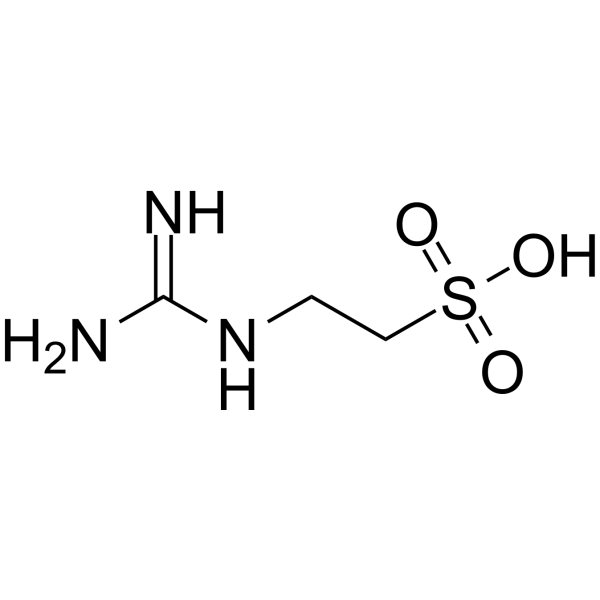
  • HY-113329
    Guanidinoethyl sulfonate
    5 Publications Verification

    Taurocyamine

    Endogenous Metabolite Metabolic Disease
    Guanidinoethyl sulfonate (Taurocyamine) is an orally available, blood-brain permeable competitive inhibitor of taurine transporters and a competitive antagonist of glycine receptors (GlyR) (IC50=565 μM). Guanidinoethyl sulfonate has both weak agonist and antagonist effects on GABAA receptors. Guanidinoethyl sulfonate inhibits taurine transmembrane transport and competitively binds to the GlyR ligand binding domain, thereby blocking glycine-mediated chloride influx, and may regulate brain pH to exert neuroprotective effects. Guanidinoethyl sulfonate can be used for neuroprotection studies of ischemic brain injury .
    Guanidinoethyl sulfonate
  • HY-P10152

    Biochemical Assay Reagents Infection
    INF7 is a derivative of the N-terminal domain of the HA2 protein and is sensitive to pH. INF7 disrupts the stability of endosomal membranes through a mechanism independent of membrane fusion. INF7 can be used to enhance the endosome escape of complex or liposome-encapsulated proteins. Co-encapsulation of INF7 and molecular imaging probes in liposomes can enhance intracellular signaling and probe retention .
    INF7
  • HY-112798

    Apolipoprotein Neurological Disease
    PH-002 is an inhibitor of apolipoprotein (apo) E4 intramolecular domain interaction in neuronal cells that could rescue impairments of mitochondrial motility and neurite outgrowth.
    PH-002
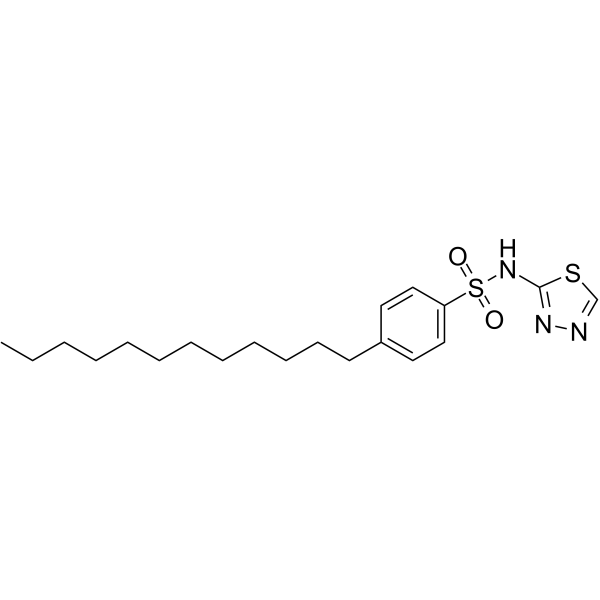
  • HY-12063
    PHT-427
    2 Publications Verification

    Akt Apoptosis Cancer
    PHT-247 is an inhibitor of the pleckstrin homology (PH) domain of Akt, and it is also an inhibitor of PDPK1 with Kis of 2.7 µM and 5.2 µM and for Akt and PDPK1, respectively.
    PHT-427
  • HY-110077
    API-1
    1 Publications Verification

    Akt Apoptosis Caspase PARP Cancer
    API-1 is a potent selective Akt/PKB inhibitor that reduces the level of phosphorylated Akt (IC50 = 0.8 μM). API-1 binds to the PH domain and inhibits Akt membrane translocation. API-1 induces c-FLIP degradation. API-1 reduces cell proliferation and induces apoptosis. API-1 decreases tumor growth in mouse xenograft model .
    API-1
  • HY-114457

    L-alPHa-PHosPHatidylinositol-4,5-bisPHosPHate; (PtdIns)-(4,5)-P2

    Phospholipase Inflammation/Immunology
    Phosphatidylinositol 4,5-bisphosphate (L-alpha-Phosphatidylinositol-4,5-bisphosphate) is a plasma membrane lipid that is enriched in the cytoplasmic leaflet of the plasma membrane. Phosphatidylinositol 4,5-bisphosphate serves as a substrate for phospholipase C and class I PI3K, generating diacylglycerol, inositol (1,4,5)-trisphosphate, and phosphatidylinositol (3,4,5)-trisphosphate. Phosphatidylinositol 4,5-bisphosphate contributes to lamellipodial protrusion, directional cell migration, focal adhesion lipid generation, and trafficking of the GABAA receptor. Phosphatidylinositol 4,5-bisphosphate can be used in research related to acute lung injury and pulmonary edema .
    Phosphatidylinositol 4,5-bisphosphate
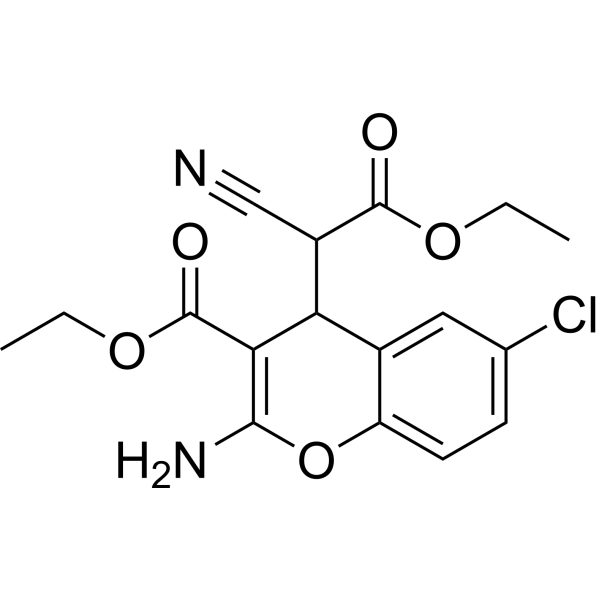
  • HY-15369

    Akt Apoptosis Cancer
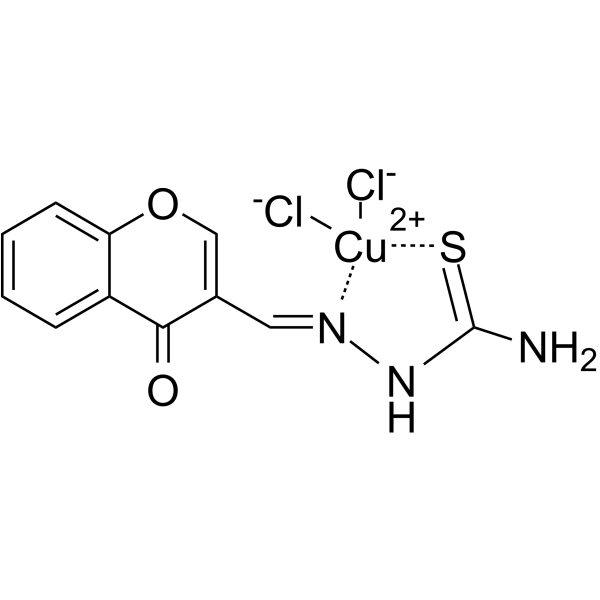
    FPA-124, a cell-permeable copper complex, is a selective Akt inhibitor with an IC50 of 0.1 μM. FPA-124 interacts with both the pleckstrin homology (PH) and the kinase domains of Akt. FPA-124 induces apoptosis .
    FPA-124
  • HY-169960

    mTOR Cancer
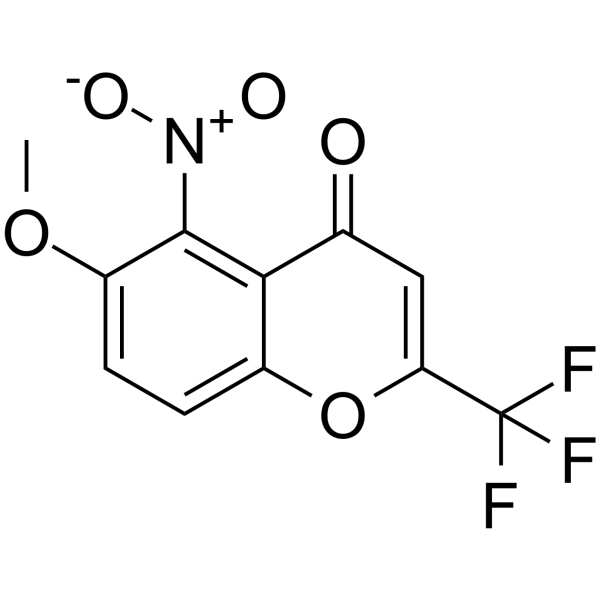
    2DII is a potent and selective mTORC2 inhibitor. 2DII selectively binds mSin1 PH domain and decreases the expression of AKT1 phosphorylation .
    2DII
  • HY-111549

    Arf Family GTPase Cancer
    Bragsin1 is a potent, selective and noncompetitive inhibitor of the ArfGEF BRAG2, inhibits Arf GTPase activation, with an IC50 of 3 μM. Bragsin1 binds to PH domain of BRAG2, and is a noncompetitive interfacial inhibitor. Bragsin1 has no effect on the Sec7 domain of human ArfGEFs. Anti-cancer activity .
    Bragsin1
  • HY-174367

    RUNX Apoptosis Cancer
    RUNX1/ETO-IN-1 is a RUNX1-ETO oncogenic fusion protein inhibitor that specifically targets the NHR2 oligomerization domain. RUNX1/ETO-IN-1 directly interacts with the NHR2 (KD,app = 39 μM). RUNX1/ETO-IN-1 exhibits anti-leukemic activity by inducing apoptosis and promoting differentiation in RUNX1/ETO-translocated AML cells. RUNX1/ETO-IN-1 remains essentially uncharged at physiological pH, demonstrating superior membrane permeability.
    RUNX1/ETO-IN-1
  • HY-113329R

    Taurocyamine (Standard)

    Endogenous Metabolite Reference Standards Metabolic Disease
    Guanidinoethyl sulfonate (Standard) is the analytical standard of Guanidinoethyl sulfonate. This product is intended for research and analytical applications. Guanidinoethyl sulfonate is an orally available, blood-brain permeable competitive inhibitor of taurine transporters and a competitive antagonist of glycine receptors (GlyR) (IC50=565 μM). Guanidinoethyl sulfonate has both weak agonist and antagonist effects on GABAA receptors. Guanidinoethyl sulfonate inhibits taurine transmembrane transport and competitively binds to the GlyR ligand binding domain, thereby blocking glycine-mediated chloride influx, and may regulate brain pH to exert neuroprotective effects. Guanidinoethyl sulfonate can be used for neuroprotection studies of ischemic brain injury .
    Guanidinoethyl sulfonate (Standard)
  • HY-128590
    PHT-7.3
    1 Publications Verification

    Ras Cancer
    PHT-7.3 is a selective inhibitor of connector enhancer of kinase suppressor of Ras 1 (Cnk1) pleckstrin homology (PH) domain (Kd=4.7 μM). PHT-7.3 inhibits mut-KRas, but not wild-type KRas cancer cell and tumor growth and signaling. PHT-7.3 has antitumor activity .
    PHT-7.3
  • HY-175042

    Ins(1,3,4,5,6)P5 ammonium salt; 1,3,4,5,6-IP5 ammonium salt

    Akt Cancer
    D-myo-Inositol-1,3,4,5,6-pentaphosphate (ammonium salt) (Ins(1,3,4,5,6)P5 (ammonium salt)) is an isomer of inositol phosphate that acts as a small and soluble second messenger in the transmission of cellular signals. D-myo-Inositol-1,3,4,5,6-pentaphosphate (ammonium salt) can bind to the PH domain of Grp1 with a Kd of 590 nM. D-myo-Inositol-1,3,4,5,6-pentaphosphate (ammonium salt) can inhibit the phosphorylation and kinase activity of Akt/PKB, inducing apoptosis in ovarian, lung, and breast cancer cells. D-myo-Inositol-1,3,4,5,6-pentaphosphate (ammonium salt) exhibits antiangiogenic activity in vitro and blocks capillary tube formation of HUVEC. D-myo-Inositol-1,3,4,5,6-pentaphosphate (ammonium salt) exerts antitumor effects against cancer xenografts in nude mice .
    D-myo-Inositol-1,3,4,5,6-pentaphosphate ammonium salt
  • HY-111550
    Bragsin2
    1 Publications Verification

    Ras MDM-2/p53 Cancer
    Bragsin2 is a potent, selective and noncompetitive nucleotide exchange factor BRAG2 inhibitor, with an IC50 of 3 μM. Bragsin2 binds at the interface between the PH domain of BRAG2 and the lipid bilayer, leads BRAG2 unable to activate lipidated Arf GTPase. Bragsin2 affects breast cancer stem cells .
    Bragsin2
  • HY-175038

    Fungal Infection
    Oomycete-IN-1 (Compound X4) is a selective inhibitor targeting the PH domain of PcORP1 in Phytophthora species. Oomycete-IN-1 shows EC50 values ranging from 1 to 4 μg/mL against six oomycetes. Oomycete-IN-1 disrupts lipid transport and metabolism, leading to mycelium hyperplasia and cell membrane ruffling in P. capsici. Oomycete-IN-1 can be used in the research of preventing and controlling oomycete diseases (such as P. capsici infection) .
    Oomycete-IN-1
  • HY-P10105

    Akt Apoptosis Cancer
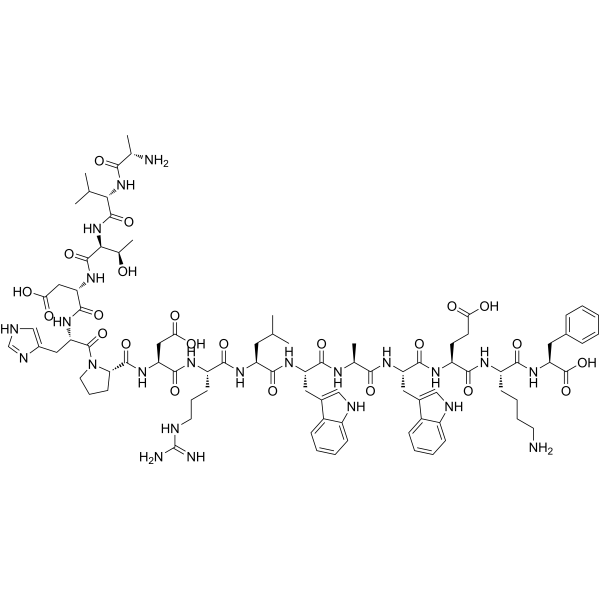
    TCL1(10-24) is a encompassing the betaA strand of human TCL1. TCL1(10-24) is a Akt inhibitor. TCL1(10-24) interacts with the Akt PH domain prevented phosphoinositide binding and hence inhibits membrane translocation and activation of Akt. TCL1(10-24) inhibits cellular proliferation and anti-apoptosis. TCL1(10-24) has tumor growth in vivo .
    TCL1(10-24)
  • HY-W719359

    Isotope-Labeled Compounds Apoptosis Akt Cancer
    PHT-427-d4 is the deuterium labeled PHT-427 (HY-12063). PHT-247 is an inhibitor of the pleckstrin homology (PH) domain of Akt, and it is also an inhibitor of PDPK1 with Kis of 2.7 μM and 5.2 μM and for Akt and PDPK1, respectively.
    PHT-427-d4
  • HY-P11457

    Bacterial Infection
    cCBD-LL37 is a chimeric antimicrobial peptide modified with a collagen-binding domain (cCBD) (TKKTLRT). cCBD-LL37 has improved retention on collagen after PBS washing and varying electrostatic conditions. cCBD-LL37 binds to collagen involves both specific and non-specific interactions, initiated by long-range electrostatic forces that transitions to close range or hydrophobic interactions. cCBD-LL37 has potent antimicrobial activity with improved structural stability under different ionic strengths and pH conditions (pH 5.5-8). cCBD-LL37 can be used for biomaterials like collagen-based wound dressings research .
    cCBD-LL37
  • HY-180884

    Btk Cancer
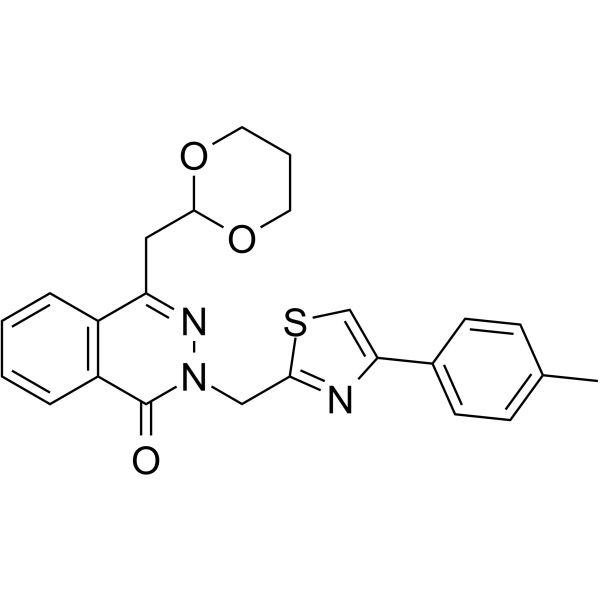
    BTK-IN-46 (compound 24) is a reversible covalent BTK inhibitor. BTK-IN-46 covalently labels a lysine in the inositol phosphate (PIP3) binding site, thereby blocking Pleckstrin homology (PH) domain-mediated membrane recruitment and activation of BTK .
    BTK-IN-46
  • HY-112798S

    Isotope-Labeled Compounds Apolipoprotein Neurological Disease
    PH-002-d8 is the deuterium labeled PH-002 (HY-112798). PH-002 is an inhibitor of apolipoprotein (apo) E4 intramolecular domain interaction in neuronal cells that could rescue impairments of mitochondrial motility and neurite outgrowth.
    PH-002-d8
  • HY-169534

    Akt Cancer
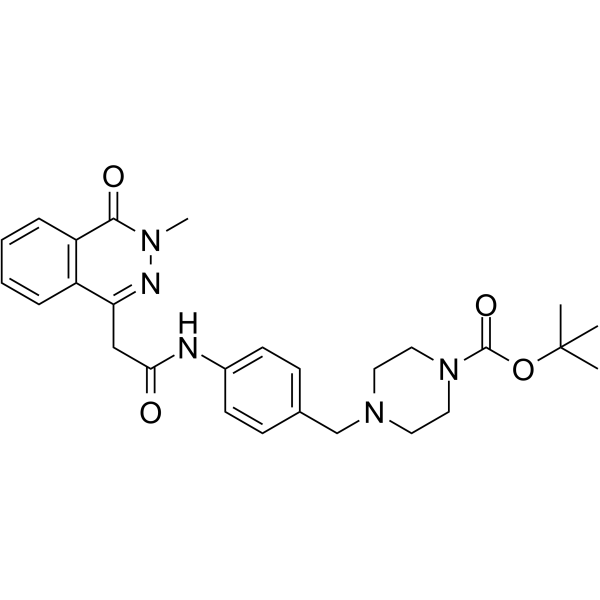
    AKT-IN-26 (Compound 453) is an AKT inhibitor that binds to the Pleckstrin homology (PH) domain of AKT. AKT-IN-26 can be used in research related to AKT pathway-associated cell proliferation and cancer .
    AKT-IN-26
  • HY-179554

    PI(4,5)P2-fluorescein triethylammonium

    Fluorescent Dye Others
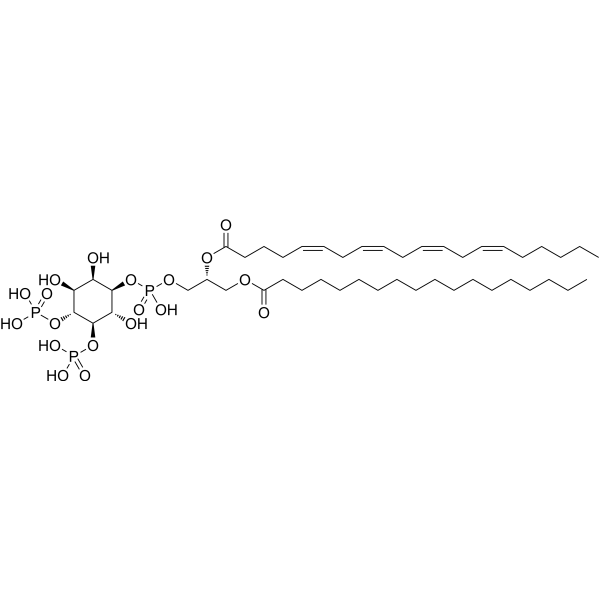
    PtdIns-(4,5)-P2-fluorescein (PI(4,5)P2-fluorescein) triethylammonium is a fluorescently labeled phosphatidylinositol-4,5-bisphosphate, which is a marked form of an important phospholipid signaling molecule (PIP2) on the cell membrane. PtdIns-(4,5)-P2-fluorescein triethylammonium can be used to detect proteins that interact with phosphatidylinositol-4,5-bisphosphate, such as PI3K, PTEN, and PH domain proteins, etc .
    PtdIns-(4,5)-P2-fluorescein triethylammonium

オンラインお問い合わせ

入力情報は安全に管理されます. 必須入力項目.

タイトル


国或いは地域 *

お名前 *


組纖名 *

デパートメント *


メールアドレス *


製品名 *

製品番号


カスタマ需要量 *

電話番号 *


必ず会社名を記載ください。個人への返信は行いません。

備考

バルクお問い合わせ

Inquiry Information

製品名:
製品番号:
数量:
MCE 日本正規代理店:

