



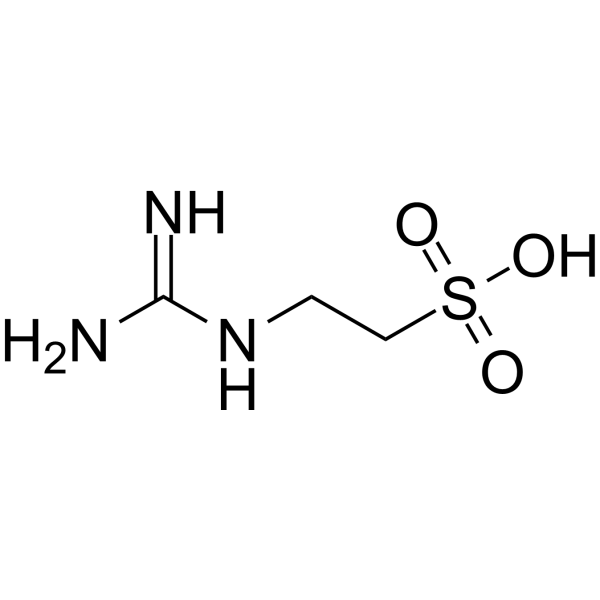
Guanidinoethyl sulfonate
Based on 5 publication(s) in Google Scholar
Guanidinoethyl sulfonate (Taurocyamine) is an orally available, blood-brain permeable competitive inhibitor of taurine transporters and a competitive antagonist of glycine receptors (GlyR) (IC50=565 μM). Guanidinoethyl sulfonate has both weak agonist and antagonist effects on GABAA receptors. Guanidinoethyl sulfonate inhibits taurine transmembrane transport and competitively binds to the GlyR ligand binding domain, thereby blocking glycine-mediated chloride influx, and may regulate brain pH to exert neuroprotective effects. Guanidinoethyl sulfonate can be used for neuroprotection studies of ischemic brain injury.
For research use only. We do not sell to patients.
- Purity : 99.91%
- CAS No.: 543-18-0
- Formula: C3H9N3O3S
- Molecular Weight:167.19
-
Storage:Powder -20°C, 3 years , 4°C, 2 years ; In solvent -80°C, 6 months , -20°C, 1 month

To place orders, for customer services and technical support, please contact: MedChemExpress USA
Tel: 609-228-6898 E-mail: [email protected] [email protected]


-
 Biological Activity
-
Chemical Information
-
Solvent & Solubility
- Purity & Documentation
- References
-
 Help & FAQs


-
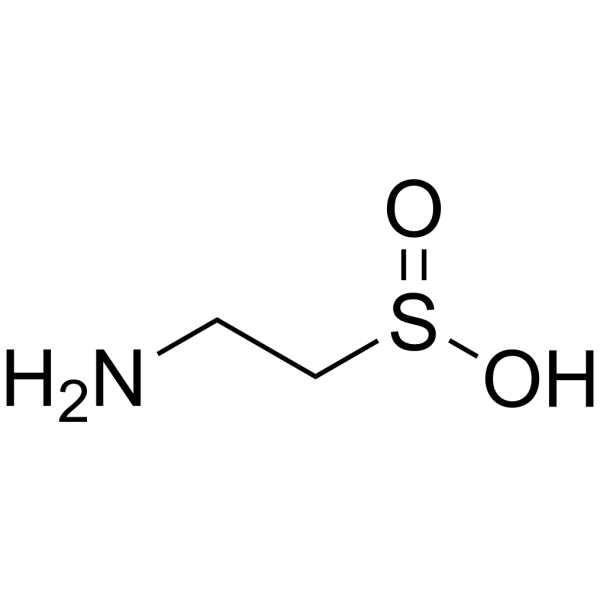
HY-100803
Hypotaurine -
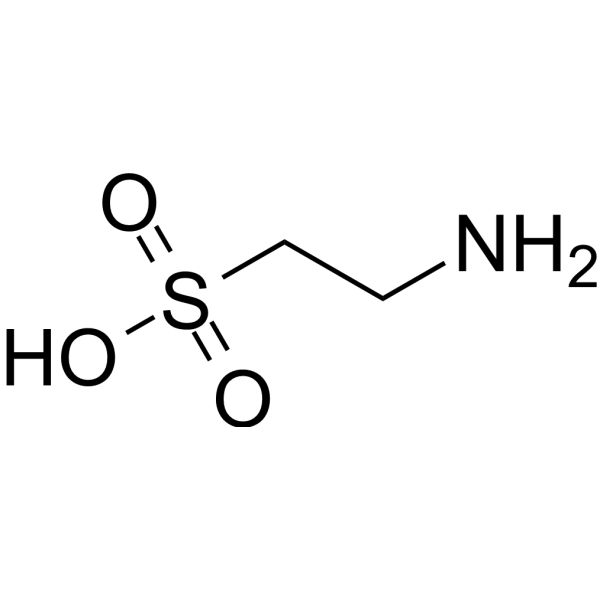
HY-B0351
Taurine -
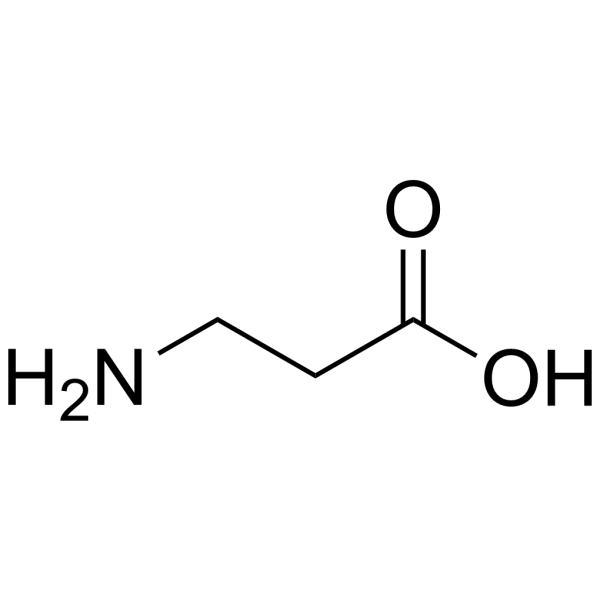
HY-N0230
β-Alanine -

HY-113329R
Guanidinoethyl sulfonate (Standard) -
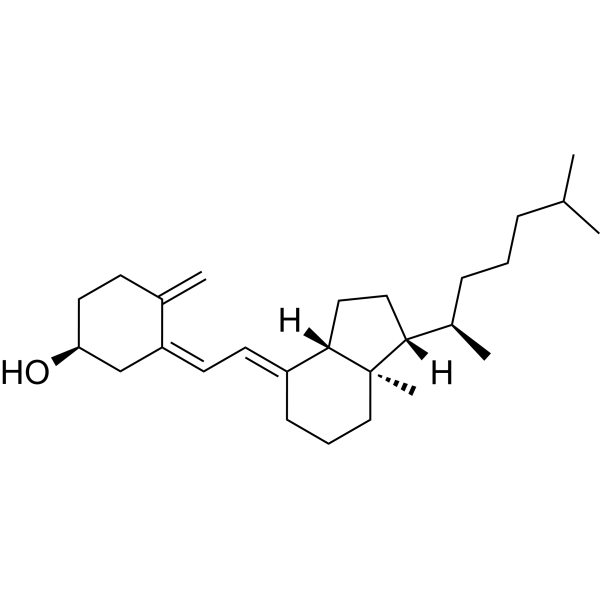
HY-15398
Vitamin D3 -
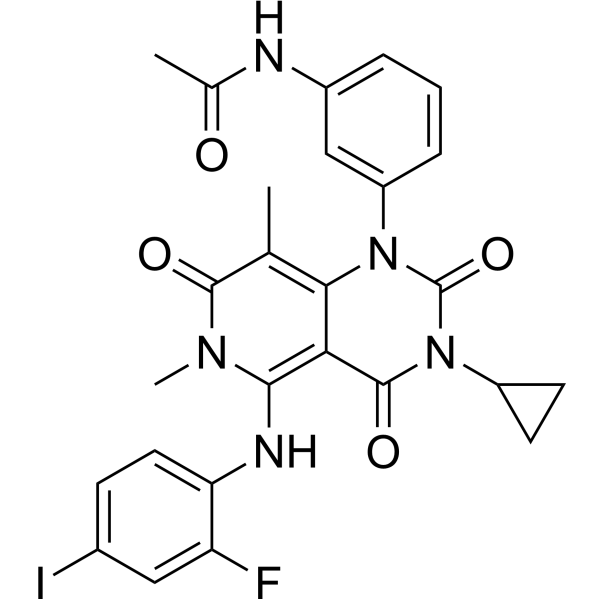
HY-10999
Trametinib -
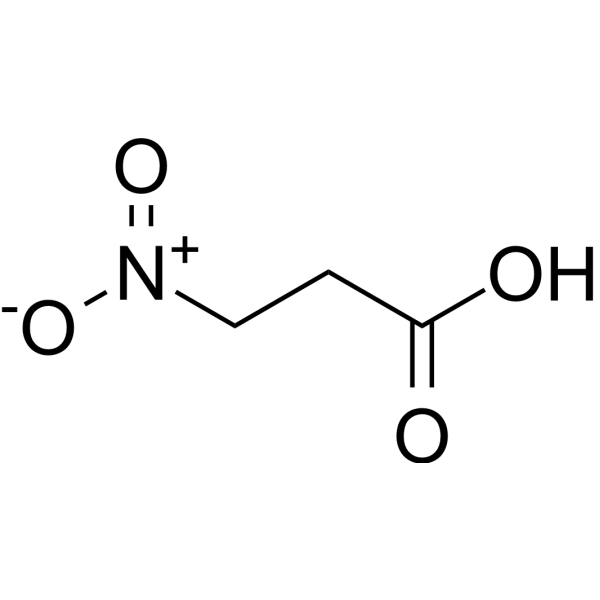
HY-W012875
3-Nitropropanoic acid -
HY-K0030
Deacetylase Inhibitor Cocktail (100× in 70% DMSO) -
HY-128918
SIS17 -

HY-100803R
Hypotaurine (Standard) -
HY-139116
Piperidine-4-sulfonic acid
Publications Citing Use of MedChemExpress (MCE) Guanidinoethyl sulfonate
More Customer Validation & Images

-
In Vivo Efficacy Study
-
Cell Imaging/Staining
-
Bio/Physico-chemical Assay
-
Bio/Physico-chemical Assay
All Endogenous Metabolite Isoforms
More

Biological Activity
Description
IC50 & Target
|
Human Endogenous Metabolite |
In Vitro
Electrophysiological experiments (Glycine receptor activity):
Guanidinoethyl sulfonate (0.5 mM; transient) competitively antagonizes glycine-induced currents in mouse striatal neurons, shifting the glycine dose-response curve to the right, with the EC50 increasing from 62 μM (control group) to 154 μM (treated group)[1].
Electrophysiological experiments (GABA receptor activity):
Guanidinoethyl sulfonate (1 mM; transient) exhibits both weak agonist and antagonist effects on GABAA receptors in mouse striatal neurons[1].
MedChemExpress (MCE) has not independently confirmed the accuracy of these methods. They are for reference only.
-
Cell Line:Mouse striatal giant aspiny neurons (GAN) and medium spiny neurons (MSN)
-
Concentration:0.5 mM, 1 mM
-
Incubation Time:
-
Result:At 0.5 mM, shifted the glycine dose-response curve rightward without affecting maximal response, increasing EC50 from 62 μM to 154 μM and decreasing the Hill coefficient from 2.5 to 1.3.
At 1 mM, reduced glycine (100 μM)-evoked currents to 36 ± 2.7% in GAN and 35 ± 3.9% in MSN, with voltage-independent block confirmed by unchanged reversal potentials near chloride equilibrium potential.
In Vivo
Guanidinoethyl sulfonate (625 mg/kg; intraperitoneal injection; once a day; 2 weeks) pretreatment in adult male gerbils significantly increases the survival rate of hippocampal CA1 neurons after ischemia and alleviates delayed neuronal death[2].
Pregnancy model:
Guanidinoethyl sulfonate (1% drinking water; free drinking; gestational day 11-21) causes a significant decrease in taurine concentrations in the fetus' body, liver, brain and placenta (32%-87%), reduces fetal body weight and organ weights, and increases maternal urinary taurine excretion in the Wistar pregnant rat model[3].
MedChemExpress (MCE) has not independently confirmed the accuracy of these methods. They are for reference only.
-
Animal Model:Adult male gerbils (70 g), forebrain ischemia-reperfusion model[2]
-
Dosage:625 mg/kg, dissolved in distilled water (neutralized to pH 7.0 with NaOH)
-
Administration:Intraperitoneal injection, daily for 2 weeks, followed by 5-minute bilateral carotid artery occlusion and 7-day reperfusion
-
Result:Significantly increased the number of surviving CA1 neurons (61.1 cells/mm) compared to saline-treated ischemic controls (17.75 cells/mm).
Decreased brain taurine levels, while increased intracellular pH, indicating a protective effect against ischemic neuronal death without affecting baseline neuronal density in non-ischemic controls.
-
Animal Model:Pregnant Wistar rats (initial weight 190-230 g), gestational taurine depletion model[3]
-
Dosage:1% guanidinoethyl sulfonate (GES) in drinking water
-
Administration:Free access to GES-containing water from gestational day 11 to 21 (10 days total)
-
Result:Led to significant taurine depletion in fetal tissues (54% in whole body, 37% in liver, 87% in brain, 32% in placenta) and maternal tissues (33% in liver, 32% in brain, 46% in plasma).
Fetal wet weights of whole body, liver, brain, and placenta were reduced by 17%, 24%, 5%, and 13%, respectively, compared to controls.
Maternal urinary taurine excretion increased significantly throughout the treatment period, with no changes in maternal organ weights or food/water intake.


Chemical Information
-
CAS No. 543-18-0
-
Appearance Solid
-
Molecular Weight 167.19
-
Formula C3H9N3O3S
-
Color White to off-white
-
SMILES
N=C(NCCS(=O)(O)=O)N
-
Synonyms
Taurocyamine
-
Structure Classification
-
Initial Source
-
Shipping
Room temperature in continental US; may vary elsewhere.
-
Storage
Powder -20°C 3 years 4°C 2 years In solvent -80°C 6 months -20°C 1 month


Publications (5)
-
Journal Impact Factor
-
Most Recent
-
Nat Commun
2025 Aug 11;16(1):7394. PMID: 40789850 -
ACS Environ Au
Machine Learning-Assisted Recognition of Environmental Sulfur-Containing Chemicals in Nontargeted Mass Spectrometry Analysis of Inadequate Mass Resolution. [Abstract]2025 Aug 5;5(6):573-582. PMID: 41277996 -
Anal Chem
Exposome-Scale Investigation of Cl-/Br-Containing Chemicals Using High-Resolution Mass Spectrometry, Multistage Machine Learning, and Cloud Computing. [Abstract]2025 Jun 3;97(21):11099-11109. PMID: 40401576 -
Invest Ophthalmol Vis Sci
SLC6A6-Mediated Taurine Uptake Sustains Corneal Epithelial Stem/Progenitor Cell Function to Counteract Age-Related Dysfunction. [Abstract]2025 Jun 2;66(6):25. PMID: 40478558
Guanidinoethyl sulfonate purchased from MedChemExpress. Usage Cited in: Invest Ophthalmol Vis Sci. 2025 Jun 2;66(6):25. [Abstract]
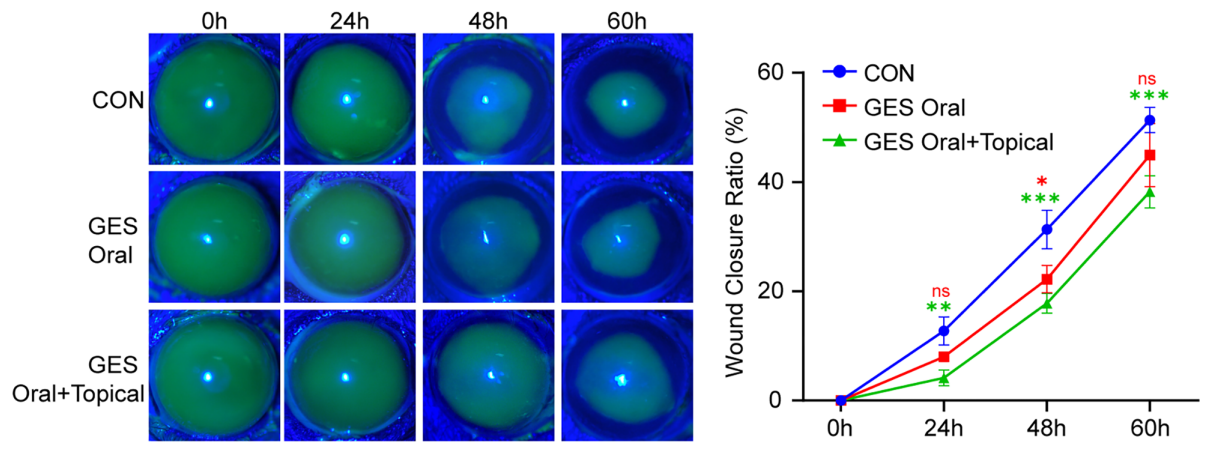
The corneal epithelia of mice (3-month-old males) treated with oral Guanidinoethyl sulfonate, oral and topical Guanidinoethyl sulfonate, or control were stained with fluorescein sodium at 0, 24, 48, and 60 hours after wounding (left panel), and the corneal wound closure was presented as the percentage of the original wound.(1% Guanidinoethyl sulfonate was added to water 7 days prior to corneal epithelial debridement. Subsequently, using 100-mM Guanidinoethyl sulfonate eye drops or PBS five times daily for 3 days post-wounding.)
Guanidinoethyl sulfonate purchased from MedChemExpress. Usage Cited in: Invest Ophthalmol Vis Sci. 2025 Jun 2;66(6):25. [Abstract]
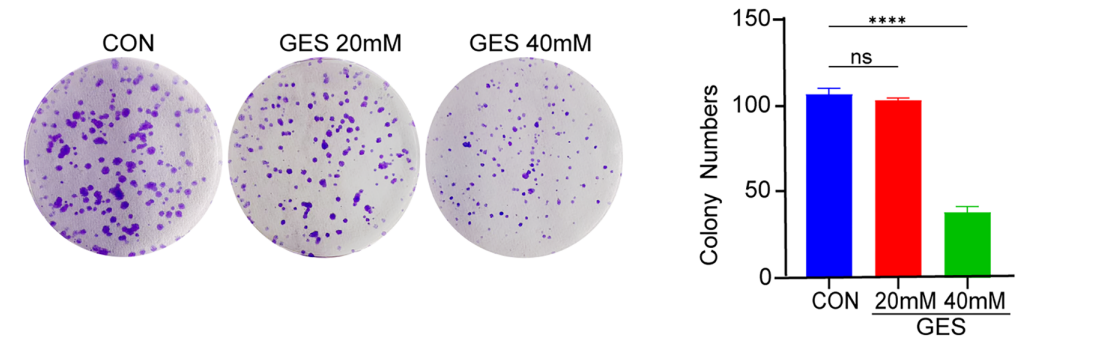
Colony formation (left panel) and number (right panel) in Guanidinoethyl sulfonate (0-40 mM)-treated TKE2 cells.
Guanidinoethyl sulfonate purchased from MedChemExpress. Usage Cited in: Invest Ophthalmol Vis Sci. 2025 Jun 2;66(6):25. [Abstract]
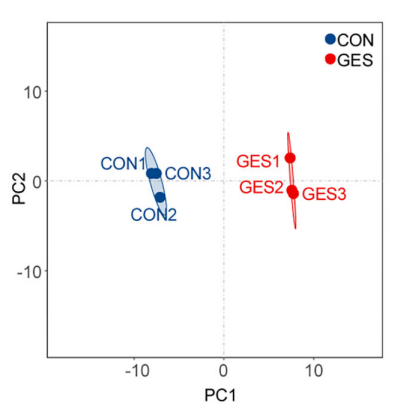
PCA analysis of TKE2 cells treated with Guanidinoethyl sulfonate versus control (CON) groups.
Guanidinoethyl sulfonate purchased from MedChemExpress. Usage Cited in: Invest Ophthalmol Vis Sci. 2025 Jun 2;66(6):25. [Abstract]
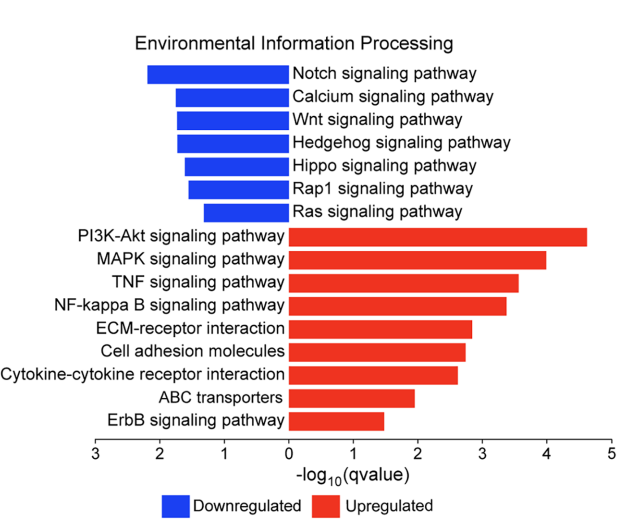
KEGG analysis of upregulated/downregulated pathways in Guanidinoethyl sulfonate-treated TKE2 cells.
-


Solvent & Solubility
In Vitro:
H2O : 41.67 mg/mL (249.24 mM; Need ultrasonic)
Please refer to the solubility information to select the appropriate solvent. Once prepared, please aliquot and store the solution to prevent product inactivation from repeated freeze-thaw cycles.
Storage method and period of stock solution: -80°C, 6 months; -20°C, 1 month. When stored at -80°C, please use it within 6 months. When stored at -20°C, please use it within 1 month.
* Note: If you choose water as the stock solution, please dilute it to the working solution, then filter and sterilize it with a 0.22 μm filter before use.
Please refer to the solubility information to select the appropriate solvent. Once prepared, please aliquot and store the solution to prevent product inactivation from repeated freeze-thaw cycles.
Storage method and period of stock solution: -80°C, 6 months; -20°C, 1 month. When stored at -80°C, please use it within 6 months. When stored at -20°C, please use it within 1 month.
* Note: If you choose water as the stock solution, please dilute it to the working solution, then filter and sterilize it with a 0.22 μm filter before use.
Concentration (start) × Volume (start) = Concentration (final) × Volume (final)
In Vivo:
For the following dissolution methods, please prepare the working solution directly:
It is recommended to prepare fresh solutions and use them promptly within a short period of time.
The percentages shown for the solvents indicate their volumetric ratio in the final prepared solution. If precipitation or phase separation occurs during preparation, heat and/or sonication can be used to aid dissolution.
Add each solvent one by one: PBS
Solubility: 25 mg/mL (149.53 mM); Clear solution; Need ultrasonic


Purity & Documentation
-
Data Sheet (278 KB)
-
SDS (393 KB)
- English - EN (393 KB)
- Français - FR (393 KB)
- Deutsch - DE (393 KB)
- Norwegian - NO (393 KB)
- Español - ES (393 KB)
- Swedish - SV (393 KB)
- Italian - IT (393 KB)
- Korean - KR (393 KB)
- Portuguese - PT (393 KB)
-
Handling Instructions (2659 KB)
References
[1]. Sergeeva OA, et al. Guanidinoethyl sulphonate is a glycine receptor antagonist in striatum. Br J Pharmacol. 2002 Nov;137(6):855-60. [Content Brief]
[2]. Igarashi H, et al. Guanidinoethane sulfate is neuroprotective towards delayed CA1 neuronal death in gerbils. Life Sci. 1995;56(14):1201-6. [Content Brief]
[3]. K Ejiri, et al. Effect of guanidinoethyl sulfonate on taurine concentrations and fetal growth in pregnant rats. Biol Neonate. 1987;51(4):234-40. [Content Brief]


Complete Stock Solution Preparation Table
Please refer to the solubility information to select the appropriate solvent. Once prepared, please aliquot and store the solution to prevent product inactivation from repeated freeze-thaw cycles.
Storage method and period of stock solution: -80°C, 6 months; -20°C, 1 month. When stored at -80°C, please use it within 6 months. When stored at -20°C, please use it within 1 month.
| Optional Solvent | Concentration Solvent Mass | 1 mg | 5 mg | 10 mg | 25 mg |
|---|---|---|---|---|---|
| H2O | 1 mM | 5.9812 mL | 29.9061 mL | 59.8122 mL | 149.5305 mL |
| 5 mM | 1.1962 mL | 5.9812 mL | 11.9624 mL | 29.9061 mL | |
| 10 mM | 0.5981 mL | 2.9906 mL | 5.9812 mL | 14.9530 mL | |
| 15 mM | 0.3987 mL | 1.9937 mL | 3.9875 mL | 9.9687 mL | |
| 20 mM | 0.2991 mL | 1.4953 mL | 2.9906 mL | 7.4765 mL | |
| 25 mM | 0.2392 mL | 1.1962 mL | 2.3925 mL | 5.9812 mL | |
| 30 mM | 0.1994 mL | 0.9969 mL | 1.9937 mL | 4.9843 mL | |
| 40 mM | 0.1495 mL | 0.7477 mL | 1.4953 mL | 3.7383 mL | |
| 50 mM | 0.1196 mL | 0.5981 mL | 1.1962 mL | 2.9906 mL | |
| 60 mM | 0.0997 mL | 0.4984 mL | 0.9969 mL | 2.4922 mL | |
| 80 mM | 0.0748 mL | 0.3738 mL | 0.7477 mL | 1.8691 mL | |
| 100 mM | 0.0598 mL | 0.2991 mL | 0.5981 mL | 1.4953 mL |
* Note: If you choose water as the stock solution, please dilute it to the working solution, then filter and sterilize it with a 0.22 μm filter before use.


Guanidinoethyl sulfonate Related Classifications
HY-113329 Related Classifications
 Powered by Bioz