4847 Results for "

PROTAC synthesis

" in MedChemExpress (MCE) Product Catalog:
Products (4847)

4847 Results for "PROTAC synthesis" in MCE Product Catalog:

37
37 Publications Verification
Cat. No.: HY-118411
CAS No.: 61135-33-9
Purity:  99.78%
Synonyms: EdU
Target:  

PROTAC Linkers

Research Areas:  

Cancer

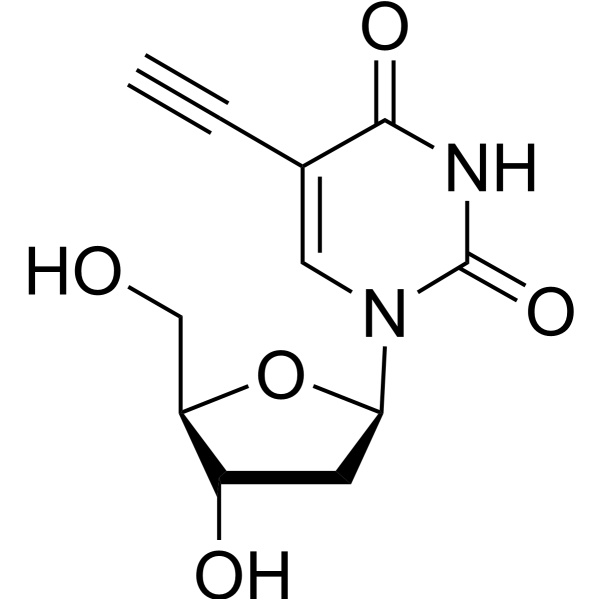
5-Ethynyl-2'-deoxyuridine (EdU), a thymidine analogue, is incorporated into cellular DNA during DNA replication and the subsequent reaction of EdU with a fluorescent azide in a “Click” reaction. EdU staining is a fast, sensitive and reproducible method to study cell proliferation . 5-Ethynyl-2'-deoxyuridine is an alkyl chain-based PROTAC linker that can be used in the synthesis of PROTACs . 5-Ethynyl-2'-deoxyuridine is a click chemistry reagent, it contains an Alkyne group and can undergo copper-catalyzed azide-alkyne cycloaddition (CuAAc) with molecules containing Azide groups.
loading...
    loading...
25
25 Cited Publications
Cat. No.: HY-W008574
CAS No.: 51987-99-6
Target:  

PROTAC Linkers

Research Areas:  

Inflammation/Immunology Cancer

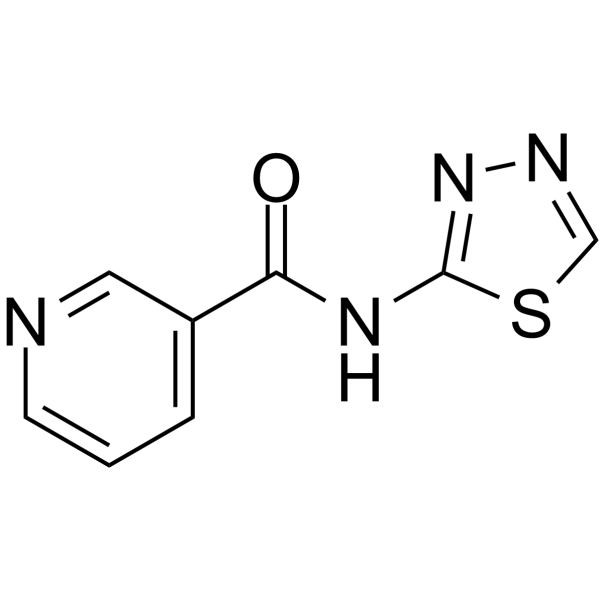
TGN-020 is a selective Aquaporin 4 (AQP4) inhibitor with an IC50 of 3.1 μM . TGN-020 is an alkyl chain-based PROTAC linker that can be used in the synthesis of PROTACs .TGN-020 alleviates edema and inhibits glial scar formation after spinal cord compression injury in rats .
loading...
    loading...
25
25 Cited Publications
Cat. No.: HY-W008574A
CAS No.: 1313731-99-5
Target:  

PROTAC Linkers

Research Areas:  

Inflammation/Immunology Cancer

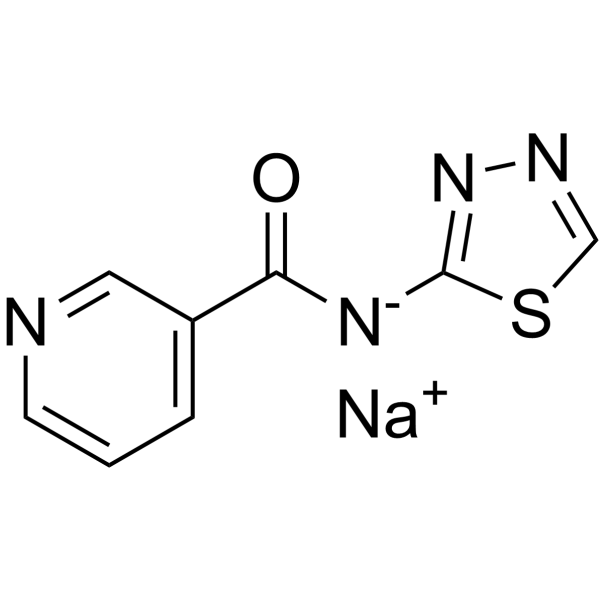
TGN-020 sodium is a selective Aquaporin 4 (AQP4) inhibitor with an IC50 of 3.1 μM . TGN-020 sodium is an alkyl chain-based PROTAC linker that can be used in the synthesis of PROTACs . TGN-020 sodium alleviates edema and inhibits glial scar formation after spinal cord compression injury in rats .
loading...
    loading...
17
17 Cited Publications
Cat. No.: HY-100947
CAS No.: 2097381-85-4
Purity:  99.54%
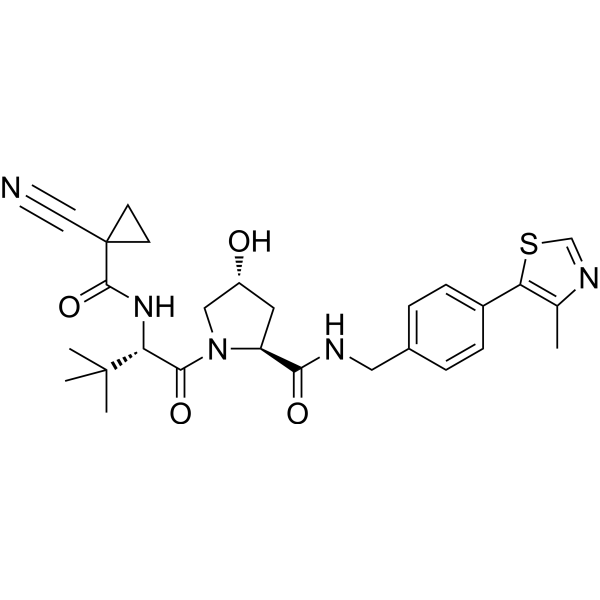
VH-298 is a highly potent inhibitor of the VHL:HIF-α interaction with a Kd value of 80 to 90 nM. VH-298 leads to HIF-α accumulation inside HeLa cells. VH-298 is an E3 ligase Ligand, and can be used for synthesis of PROTACs .
loading...
    loading...
9
9 Cited Publications
Cat. No.: HY-130458
CAS No.: 70539-42-3
Purity:  97.45%
Synonyms: EGS crosslinker
Target:  

PROTAC Linkers

Research Areas:  

Cancer

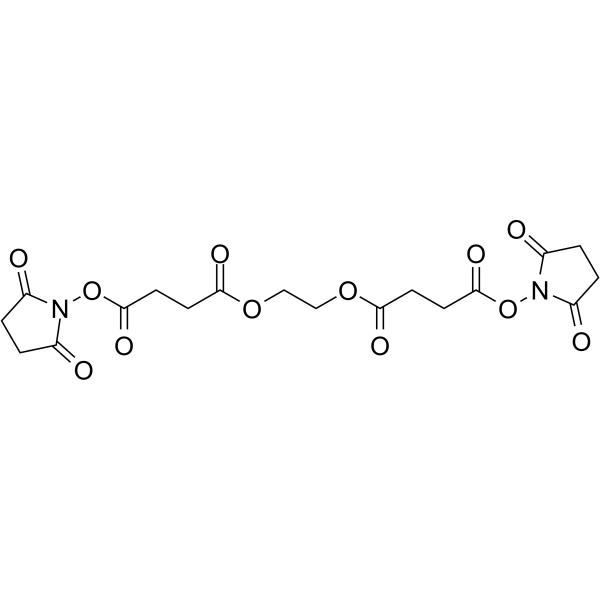
EGNHS is an alkyl/ether-based PROTAC linker that can be used in the synthesis of PROTACs .
loading...
    loading...
7
7 Cited Publications
Cat. No.: HY-107608
CAS No.: 71160-24-2
Purity:  ≥98.0%
Synonyms: LTB4; 5(S),12(R)-DiHETE
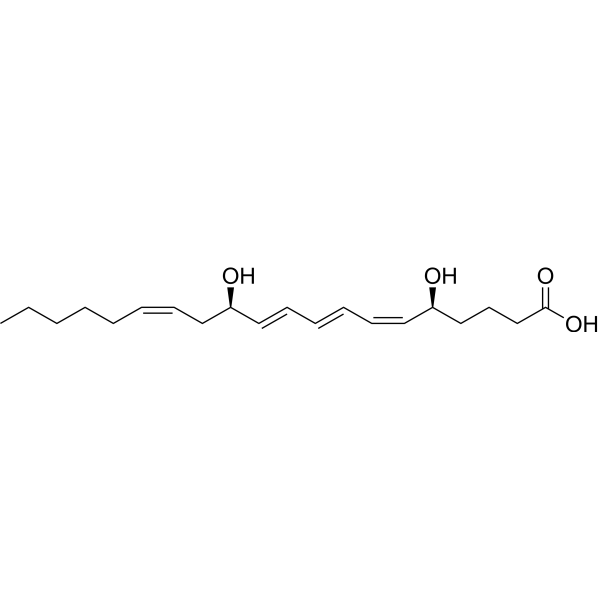
Leukotriene B4 (LTB4) is known as one of the most potent chemoattractants and activators of leukocytes and is involved in inflammatory diseases. Leukotriene B4 is also an alkyl chain-based PROTAC linker that can be used in the synthesis of PROTACs .
loading...
    loading...
6
6 Cited Publications
Cat. No.: HY-140346A
CAS No.: 942518-29-8
Purity:  98.85%
Target:  

PROTAC Linkers

Research Areas:  

Cancer

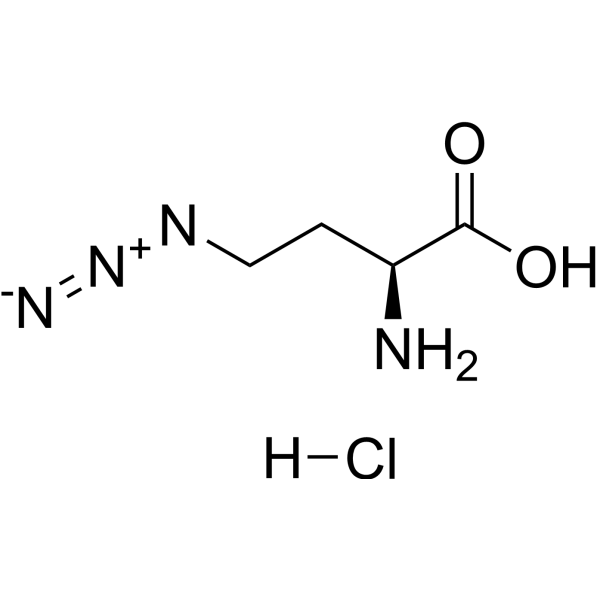
L-Azidohomoalanine hydrochloride is an alkyl chain-based PROTAC linker that can be used in the synthesis of PROTACs . L-Azidohomoalanine (hydrochloride) is a click chemistry reagent, it contains an Azide group and can undergo copper-catalyzed azide-alkyne cycloaddition reaction (CuAAc) with molecules containing Alkyne groups. It can also undergo strain-promoted alkyne-azide cycloaddition (SPAAC) reactions with molecules containing DBCO or BCN groups.
loading...
    loading...
4
4 Cited Publications
Cat. No.: HY-140335
CAS No.: 82909-47-5
Purity:  ≥95.0%
Target:  

PROTAC Linkers

Research Areas:  

Cancer

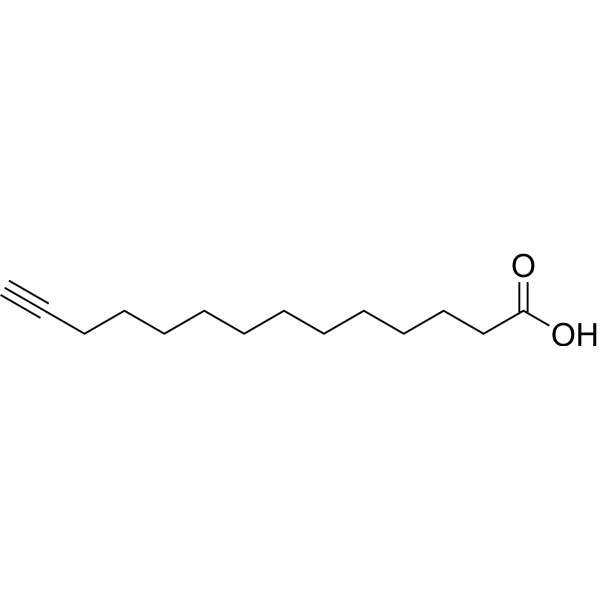
Alkynyl myristic acid is an alkyl chain-based PROTAC linker that can be used in the synthesis of PROTACs . Alkynyl myristic acid is a click chemistry reagent, it contains an Alkyne group and can undergo copper-catalyzed azide-alkyne cycloaddition (CuAAc) with molecules containing Azide groups.
loading...
    loading...
4
4 Cited Publications
Cat. No.: HY-140272
CAS No.: 1427004-19-0
Purity:  98.40%
Target:  

PROTAC Linkers

Research Areas:  

Cancer

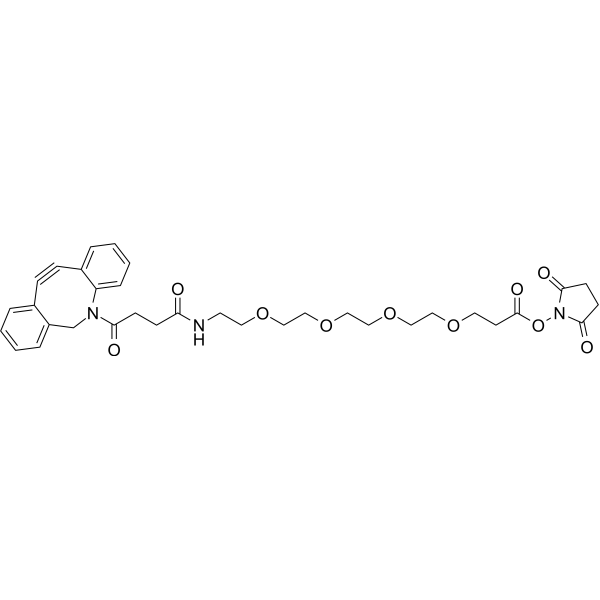
DBCO-PEG4-NHS ester is a PEG-based PROTAC linker that can be used in the synthesis of PROTACs . DBCO-PEG4-NHS ester is a click chemistry reagent, it contains a DBCO group that can undergo strain-promoted alkyne-azide cycloaddition (SPAAC) with molecules containing Azide groups.
loading...
    loading...
3
3 Cited Publications
Cat. No.: HY-141336
CAS No.: 40846-94-4
Purity:  ≥98.0%
Synonyms: DL-α-Lipoic acid-NHS
Target:  

PROTAC Linkers

Research Areas:  

Cancer

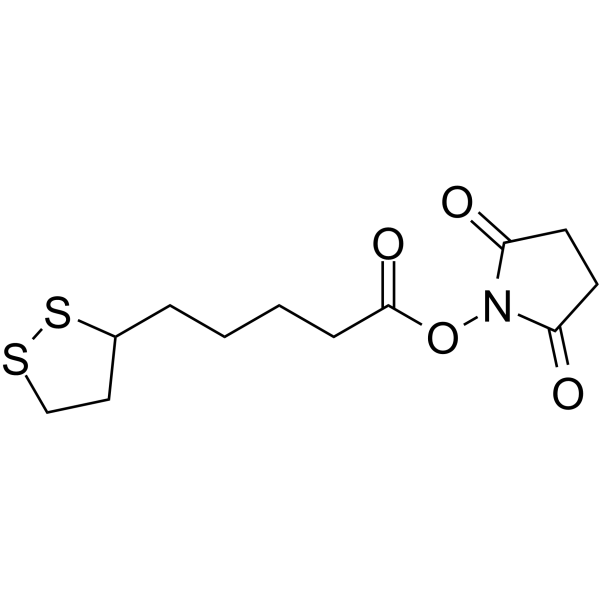
α-Lipoic acid-NHS is an alkyl/ether-based PROTAC linker that can be used in the synthesis of PROTACs .
loading...
    loading...
3
3 Cited Publications
Cat. No.: HY-140889
CAS No.: 459426-22-3
Purity:  99.56%
Target:  

PROTAC Linkers

Research Areas:  

Cancer

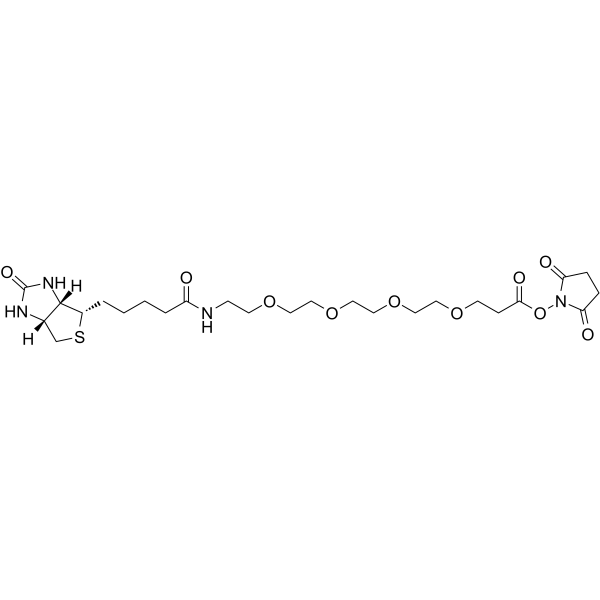
Biotin-PEG4-NHS ester is a biotin-labeled, PEG-based PROTAC linker that can be used in the synthesis of PROTACs .
loading...
    loading...
3
3 Cited Publications
Cat. No.: HY-W040304
CAS No.: 99208-90-9
Synonyms: Alk-C16
Target:  

PROTAC Linkers

Research Areas:  

Cancer

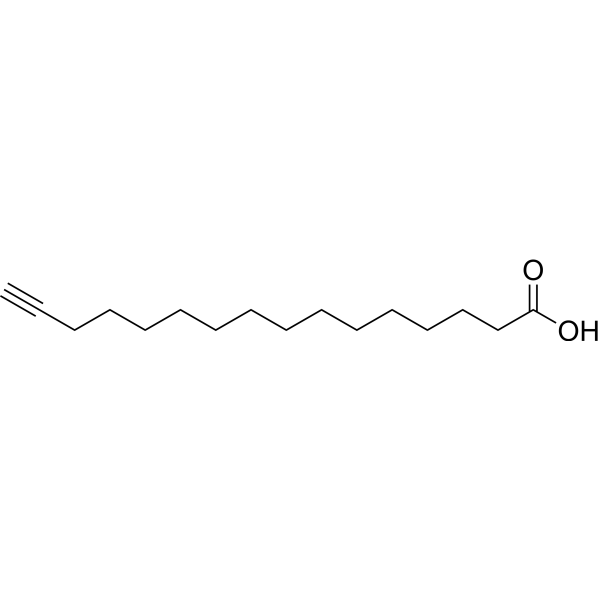
Alkynyl Palmitic Acid (Alk-C16) is an alkyl chain-based PROTAC linker that can be used in the synthesis of PROTACs . Alkynyl Palmitic Acid is a click chemistry reagent, it contains an Alkyne group and can undergo copper-catalyzed azide-alkyne cycloaddition (CuAAc) with molecules containing Azide groups.
loading...
    loading...
2
2 Cited Publications
Cat. No.: HY-W010764
CAS No.: 305372-39-8
Target:  

PROTAC Linkers

Research Areas:  

Cancer

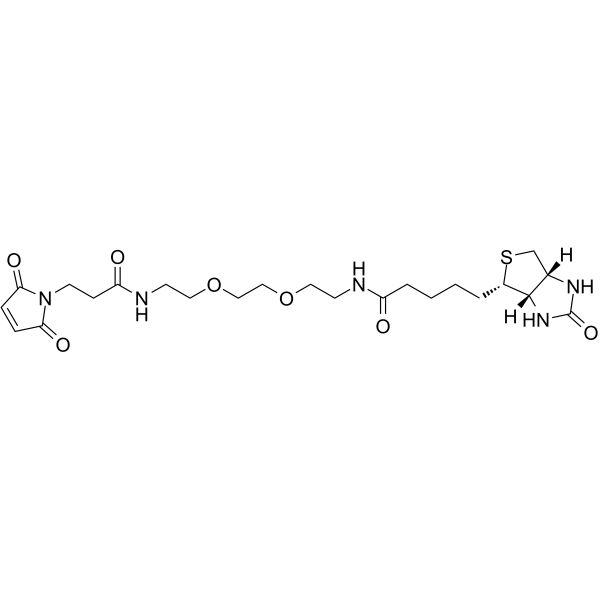
Biotin-PEG2-Mal is a PEG-based PROTAC linker can be used in the synthesis of PROTAC.
loading...
    loading...
2
2 Cited Publications
Cat. No.: HY-140614
CAS No.: 858126-78-0
Purity:  96.81%
Target:  

PROTAC Linkers

Research Areas:  

Cancer

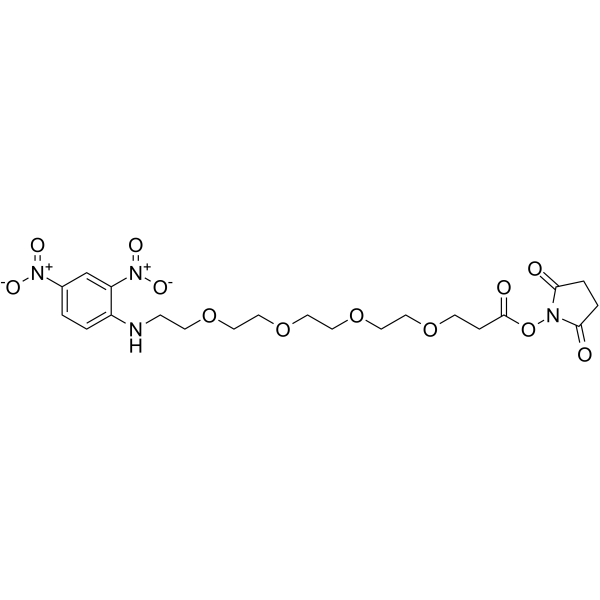
DNP-PEG4-NHS ester is a PEG-based PROTAC linker that can be used in the synthesis of PROTACs .
loading...
    loading...
2
2 Cited Publications
Cat. No.: HY-140941
CAS No.: 292843-75-5
Purity:  98.23%
Target:  

PROTAC Linkers

Research Areas:  

Cancer

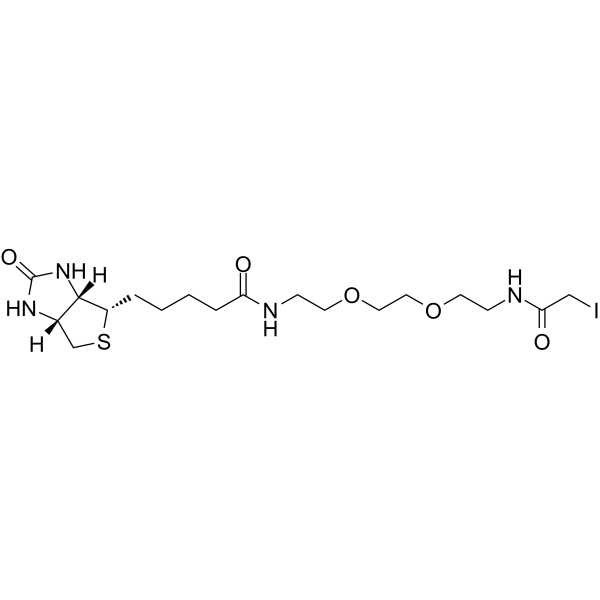
Biotin-PEG2-C2-iodoacetamide is a PEG-based PROTAC linker that can be used in the synthesis of PROTACs .
loading...
    loading...
2
2 Cited Publications
Cat. No.: HY-140345
CAS No.: 98891-36-2
Purity:  ≥98.0%
Target:  

PROTAC Linkers

Research Areas:  

Cancer

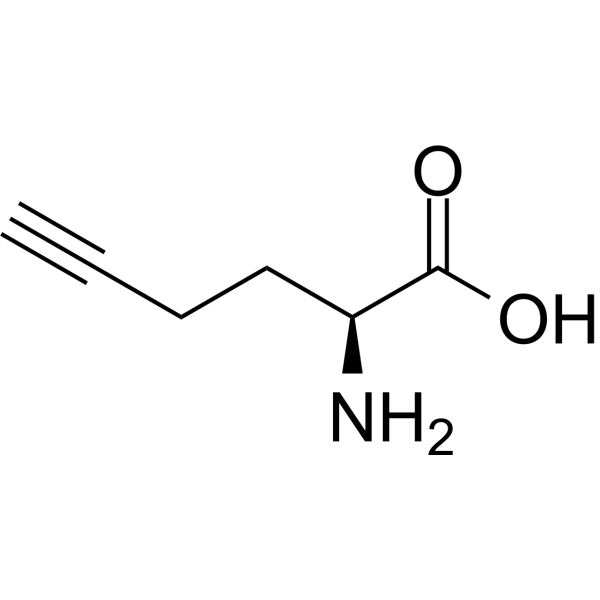
L-Homopropargylglycine is an alkyl chain-based PROTAC linker that can be used in the synthesis of PROTACs. L-homopropargylglycine is an amino acid analog of methionine containing an alkyne moiety that can undergo a classic click chemical reaction with azide containing Alexa Fluor .
loading...
    loading...
2
2 Cited Publications
Cat. No.: HY-140345A
CAS No.: 942518-19-6
Purity:  ≥98.0%
Target:  

PROTAC Linkers

Research Areas:  

Cancer

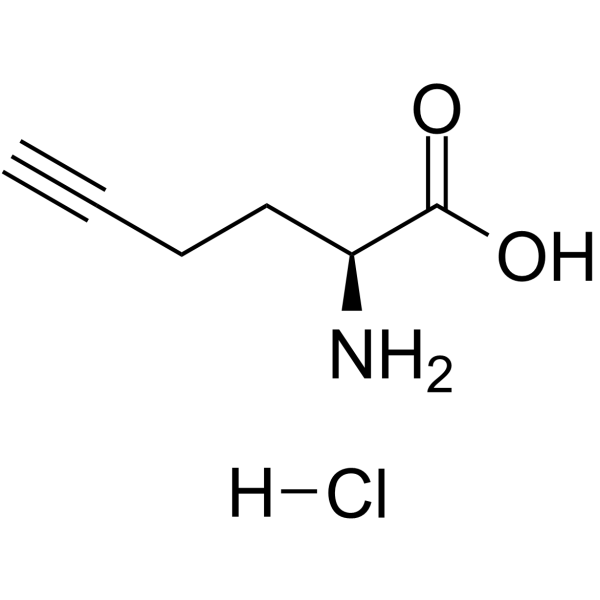
L-Homopropargylglycine hydrochloride is an alkyl chain-based PROTAC linker that can be used in the synthesis of PROTACs. L-homopropargylglycine hydrochloride is an amino acid analog of methionine containing an alkyne moiety that can undergo a classic click chemical reaction with azide containing Alexa Fluor .
loading...
    loading...
2
2 Cited Publications
Cat. No.: HY-113697
CAS No.: 1037589-69-7
Purity:  99.77%
Synonyms: Mal-PEG2-AZD
Target:  

PROTAC Linkers

Research Areas:  

Cancer

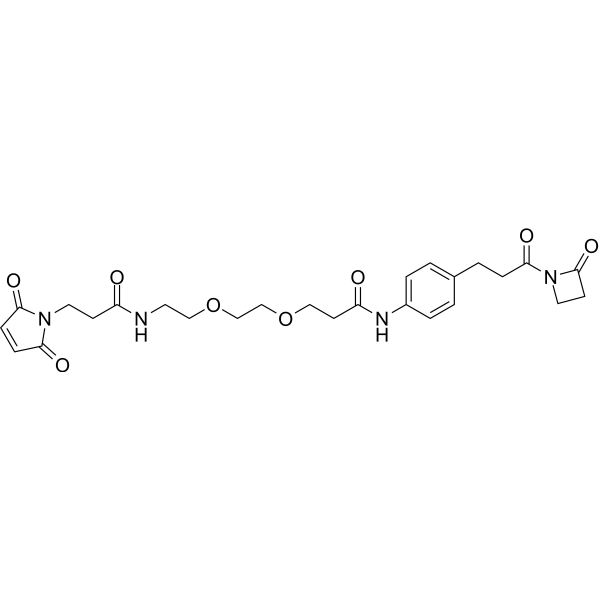
Mal-amido-PEG2-C2-amido-Ph-C2-CO-AZD (Mal-PEG2-AZD) is a PEG-based PROTAC linker that can be used in the synthesis of PROTACs .
loading...
    loading...
2
2 Cited Publications
Cat. No.: HY-140922
CAS No.: 1458576-00-5
Purity:  99.65%
Target:  

PROTAC Linkers

Research Areas:  

Cancer

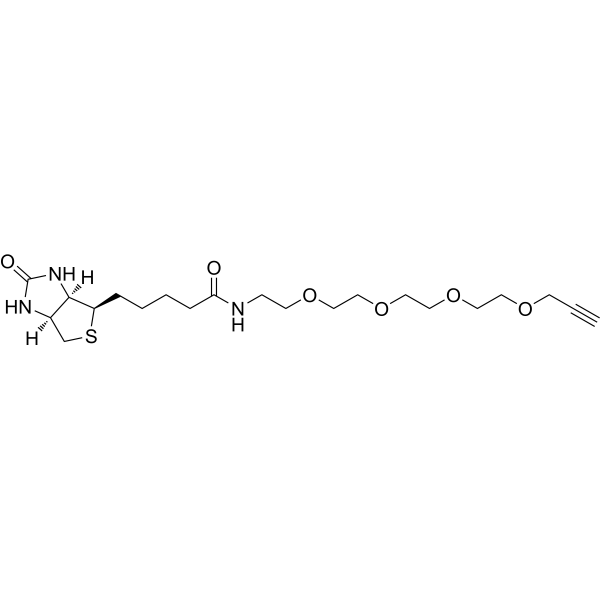
Biotin-PEG4-alkyne is a biotin-labeled, PEG-based PROTAC linker that can be used in the synthesis of PROTACs . Biotin-PEG4-alkyne is a click chemistry reagent, it contains an Alkyne group and can undergo copper-catalyzed azide-alkyne cycloaddition (CuAAc) with molecules containing Azide groups.
loading...
    loading...
2
2 Cited Publications
Cat. No.: HY-130143
CAS No.: 875770-34-6
Purity:  ≥97.0%
Target:  

PROTAC Linkers

Research Areas:  

Cancer

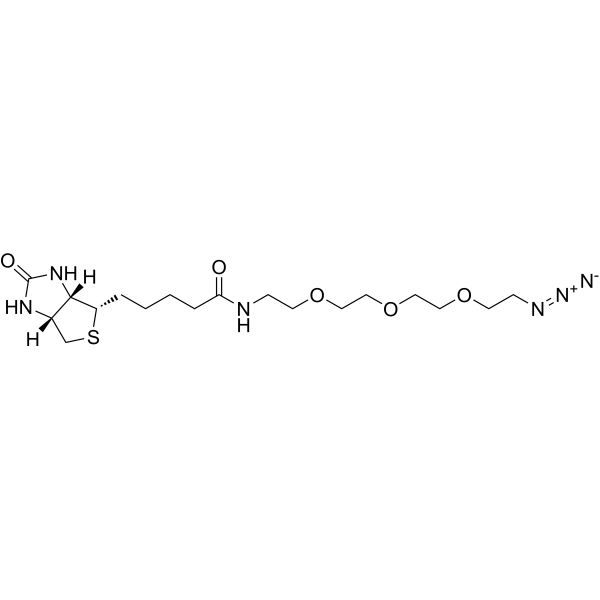
Biotin-PEG3-azide is a PEG-based PROTAC linker can be used in the synthesis of PROTACs. Biotin-PEG3-azide is a click chemistry reagent, it contains an Azide group and can undergo copper-catalyzed azide-alkyne cycloaddition reaction (CuAAc) with molecules containing Alkyne groups. It can also undergo strain-promoted alkyne-azide cycloaddition (SPAAC) reactions with molecules containing DBCO or BCN groups.
loading...
    loading...

