11 Results for "

PTPase activity

" in MedChemExpress (MCE) Product Catalog:
Products (11)

11 Results for "PTPase activity" in MCE Product Catalog:

9
9 Publications Verification
Cat. No.: HY-B0537
CAS No.: 100-33-4
Synonyms: MP-601205
Research Areas:  

Infection Cancer

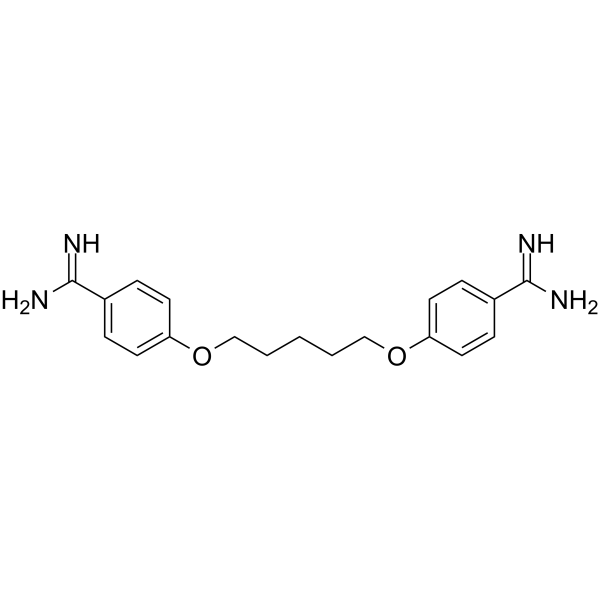
Pentamidine (MP-601205) is an antimicrobial agent and interferes with DNA biosynthetics. Pentamidine inhibits parasite Leishmania infantum with an IC50 of 2.5 μM. Pentamidine is a potent and selective protein tyrosine phosphatases (PTPases) and phosphatase of regenerating liver (PRL) inhibitor. Pentamidine has the potential for Gambian trypanosomiasis, antimony-resistant leishmaniasis, and Pneumocystis carinii pneumonia treatment. Antitumor and antibacterial activities .
loading...
    loading...
9
9 Publications Verification
Cat. No.: HY-B0537B
CAS No.: 140-64-7
Synonyms: MP-601205 isethionate
Research Areas:  

Infection Cancer

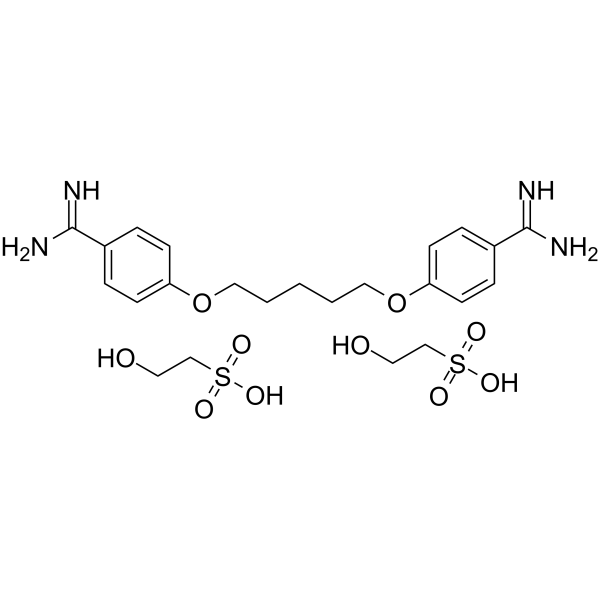
Pentamidine isethionate (MP-601205 isethionate) is an antimicrobial agent and interferes with DNA biosynthetics. Pentamidine isethionate inhibits parasite Leishmania infantum with an IC50 of 2.5 μM. Pentamidine isethionate is a potent and selective protein tyrosine phosphatases (PTPases) and phosphatase of regenerating liver (PRL) inhibitor. Pentamidine isethionate has the potential for Gambian trypanosomiasis, antimony-resistant leishmaniasis, and Pneumocystis carinii pneumonia treatment. Antitumor and antibacterial activities .
loading...
    loading...
Cat. No.: HY-W089800
CAS No.: 18829-56-6
Synonyms: trans-2-Nonen-1-al
Category:  

Natural Products

Target:  

COX Lipoxygenase Apoptosis

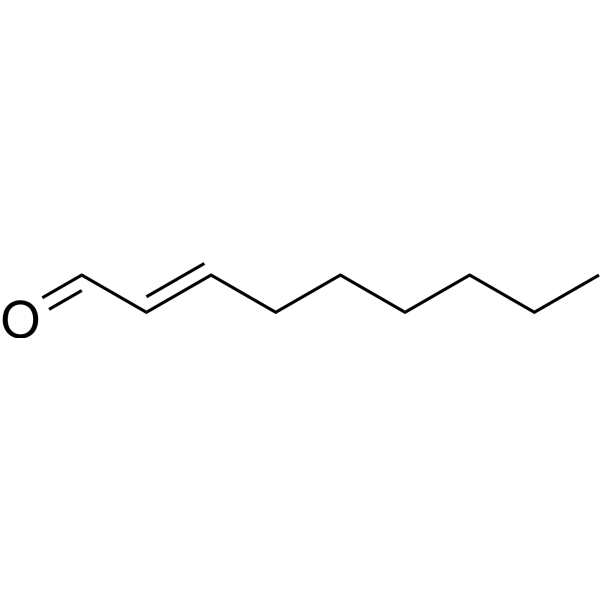
trans-2-Nonenal (trans-2-Nonen-1-al) is an endogenous peroxidation product of polyunsaturated fatty acids, acting as an inhibitor of COX and 12-LOX, as well as an inducer of apoptosis. trans-2-Nonenal is also a malodorous compound secreted by the human body, and its content gradually increases with aging. trans-2-Nonenal inhibits the activities of multiple enzymes such as platelet membrane-bound PTPase, preferentially covalently modifies proteins at lysine residues to form immunogenic adducts, and regulates platelet Arachidonic acid (HY-109590) metabolism. trans-2-Nonenal also exhibits significant cytotoxicity, reduces the viability of keratinocytes, promotes their apoptosis, and effectively decreases the thickness of epidermal models and the number of proliferating cells. trans-2-Nonenal is commonly used in studies of thrombotic, atherosclerotic diseases, renal adenocarcinoma, etc. .
loading...
    loading...
Cat. No.: HY-121811
CAS No.: 484-33-3
Purity:  99.81%
Synonyms: Lanceolatin C
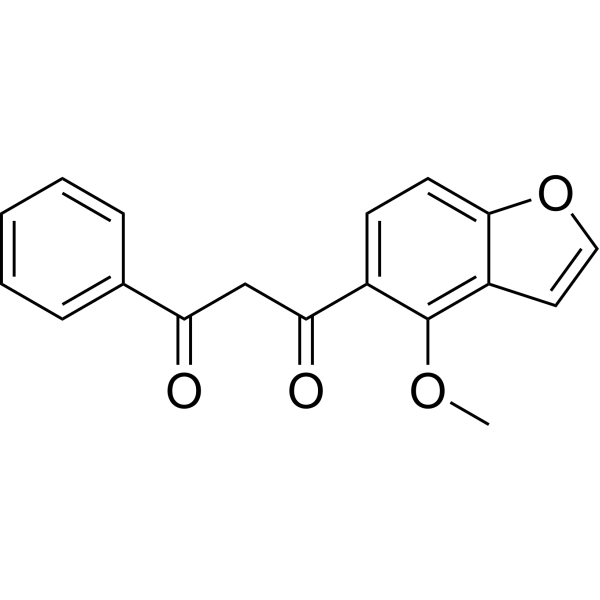
Pongamol (Lanceolatin C) is an orally active flavonoid with an IC50 of 75 μM and a Ki of 58 μM against PTPase-1B, and an IC50 of 103.5 μM against intestinal α-Glycosidase. Pongamol reduces the release of IL‑1β, TNF‑α, COX‑2 and iNOS in cells, reverses the nuclear translocation of NF‑κB, and upregulates the levels of Beclin 1 and LC3 Ⅱ/LC3 Ⅰ. Pongamol promotes glucose uptake by increasing the level of GLUT4 on the surface of skeletal muscle cells. Pongamol inhibits epithelial-mesenchymal transition by suppressing the FAK/Akt-mTOR signaling pathway. Pongamol inhibits neuronal cytotoxicity, suppresses cell apoptosis and extends the lifespan of Caenorhabditis elegans by activating the MAPKs/Nrf2 signaling pathway. Pongamol exerts hypoglycemic effects in diabetic mouse models. Pongamol exhibits antibacterial activity. Pongamol alleviates oxidative stress, neuroinflammation, deposition and excessive phosphorylation of Tau Protein, and restores autophagy function in Alzheimer's disease mouse models by inhibiting the Akt/mTOR signaling pathway. Pongamol is applicable to research related to Alzheimer's disease, type 2 diabetes, non-small cell lung cancer and postprandial hyperglycemia .
loading...
    loading...
Cat. No.: HY-B0537AS
CAS No.: 1276197-32-0
Synonyms: MP-601205-d4 dihydrochloride
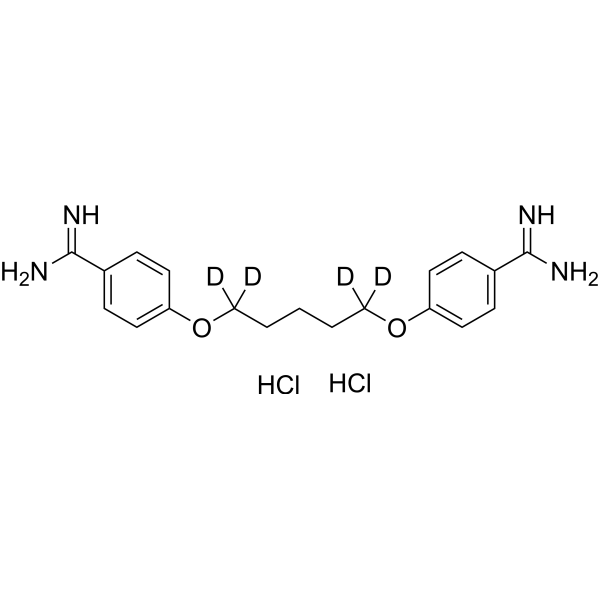
Pentamidine-d4 (dihydrochloride) is the deuterium labeled Pentamidine dihydrochloride. Pentamidine dihydrochloride (MP-601205 dihydrochloride) is an antimicrobial agent and interferes with DNA biosynthetics. Pentamidine dihydrochloride inhibits parasite Leishmania infantum with an IC50 of 2.5 μM. Pentamidine dihydrochloride is a potent and selective protein tyrosine phosphatases (PTPases) and phosphatase of regenerating liver (PRL) inhibitor. Pentamidine dihydrochloride has the potential for Gambian trypanosomiasis, antimony-resistant leishmaniasis, and Pneumocystis carinii pneumonia treatment. Antitumor and antibacterial activities .
loading...
    loading...
Cat. No.: HY-N9551
CAS No.: 14917-41-0
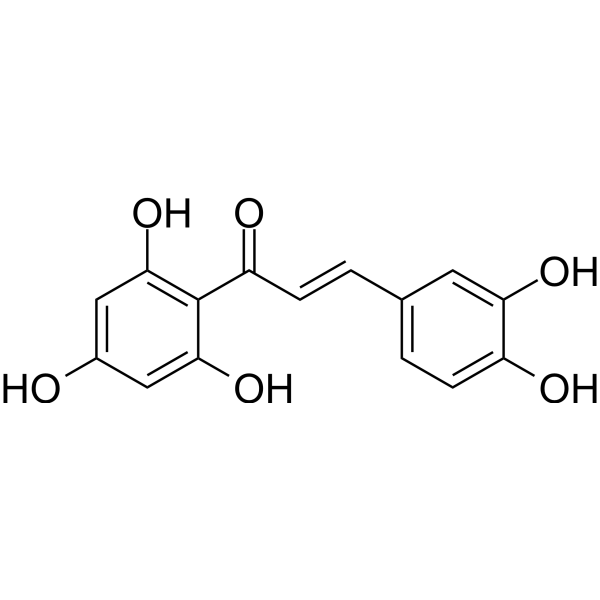
Eriodictyol chalcone is an antioxidant that inhibits multiple key enzymes including 5-LOX (IC50=0.043 μM), aromatase/CYP19A1 (IC50=2.8 μM), PTPase 1B (IC50=1.26 μM), and COX (IC50=34 μM). Eriodictyol chalcone exhibits excellent free radical scavenging activity. Eriodictyol chalcone not only inhibits the growth of plasmodia and enhances the efficacy of Artemisinin (HY-B0094), but also reduces depression-like behaviors in animal models. Eriodictyol chalcone serves as a biosynthetic precursor for Aureusidin (HY-N9834). Eriodictyol chalcone is a potential dietary supplement and herbicide, and it can be applied to research on malaria, depression, breast cancer and other related diseases .
loading...
    loading...
Cat. No.: HY-B0537A
CAS No.: 50357-45-4
Synonyms: MP-601205 dihydrochloride
Research Areas:  

Infection Cancer

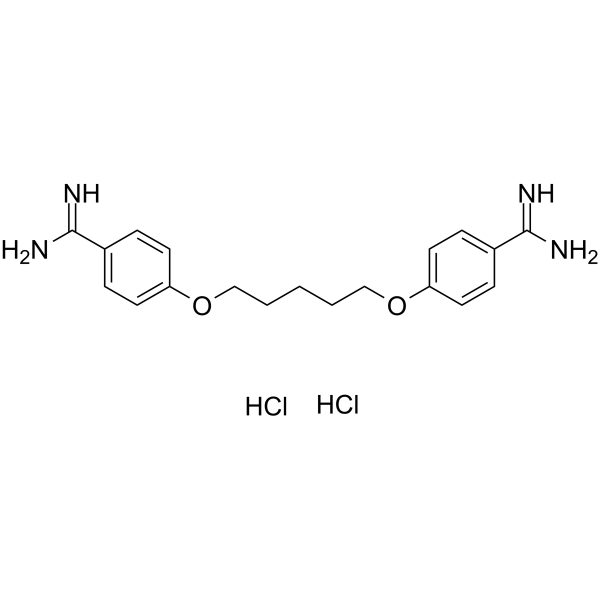
Pentamidine dihydrochloride (MP-601205 dihydrochloride) is an antimicrobial agent and interferes with DNA biosynthetics. Pentamidine dihydrochloride inhibits parasite Leishmania infantum with an IC50 of 2.5 μM. Pentamidine dihydrochloride is a potent and selective protein tyrosine phosphatases (PTPases) and phosphatase of regenerating liver (PRL) inhibitor. Pentamidine dihydrochloride has the potential for Gambian trypanosomiasis, antimony-resistant leishmaniasis, and Pneumocystis carinii pneumonia treatment. Antitumor and antibacterial activities .
loading...
    loading...
Cat. No.: HY-B0537C
CAS No.: 6823-79-6
Synonyms: MP-601205 dimesylate
Research Areas:  

Infection Cancer

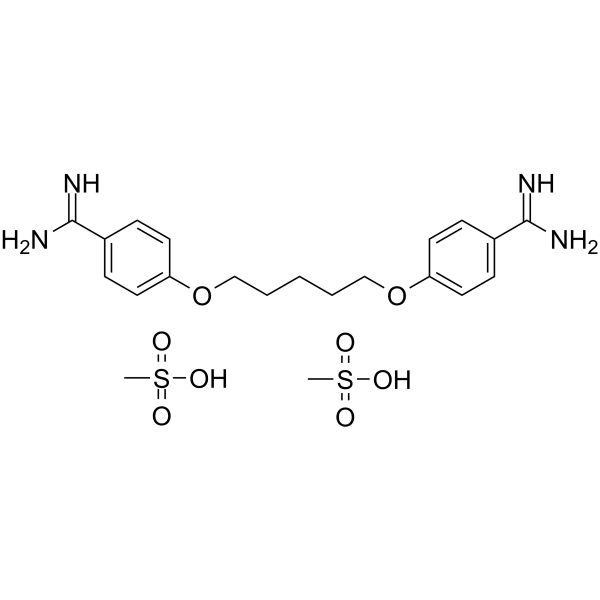
Pentamidine (MP-601205) dimesylate is an antimicrobial agent and interferes with DNA biosynthetics. Pentamidine dimesylate inhibits parasite Leishmania infantum with an IC50 of 2.5 μM. Pentamidine dimesylate is a potent and selective protein tyrosine phosphatases (PTPases) and phosphatase of regenerating liver (PRL) inhibitor. Pentamidine dimesylate has the potential for Gambian trypanosomiasis, antimony-resistant leishmaniasis, and Pneumocystis carinii pneumonia treatment. Antitumor and antibacterial activities .
loading...
    loading...
Cat. No.: HY-B0537R
CAS No.: 100-33-4
Synonyms: MP-601205 (Standard)
Pentamidine (Standard) is the analytical standard of Pentamidine. This product is intended for research and analytical applications. Pentamidine (MP-601205) is an antimicrobial agent and interferes with DNA biosynthetics. Pentamidine inhibits parasite Leishmania infantum with an IC50 of 2.5 μM. Pentamidine is a potent and selective protein tyrosine phosphatases (PTPases) and phosphatase of regenerating liver (PRL) inhibitor. Pentamidine has the potential for Gambian trypanosomiasis, antimony-resistant leishmaniasis, and Pneumocystis carinii pneumonia treatment. Antitumor and antibacterial activities .
loading...
    loading...
Cat. No.: HY-B0537BR
CAS No.: 140-64-7
Synonyms: MP-601205 isethionate (Standard)
Pentamidine (isethionate) (Standard) is the analytical standard of Pentamidine (isethionate). This product is intended for research and analytical applications. Pentamidine isethionate (MP-601205 isethionate) is an antimicrobial agent and interferes with DNA biosynthetics. Pentamidine isethionate inhibits parasite Leishmania infantum with an IC50 of 2.5 μM. Pentamidine isethionate is a potent and selective protein tyrosine phosphatases (PTPases) and phosphatase of regenerating liver (PRL) inhibitor. Pentamidine isethionate has the potential for Gambian trypanosomiasis, antimony-resistant leishmaniasis, and Pneumocystis carinii pneumonia treatment. Antitumor and antibacterial activities .
loading...
    loading...
Cat. No.: HY-156487
CAS No.: 2101321-90-6
Target:  

SHP2 ERK Akt EGFR

Research Areas:  

Cancer

CNBDA is a selective SHP2 inhibitor with an IC50 of 5 μM. CNBDA binds to the active site of SHP2 through interactions with surrounding positively charged and polar amino acids, inhibits the PTPase activity of SHP2, and blocks the autodephosphorylation of SHP2. CNBDA inhibits the transformed phenotype, proliferation, anchorage-independent growth, and mammosphere formation of breast cancer cells, as well as EGF-induced Ras-ERK and PI3K-Akt signaling pathways, downregulates HER2 expression, and induces cell death. CNBDA can be used in breast cancer-related research .
loading...
    loading...
  • 1

