

51 Results for "

Par-4

" in MedChemExpress (MCE) Product Catalog:
Products (51)

51 Results for "Par-4" in MCE Product Catalog:

26
26 Publications Verification
Cat. No.: HY-129047
CAS No.: 9002-07-7
Purity:  91.00%
Trypsin is a serine protease enzyme, and hydrolyzes proteins at the carboxyl side of the Lysine or Arginine. Trypsin activates PAR2 and PAR4. Trypsin induces cell-to-cell membrane fusion in PDCoV infection by the interaction of S glycoprotein of PDCoV and pAPN. Trypsin also promotes cell proliferation and differentiation. Trypsin can be used in the research of wound healing and neurogenic inflammation [4] .
loading...
    loading...
6
6 Cited Publications
Cat. No.: HY-P0078
CAS No.: 141136-83-6
Synonyms: Par-1 agonist peptide; Thrombin Receptor Activator Peptide 6
TRAP-6 (PAR-1 agonist peptide), a peptide fragment, is a selective protease activating receptor 1 (PAR1) agonist. TRAP-6 activates human platelets via the thrombin receptor. TRAP-6 shows no activity at PAR4 .
loading...
    loading...
2
2 Cited Publications
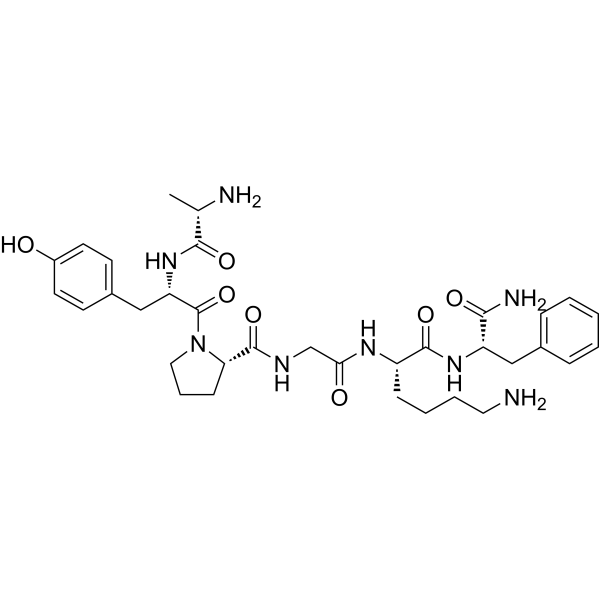
Cat. No.: HY-P1309
CAS No.: 352017-71-1
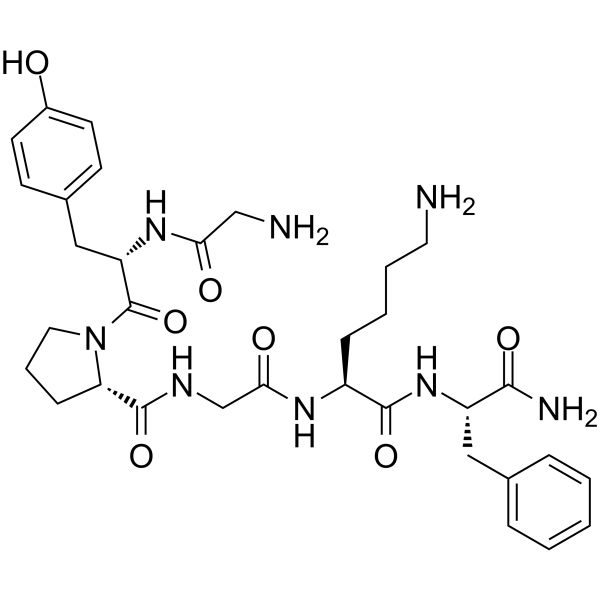
Synonyms: Par-4-AP; AY-NH2
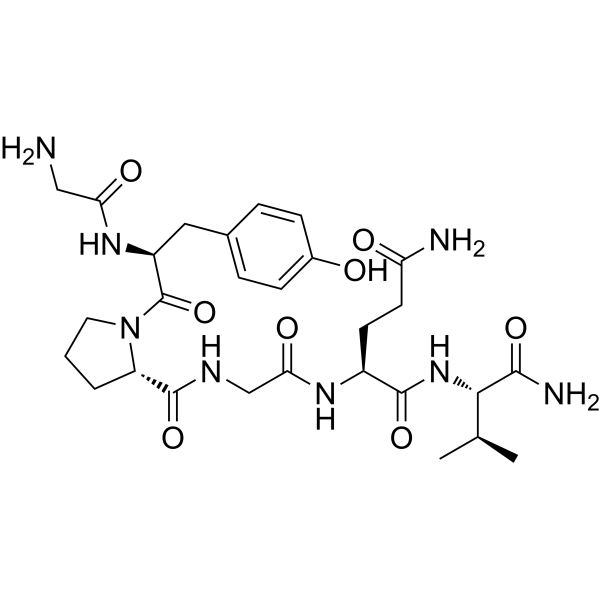
PAR-4 Agonist Peptide, amide (PAR-4-AP; AY-NH2) is a proteinase-activated receptor-4 (PAR-4) agonist, which has no effect on either PAR-1 or PAR-2 and whose effects are blocked by a PAR-4 antagonist.
loading...
    loading...
2
2 Cited Publications
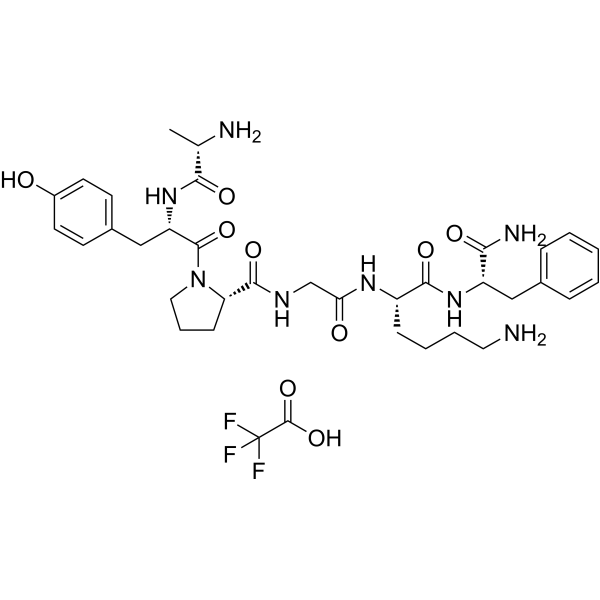
Cat. No.: HY-P1309A
CAS No.: 1228078-65-6
Synonyms: Par-4-AP TFA; AY-NH2 TFA
PAR-4 Agonist Peptide, amide TFA (PAR-4-AP TFA; AY-NH2 TFA) is a proteinase-activated receptor-4 (PAR-4) agonist, which has no effect on either PAR-1 or PAR-2 and whose effects are blocked by a PAR-4 antagonist .
loading...
    loading...
1
1 Cited Publications
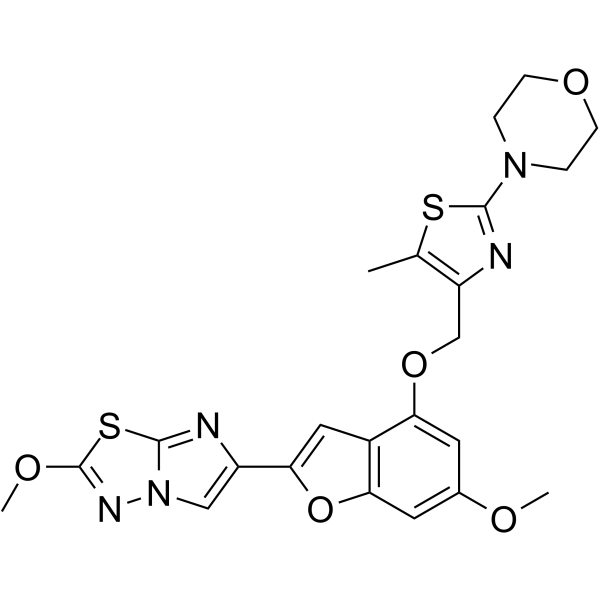
Cat. No.: HY-19837
CAS No.: 1478712-37-6
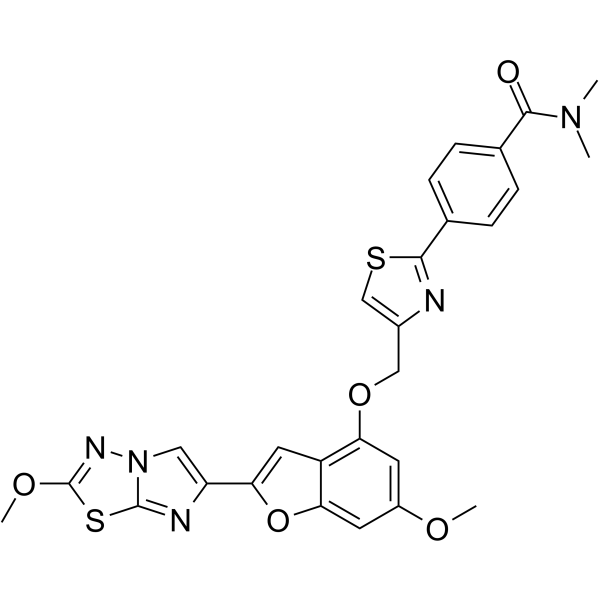
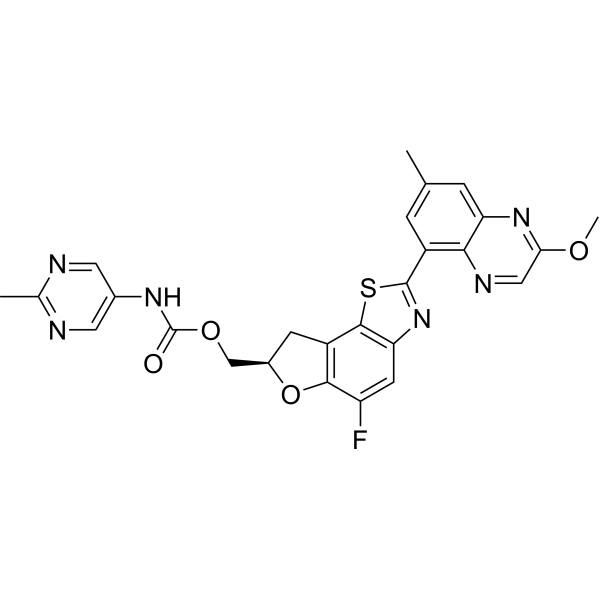
BMS-986120 is a first-in-class oral and reversible protease-activated receptor 4 (PAR4) antagonist, with IC50s of 9.5 nM and 2.1 nM in human and monkey blood, respectively. BMS-986120 has potent and selective antiplatelet effects .
loading...
    loading...
1
1 Cited Publications
Cat. No.: HY-P1263A
CAS No.: 1262750-73-1
Synonyms: (trans-Cinnamoyl)-YPGKF-NH2 TFA
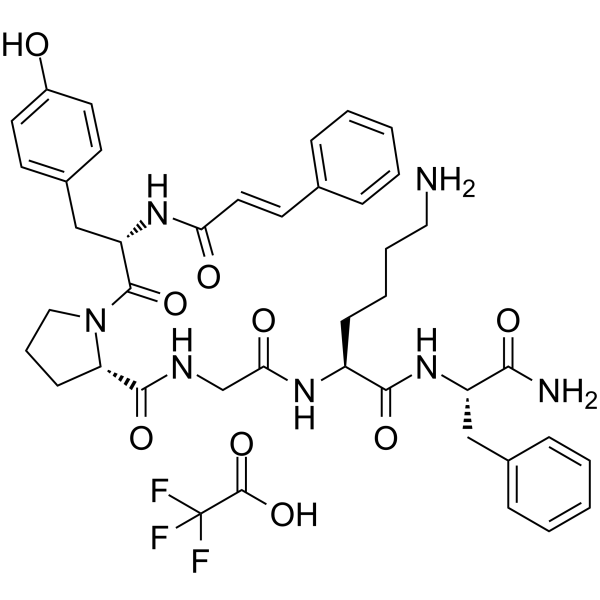
tcY-NH2 ((trans-Cinnamoyl)-YPGKF-NH2) TFA is a potent selective PAR4 antagonist peptide. tcY-NH2 TFA inhibits thrombin- and AY-NH2-induced platelet aggregation and endostatin release, and can be used in the research of inflammation, immunology .
loading...
    loading...
1
1 Cited Publications
Cat. No.: HY-P1263
CAS No.: 327177-34-4
Synonyms: (trans-Cinnamoyl)-YPGKF-NH2
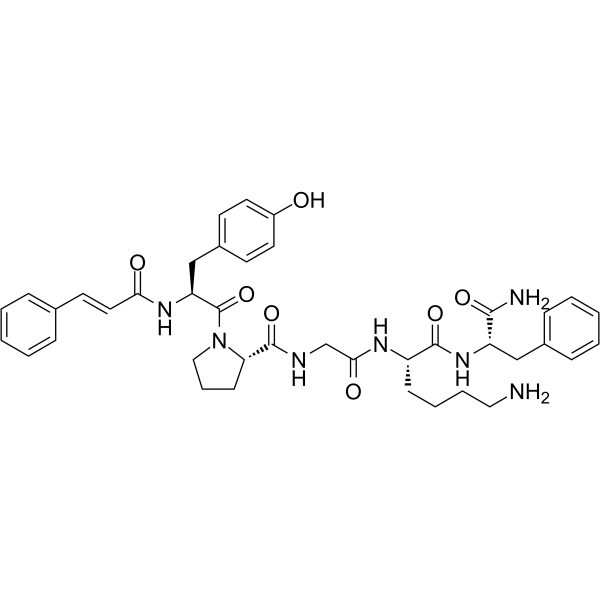
tcY-NH2 ((trans-Cinnamoyl)-YPGKF-NH2) is a potent selective PAR4 antagonist peptide. tcY-NH2 inhibits thrombin- and AY-NH2-induced platelet aggregation and endostatin release, and can be used in the research of inflammation, immunology .
loading...
    loading...
Cat. No.: HY-129047A
CAS No.: 9002-07-7
Trypsin MS grade is a serine protease enzyme, and hydrolyzes proteins at the carboxyl side of the Lysine or Arginine. Trypsin MS grade activates PAR2 and PAR4. Trypsin MS grade induces cell-to-cell membrane fusion in PDCoV infection by the interaction of S glycoprotein of PDCoV and pAPN. Trypsin MS grade also promotes cell proliferation and differentiation. Trypsin MS grade can be used in the research of wound healing and neurogenic inflammation [4] .
loading...
    loading...
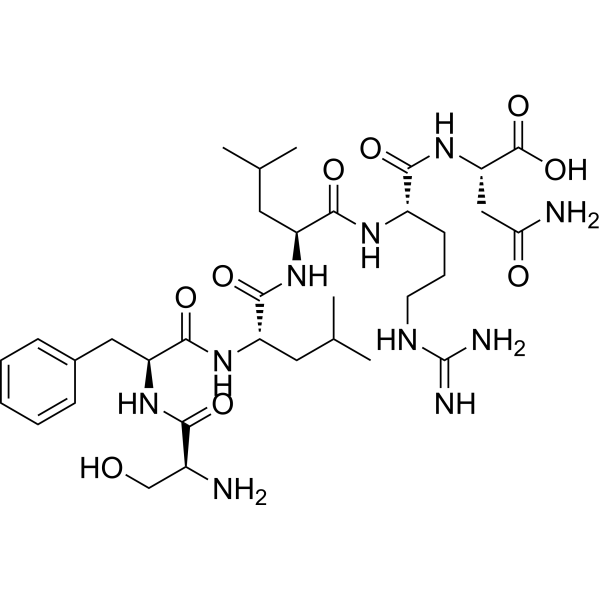
Cat. No.: HY-P4004
CAS No.: 245443-51-0
PAR-4 (1-6) amide human is an N-terminal fragment of protease-activated receptor 4 (PAR4). PAR-4 (1-6) amide human induce platelet aggregation .
loading...
    loading...
Cat. No.: HY-P0297
CAS No.: 245443-52-1
Research Areas:  

Others

Protease-Activated Receptor-4 is the agonist of proteinase-activated receptor-4 (PAR4).
loading...
    loading...
Cat. No.: HY-150790
CAS No.: 1478711-48-6
Purity:  98.86%
BMS-98614 is an orally active, selective thrombin receptor protease-activated receptor-4 (PAR-4) antagonist with an IC50 value of 0.4 nM. BMS-98614 has excellent antithrombotic effect .
loading...
    loading...
Cat. No.: HY-129746
CAS No.: 1630743-73-5
Purity:  99.20%
Target:  

Apoptosis

Research Areas:  

Cancer

Arylquin 1, a prostate-apoptosis-response-4 (Par-4) secretagogue, targets vimentin to induce Par-4 secretion. Arylquin 1 induces non-apoptotic cell death in cancer cells through the induction of lysosomal membrane permeabilization (LMP) .
loading...
    loading...
Cat. No.: HY-P3012
CAS No.: 107200-92-0
Cathepsin G is a pH-dependent serine protease. Cathepsin G hydrolyzes diverse synthetic and protein substrates and remodels extracellular matrix. Cathepsin G exerts immunomodulatory effects via recruiting phagocytes, enhancing T cell motility, activating ERK1/2 and p38 MAPK signaling, and mediating PKCζ membrane translocation. Cathepsin G regulates inflammatory responses by cleaving inflammatory mediators. Cathepsin G participates in vascular regulation by converting angiotensin I to angiotensin II. Cathepsin G induces PAR4-dependent platelet activation, facilitates platelet-neutrophil aggregation, and mediates VITT-related NETosis, thrombus formation. Cathepsin G can be used for the research of immune thrombotic thrombocytopenia, cardiovascular disease, and select autoimmune and inflammatory diseases [4] .
loading...
    loading...
Cat. No.: HY-19973
CAS No.: 89159-60-4
Synonyms: VU0099704
Research Areas:  

Others

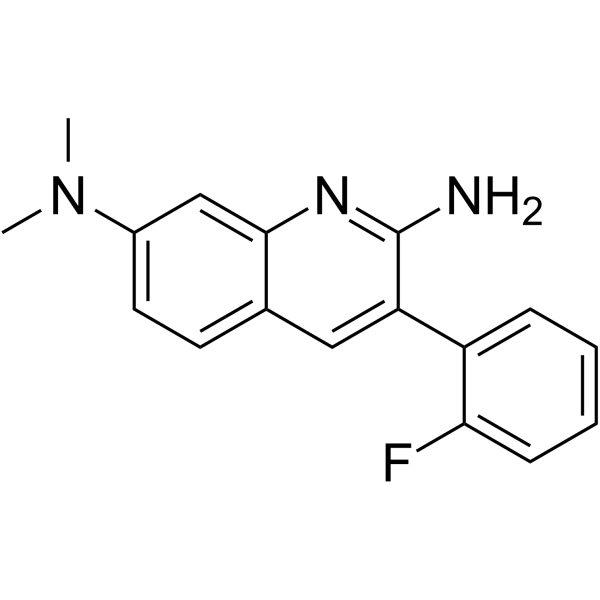
ML354 is a selective PAR4 antagonist with an IC50 of 140 nM .
loading...
    loading...
Cat. No.: HY-108556A
CAS No.: 2387505-58-8
Purity:  99.54%
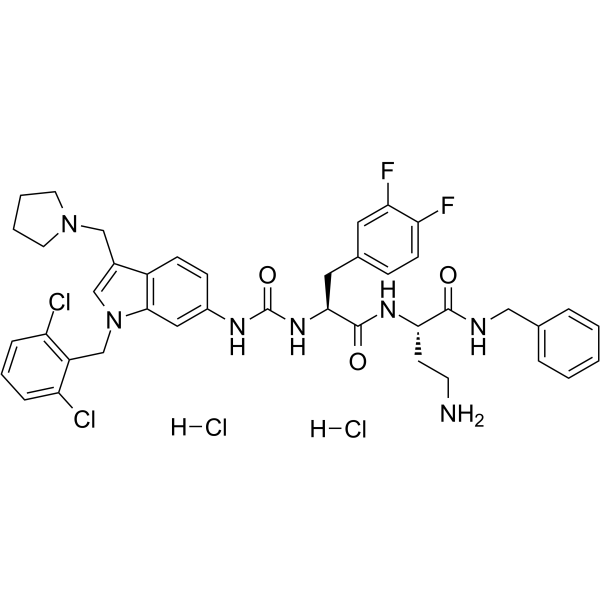
RWJ-56110 dihydrochloride is a potent, selective, peptide-mimetic inhibitor of PAR-1 activation and internalization (binding IC50=0.44 uM) and shows no effect on PAR-2, PAR-3, or PAR-4. RWJ-56110 dihydrochloride inhibits the aggregation of human platelets induced by both SFLLRN-NH2 (IC50=0.16 μM) and thrombin (IC50=0.34 μM), quite selective relative to U46619 (HY-108566). RWJ-56110 dihydrochloride blocks angiogenesis and blocks the formation of new vessels in vivo. RWJ-56110 dihydrochloride induces cell apoptosis .
loading...
    loading...
Cat. No.: HY-P5372A
Research Areas:  

Cancer

Ala-parafluoroPhe-Arg-Cha-Cit-Tyr-NH2 TFA, a bioactive peptide, is a selective Protease activating receptor 1 (PAR-1) agonist over PAR-2. PAR-1 belongs to a subfamily of G-protein coupled receptors and is known to mediate the cellular effects of thrombin. In addition to its varied cellular effects of thrombin, PAR-1 has also been shown to coordinate with PAR-4 and regulate thrombin-induced hepatocellular carcinoma harboring thrombin formation within the tumor environment classified as 'coagulation type' .
loading...
    loading...
Cat. No.: HY-163341
CAS No.: 2173201-65-3
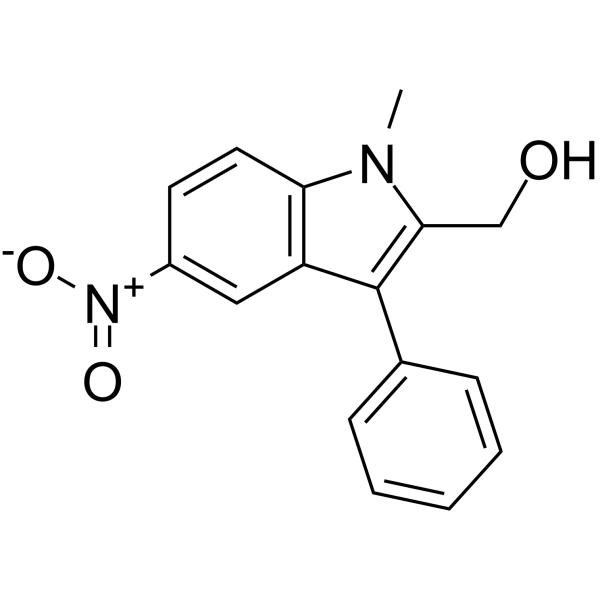
PAR4 antagonist 1 (Compound 48) is a protease activated receptor 4 (PAR4) antagonist with an IC50 of 1.8 nM. PAR4 antagonist 1 has an IC50 of 2 nM against γ-thrombin-activated PAR4 in platelet-rich plasma (PRP). PAR4 antagonist 1 can be used in antithrombotic research .
loading...
    loading...
Cat. No.: HY-P5875A
P4pal10 TFA is the TFA salt form of P4pal10 (HY-P5875). P4pal10 TFA is an antagonist for protease-activated receptor 4 (PAR4). P4pal10 TFA inhibits the platelet aggregation, inhibits tissue factor (TF)-induced thrombin generation, and exhibits anticoagulant and antithrombotic activities. P4pal10 TFA reduces the oedema and the granulocyte infiltration induced by Carrageenan (HY-125474). P4pal10 TFA ameliorates the injury in rats myocardial ischemia/reperfusion (I/R) models .
loading...
    loading...
Cat. No.: HY-162409
CAS No.: 3057206-41-1
Research Areas:  

Others

PAR4 antagonist 4 (Compound 37) is a selective antagonist for protease activated receptor 4 (PAR4). PAR4 antagonist 3 exhibits antiplatelet efficacy with IC50 of 14.2 nM. PAR4 antagonist 3 improves metabolic stablility in human liver microsomes with T1/2 of 42.5 min .
loading...
    loading...
Cat. No.: HY-174829
CAS No.: 13198-99-7
7,4'-Dimethoxy-3-hydroxyflavone is an orally active PAR4 antagonist. 7,4'-Dimethoxy-3-hydroxyflavone inhibits PAR4-mediated human platelet aggregation with an IC50 of 1.4 μM. 7,4'-Dimethoxy-3-hydroxyflavone inhibits PAR4-mediated human platelet aggregation and PAR4 signaling pathways, including NF-κB, Ca 2+/protein kinase C, Akt, ERK and p38. 7,4'-Dimethoxy-3-hydroxyflavone prevents vascular PAR4 expression, endothelial dysfunction and ameliorates oxidative stress in Streptozotocin (STZ) (HY-13753)-induced diabetic mice. 7,4'-Dimethoxy-3-hydroxyflavone prevents thrombosis in mice without affecting bleeding time [1][2].
loading...
    loading...

