



tcY-NH2 TFA
Based on 1 publication(s) in Google Scholar
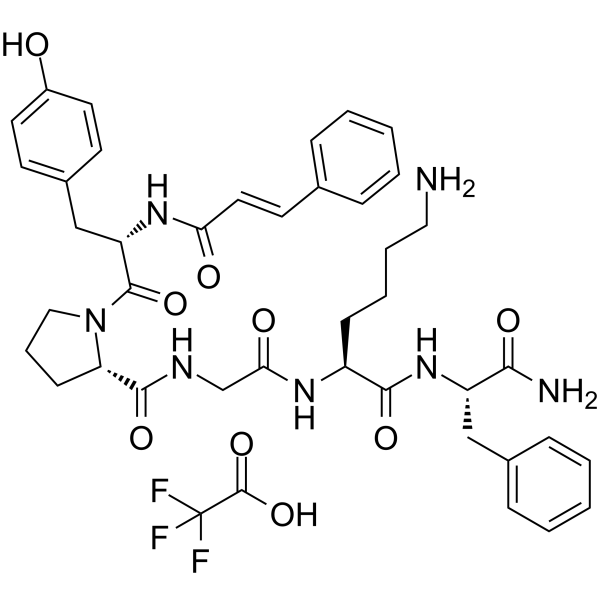
tcY-NH2 ((trans-Cinnamoyl)-YPGKF-NH2) TFA is a potent selective PAR4 antagonist peptide. tcY-NH2 TFA inhibits thrombin- and AY-NH2-induced platelet aggregation and endostatin release, and can be used in the research of inflammation, immunology.
For research use only. We do not sell to patients.
- Purity : 99.72%
- CAS No.: 1262750-73-1
- Formula: C42H50F3N7O9
- Molecular Weight:853.88
-
Storage:
Sealed storage, away from moisture.
Powder -80°C, 2 years , -20°C, 1 year* In solvent : -80°C, 6 months; -20°C, 1 month (sealed storage, away from moisture)

To place orders, for customer services and technical support, please contact: MedChemExpress USA
Tel: 609-228-6898 E-mail: [email protected] [email protected]


-
 Biological Activity
-
Chemical Information
-
Solvent & Solubility
- Protocols
- Purity & Documentation
- References
-
 Help & FAQs


-
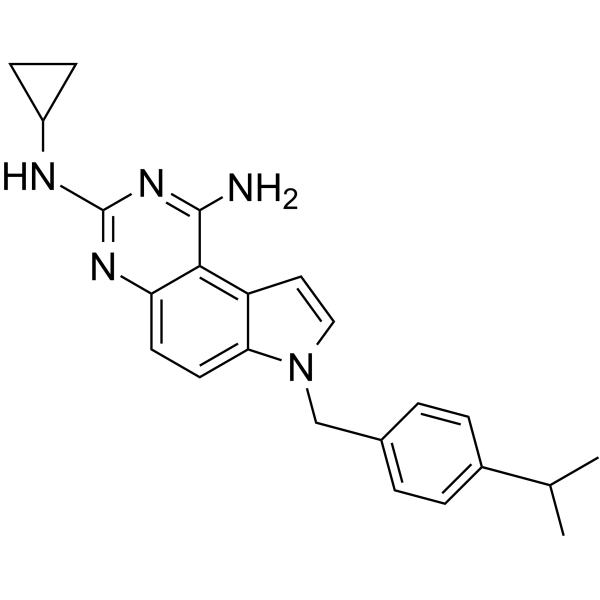
HY-14993
SCH79797PAR1 Antagonist -
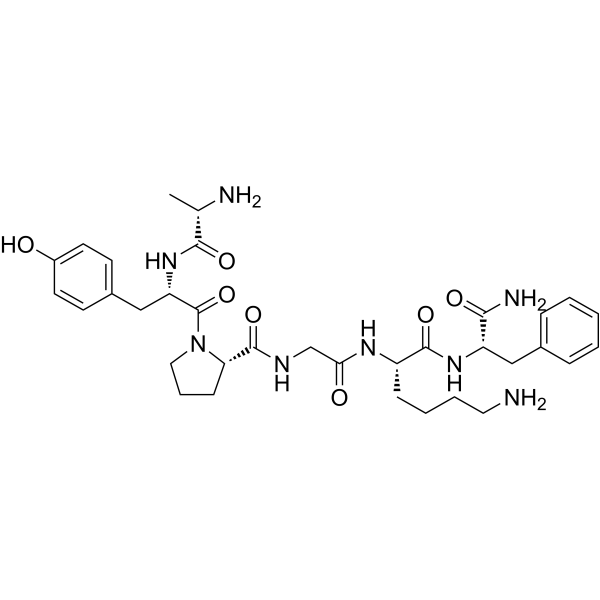
HY-P1309
PAR-4 Agonist Peptide, amidePAR Agonist -
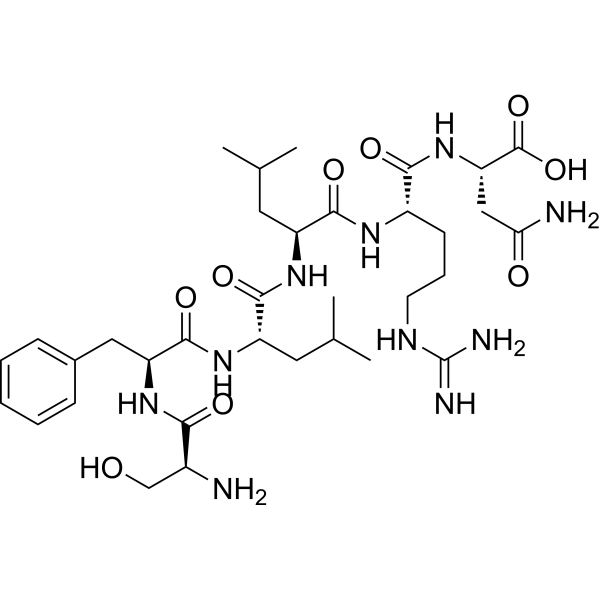
HY-P0078
TRAP-6PAR1 Agonist -
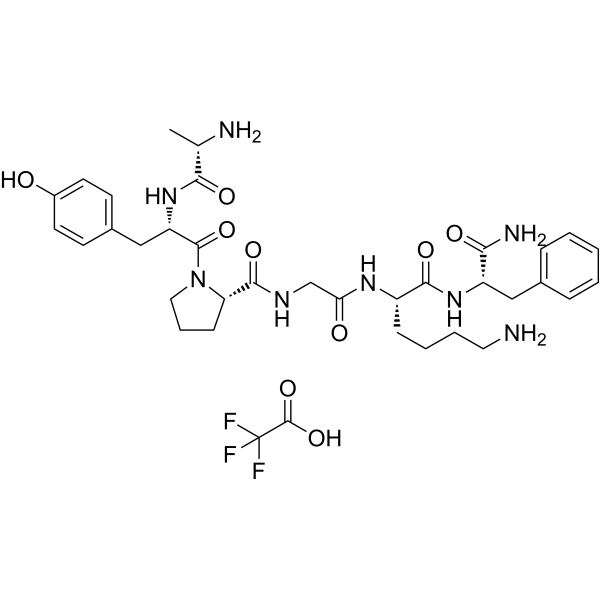
HY-P1309A
PAR-4 Agonist Peptide, amide TFAPAR-4 Agonist -
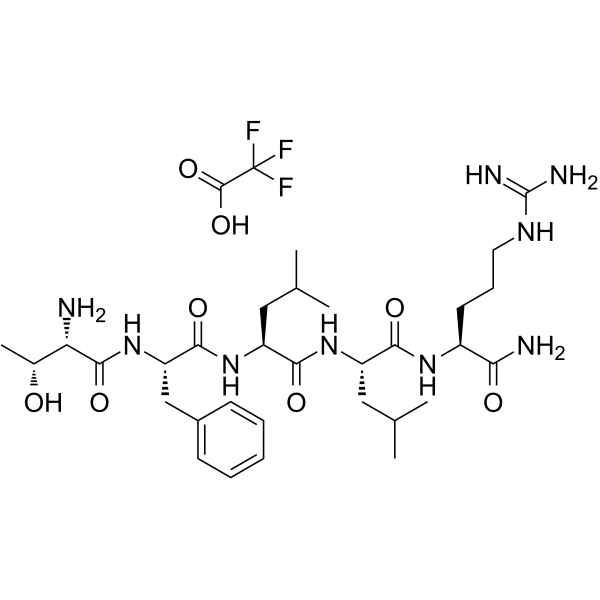
HY-P0226A
TFLLR-NH2TFAPAR1 Agonist -
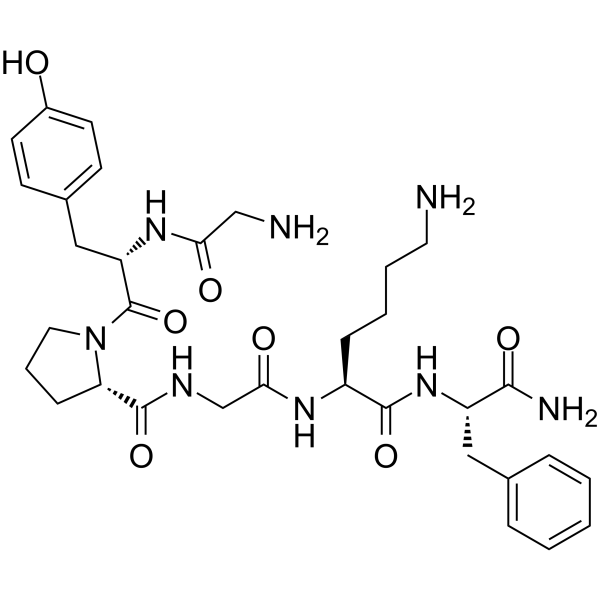
HY-P0297
Protease-Activated Receptor-4PAR Agonist -
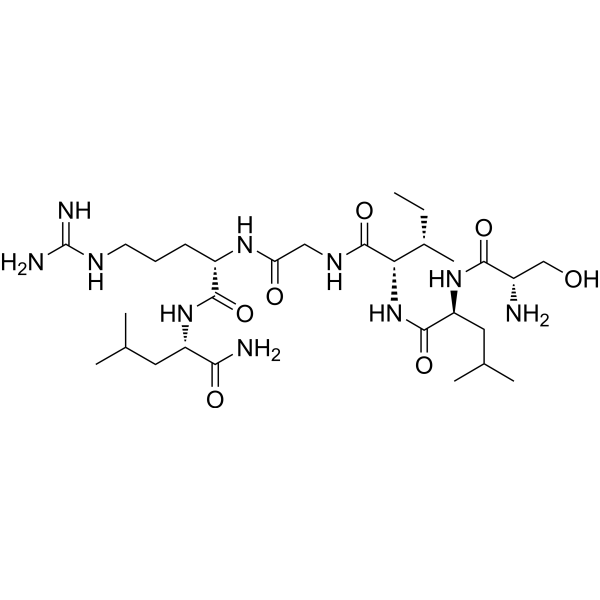
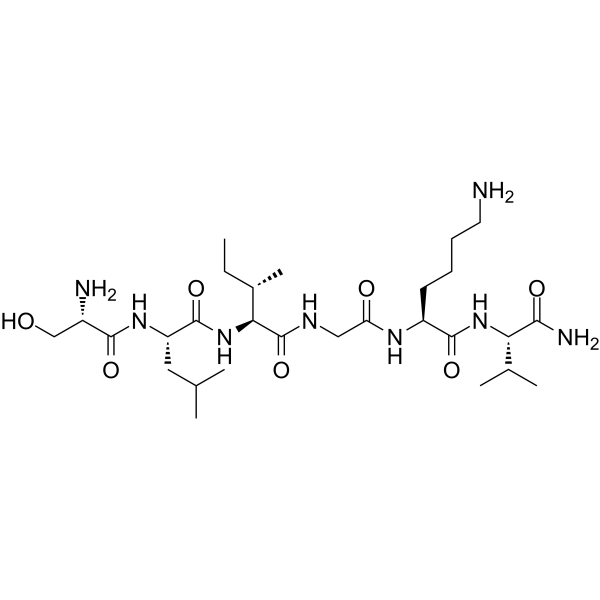
HY-P1308
SLIGRL-NH2PAR-2 Agonist -
HY-P0283
Protease-Activated Receptor-2, amidePAR2 Activator -
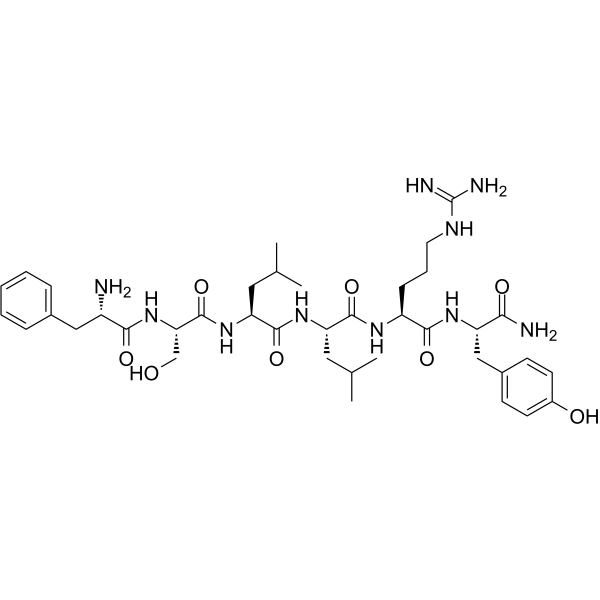
HY-P1260
FSLLRY-NH2PAR2 Inhibitor -
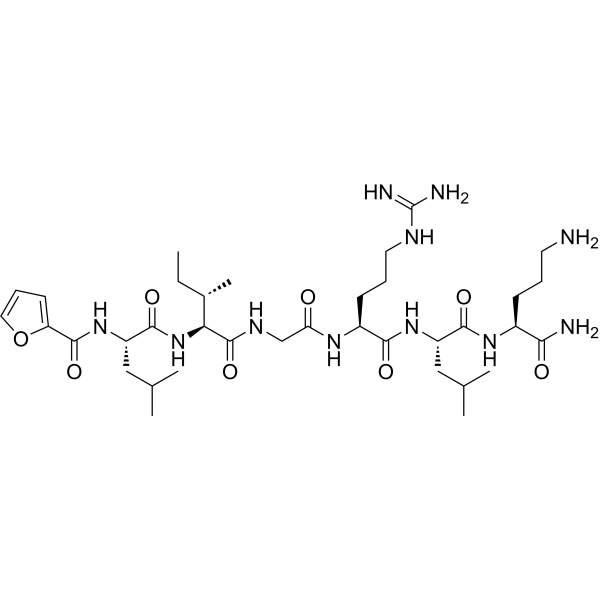
HY-P1314
2-Furoyl-LIGRLO-amidePAR2 Agonist -
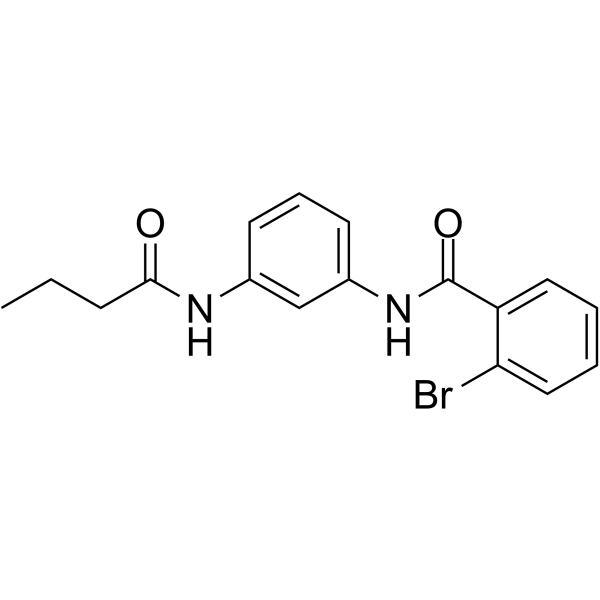
HY-13965
Parmodulin 2PAR1 Inhibitor -
HY-10119A
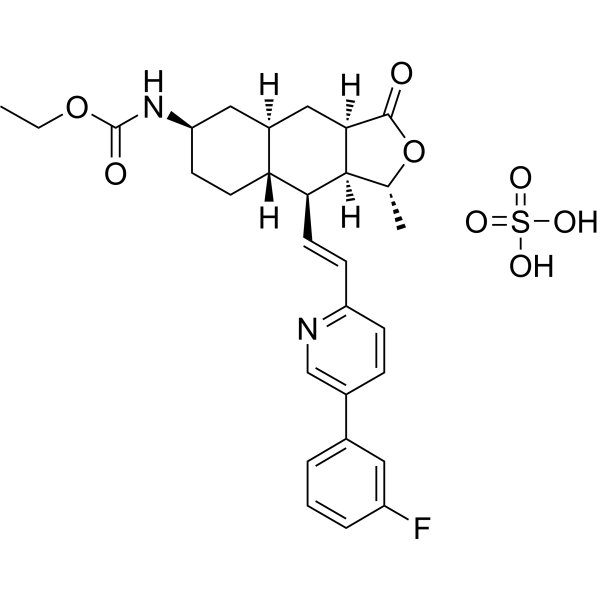
Vorapaxar sulfatePAR-1 Antagonist
Publications Citing Use of MedChemExpress (MCE) tcY-NH2 TFA
More

Biological Activity
Description
IC50 & Target
|
PAR4 |
In Vitro
tcY-NH2 TFA (0-500 μM) inhibits AYPGKF-NH2 (10 μM)-induced platelet (obtained from male albino Sprague–Dawley rats) aggregation, with an IC50 value of 95 μM[1].
tcY-NH2 TFA potently activates aorta relaxation (RA) and gastric (LM) contraction, with IC50 values of 64 μM (RA) and 1 μM (LM)[1].
tcY-NH2 TFA (Tc-YPGKF-NH2, 400 μM, 5 min) prevents endostatin release and platelet aggregation induced by thrombin or by AY-NH2[2].
tcY-NH2 TFA (5 μM, 15 min) decreases infarct size (IS) by 51%, and increases recovery of ventricular function by 26% in an isolated heart model[5].
MedChemExpress (MCE) has not independently confirmed the accuracy of these methods. They are for reference only. Further protocols information, click here.
In Vivo
tcY-NH2 TFA (intraperitoneal injection, 0.6 mg/kg for a single dose) increases posttraumatic activation of CD4+ Tregs within the draining lymph nodes in burn injury mice model [4].
tcY-NH2 TFA (intrapleural injection, 40 ng/kg for a single dose) inhibits neutrophil recruitment in experimental inflammation in mice[6].
MedChemExpress (MCE) has not independently confirmed the accuracy of these methods. They are for reference only.
-
Animal Model:Brain death (BD) rat model[3]
-
Dosage:0.6 mg/kg for a single dose
-
Administration:Tail vein injection for a single dose
-
Result:Reduced blood platelet activation and hepatic platelet accumulation.
Attenuated the inflammatory response and apoptosis in the livers.
Inhibited the activation of NF-κB and MAPK pathways induced by Brain death (BD).
-
Animal Model:Burn injury model of C57BL/6 N mice[4]
-
Dosage:0.6 mg/kg for a single dose
-
Administration:Intraperitoneal injection
-
Result:Increased expression and phosphorylation of PKC-θ in the presence of platelets, without affecting early posttraumatic hemostasis.
-
Animal Model:BALB/c mice[6]
-
Dosage:40 ng/kg for a single dose
-
Administration:Intrapleural injection
-
Result:Abolished the number of rolling and adhering neutrophils on the vessel wall.
Inhibited CXCL8- and Cg-induced neutrophil migration into the pleural cavity of mice.


Chemical Information
-
CAS No. 1262750-73-1
-
Appearance Solid
-
Molecular Weight 853.88
-
Formula C42H50F3N7O9
-
Color White to off-white
-
Synonyms
(trans-Cinnamoyl)-YPGKF-NH2 TFA
-
Sequence Shortening
{trans-Cinnamoyl}-YPGKF-NH2
-
Shipping
Room temperature in continental US; may vary elsewhere.
-
Storage
Sealed storage, away from moisture
Powder -80°C 2 years -20°C 1 year * In solvent : -80°C, 6 months; -20°C, 1 month (sealed storage, away from moisture)


Publications (1)
-
Journal Impact Factor
-
Most Recent
-
Mol Nutr Food Res
A Collagen-Derived Oligopeptide from Salmo salar Collagen Hydrolysates Restrains Atherogenesis in ApoE-/- Mice via Targeting P2 Y12 Receptor. [Abstract]2022 Jul;66(13):e2200166. PMID: 35490399


Solvent & Solubility
In Vitro:
DMSO : 100 mg/mL (117.11 mM; Need ultrasonic; Hygroscopic DMSO has a significant impact on the solubility of product, please use newly opened DMSO)
Please refer to the solubility information to select the appropriate solvent. Once prepared, please aliquot and store the solution to prevent product inactivation from repeated freeze-thaw cycles.
Storage method and period of stock solution: -80°C, 6 months; -20°C, 1 month (sealed storage, away from moisture). When stored at -80°C, please use it within 6 months. When stored at -20°C, please use it within 1 month.
Please refer to the solubility information to select the appropriate solvent. Once prepared, please aliquot and store the solution to prevent product inactivation from repeated freeze-thaw cycles.
Storage method and period of stock solution: -80°C, 6 months; -20°C, 1 month (sealed storage, away from moisture). When stored at -80°C, please use it within 6 months. When stored at -20°C, please use it within 1 month.
Concentration (start) × Volume (start) = Concentration (final) × Volume (final)
In Vivo:
Select the appropriate dissolution method based on your experimental animal and administration route.
- For the following dissolution methods, please ensure to first prepare a clear stock solution using an In Vitro approach and then sequentially add co-solvents:
- To ensure reliable experimental results, the clarified stock solution can be appropriately stored based on storage conditions. As for the working solution for In Vivo experiments, it is recommended to prepare freshly and use it on the same day.
- The percentages shown for the solvents indicate their volumetric ratio in the final prepared solution. If precipitation or phase separation occurs during preparation, heat and/or sonication can be used to aid dissolution.
Add each solvent one by one: 10% DMSO 40% PEG300 5% Tween-80 45% Saline
Solubility: ≥ 2.08 mg/mL (2.44 mM); Clear solution
This protocol yields a clear solution of ≥ 2.08 mg/mL (saturation unknown).
Taking 1 mL working solution as an example, add 100 μL DMSO stock solution (20.8 mg/mL) to 400 μL PEG300, and mix evenly; then add 50 μL Tween-80 and mix evenly; then add 450 μL Saline to adjust the volume to 1 mL.
Preparation of Saline: Dissolve 0.9 g sodium chloride in ddH₂O and dilute to 100 mL to obtain a clear Saline solution.
Add each solvent one by one: 10% DMSO 90% (20% SBE-β-CD in Saline)
Solubility: ≥ 2.08 mg/mL (2.44 mM); Clear solution
This protocol yields a clear solution of ≥ 2.08 mg/mL (saturation unknown).
Taking 1 mL working solution as an example, add 100 μL DMSO stock solution (20.8 mg/mL) to 900 μL 20% SBE-β-CD in Saline, and mix evenly.
Preparation of 20% SBE-β-CD in Saline (4°C, storage for one week): 2 g SBE-β-CD powder is dissolved in 10 mL Saline, completely dissolve until clear.
In Vivo Dissolution Calculator
Please enter the basic information of animal experiments:
-
-
-
-
Recommended: Prepare an additional quantity of animals to account for potential losses during experiments.
Please enter your animal formula composition:
-
%DMSO +
Recommended: Keep the proportion of DMSO in working solution below 2% if your animal is weak.
-
%+
-
+%Tween-80 + +
-
%Saline +
The co-solvents required include: DMSO, . All of co-solvents are available by MedChemExpress (MCE). , Tween 80. All of co-solvents are available by MedChemExpress (MCE).
Working solution concentration: 0.22 mg/mL
Method for preparing stock solution: mg drug dissolved in μL DMSO. Stock solution concentration: mg/mL. * In solvent : -80°C, 6 months; -20°C, 1 month (sealed storage, away from moisture)
1. Take μL DMSO stock solution;
2. Add μL .
μL , mix evenly;
3. Then add μL Tween 80, mix evenly;
4. Then add μL
Please ensure that the stock solution in the first step is dissolved to a clear state, and add co-solvents in sequence. You can use ultrasonic heating (ultrasonic cleaner, recommended frequency 20-40 kHz), vortexing, etc. to assist dissolution.

Protocols
-
Research Protocol for Inflammation-related Diseases
The NLRP3 inflammasome is a cytosolic innate immune signaling platform that integrates priming signals and danger-signal activation to promote caspase-1 activation, maturation of IL-1β and IL-18, and gasdermin D-mediated pyroptotic cell death. The core experimental logic is to determine whether inflammatory disease phenotypes are driven by increased NLRP3 expression, ASC-containing inflammasome assembly, caspase-1 cleavage, GSDMD cleavage, and extracellular release of IL-1β/IL-18 rather than by nonspecific cell injury alone. The pathway is strongly linked to inflammation-related disease phenotypes because monosodium urate crystals activate NALP3/NLRP3 inflammasome signaling in gout-like crystal inflammation, cholesterol crystals activate NLRP3 inflammasomes in atherogenesis models, and DSS-induced intestinal inflammation has been reported to involve NLRP3 inflammasome activity. However, experimental colitis studies also show context-dependent protective effects of NLRP3 inflammasome co


Purity & Documentation
-
Data Sheet (290 KB)
-
SDS (252 KB)
- English - EN (252 KB)
- Français - FR (252 KB)
- Deutsch - DE (252 KB)
- Norwegian - NO (252 KB)
- Español - ES (252 KB)
- Swedish - SV (252 KB)
- Italian - IT (252 KB)
- Korean - KR (252 KB)
- Portuguese - PT (252 KB)
-
Handling Instructions (2659 KB)
References
[1]. Morley D Hollenberg, et al. Proteinase-activated receptor-4: evaluation of tethered ligand-derived peptides as probes for receptor function and as inflammatory agonists in vivo. Br J Pharmacol. 2004 Oct;143(4):443-54. [Content Brief]
[2]. L Ma, et al. Thrombin-induced platelet endostatin release is blocked by a proteinase activated receptor-4 (PAR4) antagonist. Br J Pharmacol. 2001 Oct;134(4):701-4. [Content Brief]
[3]. Hongbo Fang, et al. Blocking protease-activated receptor 4 alleviates liver injury induced by brain death. Biochem Biophys Res Commun. 2022 Mar 5;595:47-53. [Content Brief]
[4]. Matthias Bock, et al. Platelets differentially modulate CD4 + Treg activation via GPIIa/IIIb-, fibrinogen-, and PAR4-dependent pathways. Immunol Res. 2022 Apr;70(2):185-196. [Content Brief]
[5]. Jennifer L Strande, et al. Inhibiting protease-activated receptor 4 limits myocardial ischemia/reperfusion injury in rat hearts by unmasking adenosine signaling. J Pharmacol Exp Ther. 2008 Mar;324(3):1045-54. [Content Brief]
[6]. Lindisley F Gomides, et al. Blockade of proteinase-activated receptor 4 inhibits neutrophil recruitment in experimental inflammation in mice. Inflamm Res. 2014 Nov;63(11):935-41. [Content Brief]


Complete Stock Solution Preparation Table
Please refer to the solubility information to select the appropriate solvent. Once prepared, please aliquot and store the solution to prevent product inactivation from repeated freeze-thaw cycles.
Storage method and period of stock solution: -80°C, 6 months; -20°C, 1 month (sealed storage, away from moisture). When stored at -80°C, please use it within 6 months. When stored at -20°C, please use it within 1 month.
| Optional Solvent | Concentration Solvent Mass | 1 mg | 5 mg | 10 mg | 25 mg |
|---|---|---|---|---|---|
| DMSO | 1 mM | 1.1711 mL | 5.8556 mL | 11.7112 mL | 29.2781 mL |
| 5 mM | 0.2342 mL | 1.1711 mL | 2.3422 mL | 5.8556 mL | |
| 10 mM | 0.1171 mL | 0.5856 mL | 1.1711 mL | 2.9278 mL | |
| 15 mM | 0.0781 mL | 0.3904 mL | 0.7807 mL | 1.9519 mL | |
| 20 mM | 0.0586 mL | 0.2928 mL | 0.5856 mL | 1.4639 mL | |
| 25 mM | 0.0468 mL | 0.2342 mL | 0.4684 mL | 1.1711 mL | |
| 30 mM | 0.0390 mL | 0.1952 mL | 0.3904 mL | 0.9759 mL | |
| 40 mM | 0.0293 mL | 0.1464 mL | 0.2928 mL | 0.7320 mL | |
| 50 mM | 0.0234 mL | 0.1171 mL | 0.2342 mL | 0.5856 mL | |
| 60 mM | 0.0195 mL | 0.0976 mL | 0.1952 mL | 0.4880 mL | |
| 80 mM | 0.0146 mL | 0.0732 mL | 0.1464 mL | 0.3660 mL | |
| 100 mM | 0.0117 mL | 0.0586 mL | 0.1171 mL | 0.2928 mL |


tcY-NH2 TFA Related Classifications
HY-P1263A Related Classifications
 Powered by Bioz