1. Search Result
Search Result
Results for "

Physostigmine

" in MedChemExpress (MCE) Product Catalog:

12

Inhibitors & Agonists

1

Natural
Products

1

Isotope-Labeled Compounds

Cat. No. Product Name Target Research Areas Chemical Structure
  • HY-N6608
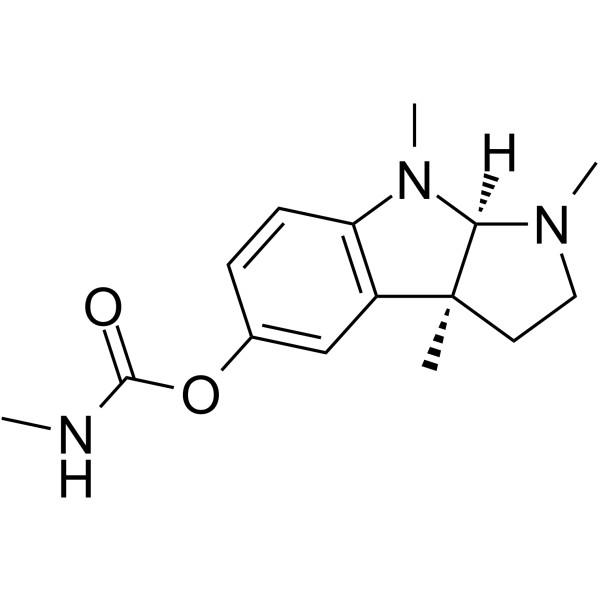
    Physostigmine
    2 Publications Verification

    Eserine

    Cholinesterase (ChE) Neurological Disease
    Physostigmine (Eserine) is a reversible acetylcholinesterase (AChE) inhibitor. Physostigmine can crosses the blood-brain barrier and stimulates central cholinergic neurotransmission. Physostigmine can reverse memory deficits in transgenic mice with Alzheimer's disease. Physostigmine is also an antidote for anticholinergic poisoning .
    Physostigmine
  • HY-B1266
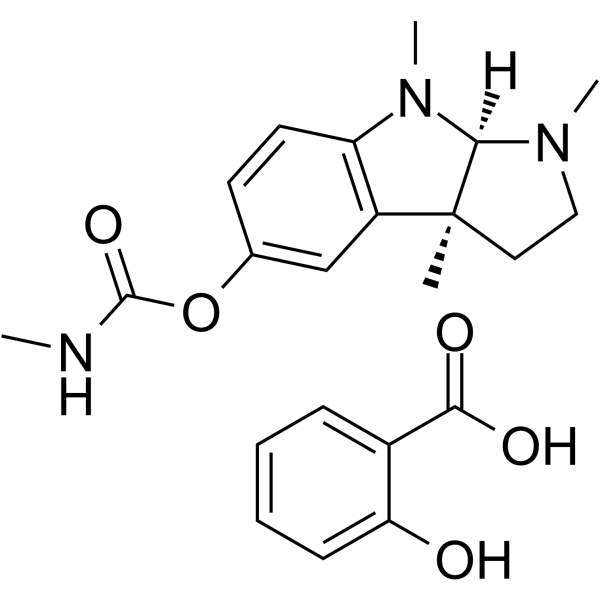
    Physostigmine salicylate
    2 Publications Verification

    Eserine salicylate

    Cholinesterase (ChE) Neurological Disease
    Physostigmine salicylate (Eserine salicylate) is a reversible acetylcholinesterase (AChE) inhibitor. Physostigmine salicylate crosses the blood-brain barrier and stimulates central cholinergic neurotransmission. Physostigmine salicylate can reverse memory deficits in transgenic mice with Alzheimer's disease. Physostigmine salicylate is also an antidote for anticholinergic poisoning .
    Physostigmine salicylate
  • HY-N2320
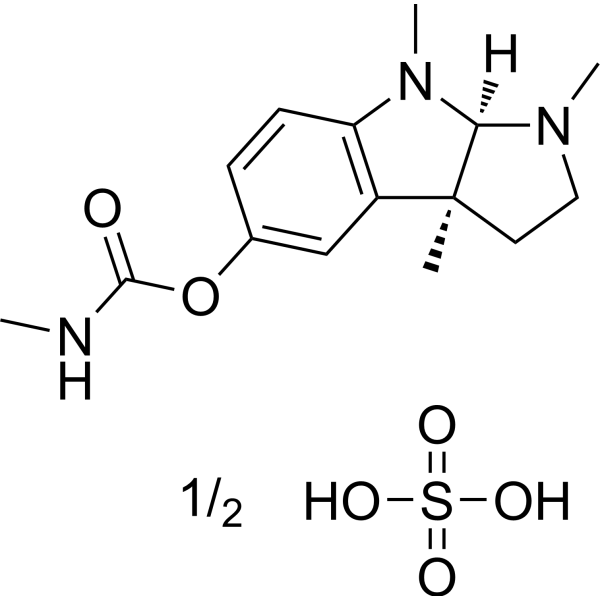
    Physostigmine hemisulfate
    2 Publications Verification

    Eserine hemisulfate

    Cholinesterase (ChE) Neurological Disease
    Physostigmine hemisulfate (Eserine hemisulfate) is a reversible acetylcholinesterase (AChE) inhibitor. Physostigmine hemisulfate can crosses the blood-brain barrier and stimulates central cholinergic neurotransmission. Physostigmine hemisulfate can reverse memory deficits in transgenic mice with Alzheimer's disease. Physostigmine hemisulfate is also an antidote for anticholinergic poisoning .
    Physostigmine hemisulfate
  • HY-103374

    (-)-Eseroline phenylcarbamate; (-)-Phenserine

    Cholinesterase (ChE) Amyloid-β Neurological Disease
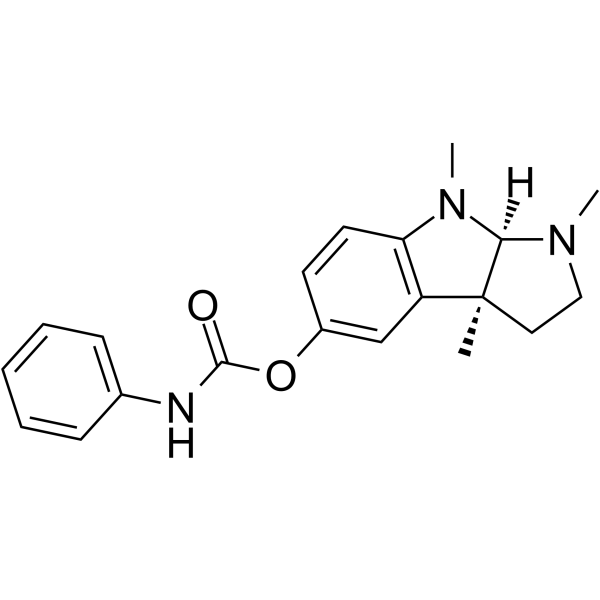
    Phenserine ((-)-Eseroline phenylcarbamate) is a derivative of Physostigmine (HY-N6608) and is a potent, noncompetitive, long-acting and selective AChE inhibitor. Phenserine reduces β-amyloid precursor protein (APP) and β-amyloid peptide (Aβ) formation. Phenserine improves cognitive performance and attenuates the progression of Alzheimer's disease .
    Phenserine
  • HY-129101

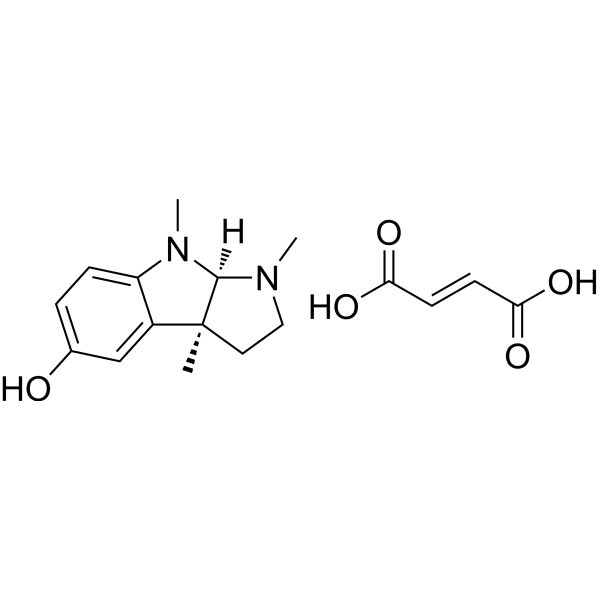
    Eseroline fumarate

    5-HT Receptor Neurological Disease
    (-)-Eseroline fumarate is a metabolic of Physostigmine (HY-N6608), an AChE inhibitor. (-)-Eseroline fumarate elicits a leakage of lactic acid dehydrogenase (LDH) from cancer cells. (-)-Eseroline fumarate also induces the release of adenine nucleotides and 5-hydroxytryptamine (5-HT) from neuronal cells, thus induce cell death. (-)-Eseroline fumarate inhibits the electrically evoked twitches of the mouse vas deferens and of the guinea-pig ileum .
    (-)-Eseroline fumarate
  • HY-N6608S

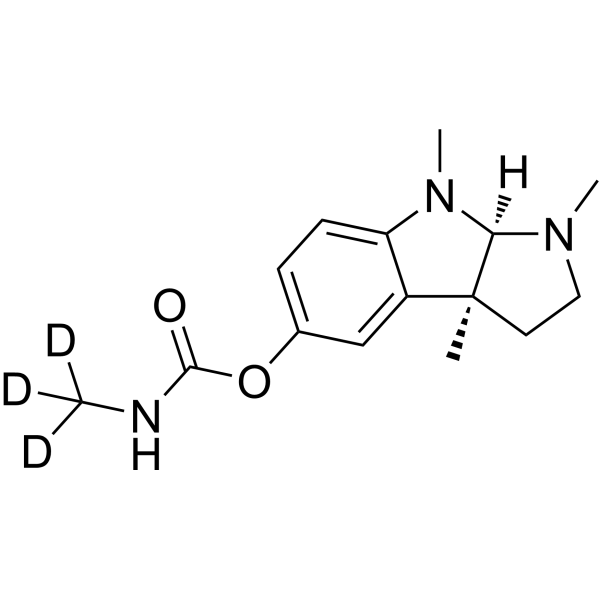
    Eserine-d3

    Isotope-Labeled Compounds Cholinesterase (ChE) Neurological Disease
    Physostigmine-d3 is the deuterium labeled Physostigmine. Physostigmine (Eserine) is a reversible acetylcholinesterase (AChE) inhibitor. Physostigmine can crosses the blood-brain barrier and stimulates central cholinergic neurotransmission. Physostigmine can reverse memory deficits in transgenic mice with Alzheimer's disease. Physostigmine is also an antidote for anticholinergic poisoning .
    Physostigmine-d3
  • HY-B1266R

    Eserine salicylate (Standard)

    Reference Standards Cholinesterase (ChE) Neurological Disease
    Physostigmine (salicylate) (Standard) is the analytical standard of Physostigmine (salicylate). This product is intended for research and analytical applications. Physostigmine salicylate (Eserine salicylate) is a reversible acetylcholinesterase (AChE) inhibitor. Physostigmine salicylate crosses the blood-brain barrier and stimulates central cholinergic neurotransmission. Physostigmine salicylate can reverse memory deficits in transgenic mice with Alzheimer's disease. Physostigmine salicylate is also an antidote for anticholinergic poisoning .
    Physostigmine salicylate (Standard)
  • HY-W856819

    Opioid Receptor Cholinesterase (ChE) Drug Metabolite nAChR Neurological Disease
    Eseroline is a potent μ-opioid receptor agonist, which is the hydrolytic metabolite of Physostigmine (HY-N6608). Eseroline is a selective and competitive acetylcholinesterase (AChE) inhibitor, with its Ki values for AChE and BuChE being 0.1 μM and 200 μM respectively. Eseroline has nicotinic acetylcholine receptor allosteric enhancing ligand (nAChR-APL) activity, meaning it does not activate the receptor but significantly enhances the signal transduction of Ach triggered by the receptor. Eseroline is neurotoxic, causing cell membrane damage (LDH leakage) and energy metabolism collapse (ATP depletion). Eseroline can be used for the study of Alzheimer's disease .
    Eseroline
  • HY-103374A

    (-)-Eseroline phenylcarbamate tartrate; (-)-Phenserine (+)-tartrate

    Cholinesterase (ChE) Amyloid-β Neurological Disease
    Phenserine tartrate ((-)-Eseroline phenylcarbamate) is a derivative of Physostigmine (HY-N6608) and is a potent, noncompetitive, long-acting and selective AChE inhibitor. Phenserine tartrate reduces β-amyloid precursor protein (APP) and β-amyloid peptide (Aβ) formation. Phenserine tartrate improves cognitive performance and attenuates the progression of Alzheimer's disease .
    Phenserine tartrate
  • HY-135427

    HP-290; NXX-066

    Drug Derivative Cholinesterase (ChE) Neurological Disease
    Quilostigmine (HP-290) is an orally active Physostigmine (HY-N6608) analogue, acetylcholinesterase (IC50: 148 nM for rat brain acetylcholinesterase) inhibitor. Quilostigmine has a long-lasting effect on tremors. Quetiapine can be used in the research of Alzheimer's disease .
    Quilostigmine
  • HY-118275

    Cholinesterase (ChE) Neurological Disease
    FK960 is a potential anti-dementia agent that reverses the reduction in cerebral blood flow (rCBF) caused by sensory stimulation by enhancing cholinergic neurotransmission. In macaque experiments, physostigmine (AChE inhibitor; HY-N6608) was able to completely eliminate the rCBF in the sensory cortex increased by vibrotactile stimulation. FK960 (1-1000 μg/kg) can restore the eliminated rCBF response, and the action time can last for 1 hour. However, FK960 cannot restore the rCBF response eliminated by HA-966 (NMDA modulator; HY-100822), indicating that its function is not dependent on non-glutamatergic neurotransmission.
    FK960
  • HY-103374B

    (±)-Eseroline phenylcarbamate

    Cholinesterase (ChE) Amyloid-β Neurological Disease
    (±)Phenserine ((±)-Eseroline phenylcarbamate) is the racemic form of Phenserine (HY-103374). Phenserine is a derivative of Physostigmine (HY-N6608) and is an effective, non-competitive, long-acting and selective AChE inhibitor. Phenserine can reduce the formation of β-amyloid precursor protein (APP) and β-amyloid peptide (). Phenserine can improve cognitive ability and slow down the progression of Alzheimer's disease .
    (±)Phenserine

Inquiry Online

Your information is safe with us. * Required Fields.

Salutation


Country or Region *

Applicant Name *


Organization Name *

Department *


Email Address *


Product Name *

Cat. No.


Requested quantity *

Phone Number *


Remarks

Inquiry Online

Inquiry Information

Product Name:
Cat. No.:
Quantity:
MCE Japan Authorized Agent:

