1. Search Result
Search Result
Results for "

Prediction

" in MedChemExpress (MCE) Product Catalog:

29

Inhibitors & Agonists

4

Screening Libraries

2

Biochemical Assay Reagents

3

Natural
Products

Cat. No. Product Name Target Research Areas Chemical Structure
  • HY-113157

    Drug Metabolite Endogenous Metabolite Endocrinology
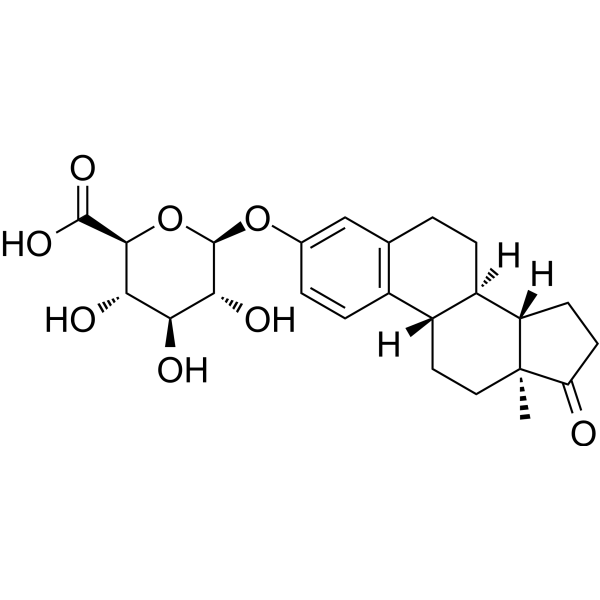
    Estrone 3-glucuronide is a dominant urinary metabolite of Estradiol (HY-B0141) and urinary marker for female fertile window prediction. Estrone 3-glucuronide can be used in combination with luteinizing hormone in ovulation prediction kits [2].
    Estrone 3-glucuronide
  • HY-N1464A

    Complement System Apoptosis Cancer
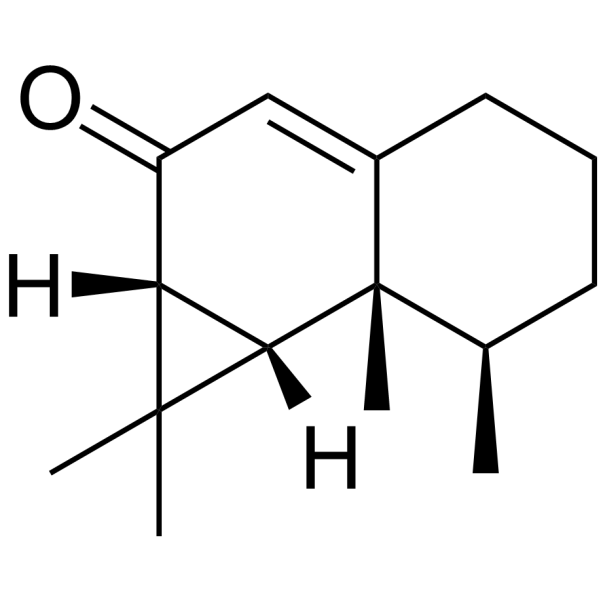
    Aristolone is a sesquiterpene that can be isolated from Aristolochia debilis, Rosmarinus officinalis and Ficus Auriculata. Aristolone in Ara Fruit can be used as a prediction of apoptosis in HeLa cells. Aristolone inhibits the C1 complement component. Aristolone produces cytotoxicity effects on cells. Aristolone has anticancer properties and can be studied in research for cervical cancer .
    Aristolone
  • HY-113111

    Drug Metabolite Inflammation/Immunology
    11,12-DiHETrE is a dihydroxy fatty acid metabolite of Arachidonic Acid (HY-109590). 11,12-DiHETrE is converted to 11,12-DiHETrE under elevated soluble epoxide hydrolase (sEH) activity, a process closely related to inflammation and oxidative stress. 11,12-DiHETrE can serve as a single biomarker to differentiate between NAFL (non-alcoholic fatty liver disease) and NASH (non-alcoholic steatohepatitis). 11,12-DiHETrE can be used in studies on preterm birth, autism, and pulmonary hypertension .
    11,12-DiHETrE
  • HY-100978

    DL-Hexanoylcarnitine chloride

    Endogenous Metabolite Metabolic Disease
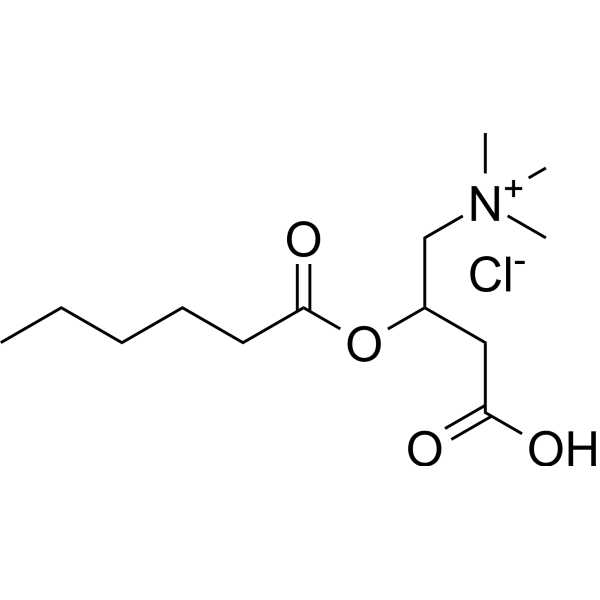
    (±)-Hexanoylcarnitine chloride is a fatty acid metabolite that breaks down fatty acids into energy that can be used by the body. (±)-Hexanoylcarnitine chloride also serves as a specific and easily detectable biomarker for rat skeletal muscle toxicity. Cerivastatin (HY-129458) and TMPD (HY-W012145) induce an increase in Hexanoylcarnitine in rats in a metabolomic analysis of the rectus femoris muscle. In type 2 diabetes, Hexanoylcarnitine is also significantly associated with and improves prediction of all-cause mortality. Hexanoylcarnitine is a biomarker for the identification of novel pathogenic pathways .
    (±)-Hexanoylcarnitine chloride
  • HY-W157689
    IDE-IN-2
    1 Publications Verification

    Proteolytic Enzyme IDE Infection Metabolic Disease Cancer
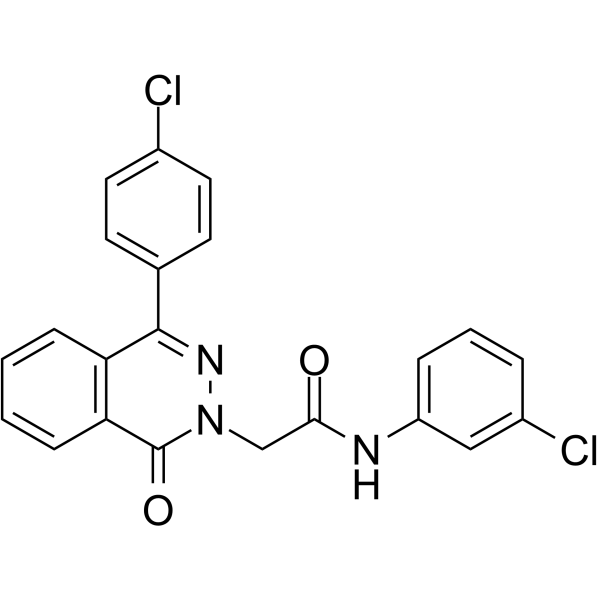
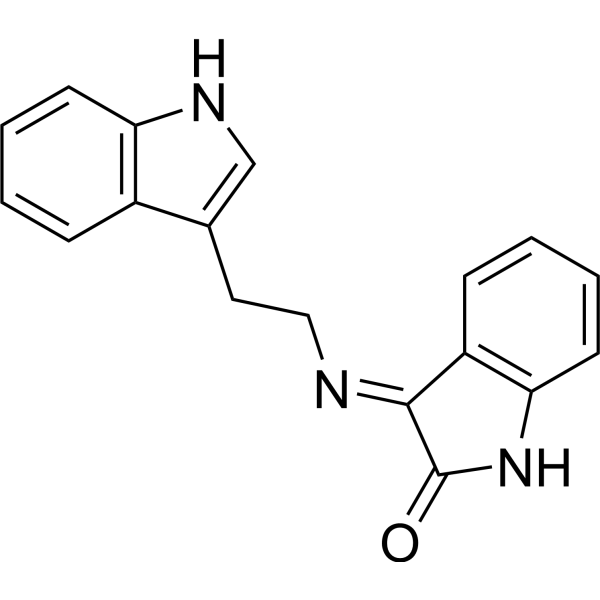
    IDE-IN-2 (Compound 4) is an inhibitor for insulin-degrading enzyme. IDE-IN-2 is predicted to have CYP3A4, CYP2C19, hERG, NADP+, HIF1α and histidine kinase inhibitory activities, and has potential biological activity in anti-diabetic, anti-tumor, anti-bacterial aspects, according to the in silico prediction .
    IDE-IN-2
  • HY-147027

    PARP Caspase Apoptosis Neurological Disease Inflammation/Immunology Cancer
    PARP-1-IN-2 (compound 11g) is a potent PARP1 inhibitor, with an IC50 of 149 nM, and ADME prediction indicates it has high blood-brain barrier permeability. PARP1-IN-2 shows significantly potent anti-proliferative activity against Human lung adenocarcinoma epithelial cell line A549. PARP1-IN-2 can induce A549 cells apoptosis .
    PARP-1-IN-2
  • HY-173313

    Ferroptosis Cardiovascular Disease
    Ferroptosis-IN-19 (compound C18) is a strong cellular ferroptosis inhibitor with an IC50 value of 0.097 μM. Ferroptosis-IN-19 shows high metabolic stability and favorable BBB permeability prediction. Ferroptosis-IN-19 has in vivo neuroprotection against ischemic brain injury in mice .
    Ferroptosis-IN-19
  • HY-177767

    Biochemical Assay Reagents Others
    EY-CBS is a synthetic and rigid cross linker. EY-CBS reacts selectively with cysteines in a-helices, to stabilize the connecting helix. EY-CBS can be used for the study of the structural stability of protein polypeptides .
    EY-CBS
  • HY-Y1013

    Drug Intermediate Others
    5-Bromonicotinic acid can be used as a pharmaceutical intermediate to synthesize 5-aryloyl nicotinic acid compounds. 5-Bromonicotinic acid has the characteristics of good drug similarity, high oral bioavailability, and low toxicity through molecular docking prediction. 5-Bromonicotinic acid has good binding ability with hepatitis virus proteins (binding energy: -4.7 to -5.3 kcal/mol) .
    5-Bromonicotinic acid
  • HY-178282

    JAK Inflammation/Immunology
    JAK1-IN-19 (Compound 18) is a potent JAK1 inhibitor with IC50s of 0.02, 0.5, 91 and 0.2 nM against JAK1, JAK2, JAK3 and TYK2. JAK1-IN-19 exhibits improved rat and human intrinsic clearance. JAK1-IN-19 can be used for the studies of atopic dermatitis and other autoimmune diseases .
    JAK1-IN-19
  • HY-168511

    DNA/RNA Synthesis Bacterial Infection
    DNA Gyrase-IN-13 (compound 1b) is a DNA Gyrase inhibitor. DNA Gyrase-IN-13 has antibacterial activity. DNA Gyrase-IN-13 has an IC50 value of 1.81 μM for Staphylococcus aureus DNA gyrase .
    DNA Gyrase-IN-13
  • HY-117831

    Endogenous Metabolite Bacterial Infection
    NSC-79887 is a nucleoside hydrolase (NH) inhibitor with activity against Bacillus anthracis. NSC-79887 is considered a good candidate inhibitor of nucleoside hydrolases for biological testing and further development. The pharmacokinetic (ADMET) prediction of NSC-79887 showed that all physicochemical parameters were within the acceptable range for human use .
    NSC-79887
  • HY-163380

    Carbonic Anhydrase Neurological Disease
    CA/MAO-B-IN-1 (Compound 78) is a dual inhibitor for human brain carbonic anhydrases (CA) and Monoamine Oxidase-B (MAO-B), with IC50s of 8.8 and 7.0 nM, respectively. CA/MAO-B-IN-1 reveals a human oral absorption of 71.9% through in silico prediction .
    CA/MAO-B-IN-1
  • HY-163415

    Monoamine Oxidase Neurological Disease
    MAO-IN-5 (Compound ZINC000016952895) is a monoamine oxidase (MAO) inhibitor. According to the prediction of Swiss ADME, MAO-IN-5 can inhibit the CYP enzyme family, has blood-brain barrier (BBB) permeability, and has a high gastrointestinal absorption rate. MAO-IN-5 can be used in the study of neurological diseases .
    MAO-IN-5
  • HY-B1844

    Endogenous Metabolite Cancer
    Flucythrinate is a synthetic pyrethroid with endocrine suppressive properties. Flucythrinate showed good binding affinity to the vitamin D nuclear receptor (VDR) with a score of -11.0 kcal/mol. Flucythrinate has been proposed as a multi-target ligand that may interact with several proteins associated with breast cancer. The screening method for Flucythrinate showed good accuracy in binding site prediction and affinity estimation .
    Flucythrinate
  • HY-151154

    EGFR Cancer
    EGFR/HER2/DHFR-IN-1 is a potent anticancer agent with high selectivity against MCF-7 breast cancer cells. EGFR/HER2/DHFR-IN-1 is a multiple inhibitor of EGFR/HER2 kinase and DHFR, with IC50s of 0.153 μM, 0.108 μM, 0.291 μM, respectively. EGFR/HER2/DHFR-IN-1 arrests cell cycle at G1/S and induces cells apoptosis .
    EGFR/HER2/DHFR-IN-1
  • HY-151158

    EGFR Cancer
    EGFR/HER2-IN-7 is a potent anticancer agent with high selectivity against MCF-7 breast cancer cells. EGFR/HER2-IN-7 is a EGFR/HER2 kinase and DHFR inhibitor, with IC50s of 0.18 μM (EGFR), 0.146 μM (HER2), respectively. EGFR/HER2-IN-7 shows moderate inhibition on DHFR (IC50=0.907 μM) .
    EGFR/HER2-IN-7
  • HY-147919

    Fungal Infection
    Antifungal agent 33 (compound 4e) is a potent antifungal agent. Antifungal agent 33 exhibits remarkable antifungal activity against C. albicans, with a MIC of 16 μg/mL. Antifungal agent 33 shows potent inhibitory activity against Lanosterol 14α-demethylase (CYP51), with an IC50 of 0.19 μg/mL .
    Antifungal agent 33
  • HY-172678

    5-HT Receptor mTOR Autophagy Neurological Disease
    PUC-10 is a 5-HT6 receptor antagonist with a Ki of 14.6 nM and an IC50 of 32 nM. In silico predictions suggest that PUC-10 is orally active and can cross the blood-brain barrier. PUC-10 can induce autophagy in SH-SY5Y cells by inhibiting the mTOR pathway. PUC-10 can be used in the research of neurological disorders .
    PUC-10
  • HY-146113

    IRAK Cancer
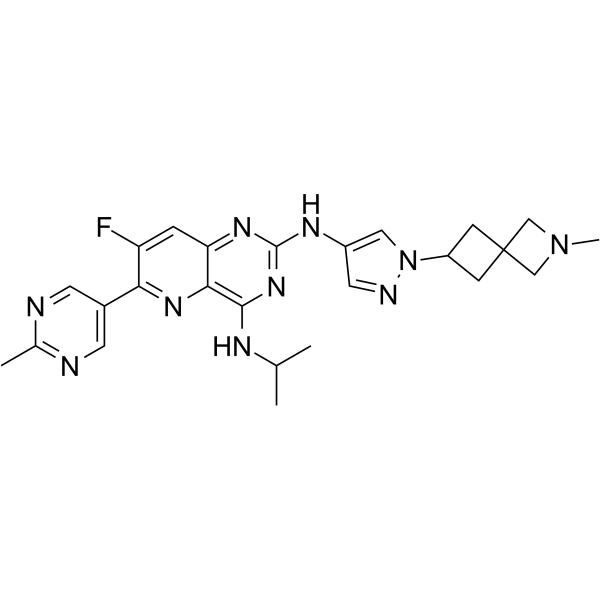
    IRAK4-IN-15 (compound 35) is a potent and selective IRAK4 inhibitor with an IC50 of 0.002 µM. IRAK4-IN-15 shows good human PK predictions with low intrinsic clearance. IRAK4-IN-15 shows great synergistic in vitro activity against MyD88/CD79 double mutant ABC-DLBCL in combination with Acalabrutinib. .
    IRAK4-IN-15
  • HY-155416

    SARS-CoV Infection
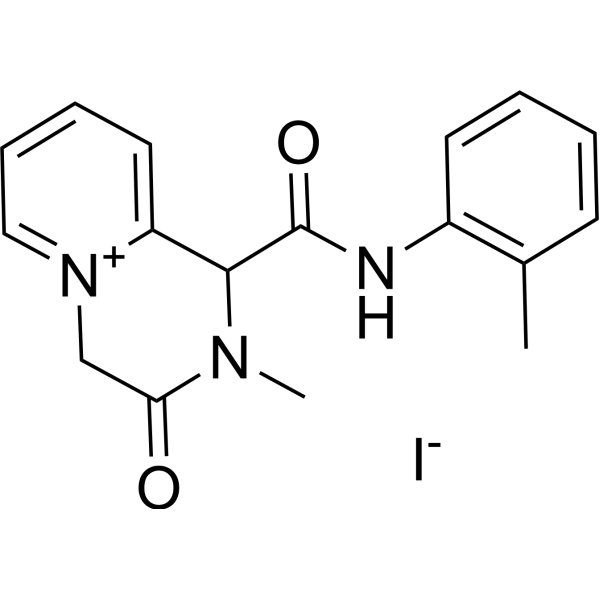
    M56-S2 iodide is a SARS-CoV-2 M pro inhibitor (IC50=4.0 μM). M56-S2 iodide showed good oral bioavailability and low toxicity in ADMET prediction. M56-S2 iodide has good drug potential and can be used in antiviral (such as SARS-CoV-2) research .
    M56-S2 iodide
  • HY-175245

    Carbonic Anhydrase Cancer
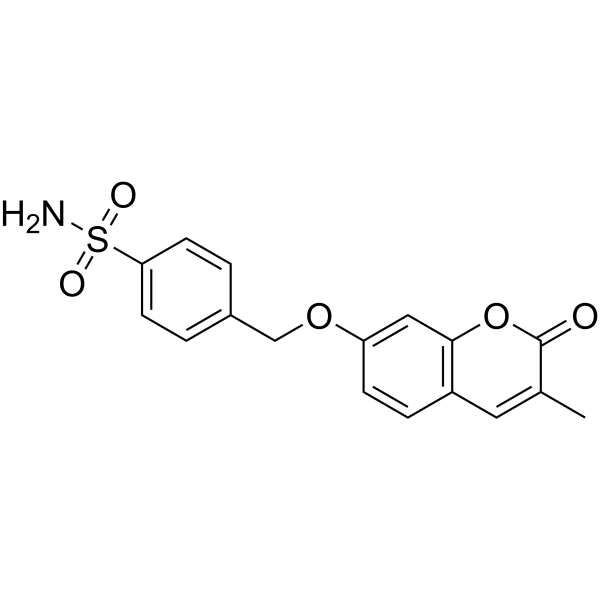
    hCA-IN-1 (Compound 5u) is an hCA inhibitor with Ki values of 159.2, 4.8, 15.5, and 2 nM against hCA I, hCA II, hCA IX, and hCA XII, respectively. hCA-IN-1 exhibits broad-spectrum anticancer activity against melanoma, breast, and colon cancer cells. ADME predictions indicate that hCA-IN-1 has good solubility and oral bioavailability. hCA-IN-1 can be used in tumor research .
    hCA-IN-1
  • HY-124987

    Endogenous Metabolite Inflammation/Immunology
    MRS4458 is a P2Y14 receptor antagonist with anti-inflammatory activity. MRS4458 mediates inflammatory activity by activating the motility of neutrophils. The design of MRS4458 is based on the interaction with the P2Y14 receptor and optimized by molecular dynamic simulation. MRS4458 performs well in terms of shape and complementarity with the receptor. The prediction that the 5-phenyl group of MRS4458 is substituted with thiophene is generally consistent with empirical results. The biological activity of MRS4458 was verified by fluorescence assay, showing its potent antagonistic effect .
    MRS4458
  • HY-162373

    Amylases Glycosidase P-glycoprotein Metabolic Disease
    α-Amylase/α-Glucosidase-IN-10 (compound 5d) is an α-amylase and α-glucosidase inhibitor (IC50: 30.39 μM and 65.1 μM) with potential diabetes inhibitory effects. α-Amylase/α-Glucosidase-IN-10 exhibits high gastrointestinal (GI) absorption in ADMET (Absorption, Distribution, Metabolism, Excretion and Toxicity) prediction. While α-Amylase/α-Glucosidase-IN-10 acts as a substrate for P-gp and does not cross the blood-brain barrier (BBB), there may be a risk of central nervous system side effects .
    α-Amylase/α-Glucosidase-IN-10
  • HY-163879

    Monoamine Oxidase Reactive Oxygen Species (ROS) Ferroptosis Neurological Disease
    hMAO-B-IN-9 (Compound 25c) is a non-competitive inhibitor for monoamine oxidase B (MAO-B) with an IC50 of 1.58 µM (hMAO-B). hMAO-B-IN-9 forms complex with iron ions as a chelator, and inhibits Erastin (HY-15763)-induced ferroptosis. hMAO-B-IN-9 exhibits antioxidant activity by downregulating the level of reactive oxygen species (ROS). hMAO-B-IN-9 improves cognitive function in mice, without significant toxicity (30 mg/kg). hMAO-B-IN-9 is blood-brain barrier permeable, according to the in silico prediction .
    hMAO-B-IN-9
  • HY-Y1013R

    Reference Standards Drug Intermediate Others
    5-Bromonicotinic acid (Standard) is the analytical standard of 5-Bromonicotinic acid. This product is intended for research and analytical applications. 5-Bromonicotinic acid can be used as a pharmaceutical intermediate to synthesize 5-aryloyl nicotinic acid compounds. 5-Bromonicotinic acid has the characteristics of good drug similarity, high oral bioavailability, and low toxicity through molecular docking prediction. 5-Bromonicotinic acid has good binding ability with hepatitis virus proteins (binding energy: -4.7 to -5.3 kcal/mol) .
    5-Bromonicotinic acid (Standard)
  • HY-148584

    Btk Inflammation/Immunology Cancer
    BTK-IN-21 (Compound 12) is a BTK inhibitor with an IC50 of 33 nM. BTK-IN-21 can be used for research in cancer and autoimmunity therapies .
    BTK-IN-21
  • HY-179620

    Cholinesterase (ChE) Neurological Disease
    AChE-IN-99 (Compound 5a) is an AChE inhibitor. AChE-IN-99 can be used for the research of Alzheimer's disease .
    AChE-IN-99
  • HY-182763

    EGFR Raf Caspase Apoptosis Bcl-2 Family Cancer
    EGFR/BRAFV600E-IN-7 is a dual EGFR and BRAF V600E kinase inhibitor with human IC50 values of 0.12 μM, 0.80 μM, 1.20 μM for EGFR and 0.05 μM, 0.22 μM, 0.78 μM for BRAF V600E.EGFR/BRAFV600E-IN-7 interacts with key ATP-binding site residues of EGFR and BRAF V600E, including hydrogen bonding with EGFR Met769 and BRAF V600E Cys532.EGFR/BRAFV600E-IN-7 induces apoptosis via caspase-3/8/9 activation, modulates Bax and Bcl-2 expression, scavenges free radicals, and exhibits antiproliferative activity against human cancer cell lines.EGFR/BRAFV600E-IN-7 displays drug-likeness with no PAINS/Brenk structural alerts per in silico predictions.EGFR/BRAFV600E-IN-7 can be used for the research of colon cancer, pancreatic cancer, lung cancer, breast cancer .
    EGFR/BRAFV600E-IN-7

Inquiry Online

Your information is safe with us. * Required Fields.

Salutation


Country or Region *

Applicant Name *


Organization Name *

Department *


Email Address *


Product Name *

Cat. No.


Requested quantity *

Phone Number *


Remarks

Inquiry Online

Inquiry Information

Product Name:
Cat. No.:
Quantity:
MCE Japan Authorized Agent:

