33 Results for "

Quorum sensing system

" in MedChemExpress (MCE) Product Catalog:
Products (33)

33 Results for "Quorum sensing system" in MCE Product Catalog:

7
7 Publications Verification
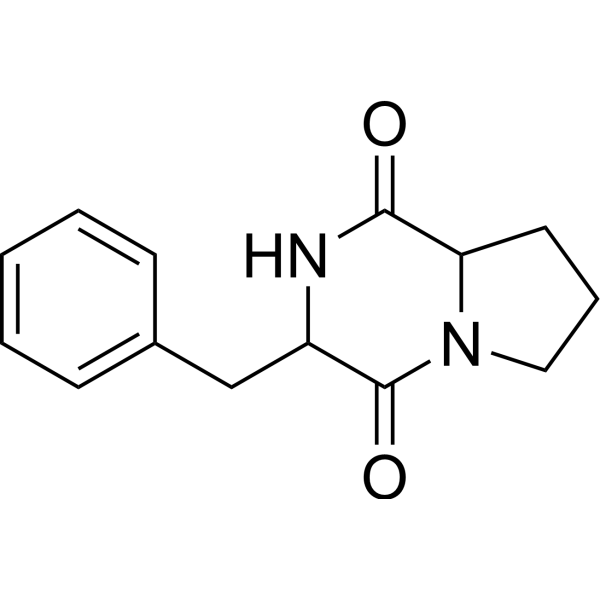
Cat. No.: HY-P1934
CAS No.: 14705-60-3
Synonyms: Cyclo(phenylalanylprolyl); A-64863
Cyclo(Phe-Pro) (Cyclo(phenylalanylprolyl)) is a quorum-sensing molecule of Vibrio vulnificus that specifically interacts with RIG-I, inhibiting RIG-I polyubiquitination, suppressing IRF-3 activation, and reducing type I interferon production. Cyclo(Phe-Pro) enhances susceptibility to HCV and influenza virus and also alleviates plant aluminum toxicity stress. The mechanism of Cyclo(Phe-Pro) involves the regulation of host immune signaling pathways, bacterial virulence gene expression, and plant antioxidant systems, making it a promising candidate for research in viral infections, bacterial virulence regulation, and agricultural stress resistance .
loading...
    loading...
5
5 Cited Publications
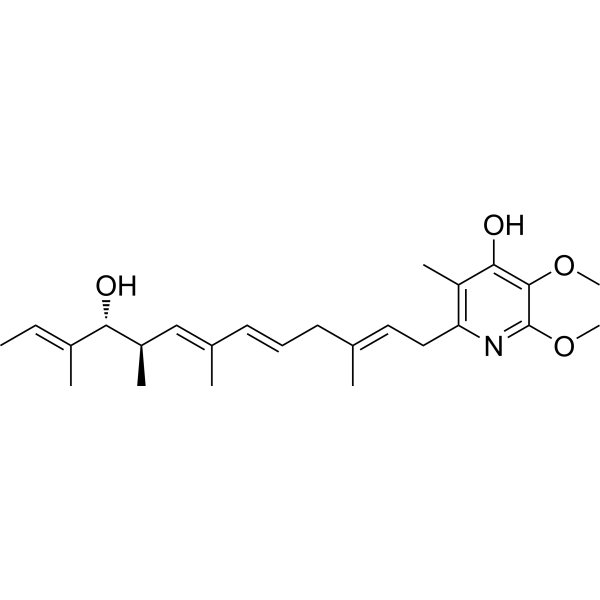
Cat. No.: HY-114936
CAS No.: 2738-64-9
Purity:  ≥99.0%
Synonyms: AR-054
Piericidin A (AR-054) is a natural mitochondrial NADH-ubiquinone oxidoreductase (complex I) inhibitor. Piericidin A is a potent neurotoxin and inhibits mitochondrial respiration by disrupting the electron transport system through its action on NADH-ubiquinone reductase. Piericidin A is also a potential quorum-sensing inhibitor that suppresses the expression of the virulence genes of Erwinia carotovora subsp. atroseptica (Eca). Piericidin A is an ADC cytotoxin and has anti-bacterial, anticancer, insecticidal activity .
loading...
    loading...
2
2 Cited Publications
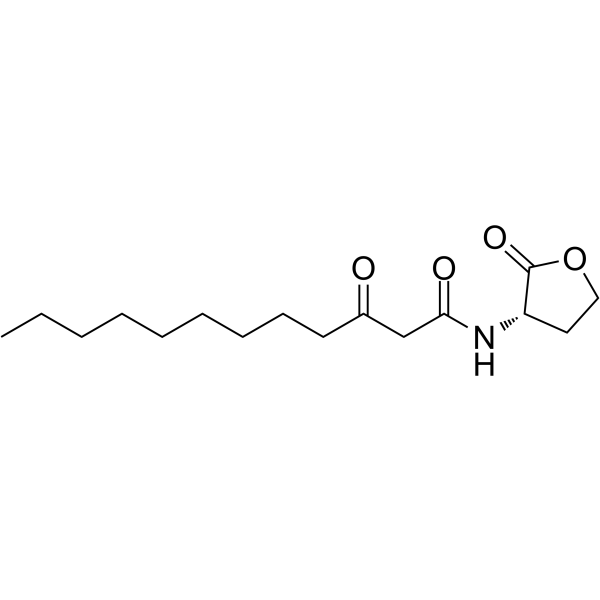
Cat. No.: HY-114544A
CAS No.: 168982-69-2
Purity:  ≥98.0%
Synonyms: OdDHL
N-3-oxo-dodecanoyl-L-Homoserine lactone (3-oxo-C12-HSL) is a bacterial quorum-sensing signaling molecule produced by P. aeruginosa and strains of the B. cepacia complex [2].Quorum sensing is a regulatory system used by bacteria for controlling gene expression in response to increasing cell density.N-3-oxo-dodecanoyl-L-Homoserine lactone induces the production of IL-8 in 16HBE human bronchial epithelial cells .
loading...
    loading...
2
2 Cited Publications
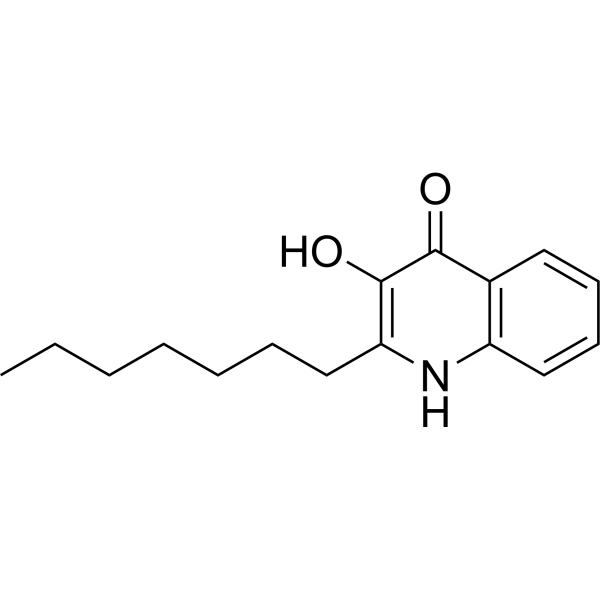
Cat. No.: HY-128200
CAS No.: 108985-27-9
Purity:  99.84%
Synonyms: PQS
Target:  

Bacterial

Research Areas:  

Infection Inflammation/Immunology

Pseudomonas quinolone signal (PQS) is a quorum-sensing signaling molecule produced by Pseudomonas aeruginosa. The synthesis of Pseudomonas quinolone signal relies on the las quorum-sensing system, and its biological activity is associated with the rhl system. Pseudomonas quinolone signal regulates the expression of the virulence gene lasB. Additionally, Pseudomonas quinolone signal plays roles in iron acquisition, cytotoxicity, outer-membrane vesicle biogenesis, and host immune modulation .
loading...
    loading...
1
1 Cited Publications
Cat. No.: HY-W007390
CAS No.: 52727-57-8
Research Areas:  

Infection

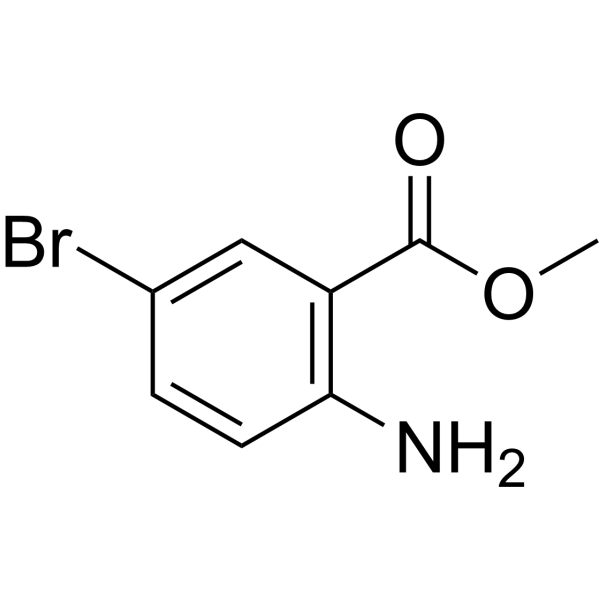
Methyl 2-amino-5-bromobenzoate (Compound 8/12) is a biochemical reagent. Methyl 2-amino-5-bromobenzoate can be used to synthesize 2-benzamidobenzoic acid, a known FabH inhibitor. Derivatives of methyl 2-amino-5-bromobenzoate also inhibit PqsD, the pqs quorum sensing (QS) system, of Pseudomonas aeruginosa .
loading...
    loading...
Cat. No.: HY-133685
CAS No.: 147852-83-3
Purity:  98.82%
Synonyms: C6-HSL
Target:  

Bacterial

Research Areas:  

Infection Metabolic Disease

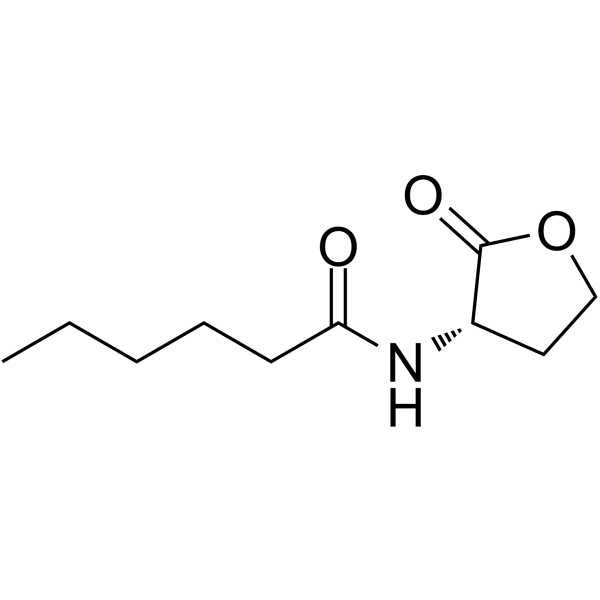
N-Hexanoyl-L-homoserine lactone is a short-chained N-acyl homoserine lactone (AHL). N-hexanoyl-L-homoserine lactone is also a mediator of bacterial quorum-sensing regulation. N-hexanoyl-L-homoserine lactone promotes lipid accumulation in algae. AHL is an intercellular communication signal molecule in the quorum sensing system of Gram-negative bacteria and a medium for mediating information exchange between eukaryotic plants and prokaryotic bacteria. AHL can affect bacteria activities, such as biofilm formation, pigment synthesis, and antibiotic synthesis .
loading...
    loading...
Cat. No.: HY-P10486
CAS No.: 200010-31-7
Target:  

Bacterial

Research Areas:  

Infection

AIP-II is a cyclic peptide signaling molecule for quorum sensing, which is produced by Staphylococcus aureus. AIP-II potently inhibits AgrC-III in Methicillin (HY-121544)-resistant type III Staphylococcus aureus strain AH1747, with an IC50 of 0.532 nM. AIP-II binds to the AgrC-II receptor and regulates virulence gene expression in Staphylococcus aureus .
loading...
    loading...
Cat. No.: HY-W104758
CAS No.: 15015-57-3
Research Areas:  

Others

Elastase-IN-3 (Compound 2i) is an Elastase inhibitor of Pseudomonas aeruginosa. Elastase-IN-3 inhibits the quorum sensing system of Pseudomonas aeruginosa by targeting the LasR protein (KD value of 7.04 M), thereby preventing food spoilage caused by Pseudomonas aeruginosa .
loading...
    loading...
Cat. No.: HY-W012572
CAS No.: 351-50-8
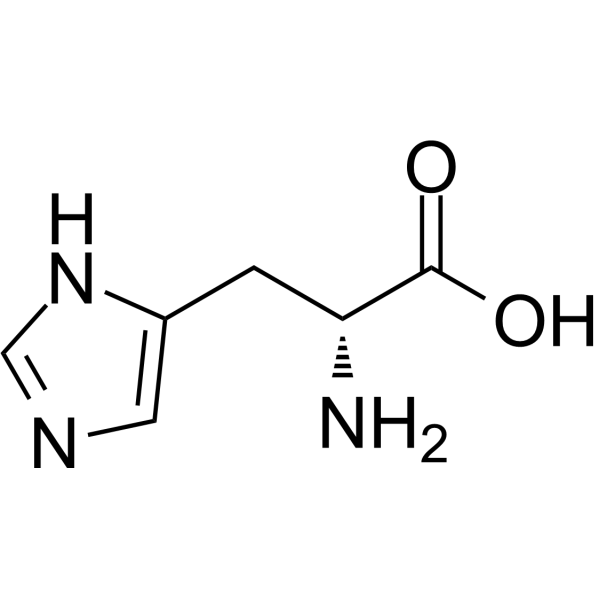
D-Histidine is an anti-biofilm agent that targets bacterial quorum sensing systems (such as RhlI/RhlR pathway) and has antibacterial activity. D-Histidine works by non-covalently binding to bacterial regulatory factors or copper ion complexes, selectively inhibiting bacterial biofilm formation and motility. D-Histidine downregulates quorum sensing-related gene expression, reduces the synthesis of virulence factors (such as alginate and proteases), and interferes with bacterial membrane stability, inhibiting biofilm formation, promoting the disintegration of mature biofilms, and enhancing antibiotic sensitivity. D-Histidine is also an efficient catalyst for the salt-induced peptide formation (SIPF) reaction, which promotes the condensation of amino acids to form dipeptides (such as dialanine and dilysine) by forming a complex with copper ions (Cu 2+) .
loading...
    loading...
Cat. No.: HY-P11175
CAS No.: 438620-89-4
Target:  

Bacterial

Research Areas:  

Infection

Competence-stimulating peptide is a competence-stimulating peptide. Competence-stimulating peptide activates the Com-dependent quorum sensing system of S. mutans. Competence-stimulating peptide restores bacteriocin production .
loading...
    loading...
Cat. No.: HY-134215
CAS No.: 677354-23-3
Target:  

Bacterial Fungal

Research Areas:  

Infection

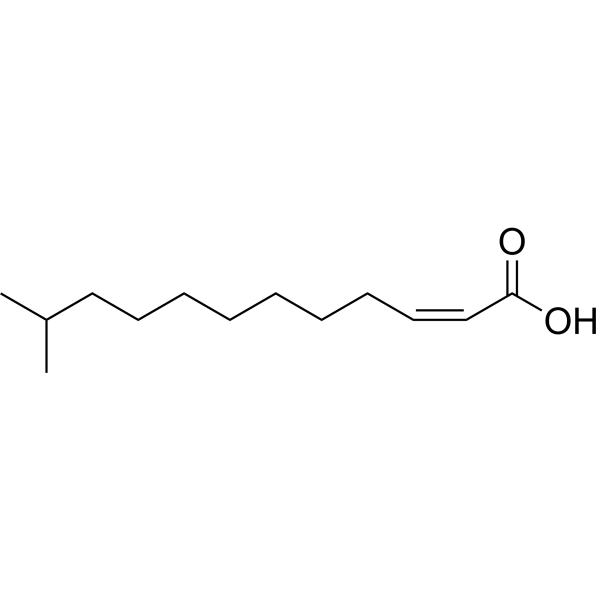
cis-11-Methyl-2-dodecenoic acid is a quorum sensing (QS) signal that acts as a diffusion signaling factor (DSF) in extracellular microbial and fungal communication systems. DSF is involved in the regulation of virulence and biofilm formation of a variety of bacterial pathogens .
loading...
    loading...
Cat. No.: HY-133685R
CAS No.: 147852-83-3
Synonyms: C6-HSL (Standard)
Research Areas:  

Infection Metabolic Disease

N-Hexanoyl-L-homoserine lactone (Standard) is the analytical standard of N-Hexanoyl-L-homoserine lactone (HY-133685). This product is intended for research and analytical applications. N-Hexanoyl-L-homoserine lactone is a short-chained N-acyl homoserine lactone (AHL). N-hexanoyl-L-homoserine lactone is also a mediator of bacterial quorum-sensing regulation. N-hexanoyl-L-homoserine lactone promotes lipid accumulation in algae. AHL is an intercellular communication signal molecule in the quorum sensing system of Gram-negative bacteria and a medium for mediating information exchange between eukaryotic plants and prokaryotic bacteria. AHL can affect bacteria activities, such as biofilm formation, pigment synthesis, and antibiotic synthesis.
loading...
    loading...
Cat. No.: HY-W012572A
CAS No.: 328526-86-9
D-Histidine hydrochloride hydrate is an anti-biofilm agent that targets bacterial quorum sensing systems (such as RhlI/RhlR pathway) and has antibacterial activity. D-Histidine hydrochloride hydrate works by non-covalently binding to bacterial regulatory factors or copper ion complexes, selectively inhibiting bacterial biofilm formation and motility. D-Histidine hydrochloride hydrate downregulates quorum sensing-related gene expression, reduces the synthesis of virulence factors (such as alginate and proteases), and interferes with bacterial membrane stability, inhibiting biofilm formation, promoting the disintegration of mature biofilms, and enhancing antibiotic sensitivity. D-Histidine hydrochloride hydrate is also an efficient catalyst for the salt-induced peptide formation (SIPF) reaction, which promotes the condensation of amino acids to form dipeptides (such as dialanine and dilysine) by forming a complex with copper ions (Cu 2+) .
loading...
    loading...
Cat. No.: HY-W127393
CAS No.: 177158-21-3
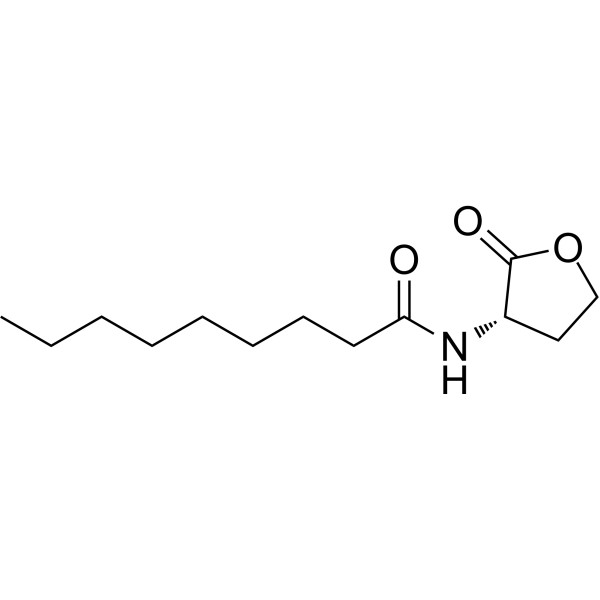
Quorum sensing is a regulatory system used by bacteria to control gene expression in response to increased cell density. This regulatory process manifests itself in a variety of phenotypes, including biofilm formation and virulence factor production. Coordinated gene expression is achieved through the production, release and detection of small diffusible signaling molecules called autoinducers. N-acylated homoserine lactones (AHLs) comprise a class of such autoinducers, each of which generally consists of a fatty acid coupled to a homoserine lactone (HSL). Modulation of bacterial quorum-sensing signaling systems to suppress pathogenesis represents a new approach to antimicrobial research for infectious diseases. AHLs differ in acyl length (C4-C18), C3 substitution (hydrogen, hydroxyl, or oxo group), and the presence or absence of one or more carbon-carbon double bonds in the fatty acid chain. These differences confer signaling specificity through the affinity of the LuxR family of transcriptional regulators. C9-HSL is a rare odd-numbered acyl carbon chain produced by wild-type Erwinia carotovora strain SCC 3193 grown in nutrient-rich Luria-Bertani broth (LB) medium.
loading...
    loading...
Cat. No.: HY-W337680
CAS No.: 192883-12-8
Target:  

Bacterial

Research Areas:  

Infection

N-3-Hydroxydecanoyl-L-homoserine lactone is a type of N-acyl-L-homoserine lactone (AHL), which is a class of signaling molecules in bacterial quorum sensing systems, and it has a weak activating effect on AbaR .
loading...
    loading...
Cat. No.: HY-156439
CAS No.: 2977230-63-8
Target:  

Bacterial

Research Areas:  

Infection

Antibiofilm agent-2 (compound 4T) is a potent biofilm inhibitor with an IC50 of 3.6 μM. Antibiofilm agent-2 inhibits the quorum sensing system and iron homeostasis as antibacterial synergists against Pseudomonas aeruginosa .
loading...
    loading...
Cat. No.: HY-146304
CAS No.: 2415981-79-0
Target:  

Bacterial

Research Areas:  

Infection

YXL-13 is a potent Pseudomonas aeruginosa (PAO1) inhibitor with an IC50 value of 3.686 μM. YXL-13 can inhibit virulence factors and biofilm formation of PAO1. YXL-13 reduces the pathogenicity and agent resistance of PAO1 by inhibition of the quorum sensing (QS) system. YXL-13 can be used for researching anti-bacteria .
loading...
    loading...
Cat. No.: HY-168948
CAS No.: 3063543-24-5
Target:  

Bacterial

Research Areas:  

Infection

Quorum sensing-IN-9 (Compound 7d) inhibits quorum sensing in Pseudomonas aeruginosa by binding PqsR proteins. Quorum sensing-IN-9 inhibits the expression of quorum sensing systems related genes lasB, rhlA and pqsA, blocks the generation of virulence factors elastase, pyocyanin and rhamnolipid. Quorum sensing-IN-9 destorys the motility of P. aeruginosa, inhibits the biofilm formation, decreasing the virulence and pathogenicity of P. aeruginosa. Quorum sensing-IN-9 exhibits anti-infectious activity in Galleria mellonella larval model .
loading...
    loading...
Cat. No.: HY-163508
Target:  

Bacterial

Research Areas:  

Infection

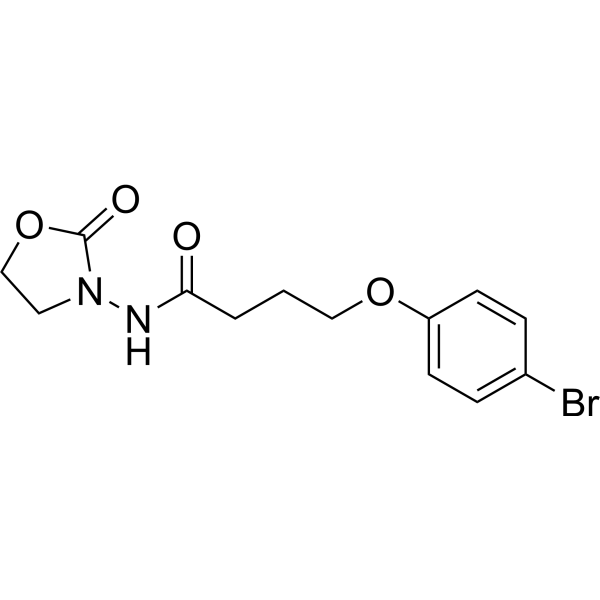
Antibacterial agent 210 (compound A9), an amide derivative, is a Pseudomonas aeruginosa quorum sensing inhibitor (QSI). Antibacterial agent 210 inhibits the quorum sensing systems by binding with LasR and PqsR, especially PqsR .
loading...
    loading...
Cat. No.: HY-158193
CAS No.: 540796-75-6
Synonyms: C10-CPA
Target:  

Bacterial

Research Areas:  

Infection

N-Decanoyl cyclopentylamide (C10-CPA) is a potent inhibitor of quorum sensing in Pseudomonas aeruginosa. N-Decanoyl cyclopentylamide interferes with expression of Pseudomonas aeruginosa virulence factors regulated by the las and rhl quorum-sensing systems. N-Decanoyl cyclopentylamide inhibits production of elastase, pyocyanin, and rhamnolipid and biofilm formation .
loading...
    loading...

